Where Science Was Forged: The Secret Island That Shaped Modern Chemistry
How a Remote Retreat Became a Crucible for Nobel Laureates and Groundbreaking Discoveries
The Gibson Island Phenomenon: More Than Just Talks
Intimate & Intensive
Unlike massive modern conventions, these meetings capped participation at just 50-100 leading scientists, fostering deep connections and collaboration.
Unfinished Ideas
The goal wasn't to present finished work but to debate unfinished ideas during lengthy discussion sessions, shared meals, and walks along the shore.
Held from 1935 to 1946 on Gibson Island in Maryland's Chesapeake Bay, these conferences were revolutionary by design. Their core philosophy was intimacy and intense discussion.
This fostered a collaborative spirit that broke down barriers between universities, corporations, and government labs. In this pressure cooker of intellect, fields like polymer chemistry, molecular biology, and quantum chemistry were born and nurtured.
It's no coincidence that numerous participants, including figures like Linus Pauling and Robert Woodward, were or would become Nobel Laureates .

Frontiers in Focus: The Key Concepts Born on the Island
Chemical Bond
Heated debates on how atoms connect, heavily influenced by Linus Pauling's work on quantum mechanics and resonance .
Polymers
A pivotal shift from viewing materials like rubber and plastics as mysterious colloids to understanding them as true, massive chains of molecules.
Chemistry of Life
Where biology and chemistry truly began to merge, laying the groundwork for the new field of molecular biology .
An In-Depth Look: Kendrew and the First Glimpse of a Protein
To understand the Gibson Island magic, let's examine a specific breakthrough that was directly shaped by its collaborative environment: John Kendrew's determination of the structure of myoglobin.
The Experimental Quest for a Molecular Blueprint
In the late 1950s, Kendrew and his team were racing to be the first to determine the three-dimensional atomic structure of a protein, a feat many thought was impossible. Their weapon of choice was X-ray Crystallography .
Methodology: A Step-by-Step Journey
Crystallization
The first and most difficult step was to grow a perfect crystal of the protein, myoglobin, which stores oxygen in muscle cells.
Bombardment & Diffraction
A single crystal was mounted and exposed to a beam of X-rays, creating a complex pattern of spots on a photographic film.
The "Phase Problem"
The diffraction pattern only contained information about the intensity of the spots, not the "phase"—the central puzzle to solve.
Heavy-Atom Method
To solve the phase problem, the team introduced a single "heavy" atom into the myoglobin crystal without distorting its structure.
Fourier Synthesis & Model Building
Using mathematical techniques, they computed an "electron density map" and built a physical model tracing the protein chain.
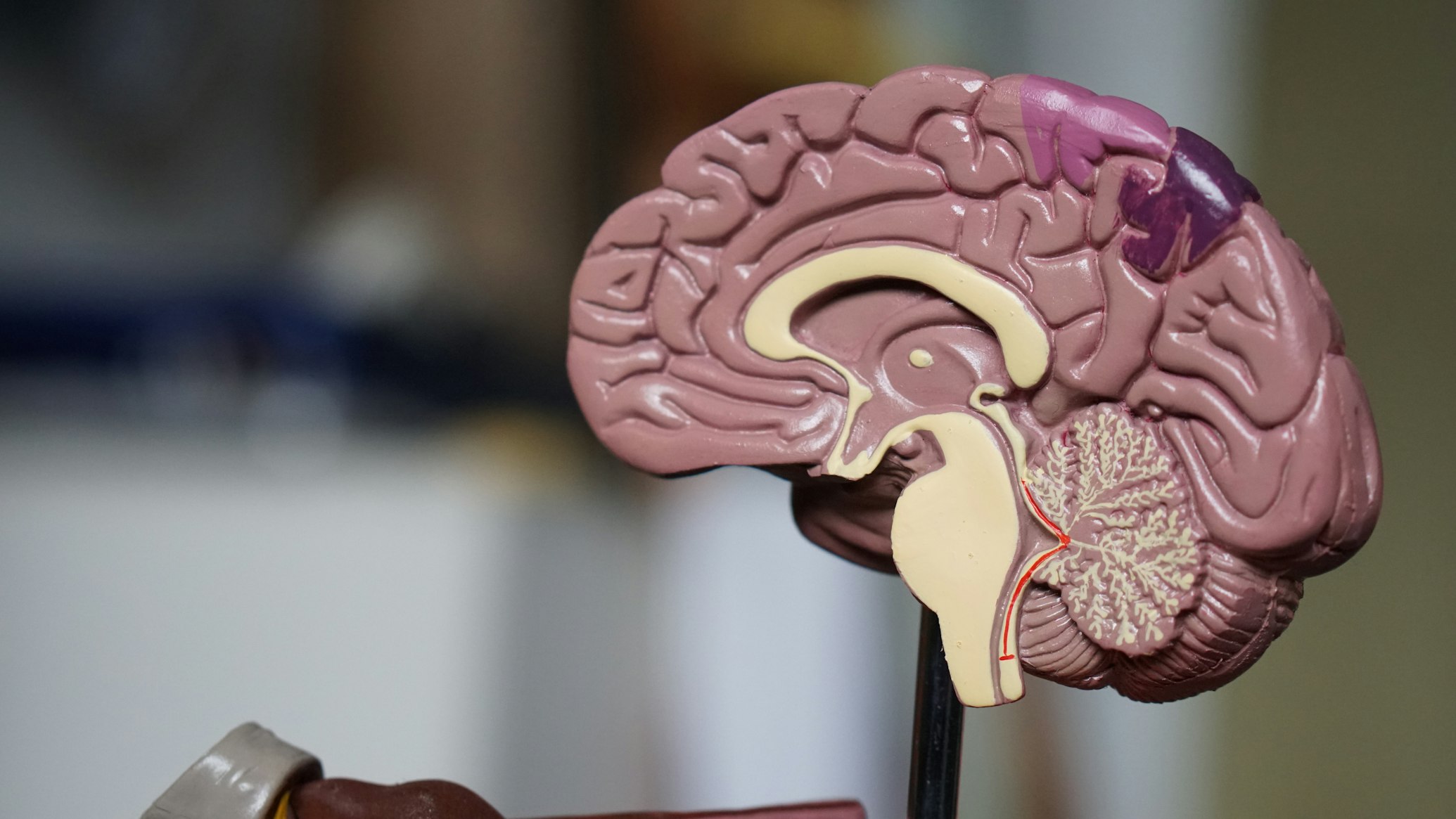
"Kendrew's success demonstrated that the complex structures of proteins could be deciphered, opening the floodgates for structural biology."
Results and Analysis: Seeing the Invisible
The results were stunning. In 1958, they achieved a low-resolution model, revealing myoglobin as a dense, irregular, and twisting chain—the first ever glimpse of a protein's architecture. By 1960, they reached atomic resolution, seeing the precise positions of nearly every atom .
Scientific Importance:
- It Proved It Was Possible: Kendrew's success demonstrated that the complex structures of proteins could be deciphered.
- A New Window into Function: For the first time, scientists could understand how a protein works based on its precise 3D shape.
- A Landmark for Gibson Island: This work was a direct product of the interdisciplinary culture fostered at the conferences.
John Kendrew received the Nobel Prize in Chemistry in 1962 for this work .
Data from the Frontier: The Path to a Protein's Structure
Evolution of Myoglobin Model Resolution
This table shows how the clarity and detail of the myoglobin structure improved as the experimental data was refined.
| Year | Resolution (Ångstroms) | What Could Be Seen | Significance |
|---|---|---|---|
| 1958 | 6 Å | The overall folding path of the protein chain; a dense, irregular shape. | First proof that a protein has a defined, albeit complex, 3D structure. |
| 1960 | 2 Å | Positions of individual atoms; the detailed structure of the heme group and its oxygen-binding pocket. | Atomic-level understanding of how the protein functions; a landmark achievement. |
Key Proteins First Solved Using X-Ray Crystallography
This table highlights the rapid progress in structural biology following the pioneering work on myoglobin.
| Protein | Year Solved | Key Function |
|---|---|---|
| Myoglobin | 1958/1960 | Oxygen storage in muscle |
| Hemoglobin | 1959/1968 | Oxygen transport in blood |
| Lysozyme | 1965 | Bacterial defense (enzyme) |
| Insulin | 1969 | Regulation of blood sugar |
The Scientist's Toolkit for Protein Crystallography
Essential materials and reagents used in groundbreaking experiments like Kendrew's.
| Research Reagent / Material | Function in the Experiment |
|---|---|
| Pure Protein Sample | The target molecule itself. Must be isolated and purified to homogeneity to form a regular crystal. |
| Crystallization Solutions | Buffers and precipitating agents that slowly draw water out of the protein solution, encouraging orderly formation of a crystal lattice. |
| Heavy-Atom Derivatives | Compounds containing heavy atoms that can bind to specific sites on the protein without altering its structure. |
| X-Ray Source & Detector | Generates a powerful, focused beam of X-rays and records the resulting diffraction pattern. |
| Molecular Model Kit | A physical kit of rods and atoms used to build a tangible 3D model based on the computed electron density map. |
Impact of the Gibson Island Conferences
Years Active
Scientists per Conference
Nobel Laureates Involved
Major Scientific Fields Advanced
The Lasting Legacy of an Island Retreat
The Gibson Island Conferences ended after the 1946 season, but their impact is woven into the fabric of modern science.
Innovation Through Collaboration
They proved that true innovation thrives in environments that prioritize deep, unstructured collaboration over formal presentation.
Modern Scientific Workshops
The spirit of Gibson Island lives on in contemporary small, focused workshops and think tanks across the scientific world.
The conferences were a testament to a powerful idea: that sometimes, to see the future of science, you need to take a step back from the world, gather on an island, and just talk. The discoveries that emerged from those conversations, from the chemical bond to the architecture of life itself, forever changed our world.