The Nano-Sponge Revolution
Crafting the Ultimate Catalyst for Clean Energy
How scientists are twisting and tweaking atomic-scale wires to power a greener future.
Introduction
Imagine a car that emits nothing but clean water from its tailpipe. This isn't science fiction; it's the promise of hydrogen fuel cell vehicles. At the heart of this technology lies a critical chemical dance known as the Oxygen Reduction Reaction (ORR). But there's a catch: making this reaction efficient requires a catalyst, and the best one is made of platinum—a metal rarer and more expensive than gold. For decades, this has been the bottleneck. Now, scientists are breaking through by engineering platinum into incredible, atom-thin nanowires, creating ultra-efficient catalysts that could finally make clean energy affordable for everyone.
The Challenge
Platinum catalysts are expensive and inefficient, limiting the widespread adoption of fuel cell technology.
The Solution
Engineering platinum into nanowires with specific alloys to dramatically increase efficiency and reduce costs.
Why the Fuss About a Simple Reaction?
The Oxygen Reduction Reaction is the essential counterpoint to the "boom" of combustion. Instead of burning fuel with oxygen to release energy (like in a car engine), a fuel cell combines hydrogen and oxygen in a controlled way to create electricity, with water as the only byproduct. The ORR is the slow, energy-intensive part of this process where oxygen molecules are split and combined with electrons and protons to form water.
The Problem with Platinum:
- Cost: It's prohibitively expensive for mass production.
- Inefficiency: Its atoms aren't all used effectively.
- Sluggishness: The ORR is inherently slow, limiting the power output of the fuel cell.
The scientific quest is to create a catalyst that uses minimal platinum but is exponentially more active and durable.
The Nano-Engineer's Playbook: Strain and Ligand Effects
To supercharge platinum, researchers don't just shrink it; they reshape and remix it at the atomic level. Two key concepts are at play:
1. The Strain Effect
Imagine stretching a thin layer of plastic wrap. The bonds between the atoms are pulled and altered. Scientists do this to platinum by bonding it with other, slightly larger metals (like nickel or cobalt). This "strain" changes the distances between platinum atoms, subtly weakening their grip on oxygen atoms. This makes it easier for the catalyst to release the water molecule and get ready for the next reaction, dramatically boosting its activity.
2. The Ligand Effect
This is about the influence of neighboring atoms. When platinum is alloyed with another metal, the electronic structure of the platinum atoms changes. It's like changing a platinum atom's personality by giving it new friends. These electronic tweaks also make the platinum less "sticky" to oxygen intermediates, further accelerating the reaction.
Visualization of atomic structures in nanomaterials
The ultimate goal is to create a structure that maximizes both these effects. This is where nanowires enter the stage.
A Closer Look: Forging the Perfect Nano-Wire
One groundbreaking experiment, representative of the field, illustrates how scientists create and test these advanced materials. The objective was to synthesize ultrathin Platinum-Nickel (Pt-Ni) nanowires with a specific composition and test their ORR performance against commercial platinum-carbon catalysts.
Methodology: A Step-by-Step Recipe at the Nanoscale
The synthesis is a delicate chemical ballet performed in a lab:
Dissolution
Precursor chemicals containing platinum and nickel are dissolved in a special solvent inside a sealed vessel.
Heating
The mixture is heated to a high temperature under pressure. This controlled environment is crucial for guiding the growth of one-dimensional wires instead of clumpy nanoparticles.
Direction and Capping
A "capping agent" (a long-chain organic molecule) is added. This molecule acts like a train conductor, directing the growing crystal to form only along one axis, resulting in a long, thin wire. It also prevents the wires from clumping together.
Washing and Collecting
The resulting product is cooled, washed, and collected—a black powder that, under a powerful electron microscope, reveals a tangle of incredibly thin nanowires, each just a few atoms thick.
Electrochemical Testing
The real test begins. The nanowire powder is placed on a rotating disk electrode and immersed in an oxygen-saturated acid solution. By applying a varying voltage and measuring the current, scientists can directly quantify the catalyst's activity and stability.

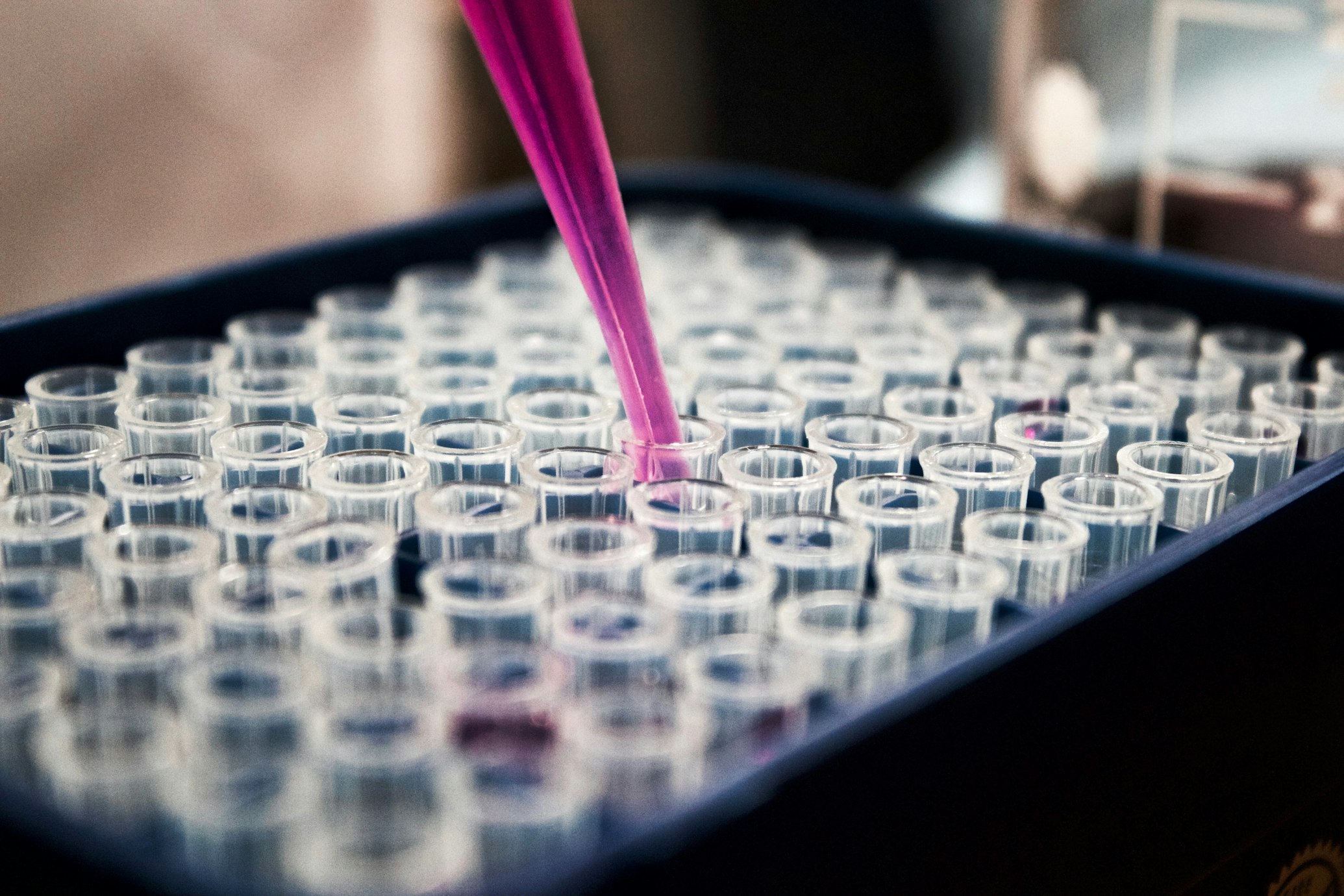
Laboratory setup for nanomaterial synthesis
Results and Analysis: A Clear Champion Emerges
The data told a compelling story. The Pt-Ni nanowires weren't just a little better; they were in a different league.
Catalytic Activity Comparison
| Catalyst Type | Mass Activity (A/mgPt) | Specific Activity (mA/cmPt²) |
|---|---|---|
| Commercial Pt/C | 0.21 | 0.38 |
| Pt-Ni Nanowires | 1.83 | 4.25 |
The Pt-Ni nanowires showed a mass activity nearly 9 times higher and a specific activity over 11 times higher than the commercial benchmark. This means they use platinum far more efficiently and are intrinsically more active.
Durability Test (After 10,000 Cycles)
| Catalyst Type | Mass Activity Retention | Change in Electrochemical Surface Area |
|---|---|---|
| Commercial Pt/C | 42% | -62% |
| Pt-Ni Nanowires | 88% | -15% |
The nanowire structure proved immensely durable. While the commercial catalyst degraded significantly, losing over half of its active surface area, the nanowires held strong, retaining most of their activity. Their one-dimensional structure is less prone to dissolution and aggregation.
Elemental Composition (Before & After Testing)
| Component | As-Synthesized | After Durability Test |
|---|---|---|
| Platinum (Pt) | 75% | 82% |
| Nickel (Ni) | 25% | 18% |
A slight leaching of nickel from the surface occurs during operation. Interestingly, this often creates a platinum-rich "skin" on the wire, which can further optimize the surface strain and enhance performance, a phenomenon predicted by theory.
Activity Comparison
Durability Comparison
The Scientist's Toolkit: Brewing the Nano-Soup
Creating these materials requires a precise set of ingredients. Here are the key "Research Reagent Solutions" used in such experiments:
| Reagent / Material | Function in the Experiment |
|---|---|
| Chloroplatinic Acid (H₂PtCl₆) | The source of platinum atoms—the primary active metal for the ORR. |
| Nickel Acetate (Ni(CH₃COO)₂) | The source of nickel atoms, used to alloy with platinum and induce strain. |
| Oleylamine | A dual-purpose solvent and capping agent. It directs the one-dimensional growth of the nanowires and prevents them from agglomerating. |
| N,N-Dimethylformamide (DMF) | A common solvent that provides a stable, high-temperature environment for the chemical reaction to occur. |
| Carbon Support (e.g., Vulcan XC-72) | A highly porous, conductive carbon black powder. The catalyst is anchored to this support to maximize its exposed surface area and ensure electrical conductivity in the fuel cell. |
Nanowire Visualization

Electron microscope image showing platinum alloy nanowires
A Future Woven from Nanowires
The journey from a clumpy platinum nanoparticle to a finely-tuned platinum-nickel nanowire is a testament to the power of materials science.
By moving from random particles to controlled, one-dimensional structures and leveraging atomic-level strain and electronic effects, researchers are not just incrementally improving a material—they are redefining it.
Sustainable Impact
This progress lights the path to a sustainable energy future. Cheaper, more powerful, and longer-lasting catalysts mean that hydrogen fuel cells can become a viable, widespread technology, powering everything from our cars to our cities, all with only pure water as a reminder of the clean chemical reaction happening within. The tiny nanowire, invisible to the naked eye, is poised to make an enormous impact on our world.
Clean Transportation
Fuel cell vehicles with zero emissions
Sustainable Cities
Clean energy for urban infrastructure
Green Industry
Low-carbon manufacturing processes
References
References will be added here in the required format.