The Invisible Architecture of Modern Life
How Herman F. Mark Built Polymer Science
Explore the ScienceFrom Celluloid to Civilization: The Molecular Revolution
Take a moment to consider the plastic in your smartphone case, the synthetic fibers in your rain jacket, the rubber in your car tires, and even the proteins that make up your own body.
Despite their tremendous diversity, these materials share a profound commonality—they are all polymers, gigantic molecules composed of repeating structural units. This molecular architecture forms the invisible framework of our modern world, a framework that remained scientifically misunderstood until the 20th century.
The story of polymer science is not merely one of chemical discovery but of paradigm shift—a fundamental reimagining of what constitutes matter itself. At the forefront of this revolution stood Herman F. Mark, whose multidimensional contributions as both researcher and institution-builder earned him the title "father of polymer science." His work transformed polymers from laboratory curiosities into a scientific discipline that continues to shape our technological reality.

Modern polymers are found in countless everyday applications, from electronics to textiles.
Molecular Architecture
Polymers are giant molecules with repeating structural units that form the basis of countless materials.
Scientific Revolution
The understanding of polymers required a paradigm shift in how scientists viewed molecular structures.
Herman F. Mark
Known as the "father of polymer science," Mark transformed the field through his multidimensional contributions.
The Architect of Polymer Science: Herman F. Mark's Multidimensional Legacy
While Hermann Staudinger first proposed the revolutionary concept that polymers were long chains of atoms held together by covalent bonds—earning him the Nobel Prize in 1953—it was Herman F. Mark who built the comprehensive framework for understanding and studying these macromolecules 2 6 . Mark's genius lay in his ability to bridge theoretical concepts with practical applications, creating an entire scientific discipline where none had formally existed before.
Among his most significant institutional contributions was establishing the Polymer Research Institute at Brooklyn Polytechnic in 1946, the first research facility in the United States dedicated exclusively to polymer research 6 .
Beyond brick and mortar, Mark also pioneered the pedagogical structure for polymer science, developing curriculum and teaching methodologies that recognized polymer science as a distinct field requiring specialized knowledge 6 .
Mark's research contributions were equally profound. He utilized X-ray crystallography to determine the molecular structure of natural polymers, providing crucial physical evidence for their chain-like nature 2 6 . His work helped interpret the unusual diffraction patterns observed in cellulose fibers, demonstrating that at least part of the cellulose material was crystalline and consisted of long chains of glucose rings 2 . This physical evidence was essential in ending the early "colloid versus macromolecule" debate that had divided the scientific community.
Perhaps Mark's most enduring legacy was his vision of polymer science as a truly interdisciplinary field, bringing together chemistry, physics, and engineering to comprehensively understand and utilize macromolecular materials. This holistic approach accelerated both fundamental understanding and practical applications, paving the way for the synthetic polymer revolution that would follow.
Polymer Research Institute
Established in 1946 at Brooklyn Polytechnic, this was the first research facility in the United States dedicated exclusively to polymer research 6 .
Decoding Crystal Blueprints: The X-Ray Diffraction Experiment
In the early decades of the 20th century, a fundamental question divided chemists: were polymers like rubber, cellulose, and proteins truly giant molecules or merely aggregates of smaller molecules held together by mysterious physical forces? Herman F. Mark and his contemporaries addressed this question through a series of elegant experiments using X-ray diffraction, a technique that would become essential to the polymer scientist's toolkit.
Step-by-Step: Probing Polymer Structure
Modern X-ray diffraction equipment used to analyze crystal structures of materials.
The Revelations in the Patterns
The experimental results provided compelling evidence for the macromolecular hypothesis:
- Crystalline Regions: The symmetrical spots indicated that at least portions of the polymer samples possessed crystalline order 2 .
- Chain Orientation: The patterns changed predictably when fibers were stretched, demonstrating oriented bundles of polymer chains 2 .
- Molecular Dimensions: The diffraction data allowed researchers to calculate unit cell dimensions 2 .
The Modern Polymer Scientist's Toolkit
Contemporary polymer science has developed a sophisticated arsenal of characterization techniques that build upon the foundational work of pioneers like Mark.
| Technique | Primary Application | Information Obtained |
|---|---|---|
| Light Scattering | Solution characterization | Molecular weight, size, and interactions 3 7 |
| Neutron Scattering | Solid state structure | Chain conformation and morphology at nanoscale 3 7 |
| X-Ray Scattering | Crystalline structure | Crystallinity, unit cell parameters, orientation 3 |
| Fluorescence Spectroscopy | Chain dynamics | Mobility, energy transfer, and phase separation 3 7 |
| NMR Spectroscopy | Chemical structure | Monomer sequences, tacticity, and molecular mobility 3 7 |
| Rheology | Mechanical behavior | Viscosity, elasticity, and viscoelastic properties 3 7 |
Comparison of common polymer characterization techniques by information type and complexity
Research Reagent Solutions
The synthesis and modification of polymers relies on a specialized set of chemical reagents, each designed to perform specific functions in the creation and control of macromolecular structures.
| Reagent Type | Examples | Function |
|---|---|---|
| Polymerization Initiators | AIBN, Benzoyl Peroxide (BPO) | Generate free radicals to start chain-growth polymerization 4 |
| Anionic Polymerization Reagents | Butyllithium, Sodium Alkoxides | Initiate nucleophilic attack on monomers for controlled chain growth 4 |
| Chain Transfer Agents | Thiols, Halocarbons | Limit polymer molecular weight by transferring growing chain activity 4 |
| Cross-linking Agents | Divinylbenzene, Peroxides | Connect polymer chains to form three-dimensional networks 4 |
| Polymerization Inhibitors | Hydroquinone, TEMPO | Prevent unintended polymerization during storage or processing 4 |
| Catalysts | Ziegler-Natta systems | Control stereochemistry and molecular weight in coordination polymerization 6 |
Polymerization Process
The sophistication of these modern tools reflects how far polymer science has developed since Mark's era, yet each technique still relies on the fundamental principle he helped establish: that the properties of polymeric materials are determined by their macromolecular architecture.

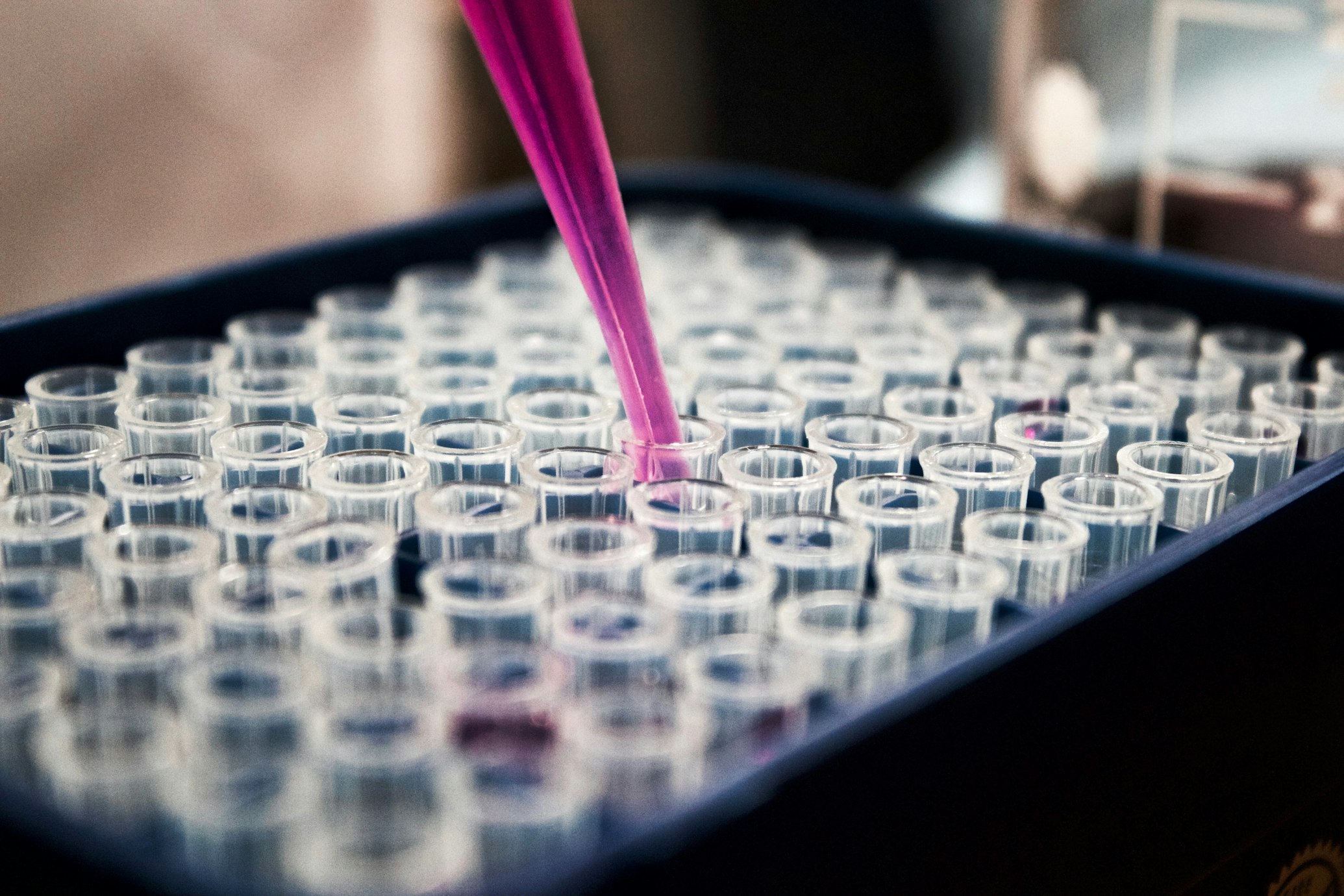
Modern chemical laboratories use specialized reagents for polymer synthesis and analysis.
From Laboratory Curiosity to Lifesaving Material: The Enduring Polymer Legacy
The foundational work of Herman F. Mark and his contemporaries created a scientific infrastructure that enabled countless polymer-based innovations. The period from the 1930s through the 1940s marked a "golden age" for synthetic polymers, with scientists in both academic and industrial laboratories synthesizing new monomers from abundant raw materials 2 . This era saw the development of now-ubiquitous materials like polyvinyl chloride (PVC), polyurethane (PU), nylon fibers, neoprene, Teflon, and polystyrene 2 .
The booming success of synthetic polymers taught industry a vital lesson: "fundamental research can lead to products that replace natural materials" 2 . This understanding fueled continued investment in polymer research, leading to advanced materials with specialized properties:
Kevlar
High-strength polymeric fibers for ballistic protection
Biocompatible Polymers
Materials for medical implants, drug delivery systems, and tissue engineering
The field continues to evolve, with contemporary research addressing both the tremendous potential and environmental challenges posed by synthetic polymers. With global production reaching "several hundred millions of tons annually" 2 , polymer scientists are now developing sustainable alternatives and biodegradation strategies using microorganisms that can break down organic macromolecules 2 .
This ongoing innovation cycle—from fundamental understanding to practical application and back again—is perhaps the most fitting tribute to Herman F. Mark's legacy. His vision of polymer science as an integrated discipline, combining chemistry, physics, and engineering, continues to guide researchers as they develop the materials that will shape our future.
Nobel Prizes in Polymer Science
| Year | Laureates | Contribution |
|---|---|---|
| 1953 | Hermann Staudinger | Macromolecular chemistry foundation 6 |
| 1963 | Karl Ziegler, Giulio Natta | Catalytic polymerization (Ziegler-Natta catalysis) 6 |
| 1974 | Paul J. Flory | Theoretical polymer chemistry 6 |
| 1991 | Pierre-Gilles de Gennes | Generalized theory of polymer phase transitions 6 |
| 2000 | Alan Heeger, Alan MacDiarmid, Hideki Shirakawa | Conductive polymers 2 6 |
| 2005 | Robert Grubbs, Richard Schrock, Yves Chauvin | Olefin metathesis in polymer synthesis 6 |
Timeline of Polymer Science Development
1920s
Hermann Staudinger proposes the macromolecular hypothesis, suggesting polymers are long chains of atoms 6
1946
Mark establishes the Polymer Research Institute at Brooklyn Polytechnic 6
1953
Staudinger receives Nobel Prize for his work on macromolecular chemistry 6
1963
Ziegler and Natta receive Nobel Prize for catalytic polymerization methods 6