RAFT Polymerization in Aqueous and Green Solvents: Sustainable Strategies for Biomedical Polymer Design
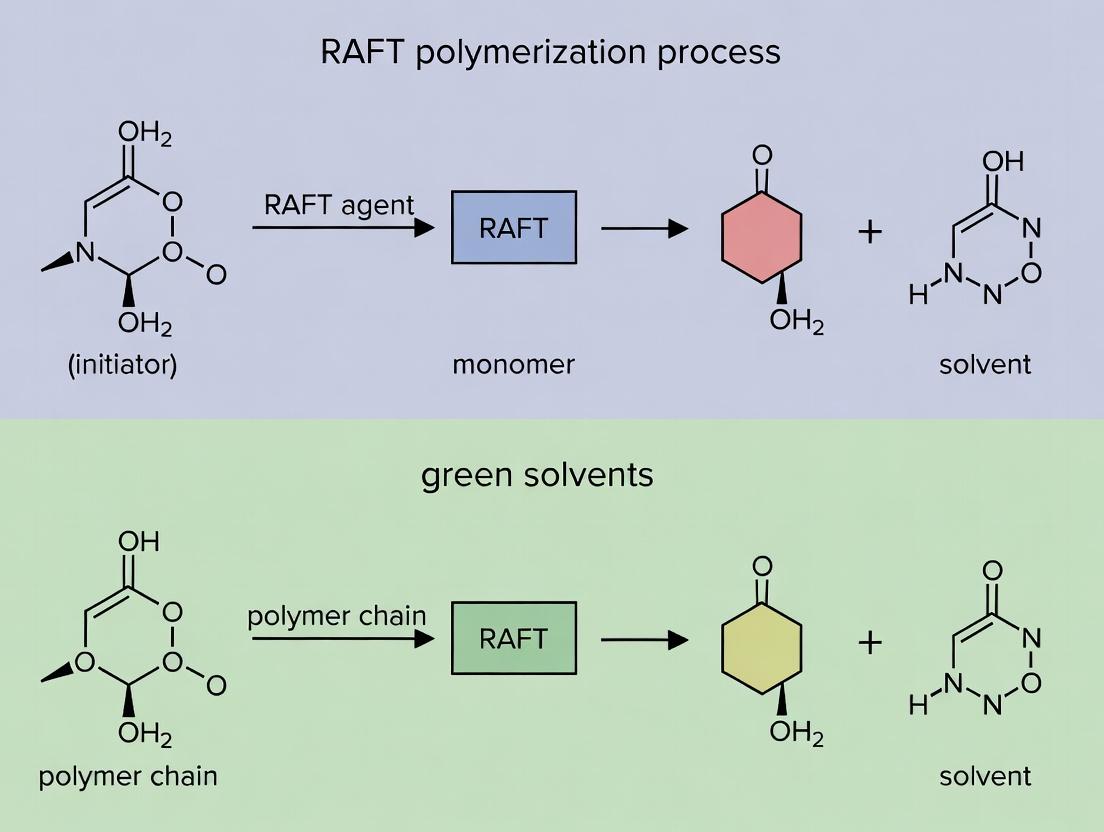
This article provides a comprehensive guide to Reversible Addition-Fragmentation Chain Transfer (RAFT) polymerization in environmentally benign media, specifically aqueous solutions and green solvents.
RAFT Polymerization in Aqueous and Green Solvents: Sustainable Strategies for Biomedical Polymer Design
Abstract
This article provides a comprehensive guide to Reversible Addition-Fragmentation Chain Transfer (RAFT) polymerization in environmentally benign media, specifically aqueous solutions and green solvents. Tailored for researchers and drug development professionals, it covers the fundamental principles of aqueous RAFT, explores advanced methodologies and biomaterial applications, addresses common experimental challenges and optimization strategies, and provides a critical comparison with other controlled polymerization techniques. The review highlights how solvent choice impacts polymerization kinetics, polymer properties, and the development of next-generation drug delivery systems, biologics conjugates, and diagnostic agents, positioning green-RAFT as a cornerstone of sustainable polymer chemistry for biomedical innovation.
Understanding RAFT in Green Media: Core Principles and Solvent Selection
This application note, framed within a broader thesis on sustainable polymerization, details the mechanism and protocols for Reversible Addition-Fragmentation Chain-Transfer (RAFT) polymerization in aqueous and polar solvent systems. RAFT is a cornerstone of controlled radical polymerization, enabling precise synthesis of polymers with complex architectures. Its application in biocompatible and green solvents is critical for advancing drug delivery systems and environmentally friendly materials science.
Core Mechanism of RAFT Polymerization
RAFT polymerization employs a chain transfer agent (CTA), typically a thiocarbonylthio compound (Z-C(=S)S-R), to mediate equilibrium between active propagating radicals and dormant polymeric chains. The mechanism involves two key reversible steps:
- Addition-Fragmentation: A propagating radical (P~n~•) adds to the C=S bond of the CTA, forming an intermediate radical. This intermediate rapidly fragments, either to regenerate the original species or to yield a new dormant chain (R-polymer) and a new reinitiating radical (R•).
- Reinitiation: The R• radical reinitiates polymerization, ensuring a constant number of growing chains.
In water and polar solvents, the solubility and reactivity of the CTA and intermediates are profoundly affected, often requiring hydrophilic CTAs (e.g., with ionic or PEG-containing groups) to maintain control.
Table 1: Performance of Common RAFT Agents in Aqueous/Polar Media
| RAFT Agent (CTA) Structure | Solvent System | Typical Monomer (e.g.) | Achieved Đ (Dispersity) | Key Advantage for Aqueous Use |
|---|---|---|---|---|
| Trithiocarbonate (HOOC-C≡N-CH~2~-C(=S)S-CH~3~) | Buffer (pH 7.0) | N-Isopropylacrylamide (NIPAM) | 1.05 - 1.15 | Excellent water solubility, fast fragmentation |
| Dithiobenzoate (C~6~H~5~-C(=S)S-CH~2~CH~2~-COOH) | Dioxane/Water (9:1) | Acrylic Acid (AA) | 1.10 - 1.20 | Good control over acrylic acids |
| Cyanomethyl Dodecyl Trithiocarbonate | Ethanol/Water (4:1) | Methyl Methacrylate (MMA) | 1.15 - 1.25 | Solubility in alcoholic green solvents |
| Macro-CTA (PEG-based) | Pure Water | N,N-Dimethylacrylamide (DMA) | < 1.20 | Biocompatibility, enables block copolymers |
Table 2: Effect of Solvent Polarity on RAFT Kinetics (Representative Data)
| Solvent | Dielectric Constant (ε) | Relative Polymerization Rate (k~p~*) | Observed Đ (vs. Toluene) |
|---|---|---|---|
| Toluene (Reference) | 2.4 | 1.00 | 1.10 |
| Dimethylformamide (DMF) | 38.3 | 1.15 | 1.12 |
| Ethanol | 24.6 | 1.08 | 1.18 |
| Water | 80.1 | 1.25 - 1.50* | 1.10 - 1.30 |
*Rate increase attributed to the "polyelectrolyte effect" for charged monomers and/or aggregation phenomena.
Detailed Experimental Protocols
Protocol 1: Synthesis of Poly(NIPAM) via Aqueous RAFT
Objective: To synthesize well-defined, thermoresponsive Poly(N-isopropylacrylamide) using a water-soluble RAFT agent.
Materials: See "The Scientist's Toolkit" below. Procedure:
- Solution Preparation: In a 25 mL Schlenk tube, dissolve the hydrophilic trithiocarbonate RAFT agent (17.3 mg, 0.05 mmol) in degassed, deionized water (8 mL).
- Monomer Addition: Add NIPAM monomer (565 mg, 5.0 mmol). Swirl to dissolve.
- Initiation: Add the water-soluble initiator VA-044 (3.3 mg, 0.01 mmol) in 2 mL of degassed water.
- Degassing: Seal the tube and perform three freeze-pump-thaw cycles to remove oxygen.
- Polymerization: Place the tube in a pre-heated oil bath at 70°C with stirring. Allow reaction to proceed for 8 hours.
- Termination & Purification: Cool the tube in ice water to stop the reaction. Dialyze the solution (MWCO 3.5 kDa) against water for 3 days. Lyophilize to obtain the polymer as a white solid.
- Analysis: Characterize by
¹H NMR(for conversion) and Size Exclusion Chromatography (SEC) using an aqueous mobile phase (for M~n~ and Đ).
Protocol 2: RAFT Dispersion Polymerization in Ethanol/Water
Objective: To synthesize polymeric nanoparticles via polymerization-induced self-assembly (PISA) using a green solvent mixture.
Procedure:
- Macro-CTA Synthesis: First, synthesize a hydrophilic poly(acrylic acid)-macro-CTA (~20 units, Đ < 1.2) following a procedure similar to Protocol 1.
- Dispersion Polymerization: In a sealed vial, dissolve the macro-CTA (0.20 g, 0.02 mmol) in a degassed mixture of ethanol and water (4:1 v/v, total 10 g). Add the hydrophobic monomer benzyl methacrylate (BzMA) (0.60 g, 3.4 mmol). Degas by sparging with N~2~ for 20 mins.
- Initiation: Add AIBN (0.33 mg, 0.002 mmol) from a stock solution in degassed ethanol.
- Reaction: Place the vial in a heating block at 70°C for 24 hours under constant stirring. The solution will typically become milky as nanoparticles form.
- Analysis: Analyze nanoparticle size and morphology by Dynamic Light Scattering (DLS) and Transmission Electron Microscopy (TEM). Determine molecular weight by SEC in DMF.
Mechanism and Workflow Diagrams
Diagram 1: RAFT Polymerization Core Mechanism.
Diagram 2: Aqueous RAFT Experimental Workflow.
The Scientist's Toolkit
Table 3: Essential Research Reagent Solutions for Aqueous RAFT
| Item | Function & Specification | Example (Supplier) |
|---|---|---|
| Hydrophilic RAFT Agent | Chain-transfer agent mediating control. Must be water-soluble (ionic, non-ionic). | 4-Cyano-4-[(dodecylsulfanylthiocarbonyl)sulfanyl]pentanoic acid (CDTPA) |
| Water-Soluble Initiator | Generates radicals under mild, aqueous conditions. | 2,2'-Azobis[2-(2-imidazolin-2-yl)propane] dihydrochloride (VA-044) |
| Degassed Solvents | Reaction medium; must be purified and oxygen-free to prevent inhibition. | Deionized H~2~O, Ethanol (HPLC grade), sparged with N~2~ or Ar |
| Hydrophilic Monomer | Primary building block of the target polymer. | NIPAM, Acrylamide, Acrylic Acid (purified by inhibitor remover column) |
| Dialysis Membrane | Purifies polymer from unreacted monomers and small molecules. | Regenerated cellulose, MWCO 1-3.5 kDa |
| Aqueous SEC Standards | Calibrates SEC system for accurate molecular weight determination. | Poly(ethylene oxide) (PEO) or poly(acrylic acid) (PAA) standards |
| Buffer Salts | Controls pH for stability of ionic monomers and CTAs. | Phosphate, bicarbonate buffers (for pH-sensitive polymerizations) |
Why Go Green? The Environmental and Practical Drivers for Aqueous/Green Solvent RAFT
The shift towards sustainable chemistry mandates the adoption of Reversible Addition-Fragmentation Chain-Transfer (RAFT) polymerization in aqueous and green solvent systems. This transition is driven by both significant environmental imperatives and compelling practical advantages that enhance polymer synthesis for biomedical and advanced material applications.
Environmental & Practical Drivers: A Quantitative Comparison
Table 1: Comparative Analysis of Traditional Organic vs. Green Solvent Systems for RAFT
| Driver Category | Traditional Organic Solvents (e.g., THF, DMF) | Aqueous/Green Solvents (e.g., Water, Cyrene, Ethanol) | Quantitative Benefit/Impact |
|---|---|---|---|
| Environmental | High Volatile Organic Compound (VOC) emissions; Often hazardous waste generation; Derived from petrochemicals. | Minimal VOC emissions; Reduced hazard potential; Often bio-derived & biodegradable. | >90% reduction in VOC emissions; Up to 100% renewable carbon content. |
| Process & Safety | Requires stringent containment; Flammability/toxicity risks; High energy cost for removal/recovery. | Safer handling; Non-flammable options (water); Lower purification energy. | ~70% reduction in process safety index; Up to 60% lower energy for solvent removal. |
| Polymerization Kinetics | Variable chain transfer constant (Ctr); Solvent dependency can slow rates. | Enhanced rates for water-soluble monomers; Possible compartmentalization effects. | kp app can increase 2-5 fold for monomers like NIPAM in water. |
| End-Group Fidelity | Can be high but dependent on solvent choice. | Excellent for hydrophilic polymers; hydrolysis risk for some Z-groups at extreme pH. | >95% end-group retention post-polymerization for well-designed agents. |
| Polymer Purity & Isolation | Requires precipitation into antisolvent; Solvent traces may remain. | Direct lyophilization or simple filtration possible for thermoresponsive polymers. | Isolation yield improvement of 15-25%; PDI often maintained <1.2. |
| Bioconjugation Compatibility | Often requires polymer work-up and phase transfer. | Direct conjugation in aqueous buffer feasible. | Conjugation efficiency improvements of 20-40% reported. |
Detailed Protocols
Protocol 1: RAFT Polymerization of N-Isopropylacrylamide (PNIPAM) in Pure Aqueous Buffer
Aim: To synthesize thermoresponsive PNIPAM with low dispersity using a water-soluble RAFT agent. Materials: See "The Scientist's Toolkit" below. Method:
- Solution Preparation: In a 25 mL Schlenk tube, dissolve the RAFT agent CESP (25.0 mg, 0.10 mmol) and the initiator VA-044 (3.3 mg, 0.010 mmol) in 0.1 M phosphate buffer (pH 7.0, 9.5 mL).
- Monomer Addition: Add NIPAM (1.13 g, 10.0 mmol) to the solution. Seal the tube with a rubber septum.
- Degassing: Sparge the solution with nitrogen or argon for 25-30 minutes to remove dissolved oxygen.
- Polymerization: Place the sealed tube in a pre-heated oil bath at 45°C with stirring. Allow the reaction to proceed for 8 hours.
- Termination & Work-up: Cool the tube in ice water. Expose the solution to air to terminate the reaction. Purify the polymer by dialysis (MWCO 3.5 kDa) against deionized water for 3 days, with twice-daily water changes. Recover the polymer by lyophilization. Expected Outcome: A pink powder (yield >90%). Characterize by ( ^1H ) NMR (for conversion, end-group analysis) and SEC (Mₙ ~ 11,000 g/mol, Đ < 1.15).
Protocol 2: RAFT Dispersion Polymerization of Glycidyl Methacrylate (GMA) in Ethanol/Water
Aim: To synthesize epoxy-functional polymeric nanoparticles in a green solvent mixture. Materials: GMA, PEG-CTA (poly(ethylene glycol) macro-RAFT agent), AIBN, anhydrous ethanol. Method:
- Formulation: In a vial, prepare a homogeneous mixture of GMA (1.42 g, 10 mmol), PEG-CTA (Mₙ ~ 5,000, 0.20 mmol), and AIBN (0.033 mmol, 5.4 mg) in anhydrous ethanol (8 mL). Add deionized water (2 mL) dropwise under stirring to induce the formation of a monomer-swollen micelle system.
- Degassing: Sparge the milky dispersion with nitrogen for 20 minutes.
- Polymerization: Heat the sealed vial at 70°C in a thermostated block for 18 hours with constant stirring (500 rpm).
- Isolation: Cool the vial. Pass the dispersion through a short column of basic alumina to remove residual initiator. Nanoparticles can be isolated by centrifugation (15,000 rpm, 30 min) and re-dispersed in ethanol or water. Expected Outcome: A stable milky dispersion of epoxy-functional nanoparticles. Analyze by DLS (hydrodynamic diameter ~80-150 nm, PDI <0.1) and SEM for morphology.
Visualization: Workflow and Pathway Diagrams
Title: Aqueous/Green RAFT Polymerization Workflow
Title: Key Drivers for Green RAFT Adoption
The Scientist's Toolkit: Essential Research Reagent Solutions
Table 2: Key Reagents for Aqueous/Green Solvent RAFT
| Reagent/Solution | Typical Function in Green RAFT | Key Consideration |
|---|---|---|
| 4-Cyano-4-[(ethylsulfanylthiocarbonyl)sulfanyl]pentanoic acid (CESP) | Water-soluble RAFT agent (CTA) for acrylic amides/acids. Provides excellent control and carboxylic acid end-group. | pKa of R-group acid impacts solubility; adjust buffer pH accordingly. |
| 2,2'-Azobis[2-(2-imidazolin-2-yl)propane]dihydrochloride (VA-044) | Water-soluble azo initiator. Decomposes cleanly at low temperatures (44°C). | Ideal for heat-sensitive monomers or maintaining end-group integrity. |
| Poly(ethylene glycol) macro-RAFT (PEG-CTA) | Amphiphilic macro-CTA for dispersion polymerization in ethanol/water mixtures. Stabilizes growing particles. | PEG chain length determines nanoparticle size and stabilization efficiency. |
| Cyanomethyl methyl(4-pyridyl)carbamodithioate | RAFT agent for cationic monomers (e.g., DMAEMA) in aqueous media. | Charge of Z-group must be compatible with monomer to ensure control. |
| Cyrene (Dihydrolevoglucosenone) | Bio-derived polar aprotic green solvent alternative to DMF/DMSO. | Can participate in side reactions; must validate monomer and CTA stability. |
| 0.1-1.0 M Phosphate Buffered Saline (PBS), pH 7.4 | Standard aqueous reaction medium for biomedical polymers. Mimics physiological conditions. | Ionic strength can affect polymerization kinetics and polymer solubility (LCST). |
Within the broader research on RAFT (Reversible Addition-Fragmentation Chain-Transfer) polymerization in aqueous solutions, the selection of solvent is a critical parameter determining the sustainability, efficiency, and applicability of the polymer synthesis. This document defines key 'green solvent' classes, providing application notes and detailed protocols for their use in polymerization, particularly targeting researchers in polymer science and drug development.
Green Solvent Classes: Definitions and Key Properties
Green solvents are characterized by low toxicity, biodegradability, low volatility (reducing VOC emissions), and derivation from renewable resources or benign processes.
Table 1: Quantitative Comparison of Green Solvent Classes for Polymerization
| Solvent Class | Example | Boiling Point (°C) | Vapor Pressure | Viscosity (cP) | Dielectric Constant | Key Green Advantage | Common Polymerization Type |
|---|---|---|---|---|---|---|---|
| Water | H₂O | 100 | 23.8 mmHg (25°C) | 0.89 (25°C) | ~80 | Non-toxic, non-flammable | RAFT, Aqueous Dispersion |
| Ionic Liquids | [BMIM][BF₄] | >400 | Negligible | 219 (20°C) | ~15 | Non-volatile, Tunable | RAFT, Conventional Radical |
| Supercritical Fluids | scCO₂ | 31.1 (Critical Temp) | - | 0.02-0.1 (sc) | ~1.5 | Non-flammable, Easily Separated | Precipitation Polymerization |
| Bio-Based Alternatives | Cyrene (Dihydrolevoglucosenone) | 227 | Low | 2.39 (25°C) | ~78 | Renewable Feedstock | RAFT, Polycondensation |
Application Notes & Detailed Protocols
Protocol 2.1: RAFT Polymerization of N-Isopropylacrylamide (NIPAM) in Aqueous Solution
Objective: Synthesis of thermoresponsive PNIPAM via RAFT in water. Thesis Context: Demonstrates the benchmark green solvent system for biocompatible polymer synthesis.
Research Reagent Solutions & Materials:
| Item | Function | Example/Specification |
|---|---|---|
| N-Isopropylacrylamide (NIPAM) | Monomer | Purified by recrystallization (hexane/acetone) |
| 4-Cyano-4-[(dodecylsulfanylthiocarbonyl)sulfanyl]pentanoic acid (CDTPA) | RAFT Agent | >97% purity, stored at -20°C |
| 4,4'-Azobis(4-cyanovaleric acid) (ACVA) | Water-soluble Initiator | Recrystallized from methanol |
| Deionized Water | Solvent/Reaction Medium | Degassed via N₂ sparging for 30 min |
| Dialysis Tubing (MWCO 3.5 kDa) | Purification | For removing unreacted monomer/agents |
Procedure:
- In a 25 mL Schlenk flask, dissolve NIPAM (2.26 g, 20 mmol), CDTPA (33.5 mg, 0.08 mmol), and ACVA (4.5 mg, 0.016 mmol) in degassed deionized water (10 mL).
- Seal the flask and perform three freeze-pump-thaw cycles to remove oxygen.
- Place the flask in a pre-heated oil bath at 70°C with stirring for 24 hours.
- Terminate the reaction by rapid cooling in ice water and exposure to air.
- Purify the polymer by dialysis against deionized water for 3 days, changing water twice daily.
- Recover PNIPAM by freeze-drying. Analyze conversion via ¹H NMR and molecular weight via SEC (using aqueous eluent).
Diagram: RAFT Polymerization in Aqueous Medium
Protocol 2.2: RAFT Polymerization in Ionic Liquid ([BMIM][BF₄])
Objective: Synthesize poly(methyl methacrylate) (PMMA) using a non-volatile ionic liquid medium. Thesis Context: Explores high-viscosity, non-VOC solvent systems for potentially enhanced control.
Procedure:
- Dry the ionic liquid [BMIM][BF₄] under high vacuum at 60°C for 24 h.
- In a dried vial, mix MMA (1.0 g, 10 mmol), RAFT agent (CPDB, 2.8 mg, 0.01 mmol), and initiator (AIBN, 0.16 mg, 0.001 mmol) in [BMIM][BF₄] (2 g).
- Degas the mixture via N₂ bubbling for 20 minutes.
- Heat the reaction at 70°C with stirring for 15 hours.
- Dilute the viscous mixture with acetone (10 mL) and precipitate the polymer into rapidly stirring hexane (100 mL).
- Filter the polymer, wash with hexane, and dry in vacuo. The ionic liquid can be recovered from the filtrate by evaporating the volatile solvents.
Protocol 2.3: Precipitation Polymerization in Supercritical CO₂ (scCO₂)
Objective: Synthesis of poly(1,1,2,2-tetrahydroperfluorodecyl acrylate) (PFDHA) in scCO₂. Thesis Context: Demonstrates a solvent-free (post-reaction) process for fluoropolymer synthesis.
Procedure:
- Load FDHA monomer (1.0 g) and initiator (Perfluorooctanoyl peroxide, 1 mol%) into a high-pressure view cell reactor.
- Seal and pressurize the cell with CO₂ to 50 bar at room temperature.
- Heat the cell to 65°C, subsequently increasing pressure to 275 bar (supercritical state).
- Allow polymerization to proceed with stirring for 24 hours.
- Slowly depressurize the system over 2 hours. The polymer is deposited as a dry, white solid in the cell. CO₂ is vented or captured.
Diagram: Supercritical CO₂ Polymerization Workflow
Protocol 2.4: Polycondensation Using Bio-Based Solvent (Cyrene)
Objective: Synthesis of poly(lactic acid) (PLA) oligomers via ring-opening using Cyrene as solvent. Thesis Context: Investigates dipolar aprotic solvent replacement (e.g., for DMF) with a bio-derived alternative.
Procedure:
- In a flame-dried round-bottom flask under N₂, add L-lactide (1.44 g, 10 mmol) and tin(II) 2-ethylhexanoate catalyst (Sn(Oct)₂, 20 µL).
- Dissolve the mixture in Cyrene (5 mL).
- Heat to 140°C with stirring for 6 hours.
- Cool the reaction mixture and precipitate the polymer into cold methanol (50 mL).
- Filter and dry the white solid. Characterize by ¹H NMR and DSC.
The Scientist's Toolkit: Essential Research Reagent Solutions
Table 2: Key Reagents for RAFT in Green Solvents
| Reagent Category | Specific Example | Function in Polymerization | Solvent Compatibility Notes |
|---|---|---|---|
| Water-Soluble RAFT Agents | CTDPA, CPADB | Provides controlled architecture in aqueous media. | Must contain hydrophilic (e.g., carboxylic acid) groups. |
| Ionic Liquid-Compatible Initiators | AIBN, V-501 | Decomposes at target temperature to generate radicals. | Must be soluble/suspendable in viscous ionic liquids. |
| scCO₂-Soluble (Fluorinated) Agents | Perfluorinated RAFT agents, F-AIBN | Ensures homogeneity in the low-polarity scCO₂ phase. | Often requires fluorinated chemical structures. |
| Bio-Based Monomers | Lactide, Itaconic acid | Enables full life-cycle green synthesis. | Must assess solubility in alternative green solvents. |
| Catalysts for Bio-Solvents | Sn(Oct)₂, Enzyme (Candida antarctica Lipase B) | Drives polymerization (e.g., ROP, polycondensation). | Must remain active in chosen bio-solvent (e.g., Cyrene). |
RAFT polymerization is a cornerstone of controlled radical polymerization, enabling precise synthesis of polymers with complex architectures. Within the broader thesis on advancing RAFT in aqueous solutions and green solvents, the design of water-compatible Chain Transfer Agents (CTAs) is paramount. This shift from organic to aqueous media aligns with green chemistry principles, reduces environmental impact, and is critical for biomedical applications where direct polymerization in biological buffers is required. This application note details the design, selection, and use of key hydrophilic CTAs, providing protocols for their application in aqueous RAFT polymerization.
Key CTA Classes and Performance Data
The efficacy of a CTA in water is determined by its hydrophilic character (imparted by ionic or non-ionic solubilizing groups) and the reactivity of its R and Z groups. The following table summarizes core CTA classes and their performance metrics.
Table 1: Key Water-Soluble RAFT CTAs and Aqueous Polymerization Data
| CTA Class & Example Structure | Solubilizing Group Type | Key Monomer Example | Typical pH Range | Reported Đ (Dispersity) | % Conversion (Time) | Key Reference (Year)* |
|---|---|---|---|---|---|---|
| Carboxylic Acid Dithiobenzoatee.g., 4-Cyano-4-[(dodecylsulfanylthiocarbonyl)sulfanyl]pentanoic acid (CDP) | Anionic (Carboxylate) | N-Isopropylacrylamide (NIPAM) | 7-9 | <1.10 | >95% (8 h) | Moad et al. (2005) |
| Ionic Liquid Trithiocarbonatee.g., S-Butyl-S'-(α,α'-dimethyl-α''-acetic acid) trithiocarbonate with imidazolium cation | Cationic (Imidazolium) | Methacrylic acid (MAA) | 3-7 | 1.15-1.25 | 90% (6 h) | Wang et al. (2019) |
| Sulfonate-Functional Trithiocarbonatee.g., 2-(Dodecylthiocarbonothioylthio)-2-methylpropionic acid 3-sulfopropyl ester potassium salt | Anionic (Sulfonate) | Acrylamide (AAm) | 2-12 | <1.20 | ~99% (5 h) | Chiefari et al. (2003) |
| Poly(ethylene glycol) (PEG) Macro-CTAe.g., mPEG₄₅-based trithiocarbonate | Non-ionic (PEG) | N,N-Dimethylacrylamide (DMA) | 3-10 | 1.05-1.15 | 85% (4 h) | Convertine et al. (2004) |
| Zwitterionic Dithioestere.g., Betaine-based CTA | Zwitterionic (Sulfobetaine) | 2-Hydroxyethyl methacrylate (HEMA) | 5-9 | 1.10-1.30 | 80% (10 h) | Ladmiral et al. (2006) |
Note: Representative references are provided. Recent literature (2020-2024) emphasizes tertiary amine-based CTAs for pH-responsive behavior and novel zwitterionic designs.
Detailed Experimental Protocols
Protocol 2.1: Aqueous RAFT Polymerization of NIPAM using a Carboxylic Acid CTA (CDP)
Objective: Synthesis of well-defined, thermoresponsive poly(NIPAM) with low dispersity. Materials: See "The Scientist's Toolkit" below. Procedure:
- Solution Preparation: In a 25 mL Schlenk tube, dissolve NIPAM (2.26 g, 20.0 mmol) and CDP (28.0 mg, 0.067 mmol, target DPₙ=300) in degassed, deionized water (7.0 mL). Seal with a rubber septum.
- Degassing: Sparge the solution with argon or nitrogen for 30 minutes while stirring in an ice bath.
- Initiator Addition: Using a degassed syringe, add the V-501 initiator solution (0.67 mL of a 10 mg/mL stock in water, 0.022 mmol, [CTA]:[I] = 3:1).
- Polymerization: Place the sealed tube in a pre-heated oil bath at 70°C with stirring. Monitor conversion over time by ¹H NMR spectroscopy (disappearance of vinyl peaks δ 5.5-6.2 ppm).
- Termination: After 8 hours (or at >95% conversion), cool the reaction rapidly in an ice-water bath. Open to air to quench radicals.
- Purification: Dialyze the reaction mixture against deionized water (MWCO 3.5 kDa) for 3 days, with water changes twice daily. Lyophilize to obtain the final polymer as a white fluffy solid.
- Analysis: Determine molecular weight and dispersity (Đ) via aqueous SEC-MALS. Analyze thermoresponsive behavior by cloud point measurement using UV-Vis spectroscopy.
Protocol 2.2: Synthesis of a Block Copolymer using a PEG Macro-CTA in PBS Buffer
Objective: Demonstrating biocompatible polymerization directly in phosphate-buffered saline (PBS). Procedure:
- Macro-CTA Synthesis: First, prepare mPEG₄₅-TTC following established literature. Confirm structure by ¹H NMR and SEC.
- Block Copolymerization: Dissolve the mPEG₄₅-TTC macro-CTA (0.50 g, 0.025 mmol, target DPₙ=100 for second block) and the second monomer (e.g., DMA, 0.25 g, 2.5 mmol) in degassed 1x PBS, pH 7.4 (3.0 mL).
- Degassing & Initiation: Sparge with N₂ for 20 min. Add V-501 (0.46 mg, 0.0017 mmol, [CTA]:[I] ≈ 15:1) from a degassed stock solution.
- Reaction: Heat at 70°C for 6 hours.
- Work-up: Cool, dialyze (MWCO 10 kDa), and lyophilize. Use ¹H NMR to determine conversion and SEC to confirm chain extension and low Đ.
Visualizing CTA Selection and Workflow
Diagram 1: Water-Soluble CTA Selection Logic
Diagram 2: Generic Aqueous RAFT Workflow
The Scientist's Toolkit: Essential Research Reagent Solutions
Table 2: Key Reagents for Aqueous RAFT Experiments
| Item | Function & Rationale |
|---|---|
| Water-Soluble CTAs (e.g., CDP, sulfonate TTC) | Core agent controlling chain growth and defining end-group functionality. Water-solubility enables homogeneous polymerization. |
| VA-044 or V-501 Initiators | Azo-initiators decomposing at 44°C and 70°C, respectively. Provide radical flux in water. V-501 is preferred for higher temps. |
| Degassed, Deionized Water | Primary green solvent. Removing O₂ is critical to prevent inhibition/retardation. Use freeze-pump-thaw or prolonged sparging. |
| Physiological Buffers (PBS, HEPES) | Enable polymerizations under biologically relevant conditions for direct synthesis of bio-conjugates. Must be degassed. |
| Dialysis Tubing (MWCO 1-14 kDa) | Standard purification method for removing unreacted monomer, salts, and small molecules while retaining polymer. |
| Aqueous SEC System with MALS/RI/DVis | Essential characterization tool for determining absolute molecular weight (Mₙ, Mw), dispersity (Đ), and conjugate formation. |
| Lyophilizer (Freeze Dryer) | Gentle method for recovering water-soluble polymers as dry, stable powders without exposing them to heat-induced degradation. |
| Schlenk Line or Glovebox | Provides an inert atmosphere (N₂/Ar) for degassing solutions and setting up reactions, crucial for successful controlled polymerization. |
The Role of Hydrophilicity, pH, and Temperature on Aqueous RAFT Kinetics and Control
Application Notes
Within the broader thesis on advancing RAFT polymerization in benign media, understanding the interplay of hydrophilicity, pH, and temperature is critical for designing efficient, controlled polymerizations in aqueous solutions. These parameters directly influence the reactivity and stability of the chain transfer agent (CTA), the kinetics of the polymerization, and the final polymer characteristics, with significant implications for biomedical and drug delivery applications.
1. Hydrophilicity: The hydrophilicity of both the CTA (specifically its Z- and R-groups) and the monomer dictates aqueous solubility, aggregation behavior, and partitioning. Hydrophilic CTAs (e.g., those with carboxylate or trimethylammonium groups) ensure homogeneity in water, promoting faster fragmentation of the intermediate radical and better control. Conversely, hydrophobic CTAs may form micellar aggregates, compartmentalizing the reaction and altering kinetics. Monomer hydrophilicity affects propagation rates and potential side reactions like hydrolysis of the CTA.
2. pH: pH is a pivotal factor in aqueous RAFT, especially when using ionizable CTAs (e.g., carboxylic acid-based). It governs the ionization state of the CTA, altering its solubility, reactivity, and stability. At low pH, protonated carboxylic acid CTAs may exhibit reduced aqueous solubility and different equilibrium constants. At high pH, deprotonated, charged CTAs offer excellent solubility but may be susceptible to hydrolysis, leading to loss of control. pH also affects the stability of the thiocarbonylthio group.
3. Temperature: Temperature universally influences all rate constants (initiation, propagation, chain transfer, termination). In aqueous RAFT, specific considerations include the impact on CTA hydrolysis (which accelerates with temperature), the solubility of monomers and polymers (via the LCST/UCST behavior), and the fragmentation efficiency of the macro-RAFT intermediate. Optimal temperature balances a reasonable polymerization rate with minimized side reactions.
The synergistic effect of these parameters determines the success of achieving low dispersity (Đ), high end-group fidelity, and complex architecture formation in water.
Table 1: Impact of CTA Hydrophilicity on RAFT Polymerization of NIPAM in Water
| CTA Type (Z/R Group) | Solubility in Water | Final Đ (D) | Monomer Conversion (%) | Observed Kinetics Trend |
|---|---|---|---|---|
| Hydrophobic (e.g., DDMAT) | Poor (micellar) | 1.25 - 1.40 | >95 | Rate inhibition, broadened MWD |
| Ionic (e.g., MPETTC) | Excellent | 1.08 - 1.15 | >95 | First-order kinetics, good control |
| Non-ionic Hydrophilic (e.g., PEG-RAFT) | Excellent | 1.10 - 1.20 | >95 | Controlled, linear Mn growth |
Table 2: Effect of pH on the Stability and Performance of a Carboxylic Acid-Based CTA (CPADB)
| pH Condition | CTA State | Dominant Degradation Pathway | Time for 50% CTA Loss (hr, 25°C) | Resulting Polymer Đ |
|---|---|---|---|---|
| 2.0 | Protonated | Precipitation, hydrolysis | ~48 | >1.30 |
| 5.0 | Partially ionized | Moderate hydrolysis | ~96 | ~1.20 |
| 7.4 (Buffer) | Fully ionized | Hydrolysis | ~24 | 1.15 (if fast polym.) |
| 10.0 | Fully ionized | Rapid hydrolysis | <12 | Loss of control (>1.5) |
Table 3: Influence of Temperature on Aqueous RAFT of DMAEMA
| Temperature (°C) | Polymerization Rate (kp, app) | CTA Hydrolysis Rate Constant (kh, x10^-6 s^-1) | Achievable Mn (kDa) at Đ < 1.2 |
|---|---|---|---|
| 50 | Moderate | 0.5 | Up to 50 |
| 70 | High | 2.1 | Up to 30 |
| 90 | Very High | 8.7 | <20 (control difficult) |
Experimental Protocols
Protocol 1: Evaluating pH-Dependent Kinetics for Poly(acrylic acid) Synthesis
Objective: To synthesize PAA via RAFT under different pH conditions and analyze kinetics and control.
Materials: See "Scientist's Toolkit" below.
Procedure:
- Solution Preparation: Prepare four separate solutions in 25 mL Schlenk tubes.
- Monomer solution: Dissolve AA (10.0 g, 139 mmol) and CPADB (38.9 mg, 0.139 mmol) in deionized water (10 mL).
- Initiator solution: Dissolve V-501 (7.8 mg, 0.028 mmol) in water (2 mL).
- pH Adjustment: Adjust each monomer/CTA solution to a target pH (4.0, 5.5, 7.0, 8.5) using 1M NaOH or HCl. Record final volume and adjust with water to keep concentrations consistent.
- Deoxygenation: Purge each solution with nitrogen or argon for 30 minutes while immersed in an ice bath.
- Initiation: Add the deoxygenated initiator solution (0.5 mL per tube) via syringe. Seal the tubes.
- Polymerization: Place tubes in a pre-heated oil bath at 70°C. Start timer.
- Sampling: At predetermined time intervals (e.g., 30, 60, 120, 240, 480 min), withdraw ~0.5 mL aliquots via degassed syringe. Quench immediately in liquid N2.
- Analysis:
- Conversion: Determine by 1H NMR (D2O, comparing vinylic proton signals to polymer backbone signals).
- Molecular Weight & Dispersity: Analyze via aqueous GPC (PEG/PEO standards).
Protocol 2: Investigating Thermoresponsive Polymerization Control with PNIPAM
Objective: To assess the effect of temperature on the RAFT polymerization of NIPAM below and above its LCST (~32°C).
Materials: N-Isopropylacrylamide (NIPAM), MPETTC, VA-044, deuterated water (D2O).
Procedure:
- Prepare Stock: In a Schlenk tube, dissolve NIPAM (2.0 g, 17.7 mmol) and MPETTC (9.7 mg, 0.035 mmol) in D2O (5 mL). Add VA-044 (1.2 mg, 0.0035 mmol).
- Deoxygenate: Bubble with N2 for 20 min.
- In-situ NMR Kinetics: Transfer the solution to a sealed NMR tube under N2. Insert into a pre-equilibrated NMR spectrometer.
- Low-Temp Run: Set probe temperature to 25°C (below LCST). Acquire sequential 1H NMR spectra every 10 minutes for 6 hours. Monitor decay of vinyl signals.
- High-Temp Run: Repeat preparation. Set NMR probe to 50°C (above LCST, polymer precipitates in situ). Acquire spectra similarly.
- Data Processing: Compare apparent propagation rates (kp,app) and linearity of ln([M]0/[M]) vs. time plots for both conditions. Isolate final polymers for GPC analysis.
Diagrams
Title: Key Parameter Effects on Aqueous RAFT Outcomes
Title: General Aqueous RAFT Experimental Workflow
The Scientist's Toolkit: Key Research Reagent Solutions
| Reagent/Material | Function & Rationale |
|---|---|
| 4-Cyano-4-[(dodecylsulfanylthiocarbonyl)sulfanyl]pentanoic acid (CDP) | A versatile, hydrophobic carboxylic acid-functionalized CTA. Used to study pH effects (via COOH ionization) and hydrophobicity-driven aggregation. |
| 2-(((Butylthio)carbonothioyl)thio)propanoic acid (BTPA) | A more hydrophilic carboxylic acid CTA. Offers better water solubility than CDP, used for studying pH-responsiveness with reduced aggregation complications. |
| [2-(Methacryloyloxy)ethyl]trimethylammonium chloride (MAETAC) | A cationic, hydrophilic monomer. Used to explore RAFT in the presence of charged monomers and to synthesize polyelectrolytes. |
| 4,4'-Azobis(4-cyanovaleric acid) (ACVA) | Water-soluble azo initiator. Decomposes at moderate temperatures (∼70°C), generating radicals to start the polymerization. |
| 2,2'-Azobis[2-(2-imidazolin-2-yl)propane]dihydrochloride (VA-044) | A low-temperature, water-soluble initiator (Td ∼44°C). Essential for polymerizations sensitive to high heat (e.g., with hydrolysable CTAs). |
| Phosphate Buffered Saline (PBS), 0.1M, pH 7.4 | Common physiological buffer. Used to simulate biological conditions and study RAFT kinetics/polymer stability in a relevant environment. |
| D2O for NMR Kinetics | Deuterated solvent for in-situ monitoring of monomer conversion by 1H NMR without interfering signals from water. |
| Dialysis Tubing (MWCO 1-3.5 kDa) | For purifying hydrophilic polymers from unreacted monomers, CTAs, and initiator fragments using water as the solvent. |
Practical Protocols and Biomedical Applications of Green RAFT Polymerization
This protocol is framed within a broader research thesis exploring sustainable polymerization methods. The focus is on advancing Reversible Addition-Fragmentation Chain Transfer (RAFT) polymerization in aqueous solutions and other green solvents, aiming to reduce reliance on volatile organic compounds (VOCs) in polymer synthesis for applications including drug delivery systems and biomaterials.
Key Reagent Solutions & Materials (The Scientist's Toolkit)
| Reagent/Material | Function/Explanation |
|---|---|
| RAFT Agent (Chain Transfer Agent, CTA) | Controls molecular weight and dispersity. Common aqueous choices: trithiocarbonates (e.g., 4-cyano-4-[(dodecylsulfanylthiocarbonyl)sulfanyl]pentanoic acid) or dithiobenzoates. |
| Water-Soluble Initiator | Generates free radicals under mild conditions. e.g., 4,4'-Azobis(4-cyanovaleric acid) (ACVA), V-501 (thermally activated) or VA-044 (lower temp activation). |
| Monomer | Must be water-soluble or water-dispersible for homogeneous or heterogeneous systems, respectively. e.g., N-Isopropylacrylamide (NIPAM), Acrylic acid (AA), Poly(ethylene glycol) methyl ether acrylate (PEGA). |
| Aqueous Buffer (e.g., Phosphate) | Controls pH, crucial for monomer/RAFT agent stability and polymerization kinetics, especially for ionic species. |
| Deoxygenation Agent | Removes inhibitory oxygen. Commonly, nitrogen or argon gas for sparging. Chemical agents (e.g., sodium dithionite) can be used. |
| Surfactant (e.g., SDS) | Essential for creating and stabilizing monomer droplets in heterogeneous (emulsion) polymerizations. |
| Parameter | Homogeneous Aqueous RAFT | Heterogeneous Aqueous RAFT (RAFT Emulsion) |
|---|---|---|
| System State | Single, true solution. | Colloidal dispersion (particles in continuous phase). |
| Monomer Solubility | Fully water-soluble. | Poorly water-soluble or water-immiscible. |
| RAFT Agent Location | Dissolved in aqueous phase. | Partitioned between phases; often in monomer droplets/particles. |
| Typical Mechanism | Solution Polymerization. | Emulsion or Miniemulsion Polymerization. |
| Key Additive | Buffer (for pH control). | Surfactant (for droplet/particle stabilization). |
| Final Product Form | Polymer solution. | Latex (polymer nanoparticle dispersion). |
| Primary Advantage | Simple setup, good control for hydrophilic polymers. | High solids content, efficient heat dissipation, useful for hydrophobic polymers. |
| Typical Dispersity (Đ) | 1.05 - 1.25 | 1.10 - 1.40 |
Detailed Experimental Protocols
Protocol A: Homogeneous Aqueous RAFT Polymerization of NIPAM
Objective: Synthesize well-defined, thermo-responsive poly(NIPAM) in a homogeneous aqueous solution.
Materials: NIPAM (monomer), ACVA (initiator), a carboxyl-functionalized trithiocarbonate RAFT agent (e.g., CPADB), phosphate buffer (pH 7.0), deionized water, nitrogen gas.
Procedure:
- Solution Preparation: In a round-bottom flask, dissolve the RAFT agent (e.g., 17.2 mg, 0.042 mmol) and NIPAM (1.0 g, 8.84 mmol) in degassed phosphate buffer (20 mL, 10 mM, pH 7.0). Target DP~210.
- Deoxygenation: Seal the flask with a septum. Sparge the solution with nitrogen or argon for 25-30 minutes while stirring.
- Initiator Addition: Under a positive nitrogen flow, add a degassed solution of ACVA (2.4 mg, 0.0084 mmol) in a small volume of buffer ([RAFT]/[I] ≈ 5:1).
- Polymerization: Place the sealed flask in a pre-heated oil bath at 70°C with stirring. Monitor conversion over time by ¹H NMR (disappearance of vinyl peaks).
- Termination: After reaching desired conversion (e.g., >90%, ~6-8 hours), cool the reaction in an ice bath. Expose to air to quench radicals.
- Purification: Dialyze the reaction mixture against deionized water (MWCO 3.5 kDa) for 2-3 days, then lyophilize to obtain the polymer.
Protocol B: Heterogeneous Aqueous RAFT Polymerization (Emulsion) of Styrene
Objective: Synthesize polystyrene nanoparticles via RAFT-mediated emulsion polymerization.
Materials: Styrene (monomer, purified over basic alumina), VA-044 (initiator), a hydrophobic RAFT agent (e.g., 2-(Dodecylthiocarbonothioylthio)-2-methylpropionic acid), Sodium dodecyl sulfate (SDS, surfactant), deionized water, nitrogen gas.
Procedure:
- Organic Phase: Mix styrene (10 g, 96 mmol) with the RAFT agent (e.g., 55 mg, 0.15 mmol) until fully dissolved. Target DP~640.
- Aqueous Phase: Dissolve SDS (200 mg) in degassed water (90 mL) in a reaction vessel.
- Emulsification: Add the organic phase to the aqueous phase under vigorous stirring (magnetic or mechanical) for 30 minutes to form a coarse emulsion. Optionally, further process with ultrasonication to form a miniemulsion.
- Deoxygenation: Sparge the emulsion with nitrogen for 45 minutes while maintaining stirring.
- Initiator Addition: Add a degassed solution of VA-044 (16.8 mg, 0.052 mmol) in water ([RAFT]/[I] ≈ 3:1).
- Polymerization: Heat the sealed vessel to 70°C with continuous stirring. The mixture should transition from milky-white to a bluish-tinged latex.
- Termination & Analysis: Cool after 12-24 hours. Sample can be passed through a basic alumina column to remove residual monomer. Particle size analyzed by Dynamic Light Scattering (DLS), molecular weight by SEC (using THF as eluent).
Visualizations
Title: Aqueous RAFT System Selection Workflow
Title: RAFT Core Equilibrium Mechanism
Application Notes
Stimuli-responsive polymers synthesized via Reversible Addition-Fragmentation Chain-Transfer (RAFT) polymerization in aqueous or green solvent systems are pivotal for advanced biomedical and materials science applications. Their controlled architecture enables precise tuning of properties like lower critical solution temperature (LCST), biocompatibility, and antifouling behavior. The integration of these materials within a thesis on RAFT polymerization in aqueous solutions and green solvents research highlights the methodology's role in sustainable polymer chemistry with high functional fidelity.
1. Poly(N-isopropylacrylamide) (PNIPAM): PNIPAM exhibits a sharp LCST near 32°C in aqueous media, making it ideal for injectable depots, cell culture substrates, and smart drug delivery systems. RAFT-controlled synthesis allows for narrow dispersity (Đ) and block copolymer formation, facilitating fine control over the transition temperature and kinetics.
2. PEG-based Copolymers: Poly(ethylene glycol) (PEG) is the gold standard for imparting stealth properties and enhancing circulation time. RAFT copolymerization of PEG macromonomers (e.g., PEG-acrylate) with functional monomers creates amphiphilic block copolymers for micellar drug carriers, hydrogels, and surface coatings.
3. Zwitterionic Polymers: Polymers containing sulfobetaine, carboxybetaine, or phosphorylcholine groups exhibit superior hydration and antifouling properties. Their synthesis via RAFT in water enables the creation of ultra-low fouling surfaces for marine coatings, biosensors, and implantable devices. The "zwitterionic effect" can also be leveraged to create dual pH- and temperature-responsive systems.
Key Quantitative Data Summary Table 1: Representative RAFT-Synthesized Stimuli-Responsive Polymers & Properties
| Polymer System | Example Monomers | Typical RAFT Agent (in water/green solvent) | Key Property (e.g., LCST, CMC) | Primary Application |
|---|---|---|---|---|
| Thermoresponsive | N-isopropylacrylamide (NIPAM) | 2-(((Butylthio)carbonothioyl)thio)propanoic acid (PABTC) | LCST: 30-34°C, Đ: 1.05-1.15 | Drug delivery, tissue engineering |
| PEG-based Amphiphile | PEG-methyl ether acrylate (PEGA), Styrene | 2-Cyano-2-propyl benzodithioate (CPDB) | CMC: 1-10 mg/L, Đ: <1.20 | Micellar encapsulation |
| Zwitterionic | [2-(Methacryloyloxy)ethyl]dimethyl-(3-sulfopropyl)ammonium hydroxide (SBMA) | 4-Cyano-4-(phenylcarbonothioylthio)pentanoic acid (CPADB) | UCST: Varies with salt, Đ: 1.10-1.25 | Antifouling coatings |
| Dual-Responsive | NIPAM + Acrylic Acid | PABTC | LCST tunable via pH, Đ: 1.1-1.2 | Stimuli-triggered release |
Table 2: Green Solvent Performance in RAFT Polymerization
| Solvent | APS* (as % of conversion in H2O) | Final Đ (Typical) | Key Advantage for Thesis Context |
|---|---|---|---|
| Water | 100% (Benchmark) | 1.05-1.15 | Ideal for biomed applications, zero VOC |
| Ethanol | 85-95% | 1.10-1.20 | Low toxicity, dissolves many monomers/agents |
| 2-MeTHF | 80-90% | 1.15-1.25 | Biobased origin, excellent for hydrophobic monomers |
| Cyrene (Dihydrolevoglucosenone) | 75-85% | 1.15-1.30 | Renewable, biodegradable, good solvating power |
*Average Polymerization Rate relative to water benchmark.
Experimental Protocols
Protocol 1: Synthesis of PNIPAM Homopolymer via Aqueous RAFT Objective: Synthesize a thermoresponsive PNIPAM with target Mn = 20,000 g/mol and Đ < 1.15. Materials: See "The Scientist's Toolkit" below. Procedure:
- Charge: In a 25 mL Schlenk tube, dissolve the RAFT agent PABTC (28.0 mg, 0.10 mmol) and NIPAM monomer (1.13 g, 10.0 mmol) in degassed deionized water (5 mL).
- Degas: Seal the tube and perform three freeze-pump-thaw cycles to remove oxygen.
- Initiation: Under a positive N2 flow, heat the solution to 70°C using an oil bath. Rapidly inject the initiator solution (V-50, 2.8 mg in 0.5 mL degassed H2O, 0.01 mmol).
- Polymerization: Allow reaction to proceed with stirring for 6 hours. Monitor conversion by 1H NMR.
- Termination: Cool the tube in ice water. Open to air and dilute with cold water.
- Purification: Purify by dialysis (MWCO 3.5 kDa) against cold water for 3 days. Lyophilize to obtain a white solid.
- Analysis: Determine molecular weight and dispersity by aqueous GPC. Confirm LCST by turbidimetry (λ = 500 nm).
Protocol 2: Synthesis of PEG-b-PNIPAM Block Copolymer in Ethanol Objective: Prepare an amphiphilic, thermoresponsive diblock copolymer. Procedure:
- Synthesize Macro-RAFT: First, synthesize PEG-RAFT (Mn ~ 5,000) by esterification of monomethoxy PEG-OH (5 kDa) with CPADB using DCC/DMAP catalysis in dry DCM. Purify by precipitation.
- Chain Extension: In a Schlenk tube, dissolve PEG-RAFT (0.50 g, 0.10 mmol) and NIPAM (1.13 g, 10.0 mmol) in degassed ethanol (6 mL).
- Degas & Initiate: Perform three freeze-pump-thaw cycles. Heat to 70°C and add V-65 initiator (2.7 mg in 0.2 mL EtOH, 0.01 mmol).
- Polymerization: React for 12 hours. Terminate by cooling and exposure to air.
- Purification: Precipitate into cold diethyl ether twice. Redissolve in cold water and lyophilize.
- Analysis: Use 1H NMR to confirm block structure and composition. Analyze self-assembly and thermoresponse via DLS and turbidimetry.
Protocol 3: Synthesis of Zwitterionic PolySBMA via Aqueous RAFT Objective: Achieve controlled polymerization of sulfobetaine methacrylate (SBMA) for low-Đ antifouling polymer. Procedure:
- Charge: Dissolve CPADB (27.7 mg, 0.10 mmol) and SBMA (2.22 g, 8.0 mmol) in a mixture of degassed 0.5 M NaCl aqueous solution (6 mL) and ethanol (2 mL). Note: Salt solution mitigates monomer aggregation.
- Degas & Initiate: Perform freeze-pump-thaw cycles (x3). Heat to 60°C and add ACVA initiator (2.8 mg in 0.3 mL degassed H2O, 0.01 mmol).
- Polymerization: Allow to react for 18 hours.
- Purification: Dialyze exhaustively (MWCO 7 kDa) against NaCl solution, then water. Lyophilize.
- Analysis: Characterize by GPC (with added salt in eluent). Perform protein adsorption (e.g., BSA-FITC) assay to confirm antifouling properties.
Visualizations
Diagram 1: Thesis Context: RAFT in Green Media for Responsive Polymers
Diagram 2: Protocol Workflow for PNIPAM Synthesis & Analysis
The Scientist's Toolkit: Key Research Reagent Solutions
Table 3: Essential Materials for Aqueous/Green Solvent RAFT of Responsive Polymers
| Item | Function & Rationale | Example (Supplier) |
|---|---|---|
| Water-Soluble RAFT Agents | Provide control in aqueous media; contain carboxylate or trimethylammonium groups for solubility. | PABTC, CPADB (Boront Scientific) |
| Green Solvents | Reduce environmental impact; must maintain RAFT equilibrium and dissolve agent/monomer. | Anhydrous Ethanol, 2-MeTHF, Cyrene (Sigma-Aldrich) |
| Monomer: NIPAM | Primary monomer for thermoresponsive polymers with LCST ~32°C. Must be recrystallized. | N-Isopropylacrylamide, 97% (Sigma-Aldrich) |
| Monomer: PEG-Acrylate | Provides biocompatible, hydrophilic segments for block copolymers. | Poly(ethylene glycol) methyl ether acrylate, Mn 480 (Sigma-Aldrich) |
| Monomer: SBMA | Zwitterionic monomer for ultra-low fouling polymers. | Sulfobetaine methacrylate (Sigma-Aldrich) |
| Water-Soluble Initiators | Decompose at moderate temps to generate radicals in water/green solvent mixes. | V-50 (Wako), ACVA (Sigma-Aldrich) |
| Dialysis Membranes | Purify polymers from unreacted monomers and salts; choice of MWCO is critical. | Spectra/Por Biotech CE Membranes (Repligen) |
| Salt Solutions (e.g., NaCl) | Used in zwitterionic polymer synthesis to prevent viscosity-induced limitations. | 0.5 M NaCl in degassed DI water (in-house prep) |
Application Notes The synthesis of well-defined block, gradient, and star copolymers via Reversible Addition-Fragmentation Chain-Transfer (RAFT) polymerization in aqueous media is a cornerstone of green polymer chemistry. This approach aligns with the broader thesis of developing sustainable synthetic pathways using water and green solvents. These advanced architectures enable precise control over nanoscale self-assembly, critical for applications in drug delivery, diagnostic imaging, and tissue engineering. Aqueous RAFT polymerization offers distinct advantages, including simplified purification, reduced environmental impact, and direct compatibility with biological systems. The choice of RAFT agent and monomer pair dictates the polymer topology and the resulting physicochemical properties of the self-assembled nanostructures, such as micelles, vesicles, and worms, which dictate performance in biomedical applications.
Protocol 1: Synthesis of a Di-Block Copolymer via Aqueous RAFT Dispersion Polymerization Objective: To synthesize poly(glycerol monomethacrylate)-block-poly(2-hydroxypropyl methacrylate) (PGMA-b-PHPMA) nanoparticles via polymerization-induced self-assembly (PISA). Principle: Chain extension from a hydrophilic PGMA macro-RAFT agent with PHPMA in water leads to in situ self-assembly into block copolymer nanoparticles. Materials:
- PGMA macro-RAFT agent (DP~50, 4-cyano-4-[(dodecylsulfanylthiocarbonyl)sulfanyl]pentanoic acid)
- 2-Hydroxypropyl methacrylate (HPMA)
- 4,4'-Azobis(4-cyanovaleric acid) (ACVA), water-soluble initiator
- Deionized water, degassed
- pH 7.4 phosphate buffer
Procedure:
- Dissolve PGMA macro-RAFT agent (0.100 g, 0.020 mmol) and ACVA (1.12 mg, 0.004 mmol, [RAFT]:[I] = 5:1) in pH 7.4 phosphate buffer (9.8 g).
- Add HPMA (0.284 g, 2.0 mmol) to the solution. The mixture will be initially molecularly dissolved.
- Purge the reaction mixture with nitrogen for 20 minutes to remove oxygen.
- Heat the sealed reaction vessel to 70°C with continuous stirring (500 rpm).
- Allow polymerization to proceed for 24 hours. The solution will become turbid as the PHPMA block grows and nanoparticles form.
- Cool the mixture to room temperature. Analyze conversion by 1H NMR spectroscopy. The crude dispersion can be used directly or purified by dialysis.
Protocol 2: Synthesis of a Gradient Copolymer via Aqueous RAFT Copolymerization Objective: To synthesize a gradient poly(N-isopropylacrylamide-grad-acrylic acid) (PNIPAm-grad-PAA) copolymer via simultaneous copolymerization of monomers with differing reactivity ratios. Principle: The continuous compositional change along the polymer chain, driven by monomer reactivity ratios, results in a gradient of hydrophilicity/LCST behavior. Materials:
- RAFT agent: 4-cyano-4-(phenylcarbonothioylthio)pentanoic acid (CPADB)
- N-isopropylacrylamide (NIPAm)
- Acrylic acid (AA)
- ACVA initiator
- Deionized water, degassed
Procedure:
- Dissolve CPADB (0.022 g, 0.078 mmol) and ACVA (4.4 mg, 0.016 mmol) in degassed water (10 mL).
- Add NIPAm (0.883 g, 7.8 mmol) and AA (0.056 g, 0.78 mmol) to achieve a 10:1 NIPAm:AA feed ratio.
- Purge with nitrogen for 20 minutes.
- Heat to 70°C for 8 hours under a nitrogen atmosphere.
- Cool and analyze. The gradient nature can be confirmed by monitoring composition drift via 1H NMR of samples taken at intervals or by chromatographic techniques.
Key Research Reagent Solutions
| Reagent/Material | Function in Aqueous RAFT |
|---|---|
| Water-Soluble RAFT Agents (e.g., CPADB, DOPA) | Provide control over Mn and Đ while maintaining solubility in the aqueous reaction medium. |
| ACVA Initiator | Thermally decomposes to generate radicals at a suitable rate at 60-70°C in water. Its ionic character aids water solubility. |
| HPMA Monomer | A hydroxyl-functional methacrylate that is water-soluble at reaction onset but forms a hydrophobic block during PISA. |
| NIPAm Monomer | Imparts thermoresponsive (LCST) behavior to copolymers, enabling temperature-triggered assembly/disassembly. |
| Macro-RAFT Agent (e.g., PGMA) | Acts as a hydrophilic stabilizer block and chain-transfer agent for the in situ growth of the second block during PISA. |
Quantitative Data Summary: Copolymer Properties & Performance
Table 1: Characteristics of Synthesized Block Copolymer Nanoparticles (PISA)
| Macro-RAFT (DP) | Core-Forming Block | Final Mn (theo.) | Đ (SEC) | Morphology (TEM) | Dh (DLS, nm) | Drug Loading (Doxorubicin) |
|---|---|---|---|---|---|---|
| PGMA50 | PHPMA200 | 32,500 | 1.12 | Spherical Micelles | 45 ± 5 | 12% w/w |
| PGMA50 | PHPMA300 | 47,500 | 1.18 | Worm-like Micelles | 120 ± 20 | 8% w/w |
| PGMA50 | PHPMA400 | 62,500 | 1.25 | Vesicles | 250 ± 50 | 15% w/w |
Table 2: Properties of Gradient vs. Block Copolymers
| Copolymer Architecture | Composition | LCST (°C) | Critical Micelle Concentration (mg/L) | pH-Responsive Release T50 (h) |
|---|---|---|---|---|
| PNIPAm-b-PAA (Block) | 90:10 NIPAm:AA | 45 | 15.2 | 8.5 |
| PNIPAm-grad-PAA (Gradient) | 90:10 NIPAm:AA | 34-60 (broad) | 48.7 | 3.2 |
Visualization: Aqueous RAFT Workflow & Nanostructure Formation
Aqueous RAFT Synthesis to Nanostructure Workflow
RAFT Agent Determines Polymer Architecture and Morphology
Application Notes
Polymer-Drug Conjugates
Polymer-drug conjugates are covalent assemblies where a therapeutic agent is linked to a water-soluble polymeric backbone via a biodegradable linker. The advent of controlled radical polymerization techniques, particularly RAFT in aqueous/green solvents, has enabled precise control over polymer architecture, molecular weight, and end-group fidelity, which are critical for reproducible pharmacokinetics.
Key Advantages:
- Enhanced drug solubility and stability.
- Prolonged systemic circulation via the Enhanced Permeability and Retention (EPR) effect.
- Targeted release via stimuli-responsive linkers (pH, redox, enzymatic).
Recent Data Summary (Last 2-3 Years):
| Conjugate System (Polymer-Drug) | Polymer Synthesis Method | Drug Loading (% w/w) | Key In Vivo Result (Model) | Reference (Type) |
|---|---|---|---|---|
| Poly(N-(2-hydroxypropyl) methacrylamide)-Doxorubicin (pHPMA-DOX) | Aqueous RAFT Polymerization | ~10-15% | 3x tumor growth inhibition vs. free DOX (Murine 4T1 breast cancer) | Preclinical Study |
| Poly(oligo(ethylene glycol) methyl ether methacrylate)-Gemcitabine (POEGMA-GEM) | RAFT in Deep Eutectic Solvent | 22% | 60% reduction in tumor volume at day 21 (Pancreatic xenograft) | Research Article |
| Dextran-Paclitaxel (Clinical: Xyotax) | Conventional Conjugation | ~20% | Improved tolerability, no significant survival benefit in Phase III (NSCLC) | Clinical Trial Data |
Polymeric Micelles
These are self-assembled nanostructures (10-100 nm) from amphiphilic block copolymers, with a hydrophobic core for drug encapsulation and a hydrophilic corona for stealth. RAFT-synthesized blocks with low Đ ensure sharp critical micelle concentrations (CMC) and consistent size.
Key Advantages:
- High loading capacity for hydrophobic drugs.
- Straightforward self-assembly process.
- Tunable size for tumor targeting.
Recent Data Summary (Last 2-3 Years):
| Copolymer System | RAFT Agent Used | CMC (mg/L) | Loaded Drug | Efficacy (IC50 reduction vs. free drug) |
|---|---|---|---|---|
| PEG-b-Poly(ε-caprolactone) (PEG-b-PCL) | 4-Cyano-4-[(dodecylsulfanylthiocarbonyl)sulfanyl]pentanoic acid | 4.5 | Curcumin | 5-fold (MCF-7 cells) |
| PEG-b-Poly(2-(diisopropylamino)ethyl methacrylate) (PEG-b-PDPA) | 2-Cyano-2-propyl dodecyl trithiocarbonate | ~15 (pH-sensitive) | Doxorubicin | 8-fold (HeLa cells at pH 6.5) |
| Poly(N-vinylpyrrolidone)-b-Poly(D,L-lactide) (PVP-b-PLA) | Macro-CTA from RAFT | 8.2 | Paclitaxel | 6.5-fold (A549 cells) |
Polymersomes
Polymersomes are vesicular structures formed from amphiphilic block copolymers, featuring a thick bilayer membrane and an aqueous lumen. They can encapsulate both hydrophilic (in lumen) and hydrophobic (in membrane) agents. RAFT allows for fine-tuning of the hydrophilic-to-hydrophobic block ratio, dictating membrane thickness and stability.
Key Advantages:
- Superior stability compared to liposomes.
- Dual cargo capability.
- Tunable membrane permeability and responsiveness.
Recent Data Summary (Last 2-3 Years):
| Copolymer System | Diameter (nm) | PDI | Encapsulated Agents (Hydrophilic/Hydrophobic) | Key Application Finding |
|---|---|---|---|---|
| PEG-b-Poly(butadiene) (PEG-b-PBD) | 120 ± 15 | 0.09 | Doxorubicin (HCl) / SiRNA | Synergistic gene-chemo delivery shown in vitro |
| Poly(2-(methacryloyloxy)ethyl phosphorylcholine)-b-Poly(2-(diisopropylamino)ethyl methacrylate) (PMPC-b-PDPA) | 85 ± 5 | 0.07 | Ovalbumin (antigen) / TLR agonist | Enhanced dendritic cell activation for vaccination |
| PEG-b-Poly(propylene sulfide) (PEG-b-PPS) | 200 ± 30 | 0.12 | Hemoglobin / - | Demonstrated as artificial oxygen carriers |
Detailed Experimental Protocols
Protocol: Synthesis of a pHPMA-Based Drug Conjugate via Aqueous RAFT
Aim: To synthesize a well-defined poly(N-(2-hydroxypropyl) methacrylamide) (pHPMA) polymer with a reactive end-group for subsequent doxorubicin (DOX) conjugation.
Part A: RAFT Polymerization of HPMA
- Reagents: HPMA monomer (2.0 g, 13.9 mmol), 4-Cyano-4-(phenylcarbonothioylthio)pentanoic acid (RAFT CTA) (5.8 mg, 0.021 mmol), VA-044 initiator (1.3 mg, 0.0042 mmol), Deionized water (degassed, 4 mL).
- Procedure: Dissolve CTA, initiator, and monomer in water in a Schlenk tube. Purge with nitrogen for 30 min while stirring. Place in a pre-heated oil bath at 44°C for 24 hours.
- Purification: Terminate by cooling and exposing to air. Purify via dialysis (MWCO 3.5 kDa) against water for 2 days. Lyophilize to obtain pink solid (pHPMA-COOH). Characterize via SEC and ¹H NMR.
Part B: Conjugation with Doxorubicin
- Reagents: pHPMA-COOH (200 mg), Doxorubicin·HCl (1.2 eq. relative to polymer chains), N,N'-Dicyclohexylcarbodiimide (DCC, 1.5 eq.), 4-Dimethylaminopyridine (DMAP, catalytic amount), Anhydrous DMSO.
- Procedure: Activate pHPMA-COOH with DCC/DMAP in DMSO (2h, RT). Add DOX and stir for 48h protected from light.
- Purification: Precipitate into cold diethyl ether. Centrifuge. Redissolve in water and purify via extensive dialysis (MWCO 3.5 kDa, pH 5.0 water, then pure water) to remove unreacted DOX. Lyophilize to obtain red powder.
Protocol: Preparation of Drug-Loaded Polymeric Micelles by Thin-Film Hydration
Aim: To prepare and characterize doxorubicin-loaded micelles from a pH-responsive PEG-b-PDPA copolymer synthesized via RAFT.
- Materials: PEG-b-PDPA copolymer (50 mg, Mn(PEG)=5k, Mn(PDPA)=10k), Doxorubicin·HCl (5 mg), Chloroform (organic solvent), Phosphate Buffered Saline (PBS, pH 7.4).
- Film Formation: Dissolve copolymer and drug in chloroform in a round-bottom flask. Remove solvent slowly by rotary evaporation (40°C) to form a thin, homogeneous film.
- Hydration: Hydrate the film with PBS (pH 7.4, 5 mL) at 4°C for 12 hours to allow self-assembly. The PDPA block is hydrophobic at this pH, driving micelle formation with encapsulated DOX.
- Size Control & Purification: Sonicate the suspension for 15 min in a bath sonicator. Pass through a 0.45 μm syringe filter. Purify from unencapsulated drug by size-exclusion chromatography (Sephadex G-25) or dialysis (MWCO 3.5 kDa).
- Characterization: Determine size and PDI by DLS. Determine drug loading by UV-Vis after micelle disruption using a calibration curve.
Protocol: Formation of Dual-Loaded Polymersomes by Solvent Switch Method
Aim: To prepare polymersomes from a PEG-b-PBD copolymer, encapsulating a hydrophilic cargo in the lumen and a hydrophobic cargo in the membrane.
- Materials: PEG-b-PBD (20 mg, Mn(PEG)=2k, Mn(PBD)=5k), Hydrophilic cargo (e.g., calcein, 2 mg), Hydrophobic cargo (e.g., Nile Red, 0.2 mg), Tetrahydrofuran (THF, good solvent), Water (aqueous phase).
- Procedure: Dissolve the copolymer and Nile Red in THF (1 mL). In a separate vial, dissolve calcein in water (2 mL, pH 7.4). Using a syringe pump, add the THF solution dropwise (rate 0.2 mL/h) into the vigorously stirring aqueous solution.
- Solvent Removal: Allow the mixture to stir openly for 24h to evaporate THF, facilitating polymersome formation.
- Purification: Purify the formed polymersomes via centrifugation (15,000 rpm, 1h) to remove any aggregates. Resuspend in fresh buffer. Remove unencapsulated hydrophilic cargo using dialysis (MWCO 50 kDa) or gel filtration.
- Characterization: Analyze size and distribution by DLS and cryo-TEM. Determine encapsulation efficiencies via fluorescence measurements of purified samples versus initial feed.
Diagrams
Title: RAFT Polymer Self-Assembly Pathways
The Scientist's Toolkit: Essential Research Reagents & Materials
| Item / Reagent Solution | Function / Application in Delivery Systems |
|---|---|
| RAFT Chain Transfer Agents (CTAs) | Core Synthesis: Dictate polymer architecture (diblocks, stars) and provide ω-end group for conjugation. Crucial for low Đ in aqueous/green solvent systems. |
| Water-Soluble Initiators (e.g., VA-044, ACVA) | Core Synthesis: Decompose at mild temperatures to generate radicals for RAFT polymerization in aqueous media, ensuring efficient initiation. |
| HPMA, OEGMA, PEG-based Monomers | Polymer Synthesis: Form hydrophilic, biocompatible, and stealth polymer blocks for conjugates, micelle coronas, and polymersome outer layers. |
| pH/Redox-Responsive Monomers (e.g., PDPA, PDSMA) | Polymer Synthesis: Incorporate stimuli-sensitive blocks for triggered drug release in acidic tumor microenvironments or intracellular reducing conditions. |
| Biodegradable Crosslinkers (e.g., disulfide-based) | Nanocarrier Stabilization: Crosslink micelle cores or polymersome membranes for enhanced stability, with cleavage upon cellular uptake. |
| Dialysis Tubing (MWCO 1-50 kDa) | Purification: Standard method for removing unreacted monomers, salts, and unencapsulated drugs from polymer solutions and nanocarrier dispersions. |
| Dynamic Light Scattering (DLS) Instrument | Characterization: Measures hydrodynamic diameter, size distribution (PDI), and zeta potential of nanocarriers in suspension. |
| Size-Exclusion Chromatography (SEC) | Characterization: Determines molecular weight (Mn, Mw) and dispersity (Ð) of synthesized polymers relative to standards. |
This application note details protocols for leveraging Reversible Addition-Fragmentation Chain-Transfer (RAFT) polymerization under aqueous and green solvent conditions to create advanced bioconjugates and nanoparticles. This work aligns with the broader thesis objective of developing sustainable, biocompatible RAFT methodologies that eliminate the need for organic solvents, thereby streamlining the synthesis of next-generation nanomedicines for targeted drug delivery.
Application Note: Synthesis of Protein-Polymer Hybrids via RAFT
Objective: To synthesize a well-defined, bioactive conjugate of Lysozyme with thermoresponsive poly(N-isopropylacrylamide) (pNIPAM) using a "grafting-from" approach in aqueous buffer.
Key Advantages (Aqueous RAFT):
- Preserves native protein folding and activity.
- Eliminates post-polymerization conjugation steps.
- Enables precise control over polymer chain length and grafting density.
Quantitative Data Summary: Table 1: Characterization of Lysozyme-pNIPAM Conjugates Synthesized via Aqueous RAFT
| RAFT Agent (Protein-Bound) | NIPAM:RAFT Ratio | Theoretical Mn (kDa) | Obtained Mn (kDa) [SEC-MALS] | Dispersity (Đ) | Lysozyme Activity Retention (%) |
|---|---|---|---|---|---|
| Lysozyme-PETTC* | 200:1 | 23.5 | 25.1 | 1.12 | 92 |
| Lysozyme-PETTC | 400:1 | 45.1 | 48.7 | 1.15 | 88 |
| Control: Native Lysozyme | - | 14.3 | 14.3 | - | 100 |
*PETTC: 2-(((Propylthio)carbonothioyl)thio)propanoic acid
Protocol 1: Grafting-from pNIPAM from Lysozyme Macro-RAFT Agent
Research Reagent Solutions & Essential Materials:
| Item | Function |
|---|---|
| Lysozyme (Hen Egg White) | Model protein with available lysine amines for initiator coupling. |
| N-Isopropylacrylamide (NIPAM) | Monomer providing thermoresponsive properties. Purify by recrystallization. |
| RAFT Agent (PETTC) | Provides thiocarbonylthio group for controlled polymerization. Carboxylic acid enables protein conjugation. |
| Coupling Agents (EDC/NHS) | Activates carboxylic acid of PETTC for stable amide bond formation with protein lysines. |
| 4-Cyano-4-[(dodecylsulfanylthiocarbonyl)sulfanyl]pentanoic acid (CDTPA) | Solubilizing RAFT agent for simultaneous control of free polymer chains. |
| VA-044 Initiator | Water-soluble azo initiator, decomposes at low temperature (44°C) to minimize protein denaturation. |
| Phosphate Buffer (0.1 M, pH 7.4) | Aqueous reaction medium maintaining protein stability. |
| PD-10 Desalting Columns | For rapid purification of conjugates from unreacted monomers and small molecules. |
| Amicon Ultra Centrifugal Filters (10 kDa MWCO) | For buffer exchange and concentration of final conjugate. |
Methodology:
- Synthesis of Lysozyme Macro-RAFT Agent:
- Dissolve Lysozyme (50 mg, 3.5 µmol) in 5 mL of phosphate buffer (0.1 M, pH 7.4).
- Add a 5-fold molar excess of PETTC (3.1 mg, 17.5 µmol) dissolved in 500 µL DMSO.
- Add EDC (6.7 mg, 35 µmol) and NHS (4.0 mg, 35 µmol) to the stirring solution. React for 2 hours at 4°C.
- Purify the conjugate via PD-10 column equilibrated with phosphate buffer. Lyophilize and store at -20°C.
Aqueous RAFT Polymerization:
- Dissolve Lysozyme-PETTC macro-RAFT agent (10 mg, ~0.7 µmol RAFT groups) and CDTPA (0.26 mg, 0.7 µmol) in 4.8 mL degassed phosphate buffer in a Schlenk tube. CDTPA controls free polymer chains.
- Add NIPAM (158 mg, 1.4 mmol) and dissolve completely.
- Degas the solution via 3 freeze-pump-thaw cycles.
- Under nitrogen, add VA-044 initiator (1.1 mg, 3.5 µmol) in 200 µL of degassed buffer.
- Heat the reaction to 37°C with stirring for 18 hours.
- Terminate by exposure to air and cooling in an ice bath.
Purification:
- Pass the crude mixture through a PD-10 column to remove small molecules.
- Concentrate and perform buffer exchange into desired storage buffer (e.g., PBS) using Amicon Ultra filters (10 kDa MWCO).
- Characterize by SEC-MALS, NMR, and assay enzymatic activity (Micrococcus lysodeikticus lysis assay).
Diagram: Aqueous RAFT Grafting-From Workflow
Application Note: Targeted Nanoparticle Synthesis
Objective: To synthesize doxorubicin (DOX)-loaded, folate-targeted nanoparticles via the self-assembly of a folate-conjugated PEO-b-P(HPMA) block copolymer synthesized by RAFT in a green solvent (ethanol/water mixture).
Key Advantages (Green Solvent RAFT):
- Uses ethanol/water mixtures, aligning with green chemistry principles.
- Facilitates direct conjugation of targeting ligands (folate) via RAFT end-group fidelity.
- Yields nanoparticles with controlled size, low dispersity, and active targeting.
Quantitative Data Summary: Table 2: Characterization of Folate-Targeted Nanoparticles
| Copolymer Composition | Theoretical Mn (kDa) | Obtained Mn (kDa) | Đ | NP Size (DLS, nm) | PDI | DOX Loading (%) | Cellular Uptake Increase (vs. non-targeted) |
|---|---|---|---|---|---|---|---|
| PEO113-b-P(HPMA)150 | 28.5 | 30.2 | 1.08 | 48.2 | 0.09 | 8.5 | 1.0x (Control) |
| Folate-PEO113-b-P(HPMA)150 | 29.0 | 30.8 | 1.09 | 52.7 | 0.11 | 8.1 | 3.7x |
Protocol 2: Synthesis of Folate-Targeted, Drug-Loaded Nanoparticles
Research Reagent Solutions & Essential Materials:
| Item | Function |
|---|---|
| PEO-based RAFT Agent (PEO113-RAFT) | Macro-RAFT agent providing biocompatible, hydrophilic PEO block. |
| N-(2-Hydroxypropyl) methacrylamide (HPMA) | Monomer forming the biocompatible, drug-loadable core-forming block. |
| Folate-PEG-Azide | Targeting ligand for folate receptor-overexpressing cells. Azide enables click conjugation. |
| DBCO-functional RAFT Agent | Allows for post-polymerization, copper-free "click" conjugation with azide-functional folate. |
| Doxorubicin Hydrochloride (DOX·HCl) | Model chemotherapeutic drug for encapsulation. |
| ACVA Initiator | 4,4'-Azobis(4-cyanovaleric acid), soluble in ethanol/water mixtures. |
| Ethanol/Water (4:1 v/v) | Green solvent mixture for RAFT polymerization. |
| Dialysis Tubing (MWCO 3.5 kDa) | For purification of polymer and nanoparticle formulation. |
Methodology:
- RAFT Block Copolymer Synthesis (in Ethanol/Water):
- Charge a Schlenk tube with PEO113-RAFT (100 mg, 0.02 mmol), HPMA (430 mg, 3.0 mmol), and ACVA (1.1 mg, 0.004 mmol).
- Add degassed ethanol/water (4:1 v/v, 3 mL total) to dissolve.
- Degas via 3 freeze-pump-thaw cycles.
- Heat at 70°C for 24 hours under nitrogen. Cool and precipitate into cold diethyl ether. Characterize via SEC.
Folate Conjugation (Strain-Promoted Alkyne-Azide Cycloaddition):
- Dissolve the purified DBCO-terminal PEO-b-PHPMA copolymer (50 mg) in DMSO (2 mL).
- Add a 1.2 molar excess of Folate-PEG-Azide. Stir at room temperature for 24 hours protected from light.
- Dialyze extensively against water (MWCO 3.5 kDa) and lyophilize.
Nanoparticle Formation and Drug Loading:
- Dissolve the folate-conjugated copolymer (10 mg) and DOX·HCl (1.5 mg) in 1 mL DMSO.
- Add this solution dropwise to 10 mL of rapidly stirring PBS (pH 7.4).
- Stir for 4 hours, then transfer to a dialysis tube (MWCO 3.5 kDa) and dialyze against PBS for 24 hours to remove DMSO and unencapsulated DOX.
- Filter through a 0.45 µm syringe filter. Characterize by DLS, measure DOX loading via fluorescence.
Diagram: Targeted Nanoparticle Synthesis Pathway
Overcoming Challenges: Troubleshooting and Optimizing Your RAFT Process
Within the broader research on developing sustainable polymerization techniques, aqueous RAFT polymerization stands as a cornerstone of green solvents research. Its potential for producing well-defined polymers in benign media is significant for applications ranging from drug delivery to materials science. However, the aqueous environment introduces specific challenges—namely, inhibition from aqueous contaminants, hydrolysis of chain transfer agents (CTAs), and persistent oxygen sensitivity—that can compromise reproducibility and control. This Application Note details these pitfalls and provides robust protocols to mitigate them.
Table 1: Summary of Key Pitfalls, Causes, and Quantitative Impacts in Aqueous RAFT
| Pitfall | Primary Cause | Typical Observable Effect | Quantitative Impact Range |
|---|---|---|---|
| Inhibition/Delay | Redox-active metal ions (Fe, Cu), residual chlorine, organics in water | Increased induction period, reduced rate of polymerization | Induction period: 10 min to >2 hrs; Rp reduction: 20-80% |
| CTA Hydrolysis | High pH, elevated temperature, nucleophilic catalysts | Loss of CTA functionality, broadening of molecular weight distribution (Đ) | Half-life of common CTAs (e.g., trithiocarbonates) at pH 9: 1-5 hrs; Đ increase from 1.1 to >1.5 |
| Oxygen Inhibition | Residual dissolved O₂ (ppm levels) | Complete inhibition or very low conversion, irreproducible kinetics | [O₂] > 0.1 ppm can inhibit; N₂ sparging reduces to ~0.5 ppm; enzymatic/bacterial scrubbers to <0.01 ppm |
Table 2: Stability of Common CTAs in Aqueous Media
| CTA Class | Example Structure | Stable pH Range | Half-life (t₁/₂) at 50°C, pH 7 | Notes |
|---|---|---|---|---|
| Trithiocarbonate | S=C(S-R)S-CH₂CH₂-COOH | 3 - 8 | ~50 hours | Prone to aminolysis and hydrolysis at high pH. |
| Dithiobenzoate | S=C(S-R)Ph | 4 - 7 | ~10 hours | More susceptible to hydrolysis than trithiocarbonates. |
| Dithiocarbamate | S=C(N-R₂)S-R' | 6 - 10 | >100 hours | More resistant to hydrolysis but can have lower activity. |
Detailed Experimental Protocols
Protocol 3.1: Purification of Water for Aqueous RAFT Polymerization
Objective: To remove metal ions, organic contaminants, and dissolved gases that cause inhibition. Materials: See Scientist's Toolkit. Procedure:
- Start with high-purity deionized (DI) water (18.2 MΩ·cm).
- Pass the DI water through a column packed with chelating resin (e.g., Chelex 100) to remove trace metal ions (Fe²⁺/³⁺, Cu²⁺).
- Immediately transfer the water to a reaction vessel and add a metal chelator (e.g., 0.01 M EDTA).
- Deoxygenation: Sparge the water with high-purity nitrogen (N₂, 99.999%) for at least 60 minutes at a flow rate of 50-100 mL/min via a fine-porosity sparging stone. Apply a mild vacuum (100 mbar) in a cycle with N₂ refilling (3-5 cycles) to enhance O₂ removal.
- For ultra-sensitive polymerizations, use an enzymatic oxygen scavenging system (e.g., glucose oxidase/catalase with glucose) to reduce O₂ to parts-per-billion (ppb) levels. Add this system just before initiating polymerization.
Protocol 3.2: Assessing and Mitigating CTA Hydrolysis
Objective: To determine CTA stability under reaction conditions and implement safeguards. Materials: Target CTA, buffer solutions (pH 4, 7, 9), UV-Vis spectrophotometer. Procedure: A. Hydrolysis Kinetics Assay:
- Prepare 1 mM solutions of the CTA in buffers of different pH values (e.g., 4, 7, 9).
- Incubate solutions at the target reaction temperature (e.g., 60°C, 70°C).
- At regular time intervals (0, 15, 30, 60, 120 min), withdraw aliquots and analyze by UV-Vis spectroscopy.
- Monitor the decrease in characteristic CTA absorbance (λ_max ~300-310 nm for trithiocarbonates). Plot ln(Aₜ/A₀) vs. time to determine rate constant (k) and half-life. B. In-situ Stabilization for Polymerization:
- Based on the assay, select a suitable pH buffer (e.g., phosphate buffer for pH ~7) to maintain constant pH.
- Consider using CTA derivatives with higher hydrolytic stability (e.g., switch from dithiobenzoate to trithiocarbonate) if high pH is unavoidable.
- Conduct polymerization at the lowest feasible temperature to minimize hydrolysis.
Protocol 3.3: Rigorous Deoxygenation Protocol for Sealed-Vessel RAFT
Objective: To achieve and maintain sub-ppm oxygen levels for reproducible kinetics. Materials: Schlenk flask or reaction vial with septum, N₂/vacuum manifold, degassed solvents/monomers. Procedure:
- Add purified water, CTA, monomer, and initiator to a Schlenk tube or a vial with a magnetic stir bar.
- Seal the vessel with a rubber septum.
- Connect to a N₂/vacuum manifold. Apply vacuum to the solution for 2-3 minutes while stirring vigorously (avoid bumping).
- Refill the vessel with purified N₂ to atmospheric pressure.
- Repeat the freeze-pump-thaw cycle 3 times for maximum efficiency:
- Cool the vessel in a liquid N₂ bath until contents are frozen.
- Apply high vacuum (<0.1 mbar) for 2 minutes.
- Isolate the vessel from vacuum and thaw under a gentle N₂ stream.
- Repeat.
- After the final cycle, backfill with N₂ and maintain a slight positive pressure of N₂ during the reaction.
Visualization: Experimental Workflow for Robust Aqueous RAFT
Title: Aqueous RAFT Experimental Workflow & Troubleshooting Guide
The Scientist's Toolkit: Essential Reagents & Materials
Table 3: Key Research Reagent Solutions for Aqueous RAFT
| Item | Function & Rationale | Recommended Specifications/Examples |
|---|---|---|
| Ultra-Pure Water System | Provides starting water with minimal ionic/organic contaminants that can inhibit RAFT. | 18.2 MΩ·cm resistivity, total organic carbon (TOC) < 5 ppb. |
| Chelating Resin | Removes trace redox-active metal ions (Fe, Cu) that catalyze radical termination. | Chelex 100 resin, pre-conditioned with NaOH/HCl. |
| Oxygen Scavenger (Enzymatic) | Catalytically removes dissolved O₂ to ppb levels for highly sensitive polymerizations. | Glucose oxidase (100-200 U/mL) + Catalase (500-1000 U/mL) + D-Glucose (0.01 M). |
| Inert Gas & Purification Train | Provides O₂-free atmosphere for sparging and blanketing. | High-purity N₂ or Ar (99.999%), equipped with inline gas purifier to remove residual O₂ and moisture. |
| pH Buffer Salts | Maintains constant pH to prevent base-catalyzed hydrolysis of the CTA. | Phosphate buffer (pH 6-8), acetate buffer (pH 4-5). Use high-purity, recrystallized salts. |
| Hydrolytically Stable CTA | Alternative CTAs for use in challenging pH/temperature conditions. | Cyanomethyl alkyl dithiocarbamates, certain R-group substituted trithiocarbonates. |
| Freeze-Pump-Thaw Apparatus | Physically removes dissolved O₂ via cyclic freezing, evacuation, and thawing. | Schlenk line with liquid N₂ Dewar, vacuum pump (<0.1 mbar capability). |
| UV-Vis Cuvettes (Sealed) | For monitoring CTA hydrolysis kinetics without introducing O₂. | Quartz, with screw cap and septum, pre-degassed. |
This document provides application notes and detailed protocols for optimizing control in Reversible Addition-Fragmentation Chain-Transfer (RAFT) polymerization. This work is situated within a broader thesis investigating RAFT in aqueous solutions and green solvents, aiming to establish robust, sustainable methodologies for synthesizing well-defined polymers for biomedical and pharmaceutical applications.
Foundational Principles and Key Ratios
Control over number-average molecular weight (Mₙ) and dispersity (Đ) in RAFT polymerization is governed by the kinetics of the pre-equilibrium and main propagation steps. The critical parameters are the ratios of monomer to chain transfer agent ([M]₀/[CTA]₀) and initiator to CTA ([I]₀/[CTA]₀).
- Target Mₙ: Primarily determined by [M]₀/[CTA]₀, conversion, and monomer molecular weight (Mₙ ≈ ([M]₀/[CTA]₀) × conversion × Mmonomer + MCTA).
- Control and Dispersity (Đ): Governed by the balance between the rate of initiation from the primary radicals (from I) and the rate of chain growth. A low [I]₀/[CTA]₀ ratio is essential for maintaining a high fraction of living chains and achieving low Đ.
Table 1: Effect of [I]₀/[CTA]₀ Ratio on Polymerization Control (Model: DMAEMA in water, 70°C, [M]₀/[CTA]₀ = 200)
| [I]₀/[CTA]₀ | Target Mₙ (kDa) | Achieved Mₙ (kDa) | Đ (Mw/Mn) | Conversion (%) | Key Observation |
|---|---|---|---|---|---|
| 0.10 | 32.0 | 30.2 | 1.12 | 95 | Excellent control, low Đ. |
| 0.25 | 32.0 | 31.5 | 1.18 | 96 | Good control. |
| 0.50 | 32.0 | 35.1 | 1.31 | 98 | Moderate control, chain transfer dominant but some termination. |
| 1.00 | 32.0 | 41.8 | 1.52 | 99 | Poor control, significant termination, high Đ. |
Table 2: Role of CTA Selection in Aqueous RAFT (Polymerization of NIPAM)
| CTA (Structure) | Solubility in Water | Relative k_act⁺ | Achievable Đ (Typical) | Comment for Aqueous Systems |
|---|---|---|---|---|
| 4-cyano-4-[(dodecylsulfanylthiocarbonyl)sulfanyl]pentanoic acid (CDTPA) | Moderate (requires cosolvent) | Low | 1.15-1.25 | Excellent for higher Mₙ, standard for acrylics. |
| 2-(((Butylthio)carbonothioyl)thio)propanoic acid (PABTC) | High | Moderate | 1.10-1.20 | Preferred for water-soluble monomers (acrylamides, acids). |
| 4-(((2-Carboxyethyl)thio)carbonothioyl)thio)-4-cyanopentanoic acid (CETCPA) | High | High | 1.05-1.15 | "Switchable" CTA, exceptional control in water at low pH/temp. |
⁎k_act: Activation rate coefficient (CTA-dependent).
Detailed Experimental Protocols
Protocol 1: Standard Aqueous RAFT Polymerization with Mₙ and Đ Optimization
- Objective: Synthesize poly(N-isopropylacrylamide) (PNIPAM) with target Mₙ = 20 kDa and Đ < 1.2.
- Green Solvent Context: Uses water as the sole solvent.
Materials: NIPAM (monomer), PABTC (CTA), VA-044 (water-soluble azo initiator), Deionized water (degassed), Schlenk tube or sealed reaction vial.
Procedure:
- Calculate and Weigh: Based on target Mₙ=20kDa (MNIPAM=113.16 g/mol, MPABTC=222.36 g/mol) at ~100% conversion:
- [M]₀/[CTA]₀ = (Target Mₙ - MCTA) / Mmonomer ≈ (20000 - 222) / 113 ≈ 175.
- For 2 g scale: Mass NIPAM = 1.75 g, Mass CTA = (1.75/113) / 175 * 222 ≈ 0.0196 g.
- Set [I]₀/[CTA]₀ = 0.2 for low Đ: Mass VA-044 = (0.0196/222) * 0.2 * 201.1 ≈ 0.0035 g.
- Charge Reactor: Dissolve CTA (0.0196 g) in degassed water (5 mL) in a reaction vial. Add NIPAM (1.75 g). Sparge with N₂ or Ar for 20 min.
- Initiate: Add initiator (VA-044, 0.0035 g) dissolved in a small volume (<0.5 mL) of degassed water under positive N₂ flow.
- Polymerize: Seal the vial and place in a pre-heated oil bath at 70°C for 16 hours.
- Terminate & Analyze: Cool in ice water. Sample for conversion analysis (¹H NMR). Precipitate polymer into cold diethyl ether, purify by repeated dissolution/precipitation. Analyze Mₙ and Đ by aqueous SEC (PEO/PEG standards).
Protocol 2: Kinetic Sampling for Đ Monitoring
- Objective: Track evolution of Mₙ and Đ during polymerization to assess control.
- Procedure: Set up reaction as in Protocol 1 but with larger volume. Use sealed, N₂-purged syringes or sample via a septum at timed intervals (e.g., 1, 2, 4, 8, 16h). Immediately quench samples in ice water and expose to air. Analyze conversion (NMR) and SEC for each time point. Plot Mₙ and Đ vs. conversion.
Diagrams
RAFT Mechanism and Control Logic
Aqueous RAFT Optimization Workflow
The Scientist's Toolkit: Key Reagent Solutions
Table 3: Essential Materials for Aqueous/Green RAFT Polymerization
| Item | Function & Rationale | Example/Note |
|---|---|---|
| Water-Soluble CTA | Mediates the RAFT equilibrium. Critical for control in water. Must match monomer family. | PABTC for acrylamides. CETCPA for "switchable" behavior. |
| Water-Soluble Azo Initiator | Primary radical source. Low decomposition temperature minimizes side reactions. | VA-044 (T₁/₂=10h @ 44°C), V-501 (T₁/₂=10h @ 69°C). |
| Degassed Solvent | Green reaction medium. Removal of oxygen prevents radical inhibition. | Deionized water, ethanol, or cyclopentyl methyl ether (CPME). |
| Monomer (Purified) | Building block of the polymer. Purification removes inhibitors (MEHQ, BHT). | Pass through basic alumina column prior to use. |
| Inert Atmosphere | Maintains oxygen-free environment, crucial for living polymerization. | N₂ or Ar gas line with Schlenk manifold or sealed vials. |
| Aqueous SEC System | Characterization of Mₙ and Đ. Uses aqueous buffers and appropriate column calibration. | Columns: Shodex OHpak, TSKgel. Standards: Poly(ethylene oxide). |
This application note is framed within a broader thesis focused on advancing Reversible Addition-Fragmentation Chain Transfer (RAFT) polymerization in aqueous solutions and green solvents. The drive towards sustainable polymer chemistry necessitates the handling of challenging monomers, particularly hydrophobic species, in environmentally benign media. Achieving high conversions while maintaining control over molecular weight and dispersity in these systems presents a significant hurdle. This document outlines practical strategies and detailed protocols to overcome these challenges, directly contributing to the thesis goal of expanding the scope of green RAFT polymerization for applications in biomedicine and advanced materials.
Key Challenges with Hydrophobic Monomers in Aqueous RAFT
Hydrophobic monomers (e.g., styrene, butyl acrylate, benzyl methacrylate) have low solubility in water. In heterogeneous aqueous RAFT, polymerization occurs within monomer-swollen polymer particles or micelles. Key challenges include:
- Limited Monomer Transport: Slow diffusion of monomer from droplets to the active particle sites can limit rate and conversion.
- Chain Mobility and Termination: High local viscosity within particles can hinder radical diffusion, leading to termination issues or slowed polymerization.
- RAFT Agent Compatibility: The selection of a water-soluble or particle-phase-active RAFT agent is critical for control.
- Colloidal Stability: Particle aggregation at high conversions can lead to coagulation.
Recent research (2023-2024) highlights several effective approaches. The quantitative outcomes from key strategies are summarized in Table 1.
Table 1: Comparison of Strategies for Hydrophobic Monomers in Aqueous RAFT
| Strategy | Exemplary Monomer(s) | Key Reagent/ Condition | Reported Conversion (Time) | Đ (Dispersity) | Key Benefit |
|---|---|---|---|---|---|
| Polymerization-Induced Self-Assembly (PISA) | Styrene, Benzyl methacrylate | Poly(oligo(ethylene glycol) methyl ether methacrylate) macro-RAFT | >95% (2-6 h) | 1.05 - 1.20 | In situ particle formation, high solids, excellent control |
| Cosolvent Addition | Butyl acrylate, Methyl methacrylate | Ethanol, 1,4-Dioxane (10-20% v/v) | 85-98% (5-10 h) | 1.15 - 1.30 | Enhances monomer/RAFT solubility, improves kinetics |
| Surfactant-Stabilized Emulsion | Styrene, 2-Ethylhexyl acrylate | Sodium dodecyl sulfate (SDS) | 90-95% (4-8 h) | 1.20 - 1.40 | Good colloidal stability, scalable |
| Temperature Ramping | Diacetone acrylamide | Initiation at 60°C, ramp to 70°C | ~99% (8 h) | <1.25 | Drives high conversion, mitigates gel effect |
| Ultrafast RAFT in Continuous Flow | Butyl methacrylate | Aqueous medium, tubular reactor | >99% (<30 min) | 1.10 - 1.30 | Exceptional rate & conversion, improved heat transfer |
Detailed Experimental Protocols
Protocol 4.1: PISA for High-Conversion Synthesis of Poly(benzyl methacrylate) Nanoparticles
Aim: To synthesize well-defined, low-Đ poly(BzMA) nanoparticles at >95% conversion in water. Materials: See "The Scientist's Toolkit" below. Procedure:
- Synthesis of PEG({113})-macro-RAFT: In a schlenk tube, dissolve PEG({113})-CPA (2.00 g, 0.20 mmol), 4,4'-Azobis(4-cyanovaleric acid) (ACVA) (5.6 mg, 0.020 mmol), and oligo(ethylene glycol) methyl ether methacrylate (OEGMA(_{300}), 2.00 g, 0.67 mmol) in 5.0 mL of 1,4-dioxane. Degass via 3 freeze-pump-thaw cycles. Seal and polymerize at 70°C for 3 h. Precipitate in cold diethyl ether, isolate by centrifugation, and dry in vacuo. Characterize via (^1)H NMR and SEC.
- PISA Dispersion Polymerization: Weigh PEG({113})-*macro*-RAFT (0.50 g, 0.050 mmol) and ACVA (1.4 mg, 0.0050 mmol) into a 25 mL vial. Add benzyl methacrylate (BzMA, 0.80 g, 4.5 mmol) and deionized water (8.70 g). Stir (500 rpm) to form a milky dispersion. Degass by sparging with N(2) for 20 min. Seal and place in an oil bath at 70°C for 6 h with magnetic stirring.
- Analysis: Cool an aliquot (~0.1 mL) in an ice bath. Measure conversion gravimetrically. Analyze molecular weight and dispersity (Đ) via aqueous SEC (PEO standards). Analyze particle size and morphology by dynamic light scattering (DLS) and TEM.
Protocol 4.2: Cosolvent-Assisted Aqueous RAFT of Butyl Acrylate
Aim: To achieve >90% conversion of BuA with controlled molecular weight using an ethanol-water mixture. Procedure:
- Formulation: In a schlenk tube, charge 4-((((2-Carboxyethyl)thio)carbonothioyl)thio)-4-cyanopentanoic acid (CETCPA, water-soluble RAFT agent) (13.7 mg, 0.040 mmol), ACVA (2.2 mg, 0.0080 mmol), butyl acrylate (1.14 g, 8.9 mmol), ethanol (2.0 mL), and deionized water (3.0 mL).
- Polymerization: Degass the mixture via 3 freeze-pump-thaw cycles. Place in a pre-heated oil bath at 70°C for 8 h.
- Work-up & Analysis: Terminate by cooling and exposure to air. Measure conversion via (^1)H NMR (CDC(_{l3})) by comparing vinyl proton signals (δ ~5.8-6.4 ppm) to the polymer backbone signals. Purify by dialysis (MWCO 1 kDa) against water/ethanol (1:1) mixture, then freeze-dry. Analyze via SEC in THF.
Visualization of Strategies and Workflow
Title: Strategies for Hydrophobic Monomer RAFT
Title: PISA Workflow for Nanoparticles
The Scientist's Toolkit: Key Research Reagents & Materials
| Item | Function in Protocol | Key Consideration |
|---|---|---|
| Water-Soluble RAFT Agents (e.g., CETCPA) | Provides control in aqueous phase; suitable for cosolvent & emulsion systems. | Acidic groups may require pH adjustment. |
| Macro-RAFT Agents (e.g., PEG-CTA) | Acts as both chain transfer agent and stabilizer block in PISA. | Degree of polymerization of stabilizing block controls particle morphology. |
| Thermal Initiators (e.g., ACVA, V-501) | Decomposes to generate radicals at defined temperature. | Water-soluble initiators (ACVA) preferred for homogeneous initiation. |
| Cosolvents (e.g., Ethanol, 1,4-Dioxane) | Increases solubility of hydrophobic monomer/RAFT agent, creating a more homogeneous reaction medium. | Must be chosen for green credentials; can impact particle formation. |
| Surfactants (e.g., SDS) | Stabilizes monomer droplets and polymer particles in emulsion polymerization. | Can interfere with RAFT equilibrium; choice impacts particle size. |
| Degassing Equipment (Schlenk line, Freeze-Pump-Thaw) | Removes oxygen, a radical inhibitor, which is critical for controlled RAFT. | Essential for reproducibility and achieving target molecular weights. |
| Aqueous Size-Exclusion Chromatography (SEC) | Analyzes molecular weight distribution and dispersity (Đ) of water-soluble polymers. | Requires appropriate column calibration (e.g., PEO/PEG standards). |
Within the broader thesis on advancing RAFT polymerization in aqueous and green solvent systems, a critical downstream challenge is the purification of the synthesized polymers from chain transfer agent (CTA) fragments and other small-molecule residuals. This document provides detailed application notes and protocols for efficient purification post-synthesis in green media, focusing on the removal of CTA-derived thiocarbonylthio end-groups and fragmentation products, which is essential for biomedical applications and accurate polymer characterization.
The efficacy of a purification technique depends on polymer chemistry (hydrophilic/hydrophobic), molar mass, and the nature of the green solvent used (e.g., water, ethanol, cyclopentyl methyl ether (CPME), 2-methyltetrahydrofuran (2-MeTHF)). The table below summarizes the primary techniques with quantitative performance metrics.
Table 1: Comparative Analysis of Purification Techniques for RAFT Polymers in Green Solvents
| Technique | Primary Principle | Optimal Polymer Type (by Solvent) | Typical CTA Fragment Removal Efficiency* | Key Advantage | Key Limitation |
|---|---|---|---|---|---|
| Dialysis | Size-based diffusion across a semi-permeable membrane. | Water-soluble polymers (aqueous systems). | >95% (MWCO < 1kDa, 72h) | Scalable, gentle, ideal for aqueous-born polymers. | Slow; only for aqueous/organic-aqueous miscible systems. |
| Precipitation & Washing | Solubility difference between polymer and impurities. | Most polymers, especially in ethanol, 2-MeTHF, CPME. | 85-99% (multi-cycle) | Rapid, high-throughput, uses minimal green solvent. | Polymer loss per cycle; requires poor solvent identification. |
| Prep-SEC (GPC) | Size-exclusion chromatography at preparative scale. | All types, following dissolution in a green-compatible eluent (e.g., DMF with 0.1% LiBr). | >99% | Highest purity; also fractionates by size. | Costly instrumentation; low throughput; sample dilution. |
| Supported Materials (e.g., Silica, Resins) | Adsorption of CTA fragments onto a solid support. | Polymers in low-polarity green solvents (CPME, EtOAc). | 90-98% | Simple filtration step; can be quantitative. | Optimization needed for each polymer/solvent pair; resin cost. |
| Membrane Filtration (Ultrafiltration) | Pressure-driven sieving through membrane pores. | Concentrated aqueous solutions. | >98% (Tangential Flow) | Fast processing for larger volumes; continuous. | Membrane fouling; upfront equipment cost. |
*Removal efficiency is defined as the percentage reduction in UV-Vis absorbance characteristic of the thiocarbonylthio group (≈300-310 nm) or via ( ^1H ) NMR analysis.
Detailed Experimental Protocols
Protocol 3.1: Sequential Precipitation for Polymers Synthesized in 2-MeTHF or Ethanol
Objective: To remove CTA fragments and unreacted monomer from a hydrophobic or amphiphilic polymer synthesized via RAFT in 2-MeTHF or ethanol. Materials: Crude polymer solution, primary green solvent (2-MeTHF or EtOH), "anti-solvent" (e.g., hexane, heptane, or cold diethyl ether), centrifuge, rotary evaporator.
- Concentration: Reduce the volume of the crude reaction mixture by 70-80% using rotary evaporation at mild temperature (≤35°C).
- Precipitation: Vigorously stir the concentrated solution. Slowly add a 5-10 fold volumetric excess of chilled anti-solvent. A polymer precipitate should form immediately.
- Isolation: Centrifuge the mixture at 10,000 rpm for 10 minutes. Decant the supernatant carefully.
- Washing: Re-disperse the pellet in a fresh portion of cold anti-solvent (approx. half the original volume) and re-centrifuge. Repeat this wash step twice.
- Drying: Dry the purified polymer pellet under vacuum overnight to remove residual solvent. Analyze by ( ^1H ) NMR and SEC.
Protocol 3.2: Diafiltration for Aqueous RAFT Polymers
Objective: To purify hydrophilic polymers (e.g., PEG-based, polyacrylamides) synthesized via aqueous RAFT dispersion or solution polymerization. Materials: Crude aqueous polymer solution, dialysis tubing (MWCO 1-3.5 kDa depending on polymer size) or tangential flow filtration (TFF) system, large volume of deionized water, optionally 5% LiBr in water for membrane cleaning.
- Dialysis Method: a. Transfer the crude solution to pre-soaked dialysis tubing. Seal securely. b. Immerse in a ≥100-fold volume excess of deionized water. Stir continuously. c. Change the external water bath at intervals: 1h, 4h, then every 8-12 hours. d. Continue dialysis for a minimum of 48-72 hours. e. Lyophilize the dialyzed solution to recover the pure, dry polymer.
- Tangential Flow Filtration (TFF) Method: a. Circulate the crude solution through a TFF cartridge with appropriate MWCO. b. Maintain constant volume by adding diafiltration buffer (water) at the same rate as permeate is generated. c. Process until 10-15 volume turnovers have been achieved. d. Concentrate the retentate and lyophilize.
Protocol 3.3: Adsorptive Filtration Using Activated Carbon or Silica
Objective: To scavenge CTA fragments from polymer solutions in mildly polar green solvents. Materials: Crude polymer solution in CPME or EtOAc, activated carbon (Darco KB-G) or silica gel (60-100 mesh), filter paper or sintered glass funnel, vacuum filtration setup.
- Sorbent Preparation: Add 50-100 mg of sorbent per 100 mg of theoretical polymer to the crude solution.
- Stirring: Stir the mixture at room temperature for 2-4 hours.
- Filtration: Filter the suspension through a sintered glass funnel (porosity G3 or G4) under vacuum. Rinse the sorbent bed with 2-3 small portions of clean solvent.
- Recovery: Concentrate the combined filtrate via rotary evaporation and dry the polymer under vacuum. Monitor removal by the disappearance of the UV-Vis peak at 310 nm.
Visualization of Workflows
Diagram 1: Decision Flowchart for Purification Technique Selection
Diagram 2: Multi-Stage Precipitation & Washing Protocol
The Scientist's Toolkit: Research Reagent Solutions
Table 2: Essential Materials for Purification of Green-Solvent-Synthesized RAFT Polymers
| Item | Function & Rationale | Example/Specification |
|---|---|---|
| Regenerated Cellulose Dialysis Tubing | Allows selective diffusion of small-molecule impurities (CTA fragments, monomer) out of an aqueous polymer solution. | MWCO: 1 kDa, 3.5 kDa, 12 kDa. Pre-wetting in DI water is essential. |
| Green Solvent "Anti-Solvent" Pairs | A miscible solvent in which the polymer is insoluble, used to precipitate and isolate the polymer from solution. | For polymers in 2-MeTHF: Hexane or heptane. For polymers in EtOH: Diethyl ether or cold hexane. |
| Silica Gel (Chromatographic Grade) | Polar adsorbent for removing CTA fragments via selective binding from less polar green solvent solutions. | 60-100 mesh, 60Å pore size. Can be used in a simple filtration column. |
| Activated Carbon (Darco KB-G) | High-surface-area adsorbent effective at scavenging aromatic and heterocyclic CTA fragments. | Powder, -100 mesh. Use sparingly to minimize polymer adsorption. |
| Preparative SEC Columns | For high-resolution, size-based separation of polymer from all small-molecule species. | Columns packed with polyhydroxy methacrylate or modified silica for DMF or aqueous SEC. |
| Ultrafiltration Membranes (TFF) | For rapid, scalable purification of aqueous polymer dispersions via tangential flow filtration. | PES or RC membranes, MWCO 5-10 kDa. Minimizes concentration polarization. |
Within the broader thesis on advancing RAFT polymerization in aqueous solutions and green solvents, this document addresses the specific challenges and protocols for scaling up these sustainable reactions. Transitioning from milligram bench-scale syntheses to multi-gram or kilogram pilot-scale production requires careful consideration of reagent purity, mixing efficiency, heat transfer, and process control to maintain the living character of the polymerization and the desired polymer properties.
Key Considerations for Scale-Up
Table 1: Comparative Scale-Up Parameters for Aqueous RAFT Polymerization of NIPAM
| Parameter | Bench Scale (1 L) | Pilot Scale (20 L) | Critical Consideration |
|---|---|---|---|
| Total Volume | 1.0 L | 20.0 L | Linear scaling of masses/volumes. |
| Monomer (NIPAM) | 100.0 g | 2000.0 g | Purity essential; exotherm management. |
| RAFT Agent (CPDB) | 0.55 g | 11.0 g | Accurate dispensing of small mass at large scale. |
| Initiator (VA-044) | 0.27 g | 5.4 g | Homogeneous distribution upon addition. |
| Reactor Type | Round-bottom flask | Jacketed reactor with stirrer | Heat transfer and mixing efficiency. |
| Mixing | Magnetic stir bar | Overhead mechanical stirrer | Ensures homogeneity, especially for viscous solutions. |
| Temperature Control | Oil bath | Circulating chiller/heater | Critical for consistent kinetics and avoiding thermal runaway. |
| Reaction Time | 6 h | Potentially longer (~7-8 h) | May require adjustment due to thermal inertia. |
| Target Mn | 25,000 g/mol | 25,000 g/mol | Goal is consistent molecular weight control. |
| Target Đ (PDI) | <1.15 | <1.20 | Slight increase may occur; monitor via GPC. |
| Neutralization | Batch in flask | In-line or controlled addition | For pH-sensitive monomers (e.g., acrylic acid). |
Table 2: Green Solvent Options for Scaled RAFT Polymerization
| Solvent | PDP* Score (Greenness) | Boiling Point (°C) | Key Advantage for Scale-Up | Scale-Up Caution |
|---|---|---|---|---|
| Water | 1.0 (Excellent) | 100 | Non-flammable, cheap, excellent heat capacity. | Requires high-purity (deionized); may need degassing. |
| Cyclopentyl methyl ether (CPME) | 2.5 (Good) | 106 | Low peroxide formation, hydrophobic, forms azeotropes. | Cost; ensure supplier consistency. |
| 2-Methyl-THF | 3.0 (Good) | 78-80 | Renewable source, good solubility for many monomers. | Peroxide formation; must be freshly distilled or inhibited. |
| Ethyl Acetate | 4.0 (Moderate) | 77.1 | Biodegradable, common in industry. | Flammability, requires proper ventilation. |
| DMSO | 5.0 (Moderate) | 189 | Excellent solvating power, high boiling point. | Difficult to remove, can penetrate skin. |
| Polymerization-Dedicated Parameter (PDP) – a simplified green metric for polymer chemistry (lower is greener). |
Detailed Experimental Protocols
Protocol 1: Bench-Scale Synthesis of PNIPAM via Aqueous RAFT
This protocol forms the basis for scale-up development.
Objective: Synthesize poly(N-isopropylacrylamide) (PNIPAM) with target Mₙ ~25,000 and low dispersity (Đ < 1.15) in water.
Materials (The Scientist's Toolkit):
| Item | Function & Specification |
|---|---|
| N-Isopropylacrylamide (NIPAM) | Monomer. Purify by recrystallization from hexane. |
| 4-Cyano-4-[(dodecylsulfanylthiocarbonyl)sulfanyl]pentanoic acid (CDP) | RAFT chain transfer agent (CTA). Controls molecular weight and end-group fidelity. |
| 2,2'-Azobis[2-(2-imidazolin-2-yl)propane]dihydrochloride (VA-044) | Water-soluble azo initiator. Decomposes at low temperature (44°C). |
| Deionized, Degassed Water | Green solvent. Degassing removes oxygen, an inhibitor. |
| pH Buffer (optional) | (e.g., phosphate) Maintains consistent pH for acid/base-sensitive monomers. |
| Methanol (HPLC grade) | Non-solvent for polymer precipitation and purification. |
| Dialysis Tubing (MWCO 3.5-7 kDa) | For purifying aqueous polymer solutions via dialysis. |
Procedure:
- Solution Preparation: In a 1 L round-bottom flask, dissolve NIPAM (100.0 g, 0.884 mol) and CDP (0.55 g, 1.23 mmol) in deionized water (900 mL). Stir with a magnetic stir bar until fully dissolved.
- Degassing: Seal the flask with a septum. Sparge the solution with nitrogen or argon for 45-60 minutes while stirring.
- Initiator Addition: In a separate vial, dissolve VA-044 (0.27 g, 0.84 mmol) in degassed water (10 mL). Transfer this solution to the reaction flask via syringe under a positive pressure of inert gas.
- Polymerization: Place the flask in a pre-heated oil bath at 65°C. Monitor the reaction. The solution will typically become viscous after 2-3 hours.
- Quenching: After 6 hours, remove the flask from the oil bath and expose the reaction mixture to air. Cool in an ice bath.
- Purification: Precipitate the polymer into a large excess of cold methanol (10x volume). Filter the white precipitate and re-dissolve in DI water. Dialyze (MWCO 3.5-7 kDa) against water for 3 days, changing water twice daily. Lyophilize to obtain a fluffy white solid.
- Analysis: Characterize by
¹HNMR (for conversion) and Gel Permeation Chromatography (GPC, for Mₙ and Đ).
Protocol 2: Pilot-Scale (20 L) Synthesis of the Same PNIPAM
Objective: Reproduce the bench-scale polymer properties at a 20x larger scale in a controlled reactor.
Materials: Scale all reagents from Protocol 1 by a factor of 20. Use a 30 L jacketed glass or stainless-steel reactor with temperature control, mechanical stirring, and ports for reagent addition and sampling.
Procedure:
- Reactor Setup: Charge the reactor with deionized water (18 L). Begin moderate stirring (100-150 rpm) and nitrogen sparging. Start the circulation of coolant from the temperature control unit.
- Reagent Charging: Add NIPAM (2000.0 g) and CDP (11.0 g). Increase stirring to 200-250 rpm to ensure complete dissolution. This may take 20-30 minutes.
- Degassing: Continue vigorous nitrogen sparging for 90-120 minutes to ensure full oxygen removal from the larger volume.
- Temperature Ramp: Set the temperature controller to 65°C. Allow the reactor contents to equilibrate.
- Initiator Injection: Dissolve VA-044 (5.4 g) in degassed water (200 mL). Transfer to a pressure-equalized addition funnel and introduce it into the reactor under a nitrogen blanket.
- Process Monitoring: Record temperature, stirrer torque (for viscosity indication), and take small, inert-atmosphere-protected samples at timed intervals (e.g., 1, 2, 4, 6, 8 hours) for conversion (NMR) and GPC analysis.
- Reaction Control: Based on sampling data, decide the reaction endpoint (targeting >95% conversion). The reaction time may be slightly longer than at bench scale.
- Quenching & Emptying: Stop heating and switch the jacket to full cooling. Open the reactor to air. Transfer the viscous solution via the bottom valve to containers for purification.
- Purification (Batch): Precipitate the polymer solution in a large tank of cold, stirred methanol (200 L). Filter using a Buchner funnel or a filter press. Re-dissolve in water and perform tangential flow filtration (TFF) as a scalable alternative to dialysis. Lyophilize the final solution.
Visualizations
Title: Workflow Comparison: Bench vs Pilot Scale RAFT
Title: RAFT Polymerization Mechanism & Key Equilibrium
Benchmarking Performance: RAFT vs. Other Techniques and Analytical Validation
This application note, framed within a broader thesis on advancing RAFT polymerization in benign media, provides a contemporary comparison of Reversible Decomplexation-Fragmentation Transfer (RAFT), Atom Transfer Radical Polymerization (ATRP), and Nitroxide-Mediated Polymerization (NMP) in aqueous and green solvent systems. The drive towards sustainable polymer synthesis in pharmaceutical and materials science necessitates rigorous, practical protocols and clear performance data for these dominant controlled radical polymerization techniques.
Comparative Performance Data
Table 1: Comparison of CRP Techniques in Aqueous/Green Solvents
| Parameter | Aqueous RAFT | Aqueous ATRP | Aqueous NMP | Green Solvent RAFT (e.g., Cyrene) |
|---|---|---|---|---|
| Typical Đ (PDI) | 1.05 - 1.20 | 1.10 - 1.30 | 1.15 - 1.40 | 1.08 - 1.25 |
| Tolerance to O₂ | Moderate (often needs degassing) | Low (requires full deoxygenation) | Very Low (requires strict deoxygenation) | Moderate (often needs degassing) |
| Typical Temp. Range | 25°C - 70°C | 20°C - 50°C | 100°C - 120°C | 50°C - 70°C |
| Bioconjugation Friendly | Excellent (via trithiocarbonate end-group) | Good (via halide end-group) | Poor (stable alkoxyamine end-group) | Excellent |
| Catalyst/Mediator Removal | Not applicable (no metal) | Required (metal catalyst) | Not applicable (organic mediator) | Not applicable (no metal) |
| Key Green Solvent Compatibility | Water, ethanol, Cyrene, γ-valerolactone | Water/ethanol mixtures, PEG | Usually requires high T, less compatible | Cyrene, ethyl lactate, dimethyl carbonate |
| Rate (kp app) | Medium-High | High | Low-Medium | Medium |
Table 2: Benchmark Polymerization of Oligo(ethylene oxide) methyl ether methacrylate (OEOMA₅₀₀) in Water
| Technique | [M]:[CTA]:[I] | Temp (°C) | Time (h) | Conv. (%) | Mn (theo) | Mn (GPC) | Đ |
|---|---|---|---|---|---|---|---|
| RAFT (CPA as CTA) | 100:1:0.2 | 70 | 3 | 95 | 48 kDa | 46 kDa | 1.12 |
| ATRP (CuBr/TPMA) | 100:1:1 | 25 | 6 | 92 | 46 kDa | 49 kDa | 1.21 |
| Photo-ATRP (CuBr₂/TPMA) | 200:1:0.1 | 25 (Blue LED) | 2 | 88 | 44 kDa | 42 kDa | 1.18 |
| NMP (SG1-based) | 100:1:1 | 120 | 8 | 85 | 42.5 kDa | 38 kDa | 1.35 |
Detailed Experimental Protocols
Protocol 3.1: Aqueous RAFT Polymerization of N-Isopropylacrylamide (PNIPAM)
Objective: Synthesis of thermoresponsive PNIPAM with low dispersity. Reagents: NIPAM (1.13 g, 10 mmol), 4-cyano-4-[(dodecylsulfanylthiocarbonyl)sulfanyl]pentanoic acid (CDTPA) (4.0 mg, 0.01 mmol), ACVA initiator (1.12 mg, 0.004 mmol), Water (5 mL, degassed).
Procedure:
- In a 10 mL Schlenk tube, dissolve NIPAM and CDTPA in 4.5 mL of deionized water.
- Degas the solution via 3 freeze-pump-thaw cycles or by sparging with N₂ for 30 min.
- In a separate vial, dissolve ACVA in 0.5 mL of degassed water and add to the monomer solution under N₂ flow.
- Seal the tube and place in a pre-heated oil bath at 70°C with stirring.
- Allow polymerization to proceed for 4 hours.
- Terminate by cooling in ice water and exposing to air. Analyze conversion via ¹H-NMR. Purify by dialysis (MWCO 3.5 kDa) against water for 3 days.
Protocol 3.2: Aqueous ARGET ATRP of Poly(ethylene glycol) Methyl Ether Methacrylate (PEGMA)
Objective: Synthesis of biocompatible PEG-based polymers with minimal catalyst. Reagents: PEGMA₄₇₅ (4.75 g, 10 mmol), Ethyl α-bromophenylacetate (EBPA) (2.9 µL, 0.02 mmol), CuBr₂ (0.45 mg, 0.002 mmol), TPMA ligand (2.3 mg, 0.008 mmol), Ascorbic acid (0.35 mg, 0.002 mmol), Water/Etanol (4:1 v/v, 6 mL).
Procedure:
- In a Schlenk tube, dissolve PEGMA, EBPA, CuBr₂, and TPMA in the water/ethanol mixture.
- Degas the solution via 3 freeze-pump-thaw cycles.
- Under N₂, add the degassed ascorbic acid solution (in 0.5 mL H₂O) to initiate the reaction.
- Stir at 30°C for 6 hours.
- Pass the reaction mixture through a short alumina column to remove copper catalyst. Purify by precipitation into cold diethyl ether.
Protocol 3.3: NMP in a Green Solvent: Polystyrene in Cyrene
Objective: Demonstrate NMP in the biosourced solvent dihydrolevoglucosenone (Cyrene). Reagents: Styrene (5.2 g, 50 mmol), BlocBuilder MA (2-([(2-Carboxyethyl)thio]carbonothioyl)thio)-2-methylpropanoic acid) (146 mg, 0.5 mmol), Cyrene (5 mL).
Procedure:
- Charge styrene, BlocBuilder MA, and Cyrene into a sealed tube.
- Degas via 3 freeze-pump-thaw cycles.
- Heat in an oil bath at 120°C with vigorous stirring for 10 hours.
- Cool and dilute with THF. Precipitate into cold methanol. Analyze via GPC.
Visualizations
Title: Aqueous RAFT Polymerization Mechanism
Title: Technique Selection Logic for Green Synthesis
The Scientist's Toolkit: Research Reagent Solutions
Table 3: Essential Reagents for CRP in Green Media
| Reagent/Chemical | Function & Role | Example in Protocol |
|---|---|---|
| CDTPA / CPADB | RAFT Chain Transfer Agent (CTA). Provides thiocarbonylthio group for reversible chain transfer. | Protocol 3.1: CDTPA controls PNIPAM growth. |
| ACVA / V-501 | Azo initiator. Thermally decomposes to generate primary radicals, kick-starting polymerization. | Protocol 3.1: ACVA initiates RAFT process at 70°C. |
| TPMA / PMDETA | Ligand for ATRP. Chelates copper, modulates catalyst activity and solubility in water. | Protocol 3.2: TPMA solubilizes Cu in aqueous ARGET ATRP. |
| CuBr₂ / Cu(0) Wire | ATRP catalyst (oxidized state) or reducer. Controls the atom transfer equilibrium. | Protocol 3.2: CuBr₂ used in catalytic amounts with ascorbic acid. |
| BlocBuilder MA / SG1 | Alkoxyamine-based initiator/mediator for NMP. Cleaves thermally to provide persistent radical. | Protocol 3.3: BlocBuilder MA mediates styrene polymerization in Cyrene. |
| Ascorbic Acid / Sn(EH)₂ | Reducing agent for ARGET ATRP. Regenerates active Cu(I) from Cu(II), allowing low catalyst load. | Protocol 3.2: Ascorbic acid reduces CuBr₂ to active Cu(I) species. |
| Cyrene / γ-Valerolactone | Biosourced green solvent alternative to DMF, NMP, or other hazardous dipolar aprotic solvents. | Protocol 3.3: Cyrene serves as the primary polymerization solvent. |
| Dialysis Tubing (MWCO) | Purification tool. Removes unreacted monomers, CTAs, and salts via membrane diffusion. | Protocol 3.1: Used for final purification of PNIPAM in water. |
Application Notes
This document provides a detailed comparison of three critical sustainability metrics—E-Factor, Energy Input, and Solvent Recovery—within the context of a broader thesis investigating RAFT (Reversible Addition-Fragmentation Chain-Transfer) polymerization in aqueous solutions and green solvents. The drive towards greener polymer synthesis, particularly for pharmaceutical applications such as drug delivery systems, necessitates robust methods to quantify environmental impact.
E-Factor (Environmental Factor) measures waste generation, calculated as the mass ratio of total waste to desired product. For RAFT in aqueous systems, a low E-Factor is targeted, primarily driven by high atom economy and minimized solvent use.
Cumulative Energy Demand (CED), a key measure of Energy Input, quantifies the total direct and indirect energy consumption across a process lifecycle. In microwave-assisted or photochemically-initiated RAFT, energy efficiency is a major focus.
Solvent Recovery Percentage measures the efficiency of reclaiming and reusing solvent, a cornerstone of green chemistry. For aqueous RAFT and switchable solvent systems, high recovery rates are achievable and significantly improve process sustainability.
Table 1: Comparison of Sustainability Metrics for RAFT Polymerization Scenarios
| Polymerization System | Typical E-Factor (kg waste/kg product) | Estimated Energy Input (CED, MJ/kg polymer) | Achievable Solvent Recovery (%) | Key Green Advantage |
|---|---|---|---|---|
| Conventional RAFT in Organic Solvent | 50 - 100 | 120 - 200 | 60 - 75 (with distillation) | Baseline for comparison |
| RAFT in Bulk/Monomer | 1 - 5 | 80 - 120 | N/A (no solvent) | Minimal solvent waste |
| RAFT in Pure Aqueous Solution | 5 - 15 | 70 - 110 | >95 (evaporation/reuse) | Benign solvent, high recovery |
| RAFT in Switchable Water/Solvent Systems | 10 - 25 | 90 - 130 | 85 - 95 | Facile separation & recovery |
| Photon-Initiated RAFT in Water | 5 - 20 | 40 - 80 (due to reduced heating) | >95 | Low energy input |
Table 2: Key Reagent Solutions for Aqueous RAFT Polymerization
| Reagent/Material | Function in Green RAFT Polymerization | Example & Notes |
|---|---|---|
| Water | Green solvent, reaction medium. | Deionized, degassed for controlled polymerization. |
| Water-Soluble RAFT Agent | Mediates controlled chain growth. | e.g., 4-((((2-Carboxyethyl)thio)carbonothioyl)thio)-4-cyanopentanoic acid. |
| Water-Soluble Initiator | Generates radicals to start polymerization. | e.g., VA-044 (2,2'-Azobis[2-(2-imidazolin-2-yl)propane] dihydrochloride), low-temperature decomposition. |
| Monomer(s) | Building blocks of the polymer. | e.g., NIPAM (N-isopropylacrylamide) for thermoresponsive polymers, PEG acrylates for biocompatibility. |
| pH Buffer | Maintains optimal conditions for RAFT agent and monomer stability. | Phosphate or carbonate buffers. |
| Chain Transfer Agent (CTA) Optimizer | Enhances CTA solubility/activity. | Small amounts of ethanol or specific salts may be used judiciously. |
Experimental Protocols
Protocol 1: Determining E-Factor for an Aqueous RAFT Polymerization
Objective: Quantify the total waste produced per kilogram of polymer synthesized. Materials: Monomer (e.g., NIPAM), water-soluble RAFT agent, initiator (VA-044), water, precipitation bath (e.g., diethyl ether), filtration setup, analytical balance. Procedure:
- Weigh all input materials (monomer, RAFT agent, initiator, solvent water).
- Conduct RAFT polymerization under inert atmosphere at 60°C until >95% conversion (verified by ¹H NMR).
- Precipitate the polymer into a cold non-solvent, filter, and dry to constant mass.
- Weigh the final purified polymer product (m_product).
- Account for all waste: Unreacted monomers in filtrate, solvent from precipitation, and any purification columns.
- Calculation: E-Factor = (Total mass of inputs - mproduct) / mproduct. Note: For aqueous systems, water is often excluded from E-Factor if it is recycled; document recycling efficiency separately.
Protocol 2: Measuring Cumulative Energy Demand (CED) for a Photon-Initiated RAFT Reaction
Objective: Estimate the total energy consumed per kilogram of polymer in a low-energy photo-RAFT process. Materials: Photoreactor (LED array, λ = 370 nm), temperature probe, power meter, monomer, water-soluble photo-RAFT agent, water. Procedure:
- Set up the photoreactor equipped with a calibrated power meter for the LED array.
- Charge the reaction vessel with monomer, RAFT agent, and water. Sparge with N₂.
- Record initial temperature. Initiate polymerization by turning on the LED light source.
- Monitor and record the power draw (in kW) of the reactor system (lights, stirrer, chiller) over the full reaction time until completion.
- Measure the final mass of isolated, purified polymer.
- Calculation: CED = (Total energy consumed in MJ) / (Mass of polymer in kg). Total energy = Σ(Power in kW × Time in hours) × 3.6 (conversion to MJ).
Protocol 3: Solvent Recovery Protocol for Aqueous RAFT Polymerization
Objective: Recover and purify water from the post-polymerization mixture for reuse. Materials: Rotary evaporator or short-path distillation kit, lyophilizer, membrane filtration unit (1 kDa MWCO), conductivity meter. Procedure:
- Initial Separation: Following polymer precipitation and filtration, collect the aqueous filtrate.
- Macromolecular Removal: Pass the filtrate through a tangential flow filtration (TFF) system with a 1 kDa membrane to remove any oligomers or residual polymeric species.
- Volatile Removal: Transfer the permeate to a rotary evaporator to remove any residual volatile organics (e.g., trace monomer, ethanol).
- Final Purification: Lyophilize the water or use vacuum distillation to collect a pure distillate.
- Quality Control: Test recovered water for conductivity (< 5 µS/cm) and absence of organic contaminants (by FT-IR or TOC analysis).
- Calculate Recovery Percentage: (Mass of recovered, purified water / Mass of initial process water) × 100.
- Reuse the recovered water in a subsequent RAFT polymerization to verify performance.
Title: Relationship Between Green Metrics and RAFT Strategies
Title: Aqueous RAFT Workflow with Solvent Recovery Loop
Within a thesis on RAFT polymerization in aqueous and green solvent systems, rigorous characterization is non-negotiable. These environmentally benign conditions can introduce unique complexities in polymer architecture and end-group fidelity. This application note details the synergistic use of Size Exclusion Chromatography (SEC), Nuclear Magnetic Resonance (NMR) Spectroscopy, and Matrix-Assisted Laser Desorption/Ionization Time-of-Flight (MALDI-TOF) Mass Spectrometry for comprehensive quality assurance of polymers synthesized via Green-RAFT.
The Scientist's Toolkit: Essential Research Reagent Solutions
| Item | Function in Green-RAFT Characterization |
|---|---|
| Ultrapure Deuterated Solvents (e.g., D₂O, d⁶-DMSO) | Provides the inert, deuterated medium required for NMR analysis, crucial for studying polymers synthesized in aqueous/green systems. |
| SEC Calibration Standards (e.g., narrow dispersity PMMA, PEG) | Enables the determination of relative molecular weight distributions and dispersity (Đ) against known standards. |
| MALDI Matrices (e.g., DCTB, SA, HABA) | Absorbs laser energy to facilitate soft ionization of polymer analytes, critical for intact end-group analysis via MALDI-TOF. |
| Cationizing Agents (e.g., NaTFA, KTFA, AgTFA) | Promotes ionization in MALDI-TOF by forming [M+Cation]⁺ adducts, improving signal quality and resolution. |
| RAFT Agent (Chain Transfer Agent - CTA) | The defining reagent for RAFT polymerization; its structure dictates polymer end-groups and must be verified post-polymerization. |
| Green Solvents (e.g., water, ethanol, cyclopentyl methyl ether) | The reaction medium for polymerization; purity is essential to prevent side reactions and ensure accurate characterization results. |
Application Notes & Protocols
Size Exclusion Chromatography (SEC) for Molecular Weight Distribution
Purpose: Determine the apparent molecular weight (Mₙ, M𝓌), dispersity (Đ), and assess polymerization control.
Protocol:
- Sample Preparation: Dissolve 3-5 mg of purified polymer in 1 mL of the SEC eluent (e.g., 50 mM LiBr in DMF for hydrophobic polymers, or aqueous NaNO₃ buffer for water-soluble polymers). Filter through a 0.2 μm PTFE syringe filter.
- System Calibration: Inject a series of narrow-dispersity polymer standards (relevant to your polymer chemistry) to establish a calibration curve.
- Analysis: Inject 50-100 μL of sample. Use a refractive index (RI) detector as a minimum; a multi-angle light scattering (MALS) detector is preferred for absolute molecular weights.
- Data Analysis: Calculate Mₙ, M𝓌, and Đ from the RI chromatogram relative to standards. A symmetrical, monomodal peak with Đ < 1.2 indicates good control.
Table 1: Representative SEC Data for a Green-RAFT Synthesized Polymer
| Polymer Sample | Solvent System | Mₙ (g/mol) | M𝓌 (g/mol) | Dispersity (Đ) | Eluent Used |
|---|---|---|---|---|---|
| pNIPAAM | H₂O/Ethanol | 32,500 | 35,800 | 1.10 | Aqueous Buffer |
| pMMA | CPME | 18,200 | 20,550 | 1.13 | DMF + LiBr |
| pDMAEMA | Water | 45,000 | 52,200 | 1.16 | Aqueous Buffer |
Nuclear Magnetic Resonance (NMR) Spectroscopy for Composition & End-Group Analysis
Purpose: Determine monomer conversion, copolymer composition, and confirm the presence of RAFT end-groups.
Protocol:
- Sample Preparation: Dissolve ~20 mg of polymer in 0.6 mL of deuterated solvent (e.g., D₂O, CDCl₃, d⁶-DMSO). For reaction kinetics, use an internal standard (e.g., mesitylene) in an NMR tube from the outset.
- ¹H NMR Analysis:
- Conversion: Compare the integral of vinyl proton peaks from unreacted monomer (δ 5.5-6.5 ppm) to polymer backbone/control peaks.
- Composition (Copolymers): Calculate molar ratios by comparing integrals of distinct monomer unit peaks.
- End-Group Fidelity: Identify characteristic signals from the R- and Z-group of the RAFT agent (e.g., aromatic protons from a dithiobenzoate group, δ 7.3-7.9 ppm).
- ³¹P or ¹⁹F NMR (if applicable): Use for specialized monomers or tagged RAFT agents for unambiguous analysis.
MALDI-TOF Mass Spectrometry for Direct End-Group Verification
Purpose: Unambiguously determine the absolute mass of individual polymer chains to confirm initiation/termination mechanisms and assess end-group integrity.
Protocol:
- Matrix & Salt Preparation: Prepare a saturated solution of matrix (e.g., DCTB) and cationizing agent (e.g., NaTFA) in a common solvent (e.g., THF).
- Sample Spotting (Dried Droplet Method): a. Mix 10 μL of polymer solution (1 mg/mL in THF), 10 μL of matrix solution, and 1 μL of salt solution. b. Deposit 1 μL of the mixture onto the MALDI target plate. c. Allow to dry crystallize at ambient temperature.
- Instrument Calibration: Calibrate using a commercial standard (e.g., PEG mixture) close to the expected mass range.
- Data Acquisition & Analysis: Acquire spectra in linear or reflection mode. Assign the major series of peaks to the theoretical mass: [M(monomer)ₙ + R-group + Cation]⁺. Minor series indicate termination or side reactions.
Table 2: Interpretation of MALDI-TOF Data for RAFT Polymer Quality
| Observed Peak Series | Assignment | Indication for QA |
|---|---|---|
| Primary, regular spacing | [M(monomer)ₙ + R-group + Na]⁺ | Ideal: Living polymerization with retained R-group. |
| Secondary series, same spacing | [M(monomer)ₙ + Z-group + Na]⁺ | Acceptable: Termination by radical coupling, retained Z-group. |
| Series with no end-group mass | [M(monomer)ₙ + Na]⁺ | Issue: End-group loss, possibly due to hydrolysis or thermolysis. |
| Irregular spacing/peaks | Oligomers, impurities, or side-products | Major Issue: Poor control or side reactions during synthesis. |
Integrated Characterization Workflow
Integrated Polymer QA Workflow
The triad of SEC, NMR, and MALDI-TOF provides an indispensable, multi-faceted characterization framework for Green-RAFT polymers. SEC quantifies bulk polymer properties, NMR delivers compositional and mechanistic insights, and MALDI-TOF offers definitive proof of molecular structure. Together, they form the cornerstone of quality assurance, ensuring that the green synthesis of polymers translates to materials with precisely defined architectures for advanced applications in drug delivery and biomedicine.
This application note is framed within a broader thesis investigating Reversible Addition-Fragmentation Chain-Transfer (RAFT) polymerization in aqueous solutions and green solvents. The primary goal is to develop biocompatible polymers for drug delivery and tissue engineering. A critical, often under-characterized, bottleneck in translating these materials is the potential cytotoxicity stemming from residual polymerization agents (e.g., unreacted monomers, RAFT chain transfer agents (CTAs), initiators) and solvent traces from the synthesis and purification processes. This document provides a standardized framework for evaluating this cytotoxicity, ensuring that advanced material synthesis aligns with biomedical application requirements.
The following tables summarize key toxicity thresholds for common residuals encountered in RAFT-synthesized biomaterials, based on current literature and regulatory guidelines.
Table 1: In Vitro Cytotoxicity Benchmarks for Common RAFT Polymerization Residuals
| Residual Agent Class | Example Compounds | Typical Acceptable Concentration (μg/mL) * | Key Toxicological Endpoint | Reference Standard / Assay |
|---|---|---|---|---|
| RAFT CTAs | 4-cyano-4-[(dodecylsulfanylthiocarbonyl)sulfanyl]pentanoic acid (CDTPA), Cyanomethyl methyl(4-pyridyl)carbamodithioate | < 10 - 50 | Mitochondrial dysfunction, membrane integrity loss | ISO 10993-5 |
| Vinyl Monomers | N-Isopropylacrylamide (NIPAM), 2-Hydroxyethyl methacrylate (HEMA) | < 5 - 20 | Genotoxicity, reactive oxygen species (ROS) generation | ICH S2(R1) |
| Azo Initiators | 4,4'-Azobis(4-cyanovaleric acid) (ACVA), V-501 | < 1 - 10 | Metabolic inhibition, apoptosis | MTT, Resazurin |
| Organic Solvent Traces | Dimethylformamide (DMF), Tetrahydrofuran (THF), Dioxane | < 50 - 500 (ppm) | Cellular membrane disruption, enzyme inhibition | ICH Q3C |
| Green Solvent Traces | Cyrene (Dihydrolevoglucosenone), Ethyl Lactate, 2-Methyltetrahydrofuran (2-MeTHF) | < 100 - 1000 | Generally lower toxicity; variable by specific metabolism | ISO 10993-5 |
* Concentration causing < 30% reduction in cell viability relative to control in standard assays (e.g., MTT).
Table 2: Comparative Cytotoxicity of Purification Methods on Final Polymer Product
| Purification Method | Target Residuals Removed | Typical Residual Levels Post-Purification | Impact on Cell Viability (L929 Fibroblasts) |
|---|---|---|---|
| Dialysis (SnakeSkin, 3.5 kDa MWCO) | Unreacted monomers, salts, small CTAs | Monomers: < 1 μg/mL; CTAs: 5-20 μg/mL | 85-95% viability |
| Precipitation & Washing | Bulk solvents, initiator fragments | Solvents: < 100 ppm; Initiators: < 2 μg/mL | 70-90% viability * |
| Size Exclusion Chromatography (SEC) | All low-MW species, oligomers | All residuals: < 1-5 μg/mL | >95% viability |
| Combined SEC + Lyophilization | All low-MW species, water | Near detection limit | >98% viability |
* Highly dependent on solvent/non-solvent choice and washing efficiency.
Experimental Protocols
Protocol 3.1: Direct Extract Cytotoxicity Assay (ISO 10993-5 Compliant)
Objective: To evaluate the cytotoxicity of leachable residuals from a RAFT-synthesized polymer using an indirect contact method.
Materials:
- Test material (RAFT polymer, ~100 mg)
- Extraction vehicle: Complete cell culture medium (e.g., DMEM + 10% FBS) or 0.9% saline.
- Control materials: High-density polyethylene (negative control), latex rubber (positive control).
- Cells: L929 mouse fibroblast cell line (ATCC CCL-1).
- Assay Kit: MTT (3-(4,5-dimethylthiazol-2-yl)-2,5-diphenyltetrazolium bromide) or PrestoBlue.
Procedure:
- Sample Preparation: Sterilize polymer samples via UV irradiation (30 min per side) or ethanol wash.
- Extract Preparation: Incubate sterile polymer at a surface area-to-volume ratio of 3 cm²/mL (or 100 mg/mL) in extraction vehicle at 37°C for 24±2 h under mild agitation.
- Cell Seeding: Seed L929 cells in a 96-well plate at 1 x 10⁴ cells/well in 100 µL medium. Incubate (37°C, 5% CO₂) for 24 h to form a sub-confluent monolayer.
- Exposure: Aspirate medium from wells. Add 100 µL of undiluted polymer extract, negative control extract, positive control extract, and fresh culture medium (blank control) to respective wells (n=6 per group).
- Incubation: Incubate cells with extracts for 24±2 h.
- Viability Assessment:
- MTT Method: Add 10 µL of MTT stock solution (5 mg/mL) per well. Incubate 2-4 h. Add 100 µL of solubilization solution (e.g., SDS in DMF). Incubate overnight. Measure absorbance at 570 nm with a reference at 650 nm.
- Analysis: Calculate relative cell viability (%) as (Abssample / Absblank control) x 100. A reduction >30% is considered a cytotoxic effect.
Protocol 3.2: Quantitative Analysis of Residuals via LC-MS/MS
Objective: To quantify trace levels of specific RAFT CTAs and monomers in purified polymer samples.
Materials:
- Polymer sample (lyophilized, 10 mg)
- Internal standards: Deuterated analogs of target analytes (e.g., d₇-NIPAM).
- Solvents: LC-MS grade acetonitrile, water, formic acid.
- Equipment: UHPLC system coupled to triple quadrupole mass spectrometer.
Procedure:
- Sample Extraction: Accurately weigh 10 mg polymer into a glass vial. Add 1 mL of 70:30 acetonitrile:water (v/v) containing 10 ng/mL internal standard. Sonicate for 60 min, then centrifuge at 14,000 rpm for 10 min.
- LC Conditions: Column: C18 (2.1 x 100 mm, 1.7 µm). Flow: 0.3 mL/min. Gradient: 5% B to 95% B over 12 min (A: 0.1% formic acid in H₂O; B: 0.1% formic acid in ACN).
- MS/MS Conditions: ESI positive/negative mode. Multiple Reaction Monitoring (MRM) transitions optimized for each analyte (e.g., for CDTPA: 432.2 -> 197.1).
- Quantification: Prepare a 6-point calibration curve (0.1 - 100 ng/mL) for each analyte with constant internal standard. Inject sample extract and quantify via the internal standard method.
- Reporting: Report residuals in µg per mg of polymer (µg/mg) or parts per million (ppm).
Visualization: Pathways and Workflows
Diagram 1: Biomedical Suitability Evaluation Workflow
Diagram 2: Cytotoxicity Signaling Pathways of Residuals
The Scientist's Toolkit: Essential Reagent Solutions
| Item | Function & Relevance to Evaluation |
|---|---|
| Biocompatible RAFT CTA (e.g., CDTPA) | A carboxylic acid-functionalized CTA for aqueous RAFT. Its residual is a primary target for cytotoxicity quantification. |
| ACVA or V-501 Initiator | Azo initiators decomposing at low temperatures. Key residual to monitor due to potential genotoxic byproducts. |
| Green Solvents (Cyrene, 2-MeTHF) | Sustainable, often less toxic alternatives to DMF/THF. Their trace cytotoxicity must still be characterized. |
| SnakeSkin Dialysis Tubing (3.5 kDa MWCO) | For standard purification to remove small molecules. Efficiency defines the baseline residual load. |
| Sephadex LH-20 or Bio-Gel P-10 | Size exclusion media for small-scale preparative SEC, the gold-standard purification step. |
| Deuterated Internal Standards (e.g., d₇-NIPAM) | Critical for accurate, matrix-effect-compensated quantification of residuals via LC-MS/MS. |
| L929 Fibroblast Cell Line | ISO 10993-5 recommended cell line for standardized cytotoxicity testing of medical device/material extracts. |
| MTT or PrestoBlue Viability Assay Kits | Colorimetric/fluorimetric assays for measuring metabolic activity as a proxy for cell viability. |
| LC-MS/MS System with C18 UHPLC Column | Essential platform for sensitive, specific quantification of residual agents at trace (ppm/ppb) levels. |
| Positive & Negative Control Materials | Required for validating cytotoxicity assays (e.g., latex for positive, HDPE for negative control). |
1. Introduction & Thesis Context This analysis is framed within a broader thesis investigating the viability of Reversible Addition-Fragmentation Chain-Transfer (RAFT) polymerization in sustainable media. The thesis posits that water and select green solvents can facilitate the synthesis of well-defined polymers with performance comparable or superior to those synthesized in traditional organic solvents, while aligning with Green Chemistry principles. This case study directly compares key polymer characteristics—molecular weight control, dispersity, end-group fidelity, and application performance—from identical monomers polymerized via RAFT in green versus traditional organic solvents.
2. Comparative Data Summary Table 1: Comparative Performance of Poly(methyl methacrylate) (PMMA) Synthesized in Different Solvents
| Performance Metric | Traditional Solvent (Toluene) | Green Solvent (Cyclopentyl Methyl Ether - CPME) | Aqueous Dispersion |
|---|---|---|---|
| Target Mn (kDa) | 50 | 50 | 50 |
| Achieved Mn (kDa) | 48.2 | 49.5 | 46.8 |
| Đ (Dispersity) | 1.12 | 1.09 | 1.15 |
| Conversion (4h) | 92% | 95% | 88% |
| End-Group Fidelity (%) | 94 | 96 | 91 |
| Reaction Temp (°C) | 70 | 70 | 70 |
Table 2: Properties of Poly(N-isopropylacrylamide) (PNIPAM) for Drug Delivery Applications
| Property | Traditional (1,4-Dioxane) | Green (Ethanol/Water) |
|---|---|---|
| LCST (°C) | 32.1 | 32.0 |
| Aggregate Size (nm, 40°C) | 155 ± 12 | 142 ± 8 |
| Drug Loading Capacity (%) | 8.7 | 9.3 |
| Controlled Release Profile | Sustained over 48h | Sustained over 48h |
3. Detailed Experimental Protocols
Protocol 3.1: RAFT Polymerization of MMA in Green Solvent (CPME)
- Objective: Synthesize PMMA with target Mn ~50 kDa.
- Materials: See "Scientist's Toolkit" below.
- Procedure:
- In a 25 mL Schlenk flask, add CTA (CDB, 20.6 mg, 0.074 mmol), initiator (ACVA, 4.1 mg, 0.0148 mmol), and MMA (3.0 mL, 28.1 mmol).
- Add anhydrous CPME (7.0 mL) to achieve ~30% w/w monomer concentration.
- Seal the flask with a rubber septum and purge the solution with nitrogen or argon for 30 minutes with gentle stirring.
- Place the flask in a pre-heated oil bath at 70°C to initiate polymerization.
- Allow reaction to proceed for 4 hours. Monitor conversion periodically by ¹H NMR.
- Terminate polymerization by rapid cooling in an ice bath and exposure to air.
- Purify by precipitation into cold, vigorously stirred methanol (10x volume). Filter and dry the polymer under vacuum at 40°C until constant weight.
Protocol 3.2: Aqueous RAFT Dispersion Polymerization of PNIPAM
- Objective: Synthesize thermoresponsive PNIPAM nanoparticles.
- Materials: NIPAM, PVPMA-CTA (water-soluble macro-CTA), VA-044 water-soluble initiator, deionized water.
- Procedure:
- Dissolve PVPMA-CTA (0.1 g, Mn ~5 kDa) in degassed deionized water (9.8 mL) in a reaction vial.
- Add NIPAM (1.0 g, 8.8 mmol) and dissolve completely.
- Add VA-044 initiator (0.9 mg, 0.0028 mmol) from a freshly prepared stock solution.
- Purge the mixture with nitrogen for 20 minutes.
- Immerse the sealed vial in a pre-heated water bath at 50°C for 6 hours. The solution will turn milky blue as nanoparticles form.
- Cool in ice water. Dialyze the dispersion against water for 2 days (MWCO 12-14 kDa) and lyophilize to obtain the polymer.
4. Visualization of Experimental Workflows
Workflow for Comparative Polymer Synthesis
RAFT Mechanism in Different Solvent Environments
5. The Scientist's Toolkit: Key Research Reagent Solutions
| Reagent/Material | Function in RAFT Polymerization | Example for Green Path |
|---|---|---|
| Chain Transfer Agent (CTA) | Mediates controlled chain growth; defines end-group. | CDB for PMMA in CPME. PVPMA-CTA for aqueous NIPAM. |
| Green Solvent | Reaction medium adhering to Green Chemistry principles. | CPME (low toxicity, high b.p.), Ethanol/Water mixtures. |
| Water-Soluble Initiator | Generates radicals under mild conditions in aqueous media. | VA-044 (azo-type, decomposes at 44°C). |
| Monomer | The building block of the polymer chain. | NIPAM for thermoresponsive drug carriers. |
| Deoxygenation System | Removes oxygen, a radical inhibitor. | Nitrogen/Argon sparging setup or freeze-pump-thaw cycles. |
| Purification Setup | Isolates pure polymer from reaction mixture. | Precipitation setup (anti-solvent) or dialysis tubing (MWCO). |
Conclusion
RAFT polymerization in aqueous solutions and green solvents has matured from a niche concept into a robust, sustainable platform essential for modern biomedical polymer science. By mastering the foundational principles (Intent 1) and methodological nuances (Intent 2), researchers can design precise polymeric architectures with tailored functionalities for drug delivery and diagnostics. Successfully navigating the troubleshooting landscape (Intent 3) ensures reproducibility and high-quality output, while rigorous validation and comparative analysis (Intent 4) confirm the technique's superiority in both control and environmental footprint compared to many traditional methods. The future of green RAFT lies in the development of even more robust and universally compatible CTAs, integration with continuous flow processes, and its pivotal role in creating regulatory-friendly, clinical-stage polymeric therapeutics. This evolution firmly establishes green-RAFT as a critical enabling technology for the next generation of sustainable biomedical innovations.