RAFT Polymerization Explained: Precision Control of Molecular Weight for Advanced Biomedical Polymers
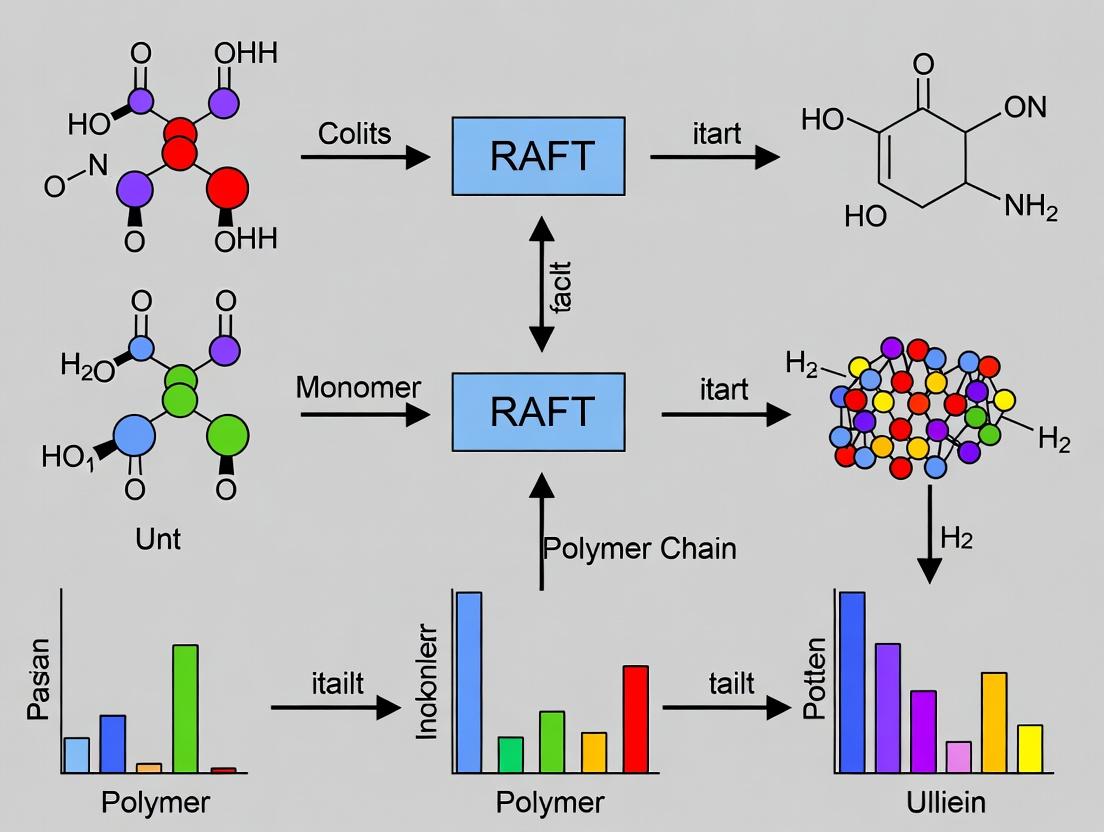
This article provides a comprehensive guide to Reversible Addition-Fragmentation Chain Transfer (RAFT) polymerization, a cornerstone of controlled radical polymerization for researchers and drug development professionals.
RAFT Polymerization Explained: Precision Control of Molecular Weight for Advanced Biomedical Polymers
Abstract
This article provides a comprehensive guide to Reversible Addition-Fragmentation Chain Transfer (RAFT) polymerization, a cornerstone of controlled radical polymerization for researchers and drug development professionals. It explores the foundational mechanism of RAFT for achieving narrow molecular weight distributions, details practical methodologies and applications in biomaterials, addresses common troubleshooting and optimization strategies, and validates its performance against other polymerization techniques. The focus is on enabling the precise synthesis of polymers for drug delivery, diagnostics, and tissue engineering.
What is RAFT Polymerization? The Science Behind Precise Molecular Weight Control
Within the context of RAFT (Reversible Addition-Fragmentation Chain-Transfer) polymerization research, precise control over Molecular Weight Distribution (MWD), expressed as Dispersity (Đ = Mw/Mn), is not merely a synthetic goal but a critical determinant of in vivo performance for biomedical polymers. Narrow MWD (Đ ~1.05-1.2) ensures batch-to-batch reproducibility, predictable degradation kinetics, consistent drug release profiles, and reduced risk of immunogenic responses. Conversely, broad MWD can lead to unpredictable polymer behavior, including variable mechanical properties, heterogeneous degradation, and the presence of low-molecular-weight chains that may elicit toxicity.
Quantitative Impact of MWD on Key Properties
The following tables summarize critical data linking MWD to polymer performance.
Table 1: Impact of Dispersity (Đ) on Drug Release Kinetics from PLGA Microparticles
| Polymer (PLGA 50:50) | Mn (kDa) | Đ (Mw/Mn) | Drug Load (%) | t50 (Days, Release) | Burst Release (%) |
|---|---|---|---|---|---|
| Batch A (RAFT) | 45 | 1.08 | 10 | 28 | 12 |
| Batch B (Conventional) | 48 | 1.85 | 10 | 14-42 (range) | 5-35 (range) |
| Batch C (RAFT) | 20 | 1.12 | 10 | 14 | 18 |
| Batch D (Broad) | 22 | 2.10 | 10 | 7-30 (range) | 25-60 (range) |
Note: t50 = time for 50% drug release. Data synthesized from recent studies on paclitaxel-loaded systems (2023-2024).
Table 2: MWD Influence on Physicochemical and Biological Properties
| Property | Low Đ (<1.2) Implication | High Đ (>1.8) Implication |
|---|---|---|
| Degradation Rate | First-order, predictable mass loss & acid release. | Multiphasic, unpredictable; risk of sudden acidic burst. |
| Mechanical Strength | Consistent modulus and tensile strength. | Varied properties; weak points from low-MW chains. |
| Clearance (Renal) | Tunable to avoid renal filtration (MW >~45 kDa). | Low-MW fractions may clear rapidly, altering pharmacokinetics. |
| Immunogenicity | Homogeneous surface reduces non-specific protein adsorption. | High-MW aggregates or low-MW fragments may trigger responses. |
| Formulation Viscosity | Predictable rheology for processing (e.g., spraying, printing). | Unpredictable, often higher viscosity at low shear. |
Experimental Protocols for MWD Analysis & Control via RAFT
Protocol 3.1: Synthesis of Narrow-Disperse Poly(ethylene glycol) Methyl Ether Acrylate (PEGMEA) via RAFT
Aim: To synthesize a biocompatible hydrogel precursor with Đ < 1.15. Materials (Research Reagent Solutions):
- RAFT Agent: 2-(((Butylthio)carbonothioyl)thio)propanoic acid (BCPA). Function: Mediates controlled chain growth.
- Monomer: PEGMEA (Mn 480 Da). Function: Provides hydrophilic, biocompatible polymer backbone.
- Initiator: 2,2'-Azobis(2-methylpropionitrile) (AIBN). Function: Thermal source of free radicals.
- Solvent: Anhydrous 1,4-dioxane. Function: Maintains homogeneity of reaction mixture.
- Purification: Dialysis tubing (MWCO 3.5 kDa). Function: Removes unreacted monomer and chain transfer agent.
Procedure:
- In a Schlenk tube, combine PEGMEA (10 g, 20.8 mmol), BCPA (14.3 mg, 0.05 mmol), and AIBN (0.82 mg, 0.005 mmol) in 1,4-dioxane (10 mL). Target DPn = 400, [M]/[RAFT]/[I] = 400/1/0.1.
- Seal tube and perform three freeze-pump-thaw cycles to degas the solution.
- Immerse tube in a pre-heated oil bath at 70°C with stirring for 18 hours.
- Terminate polymerization by rapid cooling in liquid N2 and exposure to air.
- Precipitate polymer into cold diethyl ether (10x volume), collect by filtration.
- Purify by dialysis against deionized water for 48h, then lyophilize.
- Analysis: Characterize via Gel Permeation Chromatography (GPC) using aqueous NaCl/NaN3 buffer eluent against PEG standards to determine Mn, Mw, and Đ.
Protocol 3.2: GPC/SEC Analysis for MWD Determination
Aim: To accurately measure Mn, Mw, and Đ of synthesized biomedical polymers. Procedure:
- Sample Preparation: Dissolve lyophilized polymer in GPC eluent (e.g., 0.1M NaNO3 in H2O with 0.02% NaN3) at 2 mg/mL. Filter through a 0.22 μm PTFE syringe filter.
- System Setup: Equip GPC system with refractive index (RI) detector. Use guard column + two analytical columns (e.g., TSKgel G4000PWxl & G3000PWxl). Maintain flow rate at 1.0 mL/min, column temperature at 30°C.
- Calibration: Inject narrow-disperse PEG/PEO standards (e.g., 1-1000 kDa) to generate a calibration curve (log Mw vs. retention time).
- Sample Injection: Inject 100 μL of filtered sample. Run for 45 minutes.
- Data Analysis: Use software (e.g., Empower, Cirrus) to integrate chromatogram. Calculate Mn (number-average), Mw (weight-average), and Đ (Mw/Mn) relative to calibration curve. Analyze peak symmetry.
Visualization of Key Concepts
Title: RAFT Mechanism Leads to Narrow MWD
Title: MWD Impact on Polymer Performance
The Scientist's Toolkit: Key Research Reagent Solutions
Table 3: Essential Materials for Controlled MWD Biomedical Polymer Research
| Reagent/Material | Primary Function in RAFT/MWD Control | Key Consideration for Biomedical Use |
|---|---|---|
| Chain Transfer Agents (CTAs) | Controls chain growth & Đ. E.g., trithiocarbonates for acrylamides, dithioesters for acrylates. | Must be selected for low toxicity; often removed post-polymerization. |
| Functional Monomers (e.g., PEGMEA, HPMA, NIPAM) | Forms polymer backbone with desired biocompatibility & stimulus-responsiveness. | Requires high purity to prevent side reactions that broaden Đ. |
| Thermal Initiators (e.g., AIBN, ACVA) | Generates radicals at defined temperature to initiate polymerization. | Concentration relative to CTA is critical for narrow Đ. |
| GPC/SEC System with Aqueous & Organic Options | Gold standard for absolute Mn, Mw, and Đ measurement. | Multi-angle light scattering (MALS) detector recommended for absolute MW. |
| Dialysis Membranes (MWCO 1-50 kDa) | Purifies polymers by removing small-molecule impurities (monomer, CTA). | Essential for in vitro/in vivo studies to eliminate toxic residuals. |
| End-Group Removal/Modification Reagents (e.g., peroxides, amines) | Modifies or removes thiocarbonylthio end-group post-polymerization. | Enhances long-term stability and reduces potential cytotoxicity. |
Within the broader thesis investigating RAFT (Reversible Addition-Fragmentation Chain Transfer) polymerization for achieving precise molecular weight distributions in biomedical polymers, understanding the core components is foundational. This application note details the selection and interplay of monomers, RAFT agents, initiators, and solvents to enable controlled polymer architectures essential for drug delivery systems and biomaterial development.
Core Components: Functions and Selection Criteria
Monomers: The building blocks of the polymer chain. Selection determines final polymer properties (e.g., hydrophilicity, functionality). RAFT Agents (Chain Transfer Agents, CTAs): The control agents. Their structure dictates the kinetics and efficiency of the polymerization control. Initiators: Source of primary free radicals to start the polymerization. Typically azo-compounds or peroxides. Solvents: Medium for the reaction. Must solubilize all components and not interfere with the RAFT mechanism.
Table 1: Common Monomers for RAFT Polymerization
| Monomer | Structure Type | Typical Target Polymer | Key Property Imparted |
|---|---|---|---|
| Methyl methacrylate (MMA) | Methacrylate | PMMA | Rigidity, biocompatibility |
| Styrene (St) | Styrenic | Polystyrene | Hydrophobicity, model polymer |
| N-Isopropylacrylamide (NIPAM) | Acrylamide | PNIPAM | Thermoresponsiveness (LCST) |
| Acrylic Acid (AA) | Acrylic | PAA | Hydrophilicity, pH-responsiveness |
| 2-Hydroxyethyl acrylate (HEA) | Acrylate | PHEA | Hydrophilicity, biocompatibility |
Table 2: Selection Guide for RAFT Agents (Z- and R-Group Effects)
| RAFT Agent Example | Z-Group | R-Group | Suitable Monomer Families | Polymerization Rate |
|---|---|---|---|---|
| CPDB (Cumyl phenyl dithiobenzoate) | Phenyl | Cumyl | Conjugated (Styrene, MMA) | Fast |
| CPADB (Cumyl dithiobenzoate) | Phenyl | Cumyl | Methacrylates, Styrenes | Fast |
| DDMAT (Dodecyl trithiocarbonate) | Alkyl | Dodecyl | Acrylates, Acrylamides | Moderate |
| EMP (2-Ethoxycarbonylprop-2-yl dithiobenzoate) | Phenyl | Cyanopropyl | Acrylates, Vinyl Acetate | Moderate-Slow |
Table 3: Common Initiators and Their Characteristics
| Initiator | Decomposition Temp. (°C) | Half-life (10h Temp. °C) | Solvent Compatibility |
|---|---|---|---|
| AIBN (Azobisisobutyronitrile) | 65-80 | 65 | Organic (Toluene, DMF) |
| ACVA (4,4'-Azobis(4-cyanovaleric acid)) | 65-80 | 69 | Aqueous, Polar Organic |
| V-501 (Dimethyl 2,2'-azobis(2-methylpropionate)) | 65-80 | 66 | Aqueous, DMSO, DMF |
Table 4: Solvent Selection Guide
| Solvent | Polarity | Typical Use Case | Considerations |
|---|---|---|---|
| 1,4-Dioxane | Moderate | Universal for many monomers | Good compromise solubility |
| Toluene | Non-polar | Hydrophobic monomers (St, MMA) | Inhibits side reactions |
| N,N-Dimethylformamide (DMF) | Polar Aprotic | Polar monomers (AA, HEA) | High boiling point |
| Water | High | Aqueous RAFT polymerization | Requires water-soluble initiator/CTA |
Detailed Experimental Protocols
Protocol 1: Standard RAFT Polymerization of PNIPAM (Model Thermoresponsive Polymer)
Objective: Synthesize PNIPAM with target molecular weight of 10,000 g/mol and low dispersity (Đ < 1.2). Thesis Relevance: Demonstrates control over MW for consistent Lower Critical Solution Temperature (LCST) behavior.
Materials:
- Monomer: N-Isopropylacrylamide (NIPAM) – 1.13 g (10 mmol)
- RAFT Agent: 2-(Dodecylthiocarbonothioylthio)-2-methylpropionic acid (DDMAT) – 18.4 mg (0.05 mmol)
- Initiator: ACVA – 2.8 mg (0.01 mmol) ([ACVA]:[CTA] = 0.2:1)
- Solvent: 1,4-Dioxane – 5 mL (degassed)
- Equipment: Schlenk flask, freeze-pump-thaw apparatus, oil bath.
Procedure:
- In a 25 mL Schlenk flask, dissolve DDMAT, ACVA, and NIPAM in 5 mL of 1,4-dioxane.
- Seal the flask with a rubber septum. Subject the solution to three freeze-pump-thaw cycles to remove oxygen.
- Under a positive flow of nitrogen, place the flask in a pre-heated oil bath at 70°C to initiate polymerization.
- Allow the reaction to proceed for 8 hours. Monitor conversion by ¹H NMR.
- Terminate the reaction by cooling in an ice bath and exposing to air.
- Purify the polymer by precipitation into cold diethyl ether (10x volume). Isolate by filtration and dry under vacuum.
Characterization: Determine molecular weight and dispersity (Đ) via Size Exclusion Chromatography (SEC). Measure LCST via UV-Vis turbidimetry.
Protocol 2: Chain Extension Experiment (Block Copolymer Formation)
Objective: Validate the "living" character of a RAFT-synthesized macro-CTA and create a block copolymer. Thesis Relevance: Critical for synthesizing complex architectures (e.g., drug delivery vesicles).
Materials:
- Macro-CTA: Purified PNIPAM from Protocol 1 (Mn ≈ 10,000 Da, Đ < 1.2) – 0.5 g (0.05 mmol).
- Second Monomer: MMA – 0.50 g (5 mmol).
- Initiator: AIBN – 0.33 mg (0.002 mmol) ([AIBN]:[Macro-CTA] = 0.04:1).
- Solvent: Toluene – 3 mL (degassed).
Procedure:
- Dissolve macro-CTA, MMA, and AIBN in toluene in a Schlenk flask.
- Degas via three freeze-pump-thaw cycles.
- Immerse in an oil bath at 70°C for 12 hours.
- Terminate by cooling and exposure to air.
- Precipitate the block copolymer into cold methanol. Filter and dry.
Characterization: Analyze via SEC to observe a clear shift to higher molecular weight while maintaining low Đ, confirming successful chain extension.
The Scientist's Toolkit: Research Reagent Solutions
| Essential Material | Function/Explanation |
|---|---|
| Degassed Solvents | Oxygen is a radical scavenger; removal is critical for successful RAFT control. |
| Schlenk Flask & Line | Allows for manipulation of reactions under an inert (N₂/Ar) atmosphere. |
| Freeze-Pump-Thaw Apparatus | Standard method for degassing solvent/monomer mixtures prior to polymerization. |
| Precipitation Solvents (e.g., Hexane, Ether, Methanol) | Non-solvents for polymer purification, removing unreacted monomer and other impurities. |
| Size Exclusion Chromatography (SEC/GPC) System | The primary analytical tool for determining molecular weight (Mn, Mw) and dispersity (Đ). |
| NMR Solvents (CDCl₃, DMSO-d₆) | For determining monomer conversion and verifying polymer structure via ¹H NMR. |
Visualization: RAFT Mechanism and Workflow
Diagram Title: RAFT Polymerization Core Cycle
Diagram Title: RAFT Polymerization Protocol Workflow
This application note details the core mechanistic and experimental protocols for Reversible Addition-Fragmentation Chain Transfer (RAFT) polymerization, framed within a broader thesis on achieving precise control over molecular weight distribution (MWD) in polymer synthesis. For drug development and advanced material research, narrow MWD is critical for reproducible pharmacokinetics and consistent material properties. The RAFT agent mediates chain growth through a reversible deactivation mechanism, establishing a rapid equilibrium between active propagating radicals and dormant thiocarbonylthio-capped chains, thereby enabling controlled polymerization.
The Core Reversible Deactivation Mechanism
The RAFT mechanism operates as a degenerative chain transfer process. The key steps are:
- Initiation: A conventional radical initiator (e.g., AIBN) decomposes to form primary radicals (R•), which add to monomer (M) to form propagating radicals (Pₙ•).
- Pre-Equilibrium: The propagating radical (Pₙ•) adds to the thiocarbonylthio group (S=C(Z)S–R) of the RAFT agent. This forms an intermediate radical, which rapidly fragments. The favored fragmentation releases the leaving group (R•), which must be a good initiating radical for the monomer in use. This re-initiates polymerization, establishing the first equilibrium.
- Main Equilibrium: The new propagating radical (Pₘ•) adds to a dormant macro-RAFT agent (Pₙ–S–C(Z)=S). This forms another intermediate radical that can fragment either way, exchanging the active radical status between chains. This rapid exchange is the heart of the reversible deactivation, leading to uniform chain growth and narrow MWD.
- Termination: Chains terminate bimolecularly (combination/disproportionation) as in conventional radical polymerization, but because the active radical concentration is very low and constantly exchanged, the proportion of dead chains remains small until high conversion.
Mechanism and Key Relationships Diagram
Title: The RAFT Polymerization Equilibrium Mechanism
Experimental Protocol: Determining Chain Transfer Constant (Cₜᵣ)
Objective: To determine the chain transfer constant (Cₜᵣ) of a RAFT agent, a critical parameter predicting its efficacy in controlling molecular weight.
Principle: The number-average degree of polymerization (Xₙ) is related to the concentration of RAFT agent ([RAFT]) via the Mayo equation: 1/Xₙ = 1/Xₙ₀ + Cₜᵣ ([RAFT]/[M]), where Xₙ₀ is the degree of polymerization in the absence of transfer agent.
Materials: See "The Scientist's Toolkit" below.
Protocol Steps:
Solution Preparation (in an inert glovebox):
- Prepare six 20 mL glass vials with magnetic stir bars.
- For each vial, charge with a constant amount of monomer (e.g., 10.0 mmol methyl acrylate) and initiator (e.g., 0.05 mmol AIBN).
- Add varying amounts of the RAFT agent (e.g., cumyl dithiobenzoate) to achieve a range of [RAFT]₀/[I]₀ ratios (e.g., 0, 0.1, 0.25, 0.5, 1.0, 2.0).
- Dilute each mixture with anisole (internal standard for GC) to a total volume of 5 mL.
Polymerization:
- Seal vials with PTFE-lined caps.
- Remove from glovebox and place in a pre-heated oil bath at 60°C with stirring.
- Allow polymerization to proceed to low conversion (<20% to meet Mayo equation assumptions). Monitor by ¹H NMR or GC.
Quenching and Analysis:
- Rapidly cool vials in an ice-water bath.
- Open and immediately add a small volume of hydroquinone solution (radical inhibitor).
- Analyze monomer conversion by ¹H NMR (integration of vinyl peaks vs. aromatic/anisole peaks).
- Purify a portion of each polymer by precipitation (into cold methanol/water 10:1).
- Determine molecular weight (Mₙ) and dispersity (Đ) of each sample by Size Exclusion Chromatography (SEC) against PMMA standards.
Data Analysis:
- Calculate Xₙ = Mₙ / (M.W. of monomer repeat unit).
- Plot 1/Xₙ versus [RAFT]₀/[M]₀.
- Perform a linear regression. The slope is equal to Cₜᵣ.
Table 1: Example Data for Cₜᵣ Determination of CDB in Methyl Acrylate at 60°C
| [RAFT]₀ / [M]₀ | Conversion (%) | Mₙ (SEC) (g/mol) | Đ (M𝓌/Mₙ) | Calculated Xₙ | 1/Xₙ |
|---|---|---|---|---|---|
| 0.000 | 15.2 | 25,500 | 1.85 | 296 | 0.00338 |
| 0.001 | 14.8 | 18,200 | 1.52 | 212 | 0.00472 |
| 0.002 | 16.1 | 12,800 | 1.31 | 149 | 0.00671 |
| 0.004 | 15.5 | 8,100 | 1.18 | 94 | 0.01064 |
| 0.008 | 14.3 | 4,950 | 1.09 | 58 | 0.01724 |
| 0.016 | 15.0 | 2,800 | 1.05 | 33 | 0.03030 |
From this data, linear regression yields Cₜᵣ ≈ 1.7 for Cumyl Dithiobenzoate (CDB) under these conditions.
Experimental Protocol: Chain Extension for Block Copolymer Synthesis
Objective: To demonstrate the living character of a RAFT-synthesized polymer and its application in synthesizing a well-defined block copolymer with narrow MWD.
Principle: A purified macro-RAFT agent (Pₙ–S–C(Z)=S) is used as the mediating species and source of R• leaving group for the polymerization of a second monomer.
Protocol Steps:
Synthesis of Macro-RAFT Agent (PMMA):
- Follow a standard RAFT polymerization of methyl methacrylate (MMA) using AIBN and a suitable RAFT agent (e.g., 2-cyano-2-propyl dodecyl trithiocarbonate, CPDB) at 70°C in anhydrous toluene.
- Target a low DP (e.g., DP=50). Quench at ~70% conversion by cooling and exposure to air.
- Precipitate three times into cold hexane. Dry in vacuo.
- Characterize by SEC (Mₙ, Đ) and ¹H NMR (end-group analysis).
Chain Extension with n-Butyl Acrylate (nBA):
- In a glovebox, charge a Schlenk tube with PMMA macro-RAFT agent (1.0 equiv, based on chain end), nBA (100 equiv vs. macro-RAFT), AIBN (0.2 equiv vs. macro-RAFT), and anhydrous toluene ([M]₀ = 2 M).
- Perform three freeze-pump-thaw cycles on the Schlenk line to degas.
- Back-fill with argon and seal.
- Immerse in a pre-heated oil bath at 70°C for 6 hours.
Work-up and Analysis:
- Quench by cooling and opening to air.
- Precipitate into cold methanol/water (4:1) mixture. Dry in vacuo.
- Analyze the product by SEC (use dual detection: UV for thiocarbonylthio end-group, RI for mass). Compare traces of macro-RAFT and block copolymer.
Table 2: Expected SEC Data for PMMA-b-PnBA Block Copolymer Synthesis
| Polymer Sample | Target Mₙ (g/mol) | Measured Mₙ (g/mol) | Đ (M𝓌/Mₙ) | Peak Shift (Yes/No) | Symmetrical Peak (Yes/No) |
|---|---|---|---|---|---|
| PMMA Macro-RAFT | 5,200 | 5,500 | 1.12 | N/A | Yes |
| PMMA-b-PnBA Block | 18,000 | 18,800 | 1.15 | Yes | Yes |
A clean, complete shift to higher molecular weight with low and maintained dispersity confirms successful chain extension and a living, controlled process.
The Scientist's Toolkit: Key Reagent Solutions
Table 3: Essential Materials for RAFT Polymerization Experiments
| Item | Function & Rationale |
|---|---|
| RAFT Agents (e.g., CDB, CPDB, DAT) | The mediating species. The Z and R groups dictate reactivity, control, and applicability for different monomers. Must be selected based on monomer type. |
| Thermal Initiator (e.g., AIBN, ACVA) | Source of primary radicals to initiate the polymerization. Concentration is kept low relative to RAFT agent. ACVA is often preferred for aqueous systems. |
| Purified Monomers | High purity (inhibitor removed by passage through basic alumina) is essential to achieve predictable kinetics and molecular weights. |
| Anhydrous, Deoxygenated Solvent (e.g., Toluene, Dioxane, DMF) | Provides a homogeneous reaction medium. Oxygen must be removed as it inhibits free radical polymerization. |
| Schlenk Line or Glovebox | For performing degassing (freeze-pump-thaw cycles) and maintaining an inert (N₂ or Ar) atmosphere throughout the reaction. |
| Size Exclusion Chromatography (SEC/GPC) | The primary analytical tool. Equipped with RI, UV, and light scattering detectors to determine absolute molecular weights, dispersity (Đ), and confirm end-group retention. |
| Precipitation Solvents (e.g., Hexane, Methanol, Ether) | Non-solvents for the polymer used to purify the crude product from monomer, initiator, and solvent. Choice depends on polymer solubility. |
Experimental Workflow Diagram
Title: Comprehensive RAFT Polymerization Experimental Workflow
The thiocarbonylthio group (SC(Z)=S) is the defining structural motif of Reversible Addition-Fragmentation Chain-Transfer (RAFT) agents. It functions as a reversible chain-transfer site, enabling precise control over polymer molecular weight, dispersity (Ð), and architecture. The mechanism centers on a degenerative chain-transfer process, where the thiocarbonylthio group mediates rapid equilibrium between propagating radicals and dormant polymeric RAFT agents, minimizing irreversible termination.
Quantitative Data on Common RAFT Agent Classes
The efficacy of a RAFT agent is governed by the substituents Z and R. The Z group influences the reactivity of the C=S double bond, while the R group must be a good leaving group and re-initiate polymerization efficiently.
Table 1: Common RAFT Agent Classes and Their Applicability
| RAFT Agent Class (General Structure) | Z Group | R Group | Optimal Monomer Families | Typical Dispersity (Ð) Achievable | Key Reference |
|---|---|---|---|---|---|
| Dithioesters | Alkyl, Aryl | Cyanoalkyl, Alkyl | Methacrylates, Styrenes, Acrylates | 1.05 - 1.20 | Moad et al., 2005 |
| Trithiocarbonates | Alkylthio | Alkyl, Benzyl | Acrylates, Acrylamides, Vinyl Esters | 1.05 - 1.15 | McCormick et al., 2004 |
| Dithiocarbamates | Dialkylamino | Alkyl | Vinyl Acetate, N-Vinylpyrrolidone | 1.10 - 1.30 | Destarac et al., 2002 |
| Xanthates | Alkoxy | Alkyl | Less Activated Monomers (e.g., Vinyl Acetate, N-Vinylpyrrolidone) | 1.10 - 1.40 | Charmot et al., 2000 |
Table 2: Impact of Z Group on RAFT Agent Reactivity
| Z Group | Resonance Stabilization of C=S | Electrophilicity of C=S | Relative Fragmentation Rate of R• | Suited for Monomer Family |
|---|---|---|---|---|
| Aryl (C6H5) | High | High | Moderate | More Activated Monomers (MAMs): Styrenes, Methacrylates |
| Alkyl (CH3) | Moderate | Moderate | High | MAMs: Acrylates, Methacrylates |
| Alkylthio (SCH3) | Low | Low | Very High | MAMs & Less Activated Monomers (LAMs): Acrylates, Vinyl Acetate |
| Dialkylamino (N(CH3)2) | Very High | Very Low | Low | LAMs: Vinyl Acetate, N-Vinylpyrrolidone |
| Alkoxy (OCH3) | Very Low | Very Low | Very Low | LAMs exclusively |
Detailed Experimental Protocols
Protocol 3.1: Synthesis of a Generic Trithiocarbonate RAFT Agent (S-Dodecyl-S’-(α,α′-dimethyl-α′′-acetic acid)trithiocarbonate)
- Objective: To synthesize a water-soluble, carboxylic acid-functionalized RAFT agent for controlled polymerization of acrylamides.
- Materials: Carbon disulfide (CS2), acetone, sodium hydroxide, 1-dodecanethiol, chloroform, acetic acid, magnesium sulfate, diethyl ether, hexanes.
- Procedure:
- In a 250 mL round-bottom flask, dissolve NaOH (4.0 g, 0.10 mol) in a mixture of acetone (30 mL) and water (10 mL). Cool to 0°C.
- Slowly add CS2 (7.6 mL, 0.125 mol) with stirring over 15 minutes. Maintain temperature <5°C.
- Add 1-dodecanethiol (10.0 g, 0.05 mol) dropwise. Stir at 0°C for 1 hour, then at room temperature for 3 hours.
- In a separate flask, dissolve α,α′-azobis(isobutyronitrile) (AIBN) catalyst (trace, ~10 mg) in chloroform (20 mL). Add this solution to the reaction mixture.
- Reflux the combined mixture at 60°C for 12 hours under nitrogen.
- Cool, then pour into a separatory funnel containing 100 mL of 1M acetic acid. Extract with chloroform (3 x 50 mL).
- Combine organic layers, wash with brine, dry over MgSO4, filter, and concentrate in vacuo.
- Purify the crude product by column chromatography (silica gel, hexanes/ethyl acetate 9:1) to yield a yellow oil. Further recrystallization from cold diethyl ether/hexanes yields yellow crystals.
- Characterization: Confirm structure via ( ^1H ) NMR (δ 3.3 ppm, t, SCH2; δ 1.7 ppm, s, CH3) and FT-IR (ν 1060 cm⁻¹, C=S).
Protocol 3.2: Standard RAFT Polymerization of N-Isopropylacrylamide (NIPAM)
- Objective: To synthesize poly(NIPAM) with controlled molecular weight and low dispersity.
- Materials: N-Isopropylacrylamide (NIPAM, purified by recrystallization from hexane), RAFT agent (e.g., from Protocol 3.1), AIBN, 1,4-dioxane (anhydrous).
- Procedure:
- Calculate masses for target degree of polymerization (DP=100): [Monomer]:[RAFT]:[AIBN] = 100:1:0.2.
- In a Schlenk tube, dissolve NIPAM (1.131 g, 10.0 mmol), RAFT agent (0.048 g, 0.10 mmol), and AIBN (0.0033 g, 0.020 mmol) in 1,4-dioxane (5 mL).
- Seal the tube and perform three freeze-pump-thaw cycles to degas the solution.
- Backfill with nitrogen and place in a pre-heated oil bath at 70°C with stirring.
- Allow polymerization to proceed for 8 hours.
- Terminate by cooling in ice water and exposing to air.
- Precipitate the polymer into cold diethyl ether (10x volume). Isolate by filtration and dry in vacuo.
- Characterization: Analyze by Size Exclusion Chromatography (SEC) vs. PMMA standards to determine Mn and Ð. Expected Ð < 1.15.
Visualization of Mechanisms and Workflows
Diagram Title: Core RAFT Equilibrium Mechanism
Diagram Title: Standard RAFT Polymerization Workflow
The Scientist's Toolkit: Key Research Reagent Solutions
Table 3: Essential Materials for RAFT Polymerization Research
| Item | Function & Importance | Example/Notes |
|---|---|---|
| Purified Monomers | High-purity monomers are critical to avoid chain-transfer agents/impurities that disrupt RAFT equilibrium. | Acrylates, methacrylates, styrenes, acrylamides. Purify via inhibitor removal column or distillation. |
| RAFT Agents (Various Z/R) | The core controlling agent. Must match Z/R to monomer reactivity. | Commercially available (e.g., from Sigma-Aldrich, Boron Molecular) or synthesized in-lab (see Protocol 3.1). |
| Thermal Initiator | Provides a low, steady flux of primary radicals to initiate chains. | AIBN or V-501 (water-soluble) at ratios [RAFT]:[I] typically 5:1 to 10:1. |
| Inert Atmosphere System | Prevents oxygen inhibition/termination of radical polymerization. | Nitrogen or argon Schlenk line, glovebox, or degassing via freeze-pump-thaw. |
| Aprotic Solvents | Provides reaction medium; should not interfere with radical intermediates. | Toluene, 1,4-dioxane, DMF, acetonitrile. Dry over molecular sieves. |
| Precipitation Solvents | A non-solvent for the polymer to terminate reaction and purify product. | Diethyl ether, methanol, hexanes, or mixtures. Chilled. |
| Characterization Suite | For confirming polymer structure, molecular weight, and dispersity. | SEC/GPC (Mn, Ð), NMR (end-group fidelity, conversion), FT-IR (functional groups). |
Within the broader thesis on RAFT (Reversible Addition-Fragmentation Chain-Transfer) polymerization for controlled molecular weight distribution research, two paramount characteristics define the success of a "living" or controlled polymerization: narrow dispersity (Ð) and high end-group fidelity. Narrow dispersity (Đ = Mw/Mn), also known as the polydispersity index (PDI), is a measure of the uniformity of polymer chains. End-group fidelity refers to the fraction of polymer chains that retain the functional chain-transfer agent (CTA) moiety, enabling subsequent chain extension or functionalization. These parameters are critical for researchers and drug development professionals designing precise polymeric carriers, conjugates, or biomaterials with reproducible properties.
Table 1: Benchmark Dispersity (Ð) and End-Group Fidelity in RAFT Polymerization of Common Monomers
| Monomer | Typical Target Mn (g/mol) | Achievable Ð (Literature Range) | End-Group Fidelity (Typical Range)* | Key Influencing Factors |
|---|---|---|---|---|
| Methyl Methacrylate (MMA) | 10,000 - 50,000 | 1.05 - 1.20 | 85% - 98% | CTA structure, [CTA]/[I] ratio, temperature |
| Styrene (Sty) | 20,000 - 100,000 | 1.05 - 1.25 | 80% - 95% | Monomer purity, radical flux control |
| N-Isopropylacrylamide (NIPAM) | 5,000 - 30,000 | 1.05 - 1.15 | 90% - 99% | Reaction temperature, solvent (water/org.) |
| Poly(ethylene glycol) methyl ether acrylate (PEGA) | 10,000 - 40,000 | 1.10 - 1.30 | 75% - 92% | CTA compatibility with PEG chain |
| Acrylic Acid (AA)† | 5,000 - 20,000 | 1.10 - 1.30 | 70% - 90% | pH, use of protected monomer |
Measured via 1H NMR or MALDI-TOF MS. †Often polymerized as a protected derivative (e.g., *tert-butyl acrylate).
Experimental Protocols
Protocol 3.1: Standard RAFT Polymerization for Low Dispersity Poly(NIPAM) Aim: Synthesize PNIPAM with Mn, target = 15,000 g/mol and Ð < 1.15. Materials: See "The Scientist's Toolkit" (Section 5). Procedure:
- Charge: In a 25 mL Schlenk flask, combine NIPAM (2.26 g, 20.0 mmol), 4-cyano-4-[(dodecylsulfanylthiocarbonyl)sulfanyl]pentanoic acid (CDTPA) (27.8 mg, 0.0667 mmol), and AIBN (1.1 mg, 0.0067 mmol). Add anhydrous 1,4-dioxane (4.5 mL). Seal with a septum.
- Degas: Sparge the solution with dry nitrogen or argon for 30 minutes while stirring.
- Polymerize: Place the flask in a pre-heated oil bath at 70 °C with stirring. Monitor conversion via 1H NMR by sampling aliquots (~0.1 mL).
- Terminate: After reaching >95% conversion (~6-8 hours), cool the flask in an ice bath. Open to air and expose the solution to atmospheric oxygen to quench radicals.
- Precipitate & Dry: Dropwise add the reaction mixture into cold diethyl ether (50 mL). Isolate the precipitate via filtration, redissolve in minimal acetone, and reprecipitate into cold ether. Dry the polymer in vacuo overnight.
Protocol 3.2: Assessing End-Group Fidelity via 1H NMR Analysis Aim: Quantify the retention of the RAFT agent's α-end group on the synthesized polymer. Procedure:
- Prepare Sample: Dissolve ~10 mg of the purified polymer (from Protocol 3.1) in 0.7 mL of deuterated solvent (e.g., CDCl3, DMSO-d6).
- Acquire Spectrum: Collect a standard 1H NMR spectrum.
- Integrate Peaks: Identify and integrate resonances for:
- Iend: A characteristic signal from the α-end group (e.g., the proton adjacent to the R-group carbonyl in CDTPA at ~2.4-2.6 ppm).
- Ibackbone: A signal from the polymer backbone (e.g., the methine proton of PNIPAM at ~3.9 ppm).
- Calculate Fidelity:
- End-Group Fidelity (%) = (Iend / Nend) / (Ibackbone / Nbackbone) * 100.
- Where Nend and Nbackbone are the number of protons giving rise to the respective signals.
Protocol 3.3: Chain Extension Test for Livingness Aim: Experimentally confirm living character and end-group fidelity by preparing a block copolymer. Procedure:
- Macro-CTA Synthesis: Purify the polymer from Protocol 3.1 (PNIPAM-CDPTA) via repeated precipitation.
- Chain Extension Charge: In a new Schlenk flask, combine the macro-CTA (0.50 g, ~0.033 mmol, Mn,NMR ~15,000), a second monomer (e.g., PEGA480, 1.58 g, 3.3 mmol), AIBN (0.11 mg, 0.00067 mmol), and fresh 1,4-dioxane (2 mL).
- Degas & Polymerize: Follow degassing and heating steps as in Protocol 3.1.
- Analyze: Analyze the product via Size Exclusion Chromatography (SEC). A clean shift of the molecular weight distribution to higher molecular weight with retention of a narrow dispersity (Ð < 1.3) confirms successful chain extension and high end-group fidelity of the macro-CTA.
Visualization Diagrams
Diagram 1: RAFT Mechanism for Controlled Ð & Fidelity
Diagram 2: Workflow to Characterize Ð & Fidelity
The Scientist's Toolkit: Research Reagent Solutions
| Item | Function & Importance |
|---|---|
| Chain Transfer Agent (CTA)(e.g., CDTPA, CPADB) | Core of RAFT. Its structure (Z & R groups) dictates control over monomer reactivity, dispersity, and end-group retention. |
| Thermal Initiator(e.g., AIBN, ACVA) | Provides a low, steady flux of primary radicals to initiate polymerization while minimizing terminations. |
| Degassed Solvent(e.g., 1,4-dioxane, DMF, Toluene) | Removes oxygen, a radical inhibitor, which is critical for maintaining a low dispersity and high livingness. |
| Deuterated Solvent for NMR(e.g., CDCl3, DMSO-d6) | Essential for quantifying end-group fidelity via 1H NMR analysis (Protocol 3.2). |
| Size Exclusion Chromatography (SEC) System | Equipped with refractive index and multi-angle light scattering (MALS) detectors for absolute determination of Mn, Mw, and dispersity (Ð). |
| Schlenk Line or Glovebox | For rigorous oxygen-free anhydrous conditions, crucial for achieving the highest end-group fidelity. |
RAFT Polymerization in Practice: Protocols and Biomedical Applications
Within the broader thesis research on achieving precise control over molecular weight distribution (Đ = Mw/Mn) via Reversible Addition-Fragmentation Chain-Transfer (RAFT) polymerization, this protocol serves as a foundational method. A standardized, reproducible setup is critical for establishing baseline kinetics and verifying the "living" character of the polymerization, which is essential for subsequent synthesis of block copolymers with narrow dispersity for drug delivery applications.
Key Research Reagent Solutions
The following table lists the essential materials for a standard RAFT polymerization.
| Reagent / Material | Function & Critical Notes |
|---|---|
| Monomer (e.g., Methyl acrylate, Styrene, N-Isopropylacrylamide) | The building block of the polymer chain. Must be purified (e.g., passed through basic alumina column) to remove inhibitors. |
| RAFT Chain Transfer Agent (CTA) (e.g., 2-Cyano-2-propyl dodecyl trithiocarbonate for acrylics) | The core agent mediating chain transfer and conferring "living" characteristics. Selection is monomer-specific (Z- and R-group). |
| Thermal Initiator (e.g., 2,2'-Azobis(2-methylpropionitrile) - AIBN) | Provides a low, steady flux of primary radicals to initiate chains. Molar ratio to CTA is crucial for controlling Đ. |
| Deuterated Solvent (e.g., CDCl3, Acetone-d6) | For reaction monitoring via 1H NMR spectroscopy. |
| Anhydrous, Non-Deuterated Solvent (e.g., Toluene, DMF, 1,4-Dioxane) | Reaction medium. Must be purified and dried to prevent chain-transfer to solvent or initiator decomposition. |
| Freeze-Pump-Thaw Apparatus | For degassing solvents and reaction mixtures to remove oxygen, a radical inhibitor. |
Detailed Experimental Protocol
3.1 Pre-Experimental Calculations
- Define Target: Determine target degree of polymerization (DPtarget = [M]0/[CTA]0) and theoretical molecular weight (Mn,theo = (DPtarget × Mmonomer) + MCTA).
- Calculate Ratios: Standard initial conditions for a well-controlled polymerization: [M]0 : [CTA]0 : [I]0 = DPtarget : 1 : 0.1 to 0.2. Use the following table as a guide for a 10,000 g/mol target.
Table 1: Example Calculation for Poly(methyl acrylate) (MA, Mw=86.09 g/mol)
| Parameter | Value | Calculation (for 20 mL scale) |
|---|---|---|
| DPtarget | 116 | (10,000 g/mol - MCTA) / 86.09 ≈ 116 |
| [M]0 | 3.0 M | (Total moles MA) / (0.020 L) |
| [CTA]0 | 0.026 M | [M]0 / DPtarget |
| [AIBN]0 | 0.0026 M | [CTA]0 × 0.1 |
| Mass MA | 5.00 g | From [M]0 and volume |
| Mass CTA (CPDT) | 0.106 g | From [CTA]0, volume, and Mw(CTA)=316.55 g/mol |
| Mass AIBN | 0.0085 g | From [AIBN]0, volume, and Mw(AIBN)=164.21 g/mol |
3.2 Reaction Setup Procedure
- Purification: Purify monomer (e.g., pass through basic alumina column) and solvent (dry over molecular sieves). Weigh RAFT CTA and AIBN into a clean, dry Schlenk flask or polymerization vial.
- Formulation: Add the calculated volume of monomer and solvent (typical total solids content: 30-50% w/w) to the flask. Seal with a septum.
- Degassing: Perform three cycles of freeze-pump-thaw on the mixture to remove dissolved oxygen. a. Submerge flask in liquid nitrogen until contents are fully frozen. b. Open to dynamic vacuum (< 0.1 mbar) for 3-5 minutes. c. Close valve and thaw in warm water. d. Repeat steps a-c twice more.
- Initiation: After the final cycle, back-fill the flask with inert gas (N2 or Ar). Place the flask in a pre-heated oil bath at the desired temperature (e.g., 70°C for AIBN).
- Monitoring: At timed intervals, use a degassed syringe to withdraw small aliquots (~0.2 mL) for conversion analysis via 1H NMR and molecular weight analysis via Size Exclusion Chromatography (SEC).
- Termination: After reaching target conversion (typically <80% to minimize termination events), cool the reaction rapidly in an ice bath. Expose to air and dilute with a small amount of THF.
3.3 Post-Polymerization Analysis
- Purification: Precipitate the polymer into a large excess of a non-solvent (e.g., methanol/water for PMA). Filter and dry under vacuum.
- Characterization: Analyze via SEC (vs. narrow PMMA standards) to determine experimental Mn and dispersity (Đ). Confirm structure via 1H NMR.
Visualization: RAFT Polymerization Mechanism & Workflow
RAFT Polymerization Experimental Workflow
RAFT Polymerization Core Mechanism
Selecting the Right RAFT Agent (CTA) for Your Monomer and Target Architecture
Within the broader thesis investigating RAFT polymerization for achieving controlled molecular weight distributions, the selection of the Chain Transfer Agent (CTA) is a critical, non-trivial decision. The CTA's structure dictates the kinetics of the polymerization, the degree of control over molecular weight and dispersity (Ð), and the fidelity of the end-group. This application note provides a structured guide and protocols for selecting the appropriate RAFT agent based on monomer family and desired polymer architecture.
CTA Selection Guide: Structure-Activity Relationships
The reactivity of a RAFT agent is governed by the Z- and R-groups.
- Z-Group: Controls the reactivity of the C=S bond. Electron-withdrawing Z-groups increase reactivity towards radical addition. It must stabilize the intermediate radical and be a good leaving group for the R-group.
- R-Group: Must be a good homolytic leaving group relative to the propagating polymer radical (Pn•) and re-initiate polymerization efficiently.
The table below summarizes the selection logic based on current literature and practice.
Table 1: RAFT CTA Selection Guide Based on Monomer Type
| Monomer Family (Examples) | Monomer Reactivity | Recommended Z-Group | Recommended R-Group (Leaving Group) | Target Architecture & Notes |
|---|---|---|---|---|
| Conjugated / "More Activated" Monomers (MAMs)(Styrene, Acrylates, Methacrylates, Acrylamides) | More Reactive | Aryl, Alkyl (e.g., -Ph, -CH₃) | Tertiary Cyanoalkyl, Cumyl, or similar stabilized groups (e.g., -C(CN)(CH₃)CH₂Ph) | Linear polymers. For methacrylates, the R-group must be a tertiary carbon for efficient re-initiation. |
| Non-Conjugated / "Less Activated" Monomers (LAMs)(Vinyl Acetate, N-Vinylpyrrolidone, Vinyl Esters) | Less Reactive | -OR, -NR₂ (e.g., -OCH₃, -N(CH₃)₂) | Good leaving group that forms a reactive radical (e.g., -CH₂Ph) | Linear polymers. Electron-donating Z-groups activate the C=S bond for less reactive radicals. |
| Simultaneous Polymerization of MAMs & LAMs(e.g., Acrylate + Vinyl Acetate) | Mixed | Dithiobenzoate (-Ph) or Trithiocarbonate (-S alkyl) | Balanced group (e.g., -CH₂CH₂CN) | Block copolymers. Requires careful selection for control over both blocks. Trithiocarbonates often offer a broader scope. |
Table 2: CTA Selection for Complex Architectures
| Target Architecture | Key Consideration | Recommended CTA Type | Protocol Focus |
|---|---|---|---|
| AB or ABA Block Copolymers | The CTA must control the first block and provide an active end for the second. | Linear (mono-) functional RAFT agent (e.g., CDB for styrene/acrylate). | Sequential monomer addition after high conversion of first block. |
| Star Polymers | Requires a multi-functional core. | Z-group or R-group designed core. Trithiocarbonate-based multifunctional agents. | Use of tetra-functional RAFT agent or post-polymerization crosslinking. |
| Telechelic / End-Functional Polymers | Specific functional group required at polymer chain end. | Functional R-group or Z-group. | Choose CTA where the R- or Z-group contains the protected/unprotected functionality (e.g., -OH, -COOH). |
| Hyperbranched Polymers | Use of a branching co-monomer or a chain-transfer constant that promotes branching. | Conventional RAFT agent for the main monomer. | Often paired with a divinyl co-monomer at low concentrations (RAFT step-growth mechanisms). |
Experimental Protocol: Screening and Evaluating RAFT Agents
Protocol 1: Standard RAFT Polymerization for CTA Screening
Objective: To empirically determine control characteristics (molecular weight linearity, dispersity) of a candidate CTA with a given monomer.
Materials: See The Scientist's Toolkit below. Procedure:
- Solution Preparation: In a schlenk tube or vial, prepare a stock solution of monomer (e.g., 10 g of methyl methacrylate, MMA) and solvent (anisole, 50% v/v to monomer) if used.
- CTA/AIBN Master Mix: Accurately weigh the RAFT CTA (target DPₙ=100, e.g., for MMA Mₙ=10,000 g/mol, use ~0.1 mmol CTA) and AIBN (CTA/AIBN molar ratio = 10:1) into a separate vial. Dissolve in 2 mL of the monomer/solvent stock.
- Deoxygenation: Transfer the main monomer/solvent stock and the CTA/AIBN mix to separate schlenk tubes. Degas by three freeze-pump-thaw cycles or sparging with inert gas (N₂/Ar) for 30 minutes.
- Initiation: Under positive inert gas flow, use a gas-tight syringe to transfer the CTA/AIBN mix to the main monomer/solvent schlenk tube. Mix thoroughly.
- Polymerization: Immerse the sealed reaction vessel in a pre-heated oil bath at 60-70°C. Monitor conversion over time via ¹H NMR (disappearance of vinyl peaks).
- Sampling: At timed intervals (e.g., 1, 2, 4, 8, 24h), withdraw small aliquots (~0.2 mL) via syringe under inert atmosphere for conversion and SEC analysis.
- Termination & Analysis: Cool the reaction in ice water. Precipitate the polymer into a cold non-solvent (e.g., methanol for PMMA), filter, and dry in vacuo. Analyze by SEC and ¹H NMR.
Protocol 2: Chain Extension Test for Block Copolymer Feasibility
Objective: To verify the livingness of a macro-CTA and its ability to form a second block. Procedure:
- Macro-CTA Synthesis: Synthesize a low-dispersity polymer (PMMA, DP~50) using the CTA of interest via Protocol 1. Isolate and characterize thoroughly (SEC, NMR).
- Chain Extension Setup: Charge a schlenk tube with the second monomer (e.g., n-butyl acrylate, 5 g), macro-CTA (target DPₙ=100 for second block), and AIBN (macro-CTA/AIBN=10:1). Add solvent if necessary.
- Deoxygenation & Polymerization: Degas the mixture via three freeze-pump-thaw cycles. Heat at 70°C for 12-24h.
- Analysis: Analyze the crude product by SEC. A clean, quantitative shift to higher molecular weight indicates a successful chain extension and a well-chosen initial CTA.
Visual Guide: Decision Pathways
Title: RAFT Agent Selection Decision Tree
Title: RAFT Mechanism and CTA Group Functions
The Scientist's Toolkit: Key Research Reagent Solutions
Table 3: Essential Materials for RAFT CTA Screening Experiments
| Item | Function & Importance | Example/Specification |
|---|---|---|
| RAFT CTAs (Library) | Core agents for screening. A selection covering dithioesters, trithiocarbonates, xanthates, and dithiocarbamates is ideal. | e.g., 2-Cyano-2-propyl benzodithioate (for MAMs), 2-(Dodecylthiocarbonothioylthio)-2-methylpropionic acid (functional), O-Ethyl S-(2-ethoxycarbonyl)prop-2-yl xanthate (for LAMs). |
| Monomer Purification Columns | Removes inhibitor (e.g., MEHQ) and impurities that can interfere with radical polymerization kinetics. | Disposable inhibitor remover columns (e.g., packed with basic alumina). |
| Thermal Initiator | Source of primary radicals (I•) to initiate the RAFT process under thermal conditions. | AIBN or ACVA. Must be recrystallized or of high purity. |
| Inert Atmosphere Equipment | Prevents oxygen inhibition/termination. Essential for controlled/living polymerization. | Schlenk line, glovebox, or gas-tight syringe kit for transfers. |
| Deuterated Solvent for NMR | For accurate, quantitative monitoring of monomer conversion in situ. | CDCl₃, DMSO-d₆, or Acetone-d₆, depending on monomer/polymer solubility. |
| SEC/GPC System with Standards | For determining molecular weight (Mn, Mw) and dispersity (Ð). Confirms control. | System with UV/RI detectors. Use narrow dispersity PMMA or PS standards for calibration relevant to polymer analyzed. |
| Non-Solvent for Precipitation | Isolates polymer from unreacted monomer, solvent, and initiator residues. | Methanol, Hexane, Diethyl Ether, or Pentane (chosen to precipitate polymer but not monomer). |
Designing Block Copolymers, Stars, and Grafts for Drug Delivery Systems
Within the framework of a broader thesis on RAFT polymerization for controlled molecular weight distribution research, this article details the application of polymer architectures in drug delivery. Reversible Addition-Fragmentation Chain Transfer (RAFT) polymerization enables precise synthesis of polymers with tailored composition, architecture, and low dispersity (Ð), which is critical for predictable drug encapsulation and release kinetics.
Core Architectures and Drug Delivery Applications
Comparative Analysis of Polymer Architectures
The following table summarizes key characteristics of polymer architectures synthesized via RAFT for drug delivery.
Table 1: Comparative Analysis of Polymer Architectures for Drug Delivery
| Architecture | Typical RAFT Agent | Key Advantages for DDS | Common Drug Loading Method | Control Parameters (Đ) |
|---|---|---|---|---|
| AB Diblock Copolymer | Dithiobenzoate or Trithiocarbonate | Core-shell micelle formation, simple synthesis | Solvent evaporation, dialysis | 1.05 - 1.15 |
| ABA Triblock Copolymer | Difunctional Trithiocarbonate | Thermoresponsive gels, sustained release | Physical entrapment during gelation | 1.08 - 1.20 |
| Star Polymer (Arm-first) | Multifunctional Trithiocarbonate Core | High functional group density, multivalent targeting | Conjugation to arm termini, encapsulation in core | 1.10 - 1.25 |
| Graft Copolymer (from backbone) | Macromolecular Chain Transfer Agent (macro-CTA) | Brush-like morphology, high drug payload | Grafting from drug-conjugated backbone | 1.15 - 1.30 |
| pH-Responsive Block Copolymer | Pentafluorophenyl ester-functional CTA | Triggered release in acidic tissues (e.g., tumors) | Covalent conjugation (pH-cleavable bond) | 1.05 - 1.18 |
Quantitative Performance Metrics
Recent studies (2023-2024) highlight performance metrics for drug delivery systems (DDS) based on RAFT-synthesized polymers.
Table 2: Recent Performance Data of RAFT-Synthesized Polymer DDS
| Polymer System | Drug Model | Loading Capacity (%) | Encapsulation Efficiency (%) | Controlled Release Duration (hours) | Reference Year |
|---|---|---|---|---|---|
| PEG-b-PLA Diblock | Doxorubicin (DOX) | 12.5 ± 1.2 | 85.3 ± 3.1 | 48-72 | 2023 |
| PNIPAM-b-PAA Star (4-arm) | Curcumin | 8.7 ± 0.8 | 78.9 ± 2.5 | 96+ (Thermally triggered) | 2024 |
| PGA-graft-PCL Graft Copolymer | Paclitaxel (PTX) | 22.1 ± 2.0 | 91.5 ± 1.8 | 120-168 | 2023 |
| P(DMA-stat-NAS)-b-PDPA Block | siRNA | N/A (Conjugated) | >95 (Binding) | 24 (pH 5.0 triggered) | 2024 |
Detailed Experimental Protocols
Protocol 1: Synthesis of an AB Diblock Copolymer Micelle System for Hydrophobic Drug Delivery
Objective: Synthesize poly(ethylene glycol)-block-poly(lactide-co-glycolide) (PEG-b-PLGA) via RAFT and formulate doxorubicin-loaded micelles.
Materials & Reagents (The Scientist's Toolkit)
Table 3: Research Reagent Solutions for PEG-b-PLGA Synthesis
| Item | Function / Role | Typical Specification / Notes |
|---|---|---|
| PEG-based Macro-CTA (PEG-CTA) | Chain transfer agent for RAFT; provides hydrophilic, stealth block. | Mn ~5,000 g/mol, Ð < 1.10. Synthesized via esterification of PEG-OH with a trithiocarbonate RAFT agent. |
| Lactide & Glycolide Monomers | Forms hydrophobic, biodegradable core block. | Purified by recrystallization (ethyl acetate). Molar ratio (LA:GA) typically 75:25. |
| 4-Cyano-4-(phenylcarbonothioylthio)pentanoic Acid (CPAD) | Alternative small molecule RAFT agent for initial block synthesis. | Recrystallized from hexane. Store at -20°C, protected from light. |
| Azobisisobutyronitrile (AIBN) | Thermal initiator for RAFT polymerization. | Recrystallize from methanol. Use at [CTA]:[I] ratio of 5:1 to 10:1. |
| Anhydrous 1,4-Dioxane or DMSO | Solvent for polymerization. | Purified by passing through activated alumina column. |
| Doxorubicin Hydrochloride (DOX·HCl) | Model chemotherapeutic drug. | Treat with triethylamine (TEA) for 24h to obtain hydrophobic DOX base for loading. |
| Dialysis Tubing (MWCO 3.5-7 kDa) | Purification of polymer and micelles. | Soak in DI water/ethanol before use. |
Procedure:
Synthesis of PEG-b-PLGA:
- In a dried Schlenk flask, combine PEG-CTA (1.00 g, 0.20 mmol), Lactide (0.72 g, 5.00 mmol), Glycolide (0.29 g, 2.50 mmol), and AIBN (0.66 mg, 0.04 mmol). Degass with three freeze-pump-thaw cycles.
- Under N₂, add anhydrous dioxane (5 mL). Seal and place in an oil bath at 70°C for 18 hours.
- Terminate by cooling in liquid N₂ and expose to air. Precipitate polymer into cold diethyl ether (10x volume). Centrifuge (10,000 rpm, 10 min) and dry under vacuum. Characterize via SEC (Ð target < 1.15) and ¹H NMR.
Micelle Formation and Drug Loading:
- Dissolve PEG-b-PLGA (50 mg) and DOX base (5 mg) in DMSO (2 mL). Add this solution dropwise to stirring PBS (20 mL, pH 7.4) over 30 min.
- Stir for 6 hours at room temperature, protected from light. Transfer solution to dialysis tubing (MWCO 3.5 kDa) and dialyze against PBS (2 L, changed 6x over 48h) to remove organic solvent and unencapsulated drug.
- Filter the micelle solution through a 0.45 µm syringe filter. Store at 4°C.
Characterization:
- Determine particle size and PDI by Dynamic Light Scattering (DLS).
- Quantify drug loading: Lyophilize a known volume of micelle solution. Dissolve the solid in DMSO and measure DOX absorbance at 480 nm using a calibrated standard curve.
Protocol 2: RAFT Synthesis of a 4-Arm Star Polymer via the "Arm-First" Approach
Objective: Synthesize a 4-arm poly(N-isopropylacrylamide)-star-poly(acrylic acid) (PNIPAM-star-PAA) for thermoresponsive drug delivery.
Procedure:
Synthesis of PNIPAM Linear Arms (Macro-CTA):
- Polymerize NIPAM using CPAD as RAFT agent and AIBN initiator ([NIPAM]:[CPAD]:[AIBN] = 100:1:0.2) in dioxane at 70°C for 8h. Purify by precipitation into hexane. Characterize (SEC, NMR) to determine arm length (DPn ~50, Ð < 1.10).
Crosslinking for Star Formation:
- Dissolve PNIPAM macro-CTA (1.00 g, ~0.02 mmol thiol end-group) and ethylene glycol dimethacrylate (EGDMA, 7.6 µL, 0.04 mmol, 2:1 EGDMA:arm ratio) in anhydrous DMF (5 mL). Degas.
- Add AIBN (0.33 mg, 0.002 mmol). React at 70°C for 24h under N₂.
- Terminate and precipitate into cold diethyl ether. Centrifuge and dry.
Chain Extension of Star Core with PAA:
- Use the PNIPAM-star as a macro-CTA. Dissolve it with tert-butyl acrylate (tBA, monomer for PAA precursor) and AIBN in dioxane ([tBA]:[Star CTA]:[AIBN] = 200:1:0.1). React at 70°C for 12h.
- Precipitate the PNIPAM-star-PtBA into methanol/water (70/30). Recover and dry.
- Hydrolysis: Dissolve the star polymer in dichloromethane (10 mL). Add trifluoroacetic acid (3 mL). Stir at 35°C for 12h to hydrolyze PtBA to PAA. Recover polymer by precipitation into ether.
Critical Pathways and Workflows
RAFT Polymer Design to Drug Delivery Workflow
pH-Triggered Intracellular Drug Release Pathway
The synthesis of well-defined polyethylene glycol-polylactide (PEG-PLA) block copolymers is a cornerstone application of Reversible Addition-Fragmentation Chain Transfer (RAFT) polymerization. Within a broader thesis on RAFT for controlled molecular weight distribution, this case study exemplifies precise control over copolymer architecture. This control enables the reproducible production of amphiphilic block copolymers with low dispersity (Ð), a prerequisite for forming uniform micellar nanocarriers with predictable drug loading and release kinetics in pharmaceutical development.
Application Notes: PEG-PLA Micelles for Drug Delivery
PEG-PLA micelles self-assemble in aqueous solutions, forming a hydrophobic PLA core for encapsulating poorly soluble drugs and a hydrophilic PEG shell providing steric stabilization and stealth properties. Key advantages stemming from RAFT-synthesized copolymers include:
- Controlled Hydrophobic Block Length: Dictates core size and drug loading capacity.
- Low Dispersity: Ensures uniform micelle size distribution, critical for reproducible pharmacokinetics.
- Functional End-Group: The RAFT agent remnant can offer a site for further conjugation of targeting ligands.
Key Research Reagent Solutions & Materials
| Reagent/Material | Function/Explanation |
|---|---|
| Poly(ethylene glycol) macro-RAFT agent (PEG-CTA) | A hydrophilic chain transfer agent. Provides the PEG block and controls the polymerization of lactide via the RAFT mechanism. |
| D,L-Lactide | The cyclic monomer. Ring-opening polymerization forms the hydrophobic, biodegradable PLA block. |
| Catalyst (e.g., Sn(Oct)₂ or DBU) | Organocatalyst (e.g., DBU) is often preferred for biomedical polymers to avoid metal residues. Facilitates the controlled ring-opening polymerization. |
| Anhydrous Toluene or Dioxane | Reaction solvent. Must be anhydrous to prevent undesirable transesterification or chain transfer reactions. |
| Dialysis Membrane (MWCO 3.5-7 kDa) | Used to purify the final block copolymer from unreacted monomer and catalyst, and to form micelles via solvent exchange. |
| Dimethylformamide (DMF) with LiBr | Gel Permeation Chromatography (GPC) solvent. Used to determine molecular weight and dispersity (Ð) of the synthesized copolymer. |
Experimental Protocol: RAFT Synthesis of PEG-PLA
A. Synthesis of PEG-PLA Block Copolymer
- Drying: Flame-dry a Schlenk flask under vacuum and purge with argon or nitrogen.
- Charge: In the glove box, add PEG-CTA (1 equiv, Mn ~5,000 g/mol), D,L-lactide (target DPn, e.g., 50 equiv), and the catalyst DBU (0.1 equiv relative to PEG-CTA). Transfer to the Schlenk flask.
- Dissolution: Add anhydrous toluene via syringe to make a ~50% w/v solution. Seal and remove from the glove box.
- Polymerization: Stir the reaction mixture at 70°C under an inert atmosphere. Monitor conversion via ¹H NMR by tracking the disappearance of lactide monomer peaks (~5.0 ppm) relative to the PEG peaks.
- Termination: Upon reaching >95% conversion (typically 6-12 hours), cool the reaction to room temperature and expose to air to terminate the reaction.
- Precipitation: Dilute the cooled mixture with dichloromethane and precipitate dropwise into a 10-fold excess of cold diethyl ether or methanol/water mixture.
- Isolation: Filter the precipitated white polymer and dry under high vacuum until constant weight.
B. Purification & Micelle Formation via Nanoprecipitation
- Dissolution: Dissolve the purified PEG-PLA copolymer in a water-miscible organic solvent (e.g., acetone or acetonitrile) at a concentration of 5-10 mg/mL.
- Nanoprecipitation: Using a syringe pump, slowly inject (e.g., 1 mL/min) the polymer solution (typically 2 mL) into stirring deionized water (10 mL).
- Equilibration: Stir the solution gently for 6-12 hours at room temperature to allow for micelle equilibration and organic solvent evaporation.
- Dialysis: Transfer the micelle solution to a dialysis tube (MWCO 3.5-7 kDa) and dialyze against deionized water for 24 hours to remove residual organic solvent.
- Lyophilization: Filter the micelle solution through a 0.45 µm filter and lyophilize to obtain a solid micelle powder for storage or characterize the aqueous dispersion directly.
Data Presentation: Characterization of Synthesized Copolymers & Micelles
Table 1: Representative GPC Data for PEG-PLA Copolymers
| Sample ID | Target PLA DPn | Mn (g/mol) | Mw (g/mol) | Ð (Mw/Mn) | Yield (%) |
|---|---|---|---|---|---|
| PEG₅₋PLA₂₀ | 20 | 7,800 | 8,300 | 1.06 | 92 |
| PEG₅₋PLA₅₀ | 50 | 12,500 | 13,500 | 1.08 | 95 |
| PEG₅₋PLA₁₀₀ | 100 | 22,000 | 24,200 | 1.10 | 88 |
*Determined by GPC in DMF (vs. PMMA standards).
Table 2: Micelle Characterization Data (DLS & Drug Loading)
| Sample ID | Hydrodynamic Diameter, Dh (nm) | PDI (DLS) | Critical Micelle Concentration (µg/mL) | Docetaxel Loading Capacity (wt%) |
|---|---|---|---|---|
| PEG₅₋PLA₂₀ Micelles | 45.2 ± 3.1 | 0.12 | 25.4 | 8.5 |
| PEG₅₋PLA₅₀ Micelles | 78.5 ± 5.7 | 0.15 | 8.7 | 15.2 |
| PEG₅₋PLA₁₀₀ Micelles | 121.3 ± 8.9 | 0.18 | 2.1 | 22.7 |
Visualization Diagrams
Diagram 1: RAFT Mechanism for PEG-PLA Synthesis
Diagram 2: Micelle Formation & Drug Encapsulation Workflow
This work is situated within a broader thesis investigating the precision of Reversible Addition-Fragmentation Chain-Transfer (RAFT) polymerization for achieving controlled molecular weight distributions (MWDs). The fundamental thesis posits that the living character of RAFT enables the synthesis of polymers with narrow dispersity (Đ), which is critical for creating reproducible and functionally consistent bioconjugates. The application of these well-defined polymers to proteins and targeting ligands creates hybrid systems where the polymer's MWD directly impacts biological performance, including pharmacokinetics, stability, and targeting efficacy. This document provides Application Notes and detailed Protocols for key methodologies in this field.
Application Notes
Table 1: Common RAFT Agents for Bioconjugation and Their Characteristics
| RAFT Agent (Z-R Group) | Typical Monomer | Target Đ | Key Bioconjugation Handle | Application in Hybrids |
|---|---|---|---|---|
| 4-Cyano-4-[(dodecylsulfanylthiocarbonyl)sulfanyl] pentanoic acid (CDTPA) | N-Isopropylacrylamide (NIPAM), Acrylates | <1.10 | Carboxyl (-COOH) | "Grafting from" proteins via amide linkage |
| 2-(((Butylthio)carbonothioyl)thio)propanoic acid | N-Vinylpyrrolidone (VP), Acrylamides | <1.15 | Carboxyl (-COOH) | Synthesis of ligand-polymer conjugates |
| 4-Cyano-4-(phenylcarbonothioylthio)pentanoic acid | Styrenics, Acrylates | <1.20 | Carboxyl (-COOH) | Block copolymer synthesis for micelle formation |
| Trithiocarbonate with maleimide | Acrylamides, Methacrylates | <1.10 | Maleimide | "Grafting to" via thiol-selective conjugation to antibodies |
| N-Hydroxysuccinimide (NHS) ester-functionalized trithiocarbonate | DMAEMA, PEGMA | <1.15 | NHS Ester | Direct conjugation to lysine residues on protein surfaces |
Table 2: Impact of Polymer Đ on Key Bioconjugate Properties
| Dispersity (Đ) | Conjugate Yield (%)* | In Vitro Bioactivity Retention (%)* | Serum Half-life Increase (vs. native protein)* | Comment |
|---|---|---|---|---|
| 1.05 - 1.10 | 85 - 95 | 70 - 90 | 5 - 15x | Optimal range for most therapeutic applications. High reproducibility. |
| 1.10 - 1.20 | 75 - 85 | 60 - 80 | 3 - 10x | Acceptable for research; batch-to-batch variability may increase. |
| 1.20 - 1.35 | 60 - 75 | 40 - 70 | 2 - 8x | Significant functional heterogeneity; not recommended for development. |
| >1.35 | <60 | <50 | Variable, unpredictable | Poor control; results difficult to interpret. |
*Note: Ranges are approximate and depend on specific protein/polymer system.
The Scientist's Toolkit: Research Reagent Solutions
Table 3: Essential Materials for RAFT-based Bioconjugation
| Item | Function & Explanation |
|---|---|
| Chain Transfer Agent (CTA) with bio-orthogonal handle (e.g., CDTPA, maleimide-RAFT) | Provides controlled polymerization and a dedicated site for conjugation to biomolecules. The Z/R group design dictates monomer compatibility and conjugation chemistry. |
| Purified Protein/Ligand (e.g., Lysozyme, BSA, IgG, Transferrin) | The biomolecule target for conjugation. Must have known sequence and accessible functional groups (lysine, cysteine, N-terminus). |
| Degassed, Anhydrous Solvents (DMF, DMSO, dioxane) | Essential for RAFT polymerization to prevent radical quenching and chain transfer to oxygen/water. |
| Azobisisobutyronitrile (AIBN) or ACVA | Traditional radical initiator. Used at low ratios to CTA (typically 1:5 to 1:20) to maintain control. |
| Tris(2-carboxyethyl)phosphine (TCEP) | Reducing agent. Cleaves disulfide bonds to generate free thiols on proteins for maleimide-based "grafting to". |
| Size Exclusion Chromatography (SEC) Columns (e.g., Superdex, Sephadex) | Critical for purifying conjugates from unreacted polymer, protein, and small molecules. Maintains bioactivity. |
| Dialysis Membranes with appropriate MWCO | For buffer exchange and removal of small-molecule reagents post-conjugation. |
| Analytical SEC-HPLC with Multi-Angle Light Scattering (MALS) | Gold-standard for determining absolute molecular weight and dispersity (Đ) of purified conjugates. |
| LC-MS / MALDI-TOF MS | For characterizing molecular weight of synthesized polymers before conjugation and confirming conjugation events. |
Experimental Protocols
Protocol A: "Grafting From" a Protein via RAFT Polymerization
Objective: To grow a poly(N-isopropylacrylamide) (PNIPAM) chain directly from the surface of lysozyme using a "grafting from" approach.
Materials:
- Lysozyme
- 4-Cyano-4-[(dodecylsulfanylthiocarbonyl)sulfanyl]pentanoic acid (CDTPA)
- N-Isopropylacrylamide (NIPAM), purified
- N-Hydroxysuccinimide (NHS)
- N-(3-Dimethylaminopropyl)-N'-ethylcarbodiimide hydrochloride (EDC)
- Azobis(4-cyanovaleric acid) (ACVA)
- Anhydrous DMF, Phosphate Buffer (PB, 0.1 M, pH 7.4), Degassed water.
Methodology:
- RAFT Agent Activation: Dissolve CDTPA (1 eq), NHS (1.2 eq), and EDC (1.5 eq) in anhydrous DMF (2 mL). Stir for 30 min at 25°C to form the NHS-ester.
- Protein Functionalization: Add the activated ester solution dropwise to a stirred solution of lysozyme (1 eq of reactive lysines) in PB (pH 7.4) at 4°C. React for 2 hours. Purify the RAFT-agent-functionalized protein (Lysozyme-CTA) via SEC into degassed water. Freeze-dry and confirm modification by LC-MS.
- Polymerization: Dissolve Lysozyme-CTA (1 eq), NIPAM (100 eq), and ACVA (0.2 eq relative to CTA) in degassed water/DMF (4:1 v/v, 5 mL total). Purge with N2 for 30 min. Heat at 70°C for 4 hours. Quench in ice water and expose to air.
- Purification: Dialyze the crude mixture (MWCO 50 kDa) against water for 2 days to remove unreacted monomer, initiator, and small chains. Lyophilize the retentate to obtain Lysozyme-PNIPAM conjugate.
- Characterization: Analyze conjugate by SEC-MALS to determine molecular weight and Đ. Measure residual enzymatic activity using a Micrococcus lysodeikticus assay.
Protocol B: "Grafting To" an Antibody with a Maleimide-Terminated Polymer
Objective: To conjugate a pre-synthesized, maleimide-functional poly(ethylene glycol) methyl ether methacrylate (PEGMA) polymer to the reduced inter-chain disulfides of an IgG antibody.
Materials:
- IgG1 antibody
- Maleimide-terminated poly(PEGMA) (Đ < 1.1, synthesized separately via RAFT)
- Tris(2-carboxyethyl)phosphine (TCEP)
- Ethylenediaminetetraacetic acid (EDTA)
- PD-10 Desalting Columns, SEC-HPLC system.
Methodology:
- Antibody Reduction: Incubate IgG (5 mg/mL) with TCEP (5 mM) and EDTA (1 mM) in PBS (pH 7.0) for 90 min at 37°C to selectively reduce hinge-region disulfides, generating free thiols.
- Purification of Reduced IgG: Immediately pass the reaction mixture over a PD-10 column equilibrated with PBS (pH 6.5, containing 1 mM EDTA) to remove TCEP and change buffer to optimal conjugation pH.
- Conjugation: Add a 2-fold molar excess (per thiol) of maleimide-terminated poly(PEGMA) to the reduced IgG. React for 2 hours at 25°C under gentle agitation.
- Quenching & Final Purification: Quench the reaction by adding a 10-fold molar excess of free cysteine. After 15 min, purify the antibody-polymer conjugate using preparative SEC-HPLC.
- Characterization: Analyze by SDS-PAGE (reducing and non-reducing), SEC-MALS, and surface plasmon resonance (SPR) to confirm conjugation, determine molecular weight, and assess antigen-binding affinity.
Visualizations
Diagram Title: Workflow for RAFT 'Grafting From' Bioconjugation
Diagram Title: Workflow for RAFT 'Grafting To' Bioconjugation
Diagram Title: Thesis Link from RAFT Control to Bio-Performance
Troubleshooting RAFT: Solving Common Problems and Optimizing Dispersity
Within the broader research on RAFT polymerization for controlled molecular weight distribution, achieving low dispersity (Ð) is paramount for applications in drug delivery and polymer therapeutics. A dispersity (Ð) exceeding 1.2 indicates a loss of control, leading to heterogeneous polymer chains with inconsistent properties. This application note details the primary sources of poor control and provides protocols for diagnosis and remediation.
The table below summarizes common issues, their mechanistic impact, and diagnostic signatures.
Table 1: Primary Sources of High Dispersity in RAFT Polymerization
| Source of Poor Control | Mechanism | Experimental Signatures (Diagnostics) |
|---|---|---|
| Impurities / Inadequate Reagent Purity | Chain-transfer agent (CTA) or initiator decomposition, protic impurities act as chain-transfer agents or terminate chains. | Nonlinear first-order kinetics plot, lower-than-expected MW, high Ð from early conversion. |
| Insufficient Mixing / Heterogeneous Conditions | Localized gradients in monomer/CTA/initiator concentration cause different chain growth rates. | Batch-to-batch variability, inconsistent results when scaling up. |
| Slow Initial CTA Consumption / Poor Reinitiation | Slow fragmentation of the intermediate radical leads to initial conventional polymerization. | Ð decreases with conversion (high initial Ð), bimodal or tailing high-MW shoulder in SEC. |
| Inappropriate CTA Selection | Poor match between CTA reactivity (Z- and R-groups) and monomer propagating radical. | Poor control (high Ð) even with pure reagents, low livingness. |
| Excessive Radical Flux / High [Initiator]:[CTA] | Increased probability of termination events due to higher radical concentration. | Molecular weight plateaus below theoretical, high Ð, possible gelation. |
| Side Reactions (e.g., Hydrolysis, Branching) | Degradation of CTA or polymer chain under reaction conditions, or chain transfer to polymer. | Ð increases at high conversion, complex SEC shapes. |
Core Diagnostic and Remediation Protocols
Protocol 1: Diagnostic Kinetic Analysis via NMR
Objective: To monitor monomer conversion and CTA consumption independently, identifying slow reinitiation or decomposition.
Materials:
- Reaction mixture aliquot
- Deuterated solvent (e.g., CDCl3, DMSO-d6)
- Internal standard (e.g., 1,3,5-trioxane)
- NMR spectrometer
Procedure:
- Prepare the RAFT polymerization reaction in a sealed vessel with periodic sampling capability.
- At defined time intervals (e.g., 15 min, 30 min, 1h, 2h, 4h, 8h), withdraw a small aliquot (~50 µL) via syringe.
- Immediately dilute the aliquot in 0.6 mL of deuterated solvent containing a known quantity of internal standard.
- Acquire ^1H NMR spectrum.
- Analysis:
- Monomer Conversion: Integrate the vinyl proton peaks of the monomer (e.g., δ 5.5-6.5 ppm for methacrylates) relative to the internal standard or a polymer peak that grows proportionally.
- CTA Consumption: Integrate a distinctive proton signal from the R or Z group of the CTA (e.g., phenyl protons in dithiobenzoate CTAs, δ 7.2-7.9 ppm) relative to the internal standard.
- Plot ln([M]0/[M]) vs. time and CTA consumption vs. conversion. Ideal controlled behavior shows linear first-order kinetics and CTA consumption keeping pace with chain extension.
Protocol 2: Remediation via CTA Screening and Purification
Objective: To identify the optimal CTA for a given monomer and ensure reagent purity.
Materials:
- Target monomer (e.g., methyl methacrylate, N-isopropylacrylamide)
- Candidate CTAs (e.g., cyanomethyl dodecyl trithiocarbonate for less activated monomers (LAMs), 2-cyano-2-propyl dodecyl trithiocarbonate for more activated monomers (MAMs))
- Standard initiator (e.g., AIBN, purified by recrystallization)
- Solvent (anisole, toluene, dioxane), purified by distillation or passing through inhibitor removal column.
- Aluminum oxide (basic) column for CTA purification.
Procedure (CTA Purification):
- Dissolve the commercial CTA (500 mg) in a minimum volume of dichloromethane (DMS).
- Pass the solution through a short column of basic alumina (~5 cm depth).
- Elute with DCM, collect the colored fraction.
- Remove solvent under reduced pressure to yield purified CTA. Store under inert atmosphere at -20°C.
Procedure (Screening Polymerization):
- In separate sealed vials, prepare mixtures with fixed ratios: [Monomer]:[CTA]:[AIBN] = 100:1:0.2.
- Use degassed solvent (30% v/v). Purge each vial with nitrogen or argon for 15 minutes.
- Immerse vials in a pre-heated oil bath at the desired temperature (e.g., 70°C for AIBN).
- Terminate reactions at low conversion (<50%) by cooling and exposing to air.
- Analyze each by Size Exclusion Chromatography (SEC) against narrow PMMA or PS standards.
- Selection Criteria: The optimal CTA yields polymer with Ð < 1.15, MW closest to theoretical, and a monomodal, symmetric SEC trace.
The Scientist's Toolkit: Research Reagent Solutions
Table 2: Essential Materials for Controlled RAFT Polymerization
| Item | Function & Criticality |
|---|---|
| Purified Chain-Transfer Agent (CTA) | Core control agent. Must be matched to monomer family and purified to remove acidic impurities that can degrade thiocarbonylthio compounds. |
| Recrystallized Radical Initiator (e.g., AIBN, ACVA) | Source of primary radicals. Recrystallization removes stabilizers and decomposition products that alter radical flux. |
| Inhibitor-Free Solvent | Reaction medium. Must be purified to remove stabilizers (e.g., BHT) and protic impurities, often via distillation or chromatography. |
| Basic Alumina (Brockmann I) | Purification resin. Used to remove acidic impurities from CTAs and solvents that can cause CTA decomposition. |
| High Purity Monomer | Building block. Must be purified (e.g., by passing through inhibitor removal column, distillation) to remove stabilizers and chain-transfer agents. |
| Sealed/Deoxygenated Reaction Vessels | Prevents oxygen inhibition. Essential for maintaining active radical chains; achieved via freeze-pump-thaw cycles or nitrogen sparging. |
Experimental Workflow and Relationship Diagrams
Diagnostic Decision Tree for High Ð
RAFT Agent Fragmentation and Reinitiation
Application Notes: Kinetic Issues in RAFT Polymerization
Within the broader thesis on achieving precise molecular weight distribution (MWD) control via RAFT polymerization, understanding kinetic anomalies is paramount. Inhibition and retardation are two distinct phenomena that disrupt the ideal kinetics of a controlled radical polymerization, leading to poor control over molecular weight, dispersity (Đ), and end-group fidelity.
- Inhibition: A complete delay in the onset of polymerization, manifested as a distinct "lag time" where no monomer conversion occurs. This is typically caused by impurities that scavenge initiator-derived radicals faster than they can react with the RAFT agent to form the initial intermediate radical.
- Retardation: A significant reduction in the overall polymerization rate compared to a conventional radical polymerization under identical conditions. This is an inherent feature of the RAFT mechanism due to the intermediate radical termination (IRT) and other side reactions but can become severe with poorly selected RAFT agents or conditions.
The tables below summarize common causes and quantitative impacts.
Table 1: Common Causes and Signatures of Inhibition & Retardation
| Phenomenon | Primary Cause | Key Experimental Signature | Impact on MWD |
|---|---|---|---|
| Inhibition | Oxygen, persistent radicals, certain stabilizers. | Lag phase in conversion-time plot; initial Mn higher than theoretical. | Broadened Đ, non-linear evolution of Mn. |
| Retardation | High [RAFT]/[I] ratio, slow fragmentation of intermediate, IRT. | Sloped but continuous conversion-time plot; rate lower than reference. | Often still controlled (low Đ) but slower. |
| Cross-Termination | High radical concentration, specific monomer/RAFT agent pairs. | Severe retardation, possible inhibition. | Loss of control, broad or bimodal distributions. |
Table 2: Mitigation Strategies and Their Efficacy
| Strategy | Target Issue | Protocol Basis | Expected Outcome |
|---|---|---|---|
| Monomer/Purification | Inhibition (Oxygen, inhibitors) | Remove hydroquinone, MEHQ via column. Degas via freeze-pump-thaw. | Elimination of lag phase. |
| RAFT Agent Selection | Retardation, Cross-Termination | Match Z- & R-group to monomer. Use established databases (ZCSP, RDRP). | Improved rate, lower Đ. |
| [RAFT]/[I] Optimization | Retardation | Maintain [RAFT]/[I] > 5 for good control, but avoid extreme excess. | Balanced control and rate. |
| Temperature Modulation | Retardation (slow fragmentation) | Increase temp to accelerate fragmentation rates. | Increased polymerization rate. |
Experimental Protocols
Protocol 1: Diagnostic Experiment for Inhibition and Retardation
Objective: To distinguish between inhibition and retardation and assess the degree of kinetic deviation.
Materials: See "Research Reagent Solutions" below.
Procedure:
- Prepare three parallel reaction mixtures in sealed Schlenk tubes or vials: a. Test RAFT: Monomer (10 g, purified), RAFT agent (target DPn=100), initiator (e.g., V-70, [RAFT]/[I] ~ 5), solvent (if used) to 50% w/w. b. Conventional Control: Identical to (a) but without RAFT agent. c. Blank Control: Only monomer and solvent.
- Degas all mixtures thoroughly via three freeze-pump-thaw cycles or sparging with inert gas for 30 mins.
- Place all tubes in a pre-heated oil bath at the target temperature (e.g., 70°C).
- Sample aliquots (~0.1 mL) at regular, short time intervals (e.g., 0, 5, 15, 30, 60, 120 mins) using degassed syringes. Quench immediately in ice-cold water or with hydroquinone.
- Analyze monomer conversion for each sample via ( ^1H ) NMR by comparing vinyl monomer peaks to solvent or polymer peaks.
- Plot conversion vs. time for the Test RAFT and Conventional Control runs.
Interpretation: A lag phase in the Test RAFT plot indicates inhibition. A parallel but slower rate compared to the Conventional Control indicates retardation. The Blank Control should show no conversion.
Protocol 2: Mitigation via RAFT Agent Screening and Purification
Objective: To identify a suitable RAFT agent and eliminate inhibitor-induced lag.
Procedure:
- Purify monomer by passing through a basic alumina column to remove stabilizer (MEHQ). Confirm purity via NMR.
- Select 3-4 candidate RAFT agents with varying Z-groups (e.g., dithiobenzoate, trithiocarbonate) and R-groups for the target monomer.
- For each RAFT agent, set up the Diagnostic Experiment (Protocol 1).
- Compare the conversion-time plots. The optimal agent will show minimal lag (inhibition) and acceptable rate (minimal retardation).
- For the chosen agent, perform an additional RAFT agent purification step via recrystallization or column chromatography. Repeat the polymerization and compare Đ and evolution of Mn vs. conversion to the unpurified run.
Mandatory Visualizations
Title: Kinetic Issues in RAFT: Causes and Effects
Title: Diagnostic Protocol Workflow for Kinetic Issues
The Scientist's Toolkit: Research Reagent Solutions
| Item | Function & Importance | Example(s) |
|---|---|---|
| Purified Monomer | Removes polymerization inhibitors (e.g., MEHQ) that cause inhibition. Essential for reproducible kinetics. | Styrene, methyl acrylate purified via basic alumina column. |
| Characterized RAFT Agent | The controlling agent. Purity and structure (Z/R groups) dictate control, rate, and retardation. | CDB, CTA-PAc, purified via recrystallization. |
| Thermal Initiator | Provides a steady flux of primary radicals to initiate the RAFT process. Ratio to RAFT is critical. | AIBN, V-70, ACVA. |
| Deuterated Solvent for NMR | For accurate, quantitative monitoring of monomer conversion without quenching the reaction. | CDCl3, d6-DMSO, d-Acetone. |
| Inert Atmosphere Setup | Prevents oxygen inhibition. Essential for observing true kinetics. | Schlenk line, glovebox, or nitrogen/vacuum manifold. |
| High-Temperature Initiator | For polymerizations above 80°C, ensures appropriate decomposition rate. | Di-tert-butyl peroxide (DTBP). |
| Chain Transfer Agent Database | Guides selection of appropriate Z- and R-groups to minimize retardation for a given monomer. | ZCSP, RAFT Agent RDRP Guide. |
Within the broader thesis research on RAFT polymerization for achieving precise controlled molecular weight distributions, the removal of the thiocarbonylthio end-group (the RAFT agent moiety) post-polymerization is a critical, non-trivial step. For many downstream applications—particularly in drug development, where toxicity, immunogenicity, and material stability are paramount—retaining this end-group is undesirable. This application note details the contemporary challenges and effective protocols for end-group removal, providing researchers with actionable methodologies.
Current Purification Strategies & Quantitative Comparison
Live search data (2023-2024) indicates a focus on three principal strategies, each with varying efficiencies, scalability, and polymer compatibility. The quantitative data is summarized below.
Table 1: Comparison of RAFT End-Group Removal Methods
| Method | Core Reagent/Condition | Typical Reaction Time | Efficiency (End-Group Removal %) | Key Advantages | Key Limitations | Ideal Polymer Type |
|---|---|---|---|---|---|---|
| Aminolysis/Reduction | Primary amine (e.g., n-Butylamine, Hexylamine) | 2 - 24 hours | 90 - >99% | Simple, high-yielding, forms thiol end-group for further conjugation. | Can lead to disulfide coupling, requires inert atmosphere. | PMMA, Polystyrene, PNIPAM. |
| Radical-Induced Reduction | Radical initiator (e.g., AIBN) with excess chain transfer agent (e.g., LAH) | 6 - 12 hours | 85 - 98% | Mild, avoids basic conditions, good functional group tolerance. | Requires purification from excess reagents/by-products. | Polymers with base-sensitive functionalities. |
| Thermal/Self-initiated Elimination | Heat (typically >80°C) | 8 - 48 hours | 70 - 95% | No added reagents, simple setup. | Can be slow, may induce side-reactions (e.g., backbone degradation). | Thermally stable polymers (e.g., PS, PMA). |
| Oxonation/Oxidation | Ozone or peroxides (e.g., mCPBA) | 1 - 6 hours | 95 - >99% | Fast, can convert end-group to benign sulfate/sulfonate. | Harsh conditions may degrade polymer; requires careful control. | Robust polymers; for direct synthesis of hydrophilic end-groups. |
Detailed Experimental Protocols
Protocol 3.1: Aminolysis for Thiol-Ended Polymer Synthesis
Objective: To remove the thiocarbonylthio end-group via aminolysis, generating a thiol-terminated polymer.
- Materials: Purified RAFT polymer (e.g., PNIPAM, 1.0 g, Mn ~10,000 g/mol), n-Butylamine (100 molar excess to polymer chains), Argon/Nitrogen gas, anhydrous Tetrahydrofuran (THF) or DMF (10 mL).
- Procedure:
- Dissolve the polymer in degassed solvent in a Schlenk flask.
- Purge the solution with inert gas (Ar/N₂) for 20 minutes.
- Add a large excess of n-butylamine via syringe under inert atmosphere.
- Stir the reaction at room temperature for 12 hours.
- Terminate the reaction by exposing to air (oxygen quenches thiol radicals).
- Precipitate the polymer into cold diethyl ether/hexane (10:1 v/v non-solvent to solvent).
- Re-dissolve in a minimal amount of solvent and re-precipitate twice more to remove amine by-products and the resultant thiourea.
- Dry the polymer in vacuo overnight.
- Validation: Characterize via ¹H NMR (disappearance of aromatic RAFT agent signals ~7-8 ppm) and UV-Vis spectroscopy (disappearance of absorbance ~310 nm for dithiobenzoate groups).
Protocol 3.2: Radical-Induced Reduction using AIBN and LAH
Objective: To reductively remove the end-group under radical, non-basic conditions.
- Materials: RAFT polymer (1.0 g), Azobisisobutyronitrile (AIBN, 10 equiv. to polymer chains), Lithium Aluminum Hydride (LAH, 100 equiv. to polymer chains), anhydrous 1,4-Dioxane (15 mL).
- Procedure:
- Dissolve polymer and AIBN in degassed dioxane in a Schlenk tube.
- Add a large excess of solid LAH under inert atmosphere.
- Heat the mixture to 70°C with stirring for 12 hours.
- Cool the reaction to 0°C and cautiously quench by dropwise addition of wet THF, followed by dilute HCl.
- Dilute the mixture with DCM, wash with water (3x), dry over MgSO₄.
- Concentrate in vacuo and precipitate polymer into a non-solvent.
- Purify by repeated precipitation or dialysis.
- Validation: SEC analysis to confirm absence of high-MW disulfide coupled by-products; UV-Vis to confirm loss of RAFT chromophore.
Visualization of Purification Strategy Decision Workflow
Diagram Title: RAFT End-Group Removal Method Decision Tree
The Scientist's Toolkit: Research Reagent Solutions
Table 2: Essential Reagents for RAFT End-Group Removal
| Reagent/Material | Function & Role in Purification | Key Considerations |
|---|---|---|
| n-Butylamine / Hexylamine | Primary amine for nucleophilic aminolysis. Cleaves C=S bond, yielding polymer-thiol and thiourea. | Must be used in degassed solvent under inert atmosphere to prevent disulfide formation. |
| Lithium Aluminum Hydride (LAH) | Powerful reducing agent. Used in radical-induced reduction to donate H• radicals, saturating the radical chain-end. | Highly moisture/air sensitive. Quenching must be done slowly and carefully at low temperature. |
| Azobisisobutyronitrile (AIBN) | Radical initiator. Generates radicals at moderate temperature to kickstart the radical reduction cycle with LAH. | Should be recrystallized from methanol for purity. Acts as a radical source, not a catalyst. |
| meta-Chloroperoxybenzoic Acid (mCPBA) | Oxidizing agent. Converts thiocarbonylthio group to sulfoxide/sulfone, leading to cleavage. | Can be explosive when pure; handle commercial ~70% purity with care. May oxidize other functionalities. |
| Degassed, Anhydrous Solvents (THF, Dioxane, DMF) | Reaction medium. Essential for preventing side-reactions (e.g., oxidation of thiols, radical quenching by O₂). | Use Schlenk line or glovebox techniques. Purify via sparging with inert gas over activated molecular sieves. |
| Cold, Non-Solvent (Hexane, Diethyl Ether) | Precipitation medium. Isolates polymer from small-molecule reagents and by-products after reaction. | Must be a non-solvent for the polymer but miscible with the reaction solvent. Use at 0:5 ratio (v/v). |
Thesis Context: This work is part of a broader thesis investigating RAFT (Reversible Addition-Fragmentation Chain-Transfer) polymerization to achieve precise control over molecular weight distribution (MWD) and dispersity (Ð). Optimizing these reaction parameters is critical for synthesizing polymers with tailored properties for drug delivery and biomaterial applications.
In RAFT polymerization, the control over molecular weight and dispersity is highly sensitive to reaction conditions. Temperature influences the kinetics of initiation, propagation, and the RAFT equilibrium. Solvent choice affects chain propagation, radical stability, and the solubility of the RAFT agent. Monomer and initiator concentrations directly determine theoretical molecular weight and the rate of polymerization. Systematic optimization of these variables is essential for reproducible synthesis of polymers with narrow MWD.
Table 1: Effect of Temperature on Styrene RAFT Polymerization (Using CPDN as RAFT agent in Toluene)
| Temperature (°C) | Conversion (%) | Theoretical Mn (kDa) | Actual Mn (kDa) | Dispersity (Ð) |
|---|---|---|---|---|
| 60 | 78 | 25.0 | 27.5 | 1.12 |
| 70 | 85 | 24.8 | 26.1 | 1.08 |
| 80 | 92 | 25.2 | 25.8 | 1.05 |
| 90 | 95 | 24.9 | 28.3 | 1.15 |
Table 2: Effect of Solvent Polarity on MMA RAFT Polymerization (at 70°C)
| Solvent (εr) | Conversion (%) | Dispersity (Ð) | Observed Rate (kp, app) |
|---|---|---|---|
| Toluene (2.38) | 88 | 1.06 | Medium |
| Dioxane (2.25) | 82 | 1.09 | Medium |
| DMF (38.3) | 91 | 1.04 | High |
| Acetonitrile (37.5) | 95 | 1.18 | Very High |
Table 3: Effect of [Monomer]:[RAFT] Ratio on Targeted Molecular Weight (MMA, in DMF at 70°C)
| Target Mn (kDa) | [M]:[RAFT]:[I] | Conversion (%) | Achieved Mn (kDa) | Ð |
|---|---|---|---|---|
| 10 | 100:1:0.2 | 96 | 10.2 | 1.05 |
| 20 | 200:1:0.2 | 94 | 19.8 | 1.06 |
| 50 | 500:1:0.2 | 90 | 48.5 | 1.08 |
| 100 | 1000:1:0.2 | 85 | 92.0 | 1.12 |
Experimental Protocols
Protocol 1: Systematic Screening of Temperature Effects Objective: To determine the optimal temperature for low-dispersity polystyrene synthesis via RAFT.
- Solution Preparation: In four separate, dried Schlenk tubes, prepare identical mixtures of styrene (10 mL, 87.1 mmol), toluene (10 mL), CPDN RAFT agent (0.174 mmol), and AIBN initiator (0.0348 mmol). Seal tubes with rubber septa.
- Degassing: Sparge each solution with nitrogen or argon for 20 minutes to remove oxygen.
- Reaction Initiation: Place each Schlenk tube into a pre-heated oil bath at the target temperature (60, 70, 80, or 90°C ± 0.5°C).
- Sampling: At regular intervals (e.g., 1, 2, 4, 8, 24h), withdraw ~0.5 mL aliquots via syringe under positive N2 pressure.
- Analysis: Immediately cool samples in ice. Determine monomer conversion by ¹H NMR (CDCl₃). Analyze molecular weight and dispersity by GPC (THF eluent, PMMA standards).
Protocol 2: Evaluating Solvent Effects on Polymerization Control Objective: To assess the impact of solvent polarity on the rate and control of MMA polymerization.
- Setup: Prepare four solutions with a fixed [MMA]:[DBTTC]:[ACVA] ratio of 200:1:0.2 in different solvents (toluene, 1,4-dioxane, DMF, acetonitrile) targeting 20% w/v monomer concentration.
- Initiation: Divide each solution into five ampoules, degass via freeze-pump-thaw (3 cycles), and flame-seal under vacuum.
- Reaction: Immerse all ampoules in a thermostatted water bath at 70.0°C. Remove individual ampoules at predetermined times.
- Work-up: Open ampoules, precipitate polymer into cold hexane, and dry in vacuo. Analyze conversion (NMR) and MWD (GPC in DMF with PMMA standards).
Protocol 3: Targeting Specific Molecular Weights by Varying Concentration Ratios Objective: To synthesize a series of PMMA with varying, predictable molecular weights.
- Master Mix Calculation: Calculate the required masses of MMA monomer, DBTTC RAFT agent, and ACVA initiator to achieve [M]:[RAFT] ratios of 100:1, 200:1, 500:1, and 1000:1, keeping the [RAFT]:[I] ratio constant at 1:0.2 for all.
- Polymerization: For each target, combine reagents in DMF (50% w/v total solids) in a Schlenk tube. Degas for 30 minutes. Place in an oil bath at 70°C for 16 hours.
- Termination & Purification: Cool rapidly in liquid N₂, expose to air, and precipitate into vigorously stirred cold methanol. Filter and dry the polymer to constant weight before GPC analysis.
Visualizations
Title: RAFT Optimization Variable Map
Title: Protocol Workflow for Condition Screening
The Scientist's Toolkit: Research Reagent Solutions
Table 4: Essential Materials for RAFT Condition Optimization
| Reagent/Material | Function & Importance |
|---|---|
| RAFT Agents (e.g., CPDN, DBTTC) | The core controlling species. Structure dictates control over specific monomers and polymerization rate. |
| Thermal Initiators (e.g., AIBN, ACVA) | Source of primary radicals to initiate the polymerization. Half-life is temperature-dependent. |
| Anhydrous, Inhibitor-Free Solvents | Medium for reaction. Purity is critical to prevent chain termination or unwanted side reactions. |
| High-Purity Monomers | Polymer building blocks. Must be purified (e.g., passing through alumina column) to remove stabilizers. |
| Schlenk Line or Glovebox | For rigorous oxygen removal via degassing or freeze-pump-thaw cycles. Oxygen inhibits radical polymerization. |
| Precipitation Solvents (e.g., Hexane, Methanol) | Non-solvents for the polymer used to isolate and purify the product from unreacted monomer and solvent. |
| GPC/SEC System with Detectors | For absolute measurement of Molecular Weight Distribution (MWD), Mn, Mw, and dispersity (Ð). |
| Deuterated Solvents for NMR (e.g., CDCl₃) | For monitoring monomer conversion kinetics and confirming polymer structure in situ. |
Within the broader thesis on achieving ultra-narrow molecular weight distributions (MWDs) via Reversible Addition-Fragmentation Chain-Transfer (RAFT) polymerization, the strategic application of Sequential Monomer Addition (SMA) emerges as a critical methodology. While RAFT inherently provides control over chain length and dispersity (Đ), SMA enables the precise construction of complex, multi-block, or gradient architectures from monomers with disparate reactivity. This expands the toolkit for designing polymers with tailored functionalities for drug delivery, nanotechnology, and advanced materials, where architecture dictates performance. These application notes provide protocols and data for implementing SMA-RAFT to synthesize well-defined block copolymers.
Research Reagent Solutions Toolkit
| Item | Function in SMA-RAFT |
|---|---|
| RAFT Agent (Chain Transfer Agent, CTA) | Controls chain growth, defines polymer end-groups, and enables re-initiation for subsequent blocks. Common examples: CDTPA, CPADB. |
| Thermal Initiator (e.g., ACVA) | Generates primary radicals at a controlled rate to initiate polymerization while maintaining low Đ. |
| Monomer A (e.g., NIPAM) | First block monomer, chosen for its specific properties (e.g., thermoresponsiveness). |
| Monomer B (e.g., DMAEMA) | Second block monomer, added sequentially to form a diblock copolymer with distinct functionality (e.g., pH-responsiveness). |
| Deoxygenated Solvent (e.g., 1,4-Dioxane) | Provides reaction medium; deoxygenation is critical to prevent radical quenching. |
| Freeze-Pump-Thaw Apparatus | Standard method for removing oxygen from monomer and solvent solutions prior to polymerization. |
Protocol: Synthesis of PNIPAM-b-PDMAEMA via SMA-RAFT
Objective: To synthesize a thermoresponsive (PNIPAM) and pH-responsive (PDMAEMA) diblock copolymer with controlled MWD.
Materials:
- N-Isopropylacrylamide (NIPAM), purified by recrystallization.
- [2-(Dimethylamino)ethyl] methacrylate (DMAEMA), passed through basic alumina.
- RAFT Agent: 4-Cyano-4-[(dodecylsulfanylthiocarbonyl)sulfanyl]pentanoic acid (CDTPA).
- Initiator: 4,4'-Azobis(4-cyanovaleric acid) (ACVA).
- 1,4-Dioxane (anhydrous).
- Nitrogen or Argon gas supply.
Part A: Synthesis of PNIPAM Macro-CTA
- Solution Preparation: In a reaction vial, dissolve NIPAM (10.0 g, 88.4 mmol), CDTPA (0.248 g, 0.588 mmol), and ACVA (0.033 g, 0.118 mmol) in 1,4-dioxane (50 mL). Target DP~150; [M]:[CTA]:[I] = 150:1:0.2.
- Deoxygenation: Seal the vial and subject the solution to three freeze-pump-thaw cycles.
- Polymerization: Place the vial in a pre-heated oil bath at 70°C with stirring. React for 8 hours.
- Isolation: Terminate by cooling and exposure to air. Precipitate the polymer (PNIPAM macro-CTA) into cold hexane. Filter and dry under vacuum.
Part B: Chain Extension with DMAEMA
- Solution Preparation: Dissolve the purified PNIPAM macro-CTA (5.0 g, ~0.033 mmol CTA) and ACVA (1.85 mg, 0.0066 mmol) in 1,4-dioxane (25 mL). Add DMAEMA (0.79 g, 5.0 mmol). Target DP~75 for second block.
- Deoxygenation: Perform three freeze-pump-thaw cycles.
- Polymerization: React at 70°C for 12 hours.
- Isolation & Purification: Terminate, cool, and precipitate into cold petroleum ether. Filter and dry. Purify by dialysis against methanol/water.
Data Presentation: Characterization of SMA-RAFT Polymers
Table 1: GPC Analysis of PNIPAM Macro-CTA and PNIPAM-b-PDMAEMA Diblock
| Polymer | Target Mn (kg/mol) | Measured Mn (GPC) (kg/mol) | Đ (Mw/Mn) | % Blocking Efficiency* |
|---|---|---|---|---|
| PNIPAM Macro-CTA | 17.0 | 16.8 | 1.08 | - |
| PNIPAM-b-PDMAEMA | 23.9 | 24.5 | 1.15 | ~95% |
*Determined via ¹H NMR end-group analysis and clear GPC shift.
Table 2: Thermal and Solution Properties of Synthesized Block Copolymer
| Property | Method | Result |
|---|---|---|
| LCST (PNIPAM block) | Turbidimetry (1 mg/mL in PBS) | 32.1 ± 0.5°C |
| pKa (PDMAEMA block) | Potentiometric Titration | 7.4 ± 0.2 |
| Critical Micelle Concentration | Fluorescence Pyrene Assay | 5.2 mg/L |
Visualization: SMA-RAFT Workflow and Architecture Control
Title: Sequential Monomer Addition RAFT Polymerization Workflow
Title: Logical Flow from RAFT & SMA to Functional Properties
RAFT vs. ATRP vs. NMP: A Comparative Analysis for Biomedical Research
This application note directly supports a broader thesis on RAFT polymerization for controlled molecular weight distribution research. Controlled Radical Polymerization (CRP) techniques are pivotal for synthesizing polymers with precise architectures. This document provides a head-to-head comparison of the primary CRP techniques—RAFT, ATRP, and NMP—focusing on the critical parameters of control, functionality, and monomer scope, with protocols to facilitate experimental replication.
Table 1: Head-to-Head Comparison of Major CRP Techniques
| Parameter | RAFT | ATRP | NMP |
|---|---|---|---|
| Typical PDI Range | 1.05 - 1.3 | 1.05 - 1.5 | 1.2 - 1.5 |
| Primary Control Mechanism | Reversible Chain Transfer | Reversible Halogen Transfer | Reversible Covalent Bond Cleavage |
| Key Agent(s) | CTA (e.g., dithioester) | Transition Metal Complex (e.g., CuBr/PMDETA) | Alkoxyamine (e.g., TEMPO) |
| Typical Temp. Range (°C) | 60 - 120 | 20 - 110 | 100 - 140 |
| Tolerance to Protic Groups | High | Moderate (can be deactivated) | High |
| Tolerance to Amines | Moderate to High | Low (ligand interference) | High |
| Ease of End-Group Removal | Low (requires post-mod.) | Moderate (possible) | High (thermal) |
| Bench Stability of Agents | Moderate (light sensitive) | Low (oxygen sensitive) | High |
| Estimated Monomer Scope | Very Broad | Broad | Moderate (mainly styrenics, acrylates) |
| Typical Polymerization Time | 6-24 hours | 2-12 hours | 4-24 hours |
Table 2: Functional Group Tolerance and Common Monomer Examples
| Technique | Compatible Monomer Classes | Problematic Monomer Classes |
|---|---|---|
| RAFT | Acrylates, Methacrylates, Styrenics, Acrylamides, Vinyl Esters, Acrylic Acid, Vinyl Pyridine | Vinyl Acetate (low Mn control), Functional monomers with strong nucleophiles (can degrade CTA) |
| ATRP | Acrylates, Methacrylates, Styrenics, Acrylonitrile | Acidic monomers (require special ligands), unprotected amines, some heterocycles |
| NMP | Styrenics, Acrylates, Acrylamides | Methacrylates (poor control), monomers with high kp |
Detailed Experimental Protocols
Protocol 3.1: Standard RAFT Polymerization ofn-Butyl Acrylate
This protocol exemplifies controlled synthesis of a homo-polymer with low dispersity.
Objective: Synthesize poly(n-butyl acrylate) with a target degree of polymerization (DP) of 100 and low dispersity (Đ < 1.2).
Materials: See "The Scientist's Toolkit" (Section 5).
Procedure:
- Solution Preparation: In a 25 mL Schlenk flask, weigh 2-Butylthiocarbonothioylthio-2-methylpropionic acid (RAFT CTA, 20.5 mg, 0.073 mmol), AIBN (2.4 mg, 0.015 mmol), and n-butyl acrylate (1.0 mL, 7.3 mmol, purified over basic alumina). Add 1.0 mL of anhydrous toluene. Seal the flask with a septum.
- Degassing: Sparge the solution with dry nitrogen or argon for 30 minutes while stirring. This removes oxygen, a radical inhibitor.
- Polymerization: Place the sealed flask in a pre-heated oil bath at 70 °C with stirring. Allow the reaction to proceed for 8 hours.
- Termination: Remove the flask from the oil bath and cool rapidly in an ice bath. Open to air to quench the reaction.
- Purification & Analysis: Dilute the mixture with 5 mL THF. Precipitate the polymer into 10x volume of cold methanol/water (4:1 v/v). Isolate the polymer by filtration or centrifugation and dry under vacuum until constant weight. Analyze by
1H NMR (for conversion) and Size Exclusion Chromatography (SEC) against polystyrene standards (for Mn and Đ).
Protocol 3.2: ATRP of Methyl Methacrylate (MMA)
Objective: Synthesize PMMA with a target DP of 200 using a CuBr/PMDETA catalyst system.
Procedure:
- Schlenk Line Setup: Charge Methyl methacrylate (4.0 mL, 37.4 mmol, purified), Ethyl α-bromoisobutyrate (initiator, 27.4 µL, 0.187 mmol), and PMDETA (39.0 µL, 0.187 mmol) to a dry Schlenk flask. Seal and degass with 3 freeze-pump-thaw cycles or by sparging for 30 min.
- Catalyst Addition: In a glove box or under positive N2 flow, add Cu(I)Br (26.8 mg, 0.187 mmol) to the flask. Reseal and degass briefly.
- Polymerization: Immerse the flask in a 70 °C oil bath. Monitor viscosity. Terminate after 4 hours by exposing to air and diluting with THF.
- Work-up: Pass the mixture through a short alumina column to remove copper catalyst. Precipitate into cold hexane or methanol/water. Dry and analyze by SEC and NMR.
Protocol 3.3: NMP of Styrene
Objective: Synthesize polystyrene using the BlocBuilder MA alkoxyamine initiator.
Procedure:
- Charge Styrene (5.0 mL, 43.5 mmol, purified), BlocBuilder MA (31.1 mg, 0.087 mmol), and a free nitroxide controller (e.g., SG1, 2.6 mg, 0.0087 mmol, optional for improved control) to a sealed tube.
- Degass the mixture by sparging with N2 for 30 min.
- Heat the tube at 120 °C for 12-24 hours.
- Cool, dilute with THF, and precipitate into cold methanol. Dry and analyze.
Visualization: Pathways and Workflows
Diagram 1: Simplified CRP Mechanism Pathways (Max 760px)
Diagram 2: General CRP Experimental Workflow (Max 760px)
The Scientist's Toolkit: Key Reagent Solutions
Table 3: Essential Research Reagents for CRP
| Reagent / Material | Primary Function | Key Consideration for Selection |
|---|---|---|
| Chain Transfer Agent (CTA)(e.g., Dithiobenzoate, Trithiocarbonate) | Mediates reversible chain transfer in RAFT; dictates control & end-group. | Z- and R-group design must be matched to monomer for optimal control. Light-sensitive. |
| Transition Metal Catalyst(e.g., Cu(I)Br, Fe(II)Br2) | Mediates reversible halogen atom transfer in ATRP. | Ligand choice (e.g., PMDETA, TPMA) is critical for activity and monomer compatibility. Oxygen-sensitive. |
| Alkoxyamine Initiator(e.g., TEMPO-based, BlocBuilder MA) | Serves as both initiator and reversible controller in NMP. | Decomposition temperature must match monomer. Commercial options (e.g., from Arkema) provide reliability. |
| Radical Initiator(e.g., AIBN, V-70) | Provides primary radicals to start polymerization cycles. | Half-life at reaction temperature must be appropriate to maintain radical flux. |
| Ligand(e.g., PMDETA, TPMA, bpy) | Complexes with metal in ATRP, tuning redox potential and solubility. | Affects control, rate, and tolerance to functional groups (e.g., acids). |
| Deoxygenated Solvents(e.g., Toluene, Anisole, DMF) | Provides reaction medium; can affect chain transfer constants. | Must be rigorously purified and dried to remove inhibitors and protic impurities. |
| Monomer Purification Columns(Basic Alumina, Inhibitor Remover) | Removes stabilizers (e.g., hydroquinone, MEHQ) that inhibit polymerization. | Essential for achieving predictable kinetics and high conversion. |
| SEC/SLS Detectors(RI, UV, Light Scattering) | Determines molecular weight (Mn, Mw) and dispersity (Đ). | Multi-detector setup is ideal for absolute molecular weight and branching analysis. |
Thesis Context: Within controlled radical polymerization (CRP) techniques, Reversible Addition-Fragmentation chain Transfer (RAFT) polymerization stands out for its unparalleled compatibility with diverse functional groups and biomolecule-friendly conditions, enabling precise synthesis of polymers with controlled molecular weight distributions (MWDs) for advanced biomedical applications.
1. Quantitative Comparison of CRP Techniques The following table summarizes key tolerance metrics for major CRP methods under aqueous or biologically relevant conditions.
Table 1: Comparative Functional Group & Biomolecule Tolerance of CRP Techniques
| CRP Technique | Tolerance to Protic Solvents (e.g., H₂O) | Tolerance to Lewis Basic Groups (e.g., Amines) | pH Range (Aqueous) | Compatibility with Redox-Sensitive Biomolecules | Typical PDI Achieved |
|---|---|---|---|---|---|
| RAFT | Excellent | Excellent | 3–11 | High (No redox initiator required) | 1.05–1.20 |
| ATRP | Good (with ligands) | Poor (quenches catalyst) | 4–8 (limited) | Low (Cu catalysts can denature proteins) | 1.10–1.30 |
| NMP | Poor | Moderate | Not applicable | Moderate | 1.20–1.40 |
2. Key Experimental Protocol: RAFT Polymerization of a PEG-based Macro-CTA for Bioconjugation
Objective: Synthesize a poly(oligo(ethylene glycol) methyl ether methacrylate) (POEGMA) macro-chain transfer agent (macro-CTA) with low dispersity (Đ < 1.15) for subsequent conjugation to a protein.
Materials (The Scientist's Toolkit):
Table 2: Research Reagent Solutions for RAFT Macro-CTA Synthesis
| Reagent/Material | Function | Critical Specification |
|---|---|---|
| OEGMA₄₇₅ Monomer | Main building block for water-soluble, biocompatible polymer. | Purified via inhibitor removal column. MW ~475 Da. |
| 4-Cyano-4-[(dodecylsulfanylthiocarbonyl)sulfanyl]pentanoic acid (CDTPA) | RAFT agent (CTA). Provides control and yields α-carboxylic acid end-group for bioconjugation. | ≥97% purity, stored at -20°C, protected from light. |
| 4,4'-Azobis(4-cyanovaleric acid) (ACVA) | Water-soluble, thermal azo-initiator. Decomposes cleanly at 70°C. | Recrystallized from methanol. |
| 1,4-Dioxane | Solvent. Balances monomer, CTA, and initiator solubility. | Anhydrous, inhibitor-free. |
| Dichloromethane (DCM) & n-Hexane | Non-solvent for polymer precipitation and purification. | ACS grade. |
| Dialysis Tubing (MWCO 3.5 kDa) | For aqueous purification to remove small molecules. | Pre-treated as per manufacturer protocol. |
Detailed Protocol:
- Reaction Setup: In a 25 mL Schlenk flask, combine OEGMA₄₇₅ (5.0 g, 10.5 mmol), CDTPA (29.5 mg, 0.075 mmol), and ACVA (4.2 mg, 0.015 mmol). Add 1,4-dioxane (5 mL) to dissolve. Equip the flask with a magnetic stir bar.
- Deoxygenation: Seal the flask and perform three cycles of freeze-pump-thaw (freeze reaction mixture in liquid N₂, evacuate flask to <0.1 mbar, then thaw under argon). After the final cycle, back-fill the flask with argon.
- Polymerization: Immerse the sealed flask in a pre-heated oil bath at 70°C with stirring for 4 hours.
- Termination & Isolation: Cool the flask rapidly in an ice bath. Open the flask and dilute the reaction mixture with ~5 mL DCM. Precipitate the polymer by slowly dripping the solution into 10x volume of vigorously stirred, cold n-hexane. Collect the precipitate by filtration.
- Purification: Redissolve the crude polymer in deionized water and dialyze (MWCO 3.5 kDa) against water for 48 hours, changing water frequently. Lyophilize to obtain the pure macro-CTA as a white solid.
- Characterization: Analyze by ¹H NMR (in CDCl₃) to determine conversion (typically >85%). Use Size Exclusion Chromatography (SEC) with multi-angle light scattering (MALS) in DMF + 0.1% LiBr to determine absolute molecular weight (Mₙ) and dispersity (Đ). Expected results: Mₙ ~ 65 kDa, Đ < 1.15.
3. Protocol: Direct RAFT Polymerization in the Presence of a Protein
Objective: Grow a biocompatible polymer chain from a RAFT agent-modified lysozyme, demonstrating in-situ tolerance.
Workflow Diagram:
Diagram Title: Workflow for Protein-Polymer Conjugation via RAFT
4. Logical & Mechanistic Overview: RAFT's Tolerance Advantage
The core mechanism of RAFT, involving degenerative chain transfer, is inherently more compatible with functional groups than metal-catalyzed or radical persistent mechanisms.
Mechanistic Diagram:
Diagram Title: RAFT Mechanism and Key Design Elements
Conclusion: These protocols and data underscore RAFT's superiority in tolerating polar functionalities, aqueous environments, and biomolecules. This enables the direct synthesis of well-defined (low Đ) polymers and bioconjugates, a cornerstone for research into precise structure-property relationships in drug delivery and biomaterials.
Within the broader thesis on RAFT (Reversible Addition-Fragmentation chain-Transfer) polymerization, the precise characterization of synthesized polymers is paramount. The core promise of RAFT is the production of polymers with controlled molecular weight distributions and high-fidelity retention of functional end-groups, which dictate subsequent application performance, particularly in drug delivery and conjugate development. This application note details the protocols for using Gel Permeation Chromatography (GPC), also known as Size Exclusion Chromatography (SEC), as the principal analytical tool for benchmarking two critical parameters: dispersity (Đ, a measure of molecular weight distribution breadth) and end-group retention. Accurate GPC analysis validates the controlled nature of the RAFT process and informs structure-property relationships.
The Scientist's Toolkit: Key Research Reagent Solutions
| Item | Function in RAFT/GPC Analysis |
|---|---|
| Chain Transfer Agent (CTA) | The RAFT agent (e.g., dithiobenzoates, trithiocarbonates) dictates control over polymerization and provides the functional end-group (dithioester, trithiocarbonate) for retention analysis. |
| Functionalized Monomer | Monomers (e.g., N-isopropylacrylamide, oligo(ethylene glycol) acrylate) polymerized via RAFT to create materials for biomedical applications. |
| AIBN or ACVA Initiator | Thermal initiators (e.g., Azobisisobutyronitrile, 4,4'-Azobis(4-cyanovaleric acid)) that generate radicals to start the polymerization in a controlled manner. |
| THF or DMF (HPLC Grade) | Common GPC eluents. Must be high purity, often stabilized, for consistent hydrodynamic volume separation and light scattering/viscometry detection. |
| Polystyrene or PMMA Standards | Narrow dispersity calibrants used to construct a conventional calibration curve for relative molecular weight determination. |
| Polymer Sample Filters (0.45 µm) | Nylon or PTFE filters for removing particulate matter from polymer solutions prior to GPC injection to protect columns and detectors. |
Experimental Protocols
Protocol 1: Synthesis of a Model RAFT Polymer (Poly(OEGMA-co-NAS))
This protocol creates a well-defined copolymer with an active ester end-group for subsequent conjugation, typical in drug development.
- Reagent Preparation: In a flame-dried Schlenk tube, charge OEGMA (Oligo(ethylene glycol) methyl ether methacrylate, 2.00 g, 4.0 mmol), NAS (N-acryloxysuccinimide, 96 mg, 0.50 mmol), the chosen trithiocarbonate CTA (e.g., 2-(Dodecylthiocarbonothioylthio)-2-methylpropionic acid, 17.2 mg, 0.050 mmol), and ACVA initiator (2.8 mg, 0.010 mmol).
- Purification & Degassing: Add anhydrous dioxane (2.5 mL). Seal the tube and degass the solution via three freeze-pump-thaw cycles. Backfill with argon on the final cycle.
- Polymerization: Immerse the sealed tube in a pre-heated oil bath at 70°C for 18 hours with magnetic stirring.
- Termination & Isolation: Cool the tube in ice water. Open and dilute the reaction mixture with THF (~5 mL). Precipitate the polymer into cold diethyl ether (~100 mL). Collect the precipitate via centrifugation, re-dissolve in minimal THF, and re-precipitate. Dry the purified polymer in vacuo overnight.
Protocol 2: GPC Analysis for Dispersity (Đ) Determination
This protocol outlines a standard relative molecular weight analysis using refractive index (RI) detection.
- System Setup: Equilibrate a GPC system (e.g., Agilent 1260 Infinity II) equipped with a PLgel Mixed-C or equivalent column series and an RI detector using HPLC-grade THF as the eluent at a flow rate of 1.0 mL/min at 30°C.
- Calibration: Inject a series of narrow dispersity polystyrene standards (e.g., 10 points from 500 to 1,000,000 Da). Record retention times and plot log(Mp) vs. retention time to generate a calibration curve.
- Sample Preparation: Precisely weigh (~5 mg) of the dry RAFT polymer into a vial. Add exactly 1 mL of THF and agitate on a vortex mixer until fully dissolved. Filter the solution through a 0.45 µm PTFE syringe filter into a GPC vial.
- Data Acquisition: Inject 100 µL of the filtered sample. Run the analysis for 25 minutes.
- Data Processing: Use GPC software (e.g., Cirrus) to integrate the chromatogram. Report the number-average molecular weight (Mn), weight-average molecular weight (Mw), and dispersity (Đ = Mw/Mn) as calculated against the polystyrene calibration curve. Note: These are relative molecular weights.
Protocol 3: GPC Coupled with Triple Detection (TD) for Absolute MW and End-Group Analysis
This advanced protocol uses light scattering (LS) and viscometry (VS) for absolute molecular weight and structural insight.
- System Setup: Equilibrate a GPC-TD system (e.g., Malvern Viscotek TDAmax) with RI, right-angle light scattering (RALS/LALS), and viscometry detectors. Use the same column and eluent conditions as Protocol 2.
- Detector Calibration: Calibrate the RI detector with a known dn/dc value for the polymer/eluent system. Calibrate the light scattering detector using pure toluene (for THF systems) or a known standard. Calibrate the viscometer using a standard of known intrinsic viscosity.
- Sample Analysis: Prepare and inject the sample as in Protocol 2, Steps 3-4.
- Data Processing: Use the software (e.g., OMNISEC) to perform absolute molecular weight calculation from the LS signal. The intrinsic viscosity ([η]) is obtained from the viscometer.
- Mark-Houwink Plot Analysis: Plot log([η]) vs. log(M) from the universal calibration. The slope (α) indicates polymer conformation in solution. A significant deviation in α or molecular weight from the theoretical value (based on conversion and [M]/[CTA] ratio) suggests end-group loss or branching. Consistency confirms end-group retention.
Table 1: Comparative GPC Data for a Model RAFT Polymer (Poly(OEGMA)) Synthesized at Different Conversions
| Sample ID | Conversion (%) | Mn (Theo.) kDa | Mn (GPC-RI) kDa | Mw (GPC-RI) kDa | Đ (GPC-RI) | Mn (GPC-TD) kDa | Mark-Houwink α | Inferred End-Group Fidelity |
|---|---|---|---|---|---|---|---|---|
| RAFT-50 | 52 | 24.1 | 25.3 | 27.1 | 1.07 | 26.8 | 0.68 | High |
| RAFT-80 | 79 | 36.5 | 37.8 | 41.0 | 1.08 | 38.2 | 0.67 | High |
| RAFT-95 | 96 | 44.3 | 46.5 | 53.7 | 1.15 | 47.1 | 0.65 | Moderate |
| Conv. Radical | 98 | N/A | 88.2 | 212.5 | 2.41 | N/A | N/A | N/A |
Table 2: Impact of Purification on Observed Dispersity and End-Group Signal
| Polymer | Post-Synthesis Treatment | Đ (RI) | UV-Vis Signal (λ=309 nm)* | Conclusion |
|---|---|---|---|---|
| P(St)-RAFT | None (Crude) | 1.22 | Strong | Active end-group present. |
| P(St)-RAFT | Aminolysis | 1.21 | Absent | Thiol end-group confirmed, dithioester removed. |
| P(St)-RAFT | Extended Thermal Aging | 1.35 | Weak | Partial end-group degradation. |
*Characteristic absorbance of dithiobenzoate end-group.
GPC Workflow for RAFT Polymer Characterization
Data Interpretation Logic for End-Group Fidelity
RAFT's Unique Advantages for Aqueous and Biological Media Polymerizations
Application Notes
Reversible Addition-Fragmentation Chain-Transfer (RAFT) polymerization has emerged as a premier controlled radical polymerization technique, particularly for applications in aqueous and biologically relevant media. Its unique advantages stem from its exceptional compatibility with water, tolerance to diverse functional groups, and ability to operate under mild conditions.
Within the broader thesis context of controlled molecular weight distribution research, RAFT provides unparalleled precision in synthesizing polymers with complex architectures (e.g., blocks, stars, brushes) and narrow dispersities (Đ) in aqueous systems. This is critical for creating well-defined biomaterials, polymer-drug conjugates, and diagnostic nanoparticles.
Key Advantages:
- Water Compatibility: Many RAFT agents (chain transfer agents, CTAs) are designed to be water-soluble or dispersible, enabling homogeneous polymerization in water without the need for organic co-solvents. This is essential for incorporating biomolecules.
- Oxygen Tolerance: Certain aqueous RAFT systems can be set up with reduced sensitivity to oxygen, simplifying experimental setup compared to other controlled techniques.
- Functional Group Tolerance: RAFT is compatible with a wide range of monomers containing carboxylic acids, amines, and other polar functionalities common in biomolecules.
- Post-Polymerization Modification: The thiocarbonylthio end-group retained after polymerization can be removed or transformed into other functional groups, enabling precise bioconjugation.
Quantitative Performance Data: The following table summarizes key performance metrics for RAFT polymerization in aqueous media across various monomer classes, highlighting control over molecular weight and distribution.
Table 1: Representative Performance of Aqueous RAFT Polymerization
| Monomer Class | Example Monomer | Typical CTA | Temperature (°C) | Dispersity (Đ) Achievable | Key Application |
|---|---|---|---|---|---|
| Acrylates | 2-Hydroxyethyl acrylate (HEA) | 4-cyano-4-[(dodecylsulfanylthiocarbonyl)sulfanyl]pentanoic acid | 70 | 1.05 - 1.15 | Hydrogels, drug delivery |
| Acrylamides | N-Isopropylacrylamide (NIPAM) | 2-(((Butylthio)carbonothioyl)thio)propanoic acid | 25-70 | 1.05 - 1.20 | Thermoresponsive materials |
| Ionic Monomers | Acrylic acid (AA) | 4-cyano-4-(phenylcarbonothioylthio)pentanoic acid | 70 | 1.10 - 1.30 | pH-responsive carriers |
| PEG-based | Poly(ethylene glycol) methyl ether acrylate (PEGA) | 2-Cyano-2-propyl benzodithioate | 65 | 1.05 - 1.15 | Stealth coatings, bioconjugation |
Experimental Protocols
Protocol 1: Synthesis of PNIPAM via Aqueous RAFT Polymerization
This protocol details the synthesis of thermoresponsive poly(N-isopropylacrylamide) with low dispersity, a common model system in biomaterials research.
Research Reagent Solutions & Essential Materials:
| Item | Function |
|---|---|
| N-Isopropylacrylamide (NIPAM) | Main monomer, purifiable by recrystallization from hexane. |
| 2-(((Butylthio)carbonothioyl)thio)propanoic acid (PABTC) | Water-soluble carboxylic acid-functionalized CTA for controlled growth. |
| 4,4'-Azobis(4-cyanovaleric acid) (ACVA) | Water-soluble azo initiator, decomposes at 65-70°C. |
| Phosphate Buffered Saline (PBS), 1x, pH 7.4 | Aqueous reaction medium mimicking physiological conditions. |
| Nitrogen (N₂) Gas (or Argon) | For degassing to remove dissolved oxygen, an inhibitor. |
| Cold Methanol / Diethyl Ether | Non-solvent for precipitating and purifying the final polymer. |
| Dialysis Tubing (MWCO 3.5 kDa) | For extensive purification of polymer in water. |
| Lyophilizer | For freeze-drying the final purified polymer to a solid. |
Methodology:
- Solution Preparation: In a 25 mL Schlenk tube, dissolve NIPAM (2.00 g, 17.7 mmol), PABTC (24.7 mg, 0.0885 mmol), and ACVA (4.96 mg, 0.0177 mmol) in degassed PBS buffer (8 mL). Target DPn = 200, [M]₀:[CTA]₀:[I]₀ = 200:1:0.2.
- Degassing: Seal the tube with a rubber septum. Sparge the solution with nitrogen gas for 30 minutes while immersed in an ice bath.
- Polymerization: Place the sealed tube in a pre-heated oil bath at 70°C. Allow the reaction to proceed with stirring for 6 hours.
- Termination & Isolation: Cool the tube rapidly in an ice-water bath. Open the tube and add a small amount of hydroquinone. Precipitate the polymer into a 10-fold excess volume of cold diethyl ether. Filter the white precipitate.
- Purification: Redissolve the crude polymer in a minimal amount of cold methanol and reprecipitate into cold ether. Repeat. Alternatively, dissolve in deionized water and dialyze against water for 3 days (changing water twice daily). Lyophilize the aqueous solution to obtain a fine white powder.
- Analysis: Characterize by ¹H NMR (in d₆-DMSO) to determine conversion and by Size Exclusion Chromatography (SEC) with DMF or aqueous mobile phase to determine Mₙ and Đ.
Protocol 2: RAFT Polymerization for Block Copolymer Synthesis in Water
This protocol describes the chain extension of a hydrophilic macro-CTA to form an amphiphilic block copolymer for nanoparticle formation.
Methodology:
- Macro-CTA Synthesis: First, synthesize a hydrophilic polymer (e.g., poly(oligo(ethylene glycol) methyl ether acrylate), POEGA) using Protocol 1. Characterize it thoroughly (SEC, NMR).
- Chain Extension Solution: In a Schlenk tube, dissolve the purified POEGA macro-CTA (Mₙ = 10,000 g/mol, 50 mg, 5.0 µmol) and a hydrophobic monomer like benzyl acrylate (BnA, 0.160 g, 1.0 mmol) in a mixture of degassed 1,4-dioxane and water (4:1 v/v, total 2 mL). Add ACVA (0.28 mg, 1.0 µmol). Target DPn for second block = 200.
- Degassing & Polymerization: Degas the mixture via three freeze-pump-thaw cycles. Seal the tube under vacuum and place it in a 70°C oil bath for 18 hours.
- Work-up: Cool, open the tube, and dilute the reaction mixture with THF. Precipitate the block copolymer into a large excess of hexane. Centrifuge, decant, and dry the polymer under vacuum.
- Analysis & Self-Assembly: Analyze by SEC to confirm a clear shift to higher molecular weight and minimal homopolymer contamination. Dissolve the block copolymer in a selective solvent (e.g., water) above its critical micelle concentration to form nanoparticles. Characterize by Dynamic Light Scattering (DLS) and Transmission Electron Microscopy (TEM).
Diagrams
Within the broader thesis context of optimizing RAFT (Reversible Addition-Fragmentation Chain Transfer) polymerization for controlled molecular weight distribution in polymeric drug delivery systems, it is critical to recognize its inherent limitations. This document provides application notes and protocols to guide researchers in identifying scenarios where alternative controlled polymerization techniques are warranted.
Key Limitations of RAFT Polymerization
The following table summarizes primary limitations that necessitate consideration of alternative methods.
Table 1: Key Limitations of RAFT Polymerization and Their Implications
| Limitation | Quantitative/Qualitative Impact | Consider Alternative When... |
|---|---|---|
| Radical-Sensitive Functional Groups | Thiols, aldehydes, and some olefins can be incompatible. | Monomers contain groups that react with or inhibit carbon-centered radicals. |
| High Required [RAFT Agent]: [Initiator] Ratio | Typical ratio > 5:1 for good control. Can increase cost. | Scaling up where reagent cost is prohibitive, or low molar mass impurities are critical. |
| Potential for Odor/Color | From thio-carbonyl end groups. May require post-purification. | Developing materials for sensitive in vivo applications where residual odor/taste is unacceptable. |
| pH Sensitivity of CTA | Common trithiocarbonates degrade at high pH (>10). | Polymerization must be conducted under basic aqueous conditions. |
| Oxygen Sensitivity | High, similar to conventional FRP. Can slow kinetics. | Reactions cannot be easily deoxygenated (e.g., some open-vessel formats). |
| Limited to Radical Processes | N/A. Cannot polymerize monomers requiring ionic or coordination mechanisms. | Using monomers like propylene oxide (anionic) or α-olefins (coordination). |
| Molecular Weight Ceiling | Possible retardation at high conversion; achieving >200 kDa with narrow Đ can be challenging. | Targeting ultra-high molecular weight polymers with very low dispersity (Đ < 1.1). |
Experimental Protocol: Assessing RAFT Suitability via Model Copolymerization
This protocol tests RAFT compatibility with a novel monomer prior to full-scale synthesis.
Protocol 1: Small-Scale Screening for RAFT Compatibility and Control
Objective: To determine if a target monomer (M_target) can be effectively polymerized with controlled molecular weight distribution using RAFT, or if an alternative method (e.g., ATRP) is needed.
Research Reagent Solutions & Essential Materials:
| Item | Function |
|---|---|
| Target Monomer (M_target) | Novel monomer to be evaluated for RAFT compatibility. |
| Standard Comonomer (Styrene or MMA) | Well-behaved reference monomer for copolymerization. |
| RAFT CTA (e.g., CDB) | Chain transfer agent (e.g., cumyl dithiobenzoate) to mediate polymerization. |
| Thermal Initiator (e.g., AIBN) | Source of free radicals (azobisisobutyronitrile). |
| Deoxygenated Solvent (Toluene, Dioxane) | Reaction medium, sparged with N2 to remove inhibiting oxygen. |
| ATRP Catalyst System | Alternative control agent (e.g., CuBr/PMDETA) for comparison. |
| Size Exclusion Chromatography (SEC) | For determining molecular weight (Mn) and dispersity (Đ). |
Procedure:
- Setup: In a glovebox or using Schlenk techniques, prepare four reaction vials.
- Formulations:
- Vial A (RAFT Control): Charge with standard monomer (e.g., styrene, 2 M), CTA (20 mM), AIBN (4 mM) in solvent.
- Vial B (RAFT Test): Charge with a 1:1 molar ratio of Mtarget and standard monomer (total 2 M), CTA (20 mM), AIBN (4 mM).
- Vial C (FRP Control): Charge with Mtarget and standard monomer (1:1, total 2 M), AIBN (4 mM), no CTA.
- Vial D (ATRP Test): Charge with M_target and standard monomer (1:1), ATRP initiator, catalyst, and ligand.
- Polymerization: Seal vials, remove from glovebox, and heat to 70°C (RAFT/FRP) or desired ATRP temperature. Monitor conversion via NMR.
- Termination: Quench reactions at low conversion (<30%) and high conversion (>80%) by cooling and exposing to air.
- Analysis: Purify polymers and analyze by SEC. Calculate Mn and Đ for each sample.
Interpretation: Compare SEC traces. If Vial B (RAFT Test) shows significantly higher Đ, poor agreement between theoretical and observed Mn, or failed chain extension compared to Vial A, M_target may be poorly suited for RAFT. Successful control in Vial D (ATRP) confirms the monomer is polymerizable but requires an alternative controlled method.
Decision Pathway for Method Selection
Diagram Title: Decision Tree for Selecting RAFT vs. Alternative Polymerization Methods
Protocol for Switching to ATRP as an Alternative
When RAFT is unsuitable (e.g., for pH-sensitive systems or to avoid sulfur), ATRP is a primary alternative.
Protocol 2: Direct ATRP of a Monomer Deemed Incompatible with RAFT
Objective: To synthesize a well-defined polymer of a target monomer using ATRP after failed RAFT screening.
Procedure:
- Catalyst Preparation: In a Schlenk flask, dissolve Cu(I)Br (1.0 equiv.) and the ligand (e.g., PMDETA, 1.0-2.0 equiv.) in a degassed solvent (e.g., anisole). Stir under N2 until homogeneous.
- Reaction Mixture: In a separate Schlenk tube, dissolve the monomer (M_target, 100 equiv.) and the alkyl halide initiator (e.g., ethyl α-bromoisobutyrate, 1.0 equiv.). Degass via three freeze-pump-thaw cycles.
- Initiation: Using a degassed syringe, transfer the catalyst solution to the monomer/initiator mixture under a positive flow of N2.
- Polymerization: Immerse the sealed reaction vessel in an oil bath at the desired temperature (e.g., 70°C). Monitor kinetics by withdrawing aliquots via degassed syringe for conversion (NMR) and molecular weight (SEC) analysis.
- Termination & Purification: Cool the reaction, expose to air to oxidize the catalyst, and pass the mixture through a short alumina column to remove copper complexes. Precipitate the polymer into a non-solvent and dry in vacuo.
Validation: Successful ATRP is indicated by a linear increase in Mn with conversion and low dispersity (Đ < 1.3) in SEC, contrasting with the poor control observed in the RAFT screening (Protocol 1, Vial B).
Conclusion
RAFT polymerization stands as a powerful and versatile tool for the precise synthesis of polymers with tailored molecular weights and narrow distributions, essential for reproducible biomedical performance. By mastering its foundational mechanism, practical methodologies, and optimization strategies, researchers can reliably produce advanced materials for drug delivery, diagnostics, and regenerative medicine. While challenges in purification and kinetics exist, its superior tolerance to functional groups and aqueous conditions gives it a distinct edge in bioconjugation. Future directions point toward the development of novel, cleavable RAFT agents for simplified translation, automation of polymerization processes, and the creation of increasingly complex bio-active polymer architectures for next-generation clinical applications.