RAFT Dispersion Polymerization: Mastering Polymer Nanoparticle Morphology for Biomedical Applications
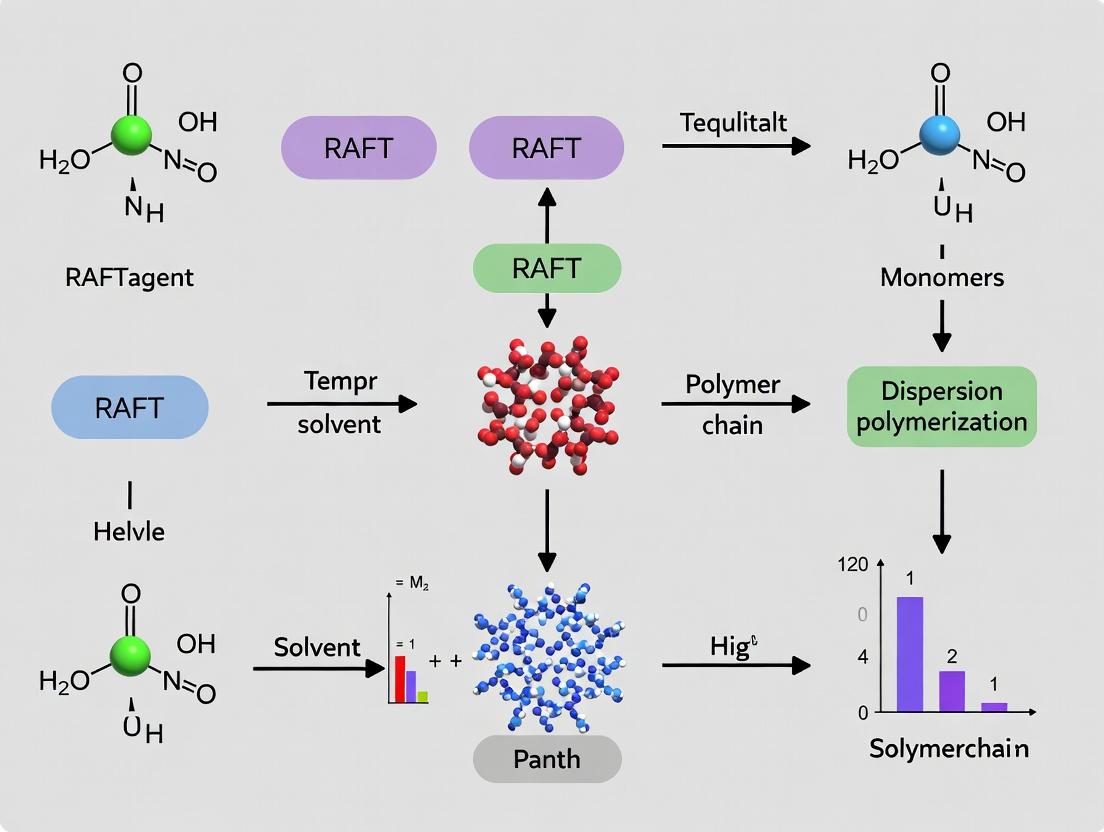
This article provides a comprehensive guide to Reversible Addition-Fragmentation chain Transfer (RAFT) dispersion polymerization, a powerful technique for synthesizing well-defined polymer nanoparticles with precise morphological control.
RAFT Dispersion Polymerization: Mastering Polymer Nanoparticle Morphology for Biomedical Applications
Abstract
This article provides a comprehensive guide to Reversible Addition-Fragmentation chain Transfer (RAFT) dispersion polymerization, a powerful technique for synthesizing well-defined polymer nanoparticles with precise morphological control. Targeting researchers, scientists, and drug development professionals, it covers foundational principles, advanced synthetic methodologies, critical optimization strategies for tailoring particle size and shape, and comparative validation techniques. The discussion emphasizes practical applications in drug delivery, diagnostics, and biomaterials, offering actionable insights for translating controlled morphologies into enhanced biomedical functionality.
RAFT Dispersion Polymerization Explained: Core Principles for Morphology Control
RAFT (Reversible Addition-Fragmentation Chain Transfer) polymerization is a form of reversible-deactivation radical polymerization (RDRP) that enables exceptional control over polymer molecular weight, distribution, and architecture. Within the broader thesis on RAFT dispersion polymerization for morphology control, this technique is pivotal for synthesizing block copolymers that self-assemble into precise nanostructures (e.g., spheres, worms, vesicles) in situ, which are highly valuable for drug delivery applications.
Mechanism of RAFT Polymerization
The mechanism proceeds via a conventional free-radical polymerization pathway but is moderated by a chain transfer agent (CTA), typically a thiocarbonylthio compound. The core cycle involves:
- Initiation: A radical initiator generates primary radicals.
- Pre-Equilibrium: The primary radical (or a propagating polymer chain, Pₙ•) adds to the CTA, forming an intermediate radical. This intermediate fragments, yielding a dormant polymer chain (Pn-X) and a new reactive RAFT agent radical (R•). The R• re-initiates polymerization.
- Main Equilibrium: The dormant polymer chains (Pn-X and Pm-X) reversibly exchange with active propagating chains (Pₙ• and Pₘ•) via the same addition-fragmentation process. This rapid exchange equalizes growth probability among chains.
- Termination: Occurs naturally between active radicals but is minimized due to the low concentration of active species.
Advantages Over Conventional Techniques: A Quantitative Comparison
Table 1: Comparison of RAFT with Conventional Free-Radical and Other RDRP Techniques
| Feature | Conventional Free-Radical Polymerization | ATRP | NMP | RAFT Polymerization |
|---|---|---|---|---|
| Molecular Weight Control | Poor (Đ > 2.0) | Excellent (Đ ~ 1.05-1.2) | Good (Đ ~ 1.2-1.5) | Excellent (Đ ~ 1.05-1.2) |
| End-Group Fidelity | Low | High (Halogen) | High (Alkoxyamine) | High (Thiocarbonylthio) |
| Tolerance to Monomers | Very Wide | Limited (Acrylics, Styrenes) | Limited (Styrenes, Acrylates) | Very Wide (Acrylates, Methacrylates, Styrene, Vinyl esters, Acrylamides) |
| Tolerance to Functional Groups | Moderate | Low (Protic groups poison catalyst) | Moderate | High (Tolerates acids, alcohols, amides) |
| Typical Reaction Conditions | 50-90°C | 20-110°C (Requires metal catalyst) | 100-140°C | 50-70°C (No metal catalyst) |
| Ease of Purification | Simple | Complex (Metal removal) | Moderate | Moderate (CTA removal) |
| Architectural Complexity | Limited | High (Block, graft, stars) | High (Block, graft) | Very High (Block, graft, stars, networks) |
| Compatibility with Aqueous Media | Yes | Challenging | Limited | Excellent (Especially for dispersion polymerization) |
Application Notes for Morphology Control Research
In RAFT dispersion polymerization, a block copolymer is synthesized in situ. The first solvophilic block is synthesized via RAFT solution polymerization. As the second solvophobic block grows in a selective solvent, it precipitates, driving self-assembly into nanostructures. Key parameters controlling final morphology (spheres, worms, lamellae, vesicles) include:
- Degree of Polymerization (DP) of both blocks.
- Polymer Concentration in the reaction medium.
- Solvophobicity of the core-forming block and solvent choice.
- CTA selection, which impacts chain-transfer efficiency and kinetics.
Experimental Protocols
Protocol 1: Synthesis of a Macro-CTA (Poly(Oligo(ethylene glycol) methyl ether acrylate), POEGA)
Purpose: To create a solvophilic stabilizer block for subsequent RAFT dispersion polymerization in water/ethanol mixtures.
Materials:
- Oligo(ethylene glycol) methyl ether acrylate (OEGA, Mn = 480 g/mol)
- RAFT CTA: 2-(Dodecylthiocarbonothioylthio)-2-methylpropionic acid (DDMAT)
- Initiator: 4,4'-Azobis(4-cyanovaleric acid) (ACVA)
- Solvent: 1,4-Dioxane
- Nitrogen source (for degassing)
Procedure:
- In a Schlenk flask, dissolve OEGA (5.0 g, 10.4 mmol), DDMAT (28.9 mg, 0.078 mmol), and ACVA (4.4 mg, 0.016 mmol) in 1,4-dioxane (5 mL). Target DP: 134; [M]:[CTA]:[I] = 134:1:0.2.
- Seal the flask and degass the solution by purging with nitrogen for 30 minutes while immersed in an ice bath.
- Place the flask in a pre-heated oil bath at 70°C and stir for 6 hours.
- Terminate the reaction by rapid cooling in liquid nitrogen and exposure to air.
- Purify the POEGA macro-CTA by precipitation into cold diethyl ether (x3) and dry under vacuum. Characterize via ¹H NMR and SEC.
Protocol 2: RAFT Dispersion Polymerization for Vesicle Formation
Purpose: To synthesize POEGA-b-PBzMA block copolymer vesicles using the POEGA macro-CTA from Protocol 1.
Materials:
- POEGA macro-CTA (Mn,sec ~ 55k, Đ ~ 1.10)
- Monomer: Benzyl methacrylate (BzMA)
- Initiator: ACVA
- Solvent: Water/Ethanol mixture (4:1 w/w)
Procedure:
- In a round-bottom flask, dissolve POEGA macro-CTA (0.50 g, 0.0091 mmol), BzMA (1.14 g, 6.4 mmol), and ACVA (0.51 mg, 0.0018 mmol) in the water/ethanol mixture (20 g). Target DP of PBzMA: 700.
- Degass the mixture with nitrogen for 20 minutes.
- Immerse the flask in a pre-heated oil bath at 70°C with stirring (300 rpm) for 24 hours. The solution will typically turn milky blue, indicating nanoparticle formation.
- Cool the dispersion to room temperature. Analyze morphology by transmission electron microscopy (TEM) and dynamic light scattering (DLS).
Visualizations
Title: Core RAFT Polymerization Mechanism
Title: RAFT Dispersion Polymerization Workflow
The Scientist's Toolkit: Key Research Reagent Solutions
Table 2: Essential Materials for RAFT Dispersion Polymerization
| Reagent / Material | Function & Critical Property | Example in Morphology Control |
|---|---|---|
| Chain Transfer Agent (CTA) | Mediates the RAFT equilibrium. The R group must be a good leaving/re-initiating group; the Z group influences reactivity. | DDMAT: Common for methacrylates. CPDB: Often used for acrylates. Selection dictates block extension efficiency. |
| Macro-CTA | A pre-synthesized polymer chain bearing a RAFT end-group. Acts as both stabilizer and controlling agent for the second block. | POEGA, PGMA: Provide steric stabilization in aqueous dispersion polymerization. DP determines packing parameter. |
| Functional Monomer | Provides polymer block properties (hydrophilicity, hydrophobicity, reactivity). | BzMA: Forms glassy, hydrophobic core. Diacetone acrylamide: Provides ketone handles for post-polymerization modification. |
| Solvating Mixture | A solvent that dissolves monomers and the Macro-CTA but is a non-solvent for the growing second block. Drives self-assembly. | Water/Ethanol (4:1): A common mixture for polymerizing methacrylates. Selectivity tunes morphology boundaries. |
| Radical Initiator | Provides a steady flux of primary radicals to maintain the polymerization rate. | ACVA: A water/ethanol soluble azo-initiator with moderate half-life at 70°C. Low concentration minimizes termination. |
| Deoxygenation Agent | Removes oxygen, a radical inhibitor, to allow polymerization initiation. | Nitrogen Sparging: Standard method. Freeze-Pump-Thaw: For more stringent oxygen removal in small-scale reactions. |
This application note details the fundamental principles and practical execution of dispersion polymerization, specifically contextualized within a broader thesis on Reversible Addition-Fragmentation Chain-Transfer (RAFT) Dispersion Polymerization for Block Copolymer Morphology Control. The ability to dictate particle size, shape (spheres, worms, vesicles), and internal nanostructure is paramount for applications in drug delivery, diagnostics, and nanotechnology. RAFT dispersion polymerization provides a powerful, controlled route from a homogeneous monomer solution to well-defined polymeric particles by exploiting a controlled polymerization mechanism and in situ self-assembly.
Table 1: Common Monomer/Stabilizer/Solvent Systems in RAFT Dispersion Polymerization
| Monomer | Stabilizer Block/Agent | Solvent (Precipitant for Polymer) | Typical Target Particle Morphology | Reference Size Range (Diameter) |
|---|---|---|---|---|
| Benzyl methacrylate (BzMA) | Poly(glycerol monomethacrylate) (PGMA) | Ethanol/Water | Spheres, Worms, Vesicles | 50 nm – 1 μm |
| 2-Hydroxypropyl methacrylate (HPMA) | Poly(ethylene glycol) (PEG) based macro-CTA | Ethanol | Spheres | 100-300 nm |
| Methyl methacrylate (MMA) | Poly(vinyl pyrrolidone) (PVP) | Alkanes (e.g., heptane) | Spherical Particles | 0.5 – 5 μm |
| 4-Vinylpyridine (4VP) | Polystyrene-b-polyacrylic acid | Toluene/Ethanol | Micelles, Inverse Structures | 50-200 nm |
Table 2: Effect of Key Reaction Parameters on Particle Characteristics
| Parameter | Typical Range Studied | Impact on Particle Size | Impact on Morphology |
|---|---|---|---|
| Target Degree of Polymerization (DP) | 100 – 4000 | Increases with higher DP. | Spheres → Worms → Vesicles with increasing core-forming block DP. |
| Solvent Composition | e.g., Ethanol:Water (80:20 to 60:40) | Size decreases with poorer solvent quality (more water). | Can trigger morphology transitions at constant DP. |
| Polymer Solid Content | 5 – 25% w/w | Size generally increases with concentration. | Higher concentrations favor kinetically trapped, complex morphologies. |
| RAFT Agent Concentration ([CTA]/[I]) | 1.0 – 10.0 | Smaller particles with more CTA (lower DP per chain). | Finer control over molecular weight dispersity (Đ) stabilizes morphologies. |
| Reaction Temperature | 60 – 80 °C | Can affect nucleation density and growth rate. | Higher T may accelerate polymerization, affecting kinetic trapping. |
Experimental Protocols
Protocol 3.1: Synthesis of PGMA-PBzMA Diblock Copolymer Particles via RAFT Dispersion Polymerization in Ethanol/Water
Objective: To synthesize spherical polymeric nanoparticles and understand the homogeneous-to-heterogeneous transition.
Materials: See "The Scientist's Toolkit" (Section 5).
Procedure:
- Solution Preparation: In a 25 mL Schlenk tube, dissolve the PGMA macro-RAFT agent (100 mg, target DP=50), benzyl methacrylate (BzMA, 1.00 g, 5.66 mmol), and AIBN initiator (0.20 mg, 1.22 μmol, [CTA]/[I]=5) in a degassed solvent mixture of ethanol (6.0 g) and deionized water (2.0 g) (75:25 w/w). Equip the tube with a magnetic stir bar.
- Degassing: Seal the tube and perform three freeze-pump-thaw cycles to remove dissolved oxygen. Back-fill with nitrogen or argon on the final cycle.
- Polymerization: Immerse the sealed tube in a pre-heated oil bath at 70 °C with stirring (300 rpm). Allow the reaction to proceed for 24 hours. Note: The solution will turn milky blue/white, indicating nucleation and particle formation.
- Termination & Purification: Cool the tube in ice water. Open the tube and dilute the dispersion with ethanol (10 mL). Transfer to dialysis tubing (MWCO 12-14 kDa) and dialyze against ethanol for 24 hours (with 3-4 solvent changes) to remove unreacted monomer and low molecular weight species.
- Analysis: The final dispersion can be analyzed by Dynamic Light Scattering (DLS), Transmission Electron Microscopy (TEM), and Gel Permeation Chromatography (GPC).
Protocol 3.2: Systematic Morphology Transition Study (Spheres to Worms to Vesicles)
Objective: To demonstrate control over particle morphology by varying the target DP of the core-forming block.
Materials: As in Protocol 3.1, with varied BzMA mass.
Procedure:
- Prepare three separate Schlenk tubes following Protocol 3.1, Step 1, but vary the mass of BzMA monomer to target different DPs for the core-forming PBzMA block:
- Tube A (Target DP=200): BzMA = 0.40 g.
- Tube B (Target DP=400): BzMA = 0.80 g.
- Tube C (Target DP=800): BzMA = 1.60 g.
- Keep the mass of PGMA macro-CTA, solvent mass, and [CTA]/[I] ratio constant.
- Repeat the degassing (Step 2), polymerization (Step 3, 70°C for 24h), and termination steps for all three tubes.
- Purify each sample separately via dialysis (Protocol 3.1, Step 4).
- Analyze each final dispersion by DLS and TEM. Expect a transition from spheres (DP=200) to worms/cylinders (DP=400) to vesicles (lamellae, DP=800).
Visualization Diagrams
Diagram 1: RAFT Dispersion Polymerization Mechanism & Control.
Diagram 2: Standard Synthesis Protocol Steps.
The Scientist's Toolkit
Table 3: Essential Research Reagent Solutions & Materials
| Item | Function & Rationale | Example / Specification |
|---|---|---|
| Functional Macro-RAFT Agent | Acts as both polymerization control agent (ensuring low Đ) and in situ stabilizer. Determines shell properties. | PGMA50-RAFT or PEG113-RAFT. Must be soluble in the initial solvent. |
| Core-Forming Monomer | Polymerizes to form the insoluble particle core. Choice dictates core properties (Tg, hydrophobicity). | Benzyl methacrylate (BzMA), purity >99%, inhibit removed. |
| Thermal Initiator | Generates radicals to start the polymerization under mild conditions. | Azobisisobutyronitrile (AIBN), recrystallized from methanol. |
| Solvent Mixture | Homogeneous for reactants, a precipitant for the forming polymer. Tuning composition controls solvophobicity. | Ethanol/Water, anhydrous alcohols, or alkanes. Degassed before use. |
| Degassing Equipment | Removes oxygen, a radical scavenger that inhibits RAFT polymerization. | Schlenk line with freeze-pump-thaw capability or nitrogen/vacuum manifold. |
| Dialysis Membranes | Purifies final particles from small molecules (monomer, initiator fragments). | Regenerated cellulose, MWCO 12-14 kDa, appropriate for solvent. |
| Characterization Tools | For analyzing molecular weight (GPC), particle size/dispersity (DLS), and morphology (TEM). | DLS instrument, TEM with staining capability (e.g., uranyl acetate). |
This application note details the critical experimental parameters governing morphology in Reversible Addition-Fragmentation Chain Transfer (RAFT) dispersion polymerization. Operating within the broader thesis on achieving precise morphological control for drug delivery applications, this document provides a consolidated protocol and reference for researchers. The interplay between monomer, RAFT agent, stabilizer, and solvent dictates the kinetic and thermodynamic drivers of self-assembly, ultimately determining particle size, shape, and internal nanostructure.
RAFT dispersion polymerization enables the synthesis of polymeric particles with complex morphologies (e.g., spheres, worms, vesicles, lamellae) directly in a selective solvent. The process hinges on the in situ formation of a block copolymer as the first soluble block becomes extended by a second monomer that forms an insoluble polymer. Morphology is a consequence of the packing parameter of the resulting amphiphilic diblock copolymer, which is controlled by the specified critical parameters.
Critical Parameters & Quantitative Data
Table 1: Monomer Selection Guide
| Monomer (Core-Forming) | Hydrophobicity (log P) | Typical Tg of Homopolymer (°C) | Key Morphological Influence | Common Ratio to Soluble Block (Target Morphology) |
|---|---|---|---|---|
| Benzyl methacrylate (BzMA) | 2.49 | 54 | Forms glassy core; enables spheres, worms, vesicles. | 100-400:100 (Spheres→Worms→Vesicles) |
| 2-Hydroxypropyl methacrylate (HPMA) | 0.24 (est.) | ~68 | More hydrophilic; requires careful solvent selection. | 200-300:100 (Vesicles directly) |
| Methyl methacrylate (MMA) | 1.38 | 105 | High Tg, rigid core. Often used with co-monomer. | 100-200:100 (Spheres) |
| 4-Vinylpyridine (4VP) | 1.12 | 142-150 | Responsive, coordinative; complex morphologies. | 150-300:100 (Vesicles, Lamellae) |
| Ethylene glycol dimethacrylate (EGDMA) | 0.90 | Crosslinked | Crosslinker; locks in morphology, enhances stability. | 5-20 mol% (of core monomer) |
Table 2: RAFT Agent Selection Impact
| RAFT Agent (Z, R Group) | Solubility Preference | Typical CTA | Key Function & Morphological Impact |
|---|---|---|---|
| Dithiobenzoate (Z = Ph, R = CH(Ph)CH₃) | Soluble in organic media | CPDB | Provides good control; common for PGMA-based polymers. |
| Trithiocarbonate (Z, R = Alkyl) | More hydrophilic/solvent versatile | PETTC, MATTCD | Favors aqueous systems; R-group influences nucleation. |
| Dodecyl trithiocarbonate (R = C₁₂H₂₅) | Highly hydrophobic | DDMAT | Promotes in situ self-assembly; affects aggregation number. |
Table 3: Stabilizer Block (Macro-CTA) Characteristics
| Soluble Block Monomer | DP Target (N_s) | Role in Stabilization & Morphology Control |
|---|---|---|
| Poly(oligo(ethylene glycol) methyl ether methacrylate) (POEGMA) | 50-100 | Provides steric stabilization via hydrated OEG side chains. |
| Poly(glycerol monomethacrylate) (PGMA) | 50-80 | Highly hydrophilic, biocompatible; excellent stabilizer in alcohols/water. |
| Poly(N-isopropylacrylamide) (PNIPAM) | 50-100 | Thermoresponsive; morphology can change with temperature. |
Table 4: Solvent System Selection
| Solvent | Water:Co-solvent Ratio | Selectivity for Core Block | Typical Use Case |
|---|---|---|---|
| Water/Ethanol | 80:20 to 70:30 (w/w) | Moderate-High | Most common for PGMA-PBzMA systems. |
| Water/Methanol | 80:20 | High | Faster desolvation, smaller particles. |
| Water/1,4-Dioxane | 60:40 to 50:50 | Tunable | Lower polarity, for more hydrophobic monomers. |
| Water/Glycerol | 70:30 | High, viscous | Slows kinetics, allows study of intermediate states. |
Detailed Experimental Protocols
Protocol 3.1: Synthesis of PGMA Macro-CTA Stabilizer
Objective: Synthesize the hydrophilic stabilizer block (DP~78) for subsequent chain extension. Materials:
- Glycerol monomethacrylate (GMA, 4.00 g, 25.0 mmol)
- 4-Cyano-4-[(dodecylsulfanylthiocarbonyl)sulfanyl]pentanoic acid (CDTPA, RAFT agent, 35.5 mg, 0.083 mmol)
- α,α'-Azobisisobutyronitrile (AIBN, initiator, 2.7 mg, 0.0165 mmol) in 1,4-dioxane
- 1,4-Dioxane (anhydrous, 5.0 mL)
Procedure:
- Charge GMA, CDTPA, and 1,4-dioxane into a 25 mL Schlenk tube equipped with a magnetic stir bar.
- Degas the mixture by purging with N₂ for 20 minutes while stirring.
- In a separate vial, dissolve AIBN in 0.5 mL degassed 1,4-dioxane. Add to the reaction mixture via degassed syringe.
- Place the tube in a pre-heated oil bath at 70°C and stir for 3 hours.
- Terminate polymerization by cooling in an ice bath and exposing to air.
- Purify by precipitation into a 10-fold excess of cold diethyl ether. Re-dissolve in acetone and re-precipitate twice. Dry the white solid under vacuum overnight. Characterize via ¹H NMR and SEC.
Protocol 3.2: Standard RAFT Dispersion Polymerization for Morphology Screening
Objective: Synthesize PGMA₇₈-PBzMAₓ particles and assess morphology transition as a function of core DP (x). Materials:
- PGMA₇₈ Macro-CTA (from Protocol 3.1, 100.0 mg, 0.0128 mmol)
- Benzyl methacrylate (BzMA, monomer, variable mass: 256 mg for DP₁₀₀, 512 mg for DP₂₀₀, 768 mg for DP₃₀₀)
- AIBN (0.21 mg, 1.28 μmol) in ethanol
- Water/Ethanol mixture (4.0 g total, 80:20 w/w)
Procedure:
- Weigh PGMA₇₈ Macro-CTA and BzMA into a 10 mL reaction vial with a stir bar.
- Add the water/ethanol mixture to achieve a total solids content of 20% w/w. Stir until fully dissolved (solution will be clear and colorless).
- Prepare a stock solution of AIBN in ethanol (0.5 mg/mL). Add 0.42 mL of this stock to the reaction vial via micropipette. ([Macro-CTA]:[AIBN] = 10:1).
- Sparge the solution with N₂ for 10 minutes while stirring.
- Seal the vial and place in a pre-heated block heater at 70°C with stirring (500 rpm) for 24 hours.
- Allow to cool. Samples will typically form milky dispersions. Analyze morphology by Transmission Electron Microscopy (TEM) and size by Dynamic Light Scattering (DLS). Morphology Expectation: DP₁₀₀: Spheres; DP₂₀₀: Worm-like micelles; DP₃₀₀: Vesicles/Lamellae.
Visualization
Diagram: Parameter Interplay in RAFT Dispersion
Diagram: Morphology Screening Workflow
The Scientist's Toolkit: Research Reagent Solutions
| Item | Function & Rationale |
|---|---|
| PGMA Macro-CTA (DP~78) | The universal stabilizer for alcohol/water systems; provides reproducible nucleation sites and colloidal stability. |
| BzMA, HPMA Monomers | Core-forming monomers with tuned hydrophobicity to target a range of packing parameters. Must be purified (e.g., passed through basic alumina) before use. |
| CDTPA or CPDB RAFT Agents | Provide controlled polymerization for the stabilizer and core blocks, ensuring narrow dispersity (Đ < 1.2). |
| Degassed Water/Ethanol Mixtures (80:20) | The standard solvent system for morphology screening; selectivity is well-understood. Prepare in large, degassed batches for consistency. |
| AIBN in Ethanol Stock (0.5 mg/mL) | Standardized initiator solution allows for precise, repeatable addition of very small masses of initiator. |
| Pre-set 70°C Heating Block | Essential for consistent temperature control, which impacts reaction kinetics and morphology development. |
The Role of Polymerization-Induced Self-Assembly (PISA) in Simplifying Nanostructure Synthesis
Within the broader thesis on Reversible Addition-Fragmentation Chain-Transfer (RAFT) dispersion polymerization for morphology control, Polymerization-Induced Self-Assembly (PISA) emerges as a transformative methodology. It simplifies the one-pot synthesis of complex, well-defined polymeric nanostructures (spheres, worms, vesicles) directly in water or other solvents. By combining polymerization and self-assembly into a single step, PISA eliminates the need for post-polymerization processing, enhancing scalability and reproducibility for applications in drug delivery, diagnostics, and nanomaterials.
Application Notes & Key Data
PISA via RAFT dispersion polymerization enables precise control over nanostructure morphology by tuning key reaction parameters. The following table summarizes the quantitative relationship between these parameters and the resulting nanostructures, as established in recent literature.
Table 1: Key Parameters for Morphology Control in Aqueous RAFT-PISA
| Parameter | Typical Range | Effect on Morphology | Resulting Nanostructure (Progression) |
|---|---|---|---|
| Target DP of Core Block | 50 - 1000 | Increased core chain length promotes phase separation and curvature reduction. | Spheres → Worms → Vesicles |
| Total Solids Content | 10 - 50 wt% | Higher concentration can favor kinetic trapping, affecting order-order transitions. | Varies (enables high-concentration synthesis) |
| Macro-RAFT Agent DP | 10 - 100 | Determines stabilizer length; shorter stabilizers can favor higher-order morphologies. | Influences critical packing parameter |
| Solvent Selectivity | Water, alcohols, etc. | Quality of solvent for core-forming block dictates self-assembly drive. | Spheres (good solvent) → Vesicles (poor solvent) |
| Reaction Temperature | 50 - 70 °C | Affects polymerization kinetics and core block mobility. | Can lock in non-equilibrium structures |
Table 2: Representative PISA-Formed Nanostructures & Properties (2023-2024 Studies)
| Core-Forming Polymer | Stabilizer Block | Morphology Achieved | Diameter / Size (nm) | Potential Application Cited |
|---|---|---|---|---|
| Poly(benzyl methacrylate) | PGMA | Vesicles | 200 - 500 | Drug encapsulation |
| Poly(2-hydroxypropyl methacrylate) | PEGMA | Worms | ~50 (diam.) x 1000+ (length) | Thixotropic gels |
| Poly(diacetone acrylamide) | PDEAEMA | Spheres, Worms | 20 - 40 (spheres) | Antigen delivery |
| Poly(4-phenyl-1-butene) | PEO | Vesicles | 100 - 300 | Nanoreactors |
Detailed Experimental Protocols
Protocol 3.1: One-Pot Synthesis of Poly(GMA-stat-PEGMA)-b-PHPMA Worm-like Micelles via Aqueous RAFT-PISA
This protocol is adapted from recent work on forming thermoresponsive nanogels.
I. Materials Preparation
- Macro-RAFT Agent: Pre-synthesize poly(glycidyl methacrylate-stat-poly(ethylene glycol) methyl ether methacrylate) (P(GMA-stat-PEGMA)) via RAFT solution polymerization. Characterize by ( ^1 )H NMR (( M_{n, NMR} )) and SEC (( D < 1.2 )).
- Monomer: 2-Hydroxypropyl methacrylate (HPMA). Pass through a basic alumina column to remove inhibitor prior to use.
- Initiator: 4,4'-Azobis(4-cyanovaleric acid) (ACVA), recrystallized from methanol.
- Solvent: Deionized water (18.2 MΩ·cm), degassed with nitrogen for 30 minutes.
- Equipment: Schlenk flask, magnetic stirrer, oil bath, nitrogen/vacuum manifold.
II. Polymerization Procedure
- Charge a 25 mL Schlenk tube with the macro-RAFT agent (0.20 g, ( M_n ) ~5,000 g/mol, 40 µmol), HPMA (2.00 g, 14 mmol), and ACVA (1.12 mg, 4.0 µmol, [RAFT]:[I] = 10:1).
- Add degassed water (3.80 g) to achieve a total solids content of 20 wt%. Cap the flask and stir to form a homogeneous solution.
- Seal the flask and perform three freeze-pump-thaw cycles to remove dissolved oxygen.
- Backfill the flask with nitrogen and place it in a pre-heated oil bath at 70 °C to initiate polymerization.
- Allow the reaction to proceed with stirring for 24 hours.
III. Post-Polymerization & Analysis
- Cool the reaction mixture to room temperature. A viscous, transparent gel indicates the formation of worm-like micelles.
- Characterization:
- Conversion: Determine HPMA conversion by ( ^1 )H NMR analysis of a dried aliquot in ( d )-DMSO.
- Morphology: Dilute a sample (0.1 wt%) with water and deposit on a carbon-coated copper grid. Analyze by Transmission Electron Microscopy (TEM) after negative staining with 1% uranyl acetate.
- Size: Analyze the diluted dispersion by Dynamic Light Scattering (DLS) to obtain hydrodynamic diameter distributions.
Protocol 3.2: Morphology Transition Study via Chain Extension Kinetics
This protocol outlines sampling during PISA to monitor the evolution of nanostructures.
- Set up a large-scale PISA reaction as in Protocol 3.1, but in a 100 mL flask.
- Using a degassed syringe, withdraw ~0.5 mL aliquots at specific time points (e.g., 1, 2, 4, 8, 24 hours).
- Immediately cool each aliquot in an ice bath and expose to air to quench the polymerization.
- For each sample:
- Measure monomer conversion (( ^1 )H NMR).
- Dilute and analyze by DLS to observe size trends.
- Prepare TEM grids. The sequence should reveal a transition from soluble copolymers to spheres, then to worms and possibly vesicles as the core DP increases.
Visualization: Workflows & Relationships
PISA One-Pot Synthesis and Morphology Control Pathway
PISA's Role in a Morphology Control Thesis
The Scientist's Toolkit: Key Research Reagent Solutions
Table 3: Essential Materials for Aqueous RAFT-PISA Experiments
| Reagent/Material | Typical Function & Role in PISA | Critical Notes for Researchers |
|---|---|---|
| Well-Defined Macro-RAFT Agent | Acts as both polymerization control agent and stabilizer block for the forming nanoparticles. Determines colloidal stability. | Must be soluble in the continuous phase. Low dispersity (<1.2) is crucial for uniform self-assembly. |
| Purified Core-Forming Monomer | Provides the insoluble block that drives in situ self-assembly upon chain extension. | Must be purified to remove inhibitors (e.g., via alumina column). Common examples: HPMA, BzMA, DAAM. |
| Water-Soluble Azo Initiator (e.g., ACVA) | Decomposes thermally to generate radicals to initiate/ sustain the RAFT polymerization. | Concentration relative to RAFT agent ([I]/[RAFT]) controls molecular weight distribution and rate. |
| Degassed, Deionized Water | The selective solvent (continuous phase) for aqueous dispersion PISA. A poor solvent for the core block. | Oxygen must be rigorously removed to prevent inhibition of radical polymerization. |
| Chain Transfer Agent (CTA) for Macro-RAFT Synthesis | Used to pre-synthesize the stabilizer block (e.g., CPDB, DDMAT). | The R-group must be appropriate for the initial monomer; Z-group influences reactivity. |
| Characterization Tools: NMR, SEC, DLS, TEM | For monitoring conversion, molecular weight, size, and visualizing morphology. | TEM grid preparation (staining) is an art; DLS on diluted samples may not reflect bulk state. |
Synthesis in Action: Protocols and Biomedical Applications of Morphology-Controlled Nanoparticles
Step-by-Step Protocol for a Standard RAFT Dispersion Polymerization
RAFT (Reversible Addition-Fragmentation chain Transfer) dispersion polymerization is a pivotal technique in the broader thesis exploring in situ particle formation and morphology control. This method enables the synthesis of block copolymer nano/micro-particles with precise shapes (spheres, worms, vesicles) directly in a selective solvent. Controlling morphology is critical for applications in drug delivery, where shape influences cellular uptake, biodistribution, and release kinetics. These application notes provide a standardized, reproducible protocol for conducting a basic poly(benzyl methacrylate)-block-poly(poly(ethylene glycol) methyl ether methacrylate) (PBzMA-b-PPEGMA) dispersion polymerization in n-butanol, a common model system for generating spheres.
Research Reagent Solutions Toolkit
| Reagent/Material | Specification/Example | Function in RAFT Dispersion Polymerization |
|---|---|---|
| Chain Transfer Agent (CTA) | 2-Cyano-2-propyl dodecyl trithiocarbonate (CPDT) or similar. | Mediates the RAFT process, controlling molecular weight and providing living chain ends for block extension. |
| Primary Monomer (Core-Forming) | Benzyl methacrylate (BzMA). Purify by passing through basic alumina column. | Forms the insoluble first block (PBzMA), which nucleates into nascent particles upon reaching critical chain length. |
| Stabilizer Monomer (Shell-Forming) | Poly(ethylene glycol) methyl ether methacrylate (PEGMA, Mn ~500 g/mol). | Forms the soluble second block (PPEGMA), stabilizing the growing particles in the continuous phase. |
| Thermal Initiator | α,α'-Azobisisobutyronitrile (AIBN). Recrystallize from methanol. | Generates free radicals to initiate the polymerization at elevated temperature. |
| Solvent | n-Butanol. Anhydrous, >99%. | Selective solvent for PPEGMA, non-solvent for PBzMA, triggering in situ self-assembly. |
| Purification Supplies | Basic Alumina (Brockmann I), dialysis tubing (MWCO 12-14 kDa), or centrifuge. | For removing unreacted monomer, initiator, and solvent from final particle dispersion. |
Detailed Protocol: PBzMA-b-PPEGMA Sphere Synthesis
Safety: Perform all operations in a fume hood. Wear appropriate PPE (lab coat, safety glasses, gloves). Chemicals are flammable and hazardous.
Reagent Preparation & Purification
- BzMA Purification: Pass BzMA monomer through a short column of basic alumina to remove inhibitor and acidic impurities. Use immediately or store at -20°C under inert atmosphere.
- AIBN Purification: Recrystallize AIBN from methanol. Dry the crystals under vacuum and store in the dark at 4°C.
- Solvent Preparation: Ensure n-butanol is anhydrous. Use molecular sieves if necessary.
Polymerization Procedure
- In a typical synthesis targeting spherical morphology, charge a 25 mL round-bottom flask with:
- n-Butanol: 9.00 g (11.1 mL)
- PEGMA500 monomer: 1.00 g (2.0 mmol)
- CPDT RAFT agent: 18.4 mg (0.050 mmol)
- AIBN initiator: 0.82 mg (0.0050 mmol) ([RAFT]:[I] = 10:1).
- Seal the flask with a rubber septum. Sparge the mixture with dry nitrogen or argon for 20-30 minutes with gentle magnetic stirring to remove oxygen.
- Place the flask in a pre-heated oil bath at 70°C (± 0.5°C) to initiate the polymerization of the soluble PPEGMA first block. Allow reaction to proceed for 2 hours.
- Critical Step – Block Extension: In a separate vial, prepare a degassed solution of BzMA (2.00 g, 11.3 mmol) in n-butanol (1.00 g). Using a degassed syringe, swiftly inject this solution into the reaction flask.
- Allow the dispersion polymerization to continue at 70°C for a further 24 hours. The solution will turn from clear to opaque, indicating particle formation.
Workup & Purification
- Cool the reaction mixture to room temperature.
- Purification Option A (Dialysis): Transfer the dispersion to dialysis tubing (MWCO 12-14 kDa) and dialyze against a large volume of ethanol or methanol for 48 hours, changing solvent 4-6 times.
- Purification Option B (Centrifugation): Dilute an aliquot with ethanol and centrifuge at 15,000 rpm for 20 minutes. Decant the supernatant and re-disperse the pellet in fresh solvent. Repeat 3 times.
- Characterize the final particle dispersion (Dynamic Light Scattering, TEM) and the cleaved copolymer (GPC, NMR).
Data Presentation: Key Parameters & Expected Outcomes
Table 1: Recipe and Expected Characteristics for Standard Sphere Synthesis.
| Parameter | Value | Role in Morphology Control |
|---|---|---|
| Target DPn(PBzMA) | 200 | Core block length; primary driver for particle size. |
| Target DPn(PPEGMA) | 40 | Stabilizer block length; affects solvation and final size. |
| Solid Content | 20% w/w | Total polymer concentration in solvent. |
| [M]:[RAFT]:[I] | 240:1:0.1 | Controls molecular weight distribution (Đ). |
| Solvent | n-Butanol | Selectivity dictates self-assembly pathway. |
| Expected Result | Typical Value (Post-Purification) | |
| Particle Diameter (DLS) | 80 - 120 nm | Hydrodynamic diameter (number distribution). |
| PDI (DLS) | < 0.10 | Indicates narrow particle size distribution. |
| Mn, theor (copolymer) | ~44,000 g/mol | Theoretical molecular weight. |
| Morphology (TEM) | Uniform Spheres | Confirmed by transmission electron microscopy. |
Table 2: Morphology Transition Guide (Based on Literature). Note: This is a simplified guide; exact boundaries depend on multiple factors.
| Target PBzMA DPn | Approx. Core Fraction* | Expected Dominant Morphology | Potential Drug Delivery Relevance |
|---|---|---|---|
| 100 | ~0.70 | Spheres | Rapid release, high surface area. |
| 200 | ~0.83 | Spheres / Short Worms | Intermediate. |
| 300 | ~0.88 | Worms / Vesicles | Longer circulation (worms), encapsulation (vesicles). |
| 400 | >0.90 | Vesicles / Lamellae | High payload capacity, controlled release. |
Core fraction = Mass of PBzMA / Total copolymer mass.
Experimental Workflow & Morphology Logic
Diagram Title: RAFT Dispersion Polymerization Workflow & Morphology Pathway
Diagram Title: Thesis Framework: Linking Synthesis Parameters to Morphology
Within the broader thesis on RAFT dispersion polymerization for morphology control, the transition between nanoscale morphologies—spheres, worms, and vesicles—is governed by a delicate balance of thermodynamic and kinetic parameters. This application note provides targeted formulation recipes and protocols to reproducibly access each specific morphology, primarily via polymerization-induced self-assembly (PISA) using RAFT chemistry.
Key Parameters Governing Morphology
The primary driver of morphology in PISA is the degree of polymerization (DP) of the insoluble core-forming block relative to the soluble stabilizer block. Solvent selectivity, polymer concentration, and temperature are critical secondary factors.
| Target Morphology | Core Block DPn (Example) | Total Solids (%) | Stabilizer Block (Typical) | Core-Forming Monomer | Morphology Diagram (Core DP vs. Solubility) |
|---|---|---|---|---|---|
| Spheres | 50 - 100 | 10 - 20% | PGMA36 | Benzyl methacrylate | Low DP, High Solvent Quality |
| Worms | 100 - 150 | 15 - 25% | PGMA36 | Benzyl methacrylate | Intermediate DP, Marginal Solvency |
| Vesicles | 150 - 300 | 15 - 25% | PGMA36 | Benzyl methacrylate | High DP, Low Solvent Quality |
Note: DPn ranges are approximate and system-dependent. PGMA = poly(glycerol monomethacrylate).
Research Reagent Solutions Toolkit
Table 2: Essential Materials for RAFT Dispersion Polymerization Morphology Control
| Item / Reagent | Function & Rationale |
|---|---|
| Chain Transfer Agent (CTA) (e.g., CPADB) | Controls molecular weight and provides living chain ends for block extension. Essential for low dispersity (Đ). |
| Soluble Macro-CTA (e.g., PGMA36-CPADB) | Acts as the stabilizer block. Its length and solubility dictate the initial nanoparticle formation. |
| Core-Forming Monomer (e.g., BzMA, HPMA) | Polymerizes to form the insoluble core. Volume and DP are the primary levers for morphology transition. |
| Thermal Initiator (e.g., AIBN) | Generates radicals to initiate polymerization at elevated temperatures. Used at low concentration relative to CTA. |
| Selective Solvent (e.g., Ethanol, Water/Ethanol Mixtures) | Solvent for the stabilizer block, non-solvent for the growing core block. Drives in situ self-assembly. |
| Inert Atmosphere (N2 or Ar) | Deoxygenates the reaction mixture to prevent radical inhibition and CTA degradation. |
Detailed Experimental Protocols
Protocol 1: Synthesis of PGMA36Macro-CTA (Stabilizer Block)
Objective: Prepare a well-defined hydrophilic precursor with a RAFT end-group. Procedure:
- In a round-bottom flask, dissolve glycerol monomethacrylate (GMA, 10.0 g, 62.5 mmol), 4-cyano-4-[(dodecylsulfanylthiocarbonyl)sulfanyl]pentanoic acid (CPADB, 0.346 g, 0.87 mmol), and AIBN (14.3 mg, 0.087 mmol) in 1,4-dioxane (20 mL).
- Purge the solution with nitrogen for 30 minutes while stirring.
- Immerse the flask in a pre-heated oil bath at 70 °C and stir for 3 hours.
- Cool the reaction in an ice bath. Precipitate the polymer into a 10-fold excess of cold diethyl ether.
- Isolate the yellow polymer by filtration and dry under vacuum. Characterize by 1H NMR and SEC to confirm DPn ≈ 36 and Đ < 1.20.
Protocol 2: Generic RAFT Dispersion Polymerization for Morphology Control
Objective: Utilize a PGMA36 macro-CTA to polymerize a core-forming monomer at specific conditions to target spheres, worms, or vesicles. Procedure:
- Formulation: Weigh PGMA36-CPADB macro-CTA (target: 20 wt% of final solids), core monomer (BzMA), and AIBN (CTA:AIBN molar ratio = 10:1) into a polymerization vial.
- Solvent Addition: Add the selective solvent (e.g., ethanol/water 80:20 w/w for BzMA) to achieve the target total solids concentration (see Table 1). Cap and seal the vial.
- Purge & Polymerize: Sparge the mixture with nitrogen for 15 minutes. Place the vial in a pre-heated block at 70 °C with magnetic stirring (500 rpm) for 24 hours.
- Termination & Analysis: Cool the vial. Sample a drop for DLS and TEM analysis. The final dispersion can be used directly or purified by dialysis.
Morphology-Specific Recipe Modifications:
- For Spheres: Use BzMA to target a core DP of ~80 at 15% w/w solids in ethanol/water (80/20).
- For Worms: Use BzMA to target a core DP of ~120 at 20% w/w solids in ethanol/water (80/20).
- For Vesicles: Use BzMA to target a core DP of ~200 at 20% w/w solids in ethanol/water (80/20). Note: A sphere-to-worm-to-vesicle transition is often observed in situ during polymerization for high DPs.
Protocol 3: Post-Polymerization Processing (Vesicle Swelling/Disassembly)
Objective: Manipulate vesicle morphology post-synthesis. Procedure:
- Take a vesicle dispersion (PGMA36-P(BzMA)200) in ethanol/water (1 mL, 20% w/w).
- Vesicle Swelling: Add a selective solvent for the core (e.g., 50-200 µL of tetrahydrofuran) and mix gently. Incubate for 1 hour. Analyze by TEM to observe swollen vesicles or potential perforation.
- Vesicle Disassembly to Worms/Spheres: Dilute the vesicle dispersion with a large volume of a good solvent for both blocks (e.g., dimethylformamide). This thermodynamically drives disassembly into unimers. Subsequent slow dialysis back into the selective solvent can sometimes reassemble into kinetically trapped worms or spheres.
Visualization of Morphology Control Pathways
Diagram Title: RAFT-PISA Morphology Evolution Pathway
Diagram Title: Recipe Selection Logic for Target Morphology
This application note details protocols for the post-polymerization functionalization of block copolymer nanoparticles synthesized via RAFT dispersion polymerization. This work is situated within a broader thesis exploring the use of polymerization-induced self-assembly (PISA) to control nanoparticle morphology (spheres, worms, vesicles). The strategies described herein enable the transformation of these morphologically-defined particles into sophisticated, multi-functional platforms for targeted drug delivery and imaging. Functionalization is achieved through modular conjugation reactions, primarily leveraging terminal RAFT agent and side-chain functionalities.
The Scientist's Toolkit: Key Research Reagent Solutions
| Reagent/Material | Function in Functionalization |
|---|---|
| NHS-Activated Ester Polymers | Pre-made polymers (e.g., PNHSMA) for facile amine coupling to drugs/ligands. |
| Maleimide-Functional Monomers | Incorporate maleimide handles for specific, rapid thiol-ene 'click' conjugation. |
| DBCO-PEG₄-NHS Ester | Bifunctional linker for strain-promoted alkyne-azide cycloaddition (SPAAC) with azide-tagged agents. |
| Tetrazine-PEG₄-NHS Ester | Enables inverse electron-demand Diels-Alder (IEDDA) click with trans-cyclooctene (TCO)-tagged moieties. |
| Traut's Reagent (2-Iminothiolane) | Converts primary amines (-NH₂) into sulfhydryls (-SH) for maleimide coupling. |
| Azido-Acetic Acid NHS Ester | Introduces azide groups onto amine-containing polymers for subsequent SPAAC. |
| 4-(4,4,5,5-Tetramethyl-1,3,2-dioxaborolan-2-yl)benzyl Methacrylate | Monomer for incorporating phenylboronic acid (PBA) side chains for glucose-responsive systems. |
| 2-Diisopropylaminoethyl methacrylate (DIPAEMA) | Monomer for pH-responsive (pKa ~6.5) polymer blocks. |
Table 1: Representative conjugation efficiencies and resulting functionalities for different strategies.
| Conjugation Strategy | Target Group | Coupling Partner | Typical Efficiency (%) | Typical Payload (µmol/g polymer) | Key Application |
|---|---|---|---|---|---|
| NHS-Amine | NHS ester | Folate-NH₂ | 85-95 | 180-210 | Active tumor targeting |
| Maleimide-Thiol | Maleimide | cRGDfK-SH | >95 | 190-220 | Integrin targeting |
| SPAAC Click | DBCO | Azide-Cy5 | >98 | 200-230 | Fluorescent imaging |
| Hydrazone Formation | Ketone | Doxorubicin-Hydrazide | 70-85 | 150-180 | pH-sensitive drug release |
| Disulfide Exchange | Pyridyl disulfide | Thiol-peptide | 80-90 | 160-200 | Redox-responsive release |
Table 2: Properties of functionalized nanoparticles with different core morphologies.
| Nanoparticle Morphology (Core) | Avg. Diameter (nm) | PDI | Ligand Density (molecules/particle) | Drug Loading (wt%) | Serum Stability (48h, % size change) |
|---|---|---|---|---|---|
| Spherical Micelles | 35 | 0.12 | ~420 | 8.5 | +5% |
| Worm-like Micelles | 65 (width) | 0.15 | ~1200 | 6.2 | +8% |
| Vesicles (Polymersomes) | 210 | 0.18 | ~8500 | 12.1 | +12% |
Protocols
Protocol 1: Conjugation of Targeting Ligands via NHS-Ester Chemistry
Objective: To conjugate folate (targeting ligand) to amine-functional block copolymer nanoparticles. Materials: Poly(ethylene glycol)-b-poly(N-hydroxysuccinimide methacrylate) (PEG-PNHSMA) vesicles, Folate-ethylenediamine, Anhydrous DMSO, Triethylamine (TEA), Dialysis membrane (MWCO 3.5 kDa), PBS (pH 7.4). Workflow:
- Dissolve 50 mg of PEG-PNHSMA nanoparticles in 5 mL of anhydrous DMSO.
- Add a 1.5-fold molar excess of folate-ethylenediamine (relative to NHS groups) and 10 µL of TEA.
- React for 12 hours at 25°C under gentle stirring, protected from light.
- Quench unreacted NHS groups by adding 100 µL of aqueous ammonium chloride (1 M).
- Dialyze against DMSO/water mixtures (50/50, 25/75 v/v) for 4 hours each, then against PBS (pH 7.4) for 24 hours.
- Lyophilize or store the functionalized nanoparticles at 4°C. Validation: Confirm conjugation via UV-Vis spectroscopy (folate absorbance at 363 nm) and calculate grafting density using a standard curve.
Title: Folate Conjugation via NHS Chemistry Workflow
Protocol 2: Dual-Functionalization with Imaging Agent and pH-Responsive Group
Objective: To prepare nanoparticles bearing a fluorescent label (Cy5) and pH-responsive side chains. Materials: PEG-P(HPMA-co-MaMA) worms (MaMA = maleimide methacrylate), Cy5-azide, DBCO-PEG₄-NHS ester, 2,3-Dimethylmaleic anhydride (DA), DMF, PBS. Workflow:
- Step A: SPAAC for Imaging. Dissolve nanoparticles (40 mg) in DMF. Add 1.1 eq. of DBCO-PEG₄-NHS ester and react for 2h. Purify via precipitation into diethyl ether. Redissolve in PBS, add 1.2 eq. of Cy5-azide, react for 4h. Purify by dialysis.
- Step B: pH-Responsive Capping. Dissolve Cy5-labeled nanoparticles in pH 8.0 borate buffer. Add a 50-fold molar excess of DA to reactive amine groups on the HPMA segments. Stir for 6h at room temperature.
- Dialyze extensively against PBS (pH 7.4) and characterize. The DA groups provide charge-reversal at tumor microenvironment pH (~6.8). Validation: Monitor Cy5 incorporation via fluorescence spectroscopy. Confirm DA conjugation via zeta potential measurement at pH 7.4 and 6.5 (shift from negative to positive).
Title: Dual SPAAC and pH-Capping Workflow
Protocol 3: Incorporating Redox-Responsive Disulfide Crosslinks and Drug Loading
Objective: To fabricate core-crosslinked, reduction-sensitive spherical micelles for controlled drug release. Materials: PEG-P(DSMA-co-STMA) micelles (DSMA = disulfide-bearing monomer, STMA = styrenic monomer), Dithiothreitol (DTT), Doxorubicin (Dox), Triethylamine, DMF/Water mixture. Workflow:
- Crosslinking: Disperse micelles (30 mg) in a 9:1 DMF/water mixture. Add DTT (0.5 eq. relative to disulfide) and TEA (1 eq.). React for 24h under nitrogen.
- Drug Loading: Purify crosslinked micelles by dialysis. Use a solvent evaporation method: dissolve 10 mg of micelles and 2 mg of Dox in 2 mL THF. Add dropwise to 10 mL water under sonication. Stir overnight to evaporate THF.
- Purify drug-loaded particles by centrifugation/filtration. Determine loading via UV-Vis after particle dissolution in DMF containing 10% acetic acid. Validation: Confirm crosslinking by DLS in DMF (stable size). Demonstrate redox-triggered release by incubating with 10 mM glutathione (GSH) and sampling via dialysis.
Title: Redox-Responsive Crosslinking & Loading
Critical Pathways in Functional Nanoparticle Action
Title: Multifunctional Nanoparticle Action Pathway
Application Notes
This document details the critical relationship between nanoparticle morphology—engineered via RAFT dispersion polymerization—and key functional parameters in drug delivery. The control over spherical, worm-like, and vesicular morphologies offered by this technique directly dictates application performance.
1. Morphology Dictates Drug Loading Capacity and Mechanism The internal structure and polymer chain packing determine how and where a therapeutic agent is incorporated.
| Morphology | Typical Loading Capacity (%) | Primary Loading Mechanism | Ideal Drug Type |
|---|---|---|---|
| Sphere (Micelle) | 5-15 | Hydrophobic core encapsulation | Hydrophobic small molecules (e.g., Paclitaxel) |
| Worm (Cylinder) | 10-25 | Core encapsulation + chain entanglement | Hydrophobic drugs, some nucleic acids |
| Vesicle (Polymersome) | 20-50 | Aqueous lumen encapsulation + membrane integration | Hydrophilic drugs (e.g., Doxorubicin HCl), proteins, siRNA |
2. Morphology Controls Release Kinetics The diffusion path and degradation profile of the polymer matrix are morphology-dependent.
| Morphology | Release Profile | Key Controlling Factors | Typical Timeframe |
|---|---|---|---|
| Sphere (Micelle) | Burst release, then sustained | Core crystallization, polymer degradation | Hours to days |
| Worm (Cylinder) | Sustained, linear release | High aspect ratio, slow matrix erosion | Days to weeks |
| Vesicle (Polymersome) | Tri-phasic: lag, sustained, burst | Membrane thickness & permeability, osmotic pressure | Days to weeks |
3. Morphology Influences Cellular Uptake Pathway and Efficiency Particle shape and size directly interact with cellular membranes and machinery.
| Morphology | Primary Uptake Pathway | Relative Uptake Efficiency (in vitro) | Intracellular Fate |
|---|---|---|---|
| Sphere (Micelle) | Clathrin-mediated endocytosis | Baseline (1x) | Early endosome → lysosome |
| Worm (Cylinder) | Macropinocytosis, caveolae-mediated | High (2-5x) | Endosomal escape enhanced, perinuclear accumulation |
| Vesicle (Polymersome) | Clathrin-mediated, phagocytosis (if >500nm) | Variable (0.5-2x) | Endo-lysosomal trafficking; membrane fusion possible |
Experimental Protocols
Protocol 1: Synthesis of Poly(benzyl methacrylate)-b-poly(oligo(ethylene glycol) methacrylate) (PBzMA-b-POEGMA) Nanoparticles with Controlled Morphology via RAFT Dispersion Polymerization
Purpose: To synthesize a library of nanoparticles (spheres, worms, vesicles) from the same polymeric precursor by varying the degree of polymerization (DP) of the stabilizing block and solids content.
Materials (Research Reagent Solutions):
- RAFT Agent: 4-Cyano-4-[(dodecylsulfanylthiocarbonyl)sulfanyl]pentanoic acid (CDTPA). Function: Mediates controlled radical polymerization, dictates particle size and morphology.
- Monomer 1: Benzyl methacrylate (BzMA). Function: Forms the core-forming block, provides hydrophobicity for drug encapsulation.
- Monomer 2: Oligo(ethylene glycol) methacrylate (OEGMA, Mn = 300 g/mol). Function: Forms the stabilizer block, confers biocompatibility and stealth properties.
- Initiator: 4,4'-Azobis(4-cyanovaleric acid) (ACVA). Function: Thermal radical initiator.
- Solvent: Ethanol/Water mixture (4:1 w/w). Function: Reaction medium for polymerization-induced self-assembly (PISA).
Procedure:
- Synthesis of PBzMA Macro-RAFT Agent: In a vial, dissolve CDTPA (0.103 g, 0.25 mmol), BzMA (7.12 g, 40.0 mmol), and ACVA (7.0 mg, 0.025 mmol) in ethanol (28.0 g). Purge with nitrogen for 20 minutes. Place in a pre-heated oil bath at 70°C for 2.5 hours. Quench in ice water. Analyze conversion via ¹H NMR.
- Dispersion Polymerization for Morphology Control: Prepare separate vials targeting different POEGMA DPs. Example for Vesicles: Take PBzMA macro-RAFT (DP=160, 0.80 g), OEGMA (0.80 g, ~2.67 mmol), and ACVA (0.47 mg) in ethanol/water (4:1, 7.2 g total). Purge with N₂ for 15 min. Heat at 70°C for 24 hours.
- Purification: Cool the dispersion and dialyze against deionized water (MWCO 3.5 kDa) for 48 hours to remove unreacted monomers and solvent. Lyophilize or store as an aqueous dispersion at 4°C.
- Characterization: Use Dynamic Light Scattering (DLS) for size, Transmission Electron Microscopy (TEM) for morphology confirmation, and Gel Permeation Chromatography (GPC) for molecular weight.
Protocol 2: Drug Loading and In Vitro Release Profiling
Purpose: To load a model drug (e.g., Doxorubicin) into different morphologies and quantify release kinetics.
Materials: Doxorubicin hydrochloride (Dox·HCl), Triethylamine, Phosphate Buffered Saline (PBS, pH 7.4 and 5.0), Dialysis tubing (MWCO 3.5 kDa), Fluorescence spectrometer.
Loading Procedure (Passive, for Hydrophobic Doxorubicin Base):
- Convert Dox·HCl to hydrophobic base by stirring with excess triethylamine in DMSO overnight. Precipitate and wash.
- Dissolve dried nanoparticles (10 mg) and Dox base (1 mg) in 2 mL of tetrahydrofuran (THF). Sonicate for 10 min.
- Rapidly add the THF solution to 10 mL of stirring PBS (pH 7.4). Stir for 4 hours to evaporate THF and form loaded nanoparticles.
- Dialyze against PBS to remove unencapsulated drug. Determine loading content (LC%) and encapsulation efficiency (EE%) via UV-Vis/fluorescence after particle dissolution in DMF.
Release Profiling Protocol:
- Place 2 mL of drug-loaded nanoparticle solution in a dialysis bag.
- Immerse the bag in 40 mL of release medium (PBS pH 7.4 for blood simulation; PBS pH 5.0 with 0.1% w/v Tween 80 for lysosomal simulation). Stir at 37°C.
- At predetermined intervals, withdraw 2 mL of external medium and replace with fresh pre-warmed medium.
- Quantify released drug concentration using a fluorescence calibration curve (Ex: 480 nm, Em: 590 nm). Plot cumulative release over time.
Protocol 3: Evaluation of Cellular Uptake Pathways
Purpose: To determine the primary endocytic pathways for different nanoparticle morphologies.
Materials: HeLa cells, Fluorescently-labeled nanoparticles (e.g., Cy5-labelled), Endocytic inhibitors (Chlorpromazine, Genistein, Amiloride, Filipin), Confocal laser scanning microscope (CLSM), Flow cytometer.
Procedure:
- Seed HeLa cells in 24-well plates at 5 x 10⁴ cells/well and culture for 24 h.
- Inhibitor Pre-treatment: Incubate cells with different inhibitors for 1 h: Chlorpromazine (10 µg/mL, clathrin inhibition), Genistein (200 µM, caveolae inhibition), Amiloride (100 µM, macropinocytosis inhibition), Filipin (5 µg/mL, lipid raft inhibition). Include an untreated control.
- Uptake Experiment: Replace medium with fresh medium containing inhibitors and fluorescent nanoparticles (50 µg/mL polymer concentration). Incubate for 4 h at 37°C.
- Analysis: a) Flow Cytometry: Trypsinize cells, wash, and resuspend in PBS. Analyze cellular fluorescence for 10,000 events per sample. b) CLSM: For visual confirmation, fix cells with 4% PFA, stain nuclei with DAPI, and image.
Visualizations
Diagram Title: RAFT Synthesis to Drug Delivery Outcomes
Diagram Title: Cellular Uptake Pathways and Intracellular Fate
The Scientist's Toolkit: Research Reagent Solutions
| Item | Function in RAFT Morphology & Drug Delivery Research |
|---|---|
| CDTPA RAFT Agent | A carboxylic acid-functionalized trithiocarbonate. Enables controlled polymerization and subsequent bioconjugation. Critical for achieving low dispersity and morphology control in PISA. |
| OEGMA Monomer (Mn=300) | Provides the hydrophilic, biocompatible stabilizer block. Its length (DP) is the primary handle for tuning nanoparticle morphology during PISA. |
| ACVA Initiator | A water/ethanol-soluble azo initiator. Provides a clean source of radicals at 70°C for the RAFT polymerization, minimizing side reactions. |
| Ethanol/Water Solvent Mix | The standard solvent for RAFT dispersion polymerization of methacrylates. The polarity drives in situ self-assembly as the core block grows. |
| Doxorubicin Hydrochloride | A model fluorescent chemotherapeutic. Used to study loading (both hydrophilic and hydrophobic forms) and track release and cellular uptake. |
| Endocytic Inhibitor Cocktail | Pharmacological tools (e.g., Chlorpromazine, Genistein) to selectively block specific uptake pathways, enabling mechanistic studies of nanoparticle internalization. |
| Dialysis Tubing (MWCO 3.5-14 kDa) | For purifying nanoparticles from unreacted monomers and for performing in vitro drug release studies in a controlled manner. |
| Dynamic Light Scattering (DLS) | Instrumentation for measuring nanoparticle hydrodynamic diameter, polydispersity index (PDI), and zeta potential in suspension. |
Thesis Context: This document details specific applications of polymeric nanomaterials synthesized via RAFT dispersion polymerization, where precise control over particle morphology (spheres, worms, vesicles) is a critical enabling factor. The protocols and notes herein support the broader thesis that morphology dictates function in biomedical applications.
Application Note 1: Diagnostics — Morphology-Dependent Lateral Flow Assay (LFA) Enhancement
Core Concept: Non-spherical polymer nanoparticles (e.g., worms, vesicles) from RAFT dispersion polymerization provide higher surface area and multivalent binding, improving the sensitivity of rapid diagnostic tests compared to traditional gold nanospheres.
Protocol 1.1: Synthesis of Functionalized Polymeric Nano-Worms for LFA Conjugation
- Objective: To synthesize amine-functionalized poly(glycerol monomethacrylate)-block-poly(2-hydroxypropyl methacrylate) (PGMA-b-PHPMA) worm-like particles via PISA.
- Materials:
- PGMA macro-CTA (Mn = 5,000 g/mol, Đ < 1.1)
- 2-Hydroxypropyl methacrylate (HPMA)
- 4,4'-Azobis(4-cyanovaleric acid) (ACVA) initiator
- Ethanol/water (4:1 w/w) solvent mixture
- Key Reagent: 2-Aminoethyl methacrylate hydrochloride (AEMA, 5 mol% relative to HPMA) for surface amine functionality.
- Method:
- Dissolve PGMA macro-CTA (0.20 g, 0.04 mmol) and ACVA (2.2 mg, 8.0 µmol) in ethanol/water (19.8 g) in a 50 mL round-bottom flask.
- Add HPMA (1.90 g, 13.2 mmol) and AEMA (0.11 g, 0.66 mmol). Purge with N2 for 20 minutes.
- Place in an oil bath at 70°C with stirring (300 rpm) for 24 hours.
- Cool to room temperature. Analyze by DLS and TEM to confirm worm morphology.
- Conjugation to Antibody:
- Dialyze worms against MES buffer (0.1 M, pH 6.0).
- Activate surface amines by adding EDC (10 mM) and sulfo-NHS (25 mM) for 15 minutes.
- Purify via centrifugal filtration (100 kDa MWCO) and react with IgG antibody (50 µg per mg particles) in PBS (pH 7.4) for 2 hours.
- Block with 1% BSA for 30 minutes. Store in assay buffer at 4°C.
Table 1: Performance Comparison of Nanoparticle Labels in Model LFA for CRP Detection
| Nanoparticle Type (Morphology) | Synthesis Method | Conjugated Anti-CRP (µg/mg particle) | Visual LOD (ng/mL) | Optical Scan LOD (ng/mL) |
|---|---|---|---|---|
| Gold Nanosphere (Sphere) | Citrate reduction | 12.5 | 10.0 | 2.5 |
| Polystyrene Sphere | Emulsion polym. | 8.2 | 25.0 | 5.0 |
| PGMA-b-PHPMA Worm | RAFT Dispersion | 31.7 | 1.0 | 0.2 |
| PGMA-b-PHPMA Vesicle | RAFT Dispersion | 28.5 | 2.5 | 0.5 |
Application Note 2: Tissue Engineering — Anisotropic Microparticles as Shape-Specific Cell Scaffolds
Core Concept: Vesicles and worm-like particles produced via RAFT dispersion polymerization can be chemically cross-linked to create robust, shape-persistent biomaterials that direct cell alignment and differentiation.
Protocol 2.1: Fabrication of Cross-Linked Polymeric Vesicle Scaffolds for Neuronal Growth
- Objective: To prepare degradable, cross-linked vesicles that support the oriented growth of neurites.
- Materials:
- PGMA-b-(HPMA-stat-GMA) block copolymer vesicles (GMA = glycidyl methacrylate, 10 mol%).
- Cystamine dihydrochloride (cross-linker, cleavable)
- Phosphate Buffered Saline (PBS, pH 7.4)
- Method:
- Synthesize vesicles via standard PISA protocol using a PGMA macro-CTA and a monomer feed of HPMA/GMA (90/10 mol%).
- Dilute vesicle dispersion to 5% w/w in PBS.
- Add cystamine dihydrochloride (molar ratio 1:1, amine:epoxy). React at 37°C for 48 hours with gentle shaking.
- Dialyze extensively against water to remove unreacted cross-linker. Lyophilize to obtain a solid scaffold foam or resuspend for 3D cell culture.
- Cell Seeding Protocol:
- Sterilize vesicle foam (1 mg) under UV light for 1 hour.
- Hydrate in neuronal culture medium.
- Seed PC12 cells or primary rat dorsal root ganglion neurons at 50,000 cells/scaffold.
- Culture with NGF (50 ng/mL). Assess neurite alignment and length at 3, 5, and 7 days (immunostaining for β-III-tubulin).
Table 2: Influence of Scaffold Particle Morphology on PC12 Cell Behavior
| Scaffold Morphology | Avg. Pore Size (µm) | Neurite Alignment Coefficient (0-1) | Avg. Neurite Length at Day 7 (µm) | Differentiation Rate (%) |
|---|---|---|---|---|
| Spherical Particles | 5-10 | 0.15 ± 0.05 | 45 ± 12 | 35 ± 8 |
| Vesicular Particles | 20-50 | 0.75 ± 0.10 | 120 ± 25 | 78 ± 10 |
| Worm-like Particles | (Fibrillar) | 0.60 ± 0.15 | 95 ± 20 | 65 ± 12 |
Application Note 3: Antimicrobial Surfaces — Bactericidal Vesicle Coatings
Core Concept: Cationic vesicles, synthesized by incorporating cationic monomers during RAFT dispersion polymerization, can be coated onto surfaces to create contact-killing antimicrobial films.
Protocol 3.1: Preparation of Cationic Antimicrobial Vesicle Coating for Catheters
- Objective: To formulate a dip-coating solution of cationic vesicles and apply it to silicone catheter surfaces.
- Materials:
- PGMA macro-CTA
- HPMA
- Key Reagent: (2-Methacryloyloxy)ethyl trimethylammonium chloride (META, 20 mol%)
- Medical-grade silicone catheter pieces
- Method:
- Synthesize cationic vesicles via PISA: PGMA macro-CTA, HPMA (80 mol%), META (20 mol%) in ethanol/water.
- Dialyze the resulting cationic vesicle dispersion against water. Determine solid content (typically ~15% w/w).
- Coating Solution: Mix vesicle dispersion with 1% (w/v) polyethylene glycol (PEG, Mn=10k) as a binder in water.
- Dip clean, dry silicone catheter pieces into the coating solution for 60 seconds.
- Withdraw slowly and dry at 37°C for 24 hours. Rinse gently with sterile water to remove unbound particles.
- Testing Protocol (ASTM E2149):
- Challenge coated and uncoated catheter pieces with Staphylococcus aureus or Escherichia coli suspension (1-3 x 10^5 CFU/mL) in PBS.
- Shake for 1 hour at 37°C.
- Neutralize, dilute, plate on agar, and count colonies after 24 hours.
- Calculate percentage reduction: R (%) = (B - A)/B * 100, where B and A are CFU/mL from uncoated and coated samples, respectively.
Table 3: Antimicrobial Efficacy of Cationic Polymer Coatings
| Coating Type (Morphology) | Zeta Potential (mV) | Log Reduction (S. aureus) | Log Reduction (E. coli) | Durability (Abrasion cycles) |
|---|---|---|---|---|
| Cationic Polymer Brush (Flat) | +38 | 2.1 | 1.8 | >100 |
| Cationic Vesicles | +45 | >4.0 | 3.7 | 50-70 |
| Cationic Spheres | +40 | 3.0 | 2.5 | 30-50 |
The Scientist's Toolkit: Key Research Reagent Solutions
| Item | Function/Explanation |
|---|---|
| PGMA Macro-CTA | The heart of PISA. A poly(glycerol monomethacrylate) chain with a reversible addition-fragmentation chain-transfer (RAFT) end-group. Controls polymerization and dictates final particle morphology. |
| HPMA | Primary core-forming monomer (2-hydroxypropyl methacrylate). Biocompatible, forms the insoluble block during PISA in aqueous solution. |
| ACVA Initiator | A water/ethanol-soluble azo initiator (4,4'-Azobis(4-cyanovaleric acid)). Decomposes thermally to generate radicals for polymerization. |
| AEMA | Functional comonomer (2-Aminoethyl methacrylate hydrochloride). Introduces primary amine groups for subsequent bioconjugation (e.g., to antibodies). |
| GMA | Functional comonomer (Glycidyl methacrylate). Provides epoxy groups for post-polymerization cross-linking with diamines. |
| META | Cationic comonomer ((2-Methacryloyloxy)ethyl trimethylammonium chloride). Imparts a permanent positive charge for antimicrobial activity. |
| Cystamine Dihydrochloride | Redox-cleavable diamine cross-linker. Reacts with epoxy groups (from GMA) to stabilize vesicles, but breaks down under reducing conditions (e.g., in cells). |
Visualizations
Diagram 1: PISA Morphology Control Drives Application Selection
Diagram 2: Fabricating Degradable Vesicle Scaffolds for Neurons
Optimizing Your Synthesis: Troubleshooting Common Issues in Morphology Control
Within the broader thesis on controlling nanoparticle morphology via RAFT dispersion polymerization, two primary synthetic challenges consistently arise: the prevention of macroscopic gelation and the achievement of reproducible polymerization kinetics. Gelation leads to irreproducible, non-uniform materials, while inconsistent kinetics hinder the precise morphological transitions (e.g., from spheres to worms to vesicles) essential for drug delivery applications. These challenges are interlinked, often stemming from impurities, inadequate mixing, or uncontrolled nucleation events. This document outlines application notes and detailed protocols to mitigate these issues, ensuring robust synthesis for biomedical research.
Table 1: Impact of Common Variables on Gelation and Kinetics in RAFT Dispersion Polymerization
| Variable | Typical Range Studied | Effect on Gelation Risk | Effect on Kinetics Reproducibility | Optimal for Morphology Control |
|---|---|---|---|---|
| RAFT Agent Purity | ≥ 95% (HPLC) | High (Impurities cause cross-linking) | Critical (Dictates initial [CTA]) | Use purified ≥ 98%, store at -20°C |
| Solvent (Water) Quality | Deionized, < 1 µS/cm | Moderate (Ions affect stability) | High (Affects nucleation) | HPLC grade or freshly deionized |
| Monomer:RAFT Ratio | 200:1 to 1000:1 | Increases with higher ratio | Moderate (Defines polymer length) | Optimize per target morphology (e.g., 350:1 for worms) |
| Initiator:RAFT Ratio | 0.1:1 to 0.5:1 | High if > 0.3:1 (excess radicals) | Very High (Controls rate, dispersion) | Keep low (e.g., 0.2:1) for steady kinetics |
| Polymerization Temperature | 60°C - 75°C | Increases above 70°C | Moderate (Arrhenius dependence) | Maintain ±0.5°C of set point (e.g., 70°C) |
| Stirring Rate (RPM) | 200 - 500 | Severe if < 250 (local hotspots) | High (Ensures heat/mass transfer) | Constant, ≥ 300 RPM with magnetic follower |
| Solid Content (%) | 10% - 25% w/w | Increases above 20% | Moderate (Viscosity effects) | 15% w/w for balanced kinetics & yield |
Table 2: Characterization Metrics for Assessing Gelation and Kinetics
| Metric | Method | Target for Successful Synthesis | Warning Sign |
|---|---|---|---|
| Macroscopic Gelation | Visual inspection, vial inversion | Homogeneous, free-flowing dispersion | Visible lumps or non-flowing mass |
| Conversion vs. Time | ¹H NMR (monomer peak decay) | Smooth, sigmoidal curve | Sudden plateau or erratic jumps |
| Dispersion Viscosity | Dynamic light scattering (DLS) polydispersity | PdI < 0.15 | PdI > 0.2, multimodal distribution |
| Number-Avg Mol. Wt (Mₙ) | GPC vs. linear PMMA standards | Close to theoretical, linear increase | Significant deviation, high dispersity (Đ > 1.3) |
Detailed Experimental Protocols
Protocol 1: Purification of RAFT Agent (e.g., PGMEA-RAFT) for Reproducible Kinetics
Objective: Remove impurities (disulfides, oxidants) that cause erratic initiation and potential gelation.
- Materials: Crude RAFT agent, silica gel (60 Å), toluene, ethyl acetate, rotary evaporator, schlenk line.
- Procedure:
- Pack a chromatography column with silica gel using toluene.
- Dissolve ~1g of crude RAFT agent in minimal toluene (~5 mL).
- Load onto column and elute with a gradient from 100% toluene to 90:10 toluene:ethyl acetate.
- Collect fractions and monitor by TLC. Combine pure fractions.
- Remove solvents under reduced pressure at 30°C.
- Dissolve in degassed acetone, precipitate into cold hexane, and dry under vacuum for 24h.
- Confirm purity by ¹H NMR and HPLC (>98%). Store under argon at -20°C.
Protocol 2: Standardized RAFT Dispersion Polymerization with In-situ Monitoring
Objective: Synthesize poly(benzyl methacrylate) (PBzMA) nanoparticles with reproducible kinetics and no gelation.
- Materials: Purified PGMEA-RAFT, BzMA (inhibitor removed), V-501 initiator, HPLC-grade water, 2-in-1 schlenk tube with stir bar, oil bath at 70.0 ± 0.5°C, N₂/vacuum manifold.
- Procedure:
- Degassing: In a schlenk tube, combine PBzMA₃₀ macro-CTA (150 mg, 1 equiv), BzMA (1.05 g, 350 equiv), and V-501 (0.42 mg, 0.2 equiv). Add water (6.45 mL) to achieve 15% w/w solids. Seal.
- Perform three freeze-pump-thaw cycles (5 min N₂ thaw, 10 min pump on liquid N₂/EtOH bath).
- Back-fill with N₂ and place in a pre-heated oil bath at 70.0°C with stirring at 350 RPM.
- Kinetic Sampling: At timed intervals (e.g., 15, 30, 60, 120, 180, 240 min), use a degassed syringe to withdraw ~0.2 mL aliquots.
- Immediately quench samples in an ice-water bath. Analyze conversion by ¹H NMR (CDCl₃, monitor vinyl vs. aromatic peaks) and particle size by DLS.
- Gelation Check: Visually inspect the main reaction mixture for any lump formation or sudden increase in viscosity.
- Terminate reaction at target conversion (~80-90%) by cooling in ice water and exposing to air.
Protocol 3: Rapid Diagnostic Test for Incipient Gelation
Objective: Quickly assess if a reaction mixture is proceeding toward gelation.
- Materials: Reaction aliquot, micro-centrifuge, UV-vis spectrometer.
- Procedure:
- Take a 1 mL aliquot from the reaction mixture.
- Centrifuge at 2,000 RCF for 2 minutes.
- Observe pellet. A small, redispersible pellet is normal. A large, stringy, or non-redispersible pellet indicates early-stage macroscopic aggregation.
- Measure turbidity (OD at 600 nm) of the supernatant. A sudden drop vs. previous aliquots suggests particle aggregation/gelation.
Diagrams
Diagram 1: Synthesis Troubleshooting Logic Flow
Diagram 2: Key Factors for Reproducible Kinetics
The Scientist's Toolkit: Essential Research Reagent Solutions
Table 3: Key Materials for Overcoming Synthesis Challenges
| Item | Function & Rationale | Critical Specification |
|---|---|---|
| High-Purity RAFT Agent | Controls chain growth, defines particle core. Impurities cause cross-linking (gelation). | HPLC purity ≥ 98%; store sealed under inert gas at -20°C. |
| Deoxygenated, Ultrapure Water | Continuous phase for dispersion. Dissolved O₂ inhibits polymerization; ions affect nucleation. | Resistivity > 18 MΩ·cm; degassed via sparging or freeze-pump-thaw. |
| Monomers (e.g., BzMA, HPMA) | Building blocks for polymer chains. Inhibitors (MEHQ) must be removed for consistent kinetics. | Pass through basic alumina column immediately before use. |
| Thermolysis-Safe Initiator (e.g., V-501) | Provides radical flux at consistent rate at 50-80°C. Water-soluble for homogeneous initiation. | Keep initiator:RAFT ratio low (0.2:1) to minimize gelation risk. |
| Precision Heating/Stirring | Maintains uniform temperature and mixing, preventing localized high-conversion zones that gel. | Oil bath with ±0.2°C stability & magnetic stirring ≥ 300 RPM. |
| Schlenk Line or Glovebox | Enables rigorous removal of oxygen via freeze-pump-thaw cycles, ensuring reproducible initiation. | Capable of < 0.1 ppm O₂ environment for flask charging. |
| In-situ Monitoring Tools | Allows kinetic tracking without disrupting reaction, enabling early detection of issues. | Degassed syringe for sampling; rapid ¹H NMR or FTIR for conversion. |
This application note details protocols for controlling nanoparticle morphology via RAFT dispersion polymerization, a core technique within broader thesis research on achieving precise morphology control. The ability to fine-tune particle size and dispersity (Đ) is critical for applications in targeted drug delivery, diagnostics, and advanced materials. This document provides a focused investigation into two key process parameters: solids content and polymerization temperature, and their quantifiable impact on the final particle characteristics.
Table 1: Impact of Solids Content on Particle Size and Dispersity (Polymerization at 70°C)
| Solids Content (% w/w) | Mean Diameter (D_n, nm) | Polydispersity Index (Đ) | Observed Morphology |
|---|---|---|---|
| 10 | 85 ± 3 | 1.04 | Spherical, uniform |
| 15 | 112 ± 5 | 1.06 | Spherical, uniform |
| 20 | 158 ± 8 | 1.08 | Spherical, minor aggregation |
| 25 | 205 ± 15 | 1.12 | Spherical, increased aggregation risk |
Table 2: Impact of Polymerization Temperature on Particle Size and Dispersity (at 20% Solids)
| Temperature (°C) | Mean Diameter (D_n, nm) | Polydispersity Index (Đ) | Polymerization Time (hrs) |
|---|---|---|---|
| 60 | 180 ± 12 | 1.15 | 24 |
| 70 | 158 ± 8 | 1.08 | 18 |
| 80 | 132 ± 6 | 1.10 | 12 |
Experimental Protocols
Protocol 3.1: Standard RAFT Dispersion Polymerization for Polystyrene-b-poly(ethylene glycol) methyl ether methacrylate (PS-b-PEGMA) Particles
Objective: To synthesize block copolymer nanoparticles with controlled size via polymerization-induced self-assembly (PISA).
Materials:
- Monomer: Styrene (St, 99%), purified by passing through a basic alumina column.
- Macro-RAFT Agent: Poly(ethylene glycol) methyl ether methacrylate (PEGMA) trithiocarbonate (PEG45-RAFT, Mn ≈ 2,300 g/mol).
- Initiator: 2,2'-Azobis(2-methylpropionitrile) (AIBN), recrystallized from methanol.
- Solvent: Ethanol/water mixture (4:1 w/w).
- Other: Nitrogen gas (high purity), magnetic stir bar, Schlenk flask.
Procedure:
- Solution Preparation: In a 25 mL Schlenk flask, dissolve the PEG45-RAFT agent (0.20 g, 0.087 mmol) and AIBN (1.43 mg, 0.0087 mmol, [RAFT]:[AIBN] = 10:1) in the ethanol/water solvent mixture (9.80 g). Add styrene (2.00 g, 19.2 mmol) to achieve a 20% w/w solids content. Equip the flask with a magnetic stir bar.
- Degassing: Seal the flask and perform three freeze-pump-thaw cycles (freezing in liquid N₂, evacuating under vacuum, thawing under N₂ atmosphere) to remove oxygen.
- Polymerization: Place the degassed flask in a pre-heated oil bath at 70°C with vigorous stirring (500 rpm). Allow the reaction to proceed for 18 hours.
- Termination: Cool the reaction flask rapidly in an ice-water bath. Expose the mixture to air to terminate the polymerization.
- Purification: Purify the resulting milky dispersion by dialysis against deionized water for 48 hours (using a membrane with a 12-14 kDa MWCO) to remove unreacted monomers and solvent. The dispersion can be lyophilized for storage or characterized directly.
Characterization: Analyze particle size and dispersity by Dynamic Light Scattering (DLS) and confirm morphology by Transmission Electron Microscopy (TEM).
Protocol 3.2: Systematic Variation of Solids Content
Objective: To investigate the effect of total polymer concentration on particle nucleation and growth.
Procedure:
- Follow Protocol 3.1, but adjust the mass of styrene monomer and solvent to achieve final solids contents of 10%, 15%, 20%, and 25% w/w (as per Table 1). Keep the mass ratio of St:PEG45-RAFT:AIBN constant across all experiments.
- Perform all polymerizations at a constant temperature of 70°C for 18 hours.
- Terminate, purify, and characterize each sample as in steps 4-5 of Protocol 3.1.
Protocol 3.3: Systematic Variation of Polymerization Temperature
Objective: To investigate the effect of temperature on polymerization kinetics and particle stability.
Procedure:
- Follow Protocol 3.1 using the 20% w/w solids formulation.
- Instead of a single temperature, perform parallel polymerizations in separate Schlenk flasks in oil baths pre-heated to 60°C, 70°C, and 80°C.
- Monitor conversion periodically by ¹H NMR. Terminate each reaction upon reaching >95% conversion (approximate times provided in Table 2).
- Cool, purify, and characterize each sample.
Visualizations
Title: Parameter Impact on Particle Properties
Title: RAFT-PISA Experimental Workflow
The Scientist's Toolkit: Research Reagent Solutions
Table 3: Essential Materials for RAFT Dispersion Polymerization
| Reagent/Material | Function & Critical Notes |
|---|---|
| Purified Monomer (e.g., Styrene) | Building block of the polymer core. Must be purified to remove inhibitors (e.g., 4-methoxyphenol) which impede RAFT control. |
| Macro-RAFT Agent (e.g., PEG-RAFT) | Controls chain growth, dictates soluble block length, and is essential for forming stable nanoparticles during PISA. |
| Thermal Initiator (e.g., AIBN) | Generates radicals to start the polymerization chain reaction. Molar ratio to RAFT agent is critical for narrow Đ. |
| Binary Solvent Mixture (e.g., Ethanol/Water) | Selective solvent for the growing block. Composition determines solvency and is key for inducing self-assembly. |
| Schlenk Flask & Nitrogen Line | For rigorous oxygen removal via degassing. Oxygen is a radical scavenger that can terminate polymerization. |
| Dialysis Membranes (MWCO 12-14 kDa) | For purifying nanoparticles from unreacted monomers, oligomers, and solvent. Preserves particle integrity. |
Application Notes
These notes detail the application of morphology prediction and control in the context of Reversible Addition-Fragmentation Chain Transfer (RAFT) dispersion polymerization. This process is a cornerstone of polymer self-assembly research, enabling the synthesis of block copolymer nanoparticles with precise morphologies—spheres, worms, and vesicles—critical for applications in nanomedicine, particularly drug delivery.
Core Principle: Morphology evolution is governed by the Packing Parameter (p), defined as ( p = v / a0 lc ), where ( v ) is the volume of the hydrophobic chain, ( a0 ) is the optimal headgroup area, and ( lc ) is the critical chain length. Systematic manipulation of polymerization parameters allows for predictable tuning of these molecular parameters, driving morphological transitions.
Key Application in Drug Development: Vesicles (polymersomes) possess aqueous cavities ideal for hydrophilic drug encapsulation, while hydrophobic drugs can be loaded within the bilayer. Worm-like micelles exhibit unique flow properties and prolonged circulation times. Spherical nanoparticles offer high stability. Predictive control over these forms allows formulation scientists to tailor carrier properties to specific therapeutic payloads and delivery routes.
Critical Transition Points: The transition from spheres to worms (e.g., sphere-worm coexistence) and from worms to vesicles (worm-vesicle coexistence) are not abrupt but exist as windows of instability. Precise mapping of these points via targeted experiments is essential for reproducible synthesis of pure phases.
Experimental Protocols
Protocol 1: Synthesis of Poly(ethylene glycol)-b-poly(2-hydroxypropyl methacrylate) (PEG-b-PHPMA) via RAFT Aqueous Dispersion Polymerization
This is a canonical system for studying sphere-worm-vesicle transitions.
Materials:
- PEG₁₁₃ macro-CTA (Chain Transfer Agent)
- 2-Hydroxypropyl methacrylate (HPMA)
- 4,4'-Azobis(4-cyanovaleric acid) (ACVA), initiator
- Deionized water, pH 7.0 buffer.
Procedure:
- Formulation: In a vial, dissolve PEG₁₁₃ macro-CTA (0.125 g, 0.025 mmol) and ACVA (1.40 mg, 0.005 mmol, [CTA]:[I] = 5:1) in deionized water (4.75 g). Add HPMA monomer (0.475 g, 3.27 mmol) to achieve a target [HPMA] of 10% w/w relative to water.
- Purge: Sparge the solution with nitrogen for 20 minutes to remove oxygen.
- Polymerization: Seal the vial and place it in a pre-heated oil bath at 70°C with magnetic stirring (300 rpm).
- Monitoring: Periodically remove small aliquots (~0.1 mL) to monitor conversion by ¹H NMR and morphology by transmission electron microscopy (TEM).
- Termination: After 24 hours, cool the reaction in ice water. Expose to air to terminate polymerization.
- Analysis: Determine final monomer conversion via ¹H NMR. Analyze particle morphology using dynamic light scattering (DLS), TEM, and small-angle X-ray scattering (SAXS).
Protocol 2: Mapping the Sphere-Worm Transition Point via Solids Content Variation
Objective: To empirically determine the critical degree of polymerization (DP) of the PHPMA block at which spheres transition to worms.
Procedure:
- Set up a series of polymerizations as per Protocol 1, maintaining a constant [CTA]:[I] ratio and pH.
- Independent Variable: Systematically vary the initial monomer-to-water ratio to achieve different target DPs for the core-forming PHPMA block (e.g., target DP = 100, 120, 140, 160, 180).
- Allow each reaction to proceed to >99% conversion.
- For each sample, analyze the final morphology via TEM and confirm using SAXS. Visually assess sample viscosity (worm gels are highly viscous).
- Data Plotting: Plot morphology (as a discrete phase) against the achieved DP of the PHPMA block (calculated from NMR conversion). The transition point is identified as the DP range where a mixed sphere/worm population is observed.
Protocol 3: Directing Morphology via In-Situ Drug Loading
Objective: To control the final morphology by exploiting the plasticizing or swelling effect of a hydrophobic drug (model: paclitaxel) during polymerization.
Procedure:
- Prepare a standard polymerization mixture as in Protocol 1, targeting a DP in the known sphere-worm coexistence region (e.g., DP 140).
- Modification: Prior to purging, add varying amounts of paclitaxel (e.g., 0%, 5%, 10%, 15% w/w relative to HPMA) dissolved in a minimal volume of DMSO (<1% of total volume).
- Proceed with polymerization as in Protocol 1.
- Analyze the final morphology. The incorporated drug will alter the effective packing parameter of the polymer chain, shifting the transition point and resulting in a different final morphology at the same target DP.
Data Presentation
Table 1: Morphology Transition Points for PEG₁₁₃-b-PHPMAₓ in Aqueous Dispersion Polymerization
| Target DP of PHPMA (x) | Achieved DP (NMR) | Final Morphology (TEM) | Sample Viscosity | Dominant Packing Parameter (p) Range |
|---|---|---|---|---|
| 100 | 98 | Sphere | Low (free-flowing) | p < 1/3 |
| 120 | 118 | Sphere | Low | p < 1/3 |
| 140 | 138 | Sphere/Worm Coexistence | Medium (increased) | ~1/3 < p < ~1/2 |
| 160 | 158 | Worm | High (free-standing gel) | ~1/2 < p < ~1 |
| 180 | 177 | Worm/Vesicle Coexistence | High (gel) | p ~ 1 |
| 200 | 195 | Vesicle | Medium (low-viscosity dispersion) | p ~ 1 |
Table 2: Effect of Hydrophobic Drug (Paclitaxel) Loading on Morphology at Fixed Target DP (140)
| Paclitaxel Loading (% w/w vs. HPMA) | Final Morphology Observed | Proposed Mechanism | Encapsulation Efficiency (%) |
|---|---|---|---|
| 0% | Sphere/Worm Mix | Baseline packing parameter | N/A |
| 5% | Pure Worm | Drug swells core, increases effective v | >95 |
| 10% | Worm/Vesicle Mix | Further increase in v | >90 |
| 15% | Pure Vesicle | Significant swelling, maximizes v | ~85 |
Diagrams
Title: RAFT Polymerization Controls Morphology via Packing Parameter
Title: Experimental Protocol for Mapping Transition Points
The Scientist's Toolkit: Research Reagent Solutions
| Item | Function & Rationale |
|---|---|
| PEG-based Macro-CTA | Acts as both a chain transfer agent and the stabilizer block. Defines the hydrophilic headgroup area (a₀). Molecular weight is fixed and crucial. |
| HPMA Monomer | The hydrophilic monomer used in the core-forming block. Its conversion defines the DP and thus the core volume (v). |
| ACVA Initiator | Water-soluble azo initiator. The [CTA]:[I] ratio controls the number of polymer chains and affects dispersity. |
| pH 7.0 Buffer | Maintains consistent ionization state of the CTA and monomer, ensuring reproducibility of a₀. |
| Paclitaxel (Model Drug) | A hydrophobic drug used to probe and manipulate morphology by swelling the nanoparticle core, effectively increasing v. |
| Deuterated Solvent (for NMR) | Used for quantifying monomer conversion to calculate the achieved DP of the core-forming block. |
Purification and Characterization Best Practices for Colloidally Stable Nanoparticles
This protocol details the critical downstream processes required for nanoparticles (NPs) synthesized via RAFT dispersion polymerization. The control over morphology (spheres, worms, vesicles) achieved during synthesis is only as robust as the subsequent purification and characterization steps. Inadequate purification can leave behind unreacted monomers, initiators, and RAFT agents, which interfere with biological assays, drug loading efficiency, and long-term stability. Precise characterization is essential to validate the target morphology, size, surface chemistry, and colloidal stability, linking synthetic parameters to final nanoparticle performance in drug delivery applications.
Purification Protocols
Core Principle: Select a method that efficiently removes small molecule impurities without inducing irreversible aggregation or morphologically transformative stresses (e.g., excessive shear for vesicles).
Protocol: Tangential Flow Filtration (TFF) for Scalable Purification
Objective: Efficient, gentle diafiltration of NP dispersions into a desired aqueous buffer. Materials:
- TFF system with peristaltic pump
- Pellicon or similar cassette (e.g., 100 kDa MWCO, Hydrosart membrane)
- Pressure gauges (inlet and outlet)
- Feed reservoir and retentate vessel
- Sterile filtration buffer (e.g., 1X PBS, pH 7.4)
- Conductivity meter (optional)
Method:
- System Preparation: Flush the entire TFF system and cartridge with deionized water, then equilibrate with >500 mL of filtration buffer. Ensure all air is purged from the lines.
- Loading: Transfer the crude NP dispersion (50-500 mL) into the feed reservoir.
- Diafiltration: Initiate recirculation. Maintain a constant retentate volume by continuously adding fresh buffer to the feed reservoir. Monitor permeate flow.
- Process Control: Maintain inlet pressure per manufacturer specifications (typically 10-20 psi). Monitor permeate conductivity until it matches that of the buffer (indicating complete salt/impurity exchange).
- Concentration: After 5-10 diavolumes, close the buffer feed to concentrate the retentate to the desired final volume.
- Recovery: Flush the retentate line with buffer to recover the full NP yield. Filter the final dispersion through a 0.2 µm sterile filter.
Protocol: Centrifugal Ultrafiltration
Objective: Rapid purification of small-volume (<50 mL) NP samples. Materials:
- Centrifugal ultrafiltration devices (e.g., Amicon Ultra, 100 kDa MWCO)
- Bench-top centrifuge with fixed-angle rotor
- Collection tubes
- Purification buffer
Method:
- Load the device with ≤15 mL of crude NP dispersion.
- Centrifuge at a manufacturer-recommended g-force (e.g., 4000 x g) until the volume is reduced to ~1-2 mL.
- Add buffer to the concentrator to refill to the original volume. Repeat centrifugation. Perform this wash step 3-5 times.
- For final recovery, invert the device into a fresh collection tube and centrifuge at 1000 x g for 2 minutes.
Comparative Data: Purification Methods
Table 1: Quantitative Comparison of Nanoparticle Purification Techniques
| Method | Typical Sample Volume | Processing Time | Impurity Removal Efficiency* (% RAFT Agent Remaining) | NP Recovery Yield* | Risk of Shear-Induced Morphology Change |
|---|---|---|---|---|---|
| Dialysis | 1-50 mL | 24-72 hrs | >95% (Slow) | >98% | Very Low |
| Centrifugal Ultrafiltration | 0.5-50 mL | 1-3 hrs | >99% | 85-95% | Moderate (for vesicles/worms) |
| Tangential Flow Filtration | 50 mL - 10 L | 2-4 hrs | >99.5% | >95% | Low (with proper pressure control) |
| Precipitation/Redispersion | 1-100 mL | 2-4 hrs | Variable | 70-90% | High (risk of irreversible aggregation) |
*Representative data from cited literature; actual values depend on NP size, membrane MWCO, and exact conditions.
Characterization Protocols
Protocol: Dynamic Light Scattering (DLS) & Zeta Potential Analysis
Objective: Determine hydrodynamic diameter (Dh), size distribution (PDI), and colloidal stability via surface charge (ζ-potential). Materials: Zetasizer Nano ZS (Malvern) or equivalent, disposable folded capillary cells (DTS1070), PBS buffer.
Method:
- Sample Prep: Dilute purified NPs 1:50 (v/v) in the same buffer used for storage/application (e.g., 1 mM KCl for ζ-potential). Filter through a 0.45 µm syringe filter.
- DLS Measurement: Load into a disposable cuvette. Equilibrate at 25°C for 2 min. Perform measurement with backscatter detection (173°). Run ≥3 measurements per sample.
- Zeta Potential: Load filtered sample into a folded capillary cell. Equilibrate at 25°C. Perform measurement using the Smoluchowski model. Run ≥5 measurements.
- Data Analysis: Report Z-average Dh and PDI from DLS. Report mean ζ-potential ± standard deviation.
Protocol: Transmission Electron Microscopy (TEM) for Morphology Validation
Objective: Visualize and confirm NP morphology (spheres, worms, vesicles) and core-shell structure. Materials: TEM grid (copper, 300 mesh, carbon-coated), uranyl acetate (2% w/v, pH 4.5) or phosphotungstic acid (1% w/v, pH 7), filter paper, TEM instrument.
Method:
- Grid Preparation: Plasma-clean grid for 30 seconds to render it hydrophilic.
- Sample Application: Place a 10 µL droplet of NP dispersion (~0.1 mg/mL) on the grid. After 1 minute, wick away excess liquid with filter paper.
- Staining: Immediately apply a 10 µL droplet of negative stain (e.g., uranyl acetate). After 30-60 seconds, wick away excess and allow to air dry completely.
- Imaging: Insert grid into TEM. Image at various magnifications. Measure particle core diameters from images (n>100).
Table 2: Key Characterization Parameters and Target Values for Colloidal Stability
| Characterization Technique | Key Parameters | Target for Colloidal Stability | Protocol Reference | ||
|---|---|---|---|---|---|
| Dynamic Light Scattering (DLS) | Z-Avg. Diameter (Dh), Polydispersity Index (PDI) | PDI < 0.2; Stable Dh over time/temperature | 3.1 | ||
| Zeta Potential (ζ) | Zeta Potential (mV) in 1mM KCl | ζ | > 20 mV (for electrostatic stabilization) | 3.1 | |
| Transmission Electron Microscopy (TEM) | Core Diameter, Morphology, Dispersion State | Monodisperse population, intact target morphology | 3.2 | ||
| Nuclear Magnetic Resonance (NMR) | Residual monomer/RAFT agent | < 1 mol% relative to polymer | 3.3 | ||
| UV-Vis Spectroscopy | Absorbance spectrum, Turbidity (A500) | Clear, characteristic spectrum; stable low turbidity | - |
Protocol: Quantitative NMR for Residual Impurity Analysis
Objective: Quantify residual monomer, RAFT agent, and other small molecule impurities post-purification. Materials: Deuterated solvent (e.g., D2O, CDCl3), NMR tube, internal standard (e.g., 1,3,5-trioxane, maleic acid), NMR spectrometer.
Method:
- Sample Preparation: Precisely mix 500 µL of NP dispersion with 100 µL of D2O and 10 µL of a known concentration of internal standard solution. For organic soluble NPs, use CDCl3.
- Data Acquisition: Run a standard quantitative ¹H NMR pulse sequence (e.g., with a 90° pulse and long relaxation delay >5x T1).
- Quantification: Integrate characteristic peaks of the impurity (e.g., vinyl peaks for monomer, aromatic peaks for RAFT agent) and the internal standard. Use the known concentration of the standard to calculate the absolute concentration of the residual impurity.
Visualizations
Title: Nanoparticle Purification and Characterization Workflow
Title: Key Factors and Measurements for Colloidal Stability
The Scientist's Toolkit: Research Reagent Solutions
Table 3: Essential Materials for NP Purification & Characterization
| Item | Function & Rationale | Example Product/Chemical |
|---|---|---|
| Ultrafiltration Membranes (100 kDa MWCO) | Retains NPs while passing small molecules (<~10 nm). Critical for TFF and centrifugal UF. | Hydrosart (Sartorius), Amicon Ultra (Merck) |
| Biocompatible Buffer Salts | Provides isotonic, pH-stable medium for purification and storage, essential for bio-applications. | Phosphate Buffered Saline (PBS), 4-(2-hydroxyethyl)-1-piperazineethanesulfonic acid (HEPES) |
| Negative Stain for TEM | Enhances contrast by embedding around NPs, revealing morphology and core-shell structure. | Uranyl acetate (2%), Phosphotungstic acid (1%, pH 7) |
| Deuterated Solvent for qNMR | Allows for NMR lock signal and quantitative analysis of residual impurities in the NP dispersion. | Deuterium Oxide (D₂O), Chloroform-d (CDCl₃) |
| Internal Standard for qNMR | Provides a known concentration reference for absolute quantification of impurities. | 1,3,5-Trioxane (in D₂O), Maleic acid |
| Sterile Syringe Filters (0.2 µm) | Sterilizes final NP dispersion and removes any large aggregates before characterization or use. | PVDF or PES membrane, 0.2 µm pore size |
| Zeta Potential Standard | Verifies proper function and calibration of the zeta potential instrument. | LUDOX TM-50 colloidal silica (ζ ≈ -40 mV) |
| Size Standard for DLS | Validates DLS instrument performance and data processing parameters. | Polystyrene latex beads (e.g., 100 nm ± 3 nm) |
The precise morphology control afforded by RAFT dispersion polymerization in the synthesis of block copolymer nanoparticles (e.g., spheres, worms, vesicles) at the laboratory scale presents unique challenges during scale-up. For a thesis focused on morphology control, transitioning from milligrams (bench-scale) to multigram or kilogram quantities (clinically relevant) requires systematic consideration of mixing, heat transfer, reagent addition, and process reproducibility to maintain the critical nanomorphology essential for drug delivery applications.
Table 1: Comparison of Bench-Scale vs. Pilot-Scale Reaction Parameters
| Parameter | Bench-Scale (50 mL reactor) | Pilot-Scale (5 L reactor) | Clinical-Scale (50 L reactor) | Critical Impact on Morphology |
|---|---|---|---|---|
| Reaction Volume | 20 mL | 2 L | 20 L | N/A |
| RAFT Agent (CPDB) | 12.5 mg | 1.25 g | 12.5 g | Molar ratio must be strictly constant to control Mn and PDI. |
| Monomer (HPMA) | 1.0 g | 100 g | 1.0 kg | Concentration affects polymerization kinetics and self-assembly. |
| Solvent (Water/Ethanol) | 19 mL | 1.9 L | 19 L | Solvent composition ratio is critical for morphology phase space. |
| Agitation Speed | 300 rpm (magnetic) | 150 rpm (mechanical impeller) | 100 rpm (pitched blade) | Influences heat/mass transfer; poor mixing leads to gradients and heterogeneity. |
| Reaction Time | 4 hours | 4.5 hours | ~5 hours | Slight increase due to longer heating/cooling times at scale. |
| Heat Transfer Rate | High (surface area/volume) | Moderate | Low | Slower heating/cooling can affect nucleation and growth stages. |
Table 2: Typical Product Characteristics Across Scales
| Characteristic | Bench-Scale (Target) | Successful Pilot-Scale Batch | Acceptable Clinical-Scale Range | Analytical Method |
|---|---|---|---|---|
| Monomer Conversion | >99% | 98.5% | >98% | ¹H NMR |
| Mₙ (kDa) | 25.0 | 25.8 | 24.0 - 26.5 | GPC (vs. PMMA standards) |
| Đ (Dispersity) | <1.15 | 1.18 | <1.20 | GPC |
| Predominant Morphology | Vesicles | Vesicles | Vesicles (>95% by TEM) | TEM, DLS |
| Hydrodynamic Diameter (Dₕ) | 120 nm | 125 nm | 115 - 135 nm | DLS (intensity-weighted) |
| Solid Content | 5% w/w | 5% w/w | 4.8 - 5.2% w/w | Gravimetric analysis |
Detailed Scale-Up Protocol: Synthesis of PGMA₅₀-PHPMA₃₀₀ Vesicles at 2-Liter Scale
Aim: To reproducibly produce 100 grams of vesicle-forming block copolymer nanoparticles.
Materials & Reagent Solutions: Table 3: Research Reagent Solutions for Scale-Up
| Reagent/Material | Function/Description | Key Consideration for Scale-Up |
|---|---|---|
| Chain Transfer Agent (CTA): 4-Cyano-4-[(dodecylsulfanylthiocarbonyl)sulfanyl]pentanoic acid (CDTPA) | Controls polymerization, defines polymer chains. | Pre-dissolved in a known volume of ethanol to ensure accurate, homogeneous dosing. |
| Initiator: 4,4'-Azobis(4-cyanovaleric acid) (ACVA) | Thermal initiator for RAFT polymerization. | Freshly recrystallized; dissolved separately to prevent premature reaction with CTA. |
| Monomer: 2-Hydroxypropyl methacrylate (HPMA) | Forms the core-forming block. | Purified (inhibitor removed) and metered via addition funnel for controlled addition. |
| Macro-CTA: PGMA₅₀ (pre-synthesized) | Hydrophilic stabilizer block. | Characterized (Mₙ, Đ) before use; batch consistency is paramount. |
| Solvent: Deionized Water / Ethanol (4:1 w/w) | Reaction medium for dispersion polymerization. | Degassed with nitrogen for >1 hour to prevent oxygen inhibition. |
Procedure:
- Reactor Setup: Charge a 5-L jacketed glass reactor with a mechanical overhead stirrer (pitched blade impeller), condenser, nitrogen inlet, and temperature probe. Add degassed water/ethanol mixture (1.6 L total).
- Macro-CTA Dissolution: With mild stirring (~100 rpm), add the precise mass of PGMA₅₀ macro-CTA (pre-determined for target DP). Increase stirring to 200 rpm until fully dissolved (~30 min).
- Temperature Equilibration: Heat the reactor contents to the target temperature (e.g., 70°C) using the jacketed heating system. Allow 30 min for temperature stabilization.
- Initiator/Co-CTA Addition: Via a syringe pump, simultaneously but from separate reservoirs, add the degassed solutions of the HPMA monomer (100 g) and the ACVA initiator solution over a period of 2 hours. Maintain stirring at 200 rpm.
- Polymerization: After addition is complete, maintain reaction at 70°C for a further 2 hours. Monitor viscosity visually or via torque readout.
- Quenching & Cooling: Remove heating and cool the reactor to <15°C using chilled water in the jacket. Open to air to terminate the reaction.
- Purification & Analysis: Dispense reaction mixture for dialysis against DI water (3 days, 5 changes) or tangential flow filtration. Isolate product by freeze-drying. Sample aliquots at all stages for conversion (NMR), molecular weight (GPC), size, and morphology (DLS, TEM).
The Scientist's Toolkit: Essential Scale-Up Equipment & Materials
Table 4: Key Equipment for Process Translation
| Equipment/Software | Function in Scale-Up | Relevance to Morphology Control |
|---|---|---|
| Jacketed Reactor with Impeller | Provides controlled heating/cooling and mixing. | Ensures uniform temperature and concentration, preventing local deviations that distort morphology. |
| Syringe/Peristaltic Pump | Enables precise, controlled addition of reagents. | Critical for maintaining constant monomer/initiator feed rates, affecting polymer chain growth. |
| In-line/At-line FTIR or Raman Probe | Monitors monomer conversion in real-time. | Allows process adjustment and determines reaction endpoint, avoiding over-polymerization. |
| Torque Sensor on Stirrer | Indirectly monitors reaction viscosity. | A spike in torque can indicate morphological transition (e.g., spheres to worms/vesicles). |
| Tangential Flow Filtration (TFF) System | Efficient diafiltration and concentration of nanoparticles. | Scalable purification method that maintains particle integrity, replacing bench-scale dialysis. |
Visualization of Scale-Up Decision Pathway & Workflow
Title: RAFT Nanomedicine Scale-Up Decision Pathway
Title: Pilot-Scale RAFT Disp Polymerization Workflow
Validating Success: Analytical Techniques and Comparative Analysis with Other Methods
RAFT dispersion polymerization is a powerful method for synthesizing nanoparticles with controlled morphologies (spheres, worms, vesicles, etc.) for drug delivery. Precise morphological analysis is critical for correlating structure with function. This application note details protocols for four complementary techniques essential for comprehensive characterization.
Dynamic Light Scattering (DLS) & Zeta Potential
Purpose: Determine hydrodynamic diameter (D~h~), size distribution (PDI), and colloidal stability via zeta potential in native, aqueous solution.
Protocol:
- Sample Preparation: Dilute the nanoparticle dispersion in the same solvent used for polymerization (typically water or aqueous buffer) to a concentration that yields an optimal scattering intensity (typically 0.1-1 mg/mL). Filter through a 0.45 µm or 0.2 µm hydrophilic syringe filter to remove dust.
- Equipment Setup: Equilibrate instrument at 25°C for 5 minutes. Use appropriate refractive index and viscosity parameters for the dispersant.
- DLS Measurement: Perform minimum 3 runs of 10-30 seconds each. Report intensity-weighted mean D~h~ and PDI from cumulants analysis. For polydisperse samples, report distribution from intensity, volume, or number plots.
- Zeta Potential Measurement: Load filtered sample into clear disposable zeta cell. Perform minimum 3 runs with >10 sub-runs each. Apply Smoluchowski model. Report mean zeta potential and standard deviation.
Key Data Table: DLS & Zeta Potential
| Parameter | Typical Target for RAFT Particles | Instrument Example | Notes for Morphology Control | ||
|---|---|---|---|---|---|
| Hydrodynamic Diameter (D~h~) | 20 - 500 nm | Malvern Zetasizer Nano ZS | Spheres give monomodal distribution. Worms/vesicles may show larger, broader D~h~. | ||
| Polydispersity Index (PDI) | < 0.2 (monodisperse) | Malvern Zetasizer Nano ZS | Low PDI indicates uniform self-assembly. High PDI (>0.3) suggests mixed morphologies. | ||
| Zeta Potential | > | ±30 mV for electrostatic stability | Malvern Zetasizer Nano ZS | Indicates colloidal stability. Critical for in vitro cell culture assays. |
DLS and Zeta Potential Measurement Workflow
Transmission Electron Microscopy (TEM)
Purpose: Direct, high-resolution imaging of nanoparticle morphology, size, and internal structure (e.g., vesicle membrane).
Protocol (Negative Staining for Polymersomes/Worms):
- Grid Preparation: Glow-discharge a carbon-coated copper grid (300 mesh) for 30-60 seconds to render it hydrophilic.
- Sample Application: Pipette 5-10 µL of diluted sample (~0.01 mg/mL) onto the grid. Allow to adsorb for 60 seconds.
- Staining: Wick away excess liquid with filter paper. Immediately apply 5-10 µL of uranyl acetate solution (1-2% w/v) for 30 seconds. Wick away stain and repeat with a fresh stain droplet for another 30 seconds.
- Drying & Imaging: Wick away final stain and allow grid to air-dry completely. Image at 80-120 kV. Measure particle dimensions using ImageJ software (n > 100).
Key Data Table: TEM Analysis
| Parameter | Information Gained | Measurement Protocol |
|---|---|---|
| Primary Morphology | Confirms spheres, worms, vesicles, or mixed phases. | Visual inspection of multiple grid squares. |
| Number-Average Diameter (D~n~) | Core diameter (spheres) or membrane thickness (vesicles). | Measure >100 particles from multiple images using ImageJ. |
| Dispersion (σ) | Size uniformity of the core morphology. | Calculate standard deviation of D~n~ measurements. |
TEM Sample Preparation Protocol
Scanning Electron Microscopy (SEM)
Purpose: High-resolution surface topology imaging of dried nanoparticles, providing 3D-like contrast.
Protocol for Sputter-Coating:
- Sample Preparation: Dilute sample similarly to TEM. Pipette 10 µL onto a clean silicon wafer. Allow to adhere for 2 minutes, then carefully wick away excess with filter paper edge. Air-dry completely.
- Mounting: Secure wafer onto an aluminum stub using conductive carbon tape.
- Sputter Coating: Place stub in sputter coater. Apply a thin (5-10 nm) layer of gold/palladium under argon atmosphere to prevent charging.
- Imaging: Transfer to SEM. Image at 5-15 kV accelerating voltage using secondary electron detector. Use ImageJ for size analysis.
Key Data Table: SEM vs. TEM Comparison
| Aspect | SEM | TEM |
|---|---|---|
| Principle | Scattered electrons from surface. | Transmitted electrons through sample. |
| Information | Surface topology, 3D shape. | Internal structure, 2D projection. |
| Sample Prep | Drying on wafer, sputter coating. | Drying on grid, often staining. |
| Best for | Surface features, large assemblies. | Internal detail, membrane thickness. |
Small-Angle X-ray Scattering (SAXS)
Purpose: Obtain statistically averaged, quantitative structural parameters (size, shape, periodicity) for nanoparticles in solution.
Protocol (Synchrotron/In-House):
- Sample Preparation: Prepare a series of concentrations (e.g., 0.1, 0.5, 1.0, 2.0% w/v) in matched solvent/buffer. Filter all through 0.2 µm filter. Load into capillary cells or flow-through cell.
- Measurement: Measure solvent background separately. Acquire sample scattering for sufficient time to achieve good signal-to-noise. Standard calibration using silver behenate or similar.
- Data Reduction: Subtract solvent background. Perform absolute intensity calibration if possible.
- Analysis: Use model-dependent fitting (e.g., sphere, cylinder, core-shell models) in software like SASfit or ATSAS. For ordered phases (lamellar, hexagonal), peak positions give d-spacings.
Key Data Table: SAXS Structural Parameters
| Model | Fitted Parameters | Morphological Insight for RAFT Systems |
|---|---|---|
| Sphere | Radius (R), Polydispersity | Block copolymer micelles or spherical nanoparticles. |
| Core-Shell Sphere | Core Radius (R~c~), Shell Thickness (t) | Polymer micelle with solvophobic core and solvated corona. |
| Cylinder | Radius (R), Length (L) | Worm-like or rod-like morphologies. |
| Lamellar | Bilayer Thickness (d~b~), Repeat Distance (d) | Vesicle membrane or lamellar sheets. |
SAXS Data Analysis Pathway
The Scientist's Toolkit: Research Reagent Solutions
| Item | Function in Characterization |
|---|---|
| Uranyl Acetate (2% aqueous) | Negative stain for TEM; enhances contrast by surrounding particles, revealing outline and internal structure of polymersomes. |
| Hydrophilic Syringe Filters (0.2 µm PES) | Critical for DLS/SAXS sample prep; removes dust and large aggregates to prevent scattering artifacts. |
| Glow Discharger | Treats carbon-coated TEM grids; creates a hydrophilic surface for even sample adhesion and spreading. |
| Silicon Wafers | Ultra-flat, conductive substrate for SEM sample preparation; minimizes background topography. |
| Gold/Palladium Target | Source for sputter coating SEM samples; creates a thin conductive metal layer to prevent beam charging. |
| Precision Buffer Salts (e.g., PBS) | Provides physiologically relevant dispersion medium for DLS/Zeta potential; critical for assessing stability in bio-relevant conditions. |
| Size Standard Latex Nanoparticles | Used for daily validation and calibration of DLS and SEM instruments. |
| SAXS Calibration Standard (e.g., Silver Behenate) | Provides known d-spacing for accurate q-range calibration of SAXS instrument. |
Context: Within a broader thesis investigating morphology control via RAFT dispersion polymerization, rigorous characterization of the resultant nanostructures—specifically core-shell particles—is paramount. This document details integrated protocols for validating core-shell architecture and surface chemistry, critical for applications in targeted drug delivery.
Protocol 1: Quantitative Nuclear Magnetic Resonance (qNMR) Analysis
Objective: To determine the polymer composition, calculate the degree of polymerization (DP), and estimate shell thickness via core-block integration.
Detailed Protocol:
- Sample Preparation: Dissolve 5-10 mg of purified core-shell nanoparticles in 0.6 mL of deuterated solvent (e.g., CDCl₃, DMSO-d₆). Centrifuge at 14,000 rpm for 5 min to precipitate any undissolved material; transfer the supernatant to a 5 mm NMR tube.
- Data Acquisition: Acquire ¹H NMR spectra at 25°C using a 400+ MHz spectrometer. Use a relaxation delay (d1) of 5-10 seconds to ensure quantitative accuracy. Accumulate 64-128 scans.
- Data Analysis:
- Identify characteristic signals from the core-forming block (e.g., aromatic protons from polystyrene at 6.2-7.2 ppm) and the shell-forming block (e.g., methylene/methine protons from poly(ethylene glycol) methyl ether methacrylate at ~3.3-4.0 ppm).
- Integrate the peaks. Using the known number of protons contributing to each signal (n), calculate the molar ratio of core to shell blocks.
- Shell Thickness Estimation: Assuming a spherical core of known density (ρ) and using the DP of the shell block from NMR, the theoretical shell thickness (t) can be approximated using: t = ( (3 * Mshell) / (4π * ρshell * NA) + rcore³ )^(1/3) - rcore, where Mshell is the molar mass of the shell block, NA is Avogadro's number, and rcore is the core radius from TEM.
Table 1: Representative qNMR Data for P(S-b-PEGMA) Core-Shell Nanoparticles
| Sample ID | Core DP (from NMR) | Shell DP (from NMR) | Core/Shell Molar Ratio | Estimated Shell Thickness (nm)* |
|---|---|---|---|---|
| CS-1 | 102 | 28 | 3.64 : 1 | 8.2 |
| CS-2 | 105 | 45 | 2.33 : 1 | 12.7 |
| CS-3 | 99 | 62 | 1.60 : 1 | 16.5 |
*Calculated assuming spherical morphology, core radius = 25 nm, ρ_shell = 1.1 g/cm³.
Protocol 2: X-ray Photoelectron Spectroscopy (XPS) Surface Analysis
Objective: To confirm the dominance of shell material at the particle surface and identify any surface functional groups.
Detailed Protocol:
- Sample Preparation: Prepare a thin, uniform film by drop-casting a concentrated nanoparticle dispersion (~10 mg/mL in a volatile solvent) onto a clean silicon wafer. Allow to dry under vacuum overnight.
- Instrument Settings: Use a monochromatic Al Kα X-ray source (1486.6 eV). Acquire survey scans (pass energy 160 eV) and high-resolution regional scans (pass energy 20-40 eV) for C 1s, O 1s, N 1s, and other relevant elements.
- Charge Correction: Reference all spectra to the aliphatic carbon C 1s peak at 285.0 eV.
- Data Analysis: Deconvolute high-resolution C 1s peaks using appropriate fitting software. Components include: C-C/C-H (285.0 eV), C-O (286.5 eV), O-C=O (289.0 eV). Calculate the atomic percentage (At. %) of each element from survey scans.
Table 2: XPS Surface Composition Analysis of Core-Shell Nanoparticles
| Sample ID | C 1s (At. %) | O 1s (At. %) | N 1s (At. %) | Surface C-O / C-C Ratio | Dominant Surface Chemistry |
|---|---|---|---|---|---|
| PS Core (Control) | 98.7 | 1.3 | 0.0 | 0.02 | Polystyrene |
| CS-2 | 74.2 | 25.6 | 0.2 | 0.85 | PEG-rich shell |
| CS-2 (aminated) | 70.5 | 23.1 | 6.4 | 0.81 | PEG shell with -NH₂ groups |
Protocol 3: Hydrophobic Interaction Chromatography (HIC)
Objective: To assess surface hydrophilicity/hydrophobicity as a functional probe of shell integrity and density.
Detailed Protocol:
- Column Equilibration: Equilibrate a HIC column (e.g., Butyl- or Phenyl-Sepharose) with 10 column volumes (CV) of Binding Buffer (1.5 M (NH₄)₂SO₄ in 50 mM phosphate buffer, pH 7.0).
- Sample Preparation: Dialyze nanoparticle dispersion (1 mg/mL) against Binding Buffer.
- Chromatographic Run: Inject 100 µL of sample. Elute at 0.5 mL/min with a linear descending gradient from 100% Binding Buffer to 100% Elution Buffer (50 mM phosphate, pH 7.0) over 20 CV. Monitor elution by UV-Vis at 280 nm.
- Data Analysis: The retention time is inversely proportional to surface hydrophilicity. A sharp peak eluting early indicates a complete, hydrophilic shell. A broad or retained peak suggests hydrophobic core exposure.
Table 3: HIC Retention Data for Surface Hydrophilicity Assessment
| Sample ID | Peak Retention Time (min) | Peak Width at Half Height (min) | Interpretation |
|---|---|---|---|
| PS Core (Control) | 28.5 | 4.8 | Strong hydrophobic interaction |
| CS-1 | 12.1 | 1.2 | Moderate shielding |
| CS-3 | 8.4 | 0.9 | Excellent hydrophilic shielding |
The Scientist's Toolkit: Research Reagent Solutions
Table 4: Essential Materials for Core-Shell Validation
| Item | Function/Explanation |
|---|---|
| Deuterated Solvents (CDCl₃, DMSO-d₆) | Provides the lock signal for NMR; must solubilize the nanoparticle core for complete structural analysis. |
| Internal Standard (e.g., 1,3,5-Trioxane for qNMR) | Enables absolute quantification of polymer concentration and DP when added in known quantities. |
| Ultra-Smooth Silicon Wafer (for XPS) | Provides an atomically flat, conductive substrate for creating uniform thin films, minimizing sample charging. |
| Charge Neutralizer (Flood Gun) | Essential for analyzing insulating polymer samples via XPS to prevent peak shifting and broadening. |
| HIC Column (e.g., Phenyl Sepharose 4FF) | Stationary phase with hydrophobic ligands to separate particles based on surface hydrophobicity. |
| Ammonium Sulfate, High Purity | Used to prepare high-ionic-strength HIC binding buffers, promoting hydrophobic interactions. |
| RAFT End-Group Analysis Kit (e.g., radical initiator + UV-Vis probe) | Chemicals for end-group titration assays to confirm living character and quantify chain-end fidelity. |
Visualization: Core-Shell Validation Workflow
Title: Three-Pronged Validation Workflow for Core-Shell Particles
Visualization: XPS Data Interpretation Logic
Title: XPS Data Analysis Decision Pathway
RAFT vs. Other Controlled Polymerization Techniques (ATRP, NMP) for Dispersion Synthesis
Application Notes
This section outlines the key characteristics, advantages, and limitations of Reversible Addition-Fragmentation Chain-Transfer (RAFT) polymerization compared to Atom Transfer Radical Polymerization (ATRP) and Nitroxide-Mediated Polymerization (NMP) in the context of dispersion polymerization for block copolymer self-assembly and morphology control. The ability to predictably synthesize polymers with controlled architecture, molecular weight, and low dispersity (Ð) is paramount for creating well-defined nanostructures in dispersion.
Core Comparative Analysis: RAFT polymerization operates via a degenerative chain-transfer mechanism mediated by thiocarbonylthio compounds (RAFT agents). In contrast, ATRP is based on a reversible halogen atom transfer catalyzed by a transition metal complex (e.g., Cu/ligand), and NMP employs a reversible coupling/deactivation process using a stable nitroxide radical (e.g., TEMPO). The choice of technique profoundly impacts the experimental conditions, monomer compatibility, and the feasibility of conducting polymerization-induced self-assembly (PISA) directly in a heterogeneous aqueous or organic dispersion.
Key Considerations for Dispersion Synthesis:
- Oxygen Tolerance: Traditional ATRP and NMP are highly oxygen-sensitive, requiring rigorous deoxygenation. Recent advances in photo-ATRP and SARA ATRP have improved tolerance. RAFT is generally more tolerant, especially when used with radical initiators like VA-044, though deoxygenation is still recommended for optimal control.
- Monomer Scope: RAFT boasts the broadest monomer scope, effectively handling (meth)acrylates, styrenics, acrylamides, and vinyl esters. ATRP is excellent for (meth)acrylates and styrene but struggles with acidic monomers (e.g., acrylic acid) without protection. NMP has a narrower scope, best suited for styrenics and certain acrylates.
- Dispersion Polymerization Compatibility: RAFT is the predominant technique for PISA due to its simplicity, lack of required metal catalysts, and ease of translating homogeneous macro-RAFT agent synthesis to heterogeneous chain extension in dispersions. ATRP-PISA is actively researched but complicated by catalyst partitioning and potential toxicity. NMP-PISA is less common due to higher temperatures and narrower monomer range.
- End-Group Functionality & Removal: RAFT retains the thiocarbonylthio end-group, which can be removed or transformed post-polymerization. ATRP provides a halogen end-group amenable to further nucleophilic substitution. NMP yields alkoxyamine termini. For biomedical applications, the metal catalyst residue in ATRP requires careful purification.
Table 1: Quantitative Comparison of RAFT, ATRP, and NMP for Dispersion Synthesis
| Feature | RAFT Polymerization | ATRP | NMP |
|---|---|---|---|
| Typical Dispersity (Ð) | 1.05 - 1.30 | 1.05 - 1.30 | 1.20 - 1.50 |
| Typical Temp. Range | 50 - 80 °C | 20 - 110 °C | 100 - 140 °C |
| Oxygen Sensitivity | Moderate (often requires degassing) | High (requires strict deoxygenation) | High (requires strict deoxygenation) |
| Catalyst/Mediator | Radical initiator + RAFT agent | Transition metal complex (e.g., CuBr/PMDETA) | Stable nitroxide (e.g., TEMPO, SG1) |
| PISA Suitability | Excellent - Widely used and robust | Good - Active area of research, catalyst issues | Fair - Less common due to temp/scope |
| Key Advantage for Morphology Control | Precise control over hydrophobic block length; facile in-situ self-assembly. | Excellent intrinsic fidelity for acrylates; can use ppm-level catalyst. | No metal catalyst; simple formulation. |
| Key Limitation for Dispersion | Potential color/odor from RAFT agent; hydrolysis of some agents at high pH. | Catalyst removal; partitioning in aqueous media; potential toxicity. | High temperatures limit formulation; slower polymerization rates. |
Experimental Protocols
Protocol 1: Synthesis of a Poly(oligo(ethylene glycol) methyl ether methacrylate)-block-Poly(benzyl methacrylate) (POEGMA-b-PBzMA) Vesicles via RAFT Dispersion Polymerization (PISA)
Aim: To synthesize amphiphilic block copolymer vesicles directly in aqueous dispersion using RAFT-PISA, forming a model system for morphology control studies.
Research Reagent Solutions & Essential Materials:
| Reagent/Material | Function in Experiment |
|---|---|
| OEGMA₉₉ (Mn=500 g/mol) | Hydrophilic monomer for stabilizing macro-RAFT agent and nanoparticles. |
| Benzyl methacrylate (BzMA) | Hydrophobic monomer for core-forming block during dispersion polymerization. |
| 4-Cyano-4-[(dodecylsulfanylthiocarbonyl)sulfanyl]pentanoic acid (CDTPA) | Trithiocarbonate RAFT agent for controlling polymerization of methacrylates. |
| 2,2'-Azobis[2-(2-imidazolin-2-yl)propane] dihydrochloride (VA-044) | Water-soluble azo-initiator, decomposes at ~44°C, suitable for aqueous PISA. |
| 1,4-Dioxane | Solvent for homogeneous synthesis of the macro-RAFT agent. |
| Deionized Water | Non-solvent for PBzMA block, used as the dispersion medium for PISA. |
| Dialysis Tubing (MWCO 3.5 kDa) | For purifying the final block copolymer nanoparticles from unreacted species. |
Procedure:
- Synthesis of POEGMA Macro-RAFT Agent:
- In a Schlenk tube, combine OEGMA₉₉ (10.0 g, 20.0 mmol), CDTPA (56.1 mg, 0.15 mmol), VA-044 (4.2 mg, 0.013 mmol), and 1,4-dioxane (10 mL). Seal the tube.
- Degas the solution by bubbling with nitrogen for 30 minutes.
- Place the tube in an oil bath preheated to 70°C and stir for 3 hours.
- Terminate the polymerization by cooling in ice water and exposing to air.
- Precipitate the polymer into cold diethyl ether, collect by filtration, and dry under vacuum. Characterize via ¹H NMR and GPC (Ð target < 1.20).
- RAFT Dispersion Polymerization (PISA) for Vesicle Formation:
- In a sealed vial, dissolve the POEGMA macro-RAFT agent (0.50 g, target DPₙ=100) in deionized water (19.5 g).
- Add BzMA (1.50 g, 8.5 mmol, target DPₙ=300 for PBzMA block) and a further charge of VA-044 (0.26 mg, 0.8 μmol) dissolved in a minimal amount of water.
- Purge the mixture with nitrogen for 20 minutes.
- Place the vial in a thermoshaker at 44°C with constant shaking (500 rpm) for 24 hours.
- The mixture will typically turn milky blue, indicating nanoparticle formation.
- Let the dispersion cool to room temperature. A sample can be taken for DLS and TEM analysis to confirm vesicle morphology.
- Purify the final dispersion via dialysis against deionized water for 2-3 days.
Protocol 2: Synthesis of Poly(poly(ethylene glycol) methyl ether methacrylate)-block-Polystyrene (PPEGMA-b-PS) Nanoparticles via AGET ATRP Dispersion Polymerization
Aim: To demonstrate an ATRP-based dispersion polymerization using an activator generated by electron transfer (AGET) approach, mitigating oxygen sensitivity.
Materials: PPEGMA-Br macroinitiator, Styrene, CuBr₂, Tris(2-pyridylmethyl)amine (TPMA), Ascorbic Acid, Anisole, Water.
Procedure:
- AGET ATRP Setup: In a flask, dissolve PPEGMA-Br macroinitiator (1.0 g) in a water/anisole mixture (9:1 v/v, total 20 g). Add styrene (2.0 g).
- Catalyst Addition: Add the deactivator CuBr₂ and ligand TPMA (molar ratio 1:2) in a small amount of water.
- Initiation: Degas the mixture with N₂ for 30 min. Separately degas an ascorbic acid solution (10x molar excess to Cu²⁺). Rapidly inject the ascorbic acid to reduce Cu²⁺ to Cu⁺, initiating the polymerization.
- Polymerization: Conduct the reaction at 60°C for 24h. Monitor conversion. The mixture will become turbid as the PS block grows and phase-separates.
- Work-up: Pass the dispersion through an alumina column to remove copper catalyst. Dialyze against water.
Protocol 3: Synthesis of Polystyrene-block-Poly(acrylic acid) (PS-b-PAA) via NMP and Subsequent Dispersion
Aim: To synthesize a block copolymer via NMP in bulk, followed by dispersion in a selective solvent to form micelles.
Materials: Styrene, tert-Butyl acrylate, BlocBuilder MA (alkoxyamine initiator), Dicumyl peroxide (optional), 1,4-Dioxane, Trifluoroacetic acid.
Procedure:
- PS Macro-initiator Synthesis: Bulk polymerize styrene with BlocBuilder MA at 120°C to near-complete conversion. Precipitate in methanol.
- Chain Extension with tert-Butyl Acrylate: Dissolve the PS macro-initiator and t-BA in bulk. React at 120°C to form PS-b-PtBA.
- Hydrolysis: Dissolve the block copolymer in 1,4-dioxane. Add excess trifluoroacetic acid to hydrolyze the tert-butyl groups, yielding PS-b-PAA.
- Nanoparticle Formation: Slowly add water (a selective solvent for PAA) to the polymer solution under vigorous stirring to induce micellization. Dialyze against water.
Visualizations
Title: RAFT-PISA Workflow for Morphology Control
Title: Technique Selection Guide for Dispersion Polymerization
Comparative Advantages Over Top-Down and Emulsion-Based Nanoparticle Fabrication
Within the broader thesis on morphology control via RAFT dispersion polymerization, this application note details its comparative advantages. RAFT dispersion polymerization is a bottom-up, polymerization-induced self-assembly (PISA) approach enabling precise, one-pot synthesis of polymeric nanoparticles with controlled morphologies (spheres, worms, vesicles). This contrasts sharply with traditional top-down (e.g., milling) and emulsion-based (e.g., mini-emulsion polymerization) methods, which often lack precise morphological control and require multiple steps.
Table 1: Quantitative Comparison of Nanoparticle Fabrication Techniques
| Feature | RAFT Dispersion Polymerization (PISA) | Top-Down Methods (e.g., Wet Milling) | Emulsion-Based Methods (e.g., Mini-Emulsion) |
|---|---|---|---|
| Morphology Control | High. Precise in situ control over spheres, worms, vesicles via monomer conversion, block ratio. | Very Low. Typically yields only irregular or spherical particles. | Low to Moderate. Primarily spheres; complex morphologies require sophisticated templating. |
| Solid Content | High. Routinely 10-50% w/w without compromising stability. | Low to Moderate. Often limited to <10% due to viscosity/heat generation. | Moderate. Typically 10-30% w/w. |
| Process Complexity | Simple. One-pot synthesis, often at room temperature. | Complex. Multiple steps: size reduction, purification, stabilization. | Moderate. Requires high-shear emulsification, surfactant removal. |
| Drug Loading Efficiency | High. >90% for hydrophobic drugs via encapsulation during polymerization. | Variable. 20-70%, dependent on drug/material affinity. | Moderate. 50-80%, can suffer from burst release. |
| Particle Size Range | 20 nm - 1 µm (size & shape tunable). | 100 nm - 1 µm (broad PDI). | 50 nm - 500 nm. |
| Surface Functionality | High. End-group fidelity from RAFT agent allows precise bioconjugation. | Low. Non-specific adsorption, difficult covalent modification. | Moderate. Dependent on surfactant chemistry. |
| Scalability | Emerging/Good. Direct scale-up possible; kinetics must be controlled. | Established. Industrially scaled but with energy intensity. | Established. Well-scaled but requires surfactant cleanup. |
Application Notes
Advantage 1: Unparalleled Morphology Control for Drug Delivery
RAFT PISA allows in situ generation of nanoparticles where morphology is a function of monomer conversion. This is critical for drug delivery: spherical particles optimize circulation, worm-like micelles exhibit enhanced cellular uptake and drug penetration, while vesicles offer high payload capacity. This level of control is unattainable with top-down or standard emulsion methods without post-processing.
Advantage 2: High Drug Loading in a Single Step
Hydrophobic drugs can be directly incorporated into the polymerizing core, achieving >90% encapsulation efficiency as the nanoparticle forms. This eliminates the separate drug loading step required in emulsion-based methods (where drug often partitions into the water phase) and top-down methods (which require co-processing or adsorption).
Advantage 3: Excellent Colloidal Stability without Surfactant
Nanoparticles are stabilized by the soluble corona block, eliminating the need for exogenous surfactants. This avoids the toxicity and purification challenges associated with emulsion-based surfactants (e.g., SDS, Cremophor) and the stabilizers required in top-down milling.
Detailed Experimental Protocols
Protocol 1: Synthesis of Polymeric Vesicles via RAFT Dispersion Polymerization for Hydrophobic Drug Encapsulation
Objective: One-pot synthesis of poly(ethylene glycol)-b-poly(benzyl methacrylate) (PEG-b-PBzMA) vesicles loaded with the model drug curcumin.
Materials: See "The Scientist's Toolkit" below.
Procedure:
- Macro-RAFT Agent Solution: In a 25 mL Schlenk flask, dissolve PEG₁₁₃-RAFT (200 mg, 0.04 mmol) and curcumin (20 mg, 0.054 mmol) in benzyl methacrylate (BzMA, 2.0 g, 11.4 mmol) by stirring. Ensure complete dissolution (may require gentle heating to 40°C).
- Initiation: Add V-501 initiator (1.1 mg, 0.004 mmol, [RAFT]/[I] = 10) and 1,4-dioxane (2.0 g). Seal the flask with a rubber septum.
- Deoxygenation: Purge the solution with nitrogen or argon for 30 minutes while stirring in an ice-water bath.
- Polymerization: Place the flask in a pre-heated oil bath at 70°C with stirring (500 rpm). Monitor conversion periodically via ¹H NMR by sampling under inert conditions.
- Morphogenesis: Allow polymerization to proceed to >95% conversion (typically 6-8 hours). As the PBzMA block grows, it becomes insoluble, driving in situ self-assembly from spheres to worms to vesicles.
- Quenching & Purification: Cool the flask in ice water to quench the reaction. Transfer the viscous dispersion to dialysis tubing (MWCO 12-14 kDa) and dialyze against deionized water for 48 hours to remove dioxane and unencapsulated curcumin. Lyophilize to obtain a solid red powder or store the aqueous dispersion at 4°C.
Characterization: Analyze morphology by TEM (negative stain with 1% uranyl acetate). Determine size distribution by DLS. Calculate drug loading via UV-Vis spectroscopy of a dissolved sample against a standard curve.
Protocol 2: Morphology Transition Analysis via Kinetics Study
Objective: To demonstrate the kinetic control over morphology inherent to RAFT PISA, contrasted with the static output of other methods.
Procedure:
- Set up the polymerization as in Protocol 1, but without drug.
- Using a series of identical flasks, stop polymerizations at predefined time points (e.g., 30 min, 1h, 2h, 4h, 8h) by cooling and exposing to air.
- Immediately analyze each sample by ¹H NMR (in CDCl₃) to determine BzMA conversion.
- Dilute a drop of each aqueous dispersion and prepare for TEM analysis.
- Correlate conversion (x-axis) with observed morphology (y-axis: sphere, worm, vesicle, mixed) to construct a morphology phase map.
Visualizations
Title: RAFT PISA Process for Morphology Control
Title: Synthesis Pathway Comparison
The Scientist's Toolkit: Key Research Reagent Solutions
Table 2: Essential Materials for RAFT Dispersion Polymerization Experiments
| Item | Function & Rationale |
|---|---|
| PEG-based Macro-RAFT Agent (e.g., PEG₁₁₃-CTA) | Provides a hydrophilic, biocompatible stabilizer block and mediates controlled radical polymerization. The RAFT end-group ensures low dispersity (Ð) and living character. |
| Hydrophobic Monomer (e.g., Benzyl methacrylate, BzMA) | Forms the core-forming block. Its controlled polymerization induces the solvophobicity shift that drives in situ self-assembly. |
| Water-Soluble Azo Initiator (e.g., VA-044 or V-501) | Decomposes at moderate temperatures to generate radicals for polymerization initiation while maintaining compatibility with the aqueous/organic mixture. |
| Selective Solvent (e.g., 1,4-Dioxane, Ethanol/Water mixes) | Solvent for the macro-RAFT and monomer but non-solvent for the growing core block—critical for triggering PISA. |
| Model Hydrophobic Drug (e.g., Curcumin, Nile Red, Paclitaxel) | Used to demonstrate high-efficiency encapsulation during nanoparticle formation, a key advantage of the technique. |
| Dialysis Tubing (MWCO 12-14 kDa) | For purifying synthesized nanoparticles, removing organic solvent, unreacted monomer, and unencapsulated drug. |
| Deuterated Solvent (e.g., CDCl₃, D₂O) | For ¹H NMR analysis to determine monomer conversion and confirm polymer structure, which is directly linked to morphology. |
1. Introduction & Context Within the broader thesis on RAFT dispersion polymerization for morphology control, this document details the application of polymeric nanoparticles (PNPs) with controlled morphologies (spheres, worms, vesicles, and lamellae) in biological systems. The primary goal is to establish robust correlations between nanoparticle morphology (size, shape, surface topology) and its resultant biological function, from in vitro assays through to in vivo pharmacokinetics and efficacy. This benchmarking is critical for rational design of next-generation drug delivery systems.
2. Key Quantitative Data Summary Table 1: Benchmarking Morphological Parameters Against Biological Functions
| Morphology | Typical Size (nm) | PÐI | In Vitro Cell Uptake (Relative % vs Sphere) | In Vivo Circulation t½ (h) | Tumor Accumulation (%ID/g) | Primary Function Linked |
|---|---|---|---|---|---|---|
| Sphere | 50-100 | <0.1 | 100 (Baseline) | 6-8 | 3.5 ± 0.8 | Consistent, predictable delivery |
| Worm | 20-30 (d) x 100-2000 | <0.2 | 180-250 | 24-36 | 8.2 ± 1.5 | Prolonged circulation, high tumor targeting |
| Vesicle | 100-200 | <0.15 | 70-90 | 12-18 | 5.1 ± 1.2 | High drug loading (hydrophobic & hydrophilic) |
| Lamella | 50-150 (thickness <10) | <0.25 | 50-70 | 4-10 | 2.0 ± 0.5 | Membrane-specific interactions |
Table 2: In Vitro to In Vivo Correlation (IVIVC) Metrics for Doxorubicin-Loaded PNPs
| Morphology | In Vitro IC50 (μM, HeLa) | In Vivo Tumor Growth Inhibition (% vs Control) | In Vivo Max Tolerated Dose (mg/kg) | IVIVC Correlation Coefficient (R²) |
|---|---|---|---|---|
| Sphere | 0.45 ± 0.10 | 65 | 15 | 0.88 |
| Worm | 0.18 ± 0.05 | 85 | 20 | 0.92 |
| Vesicle | 0.60 ± 0.15 | 70 | 18 | 0.85 |
| Lamella | 1.20 ± 0.30 | 40 | 12 | 0.79 |
3. Experimental Protocols
Protocol 3.1: Synthesis of Morphology-Controlled PNPs via RAFT Dispersion Polymerization Objective: To synthesize poly(glycerol monomethacrylate)-block-poly(2-hydroxypropyl methacrylate) (PGMA-b-PHPMA) nanoparticles with controlled morphology. Materials: See "Scientist's Toolkit" (Section 6). Procedure:
- In a sealed vial, dissolve PGMA macro-CTA (1.00 g), HPMA monomer (6.00 g), and VA-044 initiator (2.5 mg) in a 2:1 w/w water/methanol mixture (28.0 g).
- Purge the solution with nitrogen for 30 minutes to remove oxygen.
- Place the vial in a pre-heated oil bath at 70°C to initiate polymerization.
- Allow the reaction to proceed for 24 hours under inert atmosphere.
- Cool to room temperature. Morphology is dictated by the degree of polymerization (DP) of the PHPMA block: DP~100 (spheres), DP~130 (worms), DP~170 (vesicles). Confirm via TEM and DLS (Protocol 3.2).
- Dialyze the resulting dispersion against deionized water for 48 hours to remove solvents and unreacted monomers.
Protocol 3.2: Morphological Characterization (TEM & DLS) Objective: To quantify size, polydispersity, and confirm morphology. Procedure for TEM (Negative Stain):
- Glow-discharge a carbon-coated copper grid for 30 seconds.
- Dilute the PNP dispersion to ~0.1 mg/mL in filtered DI water.
- Pipette 10 µL onto the grid and allow to adsorb for 1 minute.
- Wick away excess liquid with filter paper.
- Immediately add 10 µL of 2% aqueous uranyl acetate stain for 45 seconds.
- Wick away the stain and allow the grid to air-dry. Image using TEM at 80-100 kV. Procedure for DLS/SLS:
- Filter the PNP dispersion through a 0.45 µm syringe filter.
- Load into a low-volume quartz cuvette.
- Measure the hydrodynamic diameter (Dh) and polydispersity index (PÐI) at a 173° backscatter angle at 25°C.
- Perform static light scattering (SLS) to determine the radius of gyration (Rg) and calculate the Rg/Rh ratio (shape factor): ~0.78 (sphere), ~1.0-1.3 (worm), >1.5 (vesicle).
Protocol 3.3: In Vitro Cell Uptake Kinetics via Flow Cytometry Objective: To quantify the rate and extent of cellular internalization of fluorescently labeled PNPs. Procedure:
- Seed HeLa cells in 12-well plates at 2.5 x 10⁵ cells/well and culture overnight.
- Incubate cells with Cy5-labeled PNPs (normalized by polymer concentration, e.g., 50 µg/mL) for 0.5, 1, 2, 4, and 8 hours.
- At each time point, wash cells 3x with cold PBS, trypsinize, and resuspend in PBS containing 1% FBS and 1 µg/mL DAPI (to exclude dead cells).
- Analyze cell-associated fluorescence using a flow cytometer (excitation: 640 nm, emission: 670 nm). Gate on live, single cells.
- Report mean fluorescence intensity (MFI) normalized to untreated control cells. Perform in triplicate.
Protocol 3.4: In Vivo Pharmacokinetics and Biodistribution Objective: To determine blood circulation half-life and tissue distribution of PNPs. Procedure:
- Use DiR-labeled PNPs (filter-sterilized, 200 µL at 5 mg polymer/mL in saline).
- Administer to BALB/c mice (n=5 per group) via intravenous tail vein injection.
- For PK: Collect retro-orbital blood samples at 5 min, 30 min, 2h, 8h, 24h, 48h, and 72h. Measure fluorescence in plasma (standard curve method) to determine % injected dose (%ID) remaining in blood.
- For biodistribution: At 24h and 72h post-injection, euthanize mice. Harvest major organs (heart, liver, spleen, lungs, kidneys, tumor). Image organs ex vivo using an IVIS imaging system. Quantify fluorescence per gram of tissue and express as %ID/g.
- Analyze PK data using a two-compartment model to calculate elimination half-life (t½β).
4. The Scientist's Toolkit: Essential Research Reagents & Materials
| Item/Category | Function & Rationale |
|---|---|
| PGMA Macro-CTA | The chain transfer agent (CTA) for RAFT polymerization. Provides colloidal stability and dictates the hydrophilic block length, which is crucial for self-assembly. |
| HPMA Monomer | The core-forming monomer. The degree of polymerization (DP) of the PHPMA block is the primary driver of morphology transition in aqueous dispersion polymerization. |
| VA-044 Initiator | Water-soluble azo initiator. Decomposes at 70°C to generate radicals for polymerization while minimizing chain transfer. |
| Uranyl Acetate (2%) | Negative stain for TEM. Enhances contrast by staining the background and water-filled compartments (e.g., vesicle lumen). |
| Cy5 NHS Ester | Fluorescent dye for in vitro and in vivo tracking. Conjugates to amine-functionalized polymers (e.g., from a minor aminopropyl methacrylamide co-monomer). |
| DiR Iodide | Lipophilic near-infrared dye for in vivo imaging. Loads into the hydrophobic core of PNPs, enabling deep-tissue imaging with low autofluorescence. |
| Size Exclusion Columns (PD-10) | For rapid buffer exchange and purification of PNPs prior to cell or animal studies, removing unreacted dyes or free drug. |
5. Visualization Diagrams
Conclusion
RAFT dispersion polymerization, particularly via the PISA approach, has emerged as a uniquely versatile and robust platform for the on-demand synthesis of polymer nanoparticles with precise and complex morphologies. By understanding the foundational principles (Intent 1), researchers can design effective syntheses (Intent 2) and navigate optimization challenges (Intent 3) to produce well-defined structures. Rigorous validation (Intent 4) confirms the superiority of this method in achieving control unattainable by traditional techniques. The direct link between morphology—from spherical micelles to filomicelles and polymersomes—and critical biomedical performance metrics (circulation time, targeting, drug release kinetics) underscores its transformative potential. Future directions point toward increasingly intelligent, multi-stimuli-responsive systems, the incorporation of bio-orthogonal chemistry for advanced functionalization, and the clinical translation of these sophisticated nanocarriers for targeted therapies, combination treatments, and theranostic applications. Mastering this technique is therefore essential for the next generation of nanomedicine innovation.