Polymer Processing in Pharma: Mastering Extrusion and Injection Molding for Advanced Drug Delivery Systems
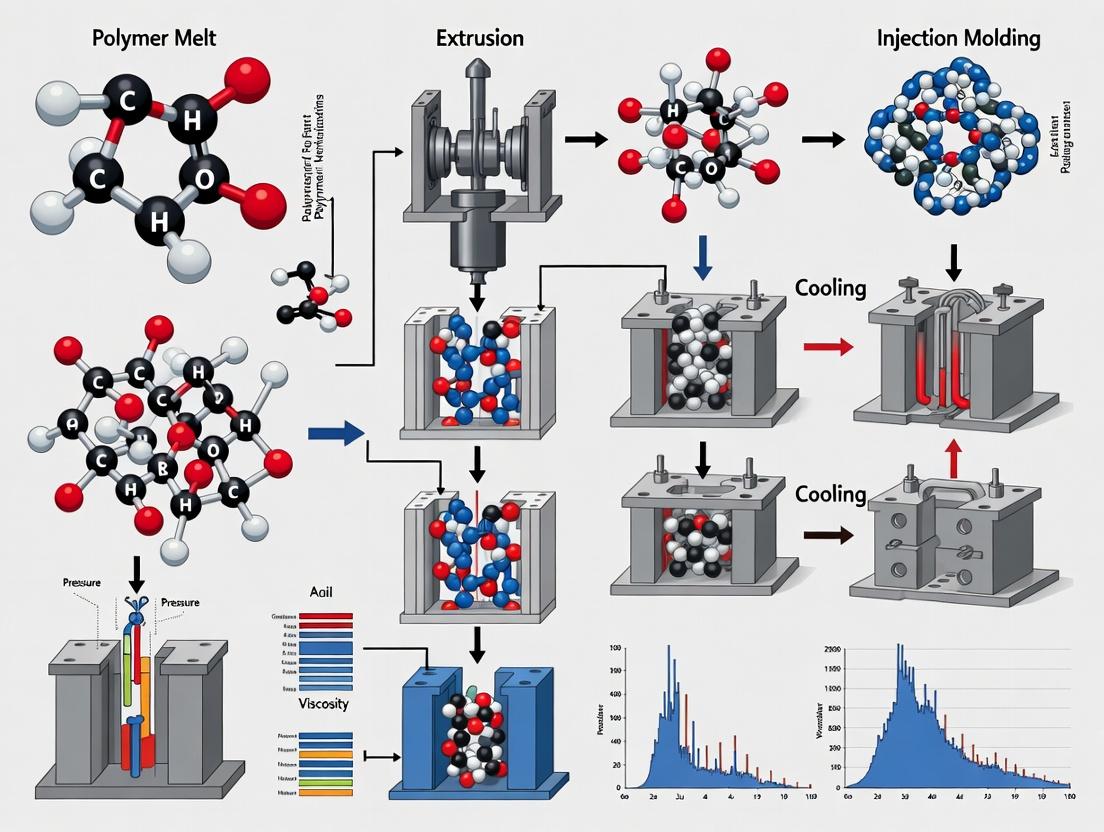
This article provides a comprehensive guide to extrusion and injection molding techniques for pharmaceutical researchers and drug development professionals.
Polymer Processing in Pharma: Mastering Extrusion and Injection Molding for Advanced Drug Delivery Systems
Abstract
This article provides a comprehensive guide to extrusion and injection molding techniques for pharmaceutical researchers and drug development professionals. It explores the core principles, modern methodologies, and critical process parameters of both techniques, focusing on their application in creating solid oral dosage forms, implants, and novel drug delivery systems. The content addresses common processing challenges and optimization strategies, compares the strengths and limitations of each method for specific biomedical applications, and discusses advanced validation protocols to ensure product quality, stability, and regulatory compliance.
Core Principles: Understanding the Fundamentals of Pharmaceutical Polymer Processing
Application Notes
Polymer rheology and thermal analysis are critical in pharmaceutical development, particularly for formulation processing via extrusion and injection molding. These techniques dictate the stability, release profile, and manufacturability of solid dispersions, implants, and controlled-release matrices. Understanding flow behavior under shear and temperature is essential for designing robust processes that ensure consistent drug product quality.
Rheology in Hot-Melt Extrusion (HME)
Rheological assessment during HME determines processability. Key parameters include melt viscosity, shear-thinning behavior, and the processing window between melting and degradation. For amorphous solid dispersions, viscosity must be low enough for extrusion but high enough to prevent phase separation. Data indicates that for typical pharmaceutical polymers like PVP-VA or HPMCAS, the target complex viscosity at processing temperature (often 10-50 Pa·s) and a shear rate of 100 s⁻¹ ensures optimal mixing and minimal degradation.
Thermal Properties in Formulation Design
Thermal characterization identifies glass transition temperature (Tg), melting points, crystallinity, and thermal stability. The Tg of a polymer-drug blend is pivotal; it must be sufficiently above storage temperature to ensure physical stability. Plasticizers (e.g., triethyl citrate) lower Tg and reduce processing temperatures, protecting heat-sensitive APIs. Modulated Differential Scanning Calorimetry (mDSC) is standard for separating reversible (heat capacity) and non-reversible (enthalpic relaxation, crystallization) events.
Correlating Properties to Molding & Extrusion Outcomes
Injection molding of implants or multi-particulates requires precise control of melt flow index (MFI) and crystallization kinetics. Rapid cooling in molds can lock in amorphous states, impacting drug release. Rheological data directly feeds into simulation software for mold design, predicting fill patterns and residual stress.
Protocols
Protocol 1: Oscillatory Rheometry for Polymer Melt Characterization
Objective: To determine the viscoelastic properties (storage modulus G', loss modulus G'', complex viscosity η*) of a polymer or polymer-API blend as a function of temperature and frequency, establishing the processing window for extrusion/injection molding.
Materials:
- Parallel-plate or cone-and-plate rheometer with environmental test chamber.
- Polymer/drug blend (pre-dried).
- Silicon oil or nitrogen purge for temperature control.
Procedure:
- Sample Loading: Pre-heat rheometer plates to a safe handling temperature (e.g., 10°C above Tg but below degradation). Load approximately 500 mg of sample onto the center of the bottom plate. Lower the top plate to a defined gap (e.g., 1000 µm).
- Temperature Ramp Test: Set a temperature range from 20°C above Tg to near degradation onset (determined by TGA). Use a heating rate of 3°C/min at a fixed oscillation frequency (1 Hz) and strain (within linear viscoelastic region).
- Frequency Sweep Test: At a fixed temperature within the intended processing range, perform a frequency sweep from 100 rad/s to 0.1 rad/s at a constant strain.
- Data Analysis: Plot η* vs. Temperature to identify the temperature range for suitable viscosity. Plot G' and G'' vs. Frequency to assess solid-like (G'>G'') or liquid-like (G''>G') behavior at process-relevant timescales.
Protocol 2: Modulated DSC for Thermal Analysis
Objective: To characterize the glass transition, melting, crystallization, and enthalpic relaxation of pharmaceutical polymer formulations.
Materials:
- Modulated DSC instrument.
- Hermetically sealed Tzero pans and lids.
- Analytical balance.
Procedure:
- Sample Preparation: Precisely weigh 5-10 mg of sample into a Tzero pan. Crimp the lid to ensure a hermetic seal. Prepare an empty reference pan.
- Method Programming: Set a heating ramp from -20°C to 250°C (or above degradation) at a underlying rate of 2°C/min with a modulation amplitude of ±0.5°C every 60 seconds.
- Run Experiment: Purge with nitrogen (50 mL/min). Load samples and initiate the programmed method.
- Data Analysis: Use software to deconvolute the total heat flow into reversing (heat capacity) and non-reversing signals. Identify Tg from the midpoint of the transition in the reversing heat flow signal. Identify crystallization and melting events in the non-reversing or total heat flow signals.
Data Tables
Table 1: Representative Rheological Data for Common Pharmaceutical Polymers at 150°C
| Polymer | Shear Rate (s⁻¹) | Viscosity (Pa·s) | Flow Index (n) | Reference |
|---|---|---|---|---|
| PVP-VA 64 | 100 | 12.5 | 0.71 | Research Data |
| HPMCAS-LF | 100 | 45.2 | 0.52 | Research Data |
| Soluplus | 100 | 8.9 | 0.82 | Research Data |
| Eudragit E PO | 100 | 22.7 | 0.68 | Research Data |
Table 2: Thermal Properties of Polymer-Drug Blends (by mDSC)
| Formulation (20% Drug Load) | Tg (°C) | ΔCp at Tg (J/g°C) | Melting Peak of API? | Enthalpic Relaxation (J/g) |
|---|---|---|---|---|
| Itraconazole / HPMCAS | 105.2 | 0.38 | No | 1.2 |
| Felodipine / PVP-VA | 72.5 | 0.42 | No | 0.8 |
| Griseofulvin / Soluplus | 68.8 | 0.35 | Yes (Faint) | 0.5 |
Visualizations
Title: From Polymer Blend to Dosage Form Workflow
Title: mDSC Data Analysis Pathway
The Scientist's Toolkit
Table 3: Key Research Reagent Solutions & Materials
| Item | Function in Rheology/Thermal Analysis |
|---|---|
| Polymer Carriers (e.g., HPMCAS, PVP-VA, Soluplus, Eudragits) | Form the matrix for solid dispersions; their rheological and thermal properties define processability and drug release. |
| Plasticizers (e.g., Triethyl Citrate, PEG, TEC) | Lower Tg and melt viscosity, enabling processing at lower temperatures to protect thermolabile APIs. |
| Antioxidants (e.g., BHA, BHT, α-Tocopherol) | Stabilize polymers and APIs against thermal-oxidative degradation during high-temperature processing. |
| Rheometry Fluids (Standard silicone oils) | Used for instrument calibration to ensure accurate viscosity and modulus measurements. |
| Hermetic DSC Pans & Lids | Provide an inert, sealed environment for thermal analysis, preventing moisture loss/uptake and oxidative effects. |
| Inert Gas Purge (Nitrogen or Argon) | Standard environment for rheometry and DSC to prevent oxidative degradation during heating. |
| Melt Flow Indexer | Provides a simple, standardized measure of polymer melt viscosity (MFR/MVR) for grade selection. |
| Thermal Stability Markers (e.g., Indium, Tin, Zinc) | Calibration standards for DSC temperature and enthalpy accuracy. |
Within the broader study of polymer processing techniques—encompassing extrusion, injection molding, and beyond—Hot-Melt Extrusion (HME) stands out as a continuous, scalable, and versatile manufacturing platform. This application note details its principles and mechanics, with particular focus on twin-screw extruder (TSE) configurations critical for research and development in advanced materials and pharmaceutical formulations.
Core Principles of Hot-Melt Extrusion
HME is a process where materials (polymers, active pharmaceutical ingredients (APIs), excipients) are heated and mixed under pressure to form a molten mass, which is then forced through a die to create a product of uniform shape. The process is valued for its ability to enhance solubility, enable sustained release, and produce amorphous solid dispersions.
Twin-Screw Extruder Mechanics: Configurations and Key Parameters
The twin-screw extruder is the heart of HME. Its mechanics are defined by screw design and operational parameters.
Quantitative Data on Common TSE Configurations
Data sourced from current manufacturer specifications and peer-reviewed studies.
Table 1: Comparison of Twin-Screw Extruder Configurations
| Parameter | Co-Rotating Intermeshing | Counter-Rotating Intermeshing | Counter-Rotating Non-Intermeshing |
|---|---|---|---|
| Shear Intensity | High | Medium | Low |
| Residence Time Distribution | Narrow | Medium | Wide |
| Self-Wiping Efficiency | Excellent | Good | Poor |
| Max Pressure Build-Up | Medium | High | Low |
| Typical Application | Compounding, dispersion | Profile extrusion, PVC | Devolatilization, reactive extrusion |
| Throughput Range (kg/hr, lab-scale) | 0.5 - 10 | 0.2 - 5 | 0.1 - 3 |
Table 2: Critical Process Parameters (CPPs) and Their Typical Ranges in Pharmaceutical HME
| Process Parameter | Typical Range (Lab-Scale) | Impacted Critical Quality Attribute (CQA) |
|---|---|---|
| Barrel Temperature Profile (°C) | 70 - 200 | Drug degradation, amorphous content |
| Screw Speed (RPM) | 100 - 500 | Mixing efficiency, residence time |
| Feed Rate (kg/hr) | 0.1 - 2.0 | Fill level, dispersion homogeneity |
| Torque (% of max) | 20 - 70 | Material viscosity, process stability |
| Specific Mechanical Energy (SME) Input (kWh/kg) | 0.05 - 0.3 | Degree of mixing, API dispersion |
Experimental Protocol: Determination of Optimal Processing Window for an Amorphous Solid Dispersion
Aim: To identify the CPP ranges for producing a stable, single-phase amorphous solid dispersion of a poorly soluble API in a polymer matrix.
Materials: API (e.g., Itraconazole), Polymer Carrier (e.g., HPMCAS), Plasticizer (e.g., Triethyl Citrate).
Methodology:
- Pre-blending: Pre-mix API and polymer at a defined ratio (e.g., 20:80 w/w) using a tumble blender for 15 minutes.
- Extrusion Setup: Configure a co-rotating, intermeshing twin-screw extruder (e.g., 16-18mm screw diameter, L/D ratio of 40:1). Establish a temperature profile increasing from feed zone (e.g., 80°C) to die (e.g., 150°C).
- Design of Experiments (DoE): Execute a factorial design varying:
- Factor A: Screw Speed (200, 300, 400 RPM)
- Factor B: Barrel Temperature Setpoint (140, 150, 160°C)
- Factor C: Feed Rate (0.5, 0.75, 1.0 kg/hr)
- Process Monitoring: Continuously record torque, melt pressure, and melt temperature. Calculate SME.
- Product Collection & Quenching: Extrudate is collected, cooled on a chill roll, and pelletized.
- Analysis: Assess CQAs for each run:
- Solid State: X-ray Powder Diffraction (XRPD) to confirm amorphousness.
- Homogeneity: HPLC for API content uniformity.
- Dissolution: USP Type II dissolution testing in biorelevant media.
- Stability: Store samples at 40°C/75% RH for 1 month; re-analyze by XRPD.
- Data Analysis: Use statistical software to model the relationship between CPPs and CQAs, identifying the design space where all CQAs meet target criteria.
Visualization: HME Process Development Workflow
Title: HME Process Development and Optimization Workflow
The Scientist's Toolkit: Key Research Reagent Solutions
Table 3: Essential Materials for HME Research in Drug Development
| Item | Category | Function & Rationale |
|---|---|---|
| pH-Dependent Polymers (HPMCAS, CAP) | Polymer Carrier | Enable enteric release or stabilize amorphous dispersions via hydrogen bonding and antiplasticization. |
| Solubility-Enhancing Polymers (PVP-VA, S630) | Polymer Carrier | Increase bioavailability of BCS Class II/IV drugs by maintaining supersaturation. |
| Thermal Lubricants (Mg Stearate, PEG 6000) | Excipient | Reduce shear viscosity and torque, protecting heat-sensitive APIs. |
| Plasticizers (Triacetin, TEC, DBS) | Excipient | Lower polymer Tg, enabling processing at lower temperatures. |
| Meltable Surfactants (Poloxamer, Gelucire) | Excipient | Enhance wettability and dissolution of the final dosage form. |
| Processing Aids (SiO2, Talc) | Excipient | Improve feed flow of cohesive powder blends into the extruder. |
| Chemical Stabilizers (Antioxidants BHT, BHA) | Excipient | Prevent API oxidation during high-temperature processing. |
Advanced Applications & Mechanistic Insights
HME is pivotal for continuous manufacturing and process analytical technology (PAT). In-line Near-Infrared (NIR) or Raman probes can monitor API concentration and solid state in real-time, enabling closed-loop control.
Visualization: PAT Integration in HME for Real-Time Release
Title: PAT-Enabled Closed-Loop Control in HME
Mastering twin-screw extruder mechanics within the HME framework provides researchers and drug developers a powerful, continuous processing tool. Its integration into the wider polymer processing thesis highlights its complementary role to batch techniques, offering distinct advantages in product performance, operational efficiency, and real-time quality assurance.
Application Notes
Within the broader thesis on polymer processing techniques, injection molding stands as a preeminent method for manufacturing high-precision, complex polymer components, including advanced drug delivery devices and laboratory consumables. This note details the fundamental operational stages, clamping mechanics, and mold design principles, contextualized for research-scale experimentation and prototyping.
Cycle Stages
The injection molding cycle is a discontinuous, high-pressure process critical for achieving part consistency. For researchers, precise control and monitoring of each stage are essential for studying polymer behavior and part properties.
Table 1: Quantitative Parameters for Injection Molding Cycle Stages
| Stage | Key Parameters | Typical Range (Research/Prototype Scale) | Primary Function in Research Context |
|---|---|---|---|
| Clamping | Clamp Force (kN) | 50 - 500 kN | Ensures mold integrity under injection pressure; critical for studying flash formation. |
| Injection | Injection Pressure (MPa), Fill Time (s) | 80 - 180 MPa, 0.5 - 5 s | Determines polymer shear history and fiber orientation; key for morphology studies. |
| Packing | Packing Pressure (MPa), Time (s) | 50 - 80% of Inj. Pressure, 2 - 10 s | Compensates for shrinkage; critical for dimensional accuracy and density studies. |
| Cooling | Coolant Temperature (°C), Time (s) | 20 - 120 °C, 10 - 60 s | Governs crystallization kinetics and final mechanical properties. |
| Ejection | Ejection Force (N), Stroke (mm) | 100 - 2000 N, 5 - 50 mm | Must exceed adhesion forces; studied to understand part release and surface finish. |
Clamping Units
The clamping unit's primary function is to securely close the mold and resist the separating force generated during injection. For research on novel polymers (e.g., bio-polymers, polymer-drug composites), the clamping system's accuracy and flexibility are paramount.
Table 2: Clamping Unit Mechanisms Comparison
| Mechanism | Principle | Advantages for Research | Limitations |
|---|---|---|---|
| Toggle | Mechanical linkage system multiplies force. | High speed, energy efficient for high-cycle studies. | Less precise tonnage control at low forces. |
| Hydraulic | Hydraulic cylinder directly applies force. | Precise, programmable clamp force control; full tonnage at any stroke. | Higher energy consumption; potential for oil contamination. |
| Electric/Hybrid | Servo-electric motors drive clamping. | Exceptional precision, repeatability, cleanroom compatible. | Higher initial cost; lower maximum force capacities typically. |
Mold Design Basics
Mold design is a critical variable in polymer processing research, influencing part properties, filling behavior, and the success of demolding. Key components must be considered for experimental design.
Table 3: Critical Mold Components and Research Considerations
| Component | Function | Research Design Consideration |
|---|---|---|
| Sprue, Runner, Gate | Channels polymer melt into cavity. | Gate design (pin, edge, submarine) significantly affects shear rate and orientation. Miniaturized for micro-molding drug delivery devices. |
| Cavity & Core | Forms the part geometry. | Surface finish (polished, textured) impacts drug release profiles and cell adhesion in biomedical devices. |
| Cooling Channels | Regulates mold temperature. | Layout and temperature control are critical for studying crystallization. Conformal cooling allows for complex, uniform thermal management. |
| Ejection System | Removes solidified part. | Ejector pin placement must avoid damaging delicate micro-features. |
| Venting | Allows air escape during filling. | Prevents gas traps and burns; essential when processing volatile additives or bio-polymers. |
Experimental Protocols
Protocol 1: Determining Minimum Required Clamp Force
Objective: To empirically determine the minimum clamp force required to prevent flash formation for a novel polymer composite during injection molding, supporting research into process windows.
Materials: See "The Scientist's Toolkit" below. Method:
- Install a calibrated mold pressure sensor near the cavity edge.
- Set the injection molding machine to a standard injection speed and melt temperature for the polymer.
- Set the clamp force to a theoretically safe high value (e.g., 80% of machine maximum).
- Inject five shots to achieve steady-state conditions.
- Systematically decrease the clamp force in 10 kN increments.
- For each clamp force setting, inject ten shots. Visually inspect each part for flash using a 10x optical microscope.
- Record the peak cavity pressure from the sensor for each setting.
- The minimum required clamp force is the lowest setting at which zero flash is observed over ten consecutive shots. The experimental clamp force should be set to 1.2-1.5 times this minimum for safety.
Protocol 2: Investigating the Effect of Gate Design on Filler Orientation
Objective: To analyze how different gate geometries influence the orientation of glass fibers or other anisotropic fillers in a composite, using microtomy and microscopy.
Materials: Composite pellets, mold with interchangeable gate inserts (fan gate, pin gate), microtome, polarized light microscope (PLM) or SEM. Method:
- Prepare a polymer composite with a known weight percentage of identifiable fillers (e.g., colored glass fibers).
- Using the same base process parameters (melt temp, injection speed, cooling time), produce ten specimens each using a fan gate and a pin gate insert.
- From the center of each specimen, cut a thin section (5-10 µm) perpendicular to the flow direction using a microtome.
- Mount and examine the sections under PLM or SEM.
- Quantify filler orientation using image analysis software (e.g., ImageJ with OrientationJ plugin) to determine the orientation tensor or angular distribution.
- Compare the average orientation and distribution breadth between the two gate types. A pin gate typically induces higher shear and more aligned orientation near the gate.
Visualization: Process Logic and Workflow
Title: Injection Molding Cycle Stage Sequence
Title: Mold Design Factors Impact on Research Outcomes
The Scientist's Toolkit
Table 4: Essential Research Reagent Solutions & Materials for Injection Molding Experiments
| Item | Function in Research Context |
|---|---|
| Purge Compound | Cleans the injection barrel between material changes to prevent cross-contamination, critical when processing expensive or reactive polymer-drug composites. |
| Mold Release Agent | A temporary coating (silicone, fluoropolymer) applied to mold surfaces to facilitate part ejection. Used sparingly to avoid affecting surface chemistry for cell studies. |
| Thermal Stabilizers & Antioxidants | Added to polymer formulations to prevent thermal degradation during processing, especially for heat-sensitive biopolymers or during extended residence time studies. |
| Calibrated Color/Pigment Masterbatch | Used as a tracer to study flow fronts, mixing efficiency, and to create fiducial markers for Digital Image Correlation (DIC) strain analysis on molded parts. |
| Ultrasonic Mold Cleaning Bath & Solvents | For removing polymer residues, silicones, and other contaminants from mold surfaces without damaging precision features, ensuring experimental consistency. |
| In-Mold Sensors | Pyrometers (temperature), piezoelectric/pressure sensors, and cavity pressure transducers provide real-time process data for modeling and validation. |
| Parting Line Sealant Tape | High-temperature tape applied to mold surfaces to temporarily seal minor wear gaps and prevent flash during prototyping, avoiding costly mold rework. |
Within polymer processing research for pharmaceutical applications, techniques like hot-melt extrusion (HME) and injection molding are critical for manufacturing solid dispersions, implants, and drug-eluting devices. The selection of pharma-grade polymers, compatible plasticizers, and effective API integration strategies dictates the performance, stability, and efficacy of the final dosage form. These application notes detail the key material considerations and provide standardized protocols for formulation development and characterization.
Material Properties & Selection Criteria
Pharma-Grade Polymers
These are polymeric carriers that must comply with regulatory standards (USP, Ph. Eur.). Key functions include acting as a matrix for API stabilization, controlling release kinetics, and providing processability.
Table 1: Common Pharma-Grade Polymers for Melt Processing
| Polymer (Trade Name) | Chemical Class | Tg (°C) | Typical Mw (kDa) | Key Attributes in HME/Injection Molding |
|---|---|---|---|---|
| Copovidone (Kollidon VA 64) | Vinylpyrrolidone-vinyl acetate copolymer | 101-107 | 45-70 | Amorphous, good API solubility enhancement, low melt viscosity. |
| Soluplus | Polyvinyl caprolactam–polyvinyl acetate–PEG graft copolymer | ~70 | 90-140 | Amphiphilic, enhances solubility of poorly soluble APIs, good processability. |
| HPMC (Affinisol HPMC HME) | Hypromellose | 110-180 (varies) | 100-1500 | Sustained release, high thermal stability, viscosity grade critical. |
| Eudragit E PO | Methacrylate copolymer | ~48 | 47 | pH-dependent solubility (soluble at pH<5), taste masking. |
| PLGA (Resomer) | Poly(lactic-co-glycolic acid) | 45-55 | 10-100 | Biodegradable, for implants & injectables, release tuned by LA:GA ratio. |
| PEO (Polyox WSR) | Polyethylene oxide | -67 to -50 | 100-7,000 | High swellability, sustained release, Mw affects mechanical strength. |
Plasticizers
Plasticizers reduce polymer Tg, melt viscosity, and processing temperature, which is crucial for thermally labile APIs.
Table 2: Common Plasticizers for Pharmaceutical Polymer Processing
| Plasticizer | Chemical Class | Typical Use Level (% w/w) | Key Benefit | Compatibility Note |
|---|---|---|---|---|
| Triethyl Citrate (TEC) | Citrate ester | 5-20 | Low toxicity, good for acrylic polymers & cellulosics. | May hydrolyze under high T/RH. |
| Polyethylene Glycol 400 (PEG 400) | Polyether glycol | 5-15 | Also acts as co-enhancer for API dissolution. | Can lower storage stability in some systems. |
| Tributyl Citrate (TBC) | Citrate ester | 5-20 | Lower volatility than TEC. | Similar hydrolysis risk. |
| Dioctyl Sebacate (DOS) | Diester | 3-10 | Efficient Tg reduction, low migration. | Regulatory documentation less extensive. |
| Glycerol | Polyol | 5-10 | Natural, low cost. | High hygroscopicity can be a drawback. |
API-Polymer-Plasticizer Compatibility Screening
Essential pre-formulation step to predict miscibility, stability, and processability.
Table 3: Quantitative Indicators for Compatibility & Stability
| Parameter | Method | Target Value/Range | Implication |
|---|---|---|---|
| Thermal: ΔTg (Experimental vs. Predicted by Gordon-Taylor) | DSC | ΔTg < 5°C | Suggests good miscibility. |
| Molecular: Interaction Parameter (χ) | Melting Point Depression / Computational | χ ≤ 0 or small positive | Favors mixing. χ >> 0 suggests immiscibility. |
| Physical: API Crystallinity Post-Processing | PXRD | Absence of API crystalline peaks | Confirms amorphous solid dispersion formation. |
| Chemical: API Assay & Degradants Post-Processing & Aging | HPLC | Assay ≥ 98%, Degradants ≤ 0.5% | Confirms thermal/chemical stability during process. |
Experimental Protocols
Protocol 3.1: Hot-Melt Extrusion (HME) for Solid Dispersion Manufacturing
Objective: To produce a homogeneous amorphous solid dispersion of a poorly soluble API using a twin-screw extruder.
Materials:
- API (e.g., Itraconazole)
- Polymer (e.g., Soluplus)
- Plasticizer (e.g., TEC, optional)
- Solvent (e.g., Ethanol, for pre-blending, optional)
Equipment:
- Co-rotating twin-screw extruder (e.g., Thermo Fisher Pharma 11 or 16mm)
- Gravimetric powder feeder
- Liquid feed pump (if using plasticizer/solvent)
- Temperature-controlled chilling roll & pelletizer
- Humidity-controlled glove box (for collection)
- Differential Scanning Calorimeter (DSC)
- Powder X-ray Diffractometer (PXRD)
Procedure:
- Pre-blending: Weigh API and polymer (typical load: 10-40% w/w API). Mix in a turbula mixer for 10 minutes. If a liquid plasticizer is used, adsorb onto polymer/API blend and equilibrate in sealed container for 12h.
- Extruder Setup: Configure screw profile with conveying, mixing (kneading blocks), and venting zones. Set barrel temperature profile from feed zone to die. Start profile ~20°C above polymer Tg (or Tg-plasticized blend) and increase gradually. Final zone T should be below API decomposition point.
- Example Profile for Soluplus/Itraconazole: 120°C → 140°C → 150°C → 155°C (die).
- Process: Start extruder, set screw speed (e.g., 100-200 rpm). Start powder feeder at desired rate to achieve a residence time of 1-3 minutes. Collect extrudate via chill roll (set to ~4°C) and pelletize.
- Conditioning: Immediately place pellets in a desiccated container. For hygroscopic polymers, store under inert atmosphere or with desiccant.
- Characterization:
- DSC: Analyze 5-10 mg sample. Look for single, composition-dependent Tg, absence of API melting endotherm.
- PXRD: Grind pellets gently. Scan from 5° to 40° 2θ. Confirm amorphous halo, no crystalline API peaks.
Protocol 3.2: Injection Molding of Implant/Device
Objective: To manufacture a drug-loaded polymeric implant (e.g., PLGA-based) via micro-injection molding.
Materials:
- Pre-compounded API-Polymer pellets (from HME or cryomilling)
- Mold release agent (e.g., perfluoropolyether, if needed)
Equipment:
- Micro-injection molding machine (e.g., Batterfeld Microsystem 50)
- Precision mold (e.g., for cylindrical implant, 2mm dia x 10mm length)
- Vacuum oven
- USP Apparatus 7 (for release testing)
Procedure:
- Material Drying: Dry compounded pellets in a vacuum oven at 40°C below Tg for 12h to remove residual moisture.
- Machine Setup: Install clean, dry mold. Set machine parameters:
- Barrel Temperature Zones: Similar to HME end-point T or slightly higher.
- Mold Temperature: Critical. Set below polymer Tg to allow demolding (e.g., 25°C for PLGA with Tg ~50°C).
- Injection Pressure: 500-1500 bar (optimize based on mold fill).
- Holding Pressure & Time: 70% of injection pressure, 2-5 sec.
- Cooling Time: Sufficient for part to solidify (e.g., 30 sec).
- Process: Purge machine. Run shots until conditions stabilize. Collect implants. Visually inspect for flashes, sink marks, or discoloration.
- Post-Processing: Anneal implants (if required) under vacuum to relieve residual stress. Perform dimensional checks (micrometer).
- Characterization:
- Drug Content Uniformity: Dissolve n=6 implants individually, assay via HPLC.
- In-Vitro Release Testing: Place implant in USP Apparatus 7 (reciprocating holder) in phosphate buffer pH 7.4 at 37°C. Sample at intervals, analyze by HPLC.
Visualization: Workflow & Relationships
Diagram Title: HME and Injection Molding Product Development Workflow
Diagram Title: Factors Influencing API-Polymer-Plasticizer Miscibility
The Scientist's Toolkit: Research Reagent Solutions
Table 4: Essential Materials for Polymer-API Processing Research
| Item (Example) | Function/Application in Research | Key Consideration |
|---|---|---|
| Pharma-Grade Polymers (e.g., Kollidon VA 64, Affinisol, Eudragit) | Primary carrier matrix for API. | Select based on Tg, solubility parameter, regulatory status, and intended release profile. |
| Liquid Plasticizers (e.g., Triethyl Citrate, PEG 400) | Reduce processing temperature, protect API from thermal stress, modify drug release. | Must be miscible with polymer, non-volatile, and compliant (ICH Q3C). |
| Model BCS Class II APIs (e.g., Itraconazole, Fenofibrate) | Poorly soluble compounds used to test solubility enhancement strategies. | Well-characterized, with known melting point and degradation temperature. |
| Thermal Stabilizers/Antioxidants (e.g., BHT, α-Tocopherol) | Minimize polymer/API degradation during high-temperature melt processing. | Use at minimal effective concentration (often <0.1% w/w). |
| Cryogenic Mill (e.g., SPEX SamplePrep 6770) | Pre-processing: Pulverize materials to uniform particle size for better feeding/blending. | Essential for brittle materials; use liquid N₂ to prevent melting/thermal degradation. |
| Twin-Screw Extruder (Lab-Scale) (e.g., Thermo Fisher Process 11, Leistritz Nano 16) | Core equipment for HME compounding and feasibility studies. | Modular barrel/screw design allows for flexible configuration of mixing and shear. |
| Micro-Injection Molding Machine | Forming final dosage form (implant, tablet, device) from compounded pellets. | Requires precise control over micro-scale shot volume, pressure, and temperature. |
| Dissolution Apparatus with Fraction Collector (e.g., USP II, IV, or VII with auto-sampler) | Critical for evaluating drug release profiles from molded or extruded formulations. | Apparatus choice depends on dosage form (floating, implant, oral). |
The Role of Polymer Processing in Amorphous Solid Dispersions and Solubility Enhancement
Amorphous solid dispersions (ASDs) are a premier formulation strategy to enhance the solubility and bioavailability of poorly water-soluble drugs, a major challenge in pharmaceutical development. Within the context of polymer processing research, techniques like hot-melt extrusion (HME) and injection molding (IM) have transitioned from industrial plastics manufacturing to pivotal pharmaceutical unit operations. These processes enable the continuous, solvent-free production of molecularly dispersed drug-polymer systems, offering advantages in scalability, reproducibility, and stability. This application note details protocols and analytical methods for leveraging extrusion and molding to develop robust ASD formulations.
Research Reagent Solutions Toolkit
Table 1: Essential Materials for ASD Processing Research
| Material/Reagent | Function & Rationale |
|---|---|
| Model BCS Class II Drug (e.g., Itraconazole) | Poorly water-soluble active pharmaceutical ingredient (API) used to demonstrate solubility enhancement. |
| Polymer Carrier (e.g., Vinylpyrrolidone-vinyl acetate copolymer - PVPVA) | Hydrophilic polymer matrix that inhibits drug recrystallization and maintains supersaturation. |
| Plasticizer (e.g., Triethyl citrate) | Lowers polymer glass transition temperature (Tg), reducing processing temperature and thermal stress on API. |
| Antioxidant (e.g., Butylated hydroxytoluene) | Prevents oxidative degradation of polymer or drug during high-temperature processing. |
| Release Agent (for IM) | Facilitates demolding of finished dosage forms (e.g., tablets, implants) from the mold cavity. |
Protocols for Processing and Characterization
Protocol 3.1: Formulation Pre-blending for Hot-Melt Extrusion Objective: To achieve a homogeneous physical mixture of API, polymer, and excipients prior to extrusion.
- Weighing: Accurately weigh drug (e.g., 20% w/w), polymer (e.g., 78% w/w PVPVA), and plasticizer (e.g., 2% w/w triethyl citrate) using an analytical balance.
- Sieving: Pass all solid components individually through a 500 μm sieve to break up agglomerates.
- Blending: Combine sieved materials in a twin-shell V-blender or a poly bag. Mix for a minimum of 15 minutes to ensure uniformity.
- Storage: Store the pre-blend in a sealed, light-resistant container under desiccated conditions until extrusion.
Protocol 3.2: Hot-Melt Extrusion (HME) of ASD Objective: To produce a molecularly dispersed, amorphous drug-polymer composite via continuous melt mixing.
- Equipment Setup: Configure a co-rotating twin-screw extruder (e.g., 11-18 mm screw diameter). Set temperature profile along barrels from feed zone to die based on polymer Tg (e.g., 130°C, 150°C, 160°C, 155°C). Set screw speed to 100-200 rpm.
- Feeding: Use a loss-in-weight feeder to introduce the pre-blend (Protocol 3.1) into the extruder's feed hopper at a constant rate (e.g., 0.5 kg/hr).
- Process Monitoring: Record melt pressure and torque. Collect extrudate as it exits the die.
- Strand Processing: Allow the molten strand to cool on a conveyor belt, then pelletize using a strand cutter. Alternatively, mill the brittle strand into a powder.
Protocol 3.3: Injection Molding of ASD Dosage Forms Objective: To shape extruded ASD material into final dosage forms (e.g., tablets, rings).
- Material Preparation: Use ASD pellets or powder from Protocol 3.2. Pre-dry if necessary.
- Machine Setup: Configure a micro-compounder or small-scale IM machine. Set barrel temperature 10-20°C above the extrusion temperature. Set mold temperature below the polymer's Tg (e.g., 20°C). Configure holding pressure and time.
- Molding Cycle: Feed material into the barrel, inject melt into a pre-defined mold cavity, hold under pressure for cooling, and eject the solid dosage form.
- Post-Processing: Visually inspect molded units for defects. Store in sealed containers with desiccant.
Protocol 3.4: Critical Quality Attribute (CQA) Assessment Objective: To characterize the solid-state properties and performance of the processed ASD.
- Solid-State Analysis (XRD): Perform X-ray powder diffraction. A broad halo pattern confirms amorphous nature; crystalline API peaks indicate incomplete dispersion or processing-induced recrystallization.
- Thermal Analysis (mDSC): Use modulated DSC to determine a single, composition-dependent Tg, confirming molecular mixing. Absence of a discrete API melting endotherm supports amorphicity.
- Dissolution Testing: Use a USP apparatus II (paddles). Test in 900 mL of biorelevant medium (e.g., FaSSIF) at 37°C, 75 rpm. Sample at intervals (5, 15, 30, 60, 120 min). Analyze drug concentration via HPLC. Compare to crystalline API dissolution.
Data Presentation and Analysis
Table 2: Representative Data for an Itraconazole-PVPVA ASD Processed via HME/IM
| Formulation | Process | XRD Result | Tg (°C) | Drug Content (%) | Dissolution @ 120 min (% API Released) |
|---|---|---|---|---|---|
| Crystalline Itraconazole | N/A | Crystalline | N/A | 100 | 5.2 ± 0.8 |
| Physical Mix | N/A | Crystalline | 71.5 (Polymer) | 20 | 18.5 ± 1.2 |
| ASD | HME | Amorphous | 84.3 (Single Tg) | 99.5 ± 0.3 | 95.7 ± 2.1 |
| ASD Tablet | HME + IM | Amorphous | 84.1 | 99.3 ± 0.4 | 93.8 ± 1.9 |
Visual Workflows and Diagrams
Title: ASD Manufacturing via Polymer Processing
Title: Solubility Enhancement Pathway via ASDs
From Theory to Tablet: Methodologies and Applications in Drug Product Development
Within the broader research context of polymer processing techniques (including extrusion and injection molding), hot-melt extrusion (HME) has emerged as a pivotal technology for pharmaceutical formulation. It is a continuous, solvent-free process that enhances the solubility and bioavailability of poorly water-soluble Active Pharmaceutical Ingredients (APIs) by dispersing them within a polymeric matrix to form amorphous solid dispersions (ASDs). This application note provides a detailed, step-by-step protocol for developing an HME process for a Biopharmaceutics Classification System (BCS) Class II API.
Pre-Formulation Assessment & Material Selection
Research Reagent Solutions & Essential Materials
| Item | Function in HME Process | Key Considerations |
|---|---|---|
| Poorly Soluble API (e.g., BCS Class II) | The active compound requiring bioavailability enhancement. | Particle size, melting point (Tm), glass transition (Tg), thermal stability, and miscibility with carrier. |
| Polymeric Carrier | Primary matrix former. Stabilizes the amorphous API, dictates release profile. | Tg, processability temperature, hygroscopicity, compatibility with API (e.g., via Hansen solubility parameters). Common: HPMCAS, PVPVA, Soluplus. |
| Plasticizer | Lowers processing temperature and melt viscosity, protects heat-sensitive API. | Examples: Triethyl citrate (TEC), PEG 400. Must be miscible with polymer/API. |
| Twin-Screw Extruder | Core processing equipment. Provides conveying, mixing, melting, and pressurization. | Co-rotating, intermeshing screws; modular barrel segments for tailored screw configuration. |
| Liquid Nitrogen | Rapid cooling of the extrudate to quench-in the amorphous state. | Prevents API recrystallization upon exit from the die. |
| Milling Equipment (Cryomill) | Size reduction of brittle extrudate strands for downstream processing. | Maintains amorphous content; cryogenic conditions prevent heat-induced recrystallization. |
Initial Compatibility Screening: API-Polymer Miscibility
Objective: Predict thermodynamic miscibility to identify stable ASD candidates. Protocol: Estimate the Flory-Huggins interaction parameter (χ). A negative or low positive value (<~0.5) suggests miscibility.
- Determine the solubility parameters (δ) for the API (δAPI) and polymer (δPolymer) using group contribution methods (e.g., Van Krevelen) or via experimental Hansen Solubility Parameter (HSP) analysis.
- Calculate χ using the formula: χ ≈ (Vsegment / (R*T)) * (δAPI - δPolymer)², where Vsegment is the molar volume of a lattice segment (often approximated by the smaller molecule's volume), R is the gas constant, and T is the temperature.
- Differential Scanning Calorimetry (DSC) is used experimentally: Prepare physical mixtures (e.g., 20% w/w API in polymer). A single, composition-dependent Tg between the pure component Tgs indicates miscibility.
Table 1: Example Pre-Formulation Data for Model System
| Component | Melting Point (Tm) °C | Glass Transition (Tg) °C | Degradation Temp (Td) °C | δ (MPa^½) | Recommended HME Processing Window (°C) |
|---|---|---|---|---|---|
| API (Itraconazole) | 166 | 59* | ~200 | 22.2 | 150-180 |
| HPMCAS-LF | N/A | 120 | ~220 | 23.1 | 160-200 |
| PVPVA 64 | N/A | 106 | ~200 | 21.6 | 150-190 |
| Soluplus | N/A | 72 | ~200 | 19.8 | 140-180 |
*Estimated for amorphous form.
Experimental Protocol for Hot-Melt Extrusion
Protocol: Formulation and Process Development
Objective: Produce a stable, amorphous solid dispersion with >95% drug content uniformity and >90% amorphous content.
Materials:
- API, Polymer, Plasticizer (if needed).
- Twin-screw extruder (e.g., 11- or 18-mm diameter), gravimetric feeders, strand die (1.5-3 mm), chill roll or conveyor belt, liquid nitrogen, cryogenic mill.
Method:
- Feed Preparation: Pre-blend API and polymer (and plasticizer) in a twin-shell V-blender for 15 minutes. For highly cohesive materials, sieving (e.g., 500 μm) is recommended before blending.
- Extruder Configuration: Assemble a modular screw configuration. A typical setup includes:
- Feeding Zone (Barrels 1-2): Conveying elements only. Temperature set to ~20°C above polymer Tg.
- Mixing/Melting Zone (Barrels 3-6): Combination of kneading blocks (60° forward) and conveying elements. Temperature set to the target processing temperature (e.g., 150-180°C for Itraconazole/Soluplus).
- Homogenization & Venting Zone (Barrels 7-8): Conveying elements. Optional vacuum vent to remove volatiles.
- Die Zone (Barrel 9-10): Conveying elements leading to the die. Temperature set to ~5-10°C above the mixing zone to ensure smooth flow.
- Process Parameters: Set screw speed (e.g., 100-300 rpm), feed rate (e.g., 0.2-1.0 kg/hr), and barrel temperature profile. Torque and die pressure are critical in-line monitoring parameters.
- Extrusion & Quenching: Initiate feeding and extrusion. Direct the emerging molten strands immediately onto a chilled conveyor belt (set to ~4°C) or into a liquid nitrogen bath to rapidly solidify the amorphous structure.
- Size Reduction: Mill the brittle strands using a cryogenic impact mill to produce a powder with a target particle size distribution (e.g., D90 < 250 μm).
- In-Process Controls: Collect samples at steady-state (typically after 5-10 minutes of run time). Analyze for:
- Drug Content: HPLC assay.
- Amorphous Content: Powder X-Ray Diffraction (PXRD), comparing to crystalline API standard.
- Single Tg: DSC, confirming formation of a homogeneous ASD (one Tg between that of API and polymer).
Table 2: Example of Process Parameter Optimization Design (DoE) and Results
| Run | Screw Speed (rpm) | Temp Profile (°C) | Feed Rate (g/min) | Torque (%) | Die Pressure (bar) | Amorphous Content (%) | Dissolution at 30 min (%) |
|---|---|---|---|---|---|---|---|
| 1 | 150 | 140-160-170-175 | 5 | 45 | 12 | 99.5 | 85 |
| 2 | 200 | 140-160-170-175 | 5 | 38 | 9 | 98.7 | 82 |
| 3 | 150 | 150-170-180-185 | 7 | 65 | 18 | 94.2 | 78 |
| 4 | 200 | 150-170-180-185 | 7 | 55 | 15 | 96.8 | 80 |
*Target: Amorphous Content >95%, Dissolution >80%.
Characterization & Stability Protocol
Objective: Confirm ASD formation and assess physical stability under stressed conditions. Protocol:
- Solid-State Characterization:
- PXRD: Scan from 5° to 40° 2θ. Absence of sharp crystalline peaks of API confirms amorphization.
- DSC: Heat 3-5 mg sample at 10°C/min under N₂. A single Tg indicates a homogeneous ASD. The absence of API melting endotherm confirms amorphization.
- Hot-Stage Microscopy: Visually confirm melting and dissolution of API crystals into the polymer melt.
- Dissolution Testing: Perform a non-sink dissolution test (e.g., USP Apparatus II, 900 mL, 0.01N HCl + 1% SLS, 75 rpm). Compare dissolution profiles of the HME formulation vs. pure crystalline API.
- Stability Study: Place the milled extrudate in open and closed vials under accelerated conditions (40°C/75% RH). Sample at 0, 1, 2, 3 months. Analyze by PXRD and DSC for recrystallization.
Diagrams
HME Process Workflow
HME Role in Polymer Research Thesis
ASD Instability Pathways
Within polymer processing research, extrusion and injection molding are critical for translating novel biodegradable polymers into advanced drug delivery systems. This document details application notes and protocols for manufacturing biodegradable implants and long-acting devices via micro-injection molding, a key focus area in therapeutic device development.
Research Reagent Solutions and Key Materials
The following table lists essential materials for the injection molding of biodegradable drug-eluting implants.
| Material/Category | Example(s) | Function & Rationale |
|---|---|---|
| Biodegradable Polymers | Poly(lactic-co-glycolic acid) (PLGA), Polycaprolactone (PCL), Poly(L-lactic acid) (PLLA) | Structural matrix providing controlled degradation kinetics and mechanical integrity. |
| Active Pharmaceutical Ingredient (API) | Small molecules (e.g., levonorgestrel), peptides, proteins | Therapeutic agent to be released over an extended period (months to years). |
| Plasticizers | Polyethylene glycol (PEG), Citrate esters (e.g., ATBC) | Modifies polymer melt viscosity and glass transition temperature (Tg) for improved processability and release profiles. |
| Stabilizers/Antioxidants | α-Tocopherol (Vitamin E), Butylated hydroxytoluene (BHT) | Prevents thermal and oxidative degradation of polymer and API during high-temperature processing. |
| Release Modifiers | Dicalcium phosphate, Mannitol, PEG (various Mw) | Creates porosity or channels within the polymer matrix to modulate API diffusion and release rate. |
| Mold Release Agent | Sigma-Aldrich Ease Release, fluoropolymer coatings | Prevents adhesion of the polymer melt to the mold surface, facilitating part ejection. |
Application Notes: Critical Process Parameters and Data
Successful fabrication hinges on precise control of material properties and machine parameters to preserve API stability and achieve target device performance.
Table 1: Key Injection Molding Process Parameters and Typical Ranges for PLGA-based Implants
| Parameter | Typical Range | Impact on Product |
|---|---|---|
| Barrel Temperature (°C) | 80 - 130 (dependent on polymer Tg & API stability) | Higher temps reduce melt viscosity but risk API/polymer degradation. |
| Mold Temperature (°C) | 10 - 25 (cooled) | Colder molds increase cooling rate, affect crystallinity, and may induce residual stress. |
| Injection Pressure (bar) | 500 - 1500 | Ensures complete filling of micro-scale mold features. |
| Holding Pressure (bar) | 300 - 800 | Compensates for material shrinkage during cooling to prevent voids. |
| Cooling Time (s) | 30 - 120 | Determines cycle time; insufficient cooling leads to deformation on ejection. |
| Drying Time (h) @ °C | 4-12 @ 40-50°C under vacuum | Essential for removing moisture from hygroscopic polymers (e.g., PLGA) to prevent hydrolysis during processing. |
Table 2: Representative Quantitative Outcomes for Molded PLGA Implants
| Measured Property | Test Method | Result Range | Notes |
|---|---|---|---|
| API Loading Efficiency (%) | HPLC of dissolved device | 95 - 99.5% | High efficiency achievable with optimized screw design and mixing. |
| Residual Monomer/Solvent | GC-MS | < 0.01% w/w | Critical for biocompatibility; controlled by drying and venting. |
| Glass Transition Temp (Tg) | DSC | 45 - 50°C (post-molding) | May be reduced vs. raw polymer due to plasticization by API. |
| Tensile Strength (MPa) | Micro-tensile testing | 40 - 60 (for PLGA 85:15) | Dependent on polymer Mw, crystallinity, and presence of API. |
| In Vitro Burst Release (Day 1) | USP Apparatus 4 or 7 | < 10% total load | Indicates good API encapsulation and minimal surface localization. |
Detailed Experimental Protocols
Protocol 1: Pre-Processing Material Preparation and Formulation
Objective: To prepare a stable, homogeneous polymer/API mixture suitable for injection molding.
- Polymer Drying: Place biodegradable polymer resin (e.g., PLGA) in a vacuum oven at 40°C ± 2°C for a minimum of 6 hours. Moisture content should be < 0.02% (verified by Karl Fischer titration).
- API/Excipient Mixing: Precisely weigh the dried polymer, API, and any excipients (plasticizers, release modifiers) using an analytical balance.
- Melt Blending (Critical Step): Use a twin-screw micro-compounder (e.g., Xplore MC15) for homogenization. Set barrel temperature 10-15°C above the polymer Tg. Introduce polymer first, followed by API/excipient blend. Mix at 50-100 RPM for 3-5 minutes under inert N₂ purge.
- Strand Pelletization: Extrude the molten blend through a 2mm die, air-cool, and pelletize using a strand cutter to create uniform feedstock (pellet size: 2-3mm).
- Feedstock Drying: Dry pellets again under vacuum at 25°C for 2 hours to remove surface moisture prior to molding.
Protocol 2: Micro-Injection Molding of Implant Devices
Objective: To mold sterile, dimensionally precise implants with maintained API potency.
- Machine Setup: Use a clean-room compatible micro-injection molder (e.g., DESMA TFP 100). Install a validated, polished mold (e.g., cavity for 1mm x 10mm cylindrical implants).
- Parameter Input: Set parameters based on Design of Experiments (DoE). Example setpoint: Barrel Zones: 90/100/110°C; Mold Temp: 15°C; Inj. Pressure: 1000 bar; Hold Pressure: 600 bar for 5s; Cooling Time: 45s.
- Purging & Production: Purge the barrel with virgin polymer. Load dried feedstock. Run 5-10 conditioning cycles to stabilize the process before collecting samples for analysis.
- Device Collection: Eject devices onto a clean, low-particulate tray. Visually inspect each cycle for flashing, short shots, or discoloration.
- Post-Processing: For amorphous polymers (e.g., PLGA), anneal devices at 10°C below Tg for 2 hours to relieve residual stresses. Package under argon atmosphere if API is oxygen-sensitive.
Protocol 3: In-Process Monitoring and Quality Control
Objective: To verify critical quality attributes (CQAs) during and post-molding.
- Melt Pressure & Temperature Monitoring: Use in-barrel sensors to log actual melt temperature and pressure during injection and holding phases. Deviations >±5% indicate instability.
- Dimensional Analysis: Use a digital micrometer or optical coordinate measuring machine to measure device diameter and length (n=10 per batch). Must be within ±0.05mm of mold cavity dimensions.
- API Stability Assay (by HPLC): Dissolve 3 randomly selected devices in dichloromethane, precipitate polymer with acetonitrile, filter (0.22µm), and analyze supernatant via HPLC. Compare API chromatogram peak area and retention time to a standard. Degradation products should be < 2%.
- Surface Morphology: Analyze device surface and cross-section using Scanning Electron Microscopy (SEM) to check for homogeneity, porosity, and absence of API crystals on the surface.
Visualized Workflows
Title: Implant Fabrication and Quality Control Workflow
Title: Key Parameter Effects on Critical Quality Attributes
Within the broader thesis on polymer processing techniques, extrusion and injection molding emerge as pivotal translational technologies for advanced pharmaceutical manufacturing. These techniques, adapted from plastics engineering, enable precise spatial and temporal control over drug release—a cornerstone of complex oral dosage forms. Hot-melt extrusion (HME) facilitates the molecular dispersion of APIs in polymeric matrices, forming solid solutions or suspensions for controlled-release beads or implantable rods. Subsequent injection molding (IM) of extrudates or direct powder injection molding (PIM) allows for the high-throughput, net-shape fabrication of intricate multi-layer tablets (e.g., bi- or tri-layer for sustained/instant release) with precise geometry and layer integrity. This synergy of extrusion and injection molding represents a paradigm shift from conventional powder compaction, enabling complex, patient-centric dosage forms through continuous, solvent-free processing.
Application Notes
Hot-Melt Extrusion for Controlled-Release Bead Formulations
The production of controlled-release beads via HME involves the thermoplastic processing of API with rate-controlling polymers (e.g., Eudragit RS/RL, EC, HPMC-AS). The process yields a uniform dispersion, which can be shaped into pellets via a die-face pelletizer. Critical parameters include the polymer's thermal and rheological properties, the processing temperature (must remain below API degradation point), and the screw design to ensure adequate mixing at minimal thermal stress.
Injection Molding for Multi-Layer Tablets
Injection molding enables the sequential or co-injection of different polymeric formulations into a tablet mold. This is instrumental for fabricating fixed-dose combination tablets or dosage forms with built-in release sequences (e.g., an immediate-release layer over a sustained-release core). Layer adhesion and the prevention of interfacial mixing are key challenges addressed through precise temperature and pressure control during injection cycles.
Table 1: Key Parameters in HME for Controlled-Release Formulations
| Parameter | Typical Range/Value | Impact on Dosage Form Performance |
|---|---|---|
| Processing Temp. | 70-180°C (above polymer Tg/m.p.) | Influences API stability, polymer flow, and dispersion quality. |
| Screw Speed | 50-300 rpm | Affects residence time, shear, and mixing efficiency. |
| Feed Rate | 0.2-5 kg/hr | Impacts torque and melt consistency; must be stable. |
| Polymer MW | 2,000 - 200,000 Da | Determines melt viscosity, mechanical strength, and release kinetics. |
| API Load | 1-60% w/w | Affects extrudability and may plasticize the matrix. |
Table 2: Injection Molding Parameters for Multi-Layer Tablets
| Parameter | Layer 1 (Core/SR) | Layer 2 (Shell/IR) | Critical Consideration |
|---|---|---|---|
| Melt Temp. | 120-160°C | 80-120°C | Must prevent thermal degradation of lower-T layer. |
| Injection Pressure | 500-1500 bar | 300-1000 bar | Ensures complete cavity fill without forcing layer intermixing. |
| Holding Pressure/Time | High / 5-15s | Low-Med / 3-10s | Reduces sink marks; time must sync with cooling profile. |
| Cooling Time | 20-60s (total) | Dictates cycle time and solidification of the interface. | |
| Mold Temp. | 10-40°C | Lower temps reduce sticking but may increase internal stress. |
Experimental Protocols
Protocol 1: Fabrication of Controlled-Release Beads via HME and Spheronization
Objective: To produce monolithic matrix beads for sustained drug release over 12 hours. Materials: API (e.g., Theophylline), Eudragit RS PO, Triethyl citrate (plasticizer), Talc (glidant). Equipment: Twin-screw co-rotating extruder (e.g., 11-18 mm screw diam.), die-face pelletizer, spheronizer, drying oven. Method:
- Pre-mixing: Blend API (30% w/w), Eudragit RS PO (67%), triethyl citrate (2%), and talc (1%) in a tumbler mixer for 15 min.
- Extrusion: Feed pre-mix into HME at a rate of 0.5 kg/hr. Set temperature profile from feed to die: 70/100/120/130/135°C. Maintain screw speed at 150 rpm.
- Pelletizing & Shaping: Direct the extrudate strand into a die-face pelletizer to form cylindrical mini-pellets. Transfer pellets to a spheronizer (friction plate) operating at 800 rpm for 3 min to round the beads.
- Curing: Dry beads in a convection oven at 40°C for 24 hours to anneal the polymeric matrix and stabilize release profile.
- Characterization: Sieve to 0.8-1.2 mm fraction. Perform dissolution testing (USP Apparatus I, 100 rpm, 37°C, pH 6.8 phosphate buffer).
Protocol 2: Fabrication of Bi-Layer Tablets via Sequential Injection Molding
Objective: To produce a bi-layer tablet with a sustained-release (SR) core and an immediate-release (IR) outer layer. Materials: SR Layer: API A, EC (10 mPa.s), DBS (plasticizer). IR Layer: API B, Mannitol, Croscarmellose sodium. Equipment: Two-shot micro-injection molding machine, dual-cylinder injection unit, custom tablet mold (8 mm round, concave). Method:
- Material Preparation: Pre-dry all polymers. Compound SR formulation (API A 20%, EC 78%, DBS 2%) via HME and pelletize. Prepare IR physical blend (API B 15%, Mannitol 82%, Croscarmellose sodium 3%).
- First Shot (SR Core): Load SR pellets into primary injection unit. Set melt temp to 150°C, mold temp to 25°C. Inject 200 mg of melt into the closed mold cavity. Apply holding pressure (800 bar, 10s). Allow partial cooling for 5s.
- Mold Rotation/Shift: Activate mold rotation or core pull to prepare cavity for the second shot.
- Second Shot (IR Layer): Load IR blend into secondary unit (set for powder IM). Set temp to 90°C (to soften mannitol). Inject 100 mg of IR formulation over the partially solidified SR core. Apply lower holding pressure (400 bar, 5s).
- Cooling & Ejection: Cool the complete bi-layer tablet for 30s total cycle time. Eject tablet.
- Characterization: Test layer adhesion (diametral compression test), assay content uniformity per layer, and perform dissolution profiling to demonstrate biphasic release.
Visualizations
Title: HME Workflow for Controlled-Release Beads
Title: Sequential IM Process for Bi-Layer Tablets
The Scientist's Toolkit: Key Research Reagent Solutions
Table 3: Essential Materials for Complex Dosage Form Fabrication
| Item/Reagent | Primary Function | Example Brands/Types |
|---|---|---|
| Rate-Controlling Polymers | Form water-insoluble or swellable matrices to modulate drug release. | Ethylcellulose (EC), Eudragit (RL/RS, NE), HPMC, PLGA. |
| Plasticizers | Reduce polymer Tg, improve processability, and prevent brittleness. | Triethyl citrate, Dibutyl sebacate, PEG 400, Glycerol. |
| Channeling Agents | Create pores in insoluble matrices to enable drug release. | HPMC (low viscosity), PVP, Sucrose, NaCl. |
| Thermal Stabilizers | Protect API from degradation during high-temp processing. | Antioxidants (BHT, Ascorbyl palmitate), organic acids. |
| Mold Release Agents | Prevent sticking to extrusion die or injection mold. | Talc, Magnesium stearate, Glycerol monostearate. |
| Bioavailability Enhancers | Improve solubility of BCS Class II/IV drugs in the melt. | Soluplus, Kollidon VA64, TPGS. |
Application Notes
This application note details the integration of twin-screw extrusion (TSE) and injection molding (IM) into a single, continuous manufacturing line for advanced polymer and pharmaceutical drug product manufacturing. This integrated processing (TSE-IM) paradigm shifts from traditional batch-wise operations to a streamlined, leaner process, enhancing product consistency, reducing thermal degradation, and enabling precise control over solid-state properties, such as the amorphicity of an active pharmaceutical ingredient (API) in a polymeric matrix.
Table 1: Comparative Process and Product Metrics for Batch vs. Continuous TSE-IM Processing
| Metric | Batch Process (Separate TSE + IM) | Integrated Continuous TSE-IM |
|---|---|---|
| Total Cycle Time | ~10-15 minutes (including material transfer & reheating) | ~2-4 minutes (direct processing) |
| Thermal History | Multiple heating/cooling cycles | Single, controlled thermal profile |
| API Degradation | Potentially higher (e.g., 2-5% impurity increase) | Minimized (<1% impurity increase) |
| Amorphous Solid Dispersion (ASD) Stability | Risk of recrystallization during intermediate handling | Enhanced physical stability; amorphous content >95% maintained |
| Process Energy Consumption | Higher (kWh/kg) due to standalone operations | Reduced by ~20-30% |
| Product Density Variation | ±0.05 g/cm³ | ±0.02 g/cm³ |
Experimental Protocols
Protocol 1: Continuous Manufacturing of Amorphous Solid Dispersion Tablets via TSE-IM
Objective: To produce immediate-release tablets containing a poorly soluble API (e.g., Itraconazole) as an amorphous solid dispersion in a polymer matrix (e.g., HPMCAS-LG) using an integrated TSE-IM line.
Materials & Equipment:
- Integrated Line: Co-rotating twin-screw extruder (L/D 40:1) directly coupled to an injection molding machine via a heated, insulated transfer line.
- Materials: API (Itraconazole), Polymer (HPMCAS-LG), Plasticizer (Triethyl citrate), Release Agent (MgSt).
- Analytical: HPLC, DSC, XRPD, USP dissolution apparatus II.
Methodology:
- Feeding & Compounding: Pre-blend API and polymer (20:80 w/w) with 2% w/w triethyl citrate. Feed homogeneously into TSE hopper at a rate of 5 kg/h. TSE barrel zones are set from 150°C (feed) to 180°C (die). High shear mixing elements ensure complete API dissolution in the polymer melt.
- Direct Transfer: The molten ASD is conveyed under positive pressure through a maintained 190°C line directly into the injection unit of the IM machine.
- Injection Molding: The IM unit injects the melt into a multi-cavity tablet mold (precise cavity volume for 500 mg tablet weight) held at 20°C. Injection pressure: 800 bar; holding pressure: 600 bar; cooling time: 15 seconds.
- Ejection & Analysis: Ejected tablets are collected and analyzed for content uniformity (HPLC), amorphous state (XRPD, DSC), and dissolution performance (0.01N HCl, 900 mL, 75 rpm).
Protocol 2: In-line Rheological Monitoring for Process Control
Objective: To implement in-line rheometry to monitor melt viscosity for real-time process adjustment.
Methodology:
- Setup: Install a slit die rheometer with pressure transducers in the transfer line between TSE and IM units.
- Measurement: Continuously record pressure drop (ΔP) across the known geometry slit at a fixed volumetric flow rate.
- Calculation: Use the Bagley correction and Rabinowitsch-Mooney relation to calculate apparent shear rate and viscosity in real-time. A sudden deviation (>10%) from baseline viscosity triggers an alert for potential feed inconsistency or degradation.
The Scientist's Toolkit: Key Research Reagent Solutions
Table 2: Essential Materials for TSE-IM Research on Amorphous Solid Dispersions
| Item | Function / Role in Research |
|---|---|
| HPMCAS (Hydroxypropyl Methylcellulose Acetate Succinate) | pH-dependent soluble polymer carrier; stabilizes the amorphous API by inhibiting molecular mobility and providing anti-plasticization. |
| Kollidon VA 64 (Vinylpyrrolidone-vinyl acetate copolymer) | Commonly used amorphous matrix polymer offering good API miscibility and spray-drying/TSE processability. |
| Soluplus (Polyvinyl caprolactam-polyvinyl acetate-polyethylene glycol graft copolymer) | Amphiphilic polymer used to enhance solubility and wetting of the API, facilitating melt extrusion. |
| Triethyl Citrate | Plasticizer; lowers glass transition temperature (Tg) of the polymer-API blend, reducing required extrusion temperature and minimizing thermal stress. |
| Fumed Silica (Aerosil 200) | Flow aid and minor component to adjust rheology of powdered pre-blends, ensuring consistent feeding into the TSE. |
| 1H-1,2,4-Triazole | Model low-Tg, thermally labile API analog used in feasibility studies to establish gentle processing windows. |
Visualization
TSE-IM Continuous Process Workflow
Closed-Loop Viscosity Control System
Application Notes
The integration of additive manufacturing, specifically high-resolution 3D printing, into polymer processing research enables rapid prototyping and small-batch production of master molds. This directly advances thesis work on extrusion and injection molding by providing a versatile, digital tool for creating complex, micro-scale mold architectures without traditional subtractive machining. For researchers and drug development professionals, this translates to accelerated iterative design of microfluidic devices for organ-on-a-chip assays and microneedle arrays for transdermal drug delivery.
Key Advantages:
- Design Flexibility: Enables rapid iteration of micro-channel geometries (e.g., herringbone mixers, droplet generators) and needle geometries (conical, pyramidal, hollow).
- Material Versatility: 3D printed molds are compatible with a wide range of curable polymers (PDMS, hydrogels) and thermoplastics for micro-injection molding.
- Rapid Prototyping: Reduces lead time from design to mold from weeks to hours, facilitating agile research and development.
Current Limitations and Research Focus:
- Resolution & Surface Finish: While printer resolutions now reach ~10-50 µm, achieving optical clarity and smooth surfaces for microfluidics often requires post-processing.
- Biocompatibility: Mold material must not inhibit curing or introduce cytotoxic leachables into final devices.
- Demolding: Requires careful design of draft angles and release strategies to preserve fragile micro-features.
Table 1: Comparison of 3D Printing Technologies for Mold Fabrication
| Technology | Typical Printer Model Example | Minimum Feature Size (XY) | Best Mold Material | Compatible Casting Material | Key Advantage for Thesis Context |
|---|---|---|---|---|---|
| Digital Light Processing (DLP) | Anycubic Photon M3 Premium | 35 µm | Methacrylate-based resin (e.g., Formlabs High Temp Resin) | PDMS, Hydrogels, Epoxies | High resolution, fast print time, good for complex microfluidics. |
| Stereolithography (SLA) | Formlabs Form 3+ | 25 µm | Acrylate-based resin (e.g., Formlabs Rigid 10K) | PDMS, Hydrogels | Excellent surface finish, high accuracy for microneedle masters. |
| Material Jetting (PolyJet) | Stratasys J55 | 16 µm | Photopolymer (Vero series) | PDMS, Polyurethanes | Multi-material capability for complex, multi-layer molds. |
| Two-Photon Polymerization (2PP) | Nanoscribe Photonic Professional GT2 | < 1 µm | IP-S/IP-L photoresist | PDMS, Cell-laden Hydrogels | Sub-micron resolution for nanofluidic features; research-scale. |
Table 2: Performance of Cast Devices from 3D Printed Molds
| Device Type | Mold Technique | Cast Material | Fidelity Metric | Result | Reference Year |
|---|---|---|---|---|---|
| Microfluidic Mixer | DLP-printed mold | PDMS (Sylgard 184) | Channel width deviation | < 5% from design at 100 µm | 2023 |
| Dissolving Microneedle Array | SLA-printed mold | Polyvinylpyrrolidone (PVP) | Tip sharpness radius | 15 ± 3 µm | 2024 |
| Hydrogel-based Organ-on-a-Chip | PolyJet-printed mold | Gelatin Methacryloyl (GelMA) | Feature reproducibility | > 98% across 10 replicates | 2023 |
| Injection Molded Microneedle Patch | SLA-printed epoxy tool insert | Poly(Lactic-co-Glycolic Acid) (PLGA) | Cycle life of mold | ~200 cycles before wear | 2024 |
Experimental Protocols
Protocol 1: Fabrication of a PDMS Microfluidic Device Using a DLP-Printed Master Mold
Objective: To create a functional polydimethylsiloxane (PDMS)-based microfluidic device for cell culture studies using a 3D printed mold.
Research Reagent Solutions & Materials:
| Item | Function |
|---|---|
| DLP Printer & High-Temp Resin | Fabricates the master mold with thermal stability for PDMS curing. |
| Isopropyl Alcohol (IPA, >99%) | Washes uncured resin from the printed mold. |
| PDMS Sylgard 184 Kit | Elastomer base and curing agent for casting the microfluidic device. |
| Plasma Oxidizer | Activates PDMS surface for irreversible bonding to glass. |
| (3-Aminopropyl)triethoxysilane (APTES) | Optional silane for enhancing glass surface adhesion. |
| Vacuum Desiccator | Removes air bubbles from degassed PDMS prior to casting. |
Methodology:
- Mold Design & Printing: Design the negative of the microfluidic channel network using CAD software (e.g., Fusion 360, SolidWorks). Include alignment marks. Export as an STL file. Print using a DLP printer with a high-temperature or "rigid" resin. Follow manufacturer settings for layer thickness (e.g., 25 µm).
- Post-Processing: Wash the printed mold thoroughly in IPA with gentle agitation for 5 minutes to remove residual resin. Cure under UV light according to resin specifications (e.g., 15-30 minutes). Post-cure in an oven at 60-80°C for 30 minutes to enhance mechanical properties.
- PDMS Casting: Mix PDMS base and curing agent at a 10:1 (w/w) ratio. Degas the mixture in a vacuum desiccator until all bubbles are removed (~30 minutes). Pour the degassed PDMS over the mold, ensuring it covers all features. Degas again briefly to remove bubbles introduced during pouring.
- Curing & Demolding: Cure in an oven at 80°C for 1-2 hours. Allow to cool, then carefully peel the cured PDMS block away from the mold, starting from one corner.
- Bonding & Access: Create inlet/outlet ports using a biopsy punch. Clean the PDMS slab and a glass slide (or another PDMS slab) with IPA. Activate bonding surfaces in a plasma oxidizer for 45-60 seconds. Bring surfaces into immediate contact after treatment to form an irreversible seal. Bake at 80°C for 10 minutes to strengthen the bond.
Protocol 2: Replication of Dissolving Microneedle Arrays via SLA-Printed Molds
Objective: To produce a dissolving microneedle array for transdermal drug delivery using a solvent-casting method with an SLA-printed master.
Research Reagent Solutions & Materials:
| Item | Function |
|---|---|
| SLA Printer & Biocompatible Resin | Produces a high-fidelity, smooth master mold. |
| Polyvinylpyrrolidone (PVP, MW 360kDa) | Water-soluble polymer forming the microneedle matrix. |
| Model Drug (e.g., Rhodamine B, Vitamin B6) | A compound to demonstrate drug loading and release. |
| Dimethyl sulfoxide (DMSO) or Deionized Water | Solvent for dissolving polymer and drug. |
| Centrifuge | Drives polymer solution into mold cavities via centrifugal force. |
| Vacuum Oven | Removes residual solvent after casting. |
Methodology:
- Mold Fabrication: Design a positive (needle) master array (e.g., 10x10, conical needles 600 µm height, 300 µm base). Print using an SLA printer with a resin certified for biocompatibility or offering high resolution. Post-process with IPA wash and full UV cure. Silanize the mold with a vapor-phase deposition of trichloro(1H,1H,2H,2H-perfluorooctyl)silane for 2 hours to facilitate demolding.
- Polymer-Drug Solution Preparation: Dissolve PVP and the model drug (e.g., 30% w/w PVP, 1% w/w drug) in a suitable solvent (e.g., DI water or water/DMSO mixture) by magnetic stirring overnight.
- Microneedle Casting: Pipette the polymer solution onto the master mold, ensuring it covers the surface without overflowing. Place the mold in a centrifuge. Spin at 3500-4000 rpm for 20-30 minutes to force the solution into the needle cavities. Remove excess solution from the mold baseplate with a pipette or blade.
- Drying & Demolding: Dry the filled mold in a vacuum oven at 40°C for 24-48 hours to remove all solvent. Once fully dried, carefully peel the flexible microneedle array from the master mold using fine-tip tweezers.
- Characterization: Assess needle morphology using scanning electron microscopy (SEM) or optical profilometry. Perform mechanical strength testing using a compression tester and drug release studies in phosphate-buffered saline (PBS).
Protocol 3: Rapid Tooling for Micro-Injection Molding of PLGA Microneedles
Objective: To create a short-run epoxy tool insert from a 3D printed pattern for the micro-injection molding of biodegradable polymer microneedles, linking directly to polymer processing thesis research.
Research Reagent Solutions & Materials:
| Item | Function |
|---|---|
| SLA-Printed Positive Pattern | Serves as the sacrificial master for the epoxy tool. |
| High-Temperature Epoxy (e.g., Smooth-Cast 385) | Forms the durable, heat-resistant negative mold insert. |
| Vacuum Chamber for Degassing Epoxy | Removes air bubbles from viscous epoxy before pouring. |
| Micro-injection Molding Machine | Injects molten polymer (PLGA) into the epoxy mold cavity. |
| Poly(Lactic-co-Glycolic Acid) (PLGA) | Biodegradable, biocompatible thermoplastic for final needles. |
| Release Agent (e.g., Ease Release 200) | Facilitates demolding of both epoxy tool and final parts. |
Methodology:
- Master and Frame Preparation: Print a positive pattern of the microneedle array using a high-resolution SLA printer. Construct an aluminum or rigid plastic frame around the pattern to contain the liquid epoxy.
- Epoxy Tool Casting: Mix the high-temperature epoxy resin according to manufacturer instructions. Degas thoroughly. Apply a mold release agent to the 3D printed master. Pour the degassed epoxy over the master inside the frame. Degas again briefly. Cure at room temperature for 24 hours or per epoxy specifications.
- Demolding and Finishing: Separate the epoxy block from the frame and carefully remove the 3D printed master. The epoxy block now contains negative cavities of the microneedles. Machine the back of the epoxy block to fit the mold base of the micro-injection molding machine.
- Micro-Injection Molding: Install the epoxy insert into the mold base. Pre-dry PLGA pellets in a vacuum oven. Set injection molding parameters (e.g., Barrel Temp: 160-180°C, Mold Temp: 40°C, Injection Pressure: 800-1200 bar, Holding Pressure: 600 bar). Conduct injection cycles, applying release agent sparingly as needed.
- Tool Life Assessment: Monitor part quality (needle height, tip defect) over successive molding cycles (e.g., every 50 cycles) using optical microscopy to determine the operational lifespan of the rapid tool.
Visualizations
Title: Workflow for 3D Printed Mold Microfluidics
Title: Microneedle Array Drug Delivery Pathway
Title: Mold Technique Selection Logic
Solving Real-World Problems: Troubleshooting and Process Optimization Strategies
Application Notes
Hot Melt Extrusion (HME) is a core polymer processing technique in pharmaceutical manufacturing for producing amorphous solid dispersions. Within the broader thesis on polymer processing for extrusion and injection molding, HME presents distinct challenges that impact product quality, stability, and scalability. Understanding these phenomena is critical for researchers and formulation scientists developing robust drug products.
Die Swell (Extrudate Swell): This is the increase in diameter of the extrudate as it exits the die, caused by the relaxation of viscoelastic polymer chains oriented under shear in the die land. It complicates downstream calendaring or pelletization. Factors influencing die swell include melt elasticity, shear rate, die length-to-diameter (L/D) ratio, and temperature.
Surging: Surging is an instability characterized by cyclical variations in extrudate output, leading to inconsistent product geometry and API content. It is often caused by inconsistent feed, poor solids conveying, or fluctuating viscosity due to insufficient melting or mixing.
API Degradation: Thermal and shear stress during extrusion can lead to chemical degradation of the Active Pharmaceutical Ingredient (API), reducing potency and generating impurities. Degradation kinetics are influenced by barrel temperature profile, screw speed (residence time), and the presence of plasticizers or stabilizers.
Poor Mixing: Inadequate distributive or dispersive mixing results in heterogeneous API distribution within the polymer matrix, compromising dissolution performance and stability. This is a function of screw design, viscosity ratio between API and polymer, and processing parameters.
The following table summarizes quantitative data on processing parameters and their impact on these challenges.
Table 1: Quantitative Impact of Processing Parameters on Common HME Challenges
| Challenge | Key Influencing Parameter | Typical Range Studied | Observed Impact (Quantitative Example) | Optimal Mitigation Direction |
|---|---|---|---|---|
| Die Swell | Melt Temperature | 120°C - 180°C | Swell ratio decreased from 1.45 to 1.15 as temperature increased across range. | Higher temperature reduces melt elasticity. |
| Die Swell | Die L/D Ratio | 5:1 - 20:1 | Swell ratio decreased from 1.8 to 1.2 with increase from 5:1 to 20:1. | Longer die land allows more stress relaxation. |
| Surging | Feed Rate Consistency | ±5% to ±15% fluctuation | Output variation correlated directly with feed fluctuation (R² > 0.95). | Maintain feed hopper level >60%; use force feeders. |
| API Degradation | Barrel Temperature | 150°C - 190°C | Degradation increased from 0.5% to 3.2% w/w across range for a heat-labile API. | Minimize temperature; use thermal stabilizers. |
| API Degradation | Specific Mechanical Energy (SME) Input | 0.2 - 0.6 kWh/kg | Degradation increased linearly (0.8% to 2.5%) with SME. | Optimize screw speed/torque; use lubricants. |
| Poor Mixing | Screw Speed | 100 - 500 RPM | Mixing efficiency (CV of API content) improved from 15% to 3% with increased speed & mixing elements. | Higher speeds with dedicated mixing sections. |
| Poor Mixing | Viscosity Ratio (ηAPI/ηPolymer) | 0.1 - 10 | Optimal dispersive mixing observed at ratio close to 1. Deviations reduce mixing efficiency by >40%. | Select polymer/plasticizer to match viscosities. |
Experimental Protocols
Protocol 1: Quantifying Die Swell and its Dependence on Process Parameters
Objective: To measure the die swell ratio of a polymer/API blend and determine its relationship with melt temperature and screw speed.
Materials: See "The Scientist's Toolkit" below.
Methodology:
- Pre-Processing: Dry the polymer (e.g., PVP VA64) and API as per specifications. Pre-blend using a tumble blender for 15 minutes.
- Extrusion Setup: Configure a co-rotating twin-screw extruder with a single-strand round die (e.g., 3 mm diameter, L/D=10). Install a melt thermocouple at the die.
- Parameter Matrix: Define a Design of Experiments (DoE) with factors: Melt Temperature (T1, T2, T3) and Screw Speed (N1, N2). Maintain constant feed rate.
- Equilibration: For each run, set parameters and allow the system to equilibrate for at least 5x the mean residence time.
- Sample Collection: Once stable, collect extrudate strand over a fixed time period (e.g., 2 minutes) directly into a liquid nitrogen bath to freeze the morphology.
- Measurement: Using a digital caliper, measure the diameter of the quenched strand (Dactual) at 10 random points. Calculate the die swell ratio (B) as: B = Dactual / D_die.
- Analysis: Perform statistical analysis (e.g., ANOVA) on the DoE results to model the effect of temperature and speed on B.
Protocol 2: Assessing API Degradation Under Shear-Thermal Stress
Objective: To quantify the extent of chemical degradation of an API after HME processing under varying Specific Mechanical Energy (SME) inputs.
Materials: See "The Scientist's Toolkit" below.
Methodology:
- Formulation: Prepare a blend with a known, heat-sensitive API and polymer.
- Extrusion at Varied SME: Perform extrusions at constant feed rate but varying screw speeds. Record torque and screw speed in real-time.
- SME Calculation: Calculate SME for each run using the formula: SME (kWh/kg) = (Torque * Screw Speed) / (Mass Throughput). Torque and speed values should be averaged over the stable processing period.
- Sample Collection: Collect extrudate for each condition. Mill and homogenize the samples.
- Assay Analysis: Use a validated HPLC-UV method. a. Sample Prep: Accurately weigh ~50 mg of milled extrudate. Dissolve in an appropriate solvent (e.g., 50:50 ACN:Water) to a target concentration, sonicate, and filter (0.45 µm PTFE). b. Chromatography: Inject sample onto a C18 column. Use an isocratic or gradient method suitable for the API and its known degradation products. c. Quantification: Compare peak areas of the API main peak and degradation peaks against a calibrated standard. Report %API remaining and % total degradation products.
- Correlation: Plot %API degradation against SME to establish a degradation kinetic model.
Protocol 3: Evaluating Mixing Homogeneity via API Content Uniformity
Objective: To determine the effectiveness of different screw configurations in achieving homogeneous API distribution.
Methodology:
- Screw Design: Use three screw configurations: (A) Conveying only, (B) Conveying + one kneading block, (C) Conveying + two kneading blocks staggered.
- Processing: Process the same formulation under identical temperature and screw speed with each configuration.
- Sampling: Collect the entire extrudate strand over 2 minutes. Cut it sequentially into 20 equal segments (e.g., every 10 cm).
- API Assay: For each segment, perform API content assay using a rapid analytical technique (e.g., NIR spectroscopy calibrated against HPLC, or direct HPLC of dissolved segments).
- Data Analysis: Calculate the mean API content and the Coefficient of Variation (CV = Standard Deviation / Mean * 100%) across all segments for each screw configuration. A lower CV indicates better distributive mixing.
Title: Die Swell Experiment Workflow
Title: API Degradation Stress Pathways in HME
Title: Troubleshooting Logic for Poor Mixing
The Scientist's Toolkit
Table 2: Essential Research Reagents & Materials for HME Challenge Analysis
| Item | Function & Relevance to HME Challenges |
|---|---|
| Co-rotating Twin-Screw Extruder (Lab-scale) | Enables flexible screw configuration and precise control over SME, crucial for studying surging, degradation, and mixing. |
| Modular Screw Elements | Conveying, kneading blocks (different staggering angles), and mixing elements allow design of experiments to combat poor mixing and surging. |
| Round Die (Various L/D) | Essential for quantifying die swell phenomena. Different L/D ratios help study stress relaxation. |
| Force Feeder | Ensures consistent feed rate, mitigating feed-induced surging challenges. |
| Online Melt Rheometer/Die Pressure Sensor | Provides real-time data on melt viscosity and elasticity, key for understanding die swell and surging root causes. |
| Liquid Nitrogen Bath & Dewar | For instant quenching of extrudate to "freeze" the morphology for die swell measurement and to halt degradation. |
| Specific Mechanical Energy (SME) Monitoring Software | Calculates real-time SME from torque and speed, the critical parameter linking process to API degradation. |
| Stabilizers/Antioxidants (e.g., BHT, Tocopherol) | Research reagents used to inhibit oxidative API degradation pathways during high-temperature extrusion. |
| Plasticizers (e.g., Triethyl Citrate, PEG) | Modify polymer viscosity to match API viscosity, improving mixing and reducing shear-induced degradation. |
| HPLC-UV/MS System with Validated Method | Gold standard for quantifying API content and identifying/degradation products post-extrusion. |
| Near-Infrared (NIR) Spectrometer | For rapid, non-destructive assessment of API content uniformity across extrudate segments to evaluate mixing. |
Within the broader thesis on polymer processing techniques, injection molding represents a critical manufacturing pillar, especially for the production of sterile, single-use medical components and drug delivery devices. The research intersects with extrusion studies, as both processes involve the flow and solidification of viscoelastic polymer melts. However, injection molding's unique cycle—injection, packing, cooling, and ejection—introduces specific defect modes. For medical parts, defects are not merely cosmetic; they can compromise dimensional tolerances critical for assembly, create sites for microbial colonization, or induce failure in load-bearing applications like orthopedic implants. This application note details the etiology, analysis, and mitigation protocols for four predominant defects, contextualized within rigorous processing research.
Table 1: Primary Injection Molding Defects in Medical Polymers: Characteristics and Root Causes
| Defect | Key Characteristics | Primary Material Factors | Primary Process Factors |
|---|---|---|---|
| Sink Marks | Localized surface depressions; often near ribs or thick sections. | Low thermal conductivity, high PVT (Pressure-Volume-Temperature) shrinkage, low modulus in melt state. | Insufficient packing pressure/time, high melt temperature, inadequate cooling time. |
| Short Shots | Incomplete filling of mold cavity; part is partially missing. | High melt viscosity, premature freezing. | Low melt temp, insufficient injection speed/pressure, venting issues, low mold temp. |
| Flash | Excess thin polymer layer escaping mold parting line or vents. | Low melt viscosity, high flow length. | Excessive injection speed/pressure, high melt temp, mold clamping force too low, mold wear. |
| Warpage | Distorted part geometry post-ejection; non-uniform shrinkage. | Anisotropic shrinkage due to molecular/filler orientation, crystallinity gradients. | Non-uniform cooling, differential pressure, uneven ejection, high residual stress. |
Table 2: Typical Experimental Process Parameter Windows for Medical-Grade Polymers
| Polymer (ISO) | Melt Temp Range (°C) | Mold Temp Range (°C) | Pack Pressure (MPa) | Hold Time (s) | Study Reference |
|---|---|---|---|---|---|
| Polypropylene (PP) | 200-260 | 40-80 | 30-50 | 10-20 | ISO 1873-2 |
| Polycarbonate (PC) | 280-320 | 80-110 | 50-80 | 15-30 | ISO 7391-2 |
| PEEK (Polyether ether ketone) | 370-400 | 160-200 | 70-100 | 20-40 | ISO 23153-1 |
| Cyclic Olefin Copolymer (COC) | 260-300 | 70-110 | 40-60 | 10-25 | ISO 13000-2 |
Experimental Protocols for Defect Analysis and Mitigation
Protocol 1: Systematic Design of Experiments (DoE) for Warpage Minimization
Objective: To quantify the effect of processing parameters on warpage in a flat, thin-walled medical tray component. Materials: Medical-grade polypropylene (PP) resin, dried per manufacturer specs. Injection molding machine with closed-loop control, coordinate measuring machine (CMM) or laser scanner. Methodology:
- Factor Selection: Identify key factors: Melt Temperature (Tm), Mold Temperature (Tw), Pack Pressure (Pp), Cooling Time (tc). Set ranges based on Table 2.
- DoE Matrix: Utilize a Central Composite Design (CCD) or Taguchi L9 array to minimize experimental runs while capturing main and interaction effects.
- Molding Execution: Condition the machine at set points. For each run, achieve steady state (discard first 10 shots). Collect 5 consecutive parts for measurement.
- Response Measurement: Using CMM, measure part at 25 predefined grid points. Calculate warpage as maximum displacement from the reference plane (flatness).
- Statistical Analysis: Perform ANOVA to identify significant factors. Generate a predictive regression model for warpage.
- Validation: Conduct a confirmation run at optimized parameters predicted by the model. Compare predicted vs. measured warpage.
Protocol 2: Short Shot Analysis for Viscosity and Process Window Determination
Objective: To characterize the flow behavior of a polymer and identify the minimum injection speed/pressure for complete filling. Materials: As per Protocol 1. Instrumented mold with cavity pressure sensors. Methodology:
- Baseline Setup: Set parameters to nominal values from material datasheet. Fill mold completely to establish baseline cavity pressure profile.
- Incremental Short Shot: Dramatically reduce injection stroke or switch-over point to create a 90% fill. Gradually increase stroke in 2% increments for subsequent shots until 100% fill is visually confirmed.
- Data Recording: For each shot, record injection pressure profile, screw position, and final part weight.
- Flow Length Measurement: For each short shot, measure the flow length from the gate to the melt front.
- Analysis: Plot flow length vs. injection pressure. The point where the curve inflects indicates the pressure required for complete fill. This data feeds into rheological models.
Visualization of Defect Formation Pathways and Analysis Workflows
Sink Mark and Warpage Formation Pathways
Experimental Workflow for Defect Analysis
The Scientist's Toolkit: Research Reagent Solutions and Essential Materials
Table 3: Essential Materials and Equipment for Injection Molding Research on Medical Parts
| Item | Function/Application | Key Considerations for Medical Grade |
|---|---|---|
| Medical-Grade Polymer Resins (e.g., PP, PC, COC, PEEK, POM) | Base material for molding; must meet USP Class VI or ISO 10993 biocompatibility standards. | Lot-to-lot consistency, certified sterilization compatibility (Gamma, ETO, e-beam), drying requirements. |
| Cavity Pressure Sensors (Piezoelectric) | Critical for in-mold data acquisition; measures actual pressure on melt for process control and study of packing phase. | Miniaturized for small medical parts, high-temperature rated (e.g., >400°C for PEEK). |
| DSC (Differential Scanning Calorimeter) | Analyzes crystallinity, melting point, and thermal history of molded parts, crucial for warpage and shrinkage studies. | Standard method per ISO 11357. |
| Coordinate Measuring Machine (CMM) | Provides high-precision 3D dimensional analysis for warpage, shrinkage, and sink mark depth quantification. | Non-contact laser scanning preferred for flexible or sterile parts. |
| Mold Flow Simulation Software (e.g., Autodesk Moldflow, Moldex3D) | Virtual DoE tool to predict fill patterns, cooling, shrinkage, and defect formation before physical trials. | Requires accurate PVT and rheological data for the specific medical-grade resin. |
| Controlled Atmosphere Drying Hopper | Removes moisture from hygroscopic resins (e.g., PC, PEEK) to prevent hydrolysis and viscosity degradation. | Must achieve <0.02% moisture content for optimal processing. |
This application note details protocols for the systematic optimization of Critical Process Parameters (CPPs) in polymer extrusion and injection molding, framed within a broader thesis on advanced polymer processing techniques. For pharmaceutical and biomedical research, controlling these parameters is essential for ensuring the consistent quality of polymeric drug delivery systems, implants, and medical device components. The precise management of melt temperature, screw speed, pressure, and cooling rate directly influences critical quality attributes (CQAs) such as crystallinity, molecular weight distribution, drug release profile, and mechanical integrity.
The following table consolidates key quantitative relationships and optimal ranges for CPPs based on current research, applicable to common pharmaceutical-grade polymers like PLGA, PCL, and PVA.
Table 1: CPP Ranges and Impact on CQAs in Pharmaceutical Polymer Processing
| CPP | Typical Range (Pharma Applications) | Primary Influence on CQAs | Key Quantitative Relationship |
|---|---|---|---|
| Temperature (Melt/Barrel) | 150°C - 250°C (varies by polymer) | Degradation rate, Melt viscosity, Drug stability | Arrhenius relationship: Degradation rate doubles per 10°C rise for many polymers. |
| Screw Speed | 50 - 200 RPM | Shear rate, Residence time, Mixing efficiency | Shear rate (γ) ∝ Screw Speed (N): γ ≈ (π * D * N) / h (where D=dia, h=gap). |
| Pressure (Injection/Hold) | 500 - 1500 bar | Part density, Shrinkage, Mold filling | PV = nRT (approximate for melt compressibility). Pack pressure ≈ 50-80% of injection pressure. |
| Cooling Rate | 10 - 50°C/s (injection molding) | Crystallinity %, Internal stresses, Release kinetics | Hoffman-Lauritzen theory: Crystallization rate peaks at Tc ~ 0.8-0.9 * Tm (Kelvin). |
Detailed Experimental Protocols
Protocol 1: Determining Optimal Melt Temperature Profile
Objective: To establish the temperature profile (feed zone to die zone) that minimizes polymer degradation while ensuring homogeneous melting for a hot-melt extrudate containing an active pharmaceutical ingredient (API).
Materials:
- Twin-screw extruder (co-rotating, pharmaceutical grade).
- Polymer resin (e.g., PLGA 50:50).
- Thermocouples (calibrated) and infrared pyrometer.
- Gel Permeation Chromatography (GPC) system.
Methodology:
- Set an initial barrel temperature profile with a gradual increase from feed zone to die zone (e.g., 140°C, 160°C, 180°C, 190°C).
- Process a pure polymer batch at a fixed screw speed (100 RPM) and feed rate.
- Collect extrudate samples at steady state (min. 5 samples over 10 minutes).
- Immediately quench samples in liquid nitrogen to halt degradation.
- Analyze samples via GPC to determine molecular weight (Mn, Mw) and polydispersity index (PDI).
- Repeat steps 1-5, incrementally increasing the entire profile in 10°C steps until visual signs of degradation (discoloration, bubbling) appear.
- The optimal temperature profile is the highest setting that maintains PDI and Mn within 5% of the native polymer's values.
Protocol 2: Screw Speed & Shear Rate Calibration for API Dispersion
Objective: To correlate screw speed with shear rate and quantify its effect on API agglomerate dispersion within a polymeric matrix.
Materials:
- Twin-screw extruder with segmented screw configuration.
- Polymer/API pre-mix (e.g., 70% PVA / 30% Drug).
- Differential Scanning Calorimeter (DSC).
- Scanning Electron Microscope (SEM).
Methodology:
- Fix the barrel temperature profile at the optimum determined in Protocol 1.
- Process the polymer/API mix at five different screw speeds (e.g., 50, 100, 150, 200, 250 RPM).
- Collect extrudate strands for each condition.
- Prepare cross-sections of the strands and analyze via SEM. Use image analysis software to determine the average API domain size.
- For each condition, perform DSC on processed samples. A single, broadened API melting peak indicates improved dissolution/dispersion.
- Plot API domain size vs. screw speed. The optimal speed is the point beyond which no significant reduction in domain size is observed (diminishing returns).
Protocol 3: Pressure-Volume-Temperature (PVT) Relationship for Holding Pressure Determination
Objective: To utilize the PVT relationship of a polymer melt to scientifically set the injection molding packing and holding pressure phases to minimize part shrinkage and voids.
Materials:
- Injection molding machine with pressure sensors.
- PVT testing cell or access to material datasheet PVT data.
- Mold for a standard tensile bar (ASTM D638 Type V).
- Coordinate Measuring Machine (CMM).
Methodology:
- Obtain the specific volume vs. temperature/pressure (PVT) data for the polymer (e.g., from a material database or a PVT instrument).
- Set the injection molding machine to a baseline packing pressure (e.g., 500 bar) and time.
- Mold 10 parts, measuring the weight and critical dimensions (using CMM) of each cooled part.
- Increase packing pressure in 100-bar increments, repeating step 3.
- Plot part weight and critical dimension against packing pressure. The optimal pressure is the lowest pressure at which part weight reaches a maximum plateau (indicating complete cavity packing).
- Set the holding pressure to 70% of this optimal packing pressure for the remainder of the cooling cycle to compensate for volumetric shrinkage.
Protocol 4: Controlled Cooling Rate for Crystallinity Management
Objective: To program mold coolant temperature and flow rate to achieve a target cooling rate, thereby controlling the percent crystallinity of a semi-crystalline polymer (e.g., PCL) implant.
Materials:
- Injection molding machine with variotherm temperature control units.
- Mold with embedded thermocouples.
- Differential Scanning Calorimeter (DSC).
- X-ray Diffraction (XRD) system.
Methodology:
- Set the mold coolant to a series of defined temperatures (e.g., 0°C, 20°C, 40°C, 60°C).
- For each coolant temperature, inject the polymer melt into the mold. Use embedded thermocouples to record the actual temperature drop over time (dT/dt) in the part's core.
- Calculate the average cooling rate over the crystallization window for each run.
- Analyze molded parts from each condition using DSC to determine the enthalpy of fusion (ΔHf). Calculate percent crystallinity: Xc = (ΔHf,sample / ΔHf,100% crystalline) * 100.
- Correlate cooling rate with percent crystallinity. The protocol can then be used to set coolant parameters to achieve a specific crystallinity target for desired drug release or mechanical properties.
Visualizations
Diagram 1: CPP Optimization Workflow
Diagram 2: CPP Impact on Polymer Structure & Properties
The Scientist's Toolkit: Essential Research Reagents & Materials
Table 2: Key Reagents and Materials for CPP Optimization Studies
| Item | Function/Application in CPP Research | Example/Notes |
|---|---|---|
| Pharmaceutical-Grade Polymers | Matrix material for drug delivery systems; defines processing window. | PLGA (various ratios), PCL, PVA, Eudragit. Must have certified biocompatibility. |
| Model Active Pharmaceutical Ingredient (API) | To study dispersion, stability, and release kinetics under processing stresses. | A thermally stable compound like Metformin HCl or a fluorescent dye (e.g., Coumarin 6) for tracking. |
| Thermal Stabilizers/Antioxidants | To extend the processing window by reducing thermal-oxidative degradation. | Irganox 1010, Vitamin E (TPGS). Used in minimal concentrations (<1% w/w). |
| Plasticizers | To modify melt viscosity and glass transition temperature, affecting required temperature and pressure. | Triethyl citrate, PEG 400, Dibutyl sebacate. Critical for brittle polymers. |
| Nucleating Agents | To provide controlled sites for crystallization, affecting cooling rate protocol outcomes. | Talc, Sorbitol-based clarifiers (e.g., Millad). |
| Calibrated Process Analytical Technology (PAT) | For in-line monitoring of CPPs and CQAs. | In-line NIR probes, melt pressure transducers, infrared thermometers. |
| High-Purity Mold Release Agent | To ensure consistent ejection from mold surfaces without affecting part surface chemistry. | Pharmaceutical-grade silicone sprays or non-transfer coatings. |
Techniques for Enhancing API Stability and Achieving Targeted Drug Release Profiles
Application Notes
Within polymer processing research, particularly extrusion and injection molding (EIM), the stabilization of active pharmaceutical ingredients (APIs) and the engineering of targeted drug release are critical challenges. These continuous, thermally intensive processes offer high-throughput manufacturing of complex oral dosage forms (e.g., implants, multi-particulates) but risk API degradation and offer limited control over release kinetics. This document details advanced techniques to mitigate these limitations, framed within a thesis on polymer processing.
Core Techniques & Data Summary:
| Technique | Primary Function | Key Polymer Processing Parameter | Typical Impact on Release Profile (vs. Unmodified) | Reported API Stability Improvement* |
|---|---|---|---|---|
| Hot-Melt Extrusion (HME) w/ Polymer Matrices | Molecular dispersion of API in polymer. | Melt Temp, Screw Speed, Shear Rate. | Sustained release over 8-24 hrs. | >95% recovery after processing. |
| Co-extrusion / Multi-layer Injection Molding | Spatial separation of API & release modifiers. | Layer thickness, Interface adhesion. | Pulsatile or sequential release. | Near 100% via compartmentalization. |
| In-situ Salt Formation during Extrusion | Improves API-polymer compatibility & solubility. | Mixing Zone Design, Residence Time. | Enhanced initial release rate. | Up to 98% chemical stability. |
| Melt Processing with Lipidic Additives | Modifies erosion & diffusion pathways. | Cooling Rate, Nucleating Agents. | Delayed burst, zero-order kinetics. | Protects against thermal stress. |
| Supercritical Fluid (scCO₂) Assisted EIM | Plasticizing, creates porous structure. | scCO₂ Pressure, Saturation Time. | Tailorable from immediate to sustained. | Enables low-temperature processing. |
*Data synthesized from recent literature (2023-2024).
Experimental Protocols
Protocol 1: Hot-Melt Extrusion for Amorphous Solid Dispersion with Targeted Release Objective: To produce a stable, amorphous solid dispersion of a heat-labile API (e.g., Rifaximin) using HME for colonic targeting. Materials: API, pH-dependent polymer (e.g., Eudragit S100), plasticizer (e.g., Triethyl citrate). Equipment: Twin-screw co-rotating extruder, moisture analyzer, DSC, HPLC. Method:
- Pre-blending: Pre-mix API, Eudragit S100, and 5% w/w plasticizer using a tumble blender for 15 min.
- Drying: Dry the blend at 40°C for 12 hrs to achieve moisture content <1%.
- HME Process: Configure extruder with a temperature profile from 90°C (feed zone) to 130°C (die zone). Set screw speed to 150 RPM and feed rate to 0.5 kg/hr.
- Extrusion & Cooling: Extrude the blend, collect the strand, and cool on a conveyor belt at 4°C.
- Pelletizing & Molding: Pelletize the strand. Use injection molding (barrel temp: 135°C, mold temp: 20°C) to form implant or tablet shapes.
- Analysis: Assess amorphous state via XRD, drug content via HPLC, and in-vitro release in USP II apparatus with pH-progression media.
Protocol 2: Co-injection Molding for Core-Shell Pulsatile Release System Objective: To fabricate a core-shell device providing a 4-hour lag time followed by rapid release. Materials: Core: API + rapid-eroding polymer (e.g., PVP). Shell: Barrier polymer (e.g., PEG 1500). Equipment: Two-stage co-injection molding machine. Method:
- Separate Feedstocks: Prepare and dry core and shell polymer/API mixtures separately.
- Machine Setup: Load core material into primary injection unit and shell material into secondary unit.
- Injection Sequence: a) Stage 1: Inject predetermined volume of shell material into mold. b) Stage 2: Switch to primary unit and inject core material, displacing the still-molten center of the shell to form a core-shell structure.
- Process Parameters: Set primary barrel temp to 110°C (core), secondary to 70°C (shell). Mold temp: 15°C. Injection pressure: 800 bar.
- Curing & Ejection: Allow part to cool for 60s before ejection.
- Analysis: Characterize interface via micro-CT, measure lag time in 0.1N HCl, then rapid release in pH 6.8 buffer.
Mandatory Visualizations
The Scientist's Toolkit: Research Reagent Solutions
| Item | Function in API Stability/Targeted Release |
|---|---|
| pH-Dependent Polymers (Eudragit L100/S100) | Enables site-specific (enteric/colonic) release by resisting dissolution until a specific pH threshold is reached. |
| Matrix Polymers (PLA, PLGA, HPMC) | Forms the primary carrier in HME/IM; controls release rate via swelling, erosion, or diffusion kinetics. |
| Plasticizers (Triethyl Citrate, PEG) | Reduces polymer glass transition temperature (Tg), enabling lower processing temps to protect API stability. |
| Stabilizers/Antioxidants (Vitamin E TPGS, BHT) | Inhibits API oxidative degradation during high-temperature melt processing. |
| Supercritical CO₂ (scCO₂) | Acts as a temporary plasticizer and pore-forming agent, allowing processing at reduced temperatures. |
| Lipidic Additives (Glyceryl Distearate, Compritol) | Modifies internal microstructure (porosity, tortuosity) to fine-tune diffusion and erosion-based release. |
Implementing Process Analytical Technology (PAT) for Real-Time Monitoring and Control
1. Introduction Within polymer processing for pharmaceutical applications, specifically extrusion and injection molding, Process Analytical Technology (PAT) is a framework for designing, analyzing, and controlling manufacturing through real-time monitoring of critical quality attributes (CQAs). This aligns with the broader thesis on advancing polymer processing techniques to ensure robust, quality-by-design (QbD) production of drug delivery systems. PAT facilitates a shift from offline, batch-based testing to continuous, real-time assurance of product quality.
2. Application Notes 2.1. PAT in Hot-Melt Extrusion (HME) for Amorphous Solid Dispersions Real-time monitoring during HME is critical for ensuring the formation and stability of the amorphous phase. Key CQAs include extrudate temperature, screw torque/power, and the chemical homogeneity of the polymer-drug matrix.
- In-line Spectroscopy: Near-infrared (NIR) or Raman probes installed in the die provide real-time data on drug concentration and potential crystallinity. Recent studies demonstrate that chemometric models can predict drug load with a standard error of prediction (SEP) of <0.5% w/w.
- Process Parameter Monitoring: Die pressure, melt temperature, and specific mechanical energy (SME) are correlated with product properties such as dissolution rate.
2.2. PAT in Injection Molding of Implantable Devices For molding biodegradable implants (e.g., PLGA-based), PAT ensures dimensional accuracy, complete filling, and absence of degradation.
- Ultrasonic Sensors: Embedded sensors monitor cavity pressure and temperature profiles in real-time, detecting variations in polymer viscosity or mold filling inconsistencies that could affect device performance.
- In-line Viscometry: Calculated from nozzle pressure and screw speed data, it provides immediate feedback on polymer melt consistency between batches.
Table 1: Summary of Key PAT Tools for Polymer Processing
| PAT Tool | Measured Parameter | Typical Application in Polymer Processing | Key Benefit |
|---|---|---|---|
| In-line NIR Spectrometer | Drug concentration, moisture content, polymer degradation | Die of extruder; nozzle of injection molder | Non-destructive chemical analysis in real-time |
| In-line Raman Spectrometer | Crystalline/amorphous phase, polymer structure | Extruder die or feed throat | High specificity for solid-state form |
| Die Pressure Sensor | Melt viscosity, flow stability | Extruder die or injection molding nozzle | Indirect measure of molecular weight/stability |
| Melt Thermocouple | Actual polymer melt temperature | Extruder die, molding screw barrel | Control of thermal degradation |
| Ultrasonic Cavity Sensor | Mold filling, internal part temperature, solidification | Injection mold cavity | Direct measurement of part quality during formation |
3. Experimental Protocols 3.1. Protocol: Implementing In-line NIR for Real-Time Drug Concentration Monitoring in HME Objective: To calibrate and validate an in-line NIR probe for real-time monitoring of API concentration in a polymer melt during extrusion. Materials: Co-rotating twin-screw extruder, NIR spectrometer with fiber-optic reflectance probe, probe housing for die installation, polymer (e.g., PVP VA64), API (e.g., Itraconazole), data acquisition software, chemometric software. Methodology:
- Calibration Set Preparation: Prepare powder blends of polymer and API at 5, 10, 15, 20, and 25% w/w drug load. Ensure homogeneous mixing.
- Extrusion & Spectral Acquisition: Install the NIR probe in a dedicated port on the extruder die. Process each calibration blend through the extruder using a fixed temperature profile and screw speed. Continuously collect NIR spectra (e.g., 1100-2200 nm) at a rate of 1 spectrum/second.
- Reference Analysis: Collect extrudate samples every 30 seconds. Analyze offline using validated HPLC to determine actual drug content. Time-synchronize HPLC results with the averaged NIR spectra for the corresponding period.
- Chemometric Model Development: Import spectral data and reference values into chemometric software. Perform preprocessing (Standard Normal Variate, Savitzky-Golay derivative). Develop a Partial Least Squares (PLS) regression model correlating spectral data to the HPLC-determined API concentration.
- Model Validation: Process independent validation blends (e.g., 12%, 18% drug load). Use the real-time PLS model to predict concentration. Compare predicted vs. actual (HPLC) values to determine model accuracy (R², RMSEP).
- Implementation: Implement the validated model for real-time monitoring of subsequent production runs. Set control limits (e.g., ±1.5% of target) to trigger alarms or initiate control actions (e.g., feeder speed adjustment).
3.2. Protocol: Real-Time Cavity Pressure Monitoring for Injection Molding of PLGA Microneedles Objective: To use cavity pressure sensors to ensure complete filling and dimensional reproducibility of microneedle arrays. Materials: Micro-injection molding machine, mold for microneedle array, piezoelectric cavity pressure sensor, data acquisition system, PLGA resin. Methodology:
- Sensor Installation: Install a miniature piezoelectric pressure sensor in the mold cavity, preferably at the last point to fill (end of microneedle tip).
- Process Optimization (DOE): Conduct a Design of Experiments varying melt temperature, injection speed, and packing pressure. For each run, record the complete cavity pressure profile over time.
- Correlation with Quality: For each molded part from the DOE, perform offline characterization: measure filling completeness via microscopy, needle height via optical profilometry, and part weight.
- Establish PAT Signature: Identify key features from the optimal cavity pressure profile: peak pressure, pressure at gate seal, and integral of the pressure curve. Establish acceptable ranges for these parameters that correlate with acceptable part quality.
- Real-Time Control: For production runs, monitor the cavity pressure profile in real-time. If the profile deviates from the established "golden curve" (e.g., lower peak pressure indicating short shot), the system can reject the part automatically or adjust holding pressure for the next shot via a feedback loop.
4. Visualization of PAT Workflows
Title: PAT Feedback Control Loop for Polymer Processing
Title: Integrated PAT Sensors in a Hot-Melt Extrusion Line
5. The Scientist's Toolkit: Key PAT Research Reagents & Materials
| Item | Function in PAT Implementation | Example/Notes |
|---|---|---|
| Fiber-Optic NIR/Raman Probe | Transmits light to/from the process stream for in-line spectral measurement. | Requires robust, high-temperature/high-pressure housing for extrusion die installation. |
| Piezoelectric Pressure Sensor | Converts mechanical pressure (cavity, melt) into an electrical signal for real-time monitoring. | Essential for viscosity estimation and mold filling analysis. |
| Chemometric Software Suite | Used to develop multivariate calibration models (PLS, PCA) linking sensor data to CQAs. | Critical for transforming spectral data into actionable information. |
| Process Data Acquisition (DAQ) System | Synchronizes and logs time-series data from multiple sensors (temp, pressure, spectra). | Enables correlation of events and creation of "golden batch" profiles. |
| Reference Standard Materials | Well-characterized polymer/API mixtures for PAT model calibration and validation. | Must cover the entire expected range of process variation (e.g., drug load, moisture). |
| High-Temperature Optical Window | Provides a clear interface for spectroscopic probes while containing the process. | Made from sapphire or quartz; must be kept clean to prevent signal attenuation. |
Choosing Your Tool: A Comparative Analysis and Validation Framework
This application note provides a comparative analysis of two foundational polymer processing techniques—extrusion and injection molding—within the broader research context of advanced polymer processing for biomedical and pharmaceutical applications. The focus is on their respective capabilities, output characteristics, and economic factors relevant to researchers and drug development professionals developing polymer-based devices, delivery systems, and laboratory components.
Capabilities & Comparative Analysis
The fundamental difference lies in process continuity. Extrusion is a predominantly continuous process producing a constant cross-section profile, while injection molding is a cyclic process producing discrete, complex three-dimensional parts.
Table 1: Core Capability Comparison
| Parameter | Hot Melt Extrusion (HME) | Injection Molding (IM) |
|---|---|---|
| Primary Output | Continuous profiles (film, sheet, fiber, tube) | Discrete, complex 3D parts |
| Part Geometry | Uniform cross-section | Highly complex, varied thickness, undercuts |
| Tolerances | Moderate (±0.1% to ±0.5%) | High (±0.05% to ±0.2%) |
| Cycle Time | Continuous | 10 seconds to 5 minutes (cycle-dependent) |
| Material Versatility | High (polymers, APIs, excipients) | Moderate to High (requires mold flow suitability) |
| Intrinsic Mixing | Excellent (screw design dependent) | Limited (primarily plastication) |
| Scalability (Lab to Production) | Straightforward (screw diameter scaling) | Complex (mold & machine scaling) |
| Amorphization/ Solid Dispersion | Excellent platform | Possible but less common |
Table 2: Output & Economic Analysis
| Metric | Hot Melt Extrusion | Injection Molding |
|---|---|---|
| Typical Production Volume | Medium to Very High (kg/hr to tons/hr) | Low to Very High (parts per cycle) |
| Tooling Cost (Relative) | Low to Moderate (die only) | Very High (complex mold) |
| Lead Time for Tooling | Weeks | Months |
| Per-Unit Cost at High Volume | Very Low | Low |
| Per-Unit Cost at Low Volume | Low to Moderate | Very High |
| Material Waste | Low (startup/purging only) | Moderate (sprue, runner, gates) |
| Automation Level | High (continuous line) | High (robotic part removal) |
| Energy Consumption per kg | Moderate | Moderate to High (cyclic heating) |
Experimental Protocols
Protocol 3.1: Hot Melt Extrusion for Amorphous Solid Dispersion Formulation
Objective: To produce an amorphous solid dispersion of a poorly water-soluble active pharmaceutical ingredient (API) using twin-screw hot melt extrusion.
Materials:
- API (e.g., Itraconazole)
- Polymer carrier (e.g., HPMCAS, PVPVA)
- Plasticizer (e.g., Triethyl citrate) - optional
- Co-rotating twin-screw extruder (e.g., 11-18 mm screw diameter)
- Liquid injection pump (if using plasticizer)
- Strand die, cooling conveyor, and pelletizer.
Methodology:
- Pre-blending: Pre-mix the API and polymer carrier in a tumbler blender for 15 minutes at 30 rpm.
- Extruder Setup: Configure the extruder screw profile with appropriate conveying, mixing (kneading blocks), and venting zones. Set temperature profile along barrels to achieve a melt temperature 10-20°C above the polymer/API mixture's glass transition (Tg) or melting point, but below degradation thresholds (typical range: 100-180°C).
- Feeding: Feed the pre-blend into the extruder's main hopper using a gravimetric feeder. If used, inject plasticizer via side pump into the melt zone.
- Process Monitoring: Record melt pressure (die) and torque. Ensure stable, uniform output.
- Pelletization: Extrude the melt through a strand die, cool on a conveyor with forced air, and pelletize.
- Analysis: Assess API crystallinity via Differential Scanning Calorimetry (DSC) and Powder X-ray Diffraction (PXRD). Determine dissolution profile using USP Apparatus II.
Protocol 3.2: Micro-Injection Molding of Microfluidic Chips
Objective: To fabricate a polymethylmethacrylate (PMMA) microfluidic chip with sub-200 µm channel features.
Materials:
- PMMA pellets (dry at 80°C for 4 hrs prior)
- Micro-injection molding machine (e.g., with ≤10-ton clamp force)
- Precision mold with micro-featured insert (e.g., nickel-electroplated or etched silicon)
- Mold release agent (e.g., perfluorinated)
- Plasma treatment system.
Methodology:
- Mold Preparation: Apply a thin, uniform layer of mold release agent to the cavity. Install and preheat the mold to 70-90°C (near PMMA's Tg).
- Machine Parameters: Set barrel temperature profile: 220°C (rear) to 250°C (nozzle). Set injection pressure high (1200-1800 bar) with fast injection speed to ensure feature replication. Packing pressure: 600-800 bar. Cooling time: 15-30 seconds.
- Molding Cycle: Execute automated cycle: clamp close → inject → pack → cool → screw recovery → mold open → part ejection.
- Part Handling: Use soft-tip tweezers to remove parts. Inspect visually under microscope for flashes or short shots.
- Post-Processing: Clean parts in isopropanol. Use oxygen plasma treatment (100 W, 0.5 mbar, 60 sec) to render channel surfaces hydrophilic for bonding.
- Quality Control: Measure channel dimensions using optical profilometry or laser scanning microscopy. Perform leak test with dyed water at 2 bar pressure.
Visualization: Process Decision Workflow
Diagram Title: Polymer Process Selection Decision Tree
The Scientist's Toolkit: Key Research Reagent Solutions
Table 3: Essential Materials for Polymer Processing Research
| Material / Reagent | Primary Function in Research | Example Use Case |
|---|---|---|
| HPMCAS (Hypromellose Acetate Succinate) | pH-dependent soluble polymer carrier. | Forms stable amorphous solid dispersions via HME for enteric drug delivery. |
| PLGA (Poly(lactic-co-glycolic acid)) | Biodegradable, biocompatible copolymer. | Fabrication of implantable or injectable drug-loaded devices via IM or micro-IM. |
| Triethyl Citrate | Plasticizer and processing aid. | Lowers processing temperature in HME, protects heat-labile APIs. |
| Silicon Mold Inserts | High-precision micro-scale mold fabrication. | Creating master for microfluidic chip features in micro-injection molding. |
| Povidone (PVP K30) | Amorphizing & stabilizing polymer. | Inhibits recrystallization in extrudates, enhances dissolution rate. |
| Fluorescent Tracer Dyes | Process visualization and mixing analysis. | Quantifying distributive mixing efficiency in twin-screw extruder studies. |
| Perfluorinated Mold Release | Non-stick coating for complex molds. | Ensures clean ejection of high-aspect-ratio micro-features in IM. |
| Cold-curing Epoxy Resin | Rapid tooling for prototype molds. | Low-cost, fast-turnaround mold for low-volume injection molding trials. |
Within pharmaceutical research, the development of polymer-based drug delivery systems via techniques like extrusion and injection molding necessitates a systematic approach to ensure Critical Quality Attributes (CQAs) are met. Quality by Design (QbD) is a holistic, risk-based framework mandated by regulatory bodies (e.g., ICH Q8, Q9, Q10) that builds quality into the product from the outset. Design of Experiments (DoE) is the primary statistical engine of QbD, enabling efficient, multivariate experimentation to understand the relationship between material attributes/process parameters (Critical Process Parameters - CPPs) and the CQAs of the final dosage form.
This article details the application of QbD and DoE in designing and validating a hot-melt extrusion (HME) and injection molding process for a sustained-release polymer matrix tablet.
Application Notes: Implementing QbD/DoE for HME & Injection Molding
Defining the Quality Target Product Profile (QTPP)
The QTPP forms the basis for all subsequent development. For a sustained-release polymer matrix tablet produced via HME and injection molding, key elements include:
- Dosage Form: Oral, monolithic matrix tablet.
- Route of Administration: Oral.
- Drug Release Profile: ≥80% drug released over 12 hours (sustained).
- Tablet Mechanical Strength: Hardness ≥ 150 N to withstand packaging and shipping.
- Stability: Shelf-life of ≥ 24 months under specified storage conditions.
Identifying Critical Quality Attributes (CQAs)
CQAs are physical, chemical, biological, or microbiological properties that must be within an appropriate limit, range, or distribution to ensure desired product quality. Derived from the QTPP:
| CQA Category | Specific CQA | Target / Justification | Method of Analysis |
|---|---|---|---|
| Drug Product | Assay & Content Uniformity | 95-105% of label claim; ensures correct dose. | HPLC |
| Drug Release (Dissolution) | Sustained profile (e.g., Q=80% at 12h). Key performance indicator. | USP Apparatus II (Paddle) | |
| Tablet Hardness | ≥ 150 N; prevents breakage during handling. | Texture Analyzer | |
| Tablet Dimensions | Within ±5% of target; impacts packaging & swallowability. | Digital Caliper | |
| Degradation Products | ≤ 0.5% for any individual impurity; safety concern. | HPLC | |
| Intermediate (Extrudate) | Melt Viscosity | Within specified range; impacts processability & stability. | Rheometry |
| Glass Transition Temp. (Tg) | > 50°C; impacts physical stability and drug release. | DSC |
Risk Assessment & Identifying Critical Material Attributes (CMAs) & CPPs
An Initial Risk Assessment (e.g., using an Ishikawa diagram) links process steps to potential impact on CQAs. This is refined via prior knowledge and screening DoE studies to identify critical factors.
Key CMAs:
- Polymer Grade & Viscosity: Impacts processability, drug release, and mechanical properties.
- Drug Particle Size & Morphology: Impacts dissolution profile, extrusion homogeneity, and stability.
- Plasticizer Type & Concentration: Impacts processing temperature, Tg, and drug release kinetics.
Key CPPs for HME & Injection Molding:
| Unit Operation | Critical Process Parameter (CPP) | Potential Impact on CQA |
|---|---|---|
| Hot-Melt Extrusion | Barrel Temperature Profile | Degradation, drug release, melt viscosity |
| Screw Speed (RPM) | Mixing homogeneity, residence time, degradation | |
| Feed Rate | Residence time, torque, homogeneity | |
| Injection Molding | Melt Temperature | Degradation, tablet surface finish, filling |
| Mold Temperature | Tablet crystallization, warpage, release profile | |
| Holding Pressure & Time | Tablet weight, hardness, dimensional stability |
Designing the Experimental Space with DoE
A two-stage DoE approach is optimal: Screening followed by Optimization.
Stage 1: Screening DoE (Definitive Screening Design - DSD)
- Objective: Identify the most influential CMAs/CPPs from a large set with minimal runs.
- Factors: Barrel Temp. (Z2), Screw Speed, Feed Rate, Drug Load, Plasticizer %.
- Responses: Extrudate Torque, Dissolution at 2h & 12h, Tablet Hardness, Total Degradation Products.
Stage 2: Optimization DoE (Face-Centered Central Composite Design - FCCCD)
- Objective: Model the relationship between critical factors and key responses to define a Design Space.
- Factors: Barrel Temp. (Range narrowed from screening), Screw Speed, Holding Pressure.
- Responses: Dissolution at 12h (Q12), Tablet Hardness, Total Degradation Products.
Example FCCCD Experimental Matrix & Hypothetical Results:
| Run Order | Barrel Temp. (°C) | Screw Speed (RPM) | Holding Pressure (Bar) | Q12 (%) | Hardness (N) | Degradation (%) |
|---|---|---|---|---|---|---|
| 1 | 150 (-1) | 100 (-1) | 500 (-1) | 75.2 | 138 | 0.12 |
| 2 | 170 (+1) | 100 (-1) | 500 (-1) | 92.5 | 151 | 0.31 |
| 3 | 150 (-1) | 200 (+1) | 500 (-1) | 78.9 | 125 | 0.18 |
| 4 | 170 (+1) | 200 (+1) | 500 (-1) | 95.1 | 142 | 0.35 |
| 5 | 150 (-1) | 100 (-1) | 700 (+1) | 73.8 | 165 | 0.10 |
| 6 | 170 (+1) | 100 (-1) | 700 (+1) | 91.0 | 178 | 0.29 |
| 7 | 150 (-1) | 200 (+1) | 700 (+1) | 77.5 | 152 | 0.15 |
| 8 | 170 (+1) | 200 (+1) | 700 (+1) | 93.8 | 165 | 0.33 |
| 9 (C) | 160 (0) | 150 (0) | 600 (0) | 84.5 | 155 | 0.20 |
| 10 (C) | 160 (0) | 150 (0) | 600 (0) | 85.1 | 153 | 0.21 |
| 11 (Axial) | 145 (-α) | 150 (0) | 600 (0) | 71.5 | 148 | 0.08 |
| 12 (Axial) | 175 (+α) | 150 (0) | 600 (0) | 96.8 | 149 | 0.42 |
C = Center point, α = axial distance for rotatability.
Experimental Protocols
Protocol: Screening DoE for HME Processability
Title: Definitive Screening Design for Initial Assessment of HME Parameters. Objective: To identify CMAs and CPPs with significant effect on extrudate properties and preliminary CQAs. Materials: (See The Scientist's Toolkit). Method:
- Pre-blending: Pre-mix drug substance, polymer (PLGA), and plasticizer (Triethyl Citrate) in a turbula mixer for 15 minutes at 49 rpm.
- Extrusion: Using a co-rotating twin-screw extruder.
- Set barrel temperature profile according to DoE run sheet (e.g., zones 1-5: 100- Target °C).
- Set screw speed and feed rate per DoE.
- Allow process to stabilize for 3x mean residence time before collecting sample.
- Record steady-state torque and melt pressure.
- Collect extrudate strand, air-cool, and pelletize.
- Injection Molding: Use a micro-injection molder.
- Set melt temperature 10°C above extrusion exit temp.
- Use fixed mold temperature (25°C), injection speed, and cooling time.
- Set holding pressure and time per DoE run sheet.
- Collect tablets from 20 consecutive shots after process stabilization.
- Analysis:
- Torque/Melt Pressure: Recorded from equipment HMI.
- Dissolution: Test 6 tablets per run using USP II apparatus (pH 6.8 phosphate buffer, 50 rpm). Sample at 1, 2, 4, 8, 12h. Analyze by HPLC.
- Hardness: Test 10 tablets per run using a texture analyzer.
- Degradation Products: Powder 3 tablets, extract, and analyze by HPLC. Data Analysis: Use statistical software (e.g., JMP, Design-Expert) to fit a model and identify significant factors (p-value < 0.05) for each response.
Protocol: Optimization DoE & Design Space Characterization
Title: Central Composite Design for Establishing the HME/Injection Molding Design Space. Objective: To build predictive models for CQAs and define a multivariate operating region (Design Space) that ensures quality. Method:
- DoE Execution: Perform runs in randomized order as per the FCCCD matrix (Table above). Follow the methodology from Protocol 3.1, but with factors narrowed to the critical ones identified in screening.
- Enhanced Analysis:
- Solid State Characterization (DSC/XRD): Perform on center-point and edge-of-failure runs to confirm amorphous solid dispersion formation and lack of recrystallization.
- Rheometry: Characterize melt viscosity of extrudates from extreme conditions.
- Statistical Modeling & Design Space:
- Fit a second-order polynomial (quadratic) model for each CQA (Q12, Hardness, Degradation).
- Assess model adequacy via ANOVA, R² (adj), and prediction plots.
- Use Monte Carlo simulation or probabilistic methods to overlay contour plots of each CQA.
- Define Design Space: The region where all predicted CQAs simultaneously meet their acceptance criteria (Q12 ≥ 80%, Hardness ≥ 150 N, Degradation ≤ 0.5%) with a high probability (e.g., >95%). The edge of this region is the proven acceptable range (PAR).
Visualizations
QbD Workflow for Polymer Processing
DoE Process from Screening to Design Space
The Scientist's Toolkit: Research Reagent Solutions & Essential Materials
| Item | Function/Justification |
|---|---|
| PLGA (Poly(lactic-co-glycolic acid)) | Biodegradable polymer matrix. Ratio (e.g., 50:50 or 75:25) dictates degradation rate and drug release profile. |
| Model API (e.g., Theophylline, Metformin) | A stable, well-characterized drug substance used as a model compound for method development. |
| Triethyl Citrate (TEC) | Plasticizer. Lowers processing temperature and Tg of polymer, reducing thermal stress on API. |
| Twin-Screw Hot-Melt Extruder (Lab-scale) | Provides intense mixing and shear for forming amorphous solid dispersions; configurable screw profile. |
| Micro-Injection Molding Machine | Enables formation of precise, small-scale tablets or implants from extrudate pellets. |
| Dissolution Test Apparatus (USP II) | Standard equipment for in-vitro drug release profiling, a critical performance CQA. |
| HPLC System with PDA/UV Detector | For quantifying drug assay, content uniformity, and degradation impurities. |
| Differential Scanning Calorimeter (DSC) | Determines glass transition temperature (Tg), confirming amorphous state and physical stability. |
| Texture Analyzer | Measures tablet hardness/friability, a critical mechanical CQA. |
| Statistical Software (JMP, Design-Expert) | Essential for designing experiments, analyzing DoE data, and generating predictive models/contour plots. |
Critical Quality Attributes (CQAs) for Extrudates and Molded Pharmaceutical Products
1. Introduction and Thesis Context Within a broader research thesis on polymer processing techniques like hot-melt extrusion (HME) and injection molding (IM) for pharmaceutical products, defining Critical Quality Attributes (CQAs) is paramount. These are physical, chemical, biological, or microbiological properties that must be within an appropriate limit, range, or distribution to ensure desired product quality. For extrudates (e.g., pellets, filaments) and molded products (e.g., implants, tablets, devices), CQAs are intrinsically linked to the processing parameters of extrusion and molding, influencing the final drug product's performance, stability, and manufacturability.
2. Critical Quality Attributes: Definition and Data Summary CQAs are derived from risk assessments considering the impact on safety and efficacy. The following tables summarize key CQAs for pharmaceutical extrudates and molded products.
Table 1: CQAs for Intermediate Extrudates (Pellets/Filaments)
| CQA Category | Specific Attribute | Typical Target Range/Value | Analytical Technique |
|---|---|---|---|
| Physicochemical | Drug Content Uniformity | 95.0% - 105.0% of label claim | HPLC/UPLC |
| Drug Solid-State Form (Crystallinity) | >98% Amorphous (for ASD*) | mDSC, PXRD | |
| Glass Transition Temperature (Tg) | ≥ Product Storage Temp + 50°C | DSC | |
| Physical | Diameter/Geometry | 1.0 mm - 3.0 mm (varies) | Laser Micrometry, Image Analysis |
| Surface Roughness (Ra) | < 2.0 µm | Profilometry | |
| Porosity/Density | > 95% Theoretical Density | Helium Pycnometry | |
| Performance | Dissolution Profile (API Release) | Q=80% in ≤ 30 min (example) | USP Dissolution Apparatus |
*ASD: Amorphous Solid Dispersion
Table 2: CQAs for Final Molded Products (e.g., Implants/Tablets)
| CQA Category | Specific Attribute | Typical Target Range/Value | Analytical Technique |
|---|---|---|---|
| Dimensional | Mass & Weight Variation | ± 5% (for implants) | Analytical Balance |
| Dimensional Accuracy (Length, Dia.) | ± 2% of nominal design | Micro-CT, Calipers | |
| Surface Finish/Defects | No visible flash or voids | Visual Inspection, SEM | |
| Mechanical | Tensile/Flexural Strength | > 20 MPa (for PCL implants) | Universal Testing Machine |
| Hardness | 15 - 25 kN (for molded tablets) | Hardness Tester | |
| Break Force | > 50 N | Tablet Hardness Tester | |
| Performance | Drug Release Kinetics | Zero-order over 30 days (example) | USP Apparatus 4 or 7 |
| Sterility (if applicable) | Sterile | Membrane Filtration, Direct Inoculation | |
| Degradation Profile (if applicable) | < 10% mass loss in 6 months | GPC, Mass Loss Study |
3. Experimental Protocols
Protocol 1: Determination of Solid-State Form and Tg in an HME Processed Formulation Objective: To confirm the formation of an amorphous solid dispersion and determine its glass transition temperature. Materials: Hot-Melt Extruder, Differential Scanning Calorimeter (DSC), Powder X-ray Diffractometer (PXRD), cryo-mill, analytical balance. Procedure:
- Sample Preparation: Process the API-polymer blend via HME. Record processing parameters (barrel temp, screw speed, feed rate). Collect the cooled extrudate. Pulverize a portion using a cryo-mill.
- PXRD Analysis: a. Fill a sample holder with powdered raw API, polymer, physical mixture, and extrudate. b. Run PXRD from 5° to 40° 2θ. Use Cu Kα radiation. c. Overlay diffractograms. The absence of crystalline API peaks in the extrudate confirms amorphization.
- mDSC Analysis: a. Accurately weigh 5-10 mg of powdered extrudate into a Tzero pan. Hermetically seal. b. Run modulated DSC from -20°C to 200°C at 2°C/min heating rate, modulation ±0.5°C every 60s under nitrogen purge. c. Analyze the reversing heat flow signal. The single, composition-dependent Tg confirms a monolithic amorphous phase.
Protocol 2: In-Vitro Drug Release Testing for a Molded Polymeric Implant Objective: To characterize the drug release profile from a bio-erodible, injection-molded implant. Materials: USP Apparatus 4 (Flow-Through Cell) or 7 (Reciprocating Holder), phosphate buffer pH 7.4 + 0.1% w/v sodium dodecyl sulfate (SDS), HPLC system, calibrated oven. Procedure:
- Media Preparation: Prepare 2L of release medium (pH 7.4, 37°C ± 0.5°C). Add SDS to ensure sink conditions.
- Apparatus Setup: For USP Apparatus 7, place implant in a cylindrical glass vial. Fill with 10-20 mL medium. Place vial in holder, set dip rate to 30 dpm, and temperature to 37°C.
- Sampling: At predetermined intervals (e.g., 1, 3, 7, 14, 21, 30 days), remove the entire medium and replace with fresh pre-warmed medium.
- Analysis: Filter aliquot of each sample. Analyze via validated HPLC method to determine cumulative drug release. Plot release (%) vs. time (days).
4. Visualization: CQA Determination Workflow
Title: Workflow for Designating Critical Quality Attributes
5. The Scientist's Toolkit: Research Reagent Solutions Table 3: Essential Materials for Extrusion/Molding Formulation Research
| Material / Reagent | Function / Purpose | Example (Vendor Specific) |
|---|---|---|
| Polymer Carrier | Matrix former, controls release, stabilizes amorphous API. | Kollidon VA64 (BASF), Soluplus (BASF), Eudragit (Evonik), PLGA (Corbion). |
| Plasticizer | Lowers processing temperature, reduces polymer melt viscosity. | Triethyl citrate (TEC), Polyethylene glycol (PEG) 400, Tributyl citrate. |
| Stabilizer / Antioxidant | Prevents API/polymer degradation at high processing temps. | Butylated hydroxytoluene (BHT), Ascorbyl palmitate. |
| Release Modifier | Alters erosion or diffusion rate of molded implant. | Monoglycerides (Gelucire), PEG 1500. |
| Sink Condition Agent | Maintains sink conditions in dissolution/release testing. | Sodium lauryl sulfate (SLS), Triton X-100. |
| Model API | Proof-of-concept drug substance for process studies. | Itraconazole (BCS Class II), Diclofenac sodium. |
Within the broader research on polymer processing techniques, selecting the optimal method for fabricating subcutaneous drug-eluting implants is critical. These implants require precise control over geometry, drug distribution, mechanical properties, and sterility. This application note provides a detailed comparison of two primary techniques: Hot-Melt Extrusion (HME) and Injection Molding (IM), framed within a thesis investigating their scientific and practical trade-offs for advanced drug delivery systems.
Table 1: Comparative Analysis of Extrusion vs. Molding for Subcutaneous Implants
| Parameter | Hot-Melt Extrusion (HME) | Injection Molding (IM) | Implications for Implant Performance |
|---|---|---|---|
| Typical Throughput | 0.5 - 5 kg/hr | 10 - 100+ kg/hr (for multi-cavity molds) | IM is superior for large-scale production; HME is ideal for R&D and small batches. |
| Processing Temperature | 70°C - 200°C | 100°C - 300°C (higher shear) | Higher IM temps may degrade heat-sensitive APIs. HME offers gentler processing. |
| Shear Rate | Moderate (10-100 s⁻¹) | Very High (1000-10,000 s⁻¹) | High shear in IM can cause API degradation but improves polymer mixing. |
| Drug Loading Uniformity (CV%) | <5% (for well-mixed systems) | <3% (excellent homogeneity) | IM typically provides superior content uniformity for complex geometries. |
| Dimensional Tolerance | ±0.1 mm (for rod geometries) | ±0.01 - 0.05 mm | IM offers exceptional precision for intricate features (e.g., locking mechanisms). |
| Residual Stress in Product | Low to Moderate | Can be High (due to rapid cooling) | High residual stress in IM parts may affect drug release kinetics and shape stability. |
| Tooling/Setup Cost | Low to Moderate | Very High (mold fabrication) | HME is cost-effective for prototyping; IM requires high volume to justify capital. |
| Maximum API Loading (Practical) | ~60% w/w | ~50% w/w (challenging for high loads) | HME is often preferred for very high-potency, low-dose drugs. |
| Surface Finish | Good | Excellent, highly reproducible | IM surface can be engineered for specific tissue interaction. |
Table 2: Material Property Outcomes for PLGA-Based Implant (75:25 Lactide:Glycolide)
| Property | HME-Fabricated Implant | IM-Fabricated Implant | Test Method (ASTM) |
|---|---|---|---|
| Tensile Strength (MPa) | 45 ± 3 | 52 ± 2 | D638 |
| Elongation at Break (%) | 4.5 ± 0.5 | 3.8 ± 0.3 | D638 |
| Crystallinity Change (Δ%) | +2% from raw polymer | +8% from raw polymer (due to shear/flow) | DSC Analysis |
| Initial Burst Release (24h) | 18 ± 4% | 12 ± 2% | USP Apparatus 7 (Dissolution) |
| Zero-Order Release Duration | 28 days | 35 days | In vitro release study (PBS, pH 7.4) |
Experimental Protocols
Protocol 3.1: Fabrication of a Model Drug-Loaded PLGA Implant via Hot-Melt Extrusion
Objective: To produce a monolithic, rod-shaped subcutaneous implant containing a hydrophobic model drug (e.g., Risperidone) using HME.
Materials:
- Polymer: PLGA (Resomer RG 753 S, 50,000 Da).
- API: Risperidone (micronized).
- Plasticizer: Triethyl citrate (TEC), optional.
- Equipment: Twin-screw co-rotating extruder (e.g., Thermo Fisher Process 11), strand pelletizer, desiccant chamber.
Methodology:
- Pre-blending: Manually blend PLGA and Risperidone (target 20% w/w) in a polyethylene bag for 5 minutes. For homogeneous mixing, use a tumble blender for 15 minutes at 25 rpm.
- Extrusion Parameters:
- Screw Speed: 100 rpm.
- Temperature Profile (from feed to die): 70°C → 110°C → 130°C → 125°C.
- Die: 1.5 mm round.
- Torque and pressure monitored in real-time.
- Process: Feed pre-blend into extruder hopper. Collect the extruded strand on a conveyor with cooling. Allow strand to stabilize for 15 minutes.
- Cutting: Cut the strand into 3 cm lengths (approx. 20 mg each) using a precision ceramic blade.
- Post-Processing: Place implants in a desiccator under vacuum at room temperature for 48 hours to relieve residual stress and remove trace moisture.
- Quality Check: Weigh 10 random implants. Accept if weight variation is <±5%. Visually inspect for uniformity and smoothness.
Protocol 3.2: Fabrication of a Complex-Geometry Implant via Micro-Injection Molding
Objective: To produce a subcutaneous implant with a complex design (e.g., star-shaped cross-section for delayed tissue encapsulation) from the same PLGA/drug formulation.
Materials:
- Pre-compounded pellets (from Protocol 3.1 output or commercial source).
- Equipment: Micro-injection molding machine (e.g., Engel victory 28), custom mold (star-shaped cavity, 1.2 mm thickness, 3 cm length), drying oven.
Methodology:
- Material Drying: Dry compounded pellets in a vacuum oven at 40°C for 12 hours to moisture content <0.02%.
- Molding Parameters:
- Nozzle Temperature: 135°C.
- Mold Temperature: 15°C (chilled water).
- Injection Pressure: 800 bar (hold pressure: 600 bar).
- Cooling Time: 25 seconds.
- Back Pressure: 50 bar during plastication.
- Process: Load dried pellets into the hopper. After achieving thermal equilibrium, inject material into the closed, pre-heated mold. Maintain hold pressure. After cooling, open mold and eject parts using ejector pins.
- Post-Molding Annealing: To reduce residual stress, place all implants on a tray and anneal in an oven at 60°C (below Tg) for 2 hours.
- Quality Check: Measure critical dimensions (e.g., arm thickness, length) using a digital micrometer. Perform 100% visual inspection for flashes, short shots, or weld lines.
The Scientist's Toolkit: Research Reagent Solutions
Table 3: Essential Materials for Implant Fabrication Research
| Item | Function & Rationale |
|---|---|
| Biodegradable Polymers (PLGA, PCL, PLA) | The matrix material governing drug release kinetics, degradation profile, and mechanical integrity of the implant. PLGA is the gold standard for tunable erosion. |
| API (Hydrophobic Small Molecule, e.g., Risperidone) | The active pharmaceutical ingredient. Hydrophobic molecules are typically more stable during thermal processing and suitable for long-term release. |
| Twin-Screw Extruder (Lab-Scale) | Enables continuous mixing, melting, and shaping of polymer/API blends. Modular screws allow for tailored shear and mixing energy input. |
| Micro-Injection Molding Machine | Allows replication of complex, high-precision implant geometries essential for in vivo performance studies (e.g., locking, specific surface areas). |
| Custom Mold (Tool Steel or Aluminum) | Defines the final implant geometry. Critical for IM. Aluminum molds are cost-effective for prototyping. |
| Triethyl Citrate (TEC) | A biocompatible plasticizer used to lower processing temperature and polymer Tg, protecting heat-sensitive APIs and reducing residual stress. |
| In-line Melt Rheometer | Attached to extruder die to measure viscosity and elasticity of the melt in real-time, providing critical processability data. |
| Differential Scanning Calorimeter (DSC) | Used to characterize thermal properties (Tg, Tm, crystallinity) of raw materials and final implants, indicating API dispersion and polymer stability. |
| Dissolution Apparatus (USP 7 - Reciprocating Holder) | The standard method for evaluating in vitro drug release profiles from implantable dosage forms under sink conditions. |
Visualized Workflows & Relationships
Hot-Melt Extrusion Implant Fabrication Workflow
Decision Logic for Selecting Extrusion or Molding
Process Impact on Final Implant Material Properties
Application Note: Integrating Regulatory Process Validation into Polymer-Based Drug Delivery Device Research
The development of drug delivery devices (e.g., implantable reservoirs, biodegradable microparticle systems) via extrusion and injection molding of polymers must align with the process validation life-cycle approach mandated by the FDA (Guidance for Industry: Process Validation: General Principles and Practices, 2011) and EMA (Annex 15: Qualification and Validation, 2015). This framework is built on three stages: Process Design, Process Qualification, and Continued Process Verification (CPV).
For a research thesis focused on polymer processing, this translates to a scientifically rigorous, data-driven methodology from the earliest lab-scale experiments. The following protocols and data structures are designed to generate the evidence required for a regulatory submission.
Establishing the relationship between CPPs of extrusion/injection molding and the CQAs of the final polymer matrix is foundational. Data must be collected systematically.
Table 1: Exemplary CPPs and Linked CQAs for a Biodegradable PLGA Implant
| Processing Stage | Critical Process Parameter (CPP) | Target Range | Critical Quality Attribute (CQA) | Target Specification |
|---|---|---|---|---|
| Extrusion | Melt Temperature (°C) | 160-180 | Polymer Degradation (Mw by GPC) | ≥ 90% of initial Mw |
| Screw Speed (RPM) | 50-100 | Homogeneity (DSC Tg) | Single Tg ± 2°C | |
| Residence Time (min) | 3-5 | Drug Stability (HPLC Assay) | 98.0-102.0% | |
| Injection Molding | Mold Temperature (°C) | 40-60 | Surface Finish / Drug Release | Release Profile (USP Apparatus) |
| Holding Pressure (Bar) | 600-800 | Implant Density & Porosity | 1.10 - 1.15 g/cm³ | |
| Cooling Time (sec) | 30-45 | Dimensional Accuracy | ± 0.1 mm of CAD model |
Table 2: Continued Process Verification (CPV) Statistical Baseline
| CQA Monitored | Statistical Metric | Stage 2 (PQ) Result | CPV Alert Limit (2σ) | CPV Action Limit (3σ) |
|---|---|---|---|---|
| Drug Content Uniformity | Mean (mg) / RSD (%) | 10.2 mg / 1.5% | ± 0.3 mg / ≤ 3.0% | ± 0.5 mg / ≤ 4.5% |
| Burst Release (24h) | Mean (%) | 15.5% | 10.0 - 21.0% | 8.0 - 23.0% |
| Ultimate Tensile Strength | Mean (MPa) | 42.3 MPa | 38.1 - 46.5 MPa | 36.0 - 48.6 MPa |
Experimental Protocols
Protocol 1: Process Design Stage - Design of Experiments (DoE) for Extrusion Objective: To define the design space linking extrusion CPPs to key CQAs. Materials: See "Scientist's Toolkit" below. Method:
- Formulation: Pre-mix PLGA (50:50) and model API (e.g., leuprolide acetate) in a turbula mixer for 15 minutes.
- DoE Execution: Set up a Central Composite Design for two CPPs: Melt Temperature (X1: 150-190°C) and Screw Speed (X2: 40-120 RPM). Execute all 13 runs in random order.
- Sample Collection: For each run, collect 10g of extrudate at steady-state (after 3x residence time).
- CQA Analysis:
- Mw Analysis: Dissolve samples in DCM, analyze via GPC against polystyrene standards.
- Drug Stability: Extract API, quantify via HPLC with a C18 column (UV detection).
- Homogeneity: Analyze 5mg samples by DSC, heating rate 10°C/min. Record Tg.
- Data Analysis: Use statistical software (e.g., JMP, Minitab) to generate predictive models and define the optimal design space.
Protocol 2: Process Performance Qualification (PPQ) - Injection Molding Campaign Objective: To demonstrate process consistency at pilot scale under routine conditions. Method:
- Scale-Up: Transfer the optimal extrudate (Protocol 1) to an injection molding unit.
- PPQ Batches: Manufacture a minimum of 3 consecutive PPQ batches using the validated CPP ranges.
- Sampling Plan: Use a stratified sampling plan (beginning, middle, end of each batch). Sample size (n) must be statistically justified (e.g., based on desired confidence level).
- Testing: Subject all samples to full CQA testing per Table 1. Include real-time release testing (e.g., in-process dimensional checks via laser micrometer) and comprehensive testing (e.g., sterility, endotoxins if applicable).
- Documentation: All data, equipment logs, and deviations must be recorded in controlled batch records. Statistical analysis must confirm batch-to-batch consistency.
Protocol 3: Continued Process Verification (CPV) - Statistical Process Control Objective: To ensure the process remains in a state of control during commercial manufacturing. Method:
- Data Collection: Continuously monitor and record CPP data from equipment sensors. Collect a representative sample from each manufactured lot for CQA analysis.
- Control Charts: For each key CQA (e.g., drug content), maintain individual-moving range (I-MR) or Xbar-S control charts.
- Trend Analysis: Quarterly, perform a formal trend review of all CPP and CQA data. Investigate any trends approaching alert limits.
- Corrective Action: Any point exceeding an action limit triggers a formal deviation investigation per cGMP, with root cause analysis and corrective/preventive actions (CAPA).
Visualizations
Title: FDA/EMA Process Validation Lifecycle Stages
Title: Linkage of Polymer Processing CPPs to Final Product CQAs
The Scientist's Toolkit: Key Research Reagent Solutions
Table 3: Essential Materials for Process Validation Research
| Item / Reagent | Function in Research Context |
|---|---|
| PLGA Resins (varying ratios) | Model biodegradable polymer for extrusion/injection molding; L:G ratio & Mw affect degradation & drug release kinetics. |
| Model APIs (e.g., Leuprolide, Dexamethasone) | Biologically active tracers to study stability during thermal processing and subsequent release profiles. |
| GPC/SEC System with RI/UV Detectors | Critical for monitoring polymer degradation (Mw, Mn, PDI) induced by shear/thermal stress during processing. |
| HPLC-UV/MS System | Quantifies API stability, assesses degradation products post-processing, and measures in-vitro release. |
| Differential Scanning Calorimeter (DSC) | Determines glass transition temperature (Tg), crystallinity, and polymer-drug miscibility/homogeneity. |
| Melt Flow Indexer / Capillary Rheometer | Characterizes polymer melt viscosity & flow behavior, essential for defining extrusion/molding parameters. |
| Structured Data Management Software (e.g., ELN, SDMS) | Ensures data integrity, ALCOA+ compliance, and facilitates trend analysis for CPV. |
| Statistical Analysis Software (e.g., JMP, Minitab) | Required for executing DoE, analyzing PPQ data, and establishing statistical control limits for CPV. |
Conclusion
Extrusion and injection molding are indispensable, versatile tools in the modern pharmaceutical development toolkit, each offering distinct pathways to innovate drug delivery. Mastering their fundamentals, methodological nuances, and optimization strategies is crucial for efficiently developing complex, patient-centric medicines. The future lies in integrating these techniques within continuous, digitally controlled manufacturing platforms, guided by QbD and PAT. This evolution promises not only enhanced product performance and stability but also a more agile, data-driven pipeline for bringing advanced therapies—from personalized implants to next-generation oral formulations—to clinical reality. Researchers must continue to explore novel polymer blends and hybrid processes to unlock new frontiers in controlled and targeted therapeutics.