Polymer Degradation and Impurities in Drug Products: Sources, Analysis, and Safety Implications for Pharmaceutical Development
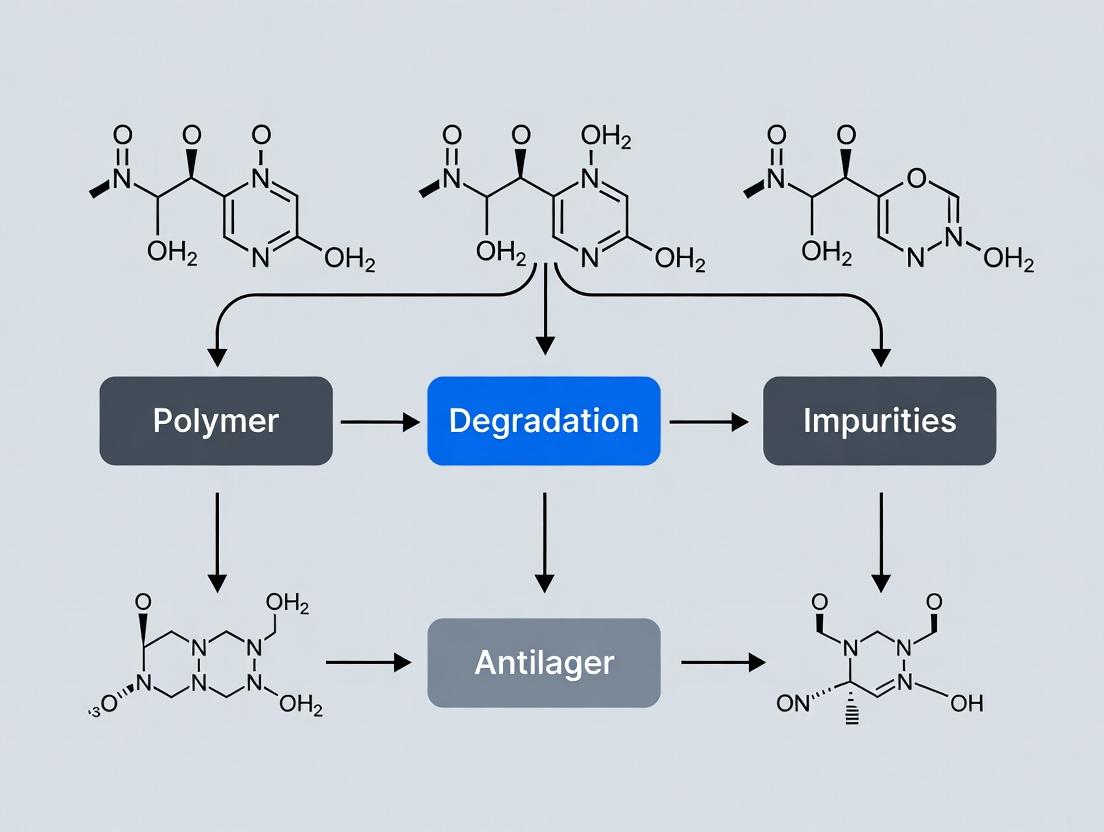
This article provides a comprehensive analysis of polymer degradation products and impurities in pharmaceutical applications, targeting researchers, scientists, and drug development professionals.
Polymer Degradation and Impurities in Drug Products: Sources, Analysis, and Safety Implications for Pharmaceutical Development
Abstract
This article provides a comprehensive analysis of polymer degradation products and impurities in pharmaceutical applications, targeting researchers, scientists, and drug development professionals. It explores the fundamental sources and mechanisms of polymer degradation, reviews advanced analytical methodologies for identification and quantification, offers troubleshooting strategies for formulation stability, and examines validation requirements and regulatory frameworks. The content addresses critical quality attributes (CQAs), extractables and leachables (E&L) studies, and the impact of impurities on drug safety and efficacy, serving as a practical guide for mitigating risks in polymer-based drug delivery systems and medical devices.
Understanding Polymer Degradation: Key Sources, Mechanisms, and Impurity Profiles in Pharmaceuticals
Within the broader research thesis on polymer stability and safety, the distinction between degradation products and process-related impurities is foundational. For pharmaceuticals, medical devices, and biocompatible materials, this distinction directly impacts regulatory strategy, risk assessment, and product lifecycle management. Degradation products form during storage or use due to chemical instability, while process-related impurities are introduced during synthesis, manufacturing, or sterilization. Misclassification can lead to incorrect stability-indicating methods, inappropriate specification limits, and flawed toxicological evaluations.
Definitions and Key Differences
| Characteristic | Polymer Degradation Products | Process-Related Impurities |
|---|---|---|
| Origin | Formed after manufacture, during storage or use. | Introduced during manufacture (synthesis, processing). |
| Timeline of Formation | Increase over time; stability-dependent. | Present from release; levels typically static. |
| Primary Drivers | Environment (heat, light, pH, moisture), mechanical stress, biological milieu. | Raw material impurities, incomplete polymerization, side reactions, catalyst residues, cleaning agents. |
| Predictability | Modeled via forced degradation studies. | Controlled via process optimization and raw material specs. |
| Regulatory Focus (ICH) | ICH Q1A(R2) Stability Testing, Q1B Photostability, Q5C Biotech stability. | ICH Q3A(R2) / Q3B(R2) Impurities, Q6A Specifications. |
| Mitigation Strategy | Formulation optimization, protective packaging, storage conditions. | Process refinement, purification, stringent sourcing. |
Analytical Strategies for Differentiation
Differentiation requires orthogonal analytical techniques to identify, quantify, and track the origin of species.
Table 1: Core Analytical Techniques for Differentiation
| Technique | Primary Role | Information Gained |
|---|---|---|
| Chromatography (HPLC/UPLC, SEC) | Separation & Quantification | Purity profile, molecular weight changes, quantification of impurities/degradants. |
| Mass Spectrometry (LC-MS, MALDI-TOF) | Structural Identification | Accurate mass, fragmentation patterns, elucidates chemical structure of unknowns. |
| Spectroscopy (FTIR, NMR) | Functional Group Analysis | Identifies chemical bonds, new functional groups from degradation. |
| Thermal Analysis (DSC, TGA) | Stability Assessment | Melting point, glass transition changes, thermal decomposition profiles. |
| Forced Degradation Studies | Predictive Stress Testing | Generates degradation products to understand pathways and method suitability. |
Experimental Protocols
Protocol 1: Forced Degradation Study to Predict Degradation Products
Objective: To accelerate the formation of degradation products and identify potential stability liabilities.
- Sample Preparation: Prepare solutions or solid-state samples of the polymer (e.g., in final formulation or as neat material).
- Stress Conditions: Expose samples to the following conditions:
- Acidic/Basic Hydrolysis: Incubate in 0.1M HCl and 0.1M NaOH at 40°C for 1-4 weeks.
- Oxidative Stress: Incubate with 0.3% - 3.0% H₂O₂ at 25°C for 1-7 days.
- Thermal Stress: Expose solid samples to 40°C, 60°C, and 80°C for 1-4 weeks.
- Photostress: Expose to ICH Q1B Option 1 conditions (UV and Vis light).
- Analysis: Withdraw samples at intervals. Analyze by HPLC-DAD/ELSD and LC-MS. Compare chromatograms to unstressed controls and initial materials.
- Data Interpretation: New peaks are potential degradation products. Their growth with time/stress severity confirms degradation origin.
Protocol 2: Leachables Study for Process Impurities & Degradation
Objective: To differentiate residual process impurities from in-situ degradation products (leachables) in a final device or container.
- Extraction Study (Aggressive): Use solvents (e.g., 50% ethanol, isopropanol) at elevated temperatures (e.g., 50-70°C for 72h) to exhaustively extract all soluble species from the polymer. This identifies potential leachables, including process residues.
- Simulated Use / Migration Study: Expose polymer to its actual use medium (e.g., saline, simulated body fluid, drug formulation) at real-time conditions (e.g., 37°C for shelf-life duration).
- Analysis: Analyze both extracts via LC-MS. Use high-resolution MS to identify compounds.
- Differentiation: Compounds found in both aggressive extraction and simulated use are likely process-related impurities. Compounds found only in the simulated use study, or that increase in concentration over time in that study, are likely degradation products formed in the use environment.
Visualization of Workflows
(Title: Polymer Impurity Investigation Decision Tree)
The Scientist's Toolkit: Essential Research Reagent Solutions
Table 2: Key Research Reagents and Materials
| Item / Solution | Function / Rationale |
|---|---|
| Stable Isotope-Labeled Monomers | Tracers to track degradation pathways via MS; distinguish polymer backbone fragments from additives. |
| Reactive Oxygen Species (ROS) Probes | Quantify oxidative stress during degradation studies (e.g., in polymer scaffolds for implants). |
| Simulated Biological Fluids | Medium for in-vitro degradation studies to mimic physiological conditions (e.g., PBS, simulated gastric fluid). |
| Certified Reference Standards | For known process impurities (e.g., initiators, catalysts, monomers) to enable accurate quantification. |
| Solid-Phase Extraction (SPE) Cartridges | Clean-up and concentrate trace impurities/degradants from complex matrices (e.g., drug eluates) before analysis. |
| Size Exclusion Chromatography (SEC) Standards | Calibrate columns to accurately monitor changes in polymer molecular weight distribution, a key degradation indicator. |
Within the critical field of polymer degradation products and impurities research, understanding the fundamental chemical pathways by which materials degrade is paramount. This in-depth guide details the four primary degradation mechanisms—hydrolysis, oxidation, thermal, and photolytic—that underpin the formation of impurities in polymeric materials, particularly those used in drug delivery systems and medical devices. The characterization and quantification of degradation products are essential for assessing biocompatibility, ensuring drug stability, and fulfilling regulatory requirements.
Hydrolysis
Hydrolysis is the scission of chemical bonds, such as esters, amides, or anhydrides, via reaction with water. This is a dominant degradation pathway for many biodegradable polyesters (e.g., PLGA, PLA) used in controlled-release formulations.
Key Reaction:
| Polymer Type | Common Bond | Typical Study Conditions (pH, Temp) | Degradation Half-Life (Approx.) | Key Degradation Products |
|---|---|---|---|---|
| Poly(lactic-co-glycolic acid) (PLGA) | Ester | pH 7.4, 37°C | 2-6 weeks | Lactic acid, Glycolic acid, Oligomers |
| Poly(ε-caprolactone) (PCL) | Ester | pH 7.4, 37°C | 2-4 years | 6-Hydroxyhexanoic acid |
| Poly(anhydrides) | Anhydride | pH 7.4, 37°C | Days | Diacid monomers |
Experimental Protocol:In VitroHydrolytic Degradation Study
- Sample Preparation: Precisely weigh polymer films or devices (n≥5). Record initial mass (M₀), dimensions, and molecular weight (via GPC).
- Immersion: Place each sample in individual vials containing phosphate-buffered saline (PBS, pH 7.4) or other relevant buffer. Maintain at 37°C ± 0.5°C in an orbital shaker incubator.
- Sampling: At predetermined time points, remove triplicate samples from the medium.
- Analysis:
- Mass Loss: Rinse samples with deionized water, dry to constant weight in vacuo, and record dry mass (Mₜ). Calculate mass loss % = [(M₀ - Mₜ)/M₀] x 100.
- Molecular Weight Change: Analyze dried samples via Gel Permeation Chromatography (GPC) to determine Mn and Mw reduction.
- Product Analysis: Analyze the aging medium by HPLC-MS or NMR to identify and quantify soluble degradation products (e.g., monomers, acids).
- Kinetics Modeling: Fit molecular weight loss data to appropriate models (e.g., first-order kinetics for random chain scission).
Title: In Vitro Hydrolytic Degradation Workflow
Oxidation
Oxidative degradation involves reactions with molecular oxygen or reactive oxygen species (ROS), leading to polymer chain radical formation, backbone cleavage, or crosslinking. It is critical for polyolefins, polyethers (e.g., PEG), and biopolymers.
Key Initiation Step:
(Followed by propagation and termination steps)
| Polymer Type | Susceptible Site | Common Accelerant | Typical Analytical Methods | Key Degradation Products |
|---|---|---|---|---|
| Polyethylene (UHMWPE) | Tertiary C-H | γ-Irradiation / Metal Ions | FTIR (Carbonyl Index), SEM | Ketones, Aldehydes, Carboxylic Acids |
| Poly(ethylene glycol) (PEG) | Ether Linkage | H₂O₂ / Transition Metals | NMR, SEC-MALS | Formates, Chain-shortened Alcohols |
| Polypropylene (PP) | Tertiary C-H | Thermal Stress | Melt Flow Index, Rheometry | Hydroperoxides, Chain Scission Products |
Experimental Protocol: Accelerated Oxidative Stability Study
- Sample Preparation: Prepare thin polymer films or powders. For implant studies, use samples of relevant geometry.
- Exposure: Subject samples (in triplicate) to an oxidative environment:
- Solution: Immerse in Fenton's reagent (Fe²⁺/H₂O₂) at controlled temperature.
- Solid-State: Age in an oxygen-rich atmosphere (e.g., pure O₂ at elevated pressure) or under UV light in air.
- Sampling: Remove samples at intervals for analysis.
- Analysis:
- Spectroscopy: Analyze via FTIR for carbonyl group formation (1710-1750 cm⁻¹) and calculate Carbonyl Index.
- Thermal Analysis: Use DSC to observe changes in melting temperature (Tₘ) and oxidation induction time (OIT).
- Mechanical Testing: Perform tensile tests to correlate oxidation with loss of mechanical integrity.
- Product Analysis: Use Headspace GC-MS or LC-MS to identify volatile (e.g., formaldehyde) and non-volatile oxidation products.
Title: Polymer Oxidation Radical Chain Mechanism
Thermal Degradation
Thermal degradation involves molecular disintegration driven solely by thermal energy, typically at temperatures above the polymer's processing or use temperature. Mechanisms include random scission, depolymerization (unzipping), and side-group elimination.
Key Mechanisms:
- Random Scission:
~~CH₂–CHX–CH₂~~ → ~~CH₂–CHX• + •CH₂~~ - Depolymerization:
(–M–)ₙ → n M(e.g., PMMA → MMA monomer) - Elimination: e.g., PVC → HCl + polyene
| Polymer | Degradation Onset Temp. (Tₒ, °C) | Primary Mechanism | Major Volatile Products (TGA-MS) | Char Yield (%) |
|---|---|---|---|---|
| Poly(methyl methacrylate) (PMMA) | ~300 | Depolymerization | Methyl methacrylate (MMA) | <2 |
| Poly(vinyl chloride) (PVC) | ~200 | Dehydrochlorination | Hydrogen Chloride (HCl), Benzene | 10-15 |
| Poly(tetrafluoroethylene) (PTFE) | ~500 | Random Scission | Tetrafluoroethylene (TFE), Cyclics | >0 |
| Polyacrylonitrile (PAN) | ~300 | Cyclization / Oxidation | HCN, NH₃, Acrylonitrile | 40-60 (Carbon Fiber) |
Experimental Protocol: Thermogravimetric Analysis (TGA) Coupled with Evolved Gas Analysis (EGA)
- Instrument Calibration: Calibrate TGA furnace temperature and balance using magnetic standards (e.g., Ni, Perkalloy).
- Sample Loading: Precisely weigh 5-10 mg of polymer into an alumina crucible.
- Method Programming: Run a dynamic heating program (e.g., 10°C/min from 30°C to 800°C) under inert (N₂) and oxidative (air or O₂) atmospheres (separate runs). Maintain a constant purge gas flow (e.g., 50 mL/min).
- Coupling: Direct the evolved gases from the TGA furnace to an FTIR or mass spectrometer (MS) via a heated transfer line (≥200°C to prevent condensation).
- Data Acquisition & Analysis:
- TGA: Record weight (%) vs. temperature. Determine Tₒ (onset), Tₘₐₓ (temperature of maximum degradation rate from DTG), and residual mass.
- EGA (FTIR/MS): Collect spectra/scans continuously. Identify evolved gases (e.g., CO₂, H₂O, monomers, HCl) by matching to spectral libraries or mass-to-charge (m/z) ratios. Plot specific ion thermograms (e.g., m/z=36 for HCl from PVC).
- Kinetics: Apply model-free (e.g., Friedman) or model-fitting methods to calculate activation energy (Eₐ).
Photolytic Degradation
Photodegradation is initiated by absorption of ultraviolet (UV) or visible light, leading to bond dissociation (Norrish Type I/II reactions), radical formation, and subsequent oxidation (photo-oxidation). This is critical for polymers exposed to sunlight or sterilization UV.
Key Norrish Reactions (for Polyketones/Carbonyl-containing polymers):
- Type I:
~~CO–CH₂–CH₂~~ → ~~CO• + •CH₂–CH₂~~(α-cleavage) - Type II:
~~CO–CH₂–CH₂–CH₂~~ → ~~COH + CH₂=CH–CH₂~~(intramolecular H abstraction)
| Polymer | UV-Sensitive Chromophore | Critical Wavelength (nm) | Common Test Method (ISO/ASTM) | Key Physical Change |
|---|---|---|---|---|
| Polyethylene (PE) | Catalyst residues, Impurities | ~300 | ISO 4892-2 (Xenon arc) | Embrittlement, Yellowing, Surface Cracking |
| Poly(vinyl chloride) (PVC) | C–Cl bonds, Impurities | ~310 | ASTM D4329 (Fluorescent UV) | Dehydrochlorination, Discoloration |
| Polycarbonate (PC) | Aromatic moieties | ~300-350 | SAE J2527 (Xenon arc) | Yellowing, Loss of Transparency |
| Polypropylene (PP) | Hydroperoxides, Catalyst residues | ~310 | ISO 4892-3 (UV Fluorescent) | Chalking, Loss of Gloss |
Experimental Protocol: Accelerated Weathering / Photostability Testing
- Sample Mounting: Securely mount polymer plaques or films (n≥3) in sample holders of the weathering apparatus. Include a radiometer control sample.
- Cycle Definition: Program an accelerated weathering cycle based on relevant standards (e.g., ISO 4892). A typical cycle includes:
- Light Exposure: Constant or cyclic UV irradiance (e.g., 0.76 W/m² @ 340 nm) at a controlled chamber temperature (e.g., 60°C).
- Dark/Wet Phase: Periods of darkness with condensation or water spray (e.g., 50°C) to simulate dew/rain.
- Exposure: Run the instrument for a defined duration (e.g., 500, 1000 hours). Monitor and calibrate irradiance regularly.
- Sampling & Evaluation: Remove samples at intervals.
- Visual/Physical: Assess color change (ΔE* via spectrophotometer), gloss retention (60° gloss meter), and surface cracking (microscopy).
- Chemical: Analyze by FTIR-ATR for carbonyl and hydroxyl index development. Use UV-Vis spectroscopy to monitor yellowing (Yellowness Index).
- Mechanical: Perform impact or tensile tests to quantify embrittlement.
Title: Polymer Photodegradation Pathways
The Scientist's Toolkit: Key Research Reagent Solutions
| Item / Reagent | Function in Degradation Studies |
|---|---|
| Phosphate Buffered Saline (PBS), pH 7.4 | Simulates physiological conditions for hydrolytic and oxidative studies. Provides ionic strength and pH control. |
| Fenton's Reagent (Fe²⁺/H₂O₂) | Generates hydroxyl radicals (•OH) in situ for accelerated oxidative degradation studies in aqueous media. |
| 2,2'-Azobis(2-methylpropionitrile) (AIBN) | A common thermal radical initiator used to study controlled radical-driven oxidation or degradation kinetics. |
| Quartz Crystal Microbalance (QCM) Sensors | For real-time, nanoscale monitoring of mass changes (swelling, degradation) in thin polymer films in liquid or vapor phase. |
| BHT (Butylated Hydroxytoluene) | A radical scavenger (antioxidant) used as a control additive to inhibit oxidative degradation and confirm radical mechanisms. |
| Deuterated Solvents (e.g., D₂O, CDCl₃) | For NMR analysis of degradation products, allowing identification of structural changes and quantification of products. |
| Spin Traps (e.g., DMPO, PBN) | Used in Electron Spin Resonance (ESR) spectroscopy to detect, identify, and quantify short-lived radical intermediates. |
| Certified Reference Materials (e.g., PE Photostability Std.) | Calibration standards for weathering instruments to ensure reproducibility and inter-laboratory comparison of results. |
Within the broader thesis on polymer degradation products and impurities research, this whitepaper provides an in-depth technical examination of four primary classes of non-polymeric components in formulated polymer systems. The presence and behavior of monomer residues, catalysts, additives, and oligomers directly influence the performance, biocompatibility, and long-term stability of polymers, particularly in pharmaceutical and biomedical applications. This guide details their origins, analytical methodologies, and quantitative impact, serving as a critical resource for researchers and drug development professionals.
Polymer degradation and impurity profiles are paramount in determining the safety and efficacy of polymer-based drug delivery systems, implantable devices, and packaging. The intentional and unintentional incorporation of non-polymeric species—monomer residues, polymerization catalysts, functional additives, and oligomeric fractions—constitutes a major source of variability and potential toxicity. Understanding these common sources is foundational to the broader research thesis aimed at elucidating degradation pathways, predicting in-vivo behavior, and establishing regulatory-compliant control strategies.
The following table summarizes typical concentration ranges and associated risks for the four impurity classes in pharmaceutical-grade polymers.
Table 1: Quantitative Profile of Common Polymer Impurities
| Impurity Class | Typical Concentration Range (ppm) | Primary Analytical Technique(s) | Key Associated Risk |
|---|---|---|---|
| Monomer Residues | 10 - 1000 (varies by polymer) | Headspace GC-MS, HPLC-UV | Cytotoxicity, genotoxicity, leaching |
| Catalyst Residues | 1 - 100 (e.g., Sn, Al, Zn) | ICP-MS, AAS | Catalyst-mediated degradation, metal toxicity |
| Additives | 100 - 5000 (plasticizers), 100-1000 (stabilizers) | GC-MS, HPLC-DAD/FLD | Leaching, altered drug release, degradation product formation |
| Oligomers | 0.1 - 5.0 % (w/w) | SEC/MALS, LC-MS | Altered mechanical properties, enhanced immunogenicity |
Detailed Analysis and Experimental Protocols
Monomer Residues
Origin: Unreacted monomer from incomplete polymerization or generated via depolymerization during processing or sterilization. Protocol: Quantification of Residual Vinyl Monomers via Headspace GC-MS
- Sample Prep: Accurately weigh 100 mg of ground polymer into a 20 mL headspace vial. Add 5 mL of suitable solvent (e.g., DMF for polar polymers) and 10 µL of internal standard solution (e.g., deuterated analog of target monomer).
- Equilibration: Seal vial and incubate in a headspace autosampler oven at 120°C for 45 minutes with constant agitation.
- GC-MS Conditions:
- Column: 30 m x 0.25 mm, 0.25 µm film thickness, low-polarity phase (e.g., 5% phenyl polysilphenylene-siloxane).
- Carrier Gas: Helium, constant flow 1.2 mL/min.
- Oven Program: 40°C (hold 5 min), ramp 15°C/min to 250°C (hold 5 min).
- HS Injector: Transfer line 150°C, injection volume 1 mL, split ratio 10:1.
- MS: Electron Impact (EI) at 70 eV, scan range m/z 35-300, SIM for target ions.
- Quantification: Construct a five-point calibration curve using standard solutions of the monomer in solvent. Report concentration in ppm relative to polymer weight.
Catalyst Residues
Origin: Metal-based catalysts (e.g., Sn octoate, Ziegler-Natta, metallocene) or organic catalysts (e.g., amines, phosphines) used to initiate/control polymerization. Protocol: Determination of Residual Tin Catalyst by ICP-MS
- Microwave Digestion: Weigh ~50 mg of polymer into a digestion vessel. Add 6 mL of concentrated nitric acid (HNO₃, TraceMetal grade) and 2 mL of hydrogen peroxide (H₂O₂, 30%).
- Digestion Program: Ramp to 200°C over 15 minutes, hold at 200°C for 20 minutes under pressure. Allow to cool.
- Dilution: Quantitatively transfer digestate to a 50 mL volumetric flask. Dilute to mark with 18.2 MΩ·cm deionized water. Perform a further 10x dilution in a diluent of 2% HNO₃ / 0.5% HCl.
- ICP-MS Analysis:
- Instrument: Triple quadrupole ICP-MS (ICP-QQQ) recommended for superior interference removal.
- Isotopes: ¹¹⁸Sn or ¹²⁰Sn (using oxygen reaction gas to eliminate isobaric interference from ¹¹⁸Cd⁺ and ¹²⁰Te⁺).
- Calibration: External calibration from 0.1 to 100 µg/L in 2% HNO₃. Include internal standard (e.g., ¹¹⁵In) for drift correction.
- Calculation: Calculate µg of Sn per g of polymer (ppm).
Additives
Origin: Intentionally compounded species: plasticizers (e.g., phthalates), antioxidants (e.g., BHT, Irgafos 168), UV stabilizers, lubricants. Protocol: Screening of Additive Package by HPLC-DAD/ToF-MS
- Extraction: Use accelerated solvent extraction (ASE). Place 200 mg of polymer in an 11 mL cell. Extract with dichloromethane at 100°C and 1500 psi, static time 10 min, 3 cycles.
- Concentration: Gently evaporate extract to near dryness under nitrogen stream and reconstitute in 1 mL of THF.
- HPLC Conditions:
- Column: C18, 100 x 2.1 mm, 1.7 µm particle size.
- Mobile Phase A: Water with 0.1% Formic Acid. B: Acetonitrile with 0.1% Formic Acid.
- Gradient: 50% B to 100% B over 25 min, hold 5 min.
- Flow: 0.3 mL/min. Column Temp: 40°C.
- Detection:
- DAD: Scan 200-400 nm.
- ToF-MS: Electrospray Ionization (ESI), positive/negative switching, mass range m/z 100-1200.
- Identification: Use accurate mass, isotopic pattern, and UV spectra against commercial libraries. Quantify via external calibration of identified additives.
Oligomers
Origin: Low molecular weight polymer chains resulting from termination reactions, incomplete conversion, or cyclic species formed via backbiting. Protocol: Characterization of Oligomeric Fraction by SEC coupled with MALS and QDa MS
- Sample Preparation: Dissolve polymer at 2-3 mg/mL in the SEC eluent (e.g., THF for PS, DMF with LiBr for polyesters). Filter through a 0.45 µm PTFE syringe filter.
- SEC-MALS-QDa Conditions:
- Columns: Two PLgel Mixed-C columns in series (for optimal oligomer separation).
- Eluent: THF, isocratic, 1.0 mL/min.
- Detectors: Refractive Index (RI), Multi-Angle Light Scattering (MALS) with 18 angles, and a Mass Detector (e.g., ACQUITY QDa) for low MW ion detection.
- Analysis:
- Use the RI chromatogram to identify the oligomeric "front-end."
- MALS provides absolute molecular weight for each oligomeric peak, independent of elution time.
- The QDa mass detector provides ESI mass spectra for key slices, confirming repeat unit mass and end-group structures.
- Reporting: Integrate the low-MW region (<~2000 g/mol) from the RI trace and report as a percentage of total area. Tabulate identified oligomer species by DP (degree of polymerization).
Visualizing the Analysis Workflow
The Scientist's Toolkit: Key Research Reagent Solutions
Table 2: Essential Materials for Polymer Impurity Analysis
| Item / Reagent | Function / Application | Critical Specification |
|---|---|---|
| Certified Reference Standards (Monomers, Additives) | Accurate identification and quantification via GC-MS/HPLC. | >98% purity, traceable certificate of analysis. |
| ICP-MS Single-Element Standard Solutions (Sn, Al, Ti, Zn, etc.) | Calibration for trace metal catalyst analysis. | 1000 µg/mL in 2-5% HNO₃, NIST-traceable. |
| Deuterated Internal Standards (e.g., D8-Toluene, D4-BHT) | Compensation for matrix effects and recovery losses in GC/LC-MS. | Chemical and isotopic purity >99%. |
| TraceMetal Grade Acids (HNO₃, HCl) | Sample digestion for ICP-MS without introducing background contamination. | Low blank levels for target metals (<1 ppb). |
| Polymer-Grade Solvents (THF, DCM, DMF) | Sample dissolution and extraction without introducing interfering impurities. | Low UV cutoff, non-volatile residue <1 ppm. |
| ASE (Accelerated Solvent Extraction) Cells & Filters | Efficient, reproducible extraction of additives from polymer matrix. | Stainless steel, 11-33 mL volume, with frits. |
| SEC Columns (e.g., PLgel Mixed-C) | High-resolution separation of oligomers from main polymer peak. | Pore size optimized for target polymer's MW range. |
| Stable Free Radical (e.g., TEMPO, DPPH) | Experimental probing of antioxidant efficacy and oxidative stability. | High purity for reliable kinetic studies. |
Within the critical framework of polymer degradation products and impurities research, the characterization of polymers used in pharmaceutical and biomedical applications is paramount. Certain polymer classes, due to their widespread use and inherent chemical susceptibilities, warrant focused scrutiny. This guide provides an in-depth technical analysis of five key polymer classes of concern: Poly(lactic-co-glycolic acid) (PLGA), Polyethylene glycol (PEG), Polyvinylpyrrolidone (PVP), Cellulosics, and Acrylics. The focus is on their degradation pathways, resultant impurities, and methodologies for their identification and quantification to ensure drug product safety and efficacy.
Degradation Profiles and Impurities of Concern
Understanding the specific degradation mechanisms and the resulting impurity profiles for each polymer class is essential for risk assessment.
Table 1: Primary Degradation Pathways and Key Impurities
| Polymer Class | Primary Degradation Mechanism | Key Degradation Products / Impurities | Primary Concern |
|---|---|---|---|
| PLGA | Hydrolysis of ester bonds | Lactic acid, Glycolic acid, Oligomers, Cyclic dimers (e.g., D,L-lactide) | Acidic microenvironment, altered drug release kinetics, potential immunogenicity of oligomers. |
| PEG | Autoxidation (via free radicals) | Formaldehyde, Acetaldehyde, Formic acid, Acetic acid, Hydroperoxides, Peroxides | Reactive aldehydes can form adducts with API; peroxides can oxidize API. |
| PVP | Oxidation, Thermal degradation | Peroxides, Formaldehyde, Succinimide groups, 2-Pyrrolidone, Vinyl acetate (residual monomer) | Peroxide content can degrade oxidatively sensitive drugs; residual monomer is cytotoxic. |
| Cellulosics (e.g., HPMC, MCC) | Oxidative, Microbial, Acid/base hydrolysis | Glucose, Gluconic acid, Organic acids, Oxidized functionalities (aldehydes, ketones) | Altered viscosity, potential for drug-polymer interactions via carbonyls, microbial load. |
| Acrylics (e.g., Eudragit) | Hydrolysis of ester side chains | Methacrylic acid, Alcohols (from ester), Methacrylate oligomers | pH-dependent solubility shift, potential for gastric irritation (free methacrylic acid). |
Table 2: Analytical Techniques for Characterizing Degradation and Impurities
| Technique | Primary Application | Target Polymer/Impurity | Typical Sensitivity Range |
|---|---|---|---|
| Size Exclusion Chromatography (SEC/MALS) | Molecular weight distribution | PLGA, PEG, PVP, Acrylics | Mw detection: 1 kDa – 10,000 kDa |
| Headspace GC-MS | Volatile degradation products | PEG (aldehydes), PVP (2-pyrrolidone) | Sub-ppm to ppb levels |
| HPLC-UV/FLD/RID | Quantification of acidic monomers, oligomers | PLGA (lactic/glycolic acid), PEG (acids) | Low µg/mL range |
| Iodometric Titration | Peroxide value quantification | PEG, PVP | 0.01 – 20 meq/kg |
| NMR Spectroscopy (1H, 13C) | Structural elucidation, end-group analysis, copolymer ratio | All classes (monomer ratio, degradation signatures) | Qualitative to semi-quantitative |
Experimental Protocols for Key Analyses
Protocol 2.1: Determination of Peroxide Value in PEG and PVP (Iodometric Titration)
Objective: Quantify hydroperoxide and peroxide impurities. Materials: Polymer sample, glacial acetic acid, chloroform, saturated potassium iodide (KI) solution, sodium thiosulfate (Na₂S₂O₃) titrant (0.01 N), starch indicator solution. Procedure:
- Dissolve 5.0 g of polymer in 30 mL of a 3:2 (v/v) mixture of glacial acetic acid and chloroform.
- Flush the solution with nitrogen for 1 minute to displace oxygen.
- Add 0.5 mL of saturated KI solution. Seal and incubate in the dark for 30 minutes at room temperature.
- Add 30 mL of deionized water to stop the reaction and dilute.
- Titrate the liberated iodine with standardized 0.01 N sodium thiosulfate until the yellow color fades.
- Add 1 mL of starch indicator (blue color appears) and continue titration until the solution becomes colorless.
- Run a blank titration omitting the polymer sample.
- Calculation: Peroxide Value (meq/kg) = [(Vsample - Vblank) * N * 1000] / Wsample, where V= volume (mL), N = normality of Na₂S₂O₃, W = sample weight (g).
Protocol 2.2: Accelerated Hydrolytic Degradation of PLGA
Objective: Simulate and monitor ester bond hydrolysis. Materials: PLGA microparticles/film, phosphate-buffered saline (PBS, pH 7.4), shaking incubator, SEC, HPLC. Procedure:
- Precisely weigh (W₀) PLGA samples (n=3 per time point).
- Immerse each sample in 10 mL of PBS (0.1 M) in sealed vials.
- Incubate at 37°C under constant agitation (100 rpm).
- At predetermined intervals (e.g., 1, 3, 7, 14, 28 days), remove samples in triplicate.
- Rinse samples with DI water, lyophilize, and weigh (Wt) to determine mass loss.
- Analyze molecular weight change via SEC using polystyrene or PMMA standards.
- Analyze the degradation medium by HPLC-UV for lactic and glycolic acid monomers.
Protocol 2.3: Residual Monomer Analysis in Acrylic Polymers by GC-MS
Objective: Quantify residual methyl methacrylate (MMA) or other monomers. Materials: Eudragit polymer, dimethylformamide (DMF), internal standard (e.g., toluene), headspace vials, GC-MS with appropriate column (e.g., DB-5ms). Procedure:
- Prepare a standard curve of MMA in DMF (e.g., 0.1 – 10 µg/mL) with a constant concentration of internal standard.
- Dissolve 100 mg of acrylic polymer in 10 mL of DMF in a headspace vial. Add the same amount of internal standard.
- Seal the vial and incubate at 80°C for 60 minutes in the headspace sampler agitator.
- Inject the headspace gas. GC Conditions (example): Injector: 250°C; Oven: 40°C hold 5 min, ramp 20°C/min to 250°C; MS Scan: m/z 50-150.
- Quantify MMA by comparing the peak area ratio (MMA/IS) to the standard curve.
Visualizations
Diagram 1: PLGA Hydrolysis & Analysis Workflow
Diagram 2: PEG/PVP Autoxidation Signaling Pathway
The Scientist's Toolkit: Research Reagent Solutions
Table 3: Essential Materials for Polymer Degradation Research
| Item / Reagent | Function in Research | Key Consideration |
|---|---|---|
| Phosphate Buffered Saline (PBS), pH 7.4 | Standard medium for hydrolytic degradation studies (e.g., PLGA, polyesters). | Use bacteriostatic agents (e.g., NaN₃) for long-term studies to prevent microbial growth. |
| Stabilizer-Free Analytical Solvents (e.g., THF, DMF, Chloroform) | Solvents for SEC, HPLC, and sample preparation. | Stabilizers (e.g., BHT) can interfere with oxidation studies and detector response. |
| Iodometric Titration Kit | For direct quantification of peroxide value in PEG, PVP, and lipids. | Must perform under inert atmosphere and in the dark to prevent interference. |
| Certified Reference Standards (Lactic acid, Glycolic acid, MMA, Formaldehyde) | Critical for calibrating quantitative assays (HPLC, GC). | Ensures accurate identification and quantification of trace impurities. |
| Size Exclusion Standards (Narrow PMMA or PS standards) | Calibration of SEC systems for molecular weight determination. | Must match polymer-solvent system (e.g., PMMA in DMF for acrylics). |
| Radical Initiators (e.g., AIBN, AAPH) | To induce controlled oxidative stress for forced degradation studies. | Allows for accelerated study of oxidation pathways and stabilizer efficacy. |
| Headspace Vials & Certified Septa | For volatile impurity analysis (residual monomers, aldehydes). | Low-bleed septa are essential to avoid background contamination in GC-MS. |
Impact of Degradation on Critical Quality Attributes (CQAs) and Material Properties
Within the broader thesis on polymer degradation products and impurities research, this whitepaper examines the fundamental and critical relationship between degradation pathways and the defined Critical Quality Attributes (CQAs) of polymeric materials used in pharmaceutical and medical device applications. CQAs are physical, chemical, biological, or microbiological properties that must be within an appropriate limit, range, or distribution to ensure desired product quality. Degradation—whether oxidative, hydrolytic, thermal, or photo-induced—directly and detrimentally impacts these attributes, compromising safety, efficacy, and stability.
Degradation Pathways and Their Direct Impact on CQAs
Polymer degradation proceeds via specific mechanistic pathways, each generating unique impurities and altering material properties that map directly to defined CQAs.
Primary Degradation Pathways
- Hydrolytic Degradation: Cleavage of susceptible bonds (e.g., esters, amides, carbonates) by water. Impacts CQAs related to molecular weight, mechanical strength, and drug release kinetics.
- Oxidative Degradation: Radical-mediated chain scission or crosslinking initiated by heat, light, or metal catalysts. Directly affects CQAs like color, impurity profiles, and biocompatibility.
- Thermal Degradation: Non-oxidative chain scission at elevated temperatures, leading to random fragmentation. Alters melt viscosity (a key process CQA) and increases leachable impurities.
- Photo-degradation: Ultraviolet or visible light-induced radical reactions. Primarily impacts surface properties, color, and the formation of potentially cytotoxic products.
Quantitative Mapping of Degradation to CQA Changes
The following tables summarize empirical data from recent studies linking specific degradation conditions to quantifiable changes in CQAs and material properties.
Table 1: Impact of Accelerated Hydrolytic Degradation on PLGA CQAs
| CQA / Property | Initial Value | After 4 Weeks (pH 7.4, 37°C) | After 12 Weeks (pH 7.4, 37°C) | Analytical Method |
|---|---|---|---|---|
| Mw (kDa) | 25.0 ± 1.5 | 14.2 ± 0.8 | 5.1 ± 0.5 | Size Exclusion Chromatography |
| Glass Transition Temp (Tg) | 45.5 °C | 41.2 °C | 38.0 °C | Differential Scanning Calorimetry |
| Mass Loss | 0% | 18% ± 3% | 72% ± 5% | Gravimetric Analysis |
| Drug Release Burst Phase | 22% ± 2% (Day 1) | 45% ± 5% (Day 1) | 88% ± 6% (Day 1) | HPLC-UV |
| Lactic Acid Impurity | <0.1% | 2.8% ± 0.3% | 10.5% ± 1.2% | Ion Chromatography |
Table 2: Oxidative Degradation (γ-Irradiation) of Polyethylene Implant Material
| CQA / Property | Control (0 kGy) | 25 kGy Dose | 50 kGy Dose | Analytical Method |
|---|---|---|---|---|
| Tensile Strength (MPa) | 23.5 ± 0.8 | 21.0 ± 1.0 | 17.5 ± 1.5 | ASTM D638 |
| Elongation at Break (%) | 450 ± 20 | 320 ± 25 | 150 ± 30 | ASTM D638 |
| Carbonyl Index | 0.05 | 0.31 | 0.89 | FTIR Spectroscopy |
| Total Extractable Monomers | 15 ppm | 42 ppm | 105 ppm | GC-MS |
| Cytotoxicity (Cell Viability %) | 100% ± 5% | 85% ± 8% | 65% ± 10% | ISO 10993-5 (MTT Assay) |
Experimental Protocols for Assessing Degradation Impact
Protocol: Forced Hydrolytic Degradation Study of Ester-Based Polymers
Objective: To quantify the rate of chain scission and its impact on Mw and thermal CQAs. Method:
- Sample Preparation: Precisely weigh 50 mg of polymer film (n=5) into 20 mL glass vials.
- Degradation Medium: Add 10 mL of phosphate buffer (0.1 M, pH 7.4) containing 0.02% sodium azide to inhibit microbial growth.
- Incubation: Place vials in a thermostated shaking incubator at 37°C ± 0.5°C and 60 rpm.
- Sampling: Withdraw triplicate vials at predefined timepoints (e.g., 1, 2, 4, 8, 12 weeks).
- Analysis:
- Rinse samples with DI water and dry in vacuo to constant weight for mass loss.
- Dissolve dried residue in appropriate solvent (e.g., THF for PLGA) for SEC analysis to determine Mn, Mw, and Đ.
- Analyze thermal properties (Tg, Tm) via DSC using a 10°C/min heating rate under N2.
Protocol: Accelerated Oxidative Stability Study via Peroxide Spiking
Objective: To assess the formation of oxidative impurities and their correlation with color change (a key CQA). Method:
- Spike Solution: Prepare a dilute tert-butyl hydroperoxide (tBHP) solution in the drug product vehicle.
- Stress Condition: Spike the polymer/drug product solution with 0.1% v/v tBHP. Use an unspiked sample as control.
- Incubation: Heat samples at 40°C ± 2°C in the dark for 14 days.
- Analysis:
- Monitor color change via UV-Vis spectrophotometry (350-600 nm) or visual inspection against standards.
- Quantify known degradants (e.g., aldehydes, acids) using HPLC with charged aerosol detection (CAD) or mass spectrometry (LC-MS).
- Monitor for new peaks in the chromatographic impurity profile.
Pathways and Workflow Visualizations
Diagram 1: Polymer Oxidative Degradation Pathway
Diagram 2: Degradation Impact Assessment Workflow
The Scientist's Toolkit: Key Research Reagent Solutions
Table 3: Essential Materials for Polymer Degradation Studies
| Item / Reagent | Function / Rationale |
|---|---|
| Phosphate Buffered Saline (PBS), pH 7.4 | Standard physiological medium for hydrolytic degradation studies, simulating in-vivo conditions. |
| tert-Butyl Hydroperoxide (tBHP) | A controllable organic peroxide used as an oxidant spike in forced degradation studies to induce and study oxidative pathways. |
| Sodium Azide (NaN3) | Bacteriostatic agent added to aqueous degradation media to prevent microbial growth from confounding chemical degradation results. |
| Deuterated Solvents (e.g., CDCl3, DMSO-d6) | Essential for Nuclear Magnetic Resonance (NMR) spectroscopy to identify and quantify degradation products and structural changes. |
| Size Exclusion Chromatography (SEC) Standards | Narrow dispersity polymer standards (e.g., polystyrene, PMMA) for calibrating SEC systems to accurately measure molecular weight changes. |
| Radical Traps / Antioxidants (e.g., BHT, BHA) | Used as controls or stabilizers to inhibit oxidative degradation, helping to isolate specific degradation mechanisms. |
| Controlled Atmosphere Chambers | Enables degradation studies under specific oxygen concentrations or inert atmospheres (N2, Ar) to study oxygen-dependent pathways. |
| LC-MS Grade Solvents & Volatile Buffers | Required for sensitive detection and identification of low-abundance degradants and impurities using LC-MS systems. |
Definitions and Core Concepts
Extractables are chemical compounds that can be released from a material or product under controlled, exaggerated laboratory conditions (e.g., using strong solvents, elevated temperature, and/or extended time). These studies identify the potential migrants.
Leachables are chemical compounds that actually migrate into a drug product or formulation from its container-closure system, manufacturing components, or delivery system under normal conditions of use or storage. Leachables are a subset of extractables.
Within the context of polymer degradation and impurities research, E&L studies are critical for understanding the chemical interplay between polymeric materials and pharmaceutical products, ensuring that degradation products and process-related impurities do not compromise patient safety or product efficacy.
Regulatory Drivers and Guidelines
A robust regulatory framework governs E&L assessment to ensure patient safety, product quality, and efficacy. Key guidelines are summarized in the table below.
Table 1: Key Regulatory Guidelines for E&L Assessment
| Regulatory Body | Guideline/Standard | Title/Scope | Core Focus |
|---|---|---|---|
| U.S. FDA | Guidance for Industry | Container Closure Systems for Packaging Human Drugs and Biologics | Chemistry, manufacturing, and controls (CMC) information for packaging systems. |
| EMA | Guideline on Plastic Immediate Packaging Materials | 3AQ10a (CPMP/QWP/4359/03, EMEA/CVMP/205/04) | Quality and safety of plastic packaging materials for medicinal products. |
| USP | General Chapters: <1663> <1664> <661.1> <661.2> | Assessment of Extractables & Leachables; Plastic Materials of Construction | Standardized approaches for testing and risk-based safety evaluation. |
| ICH | Q3E (Draft, 2023) | Impurity: Assessment and Control of Extractables and Leachables for Pharmaceuticals and Biologics | Harmonized guideline on principles for E&L identification, qualification, and control. |
| ISO | 10993-17 & 10993-18 | Biological evaluation of medical devices - Part 17 & 18 | Establishment of allowable limits for leachable substances and chemical characterization. |
| PDA | Technical Report No. 90 | Best Practices for Managing Extractables and Leachables in Single-Use Systems | Risk management for single-use systems in biopharmaceutical manufacturing. |
The draft ICH Q3E guideline represents a significant recent development, aiming to provide a globally harmonized framework for E&L risk management across product lifecycles.
Experimental Protocols for E&L Studies
Protocol for Controlled Extraction Study (Extractables)
Objective: To exhaustively identify and semi-quantify potential leachables from a material.
- Sample Preparation: Cut material into small pieces (e.g., 1 cm²) to increase surface area. Clean if necessary. Weigh accurately.
- Extraction Solvents: Use solvents of varying polarity (e.g., water, 50% ethanol, hexane) to simulate different drug product properties.
- Extraction Conditions: Apply exaggerated conditions:
- Soxhlet Extraction: For 6-24 hours with appropriate solvent.
- Reflux: Solvent heated at reflux temperature for several hours.
- Autoclaving: Aqueous extraction at 121°C for 1 hour.
- Incubation: Submersion at elevated temperature (e.g., 40-70°C) for 1-14 days.
- Sample Analysis: Analyze extracts using a combination of techniques:
- Chromatography: HPLC/UPLC, GC (for volatile/semi-volatile organics).
- Spectroscopy: LC-MS, GC-MS (for identification), ICP-MS/OES (for elemental impurities).
- Data Reporting: Report all identified compounds with their analytical detection response and estimated concentration.
Protocol for Migration Study (Leachables)
Objective: To identify and quantify compounds migrating into a specific drug product under real-time or accelerated storage conditions.
- Study Design: Store the final drug product in its market container-closure system.
- Conditions: Use proposed storage conditions (real-time) and accelerated conditions (e.g., elevated temperature/humidity) per ICH Q1A(R2).
- Controls: Include the drug product stored in an inert container (e.g., glass ampoule) as a control to distinguish leachables from product degradants.
- Time Points: Sample at multiple intervals (e.g., initial, 1, 3, 6 months, expiry).
- Sample Analysis: Directly analyze the drug product using highly selective and sensitive techniques (e.g., LC-HRMS, GC-MS). Methods must be validated to account for matrix effects.
- Data Analysis: Correlate leachables found with extractables profile. Monitor concentration trends over time.
Visualizing the E&L Assessment Workflow
Title: E&L Assessment and Risk Management Workflow
The Scientist's Toolkit: Key Research Reagent Solutions
Table 2: Essential Materials and Reagents for E&L Studies
| Item / Solution | Function / Purpose in E&L Studies |
|---|---|
| Simulated Extraction Solvents (e.g., Water, Ethanol, Hexane, Methylene Chloride) | To mimic a range of drug product polarities and exhaustively extract compounds from test materials under exaggerated conditions. |
| Deuterated Internal Standards (e.g., Toluene-d8, Naphthalene-d8, Phenol-d6) | Used in GC-MS and LC-MS for semi-quantification and to monitor analytical performance during method development and sample runs. |
| Analytical Reference Standards (e.g., Antioxidants, Plasticizers, Degradation Markers) | Critical for calibrating instruments, confirming the identity of detected extractables/leachables, and performing accurate quantification. |
| SPE (Solid-Phase Extraction) Cartridges | To concentrate analytes from large-volume extracts or to clean up complex drug product matrices before analysis, improving detection sensitivity. |
| Silylation & Derivatization Reagents (e.g., BSTFA, MSTFA) | For GC-MS analysis of polar, non-volatile compounds (e.g., some antioxidants, acids) by converting them into volatile, thermally stable derivatives. |
| ICP-MS Calibration Standards (Multi-element solutions) | For accurate quantification of elemental impurities (e.g., catalysts, fillers) as per ICH Q3D, using inductively coupled plasma mass spectrometry. |
| Stable Isotope-Labeled Surrogates (¹³C, ¹⁵N labeled compounds) | Ideal internal standards for definitive quantitative LC-HRMS methods, as they closely mimic the chemical behavior of the analyte without interference. |
| Inert Materials (e.g., Glass Vials, PTFE/Silicon Septa, Glass Wool) | Used for system blanks and control samples to ensure the analytical background is free from contamination introduced during sample preparation or analysis. |
Analytical Strategies and Best Practices for Characterizing Polymer Degradants and Impurities
Thesis Context: This guide is framed within a comprehensive thesis on Polymer Degradation Products and Impurities Research, focusing on the critical analytical chemistry techniques required to isolate, identify, and quantify degradation-related compounds in polymeric materials, particularly those used in pharmaceutical applications (e.g., drug delivery systems, container closures, excipients).
Core Extraction Protocols for Polymer Analysis
Effective sample preparation is paramount for isolating target analytes (monomers, additives, degradation products) from complex polymer matrices. The choice of protocol depends on polymer solubility, analyte polarity, and thermal stability.
| Technique | Principle | Typical Application in Polymer Analysis | Key Advantages | Limitations |
|---|---|---|---|---|
| Soxhlet Extraction | Continuous solvent cycling via distillation and siphoning. | Extraction of plasticizers, antioxidants, and other additives from polymers like PVC, polyolefins. | High efficiency, handles multiple samples, uses minimal solvent per cycle. | Long duration (hours-days), high temperatures may degrade analytes, non-selective. |
| Ultrasonic-Assisted Extraction (UAE) | Cavitation-induced cell disruption using ultrasonic waves. | Rapid extraction of monomers and oligomers from polymers (e.g., residual styrene from PS). | Fast, efficient, operates at low temperature. | Potential for analyte degradation by free radicals, less efficient for hard polymers. |
| Microwave-Assisted Extraction (MAE) | Heating solvent-sample mixture via microwave dielectric heating. | Extraction of additives and degradation products from engineering plastics (e.g., PEEK, nylon). | Dramatically reduced time (minutes), reduced solvent volume, high throughput. | Requires specialized vessels, not suitable for thermally labile analytes, safety concerns. |
| Supercritical Fluid Extraction (SFE) | Use of supercritical CO₂ as a solvent. | Selective extraction of non-polar to moderately polar additives (e.g., from polyethylene, polypropylene). | Tunable solvent strength, solvent-free extract, environmentally friendly. | High capital cost, poor for highly polar analytes without modifiers. |
| Headspace (HS) Sampling | Analysis of volatile compounds in the gas phase equilibrated above a sample. | Residual monomers (ethylene oxide, vinyl chloride), solvents, and volatile degradation products. | Minimal sample preparation, no solvent interference, clean extracts. | Only for volatile compounds, requires equilibrium, quantitative precision can be lower. |
Detailed Protocol: Microwave-Assisted Extraction (MAE) for Additives in Polyethylene
Objective: To extract and quantify Irganox 1010 and Irgafos 168 antioxidants from polyethylene film. Materials:
- Polymer sample (ground to <1 mm particles)
- Microwavable extraction vessels with pressure seals
- Dichloromethane (DLCm) or tetrahydrofuran (THF)
- Microwave extraction system (e.g., CEM, Milestone)
- Analytical balance, volumetric flasks
- Syringe filters (0.45 µm PTFE)
Methodology:
- Sample Preparation: Precisely weigh 0.50 g ± 0.01 g of ground polymer into the microwave vessel.
- Solvent Addition: Add 25 mL of DLCm to the vessel. Seal the vessel according to manufacturer instructions.
- Microwave Extraction: Place vessels in the rotor. Run the extraction at 100°C and 150 psi for 20 minutes.
- Cooling and Recovery: Allow vessels to cool to room temperature. Carefully vent and open. Decant the extract.
- Cleanup: Filter the extract through a 0.45 µm PTFE syringe filter into a 50 mL volumetric flask. Rinse vessel and filter with fresh solvent, bringing to volume.
- Analysis: Analyze via HPLC-UV or LC-MS.
Stress Testing (Forced Degradation) for Predictive Stability Studies
Forced degradation studies are essential for understanding the intrinsic stability of a polymer and identifying potential degradation products (impurities) under conditions more severe than accelerated testing.
Table 2: Standard Forced Degradation Conditions for Polymers
| Stress Condition | Typical Parameters | Primary Degradation Pathways Induced | Common Analytical Techniques for Monitoring |
|---|---|---|---|
| Hydrolytic (Acid/Base) | 0.1-5M HCl or NaOH, 40-70°C, 24h-1 week. | Hydrolysis of ester, amide, carbonate, or urethane links. Chain scission. | HPLC, LC-MS, GPC (for molecular weight drop). |
| Oxidative | 3-30% H₂O₂, 40-70°C, or exposure to AAPH radical initiator. | Oxidation of susceptible groups (ethers, secondary alcohols). Formation of peroxides, alcohols, ketones, chain scission/crosslinking. | HPLC, LC-MS, FTIR (for carbonyl index), titration for peroxides. |
| Thermal | Solid state: 10-40°C above Tg or melting point, dry air/inert atmosphere. | Thermo-oxidative degradation, depolymerization, cross-linking. | TGA, DSC, GPC, HPLC for volatiles (via HS-GC/MS). |
| Photolytic | Exposed to UV light (e.g., 320-400 nm) in a photostability chamber. ICH Q1B conditions. | Norrish Type I/II reactions, radical formation, oxidation, discoloration. | LC-MS, UPLC-PDA, FTIR, colorimetry. |
Detailed Protocol: Oxidative Forced Degradation of a Poly(lactic-co-glycolic acid) (PLGA) Polymer
Objective: To generate and identify oxidative degradation products of PLGA used in a drug-eluting implant. Materials:
- PLGA sample (50:50)
- 10% w/v Hydrogen Peroxide (H₂O₂) solution
- Thermostated shaking water bath
- pH meter and buffers
- Freeze dryer
- LC-MS system
Methodology:
- Sample Preparation: Weigh 100 mg of PLGA into a 20 mL clear glass vial.
- Stress Application: Add 10 mL of 10% H₂O₂ solution. Seal the vial tightly.
- Incubation: Place the vial in a shaking water bath at 50°C (±1°C) for 72 hours. Agitate at 100 rpm.
- Reaction Quenching: Remove vial and cool in an ice bath. Rapidly adjust pH to ~7.0 using 1M NaOH to halt radical reactions.
- Sample Recovery: Freeze the solution and lyophilize to obtain the solid degraded polymer and any non-volatile degradation products.
- Extraction for Analysis: Reconstitute the lyophilized solid in 5 mL of acetonitrile. Filter through a 0.22 µm nylon filter into an LC vial.
- Analysis: Analyze using Reversed-Phase HPLC-PDA-MS. Use a C18 column with a water/acetonitrile gradient. Monitor for new peaks relative to control, and use MS to identify fragments corresponding to oxidized monomers (glycolic acid, lactic acid) and oligomers.
Visualizations
Extraction & Analysis Workflow for Polymer Impurities
Forced Degradation Pathways & Impact on Polymers
The Scientist's Toolkit: Key Research Reagent Solutions
Table 3: Essential Materials for Polymer Extraction & Stress Studies
| Item / Reagent Solution | Primary Function in Context |
|---|---|
| Supercritical CO₂ with Modifiers (e.g., Methanol) | The primary solvent for SFE; modifiers like methanol enhance extraction efficiency for mid-polarity additives and degradation products. |
| Radical Initiators (e.g., AAPH, AIBN) | Used in controlled oxidative forced degradation studies to generate peroxyl or alkoxyl radicals, simulating long-term autoxidation. |
| Deuterated Solvents (CDCl₃, DMSO-d6) | Essential for NMR analysis of extracted compounds or degraded polymer structure to identify chemical environment changes. |
| Solid-Phase Extraction (SPE) Cartridges (C18, Silica, NH₂) | For post-extraction cleanup of complex polymer extracts to remove interfering matrix components prior to HPLC/GC analysis. |
| Quencher Solutions (e.g., Na₂S₂O₃, BHT) | Used to abruptly halt radical-mediated degradation reactions at precise time points during stress studies for kinetic analysis. |
| Stable Isotope-Labeled Analogues of Target Analytes | Serve as internal standards for mass spectrometric quantification, correcting for losses during extraction and matrix effects. |
| Photostability Calibration Systems (e.g., Actinometry) | Validates the light exposure dose in photolytic stress testing, ensuring consistent and reproducible conditions per ICH Q1B. |
Within the rigorous demands of polymer degradation products and impurities research, the precise separation and characterization of complex mixtures is paramount. This whitepaper provides an in-depth technical guide to four cornerstone chromatographic techniques—High-Performance Liquid Chromatography (HPLC), Ultra-Performance Liquid Chromatography (UPLC), Gel Permeation Chromatography/Size-Exclusion Chromatography (GPC/SEC), and two-dimensional Liquid Chromatography (2D-LC). Their application is critical for identifying low-abundance degradants, quantifying impurity profiles, and elucidating structural changes in polymeric pharmaceuticals and biomaterials, directly impacting drug safety and efficacy.
Core Techniques and Applications
High-Performance Liquid Chromatography (HPLC)
HPLC remains a fundamental workhorse for the separation of non-volatile analytes, including polymer oligomers and additive degradants. It operates on the principle of differential partitioning between a mobile phase and a stationary phase.
- Typical Parameters: Operating pressures of 400-600 bar, particle sizes of 3-5 µm, and flow rates of 0.5-2.0 mL/min.
- Role in Polymer Degradation Research: Ideal for stability-indicating methods, quantifying residual monomers, and assessing antioxidant depletion.
Ultra-Performance Liquid Chromatography (UPLC)
UPLC is a derivative of HPLC that utilizes sub-2 µm particles and higher system pressures (typically up to 1000-1500 bar) to achieve superior resolution, sensitivity, and speed.
- Key Advantage: Provides sharper peaks, enabling better separation of closely eluting degradation products.
Gel Permeation / Size-Exclusion Chromatography (GPC/SEC)
GPC/SEC separates molecules based on their hydrodynamic volume in solution. It is the primary technique for determining molecular weight distributions (MWD) of polymers, which is a critical parameter affected by degradation processes like chain scission or cross-linking.
- Detection: Typically coupled with multi-angle light scattering (MALS), refractive index (RI), and viscometry detectors for absolute molecular weight and structural information.
Two-Dimensional Liquid Chromatography (2D-LC)
2D-LC significantly enhances peak capacity by coupling two independent separation mechanisms (e.g., reversed-phase in the first dimension and size-exclusion in the second). This is crucial for resolving highly complex mixtures encountered in degraded polymer samples.
- Modes: Comprehensive (LC×LC) or heart-cutting (LC-LC).
- Application: Unraveling complex mixtures where a single separation mechanism is insufficient, such as separating species that differ in both chemical composition and molecular size.
Quantitative Comparison of Techniques
Table 1: Comparative Analysis of Chromatographic Methods for Polymer Analysis
| Feature | HPLC | UPLC | GPC/SEC | 2D-LC (Comprehensive) |
|---|---|---|---|---|
| Primary Separation Mechanism | Polarity, Hydrophobicity | Polarity, Hydrophobicity | Hydrodynamic Size | Orthogonal Mechanisms (e.g., Size & Polarity) |
| Typical Particle Size | 3-5 µm | <2 µm | 3-20 µm (porous) | Variable per dimension |
| Operating Pressure | 400-600 bar | 600-1500 bar | <200 bar | Sum of both dimensions |
| Peak Capacity | Medium (~100-500) | High (~200-1000) | Low-Medium (~50-100) | Very High (Product of D1 & D2) |
| Key Metric for Polymers | Chemical Composition | Chemical Composition | Molecular Weight (MW), MWD | Multi-attribute Characterization |
| Primary Role in Degradation Studies | Quantify small molecule impurities, additives | High-throughput degradant profiling | Monitor MWD shifts, backbone cleavage | Deconvolute ultra-complex degradation mixtures |
Experimental Protocols
Protocol 1: GPC/SEC Analysis of Poly(lactic-co-glycolic acid) (PLGA) Hydrolytic Degradation
Objective: To monitor the shift in molecular weight distribution of PLGA nanoparticles over time under accelerated hydrolytic conditions.
Materials: PLGA nanoparticles (50:50), phosphate-buffered saline (PBS, pH 7.4), tetrahydrofuran (THF, HPLC grade) with 0.1% BHT stabilizer, GPC/SEC system with RI detector, calibrated with narrow polystyrene standards.
Method:
- Incubation: Suspend 10 mg of PLGA nanoparticles in 10 mL PBS. Inculate at 37°C with agitation. Withdraw aliquots at t=0, 1, 2, 4, and 8 weeks.
- Sample Preparation: Lyophilize aliquots. Dissolve the dried polymer residue in THF at a concentration of 2 mg/mL. Filter through a 0.22 µm PTFE syringe filter.
- GPC/SEC Analysis:
- Column Set: Two PLgel Mixed-C columns (300 x 7.5 mm) in series.
- Mobile Phase: THF at a flow rate of 1.0 mL/min.
- Detection: RI detector, temperature at 35°C.
- Injection Volume: 100 µL.
- Data Analysis: Calculate number-average (Mn) and weight-average (Mw) molecular weights and dispersity (Đ) relative to polystyrene calibration. Plot Mn vs. time to determine degradation kinetics.
Protocol 2: Stability-Indicating UPLC Method for a Polymer-Excipient Blend
Objective: To develop a rapid, stability-indicating method to separate a polymeric drug excipient from its acid-catalyzed degradation products.
Materials: Polyvinylpyrrolidone (PVP) K30, 0.1N HCl, UPLC system with PDA detector, Acquity UPLC BEH C18 column (2.1 x 100 mm, 1.7 µm).
Method:
- Forced Degradation: Treat a 10 mg/mL solution of PVP in 0.1N HCl. Heat at 60°C for 24 hours. Neutralize with NaOH. Prepare a control sample in neutral water.
- UPLC Conditions:
- Mobile Phase A: 0.1% Formic acid in water.
- Mobile Phase B: 0.1% Formic acid in acetonitrile.
- Gradient: 5% B to 95% B over 5 minutes, hold for 1 minute.
- Flow Rate: 0.5 mL/min.
- Column Temp: 40°C.
- Detection: PDA scan from 210-400 nm.
- Injection Volume: 2 µL.
- Analysis: Compare chromatograms of stressed and unstressed samples. Identify new peaks as degradation products. Validate method specificity, linearity, and precision.
Visualization of Workflows
Figure 1: HPLC/UPLC Analytical Workflow
Figure 2: Comprehensive 2D-LC Workflow
The Scientist's Toolkit: Key Research Reagents and Materials
Table 2: Essential Materials for Polymer Degradation Chromatography
| Item | Function | Example/Note |
|---|---|---|
| Chromatography Columns | Stationary phase for separation. | UPLC: C18, sub-2µm. GPC/SEC: Styragel, PLgel (THF), OHpak (aqueous). |
| High-Purity Solvents & Buffers | Mobile phase components; critical for baseline stability and reproducibility. | LC-MS grade water, acetonitrile, methanol. Ammonium acetate/formate for MS compatibility. |
| Polymer Standards | Calibration for GPC/SEC and method development. | Narrow dispersity polystyrene, poly(methyl methacrylate), polyethylene glycol. |
| Syringe Filters | Particulate removal from polymer solutions prior to injection. | 0.22 µm PTFE or nylon, compatible with organic solvents. |
| Stabilized Tetrahydrofuran (THF) | Common GPC/SEC solvent; requires stabilizer to prevent peroxide formation. | THF with 0.025-0.1% BHT. |
| Degradation Reagents | For forced degradation studies to generate impurities. | Acids (HCl), bases (NaOH), oxidants (H₂O₂), for thermal/photo studies. |
| Reference Impurities/Degradants | To identify and quantify unknown peaks in chromatograms. | Commercially available or isolated monomer/oligomer standards. |
Within polymer degradation and impurity research in pharmaceuticals, comprehensive molecular characterization is paramount. Identifying unknown degradants, leachables, and impurities requires a multi-technique spectroscopic approach. This guide details the integration of High-Resolution Accurate-Mass Mass Spectrometry (HRAM-MS), Nuclear Magnetic Resonance (NMR), Fourier-Transform Infrared (FTIR), and Raman Spectroscopy, forming an orthogonal analytical framework essential for structural elucidation and regulatory submission.
Core Techniques and Their Role in Polymer Analysis
High-Resolution Accurate-Mass Mass Spectrometry (HRAM-MS)
HRAM-MS, typically using Orbitrap or Q-TOF platforms, provides exact mass measurements (<5 ppm accuracy) for elemental composition determination of degradation products.
- Function: Identifies molecular formulas, fragments, and helps propose structures. Liquid Chromatography (LC)-HRAM-MS is standard for separating and analyzing complex mixtures from degraded polymer extracts.
- Key Data: m/z, isotopic patterns, fragmentation trees.
Nuclear Magnetic Resonance (NMR) Spectroscopy
NMR, particularly ( ^1H ), ( ^13C ), and 2D experiments (COSY, HSQC, HMBC), offers definitive structural and stereochemical information.
- Function: Elucidates covalent connectivity, functional groups, and quantitative impurity assessment. Critical for confirming structures proposed by MS.
- Key Data: Chemical shift (δ, ppm), coupling constants (J, Hz), integration.
Fourier-Transform Infrared (FTIR) Spectroscopy
FTIR measures the absorption of infrared light, corresponding to molecular vibrations.
- Function: Rapid identification of key functional groups (e.g., carbonyls, hydroxyls, amines) present in degradation products. Useful for tracking oxidation or hydrolysis.
- Key Data: Wavenumber (cm(^{-1})), absorbance/transmittance.
Raman Spectroscopy
Raman spectroscopy analyzes inelastic scattering of monochromatic light, providing complementary vibrational information to FTIR.
- Function: Excellent for analyzing aqueous samples and symmetric bonds. Often used for in-situ analysis or mapping of heterogeneous polymer samples.
- Key Data: Raman shift (cm(^{-1})), intensity.
Table 1: Core Characteristics of Spectroscopic Techniques
| Technique | Typical Sample Requirement | Key Information Provided | Detection Limit (for Impurities) | Primary Role in Degradation Studies |
|---|---|---|---|---|
| HRAM-MS | µg (LC-MS) | Exact mass, formula, fragmentation | Low ng/mL (LC-MS) | Discovery, proposed structures |
| NMR ((^1H)) | 1-10 mg | Hydrogen environment, connectivity, purity | ~1 mol% (for 1D) | Definitive structure proof, quantification |
| FTIR | 1-100 µg | Functional group fingerprint | ~5 wt% | Functional group identification |
| Raman | µg-mg (micro) | Molecular vibrations, crystal forms | ~0.1-1 wt% | In-situ analysis, mapping |
Table 2: Signature Spectral Regions for Common Polymer Degradation Products
| Functional Group / Change | FTIR Range (cm(^{-1})) | Raman Range (cm(^{-1})) | ( ^1H ) NMR Shift (δ, ppm) | Common Origin in Polymers |
|---|---|---|---|---|
| Carbonyl (Ester) | 1730-1750 | 1720-1740 | 3.-5.0 (α-H) | Ester hydrolysis, oxidation |
| Carboxylic Acid | 1680-1720 (broad) | 1680-1720 | 10-13 (COOH) | Hydrolysis, oxidation |
| Hydroxyl | 3200-3600 (broad) | - | 1-5 (OH, variable) | Hydrolysis, additive migration |
| Peroxide | 800-900 | 850-890 | - | Autoxidation |
| Unsaturation | 1620-1680 | 1620-1680 | 5.0-6.5 (vinyl) | Incomplete polymerization, degradation |
Detailed Experimental Protocols
Protocol 1: LC-HRAM-MS Analysis of Polymer Extractables
Objective: To separate, detect, and obtain accurate mass data for degradation products leached from a polymer under stressed conditions.
- Sample Prep: Extract polymer (e.g., 1 g/cm(^2)) in appropriate solvent (e.g., water, ethanol/water) at 70°C for 24-72h. Concentrate extract via gentle nitrogen blow-down. Reconstitute in mobile phase.
- LC Conditions: Use a reversed-phase C18 column (2.1 x 100 mm, 1.7 µm). Gradient: 5-95% Acetonitrile in water (with 0.1% Formic acid) over 15 min. Flow: 0.3 mL/min.
- HRAM-MS Parameters: ESI source (positive/negative switching). Full scan range: m/z 100-1500. Resolution: 120,000 @ m/z 200. Data-Dependent MS/MS on top 5 ions using stepped HCD collision energy.
- Data Analysis: Use software (e.g., Compound Discoverer, UNIFI) to find components, assign formulas, and search against degradation product libraries.
Protocol 2: ( ^1H ) NMR for Structural Confirmation
Objective: To obtain structural confirmation of an isolated degradation product.
- Isolation: Purify target degradant (>95% purity) from extract using preparative LC.
- Sample Preparation: Dissolve 1-5 mg of isolate in 0.6 mL of deuterated solvent (e.g., DMSO-d6, CDCl3). Filter through a micro-filter into a 5 mm NMR tube.
- Acquisition: Lock, tune, and shim the spectrometer (e.g., 500 MHz). Acquire a standard 1D ( ^1H ) spectrum with 16-64 scans. Set acquisition time (~4s) and relaxation delay (D1=5s) for quantitative accuracy.
- 2D Experiments: Acquire COSY, HSQC, and HMBC experiments as needed for full connectivity mapping.
- Processing & Analysis: Apply apodization, zero-filling, and Fourier transform. Reference chemical shift to solvent peak. Integrate and assign signals.
Protocol 3: FTIR Microspectroscopy of a Polymer Surface
Objective: To identify localized oxidative degradation on a polymer film.
- Sample Prep: Mount a thin cross-section or film surface on a diamond compression cell or slide.
- Acquisition: Using an FTIR microscope with a MCT detector. Define an aperture to isolate area of interest (e.g., 50 x 50 µm). Acquire background on clean area. Collect sample spectrum in transmission or ATR mode (64 scans, 4 cm(^{-1}) resolution).
- Analysis: Subtract background/scaffold polymer spectrum. Identify new absorption peaks (e.g., carbonyl stretch at ~1710 cm(^{-1})) indicative of oxidation.
Workflow and Relationship Diagrams
Diagram 1: Spectroscopic Identification Workflow for Polymer Degradants
The Scientist's Toolkit: Research Reagent Solutions
Table 3: Essential Materials for Spectroscopic Analysis of Polymer Degradation
| Item | Function/Application | Technical Note |
|---|---|---|
| Deuterated NMR Solvents (DMSO-d6, CDCl3, D2O) | Provides a field-frequency lock for NMR; minimizes interfering solvent proton signals. | Use anhydrous grades for moisture-sensitive degradants. |
| LC-MS Grade Solvents (Acetonitrile, Methanol, Water) | Mobile phase preparation for HRAM-MS; minimizes background ions and signal suppression. | Always use with appropriate LC-MS grade additives (e.g., formic acid, ammonium formate). |
| Solid Phase Extraction (SPE) Cartridges (C18, HLB, Mixed-Mode) | Clean-up and concentration of complex polymer extracts prior to LC-MS or NMR. | Crucial for removing polymer excipients and isolating low-abundance degradants. |
| NMR Reference Standards (TMS, DSS) | Provides a precise chemical shift reference point (0 ppm) for NMR spectra. | DSS is preferred for aqueous samples. |
| Infrared Calibration Standard (Polystyrene Film) | Validates wavenumber accuracy and resolution of FTIR spectrometers. | A weekly check is recommended for QA/QC. |
| Raman Calibration Standard (Silicon Wafer) | Calibrates the Raman shift axis to the 520.7 cm⁻¹ silicon peak. | Essential for reproducible micro-Raman mapping studies. |
| Micro-Scale NMR Tubes (3 mm, 1.7 mm) | Enables high-sensitivity NMR analysis when sample quantity is severely limited (<100 µg). | Requires a compatible NMR probe (e.g., cryoprobe). |
Screening for Non-Volatile and Volatile Organic Impurities
Within the critical field of polymer degradation products and impurities research, the comprehensive screening of non-volatile (NVIs) and volatile organic impurities (VOIs) is paramount. Polymeric materials, especially those used in pharmaceutical packaging, medical devices, and as excipients in drug products, are susceptible to chemical degradation via hydrolysis, oxidation, and thermal stress. This degradation, along with the presence of residual monomers, catalysts, and processing aids, generates a complex profile of organic impurities. Their migration into drug formulations can compromise therapeutic efficacy, stability, and patient safety. This whitepaper provides an in-depth technical guide to modern analytical strategies for the identification, quantification, and profiling of these impurity classes, framing them as essential components of a holistic polymer degradation thesis.
Analytical Strategy and Workflow
A tiered analytical approach is required to address the broad spectrum of impurity polarity, volatility, and concentration. The core strategy involves complementary chromatographic techniques coupled with mass spectrometric detection.
Experimental Workflow for Comprehensive Impurity Screening:
Diagram Title: Integrated Workflow for NVI and VOI Screening
Methodologies and Experimental Protocols
Screening for Non-Volatile Organic Impurities (NVIs)
Core Technique: Reversed-Phase Liquid Chromatography coupled with High-Resolution Mass Spectrometry (LC-HRMS).
Detailed Protocol:
- Sample Preparation: Accurately weigh 100 mg of pulverized polymer. Extract using 10 mL of an appropriate solvent (e.g., acetonitrile:water 50:50 v/v for polar impurities, or a more non-polar solvent like tetrahydrofuran for polymer solubilization) via sonication for 60 minutes at 40°C. Centrifuge at 10,000 RPM for 10 minutes. Filter the supernatant through a 0.22 µm PTFE or nylon syringe filter.
- Chromatography:
- Column: C18 column (100 x 2.1 mm, 1.7-1.8 µm particle size).
- Mobile Phase A: 0.1% Formic acid in water.
- Mobile Phase B: 0.1% Formic acid in acetonitrile.
- Gradient: 5% B to 95% B over 25 minutes, hold for 5 minutes.
- Flow Rate: 0.3 mL/min.
- Column Temperature: 40°C.
- Injection Volume: 5 µL.
- Mass Spectrometry (Q-TOF or Orbitrap):
- Ionization: Electrospray Ionization (ESI), positive and negative modes.
- Data Acquisition: Full-scan MS (m/z 50-1200) at high resolution (>30,000 FWHM). Data-Dependent Acquisition (DDA) MS/MS on top ions.
- Source Parameters: Gas Temp: 300°C, Drying Gas: 8 L/min, Nebulizer: 35 psi, Capillary Voltage: 3500 V.
- Data Analysis: Use software to perform peak picking, alignment, and compound identification via accurate mass, isotope pattern, and MS/MS fragmentation against commercial (e.g., NIST, Wiley) and proprietary degradation product libraries.
Screening for Volatile Organic Impurities (VOIs)
Core Technique: Headspace Gas Chromatography-Mass Spectrometry (HS-GC-MS).
Detailed Protocol:
- Sample Preparation (Static Headspace): Accurately weigh 100 mg of polymer into a 20 mL headspace vial. Add 1 mL of an appropriate solvent (e.g., DMF or water) if needed to swell the polymer. Seal immediately with a PTFE/silicone septum cap.
- Headspace Incubation: Place the vial in the HS autosampler. Equilibrate at 120°C for 30 minutes with agitator on (high speed) to partition volatiles into the headspace.
- Injection: A heated (140°C) gas-tight syringe injects a defined volume (e.g., 1 mL) of the headspace vapor onto the GC column in split mode (split ratio 10:1).
- Chromatography (GC):
- Column: Mid-polarity column (e.g., 35% Phenyl / 65% Dimethylpolysiloxane), 30 m x 0.25 mm ID, 1.0 µm film thickness.
- Carrier Gas: Helium, constant flow of 1.2 mL/min.
- Oven Program: 40°C hold for 5 min, ramp to 260°C at 10°C/min, hold for 5 min.
- Transfer Line Temperature: 280°C.
- Mass Spectrometry (Quadrupole MS):
- Ionization: Electron Impact (EI) at 70 eV.
- Scan Range: m/z 29-350.
- Source Temperature: 230°C.
- Data Analysis: Identify compounds by searching acquired spectra against the NIST Mass Spectral Library. Quantification can be performed against external calibration standards of suspected volatiles (e.g., residual solvents, monomers like ethylene oxide, vinyl chloride).
Data Presentation: Typical Impurity Classes and Analytical Methods
Table 1: Key Polymer-Derived Impurities and Recommended Screening Techniques
| Impurity Class | Examples (from Polymers) | Typical Origin | Primary Screening Technique | Key Performance Indicators |
|---|---|---|---|---|
| Volatile Organic (VOIs) | Benzene, Toluene, Ethylene Oxide, Vinyl Chloride, Methyl Methacrylate | Residual monomers, solvents, degradation by-products (thermal/oxidative) | Headspace GC-MS | LOD: < 0.1 ppm; Library Match Factor > 85% |
| Semi-Volatile Organic | Plasticizers (Phthalates), Antioxidants (BHT, Irgafos), Slip agents | Additives, additive degradation products | GC-MS (direct injection or thermal desorption) | Recovery: 80-120%; RSD < 10% |
| Non-Volatile Organic (NVIs) | Oligomers, Polymer Oxidation Products (Carbonyls, Hydroperoxides), Hydrolysis Products, Catalyst Residues | Chain scission, cross-linking, hydrolysis, catalyst remnants | LC-HRMS (ESI +/-) | Mass Accuracy: < 2 ppm; Resolution: > 30,000 FWHM |
| Elemental / Inorganic | Catalysts (Sn, Ti, Al), Fillers (Ca, Si), Stabilizers (Zn) | Catalyst residues, fillers, stabilizers | ICP-MS / ICP-OES | LOD: ppb to ppt level |
Table 2: Quantitative Data Summary for Common Polymer Impurities
| Analytic (Example) | Polymer Matrix | Analytical Method | Acceptable Threshold (Typical) | Reported Concentration Range in Commercial Samples |
|---|---|---|---|---|
| Ethylene Oxide | Polyethylene, PVC | HS-GC-MS | ICH Q3C Class 1 (1 ppm) | ND - 5 ppm |
| Vinyl Chloride | Polyvinyl Chloride (PVC) | HS-GC-MS | ICH Q3C Class 1 (1 ppm) | ND - 2 ppm |
| Di(2-ethylhexyl) phthalate | PVC, Flexible Plastics | GC-MS (after extraction) | Varies by application; SCT ≤ 0.15% (EMA) | 0.01% - 1.5% w/w |
| 2-Mercaptobenzothiazole | Rubber components | LC-MS/MS | ICH M7: ≤ 1.5 µg/day | 0.5 - 50 µg/g |
| Polyethylene Glycol (PEG) Oligomers | PEG-based Excipients | LC-HRMS | Based on molecular weight distribution | Profile varies by grade |
| Butylated Hydroxytoluene (BHT) | Polyolefins, Rubber | GC-MS or LC-UV | < 0.1% w/w (common specification) | 0.01% - 0.2% w/w |
The Scientist's Toolkit: Essential Research Reagent Solutions
Table 3: Key Reagents and Materials for Impurity Screening
| Item / Reagent | Function / Purpose | Critical Specification / Note |
|---|---|---|
| LC-MS Grade Solvents (Acetonitrile, Methanol, Water) | Mobile phase preparation and sample extraction. | Low UV absorbance, minimal volatile and non-volatile residue to prevent background interference. |
| Formic Acid (MS Grade) | Mobile phase additive for LC-MS to promote protonation in positive ion mode. | High purity (>99%) to reduce background ions and column contamination. |
| Polymer-Relevant Reference Standards (e.g., monomers, antioxidant degradants, common leachables). | Identification and quantification by method of external standard. | Certified Reference Material (CRM) preferred. Must cover target impurity structures from degradation pathways. |
| Internal Standards (IS) for LC-MS and GC-MS (e.g., deuterated analogs of target analytes). | Correct for variability in sample preparation and instrument response. | Should be chemically similar to analytes but not present in the native sample. |
| SPE Cartridges (C18, Mixed-Mode, HLB) | Clean-up and pre-concentration of complex polymer extracts before LC-MS. | Reduces matrix effects and improves detection limits for trace NVIs. |
| Headspace Vials (20 mL) with PTFE/Silicone Seals | Contain samples for volatile analysis; must be inert and airtight. | Certified low-bleed vials/caps to prevent introduction of artifactual VOIs. |
| Certified Polymer Blank Material | Negative control to assess background from sample preparation and analysis. | Material of known, ultra-high purity matching the polymer class of interest. |
| High-Resolution Mass Spectral Libraries (Commercial & Custom) | Critical for compound identification from HRMS data. | Custom libraries should be built from forced degradation studies of the polymer. |
Correlation to Polymer Degradation Pathways
The identification of specific impurity profiles directly informs the understanding of polymer degradation mechanisms. Mapping detected impurities back to potential chemical pathways is a core outcome of this screening.
Diagram Title: Impurity Detection Informs Degradation Pathway Analysis
The systematic screening for non-volatile and volatile organic impurities represents a cornerstone of modern polymer degradation research. By employing the complementary techniques of LC-HRMS and HS-GC-MS within a structured workflow, researchers can construct a comprehensive impurity profile. This data is indispensable for elucidating degradation mechanisms, assessing biocompatibility and safety risks, and ultimately supporting the development of more stable and safer polymeric materials for pharmaceutical and medical applications. The integration of this analytical data directly strengthens the evidential foundation of any thesis focused on polymer degradation science.
Within the critical research domain of polymer degradation products and impurities, robust quantification strategies are paramount for ensuring drug safety and efficacy. Polymers, used extensively in drug delivery systems, medical devices, and as excipients, can undergo chemical or physical degradation, leading to the formation of leachables and impurities with potential toxicological significance. This whitepaper provides an in-depth technical guide to establishing scientifically justified limits and developing fully validated analytical assays for these complex analytes, framed within a rigorous regulatory and research context.
Defining the Analytical Target Profile (ATP) and Setting Limits
The foundation of any quantification strategy is a clear Analytical Target Profile (ATP). For polymer degradation products, the ATP defines the required quality of the analytical measurement (e.g., precision, accuracy, specificity) necessary to support its intended use, such as routine quality control or stability studies.
Deriving Permissible Daily Exposure (PDE) and Analytical Thresholds
Limits for impurities are not arbitrary. They are derived from a risk-based assessment starting with toxicological evaluation.
Table 1: Thresholds for Impurity Reporting, Identification, and Qualification (ICH Q3B R2 & ICH M7)
| Threshold Category | Definition | Typical Limit (for drug substance) | Basis |
|---|---|---|---|
| Reporting Threshold | Level above which an impurity must be reported. | 0.05% | Regulatory reporting requirement. |
| Identification Threshold | Level above which an impurity must be identified. | 0.10% or 1.0 mg/day (whichever is lower) | Toxicological concern, requires structural elucidation. |
| Qualification Threshold | Level above which an impurity must be qualified (safety assessed). | 0.15% or 1.0 mg/day (whichever is lower) | Requires non-clinical or clinical safety data. |
| Threshold of Toxicological Concern (TTC) | A pragmatic risk assessment for genotoxic impurities. | 1.5 µg/day intake (staged TTC) | ICH M7 guideline for potential genotoxicants. |
For polymer-specific leachables, the Safety Concern Threshold (SCT, typically 1.5 µg/day) and the Analytical Evaluation Threshold (AET) are calculated. The AET is the concentration at or above which a chemist should attempt to identify an unknown leachable. It is derived from the SCT, considering drug dosage, number of daily doses, and extraction efficiency.
Calculation Example for AET:
AET (µg/g) = (SCT (µg/day) / Mass of Product per dose (g/dose)) * (1 / Number of Doses per day) * (1 / Extraction Efficiency)
Risk-Based Method Selection
The analytical technique must be matched to the ATP. Common techniques include:
- Volatile Organic Compounds: Headspace Gas Chromatography-Mass Spectrometry (HS-GC-MS).
- Semi-Volatile and Non-Volatile Organics: Liquid Chromatography with high-resolution MS (LC-HRMS) or tandem MS (LC-MS/MS).
- Elemental Impurities: Inductively Coupled Plasma Mass Spectrometry (ICP-MS).
Core Experimental Protocols for Method Development
Protocol: Forced Degradation Studies for Method Robustness Evaluation
Objective: To ensure the stability-indicating capability of the assay by subjecting the polymer to stress conditions and demonstrating separation of degradation products from the main component.
- Sample Preparation: Prepare separate samples of the polymer (e.g., PLGA microparticles, PVA film).
- Stress Conditions:
- Acidic Hydrolysis: Expose to 0.1M HCl at 60°C for 1-7 days.
- Basic Hydrolysis: Expose to 0.1M NaOH at 60°C for 1-7 days.
- Oxidative Stress: Expose to 3% H₂O₂ at room temperature for 1-7 days.
- Thermal Stress: Heat at 70-80°C in solid state for 1-4 weeks.
- Photolytic Stress: Expose to UV (e.g., 254 nm) and visible light per ICH Q1B.
- Analysis: Analyze stressed samples alongside controls using the developed LC/GC method. Monitor for new peaks, loss of parent polymer, and mass balance.
Diagram 1: Forced Degradation Study Workflow
Protocol: Solid-Phase Extraction (SPE) for Enrichment of Trace Leachables
Objective: To concentrate trace-level leachables from a complex extraction simulant (e.g., water, ethanol/water) to achieve the required sensitivity (below AET).
- Conditioning: Condition a reverse-phase C18 SPE cartridge sequentially with 5 mL methanol and 5 mL water (or simulant).
- Loading: Load the aqueous polymer extract (e.g., 100 mL) onto the cartridge at a slow, controlled flow rate (1-5 mL/min).
- Washing: Wash with 5-10 mL of 5% methanol/water to remove polar interferences.
- Elution: Elute the retained leachables with 2-5 mL of a strong organic solvent (e.g., acetonitrile or methanol). Collect the eluate.
- Reconstitution: Gently evaporate the eluate to dryness under a nitrogen stream. Reconstitute the residue in a small volume (e.g., 200 µL) of initial mobile phase compatible with the LC-MS method.
Method Validation Parameters and Data Presentation
Validation must follow ICH Q2(R2) guidelines. Key parameters for impurity quantification are summarized below.
Table 2: Summary of Validation Parameters for a Quantitative LC-MS/MS Assay
| Validation Parameter | Protocol & Acceptance Criteria | Example Data for Lactic Acid (from PLGA degradation) |
|---|---|---|
| Specificity/Selectivity | No interference at analyte retention time from blank or matrix. Demonstrated via forced degradation. | Resolution > 2.0 between lactic acid peak and closest degradant. |
| Linearity & Range | Minimum of 5 concentration levels from LOQ to 150-200% of target. | Range: 0.1 µg/mL (LOQ) to 20 µg/mL. R² > 0.998. |
| Accuracy (Recovery) | Spiked recovery at 3 levels (LOQ, 100%, 150%) in triplicate. | Mean Recovery: 98.5% (RSD < 2.5%). |
| Precision1. Repeatability2. Intermediate Precision | 6 replicates at 100% on same day.2 analysts/days/instruments. | RSD < 2.0%.RSD < 3.5%. |
| Limit of Quantification (LOQ) | Signal-to-Noise ≥ 10. Accuracy 80-120%, Precision RSD ≤ 5%. | LOQ = 0.1 µg/mL (S/N=12). |
| Robustness | Deliberate variations in flow rate (±0.1 mL/min), column temp (±5°C), mobile phase pH (±0.2). | All system suitability criteria met (e.g., tailing factor < 2.0). |
Diagram 2: Hierarchy of Method Validation Parameters
The Scientist's Toolkit: Research Reagent Solutions
Table 3: Essential Materials for Polymer Degradation Product Analysis
| Item | Function & Rationale |
|---|---|
| Stable Isotope-Labeled Internal Standards (SIL-IS) (e.g., ¹³C₃-Lactic Acid, D₄-Succinic Acid) | Corrects for matrix effects and recovery losses during sample preparation, essential for accurate LC-MS/MS quantification. |
| Certified Reference Materials (CRMs) of known leachables (e.g., Bisphenol A, Phthalates, Caprolactam) | Provides unambiguous identity confirmation and enables accurate calibration for targeted assays. |
| SPE Cartridges (Mixed-mode, HLB, C18) | Essential for clean-up and pre-concentration of trace analytes from complex biological or extraction simulant matrices. |
| LC Columns (HILIC, Polar-Embedded C18, PFP) | Provides selective separation of polar degradation products (like monomers and oligomers) which are poorly retained on standard reverse-phase columns. |
| Simulated Biological Fluids (e.g., FaSSIF/FeSSIF, simulated saliva) | Provides physiologically relevant extraction media for in vitro leaching studies of implantable or orally administered polymer products. |
| In silico Toxicology Prediction Software (e.g., Sarah Nexus, Derek Nexus) | Supports risk assessment by predicting potential toxicity (e.g., mutagenicity) of unidentified chromatographic peaks prior to costly synthesis and testing. |
The comprehensive study of polymer degradation products and impurities is critical for ensuring the safety, efficacy, and performance of advanced drug delivery systems. Within the framework of this broader thesis, this document presents technical case studies exploring the application of analytical methodologies to specific, complex delivery platforms: long-acting implants, biodegradable microparticles, lipid-based nanoparticles, and Orally Inhaled and Nasal Drug Products (OINDPs). The identification and quantification of leachables, degradation by-products, and process-related impurities in these systems are paramount for regulatory approval and patient safety.
Case Study 1: Biodegradable Poly(Lactide-co-Glycolide) (PLGA) Implants
Objective: To characterize the hydrolytic degradation products of a PLGA-based subcutaneous implant for sustained drug release over 6 months.
Experimental Protocol:
- Accelerated Degradation Study: Implants (n=5 per time point) are incubated in phosphate-buffered saline (PBS, pH 7.4) at 37°C and 50°C. Control samples are stored dry at -20°C.
- Sampling: At predetermined intervals (1, 3, 6 months), implants are removed, blotted dry, and weighed for mass loss.
- Extraction & Analysis: The degradation medium is analyzed directly. The polymer matrix is dissolved in dichloromethane and precipitated in cold methanol to separate soluble oligomers. Both fractions are analyzed.
- Analytical Techniques:
- Gel Permeation Chromatography (GPC): For monitoring changes in molecular weight (Mn, Mw) and dispersity (Đ).
- High-Performance Liquid Chromatography with Charged Aerosol Detection (HPLC-CAD): For quantitative analysis of lactic and glycolic acid monomers and short-chain oligomers.
- Gas Chromatography-Mass Spectrometry (GC-MS): For identification of volatile organic impurities and cyclic dimers.
Key Quantitative Data Summary: Table 1: Molecular Weight Change of PLGA Implant During Hydrolytic Degradation at 37°C.
| Time Point (Months) | Mn (kDa) | Mw (kDa) | Đ (Mw/Mn) | Mass Loss (%) |
|---|---|---|---|---|
| 0 (Initial) | 45.2 ± 1.5 | 92.8 ± 3.1 | 2.05 ± 0.03 | 0.0 ± 0.0 |
| 1 | 32.7 ± 2.1 | 68.4 ± 4.2 | 2.09 ± 0.05 | 8.5 ± 1.2 |
| 3 | 18.9 ± 1.8 | 41.3 ± 3.7 | 2.18 ± 0.08 | 25.3 ± 2.8 |
| 6 | 6.4 ± 0.9 | 15.1 ± 2.1 | 2.36 ± 0.12 | 68.7 ± 5.1 |
Diagram Title: PLGA Hydrolytic Degradation Pathway
Case Study 2: Polymeric Microparticles for Protein Delivery
Objective: To profile process-related impurities and protein-polymer interaction by-products in a lysozyme-loaded PLGA microparticle formulation.
Experimental Protocol:
- Microparticle Fabrication: Lysozyme and PLGA are formulated using a double emulsion (W/O/W) solvent evaporation technique.
- Extraction of Impurities: Microparticles are digested in 0.1M NaOH with sonication to completely dissolve the polymer and release encapsulated and adsorbed species.
- Sample Cleanup: The digestate is subjected to solid-phase extraction (SPE) to separate polymer-derived impurities from the protein.
- Analysis:
- Size-Exclusion Chromatography with UV and Multi-Angle Light Scattering (SEC-MALS): To assess protein aggregation and fragmentation.
- Liquid Chromatography-Tandem Mass Spectrometry (LC-MS/MS): To identify and quantify chemical impurities (e.g., residual solvents, lactide/glycolide, initiators) and covalent protein adducts (e.g., acylation with lactic acid).
- Kinetic pH Monitoring: To measure the acidic microclimate inside degrading microparticles.
Key Quantitative Data Summary: Table 2: Key Impurities in Lysozyme-Loaded PLGA Microparticles (Batch Analysis).
| Impurity Category | Specific Analyte | Concentration (µg/mg MP) | Acceptance Limit (µg/mg MP) |
|---|---|---|---|
| Residual Solvent | Dichloromethane (DCM) | 1.05 ± 0.23 | < 5.0 (ICH Q3C) |
| Residual Monomer | D,L-Lactide | 0.32 ± 0.07 | < 1.0 (in-house) |
| Protein Acylation Adduct | Lysozyme-Lactoyl (avg.) | 0.15 ± 0.04 | N/A (for characterization) |
| Process Degradant | Carboxylic Acid End-Groups | 12.4 ± 1.8 | N/A (for characterization) |
Case Study 3: Lipid Nanoparticles (LNPs) for mRNA Delivery
Objective: To analyze lipid degradation impurities (e.g., oxidation products, lysolipids) in mRNA-LNP formulations during storage stability studies.
Experimental Protocol:
- Stress Testing: mRNA-LNP formulations are stored at 2-8°C, 25°C/60% RH, and 40°C/75% RH for 0, 1, 3, and 6 months.
- Lipid Extraction: LNPs are disrupted using isopropanol, followed by a liquid-liquid extraction with a chloroform:methanol:water mixture to isolate lipid components from aqueous buffers and mRNA.
- Derivatization: For enhanced detection, lipid hydroperoxides are reduced and derivatized with suitable reagents (e.g., triphenylphosphine).
- Analysis:
- Hydrophilic Interaction Liquid Chromatography-Mass Spectrometry (HILIC-MS): For separation and identification of ionizable lipids, phospholipids, PEG-lipids, and their degradation products.
- Ultra-High Performance Liquid Chromatography with Evaporative Light Scattering Detection (UHPLC-ELSD): For quantitative analysis of cholesterol and its oxidation products (e.g., 7-ketocholesterol).
- Dynamic Light Scattering (DLS) & Nanoparticle Tracking Analysis (NTA): To correlate chemical degradation with changes in particle size and PDI.
Diagram Title: LNP Stability & Impurity Profiling Workflow
Case Study 4: OINDPs (Metered Dose Inhalers - pMDIs)
Objective: To identify and quantify leachables from elastomeric valve components and polymeric liners in a hydrofluoroalkane (HFA) based pMDI formulation.
Experimental Protocol:
- Simulated Extraction Study: Elastomer valves and canister liners are immersed in a mixture of ethanol and HFA propellant (simulating the drug product) and stored at 40°C for 14 days. Control extracts use purified water and isopropanol.
- Sample Preparation: The extract is concentrated by gentle evaporation under nitrogen flow and reconstituted in a suitable solvent for analysis.
- Screening and Identification:
- GC-MS Headspace Analysis: For volatile and semi-volatile organic leachables (e.g., antioxidants, vulcanization accelerators like mercaptobenzothiazole).
- LC-MS with Electrospray Ionization (ESI+/-): For non-volatile leachables (e.g., polymer oligomers, slip agents, antioxidant transformation products).
- Quantification: Identified leachables are quantified against authentic standards using validated methods, reporting amounts per actuation.
Key Quantitative Data Summary: Table 3: Primary Leachables Identified in pMDI Simulated Extract Study.
| Leachable Compound | Source (Likely) | Screening Result (µg/valve) | Safety Concern Threshold (SCT) |
|---|---|---|---|
| 2-Mercaptobenzothiazole (MBT) | Vulcanization Accelerator | 0.89 ± 0.11 | 1.5 µg/day (ICH Q3E) |
| Irganox 1076 (Octadecyl 3,5-di-tert-butyl-4-hydroxyhydrocinnamate) | Antioxidant in Polymer | 0.21 ± 0.05 | 90 µg/day (ICH Q3E) |
| Diisooctyl Phthalate (DIOP) | Plasticizer (Historical) | Not Detected (<0.01) | 180 µg/day (ICH Q3E) |
The Scientist's Toolkit: Research Reagent Solutions
Table 4: Essential Materials for Polymer Degradation & Impurity Analysis.
| Item / Reagent Solution | Function / Purpose |
|---|---|
| Polymer Reference Standards | Certified molecular weight standards (e.g., polystyrene, PLGA) for GPC calibration. |
| Degradation Simulants | Phosphate Buffered Saline (PBS), Simulated Body Fluid (SBF), SIF/SGF for in vitro testing. |
| SPE Cartridges (C18, Mixed-Mode) | Cleanup of complex biological or formulation matrices prior to LC-MS analysis. |
| Derivatization Reagents | Silylating agents (for GC-MS), chromogenic tags (for HPLC-UV/VIS of degradation products). |
| Stability Chambers | Controlled temperature/humidity environments for ICH-compliant forced degradation studies. |
| Authentic Leachable Standards | Pure chemical standards of common extractables (e.g., antioxidants, catalysts) for quantification. |
| Lipid Mixes for MS Calibration | Defined lipid mixtures for tuning and calibrating MS systems for lipidomics. |
| Inhaler Testing Equipment | Actuator fixtures and dose-unit sampling apparatus for OINDP leachable testing per USP <3>. |
Mitigating Risks: Strategies to Prevent and Control Polymer Degradation in Formulations
1.0 Introduction and Thesis Context
Within the critical research domain of polymer degradation products and impurities, formulation optimization serves as the primary defense against instability in solid dosage forms. The intentional selection of polymers and excipients is not merely a matter of functionality but a strategic intervention to mitigate chemical and physical degradation pathways. This guide details the scientific rationale and methodologies for selecting components that enhance stability by suppressing impurity formation, modulating microenvironmental conditions, and physically stabilizing the active pharmaceutical ingredient (API). The overarching thesis posits that predictive stability is achievable through a mechanistic understanding of excipient-API interactions and proactive control of degradation kinetics.
2.0 Core Polymer and Excipient Functions for Stability
The following table categorizes key functional classes of excipients and their primary and secondary roles in promoting formulation stability.
Table 1: Functional Classes of Excipients for Stability Enhancement
| Excipient Class | Primary Stability Function | Key Mechanism | Common Examples |
|---|---|---|---|
| Alkaline Stabilizers | Inhibit acid-catalyzed hydrolysis | Raise microenvironmental pH | Magnesium Oxide, Calcium Carbonate, Sodium Bicarbonate |
| Antioxidants | Inhibit oxidative degradation | Free radical scavenging, chelation | Butylated hydroxytoluene (BHT), Ascorbic acid, α-Tocopherol, EDTA |
| Chelating Agents | Suppress metal-ion catalyzed oxidation | Bind catalytic metal impurities | Ethylenediaminetetraacetic acid (EDTA), Citric Acid |
| Hydrophobic Polymers/Coatings | Reduce moisture uptake | Physical barrier against humidity | Ethylcellulose, Polymethacrylates (Eudragit RL/RS), Hydrogenated vegetable oils |
| Stabilizing Matrix Formers | Inhibit crystallization, reduce molecular mobility | Form amorphous solid dispersions, increase Tg | Polyvinylpyrrolidone (PVP), Polyvinylpyrrolidone-vinyl acetate (PVP-VA), Hydroxypropyl methylcellulose (HPMC) |
| Desiccants | Control internal moisture | Adsorb free water within dosage form | Silica gels, Molecular sieves (in packaged products) |
3.0 Quantitative Risk Assessment: Excipient Compatibility Screening
A systematic compatibility study is the foundational experiment for optimization. The following protocol and data presentation framework are essential.
3.1 Experimental Protocol: Forced Degradation Binary Mixture Study
Objective: To identify chemical incompatibilities between the API and candidate excipients under accelerated stress conditions. Materials: API, candidate excipients (pure grades), controlled humidity chambers, differential scanning calorimetry (DSC), high-performance liquid chromatography (HPLC). Procedure:
- Prepare intimate 1:1 (w/w) binary mixtures of API with each excipient. Include an API-only control.
- Place samples in open vials under accelerated stress conditions: 40°C/75% RH, 50°C (dry), and with 5% moisture addition (if applicable) for 2-4 weeks.
- Analyze samples at 0, 1, 2, and 4 weeks using:
- HPLC with PDA detector: Quantify API assay and degradation products.
- DSC: Identify appearance/disappearance of thermal events suggesting interaction.
- Calculate the percentage of API degradation and the formation rate of key impurities.
Table 2: Hypothetical Compatibility Study Results After 4 Weeks at 40°C/75% RH
| API-Excipient Binary Mix | API Assay Remaining (%) | Major Degradant Formation (%) | Observation (DSC/Visual) | Compatibility Rating |
|---|---|---|---|---|
| API Only | 98.5 | 0.8 | No change | Reference |
| API + Lactose Monohydrate | 97.1 | 1.5 | No thermal shift | Acceptable |
| API + Microcrystalline Cellulose | 99.0 | 0.9 | No change | Acceptable |
| API + PVP K30 | 95.2 | 3.1 | Tg suppression noted | Caution (hygroscopic) |
| API + Magnesium Stearate | 85.7 | 12.5 | New endothermic peak | Incompatible |
| API + Calcium Carbonate | 99.5 | 0.5 | No change | Preferred |
4.0 Advanced Stabilization Strategies: Experimental Protocols
4.1 Protocol: Formulating an Amorphous Solid Dispersion (ASD) for Physical Stability
Objective: To inhibit API recrystallization and enhance dissolution stability using a polymer matrix. Materials: API, polymer (e.g., HPMCAS, PVP-VA), spray dryer or hot-melt extruder, powder X-ray diffraction (PXRD), modulated DSC. Procedure:
- Dissolve API and polymer at a defined ratio (e.g., 20:80) in a common volatile solvent (for spray drying) or melt-blend (for HME).
- Process to create the ASD. Collect the output and mill if necessary.
- Characterize the solid state:
- PXRD: Confirm amorphous halo (absence of crystalline API peaks).
- mDSC: Determine a single, elevated glass transition temperature (Tg) of the dispersion.
- Conduct physical stability testing: Store ASD powder at 25°C/60% RH and 40°C/75% RH for 3 months. Monitor for crystallization via PXRD monthly.
Diagram 1: Amorphous Dispersion Stability Workflow (97 chars)
4.2 Protocol: Evaluating Antioxidant Efficacy in a Formulation
Objective: To quantify the protective effect of antioxidants against oxidative degradation. Materials: API, formulation blends with/without antioxidant, oxidative stress chamber (e.g., oxygen atmosphere, exposure to peroxides), HPLC-MS. Procedure:
- Prepare tablet compacts or powder blends: one with antioxidant (e.g., 0.1% BHT w/w) and one without.
- Expose samples to an oxidative stressor (e.g., 100% O2 at 40°C, or addition of 1% H2O2 solution).
- Sample at intervals (1, 2, 4 weeks). Extract and analyze by HPLC-MS.
- Quantify the primary oxidative degradant and any new impurities. Compare the rate constant (k) of degradation between stabilized and unstabilized samples.
Diagram 2: Antioxidant Inhibition Pathway (86 chars)
5.0 The Scientist's Toolkit: Essential Research Reagents & Materials
Table 3: Key Research Reagent Solutions for Stability Formulation Studies
| Item Name / Kit | Primary Function in Stability Research |
|---|---|
| Controlled Humidity Chambers | Provide precise, constant relative humidity environments for ICH stability condition simulation (e.g., 25°C/60% RH, 40°C/75% RH). |
| Forced Degradation Stress Kits | Standardized kits containing oxidizers (H2O2), acids/bases (HCl, NaOH), and metal catalysts (FeCl3) for systematic stress testing. |
| HPLC-MS Systems with PDA | The core analytical tool for separating, quantifying, and tentatively identifying degradation products and impurities. |
| Dynamic Vapor Sorption (DVS) Instrument | Precisely measures moisture uptake/loss of APIs and excipients as a function of RH, critical for understanding hygroscopicity. |
| Modulated Differential Scanning Calorimetry (mDSC) | Separates reversible (Tg) and non-reversible thermal events, essential for characterizing amorphous systems and miscibility. |
| Stabilizing Polymers (e.g., HPMCAS, PVP-VA, Soluplus) | Enable the formation of amorphous solid dispersions, increasing solubility and physical stability. |
| Molecular Sieves (Desiccants) | Used in micro-scale packaging studies to control the headspace moisture during stability trials. |
Within the broader research thesis on Polymer degradation products and impurities, the precise control of manufacturing and sterilization processes is paramount. Polymeric materials, ubiquitous in pharmaceutical applications from drug delivery systems to primary packaging and medical devices, are susceptible to chemical and physical degradation. This degradation generates leachable impurities and particulate matter that can compromise drug safety, efficacy, and stability. This whitepaper provides an in-depth technical guide to the critical process parameters that influence polymer degradation, with a focus on sterilization methodologies, and presents experimental frameworks for their systematic study and control.
Key Degradation Pathways and Mechanisms
Polymer degradation during processing and sterilization primarily occurs via three mechanisms:
- Thermal Degradation: Dominant in melt-based processes (e.g., extrusion, injection molding) and terminal sterilization methods like steam (autoclaving) and dry heat. Involves chain scission, oxidation, and depolymerization reactions.
- Radiolytic Degradation: Induced by high-energy radiation during gamma or electron beam (E-beam) sterilization. Leads to radical formation, cross-linking, or chain scission depending on polymer structure and environment (presence of oxygen).
- Hydrolytic Degradation: Critical for polymers with hydrolytically labile bonds (e.g., polyesters, polyamides). Accelerated by moist heat during steam sterilization or by residual moisture during radiation sterilization.
The selection of sterilization method imposes a specific set of degradation stressors on the polymer component, as summarized below.
Title: Polymer Degradation Pathways by Sterilization Method
Critical Process Parameters & Control Strategies
Quantitative control of the following parameters is essential to mitigate degradation.
Table 1: Critical Process Parameters and Their Impact on Polymer Degradation
| Process Stage | Critical Parameter | Target Polymer Property Affected | Typical Control Range (Example: PLGA) | Mitigation Strategy |
|---|---|---|---|---|
| Melt Processing | Barrel Temperature | Molar Mass, Discoloration | 160-200°C (vs. Tmelt ~150°C) | Minimize thermal profile; use nitrogen purging. |
| Residence Time | Molar Mass, Acidic Impurities | < 5 minutes | Optimize screw speed & throughput. | |
| Sterilization | Gamma Dose (kGy) | Molar Mass, Radicals | 25-40 kGy (standard) | Use lowest validated dose; conduct dose mapping. |
| E-Beam Dose (kGy) | Surface vs. bulk degradation | 25-40 kGy | Optimize beam energy & dose uniformity. | |
| Autoclave Temp/Time | Hydrolysis Rate | 121°C for 15-20 min | Reduce cycle time; use vacuum drying post-cycle. | |
| Dry Heat Temp/Time | Oxidation Rate | 160-180°C for 2-4 hrs | Use inert (N2) atmosphere during sterilization. | |
| General | Residual Moisture (%) | Hydrolysis during irradiation | < 0.5% (for rad. ster.) | Vacuum drying prior to sterilization. |
| Oxygen Presence (ppm) | Oxidative degradation | < 100 ppm (in package) | Package under inert gas (N2, Ar). |
Experimental Protocols for Degradation Analysis
Protocol: Accelerated Aging Study for Terminal Sterilization Screening
Objective: To predict long-term stability and identify degradation products post-sterilization.
- Sample Preparation: Prepare identical polymer (e.g., PLA) film or device samples. Divide into groups for different sterilization modalities (Control, Gamma 25kGy, Autoclave, E-beam).
- Sterilization: Process each group according to validated cycles. Package control samples identically but do not sterilize.
- Aging Conditions: Place sterilized samples in controlled stability chambers at accelerated conditions (e.g., 40°C ± 2°C / 75% RH ± 5% RH per ICH Q1A(R2)).
- Time Points: Remove samples at T=0 (post-sterilization), 1, 3, and 6 months.
- Analysis: At each time point, analyze samples for:
- Molar Mass: By Gel Permeation Chromatography (GPC/SEC).
- Thermal Properties: By Differential Scanning Calorimetry (DSC) for Tg and crystallinity.
- Degradation Products: By LC-MS/MS or GC-MS for leachables.
- Physical Integrity: By visual inspection and microscopy.
Title: Accelerated Aging Study Workflow
Protocol: Real-Time Monitoring of Hydrolytic Degradation Kinetics
Objective: To quantify the rate of hydrolytic chain scission under simulated process moisture conditions.
- Buffer Incubation: Weigh polymer samples (e.g., PCL) precisely (n=5 per condition). Immerse in phosphate buffer solutions (pH 5.0, 7.4, 9.0) at a controlled temperature (e.g., 70°C for accelerated study).
- Sampling: Remove one vial per pH condition at predetermined intervals (e.g., daily for 1 week).
- Sample Workup: Rinse retrieved samples with deionized water, dry to constant weight under vacuum.
- Analysis: Determine molecular weight distribution via GPC. Measure pH change of the incubation medium.
- Kinetic Modeling: Fit Mw vs. time data to established kinetic models (e.g., pseudo-first order) to derive rate constants.
The Scientist's Toolkit: Essential Research Reagents & Materials
Table 2: Key Reagents and Materials for Polymer Degradation Studies
| Item | Function/Application | Example Product/Catalog (Generic) |
|---|---|---|
| Reference Polymers | Well-characterized standards for GPC calibration and controlled degradation studies. | polystyrene, polymethyl methacrylate (PMMA) kits, USP molecular weight standards. |
| Controlled Humidity Chambers | To maintain precise relative humidity (RH) conditions for hydrolytic degradation studies. | Benchtop humidity chambers, saturated salt solutions for specific RH. |
| Radiation-Sensitive Dosimeters | To validate and map absorbed dose distribution during gamma or E-beam sterilization studies. | Radiochromic film (e.g., GafChromic), Alanine pellets. |
| Inert Atmosphere Equipment | To purge oxygen from processing or packaging environments to inhibit oxidation. | Glove boxes (N2-purged), vacuum sealing systems with gas flush. |
| Stability-Indicating Assay Standards | Certified reference materials for key degradation products (e.g., lactide for PLA, caprolactam for Nylon 6). | USP impurity standards, certified reference materials (CRMs) from NIST. |
| LC-MS Grade Solvents & Columns | For high-sensitivity identification and quantification of trace leachables and impurities. | Acetonitrile, methanol, Waters C18 columns, Phenomenex columns for polymer analysis. |
| Headspace Vials & Septa | For volatile degradation product analysis via GC-MS to assess thermal processing effects. | Certified pre-cleaned 20mL headspace vials with PTFE/silicone septa. |
Effective mitigation of polymer degradation is not a singular intervention but a holistic strategy of Process Parameter Control. It requires a deep understanding of the degradation mechanisms imposed by each manufacturing and sterilization step, rigorous pre-validation through structured experimental protocols, and continuous monitoring using advanced analytical techniques. By anchoring this control within the rigorous framework of polymer degradation and impurities research, drug development professionals can proactively design robust processes that ensure the safety, quality, and performance of polymer-based pharmaceutical products throughout their lifecycle.
The Role of Stabilizers, Antioxidants, and pH Modifiers.
1. Introduction
Within the critical field of polymer degradation products and impurities research, the control of chemical instability is paramount. Polymers, widely used in pharmaceutical systems as excipients, packaging materials, and drug delivery platforms, are susceptible to degradation via mechanisms such as oxidation, hydrolysis, and thermal stress. The resulting degradation products can compromise material integrity, drug efficacy, and patient safety. To mitigate these risks, a suite of chemical additives—specifically stabilizers, antioxidants, and pH modifiers—are employed. This technical guide examines their precise roles, mechanisms of action, and analytical evaluation within a rigorous research framework.
2. Core Additives: Mechanisms and Functions
2.1 Antioxidants Antioxidants inhibit oxidative degradation, a radical chain process initiated by heat, light, or trace metals. They function as radical scavengers (Primary Antioxidants) or hydroperoxide decomposers (Secondary Antioxidants).
- Primary Antioxidants (e.g., Butylated Hydroxytoluene (BHT), Tocopherols): Donate a hydrogen atom to peroxyl (ROO•) or alkoxyl (RO•) radicals, forming a stable antioxidant radical.
- Secondary Antioxidants (e.g., Tris(nonylphenyl) phosphite, Dilauryl thiodipropionate): Decompose hydroperoxides (ROOH) into non-radical, stable products.
Synergistic effects are common, where primary and secondary antioxidants are combined for enhanced stabilization.
2.2 Stabilizers This broad category includes agents that combat specific degradation pathways.
- UV Stabilizers (e.g., Hindered Amine Light Stabilizers - HALS): HALS do not absorb UV light but inhibit degradation through a cyclic mechanism where they scavenge radicals formed by photo-oxidation.
- Thermal Stabilizers (e.g., for PVC): Metal soaps (e.g., calcium/zinc stearate) scavenge HCl released during thermal decomposition, preventing autocatalytic degradation.
2.3 pH Modifiers Hydrolysis is a dominant degradation pathway for esters, amides, and other functional groups. pH modifiers (buffering agents) maintain the micro-environmental pH within a stable range, minimizing acid- or base-catalyzed hydrolysis.
- Examples: Citrate, phosphate, and tris(hydroxymethyl)aminomethane (Tris) buffers.
3. Quantitative Data Summary
Table 1: Efficacy of Common Antioxidants in Polyethylene (Accelerated Aging at 90°C)
| Antioxidant (0.1% w/w) | Time to Onset of Embrittlement (Days) | Carbonyl Index (1720 cm⁻¹) after 30 days |
|---|---|---|
| Control (None) | 7 | 1.85 |
| BHT | 42 | 0.42 |
| Irganox 1010 | 65 | 0.18 |
| Tocopherol | 38 | 0.51 |
| Data is illustrative, compiled from recent studies on polymer stabilization. |
Table 2: Impact of pH on Hydrolysis Rate Constant (k) of a Model Polyester
| pH (Buffer System) | Hydrolysis Rate Constant k (day⁻¹) x 10³ | Degradation Product Yield (%) at 30 days |
|---|---|---|
| 3.0 (Citrate) | 12.4 ± 0.9 | 28.5 |
| 5.0 (Acetate) | 4.1 ± 0.3 | 12.1 |
| 7.4 (Phosphate) | 1.2 ± 0.1 | 3.8 |
| 9.0 (Borax) | 8.7 ± 0.6 | 20.3 |
| Simulated data for polylactic acid (PLA) at 37°C, demonstrating pH-rate profile. |
4. Key Experimental Protocols for Research
4.1 Protocol: Evaluating Antioxidant Efficacy via Oxidation Induction Time (OIT)
- Objective: Measure the effectiveness of an antioxidant in a polymer matrix using Differential Scanning Calorimetry (DSC).
- Methodology:
- Prepare homogeneous samples (2-5 mg) of the stabilized polymer.
- Load into a sealed, vented DSC pan. Purge the DSC cell with nitrogen (50 mL/min) and equilibrate at 50°C.
- Heat at 20°C/min to the isothermal test temperature (e.g., 200°C for polyolefins). Hold for 5 min under N₂.
- Switch the purge gas to oxygen (50 mL/min) and maintain isothermal conditions.
- The OIT is the time interval from the gas switch to the onset of the sharp exothermic peak associated with oxidative degradation.
- Compare OIT values of stabilized vs. unstabilized controls.
4.2 Protocol: Accelerated Hydrolysis Study with pH Modifiers
- Objective: Determine the hydrolysis rate of a polymer in buffered media.
- Methodology:
- Prepare standard buffer solutions (e.g., pH 3, 5, 7.4, 9) with 0.05M ionic strength.
- Cut polymer films into precise dimensions (e.g., 10mm x 10mm). Weigh and record initial mass (M₀).
- Immerse samples in sealed vials containing buffer (maintain high surface area-to-volume ratio). Incubate at controlled temperature (e.g., 40°C or 70°C).
- At predetermined intervals, remove samples in triplicate. Rinse with deionized water, dry to constant weight (Mₜ).
- Analyze for mass loss, molecular weight change (GPC), and degradation products (HPLC-MS).
- Calculate degradation kinetics (often zero-order or first-order) for each pH condition.
5. Visualizations
Title: Synergistic Action of Primary & Secondary Antioxidants
Title: Workflow for Studying Additive Effects on Polymer Degradation
6. The Scientist's Toolkit: Research Reagent Solutions
Table 3: Essential Materials for Polymer Degradation & Stabilization Research
| Item | Function/Application |
|---|---|
| Butylated Hydroxytoluene (BHT) | A common primary phenolic antioxidant for screening radical scavenging efficacy. |
| Irganox 1010 (Pentaerythritol tetrakis(3-(3,5-di-tert-butyl-4-hydroxyphenyl)propionate)) | A high-performance, sterically hindered phenolic primary antioxidant standard. |
| Tris(nonylphenyl) phosphite | A representative secondary antioxidant (hydroperoxide decomposer) for synergistic studies. |
| Hindered Amine Light Stabilizer (HALS) - e.g., Tinuvin 770 | Standard for evaluating photostabilization mechanisms in polymers. |
| USP/Ph. Eur. Buffer Salts (Citrate, Phosphate, Acetate) | For preparing precise pH media for controlled hydrolysis studies. |
| Deuterated Solvents (Chloroform-d, DMSO-d₆) | For NMR analysis of polymer structure and degradation products. |
| Size Exclusion Chromatography (SEC/GPC) Standards (Narrow PMMA or Polystyrene) | For accurate molecular weight distribution analysis pre- and post-degradation. |
| LC-MS Grade Solvents (Acetonitrile, Methanol, Water with 0.1% Formic Acid) | For high-sensitivity identification and quantification of trace degradation impurities via HPLC-MS. |
Packaging Selection to Minimize Leachables and Environmental Exposure
Within the critical research on polymer degradation products and impurities, the selection of primary packaging is a first-line defense against product contamination and environmental impact. Leachables, chemical compounds that migrate from packaging materials into the drug product under normal storage conditions, represent a significant source of impurities. This guide details a systematic, material science-driven approach to packaging selection and evaluation, focusing on mitigating leachable risk and reducing the environmental footprint of pharmaceutical products.
Material Science and Leachable Formation
Polymer degradation is a primary source of leachables. Mechanisms include chemical hydrolysis, thermo-oxidative degradation, and UV-induced photo-oxidation. Additives like antioxidants, plasticizers, and catalysts can also migrate. The interaction between the drug formulation and the container is dynamic, influenced by pH, ionic strength, and organic solvents.
Table 1: Common Polymer Types and Associated Leachable Risks
| Polymer Class | Common Use | Key Potential Leachables | Degradation Triggers |
|---|---|---|---|
| Polyolefins (LDPE, HDPE, PP) | Bottles, Vials | Antioxidants (e.g., BHT, Irgafos 168), Slip agents, Oligomers | High-temperature sterilization, Lipid-based formulations |
| Cyclic Olefin Copolymers (COC/COP) | Syringes, Vials, Vials | Cyclohexane derivatives, Mold release agents, Metal catalysts | Photo-exposure, Gamma irradiation |
| Rubber/Elastomers (Bromobutyl, Chlorobutyl) | Stoppers, Septa | Zinc, 2-Mercaptobenzothiazole (2-MBT), Nitrosamines, Extractable sulfur | Autoclaving, Interaction with aldehydes |
| Polyvinyl Chloride (PVC) | Bags, Tubing | Diethylhexyl phthalate (DEHP), Tin stabilizers, Epoxidized oils | Leaching enhanced by surfactants and lipids |
| Polyethylene Terephthalate (PET) | Bottles | Acetaldehyde, Antimony catalysts, UV stabilizers | High-temperature processing, Alkaline conditions |
Experimental Protocols for Leachable Assessment
A comprehensive extractables and leachables (E&L) study is paramount. The following protocols are aligned with USP <1663>, <1664>, and ICH Q3E guidelines.
Protocol 1: Controlled Extraction Study (Forced Degradation)
- Objective: Identify all potential extractables from a packaging component under exaggerated conditions.
- Materials: Packaging component, Extraction solvents (e.g., 0.1N NaOH, 0.1N HCl, Ethanol/Water mixtures, Hexane), Accelerated aging oven, Agitation bath.
- Methodology:
- Clean and cut the component into pieces to increase surface area.
- Submerge in extraction solvent at a defined surface area-to-volume ratio (e.g., 6 cm²/mL).
- Incubate under exaggerated time-temperature conditions (e.g., 70°C for 72 hours).
- Analyze extracts using a battery of orthogonal techniques:
- Headspace Gas Chromatography-Mass Spectrometry (HS-GC-MS): For volatile organics.
- Liquid Chromatography-High Resolution Mass Spectrometry (LC-HRMS): For semi-volatile and non-volatile organics.
- Inductively Coupled Plasma-Mass Spectrometry (ICP-MS): For elemental impurities.
Protocol 2: Simulated Leachable Study (Migration Testing)
- Objective: Quantify leachables migrating into a specific drug product under intended storage conditions.
- Materials: Final drug product in its primary packaging, Stability chambers, Control solution (in inert container).
- Methodology:
- Fill the primary packaging with the drug product or a simulant matching its critical properties.
- Store units in stability chambers under ICH conditions (e.g., 25°C/60%RH, 40°C/75%RH).
- Sample at multiple time points (e.g., 1, 3, 6, 12, 24 months).
- Analyze samples using targeted methods (based on extractables data) and untargeted screening (LC-HRMS/GC-MS).
- Compare against control samples stored in glass or other inert materials.
Protocol 3: Degradation Product Migration Pathway Analysis
- Objective: Model the pathway of a specific degradation product (e.g., antioxidant) from polymer bulk to formulation.
Data-Driven Decision Framework
Selection is based on a risk assessment balancing chemical compatibility, regulatory compliance, and environmental impact.
Table 2: Quantitative Risk Assessment Matrix for Packaging Options
| Evaluation Criteria | Glass Vial (Type I Borosilicate) | COP Vial | PP IV Bag | Silicone Rubber Tubing |
|---|---|---|---|---|
| Chemical Inertness (1=Low, 5=High) | 5 | 4 | 3 | 2 |
| Typical Total Organic Carbon (TOC) Leached (ppb) | < 50 | 100 - 500 | 500 - 2000 | > 5000 |
| Known High-Risk Leachable | Boron, Aluminum | Cyclohexanone, Methacrylates | Antioxidants, Oligomers | Siloxanes (D4-D6), Platinum |
| Compat. with High pH (>9) | Moderate Risk (Delamination) | Excellent | Poor | Poor |
| Compat. with Organics | Excellent | Good (varies) | Moderate (Swelling) | Poor (High Leaching) |
| Environmental Footprint (1=Low, 5=High) | 4 (High energy, Recycling) | 3 (Energy, Limited recycling) | 2 (Lower energy, Incineration) | 3 (Energy, Special waste) |
| Overall Risk Score | Low | Low-Medium | Medium | High |
The Scientist's Toolkit: Essential Research Reagents and Materials
| Item | Function in E&L Research |
|---|---|
| Inert Control Vials (e.g., Amber Glass) | Provide a baseline to distinguish formulation degradation from package-derived leachables. |
| Certified Reference Standards (e.g., Antioxidants, Nitrosamines, Elemental Impurities) | Essential for method development, calibration, and quantitative confirmation of identified leachables. |
| LC-HRMS & GC-MS Grade Solvents | Ultra-pure solvents minimize background interference during sensitive extractable profiling. |
| Simulated Formulation Blanks | Matrices without API used to study packaging interaction without confounding signals from drug degradation. |
| SPME (Solid-Phase Microextraction) Fibers | For non-destructive headspace sampling of volatile leachables from package headspace. |
| Stable Isotope-Labeled Internal Standards | Critical for accurate quantification of leachables in complex biological or formulation matrices via mass spectrometry. |
| Extraction Cells with Controlled SA/V Ratio | Ensure standardized, reproducible extraction conditions across different packaging materials. |
Minimizing leachables and environmental exposure is an integral component of polymer degradation research. A proactive strategy, beginning with material selection based on rigorous extractables profiling and culminating in real-time leachables studies, is non-negotiable for modern drug development. The framework presented here empowers researchers to make data-driven packaging decisions that prioritize patient safety and product quality while conscientiously considering environmental sustainability.
Design of Stability Studies for Predictive Impurity Profiling
Within the broader thesis on Polymer Degradation Products and Impurities Research, the design of stability studies is paramount for proactively identifying and quantifying impurities in drug products, particularly those derived from polymeric components such as excipients, coatings, and drug-linker systems. Predictive impurity profiling shifts the paradigm from reactive to proactive control, ensuring drug safety and efficacy throughout its shelf life. This guide details the technical framework for designing such studies.
Core Principles of Predictive Stability Study Design
The primary objective is to model and forecast the formation of degradation products under various environmental stressors, enabling the establishment of scientifically justified specifications and shelf-life.
Critical Quality Attributes (CQAs) and Target Impurities
The study must focus on CQAs impacted by impurities. For polymer-containing formulations, target impurities often include:
- Monomers and oligomers from polymer chain scission.
- Additives (e.g., plasticizers, antioxidants) and their degradation products.
- Reaction products between polymer degradation species and the Active Pharmaceutical Ingredient (API).
- Leachables from polymer-based container-closure systems.
Stress Testing (Forced Degradation)
This foundational study identifies likely degradation pathways and impurity profiles.
Experimental Protocol:
- Sample: Drug product (with polymer component) and API alone (as control).
- Stress Conditions: Conducted in a systematic matrix.
- Acidic/Basic Hydrolysis: Expose to 0.1-1M HCl/NaOH at elevated temperatures (e.g., 50-70°C) for specified intervals (e.g., 1, 3, 7 days).
- Oxidative Stress: Treat with 0.1-3% hydrogen peroxide at room or elevated temperature.
- Thermal Stress: Solid-state stability at 40°C, 60°C, and 80°C.
- Photostability: Per ICH Q1B conditions (Option 2: 1.2 million lux hours of visible light and 200 watt-hours/square meter of UV).
- Humidity: 25°C/75% RH, 40°C/75% RH.
- Analysis: Use stability-indicating methods (HPLC/UPLC with PDA, LC-MS, GC-MS) to identify and semi-quantify new peaks.
Formal Stability Studies
Long-term and accelerated studies provide kinetic data for predictive modeling.
Experimental Protocol (ICH Q1A(R2) & Q1B):
- Batch Selection: Minimum of three primary batches of drug product.
- Storage Conditions:
- Long-Term: 25°C ± 2°C / 60% RH ± 5% RH or 30°C ± 2°C / 65% RH ± 5% RH per climatic zone.
- Accelerated: 40°C ± 2°C / 75% RH ± 5% RH for 6 months.
- Intermediate: (if required) 30°C ± 2°C / 65% RH ± 5% RH.
- Testing Frequency:
- Long-Term: 0, 3, 6, 9, 12, 18, 24, 36 months.
- Accelerated: 0, 1, 2, 3, 6 months.
- Test Parameters: Include appearance, assay, degradation products (specified and unspecified), performance tests (e.g., dissolution for polymer-coated products), and leachables where applicable.
Table 1: Forced Degradation Study Results for Polymeric Drug Product X
| Stress Condition | Duration | Total Impurities (%) | Major New Impurity Identified | Probable Source |
|---|---|---|---|---|
| Control (Initial) | - | 0.15 | - | - |
| Acid Hydrolysis (0.1M HCl, 60°C) | 7 days | 2.45 | Impurity A (Carboxylic acid) | Ester cleavage of polymer plasticizer |
| Base Hydrolysis (0.1M NaOH, 60°C) | 7 days | 5.78 | Impurity B (Phenol) | Antioxidant degradation |
| Oxidative (3% H₂O₂, RT) | 24 hr | 1.22 | Impurity C (N-Oxide) | API oxidation |
| Thermal (80°C, dry) | 4 weeks | 0.89 | Impurity D (Lactone) | Intramolecular cyclization of API |
| Photolysis (ICH) | Complete | 0.45 | No new peaks >0.1% | Polymer/API stable |
Table 2: Kinetic Data for Impurity B Formation (40°C/75% RH)
| Time Point (Months) | Mean Impurity Level (%) | Standard Deviation (±%) |
|---|---|---|
| 0 | 0.05 | 0.01 |
| 1 | 0.12 | 0.02 |
| 2 | 0.21 | 0.03 |
| 3 | 0.33 | 0.04 |
| 6 | 0.70 | 0.06 |
Table 3: Predictive Shelf-Life Modeling (25°C/60% RH)
| Impurity | Projected Level at 24 Months (%) | Projected Level at 36 Months (%) | Specification Limit (%) | Risk |
|---|---|---|---|---|
| Impurity A | 0.25 | 0.38 | 0.50 | Low |
| Impurity B | 0.45 | 0.68 | 0.80 | Low |
| Impurity C | 0.18 | 0.27 | 0.30 | Medium (Approaching limit) |
| Total Unknowns | 0.30 | 0.45 | 1.00 | Low |
Key Methodologies
Protocol for LC-MS/MS Identification of Unknown Impurities:
- Sample Prep: Centrifuge stressed stability samples. Dilute as needed with mobile phase.
- Chromatography: Utilize a C18 column (100 x 2.1 mm, 1.7 µm). Gradient elution: Water (0.1% Formic Acid) and Acetonitrile (0.1% Formic Acid). Flow rate: 0.3 mL/min.
- Mass Spectrometry: Operate in positive/negative ESI switching mode. Full scan (m/z 50-1200) followed by data-dependent MS/MS scans on top ions.
- Data Analysis: Use software to compare MS/MS fragmentation patterns with in-silico prediction libraries (e.g., for polymer additives) and known degradation pathways.
Protocol for Headspace GC-MS Screening of Volatile Leachables/Degradants:
- Incubation: Place stability sample vial in headspace autosampler. Heat at 120°C for 30 min with agitation.
- Injection: Inject headspace gas via heated transfer line.
- Chromatography: Use a mid-polarity column (e.g., 624Sil MS). Oven program: 40°C hold 5 min, ramp 10°C/min to 260°C.
- Detection: Electron Impact (EI) MS, scan range m/z 29-450. Compare spectra to NIST library and known leachable databases.
Visualizations
Title: Predictive Impurity Profiling Workflow (55 chars)
Title: Stability Study to Shelf-Life Prediction Flow (54 chars)
The Scientist's Toolkit: Key Research Reagent Solutions
Table 4: Essential Materials for Stability and Impurity Profiling Studies
| Item | Function in Study | Example/Notes |
|---|---|---|
| Controlled Humidity Chambers | Precisely maintain specified %RH for long-term and accelerated stability studies. | Walk-in chambers or desktop models with calibrated probes. |
| ICH-Compliant Light Cabinets | Perform photostability testing per ICH Q1B Option 2 requirements. | Must control both visible (lux-hr) and UV (watt-hr/m²) exposure. |
| Stability-Indicating HPLC/UPLC Columns | Separate and resolve complex mixtures of API and degradation products. | High-quality C18 or specialized columns (e.g., for polar impurities). |
| LC-Q-TOF or LC-Orbitrap Mass Spectrometer | High-resolution accurate mass (HRAM) measurement for definitive impurity identification and structure elucidation. | Enables formula assignment and fragment ion analysis. |
| Deuterated Solvents for NMR | Solvent for sample preparation in structure confirmation of isolated impurities. | DMSO-d6, CDCl3, D2O for comprehensive structural analysis. |
| Forced Degradation Reagent Kit | Standardized solutions for stress testing (acid, base, oxidant). | Includes 1M HCl, 1M NaOH, 30% H₂O₂, pre-qualified for lack of interfering impurities. |
| Polymer & Additive Reference Standards | Authentic samples for confirming the identity of degradation products stemming from polymeric components. | Monomers, common plasticizers (e.g., phthalates), antioxidants (e.g., BHT, Irgafos). |
| Leachable & Extractable Libraries (GC-MS & LC-MS) | Mass spectral databases for rapid screening and identification of unknown peaks from container-closure systems. | Commercial or proprietary databases linking retention indices and MS spectra to known compounds. |
| Stability Data Management Software | Collect, trend, and model stability data; perform statistical shelf-life estimation. | Enables compliance with ALCOA+ principles and predictive analytics. |
A rigorously designed stability study, integrating forced degradation, formal stability protocols, and advanced analytical technologies, is the cornerstone of predictive impurity profiling. For drug products containing polymers, this approach is critical to deconvolute the complex interplay of degradation pathways, ensuring that impurity profiles remain within safe limits over the product's intended shelf life, thereby directly supporting the core thesis on polymer degradation product safety.
Within pharmaceutical development, particularly for complex modalities involving polymers (e.g., lipid nanoparticles, PEGylated drugs, polymer-based drug delivery systems), controlling impurities and degradation products is critical for patient safety and product quality. This whitepaper details the systematic application of Failure Mode and Effects Analysis (FMEA) and ICH Q9 (Quality Risk Management) principles to proactively identify, assess, and control impurities stemming from polymer degradation. These methodologies provide a science-based framework for researchers to prioritize experimental efforts and establish robust control strategies.
Foundational Principles: ICH Q9 and FMEA
ICH Q9 (Quality Risk Management) provides a structured process for quality risk assessment comprising Risk Identification, Risk Analysis, Risk Evaluation, Risk Control, Risk Review, and Risk Communication. Its principles of scientific-based decision-making and linking risk to patient protection are foundational.
Failure Mode and Effects Analysis (FMEA) is a specific, systematic, and proactive tool for evaluating a process or product to identify where and how it might fail and to assess the relative impact of different failures. It aligns perfectly with ICH Q9 for impurity control. The core output is the Risk Priority Number (RPN), calculated as: RPN = Severity (S) × Occurrence (O) × Detectability (D). Scores for each parameter typically range from 1 (low) to 10 (high).
Integrating FMEA within ICH Q9 for Impurity Control: A Stepwise Protocol
The following protocol outlines the integrated application of these tools for impurity control in polymer-based drug products.
Protocol 3.1: Risk Assessment for Polymer Degradation Products
Objective: To systematically identify and rank potential impurities from polymer degradation and define control strategies.
Materials & Methodology:
- Form Multidisciplinary Team: Assemble experts from polymer chemistry, analytical development, formulation, process development, and regulatory affairs.
- Define Scope & Process Map: Create a detailed map of the drug product lifecycle, from polymer synthesis/formulation, through manufacturing, to long-term storage. Identify all unit operations and material inputs.
- Brainstorm Failure Modes: For each step in the process map, brainstorm potential failure modes that could lead to impurity generation (e.g., "high-shear homogenization exposes polymer to excessive heat," "lyophilization cycle induces hydrolysis," "primary packaging leachables catalyze oxidation").
- Identify Potential Effects: For each failure mode, describe the effect in terms of the impurity profile (e.g., "generation of carboxylic acid fragments from polyester hydrolysis," "formation of aldehydes from polysorbate oxidation"). Link the effect to a potential impact on patient safety (e.g., toxicity, immunogenicity) or product efficacy.
- Risk Analysis (Scoring): Use the following tables to assign S, O, and D scores. The team must agree on definitions a priori.
Table 1: Severity (S) Scoring Criteria
| Score | Impact on Product Quality & Patient Safety |
|---|---|
| 1-2 | Negligible: No impact on safety/efficacy; quality attribute well within acceptance criteria. |
| 3-4 | Minor: Slight deviation from ideal; no discernible impact on safety/efficacy. |
| 5-6 | Moderate: Impurity present at levels requiring investigation; potential for minor safety concern. |
| 7-8 | Major: Impurity likely to affect product stability, efficacy, or cause non-serious adverse events. |
| 9-10 | Critical: Impurity poses a severe safety risk (e.g., genotoxic, highly immunogenic). |
Table 2: Occurrence (O) Scoring Criteria (Probability of Failure Cause)
| Score | Probability | Likely Failure Rate |
|---|---|---|
| 1-2 | Remote | ≤ 1 in 10,000 |
| 3-4 | Low | ~1 in 2,000 |
| 5-6 | Moderate | ~1 in 400 |
| 7-8 | High | ~1 in 40 |
| 9-10 | Very High | ≥ 1 in 10 |
Table 3: Detectability (D) Scoring Criteria (Ability to Detect Before Impact)
| Score | Likelihood of Detection |
|---|---|
| 1-2 | Very High: Current controls will almost certainly detect the failure mode/impurity. |
| 3-4 | High: Good chance of detection via routine testing. |
| 5-6 | Moderate: May be detected through specific, non-routine analysis. |
| 7-8 | Low: Unlikely to be detected by current methods. |
| 9-10 | Very Low: No method exists; failure is undetectable. |
- Calculate RPN and Prioritize Risks: Calculate RPN for each failure mode. Rank failure modes from highest to lowest RPN. A common threshold for required action is RPN > 100 or a Severity score ≥ 8.
- Define Risk Control Actions: For high-priority risks, define mitigation actions. These are experiments to reduce O (e.g., process parameter optimization) or improve D (e.g., development of a sensitive LC-MS/MS method for a specific degradant).
- Re-assess RPN: After implementing controls, re-score S, O, and D to calculate a residual RPN. Document the effectiveness of mitigation.
- Output & Review: The output is a live risk assessment file that is reviewed at predefined milestones (e.g., prior to process validation, shelf-life extension).
Diagram Title: Integrated FMEA-ICH Q9 Workflow for Impurity Risk Assessment
Experimental Protocols for Risk Mitigation
The FMEA process identifies high-risk areas requiring experimental validation. Below are key protocols for investigating polymer degradation.
Protocol 4.1: Forced Degradation Studies for Detectability (D) Improvement
Objective: To proactively generate and identify potential degradation products, improving analytical method development and detectability scoring.
Workflow:
Diagram Title: Forced Degradation Study Workflow
Detailed Protocol:
- Sample Preparation: Prepare separate solutions/suspensions of the polymer or polymer-containing drug product in relevant matrices (e.g., pH 3, 7, 10 buffers; water; with/without oxidant).
- Stress Conditions:
- Thermal: 40°C, 60°C, and 80°C in stability chambers.
- Hydrolytic: Incubate at 40°C in buffers covering pH 1-13.
- Oxidative: Treat with 0.1% - 3% hydrogen peroxide at room temperature.
- Photolytic: Expose to ICH Q1B Option 2 conditions (1.2 million lux hours, 200 W h/m² UV).
- Sampling: Withdraw samples at multiple time points (e.g., 1, 3, 7, 14 days).
- Analysis: Analyze by HPLC-UV/PDA. Use high-resolution LC-MS (Q-TOF, Orbitrap) to obtain accurate mass and fragmentation data for unknown peaks.
- Data Integration: Correlate degradant structures with stress conditions. Update the FMEA: the identified degradant is now "detectable," reducing its D score. Develop and validate a specific, sensitive stability-indicating method.
Protocol 4.2: Process Parameter Optimization to Reduce Occurrence (O)
Objective: To identify critical process parameters (CPPs) that influence impurity formation and establish a design space that minimizes degradation (reduces O).
Methodology:
- Define Critical Quality Attributes (CQAs): From the FMEA, define CQAs related to impurities (e.g., "Degradant A ≤ 0.10%").
- Screen Potential CPPs: Use Design of Experiments (DoE) to screen factors like temperature, shear rate, pH, concentration, mixing time.
- Modeling: Perform response surface methodology (RSM) to model the relationship between CPPs and impurity levels.
- Establish Control Strategy: Define proven acceptable ranges (PARs) for CPPs that keep impurities below the identified threshold. Implementing these controls directly reduces the O score in the FMEA.
Table 4: Example DoE Results for a Polymer Nano-suspension Process
| Experiment | Homogenization Temp (°C) | Shear Pressure (kBar) | Cycles | Result: % Acidic Degradant |
|---|---|---|---|---|
| 1 | 15 | 10 | 3 | 0.05% |
| 2 | 45 | 10 | 3 | 0.25% |
| 3 | 15 | 25 | 3 | 0.08% |
| 4 | 45 | 25 | 3 | 0.40% |
| 5 | 30 | 17.5 | 2 | 0.12% |
| 6 | 30 | 17.5 | 4 | 0.15% |
Analysis: Temperature is the most significant factor. Control strategy sets limit of ≤25°C to keep degradant <0.15%, reducing O score.
The Scientist's Toolkit: Research Reagent Solutions
Table 5: Essential Materials for Polymer Degradation & Impurity Studies
| Item / Reagent Solution | Function in Impurity Risk Assessment |
|---|---|
| Stable Isotope Labeled Monomers (e.g., ¹³C, ²H) | Used as internal standards in quantitative LC-MS to track specific degradation pathways and improve assay accuracy (Detection). |
| Radical Initiators (e.g., AAPH, AIBN) | Used in forced degradation studies to simulate oxidative stress via peroxyl radical generation, modeling in vivo or storage oxidation. |
| Chelating Agents (e.g., EDTA, DTPA) | Used in formulation studies to sequester metal catalysts (e.g., Fe³⁺, Cu²⁺) that promote oxidation, mitigating a specific failure mode (Occurrence). |
| Functionalized Solid-Phase Extraction (SPE) Cartridges (e.g., amine, C18, mixed-mode) | For selective isolation and enrichment of low-abundance polar or ionic degradants from complex matrices for identification. |
| LC-MS Grade Solvents & Volatile Buffers (e.g., Ammonium Formate, Ammonium Acetate) | Essential for sensitive and reproducible LC-MS analysis of degradants, ensuring high-quality data for structure elucidation (Detection). |
| Polymer Reference Standards & Certified Impurities | Critical for method development and validation, providing positive controls to confirm detection capability and accurate quantification. |
| Real-Time Stability Chambers (with controlled ICH conditions) | For long-term and accelerated stability studies that provide occurrence data for degradation under proposed storage conditions. |
The integration of FMEA with ICH Q9 principles provides a powerful, systematic framework for impurity control in polymer-based pharmaceuticals. By translating identified risks into targeted experimental protocols—such as forced degradation and DoE studies—researchers can move from reactive testing to proactive quality by design. This approach not only ensures patient safety and regulatory compliance but also streamlines development by focusing resources on the most critical risks, ultimately leading to more robust and stable polymer-based drug products.
Regulatory Compliance and Safety Assessment: Validating Methods and Evaluating Biological Impact
The research and control of impurities, particularly those arising from polymer degradation in pharmaceutical products (e.g., polymer-based drug delivery systems, container closure systems, excipients), is a critical component of drug safety and efficacy. Polymer degradation products can include monomers, oligomers, catalysts, and other process-related compounds that may exhibit toxicity or impact product stability. Method validation per ICH Q2(R1) provides the foundational framework to ensure that the analytical procedures used to detect and quantify these impurities are scientifically sound, reliable, and suitable for their intended purpose. This guide focuses on the validation of three core parameters—Specificity, Limit of Detection (LOD)/Limit of Quantification (LOQ), and Linearity—within this crucial research context.
Core Validation Parameters: Detailed Examination
Specificity
Specificity is the ability to assess unequivocally the analyte in the presence of components that may be expected to be present, such as impurities, degradants, or matrix components. For polymer degradation studies, this ensures the method can distinguish a specific degradant from other degradants, the parent polymer, or formulation ingredients.
Experimental Protocol for Specificity Assessment (Forced Degradation):
- Sample Preparation:
- Acid/Base Hydrolysis: Treat the polymer/drug product solution with 0.1M HCl or 0.1M NaOH at elevated temperature (e.g., 60°C for 1-2 hours). Neutralize before analysis.
- Oxidative Stress: Treat with 3% hydrogen peroxide at room temperature for 24 hours.
- Thermal Stress: Expose solid sample to dry heat (e.g., 70°C) for 1-2 weeks.
- Photolytic Stress: Expose sample to UV (e.g., 320-400 nm) and visible light per ICH Q1B conditions.
- Analysis: Inject stressed samples, unstressed control, and blank (solvent) into the chromatographic system (typically HPLC-UV, HPLC-DAD, or LC-MS).
- Evaluation: Demonstrate that the peak of interest (target impurity/degradant) is baseline resolved from all other peaks (e.g., resolution factor Rs > 2.0). Use photodiode array detection (DAD) to confirm peak purity by comparing spectra across the peak.
Table 1: Specificity Acceptance Criteria for Polymer Degradation Study
| Stress Condition | Acceptance Criterion | Typical Result for Validated Method |
|---|---|---|
| Acid Hydrolysis | Resolution (Rs) > 2.0 between degradant and nearest eluting peak; Peak Purity Index > 990 (DAD) | Rs = 2.8; Purity Index = 998 |
| Base Hydrolysis | Resolution (Rs) > 2.0; No co-elution | Rs = 3.2 |
| Oxidation | Baseline separation; Spectral homogeneity confirmed | Rs = 2.5; Purity Pass |
| Thermal | No interference from new degradation peaks at analyte retention time | No interference detected |
| Photolytic | Analyte peak is pure and unresolved | Purity Index = 997 |
Limit of Detection (LOD) and Limit of Quantification (LOQ)
LOD and LOQ define the sensitivity of the method. LOD is the lowest concentration that can be detected, while LOQ is the lowest concentration that can be quantified with acceptable accuracy and precision. This is vital for tracking trace-level toxic degradants.
Experimental Protocols:
A. Signal-to-Noise Ratio (Recommended for chromatographic methods)
- Prepare a series of dilute solutions of the impurity standard near the expected detection/quantification limit.
- Inject and record chromatograms.
- Measure the signal-to-noise (S/N) ratio by comparing the height of the analyte peak (H) to the amplitude of background noise (N) from a blank injection.
- LOD is the concentration yielding S/N ≈ 3.3.
- LOQ is the concentration yielding S/N ≈ 10.
B. Standard Deviation of the Response and the Slope
- Determine the standard deviation (SD) of the response (y-intercept) from the linearity curve, or measure the SD of the blank response.
- Calculate using the slope (S) of the calibration curve.
- LOD = 3.3 * (SD / S)
- LOQ = 10 * (SD / S)
Table 2: Representative LOD/LOQ Data for a Polymer Monomer Impurity (HPLC-UV)
| Impurity Name | Method of Determination | LOD (ppm) | LOQ (ppm) | S/N at LOQ | %RSD at LOQ (n=6) |
|---|---|---|---|---|---|
| Ethylene Oxide (Residue) | S/N Ratio | 0.5 | 1.5 | 10.2 | 4.8% |
| Caprolactam Monomer | SD/Slope | 2.0 | 6.0 | 11.5 | 3.2% |
| Degradant A (Oxidative) | S/N Ratio | 0.8 | 2.5 | 12.1 | 5.5% |
Linearity
Linearity is the ability of the method to obtain test results that are directly proportional to the concentration of the analyte within a given range. The range typically extends from LOQ to 120-150% of the expected impurity specification level.
Experimental Protocol:
- Prepare a minimum of five concentration levels of the impurity standard solution across the specified range (e.g., LOQ, 50%, 100%, 120%, 150% of specification limit).
- Inject each solution in triplicate.
- Plot the mean response (peak area) against the concentration.
- Perform a linear regression analysis to calculate the correlation coefficient (r), y-intercept, slope, and residual sum of squares.
Table 3: Linearity Study Data for a Model Polymer Degradant
| Concentration Level (% of Spec) | Concentration (µg/mL) | Mean Peak Area (n=3) | Residual |
|---|---|---|---|
| LOQ (≈5%) | 0.25 | 1254 | +15.2 |
| 50% | 2.5 | 12485 | -102.3 |
| 100% (Spec Limit) | 5.0 | 25010 | +85.6 |
| 120% | 6.0 | 30125 | -45.8 |
| 150% | 7.5 | 37440 | +47.3 |
| Regression Results | Slope: 4995 | Y-Intercept: 45.2 | r²: 0.9998 |
Acceptance Criteria: Correlation coefficient r ≥ 0.999, y-intercept not statistically different from zero, residuals randomly distributed.
Workflow and Decision Pathway
Diagram Title: ICH Q2(R1) Validation Pathway for Polymer Impurity Methods
The Scientist's Toolkit: Key Research Reagent Solutions
Table 4: Essential Materials for Method Validation of Polymer Degradation Products
| Item/Category | Specific Example & Function | Key Consideration for Polymer Research |
|---|---|---|
| Reference Standards | Certified impurity/degradant standards (e.g., monomer, oxidation product). | Critical for specificity, linearity, LOD/LOQ. Authenticity and stability are paramount. |
| Chromatographic Columns | C18, Phenyl, HILIC, or SEC columns suitable for polar/non-polar degradants. | Selectivity is key for separating complex degradation profiles. |
| Mass Spectrometry Reagents | LC-MS grade solvents, formic acid, ammonium acetate. | Enables structural confirmation of unknown degradants via accurate mass. |
| Forced Degradation Reagents | High-purity HCl, NaOH, H₂O₂. | Must be of high purity to avoid introducing artifact peaks. |
| Sample Preparation Aids | Solid-phase extraction (SPE) cartridges, filtration membranes (nylon, PTFE 0.22 µm). | Removes polymer particulates, enriches trace impurities for accurate LOD/LOQ. |
| Stability-Indicating Additives | Antioxidants (e.g., BHT), chelating agents (EDTA) in mobile phase. | Can suppress in-situ degradation during analysis, improving method robustness. |
Setting Analytical Evaluation Thresholds (AET) and Safety Concern Thresholds (SCT)
Within the rigorous framework of pharmaceutical development, the comprehensive assessment of polymer degradation products and impurities is paramount to ensuring drug safety and efficacy. This whitepaper, situated within a broader thesis on polymer degradation and impurities research, provides an in-depth technical guide for establishing scientifically justified Analytical Evaluation Thresholds (AET) and Safety Concern Thresholds (SCT). These thresholds are critical decision points in the risk-based assessment of extractables and leachables (E&L), guiding when to identify, quantify, and toxicologically evaluate unknown chemical entities originating from materials like polymeric container closure systems, manufacturing components, and delivery devices.
Foundational Concepts and Definitions
- Analytical Evaluation Threshold (AET): A measured, dose-adjusted threshold specific to an extraction or migration study, below which a leachable or extractable is considered analytically insignificant and does not require identification. It is derived from the SCT and represents the concentration in a sample above which an analyst should attempt to identify an unknown chromatographic peak.
- Safety Concern Threshold (SCT): A toxicology-based threshold defined as the maximum daily intake of an individual leachable substance that is considered to pose no significant risk to human health. It is the starting point for deriving the AET. For most pharmaceuticals, the commonly accepted SCT is 1.5 µg/day, as per established guidelines (e.g., PQRI, USP <1663>).
- Relationship: The AET is the practical, sample-specific implementation of the SCT, converting the daily mass-based safety threshold into a concentration in the analytical sample.
Table 1: Key Thresholds in Leachables Assessment
| Threshold | Definition | Typical Value (Pharmaceuticals) | Primary Purpose |
|---|---|---|---|
| Safety Concern Threshold (SCT) | Daily intake below which a leachable presents negligible toxicological risk. | 1.5 µg/day | Toxicological risk screening; starting point for AET calculation. |
| Analytical Evaluation Threshold (AET) | Concentration threshold in an analytical sample, derived from SCT. | Variable (calculated per product) | Triggers identification efforts for unknown chromatographic peaks. |
| Identification Threshold (IT) | Threshold above which a leachable must be identified. | Often equal to or a fraction of the AET. | Data management and reporting. |
| Qualification Threshold (QT) | Threshold above which a leachable must undergo toxicological assessment for safety. | Typically higher than SCT (e.g., 5 µg/day). | Triggers formal toxicological evaluation. |
Protocol for Establishing and Applying the AET
Core Calculation Protocol
The AET is calculated by converting the SCT into a concentration in the test article or analytical sample.
Formula:
AET (ppm or µg/g or µg/mL) = (SCT (µg/day) / Daily Dose of Product (g/day or mL/day)) * Uncertainty Factor (UF)
Detailed Protocol Steps:
- Define the SCT: Adopt the relevant threshold (e.g., 1.5 µg/day for parenteral products).
- Determine Maximum Daily Dose (MDD): Obtain the maximum daily mass or volume of the drug product administered to a patient.
- Calculate the Ideal AET:
AET_ideal = SCT / MDD. This yields a concentration in µg/g or µg/mL of product. - Apply Uncertainty Factor (UF): The UF accounts for analytical variability, recovery, and method capabilities. It is typically between 0.5 and 0.1 (i.e., the reporting threshold is set at 50% to 10% of the calculated AET_ideal to ensure no leachable near the SCT is missed).
- Final AET Calculation:
AET_reporting = AET_ideal * UF
- Final AET Calculation:
- Translate to Analytical Sample: Convert the product-based AET to the concentration in the actual analytical sample (e.g., extract, leachate) considering dilution or concentration factors during sample preparation.
AET_sample = AET_reporting * (Product Mass in Sample / Sample Volume Analyzed)
Experimental Protocol for Leachables Study with AET Application
Objective: To identify and quantify leachables from a polymeric syringe system into a drug product.
Materials: Drug product batch, polymeric syringes, controlled storage chambers, appropriate analytical vials.
Methodology:
- Study Design: Store drug product-filled syringes under accelerated conditions (e.g., 40°C/75% RH for 3 months). Include control samples (drug product in glass vial).
- Sample Preparation: At each time point, extract solution from syringes and controls. Prepare samples with internal standards for GC-MS and LC-HRMS analysis.
- AET Determination:
- SCT = 1.5 µg/day.
- MDD = 1.6 mL/day.
- AETideal = 1.5 µg/day / 1.6 mL/day = 0.94 µg/mL.
- Apply UF of 0.2: AETreporting = 0.94 µg/mL * 0.2 = 0.19 µg/mL.
- Instrumental Analysis:
- LC-HRMS (for non-volatiles): Reverse-phase column, full-scan and data-dependent MS/MS.
- GC-MS (for volatiles/semi-volatiles): Headspace or direct injection, full-scan MS.
- Data Processing: Integrate all chromatographic peaks. Compare test samples to controls. For any peak present in test and absent in control, measure its concentration via external calibration.
- AET Application: Any peak with a concentration ≥ 0.19 µg/mL is flagged for identification via library searching (NIST, mzCloud) and MS/MS interpretation. Peaks below the AET are reported but not identified.
Table 2: Example AET Calculation for a Parenteral Drug
| Parameter | Value | Source/Note |
|---|---|---|
| Safety Concern Threshold (SCT) | 1.5 µg/day | PQRI/EMA/USP default |
| Maximum Daily Dose (MDD) | 1.6 mL/day | From clinical dosage |
| Ideal AET (in product) | 0.94 µg/mL | Calculation: SCT / MDD |
| Uncertainty Factor (UF) | 0.2 | Based on method capability and risk |
| Reporting AET (in product) | 0.19 µg/mL | Calculation: Ideal AET * UF |
| Sample Preparation Factor | 5x Concentration | Sample extract was evaporated and reconstituted in smaller volume. |
| Final AET (in analytical sample) | 0.038 µg/mL | Used for data review of chromatograms. |
Visualization of the Threshold Decision Workflow
Diagram Title: AET Determination and Application Workflow
The Scientist's Toolkit: Key Research Reagents & Materials
Table 3: Essential Reagents and Materials for E&L Studies with AET/SCT
| Item | Function & Relevance to AET/SCT |
|---|---|
| Deuterated/Surrogate Internal Standards | Correct for analytical variability and recovery losses during sample preparation, ensuring accurate quantification against the AET. |
| Custom Leachable Standards | Reference materials for confirmed identification and accurate calibration curve establishment to quantify unknowns relative to the AET. |
| High-Purity Solvents (LC-MS, GC-MS Grade) | Minimize background interference, ensuring detection of low-level leachables near the AET. |
| Stable Isotope-Labeled Polymer | Used in controlled degradation studies to trace origin of degradation products, aiding identification of peaks above AET. |
| Simulated Extraction Media | Buffers, ethanol/water mixtures, etc., used in controlled extraction studies to generate a comprehensive extractable profile for risk assessment. |
| SPME or ITEX Fibers (Headspace GC-MS) | For concentrating volatile leachables, improving sensitivity to detect compounds below but approaching the AET. |
| HRMS Calibration Solution | Ensures mass accuracy (< 5 ppm) for reliable elemental composition assignment during identification of AET-triggered unknowns. |
| Polymer-Specific Negative Controls | Certified leachable-free materials essential for distinguishing true leachables from background, preventing false AET triggers. |
This whitepaper provides a comparative technical analysis of key regulatory guidelines governing pharmaceutical impurities, with a specific focus on polymer degradation products within drug products and container closure systems. The analysis is situated within a broader research thesis on polymer degradation and impurity profiling, aiming to equip researchers and drug development professionals with a clear, actionable framework for compliance and robust scientific investigation.
The control of impurities, including those arising from polymer degradation, is critical to ensuring drug safety, quality, and efficacy. Four primary regulatory frameworks guide this effort:
- ICH Q3B(R2): "Impurities in New Drug Products" – The international standard for qualification, identification, and reporting of degradation products in finished products.
- FDA Guidance: Follows ICH principles but includes specific enforcement discretion and commentary, particularly for complex products like parenterals and ophthalmics.
- EMA Guideline: Largely aligned with ICH, with specific regional requirements and emphases, detailed in its "Guideline on impurities in finished products."
- USP General Chapters <1663> and <1664>: "Assessment of Drug Product Leachables Associated with Pharmaceutical Packaging/Delivery Systems" and "Assessment of Extractables Associated with Pharmaceutical Packaging/Delivery Systems." These provide standardized approaches for evaluating impurities derived from packaging systems, a primary source of polymer-related degradation products.
The convergence of ICH Q3B(R2) (focused on chemical degradation) and USP <1663>/<1664> (focused on packaging-derived impurities) forms the complete landscape for polymer degradation product control.
Comparative Analysis of Key Thresholds and Requirements
Table 1: Reporting, Identification, and Qualification Thresholds for Degradation Products
Data sourced from ICH Q3B(R2), with FDA and EMA generally adopting these thresholds.
| Maximum Daily Dose | Reporting Threshold (≥) | Identification Threshold (≥) | Qualification Threshold (≥) |
|---|---|---|---|
| ≤ 1 g/day | 0.1% or 1 mg/day intake (whichever is lower) | 1.0% or 10 mg/day intake (whichever is lower) | 1.0% or 10 mg/day intake (whichever is lower) |
| > 1 g/day | 0.05% | 0.5% | 0.5% |
Note: Lower thresholds may apply for certain drug classes (e.g., oncology). USP <1663> applies an Analytical Evaluation Threshold (AET), a calculated, product-specific threshold based on safety concern, typically derived from the Qualification Threshold (e.g., 1/5th of the ICH threshold).
Table 2: Core Focus and Application of Each Guideline
| Guideline | Primary Focus | Key Scope Related to Polymers | Regulatory Standing |
|---|---|---|---|
| ICH Q3B(R2) | Degradation products formed in the drug product during storage. | Polymer excipient or API degradation under stability conditions. | Harmonized standard for ICH regions. |
| FDA Guidance | Implementation & enforcement of ICH standards; specific product nuances. | Leachables from container closure systems (linked to USP). | Legal authority in the USA. |
| EMA Guideline | Implementation of ICH standards within the EU; heightened focus on genotoxic impurities. | Similar to FDA, with emphasis on overall product quality. | Legal authority in the EU. |
| USP <1664> | Extractables: Compounds released from packaging material under exaggerated conditions. | Characterization of polymer packaging composition and potential leachables. | Recognized standard; not a legal requirement but expected. |
| USP <1663> | Leachables: Compounds migrating into the drug product under normal storage conditions. | Direct measurement of polymer degradation/ migration products in the finished product. | Recognized standard; critical for filing. |
Integrated Experimental Protocol for Polymer Degradation & Leachable Assessment
This protocol integrates requirements from ICH Q3B(R2) and USP <1663>/<1664>.
Objective: To identify, quantify, and qualify degradation products arising from both chemical degradation of polymeric components and migration from container closure systems.
Phase 1: Forced Degradation Studies (ICH Q3B Focus)
Method: Stress the final drug product (including its polymer components) under exaggerated conditions.
- Acidic/Basic Hydrolysis: Treat with 0.1N HCl/NaOH at 60°C for 1-7 days.
- Oxidative Stress: Treat with 3% H₂O₂ at room temperature for 1-7 days.
- Thermal Stress: Expose solid product to 70°C and solution product to 40°C for 1-3 months.
- Photolytic Stress: Expose to 1.2 million lux hours of visible and 200 watt-hr/m² of UV light. Analysis: Use HPLC-UV/PDA, LC-MS/MS to profile degradants. Compare to unstressed control.
Phase 2: Extractables Study (USP <1664> Focus)
Method: Use exaggerated solvents and conditions on the packaging material alone.
- Materials: Polymeric container closure system (e.g., vial, syringe, stopper).
- Extraction Solvents: Typically water, 20% ethanol, and 50% isopropanol (polar to less polar).
- Extraction Conditions: Soxhlet extraction, microwave-assisted extraction, or immersion at 40-70°C for 1-14 days.
- Analytical Techniques: GC-MS (for volatile/semi-volatile organics), LC-HRMS (for non-volatiles), ICP-MS (for elemental impurities).
Phase 3: Leachables Study (USP <1663> & ICH Q3B Focus)
Method: Analyze the actual drug product in its final packaging after long-term and accelerated stability studies.
- Sample: Drug product from stability timepoints (e.g., 0, 3, 6, 12, 24 months).
- Control: Drug product stored in inert container (e.g., glass ampoule).
- Analytical Techniques: Use methods validated for sensitivity (to meet AET) and specificity, developed from Phase 1 & 2 data. LC-MS/MS, GC-MS, and HS-GC-MS are typical.
Phase 4: Toxicological Assessment & Qualification (ICH Q3B Focus)
Method: Compare the levels of identified degradation products and leachables to the thresholds in Table 1.
- Reporting: Report all findings above the reporting threshold.
- Identification: Structurally identify all peaks above the identification threshold.
- Qualification: If a degradation product exceeds the qualification threshold, conduct safety studies (e.g., literature review, QSAR, genotoxicity assays) to establish a permissible limit.
Visualization of Workflows and Relationships
Diagram 1: Integrated Regulatory Assessment Workflow
Title: Integrated Impurity Assessment Workflow
Diagram 2: Threshold Decision Logic for Identified Impurity
Title: Impurity Threshold Decision Logic Tree
The Scientist's Toolkit: Key Research Reagent Solutions
Table 3: Essential Materials and Reagents for Polymer Degradation & Leachables Studies
| Item / Reagent Solution | Function in Experimental Protocol |
|---|---|
| Reference Standards (e.g., Antioxidants, Plasticizers, Monomers) | Critical for identifying and quantifying common polymer extractables/leachables (e.g., Irganox 1010, DEHP, Bisphenol A). Used in GC-MS/LC-MS method development. |
| Simulated Extraction Solvents (Water, Ethanol, Isopropanol mixtures) | Used in USP <1664> extractables studies to exhaustively extract compounds from polymer packaging under exaggerated conditions, covering a range of polarities. |
| Stress Testing Reagents (HCl, NaOH, H₂O₂) | Used in ICH forced degradation studies to generate potential degradation products from the drug product and its polymeric excipients. |
| Silylation & Derivatization Agents (e.g., BSTFA, MSTFA) | For GC-MS analysis of non-volatile or polar extractables, enhancing their volatility and detectability. |
| SPME Fibers & HS Vials | For headspace GC-MS analysis of volatile leachables (e.g., residual solvents, degradation volatiles). |
| Specialized SPE Cartridges (e.g., for Oligomer Capture) | To isolate and concentrate specific polymer-derived impurities, like polyolefin oligomers, from complex drug product matrices prior to LC-MS analysis. |
| Internal Standards (Deuterated or Structural Analogs) | Essential for quantitative accuracy in both LC-MS and GC-MS, correcting for matrix effects and instrument variability. |
| Genotoxicity Assay Kits (e.g., Ames MPF, Micronucleus) | Used in the qualification phase if a degradation product exceeds the ICH qualification threshold, to assess potential safety risks. |
Toxicological Risk Assessment (TRA) of Identified Degradants and Leachables
Within the broader thesis on Polymer degradation products and impurities research, the Toxicological Risk Assessment (TRA) of identified degradants and leachables constitutes a critical, cross-functional discipline. It is a mandatory component for the approval of pharmaceuticals, biologics, and medical devices, ensuring patient safety by evaluating the potential toxicological impact of impurities originating from materials and manufacturing processes. Degradants result from the chemical breakdown of a drug substance, excipient, or primary packaging material, while leachables are chemical entities that migrate from packaging, delivery systems, or manufacturing components into the drug product under normal conditions of use or storage.
This guide outlines a contemporary, science- and risk-based framework for the identification, qualification, and toxicological assessment of these compounds, aligned with current regulatory expectations (ICH Q3, ICH M7, USP <1663>, USP <1664>, and ISO 10993-17).
A Modern Risk-Based Framework for TRA
The process is iterative and data-driven, beginning with analytical identification and culminating in a risk conclusion.
Diagram 1: TRA Workflow for Leachables & Degradants
Key Experimental Protocols
Controlled Extraction Studies (For Leachables)
- Objective: To exhaustively extract leachables from a material under exaggerated conditions to identify potential migrants.
- Protocol (Solvent Extraction):
- Sample Preparation: Cut material into pieces with high surface-area-to-volume ratio. Pre-clean if necessary.
- Solvent Selection: Use solvents of varying polarity (e.g., water, 50/50 water-ethanol, hexane, dichloromethane).
- Extraction: Use Soxhlet extraction, reflux, or accelerated solvent extraction (ASE) at elevated temperature (e.g., 50-70°C) for 24-72 hours.
- Sample Concentration: Gently evaporate extracts under nitrogen to a manageable volume.
- Analysis: Analyze via GC-MS and LC-HRMS for non-volatile, semi-volatile, and volatile organic compounds. Use ICP-MS for elemental impurities.
Migration/Leachables Studies (Simulating Use Conditions)
- Objective: To identify and quantify leachables that actually migrate into the drug product under clinical-use conditions.
- Protocol (Accelerated and Real-Time Stability):
- Study Design: Place drug product or appropriate simulant into final packaging system.
- Storage Conditions: Include real-time (e.g., 25°C/60%RH) and accelerated conditions (e.g., 40°C/75%RH). Invert or agitate periodically to ensure contact.
- Time Points: Sample at initial, 1, 3, 6, 12, 24, and 36 months.
- Analysis: Directly analyze the product/simulant using sensitive, orthogonal analytical methods (LC-MS, GC-MS, HS-GC-MS) without extensive sample preparation to avoid loss of analytes.
Identification via High-Resolution Mass Spectrometry (HRMS)
- Objective: To obtain definitive or probable structural identification of unknown degradants/leachables.
- Protocol (LC-HRMS/MS):
- Chromatography: Use UPLC with a C18 column and a water/acetonitrile gradient (with 0.1% formic acid).
- Mass Spectrometry: Operate in positive/negative electrospray ionization (ESI±) mode with data-dependent acquisition (DDA). Full MS scan range: m/z 80-1200 at resolution >60,000.
- Fragmentation: Automatically trigger MS/MS on the top N most intense ions using stepped collision energies (e.g., 20, 40, 60 eV).
- Data Processing: Use software (e.g., Compound Discoverer, UNIFI) to deconvolute, align peaks, and identify components by searching against commercial (e.g., ChemSpider, mzCloud) and proprietary databases using accurate mass and fragmentation patterns.
Quantitative Data & Thresholds
The Analytical Evaluation Threshold (AET) is the cornerstone of a risk-based leachables assessment.
Table 1: Key Safety Concern Thresholds (SCT) & AET Calculation
| Threshold | Value (μg/day) | Definition & Purpose | Application |
|---|---|---|---|
| Safety Concern Threshold (SCT) | 1.5 | Exposure level below which a leachable presents negligible carcinogenic and non-carcinogenic risk. A risk-based "safe harbor." | Universal starting point for qualification (per PQRI). |
| Qualification Threshold (QT) | 5 | Exposure level derived from ICH Q3B, above which a degradant must be qualified (toxicological assessment). | Primarily for drug substance/product degradants. |
| AET Calculation | AET (μg/mL) = (SCT in μg/day) / (Max Daily Drug Product Volume in mL/day) | The concentration threshold at or above which an unknown chromatographic peak must be identified and potentially quantified. | Drives the sensitivity required for analytical screening methods. |
Table 2: Example Compound-Specific Risk Assessment
| Identified Compound | Source (Material) | Max. Observed Conc. (μg/day) | SCT Exceeded? | (Q)SAR Outcome (e.g., ICH M7) | PDE/Derived ADE (μg/day) | Risk Conclusion |
|---|---|---|---|---|---|---|
| Butylated Hydroxytoluene (BHT) | Polypropylene Closure | 0.8 | No | No structural alert for mutagenicity or carcinogenicity. Known antioxidant; high PDE. | 1000 (Literature-based) | Negligible Risk. Level << PDE & SCT. |
| 2-Mercaptobenzothiazole (MBT) | Rubber Gasket | 2.5 | Yes | Alert for skin sensitization. No mutagenic alert. | 25 (Derived from in vivo study NOAEL) | Low Risk. Level ~10% of PDE; requires control but acceptable. |
| N-Nitrosodiethylamine (NDEA) | Degradant/Nitrosamine | 0.05 | N/A (Cohort of Concern) | Positive mutagenic/carcinogenic alert. Belongs to "Cohort of Concern." | 0.026 (CPCA based on TTC) | High Risk. Level > AI. Requires mitigation. |
Toxicological Assessment Pathways
The assessment follows a decision tree, prioritizing resources for compounds of highest concern.
Diagram 2: Toxicological Assessment Decision Logic
The Scientist's Toolkit: Essential Reagents & Materials
Table 3: Key Research Reagent Solutions for TRA Studies
| Item/Reagent | Primary Function | Key Considerations |
|---|---|---|
| LC-MS Grade Solvents (Acetonitrile, Methanol, Water) | Mobile phase and sample preparation for HPLC/HRMS. | Ultra-high purity minimizes background interference, essential for detecting trace-level leachables. |
| Silanized Glassware / Headspace Vials | Sample containers for extraction and storage. | Prevents adsorption of hydrophobic or labile analytes onto glass surfaces, ensuring accurate recovery. |
| Deuterated Internal Standards (e.g., D5-Toluene, D8-Naphthalene) | Internal standards for semi-quantitative GC-MS screening. | Corrects for instrument variability and sample preparation losses during screening. |
| Certified Reference Standards | For confirming identification and performing accurate quantification. | Essential for "confidently identified" leachables; purity must be certified. |
| SPME Fibers (Solid Phase Microextraction) | For sampling volatile/semi-volatile organics in headspace analysis. | Non-exhaustive extraction technique ideal for simulating leachable profiles in sealed containers. |
| In-Silico (Q)SAR Software (e.g., OECD QSAR Toolbox, Derek Nexus, Sarah Nexus) | Predicting mutagenicity and other toxicological endpoints from chemical structure. | Critical for ICH M7 compliance and prioritizing compounds for experimental testing. |
| HS-GC-MS System | Analysis of volatile leachables (residual solvents, degradation volatiles). | Direct, sensitive analysis without solvent interference; key for rubber/plastic components. |
1. Introduction Within the broader thesis on polymer degradation products and impurities research, benchmarking different polymer batches and suppliers is a critical exercise. Variability in raw materials directly impacts the safety and efficacy of final drug products, especially in polymeric drug delivery systems, implants, and primary packaging. This technical guide details a systematic approach for comparative degradation studies to identify optimal, consistent polymer sources.
2. Key Experimental Protocols for Degradation Benchmarking
2.1 Accelerated Oxidative Degradation (Forced Oxidation)
- Objective: To assess intrinsic oxidative stability and compare antioxidant/ stabilizer package efficacy across batches.
- Protocol: Precisely weigh polymer samples (e.g., 100 ± 5 mg film or pellet). Place in controlled atmosphere chambers (e.g., glass desiccators) with constant positive pressure of oxygen (O₂) or air. Maintain at elevated temperature (e.g., 60°C ± 2°C) in temperature-controlled ovens. Withdraw samples at predetermined time points (e.g., 0, 7, 14, 21, 28 days). Analyze for hydroperoxides (via iodometric titration), carbonyl index (via FTIR), and molecular weight change (via GPC).
2.2 Hydrolytic Degradation Under Stress Conditions
- Objective: To evaluate susceptibility to hydrolytic chain scission and compare catalyst residue levels or inherent hydrophilicity.
- Protocol: Immerse precisely dimensioned polymer films or weighed pellets (e.g., 10mm x 10mm x 0.5mm, 50mg) in buffered solutions (e.g., pH 2.0, 7.4, 10.0) within hermetically sealed vials. Incubate in shaking water baths at 70°C ± 1°C. At defined intervals, remove samples, rinse with deionized water, vacuum-dry to constant weight. Analyze for mass loss, water uptake, lactic acid/ glycolic acid release (for polyesters via HPLC), and thermal property changes (via DSC).
2.3 Photolytic Degradation Study
- Objective: To benchmark UV stabilizer performance and inherent photostability.
- Protocol: Expose thin polymer films in quartz cells or on plaques to a defined light source (e.g., Xenon-arc lamp per ICH Q1B Option 2, calibrated to 1.2 million lux hours). Control temperature (e.g., 25°C) and relative humidity (e.g., 60% RH). Sample periodically and analyze for color change (Yellowness Index), carbonyl formation (FTIR), surface cracking (SEM), and molecular weight distribution (GPC).
3. Data Presentation: Quantitative Benchmarking Tables
Table 1: Comparative Oxidative Stability of PLGA Batches from Three Suppliers (28-Day Study, 60°C, O₂)
| Supplier & Batch ID | Initial Mw (kDa) | Final Mw (kDa) | % Mw Loss | Carbonyl Index Increase | Total Hydroperoxides (μmol/g) |
|---|---|---|---|---|---|
| Supplier A, Batch 1 | 95.2 | 72.1 | 24.3% | 0.15 | 12.5 |
| Supplier B, Batch 1 | 97.5 | 85.6 | 12.2% | 0.08 | 5.8 |
| Supplier C, Batch 1 | 94.8 | 65.4 | 31.0% | 0.22 | 18.9 |
| Specification | 90-100 kDa | ≥70 kDa | ≤30% | ≤0.25 | ≤20 |
Table 2: Hydrolytic Degradation Profile of Different PCL Batches (pH 7.4, 70°C)
| Batch ID | Time to 50% Mass Loss (weeks) | Water Uptake at Plateau (%) | Tg Change after 4 weeks (°C) | % Crystallinity Increase |
|---|---|---|---|---|
| PCL-X-01 | 9.5 | 18.2 | +1.5 | +22% |
| PCL-Y-01 | 12.1 | 15.1 | +0.7 | +18% |
| PCL-Z-01 | 8.2 | 22.5 | +2.8 | +28% |
4. Visualization of Experimental Workflow and Impact
Title: Polymer Batch Benchmarking Workflow
Title: Degradation Pathways and Product Impact
5. The Scientist's Toolkit: Key Research Reagent Solutions
| Item | Function in Degradation Studies |
|---|---|
| Controlled Atmosphere Chambers | Provides precise environment for oxidative studies (O₂, N₂, humidity control). |
| Validated Buffer Solutions (pH 1.0-10.0) | Simulates varied biological or storage conditions for hydrolytic degradation. |
| QUV or Xenon-Arc Weatherometer | Provides controlled, reproducible photostability testing per ICH guidelines. |
| Gel Permeation Chromatography (GPC/SEC) Standards | Critical for accurate molecular weight and dispersity (Đ) tracking over time. |
| LC-MS Grade Solvents & Stable Isotope Standards | Enables sensitive identification and quantification of degradants/leachables. |
| Specific Chemical Assay Kits (e.g., for peroxides, aldehydes) | Allows quantitative measurement of specific degradation products. |
| Certified Reference Materials (CRM) of Polymers | Serves as a benchmark for method validation and inter-lab comparison. |
Within the critical field of polymer degradation products and impurities research for pharmaceutical applications, robust regulatory documentation is essential. The Investigational Medicinal Product Dossier (IMPD), Investigational New Drug application (IND), and New Drug Application/Marketing Authorisation Application (NDA/MAA) are foundational submissions that translate scientific research into regulatory approval. This guide details the content, structure, and specific requirements for these dossiers, with a focus on data generated from impurity characterization and degradation pathway studies.
Core Submission Dossiers: Purpose and Scope
Each regulatory document serves a distinct purpose in the drug development lifecycle.
- IMPD (EU/EEA): Required for clinical trial authorization within the European Union. It provides a comprehensive description of the quality, manufacturing, and control of the investigational product, alongside non-clinical and clinical data.
- IND (USA): Submitted to the FDA to request permission to initiate clinical trials in humans. Its primary goal is to demonstrate the safety of the proposed clinical study.
- NDA (USA) / MAA (EU): Comprehensive applications for market approval. They must provide substantial evidence of the drug's safety, efficacy, and quality for the intended use.
Key quantitative data on polymer degradation and impurities must be presented systematically across submissions.
Table 1: Key Quality Data Requirements Across Submissions
| Data Category | IMPD (Clinical Trial) | IND (Phase I/II Emphasis) | NDA/MAA (Commercial) |
|---|---|---|---|
| Polymer & Drug Substance Specification | Preliminary specifications; identification and control of key impurities. | Established specifications; justification of limits based on safety data. | Full monograph; rigorous validation of analytical procedures. |
| Degradation Products | Report observed degradation products from forced degradation studies. | Quantify and report degradation products in stability batches; establish alert limits. | Full identification and qualification (> identification threshold); establish specification limits. |
| Impurity Profile (Organic/Inorganic) | Report levels of known and unknown impurities. | Monitor impurity profiles across batches; genotoxic impurity assessment required. | Complete characterization of impurities > identification threshold; toxicological qualification. |
| Leachables & Extractables | Risk assessment based on container/closure system. | Preliminary data from simulated extraction studies may be required. | Comprehensive study data using final container system; establishment of limits. |
| Stability Data | Preliminary stability data supporting proposed storage conditions and trial duration. | Ongoing stability data supporting clinical phases; commitment to continue studies. | Full, definitive stability data from primary batches under ICH conditions to propose shelf life. |
Table 2: ICH Q3B(R2) Impurity Reporting and Identification Thresholds
| Maximum Daily Dose | Reporting Threshold | Identification Threshold | Qualification Threshold |
|---|---|---|---|
| ≤ 2 g/day | 0.05% | 0.10% or 1.0 mg/day (lower) | 0.15% or 1.0 mg/day (lower) |
| > 2 g/day | 0.03% | 0.05% | 0.05% |
Experimental Protocols for Degradation & Impurity Studies
The following detailed methodologies generate the critical data required for regulatory submissions.
Protocol: Forced Degradation Studies (Stress Testing)
Objective: To elucidate intrinsic stability characteristics of the polymer-drug product and identify potential degradation products.
Materials:
- Test substance (drug substance or finished product).
- Stress agents: 0.1M HCl, 0.1M NaOH, 3% H₂O₂, solid-state heat (e.g., 60°C), light (ICH Q1B conditions).
- Analytical instrumentation: HPLC-PDA/UV, LC-MS/MS.
Procedure:
- Sample Preparation: Expose the test substance to each stress condition. For hydrolytic and oxidative stress, prepare solutions/suspensions. For thermal and photolytic stress, use solid samples.
- Stress Conditions:
- Acidic/Basic Hydrolysis: Hold at 60°C for 1-7 days (or until ~10-20% degradation).
- Oxidation: Expose to oxidative agent at room temperature for 24-48 hours.
- Thermal: Expose solid sample at 60°C for up to 4 weeks.
- Photolytic: Expose to ICH Option 1 (1.2 million lux hours UV, 200 Wh/m²).
- Analysis: At appropriate intervals, quench reactions and analyze by HPLC. Use LC-MS for peak identification.
- Data Analysis: Compare chromatograms to unstressed controls. Report mass balance. Identify major degradation products via MS fragmentation patterns.
Protocol: Leachables & Extractables Profiling
Objective: To identify and quantify organic and inorganic chemical species released from container closure systems.
Materials:
- Final container closure system (e.g., vial, syringe, stopper).
- Extraction solvents: Water, ethanol/water mixtures, hexane.
- Analytical instrumentation: GC-MS, LC-HRMS, ICP-MS.
Procedure:
- Simulated Extraction (Controlled Extraction Study):
- Prepare components (e.g., stopper slabs) and extract with appropriate solvents at accelerated conditions (e.g., 50-70°C for 72h).
- Analyze extracts via GC-MS and LC-HRMS for organic leachables; use ICP-MS for inorganics.
- Migration Study (Leachables Study):
- Fill final product into its commercial container and store under real-time and accelerated stability conditions.
- At intervals, sample the product and analyze using validated, highly sensitive methods (e.g., GC-MS, LC-MS) targeted at compounds identified in the extraction study.
- Risk Assessment: Correlate findings with toxicological assessment (e.g., Threshold of Toxicological Concern - TTC) to establish permissible limits.
Visualizing Data Integration & Workflows
Title: Data Flow from Polymer Research to Regulatory Dossiers
Title: Polymer Degradation to Regulated Impurity Pathway
The Scientist's Toolkit: Key Research Reagent Solutions
Table 3: Essential Materials for Polymer Degradation & Impurity Analysis
| Item | Function/Description |
|---|---|
| Certified Reference Standards | High-purity, authenticated compounds (e.g., suspected degradation monomers, model leachables) for method development, calibration, and positive identification. |
| Stable Isotope-Labeled Internal Standards | For LC-MS/MS and GC-MS quantification, correcting for matrix effects and recovery variability during impurity profiling. |
| ICH-Q1B Compliant Light Cabinets | Provide controlled exposure to visible and UV light for photostability testing as per regulatory guidelines. |
| Inert Contact Materials | High-performance liquid chromatography (HPLC) systems with PEEK/silicon-free tubing and flow paths to prevent introduction of extrinsic impurities during analysis. |
| Specialized LC Columns | Columns designed for separation of polar impurities, polymers, or specific leachable compounds (e.g., C18, HILIC, size-exclusion). |
| Simulated Extraction Media | Standardized solvents (e.g., water, ethanol, hexane) and conditions for controlled extraction studies of container materials. |
| Genotoxic Impurity Standards | Reference materials for known mutagenic impurities (e.g., nitrosamines, alkyl halides) to validate highly sensitive detection methods. |
Conclusion
A comprehensive understanding of polymer degradation products and impurities is non-negotiable for ensuring the safety, efficacy, and quality of modern pharmaceutical products. This analysis has synthesized key insights: from foundational degradation mechanisms and advanced analytical methodologies to proactive troubleshooting and rigorous validation frameworks. The critical takeaway is that a holistic, risk-based approach—integrating robust analytical science with proactive formulation design and thorough toxicological assessment—is essential for regulatory compliance and patient safety. Future directions will be shaped by advancements in predictive modeling, high-resolution analytics, and evolving regulatory expectations for complex modalities like combination products and advanced drug delivery systems. Success in this field requires continuous collaboration between polymer chemists, analytical scientists, formulators, and toxicologists to navigate the intricate landscape of impurity control.