Polymer Characterization Techniques: A Comparative Guide for Biomedical Researchers and Drug Developers
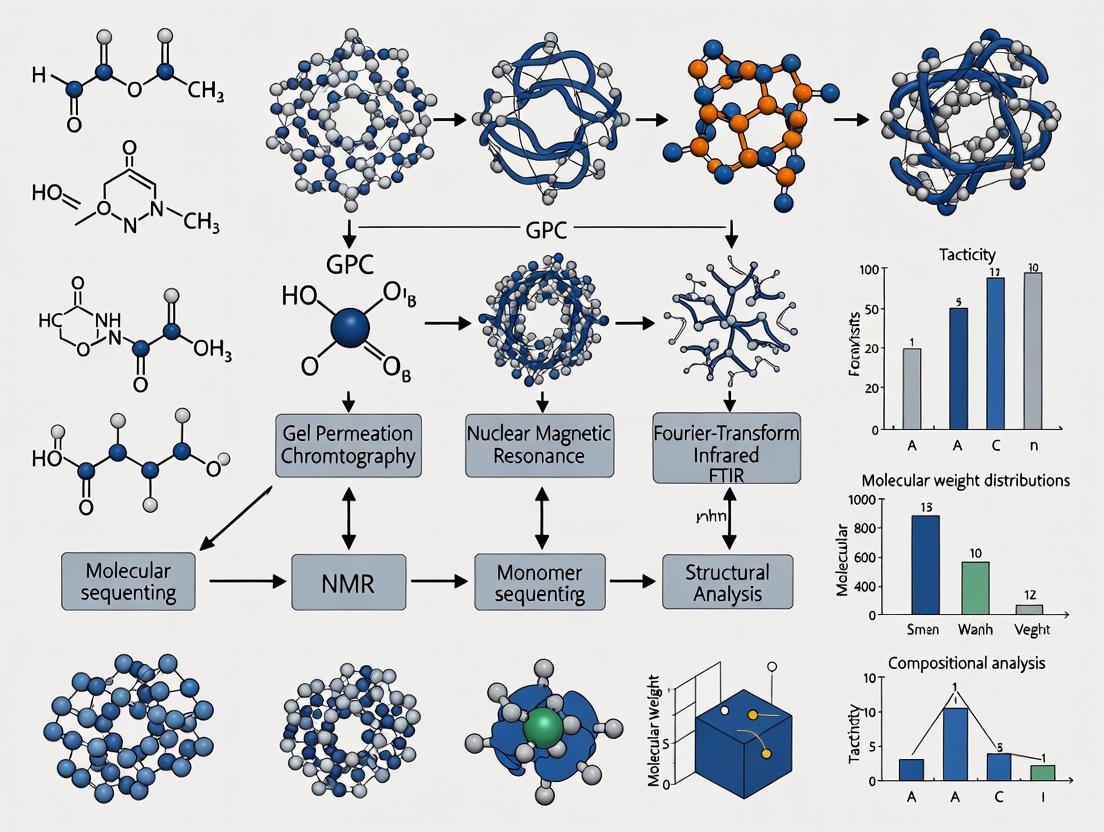
This article provides a comprehensive comparison of polymer characterization techniques, tailored for researchers, scientists, and professionals in drug development.
Polymer Characterization Techniques: A Comparative Guide for Biomedical Researchers and Drug Developers
Abstract
This article provides a comprehensive comparison of polymer characterization techniques, tailored for researchers, scientists, and professionals in drug development. It explores the foundational principles of key methodologies, details their specific applications in pharmaceutical and biomedical contexts, offers troubleshooting and optimization strategies for complex analyses, and presents a framework for the validation and comparative selection of techniques. The scope covers chromatographic, spectroscopic, thermal, and emerging methods, with a focus on their critical role in ensuring the performance, stability, and safety of polymeric nanocarriers and biomaterials.
Understanding Polymer Properties: The Foundation of Material Performance
Polymers are fundamental to advancements in numerous scientific and industrial fields, from pharmaceutical development to aerospace engineering. Their performance is dictated by a trio of interdependent key properties: molecular weight, structure, and thermal behavior. Understanding these properties is not merely an academic exercise but a practical necessity for comparing polymer-based products and selecting the right material for a specific application. For researchers and scientists, mastering the characterization of these properties enables the prediction of material behavior, optimization of processing conditions, and ultimately, the innovation of new products. This guide provides a comparative overview of the experimental techniques used to investigate these essential characteristics, presenting objective data and standardized protocols to inform research and development efforts.
Molecular Weight Characterization
Molecular weight (MW) and its distribution are among the most critical parameters of a polymer, profoundly influencing its mechanical strength, viscosity, solubility, and processability. Accurate determination is therefore a cornerstone of polymer characterization.
Key Techniques and Comparative Data
Different analytical techniques are employed to determine molecular weight, each with its own principles, applications, and limitations. The table below summarizes the primary methods.
Table 1: Comparison of Key Techniques for Molecular Weight Characterization
| Technique | Measured Parameter | Typical Application | Key Limitations |
|---|---|---|---|
| Size Exclusion Chromatography (SEC/GPC) [1] | Molecular weight distribution, average MW (Mn, Mw) | Routine analysis of soluble polymers; quality control. | Requires polymer solubility and appropriate standards; charged polymers can adhere to columns [2]. |
| Mass Spectrometry (MS) [1] | Absolute molecular weight of oligomers and polymers | Detailed structural analysis of lower MW polymers. | Can be challenging for high MW polymers and complex mixtures. |
| Viscosity Measurements [2] | Reduced viscosity, intrinsic viscosity | Indirect determination of MW via the Mark-Houwink relationship. | An indirect method; requires calibration with standards of known MW. |
| Molecular Dynamics Simulation [2] | Radius of gyration, which correlates to MW | Theoretical prediction of MW and solution behavior. | Computationally intensive; results are model-dependent. |
Detailed Experimental Protocol: Molecular Weight from Viscosity and Simulation
A hybrid experimental-numerical approach can be powerful for determining the molecular weight of challenging polymers, such as water-soluble ionic terpolymers. The following protocol, adapted from research, outlines this methodology [2].
- Sample Preparation: Prepare a series of brine solutions (e.g., 0.1M NaCl) with varying, known concentrations of the ionic terpolymer.
- Experimental Viscosity Measurement: Measure the reduced viscosity of each polymer-brine solution at normal temperature and pressure (e.g., 30°C, 1 atm) using an appropriate viscometer.
- Molecular Dynamics Simulation Setup:
- Model Construction: Use molecular modeling software (e.g., Material Studio) to build an atomistic model of the terpolymer, optimizing its geometry and charge distribution.
- System Configuration: Create simulation boxes containing one polymer molecule, sodium and chloride ions to balance charge, and a sufficient number of water molecules (e.g., ~17,000 for a MW of 3160 g/mol) to represent the brine solvent.
- Simulation Run: Perform molecular dynamics simulations using an NPT ensemble (constant Number of particles, Pressure, and Temperature) at the target conditions. Use a force field like COMPASS II and the Ewald summation method for Coulombic interactions. An initial run of 100,000 steps (100 ps) with a 1 fs time-step achieves equilibrium.
- Data Analysis:
- From the simulation, calculate the polymer's radius of gyration (Rg), a measure of its size in solution, by averaging the square distance of each atom from the polymer's center of mass.
- Establish a mathematical relationship between the simulated Rg and the polymer's molecular weight. This can be a power-law fit (Rg ∝ Mᵞ) or an empirical formula derived from the data.
- Correlate the experimentally measured reduced viscosity with the simulated Rg and polymer concentration to estimate the molecular weight of an unknown sample.
Impact of Molecular Weight on Material Properties
The molecular weight of a polymer is a key determinant of its performance. For instance, in pharmaceutical development, the solubility of a drug in a polymer matrix is a critical factor for formulating solid dispersions. A comparative study using indomethacin and polyvinylpyrrolidone (PVP) of different molecular weights (K12, K25, K30, K90) found that the experimental drug-polymer solubility was not significantly different across the various PVPs. The solubility was determined more by the strength of the specific drug-polymer interactions than by the polymer's molecular weight. This finding suggests that for initial screening of drug-polymer solubility, testing with a single representative molecular weight per polymer is sufficient [3] [4].
Polymer Structure Analysis
The chemical structure and morphology of a polymer define its identity and govern its interactions with other substances and the environment. Structural analysis confirms the polymer's composition and reveals details about its crystallinity and chain organization.
Key Techniques and Comparative Data
A combination of spectroscopic and microscopic techniques is typically required to fully characterize polymer structure at different length scales.
Table 2: Comparison of Key Techniques for Polymer Structure Characterization
| Technique | Primary Structural Information | Spatial Resolution / Key Output | Sample Considerations |
|---|---|---|---|
| Fourier Transform Infrared (FTIR) Spectroscopy [5] [6] | Chemical bonds, functional groups, molecular identity. | Infrared absorption spectrum. | Minimal sample required (particles as small as 3mm) [5]. |
| Nuclear Magnetic Resonance (NMR) Spectroscopy [5] [6] | Molecular structure, monomer ratios, tacticity, branching. | Chemical shift spectrum. | Typically requires less than a gram of material [5]. |
| Scanning Electron Microscopy (SEM) [6] | Surface morphology, texture, filler distribution. | 2D surface image; nanometer resolution. | Samples often require conductive coating. |
| Transmission Electron Microscopy (TEM) [6] | Internal microstructure, crystalline domains. | 2D projection image; sub-nanometer resolution. | Requires ultra-thin samples; low contrast can be an issue. |
| Atomic Force Microscopy (AFM) [6] | Surface topography, mechanical properties (e.g., nanomechanical mapping). | 3D surface map. | Can analyze samples in various environments (air, liquid). |
Detailed Experimental Protocol: Polymer Identification via FTIR and NMR
FTIR and NMR are the two most common techniques for initial polymer structure analysis. The following is a standard protocol for polymer identification and detailed characterization [5].
- FTIR for Initial Identification:
- Sample Preparation: For a bulk polymer, a small section (as small as 3mm) can be analyzed directly using an attenuated total reflectance (ATR) accessory. For more complex samples, techniques like transmission or reflection may be used.
- Data Acquisition: Collect the infrared spectrum across a standard wavenumber range (e.g., 4000-400 cm⁻¹).
- Analysis: Compare the obtained spectrum to reference spectral libraries to identify the base polymer. The presence or absence of characteristic absorption peaks (e.g., carbonyl stretch, amine bends) confirms the polymer type and identifies major functional groups.
- NMR for Detailed Structural Elucidation:
- Sample Preparation: Dissolve a small amount (less than a gram) of the polymer in a suitable deuterated solvent. For insoluble polymers, solid-state NMR can be employed.
- Data Acquisition: Acquire ¹H (proton) and ¹³C (carbon) NMR spectra. Other nuclei like ²⁹Si or ³¹P can be analyzed if relevant.
- Analysis:
- Analyze the ¹³C NMR spectrum to determine the polymer's microstructure. The chemical shifts and splitting patterns reveal the types of carbon atoms present.
- Use the ¹H NMR spectrum to calculate the ratio of different monomers in a copolymer, such as in ABS plastic [5].
- Identify and quantify branching in polymers like polyethylene by integrating the signals from branch points versus the main chain [5].
Research Reagent Solutions for Structural Analysis
Table 3: Essential Reagents and Materials for Polymer Structure Analysis
| Item | Function in Characterization |
|---|---|
| Deuterated Solvents (e.g., CDCl₃, DMSO-d₆) | Provides a solvent environment for NMR analysis without producing a large interfering signal in the spectrum. |
| Potassium Bromide (KBr) | Used to prepare pellets for FTIR analysis in transmission mode for very small samples. |
| ATR Crystal (e.g., Diamond, ZnSe) | The internal reflection element in ATR-FTIR that enables direct analysis of solid samples with minimal preparation. |
| Conductive Coatings (e.g., Gold, Carbon) | Applied to non-conductive polymer samples prior to SEM analysis to prevent charging and improve image quality. |
| Ultramicrotome | Instrument used to prepare ultra-thin sections (nanometers to micrometers thick) of polymer samples for TEM analysis. |
Thermal Behavior and Stability
The response of a polymer to heat is a critical performance indicator, especially for applications in demanding environments like aerospace, automotive, and drug delivery. Thermal analysis techniques reveal phase transitions, relaxation dynamics, and decomposition profiles.
Key Techniques and Comparative Data
Thermal stability and behavior are routinely probed using a suite of complementary thermo-analytical methods.
Table 4: Comparison of Key Techniques for Thermal Behavior Analysis
| Technique | Primary Measured Property | Key Outputs & Applications |
|---|---|---|
| Differential Scanning Calorimetry (DSC) [7] [8] | Heat flow into/out of sample vs. temperature. | Glass transition (Tg), melting (Tm), and crystallization temperatures; degree of crystallinity; cure kinetics. |
| Thermogravimetric Analysis (TGA) [7] | Mass change of sample vs. temperature or time. | Thermal decomposition temperature; moisture and volatiles content; filler content in composites. |
| Dynamic Mechanical Analysis (DMA) [8] | Mechanical response (modulus, damping) under oscillatory stress. | Glass transition temperature; storage/loss moduli; viscoelastic behavior; relaxation processes. |
Detailed Experimental Protocol: Assessing Thermal Stability of Epoxy Composites
The thermal stability of polymers, such as those used in aerospace, is often assessed using TGA. The following protocol can be used to compare the performance of different epoxy composites [7].
- Sample Preparation: Prepare samples of the unfilled epoxy resin and the composite of interest (e.g., epoxy filled with mesoporous silica). Ensure samples are ground to a consistent powder or are cut into small, uniform pieces to ensure representative and efficient heat transfer.
- Instrument Calibration: Calibrate the TGA instrument for temperature and weight using standard reference materials.
- Experimental Run:
- Load a small sample (typically 5-20 mg) into a platinum or alumina crucible.
- Purge the furnace with an inert gas, such as nitrogen, at a constant flow rate (e.g., 50 mL/min) to create a non-oxidative environment.
- Heat the sample from room temperature to a high temperature (e.g., 800°C) at a constant heating rate (e.g., 10°C/min).
- Data Analysis:
- Plot the percentage weight loss against temperature.
- Determine the onset decomposition temperature, which is the temperature at which the sample begins to lose mass rapidly. A higher onset temperature indicates greater thermal stability.
- Calculate the activation energy for thermal degradation using model-free methods like the Flynn-Wall-Ozawa method. A higher activation energy signifies that more energy is required to initiate decomposition, reflecting improved thermal stability. For example, an unfilled epoxy resin may have an activation energy of 148.86 kJ/mol, while an epoxy composite with mesoporous silica could show a significantly higher value of 217.6 kJ/mol [7].
Interrelationship of Properties: A Case Study on Thermal Conductivity
The properties of molecular weight, structure, and thermal behavior are not isolated. This interplay is evident in the challenge of polymer gears, which suffer from low thermal conductivity, leading to heat buildup and failure. A novel solution involves creating hybrid polymer gears with metal (aluminum or steel) inserts using additive manufacturing. This approach structurally modifies the polymer matrix to improve its thermal behavior. The metal inserts act as heat sinks, increasing heat dissipation from the meshing teeth. Experimental results show that this hybrid design can achieve a bulk temperature reduction of up to 9°C (17%) compared to a pure polymer gear, significantly enhancing wear resistance and load-bearing capacity without a fundamental change in the polymer's molecular weight or chemical structure [9].
The comparative data and experimental protocols presented in this guide underscore a central theme: a comprehensive understanding of polymers requires a multi-faceted analytical approach. Molecular weight characterization predicts solubility and processing, structural analysis confirms chemical identity and morphology, and thermal analysis ensures performance under application-specific stresses. These properties are deeply intertwined, as a change in one often directly impacts the others. For researchers and drug development professionals, selecting the right combination of characterization techniques is paramount. The choice depends on the specific polymer system and the critical performance metrics for the intended application. By leveraging these standardized methodologies, scientists can make informed comparisons, troubleshoot manufacturing issues, and drive the development of next-generation polymeric materials with tailored properties.
Characterization techniques are fundamental tools in materials science, chemistry, and pharmaceutical development, enabling researchers to decipher the composition, structure, and properties of substances. For professionals engaged in polymer research or drug development, selecting the appropriate analytical method is crucial for obtaining accurate, relevant data. This guide provides a comprehensive comparison of four principal characterization categories—chromatographic, spectroscopic, thermal, and mechanical—framed within the context of polymer characterization research. By presenting objective performance comparisons, detailed methodologies, and technical specifications, this article serves as a strategic resource for scientists making informed decisions about their analytical workflows.
The following diagram outlines a generalized decision-making workflow for selecting an appropriate characterization technique based on key material properties and information requirements.
Comparative Analysis of Technique Categories
The table below provides a high-level comparison of the four characterization technique categories, highlighting their primary functions, common variants, and key applications relevant to polymer and pharmaceutical research.
Table 1: Overview of Major Characterization Technique Categories
| Technique Category | Core Principle | Key Variants | Primary Outputs | Typical Polymer/Drug Applications |
|---|---|---|---|---|
| Chromatographic | Separates components in a mixture based on partitioning between mobile and stationary phases. | GC-MS, GC-MS/MS, GC-NCI-MS [10] | Retention time, peak area/height, mass spectra, concentration. | Analysis of residual monomers, plasticizers, drug impurities, biomarkers in urine [10]. |
| Spectroscopic | Probes interaction between matter and electromagnetic radiation. | UV-Vis, FTIR [11] | Absorbance/transmittance/reflectance spectra, functional group identification, concentration. | Monitoring resin curing [11], chemical composition analysis [12]. |
| Thermal | Measures physical and chemical properties as a function of temperature. | DSC, TGA, DMA, TMA [13] | Melting point (Tm), glass transition (Tg), mass loss, modulus, thermal stability. | Determining polymer purity, thermal stability, filler content, and viscoelastic properties [13]. |
| Mechanical | Applies force to measure material deformation and failure. | DMA, TMA [13] | Storage/loss modulus (E', E"), damping factor (tan δ), creep, stress-strain curves. | Characterizing rigidity, toughness, impact strength, and viscoelastic behavior of polymers [13]. |
Detailed Technique Comparisons and Experimental Data
Chromatographic Techniques
Chromatographic methods are unparalleled for separating and analyzing the components of complex mixtures. Gas chromatography coupled with various detectors is particularly powerful for volatile and semi-volatile analytes.
Table 2: Comparison of Gas Chromatographic Techniques for Aromatic Amine Analysis
| Parameter | GC-EI-MS (SIM) | GC-NCI-MS | GC-EI-MS/MS (MRM) |
|---|---|---|---|
| Principle | Electron Impact ionization with Single-Ion Monitoring [10] | Negative Chemical Ionization [10] | Electron Impact with Multiple Reaction Monitoring [10] |
| Linear Range | 3-5 orders of magnitude [10] | 3-5 orders of magnitude (with exceptions) [10] | 3-5 orders of magnitude [10] |
| Limit of Detection (LOD) | 9–50 pg/L [10] | 3.0–7.3 pg/L [10] | 0.9–3.9 pg/L [10] |
| Precision (Intra-day Repeatability) | < 15% for most levels [10] | < 15% for most levels [10] | < 15% for most levels [10] |
| Key Advantage | Good sensitivity and widely available technology. | Excellent sensitivity for electronegative atoms. | Superior selectivity and lowest detection limits. |
Experimental Protocol: GC Analysis of Aromatic Amines in Urine
The following workflow details a method for analyzing aromatic amines in urine, a relevant application for biomonitoring and toxicology studies [10].
- Sample Hydrolysis: Add 10 mL of concentrated HCl (37%) to 20 mL of urine. Heat at 80°C for 12 hours with stirring (e.g., 200 rpm) to convert metabolized aromatic amines back to their free forms [10].
- Basification and Extraction: Once cooled, basify the solution with 20 mL of 10 M NaOH. Extract the free amines twice using 5 mL of diethyl ether each time. Combine the organic fractions [10].
- Clean-up: Wash the combined ether extract with 2 mL of 0.1 M NaOH to remove acidic interferences [10].
- Back-Extraction and Acidification: Back-extract the amines into 10 mL of water acidified with 200 µL of concentrated HCl. Evaporate any residual diethyl ether by blowing nitrogen over the sample for 20 minutes [10].
- Derivatization (Sandmeyer-like Reaction): Convert the aromatic amines to their iodinated derivatives to reduce polarity and improve chromatographic performance. This involves diazotization with sodium nitrite followed by iodination with hydriodic acid [10].
- Instrumental Analysis: Inject the derivatized sample into the GC system. The separation and detection conditions must be optimized for the specific GC technique (e.g., GC-MS, GC-NCI-MS, or GC-MS/MS) as outlined in Table 2 [10].
Spectroscopic Techniques
Spectroscopic techniques provide insights into molecular structure and composition by measuring the interaction of light with matter. The utility of the raw data obtained is often greatly enhanced through statistical preprocessing.
Table 3: Comparison of Statistical Preprocessing Techniques for Spectroscopic Data
| Preprocessing Method | Formula | Effect on Spectral Data | Suitability for Polymer Analysis |
|---|---|---|---|
| Standardization (Z-score) | ( Zi = (Xi - μ) / σ ) [12] | Transforms data to a distribution with a mean of 0 and a standard deviation of 1. | Excellent for comparing spectra from different instruments or samples with varying baseline offsets. |
| Affine Transformation (Min-Max Normalization) | ( f(x) = (x - r{min}) / (r{max} - r_{min}) ) [12] | Scales all data points to a fixed range, typically [0, 1]. | Highly effective for highlighting the shapes of spectral signatures, such as peaks and valleys in polymer FTIR spectra [12]. |
| Mean Centering | ( X'i = Xi - μ ) [12] | Subtracts the mean from each data point, centering the spectrum around zero. | A common first step before multivariate analysis to focus on variation between samples. |
| Normalization to Maximum | ( X'i = Xi / X_{max} ) [12] | Divides each data point by the maximum value in the spectrum. | Useful for comparing the relative intensity of absorption bands when absolute reflectance varies. |
Experimental Protocol: UV-Vis Spectroscopy for Vat Photopolymerization Resin Design
UV-Vis spectroscopy is critical for designing resins used in vat photopolymerization (VPP) 3D printing, as it determines the penetration depth of UV light and thus the curing efficiency and resolution [11].
- Sample Preparation: The liquid photopolymer resin is placed into a standard quartz cuvette. Ensure the cuvette is clean and free of scratches to avoid light scattering.
- Instrument Calibration: Perform a baseline correction with a blank cuvette filled with a non-UV-absorbing solvent if necessary.
- Data Acquisition: Place the sample cuvette in the spectrometer and acquire the absorbance spectrum across the relevant UV and visible range (e.g., 200-500 nm). The critical parameter is the molar attenuation coefficient (ε) at the wavelength of the 3D printer's light source (e.g., 365 nm or 405 nm) [11].
- Data Analysis: The measured absorbance and known sample concentration are used to calculate ε via the Beer-Lambert law (A = ε * c * l). This coefficient directly influences the cure depth of the resin and is a key parameter for predicting and optimizing printability [11].
Thermal Analysis Techniques
Thermal analysis characterizes how material properties change with temperature, providing essential data on stability, composition, and phase transitions for polymers and pharmaceuticals.
Table 4: Comparison of Common Thermal Analysis Techniques
| Technique | Measured Property | Typical Sample Mass | Key Applications in Polymer Research |
|---|---|---|---|
| Differential Scanning Calorimetry (DSC) | Heat flow into/out of sample vs. temperature [13] | ~100 mg [14] | Glass transition (Tg), melting/crystallization (Tm/Tc), degree of cure, oxidation stability, purity [13]. |
| Thermogravimetric Analysis (TGA) | Mass change vs. temperature [13] | ~10 mg [13] | Thermal stability, decomposition temperatures, composition (moisture, polymer, filler, ash content) [13] [14]. |
| Dynamic Mechanical Analysis (DMA) | Viscoelastic properties (modulus, damping) under oscillatory stress [13] | Varies with geometry [13] | Glass transition temperature (most sensitive method), storage/loss moduli (E', E"), damping (tan δ), crosslink density [13]. |
| Thermomechanical Analysis (TMA) | Dimensional change vs. temperature or force [13] | Varies with geometry [13] | Coefficient of thermal expansion (CLTE), softening point, heat deflection temperature [13]. |
Experimental Protocol: Determining Polymer Composition and Transitions via TGA & DSC
A combined TGA-DSC analysis is a powerful approach for comprehensively characterizing a polymer material.
TGA for Compositional Analysis:
- Calibration: Calibrate the TGA balance according to the manufacturer's instructions.
- Sample Loading: Precisely weigh 5-20 mg of the polymer sample into a clean, tared alumina crucible.
- Method Programming: Run a temperature ramp from room temperature to 800-1000°C under a nitrogen atmosphere (e.g., at 10-20°C/min) to assess thermal stability and polymer content. Then, switch to air or oxygen to burn off any carbon black and determine the inorganic filler and ash content [13].
- Data Interpretation: The mass loss steps correspond to the volatilization of moisture, plasticizers, polymer decomposition, and finally, the combustion of carbon black.
DSC for Transition Analysis:
- Calibration: Calibrate the DSC for temperature and enthalpy using indium or other standards.
- Sample Loading: Place a small, hermetically sealed pan containing 3-10 mg of the polymer sample in the instrument. An empty sealed pan is used as a reference.
- Method Programming: Run a heat/cool/heat cycle. For example: equilibrate at -50°C, heat to 300°C (first heat, erases thermal history), cool back to -50°C, and reheat to 300°C (second heat, reveals intrinsic material properties). Use a constant purge of nitrogen gas.
- Data Interpretation: Analyze the second heating curve for the glass transition temperature (Tg), melting point (Tm), crystallization temperature (Tc), and corresponding enthalpies. The first heat can provide information about the material's processing history and percent cure [13] [14].
The Scientist's Toolkit: Essential Research Reagents and Materials
Successful characterization relies on a suite of specialized reagents and materials. The following table lists key items used in the experimental protocols cited in this guide.
Table 5: Essential Research Reagents and Solutions for Characterization
| Item Name | Function/Application | Example Use Case |
|---|---|---|
| Iodinated Aromatic Standards | High-purity (>97%) quantitative standards for calibration [10] | Used as internal or external standards for the GC-MS analysis of derivatized aromatic amines [10]. |
| Hydriodic Acid (HI) | Derivatization agent for amine functional groups [10] | Used in the Sandmeyer-like reaction to convert aromatic amines into less polar, more volatile iodinated derivatives for GC analysis [10]. |
| Hermetic DSC Crucibles | Sealed containers for DSC sample preparation [13] | Prevents solvent evaporation or sample degradation during heating, crucial for measuring accurate transition temperatures in polymers or pharmaceuticals. |
| Nitrogen Gas (High Purity) | Inert purge gas for thermal analysis [13] | Creates an oxygen-free environment in TGA and DSC, preventing oxidative degradation and allowing for the measurement of inert thermal stability. |
| Polymer Photopolymer Resin | Light-activated formulation for 3D printing [11] | The subject of UV-Vis characterization to determine molar attenuation coefficient and predict cure depth in vat photopolymerization [11]. |
| Alumina Crucibles | Sample holders for TGA [13] | Inert, high-temperature resistant containers for holding polymer samples during TGA analysis. |
| Quartz Cuvettes | Sample holders for UV-Vis spectroscopy [11] | Transparent to UV and visible light, allowing for accurate measurement of a resin's absorption spectrum. |
The Impact of Molecular Weight Distribution (MWD) and Chemical Composition on Material Behavior
The behavior of polymeric materials, from their processing characteristics to their final mechanical performance, is intrinsically governed by two fundamental factors: their chemical composition and their Molecular Weight Distribution (MWD). MWD, also referred to as polydispersity, describes the statistical distribution of individual polymer chain lengths within a given sample [15]. Far from being a mere technical specification, a polymer's MWD is a critical material property that decisively influences crystallization kinetics, mechanical strength, thermal stability, and processability [15] [16]. Similarly, the chemical composition—including the choice of monomers, the incorporation of additives, and the presence of branching agents—defines the polymer's inherent chemical nature and potential for intermolecular interactions. In the demanding field of drug development, a precise understanding of how MWD and composition dictate material behavior is essential for designing effective polymeric drugs, excipients, and delivery systems [17]. This guide provides a comparative analysis of these relationships, supported by experimental data and detailed methodologies, to inform the decisions of researchers and scientists.
Analytical Techniques for MWD and Composition
Accurately characterizing MWD and chemical composition is the cornerstone of polymer analysis. The following table summarizes the primary techniques employed, their operating principles, and the specific information they yield.
Table 1: Essential Analytical Techniques for Polymer Characterization
| Technique | Fundamental Principle | Key Outputs | Role in MWD/Composition Analysis |
|---|---|---|---|
| Gel Permeation Chromatography (GPC)/Size Exclusion Chromatography (SEC) | Separation of polymer molecules by hydrodynamic volume in a porous column [18]. | Molecular weight averages (Mn, Mw), Polydispersity Index (Đ), MWD curve [18] [19]. | The primary method for directly determining the MWD and calculating average molecular weights and dispersity [19]. |
| Melt Flow Index (MFI) | Measures the mass of polymer extruded through a die in ten minutes under a specified load and temperature [20]. | Melt Flow Rate (g/10 min). | A single-point, quality-control test inversely related to melt viscosity. It is sensitive to average molecular weight but cannot detect MWD breadth or branching [20]. |
| Rheometry (Oscillatory Shear) | Applies a small oscillatory deformation to measure the viscoelastic response of a polymer melt [20]. | Complex viscosity (η*) vs. angular frequency (ω), storage and loss moduli. | Low-frequency data correlates with molecular weight (Mw). The breadth of the shear-thinning region is a sensitive indicator of MWD breadth, providing a more process-relevant assessment than MFI [20]. |
| Nuclear Magnetic Resonance (NMR) Spectroscopy | Absorbs radiofrequency radiation by atomic nuclei in a magnetic field, sensitive to the local chemical environment [18] [19]. | Polymer backbone structure, tacticity, copolymer composition, branching [18] [19]. | Elucidates chemical composition and microstructural features that, together with MWD, determine ultimate material properties. |
| Mass Spectrometry (e.g., GC/MS, LC/MS) | Ionizes chemical species and sorts them based on their mass-to-charge ratio [19]. | Identification and quantification of low molecular weight components (additives, residual monomers) [19]. | Critical for identifying chemical additives (e.g., antioxidants, plasticizers) that modify material behavior but are not part of the primary polymer structure. |
Experimental Data: Correlating MWD to Material Properties
The following case study and synthesized data table demonstrate how MWD directly influences material behavior, even when average molecular weights are identical.
Case Study: Linear Low-Density Polyethylene (LLDPE)
A compelling experiment compared three LLDPE samples with identical weight-average molecular masses (Mw ≈ 106 kg/mol) and nearly identical Melt Flow Indices (MFI ~0.92 g/10 min) [20]. The sole stated difference was their MWD, categorized by the supplier as either "medium" or "narrow". Rheological characterization revealed profound differences:
- Viscosity Profile: While all three samples exhibited shear-thinning, LLDPE #3 (narrow MWD) displayed a Newtonian plateau at low frequencies, indicative of its narrower distribution. In contrast, LLDPE #1 and #2 (medium MWD) showed continuous shear-thinning without a plateau, suggesting a broader distribution [20].
- Processability Implications: At high shear rates relevant to processing (e.g., extrusion >10 rad/s), LLDPE #3 had the highest viscosity, making it more energy-intensive to process. The broader MWD samples (LLDPE #1 and #2) exhibited lower processing viscosities, facilitating easier extrusion [20].
- MWD Breadth Ranking: Based on the shear-thinning behavior, the apparent MWD breadth was determined to be: LLDPE #3 (narrowest) < LLDPE #1 < LLDPE #2 (widest) [20].
Table 2: Experimental Data from Rheological Analysis of LLDPE Samples [20]
| Sample | Reported MWD | MFR (g/10 min) | Mw (kg/mol) | Zero-Shear Viscosity (η₀) Trend | Shear-Thinning Onset | Inferred Ease of Processing |
|---|---|---|---|---|---|---|
| LLDPE #1 | Medium | 0.920 | 106 | Very High (no plateau) | Low Frequency | Easier |
| LLDPE #2 | Medium | 0.916 | 106 | Highest (no plateau) | Lowest Frequency | Easiest |
| LLDPE #3 | Narrow | 0.918 | 106 | Low (clear plateau) | High Frequency | Most Difficult |
Protocol: Rheological Characterization of Polymer Melts
Method: Small-Amplitude Oscillatory Shear Frequency Sweep [20]. Objective: To determine the shear-dependent viscosity profile and infer MWD characteristics. Steps:
- Sample Preparation: Place polymer pellets directly between the parallel plates of a rheometer.
- Melting: Melt the sample into a disk-shaped specimen at the test temperature (e.g., 190°C for polyethylene).
- Instrument Setup: Use a parallel plate geometry (e.g., 20 mm diameter) with a set gap (e.g., 0.75 mm). Employ electric plate and hood modules for precise temperature control.
- Frequency Sweep:
- Apply a small, constant strain (e.g., 0.1%) to ensure the material remains in the linear viscoelastic region.
- Sweep the angular frequency from 100 rad/s to 0.1 rad/s.
- Collect multiple data points per frequency decade.
- Data Analysis:
- Plot complex viscosity (|η*|) versus angular frequency (ω).
- Apply the Cox-Merz rule, which equates complex viscosity versus frequency to steady-state shear viscosity versus shear rate.
- Analyze the low-frequency plateau for zero-shear viscosity (related to Mw) and the breadth of the shear-thinning region (related to MWD).
The Scientist's Toolkit: Essential Research Reagent Solutions
The following reagents and materials are fundamental for research involving polymer synthesis and characterization, particularly in controlled MWD design.
Table 3: Key Research Reagent Solutions for Polymer Synthesis and Analysis
| Reagent/Material | Function/Description | Application in MWD/Composition Research |
|---|---|---|
| Tubular Flow Reactor | A computer-controlled continuous flow system that enables precise mixing and residence time control [16]. | Key for synthesizing polymers with targeted, complex MWD shapes by accumulating narrow MWD "pulses" in a collection vessel [16]. |
| Monofunctional Initiator / Chain Terminator | A molecule that starts polymer chain growth or ends it, controlling the maximum possible chain length [21]. | Used in ring-opening polymerization (e.g., of lactide) and anionic polymerization to control average molecular weight and prevent gelation [16] [21]. |
| Multifunctional Branching Agent | A monomer with three or more reactive functional sites (e.g., tris[4-(4-aminophenoxy)phenyl] ethane) [21]. | Introduces long-chain branching into polymers during step-growth polymerization, dramatically altering rheology and mechanical properties [21]. |
| Static Mixers | In-line mixing elements that disrupt laminar flow in a reactor [16]. | Ensure rapid and homogeneous mixing of monomer and initiator at the inlet of a flow reactor, which is critical for achieving simultaneous initiation and narrow MWD polymer blocks [16]. |
| Deuterated Solvents (e.g., CDCl₃) | Solvents containing deuterium for lock-signal stabilization in NMR spectroscopy [18]. | Essential for preparing polymer samples for NMR analysis to determine chemical composition, tacticity, and comonomer ratios [18] [19]. |
MWD Design and Its Impact on Crystalline Structures
Advanced synthesis techniques now allow for the design of specific MWDs. A prominent method uses a computer-controlled tubular flow reactor to produce targeted MWDs by accumulating sequential "pulses" of narrow-dispersity polymer [16]. This "design-to-synthesis" protocol leverages Taylor dispersion to achieve plug-flow-like behavior, ensuring consistent residence time for each pulse [16].
The resulting MWD profoundly influences the crystalline architecture of semi-crystalline polymers. In polydisperse systems, molecular segregation occurs during crystallization, where chains of different lengths separate [15]. This leads to complex crystalline textures.
Diagram 1: From MWD to crystalline morphology. HMW: High Molecular Weight; LMW: Low Molecular Weight.
For instance, in poly(ethylene oxide) blends, HMW components nucleate first, forming thin-lamellar dendrites in the interior of a spherulite, while LMW components subsequently form thicker lamellae at the periphery, creating a nested structure [15]. Furthermore, under flow fields, HMW components with high entanglement density are more prone to form the oriented central "shish," while LMW components with high chain mobility crystallize as the folded-chain "kebabs" [15].
The experimental data and comparisons presented confirm that Molecular Weight Distribution is not a secondary parameter but a primary design variable that interacts synergistically with chemical composition to dictate polymer behavior. While techniques like MFI offer simple quality control, advanced rheology and GPC are indispensable for linking MWD to process-relevant properties. The emerging ability to precisely design MWDs through synthetic techniques like flow chemistry opens new frontiers in tailoring polymers for specific applications. For drug development professionals, this deep understanding is crucial for designing polymeric drugs with optimized bioactivity and for engineering robust, scalable nanoparticle delivery systems where consistency in MWD ensures predictable performance, stability, and drug release profiles.
Linking Intrinsic Properties to Processing and End-Use Performance
The performance of a polymer in its final application—whether in drug delivery, automotive components, or sustainable packaging—is not determined by chance but by a fundamental relationship between its intrinsic properties, processing history, and end-use conditions. This property-structure-processing-performance (PSPP) relationship forms the cornerstone of advanced polymer science and engineering [22]. For researchers and drug development professionals, understanding these interconnected relationships is crucial for selecting the right polymer for specific applications, troubleshooting manufacturing issues, and innovating new material solutions. Polymers exhibit wide variations in properties even within the same chemical family, largely due to differences in processing conditions that alter their chemical and physical structures [23]. This comparative guide objectively analyzes major polymer characterization techniques, providing experimental data and methodologies to bridge the gap between fundamental polymer properties and their real-world performance across pharmaceutical, materials, and industrial applications.
Essential Polymer Characterization Techniques
The strategic selection of characterization techniques is fundamental to linking polymer properties to performance. Each technique provides unique insights into different aspects of polymer structure and behavior, forming a complementary analytical toolkit for researchers.
Table 1: Core Polymer Characterization Techniques and Their Applications
| Technique Category | Specific Technique | Key Measured Parameters | Primary Applications in Performance Prediction |
|---|---|---|---|
| Spectroscopy | FTIR | Functional groups, additive presence, chemical changes | Verification of raw materials, troubleshooting production issues [18] |
| Raman Spectroscopy | Structural variations, especially in complex/colored samples | Complementary structural analysis to FTIR [18] | |
| NMR Spectroscopy | Polymer backbone structure, tacticity, copolymer composition | Detailed chemical structure elucidation [18] | |
| Chromatography | GPC/SEC | Molecular weight distribution, polydispersity, chain size | Assessment of polymer quality, degradation, and batch consistency [18] |
| HPLC | Non-volatile additives (antioxidants, plasticizers, stabilizers) | Quantification of additive packages and impurities [18] | |
| GC | Residual monomers, solvents, degradation products | Purity assessment and safety profiling [18] | |
| Thermal Analysis | DSC | Melting, crystallization, glass transitions | Determination of processing windows and stability [18] |
| TGA | Weight loss due to thermal degradation or volatile release | Prediction of shelf life and thermal stability [18] | |
| Mechanical Testing | Dynamic Mechanical Analysis | Thermo-mechanical behavior, viscoelastic properties | Performance under application conditions [24] |
| Indirect Tensile Strength | Material strength, failure characteristics | Comparative performance assessment [25] |
Experimental Case Studies: From Characterization to Performance Prediction
Case Study 1: Polymer-Modified Asphalt for Enhanced Road Performance
Objective: To evaluate and compare the mechanical properties of various polymer-modified asphalt (PMA) mixtures under demanding environmental conditions [25].
Experimental Methodology:
- Materials: Base asphalt binder (PG64-22), five different polymers (Lucolast 7010, Anglomak 2144, Pavflex140, SBS KTR 401, EE-2), limestone aggregate
- Sample Preparation: Polymers were mixed with base asphalt using an asphalt blender. Polymer content was optimized to achieve Performance Grade PG 76-10 required for high-temperature regions (Riyadh, KSA). Dense-graded asphalt mixtures were prepared according to Ministry of Transportation specifications [25].
- Testing Protocols:
- Dynamic Modulus Test: Assessed stiffness under varying temperatures and loading frequencies
- Flow Number Test: Measured rutting resistance under repeated axial stress
- Hamburg Wheel Tracking Test: Evaluated moisture and rutting susceptibility
- Indirect Tensile Strength Test: Determined resistance to cracking
Table 2: Performance Comparison of Polymer-Modified Asphalt Mixtures [25]
| Polymer Type | Dynamic Modulus (MPa) | Flow Number (cycles) | Hamburg Rut Depth (mm) | Indirect Tensile Strength (kPa) |
|---|---|---|---|---|
| Control (Unmodified) | Benchmark | Benchmark | Benchmark | Benchmark |
| Anglomak 2144 | Highest improvement | |||
| Paveflex140 | ||||
| EE-2 | ||||
| SBS KTR 401 | ||||
| Lucolast 7010 |
Key Findings: All PMA mixtures demonstrated superior mechanical properties compared to the unmodified control. Anglomak 2144 consistently ranked as the best-performing modifier, exhibiting the highest resistance to permanent deformation and optimal stiffness characteristics, followed by Paveflex140 and EE-2 [25]. This comprehensive comparison enables pavement engineers to select polymers based on performance data rather than simply meeting specification thresholds.
Case Study 2: Nanocomposites for Advanced Applications
Objective: To investigate how nanofillers enhance polymer properties for specialized applications including optoelectronics, thermal management, and biomedical devices [24].
Experimental Methodology:
- Materials: Various polymer matrices (epoxy, polyvinyl alcohol, poly(methyl methacrylate), poly(dimethylsiloxane)) and nanofillers (silica, MgO, alumina, SrTiO3, carbon nanotubes, functionalized graphene)
- Sample Preparation: Employed processing techniques including solution casting [24], in situ sol-gel synthesis [24], and melt compounding
- Testing Protocols:
- DC Breakdown Characteristics: Evaluated electrical insulation properties (epoxy/silica nanocomposites)
- Dynamic Mechanical Analysis: Assessed thermo-mechanical behavior (carbon nanotube/epoxy films)
- Antibacterial Testing: Quantified microbial growth inhibition (PVA/functionalized graphene)
- Optical Property Analysis: Measured transparency and UV absorption (PVA/SrTiO3/CNT films)
Key Findings: The incorporation of nanofillers produced substantial improvements in target properties. Epoxy nanocomposites demonstrated enhanced DC breakdown characteristics, while polyvinyl alcohol-based films with SrTiO3 and carbon nanotubes showed promise for optoelectronic applications [24]. Poly(methyl methacrylate) reinforced with hybrid SrTiO3/MnO2 nanoparticles exhibited potential for dental applications [24]. The study confirmed that the interface between nanofillers and polymer matrix critically determines final performance.
Case Study 3: Flame-Retardant Polymer Systems
Objective: To develop and characterize flame-retardant polymer formulations for enhanced fire safety [24].
Experimental Methodology:
- Materials: Bio-based flame retardants (phytic acid, chitosan), conventional flame retardants (ammonium polyphosphate, melamine), polymer matrices (urea/formaldehyde resins, rigid polyurethane foams, polypropylene)
- Sample Preparation: Synthesis of bio-based flame retardants followed by incorporation into polymer matrices through compounding and curing processes
- Testing Protocols:
- Limiting Oxygen Index: Measured minimum oxygen concentration supporting combustion
- Ul-94 Vertical Burning: Classified burning behavior
- Cone Calorimetry: Quantified heat release rate and smoke production
Key Findings: Bio-based flame retardants from phytic acid and chitosan demonstrated effective flame retardancy when combined with melamine and polyvinyl alcohol in intumescent urea/formaldehyde resins [24]. The synergistic combination of ammonium polyphosphate and nickel phytate significantly enhanced flame-retardant properties in rigid polyurethane foams [24]. The incorporation of carbon nanotubes and carbon black into linear low-density polyethylene/ethylene-vinyl acetate blends containing mineral flame retardants improved both mechanical behavior and flame retardancy [24].
The Scientist's Toolkit: Essential Research Reagent Solutions
Table 3: Key Research Reagents and Materials for Polymer Characterization
| Reagent/Material | Function/Application | Examples from Literature |
|---|---|---|
| Polymer Matrix Systems | Base material for composite formation | Epoxy, polyvinyl alcohol, poly(methyl methacrylate) [24] |
| Nanofillers | Enhance mechanical, electrical, or thermal properties | Silica, MgO, alumina, carbon nanotubes, functionalized graphene [24] |
| Flame Retardants | Improve fire resistance | Ammonium polyphosphate, nickel phytate, bio-based phytate/chitosan systems [24] |
| Spectroscopic Reagents | Enable structural characterization | Deuterated solvents for NMR, KBr pellets for FTIR [18] |
| Chromatography Standards | Calibration and quantification | Narrow dispersity polystyrene standards for GPC [18] |
| Thermal Analysis Reference Materials | Instrument calibration | Indium, zinc for DSC; certified reference materials for TGA [18] |
Advanced Visualization: Experimental Workflows and Relationships
PSPP Relationship Framework
Diagram 1: The PSPP relationship framework illustrates how processing conditions determine polymer structure, which governs material properties that ultimately predict end-use performance [23] [22]. The direct link between processing and performance highlights that manufacturing history can immediately impact how a polymer behaves in application.
Polymer Characterization Workflow
Diagram 2: The comprehensive polymer characterization workflow progresses from sample preparation through structural, thermal, and mechanical analysis to enable accurate performance prediction [18]. This sequential approach ensures that fundamental chemical structure is linked directly to macroscopic behavior.
The rigorous characterization of polymers through the detailed methodologies presented in this guide provides researchers and drug development professionals with critical insights for predicting end-use performance. The experimental data confirms that strategic polymer modification—through nanofillers, flame retardants, or performance-enhancing additives—significantly alters material behavior in predictable ways when proper structure-property relationships are established. The PSPP framework serves as an indispensable paradigm for linking intrinsic polymer properties to processing parameters and ultimate application performance, enabling more informed material selection and innovation across pharmaceutical, materials, and industrial sectors. As polymer science advances, the continued refinement of these characterization approaches and relationships will be essential for developing next-generation materials with tailored performance characteristics.
A Deep Dive into Core Techniques and Their Biomedical Applications
In the field of polymer science, understanding both the molecular weight distribution (MWD) and the chemical composition distribution (CCD) is crucial for correlating macromolecular structure with end-use properties. Gel Permeation or Size Exclusion Chromatography (GPC/SEC) has long been established as the gold standard technique for determining MWD, providing indispensable information about the size and molecular weight of polymer chains in solution [26]. However, as industrial polyolefins and advanced copolymers have grown more complex, often featuring non-homogeneous comonomer incorporation, the analysis of chemical composition distribution has emerged as an equally critical parameter for predicting material performance [27]. For this purpose, temperature gradient interaction chromatography (TGIC) and solvent gradient interaction chromatography (SGIC) have developed as powerful techniques that separate polymer molecules based on their chemical composition rather than molecular size [28].
These chromatographic methods operate on fundamentally different separation mechanisms that make them ideally suited for their respective characterization roles. GPC/SEC separates polymer molecules according to their hydrodynamic volume as they travel through a column packed with porous particles, with smaller molecules penetrating more pores and thus eluting later than larger molecules [29]. In contrast, SGIC and TGIC are adsorption-based techniques that utilize a graphitized carbon column and either a solvent gradient or temperature gradient, respectively, to separate macromolecules based on their chemical composition, particularly the level of short-chain branching in polyolefins [28]. This guide provides a comprehensive comparison of these complementary techniques, offering researchers a clear framework for selecting the appropriate methodology based on their specific characterization needs.
GPC/SEC for Molecular Weight Distribution Analysis
Fundamental Principles and Instrumentation
GPC/SEC operates on the principle of steric exclusion, where polymer molecules in solution are separated according to their hydrodynamic volume or size as they pass through a column packed with porous stationary phase particles [29]. The separation mechanism is based on the differential access smaller molecules have to the pore volumes of the stationary phase, with larger molecules being excluded from smaller pores and thus eluting first, while smaller molecules can enter more pores and take a longer path through the column, resulting in later elution. The resulting chromatogram provides a direct representation of the polymer's molecular weight distribution, which can be quantified using appropriate calibration standards [30].
The instrumentation for GPC/SEC typically consists of an autosampler, pumping system, columns, and various detection systems. Modern GPC systems offer different configurations optimized for specific applications. For research and development laboratories requiring high-throughput and comprehensive characterization, systems like the GPC-IR offer fully automated operation for 42 or 66 samples with compatibility with advanced detectors including light scattering and viscometry [26]. For quality control environments where speed and simplicity are prioritized, instruments like the GPC-QC are tailored for single-sample analysis with rapid cycle times, utilizing a single rapid GPC column and magnetic stirring for faster dissolution [26]. Both systems incorporate nitrogen purging to prevent oxidative degradation of samples and can be equipped with infrared detection for chemical composition analysis alongside molecular weight distribution determination.
Experimental Protocols and Methodologies
Implementing reliable GPC/SEC analysis requires careful attention to experimental parameters and methodology. The following protocol outlines a standard approach for molecular weight distribution analysis:
Sample Preparation: Weigh precise amounts of polymer sample (typically <1 mg to 60 mg depending on system) into appropriate vials. Add the appropriate mobile phase solvent (often tetrahydrofuran for room-temperature GPC or 1,2,4-trichlorobenzene for high-temperature analysis of polyolefins) to achieve desired concentration [26]. For high-temperature GPC, purge vials with nitrogen to prevent oxidative degradation.
Dissolution: Dissolve samples using gentle shaking or magnetic stirring, with dissolution times varying from 20 minutes for QC systems to 60 minutes for R&D systems [26]. Heating may be required for polymers with high crystallinity or high melting points, with polyolefins typically requiring temperatures above 160°C to remain in solution [29].
Column Selection and Configuration: Select appropriate column chemistry based on polymer solubility and analysis requirements. Polymer-based columns offer wider pH and temperature stability, while silica-based columns provide higher pressure stability and excellent resolution in narrow molar mass ranges [29]. For broad MWD samples, combine multiple columns with different pore sizes to extend the separation range.
System Calibration: Perform regular calibration using narrow dispersity polymer standards of known molecular weight. Establish a calibration curve correlating elution volume with molecular weight. For absolute molecular weight determination, utilize multi-angle light scattering detection in conjunction with concentration-sensitive detectors [30].
Analysis Parameters: Set flow rate appropriate for column dimensions (typically 0.5-1.0 mL/min for analytical columns). Maintain constant temperature throughout the system to ensure reproducible separations. For high-temperature GPC, dedicated temperature-controlled compartments for columns ensure optimal stability [26].
Detection and Data Analysis: Utilize refractive index (RI) detection for concentration determination. For advanced structural information, incorporate multiple detection systems including light scattering for absolute molecular weight, viscometry for branching analysis, and infrared spectroscopy for chemical composition [26] [30].
Table 1: Comparison of GPC System Configurations for Different Application Needs
| Parameter | GPC-IR (R&D Focus) | GPC-QC (Quality Control) |
|---|---|---|
| Sample Throughput | 42 or 66 samples automatically | Single-sample analysis |
| Sample Mass Range | <1 mg to 8 mg in 8 mL | <6 mg to 60 mg in 60 mL |
| Dissolution Method | Gentle shaking (minimizes shear degradation) | Magnetic stirring (accelerates dissolution) |
| Dissolution Time | Minimum 60 minutes | Minimum 20 minutes |
| Column Configuration | 3-4 analytical columns with dedicated temperature control | Single rapid column without dedicated column oven |
| Light Scattering Detection | Compatible | Not compatible |
| Viscometer Detection | Compatible | Compatible |
Applications and Data Interpretation
The primary application of GPC/SEC is the determination of molecular weight averages (Mn, Mw, Mz) and molecular weight distribution (MWD = Mw/Mn), which are fundamental parameters influencing polymer properties including mechanical strength, melt viscosity, and processability. Beyond these basic parameters, advanced GPC/SEC with multiple detection provides insights into polymer architecture including long-chain branching determination through intrinsic viscosity measurements [26], and compositional heterogeneity through coupled IR detection for chemical composition.
When analyzing GPC/SEC data, the molecular weight distribution is represented as a plot of detector response versus elution volume, which is converted to molecular weight through the calibration curve. A narrow, symmetric distribution indicates a homogeneous polymer population, while broad or multimodal distributions suggest the presence of multiple molecular weight populations or polymer fractions. For copolymers, coupling GPC with composition-sensitive detectors like IR or UV provides information on how chemical composition varies with molecular weight, offering crucial insights for complex materials like graft copolymers or polymer blends.
SGIC and TGIC for Chemical Composition Distribution
Fundamental Principles and Separation Mechanisms
SGIC and TGIC are adsorption-based chromatographic techniques specifically developed for analyzing the chemical composition distribution of polyolefins and other polymers that are challenging to characterize using traditional methods [28]. Both techniques utilize graphitized carbon columns or other atomic level flat surface (ALFS) adsorbents, which interact with polymer molecules through weak van der Waals forces. The adsorption strength depends on the available surface area of the molecule in contact with the adsorbent, which is influenced by the polymer's chemical structure, particularly the presence of short-chain branches that reduce the interaction with the flat adsorbent surface [28].
In SGIC, separation is achieved through a gradient of increasing solvent strength, typically starting with a weak solvent and progressing to a stronger one, which desorbs polymer molecules based on their interaction with the stationary phase. The less branched (more linear) molecules have greater interaction with the graphitized carbon surface and require stronger solvents or later in the gradient to be desorbed, while highly branched molecules elute earlier [28]. TGIC utilizes an isocratic solvent system with a temperature gradient to control the adsorption/desorption process. Molecules are adsorbed at low temperatures and then desorbed as the temperature increases, with more linear molecules requiring higher temperatures for desorption [28]. The separation order in both techniques follows a predictable pattern based on branch content, with a linear correlation between comonomer mole percentage and elution volume or temperature.
Experimental Protocols and Methodologies
The application of SGIC and TGIC requires specific instrumentation and methodological considerations:
Sample Preparation: Dissolve polymer samples in appropriate solvents at elevated temperatures. For polyolefins, use 1,2,4-trichlorobenzene or similar high-boiling solvents at temperatures of 160°C or higher to ensure complete dissolution [28]. Sample concentrations typically range from 0.5-2.0 mg/mL depending on detector sensitivity.
Column Selection: Utilize graphitized carbon columns or other ALFS adsorbents such as molybdenum sulphide, boron nitride, or tungsten sulphide. These materials provide the flat surface required for the separation mechanism based on polymer surface area interaction [28].
SGIC Methodology:
- Implement a solvent gradient from weak to strong solvents, typically starting with alkanols (decanol) or ethylene-glycol monobutyl-ether and progressing to trichlorobenzene [28].
- Maintain elevated temperature throughout the system to prevent polymer crystallization.
- Employ appropriate detection, though options are limited for solvent gradient approaches due to compatibility issues with common polymer detectors.
TGIC Methodology:
- Utilize isocratic solvent conditions (typically 1,2,4-trichlorobenzene) with a temperature gradient for desorption.
- Adsorb samples at low temperature (typically 30-50°C) then apply a temperature ramp to elute species based on branching content.
- Employ infrared detection for concentration measurement and comonomer quantification [28].
Two-Dimensional Techniques: For comprehensive characterization, combine SGIC with GPC/SEC in a two-dimensional setup, where the first dimension separates by chemical composition and the second by molecular weight [28]. This approach overcomes detector limitations in SGIC while providing orthogonal characterization.
Table 2: Comparison of Techniques for Chemical Composition Distribution Analysis
| Parameter | TGIC | SGIC | Crystallization Techniques (TREF/CEF) |
|---|---|---|---|
| Separation Mechanism | Temperature gradient with isocratic elution | Solvent gradient at constant temperature | Crystallization/elution based on crystallizability |
| Range of Comonomer Analysis | Down to ~50% octene mol | 0% to 100% comonomer incorporation | Limited to semicrystalline polymers (~<20% comonomer) |
| Detection Compatibility | Compatible with IR, viscometry, light scattering | Limited detector compatibility | Compatible with IR detection |
| Analysis Time | Moderate | Short | Long |
| Co-crystallization Effects | Not susceptible | Not susceptible | Susceptible |
Applications and Data Interpretation
SGIC and TGIC find particular utility in characterizing complex polyolefin copolymers, especially those with low crystallinity that cannot be analyzed by traditional crystallization-based techniques like TREF or CEF [28]. These include ethylene-propylene copolymers, ethylene propylene diene monomer (EPDM) resins, olefin block copolymers, and other elastomeric materials [28]. The techniques provide a linear calibration between elution volume/temperature and comonomer content, enabling quantitative determination of short-chain branching distribution.
When analyzing TGIC or SGIC data, the chemical composition distribution is represented as a plot of detector response versus elution volume or temperature, which can be correlated with branch frequency through appropriate calibration. For ethylene-octene copolymers, for example, a linear relationship exists between octene mole percentage and elution temperature [28]. The shape of the distribution reveals the homogeneity of comonomer incorporation, with narrow distributions indicating uniform branching and broad or multimodal distributions suggesting multiple compositional populations. For polypropylene-based systems, the separation behavior is more complex, with ethylene-rich copolymers separating by adsorption (TGIC mechanism) while propylene-rich copolymers separate by crystallization (TREF mechanism), resulting in a U-shaped calibration curve [28].
Comparative Analysis and Technique Selection
Side-by-Side Technique Comparison
GPC/SEC, SGIC, and TGIC offer complementary information about polymer structure, each with distinct strengths and applications. GPC/SEC remains the premier technique for molecular weight distribution analysis, providing critical parameters that influence processing behavior and mechanical properties. SGIC and TGIC excel in chemical composition distribution analysis, particularly for polyolefins with low crystallinity that challenge traditional crystallization-based methods. The selection between these techniques depends on the specific polymer characteristics and the analytical information required.
SGIC offers the broadest range of comonomer analysis, capable of characterizing ethylene copolymers across the entire composition range from 0% to 100% comonomer incorporation [28]. However, it faces limitations in detector compatibility due to the solvent gradient. TGIC, while covering a narrower range down to approximately 50% comonomer content, offers superior detector compatibility with isocratic conditions that support IR, viscometer, and light scattering detection [28]. Both gradient techniques overcome the co-crystallization effects that can complicate TREF and CEF analyses, providing more accurate characterization of complex multi-component resins.
Table 3: Comprehensive Comparison of Polymer Characterization Techniques
| Analytical Aspect | GPC/SEC | TGIC | SGIC |
|---|---|---|---|
| Primary Separation Basis | Hydrodynamic volume/size | Chemical composition (branching) | Chemical composition (branching) |
| Key Measured Parameters | Molecular weight averages, MWD | Chemical composition distribution | Chemical composition distribution |
| Optimal Application Range | All soluble polymers | Semicrystalline to amorphous polyolefins | Full range of polyolefin copolymers |
| Advanced Detection Options | Light scattering, viscometry, IR | IR, viscometry (isocratic conditions) | Limited by solvent gradient |
| Polymer Architecture Insights | Branching through intrinsic viscosity | Comonomer distribution homogeneity | Comonomer distribution across full range |
| Limitations | No direct composition information | Limited to ~50% comonomer content | Detector compatibility issues |
Integrated Workflow for Comprehensive Polymer Characterization
For complete structural analysis of complex polymers, an integrated approach combining these techniques provides the most comprehensive characterization. Two-dimensional chromatography, which couples a composition-based separation (SGIC or TGIC) with a size-based separation (GPC/SEC), represents the most powerful approach for characterizing complex polymers, revealing how chemical composition varies with molecular weight [28]. This 2D approach has been successfully applied to ethylene-propylene copolymers, EPDM resins, high-impact polypropylene, and olefin block copolymers [28].
The following workflow diagram illustrates the decision process for selecting appropriate characterization techniques based on polymer properties and analytical requirements:
Diagram 1: Technique selection workflow for polymer characterization
Essential Research Reagent Solutions
Successful implementation of these chromatographic techniques requires specific materials and reagents optimized for each methodology. The following table details essential research reagent solutions for GPC/SEC, SGIC, and TGIC analyses:
Table 4: Essential Research Reagent Solutions for Polymer Chromatography
| Reagent/Material | Function/Purpose | Technique Application |
|---|---|---|
| Graphitized Carbon Columns | ALFS adsorbent for chemical composition separation | SGIC, TGIC |
| Polymer-Based GPC Columns | Size exclusion separation with wide pH/temperature stability | GPC/SEC |
| Silica-Based GPC Columns | Size exclusion separation with high pressure stability | GPC/SEC |
| 1,2,4-Trichlorobenzene | High-temperature solvent for polyolefin dissolution | GPC/SEC, TGIC |
| Decanol/Ethylene-glycol monobutyl-ether | Weak solvents for SGIC gradient initiation | SGIC |
| Narrow Dispersity Polystyrene/Polyethylene Standards | System calibration and column performance verification | GPC/SEC |
| Nitrogen Purging Systems | Prevent oxidative degradation during sample preparation | GPC/SEC (high-temperature) |
| Infrared Detectors (IR4, IR6) | Concentration detection and chemical composition monitoring | GPC/SEC, TGIC |
| Light Scattering Detectors | Absolute molecular weight determination | GPC/SEC |
| Viscometer Detectors | Branching analysis and intrinsic viscosity measurement | GPC/SEC, TGIC |
The selection of appropriate columns is particularly critical for successful analyses. Polymer-based GPC columns offer advantages for high-temperature applications and when combining multiple columns to extend the molecular weight separation range, while silica-based columns provide higher pressure stability and excellent resolution in narrow molar mass ranges [29]. For SGIC and TGIC, graphitized carbon columns with specific surface properties are essential for achieving separation based on chemical composition rather than molecular size [28].
GPC/SEC, SGIC, and TGIC represent powerful and complementary tools in the polymer characterization toolkit, each providing unique insights into different aspects of macromolecular structure. GPC/SEC remains the undisputed gold standard for molecular weight distribution analysis, offering versatile detection options and well-established methodologies. For chemical composition distribution analysis, particularly for complex polyolefin copolymers and elastomers, SGIC and TGIC provide capabilities that extend beyond traditional crystallization-based techniques, enabling characterization of polymers with low crystallinity that were previously challenging to analyze.
The selection of the appropriate technique depends fundamentally on the specific analytical question being addressed. For molecular weight parameters, GPC/SEC is the obvious choice. For composition analysis of semicrystalline to amorphous polymers, TGIC offers robust performance with excellent detector compatibility, while SGIC covers the broadest composition range. For the most complex polymers requiring complete structural elucidation, two-dimensional approaches combining these techniques provide the most comprehensive characterization. As polymer systems continue to grow in complexity through advanced catalyst technologies and manufacturing processes, these chromatographic methods will remain essential tools for understanding structure-property relationships and driving innovation in polymer science and technology.
In the field of polymer science, understanding the intricate relationship between a polymer's structure and its final properties is paramount. Spectroscopic techniques provide the essential tools to unravel these structural details, with Nuclear Magnetic Resonance (NMR) and Fourier Transform Infrared (FTIR) Spectroscopy serving as two of the most fundamental methods. While both techniques probe molecular characteristics, they deliver distinct and complementary information. FTIR spectroscopy excels in identifying the functional groups and chemical bonds present within a polymer, essentially providing a molecular fingerprint. In contrast, NMR spectroscopy offers deeper insights into the precise chemical structure, including the configuration of monomer units along the polymer chain, known as tacticity. This objective comparison guide delves into the operational principles, specific applications, and experimental protocols for using these two techniques, providing researchers and scientists with the data necessary to select the appropriate method for their specific characterization challenges.
The selection of analytical techniques is critical because polymers can be complex, varying in their chemical makeup, crystallinity, and physical states. As outlined in Table 1, no single method provides a complete picture; a combination is often required for comprehensive characterization [1]. FTIR and NMR primarily address chemical characteristics, with NMR also providing some information on molecular behavior in solvents. This guide focuses on their unique and overlapping roles in elucidating polymer structure.
Table 1: Common Analytical Techniques for Polymer Characterization
| Analytical Technique | Chemical Bonds | Intra- and Intermolecular Interactions | MW Distribution | Solvent Properties | Thermal Behavior | Bulk Structure | Bulk Behavior |
|---|---|---|---|---|---|---|---|
| NMR (liquid) | X | X | X | ||||
| FTIR | X | X | |||||
| Raman | X | X | |||||
| Mass Spectrometry | X | ||||||
| SEC/GPC | X | X |
FTIR Spectroscopy: Functional Group Identification
Principles and Applications
FTIR spectroscopy operates on the principle that molecules absorb specific frequencies of infrared light that are characteristic of their chemical structure and functional groups [31]. When a polymer sample is exposed to IR radiation, the absorbed energy causes covalent bonds to vibrate—stretch, bend, or wag—at resonant frequencies. The resulting spectrum is a plot of absorbed energy versus wavelength, serving as a unique molecular fingerprint that reveals the chemical identity of the sample [31]. A key strength of FTIR is its ability to analyze a wide range of sample forms, including solids, liquids, and gases, with minimal preparation, especially when using techniques like Attenuated Total Reflectance (ATR) [32] [31].
In polymer characterization, FTIR is indispensable for several applications. It is the primary tool for identifying general polymer classes and for contamination analysis by comparing spectra against reference libraries [5]. It is also widely used to monitor the progress of polymerization reactions by tracking the disappearance of monomer peaks and the emergence of polymer peaks [33]. Furthermore, FTIR can probe polymer degradation by identifying new functional groups formed during photo-aging or thermal breakdown, and it can assess the crystallinity of materials by examining specific regions of the spectrum [31].
Key Experimental Protocol: ATR-FTIR for Polymer Identification
Attenuated Total Reflectance (ATR) is one of the most common FTIR sampling techniques for polymers due to its simplicity and minimal sample preparation [32]. The following protocol outlines a standard procedure for identifying an unknown polymer solid:
- Instrument and Material Setup: Ensure the FTIR spectrometer is calibrated and the ATR crystal (commonly diamond) is clean. The essential research reagents are a solvent for cleaning (e.g., isopropanol) and the unknown polymer sample.
- Sample Preparation: If the polymer is a large solid, flatten it to ensure good contact with the ATR crystal. A homogeneous film or a small, flat piece is ideal. No other processing is necessary.
- Background Measurement: Collect a background spectrum with no sample on the ATR crystal to account for atmospheric contributions.
- Data Acquisition: Place the polymer sample firmly onto the ATR crystal to ensure intimate contact. Acquire the IR spectrum over a standard wavenumber range (e.g., 4000-600 cm⁻¹).
- Spectral Analysis: Interpret the resulting spectrum by identifying key absorption bands and their corresponding functional groups. Compare the spectrum to a database of known polymer spectra for definitive identification.
Table 2: Key FTIR Absorption Bands for Common Polymers
| Polymer | Key Functional Group(s) | Characteristic Absorption Bands (cm⁻¹) | Band Assignment |
|---|---|---|---|
| Polyethylene (PE) | CH₂ | 2917, 2852, 1472, 718 [34] | Methylene asymmetric & symmetric stretch, bend, and rock |
| Polyamide (Nylon) | N-H, C=O | ~3300, ~1640 [33] | Amide N-H stretch, Amide C=O stretch (Amide I) |
| Polyester | C=O, C-O | ~1720, ~1100-1300 [33] | Carbonyl stretch, C-O-C stretch |
| Polyacrylonitrile (PAN) | C≡N | ~2240 [33] | Nitrile stretch |
NMR Spectroscopy: Determining Polymer Tacticity
Principles and Applications
NMR spectroscopy exploits the magnetic properties of certain atomic nuclei, such as ¹H (proton) and ¹³C (carbon-13). When placed in a strong magnetic field, these nuclei can absorb and re-emit electromagnetic radiation in the radiofrequency range [33]. The precise frequency at which a nucleus resonates—its chemical shift—is exquisitely sensitive to its local chemical environment. This allows NMR to distinguish between atoms that are part of different functional groups or that have different spatial arrangements. For polymers, this capability is crucial for determining tacticity, which refers to the stereochemical arrangement of asymmetric centers along the polymer backbone [33]. For example, in polymers like polypropylene, tacticity (isotactic, syndiotactic, or atactic) fundamentally influences crystallinity, mechanical strength, and thermal properties.
The applications of NMR in polymer science extend far beyond tacticity. It is the definitive technique for determining monomer ratios in copolymers and for elucidating the chemical structure of repeat units [5] [33]. NMR is also used to investigate polymer dynamics and molecular motion, analyze end-groups to understand chain termination mechanisms, and measure the degree of branching in polymers like polyethylene [5] [33]. A key advantage of NMR is its capability to analyze polymers in both solution and the solid state, with solid-state NMR providing insights into the morphology of insoluble polymers [32] [35].
Key Experimental Protocol: ¹H NMR for Tacticity Determination in Polypropylene
Determining the tacticity of a soluble polymer like polypropylene typically involves solution-state ¹H NMR. The following protocol provides a general outline:
- Sample Preparation: Dissolve approximately 5-10 mg of the polymer in 0.5-1 mL of a deuterated solvent (e.g., deuterated chloroform, CDCl₃). The use of a deuterated solvent is crucial to provide a signal for the spectrometer's lock system and to avoid a large interfering signal from protonated solvents.
- Data Acquisition: Transfer the solution into a high-quality NMR tube. Insert the tube into the spectrometer, which is typically a high-field instrument (e.g., 400 MHz or higher) for better resolution. Acquire a standard ¹H NMR spectrum.
- Spectral Interpretation: In the spectrum of polypropylene, focus on the methyl (CH₃) proton region. The chemical shifts and splitting patterns of these protons are sensitive to the stereochemical configuration of the adjacent units.
- The methyl groups in isotactic sequences (all chiral centers have the same configuration) will resonate at a distinct chemical shift.
- The methyl groups in syndiotactic sequences (alternating configuration) will resonate at a different chemical shift.
- The relative intensities of these distinct signals are integrated to quantify the percentage of each tactic sequence in the polymer sample.
Table 3: Key Capabilities of NMR for Polymer Tacticity Analysis
| Polymer Example | NMR Nucleus | NMR Observable | Structural Information Obtained |
|---|---|---|---|
| Polypropylene | ¹H or ¹³C | Chemical shift of methyl/methine groups [33] | Quantifies isotactic, syndiotactic, and atactic sequences |
| Polystyrene | ¹³C | Chemical shift of phenyl and methine carbons | Determines racemic vs. meso diads (tacticity) |
| Poly(methyl methacrylate) | ¹H or ¹³C | Chemical shift of α-methyl and ester groups | Resolves isotactic, syndiotactic, and heterotactic triads |
Direct Comparison: FTIR vs. NMR
To aid in the selection of the appropriate technique, the following table provides a condensed, direct comparison of FTIR and NMR spectroscopy based on key parameters relevant to polymer characterization.
Table 4: Direct Comparison of FTIR and NMR for Polymer Analysis
| Parameter | FTIR Spectroscopy | NMR Spectroscopy |
|---|---|---|
| Primary Information | Functional groups, chemical bonds [31] [33] | Atomic connectivity, tacticity, monomer sequence [33] |
| Quantitative Capability | Good for component concentration [31] | Excellent for precise monomer ratios [35] [33] |
| Sample Preparation | Minimal (e.g., ATR); can analyze solids directly [31] | Can be complex; often requires dissolution in deuterated solvents [5] |
| Detection Sensitivity | High | Lower than FTIR; requires more sample [5] |
| Analysis Time | Rapid (seconds to minutes) | Slow (minutes to hours) |
| Key Strength | Rapid identification of chemical classes and functional groups | Unambiguous determination of detailed molecular structure |
| Major Limitation | Cannot determine molecular weight [34] | Lower sensitivity; complex data interpretation for complex mixtures |
Complementary Use and Workflow
The most powerful approach in polymer characterization involves using FTIR and NMR in tandem. A single technique is often insufficient to fully characterize a complex material, but together they provide a comprehensive picture [1] [33]. FTIR can serve as a rapid screening tool to identify the general class of polymer, after which NMR can be employed for an in-depth structural analysis that confirms monomer identity, determines ratios, and elucidates stereochemistry [5]. This synergistic relationship is particularly valuable in industrial problem-solving, such as deformulation and contamination analysis, where a multi-technique strategy is standard practice [32] [5].
The following workflow diagram illustrates a logical sequence for combining these techniques effectively.
The Scientist's Toolkit: Essential Research Reagents and Materials
Successful experimentation with FTIR and NMR requires specific materials and reagents. The following table details essential items for a laboratory conducting polymer characterization.
Table 5: Essential Research Reagent Solutions for Polymer Spectroscopy
| Item | Function/Brief Explanation |
|---|---|
| ATR-FTIR Spectrometer | Instrument for measuring IR absorption; ATR accessory allows direct analysis of solids and liquids without extensive preparation [31]. |
| High-Field NMR Spectrometer | Instrument for acquiring NMR data; high magnetic fields (e.g., 400 MHz+) provide superior resolution for complex polymer spectra [32]. |
| Deuterated Solvents | Essential for NMR sample preparation. They provide a signal for field-frequency locking and do not produce a large interfering signal in the ¹H NMR spectrum [32]. |
| ATR Crystal Cleaning Solvent | High-purity solvent like isopropanol for cleaning the ATR crystal between samples to prevent cross-contamination [32]. |
| Polymer Spectral Libraries | Databases of reference FTIR and NMR spectra for known polymers, essential for comparison and identification of unknown samples [31] [5]. |
| High-Purity NMR Tubes | Precision glass tubes designed for NMR spectrometers; sample quality and tube consistency are critical for obtaining high-resolution data. |
Thermal analysis plays a critical role in material characterization across numerous industries, from pharmaceuticals to polymers and composites. These techniques help scientists understand how materials respond to changes in temperature, uncovering critical information related to thermal stability, phase transitions, composition, and performance properties [36]. Accurate thermal characterization is essential for quality control, product development, failure analysis, and regulatory compliance in fields such as pharmaceuticals, plastics, food, energy storage, and advanced materials [36]. Two of the most powerful and widely used thermal analysis techniques are Differential Scanning Calorimetry (DSC) and Thermogravimetric Analysis (TGA). While both techniques subject samples to controlled temperature programs, they measure fundamentally different properties and provide distinct but complementary information about material behavior [37] [38]. Understanding the specific capabilities, applications, and methodologies of each technique is essential for researchers, scientists, and drug development professionals seeking to fully characterize polymeric materials and pharmaceutical compounds.
DSC focuses on heat flow measurements, providing critical insights into energy changes associated with physical transitions and chemical reactions [36]. This technique has become the most commonly used thermal analysis method because of the wealth of information it provides and its relative ease of use in terms of sample preparation, experimental setup, and interpretation of results [39]. In contrast, TGA provides quantitative measurement of mass change in materials associated with transition and thermal degradation, recording changes in mass from dehydration, decomposition, and oxidation of a sample with time and temperature [40]. The characteristic thermogravimetric curves generated for specific materials and chemical compounds are unique due to the sequence of physicochemical reactions occurring over specific temperature ranges and heating rates, with these unique characteristics directly related to the molecular structure of the sample [40]. For researchers working within the context of polymer characterization techniques, understanding the distinct yet complementary nature of DSC and TGA is fundamental to selecting the appropriate analytical approach for specific material challenges and applications.
Differential Scanning Calorimetry (DSC): Analyzing Thermal Transitions
Fundamental Principles and Measurement Capabilities
Differential Scanning Calorimetry (DSC) is a thermal analysis technique that measures the temperature and heat flow associated with transitions in materials as a function of temperature and time [39]. The fundamental principle underlying DSC involves comparing the heat flow between a sample-containing pan and an empty reference pan as both are subjected to identical temperature programs [41] [42]. In a standard DSC experiment, both the sample and a chemically inert reference material are placed into identical pans housed within the DSC instrument [36]. These pans are heated simultaneously at a precisely controlled rate, while the instrument continuously monitors the difference in heat flow between the sample and the reference [36]. When the sample undergoes a thermal event—such as melting, crystallization, or a phase transition—the heat flow changes, creating peaks or shifts in the thermogram [36]. These heat flow changes are directly proportional to the thermal events occurring within the sample, allowing for accurate determination of transition temperatures, enthalpies, and heat capacities [36].
The measurement capabilities of DSC are extensive and provide both quantitative and qualitative information about physical and chemical changes that include endothermic/exothermic processes or changes in heat capacity [39]. When a material undergoes an endothermic event (such as melting or evaporation), it absorbs more heat than the reference, resulting in a downward peak in the DSC thermogram as the sample requires more energy to maintain the same heating rate [41]. Conversely, during an exothermic event (such as crystallization or crosslinking), the sample releases heat, resulting in an upward peak as it generates more thermal energy than the reference [41]. Modern DSC instruments can measure absolute heat flow by dividing the signal by the measured heating rate, converting it into a heat capacity signal, which allows researchers to monitor how the heat capacity of a sample changes as it undergoes phase changes or chemical reactions [41]. This capability for heat capacity measurement involves sophisticated thermodynamic calculations built into the instrument and requires additional calibrations by the operator [41].
Key Transitions and Properties Measured by DSC
DSC provides critical information about numerous thermal transitions and material properties essential for polymer characterization and pharmaceutical development. The glass transition temperature (Tg) represents one of the most important measurements obtained from DSC for polymeric materials. The glass transition is a reversible phenomenon where an amorphous polymer transitions from a hard, glassy state to a soft, rubbery state [41]. This transition appears as a step change in the baseline of the DSC curve rather than a distinct peak, and it signifies a change in heat capacity without the absorption or release of latent heat [41]. The Tg is crucial for determining the upper use temperature of amorphous polymers and understanding their mechanical behavior under different environmental conditions [41]. For example, if a manufacturer aims to create flexible tubing for vehicle engines, knowing the glass transition temperature of the polymer is essential to ensure it remains flexible at engine operating temperatures rather than becoming brittle [42].
Melting and crystallization behavior represent another critical area of analysis for DSC. The melting point (Tm) appears as an endothermic peak on the DSC thermogram as the sample absorbs heat to transition from a solid to liquid state [36]. The area under this peak corresponds to the heat of fusion (ΔHf), which can be used to determine the degree of crystallinity in semi-crystalline polymers when compared to a 100% crystalline reference material [39]. Crystallization events, whether during cooling from the melt or upon heating (cold crystallization), appear as exothermic peaks as the sample releases heat during the organization of polymer chains into ordered crystalline structures [41]. The temperature and enthalpy of crystallization provide valuable information about crystallization kinetics and the influence of nucleating agents or other additives [39]. Figure 1 illustrates a representative DSC curve for polyethylene terephthalate (PET) that had been cooled from the melt at an extremely high rate, clearly showing the glass transition, cold crystallization exotherm, and melting endotherm in a single heating scan [41].
Beyond these fundamental transitions, DSC also provides critical information about curing behavior, oxidative stability, and specific heat capacity. Thermosetting polymers and resins exhibit exothermic curing peaks during which crosslinking reactions occur, and the area under these peaks can be used to determine the degree of cure and optimize curing conditions [41] [39]. Oxidative stability can be assessed by running DSC experiments in oxidative atmospheres to determine the onset temperature of oxidation reactions, which is particularly important for materials that will be exposed to high temperatures in air or oxygen-containing environments [41]. Specific heat capacity (Cp) measurements provide fundamental thermodynamic data about the amount of heat required to raise the temperature of a unit mass of the material by one degree Celsius, which is essential for thermal design and process optimization [41]. The breadth of information obtainable from DSC makes it an indispensable tool for researchers across multiple disciplines and applications.
Advanced DSC Techniques
Modulated Temperature DSC (MTDSC or MDSC) represents a significant advancement in thermal analysis technology that enhances the resolution and information content of DSC measurements. This sophisticated technique applies a sinusoidal temperature modulation superimposed over a conventional linear heating rate, enabling the instrument to mathematically separate the total heat flow signal into reversing and non-reversing components [41]. The reversing heat flow component includes thermal events that respond to the changing heating rate, such as the glass transition and melting, while the non-reversing component contains kinetic events like crystallization, curing, evaporation, and decomposition [41]. This separation capability makes MDSC particularly powerful for analyzing complex materials where multiple transitions overlap, such as when a glass transition occurs simultaneously with enthalpy relaxation or curing [41].
The ability of MDSC to separate overlapping transitions is illustrated in Figure 4, which shows the analysis of plasticized polyvinyl chloride (PVC) [41]. In conventional DSC, the Tg and enthalpy recovery (ΔHR) peak associated with physical aging overlap, making accurate measurement of both transitions challenging [41]. However, with MDSC, the glass transition is cleanly separated into the reversing heat flow signal, while the enthalpy recovery peak appears in the non-reversing signal, allowing for independent quantification of both phenomena [41]. This separation provides researchers with more accurate glass transition temperatures and enables the study of physical aging by quantifying the enthalpy relaxation peak [41]. Another advanced DSC technique, quasi-isothermal DSC (QiDSC), holds the sample at a constant temperature while applying small temperature modulations to measure heat capacity with high accuracy or to monitor isothermal cure processes [41]. In curing studies, QiDSC can detect the vitrification point when the Tg of the reacting system equals the cure temperature, beyond which the reaction rate significantly decreases due to diffusion limitations [41]. These advanced DSC techniques provide researchers with enhanced capabilities for characterizing complex materials and processes that cannot be adequately studied with conventional DSC methods.
Thermogravimetric Analysis (TGA): Assessing Stability and Composition
Fundamental Principles and Measurement Capabilities
Thermogravimetric Analysis (TGA) is a method of thermal analysis in which the mass of a sample is measured over time as the temperature changes [43]. This measurement provides information about physical phenomena, such as phase transitions, absorption, adsorption and desorption; as well as chemical phenomena including chemisorptions, thermal decomposition, and solid-gas reactions (e.g., oxidation or reduction) [43]. The fundamental components of a thermogravimetric analyzer include a precision balance with a sample pan located inside a furnace with a programmable control temperature [43]. The temperature is generally increased at a constant rate (or for some applications, the temperature is controlled for a constant mass loss) to incur a thermal reaction, with the balance continuously monitoring the sample's mass while the furnace heats or cools the sample [43]. The thermal reaction may occur under a variety of atmospheres including ambient air, vacuum, inert gas, oxidizing/reducing gases, corrosive gases, carburizing gases, vapors of liquids, or "self-generated atmosphere," as well as a variety of pressures including high vacuum, high pressure, constant pressure, or controlled pressure [43].
The data collected from a TGA experiment is compiled into a plot of mass or percentage of initial mass on the y-axis versus either temperature or time on the x-axis, which is referred to as a TGA curve [43]. The first derivative of the TGA curve (the DTG curve) is often plotted to determine inflection points useful for in-depth interpretations and differential thermal analysis [43]. There are three main types of thermogravimetry: isothermal or static thermogravimetry, where the sample weight is recorded as a function of time at a constant temperature; quasistatic thermogravimetry, where the sample temperature is raised in sequential steps separated by isothermal intervals; and dynamic thermogravimetry, where the sample is heated in an environment whose temperature is changed in a linear manner [43]. The versatility of TGA in terms of atmosphere control, temperature programming, and data analysis makes it a powerful technique for studying decomposition processes, compositional analysis, and thermal stability across a wide range of materials and applications.
Key Properties and Applications of TGA
TGA provides critical information about thermal stability and decomposition behavior of materials. In a desired temperature range, if a species is thermally stable, there will be no observed mass change, with negligible mass loss corresponding to little or no slope in the TGA trace [43]. TGA also gives the upper use temperature of a material, beyond which the material will begin to degrade [43]. This information is essential for establishing processing conditions and service temperature limits for polymers, pharmaceuticals, and other temperature-sensitive materials. For polymer analysis, TGA is particularly valuable because most polymers melt before they decompose, making TGA mainly used to investigate their thermal stability rather than melting behavior [43]. While most conventional polymers melt or degrade before 200°C, there is a class of thermally stable polymers that can withstand temperatures of at least 300°C in air and 500°C in inert gases without structural changes or strength loss, and TGA is instrumental in characterizing these high-performance materials [43].
Compositional analysis represents another major application of TGA across various industries. The technique can determine the composition of multi-component materials by exploiting differences in the thermal stability of individual components [40]. For example, in polymer composites, TGA can quantify the percentage of polymer resin, reinforcing fibers, and mineral fillers based on their characteristic decomposition temperatures [37] [40]. A typical TGA curve for a polymer composite might show an initial weight loss due to moisture and volatile organics, followed by decomposition of the polymer matrix in an inert atmosphere, and finally oxidation of carbonaceous residue and fillers when switched to an air or oxygen atmosphere [40]. This capability makes TGA invaluable for reverse engineering, quality control, and formulation verification. TGA is also widely used for quantifying moisture and volatile content in pharmaceuticals, food products, and industrial materials, which is critical for stability, shelf-life determination, and processing considerations [40] [36]. The measurement of residual solvents in pharmaceutical ingredients, loss on drying for agricultural products, and volatile organic compound (VOC) content in coatings and adhesives are all routine applications of TGA that support quality assurance and regulatory compliance across multiple industries [40].
Table 1: Key Applications of Thermogravimetric Analysis (TGA)
| Application Category | Specific Measurements | Industries/Fields |
|---|---|---|
| Thermal Stability | Decomposition temperatures, Upper use temperature, Oxidative stability | Polymers, Pharmaceuticals, Energy Materials |
| Compositional Analysis | Filler/content, Polymer composition, Ash content, Reinforcement levels | Plastics, Composites, Elastomers, Coatings |
| Volatiles Measurement | Moisture content, Solvent residue, VOC analysis, Loss on drying | Pharmaceuticals, Food, Chemicals, Agriculture |
| Lifetime Prediction | Thermal endurance, Degradation kinetics, Service life estimation | Automotive, Aerospace, Construction Materials |
| Combustion & Oxidation | Flammability, Oxidative degradation, Combustion efficiency | Energy, Environmental, Safety Testing |
Advanced TGA Techniques and Methodologies
Advanced TGA methodologies expand the application of this technique beyond simple weight loss measurements to more sophisticated analyses including kinetic studies and evolved gas analysis. Thermogravimetric kinetics may be explored for insight into the reaction mechanisms of thermal decomposition involved in pyrolysis and combustion processes [43]. Activation energies of decomposition processes can be calculated using methods such as the Kissinger method, while other kinetic parameters can be determined through analysis of TGA data obtained at different heating rates [43]. Though a constant heating rate is more common in TGA, a constant mass loss rate can illuminate specific reaction kinetics, as demonstrated in the study of carbonization of polyvinyl butyral using a constant mass loss rate of 0.2 wt %/min [43]. These kinetic analyses provide fundamental understanding of decomposition mechanisms and enable prediction of material lifetime under various temperature conditions.
The combination of TGA with other analytical techniques represents another significant advancement in thermal analysis technology. TGA instruments can be coupled with Fourier-transform infrared spectroscopy (FTIR) and mass spectrometry (MS) for evolved gas analysis [43] [40]. As the temperature increases and various components of the sample decompose, the TGA measures the weight percentage of each resulting mass change, while the coupled FTIR or MS analyzes the gases evolved during these thermal decomposition events [40]. This powerful combination provides a more complete picture of decomposition processes by identifying the specific gaseous products being released at each stage of weight loss [40]. For example, when studying polymer decomposition, TGA-FTIR can distinguish between the release of water, carbon dioxide, carbon monoxide, and various organic fragments, providing insight into degradation mechanisms and the potential environmental or health impacts of decomposition products [40]. These advanced TGA applications demonstrate the sophistication and versatility of modern thermogravimetric analysis for solving complex material characterization challenges.
Experimental Protocols and Methodologies
Standard DSC Experimental Protocol
A standard DSC experiment requires careful attention to sample preparation, instrument calibration, and experimental parameters to ensure accurate and reproducible results. Sample size for DSC typically ranges from 1-10 mg, with smaller samples reducing thermal lag and improving resolution but potentially decreasing the signal-to-noise ratio for weak transitions [37] [36]. The sample is usually placed in a hermetically sealed aluminum pan to prevent vaporization and maintain contact with the pan, though vented pans may be used if gas evolution is expected [39]. The experimental procedure begins with placing the sample pan and an empty reference pan of similar mass in the DSC cell [42]. The instrument is then purged with an inert gas such as nitrogen at a flow rate of 50 mL/min to prevent oxidative degradation and ensure stable thermal conditions [39]. For specific applications, other atmospheres like air, oxygen, or argon may be used to study oxidative stability or prevent unwanted reactions [37].
The temperature program for a standard DSC experiment typically involves heating at a constant rate, commonly 10°C/min, from below the transition of interest to above all thermal events [41]. For polymers, ASTM D3418-82 defines recommended procedures for giving materials a known thermal history by either quench cooling or programmed cooling from above the melting temperature to ensure reproducible initial states [39]. During the experiment, the DSC instrument continuously monitors the heat flow difference between the sample and reference pans as they are heated at the same rate [41]. After data collection, the resulting thermogram is analyzed for transition temperatures, enthalpies, and specific heat capacity changes using the instrument's software. Key transitions like glass transitions are typically taken as the midpoint of the heat capacity change, while melting points are determined from the peak temperature of endotherms [39]. Enthalpy changes are calculated by integrating the area under peaks relative to a constructed baseline, with careful consideration of baseline selection to ensure accurate quantification [39].
Standard TGA Experimental Protocol
The standard TGA experimental protocol focuses on obtaining accurate mass change data under controlled temperature and atmosphere conditions. Sample size for TGA is typically slightly larger than for DSC, ranging from 5-30 mg, with the specific amount chosen to be representative of the material while avoiding effects such as sample swelling or pressure buildup from evolved gases [37] [40]. The test procedure involves setting the inert (usually N₂) and oxidative (O₂) gas flow rates to provide the appropriate environments for the test, placing the test material in the specimen holder, raising the furnace, and setting the initial weight reading to 100% before initiating the heating program [40]. The gas environment is preselected for either thermal decomposition (inert nitrogen gas), oxidative decomposition (air or oxygen), or a thermal-oxidative combination, depending on the information required [40].
A typical temperature program for TGA involves heating at a constant rate of 10-20°C/min from room temperature to a final temperature beyond which no further mass changes occur, often up to 800-1000°C depending on the material and application [43] [40]. For more detailed decomposition analysis, multi-step heating programs with isothermal holds or changing atmospheres may be employed. The data collected includes mass (or percent mass) as a function of temperature or time, which can be displayed as a TGA curve, while the first derivative of this curve (DTG) is often calculated to highlight inflection points and more easily identify the temperatures at which mass loss rates are maximum [43]. Interpretation of TGA data involves identifying the temperatures at which mass changes occur, calculating the percentage mass loss at each step, and relating these changes to specific material processes such as dehydration, decomposition, or oxidation [40]. The residual mass at the end of the experiment provides information about inorganic filler or ash content, while the temperatures of onset of decomposition indicate thermal stability [40].
Table 2: Standard Experimental Parameters for DSC and TGA
| Parameter | DSC | TGA |
|---|---|---|
| Sample Mass | 1-10 mg | 5-30 mg |
| Heating Rate | 10-20°C/min (standard) | 10-20°C/min (standard) |
| Temperature Range | -180 to 600°C (standard) | Ambient to 1000°C+ |
| Atmosphere | Nitrogen, air, argon, oxygen | Wider range (inert, oxidative, corrosive, vacuum) |
| Sample Containers | Aluminum, copper, gold pans; hermetic, vented | Platinum, alumina, quartz crucibles |
| Calibration | Temperature and enthalpy with certified standards | Temperature and mass with certified standards |
| Data Output | Heat flow (mW) vs. temperature | Mass (mg or % mass) vs. temperature |
Troubleshooting Common Experimental Issues
Both DSC and TGA experiments can be affected by various experimental artifacts and issues that require troubleshooting to ensure data quality. In DSC, common problems include a large endothermic start-up hook at the beginning of a programmed heating experiment, which occurs primarily due to differences in the heat capacity of the sample and reference [39]. Since heat capacity is directly related to weight, an endothermic shift indicates that the reference pan is too light to offset the sample weight, an effect heightened by faster heating rates [39]. This issue can be resolved by using aluminum foil or additional pan lids to create reference pans of different weights, with the optimal reference pan weighing 0-10% more than the sample pan [39]. Another common DSC issue is the appearance of weak transitions around 0°C, which usually indicate the presence of water in the sample or purge gas [39]. These transitions can be eliminated by keeping hygroscopic samples in a desiccator, loading them into pans in a dry box, weighing the complete sample pan before and after the run to check for weight changes, and drying the purge gas by placing a drying tube in the line [39].
In TGA experiments, common issues include buoyancy effects and sample spillover. Buoyancy effects occur because the density of the gas in the furnace changes with temperature, creating an apparent mass change that is not related to the sample [43]. This effect can be corrected for by running a blank experiment with an empty crucible and subtracting this baseline from the sample measurement. Sample spillover can occur when vigorous decomposition or foaming causes the sample to escape from the crucible, contaminating the balance mechanism and leading to inaccurate results [40]. This problem can be minimized by using smaller sample sizes, crucibles with higher walls, or slower heating rates. For both DSC and TGA, careful attention to sample preparation, instrument calibration, and experimental parameters is essential for obtaining high-quality, reproducible data that accurately reflects the material properties being investigated.
Comparative Analysis: DSC vs. TGA
Direct Comparison of Technical Specifications
DSC and TGA differ fundamentally in what they measure, with DSC focusing on heat flow and TGA on mass changes. This fundamental difference drives their distinct applications and the type of information they provide about materials. DSC measures the heat flow into or out of a sample as its temperature is increased, decreased, or held constant, providing information about thermal transitions that involve energy changes but not necessarily mass changes [36] [38]. In contrast, TGA measures the change in mass of a sample as it undergoes controlled heating, cooling, or is held at a constant temperature, providing information about processes that involve mass changes such as decomposition, desorption, or oxidation [36]. The typical output from DSC is a plot of heat flow (in milliwatts, mW) against temperature, showing peaks or steps corresponding to thermal events, while TGA produces a plot of mass (in milligrams or percentage of initial mass) against temperature, showing steps corresponding to mass loss (or gain) events [37] [36].
The temperature ranges accessible by each technique also differ, with TGA typically capable of operating to higher temperatures (up to 1000°C or more) compared to DSC (typically up to 600°C for standard instruments) [36]. This makes TGA more suitable for studying high-temperature decomposition processes and inorganic materials, while DSC is ideal for characterizing organic materials, polymers, and pharmaceuticals that may degrade at moderate temperatures. Sample sizes for both techniques are relatively small, typically 1-10 mg for DSC and 5-30 mg for TGA, allowing for rapid analysis and minimal material consumption [37] [36]. Both techniques can operate under various atmospheric conditions, though TGA offers broader capabilities for using corrosive or reactive gases due to the construction of the furnace and balance assembly [43]. The sensitivity of each technique is high for their respective measured parameters, with TGA capable of detecting mass changes as low as micrograms and DSC highly sensitive to small energy changes associated with thermal events [36].
Table 3: Direct Technical Comparison Between DSC and TGA
| Feature | DSC | TGA |
|---|---|---|
| Primary Measurement | Heat flow | Mass change |
| Typical Output | Heat flow curve (heat vs. temperature) | Thermogram (mass vs. temperature) |
| Temperature Range | Typically up to 600°C | Room temperature to 1000°C+ |
| Sample Size | 1-10 mg | 5-30 mg |
| Output Units | mW (milliwatts) | mg (milligrams) or % mass |
| Atmosphere Control | Nitrogen, air, argon | Wider range (inert, oxidative, reductive, corrosive) |
| Key Information | Transition temperatures, enthalpy changes | Decomposition temperatures, compositional analysis |
| Sensitivity | High for heat flow events | High for mass loss events |
| Complementary Techniques | Often paired with TGA for complete thermal profiling | Often paired with evolved gas analysis (FTIR, MS) |
Application-Based Selection Guide
Choosing between DSC and TGA depends largely on the specific analytical questions being asked and the type of information required. DSC is the preferred technique when investigating thermal transitions that involve energy changes without mass loss, such as melting, crystallization, glass transitions, curing reactions, and solid-solid phase transitions [37] [36] [38]. For polymer characterization, DSC is indispensable for determining glass transition temperatures, melting points, degree of crystallinity, curing behavior, and thermal history effects [41] [42]. In pharmaceutical applications, DSC is used to study polymorphic transitions, drug-excipient compatibility, purity determination, and amorphous content [36]. When the analytical goal involves understanding the energy changes associated with thermal events, phase behavior, or the physical state of a material, DSC provides the most relevant and valuable information.
TGA is the technique of choice when the analytical focus is on thermal stability, composition, or processes that involve mass changes [37] [36] [38]. For material stability assessment, TGA determines decomposition temperatures, upper use temperatures, oxidative stability, and lifetime prediction [43] [40]. In compositional analysis, TGA quantifies filler content, polymer composition, moisture and volatile content, ash content, and residual solvents [40]. TGA is particularly valuable for studying multi-component systems where the different components decompose at distinct temperatures, allowing for quantitative analysis of composition based on stepwise mass loss [40]. When the analytical question involves how much of a specific component is present in a mixture, or at what temperature a material begins to decompose, TGA provides direct and quantitative answers. In many cases, the most comprehensive understanding of a material comes from using both techniques together, as they provide complementary information about both the energy changes and mass changes that occur during heating [37] [36] [38].
Complementary Use in Comprehensive Material Characterization
While TGA and DSC are powerful individually, their combination provides richer data and a more comprehensive understanding of how materials respond to temperature changes [36] [38]. When used together, these techniques deliver complementary insights into both mass changes and thermal transitions, allowing for deeper characterization of complex materials and processes [36]. For example, in polymer characterization, TGA can confirm thermal stability and provide information about degradation temperatures, moisture content, and residual fillers, while DSC tracks phase transitions such as melting, crystallization, and curing [36]. This dual approach helps scientists understand both the chemical composition and physical transformations of materials under thermal stress [38].
The complementary nature of DSC and TGA is particularly valuable when interpreting complex thermal events that may involve both energy and mass changes. For instance, a weight loss event observed in TGA could result from various processes such as dehydration, decomposition, or desorption, and without additional information, it may be difficult to determine the exact nature of the event [38]. By combining TGA with DSC, researchers can determine whether the weight loss event is endothermic (such as dehydration or evaporation) or exothermic (such as certain decomposition reactions), providing crucial insight into the underlying mechanism [38]. This complementary approach is especially powerful when TGA is coupled with evolved gas analysis (FTIR or MS) and DSC is used to monitor energy changes, creating a comprehensive thermal analysis system that provides information about mass changes, energy changes, and gas evolution simultaneously [43] [40] [36]. For complex materials such as polymer composites, pharmaceuticals with multiple components, or advanced materials with intricate decomposition pathways, this multi-technique approach delivers the comprehensive data needed for complete material characterization and understanding.
Figure 1: Decision Workflow for Selecting Thermal Analysis Techniques. This diagram illustrates the strategic selection process between DSC, TGA, and their combined use based on specific material characterization needs and analytical objectives.
Essential Research Reagents and Materials
The accuracy and reliability of both DSC and TGA measurements depend heavily on proper calibration using certified reference materials with well-defined thermal properties. For DSC calibration, indium is the most commonly used standard due to its sharp melting point at 156.6°C and well-established heat of fusion (28.45 J/g) [39]. Other metals used for temperature and enthalpy calibration include tin (melting point 231.9°C), lead (melting point 327.5°C), and zinc (melting point 419.5°C) [39]. For heat capacity calibration, sapphire (aluminum oxide) is the standard reference material because its heat capacity is well-characterized over a wide temperature range [41]. These calibration materials must be of high purity and handled carefully to prevent contamination or oxidation that could affect their thermal properties. Regular calibration using these standards is essential for maintaining measurement accuracy and ensuring that results are comparable between different instruments and laboratories.
TGA calibration requires reference materials with well-defined mass loss profiles or decomposition temperatures. Common calibration standards for temperature include magnetic materials with known Curie points, such as alumel (163°C), nickel (354°C), perkalloy (596°C), and iron (780°C) [40]. These materials exhibit a sharp change in magnetic properties at specific temperatures that can be detected using a magnet placed near the balance mechanism. For mass calibration, certified weights are used to verify the accuracy of the microbalance [40]. Some laboratories also use chemical standards with known decomposition profiles, such as calcium oxalate monohydrate, which undergoes three distinct mass loss steps corresponding to dehydration (100-150°C), decomposition to calcium carbonate (400-500°C), and decomposition to calcium oxide (700-800°C) [40]. Using these reference materials allows verification of both temperature accuracy and mass measurement precision throughout the TGA temperature range, ensuring reliable quantitative results for compositional analysis and thermal stability determination.
Sample Containers and Atmospheres
The selection of appropriate sample containers and atmospheric conditions is critical for obtaining meaningful results from both DSC and TGA experiments. For DSC, the most common sample containers are sealed aluminum pans, which provide good thermal conductivity and can withstand pressures up to approximately 3-5 atmospheres [39]. For higher pressure applications, such as when studying materials that might decompose violently or evolve large amounts of gas, high-pressure stainless steel capsules are used [39]. When studying corrosive materials or reactions involving metals, gold or platinum pans may be employed to prevent reaction with the pan material [39]. For volatile samples, hermetic pans with O-rings provide a tight seal, while vented pans allow controlled release of pressure from evolved gases [39]. The choice of pan material and configuration depends on the sample properties, temperature range, and specific thermal events being investigated.
TGA crucibles are typically made from materials that are inert and stable at high temperatures, such as platinum, alumina, or quartz [40]. Platinum crucibles offer excellent thermal conductivity and corrosion resistance but can form alloys with certain metals at high temperatures [40]. Alumina crucibles are more inert but have lower thermal conductivity, while quartz crucibles are suitable for lower temperature applications but can devitrify at very high temperatures [40]. The geometry of TGA crucibles also varies, with shallow pans providing better gas exchange and deep cups minimizing sample spillage during vigorous decomposition [40]. The atmospheric conditions in both DSC and TGA experiments significantly influence the results, with inert atmospheres (nitrogen, argon) used to study thermal stability in the absence of oxidation, and oxidative atmospheres (air, oxygen) used to study oxidative stability and combustion behavior [43] [40]. The ability to control and change the atmosphere during an experiment enhances the versatility of both techniques for studying complex decomposition processes and reaction mechanisms.
Table 4: Essential Research Materials for Thermal Analysis
| Category | Item | Function/Application |
|---|---|---|
| Calibration Standards | Indium, Tin, Zinc | Temperature and enthalpy calibration for DSC |
| Calibration Standards | Sapphire (Al₂O₃) | Heat capacity calibration for DSC |
| Calibration Standards | Magnetic Materials (Ni, Fe, etc.) | Temperature calibration for TGA |
| Calibration Standards | Calcium Oxalate | Decomposition profile verification for TGA |
| Sample Containers (DSC) | Aluminum pans | Standard samples, good thermal conductivity |
| Sample Containers (DSC) | Hermetic pans | Volatile samples, prevention of evaporation |
| Sample Containers (DSC) | High-pressure capsules | Decomposing materials, safety containment |
| Sample Containers (TGA) | Platinum crucibles | High temperature, corrosive samples |
| Sample Containers (TGA) | Alumina crucibles | General purpose, inert surface |
| Atmosphere Gases | Nitrogen, Argon | Inert atmosphere for pyrolysis studies |
| Atmosphere Gases | Air, Oxygen | Oxidative degradation studies |
| Atmosphere Gases | Specialized mixtures | Controlled reactive atmospheres |
DSC and TGA represent two fundamental pillars of thermal analysis with distinct yet complementary capabilities. DSC excels at characterizing thermal transitions that involve energy changes without mass loss, providing essential information about glass transitions, melting behavior, crystallization, curing reactions, and specific heat capacity [36] [38]. This makes DSC indispensable for polymer characterization, pharmaceutical development, and materials science where understanding phase behavior and energy changes is critical [41] [42]. In contrast, TGA specializes in measuring mass changes associated with processes such as dehydration, decomposition, and oxidation, providing quantitative data on thermal stability, compositional analysis, moisture content, and filler levels [43] [40]. This makes TGA invaluable for determining upper use temperatures, quantifying component percentages in mixtures, and studying decomposition kinetics [40] [36].
The most powerful approach to thermal analysis often involves using DSC and TGA in combination, as together they provide a comprehensive picture of both the energy changes and mass changes that materials undergo during heating [36] [38]. This complementary approach allows researchers to correlate thermal events with mass loss steps, distinguish between different types of transitions, and develop a more complete understanding of material behavior under thermal stress [37] [38]. For complex materials such as polymer composites, pharmaceutical formulations, and advanced functional materials, this combined thermal analysis strategy delivers the multifaceted data needed for complete characterization, performance optimization, and lifetime prediction. As thermal analysis technology continues to advance with techniques such as modulated DSC, high-pressure TGA, and evolved gas analysis, the capabilities of these already powerful techniques will expand further, providing researchers with even deeper insights into material behavior and properties across an increasingly broad range of applications and industries.
Asymmetric Flow Field-Flow Fractionation (AF4) has emerged as a powerful separation technique critical for characterizing complex nanocarrier systems in modern drug development. As therapeutic agents evolve from simple proteins to sophisticated delivery systems like lipid nanoparticles (LNPs), viruses, and polymeric nanocarriers, the limitations of traditional analytical methods become increasingly apparent [44]. AF4 addresses these challenges through a single-phase, chromatography-like separation that occurs in an empty channel, without a stationary phase [45] [46]. Separation is achieved by the combined action of a laminar flow profile and a perpendicular crossflow field, which drives analytes toward an accumulation wall [46]. This setup allows smaller particles, with their higher diffusion coefficients, to occupy faster-flowing streamlines and elute first—the inverse elution order of size-exclusion chromatography (SEC) [45]. The technique's exceptional separation range (from approximately 1 nm to over 100 μm) and ability to handle complex samples under native conditions make it particularly valuable for characterizing polydisperse nanocarrier formulations and their behavior in biologically relevant media [44] [46].
Comparative Analysis: AF4 Versus Traditional Characterization Techniques
Key Differentiators and Technical Advantages
AF4 provides distinct advantages for nanocarrier analysis compared to conventional techniques like Size Exclusion Chromatography (SEC) and Dynamic Light Scattering (DLS), primarily due to its open-channel architecture and versatile separation mechanism.
- No Stationary Phase: The absence of a stationary phase eliminates risks of sample interaction, shearing, or irreversible adsorption that can occur with SEC column packing, which is particularly beneficial for delicate biological nanoparticles and aggregates [45].
- Exceptional Size Range: A single AF4 method can separate analytes across a remarkably wide size range, from small macromolecules to micron-sized particles, whereas SEC columns are limited by their pore size distribution [45].
- Minimal Sample Manipulation: The gentle separation process better preserves native nanoparticle structure and integrity, allowing for more accurate characterization of labile aggregates and complex formations like protein coronas [47] [48].
Direct Performance Comparison
The following tables summarize experimental data demonstrating AF4 performance against traditional techniques for characterizing various nanocarriers and biologics.
Table 1: Comparative analysis of AF4 vs. SEC for protein aggregate separation and polymer characterization.
| Analyte | Technique | Key Finding | Experimental Detail |
|---|---|---|---|
| Heat-stressed IgG [49] | AF4-MALS-dRI | Detected high molar mass aggregates | Aggregates eluted and detected by MALS, representing <10% of total protein. |
| SEC-MALS-dRI | Failed to detect high molar mass aggregates | Aggregates presumed sheared or not eluted from the column. | |
| Broad PMMA [45] | AF4-MALS | Generated accurate molar mass distribution | Cumulative distribution plot overlaid with SEC results, proving identical separation efficiency. |
| Randomly branched Polystyrene [45] | SEC-MALS | Abnormal conformation plot upswing | Delayed elution of large, branched molecules due to anchoring in column packing. |
| AF4-MALS | Perfectly straight conformation plot | Correctly identified increasing branching with molar mass; no anchoring effects. |
Table 2: Comparative analysis of AF4 vs. DLS for nanoparticle characterization.
| Analyte | Technique | Key Finding | Experimental Detail |
|---|---|---|---|
| Coated Nanoparticles [49] | DLS | Monomodal distribution, avg. size 73 nm, PDI 0.25 | Broad intensity graph (10-400 nm) with a slight shoulder hinting at complexity. |
| AF4-MALS-dRI | Resolved three distinct populations | Population I (2-5 min): 5-10 nm core; II (5-10 min): coated particles; III (11-18 min): aggregates. | |
| Lipid Nanoparticles (LNPs) [50] | DLS | Primarily detected loose aggregates | Intensity-weighted sizing biased toward larger aggregates in the mixture. |
| Online AF4-SAXS/SANS | Resolved primary particles down to ~5 nm | Identified a 2–3 nm polar shell around hydrophobic lipid core; precise morphology data. |
Experimental Insights: AF4 in Action for Nanocarrier Analysis
Case Study: Resolving LNP-Protein Interactions
A pivotal 2025 study exemplifies AF4's application in analyzing lipid nanoparticle (LNP) interactions with bovine serum albumin (BSA) to model protein corona formation [47] [48]. The experimental protocol is outlined below.
Experimental Protocol:
- Instrumentation: Frit-inlet AF4 system coupled inline with Multi-Angle Light Scattering (MALS) and Dynamic Light Scattering (DLS) detectors.
- Separation Conditions: Phosphate buffered saline (PBS) carrier fluid (pH 7.4); optimized crossflow gradient to resolve LNP subpopulations.
- Samples: Two ionizable lipid LNPs (MC3-LNPs and SM-102-LNPs) incubated with BSA.
- Data Analysis: Fractograms analyzed for elution time and peak characteristics. MALS and DLS data used to calculate particle size, polydispersity index (PDI), and shape factor (ρ = Rg/Rh) [47] [48].
Key Findings:
- Population Heterogeneity: AF4 separation revealed that MC3-LNPs consisted of two distinct subpopulations, while SM-102-LNPs exhibited a single population, a detail difficult to discern with batch techniques like DLS [47].
- Shape Factor Analysis: The calculated shape factor (ρ) confirmed interactions and morphology changes. Values were 0.783 for SM-102-BSA complexes, and 0.741 and 0.795 for the two peaks of MC3-BSA, indicating a more spherical morphology post-BSA binding (a value of 0.775 defines a sphere) [48].
- Aggregation Behavior: Both LNP types showed induced aggregation upon BSA interaction, observed as higher molar mass species in the MALS data [47].
This study demonstrates AF4's power to simultaneously separate LNPs from a complex protein medium and study their interactions, providing multi-parametric data on size, morphology, and stability [47].
Advanced Coupling: AF4-SAXS/SANS for Structural Profiling
A 2025 study integrated dilution-controlled AF4 with Small-Angle X-ray Scattering (SAXS) and Small-Angle Neutron Scattering (SANS) to achieve sub-10 nm structural resolution of ellipsoidal solid-liquid lipid nanoparticles [50].
Key Findings:
- Superior Resolution: The online coupling allowed for robust, shape-resolved analysis across the entire elution profile, with SAXS/SANS accurately capturing primary particles as small as ~5 nm.
- Morphology Insights: The combined scattering data revealed that surfactant identity governs particle shape, polydispersity, and architecture. Joint modelling uncovered a thin 2–3 nm polar shell enveloping the hydrophobic lipid core [50].
This advanced setup establishes AF4-SAXS/SANS as a high-resolution platform for dissecting complex nanoparticle architectures, providing insights beyond the capabilities of light-scattering detectors alone.
Essential Methodologies for AF4 Analysis of Nanocarriers
Standard Experimental Workflow
A typical AF4 analysis for nanocarriers involves a series of coordinated steps from sample preparation to data analysis. The following diagram illustrates this workflow and the critical role of inline detectors.
The Scientist's Toolkit: Key Research Reagent Solutions
Table 3: Essential materials and reagents for AF4 analysis of nanocarriers.
| Item | Function in AF4 Analysis | Example Application |
|---|---|---|
| Channel Membrane | Acts as the accumulation wall; retains analytes while allowing carrier liquid to pass. Molecular weight cutoff must be selected to match the nanocarrier size. | A regenerated cellulose membrane with 10 kDa cutoff for retaining lipid nanoparticles [45]. |
| Carrier Liquid (Buffer) | The mobile phase that carries the sample. Composition is critical to maintain nanocarrier stability and prevent aggregation or degradation during analysis. | Phosphate Buffered Saline (PBS) at pH 7.4 for studying LNP-protein interactions in physiological conditions [47]. |
| Crossflow Fluid | Generates the perpendicular field that drives separation. Often the same liquid as the carrier fluid. Its rate and profile (constant vs. gradient) are key method parameters. | A crossflow gradient (e.g., decreasing from 3.0 to 0.1 mL/min) to resolve a broad size distribution of polymeric nanoparticles [45]. |
| Non-Ionic Surfactant | Added to the carrier liquid to minimize sample adhesion to the membrane and tubing, improving recovery and reducing artifacts. | Tween 20 at 0.05% mass to prevent surface interactions and control ice thickness in samples for downstream analysis [51]. |
| Size & Mass Standards | Used for system calibration and validation of separation performance. | Polystyrene sulfonate standards or monodisperse proteins (e.g., BSA) for verifying channel performance and detector calibration [44]. |
Asymmetric Flow Field-Flow Fractionation has firmly established itself as an indispensable tool for the separation and characterization of advanced nanocarriers. Its ability to gently resolve complex mixtures—from LNP subpopulations and protein coronas to polymeric nanoparticles and viral vectors—under native conditions provides a critical advantage over traditional techniques like SEC and DLS [47] [44] [49]. The powerful synergy of AF4 with inline multi-detector arrays (MALS, DLS, RI) and advanced structural probes (SAXS, SANS) enables researchers to obtain a comprehensive, multi-parametric understanding of nanocarrier properties, including size, molar mass, morphology, and interaction dynamics [48] [50]. As the complexity of therapeutic delivery systems continues to grow, AF4 is poised to play an increasingly vital role in the analytical toolkit of drug development professionals, driving innovation and ensuring the quality and efficacy of next-generation nanomedicines.
Polymeric nanocarriers represent a cornerstone of modern nanomedicine, providing innovative solutions to overcome the limitations of conventional drug delivery systems. These nanoscale carriers, including varieties such as nanomicelles, nanogels, and dendrimers, are engineered to enhance drug solubility, provide controlled release, and improve targeting precision to specific tissues and cells [52]. The characterization of these sophisticated systems is paramount, as their physical, chemical, and biological properties directly dictate their performance in biological environments and their overall therapeutic efficacy. Within the broader context of polymer characterization research, understanding the structure-function relationships of polymeric nanocarriers enables scientists to rationally design systems optimized for navigating complex biological barriers and achieving desired release profiles.
This case study examines the pivotal role of characterization techniques in the development and evaluation of polymeric nanocarriers. We will explore how advanced analytical methods are employed to correlate key material properties with biological performance, using a detailed experimental case study to illustrate these principles. Furthermore, we will provide a comparative analysis of characterization techniques and outline the essential toolkit required for researchers in this field.
Essential Characterization Techniques for Polymeric Nanocarriers
A comprehensive understanding of polymeric nanocarriers requires a multi-faceted characterization approach that probes their physical, chemical, and biological properties. The selection of techniques is critical for accurately predicting in vivo behavior and performance. Based on current research, the most informative characterization methods can be categorized and compared as shown in Table 1.
Table 1: Comparison of Key Characterization Techniques for Polymeric Nanocarriers
| Characterization Category | Technique | Key Parameters Measured | Typical Experimental Output | Influence on Drug Delivery |
|---|---|---|---|---|
| Physical Properties | Dynamic Light Scattering (DLS) | Hydrodynamic size, size distribution (PDI) | Size distribution profile, PDI value | Biodistribution, circulation time, targeting efficiency [53] |
| Atomic Force Microscopy (AFM) | Topography, morphology, Young's modulus (rigidity) | 3D surface maps, rigidity measurements (MPa) | Cellular uptake, tumor penetration [53] | |
| Transmission Electron Microscopy (TEM) | Core structure, morphology, size | High-resolution 2D images | Drug loading capacity, release kinetics [53] | |
| Chemical Properties | Ultraviolet-Visible Spectroscopy (UV-Vis) | Absorption behavior, composition | Absorption spectra | Photostability, light-responsive release [11] |
| Fourier-Transform Infrared Spectroscopy (FTIR) | Chemical structure, functional groups, polymer-drug interactions | IR absorption spectrum | Drug-polymer compatibility, chemical stability [54] | |
| Thermal & Curing Properties | Differential Scanning Calorimetry (DSC) | Glass transition temperature (Tg), crystallinity, melting point | Heat flow vs. temperature plot | Storage stability, drug release profile [54] |
| Rheology | Viscosity, viscoelasticity, thixotropic behavior | Viscosity vs. shear rate curve | Printability for DIW, injectability [11] |
The strategic application of these complementary techniques enables researchers to establish critical correlations between nanocarrier properties and their biological performance. For instance, size and surface charge measurements obtained through DLS directly inform predictions about blood circulation time and biodistribution, while rigidity measurements from AFM can forecast cellular uptake efficiency [53]. Furthermore, understanding curing behavior through techniques like DSC is essential for optimizing manufacturing processes such as vat photopolymerization in additive manufacturing [11].
Experimental Case Study: Systematic Analysis of α-Lactalbumin Nanocarriers
A groundbreaking 2021 study provides an excellent framework for understanding the critical relationship between nanocarrier properties and delivery efficiency [53]. The research aimed to address a significant challenge in nanomedicine: the poor understanding of the complex multistep process that nanocarriers undergo during delivery, which substantially limits their clinical translation. The primary objective was to systematically investigate how specific physical properties—size, shape, and rigidity—individually and collectively influence each step of the delivery process, from administration to cellular uptake.
Methodology and Experimental Design
Nanocarrier Fabrication with Controlled Properties
Researchers developed a series of six self-assembled nanocarrier types from hydrolyzed peptide fragments of α-lactalbumin, employing carefully controlled production conditions to generate carriers with systematically varied properties while maintaining identical material composition [53]:
- Shape Control: Nanospheres (NS) versus nanotubes (NT) were produced by altering the concentration of Ca²⁺ ions in the production solution, leveraging differential Ca²⁺ coordination dynamics.
- Size Control: "Long" nanotubes (LNTs, ~1000 nm length) were fragmented into "short" nanotubes (SNTs, ~200 nm length) using a sonication step.
- Rigidity Control: Nanocarrier rigidity was selectively enhanced approximately threefold (from ~400 MPa to ~1200 MPa Young's modulus) through cross-linking with glutaraldehyde without affecting morphology or surface charge.
This approach yielded six distinct nanocarrier types: NS, cross-linked NS (CNS), SNT, cross-linked SNT (CSNT), LNT, and cross-linked LNT (CLNT), all with consistent diameter (~20 nm) and narrow size distribution [53].
Experimental Protocols
Macrophage Capture Assay:
- Procedure: Each nanocarrier type was loaded with fluorescent Cy5 dye and incubated with J774A.1 mouse macrophage cells (10,000 cells/well) for 36 hours with varying nanocarrier concentrations.
- Measurement: Flow cytometry quantified time-dependent and dose-dependent uptake profiles, presented as three-dimensional parametric graphs. Confocal laser scanning microscopy provided visual confirmation of uptake patterns [53].
Blood Pharmacokinetics:
- Procedure: Balb/c mice received intravenous injections of Cy5-labeled nanocarriers.
- Measurement: Blood samples were collected at predetermined time points, and Cy5 signal in whole blood was analytically processed to determine circulation half-life and pharmacokinetic profiles [53].
Tumor Penetration and Cellular Uptake:
- Procedure: Breast cancer cells (4T1) and tumor spheroids were exposed to the different nanocarrier types.
- Measurement: Quantitative analysis of penetration depth and cellular uptake efficiency using fluorescence tracking and computational modeling [53].
The following workflow diagram illustrates the integrated experimental and computational approach used in this case study:
Key Findings and Data Analysis
The systematic investigation yielded crucial insights into how specific physical properties influence nanocarrier performance at each stage of the delivery process. The quantitative results from these experiments are summarized in Table 2.
Table 2: Performance Comparison of α-Lactalbumin Nanocarriers with Varied Physical Properties [53]
| Nanocarrier Type | Shape | Size (Length) | Rigidity (Young's Modulus) | Macrophage Capture (Relative) | Blood Circulation Time | Tumor Penetration | Cellular Uptake |
|---|---|---|---|---|---|---|---|
| NS | Spherical | ~20 nm (diameter) | ~400 MPa | Lowest | Longest | Moderate | High |
| CNS | Spherical | ~20 nm (diameter) | ~1200 MPa | Moderate | Moderate | Moderate | Moderate |
| SNT | Tubular | ~200 nm | ~400 MPa | Low | Long | High | High |
| CSNT | Tubular | ~200 nm | ~1200 MPa | High | Short | High | Moderate |
| LNT | Tubular | ~1000 nm | ~400 MPa | Moderate | Moderate | Low | Low |
| CLNT | Tubular | ~1000 nm | ~1200 MPa | Highest | Shortest | Low | Low |
The data revealed several significant property-performance relationships:
Macrophage Capture and Blood Circulation: Nanocarriers with spherical shape, low rigidity, and short dimensions demonstrated the most favorable properties for avoiding macrophage capture and achieving prolonged circulation time. The sequence from least to most macrophage capture was: NS < SNT < CNS < LNT < CSNT < CLNT [53].
Tumor Penetration and Cellular Uptake: The integration of data across all delivery steps demonstrated that nanocarriers simultaneously endowed with tubular shape, short length, and low rigidity (SNT) outperformed all other types in overall delivery efficiency [53].
The relationship between nanocarrier properties and their performance at different delivery stages can be visualized as follows:
Theoretical Modeling and Predictive Framework
Beyond experimental results, the study developed a suite of theoretical models using coarse-grained molecular dynamics (CGMD) simulations to understand the fundamental mechanisms behind the observed property-performance relationships [53]. These models successfully predicted how nanocarrier properties would individually and collectively influence multistep delivery efficiency, providing a valuable design tool for optimizing future nanocarrier systems. The integrated model addressed previously conflicting findings in the literature, such as the opposing effects of reduced size on diffusion coefficient (improved) versus cellular uptake energy (reduced) [53].
The Scientist's Toolkit: Essential Research Reagents and Materials
Successful characterization of polymeric nanocarriers requires access to specialized materials, instruments, and computational resources. Based on the methodologies employed in the featured case study and complementary research, Table 3 outlines the essential components of the researcher's toolkit for this field.
Table 3: Essential Research Toolkit for Characterizing Polymeric Nanocarriers
| Category | Item/Technique | Specific Function | Example Application |
|---|---|---|---|
| Material Synthesis | α-Lactalbumin peptide fragments | Self-assembling backbone material for nanocarrier formation | Creating biocompatible nanocarrier platform [53] |
| Glutaraldehyde | Cross-linking agent to control nanocarrier rigidity | Enhancing structural stability [53] | |
| Characterization Instruments | Atomic Force Microscope (AFM) | Measures topography and nanomechanical properties | Determining Young's modulus for rigidity [53] |
| Transmission Electron Microscope (TEM) | Visualizes core structure and morphology at nanoscale | Confirming shape and size parameters [53] | |
| Dynamic Light Scattering (DLS) | Determines hydrodynamic size distribution and stability | Assessing size and polydispersity in solution [53] | |
| Flow Cytometry | Quantifies cellular uptake and macrophage capture | Measuring time/dose-dependent internalization [53] | |
| Biological Assay Components | Cell Lines (e.g., 4T1, J774A.1) | In vitro models for uptake and efficacy studies | Screening nanocarrier performance across cell types [53] |
| Fluorescent Dyes (e.g., Cy5) | Enables tracking and quantification of nanocarriers | Visualizing and quantifying biodistribution [53] | |
| Animal Models (e.g., Balb/c mice) | In vivo assessment of pharmacokinetics and efficacy | Evaluating blood circulation and tumor targeting [53] | |
| Computational Tools | Coarse-Grained Molecular Dynamics (CGMD) | Simulates nanocarrier-biological interactions | Predicting behavior across delivery steps [53] |
| Data Integration Platforms | Combines experimental results with simulation data | Developing predictive delivery models [53] |
Clinical Translation and Commercial Outlook
The field of polymeric nanocarriers continues to evolve rapidly, with growing clinical translation and significant market potential. The global nanocarrier drug delivery market is projected to expand from $9.79 billion in 2024 to $22.67 billion by 2029, representing a compound annual growth rate of 18.2% [55] [56]. This growth is driven by increasing demand for personalized medicines, the rising prevalence of chronic diseases, and advancements in nanocarrier technologies [57] [55].
Lipid-based nanocarriers currently dominate the market segment due to their established safety profile and successful application in mRNA COVID-19 vaccines, which demonstrated the potential of nanocarrier platforms for genetic medicine delivery [57] [55]. The oncology segment represents the largest application area, fueled by the need for targeted therapies that minimize systemic toxicity while maximizing tumor-specific drug accumulation [57].
Emerging Trends and Research Directions
Future developments in polymeric nanocarrier characterization and application are likely to focus on several key areas:
Stimuli-Responsive Systems: Next-generation nanocarriers are being designed with enhanced sensitivity to biological stimuli (pH, enzymes, redox potential) or external triggers (light, magnetic fields) for precisely controlled drug release [52] [58].
Advanced Manufacturing Technologies: Additive manufacturing approaches, including vat photopolymerization and direct ink writing, are being adapted for producing sophisticated nanocarrier systems with precise architectural control [11].
Multifunctional and Combination Therapy Platforms: Research is increasingly focused on developing nanocarriers that simultaneously deliver multiple therapeutic agents (e.g., chemotherapeutics with gene therapies) while incorporating imaging capabilities for theranostic applications [52] [59].
Artificial Intelligence and Machine Learning: These technologies are being integrated into characterization workflows to enhance data analysis, predict structure-property relationships, and accelerate nanocarrier optimization [54].
Despite these promising developments, challenges remain in scaling up production, ensuring long-term stability, and navigating regulatory pathways. The gap between promising preclinical results and successful clinical translation underscores the need for more physiologically relevant characterization models and standardized testing protocols [59].
This case study demonstrates that comprehensive characterization of polymeric nanocarriers is indispensable for understanding their behavior in biological systems and optimizing their therapeutic efficacy. The integrated approach combining systematic experimental design, multiple characterization techniques, and computational modeling provides a powerful framework for elucidating the complex relationships between nanocarrier properties and their performance across the multistep delivery process.
As characterization technologies continue to advance and our understanding of nanocarrier-biological interactions deepens, the rational design of polymeric nanocarriers will become increasingly sophisticated. This progress promises to accelerate the development of more effective, targeted, and personalized therapeutic options for a wide range of diseases, particularly in oncology where conventional treatments often suffer from insufficient specificity and undesirable side effects.
Solving Analytical Challenges in Complex Polymer Systems
In the field of polymer and membrane protein research, the accurate characterization of materials is fundamental to advancing both fundamental science and drug development. However, this endeavor is frequently hampered by two interconnected categories of challenges: sample-membrane interactions and quantification. Sample-membrane interactions, such as non-specific adsorption and fouling, can compromise the integrity of the sample and the accuracy of the data. Concurrently, quantification challenges arise from the inherent complexity of these systems, including sample heterogeneity and the limitations of analytical techniques. This guide objectively compares the performance of various characterization methods, highlighting their capabilities and limitations in addressing these pervasive issues, with a particular focus on supporting research in polymer characterization and membrane protein analysis.
The Challenge of Sample-Membrane Interactions
Sample-membrane interactions represent a critical source of experimental artifact and quantification error across multiple disciplines.
Membrane Protein Studies
For membrane proteins, which are vital drug targets, the very first challenge is extracting them from their native lipid environment without compromising their structural and functional integrity. The use of detergents and other membrane-mimetic systems (MMS) like nanodiscs, amphipols, and styrene maleic acid lipid particles (SMALPs) is a common but delicate practice [60]. The hydrophobic surfaces of membrane proteins make them prone to aggregation and denaturation when removed from their natural bilayer [61] [60]. Selecting the optimal MMS is often a trial-and-error process, as factors like lipid composition and detergent type can profoundly impact protein stability and function [60]. Furthermore, the adsorption of peptides and proteins to membrane surfaces during separation processes is a significant concern, leading to product loss and reduced separation efficiency [62].
Synthetic Polymer and Material Studies
In the realm of synthetic polymers, membrane interactions present differently but are equally problematic. Membrane fouling during separation processes, caused by the accumulation of solutes, colloids, and other impurities on the membrane surface or within its pores, reduces flux and compromises purification efficacy [62]. When characterizing polymer crystals using techniques like Atomic Force Microscopy (AFM), the requirement for a clean and relatively flat surface can itself be a limitation, potentially altering the native structure of the material [63].
Quantification and Characterization Techniques: A Comparative Analysis
A variety of analytical techniques are employed to overcome these challenges, each with distinct strengths and weaknesses. The table below provides a high-level comparison of key methods.
Table 1: Comparison of Techniques for Analyzing Challenging Samples like Membrane Proteins and Polymers
| Technique | Key Application in Characterization | Key Limitations and Pitfalls | Sample-Membrane Interaction Concerns |
|---|---|---|---|
| Mass Photometry [60] | Measures molecular mass, oligomerization state, and sample heterogeneity of proteins in solution at the single-molecule level. | Limited in resolving power for very similar masses; can be affected by high detergent concentrations. | Rapid assessment of the impact of different detergents/MMS on protein stability; requires optimization to minimize detergent interference. |
| Atomic Force Microscopy (AFM) [63] | Visualizes polymer crystal structures (single crystals, spherulites) and measures physical properties at the nanoscale. | Slow imaging speed; requires a clean, relatively flat surface; limited scanning area. | Probe-sample interactions can potentially damage soft samples if not in tapping mode; non-contact mode has limited application. |
| Chromatography (SEC, HPLC) [60] [18] | Separates and quantifies components by size (SEC) or chemical interactions (HPLC). | SEC: Lower resolution than advanced techniques. HPLC: Can be challenging for membrane proteins. | Size-exclusion chromatography (SEC) may not fully resolve heterogeneous samples, masking underlying complexity [60]. |
| Multi-Angle Light Scattering (MALS) [60] | Determines absolute molecular mass and size in solution, often coupled with SEC. | Requires a significant amount of material; can only quantitatively analyze well-resolved peaks. | Requires careful sample preparation to prevent aggregation that could skew light scattering data. |
| Analytical Ultracentrifugation (AUC) [60] | Analyzes sedimentation properties to determine mass, shape, and oligomeric state. | Sample-intensive; low throughput (several hours per analysis). | Like other solution techniques, results can be compromised by sample aggregation or instability during the long run times. |
| Spectroscopy (NanoDSF) [60] | Assesses protein stability by monitoring thermal denaturation. | Depends on proteins having aromatic amino acids (tryptophan/tyrosine). | Provides a stability readout but may not detect non-functional aggregates or specific oligomeric states. |
Experimental Data and Workflows
To illustrate the practical application and comparison of these techniques, consider the following experimental findings:
- Mass Photometry vs. SEC-MALS: In a study focusing on incorporating the KcsA potassium channel into nanodiscs, SEC analysis showed nearly identical elution profiles for two different preparations. However, mass photometry revealed a critical distinction: only one preparation contained properly assembled functional tetramers within the nanodiscs. This was confirmed by functional analysis, demonstrating that single-molecule sensitivity can provide insights that elude other techniques [60].
- AFM for Polymer Crystallization: Research utilizing AFM's in situ capabilities has allowed for the direct visualization of polymer crystal growth processes, enabling the validation and supplementation of classical crystallization kinetics theories. This provides a direct, nanoscale view of structure-property relationships that bulk techniques cannot offer [63].
The following workflow diagram outlines a general strategy for selecting characterization methods to overcome common pitfalls.
Essential Research Reagent Solutions
Navigating the challenges of sample-membrane interactions requires a toolkit of specialized reagents and materials. The following table details key solutions used to stabilize samples and enable accurate characterization.
Table 2: Key Research Reagent Solutions for Membrane and Polymer Studies
| Reagent / Material | Function | Common Pitfalls & Considerations |
|---|---|---|
| Detergents [60] | Solubilize and purify membrane proteins by replacing native lipids. | Can cause protein destabilization and denaturation; identifying the optimal detergent is often a trial-and-error process. |
| Membrane-Mimetic Systems (Nanodiscs, Amphipols, SMALPs) [60] | Provide a more native-like lipid environment for membrane proteins compared to detergents. | Have narrow ranges of stable temperature and pH; poor control over sample homogeneity can affect protein integrity and function. |
| Lipid Bilayers (Supported / Freestanding) [61] | Create artificial membranes on surfaces to study integrated membrane proteins in a controlled environment. | Formation of stable, functional planar lipid bilayers remains a technical challenge; achieving high electrical resistance is crucial for electrophysiology. |
| Ion Exchange Membranes [62] | Used in electrodialysis for peptide separation; allow selective transport of ions based on charge. | Peptide adsorption on the membrane surface via electrostatic or hydrophobic interactions can affect selectivity and yield. |
| Polymer Films & Substrates [63] | Serve as the sample for characterizing crystallization behavior and physical properties. | Surface must be clean and relatively flat for techniques like AFM; irregularities can prevent accurate characterization. |
Detailed Experimental Protocols
To ensure reproducible and reliable results, follow these detailed methodologies for key experiments.
Protocol 1: Assessing Membrane Protein Oligomerization and Stability by Mass Photometry
This protocol is designed to rapidly evaluate the effect of different membrane mimetics on a membrane protein sample [60].
Sample Preparation:
- Express and purify the target membrane protein using standard techniques.
- Prepare a series of samples where the purified protein is exchanged into different buffers containing candidate detergents, amphipols, or incorporated into nanodiscs/SMALPs.
- Centrifuge all samples at high speed (e.g., >15,000 x g for 10 minutes) to remove any large aggregates before measurement.
Instrument Calibration:
- Calibrate the mass photometer using a standard protein mixture with known molecular masses (e.g., a mixture of thyroglobulin, BSA, and lysozyme) according to the manufacturer's instructions.
Data Acquisition:
- Place a clean microscope slide and a gasket on the mass photometer stage to create a measurement chamber.
- Pipette 16-18 µL of the buffer solution (without protein) into the chamber to focus the instrument.
- Add 2 µL of the prepared protein sample directly into the buffer drop and mix gently by pipetting.
- Start data acquisition immediately. Record movies typically lasting 60 seconds, capturing the light scattering of individual molecules landing on the glass surface.
- Repeat this process for each sample condition (different detergents, mimetics, etc.).
Data Analysis:
- Use the instrument's software to generate a mass histogram from the acquired data.
- Identify the predominant peak(s) corresponding to the monomeric, dimeric, or other oligomeric states of the protein.
- Compare the histograms across different conditions. The condition that shows a sharp, dominant peak at the expected molecular mass for the functional oligomer (e.g., a tetramer for KcsA [60]) and minimal aggregation (signal at very high masses) represents the most stabilizing environment.
Protocol 2: In Situ Characterization of Polymer Crystal Growth by Atomic Force Microscopy
This protocol allows for the direct observation of polymer crystallization dynamics [63].
Sample Preparation (Thin Film Creation):
- Prepare a dilute solution of the polymer in a suitable solvent (e.g., 0.1-1.0 wt%).
- Deposit the polymer solution onto a clean, flat substrate (such as freshly cleaved mica or silicon wafer) via spin-coating or drop-casting.
- Allow the solvent to evaporate completely, forming a thin polymer film. For some polymers, controlled evaporation is critical to induce crystallization.
AFM Setup and Calibration:
- Mount the prepared sample onto the AFM stage.
- Select an appropriate AFM probe (cantilever) for tapping mode, which is preferred for soft materials to minimize damage.
- Engage the probe with the sample surface and optimize the setpoint, drive amplitude, and feedback gains to achieve stable, high-resolution imaging.
In Situ Data Acquisition:
- Locate a featureless area of the film to begin observation.
- Initiate a time-series scan to continuously image the same area over time.
- If studying thermally-induced crystallization, use a AFM stage with a heating unit. Program a specific thermal protocol (e.g., heat to melt the polymer, then cool to isothermal crystallization temperature) while scanning.
Data Analysis:
- Analyze the sequence of height and phase images to measure crystal growth rates, nucleation densities, and morphological changes.
- Use the nanoscale resolution to identify different crystalline structures (e.g., single crystals, spherulites) and their distribution.
- Correlate the AFM morphological data with bulk thermal data from DSC to build a comprehensive understanding of the crystallization process.
The journey to reliable characterization of membrane proteins and synthetic polymers is fraught with challenges stemming from sample-membrane interactions and quantification hurdles. No single technique provides a complete picture; rather, a synergistic approach is necessary. As demonstrated, mass photometry offers a rapid, single-molecule solution for assessing sample homogeneity and oligomeric state, complementing the structural insights from AFM and the separation power of chromatography. The choice of membrane mimetic remains critical for membrane protein stability, just as sample preparation is paramount for polymer imaging. By understanding the pitfalls and capabilities of each method—leveraging them in combination as outlined in the workflows and protocols—researchers can generate more robust, reproducible, and insightful data, thereby accelerating progress in drug development and materials science.
In the field of polymer characterization and pharmaceutical development, liquid chromatography (LC) stands as a pivotal analytical technique for separating and analyzing complex mixtures. However, the selection of an appropriate detection system presents a significant challenge for researchers. The fundamental dilemma revolves around choosing between universal detectors, which respond to a broad range of analytes regardless of their chemical structure, and selective detectors, which target specific compound characteristics. This distinction is particularly crucial when analyzing polymers and pharmaceutical compounds lacking chromophores—structural features that enable ultraviolet (UV) light absorption. Traditional UV/visible detectors, while dominant in high-performance liquid chromatography (HPLC), fail to provide adequate sensitivity for a surprisingly large group of analytes including natural products, carbohydrates, lipids, certain amino acids, steroids, and excipients [64].
The limitations of selective detection systems extend beyond sensitivity constraints. When using UV detection, scientists often assume that response factors for impurities are identical to those of the parent compound, which is frequently not the case, inevitably compromising purity assessments to some degree [64]. This analytical gap has driven the development and adoption of innovative universal detection technologies that can overcome these limitations, particularly for polymer characterization and drug development applications where comprehensive compound detection is essential. The evolution of detection systems has produced a range of solutions with varying capabilities, strengths, and limitations that researchers must navigate to optimize their analytical outcomes.
Detector Classification and Fundamental Principles
Defining Detector Characteristics
Detection systems in liquid chromatography are classified based on their response mechanism toward analytes. A universal detector is defined as one that "can respond to every component in the column effluent except the mobile phase" [64]. In contrast, selective detectors respond to "a related group of sample components in the column effluent," while specific detectors respond to "a single sample component or to a limited number of components having similar chemical characteristics" [64]. It is important to recognize that no single HPLC detector is capable of distinguishing all possible analytes from a given chromatographic eluent, so the term "universal" is often redefined to describe the detection of a diverse range of analytes rather than literally all compounds [64].
The classification system extends beyond this basic definition, with detectors further characterized by their operational principles. Bulk property detectors measure a physical property difference between the mobile phase with and without solute, while solute property detectors respond directly to a physical or chemical property of the analyte itself [65]. Understanding these fundamental categories provides researchers with a framework for selecting appropriate detection technology based on their specific analytical requirements, sample composition, and target compounds.
Operational Mechanisms of Major Detector Types
Table 1: Fundamental Operating Principles of LC Detectors
| Detector Type | Detection Principle | Universal/Selective | Key Mechanism |
|---|---|---|---|
| UV/Visible | Light absorption | Selective | Measures analyte absorption at specific wavelengths |
| Refractive Index (RI) | Refractive index change | Universal | Measures RI difference between sample and mobile phase |
| Evaporative Light Scattering (ELSD) | Light scattering | Universal | Nebulization, evaporation, then light scattering measurement |
| Charged Aerosol (CAD) | Particle charging | Universal | Nebulization, evaporation, charging, then charge measurement |
| Conductivity | Electrical conductivity | Selective | Measures electrolyte conductivity changes |
| Mass Spectrometer | Mass-to-charge ratio | Selective | Ionization, mass separation, and detection |
The operational mechanisms of these detectors vary significantly. UV/visible detectors function by measuring the absorption of light at specific wavelengths as analytes pass through a flow cell, making them ideal for compounds with chromophores but ineffective for those without [65]. Refractive Index (RI) detectors, among the earliest universal detectors, measure the change in refractive indices between the sample and mobile phase, detecting all compounds containing polarizable electrons through a differential measurement system that requires separate, temperature-controlled sample and reference flow cells [64].
Modern aerosol-based detectors, including Evaporative Light Scattering (ELSD) and Charged Aerosol Detection (CAD), utilize a sophisticated three-stage process: (1) nebulization of the eluent in a carrier gas stream, (2) evaporation of the mobile phase in a heated drift tube, and (3) detection of the remaining non-volatile analyte particles [64]. The fundamental difference between ELSD and CAD lies in the final detection step—ELSD measures scattered light from the particles, while CAD uses a corona wire to impart electrical charge to the particles before measuring the aggregate charge with a highly sensitive electrometer [66]. This distinction in detection methodology creates significant differences in sensitivity and performance characteristics.
Figure 1: Operational workflow for aerosol-based detectors (ELSD and CAD)
Comparative Performance Analysis of LC Detectors
Technical Specifications and Capabilities
Table 2: Performance Comparison of HPLC Detectors
| Detector | Detection Limit | Linear Dynamic Range | Gradient Compatibility | Polymer Applications |
|---|---|---|---|---|
| UV/Visible | Compound-dependent | Broad (~10³) | Yes | Limited to chromophore-containing polymers |
| Refractive Index (RI) | ~0.1% of sample [64] | Limited | No | Universal but low sensitivity |
| Evaporative Light Scattering (ELSD) | Moderate | Nonlinear [64] | Yes | Good for non-UV absorbing polymers |
| Charged Aerosol (CAD) | 1-240 ng on-column [64] | ~2 orders of magnitude [64] | Yes | Excellent for diverse polymer classes |
| Corona-Charged Aerosol (CAD) | High (signal:noise 238 for theophylline) [66] | Wider than ELSD [66] | Yes | Ideal for PEG-based nanoparticles [66] |
The quantitative performance characteristics of different detectors reveal significant practical implications for polymer characterization. Charged Aerosol Detection (CAD) demonstrates marked advantages in sensitivity compared to Evaporative Light Scattering Detection (ELSD). In optimized conditions for both detectors, studies showed that for an on-column injection of 7.8 nanograms of both theophylline and caffeine, the signal-to-noise ratio for theophylline with ELSD was only 2 compared with 238 with the Corona Veo CAD [66]. The ELSD failed to detect caffeine at this level entirely, highlighting CAD's superior sensitivity for trace analysis [66].
The linear dynamic range also varies substantially between detector technologies. Unlike UV/visible detectors, which typically provide a linear response across a broad dynamic range, CAD response is not directly linear over a broad dynamic range but has been shown to be linear over approximately two orders of magnitude, which is suitable for impurity assays using an external standard approach [64]. ELSD exhibits a nonlinear drop in sensitivity with decreasing analyte mass, which often leads to underestimation of lower-level analytes such as pharmaceutical impurities and significantly complicates limit of detection calculations [66].
Application-Based Detector Selection
Detector selection must align with specific analytical requirements and sample characteristics. For polymer characterization, UV detection is limited to polymers containing chromophores, while universal detectors offer broader applicability. Charged Aerosol Detection has proven particularly valuable for analyzing polyethylene glycol-based nanoparticles that lack UV chromophores, enabling researchers to monitor degradation under various pH conditions and hydrolysis that remains invisible to UV detectors [66].
In lipid research, where samples contain diverse chemical properties, HPLC-CAD can detect and quantify a large array of phospholipids, triglycerides, fatty acids, cholesterol esters, and free cholesterol simultaneously in the same sample [66]. This capability was demonstrated in studies of lipid metabolism in larval zebrafish, where researchers observed that triglyceride content increased by approximately five percent after consumption of a single high-fat meal [66]. The same method enabled examination of genetic mutation effects on lipid profiles and developmental changes as embryos absorbed their yolk nutrient supply [66].
Experimental Protocols for Detector Evaluation
Methodology for Comparative Detector Performance Assessment
Objective: To quantitatively compare the sensitivity, linearity, and reproducibility of universal versus selective detectors for polymer analysis.
Materials and Reagents:
- HPLC System: Standard HPLC or UHPLC system capable of operating at appropriate pressures (600-1300 bar) [67]
- Columns: C18 reversed-phase column (e.g., 150 × 4.6 mm, 5 μm) for small molecules; wide-pore size exclusion chromatography (SEC) columns for polymers [68]
- Mobile Phase: Acetonitrile/water or methanol/water mixtures with volatile buffers (e.g., ammonium formate or acetate)
- Reference Standards: Polymer standards with varying molecular weights and functional groups
- Detectors Tested: UV/Visible, RI, ELSD, CAD
Sample Preparation:
- Prepare stock solutions of polymer standards in appropriate solvents
- Create serial dilutions covering concentration range from 0.1 μg/mL to 1000 μg/mL
- Filter all solutions through 0.22 μm membrane filters before injection
Chromatographic Conditions:
- Flow rate: 1.0 mL/min (adjust for column specifications)
- Injection volume: 10-20 μL
- Column temperature: 30-40°C
- Mobile phase gradient: Optimized for polymer separation (e.g., 5-95% organic modifier over 20 minutes)
Data Analysis:
- Calculate signal-to-noise ratios for each detector at various concentrations
- Determine linear regression correlation coefficients (R²) for calibration curves
- Assess reproducibility through repeated injections (n=5) at mid-range concentrations
- Compare peak symmetry and resolution for complex polymer mixtures
Protocol for Polymer Characterization Using Universal Detection
Application Focus: Analysis of polymer nanoparticles and degradation products using CAD.
Specific Materials:
- Polymer Samples: Polyethylene glycol-based nanoparticles [66]
- Mobile Phase: Volatile buffers compatible with aerosol-based detection
- Columns: HILIC columns for enhanced sensitivity with universal detection [64]
Experimental Workflow:
- Set HPLC flow rate to 1.0 mL/min with post-column split if necessary for detector compatibility
- Maintain drift tube temperature in CAD or ELSD at 30-50°C
- Use nitrogen as nebulizing gas with pressure optimized for stable baseline
- Inject polymer samples and monitor degradation under different pH conditions
- Quantify components based on peak areas relative to external standards
Figure 2: Experimental workflow for polymer characterization using different detection systems
Essential Research Reagent Solutions
Table 3: Key Research Reagents and Materials for LC Detector Applications
| Reagent/Material | Function | Application Notes |
|---|---|---|
| Volatile Buffers (Ammonium formate/acetate) | Mobile phase additives | Essential for aerosol-based detectors; non-volatile buffers cause contamination [64] |
| High-Purity Solvents (HPLC grade) | Mobile phase components | Reduce background noise in sensitive detection [64] |
| Nitrogen Gas Generator | Nebulizing gas source | Required for ELSD and CAD operation; high purity improves stability [66] |
| Polymer Standards | Calibration and quantification | Enable response factor determination for quantitative analysis [66] |
| Stationary Phases (HILIC, SEC, C18) | Compound separation | HILIC provides enhanced sensitivity for universal detection [64] |
The evolution of detection technologies for liquid chromatography has significantly expanded capabilities for polymer characterization and pharmaceutical analysis. While UV detection remains the dominant selective technique for compounds with chromophores, universal detectors—particularly charged aerosol detection—offer compelling advantages for comprehensive analysis of diverse compound classes. CAD provides superior sensitivity, wider dynamic range, and more consistent response independent of analyte properties compared to other universal detection technologies [66].
The strategic selection between universal and selective detectors must consider specific analytical requirements. For targeted analysis of known compounds with chromophores, UV detection offers simplicity and adequate performance. For comprehensive characterization of complex mixtures, degradation products, or compounds lacking chromophores, universal detectors—especially CAD—deliver unparalleled capabilities. As polymer science continues to advance with increasingly sophisticated materials, the role of universal detection will expand, enabling researchers to overcome traditional limitations and achieve new insights into polymer structure, properties, and performance.
Method Development Guidelines for Heterogeneous and Polydisperse Samples
Characterizing heterogeneous and polydisperse samples represents one of the most significant challenges in polymer science and biotherapeutic development. These samples, containing particles with a wide range of sizes and morphologies, are ubiquitous in real-world applications yet notoriously difficult to analyze with precision. The development of robust methods for such systems is critical because traditional characterization techniques optimized for monodisperse standards often fail to provide accurate size distribution and concentration data for polydisperse populations. This guide objectively compares the performance of various characterization techniques when applied to polydisperse samples, supported by experimental data from interlaboratory studies, to provide researchers with a framework for selecting and optimizing methodologies for their specific applications.
The fundamental challenge with polydisperse systems lies in the inherent limitations of most analytical techniques to simultaneously resolve multiple particle populations across broad size ranges. As demonstrated in a comprehensive interlaboratory comparison study, measurement variability for sub-micrometer polydisperse particles can reach coefficients of variation from 13% to 189% depending on the technique and implementation [69]. This variability stems from differences in instrumental principles, detection limits, sample preparation protocols, and data analysis methods. For researchers working with biotherapeutics, polymer composites, or drug delivery systems, this uncertainty directly impacts the ability to monitor product stability, assess aggregation behavior, and ensure safety and efficacy.
Technique Comparison: Performance Metrics for Polydisperse Systems
Key Characterization Techniques and Their Operational Ranges
Multiple analytical techniques are available for characterizing polydisperse systems, each with distinct operational principles and optimal size ranges. The following table summarizes the primary techniques used in the field and their relevant performance characteristics for heterogeneous samples:
Table 1: Comparison of Characterization Techniques for Polydisperse Samples
| Technique | Size Range | Concentration Range | Key Advantages | Principal Limitations |
|---|---|---|---|---|
| Nanoparticle Tracking Analysis (NTA) | 50-100 nm to 600-1000 nm [70] | 10⁶ to 10¹⁰ particles/mL [70] | Superior size resolution for polydisperse samples compared to DLS; individual particle tracking [70] | Moderate concentration accuracy; protein monomers generally too small for detection [70] |
| Particle Tracking Analysis (PTA) | ≈ 0.1 μm to 1 μm [69] | Varies by instrument | Capable of resolving multiple sub-populations in polydisperse samples [69] | Limited size range coverage; requires appropriate dilution [69] |
| Resonant Mass Measurement (RMM) | ≈ 0.1 μm to 1 μm [69] | Varies by instrument | Mass-based detection insensitive to optical properties [69] | Lower throughput compared to optical methods [69] [70] |
| Electrical Sensing Zone (ESZ) | ≈ 0.1 μm to 1 μm [69] | Varies by instrument | High precision for concentration measurements [69] | Requires conductive medium; potential for orifice clogging [69] |
| Dynamic Light Scattering (DLS) | ~1 nm to ~1 μm | Broad concentration range | Rapid analysis; high sensitivity to small particles | Poor resolution for polydisperse systems; intensity-weighted bias [70] |
Quantitative Performance Assessment from Interlaboratory Studies
A comprehensive interlaboratory comparison (ILC) study provides critical quantitative data on the performance variability of different techniques when analyzing a standardized polydisperse sample. The study utilized a sample containing five sub-populations of poly(methyl methacrylate) (PMMA) and silica beads with nominal diameters ranging from 0.1 μm to 1 μm [69]. This specific range was selected as it represents a particularly challenging regime where traditional techniques like light obscuration reach their limits, while newer methodologies are still being validated [69] [71].
Table 2: Interlaboratory Variability by Technique Class for Polydisperse Particle Analysis
| Technique Class | Number of Datasets | Size Range Covered | Interlaboratory Variability (CV) | Intralaboratory Variability (CV) |
|---|---|---|---|---|
| Particle Tracking Analysis (PTA) | 7 | Partial to full range | 13% to 189% depending on particle size | ~37% of interlaboratory variability |
| Resonant Mass Measurement (RMM) | 4 | Partial to full range | 13% to 189% depending on particle size | ~37% of interlaboratory variability |
| Electrical Sensing Zone (ESZ) | 3 | Partial to full range | 13% to 189% depending on particle size | ~37% of interlaboratory variability |
| Other Techniques | 6 | Partial to full range | 13% to 189% depending on particle size | ~37% of interlaboratory variability |
The ILC revealed several critical findings. First, the high intertechnique and interlaboratory variability highlights the significant challenge in obtaining consistent measurements for polydisperse systems across different platforms and operators [69]. Second, the consistent ratio between intra- and inter-laboratory variability (approximately 37% across all technique classes) suggests that much of the observed discrepancy stems from systematic differences in methodology implementation rather than random measurement error [69]. Third, the study noted consistent "drop-offs at either end of the size range" for all techniques, indicating that most methods struggle to detect the smallest and largest particles in broadly polydisperse samples simultaneously [69].
Experimental Protocols for Polydisperse Sample Characterization
Standardized Sample Preparation Methodology
Proper sample preparation is critical for obtaining reproducible results with polydisperse systems. Based on the protocols used in the interlaboratory comparison study, the following methodology provides a foundation for consistent sample preparation:
Dispersion Medium: Use purified water (resistivity of 18.2 MΩ·cm at 25°C) filtered through 0.2 μm pores to eliminate background particulates [69]. For biological samples, appropriate buffers may be substituted with careful attention to ionic strength effects.
Stabilization: Add 0.02% by mass of sodium azide as a bacteriostatic agent for aqueous dispersions [69]. Note that surfactant addition should be evaluated carefully as it may impact sample stability compared to surfactant-free dispersions [69].
Mixing Protocol: Agitate samples by inversion for 20 seconds followed by sonication for 20 seconds to ensure resuspension [69]. Prior to sampling, gently tip the container from side to side 20 times while rotating [69].
Sampling Technique: When sampling by pipet, position the tip in the middle of the suspension to ensure representative sampling [69].
Dilution Strategy: Perform dilutions immediately before analysis using the same dispersion medium. A series of dilutions may be necessary to find the optimal concentration for a specific instrument [69].
Instrument-Specific Method Development Considerations
Each characterization technique requires specific methodological adjustments to optimize performance with polydisperse samples:
NTA/PTA Method Development:
- Confirm particle concentration falls within 10⁶ to 10¹⁰ particles/mL for optimal tracking [70].
- Adjust camera gain and detection threshold to ensure all particle populations are detected without introducing background noise.
- Record multiple videos of sufficient length (typically 30-60 seconds) to ensure adequate statistics for all size populations.
- Validate settings using monodisperse standards spanning the expected size range before analyzing polydisperse samples.
General Optimization Principles:
- Establish size-based detection limits for each population in the polydisperse mixture using monodisperse standards of similar composition [69].
- For techniques with limited dynamic range, consider analyzing different sample dilutions to optimize detection for different size fractions.
- Implement appropriate cleaning protocols between measurements to prevent carryover of larger particles that could affect subsequent analyses.
Figure 1: Experimental workflow for comprehensive characterization of polydisperse samples, covering sample preparation, instrumental analysis, and data interpretation stages.
Research Reagent Solutions for Polydisperse System Characterization
The selection of appropriate reagents and reference materials is crucial for method development and validation with polydisperse systems. The following table details essential materials used in the cited research:
Table 3: Key Research Reagents for Polydisperse Sample Characterization
| Reagent/Material | Function | Example Application | Technical Considerations |
|---|---|---|---|
| PMMA Particles | Discrete size populations for method validation | Creating polydisperse reference materials [69] | Available in various sizes (0.1-1 μm); hydrophilic surface minimizes need for surfactant [69] |
| Silica Beads | Complementary material for mixed-composition systems | Multimodal polydisperse systems [69] | Narrow size distribution (CV 5.9%) suitable for resolution testing [69] |
| Sodium Azide | Bacteriostatic agent | Preventing microbial growth in aqueous dispersions [69] | Use at 0.02% by mass; evaluate compatibility with analytical technique [69] |
| Polyurethane Carriers | Model drug delivery system | Studying release kinetics from polydisperse carriers [72] | Forms multipopulational structures (73-310 nm) with high thermal stability [72] |
| Chitosan | Biopolymer base for functionalized particles | Transmembrane carrier systems for controlled release [72] | Requires solubilization in acidic conditions before polyaddition [72] |
Strategic Recommendations for Method Selection
Technique Selection Based on Sample Characteristics
Choosing the appropriate characterization technique depends on specific sample properties and research objectives:
For submicrometer biotherapeutic aggregates (0.1-1 μm): Implement PTA or NTA for direct visualization and size distribution analysis, but acknowledge the technique's limitation in detecting protein monomers [70]. Complement with RMM for mass-based measurements that are insensitive to optical properties [69].
For polydisperse polymer nanoparticles: Employ ESZ for precise concentration measurements of conductive dispersions, but be mindful of potential orifice clogging with larger particles [69].
For multimodal systems with discrete populations: Utilize the poly-disperse sample as a system suitability test to assess performance capabilities of the entire instrument setup, including hardware, software, and user-defined settings [69].
Addressing Variability and Uncertainty in Polydisperse Measurements
The high interlaboratory variability observed in comparative studies necessitates specific strategies to enhance measurement reliability:
Implement Orthogonal Methods: Combine multiple techniques to overcome individual limitations. For example, pair NTA (for individual particle sizing) with RMM (for mass-based detection) or ESZ (for precise concentration measurements) [69].
Standardize Data Reporting: Clearly document all instrument settings, sample preparation steps, and data processing parameters, as these significantly impact results [69].
Utilize Polydisperse Reference Materials: Develop or obtain well-characterized polydisperse materials for system qualification and periodic performance verification [69].
Establish Technique-Specific Operating Ranges: Recognize that each method has effective size detection limits that may not cover the entire polydisperse distribution, leading to "drop-offs at either end of the size range" [69].
Characterizing heterogeneous and polydisperse samples remains a formidable challenge with no universal solution. The high intertechnique and interlaboratory variability documented in systematic studies underscores the importance of technique selection, method optimization, and appropriate data interpretation. Based on the current evidence, researchers should implement orthogonal characterization approaches, carefully validate methods using relevant reference materials, and clearly communicate methodological details when reporting results. The development of standardized polydisperse reference materials represents a critical need for improving comparability across laboratories and techniques. As characterization technologies continue to evolve, particularly with the integration of machine learning for data analysis [73], the ability to accurately resolve complex polydisperse systems will undoubtedly improve, enabling more reliable characterization of biotherapeutics, polymer composites, and drug delivery systems.
Optimizing Conditions for Complex Blends and Recycled Polymer Analysis
The drive towards a circular economy and advanced material design has propelled research into complex polymer blends and recycled materials. Understanding the structure-property-processing relationships in these systems is paramount, as recycled plastics often consist of mixed polyolefins (MPOs) that exhibit challenging thermomechanical behaviors [74]. Similarly, advanced manufacturing techniques like vat photopolymerization (VPP) and direct ink write (DIW) 3D printing require precise characterization of polymer resins to predict printability and final part performance [11]. The inherent complexity of these materials—whether from intentional blending for performance enhancement or from the inevitable mixing during recycling processes—demands a sophisticated characterization toolkit. This guide systematically compares the experimental techniques essential for analyzing these materials, providing researchers with validated methodologies to optimize characterization protocols for their specific polymer systems.
Essential Characterization Techniques: A Comparative Analysis
Spectroscopic and Thermal Techniques
Fourier-Transform Infrared (FTIR) Spectroscopy is fundamental for identifying chemical composition and functional groups in polymer blends. In recycled polyethylene (PE) upcycling, FTIR detects the incorporation of carbonyl (C=O stretch at 1720 cm⁻¹) and hydroxyl (O–H stretch at 3400 cm⁻¹) groups, confirming oxidative functionalization crucial for compatibilization [75]. X-ray Photoelectron Spectroscopy (XPS) provides quantitative surface elemental analysis, with studies on oxidized PE wax reporting oxygen incorporation up to ~6 atomic % after 4 hours of plasma treatment [75]. This is vital for verifying surface modifications that enhance blend compatibility.
Thermal analysis techniques are indispensable for assessing blend morphology and stability. Differential Scanning Calorimetry (DSC) determines melting temperatures (Tₘ), crystallization behavior, and glass transition temperatures (T𝑔), which are critical for identifying polymer miscibility. In recycled polypropylene/high-density polyethylene (PP/HDPE) blends, DSC reveals immiscibility through separate Tₘ values for each component, with recycled blends often showing lower overall crystallinity than virgin materials [54]. Thermogravimetric Analysis (TGA) evaluates thermal stability and decomposition profiles, essential for establishing processing windows, especially for recycled polymers that may contain contaminants or have undergone chain scission.
Table 1: Spectroscopic and Thermal Characterization Techniques
| Technique | Key Parameters Measured | Applications in Blends/Recycled Polymers | Representative Data Output |
|---|---|---|---|
| FTIR | Functional groups, chemical bonds | Oxidation tracking (e.g., C=O at 1720 cm⁻¹), contaminant detection [75] | Spectral peaks with wavenumbers (cm⁻¹) and intensities |
| XPS | Surface elemental composition | Quantifying oxygen incorporation in functionalized polymers (e.g., up to 6 at% O) [75] | Atomic percentages, high-resolution core-level spectra |
| DSC | Tₘ, T𝑔, crystallinity, enthalpy | Miscibility assessment, crystallinity changes in recycled blends [54] | Melting points (°C), glass transitions, % crystallinity |
| TGA | Decomposition temperature, residual mass | Thermal stability assessment of recycled streams, filler content [76] | Weight loss (%) vs. temperature (°C) |
Rheological and Mechanical Characterization
Rheology provides critical insights into processability by measuring viscosity and viscoelastic properties. For DIW 3D printing, successful printing relies on precise thixotropic behavior, where the resin exhibits solid-like behavior at rest and flows under applied shear stress [11]. Monitoring the complex viscosity (η*) and storage/loss moduli (G'/G") as functions of frequency or strain is essential for optimizing printing parameters. In contrast, the flow behavior of VPP resins must facilitate recoating between layers, requiring different rheological profiles [11].
Mechanical testing remains the cornerstone for evaluating performance. Tensile tests according to ISO 527-2:2012 reveal that recycled PP/HDPE blends often show inferior properties compared to virgin blends, including lower Young's modulus and yield strength, though sometimes increased ductility due to low-molecular-weight plasticizing fragments [54]. Advanced Digital Image Correlation (DIC) systems paired with infrared cameras now enable detailed thermomechanical analysis, correcting for necking distortions and capturing self-heating effects during deformation—a crucial consideration for semicrystalline polymer blends [74].
Table 2: Mechanical and Rheological Characterization Techniques
| Technique | Key Parameters Measured | Applications in Blends/Recycled Polymers | Representative Data Output |
|---|---|---|---|
| Rotational Rheometry | Complex viscosity (η*), storage/loss moduli (G'/G") | Assessing thixotropy for DIW, recoating behavior for VPP [11] | Flow curves, viscoelastic moduli vs. frequency/strain |
| Tensile Testing | Young's modulus, yield strength, elongation at break | Performance comparison of virgin vs. recycled blends (e.g., recycled PP/HDPE) [54] [74] | Stress-strain curves, quantitative mechanical properties |
| Dynamic Mechanical Analysis (DMA) | Storage/loss modulus, tan δ vs. temperature | Phase behavior, blend compatibility, relaxation transitions [54] | Moduli (MPa) vs. temperature (°C), tan δ peaks |
| DIC + IR Thermography | Full-field strain, temperature evolution | Capturing intrinsic thermomechanical response, necking, thermal softening [74] | Strain maps, temperature profiles, true stress-strain data |
Microscopic and Scattering Techniques
Scanning Electron Microscopy (SEM) is invaluable for examining blend morphology and fracture surfaces. Analysis of fracture surfaces in 50/50 polyphenylene sulfide/polyether ether ketone (PPS/PEEK) blends reveals homogeneous morphology with dispersed sphere-shaped PEEK particles, indicating good compatibility [77]. SEM also assesses fiber-matrix adhesion in composites incorporating recycled thermoplastics. Scattering techniques, including Wide-Angle X-ray Scattering (WAXS) and Small-Angle X-ray Scattering (SAXS), probe crystalline structure and phase separation at nanoscale dimensions, essential for understanding structure-property relationships in sophisticated blend systems [78].
Experimental Protocols for Key Analyses
Protocol 1: Thermomechanical Analysis of Polyolefin Blends Using DIC
This protocol, adapted from Demets et al., characterizes the intrinsic thermomechanical response of recycled polyolefin blends, correcting for phenomena like necking and self-heating [74].
Materials and Equipment:
- Injection molding machine (e.g., Boy E35E)
- High-speed stereo Digital Image Correlation (DIC) system
- Infrared (IR) camera
- Tensile testing machine equipped with an environmental chamber
- Polymer pellets (e.g., HDPE F4520, PP 576P)
Procedure:
- Sample Preparation: Compound polymer blends using a co-rotating twin-screw extruder (e.g., Collin TEACH-LINE ZK 25T). Use a temperature profile from 180°C to 200°C at 140 rpm. Injection mold tensile specimens according to ISO 527-2:2012, type-1A.
- Speckle Pattern Application: Apply a high-contrast, random speckle pattern to the gauge length of the specimens for DIC tracking.
- System Calibration and Synchronization: Calibrate the DIC system and synchronize it with the IR camera and tensile tester data acquisition system.
- Tensile Testing: Perform uniaxial tensile tests at various controlled strain rates (e.g., 0.001-0.1 s⁻¹). The DIC system records full-field 2D or 3D strain maps, while the IR camera simultaneously records the temperature evolution.
- Data Processing: Use DIC data to compute true strain and correct true stress by accounting for the evolving cross-sectional area during necking. Synchronize temperature data with stress-strain data to analyze thermal softening effects.
Data Interpretation: The combined dataset allows for the derivation of accurate, intrinsic stress-strain relationships, isolating the effects of self-heating. This is crucial for developing constitutive models that predict the performance of recycled blends under various loading conditions.
Protocol 2: Plasma-Assisted Oxidative Functionalization of Recycled PE
This protocol, based on Nguyen et al., details the bulk functionalization of recycled PE for use as a compatibilizer, a key upcycling strategy [75].
Materials and Equipment:
- Non-thermal atmospheric plasma (NTAP) reactor with oxygen gas feed
- Low-density polyethylene (LDPE) waste or PE wax
- Heating stage with temperature control
- Solvents for extraction (e.g., hexane)
- Fourier-Transform Infrared (FTIR) Spectrometer
- X-ray Photoelectron Spectroscopy (XPS) system
Procedure:
- Sample Preparation: Melt the PE waste (or PE wax) on the temperature-controlled stage. For high molecular weight LDPE, reduce melt viscosity by adding a removable viscosity modifier (e.g., PE hydrogenolysis products) to enable bulk diffusion of reactive oxygen species.
- Plasma Treatment: Impinge oxygen-based NTAP onto the surface of the molten polymer. Maintain the sample temperature above the melting point (e.g., >110°C for PE wax) to ensure chain mobility. Treatment times can vary from 1 to 4 hours.
- Post-Processing: If a viscosity modifier was used, remove it post-treatment via simple solvent extraction.
- Characterization:
- FTIR Analysis: Analyze the resolidified polymer for the appearance of carbonyl (1720 cm⁻¹), hydroxyl (3400 cm⁻¹), and C-O (1000-1200 cm⁻¹) stretching vibrations.
- XPS Analysis: Quantify the atomic percentage of oxygen incorporated into the polymer surface.
Data Interpretation: Successful functionalization is confirmed by the appearance of oxygenated groups in FTIR spectra and increasing oxygen content in XPS (e.g., up to ~6 mol%). The functionalized PE can then be evaluated as a compatibilizer in immiscible blends (e.g., PLA/LDPE), with efficacy demonstrated by improved mechanical properties such as elongation-at-break.
Visualization of Workflows and Relationships
Recycled Polymer Characterization Pathway
The following diagram outlines the logical workflow for characterizing and modeling recycled polymer blends, integrating experimental data with predictive numerical analysis.
Polymer Blend Compatibilization Strategy
This diagram illustrates the logical relationship between the challenge of immiscible blends, the upcycling strategy to create a compatibilizer, and the resulting material improvement.
The Scientist's Toolkit: Essential Research Reagents and Materials
Table 3: Key Research Reagents and Materials for Polymer Blend Analysis
| Reagent/Material | Function/Application | Example Use Case |
|---|---|---|
| Polyolefins (PE, PP) | Primary components of mixed plastic waste (MPO) streams; model systems for recycling studies [74]. | Studying thermomechanical behavior of recycled blends (HDPE/PP) [74]. |
| High-Performance Thermoplastics (PEEK, PPS) | Blending components to enhance thermal stability, mechanical properties, and recyclability [77]. | Creating PPS/PEEK blends for aerospace-grade recyclable composites [77]. |
| Non-thermal Atmospheric Plasma (NTAP) | Green, catalyst-free tool for oxidative functionalization of polymer surfaces and bulks (in melt) [75]. | Upcycling PE waste into compatibilizers for immiscible polymer blends [75]. |
| Reactive Compatibilizers | Chemicals that form in situ copolymers at blend interfaces during processing, improving adhesion [76]. | Enhancing properties of mixed polyolefin blends or blends containing contaminants [74]. |
| Viscosity Modifiers | Additives that reduce melt viscosity to enable processing or specific treatments like bulk plasma oxidation [75]. | Facilitating bulk functionalization of high molecular weight LDPE in plasma reactor [75]. |
| Digital Image Correlation (DIC) Kits | Speckle patterns and software for non-contact, full-field strain measurement during mechanical testing [74]. | Capturing true stress-strain behavior and necking propagation in ductile recycled blends [74]. |
The optimization of characterization conditions for complex polymer blends and recycled materials demands an integrated, multi-technique approach. As demonstrated, combining foundational methods like FTIR and DSC with advanced tools like DIC and numerical modeling provides the most comprehensive understanding of these materials' behavior. The experimental protocols and comparative data presented here offer a robust framework for researchers to validate and adapt for their specific systems. The future of this field lies in the continued integration of advanced characterization with predictive modeling and emerging technologies like non-thermal plasma processing, accelerating the development of high-performance, sustainable polymer materials.
Selecting and Validating the Right Technique for Your Research Goal
The selection of appropriate characterization techniques is a critical step in the development and analysis of polymeric materials and nanocarriers. These methods provide indispensable data on fundamental properties including molecular weight, chemical composition, thermal behavior, and size distribution, which collectively determine material performance in applications ranging from drug delivery to structural composites. This guide provides an objective comparative analysis of four prominent techniques—Gel Permeation Chromatography (GPC), Nuclear Magnetic Resonance (NMR) spectroscopy, Differential Scanning Calorimetry (DSC), and Asymmetrical Flow Field-Flow Fractionation (AF4)—to assist researchers in selecting the optimal methodology for their specific analytical requirements. By comparing experimental capabilities, limitations, and application-specific performance, this analysis aims to enhance characterization efficacy within polymer and pharmaceutical development workflows.
The following table summarizes the core functionalities, key outputs, and primary application strengths of each characterization technique.
Table 1: Core Characteristics of Polymer Characterization Techniques
| Technique | Primary Measured Parameters | Key Outputs | Ideal Application Strengths |
|---|---|---|---|
| GPC | Hydrodynamic volume | Relative molecular weight (Mn, Mw), Dispersity (Ð) | Standard polymer molecular weight distribution analysis [79] |
| NMR | Chemical environment of nuclei | Absolute molecular weight, Chemical structure, Copolymer composition | End-group analysis, Copolymer sequencing, Absolute molecular weight without standards [80] [79] |
| DSC | Heat flow differences | Glass transition (Tg), Melting/crystallization temperatures & enthalpies, Oxidative stability | Thermal property analysis, Phase transitions, Stability studies [80] |
| AF4 | Diffusion coefficient (hydrodynamic radius) | Particle size distribution, Molecular weight, Aggregation state | Nanoparticle separation, Complex biological samples, Aggregation analysis [81] [82] |
Strengths and Weaknesses Analysis
A critical understanding of each technique requires a balanced assessment of its advantages and limitations, as detailed below.
Table 2: Comparative Strengths and Weaknesses of Characterization Techniques
| Technique | Key Strengths | Inherent Limitations |
|---|---|---|
| GPC | • High throughput analysis• Requires minimal sample preparation [79]• Provides molar mass distribution (Ð) [79] | • Provides relative molecular weight (requires standards) [79]• Cannot determine copolymer composition [79]• Consumes large solvent volumes [79] |
| NMR | • Provides absolute molecular weight (no standards needed) [79]• Determines copolymer composition and microstructure [80]• Non-destructive to sample [79] | • End-group signal must be resolvable [79]• Limited resolution for polymers >25 kDa [79]• Requires deuterated solvents [79] |
| DSC | • Requires minimal sample preparation• Provides quantitative thermal data• Applicable to both solids and liquids | • Limited to thermal properties only• Requires complementary techniques for full characterization• Sample history can affect results |
| AF4 | • Superior resolution for nanoparticles [82]• Open channel avoids column clogging [82]• Minimal sample preparation required [81] | • Method development can be complex [81]• Potential sample-membrane interactions [82]• Lower recovery rates for some nanoparticles [82] |
Experimental Protocols and Data Interpretation
Gel Permeation Chromatography (GPC)
Detailed Experimental Protocol:
- Sample Preparation: Dissolve the polymer sample in the appropriate eluent (e.g., THF) at a concentration of 1-2 mg/mL. Filter the solution using a syringe filter (0.45 µm pore size) to remove particulate matter that could clog the column [79].
- System Setup: Equip the GPC system with a series of columns with different pore sizes to cover the expected molecular weight range. Maintain the column temperature at 40°C using a column oven to enhance resolution by accelerating sample diffusion [79].
- Calibration: Generate a calibration curve using nearly monodisperse polymer standards with structures similar to the analyte [79].
- Analysis: Inject the filtered polymer solution (typical injection volume 20-100 µL) and elute at a constant flow rate (typically 1.0 mL/min).
- Data Interpretation: The software calculates number-average molecular weight (Mₙ), weight-average molecular weight (M_w), and dispersity (Ð) by comparing the sample's retention time to the calibration curve.
Nuclear Magnetic Resonance (NMR) Spectroscopy
Experimental Protocol for Molecular Weight Determination:
- Sample Preparation: Dissolve 5-10 mg of polymer in 0.6-0.7 mL of deuterated solvent (e.g., CDCl₃, DMSO-d₆). The solvent peak must not overlap with the polymer end-group signals [79].
- Data Acquisition: Acquire a standard ¹H NMR spectrum with sufficient scans to achieve a good signal-to-noise ratio for the end-group protons.
- Data Interpretation:
- Identify and integrate signals corresponding to the polymer end-groups.
- Integrate signals from repeating monomer units.
- Calculate the number-average molecular weight (Mₙ) using the formula: Mₙ = (Irep / Iend) × (MWmonomer) + MWendgroup where Irep is the integral of the repeating unit protons, Iend is the integral of the end-group protons, MWmonomer is the molecular weight of the monomer, and MWendgroup is the molecular weight of the end-group [79].
Application Example: Real-time ¹H/³¹P NMR spectroscopy was used to monitor the ring-opening copolymerization of cyclic phosphoesters, providing kinetic data to calculate reactivity ratios and elucidate gradient copolymer microstructure [80].
Asymmetrical Flow Field-Flow Fractionation (AF4)
Experimental Protocol for Nanoparticle Separation:
- Channel and Membrane Selection: Choose an appropriate membrane material (e.g., polyether sulfone or regenerated cellulose) and molecular weight cutoff based on the sample characteristics [82].
- Method Development: Optimize cross-flow rate, gradient profile, and injection/focusing times. Higher cross-flow rates generally increase retention and resolution but may reduce recovery due to membrane interactions [82].
- Separation: The channel flow carries the sample through the empty channel, while the perpendicular cross-flow pushes particles toward the accumulation wall. Smaller particles diffuse faster and reach higher streamlines in the parabolic flow profile, eluting first, while larger particles are retained longer [81] [82].
- Detection: Hyphenate with multiple detectors such as UV/Vis (for concentration) and Multi-Angle Laser Light Scattering (MALS). MALS detection allows for the determination of the radius of gyration (Rg) using the Zimm equation without the need for standards [82].
Performance Consideration: Miniaturized AF4 channels offer significantly shorter analysis times and reduced solvent consumption compared to conventional channels, though they may exhibit lower chromatographic resolution [82].
Research Reagent Solutions
The following table outlines essential materials and their functions for the characterized experiments.
Table 3: Essential Research Reagents and Materials
| Item | Function/Application | Examples & Notes |
|---|---|---|
| GPC Standards | Calibration for relative molecular weight determination | Nearly monodisperse polymers (e.g., polystyrene, PMMA) with structures analogous to the analyte [79] |
| Deuterated Solvents | NMR sample preparation for signal locking | CDCl₃, DMSO-d₆; must not have overlapping signals with polymer end-groups [79] |
| AF4 Membranes | Separation interface in AF4 channel | Polyether sulfone (PES), Regenerated Cellulose (RC); choice depends on sample compatibility and molecular weight cutoff [82] |
| Organocatalysts | Controlled ring-opening polymerization | DBU, TBD, often used with thiourea derivatives (e.g., TU) to prevent transesterification [80] |
| Cyclic Monomers | Synthesis of polyphosphoesters & copolymers | 1,3,2-dioxaphospholanes (cyclic phosphates), phosphonates; used for tailored copolymer properties [80] |
Experimental Workflow Visualization
The following diagram illustrates the generalized decision-making workflow for selecting an appropriate characterization technique based on analytical goals.
Diagram 1: Technique selection workflow for polymer characterization.
The comparative analysis of GPC, NMR, DSC, and AF4 reveals that no single technique provides a complete material characterization profile. GPC remains the benchmark for determining molecular weight distributions of standard polymers, while NMR offers unparalleled capability for absolute molecular weight determination and elucidating copolymer microstructure without requiring reference standards. DSC is indispensable for thermal property analysis, and AF4 excels in separating complex nanoparticle mixtures where traditional chromatography fails. The most effective characterization strategy often involves complementary use of multiple techniques, leveraging their synergistic strengths to build a comprehensive understanding of polymer properties and behavior. Researchers should base their technique selection on specific analytical requirements, considering factors such as the need for absolute versus relative molecular weight data, sample complexity, and the specific material properties of interest for their application.
In the field of polymer and pharmaceutical research, the complexity of samples often surpasses the separating power of any single analytical technique. To address this challenge, hyphenated techniques that combine multiple chromatographic and spectroscopic methods have become indispensable. This guide objectively compares three powerful coupled systems—Gel Permeation Chromatography with Multi-Angle Light Scattering (GPC-MALS), Liquid Chromatography-Nuclear Magnetic Resonance (LC-NMR), and Two-Dimensional Liquid Chromatography (2D-LC)—by examining their operational principles, experimental data, and practical applications to inform method selection for complex characterization problems.
At a Glance: Technique Comparison
The following table summarizes the core characteristics, outputs, and typical use cases for each hyphenated technique.
Table 1: Core Characteristics and Applications of GPC-MALS, LC-NMR, and 2D-LC
| Feature | GPC-MALS | LC-NMR | 2D-LC |
|---|---|---|---|
| Primary Separation Mechanism | Size (Hydrodynamic volume) [83] [84] | Chemical composition (e.g., Reversed-Phase) [85] | Two orthogonal mechanisms (e.g., Chemical composition & Molar Mass) [86] |
| Primary Detection Principle | Multi-Angle Light Scattering (MALS) & Refractive Index (DRI) [84] | Nuclear Magnetic Resonance (NMR) [85] | Concentration-based (e.g., UV, MS, ELSD) [87] [86] |
| Key Information Provided | Absolute molar mass, size, conformation, branching [88] [84] | Full structural elucidation, impurity identification [85] | Comprehensive chemical composition distribution correlated with a second property (e.g., molar mass) [86] |
| Ideal for Characterizing | Polymer architecture (linear vs. branched), protein conjugates [83] [88] | Unstable compounds, drug metabolites, natural products, isomeric impurities [85] | Complex polymers, blends, and formulations with distributions in multiple properties [86] |
Experimental Protocols and Data Output
This section details the standard operating procedures and representative data outputs for each technique, providing a foundation for experimental design.
GPC-MALS for Polymer Branching Analysis
GPC-MALS is considered the gold standard for determining absolute molar mass distributions and elucidating polymer architecture without relying on polymer standards [83] [84].
Table 2: Key Research Reagent Solutions for GPC-MALS of EVA Copolymers [88]
| Reagent/Material | Function/Description |
|---|---|
| EVA Copolymer Samples | Analytes with varying vinyl acetate (VA) content (e.g., 3–20 wt%) and a LDPE reference. |
| 1,2,4-Trichlorobenzene (TCB) | High-temperature organic mobile phase, often stabilized with an antioxidant like BHT. |
| Polyethylene (PE) & Polystyrene (PS) Standards | Narrow molar mass standards for system calibration and validation. |
| dn/dc Values | Refractive index increment values, specific to polymer-solvent system and temperature, required for absolute molar mass calculation. |
Experimental Protocol:
- Sample Preparation: Dissolve polymer samples in the mobile phase (e.g., 1,2,4-trichlorobenzene for polyolefins at high temperatures) at a specific concentration [88].
- Chromatography: Separate the polymer molecules by hydrodynamic volume using a GPC system equipped with size-exclusion columns [83].
- Multi-Detection: The eluting polymer is sequentially analyzed by a DRI detector (for concentration), a MALS detector (for molar mass and size), and often a viscometer (for intrinsic viscosity) [88] [84].
- Data Analysis: The absolute molar mass ((M)) is calculated at each elution slice using the light scattering signal ((R{\theta})) and concentration ((c)) from the DRI, based on the following relationship: (\frac{K^* c}{R{\theta}} \approx \frac{1}{Mw} + 2A2 c) where (K^*) is an optical constant and (A2) is the second virial coefficient [84]. Branching is quantified by comparing the intrinsic viscosity (([\eta])) or radius of gyration ((Rg)) of the sample to a linear reference of the same molar mass, yielding the branching ratios (g' = [\eta]{branched}/[\eta]{linear}) and (g = (R{g, branched}/R{g, linear})^2) [88].
Supporting Data: A study on ethylene-vinyl acetate (EVA) copolymers used GPC-MALS to determine branching parameters. The scaling law exponent for radius of gyration vs. molar mass was found to be (q = 0.55) for a linear LDPE reference, while the EVA samples showed higher values (e.g., (q = 0.60) for EVA-20), confirming a more compact, branched structure [88].
LC-NMR for Structural Elucidation
LC-NMR is a powerful tool for the online identification of unknown compounds in a mixture, directly linking separation with structural analysis [85].
Experimental Protocol:
- HPLC Separation: The complex mixture is separated using a standard HPLC method, often with UV detection triggering subsequent steps [85].
- Flow Path Management: The eluent from the HPLC column can be directed in different ways:
- Direct Flow-To-NMR: The LC eluent flows directly through an NMR flow cell for real-time analysis, best for major components.
- LC-SPE-NMR: A more sensitive approach where analytes are trapped onto solid-phase extraction (SPE) cartridges after LC separation. The trapped compounds are then eluted with a deuterated solvent into the NMR spectrometer, concentrating the analyte and eliminating protonated solvents [85].
- NMR Analysis: The NMR spectrometer acquires data (e.g., 1D (^1)H, and often 2D experiments like COSY or HSQC) for structural elucidation of each purified component. LC-NMR/MS systems provide additional mass data for confirmation [85].
Supporting Data: LC-NMR has been successfully applied to characterize unstable compounds formed in situ, detect and identify bulk drug impurities during drug-stability tests, and profile the composition of complex natural product extracts from plants [85]. The LC-SPE-NMR approach can provide a 100% increase in sensitivity compared to direct flow-to-NMR analysis [85].
2D-LC for Multidimensional Distribution Analysis
2D-LC provides unparalleled resolution for samples with distributions in two different properties, such as chemical composition and molar mass in polymers [86].
Experimental Protocol:
- First Dimension (¹D) Separation: The sample is separated in the first column based on a primary property, most commonly chemical composition using interaction-based modes like Liquid Adsorption Chromatography (LAC/HPLC) [86].
- Fraction Transfer & Modulation: Small eluent fractions from the ¹D are sequentially and automatically transferred to a second column via a switching valve. Techniques like active solvent modulation (ASM) can be used to improve compatibility between the two mobile phases [89].
- Second Dimension (²D) Separation: Each transferred fraction is rapidly separated in the second column based on an orthogonal property, typically molar mass using Size-Exclusion Chromatography (SEC) [86].
- Detection: A concentration detector (e.g., UV, IR, or Evaporative Light Scattering Detector) after the ²D column generates the signal for data processing [86].
- Data Visualization & Calibration: The data is represented as a 2D contour plot with ¹D and ²D retention times on the y- and x-axes, respectively, and concentration as color [86]. For quantitative analysis, the SEC dimension must be calibrated for molar mass, for which a Single Sample Integral Calibration (SSIC) method using a sample's known MMD from a standalone SEC unit has proven effective [86].
Supporting Data: In the analysis of polyolefins, 2D-LC (HPLC-SEC) has been shown to distinguish between components that share the same molar mass but differ in their comonomer composition—a feat impossible with SEC alone [86]. The numerical data format from 2D-LC (a J x K matrix of molar mass and comonomer content) enables correlation with physical properties like density via statistical multi-way methods [86].
Workflow and Decision Pathways
The following diagrams illustrate the fundamental workflows for each technique, helping to visualize the process from sample injection to data acquisition.
GPC-MALS Workflow
LC-NMR Workflow
Comprehensive 2D-LC Workflow
The selection of an appropriate hyphenated technique is dictated by the specific analytical question. GPC-MALS is the definitive choice for questions of molar mass, size, and architecture in polymers. LC-NMR is unparalleled when full structural identification of unknown compounds in a mixture is required. 2D-LC is the most powerful solution for resolving the most complex samples that are distributed in two independent dimensions, such as chemical heterogeneity across different molar masses. By understanding the distinct capabilities and experimental workflows of each technique, researchers can effectively leverage their synergistic power to solve advanced characterization challenges.
Selecting the appropriate characterization technique is a critical step in polymer research and development, directly influencing the accuracy and reliability of data concerning molecular weight, structural features, and surface properties. The diverse landscape of available methodologies can present a challenge for researchers, scientists, and drug development professionals in identifying the optimal tool for a specific analytical question. This guide provides a systematic, evidence-based comparison of common polymer characterization techniques, organized into a practical selection matrix. By framing this comparison within the broader context of a thesis on polymer characterization, we aim to equip researchers with a clear framework for technique selection, supported by experimental data and protocols. The following sections will detail the core techniques for molecular, structural, and surface analysis, present a unified selection matrix, and illustrate their application through integrated workflows.
Core Polymer Characterization Techniques
Molecular Weight Determination Techniques
Table 1: Techniques for Molecular Weight Determination
| Technique | Measured Parameters | Applicable Polymer States | Key Limitations |
|---|---|---|---|
| Gel Permeation Chromatography (GPC)/Size Exclusion Chromatography (SEC) | Molar mass distribution (Mn, Mw, PDI) | Solution | Requires polymer dissolution and appropriate standards [90]. |
| Mass Spectrometry (MS) | Absolute molecular mass, end-group analysis | Solid/Solution | Limited to lower molecular weight polymers; complex data interpretation [91]. |
| Viscosity Measurements | Viscosity-average molecular mass (Mv) | Solution | Indirect measurement; requires calibration with absolute methods [11]. |
| Static Light Scattering (SLS) | Absolute weight-average molecular mass (Mw), radius of gyration | Solution | Requires precise dust removal and refractive index increment (dn/dc) [91]. |
Structural Analysis Techniques
Structural analysis techniques provide insights into the chemical composition, crystallinity, and dynamic mechanical properties of polymers.
Table 2: Techniques for Structural Analysis
| Technique | Primary Information | Sample Requirements | Experimental Outputs |
|---|---|---|---|
| Fourier-Transform Infrared Spectroscopy (FTIR) | Chemical functional groups, molecular structure | Thin film, powder, or solid | Absorbance/transmittance spectra showing functional group "fingerprints" [11]. |
| Nuclear Magnetic Resonance (NMR) Spectroscopy | Chemical structure, tacticity, comonomer composition | Solution or solid-state | Spectrum revealing chemical environment of nuclei (e.g., 1H, 13C) [91]. |
| X-ray Diffraction (XRD) | Crystallinity, crystal structure, phase identification | Solid (powder or bulk) | Diffractogram showing intensity vs. 2θ angle for crystal plane analysis [91]. |
| Dynamic Mechanical Analysis (DMA) | Viscoelastic properties (storage/loss modulus, tan δ) | Solid film or bar | Modulus and tan δ as functions of temperature or frequency [92] [24]. |
| Differential Scanning Calorimetry (DSC) | Glass transition (Tg), melting/crystallization temperatures, enthalpy | Few mg of solid | Heat flow vs. temperature plot showing thermal transitions [90]. |
Surface Characterization Techniques
Surface properties often dictate polymer performance in applications like coatings, biomaterials, and composites.
Table 3: Techniques for Surface Characterization
| Technique | Measured Properties | Lateral Resolution/Depth Profiling | Key Considerations |
|---|---|---|---|
| Scanning Electron Microscopy (SEM) | Topography, morphology, fiber distribution | High resolution (nm-scale); surface and near-surface [92] | Requires conductive coating for non-conductive polymers [92]. |
| X-ray Photoelectron Spectroscopy (XPS) | Elemental composition, chemical/oxidation state | ~10 µm; depth of a few nm [91] | Ultra-high vacuum required; highly surface-sensitive [91]. |
| Contact Stylus Profilometry | 2D surface roughness (e.g., Ra, Rz) | Point measurement; profile line | Contact may damage soft surfaces; limited to profile lines [93]. |
| Optical Profilometry (Focus Variation, Fringe Projection) | 3D areal surface texture, roughness | Varies by technique (µm to mm); 3D surface map | Challenges with steep slopes and sharp features on rough surfaces [93]. |
| Atomic Force Microscopy (AFM) | 3D topography, nanomechanical properties | Nanometer resolution; 3D surface map | Can measure soft samples without coating; scan size is limited [93]. |
Technique Selection Matrix
The following matrix guides technique selection based on the primary analytical need and the specific information required.
Table 4: Polymer Characterization Technique Selection Matrix
| Analytical Goal | Primary Question | Recommended Primary Technique(s) | Supporting Technique(s) |
|---|---|---|---|
| Determine Molecular Weight | What is the average mol. weight and distribution? | GPC/SEC [90] | MS (for absolute mass), Viscosity [11] |
| Identify Chemical Structure | What functional groups are present? | FTIR [11], NMR [91] | - |
| Assess Crystallinity | Is the polymer crystalline? What is the crystal structure? | XRD [91] | DSC (for melting point) [90] |
| Probe Thermal Transitions | What is the glass transition temperature? | DSC [90] | DMA (higher sensitivity) [24] |
| Analyze Surface Morphology | What does the surface look like? | SEM [92], Optical Profilometry [93] | AFM [93] |
| Quantify Surface Roughness | How rough is the surface? | Optical Profilometry [93], Stylus Profilometry [93] | AFM (for nano-roughness) [93] |
| Determine Surface Chemistry | What elements are on the surface? | XPS [91] | - |
Experimental Protocols for Key Techniques
Molecular Weight by GPC/SEC
Objective: To determine the molecular weight distribution (Mn, Mw, PDI) of a soluble polymer. Materials: Polymer sample, appropriate solvent (e.g., THF, DMF), narrow dispersity polymer standards for calibration. Protocol:
- Sample Preparation: Dissolve the polymer sample in the eluent solvent at a known concentration (typically 1-2 mg/mL). Filter the solution through a 0.45 µm filter to remove particulate matter [90].
- System Calibration: Elute a series of narrow dispersity polymer standards of known molecular weight through the GPC system to construct a calibration curve [90].
- Sample Injection & Elution: Inject the prepared polymer solution into the GPC system. The solution is eluted through a series of porous columns using a constant solvent flow rate [90].
- Detection & Analysis: A detector (e.g., refractive index) monitors the eluting polymer. The chromatogram is analyzed by comparing the retention time of the sample to the calibration curve to calculate molecular weight averages [90].
Chemical Structure by FTIR
Objective: To identify the functional groups and chemical bonds present in a polymer. Materials: Polymer film, FTIR spectrometer, ATR accessory or KBr pellets. Protocol:
- Background Collection: Collect a background spectrum of the clean ATR crystal or empty chamber.
- Sample Loading: For ATR, place a solid piece of the polymer film directly on the crystal and ensure good contact. For transmission, prepare a KBr pellet containing a small amount of finely ground polymer [11].
- Spectral Acquisition: Scan the sample across a standard wavenumber range (e.g., 4000-400 cm⁻¹). The instrument measures the absorption of infrared light at different energies [11].
- Data Interpretation: Identify characteristic absorption peaks in the resulting spectrum (e.g., C=O stretch at ~1700 cm⁻¹, N-H bend at ~1550 cm⁻¹) to determine the polymer's functional groups [11].
Surface Topography by SEM
Objective: To image the surface morphology and microstructure of a polymer composite. Materials: Polymer sample, sputter coater, conductive tape, SEM. Protocol:
- Sample Preparation: Mount the polymer sample on an SEM stub using conductive tape. For non-conductive polymers, sputter-coat the surface with a thin layer (a few nm) of gold or platinum to prevent charging [92].
- Microscope Setup: Place the stub in the SEM chamber and evacuate. Select an appropriate accelerating voltage (e.g., 5-15 kV) and working distance.
- Imaging: Navigate to the region of interest and focus the image using secondary electron detectors. Capture micrographs at various magnifications to analyze features like fiber distribution, fractures, or porosity [92].
- Analysis (e.g., Fiber Distribution): Use image analysis software to measure fiber diameters, assess fiber-matrix adhesion, and identify agglomerates or voids from the SEM micrographs [92].
Dynamic Mechanical Properties by DMA
Objective: To characterize the viscoelastic behavior and thermal transitions of a polymer. Materials: Solid polymer specimen (e.g., rectangular bar or film), DMA. Protocol:
- Sample Preparation: Cut the polymer to the dimensions required for the chosen clamping mode (e.g., tension, 3-point bending).
- Instrument Calibration: Perform geometric and force calibrations according to the manufacturer's instructions.
- Experiment Setup: Clamp the sample securely. Apply a small oscillatory strain or stress at a fixed frequency while ramping the temperature at a constant rate (e.g., 3-5 °C/min) [92].
- Data Collection & Analysis: The instrument records the storage modulus (E'), loss modulus (E"), and loss factor (tan δ) as a function of temperature. The peak of the tan δ curve is often reported as the glass transition temperature (Tg) [92] [24].
Integrated Workflows and Data Correlation
Real-world polymer analysis often requires combining multiple techniques to build a comprehensive understanding of structure-property relationships. The following workflow diagrams illustrate two common analytical pathways.
Workflow 1: Relating Polymer Structure to Bulk Properties
This workflow outlines a logical pathway for connecting chemical structure to thermal and mechanical performance.
Workflow 2: Surface Analysis for Coating/Adhesion Studies
This workflow is particularly relevant for applications where surface properties are critical, such as in biomaterials or composite interfaces.
Research Reagent Solutions
Table 5: Essential Materials for Polymer Characterization
| Category | Item | Function / Application |
|---|---|---|
| Analytical Standards | Narrow Dispersity Polystyrene (or other polymer) Standards | Calibration of GPC/SEC systems for accurate molecular weight determination [90]. |
| Spectroscopy | Deuterated Solvents (e.g., CDCl₃, DMSO-d6) | Solvents for NMR spectroscopy that do not produce interfering proton signals [91]. |
| Spectroscopy | Potassium Bromide (KBr) | Used for preparing pellets for FTIR analysis in transmission mode [11]. |
| Microscopy | Sputter Coater with Gold/Palladium Target | Applies a thin, conductive metal layer onto non-conductive polymer samples to prevent charging in SEM [92]. |
| Rheology | Standard Oils with Certified Viscosity | Calibration of rheometers and viscometers for accurate flow behavior measurements [11]. |
| Sample Prep | Solvents (THF, DMF, Toluene, etc.) | Dissolving polymers for GPC, sample preparation for NMR, or extraction processes [90]. |
Validation Protocols and Standards for Regulatory Submission
This guide provides a systematic comparison of validation protocols for polymer characterization techniques essential for regulatory submissions in drug development. We objectively evaluate techniques including chromatography, spectroscopy, and thermal analysis against validation parameters mandated by agencies including the FDA, ICH, and USP. Supporting experimental data and detailed methodologies demonstrate how these techniques ensure compliance, reproducibility, and patient safety in polymeric drug delivery systems.
Polymer analysis extends beyond fundamental research into regulated pharmaceutical development where materials function as drug delivery vehicles, excipients, and primary packaging. Regulatory agencies including the Food and Drug Administration (FDA) and European Medicines Agency require demonstrated proof that analytical methods consistently produce reliable results suitable for their intended use [18] [94]. Validation establishes this documented evidence through defined performance characteristics, ensuring patient safety, product efficacy, and manufacturing consistency [94].
For polymer-based systems, validation complexity increases due to material heterogeneity, additive packages, and dynamic physicochemical properties. This guide compares key analytical techniques through standardized validation frameworks, providing researchers with experimental protocols and data to support regulatory submissions.
Core Validation Parameters: Definitions and Acceptance Criteria
Analytical method validation systematically investigates key performance characteristics as defined by ICH, FDA, and USP guidelines [94]. These parameters collectively demonstrate method reliability for specific applications from quality control to impurity profiling.
The table below summarizes fundamental validation parameters and typical acceptance criteria for polymer analysis in pharmaceutical applications.
Table 1: Essential Validation Parameters and Acceptance Criteria for Polymer Analysis
| Validation Parameter | Definition | Typical Acceptance Criteria | Application in Polymer Analysis |
|---|---|---|---|
| Accuracy | Closeness of agreement between accepted reference value and value found [94] | Recovery of 98–102% for drug substance; 95–105% for impurities [94] | Quantifying drug content in polymeric microparticles [95] |
| Precision | Closeness of agreement between a series of measurements [94] | RSD ≤ 1% for assay; ≤ 5% for impurities [94] | Molecular weight determination via GPC; additive quantification |
| Specificity | Ability to measure analyte accurately in presence of components [94] | Resolution ≥ 1.5 between closely eluting peaks [94] | Distinguishing polymer degradation products from excipients |
| Linearity | Ability to obtain results proportional to analyte concentration [94] | Correlation coefficient (r²) ≥ 0.998 [94] | Polymer molecular weight distribution; drug release kinetics |
| Range | Interval between upper and lower analyte concentrations [94] | Varies by method type (e.g., 80–120% of test concentration) [94] | Covering expected analyte concentrations in presence of polymer |
| LOD/LOQ | Lowest detectable/quantifiable analyte concentration [94] | Signal-to-noise ratio: 3:1 for LOD; 10:1 for LOQ [94] | Detecting trace monomers, catalysts, or degradation products |
| Robustness | Capacity to remain unaffected by small, deliberate parameter variations [94] | Consistent results across variations (e.g., temperature, pH) | HPLC methods for polymer-drug conjugate analysis |
Comparative Analysis of Polymer Characterization Techniques
Chromatographic Techniques
Chromatographic methods separate and quantify polymeric components based on size, polarity, or chemical interactions, providing critical data for regulatory dossiers [18].
- Gel Permeation Chromatography (GPC): Measures molecular weight distribution and polydispersity index, crucial for batch consistency. Validation requires demonstrating precision in retention times and accuracy using narrow dispersity polymer standards [18] [96].
- High-Performance Liquid Chromatography (HPLC): Quantifies non-volatile additives (antioxidants, plasticizers) and residual monomers. Method validation for impurity quantification must establish specificity from polymer interference and LOQ appropriate for safety thresholds [18] [94].
- Gas Chromatography (GC): Analyzes volatile components (residual solvents, monomers). Validation focuses on accuracy in spiked recovery studies and robustness against temperature and flow rate variations [18].
Spectroscopic Techniques
Spectroscopic methods identify chemical composition and are often validated for identity testing and raw material qualification.
- Fourier-Transform Infrared Spectroscopy (FTIR): Identifies polymer functional groups and chemical class. Validation emphasizes specificity to distinguish between similar polymers (e.g., nylon-6 vs. nylon-6,6) using spectral library matching with defined match thresholds [18] [96].
- Nuclear Magnetic Resonance (NMR) Spectroscopy: Provides detailed structural information on polymer tacticity, copolymer composition, and branching. Quantitative NMR validation requires demonstration of linearity across concentration ranges and precision in repeat measurements [18].
Thermal Analysis Techniques
Thermal methods characterize transitions and stability, supporting specifications for processing and storage conditions.
- Differential Scanning Calorimetry (DSC): Identifies glass transition temperatures (Tg), melting points, and crystallinity. Validation involves accuracy in temperature calibration using indium standards and precision in Tg measurement across replicates [18] [96].
- Thermogravimetric Analysis (TGA): Quantifies filler content, volatiles, and thermal stability. Method validation demonstrates accuracy in percent residue quantification and robustness against heating rate variations [18].
Experimental Protocols for Validated Polymer Analysis
Protocol: Drug Assay in Polymeric Microparticles
This protocol validates an HPLC method for quantifying drug content in sustained-release microparticles, a common parenteral delivery system [95].
Sample Preparation:
- Test Sample: Accurately weigh 10 mg of drug-loaded microparticles. Digest/disperse in 10 mL of suitable solvent (e.g., dichloromethane) with sonication. Dilute to volume and filter (0.45 μm).
- Placebo: Prepare polymer microparticles without drug identically.
- Spiked Placebo: Add known quantities of drug standard (e.g., 10, 25, 50 μg/mL) to placebo microparticles during preparation.
Chromatographic Conditions:
- Column: C18, 4.6 x 150 mm, 5 μm.
- Mobile Phase: Phosphate buffer (pH 7.0): Acetonitrile (60:40 v/v).
- Flow Rate: 1.0 mL/min.
- Detection: UV at 254 nm.
- Injection Volume: 20 μL.
Validation Experiments:
- Specificity: Inject placebo extract. Confirm no interference at drug retention time.
- Linearity & Range: Prepare drug standard solutions from 10-50 μg/mL (content) and 0.25-10 μg/mL (dissolution). Plot peak area vs. concentration; determine correlation coefficient (r²).
- Accuracy: Analyze spiked placebo samples at three concentration levels (n=9). Report % recovery.
- Precision:
- Repeatability: Inject six replicates of 100% test concentration.
- Intermediate Precision: Different analyst repeats study on different day/instrument.
Protocol: Molecular Weight Distribution via GPC
This protocol validates GPC for monitoring polymer chain length consistency, critical for drug release kinetics [96].
Sample Preparation: Dissolve polymer samples in mobile phase (e.g., THF) at 2 mg/mL. Filter using 0.2 μm PTFE syringe filter.
Chromatographic Conditions:
- Columns: Series of 3-5 polystyrene-divinylbenzene columns with varying pore sizes.
- Mobile Phase: Tetrahydrofuran (THF), HPLC grade.
- Flow Rate: 1.0 mL/min.
- Detection: Refractive Index (RI) and Light Scattering (LS).
- Standards: Narrow dispersity polystyrene standards for calibration.
Validation Experiments:
- Specificity: Verify separation from common additives (e.g., plasticizers).
- Precision: Analyze the same polymer batch in triplicate. Report %RSD for Mw and dispersity (Ð).
- Linearity: Demonstrate detector response linearity across molecular weight range using standards.
Visualizing the Validation Workflow
The following diagram illustrates the logical sequence and decision points in a comprehensive analytical method validation process for polymer characterization, integrating requirements from ICH and other regulatory guidelines.
The Scientist's Toolkit: Essential Reagents and Materials
Successful execution of validated polymer analyses requires high-purity reagents and calibrated materials. The following table details essential items for the protocols described herein.
Table 2: Essential Research Reagent Solutions for Validated Polymer Analysis
| Reagent/Material | Function/Purpose | Key Considerations |
|---|---|---|
| Narrow Dispersity Polymer Standards (e.g., Polystyrene) [96] | GPC calibration for accurate molecular weight determination | Molecular weight range must cover sample; certified reference materials preferred. |
| Drug Standard (e.g., Dexamethasone Phosphate) [95] | HPLC accuracy standard for quantifying drug load in polymers | High purity (>98%); stored under controlled conditions to prevent degradation. |
| HPLC-Grade Solvents (e.g., ACN, THF, Water) [94] | Mobile phase preparation; sample dissolution | Low UV absorbance; minimal particulate matter; stabilizer-free when required. |
| Placebo Polymer Material | Specificity testing; negative control | Must be identical to final product formulation minus the active ingredient. |
| Certified Reference Materials (e.g., NIST SRM) [96] | Method accuracy verification and instrument qualification | Provides traceability to international standards. |
| pH Buffer Solutions | Mobile phase modifier; dissolution medium | Certified buffer standards for reproducible HPLC retention times. |
| Syringe Filters (0.2 μm, 0.45 μm) | Sample clarification prior to injection | Material compatible with solvent (e.g., PTFE for organics, Nylon for aqueous). |
Navigating regulatory submissions for polymer-based drug products demands rigorous analytical validation grounded in international standards. This guide has provided a structured comparison of characterization techniques, detailed experimental protocols, and essential toolkits. By adhering to these validated protocols—demonstrating accuracy, precision, specificity, and robustness—researchers can generate the compelling, defensible data required for regulatory approval. Thorough validation transforms polymer characterization from a research activity into a critical pillar of pharmaceutical quality assurance, ensuring the safety and efficacy of advanced therapeutic systems.
Conclusion
A thorough and strategic approach to polymer characterization is indispensable for advancing biomedical research and drug development. No single technique provides a complete picture; a multi-faceted methodology is essential to fully understand the complex interrelationships between a polymer's structure, properties, and performance. As the field evolves, future directions will be shaped by trends in sustainability, the development of smart polymers, and the increasing integration of digitalization and automation. Advanced characterization will continue to be the cornerstone for innovating next-generation, high-performance polymeric materials and nanocarriers, ultimately accelerating their translation from the lab to the clinic.
References
- 1. Polymer Characterization Technique Overview [https://measurlabs.com/blog/polymer-characterization-techniques/]
- 2. determination from numerical and Polymer ... weight experimental data [https://scielo.org.mx/scielo.php?script=sci_arttext&pid=S0035-001X2019000400321]
- 3. Influence of Polymer on Drug- Molecular Solubility... Weight Polymer [https://pubmed.ncbi.nlm.nih.gov/25740567/]
- 4. Influence of Polymer on Drug– Molecular Solubility... Weight Polymer [https://forskning.ruc.dk/en/publications/influence-of-polymer-molecular-weight-on-drugpolymer-solubility-a]
- 5. Polymer Structure Analysis - SGS PSI [https://www.polymersolutions.com/testing/polymer-structure-analysis-polymer-characterization/]
- 6. A review of new approaches to analytical methods ... [https://www.sciencedirect.com/science/article/abs/pii/S0165993619301098]
- 7. A Comprehensive Review on the Thermal Stability ... [https://pmc.ncbi.nlm.nih.gov/articles/PMC10535285/]
- 8. Comparative experimental and modelling study of the ... [https://link.springer.com/article/10.1007/s10965-022-03136-w]
- 9. Experimental Analysis on Hybrid Polymer Gears Produced ... [https://www.mdpi.com/2076-3417/14/24/11509]
- 10. Comparison of gas chromatographic techniques for the ... [https://pmc.ncbi.nlm.nih.gov/articles/PMC10289911/]
- 11. Polymer characterization techniques to accelerate ... [https://www.sciencedirect.com/science/article/abs/pii/S0032386125003416]
- 12. A Comparison of Common Statistical Techniques ... [https://irispublishers.com/amme/fulltext/A-Comparison-of-Common-Statistical-Technique-%20for-Spectroscopic-Data-Preprocessing.ID.000510.php]
- 13. Thermal Analysis Techniques for Material Characterization [https://measurlabs.com/blog/thermal-analysis-technique-comparison/]
- 14. Explore Thermal Characterization Techniques: TGA and DSC [https://covalentmetrology.com/resource/explore-thermal-characterization-techniques-tga-and-dsc/]
- 15. The Impact of Molecular Weight Distribution on the Crystalline ... [https://pmc.ncbi.nlm.nih.gov/articles/PMC12430040/]
- 16. General route to design polymer molecular weight ... [https://www.nature.com/articles/s41467-020-16874-6]
- 17. Polymeric drugs: Advances in the development of ... [https://pmc.ncbi.nlm.nih.gov/articles/PMC4656093/]
- 18. Polymer Analysis: Essential Techniques and Strategies for ... [https://www.sepscience.com/polymer-analysis-essential-techniques-and-strategies-for-modern-laboratories-12024]
- 19. Polymer Material Characterization - Tier III [https://madisongroup.com/material-analysis-of-polymers-tier-iii/]
- 20. Using Rheology to Differentiate Flow Behavior [https://www.azom.com/article.aspx?ArticleID=22547]
- 21. Molecular Weight Distribution of Branched Polymers [https://www.mdpi.com/2073-4360/15/7/1791]
- 22. Materials designed to degrade: structure, properties ... [https://pmc.ncbi.nlm.nih.gov/articles/PMC11498330/]
- 23. Improving polymer performance: Researchers investigate ... [https://engineering.tamu.edu/news/2022/06/meen-improving-polymer-performance-researchers-investigate-how-processing-conditions-affect-properties.html]
- 24. Polymer Analysis and Characterization - PMC [https://pmc.ncbi.nlm.nih.gov/articles/PMC11678654/]
- 25. Evaluation and Comparison of Mechanical Properties ... [https://pmc.ncbi.nlm.nih.gov/articles/PMC8309400/]
- 26. Choosing the Right GPC System for R&D and Quality Control [https://polymerchar.com/blog/high-temperature-gpc-systems-for-polyolefins]
- 27. CEF and TGIC. Techniques Comparison. [https://polymerchar.com/library/publications/crystallization-elution-fractionation-and-thermal-gradient-interaction-chromatography-techniques-comparison]
- 28. Application Note: Polyolefin Characterization by SGIC and ... [https://polymerchar.com/library/publications/an-po-characterization-by-ht-adsorption-liquid-chromatography-sgic-and-tgic]
- 29. Tips & Tricks GPC/SEC: Silica Versus Polymer‑Based ... [https://www.chromatographyonline.com/view/tips-tricks-gpcsec-silica-versus-polymer-based-columns]
- 30. GPC/SEC Classroom Trainings for September and ... [https://community.agilent.com/technical/gpc_sec-solutions/b/announcements/posts/agilent-university---gpc-sec-classroom-trainings-for-september-and-november-2025]
- 31. Exploring FTIR in Polymer Structure and Change [https://universallab.org/blog/exploring_ftir_in_polymer_structure_and_change]
- 32. Applications of FTIR & NMR Spectroscopy in Polymer ... [https://www.uakron.edu/apts/courses/applications-of-ftir-nmr-spectroscopy-in-polymer-product-development-problem-solving-development-ip-creation]
- 33. 7.1 Spectroscopic methods (NMR, IR, UV-Vis) [https://fiveable.me/introduction-polymer-science/unit-7/spectroscopic-methods-nmr-ir-uv-vis/study-guide/njmGbIF5Ry9eVnDq]
- 34. The Infrared Spectra of Polymers, Part I: Introduction [https://www.spectroscopyonline.com/view/the-infrared-spectra-of-polymers-part-i-introduction]
- 35. Characterization of grafting properties of ABS latexes [https://www.sciencedirect.com/science/article/pii/S0032386122004852]
- 36. Thermogravimetric Analysis (TGA) vs Differential Scanning ... [https://www.labmanager.com/thermogravimetric-analysis-tga-vs-differential-scanning-calorimetry-dsc-comparing-thermal-analysis-techniques-33678]
- 37. DSC vs TGA: A Simple Comparison Guide [https://resolvemass.ca/dsc-vs-tga-a-simple-comparison-guide/]
- 38. DSC vs TGA: A Complete Guide to the Difference [https://torontech.com/dsc-and-tga/]
- 39. Interpreting Unexpected Events and Transitions in DSC ... [https://www.tainstruments.com/applications-notes/interpreting-unexpected-events-and-transitions-in-dsc-results-ta039/]
- 40. Thermogravimetric Analysis (TGA) ASTM E1131, ISO 11358 [https://www.intertek.com/polymers-plastics/testlopedia/tga-astm-e1131/]
- 41. DSC Analysis of Polymers | Thermal [https://www.eag.com/app-note/characterization-of-polymers-using-differential-scanning-calorimetry-dsc/]
- 42. DSC Testing| Polymer Transition Temps [https://www.polymersolutions.com/dsc-testing-polymers/]
- 43. Thermogravimetric analysis [https://en.wikipedia.org/wiki/Thermogravimetric_analysis]
- 44. The role of asymmetric flow field-flow fractionation in drug ... [https://www.sciencedirect.com/science/article/abs/pii/S0021967324009166]
- 45. Asymmetric Flow Field Flow Fractionation: A Powerful ... [https://www.chromatographyonline.com/view/asymmetric-flow-field-flow-fractionation-powerful-method-polymer-characterization]
- 46. Field-Flow Fractionation in Molecular Biology and ... [https://www.mdpi.com/1420-3049/28/17/6201]
- 47. Frit-inlet asymmetric flow field-flow fractionation for the ... [https://www.sciencedirect.com/science/article/pii/S0021967325000123]
- 48. Frit-inlet asymmetric flow field-flow fractionation for the ... [https://pubmed.ncbi.nlm.nih.gov/39826279/]
- 49. Practical Applications of Asymmetrical Flow Field- ... [https://www.chromatographyonline.com/view/practical-applications-asymmetrical-flow-field-flow-fractionation-review]
- 50. Structural Profiling of Lipid Nanoparticles at Sub-10 nm ... [https://chemrxiv.org/engage/chemrxiv/article-details/6882874f728bf9025e12d2c5]
- 51. Cyclic Macromolecular Chains Visualized by Cryo-EM and ... [https://pmc.ncbi.nlm.nih.gov/articles/PMC12548332/]
- 52. Polymeric nanocarriers in drug delivery, bioimaging, and ... [https://pubs.rsc.org/en/content/articlelanding/2025/ra/d5ra05399d]
- 53. and theoretical explorations of Experimental ’ multistep... nanocarriers [https://pmc.ncbi.nlm.nih.gov/articles/PMC7864577/]
- 54. Recent Highlights in Polymer Analysis and Characterization [https://pmc.ncbi.nlm.nih.gov/articles/PMC12608927/]
- 55. Market Size and Share Report Nanocarriers 2025 [https://www.thebusinessresearchcompany.com/report/nanocarriers-global-market-report]
- 56. Market Size Worth $22.67 Billion by 2029 - Exclusive... Nanocarriers [https://www.einpresswire.com/article/857732784/nanocarriers-market-size-worth-22-67-billion-by-2029-exclusive-report-by-the-business-research-company]
- 57. Drug Delivery Market Deep Analysis Report Nanocarrier -2034 2025 [https://www.insightaceanalytic.com/report/nanocarrier-drug-delivery-market/3268]
- 58. Advances in nanoparticles in targeted drug delivery–A review [https://www.sciencedirect.com/science/article/pii/S2666845925001163]
- 59. Emerging polymeric nanocarriers for mRNA and protein ... [https://pubmed.ncbi.nlm.nih.gov/40762456/]
- 60. Addressing the challenges in membrane protein ... [https://www.ddw-online.com/analytical-method-to-simplify-the-characterization-of-membrane-proteins-27702-202312/]
- 61. Challenges in the Development of Functional Assays ... [https://pmc.ncbi.nlm.nih.gov/articles/PMC5448992/]
- 62. Challenges Associated with Membrane Separation of ... [https://www.mdpi.com/2297-8739/12/9/238]
- 63. Recent Progress on the Characterization of Polymer ... [https://www.mdpi.com/2073-4360/17/19/2692]
- 64. Universal detection in high performance liquid ... [https://www.europeanpharmaceuticalreview.com/article/33076/universal-detection-in-high-performance-liquid-chromatography/]
- 65. Pharmaceutical HPLC Detectors [https://www.americanpharmaceuticalreview.com/25305-Pharmaceutical-Laboratory-Equipment-and-Instruments/25300-Pharmaceutical-HPLC-Detectors/Compare/?compare=5821883,5821457,5821269,5821848,5822049&catid=25300]
- 66. HPLC's Universal Detector [https://www.labmanager.com/hplc-s-universal-detector-2867]
- 67. New HPLC, MS, and CDS Products from 2024–2025 [https://www.chromatographyonline.com/view/new-hplc-ms-and-cds-products-from-2024-2025-a-brief-review]
- 68. Selected new approaches and future perspectives in liquid ... [https://www.sciencedirect.com/science/article/pii/S0928098725001009]
- 69. An Interlaboratory Comparison on the Characterization of a ... [https://pmc.ncbi.nlm.nih.gov/articles/PMC9912188/]
- 70. Nanoparticle tracking analysis (NTA) [https://www.coriolis-pharma.com/our-services/nanoparticle-tracking-analysis/]
- 71. An Interlaboratory Comparison on the Characterization of a ... [https://www.sciencedirect.com/science/article/abs/pii/S0022354921006122]
- 72. Obtaining and Characterization of a Polydisperse System ... [https://www.frontiersin.org/journals/chemistry/articles/10.3389/fchem.2020.00492/full]
- 73. Data Science and Machine Learning in Polymer Research [https://blogs.rsc.org/py/2025/07/30/data-science-and-machine-learning-in-polymer-research-call-for-papers/]
- 74. Advancing the Characterization of Recycled Polyolefin ... [https://www.mdpi.com/2073-4360/16/8/1153]
- 75. Sustainable upcycling of polyethylene waste to ... [https://pubs.rsc.org/en/content/articlehtml/2025/gc/d5gc02799c]
- 76. Polymer Recycling: A Comprehensive Overview and ... [https://www.mdpi.com/2313-4321/10/1/1]
- 77. Untapped Potential of Recycled Thermoplastic Blends in UD ... [https://pmc.ncbi.nlm.nih.gov/articles/PMC12074001/]
- 78. Characterization Techniques for Advanced Polymer ... [https://shop.elsevier.com/books/characterization-techniques-for-advanced-polymer-composite-materials/baniassadi/978-0-443-40330-9]
- 79. Tech Compare: Non-Destructive Analysis Methods for ... [https://www.labcompare.com/10-Featured-Articles/608275-Tech-Compare-Non-Destructive-Analysis-Methods-for-Determining-Polymer-Molecular-Weight/]
- 80. Real-time 31P NMR reveals different gradient strengths in ... [https://pmc.ncbi.nlm.nih.gov/articles/PMC10474120/]
- 81. Nanocarrier Drug Delivery Systems: Characterization ... [https://pmc.ncbi.nlm.nih.gov/articles/PMC9026217/]
- 82. Comparison of Miniaturized and Conventional ... [https://www.mdpi.com/2297-8739/4/1/8]
- 83. GPC Analysis of Polymers: Measuring Molecular Weight ... [https://www.sepscience.com/gpc-analysis-of-polymers-measuring-molecular-weight-and-distribution-12025]
- 84. Sizing Up Size-Exclusion Chromatography [https://www.chromatographyonline.com/view/sizing-size-exclusion-chromatography]
- 85. - LC Applications NMR [https://www.news-medical.net/life-sciences/LC-NMR-Applications.aspx]
- 86. Quantitative Assessment of 2D-LC Analysis of Polyolefins ... [https://link.springer.com/article/10.1007/s10337-025-04413-8]
- 87. Comparative evaluation of comprehensive offline 2D-LC ... [https://link.springer.com/article/10.1007/s00216-025-06195-2]
- 88. Analysis Method GPC-VIS-MALS study of EVA copolymers [https://www.sciencedirect.com/science/article/abs/pii/S0142941815302373]
- 89. A Practical Excel Tool to Support the Development ... [https://www.chromatographyonline.com/view/a-practical-excel-tool-to-support-the-development-of-comprehensive-2d-lc-separations]
- 90. Recent Highlights in Polymer Analysis and Characterization [https://www.mdpi.com/2073-4360/17/21/2846]
- 91. Overview of the characterization technique groups for ... [https://pubs.rsc.org/en/content/articlehtml/2025/cc/d5cc04745e]
- 92. Experimental study on mechanical performance and ... [https://www.nature.com/articles/s41598-025-20177-5]
- 93. A comparative analysis of non-destructive surface ... [https://www.sciencedirect.com/science/article/abs/pii/S2214860425001551]
- 94. Analytical Method Validation: Back to Basics, Part II [https://www.chromatographyonline.com/view/analytical-method-validation-back-basics-part-ii]
- 95. Validation protocol of analytical procedures for ... [https://pubmed.ncbi.nlm.nih.gov/24120930/]
- 96. Characterization of polymer properties and identification of ... [https://pubs.rsc.org/en/content/articlehtml/2024/gc/d4gc00659c]