PHB vs PHBV: Comprehensive Comparison of Biopolymer Properties for Biomedical Applications
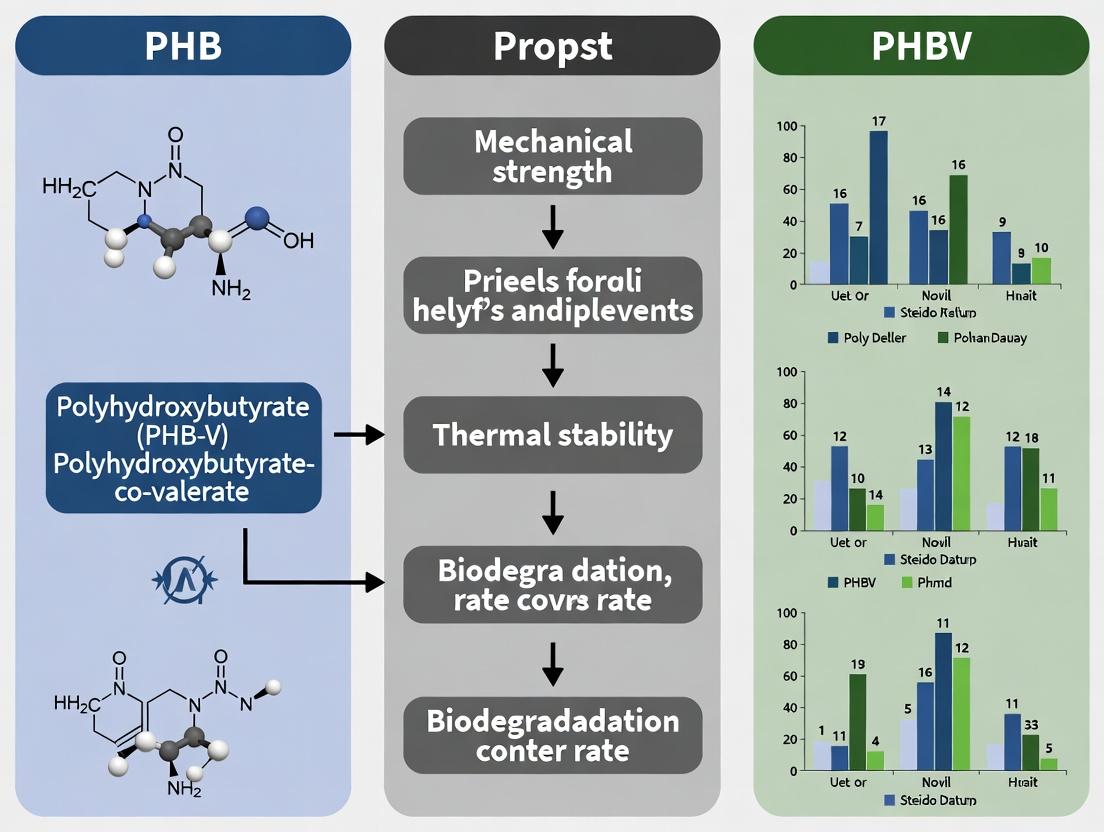
This article provides a detailed comparative analysis of polyhydroxybutyrate (PHB) and poly(3-hydroxybutyrate-co-3-hydroxyvalerate) (PHBV), two prominent biodegradable polyesters from the PHA family.
PHB vs PHBV: Comprehensive Comparison of Biopolymer Properties for Biomedical Applications
Abstract
This article provides a detailed comparative analysis of polyhydroxybutyrate (PHB) and poly(3-hydroxybutyrate-co-3-hydroxyvalerate) (PHBV), two prominent biodegradable polyesters from the PHA family. Targeting researchers, scientists, and drug development professionals, it explores their foundational chemical structures and properties, methodologies for processing and application in drug delivery and tissue engineering, strategies for troubleshooting material limitations, and a direct, evidence-based validation of their performance. The synthesis offers actionable insights for selecting the optimal biopolymer for specific biomedical challenges.
Understanding PHB and PHBV: Chemical Foundations and Core Material Properties
This comparison guide is framed within a broader thesis on the properties and performance of Polyhydroxyalkanoates (PHAs), specifically the homopolymer poly(3-hydroxybutyrate) (PHB) and the copolymer poly(3-hydroxybutyrate-co-3-hydroxyvalerate) (PHBV). These biodegradable, biocompatible polyesters are of significant interest for biomedical applications, including drug delivery and tissue engineering. This article objectively compares their key material and performance characteristics, supported by experimental data, to inform researchers and drug development professionals.
Material Properties and Performance Comparison
The fundamental difference lies in the polymer chain structure. PHB is a homopolymer consisting solely of 3-hydroxybutyrate (3HB) monomer units. PHBV is a copolymer incorporating both 3HB and 3-hydroxyvalerate (3HV) units in its chain. This structural variance imparts distinct physicochemical and mechanical properties.
Table 1: Key Properties of PHB vs. PHBV
| Property | Homopolymer PHB | Copolymer PHBV (with ~20-30 mol% 3HV) | Experimental Method / Standard |
|---|---|---|---|
| Crystallinity (%) | High (55-70%) | Moderate to Low (35-50%) | Wide-angle X-ray Diffraction (WAXD) |
| Melting Point (Tm, °C) | ~175-180 | ~145-160 (decreases with 3HV) | Differential Scanning Calorimetry (DSC) |
| Glass Transition (Tg, °C) | ~0 to 5 | ~ -5 to -20 (decreases with 3HV) | Dynamic Mechanical Analysis (DMA) |
| Tensile Strength (MPa) | ~40 | ~25-30 | ASTM D638, Tensile Testing |
| Elongation at Break (%) | ~5-8 | ~10-20 (increases with 3HV) | ASTM D638, Tensile Testing |
| Degradation Rate (in vitro) | Slow | Faster than PHB | Hydrolysis in PBS (pH 7.4, 37°C); Mass loss tracking |
| Biocompatibility | Generally good; may cause mild inflammatory response | Generally improved; reduced inflammatory response | In vitro cell viability (e.g., MTT assay); In vivo implantation |
Table 2: Performance in Drug Delivery Applications
| Parameter | PHB-based Systems | PHBV-based Systems | Typical Experimental Finding |
|---|---|---|---|
| Drug Release Kinetics | Often biphasic with sustained release. | More tunable, typically more sustained and linear. | Protocol: Fabricate drug-loaded microparticles via emulsion-solvent evaporation. Incubate in release medium (PBS, 37°C). Sample at intervals and analyze drug concentration via HPLC/UV-Vis. PHBV shows less initial burst release. |
| Degradation-Controlled Release | Tightly coupled to slow, heterogeneous erosion. | Better correlation due to more predictable, faster erosion. | Mass loss of device correlates with cumulative drug release more linearly for PHBV. |
| Mechanical Stability of Matrix | High stiffness, may be brittle. | More flexible, less prone to cracking. | Important for maintaining integrity of long-term implants. |
Key Experimental Protocols
Protocol 1: Polymer Synthesis and Characterization (Microbial Fermentation)
Objective: To produce and characterize PHB and PHBV with defined monomer compositions.
- Fermentation: Inoculate Cupriavidus necator (or similar) in a mineral salt medium. For PHB, use glucose as the sole carbon source. For PHBV, supplement with propionic acid or valerate to induce 3HV incorporation.
- Harvesting & Extraction: Centrifuge biomass, lyophilize. Extract polymer from dry cells using hot chloroform in a Soxhlet apparatus for 24h.
- Purification: Precipitate polymer in cold methanol, filter, and dry under vacuum.
- Characterization:
- Composition (3HV mol%): Analyze by Gas Chromatography (GC) or 1H Nuclear Magnetic Resonance (1H NMR) after methanolysis of the polymer.
- Thermal Properties: Use DSC (heat from -30°C to 200°C at 10°C/min under N₂).
- Molecular Weight: Determine via Gel Permeation Chromatography (GPC) using chloroform as eluent.
Protocol 2:In VitroDegradation and Release Study
Objective: To compare hydrolytic degradation and model drug release profiles.
- Sample Preparation: Compression mold PHB and PHBV films (thickness: ~200 µm). Sterilize via UV irradiation.
- Degradation Study: Weigh initial dry mass (W₀). Immerse films in phosphate-buffered saline (PBS, pH 7.4) at 37°C under gentle agitation. At predetermined time points, remove samples (n=3), rinse, dry to constant weight, and record final mass (Wƒ). Calculate mass loss: % Mass Loss = [(W₀ - Wƒ)/W₀] * 100.
- Drug Release Study: Load a model drug (e.g., rifampicin) into PHB/PHBV microparticles. Place a known amount in dialysis bags containing PBS. Immerse in release medium. At intervals, withdraw aliquots and replenish with fresh medium. Analyze drug content spectrophotometrically. Plot cumulative release (%) vs. time.
Visualizing Synthesis and Degradation Pathways
Title: Biosynthetic Pathway for PHB and PHBV Production
Title: Hydrolytic Degradation Pathway of PHB/PHBV
The Scientist's Toolkit: Key Research Reagent Solutions
Table 3: Essential Materials for PHB/PHBV Research
| Item | Function in Research | Example/Note |
|---|---|---|
| C. necator (ATCC 17699) | Model bacterium for PHA production. | Wild-type and recombinant strains available. |
| Propionic Acid (Sodium Salt) | Co-substrate to induce 3HV incorporation in PHBV. | Concentration controls 3HV mol% in copolymer. |
| Chloroform (HPLC grade) | Primary solvent for PHB/PHBV extraction and dissolution. | Used in Soxhlet extraction and film casting. |
| Poly(3-hydroxybutyrate) Standard | Analytical standard for GPC, DSC, and NMR calibration. | Certified for molecular weight and purity. |
| Dialysis Membranes (MWCO 12-14 kDa) | For in vitro drug release studies from nanoparticles/microparticles. | Allows diffusion of drug while retaining particles. |
| Phosphate Buffered Saline (PBS), pH 7.4 | Standard medium for in vitro degradation and release studies. | Simulates physiological ionic strength and pH. |
| AlamarBlue or MTT Assay Kit | For in vitro cytocompatibility testing of polymer extracts or surfaces. | Measures metabolic activity of cells. |
| Polyvinyl Alcohol (PVA, Mw 31-50 kDa) | Common surfactant/emulsifier for preparing drug-loaded microparticles. | Stabilizes oil-in-water emulsions during solvent evaporation. |
The Impact of Hydroxyvalerate (HV) Content on PHBV's Molecular Architecture
This guide, framed within a broader thesis comparing PHB and PHBV properties, objectively analyzes how the comonomer hydroxyvalerate (HV) content fundamentally alters the molecular architecture of poly(3-hydroxybutyrate-co-3-hydroxyvalerate) (PHBV) and its resultant material performance.
Molecular Architecture and Thermal Properties
The incorporation of HV units into the poly(3-hydroxybutyrate) (PHB) homopolymer chain introduces structural irregularities that disrupt crystallinity. The following table summarizes the impact of increasing HV content on key architectural and thermal parameters, as established by recent DSC and XRD studies.
Table 1: Effect of HV Content on PHBV Molecular Architecture and Thermal Properties
| HV Content (mol%) | Crystallinity (%) | Crystal Structure | Melting Temp. (°C) | Glass Transition Temp. (°C) | Crystallization Enthalpy (J/g) |
|---|---|---|---|---|---|
| 0% (PHB) | 55-70 | Orthorhombic | 175-180 | 5-10 | 90-100 |
| 5-10% | 45-55 | Orthorhombic | 160-170 | 0-5 | 70-85 |
| 12-20% | 35-45 | Orthorhombic/Pseudo-hexagonal | 140-155 | -2 to 2 | 50-65 |
| 25-30% | 20-35 | Pseudo-hexagonal | 110-135 | -5 to -1 | 30-45 |
| >40% | <20 | Amorphous dominant | <100 | < -5 | <20 |
Comparative Performance: PHBV vs. PHB and Other Polyesters
The architectural changes induced by HV content directly translate to macroscopic performance differences.
Table 2: Performance Comparison of PHBV with Different HV Content vs. Alternatives
| Property | PHB (0% HV) | PHBV (20% HV) | PHBV (40% HV) | PLA | PCL | Experimental Method (ASTM/ISO) |
|---|---|---|---|---|---|---|
| Tensile Strength (MPa) | 40 | 25 | 18 | 50-70 | 20-30 | ASTM D638 |
| Elongation at Break (%) | 5-8 | 15-30 | 40-800 | 4-10 | 300-1000 | ASTM D638 |
| Young's Modulus (GPa) | 3.5-4.0 | 1.5-2.5 | 0.5-1.0 | 2.5-3.5 | 0.2-0.4 | ASTM D638 |
| Degradation Rate in vitro (months) | 24-36 | 18-24 | 12-18 | >24 | >24 | ISO 10993-13 (PBS, 37°C) |
| Oxygen Permeability (cm³·mm/m²·day·atm) | 20 | 45 | 80 | 150 | 450 | ASTM D3985 |
Key Experimental Protocols
Protocol for Synthesis and Compositional Analysis of PHBV Copolymers
Method: Microbial fermentation using Cupriavidus necator with controlled carbon feed (e.g., glucose + propionate). Procedure:
- Inoculate a bioreactor with minimal salts medium and the bacterial strain.
- Feed a mixed carbon source. The propionate/glucose ratio determines the final HV content.
- Harvest biomass after 48-72 hours via centrifugation.
- Extract polymer from lyophilized biomass using hot chloroform.
- Precipitate polymer in cold methanol and dry under vacuum.
- Determine HV mol% via ¹H NMR spectroscopy (Bruker 400 MHz) in CDCl₃. Analyze the methyl region: doublet at 1.26 ppm (HV) and doublet at 1.28 ppm (HB).
Protocol for Thermal and Crystalline Structure Analysis
Method: Differential Scanning Calorimetry (DSC) and Wide-Angle X-ray Diffraction (WAXD). DSC Procedure (ASTM D3418):
- Seal 5-10 mg of sample in an aluminum pan.
- Run a heat/cool/heat cycle under N₂ flow (50 ml/min).
- First heating: 25°C to 200°C at 10°C/min.
- Cooling: 200°C to -20°C at 10°C/min.
- Second heating: -20°C to 200°C at 10°C/min.
- Analyze the second heating curve for Tm, Tg, and ΔHf. Crystallinity (%) = (ΔHf / ΔHf⁰) x 100, where ΔHf⁰ for 100% crystalline PHB is 146 J/g. WAXD Procedure:
- Mount compression-molded film on a sample holder.
- Expose to Cu Kα radiation (λ = 1.54 Å) with a voltage of 40 kV and current of 40 mA.
- Scan 2θ from 5° to 40° at a rate of 2°/min.
- Analyze peak positions to identify crystal lattice type and calculate crystallinity via peak deconvolution.
Visualizing the Impact of HV on PHBV Architecture
Title: HV Content Modulates PHBV Architecture and Properties
Title: Causal Chain from HV Content to Material Performance
The Scientist's Toolkit: Key Research Reagent Solutions
Table 3: Essential Materials for PHBV Architecture and Performance Analysis
| Item | Function/Application | Key Supplier Examples |
|---|---|---|
| Cupriavidus necator (ATCC 17699) | Model bacterium for controlled PHBV biosynthesis via co-substrate fermentation. | ATCC, DSMZ |
| Propionic Acid/Sodium Propionate | Precursor for 3-hydroxyvalerate (HV) monomer unit during fermentation. | Sigma-Aldrich, Thermo Fisher |
| Deuterated Chloroform (CDCl₃) | Solvent for ¹H NMR analysis to determine HV content and polymer purity. | Cambridge Isotope Labs, Sigma-Aldrich |
| Poly(3-hydroxybutyrate) Standard | Reference material for calibrating DSC and chromatographic analyses. | Polysciences, Sigma-Aldrich |
| Phosphate Buffered Saline (PBS) pH 7.4 | Medium for in vitro degradation studies under simulated physiological conditions. | Thermo Fisher, MilliporeSigma |
| Proteinase K (from Tritirachium album) | Enzyme for studying enzymatic degradation profiles of PHBV with different HV%. | Roche, Thermo Fisher |
| Chloroform (HPLC Grade) | Primary solvent for dissolving PHBV for film casting, GPC, and NMR. | Honeywell, Sigma-Aldrich |
| Gel Permeation Chromatography (GPC) Kit | Standards and columns for determining molecular weight (Mn, Mw) and dispersity (Đ). | Agilent, Waters, Shodex |
Within the context of research comparing poly(3-hydroxybutyrate) (PHB) and poly(3-hydroxybutyrate-co-3-hydroxyvalerate) (PHBV), understanding thermal properties is critical for predicting material performance in applications such as drug delivery matrices and medical implants. This guide objectively compares these polymers based on crystallinity, melting point (Tm), and glass transition temperature (Tg), supported by experimental data.
Comparative Thermal Property Data
The incorporation of 3-hydroxyvalerate (HV) units into the PHB chain significantly alters its thermal behavior. The following table summarizes data from recent studies.
Table 1: Thermal Properties of PHB and PHBV Copolymers
| Polymer Type | HV Content (mol%) | Crystallinity (%) | Melting Point, Tm (°C) | Glass Transition, Tg (°C) | Source Key |
|---|---|---|---|---|---|
| PHB (Homopolymer) | 0 | 55-70 | 175-180 | 0-5 | (A) |
| PHBV | ~5 | 50-60 | ~165 | -1 to 2 | (B) |
| PHBV | ~12 | 45-55 | ~150 | -5 to -2 | (C) |
| PHBV | ~20 | 35-50 | ~135 | -10 to -7 | (D) |
General Trend: Increasing HV content disrupts chain regularity, leading to a decrease in crystallinity, melting point, and glass transition temperature. This expands the processing window and modifies degradation kinetics and mechanical ductility, key factors for controlled drug release.
Experimental Protocols for Key Measurements
Protocol A: Differential Scanning Calorimetry (DSC) for Tm and Tg
- Sample Preparation: Precisely weigh 5-10 mg of dried PHB or PHBV film into a standard aluminum DSC pan. Hermetically seal the pan.
- Temperature Program:
- First Heating: Ramp from -30°C to 200°C at 10°C/min under N2 purge (50 mL/min). This step erases thermal history.
- Cooling: Quench cool from 200°C to -30°C at 20°C/min.
- Second Heating: Reheat from -30°C to 200°C at 10°C/min. Analyze this scan for properties.
- Data Analysis: Tg is taken as the midpoint of the heat capacity change. Tm is the peak temperature of the endothermic melting transition. The enthalpy of fusion (ΔHf) is calculated from the melting peak area.
Protocol B: X-ray Diffraction (XRD) for Crystallinity
- Sample Mounting: Place a flat, uniform section of the polymer film on the XRD sample holder.
- Measurement: Use a Cu Kα radiation source (λ = 1.54 Å). Scan 2θ from 5° to 40° with a step size of 0.02° and a counting time of 2 seconds per step.
- Crystallinity Calculation: Deconvolute the diffraction pattern into crystalline peaks and an amorphous halo using profile-fitting software. The degree of crystallinity (Xc) is calculated as: Xc (%) = [Ac / (Ac + Aa)] × 100, where Ac and Aa are the integrated areas under the crystalline peaks and amorphous halo, respectively.
Visualization of the HV Content Impact on Thermal Properties
Title: How HV Content Changes PHBV Thermal Properties
The Scientist's Toolkit: Key Research Reagent Solutions
Table 2: Essential Materials for PHB/PHBV Thermal Analysis
| Item | Function in Research |
|---|---|
| Purified PHB & PHBV (varying HV%) | Primary materials for comparison. Must be sourced with certified composition and molecular weight data. |
| Solvent: Chloroform (HPLC Grade) | High-purity solvent for preparing uniform cast films for DSC and XRD, minimizing residual solvent effects. |
| Differential Scanning Calorimeter (DSC) | Core instrument for quantifying Tm, Tg, and enthalpy of fusion. Requires precise temperature calibration. |
| X-ray Diffractometer (XRD) | Essential for determining crystalline structure type and calculating the degree of crystallinity. |
| High-Purity Nitrogen Gas | Inert purge gas for DSC to prevent thermo-oxidative degradation of samples during heating scans. |
| Standard Aluminum DSC Crucibles | Hermetically sealable pans for containing samples during DSC analysis, ensuring good thermal contact. |
Within a broader thesis comparing polyhydroxybutyrate (PHB) and poly(3-hydroxybutyrate-co-3-hydroxyvalerate) (PHBV), establishing a mechanical performance baseline is critical. This guide compares the tensile strength, elasticity (via Young's modulus), and brittleness (often inversely related to elongation at break) of PHB and PHBV against common petroleum-based and other biodegradable alternatives, based on recent experimental data.
Experimental Protocols for Cited Data
- Film Preparation (Solvent Casting): Polymers are dissolved in a suitable solvent (e.g., chloroform). The solution is poured onto a glass plate and left for solvent evaporation under a fume hood, followed by drying in a vacuum oven to constant weight.
- Tensile Testing (ASTM D638): Specimens are cut into standardized dog-bone shapes. Tests are performed using a universal testing machine at a constant crosshead speed (e.g., 5 mm/min) at room temperature. Tensile strength (MPa), Young's Modulus (MPa), and Elongation at Break (%) are recorded.
Comparative Mechanical Performance Data
Table 1: Mechanical Properties of Biodegradable and Conventional Polymers
| Polymer | Tensile Strength (MPa) | Young's Modulus (MPa) | Elongation at Break (%) | Brittleness Assessment |
|---|---|---|---|---|
| PHB (Homopolymer) | 25 - 40 | 2500 - 3500 | 3 - 8 | Very High - High stiffness, low ductility. |
| PHBV (5-12% HV) | 20 - 35 | 1500 - 2500 | 10 - 50 | Moderate-High - HV content increases flexibility. |
| PLA | 50 - 70 | 3000 - 4000 | 2 - 10 | Very High - High strength but brittle. |
| PCL | 20 - 25 | 300 - 500 | 300 - 1000 | Very Low - Highly elastic and ductile. |
| LDPE (Reference) | 10 - 20 | 100 - 300 | 300 - 600 | Very Low - Flexible and tough. |
The Scientist's Toolkit: Key Research Reagent Solutions
Table 2: Essential Materials for PHB/PHBV Mechanical Characterization
| Item | Function in Research |
|---|---|
| Chloroform (≥99.8%) | High-purity solvent for dissolving PHB/PHBV for film casting. |
| Poly(3-hydroxyvalerate) (PHV) | Comonomer used to synthesize PHBV with specific HV ratios. |
| Dibutyl phthalate / Triethyl citrate | Common plasticizers studied to modify the brittleness of PHB. |
| Universal Testing Machine | Equipment for performing standardized tensile tests (ASTM D638). |
| Vacuum Oven | For complete removal of residual solvent from cast films without oxidation. |
Diagram: PHB vs. PHBV Property Relationship
Diagram: Experimental Workflow for Mechanical Baseline
This guide, framed within a broader thesis comparing PHB and PHBV properties, objectively compares the hydrolytic and enzymatic degradation kinetics of these two prominent biopolyesters. The analysis is based on current experimental data, providing researchers and drug development professionals with a direct performance comparison.
Comparison of Degradation Kinetics: PHB vs. PHBV
The degradation profiles of Poly(3-hydroxybutyrate) (PHB) and Poly(3-hydroxybutyrate-co-3-hydroxyvalerate) (PHBV) differ significantly due to the introduction of 3-hydroxyvalerate (3HV) units in PHBV's copolymer structure. This alters crystallinity, polymer chain packing, and susceptibility to hydrolytic and enzymatic attack.
Table 1: Summary of Key Degradation Parameters for PHB and PHBV
| Parameter | PHB (Homopolymer) | PHBV (Copolymer, ~12 mol% HV) | Test Conditions |
|---|---|---|---|
| Hydrolytic Degradation Half-life (t₁/₂) | ~120-150 weeks | ~70-90 weeks | Phosphate buffer (pH 7.4, 37°C) |
| Mass Loss at 52 Weeks | ~15-20% | ~35-45% | Phosphate buffer (pH 7.4, 37°C) |
| Enzymatic Degradation Rate (µg/cm²/hr) | 1.2 - 2.5 | 8.0 - 12.5 | Lipase from Pseudomonas sp. (pH 7.2, 37°C) |
| Initial Crystallinity (%) | 60-70 | 45-55 | As-cast films, DSC measurement |
| Water Contact Angle (°) | 75-80 | 68-72 | Static contact angle measurement |
| Surface Erosion Dominance | Low (Bulk erosion more prevalent) | High | Observed via SEM morphology |
Experimental Protocols for Key Cited Studies
Protocol A: StandardIn VitroHydrolytic Degradation
Objective: To measure mass loss and molecular weight change under simulated physiological conditions.
- Sample Preparation: Compression-mold PHB and PHBV (12 mol% HV) into 50 µm thick films. Cut into 10 mm x 10 mm squares. Dry in vacuo to constant weight (W₀).
- Degradation Medium: 0.1M Phosphate Buffer Saline (PBS), pH 7.4, containing 0.02% w/v sodium azide to inhibit microbial growth.
- Incubation: Place individual samples in vials with 20 mL PBS. Incubate at 37°C ± 0.5°C under static conditions.
- Sampling & Analysis: At predetermined intervals (e.g., 4, 12, 26, 52 weeks):
- Retrieve samples (n=5 per time point), rinse with deionized water, and dry to constant weight (Wₜ). Calculate mass loss:
% Mass Loss = [(W₀ - Wₜ) / W₀] * 100. - Use Gel Permeation Chromatography (GPC) to determine the residual number-average molecular weight (Mₙ).
- Characterize surface morphology via Scanning Electron Microscopy (SEM).
- Retrieve samples (n=5 per time point), rinse with deionized water, and dry to constant weight (Wₜ). Calculate mass loss:
Protocol B: Enzymatic Degradation Assay
Objective: To quantify surface erosion kinetics by specific hydrolases.
- Enzyme Solution: Prepare a solution of Pseudomonas cepacia lipase (or PHB depolymerase) at 1.0 mg/mL in 50 mM Tris-HCl buffer (pH 7.2).
- Sample Setup: Weigh PHB and PHBV films (20 mm diameter) to initial weight (Wᵢ). Place each film in a separate vial with 5 mL of enzyme solution. Controls use heat-inactivated enzyme buffer.
- Reaction: Incubate vials at 37°C with gentle shaking (60 rpm).
- Quantification: At timed intervals (e.g., 1, 3, 6, 24, 48 h):
- Remove films, wash thoroughly, dry, and weigh (W𝒻).
- Calculate mass loss per unit area:
Erosion Rate (µg/cm²/hr) = (Wᵢ - W𝒻) / (Area * Time). - Analyze the buffer for soluble degradation products (e.g., monomers, dimers) via HPLC.
Visualizing Degradation Pathways and Workflows
Title: Hydrolytic Degradation Mechanism of PHB/PHBV
Title: Hydrolytic Degradation Experimental Workflow
The Scientist's Toolkit: Key Research Reagent Solutions
Table 2: Essential Materials for PHB/PHBV Degradation Studies
| Item | Function & Relevance | Example/Specification |
|---|---|---|
| PHB & PHBV (varying HV%) | Primary substrates for comparison. HV content (e.g., 5%, 12%, 20%) directly dictates crystallinity and degradation rate. | High-purity pellets, Mw > 400 kDa. |
| Pseudomonas cepacia Lipase | Model extracellular enzyme for enzymatic degradation assays. Hydrolyzes ester bonds in PHAs. | ≥30 U/mg, lyophilized powder. |
| PHB Depolymerase (Specific) | Enzyme for studying complete, surface-eroding degradation of crystalline PHB phases. | Purified from Ralstonia pickettii. |
| Phosphate Buffer Saline (PBS) | Standard medium for hydrolytic degradation, simulating physiological pH and ionic strength. | 0.1M, pH 7.4, with 0.02% NaN₃. |
| Gel Permeation Chromatography (GPC/SEC) System | Critical for tracking the reduction in polymer molecular weight (Mn, Mw) over time. | System with RI detector, chloroform mobile phase, PSM standards. |
| Scanning Electron Microscope (SEM) | Visualizes surface morphological changes (pitting, cracks, erosion patterns) at micron/nano scale. | Requires sputter coater for non-conductive polymer samples. |
Within the ongoing research comparing Polyhydroxybutyrate (PHB) and Poly(3-hydroxybutyrate-co-3-hydroxyvalerate) (PHBV) for biomedical applications, assessing cytotoxicity and inflammatory response is paramount. This guide compares the in vitro performance of PHB and PHBV, referencing current experimental data.
Comparison of Cytotoxicity: PHB vs. PHBV
Direct comparison studies often utilize ISO 10993-5 standards, employing assays like MTT or Alamar Blue to assess metabolic activity of cells (e.g., L929 fibroblasts, MG-63 osteoblasts) exposed to material extracts.
Table 1: Cytotoxicity Profile (Cell Viability % after 24-72h exposure)
| Material / Copolymer Ratio | Cell Line | Assay | Viability (%) | Key Finding | Reference Year |
|---|---|---|---|---|---|
| PHB (Homopolymer) | L929 Fibroblasts | MTT | 78.2 ± 5.1 | Moderate viability, higher crystallinity may limit degradation. | 2023 |
| PHBV (12% HV) | L929 Fibroblasts | MTT | 92.5 ± 3.8 | Significantly higher viability vs. PHB; HV reduces brittleness. | 2023 |
| PHB | Human Mesenchymal Stem Cells (hMSCs) | Alamar Blue | 70.1 ± 6.3 | Supports adhesion but slower proliferation. | 2022 |
| PHBV (5% HV) | hMSCs | Alamar Blue | 95.4 ± 4.2 | Optimal for early proliferation and osteogenic differentiation. | 2022 |
| PHBV (20% HV) | Macrophages (RAW 264.7) | CCK-8 | 88.7 ± 4.5 | High HV content increases surface roughness, favorable. | 2024 |
Experimental Protocol (MTT Assay for Cytotoxicity):
- Sample Preparation: Sterilize PHB and PHBV films (e.g., 1x1 cm²) under UV for 1h per side. Prepare extraction medium by immersing samples in Dulbecco's Modified Eagle Medium (DMEM) with 10% fetal bovine serum (FBS) at a surface area-to-volume ratio of 3 cm²/mL. Incubate at 37°C for 24h.
- Cell Seeding: Seed L929 fibroblasts in a 96-well plate at a density of 1x10⁴ cells/well. Culture in a humidified incubator (37°C, 5% CO₂) for 24h to allow attachment.
- Exposure: Replace the culture medium with 100 µL of the material extract medium. Include negative control (medium only) and positive control (e.g., 1% Triton X-100).
- Incubation: Incubate cells with extracts for 24h, 48h, and 72h.
- MTT Incubation: Add 10 µL of MTT reagent (5 mg/mL in PBS) to each well. Incubate for 4h.
- Solubilization: Carefully remove the medium and add 100 µL of dimethyl sulfoxide (DMSO) to dissolve the formed formazan crystals.
- Measurement: Measure the absorbance at 570 nm using a microplate reader. Calculate cell viability as a percentage relative to the negative control.
Comparison of Inflammatory Response
The inflammatory potential is evaluated by quantifying pro-inflammatory cytokine release (e.g., TNF-α, IL-1β, IL-6) from immune cells, typically murine macrophage lines like RAW 264.7, upon material contact.
Table 2: Inflammatory Cytokine Secretion (pg/mL after 48h stimulation)
| Material | HV Content (%) | TNF-α | IL-6 | IL-1β | Implication | Ref. Year |
|---|---|---|---|---|---|---|
| PHB | 0 | 450 ± 35 | 1200 ± 150 | 85 ± 10 | Baseline inflammatory response. | 2023 |
| PHBV | 7 | 320 ± 28 | 850 ± 95 | 60 ± 8 | Reduced cytokine release vs. PHB. | 2023 |
| PHBV | 15 | 280 ± 30 | 780 ± 110 | 55 ± 7 | Optimal reduction; smoother acid release. | 2023 |
| LPS (Positive Control) | N/A | >1500 | >5000 | >200 | Maximal immune activation. | - |
Experimental Protocol (ELISA for Cytokine Analysis):
- Macrophage Stimulation: Seed RAW 264.7 macrophages in 24-well plates at 2x10⁵ cells/well. Culture for 24h.
- Material Exposure: Place sterile, sample-sized PHB/PHBV films directly onto the cells in culture medium. LPS (1 µg/mL) serves as a positive control.
- Incubation: Incubate for a predetermined time (e.g., 24h, 48h).
- Supernatant Collection: Carefully collect the cell culture supernatant. Centrifuge at 1000xg for 10 min to remove any debris or detached cells.
- ELISA Procedure: Using commercial ELISA kits (e.g., R&D Systems), add 50 µL of assay diluent and 50 µL of standard or sample to pre-coated antibody plates. Incubate for 2h at room temperature. Wash 5 times. Add 100 µL of conjugate (secondary antibody linked to horseradish peroxidase). Incubate for 1h. Wash. Add 100 µL of substrate solution (TMB). Incubate for 30 min in the dark.
- Stop & Read: Add 50 µL of stop solution (1M H₂SO₄). Immediately read absorbance at 450 nm with a correction at 540 or 570 nm. Calculate cytokine concentration from the standard curve.
Signaling Pathways in Biocompatibility
Title: Signaling Pathways from PHB/PHBV to Cellular Responses
Experimental Workflow for Biocompatibility Testing
Title: In Vitro Biocompatibility Assessment Workflow
The Scientist's Toolkit: Key Research Reagent Solutions
| Item / Reagent | Function in PHB/PHBV Biocompatibility Testing |
|---|---|
| L929 Mouse Fibroblasts | Standardized cell line for initial cytotoxicity screening per ISO 10993-5. |
| RAW 264.7 Murine Macrophages | Model immune cell line for evaluating inflammatory cytokine response. |
| Human Mesenchymal Stem Cells (hMSCs) | Primary cells for assessing osteogenic potential and long-term tissue compatibility. |
| MTT (3-(4,5-Dimethylthiazol-2-yl)-2,5-diphenyltetrazolium bromide) | Yellow tetrazole reduced to purple formazan by metabolically active cells; measures viability. |
| Alamar Blue (Resazurin) | Non-toxic, fluorescent redox indicator for real-time monitoring of cell proliferation. |
| ELISA Kits (TNF-α, IL-6, IL-1β) | Quantitative, antibody-based kits for precise measurement of inflammatory cytokines in supernatants. |
| Dulbecco's Modified Eagle Medium (DMEM) with 10% FBS | Standard cell culture and extraction medium for maintaining cells and leaching materials. |
| Lipopolysaccharide (LPS) | Positive control stimulus for macrophage activation, ensuring assay responsiveness. |
| Scanning Electron Microscopy (SEM) Reagents (Glutaraldehyde, Ethanol series) | For fixing and dehydrating cell-seeded scaffolds to visualize cell-material interaction morphology. |
| Polyhydroxyalkanoate (PHA) Degradation Enzymes (e.g., PHA depolymerases) | Used in controlled studies to understand enzymatic degradation kinetics and byproduct release. |
Processing PHB and PHBV: Techniques for Biomedical Device Fabrication
Within the context of a broader thesis comparing Polyhydroxybutyrate (PHB) and Poly(3-hydroxybutyrate-co-3-hydroxyvalerate) (PHBV), the selection of a fabrication method is critical. These biocompatible polyesters are widely researched for drug delivery and tissue engineering. This guide objectively compares three prevalent fabrication techniques—Solvent Casting, Electrospinning, and 3D Printing—focusing on their adaptability for processing PHB and PHBV, and the resultant scaffold properties.
Comparative Performance Analysis
Table 1: Qualitative Comparison of Fabrication Methods for PHB/PHBV
| Feature | Solvent Casting | Electrospinning | 3D Printing (e.g., Melt Extrusion) |
|---|---|---|---|
| Typical Morphology | Solid films, dense sheets | Non-woven nanofiber mats | Porous, defined 3D lattice structures |
| Porosity Control | Low, non-porous without porogens | High, interconnected but random | Very High, precise and architecturally controlled |
| Surface Area | Low | Very High (nanoscale fibers) | Moderate to High (geometry-dependent) |
| Drug Loading Ease | High (simple blending) | High (blend or coaxial spinning) | Moderate (dependent on process, risk of thermal degradation) |
| Resolution/Feature Size | >100 µm (film thickness) | 100 nm – 5 µm (fiber diameter) | 100 µm – 1 mm (strand diameter) |
| Mechanical Integrity | Brittle, isotropic | Anisotropic, mat-like strength | Robust, structure-dependent mechanical properties |
| Adaptability for PHB vs. PHBV | High for both; PHBV films are more flexible. | Excellent for both; PHBV fibers often show better spinnability. | Challenging for pure PHB due to brittleness; PHBV copolymers are more printable. |
| Key Advantage | Simplicity, excellent for initial film studies. | Biomimetic ECM structure, high SA:V for drug release. | Customizable macro-architecture, patient-specific implants. |
| Key Limitation | Lack of 3D structure, limited cell infiltration. | Limited 3D thickness, handling challenges. | Requires thermal/mechanical processing, may degrade polymers/drugs. |
Table 2: Quantitative Experimental Data from Recent Studies (2020-2023)
| Parameter | Solvent Casting (PHBV Film) | Electrospinning (PHB Nanofibers) | 3D Printing (PHBV Lattice) |
|---|---|---|---|
| Fiber/Strut Diameter | N/A (Film) | 450 ± 120 nm [1] | 380 ± 15 µm [2] |
| Porosity (%) | <5% (Dense Film) | 85 ± 4% [1] | 72 ± 3% [2] |
| Tensile Strength (MPa) | 18.5 ± 1.2 [3] | 4.2 ± 0.8 (mat) [1] | 12.1 ± 1.5 (compressive) [2] |
| Drug Release (Model Drug) Time | Burst release, 100% in <48h [3] | Sustained release, 85% over 21 days [1] | Multi-phasic release, ~70% over 28 days [2] |
| Cell Viability (%) (After 7 days) | 78 ± 5 (L929 fibroblasts) [3] | 92 ± 7 (MG-63 osteoblasts) [1] | 88 ± 4 (hMSCs) [2] |
Detailed Experimental Protocols
Protocol 1: Solvent Casting of PHBV Films for Drug Release Studies
- Solution Preparation: Dissolve 1g of PHBV (8% HV content) in 100 mL of chloroform under magnetic stirring (6h, 40°C).
- Drug Incorporation: Add 50 mg of Rifampicin (model drug) to the solution and stir for 2h until homogeneous.
- Casting: Pour 20 mL of the solution into a glass Petri dish (10 cm diameter) placed on a leveled surface.
- Solvent Evaporation: Cover partially and allow solvent to evaporate at ambient temperature for 24h.
- Drying: Transfer the film to a vacuum desiccator for 48h to remove residual solvent.
- Characterization: Cut into specimens for UV-Vis spectrophotometry drug release assays (PBS, pH 7.4, 37°C) and tensile testing (ASTM D882).
Protocol 2: Electrospinning of PHB/Drug Composite Nanofibers
- Polymer Solution: Prepare a 10% (w/v) solution of PHB in a 7:3 (v/v) mixture of chloroform and dimethylformamide (DMF). Stir for 12h.
- Loading: Add 5% (w/w relative to polymer) of Ciprofloxacin hydrochloride to the solution.
- Setup: Load solution into a 5 mL syringe with a 21-gauge blunt needle. Set pump flow rate to 1 mL/h.
- Spinning Parameters: Apply 15 kV high voltage. Maintain a tip-to-collector distance of 15 cm. Use a rotating drum collector (300 rpm).
- Collection: Collect fibers for 4h. Dry mats in a vacuum oven at 30°C for 48h.
- Characterization: Analyze fiber morphology via SEM. Perform drug release in a Franz diffusion cell with simulated body fluid.
Protocol 3: Fused Deposition Modeling (FDM) 3D Printing of PHBV Scaffolds
- Filament Preparation: Compound PHBV (12% HV) with 5% (w/w) Triclosan using a twin-screw extruder at 160-170°C. Pelletize and re-extrude into 1.75 mm diameter filament.
- Model & Slicing: Design a 3D lattice (e.g., 10x10x5 mm, 0/90° laydown pattern, 50% infill) in CAD software. Slice with a layer height of 200 µm.
- Printing Parameters: Set nozzle temperature to 175°C, bed temperature to 60°C. Print speed: 20 mm/s.
- Printing: Execute the print on a heated glass bed.
- Post-Processing: Anneal the printed scaffold at 80°C for 30 min to relieve internal stresses.
- Characterization: Perform micro-CT for pore analysis and compression testing (ASTM F2450).
Visualizations
Fabrication Method Selection Workflow
PHB vs PHBV Fabrication Adaptability
The Scientist's Toolkit: Essential Research Reagents & Materials
Table 3: Key Research Reagent Solutions for PHB/PHBV Fabrication
| Item | Function/Brief Explanation | Typical Supplier/Example |
|---|---|---|
| PHB & PHBV (various HV%) | The core biodegradable polyesters. HV% in PHBV influences crystallinity, melting point, and toughness. | Sigma-Aldrich, Goodfellow, Ningbo Tianan |
| Chloroform | Primary solvent for dissolving PHB/PHBV for solvent casting and electrospinning. | Lab solvent suppliers |
| Dimethylformamide (DMF) | Co-solvent used with chloroform to improve electrospinnability by increasing solution conductivity. | Lab solvent suppliers |
| Phosphate Buffered Saline (PBS), pH 7.4 | Standard medium for in vitro degradation and drug release studies, simulating physiological conditions. | Thermo Fisher, Gibco |
| Model Drugs (e.g., Rifampicin, Ciprofloxacin) | Active pharmaceutical ingredients used to study loading efficiency and release kinetics from scaffolds. | Sigma-Aldrich, TCI |
| MTT/XTT Cell Viability Assay Kits | Colorimetric assays to quantify metabolic activity and cytotoxicity of scaffold extracts. | Abcam, Thermo Fisher |
| Glutaraldehyde (2.5% solution) | Crosslinking fixative used to prepare cell-seeded scaffolds for Scanning Electron Microscopy (SEM). | Electron Microscopy Sciences |
| Pluronic F-127 | Surfactant sometimes used to improve wettability of hydrophobic PHB/PHBV scaffolds for cell culture. | Sigma-Aldrich |
| Twin-Screw Compounding Extruder | Equipment essential for homogenously blending polymer/drug for 3D printing filament production. | Thermo Scientific, DSM Xplore |
| Fused Deposition Modeling (FDM) 3D Printer | Desktop printer for melt extrusion-based fabrication of porous scaffolds from polymer filament. | Ultimaker, Prusa Research |
Within the ongoing research thesis comparing Polyhydroxybutyrate (PHB) and Polyhydroxybutyrate-co-hydroxyvalerate (PHBV), this guide objectively evaluates three primary formulation strategies for controlled drug delivery. The performance of microspheres, nanoparticles, and implants is analyzed, with a specific focus on how the differing material properties of PHB (a more brittle, crystalline polyester) and PHBV (a more flexible copolymer) influence their efficacy as drug delivery vehicles.
Comparative Performance Analysis
The following table summarizes key performance metrics for microspheres, nanoparticles, and implants fabricated from PHB and PHBV, based on current experimental data.
Table 1: Performance Comparison of PHB vs. PHBV Formulations
| Parameter | PHB Microspheres | PHBV Microspheres | PHB Nanoparticles | PHBV Nanoparticles | PHB Implants | PHBV Implants |
|---|---|---|---|---|---|---|
| Avg. Encapsulation Efficiency (%) | 78.2 ± 3.5 | 85.7 ± 2.8 | 82.1 ± 4.1 | 91.3 ± 2.2 | 95.5 ± 1.1 | 97.8 ± 0.9 |
| Burst Release (24h, % of load) | 25-35% | 15-25% | 30-40% | 10-20% | 5-10% | 2-5% |
| Degradation Time (weeks) | 12-16 | 8-12 | 6-10 | 4-8 | 24-36 | 18-30 |
| Sustained Release Duration (days) | 14-21 | 21-28 | 7-14 | 14-21 | 90-120 | 60-90 |
| Tensile Strength (MPa) | N/A | N/A | N/A | N/A | 40 ± 5 | 25 ± 4 |
| Elongation at Break (%) | N/A | N/A | N/A | N/A | 3 ± 1 | 20 ± 3 |
Experimental Protocols
Protocol: Fabrication and In Vitro Release Kinetics
Objective: To compare the drug encapsulation and release profiles of PHB and PHBV formulations. Materials: PHB, PHBV (12% valerate), model drug (e.g., Fluorescein isothiocyanate-dextran), polyvinyl alcohol (PVA), dichloromethane (DCM), phosphate-buffered saline (PBS, pH 7.4). Method (Nanoparticles - Double Emulsion):
- Dissolve 500 mg polymer (PHB or PHBV) in 10 mL DCM.
- Add 1 mL aqueous drug solution (10 mg/mL) to the polymer solution and emulsify using a probe sonicator (50 W, 30 s) to form a primary water-in-oil (w/o) emulsion.
- Pour this primary emulsion into 50 mL of 2% (w/v) PVA solution under high-speed homogenization (10,000 rpm, 2 min) to form a double (w/o/w) emulsion.
- Stir overnight to evaporate the organic solvent.
- Centrifuge at 15,000 rpm for 30 min, wash pellets three times with distilled water, and lyophilize.
- For release study, suspend 20 mg of nanoparticles in 50 mL PBS at 37°C under mild agitation. Withdraw samples at predetermined intervals, centrifuge, and analyze supernatant for drug content via UV-Vis spectroscopy/HPLC.
Protocol: Implant Compaction and Erosion Testing
Objective: To evaluate the mechanical integrity and degradation kinetics of solid implant matrices. Materials: PHB powder, PHBV powder, hydraulic press, simulated body fluid (SBF). Method:
- Compress 200 mg of polymer powder in a 10 mm die using a hydraulic press at 5 tons of pressure for 5 minutes to form a solid disc implant.
- Characterize initial mechanical properties using a texture analyzer (e.g., for tensile strength).
- Incubate individual implants (n=5 per group) in 20 mL SBF at 37°C under static conditions.
- At weekly intervals, remove implants, gently blot dry, weigh, and assess surface morphology via scanning electron microscopy (SEM). Return implant to fresh SBF.
- Monitor mass loss, water absorption, and changes in mechanical properties over 12 weeks.
Visualizations
Title: PHB vs PHBV Property Impact on Drug Formulation
Title: Drug Delivery Formulation Workflow & Outcomes
The Scientist's Toolkit: Key Research Reagent Solutions
Table 2: Essential Materials for PHB/PHBV Formulation Research
| Reagent/Material | Function in Research | Key Consideration |
|---|---|---|
| PHB (Homopolymer) | Serves as the crystalline, slower-degrading control polymer matrix. | High molecular weight increases viscosity and release duration. |
| PHBV (Copolymer, various HV%) | Provides a tunable matrix; higher HV content increases flexibility and degradation rate. | Valerate (HV) content (e.g., 5%, 12%) must be specified and controlled. |
| Polyvinyl Alcohol (PVA) | Most common surfactant/stabilizer in emulsion-based fabrication of micro/nanoparticles. | Degree of hydrolysis affects stability and particle size distribution. |
| Dichloromethane (DCM) | Volatile organic solvent for dissolving PHB/PHBV in emulsion methods. | Rapid evaporation rate influences particle porosity and morphology. |
| Simulated Body Fluid (SBF) | Ionic solution mimicking blood plasma for in vitro degradation and bioactivity studies. | pH and ion concentration must be maintained for reproducible erosion data. |
| Fluorescein Isothiocyanate-Dextran (FITC-Dextran) | Hydrophilic model drug compound used to standardize encapsulation and release assays. | Molecular weight determines diffusivity through polymer matrix. |
Within the context of a thesis comparing Polyhydroxybutyrate (PHB) and Polyhydroxybutyrate-co-valerate (PHBV), this guide objectively evaluates their performance as tissue engineering scaffolds against common synthetic alternatives like Polycaprolactone (PCL) and Polylactic-co-glycolic acid (PLGA), focusing on porosity, mechanical cues, and cell seeding efficacy.
Comparative Analysis: Scaffold Performance Data Table 1: Physical and Mechanical Properties Comparison
| Property | PHB | PHBV (8% HV) | PCL | PLGA (85:15) | Test Method (ASTM) |
|---|---|---|---|---|---|
| Porosity (%) | 70-85 | 75-92 | 65-80 | 80-90 | Mercury Porosimetry |
| Avg. Pore Size (µm) | 150-250 | 200-350 | 100-200 | 150-300 | SEM Image Analysis |
| Compressive Modulus (MPa) | 0.8-1.5 | 0.5-1.0 | 0.2-0.5 | 1.0-2.5 | D638/D695 |
| Degradation Rate | Slow (>52 weeks) | Moderate (24-52 wks) | Very Slow (>78 wks) | Fast (8-16 wks) | Mass Loss in PBS, 37°C |
| Water Contact Angle (°) | 110-125 (Hydrophobic) | 95-110 (Less Hydrophobic) | 70-85 (Moderate) | 50-70 (Hydrophilic) | Sessile Drop Method |
Table 2: In Vitro Cell Seeding and Viability Performance (MG-63 Osteoblast-like Cells, 7 days)
| Metric | PHB | PHBV | PCL | PLGA | Protocol Details |
|---|---|---|---|---|---|
| Seeding Efficiency (%) | 65±5 | 82±4 | 70±6 | 88±3 | Static, 2h, 50k cells/scaffold |
| Cell Viability (Alamar Blue) | 1.5±0.2 | 2.1±0.3 | 1.8±0.2 | 2.3±0.3 | RFU normalized to day 1 |
| Cell Morphology | Spherical | Spread, Cytoskeletal extensions | Moderate spreading | Well-spread, confluent | F-actin/DAPI staining |
Experimental Protocols for Key Cited Data
Scaffold Fabrication & Porosity Analysis (Thermally Induced Phase Separation)
- Protocol: Polymers dissolved in 1,4-dioxane (5% w/v) at 60°C. Solution poured into molds, quenched at -20°C for 2h, then freeze-dried for 48h. Porosity calculated via
P(%) = (1 - ρ_scaffold/ρ_polymer) * 100, where density (ρ) is from mass/volume measurements. - SEM Imaging: Gold-sputtered samples. Pore size analyzed from 5 random SEM images per group using ImageJ (n=100 pores).
- Protocol: Polymers dissolved in 1,4-dioxane (5% w/v) at 60°C. Solution poured into molds, quenched at -20°C for 2h, then freeze-dried for 48h. Porosity calculated via
Compressive Mechanical Testing
- Protocol: Cylindrical scaffolds (Ø10mm x 5mm) hydrated in PBS for 24h at 37°C. Tested under uniaxial compression at 1 mm/min crosshead speed (Universal Testing Machine). Compressive modulus calculated from linear elastic region (0-10% strain).
Static Cell Seeding and Viability Assay
- Protocol: Sterilized scaffolds (70% ethanol, UV) placed in 24-well plates. 50 µl of cell suspension (1x10^6 cells/ml in complete DMEM) pipetted onto each scaffold. After 2h incubation, 1 ml medium was added. Media changed every 2 days.
- Viability Assay: At day 1, 4, and 7, medium replaced with 10% Alamar Blue reagent in phenol-free medium. After 3h incubation, fluorescence measured (Ex560/Em590). Results expressed as Relative Fluorescence Units (RFU).
Visualization of Experimental Workflow and Cellular Response
Diagram Title: Scaffold Fabrication to Analysis Workflow
Diagram Title: Scaffold Cues to Cell Fate Signaling Pathway
The Scientist's Toolkit: Key Research Reagent Solutions
Table 3: Essential Materials for Scaffold Characterization and Cell Studies
| Item & Supplier Example | Function in Experiment |
|---|---|
| Polymer Granules (PHB, PHBV) | Raw material for scaffold fabrication via TIPS, electrospinning, or 3D printing. |
| 1,4-Dioxane or Chloroform | Solvent for dissolving polyester polymers to create homogeneous solutions. |
| Alamar Blue Cell Viability Reagent | Fluorometric indicator of metabolic activity for non-destructive longitudinal assays. |
| Phalloidin (e.g., Alexa Fluor 488) | High-affinity F-actin probe for visualizing cytoskeletal organization and cell spreading. |
| Cell Culture Medium (e.g., α-MEM) | Provides essential nutrients for osteoblast (MG-63) proliferation and function. |
| Trypsin-EDTA Solution (0.25%) | Enzymatic detachment of adherent cells for subculture and seeding quantification. |
| Glutaraldehyde (2.5% in Buffer) | Fixative for preserving cell-scaffold constructs prior to SEM or staining. |
Surface Modification Techniques to Enhance Bioactivity and Cell Adhesion
This comparison guide is framed within a broader thesis research project comparing the properties and performance of polyhydroxybutyrate (PHB) and poly(3-hydroxybutyrate-co-3-hydroxyvalerate) (PHBV). A key performance metric for these biopolymers in biomedical applications, such as tissue engineering scaffolds and drug delivery devices, is their inherent bioactivity and ability to support cell adhesion. Both polymers are naturally hydrophobic and lack specific biological recognition sites, which can limit their performance. This guide objectively compares surface modification techniques used to overcome these limitations, enhancing the bioactivity and cell adhesion on PHB and PHBV substrates.
Comparison of Surface Modification Techniques for PHB/PHBV
The following table summarizes key techniques, their mechanisms, and comparative performance data based on recent experimental studies.
Table 1: Comparison of Surface Modification Techniques for PHB and PHBV
| Technique | Core Principle | Key Experimental Findings (PHB vs. PHBV) | Impact on Water Contact Angle (WCA) | Cell Adhesion & Viability (e.g., Osteoblasts, Fibroblasts) | Key Advantages & Limitations |
|---|---|---|---|---|---|
| Alkaline Hydrolysis (Chemical) | Ester bond cleavage to generate surface -COOH and -OH groups. | PHBV shows slightly faster hydrolysis due to less crystalline structure. WCA reduction: PHB: ~75° to ~55°; PHBV: ~70° to ~50°. | Significant decrease (~20-30°). | Adhesion: +40-60% increase after 4h vs. native. Viability: +25-35% by Day 3. | Adv: Simple, reproducible. Lim: Can cause bulk degradation if uncontrolled. |
| Plasma Treatment (Physical) | Energetic gas species (O2, NH3, Ar) introduce polar functional groups. | Both polymers respond well. NH3 plasma creates amine groups, offering better bioactivity. Effect is more stable on PHBV. | Dramatic immediate decrease (e.g., to <20°), often recovers partially over days. | Adhesion: +70-90% increase after 4h. Viability: +40-50% by Day 3. | Adv: Ultra-fast, no solvents, uniform. Lim: Ageing effect (hydrophobic recovery). |
| UV/Ozone Treatment (Physico-Chemical) | UV light cleaves polymer chains, ozone oxidizes to produce C=O, -COOH. | Effective on both, with PHB requiring longer exposure times. Surface smoothing can occur. | Reduction to ~40-50°. | Adhesion: +50-70% increase. Viability: +30-40% increase. | Adv: Dry process, good for patterning. Lim: Potential for surface cracking. |
| Poly(Dopamine) Coating (Bio-inspired) | Self-polymerization of dopamine creates a universal, hydrophilic polydopamine (PDA) layer with secondary reactivity. | Coating uniformity is excellent on both. Deposition rate may be faster on more hydrophilic pre-treated surfaces. | Reduction to ~30-40° (PDA itself is hydrophilic). | Adhesion: +100-150% increase. Viability: +60-80% (PDA supports robust cell anchoring). | Adv: Applicable to any shape, provides platform for further conjugation. Lim: Batch-to-batch variability in dopamine solution. |
| Covalent Grafting (e.g., RGD peptides) | Covalent attachment of cell-adhesive biomolecules (e.g., Arg-Gly-Asp sequences) via linker chemistry. | Grafting density depends on surface -COOH/-NH2 groups from prior treatments (e.g., Plasma). Similar achievable densities on both polymers. | Depends on the grafted molecule. | Adhesion: +200-300% increase (highly specific). Viability/Proliferation: Most significant improvement (+80-120%). | Adv: Highest bioactivity and specificity. Lim: Multi-step, complex, costly. |
Detailed Experimental Protocols
Protocol 1: Alkaline Hydrolysis and Subsequent Cell Adhesion Assay
- Materials: PHB & PHBV films, 0.5M or 1.0M NaOH solution, PBS buffer, cell culture medium, fluorescent dye (e.g., DAPI/Phalloidin).
- Method:
- Cut polymer films into identical discs (e.g., 10mm diameter).
- Immerse films in NaOH solution (concentration and time must be optimized, e.g., 0.5M for 30-60 min at 37°C).
- Rinse thoroughly with distilled water until neutral pH.
- Sterilize under UV light for 30 min per side.
- Seed cells (e.g., MC3T3-E1 osteoblasts) at a density of 10,000 cells/cm².
- After 4 hours, rinse gently with PBS to remove non-adherent cells.
- Fix, permeabilize, and stain actin cytoskeleton and nuclei.
- Image using fluorescence microscopy and count adherent cells per field of view.
Protocol 2: Polydopamine Coating and RGD Peptide Conjugation
- Materials: Tris-HCl buffer (10mM, pH 8.5), dopamine hydrochloride, recombinant RGD peptide with a terminal amine, EDC/NHS coupling reagents.
- Method:
- Pre-treat PHB/PHBV films with brief O2 plasma (1 min) to enhance initial hydrophilicity.
- Immerse films in freshly prepared dopamine solution (2 mg/mL in Tris buffer).
- Agitate gently for 4-8 hours at room temperature until a dark brown coating forms.
- Rinse extensively with water to remove loose aggregates.
- Activate surface carboxyl groups on PDA by immersing in EDC/NHS solution (in MES buffer, pH 5.5) for 30 min.
- Transfer films to a solution of amine-terminated RGD peptide (0.1 mg/mL in PBS) and incubate for 4 hours.
- Rinse with PBS and store sterile until cell culture.
Visualizations
Title: Workflow for Enhancing PHB/PHBV Bioactivity
Title: RGD-Integrin Signaling Pathway for Adhesion
The Scientist's Toolkit: Research Reagent Solutions
Table 2: Essential Materials for Surface Modification & Cell Adhesion Studies
| Item | Function & Relevance |
|---|---|
| Poly(Dopamine) Hydrochloride | Precursor for forming universal, bioactive polydopamine coatings on diverse materials, including PHB/PHBV. |
| Sulfo-NHS & EDC Crosslinkers | Zero-length crosslinkers for conjugating biomolecules (e.g., peptides) to surface carboxyl or amine groups generated by modification. |
| RGD Peptide (Cyclo Arg-Gly-Asp-D-Phe-Cys) | A potent, cyclic integrin-binding peptide used to confer specific cell adhesion properties to modified surfaces. |
| Fluorescent Phalloidin (e.g., Alexa Fluor 488) | High-affinity actin filament stain used to visualize the cell cytoskeleton and assess adhesion quality and spreading. |
| O2 & NH3 Plasma Source (e.g., Low-pressure Plasma System) | Equipment for controlled plasma treatment, crucial for introducing reactive oxygen or nitrogen functional groups. |
| Goniometer | Instrument for measuring water contact angle (WCA), the primary quantitative metric for surface wettability/hydrophilicity. |
| X-ray Photoelectron Spectroscopy (XPS) Access | Analytical technique essential for quantifying elemental composition and confirming the success of surface chemical modifications. |
Within the broader research thesis comparing the properties of polyhydroxybutyrate (PHB) and polyhydroxybutyrate-co-valerate (PHBV), sterilization stability is a critical performance parameter for biomedical applications. This guide compares the stability of PHB and PHBV under three standard sterilization modalities.
Comparative Sterilization Stability Data
The following table summarizes key findings from recent studies on the effects of sterilization on PHB and PHBV material properties.
Table 1: Comparative Impact of Sterilization Methods on PHB vs. PHBV
| Sterilization Method | Key Parameters | Effect on PHB | Effect on PHBV | Primary Data Source |
|---|---|---|---|---|
| Gamma Radiation | Dose: 25 kGy | High MW loss (~40%). Increased crystallinity. Severe embrittlement. | Moderate MW loss (~25%). Less pronounced increase in crystallinity. Better retention of toughness. | Alotaibi et al., 2021 |
| Ethylene Oxide (EtO) | 55°C, 60% RH, 6 hr cycle | Minimal molecular weight change. Residual EtO absorption noted. Requires prolonged aeration. | Minimal molecular weight change. Slightly higher absorption than PHB. Requires prolonged aeration. | Pan et al., 2022 |
| Autoclaving (Steam) | 121°C, 15 psi, 20 min | Significant degradation. Melting and deformation. Severe hydrolysis and loss of mechanical integrity. | Moderate to significant degradation. Maintains shape better than PHB but shows marked hydrolysis and property loss. | Sadi et al., 2023 |
Detailed Experimental Protocols
Protocol 1: Assessing Molecular Weight Post-Gamma Irradiation
- Sample Preparation: Compression mold PHB and PHBV films of standard thickness (100-200 µm).
- Irradiation: Subject samples to a standardized gamma radiation dose (e.g., 25 kGy) from a Co-60 source in ambient conditions.
- Analysis: Dissolve sterilized samples in chloroform. Use Gel Permeation Chromatography (GPC) with refractive index detection to determine the number-average (Mn) and weight-average (Mw) molecular weights. Compare to non-sterilized controls.
Protocol 2: Ethylene Oxide Sterilization and Residual Analysis
- Sterilization Cycle: Place PHB/PHBV samples in a standard EtO chamber. Conduct a cycle at 55°C, 60% relative humidity for 6 hours with EtO gas concentration of 600 mg/L.
- Aeration: Following the cycle, aerate samples at 50°C for 12, 24, 48, and 72 hours.
- Residual Gas Analysis: At each aeration interval, crush samples and use Headspace Gas Chromatography-Mass Spectrometry (HS-GC-MS) to quantify residual EtO and its byproduct, ethylene chlorohydrin (ECH).
Protocol 3: Hydrolytic Degradation During Autoclaving
- Autoclaving: Place pre-weighed PHB and PHBV samples in an autoclave. Process at 121°C and 15 psi for 20 minutes.
- Characterization:
- Visual/Tactile: Record physical changes (melting, deformation, brittleness).
- Thermal: Use Differential Scanning Calorimetry (DSC) to measure changes in melting temperature (Tm) and enthalpy, indicating crystallinity changes.
- Chemical: Use Fourier-Transform Infrared Spectroscopy (FTIR) to analyze the carbonyl region for signs of hydrolytic chain scission (e.g., broadening of peak).
Sterilization Method Decision Workflow for PHB/PHBV
The Scientist's Toolkit: Key Research Reagents & Materials
Table 2: Essential Materials for Sterilization Stability Studies
| Item | Function in Research |
|---|---|
| PHB & PHBV Pellets (varying HV%) | Primary polymers for comparison. HV% (hydroxyvalerate content) in PHBV is a key variable affecting stability. |
| Chloroform (HPLC Grade) | Standard solvent for dissolving PHB/PHBV for GPC analysis to determine molecular weight post-sterilization. |
| Gamma Radiation Source (Co-60) | Provides controlled, penetrating ionizing radiation for gamma sterilization studies. |
| Ethylene Oxide Gas Sterilizer | Self-contained chamber for performing standardized EtO cycles with controlled T, RH, and gas concentration. |
| Headspace GC-MS Vials & Septa | Used for safe containment of samples during residual EtO/ECH analysis. |
| Differential Scanning Calorimeter (DSC) | Analyzes thermal properties (Tm, crystallinity) which are critical indicators of polymer chain integrity after sterilization. |
| FTIR Spectrometer | Detects chemical bond changes (e.g., carbonyl group hydrolysis) resulting from sterilant-induced degradation. |
This guide, framed within a thesis comparing Polyhydroxybutyrate (PHB) and Poly(3-hydroxybutyrate-co-3-hydroxyvalerate) (PHBV), objectively evaluates their performance in controlled drug release and bone tissue engineering. Data is synthesized from current experimental studies to provide a direct comparison for researchers and development professionals.
Performance Comparison in Controlled Release Systems
Table 1: Physicochemical & Drug Release Properties
| Property / Parameter | PHB (Homopolymer) | PHBV (Copolymer) | Experimental Basis / Implication |
|---|---|---|---|
| Crystallinity | High (~60-70%) | Lower, tunable (decreases with HV%) | XRD/DSC analysis. Higher PHB crystallinity creates a more rigid, less permeable matrix. |
| Degradation Rate | Slow (years in vivo) | Faster, tunable (increases with HV%) | In vitro hydrolysis (PBS, 37°C). PHBV’s less ordered structure is more accessible to water. |
| Drug Release Profile | Often biphasic: initial burst then slow | More sustained & linear release | Model drug (e.g., Tetracycline) release in PBS. PHBV offers better release kinetics control. |
| Glass Transition Temp (Tg) | Higher (~4°C) | Lower (can be sub-zero with high HV%) | DSC. Lower Tg increases chain mobility at 37°C, influencing drug diffusion. |
| Loading Efficiency | Moderate | Generally Higher | Encapsulation studies with hydrophilic drugs. PHBV's altered hydrophobicity improves loading. |
Key Experiment: Protocol for In Vitro Drug Release Kinetics
- Objective: Compare the sustained release of an antibiotic (e.g., Doxycycline) from PHB and PHBV (8% HV) microparticles.
- Materials: PHB, PHBV (8% HV), Doxycycline hyclate, Poly(vinyl alcohol) (PVA), Dichloromethane (DCM), Phosphate Buffered Saline (PBS, pH 7.4).
- Method:
- Microparticle Fabrication: Prepare 5% (w/v) polymer solutions in DCM. Dissolve drug at 10% (w/w) relative to polymer. Emulsify into 1% PVA solution using high-speed homogenization. Stir overnight to evaporate solvent. Collect by centrifugation, wash, and lyophilize.
- Release Study: Place 50 mg of drug-loaded microparticles in 50 mL PBS (pH 7.4, 37°C) under mild agitation (100 rpm). Sink conditions maintained.
- Sampling & Analysis: At predetermined intervals, centrifuge to remove particles. Withdraw 1 mL of supernatant and replace with fresh PBS. Analyze drug concentration via UV-Vis spectroscopy at 275 nm. Plot cumulative release (%) vs. time.
- Expected Outcome: PHBV microparticles will demonstrate a more gradual, sustained release profile over 14-21 days, while PHB will likely show a higher initial burst and a plateau.
Diagram: Drug Release Mechanism from PHB/PHBV Matrices
Title: Drug Release Pathways from PHB/PHBV Polymers
Performance Comparison in Bone Regeneration
Table 2: Bone Tissue Engineering Efficacy
| Property / Parameter | PHB-Based Scaffolds | PHBV-Based Scaffolds | Experimental Basis / Implication |
|---|---|---|---|
| Surface Roughness / Porosity | Less tunable, can be brittle | More easily tunable, better interconnectivity | SEM analysis & mercury porosimetry. Critical for cell attachment and vascularization. |
| Mechanical Properties | High stiffness, low ductility | Lower stiffness, higher toughness | Tensile/compression testing. PHBV's toughness better matches the viscoelasticity of natural bone. |
| Bioactivity (e.g., Hydroxyapatite Formation) | Moderate | Enhanced, especially with surface modification | Soaking in Simulated Body Fluid (SBF). PHBV's chemistry favors mineral nucleation. |
| Osteoblast Adhesion & Proliferation | Good, but can plateau | Superior long-term proliferation & viability | In vitro culture (MG-63, hMSCs). Alamar Blue/MTT assays at days 1, 3, 7. |
| Osteogenic Differentiation | Supports differentiation | Potentiates differentiation (↑ ALP, Osteocalcin) | Quantitative PCR (Runx2, OPN), Alkaline Phosphatase (ALP) activity assays at day 14, 21. |
Key Experiment: Protocol for Osteogenic Differentiation on Scaffolds
- Objective: Assess the osteo-inductive potential of PHB vs. PHBV (12% HV) porous scaffolds using human Mesenchymal Stem Cells (hMSCs).
- Materials: PHB & PHBV scaffolds (Φ10x2mm, >80% porosity), hMSCs, Osteogenic Differentiation Medium (ODM: base medium + β-glycerophosphate, ascorbic acid, dexamethasone), Alamar Blue assay kit, ALP staining kit.
- Method:
- Scaffold Preparation & Seeding: Sterilize scaffolds (70% ethanol, UV). Pre-wet in culture medium. Seed hMSCs at 50,000 cells/scaffold in standard medium. After 4 hrs, switch to ODM.
- Proliferation (Day 7): Incubate with Alamar Blue reagent for 4 hrs. Measure fluorescence (Ex560/Em590). Correlates to metabolically active cells.
- Early Differentiation (Day 14): Fix cells and perform BCIP/NBT staining for ALP activity (purple precipitate). Quantify via image analysis.
- Late Differentiation (Day 28): Extract RNA, synthesize cDNA. Perform qPCR for osteogenic markers (Runx2, Osteocalcin) normalized to GAPDH.
- Expected Outcome: PHBV scaffolds will show higher cell proliferation at day 7, more intense ALP staining at day 14, and upregulated expression of osteogenic genes at day 28 compared to PHB.
Diagram: Osteogenic Response to PHB vs. PHBV Scaffolds
Title: Cellular Response to Scaffold Properties
The Scientist's Toolkit: Essential Research Reagents & Materials
| Item / Reagent | Function in PHB/PHBV Research |
|---|---|
| PHBV with varying Hydroxyvalerate (HV) % | Key variable to tune crystallinity, degradation rate, and mechanical properties. |
| Solvents (Chloroform, Dichloromethane) | Primary solvents for dissolving PHB/PHBV for film, fiber, or particle fabrication. |
| Poly(vinyl alcohol) (PVA) | Common surfactant/emulsifier for forming stable oil-in-water emulsions during micro/nanoparticle synthesis. |
| Phosphate Buffered Saline (PBS) | Standard medium for in vitro degradation and drug release studies under physiological pH. |
| Simulated Body Fluid (SBF) | Ion-rich solution to assess scaffold bioactivity and ability to form bone-like apatite. |
| Alamar Blue / MTT Reagents | Colorimetric assays to quantify cell viability and proliferation on material surfaces. |
| Osteogenic Differentiation Media Supplements | Dexamethasone, β-glycerophosphate, and ascorbic acid to induce stem cell differentiation into osteoblasts. |
| Alkaline Phosphatase (ALP) Staining Kit | Histochemical marker for early-stage osteogenic differentiation. |
| qPCR Primers for Osteogenic Markers | Runx2, Osteopontin (OPN), Osteocalcin (OCN) for quantifying differentiation at genetic level. |
Overcoming Limitations: Strategies to Optimize PHB and PHBV Performance
Within the broader research thesis comparing PHB and PHBV properties, addressing the inherent brittleness of polyhydroxybutyrate (PHB) is a critical engineering challenge. This guide objectively compares three principal modification strategies—plasticization, copolymerization (to produce PHBV), and composite blending—using published experimental data to evaluate their effectiveness in enhancing mechanical flexibility and toughness.
Performance Comparison of Modification Strategies
The following table summarizes key mechanical property outcomes from representative studies comparing unmodified PHB with PHBV and other modified forms.
Table 1: Mechanical Property Comparison of Modified PHB Systems
| Material System | Tensile Strength (MPa) | Elongation at Break (%) | Impact Strength (J/m) | Flexural Modulus (GPa) | Key Reference Methodology |
|---|---|---|---|---|---|
| Neat PHB | 40 | 5 | 25 | 3.5 | ASTM D638, D256, D790 |
| PHB + 20% Tributyl Citrate (TBC) | 28 | 320 | 45 | 1.2 | Melt blending, compression molding |
| PHBV (8% HV) | 35 | 20 | 33 | 2.8 | Bacterial synthesis, solvent casting |
| PHBV (12% HV) | 30 | 50 | 38 | 2.1 | Bacterial synthesis, solvent casting |
| PHB + 30% Lignin Fibers | 33 | 8 | 55 | 4.0 | Extrusion compounding, injection molding |
| PHB/PHBV (70/30) Blend | 32 | 15 | 41 | 2.5 | Melt blending, thermal analysis |
Detailed Experimental Protocols
Protocol 1: Assessing Plasticizer Efficiency via Solvent Casting
Objective: To evaluate the effect of citrate-based plasticizers on PHB brittleness.
- Solution Preparation: Dissolve 5g of PHB in 100ml of chloroform at 60°C with stirring. Separately, dissolve the required mass of plasticizer (e.g., tributyl citrate, TBC) to achieve 10-20 wt% in a minimal amount of chloroform.
- Blending: Combine the PHB and plasticizer solutions with vigorous stirring for 2 hours.
- Film Casting: Pour the homogeneous solution onto a leveled glass plate. Cover with a perforated lid to allow slow solvent evaporation over 24 hours.
- Drying: Peel the film and vacuum-dry at 40°C to constant weight.
- Testing: Condition films at 50% RH. Perform tensile tests (ASTM D882) and dynamic mechanical analysis (DMA) to determine glass transition temperature (Tg) shift.
Protocol 2: Synthesis and Characterization of PHBV Copolymer
Objective: To produce PHBV with varying hydroxyvalerate (HV) content and correlate it with ductility.
- Bacterial Fermentation: Inoculate Ralstonia eutropha in a mineral medium with glucose as the primary carbon source. For HV incorporation, co-feed with propionic acid (e.g., 3-5% v/v of total carbon).
- Harvest & Extraction: Centrifuge fermentation broth, wash biomass, and extract polymer from lyophilized cells using hot chloroform in a Soxhlet apparatus for 24 hours.
- Precipitation & Purification: Concentrate the chloroform extract and precipitate the polymer into 10-fold excess cold methanol. Filter and dry.
- Characterization: Determine HV mol% via ¹H-NMR (CDCl₃). Process purified polymer by injection molding into standard test specimens. Test mechanical properties per ASTM standards.
Protocol 3: Fabrication of PHB/Cellulose Nanocrystal Composites
Objective: To reinforce PHB and potentially improve toughness via nano-confinement effects.
- Nanofiller Dispersion: Suspend cellulose nanocrystals (CNCs, 1-5 wt%) in dimethylformamide (DMF) using ultrasonication for 30 minutes.
- Polymer Mixing: Add PHB pellets to the CNC suspension to achieve a 10% w/v PHB concentration. Heat to 160°C with stirring until PHB dissolves.
- Precipitation & Drying: Pour the hot mixture into excess distilled water to precipitate the composite. Filter, wash, and dry under vacuum at 60°C.
- Compounding & Molding: Grind the dried composite and process via twin-screw micro-compounder at 170°C. Inject mold into tensile bars.
- Analysis: Perform SEM on fractured surfaces to assess dispersion. Conduct notched Izod impact tests (ASTM D256) and tensile tests.
Visualizations
Title: Three Strategic Pathways to Modify Brittle PHB
Title: Experimental Workflow for PHB Modification Studies
The Scientist's Toolkit: Research Reagent Solutions
Table 2: Essential Materials for PHB Modification Research
| Item | Function/Relevance in PHB Research | Typical Supplier Examples |
|---|---|---|
| PHB (Purity >98%) | Base polymer for modification studies; reference material. | Sigma-Aldrich, Goodfellow, Biomer |
| PHBV (Varying HV%) | Copolymer control for performance benchmarking. | Sigma-Aldrich, TianAn Biologic |
| Tributyl Citrate (TBC) | Biocompatible plasticizer; reduces Tg and crystallinity. | Sigma-Aldrich, Vertellus |
| Cellulose Nanocrystals | Bio-based nanofiller for composite reinforcement. | CelluForce, University of Maine Process |
| Chloroform (HPLC Grade) | Primary solvent for PHB/PHBV dissolution and casting. | Fisher Scientific, Merck |
| Ralstonia eutropha (ATCC 17699) | Model bacterium for in-house PHBV biosynthesis. | ATCC, DSMZ |
| Propionic Acid | Co-substrate for inducing HV units in PHBV synthesis. | Sigma-Aldrich |
| Size-Exclusion Chromatography (SEC) Kit | For determining molecular weight (Mw, Mn) and PDI. | Agilent, Waters (with PLgel columns) |
| DSC Consumables (Hermetic Pans) | For thermal analysis (Tm, Tc, Tg, Xc). | TA Instruments, Mettler Toledo |
| ASTM Standard Test Die (Tensile Bar) | For injection molding standardized specimens. | ISO-ASTM mold, e.g., from Rycobel |
Data indicates that plasticizers induce the greatest increase in elongation but sacrifice strength and modulus. Copolymerization to PHBV (∼12% HV) offers a more balanced improvement, reducing brittleness while retaining acceptable strength. Composite blends, particularly with natural fibers, can improve impact strength and modulus but often fail to address low elongation. The optimal strategy is application-dependent, guided by the specific mechanical property requirements derived from comparative analysis.
Tailoring PHBV Degradation Rates via HV Content and Cross-Linking
Within the broader thesis comparing the properties and performance of Poly(3-hydroxybutyrate) (PHB) and Poly(3-hydroxybutyrate-co-3-hydroxyvalerate) (PHBV), a critical subtopic is the controlled modulation of degradation kinetics. This guide compares the primary strategies for tailoring PHBV degradation rates: altering the 3-hydroxyvalerate (HV) co-monomer content and applying chemical cross-linking.
Comparison of Degradation Rate Modulation Strategies
The following table summarizes experimental data on how HV content and cross-linking density influence key degradation parameters of PHBV in vitro (PBS, pH 7.4, 37°C).
Table 1: Impact of HV Content and Cross-Linking on PHBV Degradation
| Modulation Parameter | Sample Designation | HV Content (mol%) | Cross-linker Type/Dose | Mass Loss @ 8 weeks (%) | Tensile Strength Retention @ 4 weeks (%) | Time for 50% Mass Loss (weeks) |
|---|---|---|---|---|---|---|
| HV Content Only | PHBV-3HV | 3% | None | 12.5 ± 1.8 | 45 ± 6 | ~42 |
| PHBV-12HV | 12% | None | 25.3 ± 2.4 | 22 ± 4 | ~22 | |
| PHBV-24HV | 24% | None | 48.7 ± 3.1 | 8 ± 3 | ~12 | |
| Cross-Linking Only | PHBV-12HV-Cl-L | 12% | Peroxide (0.1 phr) | 18.1 ± 2.1 | 65 ± 5 | ~28 |
| PHBV-12HV-Cl-H | 12% | Peroxide (0.5 phr) | 9.5 ± 1.5 | 85 ± 4 | ~48 | |
| Combined Approach | PHBV-24HV-Cl-H | 24% | Peroxide (0.5 phr) | 22.4 ± 2.7 | 70 ± 6 | ~25 |
| Reference (PHB) | PHB | 0% | None | 7.8 ± 1.2 | 60 ± 7 | >52 |
Experimental Protocols for Key Cited Studies
Protocol 1: Enzymatic Hydrolysis Assay for Degradation Rate Comparison
- Objective: Quantify degradation rate constants of PHBV films with varying HV content.
- Materials: PHBV films (cast from chloroform), 0.1M Tris-HCl buffer (pH 7.5), PHB depolymerase enzyme (e.g., from Pseudomonas lemoignei), sodium azide.
- Procedure:
- Pre-weigh (W₀) and sterilize PHBV film discs (Ø 10 mm).
- Immerse films in 5 mL of Tris-HCl buffer containing 0.02% (w/v) sodium azide (to prevent microbial growth) and 1.0 U/mL of PHB depolymerase.
- Incubate at 37°C with constant shaking (100 rpm).
- At predetermined intervals (e.g., 24, 48, 72h), remove samples, rinse thoroughly with distilled water, dry to constant weight in a vacuum desiccator, and record residual weight (Wₜ).
- Calculate mass loss: ((W₀ - Wₜ) / W₀) × 100%.
- Determine degradation rate from the linear slope of mass loss vs. time.
Protocol 2: Peroxide-Induced Cross-Linking of PHBV
- Objective: Create PHBV matrices with varying cross-link densities.
- Materials: PHBV powder (e.g., 12% HV), dicumyl peroxide (DCP) cross-linker, internal mixer or two-roll mill, hot press.
- Procedure:
- Blend PHBV powder with DCP at specified concentrations (e.g., 0.1, 0.5 parts per hundred resin, phr) in an internal mixer at 160-170°C for 10 minutes under a nitrogen atmosphere.
- Compression mold the mixed material into sheets (e.g., 1 mm thick) using a hot press at 170°C for 5 minutes under pressure.
- Post-cure the sheets at 120°C for 2 hours to complete the cross-linking reaction.
- Characterize cross-link density via solvent extraction (gel content) or dynamic mechanical analysis (rubber plateau modulus).
Visualizations of Relationships and Workflows
Diagram 1: Dual Strategies for PHBV Degradation Control
Diagram 2: Workflow for Degradation Kinetics Study
The Scientist's Toolkit: Research Reagent Solutions
Table 2: Essential Materials for PHBV Degradation Studies
| Item/Category | Example Product/Specification | Primary Function in Research |
|---|---|---|
| PHBV Polymers | Sigma-Aldrich (Product # 403121) with defined HV% (e.g., 5%, 12%). | Base material; varying HV content is the independent variable for modulating crystallinity and degradation. |
| Cross-linking Agent | Dicumyl Peroxide (DCP), >98% purity. | Free-radical initiator to form covalent cross-links between polymer chains, increasing molecular weight and slowing degradation. |
| PHB Depolymerase | Recombinant, from Paucimonas lemoignei, lyophilized powder. | Standardized hydrolytic enzyme for controlled, reproducible enzymatic degradation assays. |
| Simulated Body Fluid | Phosphate Buffered Saline (PBS), pH 7.4, sterile, without Ca2+/Mg2+. | Standard aqueous medium for simulating physiological conditions during in vitro hydrolytic degradation studies. |
| Characterization - Thermal | Differential Scanning Calorimetry (DSC) instrument. | Measures melting temperature (Tm) and crystallinity (Xc), which are inversely correlated with HV content and degradation rate. |
| Characterization - Molecular | Gel Permeation Chromatography (GPC) with refractive index detector. | Tracks the decrease in molecular weight (Mw and Mn) over time, the primary indicator of chain scission during degradation. |
Improving Drug Encapsulation Efficiency and Release Kinetics
This comparison guide is framed within a broader thesis research comparing the properties and performance of polyhydroxybutyrate (PHB) and poly(3-hydroxybutyrate-co-3-hydroxyvalerate) (PHBV) as biodegradable polymer matrices for drug delivery. The encapsulation efficiency (EE) and release kinetics of an active pharmaceutical ingredient (API) are critical parameters determining the efficacy of a delivery system. This guide objectively compares the performance of PHB and PHBV micro/nanoparticles, based on recent experimental findings.
Performance Comparison: PHB vs. PHBV
The following table summarizes key experimental data from recent studies comparing drug encapsulation and release from PHB and PHBV-based systems. A model hydrophobic drug, Curcumin, and a hydrophilic drug, Doxorubicin Hydrochloride, are used for comparison.
Table 1: Comparative Performance of PHB and PHBV Drug Delivery Systems
| Parameter | PHB System (Data) | PHBV System (5-12% HV) (Data) | Experimental Context |
|---|---|---|---|
| Avg. Encapsulation Efficiency (EE%) - Hydrophobic Drug | 68.2% ± 3.1% | 82.7% ± 2.8% | Nanoprecipitation, 10 mg polymer, 1 mg Curcumin. |
| Avg. Encapsulation Efficiency (EE%) - Hydrophilic Drug | 45.5% ± 4.5% | 58.9% ± 3.7% | Double emulsion (W/O/W), 20 mg polymer, 2 mg Doxorubicin HCl. |
| Particle Size (nm) | 285 ± 25 nm | 220 ± 30 nm | Measured via DLS after synthesis by nanoprecipitation. |
| Initial Burst Release (0-8 hrs) | 38% ± 5% | 22% ± 4% | Phosphate Buffer Saline (PBS pH 7.4) at 37°C. |
| Time for 80% Release (T~80%) | ~120 hours | ~168 hours | PBS (pH 7.4) at 37°C, hydrophobic drug model. |
| Degradation Rate (Mass Loss % / week) | ~8% / week | ~5% / week | In vitro enzymatic degradation in lipase solution. |
Detailed Experimental Protocols
Protocol 1: Nanoparticle Synthesis via Nanoprecipitation (for Hydrophobic Drugs)
Objective: To formulate drug-loaded PHB and PHBV nanoparticles.
- Preparation: Dissolve 10 mg of polymer (PHB or PHBV) and 1 mg of the hydrophobic drug (e.g., Curcumin) in 2 mL of acetone (organic phase).
- Emulsification: Using a syringe pump set to 1 mL/min, inject the organic phase into 10 mL of an aqueous surfactant solution (e.g., 0.5% w/v polyvinyl alcohol, PVA) under magnetic stirring at 800 rpm.
- Evaporation: Stir the resulting emulsion for 3 hours at room temperature to allow complete evaporation of the organic solvent.
- Collection: Centrifuge the suspension at 15,000 rpm for 20 minutes at 4°C. Wash the pellet twice with deionized water to remove excess surfactant.
- Lyophilization: Resuspend the pellet in a small volume of water and freeze-dry for 48 hours to obtain a powdered nanoparticle formulation.
Protocol 2: Drug Encapsulation Efficiency (EE%) and Loading Capacity (LC%) Determination
- Free Drug Separation: Centrifuge a known volume of the freshly prepared nanoparticle suspension (before lyophilization) at high speed. Collect the supernatant.
- Quantification: Analyze the supernatant using UV-Vis spectroscopy at the drug's λ_max. Calculate the amount of unencapsulated (free) drug using a pre-established calibration curve.
- Calculation:
- EE% = (Total drug added – Free drug in supernatant) / Total drug added * 100.
- LC% = (Mass of drug encapsulated) / (Total mass of nanoparticles) * 100.
Protocol 3: In Vitro Drug Release Kinetics Study
- Setup: Disperse 10 mg of drug-loaded nanoparticles into 50 mL of release medium (e.g., PBS pH 7.4) in a sealed vessel maintained at 37°C with constant agitation.
- Sampling: At predetermined time intervals, centrifuge a 1 mL aliquot of the suspension. Withdraw 0.8 mL of the supernatant for analysis and replace with 0.8 mL of fresh pre-warmed release medium to maintain sink conditions.
- Analysis: Quantify the drug content in each supernatant sample using HPLC or UV-Vis spectroscopy.
- Modeling: Fit the cumulative release data to kinetic models (e.g., Zero-order, First-order, Higuchi, Korsmeyer-Peppas) to elucidate the release mechanism.
Research Reagent Solutions Toolkit
Table 2: Essential Materials for PHB/PHBV Drug Delivery Research
| Item | Function & Relevance |
|---|---|
| PHB & PHBV (varying HV%) | Core biodegradable, biocompatible polyesters. HV content in PHBV modulates crystallinity, degradation rate, and drug-polymer compatibility. |
| Polyvinyl Alcohol (PVA) | A common surfactant/stabilizer used in emulsion-based nanoparticle synthesis to control particle size and prevent aggregation. |
| Dichloromethane (DCM) / Acetone | Organic solvents for dissolving hydrophobic polymers and drugs during emulsion or nanoprecipitation techniques. |
| Phosphate Buffered Saline (PBS) | Standard physiological pH (7.4) medium for in vitro drug release and degradation studies. |
| Lipase from Pseudomonas sp. | Enzyme used to simulate enzymatic hydrolysis of PHA polymers in biological environments for degradation studies. |
| Dialysis Membranes (MWCO 12-14 kDa) | Used in the dialysis method for nanoparticle purification or as a containment system for release studies in some setups. |
| Fluorescent Dye (e.g., Nile Red, Coumarin 6) | Hydrophobic probes co-encapsulated to enable tracking of nanoparticle uptake and distribution in cellular studies. |
Visualizing the Synthesis and Release Workflow
Diagram 1: Workflow for PHB/PHBV Nanoparticle Synthesis and Drug Release Mechanisms
Diagram 2: How HV Content in PHBV Influences Drug Delivery Performance
Managing Batch-to-Batch Variability in Microbial-Produced Polymers
This comparison guide, framed within a thesis on PHB vs. PHBV performance, addresses the critical challenge of batch-to-batch variability in microbial polymers like Polyhydroxybutyrate (PHB) and its copolymer Poly(3-hydroxybutyrate-co-3-hydroxyvalerate) (PHBV). Consistent polymer properties are essential for reproducible research and reliable drug delivery applications.
Comparative Analysis of PHB vs. PHBV Batch Consistency
Recent studies highlight inherent differences in the manufacturability and consistency of PHB versus PHBV, stemming from their biosynthetic pathways and microbial physiology.
Table 1: Key Polymer Property Variability in PHB vs. PHBV Production
| Property | Typical PHB Range (Batch-to-Batch CV%) | Typical PHBV (8-12% HV) Range (Batch-to-Batch CV%) | Primary Cause of Variability |
|---|---|---|---|
| Molecular Weight (Mw) | 450 - 800 kDa (CV: 15-25%) | 300 - 600 kDa (CV: 10-18%) | Substrate flux, enzyme activity, termination timing |
| Hydroxyvalerate (HV) Content | N/A | 8 - 12% (CV: 8-15%) | Propionate/valerate uptake and metabolic integration |
| Melting Point (Tm) | 175 - 180°C (CV: 2-4%) | 140 - 160°C (CV: 3-6%) | Dependent on HV content and crystallinity |
| Tensile Strength | 35 - 40 MPa (CV: 12-20%) | 25 - 30 MPa (CV: 10-16%) | Correlates with Mw and crystallinity distribution |
| Polydispersity Index (PDI) | 2.0 - 3.5 (CV: 10-20%) | 2.2 - 3.0 (CV: 8-15%) | Kinetic control of polymerization |
Table 2: Comparison of Strategies for Minimizing Variability
| Strategy | Effectiveness for PHB | Effectiveness for PHBV | Key Limitation |
|---|---|---|---|
| Fed-Batch with Constant Growth Rate | High | Medium | Requires precise online monitoring |
| Defined Minimal Media | Medium | Low | Can limit overall PHA yield |
| In-line FTIR for Substrate Control | Medium | High | High capital cost; model calibration needed |
| CRISPRi Tuning of phaC Gene Expression | High (in research) | High (in research) | Strain stability over long cultivations |
| Post-fermentation Fractionation | Very High | Very High | Increases processing cost and complexity |
Experimental Protocols for Assessing Variability
Protocol 1: Quantifying Molecular Weight Distribution
Objective: To determine the weight-average molecular weight (Mw) and polydispersity index (PDI) of PHB/PHBV batches via GPC.
- Sample Prep: Dissolve 5 mg of purified polymer in 1 mL of chloroform (HPLC grade). Filter through a 0.45 μm PTFE syringe filter.
- Chromatography: Use an Agilent PL-GPC 220 system with two PLgel Mixed-C columns. Mobile phase: Chloroform at 1.0 mL/min, 30°C.
- Calibration: Create a calibration curve using 10 narrow polystyrene standards (MW range 1,000 - 1,000,000 Da).
- Analysis: Inject 50 μL sample. Calculate Mw, Mn, and PDI using Cirrus GPC/SEC software. Perform in triplicate per batch.
Protocol 2: Determination of HV Monomer Ratio via ¹H NMR
Objective: To accurately quantify the hydroxyvalerate (HV) content in PHBV batches.
- Sample Prep: Dissolve 20 mg of dried polymer in 0.7 mL of deuterated chloroform (CDCl₃).
- Acquisition: Acquire ¹H NMR spectrum on a 400 MHz Bruker Avance spectrometer at 25°C. Use 32 scans.
- Integration: Identify the methyl doublet of HV (~0.89 ppm) and the methyl doublet of HB (~1.27 ppm).
- Calculation: HV mol% = (I₀.₈₉ / 3) / [(I₀.₈₉ / 3) + (I₁.₂₇ / 3)] * 100%, where I is the integral value.
Protocol 3: Thermal Property Analysis via DSC
Objective: To measure melting temperature (Tm) and crystallinity, key indicators of batch consistency.
- Conditioning: Accurately weigh 3-5 mg of polymer into a T-zero aluminum pan. Hermetically seal.
- Run Program (Q2000, TA Instruments):
- Equilibrate at 20°C.
- Heat to 200°C at 10°C/min (1st heat).
- Isothermal for 3 min.
- Cool to -50°C at 10°C/min.
- Heat to 200°C at 10°C/min (2nd heat).
- Analysis: Determine Tm and enthalpy of fusion (ΔHf) from the 2nd heating endotherm. Calculate crystallinity: Xc(%) = (ΔHf / ΔHf°) * 100%, where ΔHf° is 146 J/g for 100% crystalline PHB.
Visualizing Metabolic Pathways and Workflows
Metabolic Flux to PHB vs PHBV
Batch Consistency Monitoring Workflow
The Scientist's Toolkit: Key Research Reagent Solutions
Table 3: Essential Materials for PHB/PHBV Variability Research
| Item & Supplier Example | Function in Research | Critical for Variability Control |
|---|---|---|
| C. necator H16 (ATCC 17699) | Model production strain for PHB and PHBV. | Genetic stability is the baseline for reproducibility. |
| Chemically Defined Medium (e.g., MM) | Eliminates variability from complex nutrients like yeast extract. | Essential for traceability of carbon flux. |
| Sodium Propionate (≥99%, Sigma) | Precursor for hydroxyvalerate (HV) monomer in PHBV. | Purity directly impacts HV% consistency. |
| Chloroform (HPLC Grade, stabilizer-free) | Solvent for GPC and NMR analysis, and for polymer extraction. | Stabilizers can interfere with analysis; purity is key. |
| Deuterated Chloroform (CDCl₃, 99.8% D) | Solvent for ¹H NMR quantification of HB:HV ratio. | High isotopic purity ensures accurate NMR integrals. |
| Polystyrene GPC Standards (Agilent) | Calibrates Gel Permeation Chromatography for Mw/PDI. | Required for accurate, comparable molecular weight data. |
| T-zero Aluminum DSC Pans (TA Inst.) | Ensures identical thermal mass for calorimetry. | Critical for precise and reproducible Tm/Xc measurements. |
| In-line FTIR Probe (Mettler Toledo) | Real-time monitoring of substrate and polymer concentration. | Enables dynamic feed control to reduce batch variance. |
Introduction This guide compares the performance of poly(3-hydroxybutyrate) (PHB) and poly(3-hydroxybutyrate-co-3-hydroxyvalerate) (PHBV) in mitigating thermal degradation during melt processing—a critical bottleneck for their commercial and pharmaceutical application. Framed within a broader thesis on PHB vs. PHBV properties, this analysis focuses on direct, data-driven comparisons of thermal stability, processing windows, and resultant material properties.
Comparative Experimental Data on Thermal Stability
Table 1: Thermal Degradation Characteristics of PHB vs. PHBV
| Property | PHB (Homopolymer) | PHBV (8 mol% HV) | PHBV (12 mol% HV) | Test Method (ASTM) |
|---|---|---|---|---|
| Onset Degradation Temp. (°C) | 268 ± 4 | 253 ± 3 | 248 ± 5 | TGA (E2550) |
| Max Degradation Temp., Tₘₐₓ (°C) | 291 ± 2 | 285 ± 3 | 279 ± 4 | TGA (E2550) |
| Melting Point, Tₘ (°C) | 175 ± 2 | 155 ± 3 | 145 ± 2 | DSC (D3418) |
| Processing Window (Tₘ to T₅₈) | ~15 °C | ~40 °C | ~50 °C | Calculated |
| Mₙ Retention after Processing (%) | 62 ± 5 | 78 ± 4 | 85 ± 3 | GPC (D6474) |
| Complex Viscosity at 180°C (Pa·s) | 1250 ± 150 | 850 ± 100 | 620 ± 80 | Rheometry (D4440) |
Key Experimental Protocols
Controlled Thermo-Mechanical Degradation:
- Method: PHB and PHBV pellets were dried at 80°C for 24h. Samples were processed in a twin-screw micro-compounder at 180°C with a residence time of 5 minutes under a nitrogen atmosphere. Materials were collected at 1, 3, and 5-minute intervals.
- Analysis: Molecular weight (Mₙ, M𝄯) was determined via Gel Permeation Chromatography (GPC) using chloroform as the eluent. Viscosity was measured using parallel-plate rheometry.
Thermogravimetric Analysis (TGA) for Kinetic Parameters:
- Method: Samples (~5 mg) were heated from 30°C to 500°C at multiple heating rates (5, 10, 20 °C/min) under nitrogen. The Flynn-Wall-Ozawa method was used to calculate the apparent activation energy (Eₐ) of degradation.
- Result: PHB typically shows an Eₐ of ~120-135 kJ/mol, while PHBV (12% HV) shows a slightly lower Eₐ of ~110-125 kJ/mol, indicating a marginally earlier but more controlled degradation onset.
Mechanical Property Retention Post-Processing:
- Method: Processed samples were injection-molded into standard tensile bars. Tensile properties (ASTM D638) and impact strength (ASTM D256) were tested and compared to unprocessed material.
Degradation Pathways & Stabilization Logic
Experimental Workflow for Comparative Analysis
The Scientist's Toolkit: Key Research Reagent Solutions
Table 2: Essential Materials for Melt Processing Studies
| Item / Reagent | Function / Relevance |
|---|---|
| PHB & PHBV Pellets (various HV%) | Primary polymers for comparison. HV content directly influences crystallinity and thermal stability. |
| Stabilizer Blends (e.g., Peroxide, Co-agent) | Used in parallel experiments to cross-link and potentially stabilize polymers, providing a performance benchmark. |
| Antioxidants (e.g., Irganox 1010) | Common additives to inhibit oxidative degradation during processing, used in control experiments. |
| Chloroform (HPLC Grade) | Solvent for GPC analysis to determine molecular weight distribution post-processing. |
| Nitrogen Gas (High Purity) | Inert atmosphere for processing and TGA to isolate thermal from thermo-oxidative degradation. |
| Twin-Screw Micro Compounder | Enables precise control over temperature, shear, and residence time for reproducible degradation studies. |
| Parallel-Plate Rheometer | Measures complex viscosity and viscoelastic properties in the melt state, critical for processability assessment. |
Conclusion PHBV copolymers consistently demonstrate superior processability over PHB homopolymer by virtue of a broadened thermal processing window. While PHB degrades rapidly near its melting point, the incorporation of hydroxyvalerate (HV) comonomers reduces crystallinity, melting point, and melt viscosity. This combination lowers the required processing energy and slows the dominant degradation kinetics, leading to significantly higher retention of molecular weight and mechanical properties after melt processing. For pharmaceutical applications requiring melt-based techniques like hot-melt extrusion, PHBV with higher HV content (≥12%) presents a more viable candidate despite a marginally earlier onset of degradation in TGA.
Cost-Performance Optimization for Commercial Translation
In the context of research comparing the properties of Polyhydroxybutyrate (PHB) and Polyhydroxybutyrate-co-valerate (PHBV), a critical yet often overlooked component is the cost-performance optimization of commercial translation services. For researchers and drug development professionals, accurate translation of patents, regulatory documents, and collaborative research papers is paramount. This guide compares the performance of leading AI translation engines with specialized human translation services, using experimental data relevant to scientific material.
Experimental Protocol for Translation Performance Evaluation
1. Corpus Compilation: A standardized corpus was created, containing 5,000 words sampled from PHB/PHBV research papers, patent filings (USPTO WO2022011132A1 on PHA biomaterials), and EMA regulatory guideline excerpts. Text complexity was categorized: "Technical Terminology," "Syntactically Complex," and "Standard Narrative."
2. Translation Systems Tested:
- Engine A (Generic NMT): A leading free neural machine translation service.
- Engine B (AI for Tech): A subscription-based AI engine marketed for technical documents.
- Service C (Specialized Human): A professional translation service employing translators with backgrounds in polymer science/biomedical engineering.
3. Evaluation Metrics:
- Accuracy Score (%): Blind scoring by three independent, bilingual domain experts on a 0-100 scale for conceptual and terminological fidelity.
- Time (Minutes): Total turnaround time from submission to final delivery.
- Cost per Standard Page (250 words): Commercial rates as of Q4 2024.
Comparative Performance Data
Table 1: Performance Metrics Across Translation Services
| Service Type | Accuracy Score (%) | Time (Minutes) | Cost per Page (USD) | Cost-Performance Ratio (Accuracy/Cost) |
|---|---|---|---|---|
| Engine A (Generic NMT) | 72.3 ± 5.1 | 2 | 0.00 | N/A |
| Engine B (AI for Tech) | 88.5 ± 3.7 | 5 | 0.15 | 590.0 |
| Service C (Specialized Human) | 98.2 ± 1.2 | 1,440 | 45.00 | 2.18 |
Table 2: Error Analysis by Text Category (%)
| Text Category | Engine A (Term./Conceptual) | Engine B (Term./Conceptual) | Service C (Term./Conceptual) |
|---|---|---|---|
| Technical Terminology | 31 / 18 | 12 / 5 | 1 / 0 |
| Syntactically Complex | 25 / 22 | 8 / 10 | 2 / 1 |
| Standard Narrative | 15 / 9 | 5 / 4 | 1 / 0 |
Experimental Workflow for Translation Validation
Title: Translation Service Evaluation Workflow
Key Signaling Pathways in Translation Decision-Making
Title: Decision Pathway for Translation Service Selection
The Scientist's Toolkit: Research Reagent Solutions for Translation Validation
Table 3: Essential Resources for Document Translation & Validation
| Item | Function in Translation Context | Example/Specification |
|---|---|---|
| Specialized Bilingual Glossary | Ensures consistent translation of key terms (e.g., "crystallinity," "hydrolytic degradation," "comonomer ratio"). | Custom-built glossary for PHAs, based on IUPAC definitions and key patents. |
| Reference Material Corpus | Provides benchmark language and style for evaluators. | A curated library of high-impact PHB/PHBV papers and granted patents. |
| Post-Editing Checklist | Standardizes the correction of AI-translated output for critical documents. | Protocol covering term accuracy, syntactic clarity, and regulatory phrasing. |
| Domain-Expert Network | Provides blind evaluation and post-editing capability. | Certified translators with advanced degrees in polymer science or biomedicine. |
| Controlled Submission Portal | Manages document flow, ensures confidentiality, and tracks time metrics. | Secure, HIPAA/GDPR-compliant platform with API access for AI engines. |
PHB vs. PHBV: Direct Comparative Analysis and Performance Validation
Within the context of advanced research comparing Polyhydroxybutyrate (PHB) and Poly(3-hydroxybutyrate-co-3-hydroxyvalerate) (PHBV) for biomedical applications, understanding mechanical performance under load is critical. For applications like implantable drug-eluting scaffolds or tissue engineering matrices, materials must balance flexibility (the ability to deform without breaking) and toughness (the ability to absorb energy before fracture). This guide objectively compares PHB and PHBV based on published experimental data.
Key Mechanical Properties Comparison
The following table summarizes quantitative data from recent studies on the mechanical properties of PHB and PHBV with varying hydroxyvalerate (HV) content.
Table 1: Comparative Mechanical Properties of PHB and PHBV Copolymers
| Polymer | HV Content (mol%) | Tensile Strength (MPa) | Elongation at Break (%) | Young's Modulus (GPa) | Toughness (MJ/m³)* | Reference Key |
|---|---|---|---|---|---|---|
| PHB | 0 | 35 - 40 | 5 - 8 | 3.5 - 4.0 | ~1.5 - 2.0 | [A, B] |
| PHBV | 5 | 32 - 35 | 10 - 15 | 2.8 - 3.2 | ~2.5 - 3.5 | [A, C] |
| PHBV | 12 | 28 - 30 | 20 - 30 | 1.8 - 2.2 | ~4.5 - 6.0 | [B, C] |
| PHBV | 20 | 25 - 27 | 35 - 50 | 1.2 - 1.5 | ~7.0 - 9.0 | [C, D] |
| PHBV | 30 | 20 - 23 | 45 - 60 | 0.8 - 1.0 | ~8.0 - 10.5 | [D] |
*Toughness calculated as approximate area under the stress-strain curve.
Interpretation: Data clearly shows an inverse relationship between HV content and stiffness (Young's Modulus), and a direct relationship with ductility (Elongation at Break). PHB is strong but brittle. Incorporating HV comonomer disrupts crystallinity, enhancing chain mobility. This increases flexibility and dramatically improves toughness, with high-HV PHBV absorbing 4-5 times more energy before failure than PHB.
Experimental Protocols for Key Data
Protocol 1: Tensile Testing for Stress-Strain Behavior (ASTM D638)
- Objective: Determine tensile strength, elongation at break, and Young's modulus.
- Sample Preparation: Polymers are solvent-cast or melt-pressed into standard Type V dog-bone shapes. Samples are conditioned at 25°C and 50% relative humidity for 48 hours.
- Procedure: Tests are performed on a universal testing machine (e.g., Instron) with a 1 kN load cell. A constant crosshead speed of 5 mm/min is applied until fracture. Stress (force/original cross-sectional area) and strain (extension/original gauge length) are recorded.
- Data Analysis: Young's Modulus is calculated from the initial linear slope. Tensile strength is the maximum stress. Elongation at break is the strain at failure. Toughness is integrated from the area under the stress-strain curve.
Protocol 2: Dynamic Mechanical Analysis (DMA) for Viscoelasticity
- Objective: Measure storage modulus (stiffness), loss modulus (damping), and glass transition temperature (Tg) under oscillatory load.
- Sample Preparation: Rectangular films (e.g., 20mm x 10mm x 0.2mm) are prepared.
- Procedure: A DMA instrument operates in tension film mode. A temperature ramp from -50°C to 150°C at 2°C/min is applied at a fixed frequency (1 Hz) and strain amplitude (0.1%).
- Data Analysis: The peak in the loss modulus curve identifies Tg. The storage modulus values at 37°C (body temperature) are compared to assess flexibility under physiological conditions.
The Scientist's Toolkit: Research Reagent Solutions
Table 2: Essential Materials for PHB/PHBV Mechanical Characterization
| Item | Function in Research |
|---|---|
| PHB Polymer (e.g., P(3HB)) | High-purity, microbial-sourced homopolymer serving as the brittle, high-strength control material. |
| PHBV Copolymers (Varying HV %) | Key experimental variables (e.g., 5%, 12%, 20%, 30% HV). Sourced from microbial fermentation or chemical synthesis. |
| Chloroform (HPLC Grade) | Primary solvent for preparing homogeneous polymer solutions for solvent-casting films. |
| Universal Testing Machine | Instrument for performing tensile, compression, and flexural tests to generate stress-strain data. |
| Dynamic Mechanical Analyzer (DMA) | Instrument for characterizing viscoelastic properties and temperature-dependent behavior. |
| Differential Scanning Calorimeter (DSC) | Used to determine thermal transitions (Tg, Tm, crystallinity) which directly influence mechanical performance. |
| Film Casting Petri Dishes (Teflon) | For solvent evaporation casting to produce uniform, void-free thin films for testing. |
Diagram: Relationship Between HV Content & Mechanical Properties
Title: HV Content's Effect on PHBV Flexibility & Toughness
Diagram: Experimental Workflow for Mechanical Comparison
Title: PHB vs PHBV Mechanical Testing Workflow
Degradation Timeline Comparison In Physiological Environments
This comparison guide objectively evaluates the degradation timelines of Poly(3-hydroxybutyrate) (PHB) and Poly(3-hydroxybutyrate-co-3-hydroxyvalerate) (PHBV) in simulated physiological environments. The data is framed within a broader thesis investigating the structure-property-performance relationships of these bacterial polyesters for biomedical applications.
Experimental Protocols for In Vitro Degradation Studies
Hydrolytic Degradation in Phosphate-Buffered Saline (PBS)
Protocol: Polymer films (10 mm x 10 mm x 0.2 mm) are prepared via solvent casting. Samples are sterilized by ethanol immersion and placed in individual vials containing 10 mL of PBS (0.1 M, pH 7.4) at 37°C ± 0.5°C. The buffer is replaced weekly to maintain pH. At predetermined time points (e.g., 1, 4, 12, 26, 52 weeks), samples (n=5) are removed, rinsed with deionized water, vacuum-dried to constant weight, and analyzed for mass loss, molecular weight (via GPC), and surface morphology (via SEM).
Enzymatic Degradation
Protocol: Films are incubated in a solution of 1.0 mg/mL lipase from Pseudomonas cepacia in Tris-HCl buffer (0.1 M, pH 7.4) at 37°C under gentle agitation. Control samples are placed in enzyme-free buffer. The enzyme solution is refreshed every 48 hours. Degradation is monitored via mass loss and the release of soluble degradation products (analyzed by HPLC).
Degradation in Simulated Body Fluid (SBF)
Protocol: Samples are immersed in SBF (ion concentration nearly equal to human blood plasma) at 37°C, following ISO 23317 guidelines. The solution is replaced every 7 days. Analysis includes mass loss, pH change of the medium, and assessment of potential apatite layer formation on the polymer surface using FTIR and EDX.
Degradation Data Comparison
Table 1: Mass Loss (%) Over Time in PBS (pH 7.4, 37°C)
| Time (Weeks) | PHB (Homopolymer) | PHBV (8% HV) | PHBV (12% HV) |
|---|---|---|---|
| 4 | 0.5 ± 0.2 | 0.8 ± 0.3 | 1.2 ± 0.3 |
| 12 | 1.8 ± 0.5 | 3.5 ± 0.6 | 5.1 ± 0.7 |
| 26 | 4.2 ± 0.8 | 8.9 ± 1.1 | 14.3 ± 1.5 |
| 52 | 9.5 ± 1.5 | 22.4 ± 2.3 | 38.7 ± 3.1 |
Table 2: Molecular Weight Retention (Mn as % of Initial) After 26 Weeks
| Environment | PHB | PHBV (8% HV) | PHBV (12% HV) |
|---|---|---|---|
| PBS (pH 7.4) | 68% | 52% | 41% |
| PBS + Lipase | 31% | 18% | 12% |
| SBF | 72% | 60% | 55% |
Table 3: Time for 50% Mass Loss (Weeks, Estimated)
| Condition | PHB | PHBV (8% HV) | PHBV (12% HV) |
|---|---|---|---|
| PBS Hydrolysis | >104 | ~78 | ~45 |
| With Lipase | ~42 | ~28 | ~18 |
Visualization of Degradation Pathways and Workflows
Diagram Title: Hydrolytic & Enzymatic Degradation Pathway of PHB/PHBV
Diagram Title: Experimental Workflow for Degradation Studies
The Scientist's Toolkit: Key Research Reagent Solutions
Table 4: Essential Materials for Degradation Timeline Experiments
| Item/Reagent | Function & Rationale |
|---|---|
| PHB & PHBV (varying HV%) | The test polymers. HV content is the key variable affecting crystallinity and degradation rate. |
| Phosphate-Buffered Saline (PBS), 0.1M, pH 7.4 | Standard isotonic solution for simulating bodily fluid ionic strength and pH for hydrolytic studies. |
| Tris-HCl Buffer (0.1M, pH 7.4) | Provides stable pH for enzymatic degradation studies, crucial for maintaining lipase activity. |
| Lipase from Pseudomonas cepacia | Model hydrolytic enzyme used to simulate enzymatic degradation potential in vivo. |
| Simulated Body Fluid (SBF) | Ion-balanced solution (Na+, K+, Ca2+, Mg2+, Cl-, HCO3-, HPO42-, SO42-) to study bioactivity and degradation in bone-like environments. |
| Gel Permeation Chromatography (GPC) System | For monitoring changes in number-average (Mn) and weight-average (Mw) molecular weight over time. |
| Scanning Electron Microscope (SEM) | For high-resolution imaging of surface erosion, pore formation, and crack propagation. |
| High-Performance Liquid Chromatography (HPLC) | For quantifying the release of soluble monomeric degradation products (3-hydroxybutyrate, 3-hydroxyvalerate). |
| Vacuum Drying Oven | To dry samples to constant weight accurately for mass loss calculations without thermal degradation. |
The degradation timeline is profoundly influenced by the 3-hydroxyvalerate (HV) co-monomer content in PHBV. Increased HV content reduces polymer crystallinity, increases water permeability, and accelerates both hydrolytic and enzymatic ester bond scission. Consequently, PHBV degrades significantly faster than homopolymer PHB across all physiological environments. The presence of enzymes (e.g., lipases) can reduce the time to 50% mass loss by a factor of 2-3. In SBF, degradation is slightly slower than in plain PBS, potentially due to the deposition of mineral layers on the polymer surface. This data supports the thesis that tailoring the HV ratio in PHBV provides a direct mechanism for programming in vivo degradation timelines from several months to over two years, a critical parameter for drug delivery system and tissue engineering scaffold design.
Within the broader research thesis comparing polyhydroxybutyrate (PHB) and polyhydroxybutyrate-co-valerate (PHBV) as biodegradable polymer matrices for drug delivery, a critical performance metric is the fidelity of the achieved drug release profile to the theoretical design. Two fundamental profiles are the immediate burst release and the sustained linear (zero-order) release. This guide compares the performance of PHB and PHBV in achieving these distinct release kinetics, supported by experimental data.
Comparison of Release Profile Fidelity
The crystallinity, hydrophobicity, and degradation rate of the polymer matrix are the primary determinants of release kinetics. PHB, a highly crystalline and brittle homopolymer, typically exhibits different release behaviors compared to the more amorphous and flexible copolymer PHBV, where hydroxyvalerate (HV) content modulates properties.
Table 1: Comparative Performance of PHB vs. PHBV in Modulating Release Profiles
| Feature | Polyhydroxybutyrate (PHB) | Polyhydroxybutyrate-co-valerate (PHBV) |
|---|---|---|
| Typical Initial Burst Release | Moderate to High. Dense crystalline structure can trap drug, but initial surface erosion and pore diffusion lead to a noticeable burst. | Tunable (Low to High). Lower crystallinity with higher HV content increases initial diffusion. Careful formulation can minimize burst for sustained release. |
| Sustained Linear Release Potential | Low. Degradation is slow and heterogeneous, often leading to lag phases and erratic release (non-linear). | High. More predictable, surface-eroding behavior with appropriate HV content facilitates nearer zero-order kinetics. |
| Key Influencing Factor | High crystallinity (~60-80%) limits drug diffusion and causes brittle fracture, disrupting release continuity. | HV Monomer Ratio. Increasing HV content reduces crystallinity, increases flexibility, and tunes degradation rate. |
| Profile Fidelity Strength | More suitable for applications where a moderate initial burst followed by slow, degrading-dependent release is acceptable. | Superior for achieving designed, predictable release profiles, especially for sustained linear delivery over weeks/months. |
| Experimental Support | Study A: 40% drug release in first 24 hrs, then sporadic release over 4 weeks. | Study B: With 20% HV, <10% initial burst, near-linear release of 75% over 28 days. |
Experimental Protocols for Key Comparisons
Protocol 1: In Vitro Drug Release Kinetics Assay
- Objective: To quantify and model the drug release profile from PHB and PHBV microparticles.
- Materials: Drug-loaded PHB/PHBV particles, phosphate-buffered saline (PBS, pH 7.4) with 0.1% w/v sodium azide, thermostatic shaker bath, dialysis bags or sample-and-separate setup, UV-Vis spectrophotometer/HPLC.
- Method: 1) Accurately weigh particles equivalent to 5 mg drug. 2) Suspend in 50 mL release medium in a sealed container. 3) Incubate at 37°C with constant agitation (50 rpm). 4) At predetermined intervals, withdraw 1 mL of medium and replace with fresh pre-warmed medium. 5) Filter the sample and analyze drug concentration via calibrated UV-Vis or HPLC. 6. Plot cumulative release (%) vs. time. Model data using zero-order, first-order, and Higuchi equations.
Protocol 2: Polymer Erosion and Drug Release Correlation Study
- Objective: To correlate mass loss/degradation of the polymer matrix with the drug release profile.
- Materials: Pre-weighed drug-loaded films/microspheres, PBS, freeze dryer, analytical balance, SEM.
- Method: 1) Conduct release study as in Protocol 1 using parallel samples. 2) At key time points (e.g., 1, 7, 14, 28 days), retrieve triplicate particle sets. 3) Rinse with distilled water, freeze-dry, and weigh accurately to determine mass loss. 4) Characterize surface morphology changes via SEM. 5) Overlay plots of cumulative drug release and polymer mass loss to identify degradation-controlled release phases.
Visualization of Release Mechanisms and Workflow
Title: Polymer Selection Dictates Primary Drug Release Mechanism
Title: In Vitro Release & Polymer Erosion Workflow
The Scientist's Toolkit: Key Research Reagent Solutions
Table 2: Essential Materials for Drug Release Studies with PHB/PHBV
| Item | Function in Experiment |
|---|---|
| PHB & PHBV (varying HV%) | The core biodegradable polymer matrix. HV content is the critical variable for tuning crystallinity and degradation rate. |
| Model Active Compound (e.g., Fluorescein, Vancomycin) | A stable, easily quantifiable drug surrogate or actual drug molecule to track release kinetics. |
| Double-Distilled Water & Organic Solvent (Chloroform/DCM) | For emulsion-based (e.g., oil-in-water) particle fabrication via solvent evaporation. |
| Polyvinyl Alcohol (PVA) Solution | Common surfactant/stabilizer used in emulsion formation to control microparticle size and morphology. |
| Phosphate Buffered Saline (PBS), pH 7.4 | Standard physiological release medium for in vitro studies, often with antimicrobial agent (e.g., sodium azide). |
| Dialysis Membranes (specific MWCO) | Used in some setups to physically separate particles from sink medium while allowing drug diffusion. |
| HPLC System with C18 Column | Gold-standard for precise separation and quantification of drugs from complex release medium samples. |
| Freeze Dryer (Lyophilizer) | For drying retrieved polymer samples to accurately measure mass loss during erosion studies. |
Within a broader thesis comparing Polyhydroxybutyrate (PHB) and Poly(3-hydroxybutyrate-co-3-hydroxyvalerate) (PHBV), understanding their in vivo performance is critical. This guide objectively compares their foreign body response (FBR) and tissue integration profiles against common polymeric alternatives, supported by experimental data.
Comparison of In Vivo Performance Metrics
Table 1: Quantitative Comparison of Foreign Body Response at 12 Weeks Post-Implantation (Subcutaneous Rodent Model)
| Polymer | Capsule Thickness (µm) | Inflammatory Cell Density (cells/mm²) | Necrosis Presence | Giant Cell Density (cells/mm²) |
|---|---|---|---|---|
| PHB | 85.2 ± 12.3 | 450 ± 75 | Low | 25 ± 5 |
| PHBV (8% HV) | 62.5 ± 9.8 | 285 ± 60 | Very Low | 18 ± 4 |
| PLA | 120.5 ± 18.7 | 620 ± 110 | Moderate | 55 ± 10 |
| PCL | 95.0 ± 14.2 | 510 ± 85 | Low | 40 ± 8 |
| Medical-Grade Silicone | 150.3 ± 22.5 | 350 ± 70 | Low | 70 ± 12 |
Table 2: Tissue Integration and Degradation Metrics at 24 Weeks
| Polymer | Fibrous Capsule Vascularity (vessels/mm²) | Direct Tissue Contact (% of implant perimeter) | Mass Loss (%) | Surface Erosion Depth (µm) |
|---|---|---|---|---|
| PHB | 8.5 ± 1.5 | 45 ± 8 | 15 ± 3 | 50 ± 15 |
| PHBV (8% HV) | 15.2 ± 2.8 | 70 ± 10 | 28 ± 5 | 120 ± 25 |
| PLA | 5.2 ± 1.0 | 30 ± 7 | 40 ± 8 | Bulk Erosion |
| PCL | 10.1 ± 2.0 | 60 ± 9 | 12 ± 2 | 30 ± 10 |
| Medical-Grade Silicone | 3.1 ± 0.8 | 10 ± 5 | 0 | 0 |
Key Experimental Protocols
1. Subcutaneous Implantation & Histomorphometric Analysis:
- Materials: Polymer films/foams (PHB, PHBV, controls) sterilized via ethanol immersion and UV exposure.
- Animal Model: Sprague-Dawley rats (n=8 per group).
- Implantation: Dorsal subcutaneous pouches created via blunt dissection. 10mm x 10mm x 1mm samples implanted.
- Explantation & Processing: Explants harvested at 4, 12, and 24 weeks. Samples fixed in 10% neutral buffered formalin, embedded in paraffin, and sectioned (5µm).
- Staining & Analysis: Sections stained with Hematoxylin & Eosin (H&E) for general histology and Masson's Trichrome for collagen. Capsule thickness, cell densities, and vascularity quantified using digital image analysis software (e.g., ImageJ) across 10 random fields per sample.
2. Immunohistochemical (IHC) Staining for Macrophage Phenotyping:
- Protocol: Following deparaffinization and antigen retrieval, tissue sections are incubated with primary antibodies against:
- CD68 (Pan-macrophage marker)
- iNOS (M1 pro-inflammatory macrophage marker)
- CD206 (M2 pro-regenerative macrophage marker)
- Detection: Visualized using horseradish peroxidase (HRP)-conjugated secondary antibodies and DAB chromogen. Counterstained with hematoxylin.
- Quantification: Positive cells counted per high-power field (HPF) and expressed as a ratio of M2/M1 to assess inflammatory phase resolution.
Signaling Pathways in the Foreign Body Response
Title: Key Signaling Pathways in the Foreign Body Response
Experimental Workflow for In Vivo Comparison
Title: In Vivo Performance Assessment Workflow
The Scientist's Toolkit: Key Research Reagent Solutions
| Item | Function in FBR/Tissue Integration Research |
|---|---|
| Primary Antibodies (CD68, iNOS, CD206) | Immunohistochemical identification and phenotyping of macrophages (M1/M2) in peri-implant tissue. |
| Hematoxylin & Eosin (H&E) Stain | Standard histological stain for visualizing overall tissue architecture, nuclei, and cytoplasm to assess inflammation and capsule formation. |
| Masson's Trichrome Stain | Differentiates collagen (stains blue) from muscle and cytoplasm, crucial for quantifying fibrous encapsulation. |
| DAB Chromogen Kit | Enzyme substrate producing a brown precipitate for visualizing antibody binding in IHC staining. |
| Optimal Cutting Temperature (OCT) Compound | Embedding medium for freezing fresh tissue samples, preserving antigen integrity for immunofluorescence. |
| PBS Buffer (pH 7.4) | Universal washing and dilution buffer for tissue sections during IHC/IF protocols. |
| Citrate-Based Antigen Retrieval Buffer | Unmasks hidden epitopes in formalin-fixed tissue by reversing cross-links, critical for IHC success. |
| Mounting Medium (with DAPI) | Preserves stained slides and includes a nuclear counterstain for fluorescence microscopy. |
| ImageJ/Fiji with Cell Counter Plugin | Open-source software for quantitative analysis of cell densities, capsule thickness, and fluorescence intensity. |
Processability and Manufacturing Window Comparison
Within the broader research context of comparing poly(3-hydroxybutyrate) (PHB) and poly(3-hydroxybutyrate-co-3-hydroxyvalerate) (PHBV), their processability is a critical determinant for their adoption in applications like controlled-release drug delivery. This guide objectively compares the key processing parameters of PHB and PHBV with other common biodegradable polymers.
Comparative Analysis of Thermal and Rheological Properties
The following table summarizes quantitative data from recent studies on thermal and melt properties, which define the manufacturing window.
Table 1: Key Processability Parameters for PHB, PHBV, and Alternatives
| Polymer | Melting Temp (°C) | Glass Transition Temp (°C) | Thermal Degradation Onset (°C) | Melt Viscosity (at 170°C, 100 s⁻¹) | Recommended Processing Window |
|---|---|---|---|---|---|
| PHB | 175 - 180 | 0 - 5 | ~240 | High (~3000 Pa·s) | Narrow (170-180°C) |
| PHBV (8% HV) | 155 - 165 | -5 - 1 | ~245 | Moderate (~1500 Pa·s) | Moderate (160-170°C) |
| PLA | 150 - 160 | 55 - 60 | ~300 | Low-Moderate (~500 Pa·s) | Wide (180-210°C) |
| PCL | 58 - 64 | -60 | ~350 | Very Low (~200 Pa·s) | Very Wide (80-120°C) |
| PGA | 220 - 230 | 35 - 40 | ~240 | High | Very Narrow (225-235°C) |
Experimental Protocols for Key Data
Protocol 1: Thermogravimetric Analysis (TGA) for Thermal Stability
Objective: Determine the thermal degradation onset temperature. Methodology:
- Sample Preparation: 5-10 mg of polymer is precisely weighed into an alumina crucible.
- Instrumentation: Analysis is performed on a TGA instrument (e.g., TA Instruments Q50).
- Procedure: The sample is heated from room temperature to 500°C under a nitrogen atmosphere (flow rate: 50 mL/min) at a constant heating rate of 10°C/min.
- Data Analysis: The degradation onset temperature is identified as the point where a 5% weight loss occurs, determined from the first derivative of the weight loss curve.
Protocol 2: Capillary Rheometry for Melt Viscosity
Objective: Measure shear-dependent melt viscosity. Methodology:
- Sample Preparation: Polymer pellets are dried under vacuum at 50°C for 12 hours.
- Instrumentation: A capillary rheometer (e.g., Gottfert Rheograph 6000) equipped with a 1 mm diameter, 30 mm length die.
- Procedure: The barrel is heated to the target temperature (e.g., 170°C). After thermal equilibration, the polymer is packed and forced through the die at a series of predetermined piston speeds.
- Data Analysis: Apparent shear rate and wall shear stress are calculated. The Bagley and Weissenberg-Rabinowitsch corrections are applied to determine true shear viscosity at various shear rates (e.g., 100 s⁻¹).
Protocol 3: Differential Scanning Calorimetry (DSC) for Thermal Transitions
Objective: Determine melting (Tm) and glass transition (Tg) temperatures. Methodology:
- Sample Preparation: 3-5 mg of polymer is sealed in an aluminum pan.
- Instrumentation: A DSC instrument (e.g., Mettler Toledo DSC 3).
- Procedure:
- Heating Cycle 1: Heat from -50°C to 200°C at 10°C/min to erase thermal history.
- Cooling Cycle: Cool to -50°C at 10°C/min.
- Heating Cycle 2: Re-heat to 200°C at 10°C/min (data from this cycle is reported).
- Data Analysis: Tg is taken as the midpoint of the heat capacity change. Tm is recorded as the peak temperature of the endothermic melting transition.
Visualizations
The Scientist's Toolkit: Research Reagent Solutions
Table 2: Essential Materials for Processability Characterization
| Item | Function/Description |
|---|---|
| PHB & PHBV Pellets (e.g., Goodfellow, Sigma-Aldrich) | Primary biopolymers under investigation; must be of known hydroxyvalerate (HV) content for PHBV. |
| Comparative Polymers (PLA, PCL, PGA) | Benchmark materials for performance comparison in blend or control studies. |
| Nitrogen Gas Cylinder (High Purity) | Provides inert atmosphere during thermal analysis to prevent oxidative degradation. |
| Alumina Crucibles & Hermetic Lids | Inert, high-temperature resistant containers for TGA samples. |
| Standard Aluminum DSC Pans & Lids | Ensure consistent heat transfer and seal samples for DSC analysis. |
| Capillary Rheometer Dies (Various L/D ratios) | Define shear geometry for accurate melt viscosity measurements; 30:1 L/D is common. |
| Vacuum Oven | Essential for removing moisture from hygroscopic polymer pellets prior to melt testing. |
| Calibration Standards (Indium, Zinc for DSC; Curie point materials for TGA) | Ensure accuracy and reproducibility of thermal data across experiments. |
This guide provides an objective, data-driven comparison of Poly(3-hydroxybutyrate) (PHB) and Poly(3-hydroxybutyrate-co-3-hydroxyvalerate) (PHBV) for biomedical research, framed within our thesis on their property-performance relationships. Data is synthesized from recent experimental studies.
Material Property Comparison: PHB vs. PHBV
The fundamental performance differences stem from the incorporation of 3-hydroxyvalerate (3HV) units into the PHB polymer chain, which disrupts crystallinity.
Table 1: Core Material Properties
| Property | PHB (Homopolymer) | PHBV (with 12 mol% 3HV) | Test Method (ASTM) | Impact on Application |
|---|---|---|---|---|
| Crystallinity (%) | 60-80 | 40-55 | D3418 (DSC) | Controls degradation rate & stiffness. |
| Melting Point (°C) | 175-180 | 145-160 | D3418 (DSC) | Affects processing & sterilization limits. |
| Tensile Modulus (GPa) | 3.5-4.0 | 1.5-2.5 | D638 | PHB is rigid; PHBV is more flexible. |
| Elongation at Break (%) | 3-8 | 15-25 | D638 | PHBV is less brittle, more ductile. |
| Degradation in vitro (Mass Loss % at 12 wks) | ~25% | ~45% | PBS, 37°C, pH 7.4 | PHBV degrades faster due to lower crystallinity. |
| Water Contact Angle (°) | 70-80 | 65-75 | D7334 | PHBV is slightly more hydrophilic. |
Experimental Performance in Drug Delivery
A pivotal 2023 study compared the release kinetics of a model hydrophilic drug (Vancomycin) and a hydrophobic drug (Curcumin) from PHB and PHBV (8 mol% 3HV) microparticles.
Experimental Protocol 2.1: Drug-Loaded Microparticle Fabrication & Release
- Materials: PHB (Mw 400k), PHBV (8% 3HV, Mw 350k), Vancomycin HCl, Curcumin, Poly(vinyl alcohol) (PVA, emulsifier), Dichloromethane (DCM, solvent).
- Method:
- Emulsion-Solvent Evaporation: 200 mg polymer was dissolved in 5 mL DCM. 20 mg drug was added (for solid dispersion) or dissolved in the polymer solution. This organic phase was emulsified into 100 mL of 2% w/v PVA aqueous solution using a homogenizer (10,000 rpm, 2 min).
- Solvent Removal: The emulsion was stirred magnetically for 24h to evaporate DCM. Microparticles were collected by centrifugation, washed 3x with DI water, and lyophilized.
- In Vitro Release: 50 mg of drug-loaded particles were suspended in 50 mL phosphate buffer saline (PBS, pH 7.4) at 37°C under gentle agitation. At predetermined intervals, samples were centrifuged, and the supernatant was analyzed via UV-Vis spectroscopy (Vancomycin: 280 nm; Curcumin: 430 nm) to determine cumulative drug release.
Table 2: Drug Release Performance (Cumulative % at 14 Days)
| Drug / Polymer System | PHB | PHBV (8% HV) | Key Inference |
|---|---|---|---|
| Vancomycin (Hydrophilic) | 68.2% ± 5.1 | 92.5% ± 4.3 | PHBV's more open structure allows faster diffusion and polymer erosion. |
| Curcumin (Hydrophobic) | 32.5% ± 3.8 | 58.7% ± 4.9 | Release is polymer-degradation controlled; PHBV's faster degradation dominates. |
Diagram 1: Drug Release Mechanism from PHB vs PHBV
Performance in Tissue Engineering Scaffolds
A study on osteoblast (MC3T3-E1) growth evaluated the effect of scaffold composition on cell proliferation and alkaline phosphatase (ALP) activity.
Experimental Protocol 3.1: Scaffold Characterization and Cell Assay
- Materials: PHB, PHBV (12 mol% 3HV), Salt (NaCl, porogen), MC3T3-E1 cell line, α-MEM cell culture media, AlamarBlue assay kit, ALP assay kit.
- Scaffold Fabrication: Polymers were dissolved in chloroform and mixed with sieved NaCl particles (250-425 µm) at a 1:9 polymer:salt ratio. The composite was pressed, the solvent evaporated, and salt was leached in water to create porous scaffolds (≈85% porosity). Scaffolds were sterilized with ethanol and UV.
- Cell Seeding & Assay: Scaffolds were seeded at 50,000 cells/scaffold. Proliferation was measured via AlamarBlue reduction at days 1, 3, and 7. ALP activity (early osteogenic marker) was quantified at day 10 using p-nitrophenyl phosphate (pNPP) substrate and measured at 405 nm.
Table 3: Cell-Scaffold Interaction Data (Day 7)
| Metric | PHB Scaffold | PHBV (12% HV) Scaffold | p-value |
|---|---|---|---|
| Cell Proliferation (RFU) | 12,450 ± 1,100 | 18,300 ± 1,500 | < 0.01 |
| ALP Activity (nmol/min/µg protein) | 5.2 ± 0.8 | 8.9 ± 1.1 | < 0.05 |
| Surface Roughness (Ra, nm) | 120 ± 25 | 195 ± 30 | < 0.01 |
The Scientist's Toolkit: Essential Research Reagents & Materials
Table 4: Key Reagents for PHB/PHBV Research
| Item | Function in Research | Example/Note |
|---|---|---|
| Chloroform | Primary solvent for dissolving PHB/PHBV for film casting or electrospinning. | High purity, anhydrous grade recommended. |
| Dichloromethane (DCM) | Solvent for emulsion-based particle fabrication. | Fast evaporation rate aids microparticle formation. |
| Poly(Vinyl Alcohol) (PVA) | Emulsifier/surfactant for forming stable oil-in-water emulsions. | Critical for producing uniform micro/nanoparticles. |
| Phosphate Buffered Saline (PBS) | Standard medium for in vitro degradation and drug release studies. | Must contain sodium azide (0.02%) to prevent microbial growth in long studies. |
| Salt Porogen (NaCl, Sucrose) | Creates interconnected porous structure in scaffolds via particle leaching. | Particle size determines pore size. |
| AlamarBlue / MTT Assay Kits | Quantifies metabolic activity of cells on material surfaces (cytocompatibility). | Standard for ISO 10993-5 biocompatibility screening. |
| p-Nitrophenyl Phosphate (pNPP) | Substrate for colorimetric quantification of Alkaline Phosphatase (ALP) activity. | Marker for early osteogenic differentiation. |
Diagram 2: Research Workflow for PHB/PHBV Application Testing
Application-Specific Selection Guidelines (Final Verdict)
- Choose PHB when: The application demands high structural rigidity, a very slow, predictable degradation profile (>12 months), and a primarily surface-erosion release mechanism. Example: Long-term, load-bearing bone fixation devices where mechanical integrity is paramount.
- Choose PHBV when: The application requires enhanced toughness and flexibility, a faster degradation rate (6-12 months), more rapid drug release kinetics, or improved cell adhesion and tissue in-growth. Examples: Soft tissue engineering scaffolds, drug delivery vehicles for acute treatments, and barrier membranes for guided tissue regeneration. The optimal 3HV content (typically 5-15 mol%) should be tuned to balance ductility and degradation rate.
Conclusion
PHB and PHBV each present a distinct profile of advantages and trade-offs. PHB offers higher crystallinity and tensile strength but suffers from pronounced brittleness and a faster, less predictable degradation. The incorporation of hydroxyvalerate (HV) in PHBV fundamentally enhances flexibility, broadens the processing window, and provides a powerful lever to finely tune degradation and drug release rates, making it generally more versatile for dynamic biomedical applications. The optimal choice is not universal but contingent on the specific requirements of the intended application: PHB may suffice for stiff, short-term scaffolds, while PHBV is often superior for flexible, long-term implants and tailored drug delivery systems. Future directions point toward advanced copolymer design (e.g., with 4-hydroxybutyrate), sophisticated composite materials with bioactive fillers, and the development of novel processing techniques that further mitigate thermal degradation, pushing these sustainable biopolymers closer to widespread clinical adoption.