Impurity Profiling in Polymers: A Critical Guide to Organic vs Inorganic Contaminants for Biomedical Researchers
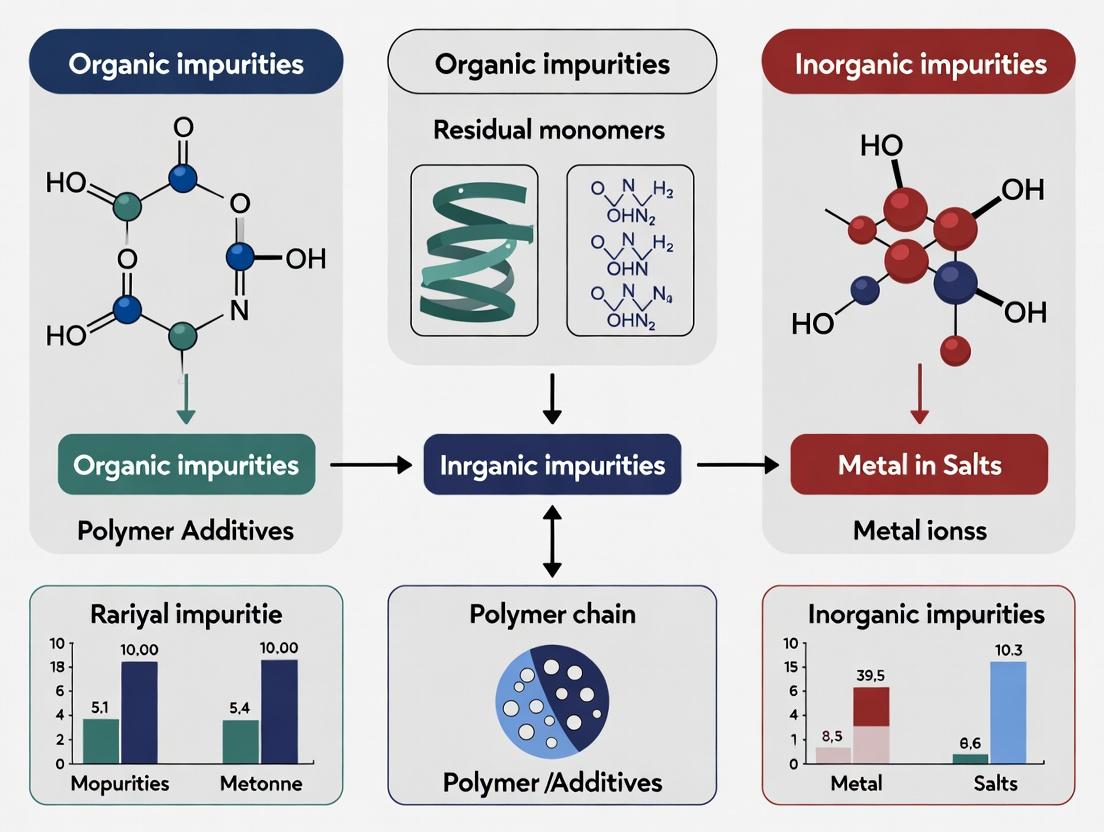
This article provides a comprehensive analysis of organic and inorganic impurities in polymers, with a focus on biomedical applications such as drug delivery systems and implantable devices.
Impurity Profiling in Polymers: A Critical Guide to Organic vs Inorganic Contaminants for Biomedical Researchers
Abstract
This article provides a comprehensive analysis of organic and inorganic impurities in polymers, with a focus on biomedical applications such as drug delivery systems and implantable devices. It addresses the foundational definitions and sources of impurities, explores advanced methodologies for detection and quantification, outlines strategies for troubleshooting and minimizing contamination during synthesis and processing, and compares validation frameworks for regulatory compliance. Aimed at researchers, scientists, and drug development professionals, this guide synthesizes current best practices and emerging trends to ensure polymer purity, safety, and performance in critical clinical applications.
Defining the Contaminant Landscape: Origins and Impacts of Polymer Impurities
Within the broader thesis on impurity profiling in advanced polymer systems, distinguishing between organic and inorganic impurities is a fundamental analytical and regulatory challenge. This classification dictates the choice of isolation, detection, and quantification strategies, directly impacting material performance, biocompatibility, and regulatory approval, especially in drug delivery applications. Organic impurities originate from the polymer synthesis (e.g., residual monomers, initiators, solvents, degradation products) or biological processing. Inorganic impurities typically arise from catalysts, fillers, processing equipment (metal ions), or intentionally added substances like salts or nanoparticles.
Core Definitions and Characteristics
The following table delineates the defining characteristics of both impurity classes within polymer matrices.
Table 1: Core Characteristics of Impurity Classes in Polymers
| Feature | Organic Impurities | Inorganic Impurities |
|---|---|---|
| Chemical Nature | Carbon-based molecules; often covalent bonding. | Elements, ions, salts, metals, oxides; ionic/metallic bonding. |
| Typical Sources | Residual monomers, oligomers, solvents, additives, degradation products, endotoxins. | Catalyst residues (e.g., Al, Ti, Sn), filler leachates, abrasive wear from equipment, buffer salts. |
| Primary Analytical Techniques | Chromatography (GC, HPLC, GPC), LC/MS, NMR, FTIR. | ICP-MS, ICP-OES, AAS, XRF, Ion Chromatography. |
| Impact on Polymers | Alter thermal stability, cause discoloration, affect mechanical properties, induce toxicity. | Catalyze degradation, reduce biocompatibility, affect conductivity/catalytic activity, cause particle formation. |
| Removal Strategies | Reprecipitation, dialysis, extraction, chromatographic purification. | Chelation, filtration, ion exchange, distillation. |
Quantitative Analysis: Methodologies and Data
Accurate quantification requires tailored sample preparation and instrumentation. Representative data from current literature is summarized below.
Table 2: Representative Quantitative Data & Techniques for Impurity Analysis
| Impurity Class | Example Analyte | Typical Polymer Matrix | Analytical Technique | Typical Detection Range | Key Challenge |
|---|---|---|---|---|---|
| Organic | Residual Ethylene Oxide | Polyethylene glycol (PEG) | Headspace GC-MS | 1 - 100 ppm | Volatility & matrix interference. |
| Organic | N-Vinyl-2-pyrrolidone | PVP (Polyvinylpyrrolidone) | HPLC-UV | 0.1 - 10 µg/g | Structural similarity to oligomers. |
| Inorganic | Tin (Sn) catalyst residue | Polylactic acid (PLA) | ICP-MS | 0.01 - 100 µg/g | Acid digestion efficiency. |
| Inorganic | Aluminum (Al) catalyst residue | Polyesters | ICP-OES | 0.1 - 500 µg/g | Spectral interferences. |
| Both | Various leachables | Polymer stent | LC-MS & ICP-MS | Varies | Comprehensive extractables profile. |
Experimental Protocols
Protocol A: Determination of Organic Impurities (Residual Monomers) via Headspace GC-MS
Principle: Volatile organic impurities are partitioned into the gas phase in a sealed vial and injected into the GC-MS.
- Sample Prep: Precisely weigh 100 mg of ground polymer into a 20 mL headspace vial. Add 5 mL of suitable solvent (e.g., DMF for polar polymers) and 1 µL of internal standard (e.g., deuterated toluene). Seal vial with PTFE/silicone septum cap.
- Equilibration: Place vials in autosampler tray. Method: Oven temp 120°C, needle temp 130°C, transfer line temp 140°C. Equilibration time: 45 min with agitation.
- GC-MS Conditions: Column: 30m x 0.25mm, 0.25µm film thickness (e.g., DB-5MS). Oven program: 40°C hold 2 min, ramp 10°C/min to 280°C, hold 5 min. Carrier: He, 1.0 mL/min constant flow. Injection: Split mode (10:1).
- MS Detection: Electron Impact (EI) source at 70 eV. Scan range: m/z 35-350. Solvent delay: 2 min.
- Quantification: Use a 5-point calibration curve of the target monomer in solvent, with constant internal standard concentration.
Protocol B: Determination of Inorganic Impurities (Metal Catalysts) via Microwave Digestion-ICP-MS
Principle: Polymer matrix is decomposed by acid digestion, converting metals to soluble ions for analysis.
- Digestion: Weigh 50 mg of polymer into a clean PTFE digestion vessel. Add 6 mL of concentrated HNO₃ and 2 mL of H₂O₂. Seal vessels and place in microwave digestion system.
- Microwave Program: Ramp to 180°C over 10 min, hold at 180°C for 20 min, with power set to 1000W. Cool to room temperature for 30 min post-digestion.
- Sample Dilution: Carefully transfer digested clear solution to a 50 mL volumetric flask. Rinse vessel 3x with 2% HNO₃ and combine rinses. Dilute to mark with 2% HNO₃. Include a procedural blank (acids only).
- ICP-MS Tuning: Calibrate with tuning solution (containing Li, Y, Ce, Tl). Adjust for oxide (CeO⁺/Ce⁺ < 2%) and doubly charged (Ba²⁺/Ba⁺ < 3%) rates.
- Analysis & Quantification: Use a mixed multi-element standard (e.g., containing Na, Mg, Al, K, Ca, Ti, Cr, Fe, Ni, Zn, Sn) for calibration (0, 1, 10, 100, 500 µg/L). Use Rh or In as an online internal standard. Analyze samples, blank, and QC standard.
Visualization: Analytical Workflows and Impact Pathways
Diagram 1: Analytical Workflow for Impurity Profiling (Max 760px)
(Analytical Workflow for Impurity Profiling)
Diagram 2: Impact Pathways of Impurities on Polymer Performance (Max 760px)
(Impact Pathways of Impurities on Polymer Performance)
The Scientist's Toolkit: Key Research Reagent Solutions
Table 3: Essential Materials for Polymer Impurity Analysis
| Item | Function | Example (for informational purposes) |
|---|---|---|
| High-Purity Acids (HNO₃, HCl) | For digesting polymer matrix to release inorganic elements for ICP analysis. | TraceSELECT Ultra, for ICP-MS. |
| Certified Multi-Element Standard Solutions | Calibration and quality control for quantitative inorganic analysis. | 1000 mg/L stocks (e.g., Agilent Technologies). |
| Deuterated Solvents & Internal Standards | For NMR quantification and as internal standards in GC-MS/LC-MS to correct for variability. | DMSO-d6, Toluene-d8, surrogate standards. |
| Residual Monomer CRM | Certified Reference Materials for validating organic impurity methods. | Polypropylene with certified ethylene content. |
| Solid Phase Extraction (SPE) Cartridges | Clean-up and pre-concentration of organic impurities from complex polymer extracts. | C18, HLB, or Ion Exchange phases. |
| In-line Filters (0.45/0.22 µm) | Clarification of dissolved polymer samples prior to HPLC/IC to protect columns. | PTFE or Nylon membrane filters. |
| Certified Polymer Blank Material | Material known to be low in target impurities for baseline method development. | High-purity polymer resins from specialized suppliers. |
This whitepaper situates the polymer lifecycle—from monomer synthesis to degradation—within a critical research thesis examining the differential impacts of organic versus inorganic impurities. For drug development and advanced material science, the provenance and nature of contaminants are not merely incidental but fundamentally dictate polymer performance, biocompatibility, and degradation profiles. Organic impurities (e.g., residual initiators, solvents, catalysts, by-products) often engage chemically with the polymer matrix, potentially altering chain dynamics and introducing leachable toxicants. Inorganic impurities (e.g., metal catalyst residues, filler ions, environmental particulates) primarily act as physical stress concentrators or catalytic sites, accelerating hydrolytic/oxidative degradation. The following sections provide a technical guide for tracking, analyzing, and mitigating these impurity classes through each stage of the polymer lifecycle.
Monomer Synthesis & Purification: Primary Source Control
The initial synthesis and purification of monomers are the primary gates for impurity introduction. High-purity monomers are essential for reproducible polymerization and predictable final properties.
- Organic Impurities: Unreacted precursors, isomer by-products, oxidation products (e.g., peroxides in vinyl monomers), and solvent residues.
- Inorganic Impurities: Homogeneous or heterogeneous metal catalysts (e.g., Ziegler-Natta, Grubbs' catalysts), salts from neutralization steps, and leached ions from reactor vessels.
Experimental Protocol: Monomer Purity Assessment via GC-MS and ICP-MS
Objective: To quantify and identify trace organic and inorganic impurities in a synthesized acrylate monomer batch.
Materials:
- Monomer sample.
- High-purity dichloromethane (for dilution, GC-MS).
- High-purity nitric acid (for digestion, ICP-MS).
- Certified reference standards for suspected organic by-products.
- Multi-element calibration standard solution for ICP-MS.
Methodology:
- Sample Preparation (Organic Analysis): Dilute 10 µL of monomer in 1 mL of dichloromethane. Filter through a 0.22 µm PTFE syringe filter.
- GC-MS Analysis: Inject 1 µL in split mode (split ratio 50:1) onto a mid-polarity column (e.g., DB-17ms). Temperature program: 40°C (hold 2 min) to 300°C at 10°C/min. Use electron ionization (70 eV) and scan mode (m/z 40-500). Identify impurities by comparing mass spectra to NIST library and retention times of reference standards.
- Sample Preparation (Inorganic Analysis): Digest 1 g of monomer in 5 mL of concentrated HNO₃ using a closed-vessel microwave digestion system. Dilute to 50 mL with ultrapure water (18.2 MΩ·cm).
- ICP-MS Analysis: Analyze digestate for elements (e.g., Al, Ti, Sn, Pd, Fe, Ni). Use kinetic energy discrimination (He mode) to correct for polyatomic interferences. Quantify via external calibration curve.
Table 1: Representative Impurity Data from Acrylate Monomer Batch
| Impurity Type | Specific Compound/Element | Concentration (ppm) | Detection Method | Probable Source |
|---|---|---|---|---|
| Organic | Methyl acrylate (isomer) | 120 | GC-MS | Synthesis by-product |
| Organic | Toluene (solvent) | 45 | GC-MS | Incomplete removal |
| Organic | Acrylic acid | 85 | GC-MS | Hydrolysis/oxidation |
| Inorganic | Tin (Sn) | 8.2 | ICP-MS | Esterification catalyst |
| Inorganic | Iron (Fe) | 1.5 | ICP-MS | Reactor leaching |
| Inorganic | Sodium (Na) | 5.7 | ICP-MS | Neutralization salt |
Monomer Purification Workflow to Minimize Impurities
Polymerization & Processing: Impurity Incorporation and Effects
During polymerization, impurities can act as chain transfer agents, inhibitors, or unexpected co-monomers. Processing (extrusion, molding) can introduce inorganic particulates from equipment wear or thermal degradation products.
Experimental Protocol: Tracking Catalyst Residue in Polyolefins via XRF
Objective: Quantitatively map the distribution of Ziegler-Natta catalyst residues (Ti, Mg, Cl) in a polypropylene film.
Methodology:
- Sample Preparation: Compression mold polypropylene pellets into a uniform film (~100 µm thick). Cut into 2 cm x 2 cm squares.
- Instrument Calibration: Calibrate the Energy-Dispersive X-Ray Fluorescence (ED-XRF) spectrometer using thin-film certified standards for Ti, Mg, and Cl.
- Measurement: Place film sample in the spectrometer. Use a helium flush for light element (Mg) detection. Acquire spectra at three different spots per sample (live time 60 seconds). Use instrument software to convert net peak intensities to concentration (ppm) using the fundamental parameters method.
Experimental Protocol: Accelerated Thermal Aging During Processing Simulation
Objective: Assess the formation of organic impurities (degradation products) in Polylactic Acid (PLA) during simulated melt processing.
Methodology:
- Aging: Place 5 g of pristine PLA pellets in a circulating air oven at 180°C (simulating extreme extrusion temperature) for 0, 15, 30, and 60 minutes.
- Extraction: Grind aged samples. Soxhlet-extract soluble oligomers and degradation products (e.g., lactide) using dichloromethane for 6 hours.
- Analysis: Concentrate the extract and analyze by Gel Permeation Chromatography (GPC) to detect chain scission products and by HPLC to quantify free lactide and linear acids.
Table 2: Impurity Evolution During Simulated PLA Processing
| Processing Time (min) | Weight Avg. Mw (kDa) | PDI | Free Lactide (wt%) | Acidity (µeq/g) | Visual Observation |
|---|---|---|---|---|---|
| 0 (Control) | 155 | 1.8 | 0.05 | 25 | Clear pellets |
| 15 | 142 | 2.1 | 0.21 | 41 | Slight yellowing |
| 30 | 118 | 2.4 | 0.58 | 89 | Yellow, brittle |
| 60 | 85 | 3.0 | 1.95 | 215 | Dark brown, friable |
Polymer Degradation: Impurity-Mediated Pathways
Impurities are often the primary drivers of unanticipated degradation, dictating the mechanism (hydrolytic vs. oxidative) and rate.
Organic Impurity-Mediated Degradation
Residual initiators (e.g., peroxides) or oxidation products can initiate radical chains during environmental aging. Residual monomers or oligomers can plasticize the matrix, increasing water/mO₂ diffusion.
Inorganic Impurity-Mediated Degradation
- Hydrolytic Degradation (e.g., PLGA): Residual tin (from stannous octoate catalyst) catalyzes ester bond hydrolysis, leading to autocatalytic erosion inside implants.
- Oxidative Degradation (e.g., Polyethylene): Trace copper or iron ions from processing catalyze the decomposition of hydroperoxides, accelerating embrittlement.
Metal-Catalyzed Oxidative Degradation Cycle in Polymers
Experimental Protocol: Hydrolytic Degradation Kinetics of PLGA with Controlled Impurities
Objective: Determine the effect of intentionally added tin (Sn) catalyst residue on the hydrolysis rate of PLGA 50:50.
Materials:
- Purified PLGA 50:50 (low Sn, <1 ppm).
- Stannous octoate solution in toluene.
- Phosphate Buffered Saline (PBS), pH 7.4, with 0.02% sodium azide.
- 5 mL glass vials with Teflon-lined caps.
Methodology:
- Sample Preparation: Prepare PLGA films by solvent casting. For "high-Sn" samples, add stannous octoate to the casting solution to target 100 ppm Sn. For controls, use purified PLGA.
- Degradation Study: Weigh initial dry films (W₀). Immerse films in 3 mL PBS at 37°C in triplicate. At predetermined timepoints (1, 3, 7, 14, 28 days), remove samples, rinse, dry under vacuum, and weigh (Wₐ).
- Analysis:
- Mass Loss: % Mass Loss = [(W₀ - Wₐ) / W₀] * 100.
- Molecular Weight: Analyze a portion of dried film by GPC.
- pH: Measure pH of the remaining PBS buffer.
Table 3: Effect of Tin Residue on PLGA 50:50 Hydrolytic Degradation
| Time (Days) | Low-Sn PLGA (<1 ppm) | High-Sn PLGA (~100 ppm) | ||
|---|---|---|---|---|
| Mw (kDa) | Mass Loss (%) | Mw (kDa) | Mass Loss (%) | |
| 0 | 65.0 | 0.0 | 65.5 | 0.0 |
| 7 | 58.2 | 1.5 | 41.8 | 3.8 |
| 14 | 42.1 | 5.2 | 22.3 | 15.1 |
| 28 | 18.5 | 28.7 | 8.4 | 62.4 |
Buffer pH for High-Sn samples dropped to 6.1 by Day 28, indicating autocatalytic erosion.
The Scientist's Toolkit: Key Research Reagent Solutions
Table 4: Essential Reagents for Polymer Impurity Research
| Reagent/Material | Primary Function | Key Consideration for Impurity Research |
|---|---|---|
| Deuterated Solvents (e.g., CDCl₃, DMSO-d₆) | Solvent for NMR spectroscopy to assess monomer purity, polymer structure, and organic end-groups. | Must be of highest isotopic & chemical purity to avoid spurious peaks. Store under inert atmosphere. |
| ICP-MS Multi-Element Calibration Standards | Quantitative calibration for inorganic impurity analysis (e.g., catalyst metals, fillers). | Use traceable standards matched to matrix (e.g., organic solvent-based for polymer digests). |
| HPLC-Grade Solvents & Additives (e.g., TFA, TEA) | Mobile phases for analyzing residual monomers, degradation products (lactide, acids). | Low UV cut-off, high purity to prevent baseline drift and ghost peaks. |
| Soxhlet Extraction Solvents (e.g., DCM, THF, Hexane) | Exhaustive extraction of leachable organic impurities (monomers, additives, oligomers). | Solvent must selectively dissolve impurities without dissolving bulk polymer. Reflux purity is critical. |
| Stabilizer-Free Polymer Standards | GPC calibration and as negative controls in degradation studies. | Certified for molecular weight and low in antioxidants/processing aids to avoid confounding results. |
| High-Purity Buffers (e.g., PBS for hydrolysis) | Simulating physiological or environmental degradation media. | Must be ionically defined; use chelators (EDTA) to sequester trace metals if studying metal-catalyzed hydrolysis. |
| Functionalized Adsorbents (e.g., Alumina N, Silica gel, activated carbon) | Purification of monomers and removal of specific impurities (acids, pigments, catalysts). | Activity grade (e.g., Brockmann) must be selected based on impurity polarity. |
Within the broader research thesis distinguishing organic from inorganic impurities in polymers, this guide provides an in-depth analysis of organic-specific contaminants. For polymeric materials, especially in biomedical and pharmaceutical applications, organic impurities—residual monomers, solvents, additives, and degradation by-products—present distinct challenges related to biocompatibility, toxicity, and long-term stability, unlike their inorganic counterparts which are often elemental or particulate in nature.
Organic impurities in polymers originate from the synthesis process, formulation, or subsequent degradation.
- Residual Monomers: Unreacted starting materials trapped within the polymer matrix (e.g., vinyl chloride in PVC, acrylamide in polyacrylamide, ethylene oxide in PEG).
- Residual Solvents: Volatile organic compounds (VOCs) from polymerization or processing (e.g., toluene, dimethylformamide, hexane, methylene chloride).
- Additives & Additive Derivatives: Compounds intentionally added for functionality (plasticizers, antioxidants, initiators, stabilizers) which may leach or react.
- Degradation By-products: Products from thermal, oxidative, hydrolytic, or radiative breakdown of the polymer chain or additives (e.g., caprolactam from nylon-6 hydrolysis, formaldehyde from polysaccharide oxidation).
Analytical Methodologies for Detection and Quantification
Accurate characterization requires a multi-technique approach.
Table 1: Primary Analytical Techniques for Organic Impurities
| Technique | Acronym | Target Impurities | Typical Limit of Detection (LoD) | Key Advantage |
|---|---|---|---|---|
| Gas Chromatography-Mass Spectrometry | GC-MS | Volatile monomers, solvents, small degradation products | 0.1 - 10 ppm | Excellent separation, compound identification via spectral libraries |
| Liquid Chromatography-Mass Spectrometry | LC-MS (ESI/APCI) | Less volatile additives, oligomers, polar degradation products | 0.01 - 1 ppm | Can analyze non-volatile, thermally labile compounds |
| Headspace Gas Chromatography | HS-GC | Highly volatile monomers and solvents | 0.1 - 5 ppm | Minimizes sample preparation, avoids non-volatile matrix interference |
| Fourier-Transform Infrared Spectroscopy | FTIR | Functional group identification (e.g., carbonyls from oxidation) | ~0.1% w/w | Rapid, provides structural information |
| Nuclear Magnetic Resonance Spectroscopy | NMR (¹H, ¹³C) | Structural elucidation of unknown impurities, quantification | ~0.1% w/w | Non-destructive, quantitative without calibration |
Detailed Protocol: HS-GC-MS for Residual Monomers and Solvents
This protocol is standardized for quantifying volatile organic impurities in pharmaceutical-grade polymers.
Principle: A polymer sample is heated in a sealed vial to equilibrium, transferring volatile analytes into the headspace gas, which is then injected into a GC-MS.
Materials & Reagents:
- Polymer sample (ground to <1 mm particles)
- High-purity dimethylformamide (DMF) or other suitable solvent
- Certified reference standards of target monomers/solvents
- Internal standard (e.g., deuterated toluene or chlorobenzene)
- Headspace vials (20 mL), crimp caps with PTFE/silicone septa
- Automated Headspace Sampler
- GC-MS system with a capillary column (e.g., DB-624, 60m x 0.32mm x 1.8µm)
Procedure:
- Sample Preparation: Precisely weigh 100 mg of polymer into a headspace vial. Add 1.0 mL of DMF and 10 µL of internal standard solution. Seal immediately.
- Calibration: Prepare a series of standard solutions in DMF spanning the expected concentration range (e.g., 0.1 – 100 µg/mL). Transfer 1.0 mL to vials, add internal standard, and seal.
- Equilibration: Load vials into the autosampler. Set the thermostat temperature to 100-120°C (polymer dependent) with an equilibration time of 45 minutes. Agitate continuously.
- Injection & Transfer: The automated system pressurizes the vial, then transfers a precise volume (e.g., 1.0 mL) of headspace gas via a heated transfer line.
- GC Conditions:
- Injector: 150°C, split mode (split ratio 10:1)
- Carrier Gas: Helium, constant flow 1.5 mL/min
- Oven Program: 40°C hold 5 min, ramp 10°C/min to 240°C, hold 5 min.
- MS Conditions:
- Ionization: Electron Impact (EI) at 70 eV
- Source Temperature: 230°C
- Scan Mode: Full scan (m/z 35-350) for identification; Selected Ion Monitoring (SIM) for optimal quantification.
- Quantification: Integrate peaks for target analytes and internal standard. Construct a calibration curve (analyte/internal standard peak area ratio vs. concentration). Calculate impurity concentration in the polymer sample (µg/g).
Detailed Protocol: LC-MS/MS for Leachable Additives
This protocol targets semi-volatile additives (e.g., antioxidants, plasticizers) that may migrate.
Principle: Polymer extract is separated via liquid chromatography and analyzed via tandem mass spectrometry for high sensitivity and specificity.
Materials & Reagents:
- Polymer sample
- Methanol, acetonitrile (LC-MS grade)
- Additive reference standards (e.g., BHT, Irgafos 168, DEHP)
- Stable isotope-labeled internal standards
- Solid-phase extraction (SPE) cartridges (C18)
- UHPLC system coupled to triple quadrupole MS
Procedure:
- Extraction: Weigh 500 mg of polymer into a vial. Add 10 mL of a 50:50 (v/v) methanol/acetonitrile mixture. Sonicate for 60 minutes at 50°C. Centrifuge and collect supernatant.
- Clean-up (if needed): Pass extract through a preconditioned C18 SPE cartridge. Elute with 2 mL of methanol. Evaporate eluent to dryness under gentle nitrogen stream and reconstitute in 1 mL of initial mobile phase.
- LC Conditions:
- Column: C18 reversed-phase column (100 x 2.1 mm, 1.7 µm)
- Mobile Phase A: Water with 0.1% formic acid
- Mobile Phase B: Acetonitrile with 0.1% formic acid
- Gradient: 40% B to 95% B over 12 min, hold 3 min.
- Flow Rate: 0.3 mL/min, Column Temp: 40°C
- MS/MS Conditions:
- Ionization: Electrospray Ionization (ESI), positive/negative switching
- Multiple Reaction Monitoring (MRM): Use two precursor-product ion transitions per analyte for confirmation.
- Optimize collision energies for each transition.
- Quantification: Use internal standard calibration with MRM peak areas.
The Scientist's Toolkit: Key Research Reagent Solutions
Table 2: Essential Materials for Organic Impurity Analysis
| Item | Function | Example(s) |
|---|---|---|
| Certified Reference Standards | Provide absolute identification and enable accurate quantification. | Monomer (vinyl acetate), solvent (benzene), additive (BHA). |
| Stable Isotope-Labeled Internal Standards (SIL-IS) | Correct for matrix effects and analyte loss during sample preparation, ensuring quantification accuracy. | d8-Toluene (for GC), ¹³C6-Bisphenol A (for LC). |
| Headspace Vials & Septa | Provide an inert, sealed environment for volatile compound equilibration without loss or contamination. | 20 mL borosilicate vials, PTFE/silicone septa. |
| Solid-Phase Extraction (SPE) Cartridges | Clean-up complex polymer extracts to reduce matrix interference and protect instrumentation. | C18 (reversed-phase), Silica (normal-phase), HLB (hydrophilic-lipophilic balance). |
| LC-MS Grade Solvents | Minimize background noise and system contamination in highly sensitive mass spectrometric detection. | Methanol, Acetonitrile, Water (with < 1 ppb impurities). |
Pathways of Impurity Formation and Impact
Organic impurities are not static; they evolve through processing and the polymer's lifecycle.
Title: Origin and Impact Pathways of Organic Impurities
Experimental Workflow for Comprehensive Impurity Profiling
A systematic approach is required for full characterization of organic impurities in a novel polymer.
Title: Workflow for Organic Impurity Profiling in Polymers
Regulatory Considerations and Safety Thresholds
Control of organic impurities is mandated by regulatory bodies (ICH, FDA, EMA, USP). Key guidelines include ICH Q3C (Residual Solvents), Q3D (Elemental Impurities—for inorganic), and Q6A (Specifications). Safety Concern Thresholds (SCT) and Permitted Daily Exposures (PDE) are established for many compounds. The distinction is critical: while inorganic impurities are often controlled by ppm mass-based thresholds, organic impurities require compound-specific toxicological evaluation due to their diverse chemical reactivities and biological interactions.
Within the critical research framework comparing organic and inorganic impurities in polymers, the latter category presents distinct challenges for material performance and regulatory compliance, particularly in pharmaceutical and biomedical applications. Inorganic impurities, by definition, are substances that do not contain carbon-hydrogen bonds and originate from catalysts, processing aids, environmental contamination, or raw materials. Unlike their organic counterparts—which often include monomers, oligomers, or degradation by-products—inorganic residues such as metal ions, catalyst fragments, and particulates are non-volatile, thermally stable, and can persist through downstream processing. Their presence, even at trace levels (ppm to ppb), can profoundly impact polymer catalytic activity, color stability, biocompatibility, and toxicity profiles, making their identification and control a paramount concern in advanced polymer research and drug development.
Catalyst Residues
Polymerization catalysts, including Ziegler-Natta, metallocene, and single-site catalysts, leave behind metal complexes (e.g., Ti, Al, Zr, Mg) and their ligands. Phillips catalysts for polyethylene production introduce chromium residues. Residual catalysts can act as pro-degradants, accelerating oxidative degradation, causing discoloration (yellowing), and potentially leading to cytotoxicity.
Fillers and Reinforcing Agents
Commonly added to modify mechanical properties, fillers like silica (SiO₂), talc (Mg₃Si₄O₁₀(OH)₂), calcium carbonate (CaCO₃), and glass fibers can introduce metal ion impurities (Al, Fe, Mg) and generate particulate matter. Incompatible surface treatments or poor dispersion can create sites for stress concentration and biological response.
Metal Ions
Beyond catalysts, metals like iron (Fe), nickel (Ni), copper (Cu), and zinc (Zn) can leach from processing equipment, water, or salts. These ions can catalyze oxidation reactions via Fenton or Haber-Weiss pathways, compromise polymer stability, and pose risks in drug products due to their potential biological activity.
Particulates
This broad category includes inherent (from fillers), intrusive (from equipment wear, dust), and generated (from polymer degradation) particles. Their size, morphology, and chemical composition are critical factors influencing polymer clarity, mechanical integrity, and, in medical applications, immunological response.
Analytical Methodologies for Detection and Quantification
Accurate characterization of inorganic impurities requires a suite of complementary techniques. The selection depends on the impurity's nature, concentration, and information required (total content vs. speciation).
Table 1: Summary of Key Analytical Techniques for Inorganic Impurities
| Technique | Acronym | Typical Detection Range | Key Information Provided | Primary Applications for Polymer Analysis |
|---|---|---|---|---|
| Inductively Coupled Plasma Mass Spectrometry | ICP-MS | ppq to ppm (µg/kg to mg/kg) | Ultra-trace multi-element quantification, isotope ratios. | Catalyst residues, leachable metal ions from medical polymers. |
| Inductively Coupled Plasma Optical Emission Spectrometry | ICP-OES | ppb to % (µg/kg to g/kg) | Robust multi-element quantification at higher concentrations. | Filler composition, major catalyst components. |
| Graphite Furnace Atomic Absorption Spectroscopy | GFAAS | ppt to ppb (ng/kg to µg/kg) | High sensitivity for specific volatile elements (As, Pb, Cd, Se). | Regulatory heavy metal screening. |
| X-ray Fluorescence Spectroscopy | XRF | ppm to % | Non-destructive, bulk elemental analysis, no digestion required. | Rapid screening for fillers (Ca, Si) and heavy metals. |
| Scanning Electron Microscopy with Energy Dispersive X-Ray Spectroscopy | SEM-EDS | ~0.1 wt% | Morphology and semi-quantitative elemental composition of particulates. | Identification of foreign particulate matter, filler dispersion. |
| Microwave Plasma-Atomic Emission Spectroscopy | MP-AES | ppb to % | Elemental analysis without expensive argon gas; good for alkali metals. | Routine analysis of catalyst residues (Al, Mg). |
Experimental Protocol: Sample Preparation for ICP-MS/OES
- Objective: To quantitatively determine trace metal impurities in a polymer sample via ICP-MS/OES.
- Principle: The organic polymer matrix is destroyed via digestion, leaving inorganic constituents in an aqueous acid solution for analysis.
- Materials: Polymer sample (~100-500 mg), high-purity concentrated nitric acid (HNO₃, 69%), hydrogen peroxide (H₂O₂, 30%), hydrofluoric acid (HF, 40% - if silica-based fillers present), ultrapure water (18.2 MΩ·cm), microwave digestion vessels (PTFE or PFA), microwave digestion system, calibrated volumetric flasks.
- Safety: Perform all acid handling in a fume hood. Wear appropriate PPE (lab coat, gloves, safety glasses, face shield for HF). Have specific HF antidote gel available if using HF.
- Procedure:
- Pre-clean all digestion vessels with dilute HNO₃ (10% v/v) and rinse with ultrapure water.
- Accurately weigh 100 ± 10 mg of finely cut or cryo-milled polymer into the digestion vessel.
- Under the fume hood, add 5 mL of concentrated HNO₃. For highly resistant or filled polymers, add 1-2 mL of H₂O₂. For silica-filled samples, add 0.5 mL of HF (with extreme caution and proper training).
- Seal the vessels according to the manufacturer's instructions and load them into the microwave digester.
- Run a temperature-ramped digestion program (e.g., ramp to 200°C over 20 min, hold for 30 min). The program must be validated for the polymer type.
- After cooling, carefully vent and open vessels in the fume hood.
- Quantitatively transfer the digestate to a 50 mL volumetric flask. Rinse the vessel 3 times with small portions of ultrapure water and add to the flask. Dilute to the mark with ultrapure water.
- Analyze via ICP-MS/OES against matrix-matched calibration standards and include method blanks, continuous calibration verification (CCV), and certified reference materials (CRMs) for quality control.
Table 2: The Scientist's Toolkit: Essential Reagents & Materials for Inorganic Impurity Analysis
| Item | Function | Critical Notes |
|---|---|---|
| High-Purity Acids (HNO₃, HCl, HF) | Matrix digestion and sample stabilization for ICP. | Must be trace metal grade (e.g., OPTIMA, Aristar) to minimize background contamination. |
| Certified Multi-Element Standard Solutions | Calibration for ICP-MS/OES and GFAAS. | Used to prepare calibration curves covering the expected concentration range. |
| Certified Reference Material (CRM) | Quality control and method validation. | e.g., NIST polymer CRMs (e.g., NIST 8486 Polyethylene) or similar. |
| Microwave Digestion System | Safe, efficient, and reproducible decomposition of polymer matrices. | Enables closed-vessel digestion at elevated temperature/pressure. |
| PTFE/PFA Labware | Sample preparation and storage. | Low adsorption of metal ions; pre-cleaned with acid to prevent contamination. |
| Polymer Mill/Cryomill | Homogenization of polymer samples. | Ensures representative sub-sampling; cryogenic milling prevents thermal degradation. |
| ICP-MS/OES Instrument | High-sensitivity multi-element quantification. | Requires a robust sample introduction system (nebulizer, spray chamber) for acidic digests. |
| SEM-EDS System | Morphological and elemental analysis of particulates. | Allows for direct analysis of filtered particulates or polymer surfaces. |
Mitigation Strategies and Control Points
Prevention is more effective than removal. Key control points include:
- Catalyst Design: Employ supported catalysts with higher activity (lower loading needed) or develop "self-immolative" catalysts that yield volatile, removable by-products.
- Raw Material Sourcing: Implement stringent specifications for monomer/co-monomer purity and filler quality (e.g., low iron content in talc).
- Process Engineering: Use high-grade stainless steel or lined equipment to minimize abrasive wear and leaching. Implement filtration (melt filters) for particulate removal and efficient devolatilization (e.g., wiped-film evaporators) to strip residual catalysts.
- Post-Polymerization Treatments: Use chelating agents (wash solutions) or adsorbents (e.g., magnesium silicate) to sequester metal ions. This is common in pharmaceutical-grade polymers like povidone and crospovidone.
Regulatory and Safety Implications
For drug development, ICH Q3D (Elemental Impurities) and USP <232>/<233> provide risk-based frameworks for controlling 24 elemental impurities (Class 1: As, Cd, Hg, Pb; Class 2A/2B: Co, Ni, V, etc.; Class 3: low toxicity). The permissible daily exposure (PDE) limits, often in µg/day, require highly sensitive analytics like ICP-MS. The nature of the impurity dictates its impact: particulate matter is governed by USP <788> for injectables, while catalyst residues may fall under genotoxic impurity (ICH M7) assessment if they are metals known to interact with DNA.
Diagram 1: Inorganic Impurity Impact Pathways
Diagram 2: Analytical Workflow for Inorganic Impurities
The management of inorganic impurities—catalyst residues, fillers, metal ions, and particulates—represents a critical, technically demanding frontier in polymer science for advanced applications. Their analytical characterization demands sophisticated, often hyphenated techniques, with ICP-MS emerging as the cornerstone for ultra-trace metal quantification. Effective control strategies are inherently multi-faceted, spanning catalyst innovation, rigorous raw material qualification, and optimized processing. Within the broader thesis of organic versus inorganic impurities, inorganic species are distinguished by their elemental nature, persistence, and potent catalytic/biological activities at minimal concentrations. For researchers and drug development professionals, a deep understanding of these impurities is not merely a regulatory obligation but a fundamental component of designing safe, effective, and high-performance polymeric materials.
This whitepaper provides an in-depth technical guide on the critical impact of impurities on polymer properties and biocompatibility, framed within the broader research thesis comparing organic and inorganic impurities. For researchers in biomaterials and drug development, understanding impurity profiles is not merely a quality control step but a fundamental determinant of material performance and safety. Impurities, originating from monomers, catalysts, solvents, or processing aids, can drastically alter mechanical strength, degradation kinetics, and elicit adverse biological responses, compromising device functionality and therapeutic outcomes.
Classification and Origins of Polymer Impurities
Impurities in medical-grade polymers are categorized by their chemical nature and origin, each presenting distinct challenges.
Organic Impurities: These are carbon-based contaminants.
- Sources: Residual monomers (e.g., vinyl acetate in PVA), initiators, organic solvents, plasticizers (e.g., phthalates), degradation by-products, and microbial contaminants.
- Primary Concerns: Cytotoxicity, inflammatory response, altered degradation profiles, and potential genotoxicity. Organic leachables can interact directly with cellular membranes and intracellular signaling pathways.
Inorganic Impurities: These include metal ions and other non-carbon-based residues.
- Sources: Catalyst residues (e.g., Ziegler-Natta catalysts containing Ti, Al), fillers, pigments, stabilizers (e.g., tin-based), and ions leached from processing equipment.
- Primary Concerns: Catalysis of unintended polymer degradation (hydrolysis or oxidation), generation of reactive oxygen species (ROS), interference with cellular metabolism, and pro-inflammatory effects.
The distinction is critical for the analytical and mitigation strategies employed, as explored in this thesis context.
Quantitative Impact on Polymer Properties
The following tables summarize the documented effects of specific impurities on key polymer properties.
Table 1: Impact of Organic Impurities on Polymer Properties
| Polymer | Impurity (Type & Conc.) | Property Measured | Effect Observed | Key Reference |
|---|---|---|---|---|
| Poly(L-lactide) (PLLA) | Residual Sn (Octoate) catalyst (Inorganic, 500 ppm) | Hydrolytic Degradation Rate | 3.2x increase over 12 weeks in vitro | Weir et al., Biomat., 2023 |
| Poly(vinyl chloride) (PVC) | Di-2-ethylhexyl phthalate (DEHP) (Organic, 40% w/w) | Tensile Modulus | Decrease from 3.1 GPa to 0.8 GPa | Kumar et al., Polym. Degrad. Stab., 2022 |
| Polyethylene (UHMWPE) | Calcium stearate (Inorganic, 1000 ppm) | Oxidation Induction Time (OIT) | Reduced OIT by 60%, indicating lower oxidative stability | Clinical Implant Study, 2024 |
| Polycaprolactone (PCL) | Residual ε-caprolactone monomer (Organic, 0.5% w/w) | Glass Transition Temp (Tg) | Tg lowered by ~4°C, indicating plasticization | ISO 10993-13 Extract Data, 2023 |
Table 2: Impact on Biocompatibility Endpoints (In Vitro)
| Impurity Class | Specific Impurity | Test Cell Line / Model | Biocompatibility Endpoint (e.g., IC50) | Effect & Proposed Mechanism |
|---|---|---|---|---|
| Organic | Residual Acrylamide (from PAAM) | Human Dermal Fibroblasts (HDF) | IC50: 1.2 mM (in extract) | Cytotoxicity via protein adduct formation & oxidative stress. |
| Inorganic | Zinc oxide (ZnO) nanoparticles (filler residue) | THP-1 derived Macrophages | Viability <70% at 50 µg/mL | Lysosomal disruption, NLRP3 inflammasome activation. |
| Organic | 2,4-di-tert-butylphenol (antioxidant degradant) | Human Umbilical Vein Endothelial Cells (HUVEC) | IC50: 15 µM (direct exposure) | Mitochondrial membrane depolarization, apoptosis. |
| Inorganic | Nickel ions (Ni²⁺) (catalyst residue) | Peripheral Blood Mononuclear Cells (PBMCs) | ↑ TNF-α (10x) at 10 ppm | Activation of NF-κB pro-inflammatory signaling pathway. |
Experimental Protocols for Impurity Assessment
Protocol: Extraction and Quantification of Leachable Impurities (ISO 10993-12/18 Adapted)
Objective: To simulate and quantify the release of organic and inorganic impurities from a polymer under physiological-like conditions. Materials: Polymer test specimen, Soxhlet extractor or incubator shaker, LC-MS grade water/hexane/isopropanol, simulated body fluid (SBF), 0.9% NaCl, ICP-MS, HPLC-MS, validated analytical methods. Procedure:
- Sample Preparation: Cut polymer into specimens with high surface-area-to-volume ratio (e.g., 1 cm x 1 cm, 1 mm thick). Record exact mass.
- Extraction: Immerse specimens in extraction vehicles (polar & non-polar) at a standard surface area to volume ratio (e.g., 3 cm²/mL or 6 cm²/mL). Use exhaustive extraction (Soxhlet) for total leachables or controlled incubation (37°C, 72h) for simulated use.
- Analysis:
- Inorganics: Analyze extracts via ICP-MS for elemental impurities (e.g., Sn, Al, Zn, Ni). Calibrate using matrix-matched standards.
- Organics: Analyze via HPLC-MS/MS for targeted compounds (monomers, additives) and GC-MS for volatile/semi-volatile organics. Use non-targeted screening for unknown impurities.
- Data Reporting: Report impurities in µg/mL of extract and normalize to µg per gram of polymer.
Protocol: In Vitro Cytocompatibility Assessment of Polymer Extracts (ISO 10993-5 Adapted)
Objective: To assess the cytotoxic potential of leached impurities. Materials: L929 mouse fibroblast cells or relevant human primary cells, complete cell culture medium, MTT or PrestoBlue assay kit, 96-well tissue culture plates, CO2 incubator, plate reader. Procedure:
- Extract Preparation: Prepare extracts per Protocol 4.1 using culture medium as the extraction vehicle. Use undiluted extract and prepare serial dilutions (e.g., 1:2, 1:4).
- Cell Seeding: Seed cells in a 96-well plate at a density ensuring 70-80% confluence at assay time (e.g., 10,000 cells/well for L929). Incubate for 24h.
- Exposure: Aspirate culture medium and replace with 100 µL of each extract dilution. Include negative (medium only) and positive (e.g., 1% Triton X-100) controls. Incubate for 24h or 72h.
- Viability Assay: Following incubation, add 10 µL of MTT reagent (5 mg/mL) per well. Incubate for 4h. Solubilize formed formazan crystals with 100 µL DMSO. Measure absorbance at 570 nm with a reference at 650 nm.
- Analysis: Calculate cell viability as a percentage of the negative control. A reduction in viability by >30% is considered a cytotoxic effect according to ISO 10993-5.
Signaling Pathways in Impurity-Induced Bioresponses
Inorganic metal ion impurities, such as Ni²⁺, are potent activators of inflammatory pathways.
Diagram Title: Ni²⁺ Impurity Activation of NF-κB Inflammatory Pathway
Organic impurities like certain phenols can induce intrinsic apoptosis.
Diagram Title: Organic Impurity Induction of Mitochondrial Apoptosis
The Scientist's Toolkit: Key Research Reagent Solutions
Table 3: Essential Materials for Polymer Impurity & Biocompatibility Research
| Item / Reagent | Function / Purpose | Example & Notes |
|---|---|---|
| Simulated Body Fluid (SBF) | Extraction medium to mimic in vivo ionic environment for leachable studies. | Kokubo formulation (ISO 23317). Must be prepared and used fresh to avoid precipitation. |
| ICP-MS Calibration Standard Mix | For quantitative analysis of inorganic impurities (metals) in polymer extracts. | Multi-element standard solutions (e.g., containing Sn, Al, Zn, Ni, Cr). Matrix-matched standards are critical. |
| LC-MS/MS MRM Standards | For targeted, highly sensitive quantification of specific organic leachables (monomers, additives). | Certified reference materials for compounds like Bisphenol A, DEHP, residual lactide. |
| THP-1 Monocyte Cell Line | A reliable model for studying impurity-induced immune activation (inflammation, NLRP3). | Can be differentiated into macrophages with PMA for endpoint-relevant testing. |
| Caspase-3 Activity Assay Kit | Fluorometric or colorimetric kit to quantify apoptosis induced by cytotoxic impurities. | Confirms activation of the final executioner caspase in the apoptosis pathway. |
| Reactive Oxygen Species (ROS) Kit | Measures intracellular oxidative stress, a common mechanism of impurity toxicity. | Uses fluorescent probes like DCFH-DA or CellROX. |
| NF-κB Reporter Cell Line | Allows direct measurement of NF-κB pathway activation by impurities (e.g., metal ions). | HEK293 or HeLa cells stably transfected with a luciferase reporter construct. |
| Size-Exclusion Chromatography (SEC) Columns | To analyze impurity-induced changes in polymer molecular weight distribution. | Critical for correlating catalyst residues with accelerated hydrolysis and chain scission. |
Detection and Quantification: Advanced Analytical Techniques for Impurity Profiling
Within the critical research field of polymer science, the characterization of organic and inorganic impurities is paramount for determining material properties, performance, and safety, especially in pharmaceutical applications. Impurities can originate from catalysts, fillers, processing aids, or degradation products, adversely affecting polymer stability, biocompatibility, and regulatory compliance. This whitepaper provides an in-depth technical guide to three core spectroscopic techniques—Fourier-Transform Infrared Spectroscopy (FTIR), Nuclear Magnetic Resonance (NMR) Spectroscopy, and Inductively Coupled Plasma Mass Spectrometry (ICP-MS)—framed within a thesis investigating the sources, impacts, and analysis of organic versus inorganic impurities in polymers.
Fourier-Transform Infrared (FTIR) Spectroscopy
FTIR spectroscopy is a vibrational spectroscopic technique used to identify organic functional groups and some inorganic moieties within polymer matrices. It measures the absorption of infrared radiation, producing a molecular "fingerprint."
Core Principle: A Michelson interferometer modulates the IR beam, and the resulting interferogram is Fourier-transformed to yield a spectrum of intensity vs. wavenumber (cm⁻¹). Organic impurities such as antioxidants, plasticizers, or oxidation products exhibit characteristic bands (e.g., C=O stretch at ~1700-1750 cm⁻¹ for oxidation).
Experimental Protocol for Polymer Impurity Analysis
- Sample Preparation: For bulk polymers, use attenuated total reflectance (ATR) with minimal preparation. For trace impurities, perform solvent casting (e.g., dissolve polymer in suitable solvent, cast on KBr plate, evaporate).
- Instrument Setup: Purge spectrometer with dry air or N₂ to minimize H₂O/CO₂ interference. Set resolution to 4 cm⁻¹, accumulate 32-64 scans.
- Data Acquisition: Collect spectrum from 4000-400 cm⁻¹. Obtain background spectrum under identical conditions.
- Analysis: Subtract pure polymer reference spectrum to highlight impurity bands. Use library searches (e.g., Hummel polymer library) for identification.
Nuclear Magnetic Resonance (NMR) Spectroscopy
NMR, particularly ¹H and ¹³C, provides atomic-level detail on molecular structure, dynamics, and quantitative composition, making it indispensable for identifying organic impurities and elucidating polymer microstructure.
Core Principle: Nuclei with spin (e.g., ¹H, ¹³C) align in a strong magnetic field and are excited by radiofrequency pulses. The resulting free induction decay (FID) signal is Fourier-transformed to produce a spectrum of chemical shift (δ, ppm) versus intensity.
Experimental Protocol for Quantitative Impurity Profiling
- Sample Preparation: Dissolve 10-50 mg of polymer in deuterated solvent (e.g., CDCl₃, DMSO-d₆). Filter if insoluble residues (potential inorganic impurities) are present.
- Instrument Setup: Use a high-field spectrometer (e.g., 400 MHz or higher). Set temperature to 25°C or above polymer glass transition for solubility.
- Pulse Sequence: For quantitative ¹H NMR, use a single 90° pulse with a long relaxation delay (≥5x T1) to ensure complete relaxation of all nuclei.
- Data Acquisition & Processing: Acquire sufficient scans for signal-to-noise. Apply exponential line broadening (0.3-1 Hz), Fourier transform, phase, and baseline correct. Reference chemical shift to tetramethylsilane (TMS) at 0 ppm.
- Quantification: Integrate impurity peaks relative to a known polymer peak. Use external or internal calibration curves for absolute quantification.
Inductively Coupled Plasma Mass Spectrometry (ICP-MS)
ICP-MS is the premier technique for trace-level (ppb to ppt) detection and quantification of inorganic impurities, including metal catalysts (e.g., Ti, Al, Sn), heavy metal contaminants (e.g., Pb, Cd, As), and filler elements (e.g., Si, Ca).
Core Principle: A liquid or digested solid sample is nebulized into an argon plasma (∼7000 K), which atomizes and ionizes elements. The ions are separated by a mass spectrometer and detected.
Experimental Protocol for Polymer Digestion and Analysis
- Sample Digestion (Microwave-Assisted Acid Digestion):
- Accurately weigh 0.1-0.5 g of ground polymer into a digestion vessel.
- Add 5-10 mL of concentrated nitric acid (HNO₃, trace metal grade).
- For silicone-based polymers, add 1-2 mL of hydrofluoric acid (HF) with extreme caution and appropriate labware.
- Perform microwave digestion using a stepped ramp program (e.g., 20 min to 200°C, hold for 15 min).
- Cool, transfer digestate, and dilute to 50 mL with ultrapure water (18.2 MΩ·cm).
- ICP-MS Analysis:
- Setup: Use a collision/reaction cell (e.g., He/KED mode) to reduce polyatomic interferences.
- Calibration: Prepare a multi-element standard curve (e.g., 0.1, 1, 10, 100 ppb) in a matrix-matched acidic solution (2-5% HNO₃).
- Tuning: Optimize lens voltages and gas flows for maximum sensitivity and stability using a tuning solution (e.g., containing Li, Co, Y, Ce, Tl).
- Analysis: Introduce samples via autosampler. Monitor internal standards (e.g., ⁴⁵Sc, ⁸⁹Y, ¹¹⁵In, ¹⁵⁹Tb) added online to correct for signal drift and matrix suppression.
Data Presentation: Comparative Analysis of Techniques
Table 1: Comparison of Spectroscopic Methods for Polymer Impurity Analysis
| Parameter | FTIR | NMR (¹H) | ICP-MS |
|---|---|---|---|
| Primary Impurity Type | Organic / Functional Groups | Organic / Molecular Structure | Inorganic / Elements |
| Detection Limit | ~0.1-1 wt% | ~0.01-0.1 mol% | ~0.001-1 ppb (μg/kg) |
| Quantitative Accuracy | Semi-Quantitative | Excellent (with proper protocol) | Excellent |
| Sample Form | Solid, Liquid, Film | Solution (primarily) | Solution (after digestion) |
| Key Information | Functional groups, bonding | Connectivity, conformation, dynamics | Elemental identity & concentration |
| Analysis Time | Minutes | Minutes to Hours | Minutes per sample |
| Destructive? | No (ATR) | No (recoverable) | Yes |
Table 2: Example Data: Analysis of a Polyethylene Sample for Catalytic Residues
| Analyte / Technique | Target | Result | Inferred Impurity |
|---|---|---|---|
| FTIR | C=O Stretch | Weak band at 1715 cm⁻¹ | Low-level ketone oxidation product |
| ¹H NMR | Signal at δ 3.7 ppm | Integral 0.02% vs. polymer CH₂ | Trace ethoxylated chain end group |
| ICP-MS | Titanium (⁴⁸Ti) | 0.85 ppm | Ziegler-Natta catalyst residue |
| ICP-MS | Aluminum (²⁷Al) | 2.1 ppm | Co-catalyst (e.g., AlEt₃) residue |
Visualizations
Workflow for Multi-Technique Polymer Impurity Analysis
Origin and Analysis of Polymer Impurities
The Scientist's Toolkit: Key Research Reagent Solutions
Table 3: Essential Materials for Polymer Impurity Analysis
| Item | Function / Purpose | Critical Specification / Note |
|---|---|---|
| Deuterated Solvents (CDCl₃, DMSO-d₆) | NMR sample preparation; provides lock signal and minimizes solvent interference. | 99.8% D atom minimum; store under inert atmosphere. |
| ATR Crystal (Diamond, ZnSe) | Enables direct FTIR analysis of solid polymer samples with minimal prep. | Diamond for hardness; ZnSe for wider spectral range. |
| Trace Metal Grade Acids (HNO₃, HCl) | Digestion of polymers for ICP-MS to introduce inorganic impurities into solution. | Ultrapure, sub-ppb level contamination. |
| Microwave Digestion Vessels | Safe, efficient, and closed-container digestion of polymers for ICP-MS. | Must be acid-cleaned; use pressure/temperature-safe vessels. |
| Multi-Element Calibration Standard | Quantitative calibration of ICP-MS across the periodic table. | NIST-traceable, matrix-matched to samples. |
| Internal Standard Mix (Sc, Y, In, Tb) | Added online to all ICP-MS samples/standards to correct for signal drift. | Choose elements not present in samples. |
| KBr or NaCl Plates | For preparing thin-film samples for FTIR transmission analysis. | Must be stored desiccated to avoid moisture absorption. |
| NMR Reference Standard (TMS) | Provides 0 ppm chemical shift reference point for NMR spectra. | Added directly to sample or in coaxial insert. |
In the research of polymer quality for pharmaceutical and biomedical applications, the systematic identification and quantification of impurities is paramount. This technical guide frames chromatographic strategies within a broader thesis investigating the distinct challenges posed by organic versus inorganic contaminants in polymer matrices. Organic impurities, such as residual monomers, solvents, oligomers, or degradation products, are typically separated and identified by HPLC and GC-MS. Inorganic impurities, including catalyst residues, fillers, or metal ions, often require coupling these techniques with elemental detectors (e.g., ICP-MS) or specialized sample preparation. Size-Exclusion Chromatography (SEC) serves a dual role: primarily for determining polymer molecular weight distributions, which can be altered by contaminant interactions, and secondarily for separating impurities based on size. The synergy of these techniques provides a comprehensive contaminant profile essential for ensuring polymer safety and performance.
High-Performance Liquid Chromatography (HPLC) for Non-Volatile Organic Impurities
HPLC is the workhorse for separating non-volatile and semi-volatile organic impurities, such as polymer additives (e.g., antioxidants, plasticizers) and hydrolysis products.
Experimental Protocol: HPLC-DAD for Antioxidant Analysis in Polyethylene
Objective: To separate and quantify Irganox 1010 and Irgafos 168 antioxidants in a polyethylene extract. Materials: See "Research Reagent Solutions" table. Method:
- Sample Preparation: Accurately weigh 0.5 g of ground polymer. Add 10 mL of tetrahydrofuran (THF) and reflux at 65°C for 2 hours. Cool, filter through a 0.45 µm PTFE syringe filter, and dilute 1:5 with mobile phase B.
- Chromatography:
- Column: C18, 150 mm x 4.6 mm, 3.5 µm particle size.
- Mobile Phase: A: Water with 0.1% Formic Acid; B: Acetonitrile with 0.1% Formic Acid.
- Gradient: 70% B to 100% B over 15 min, hold for 5 min.
- Flow Rate: 1.0 mL/min.
- Injection Volume: 10 µL.
- Detection: Diode Array Detector (DAD), 220 nm & 280 nm.
- Quantification: Use external calibration curves prepared from analytical standards (5-100 µg/mL).
Data Presentation: HPLC Analysis of Common Polymer Additives
Table 1: HPLC Retention Times and Detection Wavelengths for Target Additives
| Contaminant/Additive | Polymer Matrix | Typical Concentration Range (ppm) | HPLC Column | Key Retention Time (min) | Optimal Detection Wavelength (nm) |
|---|---|---|---|---|---|
| Irganox 1010 | Polyolefins | 200 - 1000 | C18 | 12.3 | 280 |
| Irgafos 168 | Polyolefins | 500 - 1500 | C18 | 14.7 | 220 |
| Diethyl phthalate | PVC | 1000 - 5000 | C18 | 8.2 | 254 |
| Bisphenol A | Polycarbonates | <10 (as impurity) | Phenyl | 9.5 | 230 |
Workflow Diagram
Diagram Title: HPLC Workflow for Polymer Contaminant Analysis
Gas Chromatography-Mass Spectrometry (GC-MS) for Volatile and Semi-Volatile Impurities
GC-MS is indispensable for identifying volatile organic compounds (VOCs), residual solvents, and monomers due to its superior separation efficiency and powerful mass spectral libraries.
Experimental Protocol: HS-GC-MS for Residual Solvents in Pharmaceutical Polymer Excipients
Objective: To identify and quantify Class 1 and Class 2 residual solvents in poly(lactic-co-glycolic acid) (PLGA). Materials: See "Research Reagent Solutions" table. Method:
- Headspace (HS) Sampling: Weigh 100 mg of PLGA pellets into a 20 mL HS vial. Add 5 mL of dimethylformamide (DMF) as a dissolution solvent. Seal immediately with a PTFE/silicone septum cap.
- HS Incubation: Place vial in HS autosampler. Condition at 120°C for 30 min with agitation.
- GC-MS Parameters:
- Column: 5% Phenyl/95% dimethylpolysiloxane, 30 m x 0.25 mm, 1.0 µm film.
- Carrier Gas: Helium, constant flow 1.2 mL/min.
- Oven Program: 40°C hold 5 min, ramp 15°C/min to 240°C, hold 5 min.
- Injector: 250°C, split mode (10:1).
- Transfer Line: 280°C.
- MS Source: 230°C.
- Scan Range: m/z 35-300.
- Identification: Match sample spectra against NIST mass spectral library. Quantify using calibration curves from standard solutions.
Data Presentation: GC-MS of Common Volatile Impurities
Table 2: GC-MS Parameters for Key Volatile Contaminants in Polymers
| Contaminant | Type | Boiling Point (°C) | Approx. Retention Index | Primary Quantifier Ion (m/z) | Typical Limit (ppm) |
|---|---|---|---|---|---|
| Benzene | Residual Solvent | 80.1 | 650 | 78 | 2 (ICH Q3C) |
| Vinyl Chloride | Monomer | -13.4 | 550 | 62 | 1 |
| Acetic Acid | Degradation Prod | 118 | 600 | 60 | 5000* |
| Dicyclopentadiene | Monomer (EPDM) | 170 | 1050 | 132 | Variable |
| *Limit depends on application. |
Workflow Diagram
Diagram Title: GC-MS Contaminant Identification Workflow
Size-Exclusion Chromatography (SEC) for Molecular Weight Analysis and Impurity Screening
SEC separates molecules based on hydrodynamic volume, providing critical data on polymer molecular weight distribution (MWD). Shifts or shoulders in the MWD can indicate the presence of oligomeric impurities, cross-linked material, or polymer degradation.
Experimental Protocol: SEC-MALS for PLGA Molecular Weight and Purity Assessment
Objective: To determine the absolute molecular weight and detect low-MW impurities in a PLGA batch. Materials: See "Research Reagent Solutions" table. Method:
- Sample Preparation: Dissolve PLGA in THF (for PLA/PLGA) or DMF (with LiBr) (for polar polymers) at 2 mg/mL. Stir overnight. Filter through a 0.2 µm PTFE filter.
- Chromatography:
- Columns: Two PLgel Mixed-C columns in series.
- Mobile Phase: THF, stabilized with 250 ppm BHT. Flow rate: 1.0 mL/min.
- Temperature: 35°C.
- Injection Volume: 100 µL.
- Detection: Triple detection: Refractive Index (RI), Multi-Angle Light Scattering (MALS), and Viscometer.
- Analysis: Use MALS data for absolute weight-average molecular weight (Mw) determination. The RI chromatogram is analyzed for peak symmetry; early-eluting shoulders indicate aggregates, while late-eluting tails suggest low-MW impurities or oligomers.
Data Presentation: SEC Analysis Output for Polymer Purity
Table 3: SEC Data Interpretation for Impurity Detection
| SEC Output Parameter | Typical Value for Pure Polymer | Deviation Indicative of Contaminant |
|---|---|---|
| Polydispersity Index (Đ) | 1.5 - 2.0 (for PLGA) | Đ > 2.5 may suggest mixed batches or degradation products. |
| Peak Symmetry | Gaussian peak | Leading edge shoulder: high-MW aggregates (cross-linking). Trailing tail: low-MW oligomers, residual monomer, plasticizers. |
| Mark-Houwink Plot (Log IV vs Log M) | Linear curve | Deviations at low MW indicate presence of chemically different species (e.g., solvent). |
| Absolute Mw (from MALS) | Batch-specific target | Lower Mw than expected suggests hydrolytic or thermal degradation. |
Workflow Diagram
Diagram Title: SEC Multi-Detector Analysis Workflow
The Scientist's Toolkit: Research Reagent Solutions
Table 4: Essential Materials for Chromatographic Analysis of Polymer Contaminants
| Item | Function in Analysis | Example Application/Note |
|---|---|---|
| HPLC-Grade Solvents (Acetonitrile, Water, Methanol) | Mobile phase components; minimize baseline noise & ghost peaks. | Use with 0.1% acid modifier for improved peak shape of acids. |
| Certified Reference Standards | Target analyte standards for accurate quantification and identification. | USP/EP residual solvent mixes, monomer standards (e.g., styrene, vinyl acetate). |
| Solid Phase Extraction (SPE) Cartridges (C18, Si, NH2) | Clean-up and pre-concentration of complex polymer extracts. | Removal of polymer matrix interferents before HPLC analysis of additives. |
| Headspace Vials & Seals (20 mL, PTFE/Silicone Septa) | Containment for volatile analysis; prevent contamination and loss. | Critical for reproducible HS-GC-MS of residual solvents. |
| Syringe Filters (PTFE, 0.2 µm & 0.45 µm) | Clarification of sample solutions to protect columns. | 0.2 µm for SEC; 0.45 µm for HPLC. Ensure chemical compatibility. |
| SEC Columns (e.g., PLgel, TSKgel) | Separation based on hydrodynamic size in appropriate solvent. | Select pore size range to match polymer's MW. Use column sets for broad distributions. |
| Derivatization Reagents (e.g., BSTFA, MSTFA) | Convert non-volatile polar compounds (acids, glycols) into volatile derivatives for GC-MS. | Analysis of polymer degradation products like lactic acid from PLA. |
| Ion-Pairing Reagents (e.g., TFA, Ammonium Acetate) | Modify mobile phase to separate ionic or highly polar impurities in HPLC. | Analysis of catalyst residues or ionic surfactant contaminants. |
The investigation of organic versus inorganic impurities in polymers is critical for determining material stability, performance, and safety, especially in pharmaceutical applications. Thermogravimetric Analysis (TGA), Differential Scanning Calorimetry (DSC), and Scanning Electron Microscopy with Energy Dispersive X-ray Spectroscopy (SEM-EDS) form a complementary triad for comprehensive particulate and residual analysis. This guide details their integrated use for the definitive characterization of impurity nature, composition, and thermal impact.
Core Techniques and Quantitative Data
Thermogravimetric Analysis (TGA)
TGA measures mass change as a function of temperature or time in a controlled atmosphere. It is indispensable for quantifying volatile organic residues (e.g., solvents, plasticizers) and inorganic fillers or ash content.
Table 1: TGA Data Interpretation for Polymer Impurities
| Mass Loss Step | Temperature Range (°C) | Probable Impurity Type | Typical Mass % in Polymers | Interpretation |
|---|---|---|---|---|
| Step 1 | 30 - 150 | Moisture, Residual Solvent | 0.1 - 2.0% | Organic, Volatile |
| Step 2 | 150 - 350 | Plasticizers, Monomers | 0.5 - 5.0% | Organic, Additive |
| Step 3 | 350 - 500 | Polymer Decomposition | 60 - 95% | Polymer Matrix |
| Step 4 (Residue) | > 500 (in air) | Inorganic Fillers, Ash | 0.5 - 40% | Inorganic |
Differential Scanning Calorimetry (DSC)
DSC measures heat flow into/out of a sample versus temperature, identifying thermal transitions. It reveals the influence of impurities on the polymer's glass transition (Tg), melting (Tm), and crystallization behavior.
Table 2: DSC Transition Shifts Due to Impurities
| Thermal Transition | Pure Polymer Indicator | Effect of Organic Impurity | Effect of Inorganic Particulate |
|---|---|---|---|
| Glass Transition (Tg) | Sharp inflection | Depression, Broadening | Minor shift, possible broadening |
| Melting Point (Tm) | Sharp endothermic peak | Depression, Peak broadening | Minimal change |
| Crystallinity (ΔHf) | Enthalpy of fusion | Reduction | Variable (can act as nucleant) |
| Cold Crystallization | Exothermic peak (some polymers) | Temperature shift, altered enthalpy | May promote/inhibit crystallization |
Scanning Electron Microscopy with Energy Dispersive X-ray Spectroscopy (SEM-EDS)
SEM provides high-resolution topographical imaging of particulates, while EDS delivers elemental composition. It is definitive for inorganic impurity identification and mapping.
Table 3: Common EDS Signatures for Inorganic Impurities
| Elemental Profile (EDS) | Possible Inorganic Compound | Common Source in Polymers |
|---|---|---|
| Si, O | Silica, Silicates | Fillers, catalyst residue, environmental dust |
| Ca, C, O | Calcium Carbonate | Filler |
| Ti, O | Titanium Dioxide | Pigment (white) |
| Mg, Si, O | Talc | Filler, nucleating agent |
| Al, Si, O | Clay (e.g., Montmorillonite) | Nanocomposite filler |
| Na, Cl | Sodium Chloride | Catalyst residue, contaminant |
| Fe, O | Iron Oxide | Machinery wear, contaminant |
Integrated Experimental Protocols
Protocol A: Sequential TGA-DSC for Bulk Impurity Profiling
Objective: To quantify volatile/organic content and inorganic residue, and assess their impact on polymer thermal transitions.
Methodology:
- Sample Preparation: Precisely weigh 5-15 mg of polymer into an open, tared alumina crucible.
- TGA Run: Heat from 30°C to 800°C at 10°C/min under nitrogen (50 mL/min) to assess organic volatilization and polymer decomposition. Record mass loss steps.
- Atmosphere Switch: At 800°C, switch purge gas to oxygen or air (50 mL/min) and hold isothermally for 10 minutes to combust all carbonaceous char.
- Residue Analysis: The final mass is reported as inorganic ash content.
- DSC on Virgin & Residue-Containing Sample: Run a separate, fresh sample in DSC. Heat from -50°C to 300°C at 10°C/min under nitrogen. Compare transitions with a reference pure polymer.
Protocol B: Correlative Microscopy for Particulate Analysis
Objective: To isolate, image, and determine the elemental composition of foreign particulates.
Methodology:
- Isolation: Extract particulates from the polymer matrix via solvent digestion (using a polymer-specific non-solvent for the impurity) or gentle ashing at low temperature (via TGA furnace).
- Mounting: Affix extracted particulates onto an aluminum stub using conductive carbon tape.
- Coating: Sputter-coat with a thin layer (5-10 nm) of carbon (for EDS) or gold/palladium (for imaging only) to ensure conductivity.
- SEM Imaging: Operate at low accelerating voltage (5-15 kV) to obtain high-resolution secondary electron images. Use backscattered electron (BSE) mode to differentiate phases by atomic number contrast (inorganics appear brighter).
- EDS Analysis: On particles of interest in BSE mode, perform spot analysis or elemental mapping. Use an accelerating voltage of 15-20 kV to ensure adequate excitation of characteristic X-rays. Collect spectra for at least 60 live seconds.
Visualizing the Integrated Analytical Workflow
Workflow for Polymer Impurity Analysis
The Scientist's Toolkit: Essential Research Reagent Solutions
Table 4: Key Materials and Reagents for Analysis
| Item | Function/Application | Technical Notes |
|---|---|---|
| High-Purity Alumina Crucibles (TGA) | Sample container for TGA. | Inert, stable to high temperatures (>1000°C). |
| Hermetic Aluminum Crucibles with Lids (DSC) | Encapsulate samples for volatile retention. | Ensures no mass loss during DSC run for accurate Tg. |
| Conductive Carbon Tape (SEM) | Mounting non-conductive samples to SEM stub. | Provides electrical grounding and adhesion. |
| Carbon Sputter Coater (SEM-EDS) | Applies conductive carbon film on samples. | Prevents charging, essential for EDS on polymers. |
| High-Purity Solvents (e.g., HPLC Grade) | Polymer digestion for particulate isolation. | Must not dissolve target impurities. |
| Certified Reference Materials (CRMs) | Calibration and validation of TGA/DSC. | e.g., Indium (for DSC cal), Nickel (for Curie point). |
| Polishing Kit for SEM Stubs | Cleaning and preparing mounting stubs. | Prevents cross-contamination between samples. |
| Canned Air/Dust-Off Spray | Cleaning sample chambers and work areas. | Critical for preventing adventitious particulate contamination. |
This guide, situated within the broader research thesis on organic versus inorganic impurities in polymers, provides a systematic framework for analytical method selection. Effective characterization and quantification of impurities—whether residual monomers, catalysts, degradation by-products (organic), or fillers, catalyst residues, and elemental contaminants (inorganic)—are critical for polymer performance and regulatory compliance, especially in pharmaceutical applications.
Fundamental Classification and Impact
Organic and inorganic impurities originate from different stages of polymer synthesis, processing, and degradation. Their impact varies significantly:
- Organic Impurities: Can affect biocompatibility, cause toxicological responses, and alter polymer degradation kinetics. Examples include residual initiators (e.g., AIBN), plasticizers (e.g., phthalates), and oxidation by-products.
- Inorganic Impurities: Can influence crystallinity, catalytic activity, mechanical properties, and induce cytotoxicity. Examples include catalyst metals (e.g., Sn, Ti, Al), filler elements (Ca, Si), and heavy metal contaminants (Pd, Pt, Ni).
Analytical Technique Selection Matrix
The selection of an appropriate analytical technique is paramount and depends on the impurity type, required sensitivity, and the polymer matrix itself. The following table summarizes the primary techniques aligned to impurity class.
Table 1: Primary Analytical Techniques for Impurity Analysis in Polymers
| Impurity Class | Target Analytes | Recommended Primary Techniques | Key Strengths | Typical Detection Limits |
|---|---|---|---|---|
| Volatile Organic | Residual solvents, monomers | Headspace-GC-MS, GC-FID | Excellent separation of volatiles, sensitive, MS provides identification | 0.1 - 10 ppm (GC-MS) |
| Semi-Volatile/Non-Volatile Organic | Additives, degradation products, oligomers | HPLC-UV/MS, GPC/SEC, FTIR | Handles non-volatiles, quantifies additives, monitors degradation | 0.01 - 1 µg/g (LC-MS) |
| Elemental (Inorganic) | Catalyst residues, heavy metals | ICP-MS, ICP-OES | Ultra-trace multi-element analysis, wide dynamic range | 0.001 - 0.1 µg/g (ICP-MS) |
| Particulate/Inorganic Fillers | Silica, titanium dioxide, metals | SEM-EDX, XRD, TGA | Morphology + elemental composition, crystalline phase identification | Varies (0.1-1 wt% for XRD) |
Detailed Experimental Protocols
Protocol 3.1: Headspace-GC-MS for Residual Monomers (e.g., Vinyl Acetate in PVA)
Objective: Quantify trace residual vinyl acetate in polyvinyl alcohol matrix.
- Sample Prep: Precisely weigh 100 mg of ground polymer into a 20 mL headspace vial. Add 5 mL of suitable solvent (e.g., DMSO) and seal immediately with a PTFE/silicone septum cap.
- Headspace Conditions: Equilibrate vial at 120°C for 45 min with agitator speed 500 rpm. Injection needle temp: 130°C. Transfer line temp: 140°C.
- GC Conditions: Column: 30m x 0.25mm, 0.25µm film thickness, 5% phenyl polysilphenylene-siloxane. Oven program: 40°C (hold 5 min), ramp 15°C/min to 240°C (hold 5 min). Carrier gas: He, constant flow 1.2 mL/min.
- MS Conditions: Electron Impact (EI) source at 70 eV. Scan range: m/z 29-300. Solvent delay: 2 min. Quantify using selected ion monitoring (SIM) for target ions (e.g., m/z 43, 86 for vinyl acetate) against a 5-point external calibration curve.
Protocol 3.2: ICP-MS for Trace Metal Catalyst Residues (e.g., Sn in PLA)
Objective: Determine parts-per-billion levels of organotin catalyst residues in polylactic acid.
- Digestion (Microwave-Assisted): Weigh ~50 mg of polymer into a digestion vessel. Add 5 mL of concentrated, high-purity nitric acid (HNO₃). Run a stepped microwave program: ramp to 180°C over 10 min, hold for 20 min at 180°C. Cool, transfer digestate to a 50 mL polypropylene tube, and dilute to mark with 18.2 MΩ·cm water. Include method blanks and certified reference materials (CRMs).
- ICP-MS Operation: Use a system with collision/reaction cell (e.g., He/KED mode) to mitigate polyatomic interferences. Instrument tuning: optimize for sensitivity (Li, Co, Y, Ce, Tl) and oxide/ doubly charged ion ratios (CeO⁺/Ce⁺ < 3%).
- Analysis: Analyze samples, blanks, and calibration standards (0.1, 1, 10, 100 ppb in 2% HNO₃). Internal standards (e.g., ⁴⁵Sc, ¹¹⁵In, ²⁰³Tl) added online via a T-piece. Monitor ¹¹⁸Sn and ¹²⁰Sn. Quantify via external calibration with internal standard correction.
Visualized Workflows
Decision Tree for Impurity Analysis Method Selection
ICP-MS Instrumentation and Ion Pathway
The Scientist's Toolkit: Essential Research Reagents & Materials
Table 2: Key Reagents and Materials for Polymer Impurity Analysis
| Item | Function | Critical Specification/Note |
|---|---|---|
| High-Purity Solvents (DMSO, THF, CHCl₃) | Dissolution/extraction of polymer and organic impurities. | HPLC/MS grade, low UV absorbance, low non-volatile residue. |
| Ultra-Pure Acids (HNO₃, HCl) | Microwave digestion of polymer matrix for inorganic analysis. | Trace metal grade (e.g., ≥ 99.999% purity), for ICP-MS. |
| Certified Reference Materials (CRMs) | Calibration and method validation for elemental analysis. | Matrix-matched polymer CRMs with certified metal concentrations. |
| Internal Standard Mix (for ICP-MS) | Corrects for signal drift and matrix suppression/enhancement. | Multi-element mix (e.g., Sc, Ge, Rh, In, Tb, Lu) not found in samples. |
| Silanized Glassware / PP Vials | Sample containers and preparation to prevent adsorption. | Pre-treated to minimize loss of trace analytes onto container walls. |
| Solid Phase Extraction (SPE) Cartridges | Clean-up of complex polymer extracts before LC-MS. | Select sorbent (C18, HLB, Silica) based on target impurity polarity. |
| Deuterated Solvents (D-chloroform, DMSO-d6) | Solvent for NMR analysis of organic impurity structure. | 99.8% atom % D, for locking and shimming NMR magnet. |
Poly(lactic-co-glycolic acid) (PLGA) nanoparticles represent a cornerstone of advanced drug delivery. Within the broader thesis on impurities in polymeric biomaterials, PLGA systems present a unique case study where both organic and inorganic impurities coexist, each with distinct origins and critical impacts. Organic impurities (e.g., residual monomers, initiators, degradation by-products, endotoxins) arise from polymer synthesis, degradation, or biological sources. Inorganic impurities (e.g., catalyst residues (Sn, Zn), heavy metals, leachates from equipment) originate from catalysts and processing. This guide details a comprehensive protocol for profiling these impurities, essential for understanding nanoparticle safety, efficacy, and consistency.
Impurity Profiling: Experimental Protocols
Nanoparticle Synthesis & Sample Preparation
- Method: Double Emulsion Solvent Evaporation (W/O/W).
- Detailed Protocol:
- Dissolve PLGA (50:50, ester-terminated) and the hydrophobic drug in dichloromethane (DCM).
- Add primary aqueous phase (containing stabilizer) to the organic phase. Emulsify using a probe sonicator (70% amplitude, 60 sec, on ice) to form the primary W/O emulsion.
- Inject this primary emulsion into a secondary aqueous phase containing polyvinyl alcohol (PVA, 1% w/v). Homogenize at 11,000 rpm for 2 minutes to form the W/O/W emulsion.
- Stir the final emulsion overnight to evaporate DCM.
- Centrifuge nanoparticles at 21,000 x g for 30 min, wash thrice with Milli-Q water, and lyophilize.
Profiling Organic Impurities
2.2.1 Residual Monomers & Oligomers: LC-MS/MS
- Protocol: Weigh 10 mg of lyophilized nanoparticles. Extract with 1 mL acetonitrile for 2 hours. Centrifuge, filter (0.22 µm PTFE), and analyze supernatant.
- Conditions: C18 column (2.1 x 100 mm, 1.7 µm). Gradient: 5-95% Acetonitrile in water (0.1% Formic acid) over 15 min. MS in negative ESI mode, MRM for lactic acid, glycolic acid, and cyclic dimers.
2.2.2 Endotoxin Detection: LAL Chromogenic Assay
- Protocol: Reconstitute nanoparticles in endotoxin-free water at 10 mg/mL. Use a commercial Limulus Amebocyte Lysate (LAL) kit. Incubate 100 µL sample with 100 µL LAL reagent at 37°C for 10 min. Add 100 µL chromogenic substrate, incubate 6 min, stop with 25% acetic acid. Measure absorbance at 405 nm.
Profiling Inorganic Impurities
2.3.1 Catalyst Residue Analysis: ICP-MS
- Protocol: Digest 5 mg nanoparticles in 2 mL of concentrated HNO₃ using a microwave digestion system (ramp to 180°C in 20 min, hold for 15 min). Cool, dilute to 10 mL with 2% HNO₃. Analyze against standards for Sn (from stannous octoate catalyst), Zn, Pd, etc.
- Conditions: RF power 1550 W, carrier gas Argon. Monitor isotopes: ¹¹⁸Sn, ⁶⁶Zn.
Data Presentation: Quantitative Impurity Profiles
Table 1: Typical Organic Impurity Profile in PLGA Nanoparticles
| Impurity Category | Specific Compound | Typical Range (µg/mg NP) | Analytical Method | Source |
|---|---|---|---|---|
| Residual Monomers | D,L-Lactic Acid | 0.5 - 2.5 | LC-MS/MS | Polymer Synthesis/Degradation |
| Residual Monomers | Glycolic Acid | 0.2 - 1.8 | LC-MS/MS | Polymer Synthesis/Degradation |
| Cyclic Degradants | Lactide/Glycolide | 0.05 - 0.5 | LC-MS/MS | Hydrolytic Degradation |
| Biological | Endotoxins | < 0.05 - 10 EU/mg | LAL Assay | Process Contamination |
Table 2: Typical Inorganic Impurity Profile in PLGA Nanoparticles
| Element | Typical Range (ng/mg NP) | Permissible Daily Exposure (PDE) µg/day* | Analytical Method | Probable Source |
|---|---|---|---|---|
| Tin (Sn) | 50 - 500 | 60 | ICP-MS | Stannous Octoate Catalyst |
| Zinc (Zn) | 5 - 50 | 330 | ICP-MS | Catalyst or Equipment |
| Palladium (Pd) | < 1 - 10 | 100 | ICP-MS | Catalyst Residue |
| Iron (Fe) | 10 - 200 | 1300 | ICP-MS | Stainless Steel Equipment |
*Based on ICH Q3D Guideline for Elemental Impurities.
Visualizations: Pathways and Workflows
(Title: Origin of Organic vs Inorganic Impurities in PLGA NPs)
(Title: Workflow for PLGA Nanoparticle Impurity Profiling)
The Scientist's Toolkit: Key Research Reagent Solutions
| Item | Function in Impurity Profiling | Key Consideration |
|---|---|---|
| PLGA (Ester or Carboxylate-terminated) | Primary polymer matrix. Terminal group affects degradation rate & impurity profile. | Use high purity, low residual monomer grade. Document inherent viscosity & Mw. |
| Stannous Octoate (Sn(Oct)₂) | Common polymerization catalyst. Primary source of inorganic (Sn) impurity. | Use minimal concentration. Trace metal grade. |
| Endotoxin-Free Water & Reagents | Prevents introduction of biological impurities (endotoxins) during formulation. | Critical for parenteral products. Certificates of Analysis required. |
| Polyvinyl Alcohol (PVA) | Common surfactant/emulsifier. Potential source of organic (acetate) & inorganic impurities. | Use consistent, high-purity grade (e.g., 87-89% hydrolyzed). |
| Certified Elemental Standards (Sn, Zn, etc.) | For calibrating ICP-MS to quantify inorganic catalyst residues. | Must be traceable to NIST or equivalent. |
| Chromogenic LAL Assay Kit | Quantifies endotoxin contamination, a critical organic impurity. | Choose kinetic or end-point method based on sample matrix. |
| Dichloromethane (DCM) / Ethyl Acetate | Solvents for polymer dissolution. Source of volatile organic impurities. | Use HPLC grade, test for peroxides and non-volatile residues. |
| Solid-Phase Extraction (SPE) Cartridges (C18) | For pre-concentration and clean-up of organic impurity extracts prior to LC-MS. | Reduces matrix interference, improves detection limits. |
Minimizing Contamination: Strategies for Purer Polymer Synthesis and Processing
The performance, stability, and biocompatibility of polymers—whether for drug delivery, medical devices, or structural components—are critically compromised by impurities. This whitepaper posits that the fundamental source control strategy must be predicated on a precise understanding of impurity origin and type. Within the broader thesis on Organic vs. Inorganic Impurities in Polymers, we differentiate their impacts: organic impurities (e.g., residual catalysts, inhibitors, oxidation byproducts) often lead to chain termination, discoloration, and toxic leachables. Inorganic impurities (e.g., metal ions, salts, particulate matter) can catalyze unintended degradation, quench fluorescence in assays, and induce inflammatory responses in vivo. Effective purification of monomers, solvents, and raw materials is the primary defensive operation to exclude these contaminants at the source, ensuring polymer reproducibility and functional fidelity.
Characterization and Impact of Impurities
Table 1: Comparative Analysis of Key Impurity Types in Polymer Precursors
| Impurity Class | Common Examples (Source) | Typical Concentration Range (as sourced) | Primary Impact on Polymerization/Drug Product | Preferred Removal Technique |
|---|---|---|---|---|
| Organic | Inhibitors (e.g., BHT in acrylates), Isomers, Aldehydes (from solvent degradation) | 10 - 1000 ppm | Altered kinetics, reduced Mn, coloration, cytotoxicity | Fractional Distillation, Column Chromatography, Recrystallization |
| Organic | Residual Catalyst (e.g., Sn, Pd from synthesis) | 50 - 500 ppm | Catalyst carry-over, toxicity, unwanted side reactions | Ligand-Assisted Extraction, Adsorption Filtration |
| Inorganic | Metal Ions (Na+, K+, Fe2+/3+, Al3+) | 1 - 100 ppm | Altered rheology, catalytic degradation, oxidative stress | Chelation Resins, Ion Exchange, Distillation |
| Inorganic | Particulate Matter (silica, dust) | Variable | Defects in films, haze, aggregation in formulations | Micro/Nano Filtration, Dead-End Filtration |
| Water | H₂O (atmospheric) | 0.01 - 0.5% v/v | Hydrolysis of sensitive monomers (e.g., NCA, anhydrides), chain transfer | Molecular Sieves, Solvent Drying Columns |
Experimental Protocols for Purification
Protocol 3.1: Comprehensive Purification of Acrylate Monomers
Objective: Remove phenolic inhibitor (e.g., MEHQ), aldehydes, and acidic impurities.
- Inhibitor Removal: Pass monomer through a prepacked column of inhibitor-removal resin (e.g., DOWEX Marathon). Monitor breakthrough via colorimetric test strips for phenols.
- Washing: For acidic impurities, wash the eluent with 5% w/v NaOH solution (2 x volume), followed by deionized water washes until neutral pH. Dry over anhydrous MgSO₄.
- Distillation: Perform fractional distillation under reduced pressure (e.g., 10 mmHg) using a Vigreux column. Collect the middle fraction (constant boiling point). Use a nitrogen sparge to prevent polymerization.
- Final Filtration: Pass the distilled monomer through a 0.2 μm PTFE syringe filter to remove particulates. Store under inert atmosphere at -20°C with 3Å molecular sieves.
Protocol 3.2: Ultrapure Solvent Production via Grubbs-Type Column Systems
Objective: Achieve anhydrous, oxygen-free solvent (e.g., THF, DCM) with <10 ppm H₂O and <1 ppm O₂.
- System Setup: Assemble a closed-system solvent purification system (SPS) featuring columns of activated alumina and supported copper catalyst (Q-5).
- Activation: Purge system with inert gas (Ar/N₂) and heat copper catalyst column to 180°C under gas flow for 8 hours to activate.
- Purification Cycle: Dispense solvent from the reservoir. It passes sequentially through the alumina (removes water, acids) and the copper catalyst (removes oxygen). Collect in a schlenk flask.
- Quality Control: Verify purity by Karl Fischer titration (<10 ppm H₂O) and validated colorimetric oxygen test strips. Use immediately or store over 3Å sieves under inert atmosphere.
Protocol 3.3: Metal Ion Scavenging from Pharmaceutical Polymers (e.g., PLGA)
Objective: Reduce residual tin (from catalyst) in PLGA to <10 ppm for implantable devices.
- Polymer Dissolution: Dissolve crude PLGA in purified acetone (10% w/v) at room temperature.
- Chelation Filtration: Prepare a slurry of a chelating resin (e.g., Chelex 100, iminodiacetate functional groups) in acetone. Pack a glass column and precondition with acetone.
- Column Pass: Pass the polymer solution through the column at a slow drip rate (1-2 mL/min). Collect the eluent.
- Precipitation & Analysis: Precipitate polymer into cold, stirred 1:1 water/methanol. Filter, wash, and dry under vacuum. Analyze residual Sn via ICP-MS against certified standards.
Visualization of Workflows and Relationships
Title: Source Control Purification Decision Workflow
Title: Impact Pathways of Organic vs. Inorganic Impurities
The Scientist's Toolkit: Research Reagent Solutions
Table 2: Essential Materials for Source Control Purification
| Item / Reagent Solution | Primary Function | Application Notes |
|---|---|---|
| Inhibitor Removal Resins (e.g., DOWEX Marathon MR-3) | Selective adsorption of phenolic inhibitors (MEHQ, BHT) from monomers. | Pre-packed columns available. Must be preconditioned with a miscible solvent. |
| Molecular Sieves (3Å, 4Å, 13X) | Selective adsorption of water and small polar molecules from solvents/monomers. | Activate by heating at 250-300°C under vacuum. Use under inert atmosphere. |
| Solvent Purification Systems (e.g., SG Water, MBraun SPS) | Integrated columns for drying and deoxygenating common organic solvents. | Alumina/copper catalyst systems provide <1 ppm O₂, <10 ppm H₂O. |
| Chelating Resins (e.g., Chelex 100, Sigma-Aldrich M6143) | Removal of divalent metal ions (Sn, Zn, Fe) via chelation. | Sodium form is common. Swell in appropriate solvent before use. |
| High-Pressure Fractional Distillation Kits (e.g., with Vigreux column) | Separation of liquids based on boiling point differences under reduced pressure. | Critical for separating monomers from isomers and high-boiling impurities. |
| PTFE Membrane Syringe Filters (0.1 μm, 0.2 μm) | Sterile/particulate filtration of final purified liquids prior to use. | Ensure chemical compatibility. Use non-shedding designs for critical applications. |
| Karl Fischer Titrator (Coulometric for <100 ppm) | Quantitative determination of trace water content. | Gold standard for verifying solvent/monomer dryness post-purification. |
Within polymer research, impurities are a critical determinant of material performance. This whitepaper frames process optimization within the overarching thesis distinguishing organic impurities (e.g., residual monomers, solvents, decomposition byproducts) from inorganic impurities (e.g., residual metal catalysts, ligand fragments, supported catalyst leachates). While both classes detrimentally impact polymer properties and biocompatibility, inorganic catalyst residues pose a significant challenge in pharmaceutical-grade polymers. The strategic reduction of catalyst load, therefore, serves a dual purpose: improving reaction efficiency and fundamentally minimizing the primary source of inorganic impurities.
Core Strategies for Catalyst Load Reduction
Recent advancements focus on enhancing catalytic turnover number (TON) and turnover frequency (TOF) to enable lower catalyst loading without sacrificing yield.
Advanced Ligand Design
The development of electron-donating, sterically hindered ligands increases metal center reactivity and stability, allowing for ppm-level catalyst loading in cross-couplings (e.g., Buchwald-Hartwig aminations) and olefin polymerizations.
Catalyst Immobilization & Heterogenization
Supporting homogeneous catalysts on solid matrices (e.g., silica, polymers, MOFs) facilitates catalyst recovery and reuse, dramatically reducing the total metal required per mass of product and mitigating inorganic impurity leaching.
External Energy Input
Utilizing photoredox, microwave, or electrochemical catalysis can generate highly active catalytic species in situ, often permitting the use of lower concentrations of earth-abundant metals.
Table 1: Comparative Performance of Optimized vs. Traditional Catalyst Systems in Model Polymerizations
| Reaction Type | Traditional Catalyst Load (mol%) | Optimized Catalyst Load (mol%) | TON (Traditional) | TON (Optimized) | Final Polymer [Metal] (ppm) | Key Improvement |
|---|---|---|---|---|---|---|
| ATRP (Styrene) | CuBr/PMDETA (1.0%) | CuBr/TPMA (0.1%) | 100 | 1,000 | 500 -> 50 | Ligand design |
| Olefin Metathesis (ROMP) | Grubbs 2nd Gen (1.0%) | Fast-Initiating Ruthenium (0.05%) | 100 | 2,000 | 800 -> 40 | Catalyst tuning |
| Suzuki Cross-Coupling | Pd(PPh₃)₄ (2.0%) | Pd-PEPPSI-IPent (0.01%) | 50 | 10,000 | 1,200 -> 12 | Bulky NHC ligand |
| Polyesterification (ROP) | Sn(Oct)₂ (0.5%) | Organocatalyst (1.0%) | 200 | 100 | 300 -> 0 | Metal-free |
Table 2: Impact on Inorganic Impurity Levels in Pharmaceutical-Grade Polymers
| Polymer | Target Application | Catalytic Process | Residual Catalyst (ppm) before Optimization | Residual Catalyst (ppm) after Optimization | Purification Cost Reduction |
|---|---|---|---|---|---|
| Poly(lactide-co-glycolide) (PLGA) | Drug Delivery | Sn-based ROP | 150-300 | <10 (via Mg/Al catalysts) | ~40% |
| Poly(N-isopropylacrylamide) (PNIPAM) | Thermosensitive Matrix | RAFT (Cu-mediated) | 80-150 | <5 (via PET-RAFT) | ~60% |
| Poly(ethylene glycol) (PEG) | Excipient | Ethylene Oxide Polymerization | KOH catalyst removal needed | Immobilized Mg-Sm catalyst (<1 ppm) | ~30% |
Detailed Experimental Protocols
Protocol: Low-Load Pd-Catalyzed Suzuki-Miyaura Coupling for Conjugated Polymer Synthesis
Objective: Synthesize poly(9,9-dioctylfluorene-alt-bithiophene) (F8T2) with <5 ppm residual Pd.
- Materials: Dibromofluorene derivative (1.0 equiv.), diboronic ester bithiophene (1.0 equiv.), Pd-PEPPSI-IPent (0.005 mol%), K₃PO₄ (3.0 equiv.), TBAB (phase-transfer catalyst, 0.1 equiv.), degassed toluene/H₂O (4:1).
- Procedure:
- Charge flask with monomers, base, and TBAB under N₂.
- Add degassed solvent mixture.
- Heat to 80°C with stirring.
- Inject catalyst as a concentrated toluene stock solution (0.1 mL) via syringe.
- React for 2 hours.
- Terminate by cooling and precipitating into a 10:1 mixture of MeOH/HCl.
- Purify polymer via sequential Soxhlet extraction (MeOH, hexanes, chloroform). The chloroform fraction contains the product.
- Analyze residual Pd via ICP-MS.
Protocol: Organocatalyzed Ring-Opening Polymerization (ROP) to Eliminate Metal Impurities
Objective: Synthesize poly(ε-caprolactone) (PCL) with undetectable metal residues for biomedical use.
- Materials: ε-Caprolactone (monomer, 1.0 equiv.), 1,8-Diazabicyclo[5.4.0]undec-7-ene (DBU, organocatalyst, 0.2 mol%), Benzyl alcohol (BnOH, initiator, 1.0 equiv.), anhydrous THF.
- Procedure:
- In a glovebox, charge a vial with BnOH and DBU. Add anhydrous THF.
- Add ε-caprolactone via syringe.
- Stir at room temperature for 1 hour (>>95% conversion typical).
- Quench by exposing to atmospheric CO₂, which neutralizes DBU.
- Precipitate polymer into cold methanol, filter, and dry under vacuum.
- Characterize by ¹H NMR and GPC. Confirm absence of metals via ICP-OES.
Visualization: Pathways and Workflows
Diagram Title: Catalyst Optimization & Impurity Analysis Workflow
Diagram Title: Origin and Impact of Catalyst-Derived Impurities
The Scientist's Toolkit: Research Reagent Solutions
Table 3: Essential Materials for Catalyst Load Reduction Studies
| Item | Function & Relevance to Optimization |
|---|---|
| PPM/PPB-Level Metal Catalysts | Pre-weighed, stabilized catalyst stocks (e.g., Pd-PEPPSI, Ru carbene) enabling precise, reproducible low-load experiments. |
| Tailored N-Heterocyclic Carbene (NHC) Ligands | Bulky, electron-rich ligands that dramatically increase TON in cross-coupling, reducing required Pd/Ni load to ppm levels. |
| Immobilized Catalysts (e.g., on SiliaCat, Polymer) | Heterogeneous catalysts for flow chemistry or easy filtration; key for reducing inorganic impurities via simple separation. |
| High-Purity, Inhibitor-Free Monomers | Essential baseline to avoid side reactions that deactivate catalysts, forcing higher loadings. |
| Organocatalyst Kits (e.g., DBU, MTBD, TBD) | Metal-free alternatives for ROP and other polymerizations, eliminating inorganic impurity concerns. |
| Specialized Bases (e.g., K₃PO₄, Cs₂CO₃) | Non-nucleophilic, highly soluble bases critical for achieving full conversion in low-catalyst-load cross-couplings. |
| Degassing Equipment/Agents | Oxygen and moisture removal is critical when using low loads of air-sensitive catalysts to prevent deactivation. |
| ICP-MS Calibration Standards | For accurate quantification of residual metal impurities down to ppb levels in final polymers. |
The synthesis of polymers, whether for advanced materials or pharmaceutical applications, inevitably yields complex mixtures containing the target macromolecule alongside organic (e.g., unreacted monomers, initiators, oligomers, byproducts) and inorganic (e.g., catalyst residues, salts, metals) impurities. The nature of these impurities—organic being typically hydrophobic and covalent versus inorganic being ionic or metallic—directly dictates the selection and optimization of downstream purification techniques. This guide details three core, scalable techniques—precipitation, extraction, and dialysis—framed within the critical need to remove specific impurity classes to achieve polymer purity standards required for research and drug development.
Precipitation
Precipitation is a non-selective, bulk technique effective for initial polymer isolation and removal of both organic and inorganic impurities soluble in the chosen non-solvent.
Mechanism: A polymer solution is added to a large excess of a "non-solvent," where the polymer-solvent interactions are disrupted, and the polymer chains collapse and aggregate out of solution. Impurities with higher solubility in the non-solvent/solvent mixture remain in the supernatant.
Protocol: Standard Polymer Precipitation
- Preparation: Dissolve the crude polymer in a good, volatile solvent (e.g., THF, DCM, DMF) at a concentration of 1-5% (w/v). Filter through a 0.45 µm syringe filter to remove particulates.
- Precipitation: Slowly drip (or add in a thin stream) the polymer solution into a rapidly stirring volume of non-solvent (e.g., methanol, diethyl ether, hexanes for many organic-soluble polymers; water for aqueous-soluble polymers). Use a non-solvent volume 5-10x that of the polymer solution.
- Isolation: Allow the precipitated polymer to coagulate. Decant or carefully remove the supernatant.
- Washing: Re-disperse the polymer pellet in fresh non-solvent, vortex or stir, and centrifuge. Repeat 2-3 times.
- Drying: Isolate the solid polymer via vacuum filtration or centrifugation. Dry under high vacuum until constant weight is achieved.
Quantitative Data: Common Solvent/Non-Solvent Pairs
| Polymer Type | Typical Solvent | Typical Non-Solvent | Primary Impurity Target |
|---|---|---|---|
| Polystyrene (PS) | THF, DCM | Methanol | Organic (monomer, initiator) |
| Poly(methyl methacrylate) (PMMA) | Acetone, THF | Petroleum Ether | Organic |
| Poly(lactic-co-glycolic acid) (PLGA) | Acetone, DCM | Cold Water / Methanol | Organic & inorganic (tin catalyst) |
| Polyethylene glycol (PEG) | DCM, Acetone | Diethyl Ether | Organic (diols, catalyst) |
| Polyacrylamide (PAAm) | Water | Acetone | Inorganic (salts, APS) |
Extraction
Liquid-liquid extraction exploits differential solubility between two immiscible phases to separate impurities from the polymer. It is highly effective for removing organic impurities and certain ionic species.
Mechanism: Based on the partition coefficient, impurities preferentially distribute into one liquid phase (aqueous or organic), while the polymer resides in the other. Acid-base extraction is a powerful variant for removing ionic organic impurities.
Protocol: Aqueous-Organic Extraction for Polymer Purification
- Phase Selection: Dissolve the crude polymer in a suitable organic solvent (e.g., DCM, ethyl acetate) in a separatory funnel. For water-soluble polymers, use water as the primary phase.
- Extraction: Add an immiscible extraction phase. To remove acidic impurities (e.g., residual carboxylic acid monomers), extract with a mild basic aqueous solution (e.g., 5% NaHCO₃). To remove basic impurities, extract with a mild acidic solution (e.g., 1% HCl).
- Mixing & Separation: Cap the funnel, invert with venting, and shake vigorously. Allow phases to separate completely. Drain the impurity-containing aqueous layer.
- Washing: Wash the organic phase containing the polymer with pure water (2-3x) to remove residual salts or acid/base.
- Recovery: Dry the organic phase with an anhydrous salt (e.g., MgSO₄, Na₂SO₄). Filter and evaporate the solvent to recover the polymer.
Quantitative Data: Extraction Efficacy for Common Impurities
| Impurity Type | Example | Recommended Extraction Phase | Approx. Removal Efficiency* |
|---|---|---|---|
| Organic Acid | Acetic acid, Monomer | 5-10% Aqueous NaHCO₃ | >95% |
| Organic Base / Amine | Triethylamine, Pyridine | 1-5% Aqueous HCl | >95% |
| Ionic Catalyst Residue | Tin octoate | Water or Dilute EDTA Solution | 70-90% |
| Hydrophilic Oligomers/Salts | NaCl, K₂SO₄ | Water | >99% |
| *Efficiency depends on partition coefficients, volumes, and number of extraction steps. |
Dialysis
Dialysis is a selective, diffusion-driven membrane separation technique ideal for removing small-molecule inorganic impurities (salts, metal ions) and small organic molecules from polymer solutions, especially aqueous systems.
Mechanism: A polymer solution is confined within a semi-permeable membrane with a defined molecular weight cut-off (MWCO). When immersed in a large volume of dialysate (purification solvent), a concentration gradient drives small impurities through the membrane, while polymer chains larger than the MWCO are retained.
Protocol: Dialysis Against Water or Buffer
- Membrane Preparation: Select a dialysis membrane (e.g., regenerated cellulose, Spectra/Por) with an MWCO 2-3 times smaller than the polymer's molecular weight. Pre-treat as per manufacturer's instructions (e.g., soak in DI water, rinse).
- Loading: Secure one end of the tubing with a clip. Pipette the polymer solution into the tubing (typically 1-10 mL per 10 cm length). Avoid overfilling. Secure the top clip, leaving some air space.
- Dialysis: Immerse the sealed dialysis bag in a large volume of dialysate (e.g., deionized water, desired buffer) at a recommended 200:1 (v/v) dialysate-to-sample ratio. Stir gently with a magnetic stirrer.
- Exchange: Change the dialysate completely at intervals (e.g., at 1, 3, 6, and 24 hours). Total dialysis time is typically 24-72 hours.
- Recovery: Retrieve the bag, carefully open it, and collect the purified polymer solution. Lyophilize or concentrate as needed.
Quantitative Data: Dialysis Membrane Selection Guide
| Membrane MWCO (kDa) | Recommended Minimum Polymer Mw (kDa) | Target Impurity Size (Da) | Typical Dialysis Duration |
|---|---|---|---|
| 1 | 3-4 | <1000 | 24-48 hrs |
| 3.5 | 10 | <3500 | 24-48 hrs |
| 7 | 20 | <7000 | 24-72 hrs |
| 14 | 40 | <14000 | 48-72 hrs |
The Scientist's Toolkit: Research Reagent Solutions
| Item / Reagent | Primary Function |
|---|---|
| Molecular Sieves (3Å, 4Å) | To dry organic solvents (e.g., THF, DCM) anhydrously prior to precipitation or extraction, preventing side reactions. |
| Anhydrous Magnesium Sulfate (MgSO₄) | A drying agent to remove trace water from organic phases post-extraction before solvent evaporation. |
| Ethylenediaminetetraacetic Acid (EDTA) | A chelating agent added to aqueous dialysate or extraction phases to sequester and remove di-/trivalent metal ion impurities. |
| Dialysis Membrane (RC Tubing) | Semi-permeable barrier for dialysis; MWCO selection is critical for separating polymer from small impurities. |
| Precipitation Non-Solvent (HPLC Grade) | High-purity methanol, ether, or hexanes ensure no introduction of new impurities during polymer isolation. |
| Buffer Salts (Ammonium Acetate, Tris-HCl) | Used in dialysate or extraction to maintain pH, stabilizing pH-sensitive polymers during purification. |
Visualized Workflows
Title: Polymer Purification via Precipitation Workflow
Title: Liquid-Liquid Extraction Path Selection
Title: Schematic of Dialysis Setup and Mass Transfer
Within the critical research on organic versus inorganic impurities in polymers for pharmaceutical applications, the mitigation of leachables and extractables (L&E) from processing equipment and primary packaging is paramount. These impurities, originating from materials of construction, can migrate into drug products, posing significant safety and efficacy risks. This guide details the technical strategies and experimental protocols essential for controlling these contaminants.
Fundamentals: Organic vs. Inorganic L&E
L&E are classified based on their chemical nature, aligning with broader impurity profiling studies in polymer science.
| Impurity Class | Source Examples in Equipment/Packaging | Typical Analytical Techniques | Primary Risk Concern |
|---|---|---|---|
| Organic | Lubricants, adhesives, polymer additives (e.g., antioxidants, plasticizers), silicone oil, mold release agents. | GC-MS, LC-MS, FTIR | Toxicity, carcinogenicity, biological activity |
| Inorganic | Metal ions (e.g., from stainless steel, glass), catalyst residues, phosphates, sulfates, nitrates. | ICP-MS, ICP-OES, IC | Catalytic degradation of API, cytotoxicity |
Proactive Prevention Strategies in Handling & Packaging
Material Selection & Qualification
The primary defense is selecting materials with low extractable potential.
- Polymers: Prefer USP Class VI or ISO 10993-tested materials. For silicones, use high-purity, platinum-cured over peroxide-cured.
- Metals: Use 316L or higher-grade stainless steel with electropolished (EP) or passivated surfaces to reduce inorganic leaching.
- Glass: Use borosilicate glass (Type I). Consider surface treatments (e.g., siliconization, SiO₂ coating) to reduce alkaline ion leaching.
- Elastomers: Choose fluorocarbon or bromobutyl rubber over natural rubber for fewer organic extractables.
Equipment Design & Processing
- Design: Implement sanitary fittings, minimize dead legs, and avoid reactive solder joints.
- Cleaning & Passivation: Establish rigorous cleaning-in-place (CIP) protocols. Passivation of stainless steel with nitric or citric acid creates a protective chromium oxide layer.
- Lubrication: Use pharmaceutical-grade, non-toxic lubricants sparingly and away from product contact surfaces.
Experimental Protocol: Controlled Extraction Study (CES)
A CES is performed to identify and quantify potential L&E under exaggerated conditions.
Objective: To exhaustively characterize the extractable profile of a material/component. Protocol Outline:
- Sample Preparation: Cut component into pieces to increase surface area-to-volume ratio. Clean per standard SOP and dry.
- Extraction Solvents: Use three solvents of varying polarity to simulate a wide range of drug products.
- Solvent A (Polar): Water (pH 7)
- Solvent B (Semi-Polar): Ethanol-Water (50:50)
- Solvent C (Non-Polar): Hexane or Dichloromethane
- Extraction Conditions:
- Temperature: 50°C ± 2°C (accelerated) or 70°C (exaggerated).
- Time: 24-72 hours.
- Ratio: 1-2 cm² surface area per mL of solvent.
- Controls: Include solvent blanks.
- Analysis: Analyze all extracts using the techniques listed in Table 1 (GC-MS, LC-MS, ICP-MS). Quantify unknowns against surrogate standards.
Diagram 1: Controlled Extraction Study Workflow (100 chars)
Experimental Protocol: Migration (Leachables) Study
Objective: To quantify the actual leachables under simulated or real-time storage conditions. Protocol Outline:
- Test Article: The final drug product in its primary container closure system.
- Conditions:
- Stability Storage: Real-time at recommended storage temperature.
- Accelerated: 40°C/75% RH for 1, 3, 6 months.
- Inverted/On-side Orientation: To ensure contact with all surfaces.
- Control: Store product in inert container (e.g., glass ampoule) as a matrix control.
- Analysis: Withdraw samples at time points. Analyze the drug product matrix directly after minimal preparation (e.g., dilution, filtration). Compare against controls and CES data.
The Scientist's Toolkit: Key Research Reagent Solutions
| Item | Function in L&E Studies |
|---|---|
| Surrogate Standards (e.g., Deuterated Toluene, Caffeine, Metal Mixes) | Internal standards for semi-quantification of unknown organic/inorganic extractables. |
| SPME (Solid-Phase Microextraction) Fibers | For headspace analysis of volatile organic extractables without solvent. |
| Simulated Solvent Systems (e.g., Ethanol-Water, IPA) | Mimic drug product polarity for realistic extraction studies. |
| ICP-MS Tuning Solution (e.g., Ce, Co, Li, Tl, Y mix) | To calibrate and optimize ICP-MS sensitivity and reduce interferences for inorganic analysis. |
| Certified Reference Material (CRM) for Polymers | Positive control material with known extractable profile for method validation. |
| High-Purity Acids (e.g., HNO₃ for Trace Analysis) | For digesting samples for inorganic analysis without introducing contaminant metals. |
Data Correlation & Decision Framework
Correlating CES and migration study data is critical for risk assessment.
| Correlation Outcome | Implication for Prevention Strategy |
|---|---|
| CES compounds found in migration study | High risk. Must identify, quantify, and toxicologically qualify (PQRI threshold). Source material/process change required. |
| CES compounds NOT found in migration study | Lower risk. May be classified as "extractable only." Monitor via CES for supplier changes. |
| New compound found in migration study NOT in CES | High risk. Indicates interaction between product and material. Requires investigation and method adjustment. |
Diagram 2: Leachables Risk Decision Framework (99 chars)
Effective prevention of L&E impurities requires a science-based, lifecycle approach rooted in the comparative understanding of organic and inorganic contaminant behavior. By integrating rigorous material qualification via controlled extraction studies, designing processes to minimize interaction, and implementing sensitive migration studies, researchers can safeguard drug product quality and patient safety. This proactive mitigation is a cornerstone of modern polymer science in pharmaceutical development.
Establishing In-House Specifications and Control Strategies for Critical Impurities
The development of polymeric drug substances and delivery systems—such as PLGA nanoparticles, PEGylated biologics, and dendrimer-based drugs—introduces unique impurity control challenges. The central thesis of broader research distinguishes organic impurities (e.g., residual monomers, initiators, degradation products, cross-linkers) from inorganic impurities (e.g., catalyst residues, heavy metals, inorganic salts). This whitepaper provides an in-depth technical guide for establishing scientifically justified, risk-based in-house specifications and control strategies for critical impurities in polymer-based pharmaceuticals, ensuring patient safety and regulatory compliance.
Classification and Risk Assessment of Critical Impurities
A systematic classification is foundational. Table 1 summarizes the key impurity classes, their origins, and associated risks, based on current regulatory guidance (ICH Q3A(R2), Q3B(R2), Q3D) and recent literature.
Table 1: Classification of Critical Impurities in Polymer-Based Drug Products
| Impurity Type | Example Sources | Typical Chemical Species | Primary Risk Concerns | Relevant ICH Guideline |
|---|---|---|---|---|
| Organic Impurities | ||||
| - Residual Monomers | Incomplete polymerization | Acrylamide, Lactide/Glycolide, Caprolactam | Genotoxicity, cytotoxicity | Q3A(R2), Q3B(R2) |
| - Initiators/Catalysts | Polymerization process | Azobisisobutyronitrile (AIBN), Stannous octoate, Peroxides | Toxicity, reactivity | Q3A(R2) |
| - Degradation Products | Hydrolysis, oxidation, irradiation | Lactic acid, Glycolic acid, Chain scission products | Altered efficacy, toxicity | Q1A(R2), Q3B(R2) |
| - Solvents & Process Aids | Synthesis & purification | DMSO, DMF, THF, Plasticizers | General toxicity, organ toxicity | Q3C(R2) |
| Inorganic Impurities | ||||
| - Catalyst Residues | Polymerization catalysts | Tin, Aluminum, Zinc, Titanium | Chronic toxicity, neurotoxicity | Q3D |
| - Heavy Metals | Raw materials, equipment | Pb, Cd, As, Hg, Ni, V | Genotoxicity, carcinogenicity | Q3D |
| - Counterions & Salts | Termination steps, buffers | Sodium, Potassium, Chloride, Sulfate | Electrolyte imbalance, compatibility | - |
Risk assessment follows a structured workflow.
Figure 1: Impurity Risk Assessment Workflow
Analytical Methodologies for Impurity Characterization
Establishing robust analytical methods is critical. Detailed protocols for key techniques are provided.
Protocol: Residual Monomer Analysis by Headspace GC-MS
Objective: Quantify volatile residual monomers (e.g., vinyl acetate, styrene) in a polymer matrix. Materials: Polymer sample (100 mg), dimethylformamide (DMF, 5 mL) as diluent, certified monomer standards, 20-mL headspace vial with PTFE/silicone septum. Method:
- Sample Prep: Accurately weigh polymer into headspace vial. Add 5 mL DMF. Seal immediately.
- Equilibration: Heat vial at 120°C for 45 min in agitator oven of HS autosampler.
- GC-MS Conditions:
- Column: DB-624 UI (30 m x 0.32 mm ID, 1.8 µm).
- Carrier: Helium, constant flow 2.0 mL/min.
- Oven: 40°C (hold 5 min), ramp 15°C/min to 240°C.
- Inlet: 250°C, split ratio 10:1.
- MS: Electron Impact (EI) at 70 eV, scan mode m/z 40-300.
- Quantification: Use external standard calibration curve (e.g., 0.1–10 µg/mL).
Protocol: Trace Metal Analysis by ICP-MS
Objective: Quantify inorganic catalyst residues (Sn, Al) and heavy metals (Cd, Pb, As) per ICH Q3D. Materials: Polymer sample (500 mg), high-purity nitric acid (HNO₃, 69%), hydrogen peroxide (H₂O₂, 30%), microwave digestion tubes, ICP-MS tuning solution (Li, Co, Y, Ce, Tl). Method:
- Microwave Digestion: Weigh sample into digestion vessel. Add 8 mL HNO₃ and 2 mL H₂O₂. Digest using a validated microwave program (e.g., ramp to 200°C over 15 min, hold for 20 min).
- Dilution: Cool, transfer digestate, and dilute to 50 mL with Type I water.
- ICP-MS Conditions:
- Instrument: Quadrupole ICP-MS with collision/reaction cell.
- RF Power: 1550 W.
- Carrier Gas: Argon, 1.05 L/min.
- Analysis Mode: No Gas (He) mode for Sn, Cd, Pb; Collision Cell (He) for As (to remove ArCl⁺ interference).
- Isotopes: ¹¹⁸Sn, ²⁷Al, ¹¹¹Cd, ²⁰⁸Pb, ⁷⁵As.
- Quantification: Use standard addition method or external calibration with internal standardization (e.g., ¹¹⁵In, ¹⁰³Rh).
Table 2: Summary of Key Analytical Techniques for Impurity Control
| Technique | Primary Application | Typical LOQ | Key Advantages | Limitations |
|---|---|---|---|---|
| Headspace GC-MS | Volatile organics (monomers, solvents) | 0.1 - 1 ppm | Minimal sample prep, high sensitivity | Limited to volatiles |
| HPLC-UV/ELS/RID | Semi-volatile organics, oligomers, degradation products | 10 - 50 ppm | Broad applicability, quantitative | Requires solubility |
| ICP-MS | Inorganics, heavy metals | 0.01 - 0.1 ppb | Ultra-trace, multi-element | Requires digestion |
| GPC/SEC-MALS | Polymer degradation, aggregation | - (Qualitative) | Measures MW, distribution | Not quantitative for specific impurities |
| NMR (¹H, ¹³C) | Structural identification of unknown impurities | ~1% | Definitive structure elucidation | Low sensitivity |
Establishing In-House Specifications and Control Strategy
In-house specifications are derived from safety data, process capability, and analytical capability. The control strategy defines how specifications are maintained.
Figure 2: Specification Setting and Control Strategy Logic
Protocol: Derivation of a Permitted Daily Exposure (PDE)-Based Specification
- Identify Critical Data: Obtain the No Observed Adverse Effect Level (NOAEL) from the most relevant animal study.
- Calculate PDE: Apply ICH Q3C/Q3D adjustment factors.
- PDE (µg/day) = NOAEL (µg/kg/day) x Weight Adjustment (50 kg) / (F1 x F2 x F3 x F4 x F5).
- Where F1=5 (interspecies), F2=10 (interindividual), F3=1-10 (duration), F4=1-10 (severity), F5=1-10 (database completeness).
- Set Specification: PDE (µg/day) / Maximum Daily Dose of Drug Product (g/day) = ppm specification in drug substance.
Table 3: Example PDE-Based Specification Calculation for Stannous Octoate Residue
| Parameter | Value | Source/Rationale |
|---|---|---|
| NOAEL (Tin) | 2 mg/kg/day | 90-day rat oral study |
| Weight Adjustment | 50 kg | Standard human weight |
| Adjustment Factors (F1-F5) | 5 x 10 x 1 x 1 x 1 = 50 | ICH Q3D guidance |
| PDE (Sn) | (2,000 µg/kg/day * 50 kg) / 50 = 2,000 µg/day | Calculation |
| Max Daily Dose (Polymer) | 5 g | Clinical protocol |
| In-House Spec (Sn) | 2,000 µg/day / 5,000,000 µg/day = 0.4 ppm | Final result |
The Scientist's Toolkit: Key Research Reagent Solutions
Table 4: Essential Materials for Impurity Research in Polymers
| Reagent/Material | Function in Research | Key Considerations |
|---|---|---|
| Certified Reference Standards (Monomers, metals, solvents) | Quantification and method validation. | Purity, traceability to primary standard (e.g., NIST). |
| High-Purity Acids (HNO₃, HCl for trace analysis) | Sample digestion for ICP-MS. | Metal grade (e.g., TraceSELECT) to avoid background contamination. |
| Stable Isotope-Labeled Internal Standards (¹³C-monomers, enriched metal isotopes) | Improves quantification accuracy in complex matrices (GC-MS, ICP-MS). | Prevents matrix effect interference. |
| Specialized Chromatography Columns (e.g., SEC columns for oligomers, HILIC for polar degradants) | Separation of challenging impurity mixtures. | Pore size, solvent compatibility, resolution. |
| Forced Degradation Kit (e.g., photo-stability chamber, controlled humidity ovens) | Generation of degradation products for identification and method validation. | ICH Q1B compliant light sources, precise temperature/humidity control. |
| Solid-Phase Extraction (SPE) Cartridges | Clean-up and pre-concentration of trace impurities. | Select appropriate phase (C18, ion-exchange) for target impurity. |
Ensuring Safety and Compliance: Regulatory Frameworks and Comparative Standards
1. Introduction
Within the critical field of polymer science for medical applications, the evaluation and control of impurities represent a foundational pillar of patient safety. This whitepaper situates the regulatory landscape within a broader research thesis contrasting organic and inorganic impurities. Organic impurities, such as residual monomers, solvents, catalysts, and degradation products, are typically addressed by chemical characterization frameworks. Inorganic impurities, including catalysts residues, fillers, and extractable metals, require distinct analytical strategies. The ICH Q3 series and the ISO 10993 family provide the complementary, internationally recognized frameworks governing the assessment and control of these impurity classes for polymers used in pharmaceuticals and medical devices, respectively.
2. ICH Q3 Guidelines: Focus on Pharmaceutical Applications
The ICH Q3 guidelines establish thresholds for impurities in drug substances and products. For polymers used as excipients or in container-closure systems, Q3B(R2) (Impurities in New Drug Products) and Q3C(R8) (Guideline for Elemental Impurities) are most relevant.
- ICH Q3B(R2): Primarily addresses organic impurities that may leach from packaging systems or arise from polymer degradation. It emphasizes qualification thresholds and identification thresholds based on the maximum daily dose.
- ICH Q3C(R8): Provides a risk-based approach for controlling inorganic impurities—specifically elemental impurities (e.g., Pd, Sn, Pt from catalysts; Zn, Al from additives). It establishes Permitted Daily Exposures (PDEs) for 24 elements across three routes of administration.
Table 1: Key ICH Q3 Thresholds for Impurity Control
| Guideline | Primary Impurity Class | Key Concept | Reporting Threshold | Identification Threshold | Qualification Threshold |
|---|---|---|---|---|---|
| Q3B(R2) | Organic Degradants/Leachables | Thresholds are dose-dependent. | > Reporting Threshold (e.g., 0.05% for ≤1g/day dose) | > Identification Threshold (e.g., 0.2% or 1 mg/day) | > Qualification Threshold (e.g., 0.5% or 1 mg/day) |
| Q3C(R8) | Elemental (Inorganic) | PDEs are route-dependent. | N/A | N/A | Based on PDE (µg/day). E.g., Oral PDE for Pd: 100 µg/day; Cd: 2 µg/day. |
3. ISO 10993: Focus on Medical Device Biocompatibility
ISO 10993-1 frames the biological evaluation of medical devices, requiring chemical characterization per ISO 10993-18. This standard mandates a gap analysis between a material's characterized chemical profile and its biological safety risk.
- ISO 10993-18: Requires the identification and quantification of both organic (e.g., non-volatile residues, semi-volatiles) and inorganic (e.g., elements) constituents. The data is compared to existing toxicological thresholds (e.g., Analytical Evaluation Threshold - AET) derived from risk assessments like TTC (Threshold of Toxicological Concern).
Table 2: ISO 10993-18 Analytical Requirements for Polymers
| Analysis Type | Target Impurity Class | Typical Methodology (See Section 5) | Key Output |
|---|---|---|---|
| Extractables Study | Organic & Inorganic | Non-polar & polar solvent extraction; LC-MS, GC-MS, ICP-MS. | Comprehensive profile of leachable substances. |
| Leachables Study | Organic & Inorganic | Analysis of fluid exposed to material under clinical-use conditions. | Quantification of actual leachables in a simulant. |
| Direct Material Analysis | Inorganic | ICP-MS, ICP-OES. | Total elemental composition. |
4. Synthesizing the Frameworks: An Integrated Research View
A comprehensive research thesis must integrate both paradigms. ICH Q3 provides defined, health-based exposure limits, while ISO 10993-18 provides a systematic experimental framework for uncovering the impurity profile. The core scientific challenge lies in applying the correct thresholds (PDE from ICH, AET from ISO) to the correct data (controlled extraction vs. simulated use) for each impurity class.
Regulatory Decision Flow for Polymer Impurity Assessment
5. Experimental Protocols for Impurity Characterization
5.1. Protocol for Comprehensive Extractables Study (ISO 10993-18)
- Objective: To identify and quantify organic and inorganic substances released from a polymer under exaggerated conditions.
- Materials: Polymer test article, solvents (e.g., 2-Propanol, hexane, water), extraction vessels, controlled heating apparatus.
- Procedure:
- Sample Preparation: Cut polymer into pieces with high surface-area-to-volume ratio.
- Extraction: Immerse material in solvent at defined temperature (e.g., 50°C or 70°C) and duration (e.g., 24h, 72h). Use a ratio of 3-6 cm²/mL.
- Analysis:
- Non-Volatile Residue (NVR): Evaporate an aliquot of extract to dryness and weigh.
- Volatiles: Use Headspace Gas Chromatography-Mass Spectrometry (HS-GC-MS).
- Semi-Volatiles: Use Gas Chromatography-Mass Spectrometry (GC-MS).
- Non-Volatiles: Use Liquid Chromatography with High-Resolution Mass Spectrometry (LC-HRMS).
- Elements: Use Inductively Coupled Plasma Mass Spectrometry (ICP-MS) on acid-digested extract.
5.2. Protocol for Targeted Elemental Impurity Analysis (ICH Q3C)
- Objective: To quantify specific elemental impurities per ICH Q3C class 1 and 2A elements.
- Materials: Polymer sample, high-purity nitric acid, microwave digestion system, ICP-MS.
- Procedure:
- Sample Digestion: Accurately weigh ~100 mg of polymer into a digestion vessel. Add 5 mL concentrated nitric acid. Perform microwave digestion using a validated temperature/pressure ramp program.
- Dilution: Cool, transfer digestate, and dilute to a known volume with ultra-pure water.
- ICP-MS Analysis: Use standard addition or external calibration with internal standards (e.g., Rh, Ge, Bi) to correct for matrix effects. Quantify against known calibration standards for each target element.
6. The Scientist's Toolkit: Essential Research Reagents & Materials
Table 3: Key Reagents and Materials for Impurity Analysis
| Item | Function / Application | Notes |
|---|---|---|
| Certified Reference Standards (Organic & Elemental) | Calibration and quantification in chromatographic and spectroscopic methods. | Essential for generating GMP/GLP-compliant data. |
| High-Purity Solvents (e.g., LC-MS Grade) | Used for extractions and mobile phase preparation to minimize background interference. | Reduces system noise and false positives. |
| Internal Standards (Deuterated for LC/GC, Mixed Elemental for ICP) | Corrects for variability in sample preparation and instrument response. | Improves accuracy and precision of quantification. |
| Simulated Body Fluids (e.g., saline, PBS, ethanol/water/saline mixtures) | Extraction media for leachables studies simulating clinical exposure. | Defined per ISO 10993-18 for relevant clinical endpoints. |
| Specialized SPE Cartridges (Solid Phase Extraction) | Clean-up and pre-concentration of extract samples prior to LC/GC analysis. | Improves detection limits for trace organic impurities. |
| Microwave Digestion System | Complete digestion of polymer matrices for total elemental analysis prior to ICP-MS. | Ensures complete recovery of inorganic impurities. |
7. Conclusion
Navigating the regulatory expectations for medical polymers demands a dual-focused research strategy that distinctly addresses organic and inorganic impurities. ICH Q3 and ISO 10993 provide the essential, complementary frameworks. Effective compliance and scientific rigor are achieved by employing the targeted, threshold-driven approach of ICH Q3 within the comprehensive, risk-based chemical characterization paradigm of ISO 10993-18. The integrated experimental protocols and analytical toolkit detailed herein provide a roadmap for researchers and developers to ensure the safety and quality of polymer-based medical products.
The comprehensive control of impurities in polymeric materials used in pharmaceutical applications, such as drug delivery systems and medical devices, is a critical component of quality by design (QbD). Within the broader thesis on Organic vs. Inorganic Impurities in Polymers, this guide focuses on establishing scientifically justified thresholds. Organic impurities, which include residual monomers, catalysts, solvents, and degradation products, are typically assessed and controlled through chromatographic and spectroscopic methods. Inorganic impurities, such as catalyst residues, fillers, and elemental contaminants, are primarily controlled via spectrometric techniques like ICP-MS. The core principle is a risk-based, tiered approach to impurity control: Reporting, Identification, and Qualification, which aligns with regulatory guidances from ICH Q3B(R2) and ICH Q3D, while being adapted for polymer-specific challenges.
The Threshold Concept: Definitions and Regulatory Alignment
The establishment of thresholds is a risk-management tool that prioritizes resources based on the level of concern. The following table summarizes the standard thresholds for drug products, which serve as a starting point for adaptation to polymer impurities.
Table 1: Standard ICH Thresholds for Drug Product Impurities (Adaptable to Polymers)
| Threshold Type | Definition | Typical Limit (Daily Intake) | Primary Action Required |
|---|---|---|---|
| Reporting Threshold | Limit above which an impurity must be reported in the regulatory filing. | ≤ 0.05% | Analytical reporting. No toxicological assessment required. |
| Identification Threshold | Limit above which an impurity's chemical structure must be identified. | 0.10% - 0.15%* | Conduct structural elucidation (e.g., NMR, HR-MS). |
| Qualification Threshold | Limit above which an impurity's biological safety must be established. | 0.15% - 0.20%* | Generate toxicological data (e.g., literature review, genotoxicity studies). |
*Dependent on maximum daily dose. Values shown are for a dose ≤ 2g/day. Thresholds decrease for higher doses.
For polymer applications, these thresholds may be applied to the polymer itself as an "excipient" or to leachable impurities emanating from the polymer into a drug product. The qualification of inorganic impurities (elements) follows ICH Q3D, which establishes Permitted Daily Exposures (PDEs) for elements of toxicological concern, categorized into Classes 1-3.
Key Methodologies & Experimental Protocols
Protocol for Establishing Organic Impurity Profiles
Aim: To detect, identify, and quantify organic impurities in a polymer batch.
- Sample Preparation: Dissolve or extract the polymer (e.g., 100 mg/mL) in a suitable solvent (e.g., tetrahydrofuran for polyesters, hexafluoroisopropanol for polyamides) using gentle heating/sonication. For leachables, simulate conditions of use with appropriate solvents (e.g., ethanol/water mixtures) at controlled temperatures and durations.
- Screening Analysis (Reporting):
- Technique: High-Performance Liquid Chromatography with UV/Diode Array Detection (HPLC-UV/DAD) or Gas Chromatography (GC-FID).
- Method: Use a gradient elution on a C18 or polymeric column. Compare chromatograms of multiple polymer batches to a blank.
- Data Analysis: Integrate all peaks ≥ Reporting Threshold (e.g., 0.05% area). Report relative area percentages.
- Identification (If ≥ Identification Threshold):
- Technique: Liquid Chromatography-Mass Spectrometry (LC-MS) or GC-MS.
- Method: Use identical chromatographic conditions as screening. Employ electrospray ionization (ESI+) and ESI(-) for LC-MS.
- Data Analysis: Interpret mass spectra (molecular ion, fragmentation pattern). Confirm structure by comparison with authentic standard or via Nuclear Magnetic Resonance (NMR) after semi-preparative isolation.
- Quantification: Develop and validate a quantitative method using an external standard of the identified impurity.
Protocol for Elemental (Inorganic) Impurity Assessment
Aim: To quantify elemental impurities per ICH Q3D.
- Sample Preparation (Digestion): Accurately weigh ~100 mg of polymer into a microwave digestion vessel. Add 5-10 mL of concentrated nitric acid (HNO₃). Digest using a controlled microwave program (e.g., ramp to 200°C over 20 min, hold for 15 min). Cool, dilute to 50 mL with ultrapure water.
- Analysis: Use Inductively Coupled Plasma Mass Spectrometry (ICP-MS).
- Calibration: Prepare standard solutions for all Q3D elements of interest (e.g., Cd, Pb, As, Hg, Co, V, Ni, Cu) across a relevant range (e.g., 0.1 - 100 ppb).
- Internal Standards: Add Sc, Ge, In, Bi online to correct for matrix effects and instrument drift.
- Measurement: Analyze digested samples, calibration standards, and method blanks. Use a collision/reaction cell for polyatomic interference removal.
- Data Calculation: Calculate concentration in polymer (µg/g) based on dilution factor. Compare to established PDE, considering the intended dosage form and route of administration.
Diagram 1: Impurity Threshold Decision Workflow
The Scientist's Toolkit: Research Reagent Solutions
Table 2: Essential Materials for Polymer Impurity Analysis
| Item / Reagent | Function / Application |
|---|---|
| High-Purity Solvents (HPLC/MS Grade) | Mobile phase and sample dissolution; minimize background interference in sensitive analyses. |
| Certified Reference Standards | For target impurities (monomers, catalysts) and elemental calibration; ensures accurate quantification. |
| Deuterated Solvents (e.g., CDCl₃, DMSO-d₆) | Solvent for NMR spectroscopy for structural elucidation of unknown impurities. |
| Nitric Acid (Trace Metal Grade) | For digesting polymer matrices prior to ICP-MS analysis; low background contamination is critical. |
| Internal Standard Mix (for ICP-MS) | Contains elements like Sc, Ge, In, Bi to correct for signal drift and matrix suppression/enhancement. |
| Solid Phase Extraction (SPE) Cartridges | For clean-up and pre-concentration of impurities from polymer extracts or leachates prior to analysis. |
| Certified Polymer Blank Material | A well-characterized "clean" polymer batch to establish analytical baselines and background signals. |
Advanced Considerations: Signaling Pathways in Toxicity
For impurities that exceed qualification thresholds, understanding their potential biological impact is essential. Certain organic impurities can activate specific cellular stress pathways.
Diagram 2: Key Toxicity Signaling Pathways for Impurities
Data Integration and Threshold Justification
Establishing final thresholds requires integrating analytical data with toxicological risk assessment. The following table provides a hypothetical data set for a polymer used in a parenteral drug delivery system.
Table 3: Example Data Set for Poly(L-lactide) Batch Impurity Assessment
| Impurity Name | Class | Max. Level Found | Proposed Action | Justification |
|---|---|---|---|---|
| L-Lactide Monomer | Organic | 0.08% | Identify & Qualify | Exceeds ICH Identification Threshold (0.10%). Literature shows low toxicity; justify qualification via published studies. |
| Tin (Sn) residue | Inorganic | 5 µg/g | Qualify per Q3D | Catalyst residue. Calculate PDE based on route (parenteral). Level is below calculated PDE for Class 3 element. |
| Unknown Degradant A | Organic | 0.12% | Identify | Exceeds Reporting & Identification Thresholds. Must isolate and identify via LC-MS/MS. |
| Acetaldehyde | Organic | 0.03% | Report & Monitor | Below Identification Threshold. Include in specification with tight monitoring controls. |
The characterization of impurities in biomedical polymers is a critical frontier in materials science and pharmaceutical development. This analysis situates itself within a broader thesis investigating organic versus inorganic impurities in polymeric systems. Organic impurities, such as residual monomers, oligomers, catalysts, and degradation byproducts, originate from the polymer's synthesis and processing. Inorganic impurities, including metal catalysts (e.g., Sn, Al), fillers, and particulates from equipment, arise from catalysts and manufacturing environments. The biological response—immunogenicity, toxicity, altered degradation kinetics—is fundamentally dictated by the chemical nature, concentration, and bioavailability of these impurities. This guide provides a technical deep-dive into the impurity profiles of three cornerstone polymers: Poly(lactic acid) (PLA), Poly(ethylene glycol) (PEG), and Poly(ε-caprolactone) (PCL).
Polymer-Specific Impurity Profiles: Data & Origins
The following tables summarize primary organic and inorganic impurities associated with each polymer, their typical sources, and reported concentration ranges based on current literature and pharmacopeial standards.
Table 1: Organic Impurity Profiles
| Polymer | Common Organic Impurities | Primary Source | Typical Concentration Range | Key Analytical Technique |
|---|---|---|---|---|
| PLA | D,L-Lactic acid monomer, lactide dimer, meso-lactide | Incomplete polymerization, depolymerization during processing | Monomer: 0.1-1.0% w/w | HPLC, GC-MS |
| Linear and cyclic oligomers | Termination/back-biting reactions | Oligomers: 0.5-3.0% w/w | GPC-MALS, MALDI-TOF | |
| Acetaldehyde (from PLA degradation) | Thermal degradation during processing | Trace to ppm levels | Headspace GC-MS | |
| PEG | Ethylene oxide (EO) monomer, 1,4-dioxane | Residual monomer, side reaction during ethoxylation | EO: <1 ppm; 1,4-dioxane: <10 ppm (ICH Q3C) | GC-FID, GC-MS |
| Aldehydes (e.g., formaldehyde, acetaldehyde) | Autoxidation of terminal hydroxyl groups | Low ppm range | Derivatization HPLC | |
| PEG diols (dihydroxy) vs. monoalkyl ethers | Initiator/termination chemistry | Variable by synthesis | NMR, HPLC-CAD | |
| PCL | ε-Caprolactone monomer | Incomplete monomer conversion | 0.2-2.0% w/w | GC, HPLC |
| 6-Hexanoic acid, hydroxycaproic acid | Hydrolytic degradation products | ppm levels in fresh polymer | LC-MS | |
| Cyclic oligomers | Intramolecular transesterification | <1% w/w | GPC, MALDI-TOF |
Table 2: Inorganic Impurity Profiles
| Polymer | Common Inorganic Impurities | Primary Source | Typical Concentration Range | Key Analytical Technique |
|---|---|---|---|---|
| PLA | Tin (Sn) from stannous octoate catalyst | Polymerization catalyst | 50-1000 ppm | ICP-MS, ICP-OES |
| Aluminum (Al), Zinc (Zn) | Alternative catalysts, equipment | <50 ppm | ICP-MS | |
| Silica, processing aids | Anti-blocking agents, mold release | Variable | Ash Content, XRF | |
| PEG | Potassium (K), Sodium (Na) | Alkali hydroxide catalysts (KOH/NaOH) | 10-100 ppm | Ion Chromatography, ICP-MS |
| Heavy Metals (as per Pb) | Raw materials, equipment contact | <10 ppm | USP <231> / ICP-MS | |
| PCL | Tin (Sn) from stannous octoate | Polymerization catalyst | 20-500 ppm | ICP-MS |
| Titanium (Ti) from Ti-based catalysts | Alternative catalysts (e.g., Ti(OBu)₄) | <100 ppm | ICP-MS | |
| Phosphorus (P) from stabilizers | Antioxidants (e.g., phosphites) | ppm levels | ICP-OES |
Detailed Experimental Protocols for Impurity Analysis
Protocol 3.1: Residual Monomer Analysis in PLA/PCL via Headspace GC-MS
Objective: Quantify volatile residual monomers (lactide, ε-caprolactone) and degradation aldehydes.
- Sample Prep: Accurately weigh 100 mg of polymer into a 20 mL headspace vial. Add 5 mL of high-purity dimethylformamide (DMF) and seal vial with a PTFE/silicone septum cap.
- Dissolution/Equilibration: Heat vial at 150°C for 60 min in a thermostated agitator to ensure complete dissolution and volatile equilibrium.
- GC-MS Parameters:
- Column: Equity-1 (100% dimethyl polysiloxane), 30m x 0.25mm x 1.0µm.
- Carrier Gas: Helium, constant flow 1.2 mL/min.
- Oven Program: 40°C (hold 5 min), ramp 15°C/min to 280°C (hold 5 min).
- HS Parameters: Transfer line 200°C, needle 110°C, vial pressurization 1.5 min, injection volume 1 mL.
- MS Detection: EI mode at 70 eV, scan range m/z 29-350. Quantify using selective ion monitoring (SIM) and external calibration curves.
Protocol 3.2: Determination of Sn Catalyst Residue via ICP-MS
Objective: Quantify trace tin (Sn) residues in PLA and PCL.
- Microwave Digestion: Weigh 50 mg of polymer into a digestion vessel. Add 5 mL of concentrated, ultrapure nitric acid (HNO₃). Run microwave digestion program (ramp to 200°C over 20 min, hold for 20 min). Cool, then transfer digestate to a 50 mL volumetric flask. Dilute to mark with 18.2 MΩ·cm deionized water. Prepare appropriate reagent blanks and matrix-matched standards with Sn in 10% HNO₃.
- ICP-MS Parameters:
- Instrument: Triple quadrupole ICP-MS (e.g., Agilent 8900) in MS/MS mode.
- Plasma & Acquisition: RF Power 1550 W, carrier gas 1.05 L/min. Use oxygen (O₂) as reaction gas (0.3 mL/min) to mitigate interferences (e.g., ⁸⁸Sr¹⁶O on ¹¹⁶Sn).
- Analyzed Isotope: ¹²⁰Sn (or ¹¹⁸Sn).
- Quantification: Use standard addition or external calibration with internal standardization (¹¹⁵In or ¹⁰³Rh).
Protocol 3.3: Profiling PEG-Related Impurities via HPLC-CAD
Objective: Separate and quantify PEG oligomers and organic impurities (aldehydes as derivatives).
- Derivatization for Aldehydes: React PEG sample (100 mg/mL in water) with 2,4-dinitrophenylhydrazine (DNPH) reagent at 60°C for 30 min. Hydrazone derivatives are extracted and analyzed.
- HPLC-CAD Setup:
- Column: Reversed-phase C18, 150 x 4.6 mm, 3.5 µm particle size.
- Mobile Phase: (A) Water + 0.1% Formic Acid, (B) Acetonitrile + 0.1% Formic Acid.
- Gradient: 20% B to 95% B over 25 min, hold 5 min.
- Flow Rate: 1.0 mL/min. Column temp: 40°C.
- Detection: Charged Aerosol Detector (CAD). Nebulizer temp 40°C, data collection rate 10 Hz.
- Analysis: Use CAD for universal, mass-sensitive detection of non-chromophoric oligomers and degradation products. Identify impurities by retention time comparison with standards.
Diagrams
The Scientist's Toolkit: Key Research Reagent Solutions
Table 3: Essential Materials for Impurity Profiling Experiments
| Item/Category | Example Product/Specification | Function in Analysis |
|---|---|---|
| Ultra-Trace Acid for Digestion | Optima Grade or TraceSELECT HNO₃, 67-69% | Minimizes background metal contamination in ICP-MS sample preparation. |
| Certified Reference Standards | CRM for Sn, Al, K in 2% HNO₃ (e.g., from NIST, SPEX). Ethylene Oxide, 1,4-Dioxane standards. | Ensures accurate calibration and quantification in chromatographic and spectroscopic methods. |
| High-Purity Solvents (HPLC/GC Grade) | Chromasolv or LiChrosolv grade Acetonitrile, Methanol, DMF. | Reduces interfering solvent peaks and baseline noise in sensitive chromatographic separations. |
| Derivatization Reagents | 2,4-Dinitrophenylhydrazine (DNPH), Silylation reagents (e.g., BSTFA + TMCS). | Converts non-volatile or non-chromophoric analytes (aldehydes, acids) into detectable derivatives for GC or HPLC. |
| Stable Isotope Internal Standards | ¹¹⁷Sn or ¹¹⁵In for ICP-MS; ¹³C-labeled monomers for LC-MS. | Corrects for matrix effects and instrument drift, improving quantitative accuracy. |
| Specialized Chromatography Columns | USP L51 column for PEG analysis; Low-bleed GC columns (e.g., VF-5ms). | Provides optimal separation for specific polymer impurities (oligomers, residues). |
| Class A Volumetric Glassware & ICP-MS Vials | Certified metal-free, low-density polyethylene or PFA vials. | Prevents leaching of contaminants (e.g., Na, K, B, Si) during sample handling and storage. |
In the research and development of polymeric materials for medical devices and drug delivery systems, impurity profiling is a critical component of safety assessment. This technical guide focuses on the development of quantitative risk assessment models that link specific impurity levels to adverse outcomes. The broader thesis distinguishes between organic impurities (e.g., residual monomers, solvents, degradation products, catalysts) and inorganic impurities (e.g., heavy metal catalysts, fillers, processing aids). Organic impurities often exert toxicological effects through specific biochemical interactions (e.g., DNA alkylation, enzyme inhibition), while inorganic impurities may act via mechanisms like oxidative stress, elemental accumulation, or immunomodulation. The core challenge is to establish a predictive mathematical relationship between the concentration of these disparate impurity classes and measurable toxicological and clinical endpoints.
Foundational Risk Assessment Frameworks and Data Integration
Modern risk assessment models integrate data from multiple sources. The following table summarizes the quantitative benchmarks and thresholds commonly used as points of departure (PODs) for model development.
Table 1: Key Quantitative Benchmarks for Impurity Risk Assessment
| Benchmark/Acronym | Definition | Typical Application (Organic/Inorganic) | Value Range/Example |
|---|---|---|---|
| Threshold of Toxicological Concern (TTC) | A pragmatic risk assessment tool defining an exposure level below which there is no significant risk for most chemicals. | Primary for organic, non-genotoxic impurities. | 1.5 µg/day (lifetime exposure) |
| Permissible Daily Exposure (PDE) | A substance-specific dose that is unlikely to cause an adverse effect after lifelong exposure. | For both organic and inorganic impurities with known toxicology. | Calculated from NOAEL/LOAEL with adjustment factors. |
| No Observed Adverse Effect Level (NOAEL) | Highest tested dose where no adverse effects are observed. | Foundational for both impurity classes. | Compound-specific (e.g., 10 mg/kg/day in rats). |
| Benchmark Dose (BMD) | A lower confidence limit on a dose corresponding to a specified change in response (e.g., 10% - BMDL10). | Preferred for dose-response modeling for both classes. | Statistically derived from experimental data. |
| Acceptable Intake (AI) | Derived similar to PDE, often used for elemental impurities. | Primarily for inorganic impurities (e.g., ICH Q3D). | E.g., Pd AI = 100 µg/day (oral). |
| LD50 / LC50 | Lethal dose or concentration for 50% of a test population. | Used for acute hazard classification for both. | High variability; used as a starting point. |
Experimental Protocols for Generating Model Input Data
The following detailed methodologies are essential for generating high-quality data to populate risk assessment models.
Protocol 3.1: In Vitro Cytotoxicity and Genotoxicity Screening (for Organic Impurities)
- Objective: To determine the concentration-dependent effect of an impurity on cell viability and genetic damage.
- Materials: Test impurity, appropriate solvent, mammalian cell lines (e.g., CHO, HepG2), culture media, microplates, reagents for MTT/XTT assay (viability), and Comet assay or γ-H2AX foci staining (genotoxicity).
- Procedure:
- Prepare a serial dilution of the test impurity in culture medium.
- Seed cells in 96-well plates and allow to adhere overnight.
- Treat cells with impurity dilutions for 24-72 hours.
- Viability: Add MTT reagent, incubate, solubilize formazan crystals, and measure absorbance at 570 nm.
- Genotoxicity (Comet Assay): Harvest treated cells, embed in agarose on a slide, lyse cells, perform alkaline electrophoresis, stain with DNA dye (e.g., SYBR Gold), and analyze tail moment using image analysis software.
- Genotoxicity (γ-H2AX): Fix cells, permeabilize, stain with anti-γ-H2AX antibody and fluorescent secondary, and quantify foci per nucleus via fluorescence microscopy.
- Data Analysis: Generate dose-response curves. Calculate IC50 (cytotoxicity) and determine the lowest effective concentration for genotoxicity. These values inform the BMD calculation.
Protocol 3.2: Inductively Coupled Plasma Mass Spectrometry (ICP-MS) for Inorganic Impurity Bioaccumulation
- Objective: To quantify the absorption and tissue accumulation of elemental impurities from a polymer implant.
- Materials: Test polymer containing inorganic impurity, animal model (e.g., rat), ICP-MS system, high-purity nitric acid, microwave digestion system, certified elemental standards.
- Procedure:
- Implantation: Implant polymer material subcutaneously or at the relevant site in animals. Include sham and vehicle controls.
- Sample Collection: At predetermined timepoints, euthanize animals and collect blood, urine, and target organs (liver, kidney, spleen, implantation site).
- Digestion: Precisely weigh tissue samples and digest in concentrated nitric acid using a microwave-assisted digestion system.
- Dilution: Dilute digested samples with ultrapure water to a final acid concentration of 2-5%.
- ICP-MS Analysis: Introduce samples into the ICP-MS. Use a series of matrix-matched calibration standards and internal standards (e.g., Rh, In) for quantification.
- Data Analysis: Calculate the concentration of the target element (µg/g or µg/mL) in each tissue. Plot tissue concentration versus time and versus dose to establish pharmacokinetic and biodistribution models.
Modeling Approaches: From Dose-Response to Clinical Risk
Table 2: Common Risk Assessment Modeling Approaches
| Model Type | Core Principle | Key Inputs | Typical Output |
|---|---|---|---|
| Point-of-Departure (POD) Extrapolation | Apply uncertainty factors (UFs) to a POD (NOAEL, BMDL) to derive a safe human exposure level (e.g., PDE). | POD, Interspecies UF, Intraspecies UF, Modifying Factor. | PDE (µg/day or µg/kg/day). |
| Physiologically Based Pharmacokinetic (PBPK) Modeling | Mathematical model simulating absorption, distribution, metabolism, and excretion (ADME) of an impurity in the body. | In vitro ADME data, physiological parameters, partition coefficients. | Predicted target tissue concentration vs. time for a given exposure. |
| Quantitative Structure-Activity Relationship (QSAR) | Predicts toxicity of an organic impurity based on its molecular structure and known properties of similar compounds. | Molecular descriptors (e.g., log P, molecular weight, functional groups). | Predicted toxicity endpoint (e.g., mutagenicity, LD50). |
| Margin of Safety (MoS) / Exposure Margin (EM) | Ratio of the POD (from non-clinical data) to the estimated human exposure. | PDE or NOAEL, estimated daily intake from the product. | Unitless ratio. A MoS > 100-1000 is typically acceptable. |
| Probabilistic Models (e.g., Monte Carlo Simulation) | Incorporates variability and uncertainty in all model parameters by using distributions rather than single-point estimates. | Distributions for exposure, dose-response, UFs. | Probability distribution of risk, or probability that exposure exceeds a safe level. |
The Scientist's Toolkit: Essential Research Reagent Solutions
Table 3: Key Reagents and Materials for Impurity Risk Assessment Research
| Item | Function/Application |
|---|---|
| Certified Reference Standards (Organic & Inorganic) | High-purity, well-characterized substances for accurate calibration of analytical instruments (HPLC, GC, ICP-MS) and as spiking materials in recovery experiments. |
| Genotoxicity Assay Kits (e.g., CometAssay, Ames MPF) | Standardized, validated kits for in vitro mutagenicity and DNA damage assessment, ensuring reproducibility and regulatory acceptance. |
| Metabolically Competent Cell Systems (e.g., S9 fractions, HepaRG cells) | Provide Phase I/II enzyme activity for in vitro studies, crucial for assessing impurities that require metabolic activation to become toxic. |
| Stable Isotope-Labeled Internal Standards (for LC/MS/MS) | Essential for precise and accurate quantification of organic impurities in complex biological matrices, correcting for matrix effects and recovery losses. |
| Matrix-Matched Calibration Standards (for ICP-MS) | Standards prepared in a solution that mimics the sample matrix (e.g., digested tissue), critical for accurate elemental analysis by minimizing interferences. |
| Reconstructed Human Tissue Models (e.g., 3D skin, liver models) | Advanced in vitro models for more physiologically relevant assessment of irritation, corrosion, and tissue-specific toxicity. |
| PBPK Modeling Software (e.g., GastroPlus, Simcyp) | Specialized platforms containing built-in physiological databases and tools to develop and simulate PBPK models for extrapolation to humans. |
Visualizing Key Relationships and Workflows
Diagram 1: Risk Assessment Modeling Workflow
Diagram 2: Key Signaling Pathways for Common Impurities
Batch-to-Batch Consistency and the Role of Impurity Profiling in Quality by Design (QbD)
Within the broader thesis on organic versus inorganic impurities in polymers for pharmaceutical applications, achieving batch-to-batch consistency is a paramount challenge. Quality by Design (QbD) is a systematic approach to development that begins with predefined objectives and emphasizes product and process understanding and control, based on sound science and quality risk management. Impurity profiling is a critical enabler of QbD, serving as a key source of data for defining the Critical Quality Attributes (CQAs) of a polymer excipient or drug substance. This guide details the technical integration of advanced impurity profiling methodologies within a QbD framework to ensure robust batch consistency.
The QbD Framework and Impurity Control Strategy
A QbD approach moves impurity control from traditional end-product testing to a proactive, knowledge-based strategy. The foundation is the establishment of an Analytical Target Profile (ATP) for impurities, which defines the required quality of the analytical measurements themselves.
Diagram 1: QbD Impurity Control Strategy Workflow
Profiling Organic vs. Inorganic Impurities: Core Analytical Techniques
Effective profiling requires orthogonal techniques to cover the diverse nature of impurities.
Table 1: Core Analytical Techniques for Polymer Impurity Profiling
| Impurity Class | Primary Techniques | Key Measured Parameters | Role in QbD (Link to CQA) |
|---|---|---|---|
| Organic | GC-MS, LC-MS (HRAM), NMR | Identity & quantity of monomers, oligomers, degradation products, catalyst residues, antioxidants. | Defines purity, links specific impurities to process steps (CPPs), sets specification limits. |
| Inorganic | ICP-MS/OES, Ion Chromatography | Elemental composition (e.g., Zn, Sn, Pd, Li, Na, K, Cl⁻, SO₄²⁻) from catalysts, initiators, salts. | Ensures safety (ICH Q3D), indicates catalyst efficiency, monitors equipment leaching. |
| Structural | SEC/GPC, MALDI-TOF, DSC | Molecular weight distribution, end-group analysis, thermal properties (Tg, Tm). | Core CQAs for polymer performance; shifts can indicate impurity-related side reactions. |
Experimental Protocols for Comprehensive Profiling
Protocol 4.1: Targeted LC-MS/MS for Organic Impurity Identification and Quantification
- Objective: To identify and quantify known organic impurities (e.g., genotoxic impurities, degradation products) in a polymer sample.
- Materials: Polymer sample, appropriate dissolution solvent (e.g., THF, DCM, DMF), reference standards of suspected impurities, HPLC-grade solvents for mobile phase.
- Method:
- Sample Prep: Accurately weigh ~50 mg of polymer. Dissolve in 10 mL of suitable solvent with sonication. Centrifuge to separate any insoluble matter. Dilute supernatant as needed.
- LC Conditions: Use a C18 or phenyl column. Employ a gradient elution (e.g., water/acetonitrile + 0.1% formic acid). Flow rate: 0.3 mL/min.
- MS Conditions: Electrospray Ionization (ESI) in positive/negative mode. Use Multiple Reaction Monitoring (MRM) for targeted quantification. For unknown screening, use full-scan and data-dependent MS/MS.
- Analysis: Use calibration curves from reference standards for quantification. For unknowns, use HRAM data to propose elemental formulas and fragment interpretation.
Protocol 4.2: ICP-MS for Trace Elemental (Inorganic) Impurity Analysis
- Objective: To quantify trace metal impurities (catalysts, processing aids) at ppb levels.
- Materials: Polymer sample, high-purity nitric acid (69%), hydrogen peroxide (30%), certified elemental standard solutions, internal standard mix (e.g., Sc, Ge, Rh, Bi).
- Method:
- Digestion: Accurately weigh ~100 mg of polymer into a microwave digestion vessel. Add 5 mL HNO₃ and 1 mL H₂O₂. Run a controlled microwave digestion program (ramp to 200°C, hold 15 min).
- Dilution: Let cool, transfer digestate to a 50 mL volumetric flask. Add internal standard to a final concentration of 10 ppb. Dilute to mark with ultrapure water (18.2 MΩ·cm).
- ICP-MS Analysis: Use a collision/reaction cell (e.g., He mode) to remove polyatomic interferences. Calibrate using matrix-matched standards.
- Data Processing: Report results in µg/g (ppm) of polymer, correcting for recovery using the internal standard.
Data Integration for Design Space Definition
The data from repeated experiments across multiple batches and deliberate process variations (via Design of Experiments, DoE) are modeled to establish a design space.
Table 2: Example DoE Data Matrix Linking CPPs to Impurity CQAs
| Batch | CPP1: Reaction Temp (°C) | CPP2: Catalyst Conc. (mol%) | CQA1: Pd Residue (ppm) | CQA2: Oligomer Content (%) | CQA3: Mw (kDa) |
|---|---|---|---|---|---|
| B01 | 70 | 0.5 | 12.5 | 1.2 | 125 |
| B02 | 90 | 0.5 | 8.1 | 2.5 | 98 |
| B03 | 70 | 1.0 | 25.3 | 0.9 | 140 |
| B04 | 90 | 1.0 | 15.7 | 3.1 | 110 |
| B05 (Center) | 80 | 0.75 | 18.2 | 1.8 | 118 |
Statistical analysis (e.g., Partial Least Squares regression) of this data reveals relationships, visualized in a contributing factor plot.
Diagram 2: CPP Impact on Polymer CQAs
The Scientist's Toolkit: Essential Research Reagent Solutions
Table 3: Key Reagents and Materials for Polymer Impurity Profiling
| Item | Function/Application | Critical Quality Attribute for the Reagent |
|---|---|---|
| Deuterated Solvents (e.g., CDCl₃, DMSO-d₆) | Solvent for NMR analysis to identify organic impurities and polymer structure. | Isotopic purity (D% > 99.8%), low water content, absence of interfering impurities. |
| ICP-MS Single-Element Standard Solutions | Calibration and quantification of specific inorganic elements. | Certified concentration (± 0.5%), high purity (traceable to NIST), low acid matrix in high-purity water. |
| LC-MS Grade Solvents (Acetonitrile, Methanol) | Mobile phase for LC-MS to minimize background noise and ion suppression. | UV transparency, low non-volatile residue, absence of impurities that cause MS background. |
| Stable Isotope-Labeled Internal Standards | For accurate quantification of specific organic impurities via MS, correcting for matrix effects. | Chemical and isotopic purity, identical chromatographic behavior to the analyte. |
| Certified Reference Material (CRM) Polymer | System suitability and method validation for techniques like SEC/GPC. | Certified values for Mw, Mn, and dispersity (Đ) with stated uncertainty. |
| Solid Phase Extraction (SPE) Cartridges | Clean-up and pre-concentration of impurity analytes from complex polymer matrices. | Selective sorbent chemistry (e.g., C18, SCX), high and reproducible recovery rates. |
Conclusion
Effective management of organic and inorganic impurities is paramount for the safety, efficacy, and regulatory approval of polymers used in biomedical research and clinical applications. A holistic approach—combining a deep understanding of impurity origins, employing a suite of sophisticated analytical methodologies, implementing rigorous process controls, and adhering to validated regulatory frameworks—is essential. Future directions point toward the increased use of real-time process analytics (PAT), advanced predictive toxicology for novel impurities, and the development of 'designer' polymers with inherent resistance to impurity generation. By mastering impurity profiling, researchers can accelerate the translation of polymer-based technologies from the lab to the clinic with enhanced confidence and reliability.