Gel Permeation Chromatography: The Essential Guide to Molecular Weight Determination in Biodegradable Polymers for Biomedical Applications
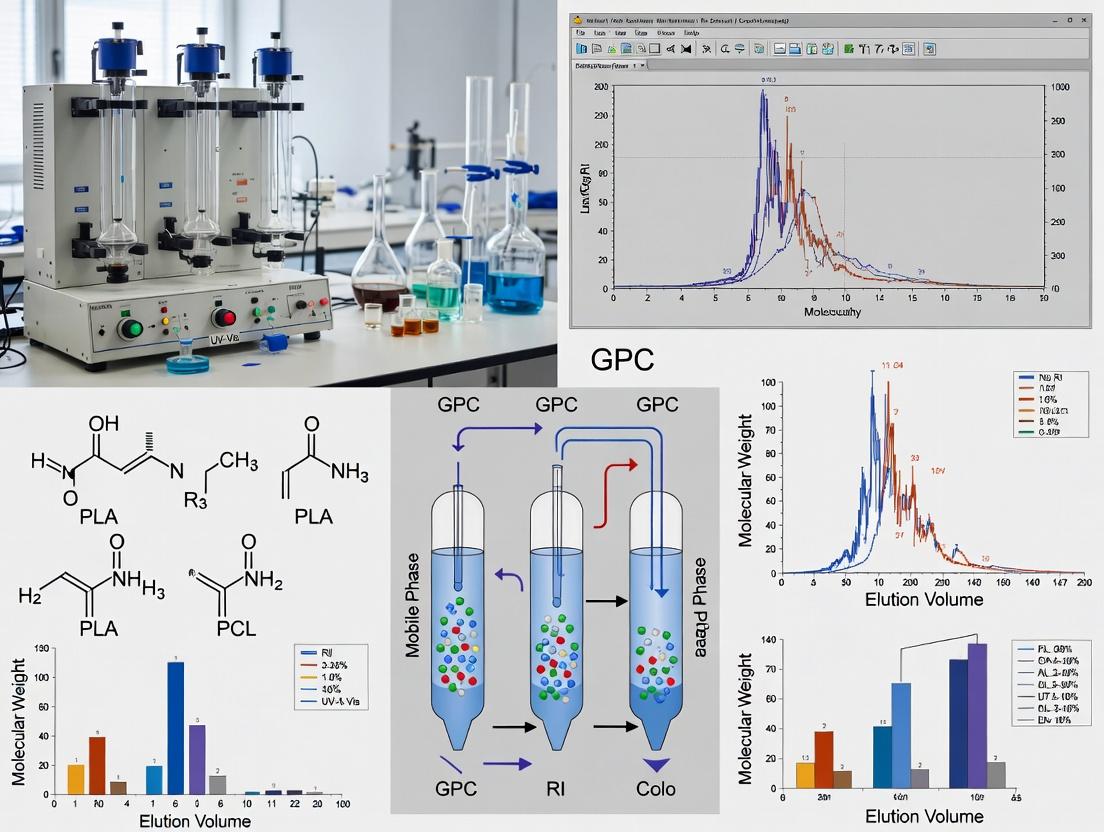
This comprehensive guide explores Gel Permeation Chromatography/SEC (GPC/SEC) as the cornerstone analytical technique for characterizing the molecular weight distribution of biodegradable polymers, crucial for drug delivery, tissue engineering, and medical...
Gel Permeation Chromatography: The Essential Guide to Molecular Weight Determination in Biodegradable Polymers for Biomedical Applications
Abstract
This comprehensive guide explores Gel Permeation Chromatography/SEC (GPC/SEC) as the cornerstone analytical technique for characterizing the molecular weight distribution of biodegradable polymers, crucial for drug delivery, tissue engineering, and medical device development. It provides researchers and pharmaceutical scientists with foundational principles, standardized methodologies, advanced optimization strategies, and comparative validation frameworks. The article addresses polymer-solvent interactions, calibration standards, and troubleshooting common experimental artifacts, while evaluating GPC's role alongside complementary techniques like MALDI-TOF and viscometry to ensure robust, regulatory-compliant polymer characterization for biomedical R&D.
Why Molecular Weight Matters: The Foundational Role of GPC/SEC in Biodegradable Polymer Design
The analysis and application of biodegradable polymers like Poly(lactic acid) (PLA), Poly(lactic-co-glycolic acid) (PLGA), and Poly(ε-caprolactone) (PCL) are foundational to modern biomedical engineering. Within the context of a thesis focused on Gel Permeation Chromatography (GPC) for molecular weight determination, understanding these materials is paramount. Precise molecular weight (Mw) and dispersity (Đ) data, obtained via GPC, are critical independent variables that directly dictate polymer performance in applications such as drug release kinetics, mechanical integrity of scaffolds, and degradation rates. This document provides application notes and detailed protocols for working with these polymers, emphasizing the role of GPC characterization.
Polymer Properties & GPC Characterization Data
The following table summarizes key properties and typical GPC-derived parameters for the featured polymers. These values are benchmarks for research quality control and formulation design.
Table 1: Characteristics of Key Biodegradable Polymers
| Polymer | Full Name | Common Mw Range (kDa) | Typical GPC Dispersity (Đ) | Glass Transition Temp (Tg) | Degradation Timeframe |
|---|---|---|---|---|---|
| PLA | Poly(lactic acid) | 50 - 150 | 1.5 - 2.2 | 55 - 60°C | 12 - 24 months |
| PLGA | Poly(lactic-co-glycolic acid) | 10 - 100 | 1.5 - 2.5 | 45 - 55°C (50:50 ratio) | 1 - 6 months (adjustable via ratio) |
| PCL | Poly(ε-caprolactone) | 40 - 80 | 1.4 - 2.0 | -60°C | > 24 months |
Key Biomedical Applications & Role of Molecular Weight
Application Note 1: Controlled Drug Delivery (PLGA Microspheres)
- Concept: PLGA microspheres provide sustained drug release. The Mw and lactide:glycolide (L:G) ratio of PLGA are primary levers controlling degradation rate and thus release kinetics. Higher Mw and higher lactide content slow degradation.
- GPC Context: Each batch of synthesized or purchased PLGA must be characterized by GPC to confirm Mw and Đ. A broad Đ (>2.5) can lead to unpredictable, multi-phasic release profiles due to heterogeneous chain lengths.
Application Note 2: Tissue Engineering Scaffolds (PCL/PLA Composites)
- Concept: PCL offers flexibility and long-term stability, while PLA provides rigidity. Blends create tunable mechanical properties. Scaffold integrity in vivo depends on the initial Mw and the degradation profile of each polymer component.
- GPC Context: GPC is used post-fabrication (e.g., electrospinning) to assess any Mw degradation caused by processing. Tracking Mw loss of explanted scaffolds over time via GPC provides direct in vivo degradation data.
Application Note 3: Surgical Implants & Sutures (PLA)
- Concept: High-Mw PLA is used for load-bearing applications (e.g., pins, screws) due to its higher strength. The degradation time must exceed the bone healing period.
- GPC Context: GPC is the standard method for verifying that the polymer resin meets the high Mw (>100 kDa) and low Đ specification required for medical-grade manufacturing.
Experimental Protocols
Protocol 1: GPC/SEC Analysis of Biodegradable Polymers (THF System)
- Objective: Determine Mw, Mn, and Đ of PLA, PCL, or PLGA.
- Materials: See "The Scientist's Toolkit" below.
- Method:
- Sample Preparation: Dissolve polymer in HPLC-grade THF at a concentration of 2-4 mg/mL. Filter through a 0.45 μm PTFE syringe filter.
- System Setup: Equilibrate a GPC system (e.g., Agilent 1260 Infinity II) with two PLgel Mixed-C columns in series using THF as the mobile phase at 1.0 mL/min, 30°C.
- Calibration: Inject 100 μL of a narrow polystyrene (PS) standard mix. Create a logarithmic Mw vs. retention time calibration curve.
- Sample Injection: Inject 100 μL of the prepared polymer sample.
- Data Analysis: Use GPC software (e.g., Cirrus) to calculate Mw (weight-average), Mn (number-average), and Đ (Mw/Mn) relative to the PS calibration. Report as "Mw (PS-equiv.)".
Protocol 2: Fabrication of PLGA Nanoparticles by Single-Emulsion Solvent Evaporation
- Objective: Prepare drug-loaded PLGA nanoparticles for drug delivery studies.
- Method:
- Dissolve 50 mg of PLGA (Mw ~30 kDa, 50:50 L:G) and 5 mg of a model drug (e.g., docetaxel) in 2 mL of dichloromethane (DCM).
- Pour this organic phase into 10 mL of a 1% (w/v) aqueous polyvinyl alcohol (PVA) solution. Homogenize at 15,000 rpm for 2 minutes using a probe sonicator to form an oil-in-water emulsion.
- Stir the emulsion magnetically overnight at room temperature to allow complete DCM evaporation and nanoparticle hardening.
- Centrifuge at 20,000 x g for 30 minutes, wash the pellet with DI water, and resuspend via brief sonication. Lyophilize for long-term storage.
- Critical Characterization: Determine particle size via DLS and confirm drug loading via HPLC. Perform GPC on the raw PLGA and, if possible, on dissolved nanoparticles to check for polymer degradation during processing.
Diagrams
GPC Data Drives Polymer Application Performance
GPC Protocol Workflow for Mw Determination
The Scientist's Toolkit: Key Research Reagents & Materials
Table 2: Essential Materials for Polymer Synthesis & Analysis
| Item | Function/Application | Critical Note |
|---|---|---|
| PLA, PLGA, PCL Resins | Raw material for fabrication. | Characterize every batch via GPC. Mw and Đ are lot-dependent. |
| HPLC-grade Tetrahydrofuran (THF) | Solvent for GPC analysis of PLA, PCL, PLGA. | Must be stabilized and free of peroxides to prevent polymer degradation. |
| Polystyrene Standards | Calibrants for GPC relative molecular weight determination. | Use narrow Đ (<1.1) set covering expected Mw range (e.g., 1kDa - 1000kDa). |
| Polyvinyl Alcohol (PVA) | Surfactant for stabilizing PLGA nanoparticles during emulsion formation. | Degree of hydrolysis (~87-89%) affects particle size and stability. |
| Dichloromethane (DCM) | Organic solvent for polymer dissolution in nano/micro-particle fabrication. | Rapid evaporation rate is key for forming smooth particles. |
| 0.45 μm PTFE Filters | Filtration of GPC samples to remove particulates that could damage columns. | Essential for preventing column backpressure increase and clogging. |
Application Notes
The precise characterization of molecular weight (MW) and molecular weight distribution (MWD) is a critical determinant in the performance of biodegradable polymers used in controlled drug delivery. Within the broader thesis context of utilizing Gel Permeation Chromatography (GPC) for MW determination, these application notes elucidate the direct impact of polymer properties on two key pharmaceutical parameters: drug release kinetics and polymer degradation profiles.
Key Findings:
- MW Impact on Degradation: Higher MW polymers generally exhibit slower hydrolytic or enzymatic degradation rates due to fewer accessible chain ends and the need for more scission events to solubilize oligomers.
- MWD Impact on Release Kinetics: A broad MWD (high dispersity, Đ) often leads to complex, multi-phase release profiles. An initial burst release is frequently attributed to the rapid degradation and diffusion of low-MW fractions, followed by a slower release from the higher-MW matrix.
- Tuning for Zero-Order Kinetics: Polymers with a narrow MWD (Đ < 1.2) demonstrate more predictable, monolithic erosion and closer-to-zero-order release kinetics, ideal for sustained delivery applications.
Quantitative Data Summary:
Table 1: Impact of PLGA MW on Doxycycline Release and Degradation
| PLGA Mn (kDa) | Dispersity (Đ) | Time for 50% Drug Release (days) | Time for 50% Mass Loss (weeks) | Primary Release Mechanism |
|---|---|---|---|---|
| 10 | 1.8 | 3 | 2 | Diffusion-dominated |
| 25 | 1.6 | 14 | 5 | Erosion-coupled diffusion |
| 50 | 1.5 | 28 | 10 | Degradation-controlled |
Table 2: Correlation between MWD Parameters and Release Profile Metrics
| MWD Parameter | Correlation with Burst Release (%) | Correlation with Lag Time | Correlation with Release Rate Consistency (R² of zero-order fit) |
|---|---|---|---|
| Weight-Avg MW (Mw) | Negative | Positive | Positive |
| Number-Avg MW (Mn) | Negative | Positive | Positive |
| Dispersity (Đ = Mw/Mn) | Strong Positive | Negative | Strong Negative |
Experimental Protocols
Protocol 1: GPC Analysis for MW/MWD Determination of Biodegradable Polyesters
Objective: To determine the absolute molecular weight and dispersity of polymer batches (e.g., PLGA, PLA, PCL) using GPC with multi-angle light scattering (MALS) detection.
Materials:
- GPC system equipped with MALS, refractive index (RI), and UV detectors.
- Appropriate GPC columns (e.g., Styragel HR series).
- HPLC-grade tetrahydrofuran (THF) or chloroform (stabilized with amylene).
- Polymer samples (2-4 mg/mL).
- Narrow dispersity polystyrene standards for calibration verification.
Procedure:
- Mobile Phase Preparation: Filter and degas THF through a 0.22 μm PTFE filter. Maintain a constant flow rate (1.0 mL/min) and column temperature (35°C).
- Sample Preparation: Precisely weigh polymer and dissolve in the mobile phase to a concentration of 2-4 mg/mL. Agitate for 12-24 hours. Filter through a 0.45 μm PTFE syringe filter into a GPC vial.
- System Equilibration: Run the mobile phase for at least 60 minutes to stabilize baselines.
- Injection and Analysis: Inject 100 μL of sample. Collect data from MALS and RI detectors.
- Data Analysis: Use the Astra or equivalent software to calculate absolute weight-average molecular weight (Mw), number-average molecular weight (Mn), and dispersity (Đ) using the dn/dc value for the specific polymer-solvent pair.
Protocol 2: In Vitro Drug Release Kinetics Study Correlated with MW
Objective: To measure the cumulative release of a model drug (e.g., fluorescein, vancomycin) from polymeric matrices of varying MW/MWD.
Materials:
- Polymer-drug matrix (microparticles, films, or scaffolds).
- Release medium (PBS, pH 7.4, with 0.02% sodium azide).
- Shaking incubator maintained at 37°C.
- UV-Vis spectrophotometer or HPLC.
- Centrifugation tubes and filters.
Procedure:
- Sample Preparation: Accurately weigh triplicate samples of each polymer-drug formulation.
- Incubation: Immerse each sample in 10-50 mL of pre-warmed release medium in a sealed container.
- Sampling: At predetermined time points, remove 1 mL of medium, and replace with an equal volume of fresh, pre-warmed medium.
- Analysis: Quantify the drug concentration in the sampled medium using a validated analytical method (e.g., UV absorbance at λmax).
- Data Processing: Calculate cumulative release percentage. Fit data to kinetic models (zero-order, first-order, Higuchi, Korsmeyer-Peppas).
Protocol 3: Monitoring Hydrolytic Degradation Profile via GPC
Objective: To track the decrease in MW and change in MWD of a polymer during in vitro degradation, linking it to mass loss and drug release.
Materials:
- Polymeric samples from Protocol 2 at selected time points.
- Lyophilizer.
- GPC system (as in Protocol 1).
Procedure:
- Sample Recovery: At selected time points from the release study, recover the remaining polymer matrix. Rinse with DI water and lyophilize to constant weight.
- Mass Loss Determination: Record the dry mass and calculate percentage mass loss relative to initial dry mass.
- MW Analysis: Dissolve the recovered, dried polymer and perform GPC analysis as per Protocol 1.
- Correlation: Plot Mn/Mw vs. time and Mn/Mw vs. cumulative drug release to establish direct relationships.
Diagrams
Title: Workflow for Linking MW to Drug Release & Degradation
Title: MW & Dispersity Dictate Release Mechanism
The Scientist's Toolkit: Research Reagent Solutions
Table 3: Essential Materials for MW-Release Correlation Studies
| Item | Function in Research | Example Product/Note |
|---|---|---|
| GPC/SEC System with MALS & RI Detectors | Determines absolute molecular weight and dispersity without relying on polymer standards. | Wyatt Technology DAWN HELEOS-II, Malvern Panalytical OMNISEC. |
| Biodegradable Polymer Standards | Provides calibration and quality control for relative MW determination in GPC. | Agilent ReadyCal-Kit PS (Polystyrene), Polymeric PEO/PEG standards. |
| HPLC-Grade Solvents (THF, CHCl₃) | Mobile phase for GPC analysis; purity is critical for detector stability and accurate dn/dc. | Sigma-Aldrich, Honeywell (stabilized as appropriate). |
| Sterile Phosphate Buffered Saline (PBS) | Standard physiological medium for in vitro degradation and release studies. | Thermo Fisher Scientific, pH 7.4, with or without antimicrobial agent. |
| Dialysis Membranes or Float-A-Lyzers | Used for separating released drug from polymeric matrix in sink-condition release studies. | Spectrum Labs, Regenerated Cellulose with specific MWCO. |
| Lyophilizer (Freeze Dryer) | Gently removes water from degraded polymer samples for accurate dry mass and subsequent GPC analysis. | Labconco FreeZone, Christ Alpha. |
| Model Active Pharmaceutical Ingredient (API) | A well-characterized compound used to study release kinetics. | Fluorescein (hydrophilic), Dexamethasone (hydrophobic). |
| Software for Kinetic Modeling | Fits release data to mathematical models to quantify release mechanisms. | PCP-Disso, Excel with Solver, OriginPro. |
Within a thesis investigating the molecular weight (MW) and dispersity (Đ) of poly(lactic-co-glycolic acid) (PLGA) for drug delivery applications, the accurate characterization of these parameters is paramount. Gel Permeation Chromatography (GPC) and Size Exclusion Chromatography (SEC) are central techniques. While the terms are often used interchangeably, "GPC" historically refers to separations on organic (gel) columns, and "SEC" is a broader term encompassing all aqueous and organic size-based separations. The core mechanism, however, is identical: the separation of polymer molecules in solution based on their hydrodynamic volume.
Core Separation Mechanism
Separation occurs as a polymer solution passes through a column packed with porous beads. Larger molecules, which cannot penetrate the smaller pores, elute first. Smaller molecules, which can access more of the pore volume, take longer paths and elute later. The separation is governed by entropy, not adsorption.
Key Terminology:
- Elution Volume (Ve): The volume of solvent required to elute a component.
- Total Permeation Limit: The elution volume for very small molecules that access all pore volume.
- Total Exclusion Limit: The elution volume for very large molecules excluded from all pores.
- Hydrodynamic Volume (Vh): The effective size of a polymer coil in solution, the true basis of separation.
- Calibration: Relating elution volume to molecular weight using known standards (e.g., polystyrene, polyethylene glycol).
Application Notes & Quantitative Data
Critical Method Parameters for Biodegradable Polymers
The choice of solvent, column, and temperature is critical for PLGA and similar polymers.
Table 1: Common SEC/GPC Conditions for Biodegradable Polymers
| Polymer | Recommended Solvent | Column Chemistry | Temperature | Detector Suite |
|---|---|---|---|---|
| PLGA, PLA | Tetrahydrofuran (THF) | Styrene-divinylbenzene (e.g., PS gel) | 30-40°C | RI, UV, MALS |
| PCL | THF or Chloroform | Styrene-divinylbenzene | 30-35°C | RI, MALS |
| Chitosan | Aqueous buffer (e.g., 0.3M AcOH/0.2M Na₂SO₄) | Hydroxylated methacrylate | 25-30°C | RI, MALS, DLS |
| PGA | Hexafluoroisopropanol (HFIP) | HFIP-modified silica | 30°C | RI, MALS |
Table 2: Impact of Solvent Choice on PLGA Hydrodynamic Volume
| Solvent | Polymer-Solvent Interaction (χ) | Observed Rh (nm) for 50 kDa PLGA | Column Compatibility |
|---|---|---|---|
| Tetrahydrofuran (THF) | 0.4 (Good Solvent) | 8.2 | Excellent |
| Dichloromethane (DCM) | 0.3 (Good Solvent) | 7.9 | Good (requires low pressure) |
| Chloroform | 0.5 (Theta-like) | 7.1 | Good |
| Dimethylformamide (DMF) | 0.45 (Good Solvent) | 8.0 | Good (with salts) |
Absolute vs. Relative Molecular Weight Determination
- Relative Method (Conventional Calibration): Uses polymer standards (e.g., polystyrene) to create a log(MW) vs. Ve calibration curve. Reported MWs are relative to the standard.
- Absolute Method (Multi-Angle Light Scattering - MALS): Directly measures MW and radius of gyration (Rg) at each elution slice, independent of elution volume or standards.
Experimental Protocols
Protocol: Determining MW & Đ of PLGA by GPC-SEC with RI Detection (Relative Calibration)
Objective: To determine the relative number-average (Mn), weight-average (Mw) molecular weights, and dispersity (Đ) of a PLGA sample using THF as the mobile phase and a polystyrene calibration curve.
Materials: See "The Scientist's Toolkit" below. Procedure:
- System Preparation: Degas and filter HPLC-grade THF (0.22 μm PTFE filter). Prime the GPC system (pump, injector, column, RI detector) at a flow rate of 1.0 mL/min for at least 30 minutes until a stable baseline is achieved.
- Column Calibration: Prepare a series of narrow dispersity polystyrene standards (e.g., 1 mg/mL in THF) covering the expected MW range (e.g., 1kDa to 1000kDa). Inject 100 μL of each standard separately under isocratic conditions (THF, 1.0 mL/min, 35°C). Record the elution volume (Ve) at the peak apex.
- Calibration Curve: Plot log10(MW) of each standard against its Ve. Perform a 3rd-order polynomial fit to generate the calibration function.
- Sample Preparation: Precisely weigh (~5 mg) of the PLGA sample. Dissolve in 5 mL of THF to make a ~1 mg/mL solution. Agitate gently on a rotary mixer for 6-12 hours at room temperature. Filter the solution through a 0.22 μm PTFE syringe filter into an HPLC vial.
- Sample Analysis: Inject 100 μL of the filtered sample. Run under identical conditions as the calibration (THF, 1.0 mL/min, 35°C).
- Data Analysis: Use the instrument software to apply the calibration curve to the sample chromatogram. Calculate Mn, Mw, and Đ (Mw/Mn). Report values relative to polystyrene.
Protocol: Absolute MW & Rg Determination by SEC-MALS
Objective: To determine the absolute Mw and Rg of a chitosan sample in aqueous buffer. Procedure:
- Mobile Phase: Prepare 0.3M acetic acid / 0.2M sodium sulfate buffer, pH ~4.5. Filter (0.1 μm) and degas.
- System & Detector Alignment: Equilibrate hydrophilic SEC columns. Align the MALS detector using a pure toluene standard as per manufacturer instructions. Normalize MALS detectors using a nearly monodisperse protein or polymer standard (e.g., BSA or dextran) with a known Rayleigh ratio.
- dn/dc Determination: Measure the specific refractive index increment (dn/dc) of chitosan in the exact mobile phase using an offline refractometer. A typical value is ~0.185 mL/g.
- Sample Analysis: Dissolve and filter chitosan sample (1-2 mg/mL) in the mobile phase. Inject and run. The MALS detector measures light scattering at multiple angles for each slice, while the RI detector measures concentration.
- Data Analysis: Software (e.g., ASTRA) uses the combined MALS and RI data, along with the dn/dc value, to directly calculate absolute Mw and Rg across the chromatogram without calibration standards.
Visualization
Title: GPC/SEC Size-Based Separation Mechanism
Title: Relative vs. Absolute MW Determination Workflows
The Scientist's Toolkit
Table 3: Essential Research Reagent Solutions for GPC/SEC of Biodegradable Polymers
| Item | Function & Specification | Example/Catalog Note |
|---|---|---|
| HPLC-Grade Solvents | Mobile phase; must be low in UV absorptivity, particles, and stabilizers that may interfere. | THF (with BHT stabilizer must be purified), HFIP, Chloroform, DMF. |
| Narrow Dispersity Standards | For creating a calibration curve. Must match column chemistry. | Polystyrene (for organic SEC), Polyethylene glycol/oxide (for aqueous SEC). |
| SEC/GPC Columns | Packed with porous beads of defined pore size(s) to achieve separation. | Agilent PLgel, Waters Styragel, Tosoh TSK-GEL, Shodex OHpak. |
| Refractive Index (RI) Detector | Universal concentration detector; measures change in refractive index of eluent. | Essential for determining polymer concentration at each elution slice. |
| Multi-Angle Light Scattering (MALS) Detector | Absolute molecular weight detector; measures scattered light intensity at multiple angles. | Wyatt DAWN, Malvern OMNISEC Reveal. Requires accurate dn/dc. |
| Online Degasser | Removes dissolved gases from mobile phase to prevent bubbles in pumps/detectors. | Standard component of HPLC/GPC systems. |
| Syringe Filters | Removes insoluble particulates from sample solutions to prevent column blockage. | 0.22 or 0.45 μm, PTFE membrane for organic solvents, Nylon for aqueous. |
| dn/dc Value | Specific refractive index increment; critical constant for absolute MW calculation in light scattering. | Must be known for polymer/solvent/temperature combination (e.g., ~0.185 for chitosan/acetic buffer). |
Within the broader thesis on employing Gel Permeation Chromatography (GPC) or Size Exclusion Chromatography (SEC) for molecular weight determination in biodegradable polymers research, understanding the key output parameters is fundamental. These parameters—Number-Average Molecular Weight (Mₙ), Weight-Average Molecular Weight (Mₜ), and the Polydispersity Index (PDI, or Ð)—are not mere numbers. They are critical predictors of a biodegradable polymer's physical properties, degradation kinetics, and ultimately, its performance in applications ranging from drug delivery systems to tissue engineering scaffolds. This application note details their definitions, the protocols for their determination via GPC, and their significance in guiding research and development.
Definitions and Core Equations
| Parameter | Mathematical Definition | Physical Meaning |
|---|---|---|
| Number-Average Molecular Weight (Mₙ) | Mₙ = Σ(NᵢMᵢ) / ΣNᵢ | The arithmetic mean of the molecular weights of all polymer chains in a sample. It is sensitive to the total number of molecules. |
| Weight-Average Molecular Weight (Mₜ) | Mₜ = Σ(NᵢMᵢ²) / Σ(NᵢMᵢ) | The mean weighted by the mass of each polymer chain. It is more sensitive to the presence of higher molecular weight species. |
| Polydispersity Index (PDI or Ð) | Ð = Mₜ / Mₙ | A measure of the breadth of the molecular weight distribution. A value of 1 indicates a perfectly monodisperse sample. |
Significance for Performance in Biodegradable Polymers
| Performance Aspect | Influence of Mₙ | Influence of Mₜ & PDI (Ð) |
|---|---|---|
| Mechanical Strength | Low Mₙ often leads to brittle materials; increasing Mₙ improves tensile strength and toughness until a plateau is reached. | High Mₜ and a broader PDI (≈1.5-2.5) can enhance entanglement and ductility but may reduce process consistency. |
| Degradation Rate | Inversely correlated. Lower Mₙ polymers degrade faster due to a higher concentration of cleavable end-groups and shorter chains. | Broader PDI can lead to complex, multi-phase degradation profiles as low-M chains degrade first, altering properties non-uniformly. |
| Drug Release Kinetics | Affects matrix density and diffusion pathways. Moderate to high Mₙ is typically required for sustained release. | A narrow PDI (~1.1) ensures more predictable erosion and consistent, zero-order release kinetics from monolithic devices. |
| Processability | Very high Mₙ can lead to excessive melt viscosity, making extrusion or injection molding difficult. | A moderate PDI often improves processability as smaller chains can act as internal plasticizers during melt processing. |
| In Vivo Fate & Safety | Mₙ must be above the renal filtration threshold (~40 kDa) for systemic applications to ensure adequate circulation time. | A high PDI with a significant low-M tail may lead to rapid release of small, potentially toxic fragments or acidic degradation products. |
Experimental Protocol: GPC/SEC Determination for Biodegradable Polyesters
Aim: To accurately determine Mₙ, Mₜ, and PDI of a biodegradable polymer (e.g., PLGA, PCL) sample relative to narrow polystyrene (PS) or polymethyl methacrylate (PMMA) standards.
Materials & Reagents: The Scientist's Toolkit
| Item | Function & Significance |
|---|---|
| GPC/SEC System | Instrument with isocratic pump, auto-sampler, column oven, and a series of size exclusion columns. |
| Refractive Index (RI) Detector | Standard concentration detector for polymers without strong UV chromophores. |
| Multi-Angle Light Scattering (MALS) Detector | Absolute method detector. Directly measures Mₜ without calibration standards, crucial for new polymer architectures. |
| Viscometer Detector | Provides intrinsic viscosity, enabling Mark-Houwink analysis for branching and conformation studies. |
| HPLC-Grade Solvent (e.g., THF, DMF, CHCl₃) | Mobile phase must fully dissolve the polymer and be compatible with columns and detectors. For PLGA, DMF with LiBr is common. |
| Narrow Dispersity PS or PMMA Calibration Standards | A set of standards with known Mₙ covering the expected molecular weight range of the sample to construct a calibration curve. |
| 0.22 µm PTFE Syringe Filters | For critical filtration of all samples and solvents to remove particulates that could damage columns. |
| Polymer Sample (1-3 mg/mL) | Accurately weighed and fully dissolved in the mobile phase, typically with gentle agitation for 12-24 hours. |
Detailed Protocol:
- System Preparation: Equilibrate the GPC system with the chosen degassed solvent (e.g., DMF at 0.5 mL/min, 40°C) for at least 1 hour until a stable baseline is achieved.
- Calibration Curve: Inject each PS (or PMMA) standard individually. Record the retention time (or volume) for each peak maximum. Plot log(M) vs. retention time to generate a linear calibration curve.
- Sample Preparation: Precisely weigh 1-3 mg of the biodegradable polymer into a vial. Add 1 mL of mobile phase. Cap and stir magnetically at room temperature until complete dissolution (often 12-24 hrs). Filter the solution through a 0.22 µm PTFE filter into a GPC vial.
- Sample Injection: Inject a defined volume (e.g., 100 µL) of the filtered sample solution into the GPC system using the same method as for the standards.
- Data Analysis:
- Use GPC software to apply the calibration curve to the sample chromatogram.
- The software discretizes the chromatogram into slices and calculates Mₙ, Mₜ, and Ð using the relative signal intensity (RI response) and the calibrated molecular weight at each slice.
- For absolute methods (MALS), data from the light scattering and concentration detectors are analyzed simultaneously using appropriate software (e.g., ASTRA, Empower) to calculate Mₜ directly, and Mₙ from the concentration data.
Key Considerations and Data Tables
Table 1: Example GPC Data for PLGA Formulations in Drug Delivery Research
| Polymer Formulation | Mₙ (kDa) | Mₜ (kDa) | PDI (Ð) | Observed Performance Correlation |
|---|---|---|---|---|
| PLGA 50:50 (Low Mₙ) | 12.5 | 23.7 | 1.90 | Rapid drug burst release (>60% in 24h), scaffold mechanical failure at 2 weeks in vitro. |
| PLGA 50:50 (Med Mₙ) | 45.2 | 68.1 | 1.51 | Sustained release over 28 days, maintained structural integrity for 8 weeks. |
| PLGA 75:25 (Med Mₙ) | 48.7 | 73.5 | 1.51 | Slower degradation and release profile than 50:50 counterpart due to higher lactide content. |
| PCL (Narrow Disp.) | 82.0 | 90.2 | 1.10 | Highly predictable, slow-degrading matrix; excellent tensile strength uniformity. |
Table 2: Comparison of GPC Detection Methods
| Method | Calibration Required? | Measures | Key Advantage for Biodegradable Polymers |
|---|---|---|---|
| Conventional (RI + Standards) | Yes | Relative Mₙ, Mₜ, Ð | Accessibility, high reproducibility for known polymer-solvent systems. |
| RI + MALS (Absolute) | No | Absolute Mₜ, Rg (radius of gyration) | Critical for characterizing branching, aggregation, or novel copolymers unknown to standards. |
| RI + Viscometer | Yes | Intrinsic Viscosity [η], Mₙ, Mₜ | Reveals polymer conformation (branching) and hydrodynamic volume. |
Visualizations
Title: GPC Workflow for Molecular Weight Determination
Title: How Mn, Mw, and PDI Influence Polymer Performance
Application Notes for Biodegradable Polymer Analysis
Gel Permeation Chromatography (GPC), also known as Size Exclusion Chromatography (SEC), is the principal method for determining the molecular weight distribution of biodegradable polymers. This analysis is critical for correlating polymer structure with degradation kinetics and mechanical performance in biomedical applications.
Key Analytical Challenges:
- Accurate determination of absolute molecular weight for polydisperse systems.
- Detection of low molecular weight oligomers and degradation products.
- Compatibility with biodegradable polymer solvents (e.g., THF, DMF, chloroform, HFIP for polyesters).
Component Synergy: A typical GPC system for polymer analysis integrates a solvent delivery pump, a column set calibrated for the specific molecular weight range, and a multi-detector array (RI, UV, LS) to provide complementary data.
Table 1: Comparison of Primary GPC Detectors for Polymer Analysis
| Detector Type | Measurement Principle | Key Quantitative Outputs | Sensitivity (Typical) | Suitable for Biodegradable Polymers |
|---|---|---|---|---|
| Refractive Index (RI) | Change in refractive index of eluent vs. pure solvent. | Polymer concentration at each elution volume. | ~10 µg/mL | Universal detection; essential for all polymers lacking a strong chromophore (e.g., PLA, PGA). |
| Ultraviolet (UV) | Absorption of UV/VIS light by chromophores. | Concentration of polymer with UV-absorbing groups. | ~1 µg/mL (for strong chromophores) | Selective detection; useful for polymers with aromatic units (e.g., PLGA with phenyl end-groups, polycaprolactone with benzoate end-groups). |
| Light Scattering (LS) | Intensity of scattered light by polymer in solution. | Absolute molecular weight (Mw), radius of gyration (Rg). | ~10-50 µg/mL (depends on Mw) | Critical for absolute Mw determination. Essential for branched polymers (e.g., star-shaped PLGA) where calibration fails. |
Table 2: Common GPC Column Characteristics for Polymer Separations
| Column Type/Pore Size | Effective Molecular Weight Range (Polystyrene Equiv.) | Primary Application for Biodegradable Polymers |
|---|---|---|
| Mixed-Bed Columns | 500 - 10,000,000 Da | Broad distribution polymers (e.g., industrial PHA). |
| 10⁵ Å Columns | 50,000 - 4,000,000 Da | High Mw PLA, PHB. |
| 10⁴ Å Columns | 5,000 - 600,000 Da | Standard PLGA, medium Mw PLA. |
| 10³ Å Columns | 500 - 30,000 Da | Low Mw oligomers, degradation products. |
Experimental Protocols
Protocol 1: Absolute Molecular Weight Determination of Polylactic Acid (PLA) using a Triple-Detector Array (RI, UV, MALS)
Objective: To determine the absolute weight-average molecular weight (Mw), number-average molecular weight (Mn), and polydispersity index (Đ) of a PLA sample.
Research Reagent Solutions & Essential Materials:
- HPLC-grade Tetrahydrofuran (THF): Mobile phase, stabilized with BHT.
- PLA Standards (Narrow Dispersity): For system calibration and validation.
- Sample PLA (Unknown): Precisely weighed (~5 mg).
- 0.02 µm PTFE Syringe Filters: For mobile phase and sample filtration.
- Glass Vials (LC-MS compatible): For sample solutions.
- Toluene (HPLC grade): Internal flow rate marker.
Methodology:
- System Preparation: Equilibrate the GPC system (isocratic pump, autosampler, column oven) with THF at 1.0 mL/min for at least 1 hour. Ensure detector signals (RI, UV at 254 nm, Multi-Angle Light Scattering - MALS) are stable.
- Column Calibration: Inject a series of narrow dispersity polystyrene (PS) or, preferably, PLA standards. Record elution volumes. Create a conventional calibration curve (Log Mw vs. Ve).
- dn/dc Determination: Prepare 5 concentrations of a known PLA standard in THF. Inject each into the system and record the RI response. Plot RI area vs. concentration. The slope is proportional to the dn/dc (specific refractive index increment), a critical constant for light scattering calculations.
- Sample Analysis: a. Dissolve the unknown PLA sample in THF at a concentration of ~2 mg/mL. Agitate for 6 hours at room temperature. b. Filter the solution through a 0.45 µm PTFE membrane into an HPLC vial. c. Inject 100 µL into the GPC system. d. The MALS detector, in conjunction with the RI detector and the predetermined dn/dc value, calculates the absolute molecular weight at each slice of the chromatogram. The software integrates data to report Mw, Mn, and Đ.
Diagram: GPC Triple-Detector Workflow for Absolute Mw
Protocol 2: Monitoring Enzymatic Degradation of PLGA by GPC
Objective: To track the shift in molecular weight distribution of Poly(lactic-co-glycolic acid) (PLGA) over time during in vitro enzymatic degradation.
Research Reagent Solutions & Essential Materials:
- PLGA Film or Microparticles: Test sample.
- Phosphate Buffered Saline (PBS), pH 7.4: Degradation medium.
- Proteinase K or Esterase: Enzymatic degradation agent.
- HPLC-grade Dimethylformamide (DMF) with 0.1M LiBr: Mobile phase for polar polymers.
- GPC Columns (e.g., Styragel HR series): Suitable for DMF.
- Lyophilizer: For sample recovery.
Methodology:
- Degradation Study: Incubate pre-weighed PLGA samples (n=3) in PBS with and without enzyme at 37°C under agitation.
- Sample Harvesting: At predetermined time points (e.g., 1, 3, 7, 14 days), remove samples from medium. Rinse with DI water and lyophilize to constant weight.
- GPC Analysis: a. Dissolve the recovered, dried polymer in DMF/LiBr at a known concentration. b. Filter through a 0.45 µm nylon filter. c. Analyze using a GPC system equipped with RI and UV detectors (UV detection at 260 nm can track degradation products with altered chromophores). d. Compare chromatograms to a time-zero control. The shift to lower molecular weight (later elution time) and broadening of the distribution (increased Đ) indicate degradation.
Diagram: Protocol for Monitoring Polymer Degradation
The Scientist's Toolkit: Key Research Reagent Solutions
Table 3: Essential Materials for GPC Analysis of Biodegradable Polymers
| Item | Function & Rationale |
|---|---|
| HPLC-grade Solvents with Stabilizers (THF, DMF, HFIP, CHCl₃) | Mobile phase choice dictates column compatibility and polymer solubility. Stabilizers prevent peroxide formation that can degrade columns and samples. |
| Polymer-specific dn/dc Value | A precisely known dn/dc (e.g., 0.049 mL/g for PLA in THF at 658 nm) is mandatory for absolute Mw calculation from light scattering data. |
| Narrow Dispersity Polymer Standards | Used to validate system performance, check column calibration, and determine dn/dc. Ideally matched to analyte chemistry (e.g., PLA standards for PLA analysis). |
| In-line Solvent Degasser | Removes dissolved gases from the mobile phase to prevent baseline noise and drift in RI and UV detectors. |
| Column Oven | Maintains constant temperature (±0.5°C) for reproducible elution times, crucial for accurate molecular weight determination. |
| 0.02 - 0.45 µm In-line Filter & Guard Column | Protects expensive analytical columns from particulate matter and irreversible contamination from sample or mobile phase. |
| Multi-Detector Calibration Software | Specialized software (e.g., Astra, Empower) is required to synchronize and process data from RI, UV, and LS detectors for advanced analyses. |
From Theory to Lab: A Step-by-Step GPC Methodology for Biomedical Polymer Analysis
Within the broader thesis on utilizing Gel Permeation Chromatography (GPC) for accurate molecular weight determination in biodegradable polymers, solvent selection is the foundational critical step. The choice of solvent directly impacts polymer dissolution, chain conformation, column compatibility, and detector response, thereby defining the accuracy and reproducibility of the acquired molecular weight distribution data. This application note details the properties, applications, and protocols for four key solvents—Tetrahydrofuran (THF), N,N-Dimethylformamide (DMF), Chloroform, and 1,1,1,3,3,3-Hexafluoro-2-propanol (HFIP)—in the context of GPC analysis for diverse biodegradable polymer chemistries.
Solvent Properties and Comparative Data
Table 1: Key Physicochemical Properties of GPC Solvents
| Property | THF | DMF | Chloroform | HFIP |
|---|---|---|---|---|
| Chemical Formula | C₄H₈O | C₃H₇NO | CHCl₃ | C₃H₂F₆O |
| Boiling Point (°C) | 66 | 153 | 61.2 | 58.2 |
| Viscosity (cP, 25°C) | 0.48 | 0.92 | 0.54 | 1.62 |
| Refractive Index (nD, 25°C) | 1.405 | 1.430 | 1.446 | 1.275 |
| UV Cutoff (nm) | 220 | 268 | 245 | <200 |
| Dielectric Constant | 7.6 | 38.3 | 4.8 | 16.7 |
| Common Stabilizer | BHT | - | Ethanol / Amylene | - |
| HPLC Grade Cost | Low | Moderate | Low | Very High |
Table 2: Optimal Solvent for Selected Biodegradable Polymer Classes
| Polymer Class | Example Polymers | Recommended Solvent (GPC) | Key Rationale |
|---|---|---|---|
| Aliphatic Polyesters | PLA, PCL, PHA | Chloroform or HFIP | Excellent solubility at RT; HFIP prevents aggregation of PLA. |
| Aromatic Polyesters | PET, PBT | HFIP (with 0.1M NaTFA) | Only solvent for room-temperature dissolution of high-MW PET. |
| Polycarbonates | BPA-PC, Aliphatic PCs | THF or Chloroform | Good solubility; THF is standard for columns. |
| Polyethers | PEG, PPO | THF or Aqueous Buffer | THF for synthetic; aqueous for biologically derived. |
| Polyanhydrides | - | DMF or DCM | Requires low-water, aprotic solvents. |
| Poly(ester amide)s | - | HFIP or TFA | Disrupts hydrogen bonding effectively. |
Detailed Experimental Protocols
Protocol 3.1: GPC Sample Preparation and Solvent Matching
Objective: To prepare a stable, homogeneous polymer solution filtered and ready for GPC injection. Materials: Polymer sample (5-10 mg), selected solvent (HPLC grade, 10 mL), 0.22 µm or 0.45 µm PTFE syringe filter, 2 mL glass vial. Procedure:
- Precisely weigh 5-10 mg of dried polymer into a 2 mL glass vial.
- Add 10 mL of the selected HPLC-grade solvent to achieve a concentration of 0.5-1.0 mg/mL.
- Cap the vial and agitate continuously on a rotary mixer or orbital shaker at room temperature for 6-24 hours. For resistant polymers (e.g., PET in HFIP), gentle heating (40-50°C) may be applied.
- Visually inspect for complete dissolution (clear, haze-free solution).
- Using a glass syringe, draw up the solution and pass it through a compatible 0.22 µm PTFE syringe filter into a clean GPC autosampler vial. Label clearly with polymer, solvent, and concentration.
- Proceed immediately to GPC analysis or store sealed at room temperature for <24 hours.
Protocol 3.2: GPC System Calibration and Run for HFIP Systems
Objective: To perform molecular weight determination using an HFIP-based GPC system, common for polyesters like PLA and PET. Materials: HFIP (with 0.1M Sodium Trifluoroacetate, NaTFA), PMMA or PMMA/PLA narrow standards, PLgel or similar HFIP-compatible columns (e.g., PSS PFG), Refractive Index (RI) Detector. Procedure:
- Mobile Phase Preparation: Add 1.52 g of NaTFA to 1 L of HPLC-grade HFIP. Filter through a 0.1 µm PTFE membrane and degas ultrasonically for 20 minutes.
- System Equilibration: Prime and flow the mobile phase through the system at 0.8 mL/min for at least 60 minutes until a stable baseline is achieved on the RI detector.
- Calibration: Inject 100 µL of each narrow molecular weight PMMA standard (e.g., range 1kDa to 1,000kDa). Record elution times. Construct a calibration curve of log(MW) vs. elution volume.
- Sample Analysis: Inject 100 µL of the filtered unknown sample (Protocol 3.1). Use identical flow conditions.
- Data Processing: Apply the calibration curve to the sample chromatogram using GPC software (e.g., Empower, Cirrus) to calculate Mn, Mw, and PDI.
Visualizations
Diagram 1: GPC Solvent Selection Decision Pathway
Diagram 2: GPC Workflow for Molecular Weight Determination
The Scientist's Toolkit: Research Reagent Solutions
Table 3: Essential Materials for GPC Analysis of Biodegradable Polymers
| Item | Function/Application | Critical Note |
|---|---|---|
| HPLC-Grade Solvents (THF, DMF, CHCl₃, HFIP) | Mobile phase and sample dissolution. Ensure low UV absorbance and absence of particulates. | HFIP must be handled in a fume hood with proper PPE due to high toxicity and corrosivity. |
| Polymer Standards (PMMA, PS, PEG, PLA) | Calibration of GPC system for absolute or relative molecular weight determination. | Choose standards with chemistry similar to analyte for reliable relative results. |
| PTFE Syringe Filters (0.22 µm, 0.45 µm) | Removal of undissolved material and particulates to protect GPC columns. | Ensure filter membrane is compatible with the aggressive solvent (e.g., PTFE for HFIP). |
| Stabilized Autosampler Vials (Glass, with PTFE-lined caps) | Safe storage and injection of polymer solutions, preventing solvent evaporation and contamination. | Ensure cap liner is inert to the solvent (e.g., HFIP degrades certain plastics). |
| GPC Columns (e.g., PLgel, Styragel, Shodex) | Stationary phase for size-exclusion separation based on hydrodynamic volume. | Column packing material MUST be compatible with the chosen solvent (e.g., styrene-DVB for THF/DMF). |
| Refractive Index (RI) Detector | Universal concentration detector for polymers lacking a strong UV chromophore. | Sensitivity depends on dn/dc (refractive index increment) of polymer in solvent. |
| NaTFA (Sodium Trifluoroacetate) | Ionic additive for HFIP mobile phase to suppress polyelectrolyte effects and analyte-column interactions. | Essential for analyzing polyesters like PET in HFIP to obtain accurate, reproducible data. |
Within the thesis "Advanced Gel Permeation Chromatography (GPC) for Molecular Weight Determination in Biodegradable Polymers for Drug Delivery," meticulous sample preparation is the critical first step. The accuracy of molecular weight (Mw, Mn, Đ) data directly impacts conclusions on polymer degradation kinetics, batch consistency, and structure-property relationships. This protocol details standardized methods for filtering, concentrating, and preserving biodegradable polymer samples (e.g., PLGA, PCL, PLA) prior to GPC analysis to ensure data integrity and reproducibility.
Key Principles and Degradation Mechanisms
Biodegradable polymers are susceptible to chemical degradation during sample handling. Primary mechanisms include:
- Hydrolysis: Ester bond cleavage in PLGA/PLA, accelerated by heat, residual solvent, or aqueous conditions.
- Thermal Degradation: Chain scission at elevated temperatures during evaporation or prolonged storage.
- Mechanical Shear Degradation: Aggressive shaking, vortexing, or forced filtration through small pores.
- Enzymatic/Bacterial Degradation: Contamination from non-sterile environments.
Protocol for Sample Preparation
Materials and Reagents
Table 1: Essential Research Reagent Solutions and Materials
| Item | Function in Protocol | Key Considerations |
|---|---|---|
| HPLC-grade Tetrahydrofuran (THF)* | Primary solvent for dissolving most biodegradable polyesters. | Must be stabilized with BHT (250 ppm); store under inert gas; check for peroxides regularly. |
| N,N-Dimethylformamide (DMF) with LiBr | Solvent for polymers requiring elevated temperature dissolution (e.g., some polyesters, polyanhydrides). | LiBr (0.1 M) prevents polymer aggregation; use anhydrous grade. |
| Chloroform (HPLC-grade) | Alternative solvent for broad solubility. | Stabilized with amylene; avoid exposure to light and moisture. |
| Polytetrafluoroethylene (PTFE) Syringe Filters | For particulate removal (0.45 µm or 0.2 µm pore size). | Chemically inert; low analyte adsorption; ensures no secondary nucleation. |
| Stainless Steel Filter Frit | For filtering aggressive solvents or concentrated solutions. | Reusable; pore size 2-5 µm for pre-filtration. |
| Rotary Evaporator | Gentle concentration of dilute polymer solutions. | Water bath temperature <35°C; use high vacuum to lower boiling point. |
| Nitrogen Blow-Down System | Final concentration step to precise volume. | Use a gentle stream of high-purity nitrogen gas; avoid forming a film. |
| Amber Glass Vials | For sample storage post-preparation. | Prevents photo-degradation; use PTFE-lined caps to seal from moisture/air. |
| Molecular Sieves (3Å) | For maintaining anhydrous solvent conditions. | Added to solvent bottles to scavenge water. |
Note: The optimal solvent is polymer-specific and must be identical to the GPC eluent.
Step-by-Step Procedure
Part A: Dissolution
- Accurately weigh 2-10 mg of polymer into a clean, dry glass vial.
- Add the appropriate GPC eluent (e.g., THF) slowly to achieve a target concentration of ~2-5 mg/mL.
- Cap tightly and allow dissolution at room temperature with gentle magnetic stirring (12-24 hours). For resistant polymers, mild heating (<40°C) may be applied with monitoring.
Part B: Filtration
- Using a glass syringe, draw up the dissolved polymer solution.
- Attach a PTFE syringe filter (0.45 µm pore size for GPC with refractive index detection; 0.2 µm for light scattering detectors).
- Gently expel the solution into a clean, pre-weighed amber vial. Discard the first 5-10% of the filtrate to saturate filter adsorption sites.
Part C: Concentration (if required)
- For very dilute samples, attach the vial to a rotary evaporator. Lower pressure gradually.
- Maintain water bath temperature at 30°C maximum. Do not evaporate to dryness.
- Transfer vial to a nitrogen blow-down system. Use a gentle stream to adjust concentration to the exact target (e.g., 2 mg/mL).
- Weigh the vial to determine final concentration gravimetrically.
Part D: Storage and Degradation Avoidance
- Analyze samples immediately after preparation.
- If storage is unavoidable, keep filtered solutions in sealed amber vials at -20°C for no longer than 72 hours.
- For aqueous system studies (e.g., degraded polymer recovery), lyophilize samples immediately post-quenching and dissolve in organic solvent promptly.
Validation and Quality Control
- Run a system suitability standard (e.g., narrow polystyrene standards) before and after sample batches.
- Prepare and analyze duplicate samples to assess preparation reproducibility.
- Monitor for signs of degradation in GPC chromatograms: peak broadening, low-molecular-weight tailing, or shift in retention time.
Table 2: Critical Parameters and Their Optimal Ranges
| Parameter | Optimal Range / Condition | Rationale |
|---|---|---|
| Dissolution Temperature | 20°C - 40°C (polymer dependent) | Minimizes thermal degradation. |
| Dissolution Time | 12-24 hrs (gentle stirring) | Ensures complete dissolution without shear. |
| Filter Pore Size | 0.45 µm (std), 0.2 µm (LS) | Removes dust/gel particles >0.2 µm. |
| Concentration Temperature | ≤ 30°C | Prevents thermal chain scission. |
| Maximum Storage Time | 72 hrs at -20°C | Limits solvent-mediated hydrolysis. |
| Sample Concentration (GPC) | 2-5 mg/mL | Avoids column overloading & viscosity effects. |
Title: Biopolymer GPC Sample Prep Workflow
Title: Degradation Pathways in Biopolymer Prep
Application Notes
In the determination of molecular weight distributions (MWD) for biodegradable polymers (e.g., PLGA, PCL, PHA) via Gel Permeation Chromatography/SEC, the choice of calibration standard is critical for accurate and reliable data. This choice directly impacts the conclusions drawn in research on drug delivery systems, degradation kinetics, and structure-property relationships. A universal calibration, based on hydrodynamic volume, is theoretically ideal but requires precise Mark-Houwink parameters, which are often unavailable for novel polymers. Therefore, relative calibration with readily available narrow dispersity standards is commonly employed, introducing a "standard bias."
The following table summarizes the core characteristics, advantages, and limitations of the three primary standard classes:
Table 1: Comparison of Common GPC/SEC Calibration Standards
| Parameter | Polystyrene (PS) | Polymethyl Methacrylate (PMMA) | Polyethylene Glycol/Oxide (PEG/PEO) |
|---|---|---|---|
| Solvent Compatibility | Excellent for THF, DMF, Chloroform | Good for THF, DMF, Acetone, Chloroform | Excellent for Aqueous Buffers, DMF, THF (PEO) |
| Availability | Very broad, widely available | Broad range available | Broad range available |
| Cost | Low to Moderate | Moderate | Low to Moderate |
| Key Advantage | Extensive molecular weight ranges; well-characterized. | More polar than PS; often a better model for polyesters. | Essential for aqueous GPC; low adsorption. |
| Primary Limitation | Different hydrodynamic volume vs. polyesters in same solvent. | Still differs from aliphatic polyester backbone. | Not suitable for organic phase analysis of most polyesters. |
| Best Suited For | Biodegradable polymers analyzed in organic solvents like THF, where it serves as a practical, though approximate, reference. | Provides an intermediate correction vs. PS for polymers like PLGA. | Direct calibration for PEGylated drugs or carriers; aqueous analysis. |
Table 2: Practical Implications for Biodegradable Polymer Analysis
| Biodegradable Polymer | Recommended Standard (Relative Calibration) | Rationale & Considerations |
|---|---|---|
| PLGA, PLA | PMMA or PS | PMMA's ester group offers a closer hydrodynamic match than PS in THF, reducing error. PS is acceptable for comparative studies. |
| PCL | PS or PMMA | PCL is less polar than PLGA; PS standards often yield reasonable approximations in THF. |
| PHA | PS | Common analysis solvent is CHCl₃, where PS calibration is well-established. |
| PEGylated Systems | PEG/PEO | Mandatory for accurate MWD of the PEG corona in aqueous SEC. Use PEO for organic phase (e.g., THF) analysis of PEG. |
| Chitosan, Alginate | PEG/PEO or Polysaccharide Standards | Aqueous SEC requires hydrophilic standards. PEG is common, but dextran/pullulan standards better mimic polysaccharide rigidity. |
Experimental Protocols
Protocol 1: Establishing a Multi-Standard Calibration Curve in THF
Objective: To create and compare PS, PMMA, and PEO calibration curves for analyzing PLGA samples. Materials: GPC/SEC system with RI detector, THF (HPLC grade), narrow dispersity PS, PMMA, and PEO standards (kits covering 1kDa - 1000kDa), 0.22 µm PTFE syringe filters, 2 mL glass vials.
Procedure:
- Mobile Phase Preparation: Degas HPLC-grade THF for 30 minutes. Maintain a constant column temperature (typically 35°C) and a flow rate of 1.0 mL/min.
- Standard Solution Preparation: Precisely weigh (~2-5 mg) of each individual standard into separate vials. Dissolve in 1 mL of THF and filter through a 0.22 µm PTFE membrane.
- System Equilibration: Pump THF through the system for at least 1 hour until a stable baseline is achieved.
- Calibration Runs: Inject each standard solution (typical injection volume: 100 µL) in order of increasing molecular weight. Record the retention time for each peak maximum.
- Data Processing: Plot log(M) of each standard against its retention time. Fit the data points (typically 8-12 standards) using a 3rd-order polynomial regression to generate the calibration curve for each polymer type.
- Analysis: Apply all three calibration curves to a known PLGA control. Compare the reported Mn, Mw, and Đ. The PMMA curve typically yields values between those from PS and universal calibration.
Protocol 2: Aqueous SEC of PEGylated Nanoparticles
Objective: To determine the molecular weight of free PEG or PEG shells on nanoparticles. Materials: Aqueous GPC/SEC system (e.g., with OHpak columns), phosphate buffer saline (PBS, pH 7.4, 0.02% NaN₃), narrow dispersity PEG standards (1kDa - 40kDa), 0.22 µm nylon syringe filters.
Procedure:
- Mobile Phase Preparation: Filter and degas PBS buffer.
- Standard & Sample Prep: Dissolve PEG standards (~2 mg/mL) and the PEGylated nanoparticle sample in the PBS buffer. Filter all solutions using 0.22 µm nylon filters.
- System Equilibration: Equilibrate columns with PBS buffer at 0.5-0.8 mL/min for at least 1 hour.
- Calibration & Analysis: Inject PEG standards to generate a calibration curve. Inject the nanoparticle sample. The elution volume of the nanoparticle peak (often monitored by RI and DLS) indicates the hydrodynamic size, which can be correlated to PEG chain length via the PEG calibration curve.
Visualizations
Title: GPC Standard Selection Decision Tree
Title: GPC Calibration & Analysis Workflow
The Scientist's Toolkit
Table 3: Key Research Reagent Solutions for GPC Analysis
| Item | Function & Rationale |
|---|---|
| Narrow Dispersity PS Standards | Provide the primary calibration curve for organic phase GPC. Essential baseline for comparison. |
| Narrow Dispersity PMMA Standards | Offer a correction over PS for polyesters and other polar polymers, yielding more accurate relative Mw. |
| Narrow Dispersity PEG/PEO Standards | Critical for aqueous GPC; required for characterizing PEGylated drug delivery systems. |
| HPLC-grade THF (with stabilizer) | Common mobile phase for organic GPC of biodegradable polyesters. Must be fresh to avoid peroxide formation. |
| PBS or Ammonium Acetate Buffer | Standard aqueous mobile phases for biomolecule and PEG separation. Must be filtered and degassed. |
| 0.22 µm PTFE & Nylon Filters | PTFE for filtering organic polymer solutions. Nylon for aqueous solutions. Prevents column contamination. |
| Refractive Index (RI) Detector | The most common concentration detector for polymers without strong UV chromophores. |
| Multi-Angle Light Scattering (MALS) Detector | Enables absolute molecular weight determination without calibration, overcoming standard bias. |
Within a broader thesis on GPC for molecular weight determination in biodegradable polymers research, the transition from conventional calibration to absolute methods is critical. For polymers like poly(lactic-co-glycolic acid) (PLGA), polycaprolactone (PCL), and polyhydroxyalkanoates (PHA), molecular weight directly dictates degradation kinetics, mechanical properties, and drug release profiles. Multi-detector Gel Permeation Chromatography (GPC/SEC), incorporating Multi-Angle Light Scattering (MALS) and Viscometry, provides absolute molecular weights ((Mw), (Mn)), size (radius of gyration, (R_g)), and intrinsic viscosity ([η]), without reliance on polymer standards. This application note details protocols for characterizing biodegradable polymers using these advanced detector setups.
Key Principles & Data
Detector Synergy
- MALS Detector: Measures absolute molecular weight ((Mw)) and radius of gyration ((Rg)) by analyzing scattered light intensity at multiple angles. Independent of elution volume.
- Viscometer (Differential Pressure): Measures intrinsic viscosity [η] by measuring the pressure differential across a capillary bridge. Enables the study of polymer conformation and branching via the Mark-Houwink plot.
- Refractive Index (RI) Detector: Essential for determining concentration ((dn/dc)) of the polymer in the specific solvent used.
Critical Parameters for Biodegradable Polymers
The accurate determination of the specific refractive index increment ((dn/dc)) is paramount. This value must be measured for each polymer-solvent-temperature combination.
Table 1: Typical dn/dc Values for Common Biodegradable Polymers (in THF at 25°C)
| Polymer | Abbreviation | (dn/dc) (mL/g) | Note |
|---|---|---|---|
| Poly(D,L-lactide-co-glycolide) | PLGA (50:50) | 0.053 - 0.055 | Varies slightly with LA:GA ratio |
| Poly(L-lactic acid) | PLLA | 0.040 - 0.042 | Optically active, value depends on wavelength |
| Poly(ε-caprolactone) | PCL | 0.075 - 0.077 | Well-established value |
| Polyhydroxybutyrate | PHB | 0.020 - 0.025 | Solvent and temperature sensitive |
Table 2: Example Absolute Molecular Weight Data for PLGA Batches
| Sample ID | (M_w) (kDa) | (M_n) (kDa) | PDI ((Mw/Mn)) | [η] (dL/g) | (R_g) (nm) | Conformation (Mark-Houwink α) |
|---|---|---|---|---|---|---|
| PLGA-Control | 45.2 | 38.1 | 1.19 | 0.31 | 12.5 | 0.58 (Flexible coil) |
| PLGA-Degraded | 28.7 | 20.4 | 1.41 | 0.22 | 8.7 | 0.55 (Flexible coil) |
| PLGA-HighMw | 112.5 | 98.3 | 1.14 | 0.65 | 21.3 | 0.59 (Flexible coil) |
Experimental Protocols
Protocol 1: System Preparation & Calibration
Objective: To establish a baseline and calibrate detector delays and inter-detector volumes.
- Solvent Filtration: Filter 2L of HPLC-grade THF (or desired solvent, e.g., DMF with 0.1M LiBr for polar polymers) through a 0.02 µm filter.
- System Equilibration: Pump solvent at the operational flow rate (typically 1.0 mL/min) through all columns (e.g., 2x PLgel Mixed-C) and detectors for >12 hours.
- Detector Normalization (MALS): Inject 100 µL of pure toluene (for THF systems) or a suitable standard with known isotropic scattering. Use the analyte to normalize the responses of the 18 angles relative to 90°.
- Inter-detector Volume Calibration: Inject 100 µL of a narrow dispersity polystyrene (PS) or PEG standard (~50 kDa) at known concentration. Use software algorithms to align the peaks from the RI, MALS, and viscometer to correct for the physical tubing volume between detectors.
Protocol 2: Determiningdn/dcfor a Novel Polymer
Objective: To accurately measure the specific refractive index increment for absolute concentration determination.
- Prepare a stock solution of the biodegradable polymer (e.g., PCL) in the GPC solvent at ~2 mg/mL.
- Filter the stock solution through a 0.22 µm PTFE syringe filter.
- Using a calibrated syringe pump or precise pipettes, prepare a series of 5-6 dilutions in the range of 0.2 - 1.5 mg/mL.
- Inject each dilution (in triplicate) into the RI detector only, bypassing the columns. Use a low flow rate (0.2 mL/min) or static loop injection.
- Plot the RI response (peak area or height) against concentration. The slope of the linear fit is the dn/dc value for that polymer-solvent system.
Protocol 3: Absolute Molecular Weight Analysis of PLGA
Objective: To characterize the full molar mass distribution and conformational parameters of a PLGA sample.
- Sample Preparation: Weigh ~5 mg of PLGA accurately. Dissolve in 5 mL of THF (final concentration ~1 mg/mL). Stir magnetically for 6 hours at room temperature. Filter through a 0.22 µm PTFE membrane into a glass vial.
- GPC-MALS-Viscometry-RI Run:
- Set column oven to 35°C, flow rate to 1.0 mL/min.
- Equilibrate system with THF until a stable baseline is achieved.
- Inject 100 µL of the filtered sample using an autosampler.
- Data is collected simultaneously from all detectors.
- Data Analysis:
- Software (e.g., Astra, Empower, WinGPC) uses the dn/dc value, light scattering (Debye plot), and concentration to calculate (Mw) at each elution slice.
- Intrinsic viscosity is calculated from the viscometer pressure signal and concentration.
- Generate differential molar mass distribution plots, Mark-Houwink plots (log [η] vs log M), and conformation plots ((Rg) vs M).
Diagrams
Multi-Detector GPC Analysis Workflow
Data Flow from Raw Signals to Absolute Properties
The Scientist's Toolkit
Table 3: Essential Research Reagent Solutions & Materials
| Item | Function/Description | Critical Specification |
|---|---|---|
| HPLC-Grade Solvents (THF, DMF, Chloroform) | Mobile phase for GPC. Must be particle-free to prevent detector damage and baseline noise. | Stabilized THF (with BHT), ≤40 ppm water, filtered through 0.02 µm. |
| Salts/Additives (e.g., LiBr) | Added to polar solvents like DMF to suppress polyelectrolyte effects and column interactions. | Anhydrous, ≥99.9% purity. Typical concentration 0.01-0.1M. |
| Polymer Standards (PS, PMMA, PEG) | Used for system calibration (inter-detector volume, normalization), not for molecular weight calibration. | Narrow dispersity (Đ < 1.05), traceable molecular weight. |
| dn/dc Standards (Toluene, NaCl in water) | Used to verify RI detector calibration and for MALS normalization (toluene in organic solvents). | High purity. Toluene should be fresh and anhydrous. |
| Syringe Filters | Remove insoluble gel particles or dust from solvent and polymer solutions. | PTFE membrane, 0.22 µm pore size, compatible with organic solvents. |
| Precision Balance | Accurate weighing of polymer samples for concentration and dn/dc determination. | Capacity 5g, readability 0.01 mg. |
| dn/dc Measurement Module | Optional dedicated system (e.g., differential refractometer) for offline dn/dc determination. | Requires precise temperature control (±0.1°C). |
In the validation of Gel Permeation Chromatography (GPC) for molecular weight (MW) determination within biodegradable polymers research, a robust, auditable data workflow is critical. The molecular weight distribution (MWD) directly influences degradation rates, mechanical properties, and batch-to-batch consistency of polymers like PLGA, PCL, and PLA. This protocol details the complete analysis workflow from raw chromatogram to regulatory-ready report, ensuring data integrity and compliance with standards such as ICH Q2(R1) and FDA 21 CFR Part 11.
Application Notes: Key Considerations for Regulatory Compliance
- System Suitability Tests (SST): Must be performed before each analytical sequence. Criteria (e.g., plate count, asymmetry factor) must be predefined and documented.
- Audit Trail: All data manipulations—including integration event changes, baseline adjustments, and calibration model applications—must be automatically recorded in a secure, time-stamped audit trail.
- Electronic Signatures: For regulatory submission, the workflow must support electronic signatures for analyst review and approval.
- Standard Operating Procedures (SOPs): Every step outlined herein must be governed by a validated SOP.
Detailed Experimental Protocols
Protocol 3.1: GPC System Calibration and SST
Objective: To establish a validated calibration curve using narrow dispersity polystyrene (PS) or polymer-specific standards. Materials: See Reagent Solutions Table. Procedure:
- Prepare mobile phase (typically THF or DMF with 0.02% LiBr) and degas for 40 minutes.
- Dissolve polymer standards in mobile phase at a concentration of 2 mg/mL. Filter through a 0.45 µm PTFE syringe filter.
- Set column oven temperature to 35°C (for THF) and detector (RI) temperature to 40°C. Flow rate: 1.0 mL/min.
- Inject 100 µL of each standard solution in triplicate, from lowest to highest MW.
- Process peaks: Integrate chromatograms, record elution volumes.
- Generate a third-order polynomial calibration curve (Log MW vs. Elution Volume) in the GPC software. Acceptance criterion: R² ≥ 0.995.
- Perform SST: Inject a mid-MW standard (e.g., PS 50kDa). Calculate theoretical plates (N > 15,000/column) and peak asymmetry (As between 0.9-1.2).
Protocol 3.2: Sample Analysis and Data Acquisition
Objective: To determine the MWD of an unknown biodegradable polymer sample. Procedure:
- Dissolve the unknown polymer sample at 2 mg/mL in the same mobile phase used for calibration. Allow complete dissolution (2-24 hours).
- Filter the solution through a 0.45 µm filter.
- Inject in triplicate using the same chromatographic conditions as the calibration.
- Acquire chromatograms, ensuring stable baseline and adequate signal-to-noise ratio.
Protocol 3.3: Data Processing and Integration
Objective: To convert raw chromatograms into reliable MW data. Procedure:
- Baseline Correction: Define a consistent baseline from the start to the end of the polymer peak.
- Integration Limits: Set integration markers at the points where the signal definitively rises above and returns to the baseline.
- Apply Calibration: Apply the validated calibration curve to the integrated chromatogram.
- Calculate Averages: The software calculates Mn (Number-Average MW), Mw (Weight-Average MW), and Đ (Dispersity, Mw/Mn) for each injection. Report the mean of triplicates.
Protocol 3.4: Report Generation and Documentation
Objective: To compile a complete analysis report suitable for regulatory documentation. Procedure:
- Export all raw data files, processed chromatograms, and the calibration curve report.
- Generate a summary table (see Data Table).
- Compile the electronic audit trail log for the analysis sequence.
- Have the analysis reviewed and electronically signed by a second qualified scientist.
- Archive all data, including method files, on a secure, backed-up server.
Data Presentation
Table 1: Representative GPC Data for PLGA 75:25 Batch Analysis
| Sample ID | Mn (kDa) | Mw (kDa) | Đ (Mw/Mn) | Retention Time (min) | % RSD (Mn, n=3) | SST Pass/Fail |
|---|---|---|---|---|---|---|
| PLGA-Batch-001 | 48.2 | 101.5 | 2.11 | 15.6 | 1.2% | Pass |
| PLGA-Batch-002 | 52.1 | 109.8 | 2.10 | 15.4 | 0.9% | Pass |
| PS Cal Std (50kDa) | 51.5 | 53.1 | 1.03 | 16.1 | 0.5% | (Used for SST) |
Visualization: GPC Data Analysis Workflow
Diagram Title: GPC Data Processing and QC Workflow
The Scientist's Toolkit: Key Research Reagent Solutions
Table 2: Essential Materials for GPC Analysis of Biodegradable Polymers
| Item | Function & Specification |
|---|---|
| Narrow Dispersity PS Standards | Calibrate the GPC system across a defined MW range (e.g., 1kDa - 2000kDa). Essential for creating the Log MW vs. Elution Volume curve. |
| Polymer-Specific Standards (e.g., PMMA, PEG) | For "absolute" MW determination via a Mark-Houwink calibrated system, providing more accurate results for non-PS polymers. |
| HPLC-Grade Solvents (THF, DMF, CHCl₃) | Mobile phase must be ultra-pure, often with added salts (LiBr) to prevent analyte-column interactions. |
| 0.45 µm PTFE Syringe Filters | Remove particulate matter from samples and standards to prevent column damage and baseline noise. |
| Refractive Index (RI) Detector | The most common detector for GPC, measuring the change in refractive index of the eluent as polymer molecules pass through. |
| GPC/SEC Columns (e.g., Styragel, PLgel) | Columns packed with porous beads that separate molecules based on their hydrodynamic volume. Typically used in series. |
| GPC Software (e.g., Empower, Cirrus) | Validated software for instrument control, data acquisition, processing, calibration, and report generation with audit trail. |
Solving Common GPC Challenges: Optimization and Troubleshooting for Reliable Data
Within the broader thesis on employing Gel Permeation Chromatography (GPC) for molecular weight determination in biodegradable polymers (e.g., PLGA, PCL, PLA), accurate data is paramount. Molecular weight directly influences degradation kinetics, drug release profiles, and mechanical properties. However, the GPC analysis of these polymers is frequently compromised by three pervasive issues: non-size exclusion effects from aggregation and adsorption, and authentic sample degradation from shear forces. Misdiagnosis leads to erroneous molecular weight distributions, invalidating structure-property relationships. This application note details diagnostic protocols and corrective methodologies to ensure data fidelity in biodegradable polymer research and pharmaceutical development.
Aggregation: Diagnosis and Correction
Issue: Reversible or irreversible non-covalent associations (hydrophobic, hydrogen bonding) create larger hydrodynamic volumes, skewing GPC elution to earlier times and overestimating molecular weight.
Diagnostic Protocol:
- Multi-Concentration Analysis: Prepare at least four sample solutions at concentrations spanning 0.5 to 5 mg/mL in the GPC mobile phase (e.g., THF, DMF with salts).
- Sequential GPC-RI Analysis: Inject each concentration. Plot the apparent weight-average molecular weight (Mw,app) and intrinsic viscosity ([η]app) against concentration.
- Diagnosis: A significant negative slope in Mw,app vs. concentration indicates aggregate dissociation upon dilution, confirming aggregation.
Corrective Protocol:
- Mobile Phase Modification: Add a solvent modifier. For polyesters like PLGA, adding 0.1-1% v/v trifluoroacetic acid (TFA) to chloroform disrupts hydrogen bonding. For aqueous GPC of PEG-PLGA, use 0.05-0.1 M LiBr in DMF.
- Temperature Control: Use a column oven at 40-50°C to reduce hydrophobic interactions and increase solubility.
- Ultrasonication: Briefly sonicate the sample solution (5-10 min in a bath sonicator) prior to filtration and injection.
Table 1: Impact of Corrective Agents on Apparent Mw of PLGA (Theoretical Mw 50 kDa)
| Condition | Mobile Phase | [η] (dL/g) | Mw,app (kDa) | Dispersity (Đ) |
|---|---|---|---|---|
| Baseline | Chloroform | 0.51 | 78.2 | 1.82 |
| +0.1% TFA | Chloroform + 0.1% TFA | 0.48 | 52.1 | 1.65 |
| + Salt | DMF + 0.05M LiBr | 0.46 | 48.9 | 1.58 |
Adsorption: Diagnosis and Correction
Issue: Electrostatic or hydrophobic interactions between polymer chains and the stationary phase cause delayed elution, underestimating molecular weight and causing peak tailing or loss.
Diagnostic Protocol:
- Mass Balance Recovery Test: Inject a known concentration of polymer and compare the integrated refractive index (RI) area to that of a non-adsorbing standard (e.g., narrow PS standard) at the same known concentration. Calculate % recovery.
- Diagnosis: Recovery <90% indicates significant adsorption. Peak tailing or the appearance of a broad, late-eluting hump further confirms adsorption.
Corrective Protocol:
- Ionic Suppression: For polymers with acidic/basic groups, use buffered eluents. For PLGA, use 10-50 mM ammonium trifluoroacetate in DMF. For chitosan, use 0.3 M acetic acid/0.2 M sodium acetate in water.
- Competitive Adsorption: Add a small, strongly-adsorbing compound (e.g., 5-10 mM triethylamine for acidic polymers in organic phases) to block active sites.
- Column Selection: Use columns designed for "polar" polymers (e.g., mixed-bed or polar-modified styrene-divinylbenzene columns) for aqueous GPC.
Table 2: Recovery of PLGA (50 kDa) Under Different Mobile Phases
| Mobile Phase | pH / Additive | % Recovery (RI Area) | Peak Shape Observation |
|---|---|---|---|
| DMF (Neat) | N/A | 68% | Severe tailing |
| DMF + 10mM NH4TFA | ~6.5 | 99% | Symmetric, sharp |
| THF (Neat) | N/A | 85% | Mild tailing |
| THF + 0.5% TEA | Basic | 97% | Symmetric |
Shear Degradation: Diagnosis and Correction
Issue: Mechanical scission of polymer chains by high shear stress in the system (pump, injector, frits), particularly for high-Mw and semi-flexible chains, causes a permanent reduction in Mw and broadened dispersity.
Diagnostic Protocol:
- Re-Injection Comparison: Inject a sample, collect the eluent as it exits the detector, carefully evaporate the solvent, and re-dissolve in fresh mobile phase. Re-inject the same sample.
- Low-Flow-Rate Test: Perform GPC at the standard flow rate (e.g., 1.0 mL/min) and then at a significantly reduced rate (e.g., 0.3 mL/min).
- Diagnosis: A decrease in Mw upon re-injection or an increase in Mw at the lower flow rate confirms shear degradation.
Corrective Protocol:
- Reduce Flow Rate: Operate at the minimum recommended flow rate for the column set (e.g., 0.3-0.5 mL/min for 300mm x 7.8mm columns).
- System Optimization: Use an injection valve with a wider bore sample loop, replace clogged in-line filters (0.5 µm) regularly, and use columns with larger particle sizes (e.g., 10 µm vs. 5 µm) for preparative analysis.
- Sample Preparation: Avoid aggressive shaking or vortexing of high-Mw samples (>500 kDa). Use gentle end-over-end rotation for dissolution.
Table 3: Effect of Flow Rate on Apparent Mw of High-Mw PLA
| Polymer Type | Target Mw (kDa) | Flow Rate (mL/min) | Measured Mw (kDa) | % Change vs. 0.3 mL/min |
|---|---|---|---|---|
| PLA (High Mw) | 1000 | 1.0 | 812 | -23% |
| PLA (High Mw) | 1000 | 0.5 | 950 | -7% |
| PLA (High Mw) | 1000 | 0.3 | 1021 | 0% (Ref) |
Integrated Diagnostic Workflow
GPC Anomaly Diagnostic Decision Tree
The Scientist's Toolkit: Essential Research Reagents & Materials
| Item | Function in GPC Analysis of Biodegradable Polymers |
|---|---|
| HPLC-Grade Solvents (THF, DMF, CHCl₃) | Low-UV, particulate-free mobile phases to ensure baseline stability and prevent column contamination. |
| Ionic Additives (LiBr, NH₄TFA) | Suppress polyelectrolyte effects and adsorption by masking charges on polymer and stationary phase. |
| Acidic Modifiers (TFA, Acetic Acid) | Disrupt hydrogen-bonding aggregates for polyesters and enable analysis of basic polymers. |
| Basic Modifiers (Triethylamine - TEA) | Block active silanol sites on columns or system components to prevent adsorption of acidic polymers. |
| Narrow Dispersity Polystyrene (PS) Standards | For universal calibration and system performance verification. |
| Polymer-Specific Primary Standards (PMMA, PEG) | For creating direct calibration curves for specific polymer-solvent systems when available. |
| In-line Solvent Degasser | Removes dissolved gases to prevent bubble formation in pumps and detectors. |
| 0.45 µm or 0.2 µm PTFE Syringe Filters | For particulate removal from samples prior to injection without causing shear degradation. |
| Pre-column or Guard Column | Protects the expensive analytical columns from irreversible contamination or adsorption. |
| Column Oven | Maintains constant temperature for improved retention time reproducibility and reduced aggregation. |
Detailed Experimental Protocol: Integrated Diagnostic Analysis
Protocol Title: Comprehensive GPC Sample Integrity Assessment for Biodegradable Polyesters.
Objective: To diagnose and mitigate aggregation, adsorption, and shear degradation for accurate Mw determination of PLGA.
Materials:
- PLGA sample (e.g., 50:50, acid-terminated).
- GPC system with RI detector, column oven, and appropriate columns (e.g., Styragel HR series).
- Mobile phases: DMF (neat), DMF + 50 mM LiBr, DMF + 10 mM ammonium trifluoroacetate (NH4TFA).
- PTFE syringe filters (0.45 µm).
- Glass vials.
Procedure: Part A: Shear & Adsorption Check.
- Prepare sample at 2 mg/mL in DMF + 50 mM LiBr. Gently rotate for 12 hours.
- Filter through a 0.45 µm PTFE filter.
- Inject at 1.0 mL/min (40°C). Collect eluent from RI outlet.
- Reduce flow rate to 0.4 mL/min. Inject a fresh aliquot of the same sample.
- Carefully evaporate the collected eluent from step 3 under a gentle nitrogen stream. Re-dissolve in an equal volume of fresh mobile phase.
- Inject the re-dissolved sample at 0.4 mL/min.
- Compare Mw values: If Mw(0.4 mL/min) > Mw(1.0 mL/min), shear is indicated. If Mw(re-injected) < Mw(initial), shear/adsorption is indicated.
Part B: Aggregation & Adsorption Specific Diagnosis.
- Prepare four concentrations (1, 2, 3, 5 mg/mL) of PLGA in neat DMF.
- Inject each at 0.4 mL/min (40°C).
- Repeat Step 1 & 2 using DMF + 10 mM NH4TFA as the mobile phase.
- Analyze: Plot Mw,app vs. concentration for both mobile phases. A negative slope in neat DMF that flattens in NH4TFA confirms aggregation and adsorption, respectively.
Analysis: The protocol distinguishes the dominant artifact. Corrective action is selected based on the diagnosis: use NH4TFA/DMF for adsorption, LiBr/DMF for aggregation, and always employ the lowest practical flow rate.
Application Notes
In the context of Gel Permeation Chromatography (GPC) for molecular weight determination in biodegradable polymers, maintaining column performance is critical for data integrity. Common symptoms like pressure spikes, peak tailing, and resolution loss directly compromise the accuracy of molecular weight averages (Mn, Mw, PDI). These metrics are essential for correlating polymer structure with degradation kinetics and mechanical properties in research. The following protocols and data address these operational challenges.
Table 1: Common Column Issues, Causes, and Quantitative Impact on GPC Data
| Symptom | Likely Cause | Typical Pressure Change | Impact on Polystyrene Standard PDI | Impact on PLA/PGA Resolution (Plate Count) |
|---|---|---|---|---|
| Pressure Spike | Column frit blockage, particulate contamination | Increase > 15% from baseline | PDI increase from 1.02 to >1.05 | Plate count decrease by 20-30% |
| Peak Tailing | Active sites in column, void formation at inlet | Minimal | Marked increase in asymmetry factor (As > 1.3) | Underestimation of Mn by up to 10% |
| Resolution Loss | Column degradation, mobile phase mismatch, flow rate error | Variable (often decrease) | Loss of resolution between adjacent standards | Co-elution leading to Mw error > 15% |
Experimental Protocols
Protocol 1: Diagnostic Run for Pressure and Tailing Assessment Objective: To diagnose system health and column integrity.
- Equilibrate the GPC system (e.g., Agilent 1260 Infinity II, Waters Breeze) with THF (containing 250 ppm BHT) or DMF (with 0.1M LiBr) at 1.0 mL/min for 30 minutes.
- Record the stable baseline pressure (Ps).
- Inject 100 µL of a narrow dispersity polystyrene standard (Mw ≈ 50,000 Da, PDI < 1.05).
- Record the chromatogram, noting the maximum pressure (Pmax) during the run.
- Calculate pressure increase: ΔP% = [(Pmax - Ps)/Ps] * 100. A ΔP% > 15% indicates potential blockage.
- Analyze the peak at 10% peak height. Calculate the asymmetry factor (As = b/a). An As > 1.2 indicates tailing.
Protocol 2: Column Cleaning and Restoration for Blocked Frits Objective: To reverse pressure spikes caused by soluble polymer aggregates or particulates.
- Reverse and disconnect the column from the detector.
- Flush the column in reverse direction with 20 column volumes (CV) of clean, filtered pure solvent (e.g., THF).
- If pressure remains high, prepare a cleaning solution of 5% v/v tetrahydrofuran/isopropanol.
- Flush with 10-20 CV of cleaning solution in reverse flow at 0.2 mL/min.
- Re-equilibrate with the standard mobile phase (20 CV) in the correct forward direction.
- Re-run Protocol 1 to assess improvement.
Protocol 3: Systematic Evaluation of Resolution Loss Objective: To quantify loss of separation efficiency and identify cause.
- Prepare a cocktail of three narrow polystyrene standards (e.g., Mw 50k, 100k, 200k Da) in mobile phase.
- Inject the cocktail under standard method conditions.
- Calculate the plate count (N) for a mid-range peak: N = 5.54 * (tR / w₀.₅)², where tR is retention time and w₀.₅ is peak width at half height.
- Calculate resolution (Rs) between two adjacent peaks: Rs = 2(tR2 - tR1) / (w1 + w2).
- Compare N and Rs values to the column’s benchmark performance. A >20% drop in N indicates column degradation.
- If degradation is confirmed, perform a calibration run with a broad standard to document the current performance for subsequent data correction or column replacement.
Visualizations
Title: GPC Problem Diagnosis and Resolution Workflow
Title: Scheduled GPC Column QC Protocol
The Scientist's Toolkit: Key Research Reagent Solutions
| Item | Function in GPC for Biodegradable Polymers |
|---|---|
| Filtered & Stabilized THF (with 250 ppm BHT) | Primary mobile phase for PLLA, PLGA; BHT prevents radical-induced column degradation. |
| DMF with 0.1M LiBr | Polar aprotic mobile phase for polyesters; LiBr suppresses analyte-column interactions. |
| Narrow Dispersity PS Standards | Provides calibration curve for relative molecular weight determination. |
| Polyester Broad Standards (e.g., PMMA) | Used for universal calibration and Mark-Houwink parameter determination. |
| In-line Solvent Filters (0.2 µm, PTFE) | Placed before injector to remove particulates, protecting column frits. |
| Guard Column | Contains same stationary phase; sacrificial element that traps contaminants. |
| Trifluoroacetic Acid (TFA) Additive | (~0.1% v/v) Minimizes peak tailing for polyesters by suppressing silanol activity. |
| Column Cleaning Solution (THF/IPA mix) | Dissolves polymeric contaminants not soluble in primary eluent. |
Context: This research forms a critical methodological pillar of a doctoral thesis focusing on the precise molecular weight (MW) and molecular weight distribution (MWD) characterization of novel poly(lactic-co-glycolic acid) (PLGA) copolymers via Gel Permeation Chromatography (GPC). Accurate MWD data is essential for correlating polymer structure with degradation kinetics and drug release profiles.
1. Introduction In GPC analysis, resolution (Rs) is paramount for separating closely eluting polymer fractions, directly impacting the accuracy of MW determination. This protocol details the systematic optimization of three critical run parameters—flow rate, column temperature, and injection volume—to achieve maximum resolution for biodegradable polymer analysis.
2. The Scientist's Toolkit: Essential Research Reagent Solutions
| Item | Function in GPC Analysis |
|---|---|
| PLGA Standards (Narrow MWD) | Provide calibration curves for accurate molecular weight assignment. Essential for method validation. |
| HPLC-grade Tetrahydrofuran (THF) | Common mobile phase for PLGA. Must be stabilized and degassed to prevent baseline drift and column degradation. |
| Polystyrene (PS) Equivalents Kit | Used for universal calibration when absolute MW is required, applying the Mark-Houwink parameters for PLGA. |
| Refractive Index (RI) Detector | Standard concentration-sensitive detector for polymers without strong UV chromophores, like PLGA. |
| Mixed-Bed GPC Columns | Columns with a pore size range (e.g., 10^2-10^6 Å) to separate the broad MWD typical of synthetic polymers. |
| In-line Degasser & Column Oven | Ensures mobile phase consistency and maintains stable, reproducible column temperature. |
3. Quantitative Optimization Data Summary
Table 1: Effect of Flow Rate on Resolution (PLGA 50:50, 30°C, 100 µL injection)
| Flow Rate (mL/min) | Retention Time (min) | Plate Count (N/m) | Resolution (Rs) |
|---|---|---|---|
| 0.8 | 24.5 | 58,000 | 1.25 |
| 1.0 | 19.6 | 52,000 | 1.15 |
| 1.2 | 16.3 | 45,000 | 0.98 |
Table 2: Effect of Column Temperature on Resolution (PLGA 50:50, 1.0 mL/min, 100 µL injection)
| Temperature (°C) | Peak Width (min) | Resolution (Rs) | Viscosity Effects |
|---|---|---|---|
| 25 | 0.85 | 1.05 | High, backpressure |
| 30 | 0.80 | 1.15 | Optimal |
| 35 | 0.82 | 1.10 | Low, potential degradation |
Table 3: Effect of Injection Volume on Resolution (PLGA 50:50, 30°C, 1.0 mL/min)
| Injection Volume (µL) | Peak Height (mV) | Peak Broadening Factor | Resolution (Rs) |
|---|---|---|---|
| 50 | 12.5 | 1.00 | 1.18 |
| 100 | 25.0 | 1.08 | 1.15 |
| 150 | 37.5 | 1.25 | 0.92 |
4. Detailed Experimental Protocols
Protocol 1: Flow Rate Optimization
- Preparation: Dissolve PLGA sample (50:50) in THF at 2 mg/mL. Filter through a 0.45 µm PTFE syringe filter.
- Calibration: Inject 100 µL of narrow PS standards at 1.0 mL/min, 30°C to establish a baseline calibration.
- Variable Flow Run: Set column oven to 30°C. Inject the PLGA sample (100 µL) sequentially at flow rates of 0.8, 1.0, and 1.2 mL/min.
- Analysis: For each chromatogram, calculate the resolution (Rs) between two adjacent peaks of interest or the efficiency (theoretical plates per meter, N/m). Record retention times and peak widths at half height.
Protocol 2: Temperature Optimization
- System Equilibration: Set flow rate to the optimal value from Protocol 1 (e.g., 1.0 mL/min). Allow the mobile phase reservoir and column to equilibrate at each target temperature (25°C, 30°C, 35°C) for at least 30 minutes.
- Sample Injection: Inject the standard PLGA sample (100 µL) at each equilibrated temperature.
- Data Collection: Monitor system backpressure. Measure peak width and resolution. Assess baseline stability.
- Note: For biodegradable polymers like PLGA, avoid temperatures >40°C to prevent in-column degradation.
Protocol 3: Injection Volume Optimization
- Sample Preparation: Prepare a series of identical PLGA solutions (2 mg/mL in THF).
- Gradient Injection: Using the optimized flow and temperature, perform injections of 50, 100, and 150 µL of the same sample solution.
- Quantification: Note the peak height (signal) and the peak width at the baseline. Calculate the peak broadening factor relative to the smallest injection volume.
- Determine Linearity: Ensure the signal response (peak area) remains linear with concentration/injection volume to avoid detector saturation.
5. Visualization of Optimization Workflow & Parameter Relationships
Diagram 1: GPC Parameter Optimization Workflow
Diagram 2: Parameter Effects on GPC Resolution
6. Conclusion Maximum resolution for PLGA analysis is typically achieved at lower flow rates (~0.8 mL/min), a moderate column temperature (30°C) that balances viscosity and stability, and an injection volume (50-100 µL) that provides strong signal without significant volume-overload broadening. These optimized parameters, integrated into the thesis methodology, yield precise MWD data critical for understanding structure-property relationships in biodegradable polymer research.
Within a broader thesis on GPC for molecular weight determination in biodegradable polymers research, handling difficult polymer systems presents a significant analytical challenge. Polyesters (e.g., PLA, PGA), polycarbonates, and charged polyelectrolytes exhibit behaviors that can compromise the accuracy of Gel Permeation Chromatography (GPC) or Size Exclusion Chromatography (SEC). These include adsorption to column matrices, aggregation, and shear degradation. This document provides detailed application notes and protocols to mitigate these issues and ensure reliable molecular weight data, which is critical for researchers, scientists, and drug development professionals correlating polymer structure with degradation kinetics and performance.
Key Challenges & Stabilization Strategies
Polyesters (PLA, PCL, PGA): Prone to hydrolytic degradation during analysis. Ester bonds can cleave in the presence of trace water in solvents. Polycarbonates (e.g., bisphenol-A PC, aliphatic PC): Susceptible to shear degradation and adsorption via polar carbonate groups. Charged Polyelectrolytes (e.g., chitosan, polyacrylic acid): Exhibit polyelectrolyte expansion in low-ionic-strength solvents and can interact ionically with column hardware/matrices.
| Polymer Class | Primary Challenge | Recommended Stabilization Strategy | Typical Column |
|---|---|---|---|
| Polyesters | Hydrolysis, Aggregation | Use anhydrous solvents (e.g., CHCl₃ with 250 ppm BHT), add 0.02M LiBr, heat to 40°C. | PLgel Mixed-C (PS/DVB), Styragel HR |
| Polycarbonates | Shear Degradation, Adsorption | Use low-flow rates (0.5-0.8 mL/min), add 0.1% v/v trifluoroacetic acid (TFA) to CHCl₃, use wide-pore columns. | Shodex KF-806M, TSKgel GMHHR-H |
| Charged Polyelectrolytes | Ion-Exchange, Aggregation | Use buffered mobile phases (e.g., 0.1-0.5M NaNO₃ in aqueous phase), adjust pH away from pKa, use silica hybrid columns. | OHpak SB-800 series, Aquagel-OH Mixed-H |
Detailed Experimental Protocols
Protocol for Aliphatic Polyesters (e.g., Poly(L-lactide) - PLLA)
Objective: Accurate Mw determination by GPC-SEC while preventing hydrolysis and aggregation. Materials: Anhydrous chloroform (stabilized with 250 ppm BHT), Lithium bromide (LiBr), 0.22 μm PTFE syringe filters, PLLA sample (5 mg/mL). Equipment: GPC system with RI detector, columns: 2x PLgel Mixed-C (7.5 x 300 mm), column oven.
Procedure:
- Mobile Phase Preparation: Dry chloroform over 3Å molecular sieves for 24h. Dissolve LiBr to a concentration of 0.02M. Degas via sonication for 15 minutes.
- Sample Preparation: Dissolve 5 mg of PLLA in 1 mL of the prepared mobile phase. Heat gently to 40°C with occasional shaking for 2 hours until complete dissolution. Filter through a 0.22 μm PTFE syringe filter directly into a GPC vial.
- GPC Conditions:
- Flow Rate: 1.0 mL/min
- Column Temperature: 40°C
- Injection Volume: 100 μL
- Run Time: 30 minutes
- Calibration: Use narrow dispersity polystyrene standards (Mw 500 - 2,000,000 Da) prepared in the same mobile phase. Apply a Mark-Houwink correction (K, α for PLLA/CHCl₃) for absolute weight determination.
- Critical Note: The system must be kept under a nitrogen atmosphere or desiccant if possible to prevent moisture ingress.
Protocol for Aqueous Polyelectrolytes (e.g., Sodium Polyacrylate)
Objective: Suppress polyelectrolyte effect and ionic interactions for valid size-based separation. Materials: Sodium nitrate (NaNO₃), sodium phosphate monobasic, HPLC-grade water, 0.1M NaOH, 0.1M HCl, 0.22 μm nylon syringe filters. Equipment: Aqueous GPC system (RI/UV), columns: guard + TSKgel G5000PWxl + G3000PWxl (7.8 x 300 mm each).
Procedure:
- Buffer Preparation (50mM Phosphate, 0.1M NaNO₃, pH 7.0): Dissolve 6.9 g NaH₂PO₄ and 8.5 g NaNO₃ in 1L HPLC water. Adjust pH to 7.0 using 0.1M NaOH or 0.1M HCl. Filter (0.22 μm) and degas.
- Sample Preparation: Dissolve 4 mg sodium polyacrylate in 1 mL of the buffer. Let stand for 4 hours with occasional vortexing. Filter through a 0.22 μm nylon filter.
- GPC Conditions:
- Flow Rate: 0.8 mL/min
- Column Temperature: 30°C
- Injection Volume: 50 μL
- Run Time: 40 minutes
- Calibration: Use pullulan or polyethylene oxide standards. For absolute Mw, use a multi-angle light scattering (MALS) detector inline with the RI detector.
Visualized Workflows & Strategies
Title: Strategy Workflow for Handling Difficult Polymers in GPC
Title: Multi-Detector GPC Setup for Absolute Mw
The Scientist's Toolkit: Essential Research Reagent Solutions
| Reagent/Material | Function | Example Use Case |
|---|---|---|
| 3Å Molecular Sieves | Removes trace water from organic solvents to prevent polyester hydrolysis. | Drying chloroform for PLA/PCL analysis. |
| Lithium Bromide (LiBr) | Polar additive that masks active sites on column matrix, reducing adsorption of polar polymers. | Added to CHCl₃ (0.02M) for polyesters/polycarbonates. |
| Trifluoroacetic Acid (TFA) | Ion-pairing agent that protonates basic sites, preventing polycarbonate adsorption. | Added to CHCl₃ (0.1% v/v) for BPA-PC analysis. |
| High Ionic Strength Buffer (e.g., NaNO₃) | Shields charged groups on polyelectrolytes, suppressing polyelectrolyte effect and ionic interactions. | 0.1-0.5M in aqueous mobile phase for sodium polyacrylate. |
| PTFE & Nylon Syringe Filters (0.22 μm) | Removes particulate matter and aggregated polymer without absorbing sample or introducing contaminants. | Sample filtration prior to GPC injection for all polymers. |
| Narrow Dispersity Polystyrene & Poly(ethylene oxide) Standards | Provides calibration curve for relative molecular weight determination. | Universal calibration (with viscometry) or conventional calibration. |
Application Notes: Method Validation for GPC in Biodegradable Polymer Analysis
Within a thesis investigating the structure-property relationships of poly(lactic-co-glycolic acid) (PLGA) copolymers for controlled drug delivery, rigorous method validation of Gel Permeation Chromatography (GPC/SEC) is paramount. The accurate determination of molecular weight (Mn, Mw, Đ) directly correlates to degradation kinetics and drug release profiles. This protocol outlines a comprehensive validation strategy.
Table 1: Key Validation Parameters and Target Acceptance Criteria for PLGA GPC Analysis
| Parameter | Definition & Protocol | Target Acceptance Criteria (Example for PLGA Standards) |
|---|---|---|
| Precision (Repeatability) | Inject a homogeneous PLGA standard (e.g., Mp ~50 kDa) six times consecutively. Calculate %RSD for Mn and Mw. | %RSD ≤ 2.0% for Mn and Mw. |
| Intermediate Precision | Perform the precision experiment on three different days, with different analysts, using the same instrument. | Combined %RSD ≤ 3.5%. |
| Accuracy | Analyze a certified narrow dispersity polystyrene (PS) or PMMA standard traceable to NIST. Compare measured Mp to certificate value. | Recovery: 98–102%. |
| Linearity & Range | Analyze a series of 5-7 narrow dispersity polymer standards covering the expected MW range (e.g., 5 kDa to 500 kDa for PLGA). Plot Log(Mp) vs. retention time. | Correlation coefficient (R²) ≥ 0.995 for calibration curve. |
| Specificity/Selectivity | Compare chromatograms of PLGA in THF (mobile phase) vs. PLGA spiked with known oligomeric impurities or residual monomer. | Baseline resolution of main peak from impurity peaks (Resolution ≥ 1.5). |
| Robustness | Deliberately vary method parameters (flow rate ±0.05 mL/min, column temperature ±2°C) and assess impact on Mw. | Mw variation remains within precision limits. |
Detailed Experimental Protocols
Protocol 1: Establishment of a Primary Calibration Curve
- Mobile Phase Preparation: Filter 2L of HPLC-grade tetrahydrofuran (THF) containing 0.02% butylated hydroxytoluene (BHT) through a 0.45 µm PTFE filter and degas via sonication for 15 minutes.
- Standard Preparation: Precisely weigh (~5 mg) of each narrow dispersity PS or PMMA standard into separate 10 mL volumetric flasks. Dissolve and dilute to volume with filtered THF. Allow dissolution for 24 hours with gentle agitation.
- System Equilibration: Install appropriate GPC columns (e.g., three Styragel HR columns in series). Set flow rate to 1.0 mL/min, column oven to 35°C, and detector (RI) temperature to 35°C. Flush system for at least 1 hour.
- Sequential Injection: Inject 100 µL of each standard solution from lowest to highest molecular weight.
- Data Analysis: Use GPC software to record peak retention times. Generate a calibration curve by plotting the log10(Mp) of each standard against its retention time. Apply a 3rd-order polynomial fit.
Protocol 2: Determination of Method Precision and Accuracy
- Repeatability: Prepare a single solution of a PLGA control sample (known Mw ~100 kDa). Inject this solution six times under identical conditions as per Protocol 1.
- Calculation: For each run, record Mn, Mw, and dispersity (Đ). Calculate the mean, standard deviation (SD), and %RSD for each parameter.
- Accuracy Verification: Inject a certified NIST-traceable PS standard (e.g., NIST 706b). Calculate the measured peak molecular weight (Mp). Determine % recovery: (Measured Mp / Certified Mp) x 100.
Protocol 3: Assessing Method Robustness via Flow Rate Variation
- Baseline Condition: Using the system from Protocol 1, set flow rate to 1.00 mL/min. Inject the PLGA control sample twice, record Mw.
- Varied Conditions: Adjust flow rate to 0.95 mL/min. Re-equilibrate for 30 minutes. Inject the same sample twice. Repeat at 1.05 mL/min.
- Analysis: Calculate the mean Mw at each flow rate level. The difference between the extreme condition means and the baseline mean should not exceed the standard deviation established in the repeatability study.
Mandatory Visualizations
Method Validation Workflow for GPC
GPC Calibration & Analysis Logic
The Scientist's Toolkit: Key Research Reagent Solutions for GPC Validation
| Item | Function in GPC Validation |
|---|---|
| Narrow Dispersity Polystyrene (PS) Standards | Certified, traceable standards used to construct the primary calibration curve, establishing the relationship between retention time and molecular weight. |
| Polymer-specific Reference Materials (e.g., PLGA) | Well-characterized control materials specific to the analyte polymer class. Used for precision, accuracy (bias), and system suitability tests. |
| HPLC-grade Solvent with Stabilizer (e.g., THF + BHT) | The mobile phase. Must be pure, filtered, and degassed to prevent baseline noise, column degradation, and air bubbles in the detector. BHT inhibits peroxide formation. |
| Column Set (e.g., Styragel, PLgel) | A series of columns with different pore sizes designed to separate a broad range of molecular sizes. The core component of the separation. |
| Refractive Index (RI) Detector | The most common GPC detector. Measures the change in refractive index of the eluent as polymer molecules pass through, producing the chromatogram. |
| NIST-traceable Molecular Weight Standards | Standards with values assigned by the National Institute of Standards and Technology. The gold standard for verifying the absolute accuracy of the GPC system. |
Beyond GPC: Validation Strategies and Comparative Analysis with Complementary Techniques
Within a broader thesis on the application of Gel Permeation Chromatography (GPC) for molecular weight determination in biodegradable polymers, this application note details the critical link between GPC-derived parameters and functional performance metrics. For drug delivery systems, the hydrolytic or enzymatic degradation of the polymer matrix governs both drug release kinetics and structural integrity. This document provides protocols and data analysis frameworks to empirically correlate GPC data (Mn, Mw, Đ) with in vitro drug release and polymer degradation profiles, enabling predictive design of formulation performance.
Key Data Correlation Tables
Table 1: GPC Parameters vs. Cumulative Drug Release at 28 Days
| Polymer Formulation | Mn (kDa) | Mw (kDa) | Đ (Mw/Mn) | Cumulative Release (%) | Release Kinetics Model (R²) |
|---|---|---|---|---|---|
| PLGA 50:50 (Low MW) | 12.5 | 18.7 | 1.50 | 98.2 ± 3.1 | Zero-Order (0.991) |
| PLGA 50:50 (High MW) | 78.4 | 117.1 | 1.49 | 65.8 ± 4.5 | Higuchi (0.984) |
| PCL Homopolymer | 45.2 | 52.8 | 1.17 | 32.5 ± 2.8 | First-Order (0.975) |
| PLA-PEG Di-Block | 24.8 | 26.3 | 1.06 | 85.4 ± 3.7 | Korsmeyer-Peppas (0.989) |
Table 2: Molecular Weight Loss and Mass Erosion Correlation
| Time Point (Weeks) | Sample ID | Remaining Mn (%) | Remaining Mass (%) | pH of Medium |
|---|---|---|---|---|
| 0 | PLGA A | 100.0 | 100.0 | 7.4 |
| 4 | PLGA A | 41.5 ± 2.3 | 88.2 ± 1.5 | 7.1 |
| 8 | PLGA A | 12.8 ± 1.7 | 62.4 ± 3.2 | 6.7 |
| 0 | PCL B | 100.0 | 100.0 | 7.4 |
| 8 | PCL B | 95.7 ± 1.2 | 97.1 ± 0.8 | 7.3 |
Experimental Protocols
Protocol 3.1: GPC Analysis of Degrading Polymer Samples Objective: To determine the change in molecular weight distribution of polymers during degradation. Materials: Degraded polymer sample, THF or DMF (HPLC grade), polystyrene standards, 0.45 μm PTFE syringe filter. Procedure:
- Sample Preparation: Retrieve polymer specimens from degradation medium at predetermined time points. Rinse with DI water and lyophilize for 48h. Dissolve precisely 5 mg of dried polymer in 1 mL of appropriate GPC solvent. Filter through a 0.45 μm PTFE syringe filter.
- GPC System Setup: Equip system with refractive index (RI) detector. Use two PLgel Mixed-C columns in series. Set flow rate to 1.0 mL/min, column temperature to 40°C.
- Calibration: Inject 100 μL of narrow polystyrene standard mix. Construct a calibration curve (log Mw vs. retention time).
- Analysis: Inject 100 μL of prepared sample. Analyze chromatogram using software to calculate Mn, Mw, and Đ. Compare to time-zero sample.
Protocol 3.2: In Vitro Drug Release Study (USP Apparatus 4 Adaptation) Objective: To measure drug release kinetics from polymeric matrices under sink conditions. Materials: Polymer-drug implant/microparticles, phosphate-buffered saline (PBS, pH 7.4) with 0.1% w/v sodium azide, flow-through cell apparatus, HPLC system. Procedure:
- Setup: Place sample in 22.6 mm flow-through cell. Use glass beads for optimal flow. Maintain temperature at 37.0 ± 0.5°C.
- Dissolution Medium: Pump pre-heated PBS + 0.1% azide through the cell at 8 mL/min in open-loop mode.
- Sampling: Collect eluent at fixed intervals (e.g., 1, 4, 8, 24, 72h, etc.). Filter collected fractions (0.22 μm).
- Quantification: Analyze drug concentration in each fraction via validated HPLC-UV method. Calculate cumulative release.
Protocol 3.3: Parallel Mass Loss and GPC Sampling Study Objective: To concurrently monitor polymer mass erosion and molecular weight decrease. Materials: Pre-weighed polymer films/cylinders (Wi), PBS (pH 7.4), orbital shaker incubator, lyophilizer. Procedure:
- Incubation: Place individual samples (n=5 per time point) in 10 mL of PBS. Incubate at 37°C with gentle agitation (60 rpm).
- Sampling: At each time point, remove samples from vials. Rinse thoroughly with DI water and blot dry.
- Mass Measurement: Weigh the wet sample (Ww). Lyophilize for 48h and weigh the dry sample (Wd). Calculate remaining mass (%) = (Wd / Wi) * 100.
- GPC Preparation: Use the dried sample from step 3 for GPC analysis (see Protocol 3.1).
Visualization Diagrams
Title: Workflow for Correlating GPC with Performance
Title: Polymer Degradation & Drug Release Cascade
The Scientist's Toolkit: Research Reagent Solutions
| Item/Category | Function & Relevance in GPC/Performance Studies |
|---|---|
| Narrow Dispersity Polystyrene Standards | Calibrate GPC/SEC system for accurate molecular weight determination against a known reference. |
| HPLC-Grade Tetrahydrofuran (THF) with Stabilizer | Common GPC solvent for dissolving many biodegradable polyesters (PLGA, PCL) under inert conditions. |
| PBS Buffer, pH 7.4, with 0.1% Sodium Azide | Standard in vitro degradation/release medium; azide prevents microbial growth in long-term studies. |
| Proteolytic Enzymes (e.g., Proteinase K, Lipase) | Used to study enzymatic degradation pathways for polymers like PLA or PCL, simulating biological environments. |
| Flow-Through Cell (USP Apparatus 4) | Provides superior sink conditions for drug release from hydrophobic matrices compared to batch methods. |
| Lyophilizer (Freeze Dryer) | Essential for preparing degraded polymer samples for accurate post-degradation mass and GPC analysis. |
| 0.22 µm & 0.45 µm PTFE Syringe Filters | For clarifying GPC sample solutions and dissolution media prior to analysis, preventing column damage. |
| Refractive Index (RI) Detector | The standard, concentration-sensitive detector for GPC analysis of polymers without UV chromophores. |
Within a broader thesis investigating Gel Permeation Chromatography (GPC) for molecular weight (Mw) determination in biodegradable polymers (e.g., PLGA, PCL, PLA), a critical challenge is the accurate analysis of low molecular weight (Low Mw) fractions and oligomers. GPC, while excellent for providing average Mw and dispersity (Ð), relies on calibration with polymer standards and can suffer from significant inaccuracies in the low-mass regime due to poor resolution and elution volume uncertainties. This application note details the use of Matrix-Assisted Laser Desorption/Ionization Time-of-Flight Mass Spectrometry (MALDI-TOF MS) as an orthogonal, absolute technique for cross-validating GPC results, specifically for oligomer analysis and Low Mw validation. This cross-validation is essential for understanding degradation kinetics, catalyst efficiency, and the true distribution of bioactive oligomers in drug delivery systems.
Core Cross-Validation Workflow
The following diagram illustrates the integrated workflow for GPC and MALDI-TOF MS cross-validation.
Diagram Title: GPC and MALDI-TOF MS Cross-Validation Workflow for Polymers
Experimental Protocols
Protocol 1: GPC Analysis of Biodegradable Polymers
Objective: To determine the relative molecular weight averages (Mn, Mw) and dispersity (Ð) of the bulk polymer sample.
Materials: See "Scientist's Toolkit" (Section 5). Method:
- Sample Preparation: Precisely weigh 2-5 mg of polymer into a vial. Dissolve in the appropriate GPC eluent (e.g., THF for PLGA/PCL, DMF for polyesters with salts) to a concentration of 2-3 mg/mL. Filter through a 0.22 µm PTFE syringe filter.
- System Calibration: Create a calibration curve using narrow dispersity polystyrene (PS) or, ideally, polymethyl methacrylate (PMMA) standards spanning the expected molecular weight range (e.g., 500 Da to 500 kDa).
- Chromatography: Inject 50-100 µL of the filtered sample. Use an isocratic flow rate of 1.0 mL/min. Utilize a column set (e.g., two PLgel Mixed-C columns) maintained at 30-40°C for optimal resolution.
- Data Analysis: Use GPC software to integrate the chromatogram. Report Mn (number-average), Mw (weight-average), and Ð (dispersity, Mw/Mn) based on the calibration curve.
Protocol 2: MALDI-TOF MS Sample Preparation (Dried Droplet Method)
Objective: To prepare a homogeneous sample-crystal matrix for the detection of intact oligomers.
Materials: See "Scientist's Toolkit" (Section 5). Method:
- Matrix Solution: Prepare a saturated solution of the matrix (e.g., DCTB, 20 mg/mL) in a suitable solvent (e.g., THF or acetone).
- Cationization Agent Solution: Prepare a solution of salt (e.g., NaTFA or KTFA) at 1-10 mg/mL in the same solvent as the matrix.
- Polymer Solution: Prepare a dilute polymer solution at ~1 mg/mL in the same solvent.
- Mixing: In a microcentrifuge tube, combine the solutions in a volume ratio of Matrix : Polymer : Salt = 10 : 1 : 1 (e.g., 10 µL : 1 µL : 1 µL). Vortex gently.
- Spotting: Pipette 0.5-1 µL of the final mixture onto a clean MALDI target plate. Allow to dry at room temperature, forming a homogeneous crystalline layer.
Protocol 3: MALDI-TOF MS Acquisition for Oligomer Analysis
Objective: To acquire a high-resolution mass spectrum for absolute mass determination of oligomers.
Method:
- Instrument Setup: Operate the MALDI-TOF MS in reflectron positive ion mode for higher resolution. Set the laser intensity 10-20% above the ionization threshold.
- Mass Calibration: Calibrate the instrument using a peptide or polymer standard close to the mass range of interest (e.g., PEG 1000 Da).
- Data Acquisition: Acquire spectra from 500 to 5,000 m/z. Sum 500-1000 laser shots from random positions across the sample spot to ensure representative sampling.
- Spectral Processing: Apply baseline subtraction and smoothing (Savitzky-Golay). Identify the peak series corresponding to the repeating unit mass of the polymer (e.g., 72 Da for ε-caprolactone, 58 Da for D,L-lactide).
Data Presentation: Cross-Validation Analysis
Table 1: Comparative Data Output from GPC and MALDI-TOF MS for a Model PCL Sample
| Parameter | GPC Result (PS Calibrated) | MALDI-TOF MS Result (Absolute Mass) | Discrepancy & Interpretation |
|---|---|---|---|
| Number-Avg Mw (Mn) | 3,200 Da | 2,850 Da | GPC overestimates Mn due to poor low-Mw resolution and hydrodynamic volume differences from PS standards. |
| Weight-Avg Mw (Mw) | 4,100 Da | 3,150 Da | Large discrepancy confirms broad/low-mass tail poorly quantified by GPC. MALDI reveals true distribution. |
| Dispersity (Ð) | 1.28 | 1.11 | GPC-reported Ð is inflated. MALDI shows a more monodisperse oligomer series. |
| Low-Mw Limit | ~500 Da (estimated) | 200 Da (clearly resolved) | MALDI identifies dimers, trimers, and cyclic oligomers invisible to GPC. |
| End-Group Analysis | Not Available | Identified H/OH and Na⁺/K⁺ adducts for each oligomer peak. | Confirms polymerization mechanism and identifies termination species. |
The Scientist's Toolkit: Key Research Reagent Solutions
Table 2: Essential Materials for GPC-MALDI Cross-Validation
| Item | Function & Rationale |
|---|---|
| HPLC-grade Tetrahydrofuran (THF) with Stabilizer | Primary eluent for GPC of many biodegradable polymers. Must be stabilized to prevent peroxide formation. |
| PolarGel-M or PLgel Mixed-C Columns | GPC columns with mixed pore sizes for broad separation range (200 - 500,000 Da). |
| Polystyrene (PS) & PMMA Calibration Kits | Narrow Ð standards for relative GPC calibration. PMMA is preferred for polyester calibration. |
| trans-2-[3-(4-tert-Butylphenyl)-2-methyl-2-propenylidene]malononitrile (DCTB) | Superior MALDI matrix for synthetic polymers; reduces fragmentation, enhances cationization. |
| Sodium Trifluoroacetate (NaTFA) | Cationization agent. Promotes formation of [M+Na]⁺ ions, simplifying spectra vs. multiple adducts. |
| 0.22 µm PTFE Syringe Filters | Critical for removing dust and microgels from GPC samples to protect columns. |
| Stainless Steel MALDI Target Plate | Ground-steel plates are standard for high-throughput polymer analysis. |
| High-Vacuum Grease | For sealing MALDI sample plate intro chamber; essential for maintaining proper vacuum. |
Data Interpretation and Pathway
The reconciliation of GPC and MALDI data follows a defined logical pathway, depicted below.
Diagram Title: Data Reconciliation Pathway Between MALDI and GPC Results
Conclusion: For thesis research focused on GPC of biodegradable polymers, integrating MALDI-TOF MS as a cross-validation technique is non-negotiable for rigorous Low Mw and oligomer characterization. The protocols outlined enable researchers to confidently identify discrepancies, validate GPC data, and produce a comprehensive molecular weight profile critical for understanding polymer performance in drug delivery and degradation.
Integrating Viscometry and Light Scattering Data for Conformational and Branching Insights
Application Notes
Within a thesis on GPC for molecular weight determination in biodegradable polymers, integrating viscometry and light scattering detectors provides a powerful, multi-dimensional characterization platform. This combination moves beyond simple molecular weight (MW) determination to offer critical insights into polymer conformation, branching density, and compactness—parameters essential for understanding the structure-property relationships in polymers like polylactic acid (PLA), polycaprolactone (PCL), and their copolymers.
- Intrinsic Viscosity ([η]) as a Conformational Probe: The online viscometer measures the intrinsic viscosity, which relates to the hydrodynamic volume of the polymer in solution. For a linear polymer, [η] correlates with MW via the Mark-Houwink-Sakurada equation: [η] = K·M^a. The exponent 'a' reveals the polymer conformation in the specific solvent (e.g., ~0.5 for a theta solvent, 0.6-0.8 for a good solvent coil).
- Absolute Molecular Weight from Light Scattering: Multi-angle light scattering (MALS) provides absolute weight-average molecular weight (Mw) and the root-mean-square radius (Rg), independent of elution volume.
- Branching Analysis via Universal Calibration: The combination of these two detectors enables the application of the "universal calibration" principle, which states that polymers elute in GPC based on their hydrodynamic volume. By comparing the hydrodynamic volume of a branched polymer sample to that of a linear standard of identical molecular weight (determined by MALS), the branching frequency can be quantified.
Key Derived Parameters:
| Parameter | Symbol | Derivation Method | Structural Insight for Biodegradable Polymers |
|---|---|---|---|
| Mark-Houwink Exponent | a |
Slope of log([η]) vs. log(Mw) plot. | 0.5-0.8: Indicates polymer-solvent interaction & chain stiffness. Deviations from linear standard suggest branching. |
| Structure Parameter | ρ |
Ratio Rg / Rh (Rh from viscometry). | ρ ~ 0.78 for linear coils. Values < 0.78 suggest a more compact, branched architecture. |
| Branching Factor | g' |
g' = ([η]~branched~ / [η]~linear~) at same Mw. | g' < 1 indicates branching. The magnitude relates to branching density (e.g., in star-shaped PLA-PGA copolymers). |
| Intrinsic Viscosity | [η] |
Measured directly from viscometer pressure signals. | Correlates with processing and rheological properties in final polymer application. |
Quantitative Data from Integrated Analysis: Table: Example Data for PLA Samples (THF, 35°C)
| Sample ID | Mw (MALS) (g/mol) | Rg (nm) | [η] (dL/g) | Mark-Houwink 'a' | g' (vs. Linear PLA) | Inferred Structure |
|---|---|---|---|---|---|---|
| PLA-Linear Std | 100,000 | 12.5 | 0.68 | 0.72 | 1.00 | Linear random coil |
| PLA-Star-4arm | 105,000 | 9.8 | 0.51 | 0.58 | 0.75 | 4-arm star, compact |
| PLA-random-branch | 120,000 | 14.1 | 0.59 | 0.63 | 0.82 | Long-chain branched |
Experimental Protocols
Protocol 1: GPC Setup with Integrated Viscometry and MALS Detectors Objective: To establish a GPC system for simultaneous determination of molecular weight, size, and intrinsic viscosity. Materials: GPC/SEC system, isocratic pump, autosampler, column oven, size-exclusion columns (matched to polymer MW range), online viscometer (e.g., differential bridge), MALS detector (with minimum 3 angles), refractive index (RI) detector, degassed THF or DMF (with 0.02M LiBr for polyesters), data acquisition software. Procedure:
- System Configuration: Connect detectors in series: Column(s) → MALS → Viscometer → RI. Ensure all flow cells are properly plumbed and free of bubbles.
- Mobile Phase Preparation: Use HPLC-grade solvent. For polar polymers like PLA, use DMF with 0.02M LiBr to prevent aggregation. Filter (0.2 μm) and degass thoroughly.
- System Equilibration: Flush the system at the analytical flow rate (typically 1.0 mL/min) for >24 hours to achieve stable baselines on all detectors.
- Detector Alignment & Normalization (MALS): Perform normalization using a nearly monodisperse standard (e.g., toluene or a narrow PMMA standard) according to the manufacturer's protocol to align detector angles.
- Inter-detector Volume Calibration: Inject a narrow polystyrene or polyethylene glycol standard. Use software to accurately determine the delay volume between the RI, MALS, and viscometer signals.
Protocol 2: Analysis of Biodegradable Polymer Samples Objective: To determine absolute molecular weights, conformation, and branching parameters for PLA or PCL samples. Sample Preparation:
- Dissolve polymer samples in the mobile phase at a concentration targeting an initial injection concentration (c0) that yields a detector signal within the linear range (typically 2-4 mg/mL for MALS).
- Stir gently at room temperature for 12-24 hours to ensure complete dissolution.
- Filter solutions through a 0.45 μm PTFE syringe filter directly into a GPC vial. Data Acquisition & Analysis:
- Inject 100 μL of sample. Set column oven to 35°C or 40°C for improved reproducibility.
- Collect data from all detectors simultaneously.
- For MALS Data: Use the Zimm or Debye fit in the analysis software to calculate Mw and Rg for each elution slice.
- For Viscometry Data: The software calculates the intrinsic viscosity [η] for each slice using the relationship with the specific viscosity (η_sp).
- Integrated Analysis: Software constructs plots of log(Mw) vs. elution volume, log([η]) vs. log(Mw), and Rg vs. Mw. The Mark-Houwink plot's slope gives 'a'. The branching ratio g' is calculated by comparing the [η] of the unknown to a linear reference at the same Mw, plotted across the molecular weight distribution.
Visualization
Diagram 1: Integrated GPC Detection Workflow
Diagram 2: Conformation & Branching Analysis Logic
The Scientist's Toolkit: Research Reagent Solutions
| Item / Reagent | Function in the Experiment |
|---|---|
| DMF with 0.02M LiBr | Standard mobile phase for polar biodegradable polyesters (PLA, PCL). LiBr suppresses polymer aggregation via charge shielding. |
| HPLC-Grade THF | Common mobile phase for polymers soluble in organic solvents. Must be stabilized and free of peroxides. |
| Narrow Dispersity Polystyrene (PS) Standards | For calibrating inter-detector delay volumes and verifying system performance. |
| Linear PLA or PCL Standards | Critical reference materials for constructing Mark-Houwink plots and calculating branching factors (g'). |
| 0.2 μm PTFE Syringe Filters | For filtering mobile phase and polymer solutions to remove dust and particulates that interfere with light scattering. |
| Toluene (HPLC Grade) | Used for normalization and alignment of the MALS detector angles. |
| Column Set (e.g., Mixed-Bed) | A series of Styragel or similar columns covering a broad molecular weight range (e.g., 10^2 to 10^6 g/mol) for optimal separation. |
Within the broader thesis on Gel Permeation Chromatography (GPC) for molecular weight (Mw) determination in biodegradable polymers research, a critical question arises: which analytical technique is best suited for specific Mw inquiries? This application note provides a comparative framework for choosing between Nuclear Magnetic Resonance (NMR) end-group analysis and GPC. While GPC provides a distribution of hydrodynamic size, NMR end-group analysis offers an absolute measure of number-average molecular weight (Mn) by quantifying chain ends relative to monomer units. The choice hinges on the polymer's structure, the required molecular weight parameter, and the available sample quantity and purity.
Core Principles & Quantitative Comparison
Table 1: Fundamental Comparison of NMR End-Group Analysis and GPC
| Feature | NMR End-Group Analysis | Gel Permeation Chromatography (GPC/SEC) |
|---|---|---|
| Primary Mw Output | Absolute Number-Average Mn (g/mol) | Relative Weight-Average Mw (g/mol) & Dispersity (Đ) |
| Measurement Basis | Quantitative ratio of end-group protons to polymer backbone protons | Hydrodynamic volume in solution relative to calibration standards |
| Key Requirement | Known end-group structure; resolvable end-group signal | Appropriate column set & solvent; calibration standards |
| Typical Sample Mass | 5-20 mg | 1-5 mg |
| Analysis Time | 30 mins - several hours (depending on signal) | 20-40 mins per run |
| Information Gained | Absolute Mn, end-group functionality, monomer conversion | Full molecular weight distribution, Mw, Mn, Mz, Đ |
| Limitations | Low sensitivity at high Mw (>~50 kDa); requires specific structure | Relative measurement requires calibration; co-polymer composition ambiguity |
Table 2: Decision Matrix for Technique Selection
| Research Question | Recommended Technique | Rationale |
|---|---|---|
| Absolute Mn of a low-Mw (<25 kDa) telechelic polymer | NMR End-Group | Direct, absolute counting of chain ends. |
| Full Mw distribution & dispersity (Đ) of a polymer batch | GPC | Provides complete distribution profile. |
| Validation of GPC calibration standards | NMR End-Group (for narrow Đ samples) | Provides absolute Mn to create/verify calibration curve. |
| Monitoring monomer conversion & Mn in early-stage ROP | NMR End-Group | High sensitivity to end-group/backbone ratio changes at low Mw. |
| Batch-to-batch consistency of a high-Mw (>50 kDa) PLGA | GPC | NMR end-group signal too weak; GPC provides fast comparative profiles. |
| Determining functionality of initiated chains | NMR End-Group | Identifies and quantifies specific chemical end-groups. |
Detailed Experimental Protocols
Protocol 1:NMR End-Group Analysis for Mn Determination of a PLA Macroinitiator
Objective: Determine the absolute Mn of poly(lactic acid) (PLA) synthesized using benzyl alcohol as an initiator via ring-opening polymerization (ROP).
Materials:
- Deuterated solvent (e.g., CDCl₃)
- Quantitative NMR internal standard (e.g., 1,3,5-trioxane, maleic acid)
- High-resolution NMR spectrometer (≥ 400 MHz)
Procedure:
- Sample Preparation: Precisely weigh ~15 mg of purified, dry PLA polymer. Dissolve it in 0.7 mL of CDCl₃ in an NMR tube. For highest accuracy, add a precisely weighed amount (~3 mg) of an internal standard with a known, resolvable proton signal.
- NMR Acquisition: Acquire a standard ¹H NMR spectrum with sufficient scans (64-128) to ensure a high signal-to-noise ratio for the end-group protons. Use a long relaxation delay (d1 ≥ 10-15 seconds) to ensure full proton relaxation for quantitative integration.
- Spectral Analysis:
- Identify the resonance for the aromatic protons of the benzyl ester end-group (δ ~7.35 ppm).
- Identify the resonance for the PLA backbone methine proton (δ ~5.15 ppm).
- Integrate the selected end-group signal (Iend) and backbone signal (Ibackbone).
- Calculation:
- For a PLA chain with one benzyl ester end per molecule:
Mn (NMR) = [ (I_backbone / n_backbone) / (I_end / n_end) ] x M_monomer + M_endgroupWhere:n_backbone= number of protons contributing to the backbone integral (1 for the methine)n_end= number of protons contributing to the end-group integral (5 for the benzyl aromatic ring)M_monomer= molecular weight of lactide monomer (144.13 g/mol for dimeric lactide, or 72.06 g/mol for the lactic acid unit)M_endgroup= molecular weight of the benzyl ester end (106.12 g/mol).
- For a PLA chain with one benzyl ester end per molecule:
Protocol 2:GPC Analysis of Polycaprolactone (PCL) for Mw Distribution
Objective: Determine the molecular weight distribution and dispersity of a PCL sample relative to polystyrene (PS) standards.
Materials:
- GPC system with RI detector
- Appropriate columns (e.g., 2x PLgel Mixed-C, 5µm)
- HPLC-grade eluent (e.g., Tetrahydrofuran, THF) stabilized with BHT
- Narrow dispersity polystyrene calibration kit
- 0.22 µm PTFE syringe filters
Procedure:
- System Preparation: Stabilize the GPC system with THF at a constant flow rate (e.g., 1.0 mL/min) until a stable baseline is achieved.
- Calibration: Inject a series of narrow Đ PS standards (e.g., 10 standards from 500 to 1,000,000 Da) individually. Record the elution time for each peak maximum to construct a log(Mw) vs. elution volume calibration curve.
- Sample Preparation: Precisely weigh ~5 mg of PCL sample. Dissolve in 5 mL of THF (1 mg/mL) and gently agitate for 6-8 hours. Filter the solution through a 0.22 µm PTFE syringe filter into a GPC vial.
- Sample Analysis: Inject the filtered PCL solution using the same method as calibration. Ensure sample concentration falls within the detector's linear range.
- Data Analysis: Using GPC software, apply the PS calibration curve to the PCL chromatogram to calculate the relative Mw, Mn, Mz, and Đ values. Note: Reported values are relative to PS, not absolute for PCL. Use a universal calibration or a PCL-specific calibration for improved accuracy.
Visual Workflows
Title: NMR End-Group Analysis Workflow
Title: GPC Relative Molecular Weight Workflow
Title: Decision Tree: NMR vs. GPC Selection
The Scientist's Toolkit
Table 3: Essential Research Reagent Solutions & Materials
| Item | Function in Analysis | Example(s) for Biodegradable Polymers |
|---|---|---|
| Deuterated Solvents | Provides NMR lock signal and dissolves polymer without interfering proton signals. | CDCl₃, DMSO-d6, TCE-d2 (for polyesters like PLA, PCL, PGA). |
| Quantitative NMR Internal Standard | Allows for precise calculation of Mn without needing exact sample mass. | 1,3,5-Trioxane, maleic acid, dimethyl terephthalate. |
| GPC Eluent (HPLC Grade) | Mobile phase for chromatography; must dissolve polymer and be compatible with columns/detectors. | THF (stabilized), DMF (with LiBr), Chloroform (for polyesters, polycarbonates). |
| Narrow Dispersity Calibration Standards | Creates the log(Mw) vs. elution volume calibration curve for relative GPC. | Polystyrene (PS) in THF, Polymethylmethacrylate (PMMA) in DMF, PEG/PEO in water. |
| GPC Column Set | Separates polymer molecules based on hydrodynamic size in solution. | PLgel, Styragel, or TSKgel columns with mixed-bed porosity (e.g., Mixed-C, HR). |
| Syringe Filters (0.22 µm) | Removes particulate matter to protect GPC columns and prevent NMR sample artifacts. | PTFE or Nylon membranes compatible with the chosen solvent. |
| Initiators with Distinct NMR Signals | Enables clear end-group identification and quantification for NMR Mn. | Benzyl alcohol, propargyl alcohol, 3-phenyl-1-propanol for ROP. |
The characterization of biodegradable polymers in combination drug-device products (e.g., absorbable sutures, implantable matrices, microneedle patches) is a critical component of regulatory submissions to the FDA (U.S. Food and Drug Administration) and EMA (European Medicines Agency). Gel Permeation Chromatography (GPC), also known as Size Exclusion Chromatography (SEC), is the principal analytical technique for determining molecular weight (Mw, Mn) and molecular weight distribution (Đ, Mw/Mn). These parameters directly influence polymer degradation kinetics, drug release profiles, mechanical integrity, and ultimately, product safety and efficacy. Regulatory bodies mandate that GPC data submitted in Common Technical Document (CTD) modules (e.g., 3.2.S.2.3, 3.2.P.2.3) adhere to strict quality standards, grounded in principles of Analytical Quality by Design (AQbD) and aligned with relevant ICH guidelines (Q2(R1), Q6A).
This application note provides detailed protocols and compliance frameworks for generating GPC data that meets FDA/EMA expectations, contextualized within a research thesis focused on advancing GPC methodologies for next-generation biodegradable polymers.
Regulatory Requirements and Critical Quality Attributes (CQAs)
For drug-device products, GPC data is used to establish specifications for the polymer component. Regulatory submissions must demonstrate control over the following polymer CQAs linked to GPC:
- Number-Average Molecular Weight (Mn): Correlates with mechanical strength and initial burst release.
- Weight-Average Molecular Weight (Mw): Influences viscosity and processing.
- Polydispersity Index (Đ): Indicator of batch-to-batch consistency and degradation homogeneity.
- High/Low Molecular Weight Tail Content: Can impact immunogenicity and unexpected degradation products.
Table 1: Key Regulatory Guidance Documents Relevant to GPC Data Submission
| Regulatory Body | Guidance/Standard | Relevance to GPC Data Quality |
|---|---|---|
| FDA | 21 CFR Part 820 (QSR) | Ensures GPC systems are validated and maintained under a quality system. |
| FDA | Guidance for Industry: Q2(R1) Validation of Analytical Procedures | Defines validation parameters (specificity, linearity, precision, accuracy) required for GPC methods. |
| EMA | ICH Q6A: Specifications | Establishes principles for setting acceptance criteria for Mw, Mn, and Đ. |
| USP | <621> Chromatography, <725> Gel Permeation Chromatography | Provides general chromatographic and specific GPC methodology requirements. |
| FDA/EMA | ICH Q8(R2) Pharmaceutical Development | Encourages AQbD approach to method development, linking GPC parameters to product performance. |
Detailed GPC Protocols for Regulatory Compliance
Protocol 1: System Suitability Testing (SST) and Qualification
Objective: To verify the GPC system's performance is acceptable prior to sample analysis, as required by 21 CFR 211.160 and ICH Q2(R1).
Materials & Reagents:
- GPC system with refractive index (RI), light scattering (LS), and/or viscometer (VS) detectors.
- Qualified GPC columns (set of 2-3 with appropriate pore size range).
- Mobile Phase: High-purity, filtered (0.22 µm), and degassed solvent (e.g., Tetrahydrofuran with 250 ppm BHT, HPLC-grade DMF with 0.1M LiBr, or Phosphate Buffered Saline for aqueous systems).
- Narrow Dispersity Polystyrene (PS) or Poly(methyl methacrylate) (PMMA) Standards: Certified traceable to NIST.
Procedure:
- Equilibration: Pump mobile phase through the column set at the method-specified flow rate (typically 0.8-1.0 mL/min) until a stable baseline is achieved (≥30 min).
- Standard Injection: Inject a defined volume (e.g., 100 µL) of the narrow dispersity standard solution.
- Data Acquisition: Collect chromatogram for a time sufficient to elute all polymeric material.
- SST Calculation & Acceptance Criteria:
- Theoretical Plate Count (N): Calculate for the standard peak. Acceptance Criteria: N > [Method Specific, e.g., 15,000/column].
- Peak Symmetry (As): Measure at 10% of peak height. Acceptance Criteria: 0.9 < As < 1.5.
- Retention Time Reproducibility: For replicate injections (n=3). Acceptance Criteria: RSD < 0.5%.
- Polymer Standards Calibration: Generate a linear log(Mw) vs. retention time curve. Acceptance Criteria: R² > 0.995.
Table 2: Example SST Results for a THF-based GPC System (PS Calibrant)
| SST Parameter | Result | Acceptance Criteria | Pass/Fail |
|---|---|---|---|
| Theoretical Plates | 18,500/column | >15,000/column | Pass |
| Peak Symmetry (As) | 1.12 | 0.9 - 1.5 | Pass |
| Retention Time RSD (n=3) | 0.25% | < 0.5% | Pass |
| Calibration Curve R² | 0.9987 | > 0.995 | Pass |
Protocol 2: AQbD-based Method Development and Validation
Objective: To establish a robust, validated GPC method following AQbD principles for a specific biodegradable polymer (e.g., PLGA).
Experimental Design:
- Define Analytical Target Profile (ATP): "The method must separate and quantify Mw, Mn, and Đ of PLGA (5-100 kDa) with a precision of RSD < 2% for Mw."
- Identify Critical Method Parameters (CMPs): Column temperature, mobile phase composition/flow rate, sample concentration/injection volume, dissolution time.
- Perform Design of Experiments (DoE): A 2^3 factorial design to evaluate the effect of CMPs on Critical Method Attributes (CMAs: resolution, peak shape, analysis time).
- Establish Method Operational Design Region (MODR): The multidimensional combination of CMPs where CMAs meet the ATP.
Validation Protocol (Per ICH Q2(R1)):
- Specificity: Demonstrate no interference from polymer excipients, degradation products, or solvent.
- Linearity: Analyze 5 concentrations of a PLGA standard across 50-150% of target concentration. Criteria: R² > 0.99.
- Precision:
- Repeatability: Six replicate preparations of a single batch. Criteria: RSD of Mw < 2%.
- Intermediate Precision: Duplicate analysis on different days, with different analysts/columns.
- Accuracy: Compare Mw results from the GPC method with a reference method (e.g., Multi-Angle Light Scattering, MALS) or via spike recovery of known standards. Criteria: Recovery 98-102%.
Protocol 3: Sample Preparation and Stability Monitoring forIn-VitroDegradation Studies
Objective: To reliably track changes in molecular weight during hydrolytic/ enzymatic degradation studies, a core part of biodegradable polymer research.
Procedure:
- Sample Harvesting: At predetermined time points, retrieve polymer specimens (n≥3) from degradation medium (e.g., PBS, pH 7.4, 37°C).
- Cleaning & Drying: Rinse thoroughly with deionized water to remove salts, lyophilize to constant weight.
- Solution Preparation: Precisely weigh dried polymer (∼5 mg) into a vial. Add exact volume of mobile phase (e.g., 5 mL DCM for PLGA, followed by dilution with THF). Agitate on a shaker for 12-24 hours at room temperature. Filter through a 0.45 µm PTFE syringe filter before injection.
- Data Analysis: Report Mn, Mw, and Đ relative to time zero. Plot Mn vs. time to determine degradation rate constants.
Visualizing the GPC Compliance Workflow
GPC Data Generation Workflow for Regulatory Compliance
The Scientist's Toolkit: Essential Research Reagent Solutions
Table 3: Key Materials for GPC Analysis of Biodegradable Polymers
| Item | Function / Relevance to Compliance |
|---|---|
| NIST-Traceable Narrow Dispersity Standards (PS, PMMA, PEG) | Essential for accurate calibration curve generation. Required for method validation and proving traceability. |
| HPLC-Grade Solvents with Stabilizers (THF/BHT, DMF/LiBr) | Ensure consistent mobile phase quality, prevent column degradation, and ensure reproducible retention times. |
| Certified Reference Material (CRM) of the Polymer of Interest (e.g., specific PLGA lot) | Serves as a system control sample for long-term method performance monitoring and cross-lab comparisons. |
| Anhydrous Salts for Aqueous GPC (e.g., NaNO₃, LiBr) | Used to prepare mobile phases for polyelectrolyte analysis (e.g., chitosan), suppressing ionic interactions with the column. |
| 0.22 µm & 0.45 µm PTFE Membrane Filters | Critical for mobile phase and sample filtration to protect columns from particulate matter, a key SOP requirement. |
| Sealed, Evaporation-Resistant Autosampler Vials | Prevents sample concentration changes due to solvent evaporation, ensuring data integrity over an analytical sequence. |
Conclusion
Gel Permeation Chromatography remains an indispensable, versatile tool for the precise characterization of biodegradable polymers, directly linking molecular weight parameters to critical biomedical performance. Mastering foundational principles, robust methodologies, and systematic troubleshooting is essential for reliable data. However, the full picture often requires integrating GPC with orthogonal techniques like MALDI-TOF and MALS for comprehensive validation. As polymer-based drug delivery and regenerative medicine advance, future directions will involve increased automation, advanced data analysis (AI-assisted), and standardized protocols for complex polymers like block copolymers and hydrogels. For researchers and drug developers, a rigorous GPC strategy is not just an analytical task but a fundamental pillar for designing predictable, effective, and safe biodegradable polymer systems destined for clinical translation.