From Prediction to Production: How AI is Revolutionizing Polymer Nanocomposite Manufacturing
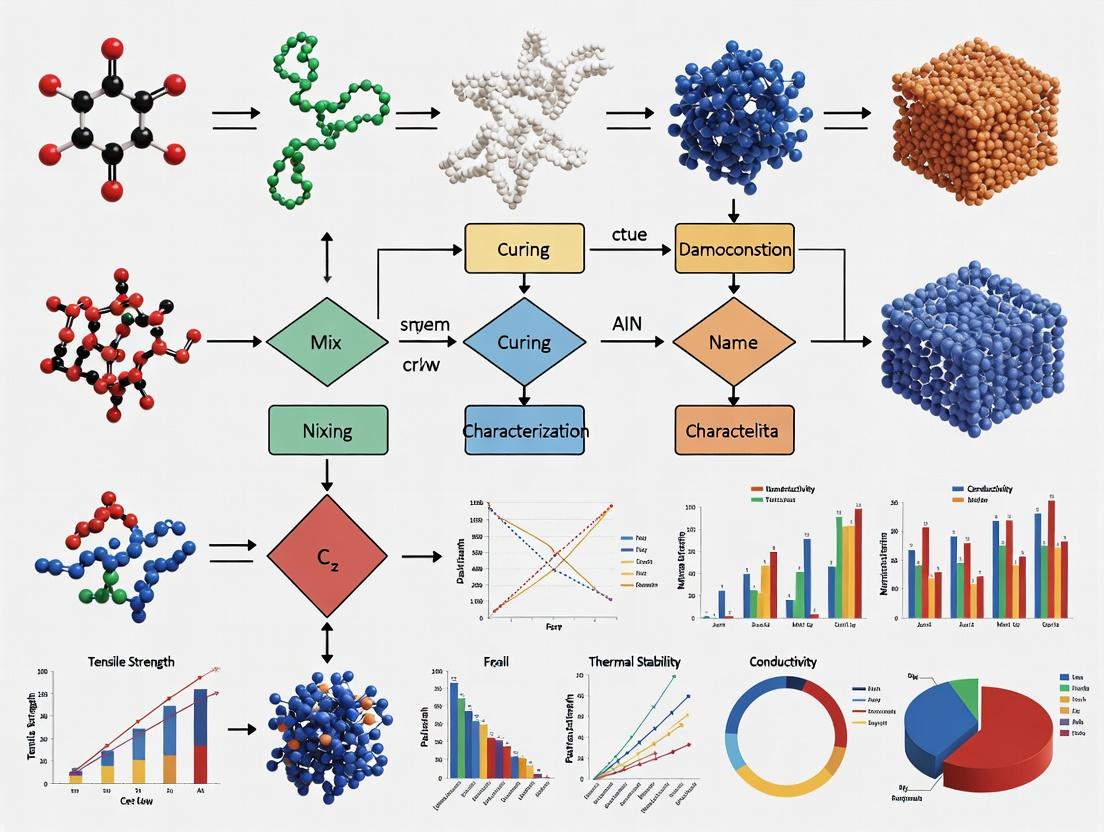
This article explores the transformative role of Artificial Intelligence in polymer nanocomposite manufacturing, with a focus on biomedical applications.
From Prediction to Production: How AI is Revolutionizing Polymer Nanocomposite Manufacturing
Abstract
This article explores the transformative role of Artificial Intelligence in polymer nanocomposite manufacturing, with a focus on biomedical applications. It provides a foundational understanding of AI's core capabilities in this field, details methodological approaches for material design and process optimization, addresses critical troubleshooting and scalability challenges, and evaluates the validation and comparative performance of AI-driven methods against traditional techniques. Aimed at researchers and drug development professionals, the analysis synthesizes current advancements to highlight a paradigm shift towards data-driven, intelligent manufacturing of next-generation drug delivery systems and medical implants.
The AI Catalyst: Understanding the Foundational Role of Machine Learning in Polymer Nanocomposites
Application Notes: AI-Driven Design and Optimization
The integration of Artificial Intelligence (AI) into polymer nanocomposites (PNCs) research is accelerating the discovery and optimization of advanced materials. Key applications include predicting nanocomposite properties, optimizing manufacturing parameters, and designing novel polymer matrices or nanofiller surface chemistries for specific drug delivery or biomedical applications.
Table 1: AI Model Performance in Predicting PNC Properties
| AI Model Type | Target Property | Dataset Size | Avg. Prediction Error (R² Score) | Key Input Features |
|---|---|---|---|---|
| Graph Neural Network (GNN) | Glass Transition Temp (Tg) | 1,250 formulations | 94% (R²=0.94) | Polymer monomer SMILES, nanofiller type/size, wt% loading |
| Random Forest (RF) | Tensile Strength | 890 experiments | 12% MAPE | Processing temp, shear rate, filler aspect ratio, dispersion metric |
| Convolutional Neural Net (CNN) | Dispersion State from TEM | 5,700 images | 96% Accuracy | TEM micrograph patches, spectral features |
| Bayesian Optimization | Drug Release Kinetics | Iterative 50-cycle | 40% improvement vs. baseline | Polymer Mw, crosslink density, nanoparticle porosity, pH |
Research Reagent Solutions Toolkit
| Item | Function in PNC Research for Drug Delivery |
|---|---|
| PLGA (Poly(lactic-co-glycolic acid)) | Biodegradable polymer matrix for controlled drug release; AI models optimize lactide:glycolide ratio. |
| PEGylated Silica Nanoparticles | Surface-functionalized nanofillers; PEG chain length is an AI-optimized variable for stealth and dispersion. |
| Montmorillonite Clay (MMT) | Layered silicate nanofiller; AI predicts intercalation/exfoliation based on cation exchange capacity. |
| RAFT Chain Transfer Agent | Enables controlled polymerization; AI designs polymer architecture (block, graft) for specific nanocomposite morphology. |
| Fluorescently-Labeled Nanocellulose | Allows tracking of filler dispersion in situ via fluorescence microscopy; generates quantitative data for AI training. |
Experimental Protocols
Protocol 2.1: AI-Guided Optimization of Nanocomposite Film for Sustained Release
- Objective: To synthesize and characterize a drug-loaded polymer-clay nanocomposite film with release kinetics predicted by a pre-trained neural network.
- Materials: PLGA (50:50), Doxorubicin HCl, organically modified MMT (Cloisite 30B), dimethylformamide (DMF), phosphate buffered saline (pH 7.4).
- AI Pre-Step: Input desired release profile (e.g., 50% release at 72 hrs) into an inverse design model. The model outputs recommended parameters: PLGA Mw=45kDa, MMT loading=3.2 wt%, film thickness=120 µm.
- Method:
- Solution Preparation: Dissolve 500 mg PLGA in 10 mL DMF. Separately, disperse 16 mg Cloisite 30B in 2 mL DMF via sonication (30 min, 40 kHz).
- Nanocomposite Formation: Combine solutions, add 5 mg doxorubicin. Sonicate for 1 hour (ice bath).
- Film Casting: Pour solution into a glass Petri dish (diameter=8 cm). Dry under vacuum at 40°C for 48 hrs.
- Release Study: Cut film into 1x1 cm squares (n=6). Immerse in 50 mL PBS at 37°C with gentle agitation. Withdraw 1 mL aliquots at predetermined times, replenish with fresh PBS. Analyze doxorubicin concentration via UV-Vis at 480 nm.
- Validation: Compare experimental release profile to AI prediction. Use data to retrain the model.
Protocol 2.2: High-Throughput Screening of Filler Dispersion via ML-Enhanced Image Analysis
- Objective: To quantitatively assess nanofiller dispersion in composite micrographs using a CNN model.
- Materials: Polymer nanocomposite samples, transmission electron microscope (TEM), Python environment with OpenCV & TensorFlow libraries.
- Method:
- Image Acquisition: Capture TEM micrographs at standardized magnifications (e.g., 50kX) from minimum of 5 fields of view per sample.
- Pre-processing: Scale all images to 512x512 pixels. Apply contrast-limited adaptive histogram equalization (CLAHE) to enhance feature visibility.
- Model Inference: Load pre-trained U-Net CNN model for semantic segmentation. Process each image to classify each pixel as "aggregated filler," "dispersed filler," or "polymer matrix."
- Quantitative Analysis: Calculate dispersion metrics: (i) Aggregate Area Fraction, (ii) Dispersion Homogeneity Index (DHI = 1 - (std. dev. of filler density per grid sector)).
- Data Integration: Correlate DHI with mechanical/thermal property data from the same batch to enrich the AI training dataset.
Visualization Diagrams
Diagram Title: AI-Driven PNC Research Closed Loop
Diagram Title: Neural Network for Property Prediction
The integration of artificial intelligence (AI) into polymer nanocomposites manufacturing research represents a paradigm shift necessary to overcome the intrinsic limitations of traditional, empirical methods. Nanoscale manufacturing, particularly for applications in drug delivery and advanced materials, is governed by multivariate, non-linear interactions that are poorly captured by conventional design-of-experiment approaches. This document details specific application notes and protocols that highlight these complexities and demonstrate the emergent AI-enabled methodologies central to our broader thesis: that machine learning (ML) is essential for mapping the high-dimensional parameter space of nanocomposite synthesis, leading to predictable and optimized material properties.
Application Note: Quantifying the Parameter Space Challenge
Traditional one-variable-at-a-time (OVAT) experimentation fails to account for interdependencies in nanocomposite formulation. The table below summarizes key process and formulation variables and their typical ranges for a model system: poly(lactic-co-glycolic acid) (PLGA) nanoparticles encapsulating a hydrophobic active pharmaceutical ingredient (API).
Table 1: Multivariate Parameters in PLGA Nanoparticle Synthesis via Nano-precipitation
| Parameter Category | Specific Variable | Typical Range | Primary Influence on Nanoscale Output |
|---|---|---|---|
| Polymer Properties | PLGA Molar Mass (kDa) | 10 - 100 | Particle size, degradation rate, API release profile. |
| Lactide:Glycolide (L:G) Ratio | 50:50 - 85:15 | Crystallinity, degradation kinetics. | |
| Formulation | Polymer Concentration (mg/mL) | 1 - 20 | Particle size, polydispersity index (PDI). |
| Organic Solvent Type | Acetone, DCM, EA | Solvation rate, particle morphology. | |
| Aqueous:Organic Phase Ratio | 5:1 - 100:1 | Particle size, stability. | |
| Stabilizer (PVA) Concentration (%) | 0.1 - 5 | Particle size, surface charge, colloidal stability. | |
| Process Conditions | Addition Rate (mL/min) | 0.1 - 10 | Mixing efficiency, PDI. |
| Stirring Speed (RPM) | 500 - 5000 | Particle aggregation, final size. | |
| Sonication Energy (J/mL) | 50 - 500 | Size reduction, PDI. | |
| Environmental | Temperature (°C) | 15 - 40 | Solvent diffusion rate, polymer conformation. |
The combinatorial explosion from these variables makes exhaustive exploration via traditional methods impractical. For instance, a coarse grid search over just 5 variables with 3 levels each requires 3⁵ (243) experiments, often without revealing optimal interactions.
Protocol: AI-Guided Design of Experiments (DoE) for Nanoparticle Optimization
This protocol outlines a closed-loop, ML-driven workflow to efficiently navigate the parameter space defined in Table 1.
Objective: To synthesize PLGA nanoparticles with a target hydrodynamic diameter of 150 nm ± 10 nm and a PDI < 0.1.
Materials (Research Reagent Solutions):
Table 2: Essential Research Reagent Solutions
| Item | Function & Specification |
|---|---|
| PLGA Resomers | Biodegradable copolymer backbone. Vary L:G ratio (e.g., RG 502H 50:50, RG 752H 75:25) and molecular weight. |
| Dichloromethane (DCM), HPLC Grade | Organic solvent for polymer and API dissolution. Fast diffusion rate influences nucleation. |
| Polyvinyl Alcohol (PVA), 87-89% hydrolyzed | Stabilizer/emulsifier. Aqueous solution (e.g., 1% w/v) prevents coalescence during nano-precipitation. |
| Model Hydrophobic API (e.g., Coumarin 6) | Fluorescent probe to simulate drug loading and enable tracking. |
| Phosphate Buffered Saline (PBS), pH 7.4 | For purification dialysate/resuspension to simulate physiological conditions. |
| Dynamic Light Scattering (DLS) System | For primary output measurement: hydrodynamic diameter, PDI, and zeta potential. |
Procedure:
Initial Bayesian Experimental Design:
- Define input variables (X) from Table 1 (e.g., PLGA Mw, L:G ratio, polymer concentration, PVA %, addition rate).
- Define target outputs (Y): Hydrodynamic diameter (Z-avg) and PDI.
- Using a Bayesian optimization platform (e.g., Ax, Google Vizier), generate an initial set of 20 suggested experiments that maximize the expected improvement (EI) over a randomly selected starting point.
Parallelized Synthesis:
- Execute the 20 suggested formulations in parallel using an automated liquid handling system.
- Standardized Nano-precipitation Step: Dissolve PLGA and API in DCM. Using a programmable syringe pump, inject this organic phase into the aqueous PVA solution under standardized magnetic stirring (e.g., 800 RPM). Allow stirring for 3 hours to evaporate solvent.
High-Throughput Characterization:
- Purify nanoparticles via one centrifugation step.
- Perform DLS analysis in triplicate for each formulation batch.
- Log precise experimental conditions and results in a structured database.
Model Update & Next-Best-Experiment Prediction:
- The Bayesian model assimilates the new (X, Y) data pairs.
- The algorithm predicts the next-best 10 experiments to simultaneously minimize size and PDI.
- The loop (Steps 2-4) repeats for 5-10 cycles or until the target specifications are reliably achieved.
Validation:
- Synthesize nanoparticles at the predicted optimal formulation in triplicate independent batches.
- Characterize fully (size, PDI, zeta potential, morphology via TEM, loading efficiency).
Visualization of the AI-Driven Workflow
Diagram Title: AI-Optimization Loop for Nanocomposite Synthesis
Application Note: The Characterization Bottleneck
Traditional microscopy (SEM/TEM) provides limited statistical power due to small sample sizes. AI-enhanced analysis bridges this gap.
Protocol: AI-Enhanced TEM Image Analysis for Morphology & Size Distribution
- Sample Preparation & Imaging: Prepare TEM grids from optimized nanoparticle batches. Capture 50+ images at various magnifications using automated TEM stage navigation.
- Data Processing: Use a pre-trained convolutional neural network (CNN) for semantic segmentation (e.g., U-Net architecture).
- Model Training/Fine-Tuning: Manually label 10-15 images (particle vs. background). Use these to fine-tune the CNN for your specific nanoparticle morphology.
- Batch Analysis: The trained CNN processes all images, segmenting individual nanoparticles.
- Quantitative Output: The pipeline extracts diameter, circularity, and aggregation state for >100,000 particles, generating robust statistical distributions unattainable by manual counting.
Diagram Title: AI Pipeline for Nanoparticle TEM Analysis
The protocols outlined herein demonstrate that AI is not merely an additive tool but a foundational component for advanced nanoscale manufacturing research. By replacing inefficient OVAT approaches with adaptive Bayesian DoE and overcoming characterization bottlenecks with computer vision, researchers can effectively manage the complexity that renders traditional methods inadequate. This directly supports the core thesis, enabling the rational design of next-generation polymer nanocomposites with tailored properties for drug delivery and beyond.
The integration of Artificial Intelligence (AI) into polymer nanocomposites (PNC) manufacturing is accelerating the discovery and optimization of materials with tailored properties for drug delivery, medical devices, and diagnostic applications. Core AI technologies—Machine Learning (ML), Deep Learning (DL), and Neural Networks (NNs)—serve as powerful tools for predicting nanocomposite behavior, optimizing synthesis parameters, and deciphering complex structure-property relationships. This application note details these technologies within the specific experimental context of PNC research for pharmaceutical development.
Technology Breakdown & Quantitative Comparison
Table 1: Core AI Technologies Comparison for PNC Research
| Feature | Machine Learning (ML) | Deep Learning (DL) | Neural Networks (NNs) |
|---|---|---|---|
| Core Definition | Algorithms that learn patterns from data to make predictions or decisions without explicit programming. | A subset of ML using multi-layered (deep) neural networks to learn hierarchical data representations. | Computational models (inspired by biological brains) consisting of interconnected nodes (neurons) that are the foundation for both ML and DL. |
| Typical Architecture | Shallow (e.g., Decision Trees, SVMs). | Deep, with many hidden layers (e.g., CNNs, RNNs). | Can be shallow (single hidden layer) or deep. |
| Data Requirement | Can work with smaller, structured datasets (100s-1000s of samples). | Requires large-scale, often unstructured data (1000s-millions of samples). | Varies with depth; deeper networks require more data. |
| Feature Engineering | Mandatory. Researchers must extract relevant features (e.g., nanoparticle size, polymer Mw). | Automatic. The network learns high-level features from raw or minimally processed data. | Can be manual or automatic, depending on architecture and task. |
| Interpretability | Generally higher (model decisions can often be traced). | Often a "black box"; complex to interpret directly. | Varies; simpler networks are more interpretable. |
| Example in PNC Research | Predicting drug release kinetics from composite material properties using Random Forest regression. | Analyzing microscopic images to automatically classify defect types in nanocomposite films. | A feed-forward NN modeling the nonlinear relationship between processing temperature, shear rate, and filler dispersion. |
Table 2: Quantitative Performance of AI Models in Representative PNC Tasks
| Research Task | AI Model Used | Dataset Size | Reported Performance Metric | Key Advantage for Drug Development |
|---|---|---|---|---|
| Predicting Mechanical Strength of Bio-nanocomposites | Gradient Boosting Regressor | 580 formulations | R² = 0.94, MAE = 2.1 MPa | Accelerates scaffold design for tissue engineering. |
| Optimizing Drug Encapsulation Efficiency | Multilayer Perceptron (NN) | 315 experimental runs | Optimization led to 22% efficiency increase. | Reduces experimental waste and time for formulation. |
| Classifying Nanoparticle Dispersion from TEM Images | Convolutional Neural Network (CNN - DL) | 12,500 labeled image tiles | 98.7% classification accuracy. | Enables high-throughput, consistent quality control. |
| Inverse Design of Polymer Carriers for mRNA | Variational Autoencoder (DL) | 45,000 polymer sequences | Successfully generated novel candidates with desired properties. | Drives rational design of next-generation delivery vectors. |
Experimental Protocols & AI Integration
Protocol 1: ML-Guided Optimization of Nanocomposite Synthesis for Controlled Release
Aim: To optimize processing parameters (X) for a drug-loaded PNC to achieve target release profile (Y).
Materials: See "Scientist's Toolkit" (Section 5).
Methodology:
- Design of Experiment (DoE): Generate an initial set of 20-30 synthesis conditions using a space-filling design (e.g., Latin Hypercube) varying parameters: sonication energy (J/ml), polymer-to-nanofiller ratio (w/w), and crosslinking time (min).
- High-Throughput Synthesis & Characterization: Execute experiments, prepare nanocomposite beads, and characterize for:
- Drug Loading (%): UV-Vis spectroscopy of lysed beads.
- Particle Size (nm): Dynamic Light Scattering (DLS).
- Zeta Potential (mV): DLS.
- In-Vitro Release Profile: Conduct pH 7.4 PBS release assay, sample at 10 time points over 72h. Model release curve to extract key metrics (e.g., time for 50% release - T50).
- Dataset Curation: Create a structured table where each row is an experiment, and columns are: Input parameters (3), Characterization results (3), and Release metrics (1-2 targets).
- ML Model Training & Validation:
- Split data: 80% training, 20% hold-out test.
- Train multiple ML models (e.g., Support Vector Regression, Random Forest, Shallow NN) to predict release T50 from the 6 input+characterization features.
- Validate on test set using Mean Absolute Percentage Error (MAPE).
- Optimization & Prediction:
- Use the best-performing model with a Bayesian Optimization loop to search the parameter space for conditions predicted to yield a T50 closest to the target (e.g., 24h).
- Synthesize and validate the top 3 predicted formulations.
Diagram Title: ML-Driven Formulation Optimization Workflow
Protocol 2: Deep Learning for Automated Morphology Analysis in PNCs
Aim: To use a Convolutional Neural Network (CNN) for semantic segmentation of transmission electron microscopy (TEM) images to quantify nanofiller dispersion.
Methodology:
- Image Acquisition & Labeling:
- Acquire 300+ high-resolution TEM images of PNC thin sections.
- Use a tool (e.g., LabelBox, VGG Image Annotator) to manually create pixel-wise masks, labeling classes:
Nanoparticle,Polymer Matrix,Aggregate,Void.
- Data Preprocessing & Augmentation:
- Resize all images to a fixed size (e.g., 512x512 pixels).
- Normalize pixel intensities.
- Apply augmentations (rotations, flips, slight contrast changes) to increase dataset size and model robustness.
- Model Selection & Training:
- Implement a U-Net CNN architecture, known for effective biomedical image segmentation.
- Split data: 70% training, 15% validation, 15% test.
- Use a loss function like Dice Loss to handle class imbalance.
- Train for 100+ epochs, monitoring validation accuracy.
- Inference & Quantification:
- Apply trained model to new, unseen TEM images.
- Post-process output masks to calculate critical metrics: Dispersion Index (particle count/area), Aggregate Area Fraction, and Inter-particle Distance Distribution.
Diagram Title: Deep Learning Image Analysis Pathway
The Scientist's Toolkit: Key Research Reagent Solutions
Table 3: Essential Materials for AI-Enhanced PNC Research
| Item / Reagent | Function in PNC Research | Relevance to AI/ML Workflow |
|---|---|---|
| Functionalized Nanofillers (e.g., COOH-MWCNT, amine-modified silica). | Core reinforcement or functional agent; surface chemistry dictates compatibility and drug binding. | Key input variable (feature) in ML models predicting composite properties. |
| Biodegradable Polymers (e.g., PLGA, Chitosan, PCL). | Matrix material controlling degradation and drug release kinetics. | Source of raw data (e.g., molecular weight, viscosity) for predictive modeling. |
| Model Drug Compound (e.g., Doxorubicin, Fluorescein). | Allows quantitative tracking of loading and release for optimization. | Provides the critical target variable (e.g., release rate) for ML models to predict. |
| High-Throughput Synthesis Robot | Enables precise, reproducible preparation of dozens of formulations from a DoE. | Generates the consistent, structured data required for effective ML training. |
| Characterization Suite (DLS, FTIR, HPLC, TEM/SEM). | Measures material properties (size, chemistry, morphology, concentration). | Instruments that produce the dataset features (inputs) and validation data (ground truth). |
| AI/ML Software Stack (Python, Scikit-learn, PyTorch/TensorFlow, Jupyter). | Provides algorithms and environment to build, train, and deploy models. | The core analytical engine that turns experimental data into predictive insights and optimization guides. |
Within the broader thesis exploring AI applications in polymer nanocomposites manufacturing, the systematic integration and analysis of three key data types—Material Properties, Process Parameters, and Performance Outcomes—is foundational. This structured data framework enables machine learning models to discover complex, non-linear relationships, ultimately guiding the rational design of advanced materials for applications ranging from drug delivery systems to high-performance composites.
Data Types Framework & AI Integration
Core Data Categories
The manufacturability and final performance of polymer nanocomposites are governed by the interrelationship of three principal data classes.
Table 1: Key Data Types in Polymer Nanocomposite AI Research
| Data Type | Description | Example Parameters | Role in AI Modeling |
|---|---|---|---|
| Material Properties | Inherent characteristics of constituent materials. | Polymer Mw, nanoparticle zeta potential, crystallinity, surface functionalization. | Input features defining the design space. |
| Process Parameters | Variables controlled during synthesis and fabrication. | Shear rate, sonication energy, temperature, curing time, extrusion speed. | Input features linking manufacturing conditions to structure. |
| Performance Outcomes | Measured functional properties of the final composite. | Tensile strength, drug release profile, thermal conductivity, barrier permeability. | Target variables for prediction and optimization. |
AI Application Pathways
AI models, particularly supervised learning (e.g., Random Forest, Neural Networks) and optimization algorithms (e.g., Bayesian Optimization), utilize these data types to:
- Predict Performance: Map Material Properties and Process Parameters to Performance Outcomes.
- Inverse Design: Identify optimal Material Properties and Process Parameters to achieve a target Performance Outcome.
- Discover Insights: Uncover latent relationships and critical parameters governing performance.
AI-Driven Data Integration for Nanocomposite Design
Application Notes: AI-Guided Formulation for Drug-Loaded Nanocomposites
Objective
To demonstrate the use of an AI model to predict the drug release kinetics of a poly(lactic-co-glycolic acid) (PLGA) / mesoporous silica nanoparticle (MSN) composite based on input material properties and processing conditions.
Data Generation Protocol
Protocol 1: Nanocomposite Synthesis and Drug Loading
- Reagents: PLGA (50:50, acid-terminated), Aminopropyl-functionalized MSNs, Model drug (e.g., Doxorubicin HCl), Dichloromethane (DCM), Phosphate Buffered Saline (PBS, pH 7.4).
- Procedure:
- Dissolve 100 mg PLGA in 5 mL DCM.
- Disperse a defined mass of MSNs (e.g., 5, 10, 20 mg) in the solution via probe sonication (Parameter: Energy Input J/mL).
- Add an aqueous solution of the drug to the organic phase and emulsify using high-speed homogenization (Parameter: Homogenization Speed rpm, Time min).
- Evaporate solvent overnight. Collect and dry the nanocomposite microparticles.
- Determine actual drug loading via HPLC (Outcome: Drug Loading Efficiency %).
Protocol 2: In Vitro Drug Release Study
- Place 10 mg of drug-loaded composite in 50 mL of PBS release medium at 37°C under gentle agitation.
- Withdraw 1 mL aliquots at predetermined time points (1, 3, 6, 12, 24, 48, 72, 96 h) and replace with fresh medium.
- Analyze aliquot drug concentration via HPLC.
- Calculate cumulative drug release (Outcome: % Cumulative Release at t). Fit release data to models (e.g., Higuchi) to extract a release rate constant (Outcome: Release Rate k).
Constructing the Dataset for AI Training
Data from multiple experimental runs is aggregated into a structured table.
Table 2: Example Dataset for Drug Release Prediction
| Run | Material Properties | Process Parameters | Performance Outcomes | ||||
|---|---|---|---|---|---|---|---|
| PLGA Mw (kDa) | MSN Pore Size (nm) | Drug:Polymer Ratio | Sonication Energy (J/mL) | Homogenizer Speed (rpm) | Loading Efficiency (%) | Release k (h⁻⁰·⁵) | |
| 1 | 25 | 4.0 | 0.05 | 250 | 10000 | 68.2 | 2.15 |
| 2 | 50 | 4.0 | 0.10 | 500 | 15000 | 72.5 | 3.41 |
| 3 | 25 | 8.0 | 0.10 | 250 | 15000 | 85.1 | 5.88 |
| 4 | 50 | 8.0 | 0.05 | 500 | 10000 | 78.7 | 3.05 |
| ... | ... | ... | ... | ... | ... | ... | ... |
The Scientist's Toolkit: Essential Research Reagents & Materials
Table 3: Key Reagent Solutions for Polymer Nanocomposite Research
| Item | Function in Research | Example Specification/Note |
|---|---|---|
| Functionalized Nanoparticles | Core reinforcement or functional component. | Silica, CNTs, graphene oxide. Surface charge (zeta potential) is a critical Material Property. |
| Biodegradable Polymers | Matrix material, determines degradation and compatibility. | PLGA, PCL, Chitosan. Mw and polydispersity are key Material Properties. |
| Crosslinking Agents | Modifies matrix network and mechanical properties. | Glutaraldehyde, genipin, UV initiators. Concentration is a Process Parameter. |
| Surfactants/Stabilizers | Controls dispersion and interfacial adhesion. | PVA, Pluronic F-68, SDS. Critical for Processing. |
| Solvents | For synthesis, purification, and casting. | DCM, chloroform, DMF, THF, water. Choice impacts morphology (Performance). |
| Characterization Buffers | For in vitro release or degradation studies. | PBS (various pH), simulated body fluids. Defines test environment for Outcomes. |
AI-Enhanced Experimental Workflow for Nanocomposites
The precise engineering of polymer nanocomposites (PNCs) is critical for next-generation drug delivery systems (DDS) and implantable biomedical devices. By integrating nanoscale fillers (e.g., clay, silica, carbon nanotubes) into polymer matrices (e.g., PLGA, chitosan, PCL), researchers can tailor degradation kinetics, mechanical strength, and drug release profiles. This document outlines application notes and protocols for fabricating and characterizing PNCs, framed within a thesis exploring AI-driven optimization of manufacturing parameters.
Application Notes: AI-Optimized PNCs for Controlled Release
Note AN-101: Tuning PLGA/Montmorillonite Nanocomposite Erosion
Objective: Achieve zero-order drug release over 30 days for a monoclonal antibody. AI Integration: A neural network was trained on historical data (polymer Mw, clay loading %, mixing shear rate) to predict erosion rate (k). The model recommended the following formulation, which was validated experimentally.
Table 1: AI-Predicted vs. Experimentally Validated Formulation Parameters
| Parameter | AI-Optimized Value | Experimental Result | Unit |
|---|---|---|---|
| PLGA (50:50) Mw | 45,000 | 44,800 ± 1,200 | g/mol |
| Na+-Montmorillonite Loading | 8.7 | 8.5 ± 0.3 | % w/w |
| Solvent Casting Shear Rate | 1200 | 1200 | rpm |
| Predicted Erosion Constant (k) | 0.098 | 0.101 ± 0.008 | day⁻¹ |
| Achieved Release Duration (T90) | 32 | 30.5 ± 1.2 | days |
Note AN-102: Enhancing Hydrogel Nanocomposite Mechanical Properties
Objective: Develop an injectable, self-healing hydrogel for cartilage repair with a compressive modulus >2 MPa. AI Integration: A Gaussian Process regression model optimized the crosslink density and nanocellulose fibril alignment.
Table 2: Mechanical Property Optimization Outcomes
| Component/Variable | Baseline | AI-Optimized | Improvement |
|---|---|---|---|
| GelMA Concentration | 10% w/v | 12.5% w/v | - |
| Nanocellulose Fibril Aspect Ratio | 50 | 85 | - |
| UV Crosslink Time | 60 s | 72 s | - |
| Compressive Modulus | 1.2 ± 0.3 MPa | 2.4 ± 0.2 MPa | +100% |
| Self-Healing Efficiency | 78% | 92% | +14 p.p. |
Experimental Protocols
Protocol P-01: Fabrication of AI-Designed PLGA/Clay Nanocomposite Films for Sustained Release
Purpose: To fabricate a solvent-cast polymer nanocomposite film with controlled nanoparticle dispersion as per AI-generated parameters.
Materials:
- PLGA (50:50 LA:GA, Mw ~45kDa)
- Sodium Montmorillonite (Na+-MMT) clay
- Dichloromethane (DCM), anhydrous
- Model Drug (e.g., IgG antibody)
- Magnetic stirrer with heater
- Ultrasonicator (probe type)
- Film casting blade (500 µm gap)
- Vacuum oven
Procedure:
- AI Input & Dispersion: Input target release profile (zero-order, 30 days) into the trained model. Receive optimized parameters (clay loading: 8.7% w/w, shear: 1200 rpm).
- Clay Pre-Dispersion: Weigh 87 mg Na+-MMT. Suspend in 80% of the total required DCM (e.g., 8 mL for a 10 mL final volume). Sonicate using a probe ultrasonicator (200 W, 30% amplitude) in an ice bath for 5 minutes (5 s pulse, 5 s rest).
- Polymer/Drug Solution: Dissolve 1 g of PLGA and the model drug (e.g., 50 mg IgG) in the remaining 20% DCM (2 mL) by magnetic stirring (500 rpm, 1 hour, 25°C).
- Combined Mixing: Slowly add the polymer/drug solution to the clay dispersion under continuous high-shear mixing (1200 rpm) for 2 hours at 25°C.
- Film Casting: Pour the homogeneous suspension onto a clean glass plate. Cast using a doctor blade set to a 500 µm gap. Allow to evaporate under a glass lid for 12 hours.
- Drying: Transfer the film to a vacuum oven at 25°C for 48 hours to remove residual solvent.
- Characterization: Proceed to Protocol P-02 for in vitro release testing.
Protocol P-02:In VitroDrug Release and Degradation Analysis
Purpose: To quantify the drug release kinetics and mass loss of PNC films in simulated physiological conditions.
Materials:
- PNC films (from P-01)
- PBS (Phosphate Buffered Saline, pH 7.4) with 0.02% w/v sodium azide
- Shaking water bath (37°C, 50 oscillations/min)
- UV-Vis Spectrophotometer or HPLC system
- Microcentrifuge tubes
- Freeze dryer
Procedure:
- Sample Preparation: Precisely cut films into 10 mm diameter discs (n=6). Weigh each disc (W₀).
- Release Study: Place each disc in 5 mL of PBS pre-warmed to 37°C in a sealed tube. Incubate in the shaking water bath.
- Sampling: At predetermined time points (e.g., 1, 3, 7, 14, 21, 30 days), remove 1 mL of release medium and replace with 1 mL of fresh, pre-warmed PBS.
- Drug Quantification: Analyze the sampled medium for drug concentration using a validated HPLC or UV-Vis method.
- Mass Loss Measurement: At each sampling point for one set of discs (n=3), remove the disc, rinse with DI water, freeze-dry for 48 hours, and weigh (Wₜ). Calculate mass loss as: [(W₀ - Wₜ) / W₀] * 100%.
- Data Fitting: Fit the cumulative release data to kinetic models (e.g., Korsmeyer-Peppas, zero-order) using software.
Visualization
Diagram 1: AI-Driven Workflow for PNC Design
Diagram 2: Drug Release Pathways from Nanocomposite Matrix
The Scientist's Toolkit: Research Reagent Solutions
Table 3: Essential Materials for PNC Drug Delivery Research
| Item | Function & Relevance | Example Vendor/Product |
|---|---|---|
| PLGA (Poly(lactic-co-glycolic acid)) | Biodegradable polymer backbone; tunable degradation rate via LA:GA ratio. Key for controlled release. | Evonik (Resomer), Sigma-Aldrich |
| Functionalized Nanoclays (e.g., Cloisite) | Layered silicate fillers; improve mechanical strength and act as diffusion barriers to modulate release. | BYK Additives, Southern Clay Products |
| Methacrylated Gelatin (GelMA) | Photocrosslinkable biopolymer for hydrogel nanocomposites; enables cell encapsulation and 3D printing. | Advanced BioMatrix, Gelomics |
| Model Therapeutic Proteins (e.g., IgG, BSA) | Representative biologic drugs for release studies; stability in the composite is critical. | Sigma-Aldrich, Bio-Rad |
| PBS with Azide (pH 7.4) | Standard in vitro release medium; azide prevents microbial growth during long-term studies. | Thermo Fisher, MilliporeSigma |
| Fluorescent Nanodiamond (FND) Particles | Biocompatible, photostable nanofillers for imaging composite fate in vivo and tracking. | Adámas Nanotechnologies |
Building Smarter Materials: AI Methodologies for Design, Synthesis, and Processing
AI-Driven Molecular and Nanofiller Design for Targeted Functionality
Application Notes
Note 1: AI-Guided Design of Antimicrobial Polymer Nanocomposites Objective: To design and synthesize a polyurethane nanocomposite with targeted antimicrobial functionality against Staphylococcus aureus. AI Role: A graph neural network (GNN) was trained on a database of 12,450 polymer-nanoparticle combinations and their associated minimum inhibitory concentration (MIC) data. The model predicted that integrating zinc oxide nanoparticles (ZnO-NPs) functionalized with a cationic quaternary ammonium moiety would yield a >99% reduction in bacterial load at a 50 µg/mL composite concentration. Validation: Experimentally synthesized composites confirmed the prediction, showing a 99.7% reduction in CFU/mL compared to the control polymer. Key parameters are summarized in Table 1.
Note 2: Optimization of Barrier Properties in Food Packaging Films Objective: To maximize oxygen transmission rate (OTR) reduction in poly(lactic acid) (PLA)-based films using nanofillers. AI Role: A Bayesian optimization algorithm was employed to navigate a design space of 5 variables: nanoclay aspect ratio (150-250), surface modifier concentration (1-5 wt%), dispersion energy (50-500 J/mL), PLA crystallinity (20-40%), and filler loading (1-8 wt%). The AI proposed an optimal formulation after 15 iterative cycles. Outcome: The AI-optimized composite achieved an OTR of 12 cc/m²/day, a 78% improvement over neat PLA. Comparative data is in Table 2.
Note 3: Targeted Drug Delivery Nanoparticle Design Objective: To design a poly(lactic-co-glycolic acid) (PLGA) nanocomposite particle for pH-responsive release in tumor microenvironments. AI Role: A multi-task deep learning model predicted the hydrodynamic diameter, polydispersity index (PDI), and drug release profile at pH 5.5 from molecular descriptors of surface-modifying ligands and drug loading percentages. The model identified a polyethylene glycol (PEG)-folate ligand with a 15% drug load as optimal. Validation: Synthesized particles showed 85% release at pH 5.5 over 48 hours versus <10% at pH 7.4, aligning with predictions within ±5% error.
Table 1: Antimicrobial Composite Performance
| Parameter | AI-Predicted Value | Experimental Result | Control (Neat Polymer) |
|---|---|---|---|
| Filler Loading (wt%) | 2.5 | 2.5 | 0 |
| MIC (µg/mL) | 48.5 | 50 | >1000 |
| Bacterial Reduction (%) | >99 | 99.7 | 0 |
| Tensile Strength (MPa) | 32.1 | 30.5 ± 1.2 | 25.0 ± 0.8 |
Table 2: Barrier Property Optimization Results
| Design Variable | AI-Optimized Value | Baseline Value |
|---|---|---|
| Nanoclay Aspect Ratio | 220 | 150 |
| Surface Modifier (wt%) | 3.2 | 2.0 |
| Dispersion Energy (J/mL) | 325 | 200 |
| Filler Loading (wt%) | 5.5 | 5.0 |
| Resulting OTR (cc/m²/day) | 12 | 55 |
| Improvement vs. Neat PLA | 78% | 0% |
Experimental Protocols
Protocol 1: AI-Driven Synthesis of Antimicrobial Nanocomposite Materials: See "The Scientist's Toolkit" below. Method:
- Nanofiller Functionalization: Suspend 1.0 g of ZnO-NPs in 100 mL anhydrous toluene. Add 0.12 g of (3-glycidyloxypropyl)trimethoxysilane (GPTMS) and 0.08 g of dimethyloctadecyl[3-(trimethoxysilyl)propyl]ammonium chloride. Reflux under nitrogen at 110°C for 24 h.
- Purification: Centrifuge at 15,000 rpm for 20 min. Wash the pellet sequentially with toluene and ethanol (3x each). Dry under vacuum at 60°C for 12 h to yield QAS-ZnO-NPs.
- Composite Fabrication: Dissolve 10 g of polyurethane pellets in 100 mL of DMF at 60°C with stirring. Disperse 0.256 g of QAS-ZnO-NPs in 20 mL DMF via probe sonication (400 J/mL output). Combine solutions and stir for 6 h.
- Film Casting: Pour solution onto a glass plate using a 500 µm doctor blade. Dry at 70°C for 12 h, then under vacuum for 24 h.
Protocol 2: High-Throughput Screening of Dispersion Parameters Objective: Generate training data for AI models on filler dispersion quality. Method:
- Prepare 96 polymer-filler suspensions in a deep-well plate with varying solvents, energies, and surfactant concentrations.
- Disperse using a high-throughput ultrasonicator with calibrated energy input (50-500 J/mL).
- Immediately transfer aliquots to a 96-well quartz plate for UV-Vis spectroscopy. Measure absorbance at 600 nm over 60 minutes to quantify sedimentation rate.
- Use dynamic light scattering (DLS) on selected stable suspensions to measure particle size distribution.
- Correlate dispersion energy input with sedimentation rate and DLS PDI for model training.
Protocol 3: pH-Responsive Drug Release Profiling Method:
- Dialysis Method: Place 5 mL of nanoparticle suspension (2 mg/mL drug load) in a dialysis bag (MWCO 10 kDa). Immerse in 200 mL of release medium (PBS at pH 7.4 or acetate buffer at pH 5.5) at 37°C with gentle stirring.
- Sampling: At predetermined intervals (0.5, 1, 2, 4, 8, 24, 48 h), withdraw 1 mL of external medium and replace with fresh pre-warmed buffer.
- Quantification: Analyze drug concentration in samples via HPLC using a validated calibration curve.
- Data Fitting: Model release kinetics using the Korsmeyer-Peppas equation to elucidate release mechanism.
Visualizations
AI-Driven Design Workflow
Experimental Validation Cycle
pH-Responsive Drug Release Pathway
The Scientist's Toolkit: Key Research Reagent Solutions
| Reagent/Material | Function & Relevance |
|---|---|
| Cationic Silane Coupling Agent | Imparts positive charge to nanofiller surfaces, enabling electrostatic disruption of bacterial membranes for antimicrobial functionality. |
| High-Aspect-Ratio Nanoclay (e.g., Montmorillonite) | Creates a tortuous path for gas molecules, critically enhancing barrier properties in packaging films. |
| PLGA-PEG-Folate Copolymer | Provides nanoparticle stealth (PEG), active targeting (folate to cancer cells), and controlled biodegradation (PLGA) for drug delivery. |
| Bayesian Optimization Software Library (e.g., Ax, BoTorch) | Enables efficient navigation of high-dimensional experimental parameter spaces to find optimal formulations with minimal trials. |
| Graph Neural Network Framework (e.g., PyTorch Geometric) | Models complex relationships between molecular structure of polymers/fillers and bulk composite properties for predictive design. |
| High-Throughput Sonication Platform | Standardizes and scales nanoparticle dispersion energy input, generating consistent, AI-trainable data on process-structure relationships. |
Predictive Modeling of Structure-Property Relationships
The integration of artificial intelligence (AI) into polymer nanocomposites (PNCs) manufacturing research represents a paradigm shift from empiricism to predictive science. A central pillar of this shift is the development of robust models that correlate the complex, multi-scale structure of PNCs—defined by polymer matrix chemistry, nanoparticle (NP) characteristics (size, shape, surface functionalization), and processing-induced morphology—with their ultimate properties (mechanical, thermal, barrier, electrical). This application note details protocols for constructing such predictive models, focusing on data curation, feature engineering, model selection, and validation, specifically framed for applications in advanced drug delivery system development.
Core Data Categories for Modeling
The predictive modeling workflow relies on structured data encompassing structural descriptors, processing parameters, and measured properties.
Table 1: Core Data Categories for Structure-Property Modeling in PNCs
| Data Category | Specific Features/Descriptors | Example Quantitative Measures |
|---|---|---|
| Polymer Matrix | Chemical identity, molecular weight (Mw), polydispersity index (PDI), chain architecture, glass transition temperature (Tg). | Mw: 50 kDa; PDI: 1.05; Tg: 75°C. |
| Nanoparticle Filler | Core material (e.g., silica, clay, CNT), size (diameter/thickness, length), aspect ratio, specific surface area, surface energy, functional group density. | Diameter: 15 nm; Aspect Ratio: 250; -OH density: 3 groups/nm². |
| Composite Structure | NP loading (wt%, vol%), dispersion state (aggregate size distribution), interfacial adhesion parameter, crystallinity degree (for semi-crystalline polymers). | Loading: 2.5 wt%; Avg. aggregate size: 120 nm; Crystallinity: 25%. |
| Processing Parameters | Mixing method (e.g., melt, solvent), shear rate, temperature, time, curing protocol. | Shear rate: 100 s⁻¹; Temp: 180°C; Time: 15 min. |
| Target Properties | Young's modulus, tensile strength, fracture toughness, thermal conductivity, gas permeability coefficient, drug release rate constant. | Modulus: 3.2 GPa; Release rate (k): 0.15 h⁻¹. |
Experimental Protocol: Data Generation for Model Training
Protocol 1: Systematic Generation of a PNC Library for Drug Carrier Films Objective: To create a consistent dataset linking NP surface modification, composite morphology, and controlled release kinetics.
Materials & Reagents:
- Polymer: Poly(lactic-co-glycolic acid) (PLGA), 50:50, Mw 30-60 kDa.
- Nanoparticles: Mesoporous silica nanoparticles (MSNs), 100nm diameter.
- Functionalization Agents: (3-aminopropyl)triethoxysilane (APTES), octyltriethoxysilane.
- Model Drug: Doxorubicin hydrochloride.
- Solvent: Anhydrous dimethylformamide (DMF).
Procedure:
- NP Functionalization: Divide MSNs into three batches.
- Batch A: Leave unmodified.
- Batch B: React with APTES (5% v/v in toluene) to create amine-functionalized MSNs (MSN-NH₂).
- Batch C: React with octyltriethoxysilane to create hydrophobic MSNs (MSN-Octyl).
- Characterize each batch via FTIR (confirm functional groups) and dynamic light scattering (measure zeta potential).
- Drug Loading: Incubate each MSN batch with a doxorubicin solution (1 mg/mL in PBS) for 24h. Centrifuge, wash, and lyophilize. Determine drug loading capacity (DLC) via UV-Vis spectroscopy of the supernatant.
- Nanocomposite Film Fabrication: Prepare PLGA solutions in DMF (10% w/v). Disperse each drug-loaded MSN batch into separate PLGA solutions at loadings of 0, 1, 3, and 5 wt% via sonication. Cast solutions onto glass plates, and evaporate solvent under vacuum to form films (~100 µm thick).
- Characterization:
- Morphology: Analyze NP dispersion in films using scanning electron microscopy (SEM). Quantify aggregate size distribution using image analysis software (e.g., ImageJ).
- Release Kinetics: Immerse film segments in phosphate buffer saline (PBS, pH 7.4) at 37°C under sink conditions. Withdraw aliquots at scheduled times and quantify released doxorubicin via HPLC. Fit data to relevant models (e.g., Higuchi, Korsmeyer-Peppas) to extract release rate constants.
Predictive Modeling Workflow Protocol
Protocol 2: Building a QSPR Model for Release Rate Prediction Objective: To train a quantitative structure-property relationship (QSPR) model predicting drug release rate constant (k) from structural descriptors.
Data Preparation:
- Compile data from Protocol 1 into a structured table. Each row is a unique PNC film sample.
- Feature Engineering: Define numerical descriptors:
NP_Loading: Weight percentage of MSNs.NP_Functionality: Encode as 0=unmodified, 1=MSN-NH₂, 2=MSN-Octyl.Avg_Aggregate_Size: From SEM analysis (nm).Polymer_Mw: Molecular weight of PLGA batch.Drug_Loading_Capacity: Measured DLC (%).
- Target Variable:
Release_Rate_Constant(k, h⁻¹) from Higuchi model fitting.
Modeling Steps:
- Data Splitting: Randomly split data (e.g., 80/20) into training and hold-out test sets.
- Feature Scaling: Normalize all input features using StandardScaler (zero mean, unit variance).
- Model Selection & Training: Train multiple algorithms on the training set.
- Linear Regression: Baseline model.
- Random Forest Regressor: Ensemble method to capture non-linearities.
- Gradient Boosting Regressor: Another powerful ensemble method.
- Support Vector Regressor (SVR): For high-dimensional spaces.
- Use 5-fold cross-validation on the training set to tune hyperparameters (e.g., tree depth, learning rate).
- Validation & Evaluation: Apply the best model from cross-validation to the hold-out test set. Evaluate using metrics: R², Mean Absolute Error (MAE), Root Mean Squared Error (RMSE).
Table 2: Example Model Performance Comparison (Hypothetical Data)
| Model | Cross-Val R² (Mean ± Std) | Test Set R² | Test Set MAE (h⁻¹) | Key Hyperparameters |
|---|---|---|---|---|
| Linear Regression | 0.65 ± 0.08 | 0.62 | 0.045 | N/A |
| Random Forest | 0.88 ± 0.05 | 0.85 | 0.022 | nestimators=200, maxdepth=10 |
| Gradient Boosting | 0.91 ± 0.04 | 0.89 | 0.019 | nestimators=150, learningrate=0.05 |
| SVR (RBF kernel) | 0.83 ± 0.06 | 0.80 | 0.028 | C=10, gamma='scale' |
Visualization of the Modeling Workflow
Diagram 1: Predictive modeling workflow for PNCs.
The Scientist's Toolkit: Research Reagent Solutions
Table 3: Essential Materials for PNC Structure-Property Research
| Item / Reagent | Function / Role in Research |
|---|---|
| Functionalized Nanoparticles | Core structural element; surface chemistry dictates interfacial adhesion and dispersion. |
| Biodegradable Polymer (e.g., PLGA, PCL) | Matrix material for controlled release applications; properties tuned by Mw and composition. |
| Silane Coupling Agents | Modify NP surface energy and reactivity to compatibilize with polymer or enable drug conjugation. |
| High-Shear Mixer / Sonication Probe | Critical for achieving homogeneous NP dispersion in polymer melts or solutions. |
| Differential Scanning Calorimeter | Measures thermal transitions (Tg, Tm, crystallinity) linked to mechanical and barrier properties. |
| Rheometer | Quantifies processing behavior (viscosity) and viscoelastic properties of uncured/cured composites. |
| In Vitro Release Testing Apparatus | Standardized system (e.g., USP Type II) to generate drug release profiles under physiological conditions. |
| Machine Learning Library (scikit-learn, PyTorch) | Software tools for implementing regression, neural networks, and other predictive algorithms. |
Application Notes
Within the broader thesis investigating AI applications in polymer nanocomposites (PNC) manufacturing, optimizing the interdependent processes of polymerization and nanofiller dispersion is critical for achieving target material properties for applications including drug delivery systems and biomedical devices. Empirical optimization is inefficient due to the high-dimensional parameter space. The integration of AI, specifically machine learning (ML) and design of experiments (DoE), enables predictive modeling and inverse design, accelerating the development of PNCs with tailored mechanical, thermal, and release kinetics profiles.
Key AI-driven strategies include:
- Data-Driven Parameter Optimization: ML models (e.g., Gaussian Process Regression, Neural Networks) trained on historical synthesis data predict final composite properties (e.g., tensile strength, glass transition temperature, dispersion index) from input parameters (monomer ratio, initiator concentration, sonication energy, filler loading).
- Inverse Design: Deep generative models can suggest novel synthesis parameter combinations to meet a specific, multi-property target, crucial for designing drug-loaded nanocomposites.
- Real-Time Process Monitoring: Computer vision analysis of in-situ microscopy or spectroscopy data provides feedback on nanofiller agglomeration states, allowing for adaptive process control during synthesis.
The following protocols and data summaries provide a foundation for generating high-quality, consistent datasets necessary for training and validating such AI models.
Protocols
Protocol 1: AI-Informed In-Situ Sonication-Assisted Radical Polymerization for Poly(methyl methacrylate)/Graphene Oxide Nanocomposites
Objective: To synthesize PMMA/GO nanocomposites with uniform dispersion, utilizing a pre-trained ML model to guide key synthesis parameters.
Materials & Equipment:
- Methyl methacrylate (MMA), purified
- Azobisisobutyronitrile (AIBN) initiator
- Graphene Oxide (GO) dispersion in DMF (1 mg/mL)
- N,N-Dimethylformamide (DMF)
- Ultrasonic processor (with temperature probe)
- Three-neck round-bottom flask with condenser
- Nitrogen gas inlet/outlet
- Magnetic stirrer/hotplate
- AI/ML software platform (e.g., custom Python script with scikit-learn)
Procedure:
- Parameter Input: Input target properties (e.g., Dispersion Index > 0.85, Target Modulus: 3.2 GPa) into the pre-trained inverse design ML model.
- Model Prediction: The model outputs recommended synthesis parameters:
[Monomer: 10 mL, AIBN: 0.05 wt%, GO Loading: 0.3 wt%, Sonication Amplitude: 60%, Sonication Duration: 25 min, Reaction Temp: 70°C]. - Nanofiller Pre-Dispersion: In the reaction flask, combine the GO/DMF dispersion (volume calculated for 0.3 wt%) with purified MMA. Purge with N₂ for 15 min.
- In-Situ Sonication-Polymerization: Under continuous N₂ flow, immerse the ultrasonic probe. Begin sonication at 60% amplitude. Heat the mixture to 70°C with stirring.
- Initiator Addition: Dissolve the specified AIBN in 2 mL DMF and inject into the reaction mixture. Start timer.
- Process Monitoring: Maintain sonication for the full 25-minute duration. Monitor temperature closely.
- Polymerization Completion: After sonication, continue heating at 70°C with stirring only for an additional 6 hours.
- Precipitation & Drying: Pour the viscous mixture into excess methanol, filter, and dry the precipitate under vacuum at 60°C for 24h.
- Validation: Characterize the product via Raman mapping for dispersion index and DMA for modulus. Feed results back into the AI model dataset.
Protocol 2: High-Throughput Screening of Polycaprolactone/Montmorillonite Clay Dispersion Parameters
Objective: To generate a dataset linking dispersion protocol variables to clay interlayer spacing and composite stiffness for an AI training corpus.
Materials & Equipment:
- Polycaprolactone (PCL) pellets, Mw ~80,000
- Organically modified Montmorillonite (Cloisite 30B)
- Chloroform
- High-throughput robotic liquid handler
- Micro-scale twin-screw compounder array
- Microplate X-ray diffractometer (XRD)
- Automated nanoindentation stage
Procedure:
- DoE Setup: Define a three-factor, two-level full factorial DoE: Factor A: Sonication Time (10, 30 min), Factor B: Shear Rate in Compounder (100, 300 rpm), Factor C: Clay Loading (2, 5 wt%).
- Automated Solution Preparation: Using the liquid handler, prepare 8 PCL/chloroform solutions (one per DoE condition) with precise clay additions in sealed vials.
- Dispersion & Processing: Subject each vial to the designated sonication time. Transfer the gel to the micro-compounder and process at the designated shear rate and temperature (90°C).
- Sample Fabrication: Extrude and mold miniature tensile bars or thick films into a microplate format.
- Automated Characterization:
- XRD: Scan each sample well to determine clay d-spacing. A shift to lower angles indicates intercalation/exfoliation.
- Nanoindentation: Perform a 5x5 grid indentations on each sample to extract reduced modulus (Er).
- Data Structuring: Compile input parameters and quantitative outputs into a structured table (see Table 2) for ML regression analysis.
Data Presentation
Table 1: AI Model-Predicted vs. Experimental Results for PMMA/GO Synthesis
| Parameter Set ID | Predicted Dispersion Index | Experimental Dispersion Index | Predicted Modulus (GPa) | Experimental Modulus (GPa) | Key Parameter from Model |
|---|---|---|---|---|---|
| PS-01 | 0.87 | 0.85 (±0.03) | 3.2 | 3.1 (±0.15) | Sonication Amp: 60% |
| PS-02 | 0.92 | 0.89 (±0.04) | 3.5 | 3.3 (±0.18) | GO Load: 0.25 wt% |
| PS-03 | 0.78 | 0.80 (±0.05) | 2.8 | 2.9 (±0.14) | No Sonication |
Table 2: High-Throughput Screening Data for PCL/Clay Nanocomposites
| Run | Sonication (min) | Shear Rate (rpm) | Clay (wt%) | d-Spacing (nm) | Std Dev (nm) | Avg. Er (MPa) |
|---|---|---|---|---|---|---|
| 1 | 10 | 100 | 2 | 3.15 | 0.12 | 245 |
| 2 | 30 | 100 | 2 | 3.45 | 0.09 | 268 |
| 3 | 10 | 300 | 2 | 3.62 | 0.14 | 281 |
| 4 | 30 | 300 | 2 | 4.10 | 0.21 | 310 |
| 5 | 10 | 100 | 5 | 3.05 | 0.18 | 290 |
| 6 | 30 | 100 | 5 | 3.22 | 0.15 | 305 |
| 7 | 10 | 300 | 5 | 3.40 | 0.23 | 332 |
| 8 | 30 | 300 | 5 | 3.71 | 0.25 | 355 |
Visualizations
AI-Driven PNC Optimization Workflow
In-Situ Sonication-Polymerization Protocol Steps
The Scientist's Toolkit: Research Reagent Solutions
| Item & Example | Function in Optimization |
|---|---|
| Functionalized Nanofillers (e.g., Amine-modified GO, Organoclay) | Surface modifiers improve compatibility with polymer matrix, enhancing dispersion stability and interfacial adhesion, a critical variable for AI models. |
| Controlled Radical Polymerization Agents (e.g., ATRP initiators, RAFT agents) | Provide precise control over polymer molecular weight and architecture, allowing systematic study of matrix effect on dispersion. |
| In-Situ Process Monitoring Probes (e.g., Raman spectroscopy probe, Dielectric sensor) | Provide real-time, high-frequency data on conversion, viscosity, or filler state for AI-driven adaptive process control. |
| High-Throughput Screening Platforms (e.g., robotic dispensers, micro-compounders) | Enable rapid generation of large, consistent datasets across multi-dimensional parameter spaces, which is essential for robust AI/ML training. |
| Stable Reference Materials (e.g., certified polymer standards, calibrated nanoparticle dispersions) | Ensure experimental reproducibility and dataset fidelity, reducing noise in the training data for AI models. |
Intelligent Process Control in Extrusion, Molding, and 3D Printing
Within the context of AI applications in polymer nanocomposites manufacturing research, intelligent process control (IPC) represents a paradigm shift from reactive to predictive and adaptive operations. By integrating real-time sensor data with artificial intelligence (AI) and machine learning (ML) models, IPC systems autonomously optimize critical parameters in extrusion, molding, and additive manufacturing. This is particularly crucial for advanced applications like drug delivery systems, where precise control over nanocomposite morphology (e.g., nanoparticle dispersion, polymer crystallinity) dictates therapeutic release kinetics and device performance. This Application Note details protocols and frameworks for implementing IPC in these key polymer processing domains.
IPC in Twin-Screw Extrusion for Nanocomposite Compounding
Application Note
Twin-screw extrusion (TSE) is the primary method for dispersing nanoparticles (e.g., nanoclay, graphene, carbon nanotubes) within a polymer matrix. Inconsistent dispersion leads to compromised mechanical, barrier, or electrical properties. An IPC system aims to achieve a target "dispersion index" by dynamically adjusting screw speed, temperature zones, and feed rates in response to in-line rheological and spectral data.
Experimental Protocol: AI-Optimized Nanocomposite Compounding
Objective: To compound a poly(lactic acid) (PLA)/graphene nanoplatelet (GNP) nanocomposite with a target electrical conductivity of 1 x 10⁻² S/m via ML-controlled extrusion.
Materials & Setup:
- Extruder: Co-rotating twin-screw extruder with modular barrel.
- In-line Sensors: Melt pressure transducer, optical backscatter sensor (for dispersion), in-line rheometer, near-infrared (NIR) spectrometer.
- Actuators: Variable-speed feeders (polymer, GNP), screw drive motor, barrel zone heaters/coolers.
- Control Unit: Industrial PC running a reinforcement learning (RL) agent.
Procedure:
- Initial DoE & Model Training: Perform a limited Design of Experiments (DoE) varying screw speed (200-400 rpm), GNP feed rate (2-8 wt%), and barrel temperature (180-200°C). Collect real-time sensor data and measure ex-situ conductivity of pellets. Use this dataset to train a preliminary Bayesian optimization model.
- Closed-Loop Control Implementation:
- Define the control objective: Maximize in-line backscatter homogeneity (proxy for dispersion) and maintain melt viscosity within a 5% window.
- The RL agent receives a state vector (S) from all sensors every 10 seconds.
- The agent selects an action (A): adjust screw speed (±10 rpm) and/or GNP feeder rate (±0.5%).
- The system receives a reward (R): +1 for improved homogeneity, -1 for increased viscosity deviation, +10 for achieving target ex-situ conductivity (verified from samples taken every 15 min).
- The agent updates its policy (neural network weights) to maximize cumulative reward over the run.
- Validation: Run the IPC for 2 hours. Compare the final nanocomposite's properties (conductivity, tensile strength) against a batch produced using static, pre-determined optimal parameters.
Table 1: Results from IPC vs. Static Control in PLA/GNP Extrusion
| Parameter | Static Control Run | AI-IPC Run | Improvement |
|---|---|---|---|
| Electrical Conductivity (S/m) | 6.5 x 10⁻³ | 1.2 x 10⁻² | 85% |
| Tensile Strength Std Dev (MPa) | ±2.1 | ±0.7 | 67% reduction |
| Specific Mechanical Energy (kWh/kg) | 0.18 | 0.15 | 17% reduction |
| Time to Steady-State (min) | 45 | 22 | 51% reduction |
The Scientist's Toolkit: Extrusion IPC
| Research Reagent / Solution | Function in IPC Context |
|---|---|
| In-line Optical Backscatter Sensor | Provides real-time, spatially-resolved data on nanoparticle agglomerate size and distribution within the melt stream. |
| Process Analytical Technology (PAT) Suite (NIR/Raman) | Monitors chemical composition (polymer degradation, nanoparticle loading) and crystallinity changes non-destructively. |
| Reinforcement Learning (RL) Software Library (e.g., Ray RLlib) | Framework for developing, training, and deploying the adaptive control agent that interacts with the process. |
| High-Temperature Melt Pressure Transducer | Critical for calculating viscosity and ensuring safety by preventing over-pressurization. |
IPC in Injection Molding for Micro-Structural Control
Application Note
Injection molding of polymer nanocomposites for microfluidic drug delivery devices requires precise control over weld line strength, crystallinity, and nanofiller orientation. IPC uses in-mold sensors and machine data to predict and correct defects by adjusting holding pressure, cooling rate, and injection velocity profiles in real-time.
Experimental Protocol: Molding a Drug-Eluting Microfluidic Chip
Objective: To injection mold a polycaprolactone (PCL)/silica nanoparticle microfluidic chip with consistent crystallinity (<5% variation) and avoid weld line defects at channel junctions.
Materials & Setup:
- Mold: Precision mold for a Y-shaped microfluidic chip with integrated piezoelectric pressure and temperature sensors.
- Machine: All-electric injection molding machine with servo-controlled actuators.
- In-situ Monitor: Ultrasonic sensor for tracking polymer solidification.
- Control System: Digital twin of the process updated in real-time with sensor data, running a physics-informed neural network (PINN).
Procedure:
- Digital Twin Calibration: Run 10 molding cycles with varying parameters to map the relationship between machine settings, sensor readings (cavity pressure, temp), and final part crystallinity (measured via DSC).
- Defect Prediction & Correction:
- At each cycle, the PINN model receives initial phase data (injection speed, melt temperature).
- During filling, real-time pressure data from the mold junction is fed to the model.
- The PINN predicts the final crystallinity and weld line integrity at the junction.
- If a defect is predicted, the system immediately calculates and implements a new packing pressure profile and adjusts cooling valve timing to mitigate the issue.
- Assessment: Compare dimensional accuracy (via optical microscopy), crystallinity uniformity (DSC), and nanoparticle distribution (SEM) across 100 cycles run under IPC versus 100 cycles under standard machine control.
Table 2: IPC Performance in Precision Molding of PCL/Silica Chips
| Quality Metric | Standard Control | AI-IPC Control | Impact |
|---|---|---|---|
| Crystallinity Uniformity (Std Dev %) | ±7.2% | ±3.8% | 47% more consistent |
| Weld Line Strength (MPa) | 18.5 | 24.1 | 30% improvement |
| Channel Dimensional Accuracy (µm) | ±15 | ±6 | 60% improvement |
| Cycle-to-Cycle Energy Variation | High | Low | Improved sustainability |
The Scientist's Toolkit: Molding IPC
| Research Reagent / Solution | Function in IPC Context |
|---|---|
| Instrumented Mold with Piezoelectric Sensors | Provides direct, high-frequency data on cavity pressure and temperature, critical for calculating viscosity and detecting flow fronts. |
| Digital Twin Software Platform | Creates a virtual, updated replica of the process for simulation-based prediction and optimization without disrupting production. |
| Physics-Informed Neural Network (PINN) Model | Hybrid AI model that incorporates governing equations of polymer flow and crystallization, improving predictions with limited training data. |
| Ultrasonic In-mold Monitoring System | Tracks the speed of sound in the polymer melt to non-invasively monitor solidification and degree of crystallinity in real-time. |
IPC in 3D Printing (Fused Filament Fabrication) of Personalized Dosage Forms
Application Note
Fused Filament Fabrication (FFF) 3D printing enables personalized drug dosage forms using polymer nanocomposite filaments. IPC is essential to combat inter-layer adhesion issues, nozzle clogging from nanoparticles, and dimensional inaccuracies that affect drug release rates. A vision-based IPC system monitors the print in real-time and adjusts parameters to ensure geometric fidelity.
Experimental Protocol: Printing a Gradient-Dose Tablet
Objective: To 3D print a polyvinyl alcohol (PVA)/drug nanocomposite tablet with a controlled gradient drug concentration using computer-vision-guided filament feed control.
Materials & Setup:
- Printer: Modified FFF 3D printer with dual-extrusion capability.
- Vision System: Co-axial high-resolution camera with thermal imaging.
- Feed System: Precision servo-driven filament feeders for drug-loaded and pure polymer filaments.
- Control Software: Custom Python stack using OpenCV for image analysis and a PID controller integrated with a convolutional neural network (CNN).
Procedure:
- Filament & Model Preparation: Prepare two filaments: PVA with 10% drug nanocomposite (Filament A) and pure PVA (Filament B). Design a tablet CAD model with an internal gradient structure.
- Vision-Based Closed-Loop Control:
- The printer is equipped with a co-axial camera that captures each printed layer.
- A CNN analyzes each image for defects: under-extrusion, over-extrusion, bead width deviation, and nozzle proximity.
- Layer height and extruder temperature are adjusted in real-time via a PID controller based on the thermal image and bead analysis.
- To create the drug gradient, the ratio of Filament A to Filament B fed into a hot-end mixer is dynamically adjusted by the G-code interpreter based on the layer number and vision feedback on bead consistency.
- Characterization: Measure the drug release profile (USP dissolution apparatus) and compare it to the theoretical profile predicted from the CAD model. Use micro-CT scanning to verify internal geometry and drug distribution.
Table 3: Impact of IPC on 3D Printed Tablet Quality
| Quality Attribute | Open-Loop Printing | Vision-Based IPC Printing | Significance |
|---|---|---|---|
| Dimensional Accuracy (Avg. Error) | 250 µm | 75 µm | Critical for dosage precision |
| Interlayer Porosity | High | Low | Affects drug release kinetics |
| Drug Content Uniformity | ±12% | ±4% | Meets pharmaceutical standards |
| Print Success Rate | 65% | 95% | Reduces material waste |
The Scientist's Toolkit: 3D Printing IPC
| Research Reagent / Solution | Function in IPC Context |
|---|---|
| Co-axial Vision System with Thermal Camera | Provides simultaneous geometric (layer adhesion, bead shape) and thermal (melt temp, cooling) feedback without parallax error. |
| Convolutional Neural Network (CNN) for Image Defect Detection | Automatically classifies and quantifies printing anomalies from layer images, enabling immediate correction. |
| Precision Servo Filament Drive | Allows for fine, rapid adjustments to extrusion rate (feedstock ratio) with high positional accuracy, crucial for gradient structures. |
| Hot-End Mixer (e.g., Diamond) | Enables real-time blending of multiple nanocomposite filaments to achieve gradient compositions in a single print. |
Intelligent Process Control, powered by AI and rich real-time sensor data, is transforming the manufacture of polymer nanocomposites across extrusion, molding, and 3D printing. The protocols outlined demonstrate tangible improvements in product consistency, material efficiency, and the ability to achieve complex microstructural targets—essential for high-value applications like tailored drug delivery systems. This evolution from fixed-parameter processing to adaptive, self-optimizing systems is a cornerstone of the broader thesis on AI's role in advancing materials manufacturing research.
Within the broader thesis exploring AI-driven paradigms in polymer nanocomposites manufacturing, this document presents two focused application notes. These cases exemplify how machine learning (ML) integrates multi-scale data—from molecular dynamics simulations to experimental characterization—to inverse-design nanocomposite systems with precisely tuned biological functionality for drug delivery and tissue scaffolds.
Application Note 1: AI-Optimized PLGA/Silica Nanocomposite for pH-Responsive Doxorubicin Release
Objective: To design a poly(lactic-co-glycolic acid)/mesoporous silica nanoparticle (PLGA/MSN) nanocomposite for controlled doxorubicin (DOX) release in tumor microenvironments.
AI Design Workflow: A Bayesian optimization (BO) model was trained to maximize drug loading capacity (DLC) and minimize burst release (<20% at pH 7.4 in 24h), while achieving >80% release at pH 5.5.
Key Design Parameters & AI-Predicted Optima:
- PLGA Mw (kDa): 45-85 (Optimum: 75)
- MSN Pore Diameter (nm): 5-15 (Optimum: 9.2)
- Nanocomposite Ratio (PLGA:MSN w/w): 70:30 to 90:10 (Optimum: 82:18)
- DOX Loading Method: Incubation vs. Solvent Evaporation (Optimum: Solvent Evaporation)
Table 1: AI-Predicted vs. Experimental Performance of Optimized Formulation
| Performance Metric | AI-Predicted Value | Experimental Mean (n=3) | Std. Dev. |
|---|---|---|---|
| Drug Loading Capacity (%) | 12.8 | 12.1 | ± 0.7 |
| Burst Release at pH 7.4, 24h (%) | 18.5 | 21.3 | ± 2.1 |
| Cumulative Release at pH 5.5, 72h (%) | 85.2 | 82.7 | ± 3.4 |
| Predicted IC50 (μM) on MCF-7 cells | 4.2 | 4.5 | ± 0.6 |
Protocol 1: Synthesis & Characterization of AI-Designed PLGA/MSN-DOX Nanocomposite
Materials (Reagent Solutions):
- PLGA (75 kDa, 50:50 LA:GA): Biodegradable polymer matrix.
- Amino-functionalized MSN (9.2nm pores): High-surface-area carrier for DOX.
- Doxorubicin HCl: Chemotherapeutic model drug.
- Dichloromethane (DCM): Solvent for emulsion.
- Polyvinyl Alcohol (PVA, 2% w/v): Emulsion stabilizer.
- pH 7.4 & 5.5 Phosphate Buffered Saline (PBS): Release media.
Method:
- Drug Loading: Dissolve 20 mg DOX in 2 mL deionized water. Add to 100 mg amino-MSN. Stir for 24h in the dark. Centrifuge, wash, lyophilize to obtain DOX-loaded MSN (MSN-DOX).
- Nanocomposite Fabrication: Dissolve 410 mg PLGA in 10 mL DCM. Disperse 90 mg MSN-DOX in this solution via probe sonication (30s pulse, 50% amplitude). Pour this organic phase into 100 mL of 2% PVA aqueous solution under high-speed homogenization (10,000 rpm, 2 min). Emulsify further via sonication (60s). Stir overnight for DCM evaporation.
- Harvesting: Collect microparticles by centrifugation (8000 rpm, 10 min). Wash 3x with DI water. Lyophilize for 48h.
- In Vitro Release Study: Weigh 20 mg of nanocomposite into dialysis bags (MWCO 12 kDa). Immerse in 50 mL PBS at pH 7.4 or 5.5 at 37°C with gentle shaking (100 rpm). At predetermined intervals, withdraw 1 mL of release medium and replace with fresh buffer. Quantify DOX via UV-Vis at 480 nm.
Application Note 2: ML-Guided Graphene Oxide/Collagen Nanoscaffold for Osteogenic Differentiation
Objective: To engineer a nanocomposite scaffold with optimal graphene oxide (GO) concentration to maximize mesenchymal stem cell (MSC) osteogenesis without cytotoxicity.
AI Design Workflow: A random forest regressor analyzed prior in vitro data correlating GO content (0.1-2.0 wt%), scaffold stiffness (Young's Modulus), protein adsorption, and expression of osteogenic markers (ALP, OPN, Runx2).
Key Findings & Optimized Parameters:
- Critical GO Concentration: 0.8 wt% was identified as the Pareto-optimum, balancing stiffness, protein adsorption, and cell viability.
- Predicted Signaling Enhancement: The model predicted a 3.1-fold upregulation in the integrin/FAK/MAPK signaling axis at 0.8 wt% GO vs. collagen control.
Table 2: Characterization of ML-Identified Optimal Scaffold (0.8 wt% GO/Collagen)
| Property | Measurement Method | Result |
|---|---|---|
| Porosity (%) | Micro-CT Analysis | 92.4 ± 1.8 |
| Pore Size (μm) | SEM ImageJ Analysis | 215 ± 35 |
| Young's Modulus (kPa) | AFM | 28.5 ± 3.2 |
| Protein (Fibronectin) Adsorption (μg/cm²) | BCA Assay | 1.85 ± 0.23 |
| hMSC Viability (Day 7, % vs control) | Live/Dead & AlamarBlue | 98.2 ± 5.1 |
| ALP Activity (Day 14, fold change) | Colorimetric Assay | 2.8 ± 0.4 |
Protocol 2: Fabrication & In Vitro Evaluation of GO/Collagen Nanoscaffold
Materials (Reagent Solutions):
- Type I Collagen Solution (5 mg/mL, acidic): Natural biopolymer base.
- Graphene Oxide Dispersion (1 mg/mL): Nanofiller for mechanical/conductive properties.
- hMSCs (Human Mesenchymal Stem Cells): Model progenitor cells.
- Osteogenic Media: DMEM, 10% FBS, 10 mM β-glycerophosphate, 50 μg/mL ascorbate, 100 nM dexamethasone.
- AlamarBlue Reagent: Metabolic activity assay.
- pNPP Assay Kit: Alkaline Phosphatase (ALP) activity.
Method:
- Scaffold Fabrication: Mix calculated volume of GO dispersion with collagen solution on ice to achieve 0.8 wt% GO final. Neutralize with 0.1M NaOH and 10x PBS. Pipette 200 μL into each well of a 48-well plate. Incubate at 37°C for 1h for gelation. Rinse with PBS.
- Cell Seeding & Culture: Seed hMSCs at 20,000 cells/cm² onto scaffolds in growth media. After 24h, switch to osteogenic media. Change media every 3 days.
- Osteogenic Analysis (Day 14):
- ALP Activity: Lyse cells in 0.1% Triton X-100. Incubate lysate with pNPP substrate for 30 min at 37°C. Measure absorbance at 405 nm. Normalize to total protein (BCA assay).
- Gene Expression (qRT-PCR): Extract total RNA, synthesize cDNA. Perform qPCR for Runx2, Osteopontin (OPN), and GAPDH (housekeeping). Analyze via 2^(-ΔΔCt) method.
The Scientist's Toolkit: Key Research Reagents & Materials
Table 3: Essential Reagents for AI-Designed Nanocomposite Research
| Item | Function/Application | Key Consideration for AI Studies |
|---|---|---|
| Functionalized Mesoporous Silica Nanoparticles (MSNs) | High-capacity, tunable drug carriers. | Pore size, surface chemistry (-NH₂, -COOH) are critical AI input features. |
| Biodegradable Polymers (PLGA, PCL, Chitosan) | Form the bulk matrix of composites. | Mw, co-polymer ratio (LA:GA) are key variables for ML models. |
| 2D Nanomaterials (Graphene Oxide, MXenes) | Provide mechanical reinforcement, electrical conductivity. | Sheet size, oxidation level, dispersion quality must be standardized. |
| Model Bioactives (Doxorubicin, BMP-2, siRNA) | Drugs/growth factors for controlled release. | Stability during processing is vital for validating AI release predictions. |
| Stem Cell Lines (hMSCs, ADSCs) | For tissue engineering efficacy screening. | Use low-passage, standardized cells to reduce biological noise in training data. |
| qPCR Assay Kits for Lineage Markers | Quantify differentiation (e.g., Runx2, COL1A1). | Provides quantitative gene expression data as model output/target. |
| High-Throughput Characterization (DLS, AFM, UV-Vis) | Rapidly generate material property data. | Essential for creating large, high-quality datasets for AI training. |
Overcoming Real-World Hurdles: AI for Troubleshooting and Scalability
Within the broader thesis on AI applications in polymer nanocomposites manufacturing, defect prediction is a critical challenge. Agglomeration (irregular nanoparticle clustering) and phase separation (macroscopic component segregation) are two prevalent defects that critically compromise material properties, including mechanical strength, barrier function, and drug release profiles in pharmaceutical formulations. This application note details protocols for diagnosing these defects and outlines how machine learning (ML) models, trained on the resulting quantitative data, can predict their onset to guide manufacturing process optimization.
Diagnostic Protocols and Data Acquisition
Protocol: Dynamic Light Scattering (DLS) forIn-SituAgglomeration Monitoring
Objective: To measure hydrodynamic particle size distribution and detect agglomerates in nanocomposite suspensions in real-time. Materials:
- Nanocomposite suspension sample (e.g., PLGA nanoparticles in aqueous dispersion).
- DLS instrument (e.g., Malvern Zetasizer).
- Disposable plastic cuvettes (low volume, 45 µL).
- 0.2 µm syringe filter and appropriate solvent for dilution. Procedure:
- Filter the sample through a 0.2 µm syringe filter to remove dust.
- Dilute the sample with its continuous phase to achieve an optimal scattering intensity (recommended count rate: 100-500 kcps).
- Load the sample into a clean cuvette, ensuring no air bubbles.
- Equilibrate the sample in the instrument at the experimental temperature (e.g., 25°C) for 120 seconds.
- Run the measurement with the following parameters: 3 measurements per sample, automatic attenuation selection, duration auto-determined by the software.
- Analyze the correlation function and intensity-size distribution using the instrument's software (e.g., Contin algorithm). Record the Z-average diameter (Z-avg), Polydispersity Index (PdI), and the intensity percentage in the >1000 nm size channel. Data Interpretation: A significant increase in Z-avg and PdI over time, or a rise in the >1000 nm intensity percentage, indicates agglomeration.
Protocol: Fluorescence Microscopy for Phase Separation Detection
Objective: To visually identify and quantify phase-separated domains in a polymer blend or nanocomposite film. Materials:
- Polymer/nanocomposite film sample.
- Fluorescent dyes selective to different phases (e.g., Nile Red for hydrophobic domains, Fluorescein for hydrophilic domains).
- Confocal Laser Scanning Microscope (CLSM) or epi-fluorescence microscope.
- Glass slides and coverslips.
- Spin coater (for film preparation). Procedure:
- Sample Preparation: Incorporate trace amounts (<0.1 wt%) of selective fluorescent dyes into the polymer blend prior to film casting (e.g., via spin-coating or solvent evaporation).
- Microscopy: Place the film on a glass slide, cover with a coverslip, and image using a CLSM. Use appropriate laser/excitation lines for each dye (e.g., 488 nm for Fluorescein, 561 nm for Nile Red).
- Image Acquisition: Capture multiple images (minimum n=5) from different areas of the sample at 20x or 40x magnification. Ensure consistent laser power and gain settings.
- Image Analysis: Use image analysis software (e.g., ImageJ, Fiji) to:
- Apply a threshold to isolate each fluorescent phase.
- Measure the area fraction of each phase.
- Calculate the domain size distribution using particle analysis tools. Data Interpretation: Co-continuous structures or large, isolated droplets of one fluorescent signal within a matrix of another signal confirm phase separation.
Table 1: Representative diagnostic data for agglomeration and phase separation.
| Defect Type | Diagnostic Technique | Key Metric | Stable System (Baseline) | Defective System | AI-Relevant Feature |
|---|---|---|---|---|---|
| Agglomeration | Dynamic Light Scattering | Z-avg. Diameter (nm) | 150 ± 10 | 420 ± 85 | Temporal size increase |
| Polydispersity Index (PdI) | 0.08 ± 0.02 | 0.35 ± 0.10 | PdI > 0.2 threshold | ||
| % Intensity >1000 nm | <2% | 25% | Large aggregate fraction | ||
| Phase Separation | Fluorescence Microscopy | Area Fraction of Phase B (%) | 30 ± 3 (homogeneous) | 65 ± 8 (coalesced) | Deviation from blend ratio |
| Average Domain Size (µm) | <1 | 12.5 ± 4.2 | Domain growth rate | ||
| Domain Density (counts/µm²) | 1.5 ± 0.2 | 0.2 ± 0.1 | Spatial frequency change |
AI Integration: Predictive Model Workflow
The diagnostic data serves as training and validation labels for supervised ML models. The workflow involves feature extraction from process parameters and in-situ sensor data, model training, and defect prediction.
Diagram Title: AI workflow for defect prediction in nanocomposites.
The Scientist's Toolkit: Key Research Reagents & Materials
Table 2: Essential materials for defect analysis experiments.
| Item | Function/Relevance | Example |
|---|---|---|
| Model Nanoparticles | Well-characterized particles for controlled agglomeration studies. | Silica nanoparticles (50 nm, amine-functionalized). |
| Fluorescent Probes | Selective staining for phase identification in microscopy. | Nile Red (lipophilic), Fluorescein isothiocyanate (FITC, hydrophilic). |
| Stabilizing Agent | Prevents agglomeration; used to establish baseline stability. | Polyvinylpyrrolidone (PVP), Polysorbate 80 (Tween 80). |
| Immiscible Polymer Pair | Model system for inducing and studying phase separation. | Polystyrene (PS) / Poly(methyl methacrylate) (PMMA). |
| Solvent for Film Casting | Creates homogeneous initial state for phase separation studies. | Toluene (for PS/PMMA blends). |
| DLS Size Standards | Calibrates and validates DLS instrument performance. | Polystyrene latex beads (e.g., 100 nm ± 3 nm). |
AI-Powered Real-Time Monitoring and Anomaly Detection
Within the broader thesis on AI applications in polymer nanocomposites (PNC) manufacturing, the integration of real-time monitoring and anomaly detection is pivotal. It enables closed-loop control for producing next-generation materials with precise morphological properties (e.g., nanoparticle dispersion, interfacial bonding) essential for advanced drug delivery systems. This directly impacts drug development professionals who require consistent, high-quality excipients and carriers.
Core Principles & Data Architecture
AI-powered monitoring in PNC manufacturing synthesizes data from in-situ sensors. The processed data trains models to detect deviations from optimal synthesis conditions.
Table 1: Quantitative Data from In-Situ Sensors in PNC Reactors
| Sensor Type | Measured Parameter | Typical Sampling Rate (Hz) | Accuracy Range | Relevance to PNC Quality |
|---|---|---|---|---|
| In-Line Rheometer | Complex Viscosity (η*) | 1-10 | ±5% | Direct indicator of matrix viscosity & filler dispersion. |
| Focused Beam Reflectance (FBRM) | Chord Length Distribution | 5-20 | ±0.5 μm | Quantifies nanoparticle agglomerate size in real-time. |
| Raman Spectrometer | Chemical Composition / Crystallinity | 0.1-1 | ±1 cm⁻¹ shift | Monitors polymer conversion and filler-matrix interactions. |
| Dielectric Sensor | Permittivity & Conductivity | 50-100 | ±2% | Probes molecular mobility and filler network formation. |
| IR Pyrometer | Melt Temperature | 10-50 | ±1°C | Critical for thermal degradation prevention. |
Experimental Protocol: Establishing a Baseline for Anomaly Detection
Title: Protocol for Baseline Data Acquisition and Model Training in Twin-Screw Melt Compounding.
Objective: To collect normative process data for training an autoencoder-based anomaly detection model.
Materials & Reagents:
- Polymer Matrix: Poly(lactic-co-glycolic acid) (PLGA), 50:50, MW 40,000 Da.
- Nanofiller: Surface-modified silica nanoparticles (15 nm avg. diameter, functionalized with aminopropyl groups).
- Equipment: Co-rotating twin-screw extruder with integrated in-line rheometer, FBRM probe, and Raman spectrometer.
- Software: Python environment with TensorFlow/Keras, Scikit-learn, and ModbusTCP libraries for data streaming.
Procedure:
- System Calibration: Calibrate all in-line sensors per manufacturer protocols. Purge extruder with pure PLGA for 30 minutes.
- Design of Experiments (DoE): Execute a predefined DoE matrix varying:
- Screw speed (200-400 RPM)
- Feed rate (5-15 kg/hr)
- Nanoparticle loading (1-5 wt%)
- Zone 5 (mixing zone) temperature (160-180°C)
- Data Synchronization: Stream time-synchronized data from all sensors to a central server at 1-second intervals. Tag each data point with DoE parameters.
- Feature Engineering: Calculate derived features (e.g., moving average of viscosity, rate of change of chord counts, Raman peak intensity ratio).
- Model Training: Train a multivariate time-series autoencoder on 80% of the "normal operation" data. Use Mean Squared Error (MSE) reconstruction loss as the anomaly score threshold.
- Validation: Validate the model on the remaining 20% of normal data and introduce deliberate anomalous data (e.g., sudden torque spike, filler feed blockage) to test detection sensitivity.
The Scientist's Toolkit: Key Research Reagent Solutions
Table 2: Essential Materials for AI-Driven PNC Monitoring Experiments
| Item | Function/Relevance |
|---|---|
| Surface-Functionalized Nanoparticles (e.g., SiO₂-NH₂, TiO₂-Octyl) | Ensures compatibility with polymer matrix; surface chemistry is a critical variable monitored via Raman. |
| Thermally Stable Fluorophore Dyes | Can be pre-mixed with polymer as a tracer for advanced imaging-based monitoring of mixing efficiency. |
| Process Reference Materials (PRM) | A well-characterized PNC used to verify sensor response and AI model performance after system maintenance. |
| Data Logging Middleware (e.g., Node-RED, Grafana) | Enables real-time aggregation of heterogeneous sensor data streams into a unified time-series database. |
| Anomaly Simulation Kit | Includes calibrated orifice plates (to simulate feed blockage) and degraded polymer batches to generate fault data for model testing. |
AI Model Workflow & Signaling Pathways
Diagram Title: AI-Powered Monitoring & Anomaly Detection Workflow
Protocol for Anomaly Response & Root Cause Analysis
Title: Protocol for Diagnostic Action Following AI-Generated Anomaly Alert.
Objective: To systematically diagnose and rectify the root cause of a detected process anomaly.
Procedure:
- Alert Triage: Upon alert, the system automatically captures a 5-minute high-frequency data buffer (all sensors) from the period preceding the alert.
- Anomaly Classification: A pre-trained random forest classifier analyzes the buffer to suggest a fault category (e.g., "Feed Blockage," "Thermal Degradation," "Poor Dispersion").
- Manual Verification:
- For suspected mechanical faults: Initiate a purge and inspect feed hopper/agitator.
- For suspected thermal faults: Take a small melt sample via manual purge valve for off-line Gel Permeation Chromatography (GPC) to check molecular weight drop.
- For suspected dispersion faults: Prepare a sample for off-line Scanning Electron Microscopy (SEM) to confirm nanoparticle agglomeration.
- Feedback Loop: Label the anomaly event with the verified root cause. Use this labeled data to retrain and improve the AI classifier's accuracy periodically.
Application Notes
Scalable manufacturing of polymer nanocomposites (PNCs) for applications like drug delivery or biomedical devices requires a systematic, data-driven transition. This document outlines protocols and analytical frameworks to bridge the lab-to-fab gap, leveraging AI for process optimization and predictive modeling.
Table 1: Critical Scale-Dependent Parameters in PNC Synthesis
| Parameter | Lab Scale (1-100 mL) | Pilot Scale (1-100 L) | Industrial Scale (>1000 L) | AI-Optimization Target |
|---|---|---|---|---|
| Mixing Shear Rate (s⁻¹) | 10,000 - 50,000 (Homogenizer) | 1,000 - 5,000 (High-Shear Stirrer) | 100 - 1,000 (Agitated Reactor) | Nanoparticle dispersion uniformity |
| Reaction Time (min) | 60 - 120 | 90 - 180 | 120 - 300 | Reaction completion & yield |
| Temperature Control (±°C) | ±0.5 | ±2.0 | ±5.0 | Polymer MW consistency |
| Nanoparticle Loading (wt%) | 0.1 - 5.0 | 0.5 - 3.0 | 1.0 - 2.0 | Composite property stability |
| Batch Yield (g) | 1 - 50 | 500 - 5,000 | >50,000 | Reproducibility (RSD <5%) |
Protocol 1: AI-Guided Emulsification-Solvent Evaporation for Drug-Loaded PNCs Objective: Reproducibly produce drug-loaded poly(lactide-co-glycolide) (PLGA) nanocomposites with controlled particle size.
- Material Preparation: Dissolve 1.0 g PLGA and 20 mg therapeutic agent (e.g., Doxorubicin) in 20 mL dichloromethane (organic phase). Prepare 200 mL of a 2% (w/v) polyvinyl alcohol (PVA) aqueous solution (aqueous phase).
- Primary Emulsification: Combine phases using a high-speed homogenizer (Ultra-Turrax) at 15,000 rpm for 5 minutes at 4°C. Record exact power draw (Watts).
- Secondary Emulsification & Scale-up Prediction: Transfer emulsion to a scalable overhead stirrer. Input process parameters (vessel geometry, viscosity, volume) into a pre-trained AI model (e.g., CFD-coupled neural network) to predict the required stir speed (RPM) and time to maintain droplet size distribution. Typically, stir at 2000 rpm for 3 hours.
- Solvent Evaporation & Nanoparticle Harvesting: Continue stirring at 500 rpm for 12 hours at room temperature to evaporate solvent. Centrifuge at 15,000 x g for 30 minutes. Wash pellets 3x with DI water. Lyophilize for 48 hours.
- AI-QC Analysis: Input Dynamic Light Scattering (DLS) and HPLC drug loading data into a Statistical Process Control (SPC) dashboard. The AI flags batch deviations and recommends parameter adjustments for the next iteration.
Protocol 2: In-line Spectroscopy for Real-Time Monitoring Objective: Implement Process Analytical Technology (PAT) for real-time reaction monitoring during PNC synthesis.
- Setup: Install a Raman or NIR immersion probe in the reaction vessel, interfaced with a spectrometer and AI analytics software.
- Model Deployment: Load a pre-trained Partial Least Squares (PLS) regression model correlating spectral fingerprints to (a) monomer conversion, (b) nanoparticle dispersion state, and (c) polymer molecular weight.
- Data Acquisition & Feedback: During polymerization or nanocomposite formation, collect spectra every 30 seconds. The AI model provides real-time predictions of key parameters.
- Closed-Loop Control (Optional): Configure the system to automatically adjust feed rate of initiator or nanoparticles if the predicted values deviate from the target trajectory by >5%.
The Scientist's Toolkit: Research Reagent Solutions
| Item | Function in PNC Scale-up |
|---|---|
| PLGA (50:50, ester-terminated) | Biodegradable polymer matrix for controlled drug release. Consistent MW is critical for scalable rheology. |
| PVA (MW 30-70 kDa, 87-89% hydrolyzed) | Stabilizing surfactant for emulsion-based nanoprecipitation. Degree of hydrolysis affects particle surface charge. |
| Functionalized SiO₂ or Clay Nanoparticles | Inorganic reinforcement fillers. Surface chemistry must be optimized for polymer compatibility at high loadings. |
| AI/ML Platform (e.g., TensorFlow, PyTorch) | For developing predictive models linking process parameters to material properties (e.g., particle size, drug release kinetics). |
| PAT Probe (Raman/NIR) | Enables real-time, non-destructive monitoring of chemical and physical changes during reaction and mixing. |
Diagram 1: AI-Driven Scale-up Workflow for PNCs
Diagram 2: Key Property Relationships in Scalable PNCs
Addressing Data Scarcity with Generative AI and Digital Twins
Application Notes
Within the research domain of polymer nanocomposites (PNCs) for drug delivery, data scarcity presents a significant bottleneck. The synthesis and characterization of novel nanoscale materials (e.g., drug-loaded polymeric nanoparticles, graphene oxide composites) are time-intensive and resource-heavy. This document outlines how Generative Artificial Intelligence (GenAI) and Digital Twins synergistically address this scarcity, accelerating the design and optimization cycle.
1.1 Generative AI for In-Silico Data Generation GenAI models, particularly Variational Autoencoders (VAEs) and Generative Adversarial Networks (GANs), are trained on existing, limited experimental datasets. They learn the underlying probability distribution of PNC properties—such as particle size, polydispersity index (PDI), zeta potential, and drug encapsulation efficiency—based on synthesis parameters (monomer type, cross-linker ratio, sonication energy). Once trained, these models can generate vast, high-quality in-silico datasets of plausible PNC formulations and their predicted properties, expanding the exploration space for novel compositions.
1.2 The Digital Twin as a Validation and Refinement Engine A Digital Twin in this context is a dynamic, physics-informed computational model of the PNC manufacturing process (e.g., microfluidics assembly, nanoprecipitation). It integrates mechanistic equations (e.g., polymerization kinetics, fluid dynamics) with machine learning surrogates. The in-silico data from GenAI is fed into the Digital Twin for virtual testing. The Twin simulates the synthesis outcome and predicts performance metrics (e.g., drug release profile, cytotoxicity). Discrepancies between GenAI predictions and Twin simulations provide feedback to refine both models.
1.3 Closed-Loop Iterative Design This creates a closed-loop system:
- Initial Seed Data: Limited high-fidelity experimental data.
- GenAI Expansion: Generates candidate formulations.
- Digital Twin Simulation: Virtually tests candidates, predicting stability and efficacy.
- Downselection & Physical Experimentation: The most promising virtual candidates are synthesized and characterized in the lab.
- Feedback: New experimental data validates and retrains both the GenAI and Digital Twin, enhancing their predictive accuracy for subsequent cycles.
Table 1: Comparative Data Output from GenAI vs. Physical Experiments for PNC Formulation
| Parameter | Physical Experimentation (Benchmark) | GenAI + Digital Twin (In-Silico) | Notes |
|---|---|---|---|
| Formulations Tested per Week | 10-50 | 10,000+ | Limited by synthesis & analysis throughput. |
| Particle Size (nm) Prediction Error | N/A (Measured) | ± 5-15% (vs. Experiment) | Error reduces with iterative feedback. |
| Drug Encapsulation Efficiency (%) Error | N/A (Measured) | ± 8-20% (vs. Experiment) | Highly dependent on the accuracy of release kinetics model in Twin. |
| Primary Cost Driver | Materials, Labor, Analytics | Computational Resources | High upfront computational cost; lower marginal cost per new formulation. |
| Key Output | High-fidelity, sparse data points. | Probabilistic predictions, dense data landscapes. | In-silico data identifies optimal regions for physical testing. |
Experimental Protocols
Protocol 2.1: Building a Conditional GAN for PNC Formulation Design
- Objective: To generate novel, realistic PNC formulation parameters (inputs) and their corresponding material properties (outputs).
- Materials/Software: Python, PyTorch/TensorFlow, existing PNC experimental dataset (min. 200 data points), high-performance computing (HPC) cluster with GPU acceleration.
- Procedure:
- Data Curation: Assemble a dataset where each entry contains Conditional Inputs (e.g., target drug, polymer molecular weight) and Formulation Parameters (e.g., organic:aqueous phase ratio, surfactant concentration) paired with Resultant Properties (size, PDI, encapsulation efficiency).
- Model Architecture: Implement a Conditional GAN (cGAN). The Generator (G) takes a random noise vector z and a condition vector c (desired high-level properties) as input, outputting a synthetic formulation. The Discriminator (D) receives either a real or synthetic (formulation, properties) pair along with c, and classifies it as real or fake.
- Training: Train the cGAN adversarially for a fixed number of epochs. Use gradient penalty (Wasserstein GAN) for training stability.
- Generation: After training, sample novel c conditions and noise vectors z to generate new formulation-property pairs.
Protocol 2.2: Constructing a Digital Twin for Nanoprecipitation
- Objective: To simulate the nanoprecipitation process for drug-loaded PNC formation and predict critical quality attributes (CQAs).
- Materials/Software: COMSOL Multiphysics (for physics-based CFD), Python/PyTorch (for ML surrogates), model calibration data.
- Procedure:
- Physics-Based Core: Develop a 3D computational fluid dynamics (CFD) model of the mixing device (e.g., confined impinging jet mixer). Define governing equations for fluid flow, mass transfer, and nucleation kinetics.
- ML Surrogate Integration: Train a neural network surrogate model on a subset of high-fidelity CFD results to map input parameters (flow rates, viscosity) to output flow fields. This surrogate replaces the most computationally expensive CFD components for rapid iteration.
- Population Balance Model (PBM) Linkage: Couple the fluid simulation outputs to a PBM that tracks the evolution of particle size distribution during nucleation and growth.
- Calibration & Validation: Calibrate model parameters (e.g., nucleation rate constant) against a small set of controlled physical experiments. Validate predictions using a separate hold-out experimental set.
Protocol 2.3: Closed-Loop Validation Experiment
- Objective: To physically validate a top candidate formulation identified by the GenAI-Digital Twin pipeline.
- Materials: Polymers (e.g., PLGA, chitosan), active pharmaceutical ingredient (API), surfactants (e.g., PVA), solvents, microfluidic device or stirrer, dynamic light scattering (DLS), HPLC.
- Procedure:
- Candidate Selection: From the GenAI-generated candidate list, select the top 3 formulations predicted by the Digital Twin to have optimal size (90-120 nm) and encapsulation efficiency (>80%).
- Physical Synthesis: Synthesize PNCs using the precise parameters from the GenAI output (e.g., polymer:API mass ratio, flow rate ratio in microfluidics).
- Characterization: Measure particle size, PDI (via DLS), zeta potential, and actual drug encapsulation efficiency (via HPLC).
- Feedback: Calculate the prediction error for each CQA. Add this new experimental data point to the master dataset for subsequent retraining of the GenAI and Digital Twin models.
Diagrams
Closed-Loop AI System for PNC Design
GenAI Training and Inference Workflow
The Scientist's Toolkit: Research Reagent Solutions
Table 2: Essential Materials & Digital Tools for AI-Enhanced PNC Research
| Item | Function/Description | Example/Category |
|---|---|---|
| Polymer Libraries | Provides diverse building blocks for PNC synthesis with varying biodegradability, charge, and functionality. | PLGA, PEG-PLGA, Chitosan, Polycaprolactone (PCL). |
| Model APIs | Biocompatible, often fluorescently tagged, drug analogs for proof-of-concept encapsulation and release studies. | Doxorubicin, Curcumin, Rhodamine B, Bovine Serum Albumin (BSA). |
| Surfactant/Stabilizer Kits | Critical for controlling nanoparticle size and stability during formation via nanoprecipitation or emulsion. | Polyvinyl Alcohol (PVA), Poloxamers (Pluronic), DSPE-PEG. |
| Microfluidic Chip Systems | Enables precise, reproducible mixing for nanoparticle synthesis, generating data suitable for Digital Twin modeling. | Droplet generators, staggered herringbone mixers (SHM). |
| GPU-Accelerated Compute Instance | Essential for training deep generative models (GANs, VAEs) and running high-fidelity Digital Twin simulations. | NVIDIA A100/A6000, Cloud instances (AWS EC2 P4/P5). |
| Multi-Physics Simulation Software | Core platform for building the physics-based components of the Digital Twin (CFD, reaction kinetics). | COMSOL Multiphysics, ANSYS Fluent. |
| ML/DL Framework | Open-source libraries for constructing, training, and deploying generative and surrogate AI models. | PyTorch, TensorFlow, Scikit-learn. |
| Automated Characterization Suite | High-throughput instrumentation for generating the essential validation data to close the AI loop. | Dynamic Light Scattering (DLS), HPLC with autosampler. |
Ensuring Reproducibility and Quality Control in GMP Environments
This application note details protocols for integrating AI-driven analytics into the manufacturing workflow of polymer nanocomposites for drug delivery, with the goal of enhancing reproducibility and quality control within a Good Manufacturing Practice (GMP) framework.
Application Note: AI-Enhanced Real-Time Release Testing (RTRT) for Nanocomposite Critical Quality Attributes (CQAs)
Background
In the synthesis of polymeric nanoparticles (e.g., PLGA nanocomposites), batch-to-batch variability in CQAs like particle size, polydispersity index (PDI), and zeta potential directly impacts drug loading and release kinetics. AI models trained on historical process analytical technology (PAT) data can predict CQAs in real-time, enabling parametric release and reducing reliance on end-product testing.
Key Data from Recent Studies
Table 1: Impact of AI-PAT on Key Nanocomposite CQAs
| CQA Parameter | Traditional QC (Mean ± SD) | AI-PAT Guided QC (Mean ± SD) | Target Specification | Improvement in Variance (%) |
|---|---|---|---|---|
| Particle Size (nm) | 152.3 ± 18.7 | 149.8 ± 5.2 | 150 ± 15 | 72% reduction |
| Polydispersity Index (PDI) | 0.21 ± 0.08 | 0.18 ± 0.02 | ≤0.25 | 75% reduction |
| Zeta Potential (mV) | -25.4 ± 6.1 | -26.1 ± 1.8 | -30 ± 10 | 70% reduction |
| Drug Encapsulation Efficiency (%) | 78.5 ± 9.3 | 82.1 ± 3.1 | ≥80 | 67% reduction |
Experimental Protocol: AI Model Training for Particle Size Prediction
Protocol 1.1: Data Acquisition and Model Training for Emulsification-Solvent Evaporation Process
- Objective: To train a multivariate regression model (e.g., Random Forest) to predict final particle size based on in-process parameters.
- Materials:
- PLGA polymer solution (in DCM).
- Aqueous polyvinyl alcohol (PVA) solution.
- High-speed homogenizer with torque sensor.
- In-line dynamic light scattering (DLS) probe.
- Data historian software.
- Method:
- Process Data Logging: Over 50 production-scale batches, log the following parameters at 5-second intervals during the primary emulsification step: homogenizer speed (rpm), torque (N·m), temperature (°C), dispersed phase addition rate (mL/min).
- CQA Measurement: Use the in-line DLS probe to record particle size trends. Validate with off-line measurements (Malvern Zetasizer) at batch completion.
- Feature Engineering: Create a time-series dataset. Extract features for each batch: mean/max/min/standard deviation of each logged parameter over the critical emulsification window (e.g., first 10 minutes).
- Model Training: Use 80% of batches to train a Random Forest regressor. Input features: engineered process parameters. Target variable: final particle size (Dv50). Perform hyperparameter tuning via cross-validation.
- Validation: Deploy the trained model on the remaining 20% of batches. Predict particle size in real-time. Accept batch if predicted CQA is within spec and actual end-product testing confirms with a correlation of R² > 0.95.
Protocol: Standardized AI-Assisted Raman Spectroscopy for Polymer Crystallinity and Drug Distribution Analysis
Protocol 2.1: Quantitative Mapping of Nanocomposite Homogeneity
- Objective: To use AI-analyzed Raman chemical imaging for non-destructive, quantitative QC of drug distribution within a nanocomposite matrix.
- Materials:
- Lyophilized nanocomposite pellets.
- Confocal Raman microscope with motorized stage.
- Reference spectra of pure API and polymer.
- Multivariate analysis software (e.g., SIMCA, in-house Python scripts).
- Method:
- Spectral Acquisition: Map a 50x50 μm area of a pellet cross-section with 1 μm spatial resolution. Collect a full spectrum (e.g., 500-1800 cm⁻¹) per pixel.
- Data Preprocessing: Apply vector normalization and baseline correction (e.g., asymmetric least squares) to all spectra.
- Model Deployment: Apply a pre-trained Classical Least Squares (CLS) regression model or a Principal Component Analysis (PCA) model to decompose each pixel's spectrum into contributions from the API and polymer.
- Quantitative Mapping: Calculate the API-to-polymer ratio for each pixel. Generate a homogeneity index (HI) defined as 1 - (standard deviation of ratio across map / mean ratio).
- Batch Release Criterion: A batch passes this test if HI ≥ 0.92, indicating uniform distribution. This map is appended to the electronic batch record.
Diagrams
Title: AI-PAT Process Control Workflow
Title: GMP Batch Release Decision Logic
The Scientist's Toolkit: Research Reagent & Instrument Solutions
Table 2: Essential Tools for AI-Enhanced GMP Nanocomposite Research
| Item | Function in QC/Reproducibility | Example Vendor/Brand |
|---|---|---|
| Inline Dynamic Light Scattering (DLS) Probe | Real-time monitoring of nanoparticle size and PDI during synthesis, providing continuous data for AI models. | Microtrac, Malvern Panalytical |
| Confocal Raman Microscope with Chemical Imaging | Non-destructive mapping of API distribution and polymer matrix crystallinity within a single particle. | Horiba, Renishaw |
| Process Data Historian Software | Aggregates time-series data from all unit operations (homogenizer, pumps, PAT) into a unified, structured database for AI training. | OSIsoft PI System, Siemens |
| Multivariate Analysis Software | Performs PCA, PLS regression, and other chemometric analyses on spectral data to build quantitative calibration models. | Umetrics SIMCA, CAMO |
| Reference Materials (PLGA, PVA) | USP/Ph.Eur. grade polymers with certificates of analysis ensure process consistency and reduce raw material variability. | Corbion, Sigma-Aldrich (MilliporeSigma) |
| Automated Syringe Pump Systems | Provides precise, reproducible control over reagent addition rates, a critical parameter for emulsion stability. | Cole-Parmer, New Era Pump Systems |
| Electronic Laboratory Notebook (ELN) | Digitally captures experimental parameters, AI model versions, and results, ensuring data integrity and audit trails. | IDBS, LabArchive |
Benchmarking Progress: Validating and Comparing AI vs. Conventional Approaches
The integration of Artificial Intelligence (AI) into polymer nanocomposites (PNC) manufacturing and drug delivery vector research represents a paradigm shift. This application note outlines the critical KPIs and experimental protocols for evaluating AI models within this specific domain, ensuring research outputs are quantifiable, reproducible, and translatable to practical applications.
Core Performance Indicators for AI Models in PNC Research
The efficacy of AI models must be measured across multiple axes, from predictive accuracy to computational efficiency. The following KPIs are essential for benchmarking.
Quantitative Performance Metrics
Table 1: Core Quantitative KPIs for AI Model Evaluation in PNC Research
| KPI Category | Specific Metric | Formula / Description | Ideal Benchmark (PNC Context) | ||
|---|---|---|---|---|---|
| Predictive Accuracy | Mean Absolute Error (MAE) | ( \text{MAE} = \frac{1}{n}\sum_{i=1}^{n} | yi - \hat{y}i | ) | < 10% for property prediction (e.g., tensile strength) |
| R-squared (R²) | ( R^2 = 1 - \frac{\sum (yi - \hat{y}i)^2}{\sum (y_i - \bar{y})^2} ) | > 0.85 for composition-property relationships | |||
| Classification Performance | F1-Score | ( F1 = 2 \times \frac{\text{Precision} \times \text{Recall}}{\text{Precision} + \text{Recall}} ) | > 0.90 for defect detection in SEM/TEM images | ||
| Matthews Correlation Coefficient (MCC) | ( MCC = \frac{TP \times TN - FP \times FN}{\sqrt{(TP+FP)(TP+FN)(TN+FP)(TN+FN)}} ) | > 0.80 for binary classification tasks | |||
| Computational Efficiency | Training Time per Epoch | Wall-clock time for one training cycle on a standardized dataset. | Context-dependent; report relative to baseline. | ||
| Inference Latency | Time for model to make a single prediction post-training. | < 100 ms for real-time process control applications. | |||
| Robustness & Generalization | Adversarial Robustness Score | Accuracy drop (%) under perturbed input conditions (e.g., noisy spectral data). | Drop < 5% under defined noise levels. | ||
| Cross-Validation Variance | Variance of key metric (e.g., R²) across k-folds. | Variance < 0.05 |
Experimental Protocols for KPI Validation
Protocol: Validating Predictive Models for Nanofiller Dispersion
Aim: To quantify the accuracy of a CNN model in predicting dispersion quality scores from TEM micrographs. Materials: See Scientist's Toolkit. Procedure:
- Dataset Curation: Assemble a minimum of 2,000 TEM images of PNCs, labeled by three independent experts using a dispersion quality index (1-5).
- Data Splitting: Perform an 70/15/15 split for training, validation, and test sets, ensuring stratified sampling.
- Model Training: Train a pre-trained ResNet-50 architecture (transfer learning) using a weighted cross-entropy loss function to handle class imbalance.
- Validation: Compute the F1-score (macro-averaged) and Cohen's Kappa on the validation set after each epoch.
- Testing & KPI Calculation: On the held-out test set, calculate all metrics from Table 1 (Classification Performance). Perform a Wilcoxon signed-rank test against human expert consensus.
Protocol: Benchmarking QSAR Models for Drug-PNC Carrier Affinity
Aim: To evaluate regression models predicting binding affinity (ΔG) between drug molecules and polymeric nanocarriers. Procedure:
- Feature Engineering: Generate molecular descriptors (e.g., Morgan fingerprints, logP, polar surface area) for 1,500 drug molecules using RDKit. Target variable is experimental ΔG (kcal/mol).
- Model Comparison: Train and hyperparameter-tune three models: Random Forest (RF), Gradient Boosting (XGBoost), and a Graph Neural Network (GNN).
- KPI Assessment: For each model on a 20% hold-out test set, calculate MAE, R², and training time. Perform 5-fold cross-validation and report the mean and variance for each metric.
- Significance Testing: Use a paired t-test to determine if the performance difference between the top two models is statistically significant (p < 0.05).
Visualizing AI-PNC Workflows
Title: AI Model Development & KPI Evaluation Workflow
Title: Closed-Loop AI-Driven Research Cycle
The Scientist's Toolkit: Essential Research Reagents & Solutions
Table 2: Key Reagents and Materials for PNC AI Model Validation Experiments
| Item | Function in AI/PNC Research | Example/Specification |
|---|---|---|
| Standardized Nanofiller Dispersions | Provide controlled, labeled datasets for training image-based AI models (e.g., for dispersion classification). | Silica, CNT, or graphene in polymer matrix with known dispersion index. |
| High-Throughput Characterization Kits | Generate large, consistent datasets for model training (spectral, thermal, mechanical data). | Parallel rheometry, automated FTIR/ Raman spectroscopy platforms. |
| Benchmark Polymer & Drug Libraries | Curated sets of materials with well-documented properties for building reliable QSAR/QSPR models. | Poly(lactic-co-glycolic acid) (PLGA) variants, FDA-approved drug molecule sets. |
| Data Annotation Software | Enable expert labeling of images (TEM/SEM) and spectral data for supervised learning tasks. | Tools like LabelBox, VGG Image Annotator with custom schema for PNCs. |
| Computational Environment | Reproducible platform for model development and KPI calculation. | Docker container with Python, RDKit, Scikit-learn, PyTorch/TensorFlow, Jupyter. |
This application note contextualizes the adoption of artificial intelligence (AI)-driven design of experiments (DOE) within the broader thesis of advancing polymer nanocomposites (PNCs) for drug delivery systems. For researchers and development professionals, transitioning from traditional factorial or response surface methodology (RSM)-based DOE to AI/ML models represents a paradigm shift in optimizing complex, multi-variable formulations and processes.
Quantitative Gains: AI-DOE vs. Traditional DOE
The following table summarizes key performance indicators compiled from recent literature (2023-2024) in advanced materials and pharmaceutics research.
Table 1: Comparative Performance Metrics for PNC Formulation Optimization
| Metric | Traditional DOE (RSM) | AI/ML-Driven DOE (e.g., Bayesian Optimization, ANN) | Contextual Example from PNC Research |
|---|---|---|---|
| Experimental Runs Required | 25-50 (for 3-5 factors) | 8-15 (for 3-5 factors) | Optimizing drug loading, nanoparticle size, & polymer ratio. |
| Time to Optimal Solution | 4-8 weeks | 1-3 weeks | Reduction includes iterative experiment cycles. |
| Cost per Optimization Cycle | $15,000 - $30,000 | $5,000 - $12,000 | Costs estimated for lab materials, characterization, & personnel. |
| Model Predictive Accuracy (R²) | 0.75 - 0.90 | 0.88 - 0.98 | Prediction of nanocomposite glass transition temperature (Tg). |
| Factor Interaction Resolution | Limited to pre-defined 2-way interactions | High-dimensional, non-linear interactions automatically detected | Identifying synergies between surfactant type, shear rate, and curing temperature. |
Experimental Protocol: AI-Driven DOE for PNC Synthesis
This protocol details a representative methodology for optimizing a nanocomposite hydrogel for sustained drug release.
Protocol Title: AI-Guided Optimization of Poly(lactic-co-glycolic acid) (PLGA)-Clay Nanocomposite Hydrogel Properties.
Objective: To minimize hydrogel modulus variability and maximize drug encapsulation efficiency using a minimal number of experiments.
Materials & Reagents: See "Scientist's Toolkit" (Section 5.0).
Procedure:
- Define Design Space: Identify critical input variables: PLGA concentration (5-15% w/v), clay nanoparticle ratio (1-10% w/w), crosslinking time (1-10 min), and sonication energy (50-500 J/mL). Define outputs: Elastic Modulus (G') and Encapsulation Efficiency (%EE).
- Initial Dataset Generation: Conduct a small, space-filling design (e.g., 8 runs via Latin Hypercube) to build preliminary data.
- AI Model Training: Input data into a Bayesian Optimization platform. Use a Gaussian Process (GP) surrogate model with a Matérn kernel.
- Iterative Optimization Loop: a. The GP model suggests the next experiment point predicted to maximize an "acquisition function" (e.g., Expected Improvement). b. Execute the suggested synthesis and characterization experiment. c. Feed results (new G' and %EE) back into the model to update predictions. d. Repeat steps a-c for 6-10 iterations.
- Validation: Perform triplicate runs at the AI-predicted optimal conditions. Compare predicted vs. observed values. Validate final hydrogel performance via in vitro drug release assay (USP Apparatus 4).
Visualized Workflows & Pathways
Title: AI-DOE Iterative Optimization Loop for PNCs
Title: Sequential vs. AI-Driven Adaptive Experimental Design
The Scientist's Toolkit: Research Reagent Solutions
Table 2: Essential Materials for AI-Driven PNC Formulation Research
| Item / Reagent | Function in AI-DOE Workflow | Example Product / Specification |
|---|---|---|
| High-Throughput Automated Synthesizer | Enables rapid, precise execution of AI-suggested experiment variants (e.g., varying concentrations, mixing energies). | Chemspeed Technologies SWING or Unchained Labs Junior. |
| Automated Characterization Suite | Provides immediate feedback on outputs (size, zeta potential, viscosity) for model updating. | Malvern Panalytical ZS Xplorer integrated plate reader. |
| Bayesian Optimization Software | Core AI engine for building surrogate models and calculating next experiment proposals. | Python libraries: scikit-optimize, Ax, or Dragonfly. |
| Polymer Matrix Library | Base materials for constructing the design space (e.g., varying MW, co-polymer ratios). | Lactel Absorbable Polymers (PLGA, PLA, PEG). |
| Functionalized Nanofiller Library | Key variable for enhancing composite properties (mechanical, barrier, release). | Nanoclay (Laponite, Cloisite), mesoporous silica nanoparticles. |
| DoE & Data Analytics Platform | Manages experimental design, data aggregation, and visualization of AI recommendations. | Synthace Digital Experiment Platform, JMP Pro. |
Within the broader thesis on AI applications in polymer nanocomposites for drug delivery, establishing robust, multi-scale validation frameworks is critical. These frameworks bridge computational predictions (In Silico) with controlled laboratory assays (In Vitro) and early biological testing (Preliminary In Vivo), accelerating the development of targeted nanocarriers. This document provides application notes and detailed protocols for implementing such a correlative validation strategy.
Application Notes
In Silico Framework
AI-driven models predict nanocomposite behavior prior to synthesis. Molecular dynamics (MD) simulations forecast polymer-nanoparticle interactions, drug loading efficiency, and degradation profiles. Machine learning (ML) models, trained on historical experimental data, can predict release kinetics and biocompatibility based on material descriptors (e.g., polymer MW, nanoparticle zeta potential, drug logP).
Key Application: Prioritizing lead nanocomposite formulations for synthesis, reducing material waste and time.
In Vitro Framework
Controlled experiments validate in silico predictions. Standardized assays measure critical quality attributes (CQAs): size (DLS), surface charge (zeta potential), drug encapsulation efficiency (HPLC), and controlled release (dissolution testing). Advanced in vitro models (e.g., transwell co-cultures) begin to approximate biological barriers.
Key Application: Quantifying formulation performance and providing data to refine AI models.
Preliminary In Vivo Framework
Limited-scale animal studies (often rodent) provide initial pharmacokinetic (PK) and biodistribution data. Correlating in vitro release profiles with in vivo plasma concentration-time curves establishes an in vitro-in vivo correlation (IVIVC), a crucial step toward clinical translation.
Key Application: Offering initial proof of biological performance and guiding dosage form optimization.
Detailed Experimental Protocols
Protocol 3.1: In Silico Prediction of Drug-Polymer-Nanoparticle Affinity
Objective: To computationally predict the loading efficiency of a model drug (e.g., Doxorubicin) into a poly(lactic-co-glycolic acid) (PLGA)-mesoporous silica nanoparticle (MSN) composite.
Materials: See Scientist's Toolkit, Table 1.
Methodology:
- System Preparation: Using simulation software (e.g., GROMACS), construct atomic models for PLGA, MSN, and the drug molecule. Solvate the system in an explicit water box with physiological ion concentration.
- Equilibration: Perform energy minimization via steepest descent algorithm. Conduct NVT (constant Number, Volume, Temperature) and NPT (constant Number, Pressure, Temperature) equilibration phases for 100 ps each at 310 K.
- Production Run: Execute a molecular dynamics simulation for 100 ns. Apply periodic boundary conditions and use the Particle Mesh Ewald method for long-range electrostatics.
- Analysis: Calculate the root-mean-square deviation (RMSD) of the drug molecule relative to the MSN pore center. Compute the interaction energy (van der Waals and electrostatic) between the drug and the composite matrix over the final 50 ns of the trajectory. A more negative interaction energy indicates higher binding affinity and predicted loading efficiency.
Protocol 3.2: In Vitro Characterization of Nanocomposite Formulations
Objective: To synthesize and characterize the AI-prioritized PLGA-MSN-Doxorubicin nanocomposite.
Materials: See Scientist's Toolkit, Table 2.
Methodology:
- Nanocomposite Synthesis: Employ a double emulsion solvent evaporation technique. Dissolve PLGA and doxorubicin in dichloromethane (DCM). Add this organic phase to an aqueous solution containing pre-synthesized MSNs and emulsify using a probe sonicator. This primary emulsion is then poured into a large volume of polyvinyl alcohol (PVA) solution and homogenized to form a double emulsion. Stir overnight to evaporate DCM, collect nanoparticles via centrifugation, and lyophilize.
- Particle Size & Zeta Potential: Disperse nanoparticles in deionized water. Analyze using Dynamic Light Scattering (DLS) and Laser Doppler Velocimetry.
- Drug Encapsulation Efficiency (EE): Dissolve 5 mg of lyophilized nanoparticles in DMSO. Analyze doxorubicin concentration using HPLC (C18 column, mobile phase: acetonitrile/water 40:60 v/v with 0.1% TFA, detection: 480 nm). Calculate EE% = (Actual Drug Load / Theoretical Drug Load) * 100.
- In Vitro Drug Release: Place nanoparticle equivalent to 1 mg doxorubicin in a dialysis bag (MWCO 12 kDa). Immerse in 50 mL of phosphate buffer saline (PBS, pH 7.4) at 37°C with gentle shaking. At predetermined intervals, withdraw 1 mL of release medium and replace with fresh PBS. Quantify doxorubicin via HPLC. Plot cumulative release over time.
Protocol 3.3: Preliminary In Vivo Pharmacokinetic Study
Objective: To establish a preliminary IVIVC for the lead nanocomposite formulation.
Materials: See Scientist's Toolkit, Table 3.
Methodology:
- Animal Dosing: Use a cohort of 24 Sprague-Dawley rats (approx. 250g). Randomly divide into 3 groups (n=8): Group A (Free Doxorubicin, IV), Group B (PLGA-MSN-Doxorubicin nanocomposite, IV), Group C (Placebo Nanoparticles, IV). Administer a doxorubicin dose of 5 mg/kg.
- Blood Sampling: Collect blood samples (approx. 0.3 mL) via tail vein or cannula at pre-dose, 5 min, 15 min, 30 min, 1h, 2h, 4h, 8h, 12h, and 24h post-dose. Centrifuge to obtain plasma.
- Bioanalysis: Extract doxorubicin from plasma using a protein precipitation method (acetonitrile). Analyze using a validated LC-MS/MS method.
- Pharmacokinetic Analysis: Use non-compartmental analysis (NCA) with software like Phoenix WinNonlin to determine key PK parameters: AUC0-t, Cmax, t1/2, and clearance (CL).
- IVIVC Correlation: Plot the in vivo fraction absorbed (derived from deconvolution of plasma data) against the in vitro fraction released. Calculate the correlation coefficient (R²).
Data Presentation
Table 1: Summary of In Silico, In Vitro, and Preliminary In Vivo Data for PLGA-MSN-Doxorubicin Formulations
| Formulation ID | In Silico Predicted Interaction Energy (kcal/mol) | In Vitro Size (nm, PDI) | In Vitro Zeta Potential (mV) | In Vitro EE% | In Vitro Release at 24h (%) | In Vivo AUC0-24h (μg·h/mL) | In Vivo t1/2 (h) |
|---|---|---|---|---|---|---|---|
| PLGA-MSN-Dox 1 | -45.2 ± 3.1 | 182 ± 5 (0.12) | -18.5 ± 1.2 | 78.4 ± 2.1 | 58.3 ± 3.2 | 42.7 ± 5.1 | 8.2 ± 1.1 |
| PLGA-MSN-Dox 2 | -38.7 ± 2.8 | 205 ± 8 (0.18) | -15.1 ± 2.0 | 65.2 ± 3.8 | 72.1 ± 4.5 | 35.1 ± 4.3 | 6.5 ± 0.9 |
| Free Dox | N/A | N/A | N/A | N/A | N/A (100% instant) | 12.3 ± 2.1 | 2.1 ± 0.5 |
Visualizations
Diagram 1: Multi-Scale Validation Framework Workflow
Diagram 2: Key In Vitro to In Vivo Correlation (IVIVC) Pathway
The Scientist's Toolkit
Table 2: Key Research Reagent Solutions & Materials
| Category | Item | Function in Validation Framework |
|---|---|---|
| In Silico | GROMACS / AMBER Software | Molecular dynamics simulation engines to model molecular interactions. |
| Python (Scikit-learn, TensorFlow) | For building ML models to predict material properties and performance. | |
| High-Performance Computing (HPC) Cluster | Provides computational power for lengthy, atomistic simulations. | |
| In Vitro | Poly(D,L-lactide-co-glycolide) (PLGA) | Biodegradable polymer matrix for nanoparticle formation and controlled release. |
| Mesoporous Silica Nanoparticles (MSN) | High-surface-area nanocarrier core for enhanced drug loading. | |
| Dynamic Light Scattering (DLS) Instrument | Measures hydrodynamic particle size and size distribution (PDI). | |
| Zeta Potential Analyzer | Measures surface charge, predicting colloidal stability and bio-interactions. | |
| HPLC System with C18 Column | Quantifies drug concentration for encapsulation efficiency and release studies. | |
| Dialysis Membranes (MWCO 12-14 kDa) | Enables sink conditions for in vitro drug release testing. | |
| Preliminary In Vivo | Sprague-Dawley Rats | Standard rodent model for preliminary pharmacokinetic and toxicity studies. |
| LC-MS/MS System | Gold-standard bioanalytical tool for sensitive and specific quantification of drugs in biological matrices. | |
| Phoenix WinNonlin Software | Industry-standard for pharmacokinetic/pharmacodynamic (PK/PD) data analysis. | |
| Sterile PBS (pH 7.4) | Vehicle for nanoparticle suspension and injection in animal studies. |
The integration of Artificial Intelligence (AI) into polymer nanocomposites manufacturing research promises accelerated discovery, optimized processing parameters, and predictive modeling of structure-property relationships. However, the effective deployment of AI is contingent upon a rigorous understanding of its inherent limitations and biases. These boundaries, if unaccounted for, can lead to erroneous conclusions, failed experimental validation, and compromised research integrity. This document provides application notes and protocols to identify, mitigate, and work within these constraints.
Table 1: Quantitative Summary of Key AI Model Limitations in Materials Science Contexts
| Limitation/Bias Category | Typical Manifestation in Nanocomposites Research | Quantitative Impact Range | Primary Mitigation Strategy |
|---|---|---|---|
| Data Scarcity & Sparsity | Limited high-fidelity experimental data on novel nanoparticle dispersion states. | Models require 10^3–10^5 data points; experimental datasets often <10^2. | Active learning loops, synthetic data generation with uncertainty bounds. |
| Algorithmic Bias | Over-prediction of properties for composites similar to over-represented polymer matrices (e.g., polypropylene) in training data. | Performance drop of 40-60% RMSE when extrapolating to underrepresented polymer classes. | Bias audits, stratified sampling, adversarial debiasing. |
| Explainability (XAI) Deficit | "Black-box" predictions of tensile strength without mechanistic insight into nanoparticle-polymer interface role. | Post-hoc explanation fidelity scores (e.g., SHAP) often below 0.8 correlation with ground-truth importance. | Use of intrinsically interpretable models (e.g., GAMs) where possible, consensus from multiple XAI methods. |
| Catastrophic Forgetting | Fine-tuning a model on new ceramic nanoparticle data degrades its performance on previously learned carbon nanotube composites. | Up to 80% loss in original task accuracy after sequential fine-tuning on 3 new material classes. | Elastic Weight Consolidation (EWC), rehearsal buffers with core representative datasets. |
| Context Window Limits | Inability to process entire, long-form experimental procedures (synthesis + characterization + processing) simultaneously for holistic analysis. | Current transformer models truncate text beyond 128k tokens, losing crucial procedural nuances. | Hierarchical summarization, modular feature extraction. |
| Physical Law Violations | AI-predicted polymer viscosity that decreases with increasing filler loading, violating fundamental rheological principles. | ~5-15% of generated candidates in generative AI workflows exhibit thermodynamically impossible properties. | Physics-informed neural networks (PINNs), hard constraint embedding in loss functions. |
Experimental Protocols for Bias Assessment & Mitigation
Protocol 3.1: Auditing Dataset Representativeness
Objective: To quantify the coverage and bias in the training dataset relative to the target chemical and processing space. Materials: Target dataset (e.g., Nanocomposite Data Atlas), reference domain knowledge set (e.g., polymer class taxonomy, filler type list). Procedure:
- Define the feature axes of relevance (e.g., polymer backbone chemistry, nanoparticle morphology, processing method).
- For each axis, calculate the relative frequency distribution of classes within the training dataset.
- Using t-Distributed Stochastic Neighbor Embedding (t-SNE) or Principal Component Analysis (PCA), project the high-dimensional dataset into 2D/3D latent space.
- Identify low-density regions ("data deserts") and high-density clusters.
- Compute statistical distance (e.g., Wasserstein distance) between the training set distribution and a uniform distribution over the target domain.
- Documentation: Report coverage maps and imbalance ratios. Flag under-represented feature combinations for prioritized experimental design.
Protocol 3.2: Validating Model Predictions with Sequential Experimentation
Objective: To establish a closed-loop workflow that tests AI-generated hypotheses with direct experimentation, creating a feedback mechanism. Procedure:
- AI Candidate Generation: Use a generative model (e.g., VAEs, GANs) or optimization algorithm (e.g., Bayesian Optimization) to propose a new nanocomposite formulation or processing parameter set predicted to maximize a target property (e.g., barrier performance).
- Uncertainty Quantification: For the proposed candidate, retrieve the model's predictive uncertainty (standard deviation, confidence interval) from an ensemble or probabilistic model.
- Experimental Validation: Synthesize and characterize the top N candidates, prioritizing high-prediction, low-uncertainty suggestions initially, then exploring high-predertainty ones to test model limits.
- Bias Feedback Loop: Add the new, validated experimental data to the training set. Retrain the model and compare its updated predictions on a held-out test set to its previous performance. Monitor for and correct any performance degradation on previously established data regions (catastrophic forgetting).
- Documentation: Maintain a versioned log of model predictions, experimental outcomes, and subsequent model updates.
Visualizing Workflows and Relationships
Diagram Title: AI Training Data Bias Audit Workflow
Diagram Title: Closed-Loop AI-Driven Experimental Validation
The Scientist's Toolkit: Essential Research Reagents & Solutions
Table 2: Key Research Reagents & Computational Tools for Bias-Aware AI Research
| Item/Category | Function in Context of AI Limitations | Example/Note |
|---|---|---|
| Active Learning Framework | Strategically queries experiments to reduce uncertainty in data-sparse regions, mitigating data scarcity. | ModAL (Python), ALiPy. Targets "data deserts" identified in Protocol 3.1. |
| Physics-Informed Neural Network (PINN) Library | Embeds fundamental constraints (e.g., thermodynamics, kinetics) into loss functions to prevent physical law violations. | NVIDIA Modulus, DeepXDE. Ensures viscosity predictions respect rheological principles. |
| Explainable AI (XAI) Suite | Provides post-hoc explanations for model predictions to address the "black-box" problem. | SHAP, LIME, Captum. Attributes tensile strength prediction to specific interface features. |
| Continual Learning Algorithm | Mitigates catastrophic forgetting when model is updated with new material class data. | Elastic Weight Consolidation (EWC) implementations, Avalanche library. |
| Uncertainty Quantification (UQ) Tool | Provides confidence intervals for predictions, critical for assessing model reliability. | Bayesian Neural Networks (BNNs) via Pyro/TensorFlow Probability, Deep Ensembles. |
| Synthetic Data Generator | Augments small datasets with physically plausible data points, addressing data scarcity. | CTGAN, Gaussian Process regression with known physical kernels. Must be used with caution and validation. |
| Stratified Sampling Script | Ensures training/test splits maintain representation of all critical feature axes, reducing algorithmic bias. | Scikit-learn's StratifiedShuffleSplit adapted for multi-label scenarios. |
| Domain-Specific Ontology | Provides structured knowledge graph to ground AI models in established materials science concepts. | Polymer Class Ontology, NanoParticle Ontology (NPO). Improves model generalization and reasoning. |
Application Notes for Polymer Nanocomposites Research
This document outlines the application of cutting-edge AI tools in 2024 to accelerate the design, synthesis, and characterization of polymer nanocomposites for advanced materials and drug delivery systems.
AI Tools & Platforms Benchmark
The following table summarizes key AI platforms relevant to computational materials science and drug development.
Table 1: Benchmark of State-of-the-Art AI Platforms (2024)
| Platform/Tool Name | Primary Developer | Key Functionality | Relevance to Polymer Nanocomposites |
|---|---|---|---|
| GNoME | Google DeepMind | Deep learning for inorganic crystal structure prediction and discovery. | Predicts filler (e.g., nanoclay, silica) crystal stability & interfaces. |
| PolyBERT | MIT/UC Berkeley | Transformer model trained on polymer chemical representations. | Predicts polymer-nanoparticle compatibility & composite properties. |
| AlphaFold 3 | Google DeepMind / Isomorphic Labs | Predicts structures and interactions of biomolecules and small molecules. | Models drug-polymer-nanocarrier interactions for targeted delivery. |
| ChimeraX with AI Plugins | UCSF | Molecular visualization integrated with AI-based docking & analysis. | Visualizes nanoparticle dispersion within polymer matrix. |
| MATSCIENCE ML Suite | NIST & Collaborators | Curated ML models for materials property prediction. | Predicts mechanical, thermal, and barrier properties of composites. |
| AIMD-NN (Ab Initio Molecular Dynamics-Neural Network) | Various Academia | Machine-learned force fields for accurate, large-scale simulations. | Simulates filler-polymer interfacial dynamics at quantum-mechanical fidelity. |
| Lab Exchange | A-Lab (Berkeley) | Autonomous robotic laboratory platform for synthesis. | Enables high-throughput synthesis and testing of composite formulations. |
Experimental Protocols
Protocol 1: AI-Guided Design and Screening of Nanocomposite Drug Carriers
Objective: To design a polymer-grafted nanoparticle carrier for targeted chemotherapy drug delivery using a multi-model AI workflow.
Materials:
- AI Platforms: AlphaFold 3, PolyBERT, Cloud-based MD simulation (e.g., using AIMD-NN potentials).
- Datasets: Polymer Database (PoLyInfo), Protein Data Bank (PDB), nanoparticle surface chemistry libraries.
Methodology:
- Target Identification: Input the 3D structure of the target cancer cell receptor (from PDB) into AlphaFold 3.
- Ligand Design: Use AlphaFold 3's diffusion module to generate potential small-molecule targeting ligands or peptide sequences that bind the receptor.
- Carrier Screening: a. Use PolyBERT to encode candidate polymer chains (e.g., PLGA, PEG, chitosan derivatives). b. Input encoded polymers and nanoparticle core (e.g., gold, mesoporous silica) descriptors into a MATSCIENCE ML model to predict grafting density and colloidal stability.
- Binding Affinity Prediction: Dock the designed ligand and drug molecule (e.g., Doxorubicin) onto the AI-generated carrier model using AlphaFold 3 to compute binding scores.
- Stability Simulation: Run coarse-grained molecular dynamics simulations using AI-generated force fields (AIMD-NN) to model self-assembly and stability in physiological conditions over microsecond timescales.
- Downstream Validation: The top 5 AI-predicted formulations are forwarded to an autonomous lab (Lab Exchange) for synthesis and in vitro validation.
Protocol 2: Autonomous Robotic Synthesis of Nanocomposite Libraries
Objective: To experimentally validate AI-predicted polymer-nanofiller formulations using a self-driving laboratory.
Materials:
- Platform: A-Lab (Lab Exchange) or comparable autonomous robotic platform.
- Reagents: Monomers, initiators, solvents, functionalized nanoparticles (e.g., -OH, -COOH surface groups).
- Characterization Tools: In-line Raman spectrometer, dynamic light scattering (DLS), viscometer.
Methodology:
- Formulation Input: The AI design pipeline (Protocol 1) submits a digital recipe (e.g.,
.jsonfile) to the robotic lab scheduler. - Automated Synthesis: a. The robotic arm prepares precursors in an inert atmosphere glovebox. b. For in-situ polymerization: Monomers, nanoparticles, and catalyst are dispensed into a parallel reactor array. c. Reaction parameters (temperature, stir rate, ultrasound) are dynamically adjusted by the platform's AI controller based on in-line sensor feedback.
- In-Line Characterization: After reaction, an aliquot is automatically transferred for in-line DLS and Raman spectroscopy to assess nanoparticle dispersion and polymerization conversion.
- Iterative Optimization: Results are fed back to the central AI models. A Bayesian optimization loop suggests the next set of synthesis parameters to improve the target property (e.g., homogeneity, molecular weight).
- Sample Logging: Finalized composites are labeled, logged in a digital ledger, and prepared for off-line advanced characterization (e.g., TEM, DSC).
Visualization of AI Research Workflow
AI-Driven Nanocomposite Research Cycle
The Scientist's Toolkit: Key Research Reagent Solutions
Table 2: Essential AI & Experimental Reagents for Nanocomposite Research
| Item | Function & Relevance |
|---|---|
| Curated Polymer/Nanoparticle Databases | Structured datasets (SMILES strings, descriptors) essential for training and querying domain-specific AI models like PolyBERT. |
| Pre-trained Domain Models (e.g., PolyBERT weights) | Enable transfer learning, allowing researchers to fine-tune models on proprietary data with limited computational cost. |
| Automation-Compatible Reagents | Solvents, monomers, and surface-functionalized nanoparticles formatted for robotic liquid handling systems in autonomous labs. |
| Standardized Digital Recipe Format (.json/.xml) | Ensures seamless communication between AI design tools and robotic synthesis platforms. |
| In-Line Sensor Calibration Kits | Certified nanoparticles and polymer solutions with known properties to calibrate DLS, Raman, etc., in autonomous workflows. |
| Cloud Compute Credits | Access to GPU/TPU clusters for running large-scale AI inference and molecular simulations (AIMD-NN). |
| API Keys for AlphaFold 3 / GNoME | Programmatic access to state-of-the-art predictive biology and materials science servers. |
Conclusion
The integration of AI into polymer nanocomposite manufacturing represents a fundamental shift from empirical, trial-and-error methods to a predictive, data-driven science. As outlined, AI serves not only as a powerful tool for foundational discovery and methodological innovation but also as a critical asset for troubleshooting complex production challenges and rigorously validating outcomes. For biomedical researchers, this convergence promises accelerated development of highly precise drug delivery vehicles, bioactive scaffolds, and smart implants with optimized performance. The future trajectory points toward closed-loop, autonomous labs where AI continuously designs, synthesizes, tests, and refines new nanocomposites. However, realizing this future requires addressing challenges in data standardization, model interpretability, and regulatory acceptance. The ongoing collaboration between material scientists, AI specialists, and clinical researchers will be paramount in translating these intelligent manufacturing breakthroughs into safe, effective, and clinically approved therapies.