Dispersive Solid-Phase Extraction: A Modern Guide to Impurity Removal in Pharmaceutical Analysis
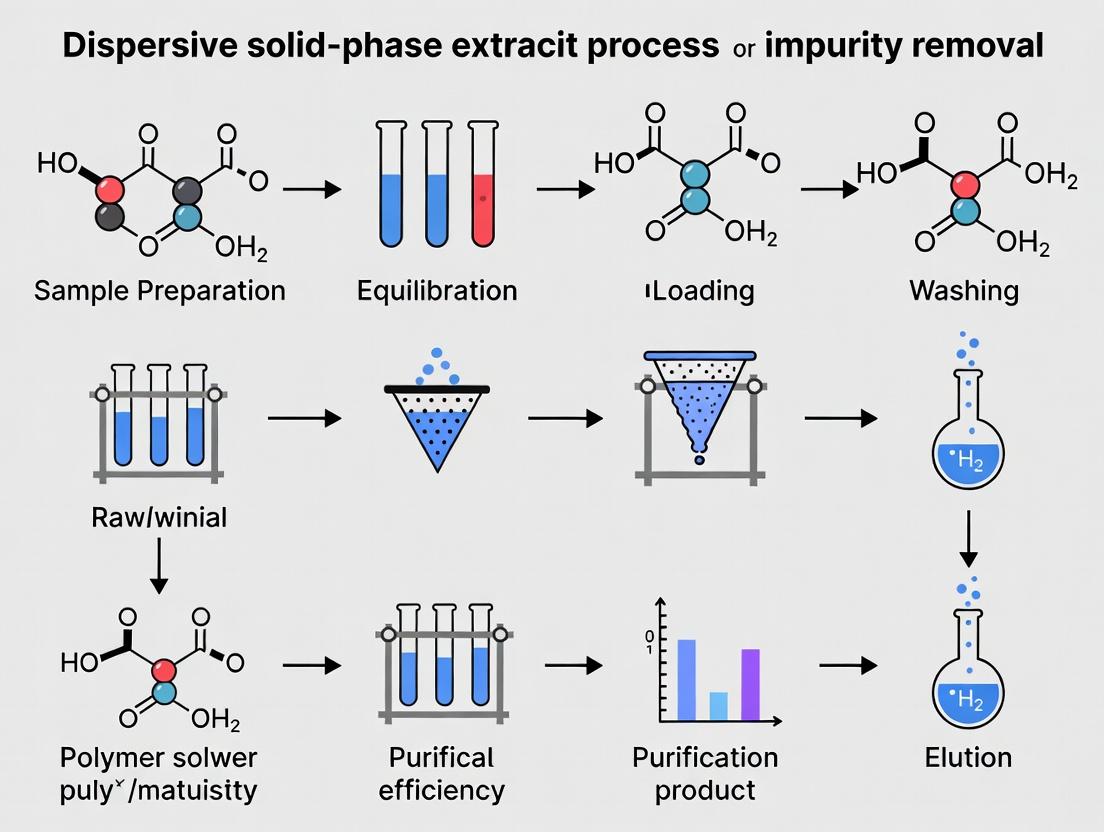
This comprehensive guide details the application of dispersive solid-phase extraction (dSPE) for impurity removal in drug development.
Dispersive Solid-Phase Extraction: A Modern Guide to Impurity Removal in Pharmaceutical Analysis
Abstract
This comprehensive guide details the application of dispersive solid-phase extraction (dSPE) for impurity removal in drug development. It provides foundational knowledge on the principle and evolution of dSPE, explores the latest methodological approaches and sorbent selection for various analytes, and offers expert troubleshooting for common pitfalls. The article concludes with a critical review of validation protocols, including recent FDA and ICH guidelines, and a comparative analysis against traditional SPE and QuEChERS, enabling researchers to implement robust and efficient sample preparation protocols.
The Fundamentals of dSPE: Principles, Evolution, and Key Advantages for Impurity Removal
Within the framework of research on dispersive solid-phase extraction (dSPE) for impurity removal, the core principle of selective trapping lies in the synergistic combination of dispersion and sorption. Dispersion refers to the physical act of creating a high-surface-area, homogeneous mixture of a solid sorbent within a liquid sample matrix. Sorption encompasses the specific chemical and physical interactions (e.g., hydrophobic, polar, ionic, π-π, hydrogen bonding) between the sorbent surface and target impurity molecules. Selective trapping is achieved when the sorbent's surface chemistry is engineered to exhibit stronger affinity for the impurity than for the desired product or the solvent, a concept quantified by distribution coefficients (Kd). This application note details the underlying mechanisms, provides quantitative data comparisons, and outlines standardized protocols for implementing this technique in pharmaceutical impurity profiling.
Mechanisms of Selective Interaction
Selectivity in dSPE is governed by the sorbent's functional groups and the physicochemical properties of the impurities (log P, pKa, polarity, molecular size).
- Hydrophobic Interaction: Primary mechanism for non-polar impurities. Sorbents like C18 bind impurities via van der Waals forces. Selectivity increases with the impurity's octanol-water partition coefficient (log P).
- Polar Interaction: Used for trapping polar impurities (e.g., aldehydes, amines). Sorbents like silica gel, Florisil, or amino-propyl phases interact via hydrogen bonding or dipole-dipole interactions.
- Ion-Exchange Interaction: For ionizable impurities. Cationic impurities bind to sulfonic acid sorbents (SCX), while anionic impurities bind to quaternary amine sorbents (SAX). Selectivity is pH-dependent, controlling the ionization state.
- π-π Interaction: Aromatic or conjugated impurities interact with sorbents containing aromatic rings (e.g., graphitized carbon black, PS-DVB polymers).
- Size-Exclusion: Pore size of the sorbent can exclude larger API molecules while trapping smaller impurities, or vice-versa.
Quantitative Data: Sorbent Performance for Common Pharmaceutical Impurities
Table 1: Binding Capacity and Selectivity of Common dSPE Sorbents for Model Impurities
| Sorbent Type | Primary Mechanism | Target Impurity Class | Typical Binding Capacity (mg/g) | Optimal pH Range | Key Selectivity Factor |
|---|---|---|---|---|---|
| C18 (Octadecyl) | Hydrophobic | Non-polar organics, esters | 5 - 25 | 2 - 8 | High for impurities with log P > API log P |
| Primary Secondary Amine (PSA) | Polar / Anion Exchange | Organic acids, sugars, fatty acids | 10 - 50 | 2 - 9 | H-bond acceptance; selective vs. neutral APIs |
| Silica Gel | Polar (Silanol) | Polar neutral/basic impurities | 1 - 10 | 1 - 7.5 | High surface polarity; sensitive to water content |
| Strong Cation Exchange (SCX) | Ionic | Basic impurities (protonated) | 0.5 - 2 meq/g | < pKa of impurity | Selective for cations when sample pH < impurity pKa |
| Graphitized Carbon Black (GCB) | π-π / Hydrophobic | Planar molecules, pigments | 5 - 100 | 1 - 14 | Highly selective for planar vs. non-planar structures |
| Zirconia-coated silica | Lewis Acid-Base | Phosphorylated compounds, anions | 2 - 15 | 3 - 10 | Selective for Lewis bases (e.g., phosphate esters) |
Table 2: Protocol Optimization Parameters and Their Impact on Trapping Efficiency
| Parameter | Typical Range | Effect on Dispersion | Effect on Sorption & Selectivity |
|---|---|---|---|
| Sorbent-to-Sample Ratio | 1:10 to 1:100 (w/v) | Higher ratio increases contact area | Must be optimized to avoid API loss; impacts capacity |
| Contact Time (Mixing) | 30 sec - 10 min | Longer time ensures homogeneity | Kinetics dependent; some interactions require equilibrium |
| Sample Solvent Modifier | 0-20% H2O in org. solv. | Affects sorbent wettability | Critical for selectivity; water can enhance hydrophobic binding |
| Wash Solvent Strength | Weaker than elution solvent | Minimal impact | Critical: Removes weakly bound impurities; retains API |
| Elution Solvent Strength | Stronger than binding solvent | N/A | Must completely disrupt sorbent-impurity interaction |
Detailed Experimental Protocols
Protocol 1: Generic dSPE Workflow for Scouting Selective Conditions
Objective: To identify a sorbent that selectively traps a known process impurity from an API solution. Materials: API solution (1 mg/mL in suitable solvent), impurity standard, candidate sorbents (C18, PSA, SCX, etc.), vortex mixer, centrifuge, HPLC system. Procedure:
- Spike: Spike the API solution with impurity to a known concentration (e.g., 0.5% w/w).
- Dispersion: Aliquot 1 mL of sample into a microcentrifuge tube. Add a fixed mass (e.g., 10 mg) of one sorbent.
- Equilibration: Vortex vigorously for 2 minutes to fully disperse the sorbent.
- Separation: Centrifuge at 10,000 rpm for 2 minutes to pellet the sorbent.
- Analysis: Carefully decant the supernatant. Analyze both the supernatant (for remaining API and impurity) and an eluate from the sorbent (using a strong solvent like methanol with 1% formic acid) by HPLC.
- Calculation: Determine the % recovery of API in the supernatant and % trapping of impurity on the sorbent. Selectivity is indicated by high impurity trapping with high API recovery.
Protocol 2: Optimized dSPE for Trapping Acidic Impurities from a Basic API
Objective: Selective removal of an acidic byproduct (pKa ~4.5) from a basic API (pKa ~9.0) using an anion-exchange mechanism. Materials: API solution in methanol, PSA sorbent (exhibits weak anion exchange), acidified wash solvent (MeOH with 1% acetic acid), elution solvent (MeOH with 5% ammonium hydroxide). Procedure:
- Conditioning/Pretreatment: Adjust the sample solution to pH ~7-8 (using ammonia) to ensure the acidic impurity is ionized (anionic) and the API is neutral.
- Dispersion & Binding: Add 50 mg of PSA sorbent per 1 mL of sample. Vortex for 3 minutes.
- Washing: Centrifuge. Remove supernatant (contains API). To the sorbent pellet, add 1 mL of acidified MeOH (1% AcOH). Vortex 1 min, centrifuge, and discard wash. This acidic wash neutralizes the impurity, weakening its bond to PSA, but the primary API-binding interactions (if any) are also disrupted. The API-free impurity remains trapped.
- Elution: To the washed sorbent, add 1 mL of basic elution solvent (5% NH4OH in MeOH). Vortex for 2 minutes, centrifuge. Collect the eluate containing the purified impurity for analysis or confirmation.
- Verification: Analyze the initial API-rich supernatant by HPLC to confirm >95% API recovery and >90% reduction of the acidic impurity peak.
The Scientist's Toolkit: Key Research Reagent Solutions
Table 3: Essential Materials for dSPE Impurity Trapping Research
| Item | Function in dSPE Impurity Trapping |
|---|---|
| Functionalized Sorbents (C18, PSA, SCX, SAX, GCB, Z-Sep) | The active media; surface chemistry defines the selectivity profile for impurity binding. |
| Solvents with Modifiers (MeCN, MeOH, Water, Buffers, Acids, Bases) | Control the sample environment (pH, ionic strength, polarity) to manipulate ionization and interaction strength. |
| Dispersive Aid (Vortex Mixer, Shaker) | Provides the mechanical energy to create a homogeneous sorbent-sample suspension, crucial for rapid kinetics. |
| Centrifuge | Rapidly separates the exhausted sorbent from the purified sample solution after the binding step. |
| HPLC-MS System | The primary analytical tool for quantifying impurity removal efficiency and API recovery, and for identifying non-target trapped species. |
| pH Meter & Buffers | Essential for optimizing ion-exchange protocols by precisely controlling the ionization state of analytes. |
Mechanism and Workflow Visualizations
Title: dSPE Workflow and Selective Binding Mechanism
Title: Sequential dSPE for Multi-Impurity Removal
The principle of dispersive solid-phase extraction (dSPE) originated in environmental chemistry during the 1970s and 1980s as a technique for the rapid, low-cost cleanup of complex sample matrices like soil and water for pollutant analysis. The QuEChERS (Quick, Easy, Cheap, Effective, Rugged, and Safe) method, formalized in 2003 for pesticide residue analysis, marked a pivotal transition. This evolution from environmental monitoring to pharmaceutical applications is driven by the shared challenge of isolating target analytes from complex mixtures. Within modern drug development, dSPE is now critical for impurity removal—specifically for purifying active pharmaceutical ingredients (APIs) and reaction mixtures by selectively adsorbing genotoxic impurities, catalysts, by-products, and degradation products, thereby streamlining downstream processing and ensuring product safety.
Application Notes: dSPE for Pharmaceutical Impurity Removal
dSPE offers a versatile, scalable approach for impurity scavenging in pharmaceutical workflows. The following notes detail key applications.
Scavenging of Palladium Catalyst Residues
Metal catalysts like palladium are ubiquitous in cross-coupling reactions (e.g., Suzuki, Heck) but pose significant toxicity risks. dSPE provides an efficient alternative to traditional distillation or chromatography.
- Mechanism: Functionalized silica or polymer-based sorbents with thiourea, amine, or diamine groups selectively chelate Pd(II) species.
- Performance Data: A 2023 study evaluated several commercial sorbents for scavenging Pd from a model API reaction mixture. Results are summarized in Table 1.
- Advantages: Reduces Pd levels to <10 ppm (ICH Q3D guideline) within minutes, minimizes product loss, and can be performed directly in the reaction vessel.
Removal of Acidic/Basic and Polar Impurities
Excess reagents, by-products, and degradation products can interfere with subsequent reaction steps or final API purity.
- Mechanism: Acid-base interactions and polar adsorption. Primary-secondary amine (PSA) sorbents remove carboxylic acids and other polar impurities. Silica-bound sulfonic acid or carboxylic acid sorbents scavenge basic impurities.
- Application: Purification of crude reaction mixtures post-alkylation or hydrolysis, where excess acidic or basic reagents must be removed prior to isolation.
Selective Removal of Genotoxic Impurities (GTIs)
Alkyl sulfonates, arylamines, and other potential GTIs require control to part-per-million levels. dSPE sorbents can be designed for selective covalent or ionic binding of these specific impurities.
- Mechanism: Molecularly imprinted polymers (MIPs) or sorbents with reactive moieties (e.g., nucleophilic groups for electrophilic GTIs) offer targeted removal.
- Benefit: Provides a selective purification step without affecting the desired API, superior to non-selective techniques like activated carbon.
Table 1: Performance of Commercial dSPE Sorbents for Palladium Scavenging (2023 Study)
| Sorbent Name (Functional Group) | Initial Pd Conc. (ppm) | Final Pd Conc. (ppm) | Removal Efficiency (%) | Contact Time (min) | API Recovery (%) |
|---|---|---|---|---|---|
| Sorbent A (Thiourea) | 1250 | <5 | >99.6 | 30 | 98.5 |
| Sorbent B (Diamine) | 1250 | 8 | 99.4 | 20 | 99.1 |
| Sorbent C (Mercaptopropyl) | 1250 | 15 | 98.8 | 45 | 97.8 |
| Untreated Control | 1250 | 1250 | 0 | 30 | N/A |
Detailed Experimental Protocols
Protocol 3.1: General dSPE Workflow for Impurity Scavenging
Aim: To remove palladium catalyst residues from a post-coupling reaction mixture. Materials: Reaction mixture (API in solvent), functionalized Pd-scavenging sorbent (e.g., thiourea silica), magnetic stirrer, filter paper or syringe filter, analytical equipment for Pd analysis (ICP-MS).
- Quenching & Dilution: After confirming reaction completion (e.g., by TLC/HPLC), quench if necessary. Dilute the crude mixture with a suitable solvent (e.g., DCM, EtOAc) to reduce viscosity and improve mass transfer.
- Sorbent Addition: Add the selected dSPE sorbent directly to the reaction vessel. A typical loading is 50-100 mg of sorbent per mL of reaction volume, though this should be optimized.
- Dispersive Contact: Stir the mixture vigorously at room temperature using a magnetic stirrer. Ensure full dispersion of the sorbent. Continue stirring for the predetermined optimal time (e.g., 30 minutes, see Table 1).
- Separation: Separate the sorbent from the liquid phase by vacuum filtration through a sintered funnel or celite pad. Alternatively, use centrifugation followed by decantation.
- Washing & Product Isolation: Rinse the sorbent bed with 2-3 bed volumes of the same solvent to recover any adsorbed product. Combine the filtrate and washes.
- Analysis & Evaporation: Analyze an aliquot of the filtrate by Inductively Coupled Plasma Mass Spectrometry (ICP-MS) to determine residual Pd concentration. Concentrate the filtrate under reduced pressure to isolate the purified API.
- Sorbent Regeneration (Optional): Some sorbents can be regenerated by washing with a strong chelating solution (e.g., thiourea in acidic medium) for reuse.
Protocol 3.2: dSPE for Removal of Acidic Impurities Using PSA
Aim: To clean up a crude esterification mixture by removing excess carboxylic acid and other polar acidic by-products. Materials: Crude reaction mixture, Primary-Secondary Amine (PSA) silica sorbent, anhydrous magnesium sulfate (MgSO₄), centrifuge tubes, vortex mixer, centrifuge.
- Sample Preparation: Transfer 1 mL of the crude reaction mixture into a 15 mL centrifuge tube.
- Drying & Cleanup: Add 50 mg of anhydrous MgSO₄ (to remove water) and 25 mg of PSA sorbent to the tube.
- Dispersion & Extraction: Cap the tube and vortex vigorously for 1 minute to ensure complete dispersion and contact.
- Phase Separation: Centrifuge the tube at 4000 rpm for 5 minutes to pellet the sorbent and drying agent.
- Sample Recovery: Carefully decant or pipette the cleared supernatant into a clean vial for direct analysis (e.g., GC-FID, HPLC) or further processing.
Visualization: Workflows and Mechanisms
Title: General dSPE Workflow for Pharmaceutical Impurity Removal
Title: Key dSPE Interaction Mechanisms for Impurities
The Scientist's Toolkit: Essential Research Reagent Solutions
Table 2: Key dSPE Sorbents and Reagents for Impurity Removal Research
| Item Name & Type | Primary Function in dSPE | Typical Application in Pharmaceutical Purification |
|---|---|---|
| Thiourea-Functionalized Silica | Selective chelation of soft metal ions (Pd(II), Pt(II), Hg(II)). | Scavenging residual Pd catalysts from cross-coupling reaction mixtures. |
| Primary-Secondary Amine (PSA) Silica | Weak anion exchange; removes carboxylic acids, fatty acids, sugars, and some pigments via hydrogen bonding and ionic interaction. | Cleanup of reaction mixtures post-hydrolysis or deprotection to remove acidic by-products. |
| Strong Cation Exchange (SCX) Silica (e.g., benzenesulfonic acid) | Protonation and binding of basic compounds (amines, alkaloids). | Removal of excess amine reagents or basic genotoxic impurities like arylamines. |
| C18-Bonded Silica | Reversed-phase hydrophobic interaction; retains non-polar compounds. | Removal of non-polar, aromatic side-products or dyes from polar API solutions. |
| Molecularly Imprinted Polymers (MIPs) | Tailored cavities for selective, high-affinity binding of a specific target molecule. | Selective scavenging of a particular genotoxic impurity (e.g., alkyl sulfonate) from complex mixtures. |
| Activated Carbon (Powdered) | Broad-spectrum adsorption via pore structure and surface interactions. | Decolorization and removal of highly conjugated, non-specific impurities (use with caution due to potential API loss). |
| Anhydrous Magnesium Sulfate (MgSO₄) | Inert drying agent; removes trace water from organic extracts. | Standard component in QuEChERS-inspired protocols to dry the organic phase during workup. |
Application Notes: A Thesis Context
This document, framed within a broader thesis on Dispersive Solid-Phase Extraction (d-SPE) for Impurity Removal Research, details the fundamental components governing method efficiency and selectivity. Effective d-SPE is contingent upon the synergistic optimization of sorbents (the stationary phase), solvents (the extraction and elution media), and the dispersive technique (the contact mechanism).
Sorbents provide selectivity. Traditional reversed-phase silicas (C18) remove non-polar impurities, while newer options offer targeted cleaning: Primary Secondary Amine (PSA) for organic acids and pigments, Graphitized Carbon Black (GCB) for planar molecules and pigments, and Zirconia-based sorbents for phospholipid removal. The choice dictates which impurities are retained versus the analyte of interest.
Solvents control thermodynamics and kinetics. The extraction solvent (e.g., acetonitrile, methanol-water mixtures) must efficiently extract the target analyte while co-extracting impurities. The subsequent solvent used for the d-SPE cleanup step must be optimized to maximize impurity retention on the sorbent while minimizing analyte adsorption. Even slight pH adjustments can drastically alter ionic interactions.
Dispersive Techniques ensure kinetic efficiency. Manual vortexing, shaking, or ultrasonication are common but variable. The emergence of automated vortex systems and high-throughput plate-based shakers enhances reproducibility. The key is achieving complete, homogeneous dispersion of the sorbent in the sample extract to maximize surface area contact and adsorption kinetics.
Table 1: Performance Characteristics of Common d-SPE Sorbents for API Purification
| Sorbent Type | Primary Mechanism | Target Impurities Removed | Typical Loading Capacity (mg/g) | Optimal Solvent Conditions | Recovery Range for APIs (%) |
|---|---|---|---|---|---|
| C18 | Hydrophobic Interaction | Non-polar organics, lipids | 5 - 25 | Aqueous matrix (≥ 20% water) | 85 - 102 |
| PSA | Anion Exchange, H-bonding | Fatty acids, organic acids, sugars, some pigments | 10 - 50 | Acetonitrile or Acetone | 90 - 105 |
| GCB | π-π, Planar Interaction | Sterols, pigments, planar halogenated impurities | 1 - 10 (highly analyte dependent) | Non-aromatic solvents | Variable (40 - 98)* |
| Z-Sep/+ | Lewis Acid-Base, Zr- interaction | Phospholipids, organic acids | ~20 (for phospholipids) | Acetonitrile-based | 92 - 108 |
| Silica | Polar Interaction (Si-OH) | Polar interferences, some catalysts | 5 - 15 | Non-polar to mid-polar solvents | 88 - 100 |
*Note: GCB can strongly retain planar APIs, leading to low recovery; requires careful optimization.
Table 2: Impact of Dispersive Technique on Impurity Removal Efficiency
| Dispersion Method | Contact Time (min) | CV of Impurity Removal (%) | Throughput (samples/hour) | Key Parameter |
|---|---|---|---|---|
| Manual Vortexing | 1 - 5 | 5 - 15 | 20 - 40 | Speed, operator consistency |
| Orbital Shaking | 5 - 10 | 4 - 8 | 30 - 60 (plate-based) | RPM, orbital diameter |
| Ultrasonication | 0.5 - 2 | 7 - 12 | 25 - 50 | Power, temperature control |
| Automated Vortex | 1 - 3 | 1 - 3 | 50 - 100 | Programmable speed/time |
Experimental Protocols
Protocol 1: Optimizing d-SPE for Phospholipid Removal from a Drug Substance
Aim: To evaluate Z-Sep sorbent efficiency in removing phospholipid impurities from a mid-polarity Active Pharmaceutical Ingredient (API) in an acetonitrile extract.
Materials: API synthesis crude, HPLC-grade acetonitrile, Z-Sep sorbent (45 µm), 2 mL microcentrifuge tubes, vortex mixer, centrifuge, 0.2 µm PVDF syringe filters, LC-MS system.
Procedure:
- Sample Preparation: Dissolve 50 mg of crude API in 1.0 mL of acetonitrile. Vortex for 1 minute to ensure complete dissolution.
- d-SPE Cleanup: Weigh 10 mg of Z-Sep sorbent into a 2 mL microcentrifuge tube. Piper 500 µL of the sample extract onto the sorbent.
- Dispersion: Immediately vortex the mixture vigorously for 2 minutes at 2500 rpm using a calibrated vortex mixer.
- Phase Separation: Centrifuge the tube at 10,000 RCF for 3 minutes to pellet the sorbent.
- Collection: Carefully collect ~400 µL of the supernatant without disturbing the pellet. Filter through a 0.2 µm PVDF syringe filter into an HPLC vial.
- Analysis: Analyze the cleaned extract alongside the crude extract using LC-MS with a charged aerosol detector (CAD) or mass spectrometry for phospholipid detection (precursor ion scan of m/z 184 in positive mode). Quantify the API peak area to determine recovery.
Optimization Notes: Vary sorbent mass (5, 10, 15 mg) and vortex time (1, 2, 5 min). Recovery >95% and phospholipid removal >99% are target metrics.
Protocol 2: Comparative Study of PSA vs. C18 for Removing Process Intermediates
Aim: To compare the selectivity of PSA and C18 in removing acidic and non-polar synthesis intermediates from a polar API.
Materials: Purified API spiked with 1% w/w of intermediate A (acidic) and B (non-polar), methanol, water, PSA sorbent (50 µm), C18 sorbent (50 µm), 15 mL conical tubes, mechanical shaker.
Procedure:
- Spiked Solution: Prepare a 1 mg/mL solution of the spiked API in a 80:20 v/v mixture of methanol:water.
- Parallel d-SPE: Into two separate 15 mL tubes, weigh 50 mg of PSA and C18, respectively. Add 5 mL of the spiked solution to each tube.
- Dispersion: Secure tubes on a horizontal mechanical shaker and agitate for 10 minutes at 200 rpm.
- Separation & Filtration: Centrifuge tubes at 5000 RCF for 5 minutes. Decant and filter the supernatants through 0.45 µm nylon membranes.
- Evaporation & Reconstitution: Evaporate 1 mL of each filtrate under a gentle nitrogen stream at 40°C. Reconstitute the residue in 200 µL of mobile phase initial conditions.
- HPLC Analysis: Inject onto a reversed-phase HPLC-UV system. Monitor at appropriate wavelengths for the API and each intermediate. Calculate the percent removal of each intermediate and the recovery of the API for each sorbent.
Visualization: Workflows and Relationships
d-SPE Method Development Workflow
Impurity-Driven Sorbent Selection Guide
The Scientist's Toolkit: Essential Research Reagent Solutions
Table 3: Key Reagents and Materials for d-SPE Impurity Removal Research
| Item | Function / Role | Typical Specification for Research |
|---|---|---|
| Primary-Secondary Amine (PSA) Sorbent | Removes fatty acids, organic acids, sugars, and some anionic pigments via anion exchange and hydrogen bonding. | 40-63 µm particle size, high purity, end-capped. |
| C18 Bonded Silica Sorbent | Removes non-polar impurities, lipids, and hydrophobic interferences via reversed-phase mechanism. | 50 µm particle size, high load capacity, LC-MS grade. |
| Zirconia-Coated Silica (Z-Sep/Z-Sep+) | Selectively removes phospholipids and organic acids via Lewis acid-base and zirconia-specific interactions. | 45 µm particle size. Z-Sep+ includes added C18 functionality. |
| Graphitized Carbon Black (GCB) | Removes planar molecules, sterols, and colored pigments. Use with caution for planar APIs. | 120-400 mesh, surface area ~200 m²/g. |
| Anhydrous Magnesium Sulfate (MgSO₄) | Not a sorbent, but a common d-SPE co-additive for water removal via exothermic dissolution, aiding in partition. | Powder, >98% purity, stored desiccated. |
| LC-MS Grade Acetonitrile | Primary extraction and d-SPE solvent; low UV cutoff and MS interference. | ≥99.9%, low water content, polymeric/glass bottled. |
| Ammonium Formate / Acetate Buffers | For pH adjustment in extraction solvent to control ionization state of ionic analytes/impurities. | 1-10 M stock solutions, LC-MS grade. |
| PVDF Syringe Filters | Final filtration of d-SPE supernatant prior to instrument analysis; low analyte binding. | 0.2 µm pore size, 13 mm diameter. |
1. Introduction
Within the ongoing research thesis on dispersive solid-phase extraction (dSPE) for impurity removal, the methodology's core advantages are not merely theoretical. They are tangible benefits that directly address critical bottlenecks in analytical and preparative chemistry, particularly in pharmaceutical development. This document provides detailed application notes and protocols that exemplify these advantages in practice, supported by current data and replicable methods.
2. Quantitative Advantage Analysis: dSPE vs. Traditional SPE
The following table summarizes a comparative analysis based on recent method development studies for the cleanup of active pharmaceutical ingredients (APIs) from complex synthesis mixtures.
Table 1: Comparative Metrics: dSPE vs. Conventional SPE for API Purification
| Parameter | Traditional SPE (Cartridge) | Dispersive SPE (dSPE) | Advantage Quantification |
|---|---|---|---|
| Processing Speed | ~30-45 minutes per sample (conditioning, loading, washing, elution) | ~5-10 minutes per sample (vortex/mix, centrifuge, collect) | 70-85% reduction in hands-on time. |
| Solvent Consumption | 20-50 mL per sample (for conditioning and elution) | 5-15 mL per sample (single dispersion/elution volume) | 60-75% reduction in solvent use. |
| Sorbent Efficiency | Lower due to channeling and incomplete interaction in packed beds. | Higher due to total dispersion and maximized surface area contact. | ~20% increase in impurity binding capacity per mg sorbent. |
| Cost per Sample | ~$10-$15 (cartridge + high solvent volume) | ~$2-$5 (bulk sorbent + low solvent volume) | 60-80% reduction in direct consumable cost. |
| Throughput Potential | Limited by manifold size; sequential processing. | High; amenable to 96-well plate formats and batch centrifugation. | Parallel processing of dozens of samples. |
3. Application Notes & Detailed Protocols
Application Note AN-01: Rapid Removal of Acidic Impurities from Basic Drug Candidates
- Objective: To quickly isolate a basic API from its acidic by-products post-synthesis.
- Thesis Context: Demonstrates the speed and efficiency of selective impurity adsorption via dSPE.
- Protocol:
- Sample Preparation: Dissolve 50 mg of crude reaction mixture in 5 mL of a neutral organic solvent (e.g., dichloromethane).
- dSPE Sorbent Addition: Weigh 150 mg of primary-secondary amine (PSA) sorbent into a 15 mL centrifuge tube. PSA selectively binds acidic interferents.
- Dispersion & Interaction: Add the sample solution to the tube. Vortex vigorously for 2 minutes to ensure complete dispersion and interaction.
- Phase Separation: Centrifuge at 4000 RCF for 3 minutes to pellet the sorbent with bound impurities.
- Supernatant Collection: Decant or pipette the cleared supernatant containing the purified API into a clean vial.
- Wash (Optional): For high-purity requirements, rinse the sorbent pellet with 1-2 mL of fresh solvent, vortex, centrifuge, and combine supernatants.
- Analysis: Evaporate solvent and analyze by HPLC. Expected impurity removal efficiency for carboxylic acids: >95%.
Application Note AN-02: Cost-Effective Lipid Removal in Bioanalysis
- Objective: To deplete phospholipids from plasma samples prior to LC-MS/MS analysis of a drug metabolite.
- Thesis Context: Highlights cost-effectiveness and reduced solvent use in high-volume sample preparation.
- Protocol:
- Protein Precipitation: To 100 µL of plasma, add 300 µL of acetonitrile containing 1% formic acid. Vortex for 1 minute and centrifuge at 10,000 RCF for 5 minutes.
- Dual-Mode dSPE Cleanup: Transfer the supernatant to a micro-centrifuge tube containing a pre-measured dSPE blend: 25 mg of C18 (for non-polar lipids) and 25 mg of Zirconia-coated silica (for phospholipids).
- Efficient Mixing: Shake on a mechanical platform shaker for 5 minutes.
- Rapid Separation: Centrifuge at 12,000 RCF for 2 minutes.
- Direct Injection: Transfer the top layer directly to an HPLC vial for analysis. Total solvent used per sample: < 0.5 mL. Protocol eliminates costly phospholipid removal cartridges and reduces solvent waste significantly.
4. Visualizing the dSPE Advantage: Workflow & Selectivity
dSPE Simplified Workflow for Impurity Removal
Sorbent Selection Logic for Targeted Impurity Removal
5. The Scientist's Toolkit: Key Research Reagent Solutions
Table 2: Essential dSPE Materials for Impurity Removal Research
| Material / Reagent | Function & Role in dSPE |
|---|---|
| Primary-Secondary Amine (PSA) Sorbent | Weak anion exchanger. Removes fatty acids, organic acids, sugars, and some polar pigments by hydrogen bonding and anion exchange. |
| C18 (Octadecylsilane) Sorbent | Reversed-phase material. Binds non-polar interferents like lipids, sterols, and waxes from aqueous or polar organic matrices. |
| Strong Cation Exchange (SCX) Sorbent | Removes basic impurities (protonated amines) via ionic interaction. Crucial for purifying acidic or neutral target compounds. |
| Graphitized Carbon Black (GCB) | Planar surface binds planar molecules; effective for removing pigment (chlorophyll, carotenoids) and aromatic impurities. |
| Zirconia-Coated Silica | Selective for phospholipids via Lewis acid-base interaction. Essential for clean bioanalytical sample prep for LC-MS. |
| Magnesium Sulfate (Anhydrous) | Often used in QuEChERS blends. Primary function is water removal (drying) from organic extracts to improve partitioning. |
| Dispersive Tubes/Plates | Pre-weighed, single-use tubes or 96-well plates containing optimized sorbent blends, ensuring reproducibility and high throughput. |
Within the broader thesis on dispersive solid-phase extraction (dSPE) for impurity removal, the selective cleanup of complex biological and environmental samples is paramount. This application note details targeted strategies for the removal of key impurity classes—lipids, proteins, pigments, and general matrix components—that interfere with the accurate analysis of low-abundance analytes in drug development and bioanalytical research. dSPE, with its efficient, rapid mixing and binding kinetics, is a cornerstone technique for this purification.
Research Reagent Solutions Toolkit
| Reagent/Material | Primary Function in dSPE for Impurity Removal |
|---|---|
| Primary Secondary Amine (PSA) Sorbent | Chelates metal ions, removes fatty acids, sugars, and organic acids via weak anion exchange and hydrogen bonding. |
| C18 Bonded Silica | Removes non-polar lipids, sterols, and lipophilic pigments through hydrophobic interactions. |
| Zirconia-Based Sorbents (Z-Sep, Z-Sep+) | Efficiently removes phospholipids and proteins via Lewis acid-base and dipole-dipole interactions. |
| Graphitized Carbon Black (GCB) | Targets planar molecules, effectively removing pigments (e.g., chlorophyll, carotenoids) and steroid impurities. |
| Cation/Anion Exchange Sorbents (SCX, SAX) | Removes charged interfering compounds like acidic/basic proteins and ionic matrix components. |
| MgSO4 | Common drying agent used in QuEChERS methods to remove residual water, preventing hydrolysis. |
| Ceramic Homogenizers | Inert pellets used to facilitate sample homogenization and improve extraction efficiency during dSPE. |
Quantitative Sorbent Performance Data
Table 1: Binding Capacity and Removal Efficiency of Common dSPE Sorbents for Specific Impurity Classes
| Impurity Class | Exemplary Compounds | Recommended dSPE Sorbent | Typical Loading (mg/g sorbent) | Average Removal Efficiency (%) |
|---|---|---|---|---|
| Phospholipids | Phosphatidylcholine, Lyso-PC | Zirconia-coated silica (Z-Sep+) | 5-10 | >95 |
| Neutral Lipids | Triglycerides, Cholesterol esters | C18 Bonded Silica | 10-25 | 85-98 |
| Proteins | Serum Albumin, Enzymes | Zirconia-based / PSA combinations | 20-50 | 90-99 |
| Chlorophyll/Pigments | Chlorophyll a/b, β-carotene | Graphitized Carbon Black (GCB) | 1-5 | >99 |
| Organic Acids | Citric acid, Fatty acids | Primary Secondary Amine (PSA) | 15-30 | 80-95 |
| Sugars | Glucose, Sucrose | PSA / Silica gel | 20-40 | 75-90 |
Detailed Experimental Protocols
Protocol 1: Comprehensive Cleanup of Lipids and Proteins from Plasma
Objective: To isolate small molecule pharmaceuticals from human plasma by removing phospholipids and proteins. Method:
- Protein Precipitation: Vortex 100 µL of plasma with 300 µL of cold acetonitrile (containing 1% formic acid) for 30 seconds. Centrifuge at 13,000 x g for 5 minutes.
- dSPE Cleanup: Transfer the supernatant to a 2 mL microcentrifuge tube containing a dSPE blend of 50 mg Z-Sep+ and 50 mg MgSO4.
- Extraction: Shake vigorously on a vortex mixer for 60 seconds to ensure complete interaction.
- Pelletization: Centrifuge at 13,000 x g for 3 minutes to pellet the sorbent and bound impurities.
- Analysis: Carefully collect the clarified supernatant, evaporate to dryness under nitrogen, reconstitute in mobile phase, and analyze via LC-MS/MS.
Protocol 2: Removal of Pigments from Plant Extracts
Objective: To clean up carotenoid and chlorophyll interference from a plant tissue homogenate prior to pesticide residue analysis. Method:
- Extraction: Homogenize 2 g of chopped plant tissue with 10 mL of acetonitrile using a high-speed blender for 2 minutes.
- Salting Out: Transfer to a 50 mL tube containing 1 g NaCl and 4 g MgSO4. Shake for 1 min and centrifuge at 5000 x g for 5 min.
- dSPE Pigment Removal: Aliquot 1 mL of the acetonitrile layer into a tube containing 25 mg PSA, 25 mg C18, 7.5 mg GCB, and 150 mg MgSO4.
- Cleanup: Vortex the mixture for 90 seconds to adsorb planar pigments onto GCB.
- Separation: Centrifuge at 13,000 x g for 3 minutes. Pass the supernatant through a 0.22 µm PTFE syringe filter prior to HPLC-DAD analysis.
dSPE Impurity Removal Workflow & Sorbent Selection Logic
Diagram Title: dSPE Sorbent Selection Workflow for Major Impurities
Diagram Title: dSPE Binding Mechanisms and Separation
A Step-by-Step Protocol: Optimizing dSPE Workflow for Specific Pharmaceutical Analytes
Within the context of advancing dispersive solid-phase extraction (dSPE) methodologies for impurity removal in pharmaceutical research, the critical initial step is the rational selection of an appropriate sorbent. This guide details the application of primary (PSA, C18, GCB) and novel hybrid sorbents for the selective removal of specific impurity classes, including fatty acids, pigments, and process-related genotoxic impurities, from complex drug substance and natural product matrices.
Sorbent Properties & Application Spectrum
The efficacy of a dSPE cleanup is governed by the physicochemical interactions between the sorbent and target impurities. The following table summarizes key characteristics and primary applications.
Table 1: Comparative Properties and Applications of dSPE Sorbents
| Sorbent | Primary Mechanism | Target Impurity Classes | Typical Loading Capacity (mg/g sorbent) | Recommended pH Range | Key Limitations |
|---|---|---|---|---|---|
| PSA (Primary Secondary Amine) | Anion exchange; hydrogen bonding | Fatty acids, organic acids, sugars, phenolic compounds. | ~20-30 for fatty acids | 2.0 - 8.0 | Limited capacity for strong acids; basic nature may degrade acid-labile analytes. |
| C18 (Octadecylsilane) | Hydrophobic (Van der Waals) interactions | Non-polar to moderately polar lipids, sterols, hydrophobic pigments. | ~10-15 for model triglycerides | 2.0 - 7.5 | Ineffective for polar impurities; can retain desired hydrophobic analytes. |
| GCB (Graphitized Carbon Black) | π-π interactions; planar adsorption | Planar pigments (chlorophylls, carotenoids), polyphenols, heterocyclic aromatics. | ~5-10 for chlorophyll a | 1.0 - 14.0 | Strong, often irreversible binding of planar analytes; requires careful optimization. |
| Hybrid Materials (e.g., C18/SCX, ZrO2/PSA) | Mixed-mode: multiple simultaneous interactions | Polar ionic impurities (e.g., sulfonates), metal catalysts, specific genotoxic impurities (GTIs). | Varies by impurity (e.g., ~15 for Pd(II) on ZrO2-based) | Function-dependent (e.g., 3-10 for ZrO2) | Higher cost; protocols require extensive customization. |
Detailed Experimental Protocols
Protocol 3.1: dSPE for Fatty Acid Removal Using PSA
Objective: To remove residual palmitic acid from a synthetic reaction mixture of a polar active pharmaceutical ingredient (API).
- Conditioning: Weigh 50 mg of 40-μm PSA sorbent into a 2-mL microcentrifuge tube.
- Sample Addition: Add 1.0 mL of the API solution (in acetonitrile:water, 80:20, v/v). The estimated concentration of palmitic acid is 1.0 mg/mL.
- Extraction: Vortex the mixture vigorously for 2 minutes to ensure complete dispersion of the sorbent.
- Separation: Centrifuge at 10,000 RCF for 3 minutes to pellet the sorbent.
- Collection: Carefully decant the supernatant into a clean vial. Analyze the supernatant via HPLC-CAD for fatty acid content.
- Regeneration (Optional): The PSA sorbent can be regenerated by washing sequentially with 1 mL of methanol and 1 mL of acetonitrile, then drying under nitrogen.
Protocol 3.2: Pigment Cleanup from Plant Extract Using GCB/C18 Composite
Objective: To selectively remove chlorophyll and xanthophylls from a carotenoid-rich Tagetes erecta extract.
- Sorbent Preparation: Prepare a composite sorbent by dry-mixing GCB and C18 at a 1:4 (w/w) ratio.
- dSPE Procedure: Transfer 1 mL of the crude extract (in acetone) to a tube containing 100 mg of the GCB/C18 composite.
- Interaction: Sonicate the mixture for 5 minutes in an ultrasonic bath to enhance pigment adsorption.
- Phase Separation: Centrifuge at 8,000 RCF for 5 minutes.
- Analysis: Filter the supernatant (0.22-μm PTFE) and analyze by UPLC-PDA at 450 nm for carotenoid recovery and 665 nm for chlorophyll removal efficiency.
Protocol 3.3: Removal of Palladium Catalyst Using a Hybrid ZrO2-Based Sorbent
Objective: To reduce residual Pd(II) catalyst in a Suzuki coupling reaction product below 10 ppm.
- Sorbent Activation: Suspend 30 mg of ZrO2/PSA hybrid sorbent in 0.5 mL of 1% nitric acid, vortex, and centrifuge. Decant the acid.
- Sample Loading: Re-suspend the activated sorbent in 1 mL of the reaction mixture (API dissolved in DMF:Water, 70:30).
- Complexation & Adsorption: Add 50 μL of a 1% diethyldithiocarbamate solution (chelating agent), vortex for 5 minutes.
- Cleanup: Centrifuge at 12,000 RCF for 5 minutes. Collect the supernatant.
- Quantification: Dilute the supernatant appropriately and analyze by ICP-MS to determine residual Pd content.
The Scientist's Toolkit
Table 2: Essential Research Reagent Solutions for dSPE Impurity Removal Studies
| Item | Function in dSPE Protocols |
|---|---|
| PSA Sorbent (40-63 μm) | Anion-exchange material for scavenging carboxylic acids and other anionic impurities. |
| GCB Sorbent (120-400 mesh) | Highly efficient for adsorption of planar molecules like chlorophyll and polyaromatic hydrocarbons. |
| C18-Bonded Silica (50 μm) | Provides reversed-phase interactions for removing non-polar impurities. |
| Hybrid Sorbent (e.g., ZrO2/PSA) | Mixed-mode sorbent for targeted removal of specific contaminants like metal ions. |
| Chelating Agent (e.g., DEDTC) | Forms complexes with metal ion impurities, enhancing their adsorption onto suitable sorbents. |
| Dispersive Solvent (Acetonitrile) | Common medium for dSPE; disrupts matrix, enhances sorbent-impurity contact. |
Visual Workflows
Sorbent Selection Decision Tree
Generic dSPE Experimental Workflow
Thesis Context: This protocol is integral to a broader thesis investigating Dispersive Solid-Phase Extraction (d-SPE) as a robust methodology for the selective removal of process-related impurities (e.g., catalysts, ligands, genotoxic impurities) from Active Pharmaceutical Ingredient (API) streams in drug development.
Introduction: The sample-to-sorbent mass ratio (msample:msorbent) is a critical parameter in d-SPE that directly dictates the equilibrium binding capacity, cleanup efficiency, and target analyte recovery. An optimal ratio ensures the sorbent has sufficient active sites to sequester impurities without causing non-specific adsorption of the API, thereby maximizing both recovery and cleanliness. This document outlines a systematic approach to identify this ratio.
Key Research Reagent Solutions and Materials
| Item | Function in d-SPE Optimization |
|---|---|
| Primary d-SPE Sorbent (e.g., C18, silica, PSA, SCX) | The functionalized solid phase responsible for selectively retaining impurities or the API based on chemical interactions. |
| API Spiking Solution | A standardized solution of the target Active Pharmaceutical Ingredient used to measure recovery. |
| Impurity Spiking Cocktail | A mixture of known process-related impurities (e.g., palladium catalysts, organic intermediates) used to assess cleanup efficiency. |
| Extraction/Dispersion Solvent | A solvent (e.g., acetonitrile, methanol, or buffer) that fully dissolves the sample and allows for efficient dispersion of the sorbent. |
| Elution Solvent | A solvent optimized to disrupt impurity-sorbent interactions for analysis or to recover the API from the supernatant. |
| Internal Standard | A structurally similar compound to the API used to normalize and improve precision in recovery calculations. |
| HPLC/UPLC-MS System | The analytical platform for quantifying API recovery and remaining impurity levels post-d-SPE. |
Experimental Protocol: Determining the Optimal Mass Ratio
1. Objective: To determine the sample-to-sorbent mass ratio that yields ≥95% API recovery and ≥90% removal of key specified impurities.
2. Materials & Preparation:
- Prepare a model "crude" sample by spiking a known quantity of your API (e.g., 100 mg) into a mixture containing your target impurities at defined concentrations (e.g., 1% w/w each).
- Select a suitable d-SPE sorbent (e.g., silica for polar impurities, polymer-bound scavengers for metals).
- Prepare five 20 mL glass vials. In each, accurately weigh 100 mg of the spiked sample.
- Accurately weigh varying masses of the d-SPE sorbent to create different mass ratios (e.g., 1:0.25, 1:0.5, 1:1, 1:2, 1:4).
3. d-SPE Procedure:
- Add 10 mL of a suitable dispersion solvent (e.g., acetonitrile) to each vial to dissolve the sample.
- Add the pre-weighed sorbent to each vial.
- Cap and vortex mix vigorously for 1 minute to ensure complete dispersion.
- Place vials on an orbital shaker and agitate for 30 minutes to reach adsorption equilibrium.
- Centrifuge the mixtures at 4000 RCF for 5 minutes to pellet the sorbent.
- Carefully decant or filter the supernatant into a clean vial.
- Evaporate an aliquot of the supernatant under a gentle nitrogen stream.
- Reconstitute the dried sample in a compatible mobile phase for analysis.
4. Analysis & Data Collection:
- Analyze the reconstituted samples using a validated HPLC-MS method.
- Quantify the concentration of the recovered API in each sample.
- Quantify the residual concentration of each target impurity.
- Calculate % API Recovery and % Impurity Removal for each mass ratio tested.
5. Data Presentation & Interpretation:
Table 1: Impact of Sample:Sorbent Ratio on d-SPE Performance
| Ratio (Sample:Sorbent) | % API Recovery (Mean ± RSD, n=3) | % Impurity A Removal | % Impurity B Removal | Visual Clarity of Supernatant |
|---|---|---|---|---|
| 1:0.25 | 99.2 ± 1.5% | 65.4% | 71.1% | Clear |
| 1:0.5 | 98.7 ± 1.2% | 88.9% | 85.6% | Clear |
| 1:1 | 97.1 ± 0.8% | 99.2% | 98.5% | Clear |
| 1:2 | 92.4 ± 2.1% | >99.9% | >99.9% | Clear |
| 1:4 | 85.3 ± 3.5% | >99.9% | >99.9% | Slight Haze |
Interpretation: For this model system, a 1:1 mass ratio provides the optimal balance, meeting both recovery (97.1%) and cleanliness (≥98.5% removal) targets. Lower ratios show inadequate cleanup, while higher ratios lead to decreased API recovery, likely due to non-specific adsorption.
Visualization of the Optimization Workflow
Title: d-SPE Mass Ratio Optimization Decision Workflow
Visualization of the Mass Ratio Effect Mechanism
Title: Mechanism of Ratio Impact on Recovery and Cleanliness
Within the broader research thesis on "Dispersive solid-phase extraction (dSPE) for impurity removal," the selection and optimization of the solvent system constitute the most critical experimental variable. The efficacy of dSPE in selectively retaining target impurities or analytes hinges on precise control over solvent polarity, pH, and the strategic use of modifiers. This application note provides detailed protocols and data for systematically evaluating these parameters to develop robust, scalable dSPE purification methods, particularly in the context of pharmaceutical drug substance and intermediate purification.
Core Principles and Quantitative Data
Polarity Index and Solvent Selection
The polarity of the loading and washing solvents dictates the initial adsorption and subsequent retention of impurities on the dSPE sorbent. A balance must be struck where the compound of interest remains in solution while impurities are retained.
Table 1: Common Solvents for dSPE with Key Polarity Properties
| Solvent | Polarity Index (P') | Dielectric Constant (ε) | Common Role in dSPE |
|---|---|---|---|
| n-Hexane | 0.1 | 1.9 | Non-polar wash for lipid removal |
| Toluene | 2.4 | 2.4 | Wash for medium-polarity impurities |
| Dichloromethane (DCM) | 3.1 | 8.9 | Elution solvent for mid-polar compounds |
| Ethyl Acetate (EtOAc) | 4.4 | 6.0 | Versatile wash/elution solvent |
| Acetone | 5.1 | 20.7 | Strong eluent; often used as modifier |
| Acetonitrile (MeCN) | 5.8 | 37.5 | Primary loading/wash solvent for reversed-phase |
| Methanol (MeOH) | 5.1 | 32.7 | Strong eluent/modifier for reversed-phase |
| Water | 10.2 | 80.1 | Polar component to adjust solvent strength |
pH and Ionization Control
Adjusting the pH of the solvent system is paramount for manipulating the ionization state of acidic or basic impurities. For ionizable compounds, the pH should be adjusted to ensure the target species is in its neutral form (for reverse-phase dSPE) or ionized form (for ion-exchange dSPE) to maximize or minimize interaction with the sorbent.
Table 2: pH Adjustment for Optimal Impurity Retention
| Target Impurity pKa | Desired State on Sorbent | Recommended Solvent pH | Buffer System (25 mM) |
|---|---|---|---|
| Acidic (e.g., carboxyl, pH~4-5) | Ionized (Anionic) | pKa + 2 | Ammonium Acetate (pH ~7) |
| Acidic (e.g., carboxyl, pH~4-5) | Neutral | pKa - 2 | Ammonium Formate (pH ~3) |
| Basic (e.g., amine, pH~9-10) | Ionized (Cationic) | pKa - 2 | Ammonium Formate (pH ~3) |
| Basic (e.g., amine, pH~9-10) | Neutral | pKa + 2 | Ammonium Bicarbonate (pH ~9) |
The Role of Modifiers
Modifiers are additives (<10% v/v) that fine-tune solvent properties to enhance selectivity.
- Acidic/Basic Modifiers (e.g., Formic Acid, Ammonium Hydroxide): Control ionization state without full buffering capacity.
- Volatile Salts (e.g., Ammonium Acetate, Formate): Provide buffer capacity and are easily removed post-evaporation.
- Miscibility Modifiers (e.g., Isopropanol): Improve solvent homogeneity in mixed aqueous-organic systems.
Experimental Protocols
Protocol 1: Systematic dSPE Solvent Screening for Impurity Removal
Objective: To identify the optimal solvent polarity and pH for maximal impurity adsorption with minimal API loss. Materials: See "Scientist's Toolkit" below. Procedure:
- Spike Solution Preparation: Prepare a 1 mg/mL solution of your API in a weakly interacting solvent (e.g., MeCN). Spike with 2% (w/w) of a known impurity mixture.
- Sorbent Conditioning: Weigh 50 mg of selected dSPE sorbent (e.g., C18, silica, primary-secondary amine (PSA)) into a 2 mL microcentrifuge tube.
- Solvent Matrix Preparation: Prepare 1 mL of each test solvent system from your matrix (e.g., 100% MeCN, 95:5 MeCN:Water, 90:10 MeCN:Water with 0.1% Formic Acid, etc.).
- dSPE Binding: Add 1 mL of the spiked API solution to each sorbent tube. Vortex vigorously for 1 minute to ensure complete dispersion.
- Centrifugation: Centrifuge at 10,000 x g for 2 minutes to pellet the sorbent.
- Supernatant Collection: Carefully decant the supernatant into a clean HPLC vial.
- Analysis: Analyze via HPLC-UV/MS. Calculate % Impurity Removal and % API Recovery.
- Data Analysis: Plot % Recovery vs. % Removal. The optimal condition maximizes impurity removal while maintaining API recovery >95%.
Protocol 2: Optimizing pH-Modified Wash Solvents for Selective Cleanup
Objective: To develop a wash step that removes ionizable impurities without eluting the API. Materials: As in Protocol 1, with pH-adjusted buffers. Procedure:
- dSPE Loading: Perform the optimal loading condition from Protocol 1. Decant the supernatant.
- Wash Solvent Screening: To the sorbent pellet, add 1 mL of a wash solvent with incremental pH adjustment. Example: 80:20 MeCN: 25mM Ammonium Formate Buffer, with buffer pH varying from 3.0 to 9.0 in 1-unit increments.
- Wash Step: Vortex for 30 seconds. Centrifuge at 10,000 x g for 2 minutes.
- Supernatant Analysis: Collect and analyze the wash fraction by HPLC. This shows what is removed by the wash.
- Final Elution: Elute the remaining material on the sorbent with 1 mL of a strong solvent (e.g., DCM:MeOH, 80:20). Analyze by HPLC to determine the final API purity and recovery.
- Optimization: Select the wash pH that removes the highest proportion of ionizable impurities with the least loss of API in the wash fraction.
Visualization of dSPE Solvent Optimization Logic
Title: dSPE Solvent Optimization Decision Workflow
The Scientist's Toolkit: Key Reagent Solutions
Table 3: Essential Materials for dSPE Solvent Optimization
| Material | Function/Explanation | Typical Use Case |
|---|---|---|
| C18 dSPE Sorbent | Reversed-phase material; retains non-polar compounds from polar solvents. | Removing hydrophobic impurities from aqueous API solutions. |
| Primary-Secondary Amine (PSA) | Weak anion exchanger; removes fatty acids, sugars, and polar pigments. | Cleanup of intermediates in complex matrices (e.g., natural product extracts). |
| Silica (Si) dSPE Sorbent | Polar, unmodified sorbent; retains polar compounds via hydrogen bonding. | Removing polar impurities from non-polar organic solutions. |
| 25mM Ammonium Formate Buffer (pH 3.0) | Volatile acidic buffer. Suppresses ionization of weak acids, promotes ionization of weak bases. | Washing basic impurities from a neutral API in reverse-phase dSPE. |
| 25mM Ammonium Bicarbonate Buffer (pH 9.0) | Volatile basic buffer. Suppresses ionization of weak bases, promotes ionization of weak acids. | Washing acidic impurities from a neutral API in reverse-phase dSPE. |
| Formic Acid (0.1% v/v) | Acidic modifier. Adds proton donor capability to solvent, affecting hydrogen bonding and ionization. | Improving solubility and sharpening peaks in LC-MS analysis post-dSPE. |
| Methanol (with 5% Water) | Strong, semi-polar elution solvent. Displaces most adsorbed compounds from reversed-phase sorbents. | Final elution step to recover strongly bound API or impurities for analysis. |
Within the broader research thesis on dispersive solid-phase extraction (dSPE) for impurity removal in pharmaceutical development, the efficiency of analyte adsorption onto the sorbent is paramount. This efficiency is critically dependent on the step where the sorbent is dispersed into the sample matrix. Effective dispersion and agitation maximize the interfacial contact area between the sorbent particles and the target analytes/impurities, driving the adsorption kinetics toward equilibrium. The choice of technique—vortexing, shaking, or sonication—and the optimization of its parameters (time, intensity, temperature) are therefore not mere mechanical details but fundamental variables that directly impact extraction recovery, reproducibility, and ultimately, the success of the downstream impurity profiling. This application note details protocols and parameters for these three core agitation techniques as applied to dSPE method development.
Comparative Analysis of Agitation Techniques
The selection of an agitation method involves trade-offs between efficiency, practicality, sample throughput, and potential for analyte degradation. The following table summarizes key characteristics, while the subsequent protocols provide detailed methodologies.
Table 1: Comparative Summary of Dispersion & Agitation Techniques for dSPE
| Parameter | Vortexing | Orbital/Linear Shaking | Bath Sonication | Probe Sonication |
|---|---|---|---|---|
| Primary Mechanism | High-speed rotational turbulence | Repetitive mechanical motion | Cavitation via ultrasonic waves | Direct, intense cavitation |
| Typical Duration | 30 sec – 5 min | 5 – 30 min | 1 – 10 min | 15 – 60 sec |
| Energy Input | Moderate | Low to Moderate | High | Very High |
| Heat Generation | Low | Low | Moderate (Bath heats) | High (Requires cooling) |
| Throughput | High (single tube) | Very High (multi-tube platforms) | High (multi-tube baths) | Low (sequential) |
| Best For | Rapid, initial dispersion; low-volume samples; viscous matrices. | Gentle, consistent agitation for many samples; reaching equilibrium. | Disrupting aggregates; degassing; difficult-to-wet sorbents. | Extremely tough matrices (tissue, soil); rapid cell lysis. |
| Key Limitations | Poor consistency across samples; may foam samples. | Slower kinetics for initial dispersion. | Inconsistent energy distribution in bath. | Risk of sample cross-contamination & degradation; probe wear. |
| Typical dSPE Recovery Range* | 70-95% | 80-98% | 85-98% | 75-90% (risk of degradation) |
*Recovery is highly matrix- and analyte-dependent. Ranges are indicative of potential under optimized conditions.
Detailed Experimental Protocols
Protocol: Vortexing for Initial dSPE Sorbent Dispersion
Objective: To achieve rapid and homogeneous dispersion of dSPE sorbent (e.g., C18, PSA, Z-Sep+) in a liquid sample for immediate commencement of the adsorption phase.
Materials:
- Sample extract in solvent-compatible tube (e.g., 15 mL centrifuge tube, 2 mL vial).
- Pre-measured dSPE sorbent packet or bulk sorbent.
- Variable-speed vortex mixer with tube adapter or cup holder.
- Timer.
Procedure:
- Preparation: Transfer the prepared sample extract (e.g., 1 mL of acetonitrile extract from QuEChERS) into a suitable tube.
- Sorbent Addition: Add the specified amount of dSPE sorbent (e.g., 150 mg MgSO4 + 25 mg PSA).
- Dispersion: Securely attach the tube to the vortex mixer. Set the mixer to a medium-high speed (≈ 2500 rpm).
- Agitation: Vortex mix vigorously for 60 ± 5 seconds. Ensure the vortex creates a visible whirlpool in the liquid, ensuring the sorbent is fully suspended and not clumped at the bottom.
- Proceed directly to the next step (typically centrifugation).
Protocol: Orbital Shaking for Equilibrium dSPE Adsorption
Objective: To provide consistent, prolonged agitation enabling the adsorption of analytes/impurities onto the dSPE sorbent to reach equilibrium.
Materials:
- Sample-sorbent mixture post-initial dispersion.
- Programmable orbital shaker with platform for multiple tubes/vials.
- Timer or use shaker timer.
Procedure:
- Loading: Place the securely capped sample tubes onto the shaker platform. Use tube racks if necessary to prevent movement.
- Parameter Setting: Set the shaker to a fixed speed of 300 rpm and a duration of 10 minutes. For temperature-sensitive analytes, place the shaker in a temperature-controlled environment or use a refrigerated shaker.
- Initiation: Start the shaking. Observe initially to ensure all samples are agitating uniformly without excessive foaming.
- Completion: After the set time, remove the samples. The sorbent should be uniformly suspended. Proceed to centrifugation and supernatant collection.
Protocol: Bath Sonication for Enhanced Sorbent Wettability and Dispersion
Objective: To use ultrasonic energy to thoroughly wet, de-agglomerate, and disperse hydrophobic or prone-to-clumping sorbents in complex matrices.
Materials:
- Sample-sorbent mixture.
- Ultrasonic bath (e.g., 40 kHz, 150-300 W) filled with deionized water.
- Timer.
- Optional: Ice bath to maintain low water temperature.
Procedure:
- Bath Preparation: Fill the ultrasonic bath with water. Turn it on for 1-2 minutes to degas. For heat-sensitive samples, pre-cool the water or add ice to the bath (Note: Do not place ice directly in the ultrasonic tank unless designed for it).
- Sample Placement: Lower the sample tube into the water bath, ensuring the liquid level inside the tube is below the water level in the bath. Clamp the tube if necessary.
- Sonication: Sonicate the sample for 3 minutes at ambient bath temperature (monitor temperature rise).
- Post-Processing: Remove the tube. The sorbent should be in a fine, milky suspension. If clumps remain, brief vortexing may follow. Proceed to the next step.
Visualized Workflow and Relationships
Title: Decision Workflow for dSPE Agitation Technique Selection
The Scientist's Toolkit: Key Reagent Solutions & Materials
Table 2: Essential Materials for dSPE Dispersion & Agitation Optimization
| Item | Function in dSPE Agitation | Key Consideration |
|---|---|---|
| Dispersive SPE Sorbents (e.g., PSA, C18, Z-Sep, EMR-Lipid) | Primary adsorbent for binding matrix impurities (fatty acids, pigments, sugars) or target analytes. | Selectivity, surface area, and particle size (typically 40-50 µm) dictate required dispersion energy. |
| Anhydrous Magnesium Sulfate (MgSO4) | Common drying agent to remove residual water from the extract, exothermic reaction aids partitioning. | Must be finely powdered for rapid action; vortexing ensures quick and complete hydration. |
| Solvent-Compatible Tubes (Centrifuge tubes, GC/MS vials) | Contain the sample during vigorous agitation. | Must withstand chemical attack (ACN, MeOH) and mechanical stress from vortexing/shaking. |
| Variable-Speed Vortex Mixer | Provides high-shear, turbulent mixing for initial sorbent dispersion. | Units with multiple head attachments or cup holders increase throughput and reproducibility. |
| Programmable Orbital Shaker | Provides consistent, low-shear agitation to promote adsorption equilibrium. | Refrigerated models are critical for labile compounds; platform clamps prevent tube movement. |
| Ultrasonic Bath (40-50 kHz) | Applies cavitation energy to de-agglomerate sorbents and wet hydrophobic surfaces. | Energy distribution is non-uniform; consistent tube positioning is vital for reproducibility. |
| Cooling Ice Bath | Dissipates heat generated during prolonged shaking or sonication. | Prevents thermal degradation of sensitive analytes and maintains extraction consistency. |
Within a comprehensive thesis on Dispersive Solid-Phase Extraction (dSPE) for impurity removal in pharmaceutical development, centrifugation represents a critical juncture. This step is not merely a mechanical separation but a determinant of analytical accuracy, influencing downstream quantification of active pharmaceutical ingredients (APIs) and impurities. Proper execution ensures the complete sedimentation of the solid sorbent phase (e.g., C18, PSA, silica) along with bound impurities, yielding a particle-free supernatant for analysis. This application note details protocols and considerations to optimize this phase.
Key Parameters and Quantitative Data
The efficacy of centrifugation in dSPE is governed by several interdependent factors. The following table summarizes optimized parameters derived from current research for typical 1-2 mL sample volumes in microcentrifuge tubes.
Table 1: Optimized Centrifugation Parameters for dSPE Impurity Removal
| Parameter | Typical Range | Optimal Value (General Guideline) | Impact on Separation |
|---|---|---|---|
| Relative Centrifugal Force (RCF) | 500 - 20,000 x g | 2,000 - 5,000 x g | Ensures compact pellet; higher g-forces reduce time. |
| Centrifugation Time | 30 sec - 10 min | 2 - 5 minutes | Must be sufficient for clarity at chosen RCF. |
| Temperature | 4°C - 25°C | Ambient (20-25°C) | Prevents precipitation of temperature-sensitive analytes. |
| Sample Viscosity | Variable | Dilution recommended if high | High viscosity impedes particle settling. |
| Sorbent Particle Size | 40 - 150 µm | < 50 µm for dSPE | Smaller particles require higher RCF/time. |
| Supernatant Clarity (Visual) | NA | Optical clarity, no haze | Indicator of complete phase separation. |
Note: RCF (x g) = 1.118 x 10⁻⁵ x r (mm) x (RPM)². Always calculate RCF, not just RPM.
Detailed Experimental Protocols
Protocol A: Standard dSPE Centrifugation for Aqueous Sample Cleanup
Application: Removal of phospholipids and organic acids from biological fluid extracts (e.g., plasma) using C18/PSA sorbents. Materials: Processed dSPE sample in 2.0 mL microcentrifuge tube, fixed-angle microcentrifuge, micropipettes.
- Balance: Place the sample tube and a balance tube (with equal mass of water) opposite each other in the rotor.
- Centrifuge: Set parameters to 3,000 x g at ambient temperature for 3 minutes. Use a gradual acceleration ramp and a soft brake to prevent pellet disturbance.
- Post-Centrifugation Inspection: Visually inspect the tube. A tight, visible pellet should be at the tube bottom. The supernatant must be utterly clear without a colloidal haze.
- Supernatant Recovery: Carefully open the tube. Using a micropipette, aspirate the supernatant by positioning the tip against the inner wall of the tube, opposite the pellet. Withdraw slowly, avoiding the pellet and the sorbent layer at the meniscus. Do not aspirate more than ~90% of the total volume to avoid pellet contact.
- Optional Second Spin: If haze persists, re-centrifuge the transferred supernatant at a higher RCF (e.g., 10,000 x g for 1 min).
Protocol B: High-Throughput 96-Well Plate dSPE Centrifugation
Application: Cleanup of drug discovery library compounds or high-volume sample batches. Materials: 96-well filter/collection plate with dSPE sorbent, compatible collection plate, swing-bucket plate centrifuge.
- Plate Assembly: Securely mate the sorbent plate atop the collection plate.
- Centrifuge: Place the stacked plates in a balanced swing-bucket rotor. Apply 2,000 x g for 5 minutes at 20°C. Ensure the centrifuge lid has a plate-securing mechanism.
- Separation Check: After centrifugation, immediately separate the plates. Check the collection plate wells for clarity and volume consistency across wells.
Protocol C: Troubleshooting Incomplete Pelletization
Symptom: Loose, fluffy, or absent pellet with turbid supernatant. Action Protocol:
- Increase RCF/Time: Re-centrifuge the same tube at 5,000 x g for 5 minutes.
- Modify Sorbent: If problem persists, the sorbent may be too fine or swollen. Consider using a sorbent with a larger, more uniform particle size or ensure proper solvent conditioning.
- Adjust pH/Salting: In some applications, adjusting sample pH or adding salts (e.g., MgSO₄) can improve sorbent agglomeration. Re-mix and centrifuge again.
Workflow Visualization
Diagram Title: dSPE Centrifugation Quality Control Workflow
The Scientist's Toolkit: Key Research Reagent Solutions
Table 2: Essential Materials for dSPE Centrifugation and Phase Separation
| Item | Function & Importance in dSPE |
|---|---|
| Fixed-Angle Microcentrifuge | Generates high RCF for rapid pelleting in standard 0.5-2 mL tubes. Fixed-angle rotors provide shorter path lengths for faster separation. |
| Swing-Bucket Plate Centrifuge | Essential for high-throughput processing of 96-well format dSPE plates, ensuring even force distribution across all wells. |
| Low-Binding Microcentrifuge Tubes | Minimizes adsorptive loss of target analytes onto tube walls during the separation process. |
| Precisely Balanced Tube/Plate Mass | Critical for centrifuge safety and operational longevity. Prevents rotor imbalance, vibration, and failed runs. |
| Graduated Pipettes & Fine Tips | Allows accurate and careful recovery of clarified supernatant without disturbing the pellet or the sorbent layer at the meniscus. |
| Calibrated Timer | Ensures consistent and reproducible centrifugation duration, a key variable in achieving clear supernatants. |
| pH/Ionic Strength Adjustors (e.g., Acetate Buffers, MgSO₄) | Used in sample pre-treatment to optimize binding of impurities to sorbent, which subsequently improves pellet formation. |
| Dispersive SPE Sorbents (e.g., C18, PSA, Z-Sep+) | The core materials that bind impurities. Their particle size and chemistry directly impact pelletability and separation clarity. |
Application Notes
Dispersive solid-phase extraction (dSPE) has become a cornerstone technique for impurity removal in modern analytical laboratories. Within the broader thesis on dSPE for impurity removal research, its applications are pivotal in three critical areas: ensuring the purity of Active Pharmaceutical Ingredients (APIs), profiling metabolites in complex biomatrices, and cleaning up challenging biologic samples prior to analysis. The technique's core advantage lies in its simplicity and efficiency—the sorbent is dispersed directly into the sample, maximizing contact surface area for selective adsorption of interferences, followed by a simple centrifugation or filtration step to yield a purified extract.
1. API Purity Analysis: In pharmaceutical development, monitoring genotoxic impurities, residual catalysts, and process-related impurities at ppm or ppb levels is non-negotiable. dSPE, often employing mixed-mode or primary-secondary amine (PSA) sorbents, effectively removes colored impurities, fatty acids, and other organic interferents from API solutions, enabling accurate quantification by HPLC or LC-MS. This facilitates compliance with ICH Q3 guidelines.
2. Metabolite Profiling: Untargeted metabolomics requires the removal of proteins and phospholipids that cause ion suppression in mass spectrometry. dSPE kits with optimized sorbents like C18 for lipophilics and Z-Sep+ for phospholipids are routinely used in QuEChERS workflows. This clean-up is essential for achieving high-quality, reproducible data, allowing for the detection of low-abundance metabolites critical to biomarker discovery and pathway elucidation.
3. Biologic Sample Clean-up: The analysis of drugs, hormones, or biomarkers in plasma, serum, or urine is plagued by matrix effects. dSPE provides a robust solution for phospholipid and protein removal, significantly reducing matrix-induced signal suppression or enhancement. This leads to improved assay accuracy, precision, and lower limits of detection in bioanalytical methods supporting pharmacokinetic studies.
Table 1: Comparison of dSPE Sorbent Performance in Different Applications
| Application | Target Analytics | Common dSPE Sorbents | Key Removed Interferences | Typical Recovery (%) | Matrix Effect Reduction (%)* | Reference Method |
|---|---|---|---|---|---|---|
| API Purity Analysis | Genotoxic Impurities (e.g., Alkyl Sulfonates) | Mixed-mode (C18/SCX), PSA | Colored impurities, fatty acids, catalyst residues | 85-102 | 60-85 | HPLC-UV/MS |
| Metabolite Profiling | Polar & Non-polar Metabolites | C18, Z-Sep+, Graphitized Carbon Black (GCB) | Phospholipids, proteins, pigments, sugars | 70-95 | 70-90 | LC-HRMS |
| Biologic Clean-up (Plasma) | Small Molecule Drugs, Steroids | C18, Z-Sep, HybridSPE-Phospholipid | Phospholipids, proteins, triglycerides | 80-105 | 80-95 | LC-MS/MS |
*Estimated reduction in ion suppression/enhancement as measured by post-column infusion or post-extraction spike experiments.
Table 2: Representative Protocol Outcomes for Metabolite Profiling from Human Serum
| Parameter | Without dSPE Clean-up | With dSPE Clean-up (C18/PSA) |
|---|---|---|
| Number of Detected Molecular Features (LC-MS) | 1,200 ± 150 | 2,300 ± 200 |
| Average Signal-to-Noise Ratio (for key metabolites) | 15 ± 5 | 85 ± 20 |
| % RSD for Peak Area (Internal Standard) | 25% | 8% |
| Phospholipid Residual (arbitrary MS units) | > 1 x 10⁶ | < 5 x 10⁴ |
Experimental Protocols
Protocol 1: dSPE for Removal of Catalyst Residues in API Purity Analysis
Objective: To purify a crude API solution (in dimethylformamide) for the subsequent quantification of a palladium catalyst residue via ICP-MS.
Materials:
- Crude API solution (10 mg/mL in DMF).
- dSPE sorbent: 50 mg silica-functionalized thiourea (Pd-specific scavenger).
- Centrifuge tubes (15 mL).
- Centrifuge.
- Syringe filters (0.45 µm, PTFE).
- ICP-MS instrument.
Methodology:
- Sample Preparation: Transfer 2 mL of the crude API solution to a 15 mL centrifuge tube.
- dSPE: Add 50 mg of the thiourea-functionalized silica dSPE sorbent directly to the solution.
- Interaction: Cap the tube and vortex vigorously for 3 minutes. Then, place the tube on a rotary shaker for 15 minutes at room temperature to facilitate Pd complexation.
- Separation: Centrifuge the mixture at 5000 RCF for 5 minutes to pellet the sorbent.
- Filtration: Carefully decant the supernatant and pass it through a 0.45 µm PTFE syringe filter into a clean vial.
- Analysis: Dilute the filtrate 1:10 with 2% nitric acid and analyze by ICP-MS against a matrix-matched calibration curve.
- Calculation: Determine Pd concentration (ppm) relative to the API mass.
Protocol 2: dSPE for Phospholipid Removal in Plasma for Bioanalysis
Objective: To clean up 100 µL of human plasma prior to LC-MS/MS analysis of a small molecule drug candidate.
Materials:
- Blank or spiked human plasma (100 µL).
- Internal Standard (IS) solution in methanol.
- Precipitation solvent: 300 µL acetonitrile with 1% formic acid.
- dSPE sorbent: 30 mg of a commercial phospholipid removal sorbent (e.g., HybridSPE).
- Micro-centrifuge tubes (1.5 mL).
- Vortex mixer and micro-centrifuge.
- LC-MS/MS system.
Methodology:
- Precipitation: To 100 µL of plasma in a 1.5 mL tube, add 20 µL of IS and 300 µL of cold acidified ACN. Vortex for 1 minute.
- Protein Pellet Formation: Centrifuge at >10,000 RCF for 5 minutes. The proteins will form a tight pellet.
- dSPE Clean-up: Transfer the entire supernatant (~400 µL) to a new tube containing 30 mg of the phospholipid removal dSPE sorbent.
- Interaction & Separation: Vortex the mixture for 30 seconds. Centrifuge at 5,000 RCF for 2 minutes to pellet the sorbent.
- Final Extract: Transfer the clarified supernatant to a clean autosampler vial for LC-MS/MS analysis.
- Analysis: Inject 5-10 µL onto the LC-MS/MS. Quantify using the peak area ratio of analyte to IS.
Diagrams
Title: General dSPE Workflow for Sample Clean-up
Title: dSPE Selective Binding and Separation Principle
The Scientist's Toolkit
Table 3: Essential Research Reagent Solutions for dSPE Protocols
| Item | Function in dSPE | Typical Example(s) |
|---|---|---|
| Primary/Secondary Amine (PSA) Sorbent | Removes various polar interferences including fatty acids, organic acids, sugars, and some pigments. Crucial for food and plant extract clean-up in QuEChERS. | 40-50 µm silica-based PSA. |
| C18 (Octadecylsilane) Sorbent | Binds non-polar to moderately polar compounds via hydrophobic interactions. Used to remove lipids, triglycerides, and sterols from aqueous samples. | End-capped C18, 40 µm. |
| Mixed-Mode Ion Exchange Sorbents (e.g., MCX, WCX) | Combine reverse-phase and ion-exchange mechanisms. Essential for selective clean-up of acidic/basic impurities or drugs from complex matrices. | C18/SCX (strong cation exchange) blends. |
| Dedicated Phospholipid Removal Sorbent | Specifically designed to trap phospholipids via zirconia or other metal oxide coatings, dramatically reducing matrix effects in LC-MS bioanalysis. | Zirconia-coated silica, HybridSPE. |
| Graphitized Carbon Black (GCB) | Effective at removing planar molecules such as chlorophyll and sterols. Used with caution as it can also adsorb planar analytes. | 120-400 mesh GCB. |
| MgSO4 (Anhydrous) | Standard component in QuEChERS. Used as a drying agent to remove residual water after acetonitrile extraction, improving partitioning. | Powder, anhydrous. |
| Optimized Elution/Solvent Systems | Solvents like acetonitrile, methanol, or buffered solutions are used to precipitate proteins and elute analytes from the matrix while leaving interferences on the sorbent. | ACN with 1% Formic Acid, MeOH:Water (80:20). |
Troubleshooting Common dSPE Challenges: From Poor Recovery to Matrix Effects
Application Notes
Low analyte recovery during dispersive solid-phase extraction (dSPE) for impurity removal directly compromises data accuracy, leading to erroneous conclusions about drug purity and stability. This issue is central to ensuring robust analytical methods in pharmaceutical development. Within a thesis focused on advancing dSPE protocols for complex matrices, understanding and mitigating recovery losses is paramount.
Primary Causes of Low Recovery
The failure to quantitatively retrieve the target analyte post-extraction stems from suboptimal interactions at two critical phases: the sorbent-analyte binding and the elution steps.
- Sorbent Selection Mismatch: The chemical nature of the sorbent must be complementary to the analyte. Using a hydrophilic-lipophilic balance (HLB) sorbent for a very polar analyte may yield weak retention, while a strong cation exchanger for a neutral compound will result in no binding. Competitive sorption occurs when matrix impurities (e.g., phospholipids, proteins) outcompete the analyte for binding sites.
- Inefficient Elution: The elution solvent may be too weak to disrupt the specific chemical interaction (e.g., ionic, π-π) between the analyte and sorbent. Alternatively, the solvent volume may be insufficient, or the contact time too short, to achieve complete desorption. Analyte re-adsorption or degradation during the elution/evaporation step is also common.
Strategic Solutions
Addressing low recovery requires a systematic, evidence-based approach:
- Mechanistic Sorbent Matching: Select sorbents based on the primary interaction mechanism required for the analyte. Mixed-mode sorbents can offer orthogonal selectivity.
- Elution Solvent Optimization: The elution solvent must be stronger than the binding interaction. A solvent with a higher elution strength parameter (e.g., for reversed-phase) or a pH that neutralizes ionic interactions is crucial.
- Protocol Refinement: Optimizing sorbent amount, sample load volume, and elution conditions (volume, time, cycles) is essential. Implementing a clean, high-recovery evaporation and reconstitution step finalizes the process.
Protocols
Protocol 1: Systematic Sorbent Screening for Recovery Optimization
Objective: To identify the dSPE sorbent yielding the highest recovery for a target analyte in a given matrix.
Materials:
- Standard solutions of target analyte and internal standard.
- Blank biological matrix (e.g., plasma, tissue homogenate).
- dSPE sorbents (see Table 1).
- Appropriate primary extraction solvent (e.g., acetonitrile for protein precipitation).
- Candidate elution solvents (e.g., acidified methanol, acetonitrile with 2% formic acid).
- Centrifuge, vortex mixer, analytical balance.
Procedure:
- Sample Preparation: Spike the target analyte at a known concentration into six aliquots of blank matrix.
- Primary Extraction: Add a primary extraction solvent (e.g., 1:3 ratio sample:acetonitrile) to each aliquot. Vortex vigorously for 1 minute and centrifuge at 10,000 x g for 5 minutes. Transfer the supernatant to fresh tubes.
- dSPE Clean-up: To each supernatant, add a different dSPE sorbent (e.g., 25 mg) from the screening set. Vortex for 2 minutes.
- Separation: Centrifuge at 5,000 x g for 2 minutes to pellet the sorbent.
- Elution: Carefully transfer the supernatant (the eluate) to a new tube. Note: For protocols involving a washing step, a portion of the supernatant would be discarded prior to elution. This initial screening may omit washing.
- Post-Processing: Evaporate the eluate to dryness under a gentle nitrogen stream at 40°C. Reconstitute the residue in a mobile phase-compatible solvent.
- Analysis: Inject onto an LC-MS/MS system. Compare the peak area of the analyte recovered from the spiked, extracted sample against the peak area of a non-extracted standard at the same concentration.
Data Analysis: Calculate recovery (%) for each sorbent. The sorbent with recovery closest to 100% (typically 85-115% is acceptable) is selected for further optimization.
Protocol 2: Elution Solvent Strength and Volume Optimization
Objective: To determine the optimal elution solvent composition and minimum volume for quantitative desorption of the analyte from a selected dSPE sorbent.
Materials:
- Selected dSPE sorbent from Protocol 1.
- Pre-spiked and primarily extracted samples (from step 2 of Protocol 1).
- Series of elution solvents of varying strength (see Table 2).
- Micro-syringes or calibrated pipettes.
Procedure:
- dSPE Binding: Perform dSPE clean-up on multiple aliquots of the pre-extracted sample using the selected sorbent. Centrifuge and decant/discard the supernatant completely.
- Elution Volume Study: To the sorbent pellet, add the chosen strong elution solvent (e.g., Methanol with 5% Ammonium Hydroxide for acidic analytes) in increasing volumes (e.g., 0.5, 1.0, 1.5, 2.0 mL). Vortex for 3 minutes each. Centrifuge and collect each eluate separately.
- Elution Solvent Study: Using the volume from step 2 that showed promising recovery, test different solvent compositions (e.g., varying pH, modifier percentage). Vortex for 3 minutes, centrifuge, and collect eluate.
- Analysis: Process and analyze all eluates as in Protocol 1.
Data Analysis: Plot recovery (%) versus elution volume to find the plateau volume. Compare recoveries from different solvent compositions to identify the most effective one.
Data Presentation
Table 1: Common dSPE Sorbents and Their Primary Interaction Mechanisms
| Sorbent Type | Primary Mechanism | Typical Analyte Properties | Potential Recovery Issue if Misapplied |
|---|---|---|---|
| C18 (Octadecylsilane) | Hydrophobic (Van der Waals) | Non-polar to moderately polar | Low recovery of highly polar analytes. |
| PSA (Primary Secondary Amine) | Anion Exchange / Hydrogen Bonding | Organic acids, sugars, fatty acids | Loss of cationic or very acidic analytes. |
| SCX (Strong Cation Exchange) | Cation Exchange (-SO3-) | Basic compounds (pKa > 7) | Irreversible binding of strong bases if elution is too weak. |
| HLB (Hydrophilic-Lipophilic Balanced) | Mixed-mode (H-bonding + Hydrophobic) | Broad range, polar & non-polar | Possible weak retention for very specific ionizable compounds. |
| GCB (Graphitized Carbon Black) | π-π & Hydrophobic Interaction | Planar molecules, pigments, steroids | Irreversible adsorption of some planar analytes. |
| Zirconia-coated Silica | Lewis Acid-Base & Anion Exchange | Phosphorylated compounds, anions | Strong, specific binding requires very precise elution. |
Table 2: Elution Solvent Optimization Results for a Basic Analyte on a Mixed-Mode Cation Exchanger
| Elution Solvent Composition | pH | Elution Volume (mL) | Mean Recovery (%) (n=3) | RSD (%) | Inferred Interaction Disruption |
|---|---|---|---|---|---|
| Methanol | ~7.0 | 1.0 | 32 | 5.2 | Weak (Hydrophobic only) |
| Acetonitrile with 2% Formic Acid | ~2.0 | 1.0 | 68 | 3.8 | Partial (Ionic suppression) |
| Methanol with 5% Ammonium Hydroxide | ~11.0 | 1.0 | 98 | 1.5 | Complete (Ionic disruption) |
| Methanol with 5% Ammonium Hydroxide | ~11.0 | 0.5 | 85 | 2.1 | Complete but volume insufficient |
Visualizations
Title: Causes and Solutions for Low Recovery in dSPE
Title: dSPE Sorbent Screening Protocol Workflow
The Scientist's Toolkit: Research Reagent Solutions
| Item | Function in dSPE Recovery Optimization |
|---|---|
| Mixed-mode Sorbents (e.g., MCX, MAX, WAX) | Provide orthogonal selectivity (ionic + hydrophobic) for stronger, more specific retention of ionizable analytes, reducing competitive sorption. |
| LC-MS/MS Grade Solvents & Additives | Ensure high purity to prevent background interference, which is critical for accurate recovery calculation at low analyte levels. |
| Stable Isotope-Labeled Internal Standard (SIL-IS) | Corrects for variable recovery and matrix effects during sample prep and analysis; essential for accurate quantification. |
| pH-Adjusted Elution Solvents | Precisely tailored to disrupt ionic interactions (e.g., basic eluent for acidic sorbents) for complete analyte desorption. |
| Dedicated Evaporation System (Nitrogen or Centrifugal) | Provides gentle, controlled drying of eluates to prevent loss of volatile analytes or degradation due to overheating. |
| SPE Vacuum Manifold (for comparative studies) | Allows parallel processing of multiple sorbent/condition variants under identical conditions for high-throughput screening. |
Application Notes and Protocols
1.0 Introduction This document provides detailed protocols and application notes for optimizing sorbent type and loading in dispersive solid-phase extraction (dSPE) to address the challenge of incomplete impurity removal from complex matrices. This work is framed within a broader thesis on advancing dSPE methodologies for critical impurity clearance in pharmaceutical and biochemical research.
2.0 Sorbent Selection and Performance Data Based on current literature and product specifications, the efficacy of various sorbent types varies significantly with matrix complexity and target impurity.
Table 1: Performance Comparison of Common dSPE Sorbents for Impurity Removal
| Sorbent Type | Primary Mechanism | Optimal Loading (mg/mL) | Target Impurities | Matrix Compatibility | Key Limitation |
|---|---|---|---|---|---|
| Primary Secondary Amine (PSA) | Anion exchange, hydrogen bonding | 25-150 | Organic acids, fatty acids, sugars, pigments | Plant extracts, food, biological fluids | Weak for non-polar impurities; pH-dependent. |
| C18 (Octadecylsilane) | Hydrophobic interaction | 10-100 | Non-polar lipids, triglycerides, sterols | Biological fluids, tissue homogenates | Poor for polar matrix components. |
| Graphitized Carbon Black (GCB) | Planar adsorption, π-π interactions | 5-50 | Planar molecules (pigments, sterols, some pesticides) | Complex colored matrices (e.g., spinach, herbs) | Can irreversibly adsorb planar target analytes. |
| Zirconia-Based Sorbents (Z-Sep, Z-Sep+) | Lewis acid-base, electrostatic interactions | 25-100 | Phospholipids, organic acids, pigments | Lipid-rich matrices (plasma, avocado, eggs) | Higher cost. |
| C18 + PSA (Mixed) | Multimodal | 50-150 (combined) | Broad spectrum: acids, pigments, sugars, some lipids | Very complex matrices (e.g., herbal extracts) | Requires optimization of ratio. |
| Silica (SiO2) | Polar adsorption (silanol groups) | 25-100 | Polar interferences (e.g., sugars, polar lipids) | Non-aqueous solutions | Can deactivate sensitive compounds. |
3.0 Detailed Experimental Protocols
Protocol 3.1: Systematic Screening of Sorbent Type and Loading Objective: To identify the optimal sorbent(s) and loading amount for maximal impurity removal from a specific complex matrix with minimal target compound loss.
Materials:
- Complex sample matrix (e.g., crude plant extract, tissue homogenate).
- Target analyte standard solution.
- Candidate dSPE sorbents (see Table 1).
- Appropriate extraction solvent (e.g., acetonitrile, ethyl acetate with 1% acetic acid).
- Centrifuge tubes (15 mL, 50 mL).
- Bench-top centrifuge.
- Vortex mixer.
- Analytical instrument (e.g., HPLC-MS, GC-MS).
Procedure:
- Sample Preparation: Prepare identical aliquots of the complex sample matrix spiked with a known concentration of the target analyte.
- Sorbent Weighing: For each sorbent type, weigh out portions corresponding to three different loading levels (e.g., low, medium, high from Table 1 range) into separate centrifuge tubes.
- dSPE Extraction: Add a consistent volume of the prepared sample aliquot to each tube. Vortex vigorously for 1-2 minutes to ensure complete dispersion.
- Phase Separation: Centrifuge at ≥ 4000 RCF for 5 minutes to pellet the sorbent and bound impurities.
- Supernatant Collection: Carefully decant or pipette the cleared supernatant into a clean vial.
- Analysis: Dilute the supernatant as needed and analyze via HPLC-MS/GC-MS to quantify:
- Target Analyte Recovery: (%) relative to a control (sample processed without sorbent).
- Impurity Removal: (%) measured by reduction in area of key interfering peaks in the chromatogram.
- Data Interpretation: Plot recovery vs. impurity removal for each sorbent/loading combination. The optimal point maximizes both parameters.
Protocol 3.2: Optimization of Mixed-Mode Sorbent Blends Objective: To develop a tailored, multimodal dSPE cleanup by combining complementary sorbents.
Materials: As in Protocol 3.1, with two or more selected sorbents.
Procedure:
- Define Design Space: Based on results from Protocol 3.1, select two promising sorbents with orthogonal mechanisms (e.g., PSA and C18).
- Prepare Blends: Prepare a matrix of sorbent blends varying the ratio (e.g., 3:1, 1:1, 1:3 PSA:C18) and total loading.
- Execute dSPE: Follow steps 3-6 from Protocol 3.1 for each blend.
- Multivariate Analysis: Use the data to construct a response surface model, identifying the blend ratio and total mass that yields the optimal compromise between recovery and cleanup.
4.0 Visualized Workflows
Title: dSPE Sorbent Optimization Workflow
Title: Multimodal Impurity Binding in dSPE
5.0 The Scientist's Toolkit
Table 2: Essential Research Reagent Solutions for dSPE Optimization
| Item | Function/Description | Key Consideration |
|---|---|---|
| Dispersive SPE Sorbent Kits | Commercial kits (e.g., QuEChERS, SPE bulk phases) containing primary/secondary amine (PSA), C18, GCB, etc., for systematic screening. | Select kits with high-purity, characterized particle sizes for reproducibility. |
| Matrix-Matched Calibration Standards | Analytical standards prepared in a cleaned, analyte-free portion of the sample matrix. | Critical for accurate recovery quantification, correcting for matrix effects. |
| Buffered Extraction Solvents | Solvents like acetonitrile or ethyl acetate with controlled pH (e.g., with acetate, formate buffers). | pH controls ionization state of impurities/analyte, drastically impacting sorbent binding efficiency. |
| Internal Standard (IS) Solution | A chemically similar, non-native compound added at sample start. | Corrects for losses during sample preparation and instrument variability. |
| Phospholipid & Lipid Standards | Specific chemical standards (e.g., phosphatidylcholines, triglycerides). | Used to quantify the removal efficiency of critical lipid-based impurities in bioanalysis. |
Within the broader thesis on optimizing dispersive solid-phase extraction (dSPE) for impurity removal in pharmaceutical research, reproducibility remains a critical bottleneck. This application note specifically addresses Problem 3: the poor reproducibility stemming from inadequate standardization of three interlinked physical manipulation steps: dispersion time, dispersion force, and centrifugation. Inconsistent execution of these steps leads to variable sorbent-analyte contact, incomplete phase separation, and ultimately, irreproducible recovery rates and impurity profiles. This document provides detailed protocols and data to establish robust, quantifiable standards for these parameters, ensuring reliable and transferable dSPE methodologies.
The following tables consolidate experimental data from recent studies investigating the effect of standardization on dSPE performance for a model system: the cleanup of a synthetic drug intermediate (MW: ~350 Da) using C18-bonded silica as the sorbent.
Table 1: Effect of Dispersion Parameters on Analytic Recovery and RSD
| Dispersion Method | Dispersion Time (min) | Relative Force (a.u.) | Mean Recovery (%) | RSD (%, n=6) | Key Observation |
|---|---|---|---|---|---|
| Vortex Mixing | 0.5 | Medium | 85.2 | 8.7 | Incomplete sorbent wetting. |
| Vortex Mixing | 2.0 | Medium | 94.5 | 5.1 | Optimal for this sorbent. |
| Vortex Mixing | 5.0 | High | 93.8 | 7.3 | Potential analyte degradation. |
| Ultrasonic Bath | 2.0 | Low | 92.1 | 12.4 | High RSD due to bath hotspots. |
| Orbital Shaking | 10.0 | Low | 88.9 | 4.8 | Good RSD, but lengthy. |
Table 2: Effect of Centrifugation Parameters on Phase Clarity and Pellet Consistency
| Speed (x g) | Time (min) | Pellet Density (Visual Score 1-5) | Aqueous Phase Clarity (NTU) | Carryover Risk |
|---|---|---|---|---|
| 1,000 | 2 | 2 (Loose) | >50 | High |
| 2,500 | 5 | 4 (Compact) | <10 | Low |
| 5,000 | 5 | 5 (Very Compact) | <5 | Low |
| 10,000 | 2 | 5 (Very Compact) | <5 | Medium (Potential pellet disruption) |
Detailed Experimental Protocols
Protocol A: Standardized Vortex-Based dSPE for Impurity Removal Objective: To reproducibly extract a target API from a complex reaction mixture using C18 dSPE sorbent. Materials: See "The Scientist's Toolkit" below. Procedure:
- Sample Preparation: Precisely transfer 1.0 mL of the quenched reaction mixture (in 10% MeOH/H₂O) into a 2 mL microcentrifuge tube.
- Sorbent Addition: Add 25 mg of C18 sorbent (± 0.5 mg) using an anti-static dispensing spoon.
- Standardized Dispersion:
- Place the tube in a vortex mixer fitted with a tube holder adapter.
- Set the vortex to a fixed speed of 2,500 RPM (calibrated with a tachometer).
- Disperse for exactly 2.0 minutes.
- Standardized Centrifugation:
- Immediately transfer tubes to a balanced centrifuge rotor.
- Centrifuge at 2,500 x g for 5.0 minutes at 20°C.
- Supernatant Collection: Carefully decant the clarified supernatant into a fresh LC vial using a fixed-angle decanting rack. Avoid disturbing the pellet.
- Analysis: Dilute the supernatant 1:1 with mobile phase and analyze by HPLC-UV.
Protocol B: Systematic Optimization of Dispersion Force and Time Objective: To empirically determine the optimal vortex time/force for a new sorbent type (e.g., primary-secondary amine, PSA). Procedure:
- Set up a matrix of experiments varying vortex time (0.5, 1, 2, 5 min) and vortex speed (Low: ~1,500 RPM, Medium: ~2,500 RPM, High: ~3,200 RPM).
- For each condition (n=3), perform dSPE as in Protocol A, keeping all other variables constant.
- Analyze recoveries of the target analyte and a key impurity.
- Plot recovery vs. RSD for each condition. The optimal condition is that which maximizes recovery while minimizing RSD.
Visualized Workflows
Diagram Title: dSPE Workflow with Critical Control Points
Diagram Title: Decision Tree for dSPE Parameter Optimization
The Scientist's Toolkit: Essential Research Reagent Solutions
| Item | Function in Standardized dSPE | Key Consideration for Reproducibility |
|---|---|---|
| Bonded Silica Sorbents (C18, PSA, SiO₂) | Selective adsorption of impurities or analytes based on chemical functionality. | Use consistent, certified lot-to-lot particle size (e.g., 40-63 μm) and pore size. Pre-weigh or use calibrated dispensers. |
| Calibrated Vortex Mixer | Provides controlled, reproducible dispersion energy to maximize sorbent-sample contact. | Must have a digital timer, adjustable & tachometer-verified speed, and a universal tube holder. |
| Microcentrifuge | Provides controlled g-force for consistent, complete phase separation. | Requires a calibrated rotor that delivers precise, reproducible RCF (x g), not just RPM. Temperature control is beneficial. |
| Anti-Static Weighing Tools | For accurate, consistent sorbent dispensing. | Minimizes sorbent loss and variation due to static cling. |
| Fixed-Angle Microcentrifuge Tubes | Standardized vessel for the dSPE process. | Consistent tube shape and polymer composition ensure uniform pelleting during centrifugation. |
| Calibrated Digital Timer | Precise measurement of dispersion and centrifugation intervals. | Critical for eliminating human timing error. Use independent timers for each step. |
| Fixed-Angle Decanting Rack | Standardizes the supernatant collection angle and process. | Minimizes variability and pellet disturbance during the decanting/pipetting step. |
Within the context of advancing dispersive solid-phase extraction (dSPE) for impurity removal in pharmaceutical research, sorbent carryover and contamination represent critical challenges. These issues can compromise analytical accuracy, lead to cross-contamination between samples, and impact the purity of final drug products. This document outlines current mitigation strategies and quality control protocols to ensure robust dSPE methodologies.
Quantitative Data on Sorbent Carryover and Performance
Table 1: Comparative Performance of Common dSPE Sorbents and Associated Carryover Risk
| Sorbent Type (e.g., C18, PSA, Silica) | Primary Function | Typical Particle Size (µm) | Average % Carryover (Measured via LC-MS) | Common Contaminants Leached |
|---|---|---|---|---|
| Primary Secondary Amine (PSA) | Removal of polar acids, sugars, pigments | 40-50 | 0.8 - 2.1% | Oligomeric siloxanes, amine fragments |
| C18-Bonded Silica | Non-polar compound retention | 40-50 | 0.5 - 1.5% | C18 hydrocarbon chains, silica fines |
| Graphitized Carbon Black (GCB) | Planar molecule retention, pigment removal | 120-400 | 1.5 - 3.5% | Carbon dust, polyaromatic hydrocarbons |
| Cation Exchange (e.g., SCX) | Retention of basic impurities | 40-50 | 1.2 - 2.8% | Sulfonic acid groups, metal ions |
| Zirconia-Based | Selective phosphate removal | 30-50 | <0.5% | Zirconium oxides (minimal) |
Table 2: Efficacy of Mitigation Strategies on Carryover Reduction
| Mitigation Strategy | Protocol Description | Avg. Reduction in Carryover | Impact on Analyte Recovery |
|---|---|---|---|
| Sorbent Pre-Washing | Wash with 3 x 1 mL solvent (e.g., MeOH, ACN) prior to use | 60 - 80% | Negligible (<±2%) |
| Optimized Centrifugation | Increase to 10,000 RCF for 5 mins vs. standard 5,000 RCF/2 mins | 40 - 60% | Negligible |
| Filtration of Sorbent Slurry | Passing sorbent suspension through a 0.2 µm syringe filter | 70 - 90% | Potential loss (5-10%) |
| Use of Sintered Frits | Employing a physical barrier in dSPE tube | 50 - 75% | Negligible |
| Switch to Magnetic Sorbents | Use of functionalized magnetic particles & magnetic separation | 85 - 95% | Variable, requires optimization |
Experimental Protocols
Protocol 3.1: Quantitative Assessment of Sorbent Carryover
Objective: To measure the proportion of sorbent or leachable compounds transferred to the final extract. Materials: dSPE sorbent (e.g., 50 mg PSA), blank matrix (e.g., acetonitrile), analytical instrument (LC-MS/MS), centrifuge.
- Blank Sample Preparation: Add 1 mL of blank matrix to a dSPE tube containing the sorbent.
- Extraction: Vortex for 1 minute and centrifuge at 5,000 RCF for 2 minutes.
- Sample Transfer: Carefully transfer the entire supernatant to a clean vial.
- Evaporation & Reconstitution: Evaporate to dryness under nitrogen at 40°C. Reconstitute in 100 µL of initial mobile phase.
- Analysis: Inject onto LC-MS/MS. Use a high-resolution full-scan method (e.g., m/z 100-1000) to identify and quantify contaminant peaks.
- Calculation: Calculate % carryover as (Area of contaminant peak in blank / Area of internal standard) x 100, compared to a calibration curve of suspected leachables.
Protocol 3.2: Sorbent Pre-Washing for Contamination Mitigation
Objective: To remove loose particles and leachable contaminants prior to sample cleanup. Materials: dSPE sorbent tubes, wash solvents (e.g., methanol, acetonitrile), vacuum manifold or centrifuge.
- Place dSPE tube on vacuum manifold or in a centrifuge rack.
- Load 1 mL of pre-chosen wash solvent (e.g., HPLC-grade methanol) onto the sorbent bed.
- Apply vacuum until dry or centrifuge at 2,000 RCF for 1 minute to pass solvent through. Discard flow-through.
- Repeat steps 2-3 two more times for a total of three washes.
- Dry the sorbent under a steady stream of nitrogen or by vacuum for 5 minutes before sample addition.
Protocol 3.3: Quality Control Check for Batch Consistency
Objective: To ensure consistency and performance of a new batch of dSPE sorbent. Materials: New batch of dSPE sorbent, reference batch, standard solution of analytes and typical impurities, control matrix.
- Perform parallel dSPE extractions (using Protocol 3.1 & 3.2) on identical spiked control samples using sorbent from the new batch and a validated reference batch.
- Compare the following metrics between batches:
- Impurity Removal Efficiency: % reduction of key impurity peaks.
- Analyte Recovery: % recovery of target analytes.
- Carryover Profile: Contaminant peaks in procedural blanks.
- Acceptability Criterion: Key metrics must be within ±15% of the reference batch values.
Visualization of Workflows and Relationships
Title: dSPE Workflow and Carryover Introduction Path
Title: Holistic Strategy for Managing Sorbent Carryover
The Scientist's Toolkit: Research Reagent Solutions
Table 3: Essential Materials for dSPE Carryover Mitigation Studies
| Item & Example Product | Primary Function in Context | Key Specification/Note |
|---|---|---|
| dSPE Kits (Bonded Phases) - e.g., QuEChERS kits | Provide standardized, quality-controlled sorbents for impurity removal. | Select kits with certified low leachable profiles. Pre-weighed tubes enhance reproducibility. |
| Magnetic dSPE Sorbents - e.g., MagReSyn beads | Functionalized magnetic particles enable separation without centrifugation, drastically reducing fines carryover. | Particle size uniformity is critical. Surface chemistry defines selectivity. |
| Ultra-Pure, LC-MS Grade Solvents - e.g., MeOH, ACN | Minimize background interference and prevent introduction of external contaminants during washing/elution. | Low UV cutoff, certified for absence of non-volatile residues. |
| Syringe Filters (0.2 µm, Nylon/PTFE) | Post-dSPE filtration to remove any residual sorbent fines from the extract prior to instrumental analysis. | Ensure filter material is compatible with extraction solvent to avoid dissolution. |
| Certified Reference Material (CRM) for Leachables | Used to identify and quantify specific contaminants (e.g., siloxanes) originating from sorbents via LC-MS calibration. | Enables targeted monitoring and sourcing of low-contamination sorbents. |
| Procedural Blank Control Matrix | A sample matrix free of target analytes, used in every batch to monitor system and sorbent-derived contamination. | Must be identical in composition to real samples to account for matrix effects. |
Within the broader thesis on "Dispersive solid-phase extraction for impurity removal research," the development of robust, matrix-specific dSPE protocols is paramount. Complex biological and botanical matrices present significant challenges due to high protein content, phospholipids, endogenous metabolites, and diverse interfering compounds. This application note details optimized dSPE methodologies for the efficient purification and analyte recovery from three archetypal challenging matrices: blood plasma, tissue homogenates, and herbal extracts, enabling reliable downstream analysis in drug development and phytochemical research.
Matrix Characteristics and Challenges
Table 1: Key Matrix Components and Interfering Substances
| Matrix Type | Primary Interferents | Impact on Analysis | Typical Target Analytics |
|---|---|---|---|
| Blood Plasma | Proteins (Albumin, Globulins), Phospholipids, Salts, Lipids | Matrix effects (ion suppression/enhancement), column fouling, signal instability | Small molecule drugs, metabolites, biomarkers |
| Tissue Homogenates | Cellular debris, Proteins, Lipids, DNA/RNA, Membrane fragments | Clogging of systems, severe ion suppression, heterogeneous extraction | Drug residues, endogenous compounds, xenobiotics |
| Herbal Extracts | Polyphenols, Tannins, Pigments (chlorophyll), Alkaloids, Sugars, Polymeric compounds | Co-extraction, chromatographic interference, detector contamination | Active pharmaceutical ingredients (APIs), phytochemical markers |
Optimized dSPE Protocols for Impurity Removal
Protocol 3.1: dSPE for Deproteinization and Phospholipid Removal from Blood Plasma
Objective: Isolate small molecule analytes while removing >95% proteins and major phospholipids. Materials: 96-well dSPE plate (or microcentrifuge tubes), sorbent blends (see Toolkit), solvents (ACN, MeOH, aqueous buffers), centrifuge, vortex mixer.
- Pre-treatment: Mix 100 µL of plasma with 300 µL of ice-cold acetonitrile (containing 1% formic acid) in a 2 mL tube.
- Vortex & Centrifuge: Vortex vigorously for 60 sec. Centrifuge at 14,000 x g for 10 min at 4°C.
- dSPE Cleanup: Transfer 350 µL of supernatant to a tube containing 50 mg of a hybrid sorbent (C18 + Z-Sep+). The recommended hybrid sorbent composition is 70% C18 and 30% Z-Sep+ by weight.
- Shake & Separate: Shake on a mechanical shaker for 2 min. Centrifuge at 5,000 x g for 5 min.
- Elution: Transfer the purified supernatant directly to an autosampler vial for LC-MS/MS analysis. Expected Outcome: Protein removal >98%, phospholipid removal >90%, analyte recovery 85-110% for most small molecules (<500 Da).
Protocol 3.2: dSPE for Comprehensive Cleanup of Tissue Homogenates
Objective: Remove particulate, protein, and lipid interferences from tissue homogenates.
- Homogenization: Homogenize 100 mg tissue in 1 mL of 80:20 ACN:Water (with 0.1% FA) using a bead mill homogenizer. Centrifuge at 15,000 x g for 15 min.
- Dilution: Dilute 200 µL of supernatant with 800 µL of water to reduce solvent strength.
- dSPE: Add the diluted extract to a tube containing 150 mg of a multi-component sorbent: 50 mg PSA (for polar interferences), 50 mg C18 (for lipids/non-polars), and 50 mg Zirconia-coated silica (for phospholipids/anions).
- Agitation & Centrifugation: Vortex for 3 min. Centrifuge at 10,000 x g for 5 min.
- Collection & Concentration: Evaporate the collected supernatant under nitrogen at 40°C and reconstitute in 100 µL of mobile phase initial conditions.
Protocol 3.3: dSPE for Pigment and Polyphenol Removal from Herbal Extracts
Objective: Selective removal of chlorophyll and tannins while retaining mid-to-non-polar target analytes.
- Extraction: Sonicate 50 mg of dried herbal powder in 1.5 mL of methanol for 30 min. Centrifuge at 10,000 x g for 10 min.
- dSPE Sorbent Conditioning: Place 100 mg of a sorbent blend (Graphitized Carbon Black (GCB) for planar pigments/polyphenols and Primary Secondary Amine (PSA) for sugars/acids) in a tube. Pre-wash with 1 mL MeOH, then 1 mL MeOH:Water (1:1).
- Sample Load: Load 1 mL of the methanolic extract onto the conditioned sorbent.
- Wash & Elute: Wash with 1 mL of methanol. Elute target analytes with 2 x 0.75 mL of a dichloromethane:methanol (80:20) mixture.
- Final Preparation: Combine eluents, evaporate to dryness, and reconstitute in appropriate solvent.
The Scientist's Toolkit: Key Research Reagent Solutions
Table 2: Essential dSPE Sorbents and Materials
| Item | Primary Function | Application Notes |
|---|---|---|
| C18 (Octadecylsilane) | Reversed-phase retention; removes non-polar lipids, hydrocarbons. | Excellent for plasma/tissue lipid removal. Less effective for phospholipids. |
| PSA (Primary Secondary Amine) | Weak anion exchange; removes fatty acids, organic acids, sugars, pigments. | Critical for herbal extract cleanup. Can chelate some metal ions. |
| Zirconia-coated Silica (e.g., Z-Sep, Z-Sep+) | Lewis acid-base interaction; selective for phospholipids. | Superior phospholipid removal from plasma and tissue. Z-Sep+ is cation-exchange modified. |
| Graphitized Carbon Black (GCB) | Removes planar molecules (chlorophyll, tannins, sterols) via π-π interactions. | Essential for decolorizing herbal extracts. May retain planar analytes. |
| MgSO4 (anhydrous) | Drying agent; removes residual water from organic extracts (QuEChERS). | Standard in many dSPE kits. Improves partitioning. |
| Enhanced Matrix Removal (EMR) Lipid | Selective size-exclusion/chemical interaction for lipids. | Designed for exhaustive lipid removal with minimal analyte loss. |
| Dispersive SLE (Supported Liquid Extraction) Sorbents | Provides a high-surface-area diatomaceous earth support for liquid-liquid partitioning. | Useful for very dirty matrices, offering a different selectivity profile. |
Quantitative Performance Data
Table 3: Comparative Performance of Optimized dSPE Protocols
| Parameter | Blood Plasma Protocol | Tissue Homogenate Protocol | Herbal Extract Protocol |
|---|---|---|---|
| Avg. Protein Removal (%) | 98.5 ± 0.5 | 96.2 ± 1.8 | N/A |
| Avg. Phospholipid Removal (%) | 92.4 ± 2.1 | 90.1 ± 3.5 | N/A |
| Avg. Pigment/Polyphenol Removal (%) | N/A | N/A | 95.8 ± 2.4 |
| Mean Analyte Recovery Range (%) | 88-105 | 75-102* | 80-98 |
| RSD of Recovery (n=6, %)* | <8 | <12 | <10 |
| Sample Processing Time (min) | ~20 | ~35 | ~40 |
Lower recovery bounds often for very polar/ionic analytes. *Recovery is analyte-dependent, especially with GCB sorbent.
Visualized Workflows and Pathways
Diagram Title: dSPE Workflow for Blood Plasma Cleanup
Diagram Title: Key Matrix Interferents and Impacts
Diagram Title: dSPE Sorbent Selection Decision Tree
Within the broader thesis research on dispersive solid-phase extraction (dSPE) for impurity removal in pharmaceutical development, a systematic approach to parameter optimization is critical. This application note details the use of Design of Experiments (DoE) as a statistically rigorous methodology for refining dSPE protocols to maximize impurity clearance and target compound recovery in complex drug substance matrices.
Foundational Principles of DoE for dSPE
DoE moves beyond inefficient one-factor-at-a-time (OFAT) experimentation. For dSPE parameter refinement, key factors include sorbent type (A), sorbent mass (B), solvent volume (C), mixing time (D), and sample pH (E). Responses measured are typically % Impurity Removal (Y1) and % API Recovery (Y2). A screening design (e.g., Fractional Factorial or Plackett-Burman) identifies significant factors, followed by a Response Surface Methodology (RSM) design (e.g., Central Composite Design) to model interactions and locate the optimum.
Key Research Reagent Solutions & Materials
| Item | Function in dSPE/DoE Study |
|---|---|
| Primary Silica Sorbents (C18, C8, NH2) | Hydrophobic interaction; removal of non-polar impurities. |
| Primary Polymer Sorbents (PS-DVB) | Reversed-phase & cation exchange; broad-spectrum impurity capture. |
| Primary Sorbents (PSA) | Anion exchange; removal of fatty acids, sugars, anionic species. |
| Graphitized Carbon Black (GCB) | Planar molecule removal; effective for pigment clearance. |
| Magnesium Sulfate (MgSO₄) | Drying agent; crucial for controlling water activity in the extract. |
| Buffer Solutions (pH 4-10) | For systematic adjustment and control of sample pH, a critical dSPE factor. |
| QuECHERS Extraction Salts Packs | Standardized mixtures for sample preparation; often modified in DoE. |
| Analytical Reference Standards (API & Impurities) | Essential for accurate quantification of recovery and clearance responses. |
| LC-MS/MS Compatible Solvents (MeCN, MeOH, Water) | For extraction and reconstitution; purity is critical for analytical integrity. |
Experimental Protocol: A Two-Stage DoE for dSPE Optimization
Stage 1: Screening Experiment (Definitive Screening Design)
Objective: Identify the most influential factors from a large set. Procedure:
- Select Factors & Ranges: Choose 5-7 potential critical parameters (e.g., A: Sorbent Type [C18 vs. PSA], B: Mass [25-100 mg], C: Solvent Volume [1-3 mL], D: Mixing Time [30-120 s], E: pH [5-8]).
- Prepare Spiked Sample Matrix: Spike the drug substance (API) with known concentrations of key process-related impurities in a representative solvent (e.g., acetonitrile/water mixture).
- Execute Design: Follow the randomized run order specified by the DSD (typically 10-16 experimental runs plus center points). For each run: a. Weigh specified sorbent mass into a 15 mL centrifuge tube. b. Add 1.0 mL of the spiked sample (pH adjusted as per run conditions). c. Add specified solvent volume (MeCN or MeOH). d. Vortex mix for the specified time. e. Centrifuge at 10,000 x g for 5 minutes. f. Filter supernatant (0.22 µm PTFE) into an HPLC vial.
- Analyze: Quantify API and impurity concentrations via validated HPLC-UV or LC-MS/MS.
- Calculate Responses: Determine % Recovery (Y1) and % Impurity Removal (Y2) for each run.
- Statistical Analysis: Use software (JMP, Minitab, Design-Expert) to fit a model and identify significant factors (p-value < 0.05).
Stage 2: Optimization Experiment (Central Composite Design)
Objective: Model curvature and interactions to find the precise optimum. Procedure:
- Select Critical Factors: Based on Stage 1, select 2-3 most significant factors (e.g., Sorbent Mass, Solvent Volume, pH).
- Define Ranges: Set levels (low, center, high) around the promising region identified in screening.
- Execute CCD: Perform all runs (factorial points, axial points, center point replicates) in random order, using the sample preparation protocol from Stage 1.
- Analysis & Modeling: Fit a quadratic polynomial model to the response data. Generate contour and 3D surface plots.
- Desirability Optimization: Use multi-response optimization to find parameter settings that simultaneously maximize both API Recovery and Impurity Removal. Confirm the predicted optimum with 3-5 validation experiments.
Representative DoE Data & Results
Table 1: Summary of Screening Design (Definitive Screening) Results
| Factor | Name | Low Level | High Level | p-value (Recovery) | p-value (Removal) | Significant? (α=0.05) |
|---|---|---|---|---|---|---|
| A | Sorbent Type | C18 | PSA | 0.821 | 0.003 | For Removal |
| B | Sorbent Mass | 25 mg | 100 mg | 0.012 | <0.001 | Yes |
| C | Solvent Vol. | 1 mL | 3 mL | 0.048 | 0.134 | For Recovery |
| D | Mixing Time | 30 s | 120 s | 0.456 | 0.678 | No |
| E | Sample pH | 5.0 | 8.0 | <0.001 | 0.022 | Yes |
Table 2: Central Composite Design (CCD) Optimum Conditions & Validation
| Response | Goal | Predicted Value at Optimum | Experimental Validation (Mean ± SD, n=3) | Prediction Error |
|---|---|---|---|---|
| API Recovery (Y1) | Maximize | 98.5% | 97.8% ± 0.9% | 0.7% |
| Impurity Removal (Y2) | Maximize | 95.2% | 94.7% ± 1.2% | 0.5% |
| Optimum Parameters: Sorbent Mass: 65 mg, Solvent Volume: 2.1 mL, pH: 6.3 |
Visualized Workflows and Relationships
Title: DoE Workflow for dSPE Parameter Optimization
Title: Key dSPE Factors & Response Interactions
Title: From Data to Model to Optimum
Validating dSPE Methods: Compliance, Performance Metrics, and Comparative Analysis
Application Notes: Integration of dSPE Method Development into Regulatory Validation
The development of a dispersive solid-phase extraction (dSPE) protocol for impurity removal from active pharmaceutical ingredients (APIs) necessitates a validation framework that is stringent and fully compliant with regulatory standards. The ICH Q2(R2) guideline, "Validation of Analytical Procedures," and relevant United States Pharmacopeia (USP) general chapters (<1225>, <1226>) provide the foundation. This framework ensures that the analytical method used to quantify residual impurities post-dSPE cleaning is fit for purpose.
Key Alignment Points:
- Specificity/Selectivity: The method must demonstrate that the quantitation of the target impurity (e.g., a genotoxic impurity, process intermediate) is unaffected by the presence of the API, excipients, or other sample matrix components. For dSPE, this involves analyzing the sample pre- and post-cleanup to prove effective removal of interfering substances.
- Accuracy: Recovery studies are paramount. Known quantities of the impurity are spiked into the API matrix, the dSPE protocol is applied, and the recovered amount is quantified. Recovery should be within specified limits (e.g., 90-110%).
- Precision: This includes repeatability (intra-day) and intermediate precision (inter-day, different analysts/instruments) of the entire workflow: dSPE cleanup followed by analytical measurement (e.g., LC-MS/MS).
- Quantitation Limit (QL): The validated QL must be significantly lower (e.g., 10-30% of the specification limit) than the allowed impurity threshold to ensure reliable control. The dSPE step must not introduce variability that adversely affects the QL.
- Linearity & Range: The analytical method must demonstrate linearity across a range encompassing the specification limit, typically from QL to at least 120-150% of that limit. The dSPE process should not introduce non-linearity.
Table 1: Summary of Key Validation Parameters per ICH Q2(R2) for an Impurity Method Post-dSPE Cleanup
| Validation Parameter | Objective | Typical Acceptance Criteria (Example for a 0.1% impurity) | Protocol Reference |
|---|---|---|---|
| Specificity | No interference from API or matrix at impurity retention time. | Resolution ≥ 2.0; Peak purity index ≥ 990. | Protocol 1 |
| Accuracy (Recovery) | Measure bias of the method across the range. | Mean Recovery: 90-110% at each level. RSD ≤ 5%. | Protocol 2 |
| Precision - Repeatability | Assess variability under same conditions (n=6). | RSD ≤ 5.0% at specification level. | Protocol 3 |
| Intermediate Precision | Assess inter-day, inter-analyst variability. | RSD ≤ 7.0%; No significant statistical difference between sets. | Protocol 3 |
| Quantitation Limit (QL) | Lowest level reliably quantified. | S/N ≥ 10; Accuracy 80-120%; Precision RSD ≤ 15%. | Protocol 4 |
| Linearity | Proportionality of response to concentration. | Correlation coefficient (r) ≥ 0.998. | Protocol 5 |
| Range | Interval between upper and lower concentration levels. | QL to 150% of specification limit. | Derived from QL & Linearity |
Detailed Experimental Protocols
Protocol 1: Specificity Testing for dSPE-Cleaned Samples
Objective: To prove the analytical method is specific for the target impurity after dSPE cleanup. Materials: API stock, impurity standard, dSPE sorbent (e.g., C18, Primary Secondary Amine (PSA)), appropriate solvent. Procedure:
- Prepare individual solutions of the API and the impurity standard at relevant concentrations.
- Prepare a synthetic mixture spiked with the impurity at the specification level (e.g., 0.1%) into the API.
- Subject an aliquot of the spiked mixture to the optimized dSPE protocol (e.g., add 50 mg PSA sorbent to 1 mL sample, vortex for 2 min, centrifuge, filter supernatant).
- Analyze the following by HPLC/UV or LC-MS:
- Blank solvent.
- Untreated API solution.
- Untreated impurity standard solution.
- The dSPE-cleaned spiked mixture.
- Evaluation: Overlay chromatograms. The impurity peak in the cleaned sample must be baseline resolved (Rs ≥ 2.0) from any API-derived peaks. No new peaks (from sorbent leaching) should interfere.
Protocol 2: Accuracy via Spike Recovery
Objective: To determine the recovery of the impurity through the dSPE and analytical process. Procedure:
- Prepare the API matrix (e.g., at nominal concentration) in triplicate.
- Spike the impurity standard into the matrix at three concentration levels: QL, 100% specification (e.g., 0.1%), and 150% specification.
- Perform the dSPE cleanup on each spiked sample per the developed method.
- Analyze the cleaned samples alongside calibration standards prepared in neat solvent (not subjected to dSPE).
- Calculation: Recovery (%) = (Found Concentration in Spiked & Cleaned Sample / Theoretical Spiked Concentration) x 100. Report mean recovery and RSD at each level.
Protocol 3: Precision Assessment
Objective: To evaluate the repeatability and intermediate precision of the full method. Procedure:
- Repeatability: On the same day, with the same equipment and analyst, prepare six independent samples spiked with the impurity at the 100% specification level. Process each through the entire dSPE and analysis workflow. Calculate the RSD of the reported concentrations.
- Intermediate Precision: Repeat the repeatability study on a different day, with a different analyst and/or a different HPLC system. Use a second set of six preparations. Compare the means of the two sets using a statistical test (e.g., student's t-test). The difference should not be statistically significant (p > 0.05).
Protocol 4: Quantitation Limit (QL) Determination
Objective: To establish the lowest amount of impurity that can be quantified with acceptable accuracy and precision. Procedure:
- Prepare a series of 5-6 solutions of the impurity at concentrations expected to be near the QL in the API matrix.
- Subject each to the dSPE process and analyze.
- The QL is the lowest concentration where:
- Signal-to-Noise Ratio (S/N) is ≥ 10:1.
- Accuracy is between 80-120%.
- Precision (RSD of 6 replicates) is ≤ 15%.
Protocol 5: Linearity & Range
Objective: To demonstrate the linear response of the detector to the impurity over the required range. Procedure:
- Prepare a minimum of 5 calibration standard solutions of the impurity in neat solvent, spanning the range from QL to 150% of the specification limit.
- Analyze each standard in triplicate (without dSPE).
- Plot mean peak response vs. concentration.
- Perform a linear regression analysis. The correlation coefficient (r) should be ≥ 0.998. The y-intercept should not be statistically significantly different from zero.
Visualization: Validation Workflow for dSPE-Enhanced Impurity Methods
Impurity Method Validation Workflow
dSPE Sample Analysis & Validation Check Pathway
The Scientist's Toolkit: Key Research Reagent Solutions for dSPE Impurity Method Validation
| Item / Reagent | Function / Role in Validation |
|---|---|
| Primary-Secondary Amine (PSA) Sorbent | Removes polar organic acids, fatty acids, and sugars from the API matrix, reducing interference in impurity detection. |
| C18 (Octadecylsilane) Sorbent | Removes non-polar interferents and can be used for impurity enrichment via selective binding/elution. |
| Graphitized Carbon Black (GCB) | Effective at removing pigments and planar molecules; useful for APIs with colored impurities. |
| Certified Impurity Reference Standard | Provides the known quantity of analyte essential for specificity, accuracy, linearity, and QL studies. |
| High-Purity API Lot (Blank Matrix) | Serves as the interference control for specificity testing and the base for spike-recovery studies. |
| LC-MS/MS Grade Solvents (MeOH, ACN, Water) | Ensure minimal background noise, crucial for achieving low QLs and clean chromatograms. |
| Internal Standard (Isotopically Labeled) | Corrects for variability in sample preparation (dSPE) and instrument analysis, improving precision. |
| pH Buffers & Modifiers (e.g., Ammonium Formate) | Control the ionization state of impurities and API during dSPE cleanup and LC-MS analysis, impacting recovery. |
Within the broader thesis on "Dispersive Solid-Phase Extraction (dSPE) for Impurity Removal in Drug Substance Purification," the evaluation of key performance indicators (KPIs) is critical for translating a method from research to routine application. This Application Note details standardized protocols for assessing Recovery, Precision, Selectivity, and Robustness for dSPE sorbent performance in the removal of genotoxic impurities, process-related impurities, and degradation products from Active Pharmaceutical Ingredients (APIs).
The efficacy of a dSPE clean-up procedure is quantitatively defined by four core KPIs:
- Recovery: The efficiency of the target analyte (API) elution, indicating minimal API loss.
- Precision: The reproducibility of the impurity removal and API recovery.
- Selectivity: The degree to which impurities are removed relative to the API.
- Robustness: The method's resilience to deliberate, small variations in critical parameters.
These assessments are foundational for validating a dSPE protocol intended for implementation in pharmaceutical quality control.
Research Reagent Solutions & Essential Materials
| Item | Function in dSPE KPI Assessment |
|---|---|
| Primary dSPE Sorbent (e.g., C18, PSA, SI, MCX) | The core functional material; selectively binds impurities or the API based on chemical interactions (reversed-phase, ion-exchange, etc.). |
| Model API Solution | A solution of the Active Pharmaceutical Ingredient at a known concentration in a suitable solvent (e.g., acetonitrile, methanol/water mix). Serves as the "product" to be purified. |
| Spiked Impurity Standards | Certified reference materials of known impurities (genotoxic, synthetic byproducts) used to spike the API solution and quantitatively measure removal. |
| Internal Standard (IS) | A structurally similar compound to the API, added at the start to correct for procedural losses and instrumental variance during Recovery & Precision calculations. |
| Elution Solvent Series | A sequence of solvents of varying polarity/ionic strength (e.g., MeOH, ACN, MeOH with 2% NH4OH) tested to optimize Recovery and Selectivity. |
| High-Performance Liquid Chromatography (HPLC) | The primary analytical tool for quantifying API and impurity concentrations pre- and post-dSPE treatment. |
| Tandem Mass Spectrometry (MS/MS) | Used for confirmatory analysis, especially for selectivity assessment against structurally similar impurities. |
Experimental Protocols for KPI Assessment
Protocol 3.1: Comprehensive Recovery and Precision Assessment
Objective: To determine the mean recovery and relative standard deviation (RSD) of the API after dSPE treatment.
- Preparation: Prepare a stock solution of the API (1 mg/mL) in an appropriate solvent. Prepare a separate stock of a suitable Internal Standard (IS).
- Spiking: Into six separate 1.5 mL microcentrifuge tubes, aliquot 100 µL of API stock. Add 10 µL of IS stock to each tube.
- dSPE Treatment: Add a pre-optimized amount (e.g., 10 mg) of dSPE sorbent to each tube. Vortex for 2 minutes.
- Separation: Centrifuge at 10,000 x g for 5 minutes.
- Collection: Quantitatively transfer the supernatant (containing eluted API) to a new vial.
- Analysis: Dilute each eluate appropriately and analyze via HPLC-UV/MS.
- Calculation:
- Recovery (%) = (Peak Area API / Peak Area IS)post-dSPE / (Peak Area API / Peak Area IS)pre-dSPE x 100.
- Precision: Calculate the %RSD of the six recovery values.
Protocol 3.2: Selectivity (Impurity Removal) Assessment
Objective: To quantify the removal efficiency of specific spiked impurities.
- Preparation: Prepare individual stock solutions for the API and each target impurity.
- Spiking: Create a composite "crude mixture" by spiking the API solution with each impurity at a level of 1.0% (w/w) relative to the API.
- dSPE Treatment: Treat the crude mixture using the dSPE protocol (as in 3.1, steps 3-5).
- Analysis: Analyze the pre- and post-dSPE mixtures using a validated HPLC method.
- Calculation:
- Impurity Removal (%) = [1 - (Impurity Area/API Area)post-dSPE / (Impurity Area/API Area)pre-dSPE] x 100.
Protocol 3.3: Robustness Testing via Deliberate Parameter Variation
Objective: To evaluate the impact of small, intentional changes to critical dSPE parameters.
- Identify Critical Parameters (CPs): Define CPs (e.g., sorbent mass, vortex time, elution solvent composition).
- Experimental Design: For each CP, select a nominal value (N) and a high (+∆) and low (-∆) value (e.g., Vortex Time: N=120s, +∆=150s, -∆=90s).
- Execution: Perform the dSPE recovery and selectivity protocols (3.1 & 3.2) at each level (N, +∆, -∆) for one CP while holding others constant.
- Evaluation: Monitor changes in primary KPIs (Recovery, %Removal). The method is robust if KPI variations remain within pre-set acceptance criteria (e.g., Recovery RSD < 2% across all levels).
Data Presentation: Typical KPI Results from a dSPE Study
Table 1: Recovery and Precision Data for API-X Using C18 dSPE (n=6)
| Sample | API Peak Area | IS Peak Area | Area Ratio (API/IS) | Recovery (%) |
|---|---|---|---|---|
| Pre-dSPE | 1,502,450 | 505,300 | 2.974 | 100.0 (Reference) |
| Post-dSPE 1 | 1,420,880 | 498,750 | 2.849 | 95.8 |
| Post-dSPE 2 | 1,445,210 | 501,220 | 2.883 | 96.9 |
| Post-dSPE 3 | 1,432,110 | 499,880 | 2.865 | 96.3 |
| Post-dSPE 4 | 1,450,005 | 502,110 | 2.888 | 97.1 |
| Post-dSPE 5 | 1,428,950 | 500,050 | 2.857 | 96.1 |
| Post-dSPE 6 | 1,438,770 | 498,990 | 2.883 | 96.9 |
| Mean ± SD | 96.5 ± 0.5 | |||
| %RSD | 0.52 |
Table 2: Selectivity Assessment: Removal of Spiked Impurities from API-X
| Impurity | Chemical Class | Level Spiked (%) | Removal Efficiency (%) | Acceptance Met? (≥95%) |
|---|---|---|---|---|
| Imp-A | Genotoxic Alkyl Sulfonate | 0.5 | 99.8 | Yes |
| Imp-B | Synthesis Byproduct | 1.0 | 98.5 | Yes |
| Imp-C | Degradation Product | 0.5 | 97.2 | Yes |
| Imp-D | Structural Analog | 0.5 | 94.9 | No |
Table 3: Robustness Testing Results for Vortex Time Variation
| Parameter Level | Mean Recovery (%) | RSD of Recovery (n=3) | Impurity-A Removal (%) |
|---|---|---|---|
| Low (-30s) | 95.8 | 0.7 | 99.5 |
| Nominal | 96.5 | 0.5 | 99.8 |
| High (+30s) | 96.7 | 0.6 | 99.8 |
| Acceptance Criteria | 95.0-102.0 | <2.0 | ≥95.0 |
| Result | Pass | Pass | Pass |
Visualized Workflows & Relationships
Title: dSPE KPI Assessment Experimental Workflow
Title: Interdependence of Four Core dSPE KPIs
Within the research framework of a thesis on dispersive solid-phase extraction (dSPE) for impurity removal, selecting the optimal sample preparation technique is critical. This application note provides a comparative analysis of dSPE and traditional SPE, detailing their respective advantages, disadvantages, and practical protocols to guide researchers and drug development professionals in method selection.
Quantitative Comparison: dSPE vs. Traditional SPE
Table 1: Core Performance and Operational Metrics
| Parameter | Traditional SPE | Dispersive SPE (dSPE) | Notes / Context |
|---|---|---|---|
| Sample Throughput Time | 15-30 minutes per sample | 2-5 minutes per sample | Excludes conditioning/wait steps for traditional SPE. dSPE is highly parallelizable. |
| Typical Solvent Consumption | 10-30 mL per sample | 1-5 mL per sample | dSPE uses smaller elution volumes; both depend on sorbent mass and analyte. |
| Sorbent Mass Used | 50-500 mg | 10-150 mg | dSPE often achieves similar cleanup with less sorbent due to increased surface contact. |
| Key Recovery Range | 70-120% (method dependent) | 60-115% (method dependent) | Highly analyte- and matrix-specific. dSPE can show lower recovery for strongly retained analytes. |
| Relative Cost per Sample | Medium-High | Low-Medium | dSPE cost savings from reduced solvent, sorbent, and no specialized cartridges/columns. |
| Automation Potential | High (with specific systems) | Moderate-High (easier for 96-well formats) | dSPE is inherently suited to high-throughput microplate formats. |
| Common Sorbents | C18, Si, NH2, Florisil, HLB, SCX, WCX | PSA, C18, GCB, Z-Sep+, Florisil, Alumina | dSPE often uses primary sorbents like PSA (for polar interferences) and GCB (for pigments). |
Table 2: Qualitative Pros and Cons Summary
| Aspect | Traditional SPE Pros | Traditional SPE Cons | Dispersive SPE Pros | Dispersive SPE Cons |
|---|---|---|---|---|
| Efficiency & Workflow | Excellent for large volume processing; predictable flow. | Time-consuming; multiple manual steps; cartridge conditioning required. | Extremely fast; minimal steps; no conditioning. | Can be messy; requires a centrifugation/filtration step. |
| Cleanup Selectivity | High; sequential washing/elution offers fine control. | Prone to channeling; flow rate affects binding. | Maximum sorbent-analyte contact; good for bulk interferences. | Limited sequential cleanup; often a single "mix and separate" step. |
| Flexibility & Scalability | Easily scalable from 1 mL to 1 L samples. | Format changes require new hardware/optimization. | Easily scaled by adjusting sorbent/solvent ratio in same vessel. | Not ideal for very large sample volumes (>50 mL). |
| Cost & Waste | Reusable manifolds. | Higher solvent waste; cost of cartridges/hardware. | Low solvent use; very low cost per sample. | Sorbent is consumed; no hardware to reuse. |
Experimental Protocols
Protocol 1: Traditional SPE for Impurity Removal from a Drug Synthesis Intermediate
Aim: To purify a polar API intermediate from non-polar synthetic byproducts using a reversed-phase C18 cartridge.
Materials: See "The Scientist's Toolkit" below. Procedure:
- Conditioning: Attach a 500 mg C18 cartridge to a vacuum manifold. Pass 5 mL of methanol through the cartridge, followed by 5 mL of deionized water. Do not let the sorbent bed dry out.
- Loading: Load 10 mL of the sample (API intermediate dissolved in a weak aqueous solvent, e.g., 5% methanol in water) onto the cartridge. Apply a gentle vacuum to achieve a steady drop-wise flow (~1-2 mL/min).
- Washing: Wash the cartridge with 10 mL of a 20:80 methanol:water solution to remove weakly retained polar impurities. Collect waste.
- Elution: Place a clean collection tube. Elute the desired API intermediate with 8 mL of 80:20 methanol:water. Collect the entire eluate.
- Reconstitution: Evaporate the eluate to dryness under a gentle stream of nitrogen at 40°C. Reconstitute the residue in 1 mL of mobile phase compatible solvent for HPLC analysis.
- Analysis: Quantify recovery and impurity profile using a validated HPLC-UV method.
Protocol 2: dSPE for Pigment Removal from a Plant Extract in Natural Product Drug Discovery
Aim: To rapidly remove chlorophyll and other pigments from a crude methanolic plant extract prior to LC-MS analysis.
Materials: See "The Scientist's Toolkit" below. Procedure:
- Extract Preparation: Transfer 1 mL of the crude methanolic plant extract to a 2 mL microcentrifuge tube.
- Sorbent Addition: Add 150 mg of primary secondary amine (PSA) sorbent and 50 mg of graphitized carbon black (GCB) sorbent directly to the extract.
- Dispersion and Cleanup: Cap the tube and vortex vigorously for 60 seconds to disperse the sorbents fully.
- Phase Separation: Centrifuge the tube at 10,000 x g for 2 minutes to pellet the sorbents and adsorbed impurities.
- Sample Collection: Carefully transfer the entire clarified supernatant (approximately 0.8-0.9 mL) to a clean autosampler vial using a pipette, avoiding disturbance of the pellet.
- Optional Concentration: If necessary, evaporate an aliquot under nitrogen and reconstitute in a suitable volume for LC-MS analysis.
- Analysis: Proceed directly with LC-MS analysis to evaluate pigment removal and analyte recovery.
Visualization of Workflows
Title: Traditional SPE Sequential Workflow
Title: Dispersive SPE (dSPE) Parallel Workflow
Title: SPE vs dSPE Method Selection Guide
The Scientist's Toolkit: Key Research Reagent Solutions
Table 3: Essential Materials for SPE/dSPE Experiments
| Item | Function in Protocol | Typical Example (Vendor Examples) |
|---|---|---|
| C18 (Octadecylsilane) Sorbent | Reversed-phase retention of non-polar analytes/impurities. Available in cartridges (SPE) or loose powder (dSPE). | Waters Sep-Pak C18, Agilent Bond Elut C18, Supelclean LC-18 (SPE); Sigma-Aldrich C18 powder (dSPE). |
| Primary Secondary Amine (PSA) Sorbent | dSPE workhorse. Removes polar organic acids, sugars, and some pigments via weak anion exchange and hydrogen bonding. | Agilent Bondesil-PSA, Supel QuE PSA. |
| Graphitized Carbon Black (GCB) | dSPE sorbent for planar molecule retention. Excellent for removing pigments (chlorophyll, carotenoids). | Supel QuE GCB, Agilent Bondesil-Carbon. |
| Polymeric Sorbent (HLB) | Hydrophilic-Lipophilic Balanced sorbent for broad-spectrum retention. Used in both SPE (cartridges) and dSPE. | Waters Oasis HLB. |
| Mixed-Mode Sorbents (e.g., Z-Sep+) | dSPE sorbents combining silica and zirconia for improved lipid removal in complex matrices. | Supelclean Z-Sep+. |
| Vacuum Manifold | Apparatus for processing multiple traditional SPE columns simultaneously under controlled vacuum. | Visiprep DL (Supelco), Phenomenex VacMaster. |
| Centrifuge (Microtube) | Essential for dSPE phase separation. High-speed (10,000+ x g) capability is standard. | Eppendorf 5424/5425 R, Thermo Scientific MicroCL 17. |
| Positive Displacement Pipettes | Recommended for accurate transfer of samples and eluates containing organic solvents. | Microman (Gilson). |
| Collection Tubes (SPE) | Tubes for collecting eluate fractions during traditional SPE. | Glass or polypropylene, 12-15 mL capacity. |
| Microcentrifuge Tubes (dSPE) | Vessels for the entire dSPE process (mixing, centrifugation, storage). | 1.5 mL or 2 mL polypropylene tubes. |
Application Notes & Protocols
This work is framed within a broader thesis on Dispersive Solid-Phase Extraction (dSPE) for impurity removal research in pharmaceutical development. The objective is to delineate the nuanced differences between generic dSPE and the specific, optimized QuEChERS methodology, providing clear guidelines for their application in drug impurity profiling, excipient cleanup, and bioanalysis.
Core Principles and Distinctions
dSPE (Dispersive Solid-Phase Extraction): A generic cleanup technique where a sorbent is dispersed into a sample extract. Impurities bind to the sorbent, which is then removed by centrifugation. Its composition (single or mixed sorbents) is highly customizable based on the target analytes and matrix.
QuEChERS (Quick, Easy, Cheap, Effective, Rugged, and Safe): A standardized, validated methodology originally for pesticide residue analysis. It is a specific application of dSPE following a two-step process: (1) an initial extraction/partitioning using acetonitrile and salts, followed by (2) a cleanup using a defined dSPE sorbent mixture (typically PSA, C18, MgSO4).
Key Distinction: All QuEChERS protocols utilize dSPA cleanup, but not all dSPE procedures are QuEChERS. QuEChERS is a complete, buffered extraction and cleanup system, while dSPE is primarily the cleanup stage.
Table 1: Conceptual and Compositional Comparison
| Aspect | Generic dSPE | QuEChERS Method |
|---|---|---|
| Primary Scope | Broad impurity/cleanup application | Originally for pesticide multiresidue analysis |
| Workflow Stage | Typically a standalone cleanup step | A complete, two-part protocol (Extraction + dSPE) |
| Sorbent Composition | Highly flexible: SCX, SAX, C18, Silica, Florisil, etc. | Standardized: Primary PSA, often with C18 and MgSO4 |
| Buffer System | Not inherently included | Integral (e.g., acetate or citrate buffering salts) |
| Defining Standards | Technique, not a standard | AOAC 2007.01, EN 15662, FDA PVAM |
Quantitative Performance Data
Table 2: Recovery & Cleanup Efficiency Comparison for Drug Impurity Analysis
| Matrix | Target Analytes | Method | Avg. Recovery (%) | RSD (%) | Matrix Removal Efficiency* (%) |
|---|---|---|---|---|---|
| Plant-Based API Extract | Polar Degradants | dSPE (Silica) | 85.2 | 4.1 | ~70 |
| Plant-Based API Extract | Polar Degradants | QuEChERS (AOAC) | 92.5 | 2.8 | ~88 |
| Plasma | API & Metabolites | dSPE (C18/SCX mix) | 94.7 | 5.3 | 82 (Phospholipids) |
| Tablet Homogenate | Excipient Removal | dSPE (PSA/C18) | 88.1 | 3.7 | ~75 (Sugars, Lipids) |
| Tablet Homogenate | Excipient Removal | QuEChERS (Citrate) | 95.3 | 1.9 | ~92 (Sugars, Lipids) |
*Estimated via reduction in co-extractive weight or LC-MS background signal.
Detailed Experimental Protocols
Protocol A: Generic dSPE for Plasma Phospholipid Removal in Bioanalysis
- Objective: Cleanup plasma sample prior to LC-MS/MS analysis of a basic drug compound.
- Materials: See "Scientist's Toolkit" below.
- Procedure:
- Precipitate 100 µL of plasma with 300 µL of cold acetonitrile containing 1% formic acid.
- Vortex for 1 min and centrifuge at 14,000 × g for 10 min at 4°C.
- Transfer the supernatant to a microcentrifuge tube containing 25 mg of a dSPE sorbent blend (C18:Z-Sep+:SCX, 2:1:1 w/w/w).
- Vortex vigorously for 30 seconds to ensure complete dispersion.
- Centrifuge at 14,000 × g for 5 min.
- Carefully pipette the clarified supernatant for evaporation and reconstitution in mobile phase for LC-MS/MS.
Protocol B: QuEChERS for Extraction & Cleanup of Tablet Homogenate
- Objective: Extract API and remove excipients (sugars, dyes) from a crushed tablet.
- Materials: See "Scientist's Toolkit" below.
- Procedure:
- Part 1 - Extraction:
- Weigh 1 g of homogenized tablet powder into a 50 mL centrifuge tube.
- Add 10 mL of ACN:Water (80:20, v/v) and vortex for 1 min.
- Add a commercial QuEChERS extraction salt packet (e.g., 4 g MgSO4, 1 g NaCl, 1 g trisodium citrate dihydrate, 0.5 g disodium hydrogen citrate sesquihydrate).
- Seal and shake vigorously for 1 min.
- Centrifuge at >4000 × g for 5 min.
- Part 2 - dSPE Cleanup:
- Transfer 1 mL of the upper ACN layer to a dSPE tube containing 150 mg MgSO4, 50 mg PSA, and 50 mg C18.
- Vortex for 30 sec.
- Centrifuge at >4000 × g for 5 min.
- Dilute an aliquot of the supernatant 1:1 with water for LC-UV/PDA analysis.
- Part 1 - Extraction:
Visualization of Methodologies
Title: Generic dSPE Cleanup Workflow
Title: Two-Step QuEChERS Protocol Workflow
Title: Relationship: QuEChERS Incorporates dSPE
The Scientist's Toolkit: Key Research Reagent Solutions
Table 3: Essential Materials for dSPE/QuEChERS Research
| Reagent/Material | Primary Function | Typical Use Case |
|---|---|---|
| Primary Secondary Amine (PSA) | Removes fatty acids, organic acids, sugars, pigments. | QuEChERS; cleanup of plant/agricultural matrices. |
| C18 (Octadecylsilane) | Binds non-polar interferences (lipids, sterols, waxes). | Added to dSPE/QuEChERS for fatty matrix cleanup. |
| Anhydrous Magnesium Sulfate (MgSO4) | QuEChERS: Salting-out agent for ACN. dSPE: Dehydrates extract, minimizes water layer. | Essential in both protocols for water removal. |
| Z-Sep+ / Z-Sep | Zirconia-based sorbent. Removes phospholipids and pigments exceptionally well. | Advanced dSPE for challenging bioanalytical/plant matrices. |
| Strong Cation Exchange (SCX) | Binds basic compounds and interferences via cation exchange. | dSPE for selective cleanup of basic APIs from matrix. |
| Graphitized Carbon Black (GCB) | Removes planar molecules (e.g., chlorophyll, pigments). | dSPE for colored plant matrices; use cautiously (can bind planar analytes). |
| Citrate or Acetate Buffering Salts | Stabilizes pH during extraction, crucial for pH-sensitive analytes. | QuEChERS extraction step (AOAC vs. EN methods). |
Application Notes
Note 1: Bioanalysis of Antiretroviral Drugs in Plasma Using dSPE A 2023 study validated a dSPE-LC-MS/MS method for quantifying lamivudine, zidovudine, and nevirapine in human plasma. dSPE using C18 sorbent with MgSO₄ and NaCl for partitioning provided superior phospholipid removal compared to conventional protein precipitation, mitigating matrix effects. The method demonstrated linearity (r² > 0.997) over 1-1000 ng/mL, with accuracy (85-115%) and precision (RSD < 12%).
Note 2: Stability-Indicating Assay for a Degraded Oncology Drug Product A 2024 protocol applied dSPE for sample cleanup in a forced degradation study of a novel kinase inhibitor. Primary amine (NH₂) sorbent effectively removed excipients and co-eluting degradation products generated under acid, base, and oxidative stress. This enabled specific quantification of the active pharmaceutical ingredient (API) and five key degradants, fulfilling ICH Q2(R1) validation requirements for specificity.
Protocols
Protocol 2.1: dSPE for Plasma Bioanalysis (Antiretroviral Drugs)
- Materials: 50 µL human plasma sample, internal standard (IS) solution, 200 µL acetonitrile (ACN), dSPE tube containing 25 mg C18 sorbent, 150 mg MgSO₄, and 50 mg NaCl.
- Procedure:
- Spike 50 µL plasma with appropriate IS.
- Add 200 µL ACN for protein precipitation. Vortex for 1 min.
- Add the mixture directly to the dSPE tube.
- Vortex vigorously for 2 minutes to ensure complete dispersion and binding.
- Centrifuge at 10,000 x g for 5 minutes.
- Transfer the supernatant to a clean vial.
- Evaporate under nitrogen at 40°C.
- Reconstitute in 100 µL mobile phase (water:ACN, 80:20, v/v).
- Inject 5 µL into the LC-MS/MS system.
Protocol 2.2: dSPE for Tablet Extract Cleanup in Stability Studies
- Materials: Ground tablet powder, methanol, 0.1M HCl, 3% H₂O₂, dSPE tubes with 50 mg primary amine (NH₂) sorbent.
- Procedure:
- Extract API from powdered tablet equivalent to 10 mg API using 10 mL methanol by sonication for 15 min.
- Subject separate aliquots of the extract to forced degradation (e.g., 1h with 0.1M HCl at 60°C; 1h with 3% H₂O₂ at RT).
- Neutralize/stabilize degraded samples.
- Transfer 1 mL of the (degraded) extract to an NH₂ dSPE tube.
- Vortex for 3 minutes for dispersive binding of acidic impurities and excipients.
- Centrifuge at 5,000 x g for 3 minutes.
- Filter the supernatant through a 0.22 µm PVDF syringe filter.
- Dilute as needed and analyze by LC-MS/MS using a C18 column.
Table 1: Validation Parameters for dSPE-LC-MS/MS Bioanalysis of Antiretrovirals
| Analytic | Linear Range (ng/mL) | LLOQ (ng/mL) | Accuracy (%) | Intra-day Precision (%RSD) | Inter-day Precision (%RSD) | Matrix Effect (%) | Recovery (%) |
|---|---|---|---|---|---|---|---|
| Lamivudine | 1 - 1000 | 1.0 | 92.5 - 105.3 | 4.2 - 8.1 | 6.5 - 10.2 | 96.5 ± 3.2 | 88.7 ± 4.5 |
| Zidovudine | 1 - 1000 | 1.0 | 94.1 - 108.7 | 5.1 - 9.3 | 7.8 - 11.5 | 102.3 ± 5.1 | 85.2 ± 5.8 |
| Nevirapine | 5 - 1000 | 5.0 | 89.8 - 103.5 | 3.8 - 7.5 | 5.9 - 9.8 | 98.7 ± 4.1 | 91.3 ± 3.7 |
Table 2: Specificity Data from Stability-Indicating Assay Using dSPE Cleanup
| Sample Condition (API + Degradants) | Peak Purity Index (API) | Resolution from Closest Degradant | % Recovery of API (vs. unstressed) |
|---|---|---|---|
| Unstressed Control | 0.9999 | N/A | 100.0 |
| Acid Degradation (0.1M HCl, 60°C, 1h) | 0.9998 | 2.5 | 75.4 ± 2.1 |
| Base Degradation (0.1M NaOH, RT, 1h) | 0.9997 | 1.9 | 68.9 ± 3.5 |
| Oxidative Degradation (3% H₂O₂, RT, 1h) | 0.9999 | 2.8 | 82.7 ± 2.8 |
Diagrams
dSPE-LC-MS/MS Plasma Bioanalysis Workflow
dSPE Mechanism for Impurity Removal
The Scientist's Toolkit: Key Research Reagent Solutions
| Item | Function/Application in dSPE Protocols |
|---|---|
| C18 dSPE Sorbent | Reversed-phase sorbent for binding non-polar analytes/impurities; ideal for phospholipid removal from biological matrices. |
| Primary Amine (NH₂) dSPE Sorbent | Normal-phase/weak anion exchanger sorbent; selectively binds acidic compounds, sugars, and fatty acids for impurity removal in stability samples. |
| MgSO₄ (Anhydrous) | Common salting-out agent in QuEChERS/dSPE; promotes phase separation and reduces water content in organic supernatant. |
| NaCl | Salting-out agent; improves partitioning of polar interferences into the aqueous layer or away from the sorbent surface. |
| Acetonitrile (HPLC/MS Grade) | Primary extraction solvent for protein precipitation; also acts as the dispersing and eluting solvent in the dSPE process. |
| Internal Standard (IS) Solution | Deuterated or structural analog of analyte; corrects for variability in extraction efficiency and matrix effects. |
| PVDF Syringe Filter (0.22 µm) | Final clarification step post-dSPE to remove any residual particulate matter before LC-MS/MS injection. |
| Certified Clean-Up Tubes | Pre-weighed, commercial dSPE kits ensuring consistent sorbent/salt ratios for high-throughput, reproducible recovery. |
Dispersive solid-phase extraction (dSPE) is a cornerstone technique within modern analytical chemistry, particularly for impurity removal in complex matrices like drug substances, natural products, and environmental samples. Framed within a broader thesis on dSPE for impurity removal research, this article explores its evolving role in enabling automated, high-throughput workflows aligned with Green Analytical Chemistry (GAC) principles. The integration of novel sorbents, automation-compatible formats, and streamlined protocols positions dSPE as a critical enabler for the next generation of analytical laboratories.
Application Notes: Current State and Emerging Trends
Automation and High-Throughput Integration
Modern analytical laboratories leverage dSPE in 96-well plate or robotic tip-based formats to process hundreds of samples simultaneously. This is critical in drug development for pharmacokinetic studies and impurity profiling.
Table 1: Comparison of dSPE Formats for High-Throughput Applications
| Format | Throughput (Samples/Day) | Typical Automation Platform | Key Advantage for Impurity Removal |
|---|---|---|---|
| Manual dSPE in Tubes | 20-40 | N/A | Low-cost, method development |
| 96-Well Plate dSPE | 200-400 | Liquid handling workstation | Excellent for large sample batches |
| SPE Tip-based (Robotic) | 400-800 | Pipetting robot | Minimal solvent, high precision |
| Magnetic dSPE (m-dSPE) | 150-300 | Magnetic bead handler | Easy phase separation, no centrifugation |
Advancements in Sorbent Chemistry
New sorbents enhance selectivity for specific impurity classes, reducing matrix effects and improving recovery.
Table 2: Emerging dSPE Sorbents for Targeted Impurity Removal
| Sorbent Type | Target Impurity Class | Example Application | Avg. Recovery % (± RSD) |
|---|---|---|---|
| Mixed-Mode (C8 + SCX) | Basic drug impurities | API purification | 98.5% (± 2.1) |
| Enhanced Lipid Removal | Phospholipids | Bioanalysis of plasma | 99.2% (± 1.8) |
| Molecularly Imprinted Polymers (MIPs) | Specific structural analogs | Removal of genotoxic impurities | 95.7% (± 3.5) |
| Carbon Nanomaterials | Pigments, planar molecules | Natural product cleanup | 97.3% (± 2.9) |
Alignment with Green Analytical Chemistry (GAC)
dSPE inherently supports GAC principles by minimizing solvent consumption (often < 2 mL per sample) compared to traditional cartridge SPE. The trend toward solvent-less or water-based elution systems further reduces environmental impact.
Table 3: Green Metrics Comparison: dSPE vs. Traditional Cartridge SPE
| Metric | Traditional Cartridge SPE | Modern Automated dSPE | % Improvement |
|---|---|---|---|
| Organic Solvent Used | 10-50 mL/sample | 1-5 mL/sample | 70-90% |
| Plastic Waste Generated | High (cartridge, tubes) | Low (tips/plates) | ~60% |
| Energy Consumption | Moderate (vacuum manifold) | Low (centrifuge/robot) | ~40% |
| Sample Processing Time | 30-60 min | 5-15 min | 70-85% |
Detailed Experimental Protocols
Protocol 1: High-Throughput Impurity Profiling in API using 96-Well dSPE
Objective: To remove matrix interference and concentrate low-level degradants from an Active Pharmaceutical Ingredient (API) solution for stability-indicating assay methods.
The Scientist's Toolkit:
| Item | Function |
|---|---|
| dSPE Sorbent: 25 mg Primary Secondary Amine (PSA) / C18 mix (80:20) per well | Removes fatty acids, sugars, and non-polar interferences. |
| 96-Well dSPE Plate (2 mL well volume) | High-throughput format compatible with automation. |
| Liquid Handling Workstation (e.g., Hamilton Microlab STAR) | Automates solvent and sample addition for reproducibility. |
| Microplate Centrifuge | Ensures complete phase separation after dSPE step. |
| LC-MS/MS System (e.g., SCIEX Triple Quad 6500+) | Sensitive detection and quantification of impurities. |
| Weak Acidic API Solution (1 mg/mL in 10% MeOH) | Sample matrix containing target impurities. |
| Elution Solvent: Acetonitrile with 0.1% Formic Acid | Efficiently elutes a broad range of impurities. |
Methodology:
- Conditioning: Using the workstation, add 500 µL of methanol to each well of the dSPE plate. Centrifuge at 500 x g for 1 minute to waste.
- Equilibration: Add 500 µL of water to each well. Centrifuge at 500 x g for 1 minute to waste.
- Sample Load: Piper 500 µL of the prepared API solution into each well. Gently mix on a plate shaker for 2 minutes.
- Cleanup/Wash: Centrifuge the plate at 1000 x g for 3 minutes, collecting the effluent into a clean 96-well collection plate.
- Wash: Add 300 µL of 5% methanol in water to the dSPE plate. Centrifuge at 1000 x g for 2 minutes, adding the effluent to the same collection plate.
- Elution: Add 400 µL of elution solvent (ACN with 0.1% FA) to the dSPE sorbent. Let stand for 1 minute, then centrifuge at 1000 x g for 3 minutes, collecting the eluate into the collection plate.
- Reconstitution: Evaporate the combined effluents and eluates under a gentle nitrogen stream at 40°C. Reconstitute the dry residue in 100 µL of initial LC mobile phase.
- Analysis: Inject 5 µL onto the LC-MS/MS system.
Protocol 2: Magnetic dSPE (m-dSPE) for Green Sample Prep
Objective: To demonstrate a low-solvent, automated cleanup of a biological fluid for metabolite analysis.
The Scientist's Toolkit:
| Item | Function |
|---|---|
| Magnetic Sorbent: Carboxyl-functionalized magnetic nanoparticles (Fe3O4@COOH) | Provides large surface area, functional groups for interaction, and magnetic separation. |
| Automated Magnetic Bead Handler (e.g., KingFisher Flex) | Fully automates mixing, capture, and transfer of magnetic beads. |
| Deepwell 96-Well Plate (2 mL) | Holds samples and solvents during processing. |
| UPLC-QTOF System | Provides high-resolution metabolite profiling. |
Methodology:
- Sorbent Dispersion: Add 10 mg of Fe3O4@COOH nanoparticles to 1 mL of plasma sample in a deepwell plate.
- Binding: Mix vigorously on the bead handler for 10 minutes to allow impurities/metabolites to adsorb.
- Magnetic Separation: Engage the magnetic head to capture the beads against the well wall. Transfer the supernatant to a waste plate.
- Wash: With the magnet engaged, add 500 µL of 10 mM ammonium acetate (pH 6.8). Disengage magnet, mix for 1 minute, and re-engage to separate. Remove supernatant.
- Elution: Add 200 µL of 90:10 Acetone:Water to the beads. Mix for 5 minutes. Perform magnetic separation and transfer the eluate to a clean collection plate.
- Direct Analysis: The eluate is compatible for direct injection into a UPLC-QTOF system with minimal dilution.
Diagrams
Diagram 1 Title: Automated dSPE Workflow for Impurity Analysis
Diagram 2 Title: dSPE Alignment with Green Chemistry Principles
Conclusion
Dispersive solid-phase extraction has cemented its role as a cornerstone technique for efficient and selective impurity removal in pharmaceutical R&D. By mastering its foundational principles, meticulously optimizing the methodological workflow, proactively troubleshooting challenges, and rigorously validating performance against regulatory standards, scientists can leverage dSPE to enhance analytical throughput, data quality, and method sustainability. The comparative advantage of dSPE over traditional SPE, particularly in terms of speed and solvent reduction, positions it as a key enabler for the high-throughput demands of modern drug development. Future integration with automation platforms, the development of novel, application-specific sorbents, and its alignment with green chemistry principles will further expand its impact, accelerating the pipeline from discovery to clinical application and ensuring the safety and efficacy of new therapeutic agents.