Design of Experiments (DoE) for Scaling Up Polymer Nanoparticle Production: A Systematic Guide for Translational Research
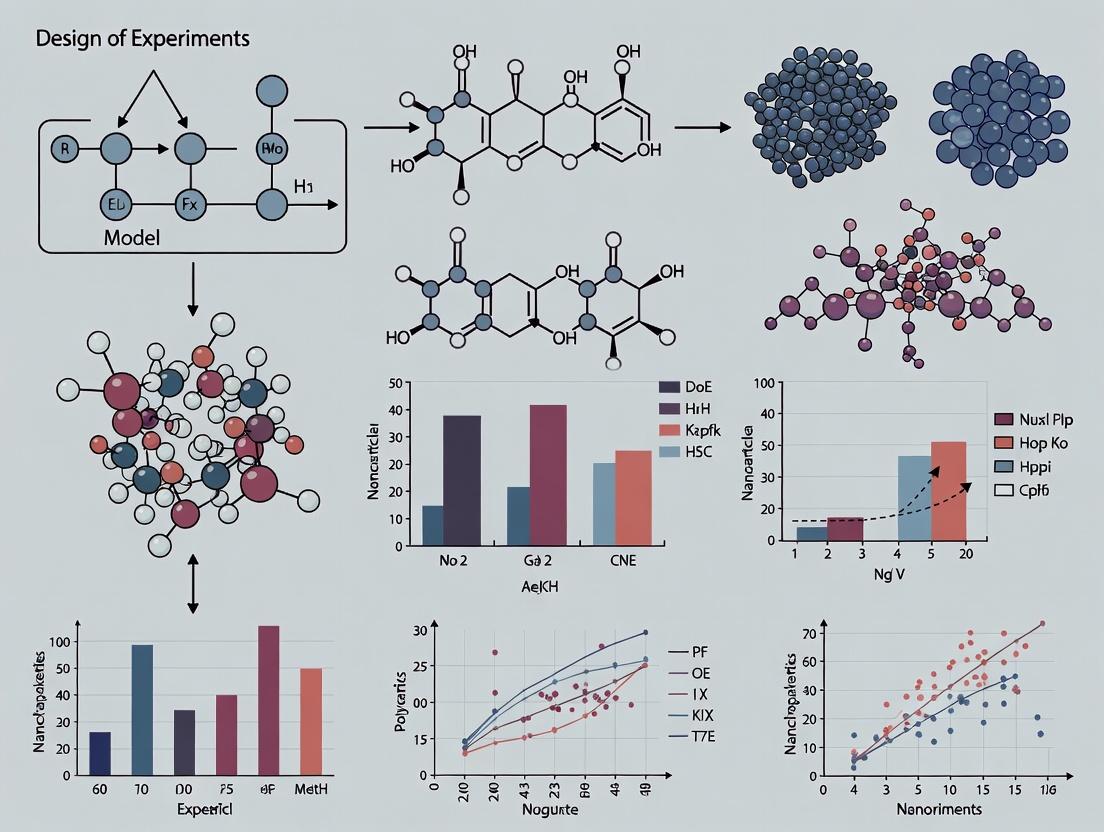
This article provides a comprehensive framework for applying Design of Experiments (DoE) to the critical challenge of scaling up polymer nanoparticle (PNP) production for drug delivery.
Design of Experiments (DoE) for Scaling Up Polymer Nanoparticle Production: A Systematic Guide for Translational Research
Abstract
This article provides a comprehensive framework for applying Design of Experiments (DoE) to the critical challenge of scaling up polymer nanoparticle (PNP) production for drug delivery. We first establish the foundational principles of DoE and its unique value in navigating scale-up complexity. Next, we detail methodological approaches for implementing screening and optimization designs in pilot and GMP environments. We then address common scale-up failures and present robust optimization strategies for critical quality attributes (CQAs). Finally, we explore validation protocols and comparative analyses of scale-up methodologies. This guide is tailored for researchers, scientists, and drug development professionals seeking a data-driven, efficient path from lab bench to clinical manufacturing.
Why DoE is the Key to Successful Nanoparticle Scale-Up: Principles and Strategic Advantages
Technical Support Center: Troubleshooting & FAQs
FAQ: Core Concepts & Challenges
Q1: What are the primary sources of batch variability during the scale-up of nanoprecipitation? A1: The main sources are:
- Mixing Inhomogeneity: At larger scales, achieving rapid, uniform micromixing becomes challenging. Variations in the local supersaturation ratio lead to inconsistent nucleation and growth.
- Agent Addition Rate & Method: Scaling the injection rate or switching from manual syringe addition to peristaltic or piston pumps alters the mixing dynamics.
- Residence Time Distribution: In continuous flow systems, broader residence time distributions at higher flow rates can cause particles to experience different growth periods.
- Thermodynamic Drift: The heat of mixing becomes significant at larger volumes, potentially changing solvent properties if not controlled.
- Raw Material Inconsistency: Minor lot-to-lot differences in polymer molecular weight, PDI, or excipient purity are amplified at scale.
Q2: Why is nanoprecipitation considered a 'black box' process? A2: It is termed a 'black box' because the critical moments of nucleation and initial growth occur on millisecond timescales and at nanometer length scales, making direct, in-process observation extremely difficult. The relationship between input parameters (e.g., flow rate, concentration) and output characteristics (size, PDI) is often non-linear and interdependent, obscuring cause-and-effect.
Q3: How can a Design of Experiments (DoE) approach help overcome these challenges? A3: A structured DoE moves beyond one-factor-at-a-time testing to:
- Systematically map the multi-dimensional design space (e.g., solvent/anti-solvent ratio, total flow rate, concentration).
- Identify critical process parameters (CPPs) and their interactions impacting critical quality attributes (CQAs).
- Build predictive models (e.g., using Response Surface Methodology) to define a robust operating design space for scale-up.
- Quantitatively assess the risk of batch failure due to parameter drift.
Troubleshooting Guide
Issue 1: Particle Size Increases & PDI Worsens Upon Scaling from Bench to Pilot Scale.
| Probable Cause | Diagnostic Check | Corrective Action |
|---|---|---|
| Inadequate Mixing Energy | Compare Reynolds number (Re) between scales. Calculate or measure mixing time. | Shift to a high-efficiency mixer (e.g., confined impinging jet, multi-inlet vortex mixer). Increase anti-solvent flow rate to improve turbulence. |
| Slowed Agent Addition Rate | Compare volumetric addition rate relative to total batch volume. | Maintain constant addition time, not just rate. Scale the addition rate proportionally to volume. Use faster pumps. |
| Altered Mixing Geometry | The ratio of mixer diameter to jet diameter may have changed. | Consult computational fluid dynamics (CFD) or use dimensionless numbers (Re, Weber No.) to match hydrodynamic stress. |
Issue 2: High Batch-to-Batch Variability in Drug Loading Efficiency.
| Probable Cause | Diagnostic Check | Corrective Action |
|---|---|---|
| Uncontrolled Supersaturation | Monitor temperature drift during process. Check solvent/anti-solvent miscibility batch-to-batch. | Implement temperature control on both fluid streams. Use DoE to find a robust ratio where loading is less sensitive to minor swings. |
| Precipitation of Free Drug | Analyze supernatant after ultracentrifugation for crystalline drug via XRD. | Optimize drug-polymer affinity (log P, hydrophobic interactions). Introduce a ternary component (e.g., lipid) to co-encapsulate. |
| Inconsistent Mixing | Use a tracer dye to visually assess mixing homogeneity. | Standardize pump startup and priming procedure. Use in-line static mixers before the primary mixer. |
Issue 3: Nanoparticle Aggregation or Instability During Scale-Up.
| Probable Cause | Diagnostic Check | Corrective Action |
|---|---|---|
| Insufficient Stabilizer | The surface area increases non-linearly with scale. Measure zeta potential; it may be less negative/positive. | Scale stabilizer (e.g., poloxamer, DSPE-PEG) concentration by total particle surface area, not just by volume or weight. |
| Extended Growth Phase | Broader residence time distribution in longer tubing. | Minimize post-mixing tubing length and diameter. Introduce a controlled quench step (dilution) immediately after mixing. |
Experimental Protocols for DoE-Based Process Understanding
Protocol 1: Mapping the Mixing-Controlled Design Space (Microfluidic Platform) Objective: To identify the interplay between total flow rate (TFR) and solvent:anti-solvent (S:AS) ratio on particle size.
- Setup: Use a staggered herringbone micromixer (SHM) or T-junction chip on a pressure-driven microfluidic system.
- Parameters: Define ranges: TFR (1-10 mL/min), S:AS Ratio (1:3 to 1:10), Polymer Concentration (1-5 mg/mL). Keep stabilizer concentration constant.
- Execution: Run experiments according to a Central Composite Design (CCD). Collect nanoparticle suspension directly into a vial containing a small volume of quench buffer.
- Analysis: Measure particle size (Z-avg) and PDI via dynamic light scattering (DLS) immediately. Fit data to a quadratic model to generate response surfaces.
Protocol 2: Investigating Raw Material Variability (High-Throughput Screening) Objective: To quantify the impact of polymer Mw and PDI variance on CQAs.
- Materials: Source 3-5 lots of the same polymer (e.g., PLGA) with characterized Mw and PDI variations.
- DoE Design: Use a Full Factorial Design with factors: Polymer Lot, Drug Load (%), and Mixing Rate.
- Execution: Perform nanoprecipitation in a 96-well plate format using a liquid handler for reproducible anti-solvent addition. Use magnetic stirring for mixing.
- Analysis: Measure particle size, PDI, and encapsulation efficiency (EE%) for each well. Use ANOVA to partition variance contribution from each factor.
Visualizing the DoE-Driven Scale-Up Workflow
Diagram 1: DoE-Driven Scale-Up Workflow for Nanoparticles
The Scientist's Toolkit: Key Research Reagent Solutions
| Item | Function & Rationale |
|---|---|
| PLGA (50:50, 7k-17k Da) | Benchmark biodegradable polymer. Ester termination allows tunable degradation. Low Mw favors smaller particles. |
| DSPE-PEG2000 | Gold-standard PEGylated lipid. Provides steric stabilization, reduces opsonization, and improves colloidal stability. |
| Poloxamer 407 (Pluronic F127) | Non-ionic triblock copolymer surfactant. Adsorbs rapidly to emerging particle surfaces, preventing aggregation. |
| Confined Impinging Jet Mixer | Lab-scale mixer designed for turbulent, rapid mixing. Essential for mimicking mixing energy at pilot scale. |
| Syringe Pumps (Dual) | Provide precise, pulseless control over solvent and anti-solvent flow rates for reproducible mixing kinetics. |
| In-Line Dynamic Light Scattering | Enables real-time monitoring of particle size and PDI during process optimization, helping to 'open the black box'. |
| Amphiphilic Model Drug (e.g., Coumarin-6) | Fluorescent probe used to study encapsulation efficiency and release kinetics without HPLC complications. |
Technical Support Center: Troubleshooting Polymer Nanoparticle Production
FAQs & Troubleshooting Guides
Q1: My nanoparticle size is highly variable between batches using my standard OFAT protocol. What is the first DoE step I should take to stabilize the process? A: This indicates significant factor interactions. Initiate a screening design (e.g., a 2-level fractional factorial or Plackett-Burman design) to identify the most influential factors from your many process variables (e.g., polymer concentration, surfactant ratio, sonication energy, addition rate). This will isolate the key drivers of size variability before optimization.
Q2: During a full factorial DoE for drug loading efficiency, I'm getting a low model p-value but also a low R-squared. What does this mean, and how do I proceed? A: A significant model (low p-value) with low R-squared suggests your model explains a significant portion of the variation, but a large amount of unexplained variation (noise) remains. Troubleshooting steps: 1) Check for measurement system error – replicate your analytical method for loading assessment (e.g., HPLC). 2) Review your factor ranges – they may be too narrow. 3) Consider if a critical factor is missing from the design (e.g., temperature, pH stability of the drug).
Q3: My response surface model for optimizing polydispersity index (PDI) suggests a saddle point (minimax), not a clear minimum. How should I interpret this? A: A saddle point indicates a ridge system, where the optimal PDI lies along a line or curve of factor settings rather than a single point. Your goal shifts from finding a stationary point to finding the ridge of optimality. Use canonical analysis and generate contour plots to visualize this ridge. You can then choose a set of operating conditions along this ridge that also satisfy other constraints (e.g., cost, particle size).
Q4: How do I handle categorical factors (e.g., type of solvent: acetone vs. ethanol) in a DoE alongside continuous factors (e.g., stirring speed)? A: Use a mixed-level design. Treat the categorical factor as a separate variable. A common approach is to create a two-level design for the continuous factors and then replicate the entire design for each level of the categorical factor. This allows you to model the main effect of the solvent type and its interactions with the continuous parameters.
Q5: When scaling up from lab (100mL) to pilot (10L) batch production, my DoE model from the small scale fails to predict outcomes. What is the likely cause? A: You have likely introduced new scaling factors not present in the original design. Mixing dynamics, heat transfer rates, and solvent evaporation scales are non-linear. You must include scale-dependent factors (e.g., agitator tip speed, power/volume, batch fill ratio) into a new DoE at the pilot scale. The lab-scale DoE remains valid for understanding factor interactions but requires augmentation for scale-up.
Key Data Tables
Table 1: Comparison of Experimental Strategies for Nanoparticle Formulation
| Aspect | One-Factor-at-a-Time (OFAT) | Design of Experiments (DoE) |
|---|---|---|
| Number of Experiments | High for multiple factors (e.g., 5 factors, 3 levels = 3^5=243 if done fully) | Efficient (e.g., 5 factors, 2 levels, with center points = 16+ runs for a fractional factorial) |
| Interaction Detection | Cannot detect interactions between factors. | Explicitly models and quantifies all factor interactions (e.g., polymer x surfactant effect on size). |
| Optimal Point | Likely finds a local optimum, not the global best formulation. | Maps the response surface to identify a robust optimal region. |
| Scale-Up Relevance | Poor; provides no model for how factors interact under new conditions. | Provides a predictive model that can be tested and adjusted with scale-dependent factors. |
Table 2: Typical Factors & Ranges for a Polymer Nanoparticle Screening DoE
| Factor | Type | Low Level (-1) | High Level (+1) | Role in Process |
|---|---|---|---|---|
| Polymer Concentration (mg/mL) | Continuous | 5 | 20 | Determines core matrix density and particle size. |
| Aqueous to Organic Phase Ratio | Continuous | 3:1 | 10:1 | Affects nanoprecipitation kinetics and particle aggregation. |
| Surfactant Concentration (% w/v) | Continuous | 0.1 | 2.0 | Stabilizes emulsion/nanoprecipitate; critical for PDI. |
| Sonication Time (min) | Continuous | 1 | 10 | Influences droplet/particle breakup and energy input. |
| Addition Rate (mL/min) | Continuous | 1 | 10 | Controls supersaturation and nucleation rate during nanoprecipitation. |
Experimental Protocols
Protocol: A 2^3 Full Factorial DoE with Center Points for Initial Nanoparticle Screening
Objective: To assess the main effects and interactions of three critical factors on nanoparticle Z-average diameter (Dz) and PDI.
1. Define Factors and Levels:
- Factor A: Polymer (PLGA) Concentration: 10 mg/mL (-1), 50 mg/mL (+1)
- Factor B: Surfactant (PVA) Concentration: 0.5% w/v (-1), 2.0% w/v (+1)
- Factor C: Sonication Energy: 50 Joules (-1), 200 Joules (+1)
- Center Point: A=30 mg/mL, B=1.25% w/v, C=125 Joules.
2. Experimental Design Matrix & Run Order: Randomize the run order to avoid confounding with systematic error.
| Std Order | Run Order | A: PLGA | B: PVA | C: Sonication | Dz (nm) - Response | PDI - Response |
|---|---|---|---|---|---|---|
| 8 | 1 | +1 | +1 | +1 | Measure | Measure |
| 2 | 2 | -1 | +1 | -1 | Measure | Measure |
| 6 | 3 | +1 | -1 | +1 | Measure | Measure |
| 4 | 4 | +1 | +1 | -1 | Measure | Measure |
| 5 | 5 | -1 | -1 | +1 | Measure | Measure |
| 3 | 6 | +1 | -1 | -1 | Measure | Measure |
| 7 | 7 | -1 | +1 | +1 | Measure | Measure |
| 1 | 8 | -1 | -1 | -1 | Measure | Measure |
| 9 | 9 | 0 | 0 | 0 | Measure (Center Point) | Measure (Center Point) |
| 10 | 10 | 0 | 0 | 0 | Measure (Center Point) | Measure (Center Point) |
3. Formulation Procedure (for each run):
- Dissolve PLGA in acetone at the specified concentration (Factor A).
- Prepare an aqueous phase with PVA at the specified concentration (Factor B) in ultrapure water.
- Using a programmable syringe pump set to a constant rate (e.g., 5 mL/min), add the organic phase (1 mL) to the aqueous phase (10 mL) under magnetic stirring (600 rpm).
- Immediately sonicate the emulsion using a probe sonicator at the specified energy output (Factor C). Keep the sample in an ice bath.
- Stir the resulting suspension overnight at room temperature to evaporate the organic solvent.
- Filter the nanoparticle suspension through a 0.8 µm filter.
4. Analysis:
- Measure the Z-average diameter (Dz) and PDI of each batch in triplicate by Dynamic Light Scattering (DLS) after appropriate dilution.
- Record the mean values for each run in the design matrix.
5. Data Analysis:
- Input the design matrix and response data into statistical software (e.g., JMP, Minitab, R).
- Fit a linear model with main effects (A, B, C) and all two-way interactions (AB, AC, BC).
- Use ANOVA to determine significant effects (p < 0.05).
- Generate Pareto charts and interaction plots to interpret effects on Dz and PDI.
Visualizations
DoE vs OFAT Decision Workflow
DoE Model Evolution for Process Scale-Up
The Scientist's Toolkit: Research Reagent Solutions
| Item | Function in Polymer Nanoparticle Production |
|---|---|
| Biodegradable Polymer (e.g., PLGA, PLA) | Forms the nanoparticle matrix. The lactide:glycolide ratio, molecular weight, and end-group (acid or ester) determine degradation rate and drug release kinetics. |
| Stabilizing Surfactant (e.g., PVA, Poloxamer 188, Tween 80) | Prevents particle aggregation during and after formation by providing steric or electrostatic stabilization. Critical for controlling PDI. |
| Organic Solvent (e.g., Acetone, Ethyl Acetate, DCM) | Dissolves the polymer and hydrophobic drug. Must be miscible with water for nanoprecipitation and have suitable volatility for removal. |
| Aqueous Phase (Phosphate Buffer, pH 7.4) | The receiving phase for nanoprecipitation or emulsion. pH and ionic strength can affect particle surface charge (zeta potential) and stability. |
| Drug Substance (Model or Active) | The active pharmaceutical ingredient to be encapsulated. Its hydrophobicity/logP and solubility in both organic and aqueous phases dictate loading efficiency. |
| Probe Sonicator / High-Pressure Homogenizer | Provides the mechanical energy input to form nano-sized droplets (emulsion) or to break down aggregates (nanoprecipitation). A key process variable. |
| Dynamic Light Scattering (DLS) Instrument | The primary tool for measuring hydrodynamic particle size (Z-average) and polydispersity index (PDI) of the nanoparticle suspension. |
| HPLC System with UV/FLD Detector | Used to quantify drug loading and encapsulation efficiency by separating and detecting the drug after nanoparticle dissolution or extraction. |
Technical Support Center: Troubleshooting Guides & FAQs
Q1: When scaling up from 10 mL to 1 L batch size, my nanoparticle size increases significantly and PDI becomes unacceptable (>0.2). The polymer (PLGA) type and solvent are identical. What are the primary factors to investigate? A: This is a classic scale-up challenge. The primary factors are the change in mixing energy input and the timescale of mixing. At the small scale, manual injection or magnetic stirring achieves near-instantaneous mixing. At larger scales, mixing becomes slower, leading to a longer nucleation phase and broader particle size distribution.
- Key Parameters to Control: Total mixing energy input (Watts/kg), power density, and the Reynolds number (Re) in the mixer.
- Solution: Implement a controlled, scalable mixing method such as confined impinging jet mixing (CIJM) or multi-inlet vortex mixing (MIVM). Use a Design of Experiments (DoE) approach to correlate the scale-independent parameter of mixing energy per unit volume (J/mL) or power density (W/m³) with particle size and PDI. Maintain this parameter constant across scales.
Q2: How does the molecular weight (MW) of PLGA affect scalability? I get consistent 150 nm particles at 10 kDa, but at 50 kDa, size varies wildly between batches at the 500 mL scale. A: Higher MW polymers have higher solution viscosity, which drastically affects the mixing and diffusion kinetics during nanoprecipitation. At larger scales, inefficient mixing fails to overcome the increased viscosity, leading to inconsistent supersaturation and particle growth.
- Troubleshooting Protocol:
- Measure the viscosity of your polymer-organic phase solution at both MWs.
- In your DoE, include the Solvent to Anti-solvent Flow Rate Ratio (R) and the Reynolds Number (Re) as critical factors. You will likely need a higher Re (more turbulent flow) for the higher viscosity solution.
- Consider adjusting the polymer concentration to compensate for viscosity changes.
Q3: Does the PLGA Lactide:Glycolide (L:G) ratio impact process scalability, or just drug release? A: It impacts both. The L:G ratio influences polymer hydrophobicity, crystallization rate, and hydration. A more hydrophobic polymer (e.g., 75:25 vs. 50:50) may precipitate faster during scale-up, making it more sensitive to mixing parameters. Fast, uncontrolled mixing can lead to aggregation of hydrophobic particles before stabilization.
- Investigation Guide: Frame this within your DoE thesis. For a new L:G ratio, treat it as a new "Material Attribute." You must re-optimize critical "Process Parameters" like:
- Anti-solvent Addition Rate
- Stabilizer (e.g., PVA) Concentration and Mixing Speed A full factorial DoE (L:G ratio x Mixing Speed x Stabilizer Conc.) is recommended for scalable process understanding.
Q4: My encapsulation efficiency (EE%) drops during scale-up even with identical flow rates. Why? A: Identical absolute flow rates do not guarantee identical mixing conditions. The drop in EE% is often due to altered interfacial turbulence and drug diffusion kinetics. At the small scale, high shear generates a large interfacial area instantly, trapping the drug. At large scale with poor mixing, the drug has time to diffuse into the aqueous phase before particle formation.
- Experimental DoE Protocol:
- Factors: Total Flow Rate (Q), Flow Rate Ratio (R), Drug Loading (w/w%).
- Responses: EE%, Particle Size, PDI.
- Hold Constant: Mixer Geometry (e.g., impinging jet angle, chamber size).
- Analysis: The model will show the interaction between Q and R on EE%. You will likely find a "sweet spot" where Q and R maximize interfacial area for your specific reactor geometry.
Table 1: Impact of Scale-Dependent Parameters on Nanoparticle Attributes
| Scale (Batch Volume) | Mixing Method | Power Density (W/m³) | Avg. Size (nm) | PDI | EE% | Key Limiting Factor |
|---|---|---|---|---|---|---|
| 10 mL | Manual Syringe Injection | ~10⁶ (Est.) | 152 ± 8 | 0.08 | 95% | Manual variability |
| 100 mL | Magnetic Stirring (500 rpm) | ~5 x 10³ | 168 ± 15 | 0.12 | 88% | Laminar flow, low shear |
| 500 mL | Overhead Stirrer (300 rpm) | ~2 x 10³ | 210 ± 45 | 0.25 | 75% | Poor bulk homogenization |
| 1 L | CIJM (100 mL/min total) | ~5 x 10⁵ | 155 ± 10 | 0.10 | 92% | Jet alignment, pressure drop |
Table 2: Effect of PLGA Material Attributes on Scalable Process Windows
| Material Attribute | Typical Value Range | Impact on Scale-Up | Recommended Process Adjustment |
|---|---|---|---|
| Molecular Weight (MW) | 10 - 100 kDa | ↑MW = ↑Viscosity = ↑Mixing Energy Required | ↑Flow Rate (Re); ↓Polymer Conc. |
| Lactide:Glycolide (L:G) | 50:50 to 85:15 | ↑L:A = ↑Hydrophobicity = Faster Precipitation | Optimize Stabilizer & Addition Rate |
| End Group (Ester/Carboxyl) | Acidic vs. Neutral | Affects ζ-potential & aggregation stability | Adjust pH of aqueous phase; [Stabilizer] |
| Inherent Viscosity | 0.3 - 1.2 dL/g | Directly correlates with solution viscosity | Key input for calculating Reynolds Number (Re) |
Experimental Protocol: DoE for Scaling Mixing Energy
Objective: To determine the scale-independent mixing energy parameter that correlates with nanoparticle size for a given PLGA formulation. Method:
- Define Factors & Levels: Choose two factors: Total Flow Rate (Q) and Flow Rate Ratio (R = Aq:Org). Set 3 levels for each (e.g., Q: 50, 100, 200 mL/min; R: 3:1, 5:1, 10:1).
- Setup: Use a scalable mixer (e.g., CIJM). Fix polymer type (e.g., PLGA 50:50, 24 kDa), concentration (10 mg/mL in acetone), and stabilizer (0.5% PVA).
- Execution: Run all 9 experiments in random order. Collect nanoparticle suspension.
- Analysis: Characterize batches for Size, PDI, and EE%. Calculate Mixing Energy Input (E) per volume using pressure drop and flow rate data or computational fluid dynamics (CFD) estimates.
- Modeling: Perform multiple linear regression. The goal is an equation: Size = k + α(1/E) + β(R). A strong model allows prediction of parameters (Q, R) at the next scale to achieve the same E and, therefore, the same size.
Visualizations
Diagram Title: Interplay of Material and Process Factors in Scale-Up
Diagram Title: DoE Workflow for Scalable Nanoparticle Process Development
The Scientist's Toolkit: Research Reagent Solutions
Table 3: Essential Materials for Scalable Polymer Nanoparticle Production
| Item | Function & Relevance to Scale-Up |
|---|---|
| PLGA Resomers (e.g., RG 502H, 503H, 752H) | Standardized, medical-grade polymers with defined MW, L:G, and end groups. Essential for DoE to isolate material variable effects. |
| Polyvinyl Alcohol (PVA), Partially Hydrolyzed | The most common stabilizer. Critical concentration and molecular weight must be optimized for scalability and batch reproducibility. |
| Dichloromethane (DMR) or Ethyl Acetate | Common organic solvents for emulsion methods. Evaporation rate impacts particle hardening; scale-up requires controlled solvent removal. |
| Acetone | Solvent for nanoprecipitation. Miscibility with water is key; viscosity of polymer-acetone solution is a critical scale-up parameter. |
| Confined Impinging Jet Mixer (CIJM) | Scalable mixer for nanoprecipitation. Provides reproducible, high-energy mixing. Geometry (jet diameter, angle) is a fixed CPP. |
| Syringe Pumps (Dual-Channel) | For precise control of flow rates (Q) and ratio (R) at lab scale. Must be replaced by diaphragm or piston pumps at manufacturing scale. |
| Dynamic Light Scattering (DLS) Zetasizer | For core CQAs: hydrodynamic size, PDI, and zeta potential. Must use standardized SOPs (dilution, temperature) for reliable scale-up data. |
| HPLC System | For quantifying drug encapsulation efficiency (EE%) and loading. Method must be robust for analyzing batches from different scales. |
This technical support center provides troubleshooting guidance and FAQs for researchers characterizing Critical Quality Attributes (CQAs) in polymer nanoparticle formulations. The content is framed within a Design of Experiments (DoE) approach for scaling up production, where precise measurement and control of these CQAs are essential for ensuring product quality and process robustness.
FAQs & Troubleshooting Guides
Q1: My dynamic light scattering (DLS) measurement shows high polydispersity index (PDI > 0.3). What are the common causes during scale-up? A: High PDI often indicates a non-uniform size distribution. Common causes include:
- Inconsistent mixing during solvent displacement or emulsion steps: At larger scales, mixing efficiency changes. Ensure impeller speed and geometry are optimized via scale-down models.
- Uncontrolled aggregation: Check zeta potential values. Inadequate stabilizer concentration or ionic strength changes upon scale-up can reduce electrostatic stabilization.
- Non-uniform solvent evaporation rates in larger reactors.
- Troubleshooting Protocol: Perform a DoE screening study at small scale, varying mixing rate, stabilizer concentration, and antisolvent addition rate. Identify critical parameters and establish a proven acceptable range (PAR) for scaling.
Q2: The zeta potential of my nanoparticles has shifted significantly (e.g., from -30 mV to -10 mV) between small-scale and pilot-scale batches. Why? A: A shift in zeta potential suggests changes in surface composition or the measurement environment.
- Cause 1: Changes in Purification Efficiency. Larger-scale tangential flow filtration (TFF) or dialysis may differ in removing excess stabilizer or ions, altering the slipping plane.
- Protocol: Measure zeta potential pre- and post-purification at both scales using the same buffer (see Table 1 for standard conditions).
- Cause 2: Adsorption of Media Components. Process materials in larger tanks (e.g., silicone tubing leachates) can adsorb onto nanoparticle surfaces.
- Protocol: Conduct a compatibility study by incubating small-scale product with all scaled-up process contact materials.
Q3: How can I improve drug loading capacity without increasing particle size? A: High drug loading is a function of drug-polymer compatibility and process control.
- Strategy 1: Optimize Drug-Polymer Ratio. Use a DoE (e.g., Mixture Design) to find the optimal ratio that maximizes loading without causing phase separation or crystal growth.
- Strategy 2: Modulate Process Parameters. For nanoprecipitation, a faster mixing rate often creates more nucleation sites, distributing drug more evenly in polymer matrix.
- Troubleshooting Low Loading: If experimental loading is consistently below theoretical, the drug may be partitioning into the external phase. Increase the organic-to-aqueous phase ratio or choose a less water-miscible organic solvent.
Q4: My entrapment efficiency (EE%) is high, but my drug loading (DL%) is low. Is this possible, and what does it mean? A: Yes, this is common and highlights the difference between these CQAs.
- Explanation: High EE% means almost all the initial drug is incorporated into the nanoparticles. Low DL% means the total nanoparticle mass (polymer + drug + stabilizer) is large relative to the drug mass. This often occurs when using a high polymer-to-drug ratio.
- Action: To increase DL%, you must decrease the total carrier mass (e.g., polymer amount) while maintaining high EE. This requires reformulation and process re-optimization.
Q5: What are the recommended analytical methods for these CQAs, and what are typical target values for a scalable process?
Table 1: Summary of Key CQAs: Methods, Targets, and Troubleshooting Tips
| CQA | Primary Analytical Method | Typical Target for Scalable Formulations | Common Scale-Up Challenge & Mitigation | |||
|---|---|---|---|---|---|---|
| Particle Size & PDI | Dynamic Light Scattering (DLS) | Size: 50-200 nmPDI: < 0.2 (Monodisperse) | Challenge: Increased shear in large mixers may fragment particles, reducing size. Mitigation: Use DoE to model shear force impact and define mixing PAR. | |||
| Zeta Potential | Electrophoretic Light Scattering | > | ±20 | mV for electrostatic stability | Challenge: Conductivity changes from water source or buffer preparation at large scale. Mitigation: Implement in-line conductivity measurement and control. | |
| Drug Loading (DL%) | HPLC/UV-Vis after nanoparticle digestion | > 5% w/w is often desirable | Challenge: Inconsistent solvent removal rate affects polymer precipitation kinetics and drug trapping. Mitigation: Control evaporation rate/vacuum profile as a CPP. | |||
| Entrapment Efficiency (EE%) | Ultrafiltration/HPLC of free drug in supernatant | > 80% (Process Efficiency) | Challenge: Filtration membrane fouling at large scale leads to incomplete free drug separation. Mitigation: Optimize TFF parameters (transmembrane pressure, cross-flow rate). |
Experimental Protocols
Protocol 1: Standardized DLS & Zeta Potential Measurement
Purpose: To ensure reproducible size and surface charge analysis across development stages.
- Sample Preparation: Dilute nanoparticle dispersion in the same buffer used for final purification (e.g., 1 mM KCl or 10 mM HEPES) to an appropriate count rate (typically 200-500 kcps).
- Equipment: Equilibrate DLS/Zetasizer at 25°C for 15 min.
- Size Measurement: Perform measurement in triplicate. Use intensity-weighted distribution for primary reporting. Report Z-Average (nm) and PDI.
- Zeta Potential: Use disposable folded capillary cells. Measure in triplicate with at least 100 runs per measurement. Report the average zeta potential (mV) and conductivity (mS/cm).
Protocol 2: Determination of Drug Loading and Entrapment Efficiency
Purpose: To accurately quantify the amount of drug associated with the nanoparticle fraction.
- Total Drug Content (for DL%):
- Dissolve 1.0 mL of purified nanoparticle suspension in 10 mL of a suitable solvent (e.g., acetonitrile for PLGA NPs) to disrupt the particles.
- Sonicate for 10 minutes, then analyze drug concentration via a validated HPLC or UV-Vis method.
- Calculate total drug amount in the sample.
- Free (Unentrapped) Drug (for EE%):
- Centrifuge a 1.0 mL aliquot of the unpurified nanoparticle dispersion using an ultrafiltration device (e.g., 30 kDa MWCO) at 14,000 x g for 15 min.
- Analyze the filtrate (containing free drug) directly via HPLC/UV-Vis.
- Calculations:
- Drug Loading (DL%) = (Mass of drug in nanoparticles / Total mass of nanoparticles) x 100
- Entrapment Efficiency (EE%) = (Total drug mass – Free drug mass) / (Total drug mass) x 100
Visualization: CQA Interdependencies in Scale-Up DoE
Title: CQA & CPP Relationships in Scale-Up DoE
The Scientist's Toolkit: Research Reagent Solutions
Table 2: Essential Materials for Polymer Nanoparticle CQA Characterization
| Item | Function / Relevance | Example(s) |
|---|---|---|
| Biocompatible Polymers | Forms the nanoparticle matrix; dictates biodegradation and drug release. | PLGA, PLA, chitosan, polycaprolactone (PCL). |
| Stabilizers/Surfactants | Prevents aggregation during formation; impacts surface charge and PDI. | Polyvinyl alcohol (PVA), polysorbate 80 (Tween 80), DSPE-PEG. |
| Aprotic Solvents | Dissolves polymer and drug for nanoprecipitation/emulsion. | Acetone, acetonitrile, dimethylformamide (DMF). |
| Aqueous Buffers (Low Ionic) | Dispersion medium for purification and DLS/zeta measurement. | 1 mM KCl, 10 mM HEPES, 1x PBS (dilute). |
| Ultrafiltration Devices | Separates free drug from entrapped drug for EE% calculation. | Amicon Ultra centrifugal filters (e.g., 30-100 kDa MWCO). |
| HPLC System with C18 Column | Quantifies drug concentration for loading and efficiency calculations. | Standard reverse-phase setup. |
| DLS/Zeta Potential Analyzer | Core instrument for measuring particle size, PDI, and surface charge. | Malvern Panalytical Zetasizer series. |
Technical Support Center: Troubleshooting Guides & FAQs
Context: This support center provides guidance for researchers employing screening designs in Design of Experiments (DoE) for scaling up polymer nanoparticle production.
FAQ 1: How do I choose between a Plackett-Burman and a Fractional Factorial design for my nanoparticle formulation screening?
- Answer: The choice depends on the number of factors you need to screen and your assumptions about interactions.
- Use a Fractional Factorial Design (e.g., 2^(k-p)): When you have a relatively clear idea of which factors might interact (e.g., polymer concentration and surfactant concentration) and you can assume higher-order interactions are negligible. It allows for some estimation of two-factor interactions.
- Use a Plackett-Burman Design: When you need to screen a large number of factors (e.g., >5) with very few experimental runs and are willing to assume all interactions are negligible initially. It is a highly efficient design for main effects screening only.
FAQ 2: My screening experiment results show no significant factors. What could have gone wrong?
- Answer: Common issues include:
- Insufficient Effect Size: The chosen factor ranges (low/high levels) were too narrow to produce a detectable change in your response (e.g., nanoparticle size, PDI). Widen the ranges based on prior knowledge.
- Excessive Noise: Experimental variability (measurement error, process inconsistency) is swamping the signal. Review your protocol for consistency in sonication, mixing, temperature control, and analytical measurement.
- Wrong Response: The measured response may not be sensitive to the factors you selected.
- Troubleshooting Protocol: 1) Replicate a center point to estimate pure error. 2) Visually inspect raw data plots for outliers or trends. 3) Verify that all factor levels were set correctly during the experiment.
FAQ 3: How should I handle categorical factors (e.g., solvent type, polymer type) in a screening design?
- Answer: Categorical factors (2-3 levels) can be incorporated directly. For example:
- Solvent Type: Level (-1) = Acetone, Level (+1) = Ethyl Acetate.
- Polymer Type: Level (-1) = PLGA, Level (+1) = PLA.
- Important: The analysis will show if switching categories causes a significant shift in the mean response. Ensure randomization to avoid confounding with other variables.
FAQ 4: The analysis suggests a significant factor, but the main effect plot shows an undesirable trend. What's the next step?
- Answer: A significant factor is not necessarily optimized. For example, increasing polymer concentration may significantly reduce particle size but increase viscosity unacceptably. The next step is to use this knowledge in a subsequent optimization design (e.g., Response Surface Methodology) to find the level that balances multiple responses (size, PDI, zeta potential, yield).
FAQ 5: My screening design is aliased/confounded. How do I interpret these results for scale-up?
- Answer: Aliasing is inherent in screening designs. If a factor appears significant, you cannot be certain if it is the main effect or its aliased interaction that is active. Scale-up Protocol: 1) Record the suspected vital few factors (e.g., 3-4). 2) Conduct a small, separate foldover design or a full factorial with only those factors to de-alias and confirm the main effects and key interactions. 3) Use this confirmed model to guide your pilot-scale experiments.
Data Presentation: Comparison of Screening Designs
Table 1: Characteristics of Common Screening Designs for Nanoparticle Formulation
| Design Type | Key Feature | Runs for 7 Factors | Can Estimate 2FI? | Primary Use Case in Nanoparticle Research |
|---|---|---|---|---|
| Full Factorial (2^7) | Baseline, full resolution | 128 | Yes | Small-scale, fundamental study of all interactions; rarely used for initial screening. |
| Fractional Factorial (2^(7-4)) | High efficiency, Resolution III | 8 | No (Aliased with main effects) | Initial screening when some interaction knowledge exists and run economy is critical. |
| Plackett-Burman | Maximum efficiency, Resolution III | 8 | No (Assumed negligible) | Screening many factors (e.g., 7-11) with minimal runs to find the 2-3 most critical. |
| Fractional Factorial (2^(7-3)) | Better resolution, Resolution IV | 16 | Yes (but aliased with each other) | Screening with the ability to estimate main effects clear of two-factor interactions (2FI). |
Experimental Protocols
Protocol 1: Executing a Plackett-Burman Screening Design for Nanoparticle Synthesis
- Define Factors & Levels: Select 5-11 critical process parameters (e.g., polymer conc. (10-50 mg), aqueous phase volume (20-100 mL), stirring rate (500-1500 rpm), sonication time (1-5 min), solvent type (A/B)). Set a feasible high (+) and low (-) level for each.
- Generate Design Matrix: Use statistical software to create a randomized run order for the appropriate Plackett-Burman design (e.g., 12-run for up to 11 factors).
- Conduct Experiments: Prepare nanoparticles via nanoprecipitation/solvent evaporation as per the randomized matrix. Key: Maintain strict control on factors not being studied.
- Measure Responses: For each run, characterize key responses: particle size (by DLS), PDI, and zeta potential.
- Statistical Analysis: Perform multiple linear regression or ANOVA. Identify factors with p-values < 0.05 (or practical significance) as "vital few."
Protocol 2: Foldover Design to De-alias a Resolution III Screening Design
- Initial Experiment: Complete your initial Fractional Factorial or Plackett-Burman design (Design D1).
- Create Foldover Design: Generate a second design (D2) where the signs of all factors in the original design matrix are reversed.
- Execute Additional Runs: Perform the new experimental runs from D2.
- Combine & Analyze: Combine the data from D1 and D2. This combined design will have higher resolution, allowing you to separate main effects from two-factor interactions that were previously aliased.
Visualizations
Title: Logical Workflow for a DoE Screening Study
Title: Resolving Aliasing in Screening Designs for Scale-Up
The Scientist's Toolkit: Research Reagent Solutions
Table 2: Essential Materials for DoE in Polymer Nanoparticle Production
| Item | Function in DoE Screening | Example(s) |
|---|---|---|
| Biocompatible Polymer | The core material; its type and concentration are primary factors affecting size, encapsulation, and release. | PLGA, PLA, Chitosan, PEG-PLGA. |
| Organic Solvent | Dissolves polymer; choice and volume are critical factors for particle formation kinetics. | Acetone, Ethyl Acetate, DMSO. |
| Aqueous Phase (Surfactant/Stabilizer) | The non-solvent phase; stabilizer type/concentration are key factors for colloidal stability and PDI. | PVA, Poloxamer 188, Tween 80, DSPE-PEG. |
| Probe Sonicator | Provides energy for emulsion formation; amplitude and time are key process factors. | 100-500W units with micro-tip. |
| Magnetic Stirrer/Homogenizer | Governs mixing dynamics; stirring rate is a common screening factor. | Variable speed stirrers, high-shear mixers. |
| Dynamic Light Scattering (DLS) Instrument | Primary analytical tool for measuring key responses: hydrodynamic diameter (size) and PDI. | Malvern Zetasizer, Brookhaven Instruments. |
| Zeta Potential Analyzer | Measures surface charge (zeta potential), a key response for predicting physical stability. | Often integrated with DLS instruments. |
| Statistical Software | Required for generating design matrices, randomizing runs, and analyzing data. | JMP, Minitab, Design-Expert, R (FrF2, DoE.base packages). |
A Step-by-Step Guide to Implementing DoE for Pilot and GMP Manufacturing
Troubleshooting Guides & FAQs
Q1: My nanoparticle size (PS) is consistently outside the target range (70-120 nm) despite adjusting polymer concentration. What other factors should I investigate? A: Polymer concentration is one key factor, but size is highly sensitive to the organic-to-aqueous phase ratio and surfactant concentration. Increase the surfactant (e.g., Poloxamer 188) concentration to reduce particle size. Also, ensure the homogenization speed is >15,000 rpm and that the addition rate of the organic phase is controlled and slow (e.g., 1 mL/min). Check solvent viscosity.
Q2: How do I improve a low encapsulation efficiency (EE%) for my hydrophilic drug? A: Low EE% for hydrophilic drugs is common in single-emulsion PNP systems. First, verify you are using a double emulsion (W/O/W) method. Key factors to adjust are: the concentration of the secondary surfactant in the external aqueous phase, the volume of the inner aqueous phase, and the osmotic balance between the inner and outer aqueous phases using salts or sugars. Increase the polymer molecular weight to strengthen the wall.
Q3: I'm observing high polydispersity index (PDI > 0.2). How can I achieve a more monodisperse population? A: High PDI often indicates inconsistent mixing during emulsification. First, ensure all equipment (homogenizer probe, magnetic stirrer) is functioning correctly and speeds are stable. DoE factors to tighten include: homogenization time (extend it), the order of addition (add organic to aqueous uniformly), and sonication parameters (if used). Filtering the polymer solution pre-emulsification can also help.
Q4: My PNP formulation shows poor colloidal stability, aggregating within hours. What are the primary stabilization levers? A: Immediate aggregation suggests insufficient electrostatic or steric stabilization. Key factors to test are: pH of the dispersion medium (adjust to be far from the polymer's/isoelectric point), ionic strength (reduce salt concentration), and type/concentration of stabilizer (e.g., ≥0.5% PVA or Poloxamer 407). Also, consider implementing a lyophilization protocol with an appropriate cryoprotectant (e.g., 5% trehalose) for long-term storage.
Q5: During scale-up from 10 mL to 1 L batch, my PDI increased. Which process parameters are most scale-sensitive? A: Mixing energy input and time are critically scale-sensitive. At larger scales, the homogenization energy per unit volume may drop. In your DoE, include factors for: tip speed of the homogenizer (maintain constant, e.g., 10 m/s), reactor geometry (impeller design), and total emulsification time (may need increase). Consider transitioning to a high-pressure homogenizer for reproducible scale-up.
Key Experimental Protocols
Protocol 1: Standard Single-Emulsion Solvent Evaporation Method for PLGA Nanoparticles
- Dissolution: Dissolve 100 mg of PLGA (50:50, 24-38 kDa) and your hydrophobic drug (e.g., 5-10 mg) in 5 mL of dichloromethane (DCM).
- Emulsification: Pour the organic solution into 20 mL of a 1% (w/v) polyvinyl alcohol (PVA) aqueous solution. Immediately homogenize using a high-speed homogenizer at 15,000 rpm for 2 minutes over an ice bath.
- Solvent Evaporation: Pour the resulting oil-in-water emulsion into 100 mL of 0.1% PVA solution under magnetic stirring. Stir for 4 hours at room temperature to allow complete DCM evaporation.
- Harvesting: Centrifuge the dispersion at 20,000 rpm for 30 minutes at 4°C. Wash the pellet twice with deionized water.
- Lyophilization: Resuspend nanoparticles in a 5% (w/v) trehalose solution and freeze at -80°C for 2 hours before lyophilizing for 48 hours.
Protocol 2: Double-Emulsion (W/O/W) Method for Hydrophilic Drug Encapsulation
- First Emulsion (W1/O): Dissolve 100 mg PLGA in 2 mL ethyl acetate. Separately, dissolve the hydrophilic drug in 0.2 mL of an aqueous buffer (W1). Add the W1 phase to the organic phase and sonicate using a probe sonicator at 40% amplitude for 30 seconds in an ice bath to form the primary W1/O emulsion.
- Second Emulsion (W1/O/W2): Quickly add this primary emulsion to 8 mL of a 2% (w/v) PVA solution (W2) and homogenize at 10,000 rpm for 1 minute.
- Solvent Evaporation & Harvesting: Transfer the double emulsion to 50 mL of 0.3% PVA solution. Stir for 6 hours to evaporate the solvent. Centrifuge at 18,000 rpm for 25 minutes. Wash and lyophilize as in Protocol 1.
Data Presentation
Table 1: Critical DoE Factors, Recommended Ranges, and Measured Responses for PNP Screening
| Factor Category | Factor Name | Recommended Investigation Range | Primary Response(s) Affected | |||
|---|---|---|---|---|---|---|
| Material (Formulation) | Polymer (PLGA) Concentration | 0.5% - 5.0% (w/v) | Particle Size, Drug Loading | |||
| Organic-to-Aqueous Phase Ratio | 1:5 - 1:20 (v/v) | Particle Size, PDI | ||||
| Stabilizer (PVA) Concentration | 0.5% - 3.0% (w/v) | Particle Size, PDI, Stability | ||||
| Process | Homogenization Speed | 8,000 - 20,000 rpm | Particle Size, PDI | |||
| Homogenization Time | 1 - 10 minutes | Particle Size, PDI | ||||
| Sonication Energy (if used) | 30-70% Amplitude, 30-120 sec | Encapsulation Efficiency, Size | ||||
| Response Metrics | Target | Analytical Method | Impact | |||
| Particle Size (Z-avg) | 70 - 200 nm (tunable) | Dynamic Light Scattering (DLS) | Biodistribution, Clearance | |||
| Polydispersity Index (PDI) | < 0.2 | DLS | Batch Uniformity | |||
| Encapsulation Efficiency (EE%) | > 70% (drug-dependent) | HPLC/UV-Vis after separation | Cost, Efficacy | |||
| Zeta Potential (ζ) | > | ±20 | mV | Electrophoretic Light Scattering | Colloidal Stability |
Table 2: The Scientist's Toolkit: Essential Reagents for PNP Formulation Development
| Reagent/Material | Typical Function & Role in PNP Development |
|---|---|
| PLGA (Poly(lactic-co-glycolic acid)) | Biodegradable polymer matrix; backbone of nanoparticle, controls drug release kinetics. |
| Polyvinyl Alcohol (PVA) | Common surfactant/stabilizer; reduces interfacial tension during emulsification, controls size. |
| Dichloromethane (DCM) / Ethyl Acetate | Organic solvent; dissolves polymer and hydrophobic drugs, evaporated to form solid particles. |
| Poloxamers (188, 407) | Non-ionic triblock copolymer surfactants; provide steric stabilization, can reduce protein adsorption. |
| Trehalose / Sucrose | Cryoprotectant; preserves nanoparticle integrity and prevents aggregation during lyophilization. |
| Dialysis Membranes (MWCO 12-14 kDa) | Purification; separates free/unencapsulated drug from formed nanoparticles in suspension. |
Visualizations
Title: Systematic Workflow for Developing a PNP DoE Protocol
Title: Key Formulation & Process Factors Influencing Critical PNP Responses
Technical Support & Troubleshooting Center
This guide provides targeted support for implementing Design of Experiment (DoE) screening designs within the context of scaling up polymer nanoparticle production. It addresses common practical hurdles across three key reactor platforms.
FAQs & Troubleshooting Guides
Q1: In microfluidic screening, my nanoparticle size distribution (PDI) is inconsistent between replicates. What could be the cause? A: This is often due to fluctuations in flow rates or early channel fouling. First, verify the calibration of syringe pumps weekly using a gravimetric method (collect effluent for 10 mins, measure mass). Ensure all tubing connections are secure and use PEEK or chemically resistant tubing to prevent swelling. Implement a 5-minute equilibration period at set flow rates before sample collection. For fouling, incorporate a 2-minute flush cycle with a 1:1 NaOH:Ethanol solution between experimental runs.
Q2: When using a Confined Impingement Jet (CIJ) mixer, I observe clogging at the impingement point. How can I mitigate this? A: Clogging typically indicates rapid particle aggregation or precipitation. Troubleshoot using this protocol:
- Reduce Concentration: Temporarily reduce polymer and organic phase concentration by 50% as a diagnostic step.
- Adjust Solvent: Increase the ratio of a water-miscible solvent (e.g., acetone) to water-immiscible solvent (e.g., ethyl acetate) in the organic phase to slow nanoprecipitation kinetics.
- Increase Flow Rate: If possible, operate at higher Reynolds numbers (>2000) to increase turbulence and shear, which can prevent aggregate adhesion. Refer to the table below for safe operating ranges.
Q3: My stirred-tank reactor (STR) screening results show high batch-to-batch variability in zeta potential. What parameters should I control more tightly? A: Zeta potential is sensitive to trace impurities and mixing dynamics. Standardize this protocol:
- Cleaning Protocol: Clean the vessel and agitator with heated Hellmanex III (2%) solution, followed by 5 rinses with USP-grade water.
- Addition Point & Rate: Use a programmable syringe pump to add the organic phase at a fixed rate (e.g., 2 mL/min) through a capillary tube placed at a consistent position relative to the impeller (just off-center, near the vortex).
- Mixing Speed Calibration: Verify the impeller speed with a laser tachometer. Ensure the liquid height-to-tank diameter ratio is kept constant at 1:1 for all experiments to maintain consistent hydrodynamics.
Q4: How do I translate factor settings (like "High" and "Low") from a microfluidic DoE to a scaled-up stirred tank process? A: Do not translate settings directly; translate the critical physical mechanisms. A Plackett-Burman screening design might identify "flow rate ratio" as critical in microfluidics. The scaled-up equivalent is "addition rate of antisolvent relative to mixing time". Use the dimensionless Reynolds (Re) and Weber (We) numbers as bridging parameters. Establish a correlation table between microfluidic flow rates and STR agitation speeds that produce similar Re numbers for the mixing zone.
Objective: Execute a 2-level Plackett-Burman screening design to identify critical factors affecting nanoparticle size (Z-avg) and PDI across three reactor types.
1. Common Pre-Experimental Setup:
- Polymer Solution: Prepare 100 mg of PLGA in 50 mL of organic solvent (e.g., acetone). Filter through a 0.22 µm PTFE filter.
- Aqueous Phase: Prepare 1 L of 0.1% w/v PVA solution in Milli-Q water. Filter through a 0.22 µm PES filter.
- Environmental Control: Perform all experiments in a temperature-controlled lab at 25 ± 1°C.
2. Platform-Specific Execution:
Microfluidics (Glass Chip, Herringbone Mixer):
- Load syringes with organic and aqueous phases.
- Mount syringes on independently programmable pumps.
- Set total flow rate (TFR) and flow rate ratio (FRR) according to DoE matrix.
- Allow 5 min equilibration. Collect 5 mL of effluent in a vial.
- Immediately analyze 1 mL via dynamic light scattering (DLS).
Confined Impingement Jet (CIJ) Mixer:
- Load organic and aqueous phases into two separate gas-tight stainless steel reservoirs.
- Connect reservoirs to the CIJ mixer via short, equal-length tubing.
- Use pneumatic pressure controllers to drive fluids. Calibrate pressure to volumetric flow rate daily.
- Impinge jets for 60 seconds, collecting product in a quench bath of 20 mL water with mild stirring.
- Analyze via DLS.
Stirred-Tank Reactor (STR, 250 mL):
- Add 100 mL of aqueous phase (PVA solution) to the vessel.
- Set overhead stirrer to speed defined in DoE (e.g., 500 - 1500 RPM).
- Using a syringe pump, add 10 mL of organic phase at a fixed addition point and rate (e.g., 1-5 mL/min).
- After addition, continue stirring for 10 minutes.
- Sample from a fixed depth (mid-point) and analyze via DLS.
Data Presentation
Table 1: Typical Operating Ranges & Critical Parameters for Screening Designs
| Reactor Type | Key Screening Factors | Typical Low Level | Typical High Level | Critical Response Variable |
|---|---|---|---|---|
| Microfluidics | Total Flow Rate (TFR) | 1 mL/min | 10 mL/min | Z-Average Diameter (nm) |
| Flow Rate Ratio (Aq:Org) | 2:1 | 10:1 | Polydispersity Index (PDI) | |
| Chip Geometry | Standard | Herringbone | ||
| CIJ Mixer | Volumetric Flow Rate | 15 mL/min | 60 mL/min | Z-Average Diameter (nm) |
| Impingement Angle | 90° | 180° | Aggregation/Clogging (Y/N) | |
| Solvent:Antisolvent Ratio | 1:5 | 1:20 | ||
| Stirred Tank | Agitation Speed | 500 RPM | 1500 RPM | Z-Average Diameter (nm) |
| Addition Rate | 1 mL/min | 10 mL/min | Zeta Potential (mV) | |
| Addition Location | Surface | Near Impeller | PDI |
Table 2: Example Troubleshooting Matrix for Common Defects
| Defect | Possible Cause (Microfluidics) | Possible Cause (CIJ) | Possible Cause (STR) | Corrective Action |
|---|---|---|---|---|
| High PDI (>0.2) | Unstable flow rates, channel fouling | Uneven jet velocities, worn orifice | Poor bulk mixing, variable addition point | Calibrate pumps, clean system. Check orifice wear, equalize pressure. Verify baffles, fix addition point. |
| Large Particle Size | Low FRR (<3:1), low TFR | Low flow rate (low Re), high concentration | Low agitation speed, high addition rate | Increase aqueous phase flow rate. Increase pressure/flow rate. Increase RPM, slow addition rate. |
| Batch Failure (Aggregates) | Solvent incompatibility | Immediate clogging | Rapid, uncontrolled addition | Test solvent miscibility in vial first. Dilute organic phase, increase aqueous ratio. Use slower, controlled addition (syringe pump). |
Visualizations
The Scientist's Toolkit: Key Research Reagent Solutions
Table 3: Essential Materials for Polymer Nanoparticle Screening
| Item | Function & Rationale | Example Product/Chemical |
|---|---|---|
| Biocompatible Polymer | The core matrix-forming material; defines drug release kinetics and degradation. | PLGA (50:50, Acid-terminated), Resomer RG 503H |
| Stabilizing Agent | Prevents nanoparticle aggregation during formation and in suspension; impacts zeta potential. | Polyvinyl Alcohol (PVA, 87-89% hydrolyzed), Poloxamer 407 |
| Organic Solvent | Dissolves polymer; water-miscibility affects nanoprecipitation kinetics and particle size. | Acetone, Tetrahydrofuran (HPLC Grade), Ethyl Acetate |
| Antisolvent | The non-solvent (typically water) into which the polymer solution is mixed, inducing precipitation. | Milli-Q Water (18.2 MΩ·cm) |
| Buffer Salts | For screening formulations requiring specific pH or ionic strength for drug stability/encapsulation. | Phosphate Buffered Saline (PBS, 10mM, pH 7.4) |
| Chemical-Resistant Tubing | For fluid delivery without leaching or swelling that affects flow rates. | PEEK Tubing (1/16" OD, 0.020" ID) |
| Syringe Filters (0.22 µm) | For critical sterilization and removal of aggregates from all stock solutions prior to use. | PTFE (organic phase), PES (aqueous phase) |
| Dynamic Light Scattering (DLS) System | For immediate, in-situ measurement of hydrodynamic diameter, PDI, and zeta potential. | Malvern Zetasizer Nano ZS |
Technical Support Center
Troubleshooting Guides & FAQs
Q1: During a Central Composite Design (CCD) for nanoparticle size optimization, my axial points are causing practical issues (e.g., unreachable drug loading levels). How can I modify the design?
A: This is a common scaling issue. You can implement a Face-Centered CCD (FCCD), where axial points are set at the faces of the cube (α = ±1) instead of extending beyond them. This keeps all factor levels within the operational range of your process. Alternatively, use a Box-Behnken Design (BBD), which never places points at the extreme vertices, thus avoiding impossible factor combinations. Always perform a pilot experiment to establish feasible min/max bounds for each factor before finalizing the design.
Q2: My RSM model for Poly(lactic-co-glycolic acid) (PLGA) nanoparticle yield has a low R² value (< 0.80) and a non-significant lack-of-fit test. What steps should I take?
A: This indicates a poor model fit. Follow this troubleshooting protocol:
- Check for Outliers: Use studentized residual plots. Points with residuals > |3| should be investigated for experimental error.
- Model Transformation: Apply transformation to the response variable (Y) using Box-Cox plot analysis. For yield (%) data, a logit or arcsine transformation is often appropriate.
- Add Terms: If your design has sufficient degrees of freedom, consider adding interaction (e.g., AB, AC) or higher-order terms if the current model is too simple.
- Verify Factor Range: The response surface might be complex within your chosen range. Consider expanding or shifting the factor levels and re-running a subset of experiments.
Q3: When analyzing a Box-Behnken Design for optimizing zeta potential, the software fails to converge when fitting a quadratic model. What could be wrong?
A: Failure to converge often stems from:
- Collinearity: High correlation between model terms (e.g., A and A²). Center your factors (use coded units -1, 0, +1) to reduce collinearity between linear and quadratic terms.
- Insufficient Design Replication: The design may lack center point replicates, preventing pure error estimation. Ensure you have at least 3-5 replicated center points.
- Numerical Scaling Issues: If factor units differ by orders of magnitude (e.g., polymer concentration in mg/mL vs. sonication time in seconds), standardize them before analysis.
Q4: How do I choose between a Central Composite Design (CCD) and a Box-Behnken Design (BBD) for optimizing my nanoprecipitation process?
A: Refer to this decision table:
| Criterion | Central Composite Design (CCD) | Box-Behnken Design (BBD) |
|---|---|---|
| Experimental Points | More efficient for a given number of factors. | Slightly more runs for 3+ factors vs. CCD. |
| Factor Levels | 5 levels per factor (useful for finer curvature). | 3 levels per factor (simpler to execute). |
| Axial Points | Has axial points outside the cube; explores extreme regions. | No axial points; all points within a safe operational sphere. |
| Practical Use Case | When you need to map a very broad region and suspect optimal conditions may be near or beyond current boundaries. | When the factor boundaries are hard constraints (e.g., solubility limits, equipment safety) and you must stay strictly within the cube. |
| Sequentiality | Can be built sequentially (start with factorial, add axial points later). | Not sequential; a one-shot design. |
Q5: After finding an optimal point from the RSM model, how many confirmation runs are needed for validation in a scaling-up context?
A: A minimum of three independent confirmation runs at the predicted optimal factor settings is standard. Compare the mean response (e.g., particle size, PDI) from these runs to the model's prediction interval. Successful validation occurs when the experimental mean falls within the 95% prediction interval. For critical quality attributes in drug development, consider a more robust approach using a small verification design (e.g., a 2³ factorial) around the optimum.
Experimental Protocol: Conducting a Box-Behnken RSM Study for PLGA Nanoparticle Encapsulation Efficiency
Objective: To model and optimize the encapsulation efficiency (EE%) of a model drug (e.g., Docetaxel) in PLGA nanoparticles using a three-factor Box-Behnken Design.
Factors & Levels (Coded):
- A: PLGA Concentration (mg/mL) | Low (-1): 10 | Center (0): 20 | High (+1): 30
- B: Aqueous-to-Organic Phase Ratio (v/v) | Low (-1): 2:1 | Center (0): 4:1 | High (+1): 6:1
- C: Sonication Energy (Joules) | Low (-1): 100 | Center (0): 200 | High (+1): 300
Step-by-Step Methodology:
- Design Generation: Use statistical software (JMP, Minitab, Design-Expert) to generate a 15-run BBD (12 factorial points + 3 center point replicates).
- Randomization: Randomize the run order to minimize bias from systematic error.
- Nanoparticle Preparation: For each run, use the single emulsion-solvent evaporation method. Dissolve PLGA and drug in dichloromethane (organic phase). Add this to an aqueous PVA solution under magnetic stirring. Emulsify using a probe sonicator at the specified energy. Evaporate solvent overnight. Centrifuge and wash nanoparticles.
- Response Measurement: Determine EE% indirectly. Measure free drug in the supernatant via HPLC. Calculate EE% = (Total drug added – Free drug) / Total drug added × 100.
- Data Analysis: Input responses into software. Fit a quadratic model (Y = β₀ + β₁A + β₂B + β₃C + β₁₂AB + β₁₃AC + β₂₃BC + β₁₁A² + β₂₂B² + β₃₃C²). Perform ANOVA to assess model significance. Use contour and 3D surface plots to visualize the optimum.
- Validation: Run triplicate experiments at software-predicted optimal conditions and compare results to prediction.
Visualizations
Title: Sequential DoE Workflow for Process Optimization
Title: CCD Structure with Axial Points
The Scientist's Toolkit: Key Research Reagent Solutions
| Item | Function in Polymer Nanoparticle RSM Studies |
|---|---|
| PLGA (Poly(lactic-co-glycolic acid)) | Biodegradable polymer; the core matrix of the nanoparticle. Varying lactide:glycolide ratio and molecular weight are key factors. |
| PVA (Polyvinyl Alcohol) | Common stabilizer/surfactant in the aqueous phase; concentration is a critical factor for controlling particle size and PDI. |
| Dichloromethane (DCM) / Ethyl Acetate | Organic solvent for polymer and drug dissolution. Choice and volume are often factors in emulsification-based methods. |
| Probe Sonicator / High-Pressure Homogenizer | Critical equipment for emulsion formation. Energy input (amplitude/time or pressure/cycles) is a key continuous factor. |
| HPLC System with UV/FLD Detector | For accurate quantification of drug content in supernatant and nanoparticles to calculate encapsulation efficiency (EE%). |
| Dynamic Light Scattering (DLS) Zetasizer | For measuring key responses: hydrodynamic particle size (nm), polydispersity index (PDI), and zeta potential (mV). |
| Design of Experiments (DoE) Software | (e.g., JMP, Minitab, Design-Expert) Essential for generating RSM designs, randomizing runs, and performing complex model fitting/optimization. |
Technical Support Center
Frequently Asked Questions (FAQs)
Q1: My main effects plot for polymer nanoparticle size shows a flat line for surfactant concentration. Does this mean the factor is unimportant? A: Not necessarily. A flat line in a main effects plot suggests no linear effect over the tested range. However, the factor could be involved in a significant interaction or have a quadratic effect not visible in a main effects plot. Check your interaction and contour plots. Also, verify your experimental range; you may be operating in a region where size is insensitive to surfactant concentration, which is valuable for defining a robust design space.
Q2: In my interaction plot for drug encapsulation efficiency, the lines for two factor levels are crossed. How should I interpret this? A: Crossed lines indicate a significant interaction between the two factors. This means the effect of one factor (e.g., organic phase evaporation rate) on encapsulation efficiency depends on the level of the other factor (e.g., polymer concentration). You cannot optimize these factors independently. Your contour plot will be essential to visualize this relationship and find a region where both factors work together to maximize efficiency.
Q3: My contour plot for polydispersity index (PDI) shows a "hill" shape. Where is the optimal design space? A: A "hill" shape indicates a maximum within the experimental region. For PDI, you typically want to minimize it to achieve a uniform nanoparticle population. Therefore, the optimal design space is along the edges of the contour plot at the lower PDI values. You may need to expand your experimental region in the direction of lower PDI to find the true minimum if it lies outside your current tested area.
Q4: How do I reconcile conflicting optima when different responses (e.g., size, PDI, encapsulation) have their optimal regions in different parts of the factor space? A: This is a common challenge in scaling up polymer nanoparticle production. You must use desirability functions and overlaid contour plots. Generate an overlay plot that shows the acceptable regions (e.g., size 100-150 nm, PDI < 0.2, Encapsulation > 80%) for all critical responses. The overlapping area of all contours is your validated design space for simultaneous optimization.
Troubleshooting Guides
Issue: Unreliable or Noisy Main Effects Plot
- Symptom: Large confidence intervals around effect estimates, making it difficult to determine if an effect is real.
- Potential Causes & Solutions:
- High Experimental Error: Review your protocol for consistency in mixing speed, temperature control, and injection rates. Implement stricter process controls.
- Insufficient Replication: Increase the number of replicate runs at the center point to better estimate pure error.
- Factor Range Too Narrow: If the operational noise is large relative to the factor change, the signal is drowned out. Consider widening the factor ranges in your next DoE iteration, if feasible.
Issue: Non-Parallel Lines in Interaction Plot, but Statistical Test Shows Non-Significant Interaction
- Symptom: Visual suggestion of interaction, but p-value > 0.05.
- Potential Causes & Solutions:
- Low Power: Your experiment may lack the statistical power to detect the interaction. This is critical in scaling research. Add more replicates.
- Outlier Influence: Investigate the data points for the specific factor combinations causing the non-parallel appearance. A single outlier can create this visual effect.
- Proceed with Caution: Even if not statistically significant, a strong visual interaction trend should be noted. It may become significant with more data or in a different region of the design space.
Issue: Contour Plot Shows Optimum Outside the Experimental Region
- Symptom: The contour lines indicate a minimum or maximum that is not inside the area defined by your factor levels.
- Potential Causes & Solutions:
- Initial Region Mis-specified: Your original factor ranges did not capture the optimal process window. This is a valuable finding.
- Action: Conduct a subsequent DoE (e.g., a steepest ascent search) to shift your experimental region towards the predicted optimum. Then, run a new model to refine the design space.
Table 1: Typical Factor Ranges and Target Responses for PLGA Nanoparticle Scale-Up DoE
| Factor | Low Level (-1) | High Level (+1) | Typical Target Response | Ideal Goal | |
|---|---|---|---|---|---|
| Polymer (PLGA) Concentration (mg/mL) | 20 | 50 | Particle Size (Z-avg, nm) | 100 - 200 nm | |
| Aqueous to Organic Phase Volume Ratio | 3:1 | 10:1 | Polydispersity Index (PDI) | < 0.2 | |
| Surfactant Concentration (% w/v) | 0.5 | 2.0 | Encapsulation Efficiency (%) | > 80% | |
| Homogenization Speed (rpm) | 10,000 | 20,000 | Zeta Potential (mV) | < -20 mV |
Table 2: Example of Main Effects from a 2^4 Factorial Design (Particle Size Response)
| Factor | Estimated Effect (nm) | p-value | Interpretation |
|---|---|---|---|
| Polymer Concentration | +45.2 | 0.001 | Highly significant positive effect. |
| Phase Volume Ratio | -32.1 | 0.005 | Significant negative effect. |
| Surfactant Concentration | -5.8 | 0.210 | Not significant in this model. |
| Homogenization Speed | -28.7 | 0.008 | Significant negative effect. |
| PLGA x Speed Interaction | -15.3 | 0.045 | Significant interaction. |
Experimental Protocols
Protocol 1: Generating Data for Model Interpretation via a Central Composite Design (CCD) Objective: To build a predictive model for nanoparticle size and encapsulation efficiency.
- Design: Create a CCD for 3 critical factors (e.g., Polymer Conc., Phase Ratio, Homogenization Time) with 5 levels each, including axial points and 6 center point replicates.
- Nanoparticle Synthesis: For each design point, prepare the organic phase (PLGA in acetone) and aqueous phase (PVA in water). Emulsify using a high-speed homogenizer at the specified speed and time. Stir overnight for solvent evaporation.
- Characterization: Purify nanoparticles by centrifugation. Measure particle size and PDI via Dynamic Light Scattering (DLS). Determine drug encapsulation efficiency using HPLC after nanoparticle dissolution.
- Analysis: Input responses into statistical software. Fit a quadratic model. Generate ANOVA, main effects, interaction, and contour plots.
Protocol 2: Verifying the Design Space with Checkpoint Experiments Objective: To validate the predicted optimal region from the contour plot overlay.
- Prediction: From the overlaid contour plot, select 3-5 coordinate sets (factor combinations) within the predicted optimal design space and 1-2 just outside it.
- Blinded Synthesis: A different researcher should prepare nanoparticles at these checkpoint conditions without knowledge of the predicted responses.
- Measurement & Comparison: Characterize the batches (Size, PDI, Encapsulation). Compare the measured values to the model's predictions and their prediction intervals. Successful verification requires measured values to fall within the intervals for all critical responses.
Mandatory Visualizations
Title: DoE Model Interpretation Workflow for Design Space Finding
Title: Factor Effects and Interaction on Nanoparticle Size
The Scientist's Toolkit: Research Reagent Solutions
Table 3: Essential Materials for DoE in Polymer Nanoparticle Production
| Item | Function in Experiment |
|---|---|
| PLGA (50:50, Acid End-group) | The biodegradable polymer matrix; its concentration critically affects nanoparticle size and drug release kinetics. |
| Polyvinyl Alcohol (PVA, 87-89% hydrolyzed) | Common surfactant/stabilizer; its concentration influences particle size, PDI, and stability during formation. |
| Dichloromethane (DCM) or Ethyl Acetate | Organic solvent for polymer dissolution. Choice affects encapsulation efficiency and solvent removal rate. |
| Probe Sonicator/High-Shear Homogenizer | Provides controlled energy input for emulsion formation; speed and time are key process factors. |
| Dynamic Light Scattering (DLS) Instrument | For measuring hydrodynamic particle size (Z-average) and polydispersity index (PDI) for every experimental run. |
| HPLC System with UV Detector | For quantifying drug content in supernatant and nanoparticles to calculate encapsulation efficiency and loading. |
| Statistical Software (e.g., JMP, Design-Expert, Minitab) | For designing the experiment, analyzing data, and generating main effects, interaction, and contour plots. |
Technical Support Center
Troubleshooting Guides & FAQs
Q1: During scale-up from lab to pilot, my nanoparticle PDI increases significantly (>0.2). What are the primary causes and solutions?
A: A jump in PDI often indicates inadequate mixing or inconsistent energy input during the critical nanoemulsion step. At 10 mL, vortexing or probe sonication provides uniform energy. At 10 L, this is insufficient.
- Solution 1: Implement a high-shear homogenizer (e.g., rotor-stator) with defined parameters (tip speed, time). Use the DoE to optimize shear rate (RPM) and homogenization time.
- Solution 2: Ensure the aqueous-to-organic phase addition rate is controlled and reproducible. A peristaltic pump is recommended for scalable, linear addition.
- Protocol: Hold the organic phase (PLGA-PEG in acetone or ethyl acetate) under moderate stirring (300 rpm). Using a pump, add the aqueous phase (surfactant solution) at a rate of 10 mL/min per liter of batch size. Subsequently, initiate high-shear homogenization at 10,000 rpm for 5 minutes as a starting point.
Q2: How do I maintain consistent nanoparticle size when transitioning from solvent evaporation to tangential flow filtration (TFF)?
A: The solvent removal kinetics change drastically with volume, affecting polymer aggregation.
- Solution: Do not simply scale time. Control the rate of solvent removal. In TFF, the key parameters are cross-flow rate, transmembrane pressure (TMP), and diafiltration volume.
- Experimental Protocol: After nanoemulsion, immediately process through a TFF system with a 100 kDa MWCO membrane. Set initial cross-flow rate to 300 L/h/m² and TMP to 0.5 bar. Perform diafiltration with 10 volumes of purified water. Monitor size after every 2 volume exchanges to identify the point of stabilization.
Q3: My drug loading efficiency drops at the 10-L scale. Which factors should I investigate using a DoE?
A: This is typically related to drug partitioning dynamics during nanoemulsion and solvent removal.
- Solution: A two-factor, three-level DoE is recommended. The table below summarizes the factors and responses.
Table 1: DoE for Investigating Drug Loading Efficiency at Scale
| Factor | Low Level (-1) | Center Point (0) | High Level (+1) | Primary Response |
|---|---|---|---|---|
| A: Drug-to-Polymer Ratio | 1:10 | 1:20 | 1:30 | Loading Efficiency (%) |
| B: Organic Phase Addition Rate | 5 mL/min/L | 10 mL/min/L | 20 mL/min/L | Particle Size (nm), PDI |
| C: Solvent Removal Rate (TMP) | 0.3 bar | 0.5 bar | 0.8 bar | Loading Efficiency (%), Size |
- Protocol: Use the same organic phase composition. Vary Factor A by weight. For a 10-L batch (1 L organic phase), vary addition rate (Factor B) as per table. Post-homogenization, apply TFF with the varying TMP (Factor C). Analyze drug content in the final concentrate via HPLC.
Q4: The surface PEG density appears lower at large scale when analyzed by NMR. Could the PEG-PLGA conjugate be degrading?
A: Unlikely degradation. The issue is often inefficient assembly or mixing. At large scale, the convective forces may not be sufficient to orient all PEG-PLGA molecules to the surface before particle solidification.
- Solution: Increase the intensity of the mixing step post-initial emulsion and pre-solvent removal. Consider a multi-inlet vortex mixer (MIVM) for turbulent, yet controlled, mixing. Alternatively, optimize the solvent choice (e.g., acetone leads to faster precipitation than ethyl acetate) to allow more time for polymer rearrangement.
The Scientist's Toolkit: Research Reagent Solutions
Table 2: Essential Materials for Scaling PLGA-PEG Nanoparticles
| Item | Function & Rationale for Scale-Up |
|---|---|
| PLGA-PEG (Resomer RGP d series) | Block copolymer; PEG provides steric stabilization, critical for preventing aggregation in concentrated bulk dispersions. |
| Pharmaceutical-Grade Acetone | Water-miscible solvent for nanoprecipitation. Ensures consistent polymer solubility and rapid diffusion at all scales. |
| Poloxamer 188 (Kolliphor P188) | Non-ionic surfactant used in aqueous phase. Improves emulsion stability during scale-up and aids in freeze-drying. |
| Tangential Flow Filtration (TFF) System | For solvent removal, concentration, and buffer exchange. Scalable, closed-system alternative to rotary evaporation. |
| High-Pressure Homogenizer (e.g., Microfluidizer) | Provides reproducible, high-shear energy input to form nanoemulsions with narrow PDI at multi-liter scales. |
| In-line Particle Size Analyzer (e.g., DLS flow cell) | Enables real-time monitoring of particle size and PDI during processing, allowing for immediate parameter adjustment. |
Experimental Workflow for Scale-Up DoE
Title: DoE-Based Scale-Up Workflow for Nanoparticles
Critical Process Parameters (CPPs) Map
Title: Relationship Between CPPs, CMAs, and CQAs
Solving Scale-Up Failures: Robust Process Optimization and Control Strategies
Troubleshooting Guides & FAQs
Q1: During formulation, my polymeric nanoparticles rapidly aggregate. What are the primary causes and how can I stabilize them?
A: Rapid aggregation typically indicates inadequate colloidal stabilization. Key factors to investigate include:
- Insufficient Steric or Electrostatic Stabilizer: Ensure the concentration of your stabilizing polymer (e.g., Poloxamer 188, PVA) or charged surfactant is optimal for the increased surface area of nanoparticles. A DoE approach varying stabilizer % (w/v) is critical.
- Extremes of pH near the polymer's pKa: This can reduce surface charge (zeta potential), weakening electrostatic repulsion. Monitor and control pH consistently.
- Inadequate Mixing Energy During Precipitation: Insufficient shear force during antisolvent addition can lead to locally high supersaturation and uncontrolled particle growth, resulting in polydisperse, aggregation-prone batches. Consider homogenization speed/time as a DoE factor.
Q2: My loaded drug precipitates out separately from the nanoparticles. How do I improve drug incorporation efficiency?
A: Drug precipitation indicates poor compatibility between the drug and polymer matrix or an overly rapid formulation process.
- Drug-Polymer Compatibility: Use solubility parameters (e.g., Hansen parameters) to match the drug's hydrophobicity with the polymer (e.g., PLGA, PLA). A more hydrophobic drug typically loads better into hydrophobic cores.
- Organic Solvent Choice: The solvent must adequately solubilize both the polymer and the drug. Test solvents like acetone, DMSO, or ethyl acetate using a small-scale screening DoE.
- Process Rate: Slowing the rate of antisolvent addition (e.g., water) allows for more controlled nanoprecipitation and better drug entrapment. The antisolvent:solvent volume ratio is a key DoE parameter.
Q3: My nanoparticle batches (size, PDI, loading) are not reproducible. How can I identify the critical process parameters?
A: Poor reproducibility is the central challenge DoE is designed to solve. You must systematically control and vary key parameters.
- Define Your Critical Quality Attributes (CQAs): e.g., Z-Average Size (d.nm), PDI, Zeta Potential (mV), Drug Loading (%).
- Identify Likely Critical Process Parameters (CPPs): These often include: Organic phase addition rate, Homogenizer speed/time, Stabilizer concentration, Polymer:Drug ratio, Antisolvent:Solvent ratio.
- Implement a Screening DoE: A fractional factorial or Plackett-Burman design can efficiently identify which CPPs have the most significant effect on your CQAs. This moves troubleshooting from guesswork to a data-driven process.
Experimental Protocols
Protocol 1: Systematic Screening of Stabilizers to Prevent Aggregation
- Prepare a standard PLGA nanoparticle prep using the single-emulsion solvent evaporation method.
- Hold all parameters constant (e.g., 100 mg PLGA in 5 mL ethyl acetate, emulsified into 20 mL water).
- Independent Variable: Prepare aqueous phases with different stabilizers at varying concentrations (e.g., PVA at 0.5%, 1%, 2%; Poloxamer 188 at 0.1%, 0.5%, 1%).
- Emulsify using a probe sonicator (50% amplitude, 60s) or high-speed homogenizer (10,000 rpm, 2 min).
- Stir overnight to evaporate solvent.
- Analysis: Measure Z-average size, PDI, and zeta potential of each batch (n=3). The optimal condition minimizes size and PDI while maximizing zeta potential magnitude (>|±20| mV for electrostatic stabilization).
Protocol 2: DoE for Improving Batch Reproducibility (2-Factor, 3-Level Design) Objective: Optimize size and PDI by controlling two key CPPs.
- Factors & Levels:
- Factor A (Homogenization Speed): Low (8,000 rpm), Medium (12,000 rpm), High (16,000 rpm)
- Factor B (Organic to Aqueous Phase Ratio): 1:10, 1:20, 1:30
- Perform 9 experimental runs (3²) in randomized order to avoid bias.
- Use a fixed formulation (e.g., 100 mg PLGA in organic solvent, 2% PVA in aqueous phase).
- Prepare each batch identically except for the varying factors.
- Response Variables: Measure Z-Average (d.nm) and PDI for each batch.
- Analysis: Use statistical software to generate response surface models and identify the robust operating window (the combination of speed and ratio that produces the smallest, most monodisperse particles consistently).
Data Presentation
Table 1: Effect of Stabilizer Type and Concentration on Nanoparticle Stability
| Stabilizer | Concentration (% w/v) | Z-Avg Size (nm) | PDI | Zeta Potential (mV) | Observation |
|---|---|---|---|---|---|
| PVA | 0.5 | 210 ± 15 | 0.25 | -10.5 ± 1.2 | Slight Sediment |
| PVA | 1.0 | 165 ± 8 | 0.12 | -12.8 ± 0.8 | Clear, Stable |
| PVA | 2.0 | 170 ± 10 | 0.11 | -13.1 ± 0.7 | Clear, Stable |
| Poloxamer 188 | 0.1 | 280 ± 25 | 0.30 | -5.2 ± 2.1 | Rapid Aggregation |
| Poloxamer 188 | 0.5 | 155 ± 5 | 0.09 | -3.8 ± 0.5 | Clear, Stable |
| Poloxamer 188 | 1.0 | 160 ± 7 | 0.10 | -4.1 ± 0.6 | Clear, Stable |
Table 2: DoE Results for Batch Reproducibility (Homogenization Speed vs. Phase Ratio)
| Run Order | Speed (rpm) | Phase Ratio | Z-Avg Size (nm) | PDI |
|---|---|---|---|---|
| 1 | 12,000 | 1:20 | 158 ± 4 | 0.10 |
| 2 | 16,000 | 1:10 | 132 ± 6 | 0.15 |
| 3 | 8,000 | 1:20 | 225 ± 12 | 0.22 |
| 4 | 12,000 | 1:30 | 145 ± 3 | 0.08 |
| 5 | 16,000 | 1:30 | 140 ± 5 | 0.09 |
| 6 | 8,000 | 1:10 | 195 ± 8 | 0.18 |
| 7 | 16,000 | 1:20 | 135 ± 4 | 0.11 |
| 8 | 12,000 | 1:10 | 168 ± 7 | 0.14 |
| 9 | 8,000 | 1:30 | 180 ± 10 | 0.20 |
Visualizations
Title: Troubleshooting Path from Failure to DoE Solution
Title: Basic Nanoprecipitation Workflow with CPP
The Scientist's Toolkit: Research Reagent Solutions
| Item & Common Example | Primary Function in Nanoparticle Formulation |
|---|---|
| Polymer (e.g., PLGA, PLA) | Forms the biodegradable, drug-encapsulating matrix or core of the nanoparticle. |
| Stabilizer/Surfactant (e.g., PVA, Poloxamer 188) | Provides steric or electrostatic stabilization during formation to control size and prevent aggregation. |
| Organic Solvent (e.g., Ethyl Acetate, Acetone, DCM) | Dissolves the polymer and hydrophobic drug for the organic phase; chosen based on solubility and toxicity. |
| Antisolvent (e.g., Deionized Water, PBS) | The aqueous medium into which the organic phase is emulsified; causes nanoprecipitation of the polymer. |
| Probe Sonicator / High-Pressure Homogenizer | Applies controlled, high shear energy to create a fine emulsion, directly impacting particle size (CPP). |
| Dynamic Light Scattering (DLS) / Zetasizer | Essential analyzer for measuring hydrodynamic diameter (size), polydispersity (PDI), and zeta potential. |
| DoE Software (e.g., JMP, Minitab, Design-Expert) | Used to create efficient experimental designs and perform statistical analysis to identify critical parameters. |
Troubleshooting Guides & FAQs
FAQ 1: Why is my nanoparticle batch yield consistently low when I scale up from 10 mL to 100 mL batch size, even when I keep the solvent:anti-solvent ratio constant?
Answer: This is a classic scale-up issue where a factor interaction that was negligible at small scale becomes significant. While you kept the Solvent:Anti-solvent Ratio constant, the Mixing Energy Input (often related to stir speed) and Temperature may have non-linear interactions with the ratio at different volumes. The heat transfer dynamics change, affecting the supersaturation rate. Use a Screening Design (e.g., a 2^3 factorial) to investigate the interaction between Ratio (A), Temperature (B), and Stir Speed (C) at the 100 mL scale. The significant AC (Ratio x Stir Speed) interaction likely indicates that your optimal ratio shifts with mixing efficiency.
FAQ 2: My particle size (PS) and polydispersity index (PDI) are highly variable between experimental runs. I suspect it's due to the anti-solvent addition rate, but I'm not sure how to test this alongside other factors.
Answer: Uncontrolled factor interactions are a common cause of high variability. The Anti-solvent Addition Rate likely interacts with Temperature and the Final Solvent Ratio. A slow addition at high temperature may yield different results than a fast addition at the same temperature. Implement a Robust Design of Experiments (DoE) approach. Use a Central Composite Design (CCD) to model the relationship. Your factors should include: X1: Addition Rate (mL/min), X2: Temperature (°C), X3: Final Ratio. The model will reveal if the interaction term X1*X2 (Rate x Temp) is significant for PS and PDI, allowing you to find a stable operating window.
FAQ 3: How can I systematically determine if the interaction between solvent:anti-solvent ratio and temperature is causing my encapsulation efficiency (EE%) to drop below 80%?
Answer: You need to isolate and quantify the effect of the interaction. Propose a two-factor, two-level factorial design with center points.
Experimental Protocol:
- Define Factors & Levels:
- Factor A: Solvent:Anti-solvent Ratio (e.g., 1:3 (Low), 1:5 (High)).
- Factor B: Temperature (e.g., 15°C (Low), 25°C (High)).
- Response: Encapsulation Efficiency (EE%), Particle Size (nm), PDI.
- Run the 2^2 Factorial Design: Perform all 4 combinations (A-Low/B-Low, A-Low/B-High, A-High/B-Low, A-High/B-High) in randomized order. Include 3 center point replicates (A: 1:4, B: 20°C) to assess curvature and experimental error.
- Analysis: Use statistical software to generate a model. A significant AB interaction term for EE% indicates the effect of Ratio depends on Temperature. The sign of the coefficient tells you the direction.
Data Presentation: Table 1: Factorial Design Results for EE% Investigation
| Run Order | Ratio (A) | Temp (°C) (B) | EE% | Particle Size (nm) | PDI |
|---|---|---|---|---|---|
| 1 | 1:5 (H) | 25 (H) | 65 | 205 | 0.21 |
| 2 | 1:3 (L) | 15 (L) | 92 | 152 | 0.11 |
| 3 | 1:5 (H) | 15 (L) | 88 | 178 | 0.14 |
| 4 | 1:3 (L) | 25 (H) | 82 | 165 | 0.18 |
| 5 (CP) | 1:4 | 20 | 90 | 160 | 0.12 |
| 6 (CP) | 1:4 | 20 | 88 | 158 | 0.13 |
| 7 (CP) | 1:4 | 20 | 91 | 162 | 0.12 |
Table 2: Analysis of Variance (ANOVA) Summary for EE%
| Source | Sum of Sq | df | Mean Square | F-Value | p-value |
|---|---|---|---|---|---|
| Model | 642.0 | 3 | 214.0 | 42.80 | 0.006 |
| A-Ratio | 112.5 | 1 | 112.5 | 22.50 | 0.018* |
| B-Temp | 12.5 | 1 | 12.5 | 2.50 | 0.212 |
| AB Interaction | 112.5 | 1 | 112.5 | 22.50 | 0.018* |
| Residual | 15.0 | 3 | 5.0 | ||
| Curvature | 24.0 | 1 | 24.0 | 6.00 | 0.134 |
| Pure Error | 8.0 | 2 | 4.0 |
Key: * Significant (p < 0.05), Highly Significant (p < 0.01). The significant AB interaction confirms the factor dependence.
FAQ 4: I've identified a significant interaction. What is the practical next step to "resolve" it and establish a robust process?
Answer: Resolving an interaction means finding optimal factor settings that are robust to minor fluctuations. Perform a Response Surface Methodology (RSM) experiment, like a Central Composite Design (CCD), around the suspected optimum from your factorial study.
Experimental Protocol:
- Based on FAQ 3 results, design a CCD with Ratio and Temperature as your two key factors across 5 levels each.
- The experimental runs will include the factorial points, axial points, and additional center points.
- Fit a quadratic model to the responses (EE%, PS). The contour plot from this model is the primary tool for resolution.
- Use the "Overlay Plot" feature to find a region of the design space (a specific combination of Ratio and Temperature) that simultaneously meets all your criteria (e.g., EE% > 85%, PS between 150-170 nm). This region should be where the response surfaces are flat, meaning the process is robust to small variations in either factor.
Title: DoE Troubleshooting Workflow for Factor Interactions
Title: Interpreting a Significant Ratio x Temperature Interaction
The Scientist's Toolkit: Research Reagent Solutions
Table 3: Essential Materials for DoE Troubleshooting in Nanoparticle Production
| Item & Example Product | Function in Troubleshooting Interactions |
|---|---|
| Polymer (e.g., PLGA, 50:50, Acid-terminated) | The core matrix. Consistent molecular weight, lactide:glycolide ratio, and end-group are critical. Variation here can confound interaction analysis. |
| Active Pharmaceutical Ingredient (API) Standard | A well-characterized model drug (e.g., Coumarin-6 for fluorescence, Docetaxel for chemo) to reliably measure encapsulation efficiency. |
| HPLC-Grade Organic Solvent (e.g., Acetonitrile, Acetone) | For dissolving polymer/API. Purity is essential for reproducible solvent/anti-solvent mixing kinetics and nanoparticle surface properties. |
| Aqueous Anti-Solvent (e.g., Purified Water with Tween 80) | Induces nanoprecipitation. The presence/concentration of surfactant (like Tween 80) is often a critical factor that interacts with ratio and temperature. |
| Sterile Syringe Filters (0.22 µm, PES membrane) | For consistent final filtration of nanoparticle dispersions, removing large aggregates that could skew particle size data. |
| Dynamic Light Scattering (DLS) Cells | Disposable, optical-quality cuvettes for reliable and reproducible measurement of particle size (PS) and polydispersity index (PDI). |
| DoE & Statistical Analysis Software (e.g., JMP, Minitab, Design-Expert) | Required to randomize runs, perform ANOVA, calculate interaction p-values, and generate contour plots for identifying robust operating regions. |
Welcome to the Technical Support Center for Robustness Testing in Polymer Nanoparticle Production. This guide provides troubleshooting and FAQs for experiments designed to assess process resilience during scale-up.
FAQs & Troubleshooting Guides
Q1: During a robustness test on solvent displacement, my nanoparticle size distribution widens significantly when a "noise factor" like stirrer speed fluctuation is introduced. What could be the cause? A: This indicates high sensitivity of the nanoprecipitation kinetics to hydrodynamic mixing conditions.
- Primary Check: Verify that your chosen range for stirrer speed (e.g., ±30% from setpoint) does not create zones of stagnant mixing or excessive shear at the upper/lower limits when scaled.
- Protocol Review: Ensure the solvent addition rate (a controlled factor) is properly scaled relative to the antisolvent volume. A common error is maintaining the same absolute addition time when increasing batch volume, which changes the relative mixing energy.
- Mitigation Strategy: Consider changing the order of addition or introducing a static mixer inline for more consistent results across scales.
Q2: My Zeta Potential values become highly variable when testing against pH noise factors. How should I stabilize this critical quality attribute (CQA)? A: Zeta potential is intrinsically sensitive to pH near the polymer's pKa. Your test is correctly identifying a vulnerability.
- Action: Implement a buffering system in your aqueous (antisolvent) phase. Choose a buffer with capacity spanning your expected pH noise range (e.g., phosphate or citrate buffer).
- Experimental Protocol: To test buffering efficacy, run a modified robustness DOE where buffer concentration is a controlled factor and incoming pH of raw materials is the noise factor. Measure output pH and Zeta Potential.
Q3: How do I realistically introduce "raw material impurity" as a noise factor without sourcing multiple impurity-laden batches? A: Use a "spiking" methodology to simulate impurities in a controlled manner.
- Detailed Protocol: 1. Identify a likely impurity (e.g., residual monomer in your polymer, or a specified degradant). 2. Prepare a master batch of your primary raw material (e.g., PLGA). 3. Spike known, varying amounts (e.g., 0.5%, 1.0%, 1.5% w/w) of the impurity compound into aliquots of the master batch. 4. Use these spiked materials in your experimental runs according to the DOE layout. This creates a reproducible and quantifiable noise factor.
Q4: When analyzing data from a combined array (control factors + noise factors) DOE, how do I prioritize which factor interactions to address? A: Focus on control-by-noise interactions. These indicate where a control factor's setting can mitigate the impact of a noise factor.
- Data Analysis Step: In your statistical model, look for significant interaction terms between a critical CQA (like PDI) and pairs of control/noise factors. A significant interaction means you can adjust the control factor to "robustify" the process against that noise.
- Example from Search Data: A study on PLGA nanoparticle robustness found a significant interaction between Polymer Concentration (Control) and Temperature (Noise) on particle size. This allowed defining an optimal polymer concentration range that minimized size variation despite temperature fluctuations.
Key Quantitative Data from Recent Studies Table 1: Common Noise Factors and Their Measured Impact on Polymeric Nanoparticle CQAs
| Noise Factor | Typical Range Tested | Critical Quality Affected | Observed Effect (Example) | Key Mitigation Strategy | ||
|---|---|---|---|---|---|---|
| Ambient Temperature | ±5°C from setpoint | Particle Size, PDI | Size change of up to 15% for temp-sensitive polymers | Implement jacketed temperature control; optimize polymer Tg. | ||
| Antisolvent pH | ±1.5 pH units | Zeta Potential, Stability | Zeta shift > | 5 mV | can compromise stability | Use a buffered antisolvent system. |
| Stirring Speed | ±30% from setpoint | Particle Size Distribution | PDI increase from 0.1 to >0.25 | Scale mixing by constant power/volume or use inline mixers. | ||
| Polymer Impurity | 0.5-2.0% w/w | Encapsulation Efficiency | EE reduction by 10-20% | Tighten raw material specs; implement pre-use spiking tests. | ||
| Sonication Energy | ±20% amplitude | Particle Size, Drug Release | Altered release kinetics | Characterize and control via calibrated probe sonication. |
Experimental Protocol: Standard Robustness Test for Nanoprecipitation Scale-Up Title: Assessing Robustness to Mixing and Environmental Noise. Objective: To determine the effect of controlled variations in key noise factors on CQAs during a 10x scale-up of nanoprecipitation. Materials: See Reagent Solutions table below. Method:
- Define Noise Factors & Ranges: From prior risk assessment, select: N1: Stirring Speed (300 ± 100 rpm), N2: Antisolvent Temperature (20 ± 5°C).
- Set Up Combined Array DOE: Use a fractional factorial for control factors (e.g., polymer concentration, flow rate) and add the noise factors in a crossed array.
- Execution: For each experimental run, prepare the organic phase. In the antisolvent vessel, adjust temperature to the required setpoint (N2). Initiate stirring at the specified speed (N1). Use a syringe pump to add the organic phase at the controlled flow rate. Maintain noise factor conditions for 5 minutes post-addition.
- Sampling & Analysis: Immediately sample (10 mL) from the center of the vessel. Analyze for particle size (DLS), PDI, and Zeta Potential. Filter and lyophilize a portion for later encapsulation efficiency analysis.
- Statistical Analysis: Fit a model including control-by-noise interactions. Optimize control factor settings to minimize the response variation (standard deviation) caused by the noise factors.
The Scientist's Toolkit: Research Reagent Solutions
| Item | Function in Robustness Testing |
|---|---|
| PLGA (50:50, Acid Terminated) | Model biodegradable polymer; its properties are sensitive to pH and temperature noise. |
| Poloxamer 188 | Common non-ionic surfactant; used to stabilize nanoparticles against aggregation under shear/temperature noise. |
| Phosphate Buffered Saline (10x, pH 7.4) | Provides ionic strength and pH buffering capacity to test/resist pH noise factors. |
| Model API (e.g., Coumarin-6) | Hydrophobic fluorescent tracer; allows measurement of encapsulation efficiency under noise conditions. |
| In-line Static Mixer | Provides consistent, scale-independent mixing to mitigate noise from stirring heterogeneity. |
| Jacketed Reactor Vessel | Allows precise control of antisolvent temperature, isolating it as a testable noise factor. |
| Calibrated Sonication Probe | For protocols using sonication, a calibrated probe standardizes energy input, turning it from an uncontrolled to a controlled (or deliberately noisy) factor. |
Visualization: Robustness Testing Workflow for Scale-Up
Robustness Testing and Optimization Workflow
How Noise and Control Factors Affect Particle Size
Technical Support Center: Troubleshooting & FAQs
This technical support center addresses common challenges in implementing Design of Experiments (DoE) for scaling up polymer nanoparticle production in a continuous manufacturing (CM) framework. The guidance integrates QbD principles for real-time parameter control.
Frequently Asked Questions (FAQs)
Q1: During real-time adjustment of flow rates in a microfluidic nanoparticle synthesis, my particle size distribution (PSD) becomes bimodal. What is the likely cause and how can I correct this using our DoE model?
A1: A bimodal PSD often indicates inconsistent mixing or rapid shifts in supersaturation. This can occur when flow rate adjustments are too abrupt, creating transient conditions outside the design space.
- Troubleshooting Steps:
- Check Adjustment Ramp Rate: Ensure your controller adjusts parameters in smaller, incremental steps (e.g., ≤10% change per minute) as defined by the dynamic response boundaries in your DoE model.
- Verify Reagent Integrity: A blockage or partial drying in one feed line can cause stoichiometric imbalance. Check filters and prime lines.
- Review Real-Time Analytics: Correlate the PSD shift with the exact timestamp of parameter change. Use your DoE model to identify if the new parameter combination approaches a region of instability (e.g., near the edge of your defined design space for PSD).
- Protocol for Correction: Immediately revert to the last stable setpoint. Implement a designed "step-test" (a series of small, deliberate changes) to remap the dynamic response at the current operational baseline, using a simplified 2-factor (e.g., Flow Rate Ratio, Total Flow) DoE to re-establish the local design space.
Q2: My Process Analytical Technology (PAT) probe (e.g., for UV-Vis or DLS) shows a drifting signal, making real-time feedback unreliable. How do I diagnose this without stopping the continuous run?
A2: PAT signal drift compromises QbD by obscuring the true Critical Quality Attribute (CQA) state.
- Troubleshooting Steps:
- Perform an In-Line Reference Check: Many systems allow for a bypass loop with a standard calibration solution. Flush the probe interface with a known nanoparticle standard or solvent and verify the signal returns to baseline.
- Check for Fouling: Optical or flow cell fouling is common. Initiate an automated clean-in-place (CIP) cycle if available, using a solvent identified in your DoE cleaning validation studies.
- Cross-verify with At-Line Measurement: Manually extract a sample port aliquot and perform a quick off-line measurement (e.g., dynamic light scattering). Use this to calibrate or flag the PAT data. Your DoE protocol should include scheduled at-line verification points for key runs.
- Protocol for Data Correction: If the drift is linear and consistent, apply a time-based correction factor to the PAT data stream, validated against at-line measurements, until the run is complete and the probe can be serviced.
Q3: When scaling up from a lab-scale to a pilot-scale continuous reactor, my DoE-predicted optimal parameters yield a 15% increase in polydispersity index (PDI). How should I iteratively adjust the DoE approach?
A3: This is a classic scale-up issue where mixing kinetics and heat transfer change.
- Troubleshooting Steps:
- Confirm Geometric and Dynamic Similarity: Calculate and compare key dimensionless numbers (e.g., Reynolds number Re, Damköhler number Da) between lab and pilot scales. A mismatch indicates different hydrodynamic regimes.
- Refactor Your DoE: Incorporate these scale-dependent parameters as new factors in your DoE. For example, replace "agitator speed (RPM)" with "specific power input (W/kg)" or "shear rate (1/s)."
- Execute a Scale-Down DoE: Use the pilot-scale equipment to run a reduced-scope, high-throughput DoE (e.g., a fractional factorial design) focused on the factors most sensitive to scale: residence time distribution, mixing efficiency, and heat transfer coefficient.
- Protocol for Iteration: Use the data from the scale-down DoE to refine your model. The new optimal setpoint will balance the original CQA targets with the constraints of the new scale.
Experimental Protocols for Cited Key Experiments
Protocol 1: Establishing the Initial Design Space via High-Throughput Screening Objective: Identify critical process parameters (CPPs) impacting polymer nanoparticle size and PDI in a continuous microfluidic platform. Methodology:
- Factors & Levels: Define 4 factors: A) Polymer Concentration (3 levels: 1, 2, 3 mg/mL), B) Flow Rate Ratio (Aq:Org) (3 levels: 3:1, 5:1, 7:1), C) Total Flow Rate (3 levels: 10, 20, 30 mL/min), D) Temperature (3 levels: 20, 25, 30°C).
- Experimental Design: Use a Fractional Factorial Design (e.g., Taguchi L9 array) to reduce runs. Randomize run order.
- Execution: Set up continuous system. For each run, allow 5 residence times to reach steady-state before collecting product for 10 minutes.
- Analysis: Measure CQAs: Average Diameter (by DLS) and PDI. Use ANOVA to identify significant CPPs and generate a preliminary polynomial regression model.
Protocol 2: Real-Time Adjustment Verification Experiment Objective: Validate the control strategy by simulating a disturbance and observing the automated correction. Methodology:
- Baseline: Operate at the DoE-defined optimal setpoint for 30 minutes, confirming CQAs are in control.
- Induce Disturbance: Deliberately increase the aqueous phase pump speed by 25% to simulate a common feed fluctuation.
- Monitor Response: PAT tools (in-line DLS or NIR) will detect the resulting PSD shift. The integrated control system (e.g., MPC) should reference the DoE model and calculate a corrective action—typically a compensating adjustment in organic phase flow and/or total flow.
- Data Collection: Record the time taken for the system to return CQAs to within the target range (e.g., ±2% of target diameter). This "recovery time" is a key performance metric for your control loop.
Table 1: Results from Initial Screening DoE (L9 Array)
| Run | Polymer Conc. (mg/mL) | Flow Ratio (Aq:Org) | Total Flow (mL/min) | Temp (°C) | Avg. Diameter (nm) | PDI |
|---|---|---|---|---|---|---|
| 1 | 1 | 3:1 | 10 | 20 | 85 | 0.12 |
| 2 | 1 | 5:1 | 20 | 25 | 102 | 0.08 |
| 3 | 1 | 7:1 | 30 | 30 | 115 | 0.09 |
| 4 | 2 | 3:1 | 20 | 30 | 135 | 0.15 |
| 5 | 2 | 5:1 | 30 | 20 | 128 | 0.11 |
| 6 | 2 | 7:1 | 10 | 25 | 110 | 0.10 |
| 7 | 3 | 3:1 | 30 | 25 | 155 | 0.18 |
| 8 | 3 | 5:1 | 10 | 30 | 145 | 0.14 |
| 9 | 3 | 7:1 | 20 | 20 | 132 | 0.13 |
Table 2: CPP Impact Summary from ANOVA
| Critical Process Parameter (CPP) | p-value | Effect on Diameter | Effect on PDI |
|---|---|---|---|
| Polymer Concentration | <0.01 | Strong Positive | Moderate Positive |
| Flow Rate Ratio (Aq:Org) | <0.01 | Moderate Positive | Low (Not Sig.) |
| Total Flow Rate | 0.03 | Low Negative | Low Negative |
| Temperature | 0.45 | Not Significant | Not Significant |
Visualizations
The Scientist's Toolkit: Research Reagent Solutions
| Item | Function in Polymer Nanoparticle CM/DoE |
|---|---|
| PLGA (Poly(lactic-co-glycolic acid)) | Biodegradable polymer; core material forming the nanoparticle matrix. Varied molecular weight and LA:GA ratio are key DoE factors. |
| PVA (Polyvinyl Alcohol) | Common stabilizer/surfactant in nanoprecipitation. Concentration and degree of hydrolysis are critical CPPs for particle size control. |
| Acetone or DMSO | Water-miscible organic solvent for polymer dissolution. Choice and purity impact mixing kinetics and final particle morphology. |
| Model Drug (e.g., Coumarin-6) | Hydrophobic fluorescent tracer used to study encapsulation efficiency (a key CQA) during DoE optimization runs. |
| PAT Calibration Standards | Latex nanosphere standards of known size (e.g., 100nm, 200nm) for daily verification of in-line DLS or other PAT probes. |
| Buffer Solutions (PBS, etc.) | For dilution, purification (tangential flow filtration), and final formulation studies of nanoparticles produced during long CM runs. |
Validating Your Scale-Up Process: Analytical Methods and Comparative Framework Evaluation
Troubleshooting Guides & FAQs
Dynamic Light Scattering (DLS)
Q1: My DLS measurement shows multiple peaks or a very high polydispersity index (PDI > 0.3). What could be the cause? A: High PDI or multiple peaks indicate a non-uniform population. Common causes are:
- Aggregation: Check if the sample was filtered (0.22 µm or 0.45 µm filter) before measurement. Ensure the dispersion buffer is appropriate and the sample is stable.
- Contamination: Clean the cuvette thoroughly with filtered solvent. Ensure no dust or debris is present.
- Incorrect Concentration: Sample may be too concentrated, causing multiple scattering. Dilute the sample and re-measure. Aim for a manufacturer-recommended intensity (e.g., 200-500 kcps for some systems).
- Presence of Large Aggregates: Pre-centrifuge the sample (e.g., 10,000 x g for 10 min) to sediment large aggregates before analysis.
Q2: The intensity-based size from DLS is much larger than my SEM/TEM results. Why? A: This is expected. DLS reports a hydrodynamic diameter (size of the particle plus its solvation shell) and is intensity-weighted, meaning larger particles scatter light much more intensely and dominate the signal. SEM/TEM measures the core particle diameter in a dry state. Use number or volume distribution from DLS for a slightly better comparison, but inherent differences remain.
Nanoparticle Tracking Analysis (NTA)
Q3: My NTA particle concentration is significantly lower than the theoretical yield. How can I troubleshoot this? A: Concentration underestimation can result from:
- Suboptimal Camera Settings: The sample may be too concentrated or too dilute. Adjust the camera level (e.g., Shutter, Gain) so that individual particles are clearly visible and tracked. Use the syringe pump for consistent flow.
- Particle Size Threshold: Small particles near the detection limit (typically ~30-50 nm) may not be tracked accurately. Verify the size threshold settings.
- Sample Viscosity: The software assumes the viscosity of water at 20°C. For different solvents/buffers, input the correct viscosity value.
- Presence of Non-Spherical Particles: NTA software assumes spherical particles for size calculation. Highly anisotropic particles may not be tracked correctly.
Q4: How do I handle samples with a broad size range in NTA? A: For broad distributions, perform multiple measurements at different camera settings. A high camera level optimizes for small, dim particles. A lower camera level prevents oversaturation from large, bright particles. Analyze separately and combine data cautiously.
High-Performance Liquid Chromatography (HPLC)
Q5: I observe peak broadening or tailing in my HPLC chromatogram for drug loading analysis. What should I do? A: Peak shape issues affect quantification accuracy.
- Column Degradation: Check column performance with a standard. Replace or regenerate the column as needed.
- Sample Solvent Incompatibility: Ensure the sample solvent strength is not stronger than the mobile phase at injection. Ideally, dissolve samples in the initial mobile phase composition.
- Overloading: The mass of analyte injected may be too high. Dilute the sample and re-inject.
- Dead Volume: Check for extra-column dead volume in fittings post-column.
Q6: How can I improve the separation of my polymer nanoparticles from free drug? A: Use a suitable stationary phase. Size-Exclusion Chromatography (SEC-HPLC) is often optimal. Ensure the mobile phase (e.g., phosphate buffer saline) matches the dispersion buffer to avoid aggregation on-column. Use a guard column to protect the main SEC column.
Scanning/Transmission Electron Microscopy (SEM/TEM)
Q7: My TEM images show aggregated nanoparticles, unlike my DLS results in solution. Why? A: Sample preparation for TEM often causes artifacts.
- Drying Artifacts: As the sample droplet dries on the grid, capillary forces pull particles together. Use negative staining (e.g., 1-2% uranyl acetate) or cryo-TEM to preserve native state.
- Buffer Salts: High salt concentrations form crystalline structures upon drying. Dialyze the sample against a volatile buffer (e.g., ammonium acetate) or deionized water and use a minimal sample volume.
- Incorrect Grid Coating: Ensure the grid (e.g., carbon-coated, Formvar) is compatible and hydrophilic. Use glow discharge to increase wettability.
Q8: How do I measure size from TEM images accurately? A: Use image analysis software (e.g., ImageJ, Fiji). Calibrate using the image scale bar. Measure at least 200-300 individual particles from multiple images to ensure statistical significance. Report number-average diameter and standard deviation.
Table 1: Typical Analytical Operating Ranges and Critical Parameters
| Technique | Measured Attribute (CQA) | Typical Size Range | Key Output Parameter | Critical Settings to Control |
|---|---|---|---|---|
| DLS | Hydrodynamic Size, PDI | 0.3 nm - 10 µm | Z-Average (d.nm), PDI | Temperature (25°C), Equilibration time (120 s), Angle (173°), Number of runs (≥3) |
| NTA | Particle Size Distribution, Concentration | 30 nm - 1 µm | Mode Size (nm), Particles/mL | Camera Level (14-16), Detection Threshold (3-5), Syringe Pump Speed (40), Viscosity Input |
| SEC-HPLC | Drug Loading Efficiency, Free Drug | N/A | Retention Time, Peak Area | Column Type (e.g., Phenogel), Flow Rate (1.0 mL/min), UV Detector Wavelength (λ_max of drug) |
| TEM | Core Morphology & Size | 1 nm - 1 µm | Number-Average Diameter (nm) | Acceleration Voltage (80-120 kV), Staining (Yes/No), Magnification (50,000-150,000x) |
Table 2: Common Troubleshooting Outcomes for DoE CQA Verification
| Symptom | Likely Technique(s) Affected | Primary Root Cause | Corrective Action |
|---|---|---|---|
| High PDI / Multiple Peaks | DLS, NTA | Aggregation, Polydisperse Sample | Filter (0.22 µm), Dilute, Optimize Stabilizer in DoE |
| Low Measured Concentration | NTA, HPLC | Sample too concentrated/dilute, Detection limit | Adjust camera/dilution, Validate method recovery |
| Size Mismatch (DLS vs. TEM) | DLS, TEM | Hydrodynamic vs. Dry Size, Artefacts | Compare trends, not absolute values; Use Cryo-TEM |
| Poor Chromatographic Peaks | HPLC | Column degradation, Mobile phase issue | Use guard column, Adjust pH/organic modifier |
Experimental Protocols
Protocol 1: DLS Sample Preparation & Measurement for DoE Batches
- Dilution: Dilute the nanoparticle suspension from the DoE batch in the same filtered (0.22 µm) buffer used for formulation to achieve an optimal scattering intensity.
- Filtration: Filter the diluted sample directly into a clean DLS cuvette using a syringe filter (0.22 µm or 0.45 µm, material compatible with sample).
- Equilibration: Place the cuvette in the instrument and allow temperature equilibration at 25°C for 120 seconds.
- Measurement: Perform a minimum of 3 consecutive runs of 10-15 sub-runs each. Record the Z-average diameter and PDI.
- Data Analysis: Use the intensity distribution for primary assessment. Review volume/number distributions for multimodal populations.
Protocol 2: NTA Concentration and Size Analysis
- Instrument Prime: Clean the flow cell with filtered, deionized water. Prime the system with filtered buffer.
- Sample Loading: Dilute the sample so that approximately 20-100 particles are visible per frame. Inject the sample via syringe pump.
- Camera Optimization: Adjust the camera level and detection threshold until individual particles are clearly distinguished and tracked.
- Video Capture: Record three 60-second videos at different, randomized positions in the flow cell.
- Analysis: Process all videos with identical settings (detection threshold, blur, max jump distance). Report the mean mode size and concentration from all replicates.
Protocol 3: SEC-HPLC for Drug Loading Determination
- Sample Prep: Centrifuge the nanoparticle suspension (e.g., 15,000 rpm, 30 min). Filter the supernatant (0.22 µm) to analyze free drug. For total drug, dissolve an aliquot of the nanoparticle pellet in an organic solvent (e.g., acetonitrile) to disrupt the particles, then dilute with mobile phase and filter.
- Chromatographic Conditions:
- Column: Phenogel 5µm SEC, 300 x 7.8 mm (or similar).
- Mobile Phase: 0.1M PBS, pH 7.4.
- Flow Rate: 1.0 mL/min.
- Detection: UV-Vis at λ_max of drug (e.g., 230 nm).
- Injection Volume: 50 µL.
- Run: Inject standards, supernatant (free drug), and dissolved pellet (total drug). Integrate peak areas.
- Calculation: Loading Efficiency (%) = [(Total drug - Free drug) / Total drug] * 100.
Protocol 4: Negative Stain TEM for Morphology
- Grid Preparation: Glow discharge a carbon-coated copper grid for 30 seconds to make it hydrophilic.
- Sample Application: Place a 5-10 µL droplet of diluted nanoparticle suspension on the grid for 60 seconds.
- Staining: Wick away excess liquid with filter paper. Immediately add a 10 µL droplet of 2% uranyl acetate solution for 30 seconds.
- Drying: Wick away the stain and allow the grid to air-dry completely.
- Imaging: Insert grid into TEM. Acquire images at various magnifications (e.g., 20,000x, 50,000x, 100,000x) from multiple grid squares.
Visualizations
Analytical Validation Workflow for DoE Batches
High PDI Troubleshooting Logic
The Scientist's Toolkit: Research Reagent Solutions
| Item | Function in Analytical Validation |
|---|---|
| Anotop 25 Syringe Filter (0.22 µm, hydrophilic) | Sterile filtration of nanoparticle samples for DLS/NTA to remove dust/aggregates. |
| Disposable DLS Cuvettes (UV-transparent) | Ensures clean, consistent light path for DLS measurements, avoiding cross-contamination. |
| Uranyl Acetate, 2% Solution | Negative stain for TEM to enhance contrast and visualize polymer nanoparticle morphology. |
| SEC-HPLC Column (e.g., Phenogel 5µm) | Separates encapsulated drug from free drug based on hydrodynamic size for loading analysis. |
| Carbon-Coated Copper TEM Grids | Support film for nanoparticle deposition for high-resolution TEM imaging. |
| Amicon Ultra Centrifugal Filters | Purifies and concentrates nanoparticle batches pre-analysis via ultrafiltration. |
| HPLC Vials with Polymer Screw Caps | Provides inert, non-leaching storage for samples and standards prior to HPLC injection. |
| NIST Traceable Latex Size Standards | Validates and calibrates the size measurement accuracy of DLS and NTA instruments. |
Technical Support Center
Troubleshooting Guides & FAQs
Q1: In my DoE for optimizing PCL nanoparticle size, my model has a high R² (0.92) but poor predictive performance during scale-up verification. What's wrong and how do I fix it? A: A high R² with poor prediction often indicates overfitting. Your model may be fitting noise rather than the true signal.
- Diagnosis: Compare R² and Adjusted R². If Adjusted R² is significantly lower (e.g., R²=0.92, Adj. R²=0.84), the model includes non-significant terms.
- Solution: Use stepwise regression or backward elimination to remove non-significant terms (p-value > 0.05). Re-evaluate using Predicted R² from cross-validation. Ensure your DoE has adequate degrees of freedom for pure error (replicate points) to assess lack of fit.
Q2: My residual vs. run order plot shows a clear upward trend. What does this mean for my polymer nanoparticle formulation process? A: A trend in run order indicates process drift or time-dependent confounding, a critical issue in scale-up research.
- Common Causes: Gradual temperature change in the sonicator probe, polymer stock solution aging, or magnetic stirrer speed drift.
- Protocol for Investigation:
- Pause experimentation. Re-calibrate all instruments (sonicator, pumps, scales).
- Run a confirmation experiment: Replicate center point conditions from the start and end of your experimental sequence. Measure particle size (Z-avg) and PDI.
- If results differ significantly, introduce randomization in your next DoE execution to neutralize time effects. Block the design if randomization of all runs is impossible.
Q3: How do I formally test for "Lack of Fit" in JMP or R, and what steps should I take if it's significant? A: A significant Lack of Fit (LoF) test means your model is misspecified; it cannot adequately describe the relationship between factors and response.
- Experimental Protocol for LoF Analysis:
- Prerequisite: Your experimental data must include true replicates (multiple runs at identical factor settings, performed randomly).
- In JMP: After fitting the model (e.g., via Fit Model), the Lack of Fit test is in the ANOVA table. "Prob > F" < 0.05 indicates significant LoF.
- In R: Use the
pureErrorAnova()function from thequalityToolspackage or compare full vs. reduced model withanova().
- Remedial Actions:
- Add higher-order terms (e.g., quadratic) if your design supports it (e.g., Central Composite Design).
- Transform your response variable (e.g., log(Particle Size)).
- Include missing critical factors (e.g., solvent addition rate, ambient humidity) in a new experimental design.
Q4: My normal probability plot of residuals has heavy tails. What transformation should I apply to my nanoparticle PDI data? A: Heavy tails suggest a long-tailed distribution. PDI (Polydispersity Index) is bound between 1 and higher values and often benefits from transformation.
- Standard Protocol for Response Transformation:
- Use the Box-Cox transformation procedure (available in JMP's Fit Model dialog or R's
MASS::boxcox()function). - The software will suggest an optimal lambda (λ). For PDI, a square-root (λ=0.5) or logarithmic (λ=0) transformation is often effective in stabilizing variance and normalizing residuals.
- Re-fit the model with the transformed response and re-check residual plots.
- Use the Box-Cox transformation procedure (available in JMP's Fit Model dialog or R's
Table 1: Comparison of Model Fit Statistics for Two PLGA Nanoparticle Formulation Models
| Metric | Model A (Linear + Interaction) | Model B (Linear + Quadratic) | Interpretation Guide |
|---|---|---|---|
| R² | 0.887 | 0.953 | Fraction of response variance explained. Closer to 1 is better. |
| Adjusted R² | 0.851 | 0.932 | Penalizes adding useless terms. Best for model comparison. |
| Predicted R² | 0.812 | 0.915 | Estimated from cross-validation. Best for assessing predictive power. |
| Lack of Fit p-value | 0.023 | 0.142 | >0.05 is desired; indicates no significant lack of fit. |
| RMSE | 12.4 nm | 6.8 nm | Absolute measure of prediction error (in response units). |
Table 2: Common Residual Plot Patterns and Diagnostic Actions
| Plot Pattern | Likely Cause | Investigative Action for Nanoparticle Production |
|---|---|---|
| Funnel Shape (Variance vs. Fit) | Non-constant variance | Apply Box-Cox transformation to the response (e.g., Particle Size). |
| Curvilinear Pattern | Missing quadratic term or wrong model | Add quadratic terms if CCD was used. Consider alternative factor (e.g., pH). |
| Outlier(s) (>3 std dev) | Measurement error or process anomaly | Check Zetasizer log for measurement quality. Re-prepare/measure if sample possible. |
| Non-random vs. Run Order | Process drift, instrument fatigue | Re-calibrate sonicator, use fresh polymer solution, randomize run order. |
Experimental Protocols
Protocol 1: Conducting a Formal Lack of Fit Test
- Design Stage: Ensure your DoE (e.g., Factorial, CCD) includes at least 3-4 true replicate points (e.g., center point replicates) executed in random order.
- Data Collection: Execute the designed runs, recording the response (e.g., Encapsulation Efficiency %).
- Model Fitting: Fit your proposed polynomial model using standard least squares.
- ANOVA Decomposition: The software partitions the residual error into "Pure Error" (from replicates) and "Lack of Fit" (remaining discrepancy).
- Hypothesis Test: If the F-statistic for LoF has a p-value < 0.05, the model is inadequate.
Protocol 2: Comprehensive Residual Analysis Workflow
- Fit your initial model based on your DoE.
- Generate the Four-in-One residual plots: Normal Q-Q, Residuals vs. Fitted, Scale-Location, Residuals vs. Leverage.
- Check Normality: Points on the Q-Q plot should roughly follow the diagonal line.
- Check Independence & Variance: The "Residuals vs. Fitted" and "Scale-Location" plots should show a random scatter of points with constant variance.
- Identify Influential Points: Use Cook's Distance (in "Residuals vs. Leverage" plot). Points with Cook's D > 1 (or > 4/n) require investigation.
- Iteratively refine the model (transform response, add/remove terms) until all diagnostic plots satisfy assumptions.
The Scientist's Toolkit: Research Reagent Solutions
| Item | Function in DoE for Polymer Nanoparticles |
|---|---|
| PLGA or PCL Polymer | The matrix-forming material; its lactide:glycolide ratio or molecular weight are key DoE factors. |
| Polyvinyl Alcohol (PVA) | Common stabilizer/surfactant; its concentration and molecular weight are critical process parameters. |
| Dichloromethane (DCM) / Acetone | Organic solvent for polymer; choice and volume are key factors affecting particle size. |
| Zetasizer Nano ZSP | Instrument for measuring particle size (Z-avg, PDI) and zeta potential—the primary responses. |
| Dialysis Tubing (MWCO 12-14 kDa) | For purification; standardized dialysis time is crucial to prevent residual solvent from affecting results. |
| HPLC with UV Detector | For quantifying drug encapsulation efficiency and loading capacity—key critical quality attributes. |
Diagrams
Residual Diagnosis Decision Tree
DoE Validation & Scale-Up Workflow
This technical support center is designed to assist researchers applying Design of Experiments (DoE) principles to scale up polymer nanoparticle production, as part of a thesis on systematic process optimization. Below are troubleshooting guides and FAQs addressing common experimental challenges.
Troubleshooting Guides & FAQs
Q1: During scale-up from 10 mL to 1 L batch synthesis, my nanoparticle polydispersity index (PDI) increases significantly (>0.2). What are the primary DoE factors to investigate?
A: A jump in PDI indicates poor mixing and inconsistent nucleation/growth at larger scales. A DoE approach is superior to a one-factor-at-a-time (OFAT) investigation here.
- Key Factors for a Screening DoE: Impeller speed/type (shear rate), polymer addition rate (feed rate), surfactant concentration, and temperature.
- Recommended Protocol: Execute a 2-level fractional factorial design (Resolution IV) to screen these 4 factors with 8 experimental runs. Measure PDI and particle size (Z-average) as responses.
- Typical Data from Comparative Studies:
| Scale-Up Issue | Traditional OFAT Approach | DoE-Based Approach |
|---|---|---|
| Experimental Runs | To test 4 factors at 2 levels: 1 baseline + 4 variations = 5+ runs (often more). | Full factorial: 16 runs. Fractional factorial: 8 runs. |
| Time to Solution | Sequential testing can take 4-6 weeks. | Parallel testing identifies key factors in 1-2 weeks. |
| Success Rate (Achieving Target PDI) | ~40-50% (risks missing interactions). | ~80-90% (explicitly models interactions). |
Q2: My drug loading efficiency drops at the 5-liter pilot scale. How can DoE help optimize multiple conflicting responses (loading efficiency, particle size, yield)?
A: This is a classic multi-objective optimization problem. A Response Surface Methodology (RSM) design is ideal.
- Key Factors: Aqueous to organic phase ratio, sonication energy/time (or homogenizer pressure), drug-to-polymer ratio.
- Recommended Protocol: Implement a Central Composite Design (CCD) for the 3 most influential factors identified from prior screening (~20 experiments). Analyze using desirability functions to find a sweet spot.
- Cost & Efficiency Data:
| Metric | Traditional Sequential Optimization | DoE (RSM) Optimization |
|---|---|---|
| Material Cost per Optimization Cycle | High (sequential failures consume material). | 30-40% lower (parallel, informed runs). |
| Number of Batches to Optimize | 25-30+ | 15-20 |
| Ability to Predict Optimal Setpoint | Low (empirical, extrapolation risky). | High (within design space model). |
Q3: How do I design a robust DoE for a novel solvent-shift nanoprecipitation process with many potential variables?
A: Start with a definitive screening design to efficiently narrow down the factor space.
- Experimental Protocol (Definitive Screening):
- Select Factors (6-7): Polymer concentration, solvent type (water-miscible), anti-solvent addition rate, stirring speed, temperature, surfactant presence (yes/no), stabilizer molecular weight.
- Design: Use a definitive screening design (e.g., 7 factors in 13-15 runs).
- Execution: Perform all runs in randomized order to avoid bias.
- Analysis: Fit a linear model with some two-factor interactions. Identify the 2-3 most critical factors for further RSM study.
The Scientist's Toolkit: Key Research Reagent Solutions
| Item | Function in Polymer Nanoparticle Scale-Up |
|---|---|
| PLGA (Poly(lactic-co-glycolic acid)) | Biodegradable copolymer forming the nanoparticle matrix; encapsulation efficiency depends on its molecular weight and lactide:glycolide ratio. |
| Poloxamer 407 (Pluronic F-127) | Non-ionic surfactant used to stabilize nanoparticles during formation and prevent aggregation at high scales. |
| Dichloromethane (DCM) / Acetone | Common organic solvents for dissolving hydrophobic polymers and drugs; removal rate during scale-up critically affects particle morphology. |
| Polyvinyl Alcohol (PVA) | Stabilizer and emulsifying agent; its concentration and degree of hydrolysis are key DoE factors for controlling particle size. |
| Dialysis Membranes (MWCO 12-14 kDa) | For purifying nanoparticles and removing free drug/surfactant; scale-up requires careful attention to volume ratios and time. |
| Sonication Probe / High-Pressure Homogenizer | Critical for size reduction and emulsion formation. Energy input (joules) is a key scale-up parameter to standardize via DoE. |
Experimental Workflow & Pathway Diagrams
Diagram Title: DoE vs OFAT Workflow Comparison for Scale-Up
Diagram Title: Efficiency Pathways in Process Scale-Up
Technical Support Center: Troubleshooting Guides & FAQs
Frequently Asked Questions
Q1: During scale-up from 10 mL to 1 L batch, my PLGA nanoparticles show a dramatic increase in PDI (>0.3). What are the primary causes and fixes?
A: This is a common scale-up failure. Primary causes are:
- Inefficient mixing: At larger volumes, magnetic stirring becomes insufficient. The Reynolds number decreases, leading to laminar flow and poor diffusion.
- Solvent dispersion rate: The rate of adding the organic phase (e.g., acetone with polymer) to the aqueous phase is no longer optimal.
- Solution: Implement high-shear mixing (e.g., rotor-stator homogenizer) and control the addition rate via a syringe pump. Maintain consistent energy input per unit volume (W/L). Consider transitioning to a confined impinging jet mixer for better reproducibility.
Q2: My lipid-polymer hybrid (LPHN) formulation loses encapsulation efficiency (EE) when scaling. Should I focus on the lipid or polymer component first?
A: Focus on the lipid shell first. The lipid film hydration and extrusion steps are highly sensitive to scale.
- Cause: Inconsistent lipid film drying (time, vacuum) or temperature fluctuations during hydration above the lipid transition temperature (Tm).
- Protocol Fix: Use a rotary evaporator with controlled bath temperature for film formation. Ensure hydration volume and temperature (≥Tm+10°C) are precisely scaled. Perform extrusion through polycarbonate membranes immediately after hydration, maintaining the temperature.
Q3: How do I know if my nanoparticle aggregation is due to physicochemical instability or a sterilization process (e.g., autoclaving) failure?
A: Perform a systematic diagnostic test.
- Measure PDI and zeta potential of the pre-sterilized batch.
- Filter sterilize (0.22 µm) a sample and measure again.
- Autoclave a sample (121°C, 15 min) and measure after cooling.
- Interpretation: Significant change post-filtration indicates shear-induced aggregation. Change only post-autoclaving indicates thermal/steam sensitivity. For polymeric NPs, autoclaving often causes hydrolysis and aggregation. For LPHNs, the lipid bilayer can fuse. Consider aseptic processing or sterile filtration as alternatives.
Q4: When transitioning from batch to continuous production using a microfluidic device, my particle size becomes erratic. What parameters are critical?
A: In microfluidics, the key is controlling the Flow Rate Ratio (FRR) and Total Flow Rate (TFR) with high precision.
- Troubleshoot: Use syringe pumps with feedback control, not peristaltic pumps. Ensure solvents are degassed to prevent bubble formation. Monitor the Reynolds number (Re) to ensure consistent laminar flow and interfacial mixing. Slight changes in tubing diameter (due to pressure) can alter the FRR.
Key Experimental Protocols for Scale-Up Studies
Protocol 1: Assessing Mixing Efficiency for Polymeric NP Scale-Up
- Objective: Quantify mixing time to identify poor scale-up performance.
- Method:
- Use a decolorization reaction (e.g., iodine-thiosulfate) as a tracer.
- At small scale (10 mL), add a known volume of tracer to the aqueous phase under standard stirring and record time for complete mixing.
- Repeat at target scale (500 mL, 1 L) using geometrically similar vessels but different impellers (magnetic vs. overhead mechanical).
- Measure and compare "mixing time" to identify the scale-up bottleneck.
Protocol 2: Lipid Film Hydration Consistency Check for LPHNs
- Objective: Ensure uniform lipid shell formation during scale-up.
- Method:
- After forming the lipid film in a rotary evaporator at lab scale, add a fluorescent lipid probe (e.g., DiI) to the mixture.
- Hydrate with buffer containing a fluorescence quencher in the outer layer.
- Measure fluorescence intensity after hydration and extrusion.
- At large scale, repeat the process. A significant decrease in fluorescence signal compared to the small-scale control indicates incomplete or inconsistent hydration/fusion of lipid layers.
Table 1: Quantitative Comparison of Scale-Up Outcomes for Polymeric (PLGA) vs. Lipid-Polymer Hybrid (LPHN) Systems
| Parameter | Polymeric NP (PLGA) - Successful Scale-Up | Polymeric NP (PLGA) - Failed Scale-Up | LPHN - Successful Scale-Up | LPHN - Failed Scale-Up |
|---|---|---|---|---|
| Scale | 50 mL → 2 L | 10 mL → 500 mL | 5 mL → 500 mL | 10 mL → 1 L |
| Key Change | Shift to high-shear mixer + controlled antisolvent addition | Only increased magnetic stirrer speed | Controlled temp. hydration + sequential extrusion | Single-step nanoprecipitation of lipid-polymer mix |
| Size (nm) | 152 ± 8 → 165 ± 12 | 120 ± 5 → 210 ± 45 | 85 ± 3 → 90 ± 6 | 95 ± 4 → 150 ± 60 |
| PDI | 0.08 → 0.11 | 0.05 → 0.35 | 0.10 → 0.12 | 0.08 → 0.40 |
| EE% | 78% → 75% | 80% → 52% | 92% → 90% | 88% → 65% |
| Zeta Potential (mV) | -32 → -29 | -30 → -25 | -2.5 → -3.0 | -3.0 → +1.5 |
| Productivity (mg/h) | 10 → 380 | 5 → 100 | 2 → 180 | 4 → 50 |
Table 2: Critical Process Parameters (CPPs) for Successful Scale-Up
| System | Critical Process Parameter (CPP) | Recommended Control Strategy for Scale-Up |
|---|---|---|
| Polymeric NPs | Energy Input per Volume (W/L) | Use equivalent shear stress by moving from mag. stir to rotor-stator. |
| Antisolvent Addition Rate | Scale linearly by volume; use pump for constant addition time. | |
| Organic Solvent Diffusion Rate | Maintain constant temperature; consider viscosity of aqueous phase. | |
| LPHNs | Lipid Hydration Temperature | Must be >Tm of all lipids; use jacketed vessel for precise control. |
| Extrusion Pressure & Cycles | Use constant pressure (not flow) device; fix number of cycles. | |
| Polymeric Core : Lipid Shell Ratio | Do not change ratio; scale mass linearly. |
Diagrams
Diagram 1: DoE Workflow for NP Scale-Up
Diagram 2: Failure Analysis Decision Tree for Aggregation
The Scientist's Toolkit: Research Reagent Solutions
| Item | Function in Scale-Up Studies |
|---|---|
| Rotor-Stator Homogenizer | Provides high-shear mixing essential for consistent nanoprecipitation at volumes >500 mL, ensuring uniform energy input. |
| Syringe Pump (Dual) | Allows precise control of the organic/aqueous phase flow rate ratio (FRR) in both batch addition and continuous microfluidic setups. |
| Zeta Potential Analyzer | Critical for monitoring colloidal stability during formulation changes at scale. A shift >±5 mV indicates instability risk. |
| Dynamic Light Scattering (DLS) Plate Reader | Enables high-throughput size and PDI measurements of multiple batches from DoE screenings, saving time. |
| Confined Impinging Jet Mixer | A continuous mixer that ensures ultra-rapid, reproducible mixing via turbulent flow, ideal for polymeric NP scale-up. |
| Liposome Extruder with Heated Jacket | Maintains lipid above its transition temperature during sizing, crucial for reproducible LPHN lipid shell formation. |
| Fluorescent Lipid Probe (e.g., DiI, NBD) | Used as a tracer to monitor lipid shell integrity, fusion, and consistency across scales in LPHN formulations. |
| Degassing Station | Removes dissolved gases from solvents to prevent bubble formation in microfluidics and ensure accurate pumping. |
Technical Support Center: Troubleshooting DoE for Polymer Nanoparticle Scaling
FAQs & Troubleshooting Guides
Q1: Our nanoparticle size (Critical Quality Attribute - CQA) shows high variability between batches despite using the same DoE-derived settings. What should we investigate?
- A: High batch-to-batch variability often points to uncontrolled critical process parameters (CPPs). Follow this protocol:
- Audit Raw Materials: Perform a material attributes (MA) study. For polymer (e.g., PLGA), measure inherent viscosity (USP <911>) and moisture content (Karl Fischer). For solvents, verify assay and water content. Record all lot numbers.
- Re-analyze Process Sensitivity: In your scaling model, the mixing intensity (e.g., Reynolds Number) and antisolvent addition rate (mL/min per reactor volume) are likely scale-dependent. Re-run a small-scale experiment using a definitive screening design (DSD) with these two factors at wider, yet feasible, ranges to confirm the true optimal region is broad enough.
- Protocol for Mixing Shear Stress Calibration: At small scale (e.g., 100 mL), use a homogenizer. Measure particle size (Z-average via DLS) at different RPMs (5000, 10000, 15000) for a fixed time. At pilot scale (e.g., 2 L), use a stirred tank. Calculate the power per volume (W/m³). Correlate the particle size output to the power/volume, not just RPM. This creates a scaling rule.
- A: High batch-to-batch variability often points to uncontrolled critical process parameters (CPPs). Follow this protocol:
Q2: How do we justify the edge of failure when we did not experimentally test failure modes for all CPPs in our DoE?
A: Regulatory agencies accept justified boundaries. You do not need to crash every parameter.
- Leverage Prior Knowledge: Document literature or early research showing, for example, that stirring below 200 RPM always causes aggregation >1000 nm, or that antisolvent addition rates above 10 mL/s cause inconsistent precipitation.
- Use Modeling: For factors not pushed to failure in your DoE (e.g., a 3-factor Box-Behnken), employ a nonlinear regression model (like quadratic) to predict where CQAs (size, PDI, drug loading) would fall outside acceptance criteria. Clearly state the prediction in your filing.
- Documentation Protocol: Create a "Knowledge Space" document. Table 1 summarizes how boundaries were set.
Table 1: Justification for Process Parameter Boundaries
CPP Studied Range in DoE Edge of Failure Justification Source Homogenization Time 2 - 10 min <1 min (Aggregation) Early feasibility data, batch #POC-001 to 005. Polymer Concentration 5 - 20 mg/mL >25 mg/mL (Viscosity impedes mixing) Literature (Cite reference) & predicted viscosity model. Aq:Org Phase Ratio 5:1 - 20:1 <3:1 (Incomplete precipitation) DoE model prediction for size > 300 nm and PDI > 0.3.
Q3: What is the most efficient DoE approach to simultaneously optimize multiple CQAs (size, PDI, encapsulation efficiency) during scale-up?
- A: A split-approach using I-optimal response surface methodology (RSM) is highly effective.
- Phase 1 - Screening: Use a DSD to identify the 2-3 most impactful CPPs (e.g., polymer concentration, homogenizer pressure/speed, surfactant ratio) from a list of 5-7 potential factors.
- Phase 2 - Optimization: On the key CPPs, run an I-optimal RSM design (e.g., Custom Design). I-optimal designs are superior for prediction, which is key for defining a design space. Weigh your responses (size, PDI, EE%) based on clinical importance.
- Protocol for Desirability Function Analysis:
- Define individual desirability (d_i) for each CQA (0 to 1).
- Use the overall desirability D = (d₁ * d₂ * d₃)^(1/3).
- Optimize CPP settings to maximize D. Report the compromise if CQAs are competing (e.g., smaller size may lower EE).
- A: A split-approach using I-optimal response surface methodology (RSM) is highly effective.
Q4: How should we document the DoE and analysis for an IND/NDA submission?
- A: Create a standalone "Pharmaceutical Development Report" (Section 3.2.P.2 in CTD). It must include:
- Objective: Clear statement linking CPPs to CQAs.
- Experimental Design Table: List all runs with actual (not coded) values of CPPs and the resulting CQA data.
- Statistical Analysis: ANOVA table highlighting significant model terms, lack-of-fit test, and model accuracy metrics (R², predicted R²).
- Visual Evidence: Contour plots or 3D response surface plots showing the design space. See Diagram 1.
- Design Space Definition: Explicit description of the proven acceptable ranges (PARs) for CPPs that ensure CQAs meet their criteria.
- A: Create a standalone "Pharmaceutical Development Report" (Section 3.2.P.2 in CTD). It must include:
Diagram 1: DoE to Design Space Workflow
Diagram 2: Key CPPs for Nanoparticle Formation
The Scientist's Toolkit: Research Reagent Solutions for DoE Scaling Studies
Table 2: Essential Materials for Polymer Nanoparticle Process Development
| Item | Function & Selection Criteria |
|---|---|
| Biodegradable Polymer (e.g., PLGA, PLA) | Core matrix. Function: Encapsulates drug, controls release. Use RESOMER grades for consistent inherent viscosity and end-group chemistry (affects degradation rate). |
| Model API (e.g., Coumarin-6, Docetaxel) | Drug surrogate or active. Function: To study encapsulation efficiency and release kinetics during development without handling highly potent compounds. |
| Stabilizer (e.g., PVA, Poloxamer 188, TPGS) | Surface active agent. Function: Controls particle size and prevents aggregation during formation. Critical: Use a single GMP-grade lot with defined molecular weight and hydrolysis degree (for PVA) for DoE studies. |
| Organic Solvent (e.g., Ethyl Acetate, DCM) | Dissolves polymer and drug. Function: Forms the dispersed phase. Selection: Class 2 residual solvent limits (ICH Q3C) guide choice; Ethyl Acetate is often preferred over DCM for safety. |
| In-line Particle Analyzer (e.g., DLS probe) | Function: Provides real-time, in-process size and PDI data during scale-up experiments, enabling dynamic mapping of the design space. Superior to offline sampling. |
| Statistical Software (e.g., JMP, Design-Expert) | Function: Essential for generating optimal DoE arrays, performing ANOVA, generating predictive models, and creating contour plots for design space visualization. |
Conclusion
Implementing a systematic Design of Experiments (DoE) framework is not merely an optimization tool but a fundamental paradigm shift for scaling polymer nanoparticle production. It transforms scale-up from an empirical, high-risk endeavor into a predictable, science-driven process. As demonstrated, a foundational understanding enables strategic factor selection, methodological application builds a predictive model of the design space, troubleshooting ensures robustness, and rigorous validation provides regulatory confidence. The synthesis of these intents delivers a controlled, reproducible process capable of manufacturing PNPs with consistent critical quality attributes (CQAs) essential for preclinical and clinical success. Future directions involve tighter integration of DoE with Process Analytical Technology (PAT) for real-time release and the application of machine learning to multi-factorial DoE datasets, promising further acceleration in the translation of novel nanomedicines from bench to bedside.