Biodegradable Polymers in Drug Development: A 2025 Performance Comparison of PLA, PHA, PCL, and PBS
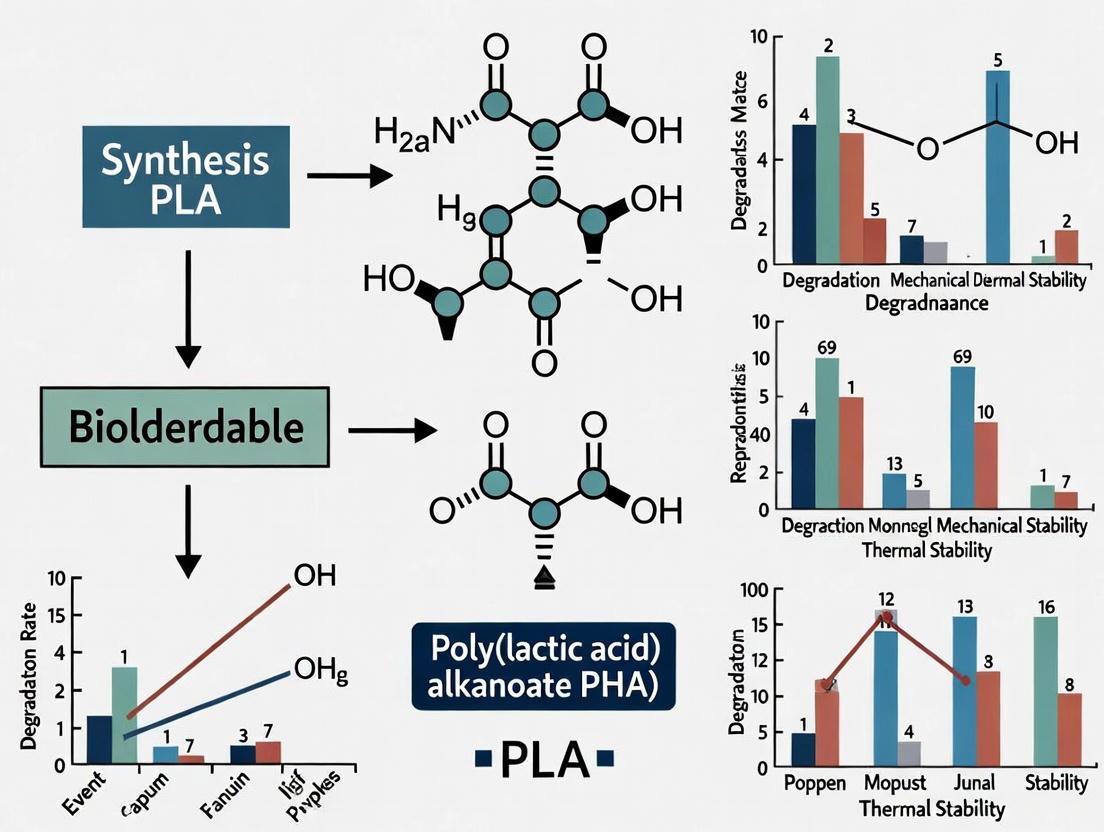
This article provides a comprehensive, science-driven comparison of key biodegradable polymer performance for researchers and professionals in drug development.
Biodegradable Polymers in Drug Development: A 2025 Performance Comparison of PLA, PHA, PCL, and PBS
Abstract
This article provides a comprehensive, science-driven comparison of key biodegradable polymer performance for researchers and professionals in drug development. It explores the foundational properties and synthesis of prevalent polymers like PLA, PHA, PCL, and PBS, details their methodological applications in drug delivery and medical devices, addresses critical troubleshooting for degradation control and mechanical limitations, and offers a validated, comparative analysis of their biocompatibility and degradation kinetics. The synthesis of this information aims to guide material selection and innovation for advanced therapeutic applications.
Defining Biodegradable Polymers: Structures, Sources, and Synthesis Pathways
Aliphatic polyesters represent a cornerstone class of synthetic biodegradable polymers characterized by hydrolyzable aliphatic ester linkages in their backbone. These polymers have gained significant importance as sustainable alternatives to conventional petrochemical-based plastics and for advanced applications in biomedical fields, including drug delivery and tissue engineering [1] [2]. Their biodegradation occurs primarily through hydrolysis of the ester bonds, eventually yielding products that can be assimilated by microorganisms [2] [3]. The general structure of an aliphatic polyester consists of repeating units connected by ester functional groups (-COO-).
Among the most prominent aliphatic polyesters are those derived from lactide (the cyclic dimer of lactic acid), glycolide (the cyclic dimer of glycolic acid), and ε-caprolactone. These monomers undergo ring-opening polymerization (ROP) to form high molecular weight polymers such as polylactic acid (PLA), polyglycolic acid (PGA), and polycaprolactone (PCL) [1] [2]. A distinct and critically important subclass of biodegradable polyesters is the polyhydroxyalkanoates (PHAs), which are linear polyesters synthesized naturally by numerous microorganisms as intracellular carbon and energy storage materials [4] [5] [6]. The general molecular structure of PHAs consists of (R)-3-hydroxy fatty acid monomers, where the R-group side chain varies based on the specific PHA type [6] [7].
This guide provides a systematic, data-driven comparison of these key polymer classes, focusing on their molecular structures, physicochemical properties, and performance in research applications, to serve as a foundation for material selection in scientific and industrial development.
Molecular Structures and Classification
The properties and applications of aliphatic polyesters are fundamentally governed by their molecular structures. The key differentiator among polymer classes is the arrangement of atoms in the polymer backbone and the nature of the side chains.
Aliphatic Polyesters from Ring-Opening Polymerization
This category includes polymers synthesized predominantly via the ring-opening polymerization of cyclic esters or lactones [1] [2]. The structure of the monomer dictates the structure of the polymer repeat unit.
- Poly(lactic acid) or Polylactide (PLA): Derived from the lactide monomer, which is a cyclic dimer of lactic acid. Since lactic acid is a chiral molecule, different stereoisomers of PLA exist, significantly impacting the polymer's properties. Poly(L-lactic acid) (PLLA) is semicrystalline, while the racemic poly(D,L-lactic acid) (PDLLA) is amorphous [1] [2].
- Poly(glycolic acid) or Polyglycolide (PGA): Synthesized from glycolide. It has the simplest structure with no side chains (R = H), leading to high crystallinity [2].
- Poly(ε-caprolactone) (PCL): Produced from ε-caprolactone. Its repeat unit contains five non-ester methylene groups (-CH₂-), resulting in a low glass transition temperature and high flexibility [1] [2].
- Poly(ω-pentadecalactone) (PPDL): A polyester synthesized from a macrocyclic lactone (ω-pentadecalactone). Its long monomer unit contributes to high crystallinity and a higher melting point compared to PCL [8].
Polyhydroxyalkanoates (PHAs)
PHAs are a vast family of polyesters biosynthesized by microorganisms [6]. Their general molecular structure is shown below, where the variable 'R' group side chain defines the specific polymer.
- Short-Chain-Length PHAs (scl-PHAs): Contain 3-5 carbon atoms in the monomer unit.
- Poly(3-hydroxybutyrate) (PHB): The most common scl-PHA, with a methyl group (R = -CH₃) as the side chain [6].
- Poly(3-hydroxyvalerate) (PHV): Contains an ethyl side chain (R = -CH₂CH₃).
- Copolymers (e.g., PHBV): Copolymers of 3-hydroxybutyrate and 3-hydroxyvalerate are widely studied to overcome the brittleness of PHB homopolymer [4] [6].
- Medium-Chain-Length PHAs (mcl-PHAs): Contain 6-14 carbon atoms in the monomer unit.
- Poly(3-hydroxyoctanoate) (PHO) and Poly(3-hydroxynonanoate) (PHN) are typical examples, often synthesized as copolymers that include other monomers like 3-hydroxyhexanoate (HHx) [6]. These polymers are more elastomeric.
The following diagram illustrates the general chemical structures and the synthetic relationship between these key polymer classes.
Comparative Performance Data
The distinct molecular structures of these polymers translate directly into their measurable physical, thermal, and mechanical properties. The table below provides a quantitative comparison of key parameters essential for material selection.
Table 1: Comparative Properties of Key Aliphatic Polyesters and PHAs [1]*
| Polymer | Tensile Modulus (MPa) | Tensile Strength (MPa) | Elongation at Break (%) | Degradation Time (Months) | Key Characteristics |
|---|---|---|---|---|---|
| PGA | 7,000 - 8,400 | 890 | 30 | 6 - 12 | High strength, stiff, fast degradation |
| PLLA | 3,500 | 55 | 30 - 240 | > 12 | High modulus & strength, slow degradation |
| PDLLA | 1,500 - 2,900 | 45 - 55 | 3 - 10 | 12 - 18 | Amorphous, more rapid degradation than PLLA |
| PCL | ~700 | 4 - 28 | 700 - 1,000 | > 24 | Very flexible, slow degradation |
| PHB | 3,500 | ~40 | 5 - 8 | > 12 | Brittle, high crystallinity |
| PPC | 830 | 21.5 | 330 | > 12 | Flexible, low tensile modulus |
Analysis of Comparative Data
Mechanical Performance: The data reveals a wide spectrum of mechanical behavior. PGA and PLLA are stiff, high-strength materials suitable for load-bearing applications (e.g., sutures, bone fixation), whereas PCL and PPC are elastomeric, with high elongation at break, making them suitable for soft tissue engineering or flexible films [1]. The inherent brittleness of PHB is evident from its low elongation at break (5-8%), which is a major limitation addressed through copolymerization (e.g., with HV to form PHBV) or blending [4] [6].
Degradation Profile: Degradation rates, governed by hydrolysis of the ester backbone, vary significantly. PGA and PDLLA exhibit relatively faster degradation, making them suitable for short-term applications like drug delivery matrices. In contrast, PCL and PLLA degrade over years, ideal for long-term implants and devices [1]. The degradation rate is influenced by crystallinity, molecular weight, and device morphology.
Experimental Protocols for Synthesis and Characterization
To ensure reproducibility and enable critical comparison of research data, standardized experimental protocols are essential. This section outlines common methodologies for polymer synthesis and the evaluation of key properties.
Synthesis of Aliphatic Polyesters via Ring-Opening Polymerization
Objective: To synthesize high molecular weight aliphatic polyesters (e.g., PLLA, PDLLA, PCL) under controlled conditions [8].
Materials:
- Monomers: L-lactide (L-LA), rac-lactide (rLA), or ε-caprolactone (CL).
- Catalyst: Stannous(II) 2-ethylhexanoate (Sn(Oct)₂).
- Solvent: Dry Toluene (for enzymatic ROP) or bulk (solvent-free).
- Purification Solvents: Chloroform, cold Methanol.
Methodology:
- Reaction Setup: Transfer the monomer (e.g., 1.0 g L-LA) into a vacuum-processed Schlenk tube under an inert atmosphere (e.g., argon).
- Catalyst Addition: Add the Sn(Oct)₂ catalyst at a monomer-to-catalyst ratio ([M]/[Cat]) of 1000:1.
- Polymerization: Seal the tube and place it in an oil bath at 120°C for 6 hours with constant stirring.
- Purification: After reaction, dissolve the crude polymer in a minimal volume of chloroform. Precipitate the polymer by slowly dripping the solution into a large excess of cold, vigorously stirred methanol.
- Isolation: Filter the precipitated polymer and dry it under vacuum at room temperature until constant weight is achieved.
- Characterization: Determine molecular weight and dispersity (Đ) using Size Exclusion Chromatography (SEC) with chloroform as the mobile phase [8].
Fabrication and Testing of Protein-Loaded Microparticles
Objective: To fabricate biodegradable polyester microparticles for controlled protein delivery and characterize encapsulation efficiency and release kinetics [8].
Materials:
- Polymers: Synthesized PDLLA, PLLA, PCL, etc.
- Model Protein: Bovine Serum Albumin (BSA).
- Solvents: Dichloromethane (DCM).
- Surfactants: Polyvinyl alcohol (PVA) or Sodium dodecyl sulfate (SDS) for emulsion stabilization.
Methodology:
- Double Emulsion (w/o/w):
- Primary Emulsion: Dissolve the protein (BSA) in water (aqueous phase 1, W₁) and add it to a solution of polymer in DCM (organic phase, O). Emulsify using a probe sonicator to form a water-in-oil (w/o) emulsion.
- Secondary Emulsion: Add this primary emulsion to a large volume of an aqueous solution (aqueous phase 2, W₂) containing a stabilizer like PVA. Homogenize to form the double (w/o/w) emulsion.
- Solvent Evaporation: Stir the double emulsion for several hours to allow the organic solvent to evaporate, solidifying the microparticles.
- Washing and Collection: Collect the microparticles by centrifugation, wash with water to remove residual solvent and stabilizer, and lyophilize.
- Characterization:
- Particle Size & Morphology: Use Dynamic Light Scattering (DLS) and Scanning Electron Microscopy (SEM).
- Encapsulation Efficiency (EE): Calculate EE% = (Actual protein load / Theoretical protein load) × 100. Determine actual load by dissolving particles and quantifying protein (e.g., via BCAA assay).
- In Vitro Release Study: Incubate microparticles in phosphate buffer (pH 7.4) at 37°C. At predetermined time points, centrifuge, withdraw release medium, and analyze protein content. Fit release data to mathematical models (e.g., Higuchi, Korsmeyer-Peppas) to elucidate release mechanisms [8].
The workflow for this synthesis and characterization process is visualized below.
The Scientist's Toolkit: Essential Research Reagents
Successful research in this field relies on a set of core materials and reagents. The following table lists key items and their functions in typical experimental workflows.
Table 2: Essential Reagents for Aliphatic Polyester and PHA Research [1] [8]*
| Reagent / Material | Function / Application | Research Significance |
|---|---|---|
| Lactide, Glycolide, ε-Caprolactone monomers | Starting materials for ROP synthesis of PLA, PGA, PCL. | Purity and stereochemistry are critical for controlling polymer microstructure and final properties. |
| Stannous(II) 2-ethylhexanoate (Sn(Oct)₂) | Widely used catalyst for metal-based ROP. | Highly efficient; approved for medical devices. Requires careful handling under inert atmosphere. |
| Candida antarctica Lipase B (CALB) | Enzyme catalyst for enzymatic ROP. | Enables "green" synthesis, often with higher stereoselectivity and no metal residues. |
| Dichloromethane (DCM) | Organic solvent for polymer dissolution and emulsion-based fabrication. | Common solvent for forming the oil phase in w/o/w emulsions for microsphere preparation. |
| Polyvinyl Alcohol (PVA) | Surfactant and stabilizer in emulsion systems. | Critical for stabilizing the water-oil interface during microparticle formation, controlling particle size and distribution. |
| Lipase from Pseudomonas fluorescens | Enzyme for in vitro enzymatic degradation studies. | Used to simulate and accelerate polymer biodegradation in a controlled laboratory setting. |
| Bovine Serum Albumin (BSA) | Model protein for encapsulation and release studies. | A well-characterized, stable protein used to standardize drug delivery experimentation protocols. |
The comparative analysis presented in this guide underscores that there is no single "best" biodegradable polyester. The selection of aliphatic polyesters like PLA, PGA, and PCL, or biologically derived PHAs, is a strategic decision based on a trade-off between material properties and application requirements. PGA offers high strength and rapid degradation, PLLA provides a balance of strength and slower degradation, while PCL and mcl-PHAs offer flexibility and elastomeric properties. The inherent brittleness of PHB can be mitigated through copolymerization or blending [4] [6].
Future research directions focus on overcoming existing limitations, such as the high production cost of PHAs and the poor toughness of some polyesters. Advanced strategies include the development of block and graft copolymers to create microphase-separated morphologies with tailored properties [4], precisely controlled polymer blends with natural materials like starch and cellulose [6] [3], and the application of AI-driven material design to accelerate the discovery of new polymer formulations and composites [9]. A deep understanding of the chemical foundations and structure-property relationships of these key polymer classes, as detailed in this guide, is fundamental to driving innovation in sustainable materials and advanced biomedical devices.
The growing environmental concerns over plastic pollution and resource sustainability have propelled bio-based polymers to the forefront of materials research [3]. For researchers and scientists in drug development and other high-precision fields, understanding the fundamental distinctions between bio-based and synthetic polymer sources is not merely an academic exercise; it is a critical factor that influences experimental design, product purity, supply chain stability, and ultimately, the performance and regulatory acceptance of the final product [10] [3]. While bio-based materials offer a renewable alternative to finite fossil resources, their inherent heterogeneity presents unique challenges for purification and standardized processing that are less prevalent in the synthetic polymer landscape [10]. This guide provides an objective, data-driven comparison of these two material classes, focusing on the implications of their origin on characteristics vital to scientific and industrial applications.
Fundamental Origins and Manufacturing Pathways
The journey of a polymer from raw material to a refined product fundamentally shapes its identity. Bio-based and synthetic polymers originate from starkly different feedstocks and undergo distinct transformation processes, which directly impact their subsequent purity and supply logistics.
Bio-based Polymers are derived from renewable biological sources, including plants, animals, and microorganisms [10]. Common feedstocks include agricultural residues (e.g., corn stover, bagasse), dedicated energy crops, plant oils, and microbial biomass [10] [11]. Their production often involves biochemical conversion processes such as fermentation, enzymatic treatment, and chemical modification of natural polymers like starch, cellulose, chitosan, and proteins [10] [3]. For instance, polylactic acid (PLA) is typically produced via the fermentation of sugar feedstocks into lactic acid, followed by chemical polymerization [12].
Synthetic Polymers are predominantly sourced from non-renewable fossil fuels, primarily petroleum and natural gas [10]. Key feedstocks include naphtha and natural gas liquids, which are cracked and processed into monomer building blocks like ethylene, propylene, and vinyl chloride [11]. The production of synthetic polymers relies on petrochemical refining and synthesis, involving controlled chemical reactions such as catalytic polymerization to create polymers like polyethylene (PE), polypropylene (PP), and polyvinyl chloride (PVC) [10].
The diagram below illustrates the core pathways and highlights key differentiators, such as the heterogeneity of bio-based feedstocks versus the uniformity of synthetic ones.
Comparative Analysis: Purity, Supply, and Material Properties
The foundational differences in origin cascade into significant variations in material properties, purity profiles, and supply chain dynamics. The tables below provide a quantitative and qualitative comparison of these critical aspects.
Table 1: Impact of Raw Material Origin on Purity and Supply
| Aspect | Bio-based Polymers | Synthetic Polymers |
|---|---|---|
| Feedstock Nature | Heterogeneous (biological variability) [10] | Uniform (petrochemical standardization) [10] |
| Inherent Impurities | Proteins, pigments, salts, residual catalysts [3] | Catalyst residues, processing aids, oligomers |
| Purification Complexity | High (multiple steps often required) [10] | Lower (standardized industrial processes) |
| Batch-to-Batch Variability | Higher (dependent on crop season & source) [10] | Lower (tightly controlled process parameters) [10] |
| Supply Chain Drivers | Agricultural output, climate, land use [11] | Petrochemical politics, crude oil prices [13] |
| Supply Chain Stability | Subject to seasonal & environmental fluctuations [10] | Geopolitically influenced but highly established [13] |
Table 2: Key Property Comparison of Common Polymers
| Polymer | Tensile Strength (MPa) | Young's Modulus (GPa) | Melting Temp. (°C) | Key Characteristics & Research Considerations |
|---|---|---|---|---|
| PLA (Bio-based) | 16 - 22 [3] | ~3.5 [3] | 150 - 160 | Transparency, biocompatibility, inherent brittleness [12] |
| PGA (Bio-based) | 70 - 117 [3] | 6.1 - 7.2 [3] | 220 - 231 | High strength, bioabsorbable, used in medical sutures [3] |
| PHA Family (Bio-based) | 18 - 40 (Varies by type) | 1.5 - 4.0 (Varies by type) | 140 - 175 (Varies by type) | Biodegradable in various environments, properties highly tunable [14] [3] |
| Polyethylene (Synthetic) | 15 - 40 | 0.2 - 1.2 | 105 - 135 | Excellent chemical resistance, high durability [10] |
| Polypropylene (Synthetic) | 25 - 40 | 1.5 - 2.0 | 160 - 175 | Good fatigue resistance, versatile for molding [13] |
Interpreting the Data: Critical Implications for Researchers
The data in the tables reveals core challenges and opportunities. The higher batch-to-batch variability of bio-based polymers necessitates more rigorous incoming quality control (QC) protocols for research use, as inconsistent properties can skew experimental results [10]. Furthermore, their inherent hydrophilicity and moisture sensitivity can complicate processing and affect the stability of formulated products, often requiring meticulous drying or chemical modification [10] [12]. Conversely, the difficult processability of some high-performance bio-based polymers, like certain polyhydroxyalkanoates (PHAs), may require specialized equipment or blending with other polymers to achieve desired material forms, a key consideration for experimental design [10] [12].
Synthetic polymers, while more uniform, face scrutiny regarding residual catalyst toxicity and the presence of endocrine-disrupting additives, which is a paramount concern in drug development and biomedical applications [3]. Their high stability, which makes them durable in applications, also renders them persistent environmental pollutants, an increasingly important factor in life-cycle assessments and green chemistry principles [9] [3].
Experimental Protocols for Performance Comparison
For scientists requiring empirical data, the following established methodologies can be employed to directly compare the performance of bio-based and synthetic polymers in a controlled laboratory setting.
Protocol for Assessing Hydrolytic Degradation Kinetics
Objective: To quantify and compare the rate of molecular weight loss and mass erosion of polymer samples under simulated physiological or environmental conditions [3].
- Sample Preparation: Prepare identical films or discs (e.g., 10 mm diameter, 1 mm thickness) of the bio-based (e.g., PLA, PHA) and synthetic (e.g., PP, PET) polymers using compression molding or injection molding. Record initial dry mass (M₀) and sterilize if simulating physiological conditions.
- Immersion Study: Immerse individual samples in phosphate-buffered saline (PBS) at pH 7.4, maintained at 37°C, or other buffers at different pH levels to simulate various environments [3]. Use a fixed volume of buffer per unit surface area of the sample (e.g., 50 mL per 1 cm²).
- Sampling and Analysis: At predetermined time intervals (e.g., 1, 7, 30, 90 days), remove replicate samples (n=3-5) from the medium.
- Mass Loss: Rinse samples with deionized water, dry to a constant mass, and weigh (Mₜ). Calculate percentage mass loss:
[(M₀ - Mₜ) / M₀] × 100. - Molecular Weight Change: Analyze the dried samples using Gel Permeation Chromatography (GPC) to track the reduction in molecular weight (Mw and Mn) over time, indicating chain scission [3].
- Surface Morphology: Examine the surface of degraded samples using Scanning Electron Microscopy (SEM) to visualize erosion patterns, cracking, or pore formation.
- Mass Loss: Rinse samples with deionized water, dry to a constant mass, and weigh (Mₜ). Calculate percentage mass loss:
Protocol for Determining Thermal and Mechanical Properties
Objective: To characterize and contrast the thermal stability and mechanical performance of polymer samples.
Thermogravimetric Analysis (TGA):
- Method: Load 5-10 mg of polymer sample into a TGA instrument. Heat from room temperature to 600-800°C at a constant rate (e.g., 10°C/min) under an inert nitrogen atmosphere.
- Data Analysis: Determine the onset of decomposition temperature and the temperature at which 50% weight loss occurs. This quantifies thermal stability and reveals inorganic residue (ash) content, which can be linked to catalyst or filler content [3].
Differential Scanning Calorimetry (DSC):
- Method: Load 5-10 mg of polymer sample into a DSC instrument. Subject it to a heat-cool-heat cycle (e.g., -50°C to 200°C) at a controlled rate to erase thermal history.
- Data Analysis: From the second heating scan, determine the glass transition temperature (Tg), melting temperature (Tm), and melting enthalpy (ΔHf). The crystallinity can be calculated from ΔHf relative to a 100% crystalline standard [3].
Tensile Testing:
- Sample Preparation: Prepare standard dog-bone-shaped specimens (according to ASTM D638) via injection molding or machining.
- Method: Test specimens (n=5 minimum) using a universal testing machine at a constant crosshead speed (e.g., 5 mm/min) until failure.
- Data Analysis: Calculate tensile strength at yield and break, elongation at break, and Young's modulus from the resulting stress-strain curves, as exemplified in Table 2 [3].
The Scientist's Toolkit: Key Research Reagents and Materials
Table 3: Essential Materials for Polymer Performance Research
| Item | Function in Research | Application Context |
|---|---|---|
| Phosphate Buffered Saline (PBS) | Provides a stable, isotonic medium for hydrolytic degradation studies simulating physiological conditions [3]. | Hydrolytic degradation assays |
| Gel Permeation Chromatography (GPC) System | Separates polymer molecules by size to determine molecular weight distribution (Mw, Mn) and track degradation. | Purity analysis, degradation kinetics |
| Differential Scanning Calorimeter (DSC) | Measures thermal transitions (Tg, Tm, crystallization temperature) and enthalpy changes to characterize polymer structure. | Thermal property analysis |
| Universal Testing Machine | Applies controlled tensile, compressive, or flexural forces to determine mechanical properties like strength and modulus. | Mechanical property testing |
| Compatibilizers (e.g., Maleic Anhydride) | Used in polymer blending to improve interfacial adhesion between immiscible polymers, enhancing mechanical properties [12]. | Polymer blend formulation |
The choice between bio-based and synthetic polymers is multifaceted, involving a complex trade-off between sustainability, performance, purity, and supply chain considerations. Bio-based polymers, derived from renewable resources, offer a path toward reduced carbon footprint and biodegradability but contend with challenges related to feedstock heterogeneity, complex purification, and property variability [10] [3]. Synthetic polymers provide unparalleled batch-to-batch consistency, robust supply chains, and superior performance in many mechanical and barrier applications, albeit at the environmental cost of relying on non-renewable fossil fuels and contributing to persistent waste [10].
For the research and drug development community, this comparison underscores that material selection must be application-specific. The decision framework should integrate rigorous empirical data gathered through standardized protocols, as outlined herein, with a clear understanding of the broader implications of raw material origin. As advancements in processing and purification of bio-based polymers continue and the demand for sustainable materials grows, the performance gap is likely to narrow, making bio-based alternatives viable for an even wider range of sophisticated scientific and medical applications.
The development of biodegradable polymers relies on advanced synthesis techniques that enable precise control over molecular structure, properties, and environmental impact. Among these, ring-opening polymerization (ROP), condensation polymerization, and microbial fermentation represent three fundamental approaches with distinct mechanisms, advantages, and limitations. Ring-opening polymerization involves the cyclic monomer opening its ring structure to form linear polymer chains, often employing sophisticated organocatalysts for controlled reactions [15]. Condensation polymerization creates polymer chains through the step-growth reaction of complementary functional groups, releasing small molecules like water as byproducts, with aldol condensation emerging as a metal-free alternative for conjugated polymers [16]. Microbial fermentation utilizes engineered microorganisms as natural factories to produce biopolymers directly, offering a sustainable pathway for polymers like polyhydroxyalkanoates (PHAs) [17].
Understanding the nuanced performance characteristics of polymers synthesized via these different routes is crucial for selecting the appropriate technique for specific applications, particularly in biomedical and environmental fields. This comparison guide examines the experimental data, structural characteristics, and functional performance of polymers produced through these three fundamental methods, providing researchers with objective criteria for material selection and process development in biodegradable polymer research.
Technical Comparison of Polymerization Techniques
Table 1: Fundamental Characteristics of Polymerization Techniques
| Characteristic | Ring-Opening Polymerization (ROP) | Condensation Polymerization | Microbial Fermentation |
|---|---|---|---|
| Primary Mechanism | Chain-growth polymerization via cyclic monomer ring opening | Step-growth polymerization with small molecule byproduct | Biological synthesis using metabolic pathways |
| Typical Catalysts | Organocatalysts (TBD, DMAP), metal complexes | Acid/base catalysts, organocatalysts | Enzymes within engineered microorganisms |
| Byproducts | Typically none | Water, alcohols, or glycols | Cellular metabolites, water, CO₂ |
| Structural Control | High control over molecular weight and dispersity | Moderate control, dependent on reaction equilibrium | Variable, depends on microbial strain and conditions |
| Common Polymers | Polylactide (PLA), Aliphatic polycarbonates | Polyesters, polycarbonates, conjugated polymers | Polyhydroxyalkanoates (PHAs), Bacterial Cellulose |
| Environmental Impact | Often uses bio-derived monomers; variable biodegradability | Metal-free variants available; biodegradable options | Fully biobased and biodegradable; renewable feedstocks |
Table 2: Experimental Performance Metrics of Synthesized Polymers
| Performance Metric | ROP-Derived Polymers | Condensation Polymers | Microbial Fermentation Polymers |
|---|---|---|---|
| Molecular Weight Range (kDa) | 10-500 (controlled) | 20-200 (equilibrium limited) | 50-1000 (high variability) |
| Dispersity (Đ) | 1.1-1.5 (narrow) | 1.5-2.5 (broad) | 2.0-3.0 (very broad) |
| Typical Degradation Rate | Tunable via monomer selection | Variable via bond stability | Highly dependent on environment |
| Mechanical Strength | High for PLA (tensile ~50-70 MPa) | Moderate to high | Variable (PHA: 20-40 MPa) |
| Thermal Stability | Good (PLA Tₘ: 150-180°C) | Excellent for aromatic types | Moderate (PHA Tₘ: 50-180°C) |
| Biocompatibility | Generally excellent | Depends on monomer selection | Generally excellent |
Ring-Opening Polymerization (ROP)
Ring-opening polymerization represents a versatile approach for synthesizing biodegradable aliphatic polyesters and polycarbonates with precise architectural control. The mechanism involves the initiation of cyclic monomers (e.g., lactide, trimethylene carbonate) using catalysts that facilitate ring opening and propagation. Organocatalysts such as 1,5,7-triazabicyclo[4.4.0]dec-5-ene (TBD) have emerged as particularly efficient for ROP, enabling rapid polymerization of lactide within seconds while maintaining control over molecular parameters [15]. These metal-free catalysts are especially valuable for biomedical applications where residual metal contamination poses concerns.
The experimental protocol for ROP typically involves meticulous monomer purification, catalyst preparation under controlled atmosphere, and polymerization under inert conditions. For instance, PLA synthesis via ROP requires anhydrous conditions to prevent unintended termination or transesterification side reactions. Reaction monitoring through techniques like NMR spectroscopy or size-exclusion chromatography provides real-time data on conversion rates and molecular weight evolution. A significant advantage of ROP is the ability to produce polymers with narrow molecular weight distributions (dispersity ~1.1-1.5), which correlates with more predictable mechanical and degradation behavior [15].
Recent advances in ROP have enabled the synthesis of functionalized aliphatic polycarbonates with tailored side chains, expanding the potential application space for these materials. The degradation profile of ROP-synthesized polymers can be precisely modulated through monomer selection and copolymer composition, with crystalline regions typically degrading more slowly than amorphous domains. This tunability makes ROP-synthesized polymers particularly valuable for controlled drug delivery systems where predictable release kinetics are essential.
Condensation Polymerization
Condensation polymerization encompasses a broad class of step-growth reactions where monomers with complementary functional groups react, eliminating small molecules as byproducts. Aldol condensation has gained attention as a metal-free approach for synthesizing conjugated polymers, particularly valuable for n-type semiconducting materials where metal impurities can compromise electronic properties [16]. This reaction proceeds through the nucleophilic addition of a ketone enolate to an aldehyde, followed by dehydration to form α,β-unsaturated carbonyl linkages.
Advanced characterization techniques have revealed significant structural insights into condensation polymers. High-resolution scanning tunneling microscopy (STM) studies of polymers synthesized via aldol condensation have identified unexpected polymerization defects occurring in approximately 9% of monomer linkages [16]. These include both sequence defects (wrong ordering of comonomers) and coupling defects (kinks in the backbone structure), which significantly impact material properties. The experimental identification of these defects involves electrospray deposition (ESD) of polymer solutions onto pristine Au(111) surfaces followed by STM imaging under controlled conditions.
The condensation polymerization experimental workflow typically involves heating monomer mixtures under inert atmosphere with continuous removal of condensation byproducts (e.g., water, alcohols) to drive the equilibrium toward polymer formation. Molecular weight control presents a greater challenge in condensation polymerization compared to ROP, as it depends on reaction equilibrium and requires precise stoichiometric balance between functional groups. Recent innovations have focused on developing efficient organocatalysts for condensation reactions, with TBD demonstrating exceptional efficiency in degrading and potentially reforming condensation polymers through transesterification mechanisms [15].
Microbial Fermentation
Microbial fermentation utilizes engineered microorganisms as biological factories to synthesize polymers directly from renewable carbon sources. This approach offers a sustainable alternative to conventional chemical synthesis, particularly for complex biopolymers like polyhydroxyalkanoates (PHAs) that are challenging to produce synthetically. Metabolic engineering strategies enable the optimization of microbial strains for enhanced polymer yield and quality, employing techniques such as gene overexpression, knockout mutations, and CRISPR-Cas9 genome editing [17].
The experimental process for polymer production via microbial fermentation begins with strain selection and optimization, followed by cultivation in bioreactors with carefully controlled nutrient feeds. The carbon-to-nitrogen ratio represents a critical process parameter, as nutrient limitation often triggers polymer accumulation as energy storage materials within microbial cells. For PHA production, fermentation typically proceeds through a growth phase followed by a production phase where conditions are manipulated to induce polymer synthesis. Subsequent downstream processing involves cell harvesting, disruption, and polymer extraction using solvents.
Microbially synthesized biopolymers exhibit distinctive material properties, including inherent biocompatibility and customizable biodegradation rates. However, they often display broader molecular weight distributions (dispersity ~2.0-3.0) compared to chemically synthesized polymers, resulting from the complex biological synthesis pathways [17]. Structural control presents challenges in microbial systems, though advanced engineering of metabolic pathways has enabled production of polymers with tailored monomer compositions and improved material properties. The mechanical characteristics of fermentation-derived polymers can be enhanced through blending with other biopolymers or reinforcement with natural fillers.
Experimental Protocols and Methodologies
Key Experimental Protocols
High-Resolution Molecular Imaging of Condensation Polymers
The precise characterization of polymerization defects in condensation polymers requires sophisticated imaging methodologies. The experimental protocol combines electrospray deposition (ESD) with scanning tunneling microscopy (STM) to achieve sub-monomer resolution of polymer structures [16]. The process begins with polymer dissolution in appropriate solvents (typically tetrahydrofuran or chloroform) followed by electrospray deposition onto atomically clean Au(111) surfaces under ultra-high vacuum conditions. The ESD parameters—including solution concentration, flow rate, and needle-to-substrate distance—are optimized to achieve isolated polymer chains on the surface without aggregation.
STM imaging is performed at room temperature using chemically etched tungsten tips, with typical operating parameters setting the tunneling current between 10-100 pA and bias voltage from 500-1000 mV. The acquired images undergo meticulous processing and analysis, including flat-field correction and drift compensation, to enable accurate structural measurements. For defect quantification, researchers manually trace polymer backbones and identify deviation points from ideal linear structures, calculating defect frequencies as the ratio of kink sites to total monomer linkages. This approach has revealed that approximately 9% of linkages in aldol-condensed conjugated polymers contain structural defects that significantly impact electronic properties [16].
Organocatalyzed Ring-Opening Polymerization
The experimental protocol for organocatalyzed ROP emphasizes rigorous exclusion of moisture and oxygen to prevent catalyst deactivation and unwanted side reactions. A representative procedure for PLA synthesis involves drying the lactide monomer by recrystallization from anhydrous toluene and subsequent sublimation under vacuum [15]. The polymerization reaction is conducted in flame-dried glassware under inert atmosphere (argon or nitrogen), with the organocatalyst (typically TBD or DBU) added as a solution in dry dichloromethane or tetrahydrofuran.
Reaction initiation occurs upon the addition of alcohol initiators (such as benzyl alcohol), with the catalyst working through a dual activation mechanism where it simultaneously activates both the monomer and the initiator [15]. The reaction progression is monitored by thin-layer chromatography or proton NMR spectroscopy, with the highly exothermic nature requiring temperature control to maintain between 20-40°C. Upon completion, the polymerization is quenched by adding a mild proton source (e.g., benzoic acid), and the polymer is recovered by precipitation into cold methanol or hexanes. Molecular weight control is achieved through precise adjustment of the monomer-to-initiator ratio, while dispersity is minimized by using highly active catalysts that promote rapid initiation and concurrent chain growth.
Microbial Fermentation for Biopolymer Synthesis
The experimental protocol for polymer synthesis via microbial fermentation begins with strain selection and optimization, typically utilizing natural polymer producers like Cupriavidus necator for PHA or Komagataeibacter xylinus for bacterial cellulose. The process involves inoculum preparation through shake-flask cultivation, followed by transfer to bioreactors for controlled fermentation [17]. Bioreactor parameters—including temperature, pH, dissolved oxygen, and agitation rate—are meticulously maintained throughout the process, with fed-batch operation commonly employed to achieve high cell densities.
Polymer accumulation is often induced through deliberate nutrient limitation, typically nitrogen or phosphorus, while maintaining excess carbon source. For PHA production, the carbon source composition directly influences the monomeric composition of the resulting polymer, enabling tailoring of material properties. After fermentation, cells are harvested through centrifugation or filtration, followed by polymer extraction using organic solvents (e.g., chloroform or dichloroethane) for PHAs or purification treatments for extracellular polymers like bacterial cellulose. The extracted polymer undergoes precipitation, washing, and drying before characterization, with typical yields ranging from 30-80% of cell dry weight depending on the microbial strain and process optimization.
Experimental Workflow Visualization
Research Reagent Solutions
Table 3: Essential Research Reagents for Polymer Synthesis Techniques
| Reagent Category | Specific Examples | Function | Application Areas |
|---|---|---|---|
| Organocatalysts | TBD, DBU, DMAP | Activation of monomers/initiators via dual hydrogen bonding | ROP, Condensation Polymer Degradation |
| Microbial Strains | Cupriavidus necator, Komagataeibacter xylinus | Natural producers of biopolymers (PHA, cellulose) | Microbial Fermentation |
| Monomer Systems | Lactide, Trimethylene carbonate, Bis-oxindole derivatives | Building blocks for polymer chains | ROP, Condensation Polymerization |
| Solvent Systems | Anhydrous THF, Chloroform, Toluene | Reaction medium, polymer processing | All techniques |
| Surface Substrates | Au(111) surfaces | Atomically flat substrates for polymer imaging | STM Characterization |
| Nutrient Media | Mineral salts, Carbon sources (glucose, glycerol) | Microbial growth and polymer production | Microbial Fermentation |
Performance Data Analysis
Structural and Property Comparisons
Advanced characterization techniques have revealed significant differences in structural perfection between polymers synthesized through different routes. Condensation polymers, particularly those produced via aldol condensation, exhibit measurable defect rates of approximately 9% in monomer linkages, comprising both sequence defects and coupling defects that create kinks of about 130° in polymer backbones [16]. These structural imperfections significantly impact electronic and mechanical properties, explaining performance variations in conjugated polymer-based devices.
ROP-synthesized polymers generally demonstrate superior structural control, with dispersity values typically between 1.1-1.5, enabling more predictable structure-property relationships [15]. This narrow molecular weight distribution translates to more consistent thermal and mechanical behavior, making ROP particularly valuable for biomedical applications where performance reproducibility is critical. The use of organocatalysts further enhances this control while eliminating metal contamination concerns.
Microbial fermentation produces polymers with the broadest molecular weight distributions (dispersity ~2.0-3.0), reflecting the complexity of biological synthesis pathways [17]. Despite this variability, fermentation-derived polymers often exhibit exceptional biocompatibility and can incorporate complex monomer structures that would be challenging to produce synthetically. The mechanical properties of these biopolymers can be enhanced through blending or composite formation, expanding their application potential.
Degradation Behavior Analysis
The degradation profiles of polymers vary significantly based on synthesis method and resulting chemical structure. ROP-synthesized aliphatic polyesters and polycarbonates typically undergo hydrolytic degradation through ester bond cleavage, with rates tunable by adjusting monomer composition and crystallinity [18]. The presence of catalysts like stannous octoate can accelerate hydrolysis, with studies showing approximately 40% rate increase with 0.5% SnCl₂ under identical conditions [18].
Condensation polymers exhibit more diverse degradation behavior based on their specific chemical linkages. Aromatic polyesters and polycarbonates demonstrate greater stability, requiring catalyzed degradation approaches for efficient chemical recycling. Organocatalysts like TBD have shown exceptional efficiency in degrading various condensation polymers through transesterification mechanisms, enabling chemical recycling and upcycling [15].
Fermentation-derived biopolymers typically undergo enzymatic degradation in appropriate environments, with rates highly dependent on environmental conditions. Studies show that raising temperature from 30°C to 50°C while maintaining humidity above 80% can significantly accelerate enzymatic degradation of polymers like PLA [18]. This sensitivity to environmental conditions makes microbial polymers particularly suitable for applications requiring specific degradation triggers.
The comparative analysis of ROP, condensation polymerization, and microbial fermentation techniques reveals distinctive advantages and limitations for each approach in biodegradable polymer synthesis. Ring-opening polymerization offers superior control over molecular parameters and narrow dispersity, making it ideal for applications requiring precise structure-property relationships. Condensation polymerization provides versatile routes to conjugated polymers with unique electronic properties, though structural defects present challenges for performance optimization. Microbial fermentation enables sustainable production of complex biopolymers from renewable resources, though with greater variability in molecular characteristics.
For researchers selecting polymerization strategies, the experimental data presented suggests that application requirements should drive technique selection. Biomedical applications requiring precise degradation profiles benefit from ROP's synthetic control, while electronic applications may leverage condensation-derived conjugated polymers despite their defect populations. Environmental applications prioritizing sustainability may favor microbial fermentation despite its broader molecular weight distributions. Future research directions should focus on hybrid approaches that combine the precision of chemical synthesis with the sustainability of biological systems, potentially through chemoenzymatic methods or engineered microorganisms producing polymerizable monomers.
The continued development of advanced characterization techniques, particularly high-resolution molecular imaging, will be essential for elucidating structure-property relationships across all polymerization methods. Similarly, innovations in organocatalysis and metabolic engineering will expand the capabilities of chemical and biological synthesis routes respectively. As performance requirements for biodegradable polymers become increasingly demanding, the integration of insights from these complementary synthesis approaches will drive the next generation of sustainable polymer materials.
The performance and applicability of biodegradable polymers are fundamentally governed by a triad of inherent material properties: crystallinity, molecular weight, and thermal transitions, particularly the glass transition temperature (Tg). These properties collectively dictate a polymer's mechanical strength, degradation rate, and processability, which are critical for applications ranging from drug delivery and medical implants to sustainable packaging [19] [3]. For researchers and scientists, a deep understanding of the interrelationship between these properties is essential for the rational design of materials. For instance, crystallinity influences barrier properties and biodegradation speed, as enzymes primarily attack amorphous regions [3]. Molecular weight directly impacts melt viscosity and mechanical integrity, while the glass transition temperature separates brittle from flexible behavior and determines the service temperature range of the final product [19] [20]. The ability to tune these properties through synthesis conditions, copolymerization, and blending is what makes biodegradable polymers a versatile class of materials for advanced applications [19] [12].
Table 1: Key Inherent Properties of Common Biodegradable Polymers
| Polymer | Glass Transition Temp (Tg) | Melting Temp (Tm) | Crystallinity | Tensile Strength (MPa) | Young's Modulus (GPa) |
|---|---|---|---|---|---|
| Polyglycolide (PGA) | 35-45 °C [3] | 220-231 °C [3] | High | 70-117 [3] | 6.1-7.2 [3] |
| Polylactic Acid (PLA) | 55-65 °C [20] | 150-162 °C [20] | Moderate to High | 45-70 | 3.0-4.0 |
| Polyhydroxyalkanoates (PHA) | -30 to 10 °C (for PHB) [12] | 160-180 °C (for PHB) [12] | Variable | 20-40 (for PHB) | 1.5-3.5 (for PHB) |
| Polycaprolactone (PCL) | -60 °C [20] | 60-65 °C [20] | Low to Moderate | 20-25 | 0.3-0.5 |
| Polybutylene Succinate (PBS) | -45 to -10 °C [12] | 115-125 °C [21] | Moderate | 30-35 | 0.4-0.6 |
| Thermoplastic Starch (TPS) | Varies with plasticizer | N/A (degrades) | Low | 16-22 [3] | Low |
Experimental Protocols for Characterizing Key Properties
Accurate characterization of crystallinity, molecular weight, and thermal transitions relies on standardized and rigorous experimental protocols. These methodologies provide the quantitative data necessary for comparing different polymer systems and predicting their in-service behavior.
Thermal Analysis
Differential Scanning Calorimetry (DSC) is a cornerstone technique for measuring thermal transitions.
- Objective: To determine the glass transition temperature (Tg), melting temperature (Tm), crystallization temperature (Tc), and degree of crystallinity of a polymer sample.
- Protocol:
- Sample Preparation: Precisely weigh 5-10 mg of the polymer and seal it in an aluminum crucible. An empty pan is used as a reference.
- Temperature Program: The experiment typically runs a heat-cool-heat cycle to erase thermal history.
- First Heating: Heat from room temperature to a temperature above the polymer's expected melting point (e.g., 200-250°C for PLA) at a constant rate of 10°C/min under a nitrogen atmosphere.
- Cooling: Cool rapidly from the melt to a low temperature (e.g., -50°C) at a rate of 10-20°C/min.
- Second Heating: Re-heat to the maximum temperature at 10°C/min. Data from the second heating is typically used for analysis to provide a reproducible thermal history [19] [22].
- Data Analysis:
- Tg: Identified as a step change in the heat flow curve, reported as the midpoint of the transition.
- Tm and ΔHf: The melting temperature is the peak of the endothermic transition, and the enthalpy of fusion (ΔHf) is calculated from the area under this peak.
- Crystallinity (Xc): Calculated using the formula:
Xc (%) = (ΔHf / ΔHf°) × 100, where ΔHf° is the enthalpy of fusion for a 100% crystalline reference polymer [22].
Thermogravimetric Analysis (TGA) measures thermal stability.
- Objective: To determine the decomposition temperature and thermal stability of the polymer.
- Protocol: A sample (5-20 mg) is heated from room temperature to 600-800°C at a constant rate (e.g., 20°C/min) in an inert (N₂) or oxidative (air) atmosphere. The mass loss is recorded as a function of temperature [20] [22].
Structural and Morphological Analysis
Gel Permeation Chromatography (GPC) / Size Exclusion Chromatography (SEC)
- Objective: To determine the average molecular weight (Mn, Mw) and molecular weight distribution (polydispersity index, PDI).
- Protocol: The polymer is dissolved in a suitable solvent (e.g., tetrahydrofuran for PLA, chloroform for PCL) to a low concentration. The solution is passed through a column packed with a porous gel. Smaller molecules penetrate the pores more and elute later, while larger molecules elute first. The elution volume is calibrated against known molecular weight standards to determine the sample's molecular weight distribution [20].
X-Ray Diffraction (XRD)
- Objective: To qualitatively and quantitatively analyze the crystalline structure of a polymer.
- Protocol: A powdered or film sample is exposed to Cu Kα X-ray radiation. The diffraction pattern is recorded over a 2θ range of 5° to 40°. Sharp peaks in the pattern indicate crystalline regions, while a broad halo is characteristic of the amorphous phase. The degree of crystallinity can be estimated from the ratio of the area under the crystalline peaks to the total scattered intensity [23] [22].
Fourier Transform Infrared Spectroscopy (FTIR)
- Objective: To identify chemical functional groups and study chain conformation and crystallinity.
- Protocol: A thin film of the polymer is analyzed by transmitting infrared light through it. The spectrum is collected in the range of 4000-400 cm⁻¹. Specific absorption bands can be correlated with crystalline or amorphous phases. For example, changes in the carbonyl (C=O) stretching region can indicate variations in crystallinity or hydrogen bonding [19] [22].
Experimental Workflow for Polymer Characterization
Comparative Analysis of Biodegradable Polymer Performance
The properties of biodegradable polymers are not fixed but can be finely tuned through material composition and processing, leading to significant performance differences.
Impact of Copolymerization and Composition
Copolymerization is a powerful strategy for tailoring material properties. A study on glycolide/lactide/caprolactone (Gly/Lac/Cap) terpolymers demonstrated that composition directly controls molecular mobility and thermal transitions. Increasing the ε-caprolactone content was found to lower the glass transition temperature (Tg), thereby enhancing chain flexibility and molecular mobility. Conversely, a higher content of glycolide and lactide monomers raises the Tg, resulting in a more rigid material. The activation energy for molecular motions increased from 5.9 kJ/mol (attributed to methyl group motion) to 22-33 kJ/mol (for segmental motion) as the caprolactone content rose, highlighting how composition alters the energy landscape of polymer dynamics [19]. Similarly, in poly(ethylene succinate) (PES) copolymers, introducing side groups of different lengths (methyl, butyl, octyl) systematically reduced the melting temperature (Tm) and overall crystallinity compared to linear PES, without altering the crystal structure itself [23].
Crystallinity and its Dual Role
Crystallinity plays a dual role in biodegradable polymer performance. It generally enhances mechanical strength and barrier properties but slows down the degradation rate. This is because enzymes and water primarily attack the more accessible amorphous regions of a polymer, while the tightly packed crystalline regions are more resistant [3]. The morphology, specifically the ratio of amorphous to crystalline regions, is therefore a critical design parameter. Techniques like XRD and DSC are essential for quantifying this characteristic. For instance, the crystallinity of PES copolymers was found to be slightly lower than that of PES homopolymer, which was attributed to the side groups disrupting the orderly packing of polymer chains [23].
Table 2: Impact of Composition and Structure on Polymer Properties
| Polymer System | Modification | Effect on Tg | Effect on Crystallinity | Key Finding |
|---|---|---|---|---|
| Gly/Lac/Cap Terpolymer [19] | Increased Caprolactone content | Decreased | Not directly measured | Lowered Tg from 303K to 253K; increased activation energy for segmental motion. |
| Gly/Lac/Cap Terpolymer [19] | Increased Lactide content | Increased | Not directly measured | Restricted rotational freedom, slowing global molecular dynamics. |
| Poly(ethylene succinate) (PES) [23] | Incorporation of side groups (Methyl, Butyl, Octyl) | Varied (increased with methyl, decreased with octyl) | Decreased | Side groups were excluded from the crystal lattice, slightly reducing crystallinity. |
| General Rule [3] | Increased Molecular Weight | Slight Increase | Can increase | Biodegradation rate decreases with increasing molecular weight. |
Performance Limitations and Advancements
Despite their environmental advantages, biodegradable polymers often face performance limitations compared to conventional plastics, such as inferior mechanical strength, brittleness (in the case of PLA), or low heat resistance [21] [12] [24]. To overcome these challenges, blending and compositing have emerged as highly effective strategies. For example, brittle PLA can be blended with flexible polymers like polyhydroxyalkanoates (PHAs) or polybutylene adipate terephthalate (PBAT) to create a material with a balanced profile of strength and flexibility [12]. The use of compatibilizers, such as maleic anhydride, is often crucial to achieve good miscibility and strong interfacial adhesion between the different polymers in a blend [12]. Furthermore, the reinforcement with natural fibers or fillers (e.g., nanocellulose, coffee ground powder) can significantly improve mechanical properties and even tailor the biodegradation rate [12].
Structure-Property-Performance Relationships
The Scientist's Toolkit: Essential Research Reagents and Materials
Successful research and development in biodegradable polymers require a suite of specialized reagents and materials for synthesis, characterization, and processing.
Table 3: Key Research Reagent Solutions for Biodegradable Polymer Science
| Reagent/Material | Function/Application | Examples & Notes |
|---|---|---|
| Compatibilizers | Improve miscibility and interfacial adhesion in polymer blends, enhancing mechanical properties. | Maleic anhydride, Dicumyl Peroxide, Joncryl [12]. |
| Plasticizers | Increase chain flexibility, reduce Tg and brittleness, improve processability. | Glycerol (for starch), Acetyl Tributyl Citrate (ATBC for PLA) [22]. |
| Natural Fiber & Bio-fillers | Reinforce composites to improve mechanical strength, tailor degradation, and reduce cost. | Wood flour, flax, nanocellulose, rice straw, coffee ground powder [3] [12]. |
| Degradation Study Reagents | Simulate biological or environmental conditions for biodegradation testing. | Buffers for controlled pH; compost inoculum for ASTM D5338 [20]. |
| Analytical Standards | Calibrate instruments for accurate molecular weight and property measurement. | Narrow polydispersity polystyrene standards for GPC; indium for DSC calibration. |
The comparative analysis of crystallinity, molecular weight, and thermal transitions provides a foundational framework for selecting and engineering biodegradable polymers for specific applications. The experimental data and protocols outlined here serve as essential tools for researchers aiming to navigate the complex interplay of these inherent properties. The ongoing advancement in this field, particularly through sophisticated blending and compatibilization strategies, is steadily overcoming the traditional performance gaps with conventional plastics. As characterization techniques become more advanced and the understanding of structure-property relationships deepens, the rational design of next-generation biodegradable polymers with tailored performance profiles will accelerate, further solidifying their role in sustainable and biomedical technologies.
From Lab to Clinic: Application of Biodegradable Polymers in Drug Delivery and Medical Devices
The development of tailored drug delivery systems (DDS) represents a pivotal advancement in modern therapeutics, addressing critical challenges such as low drug bioavailability, systemic toxicity, and nonspecific cell damage associated with conventional chemotherapy [25]. Among the various materials employed for this purpose, biodegradable polymers have emerged as cornerstone platforms due to their excellent biocompatibility and controllable degradation rates. Synthetic aliphatic polyesters, particularly Polylactic Acid (PLA) and Polycaprolactone (PCL), have attracted significant scientific and clinical interest for their ability to overcome fundamental limitations of existing chemotherapeutics and contribute to the development of precision medicine approaches [25].
These polymers enable the fabrication of various formulations, including micelles, nanoparticles, hydrogels, and microspheres, which can enhance drug solubility, provide sustained release, and improve tumor targeting [25]. The strategic selection and engineering of PLA and PCL-based systems allow researchers to precisely control drug release kinetics to match therapeutic requirements, thereby maximizing efficacy while minimizing adverse effects. This comparison guide provides a systematic evaluation of PLA and PCL performance for controlled drug delivery applications, offering experimental data and methodologies to inform research and development decisions in the pharmaceutical sciences.
Fundamental Properties: A Comparative Analysis of PLA and PCL
The differential performance of PLA and PCL in drug delivery applications stems from their distinct chemical compositions, physical properties, and degradation behaviors. Understanding these fundamental characteristics is essential for selecting the appropriate polymer for specific therapeutic goals.
Table 1: Comparative Fundamental Properties of PLA and PCL
| Property | Polycaprolactone (PCL) | Polylactic Acid (PLA) |
|---|---|---|
| Chemical Composition | Semi-crystalline aliphatic polyester from ε-caprolactone monomers [25] | Aliphatic polyester from L-lactide and D-lactide isomers [25] |
| Crystallinity | 20-33% (high crystallinity) [25] | Varies by D/L isomer ratio (low D = crystalline, high D = amorphous) [25] |
| Melting Point (°C) | 58-61°C [25] | 150-160°C [25] |
| Glass Transition Temp (°C) | ≈ -60°C [25] | ≈ 60°C [25] |
| Mechanical Properties | Flexible with low tensile strength; strength increases with crystallinity [25] | Tensile strength: 50-70 MPa; relatively brittle [25] |
| Degradation Rate | Very slow (months to years) due to high crystallinity and hydrophobicity [25] [26] | Moderate to fast (weeks to months); depends on crystallinity and molecular weight [25] [26] |
| Hydrolytic Degradation | Slow, non-catalytic hydrolysis [26] | Faster, self-catalyzed hydrolysis due to carboxylic acid end groups [26] |
| Primary Degradation Mechanism | Random chain scission in solution; specific chain end scission in bulk [27] | Non-enzymatic hydrolysis of ester bonds [25] |
The contrasting properties outlined in Table 1 directly influence the drug release kinetics achievable with each polymer. PCL's high crystallinity and hydrophobicity result in a very slow degradation rate, making it particularly suitable for extended-release formulations lasting several months or longer [25]. In contrast, PLA offers a more versatile controlled release period ranging from several days to several months, depending on its molecular weight, crystallinity, and the ratio of D- to L-isomers [25]. The degradation mechanism further differentiates these polymers: while both undergo hydrolysis of ester bonds, PLA undergoes a self-catalyzed reaction that accelerates its breakdown compared to PCL's non-catalytic hydrolysis [26].
Experimental Data and Performance Comparison
Numerous studies have quantitatively compared the drug release profiles and performance characteristics of PLA and PCL-based drug delivery systems. The following data summarizes key findings from experimental investigations.
Table 2: Experimental Drug Release Performance of PLA and PCL Systems
| Parameter | Polycaprolactone (PCL) | Polylactic Acid (PLA) |
|---|---|---|
| Typical Drug Release Profile | Sustained, continuous release over extended periods (months) with minimal burst effect [28] | Faster initial release with duration from days to months, adjustable via formulation [25] |
| Burst Release Characteristics | Minimal burst release due to high hydrophobicity and slow hydration [28] | More pronounced initial burst release, especially with lower molecular weights [28] |
| Release Kinetics Mechanism | Diffusion-controlled, followed by erosion-mediated release as degradation progresses [29] | Combination of diffusion and polymer degradation; faster degradation accelerates release [29] |
| Influence of Crystallinity on Release | Higher crystallinity further slows release rate and extends duration [28] | Amorphous regions degrade faster, increasing release rate; crystallinity slows release [26] |
| Encapsulation Efficiency for Hydrophobic Drugs | High encapsulation due to strong hydrophobic interactions [28] | Moderate to high encapsulation, depending on drug-polymer affinity [29] |
| Impact of Hydrolysis Pretreatment | Minimal change in biodegradation (7% Mη reduction) [26] | Significant acceleration of biodegradation (30% Mη reduction) [26] |
The experimental data reveals how the inherent properties of each polymer translate into distinct drug release behaviors. PCL's slow degradation profile makes it particularly advantageous for applications requiring long-term, continuous drug delivery with minimal initial burst release [28]. This characteristic is valuable in scenarios where maintaining therapeutic drug levels over extended periods is critical, such as in chronic conditions or post-surgical treatments. Conversely, PLA's more adjustable release profile and faster degradation make it suitable for treatments requiring shorter duration or phased dosing, where the release kinetics can be finely tuned through molecular weight selection, stereochemistry, and copolymerization [25] [29].
Hybrid and Copolymer Systems
Research demonstrates that combining PLA and PCL in copolymer systems can yield superior performance characteristics that leverage the advantageous properties of both polymers. For instance, pentablock copolymers (PLA-PCL-PEG-PCL-PLA) have been developed to achieve continuous near-zero-order delivery of corticosteroids from nanoparticles without any burst effect [28]. In these sophisticated systems, the crystallinity of PCL can be modulated by conjugating with PLA segments, enabling precise control over drug release profiles by adjusting the block length ratio of PCL to PLA [28].
Another study investigating PLA-PCL copolymers for rotator cuff applications found that matrices rapidly degraded during the initial 4 weeks due to preferential hydrolysis of the lactide-rich regions, subsequently maintaining stable molecular weight due to the emergence of highly-crystalline caprolactone-rich regions [30]. This biphasic degradation behavior demonstrates how copolymerization can yield tailored release kinetics that would be unattainable with either polymer alone.
Experimental Protocols for Controlled Release Evaluation
Protocol 1: Preparation of Drug-Loaded PLA Surgical Sutures with PCL/PGA Coating
This protocol, adapted from a study investigating controlled antibiotic release from surgical sutures, outlines the methodology for creating dual-purpose medical devices with tailored drug release profiles [29].
Materials Required:
- Original PLA surgical suture (33.72 tex)
- PGA ((C4H4O4)n, Mw = 11,602 g/mol)
- PCL ((C6H10O2)n, Mw = 50,000 g/mol)
- Ciprofloxacin (CPFX) as model drug
- Ethyl acetate, absolute ethyl alcohol, medical alcohol
- Emulsifiers: Propanetriol, Tween-80
- Phosphate buffer salt (PBS) solution (pH = 7.4)
Methodology:
- Suture Pretreatment: Soak original PLA sutures in absolute ethyl alcohol for 2 hours to remove surface oils. Perform heat setting in a vacuum oven at 60°C for 30 minutes. Impregnate and disinfect sutures in medical alcohol at room temperature for 10 minutes. Dry in a blast oven at 40°C for 60 minutes.
- Drug-Carrier Solution Preparation: Dissolve 3g of PCL and PGA in varying proportions (e.g., 100:0, 70:30, 50:50, 30:70, 0:100 PCL/PGA ratio) in 40mL ethyl acetate. Heat and stir to complete dissolution.
- Drug Solution Preparation: Dissolve 1.5g of ciprofloxacin (CPFX) and emulsifiers (Propanetriol, Tween-80) in 40mL distilled water.
- Emulsion Formation: Slowly add the drug solution to the carrier solution while vigorously stirring to form a stable emulsion of CPFX-PCL/PGA.
- Coating Application: Treat pretreated PLA surgical suture with the CPFX-PCL/PGA emulsion using a dip-padding process.
- Final Processing: Dry the coated suture in a vacuum oven at 45°C for 2 hours to obtain the final drug-loaded product.
Evaluation Parameters:
- Drug Release Kinetics: Immerse sutures in PBS (pH 7.4) at 37°C. Collect samples at predetermined time intervals and analyze drug concentration via UV-Vis spectroscopy or HPLC.
- Mechanical Properties: Measure tensile strength and elongation at break using an electronic single yarn strength tester.
- Surface Morphology: Observe coating uniformity and degradation patterns using scanning electron microscopy (SEM).
- Release Mechanism Analysis: Fit release data to various kinetic models (zero-order, first-order, Higuchi, Korsmeyer-Peppas) to determine the dominant release mechanism.
Diagram 1: Drug-loaded suture fabrication workflow.
Protocol 2: Synthesis and Evaluation of PLA-PCL-PEG-PCL-PLA Pentablock Copolymer Nanoparticles
This protocol details the synthesis of sophisticated pentablock copolymers for achieving sustained drug delivery with minimized burst release, particularly valuable for hydrophobic active compounds [28].
Materials Required:
- Poly(ethylene glycol) (PEG, Mw: 2 kDa)
- ε-Caprolactone
- L-lactide and/or D,L-lactide
- Stannous octoate catalyst
- Triamcinolone acetonide (model corticosteroid)
- Poly(vinyl alcohol) (PVA)
- Methylene chloride, petroleum ether
- Tetrahydrofuran (THF)
Methodology:
- Triblock Copolymer Synthesis (PCL-PEG-PCL):
- Dry PEG under vacuum for 3 hours.
- Add predetermined amounts of PEG (0.001 mol), ε-caprolactone (0.001 mol), and stannous octoate (0.5 wt%) to a round-bottom flask.
- Degas for 30 minutes, then purge with nitrogen.
- Perform ring-opening polymerization at 130°C for 24 hours.
- Dissolve crude product in methylene chloride and precipitate with cold petroleum ether.
- Filter and vacuum dry the purified triblock copolymer for 24 hours.
Pentablock Copolymer Synthesis (PLA-PCL-PEG-PCL-PLA):
- Use purified PCL-PEG-PCL as initiator for copolymerization with L-lactide or D,L-lactide.
- Add calculated amounts of triblock copolymer and lactide monomer (0.001 mol) to a round-bottom flask with stannous octoate catalyst (0.5 wt%).
- Purge with nitrogen and react at 130°C for 24 hours.
- Purify the final product by dissolution in methylene chloride followed by precipitation with cold petroleum ether.
- Vacuum dry the precipitate for 24 hours.
Nanoparticle Preparation:
- Dissolve pentablock copolymer in appropriate organic solvent.
- Incorporate drug (triamcinolone acetonide) into the polymer solution.
- Form nanoparticles using single or double emulsion method with PVA as stabilizer.
- Purify nanoparticles by centrifugation and resuspension in water.
Characterization Techniques:
- Structural Analysis: ¹H NMR spectroscopy in deuterated chloroform (CDCl₃) to confirm copolymer composition.
- Molecular Weight Determination: Gel Permeation Chromatography (GPC) using THF as eluent and polystyrene standards.
- Crystallinity Evaluation: X-ray diffraction (XRD) and Differential Scanning Calorimetry (DSC) to analyze thermal properties and crystallinity.
- Nanoparticle Properties: Dynamic light scattering for size distribution, zeta potential for surface charge, SEM for morphology.
- In Vitro Release Studies: Incubate nanoparticles in PBS (pH 7.4) at 37°C with gentle agitation. Sample at predetermined intervals and analyze drug content via HPLC or UV-Vis spectroscopy.
Diagram 2: Pentablock copolymer synthesis process.
The Scientist's Toolkit: Essential Research Reagents and Materials
Table 3: Key Research Reagents for PLA/PCL Drug Delivery Systems
| Reagent/Material | Function/Application | Research Significance |
|---|---|---|
| Stannous Octoate | Catalyst for ring-opening polymerization of lactide and caprolactone monomers [28] | Essential for synthesizing PLA-PCL copolymers with controlled molecular weights and architectures. |
| Poly(Vinyl Alcohol) PVA | Stabilizer in emulsion-based nanoparticle formation [28] | Critical for producing stable, monodisperse nanoparticles with reproducible size distributions. |
| Phosphate Buffer Saline PBS | Standard medium for in vitro drug release studies (pH 7.4) [29] | Simulates physiological conditions for evaluating drug release kinetics and polymer degradation. |
| Ciprofloxacin CPFX | Model broad-spectrum antibiotic drug for release studies [29] | Representative hydrophilic drug for evaluating release kinetics from suture coatings and other devices. |
| Triamcinolone Acetonide | Model corticosteroid for nanoparticle release studies [28] | Representative hydrophobic drug for evaluating encapsulation and release from polymeric nanoparticles. |
| Deuterated Chloroform CDCl₃ | Solvent for ¹H NMR characterization of polymers [28] | Essential for structural confirmation and composition analysis of synthesized copolymers. |
| Tetrahydrofuran THF | Mobile phase for Gel Permeation Chromatography (GPC) [28] | Critical for determining molecular weight and polydispersity of synthesized polymers. |
| Ethyl Acetate | Organic solvent for preparing polymer coating solutions [29] | Suitable solvent for PCL/PGA mixtures in dip-coating applications for surgical sutures. |
The comprehensive comparison of PLA and PCL demonstrates that both polymers offer distinct advantages for controlled drug delivery applications, with their selection dependent on specific therapeutic requirements. PCL's exceptional sustained-release capabilities make it ideally suited for long-term therapies requiring continuous drug levels over months to years, with the added benefit of minimal burst release. In contrast, PLA provides versatile tunability for medium-duration therapies, with release profiles that can be precisely adjusted through molecular engineering, stereochemistry, and copolymerization.
The emerging frontier in biodegradable polymer drug delivery lies in sophisticated copolymer systems such as PLA-PCL-PEG-PCL-PLA pentablock architectures, which enable unprecedented control over release kinetics by leveraging the complementary properties of both polymers [28]. These advanced materials represent the convergence of material science and pharmaceutical technology, offering researchers the tools to develop precisely tailored drug delivery systems that maximize therapeutic efficacy while minimizing adverse effects.
As the field advances, the strategic selection and engineering of PLA, PCL, and their copolymers will continue to enable increasingly sophisticated drug delivery platforms, ultimately contributing to the development of more effective and patient-friendly therapeutic interventions across a broad spectrum of medical conditions.
The advent of biodegradable polymers has ushered in a transformative era in regenerative medicine and medical device design. Unlike permanent implants, which remain as foreign bodies indefinitely, biodegradable materials such as polyhydroxyalkanoates (PHA) and poly(butylene succinate) (PBS) are engineered to perform their temporary function and then safely resorb, eliminating the need for secondary removal surgeries and enabling the body's natural healing processes to restore tissue function. This performance is framed within the broader thesis that the ideal biodegradable polymer must harmonize three critical, and often competing, properties: mechanical strength to support tissue healing, controllable degradation to match the rate of new tissue formation, and biocompatibility to ensure a safe host response [31] [32]. The global biomaterials market, estimated at USD 35.5 billion in 2020 and projected to reach USD 47.5 billion by 2025, reflects the significant investment and research interest in this field [31]. This guide provides a detailed, data-driven comparison of PHA and PBS, focusing on their performance in key medical applications to inform researchers and drug development professionals.
PHA and PBS represent two important classes of biodegradable polyesters with distinct origins and material profiles. PHAs are a family of bio-based polymers synthesized by microorganisms for carbon and energy storage, making them truly renewable and sustainable materials [12] [33]. In contrast, PBS can be synthesized from both petrochemical and bio-based feedstocks (e.g., bio-succinic acid), offering flexibility in sourcing [34] [33]. This fundamental difference in origin influences their environmental profile, cost structure, and, in some cases, their purity and biocompatibility.
The following table summarizes the key characteristics of these two polymers, providing a foundation for their comparison.
Table 1: Fundamental Properties of PHA and PBS
| Property | PHA | PBS |
|---|---|---|
| Origin | Natural, bio-synthesized | Can be petro-based or bio-based |
| Biodegradability | Biodegradable & compostable | Biodegradable & compostable |
| Key Strengths | High bioretention, excellent biocompatibility | Excellent processability, good ductility, thermal stability |
| Notable Limitations | Brittleness, rapid biodegradation, high cost | Low mechanical strength, poor thermal stability, high cost |
| Primary Medical Uses | Sutures, drug delivery systems, tissue engineering scaffolds | Sutures, fixation devices, scaffolds for bone and tissue regeneration |
Performance Data in Medical Applications
Mechanical and Degradation Performance
The utility of a biodegradable polymer in load-bearing applications is determined by its ability to maintain mechanical integrity over the critical healing period. The following table compiles key experimental data from preclinical and material science studies.
Table 2: Experimental Performance Data for PHA and PBS
| Application Context | Polymer & Modification | Key Experimental Findings | Source/Model |
|---|---|---|---|
| Bone Tissue Scaffolds | PBS reinforced with Taxus residue (TF) and branched PBS (T-PBS) compatibilizer | ↑ Tensile strength by 19.7%; ↑ Elongation at break by 78.8%; ↑ Thermal stability (T85% reached 408.19°C) | Melt blending & injection molding [35] |
| Rotator Cuff Repair | Nanofiber scaffold of PGA-PLCL (conceptually similar to PHA/PBS systems) | ↑ Ultimate failure force from 6 to 12 weeks (p<0.01); Formation of Sharpey fiber–like attachments at the enthesis | Ovine infraspinatus model [36] |
| Controlled Biodegradation | PBS with 12% Alkali Lignin | ↓ Biodegradation by ~63% after 298 days in soil | ISO 17556 Standard; CO2 evolution measurement [33] |
| Controlled Biodegradation | PHB with 12% Organosolv Lignin | ↓ Biodegradation by ~40% after 298 days in soil | ISO 17556 Standard; CO2 evolution measurement [33] |
Experimental Protocols for Key Performance Evaluations
For research and development purposes, understanding the standard methodologies for evaluating these polymers is crucial. Below are detailed protocols for key experiments cited in this guide.
Protocol 1: In Vivo Biomechanical Testing of a Bioresorbable Scaffold (Based on [36])
- Objective: To evaluate the mechanical and histological outcomes of a reinforced rotator cuff repair.
- Animal Model: Skeletally mature female Columbia Cross sheep (Ovis aries).
- Surgical Procedure: The infraspinatus tendon is sharply transected and immediately reattached using a double-row transosseous-equivalent anchor technique. The test group is augmented with an electrospun nanofiber scaffold placed between the tendon and bone.
- Post-Op & Euthanasia: Animals are allowed movement ad libitum and are euthanized at 6-week and 12-week time points.
- Analysis:
- Biomechanical Testing: The humerus-infraspinatus constructs are dissected and tested to determine the ultimate failure force (in newtons), failure load, and failure stress (in megapascals).
- Histological Analysis: Samples are examined to assess the re-formation of the tendon-bone enthesis, specifically looking for collagen fiber organization and the presence of Sharpey fiber-like attachments.
Protocol 2: Standardized Biodegradation in Soil (Based on [33])
- Objective: To measure the rate of polymer mineralization by soil microorganisms.
- Standard: ISO 17556:2019 (Plastics — Determination of the ultimate aerobic biodegradability of plastic materials in soil by measuring the oxygen demand in a respirometer or the amount of carbon dioxide evolved).
- Procedure:
- Sample Preparation: Polymer composites are prepared via melt blending in a twin-screw micro-extruder (e.g., HAAKE Minilab). For PBS, a processing temperature of 120°C and a screw speed of 50 rpm for 2 minutes is typical.
- Soil Incubation: Test material is mixed with a predefined soil and incubated in a controlled environment.
- Measurement: The evolved CO₂ is trapped in an aqueous solution of alkali (e.g., NaOH) and quantified by titration. The cumulative CO₂ evolution is compared to a theoretical maximum to calculate the percentage of biodegradation.
- Supplementary Analysis: Post-degradation, samples can be analyzed using Scanning Electron Microscopy (SEM) for surface morphology and Differential Scanning Calorimetry (DSC) for thermal properties.
The Scientist's Toolkit: Key Research Reagent Solutions
Success in developing PHA- or PBS-based medical devices relies on a suite of specialized reagents and materials to modify and evaluate their properties.
Table 3: Essential Research Reagents for PHA and PBS Development
| Reagent / Material | Function / Purpose | Example in Context |
|---|---|---|
| Lignin (Organosolv, Alkali) | An additive to retard the biodegradation rate and impart antioxidant/UV-blocking properties. | Used at 12% concentration to significantly slow the biodegradation of both PBS and PHB in soil [33]. |
| Branched Polymer Compatibilizers (e.g., T-PBS) | Enhances interfacial adhesion between polymer matrix and reinforcing fillers, improving stress transfer and mechanical properties. | Branched PBS (T-PBS) used as a compatibilizer in PBS/Taxus residue composites, boosting tensile strength and elongation [35]. |
| Maleic Anhydride (MAH) | A widely used grafting agent (coupling agent) to promote interfacial reactions between hydrophilic natural fibers and hydrophobic polymer matrices. | Improves mechanical properties in natural fiber-reinforced biocomposites [35]. |
| Trimethylolpropane (TMP) | A branching agent used during polymerization to create branched polymer architectures. | Used in the synthesis of branched PBS (T-PBS) to enhance melt strength and reactivity [35]. |
| Silane Coupling Agent (e.g., KH550) | Surface modification agent for natural fibers to improve compatibility with the polymer matrix. | Used to modify Taxus residue (TF) fibers, creating a stronger interface with the PBS matrix [35]. |
Application-Specific Workflows and Pathways
The journey of a bioresorbable implant, from implantation to full resorption, follows a critical pathway that must be aligned with the body's healing processes. The following diagram illustrates this lifecycle, integrating the key phases of mechanical support and biological restoration.
Implant Lifecycle from Support to Resorption
Conversely, the scientific process of designing and evaluating a new polymer composite for a specific medical application follows a structured experimental workflow, as shown below.
Biomaterial Development and Testing Workflow
Discussion and Future Perspectives
The experimental data clearly illustrates that unmodified PHA and PBS possess inherent limitations for demanding medical applications. The key to their successful implementation lies in strategic material modification. As demonstrated, blending PBS with lignins can effectively control its degradation profile, a critical factor for applications like slow-release drug delivery systems or long-term fixation devices [33]. Similarly, reinforcing PBS with natural fibers and compatibilizers can overcome its mechanical shortcomings, making it suitable for load-bearing scenarios such as bone defect scaffolds [35].
Future research is poised to focus on several advanced fronts. There is growing interest in developing fully bio-based polymer blends and composites that combine renewable resources like PLA and PHA with natural materials to enhance performance while maintaining a superior environmental profile [12]. Furthermore, the integration of nanocomposites (e.g., nanocellulose, nanoclays) is a promising strategy to improve mechanical strength, barrier properties, and thermal stability, which could open new avenues in biomedical devices [12]. Finally, the principles of the circular economy are increasingly being applied to biomaterial design, pushing research towards optimizing the entire lifecycle of these implants, from synthesis to disposal [12] [34]. As policy frameworks worldwide continue to favor sustainable and biodegradable materials, the clinical adoption of advanced PHA and PBS-based implants is expected to accelerate.
The performance and ultimate clinical success of medical devices and drug delivery systems made from biodegradable polymers are critically dependent on two fundamental processes: the initial manufacturing into the desired shape and the terminal sterilization that ensures patient safety. For researchers and drug development professionals, selecting a processing-sterilization combination is a critical decision that directly influences the polymer's structural integrity, degradation profile, and biocompatibility. This guide objectively compares the performance of common biodegradable polymers across injection molding (IM), material extrusion (e.g., Fused Filament Fabrication-FFF), and 3D printing technologies when subjected to standard sterilization modalities, providing supporting experimental data to inform material selection and protocol design.
Comparative Performance of Processing Techniques
The choice between traditional manufacturing like injection molding and additive manufacturing significantly affects the mechanical, physical, and morphological properties of the final biocomposite.
Table 1: Comparison of Injection Molding (IM) vs. Additive Manufacturing (AM) for PLA/Wood Flour Biocomposites [37]
| Property | Injection Molding (IM) Performance | Additive Manufacturing (AM) Performance | Key Implications |
|---|---|---|---|
| Tensile Strength | +71.35% increase (30 wt% wood flour, 10% NaOH) | Lower than IM counterparts | IM offers superior mechanical properties for load-bearing applications. |
| Flexural Strength | +64.74% increase (30 wt% wood flour, 10% NaOH) | Lower than IM counterparts | IM produces parts with higher stiffness and resistance to bending. |
| Water Absorption | Not specified | 49.37% decrease (10 wt% wood flour, 10% NaOH) | AM can produce parts with improved hydrophobicity, depending on composition. |
| Morphological Uniformity | High; alkali treatment reduces voids and enhances polymer-filler adhesion | More prone to voids and layer-line imperfections; alkali treatment improves interlayer adhesion | IM typically results in more homogeneous and dense structures. |
| Design Flexibility | Limited to moldable geometries | High; enables complex, customized designs with minimal waste | AM is superior for prototyping and producing patient-specific, complex geometries. |
The data indicate a performance trade-off: while injection molding provides superior mechanical strength, additive manufacturing offers unparalleled design flexibility and the ability to create complex, customized structures, such as patient-specific implants or porous tissue scaffolds [38] [31]. The incorporation of bio-based fillers, such as alkali-treated wood flour, enhances the properties of polymers like PLA in both processes by improving interfacial adhesion [37].
Sterilization Effects on Biodegradable Polymers
Sterilization is a critical, non-negotiable step for clinical application. However, the energy involved can adversely affect the molecular structure of biodegradable polymers, altering their performance.
Table 2: In Vitro Analysis of PLA-based Membrane Degradation Post-Sterilization (25 kGy Electron Beam) [39]
| Polymer Material | Mass Loss After 1 Month (Non-Irradiated) | Mass Loss After 1 Month (Irradiated) | Key Structural Observations |
|---|---|---|---|
| PLGA (60:40) | ~40% | ~40% | Lost structural integrity; unsuitable for further testing. |
| PLGA (85:15) | ~5% | ~5% (statistically significant change) | Retained shape for up to 2.5 months. |
| PLA/HAP Composite | ~10-19% | Minimal degradation (up to 2% mass increase) | Mass increase suggests water diffusion; irradiation may enhance stability. |
| Pure PLA | <1% | <1% | Highest stability; shape and mass largely unchanged. |
Experimental findings show that gamma and electron beam irradiation are viable sterilization methods for many PLA-based materials, causing minimal structural damage as confirmed by FTIR spectroscopy [39]. Pure PLA exhibits remarkable stability, while copolymers like PLGA degrade more rapidly, a factor that must be accounted for in the design of devices with specific lifespan requirements. Alternative low-energy electron beam irradiation (LEEI) is also being investigated for sterilizing heat-sensitive polymers like Poly(lactide-co-glycolide) with minimal molecular weight damage [40].
Experimental Protocols for Performance Analysis
To generate comparative data as presented above, standardized experimental methodologies are employed.
Biodegradation Testing Protocol
- Objective: To evaluate the in vitro degradation profile of polymer samples under simulated physiological conditions [39].
- Methodology:
- Sample Preparation: Fabricate polymer plates (e.g., 10 x 10 x 1 mm).
- Immersion: Place samples in phosphate-buffered saline (PBS, pH 6.8) with 0.1% sodium azide (to prevent microbial growth) at a buffer-to-sample mass ratio ≤ 30:1.
- Incubation: Maintain samples in a thermostatic chamber at 37 ± 1 °C.
- Mass Loss Monitoring: At predetermined intervals, remove samples, dry in a vacuum oven to constant weight, and weigh with a precision of 0.0001 g. The percentage mass loss is calculated over time.
- Post-Test Analysis: Use techniques like Scanning Electron Microscopy (SEM) for surface morphology and Fourier-transform infrared (FTIR) spectroscopy for molecular structure analysis.
Sterilization and Analysis Protocol
- Objective: To assess the impact of sterilizing doses of ionizing radiation on polymer properties [39].
- Methodology:
- Sterilization: Subject samples to electron beam irradiation at a standard dose of 25 kGy using a linear pulsed electron accelerator.
- Post-Sterilization Characterization:
- FTIR Spectroscopy: Analyze samples in the 500–4000 cm⁻¹ range to identify changes in chemical bonds and functional groups.
- Thermal Analysis: Use Thermogravimetric Analysis (TGA) and Differential Scanning Calorimetry (DSC) to investigate changes in thermal stability and crystallinity.
- Mechanical Testing: Perform tensile, flexural, and hardness tests on sterilized samples to compare with non-sterilized controls.
Experimental Workflow for Polymer Evaluation
Decision Framework for Researchers
The choice of processing and sterilization methods should be guided by the final application's requirements. The following diagram outlines a logical decision pathway.
Polymer Processing and Sterilization Decision Framework
The Scientist's Toolkit: Essential Research Reagents and Materials
Table 3: Key Reagents and Materials for Experimental Research [39] [37]
| Reagent/Material | Function in Research | Example Application |
|---|---|---|
| Poly(lactic acid) (PLA) | Primary biodegradable polymer matrix. | Base material for filaments (AM) and pellets (IM). |
| Poly(lactide-co-glycolide) (PLGA) | Biodegradable copolymer with tunable degradation rates. | Study of degradation kinetics for drug delivery systems. |
| Hydroxyapatite (HAP) | Bioactive ceramic filler to enhance osteoconductivity. | Reinforcement in composites for bone tissue engineering. |
| Sodium Hydroxide (NaOH) | Alkali agent for surface treatment of natural fillers. | Improves interfacial adhesion in wood flour/PLA biocomposites. |
| Phosphate-Buffered Saline (PBS) | Aqueous medium for in vitro degradation studies. | Simulates physiological conditions for hydrolytic degradation. |
| Sodium Azide (NaN₃) | Antimicrobial preservative in degradation studies. | Prevents microbial growth in long-term in vitro tests. |
The integration of material processing and sterilization is a pivotal consideration in the development of reliable medical devices and systems from biodegradable polymers. Injection molding remains the benchmark for achieving the highest mechanical properties, while additive manufacturing offers a transformative pathway for creating complex, patient-specific implants. Sterilization via ionizing radiation, particularly at 25 kGy, is a compatible and effective method for terminal sterilization of PLA-based systems, with pure PLA demonstrating superior stability. Researchers must weigh these factors—mechanical needs, geometric complexity, and desired degradation profile—alongside sterilization compatibility to successfully translate biodegradable polymer research into clinical reality.
Biodegradable polymers have become indispensable in modern medicine, enabling advancements in drug delivery, tissue engineering, and implantable medical devices. These materials are designed to perform a specific function for a predetermined period before safely degrading into products that the body can metabolize or excrete. The global market for these polymers is experiencing significant growth, driven by technological innovations and an increasing focus on sustainable and patient-friendly medical solutions [41] [42]. This guide provides an objective comparison of the performance of leading medical-grade polymers, with a specific focus on the RESOMER portfolio, and details the experimental methodologies used to evaluate their success in commercial and clinical applications.
Commercial Portfolio and Material Properties
A diverse range of biodegradable polymers is available for medical applications, each with unique properties tailored to specific clinical needs. The performance of these materials is characterized by key metrics such as degradation timeframe, mechanical strength, and biocompatibility.
The RESOMER Product Portfolio
Evonik's RESOMER portfolio represents one of the most comprehensive collections of bioresorbable polymers, with a track record of over 30 years of commercial use in medical devices [43]. The portfolio's breadth allows for precise matching of polymer properties to application requirements.
Table 1: Selected RESOMER Polymers and Their Properties [43]
| Polymer Name | Composition | Inherent Viscosity (dl/g) | Degradation Timeframe* |
|---|---|---|---|
| RESOMER C 209 | Poly(caprolactone) | 0.8 - 1.0 | > 2 years |
| RESOMER G 205 S | Poly(glycolide) | 1.05 - 1.25 | < 5 weeks |
| RESOMER L 207 S | Poly(L-lactide) | 1.5 - 2.0 | > 3 years |
| RESOMER LG 824 S | Poly(L-lactide-co-glycolide) 82:18 | 1.7 - 2.6 | 1 - 2 years |
| RESOMER R 207 S | Poly(D,L-lactide) | 1.3 - 1.7 | 1 - 2 years |
| RESOMER X 206 S | Polydioxanone | 1.5 - 2.2* | < 6 months |
*Approximate degradation times are intended to guide polymer selection. Actual resorption times are dependent upon the process and application.
The portfolio includes polymers based on Lactide, Glycolide, Caprolactone, Dioxanone, and their copolymers, with degradation profiles ranging from less than a month to over four years [43]. This tunability is critical for matching the material to the required lifespan of a medical device or drug delivery system.
Comparative Analysis of Key Biodegradable Polymers
Beyond the RESOMER family, several other polymers play a vital role in the medical field. The following table provides a comparative overview of widely used materials.
Table 2: Comparison of Common Medical-Grade Biodegradable Polymers [43] [44] [18]
| Polymer | Key Properties | Typical Degradation Mechanism | Common Medical Applications |
|---|---|---|---|
| PLA (Polylactic Acid) | Good mechanical strength, tunable degradation rate | Hydrolysis of ester bonds | Sutures, bone fixation, drug delivery microparticles |
| PLGA (Poly(lactic-co-glycolic acid)) | Degradation rate tunable via LA:GA ratio | Hydrolysis | Long-acting injectable drug delivery (e.g., Lupron Depot) |
| PCL (Polycaprolactone) | Slow-degrading, highly flexible | Hydrolysis, enzymatic | Long-term implants, tissue engineering scaffolds |
| PGA (Polyglycolic Acid) | High strength, fast degradation | Hydrolysis | Fast-absorbing sutures |
| PDS (Polydioxanone) | Flexible, good strength retention | Hydrolysis | Soft tissue repair (e.g., sutures) |
The selection of a polymer for a specific application depends on a careful balance of these properties. For instance, while Polyglycolic Acid (PGA) offers high strength, its rapid degradation profile makes it unsuitable for applications requiring long-term mechanical support [43].
Clinical and Commercial Case Studies
The true test of any medical material is its performance in real-world clinical and commercial settings. The following case studies demonstrate the successful application of these polymers.
Case Study 1: RESOMER in 3D-Printed Bone Scaffolds
- Application: Reconstruction of a critical-size segmental bone defect.
- Polymer Solution: A patient-specific, 3D-printed, resorbable scaffold manufactured by BellaSeno using Evonik's RESOMER biomaterials [43].
- Outcome: The scaffold was successfully applied in a clinical case, demonstrating the transformative potential of custom-resorbable implants in complex reconstructive surgeries. The osteoconductive properties of the RESOMER composite provided a scaffold for new bone growth while gradually transferring load to the healing bone as it resorbed [43].
Case Study 2: RESOMER in Resorbable Breast Scaffolds
- Application: Breast augmentation revision and pectus excavatum correction as an alternative to traditional silicone implants.
- Polymer Solution: BellaSeno's Senella breast scaffolds, 3D-printed using fully resorbable polycaprolactone (PCL) from the RESOMER portfolio [45].
- Clinical Trial Results: An Australian clinical trial with 19 breast augmentation patients and 7 pectus excavatum patients reported promising one-year outcomes [45]:
- Safety: No major complications, infections, calcifications, or scaffold removals.
- Performance: Reliable volume replacement and improved patient quality of life.
- Patient Response: Patients reported being pain-free and unaware of the scaffold after twelve months.
This case highlights a shift towards regenerative medicine, where the scaffold supports natural tissue formation over time, eliminating the long-term risks associated with permanent implants [45].
Case Study 3: PLGA in Long-Acting Drug Delivery
- Application: Controlled release of therapeutics for chronic conditions.
- Polymer Solution: Poly(lactic-co-glycolic acid) (PLGA)-based microparticles.
- Commercial Success: The Lupron Depot (Leuprolide acetate), approved by the FDA in 1989, was one of the first commercial successes for PLGA in long-acting drug delivery. It is used for the treatment of advanced prostate cancer and endometriosis, delivering the drug over a period of four months from a single intramuscular injection [44]. Numerous other FDA-approved products, such as Risperdal Consta (antipsychotic) and Bydureon (type 2 diabetes), have since validated the clinical and commercial viability of PLGA-based delivery systems [44].
Experimental Protocols for Performance Evaluation
Robust and standardized experimental protocols are essential for objectively comparing the performance of different biodegradable polymers. The following sections detail key methodologies.
Protocol for Nanoparticle Fabrication and Characterization
Sub-micron particles, particularly for drug delivery, are often produced using emulsion-based techniques. The following workflow visualizes a standard method for creating PLGA nanoparticles, a common carrier for active pharmaceutical ingredients (APIs).
Diagram 1: PLGA Nanoparticle Fabrication Workflow
Detailed Methodology [46]:
- Step 1: Solution Preparation. The organic phase is prepared by dissolving the PLGA polymer and a hydrophobic Active Pharmaceutical Ingredient (API) in a water-immiscible organic solvent like dichloromethane (DCM) or ethyl acetate (EtOAc). Simultaneously, the aqueous phase is prepared by dissolving a stabilizer, such as polyvinyl alcohol (PVA), in water.
- Step 2: Emulsification. The organic phase is added to the aqueous phase and the mixture is immediately emulsified using a high-energy source like probe sonication. This process breaks the liquids into a fine oil-in-water (o/w) emulsion, forming nanodroplets of the polymer solution.
- Step 3: Solvent Evaporation. The emulsion is stirred for several hours to allow the organic solvent to evaporate, causing the polymer to precipitate and form solid nanoparticles.
- Step 4: Purification. The nanoparticle suspension is centrifuged to form a pellet, which is then washed with water to remove excess surfactant and free API.
- Step 5: Characterization. The final nanoparticles are resuspended and characterized for size distribution (polydispersity index, PDI), surface charge (zeta potential), and encapsulation efficiency.
Key Performance Evaluation Experiments
Once fabricated, particles and scaffolds must undergo rigorous testing.
Table 3: Key Experiments for Evaluating Polymer Performance [44] [18] [46]
| Test | Protocol Summary | Data Output |
|---|---|---|
| In Vitro Drug Release | Incubate particles in buffer (e.g., PBS, pH 7.4) at 37°C under gentle agitation. Sample at predetermined time points and analyze API concentration via HPLC. | Cumulative release profile (% API released vs. time), revealing initial burst release and sustained release kinetics. |
| Degradation Profile | Incubate polymer samples (e.g., films, scaffolds) in buffer. Monitor mass loss, molecular weight change (GPC), and lactic/glycolic acid release over time. | Degradation rate, mass loss profile, and change in mechanical properties over time. |
| Biocompatibility (ISO 10993) | Expose polymer extracts to relevant cell lines (e.g., L929 fibroblasts). Assess cell viability and proliferation using assays like MTT or Alamar Blue. | Cytotoxicity score; quantification of cell viability relative to control. |
| Cellular Uptake | Incubate fluorescently-labeled particles with cells. Visualize using confocal microscopy and quantify uptake with flow cytometry. | Imaging of internalized particles; quantitative measure of uptake efficiency. |
The Scientist's Toolkit: Essential Research Reagents and Materials
To conduct the experiments described above, researchers rely on a suite of specialized reagents and materials.
Table 4: Essential Research Reagents and Materials for Biodegradable Polymer Research [43] [44] [46]
| Item | Function & Importance | Examples / Specifications |
|---|---|---|
| Medical-Grade Polymer | The core material; must have high purity, known composition, and documented biocompatibility. | RESOMER RG 503H (PLGA 50:50) [46], cGMP grade PLA [44]. |
| Stabilizers / Surfactants | Prevent aggregation during particle formation. Critical for controlling particle size and stability. | Polyvinyl Alcohol (PVA, Mw 9-31 kDa) [46]. |
| Organic Solvents | Dissolve the polymer and hydrophobic drugs for processing. Must be carefully selected for toxicity and boiling point. | Dichloromethane (DCM), Ethyl Acetate (EtOAc) [46]. |
| Cell Lines | For in vitro biocompatibility and efficacy testing. | L929 fibroblasts (cytotoxicity), Caco-2 (intestinal barrier), HeLa (cancer research). |
| Characterization Instruments | For quantifying particle properties, degradation, and drug release. | Dynamic Light Scattering (DLS), HPLC, Gel Permeation Chromatography (GPC). |
The commercial and clinical success of medical-grade polymers like the RESOMER portfolio is built upon a foundation of tunable material properties, rigorous scientific evaluation, and proven performance in targeted applications. From enabling long-acting injectables that improve patient compliance to facilitating patient-specific, resorbable implants that integrate with the body's natural healing processes, these materials are at the forefront of medical innovation. The experimental protocols and tools outlined in this guide provide a framework for researchers to objectively compare and select the optimal polymer for their specific therapeutic challenge, continuing to drive the field of biodegradable polymers forward. As material science and manufacturing technologies like 3D printing advance, the potential for next-generation, personalized medical devices and drug delivery systems will expand accordingly.
Overcoming Clinical Hurdles: Degradation Control, Performance Limits, and Cost Challenges
The development of biodegradable polymers presents a promising solution to the global plastic waste crisis. However, the performance of these materials varies significantly, with degradation rates being a critical factor for their application and environmental impact. This guide provides an objective comparison of various biodegradable polymers, focusing on the strategies employed to tune their hydrolysis and enzymatic breakdown rates. By synthesizing current research data and experimental methodologies, we offer a systematic analysis for researchers and scientists developing next-generation sustainable materials.
Comparative Analysis of Biodegradable Polymer Degradation
Table 1: Degradation Profiles of Selected Biodegradable Polymers
| Polymer Name | Abbreviation | Degradation Rate (Weight Loss %/day) | Primary Degradation Mechanism | Key Enzymes/Environmental Factors |
|---|---|---|---|---|
| Poly(propylene glutarate) | PPGI | 100 | Hydrolysis | High hydrolytic susceptibility [47] |
| Poly(propylene pimalate) | PPPIM | 100 | Hydrolysis | High hydrolytic susceptibility [47] |
| Poly(propylene adipate) | PPAd | 61.32 | Hydrolysis | High hydrolytic susceptibility [47] |
| Poly(vinyl alcohol) | PVA | 2.83 | Hydrolysis/Enzymatic | Oxidoreductases, Hydrolases [47] |
| Poly(3-hydroxybutyrate) | P3HB | 0.29 | Enzymatic | Poly(3HB) depolymerase [48] [47] |
| Poly(butylene adipate) | PBAdip | 0.39 | Enzymatic | Lipase, Cutinase [48] [47] |
| Poly(butylene succinate) | PBS | 0.07 | Enzymatic | Lipase, Cutinase [48] [47] |
| Polycaprolactone | PCL | 0.0027 | Enzymatic | Lipase, Cutinase [48] [47] |
| Polylactic acid | PLA | 0.00033 | Hydrolysis/Enzymatic | Slow in marine environments [48] [49] |
| LDPE (with Morganella morganii) | LDPE | 0.35 (42.18% in 120 days) | Enzymatic | Polyolefin-respiring enzymes [50] |
Table 2: Polymer Properties Influencing Degradation Rates
| Polymer | Melting Point (°C) | Crystallinity | Structural Features Affecting Degradation |
|---|---|---|---|
| Polyglycolide (PGA) | 220-231 | High | High melting point reduces biodegradability [3] |
| Polylactide (PLA) | 150-162 | Moderate to High | Slow degradation in seawater [48] |
| PHBH | Variable | Moderate | Biologically synthesized, degraded by specific depolymerases [48] |
| PCL | ~60 | Low to Moderate | Susceptible to lipase and cutinase [48] |
| PBS | 114-115 | Moderate | Chemically synthesized, degraded by lipase and cutinase [48] |
Key Experimental Protocols for Degradation Studies
Accelerated Biodegradation Assessment
Protocol for Evaluating Polymer Degradation Using Microbial Concentrates [48]
- Sample Preparation: Polymer sheets (e.g., PCL, PBSA, PBS, PBAT, PHBH) are prepared by melting polymer products with heat and pressing into uniform sheets.
- Inoculum Preparation: Environmental water samples are filtered through 0.2-µm membranes to concentrate microbial biomass after pre-filtration through 10-µm membranes.
- Nutrient Addition: Add nutrients for microbial growth (0.5 g/L of NH₄Cl and 0.1 g/L of KH₂PO₄) based on ASTM D6691-17 international standard.
- Incubation: Dispense microbe-concentrated water into containers, add polymer sheets, and shake at 160 rpm in an incubator at 25°C.
- Monitoring: Track degradation through weight loss measurements and biochemical oxygen demand (BOD) consumption using systems like OxiTop.
- Analysis: Separate biofilms and polymer surfaces through vortexing and centrifugation at 15,000 rpm. Analyze microbial communities via 16S rRNA amplicon sequencing and metabolome via NMR spectroscopy.
Enzymatic Hydrolysis Tuning Strategy
Protocol for Enhancing Polyurethane Hydrolysis via Enzyme Engineering [51]
- Enzyme Modification: Fuse a hydrophobic binding module from Alcaligenes faecalis polyhydroxyalkanoate depolymerase to a polyamidase from Nocardia farcinica.
- Expression and Purification: Express fusion protein (PA_PBM) and recombinant enzyme (PA) in E. coli. Purify using immobilized metal ion affinity chromatography.
- Activity Assay: Incubate enzymes with polymer substrates in buffer (50 mM HEPES, 150 mM NaCl, pH 7.5) at 40°C with shaking.
- Analysis: Quantify degradation products (e.g., 4,4'-diaminodiphenylmethane for PU) via HPLC. Compare activity of fused enzyme versus wild-type.
- Kinetics: Calculate Michaelis-Menten kinetics to determine catalytic efficiency improvement from enhanced enzyme sorption.
High-Throughput Degradation Screening
Protocol for Rapid Evaluation of Polymer Degradability [47]
- Film Preparation: Produce polymer films by drying homopolymer solutions on glass slides or using commercial homopolymer films with uniform thickness.
- Exposure System: Place polymer films in centrifuge tubes, immerse completely in artificial seawater, and expose to environmental conditions (e.g., rooftop exposure with UV and temperature variations).
- Quantification: Measure degradation via total organic carbon (TOC) concentration in seawater after exposure using the formula: δ = (TOC × Vwater)/(Wfilm × Mc × Sfilm), where δ is degradability, TOC is total organic carbon, Vwater is water volume, Wfilm is polymer weight, Mc is carbon element proportion, and Sfilm is surface area.
- Data Integration: Apply RankSVM machine learning to integrate diverse degradation datasets measured under different conditions, enabling large-scale analysis of polymer degradability factors.
Visualization of Key Processes
Microbial Succession on Biodegradable Polymers
Microbial Succession on Polymers
This diagram illustrates the temporal progression of microbial colonization on biodegradable polymers, based on large-scale omics data analysis [48]. The process begins with stochastic adhesion of pioneer microbes, followed by selection of microorganisms possessing specific hydrolase genes capable of degrading the polymer. Finally, the community converges to a stable, polymer-specific microbiome, with biofilm constructors becoming increasingly dominant in later stages.
Enzyme Engineering for Enhanced Polymer Degradation
Enzyme Engineering Approach
This workflow demonstrates the protein engineering strategy for enhancing enzymatic degradation of polymers, particularly effective for polyurethanes [51]. By fusing a polymer-binding module to the catalytic domain, researchers significantly improved enzyme sorption to the polymer surface, which is often the rate-limiting step in enzymatic degradation. This approach increased the release of degradation products like 4,4'-diaminodiphenylmethane from polyurethane.
The Scientist's Toolkit: Essential Research Reagents
Table 3: Key Reagents for Polymer Degradation Studies
| Reagent/Equipment | Function in Research | Application Example |
|---|---|---|
| OxiTop System | Measures biochemical oxygen demand (BOD) consumption during degradation | Tracking daily BOD consumption in biodegradation experiments [48] |
| Artificial Seawater | Simulates marine environment for degradation studies | Exposure experiments for evaluating marine degradability [47] |
| 16S rRNA Amplicon Sequencing | Analyzes microbial community composition on polymer surfaces | Identifying plastisphere microbiomes on different biodegradable polymers [48] |
| NMR Spectroscopy | Characterizes metabolome changes during polymer degradation | Analyzing degradation products and metabolic pathways [48] |
| Polyhydroxyalkanoate Depolymerase Binding Module | Enhances enzyme sorption to polymer surfaces | Engineering fusion enzymes for improved polyurethane hydrolysis [51] |
| Hydrogen Peroxide Scavengers | Mitigates oxidative damage to enzymes during production | Improving yield in E. coli-based enzyme production systems [52] |
| Total Organic Carbon Analyzer | Quantifies carbon release from degrading polymers | High-throughput screening of polymer degradability [47] |
Discussion and Research Implications
The comparative data reveals significant variation in degradation rates across polymer types, with materials like poly(propylene glutarate) degrading completely while others like PLA show minimal degradation (0.00033%/day) in marine environments [47]. This disparity stems from fundamental differences in polymer structure, composition, and the specificity of required degradation enzymes.
Machine learning approaches are now enabling researchers to integrate diverse degradation datasets and identify key molecular factors governing degradability [47]. These analyses reveal that polymer composition, presence of hydrolyzable bonds, and melting temperature significantly influence degradation rates. Polymers with both hydrophobic and hydrophilic structures generally demonstrate higher degradability than those with exclusively hydrophobic or hydrophilic character [3].
The isolation of specialized plastic-degrading microorganisms like Morganella morganii from landfill plastispheres represents a promising direction for enhancing degradation of recalcitrant polymers like LDPE [50]. This strain achieved unprecedented weight loss of 42.18% in 120 days without pre-treatment, significantly outperforming previously reported microbial strains.
Future research should focus on developing standardized evaluation protocols that can reliably predict environmental degradation across different ecosystems. Additionally, enzyme engineering approaches that enhance sorption to polymer surfaces offer promising strategies for accelerating degradation rates, particularly for polymers like polyurethanes that do not occur naturally [51].
Comparative Analysis of Strategies and Experimental Data for Biodegradable Polymers
The transition toward a circular economy urgently demands high-performance biodegradable polymers to replace conventional plastics. However, a significant adoption barrier persists: the inherent performance gaps in mechanical strength, heat resistance, and barrier properties compared to their fossil-based counterparts. These limitations restrict their application in demanding sectors such as high-quality packaging, automotive parts, and durable consumer goods. Biodegradable polymers often exhibit inherent brittleness, low thermal stability, and poor barrier properties against oxygen and water vapor, with some materials showing oxygen transmission rates 100-1000 times higher than traditional synthetic polymers [53]. This scientific review objectively compares contemporary strategies and experimental data aimed at bridging these performance divides, providing researchers with a clear landscape of current technological solutions.
Comparative Analysis of Base Polymer Properties
Understanding the inherent limitations of common biodegradable polymers is fundamental to addressing their performance gaps. The following table summarizes key properties of major biodegradable polymers, highlighting the specific challenges that require enhancement for broader industrial application.
Table 1: Baseline Properties of Common Biodegradable Polymers
| Polymer | Tensile Strength (MPa) | Young's Modulus (GPa) | Melting Temperature (°C) | Oxygen Barrier | Water Vapor Barrier |
|---|---|---|---|---|---|
| Polyglycolide (PGA) | 70 - 117 [3] | 6.1 - 7.2 [3] | 220 - 231 [3] | Good | Moderate |
| Polylactide (PLA) | 21 - 60 [12] [3] | 0.35 - 3.5 [12] | 150 - 162 [12] | Moderate | Poor |
| Polyhydroxyalkanoates (PHA) | 15 - 40 [12] | 0.5 - 3.5 [12] | 140 - 175 [12] | Moderate | Moderate to Poor |
| Polybutylene Succinate (PBS) | 20 - 35 [12] [21] | 0.3 - 0.6 [12] | 115 - 125 [21] | Moderate to Poor | Poor |
| Thermoplastic Starch (TPS) | 16 - 22 [3] | 0.05 - 0.3 [12] | 110 - 115 [12] | Poor | Very Poor |
Enhancement Strategies and Experimental Data
Polymer Blending and Compatibilization
Blending complementary polymers represents one of the most efficient approaches to balance performance properties. However, most biodegradable polymer blends are immiscible and require compatibilizers to achieve optimal properties.
Table 2: Effect of Compatibilizers on Polymer Blend Properties
| Polymer Blend System | Compatibilizer Used | Mechanical Property Enhancement | Experimental Conditions |
|---|---|---|---|
| PLA/PBAT | Maleic Anhydride (MA) [12] | ↑ Impact strength by ~40%↑ Elongation at break by ~300% | Melt blending at 170-190°C [12] |
| PLA/PCL | Dicumyl Peroxide [12] | ↑ Tensile toughness by ~50%Improved phase adhesion | 3D printing processing [18] |
| PLA/Starch | Joncryl [12] | ↑ Tensile strength by ~30%Reduced interfacial tension | Twin-screw extrusion at 160-180°C [12] |
Experimental Protocol: Reactive Compatibilization of PLA/PBAT Blends
- Material Preparation: Dry PLA and PBAT pellets at 60°C for 8 hours to remove moisture [12].
- Melt Blending: Process the polymers (typically 70/30 PLA/PBAT ratio) with 0.5-2 wt% maleic anhydride compatibilizer in a twin-screw extruder with temperature profile of 165-185°C from feed to die zones [12].
- Testing & Characterization:
Nanocomposite and Natural Filler Reinforcement
The incorporation of nanoscale and natural fillers has demonstrated significant improvements in multiple property domains, particularly barrier and mechanical performance.
Table 3: Performance Enhancement Through Fillers and Additives
| Filler/Additive Type | Polymer Matrix | Key Findings | Barrier Property Improvement |
|---|---|---|---|
| Nanocellulose [53] | PBAT, PHBV [53] | ↑ Tensile modulus by ~45%↑ Water vapor barrier by ~60% | Oxygen transmission rate reduced by 40-50% [53] |
| Phyllosilicates/Clay [53] | PHA, PBS [53] | ↑ Thermal stability by ~20°C↑ Mechanical strength by ~35% | Low oxygen transmission rates suitable for confectionery packaging [53] |
| Turmeric/Cinnamon [12] | PLA, PHA [12] | Enhanced biodegradabilityAntibacterial properties | Not quantified, primarily improves biodegradation rate [12] |
| Coffee Ground Powder [12] | Various biopolyesters [12] | ↑ Stiffness and modulusImproved sustainability profile | Moderate improvement in barrier properties [12] |
Experimental Protocol: Nanocellulose-Based Barrier Coating
- Coating Formulation: Prepare an aqueous suspension containing 2-5 wt% nanocellulose, polyvinyl alcohol, and optionally, antibacterial agents such as essential oils [53].
- Substrate Preparation: Surface treat biodegradable polymer films (e.g., PBAT, PHBV) using corona or plasma treatment to improve adhesion [53].
- Application Process: Apply the nanocellulose coating using a Meyer rod or spray coating technique, followed by drying at 60-80°C for 5-10 minutes [53].
- Characterization:
- Barrier properties tested using oxygen transmission rate (OTR) and water vapor transmission rate (WVTR) analyzers
- Mechanical properties assessed via tensile tests
- Antimicrobial efficacy evaluated against common food pathogens [53]
Multilayer Structures and Advanced Coatings
Engineering multilayer architectures allows designers to combine the advantages of different materials while mitigating individual limitations.
Table 4: Multilayer Structure Configurations and Performance
| Layer Structure | Material Components | Reported Performance Advantages |
|---|---|---|
| Biodegradable Base Film + Barrier Layer [53] | PBS/PHA base + PHBH/PBS barrier layer [53] | Excellent oxygen, water vapor, and aroma barrier while maintaining compostability [53] |
| Water-Soluble Polymer + Wax [53] | PVOH/PCL + Biowax intermediate layer [53] | Enhanced moisture barrier, prevents odor transfer, suitable for food packaging [53] |
| Paper Substrate + Biopolymer Coating [53] | Paper + Water-soluble copolymer [53] | Recyclable and biodegradable, good barrier properties without aluminum coating [53] |
Experimental Protocol: Coextrusion of Multilayer Films
- Material Selection: Choose complementary polymers (e.g., structural layer: PLA; barrier layer: PHA; sealing layer: PBS) [53].
- Process Configuration: Utilize a multi-layer coextrusion line with separate extruders for each layer, ensuring compatibility between adjacent layers [53].
- Processing Parameters:
- Maintain appropriate temperature profiles for each polymer (typically 160-180°C for most biopolymers)
- Control layer thickness ratios through separate extruder screw speeds
- Ensure good interlayer adhesion through compatibility or tie layers [53]
- Testing: Evaluate mechanical, barrier, and thermal properties, along with compostability according to ASTM D6400 or EN 13432 standards [54].
Enhancement Strategy Pathway
The following diagram illustrates the decision pathway for selecting appropriate enhancement strategies based on target application requirements:
The Researcher's Toolkit: Essential Materials and Reagents
Table 5: Key Research Reagents and Materials for Biodegradable Polymer Enhancement
| Reagent/Material | Function | Application Notes |
|---|---|---|
| Maleic Anhydride (MA) [12] | Reactive compatibilizer | Promotes esterification at polymer interfaces; effective for PLA/PBAT systems [12] |
| Joncryl ADR Series [12] | Chain extender/compatibilizer | Enhances melt strength and compatibility in PLA/starch blends [12] |
| Nanocellulose [53] | Nano-reinforcement | Improves barrier and mechanical properties; forms percolating network in matrix [53] |
| Phyllosilicates (Clay) [53] | Nanofiller | Increases tortuosity for gas molecules; enhances barrier properties [53] |
| Dicumyl Peroxide [12] | Free radical initiator | Promotes crosslinking in polyolefin blends; improves thermal stability [12] |
| Polyvinyl Alcohol (PVOH) [53] | Water-soluble barrier polymer | Forms oxygen barrier layers; often used in multilayer structures [53] |
| Bio-waxes [53] | Hydrophobic additive | Enhances water vapor barrier in composite films [53] |
While significant progress has been made in enhancing the performance of biodegradable polymers, several challenges remain for research and development. The conditional degradation requirements of many biodegradable polymers necessitate specialized waste management infrastructure that is not yet universally available [55]. Additionally, the higher production costs of these advanced materials compared to conventional plastics continues to hinder widespread adoption [21] [55]. Future research should focus on developing next-generation compatibilizers for more complex polymer systems, bio-based nanofillers with improved dispersion characteristics, and multifunctional coatings that simultaneously address multiple performance gaps while maintaining complete biodegradability [12] [53]. As global production of bioplastics is projected to grow significantly—from approximately 2.2 million tons in 2022 to an estimated 7.5 million tons by 2026—the imperative for solving these performance challenges has never been greater [18] [55].
Mitigating High Production Costs and Scaling Bio-based Manufacturing for Clinical Volumes
The transition towards bio-based manufacturing represents a paradigm shift in the production of materials for clinical applications, driven by the urgent need for sustainable alternatives to conventional petroleum-based polymers. Biodegradable polymers, derived from renewable biological sources, offer a promising solution for reducing environmental impact while maintaining the stringent performance standards required in medical and pharmaceutical contexts [56]. These materials, including polylactic acid (PLA), polyhydroxyalkanoates (PHA), and polybutylene succinate (PBS), are designed to decompose naturally into non-toxic components, minimizing persistent waste accumulation [42] [57]. The global biodegradable polymer market is experiencing remarkable growth, projected to reach US$27.0 billion by 2030, with a compound annual growth rate (CAGR) of 19.4% from 2024, reflecting increasing industry adoption [42] [58].
Despite this promising trajectory, the path to widespread clinical implementation faces significant challenges, primarily centered on high production costs and scaling limitations [59] [60]. Current manufacturing processes for biopolymers remain more resource-intensive and technologically complex than those for traditional plastics, resulting in elevated production expenses that hinder broader adoption [57]. Additionally, scaling production to meet clinical volumes presents obstacles related to raw material sourcing, infrastructure compatibility, and maintaining consistent quality standards [59]. This analysis systematically compares the performance of leading biodegradable polymers, provides detailed experimental methodologies for evaluation, and outlines strategic approaches to overcome cost and scaling barriers for clinical manufacturing applications.
Comparative Performance Analysis of Biodegradable Polymers
Material Properties and Clinical Applicability
Understanding the fundamental properties of biodegradable polymers is essential for selecting appropriate materials for specific clinical applications. The performance characteristics of these materials must align with the rigorous demands of pharmaceutical development, medical devices, and drug delivery systems. The following table summarizes key properties of major biodegradable polymers relevant to clinical manufacturing:
Table 1: Comparative Properties of Major Biodegradable Polymers for Clinical Applications
| Polymer Type | Tensile Strength (MPa) | Elongation at Break (%) | Degradation Time (Months) | Key Clinical Advantages | Performance Limitations |
|---|---|---|---|---|---|
| PLA | 45-70 | 3-10 | 12-24 | Excellent clarity, high modulus, FDA approved for some medical devices | Brittle, slow degradation, poor impact strength [21] |
| PHA | 20-40 | 5-800 | 3-24 | High biocompatibility, customizable properties through side chain manipulation | Variable properties between batches, thermal instability during processing [42] |
| PBS | 30-40 | 200-600 | 6-36 | Good flexibility, processability with conventional equipment | Moderate strength, requires blending for enhanced performance [21] |
| Starch Blends | 5-30 | 20-300 | 3-12 | Low cost, rapid biodegradation, wide availability | Hydrophilic, poor mechanical properties, moisture sensitivity [59] [57] |
| PLA-PHB Blends | 35-60 | 5-15 | 12-30 | Improved mechanical properties over pure PLA, tunable degradation | Compatibility challenges requiring specialized compatibilizers [61] |
The data reveals significant variations in mechanical properties and degradation profiles among biodegradable polymers, highlighting the importance of material selection based on specific clinical requirements. For instance, PLA demonstrates superior tensile strength suitable for load-bearing applications, while PBS offers exceptional flexibility beneficial for soft tissue applications [21]. The degradation timeline must be carefully matched to the intended clinical use, whether for short-term drug delivery systems or longer-term implantable devices.
Production Cost Analysis and Scalability Assessment
The economic viability of biodegradable polymers for clinical volumes depends significantly on production costs and scalability potential. The following table provides a comparative analysis of cost factors and scaling considerations for primary biodegradable polymer categories:
Table 2: Production Cost Analysis and Scalability Assessment of Biodegradable Polymers
| Polymer Type | Raw Material Cost (USD/kg) | Production Process Complexity | Energy Requirements | Current Manufacturing Scale | Scaling Potential for Clinical Volumes |
|---|---|---|---|---|---|
| PLA | 2.5-3.5 | Medium (fermentation, polymerization) | High (high-temperature processing) | Commercial scale (kilotons) | High (established infrastructure) [56] |
| PHA | 4.0-6.0 | High (controlled fermentation, extraction) | Medium (moderate temperature) | Pilot to commercial scale | Medium (technologically complex) [42] |
| PBS | 3.5-4.5 | Medium (chemical synthesis) | Medium | Commercial scale | High (compatible with existing plants) [21] |
| Starch Blends | 1.5-2.5 | Low to medium (compounding) | Low | Commercial scale | High (simple processing) [57] |
| PLA-Starch Blends | 2.0-3.0 | Medium (compatibilization needed) | Medium | Commercial scale | High (leverages existing systems) [61] |
Production costs for biodegradable polymers remain substantially higher than conventional plastics, with petroleum-based alternatives typically costing $1.0-1.5 per kg compared to $1.5-6.0 per kg for biodegradable options [62] [57]. This cost differential presents a significant barrier to clinical adoption, particularly for single-use devices and packaging applications. However, strategic approaches such as utilizing non-food feedstocks can dramatically reduce variable costs. Research indicates that corn stover-based PLA production demonstrates cost competitiveness in variable costs compared to corn grain-based PLA, though higher fixed costs remain a challenge [62]. Scaling production generates substantial cost reductions through economies of scale, with studies indicating that increasing production capacity can lower per-unit costs by 30-45% at clinical manufacturing volumes [56] [59].
Experimental Protocols for Biodegradable Polymer Evaluation
Mechanical Testing Under Clinical Use Conditions
Objective: This protocol evaluates the mechanical performance of biodegradable polymers under conditions simulating clinical environments, including exposure to physiological temperatures, pH variations, and mechanical stress.
Materials and Equipment:
- Universal Testing Machine equipped with environmental chamber (temperature range: 20-70°C, humidity control: 20-95% RH)
- Specimen molds for preparing standardized test samples (Type I tensile bars per ASTM D638, injection molded)
- Phosphate Buffered Saline (PBS) solution, pH 7.4, simulating physiological conditions
- Incubator maintaining 37°C for accelerated degradation studies
- Analytical balance with precision of 0.1 mg for monitoring mass changes
- Differential Scanning Calorimetry (DSC) system for thermal property analysis
Methodology:
- Sample Preparation: Prepare polymer specimens using injection molding at processing temperatures specific to each polymer (PLA: 180-210°C, PHA: 160-180°C, PBS: 140-160°C). Anneal samples to relieve processing stresses.
- Conditioning: Divide specimens into two groups: (1) dry storage as control, (2) immersion in PBS solution at 37°C to simulate physiological environment.
- Testing Timeline: Perform mechanical testing at intervals of 0, 7, 14, 28, 56, and 84 days to monitor property changes during degradation.
- Tensile Testing: Conduct tests according to ASTM D638 with crosshead speed of 5 mm/min, measuring tensile strength, elongation at break, and modulus.
- Data Analysis: Calculate mean and standard deviation for each group (n=8). Statistically compare results using ANOVA with post-hoc Tukey test (significance level p<0.05).
Quality Control: Include reference materials with known properties in each test batch. Calibrate equipment before each testing session using certified reference standards.
Degradation Kinetics and Byproduct Analysis
Objective: This protocol characterizes the degradation profile of biodegradable polymers in various clinical-relevant environments and identifies degradation byproducts.
Materials and Equipment:
- Simulated body fluid (SBF) prepared according to Kokubo recipe
- Composting environment maintained at 58°C and 60% humidity for industrial composting simulation
- Marine water simulation tank with controlled salinity and temperature
- Gel Permeation Chromatography (GPC) system for molecular weight distribution analysis
- Fourier Transform Infrared Spectroscopy (FTIR) for chemical structure monitoring
- Gas Chromatography-Mass Spectrometry (GC-MS) for degradation byproduct identification
- pH meter for monitoring solution acidity changes during degradation
Methodology:
- Sample Preparation: Prepare polymer films (100±5 μm thickness) by compression molding. Cut into 10×10 mm squares, accurately weigh (initial mass recorded to 0.1 mg).
- Environmental Exposure: Place samples in three degradation environments: (1) SBF at 37°C with agitation, (2) industrial composting simulation, (3) marine water simulation at 25°C.
- Monitoring Schedule: Retrieve samples at 7, 14, 28, 56, and 112 days for analysis.
- Mass Loss Measurement: Carefully rinse retrieved samples, dry in vacuum desiccator until constant mass, and calculate percentage mass loss.
- Molecular Weight Analysis: Use GPC to monitor changes in molecular weight and distribution at each interval.
- Byproduct Identification: Analyze degradation media using GC-MS to identify and quantify degradation byproducts.
- Structural Changes: Examine chemical structure modifications using FTIR, focusing on ester bond cleavage.
Data Interpretation: Plot degradation curves (mass loss vs. time) and determine degradation rate constants. Identify potentially toxic degradation byproducts and assess their accumulation kinetics.
Biocompatibility Assessment for Clinical Applications
Objective: This protocol evaluates the biocompatibility of biodegradable polymers and their extracts using in vitro cell culture models relevant to clinical applications.
Materials and Equipment:
- Sterile cell culture facility with Class II biological safety cabinet
- Mouse fibroblast cell line (L929) and human endothelial cell line (HUVEC)
- Cell culture incubator maintaining 37°C, 5% CO2, and 95% humidity
- Polymer extraction vehicle (serum-free cell culture medium with 0.9% NaCl)
- MTT assay kit for cell viability assessment
- Flow cytometer with apoptosis detection capability
- ELISA reader for quantitative analysis
Methodology:
- Sample Preparation: Sterilize polymer specimens using ethylene oxide gas or gamma irradiation (25 kGy). Prepare extraction vehicles by incubating sterile samples in serum-free medium (3 cm²/mL) at 37°C for 24±2 hours.
- Cell Culture: Maintain cells in appropriate culture medium, passage at 80-90% confluence, and use at passage numbers 5-15 for consistency.
- Cytotoxicity Testing: Seed cells in 96-well plates at 1×10⁴ cells/well and incubate for 24 hours. Replace medium with polymer extracts (100 μL/well) and incubate for 24, 48, and 72 hours. Assess viability using MTT assay according to ISO 10993-5.
- Apoptosis Analysis: Using flow cytometry with Annexin V/PI staining after 48 hours of exposure to polymer extracts.
- Inflammatory Response: Measure inflammatory cytokine production (IL-6, IL-1β) in macrophage cultures exposed to polymer extracts using ELISA.
Acceptance Criteria: Materials demonstrating >70% relative viability compared to negative control are considered non-cytotoxic. Apoptosis rates should not exceed 15% above control levels.
Process Optimization Workflows for Scalable Clinical Manufacturing
The manufacturing workflow for biodegradable polymers at clinical volumes requires careful optimization to balance cost, quality, and scalability. The following diagram illustrates the integrated approach necessary for successful scale-up:
Integrated Manufacturing Workflow for Clinical-Grade Biodegradable Polymers
Strategic Implementation of Cost-Reduction Approaches
The high production costs of biodegradable polymers present a significant barrier to clinical adoption. The following diagram illustrates the interconnected strategies for cost reduction and their implementation timeline:
Strategic Roadmap for Cost Reduction in Biodegradable Polymer Manufacturing
Implementing these strategies in a coordinated manner can reduce production costs by 35-50% over five years while maintaining the quality standards required for clinical applications [56] [59]. The transition to non-food feedstocks represents the most immediate opportunity, with agricultural waste-based PLA already showing variable cost competitiveness despite higher fixed costs [62]. Government incentives play a crucial role in accelerating this transition, with policies such as the EU Green Deal and U.S. BioPreferred Program providing tax benefits and R&D grants that mitigate financial risks [42].
Essential Research Reagent Solutions for Biodegradable Polymer Development
The development and evaluation of biodegradable polymers for clinical applications requires specialized reagents and materials. The following table catalogues essential research solutions with specific clinical relevance:
Table 3: Essential Research Reagent Solutions for Biodegradable Polymer Development
| Reagent/Material | Function in Research/Development | Clinical Relevance | Example Suppliers/Products |
|---|---|---|---|
| Joncryl ADR Compatibilizers | Enhance miscibility in polymer blends, improve mechanical properties | Enables development of custom polymer blends with tailored degradation profiles | BASF, Arkema [61] |
| Maleic Anhydride Grafting Agents | Improve interfacial adhesion in biocomposites, enhance filler integration | Critical for creating reinforced composites for load-bearing medical devices | Sigma-Aldrich, Thermo Fisher [61] |
| Natural Fillers (Turmeric, Cinnamon) | Provide antimicrobial properties, enhance biodegradation rates | Potential for reducing infection risk in implantable devices | Natural sourcing, specialized suppliers [61] |
| Agricultural Waste Fillers (Rice Straw) | Reduce cost, improve sustainability profile, modify mechanical properties | Enables cost-effective production while maintaining performance | Local agricultural sources [61] |
| Specialized Microbial Strains | PHA production through fermentation with tailored monomer composition | Allows customization of polymer properties for specific clinical applications | Danimer Scientific, NatureWorks [42] |
| Enzyme-based Degradation Accelerants | Control and predict degradation kinetics in physiological environments | Critical for ensuring predictable implant behavior in clinical use | Sigma-Aldrich, specialized biocatalyst suppliers [59] |
| Medical-grade Polymer Additives | Enhance stability, processability, and biocompatibility | Essential for meeting regulatory requirements for clinical use | Corbion, Evonik [42] |
| Certified Reference Materials | Quality control, method validation, comparability studies | Required for regulatory submissions and manufacturing consistency | National Institute of Standards, commercial standards providers [56] |
These research reagents enable the development of advanced biodegradable polymer systems with properties specifically engineered for clinical requirements. Compatibilizers such as maleic anhydride and Joncryl play significant roles in improving polymer blend miscibility and final material properties, addressing one of the key challenges in developing high-performance biodegradable materials [61]. Natural fillers including turmeric and cinnamon not only enhance mechanical properties but also contribute antimicrobial characteristics, offering dual functionality for clinical applications where infection control is paramount [61].
The journey toward cost-effective, scalable manufacturing of biodegradable polymers for clinical volumes requires a multifaceted approach addressing both technical and economic challenges. The comparative analysis presented demonstrates that while no single biodegradable polymer currently excels across all performance parameters, strategic material selection and blending approaches can yield materials tailored to specific clinical requirements. The integration of advanced compatibilization techniques and natural reinforcement fillers provides a pathway to enhancing material performance while maintaining biodegradability and biocompatibility [61].
Critical to achieving clinical-scale manufacturing is the implementation of the cost-reduction strategies outlined, particularly the transition to non-food feedstocks and the optimization of production processes through technological innovation and automation [59] [62]. The projected market growth, with the global biodegradable polymer market expected to reach US$27.0 billion by 2030, underscores the increasing viability and acceptance of these materials across healthcare sectors [42]. This growth will naturally drive economies of scale, further enhancing cost competitiveness with conventional materials.
As research continues to address current limitations in mechanical performance, degradation control, and production economics, biodegradable polymers are poised to play an increasingly significant role in clinical manufacturing. The development of marine-degradable polymers and bioresorbable medical implants represents particularly promising frontiers that align with both clinical needs and environmental sustainability goals [57]. Through continued innovation and strategic implementation of the approaches detailed in this analysis, the vision of cost-effective, scalable bio-based manufacturing for clinical volumes can become a reality within the current decade.
The global market for biodegradable polymers is experiencing significant growth, projected to expand from USD 9.3 billion in 2024 to USD 27.0 billion by 2030, representing a compound annual growth rate (CAGR) of 19.4% [42]. This expansion is driven by increasing environmental regulations, consumer demand for sustainable materials, and corporate commitments to reduce plastic footprints. Biodegradable polymers such as polylactic acid (PLA), polyhydroxyalkanoates (PHA), polybutylene succinate (PBS), and polybutylene adipate terephthalate (PBAT) are emerging as alternatives to conventional plastics in packaging, agriculture, biomedical, and textile applications [42] [63] [21].
Despite their environmental promise, biodegradable polymers present substantial challenges at end-of-life due to complex interplay between their degradation characteristics and existing waste management infrastructure. The core complexity lies in the fact that biodegradability does not automatically equate to compatibility with existing recycling or composting systems. These materials are designed to break down under specific conditions, yet most current waste management infrastructures are not equipped to handle them effectively, creating a critical gap between material innovation and real-world waste processing [63]. This comparison guide examines the scientific performance of major biodegradable polymer classes against the backdrop of current recycling and composting infrastructure, providing researchers with experimental data and methodologies to navigate this complex landscape.
Performance Comparison of Major Biodegradable Polymer Classes
Understanding the distinct properties and degradation behaviors of different biodegradable polymer classes is essential for evaluating their compatibility with existing waste management pathways. The following comparison covers the most commercially significant biodegradable polymers.
Polylactic Acid (PLA)
PLA is one of the most commercially prevalent biodegradable polymers, derived from renewable resources such as corn starch [64]. The Polylactic Acid segment is expected to reach US$11.2 Billion by 2030 with a CAGR of 22.5% [42]. PLA exhibits a high glass transition temperature and can be processed using conventional methods like injection molding and extrusion [21]. However, standard PLA has limitations in barrier properties and thermal resistance, which has led to the development of stereocomplex PLA (sc-PLA) through blending PLLA (l-PLA) and PDLA (d-PLA) to enhance performance [64].
Table 1: Biodegradation Performance of PLA Variants Under Composting Conditions
| PLA Type | Timeframe (Days) | Degradation Rate | Key Findings | Experimental Conditions |
|---|---|---|---|---|
| PLLA/PDLA 50-50 blend | 120 days | 86% biodegradation | Molecular weight decreased first due to hydrolysis, then biodegradation | Lab-scale respirometer, compost at 58°C [64] |
| Annealed sc-PLLA/PDLA-50-50-A | 120 days | 97% biodegradation | Greatest biodegradation due to crystalline structure | Lab-scale respirometer, compost at 58°C, annealed at 160°C for 30 min [64] |
| PDLA | 120 days | 40% biodegradation | Slowest degradation among PLA variants | Lab-scale respirometer, compost at 58°C [64] |
| PLA (industrial composting) | 28 days | Complete degradation | Achieved under ideal industrial composting conditions | ~58°C, high humidity, abundant microbial activity [65] |
Polyhydroxyalkanoates (PHA)
PHA are polyesters produced by microorganisms fermenting sugars or lipids [42] [66]. The PHA segment is set to grow at 16.2% CAGR over the analysis period [42]. PHAs are notable for their excellent biodegradability across diverse environments, including soil, marine, and composting conditions [67]. Unlike PLA, PHA degradation doesn't require elevated temperatures, making it suitable for ambient environmental breakdown [67]. However, production costs remain higher than conventional plastics, limiting widespread adoption [21].
Starch-Based Blends and Other Biodegradable Polymers
Starch blends represent a significant category of biodegradable polymers, often combined with other polymers to improve mechanical properties [63]. Thermoplastic starch (TP) is readily degradable in both mesophilic and thermophilic anaerobic digestion [67]. PBAT, a fossil-based biodegradable polymer, is commonly used in compostable bags and agricultural films [63]. While it offers flexibility and strength, PBAT requires aerobic conditions for complete degradation and can generate terephthalic acid monomers during incomplete breakdown [65].
Table 2: Comparative Overview of Major Biodegradable Polymer Classes
| Polymer Type | Feedstock Origin | Key Applications | Degradation Requirements | Infrastructure Compatibility |
|---|---|---|---|---|
| PLA (standard) | Bio-based | Food packaging, consumer goods, textiles | Industrial composting (50-60°C) | Industrial composting facilities only [64] [65] |
| PLA (stereocomplex) | Bio-based | High-temperature applications | Industrial composting | Industrial composting facilities only [64] |
| PHA | Bio-based | Specialty packaging, medical devices | Ambient to composting conditions | Home/industrial composting, soil [67] |
| Starch blends | Bio-based | Food service ware, agricultural products | Varies by blend composition | Industrial composting, some anaerobic digestion [67] [63] |
| PBAT | Fossil-based | Compostable bags, mulch films | Aerobic conditions preferred | Industrial composting [63] [65] |
| PBS | Bio/fossil-based | Packaging, agriculture | Industrial composting conditions | Industrial composting [21] |
Experimental Assessment of Biodegradation in Controlled Environments
Standardized testing methods are crucial for evaluating and comparing the biodegradation performance of biodegradable polymers under conditions simulating various waste management environments.
Aerobic Composting Assessment Protocols
The ASTM D6400 standard specifies testing methods for plastics designed to aerobically compost in municipal or industrial facilities [66]. Key requirements include:
- Disintegration: Less than 10% of the product's mass may remain on a 2mm sieve after 12 weeks of aerobic composting [67]
- Biodegradation: Over 90% of the organic carbon must convert to carbon dioxide within 180 days [67]
- Ecotoxicity: The final compost must not exhibit negative effects on plant growth [67]
Research by Tomita et al. (cited in [64]) demonstrated that specific microbial strains like Bacillus stearothermophilus #73 can significantly enhance PDLA degradation. Their methodology involved comparing PDLA degradation with and without the bacterial strain, showing markedly improved biodegradation in the presence of the specialized microorganisms [64].
Anaerobic Digestion Assessment Methodologies
For anaerobic digestion environments, relevant standards include:
- ASTM D5210: Determines anaerobic biodegradation of plastic materials in the presence of municipal sewage sludge [67]
- ASTM D5511: Standard test method for determining anaerobic biodegradation under high-solids anaerobic digestion conditions [67] [68]
- ISO 15985: Measures disintegration under high-solids anaerobic digestion conditions [67]
A decision-tree approach (Figure 1) illustrates the behavior of certified compostable products containing biopolymers in anaerobic digestion systems, accounting for factors like retention time (typically 25-35 days) and temperature conditions (mesophilic vs. thermophilic) [67].
Figure 1: Decision Tree for Biopolymer Degradation in Combined Anaerobic Digestion and Aerobic Composting Systems [67]
Respirometric Methods for Biodegradation Kinetics
Direct measurement respirometry provides quantitative data on polymer biodegradation rates by measuring oxygen consumption or carbon dioxide production. The methodology employed in [64] involved:
- Sample Preparation: Films ground into powder using a cutting mill with a 20-mesh screen
- Environmental Conditions: Compost environment maintained at thermophilic temperatures (58°C)
- Measurement: Comparison of abiotic and biotic degradation in compost over 120 days
- Analysis: Monitoring molecular weight reduction, crystallinity changes, and surface erosion via scanning electron microscopy
This approach revealed that PLA degradation follows a two-stage process: an initial abiotic phase where molecular weight decreases primarily through hydrolysis (days 30-60), followed by a biotic phase where microorganisms assimilate the oligomers once molecular weight drops sufficiently (<10 kDa) [64].
Waste Management Infrastructure: Compatibility and Challenges
The effectiveness of biodegradable polymers at end-of-life depends heavily on the waste management infrastructure available in different regions, creating a complex interplay between material properties and system capabilities.
Composting Infrastructure Gaps
Industrial composting facilities require specific conditions to effectively process biodegradable plastics:
- Temperature: Maintenance of 50-60°C for extended periods
- Microbial Activity: Diverse microbial communities capable of degrading various polymers
- Processing Time: Adequate retention periods (typically 12+ weeks) for complete degradation [67]
However, significant infrastructure limitations exist. In Europe, only a minority of industrial-scale yard trimmings composters have adapted their processes to handle food waste and compostable products [67]. Some facilities operate at very high temperatures (>70°C) with short active phase retention times (4 weeks or less), which is insufficient for complete degradation of many biopolymer products [67].
Recycling Infrastructure Contamination Concerns
Biodegradable plastics present challenges for mechanical recycling streams:
- Incompatibility with Conventional Plastics: Even small amounts of biodegradable plastics can contaminate PET or PE recycling streams
- Degradation During Processing: Biodegradable polymers may degrade during recycling processes, reducing the quality of recycled material [66]
- Sorting Difficulties: Many biodegradable plastics are visually similar to conventional plastics and cannot be easily separated in automated sorting facilities [63]
While theoretically recyclable, biodegradable polymers are not currently recycled on a large scale due to these technical and infrastructural challenges [66].
Table 3: Regional Infrastructure Development and Policy Landscape
| Region | Infrastructure Status | Policy Support | Key Challenges |
|---|---|---|---|
| European Union | Leading in adoption, progressive composting infrastructure | EU Green Deal, Single-Use Plastics Directive | Disparities between national legislation and source separation guidelines [42] [63] |
| North America | Steady growth, particularly in foodservice packaging | State-level regulations (CA, NY, WA); federal support varying by administration | Insufficient composting infrastructure; consumer confusion [42] [69] |
| Asia-Pacific | Emerging high-growth region, expanding biopolymer capacity | China targeting 6.5B by 2030; India Plastic Waste Management Rules | Rapid growth outpacing infrastructure development [42] [21] |
| South America | Developing market | Brazil leading regional initiatives | Limited waste management infrastructure [21] |
Advanced Research: Degradation Byproducts and Environmental Impact
Understanding the complete lifecycle of biodegradable polymers requires investigation of potential degradation byproducts and their environmental effects.
Micro(Nano)Plastic Formation
Contrary to popular perception, biodegradable plastics can generate micro(nano)plastics (MNPs) during incomplete degradation. Studies show that BPs may actually produce more plastic fragments than conventional plastics under certain conditions:
- PBAT released substantially more plastic fragments in freshwater and seawater environments compared to PE [65]
- PLA and PBS immersed in filtered artificial seawater for 21 days produced more MP particles than PVC or PS [65]
- Continuous hydrolytic and enzymatic degradation of biodegradable microplastics can further lead to the formation of nanoplastics (75-200 nm) [65]
Oligomer and Monomer Release
Biodegradable plastics with ester bonds are particularly susceptible to hydrolysis and depolymerization into oligomers (molecules with 2-40 repeating monomer units) and monomers [65]. Key findings include:
- PCL beads released oligomers in excess of 3 mg/g in phosphate-buffered saline [65]
- PBAT films buried under soil for 180 days released up to 131 mg/kg of terephthalic acid monomer [65]
- Enzymatic degradation of PCL films released acidic monomers and oligomers, lowering the surrounding pH [65]
These degradation products may have ecological impacts, though current research has predominantly focused on short-term, high-concentration exposures rather than long-term environmental effects [65].
Figure 2: Biodegradable Plastic Degradation Pathways and Byproduct Formation [65]
The Researcher's Toolkit: Essential Methods and Reagents
Table 4: Key Research Reagent Solutions for Biodegradation Studies
| Reagent/Material | Function | Application Context | Standards Reference |
|---|---|---|---|
| Mature compost | Microbial inoculum for biodegradation studies | Simulating industrial composting conditions | ASTM D6400 [64] |
| Cellulose powder | Positive control material | Benchmarking biodegradation rates | ASTM D6400 [64] |
| Municipal sewage sludge | Anaerobic microbial community | Anaerobic digestion studies | ASTM D5210 [67] |
| Specific bacterial strains (e.g., Bacillus stearothermophilus) | Specialized degradation agents | Enhancing polymer-specific degradation | [64] |
| Phosphate-buffered saline | Aqueous medium simulation | Studying hydrolysis and fragmentation | [65] |
| Artificial seawater | Marine environment simulation | Marine biodegradation studies | [65] |
| Tetrahydrofuran (THF) | Solvent for molecular weight analysis | Size exclusion chromatography | [64] |
The interplay between biodegradable polymers and waste management infrastructure presents both significant challenges and opportunities for researchers and waste management professionals. The current state of biodegradable polymers reveals a complex trade-off between their environmental promise and practical end-of-life management:
Material Performance Varies Significantly: Different biodegradable polymers exhibit vastly different degradation profiles under identical conditions, with sc-PLA achieving 97% biodegradation in 120 days while PDLA only reached 40% in the same timeframe [64].
Infrastructure Mismatch Persists: Most regions lack the specialized composting infrastructure needed to process many biodegradable plastics effectively, particularly those requiring industrial composting conditions [67] [63].
Degradation Byproducts Require Further Study: The formation of micro(nano)plastics and potentially concerning oligomers/monomers during incomplete degradation warrants more extensive ecological risk assessment [65].
For researchers developing new biodegradable polymer systems, these findings underscore the importance of considering end-of-life management during the design phase. Future innovations should focus not only on material properties during use but also on compatibility with existing waste management infrastructure or the development of polymers that degrade completely across a broader range of environmental conditions. Closing the gap between material innovation and waste management capability will be essential for realizing the full environmental potential of biodegradable polymers.
Head-to-Head Performance Review: Validating PLA, PHA, PCL, and PBS for Biomedical Use
Understanding the degradation kinetics of materials is a cornerstone of biomaterials research, particularly for applications in tissue engineering, regenerative medicine, and drug delivery systems [70]. Degradation kinetics describe the rate and mechanism by which a material breaks down in a specific environment, which directly influences its biocompatibility, mechanical integrity over time, and overall performance in biological systems [71] [72]. Researchers rely on a combination of in-vitro (laboratory), Simulated Body Fluid (SBF), and in-vivo (animal model) studies to predict how a material will behave in the human body. Establishing a strong correlation between these methods is crucial, as it can reduce the need for extensive animal testing and accelerate the development of new biomedical products [73] [74]. This guide provides a comparative analysis of data and methodologies from these three approaches, offering a framework for evaluating biodegradable polymer performance.
Comparative Data from Key Studies
The following tables synthesize quantitative findings from recent research, highlighting how degradation rates and biological responses vary across different testing environments.
Table 1: Comparative Degradation Profiles of Polyesters Across Different Simulated Physiological Fluids (In-Vitro)
| Polymer | Degradation Medium | Key Degradation Metrics | Observed Changes & Findings |
|---|---|---|---|
| PGA(Polyglycolic Acid) | SBF, SGF, SIF | Rapid mass loss and molecular weight decrease. | Fastest degradation among tested polyesters; minimal structural residue [75]. |
| PBSG(Poly(butylene succinate-co-glycolate)) | SBF, SGF, SIF | Intermediate mass loss and molecular weight decrease. | Degradation rate between PGA and PET; moderate structural changes [75]. |
| PET(Polyethylene Terephthalate) | SBF, SGF, SIF | No significant mass loss or molecular weight change. | Stable structure with no significant degradation; persistent particles [75]. |
| Na₂O–CaO–SiO₂ Glasses | Simulated Body Fluid (SBF) | Apatite formation time: 0.5 to 28 days (composition-dependent). | Formation of a biologically active bone-like apatite layer on the surface [73]. |
Table 2: Correlation Between In-Vitro and In-Vivo Findings for Selected Materials
| Material | In-Vitro / SBF Findings | In-Vivo Findings | Correlation & Biological Outcome |
|---|---|---|---|
| PGA | Rapid hydrolysis in SBF, SGF, SIF [75]. | Minimal physiological effects at low doses; faster clearance [75]. | Rapid in-vitro degradation correlated with reduced biotoxicity in vivo. |
| PET | No significant degradation in simulated fluids [75]. | Significant accumulation; observed histopathological changes in organs [75]. | Material persistence in vitro predicted significant in-vivo toxicity. |
| Na₂O–CaO–SiO₂ Glasses | Apatite formation in SBF in 0.5 (Glass A) to 21 days (Glass D) [73]. | Depth of bone ingrowth increased with higher apatite-forming ability in SBF [73]. | Strong positive correlation between in-vitro apatite formation and in-vivo bone bonding. |
| Dicalcium Phosphate Dihydrate (DCPD) | Numerical model based on chemical kinetics in a bioreactor [74]. | Model accurately predicted material surface changes in subcutaneous rat models [74]. | A semi-empirical in-vitro model successfully extrapolated to in-vivo behavior. |
Detailed Experimental Protocols
To ensure the reproducibility and reliability of degradation studies, standardized protocols are essential. Below are detailed methodologies for key tests cited in this guide.
In-Vitro Degradation in Simulated Physiological Fluids
This protocol is used to assess the stability and breakdown of materials under controlled conditions that mimic different parts of the human body [75].
- Materials and Reagents: The test requires the polymer or material of interest (in film, particle, or scaffold form), and simulated fluids. Key solutions include Simulated Body Fluid (SBF), a neutral pH solution with ion concentrations similar to human blood plasma; Simulated Gastric Fluid (SGF), an acidic solution often containing pepsin; and Simulated Intestinal Fluid (SIF), a near-neutral solution containing pancreatin [75].
- Procedure: Pre-weighed material samples are immersed in the simulated fluids, which are maintained at 37°C to mimic human body temperature. The experiment is conducted under static or agitated conditions for a predetermined period (e.g., from days to weeks). At specific time intervals, samples are removed from the solution.
- Data Collection: The removed samples are rinsed, dried, and analyzed. Key measurements include:
- Mass Loss: Calculating the percentage change in mass from the initial weight.
- Molecular Weight Change: Using techniques like Gel Permeation Chromatography (GPC) to track the reduction in polymer chain length.
- Surface Morphology: Employing Scanning Electron Microscopy (SEM) to observe physical changes, cracks, or pore formation.
- pH Monitoring: Tracking changes in the pH of the soaking solution, as degradation products can alter the local environment [75].
Bioactivity Assessment via Hydroxyapatite Formation in SBF
This test is specifically designed to evaluate the bioactivity of a material, which is its ability to bond to living bone by forming a surface layer of hydroxyapatite (HAp) [73] [76].
- Materials and Reagents: The test material (often in powder or granular form) and Simulated Body Fluid (SBF). The SBF solution can be used under different protocols: static (no change during the test), pH-adjusted (manually maintained at 7.4), or refreshed (replaced periodically to better mimic the dynamic body environment) [76].
- Procedure: Material samples are immersed in SBF at 37°C for varying durations, typically from 7 to 21 days or longer, depending on the material's predicted bioactivity.
- Data Collection and Analysis: After immersion, the samples are carefully extracted and dried. The surface is then analyzed for HAp formation using:
- X-ray Diffraction (XRD): To detect the crystalline structure of HAp.
- Fourier-Transform Infrared Spectroscopy (FTIR): To identify the chemical bonds characteristic of HAp.
- Scanning Electron Microscopy (SEM) with Energy-dispersive X-ray Spectroscopy (EDS): To visualize the surface morphology and confirm the calcium-to-phosphorus ratio of the deposited layer [73] [76].
In-Vivo Degradation and Biocompatibility Testing
In-vivo studies provide the most comprehensive data on how a material behaves in a living organism, accounting for complex biological responses [73] [75].
- Animal Models and Implantation: Studies are typically conducted in small animal models like Wistar rats or rabbits. The material is implanted into a relevant site, such as a subcutaneous pocket, muscle, or a critical-sized bone defect, depending on the intended application.
- Monitoring and Sampling: After implantation for a set period (weeks to months), the animals are euthanized, and the implant site is harvested. Key analyses include:
- Histopathological Examination: Tissue sections are stained (e.g., with H&E) and examined under a microscope to assess the inflammatory response, fibrous capsule formation, and tissue integration.
- Measurement of Bone Ingrowth: For bone grafts, techniques like Confocal Laser Scanning Microscopy (CLSM) with fluorescent labels can quantify the amount and rate of newly formed bone [73].
- Residual Material Analysis: The explanted material can be analyzed for changes in mass, molecular weight, and morphology, similar to in-vitro tests [75].
Visualizing the Workflow and Correlation
The following diagram illustrates the integrated workflow for conducting a comparative degradation kinetics study and how data from different methods interrelate.
Integrated Workflow for Degradation Kinetics Studies
The Scientist's Toolkit: Essential Research Reagents and Materials
This table details key reagents and materials essential for conducting degradation kinetics studies, along with their primary functions in experiments.
Table 3: Essential Research Reagents and Materials for Degradation Studies
| Reagent/Material | Function in Degradation Studies |
|---|---|
| Simulated Body Fluid (SBF) | A solution with ion concentrations nearly equal to human blood plasma; used to test the bioactivity of materials and their ability to form hydroxyapatite in vitro [73] [76]. |
| Simulated Gastric/Intestinal Fluid (SGF/SIF) | Mimic the harsh chemical environments of the stomach and intestines, respectively; used to predict degradation behavior of orally administered or ingestible devices [75]. |
| Polyglycolic Acid (PGA) | A fast-degrading synthetic polyester used as a benchmark material in comparative degradation and toxicity studies [75]. |
| Polylactic Acid (PLA) | A widely used biodegradable polymer; often modified or blended to control its degradation rate for various applications [71] [58]. |
| Bioactive Glasses(e.g., Na₂O–CaO–SiO₂, Borate-based) | Model materials for studying bioactivity and bone-bonding behavior; their composition can be tuned to alter dissolution and HAp formation rates [73] [76]. |
| Perfusion–Diffusion Bioreactor | A device that provides dynamic fluid flow around a sample, improving mass transfer and creating a more physiologically relevant in-vitro environment than static cultures [74]. |
| Dulbecco's Modified Eagle Medium (DMEM) with Fetal Bovine Serum (FBS) | A standard cell culture medium supplemented with serum proteins; used in advanced in-vitro models to better simulate the biological complexity of a living organism [74]. |
The comparative data and methodologies presented in this guide underscore a critical principle in biomaterials research: no single testing method can fully capture the complex journey of a biodegradable material in the human body. In-vitro and SBF tests provide rapid, controlled, and reproducible data for initial screening, while in-vivo studies remain indispensable for understanding the integrated biological response [73] [75]. The strongest conclusions are drawn when a clear correlation exists across these methods, such as the link between rapid apatite formation in SBF and enhanced bone ingrowth in vivo, or between fast in-vitro hydrolysis and reduced toxicity in living systems. By leveraging the standardized protocols and essential tools outlined herein, researchers can systematically evaluate and refine new biodegradable materials, paving the way for safer and more effective biomedical products.
The development of medical devices and biomaterials, especially those utilizing biodegradable polymers, requires rigorous safety and quality assurance. Two primary regulatory frameworks govern this field: the Good Manufacturing Practice (GMP) regulations and the ISO 13485 standard for quality management systems. For researchers and drug development professionals, understanding the distinction and interaction between these frameworks is crucial for designing compliant and successful products. GMP, enforced by agencies like the U.S. Food and Drug Administration (FDA), represents a mandatory set of regulations focusing on production control and consistency [77]. In contrast, ISO 13485 is an international standard, specifically tailored for the medical device industry, with a strong emphasis on a comprehensive risk management process throughout the entire product lifecycle [78] [77]. This guide objectively compares these frameworks, particularly in the context of assessing the biocompatibility and toxicity profiles of novel biodegradable polymers, to provide a clear pathway for regulatory compliance and scientific validation.
Framework Comparison: ISO 13485 vs. GMP
While both GMP and ISO 13485 aim to ensure product quality and safety, they differ in scope, focus, and application. The following table summarizes their core characteristics.
Table 1: Key Differences Between ISO 13485 and GMP
| Feature | ISO 13485 | GMP (FDA QSR) |
|---|---|---|
| Nature & Scope | Internationally recognized Quality Management System (QMS) standard for medical devices [77]. | Mandatory regulations for pharmaceuticals, biologics, and combination products; also applies to devices [77]. |
| Primary Focus | Comprehensive QMS and risk management across the entire product lifecycle (design, production, post-market) [78] [77]. | Control of the manufacturing environment and processes to ensure batch consistency and purity [77]. |
| Regulatory Status | Often a voluntary prerequisite for global market access, though frequently required by regulators [77]. | Legally mandated by national health authorities (e.g., FDA, EMA) [77]. |
| Documentation Emphasis | QMS governance, design validation, risk analysis, customer feedback, internal audits [77]. | Detailed records of manufacturing, testing, equipment calibration, and quality control [77]. |
| Enforcement | Certification via audits by accredited third-party bodies [77]. | Compliance verified through inspections by government health agencies [77]. |
A significant recent development is the harmonization of the U.S. FDA's Quality System Regulation (QSR) with ISO 13485. The FDA has issued a final rule amending its device current good manufacturing practice (CGMP) requirements to align more closely with ISO 13485:2016 [79]. This revised regulation, now called the Quality Management System Regulation (QMSR), incorporates ISO 13485 by reference and becomes enforceable on February 2, 2026 [79]. This move aims to harmonize the U.S. regulatory framework with that used by many other regulatory authorities globally.
Integration with Biocompatibility Assessment (ISO 10993-1:2025)
The biological safety evaluation of a medical device, a process central to both GMP and ISO 13485, is specifically guided by the ISO 10993 series. The 2025 update to ISO 10993-1, "Biological evaluation of medical devices," represents a significant shift, more deeply embedding the principles of risk management from ISO 14971 into the biocompatibility assessment process [80].
Key updates in ISO 10993-1:2025 that impact testing strategies for biodegradable polymers include:
- Tighter Integration with ISO 14971: The biological evaluation is now explicitly presented as part of the overall risk management process. This includes the identification of biological hazards, hazardous situations, and potential harms [80].
- Consideration of Reasonably Foreseeable Misuse: Manufacturers must now factor in predictable human behavior that falls outside the intended use, such as using a device longer than intended, which could alter the toxicity profile of a biodegradable polymer [80].
- Refined Duration of Contact Definitions: The standard provides new clarity on calculating "total exposure period" for devices with multiple contacts, which is critical for determining the degradation timeline and potential bioaccumulation of polymer by-products [80].
Table 2: Impact of ISO 10993-1:2025 on Biocompatibility Testing for Biodegradable Polymers
| Aspect | Traditional Approach | Updated ISO 10993-1:2025 Approach |
|---|---|---|
| Risk Management | A part of the safety assessment [80]. | A foundational framework; biological evaluation is a risk management process [80]. |
| Use Scenario | Focused on intended use as defined by Instructions for Use (IFU) [80]. | Must include reasonably foreseeable misuse (e.g., extended use) [80]. |
| Duration of Contact | Based on single exposure or simple total time [80]. | Considers multiple exposures, bioaccumulation potential, and defines "contact day" [80]. |
| Testing Justification | Based on contact nature and duration. | Requires a deeper knowledge-based assessment of material chemistry and degradation products. |
This evolution means that a simple checklist approach to biocompatibility testing is no longer sufficient. The assessment must be a science-based, rationalized process that leverages material chemistry data, degradation studies, and existing toxicological information to create a tailored testing plan.
Experimental Protocols for Biocompatibility and Toxicity
Assessing the biocompatibility and toxicity of a biodegradable polymer involves a series of standardized tests. The specific endpoints required are determined by the device's categorization according to ISO 10993-1, considering the nature and duration of body contact.
The following diagram illustrates the core workflow for designing a biological evaluation plan for a biodegradable polymer, integrating the new requirements of ISO 10993-1:2025.
Core Experimental Methodologies
Based on the evaluation plan, the following are detailed protocols for key experiments used to assess polymer biocompatibility:
Chemical Characterization (Extractables and Leachables)
- Objective: To identify and quantify chemical constituents that may be released from the polymer during use.
- Protocol: Samples are extracted using various solvents (e.g., polar, non-polar, acidic) simulating the body environment. The extracts are then analyzed using techniques like Gas Chromatography-Mass Spectrometry (GC-MS) and Liquid Chromatography-Mass Spectrometry (LC-MS). The data is used for toxicological risk assessment and to identify targets for specific biological tests [80].
Cytotoxicity Testing (ISO 10993-5)
- Objective: To determine if the polymer or its extracts cause cell death or damage.
- Protocol: Mammalian cell lines (e.g., L-929 mouse fibroblasts) are cultured and exposed to the polymer extract. After an incubation period (typically 24-48 hours), cell viability is assessed using assays like the MTT test, which measures mitochondrial activity. A reduction in cell viability below a specified threshold indicates a cytotoxic response.
Sensitization Testing (ISO 10993-10)
- Objective: To evaluate the potential for the polymer to cause an allergic skin reaction.
- Protocol: The Murine Local Lymph Node Assay (LLNA) is a common in vivo method. Mice are exposed to the polymer extract on the ears. Proliferation of lymphocytes in the draining lymph nodes is measured; a significant increase indicates a sensitizing potential. In vitro methods are also increasingly used.
Genotoxicity Testing (ISO 10993-3)
- Objective: To assess the potential for the polymer to cause genetic damage.
- Protocol: A battery of tests is required. The Ames test (bacterial reverse mutation assay) is first, using specific strains of Salmonella typhimurium. This is typically followed by in vitro tests like the mouse lymphoma assay or chromosomal aberration tests in mammalian cells. The scope of devices subject to genotoxicity testing has been expanded in the 2025 update [81].
Implantation Testing (ISO 10993-6)
- Objective: To evaluate the local effects of the polymer on living tissue at the implant site.
- Protocol: The polymer is surgically implanted into a appropriate tissue site (e.g., muscle, subcutaneous) in an animal model (typically rodents or rabbits). After a set period (from 1-2 weeks to over 52 weeks, depending on the polymer's degradation profile), the implant site is examined histologically for inflammation, fibrosis, and other tissue reactions.
The Scientist's Toolkit: Essential Reagents and Materials
Successful biocompatibility testing relies on a suite of specialized reagents, materials, and instruments. The following table details key solutions and their functions in the featured experiments.
Table 3: Research Reagent Solutions for Biocompatibility Testing
| Research Reagent/Material | Function in Biocompatibility Assessment |
|---|---|
| Cell Cultures (L-929, etc.) | Mammalian cells used as in vitro models for cytotoxicity testing to assess basal cell damage. |
| MTT/XTT Reagents | Tetrazolium salts used in colorimetric assays to quantitatively measure cell viability and proliferation. |
| GC-MS/LC-MS Systems | Analytical instrumentation for chemical characterization, identifying and quantifying leachable substances from polymer samples. |
| Specific Strains of S. typhimurium | Genetically modified bacteria used in the Ames test to detect point mutations caused by test materials. |
| Extraction Solvents (e.g., NaCl, DMSO) | Polar and non-polar solvents used to simulate the extraction of chemicals from a polymer under different conditions. |
| Histological Stains (H&E, etc.) | Staining solutions used on explanted tissues to visualize and score cellular and tissue responses (e.g., inflammation, fibrosis). |
The regulatory landscape for assessing the biocompatibility and toxicity of biodegradable polymers is evolving towards a more integrated, risk-based approach. The distinction between ISO 13485 and GMP remains, with the former providing a lifecycle-focused QMS for devices and the latter ensuring manufacturing control for drugs and biologics. However, the impending harmonization of the FDA's QMSR with ISO 13485 and the significant updates in ISO 10993-1:2025 underscore a global push for alignment. For researchers, this means that a successful assessment strategy must be built upon a foundation of deep material knowledge, a robust risk management process, and well-executed experimental protocols that consider not just the intended use but the entire lifecycle and potential misuse of the product. By adhering to these frameworks, scientists can ensure their innovations in biodegradable polymers are not only effective but also safe and compliant in a global market.
Biodegradable polymers have emerged as a pivotal class of materials in the global shift toward sustainable alternatives to conventional plastics. This transition is driven by growing environmental concerns, with global plastic production reaching 400 million tons in 2022, over 90% of which was fossil-based, contributing significantly to pollution and carbon emissions [12]. The United Nations' 2022 resolution calling for urgent action to eradicate plastic pollution by 2040 has further accelerated research and development in biodegradable polymer technologies [12].
Understanding the mechanical and functional properties of these materials relative to conventional counterparts is essential for evaluating their suitability across various applications. While biodegradable polymers offer significant environmental advantages, their adoption in industrial and commercial applications depends heavily on their ability to meet performance benchmarks set by traditional materials. Properties such as tensile strength, Young's modulus, impact resistance, and thermal stability directly influence material selection for applications ranging from packaging to biomedical devices [3] [82].
This guide provides a systematic comparison of the mechanical, thermal, and processing characteristics of major biodegradable polymers against conventional plastics, supported by experimental data and methodologies relevant for researchers and industry professionals. The analysis focuses on commercially significant biodegradable polymers including polylactic acid (PLA), polyhydroxyalkanoates (PHAs), polybutylene succinate (PBS), and starch-based polymers, benchmarking them against conventional polymers such as polypropylene (PP), polyethylene (PE), and polyvinyl chloride (PVC).
Material Properties Comparison
Mechanical Properties Benchmarking
The mechanical performance of biodegradable polymers varies significantly across different material classes, with some approaching or exceeding the properties of conventional plastics in specific metrics.
Table 1: Mechanical Properties Comparison of Biodegradable and Conventional Polymers
| Material | Tensile Strength (MPa) | Elongation at Break (%) | Young's Modulus (GPa) | Impact Strength (J/m) | Reference Polymer Comparison |
|---|---|---|---|---|---|
| PLA | 45-65 | 3-10 | 3.0-4.0 | 25-30 | Similar to PS, lower than PP |
| PHA | 20-40 | 2-100 | 1.5-3.5 | 25-40 | Similar to LDPE to PP range |
| PHB | 25-40 | 3-8 | 3.0-4.0 | 25-35 | Comparable to i-PP |
| PBS | 25-40 | 200-500 | 0.4-0.6 | 200-500 | Similar to LDPE to HDPE |
| Starch-based | 16-22 | 20-100 | 0.4-0.8 | - | Lower than most conventional |
| Polyglycolide (PGA) | 70-117 | 15-30 | 6.1-7.2 | - | Higher than many conventional |
| Conventional PP | 25-40 | 200-700 | 1.5-2.0 | 20-60 | Reference |
| Conventional HDPE | 15-30 | 500-700 | 0.5-1.2 | 40-200 | Reference |
| Conventional PS | 30-60 | 3-4 | 2.8-3.5 | 20-30 | Reference |
Experimental data compiled from multiple studies reveals that while some biodegradable polymers like PLA exhibit tensile strength comparable to polystyrene (PS), they generally suffer from brittleness and low elongation at break [3] [82]. Polyhydroxybutyrate (PHB), a type of PHA, shows mechanical properties similar to isotactic polypropylene (i-PP) but becomes brittle after a few days due to ongoing crystallization [82]. Flexible biodegradable polymers like PBS demonstrate elongation properties similar to low-density polyethylene (LDPE), making them suitable for film applications [3].
The mechanical properties of biodegradable polymers can be significantly enhanced through blending strategies and composite formation. For instance, creating PLA/PHB blends can improve mechanical strength, while adding plasticizers or nanoparticles addresses brittleness issues [83]. PHB composites with 0.5-1.0 wt% biochar have shown 17.7% increase in tensile toughness and 15.3% improvement in tensile strength [84].
Thermal and Functional Properties
Thermal properties critically influence processing parameters and application suitability of biodegradable polymers, with significant variations observed across different material types.
Table 2: Thermal and Functional Properties Comparison
| Material | Melting Point (°C) | Glass Transition (°C) | Thermal Stability | Barrier Properties | Degradation Timeframe |
|---|---|---|---|---|---|
| PLA | 130-180 | 50-80 | Moderate | Moderate O₂ barrier | 6 months - 2 years |
| PHA | 150-175 | (-10) - 5 | Moderate to High | Good barrier properties | 1-5 years |
| PHB | 160-180 | (-5) - 5 | Limited (near Tm) | Good O₂ barrier | 1-3 years |
| PBS | 115-125 | (-45) - (-10) | Good | Moderate | 2-4 years |
| Starch-based | 110-130 | - | Low | Poor moisture barrier | 3-6 months |
| Conventional PP | 160-175 | (-10) - 0 | High | Moderate barrier | Centuries |
| Conventional PE | 105-135 | (-125) - (-85) | High | Moderate barrier | Centuries |
Key observations from thermal analysis include the high melting temperature of PHB (up to 180°C), which is close to its decomposition temperature, creating processing challenges [82]. PLA exhibits a glass transition temperature between 50-80°C, limiting its use in high-temperature applications [83]. The thermal stability of these materials can be improved through copolymerization, as demonstrated by PHBV (PHB copolymer) which shows lower melting point and reduced brittleness [82].
Regarding functional properties, certain biodegradable polymers offer excellent oxygen barrier characteristics, making them suitable for food packaging applications. However, most exhibit poor moisture barrier properties compared to conventional alternatives [82]. The degradation timeframe varies significantly based on environmental conditions, with complete biodegradation occurring under specific composting conditions ranging from months to several years [3].
Experimental Protocols for Performance Evaluation
Standard Mechanical Testing Protocols
Standardized mechanical testing methodologies provide reproducible data for comparing biodegradable polymers with conventional materials. The following protocols represent established approaches in the field:
Tensile Testing (ASTM D638): Specimens are conditioned at 23°C and 50% relative humidity for 48 hours before testing. A universal testing machine with appropriate load cell capacity is used, with crosshead speed typically set at 5-50 mm/min depending on material ductility. Tests are conducted in quintuplicate to ensure statistical significance. For biodegradable polymers, additional testing after accelerated aging provides insights into property evolution over time [3] [84].
Impact Testing (ASTM D256): Notched Izod impact strength is measured using a pendulum impact tester. Specimens are injection-molded bars with a standardized V-notch depth of 2.54 mm. Tests are conducted at 23°C, with minimum of ten replicates. This test is particularly relevant for brittle biodegradable polymers like PLA and PHB to assess their resistance to sudden loading [84].
Dynamic Mechanical Analysis (DMA): Temperature-dependent viscoelastic properties are measured using a dynamic mechanical analyzer in tension or three-point bending mode. Temperature ramps from -50°C to 150°C at 2°C/min with constant frequency of 1 Hz are typical. DMA provides crucial data on glass transition temperature, storage modulus, and loss modulus, revealing information about molecular mobility and damping characteristics [3] [84].
Thermal Characterization Methods
Thermal properties significantly influence both processing parameters and application suitability, with standardized protocols ensuring comparable data:
Differential Scanning Calorimetry (DSC): Samples (5-10 mg) are sealed in aluminum pans and subjected to heat-cool-heat cycles under nitrogen atmosphere. Typical temperature range is -50°C to 200°C at heating/cooling rates of 10°C/min. The first heating cycle eliminates thermal history, while the second provides data on glass transition temperature (Tg), melting temperature (Tm), crystallization temperature (Tc), and degree of crystallinity [18] [84].
Thermogravimetric Analysis (TGA): Approximately 10 mg of sample is heated from room temperature to 600°C at 10°C/min under nitrogen or air atmosphere. TGA determines thermal decomposition patterns, onset degradation temperature, and residual ash content. This is particularly important for processing temperature optimization, especially for polymers like PHB with decomposition temperatures close to their melting points [84].
Heat Deflection Temperature (HDT) Testing (ASTM D648): HDT measures the temperature at which a polymer sample deforms under a specified load (typically 0.45 MPa or 1.82 MPa). Bar specimens are submerged in a heat-transfer fluid with temperature increasing at 2°C/min until specified deflection occurs. HDT values guide maximum service temperature recommendations for applications [3].
Polymer Blend Preparation and Compatibilization
The following experimental workflow details the preparation of polymer blends, a common strategy for enhancing biodegradable polymer performance:
Polymer Blend Preparation Workflow
Key aspects of the blend preparation protocol include:
Material Preparation: Polymers are dried at 80°C for 24 hours under vacuum to remove moisture, which can cause degradation during processing. Dried materials are precisely weighed according to desired blend ratios (typically 70/30, 50/50, 30/70 w/w) [12].
Compatibilization: For immiscible polymer pairs, compatibilizers such as maleic anhydride (MAH), dicumyl peroxide (DCP), or Joncryl are added at 0.5-3 wt% to improve interfacial adhesion and reduce phase separation. Reactive compatibilization involves in situ formation of copolymers during melt processing [12].
Melt Processing: Blending is performed using twin-screw extruders or internal mixers at temperatures specific to polymer systems (typically 160-200°C). Screw speed, residence time, and temperature profile are optimized based on rheological properties. The molten blend is then pelletized for subsequent processing [12] [82].
Morphological Characterization: Phase morphology is analyzed using scanning electron microscopy (SEM) on cryo-fractured surfaces. Samples are often etched to remove one phase, revealing domain structure. Compatible blends show fine phase dispersion with domain sizes below 1µm, while incompatible blends exhibit large, separated phases exceeding 10µm [12].
Processing Technologies and Challenges
Manufacturing Process Comparison
Biodegradable polymers are processed using conventional plastic processing technologies, though parameter optimization is often required to address material-specific characteristics.
Table 3: Processing Methods and Parameters for Biodegradable Polymers
| Processing Method | Typical Applications | Temperature Range (°C) | Key Challenges | Compatible Biodegradable Polymers |
|---|---|---|---|---|
| Injection Molding | Rigid packaging, medical devices | 160-200 | Thermal degradation, shrinkage | PLA, PHB, PBS, Starch blends |
| Extrusion | Films, sheets, filaments | 150-190 | Melt instability, die swell | PLA, PBAT, PBS, PHA |
| Blow Molding | Bottles, containers | 160-190 | Parison sag, wall thickness control | PLA, PHA |
| Thermoforming | Trays, containers | 150-180 | Webbing, non-uniform thinning | PLA, Starch blends |
| Electrospinning | Medical scaffolds, filters | Room temperature to 100 | Solution viscosity, fiber uniformity | PCL, PLA, PHB |
Injection molding remains the dominant processing method for biodegradable polymers, accounting for significant market share, with global biodegradable polymer demand projected to grow from 1,286.0 kilotons in 2023 to 4,140.0 kilotons by 2028 [21] [85]. The processing temperature window for most biodegradable polymers is narrower than for conventional plastics, requiring precise thermal control to prevent degradation, particularly for PHB which has a melting temperature close to its decomposition point [82].
Additive manufacturing of biodegradable polymers has gained significant research attention, with studies demonstrating successful 3D printing of PHA/biochar composites with optimized filler concentrations of 0.5-2.5 wt% [84]. These composites showed enhanced performance in tensile toughness (17.7% increase) and dimensional accuracy (11.2% improvement), highlighting the potential of material extrusion additive manufacturing for producing complex biodegradable structures [84].
Processing Challenges and Solutions
The processing of biodegradable polymers presents several distinct challenges that require specialized approaches:
Thermal Degradation: Many biodegradable polymers, including PHB and PLA, are susceptible to thermal degradation at processing temperatures. Solutions include the use of thermal stabilizers, strict temperature control, and reduced residence time in processing equipment. The addition of plasticizers like polyethylene glycol (PEG) can also lower processing temperatures, reducing degradation risk [82].
Brittleness and Melt Strength: The low melt strength of many biodegradable polymers creates challenges for processes like blow molding and thermoforming. This is addressed through copolymerization, blending with flexible polymers (e.g., PBAT), and incorporation of branching agents to increase melt viscosity and strength [82].
Moisture Sensitivity: Most biodegradable polymers are hygroscopic and require thorough drying before processing to prevent hydrolysis and molecular weight reduction. Recommended drying conditions typically involve 80°C for 24 hours under vacuum to reduce moisture content below 0.05% [82].
Compatibilization in Blends: Achieving miscibility in polymer blends often requires compatibilizers. Maleic anhydride grafted polymers have shown particular effectiveness in improving interfacial adhesion between incompatible biodegradable polymers, with concentration optimization critical to balance properties and cost [12].
Research Reagent Solutions and Essential Materials
Table 4: Key Research Reagents and Materials for Biodegradable Polymer Studies
| Reagent/Material | Function | Application Examples | Key Considerations |
|---|---|---|---|
| Joncryl ADR | Chain extender/Compatibilizer | PLA/PBAT blends, Recycled PLA | Improves melt strength, enhances compatibility |
| Maleic Anhydride | Compatibilizing agent | PLA/starch blends, PLA/PHA blends | Requires free radicals for grafting |
| Dicumyl Peroxide | Free radical initiator | Reactive compatibilization | Concentration critical to prevent degradation |
| Polyethylene Glycol | Plasticizer | PHB, Starch-based polymers | Reduces Tg, improves flexibility |
| Biochar | Bio-based filler | PHA composites, PLA composites | Enhances mechanical/thermal properties |
| Nanocellulose | Reinforcement | PLA, PHA, Starch matrices | Improves mechanical properties, barrier function |
| Triphenyl Phosphite | Stabilizer | Melt processing of PHAs | Reduces thermal degradation |
| Talc | Nucleating agent | PLA, PHB | Increases crystallization rate |
The research reagents and materials listed in Table 4 represent essential components for formulating and processing high-performance biodegradable polymer systems. Compatibilizers like Joncryl and maleic anhydride address the fundamental challenge of immiscibility in polymer blends, enabling creation of materials with balanced properties [12]. Bio-based fillers such as biochar and nanocellulose provide reinforcement while maintaining biodegradability, with studies showing optimal biochar concentrations of 0.5-1.0 wt% in PHA composites [84].
The selection of appropriate plasticizers is crucial for modifying the brittleness of biodegradable polymers. Polyethylene glycol (PEG) has been widely studied for this purpose, though migration issues necessitate careful concentration optimization and potential use of alternative plasticizers such as citrate esters [82]. Nucleating agents like talc significantly improve processing characteristics by increasing crystallization rates, thereby reducing cycle times in injection molding applications [82].
The comprehensive benchmarking of mechanical and functional properties reveals that while significant gaps remain between biodegradable polymers and conventional plastics, strategic material design and processing can bridge these differences for many applications. The data demonstrates that no single biodegradable polymer matches the full property profile of conventional counterparts, but targeted blending and composite strategies can create materials with application-specific suitability.
Biodegradable polymers show particular promise in packaging applications, where PLA and PHB offer stiffness and barrier properties comparable to conventional materials like PS and PP, though with limitations in impact strength and thermal stability [82] [21]. In biomedical applications, the combination of biodegradability with adequate mechanical performance makes materials like PLA, PGA, and PHA suitable for temporary implants and drug delivery systems [18].
Future development should focus on advanced compatibilization strategies, improved thermal stability, and cost reduction through optimized production processes. The integration of bio-based fillers and reinforcements represents a promising approach for enhancing properties while maintaining sustainability credentials [84]. As global regulations increasingly favor sustainable materials and production volumes rise, biodegradable polymers are positioned to capture growing market share across multiple industrial sectors [85] [86].
Life Cycle Assessment (LCA) has emerged as an indispensable methodological framework for quantifying the environmental performance of biodegradable polymers, providing critical insights that extend beyond mere biodegradability claims. As global plastic production continues to escalate, with packaging materials representing approximately 40% of total plastic production, the scientific community increasingly relies on LCA to conduct transparent comparisons between emerging bio-based alternatives and conventional petroleum-based plastics [87]. This standardized approach, governed by ISO 14040/44 guidelines, enables researchers to systematically evaluate environmental impacts across multiple categories, including global warming potential, resource depletion, and ecosystem quality [87].
The application of LCA is particularly crucial in the context of biodegradable polymers, where assumptions about end-of-life (EoL) scenarios can dramatically influence sustainability claims. As the global biodegradable polymers market expands from USD 8.4 billion in 2024 to a projected USD 39.3 billion by 2034, rigorous LCA methodologies provide the evidence-based foundation necessary to guide material selection, policy development, and innovation priorities [24]. This comprehensive analysis extends from raw material extraction (cradle) through manufacturing, use, and final disposal (grave), offering a holistic perspective that helps identify environmental hotspots and trade-offs in the transition toward a circular plastics economy [9].
Quantitative LCA Data Comparison of Biodegradable Polymers
Table 1: Comparative Carbon Footprint of Biodegradable Polymers vs. Conventional Plastics
| Polymer Type | Global Warming Potential (kg CO₂-eq/kg) | Comparative Reduction vs. Conventional Plastics | Key Application Areas |
|---|---|---|---|
| Poly-DHB | ~30% reduction vs. PLA | 30% vs. PLA | General purpose, packaging |
| PBAT Blends | 8.64 (production only) | Advantages in composting vs. PE | Food packaging, films |
| PLA | Varies by production method | Significant vs. petrochemical plastics | Packaging, disposable items, biomedical |
| PHA | Varies by production method | Lower carbon footprint with renewable energy | Medical devices, specialty plastics |
| Bio-based PBAT | 37% lower than fossil-based PBAT | 37% vs. fossil-based PBAT, 32% vs. LDPE/HDPE | Flexible packaging |
| Conventional PE | Reference value | Baseline | General purpose |
Table 2: Market Overview and Growth Projections for Key Biodegradable Polymers
| Polymer Type | Market Value (2024) | Projected CAGR | Key Growth Drivers |
|---|---|---|---|
| PLA | USD 2.8 billion [24] | 22.5% (2024-2030) [58] | Packaging, disposable items, biomedical applications |
| PHA | Not specified | 16.2% (2024-2030) [58] | Excellent biodegradability, medical devices |
| PBS | Growing segment | Rapid growth in agriculture | Strength, heat resistance for compostable bags |
| Starch-based Polymers | Established market | Steady growth | Low price, renewability for packaging |
| Overall Biodegradable Polymers Market | USD 8.4-9.3 billion [24] [58] | 16.9-19.4% (to 2030-2034) [24] [58] | Environmental regulations, consumer preferences |
Recent LCA studies reveal substantial variations in the environmental performance of different biodegradable polymers, influenced by factors including feedstock sources, manufacturing processes, and assumed EoL scenarios. A novel biopolymer based on 2,4-dihydroxybutyric acid (DHB) derived from non-edible carbon feedstocks such as syngas, molasses, and lignocellulose demonstrates a 30% reduction in CO₂ equivalent emissions compared to polylactic acid (PLA), primarily due to innovative biotechnological production processes [88].
PBAT, a fossil-based but biodegradable polymer widely used in food packaging applications, presents a more complex environmental profile. The production phase alone for PBAT resin blends generates approximately 8.64 kg CO₂-eq per kg of material, with mixing and drying processes identified as environmental hotspots [87]. However, switching to bio-based feedstocks for PBAT production can reduce its global warming potential by 37% compared to fossil-based PBAT and by 32% compared to conventional plastics like low-density and high-density polyethylene [87]. The carbon footprint of PBAT blends is highly dependent on energy sources, with sensitivity analyses indicating that a 30% reduction in electricity use could decrease environmental impacts by up to 10% [87].
Global decarbonization pathways highlight the potential for bio-based plastics to achieve net-negative greenhouse gas emissions when combined with renewable energy and effective recycling systems. Research indicates that approximately 60% bio-based plastic market penetration, combined with 100% renewable energy and an 80% recycling rate, could achieve net-negative GHG emissions on a global scale [89]. Under optimal conditions, maximizing these three variables could store up to 270 million metric tonnes of carbon dioxide equivalents by 2050, demonstrating the significant potential of biodegradable polymers in climate change mitigation strategies [89].
Experimental Protocols for LCA in Biodegradable Polymer Research
Goal and Scope Definition
The initial phase of LCA methodology requires precise definition of the assessment's goals, system boundaries, and functional units. In a recent study evaluating PBAT blends with inorganic fillers, researchers established a clear objective: "to apply LCA as a standardized framework to quantify and compare the environmental performance of biodegradable PBAT reinforced with inorganic fillers against conventional PE resin" [87]. The system boundaries typically encompass cradle-to-grave activities, including raw material acquisition, polymer production, manufacturing processes, product use, and EoL management. The functional unit provides a standardized reference for comparing inputs and outputs, commonly defined as 1 kg of polymer material or a specific packaging unit with equivalent performance characteristics.
Critical to this phase is defining the specific impact categories that will be assessed. Most contemporary LCA studies employ multiple impact assessment methods, including ReCiPe 2016 (which evaluates impacts on human health, ecosystems, and resource availability) and the IPCC's GWP100 method for quantifying global warming potential [87]. These standardized approaches ensure consistent evaluation across different polymer systems and enable meaningful comparative analyses.
Life Cycle Inventory Analysis
The inventory phase involves compiling quantitative data on energy and material inputs and environmental releases throughout the product life cycle. For biodegradable polymers derived from renewable resources, this includes detailed accounting of agricultural practices, fertilizer application, harvesting techniques, and biomass transportation. For the DHB-based polymer, inventory data captured the innovative biotechnological process using microbial fermentation to transform non-edible carbon feedstocks into the platform molecule [88].
In the case of PBAT blend production, inventory analysis quantified electricity consumption during mixing and drying operations, identifying these processes as environmental hotspots contributing significantly to the overall impact [87]. The incorporation of inorganic fillers such as talc, silica, and magnesium compounds must be carefully documented, as these additives influence both the mechanical properties and environmental footprint of the resulting material. Primary inventory data is typically supplemented with secondary data from commercial LCA databases when direct measurements are unavailable or impractical to collect.
Impact Assessment and Interpretation
The impact assessment phase translates inventory data into potential environmental impacts using standardized characterization factors. For the PBAT blend study, this involved calculating that producing 1 kg of material generated a single score impact of 921 mPt with Human Health and Resource categories contributing similarly, and a GWP of 8.64 kg CO₂-eq [87]. The interpretation phase identifies significant issues based on the results and conducts sensitivity analyses to test the robustness of conclusions. For instance, the finding that a 30% reduction in electricity use could decrease environmental impacts by up to 10% emerged from systematic sensitivity analysis [87].
EoL scenarios require particular attention in impact assessment, as assumptions about disposal pathways significantly influence results. The PBAT study demonstrated that composting offered clear advantages over landfilling polyethylene, yielding -53.9 mPt and 11.35 kg CO₂-eq savings, effectively offsetting production emissions [87]. In contrast, landfilling PE resulted in 288.8 mPt and 2.2 kg CO₂-eq emissions [87].
End-of-Life Scenario Analysis in LCA
EoL management represents a critical phase in the life cycle of biodegradable polymers, with disposal pathways dramatically influencing overall environmental performance. LCA studies systematically compare various EoL scenarios, including industrial composting, anaerobic digestion, recycling, landfilling, and incineration. For PBAT blends, comprehensive EoL screening demonstrated that composting offered clear advantages over landfilling conventional PE, yielding -53.9 mPt and 11.35 kg CO₂-eq savings, effectively offsetting production emissions [87].
The achievement of net-negative greenhouse gas emissions for plastics requires specific combinations of EoL management strategies. Research indicates that approximately 37% of bio-based biodegradable plastics and 77% of bio-based non-biodegradable plastics need to be recycled to reach net-negative emissions globally [89]. Even with 100% renewable energy and fully bio-based plastic markets, a minimum of 40% recycling is necessary to reach net-negative GHG emission plastics while limiting landfill disposal to 10% [89]. This highlights the critical importance of developing effective recycling infrastructure alongside material innovation.
The integration of biodegradable polymers within circular economy models presents both opportunities and challenges for EoL management. While compostable polymers offer potential benefits for organic waste streams, their compatibility with existing recycling infrastructure remains problematic. Chemical recycling techniques, including enzymatic biocatalysis, present promising opportunities to optimize EoL scenarios for biodegradable polymers, though these technologies require further development to become economically viable at commercial scales [90].
Table 3: End-of-Life Scenario Comparison for Biodegradable Polymers
| EoL Scenario | Environmental Impact | Key Considerations | Optimal Polymer Fit |
|---|---|---|---|
| Industrial Composting | Negative GHG emissions when properly managed | Requires specific temperature/moisture conditions | PLA, PHA, PBAT, starch blends |
| Mechanical Recycling | 10-30% energy savings vs. virgin production | Limited recycling cycles, quality degradation | PLA, PBS |
| Chemical Recycling | Potential for monomer recovery | High energy input, developing technology | PLA, PHA |
| Anaerobic Digestion | Energy recovery through biogas production | Limited infrastructure | Starch-based polymers |
| Landfilling | Methane emissions without capture | Least preferred option; some countries banning | Only when no alternatives |
| Incineration | Energy recovery but CO₂ emissions | Air pollution concerns | Only with energy capture |
The Scientist's Toolkit: Research Reagent Solutions
Table 4: Essential Research Reagents and Materials for Biodegradable Polymer LCA
| Reagent/Material | Function in Research | Application Context |
|---|---|---|
| Polylactic Acid (PLA) | Benchmark biodegradable polymer | Packaging, disposable items, biomedical applications |
| Polyhydroxyalkanoates (PHA) | Microbial-sourced biodegradable polymer | Medical devices, specialty packaging |
| Polybutylene Adipate Terephthalate (PBAT) | Flexible fossil-based biodegradable polymer | Food packaging, compostable bags |
| Polybutylene Succinate (PBS) | Heat-resistant biodegradable polymer | Compostable bags, agricultural films |
| Starch-based Polymers | Low-cost biodegradable materials | Packaging, disposable tableware |
| Inorganic Fillers (talc, silica) | Polymer reinforcement | Improving mechanical properties |
| LCA Software Tools (SimaPro, GaBi) | Impact assessment and modeling | Quantifying environmental impacts |
| ASTM D6400 Standards | Compostability certification | Verifying biodegradation claims |
LCA provides an essential framework for guiding the development and implementation of biodegradable polymers toward genuine environmental sustainability. The methodology offers critical insights that extend beyond marketing claims, revealing how factors including feedstock selection, manufacturing processes, and EoL management collectively determine the environmental profile of these materials. As the biodegradable polymers market continues its rapid expansion, with projected growth of 16.9-19.4% CAGR through 2030, evidence-based assessments become increasingly vital for directing innovation toward solutions with meaningful environmental benefits [58] [24].
The integration of LCA during early research and development phases represents a promising approach for optimizing the environmental performance of next-generation biodegradable polymers. Emerging materials, including the novel DHB-based polymer with its 30% reduction in CO₂ equivalent emissions compared to PLA, demonstrate how LCA can identify promising pathways at laboratory scales [88]. Similarly, innovations in paper plastic composites with >80% biobased carbon content leverage dynamic carbamate chemistry to create materials with enhanced mechanical properties while maintaining biodegradability and recyclability [91]. Through continued refinement of LCA methodologies and their application across the development lifecycle, researchers can accelerate the transition toward biodegradable polymer systems that genuinely contribute to a circular plastics economy.
Conclusion
The performance of biodegradable polymers is not a one-size-fits-all proposition; each material offers a distinct profile of degradation kinetics, mechanical properties, and biocompatibility that must be matched to the specific demands of the drug development application. While PLA offers excellent processability and PHA provides superior biodegradability, challenges in cost control and precise degradation tuning remain. The future of these materials in biomedicine hinges on continued innovation in polymer chemistry, such as developing 'smart' polymers with triggered degradation and advancing hybrid material systems. Furthermore, a concerted focus on standardizing validation protocols and conducting comprehensive life cycle assessments will be crucial for their responsible and widespread clinical adoption, ultimately enabling more effective and environmentally conscious therapeutic solutions.
References
- 1. Biomedical Applications of Biodegradable Polyesters - PMC [https://pmc.ncbi.nlm.nih.gov/articles/PMC6432531/]
- 2. Aliphatic Polyester - an overview [https://www.sciencedirect.com/topics/engineering/aliphatic-polyester]
- 3. Recent advances in biodegradable polymers for ... [https://www.nature.com/articles/s41529-022-00277-7]
- 4. Synthesis and physical properties of polyhydroxyalkanoate ... [https://www.sciencedirect.com/science/article/pii/S0141813024010079]
- 5. Biodegradation of polyhydroxyalkanoates: current state ... [https://pmc.ncbi.nlm.nih.gov/articles/PMC11893044/]
- 6. Polyhydroxyalkanoates: opening doors for a sustainable ... [https://www.nature.com/articles/am201648]
- 7. Explore The Secret Behind Aliphatic Polyester - EuroPlas [https://europlas.com.vn/en-US/blog-1/explore-the-secret-behind-aliphatic-polyester]
- 8. Comparison of Different Aliphatic Polyester-Based ... [https://pmc.ncbi.nlm.nih.gov/articles/PMC12526760/]
- 9. Next-generation biodegradable polymers: toward a circular ... [https://www.aimspress.com/article/doi/10.3934/bioeng.2025023?viewType=HTML]
- 10. Comparison of Dispersing Processes of Bio-Based and ... [https://www.mdpi.com/2305-7084/9/2/36]
- 11. The Global Market for Bio-based Polymers 2025-2035 [https://www.futuremarketsinc.com/the-global-market-for-bio-based-polymers-2025-2035/]
- 12. Recent advances in biodegradable polymer blends and their ... [https://pubs.rsc.org/en/content/articlehtml/2025/gc/d5gc01294e]
- 13. Synthetic and Bio-based Polypropylene Market [https://www.factmr.com/report/synthetic-and-bio-based-polypropylene-market]
- 14. Bio-based Polymer Market - Forecast(2025 - 2031) [https://www.industryarc.com/Research/Bio-based-Polymer-Market-Research-509285]
- 15. Degradation technologies for condensation polymers ... [https://www.nature.com/articles/s41428-025-01069-x]
- 16. Revealing polymerisation defects and formation ... [https://www.nature.com/articles/s41467-025-62221-y]
- 17. Metabolic engineering of microorganisms for tailor-made ... [https://www.sciencedirect.com/science/article/pii/S014181302508479X]
- 18. Advanced Biocompatible and Biodegradable Polymers [https://pmc.ncbi.nlm.nih.gov/articles/PMC12611034/]
- 19. Comparative Analysis of Amorphous and Biodegradable ... [https://pmc.ncbi.nlm.nih.gov/articles/PMC11901524/]
- 20. Biodegradable Polymers: A Lab Professional's Guide [https://www.labmanager.com/biodegradable-polymers-a-lab-professional-s-guide-34328]
- 21. Biodegradable Polymers Market Size 2025-2029 [https://www.technavio.com/report/biodegradable-polymers-market-industry-analysis]
- 22. An insight into thermal, chemical, and structural ... [https://link.springer.com/article/10.1007/s42452-025-07549-2]
- 23. Effect of different lengths of side groups on the thermal ... [https://www.sciencedirect.com/science/article/abs/pii/S0141391021000628]
- 24. Biodegradable Polymers Market Size & Share Report ... [https://www.gminsights.com/industry-analysis/biodegradable-polymers-market]
- 25. Advances in PCL, PLA, and PLGA-Based Technologies for ... [https://pmc.ncbi.nlm.nih.gov/articles/PMC12566892/]
- 26. Impact of hydrolysis pretreatment on the compostability of ... [https://pubs.rsc.org/en/content/articlehtml/2025/lp/d5lp00041f]
- 27. Thermal degradation of poly (ε-caprolactone) [https://www.sciencedirect.com/science/article/abs/pii/S0141391002003762]
- 28. Novel pentablock copolymer (PLA-PCL-PEG- ... [https://pmc.ncbi.nlm.nih.gov/articles/PMC3633208/]
- 29. Controllable Drug Release Behavior of Polylactic Acid ... [https://www.mdpi.com/2073-4360/12/2/288]
- 30. Kinetic Degradation and Biocompatibility Evaluation ... [https://pmc.ncbi.nlm.nih.gov/articles/PMC8440380/]
- 31. Advances in Biodegradable Polymers and Biomaterials for ... [https://pmc.ncbi.nlm.nih.gov/articles/PMC10488517/]
- 32. Design principles and performance of bioresorbable ... [https://eurointervention.pcronline.com/article/design-principles-and-performance-of-bioresorbable-polymeric-vascular-scaffolds]
- 33. Controlling the biodegradation of polyhydroxybutyrate ... [https://link.springer.com/article/10.1007/s10965-025-04644-1]
- 34. Polybutylene Succinate Market Trends & Demand, 2025 to ... [https://www.futuremarketinsights.com/reports/polybutylene-succinate-market]
- 35. Preparation and Performance of Poly(Butylene Succinate) ... [https://pmc.ncbi.nlm.nih.gov/articles/PMC12526338/]
- 36. Rotator cuff repair using a bioresorbable nanofiber ... [https://pmc.ncbi.nlm.nih.gov/articles/PMC9364572/]
- 37. Comparison of Additive Manufacturing and Injection ... [https://www.mdpi.com/2073-4360/17/15/2004]
- 38. Advances in 3D printing with eco-friendly materials [https://pubs.rsc.org/en/content/articlehtml/2025/su/d4su00718b]
- 39. In Vitro Analysis of Biodegradation Properties and ... [https://link.springer.com/article/10.1007/s12663-025-02751-6]
- 40. How to sterilize biodegradable polymers? An in-depth ... [https://www.sciencedirect.com/science/article/pii/S0378517325005216]
- 41. Strategic Trends in Medical Grade Polymers Market 2025- ... [https://www.datainsightsmarket.com/reports/medical-grade-polymers-1004767]
- 42. Biodegradable Polymers Strategic Market Report 2024- ... [https://www.globenewswire.com/news-release/2025/05/29/3090414/28124/en/Biodegradable-Polymers-Strategic-Market-Report-2024-2025-2030-Consumer-Focus-on-Eco-Friendly-Plastic-Products-Presents-Opportunities-for-Biodegradable-Polymers.html]
- 43. RESOMER® bioresorbable polymers for medical devices [https://www.evonik.com/en/markets/market_1345345/resomer-bioresorbable-polymers-for-medical-devices.html]
- 44. PLA Micro- and Nano-Particles - PMC [https://pmc.ncbi.nlm.nih.gov/articles/PMC5133193/]
- 45. BellaSeno reports successful trial results for its resorbable ... [https://3dprintingindustry.com/news/bellaseno-reports-successful-trial-results-for-its-resorbable-breast-scaffolds-235754/]
- 46. A comparative assessment of continuous production ... [https://www.sciencedirect.com/science/article/abs/pii/S0378517318306239]
- 47. Revealing factors influencing polymer degradation with ... [https://pmc.ncbi.nlm.nih.gov/articles/PMC10724228/]
- 48. Large-scale omics dataset of polymer degradation ... [https://www.nature.com/articles/s43705-023-00275-z]
- 49. Differences in the Plastispheres of Biodegradable and Non ... [https://pmc.ncbi.nlm.nih.gov/articles/PMC9082994/]
- 50. Accelerating biodegradation efficiency of low-density ... [https://www.sciencedirect.com/science/article/abs/pii/S0304389425010593]
- 51. Improving enzymatic polyurethane hydrolysis by tuning ... [https://www.sciencedirect.com/science/article/abs/pii/S0141391016300489]
- 52. Scientists create biodegradable plastic stronger than PET [https://www.sciencedaily.com/releases/2025/09/250904014137.htm]
- 53. Techniques to Increase Barrier Properties of Biopolymers [https://xray.greyb.com/food-beverage-packaging/biopolymer-barriers]
- 54. Biodegradable Polymers: Properties, Applications, and ... [https://www.mdpi.com/2073-4360/17/14/1981]
- 55. Biodegradable Polymers Market Size, Share & Forecast to ... [https://www.researchnester.com/reports/biodegradable-polymers-market/6647]
- 56. Biopolymer Production Cost Analysis 2025 | Plant Setup [https://www.imarcgroup.com/biopolymer-manufacturing-plant-project-report]
- 57. Biodegradable Polymer Market Size & Growth Analysis, 2031 [https://www.persistencemarketresearch.com/market-research/biodegradable-polymer-market.asp]
- 58. Biodegradable Polymers Strategic Market Report 2024 ... [https://finance.yahoo.com/news/biodegradable-polymers-strategic-market-report-130400916.html]
- 59. Challenges and Solutions in Scaling Up Biopolymer ... [https://www.deltorabiopolymers.com/challenges-and-solutions-in-scaling-up-biopolymer-production/]
- 60. Biopolymer production, Scaling challenges, Bioplastics ... [https://www.leadventgrp.com/blog/challenges-in-scaling-up-biopolymer-production-for-global-demand]
- 61. Recent advances in biodegradable polymer blends and ... [https://pubs.rsc.org/en/content/articlelanding/2025/gc/d5gc01294e]
- 62. Cost competitiveness of sustainable bioplastic feedstocks [https://www.sciencedirect.com/science/article/pii/S2666790822000167]
- 63. Challenges and opportunities in managing biodegradable ... [https://pmc.ncbi.nlm.nih.gov/articles/PMC12106938/]
- 64. Composting Performance of l-Poly(lactic acid), d- ... [https://pmc.ncbi.nlm.nih.gov/articles/PMC12079277/]
- 65. A review on the release and environmental effects of ... [https://enveurope.springeropen.com/articles/10.1186/s12302-025-01140-7]
- 66. Guide Biodegradability of Plastics [https://www.specialchem.com/plastics/guide/biodegradability]
- 67. Biological Recycling Of Biodegradable Plastics [https://www.biocycle.net/biological-recycling-biodegradable-plastics/]
- 68. Eco-Friendly Polymers: The 2025 Shift to Biodegradable ... [https://plasticolors.co.za/the-rise-of-eco-friendly-polymers-navigating-the-2025-landscape-of-sustainable-plastics/]
- 69. Bioplastics and Project 2025: Yesterday, Today, And ... [https://www.plasticsengineering.org/2025/07/bioplastics-and-project-2025-yesterday-today-and-tomorrow-008580/]
- 70. A Comparative Review of Natural and Synthetic ... [https://www.mdpi.com/2073-4360/13/7/1105]
- 71. Review of the Synthesis and Degradation Mechanisms ... [https://pmc.ncbi.nlm.nih.gov/articles/PMC11723253/]
- 72. Degradation Kinetics - an overview [https://www.sciencedirect.com/topics/engineering/degradation-kinetics]
- 73. A comparative study between in vivo bone ingrowth and in ... [https://www.sciencedirect.com/science/article/abs/pii/S0142961202005112]
- 74. Comparative Evaluation of Mathematical Model and In Vivo ... [https://www.mdpi.com/2079-4983/15/12/368]
- 75. In vivo and in vitro degradation and biological toxicity ... [https://www.sciencedirect.com/science/article/abs/pii/S0304389425011112]
- 76. In vitro assessment of the bioactivity of borate-based ... [https://link.springer.com/article/10.1007/s00339-025-08876-2]
- 77. GMP and ISO 13485 Standards [https://www.bprhub.com/blogs/gmp-iso-13485-differences-comparisons]
- 78. ISO 13485:2016 - Medical devices — Quality management ... [https://www.iso.org/standard/59752.html]
- 79. Quality Management System Regulation: Final Rule [https://www.fda.gov/medical-devices/quality-system-qs-regulationmedical-device-current-good-manufacturing-practices-cgmp/quality-management-system-regulation-final-rule-amending-quality-system-regulation-frequently-asked]
- 80. ISO 10993-1:2025 Updates —Top 10 Biological Evaluation ... [https://namsa.com/resources/blog/iso-10993-12025top-10-biological-evaluation-essentials-in-the-update/]
- 81. ISO 10993-1:2025 updates: What biocompatibility experts ... [https://www.linkedin.com/posts/russell-sloboda-dabt-848b968_pending-updates-to-iso-10993-1-2025-activity-7384969675123728384-Vb4Y]
- 82. Blending strategies for green packaging: Enhancing ... [https://www.sciencedirect.com/science/article/abs/pii/S0014305725001090]
- 83. A Review of Polylactic Acid (PLA) and Poly(3- ... [https://www.mdpi.com/2077-0375/15/7/210]
- 84. Biodegradable polyhydroxyalkanoate (PHA) composites with ... [https://pubs.rsc.org/en/content/articlehtml/2025/ma/d5ma00266d]
- 85. Biodegradable Polymers Boom [https://www.bccresearch.com/pressroom/pls/biodegradable-polymers-boom?srsltid=AfmBOoqfrpu3QbbCrWFyJRNn90-sOC8YkY-GTpSE9j9m615rbDhjtkzg]
- 86. Biodegradable Polymers Market Size & Outlook 2025 to 2035 [https://www.futuremarketinsights.com/reports/biodegradable-polymers-market]
- 87. Life Cycle Assessment Sheds New Insights Toward ... [https://www.mdpi.com/2071-1050/17/19/8645]
- 88. Ex-ante LCA of a novel biodegradable polymer based on 2 ... [https://www.sciencedirect.com/science/article/pii/S2405896325011772]
- 89. Leveraging biogenic resources to achieve global plastic ... [https://www.nature.com/articles/s41467-025-62877-6]
- 90. Innovations in Biodegradable and Recyclable Polymer ... [https://sciforum.net/paper/view/27053]
- 91. Rapidly making biodegradable and recyclable paper ... [https://www.nature.com/articles/s41467-025-61722-0]