Beyond the Peak: Navigating Modern Challenges in Polymer Characterization Data Analysis for Drug Development
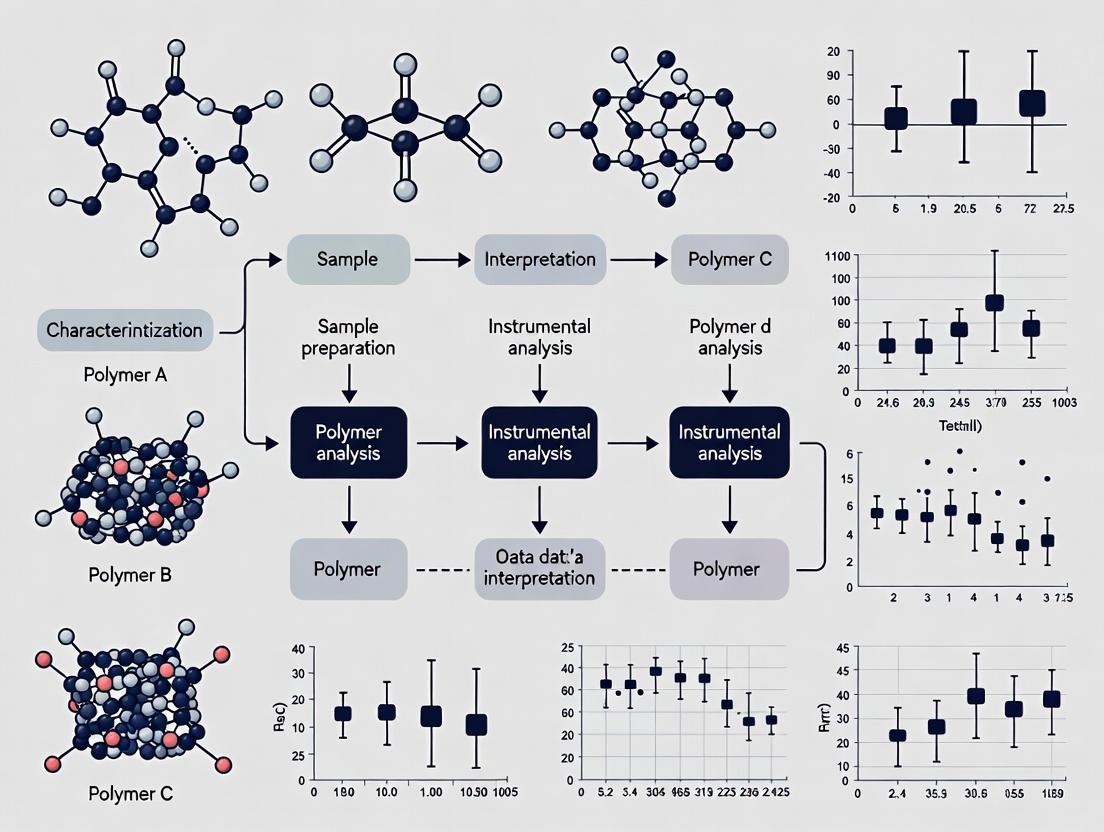
This article provides a comprehensive guide for researchers, scientists, and drug development professionals tackling the complexities of polymer characterization data analysis.
Beyond the Peak: Navigating Modern Challenges in Polymer Characterization Data Analysis for Drug Development
Abstract
This article provides a comprehensive guide for researchers, scientists, and drug development professionals tackling the complexities of polymer characterization data analysis. It explores foundational concepts like heterogeneity and MWD, details advanced methodological approaches including multi-detector SEC and novel rheological models, addresses common troubleshooting and optimization scenarios for data integrity, and validates techniques through comparative analysis against regulatory standards. The scope bridges fundamental theory with practical application, offering strategies to transform raw data into reliable, actionable insights for biomedical polymers, from excipients to complex drug delivery systems.
Understanding the Core Complexities: Foundational Challenges in Polymer Data
Technical Support Center: Troubleshooting Polymer Characterization
Frequently Asked Questions (FAQs)
Q1: My Size Exclusion Chromatography (SEC) data shows poor resolution between polymer peaks. What could be the cause and how can I fix it? A: Poor resolution in SEC is often due to column issues or inappropriate solvent conditions.
- Troubleshooting Steps:
- Check Column Health: Flush the column according to manufacturer protocols. If resolution remains poor, the column may be fouled or degraded and require replacement.
- Verify Mobile Phase: Ensure the mobile phase is precisely formulated (correct salt concentration, pH) to prevent polymer adsorption to the column matrix. Filter and degas all solvents.
- Calibrate System: Run a narrow dispersity standard. If its peak width is broader than specified, it confirms a system problem.
- Optimize Flow Rate: Excessive flow rate reduces resolution. Reduce flow rate within the column's specified range.
Q2: During analysis of copolymer composition by NMR, I observe broad and overlapping signals. How can I improve spectral clarity? A: Broad NMR signals in polymers arise from restricted chain motion and heterogeneity.
- Troubleshooting Steps:
- Increase Temperature: Run NMR at elevated temperature (e.g., 80°C) to increase polymer chain mobility and sharpen resonances, provided the solvent is suitable.
- Use High-Field Instrument: Access a higher magnetic field strength (e.g., 500 MHz or above) instrument to increase chemical shift dispersion.
- Optimize Solvent: Use a deuterated solvent that fully dissolves the polymer at the experimental temperature. Consider adding a co-solvent.
- Employ 2D NMR: Utilize techniques like HSQC or COSY to resolve overlapping signals through correlation in a second frequency dimension.
Q3: My batch of branched polymers shows inconsistent rheological properties despite similar molecular weights from SEC. What characterization am I missing? A: SEC provides hydrodynamic volume, not absolute architecture. Branched polymers have a smaller hydrodynamic volume than their linear counterparts of the same molar mass.
- Troubleshooting Steps:
- Employ Multi-Angle Light Scattering (MALS): Couple MALS to your SEC system to obtain absolute molecular weight (Mw) and root-mean-square radius (Rg). The ratio of Rg/Mw is sensitive to branching.
- Perform Intrinsic Viscosity Measurement: Use a viscometer detector in-line with SEC. The Mark-Houwink plot (log IV vs log M) will deviate from the linear polymer standard for branched architectures.
- Consider Asymmetric Flow Field-Flow Fractionation (AF4): This technique can provide better separation by architecture before MALS or viscometry detection.
Experimental Protocols
Protocol 1: Comprehensive SEC Analysis with Triple Detection Objective: To determine absolute molecular weight, molecular weight distribution (MWD), and architectural information for a heterogeneous polymer sample. Methodology:
- Sample Preparation: Dissolve polymer in the SEC eluent (e.g., THF with 2% TEA for polyesters, DMF with LiBr for polyamides) at a concentration of 2-4 mg/mL. Stir for 12 hours. Filter through a 0.2 µm PTFE syringe filter.
- System Setup: Assemble a chromatographic system with: Pump -> Autosampler -> Guard Column -> Analytical SEC Columns (series of 2-3 pore sizes) -> Triple Detector Array (Refractive Index + Multi-Angle Light Scattering + Online Viscometer).
- Calibration: Inject a narrow dispersity polymer standard (e.g., polystyrene) to determine inter-detector delays and normalize the light scattering detectors.
- Run Conditions: Flow rate: 1.0 mL/min. Injection volume: 100 µL. Column temperature: 35°C. Detector temperatures: As per manufacturer (typically 35-45°C).
- Data Analysis: Use specialized software (e.g., ASTRA, Empower) to calculate absolute Mw, Mn, PDI (Đ), intrinsic viscosity (IV), and generate Mark-Houwink and conformation plots.
Protocol 2: Determining Copolymer Composition by Quantitative ¹³C NMR Objective: To quantify the molar ratio of monomers in a copolymer and assess sequence distribution. Methodology:
- Sample Preparation: Dissolve 20-30 mg of polymer in 0.6 mL of deuterated solvent (e.g., CDCl₃, DMSO-d6). Use a co-solvent if necessary for complete dissolution.
- Instrument Parameters:
- Spectrometer Frequency: 400 MHz or higher for ¹H; 100 MHz or higher for ¹³C.
- ¹³C Experiment: Use inverse-gated decoupling to suppress Nuclear Overhauser Effect (NOE) for quantitative accuracy. Set pulse angle to 90°, acquisition time >1.0 s, relaxation delay (D1) ≥ 10 seconds (5 x the longest T1 relaxation time). Number of scans: 512-2000.
- Data Processing: Apply Fourier transformation with minimal line broadening (0.5-1 Hz). Manually integrate distinct peaks corresponding to unique carbon atoms in each monomer unit.
- Calculation: Calculate mole fraction (F) of monomer A: FA = (IA / nA) / [(IA / nA) + (IB / n_B)], where I is the integrated peak area and n is the number of equivalent carbons contributing to that peak.
Table 1: Comparative Performance of Polymer Characterization Techniques
| Technique | Primary Information | Key Limitation for Heterogeneity | Typical Precision (RSD) | Analysis Time |
|---|---|---|---|---|
| Size Exclusion Chromatography (SEC) | Relative MWD, Hydrodynamic Volume | Calibration dependency; Architecture bias | Mn/Mw: 2-5% | 30-60 min |
| SEC with MALS & Viscometry | Absolute Mw, PDI, IV, Branching Info | Requires dn/dc; Complex data analysis | Mw: 3-8% | 30-60 min |
| Asymmetric Flow FFF (AF4) | Size Distribution, Particle Mass | Method development intensive | Recovery: 5-10% | 45-90 min |
| Quantitative NMR | Composition, Sequence, End-group | Low sensitivity (¹³C); Requires solubility | Composition: 1-3% | 30 min - 24 hrs |
| MALDI-TOF MS | Absolute Mn, End-group, Architecture | Matrix/solvent selection critical; Mass limit | Mass: 0.1-1% | 10-30 min |
Table 2: Common Polymer Standards for Instrument Calibration
| Polymer Standard | Typical Mw Range (Da) | Đ (PDI) | Primary Application |
|---|---|---|---|
| Polystyrene (PS) | 500 - 5,000,000 | <1.10 | Universal SEC calibration in organic solvents (THF, CHCl₃) |
| Poly(methyl methacrylate) (PMMA) | 1,000 - 2,000,000 | <1.15 | SEC calibration for polymers in DMF, DMSO |
| Polyethylene glycol/oxide (PEG/PEO) | 200 - 2,000,000 | <1.05 | Aqueous SEC calibration, MALDI-TOF MS standard |
| Pullulan | 5,000 - 800,000 | <1.15 | Aqueous SEC calibration for polysaccharides, neutral polymers |
Visualizations
Diagram 1: Integrated Polymer Characterization Workflow
Diagram 2: SEC-MALS-Viscosity Data Interpretation Logic
The Scientist's Toolkit: Research Reagent Solutions
| Item | Function & Rationale |
|---|---|
| Narrow Dispersity Polymer Standards | Calibrate SEC systems. Provide a known reference for retention time vs. molecular weight, essential for converting elution volume to molecular weight data. |
| Deuterated NMR Solvents (CDCl₃, DMSO-d₆) | Provide a locking signal for the NMR magnet and allow for sample analysis without interfering proton signals from the solvent. |
| SEC Eluent Additives (e.g., LiBr, TEA) | Suppress unwanted interactions (ionic, adsorption) between the polymer and the SEC column stationary phase, ensuring separation is based solely on hydrodynamic volume. |
| MALDI Matrices (e.g., DCTB, DHB) | Absorb laser energy and facilitate soft ionization of polymer samples, preventing fragmentation and enabling accurate mass analysis of intact chains. |
| Absolute Molecular Weight Standards (e.g., NIST SRM 2881) | Certified reference materials with precisely known Mw and Đ, used to validate the accuracy of light scattering or mass spectrometry detectors. |
| PTFE Syringe Filters (0.2 µm) | Remove dust, microgels, and undissolved particulates from polymer solutions prior to injection into SEC or FFF systems, preventing column blockage and spurious signals. |
| dn/dc Value (Specific Refractive Index Increment) | A critical constant for light scattering calculations. Must be known precisely for the polymer/solvent pair at the experimental wavelength and temperature. |
Troubleshooting Guide & FAQs
Q1: During SEC-MALS analysis, my measured dispersity (Đ) is unexpectedly low (<1.05). What could cause this? A: An artificially low Đ often indicates insufficient column resolution or analyte interaction with the stationary phase.
- Check: Calibrate with narrow dispersity standards. Ensure your mobile phase is optimal to prevent adsorption (e.g., add 0.02M salt for polyelectrolytes).
- Protocol: Perform a series of injections with polystyrene standards (Đ ~1.03) matching your analyte's molecular weight range. If the observed Đ is wider than certified, column degradation is likely. If the standard's Đ appears artificially narrow, consider increasing mobile phase strength or changing column chemistry.
Q2: My Mw from SEC (using conventional calibration) differs significantly from Mw measured by Light Scattering (LS). Which one is correct? A: Light Scattering (e.g., MALS) provides the more absolute measurement. SEC calibration relies on polymer standards with similar structure to your analyte.
- Troubleshoot: This discrepancy indicates your polymer's hydrodynamic volume vs. molecular weight relationship differs from the calibration standard. Always use light scattering for branched, polyelectrolyte, or novel polymers. SEC calibration is only reliable for linear homologs of the calibration standard.
- Protocol: Use a dual-detector system (SEC-MALS). The refractive index (RI) detector provides concentration, and the MALS detector directly measures Mw at each elution volume, providing absolute values independent of elution time.
Q3: How can I quantify branching density from my molecular weight data? A: Branching density is determined by comparing the size (hydrodynamic radius, Rh) of a branched polymer to a linear polymer of the same molecular weight.
- Method: Use a triple-detector array (SEC-TDA: RI, Viscometer, MALS). The viscometer measures intrinsic viscosity [η].
- Calculation: Plot log[η] vs. log Mw. Branched polymers will have a lower [η] than their linear counterparts at the same Mw. The branching frequency is calculated using established models (e.g., Zimm-Stockmayer).
- Protocol:
- Analyze your branched polymer via SEC-TDA.
- Analyze a linear standard polymer of identical chemical composition.
- For each slice (or across the distribution), calculate the branching factor, g' = [η]branched/[η]linear at the same Mw.
- Apply the appropriate model to convert g' to average number of branches per molecule.
Q4: Why do my Mn and Mz values show high variability in replicate analyses, while Mw is stable? A: Mn is highly sensitive to low-molecular-weight impurities or losses, while Mz is highly sensitive to high-molecular-weight aggregates or microgels.
- Investigation:
- For Mn variability: Check sample filtration (potential loss of low-MW fraction). Inspect baseline integration limits at the low-MW end of the chromatogram.
- For Mz variability: Centrifuge or filter samples through a 0.45 µm filter before analysis to remove aggregates. Check for column contamination or system band broadening at the high-MW end.
Table 1: Molecular Weight Averages: Definitions and Sensitivity
| Parameter | Common Name | Mathematical Definition | Sensitivity & Information Provided |
|---|---|---|---|
| Mn | Number-Average MW | Σ(NiMi) / ΣNi | Sensitive to small molecules/oligomers. Related to colligative properties (osmotic pressure). |
| Mw | Weight-Average MW | Σ(NiMi2) / Σ(NiMi) | Sensitive to larger molecules. Dictates mechanical strength (melt viscosity, toughness). |
| Mz | Z-Average MW | Σ(NiMi3) / Σ(NiMi2) | Highly sensitive to aggregates & very high MW tail. Related to sedimentation behavior. |
| Đ (D) | Dispersity (PDI) | Mw / Mn | Measure of polymer homogeneity. A value of 1.0 indicates a perfectly monodisperse sample. |
Table 2: Common Characterization Techniques and Their Output
| Technique | Primary Output(s) | Key Strength | Limitation |
|---|---|---|---|
| SEC with RI | Mn, Mw, Đ (vs. calibration curve) | Low cost, high reproducibility. | Not absolute; requires standards of similar structure. |
| SEC-MALS | Absolute Mw, Mn, Đ, Rg (radius of gyration) | Absolute MW independent of elution time. | Higher cost, complex data analysis for very small polymers (< 5 kDa). |
| SEC-Viscometry | Intrinsic Viscosity [η], Molecular Density, Branching | Direct measure of hydrodynamic volume; branching info. | Indirect MW; often requires complementary detector (RI). |
| SEC-TDA | Absolute Mw, [η], Rg, Branching Information | Most comprehensive solution; combines all above. | Expensive, requires significant expertise. |
| MALDI-TOF MS | Mn, Mw, Đ, End-group analysis | Exceptional mass resolution for polymers < 50 kDa. | Bias against high MW; requires finding optimal matrix/conditions. |
Experimental Protocol: Determining Absolute MW and Branching via SEC-TDA
Objective: To obtain the absolute molecular weight distribution, intrinsic viscosity, and branching information of an unknown polymer sample.
Materials & Reagents:
- SEC-TDA System: Equipped with degasser, isocratic pump, autosampler, column oven, PI/UV/RI detectors, online viscometer, and multi-angle light scattering (MALS) detector.
- SEC Columns: Set of two or three porous polymer-based columns with appropriate pore size range.
- Mobile Phase: HPLC-grade solvent (e.g., THF, DMF with LiBr, or aqueous buffer), filtered through 0.1 µm membrane.
- Sample: Polymer solution, filtered through 0.45 µm (or smaller) syringe filter compatible with solvent.
- Standards: Toluene or other flow rate marker, narrow dispersity polystyrene (or appropriate polymer) for system verification.
Procedure:
- System Equilibration: Flush the system with mobile phase at the operational flow rate (typically 1.0 mL/min) until stable baselines are achieved for all detectors (≥ 30 minutes).
- Normalization & Calibration:
- Inject a pure, low-viscosity standard (e.g., toluene) to determine the inter-detector delay volumes.
- Inject a narrow dispersity polymer standard to normalize the MALS detector and calibrate the viscometer.
- Verify system performance by analyzing a standard of known Mw and intrinsic viscosity.
- Sample Preparation: Precisely dissolve the polymer sample at a known concentration (typically 2-4 mg/mL) in the mobile phase. Filter directly into an HPLC vial.
- Sample Injection: Inject an appropriate volume (typically 100 µL) and begin data acquisition.
- Data Analysis:
- Software (e.g., Astra, Empower) will slice the chromatogram and, for each slice, calculate Mw from MALS/RI, and [η] from viscometer/RI.
- The intrinsic viscosity plot (log [η] vs. log Mw) is automatically generated.
- Compare this plot to a known linear standard's "Mark-Houwink" plot. Deviations below the linear reference indicate branching.
Visualization: Polymer Characterization Workflows
Title: SEC-TDA Analysis Workflow for Absolute MW & Branching
Title: Polymer Data Quality Control & Troubleshooting Logic
The Scientist's Toolkit: Essential Research Reagents & Materials
Table 3: Key Reagents and Materials for Advanced Polymer Characterization
| Item | Function & Role in Experiment | Critical Notes |
|---|---|---|
| SEC Columns (e.g., PLgel, TSKgel) | Separate polymer molecules by hydrodynamic size in solution. | Pore size must match polymer MW range. Incompatible solvents cause column damage. |
| HPLC-Grade Solvents with Additives | Mobile phase for SEC. Must dissolve polymer and prevent adsorption to column. | Additives (e.g., 0.02M LiBr in DMF) suppress ionic interactions. Must be filtered and degassed. |
| Syringe Filters (PTFE, Nylon) | Remove dust and microgels from polymer solutions prior to injection. | Pore size (0.45 or 0.22 µm) must be chosen to avoid removing the high-MW fraction of interest. |
| Narrow Dispersity Polymer Standards | Calibrate/verify SEC system, normalize MALS detector, establish Mark-Houwink plots. | Must match your analyte's chemistry (e.g., polystyrene, PMMA) for calibration methods. |
| Refractive Index Increment (dn/dc) Standard | Used to determine the precise dn/dc value of your polymer in the mobile phase. | Essential for accurate absolute MW from MALS. Must be measured or obtained from literature. |
| Viscometer Standards | Calibrate the online viscometer pressure sensors. | Typically a solvent of known viscosity (e.g., toluene) and a polymer standard of known intrinsic viscosity. |
Technical Support Center
Troubleshooting Guides & FAQs
FAQ Category 1: Data Acquisition & File Management
Q: Our GPC/SEC-MALS instrument generates a raw data folder with over 100 files per sample. How do we ensure we don't lose critical metadata?
- A: Implement a strict naming convention and a centralized lab notebook (electronic preferred). The protocol must include: 1) Sample ID (e.g., PolymerBatch001), 2) Date, 3) Instrument ID, 4) Method file name, 5) Analyst initials. Use a manifest file (e.g., a
.csvtable) linking the sample ID to all raw file paths. Critical metadata (solvent, temperature, flow rate) should be recorded both in the instrument software and in the manifest.
- A: Implement a strict naming convention and a centralized lab notebook (electronic preferred). The protocol must include: 1) Sample ID (e.g., PolymerBatch001), 2) Date, 3) Instrument ID, 4) Method file name, 5) Analyst initials. Use a manifest file (e.g., a
Q: When exporting 2D-LC (LCxLC) data for a copolymer analysis, the file size is too large for our standard analysis software. What are the options?
- A: This is a common bottleneck. Follow this workflow: 1) Check Export Settings: Use binary export formats (e.g., .cdf) instead of ASCII (.csv) for primary data. 2) Data Reduction: Apply intelligent noise filtering and peak detection during export if the software allows, creating a reduced feature table. 3) Hierarchical Storage: Keep raw data on a high-performance server and work with the reduced feature tables for initial analysis. 4) Software Upgrade: Consider specialized software designed for large 2D datasets.
FAQ Category 2: Data Processing & Integration
Q: How do we reliably align and compare multiple High-Throughput Experimentation (HTE) datasets from parallel polymer synthesis screenings?
- A: Use a standardized data processing pipeline.
- Protocol: i) Pre-processing: Apply consistent baselining and normalization (e.g., to an internal standard) across all datasets. ii) Feature Detection: Use the same algorithm and parameters (e.g., peak picking sensitivity) for all files. iii) Data Binning: For spectral data (e.g., from FTIR), use aligned wavelength/rameshift bins. iv) Master Table Creation: Merge all feature tables using a unique sample key, resulting in a matrix where rows are samples and columns are features (e.g., yield, molecular weight, absorbance at a specific wavelength).
- A: Use a standardized data processing pipeline.
Q: Integrating rheometry data with DSC results for structure-property relationships leads to mismatched time/temperature axes. How to synchronize?
- A: Create a master experimental timeline.
- Protocol: 1) Design the experiment with common anchor points (e.g., a temperature hold step present in both DSC and rheology methods). 2) Export both data streams with timestamps relative to the experiment start. 3) Use a script (e.g., in Python or R) to interpolate both datasets onto a common, high-resolution time or temperature axis using the anchor points for alignment. This creates a synchronized multi-modal dataset for correlation analysis.
- A: Create a master experimental timeline.
FAQ Category 3: Analysis & Visualization
- Q: Our PCA model from a set of polymer film characterizations becomes uninterpretable when we add a new batch of data. What went wrong?
- A: This indicates a break in the data pre-processing chain or a significant new variance source. Troubleshoot: 1) Re-process All Data: Apply the exact same scaling (mean-centering, unit variance) to the combined old and new dataset. Never scale datasets separately. 2) Check for Outliers: Use Hotelling's T² and Q-residuals plots to identify if the new batch are outliers. 3) Model Update: If the new data is valid, you may need to create a new, updated PCA model and note the version. 4) Root Cause: Investigate if a reagent, instrument calibration, or protocol deviated for the new batch.
Quantitative Data Summary: Common Polymer Characterization Datasets
Table 1: Scale and Complexity of Multi-Dimensional Polymer Data
| Technique | Typical Dimensions per Sample | Approx. File Size (Raw) | Key Data Management Challenge |
|---|---|---|---|
| Size-Exclusion Chromatography (SEC) | 1D: Retention Time vs. Signal | 1-5 MB | Managing calibration curves and aligning results from multiple detectors (RI, UV, MALS). |
| 2D Liquid Chromatography (LCxLC) | 2D: Ret. Time 1 x Ret. Time 2 x Signal | 100-500 MB | Storage, processing speed, and visualizing 3D data surfaces (contour plots). |
| High-Throughput Screening (HTS) | 96-well plate: 96 x Features (e.g., MW, Tg) | 10-50 MB (per plate) | Tracking sample location, automating data extraction from plates, and handling missing wells. |
| Rheology (Frequency Sweep) | 1D: Frequency x (G', G'', δ, η*) | 0.1-1 MB | Integrating time-temperature superposition (TTS) data into master curves and model fitting. |
| Mass Spectrometry Imaging (MSI) | 3D: X-pixels x Y-pixels x m/z Values | 1-10 GB+ | Handling extremely large files, efficient storage, and extracting spatially-resolved chemical maps. |
Experimental Protocol: Integrating SEC-MALS and FTIR for Copolymer Analysis
Objective: To determine the molecular weight distribution and chemical composition distribution of a block copolymer simultaneously.
Materials & Reagents:
- SEC System: Equipped with degasser, pump, autosampler.
- Detectors: Refractive Index (RI), Multi-Angle Light Scattering (MALS), UV/Vis, and an FTIR spectrometer with a flow cell.
- Columns: Appropriate pore-size SEC columns for the polymer's molecular weight range.
- Solvent: HPLC-grade THF (or appropriate solvent), stabilized.
- Standards: Narrow dispersity polystyrene (or polymer-specific) standards for calibration, toluene for flow rate marker.
Method:
- System Preparation: Equilibrate the SEC system with pure, degassed solvent at a constant flow rate (e.g., 1.0 mL/min) until a stable baseline is achieved on all detectors.
- Detector Alignment: Inject a low molecular weight, UV- and IR-active marker (e.g., toluene). Record the elution volume in each detector. Calculate and apply the volume offset between the RI (considered primary) and the MALS/UV/FTIR detectors to align all data streams to a common elution volume axis.
- Calibration: Inject a series of narrow standards. Create a calibration curve for the RI detector and normalize the MALS detector responses according to the manufacturer's protocol.
- Sample Analysis: Dissolve the copolymer sample at a known concentration (typically 2-4 mg/mL). Filter through a 0.45 μm PTFE syringe filter. Inject an appropriate volume (e.g., 100 μL).
- Data Collection: Collect continuous data from all detectors throughout the elution.
- Data Integration: Use specialized software (e.g., Astra, GPCSEC) to slice the elution profile into thin segments. For each slice, the MALS data provides absolute molecular weight, while the FTIR absorbance at specific wavelengths (e.g., ~1730 cm⁻¹ for ester C=O, ~2900 cm⁻¹ for aliphatic C-H) provides chemical composition. Correlate MW and composition for each slice to construct a 2D distribution plot.
The Scientist's Toolkit: Research Reagent Solutions
Table 2: Essential Materials for Advanced Polymer Characterization
| Item | Function/Application |
|---|---|
| Narrow Dispersity Polymer Standards | Calibrate or validate SEC/MALS systems for specific polymer chemistries (e.g., polystyrene, PMMA). |
| Stabilized HPLC-Grade Solvents (e.g., THF with BHT) | Ensure reproducible SEC retention times and prevent column degradation due to peroxide formation. |
| Syringe Filters (PTFE, 0.2 or 0.45 μm) | Remove dust and microgels from polymer solutions prior to injection, protecting columns and detectors. |
| Column Cleaning & Regeneration Kits | Restore SEC column performance after analyzing sticky or aggregating samples. |
| Reference Materials for FTIR/DSC (e.g., Polystyrene Film) | Verify wavelength accuracy (FTIR) and temperature calibration (DSC) for cross-instrument data comparability. |
Visualizations
Multi-Detector SEC Analysis Workflow
Data Fusion & Modeling Pipeline
Troubleshooting Guide & FAQ
FAQ 1: Why do I observe significant baseline drift and poor reproducibility in my Differential Scanning Calorimetry (DSC) measurements of polymer melting temperature (Tm)?
Answer: Baseline drift often stems from improper instrument calibration or contaminated sample pans. Ensure you have performed a recent multi-point temperature and enthalpy calibration using certified standards (e.g., Indium, Tin, Zinc). Poor reproducibility between runs can be caused by inconsistent sample mass, poor thermal contact within the pan, or residual solvent. Always use matched, hermetically sealed pans and follow a standardized sample preparation protocol.
FAQ 2: How can I resolve inconsistent molecular weight distributions from Gel Permeation Chromatography (GPC/SEC) for the same polymer batch?
Answer: Inconsistencies typically arise from three areas: column degradation, improper calibration, or variable solvent delivery. First, check system performance with a narrow dispersity polystyrene standard. If retention time shifts, columns may be fouled. Second, ensure you are using the correct calibration curve (broad vs. narrow standard, appropriate polymer type). Third, verify pump flow rate stability and degas solvents daily to prevent air bubbles.
FAQ 3: My Dynamic Light Scattering (DLS) data shows multiple size populations for what should be a monodisperse polymer nanoparticle sample. How should I troubleshoot?
Answer: Multiple peaks can indicate aggregation, contamination, or poor measurement settings.
- Sample Preparation: Always filter your solvent (0.1 µm) and samples (appropriate syringe filter) to remove dust.
- Concentration: Verify your sample concentration is within the instrument's optimal range. Too high a concentration can cause multiple scattering.
- Measurement Angle: For larger particles (>100 nm), check measurements at multiple angles to distinguish true size distribution from artifacts.
- Use a Standard: Validate instrument performance using a known latex size standard (e.g., 100 nm NIST-traceable nanosphere).
Experimental Protocol: Protocol for Calibrating a GPC/SEC System for Absolute Molecular Weight Determination
Objective: To establish a calibration method for determining absolute molecular weight (Mw, Mn) and dispersity (Đ) of polymer samples using Multi-Angle Light Scattering (MALS) detection.
Materials:
- GPC/SEC system with isocratic pump, autosampler, columns, MALS detector, and refractive index (RI) detector.
- HPLC-grade solvent (e.g., THF, DMF with LiBr, aqueous buffer).
- Standard: Monodisperse polystyrene (PS) or polyethylene oxide (PEO) for column calibration (optional for conventional GPC) and Bovine Serum Albumin (BSA) or toluene for MALS detector normalization.
- Sample: Filtered polymer solution.
Methodology:
- System Equilibration: Flush the system with fresh, filtered, and degassed solvent at the operational flow rate (typically 1 mL/min) for at least 24 hours until the baseline is stable.
- MALS Detector Normalization: Inject a monodisperse protein (BSA) or a pure solvent (toluene) scatterer. Follow the manufacturer's software procedure to normalize the response across all scattering angles. This corrects for variations in detector sensitivity.
- Inter-Detector Delay Volume Calibration: Inject a narrow molecular weight standard (e.g., toluene in THF) that is detectable by both RI and MALS. The software will calculate the volume offset between the two detectors to align chromatograms precisely.
- Column Calibration (Conventional): For systems without MALS, inject a series of narrow dispersity PS standards covering the expected molecular weight range. Plot log(Mw) vs. retention time to create a conventional calibration curve.
- Sample Analysis: Inject your filtered polymer sample. The MALS detector measures the absolute molecular weight at each elution slice, independent of retention time, while the RI detector provides concentration.
- Data Analysis: Software (e.g., Astra, Empower) integrates signals to compute absolute Mw, Mn, and Đ across the entire peak.
Data Presentation Table: Common Calibration Standards for Polymer Characterization
| Technique | Standard Material | Certified Value(s) | Primary Function |
|---|---|---|---|
| DSC/TGA | Indium (In) | Tm = 156.6°C, ΔHf = 28.5 J/g | Temperature & Enthalpy Calibration |
| GPC/SEC | Narrow Dispersity Polystyrene | Mw, Mn (e.g., 10 kDa, 100 kDa) | Retention Time to Molecular Weight Conversion |
| DLS | Latex Nanospheres | Diameter (e.g., 60 nm ± 3 nm) | Size Verification & Instrument Performance |
| MALS (GPC) | Bovine Serum Albumin (BSA) | Known Rg (Radius of Gyration) | Detector Normalization Across Angles |
| Rheometry | Silicon Oil (NIST SRM) | Viscosity (e.g., 10 Pa·s at 25°C) | Shear Viscosity Calibration |
The Scientist's Toolkit: Key Research Reagent Solutions
| Item | Function in Polymer Characterization |
|---|---|
| Certified Reference Materials (CRMs) | Provide traceable, accurate values for instrument calibration (e.g., melting point, molecular weight, particle size). Essential for data reliability and cross-lab comparison. |
| HPLC-Grade Solvents with Stabilizers | High-purity solvents prevent column degradation in GPC and ensure stable baselines in UV/RI detection. Stabilizers (e.g., BHT in THF) prevent peroxidation. |
| Anion/Cation Exchange Resins | Used to purify solvents for techniques like GPC-MALS or NMR by removing ionic contaminants that can interfere with signals or cause aggregation. |
| Syringe Filters (PTFE, Nylon) | Critical for removing particulate matter and dust from polymer solutions prior to injection in chromatography (GPC) or analysis in DLS. Choice of membrane is solvent-dependent. |
| Hermetically Sealed DSC Pans & Lids | Ensure consistent thermal contact and prevent sample degradation or solvent loss during heating/cooling cycles, crucial for reproducible thermal analysis. |
Visualization: From Signal to Metric Workflow
Title: Data Analysis Pipeline for Reliable Metrics
Visualization: GPC-MALS Troubleshooting Decision Tree
Title: GPC System Troubleshooting Guide
Troubleshooting Guides & FAQs
Q1: What are the most common causes of high variability in Polymer Molecular Weight (MW) data from GPC/SEC, and how can I address them?
A: Common causes include inconsistent sample preparation (dissolution time/temperature), column degradation, poor mobile phase degassing, and incorrect baseline/integration settings. Ensure consistent protocol: dissolve polymer in the same solvent for 24 hours at room temperature with gentle agitation. Regularly calibrate columns with fresh narrow MW standards. Degas mobile phase via sonication under vacuum for 30 minutes. Set integration baselines manually to account for low MW tailing.
Q2: My DSC thermogram for a polymer excipient shows an inconsistent glass transition temperature (Tg). What steps should I take?
A: Inconsistent Tg often stems from sample history (processing, annealing) or instrumental factors. Follow this protocol:
- Sample Preparation: Use a consistent sample mass (5-10 mg) in hermetically sealed pans. Ensure identical thermal history by pre-annealing all samples at 10°C above Tg for 5 minutes, then quench-cool.
- Instrument Calibration: Calibrate with Indium and Zinc standards weekly.
- Run Parameters: Use a consistent heating rate (10°C/min is standard for screening) under a nitrogen purge (50 mL/min). Run in triplicate. Troubleshooting Table:
| Issue | Possible Cause | Corrective Action |
|---|---|---|
| Tg value drifts | Sample moisture | Dry sample in vacuum oven (40°C, 24 hrs) before analysis. |
| Broad Tg step | Sample heterogeneity or slow relaxation | Use modulated DSC (MDSC) to separate reversing/non-reversing heat flow. |
| No Tg detected | Sample too crystalline or over-plasticized | Increase sample mass or use a higher sensitivity heat flow setting. |
Q3: How do I define a DQO for 'Completeness' in a polymer batch impurity profile dataset for a regulatory filing?
A: For a polymer impurity profile (e.g., from HPLC), 'Completeness' must be quantitatively defined. Example DQO: "The dataset is complete when chromatographic data for all batches (N=XX) includes: 1) Raw detector output file (.ch), 2) Processed integration report (.pdf) with peak IDs, 3) A summary table (.xlsx) listing all peaks ≥ reporting threshold (0.05% area). Missing any component for any batch constitutes a completeness failure, triggering re-extraction or documented justification."
Q4: What are key DQOs for NMR spectroscopy data confirming copolymer composition?
A: Key DQOs include:
- Precision: Triplicate measurements of integral ratios for characteristic monomer peaks must have a relative standard deviation (RSD) ≤ 2.0%.
- Accuracy: Measured composition from a certified reference material (CRM) must be within ±1.5% of the certified value.
- Sensitivity (Limit of Quantification): Signal-to-Noise Ratio (SNR) for the smallest relevant monomer peak must be ≥ 150:1.
Experimental Protocol: Determining Residual Solvent in Polymer by GC Headspace
Objective: Quantify residual toluene in a biodegradable polymer film to meet ICH Q3C guidelines.
Materials & Reagents (The Scientist's Toolkit):
| Item | Function |
|---|---|
| Headspace Gas Chromatograph (HS-GC) | Separates and detects volatile compounds. |
| DB-624 or similar capillary column | Stationary phase optimized for volatiles separation. |
| N,N-Dimethylformamide (DMF) | High-boiling solvent to dissolve polymer and standard. |
| Toluene Certified Reference Standard | For creating calibration curve. |
| Hermetic Headspace Vials (20 mL) | Contain sample for vapor equilibration. |
| PTFE/Silicone Septa & Crimp Caps | Ensure sealed, inert environment. |
Protocol:
- Sample Prep: Precisely weigh 100 mg of polymer film into a headspace vial. Add 5.0 mL of DMF via pipette. Seal immediately.
- Calibration Standards: Prepare toluene in DMF at 5, 10, 25, 50, and 100 µg/mL. Transfer 5 mL to vials and seal.
- HS Conditions: Oven Temp: 100°C; Needle Temp: 110°C; Transfer Line Temp: 115°C; Vial Equilibration: 45 min; Pressurization Time: 1 min.
- GC Conditions: Injector: 150°C (Split Mode 10:1); Carrier Gas: Helium, 2.0 mL/min constant flow; Oven Program: 40°C hold 5 min, ramp 20°C/min to 200°C, hold 2 min; Detector: FID at 250°C.
- Analysis: Run blanks, standards, then samples. Plot calibration curve (Area vs. Conc.). Calculate residual toluene in µg/mg of polymer.
| DQO Parameter | Definition | Typical Target for Polymer Characterization | Measurement Method Example |
|---|---|---|---|
| Completeness | Percentage of required data obtained and reported. | 100% | Audit of batch records vs. analytical reports. |
| Precision | Closeness of agreement between independent measurements. | RSD ≤ 2-5% (depends on parameter) | Triplicate GPC Mn measurements of same sample prep. |
| Accuracy | Closeness of agreement to an accepted reference value. | Within ±1.5% of CRM value | NMR composition vs. certified copolymer standard. |
| Comparability | Ability to demonstrate equivalence after a process change. | Statistical equivalence (p > 0.05) | T-test comparing Tg data pre- and post-manufacturing change. |
| Sensitivity (LOQ) | Lowest amount that can be quantitatively measured. | SNR ≥ 10:1 | GC-MS signal for a specified impurity peak. |
Visualizations
Title: DQO Implementation & Feedback Workflow
Title: Polymer Data Flow from Acquisition to Regulatory Report
Advanced Techniques in Action: Methodologies for Robust Polymer Analysis
Technical Support Center
Troubleshooting Guides
Issue: High Baseline Noise in RI or UV Signal
- Check: Ensure the system is thermally equilibrated (typically 1-2 hours). Verify solvent is degassed thoroughly. Inspect reference flow cell for bubbles.
- Solution: Increase system equilibration time. Use an in-line degasser. Apply gentle back-pressure to the detector outlet. Flush the reference cell with degassed solvent.
Issue: Negative Peaks or Unexpected Signals in Light Scattering
- Check: Confirm the specific refractive index increment (dn/dc) value is correct for the polymer/solvent combination at the experimental temperature and wavelength. Verify detector alignment and cleanliness of flow cells.
- Solution: Measure or source a precise dn/dc value. Realign the detector according to the manufacturer's protocol. Clean flow cells with appropriate, filtered solvents.
Issue: Poor Inter-Detector Volume Calibration Leading to Broad/Shifted Peaks
- Check: Verify the integrity of the narrow dispersity standard used for calibration (e.g., polystyrene, pullulan). Confirm the standard is fully dissolved and filtered.
- Solution: Inject a fresh, properly prepared standard. Re-run the inter-detector calibration protocol, ensuring adequate signal-to-noise in all detectors.
Issue: Inconsistent Intrinsic Viscosity ([η]) Values
- Check: Confirm the viscometer's pressure transducers are balanced and calibrated. Check for partial clogging in the capillary bridges.
- Solution: Perform a viscometer bridge balance and calibration as per the manual. Flush the system with a high-quality, filtered solvent. Ensure sample concentration is within the ideal range for the viscometer.
Issue: Low Recovery or Abnormal Elution Volume
- Check: Look for non-size exclusion effects (adsorption, partitioning) on the column. Verify column pore size is appropriate for the analyte's molar mass range.
- Solution: Modify the mobile phase (e.g., adjust ionic strength, add modifier like 0.1% TFA). Switch to a more compatible column chemistry (e.g., from hydroxylated to glycidyl methacrylate for cationic polymers).
Frequently Asked Questions (FAQs)
Q: How do I determine the correct dn/dc value for my polymer? A: The dn/dc is a critical constant. Use a dedicated differential refractometer to measure it offline in the same solvent and at the same wavelength/temperature as your SEC experiment. Alternatively, consult reliable literature or polymer databases. An inaccurate dn/dc is the most common source of absolute molar mass error.
Q: What is the benefit of a viscometer detector in addition to light scattering? A: While light scattering provides absolute molar mass (Mw), the viscometer provides intrinsic viscosity. Together, they allow for the construction of a Mark-Houwink plot (log [η] vs. log M), which reveals structural information such as branching density, chain conformation, and stiffness that light scattering alone cannot.
Q: My sample seems to interact with the column. What can I do? A: Consider altering the mobile phase chemistry. Adding salts (e.g., LiBr, NaNO3) can shield electrostatic interactions. Using a different column chemistry (e.g., more deactivated surfaces) can reduce hydrophobic or ionic adsorption. Running the analysis at an elevated temperature can also help for some polymers.
Q: How often should I calibrate inter-detector delays and volume offsets? A: This should be performed whenever you change the flow path (tubing, columns, detectors) or at least once per week during continuous use. It is essential for accurate co-elution assumption and precise data from combined detector responses.
Q: Can I characterize conjugated polymers or polymer-drug complexes with this setup? A: Yes. Using a combination of RI, UV, and light scattering detectors allows for selective detection of specific chromophores. You can determine the molar mass of the core polymer (via RI) and the loading or conjugation ratio of the drug/ chromophore (via UV) simultaneously.
Data & Protocols
| Parameter | Typical Range/Value | Key Influence |
|---|---|---|
| Molar Mass (Mw, Mn) | 1 kDa - 10,000 kDa | Polymer size, functionality. |
| Polydispersity (Đ) | 1.01 (narrow) to >50 (broad) | Synthesis control, batch consistency. |
| Intrinsic Viscosity ([η]) | 0.1 - 20 dL/g | Polymer density, branching, stiffness. |
| Radius of Gyration (Rg) | 10 - 500 nm | Molecular size in solution, conformation. |
| dn/dc Value | 0.05 - 0.20 mL/g | Critical for LS & RI concentration accuracy. |
| SEC Flow Rate | 0.5 - 1.0 mL/min | Resolution, analysis time, detector response. |
| Injection Concentration | 1 - 5 mg/mL | Signal-to-noise, detector saturation. |
| Inter-detector Delay | 0.01 - 0.10 mL | Must be precisely calibrated for data alignment. |
Experimental Protocol: Absolute Characterization of a Linear Polymer
Objective: Determine absolute molar mass (Mw, Mn), intrinsic viscosity ([η]), and conformation for a linear polystyrene sample.
Materials: See "The Scientist's Toolkit" below.
Method:
- System Preparation: Equilibrate the SEC system (THF, 1 mL/min, 35°C) for at least 90 minutes until baselines for RI, LS (18° and 90°), and viscometer are stable.
- Inter-Detector Calibration: Inject 100 µL of a narrow dispersity polystyrene standard (e.g., Mp ~ 50,000 g/mol, 2 mg/mL). Use the system software to calculate and apply the volumetric offset between each detector pair (RI-LS, RI-Viscometer).
- dn/dc Input: Enter the known dn/dc value for polystyrene in THF at the instrument's laser wavelength (0.185 mL/g at 35°C for λ=658 nm).
- Broad Standard Calibration (Optional): Inject a series of narrow standards to create a conventional calibration curve for comparison.
- Sample Analysis: Dissolve the unknown polystyrene sample in THF at 2 mg/mL. Filter through a 0.22 µm PTFE syringe filter. Inject 100 µL and run for 30 minutes.
- Data Analysis: Software (e.g., Astra, Empower) uses combined signals to calculate absolute molar mass at each elution slice (via LS), intrinsic viscosity (via viscometer pressure drop), and hydrodynamic radius (via combination of M and [η]).
Visualizations
The Scientist's Toolkit: Key Research Reagent Solutions
| Item | Function in Multi-Detector SEC/GPC |
|---|---|
| Narrow Dispersity Polymer Standards | Calibrate inter-detector delays, verify system performance, and create conventional calibration curves. Essential for accuracy. |
| High-Purity, HPLC-Grade Solvents | Minimize baseline noise and prevent column/detector contamination. Must be filtered and degassed. |
| Precise dn/dc Value | The refractive index increment constant. Must be known accurately for the polymer/solvent pair to convert RI signal to concentration and calculate molar mass from LS. |
| 0.22 µm In-Line or Syringe Filters | Remove particulate matter that can clog columns, damage detectors, or cause light scattering spikes. |
| Syringe Vials with Polymer-Free Septa | Prevent extraction of contaminants that can produce ghost peaks or elevate baselines. |
| In-Line Degasser | Removes dissolved gases to prevent bubbles in flow cells, which cause severe noise spikes in RI and light scattering signals. |
| Appropriate SEC Columns | Matched to the molar mass range and chemistry of the analyte. Different surfaces (e.g., silica, organic polymer) are needed for different polymer types. |
| Mobile Phase Additives (e.g., Salts, TFA) | Modify solvent chemistry to suppress unwanted interactions between the analyte and the stationary phase of the SEC column. |
Technical Support Center
Frequently Asked Questions (FAQs)
NMR Spectroscopy
- Q: My ¹H NMR spectrum of a copolymer shows broad, overlapping peaks. How can I improve resolution?
- A: Broad peaks often indicate restricted chain mobility or sample heterogeneity. Ensure the polymer is fully dissolved in a deuterated solvent at elevated temperature (e.g., 80°C in d-chloroform) to enhance chain mobility. Use a high-field instrument (≥400 MHz) if available. For complex copolymers, consider 2D NMR techniques like HSQC or DOSY to separate signals.
- Q: Why is the integral value for my end-group signal lower than theoretically calculated?
- A: This is common due to instrumental limitations and signal-to-noise for low-concentration species. Ensure sufficient scans (256+) for good signal averaging. Confirm the purity of your initiator or chain-transfer agent reagent. Consider using a higher concentration sample or a more sensitive cryoprobe.
FTIR Spectroscopy
- Q: My FTIR baseline shows a significant upward drift, obscuring weak absorbance bands.
- A: This is typically caused by scattering from particulate matter or inhomogeneous film thickness. Re-precipitate your polymer to remove additives and cast a thinner, more uniform film on the ATR crystal or KBr plate. Always collect and subtract a fresh background spectrum under identical conditions.
- Q: How do I distinguish between similar carbonyl stretches (e.g., ester vs. acid) in a polymer blend?
- A: Use spectral deconvolution and second-derivative analysis to separate overlapping bands. Complement FTIR with NMR data. For definitive identification, create a calibration curve using model compounds and analyze the specific shift: ester C=O ~1735-1750 cm⁻¹, carboxylic acid C=O ~1700-1725 cm⁻¹ (often broad).
Mass Spectrometry
- Q: I cannot get a MALDI-TOF signal for my synthetic polymer; the sample seems to "burn" but no ions are detected.
- A: This indicates poor ionization efficiency or inappropriate matrix/cationization agent selection. Refer to the table below for systematic troubleshooting. The most common fix is to test a different matrix (e.g., switch from DCTB to DHB) and ensure a 1000:1:1 molar ratio of matrix: salt: polymer.
- Q: My ESI-MS spectrum shows multiple charge states and adducts, making the data uninterpretable.
- A: This is expected for polydisperse samples. Use a desalting cartridge or offline dialysis to remove excess salts. In the instrument method, employ softer desolvation conditions (lower cone voltage) and use charge deconvolution software to transform the m/z spectrum into a true mass spectrum.
Troubleshooting Guides
Table 1: MALDI-TOF MS Polymer Analysis: Common Issues & Solutions
| Issue | Potential Cause | Recommended Solution |
|---|---|---|
| No Signal / Low Intensity | Wrong matrix-polymer combination | Test DCTB, DHB, HABA matrices systematically. |
| Insufficient cationization | Optimize alkali salt (NaTFA, KTFA, AgTFA) concentration. | |
| Poor sample-matrix crystallization | Use the dried droplet method with slow, uniform crystallization. | |
| Broad/Incorrect Mass Peaks | Polydispersity (PDI >1.1) | MALDI-TOF is not quantitative for broad distributions; use GPC first. |
| In-source fragmentation | Lower laser power and delay time; use linear mode over reflector. | |
| Multiple Adduct Series | Excess salt | Purify sample via precipitation or size-exclusion chromatography. |
Table 2: Quantitative ¹³C NMR Analysis of Copolymer Composition
| Challenge | Impact on Data | Mitigation Protocol |
|---|---|---|
| Long Relaxation Times (T1) | Under-quantification | Use inverse-gated decoupling with a long pulse delay (≥5*T1). |
| Nuclear Overhauser Effect (NOE) | Signal enhancement varies | Acquire with NOE suppressed (inverse-gated decoupling). |
| Low Signal-to-Noise | Poor precision for minor monomers | Extended acquisition time (overnight runs), use a cryoprobe. |
Experimental Protocols
Protocol 1: ATR-FTIR Analysis of a Polymer Thin Film
- Sample Preparation: Clean the ATR diamond crystal with isopropanol and lint-free tissue. Collect a background spectrum.
- Film Deposition: Dissolve 5-10 mg of polymer in 1 mL of a volatile solvent (e.g., THF, chloroform). Pipette 10-20 µL onto the crystal and allow to dry completely, forming a thin film.
- Data Acquisition: Place the sample, ensure good contact. Acquire spectrum from 4000-600 cm⁻¹ at 4 cm⁻¹ resolution, co-adding 64 scans.
- Analysis: Subtract background. Apply baseline correction and ATR correction (if instrument software provides). Identify key functional group absorbances.
Protocol 2: SEC-MALS (Size-Exclusion Chromatography with Multi-Angle Light Scattering) for Absolute Mw
- System Setup: Use THF or DMF (with 0.1% LiBr) as eluent at 1.0 mL/min. Equip SEC with UV/RI detector followed by a MALS detector (e.g., 18 angles).
- Calibration: Normalize MALS detectors using a toluene standard or a nearly monodisperse polymer (e.g., PS 30kDa) of known dn/dc.
- Sample Run: Inject 100 µL of polymer solution (2-3 mg/mL, filtered through 0.2 µm PTFE filter). The RI detector provides concentration, MALS provides scattered light intensity.
- Data Analysis: Use software (e.g., ASTRA) to calculate absolute molecular weight (Mw) and radius of gyration (Rg) at each elution slice via the Zimm equation, independent of column calibration.
Visualizations
Polymer Characterization Data Integration Workflow
MALDI-TOF Signal Troubleshooting Logic
The Scientist's Toolkit: Key Research Reagent Solutions
| Reagent/Material | Function in Polymer Analysis |
|---|---|
| Deuterated Chloroform (CDCl₃) | Standard NMR solvent for many synthetic polymers, provides lock signal and minimizes ¹H interference. |
| Silver Trifluoroacetate (AgTFA) | Cationization agent in MALDI-MS for non-polar polymers (e.g., polyolefins, PS) that do not readily bind alkali ions. |
| Trans-2-[3-(4-tert-Butylphenyl)-2-methyl-2-propenylidene]malononitrile (DCTB) | A "universal" MALDI matrix with strong UV absorption and good compatibility with many polymer classes. |
| Attenuated Total Reflectance (ATR) Crystal (Diamond) | Enables direct, minimal sample preparation FTIR analysis of solid polymers via surface measurement. |
| Tetrahydrofuran (THF), HPLC Grade | Common solvent for SEC/GPC analysis of many organic-soluble polymers; must be stabilizer-free. |
| Polystyrene (PS) Standards, Narrow Dispersity | Essential for calibrating SEC/GPC systems to obtain relative molecular weight distributions. |
| Chromatography Columns (e.g., Styragel, PLgel) | Size-exclusion columns with specific pore sizes for separating polymer chains by hydrodynamic volume. |
Technical Support Center: Troubleshooting Guides and FAQs
FAQ 1: Why is my measured zero-shear viscosity (η₀) orders of magnitude off from literature values for a known polymer?
- Answer: This is a common challenge in polymer characterization data analysis. The most likely cause is insufficiently low shear rates during the flow curve measurement, failing to reach the true Newtonian plateau. Ensure you use a sensitive enough transducer and perform a stress sweep to define the linear viscoelastic region (LVR) first. Then, conduct a steady-rate sweep starting from very low rates (e.g., 0.001 1/s). Instrument inertia and edge fracture at low stresses can also distort data. Use a smaller gap and serrated parallel plates to mitigate wall slip.
FAQ 2: My frequency sweep shows overlapping G' and G'' curves with no crossover. How do I interpret the microstructure?
- Answer: This indicates a material with very weak or no elastic network, typical of dilute polymer solutions or entangled polymers at temperatures far above their glass transition. Within the thesis context, this challenges the assumption of a well-defined relaxation time spectrum. First, verify you are within the LVR. If confirmed, calculate the complex modulus and phase angle (δ). A δ consistently near 90° signifies purely viscous liquid behavior, suggesting the system lacks a percolated structure, which is critical data for drug gel formulations.
FAQ 3: During a creep-recovery test, my sample does not fully recover. What does this mean for structural integrity?
- Answer: Incomplete recovery (non-zero compliance, Jₑ) indicates irreversible deformation, meaning the applied stress has caused permanent flow and structural breakdown. For a gel or soft solid in drug delivery, this signifies yield. Quantify the recoverable compliance (Jᵣ) versus permanent compliance (Jₑ). A high Jₑ/Jᵣ ratio suggests a weak, potentially poorly crosslinked network. This is a key analysis challenge when predicting in-vivo performance.
FAQ 4: I observe a "rinse-out" effect or data drift during oscillatory time sweeps. How can I stabilize the measurement?
- Answer: This often points to sample dehydration, evaporation, or solvent loss at the edge. Use a solvent trap or a thin layer of low-viscosity, immiscible oil (e.g., silicone oil) around the sample periphery. For temperature-controlled experiments, ensure the chamber is purged with a humidified or saturated gas. This practical issue directly impacts the reliability of time-dependent polymer characterization data.
Troubleshooting Guide: Addressing Wall Slip in Concentrated Suspensions and Gels
Symptom: Apparent viscosity decreases erratically with repeated shearing or shows step changes with gap height. Diagnosis: Wall slip at the rotor/plate interface. Protocol to Confirm & Mitigate:
- Confirm: Perform flow curve measurements at two different gap heights (e.g., 1.0 mm and 0.5 mm). Plot viscosity vs. shear stress. If the curves do not superimpose, wall slip is present.
- Mitigate - Surface Roughening: Use parallel plates with sandblasted or serrated surfaces.
- Mitigate - Adhesive Layer: Apply a thin layer of adhesive (e.g, cyanoacrylate) to the plates and sprinkle with fine abrasive particles (e.g., sand).
- Mitigate - Porous Plates: Use porous sintered plates for samples where solvent can be trapped.
- Re-measure: Always re-run the LVR stress sweep after modifying fixtures, as the effective geometry changes.
Experimental Protocols
Protocol 1: Comprehensive Flow Curve Analysis for Zero-Shear Viscosity (η₀) Objective: Accurately determine η₀ and observe shear-thinning behavior to infer molecular weight and entanglement. Method:
- Instrument: Rotational rheometer with temperature control (Peltier plate).
- Geometry: 25 mm diameter parallel plate, 1.0 mm gap (validate with gap study).
- Conditioning: Load sample, trim excess, equilibrate at 25°C for 5 min.
- Stress Sweep: At 1 Hz, perform an oscillatory stress sweep (1 to 1000 Pa) to determine LVR. Set target stress within LVR for stability.
- Steady Rate Sweep: Perform a logarithmic shear rate sweep from 0.001 1/s to 100 1/s, measuring steady-state shear stress at each point.
- Analysis: Plot viscosity (η) vs. shear rate (𝛾̇). Fit the low-shear-rate Newtonian plateau with a constant to extract η₀. Fit the shear-thinning region with the Carreau-Yasuda or Power Law model.
Protocol 2: Determining the Gel Point via Frequency Sweep Crossover Objective: Identify the gelation point (G' = G'') for crosslinking polymer systems. Method:
- Instrument: Rheometer with environmental control.
- Geometry: 8 mm parallel plate or cone-plate for faster thermal equilibrium.
- Loading: Load pre-gel solution quickly.
- Time Cure: Initiate a time sweep at 1 Hz, 1% strain (within LVR) at the reaction temperature (e.g., 37°C).
- Monitor: Track G' and G'' over time. The crossover point (where G' = G'') is defined as the gel time (t_gel).
- Validation: After crossover, perform a frequency sweep (0.1 to 100 rad/s) at the end of the experiment to confirm solid-like behavior (G' > G'' with little frequency dependence).
Table 1: Common Rheological Models and Extracted Parameters
| Model Name | Equation | Key Extracted Parameters | Structural Insight | ||
|---|---|---|---|---|---|
| Power Law | σ = K * (𝛾̇)^n | K (consistency, Pa·sⁿ), n (flow index) | n < 1: Shear-thinning (polymer melt). n ~ 1: Newtonian. | ||
| Carreau-Yasuda | η(𝛾̇) = η∞ + (η₀ - η∞)/[1+(λ*𝛾̇)^a]^( (1-n)/a ) | η₀ (Zero-shear visc., Pa·s), λ (relaxation time, s), n | Broad relaxation spectrum, molecular weight distribution. | ||
| Cross Model | η(𝛾̇) = η∞ + (η₀ - η∞)/[1 + (K*𝛾̇)^m] | η₀, K, m | Similar to Carreau; often used for suspensions. | ||
| Van Gurp-Palmen Plot | Phase angle (δ) vs. complex modulus | Identifies transition points (e.g., gel point at δ independent of | G* | ). |
Table 2: Troubleshooting Common Data Artifacts
| Artifact | Possible Cause | Diagnostic Test | Corrective Action |
|---|---|---|---|
| Negative Normal Force | Tool inertia, thermal expansion. | Run a solvent blank. | Allow full thermal eq., use inertia compensation. |
| Gap Error | Sample overfill/underfill, thermal drift. | Visually check, run gap zero. | Trim carefully, re-zero gap at test temperature. |
| Data Noise at Low Torque | Transducer at limit of sensitivity. | Check torque % of full scale. | Use a smaller geometry, increase sample viscosity. |
| Curve Hysteresis | Thixotropy, structural breakdown. | Perform 3-interval thixotropy test. | Analyze up/down sweeps separately; use recovery steps. |
Visualizations
Title: Rheological Experiment Workflow for Structural Insight
Title: Decomposition of Viscoelastic Stress Response
The Scientist's Toolkit: Key Research Reagent Solutions
| Item | Function in Rheology Experiments |
|---|---|
| Standard Calibration Oils | Certified Newtonian fluids with known viscosity at various temperatures. Used for routine verification of rheometer torque and inertia. |
| Sandblasted/Serrated Parallel Plates | Geometry with rough surfaces to minimize wall slip for soft solids, gels, and pastes. |
| Solvent Trap & Immersion Oil | Prevents sample dehydration/evaporation during long tests. Low-viscosity silicone oil can also be used as a barrier. |
| Peltier Temperature Control System | Provides precise and rapid temperature control for the lower measurement plate, essential for temperature sweeps and cure studies. |
| Cone-Plate Geometry | Provides homogeneous shear strain rate across the gap, ideal for absolute viscosity measurements of homogeneous fluids. |
| Normal Force Kit | Measures axial force on the tool. Critical for gap control, detecting slip, and studying extensional effects in polymers. |
| UV-Curing Attachment | Allows in-situ photo-rheology to study real-time curing of light-activated polymers and hydrogels. |
| Density Kit | Accurately measures sample density, required for converting kinematic viscosity to dynamic viscosity and for inertial calculations. |
Leveraging AI and Machine Learning for Pattern Recognition in Complex Polymer Datasets
Troubleshooting Guides & FAQs
Q1: Our convolutional neural network (CNN) for classifying SEM micrographs of polymer blends consistently overfits, performing well on training data but poorly on validation sets. What are the primary mitigation strategies?
A1: Overfitting in CNNs for image-based polymer data is common due to limited labeled datasets. Implement these steps:
- Data Augmentation: Apply real-world variations: rotation (±15°), slight shear (0.1), horizontal flip, and additive Gaussian noise (mean=0, variance=0.01). For polymer images, avoid intensity-based scaling which may alter material phase interpretation.
- Architectural Simplicity: Reduce model complexity. Start with a simple 3-block CNN (Conv2D, MaxPool, Dropout) before using deep pre-trained networks.
- Regularization: Employ SpatialDropout2D (rate=0.3) instead of standard Dropout, and add L2 kernel regularization (factor=1e-4) to convolutional layers.
- Early Stopping: Monitor validation loss with a patience of 15 epochs.
Q2: When using t-SNE for dimensionality reduction of our polymer spectroscopy data (FTIR, Raman), the visualized clusters are not reproducible; each run yields a different layout. How can we stabilize it?
A2: t-SNE is stochastic. For reproducible and trustworthy results:
- Fix Random Seed: Always set the
random_stateparameter (e.g.,random_state=42). - Pre-process with PCA: First reduce dimensions to ~50 using PCA, then apply t-SNE. This denoises and stabilizes the input.
- Adjust Perplexity: This is crucial for polymer data. Test values between 5 and 50. Start with
perplexity=30. For small datasets (<100 samples), use a lower value (~5-10). - Use UMAP as an Alternative: Uniform Manifold Approximation and Projection (UMAP) often provides better global structure preservation and is more reproducible for chemical data.
Q3: We are training a Random Forest model to predict polymer glass transition temperature (Tg) from molecular descriptors. The model's performance plateaus at a low R². What features might be missing?
A3: Predicting Tg is a complex, non-linear problem. Beyond basic descriptors (molecular weight, chain rigidity indices), incorporate:
- Topological Descriptors: Use open-source cheminformatics tools (e.g., RDKit) to calculate descriptors like BalabanJ index, Zagreb index, or total path count, which capture branching complexity.
- Intermolecular Interaction Potentials: Calculate or simulate descriptors for Hansen Solubility Parameters (dispersion, polar, hydrogen bonding).
- Monomer Sequence Information: For copolymers, use learned embeddings from string representations (SMILES) of repeat units as input features.
Q4: Our autoencoder for denoising DSC (Differential Scanning Calorimetry) thermograms is blurring critical peak features, such as the enthalpy relaxation shoulder. How can we improve feature preservation?
A4: This indicates the model is learning an oversimplified average. Implement a Variational Autoencoder (VAE) with a tailored loss function:
- Loss Function: Combine Reconstruction Loss (Mean Squared Error) with a Perceptual Loss.
- Perceptual Loss Component: Pass both the original and reconstructed thermogram through a simple, pre-trained 1D-CNN classifier (trained to identify polymer class from DSC). Use the difference in the activations from an intermediate layer as the perceptual loss. This forces the model to preserve semantically important features.
- Protocol: Use a 1D convolutional architecture. Train with 80% of clean thermograms, using artificially added random noise (5% of signal amplitude) as input.
Data Presentation
Table 1: Performance Comparison of ML Models for Polymer Phase Classification from SEM Images
| Model Architecture | Average Training Accuracy (%) | Average Validation Accuracy (%) | Training Time (min) | Key Advantage for Polymer Data |
|---|---|---|---|---|
| Custom 4-Layer CNN | 98.5 ± 0.5 | 88.2 ± 2.1 | 45 | Low data requirement, interpretable |
| ResNet-50 (Transfer Learning) | 99.8 ± 0.1 | 92.5 ± 1.5 | 65 | Robust feature extraction |
| Vision Transformer (ViT-Base) | 99.5 ± 0.2 | 94.1 ± 0.8 | 120 | Captures long-range dependencies |
| Random Forest (on HOG features) | 96.7 ± 0.7 | 85.3 ± 3.0 | 25 | No GPU required, explainable |
Table 2: Impact of Data Augmentation on CNN Generalization for a Limited Polymer Dataset (N=500 images)
| Augmentation Strategy | Validation Accuracy (%) | Validation Loss | Overfitting Gap (Train-Val Acc. Diff.) |
|---|---|---|---|
| None (Baseline) | 74.3 | 1.12 | 22.5% |
| Geometric Only (Rotate, Flip) | 81.7 | 0.89 | 15.1% |
| Geometric + Noise Injection | 85.2 | 0.76 | 11.8% |
| Geometric + Noise + Elastic Deform. | 88.9 | 0.61 | 7.3% |
Experimental Protocols
Protocol 1: Training a Robust CNN for Polymer Micrograph Classification
Objective: To classify SEM/TEM images of polymer blends into distinct morphologies (e.g., spherical, lamellar, co-continuous). Materials: See "Research Reagent Solutions" below. Method:
- Data Curation: Collect and label images. Standardize all images to 256x256 pixels and normalize pixel values to [0,1].
- Augmentation Pipeline: Implement an on-the-fly augmentation using
TensorFlow ImageDataGeneratororAlbumentationslibrary with: rotationrange=15, widthshiftrange=0.1, heightshiftrange=0.1, horizontalflip=True, fill_mode='reflect'. - Model Definition: Build a sequential model: Input -> Conv2D(32, (3,3), activation='relu') -> MaxPooling2D -> Dropout(0.25) -> Conv2D(64, (3,3), activation='relu') -> MaxPooling2D -> Dropout(0.25) -> Flatten -> Dense(128, activation='relu', kernelregularizer=l2(1e-4)) -> Dropout(0.5) -> Dense(numclasses, activation='softmax').
- Training: Compile with Adam optimizer (lr=1e-4). Use EarlyStopping(monitor='val_loss', patience=15). Train for a maximum of 200 epochs with a batch size of 32.
Protocol 2: Building a Regression Model for Tg Prediction
Objective: Predict glass transition temperature (Tg) from polymer monomer structure. Method:
- Descriptor Calculation: For a dataset of polymer SMILES strings (representing the repeat unit), use RDKit to compute 200+ molecular descriptors (constitutional, topological, electronic). Remove near-constant and highly correlated descriptors (correlation threshold >0.95).
- Data Splitting: Split data 70/15/15 (train/validation/test) using scaffold splitting based on Morgan fingerprints (radius=2, nbits=1024) to ensure structural diversity across sets and avoid data leakage.
- Model Training: Train a Gradient Boosting Regressor (XGBoost or LightGBM). Optimize hyperparameters (nestimators, maxdepth, learning_rate) via Bayesian optimization on the validation set.
- Evaluation: Report R², Mean Absolute Error (MAE), and Root Mean Squared Error (RMSE) on the held-out test set. Perform SHAP analysis to identify critical molecular features influencing Tg.
Mandatory Visualization
Title: Polymer Data AI Analysis Workflow
Title: 1D-CNN Autoencoder for DSC Denoising
The Scientist's Toolkit
Table 3: Research Reagent Solutions for AI-Driven Polymer Characterization
| Item/Category | Function in AI/ML Workflow | Example/Note |
|---|---|---|
| Standardized Data Repository Software | Enables consistent, annotated datasets for model training. Crucial for reproducibility. | PolyInfo Database, ICSPI (image data), in-house SQL/NoSQL solutions. |
| Automated Image Analysis Suites | Provides baseline traditional CV features and pre-processing for micrographs. | ImageJ/Fiji with custom macros, commercial tools like Dragonfly. |
| Cheminformatics Toolkits | Generates molecular descriptors and fingerprints from polymer repeat unit structures. | RDKit (open-source), PaDEL-Descriptor. |
| Deep Learning Frameworks | Core platforms for building, training, and deploying custom neural network models. | TensorFlow/Keras, PyTorch, JAX. |
| Automated ML (AutoML) Platforms | Accelerates model selection and hyperparameter tuning for non-ML experts. | Google Cloud Vertex AI, Scikit-learn auto-sklearn, H2O.ai. |
| High-Performance Computing (HPC) Resources | Essential for training complex models (e.g., Transformers) on large spectral or sequence datasets. | GPU clusters (NVIDIA), cloud compute instances (AWS EC2 P3/G4). |
| Model Interpretation Libraries | Provides explainability, linking model predictions to chemical or physical insights. | SHAP (SHapley Additive exPlanations), LIME, Captum. |
Technical Support Center: Troubleshooting PLGA Nanoparticle Characterization & Analysis
Troubleshooting Guides & FAQs
Q1: During DLS measurement, my PLGA nanoparticle sample shows multiple peaks or a very high PDI (>0.3). What could be the cause and how can I resolve this? A: Multiple peaks or a high Polydispersity Index (PDI) often indicate aggregation, poor emulsion stability during synthesis, or the presence of residual solvents/organic phases.
- Primary Causes & Solutions:
- Incomplete solvent evaporation/removal: Extend evaporation time under reduced pressure. Consider using a rotary evaporator. Confirm removal via NMR or FTIR.
- Improper surfactant concentration or type: Re-optimize the PVA (or other stabilizer) concentration. Ensure it is fully dissolved in the aqueous phase prior to emulsification. Consider alternative stabilizers like polysorbates or phospholipids.
- Sonication/Emulsification inconsistency: Standardize sonication time and amplitude. Use a probe sonicator with consistent immersion depth and pulse settings. For high-throughput, consider high-pressure homogenization.
- Filtration issue: Always filter the final nanoparticle suspension through a membrane filter (e.g., 0.8 or 1.2 µm) to remove large aggregates before DLS analysis.
Q2: My drug encapsulation efficiency (EE%) in PLGA nanoparticles is consistently lower than expected. What experimental parameters should I investigate? A: Low EE% is a critical failure point linked to drug properties and process parameters.
- Investigation Protocol:
- Drug LogP/Solubility: Hydrophilic drugs (low LogP) readily partition into the aqueous phase, reducing EE. Solution: Increase the initial drug loading, adjust the pH of the aqueous phase to ionize the drug and reduce its aqueous solubility, or use a complexation agent.
- Organic Solvent Choice: The solvent must adequately dissolve both PLGA and the drug. Solution: Test blends (e.g., Dichloromethane (DCM) with Acetone or DMSO) to improve drug solubility.
- Phase Volume Ratio: A large aqueous phase volume increases drug loss. Solution: Minimize the volume of the external aqueous phase where feasible, without compromising emulsification.
- Methodology: The single emulsion (O/W) method is poor for hydrophilic drugs. Solution: Switch to a double emulsion (W/O/W) method for hydrophilic compounds.
Q3: My in vitro drug release profile shows a high initial burst release, followed by an incomplete release plateau. How can I modulate this profile? A: This is a classic challenge in PLGA systems, governed by diffusion and polymer degradation.
- Modulation Strategies:
- To Reduce Burst Release: Increase polymer molecular weight, use PLGA with a higher lactic acid ratio (more hydrophobic), or increase nanoparticle wall thickness/core density. Ensure effective removal of surface-associated drug by rigorous washing.
- To Improve Complete Release: Ensure sink conditions are maintained in your release medium (frequent buffer replacement or use of surfactants). Consider PLGA with a lower lactic acid ratio or inherent viscosity. The release medium pH can be adjusted (e.g., to pH 7.4) to accelerate ester hydrolysis of PLGA over time.
Q4: I am getting inconsistent results for nanoparticle concentration and yield between my batches. How can I improve reproducibility? A: Reproducibility hinges on stringent process control.
- Standardization Protocol:
- Solution Preparation: Pre-dissolve PLGA in organic solvent for a standardized time (e.g., 3 hours) to ensure complete dissolution. Prepare fresh PVA solutions for each batch.
- Environmental Control: Perform the emulsification step in a temperature-controlled environment (e.g., ice bath) to control solvent evaporation rate.
- Quantification: Use a standardized method for determining yield. Lyophilize a known volume of purified nanoparticle suspension and weigh the solid residue. Calculate yield as (Weight of Nanoparticles / (Weight of Polymer + Weight of Drug)) * 100.
Q5: When performing FTIR or DSC for polymer characterization, how do I distinguish between PLGA and residual PVA or other excipients? A: Contaminant signals are common and must be identified.
- Analytical Signatures Table:
Material Key FTIR Absorbance Bands (cm⁻¹) Key DSC Thermal Event PLGA ~1750 (C=O ester), ~1180, ~1090 (C-O-C) Glass Transition (Tg) ~45-55°C; No sharp melting point (amorphous) PVA ~3300 (O-H), ~2940 (C-H), ~1710 (C=O if partially hydrolyzed), ~1090 (C-O) Broad endotherm ~200°C (decomposition) DCM (residual) ~1260, ~1175, ~740 Volatilizes below 40°C - Action: Always run controls of pure components. For DSC, a heating cycle to 120°C (to evaporate water/solvents), cooling, and a second heating run provides a clearer Tg for PLGA.
The Scientist's Toolkit: Research Reagent Solutions
| Item | Function in PLGA Nanoparticle Development |
|---|---|
| PLGA (50:50 to 85:15 LA:GA) | The biodegradable copolymer matrix. Ratio & MW control degradation rate and drug release kinetics. |
| Polyvinyl Alcohol (PVA, 87-89% hydrolyzed) | The most common emulsion stabilizer. Reduces interfacial tension during homogenization to form small, stable nanoparticles. |
| Dichloromethane (DCM) | A common organic solvent for PLGA due to its excellent solubility properties and volatility. |
| Acetone | Often blended with DCM to adjust solvent polarity, influencing drug partitioning and nanoparticle morphology. |
| Dialysis Membranes (MWCO 12-14 kDa) | For purifying nanoparticles from free drug/unencapsulated material and for in vitro release studies. |
| Trehalose or Mannitol | Cryoprotectants added before lyophilization to prevent nanoparticle aggregation and ensure redispersibility. |
| Phosphate Buffered Saline (PBS) pH 7.4 | Standard medium for in vitro release studies and as a physiological模拟. |
| Sodium Dodecyl Sulfate (SDS) | Added to release media (e.g., 0.1% w/v) to maintain sink conditions for hydrophobic drugs. |
Table 1: Impact of Key Formulation Parameters on Nanoparticle Characteristics
| Parameter | Typical Range Studied | Effect on Particle Size (nm) | Effect on PDI | Effect on Encapsulation Efficiency (%) |
|---|---|---|---|---|
| PVA Concentration (%) | 0.5 - 5% w/v | Decreases with increase (to a plateau) | Decreases with increase | Variable; can decrease if drug interacts with PVA |
| PLGA Concentration (mg/mL) | 10 - 100 mg/mL | Increases with increase | Often increases with increase | Increases with increase |
| Sonication Amplitude/Time | 20-80%, 30-180s | Decreases with increased energy/time | Decreases with increased energy/time | Can increase for hydrophobic drugs |
| Aqueous to Organic Phase Ratio | 5:1 to 50:1 | Increases with higher ratio | Can increase due to aggregation | Decreases for hydrophilic drugs at high ratios |
Table 2: Common Analytical Techniques for PLGA Nanoparticle Characterization
| Technique | Primary Measured Parameter(s) | Sample Preparation Requirement | Key Limitation/Consideration |
|---|---|---|---|
| Dynamic Light Scattering (DLS) | Hydrodynamic diameter, PDI, Zeta Potential | Dilution in appropriate buffer (filtered) | Intensity-weighted; sensitive to dust/aggregates |
| Scanning Electron Microscopy (SEM) | Surface morphology, actual particle size | Drying, conductive coating (e.g., gold) | Dry state measurement; may alter morphology |
| HPLC / UV-Vis Spectrophotometry | Drug Encapsulation Efficiency, Loading Capacity, Release Profile | Dissolution of nanoparticles (for EE) or filtration (for release) | Requires validated drug quantification method |
| Differential Scanning Calorimetry (DSC) | Glass Transition Temperature (Tg), crystallinity, drug-polymer interactions | Lyophilized powder (5-10 mg) | Residual moisture can obscure Tg |
| FTIR Spectroscopy | Chemical structure, polymer-drug interactions, residual solvents | KBr pellet or ATR mode on dry powder | Overlap of peaks (e.g., PVA & PLGA) |
Experimental Protocols
Protocol 1: Standard Single Emulsion (O/W) Solvent Evaporation Method for Hydrophobic Drugs
- Dissolution: Dissolve 50 mg PLGA and 5 mg hydrophobic drug in 2 mL of organic solvent (e.g., DCM) to form the organic phase (O).
- Aqueous Phase: Prepare 20 mL of 1-3% w/v PVA solution in ultrapure water as the aqueous phase (W).
- Emulsification: Add the organic phase dropwise to the aqueous phase while probe sonicating (e.g., 40% amplitude, 2 minutes on ice).
- Solvent Evaporation: Stir the resulting O/W emulsion magnetically overnight at room temperature to evaporate the organic solvent.
- Purification: Centrifuge the suspension at 15,000 rpm for 30 minutes, discard supernatant. Resuspend the pellet in fresh water. Repeat 2-3 times. Alternatively, use dialysis (MWCO 12-14 kDa) for 3-4 hours.
- Lyophilization (Optional): Mix purified suspension with 5% w/v trehalose and freeze-dry for 48 hours.
Protocol 2: Double Emulsion (W/O/W) Method for Hydrophilic Drugs
- Primary Emulsion: Dissolve 50 mg PLGA in 2 mL DCM. Dissolve 5 mg hydrophilic drug in 0.2 mL of an internal aqueous phase (W1). Add W1 to the PLGA solution and sonicate (20% amplitude, 45s) to form a W1/O primary emulsion.
- Secondary Emulsion: Immediately pour the primary emulsion into 20 mL of 1-3% w/v PVA solution (W2) and sonicate (40% amplitude, 2 minutes) to form the W1/O/W2 double emulsion.
- Follow steps 4-6 from Protocol 1 for solvent evaporation, purification, and lyophilization.
Visualizations
PLGA Nanoparticle Development & Troubleshooting Workflow
Triphasic Drug Release Mechanism from PLGA Nanoparticles
Solving the Puzzle: Troubleshooting Common Data Analysis Pitfalls
Diagnosing and Correcting Baseline and Integration Errors in Chromatograms
Within the context of polymer characterization data analysis, accurate chromatographic data interpretation is critical. Baseline drift, noise, and incorrect peak integration are primary sources of error that can compromise molecular weight distribution analysis, copolymer composition determination, and impurity profiling. This technical support center provides targeted troubleshooting for these challenges.
Troubleshooting Guides & FAQs
Q1: What are the most common causes of a drifting or unstable baseline in Size Exclusion Chromatography (SEC/GPC) for polymer analysis? A: Common causes include:
- Temperature Fluctuations: Unstable column oven or detector cell temperature.
- Mobile Phase Issues: Degassed solvent, changing composition, or contamination.
- Detector Problems: DRI (Refractive Index) detector thermal instability or UV lamp failure.
- Column Degradation: Bleed from aging columns, especially at high flow rates.
- System Contamination: Carryover from previous samples or buildup in the flow path.
Q2: How can I correct for a sloping baseline before peak integration in my chromatogram? A: Apply a baseline correction algorithm within your chromatography data system (CDS). The standard protocol is:
- Identify Baseline Points: Manually or automatically set points before the first peak and after the last peak where the signal is stable.
- Choose Correction Model: Select a linear or curved (e.g., polynomial) fit between these points.
- Apply Subtraction: Subtract the fitted baseline from the entire chromatogram signal.
- Validate: Ensure the correction does not distort peak shapes or create negative dips.
Q3: My integrator is incorrectly splitting a single polymer peak or merging two distinct peaks. How do I fix this? A: This requires adjusting the integration parameters:
- For Peak Splitting: Increase the "Peak Width" or "Shoulder Sensitivity" settings. Decrease the "Slope Sensitivity" to make the integrator less likely to find a valley within a broad, polydisperse peak.
- For Peak Merging: Decrease the "Peak Width" setting. Increase the "Slope Sensitivity" or adjust the "Baseline Drop" parameter to better detect the valley between closely eluting peaks (e.g., oligomer resolutions).
- Manual Integration: As a last resort, manually set the integration start, apex, and end points for the problematic peak(s).
Q4: How does high-frequency noise affect integration and how can it be minimized? A: High-frequency noise causes erroneous peak start/stop detection and inflated area calculations. Mitigation strategies include:
- Instrumental: Ensure pump pulsation is minimized, use a damper, and confirm detector time constant is appropriately set.
- Software: Apply a smoothing filter (e.g., Savitzky-Golay, Moving Average) before integration. Use a filter width appropriate to your peak width to avoid distortion.
Experimental Protocols
Protocol 1: Systematic Baseline Diagnostic Check
Purpose: To identify the root cause of baseline instability. Materials: See "Research Reagent Solutions" table. Method:
- Disconnect the column and connect a zero-dead-volume union.
- Run mobile phase at the standard method flow rate.
- Record the baseline from all detectors (DRI, UV) for 30 minutes.
- Calculate the baseline drift (signal change per hour) and noise (peak-to-peak over 5 min).
- Compare to manufacturer specifications. Excessive drift/noise in this test indicates a detector, pump, or mobile phase issue, not a column issue.
Protocol 2: Validation of Integration Parameters Using a Standard
Purpose: To establish robust integration settings for a specific polymer analysis method. Method:
- Inject a well-characterized, narrow dispersity polymer standard (e.g., polystyrene sulfonate).
- Perform integration with initial default parameters.
- If integration is incorrect, adjust one parameter (e.g., Peak Width) incrementally.
- Record the calculated peak area, retention time, and width for each parameter set.
- Select the parameter set that yields: a) a single integrated peak, b) a retention time matching the certificate, and c) a peak area with <2% RSD across triplicate injections.
- Apply this parameter set to subsequent unknown samples, with visual verification.
Data Presentation
Table 1: Impact of Smoothing Filters on Peak Area and Noise
| Filter Type (Window) | Peak Area (mAU*min) | % Change from Raw | Baseline Noise (μAU) | Recommended Use Case |
|---|---|---|---|---|
| None (Raw Data) | 105.2 ± 3.5 | 0% | 15.2 | High signal-to-noise ratios |
| Moving Average (5 pts) | 104.8 ± 2.1 | -0.38% | 8.7 | General purpose smoothing |
| Savitzky-Golay (7 pts) | 105.1 ± 1.8 | -0.10% | 6.3 | Preserving peak shape and area |
| Savitzky-Golay (15 pts) | 103.5 ± 1.5 | -1.62% | 3.1 | Excessive noise, broad peaks only |
Table 2: Common Integration Parameters and Their Effects
| Parameter | Typical Setting | Effect if Set Too LOW | Effect if Set Too HIGH |
|---|---|---|---|
| Peak Width | 20-60 sec | Merges adjacent peaks | Splits broad peaks |
| Slope Sensitivity | 10-100 μAU/min | Misses small/shoulder peaks | Creates false peaks in noise |
| Area Reject | 100-500 μAU*min | Integrates noise spikes | Ignores small real peaks |
| Baseline Drop | 500-2000 μAU | Forces vertical drop, cuts peaks | Merges poorly resolved peaks |
Diagrams
Title: Baseline Error Diagnosis Workflow
Title: Peak Integration Correction Logic
The Scientist's Toolkit
Table 3: Research Reagent Solutions for Chromatography Troubleshooting
| Item | Function in Polymer Characterization | Example/Brand |
|---|---|---|
| Narrow Dispersity Polymer Standards | Calibrate detectors, validate resolution, and tune integration parameters. | Polystyrene, PMMA, PEG standards from NIST or commercial vendors. |
| SEC/GPC Quality Solvents | Provide consistent mobile phase properties; stabilzed THF prevents baseline drift. | HPLC-grade, stabilizer-free THF, DMF, Chloroform. |
| In-Line Degasser & Filter | Removes dissolved gases (baseline noise) and particulate matter (column damage). | 0.22 μm PTFE membrane filters; vacuum degassing systems. |
| Column Cleaning Kit | Regenerates performance of aged SEC columns, restoring baseline stability. | Solvent-specific kits with recommended wash protocols. |
| Flow Rate Calibration Kit | Verifies pump accuracy, critical for reproducible retention times and integration. | Graduated cylinder and stopwatch or automated flow meter. |
| Detector Performance Standards | Quantifies detector noise and drift for objective troubleshooting. | Solutions with known attenuation (e.g., for DRI or UV). |
Managing Solvent-Polymer Interactions and Shear Degradation Artifacts
Troubleshooting Guides & FAQs
Q1: How do I distinguish between true polymer degradation and artifacts from solvent-polymer interactions in my size exclusion chromatography (SEC) data?
A: Apparent molecular weight (Mw) shifts can be misleading. Perform a control experiment by dissolving the polymer in the SEC eluent solvent and incubating it at the analysis temperature for the typical dissolution time. Re-analyze and compare Mw and dispersity (Đ) to the original sample. A significant change indicates a solvent-polymer interaction artifact. For verification, use a complementary technique like static light scattering (SLS) in a different, innocuous solvent.
Detailed Protocol: Solvent Interaction Control for SEC
- Prepare your standard polymer solution per your normal protocol (Sample A).
- Prepare an identical solution using only the SEC eluent (e.g., THF with 2% triethylamine, DMF with 0.1M LiBr). Do not use a potentially aggressive solvent like chloroform for this control.
- Incubate Sample B at your standard dissolution temperature (e.g., 40°C) for 24 hours with gentle agitation.
- Analyze both samples via SEC-MALS (Multi-Angle Light Scattering) under identical conditions.
- Compare the weight-average molar mass (Mw) and intrinsic viscosity ([η]). A drop >10% in Mw or [η] in the control sample suggests degradation or aggregation from the eluent itself.
Q2: My polymer's intrinsic viscosity is inconsistent across different solvent systems. Is this shear degradation during measurement or a solvent effect?
A: This is likely a solvent-polymer interaction (thermodynamic) issue, not shear. Shear degradation in viscometers typically occurs at very high shear rates (>10^4 s^-1) not common in standard capillary viscometry. The inconsistency arises from the polymer's expansion (good solvent) or contraction (poor solvent) due to varying solubility parameters. To confirm, perform Huggins and Kraemer plots; linearity indicates no significant aggregation or degradation during measurement.
Detailed Protocol: Assessing Solvent Quality via Viscometry
- Prepare a stock polymer solution (0.5-1 g/dL) in a primary solvent.
- Prepare a series of 5-6 dilutions (e.g., 0.2, 0.4, 0.6, 0.8 g/dL).
- Measure the efflux time for each dilution and the pure solvent (t0) in a capillary viscometer (e.g., Ubbelohde) at 25°C ± 0.1°C.
- Calculate relative viscosity (ηrel = t/t0) and specific viscosity (ηsp = η_rel - 1).
- Plot both ηsp/C (Huggins) and ln(ηrel)/C (Kraemer) against concentration (C). The y-intercept of both plots is the intrinsic viscosity [η]. Linear and converging plots confirm the absence of significant intermolecular interactions or shear effects.
Q3: During nanoparticle formulation via microfluidics, how can I determine if the observed size increase over time is due to polymer shear scission or solvent-induced swelling?
A: Implement a two-pronged diagnostic. First, collect samples at different points along the microfluidic channel (or at increasing shear rates) and analyze by dynamic light scattering (DLS) and SEC immediately. Second, expose the final formulated nanoparticles to the aqueous phase without shear and monitor size over time.
Diagnostic Protocol: Shear vs. Swelling Artifact
- Shear Test: Operate the microfluidic device at three shear rates (low, medium, high). Collect output immediately into a vial containing a shear-quenching agent (e.g., a viscous solvent).
- Analyze each sample by DLS for size and SEC for polymer Mw. A correlation between higher shear rate and lower polymer Mw confirms shear scission.
- Swelling Test: Take the final nanoparticle dispersion and split it. Centrifuge one half, re-disperse the pellet in a non-solvent, and analyze by DLS. Incubate the other half at the formulation temperature and measure DLS size at 0, 2, 6, and 24 hours. An increasing size in the incubated sample indicates slow, solvent-induced swelling or instability.
Q4: What are the key parameters to monitor in real-time to prevent shear degradation during extrusion or processing?
A: Monitor solution viscosity, pressure, and temperature simultaneously. A sudden drop in viscosity or pressure at constant temperature and shear rate can indicate chain scission. Use an in-line capillary viscometer and pressure transducers.
Data Summary Tables
Table 1: Common Solvent-Polymer Interaction Artifacts and Diagnostic Signals
| Artifact Type | Primary Analytical Signal (SEC) | Complementary Diagnostic Test | Key Confirming Result |
|---|---|---|---|
| Aggregation | High-Mw shoulder/peak, increased dispersity (Đ) | DLS in dilute solution; AFM imaging | Hydrodynamic radius (Rh) >> SEC radius; visible aggregates |
| Partial Dissolution | Low recovery, bimodal distribution | Vary dissolution time/temp; use SLS | Recovery & Mw increase with more aggressive dissolution |
| Solvent-Induced Conformational Change | Apparent shift in Mw (vs. standards) | Viscometry + SEC (Mark-Houwink plot) | Deviations from literature Mark-Houwink parameters |
| Chemical Degradation | Peak broadening, shift to lower Mw | NMR or FTIR of collected fractions | Appearance of new chain-end functional groups |
Table 2: Quantitative Indicators of Shear Degradation in Processing
| Processing Method | Typical Shear Rate (s^-1) | Critical Mw for Degradation* | Monitoring Parameter Threshold |
|---|---|---|---|
| Magnetic Stirring | 10 - 100 | > 10^6 Da | >30% drop in solution viscosity over 12h |
| Extrusion (Filter) | 10^3 - 10^5 | > 5 x 10^5 Da | Pressure spike followed by >10% permanent drop |
| High-Pressure Homogenization | 10^5 - 10^7 | > 1 x 10^5 Da | >15% decrease in Mw (SEC) after 5 cycles |
| Spray Drying | 10^4 - 10^6 | > 2 x 10^5 Da | Reduced intrinsic viscosity of redissolved powder |
* Approximate values for linear flexible polymers in solution.
Experimental Workflow & Relationship Diagrams
Diagram 1: Diagnostic Path for Polymer Data Artifacts
Diagram 2: Artifact Introduction Points in Workflow
The Scientist's Toolkit: Research Reagent Solutions
| Item | Function & Rationale |
|---|---|
| SEC Eluent with Additives (e.g., 0.1M LiBr in DMF, 2% TEA in THF) | Suppresses unwanted ionic interactions between the polymer and the column stationary phase, preventing adsorption and peak tailing artifacts. |
| In-line Pulse Dampener | Placed before an SEC or FFF system, it mitigates pressure fluctuations from the pump, providing a stable flow rate crucial for accurate retention time and Mw analysis. |
| Mechanical Stirrer with Torque Readout | Allows monitoring of solution viscosity during dissolution in real-time. A sudden drop in torque at constant RPM can indicate polymer chain scission. |
| Shear-Quenching Solution (e.g., 10x concentrated eluent, high-viscosity oil) | Immediately halts shear forces upon sample collection after high-shear processing, allowing for accurate "snapshot" analysis of degradation. |
| Multi-Angle Light Scattering (MALS) Detector | Coupled with SEC or used standalone, it provides absolute molecular weight without reliance on elution time or column calibration, circumventing artifacts from solvent interactions. |
| Capillary Viscometer (Ubbelohde) | The gold standard for measuring intrinsic viscosity, critical for constructing Mark-Houwink plots to assess solvent quality and detect conformational changes. |
| 0.02 µm Anopore/PTFE Syringe Filters | Low-adsorption, low-shear-force filters for clarifying polymer solutions before analysis without significant chain degradation or sample loss. |
Optimizing Parameters for Light Scattering and Viscometry Detector Data Analysis
Technical Support Center: Troubleshooting & FAQs
Troubleshooting Guides
Guide 1: Poor Signal-to-Noise Ratio in Multi-Angle Light Scattering (MALS) Data
Issue: Excessive baseline noise or inconsistent scattering intensity across angles, leading to unreliable molecular weight (Mw) and radius of gyration (Rg) calculations.
Protocol for Diagnosis & Resolution:
- Solvent Filtration: Filter all solvents through a 0.1 µm (or 0.02 µm for aqueous systems) particulate filter. Use glass syringes and stainless-steel filter holders compatible with your solvent.
- System Purge: Purge the flow system (including detectors and columns) with filtered solvent for a minimum of 2 hours at your standard analytical flow rate.
- Test with a Standard: Inject a narrow dispersity polystyrene (PS) or bovine serum albumin (BSA) standard at a known concentration. Ensure the determined Mw is within ±5% of the certified value.
- Check for Bubbles: Inspect detector cells for microbubbles. Apply gentle back-pressure or a brief stop-flow pulse to dislodge them. Ensure degassing is active on all solvent lines.
- Optical Alignment (if applicable): Consult instrument manual for laser alignment verification protocol. This often requires a manufacturer-specific service procedure.
Guide 2: Abnormal Viscometer Pressure or Delayed Viscosity Signal
Issue: Elevated system pressure or a viscometer signal that is out of phase with the concentration signal, invalidating intrinsic viscosity ([η]) and structure parameter calculations.
Protocol for Diagnosis & Resolution:
- Pressure Check: Isolate the viscometer by bypassing it. If pressure normalizes, the issue is within the viscometer.
- Capillary Inspection: Disconnect and visually inspect the viscometer's capillary bridge for particulates or crystallization. Flush meticulously with appropriate strong solvent (e.g., DMF for polymers, THF for polystyrene).
- Tubing Check: Inspect all inlet and outlet tubing for kinks, cracks, or blockages. Replace with appropriate inner diameter tubing as per manufacturer specs.
- Thermal Equilibration: Ensure the viscometer and its incoming solvent line are inside the same, properly equilibrated oven or column compartment. Temperature gradients >0.5°C can cause significant drift.
- Flow Rate Calibration: Verify system flow rate with a calibrated flow meter at the column outlet. A 2% discrepancy can cause significant error in [η].
Frequently Asked Questions (FAQs)
Q1: How do I optimize concentration and injection volume for an unknown polymer sample to avoid detector saturation and obtain accurate data across all detectors (UV/RI, MALS, Viscometer)?
A: Perform a scouting run with a serial dilution.
- Prepare 3-4 sample concentrations spanning an order of magnitude (e.g., 0.5, 1.0, 2.0, 4.0 mg/mL).
- Use a standard injection volume (e.g., 100 µL).
- Analyze the peak maximum signals. The ideal concentration yields a MALS signal (at 90°) between 0.05 and 0.5 V (or manufacturer-specified linear range) and does not saturate the concentration detector (UV or RI).
- Select the highest concentration that meets these criteria. If the lowest concentration is still too high, reduce injection volume.
Q2: What are the critical parameters to optimize in data analysis software (e.g., ASTRA, Empower, Chromeleon) for combined MALS-Viscometry analysis, and how do they affect results?
A: Key software parameters and their impact are summarized below.
Table 1: Critical Software Parameters for MALS-Viscometry Data Analysis
| Parameter | Location in Software | Function & Optimization Guidance | Impact of Incorrect Setting |
|---|---|---|---|
| Refractive Index Increment (dn/dc) | Polymer/Solvent Properties | Concentration-dependent. Must be accurately known for the polymer-solvent pair at your analysis wavelength and temperature. Measure or use literature value. | Most critical parameter. Directly proportional error in calculated Mw. ~10% error in dn/dc → ~10% error in Mw. |
| UV Extinction Coefficient | Polymer Properties | Required if using UV for concentration. Must be determined via calibration. | Affects concentration calculation, thereby impacting Mw and [η]. |
| Second Virial Coefficient (A₂) | Analysis Options | For synthetic polymers in good solvents, a small positive value (~4e-4 mol·mL/g²) is typical. Set to 0 for size exclusion conditions. | Can affect Mw at high concentrations. Typically minor effect in SEC mode. |
| Viscometer Calibration Constant | Detector Calibration | Derived from a known standard (e.g., toluene). Must be verified periodically. | Directly proportional error in [η] and all derived structural parameters (e.g., hydrodynamic radius). |
| Band Broadening Correction | Analysis Options | Applicable for fast eluting peaks. Uses a reference peak's dispersion. | Can improve accuracy for low-mass analytes or very high-efficiency columns. May add noise if misapplied. |
| Regularization Type/Value | MALS Fit Options | Smooths the size distribution. Use "Tikhonov" or "Mz" with default settings initially. Adjust only if distributions are obviously noisy or over-smoothed. | Over-regularization hides fine structure in distributions. Under-regularization creates noisy, spurious peaks. |
Q3: My data shows an unexpected bimodal distribution in both Mw and intrinsic viscosity. How do I determine if this is a real polymer property or an artifact?
A: Follow this diagnostic protocol:
- Verify Detector Synchronization: Ensure the data collection rate is identical for all detectors and that inter-detector delays (volume offsets) are correctly calibrated using a narrow standard.
- Cross-Check Detectors: Plot log(Mw) vs. elution volume and log([η]) vs. elution volume. For a homogeneous polymer, both should be monotonic. A bimodality appearing in only one trace suggests an artifact.
- Check for Aggregation: Re-run the sample from a freshly prepared solution using a different dissolution protocol (e.g., longer stirring, mild heating, different solvent). If the high-Mw peak diminishes, it was likely aggregates.
- Check for Shear Degradation: Reduce flow rate by 50% and re-inject. If the high-Mw peak shifts or diminishes, shear degradation in the system (pump, injector, column frits) may be occurring.
- Column Interaction Test: Inject a known non-interacting standard. Tailing or splitting suggests column overload or unwanted interactions, not a bimodal sample.
Experimental Protocols
Protocol 1: Determination of Refractive Index Increment (dn/dc)
Purpose: To accurately measure the dn/dc value for a polymer-solvent system, which is essential for absolute molecular weight determination from light scattering.
Materials:
- Differential refractometer.
- Precision balance (0.01 mg sensitivity).
- Volumetric flasks.
- Syringe filters (0.22 µm).
- Polymer sample (dry, purified).
- HPLC-grade solvent.
Methodology:
- Prepare a stock polymer solution (~5 mg/mL) by precise weight.
- Prepare 5-6 dilutions spanning ~0.5-5 mg/mL via serial dilution.
- Filter each solution into a clean vial.
- Measure the refractive index (n) of each solution relative to pure solvent using the refractometer at constant temperature (e.g., 25°C) and laser wavelength (e.g., 658 nm).
- Plot ∆n (nsolution - nsolvent) vs. solution concentration (c).
- Perform a linear least-squares fit. The slope of this line is the dn/dc value. The R² value should be >0.99.
Protocol 2: Inter-Detector Delay (Volume Offset) Calibration
Purpose: To precisely align the signals from serial detectors (UV, RI, MALS, Viscometer) in the chromatographic time domain.
Materials:
- GPC/SEC system with online detectors.
- Narrow dispersity polymer standard (e.g., 100 kDa polystyrene).
- Matching solvent (e.g., THF).
Methodology:
- Equilibrate the system at the standard flow rate (e.g., 1.0 mL/min).
- Inject a small volume (e.g., 50 µL) of the standard solution.
- Collect data from all detectors simultaneously.
- In the analysis software, select the peak from the most sensitive concentration detector (usually RI).
- Use the software's "Calibrate Volume Offset" function.
- The software will algorithmically shift the light scattering and viscometer peaks to achieve maximum correlation with the concentration peak, calculating the delay volume (in µL) for each detector. Record these values.
Diagrams
Diagram 1: GPC/SEC-MALS-Viscometry Workflow (100 chars)
Diagram 2: Hierarchical Data Quality Diagnostic Tree (100 chars)
The Scientist's Toolkit
Table 2: Essential Research Reagent Solutions for GPC-MALS-Viscometry
| Item | Function & Purpose | Critical Specification / Note |
|---|---|---|
| Narrow Dispersity Polymer Standards | Calibration of detector response, verification of Mw accuracy, determination of inter-detector delay volumes. | Polystyrene (PS) in THF/Toluene, Poly(methyl methacrylate) (PMMA) in DMF/CHCl₃, Pullulan/PEG in aqueous buffer. Match chemistry to your system. |
| Absolute Molecular Weight Standards | Direct validation of MALS detector performance without relying on dn/dc. | Bovine Serum Albumin (BSA) for aqueous systems (Mw ~66 kDa). |
| Toluene or Diethyl Phthalate | Calibration of the differential viscometer's intrinsic calibration constant (K_V). | High purity, known viscosity at the analysis temperature. |
| Particulate Filters | Removal of dust and microgels from solvents and samples to prevent scattering artifacts and blockages. | 0.1 µm or 0.02 µm pore size, PTFE or nylon membrane, compatible with solvent. |
| Syringe Filters | Clarification of sample solutions prior to injection. | 0.22 µm or 0.45 µm pore size, low protein binding if needed. |
| HPLC-Grade Solvents | Mobile phase for separation. Must be free of UV-absorbing impurities and particles. | Include appropriate salts (e.g., NaNO₃) for aqueous SEC; use stabilized THF for organic SEC. |
| Azide (NaN₃) or Other Biocide | Prevention of microbial growth in aqueous eluents and columns. | Typically used at 0.02-0.05% w/v. Caution: Toxic and reactive. |
Strategies for Deconvoluting Overlapping Peaks and Multi-Modal Distributions
Troubleshooting Guides & FAQs
Q1: Why does my GPC/SEC chromatogram show overlapping or unresolved peaks, and how can I begin to address this? A: Overlapping peaks in Gel Permeation/Size Exclusion Chromatography (GPC/SEC) often indicate a sample with broadly distributed or multi-modal molecular weights, insufficient column resolution, or inadequate solvent matching. First, verify your system calibration with narrow standards. Ensure mobile phase is optimal for your polymer-solvent system (consider adding salt for polyelectrolytes). If the sample is suspected to be multi-modal, proceed with deconvolution analysis.
Q2: My deconvolution software returns unrealistic or negative component distributions. What went wrong? A: This is a classic sign of over-fitting or an incorrect initial model. Troubleshoot as follows:
- Reduce the number of presumed components: Start with fewer peaks than you suspect.
- Refine initial parameters: Use prior knowledge (e.g., from a synthesis protocol) to set realistic initial estimates for peak position (Mp), breadth (Ð), and relative area.
- Apply constraints: Constrain the polydispersity index (Ð) to a plausible range (e.g., 1.05-2.5 for synthetic polymers) and ensure all component areas are positive.
- Validate: The sum of squared residuals should be randomly distributed, not systematic.
Q3: How do I choose between Gaussian, Log-Normal, and Weibull functions for peak fitting in polymer distributions? A: The choice is polymer and instrument-dependent.
- Gaussian (Normal): Rarely perfect for molar mass distributions (MMD) but computationally simple. Can be a first approximation for narrow peaks.
- Log-Normal: The most common and theoretically sound model for many synthetic polymer MMDs derived from anionic or controlled radical polymerizations.
- Weibull/Exponential Modifier: Useful for modeling the high-mass "tail" often seen in free-radical polymerization products or aggregation.
- Protocol: Fit your calibration standards first. The function that best fits a narrow standard's peak is your primary candidate. A mixture of functions (e.g., Log-Normal for main peak, Weibull for tail) may be necessary.
Q4: In light scattering detection, how do I deconvolute contributions from branching or aggregation that overlap with the main distribution? A: This requires a multi-detector approach (e.g., SEC with MALS, DRI, and viscometry).
- Protocol: Run your sample through a multi-detector SEC system.
- Analysis: Plot specific viscosity ((η_{sp})) or intrinsic viscosity (([η])) vs. molar mass (M). Compare to a linear standard's Mark-Houwink plot.
- Deconvolution: A point lying below the linear reference line at the same molar mass indicates branching. A point significantly above may indicate a rigid chain or aggregated species. Use the Constrained Regularization (CONTIN) algorithm, often built into MALS software, to deconvolute the scattering data into contributions from different size/branching populations.
- Validation: Repeat analysis at different concentrations and temperatures to assess aggregate stability.
Q5: How reliable are deconvolution results for determining copolymer composition distribution alongside molar mass? A: Reliability depends on detector selection and chemometric analysis. For a dual-detector system (e.g., UV and DRI):
- Protocol: Calibrate with narrow standards of known composition. Measure the differential response of each detector to each monomer unit.
- Calculation: Use the "Copolymer 1" or "Copolymer 2" method in your software, which solves simultaneous equations to calculate composition at each chromatographic slice.
- Deconvolution Challenge: Overlap in molar mass and composition requires 2D deconvolution. This is advanced and requires robust software (e.g., using multivariate analysis). Always cross-validate with a complementary technique like NMR or FTIR of collected fractions.
Key Research Reagent Solutions
| Item | Function & Rationale |
|---|---|
| Narrow Dispersity Polymer Standards | Calibrate chromatographic systems and validate deconvolution model functions. Essential for determining instrumental broadening. |
| HPLC/SEC-Grade Solvents with Additives | Ensure reproducible elution times and prevent polymer adsorption. Additives (e.g., LiBr for polyamides) suppress unwanted interactions. |
| Multi-Detector SEC System (MALS/DRI/Viscometry) | The gold standard for absolute molar mass and structural deconvolution. MALS detects size, DRI concentration, viscometry detects structure. |
| Chemometric Software Package | Enables advanced fitting algorithms (e.g., CONTIN, Maximum Entropy) for separating overlapping signals based on mathematical constraints. |
| Static Light Scattering (SLS) Solvent | Perfectly filtered, dust-free solvent for batch-mode SLS, used to validate aggregation state prior to SEC analysis. |
Table 1: Common Peak Shape Functions for Polymer Distribution Deconvolution
| Function | Formula (in Molar Mass, M) | Best Use Case | Typical Ð Range |
|---|---|---|---|
| Gaussian | ( f(M) = \frac{A}{w\sqrt{\pi/2}} e^{-2\frac{(M-M_p)^2}{w^2}} ) | Instrument broadening correction, simple blends. | User-defined, often 1.0-1.1 for calibration. |
| Log-Normal | ( f(M) = \frac{A}{M σ \sqrt{2π}} e^{-\frac{(ln M - μ)^2}{2σ^2}} ) | Most synthetic polymers from controlled polymerization. | 1.05 - 2.0+ |
| Weibull | ( f(M) = \frac{k}{λ} (\frac{M}{λ})^{k-1} e^{-(M/λ)^k} ) | Modeling long high-mass tails, degradation products. | Very broad (>2.0) |
Table 2: Impact of Deconvolution Constraints on Result Quality
| Constraint Applied | Effect on Stability | Risk If Misapplied |
|---|---|---|
| Fix Number of Peaks | Prevents over-fitting. | Under-fitting; missing a real minor population. |
| Constrain Polydispersity (Ð) | Forces physically realistic solutions. | May distort a truly anomalous distribution. |
| Set Positive Area Only | Eliminates non-physical negative peaks. | May shift baseline or over-estimate background. |
| Link Peaks (e.g., constant Ð) | Reduces free parameters; good for replicates. | Can mask real differences between components. |
Experimental Protocols
Protocol 1: Basic SEC Peak Deconvolution Using Log-Normal Functions Objective: To resolve a bimodal polymer blend into its constituent distributions.
- Calibration: Run at least five narrow polystyrene (or polymer-matched) standards to generate a calibration curve. Fit the log(M) vs. retention time (RT) plot.
- Sample Run: Inject your unknown sample under identical conditions. Obtain the chromatogram (DRI signal vs. RT).
- Convert to MMD: Use the calibration to transform the RT axis to log(M) and the signal to differential weight fraction (dW/d(logM)).
- Initial Guesses: Visually inspect the MMD. For a bimodal, note approximate peak maxima (Mp1, Mp2) and their relative heights.
- Iterative Fitting: In your software (e.g., GPCSEC, OriginPro), define a model as the sum of two Log-Normal functions. Input initial guesses for Mp, Ð (calculated from width), and area for each peak.
- Apply Constraints: Constrain Ð between 1.05 and 2.5. Set all areas to be positive.
- Execute Fit: Use a non-linear least squares algorithm (e.g., Levenberg-Marquardt) to minimize the residual between the model and data.
- Validate: Examine residuals for random noise. Compare the summed fitted curve to the raw data. Report Mp, Ð, and % mass for each deconvoluted peak.
Protocol 2: Detecting Aggregation via SEC-MALS with CONTIN Analysis Objective: To deconvolute the scattering signal from a partially aggregated protein or polymer.
- System Preparation: Equilibrate SEC columns with filtered buffer. Align the inter-detector delay between MALS and DRI/UV detectors using a narrow protein standard (e.g., BSA).
- Sample Preparation: Filter sample (0.1 µm or 0.02 µm for proteins) to remove dust.
- Data Acquisition: Inject sample and collect simultaneous light scattering (at multiple angles) and concentration data.
- Standard MALS Analysis: First, perform a "model" fit (e.g., Zimm, Berry) assuming a single species at each slice to get an apparent molar mass vs. elution volume plot. Look for a high-mass shoulder or leading edge.
- CONTIN Deconvolution:
- In the MALS software (e.g., ASTRA), select the "CONTIN" or "Size Distribution" algorithm.
- Input the angle-dependent scattering data (I(θ)) for slices across the peak of interest.
- The algorithm solves the inverse Laplace transform to produce a distribution of diffusion coefficients (or radii), which is converted to a molar mass distribution.
- This distribution may reveal distinct modes corresponding to monomer, dimer, and higher aggregates.
- Quantification: Integrate the area under each mode in the CONTIN-derived distribution to report the percentage of total mass as monomer, dimer, etc.
Visualizations
Title: Peak Deconvolution Iterative Workflow
Title: Multi-Detector SEC for Deconvolution
Best Practices for Data Reproducibility and Robustness in Multi-User Labs
Technical Support Center & FAQs
Common Troubleshooting Guides
Q1: Why do my GPC/SEC results show significant molecular weight variation between users analyzing the same batch of polymer? A: This is commonly due to inconsistencies in mobile phase preparation, column conditioning, or sample filtration.
- Troubleshooting Steps:
- Verify Mobile Phase: Ensure all users follow a documented protocol for solvent degassing (e.g., sparging with helium for 45 minutes) and additive concentration (e.g., 0.1M LiBr in DMF). Use a shared lab log for batch preparation.
- Standardize Column Equilibration: Implement a mandatory column conditioning check. The system must elute until baseline UV and RI signals are stable (typically >5 column volumes). Document the pressure at this stable state.
- Control Sample Preparation: Use a specified syringe filter type and pore size (e.g., 0.22 µm PTFE). Note the first 0.5 mL of filtrate is always discarded to avoid concentration loss.
Q2: How can I resolve inconsistent thermal transition data (DSC/TGA) for my polymeric drug delivery system? A: Inconsistencies often stem from sample pan sealing, heating rate deviations, or moisture content.
- Troubleshooting Steps:
- Pan Sealing Protocol: Use a crimper tool with a defined pressure setting. Visually inspect each seal under a microscope. A wrinkled seal indicates poor thermal contact.
- Calibrate Heating Rate: Perform a monthly indium standard calibration check. The measured melting point should be within ±0.3°C of 156.6°C.
- Pre-experiment Drying: Mandate a 24-hour vacuum drying step for hygroscopic samples at a specified temperature (e.g., 40°C) and document final sample mass.
Q3: My NMR spectra for copolymer composition show poor signal-to-noise, making peak integration unreliable. What can I do? A: Poor S/N is typically a result of insufficient scans, improper shimming, or incorrect receiver gain.
- Troubleshooting Steps:
- Define Acquisition Parameters: For routine characterization, establish a minimum number of scans (e.g., 64 for 1H, 1024 for 13C). Store these as a standard parameter set on the instrument.
- Implement Pre-Scan Shimming: Require users to run an automated gradient shim routine before each sample batch. Manually adjust Z1 and Z2 if the line shape of the deuterium lock signal is suboptimal.
- Set Receiver Gain Automatically: Ensure the "rga" or similar auto-gain command is executed for every sample to prevent signal clipping or undetected weak signals.
Q4: How do we manage version control for shared data analysis scripts (e.g., Python scripts for DMA data fitting)? A: Use a centralized version control system with clear contribution rules.
- Troubleshooting Steps:
- Establish a Git Repository: Use a lab GitHub/GitLab account. The
mainbranch should contain only reviewed, working code. - Implement a Pull Request Workflow: All modifications must be made via feature branches and merged only after review by a designated "script master."
- Document Dependencies: Maintain a
requirements.txtfile (Python) or a Dockerfile to freeze analysis library versions (e.g., NumPy 1.24.3, SciPy 1.10.1).
- Establish a Git Repository: Use a lab GitHub/GitLab account. The
Key Experimental Protocols
Protocol 1: Reproducible Gel Permeation Chromatography (GPC) Analysis Methodology:
- Mobile Phase Preparation: Dissolve 1.298 g of LiBr (HPLC grade) in 1 L of anhydrous DMF. Filter through a 0.22 µm PTFE filter. Sparge with helium at 50 mL/min for 45 minutes before use.
- System Calibration: Inject 100 µL of a narrow polystyrene standard mixture (Mw from 1,000 to 2,000,000 g/mol) at a concentration of 1.0 mg/mL. Analyze at 1.0 mL/min, 35°C.
- Sample Run: Dissolve polymer sample at 2.0 mg/mL in the prepared mobile phase. Stir for 12 hours. Filter (0.22 µm PTFE, discard first 0.5 mL). Inject 100 µL. Record RI and UV (280 nm) signals.
- Data Processing: Use the same software (e.g., Cirrus GPC) with a third-order polynomial calibration. Apply a universal calibration if Mark-Houwink parameters are known.
Protocol 2: Robust Differential Scanning Calorimetry (DSC) for Polymer Blends Methodology:
- Sample Preparation: Weigh 5.0 ± 0.1 mg of dried polymer into a Tzero aluminum pan. Hermetically seal using the Tzero press at 1800 psi for 5 seconds.
- Temperature Program: Equilibrate at -50°C. Heat at 10°C/min to 250°C (first heat). Cool at 20°C/min to -50°C. Re-heat at 10°C/min to 250°C (second heat). Use nitrogen purge at 50 mL/min.
- Data Analysis: Analyze the second heating cycle. Report glass transition temperature (Tg) at the midpoint of the heat capacity change. Report melting temperature (Tm) at the peak of the endotherm. Enthalpy is calculated from the area under the melting peak.
Data Presentation Tables
Table 1: Impact of Sample Preparation Consistency on GPC Results (Polystyrene Standard, Mw = 50,000 g/mol)
| Preparation Variable | Control Value | Test Condition | Measured Mw (g/mol) | % Deviation | PDI |
|---|---|---|---|---|---|
| Filtration | 0.22 µm PTFE | Unfiltered | 48,200 | -3.6% | 1.12 |
| Dissolution Time | 12 hours | 2 hours | 46,500 | -7.0% | 1.21 |
| Solvent Sparging | 45 min He | No Sparging | 52,300 | +4.6% | 1.18 |
| Control (Ideal) | As per protocol | -- | 50,000 | 0% | 1.05 |
Table 2: Inter-User Reproducibility of DSC Tg for a PLGA Polymer (Theoretical Tg = 45°C)
| User | Sample Mass (mg) | Drying Time (hr) | Sealing Quality | Measured Tg (°C) | ΔCp (J/g·°C) |
|---|---|---|---|---|---|
| A | 5.1 | 24 | Good | 44.8 | 0.32 |
| B | 4.8 | 12 | Good | 43.1 | 0.29 |
| C | 5.2 | 24 | Poor (Wrinkled) | 46.5 | 0.25 |
| D | 5.0 | 36 | Excellent | 45.0 | 0.33 |
Mandatory Visualizations
Workflow for Reproducible Polymer Characterization
Root Causes & Solutions for Data Robustness
The Scientist's Toolkit: Research Reagent Solutions
| Item | Function in Polymer Characterization | Example & Specification |
|---|---|---|
| Anhydrous Solvents | Prevents chain degradation/aggregation during dissolution for GPC/NMR. | DMF (with <50 ppm H2O), Deuterated Chloroform (CDCl3, 99.8% D). |
| Chromatography Salts | Suppresses polyelectrolyte effect in GPC for polar polymers. | Lithium Bromide (LiBr, 99.999% trace metals basis). |
| Narrow Dispersity Standards | Creates calibration curve for accurate molecular weight determination. | Polystyrene, Polymethylmethacrylate kits (Mw 500 - 2,000,000). |
| Thermal Calibration Standards | Verifies temperature and enthalpy accuracy of DSC/TGA. | Indium (Tm 156.6°C, ΔH 28.45 J/g), Zinc (Tm 419.5°C). |
| Syringe Filters | Removes dust/aggregates to protect columns & ensure clear NMR signals. | PTFE membrane, 0.22 µm pore size, 13 mm diameter. |
| Hermetic Sample Pans | Ensures controlled atmosphere for accurate thermal analysis. | Tzero Aluminum pans & lids with hermetic seal capability. |
| Deuterated Solvents | Provides lock signal for stable NMR field; dissolves polymer. | DMSO-d6, D2O, Toluene-d8 (for various polymer solubilities). |
| Static Light Scattering Detector | Provides absolute molecular weight without column calibration. | MALLS detector attached to GPC system (λ = 658 nm). |
Ensuring Confidence: Validation and Comparative Analysis of Techniques
Technical Support Center: Troubleshooting & FAQs
Q1: Our SEC data shows a monomodal distribution, but MALDI-TOF reveals multiple distinct mass series. What is the cause and how should we resolve it? A: This discrepancy is common. SEC separates by hydrodynamic volume, which may not resolve polymers with similar sizes but different end-groups or architectures. MALDI-TOF separates by mass-to-charge, revealing these differences.
- Troubleshooting Steps:
- Verify SEC Calibration: Ensure your SEC standards are appropriate for your polymer's architecture (e.g., use linear PMMA standards for a linear polymer).
- Analyze MALDI-TOF Peak Differences: Calculate the mass difference between series. Match it to potential initiator/fragment masses or monomer repeat units from unintended reactions.
- Check SEC Solvent/Mobile Phase: Incompatibility can cause aggregation, masking true distribution. Confirm polymer is fully soluble and not interacting with the column.
- Protocol: Use SEC to collect narrow fractions (e.g., 10-12 slices across the peak). Analyze each fraction separately by MALDI-TOF. This maps mass distributions to specific elution volumes.
Q2: When integrating NMR spectra to determine end-group fidelity, the signal-to-noise ratio is too low for accurate quantification. What can we do? A: Low S/N for end-groups is a key challenge in polymer NMR.
- Troubleshooting Steps:
- Increase Sample Concentration: Use the maximum soluble amount in a high-field NMR tube (e.g., 600 MHz, 5 mm).
- Extended Scans: Acquire more transients (ns). Required scans can be estimated:
ns ≈ (Desired S/N / Current S/N)^2. - Relaxation Delay (D1): Increase D1 to ≥ 5x the longest T1 of protons of interest to ensure full relaxation and quantitative integrals.
- Use a Cryoprobe: If available, a cryogenically cooled probe can increase S/N by 4x.
- Protocol: For a 500 MHz spectrometer, prepare a 20-30 mg sample in 0.6 mL deuterated solvent. Set D1=10s, number of scans=256-512. Process with line broadening ≤ 1 Hz.
Q3: MALDI-TOF sample preparation fails to produce ions for our synthetic polymer, yielding only matrix clusters. How do we optimize preparation? A: This indicates poor cationization or sample/matrix crystallization.
- Troubleshooting Steps:
- Matrix & Cation Selection:
Polymer Type Recommended Matrix Recommended Cation Salt Polyethers (PEG) Dithranol NaI or KI Polystyrenes DCTB AgTFA Polyesters Dithranol or HABA NaTFA - Sample Homogeneity: Use the "dried droplet" method: Mix matrix, salt, and polymer in a 500:10:1 molar ratio in THF. Vortex thoroughly before spotting.
- Laser Intensity: Systematically increase laser power until polymer signal appears, avoiding detector saturation.
- Matrix & Cation Selection:
Q4: How do we statistically correlate Mn (SEC) with Mn (MALDI-TOF) when the techniques measure different properties? A: Direct numerical correlation is often flawed. Focus on trend analysis across related batches.
- Protocol:
- For a single batch, use SEC-MALDI cross-fractionation (see Q1 Protocol) to establish a correction factor for that polymer type.
- Analyze 5-10 related batches (e.g., different initiator ratios) by both techniques.
- Perform linear regression on the dataset. A strong correlation (R² > 0.95) validates SEC calibration for that specific polymer series, even if absolute values differ.
Table 1: Representative Cross-Validation Data for a PMMA Batch (Hypothetical Data)
| Analysis Method | Reported Metric | Value | Key Insight/Limitation |
|---|---|---|---|
| SEC (PS Calibrated) | Mn (kDa) | 24.5 | Relative to polystyrene standards. |
| Mw (kDa) | 26.8 | Indicates dispersity (Đ = 1.09). | |
| MALDI-TOF (Linear Mode) | Mn (kDa) | 22.1 | Absolute mass from main peak series. |
| Peak Series Spacing (Da) | 100.1 | Confirms MMA repeat unit (100.12 Da). | |
| ¹H NMR (CDCl₃) | Repeat Unit Integration | 95.2 | Integral of backbone -OCH₃ protons. |
| End-Group Integration | 4.8 | Integral of initiator-derived -CH₃. | |
| Calculated Mn (kDa) | 21.8 | Based on end-group analysis. |
The Scientist's Toolkit: Key Research Reagent Solutions
| Item | Function & Critical Note |
|---|---|
| SEC Columns (e.g., PLgel Mixed-C) | Size-based separation. Note: Column choice (pore size, material) must match polymer solubility and MW range. |
| MALDI Matrix (e.g., DCTB, Dithranol) | Absorbs laser energy, promotes polymer ionization. Selection is polymer-specific. |
| Cationization Salts (e.g., NaTFA, AgTFA) | Provides cations (Na⁺, Ag⁺) for adduct formation with polymer chains. Essential for ionization. |
| Deuterated NMR Solvents (e.g., CDCl₃, DMSO-d6) | Provides a lock signal for the NMR spectrometer and avoids solvent proton interference. Must dissolve polymer. |
| NMR Internal Standard (e.g., TMS, CHR₃) | Provides chemical shift reference (0 ppm). Added in minute quantities. |
| Narrow Dispersity SEC Standards | For calibration. Critical: Should match polymer chemistry/architecture as closely as possible. |
Cross-Validation Workflow for Polymer Batch
SEC-MALDI Discrepancy Diagnosis Path
Welcome to the Technical Support Center for Polymer Characterization Data Analysis. This resource is part of a thesis research initiative addressing key challenges in data analysis workflows for polymer characterization, particularly in drug delivery system development. Below are troubleshooting guides and FAQs for common issues encountered when benchmarking commercial (e.g., Malvern OMNISEC, TA Instruments TRIOS, Agilent GPC/SEC) versus open-source (e.g., Gwyddion, BioAFMviewer, custom Python/R scripts) analysis platforms.
Frequently Asked Questions (FAQs)
Q1: When importing my multi-detector GPC/SEC data into an open-source tool like a Python pandas script, the molecular weight distributions are drastically different from the commercial software's output. What is the cause? A: This discrepancy often stems from baseline correction and peak detection algorithms. Commercial software applies proprietary, automated baseline detection. Your script must explicitly define the baseline region. Use the following protocol:
- Export Raw Data: From the commercial instrument, export raw voltage/concentration data vs. time, not processed results.
- Manual Baseline: In your script, define the baseline as the mean of the signal from the start to the solvent front and from the end of the peak to the end of the run.
- Calibration Alignment: Verify that your script uses the exact same calibration curve (log(MW) vs. retention time) parameters, including the interpolation method (e.g., 3rd-order polynomial).
Q2: My atomic force microscopy (AFM) image analysis for polymer roughness in open-source software (Gwyddion) shows higher RMS values than the vendor's software. Which is correct? A: This is typically due to different flattening or plane correction routines. Vendor software often applies aggressive filtering by default. To benchmark fairly:
- Flattening Protocol: In Gwyddion, use "Level data by mean plane subtraction" followed by "Align rows by median" on your raw
.spmor.ibwfile. - Mask Non-Polymer Areas: Use the masking tool to exclude substrate regions from roughness calculation, as vendor software may do this automatically.
- Parameter Match: Ensure the scan area and pixel resolution are identical in both analyses. The open-source tool is likely correct if the substrate is properly masked.
Q3: How do I handle proprietary data formats from commercial instruments when using open-source tools? A: This is a common interoperability challenge.
- Primary Method: Always attempt to export data in an open, standard format (e.g., ASCII .txt, .csv, .xlsx) for concentration, light scattering, and viscosity data.
- For Binary Formats: Use community-developed libraries. For example, use
igor.pyfor WaveMetrics Igor Binary (.ibw) files orSPMpyfor some AFM formats. - Last Resort: Use the commercial software's SDK or API if available to write a custom export script, citing this as a limitation of open-source workflows.
Q4: When benchmarking reproducibility, my custom Python script for calculating polymer dispersity (Đ) yields different standard deviations across replicates than the commercial software. Why? A: The difference likely lies in the data smoothing and integration limits. Commercial software may apply a smoothing filter before integration.
- Standardize Your Protocol: Apply a Savitzky-Golay filter (e.g.,
scipy.signal.savgol_filter) with a defined window length (e.g., 11) and polynomial order (3) to your raw chromatogram before integrating to find Mn and Mw. - Define Integration Limits: Set your integration start/end points at fixed retention times or at % of peak maximum (e.g., 1%) for all replicates, rather than using automated valley detection.
Table 1: Platform Comparison for Key Polymer Characterization Tasks
| Analysis Task | Commercial Tool (e.g., TRIOS) | Open-Source Tool (e.g., Python SciPy) | Key Discrepancy Source |
|---|---|---|---|
| Glass Transition (Tg) Midpoint | ±0.8°C (auto-tangent) | ±1.5°C (user-defined derivative) | Tangent fitting algorithm sensitivity. |
| Mn, Mw from GPC | Processing time: <1 min | Processing time: 3-5 min per file | Baseline & peak detection automation. |
| AFM Particle Height | 0.1 nm precision (reported) | 0.2 nm precision (achieved) | Underlying plane fit & tip deconvolution. |
| Batch Processing 100 files | Fully automated, closed workflow | Requires script debugging, flexible | Learning curve vs. freedom trade-off. |
Table 2: Cost & Support Analysis (Annual Estimate)
| Cost Component | Commercial Platform | Open-Source Platform |
|---|---|---|
| Software License | $5,000 - $20,000 | $0 |
| Maintenance/Support | 15-20% of license fee | $0 - $2,000 (consultant) |
| Primary Investigator Time | Low (standardized) | High (development/troubleshooting) |
| Customization Limit | Low to None | Virtually Unlimited |
Experimental Protocol for Benchmarking
Protocol: Validating an Open-Source GPC/SEC Analysis Pipeline Against Commercial Software
Objective: To establish a reproducible, transparent method for calculating absolute molecular weights (Mw, Mn) and dispersity (Đ) from multi-detector GPC data using Python, benchmarked against OMNISEC results.
Materials & Reagents:
- Polymer Standards: Narrow dispersity polystyrene (PS) and polyethylene glycol (PEG) standards in the relevant molecular weight range.
- Solvent: HPLC-grade THF or appropriate mobile phase.
- Data: Raw analog signals (.csv export) for Refractive Index (RI), Light Scattering (LS), and Viscometer (DP) detectors from at least 3 standard runs and 2 unknown polymer sample runs.
Method:
- Data Import: Use
pandas.read_csv()to import the raw time-series data for all detectors. - Time Alignment: Apply a constant time-shift to LS and DP signals to align peaks with the RI signal, using the maximum of the PS standard peak.
- Baseline Correction: For each detector channel, subtract the mean value of a defined "solvent-only" region at the end of the run.
- Calibration Creation: For the PS standards, fit a 3rd-order polynomial of log(Mw) vs. RI peak elution time using
numpy.polyfit. - Molecular Weight Calculation: At each data slice i, calculate concentration (ci) from RI, and absolute Mw,i from the LS/RI ratio using the provided dn/dc value. Integrate using
numpy.trapz(). - Validation: Compare the calculated Mn, Mw, and Đ for the PEG standard (run as an "unknown") against the known certificate values and the OMNISEC output. Tolerances: Mn ±5%, Đ ±3%.
The Scientist's Toolkit: Research Reagent Solutions
Table 3: Essential Materials for Polymer Characterization Analysis Benchmarking
| Item | Function |
|---|---|
| Narrow Dispersity Polymer Standards | Provides ground-truth molecular weight data to calibrate instruments and validate analysis algorithms. |
| Certified Reference Material (e.g., NIST SRM) | An independent, traceable standard to objectively benchmark the accuracy of any software platform. |
| HPLC-Grade Solvent & Columns | Ensures reproducible chromatography, removing instrument variability from software benchmarking. |
| Raw Data Export (ASCII format) | The crucial bridge for transferring data from proprietary commercial systems to open-source analysis environments. |
| Documented Scripting Environment (Jupyter Notebook/R Markdown) | Provides a transparent, step-by-step record of the analysis workflow for reproducibility and peer validation. |
Workflow & Relationship Diagrams
Title: Polymer Data Analysis Benchmarking Workflow
Title: Linking Analysis Challenges to Open-Source Solutions
Technical Support Center: Troubleshooting & FAQs
Q1: During the determination of residual monomers in a polymer by HPLC, we observe peak broadening and tailing, leading to poor resolution and quantification. What could be the cause and how can we resolve it?
A: This is a common issue when analyzing polymeric samples. Peak broadening often indicates secondary interactions between the analyte and the stationary phase.
- Primary Cause: The polymer itself or its impurities may be interacting with residual silanols on the silica-based HPLC column, especially if using a C18 column with inadequate end-capping.
- Troubleshooting Steps:
- Column Selection: Switch to a column specifically designed for polar compound analysis, such as a phenyl-hexyl, cyano, or a dedicated polar-embedded phase column. These reduce silanol interactions.
- Mobile Phase Modification: Add a competing base like 10-25 mM ammonium acetate or formate to the aqueous phase. This buffers the mobile phase and masks silanol sites.
- Temperature: Increase the column temperature (e.g., to 40-50°C) to improve mass transfer and reduce peak tailing.
- Sample Cleanup: Implement a solid-phase extraction (SPE) step to remove polymeric matrix interferences before injection.
Q2: When applying the ICH Q2(R1) specificity parameter for a gel permeation chromatography (GPC/SEC) method to determine molecular weight distribution, how do we practically demonstrate that excipients and degradation products do not interfere?
A: Specificity in GPC is demonstrated by analyzing individual components and their mixtures.
- Experimental Protocol for Specificity Verification:
- Prepare individual solutions of the polymer API, key excipients (e.g., lactose, magnesium stearate), and a stressed polymer sample (e.g., heat, light, acid/abase treated to force degradation).
- Inject each solution separately into the GPC system.
- Inject a solution containing the polymer API spiked with excipients at their nominal concentration.
- Acceptance Criterion: The chromatogram of the polymer API alone and the spiked mixture should be identical in the region of the polymer elution. No significant new peaks (> reporting threshold) from excipients or degradation products should co-elute with the polymer peak. A visual overlay and a calculation of peak purity (if using a diode array detector) are required.
Q3: For a viscosity measurement of a polymer solution (USP <911>), how do we address high variability in repeated measurements?
A: High variability often stems from poor temperature control or sample preparation issues.
- Troubleshooting Guide:
- Temperature Control: Ensure the viscometer bath or block is calibrated and maintains temperature within ±0.1°C. Allow sufficient equilibration time (≥15 min) for the sample in the viscometer.
- Sample Preparation: Ensure complete and consistent polymer dissolution. Use a defined dissolution protocol (time, temperature, agitation). Filter samples (e.g., 0.45 µm) to remove dust or undissolved particles.
- Viscometer Cleaning: Meticulously clean and dry the capillary between runs. Residual polymer can dramatically alter flow times.
- Shear Rate: Confirm you are operating within the appropriate shear rate range for your polymer type (Newtonian vs. non-Newtonian).
Q4: How do we define the "Quantitation Limit" (QL) for a trace catalyst (e.g., tin) in a polymer using ICP-MS, per ICH Q2(R1), when the matrix suppresses the signal?
A: The QL must be determined in the presence of the polymer matrix.
- Detailed Methodology for QL Determination:
- Sample Preparation: Digest the polymer using a validated microwave-assisted acid digestion protocol (e.g., using HNO₃ and H₂O₂).
- Preparation of QL Solutions: Spike known, low concentrations of the tin standard into digested polymer matrix blanks (prepared from catalyst-free polymer, if available, or a well-characterized batch).
- Analysis and Calculation: Analyze at least 6 independently prepared QL-level samples. The QL is calculated as 10σ/S, where σ is the standard deviation of the response (peak area) of the spiked samples, and S is the slope of the calibration curve prepared in the same matrix.
Table 1: Key ICH Q2(R1) Validation Parameters for Common Polymer Characterization Methods
| Validation Parameter | HPLC (Purity) | GPC/SEC (MWD) | ICP-MS (Catalyst) | Viscometry (Intrinsic Viscosity) |
|---|---|---|---|---|
| Specificity | Peak purity via DAD; Resolution > 1.5 | Lack of interference from excipients | Isotopic selectivity; Correction for polyatomic interferences | Insensitivity to minor solute changes |
| Linearity | R² > 0.998 over 50-150% of target | R² > 0.995 for log(MW) vs. time | R² > 0.995 over QL-160% of spec | R² > 0.99 for reduced viscosity vs. concentration |
| Range | 50% to 150% of test conc. | 80% to 120% of elution volume | QL to 160% of specification limit | Typically 0.1-0.5 g/dL |
| Accuracy (%Recovery) | 98.0-102.0% | Not typically applicable | 85-115% at QL; 90-110% above | Not directly applicable; assessed via standard reference materials |
| Precision (%RSD) | Repeatability: ≤ 1.0% Intermediate: ≤ 2.0% | Repeatability of Mn: ≤ 3.0% | Repeatability: ≤ 10% at QL; ≤ 5% above | Repeatability of flow time: ≤ 0.5% |
Table 2: USP General Chapter Relevance to Polymer Analysis
| USP Chapter | Title | Primary Application in Polymer Characterization |
|---|---|---|
| <621> | Chromatography | Sets system suitability requirements for HPLC/GPC (e.g., plate count, tailing factor). |
| <852> | Atomic Absorption Spectroscopy | Alternative method for elemental impurity analysis (less sensitive than ICP-MS). |
| <911> | Viscosity | Detailed procedures for kinematic and intrinsic viscosity measurements. |
| <929> | Chromatography—Data Integrity | Critical for ensuring validity of molecular weight distribution data from GPC. |
Experimental Protocols
Protocol 1: Verification of GPC/SEC System Suitability per USP <621>
- Material: Use a narrow dispersity polystyrene standard (e.g., Mp ~100,000 Da).
- Preparation: Dissolve standard in the mobile phase (e.g., THF) at 1-2 mg/mL.
- Chromatography: Inject 100 µL. Set flow rate as per method (e.g., 1.0 mL/min). Column oven at 35°C.
- Calculation: From the peak, calculate:
- Theoretical Plates (N): > 10,000 per column.
- Tailing Factor (T): ≤ 2.0.
- %RSD of Retention Time: ≤ 0.5% over 6 replicates.
Protocol 2: Forced Degradation Study for HPLC Method Specificity
- Stress Conditions: Expose polymer sample to:
- Acidic: 0.1M HCl, 60°C, 1 hour.
- Basic: 0.1M NaOH, 60°C, 1 hour.
- Oxidative: 3% H₂O₂, room temperature, 1 hour.
- Thermal: 80°C, solid, 24 hours.
- Light: 1.2 million lux hours of visible and UV light.
- Analysis: Analyze stressed samples vs. control using the candidate HPLC method.
- Evaluation: Check for new peaks in the chromatogram and assess mass balance (peak area of main peak + degradants vs. control).
Visualizations
Diagram 1: Polymer Characterization Method Development Workflow
Diagram 2: ICH Q2(R1) Validation Parameter Interdependence
The Scientist's Toolkit: Research Reagent Solutions
| Item | Function in Polymer Characterization |
|---|---|
| Narrow Dispersity Polystyrene Standards | Calibrate GPC/SEC systems for molecular weight determination. |
| Residual Silanol-Blocking HPLC Columns | Minimize peak tailing for polar analytes like monomers. |
| ICP-MS Multi-Element Calibration Standard | Quantify trace metal catalysts and impurities. |
| Viscometer Constant Calibration Standards | Certified oils for calibrating capillary viscometer constants (K). |
| Polymer Reference Materials (NIST) | For method accuracy verification of MWD, Tg, or crystallinity. |
| Inert HPLC Vials/Inserts | Prevent adsorption of low-level analytes onto vial surfaces. |
| High-Purity, Inhibitor-Free THF (for GPC) | Prevents column degradation and baseline drift in SEC analyses. |
Comparative Analysis of Techniques for Critical Quality Attributes (CQAs) Like Drug Release Kinetics
Technical Support Center: Troubleshooting Drug Release Kinetics Analysis
This support center addresses common experimental and data analysis challenges encountered when characterizing drug release kinetics, a pivotal CQA. The guidance is framed within a research thesis investigating polymer characterization data analysis challenges.
FAQs & Troubleshooting Guides
Q1: During USP apparatus dissolution testing, my profiles show high variability between replicates. What could be the cause? A: High inter-replicate variability often stems from physical experimental conditions.
- Primary Check: Ensure the dissolution apparatus is properly calibrated (basket/ paddle wobble, centering, and vibration).
- Solution: Verify that your polymer-based dosage forms are consistently positioned in the vessel and not floating or sticking to the vessel walls. The use of sinkers should be standardized. For polymer matrices, even minor differences in compaction density can cause variability; ensure manufacturing consistency.
Q2: When using the sample-and-separate method with automated samplers, my drug concentration data is erratic. How do I troubleshoot? A: This points to issues in the sampling or sample processing pipeline.
- Troubleshooting Steps:
- Filter Compatibility: Confirm the filter material (e.g., cellulose acetate, PVDF) does not adsorb your API. Run a filter adsorption study by comparing filtered vs. centrifuged samples.
- Line Carryover: Ensure the autosampler probe and tubing are adequately purged between samples. Increase wash volume with an appropriate solvent.
- Volume Accuracy: Check that the sampled volume is precise and does not affect the vessel hydrodynamics (maintain constant volume).
Q3: My mathematical model (e.g., Korsmeyer-Peppas) for release mechanism analysis yields a poor fit. What should I do? A: A poor fit indicates a mismatch between the model assumptions and the actual release mechanism.
- Action Plan:
- Data Range: Apply the model only to the initial 60% of drug release. It is invalid for the entire profile if the mechanism changes over time.
- 'n' Value Interpretation: For cylindrical matrices, if your diffusional exponent 'n' is >0.89, it may indicate a superposition of erosion and diffusion, not purely Case-II transport. Consider a more complex model (e.g., Hopfenberg, sequential layer).
- Check Data: Ensure the release profile is smooth. Artifacts from sampling or analytical error will distort model fitting.
Q4: When comparing release profiles using the similarity factor (f2), I get a low value (<50), but the profiles look visually similar. Why the discrepancy? A: The f2 factor is highly sensitive to specific parameters.
- Critical Checks:
- Time Point Selection: Use only one time point after 85% release. Including points beyond this inflates variability.
- Variability: If the reference batch profile itself has high variance, f2 becomes unreliable. Consider alternative multivariate statistical approaches (e.g., MANOVA).
- Lag Times: Even small differences in initial lag times can disproportionately reduce f2. Visually assess if there is a consistent lag.
Q5: In dialysis bag (sac) methods for nanoparticle release, I observe a "burst release" that doesn't match in vivo expectations. Is the method valid? A: The dialysis method is prone to sink condition artifacts at the bag interface.
- Recommendations:
- Validate Sink Conditions: The receptor volume must be sufficient to maintain sink conditions for the entire dose, not just the solubility limit.
- Membrane Control: Run a control experiment with a free drug solution to measure the membrane resistance (time to reach equilibrium). This delay must be accounted for.
- Alternative Methods: Consider using flow-through (USP 4) apparatus or in-situ fiber optic methods for more hydrodynamically controlled data.
Experimental Protocol: Standard USP Apparatus I/II Dissolution Test for Polymeric Matrix Tablets
1. Objective: To determine the drug release profile of a sustained-release polymeric matrix tablet in a physiologically relevant medium. 2. Materials: (See Reagent Solutions Table) 3. Methodology: 1. Preparation: De-gas 900 mL of dissolution medium (e.g., pH 6.8 phosphate buffer) by heating to 37°C ± 0.5°C while stirring, then sonicating. 2. Apparatus Setup: Calibrate the paddle (Apparatus II) speed to 50 rpm. Ensure paddles are centered ≤2mm from the vessel base. 3. Dosing: At t=0, gently drop one tablet into each vessel, ensuring it does not stick. Immediately start the apparatus. 4. Sampling: Withdraw aliquots (e.g., 5 mL) at predetermined time points (1, 2, 4, 8, 12, 18, 24 hours) using a syringe with a filtered cannula. Replace the volume with fresh, pre-warmed medium. 5. Analysis: Filter samples through a 0.45µm PVDF filter. Analyze drug concentration using a validated HPLC-UV method. 6. Data Processing: Calculate cumulative drug release (%) corrected for volume replacement. Plot release vs. time and model kinetics.
Table 1: Mathematical Models for Analyzing Drug Release Kinetics from Polymeric Systems
| Model Name | Equation | Key Parameter(s) | Mechanism Indicated | Applicability |
|---|---|---|---|---|
| Zero-Order | Qt = Q0 + k0t | k0 (release rate constant) | Constant release over time (ideal for sustained release) | Systems where surface area remains constant (e.g., coated OROS). |
| First-Order | ln(Q∞ - Qt) = ln Q∞ - k1t | k1 (first-order rate constant) | Release proportional to remaining drug. | Often fits dissolution of water-soluble drugs in porous matrices. |
| Higuchi | Qt = kH√t | kH (Higuchi constant) | Fickian diffusion through an insoluble matrix. | Early time points for planar matrices, monolithic devices. |
| Korsmeyer-Peppas | Qt/Q∞ = k tn | k (constant), n (release exponent) | Empirically identifies release mechanism (see Table 2). | First 60% of release; polymeric films/tablets of any geometry. |
| Hixson-Crowell | Q∞1/3 - Qt1/3 = kHCt | kHC (rate constant) | Release limited by erosion/dissolution of particle. | Systems where surface area changes due to erosion. |
Table 2: Interpretation of Release Exponent (n) in Korsmeyer-Peppas Model
| Dosage Form Geometry | n = 0.5 | 0.5 < n < 1.0 | n = 1.0 | n > 1.0 |
|---|---|---|---|---|
| Thin Film / Slab | Fickian Diffusion | Anomalous Transport | Case-II Relaxation | Super Case-II Transport |
| Cylinder | Fickian Diffusion | Anomalous Transport | Case-II Relaxation | Super Case-II Transport |
| Sphere | Fickian Diffusion | Anomalous Transport | Case-II Relaxation | Super Case-II Transport |
Visualizations: Experimental Workflow & Data Analysis Logic
Title: Drug Release Kinetics Analysis Workflow
Title: Factors Influencing Drug Release from Polymers
The Scientist's Toolkit: Key Research Reagent Solutions
Table 3: Essential Materials for Drug Release Kinetics Studies
| Item | Function & Relevance |
|---|---|
| USP Dissolution Apparatus I/II | Standardized hydrodynamics for tablet/capsule release profiling. Critical for regulatory filings. |
| Flow-Through Cell (USP Apparatus IV) | Provides superior sink conditions for poorly soluble drugs and allows pH-gradient media changes to simulate GI transit. |
| pH-Controlled Buffer Salts | To simulate gastrointestinal fluids (e.g., HCl pH 1.2, phosphate buffers pH 6.8). Release from ionizable polymers is highly pH-dependent. |
| Surfactants (e.g., SLS) | Added to dissolution media to maintain sink conditions for hydrophobic drugs, but can artificially alter polymer erosion. |
| Validated HPLC-UV System | For specific, accurate, and precise quantification of drug concentration in complex dissolution samples. |
| 0.45µm PVDF Syringe Filters | Low drug adsorption filters for sample clarification prior to HPLC analysis. Material choice is critical. |
| Dialysis Membranes (MWCO) | For nanoparticle/nanocrystal release studies. Membrane molecular weight cut-off (MWCO) must be 3-5x smaller than particle size. |
| Mathematical Modeling Software | (e.g., DDSolver, DD-Solver, Phoenix WinNonlin) Essential for fitting multiple models, calculating f2, and statistical comparison. |
Technical Support Center
FAQs & Troubleshooting Guides
Q1: Why do I get inconsistent molecular weight distributions for my novel functionalized polyester when using different GPC/SEC systems? A: This is a common calibration challenge. The discrepancy arises from using different column sets and calibration standards (e.g., polystyrene vs. polymethyl methacrylate) that do not match the hydrodynamic volume or structure of your novel polymer. For novel polymers, an absolute method must be established.
- Troubleshooting Steps:
- Immediate Action: Analyze your sample on a system equipped with a Multi-Angle Light Scattering (MALS) detector. This provides an absolute molecular weight without reliance on column calibration.
- Long-term Solution: Characterize a set of narrow dispersity fractions of your novel polymer using both MALS and offline viscometry. Use these to create a polymer-specific calibration curve or update the system's universal calibration parameters.
- Documentation: Record the exact column chemistry (e.g., pore size, ligand), mobile phase (including additives), flow rate, and temperature. These must be standardized for cross-lab comparisons.
Q2: My thermal analysis (DSC/TGA) of a novel hydrogel shows high variability in degradation temperature (Td). What parameters most critically affect this measurement? A: Td is highly sensitive to experimental conditions. The primary factors are heating rate and sample mass/packing.
- Troubleshooting Protocol:
- Standardize Heating Rate: A rapid heating rate (e.g., 50°C/min) can shift Td to a higher temperature due to thermal lag. Establish a standard rate of 10°C/min for comparison.
- Control Sample Mass: Use a small, consistent mass (5-10 mg) in an open, inert crucible (e.g., alumina). Ensure consistent, loose packing to avoid pressure and vapor transfer effects.
- Control Atmosphere: Always perform experiments under identical purge gas (N2 or air) and flow rates, as oxidative degradation occurs at lower temperatures.
Q3: How do I determine the critical micelle concentration (CMC) of a novel amphiphilic block copolymer if traditional dye-based methods fail due to polymer-dye interaction? A: Dye encapsulation or quenching is common. Switch to a label-free technique.
- Detailed Alternative Protocol: Surface Tensiometry
- Preparation: Prepare a concentrated stock solution of your polymer in a high-purity solvent (e.g., water, buffer). Create a series of dilutions across a logarithmic concentration range (e.g., 10-6 to 1 mg/mL).
- Measurement: Using a du Noüy ring or Wilhelmy plate tensiometer, measure the surface tension of each solution at a constant temperature (e.g., 25.0 ± 0.1°C). Allow sufficient time for equilibrium at the air-liquid interface.
- Analysis: Plot surface tension (γ) vs. log(concentration). The CMC is identified as the distinct break point (inflection) where γ plateaus, indicating micelle formation and saturation of the interface.
Q4: NMR analysis of my novel copolymer's composition is complicated by peak overlap. How can I improve quantification? A: Move beyond standard 1D ¹H NMR.
- Troubleshooting Guide:
- First Step: Run a 2D NMR experiment (e.g., HSQC or COSY) to resolve and assign overlapping peaks.
- Quantitative Method: If overlaps persist, utilize quantitative ¹³C NMR with inverse-gated decoupling and a long relaxation delay (≥ 5x T1) to integrate well-resolved carbon peaks, even if signals are weak.
- Advanced Tactic: For complex architectures, use Diffusion Ordered Spectroscopy (DOSY) to separate signals by hydrodynamic radius, effectively "filtering" the spectrum by component size.
| Technique | Primary Measurement | Key Challenge for Novel Polymers | Recommended Reference Method Starting Point |
|---|---|---|---|
| GPC/SEC | Molecular Weight (Mw, Mn), Đ | Calibration standard mismatch | Use MALS detector (absolute Mw); establish universal calibration with known [η] |
| DSC | Glass Transition (Tg), Melting (Tm) | Thermal history dependence | Standardize heating/cooling rates (e.g., 10°C/min); implement controlled annealing protocol |
| TGA | Degradation Onset (Td) | Atmosphere & heating rate sensitivity | Fix purge gas (N2) at 50 mL/min; standardize sample mass (10 mg) & heating rate (10°C/min) |
| DLS | Hydrodynamic Diameter (Dh) | Aggregation artifacts from filtering/centration | Establish SOP for sample preparation (filter type, concentration limits); report polydispersity index (PDI) |
| NMR | Chemical Structure, Composition | Signal overlap, quantitative inaccuracy | Use quantitative ¹³C or ¹⁹F NMR; employ internal standard (e.g., maleic acid) for concentration |
Experimental Protocol: Establishing a Reference GPC/SEC-MALS Method
Title: Absolute Molecular Weight Determination for Novel Copolymers via GPC-MALS.
Objective: To establish a standardized protocol for determining the absolute weight-average molecular weight (Mw) and radius of gyration (Rg) of a novel copolymer, independent of column calibration.
Materials: See The Scientist's Toolkit below.
Methodology:
- System Preparation: Equilibrate the GPC system (with in-line MALS, dRI, and viscometer detectors) in the desired mobile phase (e.g., DMF with 10 mM LiBr) at a flow rate of 1.0 mL/min for ≥ 2 hours.
- Solvent Filtration: Filter the mobile phase through a 0.1 µm filter and degas thoroughly.
- Detector Normalization & Alignment: Perform normalization of the MALS detector angles using a monodisperse protein or polymer standard (e.g., BSA or narrow PMMA). Align the detector volumes using a low-MW toluene peak.
- Baseline Stability: Run the pure mobile phase to establish a stable light scattering and dRI baseline.
- Sample Preparation: Dissolve the novel polymer sample at a known concentration (2-4 mg/mL) in the mobile phase. Filter through a 0.22 µm PTFE syringe filter directly into a sample vial.
- Injection & Analysis: Inject 100 µL of the sample. The MALS detector, combined with the concentration from dRI, calculates Mw and Rg at each elution slice using the Zimm equation, providing an absolute molecular weight distribution.
- Data Analysis: Use the instrument software to extract Mw, Mn, Đ, and the conformation plot (Rg vs. Mw).
Visualizations
Title: Establishing a Reference Method Workflow
Title: GPC/SEC with Triple Detection Setup
The Scientist's Toolkit: Research Reagent Solutions
| Item | Function & Rationale |
|---|---|
| Narrow Dispersity Polymer Standards | For calibrating or validating size-based separation systems. Essential for creating polymer-specific calibration curves. |
| HPLC-Grade Solvents with Additives | High-purity solvents (THF, DMF, chloroform) with salts (e.g., LiBr) suppress polyelectrolyte effects in solution characterization. |
| Anionic & Cationic Surfactants | Used in surface tension measurements (CMC determination) and as controls for novel amphiphilic polymers. |
| 0.1 µm & 0.22 µm PTFE Syringe Filters | For particulate-free sample preparation in GPC, DLS, and chromatography; PTFE is chemically inert to most polymers. |
| Sealed TGA Crucibles (Alumina) | Provide consistent, inert environment for degradation studies; pinhole lids allow controlled vapor release. |
| Deuterated Solvents with TMS | For high-resolution NMR; includes internal standard (Tetramethylsilane) for chemical shift referencing. |
| Light Scattering Quality Toluene | Used for aligning and verifying the performance of GPC/SEC and light scattering detectors. |
| Stable Reference Materials (e.g., NIST SRM) | Traceable standards (e.g., NIST SRM 706b for polystyrene) for cross-technique and cross-laboratory method validation. |
Conclusion
Effective polymer characterization data analysis is not merely a technical step but a critical strategic endeavor in drug development. Mastering the foundational complexities, applying advanced methodological frameworks, systematically troubleshooting artifacts, and rigorously validating data are interconnected processes essential for transforming intricate datasets into reliable polymer specifications. As polymers grow more sophisticated—enabling targeted delivery, responsive release, and complex biologics formulations—the analytical landscape must evolve in parallel. Future directions will increasingly rely on integrated, AI-powered platforms that unify data from disparate techniques, providing a holistic digital fingerprint of the polymer. This progression is vital for accelerating the development of next-generation polymeric therapeutics and meeting the stringent demands of global regulatory pathways, ultimately ensuring that these versatile materials fulfill their promise in clinical applications with safety and efficacy.