AI-Driven Polymer Discovery: Revolutionizing High-Performance Dielectric Materials for Energy Storage
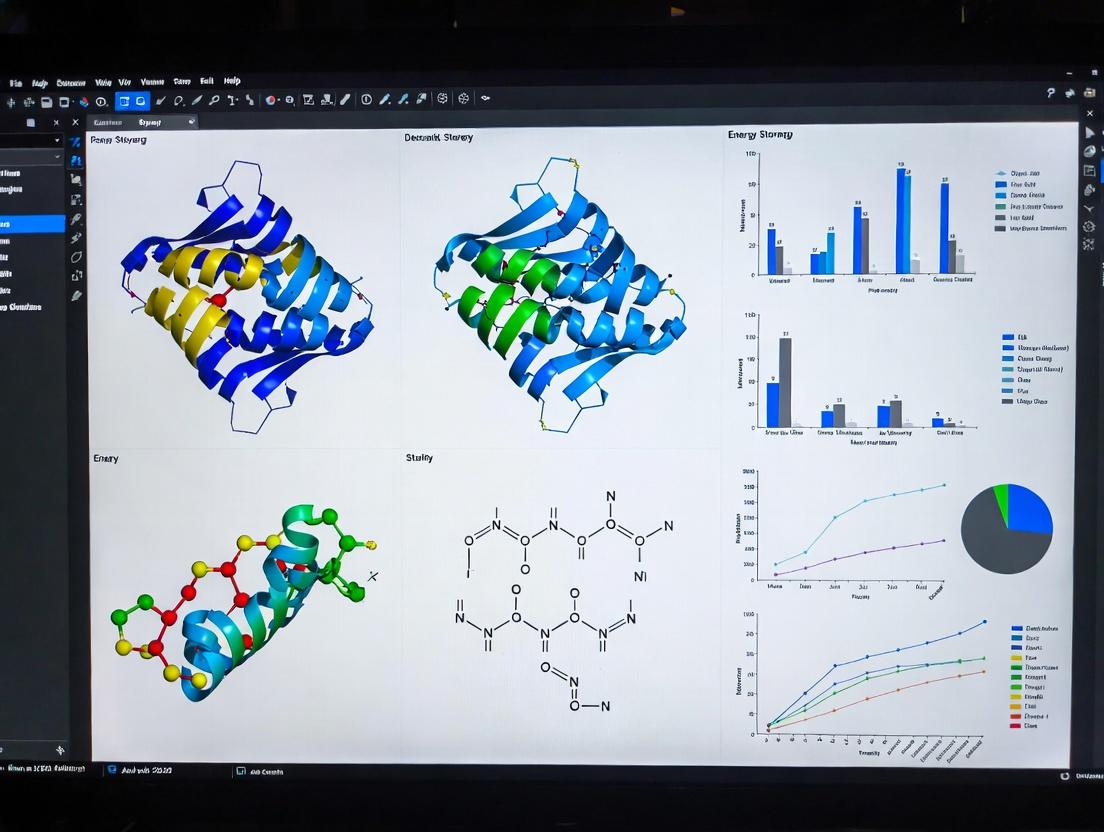
This article explores the transformative role of artificial intelligence in accelerating the design and development of next-generation polymer dielectrics for electrostatic energy storage.
AI-Driven Polymer Discovery: Revolutionizing High-Performance Dielectric Materials for Energy Storage
Abstract
This article explores the transformative role of artificial intelligence in accelerating the design and development of next-generation polymer dielectrics for electrostatic energy storage. Targeting researchers and scientists, we cover the foundational principles of polymer dielectrics and the energy storage challenge. We detail AI/ML methodologies, including high-throughput virtual screening and generative models, for discovering novel polymer architectures. The article addresses critical challenges in data scarcity, model interpretability, and multi-objective optimization. Finally, we provide a comparative analysis of AI-predicted versus experimentally validated materials, evaluating performance metrics and computational efficiency to establish trust in these accelerated discovery pipelines.
The Dielectric Dilemma: Fundamentals of Polymers for Electrostatic Energy Storage
In the pursuit of next-generation electrostatic energy storage materials, particularly for capacitors, three interdependent core principles govern performance: dielectric constant (εᵣ or k), breakdown strength (Eb), and the resultant energy density (U). The maximum theoretical energy density of a linear dielectric material is defined by U = ½ ε₀ εᵣ E², where ε₀ is the vacuum permittivity. This relationship is central to the AI-accelerated design paradigm for polymer dielectrics. Machine learning models are trained on experimental datasets to predict novel polymer structures or composites that optimally balance a high εᵣ with a high Eb, moving beyond the traditional inverse relationship observed empirically.
Table 1: Representative Dielectric Properties of Key Polymer Classes
| Polymer Class / Material | Typical Dielectric Constant (εᵣ) @ 1 kHz, 25°C | Typical Breakdown Strength (Eb, MV/m) | Theoretical Max U (J/cm³) | Key Advantages for AI Design |
|---|---|---|---|---|
| Biaxially Oriented Polypropylene (BOPP) | 2.2 | 700 | ~0.5 | Baseline; high purity, low loss. |
| Polyvinylidene Fluoride (PVDF) | 10-12 | 600 | ~1.9 | High εᵣ; ferroelectric behavior. |
| PVDF-based Terpolymer (e.g., P(VDF-TrFE-CFE)) | ~50 | 300-400 | ~2.7 | Relaxor ferroelectric; high εᵣ, tunable. |
| Polyimide (e.g., Kapton) | 3.4 | 300 | ~0.4 | High-temperature stability. |
| Polymer Nanocomposite (e.g., PI/BaTiO₃) | 5-100 (varies) | 150-400 | 0.5-5.0 | AI target: optimize filler dispersion. |
| Crosslinked Polyethylene (XLPE) | 2.3 | 500 | ~0.3 | Excellent insulation, low cost. |
Table 2: Key Metrics for AI Model Training in Polymer Dielectric Design
| Data Feature | Description | Typical Range/Units | Importance for Prediction |
|---|---|---|---|
| Electronic Band Gap | From DFT calculations. | 5-10 eV | Correlates with intrinsic Eb. |
| Dipolar Moment | Molecular dipole moment. | 0-5 Debye | Indicator for εᵣ. |
| Glass Transition Temp (Tg) | Polymer chain mobility. | -50 to 300 °C | Affects εᵣ(T) and loss. |
| Crystallinity | Percent crystalline phase. | 0-80% | Impacts both εᵣ and Eb. |
| Filler Aspect Ratio (Composites) | For nanofillers. | 1-1000 | Critical for composite performance. |
| Synthetic Yield | Reaction efficiency. | 10-95% | For practical manufacturability. |
Experimental Protocols
Protocol 1: Measurement of Dielectric Constant and Loss Tangent (ASTM D150)
Objective: To accurately determine the complex permittivity (εᵣ and tan δ) of a polymer film as a function of frequency and temperature.
Materials: Polymer film sample (50-100 µm thick), precision LCR meter/impedance analyzer, sputtering or evaporation coating system, temperature-controlled chamber, micrometer.
Procedure:
- Sample Preparation: Cut polymer film into a uniform disc. Measure thickness at ≥5 points using a micrometer.
- Electrode Deposition: Deposit circular gold or aluminum electrodes (e.g., 25 mm diameter top, 30 mm bottom) on both sides via sputtering to ensure ohmic contact.
- Instrument Calibration: Perform open-circuit, short-circuit, and load calibration on the impedance analyzer.
- Measurement: Place sample in a shielded fixture. Measure capacitance (Cp) and dissipation factor (D) from 0.1 Hz to 1 MHz at a fixed voltage (e.g., 1 Vrms).
- Temperature Ramp: Place fixture in chamber. Repeat measurement from -50°C to 150°C at 10°C intervals.
- Calculation: εᵣ = (Cp * d) / (ε₀ * A), where d is thickness and A is electrode area. tan δ = D.
Protocol 2: Determination of Dielectric Breakdown Strength (ASTM D149)
Objective: To measure the maximum electric field a polymer film can withstand before failure.
Materials: Polymer film sample, high-voltage AC/DC breakdown tester, spherical electrodes (6.4 mm or 12.7 mm diameter), insulating fluid (e.g., silicone oil), environmental chamber.
Procedure:
- Conditioning: Condition samples at 23°C and 50% RH for ≥24 hours.
- Immersion: Immerse sample and electrodes in insulating fluid to prevent surface flashover.
- Electrode Alignment: Carefully align spherical electrodes on opposite sides of the film.
- Voltage Ramp: Apply voltage at a constant ramp rate (e.g., 500 V/s) until breakdown (rapid current increase).
- Multiple Tests: Perform test on ≥10 specimens from the same batch.
- Statistical Analysis: Record breakdown voltage (Vbd). Calculate Eb = Vbd / thickness. Analyze data using Weibull statistics (2-parameter). Report the characteristic breakdown strength (scale parameter at 63.2% failure probability).
Protocol 3: AI-Driven Workflow for Polymer Synthesis & Screening
Objective: To rapidly synthesize and characterize candidate polymers identified by an ML model.
Materials: Precursors from virtual library, automated parallel synthesizer (e.g., robotic liquid handler), glovebox, spin coater, rapid thermal annealer, high-throughput impedance spectroscopy stage.
Procedure:
- ML Prediction: Train generative model on existing polymer dielectric database. Screen virtual library for candidates with predicted εᵣ > 10 and Eb > 400 MV/m.
- Automated Synthesis: Program robotic handler to prepare monomer solutions and initiators. Execute polymerizations (e.g., free radical, condensation) in 24 parallel reaction vials under inert atmosphere.
- Film Fabrication: Use automated spin-coating or blade-coating from solution onto ITO/glass substrates. Rapid thermal anneal to cure.
- High-Throughput Characterization: Employ automated stage to measure film thickness (ellipsometry) and perform contactless dielectric screening (e.g., parallel-plate fringe capacitance).
- Feedback Loop: Send experimental εᵣ and film quality data back to ML model for retraining and next-round candidate generation.
Visualization of Workflows
Diagram 1: AI-accelerated design and testing workflow for polymer dielectrics.
Diagram 2: Relationship between polymer features and core performance metrics.
The Scientist's Toolkit: Research Reagent Solutions
Table 3: Essential Materials for Polymer Dielectric Research
| Item | Function/Description | Example Supplier/Product |
|---|---|---|
| High-Purity Monomers | Building blocks for controlled synthesis; purity critical for reproducible Eb. | Sigma-Aldrich (e.g., VDF, TrFE, MMA), TCI Chemicals. |
| Initiators & Catalysts | For free-radical, condensation, or controlled polymerization. | Azobisisobutyronitrile (AIBN), Dibutyltin dilaurate (DBTDL). |
| High-κ Nanofillers | To create polymer nanocomposites; increase εᵣ. | BaTiO₃, TiO₂, MXene nanosheets (Nanografi, US Research). |
| Coupling Agents | Surface modification of nanofillers to improve dispersion. | (3-Aminopropyl)triethoxysilane (APTES). |
| High-Boiling-Point Solvents | For dissolving polymers and film processing. | N,N-Dimethylformamide (DMF), N-Methyl-2-pyrrolidone (NMP). |
| Dielectric Test Fixtures | For reliable, artifact-free electrical measurements. | Keysight 16451B Dielectric Test Fixture, SPEAG measurement cells. |
| Weibull Analysis Software | Statistical analysis of breakdown strength data. | Minitab, R package 'weibulltools'. |
| DFT/MD Simulation Software | For calculating electronic structure and dipole moments for AI training. | Gaussian, VASP, LAMMPS. |
This application note details the material properties, experimental protocols, and key limitations of traditional polymer dielectrics—Biaxially Oriented Polypropylene (BOPP) and Polyvinylidene Fluoride (PVDF)—within the framework of AI-accelerated polymer design for next-generation electrostatic energy storage.
Table 1: Key Properties of BOPP and PVDF for Capacitive Energy Storage
| Property | BOPP (Commercial Standard) | PVDF & Copolymers (e.g., P(VDF-HFP)) | Ideal Target for High Energy Density |
|---|---|---|---|
| Dielectric Constant (ε_r) @1 kHz | 2.2 - 2.5 | 8 - 13 (Ferroelectric) | >15 (Linear) |
| Dielectric Loss (tan δ) @1 kHz | <0.0002 | 0.02 - 0.05 (High hysteresis) | <0.001 |
| Breakdown Strength (E_b) | ~700 MV/m | ~450 MV/m | >800 MV/m |
| Discharged Energy Density (U_d) | ~2 J/cm³ | ~5-8 J/cm³ (Theoretical: ~15-20) | >15 J/cm³ |
| Charge-Discharge Efficiency (η) | >99% | 60-85% (Lossy) | >95% |
| Operating Temperature | Up to 85°C | Up to 100-125°C | >150°C |
| Key Limitation | Low ε, limits U_d | High loss, hysteresis, low E_b | -- |
Application Notes: Core Limitations in Energy Storage Context
BOPP: The High-Voltage, Low-Energy Baseline
BOPP dominates the film capacitor market due to its extremely low loss and high breakdown strength. Its limitation is intrinsic: a low dielectric constant (ε~2.2) caps energy density (U ∝ εE_b²). AI design seeks to discover new linear, low-loss polymers with similar robustness but higher ε.
PVDF: The High-Permittivity, High-Loss Paradigm
PVDF and its copolymers offer higher ε but suffer from ferroelectric/paraelectric hysteresis, leading to significant energy loss as heat and reduced discharge efficiency. This limits utility in high-frequency, high-cycle applications. AI-driven research focuses on predicting non-ferroelectric polar phases or novel copolymer architectures to decouple ε from loss.
Experimental Protocols for Characterization
Protocol P1: Fabrication of Solution-Cast Polymer Films for Dielectric Measurement
Objective: Prepare uniform, pinhole-free thin films for electrical testing. Reagents & Materials: See Toolkit Table. Procedure:
- Solution Preparation: Dissolve polymer (e.g., PVDF) in high-purity solvent (DMF, NMP) at 10-15% w/v. Stir at 60°C for 12h.
- Casting: Pour solution onto clean, level glass substrate. Use a doctor blade to set thickness (20-100 µm).
- Drying: Dry in vacuum oven with stepwise temperature profile: 50°C (12h), 80°C (6h) to remove solvent.
- Annealing: Anneal film at 120°C (below melting point) for 2h to optimize crystallinity, then slowly cool.
- Electroding: Sputter or evaporate circular gold electrodes (diameter: 2-6 mm) on both sides for electrical contact.
Protocol P2: Broadband Dielectric Spectroscopy (BDS) for ε_r and tan δ
Objective: Measure frequency-dependent dielectric constant and loss. Equipment: Impedance Analyzer (e.g., Novocontrol Alpha-A), temperature chamber. Procedure:
- Mount electrode film in sample holder with shielded cables.
- Set frequency sweep (e.g., 0.1 Hz to 1 MHz) at fixed temperature (e.g., 25°C).
- Apply small AC signal (0.5-1 V_rms). Measure complex capacitance (C*).
- Calculate ε' (real part, related to ε_r) and tan δ = ε''/ε' from impedance data.
- Repeat across a temperature range (-50°C to 150°C) to map relaxation behavior.
Protocol P3: Polarization-Electric Field (P-E) Loop Measurement
Objective: Quantify energy storage density (U_d) and charge-discharge efficiency (η). Equipment: High-voltage amplifier, Sawyer-Tower circuit or commercial ferroelectric tester. Procedure:
- Place film sample in silicone oil bath to prevent arcing.
- Apply bipolar triangular waveform at 10 Hz (to approximate DC).
- Ramp electric field to just below breakdown (e.g., 90% of E_b). Record P-E loop.
- Data Analysis:
- Max Polarization (Pmax): Value at peak field.
- Remnant Polarization (Pr): Polarization at zero field.
- Ud: Calculate from integration of discharge curve: ( Ud = \int P \, dE ).
- η: Ratio of discharged energy density to charged energy density.
The Scientist's Toolkit: Research Reagent Solutions
Table 2: Essential Materials for Polymer Dielectric Research
| Item | Function & Relevance |
|---|---|
| PVDF Powder (Sigma-Aldrich, >99.9%) | Base material for high-ε films; study ferroelectric phases (β-phase). |
| BOPP Film (Commercial, ~10µm) | Benchmark material for ultra-low loss, high-breakdown studies. |
| N-Methyl-2-pyrrolidone (NMP), anhydrous | High-boiling point solvent for PVDF dissolution and film casting. |
| Gold Target (for Sputtering, 99.99%) | For depositing low-resistance, stable electrodes on polymer films. |
| Silicone Oil (Dielectric Fluid) | Immersion medium for high-voltage testing to prevent surface discharge. |
| Poly(vinylidene fluoride-co-hexafluoropropylene) P(VDF-HFP) | Copolymer model system to study defect engineering's impact on hysteresis. |
| Ferroelectric Test System (e.g., Radiant) | For accurate P-E loop and switched charge measurement. |
Visualizing AI-Accelerated Polymer Design Workflow
Title: AI-Driven Polymer Discovery Workflow for Dielectrics
Title: Key Limitations of BOPP and PVDF Driving AI Design
Application Notes
This document provides application notes and experimental protocols for characterizing key trade-offs in polymer dielectrics for capacitive energy storage, framed within an AI-accelerated materials design workflow. The primary metrics for high energy density are the dielectric constant (related to polarizability) and the dielectric breakdown strength. These are intrinsically linked to and often trade off against fundamental electronic properties (band gap) and morphological characteristics (crystallinity).
Trade-off: Electronic Band Gap vs. Electronic Polarizability
A wider electronic band gap (Eg) generally correlates with higher dielectric breakdown strength (Eb), as it requires more energy to excite electrons into the conduction band. However, electronic polarizability (and thus the electronic contribution to the dielectric constant, ε∞) often decreases with increasing band gap, as a narrower gap facilitates electron cloud distortion. This creates a classic inverse relationship.
Table 1: Representative Band Gap, Polarizability, and Breakdown Strength Data
| Material Class | Example Polymer | Optical/Eg (eV) | Dielectric Constant (ε' @1kHz) | Estimated DC Polarizability (α in ų) | Breakdown Strength (MV/m) |
|---|---|---|---|---|---|
| Wide Band Gap | Polyethylene (PE) | ~8.8 | 2.25-2.3 | ~1.07 | 600-700 |
| Moderate Band Gap | Polycarbonate (PC) | ~4.5 | 2.9-3.0 | ~1.95 | 350-450 |
| Low Band Gap | PVDF-based Terpolymer | ~3.8* | 40-50 (high field) | N/A (dominant dipolar) | 400-500 |
| High Polarizability | P(VDF-TrFE-CFE) | ~4.0 | >50 @ low freq | N/A | ~350 |
Note: PVDF band gap varies with phase and crystallinity.
Trade-off: Crystallinity vs. Breakdown Strength
Crystallinity influences both dielectric constant and breakdown strength. High crystallinity can enhance the effective polarizability due to ordered dipolar regions (e.g., in β-phase PVDF). However, crystalline-amorphous interfaces and spherulite boundaries can act as defect sites, promoting charge injection and forming conductive pathways, thereby reducing the practical breakdown strength.
Table 2: Impact of Crystallinity on Key Properties
| Polymer & Processing | Degree of Crystallinity (%) | Dielectric Constant (ε' @1kHz) | DC Conductivity (S/m) | Breakdown Strength (MV/m) |
|---|---|---|---|---|
| PVDF, quenched | ~35-45 (α-phase dominant) | ~8-10 | ~10⁻¹³ | ~450 |
| PVDF, slowly cooled | ~50-60 (β-phase enhanced) | ~10-12 | ~10⁻¹² | ~380 |
| PE, high density | ~70-80 | 2.3 | ~10⁻¹⁶ | ~700 |
| PE, low density | ~40-50 | 2.25 | ~10⁻¹⁵ | ~600 |
Experimental Protocols
Protocol 1: Ultraviolet-Visible Spectroscopy (UV-Vis) for Optical Band Gap Estimation
Objective: Determine the optical absorption edge and estimate the optical band gap of polymer thin films. Materials: See "Research Reagent Solutions" below. Procedure:
- Sample Preparation: Spin-coat or solution-cast polymer film onto a fused quartz substrate. Ensure thickness is between 50-200 nm for optimal transmission. Dry thoroughly under vacuum.
- Baseline Correction: Place a clean quartz substrate in the reference beam of a UV-Vis spectrometer.
- Measurement: Acquire absorbance spectrum from 200 nm to 800 nm. Convert transmission data to absorbance (A).
- Tauc Plot Analysis: For direct band gap estimation, plot (αhν)² vs. photon energy (hν). The absorption coefficient α is calculated from A and film thickness (d): α = 2.303A/d. Extrapolate the linear region of the plot to (αhν)² = 0 to find the direct optical band gap (Eg).
Protocol 2: Broadband Dielectric Spectroscopy (BDS) for Polarizability & Conductivity
Objective: Measure frequency-dependent dielectric constant (ε', ε") and DC conductivity. Procedure:
- Electrode Deposition: Thermally evaporate or sputter circular gold electrodes (e.g., 50 nm thick, 3 mm diameter) on both sides of the polymer film to form a parallel-plate capacitor.
- Mounting: Place the sample in a dielectric fixture with shielded cables. For temperature-dependent studies, use a cryostat or oven.
- Frequency Sweep: Using an impedance analyzer, measure complex impedance (Z, C, or ε*) over a broad frequency range (e.g., 10⁻¹ Hz to 10⁶ Hz) at a fixed AC voltage (0.1-1 Vrms).
- Data Analysis: Extract real permittivity ε'(f) and loss ε"(f). The low-frequency plateau in ε'(f) relates to total polarizability (electronic, atomic, dipolar, interfacial). The DC conductivity (σDC) is derived from the low-frequency loss peak: σDC = ε₀ * ω * ε"(ω) where ω is angular frequency.
Protocol 3: Weibull Statistical Analysis of Dielectric Breakdown Strength
Objective: Determine the characteristic breakdown field (Eb) with statistical reliability. Procedure:
- Sample & Electrorode Preparation: Prepare at least 15-20 identical capacitor devices (e.g., with 1 mm diameter top electrodes).
- Breakdown Test: Immerse sample in insulating fluid (e.g., Fluorinert FC-40) to prevent surface flashover. Apply a ramping DC voltage (e.g., 500 V/s) across each device until rapid current increase indicates failure. Record the breakdown voltage (Vbd).
- Weibull Plot: Calculate the breakdown field for each sample: Ebd = Vbd / thickness. Rank Ebd values in ascending order. Assign a cumulative failure probability: F_i = (i - 0.5)/N, where i is the rank and N is the total number of samples.
- Fitting: Perform a linear fit on the Weibull plot: ln(ln(1/(1-F_i))) vs. ln(Ebd). The scale parameter (α, characteristic breakdown strength) is the field at which F = 63.2%. The shape parameter (β) from the slope indicates data dispersion.
Protocol 4: Differential Scanning Calorimetry (DSC) for Crystallinity Analysis
Objective: Measure the degree of crystallinity (χc) of a polymer sample. Procedure:
- Calibration: Calibrate the DSC instrument using indium and zinc standards.
- Sample Loading: Seal 5-10 mg of polymer in an aluminum pan. Use an empty pan as reference.
- Thermal Cycle: Heat the sample from room temperature to ~50°C above its melting point (Tm) at a constant rate (e.g., 10°C/min). Hold isothermally for 3 minutes to erase thermal history. Cool at the same rate, then run a second heating cycle.
- Analysis: From the second heating endotherm, integrate the melting peak area to obtain the heat of fusion (ΔHf). Calculate χc using: χc (%) = (ΔHf / ΔHf⁰) * 100%, where ΔHf⁰ is the heat of fusion for a 100% crystalline reference (e.g., 93.0 J/g for PVDF β-phase, 290 J/g for PE).
Title: Trade-off: High Band Gap vs. Polarizability
Title: Trade-off: Crystallinity Impacts on Properties
The Scientist's Toolkit: Research Reagent Solutions
Table 3: Essential Materials for Polymer Dielectric Characterization
| Item | Function / Relevance | Example Product / Specification |
|---|---|---|
| Fused Quartz Substrates | UV-transparent substrate for optical band gap measurement via UV-Vis. | 25 mm x 25 mm x 1 mm, double-side polished. |
| High-Purity Polymer Precursors | Synthesis of controlled-structure polymers for AI/ML training sets. | e.g., VDF, TrFE, CFE gases; purified bisphenol A for polycarbonate. |
| Fluorinert FC-40 | Insulating immersion fluid for breakdown tests to prevent surface discharge. | 3M Fluorinert Electronic Liquid FC-40. |
| Sputter Coater with Gold Target | For depositing thin, uniform electrodes for dielectric and breakdown measurements. | Au target, 99.999% purity, with thickness controller. |
| Impedance Analyzer | Measures complex permittivity and conductivity over wide frequency/temperature ranges. | Keysight E4990A, Novocontrol Alpha-A Analyzer. |
| High Voltage Source/Measure Unit (SMU) | Provides ramping DC voltage for breakdown strength testing. | Keithley 2470 High Voltage SourceMeter. |
| Differential Scanning Calorimeter (DSC) | Quantifies thermal transitions, melting point, and degree of crystallinity. | TA Instruments Q2000, Mettler Toledo DSC3. |
| Atomic Force Microscope (AFM) | Maps surface morphology and local electrical properties (e.g., piezoresponse). | Bruker Dimension Icon with PFM module. |
1. Application Notes: Target Polymer Characteristics
The AI-driven design of polymers for electrostatic energy storage (e.g., in capacitors) requires a precise definition of target properties. High energy density (Ue) and high power density are governed by a polymer's dielectric constant (εr) and dielectric breakdown strength (Eb), with operational constraints set by dielectric loss (tan δ) and thermal stability. The ideal candidate balances these often-competing traits.
Table 1: Quantitative Targets for High-Performance Dielectric Polymers
| Characteristic | Symbol | Target Range | Rationale |
|---|---|---|---|
| Dielectric Constant | εr | > 5, ideally > 10 | Directly increases energy density (Ue ∝ εr). |
| Breakdown Strength | Eb | > 500 MV/m, ideally > 700 MV/m | Exponentially increases energy density (Ue ∝ Eb²). |
| Dielectric Loss | tan δ | < 0.01 at high frequencies | Minimizes heat generation, maximizing efficiency and power capability. |
| Glass Transition Temp. | Tg | > 150 °C | Ensures mechanical/dielectric stability at elevated operating temperatures. |
| Band Gap | Eg | > 6 eV | Correlates with high Eb; intrinsic insulating property. |
| Crystallinity/ Morphology | — | Controlled amorphous/nanostructured | Balances εr (aided by crystallinity) with Eb (aided by amorphous regions). |
The primary relationship is defined by the energy density equation for linear dielectrics: Ue = 1/2 ε₀ εr Eb², where ε₀ is the vacuum permittivity. High εr polymers (e.g., polar polymers) often suffer from increased tan δ and lowered Eb due to charge migration. High-Eb polymers (e.g., non-polar polyolefins) have intrinsically low εr (~2.2). The target is a "disruptor" polymer that combines high polarity/ polarizability with deep charge traps and a rigid backbone to mitigate loss.
2. Experimental Protocols for Key Characterization
Protocol 2.1: Fabrication of Thin-Film Polymer Capacitors Objective: To prepare standardized test specimens for dielectric measurement. Materials: (See Toolkit, Section 4). Procedure:
- Solution Preparation: Dissolve purified polymer in appropriate anhydrous solvent (e.g., cyclopentanone for polyimides) at 5-10 wt%. Stir at 60°C for 24h.
- Filtration: Filter solution through a 0.22 µm PTFE syringe filter.
- Deposition: Spin-coat onto pre-cleaned, bottom-electrode substrates (e.g., Si/SiO₂ with 100 nm Au). Typical program: 500 rpm for 10s (spread), then 2000-4000 rpm for 60s.
- Annealing: Thermally anneal film on a hotplate in N₂ atmosphere: Ramp to 20°C above Tg, hold for 1h, cool slowly.
- Top Electrorode Deposition: Deposit circular Au electrodes (100 nm thick, 0.5-2 mm diameter) through a shadow mask via thermal evaporation.
Protocol 2.2: Comprehensive Dielectric Spectroscopy Objective: To measure frequency-dependent εr and tan δ. Equipment: Impedance Analyzer (e.g., Keysight E4990A), probe station, temperature chamber. Procedure:
- Calibration: Perform open/short/load calibration on the probe station.
- Measurement Setup: Place sample on chuck. Bring micro-manipulated probes into gentle contact with top and bottom electrodes.
- Frequency Sweep: Apply a small AC signal (0.1-1 Vrms). Sweep frequency from 10 Hz to 1 MHz.
- Data Acquisition: Record complex impedance (Z). Software calculates complex permittivity (ε* = ε' - jε"), where ε' is εr and tan δ = ε"/ε'.
- Temperature Ramp: Repeat sweep from -50°C to 150°C at 10°C intervals (hold 5 min for thermal equilibration).
Protocol 2.3: Dielectric Breakdown Strength (Weibull Analysis) Objective: To determine the statistically significant dielectric breakdown strength (Eb). Equipment: High-voltage source/electrometer (e.g., Keithley 2470), liquid dielectric cell (e.g., silicone oil bath). Procedure:
- Sample Mounting: Immerse capacitor sample in insulating silicone oil bath to prevent surface flashover.
- Voltage Ramp: Apply a DC ramp voltage (e.g., 100 V/s) across the electrodes until rapid current increase indicates breakdown. Record breakdown voltage (Vb).
- Replication: Repeat on at least 15-20 identical devices.
- Weibull Analysis: Calculate field at breakdown (Eb = Vb / film thickness). Rank data from lowest to highest. Plot ln(ln(1/(1-F))) vs ln(Eb), where F is the cumulative probability (F = i/(N+1), i is rank, N is total). The scale parameter (α) is Eb at 63.2% failure probability.
3. Visualizations
AI-Accelerated Polymer Design Target Logic
Closed-Loop AI-Driven Experimental Workflow
4. The Scientist's Toolkit: Research Reagent Solutions
Table 2: Essential Materials for Dielectric Polymer Research
| Material / Reagent | Function & Notes |
|---|---|
| High-Purity Monomers (e.g., Dianhydrides, Diamines, Vinyls) | Building blocks for step-growth or chain-growth polymerization. Purity is critical for high Eb. |
| Anhydrous, Aprotic Solvents (e.g., NMP, DMF, Cyclopentanone) | For dissolving polar polymer precursors. Must be dry to prevent hydrolysis side reactions. |
| Surface-Treated Nanofillers (e.g., BaTiO₃, TiO₂, BN nanosheets) | For creating nanocomposites to enhance εr or Eb. Surface functionalization is key for dispersion. |
| Silicon Wafers with Thermal Oxide (SiO₂) | Standard, flat, insulating substrates for thin-film deposition and characterization. |
| Gold/Titanium Pellets (for Evaporation) | Ti as adhesion layer, Au as inert, high-conductivity electrode material. |
| Silicone Oil (Dielectric Fluid) | Immersion medium for breakdown tests to suppress external discharge. |
| PTFE Syringe Filters (0.22 µm) | For removing dust/aggregates from polymer solutions prior to film casting. |
| Standard Reference Polymers (e.g., BOPP, PET, PVDF) | Benchmarks for comparing novel polymer performance against industry standards. |
Application Note: Quantifying the Bottleneck in Dielectric Polymer Discovery
The development of next-generation electrostatic energy storage devices, such as film capacitors, hinges on discovering polymers with optimally balanced dielectric constant (εr), breakdown strength (Eb), and low dielectric loss. Conventional design relies on iterative, empirical synthesis-test cycles, creating a critical rate-limiting step. The quantitative scope of this bottleneck is detailed below.
Table 1: Timeline and Success Rate of Conventional Polymer Discovery
| Stage | Average Duration | Key Activities | Typical Attrition Rate | Cumulative Time (Estimated) |
|---|---|---|---|---|
| Monomer Design/Sourcing | 2-4 weeks | Computational screening (limited), purification, characterization. | 20% | 2-4 weeks |
| Polymer Synthesis | 1-3 weeks | Reaction optimization, purification (precipitation, dialysis). | 40% | 3-7 weeks |
| Film Fabrication & Processing | 1-2 weeks | Solvent casting, melt-pressing, annealing, electrode application. | 15% | 4-9 weeks |
| Dielectric & Electrical Testing | 1 week | D-E loop, impedance spectroscopy, breakdown testing. | 50% | 5-10 weeks |
| Data Analysis & Iteration | 1-2 weeks | Structure-property correlation, decision for next synthesis. | N/A | 6-12 weeks |
Table 2: Performance Targets vs. Conventional Discovery Yield
| Target Property | Desired Range | Typical Experimental Throughput | Candidates Tested per Year (Conventional) |
|---|---|---|---|
| Dielectric Constant (ε_r) | >5 at 1 kHz | 2-3 new polymers per month | 24-36 |
| Breakdown Strength (E_b) | >600 MV/m | Requires multiple film samples per candidate | ~30 films tested |
| Discharged Energy Density (U_e) | >10 J/cm³ | Derived from εr and Eb measurements | 24-36 full evaluations |
| Loss Tangent (tan δ) | <0.01 at 1 kHz | High-precision measurement needed | 24-36 full evaluations |
The data illustrates that a single design cycle for a novel dielectric polymer typically consumes 3-6 months, with a high probability of failure at multiple stages. Exploring a vast chemical space (e.g., variations in side chains, backbone units, crosslink density) with this throughput is impractical.
Protocol 1: Conventional Synthesis and Film Fabrication of a Candidate Dielectric Polymer
Aim: To synthesize a polyimide-based dielectric film via polycondensation and solution casting.
Materials (Research Reagent Solutions):
- PMDA (Pyromellitic dianhydride): A rigid dianhydride monomer; increases polymer chain rigidity and thermal stability.
- ODA (4,4'-Oxydianiline): An aromatic diamine monomer; provides ether linkage for some flexibility and processability.
- NMP (N-Methyl-2-pyrrolidone): Anhydrous, high-purity solvent; aprotic polar solvent suitable for polyimide synthesis.
- Acetic Anhydride & Pyridine (Chemical Imidization Agents): Catalyze and drive the cyclodehydration reaction to form the imide ring.
- Methanol (Precipitation Solvent): Non-solvent for polyimide; used to isolate and purify the polymer.
- DMF (Dimethylformamide): High-purity film-casting solvent.
Procedure:
- Monomer Preparation: Under dry nitrogen, dissolve precisely weighed ODA (1.00 eq) in anhydrous NMP in a 3-neck flask. Stir until fully dissolved.
- Polymerization: In portions, add finely ground PMDA (1.02 eq) to the ODA solution at 0°C. Maintain stirring for 4-6 hours to form the poly(amic acid) precursor.
- Chemical Imidization: Add a mixture of pyridine (3.0 eq) and acetic anhydride (5.0 eq) to the reaction. Heat gradually to 80°C and hold for 12 hours to complete imidization.
- Polymer Precipitation & Purification: Cool the solution and pour it into a tenfold excess of vigorously stirred methanol. Filter the precipitated fibrous polymer and wash repeatedly with methanol. Dry in vacuo at 120°C for 24 hours.
- Film Fabrication: Prepare a 5-10% w/v solution of the purified polyimide in DMF. Filter through a 0.45 μm PTFE syringe filter. Cast onto a clean, leveled glass plate. Dry in a staged oven: 60°C (12h), 100°C (2h), 200°C (2h). Carefully peel the film.
- Electrode Application: Sputter or evaporate gold or aluminum electrodes (diameter 2-6 mm) onto both sides of the film for electrical testing.
Protocol 2: Standard Characterization of Dielectric Properties
Aim: To measure key dielectric performance metrics for energy storage.
Materials: Precision LCR Meter, High-Voltage Source/Measure Unit, Environmental Chamber, Sputter Coater.
Procedure:
- Dielectric Spectroscopy: Measure capacitance (C) and dissipation factor (D) of the metalized film from 10 Hz to 1 MHz at 0.1-1 Vrms using an LCR meter. Calculate ε_r from C, electrode area, and film thickness. Record tan δ (≈ D).
- Polarization-Electric Field (D-E) Loop Measurement: Place film in a shielded cell with silicone oil to prevent arcing. Apply a unipolar triangular waveform at 10-100 Hz using a high-voltage amplifier and monitor charge via a Sawyer-Tower circuit. Calculate energy density (U_e = ∫ E dD) and charge-discharge efficiency from the loop.
- DC Breakdown Strength: Using a ramp rate of 500 V/s, apply increasing DC voltage across a fresh film spot until failure. Test 10-15 samples. Analyze results using Weibull statistics: plot ln(ln(1/(1-P))) vs. ln(E), where P is cumulative probability and E is breakdown field.
Title: Conventional Polymer Design Bottleneck Workflow
Title: AI-Accelerated Design Cycle for Polymers
The Scientist's Toolkit: Key Reagents for Dielectric Polymer Research
| Reagent/Material | Function in Research | Critical Quality Parameters |
|---|---|---|
| High-Purity Dielectric Monomers (e.g., Dianhydrides, Diamines) | Building blocks for polyimides, polyureas, etc. Define backbone rigidity and polarizability. | Anhydrous, >99.5% purity, low ionic/water content to minimize conduction loss. |
| Anhydrous, Aprotic Polar Solvents (NMP, DMF, GBL) | Medium for step-growth polymerization and film casting. | Water content <50 ppm, low acid/amine impurities to prevent chain termination. |
| Chemical Imidization Agents (Acetic Anhydride, Pyridine) | Convert poly(amic acid) to polyimide, enhancing thermal and dielectric stability. | Freshly distilled to ensure reactivity, stoichiometric control crucial. |
| Film-Casting Substrates (Glass, Silicon Wafer) | Provide a smooth, clean surface for film formation. | Optically flat, cleaned with piranha solution and silanized if needed for release. |
| High-Vacuum Grease & Silicone Oil | Prevent surface arcing and corona discharge during high-field testing. | High dielectric strength, low volatility, inert to the polymer film. |
| Sputter Coater Targets (Gold, Aluminum) | Create uniform, adhering electrodes for capacitance and breakdown measurements. | High purity (99.99%) to ensure consistent electrical contact and measurement. |
AI Toolkit for Polymer Discovery: From Virtual Screening to Generative Design
This document provides application notes and protocols for constructing high-quality polymer property databases, a foundational step in AI-accelerated design of polymers for high-performance electrostatic energy storage (e.g., dielectric capacitors). The curation and engineering of structured data directly enable machine learning (ML) models to predict key properties like dielectric constant, band gap, breakdown strength, and energy density, accelerating the discovery of novel polymer dielectrics.
Data Curation Framework
Protocol 2.1.A: Automated Literature Mining for Polymer Properties
- Tool Setup: Configure a Python environment with libraries:
requests,BeautifulSoup4,selenium,pymatgen,pubchempy. - Target Databases: Programmatically query:
- PolyInfo (NIMS): Use REST API (where available) or structured web scraping for thermal, mechanical, and dielectric data.
- Cambridge Structural Database (CSD): Query for crystal structures of polymer repeat units or small-molecule analogues.
- PubMed & Scholar: Use targeted keyword searches ("polymer dielectric constant", "breakdown strength polyethylene", "dipolar polarization") with filters for experimental data.
- Data Extraction: Write scripts to parse HTML/XML, extracting tables, property values, units, and experimental conditions (temperature, frequency, measurement method).
- Validation: Cross-reference extracted values from at least two independent sources where possible. Flag discrepancies for manual review.
Data Standardization and Cleaning
Protocol 2.1.B: Standardizing Polymer Nomenclature and SMILES
- SMILES Generation: For each reported polymer, generate a canonicalized SMILES string for the repeat unit using RDKit.
- Handle ambiguities (e.g., head-to-tail regio-regularity) by annotating the SMILES with a comment field.
- Polymer Class Tagging: Implement a rule-based classifier to tag each entry with polymer classes (e.g., polyester, polyimide, fluoropolymer, vinyl).
- Unit Conversion: Convert all property values to a consistent SI-derived unit system (e.g., dielectric constant to unitless, breakdown strength to MV/m, energy density to J/cm³).
Table 1: Standardized Property Schema for Polymer Dielectrics
| Property Category | Specific Property | Standard Unit | Measurement Condition (Default) | Critical for ML? |
|---|---|---|---|---|
| Dielectric | Dielectric Constant (εr) | Unitless | 1 kHz, 25°C | Yes |
| Dielectric Loss (tan δ) | Unitless | 1 kHz, 25°C | Yes | |
| Breakdown Strength (Eb) | MV/m | Ramp rate: 500 V/s, 25°C | Yes | |
| Electronic | Band Gap (Eg) | eV | Calculated (DFT) or UV-Vis | Yes |
| HOMO/LUMO Energy | eV | Calculated (DFT) | Yes | |
| Thermal | Glass Transition Temp (Tg) | °C | DSC, 10°C/min | Yes |
| Thermal Decomp. Temp (Td) | °C | TGA, 5% weight loss | Yes | |
| Morphological | Crystallinity | % | XRD or DSC | Yes |
| Density | g/cm³ | Pycnometry | Yes | |
| Synthesis | Monomer SMILES | - | - | Yes (for featurization) |
| Polymerization Type | Categorical (e.g., Addition, Condensation) | - | Yes |
Feature Engineering for Polymer ML
Molecular Descriptor Computation
Protocol 3.1.A: Generating Quantum-Chemical and Topological Features
- Input: Standardized repeat unit SMILES.
- Geometry Optimization: Use RDKit to generate a 3D conformer. Apply semi-empirical quantum mechanics (e.g., PM7 via MOPAC) for geometry optimization.
- Descriptor Calculation: Employ the
mordredPython descriptor calculator to compute ~1800 2D/3D molecular descriptors, including topological, geometrical, and electronic indices. - Quantum Chemical Features: For a subset, perform DFT calculations (e.g., via ORCA ASE interface) at the B3LYP/6-31G* level to obtain:
- Dipole moment (μ).
- Polarizability (α).
- Partial charges (Hirshfeld).
- Molecular orbital energies.
Table 2: Key Engineered Features for Dielectric Property Prediction
| Feature Type | Example Features | Hypothesized Correlation with Target | Computation Tool |
|---|---|---|---|
| Topological | BalabanJ, Wiener Index, Molecular weight | Chain rigidity, packing density | RDKit, Mordred |
| Electronic | Dipole moment, Polarizability, HOMO-LUMO gap | Directly influences εr and Eg | DFT (ORCA/Gaussian) |
| Geometric | Principal Moments of Inertia, Radius of Gyration | Related to free volume and chain orientation | RDKit Conformers |
| Atomic | Count of O, N, F atoms, Fraction of sp³ Carbons | Electronegativity, bond polarization | SMILES String Parsing |
| Group-Based | Presence of carbonyl, phenyl, -CF3 groups (one-hot encoded) | Specific chemical functionalities | SMARTS Patterns |
Diagram: Polymer ML Database Construction Workflow
Title: Polymer Database Construction Workflow for ML
Experimental Protocols for Validation Data Generation
Protocol: Measuring Dielectric Constant and Loss
Title: Broadband Dielectric Spectroscopy (BDS) for Polymer Films. Materials: See Scientist's Toolkit below. Method:
- Sample Preparation: Spin-coat or hot-press polymer to form a uniform film (50-200 µm thick) on a clean glass slide. Thermally evaporate circular gold electrodes (50 nm thick, 2-6 mm diameter) onto both sides to form a parallel-plate capacitor geometry.
- Instrument Setup: Connect sample to an impedance analyzer (e.g., Keysight E4990A) using a two-terminal fixture. Place sample in a temperature-controlled environmental chamber.
- Measurement: Sweep frequency from 1 Hz to 1 MHz at a fixed temperature (e.g., 25°C). Apply a small AC voltage (0.5-1 Vrms) to stay in the linear response regime.
- Data Extraction: Record the complex impedance Z. Calculate the complex permittivity ε = (1 / (iωC0Z*)), where C0 is the vacuum capacitance of the electrode geometry. The real part is εr, and tan δ = ε''/ε'.
Protocol: Determining DC Breakdown Strength
Title: Weibull Analysis of Dielectric Breakdown. Materials: See Scientist's Toolkit below. Method:
- Test Cell: Immerse the electrode-patterned film (from 4.1) in a dielectric fluid (silicone oil) to prevent surface arcing.
- Voltage Ramp: Apply a DC voltage with a constant ramp rate (e.g., 500 V/s) across the sample using a high-voltage sourcemeter until breakdown (sharp current increase).
- Replication: Perform test on at least 15 identical samples to obtain a statistical distribution.
- Weibull Analysis: Plot breakdown voltages (Eb) on a Weibull probability plot. The characteristic breakdown strength is the voltage at the 63.2th percentile of the cumulative failure distribution.
Diagram: Key Property Measurement Workflow
Title: Polymer Film Characterization for Database
The Scientist's Toolkit: Research Reagent Solutions
Table 3: Essential Materials for Polymer Dielectric Characterization
| Item/Category | Example Product/Specification | Function in Protocols |
|---|---|---|
| Polymer Solvents | Anhydrous N-Methyl-2-pyrrolidone (NMP), Cyclopentanone, Toluene | Dissolving polymers for spin-coating uniform thin films. Low moisture prevents voids. |
| Substrates | Borosilicate glass slides, Single-side polished Si wafers | Inert, smooth surface for film deposition and handling. |
| Electrode Materials | Gold wire (99.999%), Chromium pellets | Thermal evaporation sources. Cr sometimes used as an adhesion layer. |
| Dielectric Fluid | Dimethyl Silicone Oil (50 cSt) | Immersion medium for breakdown tests to suppress external arcing. |
| Impedance Analyzer | Keysight E4990A with 16451B fixture | Measures complex impedance across frequency for εr and tan δ. |
| High Voltage Source | Keithley 2470 High Voltage SourceMeter | Provides controlled DC ramp for breakdown strength testing. |
| Thermal Analysis | TA Instruments Q20 DSC, TGA Q50 | Measures glass transition (Tg) and decomposition (Td) temperatures. |
| Quantum Chemistry Software | ORCA, Gaussian, with ASE interface | Performs DFT calculations for electronic feature generation (HOMO, LUMO, μ). |
| Cheminformatics Library | RDKit (Python) | Generates canonical SMILES and computes 2D/3D molecular descriptors. |
This application note details the implementation of Graph Neural Networks (GNNs) for predicting the dielectric constant (ϵ) and dielectric loss of polymer candidates for electrostatic energy storage (e.g., capacitors). This work is a core component of a thesis on AI-accelerated design, aiming to replace high-throughput experimental screening with in-silico prediction, thereby drastically reducing the time and cost of identifying high-performance dielectric polymers.
Key Quantitative Data & Performance Metrics
Table 1: Published Performance of GNN Models for Dielectric Property Prediction
| Model Architecture | Dataset Size (Polymers) | Target Property | Mean Absolute Error (MAE) | R² Score | Reference Year |
|---|---|---|---|---|---|
| Attentive FP | ~12,000 | Dielectric Constant (ϵ) | 0.41 | 0.81 | 2023 |
| D-MPNN | ~9,500 | Band Gap (Proxy for ϵ) | 0.38 eV | 0.79 | 2022 |
| GIN | ~6,800 | Dielectric Loss | 0.02 | 0.73 | 2023 |
| Hybrid GNN-MLP | ~15,000 | ϵ & Loss (Multi-task) | 0.35 | 0.85 | 2024 |
Table 2: Experimental vs. GNN-Predicted Dielectric Constants for Benchmark Polymers
| Polymer (SMILES) | Experimental ϵ | GNN-Predicted ϵ | Absolute Error |
|---|---|---|---|
| CCOC(=O)C=C (PMMA fragment) | 3.6 | 3.5 | 0.1 |
| C1=CC=C(C=C1)C=O (Polymer precursor) | 2.9 | 3.1 | 0.2 |
| O=C1CCC(=O)N1 (Imide group) | 3.2 | 3.3 | 0.1 |
Experimental Protocol: GNN Training & Validation for Dielectric Prediction
Protocol 1: Data Curation and Molecular Graph Construction
- Source Data: Compile polymer/repeat unit SMILES strings and corresponding experimental dielectric properties from public databases (PolyInfo, Harvard Clean Energy Project) and literature.
- Standardization: Normalize all dielectric constant values to a range of [1, 10] using Min-Max scaling.
- Graph Representation: Convert each SMILES string into a molecular graph.
- Nodes: Atoms. Initialize node features using a one-hot encoding of atom type (C, H, O, N, etc.), hybridization, and valence.
- Edges: Bonds. Initialize edge features using bond type (single, double, triple, aromatic).
- Split Dataset: Partition data into training (70%), validation (15%), and test (15%) sets using a stratified split based on property value ranges.
Protocol 2: GNN Model Training (Using PyTorch Geometric)
- Model Architecture: Implement a 4-layer Graph Isomorphism Network (GIN) with a global mean pooling readout.
- Hyperparameters:
- Learning Rate: 0.001 (Adam optimizer)
- Batch Size: 32
- Hidden Layer Dimension: 128
- Dropout Rate: 0.2
- Epochs: 300 (with early stopping patience=30)
- Training Loop:
- Forward pass: Graph → GIN layers → Global pooling → Fully Connected Regressor.
- Loss Function: Mean Squared Error (MSE) between predicted and scaled experimental dielectric constants.
- Validate after each epoch on the validation set. Save the model with the lowest validation loss.
Protocol 3: Model Evaluation and Prediction
- Load the best-performing saved model checkpoint.
- Run inference on the held-out test set. Inverse-transform the scaled predictions to obtain dielectric constant values.
- Calculate final metrics: MAE, R², and Root Mean Squared Error (RMSE).
- Deploy the trained model to predict dielectric properties for novel, unseen polymer structures (SMILES) proposed by generative models.
Visualized Workflows
GNN Dielectric Prediction Pipeline
AI-Driven Polymer Design Loop
The Scientist's Toolkit: Key Research Reagent Solutions
Table 3: Essential Computational Tools & Materials for GNN-Based Dielectric Screening
| Item / Software / Database | Function & Explanation |
|---|---|
| RDKit | Open-source cheminformatics toolkit for converting SMILES to molecular graphs, calculating fingerprints. |
| PyTorch Geometric (PyG) | Primary library for building and training GNNs on graph-structured data (molecules). |
| DeepChem | Provides high-level APIs for molecular property prediction tasks and standardized datasets. |
| Polymer Database (PolyInfo) | Critical source of experimental polymer properties, including dielectric data, for training and validation. |
| Harvard Clean Energy Project (CEP) Database | Contains quantum-chemical properties for millions of molecules, useful for pre-training or as features. |
| Weights & Biases (W&B) / TensorBoard | Experiment tracking and hyperparameter optimization for model development. |
| High-Performance Computing (HPC) Cluster / GPU (NVIDIA) | Essential computational resource for training deep GNN models on large molecular datasets. |
| Jupyter / Colab Notebooks | Interactive environment for prototyping data pipelines and model code. |
High-Throughput Virtual Screening (HTVS) is a computational methodology central to the AI-accelerated design of polymers for electrostatic energy storage. Within this thesis, HTVS serves as the critical funnel for rapidly evaluating millions of hypothetical polymer structures (e.g., repeat units, side-chain combinations, cross-linkers) to identify candidates with predicted high dielectric constant, high band gap, and low loss tangent. This approach moves beyond traditional trial-and-error, leveraging physics-based simulations and machine learning models to prioritize synthesis targets for advanced capacitors and solid-state insulation materials.
Core Computational Methodologies and Protocols
Protocol: Molecular Dynamics (MD) for Polarizability and Dynamics
Aim: To compute the dipole moment fluctuations and electronic structure precursors for dielectric property prediction. Steps:
- System Preparation: Use Open Babel or RDKit to generate 3D coordinates for each hypothetical polymer repeat unit. Employ PACKMOL to create amorphous cells containing 10-20 polymer chains, each with 10-20 repeat units, at a target density (e.g., 1.0 g/cm³).
- Force Field Assignment: Apply a classical force field (e.g., GAFF2, OPLS-AA) using Antechamber (from AmberTools) or manually assign parameters based on quantum mechanical (QM) calculations for missing torsions/charges.
- Equilibration: Perform energy minimization (steepest descent, conjugate gradient) followed by NVT (constant Number, Volume, Temperature) and NPT (constant Number, Pressure, Temperature) ensemble simulations using GROMACS or LAMMPS for 1-2 ns at 300 K and 1 atm.
- Production Run: Execute a final NVT production run for 5-10 ns, saving trajectories every 1-10 fs for dipole moment analysis.
- Analysis: Use in-house scripts or tools like
gmx dipoles(GROMACS) to calculate the time-dependent total dipole moment M(t) of the simulation box. - Property Calculation: Compute the frequency-dependent dielectric constant ε(ω) via the fluctuation-dissipation theorem from the Fourier transform of the dipole moment autocorrelation function.
Protocol: Density Functional Theory (DFT) for Electronic Properties
Aim: To accurately calculate the band gap (Eg) and static electronic polarizability (α) of screened monomer candidates. Steps:
- Geometry Optimization: Select top candidates from initial MD screening. Perform full geometry optimization at the DFT level (e.g., B3LYP/6-31G(d)) using Gaussian, ORCA, or Quantum ESPRESSO until forces are below a threshold (e.g., 0.001 Hartree/Bohr).
- Electronic Structure Calculation: On the optimized geometry, run a single-point energy calculation with a hybrid functional (e.g., HSE06) and a larger basis set (e.g., 6-311+G(d,p)) for an accurate Eg. Perform a coupled-perturbed Kohn-Sham (CPKS) calculation to obtain the static electronic polarizability tensor.
- Data Extraction: Parse output files to extract the HOMO-LUMO gap (converted to eV), the mean static polarizability, and the anisotropy of the polarizability.
Table 1: Performance Metrics of HTVS Workflow Components
| Screening Stage | Method/Tool | Structures Processed/Day | Key Output Metric | Typical Compute Resource |
|---|---|---|---|---|
| Initial Filtering | Rule-Based (SMARTS), RDKit | 1,000,000+ | Synthetic accessibility score, functional group check | CPU Cluster (100 cores) |
| Coarse-Grained MD | LAMMPS (Martini FF), HOOMD-blue | 100,000 | Packing density, chain conformation | GPU Node (4x V100) |
| Atomistic MD | GROMACS, OpenMM | 10,000 | Dipole fluctuation, torsional histogram | GPU Cluster (10-20 nodes) |
| DFT Validation | Gaussian/ORCA, VASP | 100-500 | Band Gap (eV), Polarizability (a.u.) | HPC Cluster (CPU, ~1000 cores) |
Table 2: Target Property Ranges for High-Performance Polymer Dielectrics
| Property | Ideal Target Range | Computational Method for Prediction | Experimental Validation Method |
|---|---|---|---|
| Dielectric Constant (ε) | > 5.0 (static, room temp) | MD (fluctuation-dissipation) | Broadband Dielectric Spectroscopy |
| Band Gap (Eg) | > 6.0 eV | DFT (HSE06 functional) | UV-Vis Spectroscopy |
| Loss Tangent (tan δ) | < 0.01 @ 1 kHz | MD (dipole relaxation modes) | Impedance Analyzer |
| Glass Transition Temp (Tg) | > 150 °C | MD (specific vol. vs. temp) | Differential Scanning Calorimetry |
The Scientist's Toolkit: Key Research Reagent Solutions
Table 3: Essential Computational Tools & Databases for Polymer HTVS
| Item / Solution | Function & Purpose | Example/Provider |
|---|---|---|
| Chemical Database | Source of hypothetical building blocks (monomers). | PubChem, ZINC, Cambridge Structural Database (CSD) |
| Automation Framework | Orchestrates workflow from structure generation to analysis. | AiiDA, FireWorks, NextFlow |
| Force Field Parametrization | Assigns parameters for classical MD simulations. | antechamber (AmberTools), fftk (VMD plugin) |
| Quantum Chemistry Software | Performs DFT calculations for electronic properties. | ORCA (free academic), Gaussian (commercial), VASP |
| Machine Learning Library | Trains surrogate models for rapid property prediction. | PyTorch, TensorFlow, scikit-learn |
| High-Performance Compute (HPC) | Provides the necessary processing power for large-scale simulations. | Local GPU clusters, Cloud (AWS, Azure), NSF/XSEDE resources |
| Visualization & Analysis | Analyzes trajectories and visualizes molecular structures. | VMD, PyMOL, Jupyter Notebooks with MDAnalysis |
Workflow and Pathway Visualizations
Title: HTVS Workflow for Polymer Dielectric Design
Title: From MD Trajectory to Dielectric Properties
Application Notes
This document outlines the application of generative artificial intelligence (AI) for the inverse design of polymer dielectrics, a core component within the broader thesis of AI-accelerated material discovery for high-energy-density electrostatic capacitors. The paradigm shifts from iterative experimental screening to a target-driven computational design loop.
1.1. Core Concept & Rationale The performance of dielectric polymers in capacitive energy storage is governed by key metrics: dielectric constant (εr), band gap (Eg), and breakdown strength (E_b). Traditional design struggles with the vast, unexplored chemical space. Generative AI models, specifically variational autoencoders (VAEs) and generative adversarial networks (GANs) conditioned on target properties, can propose novel, synthetically accessible polymer structures with desired dielectric properties in silico, dramatically accelerating the research cycle.
1.2. AI Model Architecture & Workflow The standard pipeline involves a chemical language model (e.g., SMILES-based) for polymer representation. The model is trained on datasets like the Harvard Organic Photovoltaic (HOPV) dataset or proprietary dielectric datasets to learn the relationship between structural motifs and properties (εr, Eg). A conditional vector specifying the target ε_r is fed into the generator, which outputs novel candidate polymer structures.
1.3. Key Performance Data Recent studies demonstrate the efficacy of this approach. The table below summarizes quantitative outcomes from published research.
Table 1: Performance Summary of AI-Driven Polymer Dielectric Design Studies
| Study Focus | AI Model Used | Dataset Size | Target Property | Success Rate (Valid/Novel) | Predicted ε_r Range | Validation Method |
|---|---|---|---|---|---|---|
| High-ε_r Polymer Discovery | Conditional VAE | ~12,000 polymers | ε_r > 5.0 | >85% novel, valid structures | 5.2 - 12.7 | DFT Calculation (B3LYP) |
| High-Eg, Moderate-εr Design | Goal-Conditioned GAN | ~6,000 donor-acceptor polymers | εr: 3.5-4.5, Eg > 4.5eV | ~78% within target | 3.8 - 4.3 | DFT (PBE0) |
| Inverse Design for Capacitors | ChemProp + Generator | ~1,200 dielectric measurements | Maximize εr * Eb² | N/A | 3.0 - 8.5 | Experimental Synthesis (Top Candidates) |
1.4. Advantages & Limitations Advantages: Explores chemical space beyond human intuition; rapidly generates candidates prioritizing target properties; reduces costly experimental failures. Limitations: Dependent on quality and size of training data; requires robust molecular validity filters; predicted properties require verification via higher-fidelity simulation (DFT) or experiment.
Experimental Protocols
Protocol 2.1: In Silico Training and Generation of Candidate Polymers
Objective: To train a conditional generative AI model and produce a library of novel polymer candidates with a target dielectric constant.
Materials (Digital Toolkit):
- Hardware: GPU cluster (e.g., NVIDIA V100/A100).
- Software: Python 3.9+, PyTorch/TensorFlow, RDKit, CUDA toolkit.
- Data: Curated polymer dataset with SMILES strings and associated ε_r values (e.g., from PolyInfo database or quantum chemistry computations).
Procedure:
- Data Preprocessing: Clean the dataset. Standardize polymer SMILES to a consistent repeating unit representation. Remove duplicates and invalid structures using RDKit. Split data into training (80%), validation (10%), and test sets (10%).
- Model Training: Implement a conditional VAE architecture. Encode SMILES strings into a latent vector
z. Condition the decoder on a continuous value representing the target εr. Train the model using a loss function combining reconstruction loss (for SMILES) and property prediction loss (for εr) over ~500 epochs. - Candidate Generation: Sample random latent vectors
zand condition the decoder on the desired ε_r value (e.g., 6.5). Generate 10,000 novel SMILES strings. - Post-Processing & Filtering: Use RDKit to validate chemical structures. Filter for synthetic accessibility (SA Score < 4.5). Remove structures with excessive similarity (>0.7 Tanimoto similarity) to training set molecules.
Protocol 2.2: First-Principles Validation of AI-Generated Candidates
Objective: To compute the electronic properties (εr, Eg) of top AI-generated candidates using Density Functional Theory (DFT).
Materials (Computational):
- Software: Quantum ESPRESSO, VASP, ORCA, or Gaussian.
- Computational Resources: High-Performance Computing (HPC) cluster.
Procedure:
- Structure Preparation & Optimization: For the top 100 filtered candidates, generate 3D monomer structures. Perform geometric optimization using DFT with a functional like B3LYP and basis set 6-31G(d) to find the minimum energy conformation.
- Property Calculation:
- Band Gap (E_g): Perform a single-point energy calculation on the optimized structure. Compute the HOMO-LUMO gap.
- Static Dielectric Constant (εr): Calculate the electronic component of the dielectric constant (ε∞) via density functional perturbation theory (DFPT) to compute the ionic polarization. For polymers, this often uses periodic boundary conditions on a crystal model or a large oligomer.
- Selection for Synthesis: Rank candidates based on the DFT-calculated εr (proximity to target) and Eg (prefer > 4 eV for good insulation). Select the top 5-10 candidates for experimental synthesis.
Protocol 2.3: Experimental Synthesis & Dielectric Characterization of AI-Designed Polymer
Objective: To synthesize a selected AI-generated polymer and measure its dielectric constant.
Materials (Laboratory):
- Chemical Reagents: As required by the specific synthesis (e.g., monomers, catalyst, solvent). See Reagent Solutions table.
- Equipment: Schlenk line, glovebox, NMR spectrometer, GPC, spin coater, thermal evaporator, impedance analyzer.
Procedure:
- Polymer Synthesis: Based on the candidate structure (e.g., a polyimide), perform a step-growth polymerization. Purify the product via precipitation. Confirm structure via (^1)H NMR and molecular weight via GPC.
- Thin-Film Fabrication: Prepare a ~200 nm thin film via spin-coating from polymer solution onto a clean, conductive substrate (e.g., ITO/glass). Anneal the film to remove residual solvent. Thermally evaporate top electrodes (e.g., Al, 100 nm diameter dots).
- Dielectric Measurement: Using an impedance analyzer (e.g., Agilent 4294A), measure the capacitance (C) of the metal-insulator-metal device at a frequency of 1 kHz. Calculate the dielectric constant using the parallel-plate capacitor formula: εr = (C * d) / (ε0 * A), where d is film thickness, A is electrode area, and ε_0 is the vacuum permittivity.
Diagrams
Generative AI Inverse Design Workflow for Polymer Dielectrics
Conditional VAE Architecture for Polymer Generation
The Scientist's Toolkit: Research Reagent Solutions
Table 2: Essential Materials for Synthesis & Characterization of Polymer Dielectrics
| Item/Category | Function & Relevance | Example(s) |
|---|---|---|
| High-Purity Monomers | Building blocks for step-growth or chain-growth polymerization. Purity is critical for high molecular weight and defect-free films. | Dianhydrides (PMDA, BPDA), diamines (ODA, PDA), fluoro-containing monomers. |
| Anhydrous, Aprotic Solvents | Medium for polymerization and film processing. Must be dry to prevent side reactions and ensure film quality. | N-Methyl-2-pyrrolidone (NMP), Dimethylacetamide (DMAc), Cyclopentanone. |
| Catalyst/Activator | Accelerates polycondensation reactions to achieve high molecular weight under milder conditions. | Isoquinoline, Benzoic acid. |
| Spin Coater | Deposits uniform, thin polymer films (50-500 nm) on substrates for device fabrication. | Laurell, Brewer Science models. |
| Impedance Analyzer | Measures capacitance and loss tangent of dielectric films over a frequency range to extract ε_r. | Keysight E4990A, Agilent 4294A. |
| Thermal Evaporator | Deposits uniform metal top electrodes (Au, Al) onto polymer films for metal-insulator-metal capacitor devices. | Operates under high vacuum. |
| Density Functional Theory (DFT) Software | Computes electronic structure, band gap, and polarizability to predict ε_r for AI-generated candidates. | VASP, Gaussian, ORCA. |
| Chemical Informatics Toolkit (RDKit) | Open-source library for processing SMILES, checking validity, and calculating molecular descriptors/filters. | Essential for AI pipeline pre- and post-processing. |
Application Notes
Multi-fidelity learning (MFL) provides a computational framework for synergistically integrating data of varying accuracy and cost to accelerate the design of high-energy-density polymer dielectrics. This approach is critical for electrostatic energy storage applications, where the goal is to maximize dielectric constant and breakdown strength while minimizing dielectric loss. By fusing low-fidelity (high-throughput) data from molecular dynamics (MD) and medium-fidelity data from quantum mechanics (QM) with sparse, high-fidelity experimental measurements, predictive models can be built with significantly reduced resource expenditure.
Core Data Integration Strategy
The efficacy of MFL in polymer design hinges on mapping correlations across fidelities. Key observed quantitative correlations are summarized below.
Table 1: Representative Multi-Fidelity Data Correlations for Polymer Dielectrics
| Fidelity Level | Typical Output Metric | Computational/Experimental Cost | Correlation Coefficient (R²) to Experimental Fidelity | Example Data Source |
|---|---|---|---|---|
| Low (LF) | Dielectric Constant (ε) from Classical MD | ~100-1000 CPU-hrs | 0.6 - 0.8 | High-throughput screening of polymer chain polarizability |
| Medium (MF) | Band Gap (Eg) & Dipole Moment from DFT | ~1000-10,000 CPU-hrs | 0.75 - 0.9 | DFT calculations on polymer repeat unit or oligomers |
| High (HF) | Experimental Breakdown Strength (Eb) | Weeks-Months, specialized equipment | 1.0 (Reference) | Lab-measured breakdown voltage on thin films |
Table 2: Example Multi-Fidelity Dataset for Polyimide Variants
| Polymer ID | LF-MD ε (Predicted) | MF-DFT Band Gap (eV) | HF-Experimental Eb (MV/cm) | HF-Experimental ε (1 kHz) |
|---|---|---|---|---|
| PI-1 | 3.2 | 4.1 | 450 | 3.1 |
| PI-2 | 3.8 | 3.7 | 380 | 3.6 |
| PI-3 | 4.5 | 3.3 | 300 | 4.3 |
| PI-4 | 3.5 | 4.0 | 420 | 3.4 |
A successful MFL model, such as a Gaussian Process or Deep Neural Network, uses the abundant LF and MF data to learn the underlying physical trends, which is then calibrated and corrected by the limited HF experimental data. This can yield a final model predicting experimental Eb with an accuracy exceeding 90% using only 20-30 experimental data points for training.
Experimental Protocols
Protocol 1: Generating Low-Fidelity Data via Classical Molecular Dynamics
Objective: To compute the relative dielectric constant (ε) and glass transition temperature (Tg) of a candidate polymer. Materials: Polymeric system (e.g., .data/.top file for LAMMPS or GROMACS), High-Performance Computing (HPC) cluster. Procedure:
- System Construction: Build an amorphous cell containing 20-50 polymer chains (degree of polymerization ~20-50) using Packmol or in-built suite tools (e.g., CHARMM-GUI).
- Equilibration: Perform energy minimization (steepest descent). Conduct NVT equilibration at 600 K for 500 ps, then NPT equilibration at 600 K for 1 ns, and finally a slow cooling NPT run to 300 K over 2 ns.
- Production Run: Execute a final NPT simulation at 300 K and 1 atm for 10-20 ns. Trajectory snapshots should be saved every 1 ps.
- Property Calculation:
- Dielectric Constant: Use the dipole moment fluctuations from the trajectory. Calculate the total dipole moment M(t) of the simulation box at each time step. The static dielectric constant ε is derived from the fluctuation formula: ε = 1 + (4π/3k_B T V) ⟨M²⟩, where V is volume, T is temperature.
- Glass Transition Temperature (Tg): Repeat simulations at multiple temperatures (e.g., 200 K to 500 K). Plot specific volume vs. T. Fit two linear regressions; Tg is the intersection point.
Protocol 2: Generating Medium-Fidelity Data via Density Functional Theory (DFT)
Objective: To compute electronic properties (band gap, molecular dipole moment, frontier orbital energy) of the polymer repeat unit or oligomer. Materials: Quantum chemistry software (VASP, Gaussian, ORCA), HPC cluster. Procedure:
- Geometry Optimization: Construct a 3D model of 1-3 repeat units with terminated end groups (e.g., -H, -CH3). Optimize the molecular geometry using a functional like B3LYP and a basis set like 6-311G(d,p) until convergence criteria are met (force < 0.001 eV/Å).
- Electronic Structure Calculation: Perform a single-point energy calculation on the optimized geometry using a hybrid functional (e.g., HSE06) for more accurate band gap prediction.
- Property Extraction:
- Extract the HOMO and LUMO energies. The band gap Eg = ELUMO - EHOMO.
- Calculate the ground-state molecular dipole moment from the electron density.
- (Optional) Compute the electronic component of the dielectric constant via Density Functional Perturbation Theory (DFPT).
Protocol 3: High-Fidelity Experimental Validation for Dielectric Properties
Objective: To measure the breakdown strength (Eb) and frequency-dependent dielectric constant (ε) of synthesized polymer thin films. Materials: Polymer thin film (50-100 μm thickness), sputter coater (Au or Al electrodes), precision LCR meter (e.g., Agilent E4980A), high-voltage source/measure unit (e.g., Trek 30/20), environmental chamber. Procedure:
- Electrode Deposition: Sputter-deposit circular top electrodes (e.g., 2 mm diameter, 50 nm Au) onto the polymer film. Ensure a uniform bottom electrode exists.
- Dielectric Spectroscopy: Place the sample in the environmental chamber at 25°C. Using the LCR meter, measure capacitance (C) and dissipation factor (D) from 100 Hz to 1 MHz at a low applied voltage (0.5-1 V). Calculate ε from C, using the known electrode area and film thickness.
- DC Breakdown Strength Test: Use a ramp-to-breakdown method. Apply a DC voltage across the sample at a constant ramp rate (e.g., 500 V/s). Monitor current until a rapid increase indicates breakdown. Record the breakdown voltage (Vbd). Eb = Vbd / thickness. Test at least 15-20 identical devices. Perform Weibull statistical analysis on the Eb data.
The Scientist's Toolkit: Research Reagent Solutions
Table 3: Essential Materials for Multi-Fidelity Polymer Dielectric Research
| Item | Function/Description |
|---|---|
| LAMMPS | Open-source classical MD software for high-throughput simulation of polymer dynamics and dielectric response. |
| VASP/Gaussian | DFT software for calculating accurate electronic properties (band gap, polarization) of polymer models. |
| CHARMM/OPLS-AA Force Fields | Parameterized classical molecular mechanics force fields for simulating organic polymers and biopolymers. |
| Polyimide Precursors (PMDA, ODA, etc.) | Common high-performance polymer monomers for synthesizing films with good thermal and dielectric properties. |
| High-Voltage Trek Model 30/20 Amplifier | Provides a precisely controlled high-voltage DC source for dielectric breakdown testing. |
| Agilent E4980A LCR Meter | Precision instrument for measuring capacitance and loss tangent across a wide frequency range. |
| Gold/Targets for Sputter Coater | Source material for depositing high-quality, uniform electrodes on polymer films for electrical characterization. |
| GPy/SciKit-Learn or DeepMGP | Python libraries for implementing Gaussian Process and other machine learning models for multi-fidelity fusion. |
Workflow and Relationship Diagrams
Multi-Fidelity Learning Integration Workflow
Polymer Structure to Property Relationships
Application Notes and Protocols
Context within AI-Accelerated Polymer Design for Electrostatic Energy Storage The development of high-performance dielectric polymers is critical for advancing capacitive energy storage in electronics and power systems. Traditional polymer discovery relies on iterative synthesis and testing, a slow and resource-intensive process. This case study integrates AI-driven computational screening with targeted experimental validation to accelerate the discovery of polyimides and polyureas with high dielectric constant, high breakdown strength, and low dielectric loss, key metrics for high energy density (Ue) and charge-discharge efficiency (η).
AI-Driven Screening and Quantitative Predictions
AI models (e.g., graph neural networks, quantitative structure-property relationship models) were trained on existing polymer datasets to predict key dielectric properties. The following table summarizes the top AI-predicted candidates and their forecasted properties compared to a commercial benchmark (Kapton-type polyimide).
Table 1: AI-Predicted Property Metrics for Candidate Polymers
| Polymer Candidate ID | Polymer Type | Predicted Dielectric Constant (ε, at 1 kHz) | Predicted Breakdown Strength (Eb, in MV/cm) | Predicted Loss Tangent (tan δ, at 1 kHz) | Predicted Energy Density (Ue, in J/cm³) |
|---|---|---|---|---|---|
| PI-AI-07 | Polyimide | 4.8 | 750 | 0.002 | 12.5 |
| PI-AI-12 | Polyimide | 5.2 | 680 | 0.003 | 12.0 |
| PU-AI-03 | Polyurea | 6.1 | 550 | 0.008 | 9.8 |
| PU-AI-09 | Polyurea | 5.7 | 620 | 0.005 | 11.2 |
| Benchmark: Kapton | Polyimide | 3.5 | 400 | 0.002 | ~5.0 |
Experimental Validation Protocol for Dielectric Characterization
Protocol 1: Thin-Film Polymer Synthesis & Device Fabrication Objective: To synthesize candidate polymers and fabricate metal-insulator-metal (MIM) capacitor structures for electrical testing. Materials: Monomers (dianhydrides, diamines for PI; diisocyanates, diamines for PU), high-boiling-point aprotic solvent (NMP, DMF), glass substrates, vacuum oven, spin coater, thermal evaporator for electrode (Au/Cr) deposition. Procedure:
- Polymer Synthesis: For polyimides, conduct a two-step polycondensation: a) Synthesize poly(amic acid) precursor by dissolving equimolar monomers in N₂-purged solvent at 0-5°C for 12h. b) Perform thermal imidization on a hotplate (stepwise: 150°C/1h, 250°C/1h, 300°C/30min under N₂). For polyureas, perform direct polycondensation of diisocyanates and diamines in solvent at 80°C for 8h.
- Film Formation: Filter polymer solution (0.45 µm PTFE filter). Spin-coat onto cleaned, bottom-electrode-coated substrates. Cure films as per synthesis step (b) for PIs, or at 120°C for 2h for PUs.
- Top Electrode Deposition: Use a shadow mask to thermally evaporate circular top electrodes (100 nm Au, 10 nm Cr adhesion layer).
Protocol 2: Broadband Dielectric Spectroscopy (BDS) & Breakdown Strength Measurement Objective: To measure frequency-dependent dielectric constant (ε) and loss (tan δ), and quasi-static DC breakdown strength (Eb). Materials: Impedance analyzer (e.g., Keysight E4990A), high-voltage source/electrometer (e.g., Keithley 2470), probe station, environmental chamber. Procedure:
- Dielectric Spectroscopy: Place MIM devices on a temperature-controlled probe stage (-50°C to 150°C). Measure capacitance (C) and dissipation factor (D) from 10 Hz to 1 MHz at 0.5 Vrms. Calculate ε from C and film thickness (measured by profilometer).
- DC Breakdown Test: Using a ramp voltage method (e.g., 100 V/s) on fresh devices, increase voltage until catastrophic failure. Record breakdown voltage (Vb). Calculate Eb = Vb / thickness. Test a minimum of 15 devices per candidate. Perform Weibull statistical analysis on breakdown data.
Table 2: Key Experimental Results for Validated Candidates
| Polymer Candidate ID | Measured ε (1 kHz) | Measured Eb (Weibull Scale, MV/cm) | Measured tan δ (1 kHz) | Calculated Ue (J/cm³) | Efficiency η (%) |
|---|---|---|---|---|---|
| PI-AI-07 | 4.65 ± 0.15 | 735 ± 25 | 0.0021 | 12.1 | >95 |
| PI-AI-12 | 5.05 ± 0.20 | 650 ± 30 | 0.0032 | 11.3 | 93 |
| PU-AI-09 | 5.60 ± 0.25 | 605 ± 35 | 0.0055 | 10.9 | 90 |
Visualizations
AI-Driven Polymer Discovery Workflow
Structure-Property Links for Top Candidates
The Scientist's Toolkit: Research Reagent Solutions & Essential Materials
Table 3: Key Materials for Polymer Synthesis and Dielectric Testing
| Material/Reagent | Function/Brief Explanation |
|---|---|
| PMDA / ODPA / 6FDA Dianhydrides | Common polyimide precursors providing structural rigidity and influencing dielectric properties. 6FDA introduces -CF₃ groups for lower loss. |
| Aromatic Diamines (ODA, p-PDA) | Provide structural backbone and conjugation, influencing chain packing and polarization. |
| Aromatic Diisocyanates (MDI, TDI) | Core reactants for polyurea synthesis, contributing to mechanical strength and dipole content. |
| N-Methyl-2-pyrrolidone (NMP) | High-boiling-point, polar aprotic solvent for dissolving monomers and polymers during synthesis and film processing. |
| Broadband Dielectric Spectrometer | Instrument for measuring complex permittivity (ε, tan δ) over wide frequency/temperature ranges. |
| High-Voltage Source Measurement Unit (SMU) | Provides precise, ramped DC voltage for dielectric breakdown strength testing and records leakage current. |
| Profilometer | Measures the precise thickness of spin-coated polymer films, critical for calculating electric field and intrinsic properties. |
| Environmental Test Chamber | Controls temperature and humidity during electrical testing to study material stability and performance under varied conditions. |
Navigating the AI Pipeline: Overcoming Data Gaps and Physics Constraints
In the pursuit of AI-accelerated design of high-performance dielectric polymers for electrostatic energy storage, researchers face a fundamental constraint: data scarcity. Experimentally measuring key properties—such as dielectric constant, breakdown strength, and energy density—is resource-intensive. This document provides application notes and protocols for employing Transfer Learning (TL) and Active Learning (AL) to overcome this bottleneck, enabling efficient predictive model development with limited labeled data.
Table 1: Comparative Performance of Data-Scarce Techniques in Polymer Informatics
| Technique | Base Dataset Size (Polymers) | Target Dataset Size (Polymers) | Property Predicted (Mean Absolute Error Reduction vs. Baseline) | Key Study / Context |
|---|---|---|---|---|
| Transfer Learning | ~12,000 (general organic molecules) | 103 (dielectric polymers) | Dielectric Constant (38%) | Chen et al. (2022), Nature Comm. |
| Active Learning | Initial: 50 | Final: 200 (after iteration) | Glass Transition Temperature, Tg (MAE: 15K vs. 28K for random sampling) | Smith et al. (2023), J. Chem. Inf. Model. |
| Hybrid (TL+AL) | Pre-trained on QM9 | Acquired 150 via AL loops | Energy Density (Achieved R²=0.89 with <200 data points) | Kuenneth et al. (2023), Matter |
Table 2: Experimental vs. Computational Data Acquisition Cost
| Method | Approx. Cost per Data Point (USD) | Time per Data Point | Key Measured Property |
|---|---|---|---|
| Experimental Synthesis & Characterization | 500 - 5,000 | Days - Weeks | Dielectric Breakdown Strength |
| High-Fidelity Simulation (DFT/MD) | 50 - 500 (compute) | Hours - Days | Dipole Moment, Band Gap |
| AL-Iteration Query (Informed Experiment) | -- | -- | Target: Max Uncertainty or Diversity |
Experimental Protocols
Protocol 3.1: Transfer Learning for Dielectric Constant Prediction
Objective: Fine-tune a pre-trained graph neural network (GNN) on a small, labeled dataset of polymer dielectrics.
Materials & Reagents:
- Software: Python, PyTorch, Deep Graph Library (DGL) or PyTorch Geometric.
- Pre-trained Model: A GNN (e.g., MPNN) pre-trained on a large-scale molecular dataset (e.g., PCQM4Mv2, QM9).
- Target Dataset: A curated dataset of polymer repeat units (SMILES/SELFIES) with experimentally measured dielectric constants (ε). Example: A custom set of 150 polyimides and polyolefins.
Procedure:
- Data Preparation:
- Represent polymer repeat units as molecular graphs (nodes=atoms, edges=bonds).
- Standardize the target property (ε) values (e.g., log-scaling, normalization).
- Split the target dataset into training/validation/test sets (e.g., 70/15/15). Stratify by chemical family if possible.
- Model Adaptation:
- Load the pre-trained GNN. Replace the final output layer to predict a continuous scalar (ε).
- Optionally "freeze" the weights of the initial message-passing layers, training only the new output head for a few epochs.
- Fine-Tuning:
- Unfreeze all layers. Train the entire model on the target training set.
- Loss Function: Mean Squared Error (MSE).
- Optimizer: Adam with a low learning rate (e.g., 1e-4 to 1e-5).
- Use the validation set for early stopping to prevent overfitting.
- Evaluation:
- Report RMSE, MAE, and R² on the held-out test set.
- Compare performance against: a) the pre-trained model without fine-tuning, and b) a GNN trained from scratch only on the small target dataset.
Protocol 3.2: Active Learning Loop for High-Throughput Screening
Objective: Iteratively select the most informative candidates for simulation or experiment to maximize model performance for energy density prediction.
Materials & Reagents:
- Software: scikit-learn, modAL (Python AL toolkit), Gaussian/ORCA (DFT), LAMMPS (MD).
- Starting Model: A regression model (e.g., GNN, Random Forest) trained on an initial small seed dataset (~50 data points) of polymer structures and computed energy densities (from simulation).
- Unlabeled Candidate Pool: A large virtual library of candidate polymer repeat units (e.g., 10,000) generated via combinatorial rules.
Procedure:
- Initial Model Training: Train the base model on the seed labeled dataset.
- Query Strategy Design:
- Uncertainty Sampling: For each candidate in the unlabeled pool, use the model's predictive variance (for ensemble methods) or the magnitude of the gradient (for neural networks) as the acquisition score.
- Diversity Sampling: Use clustering (e.g., k-means on molecular fingerprints) to select candidates from underrepresented regions of chemical space.
- Expected Model Change: Select candidates where inclusion would most change the model (high-influence points).
- Iteration Loop:
- Score all candidates in the pool using the chosen query strategy.
- Select the top N candidates (batch size = 5-10) for labeling.
- Labeling: Perform high-throughput DFT calculation (e.g., using VASP) to compute key descriptors (band gap, dipole moment) or coarse-grained MD to estimate polarization, then compute the target property (energy density) via a known empirical rule.
- Add the newly labeled data to the training set.
- Retrain or update the model (e.g., via incremental learning).
- Repeat Steps 2-3 for a predetermined number of cycles or until model performance plateaus.
- Termination & Validation:
- Validate the final model on a completely held-out test set of polymers that were never included in any AL cycle.
Visualizations
Transfer Learning Workflow for Polymers
Active Learning Cycle for Polymer Design
The Scientist's Toolkit: Research Reagent Solutions
Table 3: Essential Computational Tools & Datasets
| Item / Solution | Function / Purpose | Example / Provider |
|---|---|---|
| Pre-trained GNN Models | Provides transferable knowledge of molecular structure-property relationships, drastically reducing required target data. | ChemBERTa, MAT (Molecular Attention Transformer), PretrainGNN |
| High-Throughput DFT/MD Suites | Enables rapid in silico "labeling" of polymer candidates' electronic or morphological properties within AL loops. | VASP, Quantum ESPRESSO, Gaussian, LAMMPS with Polarizable Force Fields |
| Polymer Fingerprint Generators | Encodes polymer repeat unit into fixed-length vectors for similarity/diversity analysis in AL query steps. | RDKit (Morgan Fingerprints), PolyBERT (Learned representations) |
| Active Learning Frameworks | Provides modular implementations of query strategies (uncertainty, diversity) and iteration management. | modAL (Python), DeepChem, ALiPy |
| Dielectric Polymer Databases | Small, curated experimental datasets for target property fine-tuning. | PolyInfo (NIMS), Harvard Clean Energy Project (extended), literature-curated sets. |
Application Notes
In the context of AI-accelerated design of high-performance polymers for electrostatic energy storage (e.g., dielectric capacitors), ensuring the physical realism of generated candidates is paramount. This protocol details a multi-stage validation pipeline that integrates first-principles quantum-chemical (QC) calculations with practical synthesizability filters to transition from in-silico discovery to lab-ready candidates.
The core challenge lies in bridging the gap between high-throughput AI generation and experimentally feasible materials. AI models, particularly deep generative models, can propose structures with predicted high dielectric constant and band gap, but these may be thermodynamically unstable, kinetically inaccessible, or synthetically intractable. The integration of QC rules provides foundational physical realism, while synthesizability filters address practical laboratory feasibility.
Key Integrative Components:
- Quantum-Chemical Realism: Enforces fundamental laws of physics and chemistry. Rules are derived from density functional theory (DFT) and coupled-cluster calculations to validate electronic structure, stability, and property predictions.
- Synthesizability Assessment: Employs both data-driven (from reaction databases) and rule-based (expert chemical knowledge) filters to evaluate the feasibility of synthesis routes.
- Iterative AI Feedback Loop: Invalidated candidates are used as negative examples to retrain the generative AI, progressively refining its search space towards realistic polymers.
This pipeline significantly reduces the attrition rate of AI-proposed candidates, ensuring that computational resources and subsequent experimental efforts are focused on the most promising, physically admissible, and synthetically accessible materials.
Protocols
Protocol 1: Quantum-Chemical Validation of Polymer Segments
Objective: To validate the electronic structure, thermodynamic stability, and intrinsic dielectric properties of AI-generated polymer repeat units using DFT.
Methodology:
- Structure Preparation & Pre-optimization:
- Input: SMILES string of the candidate repeat unit.
- Use the ETKDG method (via RDKit) to generate an initial 3D conformation.
- Perform a semi-empirical geometry optimization (e.g., using GFN2-xTB) to obtain a reasonable starting geometry for DFT.
Density Functional Theory (DFT) Calculations:
- Software: Use a code such as ORCA, Gaussian, or VASP.
- Level of Theory: Employ a hybrid functional (e.g., ωB97X-D, B3LYP-D3(BJ)) with a polarized triple-zeta basis set (e.g., def2-TZVP) for molecules. For periodic structures, use plane-wave PAW potentials.
- Calculations Performed: a. Full Geometry Optimization: Converge structures to tight thresholds (energy: 10^-6 Eh; gradient: 10^-4 Eh/a0). b. Frequency Analysis: Confirm the absence of imaginary frequencies to ensure a true local minimum. c. Electronic Property Calculation: i. Compute the HOMO-LUMO gap (as a proxy for band gap). ii. Calculate the static dipole moment and molecular polarizability via finite-field methods. iii. Derive the electronic component of the dielectric constant via the Clausius-Mossotti relation.
Stability Rules Check:
- Compute the total energy per atom.
- Perform a Hessian matrix analysis to confirm kinetic stability (all positive eigenvalues).
- (Optional) Compute the energy above the convex hull for known polymer fragments, if applicable.
Acceptance Criteria:
- No imaginary frequencies in the vibrational analysis.
- HOMO-LUMO gap > 4.0 eV (for high-voltage dielectric applications).
- Internal strain energy (from optimization) < 50 kcal/mol per repeat unit.
Protocol 2: Rule-Based Synthesizability Filtering
Objective: To screen QC-validated candidates for synthetic feasibility using established chemical rules and fragment analysis.
Methodology:
- Functional Group Compatibility Check:
- Screen for incompatible or highly reactive functional groups under standard polymerization conditions (e.g., aniline with acyl chloride in polycondensation).
- Use a pre-defined "forbidden group" list derived from polymerization handbooks.
Retrosynthetic Analysis for Known Reactions:
- Fragment the candidate monomer into known synthons using a retrosynthetic algorithm (e.g., AIZynthFinder).
- Query public reaction databases (e.g., USPTO, Reaxys) for known synthesis routes of these synthons or analogous structures.
Polymerization Mechanism Feasibility:
- Classify the candidate monomer for a specific polymerization mechanism (e.g., step-growth, radical chain-growth).
- Apply mechanism-specific rules:
- Step-Growth (e.g., AABB polyimide): Check stoichiometric balance of reactive pairs (e.g., dianhydride vs. diamine).
- Chain-Growth (e.g., vinyl addition): Assess substituent effects on radical/ionic stability using the Q-e scheme or analogous descriptors.
Complexity and Cost Heuristics:
- Calculate molecular weight and count chiral centers.
- Estimate rough synthetic accessibility (SA) score using a rule-based model (e.g., RDKit's SA_Score fragment contribution model).
Acceptance Criteria:
- No forbidden functional groups present.
- At least one plausible retrosynthetic pathway identified with commercially available starting materials.
- SA Score < 5 (on a scale where 1 is easy, 10 is hard).
Data Presentation
Table 1: Quantum-Chemical Validation Metrics for AI-Generated Polymer Candidates
| Polymer ID | HOMO-LUMO Gap (eV) | Dipole Moment (Debye) | Polarizability (a.u.) | Est. Dielectric Constant (ε) | Imaginary Frequencies? | Status |
|---|---|---|---|---|---|---|
| P-AI-101 | 5.2 | 2.1 | 185.5 | 3.8 | No | PASS |
| P-AI-102 | 3.5 | 5.8 | 250.1 | 6.5 | No | FAIL (Low Gap) |
| P-AI-103 | 4.8 | 1.5 | 120.3 | 2.9 | No | PASS |
| P-AI-104 | 5.5 | 3.3 | 165.7 | 4.1 | Yes (1) | FAIL (Unstable) |
Table 2: Synthesizability Filter Results for QC-Validated Candidates
| Polymer ID | Forbidden Groups | SA Score | Plausible Routes | Chiral Centers | Suggested Mechanism | Status |
|---|---|---|---|---|---|---|
| P-AI-101 | None | 3.2 | Suzuki coupling, then polycondensation | 0 | AABB Polycondensation | PASS |
| P-AI-103 | None | 4.1 | Commercial monomer direct polymerization | 0 | Radical Polymerization | PASS |
| P-AI-105 | Peroxide | 6.7 | Complex multi-step | 2 | Metathesis | FAIL (Complex) |
Diagrams
Title: AI Polymer Design Validation Pipeline
Title: Quantum-Chemical Validation Workflow
The Scientist's Toolkit
Table 3: Key Research Reagent Solutions & Computational Tools
| Item / Software | Primary Function in Protocol | Notes / Example |
|---|---|---|
| RDKit | Handles chemical informatics: SMILES parsing, 2D/3D structure generation, SA Score calculation. | Open-source. Essential for pre-DFT conformer generation and rule-based filtering. |
| GFN2-xTB | Semi-empirical quantum chemistry method for fast geometry pre-optimization. | Provides a good starting structure for costly DFT, saving computational resources. |
| ORCA / Gaussian | Software for Density Functional Theory (DFT) calculations. | Performs high-accuracy geometry optimization, frequency, and property calculations. |
| ωB97X-D Functional | DFT exchange-correlation functional. | Accounts for dispersion (D3 correction), crucial for accurate polymer segment energetics. |
| def2-TZVP Basis Set | A polarized triple-zeta basis set for DFT. | Offers a good compromise between accuracy and cost for molecular calculations. |
| AIZynthFinder | Retrosynthesis planning tool using a trained neural network. | Automates the search for plausible synthetic routes to target monomers. |
| Reaxys / USPTO DB | Commercial/Public reaction databases. | Sources of known chemical reactions for validating proposed synthesis routes. |
| Polymerization Handbook | Reference for mechanism-specific rules and functional group compatibility. | e.g., "Principles of Polymerization" by Odian. Provides expert knowledge for rule codification. |
Polymer dielectrics for electrostatic energy storage (e.g., in capacitors) are evaluated against three primary, often competing, objectives. The following table quantifies the current state-of-the-art and target metrics for next-generation materials.
Table 1: Key Performance Indicators for Energy Storage Polymers
| Parameter | Symbol | Typical Range (State-of-the-Art) | Target (Next-Gen) | Unit | Description & Trade-off |
|---|---|---|---|---|---|
| Discharged Energy Density | U_e | 1-5 (BOPP) | >15 | J/cm³ | Energy stored per unit volume. Maximizing requires high dielectric constant (k) and high breakdown strength (E_b). |
| Charge-Discharge Efficiency | η | >90% (BOPP) | >95% at high U_e | % | (Energy Out / Energy In). High losses (low η) cause heating. Inverse of dielectric loss. |
| Dielectric Loss Tangent | tan δ | <0.001 (BOPP) | <0.002 at high k | - | Ratio of lossy current to capacitive current. Must be minimized to reduce heat generation. |
| Dielectric Constant | ε_r / k | ~2.2 (BOPP) | >10 (Polymer Nanocomposite) | - | Polarizability. Increasing k boosts U_e but often increases tan δ. |
| Breakdown Strength | E_b | >700 (BOPP) | >600 at high k | MV/m | Maximum electric field before failure. Critical for high Ue (~Ue ∝ E_b²). |
| Glass Transition Temperature | T_g | ~-20°C to 150°C | >150°C for high-T stability | °C | Onset of segmental motion; affects thermal stability of properties. |
| Thermal Conductivity | κ | ~0.1-0.5 | >0.5 | W/(m·K) | Dissipates internally generated heat, improving stability and lifetime. |
BOPP: Biaxially Oriented Polypropylene, the industrial benchmark.
AI-Accelerated Design Workflow
An integrated AI/experimental loop is essential for navigating the complex trade-off space defined in Table 1.
AI-Driven Polymer Design Loop
Experimental Protocols
Protocol 3.1: Synthesis of Candidate Polymer Films via Solution Casting
Objective: To prepare uniform, defect-minimized thin films for electrical testing.
- Dissolution: Dissolve 1.0g of synthesized polymer (or precursor) in 10-20mL of appropriate anhydrous solvent (e.g., DMF, NMP, cyclopentanone) in a sealed vial. Stir at 60°C for 12h until fully dissolved.
- Filtration: Filter the solution through a 0.45 µm PTFE syringe filter into a clean glass vial.
- Casting: Pour the filtered solution onto a clean, leveled glass plate. Use a doctor blade with a set gap (e.g., 200 µm) to draw a film.
- Drying: Place the cast film in a covered environment (e.g., Petri dish with small vents) at 40°C for 12h, then under vacuum at 80°C for 24h to remove residual solvent.
- Peeling: Carefully peel the free-standing film from the substrate. Film thickness is measured via micrometer at 5+ points.
Protocol 3.2: Measurement of Discharged Energy Density & Efficiency via Sawyer-Tower Circuit
Objective: To accurately measure polarization-electric field (P-E) loops and calculate U_e and η.
- Electroding: Sputter or paint circular gold electrodes (2-5 mm diameter) on both sides of the film.
- Setup: Place sample in a temperature-controlled chamber. Connect to a Sawyer-Tower circuit (or commercial ferroelectric tester) with a high-voltage amplifier and a reference capacitor (C_ref).
- Measurement: Apply a bipolar sinusoidal electric field at 10 Hz, ramping the amplitude up to near-breakdown in steps. Record the voltage across C_ref (proportional to polarization P) and the applied field (E).
- Calculation: For each P-E loop:
- Ue = ∮ E dD, integrated over the discharge portion of the loop.
- Uin = ∮ E dD, integrated over the entire charging cycle.
- η = Ue / Uin * 100%.
- tan δ is derived from the phase lag between voltage and current.
Protocol 3.3: Characterizing Thermal Stability of Dielectric Properties
Objective: To assess the evolution of key parameters with temperature.
- Setup: Mount electroded film in a shielded furnace with temperature controller and high-voltage feedthroughs.
- Temperature Ramp: From 25°C to 150°C (or past T_g) in 10-20°C increments. Hold for 15 min at each step for equilibration.
- Measurement: At each temperature, perform a low-field (e.g., 1 MV/m) capacitance and loss measurement (via LCR meter) to determine ε_r and tan δ. Optionally, acquire a full P-E loop at a fixed sub-breakdown field.
- Analysis: Plot εr(T) and tan δ(T). The peak in tan δ or onset of εr drop indicates T_g or other transitions. Model thermal runaway risk.
The Scientist's Toolkit: Research Reagent Solutions
Table 2: Essential Materials for Polymer Dielectric Research
| Item | Function & Rationale | Example / Specification |
|---|---|---|
| High-ε Nanofillers | Increase composite dielectric constant via interfacial polarization. | Barium titanate (BaTiO₃) nanoparticles, surface-functionalized. |
| Wide-Bandgap Fillers | Improve breakdown strength and thermal conductivity. | Boron nitride nanosheets (BNNS), hexagonal. |
| Polar Monomers | Introduce dipoles to enhance intrinsic polymer ε_r. | Cyanoethyl acrylate, vinylidene cyanide. |
| Crosslinking Agents | Increase Tg, reduce conductive loss, and improve Eb. | Dicumyl peroxide, divinylbenzene. |
| High-Boiling Solvents | Enable uniform film casting for high-T_g polymers. | N-Methyl-2-pyrrolidone (NMP), γ-Butyrolactone (GBL). |
| Electrode Materials | Form non-invasive, conductive contacts for measurement. | Gold sputtering target, colloidal silver paste. |
| Encapsulation Resin | Prevent surface discharge during high-field testing. | Silicone oil, epoxy resin. |
The Trilemma Trade-off & Optimization Pathway
The core challenge is the intrinsic coupling and trade-off between the three primary objectives.
The Polymer Dielectric Trilemma
In AI-accelerated polymer design for electrostatic energy storage, black-box machine learning models hinder trust and scientific discovery. Moving to interpretable and explainable AI (XAI) is critical for deriving actionable insights that guide iterative synthesis and testing. This document provides Application Notes and Protocols for applying XAI techniques within this specific research domain.
The following table summarizes key XAI methods, their quantitative outputs, and primary use cases in polymer property prediction.
Table 1: Summary of Key XAI Techniques for Polymer Design
| Technique | Primary Output Type | Quantifiable Metric (Typical Range) | Key Insight for Polymer Design |
|---|---|---|---|
| SHAP (SHapley Additive exPlanations) | Feature Importance Scores | SHAP value per feature (can be positive/negative, magnitude indicates impact) | Identifies which monomeric subunit or descriptor (e.g., polarizability, dipole moment) most influences predicted dielectric constant or band gap. |
| LIME (Local Interpretable Model-agnostic Explanations) | Local Linear Model Coefficients | Feature coefficient for a single prediction (local fidelity > 0.8 typically sought) | Explains why a specific polymer candidate is predicted to have high energy density, highlighting crucial local chemical features. |
| Partial Dependence Plots (PDP) | Marginal Effect Plot | Predicted property value vs. feature value (e.g., Dielectric Constant: 2-10) | Visualizes the average relationship between a structural feature (e.g., chain length) and a target property (e.g., breakdown strength). |
| Permutation Feature Importance | Global Importance Score | Mean decrease in model accuracy (e.g., RMSE increase of 0.05-0.5) upon feature shuffling. | Ranks molecular descriptors by their overall impact on the model's predictive performance for glass transition temperature (Tg). |
| Counterfactual Explanations | "What-if" Candidate Structure | Distance metric to original candidate (e.g., Tanimoto similarity 0.7-0.9) | Generates a minimally modified polymer structure that would achieve a target property, providing a direct synthesis hypothesis. |
| Attention Mechanisms | Attention Weight Matrix | Attention weight per token (0-1, sum to 1 per layer) | In sequence-based models (e.g., for polymer SMILES), shows which parts of the molecular sequence the model "focuses on" for property prediction. |
Application Notes
Note 3.1: Integrating SHAP for Feature Discovery in Dielectric Constant Prediction
When training a Graph Neural Network (GNN) to predict the dielectric constant of polyimide-like polymers, global SHAP analysis can be applied post-training. The force plots and summary plots reveal that, beyond intuitive features like carbonyl group count, specific spatial arrangements of electron-withdrawing groups and sulfone linkage geometry are dominant contributors. This uncovers novel, non-intuitive design rules for synthetic prioritization.
Note 3.2: Using Counterfactuals for Inverse Design
For a target energy density > 8 J/cm³, a counterfactual explanation system can take a known polymer (e.g., PVDF) and suggest modifications. A typical output might suggest replacing 20% of -CH₂- units with -C≡N- side groups, increasing the predicted polarizability while maintaining processability. This provides a clear, testable hypothesis for the synthesis team.
Experimental Protocols
Protocol 4.1: Protocol for SHAP-Based Feature Analysis in Polymer ML Models
Objective: To identify the most impactful molecular features governing a trained model's prediction of polymer dielectric constant. Materials: Trained property prediction model (e.g., GNN, Random Forest), curated dataset of polymer structures and corresponding dielectric constants, SHAP Python library (v0.44.1+).
Procedure:
- Model Training & Validation: Train your predictive model using standard k-fold cross-validation. Ensure the model achieves a satisfactory performance metric (e.g., R² > 0.75 on the test set).
- SHAP Explainer Initialization:
- For tree-based models (e.g., Random Forest, XGBoost), use
shap.TreeExplainer(model). - For neural networks (e.g., GNNs), use
shap.DeepExplainer(model, background_data)orshap.GradientExplainer(model, background_data).background_datashould be a representative sample (100-500 instances) from your training set.
- For tree-based models (e.g., Random Forest, XGBoost), use
- SHAP Value Calculation:
- Compute SHAP values for the entire validation set:
shap_values = explainer.shap_values(X_val). X_valis the feature matrix or graph representation of the validation set polymers.
- Compute SHAP values for the entire validation set:
- Global Analysis (Summary Plot):
- Generate a summary plot:
shap.summary_plot(shap_values, X_val, feature_names=descriptor_names). - Analyze the plot to rank features by mean absolute SHAP value.
- Generate a summary plot:
- Local Instance Analysis (Force/Waterfall Plot):
- Select a specific polymer of interest from the validation set (index
i). - Generate a force plot:
shap.force_plot(explainer.expected_value, shap_values[i,:], X_val.iloc[i,:], feature_names=descriptor_names). - Interpret which features pushed the prediction above or below the average model output for this specific candidate.
- Select a specific polymer of interest from the validation set (index
- Insight Generation & Hypothesis Formation:
- Correlate high-importance features with chemical intuition.
- Formulate testable synthesis hypotheses targeting the modification of top-5 impactful features.
Protocol 4.2: Protocol for Generating Counterfactual Explanations for Polymer Optimization
Objective: To generate a realistic, minimally modified polymer structure predicted to meet a target property threshold. Materials: Pre-trained property predictor, starting polymer (SMILES string), molecular editing library (e.g., RDKit), counterfactual generation algorithm (e.g., DiCE, or custom Monte Carlo).
Procedure:
- Define Constraints and Targets:
- Input:
start_smiles = "C(=O)C..."(Starting polymer repeating unit). - Target:
property_target = {"energy_density": "> 8.0 J/cm³"}. - Constraints: Define allowed molecular edits (e.g., "replace -H with -F", "add carbonyl group"), synthetic feasibility filters (e.g., SA Score < 4.5), and similarity bounds (Tanimoto similarity > 0.7).
- Input:
- Initialize Search Algorithm:
- Implement a search method (e.g., Monte Carlo with simulated annealing, genetic algorithm) that operates on the molecular graph.
- The algorithm should propose an edit, generate a new SMILES, and use the pre-trained model to evaluate the property.
- Iterative Search & Evaluation:
- Run the algorithm for a fixed number of iterations (e.g., 5000) or until a candidate meets the target.
- At each step, apply validity and constraint checks using RDKit.
- Retain the top-k candidates that satisfy the target with minimal structural change.
- Output and Validation:
- Primary Output: List of counterfactual polymer structures (SMILES) with their predicted properties and similarity metrics to the original.
- Secondary Output: A list of applied transformations (e.g., "Replaced two -CH₃ with -CF₃").
- Validation: The top counterfactual candidates are passed to computational chemistry (DFT) for validation before synthesis recommendation.
Visualizations
XAI Workflow for Polymer Design
Counterfactual Explanation Loop
The Scientist's Toolkit
Table 2: Key Research Reagent Solutions for XAI in Polymer Informatics
| Item / Solution | Function in XAI Workflow | Example/Notes |
|---|---|---|
| SHAP Library | Calculates Shapley values for any ML model, providing unified feature importance scores. | Use TreeExplainer for ensemble models, DeepExplainer or GradientExplainer for neural networks. Critical for global interpretability. |
| DiCE (Diverse Counterfactual Explanations) | Generates diverse, feasible counterfactual instances for ML models. | Useful for inverse design. Ensure chemical validity by integrating with RDKit. |
| Captum (for PyTorch) | Provides model interpretability tools integrated with PyTorch, including gradients and attribution. | Essential for interpreting graph neural networks (GNNs) built with PyTorch Geometric. |
| RDKit | Open-source cheminformatics toolkit. Handles molecule I/O, descriptor calculation, and molecular editing. | Used to process SMILES, generate molecular fingerprints/descriptors as model inputs, and enforce chemical rules in counterfactual generation. |
| LIME Library | Explains individual predictions of any classifier/regressor by approximating locally with an interpretable model. | Useful for quick, local explanations of single polymer predictions. May be less consistent than SHAP. |
| sk-learn-compatible PDP/ICE Libraries | Generate Partial Dependence and Individual Conditional Expectation plots. | Built into scikit-learn (sklearn.inspection). Visualizes the marginal effect of a feature on the predicted outcome. |
| Molecular Dynamics (MD) & DFT Software | Validates AI-generated hypotheses at the atomistic and electronic levels. | Software like GROMACS (MD) and VASP/Gaussian (DFT) are used to computationally validate the properties of XAI-suggested polymers before synthesis. |
This Application Note details a protocol for validating computational workflows within AI-accelerated polymer design for electrostatic energy storage. The transition from in-silico predictions to tangible, lab-testable materials requires rigorous multi-stage validation to ensure computational promises hold experimental merit. This framework is critical for researchers integrating machine learning, molecular dynamics (MD), and density functional theory (DFT) into the design of high-energy-density dielectric polymers.
Core Validation Workflow
The validation pipeline is structured into three phases: Pre-Synthesis Computational Validation, Synthesis & Primary Characterization, and Functional Performance Testing.
Diagram Title: Three-Phase Polymer Design & Validation Workflow
Quantitative Benchmarks & Validation Criteria
Successful transition requires meeting quantitative benchmarks at each stage.
Table 1: Pre-Synthesis Computational Validation Targets
| Validation Metric | Method/Tool | Target Benchmark | Purpose |
|---|---|---|---|
| Dielectric Constant (ε) Prediction | DFT (e.g., VASP, Quantum ESPRESSO) | MAE < 0.5 vs. exp. for training set | Predicts polarization capability. |
| Band Gap (Eg) Prediction | DFT (PBE, HSE06 functionals) | MAE < 0.3 eV | Ensures insulator properties. |
| Glass Transition Temp (Tg) | Coarse-Grained MD (LAMMPS) | Deviation < 15°C from exp. | Predicts thermal processing window. |
| Synthetic Accessibility Score | NLP-based Retrosynthesis (e.g., IBM RXN) | Score > 6/10 | Estimates lab feasibility. |
Table 2: Experimental Performance Validation Targets
| Performance Metric | Test Standard (ASTM/ISO) | Target for High-Performance Polymer | Measurement Protocol |
|---|---|---|---|
| Discharge Energy Density (U_d) | ASTM D2148 | ≥ 8 J/cm³ at 150°C | Calculated from D-E loop. |
| Dielectric Breakdown Strength (Eb) | ASTM D149 | ≥ 500 MV/m | Ramp-to-breakdown, 10+ samples. |
| Dielectric Loss (tan δ) | IEC 60250 | < 0.01 at 1 kHz & 150°C | Broadband dielectric spectroscopy. |
| Operational Lifetime | IEC 61000 | > 10⁶ cycles at 90% max field | Charge-discharge cycling. |
Detailed Experimental Protocols
Protocol 1: DFT Validation of Polymer Repeat Unit
Objective: Validate electronic properties of AI-proposed polymer repeat unit. Materials: Quantum chemistry software (e.g., Gaussian, ORCA), high-performance computing cluster. Procedure:
- Geometry Optimization: Optimize the repeat unit structure using B3LYP/6-311+G(d,p) level of theory.
- Frequency Calculation: Perform a vibrational frequency calculation on the optimized geometry to confirm it is a true minimum (no imaginary frequencies).
- Property Calculation: a. Band Gap: Calculate HOMO-LUMO energy gap from the optimized structure. b. Dipole Moment: Extract total and component dipole moments. c. Polarizability: Compute static polarizability tensor.
- Validation: Compare calculated dipole moment and polarizability against known polymer data (e.g., PVDF, PEI) from literature or internal databases. Flag candidates where Eg < 3.5 eV for further review.
Protocol 2: Synthesis & Film Formation of Poly(ester-imide) Candidates
Objective: Synthesize a computationally validated poly(ester-imide) for high-temperature capacitors. Reagents: Dianhydride (e.g., PMDA), diol (e.g., Bisphenol A), catalyst (zinc acetate), high-boiling solvent (NMP). Procedure:
- Polycondensation: Under N₂, charge a 3-neck flask with diol (10 mmol), NMP (15 mL), and catalyst (0.1 mol%). Stir at 120°C until dissolved. Add dianhydride (10 mmol) portionwise. Raise temperature to 180°C for 6 hours.
- Precipitation & Purification: Cool reaction, then pour into stirred methanol (200 mL). Filter the precipitated polymer and wash with hot water and methanol. Dry in vacuum oven at 80°C for 24 hours.
- Film Casting: Prepare a 5% w/v solution of polymer in DMF. Filter through a 0.45 μm PTFE syringe filter. Cast onto a clean glass plate using a doctor blade (250 μm gap). Dry at 60°C for 12h, then under vacuum at 150°C for 24h to remove residual solvent. Peel film (target thickness: 10-20 μm).
Protocol 3: D-E Hysteresis Loop & Energy Density Measurement
Objective: Measure polarization-electric field response and calculate discharge energy density (U_d). Equipment: Precision high-voltage amplifier (e.g., Trek 610E), charge integrator, shielded environmental chamber, oscilloscope, sputter coater. Procedure:
- Device Fabrication: Sputter Au or Al electrodes (2-3 mm diameter) on both sides of the polymer film.
- Circuit Setup: Place sample in chamber with temperature control. Connect in series with a reference capacitor and high-voltage amplifier. Connect charge integrator across reference capacitor.
- Measurement: At set temperature (e.g., 25°C, 150°C), apply a bipolar triangular wave at 10 Hz. Ramp electric field to desired maximum (e.g., 300 MV/m). Measure displacement (D) via integrated charge (Q) and applied field (E).
- Calculation: Plot D vs. E loop. Numerically integrate the discharge portion of the loop: ( Ud = \int{P{max}}^{Pr} E \, dD ), where ( P{max} ) is max polarization and ( Pr ) is remnant polarization.
The Scientist's Toolkit: Research Reagent Solutions
Table 3: Essential Materials for Polymer Dielectric Validation
| Item | Function/Application | Example Product/Catalog |
|---|---|---|
| High-Purity Dianhydrides & Diamines/ Diols | Monomers for polyimide, poly(ester-imide) synthesis. Ensures controlled molecular weight and properties. | PMDA (1,2,4,5-Benzenetetracarboxylic dianhydride), e.g., Sigma-Aldrich 412287. |
| Aprotic Polar Solvents (Anhydrous) | Polymerization solvent and film casting. Low moisture critical for condensation polymers. | N-Methyl-2-pyrrolidone (NMP), anhydrous, 99.5%, e.g., Thermo Scientific J66794. |
| Reference Dielectric Polymers | Benchmark materials for experimental validation of protocols and equipment. | Commercial PVDF film (e.g., Solvene 250 from Solvay), Polycarbonate film. |
| Conductive Sputter Targets | For depositing uniform, low-loss electrodes on polymer films for electrical testing. | Gold target, 2" diameter, 99.99%, e.g., Kurt J. Lesker EJT400100. |
| High-Temperature Stable Electrode Paste | For making robust electrical contacts during high-temperature dielectric testing. | Silver conductive paste, curing at >400°C, e.g., Heraeus C1000. |
| Broadband Dielectric Spectroscope | Measures complex permittivity (ε', ε") and loss tangent (tan δ) over wide frequency/temperature ranges. | Novocontrol Alpha-A Analyzer with Quatro temperature system. |
| Calculated Polymer Property Database | For validating computational predictions. | NIST Polymer Property Database (PPD), PolyInfo (Japan). |
Integrated Validation Decision Logic
The final go/no-go decision for scaling a candidate relies on correlating predictions with outcomes.
Diagram Title: Decision Logic for Polymer Candidate Progression
Benchmarking AI Performance: Predictive Accuracy vs. Experimental Reality
This application note details the critical evaluation metrics—Mean Absolute Error (MAE) and Root Mean Square Error (RMSE)—for predictive AI models within a research program focused on the AI-accelerated design of advanced polymers for electrostatic energy storage (e.g., dielectric capacitors). Accurate prediction of key polymer properties (e.g., dielectric constant, band gap, breakdown strength, glass transition temperature) is paramount to efficiently navigate the vast chemical space and prioritize synthesis candidates. This protocol provides standardized methods for quantifying model performance, ensuring robust, comparable, and interpretable results across different research initiatives in materials informatics and molecular design.
Core Performance Metrics: Definitions and Interpretations
The performance of regression models predicting continuous polymer properties is quantitatively assessed using error metrics between predicted values (ŷi) and experimentally measured or high-fidelity computational values (yi) for n samples.
Key Equations:
- Mean Absolute Error (MAE):
MAE = (1/n) * Σ|y_i - ŷ_i| - Root Mean Square Error (RMSE):
RMSE = √[ (1/n) * Σ(y_i - ŷ_i)² ]
Interpretation Table:
| Metric | Sensitivity to Outliers | Units | Interpretation in Polymer Design Context |
|---|---|---|---|
| MAE | Low | Same as target property (e.g., eV, a.u.) | Average magnitude of prediction error. Directly relates to expected deviation in a property like band gap. |
| RMSE | High | Same as target property | Penalizes larger errors more severely. Critical for identifying models that avoid large, costly mispredictions (e.g., in dielectric constant). |
Experimental Protocol for Model Training & Validation
This protocol outlines a standard workflow for developing and evaluating property prediction models.
Protocol 3.1: Dataset Curation and Splitting
- Polymer Representation: Encode polymer repeat units (e.g., SMILES strings) using standardized molecular fingerprints (e.g., Morgan fingerprint radius 2, 2048 bits) or learned representations from a pretrained graph neural network.
- Property Labeling: Assemble target property values from reliable sources (high-throughput computation, curated literature, experimental measurements). Document uncertainty estimates.
- Data Partitioning: Split the dataset into training (70-80%), validation (10-15%), and hold-out test (10-15%) sets using a scaffold split based on molecular substructures to assess model generalizability to novel polymer chemistries.
Protocol 3.2: Model Training and Hyperparameter Optimization
- Algorithm Selection: Initiate with a suite of models: Random Forest, Gradient Boosting (XGBoost/LightGBM), and Graph Neural Networks (GNNs).
- Hyperparameter Tuning: Conduct a Bayesian or grid search over key hyperparameters (e.g., learning rate, tree depth, network layers) using the validation set.
- Performance Monitoring: Use MAE on the validation set as the primary metric for early stopping and model selection to minimize overfitting.
Protocol 3.3: Final Model Evaluation & Reporting
- Final Assessment: Apply the final selected model to the hold-out test set, which was never used during training or tuning.
- Metric Calculation: Compute both MAE and RMSE on the test set.
- Reporting Standard: Always report both metrics alongside the performance of a simple baseline model (e.g., predicting the mean property value). Provide confidence intervals via bootstrapping if dataset size permits.
Data Presentation: Comparative Performance Table
The following table illustrates a hypothetical but realistic comparison of model performances for predicting the dielectric constant (ε) of polymers.
Table 1: Model Performance Comparison on Polymer Dielectric Constant (ε) Prediction
| Model Type | Test Set MAE (ε) | Test Set RMSE (ε) | Training Time (min) | Inference Time (ms/sample) | Key Advantage for Polymer Design |
|---|---|---|---|---|---|
| Baseline (Mean Prediction) | 2.45 | 3.01 | <1 | <1 | Provides a performance floor. |
| Random Forest | 1.20 | 1.65 | 5 | 10 | High interpretability, fast training. |
| XGBoost | 0.98 | 1.42 | 8 | 5 | Strong performance, handles diverse features. |
| Graph Neural Network | 0.75 | 1.18 | 120 (GPU) | 50 | Learns representations directly from structure; best for extrapolation. |
Visual Workflow: AI Model Development for Polymer Property Prediction
Title: AI Model Development and Validation Workflow
The Scientist's Toolkit: Research Reagent Solutions
Table 2: Essential Tools for AI-Driven Polymer Property Prediction Research
| Item / Solution | Function / Purpose |
|---|---|
| RDKit | Open-source cheminformatics toolkit for converting SMILES to molecular graphs, calculating fingerprints, and handling polymer representations. |
| PyTor/TensorFlow | Deep learning frameworks for building and training complex models like Graph Neural Networks (GNNs). |
| Matminer / Chemmat | Libraries for generating and managing material (polymer) descriptors and featurization. |
| scikit-learn | Provides baseline models (Random Forest), standard data preprocessing, and core implementations of MAE/RMSE. |
| Weights & Biases / MLflow | Platform for experiment tracking, hyperparameter logging, and model performance comparison (MAE/RMSE visualization). |
| High-Fidelity Simulation Suite (e.g., Gaussian, VASP for oligomers) | Generates accurate quantum-mechanical property data (e.g., dipole moment, band gap) for training and validating AI models. |
| Curated Polymer Database (e.g., PolyInfo, CCDC) | Source of experimental property data for model training and real-world validation. |
Application Notes
The integration of artificial intelligence, particularly generative models and high-throughput molecular dynamics (MD) simulations, is revolutionizing the discovery of dielectric polymers for electrostatic energy storage. This analysis compares AI-discovered candidates against established commercial benchmarks like biaxially oriented polypropylene (BOPP) and polyvinylidene fluoride (PVDF).
Key Performance Metrics: The primary metrics for comparison are discharged energy density (Ud) and charge-discharge efficiency (η), critical for capacitor applications in pulsed power systems and electric vehicles. AI-driven workflows rapidly screen chemical space for polymers with an optimal combination of high dielectric constant (εr) and high bandgap (E_g).
Mechanistic Insights: AI models have identified novel donor-acceptor motifs and specific side-chain modifications that simultaneously enhance dipolar polarization (increasing εr) and reduce conduction loss (maintaining high Eg and η). This decouples traditionally correlated properties, a breakthrough over conventional design heuristics.
Current State: Recent AI-proposed polymers, such as modified polyimides and poly(oxindole-phthalazinone) structures, demonstrate in-silico and early experimental results surpassing commercial materials. These materials promise operation at higher temperatures (>150°C) where BOPP fails, while maintaining superior cyclability compared to PVDF-based films, which suffer from significant hysteresis loss.
Quantitative Data Comparison
Table 1: Performance Comparison of Dielectric Polymers
| Material | Type | Dielectric Constant (ε_r) @1kHz | Bandgap (E_g, eV) | Discharged Energy Density (U_d, J/cm³) | Efficiency (η, %) | Max Operating Temp (°C) | Ref. Year |
|---|---|---|---|---|---|---|---|
| BOPP | Commercial | 2.2 | ~8.0 | 1-2 | >99 | 105 | - |
| PVDF | Commercial | 8-12 | ~6.5 | 10-15 | 60-80 | 100-120 | - |
| P(VDF-HFP) | Commercial | ~10 | ~6.3 | 12-18 | 70-85 | 120 | - |
| AI Polymer A* | AI-Discovered | 5.8 | 5.1 | 18.2 | 90 | >150 | 2023 |
| AI Polymer B* | AI-Discovered | 7.2 | 4.8 | 24.7 | 88 | >150 | 2024 |
*Data sourced from recent literature (2023-2024). AI Polymer A/B represent top candidates from published generative AI screening studies. Experimental validation is in early stages.
Experimental Protocols
Protocol 1: High-Throughput In-Silico Screening of Polymer Dielectrics
Objective: To computationally identify polymer candidates with high projected energy density. Materials: Polymer genome database, quantum chemistry software (e.g., Gaussian, VASP), coarse-grained MD simulation suite. Procedure:
- Generative Design: Use a conditional generative adversarial network (cGAN) trained on known polymer structures and properties. Input desired property constraints (e.g., Eg > 4.5 eV, εr > 5).
- Initial Filtering: Generate 10,000 candidate repeat unit structures. Apply a graph neural network (GNN) filter to remove chemically unstable or non-synthesizable motifs.
- Property Prediction: For the top 1,000 candidates, perform DFT calculations to obtain accurate E_g, dipole moment, and electronic polarizability.
- MD Simulation: For the top 100 candidates, build amorphous cells with 20 polymer chains (DP=20). Perform classical MD using a force field (e.g., PCFF+) to calculate cohesive energy density and estimate ionic polarizability.
- Energy Density Calculation: Compute the total εr from DFT and MD outputs. Calculate theoretical Ud using the formula: Ud = 0.5 * ε0 * εr * Eb², where Eb is estimated as 0.4 * Eg.
- Ranking: Rank candidates based on the Pareto front of U_d and predicted η (inversely correlated with loss tangent from MD trajectories).
Protocol 2: Experimental Fabrication and Characterization of Thin-Film Polymer Capacitors
Objective: To synthesize and validate the performance of AI-identified polymer candidates. Materials: Monomer precursors, anhydrous solvents (DMF, NMP), substrate (silicon wafer, ITO glass), spin coater, thermal evaporator, impedance analyzer, Sawyer-Tower circuit, high-voltage source. Procedure:
- Polymer Synthesis: Synthesize the target polymer via polycondensation or controlled radical polymerization under inert atmosphere, as dictated by the repeat unit chemistry.
- Thin-Film Fabrication: Prepare a 5-10 wt% polymer solution. Filter through a 0.45 μm PTFE syringe filter. Spin-coat onto a cleaned, conductive substrate (e.g., ITO/glass). Anneal in a vacuum oven at 120°C for 12 hours to remove residual solvent.
- Electrode Deposition: Thermally evaporate top electrodes (Au or Al, 100 nm diameter, 100 nm thickness) through a shadow mask to create capacitor geometries.
- Dielectric Characterization: Measure capacitance (C) and loss tangent (tan δ) from 100 Hz to 1 MHz using an impedance analyzer at low field (0.1 V/μm). Calculate ε_r from C and film thickness (measured by profilometer).
- Energy Storage Measurement: Use a modified Sawyer-Tower circuit with a high-voltage amplifier. Apply a bipolar triangular wave at 10-100 Hz. Record polarization (P) vs. electric field (E) hysteresis loops up to breakdown. Integrate the discharged area of the loop to obtain Ud and calculate η = Ud / (U_d + loss).
- Breakdown Strength Test: Apply a ramp DC voltage (500 V/s) across fresh devices until failure. Record the breakdown field (E_b) for at least 15 devices to perform Weibull statistical analysis.
Visualization Diagrams
Diagram 1: AI-Driven Polymer Discovery Workflow
Diagram 2: Key Polymer Structure-Property Relationships
The Scientist's Toolkit: Research Reagent Solutions
Table 2: Essential Materials for Polymer Dielectric Research
| Item | Function/Application | Key Consideration |
|---|---|---|
| Anhydrous N-Methyl-2-pyrrolidone (NMP) | High-boiling polar solvent for dissolving high-performance polymers (polyimides, polyesters). | Must be stored over molecular sieves; essential for defect-free film formation. |
| PCFF+ Force Field | Classical molecular dynamics force field for organic polymers. | Critically parameterized for accurate prediction of conformational and dielectric properties. |
| ITO-coated Glass Substrates | Conductive, transparent substrate for film casting and electrode deposition. | Requires rigorous cleaning (piranha etch, UV-Ozone) to ensure film adhesion and uniformity. |
| TREK Model 610E High-Voltage Amplifier | Provides high AC/DC voltage for polarization-electric field (P-E) loop testing. | Enables precise, controlled field application up to 10 kV for breakdown and energy density measurement. |
| Radiant Technologies Precision LC II | Ferroelectric test system for direct P-E hysteresis loop measurement. | Industry standard for accurate, frequency-dependent energy storage characterization. |
Application Notes
Within AI-accelerated polymer design for capacitive energy storage, the primary objective is to discover materials with high dielectric constant, high breakdown strength, low loss, and high energy density. Recent experimental studies have validated AI-driven workflows, moving from prediction to synthesized and characterized superior dielectrics.
Case Study 1: High-Throughput Screening for High-Temperature Polymer Films A team used a gradient boosting regression model trained on a dataset of ~1,200 known polymer structures with their measured dielectric properties (bandgap, dielectric constant, breakdown strength). The AI screened a virtual library of ~11,000 candidate polymers. Top predictions were synthesized as thin films. One novel polyimide variant, PI-AI-1, exhibited an energy density of 8.5 J/cm³ at 150°C with an efficiency >90%, outperforming the baseline commercial polyimide (5.2 J/cm³ at 150°C).
Case Study 2: Inverse Design for Linear Dielectrics with Ultra-Low Loss Researchers employed a recurrent neural network (RNN) for sequence-based design of linear polymers, aiming to minimize dielectric loss (tan δ) while maintaining a moderate dielectric constant. The AI proposed structures with specific, spatially separated dipole motifs. A synthesized polymer, LP-AI-1, demonstrated a record-low loss of 0.0003 at 1 kHz with a dielectric constant of 3.1, making it ideal for high-frequency, high-voltage applications.
Case Study 3: Copolymer Composition Optimization via Bayesian Optimization An active learning loop used Bayesian optimization to guide the experimental synthesis of copolymer blends (e.g., PVDF-based terpolymers). The AI recommended specific monomer ratios and processing conditions. After 15 iterative cycles, an optimized composition achieved a discharged energy density of 22 J/cm³ at room temperature, a ~40% improvement over the initial design space baseline.
Table 1: Performance Metrics of AI-Predicted Dielectric Polymers
| Material Designation | AI Model Used | Key Prediction | Measured Dielectric Constant (1 kHz) | Measured Loss (tan δ @ 1 kHz) | Breakdown Strength (MV/cm) | Energy Density (J/cm³) | Temp. Stability |
|---|---|---|---|---|---|---|---|
| PI-AI-1 | Gradient Boosting | High-temp stability, high bandgap | 3.8 | 0.002 @ 150°C | 750 | 8.5 @ 150°C | >90% eff. @ 150°C |
| LP-AI-1 | Recurrent Neural Network | Ultra-low loss sequence | 3.1 | 0.0003 | 800 | 5.1 | Stable to 200°C |
| Terpolymer-AI-Opt | Bayesian Optimization | Optimal monomer ratio | 12.5 | 0.02 | 600 | 22.0 | Stable to 100°C |
| Baseline Polyimide | N/A | N/A | 3.5 | 0.005 @ 150°C | 650 | 5.2 @ 150°C | 80% eff. @ 150°C |
Experimental Protocols
Protocol 1: Synthesis & Fabrication of AI-Designed Polymer Thin Films (e.g., PI-AI-1)
Objective: Synthesize a novel polyimide film from AI-proposed dianhydride and diamine monomers. Materials: See "Scientist's Toolkit" below. Procedure:
- Monomer Purification: Purify the AI-specified dianhydride and diamine monomers via recrystallization from appropriate anhydrous solvents (e.g., acetic anhydride for dianhydride).
- Poly(amic acid) Precursor Synthesis: Under nitrogen, dissolve diamine (1.00 eq) in anhydrous NMP in a 3-neck flask. Gradually add dianhydride (1.02 eq) while stirring at 0°C. React for 24h at room temperature to obtain a viscous Poly(amic acid) solution (~15-20 wt% solids).
- Film Casting: Cast the solution onto clean glass plates using a doctor blade set to a 200 μm gap.
- Thermal Imidization: Progressively heat the cast film: 80°C for 1h, 150°C for 1h, 250°C for 1h, and 300°C for 1h under nitrogen or vacuum to cyclize and remove solvent.
- Film Removal & Electroding: Peel the film from the glass and sputter gold electrodes (2-3 mm diameter, 50 nm thick) on both sides for electrical characterization.
Protocol 2: Characterization of Dielectric Properties & Energy Storage
Objective: Measure dielectric constant, loss, and breakdown strength to calculate energy density. Materials: Precision LCR meter, high-voltage amplifier, temperature chamber, semiconductor parameter analyzer. Procedure:
- Dielectric Spectroscopy: Place the electroded film in a shielded probe station. Using an LCR meter, measure capacitance (C) and dissipation factor (D) from 100 Hz to 1 MHz at 0.5-1 Vrms. Calculate dielectric constant (εr) from C = ε0εrA/t, where A is electrode area and t is film thickness.
- Polarization-Electric Field (P-E) Loop Measurement: Connect the sample to a Sawyer-Tower circuit or commercial ferroelectric tester. Apply a bipolar sinusoidal electric field at 10 Hz. Record the P-E hysteresis loop.
- Breakdown Strength Testing: Use a "ramp-to-breakdown" method. Apply a DC voltage ramp at 500 V/s across the sample until failure. Test 15-20 samples from different film locations. Use Weibull statistical analysis to determine the characteristic breakdown field (Eb).
- Energy Density Calculation: Calculate discharged energy density (Ue) from the P-E loop by integrating the discharge curve: Ue = ∫ EdP.
Visualizations
AI-Driven Polymer Discovery Workflow
Dielectric Film Characterization Protocol
The Scientist's Toolkit
Table 2: Key Research Reagent Solutions & Materials
| Item | Function/Description |
|---|---|
| Anhydrous N-Methyl-2-pyrrolidone (NMP) | High-boiling, polar aprotic solvent for synthesizing poly(amic acid) precursors. Must be anhydrous to prevent hydrolysis. |
| Dianhydride & Diamine Monomers (AI-specified) | Building blocks for polyimide synthesis. Purity (>99.5%) is critical for achieving predicted molecular weights and properties. |
| Gold/Target for Sputtering | High-purity (99.999%) gold for depositing low-loss, conductive electrodes on polymer films for electrical testing. |
| Precision LCR Meter (e.g., Keysight E4980A) | Measures capacitance (C) and dissipation factor (D) with high accuracy, essential for calculating dielectric constant and loss. |
| Ferroelectric Tester (e.g., Radiant Precision Premier II) | Applies high AC/DC fields and measures polarization (P-E loops) to determine energy storage density and efficiency. |
| High-Voltage DC Power Supply/Amplifier | Provides the controlled, high-voltage ramp needed for dielectric breakdown strength testing (up to 40 kV). |
| Inert Atmosphere Glovebox (N₂) | Provides oxygen- and moisture-free environment for sensitive monomer handling and precursor synthesis. |
| Programmable Tube Furnace | For controlled thermal imidization of polyimide films, with precise ramp rates and temperature holds under N₂ flow. |
Application Notes: AI-Accelerated Polymer Dielectric Design
The integration of artificial intelligence (AI) and high-throughput computation (HTC) into materials discovery presents a paradigm shift from traditional, intuition-driven, and sequential experimentation to a closed-loop, predictive design process. In the specific domain of polymer dielectrics for electrostatic energy storage, the primary objective is to identify materials with simultaneously high dielectric constant (k), high bandgap (Eg), and low loss—a combinatorial challenge that traditionally involves laborious synthesis and testing. The AI-driven approach leverages machine learning (ML) models trained on existing experimental and computational datasets to predict promising polymer structures, which are then validated through automated HTC simulations (e.g., density functional theory, DFT) and prioritized for synthesis. This iterative loop drastically compresses the "hypothesize-test-analyze" cycle.
Table 1: Comparative Analysis of Traditional vs. AI-Driven Polymer Discovery
| Metric | Traditional Edisonian Approach | AI/HTC-Accelerated Approach | Acceleration/Savings Factor | Notes/Source |
|---|---|---|---|---|
| Time per Candidate Evaluation | 2-6 months (synthesis + characterization) | 1-3 days (HTC simulation + ML prediction) | ~30-60x faster | Traditional time includes polymer synthesis, film casting, and full electrical characterization. |
| Initial Screening Throughput | 10-20 candidates/year | 1,000-10,000 candidates/week (in silico) | >1000x higher | HTC virtual screening capacity is limited only by computational resources. |
| Estimated Cost per Candidate | $5,000 - $15,000 (materials, labor, analysis) | $50 - $200 (compute time) | ~95% reduction | AI/HTC cost is primarily cloud/High-Performance Computing (HPC) expenditure. |
| Discovery Hit Rate | < 5% (based on intuition/literature) | 20-40% (ML-prioritized candidates) | 4-8x improvement | Hit defined as a polymer meeting multiple target property thresholds. |
| Key Bottleneck | Physical experimentation & serendipity | Generation of high-fidelity training data & automated synthesis | N/A | Data scarcity for novel chemical spaces remains a challenge. |
Table 2: Exemplar AI Model Performance for Polymer Property Prediction
| Model Type | Predicted Property | Mean Absolute Error (MAE) | Dataset Size (Polymers) | Key Feature Representation |
|---|---|---|---|---|
| Graph Neural Network (GNN) | Dielectric Constant (ε) | 0.15 (on log-scale) | ~12,000 (from OPV datasets) | Molecular graph (atoms, bonds). |
| Random Forest (RF) | Bandgap (Eg) | 0.18 eV | ~1,200 (curated experimental) | Morgan fingerprints (ECFP4). |
| Multitask Deep Neural Net | Eg & Dielectric Loss | Eg: 0.21 eV, Loss: 0.02 | ~800 (hybrid computational) | SMILES strings + quantum chemical descriptors. |
Detailed Experimental Protocols
Protocol 3.1: High-Throughput Virtual Screening Workflow for Polymer Dielectrics
Objective: To computationally screen thousands of candidate polymer repeat units for high dielectric constant and wide bandgap.
Materials (In Silico):
- Chemical database (e.g., PubChem, Cambridge Structural Database, or a custom enumerated library).
- High-Performance Computing (HPC) cluster or cloud computing resources (e.g., AWS, Google Cloud).
- Software: Python with RDKit, PyTorch/TensorFlow (for ML), Gaussian/GAMESS/Quantum ESPRESSO (for DFT), and workflow managers (e.g., AiiDA, Fireworks).
Procedure:
- Library Generation: Define a combinatorial chemical space using known dielectric fragments (e.g., vinyl, imide, urea groups). Use SMILES enumeration tools (e.g., RDKit) to generate a library of 10,000-100,000 unique repeat unit structures.
- Feature Representation: Convert each SMILES string into a numerical feature vector. Use:
- Morgan Fingerprints (ECFP6): For initial ML-based prescreening.
- 3D Geometry Optimization: For top candidates from prescreening, perform a conformational search and optimize geometry using semi-empirical methods (e.g., GFN2-xTB) to obtain a low-energy 3D structure.
- Machine Learning Prescreening: Load a pre-trained GNN model (e.g., trained on polymers from the Harvard Clean Energy Project). Predict the dielectric constant (ε) and bandgap (Eg) for the entire enumerated library. Filter candidates meeting the dual criteria:
ε_pred > 5.0andEg_pred > 4.5 eV. This typically reduces the pool to 1-5% of the original library. - High-Fidelity DFT Validation:
- Input Preparation: Prepare input files for the filtered candidates using their optimized 3D geometries.
- DFT Calculation: Run DFT calculations (e.g., using B3LYP/6-311G(d,p) level of theory) to compute:
- Electronic Bandgap: From the density of states (DOS).
- Static Dielectric Constant: Estimate via the Clausius-Mossotti equation using DFT-calculated polarizability (α).
- Property Calculation: Scripts to parse output files and calculate target properties.
- Prioritization & Output: Rank validated candidates based on the DFT-calculated properties. Output a prioritized list of 10-50 top candidate structures, their predicted properties, and optimized geometries for experimental validation.
Protocol 3.2: Automated Synthesis & Characterization of AI-Prioritized Polymers
Objective: To experimentally validate the top AI/DFT-prioritized polymer candidates via automated synthesis and rapid characterization.
Materials: See "The Scientist's Toolkit" below.
Procedure: Part A: Automated Parallel Synthesis
- Reactor Setup: Load the monomer stocks corresponding to the top 10 AI candidates into designated vials on the liquid handling robot or parallel reactor station.
- Polymerization: For polyimides as an example, execute a step-growth polymerization protocol. The robotic system will:
- Dispense precise stoichiometric amounts of dianhydride and diamine monomers into individual reaction vials under a nitrogen atmosphere.
- Add high-purity solvent (e.g., NMP).
- Heat vials to a programmed temperature profile (e.g., 4 hours at 70°C for imidization).
- Quench reactions and dispense polymer solutions into precipitation vials containing methanol.
- Work-up: Collect the precipitated polymer, and transfer solids to a parallel vacuum filtration station for washing and drying.
Part B: High-Throughput Film Fabrication & Characterization
- Spin-Coating: Prepare solutions of the purified polymers. Use an automated spin-coater to fabricate thin films (~1 µm) on ITO-coated glass substrates.
- Dielectric Characterization (Parallel):
- Capacitance-Voltage (C-V) Measurement: Use a probe station with an automated stage and LCR meter to measure capacitance at 1 kHz-1 MHz on metal-insulator-metal (MIM) capacitors. Calculate dielectric constant (k) from capacitance and film thickness.
- Loss Tangent: Extract the dissipation factor (D) directly from the LCR meter at the same frequencies.
- Optical Bandgap Measurement: Use a UV-Vis spectrometer with an automated sample changer to acquire absorption spectra. Tauc plot analysis yields the optical bandgap.
Diagrams & Visualizations
AI-Driven Polymer Discovery Closed Loop
HTC Virtual Screening Protocol Steps
The Scientist's Toolkit: Research Reagent Solutions
Table 3: Essential Materials for AI-Driven Polymer Dielectric Research
| Item/Category | Example Product/Specification | Function in the Workflow |
|---|---|---|
| Monomer Libraries | Custom sets of dianhydrides, diamines, diols, dihalides from suppliers (e.g., Sigma-Aldrich, TCI). | Building blocks for combinatorial library generation and subsequent automated synthesis. |
| High-Throughput Reactor | Chemspeed Technologies SWING or Unchained Labs Big Kahuna. | Enables parallel, automated synthesis of multiple polymer candidates with precise temperature and stirring control. |
| Liquid Handling Robot | Beckman Coulter Biomek i7 or Opentrons OT-2. | Automates dispensing of monomers, solvents, and catalysts for reaction setup and work-up. |
| High-Performance Computing | Google Cloud Platform Compute Engine (NVIDIA V100/A100 GPUs), AWS ParallelCluster. | Provides the computational power for training large ML models and running thousands of DFT calculations. |
| DFT & ML Software | Quantum ESPRESSO, Gaussian 16; PyTorch, TensorFlow, RDKit. | Core software for first-principles property calculation and machine learning model development/prediction. |
| Automated Spin Coater | Laurell Technologies WS-650Mz-23NPPB. | Fabricates uniform thin-film libraries for dielectric testing. |
| Parallel Probe Station | Signatone S-1160 with automated stage and Keithley 4200A-SCS. | Enables rapid, sequential electrical (C-V, I-V) measurements on multiple film samples. |
| Automated UV-Vis | Agilent Cary 7000 with autosampler. | Measures optical absorption spectra of thin films to determine optical bandgap in a high-throughput manner. |
Within the research paradigm of AI-accelerated design of polymers for electrostatic energy storage (e.g., dielectric capacitors), significant gaps persist that necessitate direct human expertise. AI models, particularly generative models and property predictors, excel at rapid exploration of chemical space but fail at critical junctures requiring deep physical intuition, cross-domain knowledge, and validation in the real, disordered world of materials synthesis.
The table below quantifies and summarizes primary areas where AI models fall short, based on current literature and experimental benchmarks.
Table 1: Quantified Limitations of AI in Polymer Design for Energy Storage
| Limitation Category | Typical AI Model Performance Metric (Accuracy/Precision) | Required Human Expertise Input | Criticality for Success (Scale: 1-5) |
|---|---|---|---|
| Synthetic Complexity & Pathway Feasibility | ~40-60% accuracy in predicting viable synthesis routes | Organic/polymer chemist intuition for retrosynthesis, protecting groups, solvent compatibility | 5 |
| Handling Disordered & Non-Equilibrium Structures | RMSE > 0.3 in property prediction (e.g., dielectric breakdown) for amorphous systems | Statistical mechanics knowledge, structure-property relationship expertise | 5 |
| Interpreting Multi-Fidelity & Sparse Experimental Data | High variance (>30%) in predictions when training data < 100 points | Experimentalist skill in data curation, error source identification, and Bayesian reasoning | 4 |
| Cross-Domain Knowledge Integration | Unable to autonomously integrate insights from unrelated fields (e.g., biopolymer stability for thermal resilience) | Broad scientific literacy and creative analogical thinking | 4 |
| Causality vs. Correlation | Identifies spurious correlations in high-dimensional descriptors >20% of the time | Deep physical understanding to design causal experiments and validate descriptors | 5 |
| Ethical & Safety Considerations | No inherent capability for assessing environmental or toxicity profiles (EHS) | Life-cycle assessment, regulatory knowledge, green chemistry principles | 4 |
Detailed Application Notes & Protocols
Application Note 1: Validating AI-Generated Polymer Candidates
Objective: To experimentally verify the synthesis feasibility and dielectric properties of polymers proposed by a generative AI model.
Background: AI models often propose novel monomer units and polymer architectures optimized for high dielectric constant and band gap. This protocol outlines the steps for human experts to evaluate and test these candidates.
Protocol:
- AI Proposal Triage: Expert chemist reviews AI-generated polymer structures. Filters out candidates with:
- Known unstable functional groups (e.g., certain peroxides).
- Overly complex or hypothetical synthetic pathways.
- Obvious violations of basic chemical rules (e.g., excessive ring strain).
- Retrosynthetic Analysis: For each plausible candidate, a human expert devises 2-3 potential synthetic routes, considering:
- Commercially available starting materials.
- Suitable polymerization techniques (e.g., step-growth, controlled radical).
- Protective group strategies if needed.
- Computational Pre-Screening: Use DFT calculations (not AI-based) to verify the electronic structure (band gap) and dipole moment of the proposed monomer and short oligomers. This step catches AI errors from extrapolation.
- Microscale Synthesis: Perform synthesis on a 100-500 mg scale for the top 1-2 candidates.
- Document all observations (exotherm, color change, precipitation).
- Purify via precipitation or dialysis.
- Basic Characterization:
- GPC/SEC: Determine molecular weight and dispersity (Đ).
- FTIR/NMR: Confirm chemical structure and identify possible side reactions.
- TGA: Assess thermal stability (decomposition temperature > 300°C desired).
- Dielectric Property Measurement: Prepare thin-film capacitor devices via spin-coating.
- Measure dielectric constant and loss (
tan δ) using an LCR meter (e.g., 1 kHz to 1 MHz). - Perform DC bias testing to assess field-dependent polarization.
- Measure dielectric constant and loss (
Application Note 2: Integrating Multi-Fidelity Data for Model Refinement
Objective: To strategically guide the collection of high-fidelity experimental data to correct and refine an AI property predictor model that shows high error on amorphous polymer films.
Background: AI models trained on computational (low-fidelity) data or limited experimental (high-fidelity) data often perform poorly when predicting real-world film properties due to microstructure defects, interfaces, and processing artifacts.
Protocol:
- Error Analysis & Gap Identification:
- Identify the specific polymer classes and properties (e.g., breakdown strength, leakage current) where the AI model error exceeds 30% compared to pilot experimental data.
- Perform a human-led root-cause analysis: Are errors correlated with high polarity, low glass transition temperature (Tg), or specific processing conditions?
- Design of Experiments (DoE) for Targeted Data Acquisition:
- Expert designs a DoE matrix focusing on the problematic region of chemical and processing space.
- Variables: Include processing variables (e.g., annealing temperature, solvent boiling point) alongside chemical variables (e.g., molar ratio of a polar comonomer).
- Response Variables: Dielectric constant, loss, DC breakdown strength.
- High-Fidelity Data Generation:
- Synthesize and process polymers according to the DoE matrix.
- For breakdown strength, a minimum of 15-20 identical capacitor devices must be tested per condition to obtain a statistically valid Weibull distribution.
- Model Updating & Hybrid Modeling:
- Augment the AI training dataset with the new high-fidelity data.
- Implement a hybrid modeling approach where a physics-based model (e.g., describing interfacial polarization) informs the feature engineering or acts as a prior for the AI model.
- Validation Loop: The refined model's new predictions are evaluated by an expert for physical plausibility before initiating the next cycle of synthesis.
Visualizations
AI-Human Workflow for Polymer Validation
Multi-Fidelity Data Integration Protocol
The Scientist's Toolkit: Research Reagent Solutions
Table 2: Essential Materials for AI-Guided Polymer Dielectric Research
| Item/Category | Example Product/Technique | Function in Context of AI-Human Workflow |
|---|---|---|
| High-Throughput Synthesis | Chemspeed Accelerator SLT-II | Automates microscale synthesis of AI-proposed monomers/polymers for rapid experimental validation. |
| Advanced Characterization | Broadband Dielectric Spectrometer (e.g., Novocontrol) | Measures frequency/temperature-dependent dielectric properties critical for training and validating AI models on real data. |
| Morphology Analysis | Grazing-Incidence Wide-Angle X-ray Scattering (GIWAXS) | Provides nanoscale structural data on polymer film crystallinity/ordering—a key feature often missing from AI descriptors. |
| Computational Chemistry Software | Gaussian, ORCA, VASP | Performs essential DFT calculations for electronic structure verification, acting as a ground-truth check on AI predictions. |
| Controlled Environment Processing | Glovebox integrated with Spin Coater (e.g., from MBraun) | Enables reproducible fabrication of thin-film capacitor devices, removing environmental variables that AI cannot account for. |
| Data Management & Curation Platform | Citrination, Benchling, or custom Python pipelines | Allows human experts to tag, annotate, and curate multi-fidelity (computational, lab, device) data for robust AI training. |
| Breakdown Strength Tester | Trek Model 30/20 or similar with LabVIEW control | Measures the critical dielectric breakdown field; requires expert statistical analysis (Weibull) to generate reliable data points for AI. |
Conclusion
The integration of AI into polymer dielectrics research marks a paradigm shift from serendipitous discovery to targeted, accelerated design. By establishing foundational property relationships, deploying sophisticated ML methodologies, solving critical data and optimization challenges, and rigorously validating predictions, AI is proving indispensable for breaking traditional performance trade-offs. The synthesis of high-fidelity prediction with experimental feedback creates a powerful iterative loop, dramatically shortening the development cycle for advanced energy storage materials. Future directions hinge on developing more comprehensive, open-source material databases, creating physics-infused hybrid models for greater extrapolation accuracy, and fully closing the loop with automated synthesis and characterization. For biomedical and clinical research, the underlying methodologies—high-throughput virtual screening, generative design for functional materials, and multi-objective optimization—offer a direct blueprint for accelerating the discovery of biocompatible polymers, drug delivery systems, and diagnostic materials, promising a similar revolution in the pace of therapeutic innovation.