Advanced Strategies for Polymer Degradation Prevention: Stabilization Methods for Biomedical Research and Drug Development
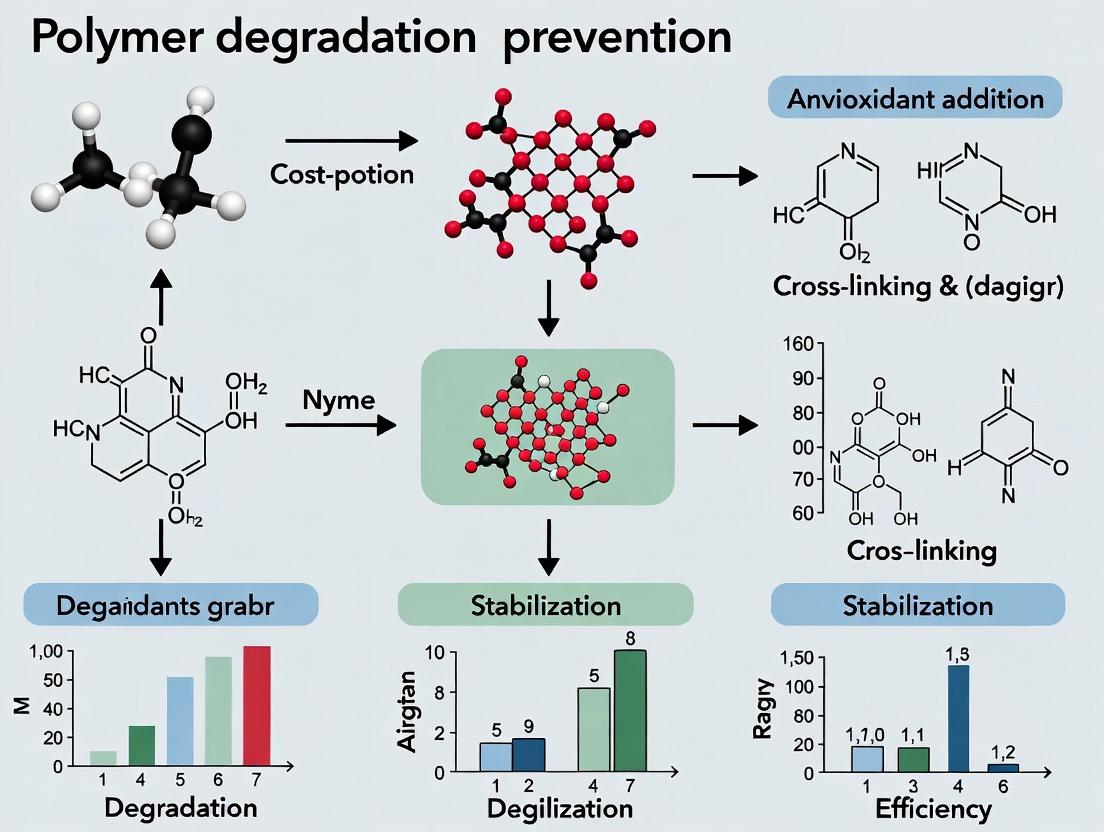
This comprehensive review explores the latest scientific strategies for preventing polymer degradation and enhancing material stability, critical for reliable biomedical applications.
Advanced Strategies for Polymer Degradation Prevention: Stabilization Methods for Biomedical Research and Drug Development
Abstract
This comprehensive review explores the latest scientific strategies for preventing polymer degradation and enhancing material stability, critical for reliable biomedical applications. Targeted at researchers and drug development professionals, the article provides a foundational understanding of degradation mechanisms, detailed methodological approaches for stabilization, troubleshooting frameworks for optimization, and comparative validation techniques. It bridges fundamental polymer science with practical implementation challenges in developing robust drug delivery systems, implants, and therapeutic devices.
Understanding Polymer Degradation: Core Mechanisms and Biomedical Implications
Troubleshooting Guide & FAQs
This technical support center addresses common experimental challenges in polymer degradation research, framed within a thesis on polymer stabilization and prevention methods.
FAQ 1: During hydrolytic degradation experiments, my polyester sample shows inconsistent mass loss between replicates. What could be causing this?
Answer: Inconsistent mass loss in hydrolytic studies is often due to poor control of the aqueous environment's pH and temperature. Buffer capacity can be exhausted if the volume is too small relative to the sample surface area, leading to localized pH drops that accelerate degradation unevenly. Ensure a buffer-to-polymer mass ratio of at least 100:1 and use a thermo-stated, stirred bath. Also, dry samples thoroughly in a vacuum desiccator (e.g., 40°C for 48 hours) before each weighing to remove residual absorbed water.
FAQ 2: In oxidative degradation tests, I'm struggling to quantify low levels of carbonyl formation via FTIR. What best practices can improve sensitivity?
Answer: Low carbonyl signal requires enhanced spectral quality and baseline correction. Use a high-resolution FTIR setting (≥4 cm⁻¹) and accumulate at least 64 scans. Employ a potassium bromide (KBr) pellet method for films to improve homogeneity. For baseline correction, draw a tangent line between points at ~1850 cm⁻¹ and ~1650 cm⁻¹. The carbonyl index (CI) should be calculated using the peak height at ~1720 cm⁻¹ relative to a stable reference peak (e.g., C-H stretch at ~1450 cm⁻¹).
FAQ 3: My enzymatic degradation assay for a polysaccharide shows no activity, even with a positive control. How should I troubleshoot the enzyme solution?
Answer: First, verify enzyme activity and storage conditions. Lyophilized enzymes must be reconstituted in the correct buffer (e.g., phosphate for pH stability) and aliquoted to avoid freeze-thaw cycles. In your assay, include a known substrate (e.g., carboxymethyl cellulose for cellulase) as a positive control. Check for inhibitors in your polymer sample, such as residual monomers or antimicrobials, by dialyzing the sample pre-test. Ensure the incubation temperature is optimal for the enzyme (typically 37°C for many hydrolases).
FAQ 4: During accelerated photolytic aging, my UV-exposed samples develop unexpected coloration. Is this interfering with my tensile strength measurements?
Answer: Yes, coloration indicates the formation of chromophores from oxidation or side reactions, which can alter mechanical properties. To isolate the effect of pure UV radiation, ensure your chamber has filters to remove wavelengths below 300 nm to avoid synergistic thermal degradation. Use quartz plates for truly neutral filtration. For your tensile tests, shield samples from ambient light post-exposure and test immediately. Consider adding an UV stabilizer (e.g., HALS) control set to differentiate photolytic from thermo-oxidative effects.
Experimental Protocol: Standard Hydrolytic Degradation of Polylactic Acid (PLA) Objective: To quantitatively assess mass loss and molecular weight change of PLA in phosphate-buffered saline (PBS). Methodology:
- Sample Preparation: Compression mold PLA into films (thickness: 100 ± 10 µm). Cut into 10 mm x 10 mm squares. Weigh initial mass (W₀) and record.
- Degradation Medium: Prepare 0.1 M PBS, pH 7.4, with 0.02% sodium azide to prevent microbial growth.
- Incubation: Place each sample in a vial with 20 mL of PBS (maintain sink conditions). Incubate at 37°C in an orbital shaker (50 rpm).
- Sampling: At predetermined time points (e.g., 1, 2, 4, 8 weeks), remove samples in triplicate.
- Analysis:
- Mass Loss: Rinse samples with deionized water, dry to constant weight in a vacuum desiccator. Calculate percentage mass loss: [(W₀ - Wₜ)/W₀] x 100.
- Molecular Weight: Dissolve dried samples in chloroform and analyze via Gel Permeation Chromatography (GPC) against polystyrene standards.
Experimental Protocol: Carbonyl Index Measurement via FTIR for Polypropylene Oxidation Objective: To track oxidative degradation by quantifying carbonyl group formation. Methodology:
- Sample Preparation: Prepare polypropylene films thin enough for FTIR transmission (≤100 µm thick).
- Oxidative Exposure: Age samples in an oven at 90°C or in a controlled UV weathering device.
- FTIR Spectroscopy: Acquire spectra in transmission mode from 4000-600 cm⁻¹. Use a pure, unaged PP film for background subtraction.
- Data Calculation: Identify the carbonyl peak (~1715-1720 cm⁻¹). Choose an internal reference peak invariant to oxidation (e.g., the CH₂ bending vibration at ~1455 cm⁻¹). Calculate the Carbonyl Index: CI = (Acarbonyl / Areference), where A is the peak absorbance (height or area).
Quantitative Data Summary
Table 1: Typical Degradation Rates of Common Polymers Under Different Pathways
| Polymer | Degradation Pathway | Test Conditions | Key Measured Outcome | Approximate Rate / Change |
|---|---|---|---|---|
| Polylactic Acid (PLA) | Hydrolytic | 37°C, pH 7.4 PBS | Mass Loss | 50-90% loss over 24-52 weeks |
| Polyethylene (UHMWPE) | Oxidative | 80°C in air | Carbonyl Index (CI) | CI increase from 0 to >5 over 30 days |
| Polycaprolactone (PCL) | Enzymatic (Lipase) | 37°C, pH 7.2 buffer | Molecular Weight Drop | Mn reduced by 80% in 15 days |
| Polystyrene (PS) | Photolytic | UV λ > 300 nm, 60°C | Tensile Strength Loss | 50% reduction after 300 hrs |
Table 2: Common Stabilizers and Their Mechanisms
| Stabilizer Type | Example Compound | Primary Function | Effective Against Pathway | Recommended Loading (wt%) |
|---|---|---|---|---|
| Hindered Amine Light Stabilizer (HALS) | Tinuvin 770 | Radical scavenger | Oxidative, Photolytic | 0.2 - 1.0 |
| UV Absorber (UVA) | Benzotriazole (Tinuvin 328) | UV radiation absorption | Photolytic | 0.5 - 2.0 |
| Antioxidant (Primary) | Irganox 1010 (Phenolic) | Donates H to peroxy radicals | Oxidative | 0.1 - 0.5 |
| Antioxidant (Secondary) | Irgafos 168 (Phosphite) | Decomposes hydroperoxides | Oxidative | 0.1 - 0.3 |
Visualizations
Hydrolytic Degradation Mechanism of Polyester
Free Radical Chain Reaction in Oxidative Degradation
Polymer Degradation Experiment Workflow
The Scientist's Toolkit: Research Reagent Solutions
| Item | Function in Degradation/Stabilization Research |
|---|---|
| Phosphate Buffered Saline (PBS), pH 7.4 | Simulates physiological conditions for hydrolytic and enzymatic degradation studies. |
| Sodium Azide (NaN₃) | Used at low concentration (0.02-0.05%) to inhibit microbial growth in long-term aqueous aging tests. |
| 2,6-Di-tert-butyl-4-methylphenol (BHT, Irganox 1010) | Primary phenolic antioxidant; standard for studying and preventing oxidative degradation. |
| Benzotriazole UV Absorber (e.g., Tinuvin 328) | Common UVA used to assess photostabilization efficacy in polymer films. |
| Lipase from Pseudomonas cepacia (or other specific enzymes) | Standard enzyme for studying the enzymatic degradation of aliphatic polyesters like PCL. |
| Deuterated Chloroform (CDCl₃) | Standard solvent for NMR analysis to quantify degradation products and structural changes. |
| Polystyrene GPC Standards | Essential for calibrating Gel Permeation Chromatography to monitor molecular weight changes. |
| Accelerated Weathering Chamber (QUV/UVA-340 lamps) | Equipment for controlled, reproducible photolytic and photo-oxidative aging studies. |
Technical Support Center
Troubleshooting Guides & FAQs
Q1: During accelerated aging studies of our PLGA-based drug delivery implant, we observe faster-than-expected molecular weight drop and acidic byproduct accumulation. Which intrinsic factors should we investigate first? A: This points to hydrolysis rate issues. Prioritize these factors:
- Molecular Weight & Distribution: Lower Mw polymers have more chain ends, accelerating autocatalytic hydrolysis. Check your PDI (<1.2 is ideal for consistent degradation).
- Crystallinity: The amorphous regions are more accessible to water. Verify your processing (e.g., annealing) hasn't altered the expected crystallinity.
- Commoner Ratio (Chemistry): A higher glycolide (G) content in PLGA increases hydrophilicity and degradation rate. Confirm your polymer's G:L ratio.
- Protocol: GPC & DSC Characterization
- Objective: Determine Mn, Mw, PDI, and crystallinity.
- Method:
- GPC: Dissolve pre- and post-aging samples in THF (1 mg/mL). Use polystyrene standards. Calculate Mn, Mw, PDI.
- DSC: Seal 3-5 mg sample in Al pan. Run heat-cool-heat cycle from -20°C to 200°C at 10°C/min under N₂. Analyze 1st heat for Tg and crystallinity (%C = ΔHf / ΔHf° * 100%, where ΔHf° for 100% crystalline PLA is 93 J/g).
Q2: Our amorphous polymeric film becomes brittle and cracks upon storage at 25°C, well below its documented Tg. What could cause this physical aging? A: Physical aging occurs in amorphous glasses as they relax toward equilibrium. Below Tg, molecular mobility is low but not zero. The primary intrinsic factor is the Tg itself relative to storage temperature (Tstorage). The driving force is the difference (Tg - Tstorage). A larger gap increases aging rate. Mitigate by:
- Plasticizing to lower Tg closer to storage T (reducing the gap).
- Designing a polymer with higher Tg if storage cannot be controlled.
- Protocol: Monitoring Enthalpic Recovery
- Objective: Quantify physical aging via enthalpy relaxation.
- Method:
- Age samples at controlled Tstorage (e.g., 25°C) for set times (tₐ).
- Use DSC: Heat aged sample from Tstorage to Tg+30°C at 10°C/min.
- Measure the endothermic peak area (ΔH) just above Tg, which corresponds to recovered enthalpy. Plot ΔH vs. log(tₐ) to characterize aging kinetics.
Q3: How does polymer chemistry (backbone structure) intrinsically influence oxidative degradation pathways in polyolefins used in device packaging? A: The C-H bond dissociation energy (BDE) in the backbone is critical.
- Tertiary C-H bonds (e.g., in PP) have lower BDE (~91 kcal/mol) vs. secondary C-H (in PE, ~98 kcal/mol), making PP much more susceptible to radical formation and chain scission.
- Unsaturation (C=C) in the chain acts as a site for oxygen addition.
- The chemistry dictates the need for specific stabilizers: PP requires more robust phenolic antioxidants and phosphite processing stabilizers than HDPE.
Q4: We see batch-to-batch variability in the release profile of our API from a crystalline PCL matrix. Could intrinsic factors be the cause? A: Yes. For semi-crystalline polymers like PCL, crystallinity is the master variable.
- Higher crystallinity reduces drug diffusion pathways and slows degradation, retarding release.
- Variability arises from processing (cooling rate, annealing) which changes the crystallinity and crystalline morphology (spherulite size).
- Protocol: Standardizing Crystallization Conditions
- Objective: Achieve consistent crystallinity.
- Method:
- Melt polymer at Tm + 30°C for 5 min to erase thermal history.
- Program a controlled cooling rate (e.g., 5°C/min) to 25°C in a DSC or hot stage.
- Alternatively, for films, cast from solution onto a temperature-controlled plate held at a specific Tc (e.g., 40°C for PCL).
- Validate consistency via DSC (crystallinity %) and XRD (crystal form).
Table 1: Impact of Intrinsic Factors on Degradation Rate (Hydrolysis)
| Intrinsic Factor | High Value / State | Typical Effect on Hydrolysis Rate (k) | Representative Quantitative Impact* |
|---|---|---|---|
| Molecular Weight (Mn) | Low (e.g., 10 kDa) | Increases | PLGA 50:50, Mn 10 kDa: ~90% mass loss in 28 days vs. 70+ days for 80 kDa |
| Crystallinity (%) | High (e.g., 60%) | Decreases | PLLA, 60% cryst: ~2 years for full erosion; 0% cryst: ~6 months |
| Tg (°C) | High (e.g., 80°C) | Decreases (below Tg) | Storage at 25°C: Aging rate for Tg=40°C >> aging rate for Tg=80°C |
| Hydrophilicity (Chemistry) | High (e.g., high glycolide) | Increases | PLGA 85:15 (L:G) degrades in ~6 months; PLGA 50:50 degrades in ~1 month |
*Data compiled from recent literature. Values are illustrative; exact rates depend on environment.
Table 2: Bond Dissociation Energies (BDE) & Oxidative Susceptibility
| Polymer | Critical Bond Type | Approx. BDE (kcal/mol) | Relative Oxidative Susceptibility |
|---|---|---|---|
| Polypropylene (PP) | Tertiary C-H | ~91 | Very High |
| Low-Density Polyethylene (LDPE) | Secondary C-H | ~98 | High |
| Polystyrene (PS) | Allylic C-H | ~88 | Very High |
| Polyvinyl chloride (PVC) | Tertiary C-H (after deHCl) | ~91 | Very High (upon degradation) |
Visualizations
Title: Polymer Degradation Intrinsic Factor Relationships
Title: Troubleshooting Polymer Degradation Workflow
The Scientist's Toolkit: Research Reagent Solutions
Table 3: Essential Materials for Investigating Intrinsic Factors
| Item / Reagent | Function in Context of Intrinsic Factors |
|---|---|
| Size Exclusion Chromatography (GPC/SEC) System | Determines absolute or relative molecular weight (Mn, Mw) and polydispersity (PDI), the key metrics for MW factor. |
| Differential Scanning Calorimeter (DSC) | Measures Tg, melting point (Tm), and enthalpy of fusion (ΔHf) to calculate percent crystallinity. Critical for Tg and crystallinity. |
| Deuterated Solvents (e.g., CDCl₃, DMSO-d₆) | Required for NMR analysis to verify polymer chemistry (commoner ratio, end groups) and confirm structure. |
| Controlled Atmosphere Oven (Dry Air, O₂, N₂) | Enables accelerated aging studies under specific environments to isolate oxidative vs. hydrolytic pathways. |
| Programmable Hot Stage with Humidity Control | Allows simulation of real-world storage conditions (T, RH) while monitoring physical aging or degradation in situ. |
| Stabilizer Kits (e.g., phenolic antioxidants, hindered amine light stabilizers) | Used in control experiments to suppress extrinsic degradation, thereby revealing the underlying intrinsic degradation rate. |
| NIST-Traceable Molecular Weight Standards | Essential for calibrating GPC for accurate MW measurement (e.g., polystyrene, PMMA, or PEG standards). |
Technical Support & Troubleshooting Center
This support center provides guidance for researchers working on polymer stabilization within drug delivery and biomedical applications. The FAQs address common experimental challenges related to critical extrinsic factors.
Frequently Asked Questions (FAQs)
Q1: Our poly(lactic-co-glycolic acid) (PLGA) nanoparticles are degrading far too quickly in in vitro release media at pH 7.4. How can we stabilize them? A: Rapid degradation at physiological pH is common. Stabilization can be approached via formulation and environmental control.
- Chemical Stabilization: Incorporate hydrophobic additives like polycaprolactone (PCL) or use end-group capping to reduce hydrolytic susceptibility.
- Environmental Control: Ensure your release media contains appropriate buffers (e.g., PBS) to maintain a constant pH, as autocatalytic degradation can accelerate if pH drops locally.
- Protocol: To test stabilization efficacy, run parallel in vitro degradation studies: Prepare stabilized and control nanoparticle batches. Incubate in PBS (pH 7.4) at 37°C under gentle agitation. Sample at intervals (e.g., 1, 3, 7, 14 days). Analyze molecular weight decrease via GPC and mass loss via gravimetric analysis.
Q2: During accelerated stability testing at elevated temperatures (e.g., 40°C), our polymer film becomes brittle. Is this predictive of real-time aging? A: Yes, accelerated thermal testing is a standard predictive tool, but brittleness indicates a specific failure mode.
- Cause: Elevated temperature accelerates chain scission (hydrolysis or oxidative), reducing average molecular weight (Mn) and compromising mechanical integrity.
- Troubleshooting: Incorporate an antioxidant (e.g., 0.1-0.5% w/w Butylated hydroxytoluene (BHT)) to mitigate oxidative degradation. Use plasticizers (e.g., citrate esters) to maintain chain mobility and delay embrittlement.
- Protocol: Accelerated Thermal Aging. Store polymer films in controlled ovens at 25°C (control), 40°C, and 60°C. At weekly intervals, retrieve samples and perform tensile testing (ASTM D882). Plot Young's Modulus and Elongation at Break vs. time. Use the Arrhenius equation to model degradation kinetics and predict shelf-life at 25°C.
Q3: Our drug-loaded hydrogel degrades unpredictably in cell culture media compared to simple buffer. Why? A: Biological media contains complex, reactive components that simple buffers lack.
- Primary Culprits: Reactive oxygen species (ROS) from serum, enzymatic activity (esterases, proteases), and catalytic ions (e.g., Ca²⁺, Fe²⁺).
- Solution: Characterize degradation in full media, not just buffer. Add inhibitors to your test:
- For ROS: Add 1-10 mM of a radical scavenger like N-acetylcysteine.
- For enzymes: Use serum-free media or add broad-spectrum protease inhibitors.
- Protocol: Prepare hydrogel discs. Immerse in (a) PBS, (b) PBS + 10% FBS, (c) PBS + 10% FBS + 5mM N-acetylcysteine. Incubate at 37°C. Measure swelling ratio and dry mass remaining daily. Compare rates between groups to identify the dominant degradation pathway.
Q4: How do we reliably simulate and test for degradation caused by mechanical stress (e.g., in a joint implant)? A: Simulating in vivo mechanical stress requires specialized equipment and a cyclic testing regimen.
- Method: Use a bioreactor or mechanical tester capable of cyclic compression/tension.
- Protocol: Cyclic Load Degradation Test.
- Immerse polymer sample in simulated body fluid (SBF) at 37°C.
- Apply a cyclic compressive load (e.g., 0 to 10 MPa at 1 Hz frequency) for 8 hours per day.
- Leave under static immersion for the remaining 16 hours.
- Replace SBF weekly to maintain ion concentration.
- At predetermined intervals (e.g., every 50,000 cycles), characterize surface cracks via SEM, measure molecular weight (GPC), and analyze solution for degradation products (HPLC).
Table 1: Half-life (t½) of Polymer Degradation Under Various Extrinsic Conditions.
| Polymer | Condition 1 (pH 7.4, 37°C) | Condition 2 (pH 5.0, 37°C) | Condition 3 (pH 7.4, 50°C) | Condition 4 (With ROS/Enzymes) |
|---|---|---|---|---|
| PLGA (50:50) | ~20-30 days | ~5-10 days | ~3-7 days | ~7-15 days |
| Poly(L-lactic acid) | >1 year | ~180-360 days | ~90-180 days | ~200-300 days |
| Polycaprolactone | >2 years | >1 year | ~200-400 days | >1 year |
| Chitosan | Stable | ~60-100 days (hydrolysis) | Stable | ~30-60 days (enzymatic) |
| Key Takeaway | Hydrolysis rate is pH and temp-dependent. Acidic pH and high temp drastically increase rate. Biological factors can double the degradation rate. |
Experimental Protocol: Comprehensive Hydrolytic Degradation Study
Title: Standard Operating Procedure for Evaluating pH- and Temperature-Dependent Hydrolytic Degradation of Polyesters.
Objective: To quantitatively determine the degradation profile of a polymer film under controlled extrinsic factors.
Materials: See "The Scientist's Toolkit" below.
Methodology:
- Sample Preparation: Solution-cast polymer films (thickness: 100 ± 20 µm). Cut into precise discs (diameter: 10 mm). Dry in vacuo to constant weight (W₀).
- Experimental Groups: Prepare 20ml glass vials containing 10 ml of degradation medium (Phosphate buffer at pH 5.0, 7.4, and 10.0). Triplicate samples per condition.
- Incubation: Place vials in temperature-controlled incubators/shakers set to 25°C, 37°C, and 50°C.
- Sampling: At predetermined time points (e.g., 1, 3, 7, 14, 28 days), remove triplicate vials per condition.
- Analysis:
- Gravimetry: Rinse samples, dry to constant weight (Wₜ). Calculate mass loss %:
(W₀ - Wₜ)/W₀ * 100. - GPC: Determine Mn, Mw, and Đ to track chain scission.
- pH Monitoring: Record pH of the degradation medium at each time point.
- SEM: Image surface morphology of dried samples at final time point.
- Gravimetry: Rinse samples, dry to constant weight (Wₜ). Calculate mass loss %:
Visualizations
Title: Experimental Workflow for Polymer Degradation Analysis
Title: Polymer Degradation Failure Pathway
The Scientist's Toolkit: Research Reagent Solutions
Table 2: Essential Materials for Polymer Degradation & Stabilization Studies.
| Reagent/Material | Function & Rationale |
|---|---|
| Phosphate Buffered Saline (PBS) pH 7.4 | Standard physiological medium for in vitro degradation and release studies. |
| Simulated Body Fluid (SBF) | Ionic solution mimicking human blood plasma for more biologically relevant degradation. |
| Butylated Hydroxytoluene (BHT) | Primary antioxidant; scavenges free radicals to inhibit oxidative chain scission. |
| N-Acetylcysteine | Thiol-based antioxidant; effectively quenches Reactive Oxygen Species (ROS) in media. |
| Protease Inhibitor Cocktail | Broad-spectrum inhibition of enzymatic degradation (proteases, esterases) in serum. |
| Dichloromethane (DCM) / Chloroform | Common solvents for processing and fabricating polyester-based films and nanoparticles. |
| Size Exclusion/GPC Columns | For measuring molecular weight distribution changes (Mn, Mw) due to chain scission. |
| Polylactic acid (PLA) & PLGA Standards | Crucial calibration standards for accurate GPC analysis of degradation products. |
Technical Support Center: Troubleshooting & FAQs
Frequently Asked Questions
Q1: During in vitro release testing of our PLGA-based microparticles, we observe an initial burst release exceeding 60%, followed by a lag phase with minimal API release. What could be causing this anomalous triphasic profile? A1: This is a common issue linked to polymer degradation kinetics and API distribution. The high burst release indicates significant surface-localized API. The subsequent lag phase often corresponds to the time required for aqueous medium to penetrate the polymer matrix and initiate bulk erosion. To mitigate:
- Check your emulsion stabilization process: Ensure homogenization speed and time are optimized to create a uniform oil-in-water emulsion, reducing API migration to the droplet surface.
- Consider a double emulsion (W/O/W) method: For hydrophilic drugs, this better encapsulates the API within the polymer core.
- Modify PLGA end-group or molecular weight: Using ester-endcapped (slower degrading) or higher Mw PLGA can delay hydration and reduce initial burst.
- Apply a surface coating: A thin PVA or chitosan coating can provide an initial diffusion barrier.
Q2: Our HPLC analysis shows new, unidentified peaks when quantifying our peptide API from accelerated stability samples of a polymeric nanoformulation. How do we determine if this is chemical degradation of the API or a polymer-API interaction? A2: Systematic forced degradation studies are required.
- Isolate the cause: Prepare and incubate separate samples: (a) API in buffer alone, (b) polymer in buffer alone, (c) physical mixture of API + polymer, (d) the formulated nanoformulation.
- Analytical Techniques:
- Use LC-MS (Liquid Chromatography-Mass Spectrometry) to identify the molecular weight and possible structure of the degradants.
- Perform FTIR (Fourier-Transform Infrared Spectroscopy) on the solid residue to check for new covalent bond formation between polymer degradation products (e.g., carboxylic acids from PLGA) and the API.
- SEC/GPC (Size Exclusion Chromatography) of the polymer from the degraded formulation can confirm if polymer chain scission has occurred.
Q3: We observe a significant increase in particle aggregation and a change in release kinetics after 3 months of real-time stability storage (4°C) for our polymeric nanoparticles. What are the likely mechanisms? A3: This points to physical instability of the colloidal system and potential slow polymer crystallization.
- Primary Cause - Plasticizer Loss/Relaxation: Residual organic solvent or water can act as a plasticizer. Over time, it may diffuse out, allowing polymer chains to rearrange, leading to particle fusion (aggregation) and densification, which slows release.
- Polymer Crystallization: Semi-crystalline polymers (like PCL, PLA) can undergo slow crystallization, reducing permeability.
- Troubleshooting Protocol: Analyze stored samples via:
- DSC (Differential Scanning Calorimetry): Check for changes in glass transition (Tg) or new crystallization/melting peaks.
- Dynamic Light Scattering (DLS) & SEM: Monitor size, PDI, and morphology over time.
- XRD (X-ray Diffraction): Quantify any increase in crystallinity.
Troubleshooting Guides
Issue: Inconsistent Release Profiles Between Batches
| Probable Cause | Diagnostic Test | Corrective Action |
|---|---|---|
| Polymer Mw/LA:GA Ratio Variability | Perform GPC and 1H-NMR on each polymer batch. | Source polymer from single, certified vendor. Implement strict incoming QC. |
| Variable Encapsulation Efficiency | Measure EE% for each batch and correlate with release. | Standardize solvent evaporation/drying time & temperature. Control stirring rate precisely. |
| Incomplete Polymer Precipitation | Filter particles through 1µm filter; weigh residual solids. | Optimize antisolvent addition rate and ratio. Use sonication during precipitation. |
Issue: Loss of API Potency During Sterilization (Gamma Irradiation)
| Probable Cause | Diagnostic Test | Corrective Action |
|---|---|---|
| Radical-Mediated API Degradation | Use ESR Spectroscopy to detect free radicals post-irradiation. | Incorporate radical scavengers (e.g., ascorbic acid, mannitol) into the formulation. |
| Polymer Degradation Accelerating API Breakdown | Compare GPC traces of irradiated vs. control polymer. | Use lower radiation doses (e.g., 15 kGy instead of 25 kGy) if permissible. Consider aseptic processing. |
| pH Shift Due to Radiolysis of Water | Measure pH of suspension immediately post-irradiation. | Use robust, irradiation-stable buffers (e.g., citrate, phosphate) at optimal pH for API stability. |
The Scientist's Toolkit: Research Reagent Solutions
| Item | Function & Rationale |
|---|---|
| End-capped vs. Uncapped PLGA | Ester-endcapped (e.g., RG) slows acid generation, modulating degradation rate. Acid-endcapped (e.g., RG) degrades faster, useful for faster release. |
| Poloxamer 407 (Pluronic F127) | Non-ionic surfactant for nanoparticle stabilization. Also acts as a thermal gelling agent for injectable depot systems. |
| Trehalose / Sucrose | Cryoprotectant/Lyoprotectant. Prevents aggregation during freeze-drying (lyophilization) of nanocarriers by forming an amorphous glassy matrix. |
| D-(+)-Trehalose 6,6'-dimycolate | Immunomodulator used in adjuvant research for vaccine delivery systems, influencing safety profile. |
| Mass Spectrometry-Compatible Buffers | e.g., Ammonium acetate, ammonium bicarbonate. Allow direct analysis of degradation products without ion suppression in LC-MS. |
| Fluorescent Probes (e.g., Coumarin-6, DIR dye) | Hydrophobic tracers to visualize and quantify nanoparticle uptake, distribution, and release in vitro and in vivo. |
| Enzyme Inhibitors (e.g., Pepstatin A, E-64) | Added to release media to inhibit protease activity that may confound release data by degrading peptide/protein APIs. |
Experimental Protocols
Protocol 1: Assessing Hydrolytic Degradation Kinetics of Polyester Matrices Objective: Quantify mass loss, molecular weight change, and acid generation over time.
- Sample Preparation: Prepare polymer films or precise weights of microparticles (n=5 per time point).
- Incubation: Immerse samples in pre-warmed phosphate buffer (pH 7.4, 37°C) under gentle agitation (50 rpm). Use a buffer volume ensuring sink condition for acidic degradation products.
- Sampling: At predetermined intervals (e.g., 1, 3, 7, 14, 28 days), remove samples.
- Analysis:
- Mass Loss: Rinse samples with DI water, vacuum-dry to constant weight. Calculate % mass remaining.
- Molecular Weight: Dissolve dried samples in THF or DCM and analyze via GPC vs. polystyrene standards.
- pH Change: Measure pH of the incubation medium at each time point.
- Acid Release: Titrate the incubation medium with 0.01M NaOH or use a glycolic/lactic acid assay kit.
Protocol 2: Accelerated Stability Study for Release Kinetics Prediction Objective: Use elevated temperature to predict long-term release profiles.
- Formulation: Prepare your polymeric drug delivery system using a validated process.
- Storage Conditions: Place samples (n=3 per condition) in stability chambers at:
- Real-time: 5°C ± 3°C, 25°C/60% RH, 40°C/75% NMT (for solid dosage forms).
- Accelerated: 40°C ± 2°C / 75% ± 5% RH.
- Sampling: Withdraw samples at 0, 1, 2, 3, 6 months.
- Testing: Perform in vitro release testing (USP Apparatus 2 or 4) under standard conditions on samples from each time point. Analyze API content and purity (HPLC).
- Modeling: Plot release profiles. Use mathematical models (e.g., Korsmeyer-Peppas, Higuchi) to compare kinetics across storage conditions and assess correlation.
Visualization: Diagrams
Title: Polymer Degradation Pathways Influencing API Release
Title: Workflow for Release Profile Stability Assessment
Troubleshooting & FAQ Hub
Frequently Asked Questions
Q1: During our in vitro degradation study of a PLLA orthopedic screw, we observed a sudden, unexpected drop in molecular weight and yield strength between weeks 8 and 12. What is the most likely mechanism? A1: This pattern is characteristic of autocatalytic hydrolytic degradation. Ester bond hydrolysis in semi-crystalline polymers like PLLA generates carboxylic acid end groups, which lower the local pH inside the device, accelerating further hydrolysis. This creates a bulk-eroding core with a less-degraded surface layer. Once the core's molecular weight drops sufficiently, the mechanical load-bearing capacity collapses rapidly.
Q2: Our polyurethane-based ventricular assist device membrane is showing surface cracks and increased macrophage adhesion in animal trials, not predicted by ISO 10993-4 hemocompatibility tests. What could be the cause? A2: This likely indicates environmental stress cracking (ESC) mediated by lipid adsorption. Blood lipids (e.g., cholesterol esters) can diffuse into the polymer, acting as plasticizing agents and reducing the local yield strength. Under cyclic stress, this leads to microcrack formation. The exposed rough surface and altered surface chemistry then provoke a foreign body reaction. Standard in vitro tests often use simplified media lacking critical lipid components.
Q3: We are monitoring in vivo biodegradation of a PLGA drug-eluting scaffold via Micro-CT. How do we distinguish between actual polymer loss and artifact from increased water uptake/swelling? A3: Use a contrast-enhanced scanning protocol. Prior to scanning, immerse the explant in an iodine-based contrast agent (e.g., I2KI). The agent diffuses into water-swollen regions and binds to the polymer, increasing X-ray attenuation in proportion to the remaining polymer mass. A decrease in contrast signal correlates directly with mass loss, independent of swelling-induced volume changes.
Q4: Our hydrogel-based sensor is failing due to calcification (mineral deposits) within 3 months, disrupting conductivity. Which stabilization strategy is most viable for long-term implantation? A4: Implement covalent grafting of bisphosphonate analogs (e.g., pamidronate) onto the polymer network. Bisphosphonates have a high affinity for calcium phosphate crystals but, when covalently bound, they inhibit crystal growth and maturation by blocking active growth sites without being incorporated. This strategy has shown a >70% reduction in calcification in in vivo models for polyurethane implants.
Experimental Protocols
Protocol 1: Accelerated In Vitro Hydrolytic Degradation with Periodic Mechanical Testing Objective: To predict long-term mechanical integrity loss of absorbable polyesters (e.g., PLGA, PCL) in a time-efficient manner. Materials: Polymer specimens (ISO 527-2 Type 5B dumbbells), 0.1M Phosphate Buffered Saline (PBS, pH 7.4 ± 0.1), 0.02% sodium azide, orbital shaking incubator (37°C ± 1°C), tensile tester, analytical balance, vacuum desiccator. Procedure:
- Record initial dry mass (M₀), thickness, and perform baseline tensile test (n=5).
- Immerse specimens in PBS with sodium azide (prevents microbial growth) at a 20:1 buffer-to-polymer volume ratio.
- Place containers in orbital shaker incubator at 37°C, 60 rpm.
- At predetermined intervals (e.g., 1, 2, 4, 8, 12 weeks):
- Rinse specimens in deionized water and dry to constant mass in a vacuum desiccator.
- Record dry mass (Mₜ).
- Perform tensile testing (n=5 per interval) at a constant crosshead speed.
- Analyze buffer pH and collect for lactic/glycolic acid quantification via HPLC.
- Calculate: Mass Loss (%) = [(M₀ - Mₜ) / M₀] * 100.
Protocol 2: Evaluation of Oxidation-Induced Cracking in Polyurethane Elastomers Objective: To simulate and assess metal-ion catalyzed oxidative degradation relevant to pacemaker leads or stent coatings. Materials: Polyurethane films, 20% hydrogen peroxide (H₂O₂), 0.1M cobalt chloride (CoCl₂) solution (catalyst), ozone chamber (optional), stereo microscope, ATR-FTIR spectrometer. Procedure:
- Expose test group to Solution Immersion: Submerge in 3% H₂O₂ + 0.1M CoCl₂ at 37°C for 72 hours. Control group uses PBS only.
- Expose parallel test group to Gaseous Oxidant: Place in an ozone chamber (50 ppm O₃, 37°C) for 24 hours.
- Rinse all samples and inspect under stereo microscope for surface crazing, cracks, or discoloration.
- Perform ATR-FTIR analysis focusing on the carbonyl region (1500-1800 cm⁻¹). Key indicators: reduction in urethane C=O peak (~1700 cm⁻¹), appearance of new peaks for carboxylic acids (~1715 cm⁻¹) or chain scission products.
- Correlate surface morphology changes with chemical signature changes.
Protocol 3: Assessment of Protein & Lipid Adsorption Impact on Biocompatibility Objective: To evaluate the role of biofouling in initiating the foreign body response on silicone or polyurethane surfaces. Materials: Polymer discs (Ø 8mm), fetal bovine serum (FBS), cholesterol oleate solution, bovine serum albumin (BSA) solution, fluorescently labeled fibrinogen, quartz crystal microbalance with dissipation (QCM-D) or ellipsometer, macrophage cell line (e.g., RAW 264.7). Procedure:
- Conditioning: Incubate polymer discs in:
- Group A: 100% FBS for 1h at 37°C.
- Group B: 1 mg/mL cholesterol oleate in PBS for 24h at 37°C.
- Group C (Control): PBS only.
- Quantification: Use QCM-D to measure adsorbed mass and viscoelastic properties of the ad-layer in real-time. Alternatively, use ellipsometry for dry mass.
- Cell Response: Seed fluorescently labeled macrophages (50,000 cells/cm²) onto conditioned discs. After 24h, quantify:
- Adhesion density (via fluorescence/imaging).
- Morphology (spread vs. rounded).
- TNF-α secretion via ELISA.
Table 1: Degradation Timeline & Property Correlation for Common Implant Polymers
| Polymer | Typical Application | Onset of Mechanical Decline in vivo (Weeks) | Time to 50% Mass Loss (Months) | Key Degradation Byproduct | Primary Failure Mode |
|---|---|---|---|---|---|
| Poly(L-lactide) (PLLA) | Bone screws, anchors | 12-24 | 24-48 | Lactic acid | Bulk erosion, brittle fracture |
| Poly(lactide-co-glycolide) (PLGA 50:50) | Drug-eluting matrices | 2-4 | 1-3 | Lactic & Glycolic acid | Rapid bulk erosion, drug burst |
| Poly(ε-caprolactone) (PCL) | Long-term implants | 48-96 | >60 | Caproic acid | Slow surface erosion, creep |
| Poly(ether ether ketone) (PEEK) | Spinal cages | N/A (inert) | N/A | None | Wear debris, mechanical fatigue |
| Medical-grade Silicone (PDMS) | Catheters, shunts | N/A | N/A | None | Lipid adsorption, calcification |
Table 2: Efficacy of Common Stabilization Strategies
| Strategy | Target Degradation Mode | Example Implementation | Result (vs. Unstabilized Control) | Trade-off / Consideration |
|---|---|---|---|---|
| Bulk Antioxidant (Irganox 1010) | Metal-ion catalyzed oxidation | 0.5 wt% in polyurethane | 5x increase in time-to-crack in O₃ test | Potential for extractable leachables |
| Surface Crosslinking (Gamma Irradiation) | Hydrolysis, Surface Cracking | 25 kGy in N₂ atmosphere on PLGA | 40% reduction in water uptake; adhesion strength maintained | May alter bulk crystallinity |
| Nanocomposite Reinforcement (Hydroxyapatite) | Loss of Stiffness | 10 wt% nano-HA in PLLA | Modulus increased 200%; degradation rate slowed 30% | Agglomeration risk; may complicate processing |
| Zwitterionic Coating (Poly(sulfobetaine)) | Protein Adsorption / FBR | Surface-grafted via plasma init. | >90% reduction in macrophage adhesion in vitro | Long-term coating stability in vivo |
Diagrams
Polymer Hydrolysis-Autocatalysis-FBR Cascade
Integrated Test Workflow for Implant Failure
The Scientist's Toolkit: Research Reagent Solutions
| Item | Function & Rationale |
|---|---|
| Phosphate Buffered Saline (PBS) with 0.02% Sodium Azide | Standard hydrolytic degradation medium; azide prevents microbial overgrowth that skews mass loss/pH data. |
| Cobalt (II) Chloride / Hydrogen Peroxide Solution | Industry-standard (ISO 10993-13) oxidative challenge system to simulate metal-ion catalyzed oxidation in vivo. |
| Iodine-Potassium Iodide (I₂KI) Solution | Radio-opaque contrast agent for Micro-CT; diffuses into polymer proportional to water content, enabling differentiation of swelling vs. erosion. |
| Quartz Crystal Microbalance with Dissipation (QCM-D) Sensor Chips (Gold-coated) | For real-time, label-free measurement of protein/lipid adsorption mass and viscoelasticity on polymer surfaces. |
| Fluorescently-labeled Fibrinogen | Key adhesion protein in blood; its adsorption profile is a strong predictor of subsequent platelet and macrophage adhesion on biomaterials. |
| RAW 264.7 Murine Macrophage Cell Line | Standardized model for in vitro assessment of the early foreign body response (adhesion, spreading, activation). |
| Bisphosphonate-Polymer Conjugate (e.g., Pamidronate-PLGA) | Active stabilization reagent; inhibits calcification by binding to hydroxyapatite growth sites without deposition. |
| Zwitterionic Sulfobetaine Methacrylate (SBMA) Monomer | For creating ultra-low-fouling surface coatings via grafting or copolymerization to minimize protein adsorption. |
Stabilization Toolkit: Formulation Strategies and Additive Technologies
Troubleshooting Guides & FAQs
General Synthesis & Characterization
Q1: During the polymerization to incorporate bulky adamantyl side groups, I observe low monomer conversion and low molecular weight polymers. What could be the cause? A: This is commonly due to excessive steric hindrance during propagation. Ensure your initiator concentration is optimized (typically 0.5-1.0 mol% relative to monomer). Use a higher reaction temperature (e.g., 70-90°C for radical polymerization) to overcome kinetic barriers. Consider using a solvent like 1,4-dioxane or DMF to improve monomer solubility. Confirm monomer purity via NMR; moisture can deactivate catalysts.
Q2: My stabilized polymer shows unexpected color formation (yellowing/browning) after aging tests. Is this degradation? A: Yes, color change often indicates oxidative degradation, even with bulky groups. This suggests residual unstable linkages (e.g., tertiary hydrogens) or catalyst residues. Implement a post-synthesis purification step: precipitate polymer twice, then pass through an alumina oxide column to remove metal catalysts. Consider adding a secondary antioxidant (e.g., a hindered phenol like Irganox 1010 at 0.1-0.3 wt%) synergistically with the bulky group stabilization.
Q3: How do I verify the successful incorporation of stable linkages (e.g., imide vs. ester) via FTIR? A: Key spectral peaks must be identified and compared. Common pitfalls include overlapping peaks. Use high-resolution FTIR (≥4 cm⁻¹ resolution) and analyze thin, solvent-cast films.
| Linkage Type | Target FTIR Peak (cm⁻¹) | Potential Interfering Peak |
|---|---|---|
| Aryl Imide | 1778 (asym C=O), 1715 (sym C=O) | Ester C=O (~1735 cm⁻¹) |
| Aryl Ether | 1240 (Ar-O stretch) | Ester C-O-C (~1150 cm⁻¹) |
| Fluorene C-C | 1600, 1490 (skeletal vib.) | Phenyl ring peaks |
Protocol: FTIR Verification
- Dissolve 5 mg of purified polymer in 1 mL of appropriate solvent (e.g., THF for non-polar polymers).
- Cast solution onto a clean NaCl or KBr window.
- Allow solvent to evaporate completely in a dry atmosphere.
- Acquire FTIR spectrum from 4000-600 cm⁻¹.
- Use software to perform baseline correction and peak deconvolution for quantitative comparison of peak ratios.
Material Performance & Testing
Q4: Accelerated aging data shows improved thermal stability (Td5%) but unchanged glass transition temperature (Tg). Is the stabilization method working? A: Yes, this is a typical and positive result. Bulky side groups and stable linkages primarily inhibit chain scission (improving Td5%), but may have minimal impact on chain mobility, which governs Tg. Your data confirms the stabilization targets chemical bond integrity, not necessarily physical packing.
Q5: My stabilized polymer film cracks during solvent casting. How can I improve film formation? A: High rigidity from bulky groups can reduce film-forming ability. Optimize your casting protocol:
- Use a mixed solvent system (e.g., 80:20 chlorobenzene:o-dichlorobenzene) to slow evaporation rate.
- Reduce casting concentration to 2-3% w/v.
- Employ a stepped annealing process: dry at room temperature for 12h, then anneal at Tg+10°C under vacuum for 6h.
Experimental Protocols
Protocol 1: Synthesis of Polyimide with Bulky Triphenylamine Side Groups
Objective: To synthesize a stabilized polymer via condensation polymerization incorporating both bulky side groups and stable imide linkages. Materials: See "Research Reagent Solutions" table. Method:
- Monomer Synthesis: In a dried 3-neck flask under N₂, charge 4,4'-Diaminotriphenylamine (2.84 g, 10 mmol) and anhydrous NMP (30 mL). Stir until fully dissolved.
- Polymerization: Add Pyromellitic dianhydride (2.18 g, 10 mmol) in one portion. Rinse with 10 mL NMP. Stir at 25°C for 24h to form poly(amic acid) precursor.
- Imidization/Cyclization: Add toluene (15 mL). Heat to 180°C using a Dean-Stark apparatus for 6h to remove water.
- Precipitation & Purification: Cool, then drip reaction mixture into stirred methanol (500 mL). Filter the fibrous precipitate. Soxhlet extract with methanol for 24h. Dry under vacuum at 120°C for 24h. Yield is typically 85-92%.
Protocol 2: Hydrolytic Stability Test for Stable Linkages
Objective: Quantitatively compare degradation rates of polymers with standard vs. stable linkages. Method:
- Prepare polymer films of uniform thickness (100 ± 5 µm) by solution casting.
- Cut films into 1 cm x 1 cm squares (n=5 per group). Weigh each precisely (W₀).
- Place samples in vials with 10 mL of pH 7.4 phosphate buffer (for ester linkage test) or pH 10.0 carbonate buffer (for more aggressive testing).
- Age samples in an oven at 70°C for predetermined intervals (0, 7, 14, 28 days).
- Remove samples, rinse with DI water, dry to constant weight under vacuum (Wₜ).
- Calculate mass loss: % Mass Loss = [(W₀ - Wₜ) / W₀] * 100.
- Analyze solution via GPC for soluble oligomers and via NMR for degradation products.
Quantitative Data Summary:
| Polymer Type | Linkage | Bulky Group | Td5% (°C) | Mass Loss @ 28 days (pH 10, 70°C) | Mₙ Retention (%) |
|---|---|---|---|---|---|
| Poly(butylene succinate) | Ester | None | 312 | 98.5% | 5 |
| Poly(arylate) | Aryl Ester | t-butyl | 335 | 45.2% | 28 |
| Poly(ether ether ketone) | Ether/Ketone | None | 415 | <5% | 95 |
| Poly(imide) | Imide | Triphenylamine | 525 | <2% | 98 |
Diagrams
Title: Polyimide Stabilization Synthesis Workflow
Title: Degradation Pathway & Stabilization Mechanism
The Scientist's Toolkit: Research Reagent Solutions
| Item | Function in Stabilization Research | Example (Supplier) |
|---|---|---|
| Bulky Monomers | Introduce steric hindrance to shield polymer backbone from attack. | 4,4'-Diaminotriphenylamine (TCI America), 1,3-Bis(3,4-dicarboxyphenoxy)benzene dianhydride (Sigma-Aldrich) |
| High-Temp Solvents | Dissolve rigid polymers and facilitate high-temperature synthesis. | Anhydrous N-Methyl-2-pyrrolidone (NMP), Anhydrous 1,4-Dioxane (Fisher Scientific) |
| Condensation Catalyst | Accelerate formation of stable linkages (e.g., imide, ether). | Benzimidazole (for esterification), Isoquinoline (for imidization) (Alfa Aesar) |
| Inert Atmosphere System | Prevents oxidation during synthesis and processing. | Nitrogen/Argon Glovebox (MBraun) or Schlenk Line |
| Soxhlet Extractor | Removes unreacted monomers, oligomers, and catalyst residues. | Glassware kit with cellulose thimbles (Chemglass) |
| High-Temp GPC/SEC | Measures molecular weight and distribution of high-Tg polymers. | System with Agilent PL-GPC 220 and refractive index detector. |
| Accelerated Aging Chamber | Simulates long-term degradation under controlled stress (UV, heat, humidity). | Q-LAB QUV/spray (for UV) or ESPEC BTZ-100 (for thermal/humidity) |
Troubleshooting Guide & FAQs for Polymer Stabilization Experiments
This technical support center addresses common experimental issues encountered while evaluating antioxidant systems for polymer degradation prevention. The content supports research on stabilization methods, specifically focusing on the mechanisms of radical scavengers and peroxide decomposers.
FAQ & Troubleshooting
Q1: During accelerated aging tests of my polymer film stabilized with BHT, I observe a yellowing effect sooner than expected. What could be the cause? A: This is often due to the formation of colored quinone-type oxidation products from BHT itself. BHT (Butylated Hydroxytoluene) is a hindered phenol that scavenges radicals to form a stable phenoxyl radical, which can further oxidize. Troubleshooting steps:
- Verify Concentration: Excess BHT can exacerbate the issue. Confirm your loading is within the typical 0.05-0.5% w/w range.
- Check for Synergists: BHT is often used with a secondary antioxidant like a phosphite (e.g., Tris(nonylphenyl) phosphite) to reduce the phenoxyl radical back to the phenol, preventing chromophore formation.
- Evaluate Alternative Primary Antioxidants: Consider using a higher molecular weight hindered phenol (e.g., Irganox 1010) with lower volatility and reduced tendency to form colored by-products.
Q2: My analysis shows rapid depletion of Vitamin E (α-Tocopherol) in my pharmaceutical polymer matrix during storage stability testing. How can I improve its longevity? A: Vitamin E is an excellent biological radical scavenger but can be consumed quickly in aggressive oxidation environments.
- Assess Processing History: High-temperature extrusion or molding can degrade Vitamin E. Verify residual levels post-processing via HPLC.
- Implement a Regeneration System: Vitamin E's tocopheroxyl radical can be regenerated by co-antioxidants like Vitamin C (Ascorbic acid) or a thiol. Consider incorporating a biocompatible synergist.
- Control Environmental Factors: Ensure storage vials are impermeable to oxygen and use under an inert atmosphere (N₂) if possible.
Q3: The peroxide decomposer (e.g., Zinc dialkyldithiocarbamate) in my polyolefin formulation appears ineffective, evidenced by increased hydroperoxide concentration in FTIR. What should I check? A: Peroxide decomposers (PDs) require specific conditions to convert hydroperoxides into non-radical, stable products.
- Mechanism Mismatch: Confirm your PD is appropriate for the polymer. Sulfur-containing PDs (e.g., thioesters) are best for polyolefins, while phosphites are effective in polyesters.
- Acidic Environment Interference: Some PDs, like dithiophosphates, can be deactivated by acidic impurities. Purify your polymer resin or switch to a more hydrolysisc-resistant PD like a hindered amine light stabilizer (HALS), which also has peroxide-decomposing ability.
- Synergistic Pairing: PDs do not inhibit radical chain initiation. You must use it in combination with a primary radical scavenger (e.g., a hindered phenol). Verify both are present at an optimal ratio (often 1:1 to 1:2, PD:Primary AO).
Q4: When testing antioxidant efficacy via DSC Oxidative Induction Time (OIT), my results have high variability. What is the standard protocol to ensure reproducibility? A: OIT (ASTM D3895 or ISO 11357-6) is sensitive to experimental parameters.
- Sample Preparation: Use films of consistent thickness (typically 100-200 µm). Ensure uniform dispersion of the antioxidant by using a solvent-casting method or a lab-scale compounder.
- Instrument Calibration: Calibrate the DSC for temperature and enthalpy. Use indium or zinc standards.
- Protocol Parameters:
- Purge Gas: Use high-purity oxygen (99.95%+) at a constant flow rate (50 mL/min).
- Temperature: Choose an isothermal temperature relevant to your application (typically 150-200°C for polyolefins).
- Pan Type: Use open or pinhole aluminum pans to allow gas exchange.
- Criteria: Define the OIT onset clearly (e.g., intersection of baseline tangent with the oxidation exotherm slope).
Table 1: Common Antioxidants in Polymer Stabilization Research
| Antioxidant (Example) | Type | Typical Loading in Polymer (% w/w) | Key Mechanism | Common Analytical Method for Quantification |
|---|---|---|---|---|
| BHT | Radical Scavenger (Hindered Phenol) | 0.05 - 0.5 | Hydrogen atom transfer to peroxyl radicals | GC-MS, HPLC-UV |
| Irganox 1010 | Radical Scavenger (Hindered Phenol) | 0.1 - 0.5 | Hydrogen atom transfer; Multifunctional | HPLC-UV, SEC |
| α-Tocopherol (Vitamin E) | Radical Scavenger (Biological Phenol) | 0.1 - 1.0 | Hydrogen atom transfer; Regenerable | HPLC with fluorescence detection |
| Triphenyl Phosphite | Peroxide Decomposer | 0.1 - 0.3 | Reduces hydroperoxides to alcohols | ³¹P NMR, FTIR (for P=O formation) |
| Zinc Stearate | (Synergist with PD) | 0.05 - 0.2 | Acid scavenger; Prevents catalyst residue activity | Titration, AAS |
Table 2: Standard Test Methods for Antioxidant Efficacy
| Test Method | Standard | Key Measured Parameter | Typical Application |
|---|---|---|---|
| Oxidative Induction Time (OIT) | ASTM D3895, ISO 11357-6 | Time to onset of oxidation at constant temp. | Screening, quality control |
| Chemiluminescence | ISO 11357-8 | Photon emission from radical reactions | High-sensitivity oxidation profiling |
| FTIR Spectroscopy | ASTM E1252 | Carbonyl Index (1715 cm⁻¹), Hydroperoxide (3400 cm⁻¹) | Tracking degradation products |
| Yellowing Index | ASTM E313 | Color change (b*/YI) | Assessing cosmetic degradation |
Experimental Protocols
Protocol 1: Determining the Carbonyl Index via FTIR to Track Polymer Oxidation Objective: Quantify the extent of polymer chain scission due to oxidation by measuring the formation of carbonyl groups (esters, ketones, acids). Materials: FTIR spectrometer (ATR or transmission), polymer film samples (controlled thickness), software for peak analysis. Method:
- Prepare uniform polymer films (~100 µm thickness) containing the antioxidant system and a control.
- Subject samples to accelerated aging (e.g., in an oven at 80°C or under UV exposure per ASTM D4329).
- At regular intervals, acquire FTIR spectra of aged samples.
- Identify the carbonyl absorption band in the region 1650-1850 cm⁻¹ (peak typically ~1715 cm⁻¹).
- Identify an internal reference band that remains stable during oxidation (e.g., C-H stretch at ~2720 cm⁻¹ or a polymer skeletal vibration).
- Calculate the Carbonyl Index (CI) for each sample time point:
- CI = (Acarbonyl / Areference)aged - (Acarbonyl / Areference)unaged
- Where A is the absorbance (or peak area) of the specified band.
- Plot CI vs. aging time. A lower slope indicates a more effective antioxidant system.
Protocol 2: Evaluating Synergism Between a Radical Scavenger and a Peroxide Decomposer using OIT Objective: Demonstrate the synergistic stabilization effect of combining antioxidant types. Materials: DSC, polymer resin (e.g., polypropylene), primary antioxidant (e.g., Irganox 1010), secondary antioxidant (e.g., Irgafos 168), high-purity oxygen. Method:
- Prepare four PP samples via melt compounding:
- Sample A: No antioxidant (control).
- Sample B: 0.2% w/w Primary AO only.
- Sample C: 0.2% w/w Secondary AO only.
- Sample D: 0.2% w/w Primary AO + 0.2% w/w Secondary AO.
- Compression mold each sample into thin films (~100-200 µm).
- Perform OIT analysis on DSC:
- Equilibrate at 50°C.
- Heat at 20°C/min to isothermal temperature (e.g., 200°C for PP).
- Switch purge gas to oxygen (50 mL/min) and hold isothermally.
- Record the time from gas switch to the onset of the oxidation exotherm.
- Analysis: Compare OIT values. Synergism is confirmed if OIT(D) >> [OIT(B) + OIT(C)]. The combined system protects the polymer longer than the sum of the individual components.
Visualizations
Title: Dual Antioxidant Mechanisms in Polymer Stabilization
Title: Workflow for Evaluating Antioxidant Efficacy in Polymers
The Scientist's Toolkit: Research Reagent Solutions
Table 3: Essential Materials for Antioxidant Stabilization Research
| Item / Reagent | Function / Purpose | Key Considerations for Researchers |
|---|---|---|
| Hindered Phenol (e.g., Irganox 1010) | Primary Antioxidant: Donates H-atom to stop radical chain propagation. | High molecular weight for low volatility; multifunctional for increased efficacy. |
| Organophosphite (e.g., Irgafos 168) | Secondary Antioxidant (Peroxide Decomposer): Reduces hydroperoxides to stable alcohols. | Prone to hydrolysis; store under dry conditions. Analyze for phosphate content. |
| Hindered Amine Light Stabilizer (HALS, e.g., Tinuvin 770) | Multifunctional: Scavenges radicals, decomposes peroxides, regenerates. | Basic nature can interfere in some polymer matrices (e.g., halogens). |
| α-Tocopherol (Synthetic Vitamin E) | Biocompatible Radical Scavenger: Essential for medical polymers/drug delivery systems. | Monitor oxidation during processing; consider synergists like ascorbyl palmitate. |
| Solvent-Casting Kit (Toluene/THF, Glass Plate, Doctor Blade) | To create uniform polymer films for testing, ensuring even antioxidant dispersion. | Solvent choice must dissolve both polymer and antioxidant; use fume hood. |
| Oxygen-Permeability Cell | Measures the oxygen transmission rate (OTR) of stabilized films. | Critical for packaging research; links antioxidant need to material barrier properties. |
| HPLC with Fluorescence/UV Detector | Quantifies specific antioxidant concentration in polymer extracts. | Essential for studying antioxidant depletion kinetics over time. |
| Chemiluminescence Detector | Highly sensitive tool to detect early-stage oxidation events in polymers. | Provides data complementary to OIT and FTIR. |
Acid Scavengers and pH Stabilizers for Hydrolytic Control
Troubleshooting Guides & FAQs
Q1: During accelerated aging studies of my polyester-based drug delivery system, I observe faster-than-predicted degradation and a drop in pH. What might be causing this, and how can I stabilize it?
A: This indicates autocatalytic hydrolysis. Acidic degradation products lower the local pH, which further accelerates ester bond cleavage. To control this, incorporate an acid scavenger.
- Primary Fix: Integrate a basic inorganic acid scavenger like calcium carbonate (CaCO₃) or magnesium oxide (MgO) at 0.5-2.0% w/w. These compounds neutralize carboxylic acid end groups and acidic fragments.
- Protocol: In-situ Stabilization Protocol: 1) Dry polymer and scavenger separately at 50°C under vacuum for 12h. 2) Co-dissolve polymer and scavenger in a suitable anhydrous solvent (e.g., DCM). 3) Precipitate or cast films under dry conditions. 4) Verify pH stability by tracking pH of incubation medium (e.g., PBS at 37°C) over time.
- Verification: Use HPLC to quantify monomer release and a micro-pH electrode to map local pH gradients within the implant.
Q2: My formulation uses MgO as a stabilizer, but I see gelation and increased viscosity during processing. What went wrong?
A: This is a common issue due to the high reactivity of MgO with trace water, leading to aggregation and possible polymer crosslinking.
- Primary Fix: Switch to a more hydrophobic, organically modified pH stabilizer.
- Alternative Reagents: Use a dispersed hydrotalcite (e.g., DHT-4A) or a molecular scavenger like carbodiimide. These offer better dispersion and controlled reactivity.
- Protocol: Dispersed Stabilizer Protocol: 1) Pre-disperse hydrotalcite (3-5% w/w of polymer) in the polymer melt using twin-screw extrusion at 150-180°C. 2) Ensure moisture levels are below 200 ppm before processing. 3. Characterize dispersion via SEM-EDS mapping for magnesium.
Q3: How do I quantitatively compare the efficiency of different acid scavengers in my polymer matrix?
A: Conduct a controlled hydrolysis experiment and measure key degradation metrics. The data below compares common scavengers at 1% w/w loading in PLGA 50:50 films incubated in PBS at 50°C.
| Scavenger Type | Time to 50% Mass Loss (days) | Final Medium pH (Day 14) | Molecular Weight Retention (Day 7) |
|---|---|---|---|
| None (Control) | 10 | 3.1 | 25% |
| Calcium Carbonate (CaCO₃) | 18 | 5.8 | 65% |
| Magnesium Oxide (MgO) | 22 | 6.5 | 72% |
| Hydrotalcite (DHT-4A) | 25 | 6.9 | 80% |
| Carbodiimide (EDC) | 20 | 6.0 | 70% |
Protocol: Comparative Efficiency Assay: 1) Prepare uniform polymer films (100 µm thick) with each scavenger. 2) Immerse in 10 mL PBS (0.1M, pH 7.4) at 50°C. 3) At intervals, remove samples (n=3), measure wet/dry mass, GPC for molecular weight, and pH of the incubation medium. 4) Plot data as shown in the table.
Q4: Can acid scavengers interfere with the bioactivity of my encapsulated protein drug?
A: Yes. Highly basic scavengers (like MgO) can create localized high pH during degradation, potentially denaturing proteins.
- Mitigation Strategy: Use a buffered stabilizer system.
- Protocol: Buffer-Stabilizer Protocol: 1) Pre-formulate polymer with a combination of a weak acid (e.g., citric acid) and a mild base (e.g., Mg(OH)₂). 2) This creates an internal buffer system that maintains pH within a narrower, safer range (e.g., pH 5-7). 3) Test protein stability via CD spectroscopy and ELISA after in vitro release.
The Scientist's Toolkit: Key Research Reagent Solutions
| Reagent/Material | Primary Function in Hydrolytic Control |
|---|---|
| Calcium Carbonate (CaCO₃) | Inorganic acid scavenger; neutralizes acids via reaction to form CO₂ and water. |
| Magnesium Oxide (MgO) | High-capacity inorganic scavenger; reacts with water and acid, risk of aggregation. |
| Hydrotalcite (DHT-4A) | Layered double hydroxide; acts as a buffer and scavenger, improves dispersion. |
| Carbodiimide (e.g., EDC) | Molecular scavenger; chemically binds carboxylic acids, preventing autocatalysis. |
| Poly(ethylene glycol) (PEG) | Hydrophilic additive; modulates water uptake, indirectly controlling hydrolysis rate. |
| Anhydrous Organic Solvents (DCM, THF) | For processing scavengers without pre-activation by atmospheric moisture. |
| Phosphate Buffered Saline (PBS) | Standard medium for in vitro degradation studies at physiological ionic strength. |
Diagrams
Diagram 1: Autocatalytic vs. Scavenged Hydrolysis Pathway
Diagram 2: Acid Scavenger Screening Workflow
Technical Support Center: Troubleshooting and FAQs
Thesis Context: This support content is framed within a doctoral thesis investigating advanced polymer stabilization methods to prevent photo-oxidative degradation in polymer matrices used in pharmaceutical packaging and device development.
Frequently Asked Questions (FAQs)
Q1: During accelerated weathering of a polypropylene film formulated with a HALS, I observed unexpected yellowing instead of stabilization. What could be the cause? A1: This is often due to chemical incompatibility. Acidic fillers, pigments (e.g., TiO2), or residues from certain catalysts (e.g., Ziegler-Natta) can protonate the basic amine functionality of the HALS, forming ammonium salts and rendering it inactive. This leads to rapid polymer degradation. Ensure the polymer matrix and additives are chemically neutral or use a non-basic, N-OR (alkoxyamine) substituted HALS derivative designed for acidic environments.
Q2: My UV Absorber (UVA), such as a benzophenone, seems to lose effectiveness ("bleach") much faster than predicted in my PET formulation. Why? A2: UVAs function by absorbing UV light and dissipating it as heat. Rapid loss can indicate:
- Volatility: The UVA may be subliming during high-temperature processing (e.g., injection molding). Use a higher molecular weight, polymeric, or reactive UVA.
- Photochemical Consumption: The UVA itself is being degraded if the energy dissipation cycle is inefficient. This is common with some older UVA chemistries. Consider switching to a more photostable hydroxyphenyl triazine or benzotriazole class UVA.
- Physical Loss: Migration or extraction of the UVA from the polymer. Ensure adequate compatibility or use a graftable UVA.
Q3: In a critical drug container application, I need to analyze trace levels of HALS migration. What is the most sensitive analytical protocol? A3: For trace analysis of HALS migration, a robust method is Liquid Chromatography-Tandem Mass Spectrometry (LC-MS/MS) with solid-phase extraction (SPE) pre-concentration.
- Extraction: Simulate migration using appropriate simulants (e.g., ethanol/water mixtures per USP/EP) under controlled time/temperature.
- Pre-concentration: Pass the simulant through a C18 or mixed-mode SPE cartridge. Elute with acetonitrile.
- Analysis: Use reverse-phase LC (C18 column) with a gradient of water and acetonitrile (both with 0.1% formic acid). Employ Electrospray Ionization (ESI+) in Multiple Reaction Monitoring (MRM) mode for high specificity and sensitivity (capable of detecting low ppb levels).
Q4: When using both a HALS and a phenolic antioxidant (AO) in a polyolefin, I sometimes see antagonistic effects. How can I mitigate this? A4: Antagonism occurs because acidic oxidation products from the phenolic AO (e.g., quinones, sulfuric acid from thioethers) can neutralize the HALS. The solution is spatial separation:
- Use a macromolecular HALS (high MW) and a low molecular weight phenolic AO. The AO will primarily act in the polymer bulk during processing, while the HALS remains active at the surface for long-term light stabilization.
- Alternatively, employ a phenolic-phosphite blend with lower acidic output or consider a hydroxylamine-based stabilizer as an alternative to traditional phenolics.
Experimental Protocols
Protocol 1: Evaluating Synergism Between HALS and UVA in Polyethylene Film Objective: Quantify the synergistic stabilization effect of a HALS/UVA combination. Methodology:
- Prepare PE film samples (100µm thickness) by blow-film extrusion with:
- Control (no stabilizer)
- 0.2% HALS (e.g., Chimassorb 944)
- 0.3% UVA (e.g., Tinuvin 328)
- 0.2% HALS + 0.3% UVA
- Subject all films to accelerated weathering (ISO 4892-2: Cycle 1: 102 min UV at 60°C BPT, 18 min water spray). Use a xenon-arc weatherometer.
- At regular intervals (0, 250, 500, 1000 kJ/m²), remove samples and test:
- Yellowness Index (YI) per ASTM D1925.
- Tensile Elongation at Break per ASTM D638.
- Calculate the Synergism Factor (SF) for the combination at 50% property retention:
- SF = (Lifetime of Combination) / [(Lifetime of HALS alone) + (Lifetime of UVA alone)]
Protocol 2: Quantifying HALS Conversion to Nitroxyl Radical (Active Form) Objective: Measure the in-situ formation of nitroxyl radicals during UV exposure. Methodology:
- Prepare thin polymer plaques (~200 µm) containing the HALS.
- Place plaque in the cavity of an Electron Spin Resonance (ESR) spectrometer equipped with an in-situ UV irradiation accessory.
- Record the ESR spectrum before irradiation to establish baseline.
- Expose the sample to UV light (340 nm) directly within the spectrometer cavity.
- Record ESR spectra at 1-minute intervals for the first 15 minutes, then at longer intervals.
- Quantify the nitroxyl radical concentration by double-integrating the characteristic triplet signal (due to coupling with the ^14N nucleus) and comparing to a stable radical standard (e.g., TEMPO).
- Plot nitroxyl radical concentration vs. irradiation time. The slope indicates the activation rate of the HALS.
Data Presentation
Table 1: Performance Comparison of Common Stabilizers in Polypropylene after 1500 hrs Xenon Arc Weatherometer
| Stabilizer System (at 0.5% total load) | Yellowness Index (ΔYI) | Tensile Elongation Retention (%) | Time to 50% Gloss Loss (hrs) |
|---|---|---|---|
| Unstabilized Control | 45.2 | <5% | 180 |
| 0.5% HALS (Tetramethyl-piperidinyl type) | 8.7 | 68% | 1100 |
| 0.5% UVA (Benzotriazole type) | 12.5 | 55% | 850 |
| 0.25% HALS + 0.25% UVA (1:1) | 4.1 | 85% | >1500 |
| 0.5% HALS (N-OR type) in Acidic Filled PP | 10.3 | 72% | 950 |
Table 2: Key Properties of Stabilizer Classes for Material Selection
| Property | HALS (Low MW) | HALS (Polymeric) | UVA (Benzotriazole) | UVA (Triazine) |
|---|---|---|---|---|
| Molecular Weight (g/mol) | 300 - 600 | 2000 - 4000 | 300 - 600 | 400 - 800 |
| Volatility (TGA, 1% wt loss °C) | ~250 | >350 | ~280 | >300 |
| λmax (in polymer) nm | N/A (Does not absorb) | N/A | 340, 300 (sh) | 340, 300 (sh) |
| Primary Mechanism | Radical Scavenging | Radical Scavenging | UV Absorption | UV Absorption |
| Compatibility Note | Basic, avoid acids | Lower migration | Generally inert | Generally inert |
The Scientist's Toolkit: Research Reagent Solutions
| Item | Function & Rationale |
|---|---|
| Chimassorb 944 (Polymeric HALS) | High molecular weight, low volatility HALS for long-term thermal and light stabilization in polyolefins. Minimizes migration. |
| Tinuvin 770 (Low MW HALS) | Dispersible, efficient HALS for ease of formulation in various polymers. Useful for studying structure-activity relationships. |
| Tinuvin 328 (Benzotriazole UVA) | Broad-spectrum UV absorber with good photostability. Standard for studying UV screening effects. |
| Cyasorb UV-1164 (Triazine UVA) | High-efficiency, high molecular weight UVA for demanding applications. Used in studies on maximizing UV barrier with minimal load. |
| Irgafos 168 (Processing Stabilizer) | Hydrolytically stable phosphite antioxidant. Used to control melt flow during processing in controlled degradation studies. |
| Quartz/HPLC-Grade Acetonitrile | Essential solvent for LC-MS analysis of stabilizers and their degradation products. |
| C18 Solid-Phase Extraction (SPE) Cartridges | For pre-concentrating trace stabilizers and their migration products from aqueous simulants prior to analysis. |
| TEMPO (2,2,6,6-Tetramethylpiperidin-1-oxyl) | Stable nitroxyl radical standard for calibrating ESR spectroscopy measurements of HALS activation. |
Diagrams
HALS Stabilization Cycle in Polymer Matrix
Workflow for Stabilizer Performance Analysis
Technical Support Center
Troubleshooting Guides & FAQs
Q1: During the compounding of an immiscible polymer blend (e.g., PLA/PBAT), we observe severe phase separation and poor mechanical properties, indicating high internal stress. What is the primary compatibilization strategy? A: The primary strategy is the in-situ formation of a block or graft copolymer during melt blending. Add a reactive compatibilizer, such as a multifunctional epoxide (e.g., Joncryl ADR) or a maleic anhydride-grafted polymer (e.g., PBAT-g-MAH). This agent reacts with the functional groups (e.g., -COOH, -OH) of the base polymers, creating interfacial bridges that reduce interfacial tension, improve adhesion, and lower internal stress. Recommended dosage is typically 0.2-0.8 wt%.
Q2: Our plasticized PVC film shows exudation ("sweating") of the plasticizer over time. What are the likely causes and solutions? A: Likely causes are: 1) Plasticizer incompatibility – The plasticizer's solubility parameters mismatch with PVC. 2) Excessive loading – Surpassing the polymer's absorption limit. 3) Low molecular weight plasticizer – Higher mobility leads to migration.
- Solutions: Switch to a higher molecular weight or polymeric plasticizer (e.g., DINCH, polyester plasticizers). Optimize concentration using a plastigram (torque rheometry) to find the equilibrium absorption point. Incorporate a secondary compatibilizer or an absorber like zeolites to trap migrating plasticizer.
Q3: When using nanofillers (e.g., nanoclay) with a compatibilizer, the composite's viscosity increases drastically, causing processing difficulties. How can this be mitigated? A: This indicates over-compatibilization or filler agglomeration. The compatibilizer may be causing excessive polymer-filler bonding.
- Mitigation Steps:
- Optimize compatibilizer/filler ratio: Perform a titration experiment (see Protocol 1).
- Use a plasticizer: Introduce a secondary, non-reactive plasticizer (e.g., DOP for PVC, PEG for polar polymers) at 1-3 wt% to lubricate the melt.
- Adjust processing: Increase processing temperature by 5-10°C or use a processing aid (e.g., fluoropolymer elastomers).
Q4: How can we quantitatively measure the reduction in internal stress achieved by a plasticizer/compatibilizer? A: Use Thermal Stress Analysis or Dynamic Mechanical Analysis (DMA).
- DMA Protocol: Measure the tan δ peak temperature and storage modulus (E') of neat and modified blends. A successful formulation shows a lower tan δ peak (reduced Tg, indicating plasticization) and a lower modulus in the glassy region (reduced internal stress). Calculate the area under the E'' curve as a quantitative measure of damping/energy dissipation.
Q5: In a drug-eluting polymer blend, the addition of a compatibilizer alters the drug release profile. How to address this? A: The compatibilizer alters the blend's morphology, crystallinity, and free volume. To address: 1. Characterize the new morphology: Use SEM to ensure a homogeneous, co-continuous, or finely dispersed phase structure. 2. Map crystallinity: Use DSC to measure changes in crystallinity (%). 3. Re-optimize: Adjust the ratio of biodegradable polymers (e.g., PLGA/PCL) and compatibilizer (e.g., PCL-PEG diblock) in small increments (0.1-0.5 wt%) and re-run dissolution tests (USP apparatus).
Data Presentation
Table 1: Performance of Common Compatibilizers in Polyolefin Blends (PP/PE)
| Compatibilizer Type | Example | Typical Loading (wt%) | Impact Strength Improvement (%) | Tensile Strength Change | Key Mechanism |
|---|---|---|---|---|---|
| Block Copolymer | PP-b-PE | 2-5 | +15 to +40 | Slight Increase | Interfacial Adhesion |
| Graft Copolymer | PP-g-MAH | 1-3 | +20 to +60 | Moderate Increase | Reactive Coupling |
| Ionomer | Zinc Neutralized EAA | 3-7 | +30 to +80 | Decrease | Ionic Crosslinking at Interface |
Table 2: Effect of Plasticizer Molecular Weight on PVC Properties
| Plasticizer | Mw (g/mol) | Tg Reduction (°C) | Tensile Strength (MPa) | Migration Loss* (wt%) | Primary Use Case |
|---|---|---|---|---|---|
| DOP (DEHP) | 390 | -40 | 21 | 12.5 | General Purpose |
| DINP | 418 | -38 | 22 | 8.2 | Lower Migration |
| DINCH | 424 | -37 | 23 | 5.5 | Sensitive Applications |
| Polymeric | ~2000 | -30 | 18 | 1.8 | Permanent Plasticization |
*Accelerated migration test (70°C, 24h).
Experimental Protocols
Protocol 1: Titration Method for Optimizing Compatibilizer Dose Objective: Determine the minimum effective concentration of a compatibilizer in a binary polymer blend. Materials: Polymer A, Polymer B, Compatibilizer (e.g., graft copolymer), Internal Mixer or Twin-screw extruder. Procedure:
- Prepare blends with a fixed ratio of A/B (e.g., 70/30) and varying compatibilizer content (0, 0.5, 1, 2, 3, 5 wt%).
- Melt compound at a standard temperature and screw speed for 5 minutes.
- Collect samples and prepare specimens for mechanical testing (tensile, impact).
- Measure impact strength and elongation at break.
- Plot property vs. compatibilizer concentration. The optimal dose is the point just before the property plateau, indicating saturation of the interface.
Protocol 2: Assessing Plasticizer Efficiency via Glass Transition Temperature (Tg) Objective: Quantify the plasticization efficiency of different additives. Materials: Base polymer (e.g., PLA), Plasticizers (e.g., ATBC, PEG), DSC instrument. Procedure:
- Dry all materials thoroughly.
- Prepare compounded samples with fixed plasticizer content (e.g., 10 wt%).
- Run DSC on a 5-10 mg sample: Heat from -80°C to 200°C at 10°C/min (first heating), cool, then run a second heating cycle.
- From the second heating scan, determine the midpoint Tg.
- Calculate ΔTg = Tg(neat) - Tg(plasticized). A larger ΔTg indicates higher plasticizing efficiency.
Diagrams
Title: Stress Reduction in Polymer Blends Workflow
Title: Degradation Prevention & Stabilization Pathways
The Scientist's Toolkit: Research Reagent Solutions
| Item / Reagent | Function & Role in Research |
|---|---|
| Joncryl ADR Series | Multi-functional epoxy-based chain extender/reactor used as a reactive compatibilizer for polyesters; reduces viscosity instability and improves toughness. |
| Maleic Anhydride-Grafted Polymers | Reactive compatibilizer (e.g., PE-g-MAH, SEBS-g-MAH); forms in-situ copolymers at the interface of non-polar/polar blends. |
| Acetyl Tributyl Citrate (ATBC) | Bio-based, non-toxic plasticizer for PVC and biopolymers like PLA; increases flexibility and reduces brittleness. |
| Polyethylene Glycol (PEG) | Hydrophilic plasticizer and compatibilizer aid for polar polymers; can enhance blend homogeneity and drug release rates. |
| Triphenyl Phosphate (TPP) | Flame retardant plasticizer for engineering polymers (e.g., PC/ABS blends); also improves flow and reduces internal stress. |
| Organomodified Nanoclays | Nanofillers (e.g., Cloisite 30B) used with compatibilizers to create reinforced blends; improve barrier and mechanical properties. |
| Torque Rheometer | Key instrument for measuring processability, plasticizer absorption kinetics, and stabilization efficacy in real-time. |
| Dynamic Mechanical Analyzer (DMA) | Essential for quantifying viscoelastic properties, Tg, and internal stress relaxation in modified blends. |
Surface Coatings and Encapsulation as Physical Barrier Methods
Technical Support Center: Troubleshooting & FAQs
Q1: During the encapsulation of a thermally labile drug in PLGA microspheres, we observe low encapsulation efficiency (<30%) and rapid initial burst release. What are the primary causes and solutions?
A: This is a classic issue in polymer-based encapsulation. Low efficiency and burst release often stem from drug partitioning into the external aqueous phase during emulsion formation or poor polymer-drug compatibility.
Primary Causes & Mitigation Strategies:
| Cause | Mechanism | Solution |
|---|---|---|
| High drug hydrophilicity | Drug partitions into the continuous aqueous phase during solvent evaporation. | 1. Use a double emulsion (W/O/W) for hydrophilic drugs.2. Increase the ionic strength of the internal aqueous phase to "salt out" the drug.3. Use a more hydrophobic drug derivative. |
| Poor solvent choice | Rapid diffusion of organic solvent causes porous, weak matrix formation. | 1. Use a less water-miscible organic solvent (e.g., ethyl acetate over acetone).2. Optimize the solvent removal rate (slower is often better). |
| Inadequate polymer MW or concentration | Low viscosity leads to unstable emulsion droplets and thin polymer walls. | 1. Increase polymer concentration in the organic phase.2. Use a higher molecular weight PLGA to increase viscosity and matrix density. |
| Large microsphere size distribution | Smaller spheres have higher surface area:volume, promoting burst release. | 1. Optimize homogenization/sonication parameters for a narrow size distribution.2. Implement membrane emulsification for uniform size. |
Experimental Protocol (Optimized W/O/W Encapsulation):
- Primary Emulsion: Dissolve the hydrophilic drug (50 mg) in 1 mL of 1% (w/v) aqueous gelatin solution (Internal Water, W1). Dissolve 500 mg of PLGA (50:50, MW 40kDa) in 5 mL of ethyl acetate (Organic phase, O). Emulsify W1 in O using a probe sonicator (50 W, 30 s on ice) to form a W/O emulsion.
- Secondary Emulsion: Immediately pour the primary emulsion into 100 mL of 2% (w/v) polyvinyl alcohol (PVA) solution (External Water, W2). Stir with a magnetic stirrer at 1000 rpm for 5 minutes to form the (W/O)/W emulsion.
- Solvent Evaporation: Transfer the entire suspension to a rotary evaporator at 40°C, reduce pressure to 300 mbar, and stir gently for 45 minutes to remove ethyl acetate.
- Collection: Wash the hardened microspheres three times by centrifugation (10,000 rpm, 10 min, 4°C) with distilled water. Lyophilize for 48 hours.
Q2: Our protective epoxy-siloxane hybrid coating on a polymer substrate shows poor adhesion and cracks during thermal cycling. How can we improve formulation and application?
A: Cracking and delamination indicate stress from coefficient of thermal expansion (CTE) mismatch and/or insufficient interfacial bonding.
Troubleshooting Matrix:
| Problem | Root Cause | Diagnostic Test | Corrective Action |
|---|---|---|---|
| Macro-cracking | High internal stress; CTE mismatch; coating too thick. | Measure CTE of substrate & coating (TMA). Optical microscopy. | 1. Incorporate flexible siloxane segments (>20% by wt.).2. Apply multiple thin layers (e.g., 5-10 µm each) vs. one thick layer.3. Add nano-fillers (e.g., surface-modified silica) to moderate CTE. |
| Adhesion Failure | Poor surface energy match; chemical incompatibility. | Water contact angle measurement; ASTM D3359 Tape Test. | 1. Substrate Pre-treatment: Use oxygen plasma or corona discharge to increase surface energy.2. Primer Layer: Apply a silane coupling agent (e.g., (3-glycidyloxypropyl)trimethoxysilane).3. Formulation: Include adhesion promoters like functional silanes in the main coating mix. |
| Micro-porosity | Solvent entrapment; rapid curing. | Cross-section SEM analysis. | 1. Optimize solvent blend (add a high-boiling point solvent like γ-butyrolactone at 5%).2. Use a stepped curing protocol: 60°C for 1 hr, then 90°C for 2 hrs, finally 120°C for 1 hr. |
Q3: When using atomic layer deposition (ALD) to apply an alumina barrier on a sensitive biopolymer, the substrate degrades. How can ALD parameters be tuned for temperature-sensitive materials?
A: Conventional thermal ALD uses high temperatures (>100°C). For biopolymers (e.g., PLA, PHA), use plasma-enhanced or low-temperature thermal ALD.
Optimized Low-Temperature ALD Protocol for Al₂O₃ on PLA:
- Substrate Preparation: Spin-cast PLA film (approx. 100 µm thick) onto a silicon wafer. Pre-dry at 40°C in vacuum for 12 hours.
- ALD System Setup: Use a flow-type thermal ALD reactor. Set substrate temperature to 80°C.
- Precursor & Pulse Parameters:
- Precursor A: Trimethylaluminum (TMA), held at 25°C.
- Precursor B: Deionized water, held at 25°C.
- Cycle: TMA pulse (0.1 s) → Nitrogen purge (20 s) → H₂O pulse (0.1 s) → Nitrogen purge (20 s).
- Number of Cycles: 50-100 cycles (targeting ~5-10 nm thickness).
- Key Consideration: Extend purge times to prevent precursor condensation and violent reactions. Monitor film growth per cycle (GPC) with in-situ ellipsometry; target GPC of ~1.1 Å/cycle.
Research Reagent Solutions Toolkit
| Reagent/Material | Function & Rationale |
|---|---|
| PLGA (50:50, MW 10-80 kDa) | Biodegradable polyester for encapsulation. 50:50 lactide:glycolide ratio offers predictable degradation kinetics. MW controls matrix viscosity and release rate. |
| Polyvinyl Alcohol (PVA, 87-89% hydrolyzed) | Common stabilizer in O/W emulsions. Forms interfacial film during encapsulation, controlling droplet size and preventing coalescence. |
| (3-Aminopropyl)triethoxysilane (APTES) | Silane coupling agent. Forms covalent bonds between inorganic coatings (e.g., SiO₂) and organic polymer substrates, drastically improving adhesion. |
| Trimethylaluminum (TMA) | Aluminum precursor for ALD. Highly reactive, enabling low-temperature Al₂O₃ film growth for ultra-thin, conformal moisture barriers. |
| Ethyl Acetate | A "green," less water-miscible organic solvent for microencapsulation. Slower diffusion than acetone, leading to denser polymer matrices and reduced burst release. |
| Nanoclay (e.g., Montmorillonite) | Platelet-shaped nano-filler for composite coatings. Creates a tortuous path, significantly enhancing barrier properties against O₂ and H₂O vapor. |
Visualizations
Diagram Title: Microencapsulation via Solvent Evaporation Workflow
Diagram Title: Physical Coating Failure Modes and Root Causes
Diagram Title: One Thermal ALD Cycle for Alumina Deposition
Solving Stability Challenges: Formulation Debugging and Process Optimization
This technical support center provides troubleshooting guides and FAQs for researchers investigating polymer degradation, particularly within the context of drug delivery systems and medical devices. The aim is to support root cause analysis (RCA) when premature failure is observed.
Frequently Asked Questions (FAQs) & Troubleshooting
Q1: My polymer-based drug formulation shows a significant loss in potency after 3 months of accelerated stability testing (40°C/75% RH). What analytical techniques should I prioritize to determine the root cause? A: A multi-technique approach is critical. Start with chemical analysis to identify degradation products.
- Chemical Assessment: Use High-Performance Liquid Chromatography (HPLC) coupled with Mass Spectrometry (LC-MS) to separate and identify small molecule degradation products (e.g., monomers, oxidized species). Perform Fourier-Transform Infrared Spectroscopy (FTIR) to detect new functional groups (e.g., carbonyls from oxidation).
- Physical Assessment: Use Size Exclusion Chromatography (SEC/GPC) to measure changes in molecular weight and distribution, indicating chain scission or cross-linking. Perform Differential Scanning Calorimetry (DSC) to analyze changes in glass transition temperature (Tg) and crystallinity.
Q2: During in vitro release testing, my polymeric microsphere formulation exhibits burst release followed by incomplete drug release. What could be the failure mechanism? A: This often points to physical degradation or morphological changes in the polymer matrix.
- Potential Root Cause: Hydrolytic degradation of the polymer (e.g., PLGA) may be too rapid, causing loss of matrix integrity early (burst release) and premature polymer erosion that traps remaining drug.
- Analytical Path: Use Scanning Electron Microscopy (SEM) to examine microsphere surface and cross-sectional morphology before and after release testing. Look for pores, cracks, or changes in surface texture. Confirm hydrolytic degradation by measuring the pH of the release medium over time and conducting SEC to confirm molecular weight drop.
Q3: How can I distinguish between oxidative and hydrolytic degradation pathways in my polyethylene implant material? A: The diagnostic tools and signatures differ fundamentally. The table below summarizes key analytical markers.
| Degradation Pathway | Primary Analytical Technique | Key Diagnostic Signatures/Data |
|---|---|---|
| Hydrolytic | Size Exclusion Chromatography (SEC) | Sharp decrease in average molecular weight (Mn, Mw); increase in polydispersity index (PDI). |
| FTIR Spectroscopy | Increase in hydroxyl (-OH) and carboxylic acid (-COOH) absorption bands. | |
| Oxidative | FTIR Spectroscopy | Appearance of carbonyl (C=O) bands in the 1700-1750 cm⁻¹ range (ketones, aldehydes). |
| Titration/Colorimetric Assay | Measurable increase in peroxide or hydroperoxide concentration (e.g., via iodometric titration). | |
| Electron Spin Resonance (ESR) | Detection of free radical species in the polymer matrix. |
Experimental Protocols for Key Analyses
Protocol 1: Assessing Hydrolytic Degradation via SEC/GPC Objective: Quantify changes in molecular weight distribution of a polyester (e.g., PLGA, PCL) after degradation. Materials: Degraded polymer sample, pristine polymer control, THF or DMF (HPLC grade), SEC system with refractive index (RI) detector, calibrated with polystyrene or polymethyl methacrylate standards. Methodology:
- Dissolve ~5 mg of polymer sample in 1 mL of appropriate solvent. Filter through a 0.2 μm PTFE syringe filter.
- Set SEC column temperature to 30°C and flow rate to 1.0 mL/min.
- Inject 50 μL of the sample solution. Record the chromatogram.
- Calculate weight-average molecular weight (Mw), number-average molecular weight (Mn), and PDI using the instrument's software relative to the calibration curve.
- Compare results from degraded samples to the pristine control.
Protocol 2: Detecting Oxidative Degradation via FTIR Spectroscopy Objective: Identify the formation of carbonyl groups due to polymer oxidation. Materials: Polymer film samples (degraded and control), FTIR spectrometer with ATR accessory. Methodology:
- Place a pristine polymer film directly on the ATR crystal. Ensure good contact.
- Acquire spectrum over 4000-600 cm⁻¹ range with 32 scans and 4 cm⁻¹ resolution.
- Repeat for the degraded sample.
- Process spectra (baseline correction, normalization).
- Overlay spectra. Look for the emergence or growth of a distinct peak in the 1700-1750 cm⁻¹ region, indicative of carbonyl stretching. Calculate the Carbonyl Index (CI) as the ratio of the absorbance of the carbonyl peak to that of a stable reference peak (e.g., C-H stretch at ~2900 cm⁻¹).
Visualization: Analytical Workflow for Root Cause Analysis
Title: Polymer Failure RCA Analytical Workflow
The Scientist's Toolkit: Key Research Reagent Solutions
| Reagent / Material | Primary Function in Degradation Analysis |
|---|---|
| Tetrahydrofuran (THF), HPLC Grade | Solvent for dissolving many polymers (e.g., polystyrene, PLGA) for SEC/GPC analysis. Must be stabilized to prevent peroxide formation. |
| Potassium Bromide (KBr), FTIR Grade | For preparing transparent pellets for transmission FTIR analysis of polymer powders or small fragments. |
| Deuterated Solvents (CDCl₃, DMSO-d6) | Solvents for Nuclear Magnetic Resonance (NMR) spectroscopy to identify chemical structure changes and quantify degradation. |
| Polystyrene Molecular Weight Standards | Calibrants for SEC/GPC systems to determine absolute molecular weights and distributions of unknown polymer samples. |
| Stabilizer Blends (e.g., Antioxidant Packages) | Positive controls for oxidation studies; used to compare stabilized vs. unstabilized polymer performance. |
Technical Support & Troubleshooting Center
FAQ 1: My polymer is undergoing hydrolytic degradation despite adding a phosphite antioxidant. What went wrong? Answer: This is a common mismatch. Phosphites (e.g., tris(2,4-di-tert-butylphenyl) phosphite) are primarily hydroperoxide decomposers effective against thermo-oxidative degradation. They are not effective against hydrolytic scission. For hydrolytically unstable polymers (e.g., polyesters, polyamides, polycarbonates), you must use a hydrolysis stabilizer.
- Recommended Class: Carbodiimides (e.g., polycarbodiimide) or epoxy-based compounds.
- Action: They react with carboxylic acid end groups (hydrolysis products) or water, stopping autocatalytic chain scission.
- Protocol for Verification: Conduct accelerated aging in a climate chamber at 70°C and 75% relative humidity. Monitor molecular weight (via GPC) and acid number over time. Compare samples with phosphite vs. carbodiimide stabilizer.
FAQ 2: How do I choose between a HALS and a phenolic antioxidant for UV protection of polypropylene? Answer: The choice depends on the dominant degradation pathway and mechanism required.
- Hindered Amine Light Stabilizers (HALS): (e.g., Bis(2,2,6,6-tetramethyl-4-piperidyl) sebacate). They are regenerative radical scavengers and are most effective in thick sections and for long-term stabilization. They work by transforming into nitroxyl radicals that trap alkyl radicals.
- Phenolic Antioxidants: (e.g., Pentaerythrityl tetrakis(3-(3,5-di-tert-butyl-4-hydroxyphenyl)propionate)). They are primary antioxidants (radical scavengers) that donate a hydrogen atom to stop propagation. They are often used as a base stabilizer and are effective in processing stabilization.
- Best Practice: Use them in synergy. A typical protocol involves adding 0.05-0.1% phenolic antioxidant for processing and 0.2-0.5% HALS for long-term UV stability.
FAQ 3: My color development test shows yellowing in a stabilized sample. Is the stabilizer failing? Answer: Not necessarily. Some stabilizers, particularly certain phenolic antioxidants and their transformation products (e.g., quinone methides), can cause inherent discoloration. This is not always indicative of failed stabilization.
- Troubleshooting Steps:
- Perform FTIR to check for new carbonyl peaks (indicative of actual oxidative degradation).
- Run a parallel test with a non-discoloring stabilizer from the same class (e.g., a low-color phenolic or a phosphite).
- For packaging applications, consider switching to a non-staining HALS or a blend.
- Protocol - Yellowness Index (YI) Measurement: Use a spectrophotometer per ASTM E313. Measure YI initially and after exposure (e.g., UV chamber, oven aging). Correlate YI with mechanical property loss (e.g., elongation at break).
FAQ 4: What is a simple experimental protocol to screen stabilizer efficacy against thermal oxidation? Answer: Oxidative Induction Time (OIT) via Differential Scanning Calorimetry (DSC). Methodology:
- Sample Prep: Prepare thin films (~5-10 mg) of polymer with and without stabilizer (typical loading 0.1-0.5% w/w).
- DSC Program:
- Equilibrate at 50°C.
- Heat at 20°C/min under nitrogen (50 mL/min) to test temperature (e.g., 200°C for PP).
- Hold isothermal for 5 min.
- Switch gas to oxygen (50 mL/min) and hold until a sharp exothermic deviation is observed.
- Data Analysis: The time from the gas switch to the onset of the exotherm is the OIT. A longer OIT indicates better oxidative stabilization.
Stabilizer Selection Matrix: Key Data
Table 1: Primary Stabilizer Classes by Degradation Pathway
| Degradation Pathway | Target Polymer Types | Recommended Stabilizer Class | Example Compound | Typical Loading (wt.%) | Key Mechanism of Action |
|---|---|---|---|---|---|
| Thermo-Oxidative | Polyolefins (PP, PE), ABS | Phenolic Antioxidants | Irganox 1010 | 0.05 - 0.5 | Radical Scavenging (Chain Breaking Donor) |
| Thermo-Oxidative | Polyolefins, PVC | Phosphite/Phosphonite | Irgafos 168 | 0.05 - 0.3 | Hydroperoxide Decomposition |
| Photo-Oxidative | PP, PE, Coatings | Hindered Amine Light Stabilizers (HALS) | Tinuvin 770 | 0.1 - 0.6 | Regenerative Radical Scavenging (Nitroxyl Cycle) |
| Hydrolytic | Polyesters (PLA, PBT), Polyamides, PU | Hydrolysis Stabilizers | Stabaxol P (polycarbodiimide) | 0.5 - 2.0 | Scavenges Acids/Water |
| UV Absorption | PC, PMMA, PVC | UV Absorbers (UVA) | Tinuvin 328 (Benzotriazole) | 0.2 - 0.5 | Absorbs UV Light & Dissipates as Heat |
Table 2: Troubleshooting Matrix - Symptom vs. Likely Cause & Solution
| Observed Symptom | Possible Mismatched Stabilizer | Likely Degradation Pathway | Suggested Corrective Action |
|---|---|---|---|
| Molecular weight drop in humid heat | Phosphite antioxidant | Hydrolytic | Replace with carbodiimide hydrolysis stabilizer |
| Severe discoloration (yellowing) upon processing | Certain phenolic antioxidants (e.g., BHT) | Thermal / Oxidative | Switch to high-molecular-weight, non-staining phenolic or phosphite blend |
| Surface cracking & chalking outdoors | UVA alone in polyolefin | Photo-Oxidative | Add HALS; UVA alone insufficient for thin-section polyolefins |
| Melt flow rate increase during processing | Insufficient or wrong processing stabilizer | Thermo-Mechanical Oxidative | Add/Increase phosphite (hydroperoxide decomposer) for melt stability |
Experimental Protocol: Evaluating Synergistic Stabilizer Systems
Title: Protocol for Assessing HALS + Phenolic Antioxidant Synergy in PP Photo-Stabilization. Objective: To quantify the synergistic effect of a phenolic antioxidant and a HALS on the UV stability of polypropylene. Materials: PP homopolymer, Phenolic AO (e.g., Irganox 1010), HALS (e.g., Tinuvin 770), twin-screw extruder, injection molder, QUV weatherometer, tensile tester. Procedure:
- Prepare four compound batches: (A) Unstabilized PP, (B) PP + 0.1% Phenolic AO, (C) PP + 0.3% HALS, (D) PP + 0.1% Phenolic AO + 0.3% HALS.
- Compound via twin-screw extrusion at 200-220°C, pelletize.
- Injection mold into standard tensile bars (ISO 527-2/1BA).
- Expose bars in a QUV weatherometer per ASTM G154, Cycle 1 (8h UV at 60°C / 4h Condensation at 50°C).
- Remove samples at set intervals (0, 250, 500, 1000h).
- Test retained tensile elongation at break for each interval (ASTM D638).
- Analysis: Plot % retained elongation vs. exposure time. The time to 50% property retention (F50) is the key metric. Synergy is demonstrated if F50 of Blend D > (F50 of Blend B + F50 of Blend C).
Visualizations
Diagram Title: Polymer Degradation Pathways & Stabilizer Targets
Diagram Title: HALS Regenerative Radical Scavenging Cycle
Diagram Title: Workflow for Systematic Stabilizer Selection
The Scientist's Toolkit: Research Reagent Solutions
| Item / Reagent | Function / Rationale |
|---|---|
| Irganox 1010 (Pentaerythrityl tetrakis(3-(3,5-di-tert-butyl-4-hydroxyphenyl)propionate)) | A high-molecular-weight, multifunctional phenolic antioxidant. Primary radical scavenger for processing and long-term thermal stabilization of polyolefins, styrenics, and engineering polymers. |
| Irgafos 168 (Tris(2,4-di-tert-butylphenyl) phosphite) | Hydroperoxide decomposer (secondary antioxidant). Used synergistically with phenolic antioxidants to prevent melt degradation during processing and improve color stability. |
| Tinuvin 770 (Bis(2,2,6,6-tetramethyl-4-piperidyl) sebacate) | A low-molecular-weight HALS. Excellent dispersibility; provides long-term light stability by regenerative radical trapping in thin and thick polymer sections. |
| Stabaxol P / KE 9116 (Polycarbodiimide) | A polymeric hydrolysis stabilizer. Reacts with carboxylic acids (end groups from hydrolysis) and water, effectively stopping the autocatalytic chain scission in polyesters and polyamides. |
| Tinuvin 328 (2-(2H-Benzotriazol-2-yl)-4,6-di-tert-pentylphenol) | A benzotriazole-class UV absorber. Absorbs harmful UV radiation (270-380 nm) and dissipates it as harmless heat, protecting the polymer matrix. Critical for substrates like PC and PVC. |
| Differential Scanning Calorimeter (DSC) | Key instrument for measuring Oxidative Induction Time (OIT), a rapid screening tool for thermo-oxidative stability of stabilized compounds. |
| QUV or Q-Sun Weatherometer | Accelerated weathering apparatus simulating sunlight (UV fluorescent lamps), heat, and moisture condensation/rain to predict long-term outdoor photo-degradation. |
| Gel Permeation Chromatography (GPC/SEC) | Essential for tracking changes in molecular weight (Mn, Mw, PDI) due to chain scission (hydrolysis, oxidation) or cross-linking, quantifying degradation and stabilizer efficacy. |
Technical Support Center & Troubleshooting
FAQ: Common Experimental Challenges
Q1: During accelerated aging studies of our stabilized polypropylene, we observe an unexpected increase in carbonyl index despite using a hindered amine light stabilizer (HALS). What could be the cause? A1: This is often due to an antagonistic effect between additives. If a phenolic antioxidant (e.g., Irganox 1010) is used at high concentration alongside HALS, it can deplete the nitroxyl radicals crucial for HALS's stabilizing mechanism. Solution: Re-optimize the additive package concentration. Reduce the phenolic antioxidant to the minimum effective dose (often 200-500 ppm) while maintaining HALS at 500-1500 ppm. Refer to Table 1 for concentration-efficacy benchmarks.
Q2: Our HPLC analysis shows new, unidentified peaks in the extractables profile after autoclaving a drug container. How should we proceed? A2: This indicates potential polymer degradation or additive breakdown. First, run a control sample (unprocessed polymer) to rule out column artifacts. Then, perform a mass balance study. Extract the sample exhaustively (e.g., Soxhlet extraction with ethanol/water) and analyze the residual polymer via FTIR and GPC for chain scission/cross-linking. The new peaks likely stem from synergistic degradation products. A method is provided below.
Q3: How do we determine the maximum allowable concentration of an antioxidant before it becomes a primary source of leachables? A3: This requires a migration risk assessment. Conduct a controlled extraction study (see Protocol A) at varying concentrations (e.g., 0.1%, 0.5%, 1.0% w/w). Plot concentration vs. extractable amount (µg/mL) and compare the slope to the efficacy curve (e.g., OIT time). The point where the leachable slope increases sharply, while efficacy plateaus, is the optimal trade-off (see Table 2).
Experimental Protocols
Protocol A: Controlled Extraction Study for Leachables Assessment Objective: To quantify extractables from a stabilized polymer matrix as a function of additive concentration.
- Sample Preparation: Compound polymer (e.g., polyethylene) with target additive (e.g., Irgafos 168) at 0.2%, 0.5%, and 1.0% w/w. Process via twin-screw extrusion and injection mold into 1mm thick plaques.
- Extraction: Die-cut plaques to a 6 cm² surface area/mL of extractant ratio. Use isopropanol/water (70:30) as a simulating solvent. Place in controlled-temperature agitation bath at 40°C for 72 hours.
- Analysis: Analyze extract via UPLC-MS/MS with a C18 column. Use a gradient elution of 0.1% formic acid in water and acetonitrile. Quantify against a 5-point calibration curve of the pure additive.
- Data Correlation: Plot additive concentration vs. extracted amount (µg/mL) and vs. oxidative induction time (OIT, from DSC).
Protocol B: Evaluating Stabilizer Efficacy via Oxidative Induction Time (OIT) Objective: Determine the optimal concentration for antioxidant efficacy.
- DSC Setup: Use a Differential Scanning Calorimeter (e.g., TA Instruments). Purge with oxygen at 50 mL/min.
- Procedure: Weigh 5-10 mg of stabilized polymer film. Heat from 25°C to 200°C at 20°C/min under nitrogen. Hold at 200°C for 5 minutes. Switch purge gas to oxygen (50 mL/min) and hold isothermally.
- Measurement: Record the time from the gas switch to the onset of the sharp exotherm (oxidative degradation). This is the OIT.
- Analysis: Run triplicates for each additive concentration. Plot OIT (minutes) against antioxidant concentration (% w/w).
Table 1: Efficacy- Leachables Trade-off for Common Stabilizers
| Stabilizer (Polymer: PP) | Optimal Efficacy Conc. (ppm) | OIT at Optimum (min) | Extractables at Conc. (µg/cm²)* | Trade-off Note |
|---|---|---|---|---|
| Irganox 1010 (AO) | 500 | 35 ± 2 | 0.05 ± 0.01 | Higher conc. leads to quinone leachables. |
| Irgafos 168 (AO) | 800 | 40 ± 3 | 0.12 ± 0.02 | Hydrolyzes to DBP, monitor closely. |
| Tinuvin 770 (HALS) | 1500 | 55 ± 5 | 0.03 ± 0.005 | Low leachability, high efficacy in UV. |
| Irganox 1010 + Tinuvin 770 (1:1) | 750 + 750 | 75 ± 6 | 0.10 ± 0.03 | Synergistic efficacy, but combined extractables profile. |
*After 24h at 60°C in 50% EtOH.
Table 2: Decision Matrix for Additive Selection
| Risk Priority | Driver | Low Risk Action | High Risk Action |
|---|---|---|---|
| Efficacy Failure | OIT < 10 min | Increase AO by 200 ppm | Reformulate; consider synergistic blend. |
| High Leachables | Extract > 0.1 µg/cm² | Reduce additive by 200 ppm; verify efficacy. | Switch to higher MW, polymer-bound stabilizer. |
| Antagonism | OIT decreases with added stabilizer | Check acid-base interactions (HALS/AO). | Physically separate additives (e.g., masterbatch). |
Diagrams
Title: Additive Optimization & Risk Assessment Workflow
Title: HALS Regenerative Stabilization Mechanism
The Scientist's Toolkit: Research Reagent Solutions
| Item | Function in Research |
|---|---|
| Hindered Phenolic Antioxidants (e.g., Irganox 1010) | Primary antioxidant; donates H atoms to terminate peroxy radicals, preventing chain propagation. |
| Phosphite Antioxidants (e.g., Irgafos 168) | Secondary antioxidant; hydrolyzes hydroperoxides (ROOH) to inert alcohols, preventing radical generation. |
| Hindered Amine Light Stabilizers (HALS, e.g., Tinuvin 770) | UV stabilizer; forms nitroxyl radicals that scavenge alkyl radicals, operating in a regenerative cycle. |
| Polymer-bound Stabilizers (e.g., HP-136) | High molecular weight or reactive additives; designed to reduce potential for migration and leachables. |
| Simulating Solvents (e.g., 50% EtOH/IPA/Water) | Used in extraction studies to mimic the polarity of drug products and predict leachable profiles. |
| Deuterated Standards (e.g., D₇-Irganox 1076) | Internal standards for mass spectrometry; enable precise quantification of extractables. |
| Soxhlet Extraction Apparatus | For exhaustive extraction of additives and degradation products from polymer matrices. |
Mitigating Processing-Induced Degradation During Molding and Sterilization
Troubleshooting Guides & FAQs
Q1: During injection molding of a PLGA-based implant, we observe a significant drop in molecular weight (Mw) and compromised tensile strength in the final product. What are the most likely causes and solutions?
A: The primary cause is thermal and hydrolytic degradation during the high-heat, high-shear molding process.
- Cause: Excessive barrel temperature, long residence time in the barrel, or moisture in the polymer feedstock.
- Solution:
- Optimize Processing: Implement a step-down temperature profile from feed to nozzle to minimize thermal history. Reduce screw speed to lower shear stress.
- Pre-dry Resin: Dry PLGA resin in a vacuum oven at 40-50°C for 24 hours to achieve moisture content <0.02%.
- Use Stabilizers: Incorporate an antioxidant (e.g., 0.1-0.5% w/w Vitamin E) to scavenge free radicals generated during thermal processing.
Q2: After ethylene oxide (EtO) sterilization of a polyurethane device, we detect surface oxidation and decreased elongation at break. How can we prevent this?
A: This is caused by EtO-induced radical formation and oxidation reactions.
- Cause: Residual EtO and its byproducts (ethylene glycol, ethylene chlorohydrin) interacting with polymer chains, especially in the presence of moisture.
- Solution:
- Optimize Aeration: Extend post-sterilization aeration time and temperature (e.g., 50°C for 72+ hours) to ensure complete degassing of residuals.
- Apply Protective Packaging: Use breathable but particulate-free Tyvek pouches to allow for proper gas exchange during both sterilization and aeration.
- Consider Alternative Sterilization: Evaluate supercritical CO₂ sterilization, which is effective at lower temperatures and avoids oxidative damage.
Q4: Our drug-loaded PCL fibers show crystallization changes and drug aggregation after gamma irradiation. What parameters should we adjust?
A: Gamma irradiation induces chain scission and cross-linking, altering crystallinity.
- Cause: High radiation dose (typically >25 kGy) and the presence of oxygen during irradiation.
- Solution:
- Reduce Dose: Validate sterilization efficacy at the minimum feasible dose (e.g., 15-20 kGy).
- Irradiate in Inert Atmosphere: Perform gamma irradiation under nitrogen or argon blanket to minimize radiolytic oxidation.
- Use Radioprotectants: Add small molecule stabilizers like ascorbyl palmitate (0.5% w/w) to protect the polymer matrix.
Experimental Protocols
Protocol 1: Assessing Thermal Stability During Molding via GPC
Objective: To quantify the shear- and thermal-induced molecular weight degradation of a polymer during simulated extrusion or injection molding.
Materials: See "Research Reagent Solutions" below.
Methodology:
- Sample Preparation: Pre-dry 50g of polymer resin (e.g., PLGA 85:15) as per Q1 solution.
- Simulated Processing: Use a twin-screw micro-compounder. Process at three different temperature profiles (e.g., 160-180-190°C, 170-185-200°C, 180-195-210°C) with a constant screw speed of 100 rpm. Collect samples at residence times of 3, 5, and 7 minutes.
- Analysis: Dissolve processed samples in THF (2 mg/mL). Filter through a 0.45 µm PTFE filter. Analyze via GPC using polystyrene standards to determine Mn, Mw, and PDI.
- Data Interpretation: Plot Mw vs. Residence Time for each temperature profile to identify degradation kinetics.
Protocol 2: Evaluating Oxidative Degradation Post-EtO Sterilization
Objective: To measure surface oxidation and mechanical property changes in polyurethane after EtO sterilization.
Methodology:
- Sample Preparation: Cut polyurethane films into standard dumbbell shapes (ASTM D638).
- Sterilization Grouping: Divide into four groups: (A) Control (non-sterile), (B) Standard EtO cycle (55°C, 60% RH), (C) Optimized EtO cycle with extended aeration, (D) Sterile control (e.g., ethanol wash).
- Analysis:
- FTIR-ATR: Analyze surface chemistry. Calculate carbonyl index from peak area ratio (C=O stretch ~1720 cm⁻¹ / C-H stretch ~2950 cm⁻¹).
- Tensile Testing: Perform on a universal testing machine. Record ultimate tensile strength and elongation at break.
- Residual Gas Analysis: Use GC-MS to quantify residual EtO and ethylene chlorohydrin.
Data Tables
Table 1: Impact of Drying on PLGA Molecular Weight Post-Molding
| Pre-Drying Condition | Moisture Content (%) | Mw Before Processing (kDa) | Mw After Processing (kDa) | % Mw Retention |
|---|---|---|---|---|
| None | 0.5 | 95 | 62 | 65.3% |
| 40°C, 12h Vacuum | 0.08 | 95 | 78 | 82.1% |
| 50°C, 24h Vacuum | 0.01 | 95 | 88 | 92.6% |
Table 2: Mechanical Properties of Polyurethane After Different Sterilization Methods
| Sterilization Method | Dose/Conditions | Elongation at Break (%) | Carbonyl Index | Key Degradation Mode |
|---|---|---|---|---|
| Control (None) | N/A | 550 ± 25 | 1.00 | Baseline |
| Gamma Irradiation | 25 kGy, in air | 320 ± 40 | 1.85 | Chain scission, Oxidation |
| Gamma Irradiation | 25 kGy, under N₂ | 480 ± 30 | 1.15 | Reduced oxidation |
| EtO Standard | 55°C, 60% RH | 410 ± 35 | 1.45 | Surface oxidation |
| Supercritical CO₂ | 35°C, 200 bar | 530 ± 20 | 1.05 | Minimal change |
Diagrams
Title: Polymer Degradation Pathways in Molding
Title: Integrated Stabilization Strategy Workflow
The Scientist's Toolkit: Research Reagent Solutions
| Item | Function & Rationale |
|---|---|
| Micro-Compounder (Twin-Screw) | Simulates industrial extrusion/injection molding at bench scale for reproducible degradation studies. |
| Gel Permeation Chromatography (GPC) System | Gold-standard for quantifying changes in molecular weight (Mn, Mw) and distribution (PDI) post-processing. |
| Antioxidants (e.g., Vitamin E, BHT, Irganox 1010) | Free radical scavengers that mitigate thermal-oxidative degradation during high-temperature molding. |
| Moisture Analyzer (Karl Fischer Titration) | Precisely measures residual moisture in polymer resins (<0.02% target) to prevent hydrolytic degradation. |
| FTIR-ATR Spectrometer | Provides surface-specific chemical analysis to detect oxidation (carbonyl formation) post-sterilization. |
| Controlled Atmosphere Sterilization Chamber | Allows irradiation (gamma/e-beam) or EtO cycles under inert gas (N₂, Ar) to minimize radiolytic oxidation. |
| Supercritical CO₂ Sterilization System | Low-temperature alternative to EtO/gamma that avoids damaging sensitive polymers and biologics. |
TECHNICAL SUPPORT CENTER
Troubleshooting Guides & FAQs
Q1: During an accelerated stability study (40°C/75% RH) of my polymer-based film coating, I observed non-linear degradation kinetics (an initial lag phase followed by rapid oxidation). My Arrhenius prediction for shelf-life failed. What went wrong? A1: This is a classic sign of a change in the rate-limiting degradation mechanism. At elevated temperatures, you may be accelerating a different pathway (e.g., thermo-oxidative chain scission) that is not dominant at real-time storage conditions (e.g., slow hydrolysis). The initial lag phase could represent the depletion of a stabilizer.
- Actionable Steps:
- Characterize: Use FTIR or HPLC to identify the specific degradation products at both accelerated and real-time conditions. Compare them.
- Monitor Stabilizer Loss: Quantify antioxidant or stabilizer levels (e.g., using UV-Vis or HPLC) over time at both conditions.
- Re-evaluate Model: Do not force a single Arrhenius fit. Use the principle of "Maximum Likely Rate" – the shelf-life is predicted by the mechanism that degrades the product fastest at each condition. Model the dominant mechanism at each temperature separately.
Q2: When designing an accelerated aging protocol for a PLA (Polylactic Acid) medical device, how do I select the correct stress factors beyond just temperature? A2: For polymers like PLA, hydrolytic degradation is often the primary pathway. Temperature alone may not be sufficient and can be misleading.
- Actionable Protocol:
- Key Stress Factors: Temperature and Relative Humidity (RH) are critical. pH of the surrounding medium (e.g., buffer solutions) is also vital for hydrolyzable polymers.
- Experimental Design: Set up a Factorial Design.
- Temperatures: e.g., 4°C (control), 25°C, 37°C, 50°C.
- RH Levels: Use controlled humidity chambers (e.g., 15%, 50%, 75% RH).
- Aqueous Medium: For in vitro simulation, use phosphate-buffered saline (PBS) at pH 7.4 and possibly at acidic pH (e.g., 3.0) to bracket potential environments.
- Response Metrics: Measure molecular weight (GPC), mass loss, tensile strength, and lactic acid release rate at each interval.
Q3: My API-polymer compatibility study using DSC shows no interaction at accelerated conditions, but long-term storage shows decreased dissolution. What complementary techniques should I use? A3: DSC may miss weak physical interactions or surface phenomena.
- Integrated Characterization Protocol:
- Isothermal Microcalorimetry (IMC): Run at 25°C and 40°C. This ultra-sensitive technique detects minute heat flows from amorphous-amorphous phase separation, recrystallization, or weak adsorption that DSC misses.
- Solid-State NMR (ssNMR): Use 13C CP/MAS to probe molecular mobility and drug-polymer interactions at the atomic level.
- Surface Analysis: Perform X-ray Photoelectron Spectroscopy (XPS) on aged samples to detect API migration to the surface or polymer enrichment.
Quantitative Data Summary: Accelerated Aging Conditions for Common Polymer Degradation Pathways
| Degradation Pathway | Typical Stress Factors | Accelerated Conditions Example | Key Monitoring Analytics | Caveats & Model Limitations |
|---|---|---|---|---|
| Hydrolysis (e.g., Polyesters) | Temperature, Humidity, pH | 50°C / 75% RH vs. 25°C / 60% RH | Mw (GPC), Mass Loss, COOH End Groups | RH control is critical. Non-linearity if Tg is crossed. Use humidity-corrected Arrhenius (Eyring). |
| Oxidation (e.g., Polyolefins) | Temperature, Oxygen Pressure | 50°C / 20% O₂ (elevated pressure) vs. 25°C / air | OIT (DSC), FTIR Carbonyl Index, Peroxide Value | Elevated O₂ pressure can shift mechanism. Use only for ranking stabilizers, not absolute prediction. |
| Photo-oxidation | Light Intensity, Temperature, Wavelength | ICH Q1B Option 2 (controlled irradiance) | FTIR Carbonyl Index, Color Change (b*), UPLC for APIs | Correlate with real-light spectra. Thermal contribution must be isolated. |
Detailed Experimental Protocol: Predictive Stability Study for an Antioxidant-Stabilized Polypropylene Film
Objective: To predict the oxidative shelf-life (time to 0.1 carbonyl index) of a stabilized polypropylene film.
Materials:
- Test films (with and without antioxidant Irganox 1010).
- Controlled atmosphere oven or aging chambers.
- Oxygen pressure vessels (optional, for aggressive testing).
- FTIR spectrometer with ATR accessory.
Methodology:
- Sample Preparation: Cut film into uniform discs. Pre-condition at 23°C/50% RH for 24h.
- Accelerated Aging Matrix: Place samples in chambers at:
- Temperatures: 70°C, 80°C, 90°C, 100°C.
- Atmosphere: Air (standard) AND Pure Oxygen (aggressive, for mechanism confirmation).
- Sampling Intervals: Remove triplicate samples at predetermined times (e.g., 1, 3, 7, 14, 28 days).
- Analytical Measurement: a. Acquire FTIR-ATR spectra. b. Calculate Carbonyl Index (CI): CI = (Area of carbonyl peak ~1715 cm⁻¹) / (Area of reference peak ~1460 cm⁻¹)
- Data Modeling: a. Plot CI vs. time for each temperature. Determine time to reach CI=0.1 (failure criterion). b. Plot log(failure time) vs. 1/T (K⁻¹) in an Arrhenius plot. c. Extrapolate the regression line to the intended storage temperature (e.g., 25°C) to predict shelf-life. d. Compare the slopes (activation energy, Ea) from the Air and O₂ studies. A similar Ea suggests the same mechanism, validating the model.
The Scientist's Toolkit: Research Reagent Solutions for Polymer Stability Studies
| Item | Function & Rationale |
|---|---|
| Controlled Humidity Chambers | Precisely maintain specified %RH levels using saturated salt solutions or automated systems, critical for hydrolytic studies. |
| Oxygen-Permeability Measurement Cell | Quantifies the oxygen transmission rate (OTR) of packaging or polymer films, a key parameter for oxidative stability modeling. |
| Radical Initiators (e.g., AIBN) | Used in forced degradation studies to simulate and understand radical-driven oxidative degradation pathways. |
| Isothermal Microcalorimeter | Detects extremely low heat flows from slow physical/chemical processes (e.g., crystallization, degradation) at storage-relevant temperatures. |
| Stabilizer Depletion Kits | HPLC-based kits for quantifying specific antioxidants (e.g., Irganox, Irgafos) in polymer extracts to track protective capacity over time. |
Diagrams
Title: Predictive Stability Study Workflow
Title: Arrhenius Equation Logic Flow
Technical Support Center: PLGA Microsphere Stabilization
Troubleshooting Guide & FAQs
FAQ 1: Why is my PLGA microsphere formulation showing an unexpectedly fast initial burst release of the drug, followed by incomplete release?
- Answer: This is a classic symptom of hydrolytic degradation and pore formation. Rapid water penetration into the microsphere matrix causes immediate drug near the surface to dissolve and diffuse out (burst release). Concurrently, accelerated PLGA ester bond hydrolysis creates an acidic microclimate (pH drop) inside the matrix. This can lead to:
- Drug Degradation: Acid-labile drugs may degrade before being released.
- Polymer Autocatalysis: The acidic environment accelerates PLGA degradation, potentially causing structural collapse and trapping drug remnants, preventing complete release.
- Solution Path: Incorporate basic salts (e.g., Mg(OH)₂, CaCO₃) as acid neutralizers. Use PLGA with a higher molecular weight or a more hydrophobic co-monomer ratio (e.g., 75:25 PLGA over 50:50) to slow water ingress.
FAQ 2: How can I prevent the drop in pH inside degrading PLGA microspheres?
- Answer: The acidic microclimate is due to the accumulation of lactic and glycolic acid oligomers. Mitigation strategies include:
- Co-encapsulation of Antacids: Add MgCO₃ or ZnCO₃ (typically 1-10% w/w of polymer) to neutralize acid.
- Polymer Blending: Blend PLGA with more hydrophobic polymers like Poly(L-lactic acid) (PLLA) to reduce water uptake.
- Surface Modification: Apply a thin, dense coating (e.g., Polyanhydride) to delay water penetration and allow acidic oligomers to diffuse out more slowly.
FAQ 3: What analytical methods are critical for diagnosing PLGA degradation issues?
- Answer: A multi-pronged analytical approach is required. Key methods are summarized in the table below.
Table 1: Key Analytical Methods for Diagnosing PLGA Degradation Issues
| Analytical Method | Parameter Measured | Diagnostic Insight | Typical Result Indicating Problem |
|---|---|---|---|
| Gel Permeation Chromatography (GPC) | Molecular weight (Mw, Mn), Polydispersity Index (PDI) | Rate of polymer chain scission. | Mw drop >30% before 50% drug release. |
| Scanning Electron Microscopy (SEM) | Surface morphology, porosity, cracks | Physical integrity and erosion mode. | Extensive pitting, surface pores >200 nm, fragmentation. |
| Differential Scanning Calorimetry (DSC) | Glass Transition Temperature (Tg) | Plasticization by water/acid. | Tg depression >10°C from initial value. |
| In Vitro Release Study (IVR) with pH Monitoring | Drug release kinetics, medium pH | Release profile and microclimate acidity. | High burst release >40%, medium pH <5.0 at any point. |
| Residual Solvent Analysis (e.g., GC) | Dichloromethane (DCM) content | Incomplete solvent removal. | DCM >5000 ppm, can accelerate hydrolysis. |
Experimental Protocols for Stabilization Research
Protocol 1: Evaluating the Effect of Basic Additives on Microclimate pH
- Formulation: Prepare PLGA microspheres using a double emulsion (W/O/W) method. For test groups, disperse Mg(OH)₂ (5% w/w to polymer) in the inner aqueous phase.
- Incubation: Place 50 mg of microspheres in 10 mL of phosphate-buffered saline (PBS, pH 7.4) at 37°C under gentle agitation.
- pH Monitoring: At predetermined intervals (1, 3, 7, 14, 28 days), carefully replace the entire release medium. Immediately measure the pH of the collected medium using a calibrated micro-pH electrode.
- Analysis: Plot pH vs. time. Compare the area under the curve (AUC) for pH <6.0 between control and test groups to quantify acid-neutralization efficacy.
Protocol 2: Determining Erosion Kinetics via Molecular Weight Tracking
- Sampling: Retrieve microsphere samples (≥10 mg) from an in vitro release study at critical time points (e.g., day 1, 7, 14, 28, 56).
- Polymer Extraction: Completely dissolve samples in DCM (≈10 mg/mL). Precipitate the polymer into a 10-fold excess of cold methanol. Filter and dry the polymer precipitate under vacuum.
- GPC Analysis: Dissolve the purified polymer in THF (2 mg/mL). Analyze using GPC with RI detection and polystyrene standards.
- Calculation: Plot Mw and Mn against time. Use a logarithmic plot to determine if degradation follows first-order kinetics (linear trend).
Visualizing the Degradation Pathways and Solutions
PLGA Degradation Feedback Loop & Solutions
Troubleshooting Experimental Workflow
The Scientist's Toolkit: Research Reagent Solutions
Table 2: Essential Materials for PLGA Stabilization Research
| Reagent/Material | Function | Example & Typical Use |
|---|---|---|
| PLGA (50:50 to 85:15) | Main biodegradable polymer matrix. Varying L:G ratio and Mw controls degradation rate. | Resomer RG 502H (12kDa, 50:50) for faster release. Resomer RG 858S (100kDa, 85:15) for slower release. |
| Basic Salt Additives | Intraparticulate acid neutralizer to counter autocatalytic degradation. | Magnesium carbonate (MgCO₃), 2-10% w/w of polymer. Zinc carbonate (ZnCO₃) for antimicrobial effect. |
| Hydrophobic Polymer | Blending agent to reduce water permeability and slow hydrolysis. | Poly(L-lactic acid) (PLLA), Poly(ε-caprolactone) (PCL). Blended at 10-30% w/w with PLGA. |
| Stabilizing Surfactant | Controls emulsion stability during fabrication, impacting initial microsphere porosity. | Polyvinyl alcohol (PVA, 1-2% w/v) in external aqueous phase. Affects initial burst release. |
| Lyoprotectant | Prevents aggregation and degradation during freeze-drying for storage. | Sucrose or Trehalose (3-5% w/v) in inner aqueous phase or as a cryoprotectant solution. |
| Organic Solvent | Dissolves polymer for microsphere formation. Removal rate affects porosity. | Dichloromethane (DCM) or Ethyl Acetate. Must be removed to |
Evaluating Efficacy: Analytical Validation and Comparative Performance Metrics
Technical Support Center: Troubleshooting & FAQs
SEC/GPC (Size Exclusion Chromatography / Gel Permeation Chromatography)
FAQ 1: Why is my polymer molecular weight distribution (MWD) unexpectedly broad or showing multiple peaks in SEC? Answer: This often indicates sample degradation or improper preparation. Hydrolytic or oxidative chain scission during sample dissolution is common. Troubleshooting Guide: 1) Use fresh, inhibitor-free THF or DMF and sparge with inert gas. 2) Dissolve at room temperature, not elevated, unless necessary. 3) Filter samples immediately before injection (0.45 μm PTFE filter). 4) Check column calibration with narrow dispersity standards—peak broadening suggests column degradation. 5) Ensure the system is free of microbial growth in aqueous systems.
FAQ 2: My chromatogram shows a negative peak or significant baseline drift. What is the cause? Answer: A negative peak usually indicates a refractive index (RI) detector mismatch between the sample solvent and the mobile phase. Troubleshooting Guide: Ensure the sample is fully dissolved in the exact mobile phase used for the run. For drift: 1) Thermostat the RI detector cell. 2) Allow 1-2 hours for mobile phase and temperature equilibration. 3) Use degassed solvents to prevent air bubble formation.
Experimental Protocol: Monitoring Polyester Hydrolytic Degradation via SEC Method: Dissolve 5 mg of degraded polyester sample in 1 mL of stabilized, HPLC-grade tetrahydrofuran (THF) for 24 hours at 4°C with gentle agitation. Filter through a 0.2 μm PTFE syringe filter. Inject 100 μL onto a PLgel Mixed-C column set at 35°C. Use THF as eluent at 1.0 mL/min. Detect using an RI detector. Calibrate with narrow polystyrene standards (1,000 to 1,000,000 Da). Calculate Mn, Mw, and Đ (Dispersion Index).
DSC (Differential Scanning Calorimetry)
FAQ 3: My DSC thermogram for a semi-crystalline polymer shows a double melting peak after aging. Is this degradation? Answer: Yes, often. A secondary lower-temperature melt peak can indicate the formation of less stable, thinner lamellae due to chain scission from hydrolysis or oxidation. Recrystallization during the scan can also cause this. Troubleshooting Guide: 1) Run a controlled heating-cooling-reheating cycle. If the double peak disappears on the second heat, it's likely reorganization. 2) Use hermetic pans to prevent further degradation during the run. 3) Correlate with FTIR data to confirm chemical changes.
FAQ 4: The glass transition temperature (Tg) is not visible or is very weak in my amorphous polymer scan. Answer: This can be due to plasticization by absorbed water or degradation products. Troubleshooting Guide: 1) Dry the sample thoroughly in a vacuum oven prior to analysis. 2) Increase sample mass (10-15 mg). 3) Use a modulated DSC (MDSC) technique to separate reversing (Tg) from non-reversing events. 4) Ensure a slow heating rate (5-10°C/min) for better resolution.
Experimental Protocol: Determining Oxidative Induction Time (OIT) via DSC Method: Precisely weigh 3-5 mg of stabilized polymer into an open aluminum DSC pan. Equilibrate at 30°C under a 50 mL/min nitrogen purge. Heat at 20°C/min to the specified isothermal temperature (e.g., 200°C for polypropylene). Hold isothermally for 5 minutes under N2, then switch the purge gas to oxygen (50 mL/min). Record the time from gas switch to the onset of the sharp exothermic oxidation peak. This OIT value correlates with antioxidant efficacy.
FTIR (Fourier Transform Infrared Spectroscopy)
FAQ 5: The carbonyl peak (∼1715 cm⁻¹) in my polymer spectrum is increasing, but the signal is noisy. Answer: Increased carbonyl index is a key marker of oxidation. Noise compromises quantification. Troubleshooting Guide: 1) Use Attenuated Total Reflectance (ATR) with consistent, firm pressure on the crystal. 2) Increase the number of scans (64-128). 3) Ensure the sample surface is clean and flat. 4) Acquire a fresh background scan frequently in controlled humidity. 5) Use baseline correction between fixed wavenumber points for integration.
FAQ 6: How do I quantitatively track degradation products in a complex blend using FTIR? Answer: Use difference spectroscopy and peak deconvolution. Troubleshooting Guide: 1) Subtract the spectrum of the virgin polymer from the degraded sample spectrum. 2) For overlapping peaks (e.g., ester vs. acid carbonyl), apply curve-fitting software (Gaussian/Lorentzian functions) after careful baseline subtraction. 3) Always use an internal thickness reference band (e.g., C-H stretch) to calculate absorbance ratios (e.g., Carbonyl Index).
Experimental Protocol: Calculating Polyethylene Carbonyl Index via ATR-FTIR Method: Clean the ATR diamond crystal with isopropanol. Acquire a background spectrum. Place a stabilized film sample (∼100 μm thick) on the crystal and apply uniform pressure via the anvil. Collect spectrum from 4000-600 cm⁻¹ at 4 cm⁻¹ resolution, 64 scans. Process spectrum: apply ATR correction, linear baseline from 1850 to 1650 cm⁻¹. Measure peak height or area of the carbonyl absorption (∼1715 cm⁻¹) and a reference C-H band (∼1465 cm⁻¹). Carbonyl Index = (Acarbonyl / Areference) * 100%.
HPLC (High Performance Liquid Chromatography)
FAQ 7: My HPLC chromatogram for antioxidant analysis shows peak tailing and low recovery. Answer: This suggests undesirable interaction with active sites in the chromatographic system. Troubleshooting Guide: 1) For acidic antioxidants (e.g., Irganox 1076), add 0.1% formic or acetic acid to the mobile phase to suppress ionization. 2) Use end-capped C18 columns. 3) Condition the column with >20 column volumes of the intended mobile phase. 4) For polymer extracts, use a guard column to protect the analytical column.
FAQ 8: How do I separate and quantify multiple degradation products (e.g., monomers, oligomers, additives) in one run? Answer: Use a gradient elution method with PDA (Photodiode Array) detection. Troubleshooting Guide: 1) Start with a scouting gradient (e.g., 5-95% acetonitrile in water over 30 min). 2) Optimize initial and final %B to elute all compounds within a reasonable time. 3) Use a buffer (e.g., 10 mM ammonium acetate) for better peak shape of ionic species. 4. Identify peaks by retention time matching with pure standards and UV-Vis spectra.
Experimental Protocol: HPLC Analysis of Migrated Additives from Degraded Polymer Method: Extract additives from 1.0 g of ground polymer using 10 mL of dichloromethane via sonication for 60 minutes. Filter through a 0.22 μm nylon syringe filter. Evaporate under nitrogen to 1 mL. Inject 20 μL onto a Zorbax Eclipse Plus C18 column (4.6 x 150 mm, 3.5 μm). Use gradient: 60% acetonitrile/40% water to 100% acetonitrile over 15 min, hold 5 min. Flow: 1.0 mL/min. Detect at 220 nm and 280 nm. Quantify against a 5-point calibration curve for each target additive (e.g., Irganox 1010, Irgafos 168).
Table 1: Key Degradation Indicators and Analytical Method Responses
| Analytical Method | Measured Parameter | Typical Change Due to Degradation | Quantification Method |
|---|---|---|---|
| SEC/GPC | Number-Avg Mol. Wt. (Mn) | Decrease (Chain Scission) | Polystyrene calibration |
| SEC/GPC | Weight-Avg Mol. Wt. (Mw) | Decrease (Chain Scission) | Polystyrene calibration |
| SEC/GPC | Dispersity (Đ = Mw/Mn) | Increase or Decrease* | Calculated |
| DSC | Melting Temperature (Tm) | Decrease (Lamellar Thinning) | Peak maximum |
| DSC | Enthalpy of Fusion (ΔHf) | Decrease (Loss of Crystallinity) | Peak integration |
| DSC | Oxidative Induction Time (OIT) | Sharp Decrease (Antioxidant Depletion) | Onset time |
| FTIR | Carbonyl Index (CI) | Increase (Oxidation) | Absorbance Ratio (A1715/A1465) |
| FTIR | Hydroxyl Index (HI) | Increase (Hydrolysis) | Absorbance Ratio (A3400/A1465) |
| HPLC | Additive/Stabilizer Peak Area | Decrease (Consumption/Migration) | External calibration curve |
| HPLC | New Peak Area | Increase (Degradant Formation) | External calibration curve |
- Đ can increase from cross-linking or decrease from selective scission of long chains.
Table 2: Recommended Experimental Conditions for Degradation Monitoring
| Method | Sample Preparation Key Point | Critical Instrument Parameter | Data for Thesis Correlation |
|---|---|---|---|
| SEC/GPC | Complete dissolution, no filtration artifacts | Column temperature stability (±0.5°C) | Plot Mn vs. aging time to determine degradation kinetics. |
| DSC | Hermetic pans for oxidative studies; consistent mass (±0.1 mg) | Purge gas quality and switch precision | Plot OIT vs. stabilizer concentration to define efficacy thresholds. |
| FTIR | Clean, flat surface for ATR; uniform pressure | Consistent number of scans & background | Plot Carbonyl Index vs. UV exposure dose for weathering studies. |
| HPLC | Complete extraction, no solvent interference | Mobile phase degassing & column selectivity | Plot [Additive] remaining vs. polymer shelf-life for predictive modeling. |
Experimental Workflow Diagrams
Title: SEC/GPC Molecular Weight Analysis Workflow
Title: DSC Oxidative Induction Time (OIT) Protocol
Title: HPLC Gradient Analysis for Additives & Degradants
The Scientist's Toolkit: Research Reagent Solutions
Table 3: Essential Materials for Polymer Degradation Monitoring Experiments
| Item | Function & Relevance to Degradation Studies |
|---|---|
| Inhibitor-Free HPLC Grade THF | SEC/GPC mobile phase; inhibitors can interfere with analysis of polymer stabilizers. |
| Narrow Dispersity Polystyrene Standards | Calibration of SEC/GPC for accurate molecular weight determination of unknowns. |
| Hermetic & Ventable DSC Crucibles | Hermetic: prevent volatilization; Ventable: allow controlled gas exchange for OIT tests. |
| ATR-FTIR Crystal Cleaner Kit | Isopropanol & lint-free wipes to maintain crystal clarity for reproducible absorbance data. |
| Stabilizer Standards (e.g., Irganox 1010, Irgafos 168) | HPLC calibration for quantifying residual stabilizer levels in aged polymers. |
| PTFE & Nylon Syringe Filters (0.2 µm) | For filtering SEC/GPC samples (PTFE) and HPLC polymer extracts (nylon). |
| Certified Oxygen & Nitrogen Gas (≥99.5%) | Critical for controlled oxidative degradation studies in DSC and aging chambers. |
| Deuterated Solvents for NMR (optional corollary) | For definitive structural identification of complex degradants isolated via HPLC. |
Troubleshooting Guides & FAQs
Q1: Our in vitro degradation data consistently shows a slower rate than observed in our animal model. What are the primary factors causing this discrepancy? A: This is a common challenge. Key factors include:
- Enzymatic Activity: The in vitro buffer lacks the specific enzymes present in the biological environment (e.g., lysosomal enzymes, esterases). The concentration and activity of these enzymes in vivo are dynamic and localized.
- Mechanical Stress: In vivo models experience physiological mechanical forces (e.g., peristalsis, vascular pulsation, joint movement) that are not replicated in static in vitro systems.
- Cellular Interactions: Phagocytosis by immune cells (e.g., macrophages) and interactions with the extracellular matrix can accelerate degradation in vivo.
- Dynamic Fluid Exchange: In vivo, degradation byproducts are constantly cleared, shifting the reaction equilibrium, whereas they accumulate in vitro.
Q2: Which accelerated in vitro model best simulates the inflammatory response for implantable polymer degradation? A: An oxidative degradation model using hydrogen peroxide (H₂O₂) or cobalt-chloride (CoCl₂) to simulate the oxidative burst of macrophages is recommended.
- Protocol: Immerse polymer samples in a buffered solution of 1-3% H₂O₂ or 1-20 mM CoCl₂ at 37°C. Periodically sample and assess molecular weight loss (via GPC), mass loss, and surface morphology (via SEM). Include a control in PBS only.
- Note: This model is useful for screening but remains a simplification of the complex, enzyme-mediated oxidative pathways in vivo.
Q3: How can we model the "burst release" of acidic degradation byproducts seen in vivo for poly(lactic-co-glycolic acid) (PLGA)? A: The burst is due to autocatalysis, where acidic oligomers trapped inside the device accelerate interior degradation. A "sink" model can simulate byproduct clearance.
- Protocol: Use a flow-through cell apparatus (e.g., USP apparatus 4) or frequently replace the degradation medium (e.g., every 24-48 hours) to maintain a near-neutral pH. Compare results to a static, non-replenished system. Monitoring internal pH with embedded dyes (e.g., phenol red) is also instructive.
Q4: What are the best practices for selecting a relevant animal model to validate in vitro degradation data? A: The model must reflect the intended clinical site and pathophysiology.
- Subcutaneous implantation in rodents is standard for initial mass loss and morphology studies.
- Intramuscular or intraperitoneal implants provide different vascularization and inflammatory responses.
- Disease-specific models (e.g., fracture model for bone implants) are critical for final validation. Always consider species-specific differences in metabolism and immune response.
Data Presentation
Table 1: Comparison of Common In Vitro Degradation Models and Their Correlations to In Vivo Outcomes
| Model Type | Key Conditions | Simulates | Correlation Strength (Reported Range) | Best For |
|---|---|---|---|---|
| Simple PBS Immersion | pH 7.4, 37°C, static | Hydrolysis | Low to Moderate (R²: 0.3-0.6) | Baseline hydrolytic stability screening. |
| Enzyme-Enhanced | PBS with added enzymes (e.g., Lipase, Proteinase K) | Enzyme-mediated hydrolysis | Moderate (R²: 0.5-0.75) | Polymers susceptible to specific enzymatic cleavage. |
| Oxidative (H₂O₂) | 1-3% H₂O₂, 37°C, pH 7.4 | Macrophage oxidative burst | Moderate to High for certain polymers (R²: 0.6-0.8) | Implantable polymers triggering foreign body response. |
| Dynamic Flow/Sink | Medium flow or frequent replenishment | Clearance of degradation products | High for erosion profile (R²: 0.7-0.85) | Modeling erosion rates and internal pH changes. |
| Co-culture Systems | Polymer cultured with macrophages/fibroblasts | Cellular uptake and processing | High for surface interaction (Qualitative) | Understanding cell-material interactions and localized effects. |
Experimental Protocols
Protocol: Multi-modal In Vitro Degradation Screening for Polyester Scaffolds This protocol is designed within the context of polymer stabilization research to predict in vivo behavior more accurately.
1. Objective: To systematically evaluate the degradation profile of a novel stabilized polyester under simulated physiological conditions.
2. Materials:
- Polymer samples (sterilized)
- Phosphate Buffered Saline (PBS), pH 7.4
- Hydrogen Peroxide (H₂O₂), 30% solution
- Lipase from Pseudomonas sp.
- Orbital shaker incubator
- Gel Permeation Chromatography (GPC) system
- Scanning Electron Microscope (SEM)
3. Methodology:
- Sample Preparation: Cut samples to standardized dimensions (e.g., 10mm x 10mm x 1mm). Record initial dry mass (M₀) and package in sterile containers.
- Experimental Groups: (n=5 per group per time point)
- Group A (Control): 50 mL PBS, static, 37°C.
- Group B (Agitated): 50 mL PBS on orbital shaker (60 rpm), 37°C.
- Group C (Oxidative): 50 mL of 3% v/v H₂O₂ in PBS, static, 37°C.
- Group D (Enzymatic): 50 mL PBS with 1 mg/mL Lipase, static, 37°C.
- Incubation & Sampling: Incubate all groups at 37°C. Retrieve samples at predetermined time points (e.g., 1, 2, 4, 8, 12 weeks).
- Analysis:
- Mass Loss: Rinse retrieved samples, dry to constant mass (Mₜ). Calculate percentage mass loss: ((M₀ - Mₜ)/M₀) * 100.
- Molecular Weight: Analyze samples via GPC to determine Mn and Mw loss.
- Morphology: Image surface and cross-section using SEM.
- pH Monitoring: Record pH of the degradation medium at each time point.
4. Data Correlation: Plot in vitro mass loss/Mn loss against published in vivo data for a benchmark polymer. Use a simple linear regression or a established mathematical model (e.g., semi-empirical scaling factor) to assess predictive power.
Mandatory Visualization
Title: Root Causes of In Vitro-In Vivo Degradation Discrepancy
Title: Workflow for Testing Stabilized Polymers & Model Correlation
The Scientist's Toolkit: Research Reagent Solutions
| Item | Function in Degradation/Stabilization Research |
|---|---|
| Phosphate Buffered Saline (PBS) | Standard aqueous medium for simulating physiological pH and ionic strength for hydrolysis studies. |
| Recombinant Enzymes (e.g., Lipase, Esterase) | Used to create enzyme-enhanced models to study specific, biologically relevant cleavage mechanisms. |
| Hydrogen Peroxide (H₂O₂) | Key reagent for oxidative degradation models that simulate the inflammatory foreign body response. |
| Cobalt Chloride (CoCl₂) | Alternative oxidative agent; can also induce hypoxic conditions relevant to some implantation sites. |
| Gel Permeation Chromatography (GPC) Standards | Essential for calibrating GPC systems to accurately track changes in polymer molecular weight over time. |
| pH-Sensitive Dyes (e.g., Phenol Red) | Can be incorporated into polymer matrices or media to visually monitor local pH changes due to acidic byproduct accumulation. |
| Radical Scavengers/Antioxidants (e.g., Vitamin E, BHT) | Common polymer additives (stabilizers) studied to mitigate oxidative degradation pathways in vivo. |
| Simulated Body Fluids (SBF) | Ionic solution with composition similar to human blood plasma, used for bioresorbable ceramics and some polymers. |
Technical Support Center: Troubleshooting & FAQs
Frequently Asked Questions
Q1: During accelerated aging of our polymer-drug composite, we observe an unexpected yellowing despite adding a phenolic antioxidant (e.g., Irganox 1010). The control sample without the additive shows less discoloration. What could be causing this pro-degradant effect? A1: This is a documented phenomenon where certain stabilizers, under specific conditions, can exhibit pro-oxidant behavior. The most likely cause is the conversion of the primary antioxidant (phenol) into colored quinone derivatives under high-temperature or UV exposure, especially in the presence of catalyst residues (e.g., from polymerization) or specific metal ions. To troubleshoot:
- Check for Catalyst Residues: Analyze your base polymer for residual Ziegler-Natta or metallocene catalysts using ICP-MS. Even ppm levels of Ti or Al can interact with stabilizers.
- Evaluate Stabilizer System: Primary antioxidants (like Irganox 1010) often require a secondary stabilizer (e.g., a phosphite like Irgafos 168) to act as a hydroperoxide decomposer, preventing the oxidation chain reaction that leads to quinone formation.
- Protocol - Metal Deactivator Test: Prepare three sample sets: (A) Polymer + Irganox 1010, (B) Polymer + Irganox 1010 + 0.1% Metal Deactivator (e.g., Irgamet 39), (C) Neat Polymer. Subject all to oven aging at 90°C. Measure browning index (YI) at 0, 7, and 14 days. A significant YI reduction in Set B indicates metal-induced degradation.
Q2: Our HPLC analysis of a stabilized formulation shows new, unknown peaks after UV exposure, suggesting potential stabilizer degradation products. How can we determine if these are toxicologically relevant for drug delivery applications? A2: This is a critical safety consideration. The first step is to identify the degradation products.
- Employ LC-MS/MS: Use a high-resolution mass spectrometer coupled to your HPLC to identify the molecular weights and proposed structures of the unknown peaks by comparing them to known degradation pathways of your specific stabilizer blend.
- Reference Known Migrants: Consult the latest updates to regulatory lists like the EU's 10/2011 on plastic materials intended for food contact, which often catalog known and evaluated degradation products of common additives.
- Protocol - Extractables Study: Conduct a controlled extraction study per ISO 10993-12/-18. Expose your stabilized polymer to simulated drug product solvents under stressed conditions (e.g., 70°C for 72 hours). Analyze the extract using LC-UV-MS/MS. Compare the chromatogram to one from an unstressed sample to identify and quantify leachable degradants.
Q3: When benchmarking multiple phosphite processing stabilizers (e.g., Doverphos S-9228, Irgafos 168, Ultranox 626), what is the most sensitive method to detect early-stage polymer chain scission versus cross-linking during multiple extrusion passes? A3: High-Temperature Gel Permeation Chromatography (HT-GPC) is the most direct and sensitive method.
- Key Metric: Track the change in Molecular Weight Distribution (MWD). A shift to lower molecular weights (decrease in Mn and Mw) indicates dominant chain scission. A broadening of the distribution, particularly with a tail towards higher molecular weights, indicates cross-linking.
- Critical Parameter Control: Ensure your GPC solvent (often 1,2,4-trichlorobenzene) contains a secondary antioxidant (e.g., 100 ppm BHT) to prevent degradation during the analysis itself.
- Protocol - Multi-Pass Extrusion Benchmarking:
- Compound 500g of polymer (e.g., polypropylene) with 0.1% of each phosphite stabilizer in a twin-screw extruder.
- Collect the strand. Feed it back into the extruder. Repeat for 3, 5, and 7 total passes.
- After each pass, collect samples and prepare solutions for HT-GPC (2mg/mL, 160°C).
- Calculate Molecular Weight Averages (Mn, Mw, Mz) and Polydispersity Index (PDI) for each pass. The stabilizer showing the smallest change in Mn and Mw over 7 passes offers the best processing stability.
Comparative Data from Head-to-Head Studies
Table 1: Melt Flow Index (MFI) Retention after Multiple Extrusion Passes (Polypropylene, 260°C)
| Commercial Additive (0.2% load) | MFI (g/10 min) - Initial Pass | MFI (g/10 min) - 5th Pass | % Change in MFI | Dominant Degradation Mode (via GPC) |
|---|---|---|---|---|
| Control (No Stabilizer) | 4.5 | 12.8 | +184% | Severe Chain Scission |
| Phenolic AO (Irganox 1010) | 4.6 | 8.1 | +76% | Chain Scission |
| Phosphite (Irgafos 168) | 4.5 | 5.9 | +31% | Moderate Chain Scission |
| Hindered Amine L (HALS) (Chimassorb 944) | 4.5 | 4.8 | +7% | Mild Cross-linking |
| Synergistic Blend (1010 + 168) | 4.5 | 5.2 | +16% | Balanced |
Table 2: Color Formation (Yellowness Index) after Thermal Aging (HDPE, 100°C, 500 hours)
| Stabilizer System | Initial YI | YI after 500h | ΔYI | Key Degradation Product Identified (LC-MS) |
|---|---|---|---|---|
| No Stabilizer | 1.5 | 45.2 | +43.7 | Carbonyl compounds (FTIR confirmation) |
| Phenolic AO only | 1.6 | 22.5 | +20.9 | Quinone methides |
| HALS only | 1.5 | 8.7 | +7.2 | Nitroxyl radicals, hydroxylamines |
| AO + HALS | 1.6 | 5.1 | +3.5 | Traces of ester derivatives |
| AO + Phosphite + HALS | 1.6 | 3.8 | +2.2 | Below detection limit |
Experimental Protocols
Protocol 1: Accelerated Oxidative Aging (Oven Test) Objective: To benchmark the long-term thermal oxidative stability of polymer samples containing different commercial stabilizers. Methodology:
- Sample Preparation: Injection mold or compression mold polymer plaques (1 mm thickness) containing the benchmarked stabilizers at standard loading (0.1-0.5% w/w).
- Aging: Place samples in a forced-air circulating oven pre-heated to a temperature specific to the polymer (e.g., 90°C for PP, 100°C for HDPE). Include a calibrated aluminum oxide standard for temperature verification.
- Monitoring: Remove samples at regular intervals (e.g., 0, 100, 250, 500, 1000 hours).
- Analysis: At each interval, evaluate:
- Visual/Tactile: Cracking, chalking, tackiness.
- Color: Measure Yellowness Index (YI) per ASTM E313 using a spectrophotometer.
- Mechanical: Test tensile elongation at break (ASTM D638). A >50% loss indicates embrittlement.
- Chemical: Analyze carbonyl index via FTIR (peak area ~1715 cm⁻¹) per ASTM D7210.
Protocol 2: Determination of Induction Time (Oxygen Uptake Test) Objective: To quantitatively measure the effectiveness of an antioxidant by determining the time before rapid oxidation begins. Methodology:
- Equipment Setup: Use a high-pressure differential scanning calorimetry (HP-DSC) cell or a dedicated oxygen absorption apparatus.
- Sample Loading: Place 5-10 mg of powdered polymer sample in an open DSC pan.
- Conditioning: Purge the cell with pure oxygen (≥99.5%) at a constant pressure (typically 3.5 MPa or 500 psi) and an isothermal temperature (e.g., 180°C for polyolefins).
- Data Acquisition: Monitor the heat flow. The plot will show a stable baseline followed by a sharp exotherm.
- Analysis: The Oxidation Induction Time (OIT) is the period from when the oxygen pressure is stabilized at temperature to the onset of the exothermic peak. Longer OIT indicates better antioxidant performance.
Visualizations
Diagram Title: Polymer Degradation Pathways and Stabilizer Intervention Points
Diagram Title: Benchmarking Study Workflow for Stabilizer Performance
The Scientist's Toolkit: Research Reagent Solutions
Table 3: Essential Materials for Polymer Stabilization Benchmarking
| Item | Function/Relevance in Experiment | Example Product/Chemical |
|---|---|---|
| Primary Antioxidant (Phenolic) | Radical scavenger; terminates propagation by donating H-atom to peroxyl radicals (ROO•). | Irganox 1010, BHT (Butylated Hydroxytoluene) |
| Secondary Antioxidant (Phosphite/Phosphonite) | Hydroperoxide decomposer; prevents branching by reducing ROOH to inert alcohols. | Irgafos 168, Doverphos S-9228 |
| Hindered Amine Stabilizer (HALS) | Regenerative radical scavenger; primarily inhibits photo-oxidation via nitroxyl radical cycle. | Chimassorb 944, Tinuvin 770 |
| Polymer Substrate (Neat/Unstabilized) | Controlled baseline material for compounding; must be characterized for catalyst residues. | e.g., Unstabilized Polypropylene homopolymer |
| Metal Deactivator | Chelates residual catalyst metals (Ti, Al) to prevent pro-degradant interactions with stabilizers. | Irgamet 39, Ciba MD-1024 |
| Process Stabilizer Reference | Used as an internal control in processing stability tests (MFI, GPC). | Calcium stearate (often present in commercial polymers) |
| High-Temperature GPC Solvent | Dissolves semi-crystalline polymers at elevated temperatures for molecular weight analysis. | 1,2,4-Trichlorobenzene (stabilized with 100-200 ppm BHT) |
| OIT Calibration Standard | For verifying the accuracy of HP-DSC Oxidative Induction Time measurements. | Indium, Tin, stabilized polyethylene film (certified reference material) |
Technical Support Center
Troubleshooting Guides & FAQs
FAQ Category: USP<661> Plastic Materials of Construction Compliance
Q1: During USP<661.1> physicochemical tests, we observe high UV absorbance values, failing the requirement. What could be the cause? A: Elevated UV absorbance typically indicates the presence of leachable aromatic compounds or unsaturated moieties. This is a key indicator of polymer degradation or the use of unstable raw materials. To troubleshoot:
- Reagent Check: Verify the purity of your water and isopropanol (used in extractions) via a blank run. Contaminated solvents are a common source of interference.
- Material History: Review the polymer's thermal and radiation (gamma/E-beam) sterilization history. Excessive or repeated sterilization can create chromophores.
- Experimental Control: Ensure strict control of extraction conditions (time, temperature, surface area to volume ratio). Over-extraction can lead to artificially high values.
Q2: Our extracts are failing the USP<661.2> Biological Reactivity tests. How do we differentiate between a true material toxicity issue and an artifact of the testing process? A: Failure in the in-vivo biological reactivity tests (Systemic Injection, Intracutaneous, Implantation) requires a structured investigation.
- Step 1 - Control Analysis: Confirm the negative control (0.9% Sodium Chloride Injection, USP) and positive control materials passed/failed as expected. This validates the test system.
- Step 2 - Extract Analysis: Correlate biological reactivity results with physicochemical data (USP<661.1>). High levels of specific leachables (e.g., antioxidants, catalyst residues) can point to the root cause.
- Step 3 - Material Review: Investigate recent changes in polymer resin supplier, additives (e.g., new plasticizer, colorant), or processing parameters (e.g., higher melt temperature during molding).
FAQ Category: ISO 10993 Biological Evaluation
Q3: For ISO 10993-18 chemical characterization, what is the key difference between a "controlled extraction" and an "exhaustive extraction," and when is each used? A: The choice of extraction method is fundamental to generating relevant data for safety assessments.
- Controlled Extraction: Simulates actual use conditions (e.g., time, temperature, solvent). Its goal is to identify and quantify leachables under normal conditions. This is used for routine batch evaluation or to simulate a specific clinical use.
- Exhaustive Extraction: Uses aggressive conditions (e.g., multiple cycles, different solvents) to force all possible substances to migrate. Its goal is to identify the total pool of potential leachables, including non-labile additives and oligomers. This is required for initial material qualification and toxicological risk assessment.
Table 1: Comparison of USP<661> and ISO 10993 Evaluation Frameworks
| Aspect | USP<661> (Plastic Packaging/Systems) | ISO 10993 (Biological Evaluation of Medical Devices) |
|---|---|---|
| Primary Scope | Materials of construction for pharmaceutical containers, medical devices, and delivery systems. | All materials and medical devices that have direct or indirect patient contact. |
| Core Philosophy | Prescriptive, pass/fail tests based on extraction in specific simulating solvents. | Risk-based, tailored evaluation requiring chemical characterization and toxicological assessment. |
| Key Tests | Physicochemical Tests (UV Absorbance, Non-Volatile Residue), Biological Reactivity (in-vivo). | Chemical Characterization (10993-18), Cytotoxicity, Sensitization, Irritation, Systemic Toxicity (in-vitro & in-vivo). |
| Data Output | Quantitative values compared against pre-defined limits. | Identification & quantification of leachables; toxicological risk assessment using thresholds (e.g., AET, TTC). |
| Link to Stability | Detects degradants and leachables that indicate instability under simulated conditions. | Proactively assesses the biological impact of degradants and leachables over the device lifetime. |
Q4: How do I establish an Analytical Evaluation Threshold (AET) for ISO 10993-18, and what are common pitfalls? A: The AET is the threshold at or above which a leachable should be identified, reported, and considered for toxicological assessment. It is calculated from the dose-based Threshold of Toxicological Concern (TTC). Protocol: AET Calculation (Simplified)
- Determine TTC: For a novel device, the default TTC is 1.5 µg/day (ISO 10993-17). Adjust based on patient population and exposure duration.
- Define Worst-Case Exposure: Determine the total volume of extracting solvent (in mL) that simulates the total patient exposure to all device components over the intended use period.
- Calculate AET (in µg/mL): AET = (TTC in µg/day) / (Extraction Volume in mL). For example, if TTC=1.5 µg/day and extraction volume=500 mL, AET = 0.003 µg/mL.
- Account for Uncertainty: Apply an analytical uncertainty factor (typically 50%) to the calculated AET to set the reporting threshold for the laboratory.
Common Pitfall: Using the total extraction volume from a single extraction vessel without scaling it to represent the total patient exposure, leading to an incorrectly high AET and potential missed degradants.
Experimental Protocols
Protocol 1: Accelerated Aging Study for Polymer Stabilizer Efficacy (Aligned with ICH Q1A) Objective: To evaluate the effectiveness of a novel phenolic antioxidant in preventing oxidative degradation of polypropylene under accelerated aging conditions.
- Sample Preparation: Prepare injection-molded plaques of polypropylene with (0.1% w/w) and without the test antioxidant.
- Aging Conditions: Place samples in a forced-air oven at 70°C ± 2°C for pre-determined intervals (e.g., 1, 2, 4, 8 weeks). Control samples stored at -20°C.
- Post-Aging Analysis:
- FTIR: Measure carbonyl index (CI) at 1715 cm⁻¹, normalized to a reference band (e.g., 1460 cm⁻¹). CI = (Absorbance₁₇₁₅ / Absorbance₁₄₆₀).
- Tensile Testing: Assess elongation at break (%). A drop >50% indicates embrittlement.
- USP<661.1> Simulated Extraction: Perform extractions with Water for Injection and Isopropanol. Analyze UV absorbance (220-360 nm) and non-volatile residue.
- Data Correlation: Correlate increases in CI and UV absorbance with decreases in mechanical performance to link chemical degradation to functional failure.
Table 2: Research Reagent & Material Solutions for Polymer Stability Testing
| Item | Function | Example & Notes |
|---|---|---|
| Simulated Solvents (WFI, IPA) | Extractables simulation per USP. Must be of highest purity to avoid artifact signals. | Water for Injection, USP; 2-Propanol, HPLC Grade. |
| Reference Materials | Positive/Negative controls for biological and chemical tests. | Polyethylene RS (USP); Zinc diethyldithiocarbamate (for positive intracutaneous reaction). |
| Antioxidants/Stabilizers | Research reagents to inhibit degradation pathways. | Irganox 1010 (phenolic AO), Irgafos 168 (phosphite processing stabilizer), Tinuvin 326 (UV stabilizer). |
| SPME Fibers / HPLC Vials | For sensitive leachable analysis via GC-MS or LC-MS. | Divinylbenzene/Carboxen/PDMS fiber; Certified pre-silanized vials with Teflon-lined caps. |
| Cell Lines for Cytotoxicity | In-vitro assessment per ISO 10993-5. | L-929 mouse fibroblast cells (for elution test); Agar overlay or MTT assay materials. |
Protocol 2: Chemical Characterization Workflow for ISO 10993-18 Compliance Objective: To identify and quantify leachable substances from a polymeric medical device component.
- Extraction Plan: Design controlled and exhaustive extraction studies using clinically relevant solvents (e.g., saline, 5% ethanol, hexane for lipophilic simulation).
- Screening Analysis (Untargeted):
- GC-MS: For volatile and semi-volatile organics. Use headspace or liquid injection.
- LC-MS (Q-TOF preferred): For non-volatile and polar organics. Use ESI+ and ESI- modes.
- Identification: Use mass spectral libraries (NIST, Wiley) and accurate mass data to propose identifications. Confirm with analytical standards where possible.
- Quantitation: Develop and validate targeted methods (e.g., LC-MS/MS) for key leachables/degradants exceeding the AET. Report in µg/mL of extract and µg/device.
- Toxicological Risk Assessment (TRA): Compare quantified amounts to established tolerances (like PDE, SCT) to determine biological safety.
Visualizations
Title: Integrated USP & ISO Evaluation Workflow
Title: Polymer Oxidative Degradation & Stabilization
Cost-Benefit Analysis of Advanced Stabilization Strategies
Technical Support Center: Troubleshooting Guides & FAQs
This support center addresses common experimental challenges in polymer stabilization research, framed within a thesis on polymer degradation prevention.
FAQ 1: Unexpected Accelerated Degradation During Thermal Aging Studies
- Q: "My polymer sample shows faster-than-expected degradation in our oven at 60°C, invalidating my stabilization efficacy data. What could be the cause?"
- A: This is often due to oven temperature fluctuations or sample pan contamination. Verify oven calibration with an independent thermometer. Ensure sealed sample pans are hermetically sealed and made of inert materials (e.g., aluminum). Cross-check with a control sample of known stability. A common culprit is residual solvent in the sample, which plasticizes the polymer at elevated temperatures; ensure complete drying prior to testing.
FAQ 2: Inconsistent Results from Antioxidant Migration (Blooming) Tests
- Q: "We are testing a phenolic antioxidant, but our measured surface concentration via ATR-FTIR varies dramatically between identical samples. How can we improve protocol consistency?"
- A: Inconsistency typically stems from non-uniform sample surface preparation and environmental humidity control. Follow this protocol:
- Cut samples with a fresh microtome blade for each.
- Condition all samples in a desiccator at 25°C and 10% RH for 48 hours before testing.
- Clean the ATR-FTIR crystal with isopropanol and run a background scan before each measurement.
- Apply consistent, calibrated pressure on the ATR clamp for every reading.
FAQ 3: Failed Correlation Between Accelerated and Real-Time Stability Data
- Q: "Our accelerated UV testing ranks Stabilizer A > B, but 12-month real-time shelf-life data shows the opposite. Why the discrepancy?"
- A: This indicates a breakdown in the acceleration factor's assumptions, often due to stabilizer depletion mechanisms that differ at high vs. low irradiance. It may also signal synergistic/antagonistic effects with other additives under real conditions. Implement a stepped-temperature/isothermal combined protocol (see Table 2) to better extrapolate kinetics and recalculate your acceleration factor.
FAQ 4: Poor Dispersion of Nanofiller Stabilizers (e.g., Nano-clays, ZnO)
- Q: "Our nanocomposite films have hazy spots and weak barrier improvement, suggesting poor dispersion of the nano-stabilizer. How can we achieve a more homogeneous mix?"
- A: This is a common processing issue. Use a two-step solvent-assisted masterbatch method:
- Dissolve the polymer resin in a suitable solvent (e.g., toluene for polyolefins) with vigorous stirring.
- Suspend the nanofiller in the same solvent and sonicate for 30 minutes using a probe sonicator.
- Slowly combine the two under shear mixing, then evaporate the solvent under vacuum.
- Process the resulting masterbatch with virgin polymer via twin-screw extrusion.
Data Presentation
Table 1: Cost-Benefit Comparison of Selected Stabilization Strategies
| Stabilizer Class | Example | Avg. Cost per kg (USD) | Typical Loading (%) | Estimated Lifespan Extension | Key Benefit | Primary Limitation |
|---|---|---|---|---|---|---|
| Hindered Phenols (Primary AO) | Irganox 1010 | 35-45 | 0.1-0.5 | 2-3x | Excellent processing stability | Can discolor, limited UV protection |
| Hindered Amines (HALS) | Tinuvin 770 | 50-65 | 0.2-0.8 | 5-8x (outdoor) | Superior long-term light stability | Basic media, volatile loss |
| Phosphites (Secondary AO) | Irgafos 168 | 25-35 | 0.1-0.3 | 1.5-2x | Hydroperoxide decomposition | Hydrolytic instability |
| Inorganic UV Absorber | Nano-ZnO | 80-120 | 0.5-2.0 | 4-6x (UV) | Permanent, non-migrating | Aggregation, potential catalyst |
Table 2: Protocol for Stepped Isothermal Stabilization Efficacy Test
| Step | Temperature (°C) | Duration (Days) | Analysis Performed | Decision Point |
|---|---|---|---|---|
| 1 | 80 | 7 | FTIR (Carbonyl Index), SEC (Mw) | Establish baseline degradation rate. |
| 2 | 100 | 7 | FTIR, SEC, Colorimetry (YI) | Compare rate change. If >10x, proceed. |
| 3 | 120 | 7 | FTIR, SEC, Mechanical Test (Tensile) | Determine failure point and stabilizer depletion. |
Experimental Protocols
Protocol: Determination of Oxidation Induction Time (OIT) via DSC Purpose: To quantitatively evaluate the effectiveness of primary antioxidants in polyolefins. Methodology:
- Precisely cut a 5-10 mg sample from the stabilized polymer film.
- Load into a hermetically sealed, vented aluminum DSC pan.
- Place in Differential Scanning Calorimeter (DSC). Purge the furnace with nitrogen (50 mL/min).
- Heat from room temperature to 200°C at 20°C/min under nitrogen.
- Hold isothermally at 200°C for 5 minutes to erase thermal history.
- Switch the purge gas to oxygen (50 mL/min) simultaneously with starting the isothermal timer.
- Maintain isothermal at 200°C under oxygen flow.
- Monitor the heat flow. The OIT is the time interval (in minutes) from the gas switch to the onset of the sharp exothermic reaction (auto-oxidation).
- Report the average of three replicates.
Protocol: Quantitative Analysis of Migrated Stabilizer by HPLC Purpose: To measure the amount of stabilizer that has bloomed to the polymer surface over time. Methodology:
- Prepare a standard calibration curve for the target stabilizer (e.g., Irganox 1076) in THF across a concentration range of 1-100 µg/mL.
- Cut polymer sample into 2cm x 2cm squares. Record exact dimensions/weight.
- Immerse each square in 10 mL of extraction solvent (Acetonitrile:THF, 50:50 v/v) in a sealed vial.
- Sonicate in a water bath sonicator at 40°C for 60 minutes.
- Remove the polymer square and rinse with 2 mL fresh solvent, combining rinsate with the extract.
- Filter the combined solution through a 0.22 µm PTFE syringe filter.
- Inject 20 µL into the HPLC system equipped with a C18 column and a UV detector (λ=280 nm for phenolics). Use an isocratic elution of 80:20 Acetonitrile:Water.
- Calculate the surface concentration (µg/cm²) from the peak area using the calibration curve.
Visualizations
Polymer Degradation & Stabilization Pathways
Oxidation Induction Time (OIT) Test Workflow
The Scientist's Toolkit: Research Reagent Solutions
| Item | Function in Stabilization Research |
|---|---|
| Hindered Phenol (e.g., Irganox 1010) | Primary antioxidant (radical scavenger) to terminate auto-oxidation chains during processing and long-term aging. |
| Hindered Amine Light Stabilizer (HALS, e.g., Tinuvin 123) | Regenerative radical scavenger providing long-term thermal and UV stability, especially for outdoor applications. |
| Phosphite (e.g., Irgafos 168) | Secondary antioxidant (hydroperoxide decomposer) that prevents catalyzed degradation from hydroperoxides. |
| Nano-Zinc Oxide | Inorganic broad-spectrum UV absorber and antimicrobial agent; provides permanent, non-volatile protection. |
| Deuterated Solvents (e.g., Chloroform-d) | Used for NMR analysis to track polymer structure changes and quantify stabilizer incorporation non-destructively. |
| Size Exclusion Chromatography (SEC) Standards | Narrow dispersity polystyrene or polymethylmethacrylate standards for calibrating SEC to measure molecular weight loss due to chain scission. |
| Accelerated Weathering Chamber | Simulates and accelerates environmental stress (UV, heat, moisture) to predict long-term stability in a controlled, reproducible manner. |
| Oxygen Permeability Analyzer | Measures the oxygen transmission rate (OTR) through a stabilized film, critical for evaluating barrier improvement strategies. |
Technical Support Center: Troubleshooting Guides & FAQs
Q1: Our high-Tg polymer blend exhibits unexpected sub-Tg enthalpy recovery and physical aging during storage at room temperature. How can we predict and mitigate this? A: This is a common issue with high-Tg amorphous polymers intended for long-term stability. The phenomenon is due to the material slowly relaxing toward its equilibrium state below Tg. To evaluate and mitigate:
- Characterization Protocol: Perform modulated DSC (mDSC) to separate reversing and non-reversing heat flow. Conduct aging studies at multiple temperatures below Tg (e.g., 15°C, 25°C, 35°C) and measure enthalpy recovery (ΔH) via standard DSC at intervals (1, 7, 30, 90 days).
- Mitigation Strategy: Incorporate a small percentage (1-3 wt%) of a nano-scale inorganic filler (e.g., fumed silica, layered silicate). This can restrict chain segment mobility. Alternatively, adjust the plasticizer content, as even small amounts can significantly shift the aging kinetics.
Q2: Our drug-loaded hydrogel shows rapid, unpredictable degradation and burst release in in vitro assays, deviating from our design. What are the key factors to check? A: Uncontrolled hydrogel degradation often stems from environmental variable sensitivity. Follow this troubleshooting workflow:
- Check pH & Buffer Capacity: Measure the local pH within the hydrogel matrix during swelling using embedded micro-pH probes. The external medium pH may not reflect the internal microenvironment.
- Quantify Ester Hydrolysis Kinetics: Conduct a real-time stability study. Weigh hydrogel samples (n=5) incubated in PBS at 37°C. Measure mass loss (%) and remaining elastic modulus (G') via rheology at set intervals.
Table 1: Hydrogel Stability Study Data (Representative)
| Time Point (Days) | Avg. Mass Remaining (%) | Std. Dev. (%) | Avg. G' (Pa) | Key Observation |
|---|---|---|---|---|
| 0 | 100.0 | 0.0 | 1250 | Baseline. |
| 7 | 85.4 | 3.2 | 980 | Surface erosion observed. |
| 14 | 60.1 | 5.1 | 410 | Burst release correlates with G' drop. |
| 21 | 30.5 | 7.8 | 120 | Loss of structural integrity. |
- Protocol - Swelling Ratio & Degradation Kinetics: Precisely weigh dry hydrogel (Wd). Immerse in PBS (pH 7.4, 37°C). At time points, remove, blot surface, and weigh (Ws). Calculate swelling ratio (SR = Ws/Wd). Continue until complete disintegration. Plot Ln(Mass Remaining) vs. Time; linear trend indicates pseudo-zero-order degradation.
Q3: We observe color formation (yellowing) in our transparent polyimide film during thermal cycling. Does this indicate degradation and how can we assess its impact on mechanical properties? A: Yes, yellowing typically indicates thermo-oxidative degradation, often from formation of chromophores. Assessment requires a multi-pronged approach:
- Quantify Color Change: Use spectrophotometry to measure the Yellowness Index (ASTM E313) before and after cycling.
- Correlate with Mechanical Loss: Perform micro-tensile testing on cycled samples (ASTM D882) and compare to controls.
- Identify Chemical Pathway: Use FTIR to track the appearance of new carbonyl peaks (e.g., 1680-1720 cm⁻¹) indicating oxidation.
Experimental Protocol: Accelerated Thermal Aging
- Prepare film samples (n=10 per group).
- Age samples in a forced-air oven at a target temperature (e.g., 150°C for a polymer with Tg of 200°C).
- Remove samples in triplicate at 24h, 168h, and 336h.
- Characterize using YI, FTIR, and tensile strength immediately.
Table 2: Thermal Aging Impact on Polyimide Film
| Aging Time (h) | Yellowness Index (YI) | Tensile Strength (MPa) | Carbonyl Index (IR) |
|---|---|---|---|
| 0 | 5.2 | 320 | 0.05 |
| 24 | 15.7 | 305 | 0.12 |
| 168 | 41.3 | 275 | 0.31 |
| 336 | 68.9 | 230 | 0.52 |
Q4: What are the best practices for real-time vs. accelerated stability testing for novel biodegradable polymers intended for implantation? A: A hybrid approach is critical.
- Real-Time (IVRT): Condition samples at 37°C in simulated physiological buffer (e.g., PBS, with/without enzymes). Test at 0, 1, 3, 6, 12, 18, 24 months. This is your gold-standard data.
- Accelerated (IVAT): Conduct studies at elevated temperatures (e.g., 50°C, 70°C) using the Arrhenius equation to model degradation kinetics and predict shelf-life. Critical Note: This method is only valid if the degradation mechanism (e.g., hydrolysis) does not change at higher temperatures. Validate with chemical analysis (GPC, NMR) to ensure no new pathways emerge.
The Scientist's Toolkit: Research Reagent Solutions
| Item | Function in Stability Research |
|---|---|
| Modulated DSC (mDSC) | Separates reversible (heat capacity) and non-reversible (relaxation, curing, degradation) thermal events, crucial for studying physical aging. |
| Size Exclusion Chromatography (SEC/GPC) with Multi-Angle Light Scattering (MALS) | Accurately measures molecular weight and distribution changes due to chain scission or crosslinking during degradation. |
| Forced-Air Oven with Programmable Thermal Cycling | Provides controlled, accelerated aging environments for thermal and thermo-oxidative stability studies. |
| Phosphate Buffered Saline (PBS) with Sodium Azide (0.02%) | Standard medium for hydrolytic degradation studies; azide prevents microbial growth in long-term experiments. |
| UV-Vis/NIR Spectrophotometer with Integrating Sphere | Quantifies color changes (Yellowness Index, transparency) and can track oxidation via specific absorbance bands. |
| Rheometer with Peltier Plate & Solvent Trap | Measures viscoelastic property evolution (G', G'') of hydrogels and soft polymers during swelling/degradation. |
| Radical Scavengers (e.g., BHT, Irganox 1010) | Added to polymer formulations to inhibit thermo-oxidative degradation pathways for enhanced shelf-life. |
Experimental Workflow & Pathway Diagrams
Title: Polymer Stability Evaluation & Mitigation Workflow
Title: Common Polymer Degradation Pathways Leading to Failure
Conclusion
Effective prevention of polymer degradation requires a multifaceted strategy, integrating a deep understanding of mechanistic pathways with a robust toolkit of stabilization methods. From foundational chemistry to applied troubleshooting and rigorous validation, a lifecycle approach is essential for ensuring the performance and safety of biomedical polymers. Future directions point toward the development of 'intelligent' stabilizers with triggered activity, computational modeling for degradation prediction, and greener stabilization chemistries to meet evolving regulatory and sustainability demands in clinical research and therapeutic product development.