Advanced Polymer Processing Optimization: A Comprehensive Guide for Biomedical Researchers and Scientists
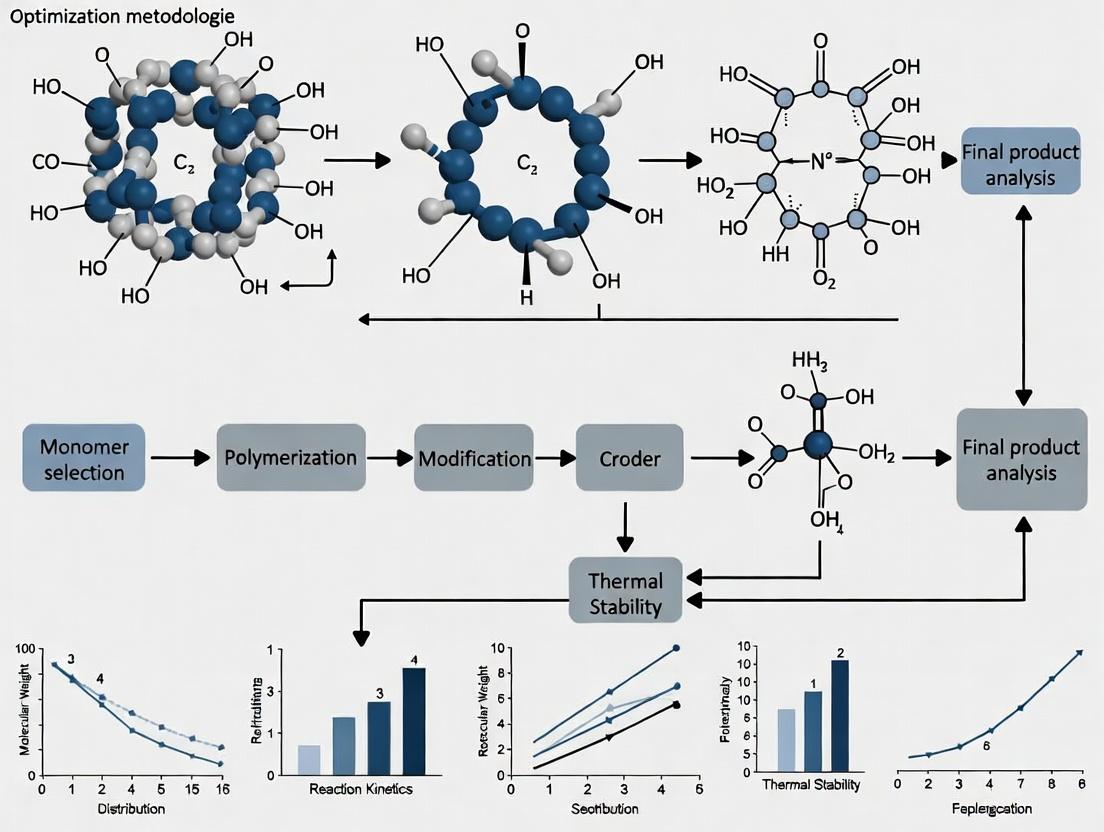
This comprehensive article explores cutting-edge optimization methodologies for polymer processing, tailored specifically for researchers, scientists, and drug development professionals.
Advanced Polymer Processing Optimization: A Comprehensive Guide for Biomedical Researchers and Scientists
Abstract
This comprehensive article explores cutting-edge optimization methodologies for polymer processing, tailored specifically for researchers, scientists, and drug development professionals. It progresses from foundational material science principles to advanced application techniques in biomedicine, addresses common troubleshooting challenges, and provides frameworks for comparative validation. The guide synthesizes current research to empower the development of next-generation polymeric drug delivery systems, implants, and biomedical devices with enhanced performance, reproducibility, and clinical translation potential.
Core Principles of Polymer Science for Biomedical Applications: From Chemistry to Processability
Troubleshooting Guides & FAQs
Frequently Asked Questions (FAQs)
Q1: My PLGA microparticles are aggregating during solvent evaporation. How can I improve dispersion? A: Aggregation is often due to high surface tension or rapid solvent removal. Ensure adequate stirring speed (500-1000 rpm) and consider using an emulsifier like polyvinyl alcohol (PVA) at 0.5-2.0% w/v. A co-solvent like ethanol (up to 10% v/v in dichloromethane) can modulate evaporation rate. Sonication of the emulsion for 30-60 seconds post-homogenization can also improve initial dispersion.
Q2: The drug encapsulation efficiency in my PEG-PLGA nanoparticles is consistently low (<50%). What are the key parameters to optimize? A: Low encapsulation is typically a function of drug solubility and partition. First, verify the drug's log P; hydrophilic drugs often leak into the aqueous phase. To improve:
- Increase polymer concentration from 2% to 5-8% w/v to form a denser matrix.
- Adjust the organic-to-aqueous phase ratio from 1:10 to 1:5 to reduce diffusion distance.
- Add a ion-pairing agent (e.g., sodium triphosphate for cationic drugs) to reduce aqueous solubility.
- Use a double emulsion (W/O/W) for hydrophilic drugs.
Q3: My poly(ethylene glycol) diacrylate (PEGDA) hydrogel is too brittle for the intended application. How can I enhance its mechanical properties? A: Brittleness indicates a high crosslink density. Modify the formulation by:
- Reducing PEGDA molecular weight: Switch from 575 Da to 3400 Da for longer, more flexible chains between crosslinks.
- Lowering crosslinker concentration: Reduce the molar percentage of PEGDA from 15% to 5-10%.
- Incorporating a co-monomer: Add 10-20% w/w of a more flexible polymer like poly(vinyl alcohol) (PVA) or gelatin to the pre-polymer solution.
- Employing a hybrid network: Synthesize an interpenetrating network (IPN) with alginate.
Q4: I am observing significant initial burst release from my polycaprolactone (PCL) film. How can I achieve a more sustained release profile? A: Burst release is caused by surface-associated drug. Mitigation strategies include:
- Increase film thickness: Increase casting volume to achieve films >150 µm.
- Implement a coating: Apply a thin, drug-free PCL or PLGA coating via dip-coating or spray-coating.
- Modify crystallinity: Blend PCL with amorphous polymers like PLGA (e.g., 50:50 blend) to alter diffusion pathways.
- Optimize drug loading: Reduce drug load from 10% to 2-5% w/w to minimize surface migration during solvent casting.
Experimental Protocols
Protocol 1: Preparation of PLGA Nanoparticles via Nanoprecipitation Aim: To fabricate drug-loaded PLGA nanoparticles for controlled release studies. Methodology:
- Dissolve 50 mg of PLGA (50:50, 24 kDa) and 5 mg of the model drug (e.g., curcumin) in 10 mL of acetone (organic phase).
- Filter the organic solution through a 0.45 µm PTFE syringe filter.
- Prepare 20 mL of an aqueous phase containing 0.25% w/v of the stabilizer (e.g., F-68 pluronic).
- Using a syringe pump, inject the organic phase into the aqueous phase under magnetic stirring at 600 rpm at a rate of 1 mL/min.
- Stir the resulting suspension for 3 hours at room temperature to allow for complete solvent evaporation.
- Concentrate nanoparticles by centrifugation at 20,000 rpm for 30 minutes at 4°C and resuspend in 5 mL of purified water.
- Characterize particle size by dynamic light scattering and drug encapsulation by HPLC after dissolution in acetonitrile.
Protocol 2: Fabrication of PEGDA Hydrogels via UV Crosslinking for Cell Encapsulation Aim: To synthesize cytocompatible PEGDA hydrogels with tunable modulus. Methodology:
- Prepare a 10% w/v solution of PEGDA (MW 3400) in sterile phosphate-buffered saline (PBS).
- Add the photoinitiator Irgacure 2959 to a final concentration of 0.05% w/v. Protect from light.
- Mix the polymer solution thoroughly with a cell suspension (e.g., NIH/3T3 fibroblasts) at a density of 1 x 10^6 cells/mL.
- Pipette 50 µL of the cell-polymer mixture into a cylindrical mold (e.g., silicone isolator).
- Expose the mold to UV light (365 nm, 5 mW/cm²) for 60 seconds to initiate crosslinking.
- Gently transfer the formed hydrogel into a cell culture medium plate.
- Assess cell viability at 24h using a Live/Dead assay (Calcein-AM/EthD-1) and mechanical properties via unconfined compression testing.
Table 1: Key Properties of Major Polymer Classes in Drug Delivery
| Polymer Class | Example (MW) | Degradation Time | Key Applications | Typical Drug Load |
|---|---|---|---|---|
| Poly(lactic-co-glycolic acid) (PLGA) | 50:50 (15-50 kDa) | 1-6 months | Microparticles, implants, scaffolds | 1-20% w/w |
| Poly(ethylene glycol) (PEG) | 2k - 20k Da | Non-degradable (if <40k Da) | Hydrogels, stealth coating | N/A (matrix) |
| Polycaprolactone (PCL) | (14-80 kDa) | >24 months | Long-term implants, filaments | 5-15% w/w |
| Chitosan | (50-200 kDa) | Enzyme-dependent | Mucoadhesive films, nanoparticles | 5-30% w/w |
| Poly(2-hydroxyethyl methacrylate) (pHEMA) | N/A | Non-degradable | Contact lenses, coating | 1-5% w/w |
Table 2: Common Processing Issues & Optimization Parameters
| Issue | Likely Cause | Process Parameter to Adjust | Target Range |
|---|---|---|---|
| Broad Particle Size Distribution | Inefficient mixing | Homogenizer Speed / Time | 10,000-20,000 rpm / 2-5 min |
| Low Encapsulation Efficiency | Drug partitioning | Organic:Aqueous Phase Ratio | 1:3 to 1:8 (v/v) |
| Fast Degradation / Release | High hydrophilicity | PLGA LA:GA Ratio | 85:15 (slower) vs 50:50 (faster) |
| Poor Gelation / Strength | Low crosslinking | UV Intensity / Time | 5-10 mW/cm² / 30-90 sec |
| Residual Solvent > ICH limits | Inefficient removal | Evaporation Pressure / Time | 100-200 mbar / 12-24h |
Visualizations
Polymer Selection Workflow for Researchers
Nanoprecipitation Process Flow
The Scientist's Toolkit: Research Reagent Solutions
| Item | Function | Example (Supplier) |
|---|---|---|
| PLGA (50:50, 24kDa) | Biodegradable matrix for sustained release; backbone polymer for particles/implants. | LACTEL Absorbable Polymers (DURECT) |
| Irgacure 2959 | UV-activated photoinitiator for radical crosslinking of PEGDA and other hydrogels. | Sigma-Aldrich (410896) |
| Dichloromethane (DCM) | Volatile organic solvent for dissolving hydrophobic polymers (PLGA, PCL) in emulsion methods. | HPLC Grade, Fisher Scientific |
| Polyvinyl Alcohol (PVA) | Emulsifier and stabilizer in single/double emulsion processes; prevents particle aggregation. | 87-90% hydrolyzed, Mw 30-70k (Sigma 363146) |
| Dialysis Membrane (MWCO 12-14kDa) | Purification of nanoparticles; removal of free drug, solvent, and unreacted monomers. | Spectra/Por 4 (Repligen) |
| Pluronic F-68 | Non-ionic surfactant for nanoprecipitation; improves nanoparticle stability and biocompatibility. | Gibco (24040032) |
| Chitosan (Medium Mw, >75% deacetylated) | Natural cationic polymer for mucoadhesive or permeation-enhancing formulations. | Sigma (448877) |
| PEGDA (Mn 3400) | Hydrophilic crosslinkable macromer for forming swellable, biocompatible hydrogels. | Sigma (729164) |
Troubleshooting Guides & FAQs
FAQ: Common Experimental Issues in Polymer Processing Research
Q1: During extrusion, my polymer blend shows severe phase separation and inconsistent mechanical properties. What could be the cause? A: This is often a result of incompatible processing parameters with the polymer's thermal and rheological profile. Key factors include:
- Processing Temperature: Set below the melt temperature (Tₘ) of one component or above the degradation temperature (T₅ₙᵈ).
- Shear Rate: Inadequate shear for dispersion or excessive shear causing degradation.
- Residence Time: Insufficient time for homogenization.
Protocol: Mitigating Phase Separation in Blends
- Characterize: Determine the Tₘ and T₅ₙᵈ for each component via DSC and TGA.
- Define Window: Set extruder barrel temperatures between the highest Tₘ and the lowest T₅ₙᵈ, typically 20-40°C above the highest Tₘ.
- Shear Calibration: Perform a rheometry sweep (0.1-100 rad/s) to identify the critical shear rate for dispersion without degradation.
- Optimize: Use a Design of Experiment (DoE) approach, varying temperature profile, screw speed (shear rate), and feed rate (residence time). Measure output via tensile testing and SEM for phase morphology.
Q2: My 3D-printed (FDM) polymeric scaffold has poor layer adhesion and warping. How can I optimize this? A: This directly relates to the processing window for crystallization kinetics and thermal stress.
- Primary Cause: Nozzle temperature is too low, preventing proper chain interdiffusion between layers, or the bed temperature is mis-set for the material's glass transition (T𝑔).
Protocol: Optimizing FDM for Semi-Crystalline Polymers
- Isothermal Crystallization Analysis: Use DSC to measure the crystallization half-time (t₁/₂) at various temperatures between T𝑔 and Tₘ.
- Set Temperatures: Set nozzle temperature to Tₘ + (15-25°C). Set bed temperature to T𝑔 - 10°C (for amorphous) or near the maximum crystallization rate temperature (for semi-crystalline).
- Environmental Control: Use a closed build chamber heated to 15-20°C below the polymer's T𝑔 to reduce cooling rate and thermal stress.
- Validation: Print single-wall specimens. Measure interlayer bond strength via peel tests and dimensional accuracy.
Q3: How do I determine the safe processing window to avoid thermal degradation during compounding? A: You must establish the time-temperature stability envelope for your formulation.
Protocol: Determining Thermal Stability Window
- TGA Isothermal Hold: Load sample into TGA. Ramp quickly to a set test temperature (e.g., 180°C, 200°C, 220°C). Hold for 60 minutes, monitoring mass loss.
- Define Limit: The maximum allowable mass loss for your application (e.g., 2%) defines the stability time at that temperature.
- Repeat: Perform at multiple temperatures across your anticipated processing range.
- Model: Plot time-to-X%-degradation vs. temperature. The area below this curve is your stable processing window.
Table 1: Representative Polymer Thermal Transitions & Stability
| Polymer (Abbrev.) | Glass Transition (T𝑔) °C | Melt Temperature (Tₘ) °C | Onset Degradation (T₅ₙᵈ) °C | Recommended Extrusion Temp. Range °C |
|---|---|---|---|---|
| Poly(L-lactide) (PLLA) | 60 - 65 | 170 - 180 | ~240 | 180 - 210 |
| Polycaprolactone (PCL) | (-60) - (-65) | 58 - 64 | ~350 | 80 - 120 |
| Polyethylene Glycol (PEG) | (-67) | 62 - 67 | ~300 | 70 - 100 |
| Polyvinyl Alcohol (PVA) | ~85 | ~230 (decomp.) | ~200 | 180 - 220* |
| Poly(methyl methacrylate) (PMMA) | 105 | N/A (amorphous) | ~280 | 210 - 240 |
Note: PVA requires precise thermal control due to proximity of Tₘ and T₅ₙᵈ.
Table 2: Effect of Processing Parameters on PLA Film Properties (DoE Summary)
| Run | Nozzle Temp. (°C) | Screw Speed (RPM) | Chill Roll Temp. (°C) | Tensile Strength (MPa) | Elongation at Break (%) | Crystallinity (%) |
|---|---|---|---|---|---|---|
| 1 | 190 | 50 | 25 | 58 | 4.2 | 12 |
| 2 | 210 | 50 | 25 | 55 | 5.1 | 8 |
| 3 | 190 | 100 | 25 | 52 | 3.8 | 15 |
| 4 | 210 | 100 | 25 | 49 | 4.5 | 10 |
| 5 | 190 | 50 | 60 | 48 | 25.0 | 35 |
| 6 | 210 | 50 | 60 | 45 | 28.5 | 30 |
| Optimal | 200 | 75 | 45 | 62 | 20.0 | 25 |
Visualizations
Title: Polymer Process Optimization Workflow
Title: From Polymer Structure to Processing Window
The Scientist's Toolkit: Research Reagent Solutions
Table 3: Essential Materials for Polymer Processing Research
| Item | Function/Application in Research | Example(s) |
|---|---|---|
| Polymer Standards | Calibrate GPC/SEC for accurate molecular weight (Mw, Mn, Đ) determination. | Narrow dispersity polystyrene, poly(methyl methacrylate). |
| Thermal Stabilizers | Extend thermal processing window by scavenging free radicals during melt processing. | Irganox 1010, Irgafos 168. |
| Compatibilizers | Improve interfacial adhesion in polymer blends, reducing phase size and stabilizing morphology. | Maleic anhydride grafted polymers (e.g., PE-g-MA), block copolymers. |
| Nucleating Agents | Control crystallization rate and crystal size, critical for semi-crystalline polymer processing. | Talc, sodium benzoate, specialized organics (e.g., Millad NX 8000 for PP). |
| Plasticizers | Lower Tg and processing temperature, reduce melt viscosity, and increase flexibility. | Citrate esters (e.g., ATBC), polyethylene glycol (PEG), phthalates (for research only). |
| Model Drug Compounds | For drug delivery system research; vary in hydrophilicity/logP to study release kinetics from polymeric matrices. | Caffeine (hydrophilic), Dexamethasone (hydrophobic), Fluorescein (tracer). |
| Rheology Modifier Particles | Study the effect of fillers (from nano to micro-scale) on melt viscosity and viscoelasticity. | Fumed silica (thixotrope), glass beads, calcium carbonate. |
Troubleshooting Guides & FAQs
Q1: During hot-melt extrusion (HME), my polymer shows erratic flow and sudden viscosity drops, leading to inconsistent filament diameter. What could be wrong? A: This is a classic sign of polymer degradation, often caused by excessive shear heat or an overly long residence time in the barrel. Degradation reduces molecular weight (MW), drastically altering rheology.
- Troubleshooting Steps:
- Verify Thermal Stability: Run a TGA (Thermogravimetric Analysis) to confirm the polymer's degradation temperature. Ensure your processing temperature is at least 20-30°C below this point.
- Check Molecular Weight: Use GPC/SEC post-processing to confirm MW reduction. A drop of >10% in Mw is significant.
- Adjust Parameters: Lower the barrel temperature profile and screw speed. Optimize screw design to reduce shear-intensive mixing sections.
- Protocol: Monitoring MW Degradation via GPC/SEC
- Sample Prep: Dissolve pre- and post-processed polymer samples in the appropriate solvent (e.g., THF for PLGA) at 2 mg/mL. Filter through a 0.45 µm PTFE syringe filter.
- Calibration: Inject polystyrene (or relevant) MW standards to create a calibration curve.
- Analysis: Inject samples, measure retention time, and calculate Mn, Mw, and PDI using the calibration curve. Compare values.
Q2: My amorphous solid dispersion (ASD) is physically unstable, with drug re-crystallization observed after 4 weeks at 40°C/75%RH. Which material characteristic should I investigate first? A: The Glass Transition Temperature (Tg) of the dispersion is likely too low, allowing molecular mobility and crystallization at storage conditions.
- Troubleshooting Steps:
- Measure Tg: Use modulated DSC (mDSC) to accurately determine the Tg of your drug-polymer ASD. Ensure it's a single, broad transition, indicating good miscibility.
- Apply Gordon-Taylor: Use the Gordon-Taylor equation to predict the Tg of the blend and compare with experimental data. Large deviations suggest poor mixing.
- Stability Rule of Thumb: For long-term stability, the storage temperature should be at least 50°C below the Tg of the ASD. Select a polymer with a higher Tg or increase polymer loading.
- Protocol: Determining Tg of an ASD via mDSC
- Sample Prep: Place 3-5 mg of the finely ground ASD in a T-zero aluminum pan. Hermetically seal.
- Method: Equilibrate at 0°C. Ramp at 2°C/min to 150°C with a modulation amplitude of ±0.5°C every 60 seconds.
- Analysis: In the reversing heat flow signal, identify the step-change inflection point as Tg. Report the midpoint value.
Q3: How does polymer crystallinity affect drug release from a long-acting implant? A: Crystallinity acts as a barrier to diffusion. Higher crystallinity typically slows down drug release by reducing the rate of water ingress and creating a more tortuous path for drug molecules to diffuse through.
- Troubleshooting Steps:
- Quantify Crystallinity: Use XRD or DSC to determine the percent crystallinity of your polymer matrix post-fabrication.
- Correlate with Release Kinetics: Plot % crystallinity against the drug release rate constant (e.g., from a Higuchi model). An inverse relationship is expected.
- Modify Crystallinity: To accelerate release, use a polymer with lower inherent crystallinity (e.g., PLA vs. PLLA), add plasticizers, or use rapid quenching during processing to reduce crystal formation.
- Protocol: Calculating % Crystallinity via DSC
- Sample Prep: 5-10 mg of sample in a sealed DSC pan.
- Method: Heat from -50°C to 200°C at 10°C/min. Record the melting endotherm.
- Analysis: Calculate the enthalpy of fusion (ΔHfsample, J/g). % Crystallinity = (ΔHfsample / ΔHf100% crystalline) x 100. (e.g., For PLA, ΔHf100% crystalline = 93.0 J/g).
Q4: My polymer blend exhibits phase separation during film casting. Rheology data shows two distinct relaxation times. How can I improve blend homogeneity? A: Two relaxation times confirm immiscibility. The issue is thermodynamic incompatibility, governed by Flory-Huggins interaction parameters.
- Troubleshooting Steps:
- Characterize Rheology: Perform small-amplitude oscillatory shear (SAOS) frequency sweeps. The presence of two plateaus in G' or two peaks in tan δ indicates phase separation.
- Assess Compatibility: Use a compatibilizer (e.g., a block copolymer with segments miscible with each blend component) to reduce interfacial tension.
- Optimize Processing: Increase mixing shear rate/time during solution preparation or melt blending. Evaluate different common solvents with similar solubility parameters for both polymers.
- Protocol: Screening Miscibility via SAOS
- Sample Prep: Prepare uniform films or disks of the blend.
- Method: Load sample on a parallel plate rheometer. Perform a frequency sweep from 100 to 0.1 rad/s at a strain within the linear viscoelastic region (determined by an amplitude sweep).
- Analysis: Plot G' and tan δ vs. angular frequency. A single, broad peak in tan δ suggests a homogeneous blend. Two distinct peaks confirm a two-phase system.
Table 1: Common Polymer Characteristics & Their Impact on Processing
| Characteristic | Typical Analysis Method | Key Quantitative Metrics | Direct Impact on Processing |
|---|---|---|---|
| Molecular Weight (MW) | Gel Permeation Chromatography (GPC/SEC) | Number Avg. (Mn), Weight Avg. (Mw), Polydispersity Index (PDI) | Melt viscosity (η ∝ Mw^3.4), mechanical strength, degradation rate. |
| Crystallinity | Differential Scanning Calorimetry (DSC) | % Crystallinity, Melting Point (Tm), Enthalpy of Fusion (ΔHf) | Solubility/diffusion rate, optical clarity, stiffness, degradation profile. |
| Glass Transition (Tg) | Modulated DSC (mDSC) | Tg Midpoint (°C), Heat Capacity Change (ΔCp) | Processing temperature window, physical stability, ductility. |
| Rheology | Capillary/Rotational Rheometry | Zero-shear viscosity (η₀), Flow Index (n), Activation Energy (Ea) | Pumpability, mold filling, mixing efficiency, die swell. |
Table 2: Troubleshooting Matrix for Common Polymer Processing Issues
| Observed Problem | Most Likely Cause | Primary Characteristic to Check | Corrective Action |
|---|---|---|---|
| Brittle extrudate/tablet | Low molecular weight or high crystallinity | MW (GPC), % Crystallinity (DSC) | Source higher MW polymer; add plasticizer; anneal to control crystals. |
| Sticky melt during processing | Tg too close to processing temperature | Tg (mDSC) | Lower processing temperature; use a polymer with a higher Tg. |
| Irregular drug release | Uncontrolled or variable crystallinity | % Crystallinity (XRD/DSC) | Standardize quenching/cooling protocol; use nucleating agents. |
| Poor blend uniformity | Rheological mismatch/immiscibility | Viscosity ratio, SAOS (Rheology) | Match viscosities; use compatibilizer; adjust shear mixing rate. |
Experimental Workflow Diagram
Diagram Title: Polymer Process Optimization Workflow
The Scientist's Toolkit: Research Reagent Solutions
| Item | Function in Context of Polymer Research |
|---|---|
| Polystyrene MW Standards | Calibrate Gel Permeation Chromatography (GPC) systems for accurate molecular weight and PDI determination. |
| Indium / Zinc Calibration Standards | Calibrate DSC temperature and enthalpy scales for precise Tg and melting point measurements. |
| Standard Silicone Oils (e.g., NIST traceable) | Calibrate rotational rheometers for accurate viscosity and shear stress readings. |
| Polymer Matrix Libraries (e.g., PLGA, PVP, PVA grades) | Enable systematic screening of the effects of MW, Tg, and copolymer ratio on drug product performance. |
| Model API Compounds (e.g., Felodipine, Itraconazole) | Poorly soluble, well-characterized drugs used to benchmark ASD formulation performance across polymers. |
| Non-Solvents for Vapor Sorption Studies | Used in dynamic vapor sorption (DVS) to study plasticization effects of water/ethanol on Tg and stability. |
| High-Temperature, Inert Rheometer Plates (e.g., Peltier) | Enable stable, precise rheological measurements of polymer melts without oxidative degradation. |
Troubleshooting Guides & FAQs
Extrusion
Q1: Why is my extrudate showing sharkskin or melt fracture? A: This is typically due to excessive shear stress at the die exit. Troubleshoot by:
- Increasing the die temperature by 10-20°C.
- Reducing the screw speed to lower the shear rate.
- Using a polymer processing aid (PPA) like fluoropolymer elastomers to reduce wall shear stress.
- Increasing the die land length to allow for better stress relaxation.
Q2: How do I address inconsistent pellet feed or bridging in the hopper? A: This is a feeding issue. Solutions include:
- Using a hopper with a mechanical agitator or vibrator.
- Drying the polymer pellets thoroughly to prevent clumping (e.g., 4-6 hours at 80°C for PLA).
- Ensuring the pellet size and shape are uniform.
Molding (Injection & Compression)
Q3: What causes short shots during injection molding? A: Incomplete filling of the mold cavity can be caused by:
- Insufficient injection pressure or holding pressure.
- Melt temperature too low, increasing viscosity.
- Blocked or undersized gates/runner system.
- Vent issues causing air traps.
Q4: Why do I observe warpage in my molded part? A: Warpage is caused by non-uniform shrinkage. To mitigate:
- Optimize cooling system design and coolant temperature for uniform heat removal.
- Adjust holding pressure and time to minimize differential shrinkage.
- Redesign part geometry to have uniform wall thickness.
- Anneal the part above its glass transition temperature to relieve internal stresses.
Electrospinning
Q5: How do I prevent bead formation ("beads-on-a-string") in my electrospun fibers? A: Beads indicate instability in the Taylor cone jet. Solutions are:
- Increase polymer concentration or molecular weight to increase solution viscosity.
- Adjust solvent ratio to optimize solution conductivity and surface tension (e.g., add a high-dielectric solvent like DMF).
- Reduce the feeding flow rate to stabilize the jet.
- Ensure stable humidity (often 40-60% RH) in the spinning environment.
Q6: What should I do if the jet is unstable or multiple jets form? A: This is often related to the Taylor cone. Try:
- Checking for imperfections or debris on the spinneret tip and cleaning it.
- Reducing the applied voltage slightly.
- Using a spinneret with a different diameter to change the electric field distribution.
3D Printing (FDM & SLA)
Q7: How do I fix poor layer adhesion in FDM 3D printing? A: Weak interlayer bonding compromises mechanical strength.
- Increase the nozzle temperature (within safe limits) to improve polymer diffusion between layers.
- Decrease the layer height to increase contact surface area.
- Reduce the print speed to allow more time for heat transfer.
- Use an enclosure to maintain a consistent, elevated chamber temperature.
Q8: Why is my SLA print sticking too aggressively to the build platform or tank? A: Excessive adhesion forces can damage prints.
- Re-level the build platform and adjust the initial layer exposure time (reduce if over-adhered).
- For the tank (FEP film), ensure it is properly tensioned and clean. Lubricate with a silicone-based release agent if recommended by the manufacturer.
- Check that the lift distance is sufficient to allow the cured layer to detach from the FEP film.
Table 1: Typical Processing Parameter Ranges for Featured Techniques
| Technique | Key Parameter | Typical Range | Unit | Influence on Output |
|---|---|---|---|---|
| Extrusion | Melt Temperature | 150 - 300 | °C | Viscosity, degradation |
| Screw Speed | 50 - 200 | RPM | Throughput, shear rate | |
| Die Pressure | 500 - 3000 | psi | Mixing, dimensional stability | |
| Injection Molding | Melt Temp | 200 - 350 | °C | Flowability |
| Injection Pressure | 500 - 2000 | bar | Cavity filling | |
| Cooling Time | 10 - 60 | seconds | Cycle time, crystallinity | |
| Electrospinning | Voltage | 10 - 30 | kV | Jet initiation, fiber diameter |
| Flow Rate | 0.5 - 3.0 | mL/h | Jet stability, bead formation | |
| Tip-to-Collector Distance | 10 - 25 | cm | Solvent evaporation, fiber mat porosity | |
| FDM 3D Printing | Nozzle Temperature | 190 - 280 | °C | Layer adhesion, flow |
| Bed Temperature | 25 - 120 | °C | Warping, first-layer adhesion | |
| Layer Height | 0.05 - 0.30 | mm | Resolution, print time |
Experimental Protocols
Protocol 1: Optimizing Electrospun Fiber Diameter via Design of Experiments (DoE)
- Objective: Systematically determine the effect of voltage, flow rate, and concentration on mean fiber diameter.
- Materials: Polymer (e.g., PCL), solvent system (e.g., Chloroform:DMF 70:30), syringe pump, high-voltage supply, collector.
- Method:
- Prepare polymer solutions at 3 concentrations (e.g., 8, 10, 12 w/v%).
- Set up a full factorial DoE with factors: Voltage (15, 20, 25 kV), Flow Rate (1.0, 2.0 mL/h), Concentration (8, 10, 12%).
- For each run, fix the tip-to-collector distance at 15 cm and ambient conditions.
- Collect fibers for 5 minutes per run.
- Analyze 100 random fibers per sample via SEM imaging and image analysis software.
- Perform ANOVA to identify significant factors and interactions. Create a response surface model for optimization.
Protocol 2: Characterizing Melt Flow Index (MFI) for Extrusion/3D Printing
- Objective: Measure the melt flow rate (MFR) to assess polymer viscosity and batch consistency.
- Materials: MFI apparatus, polymer pellets, weight set, timer.
- Method:
- Pre-heat the barrel to the standard temperature for the polymer (e.g., 190°C for PLA, 230°C for ABS).
- Load 4-5 grams of pellets into the barrel and pre-compact with a piston.
- After 4 minutes of pre-heating, add the specified weight (e.g., 2.16 kg for PLA).
- After the piston descends, cut extrudates at timed intervals (e.g., every 30 seconds).
- Weigh the extrudates. Calculate MFR = (weight cut in g * 600) / time in seconds.
- Report as g/10 min. Perform in triplicate.
Visualizations
Title: Polymer Extrusion Processing Workflow
Title: Electrospinning Apparatus Schematic
The Scientist's Toolkit: Research Reagent Solutions
Table 2: Essential Materials for Polymer Processing Research
| Item | Function/Application | Example(s) |
|---|---|---|
| Polycaprolactone (PCL) | A biodegradable, biocompatible polyester used in electrospinning for tissue engineering scaffolds and drug delivery matrices. | PCL, Mn 80,000 |
| Polylactic Acid (PLA) | A common biodegradable thermoplastic for FDM 3D printing and extrusion. Requires precise drying before processing. | PLA filament, 1.75 mm diameter |
| Fluoropolymer Processing Aid (PPA) | Added in small amounts (<1000 ppm) to polyolefins to reduce shear stress, eliminate melt fracture, and improve extrusion throughput. | Dynamar FX 9613 |
| N,N-Dimethylformamide (DMF) | A high-boiling-point, polar solvent used in electrospinning to dissolve many polymers and increase solution conductivity. | Anhydrous DMF |
| Photoinitiator (for SLA) | A compound that generates radicals or cations upon UV light exposure, initiating the polymerization of resin monomers. | Diphenyl(2,4,6-trimethylbenzoyl)phosphine oxide (TPO) |
| Compatibilizer | A block or graft copolymer used in extrusion/blending to improve interfacial adhesion between immiscible polymer phases. | Styrene-Ethylene/Butylene-Styrene (SEBS) grafted with Maleic Anhydride |
| Release Agent | A coating applied to mold surfaces (injection/compression) or SLA tanks to facilitate part ejection/release. | Semi-permanent silicone-based sprays |
Technical Support Center: Troubleshooting for Polymer Processing Research
FAQ 1: Our PLGA microspheres show a high initial burst release (>40% in 24 hours), deviating from our sustained-release target. What processing parameters should we investigate? Answer: A high burst release is often linked to processing conditions affecting surface morphology and internal porosity. Focus on these parameters:
| Parameter to Adjust | Typical Target Range | Expected Effect on Burst Release | Mechanism |
|---|---|---|---|
| Organic Phase Evaporation Rate | Slow (e.g., 0.5-2 hr) vs. Fast (<0.5 hr) | Decrease | Slower rate allows polymer chain relaxation, denser matrix, less surface drug. |
| Aqueous Phase Surfactant Concentration (PVA) | 0.1% - 2.0% (w/v) | Optimize (U-shaped curve) | Lower conc. can increase particle aggregation & defects; Higher conc. can hinder solvent diffusion, increasing porosity. |
| Drug-to-Polymer Ratio | 1:10 to 1:2 (w/w) | Decrease with lower load | Reduces amount of drug at/near the surface. |
| Secondary Drying (Under Vacuum) | 24-48 hrs, 25°C, <100 mTorr | Decrease | Removes residual organic solvent, allows further polymer annealing, reduces pores. |
Detailed Protocol: Investigating Evaporation Rate
- Prepare a 5% (w/v) PLGA (50:50, 15kDa) in DCM solution.
- Dissolve your model drug (e.g., BSA) in the organic phase at a 1:5 drug:polymer ratio.
- Emulsify into 1% (w/v) PVA solution (1:4 organic:aqueous ratio) using a homogenizer at 10,000 rpm for 2 minutes.
- Split the emulsion into two batches:
- Batch A (Fast): Stir at 600 rpm, 25°C, ambient pressure for 1 hour.
- Batch B (Slow): Stir at 600 rpm, 25°C, under partial vacuum (300 mTorr) for 3 hours.
- Harvest microspheres, wash, and lyophilize.
- Perform in vitro release testing (PBS, 37°C) and compare 24-hour release profiles via HPLC.
FAQ 2: After electrospinning PCL scaffolds, we observe inconsistent cell adhesion across the mat. Could this be due to residual solvent, and how can we test for it? Answer: Yes, residual solvent (e.g., chloroform, DMF) significantly impacts surface chemistry and biocompatibility. Inconsistent evaporation during processing leads to patchy solvent retention.
Experimental Protocol: Residual Solvent Analysis & Post-Processing
- Method: Gas Chromatography-Mass Spectrometry (GC-MS) Headspace Analysis.
- Cut three 1 cm² samples from different zones (center, edge) of the electrospun mat.
- Seal each in a headspace vial and incubate at 80°C for 30 minutes.
- Inject the headspace gas into the GC-MS. Quantify solvent peaks against a standard calibration curve.
- Mitigation Protocol (Post-Processing Vacuum Annealing):
- Place the electrospun scaffold in a vacuum oven.
- Apply a gradual temperature ramp: 30°C for 12 hours, then 40°C for 12 hours.
- Maintain vacuum at <50 mTorr throughout.
- Re-test for residual solvent and perform a standardized cell adhesion assay (e.g., with NIH/3T3 fibroblasts) across the mat.
FAQ 3: During hot-melt extrusion (HME) of a polymer/drug implant, we see degradation of the active pharmaceutical ingredient (API). Which thermal and shear stress parameters are most critical? Answer: API degradation in HME is a function of Specific Mechanical Energy (SME) and Thermal History. SME combines shear and thermal input.
| Parameter | Control Lever | How to Measure/Calculate | Target for Thermolabile APIs |
|---|---|---|---|
| Melt Temperature (Tₘₑₗₜ) | Zone setpoints, screw speed | Thermocouples along barrel | Minimize, often close to polymer melting point. |
| Screw Speed (N) | Motor RPM | Tachometer | Lower RPM reduces shear rate and residence time. |
| Torque (τ) | Motor load | HME instrument display | Monitor for spikes; high torque indicates high viscosity/shear. |
| Specific Mechanical Energy (SME) | Derived parameter | SME (kJ/kg) = (C * Motor Power) / Mass Flow Rate. (C is machine constant). | Target < 0.2 kJ/g for sensitive biologics. |
| Residence Time Distribution (RTD) | Screw design, feed rate | Tracer study (colorant) at steady state. | Use conveying elements to minimize RTD. |
Protocol: SME Calculation and Optimization Run
- Baseline Run: Set screw speed to 100 rpm, all zones to 110°C (for PLGA). Record steady-state torque (τ in N·m) and mass flow rate (ṁ in kg/hr).
- Calculate Power: P (kW) = (2π * N * τ) / (60,000). N is screw speed in rpm.
- Calculate SME: SME = (P * 3600) / (ṁ * 1000). (Result in kJ/kg).
- Optimization Run: Reduce screw speed to 60 rpm and lower zone 2 temperature by 10°C. Re-calculate SME.
- Compare API stability post-process via HPLC purity assay between the two SME conditions.
The Scientist's Toolkit: Key Research Reagent Solutions
| Item | Function in Processing Research | Example (for PLGA microspheres) |
|---|---|---|
| Poly(D,L-lactide-co-glycolide) (PLGA) | Model biodegradable polymer; erosion time tunable by LA:GA ratio & molecular weight. | 50:50 LA:GA, IV 0.6 dL/g, for 1-month release. |
| Polyvinyl Alcohol (PVA) | Stabilizer/surfactant in emulsion techniques; critical for controlling particle size & surface. | 87-89% hydrolyzed, 13-23 kDa, for stable O/W emulsions. |
| Methylene Chloride (DCM) | Common volatile organic solvent for emulsion-based methods. | Good solvent for PLGA, volatile for easy evaporation. |
| Phosphate Buffered Saline (PBS) w/ Azide | Standard in vitro release medium; azide prevents microbial growth. | 0.1M PBS, pH 7.4, 0.02% sodium azide. |
| Polycaprolactone (PCL) | Model semi-crystalline polymer for electrospinning/melt processing; slow degrading. | Mn 80,000, for long-term implantable scaffolds. |
| Fluorescein Isothiocyanate (FITC)-Dextran | Hydrophilic model drug surrogate for tracking release kinetics & encapsulation efficiency. | 20 kDa FITC-Dextran for release studies. |
| Dichlorofluorescein (DCF) Assay Kit | Quantifies oxidative stress in cells, indicating biocompatibility/cytotoxicity of leachables. | To test extracts from processed polymer samples. |
Visualizations
Diagram 1: HME Parameter Impact on API Stability
Diagram 2: Microsphere Burst Release Root Cause Analysis
Methodological Toolkit: Applying DoE, Modeling, and In-Line Monitoring to Polymer Processes
Design of Experiments (DoE) for Systematic Process Parameter Optimization
Technical Support & Troubleshooting Center
This support center provides solutions to common issues encountered when applying Design of Experiments (DoE) in polymer processing and drug development research. The guidance is framed within a thesis on optimization methodologies for polymer processing.
Frequently Asked Questions (FAQs)
Q1: My screening design (e.g., Plackett-Burman) identified no significant factors. What could be wrong? A: This often stems from an insufficient signal-to-noise ratio. Common causes and solutions:
- Cause: The range chosen for your factors (e.g., temperature, pressure) is too narrow relative to process variability.
- Solution: Widen the factor ranges based on process knowledge. If unsure, run a broader scoping study first.
- Cause: Excessive measurement error or process instability is masking factor effects.
- Solution: Re-evaluate your measurement system (Gauge R&R study) and ensure process stability before DoE. Increase replication.
Q2: During Response Surface Methodology (RSM), the model shows a poor fit (low R²-adjusted or significant lack-of-fit). How should I proceed? A: A poor fit indicates the model cannot adequately describe the relationship between factors and responses.
- Action 1: Check for outliers in your experimental data using standardized residual plots. Investigate and potentially repeat anomalous runs.
- Action 2: You may need to transform your response variable (e.g., log, square root) to meet model assumptions.
- Action 3: The chosen polynomial order (typically quadratic) may be insufficient. Consider adding axial points if not present, or investigate the need for a cubic model, which requires a different design.
Q3: I am optimizing multiple responses (e.g., polymer tensile strength and dissolution rate). How do I handle conflicting optima? A: This is a central challenge in multi-objective optimization.
- Method: Use a desirability function approach. Individual desirability functions (d_i) are defined for each response, scaled from 0 (undesirable) to 1 (fully desirable).
- Protocol: The overall desirability (D) is calculated as the geometric mean: D = (d₁ * d₂ * ... * dₙ)^(1/n). The factor settings that maximize D represent the best compromise solution. Software (like JMP, Minitab, Design-Expert) can perform this calculation and generate optimization plots.
Q4: How do I validate the optimal conditions suggested by my DoE model? A: Model validation is a critical, non-optional step.
- Protocol: Conduct 3-5 confirmation runs at the optimal factor settings predicted by the model. Do not replicate a run from your original design matrix.
- Analysis: Calculate the mean response from the confirmation runs and construct a 95% prediction interval (PI) around the model's prediction. If the observed mean falls within the PI, the model is considered validated. A t-test can also be used to check for a significant difference between predicted and observed means.
Q5: My process has both continuous (Temperature) and categorical (Polymer Supplier A/B/C) factors. Can I include them in the same DoE? A: Yes, using a mixed-design approach.
- Design Choice: For screening, use a D-Optimal design, which can efficiently handle a mix of factor types. For optimization with continuous and categorical factors, a split-plot design is often appropriate, especially if changing the categorical factor is hard or expensive (e.g., changing a raw material batch).
- Consideration: Analysis must account for the different error structures. Standard factorial analysis may be invalid. Use software that correctly analyzes mixed models or split-plot designs.
Q6: How many replicates should I run for each experimental trial? A: Replication is essential for estimating pure error.
- Guideline Table:
| Design Stage | Recommended Replication Strategy | Primary Purpose |
|---|---|---|
| Screening (e.g., Fractional Factorial) | 2-3 full replicates of the entire design (not replicates at each run). | Estimate error and detect large main effects. |
| Optimization (e.g., RSM) | 3-5 center point replicates. Additional replication of axial points may be considered if error is high. | Precisely estimate curvature and pure error. |
| Robustness Testing | Replicate the nominal (optimal) condition multiple times (n=6-10). | Estimate performance variability at the optimum. |
Key Data from Recent DoE Applications in Polymer/Drug Development
Table 1: Summary of Recent DoE Studies in Related Fields
| Study Focus | DoE Design Used | Key Factors Optimized | Responses Measured | Reported Improvement |
|---|---|---|---|---|
| Hot-Melt Extrusion of Amorphous Solid Dispersion | Central Composite Design (CCD) | Barrel Temp., Screw Speed, Drug Load | Dissolution (% at 15 min), Glass Transition Temp. | Dissolution increased by 42% |
| Nanoparticle Synthesis (PLGA) | Box-Behnken Design | Polymer Conc., Aqueous Phase Volume, Homogenization Time | Particle Size, PDI, Encapsulation Efficiency | PDI reduced from 0.25 to 0.12 |
| 3D Printing (FDM) of Drug-Eluting Implants | Full Factorial (2³) with center points | Nozzle Temp., Print Speed, Layer Height | Tensile Strength, Dimensional Accuracy, Release Profile (t₅₀) | t₅₀ extended from 8h to 24h |
| Film Coating Process Optimization | Taguchi L9 Array | Inlet Air Temp., Spray Rate, Pan Speed, Coating Solution Solid Content | Coating Uniformity (RSD%), Tablet Hardness | Coating RSD% reduced from 7.5% to 2.1% |
Experimental Protocol: Standard RSM for Polymer Extrusion Optimization
Objective: To optimize the hot-melt extrusion process for a polymer-drug formulation to maximize dissolution rate and tensile strength.
1. Pre-Experimental Phase:
- Define Factors & Ranges: Based on prior knowledge, select: Melt Temperature (150-190°C), Screw Speed (50-150 rpm), and Plasticizer Concentration (2-10%).
- Select Design: A Central Composite Design (CCD) with 2³ = 8 factorial points, 6 axial points (alpha = 1.682), and 6 center point replicates (20 total runs). Randomize run order.
2. Execution Phase:
- Prepare master batches of the polymer-drug blend according to the designed Plasticizer Concentration levels.
- Set up the twin-screw extruder. For each run, establish the set points for Temperature and Screw Speed as per the randomized design matrix.
- Allow process to stabilize (~10 mins), then collect extrudate.
- For each run, pelletize extrudate and injection mold into standard tensile bars (n=5). Also, mill and compact powder for dissolution testing (n=3).
3. Analysis Phase:
- Measure Responses: Perform tensile testing (ASTM D638) and record Ultimate Tensile Strength (mean of 5). Perform dissolution testing (USP Apparatus II) and record % Drug Released at 30 minutes (mean of 3).
- Model Building: Fit a quadratic polynomial model for each response using regression analysis. Perform ANOVA to assess model significance and lack-of-fit.
- Optimization: Use desirability functions to simultaneously maximize both Tensile Strength and % Released. Locate optimal factor settings.
4. Validation Phase:
- Run 5 confirmation experiments at the predicted optimal settings.
- Compare observed mean responses to model predictions using a 95% prediction interval.
The Scientist's Toolkit: Research Reagent Solutions
Table 2: Essential Materials for Polymer Processing DoE
| Item / Reagent | Function in DoE Context |
|---|---|
| Twin-Screw Hot-Melt Extruder | Primary processing equipment for melting, mixing, and shaping polymer-drug blends; key source of factors (temp, shear). |
| Polymer Carrier (e.g., PVP-VA, HPMCAS) | Matrix former for amorphous solid dispersions; its properties are critical to drug release and stability. |
| Plasticizer (e.g., Triethyl Citrate) | Modifies polymer glass transition temperature and melt viscosity, a key continuous factor for processability. |
| Melt Flow Indexer | Measures melt viscosity (flow rate), a potential response for screening polymer batches or process conditions. |
| Differential Scanning Calorimeter (DSC) | Determines critical quality attributes like glass transition temperature (Tg) and drug crystallinity post-processing. |
| Dissolution Test Apparatus (USP I/II) | Standardized equipment for measuring the drug release profile, a critical final performance response. |
Process Optimization Workflow Diagram
Title: DoE-Based Process Optimization Workflow
DoE Selection Logic Pathway
Title: DoE Selection Decision Tree
Troubleshooting Guides & FAQs
Q1: My simulation of polymer flow in an injection mold diverges or fails to converge. What are the primary causes and solutions? A: Divergence often stems from material model parameters or meshing issues.
- Cause: Incorrect shear-thinning parameters (Power-Law or Carreau model) for the specific polymer grade.
- Solution: Obtain accurate rheology data via capillary rheometry. Use the data to recalibrate the model. Common ranges for Polypropylene (PP) are:
Parameter Typical Range for PP Unit Consistency Index (K) 10^3 - 10^4 Pa·s^n Power-Law Index (n) 0.2 - 0.4 - Activation Energy (Ea) 25 - 60 kJ/mol - Protocol for Rheology Calibration: 1) Perform capillary rheometry tests at shear rates from 10 to 10^5 s^-1 across three temperatures. 2) Fit data to the Cross-WLF model. 3) Input the fitted coefficients (τ*, n, D1-D3) into the simulation software.
- Cause: Excessively skewed or high aspect-ratio elements in the thin-walled sections of the mesh.
- Solution: Remesh the part with a focus on the flow path. Use a layered mesh with at least 5-10 elements through the thickness. Keep element aspect ratio below 20:1 in critical regions.
Q2: How do I accurately model residual stress and warpage after cooling? My predictions do not match experimental measurements. A: This is typically related to the cooling phase and material solidification modeling.
- Cause: Inaccurate pressure-volume-temperature (PVT) data for the semi-crystalline polymer.
- Solution: Use a 2-domain Tait PVT model. Ensure the crystalline solidification parameters (transition temperature, compressibility) are correct. For Polyamide 66 (PA66):
PVT Parameter Amorphous Domain Crystalline Domain Unit b1m (Tait param) ~0.001 ~0.001 1/K b2m (Tran. Temp) ~590 - K b3m (Pressure effect) ~5e-8 ~3e-8 1/Pa - Protocol for Warpage Validation: 1) Inject a standard plaque (100mm x 100mm x 2mm) with gate at one end. 2) Use a coordinate measuring machine (CMM) to map the warpage (deformation) after 24 hours. 3) In the simulation, run a coupled flow-thermal-stress analysis. 4) Compare the simulated Z-displacement contour plot against the CMM data. Calibrate the mechanical (E-modulus) and thermal contraction (CLTE) models iteratively.
Q3: What is the best approach to simulate flow-induced crystallization and its impact on part properties? A: Implement a coupled kinetics model within the flow simulation.
- Cause: Neglecting the effect of flow on nucleation density, leading to inaccurate predictions of crystallinity and stiffness.
- Solution: Use a flow-induced crystallization (FIC) model, such as the Nakamura extended model. Key is to link the shear rate or orientation tensor to the nucleation rate.
- Experimental Protocol (DSC Validation): 1) Inject samples at different shear rates (via adjustable gate speed). 2) Cut samples from high and low shear regions. 3) Perform Differential Scanning Calorimetry (DSC) at 10°C/min heating rate. 4) Measure the heat of fusion (ΔHf) and calculate percent crystallinity. Compare to simulation-predicted values.
Q4: My simulation of drug-polymer composite (hot-melt extrusion) shows inaccurate melt temperature predictions. How can I improve this? A: The thermal properties of the composite are likely incorrect.
- Cause: Using pure polymer thermal conductivity and specific heat for the composite mixture.
- Solution: Measure or calculate effective composite properties. Use the Maxwell-Eucken model for thermal conductivity of a suspension.
- Protocol for Composite Characterization: 1) Prepare the API-Polymer blend (e.g., 30% API in PVP). 2) Use a thermal properties analyzer (e.g., transient plane source method) to measure thermal diffusivity (α) and specific heat (Cp) at the processing temperature. 3) Calculate conductivity: k = α * ρ * Cp. Input these values into the simulation material database.
The Scientist's Toolkit: Research Reagent & Material Solutions
| Item | Function in Polymer Processing Research |
|---|---|
| Capillary Rheometer | Measures viscosity of polymer melts at high shear rates, essential for accurate flow simulation input. |
| Differential Scanning Calorimeter (DSC) | Characterizes thermal transitions (Tg, Tm, Tc, crystallinity %) critical for cooling and crystallization models. |
| Pressure-Volume-Temperature (PVT) Apparatus | Provides precise data on polymer specific volume under pressure & temperature, vital for packing/cooling stress. |
| Birefringence Imaging Setup | Visually quantifies flow-induced molecular orientation and residual stress in transparent prototypes. |
| Coordinate Measuring Machine (CMM) | Provides high-accuracy 3D mapping of part geometry and warpage for model validation. |
| Torque Rheometer (Lab Extruder) | Simulates mixing, extrusion, and degradation kinetics on a small scale for composite material parameterization. |
Simulation Workflow for Polymer Processing
Flow Induced Crystallization Pathway
Implementing Process Analytical Technology (PAT) for Real-Time Control
Technical Support Center: Troubleshooting & FAQs
This support center addresses common challenges encountered when implementing PAT for real-time control in polymer processing and pharmaceutical development research, within the context of optimizing these methodologies.
Frequently Asked Questions (FAQs)
Q1: Our Near-Infrared (NIR) probe for monitoring polymer blend homogeneity shows excessive signal noise, leading to unreliable feedback. What could be the cause? A1: Excessive noise in NIR spectra often stems from (1) improper probe installation (e.g., insufficient pressure or gap issues in reflectance mode), (2) material adhesion on the probe window, or (3) suboptimal spectrometer settings. First, clean the probe window with an appropriate solvent. Ensure the probe is flush-mounted and secure. Then, review integration time and scan averaging parameters—increasing the number of scans for averaging can significantly improve the signal-to-noise ratio.
Q2: During real-time control of a hot-melt extrusion (HME) process, our multivariate model (e.g., PLS) for predicting API concentration is producing sudden prediction outliers. How should we troubleshoot? A2: This indicates a potential model breakdown. Follow this protocol: (1) Immediately check for physical process deviations (temperature, screw speed). (2) Inspect the raw spectrum for the outlier point—does it show abnormal absorbance or shape? This may indicate a probe fouling event. (3) Apply your model's statistical process control charts (e.g., Hotelling's T² and Q residuals). A high Q residual suggests a spectrum outside the model's calibration space, while a high T² suggests a novel combination of variables within that space. Recalibration may be required if the process has permanently shifted.
Q3: The data latency between our PAT sensor (like a Raman spectrometer) and the process control system is too high for effective real-time control. How can we minimize this? A3: Data latency is critical for closed-loop control. Optimize by: (1) Hardware: Ensure direct Ethernet/IP communication between the spectrometer and the control system, avoiding slow intermediary PCs. (2) Software: Utilize the spectrometer's SDK for direct data streaming, not file-based transfer. (3) Data Reduction: Perform essential preprocessing (e.g., cosmic ray removal, baseline correction) on the spectrometer's onboard processor to transmit only cleaned spectra or predicted values.
Q4: When implementing a feedback loop to control particle size in a crystallization process via FBRM, the loop becomes unstable and oscillates. What parameters should be adjusted? A4: Oscillation typically points to overly aggressive controller tuning. You are likely using a PID controller. Adjust the tuning parameters sequentially: (1) First, set Integral (I) and Derivative (D) gains to zero. (2) Increase the Proportional (P) gain until the system begins to respond promptly but without overshoot. (3) Slowly introduce the Integral gain to eliminate any steady-state offset. (4) The Derivative gain is often not needed for slow processes like crystallization; it can introduce noise sensitivity. Use a conservative tuning approach.
Experimental Protocol: PAT-Based Real-Time Feedback Control for Hot-Melt Extrusion
This protocol details the setup for real-time control of API concentration in a polymer matrix using NIR spectroscopy.
- System Configuration: Install a robust NIR reflectance probe in a thermostatted probe holder on the extruder die. Connect the spectrometer to the extruder's PLC via OPC UA or a direct digital communication link.
- Calibration Model Development:
- Prepare calibration samples with known API concentrations (0-15% w/w) covering the expected design space.
- Process each batch under controlled conditions (set temperature, screw speed).
- Collect NIR spectra (e.g., 100 scans per sample at 8 cm⁻¹ resolution) synchronized with a reference HPLC analysis of collected extrudate.
- Preprocess spectra (Standard Normal Variate (SNV), 1st derivative) and develop a Partial Least Squares (PLS) regression model. Validate using cross-validation and an independent test set.
- Control Logic Implementation: In the control software (e.g., MATLAB Simulink, or a PAT framework like synTQ), deploy the PLS model. Define the setpoint (e.g., 10% API). Program a PID controller to adjust the feeder rate of the API component based on the real-time NIR prediction, with defined control limits (±0.5%).
- Closed-Loop Experiment: Initiate extrusion with a base formulation. Activate the feedback control loop. The system will adjust the API feeder speed to maintain the predicted concentration at the setpoint. Collect samples for offline verification via HPLC.
PAT System Performance Data Summary
Table 1: Comparison of Common PAT Tools for Polymer/Drug Processing
| Analytical Tool | Typical Measurement | Response Time | Key Advantage | Primary Challenge |
|---|---|---|---|---|
| NIR Spectroscopy | Chemical composition, moisture, homogeneity | 10-60 seconds | Robust, no sample prep, deep penetration | Sensitive to physical properties (density, particle size) |
| Raman Spectroscopy | Crystalline form, API distribution | 30-120 seconds | Specific to molecular vibrations, usable in aqueous media | Fluorescence interference, weaker signal |
| Focused Beam Reflectance (FBRM) | Particle count & size distribution | < 5 seconds | Direct in-situ measurement of particles/chords | Relates to chord length, not direct particle size |
| Process Viscometry | Melt viscosity, molecular weight | < 10 seconds | Direct rheological property measurement | High-temperature, high-pressure installation required |
The Scientist's Toolkit: Research Reagent & Essential Materials
Table 2: Key Materials for PAT Implementation Experiments
| Item | Function in PAT Experiment |
|---|---|
| Thermostatted Probe Holder | Provides a secure, temperature-controlled interface for optical probes in harsh process environments (e.g., extruder die). |
| Spectralon Diffuse Reflectance Standard | A white reference material used for calibrating reflectance probes and correcting for instrument drift. |
| PAT Data Integration Software (e.g., synTQ, Umetrics Suite) | Specialized platform for building multivariate models, designing experiments, and creating real-time control workflows. |
| Standard Polymer or Excipient Blends | Well-characterized inert materials used for initial system suitability tests, alignment, and safe control loop tuning. |
| ODBC-Compliant Database | Centralized repository for time-synchronized storage of all process data (temperature, speed) and spectral data. |
Visualization: PAT Feedback Control Workflow
Title: Real-Time PAT Feedback Control Loop Diagram
Visualization: PAT Data Analysis & Troubleshooting Pathway
Title: PAT Model Prediction Troubleshooting Decision Tree
Technical Support Center: Troubleshooting Guides and FAQs
This support center is designed within the broader thesis context of establishing robust, data-driven optimization methodologies for pharmaceutical polymer processing research. It addresses common experimental challenges in HME for ASDs.
Frequently Asked Questions (FAQs)
Q1: Why is my extrudate showing uncontrolled foaming or high porosity? A: This is typically due to residual solvent or moisture degradation. The polymer or API may contain volatiles that expand upon heating. Ensure thorough pre-drying of all raw materials (API and polymer) for a minimum of 12-24 hours in a vacuum oven at temperatures below their glass transition (Tg). Implement a degassing port or a venting zone in the extruder barrel profile.
Q2: How can I prevent API degradation during extrusion? A: API degradation is linked to excessive thermal or mechanical energy input. Optimize the processing temperature window between the polymer's softening point and the API's decomposition temperature. Use a plasticizer to lower the required processing temperature. Reduce screw speed to lower shear-induced heat generation. Employ a nitrogen purge in the feed hopper to create an inert atmosphere.
Q3: What causes poor content uniformity in the final ASD? A: Inhomogeneity often stems from poor feeding consistency or insufficient distributive mixing. Use twin-screw extruders with mixing elements (kneading blocks) in the melt zone. Ensure the API and polymer are pre-blended uniformly, preferably using a geometric dilution method for low-dose APIs. Consider using a liquid feed pump for API solutions if solid feeding is unstable.
Q4: My ASD is physically unstable and crystallizes upon storage. What formulation factors should I check? A: This indicates a sub-optimal formulation lacking adequate stabilizing polymer. Increase the polymer-to-API ratio. Select a polymer with higher Tg and stronger specific interactions (e.g., hydrogen bonding) with the API. Incorporate a crystallization inhibitor like a second polymer (e.g., PVPVA) to create a ternary system. Post-extrusion, quench-cool the extrudate rapidly to lock in the amorphous state.
Q5: How do I address die buildup and inconsistent extrudate diameter? A: Die buildup is caused by material sticking, often due to high adhesion or insufficient cooling. Slightly reduce the die zone temperature. Apply a non-stick coating (e.g., PTFE) to the die face. Ensure the die is clean and smooth. Implement a consistent, controlled puller speed synchronized with the extruder output.
Troubleshooting Guide: Common Issues and Solutions
| Problem | Potential Root Cause | Corrective Action | Preventive Measure |
|---|---|---|---|
| High Torque Fluctuations | 1. Poorly optimized screw configuration.2. Over-filling in the feed zone.3. High viscosity melt. | 1. Stop, cool, purge, and restart.2. Reduce feed rate.3. Increase barrel temperature or add plasticizer. | Design screw with gradual compression. Match feed rate to screw speed. Conduct melt rheology studies. |
| Poor Dissolution Performance | 1. Incomplete amorphization.2. API-polymer immiscibility.3. Drug-rich phase separation. | 1. Increase processing temperature/residence time.2. Reformulate with compatible polymer.3. Add compatibilizer (e.g., surfactant). | Use miscibility prediction tools (e.g., Hansen solubility parameters). Perform thorough pre-formulation screening. |
| Variability in Tablet Hardness (downstream) | 1. Variable extrudate density (porosity).2. Inconsistent particle size after milling. | 1. Optimize cooling roller temperature/speed.2. Standardize milling conditions (screen size, feed rate). | Implement in-line NIR to monitor solid state. Establish controlled milling SOP. |
| Feed Hopper Bridging | 1. Cohesive powder blend, especially with fine particles.2. Static charge. | 1. Install a hopper stirrer or force feeder.2. Reduce fines via granulation. | Use pre-blended granules. Control powder particle size distribution. Ground all equipment. |
Table 1: Impact of Critical HME Parameters on ASD Critical Quality Attributes (CQAs)
| Process Parameter | Typical Range | Effect on Torque | Effect on Dissolution Rate | Effect on API Stability |
|---|---|---|---|---|
| Barrel Temperature | Tg(polymer) + 20°C to Deg.T(API) - 10°C | Decrease | Increase (up to a point) | Negative (↑ temp = ↑ degradation risk) |
| Screw Speed (RPM) | 100 - 500 RPM | Increase | Increase (better mixing) up to a limit | Negative (↑ shear = ↑ degradation risk) |
| Feed Rate (kg/hr) | 0.2 - 5.0 kg/hr | Increase | Decrease if under-mixed | Minimal direct effect |
| Residence Time (s) | 30 - 120 seconds | N/A | Increase (up to complete mixing) | Negative (prolonged heat exposure) |
Table 2: Common Polymer Carriers and Their Properties
| Polymer (Abbreviation) | Glass Transition (Tg) °C | Typical Processing Temp (°C) | Key Advantage | Potential Limitation |
|---|---|---|---|---|
| Copovidone (PVP-VA) | ~106 | 150 - 180 | Excellent miscibility, inhibits crystallization | Hygroscopic |
| Hypromellose Acetate Succinate (HPMCAS) | ~120 | 160 - 200 | pH-dependent release, enhances stability | Requires higher processing temp |
| Soluplus (PVA-PVP-PEG) | ~70 | 120 - 160 | Low Tg, low processing temp, good wetting | May require high polymer load |
| Eudragit E PO (Amino Methacrylate) | ~48 | 110 - 150 | Good for acidic APIs, taste masking | Tg too low for some climates |
Experimental Protocols
Protocol 1: Determining the Optimal Processing Temperature Window
- Objective: To identify the safe extrusion temperature range that ensures full polymer melting/softening without degrading the API.
- Methodology:
- Perform ThermoGravimetric Analysis (TGA) on the pure API to determine its onset of decomposition temperature (Td).
- Perform Differential Scanning Calorimetry (DSC) on the polymer and physical mixtures to identify the polymer's glass transition (Tg) and any melting points.
- Using a micro-compounder or twin-screw extruder, conduct a series of short extrusions at temperatures from Tg+20°C to Td-20°C.
- Analyze each output by DSC for residual API crystallinity and by HPLC for API degradation products.
- The optimal window is the range where DSC shows a single Tg (no API melt) and HPLC shows degradation <2%.
Protocol 2: Screw Configuration Optimization for Mixing
- Objective: To design a screw configuration that provides sufficient distributive and dispersive mixing for homogeneity without excessive shear.
- Methodology:
- Start with a baseline configuration: conveying elements only in feed and melt zones, plus one kneading block.
- Process a model formulation with a colored tracer (e.g., 0.1% iron oxide).
- Collect extrudate samples along the time axis. Analyze color uniformity visually and via UV/Vis spectroscopy of dissolved samples.
- Iteratively modify the screw: add more kneading blocks (distributive) or add a mixing element with a blister (dispersive).
- Measure the torque and specific mechanical energy (SME) input for each configuration. Correlate mixing efficiency (RSD of tracer concentration) with SME to find the optimal balance.
Diagrams
Title: HME ASD Development and Optimization Workflow
Title: Troubleshooting High Torque During HME
The Scientist's Toolkit: Key Research Reagent Solutions
| Item | Function / Rationale |
|---|---|
| Twin-Screw Extruder (Lab-Scale, 11-18mm) | Provides flexible, modular screw configuration and barrel setup for process optimization studies. Essential for mimicking scale-up conditions. |
| Co-povidone (PVP-VA 64) | A versatile, highly soluble polymer carrier that promotes amorphization and inhibits recrystallization for a wide range of APIs. |
| Plasticizer (e.g., Triethyl Citrate) | Lowers the processing temperature and melt viscosity, reducing thermal and shear stress on heat-sensitive APIs. |
| Melt Flow Indexer | Measures melt flow rate (MFR) of polymer or formulations, providing key data for predicting extrusion behavior and viscosity. |
| In-line Near-Infrared (NIR) Probe | Enables real-time monitoring of critical quality attributes like API concentration and solid-state form during extrusion (Process Analytical Technology). |
| Hot-Stage Polarized Light Microscopy | Allows visual observation of melting, mixing, and potential crystallization events of API-polymer blends under controlled heating. |
| Stability Chambers (ICH Conditions) | For assessing physical and chemical stability of ASD under controlled temperature and humidity (e.g., 25°C/60%RH, 40°C/75%RH). |
Technical Support Center: Troubleshooting & FAQs
Q1: During oil-in-water (O/W) emulsion solvent evaporation for PLGA microsphere fabrication, I observe excessive aggregation and irregular shapes instead of discrete, spherical particles. What are the primary causes and solutions?
A: This is typically due to unstable emulsion formation or rapid solvent removal.
- Cause 1: Insufficient homogenization energy or time. This leads to large, polydisperse droplets that coalesce.
- Solution: Optimize homogenization speed (e.g., 10,000-25,000 rpm) and time (2-10 minutes). Use a step-wise protocol with an initial high-speed burst.
- Cause 2: Low concentration or incorrect selection of the surfactant (e.g., PVA).
- Solution: Increase PVA concentration from 0.5% to 2.0% (w/v). Ensure complete dissolution at 80-90°C before use. Alternative surfactants include polysorbate 80 or sodium cholate.
- Cause 3: Too rapid solvent (e.g., dichloromethane, DCM) evaporation.
- Solution: Control evaporation rate by stirring at a lower speed (200-500 rpm) for 3-6 hours. Consider using a solvent with a higher boiling point (e.g., ethyl acetate) as a co-solvent to slow evaporation.
Q2: My electrospun PCL scaffolds exhibit bead-on-string morphology rather than uniform, bead-free fibers. How can I resolve this?
A: Bead formation indicates an imbalance in electrospinning parameters.
- Primary Cause: Low polymer solution viscosity/concentration.
- Solution: Increase polymer concentration. For PCL in DCM/DMF, aim for 12-16% (w/v).
- Other Parameter Adjustments:
- Voltage: Increase applied voltage (e.g., 15-25 kV) to enhance jet stretching.
- Flow Rate: Decrease syringe pump flow rate (e.g., 0.5-1.5 mL/h) to allow proper solvent evaporation.
- Distance: Adjust tip-to-collector distance (e.g., 15-25 cm) to optimize evaporation and fiber stretching.
- Solvent: Ensure using a solvent system with appropriate volatility (e.g., 70:30 DCM:DMF for PCL).
Q3: The encapsulation efficiency (EE%) of my protein (e.g., BSA) in PLGA microspheres is consistently below 30%. What strategies can improve this?
A: Low EE% for hydrophilic drugs is common due to partitioning into the aqueous phase.
- Strategy 1: Double Emulsion (W/O/W). Use a primary W/O emulsion of the protein in PLGA organic solution, then emulsify into an outer aqueous PVA solution.
- Strategy 2: Additive Incorporation. Include additives like Mg(OH)₂ or ZnCO₃ in the inner aqueous phase to stabilize the protein and reduce acidity-induced degradation.
- Strategy 3: Process Optimization. Reduce the volume of the outer aqueous phase, chill both phases to slow diffusion, and immediately begin solvent evaporation.
Q4: How can I precisely control the average fiber diameter of my electrospun scaffolds to mimic specific extracellular matrix (ECM) structures?
A: Fiber diameter is directly influenced by key processing parameters, as summarized below:
Table 1: Key Parameters Controlling Electrospun Fiber Diameter
| Parameter | Effect on Fiber Diameter | Typical Optimization Range for PCL |
|---|---|---|
| Polymer Concentration | Positive correlation. Higher concentration = larger diameter. | 10-18% (w/v) |
| Applied Voltage | Complex, often inverse correlation beyond a threshold. | 12-25 kV |
| Flow Rate | Positive correlation. Higher rate = larger diameter. | 0.5-3.0 mL/h |
| Tip-to-Collector Distance | Moderate inverse correlation. | 10-25 cm |
| Solvent Volatility | High volatility can produce smaller, but sometimes beaded, fibers. | DCM:DMF blends |
Q5: What are the best practices for sterilizing PLGA microspheres and electrospun scaffolds without compromising structure or bioactivity?
A: Avoid standard autoclaving (high heat/humidity degrades PLGA/PCL).
- Method 1: Ethanol Immersion. Immerse in 70% ethanol for 30-60 minutes, followed by 3x rinses in sterile PBS or water. Best for scaffolds.
- Method 2: UV Irradiation. Expose to UV-C light (254 nm) for 15-30 minutes per side. Risk of polymer oxidation with prolonged exposure.
- Method 3: Gamma Irradiation (~25 kGy). Effective for terminal sterilization of sealed products. Can cause polymer chain scission and reduced molecular weight.
- Method 4: Ethylene Oxide (EtO). Effective but requires long aeration to remove toxic residues; not ideal for high-surface-area scaffolds.
Experimental Protocols
Protocol 1: Standard W/O/W Double Emulsion for Protein-Loaded PLGA Microspheres
- Primary Emulsion (W1/O): Dissolve 100 mg PLGA (50:50, 0.5 dL/g) in 2 mL DCM. Add 0.2 mL of your aqueous protein solution (with stabilizing excipients) to the PLGA solution. Homogenize (10,000 rpm, 1 min, ice bath).
- Secondary Emulsion (W1/O/W2): Pour the primary emulsion into 100 mL of 1% (w/v) ice-cold PVA solution. Homogenize (8,000 rpm, 2 min).
- Solvent Evaporation: Transfer the double emulsion to 400 mL of 0.1% PVA solution. Stir magnetically (400 rpm, 4 h, room temp) to evaporate DCM.
- Harvesting: Collect microspheres by centrifugation (10,000 rpm, 5 min, 4°C). Wash 3x with distilled water. Lyophilize for 48h and store at -20°C.
Protocol 2: Electrospinning of PCL for Aligned Fibrous Scaffolds
- Solution Preparation: Dissolve PCL (Mw 80,000) at 14% (w/v) in a 70:30 mixture of DCM and DMF. Stir on a magnetic stirrer for 12 h at room temperature until fully dissolved.
- Setup: Load solution into a 10 mL syringe with a blunt 21G needle. Place on a syringe pump. Use a rotating drum collector (diameter ~10 cm, speed 1500-3000 rpm). Set tip-to-collector distance to 18 cm.
- Spinning: Apply a positive voltage of 18 kV to the needle. Set the syringe pump flow rate to 1.2 mL/h. Begin rotation of the collector. Spin until desired scaffold thickness is achieved (e.g., 4-8 hours).
- Post-processing: Place scaffolds in a vacuum desiccator for 24h to remove residual solvent. Cut to size and sterilize via 70% ethanol immersion.
Visualization
Microsphere Fabrication via Double Emulsion
Factors Affecting Electrospun Fiber Diameter
The Scientist's Toolkit: Key Research Reagent Solutions
Table 2: Essential Materials for Polymer Processing Research
| Material/Reagent | Primary Function & Rationale |
|---|---|
| PLGA (50:50 LA:GA, 0.5-0.7 dL/g) | Model biodegradable polymer for microspheres. Erodible, FDA-approved. Ratio & Mw control degradation rate & mechanical properties. |
| Poly(ε-caprolactone) (PCL, Mw ~80kDa) | Model semi-crystalline polymer for electrospinning. Excellent spinnability, slow degradation, high ductility. |
| Polyvinyl Alcohol (PVA, 87-89% hydrolyzed) | Primary surfactant/emulsifier for O/W and W/O/W emulsions. Stabilizes droplets to prevent coalescence. |
| Dichloromethane (DCM) | Volatile organic solvent for dissolving PLGA/PCL. Fast evaporation rate is critical for particle/fiber solidification. |
| N,N-Dimethylformamide (DMF) | High-boiling-point, conductive solvent. Used as a co-solvent in electrospinning to improve solution conductivity/polymer chain entanglement and prevent bead formation. |
| Bovine Serum Albumin (BSA) | Model hydrophilic protein drug for encapsulation efficiency and release kinetic studies. Fluorescently tagged versions allow easy tracking. |
| Mg(OH)₂ or ZnCO₃ | Stabilizing bases. Added to inner aqueous phase of W/O/W emulsions to neutralize acidic PLGA degradation products and protect encapsulated proteins from acid-induced denaturation. |
Solving Common Challenges: A Troubleshooting Guide for Polymer Processing Defects
Identifying and Mitigating Thermal and Shear Degradation
FAQs & Troubleshooting Guides
Q1: My polymer viscosity drops significantly during extrusion. Is this thermal or shear degradation? A: This is a classic sign of degradation. To identify the primary cause:
- Check Melt Temperature: Use an immersed thermocouple. A temperature >10°C above the set barrel temperature suggests excessive shear heating.
- Analyze Molecular Weight: Perform GPC on feed and product samples. Broad molecular weight distribution (MWD) shift indicates thermal degradation (random chain scission). A more uniform shift suggests shear-induced mechanical breakdown.
- Protocol - Rapid Assessment: Process a small sample in a sealed, nitrogen-purged torque rheometer. Monitor torque (proxy for viscosity) over time at constant rotor speed. A steady decline suggests thermal degradation; a rapid initial drop that stabilizes suggests shear thinning.
Q2: How can I quickly screen processing conditions to minimize degradation for a new bioactive-loaded polymer? A: Implement a Design of Experiments (DoE) approach focusing on key parameters. Use a co-rotating twin-screw extruder or a micro-compounder.
- Protocol - Screening DoE: Vary Screw Speed (shear rate), Barrel Temperature, and Residence Time as factors. Measure responses: % Active Ingredient Recovery (HPLC), Molecular Weight (GPC), and Melt Flow Index. A Central Composite Design is efficient. The model will identify significant interactions (e.g., high temperature * long residence time) causing degradation.
Q3: What are reliable analytical markers for confirming oxidative thermal degradation versus pure thermal degradation? A: Use spectroscopic and chromatographic techniques to identify specific end-group or chain modifications.
| Analytical Technique | Marker for Oxidative Degradation | Marker for Pure Thermal Degradation |
|---|---|---|
| FTIR Spectroscopy | New carbonyl peaks (~1710-1750 cm⁻¹), hydroxyl peaks (~3400 cm⁻¹) | Change in unsaturated vinyl group peaks (~1640 cm⁻¹, ~910 cm⁻¹) |
| GPC with Multi-Angle Light Scattering (MALS) | May show crosslinking (increased Mw, branching) or chain scission | Clear, uniform reduction in Mn and Mw |
| Headspace GC-MS | Detection of small molecule oxidation products (e.g., ketones, aldehydes) | Detection of monomers or specific oligomers from unzipping depolymerization |
Q4: My protein-polymer conjugate is aggregating after injection molding. Is shear during flow the cause? A: Likely. High shear in the nozzle or gate can denature proteins. Mitigation strategies include:
- Increase Melt/Mold Temperature: Reduces viscosity, lowering shear stress for the same fill rate.
- Modify Gate Design: Use a larger, fan-shaped gate to reduce shear rate.
- Add Stabilizers: Incorporate shear-protective excipients like sucrose or surfactants (e.g., Polysorbate 80).
- Protocol - Shear Stress Modeling: Use capillary rheometry to measure the polymer conjugate's viscosity (η) at various shear rates (γ̇). Calculate wall shear stress (τ = η * γ̇). Compare this to the known shear stress denaturation threshold of the protein (from literature or cone-plate rheometer studies).
Experimental Protocols
Protocol 1: Quantifying Shear Degradation via Multiple-Pass Extrusion
Objective: Isolate and quantify the effect of mechanical shear history on polymer chain integrity.
- Material Preparation: Dry polymer pellets (e.g., PLA, PCL) for 8 hours at 50°C under vacuum.
- Processing: Use a twin-screw extruder with a mild temperature profile (set to the polymer's melting point + 30°C). Fix screw speed at 100 RPM.
- Shear History: The extrudate is pelletized, then immediately re-fed into the extruder. Repeat for 1, 3, 5, and 7 total passes.
- Sampling: Collect strand samples from each pass, quench in liquid N₂.
- Analysis: Perform GPC on all samples to track Mn, Mw, and PDI as a function of pass number. Plot PDI vs. passes; a linear increase is indicative of shear-induced chain scission.
Protocol 2: Determining Critical Thermal Degradation Temperature in Solution
Objective: Establish the time-temperature stability threshold for a heat-sensitive polymer (e.g., for drug delivery).
- Solution Preparation: Dissolve polymer in anhydrous, degassed solvent at 1% w/v under inert atmosphere (Ar glovebox).
- Heating: Aliquot solution into sealed vials with magnetic stirrers. Place in oil baths at temperatures: 40°C, 60°C, 80°C, 100°C.
- Time Points: Remove vials in triplicate at 0.5, 1, 2, 4, 8, 24 hours. Immediately cool in an ice bath.
- Analysis: Use viscometry (Ubbelohde) or SEC-MALS to determine intrinsic viscosity or molecular weight. Apply the Arrhenius equation to degradation rate constants to determine activation energy (Ea) for chain scission.
The Scientist's Toolkit: Research Reagent Solutions
| Item | Function & Relevance to Degradation Studies |
|---|---|
| Stabilizers (e.g., Irganox 1010, BHT) | Primary antioxidants; scavenge free radicals to inhibit oxidative thermal degradation. |
| Chain Extenders (e.g., Joncryl ADR) | Multi-functional epoxides; repair chain scission by re-linking cleaved polymer chains, reversing Mw loss. |
| Processing Aids (e.g., Fluoropolymer-based) | Reduce shear viscosity and adhesion to metal surfaces, lowering mechanical energy input and shear stress. |
| Inert Atmosphere (Argon/Nitrogen) Glovebox | Essential for preparing and handling degradation-sensitive materials (e.g., polyesters, proteins) excluding oxidative pathways. |
| Sealed, High-Pressure Reaction Vessels | Allow for high-temperature polymer processing studies under pressurized inert gas, suppressing volatile by-product formation. |
Visualizations
Title: Polymer Degradation Pathways Under Heat/Shear
Title: DoE Workflow for Processing Parameter Optimization
Strategies to Control Porosity, Shrinkage, and Warpage in Finished Parts
Troubleshooting Guides & FAQs
FAQ 1: What are the primary processing parameters influencing volumetric shrinkage in injection-molded semi-crystalline polymers? Volumetric shrinkage is directly tied to crystallization kinetics and packing pressure. Inadequate packing pressure or time prevents compensation for thermal contraction and crystallization-induced volume reduction. For Polypropylene (PP), shrinkage typically ranges from 1.5% to 3.0%, varying with holding pressure and mold temperature.
FAQ 2: How can I reduce gas porosity in thick-sectioned parts without altering the material? Gas porosity often results from trapped air or volatile off-gassing. Implement a multi-stage injection profile with a slow initial fill phase to allow air to escape through vents. Subsequently, apply sufficient packing pressure and utilize vacuum venting at the mold to physically evacuate gases before polymer solidification.
FAQ 3: What is the most effective strategy to mitigate warpage in asymmetric parts? Warpage stems from uneven shrinkage due to non-uniform cooling or anisotropic molecular orientation. The core strategy is to achieve symmetrical cooling. This requires conformal cooling channels if possible, balanced gate design to ensure uniform fill, and post-mold cooling jigs to constrain the part until it reaches below its heat deflection temperature.
FAQ 4: How does nucleating agent concentration affect porosity and shrinkage? Nucleating agents increase crystallization temperature and rate, leading to more uniform spherulite size. This reduces internal voids (porosity) and can lead to more predictable, often slightly reduced, shrinkage. However, excessive concentration can increase brittleness.
Table 1: Effect of Processing Parameters on Defects for Polyamide 6 (PA6)
| Parameter | Typical Range | Porosity Trend | Shrinkage Trend | Warpage Trend |
|---|---|---|---|---|
| Melt Temp | 260-280°C | Decreases slightly | Increases slightly | Decreases |
| Mold Temp | 80-100°C | Increases | Increases | Increases |
| Pack Pressure | 60-80 MPa | Decreases | Decreases | Decreases |
| Pack Time | 10-20 s | Decreases | Decreases | Decreases |
| Cooling Time | 20-30 s | Minimal effect | Minimal effect | Decreases |
Table 2: Defect Reduction Efficacy of Common Additives
| Additive Type | Typical Loading (wt.%) | Porosity Reduction | Shrinkage Reduction | Warpage Reduction |
|---|---|---|---|---|
| Mineral Fillers (Talc) | 10-30% | High | Moderate | High |
| Glass Fibers | 15-30% | Moderate | Low | Very High |
| Chemical Foaming Agent | 0.5-1.0% | Increases (controlled) | Low | Low |
| Polymeric Nucleator | 0.1-0.3% | Moderate | Moderate | Moderate |
Experimental Protocols
Protocol 1: Systematic Evaluation of Packing Pressure on Shrinkage Objective: Quantify the relationship between packing pressure and linear shrinkage. Materials: Injection molding machine, mold for a 100mm x 10mm x 3mm plaque, digital caliper (accuracy ±0.01mm), semi-crystalline polymer (e.g., PP). Method:
- Set melt and mold temperature to material manufacturer's mid-range specifications.
- Set injection speed and cooling time constant.
- Conduct a series of molding runs, varying only the packing pressure (e.g., 40, 50, 60, 70, 80 MPa).
- Allow parts to condition at 23°C/50% RH for 48 hours.
- Measure the mold cavity dimension and the corresponding part dimension.
- Calculate shrinkage: [(Cavity Dimension - Part Dimension) / Cavity Dimension] * 100%.
- Plot shrinkage (%) vs. packing pressure.
Protocol 2: Characterization of Porosity via Density Gradient Column Objective: Measure the bulk density of finished parts to infer porosity. Materials: Density gradient column (established with aqueous ethanol/isopropanol solutions), test specimen cutter, immersion basket. Method:
- Prepare a calibrated density gradient column spanning a range of 0.8-1.2 g/cm³.
- Cut a small, smooth specimen (~5mm x 5mm x 2mm) from the region of interest in the part.
- Gently place the specimen into the top of the column.
- Allow it to settle for 10-15 minutes until it reaches equilibrium.
- Record the height (and corresponding density) at which the specimen stabilizes.
- Compare the measured bulk density (ρbulk) to the known intrinsic density of the polymer (ρmaterial). Calculate volume porosity: [1 - (ρbulk / ρmaterial)] * 100%.
Visualizations
Title: Experimental Workflow for Packing Pressure Optimization
Title: Root Causes and Defect Relationships
The Scientist's Toolkit: Research Reagent Solutions
Table 3: Essential Materials for Polymer Processing Research
| Item | Function | Example/Note |
|---|---|---|
| Polymeric Nucleating Agents | Increase crystallization temperature & rate, reduce spherulite size, improve dimensional stability. | Sodium benzoate for PP; Sorbitol-based clarifiers. |
| Mineral Fillers | Reduce shrinkage and warpage, increase stiffness, modify thermal properties. | Talc, calcium carbonate, wollastonite. |
| Glass Fiber Reinforcements | Drastically reduce warpage and shrinkage anisotropy, increase tensile strength and modulus. | Typically 10-30% loading by weight. |
| Chemical Foaming Agents | Create controlled microcellular structure to reduce weight and sink marks, but can increase porosity. | Endothermic (e.g., sodium bicarbonate/citric acid) or exothermic (azo compounds) types. |
| Mold Release Agents | Facilitate part ejection, but improper use can cause surface defects. | Internal lubricants (e.g., erucamide) or external sprays. |
| Process Stabilizers | Prevent polymer degradation during processing at high temperatures, maintaining consistent viscosity. | Primary & secondary antioxidants (e.g., phosphites, hindered phenols). |
| Vacuum Venting Inserts | Physically evacuate air and volatiles from the mold cavity before and during injection. | Porous metal inserts placed at last-to-fill locations. |
Addressing Inhomogeneity, Phase Separation, and Drug Distribution Issues
Troubleshooting Guides & FAQs
Q1: During hot-melt extrusion of an amorphous solid dispersion, we observe hazy films or strands, suggesting phase separation. What are the primary causes and solutions?
A: Phase separation in hot-melt extrusion often results from insufficient mixing energy, exceeding the drug's solubility in the polymer at processing temperatures, or rapid cooling kinetics. Quantitative data from recent studies (2023-2024) is summarized below:
| Factor | Typical Problematic Range | Optimized Range | Key Metric Affected |
|---|---|---|---|
| Processing Temperature | Below polymer's η* crossover point | 10-40°C above Drug's Tg & Polymer's η* minimum | Mixing Torque (Nm) |
| Screw Speed (RPM) | < 50 RPM | 100-300 RPM | Specific Mechanical Energy (SME, kWh/kg) |
| Drug Load (wt%) | > 30% for many systems | 10-25% (system dependent) | Glass Transition Temp (Tg) of blend |
| Cooling Rate | Quench in air (< 10°C/min) | Controlled, slow (~2-5°C/min) | Domain Size (µm, via AFM) |
η: Complex viscosity.
Experimental Protocol for Diagnosis:
- Sample Preparation: Stop extrusion and collect samples from multiple zones along the barrel.
- Modulated DSC (mDSC): Run hermetic pans from 0°C to 200°C at 2°C/min, modulation ±0.5°C every 60s. Look for multiple Tg events or enthalpic relaxations.
- Atomic Force Microscopy (AFM) - PeakForce QNM Mode: Embed and microtome a thin section of the strand. Map DMT modulus or adhesion over a 10µm x 10µm area. Phase-separated domains will show modulus contrast > 0.5 GPa.
- Micro-Raman Mapping: Use a 532nm laser, 600 line/mm grating over a 20µm x 20µm grid with 1µm step size. Generate a chemical map based on the unique API Raman shift (~1600 cm⁻¹). Calculate the D-Value (homogeneity index) from the API peak intensity distribution; a value > 0.3 indicates significant inhomogeneity.
Q2: Our spray-dried dispersion powder shows batch-to-batch variability in dissolution, which we attribute to inhomogeneous drug distribution. How can we troubleshoot this?
A: Inhomogeneity in spray drying typically stems from inconsistent atomization, poor feed solution homogeneity, or API crystallization during droplet drying.
| Process Parameter | Common Issue | Correction | Target Monitorable Output |
|---|---|---|---|
| Feed Solution Stirring | Vortex formation, not turbulent | Use baffled vessel, > 300 rpm | Visual API concentration (UV probe) in-line |
| Atomizer Nozzle | Wear, clogging | Daily inspection, sonic cleaning | Droplet Size Distribution (Malvern, Dv50 ± 2µm) |
| Inlet/Outlet Temp | Too high, causing crust formation | Titrate down in 5°C increments | Product Residual Solvent (< 3% ICH limit) |
| Feed Rate (ml/min) | Fluctuations > ±5% | Calibrate peristaltic pump | Pump consistency (CV < 2%) |
Experimental Protocol for Assessment:
- NIR Chemical Imaging: Spread powder evenly in a shallow dish. Acquire hyperspectral cubes (1000-1700 nm) with a spatial resolution of ~25µm. Use PLS regression models to create API concentration maps. Calculate the Relative Standard Deviation (RSD%) of API concentration across the image; an RSD > 5% indicates poor distribution.
- Dissolution Micro-Sampling: Use a USP Apparatus II (paddles) with micro-sampling probes. Test individual samples from different locations in the powder blend (use a sample thief). Analyze by UPLC. A failure of the f2 similarity test (f2 < 50) between dissolution profiles of different sub-samples confirms the issue.
Q3: In our film-cast formulations, we see drug-rich "islands" under microscopy. What is the likely mechanism and how can it be prevented?
A: This is a classic "coffee-ring" effect and solvent-induced phase separation. It occurs due to differential evaporation rates of solvent/non-solvent mixtures and Marangoni flows.
Experimental Protocol for Mitigation:
- Controlled Evaporation Casting:
- Prepare polymer (e.g., HPMCAS) and drug (e.g., Itraconazole) solution in a binary solvent (e.g., Dichloromethane : Methanol, 80:20).
- Cast film using a doctor blade set to 500µm wet thickness.
- Immediately place the cast film in a controlled environment chamber (saturated with the slower evaporating solvent vapor).
- Program a linear reduction of solvent vapor saturation over 12 hours.
- Characterize with optical microscopy and image analysis to quantify island density.
Q4: How can we quantitatively map drug distribution in a microparticle or implant?
A: Use Cross-Sectional Confocal Raman Microscopy. Protocol:
- Embed the microparticle/implant in a frozen OCT compound and cryo-section to 10µm thickness.
- Mount on a CaF2 slide.
- Using a Confocal Raman Microscope (e.g., 785nm laser), define a Z-stack map (e.g., 50µm x 50µm x 30µm depth).
- Set spectral acquisition to 1s per point with 2µm spatial resolution.
- Use Classical Least Squares (CLS) fitting with pure component spectra to generate 3D concentration maps. Calculate the heterogeneity index (HI) as (Std Dev of API concentration) / (Mean API concentration).
The Scientist's Toolkit: Research Reagent Solutions
| Item | Function in Addressing Inhomogeneity/Phase Separation |
|---|---|
| Hydroxypropyl Methylcellulose Acetate Succinate (HPMCAS) | A widely used polymer for amorphous solid dispersions; its amphiphilic nature enhances solubility and can inhibit phase separation via specific drug-polymer interactions. |
| Trehalose | A stabilizer and crystallization inhibitor used in spray-dried and lyophilized formulations to maintain homogeneous amorphous matrices. |
| Pluronic F-127 | A poloxamer surfactant used in film casting and implants to reduce surface tension differentials, mitigating Marangoni flow and "island" formation. |
| Sorbitan Monooleate (Span 80) | A non-ionic surfactant used in emulsion-based processing to create uniform microenvironments, preventing API aggregation. |
| 1,4-Dioxane (as a co-solvent) | A high-boiling-point solvent used in film casting to slow evaporation kinetics, allowing for homogeneous polymer/API rearrangement. (Note: Handle with extreme toxicity controls) |
| Fluorescently-labeled API (e.g., Nile Red-labeled Paclitaxel) | A research tool for direct visualization of drug distribution in matrices using fluorescence microscopy or FACS analysis of microparticles. |
Visualization: Experimental Workflows
Optimizing for Sterilization Compatibility (Gamma, ETO, e-Beam)
Troubleshooting Guides & FAQs
Q1: Our polyurethane tubing exhibits severe cracking and increased extractables after gamma sterilization at 25 kGy. What is the likely mechanism and how can we adjust our formulation?
A: Gamma radiation induces polymer chain scission and radical formation, leading to embrittlement. For polyurethanes, the ester and urethane linkages are particularly susceptible. Optimize by: 1) Incorporating aromatic moieties (e.g., MDI) which offer higher radiation resistance than aliphatic (e.g., HDI). 2) Adding radical scavengers (Irganox 1010, 0.1-0.5 wt%) and peroxide decomposers (Irgafos 168, 0.1-0.3 wt%). 3) Using polyether polyols instead of polyester polyols. A post-sterilization annealing step at 60°C for 12 hours can allow for chain recombination.
Q2: After ETO sterilization, our PEG-based hydrogel shows cytotoxicity. How do we ensure complete degassing of residual ETO and ethylene chlorohydrin (ECH)?
A: Cytotoxicity is often due to residual ECH, a reaction product of ETO with chloride ions. The protocol requires optimized aeration:
- Post-sterilization Aeration: Use a validated aeration chamber with controlled temperature (50°C ± 2°C) and forced air exchange (>20 air changes/hour).
- Duration: For hydrogels >5mm thick, extend aeration to 96-168 hours, not the standard 48 hours.
- Testing: Use Gas Chromatography (GC-Headspace) per ISO 10993-7. Acceptable limits: ETO <4 µg/device, ECH <9 µg/device. Perform testing 24 hours after aeration completion.
Q3: We observe discoloration (yellowing) in our clear PLA device after e-Beam sterilization. How can we prevent this?
A: Yellowing results from radiolytic formation of conjugated double bonds (chromophores). Mitigation strategies:
- Additive Package: Include a phenolic antioxidant (e.g., BHT, 0.05% w/w) and a UV stabilizer (e.g., Benzophenone, 0.1% w/w) to absorb formed chromophores.
- Process Control: Ensure extremely low moisture (<250 ppm) before processing to reduce hydrolysis. Use nitrogen purging during extrusion.
- Parameter Optimization: E-beam dose uniformity ratio (DUR) should be <1.1. Consider a lower dose (e.g., 15 kGy instead of 25 kGy) if the product bioburden allows.
Q4: Our silicone device becomes excessively stiff after repeated gamma sterilization cycles. How do we maintain elastomeric properties?
A: Cross-linking density increases with each dose. Optimization involves:
- Base Polymer Selection: Use high-purity, high molecular weight polydimethylsiloxane (PDMS). Vinyl-containing silicones offer more controlled cross-linking.
- Fillers: Use fumed silica treated with siloxanes; avoid fillers that promote radical formation.
- Additives: Incorporate plasticizers like silicone oil (5-10 phr) to compensate for post-sterilization stiffness. Must be tested for leachability.
Q5: How do we validate that our chosen polymer formulation remains functional after sterilization?
A: Follow a structured experimental validation protocol:
Protocol: Post-Sterilization Property Assessment
- Sample Preparation: Prepare identical test plaques (e.g., 100mm x 100mm x 2mm) per ASTM D4703.
- Sterilization Groups: Divide into 4 groups: Control (unsterilized), Gamma (25 kGy), ETO (standard cycle), e-Beam (25 kGy, 10 MeV). n=10 per group.
- Conditioning: Post-sterilization, condition all samples at 23°C ± 2°C and 50% ± 10% RH for 24 hours.
- Testing Suite:
- Mechanical: Tensile testing per ASTM D638. Report modulus, elongation at break, tensile strength.
- Chemical: FTIR for oxidation index (C=O peak area / reference peak area), GPC for molecular weight change.
- Physical: Colorimetry (ΔE per ASTM D2244), hardness (Shore A/D).
- Functional: Device-specific performance test (e.g., flow rate, seal integrity).
Key Material Compatibility Data
Table 1: Comparative Effects of Sterilization Modalities on Common Polymers
| Polymer (Example Grade) | Gamma (25 kGy) | ETO | e-Beam (25 kGy) | Key Optimization Strategy |
|---|---|---|---|---|
| Polycarbonate (Lexan) | Severe yellowing, ↓ impact strength | Minimal change | Moderate yellowing, surface oxidation | Add phosphite stabilizer (0.1%) and blue dye compensator. Prefer ETO. |
| PTFE (Teflon) | Extreme chain scission, embrittlement | Excellent compatibility | Extreme chain scission, embrittlement | Avoid radiation. Use ETO or steam if temperature allows. |
| PEEK (450G) | Slight darkening, <5% ↓ tensile strength | Excellent compatibility | Slight darkening, <5% ↓ tensile strength | Radiation acceptable. For pristine optics, use low-temperature ETO. |
| Polypropylene (Homopolymer) | Embrittlement, chain scission | Good compatibility | Embrittlement, but less than gamma | Use hindered amine light stabilizers (HALS) and anti-oxidants. Prefer ETO. |
| Silicone (LSR) | Increased modulus, crosslinking | Potential residual issues | Increased modulus, crosslinking | Optimize peroxide curing system. Mandatory post-ETO aeration. |
| Nylon 6,6 (Zytel) | Increased crystallinity, ↑ strength, ↓ toughness | Hydrolysis risk if moist | Similar to gamma | Ensure moisture <0.1% before radiation. For ETO, use dry cycle. |
Table 2: Sterilization Process Parameter Comparison
| Parameter | Gamma | ETO | e-Beam |
|---|---|---|---|
| Typical Dose Range | 15-45 kGy | 400-1200 mg/L | 15-45 kGy |
| Cycle Time | 4-48 hours (dep. on load) | 8-72 hours (inc. aeration) | Seconds to minutes |
| Penetration Depth | Excellent (for dense loads) | Excellent (gas permeation) | Limited (~40 cm in water, low-Z materials) |
| Primary Damage Mechanism | Chain scission & cross-linking (radiolysis) | Alkylation of proteins | Surface-heavy chain scission (high dose rate) |
| Key Residual Concern | Radiolysis products, no residuals | ETO, ECH, EG | Low residuals, potential ozone/surface oxidation |
| Max Temperature | 40-50°C (dose rate dependent) | 30-60°C (during process) | 5-10°C rise per 10 kGy (can be controlled) |
| Material | |||
| Suitability for Polymers | Variable; requires validation | Broad; sensitive to heat/moisture | Variable; sensitive to surface effects |
Experimental Protocols
Protocol 1: Determination of Oxidation Index via FTIR Objective: Quantify surface oxidation of polymers post-sterilization.
- Sample Prep: Cut sterilized sample to expose fresh surface. Clean with inert solvent (e.g., IPA) and dry.
- Baseline Acquisition: Collect background spectrum of empty chamber.
- Sample Scan: Use ATR-FTIR mode, 32 scans, 4 cm⁻¹ resolution from 4000-600 cm⁻¹.
- Analysis: Identify carbonyl (C=O) stretch peak ~1715 cm⁻¹ and a reference peak (e.g., C-H stretch ~1460 cm⁻¹ or polymer-specific stable peak). Calculate Oxidation Index (OI) as: OI = (Area of C=O peak) / (Area of Reference peak).
Protocol 2: Accelerated Aging for Functional Lifetime Prediction Objective: Predict long-term stability of sterilized device functionality.
- Post-Sterilization Conditioning: Age samples at 55°C ± 2°C in a controlled oven (per ASTM F1980).
- Time Points: Remove samples at t=0, 1, 2, 4, 8, and 12 weeks. The acceleration factor (AF) is calculated using the Arrhenius model. For a typical polymer, AF ≈ 2-3 per 10°C rise.
- Testing: At each interval, perform key functional test (e.g., burst pressure, actuator force).
- Analysis: Plot property retention (%) vs. equivalent real time (weeks accelerated * AF). Extrapolate to endpoint criteria (e.g., 80% property retention) to predict shelf life.
Diagrams
Title: Sterilization Modality Selection Flowchart
Title: Sterilization Damage Pathways to Polymer Failure
The Scientist's Toolkit: Research Reagent Solutions
Table 3: Essential Materials for Sterilization Compatibility Research
| Item | Function/Description | Key Consideration |
|---|---|---|
| Radical Scavengers (e.g., Irganox 1010) | Donates hydrogen atoms to stabilize free radicals generated during irradiation, preventing chain propagation. | Optimal loading is 0.1-0.5%. Higher loads may cause blooming. |
| Phosphite Stabilizers (e.g., Irgafos 168) | Acts as peroxide decomposer, converting hydroperoxides to stable alcohols. Synergistic with phenolic antioxidants. | Protects during high-temperature processing and radiation. |
| Hindered Amine Light Stabilizers (HALS) | Scavenges radicals through a regenerative cycle. Effective against radiation-induced surface oxidation. | Works best in polymers like polypropylene. Less effective in acidic environments. |
| UV Absorbers (e.g., Benzotriazole) | Absorbs UV/visible light to prevent photo-oxidation of radiation-formed chromophores, reducing yellowing. | Needed for clarity in gamma/e-beam sterilized clear plastics. |
| Plasticizers (e.g., DINP, TOTM, PEG) | Compensates for stiffness induced by cross-linking or chain scission. Maintains ductility. | Must be non-migrating and non-extractable under sterilization. |
| Compatibilizers (e.g., maleic anhydride grafted PO) | Improves dispersion of additives in polymer matrix, ensuring uniform protection. | Critical in multi-component blends or filled systems. |
| Certified Reference Materials (CRM) | Pre-characterized polymer samples with known sterilization response (e.g., from NIST or suppliers). | Essential for calibrating testing equipment and validating protocols. |
| ISO 10993 Biological Test Matrix | Standardized panel of tests (cytotoxicity, sensitization, irritation, systemic toxicity) for safety assessment. | Required for regulatory submission of any sterilized medical device component. |
Advanced Feedstock and Additive Strategies for Enhanced Processability
Technical Support Center: Troubleshooting & FAQs
Frequently Encountered Issues in Polymer Processing Research
FAQ 1: We are using a highly filled polymer composite for extrusion. The melt pressure is excessively high, leading to motor torque overload and inconsistent output. What strategies can we employ?
Answer: High melt pressure and torque are classic signs of poor processability due to high filler loading or inadequate lubrication. This directly impacts the optimization goal of achieving stable, energy-efficient throughput.
- Primary Strategy: Incorporate a processing aid or lubricant. For mineral-filled systems (e.g., CaCO3, talc), consider a low molecular weight polyethylene wax (PE Wax) or a stearate-based additive (e.g., calcium stearate). These migrate to the particle-matrix interface and the barrel wall, reducing friction.
- Experimental Protocol for Evaluation:
- Prepare Batches: Create compound batches with the filler at a constant loading (e.g., 40 wt%), varying the lubricant from 0.2 to 1.0 wt% in 0.2% increments using a twin-screw compounder.
- Extrusion Test: Process each batch through a single-screw extruder instrumented with pressure transducers and a torque readout.
- Data Collection: Record specific mechanical energy (SME), die melt pressure, and output rate (g/min) under constant screw RPM and barrel temperature profile.
- Analysis: Determine the optimal lubricant concentration where pressure and torque plateau without compromising mechanical properties from over-lubrication.
FAQ 2: Our bio-based polyester (e.g., PLA, PHA) degrades during processing, evidenced by a significant drop in molecular weight and yellowing. How can we improve its thermal stability?
Answer: Bio-polyesters are prone to hydrolytic and thermal degradation. Stabilization is a critical feedstock strategy to enhance their processing window.
- Primary Strategy: Use a combination of a chain extender and a thermal stabilizer.
- Chain Extender: An epoxy-functionalized compound (e.g., Joncryl ADR) can re-connect broken chains via reactions with carboxyl and hydroxyl end groups.
- Thermal Stabilizer: A primary antioxidant (e.g., hindered phenol like Irganox 1010) and a secondary antioxidant (e.g., phosphite like Irgafos 168) work synergistically to scavenge free radicals.
- Experimental Protocol for Evaluation:
- Dry Material: Pre-dry the bio-polyester resin at 80°C under vacuum for 8 hours to minimize hydrolysis.
- Compounding: Prepare three batches: (i) Neat, dried resin, (ii) Resin + 0.5 wt% stabilizer blend, (iii) Resin + 0.5 wt% stabilizer + 0.8 wt% chain extender. Compound via twin-screw extruder.
- Multiple Pass Extrusion: Subject each compounded material to up to 5 consecutive extrusion passes to simulate severe thermal history.
- Analysis: After each pass, measure Melt Flow Index (MFI) and collect samples for Gel Permeation Chromatography (GPC) to track molecular weight changes. Use colorimetry to quantify yellowing (b* value).
FAQ 3: When trying to disperse carbon nanotubes (CNTs) in a polymer matrix for electro-conductive composites, we achieve poor conductivity at low percolation thresholds. What is the likely issue?
Answer: Poor conductivity suggests inadequate dispersion and lack of a connected network. Agglomerates act as defects rather than conductive pathways.
- Primary Strategy: Optimize the dispersion methodology and use a compatibilizer.
- Dispersion Aid: Utilize a surfactant or a polymer-grafted CNT to improve wetting and de-bundling.
- Processing Optimization: Employ a masterbatch dilution approach. First, create a high-concentration CNT masterbatch using a small-volume mixer or solution-assisted sonication. Then, dilute this masterbatch in the final matrix using controlled shear in a twin-screw extruder with optimized screw configuration (incorporating mixing and kneading elements).
- Experimental Protocol for Evaluation:
- Masterbatch Preparation: Disperse 15 wt% CNTs in a carrier polymer (or a compatible solvent with surfactant) using high-shear mixing or sonication. Recover the solid masterbatch.
- Dilution Compounding: Dilute the masterbatch to final CNT concentrations (e.g., 0.5, 1.0, 1.5, 2.0 wt%) using a twin-screw extruder with a screw design featuring long feed zones and progressive mixing.
- Analysis: Measure volume resistivity of compression-molded plaques. Perform microscopy (SEM/TEM) on cryo-fractured samples to assess dispersion quality. Plot resistivity vs. concentration to determine the percolation threshold.
Table 1: Effect of Lubricant (Calcium Stearate) on Processing Parameters of 40% Talc-Filled Polypropylene
| Lubricant Concentration (wt%) | Die Pressure (psi) | Extruder Motor Torque (%) | Output Rate (g/min) | Surface Finish |
|---|---|---|---|---|
| 0.0 | 2200 | 92 | 145 | Rough, Matt |
| 0.2 | 1950 | 88 | 148 | Slightly Matt |
| 0.4 | 1650 | 78 | 152 | Smooth |
| 0.6 | 1600 | 76 | 153 | Smooth, Glossy |
| 0.8 | 1595 | 75 | 153 | Smooth, Glossy |
Table 2: Impact of Stabilizers on PLA Molecular Weight After Multiple Extrusion Passes
| Formulation | Mw (kDa) After 1 Pass | Mw (kDa) After 3 Passes | Mw Retention (%) | Yellowness Index (b*) |
|---|---|---|---|---|
| Neat (Dried) | 150 | 112 | 74.7% | 8.5 |
| + 0.5% Antioxidant Blend | 148 | 125 | 84.5% | 6.2 |
| + 0.5% Antioxidant + 0.8% Chain Extender | 155 | 144 | 92.9% | 4.8 |
Experimental Workflow Diagrams
Title: Polymer Process Optimization Feedback Loop
Title: Thermal Stability Testing Protocol
The Scientist's Toolkit: Research Reagent Solutions
Table 3: Essential Materials for Advanced Polymer Processing Research
| Item Name | Category | Function/Benefit |
|---|---|---|
| Joncryl ADR-4468 | Chain Extender | Multi-functional epoxy oligomer; repairs chain scission, increases melt strength & viscosity of polyesters. |
| Irganox 1010 | Primary Antioxidant | Hindered phenol; scavenges peroxy radicals, providing long-term thermal stability. |
| Irgafos 168 | Secondary Antioxidant | Hydrolytically stable phosphite; decomposes hydroperoxides, acts as process stabilizer. |
| Calcium Stearate | Lubricant/Release Agent | Metal soap; reduces melt viscosity and adhesion to metal surfaces in filled compounds. |
| Polyethylene Wax (PE Wax) | Processing Aid | Low MW wax; provides internal & external lubrication, improving dispersion and flow. |
| Carbon Nanotubes (CNTs) | Functional Filler | Imparts electrical conductivity; requires specialized dispersion strategies for percolation. |
| Pluronic F-127 | Non-ionic Surfactant | Aids in nanoparticle dispersion (e.g., CNTs, graphene) in aqueous or polymer systems. |
| Twin-Screw Compounder | Processing Equipment | Modular laboratory extruder; essential for distributive/dispersive mixing, masterbatch preparation. |
| Capillary Rheometer | Characterization Tool | Measures shear viscosity and detects melt instability across a range of shear rates. |
| Gel Permeation Chromatography (GPC) | Characterization Tool | Determines molecular weight distribution (Mw, Mn) to quantify degradation or chain extension. |
Benchmarking Success: Validation Protocols and Comparative Analysis of Polymer Processing Methods
Key Performance Indicators (KPIs) for Biomedical Polymer Products
Technical Support Center: Troubleshooting Guides & FAQs
Product Characterization & Testing
Q: How do I interpret a broad glass transition temperature (Tg) in my Differential Scanning Calorimetry (DSC) data for a PLGA scaffold? A: A broad Tg peak often indicates heterogeneous polymer chain mobility, commonly due to:
- Residual solvent: Plasticizing effect lowers and broadens Tg.
- Solution: Extend vacuum drying (e.g., 48-72 hrs at 25°C, <0.1 mBar).
- Incomplete amorphization: Semicrystalline regions restrict chain motion.
- Solution: Quench-cool from melt (e.g., plunge into liquid N₂) and re-run DSC.
- Broad molecular weight distribution: Chains of varying lengths have different mobility.
- Solution: Characterize via Gel Permeation Chromatography (GPC); consider fractionation.
Q: My polymer microparticles show low drug encapsulation efficiency (EE%). What are the primary process levers? A: Low EE% typically stems from drug partitioning into the external phase during emulsification.
- Troubleshooting Protocol:
- Increase drug solubility in polymer phase: Switch solvent (e.g., from acetone to DCM for hydrophobic drugs) or add a co-solvent.
- Optimize emulsification: Increase homogenization speed/time to reduce droplet size and diffusion time. (e.g., from 10,000 rpm for 1 min to 15,000 rpm for 2 min).
- Harden particles faster: Add the emulsion to a larger volume of cold hardening bath (0-4°C) with rapid stirring.
- Modify drug-polymer affinity: Use drug-polymer conjugation or ionic complexation.
Processing & Fabrication
Q: I observe inconsistent pore morphology in my 3D-printed polymer scaffolds between print batches. A: Inconsistency points to variable rheological properties.
- Troubleshooting Steps:
- Material Pre-conditioning: Ensure polymer (e.g., PCL) is dried uniformly before melting (60°C under vacuum, 12 hrs).
- Nozzle Temperature Profile: Verify and calibrate thermal gradient along the print head. A ±5°C deviation can significantly change viscosity.
- Filament Diameter Control: For filament-based printing, measure diameter at 5 points; >0.05 mm variation requires recalibration.
- Ambient Control: Perform printing in a temperature/humidity-controlled enclosure (e.g., 23°C, <30% RH).
Q: Electrospun fibers exhibit bead formation instead of smooth, continuous fibers. A: Beading is a classic instability due to insufficient polymer chain entanglement.
- Systematic Fix:
- Increase polymer concentration: Incrementally increase by 2-5% w/v and re-test.
- Adjust solvent volatility: Use a higher boiling point solvent (e.g., add DMF to a THF solution) to allow more stretching time.
- Reduce surface tension: Add a minimal amount of surfactant (e.g., 0.1% w/v Triton X-100) to the polymer solution.
- Optimize flow rate: Decrease flow rate (e.g., from 1.0 mL/hr to 0.5 mL/hr) to match solvent evaporation rate.
KPI Tables for Biomedical Polymers
Table 1: Physicochemical & Structural KPIs
| KPI Category | Specific Metric | Target Range (Example) | Analytical Method |
|---|---|---|---|
| Molecular Properties | Weight-Avg Mw (kDa) | 50-150 (PLGA) | Gel Permeation Chromatography (GPC) |
| Dispersity (Đ) | <1.8 | Gel Permeation Chromatography (GPC) | |
| Thermal Properties | Glass Transition Temp (Tg) | 40-50°C (amorphous) | Differential Scanning Calorimetry (DSC) |
| Melting Temp (Tm) | 55-65°C (PCL) | Differential Scanning Calorimetry (DSC) | |
| Degradation | Mass Loss (%) | ~50% at 8 weeks | Gravimetric Analysis (PBS, 37°C) |
| pH Change of Medium | ΔpH < 1.5 | Potentiometry |
Table 2: Performance & Biological KPIs
| KPI Category | Specific Metric | Target/Standard | Test Protocol |
|---|---|---|---|
| Drug Delivery | Encapsulation Efficiency (%) | >85% | HPLC/UV-Vis of lysed particles |
| Cumulative Release at Time X | e.g., <30% burst, >80% by day 28 | USP Apparatus 4 (Flow-Through Cell) | |
| Mechanical | Tensile/Compressive Modulus | Match target tissue (e.g., 1-20 MPa for soft tissue) | ASTM D638 / ASTM D695 |
| Strain at Failure | >200% (elastomers) | ASTM D638 | |
| Biological | Cell Viability (vs. Control) | >90% (ISO 10993-5) | MTT/Alamar Blue Assay |
| Hemolysis Ratio (%) | <5% (ISO 10993-4) | Contact with whole blood |
Experimental Protocol: Determining In Vitro Degradation Kinetics
Objective: Quantify mass loss, molecular weight change, and pH change of a biodegradable polymer (e.g., PLGA 50:50) under simulated physiological conditions. Materials: PLGA films (10 mm x 10 mm x 0.2 mm), Phosphate Buffered Saline (PBS, pH 7.4), sodium azide (0.02% w/v), orbital shaker incubator (37°C), vacuum oven, analytical balance (±0.01 mg), GPC system, pH meter.
Methodology:
- Sample Preparation: Weigh initial dry mass (M₀). Record initial molecular weight via GPC (Mw₀).
- Immersion: Place each film in 5 mL of PBS with sodium azide (to prevent microbial growth) in sealed vials (n=5 per time point).
- Incubation: Agitate at 60 rpm in a 37°C incubator.
- Sampling: At predetermined intervals (e.g., 1, 2, 4, 8, 12 weeks):
- Remove vial, measure pH of buffer.
- Rinse sample with deionized water and lyophilize for 48 hrs.
- Measure dry mass (Mₜ).
- For select time points, dissolve a sample in THF for GPC analysis (Mwₜ).
- Calculation:
- Mass Loss (%) = [(M₀ - Mₜ) / M₀] * 100.
- Molecular Weight Retention (%) = (Mwₜ / Mw₀) * 100.
Diagrams
Polymer Degradation & Analysis Workflow
Critical Quality Attributes Interplay
The Scientist's Toolkit: Research Reagent Solutions
| Item | Function in Biomedical Polymer Research |
|---|---|
| Poly(D,L-lactide-co-glycolide) (PLGA) | Benchmark biodegradable, biocompatible copolymer. Varying LA:GA ratios (e.g., 50:50, 75:25, 85:15) control degradation rate from weeks to months. |
| Poly(ε-caprolactone) (PCL) | Slow-degrading (≈2-4 years), semi-crystalline polyester. Used for long-term implants and in blends to modulate mechanical properties. |
| Dichloromethane (DCM) | Common volatile solvent for dissolving many polymers (PLGA, PLA, PCL) in emulsion-based particle/scaffold fabrication. |
| Poly(vinyl alcohol) (PVA) | Surfactant and stabilizer in oil-in-water emulsions for microparticle/nanoparticle formation. Also used as a sacrificial material in 3D printing. |
| MTT Reagent (3-(4,5-dimethylthiazol-2-yl)-2,5-diphenyltetrazolium bromide) | Yellow tetrazole reduced to purple formazan by metabolically active cells. Standard for assessing cytocompatibility (ISO 10993-5). |
| Phosphate Buffered Saline (PBS) with Azide | Standard immersion medium for in vitro degradation studies. Sodium azide (0.02%) inhibits microbial growth over long-term studies. |
| Dialysis Membranes (MWCO 3.5-14 kDa) | Used in dynamic drug release studies to separate nanoparticles/microparticles from sink solution, enabling continuous sampling. |
| Fluorescent Dyes (e.g., Coumarin-6, Nile Red) | Hydrophobic tracers used as drug model compounds to visualize and quantify encapsulation and distribution within polymer matrices. |
Analytical Methods for Validating Critical Quality Attributes (CQAs)
Troubleshooting Guides & FAQs
Q1: During Size Exclusion Chromatography (SEC) for polymer molecular weight distribution, I observe peak broadening and tailing. What could be the cause and how can I resolve it? A: Peak anomalies in SEC often indicate non-ideal column interactions or sample preparation issues.
- Cause 1: Non-size exclusion interactions (e.g., ionic or hydrophobic) between the polymer and the column matrix.
- Solution: Modify the mobile phase. For polyelectrolytes, add a salt (e.g., 0.1-0.3 M NaNO₃). For hydrophobic polymers, increase organic solvent content or use a surfactant.
- Cause 2: Inadequate sample filtration or high sample concentration leading to column overloading.
- Solution: Filter all samples through a 0.22 µm or 0.45 µm PTFE membrane filter. Reduce injection concentration; optimal load is typically 1-4 mg/mL for polymers.
- Cause 3: Column degradation or void formation.
- Solution: Run system suitability standards. If performance is outside specifications, replace the guard column or the analytical column.
Q2: When using Differential Scanning Calorimetry (DSC) to determine the glass transition temperature (Tg) of a polymer excipient, the baseline shows excessive noise or drift. A: Baseline instability compromises Tg accuracy.
- Cause 1: Poor contact between the sample and the DSC pan.
- Solution: Ensure the sample pan is hermetically sealed and that the sample is a flat, thin layer covering the pan bottom evenly. Use similar pan masses for sample and reference.
- Cause 2: Purge gas flow rate is too low or fluctuating.
- Solution: Use a high-purity inert gas (N₂ at 50 mL/min is standard). Check gas connections for leaks.
- Cause 3: Sample size is too large, leading to thermal lag.
- Solution: Reduce sample mass to 5-10 mg. Use a slower heating rate (e.g., 10°C/min) for better resolution.
Q3: My Fourier-Transform Infrared (FTIR) spectra for a polymer-drug matrix show weak absorbance bands, making CQA assessment difficult. A: Weak signals affect quantification of functional groups or degradation products.
- Cause 1: Inappropriate sample preparation technique for the physical state.
- Solution: For solids, use the KBr pellet method (1-2% sample in 200 mg KBr, pressed under 8-10 tons). For thin films, ensure uniform thickness. Use an ATR accessory with consistent, firm pressure.
- Cause 2: Incorrect optical aperture setting or degraded detector.
- Solution: Optimize the aperture for the resolution needed. Check detector (e.g., DTGS) performance with a standard polystyrene film; consider purging the optical bench with dry air to remove CO₂ and water vapor interference.
Q4: During rheological analysis of a polymer melt, my viscosity data is not reproducible between replicates. A: Melt rheology is sensitive to thermal history and instrument calibration.
- Cause 1: Incomplete drying of the polymer sample, leading to water vaporization and bubble formation during testing.
- Solution: Dry samples thoroughly in a vacuum oven at a temperature below Tg or melting point for >12 hours before analysis.
- Cause 2: Inadequate thermal equilibration or oxidative degradation in the rheometer.
- Solution: Allow a 5-minute equilibration time after loading. Use a nitrogen purge on the oven chamber. Perform time-sweep experiments to confirm stability over the test duration.
- Cause 3: Edge fracture or sample slippage at the tool interface.
- Solution: Use serrated parallel plates or a cone-and-plate geometry. Apply a normal force control or a slight pre-compression gap trimming step.
Table 1: Common Analytical Techniques for Polymer CQA Validation in Drug Development
| CQA Category | Primary Analytical Method | Key Output Parameters | Typical Acceptance Criteria (Example) |
|---|---|---|---|
| Molecular Weight & Distribution | Size Exclusion Chromatography (SEC) | Mw (Weight Avg.), Mn (Number Avg.), Đ (Dispersity) | Đ ≤ 1.10 (for precise polymers); Mw = 50 kDa ± 5% |
| Thermal Properties | Differential Scanning Calorimetry (DSC) | Tg, Tm (Melting Point), ΔHf (Enthalpy), Crystallinity | Tg = 150°C ± 2°C; Crystallinity = 35% ± 3% |
| Chemical Structure & Composition | Fourier-Transform Infrared (FTIR) | Peak Position (cm⁻¹), Absorbance Ratio, Functional Group ID | A1720/A1450 (C=O/CH₂) ratio = 1.0 ± 0.1 |
| Rheological Behavior | Dynamic Mechanical Analysis (Rheometry) | Complex Viscosity (η*), Storage/Loss Modulus (G', G"), Tan δ | η* at 1 rad/s = 1000 Pa·s ± 100 Pa·s |
| Particle Size & Morphology | Scanning Electron Microscopy (SEM) | Particle Size Distribution, Surface Morphology | Dv(50) = 10 µm ± 1.5 µm; Spherical, non-porous |
Experimental Protocols
Protocol 1: Validating Molecular Weight Distribution via Multi-Detector SEC Objective: Determine absolute molecular weight (Mw, Mn) and dispersity (Đ) of a biodegradable polymer (e.g., PLGA).
- Mobile Phase Preparation: Filter 1 L of HPLC-grade THF through a 0.1 µm PTFE filter. Add 0.1% (v/v) tetrabutylammonium bromide as a ion suppressor if needed.
- System Setup: Equip SEC system with: Isocratic pump, autosampler, column oven (35°C), three detectors in series: multi-angle light scattering (MALS), differential refractive index (dRI), and viscometer.
- Column Configuration: Use two PLgel Mixed-C columns in series (300 x 7.5 mm, 5 µm particles).
- Calibration: Inject 100 µL of toluene (flow marker) and narrow polystyrene standards (Mw from 1,000 to 1,000,000 Da) at 2 mg/mL.
- Sample Analysis: Dissolve unknown PLGA sample in THF at 3 mg/mL. Filter through a 0.22 µm PTFE syringe filter. Inject 100 µL at a flow rate of 1.0 mL/min.
- Data Analysis: Use ASTRA or similar software to calculate absolute Mw from MALS, intrinsic viscosity from viscometer/dRI, and Đ (Mw/Mn).
Protocol 2: Determining Glass Transition Temperature (Tg) by Modulated DSC (MDSC) Objective: Accurately measure the Tg of an amorphous polymer, separating reversing heat flow from kinetic events.
- Instrument Calibration: Calibrate DSC cell for temperature and enthalpy using indium and zinc standards.
- Sample Preparation: Precisely weigh 8-10 mg of polymer into a tared, hermetic aluminum Tzero pan. Seal with a crimper. Prepare an empty, identical pan as reference.
- Method Programming:
- Equilibrate at 20°C.
- Ramp temperature at 2°C/min to a temperature 30°C above the expected Tg.
- Apply a modulation amplitude of ±0.5°C every 60 seconds.
- Data Collection: Run the method under a 50 mL/min nitrogen purge.
- Analysis: In the software, analyze the Reversing Heat Flow signal. The Tg is identified as the midpoint of the step change in heat capacity.
Method Visualization
Title: Polymer CQA Validation Decision Workflow
Title: Multi-Detector SEC Instrumentation Flow
The Scientist's Toolkit: Research Reagent Solutions
Table 2: Essential Materials for Polymer CQA Analysis
| Item | Function & Critical Specification |
|---|---|
| SEC Columns (e.g., PLgel, TSKgel) | Separate polymer chains by hydrodynamic volume. Pore size mix (e.g., Mixed-C) determines separation range. |
| Narrow Polymer Standards (Polystyrene, PEG) | Calibrate or validate SEC system. Dispersity (Đ) < 1.05 ensures accurate calibration. |
| Hermetic DSC Tzero Pans & Lids | Provide inert, sealed environment for thermal analysis with superior baseline consistency. |
| ATR Diamond Crystal (for FTIR) | Enables direct solid/liquid sample analysis with minimal preparation. Diamond offers broad spectral range and durability. |
| Rheometer Parallel Plates (Serrated, 25mm) | Prevent sample slippage during melt rheology tests on soft solids or viscous polymers. |
| PTFE Syringe Filters (0.22 µm, 13mm) | Remove particulate matter from SEC and UPLC samples to prevent column damage. PTFE is chemically inert. |
| High-Purity Thermal Calibrants (Indium, Zinc) | Calibrate DSC temperature and enthalpy scale with known, certified melting points and heats of fusion. |
| Anhydrous, HPLC-Grade Solvents (THF, DMF, CHCl₃) | Dissolve polymers for SEC without introducing water or UV-absorbing impurities. |
Technical Support Center: Troubleshooting Guides & FAQs
This support center provides guidance for researchers conducting comparative experiments between extrusion and injection molding processes within polymer processing optimization studies.
FAQs & Troubleshooting
Q1: During single-screw extrusion of PCL for implant prototypes, we observe inconsistent melt flow and sudden pressure surges. What is the cause? A1: This is typically a symptom of poor solids conveying or unstable feed. Ensure your Polycaprolactone (PCL) resin is pre-dried for at least 4 hours at 40°C under vacuum (<0.1 mbar). Moisture causes steam bubbles and surging. Verify the feed throat cooling is active (maintained at 15-20°C) to prevent bridging. Gradually increase screw speed from 10 to target RPM over 5 minutes to stabilize the feed.
Q2: Injection molding of PEEK results in incomplete filling of micro-featured mold cavities. How can we improve replication fidelity? A2: Incomplete filling of micro-cavities is often due to high melt viscosity and premature freezing. Optimize by: 1) Increasing mold temperature to near the polymer's glass transition temperature (e.g., 160-180°C for PEEK). 2) Raising melt temperature to the upper end of the processing window (380-400°C for PEEK). 3) Utilizing a high injection speed profile to ensure rapid cavity filling before cooling initiates. Apply a 2-second holding phase at 85% of injection pressure.
Q3: We detect polymer degradation (yellowing, reduced Mw) in PLGA after repeated extrusion cycles. What is the protocol to quantify and mitigate this? A3: To quantify: Run Gel Permeation Chromatography (GPC) after each pass. Follow this protocol: 1. Sample Prep: Dissolve 10 mg of processed PLGA in 1 mL THF, filter (0.45 μm PTFE). 2. GPC Analysis: Use polystyrene standards, flow rate 1.0 mL/min. 3. Calculate Mn, Mw, and Đ after each cycle. Mitigation Strategy: Incorporate 0.1-0.25 wt% of a stabilizing agent (e.g., pentaerythritol tetrakis(3-(3,5-di-tert-butyl-4-hydroxyphenyl)propionate)). Process under a nitrogen purge in the feed hopper to minimize oxidative degradation.
Q4: How do we systematically compare the mechanical anisotropy of an extruded filament vs. an injection molded tensile bar? A4: Implement a tensile testing protocol per ASTM D638, Type V, at a strain rate of 5 mm/min. For extruded filament: Test samples along the extrusion direction (parallel to flow) and, if possible, radially (though challenging). Microtome sections may be used. For injection molded bar: Machine test specimens with their long axis parallel and perpendicular to the primary melt flow direction from the molded plaque. Compare Ultimate Tensile Strength (UTS) and Modulus from both orientations. Anisotropy Index = (Propertyparallel / Propertyperpendicular). An index >1 indicates molecular orientation from processing.
Table 1: Key Processing Parameter Ranges for Bio-Polymers
| Parameter | Single-Screw Extrusion | Injection Molding | Typical Polymer (e.g., PLLA) |
|---|---|---|---|
| Melt Temperature Range (°C) | 170-210 | 180-220 | PLLA |
| Pressure Range (bar) | 50-150 | 600-1200 | - |
| Shear Rate (s⁻¹) | 10-100 | 1000-10,000 | - |
| Typical Cooling Rate (°C/s) | 1-10 (air/water bath) | 50-500 (mold contact) | - |
| Residual Stress Level | Moderate (axial) | High, complex distribution | - |
Table 2: Resultant Material Properties Comparison
| Property | Extrusion Typical Outcome | Injection Molding Typical Outcome | Test Standard |
|---|---|---|---|
| Crystallinity (%) | Lower, more amorphous | Higher, can be controlled | ASTM D3418 (DSC) |
| Orientation | Uniaxial, high in flow direction | Complex, skin-core structure | XRD / Birefringence |
| Tensile Strength (MPa)* | 55 (∥), 45 (⟂) | 60 (∥), 50 (⟂) | ASTM D638 |
| Burst Strength (mmHg) | 3200 ± 250 | 3800 ± 300 | ASTM F2050 |
| Surface Roughness, Ra (μm) | 0.8 - 2.5 | 0.1 - 0.8 (on mold side) | ISO 21920-2 |
*Example data for a common implant-grade polyurethane.
Experimental Protocols
Protocol 1: Determining Optimal Processing Window via Design of Experiment (DoE) Objective: To model the effect of extrusion/injection parameters on implant crystallinity and strength.
- Factors & Levels: Select 3 key factors (e.g., for extrusion: Melt Temp (3 levels), Screw Speed (3 levels), Quench Rate (2 levels)).
- Run Experiment: Use a Box-Behnken or Full Factorial design. For each run, collect samples.
- Characterization:
- Crystallinity: Weigh 5-10 mg sample. Run DSC from -20°C to 250°C at 10°C/min under N₂. Calculate % crystallinity.
- Mechanical Test: Machine 5 tensile bars per run, test per ASTM D638.
- Analysis: Perform Multiple Linear Regression (MLR) or ANOVA to build predictive models for responses (Strength, Crystallinity).
Protocol 2: In-line Rheology Monitoring for Process Stability Objective: To correlate in-process viscosity with final implant quality.
- Setup: Install a pressure transducer and melt thermocouple 5D before the extrusion die or in the injection molding nozzle.
- Calibration: For a known polymer (e.g., PDMS standard), establish a baseline pressure drop vs. flow rate curve.
- Data Acquisition: During production, log pressure (P) and volumetric flow rate (Q) at 10 Hz.
- Calculation: Compute apparent shear viscosity (ηapp) = (P * π * R³) / (2 * L * Q) for capillary flow. Plot ηapp over time. A stable process shows <±5% variation. Correlate spikes with off-spec product batches.
Visualizations
Title: Single-Screw Extrusion Process Workflow
Title: Injection Molding Property Determination Pathway
The Scientist's Toolkit: Research Reagent Solutions
Table 3: Essential Materials for Polymer Processing Research
| Item | Function in Experiment | Example Product/Specification |
|---|---|---|
| Medical-Grade Polymer Resin | Primary material for implant fabrication. Must have biocompatibility certification. | PCL (Purac Capa 6806), PEEK (VESTAKEEP i4 G), PLGA (Evonik Resomer) |
| Thermal Stabilizer/Antioxidant | Minimizes oxidative chain scission during high-temperature processing. | Irganox 1010 (Pentaerythritol tetrakis(3-(3,5-di-tert-butyl-4-hydroxyphenyl)propionate)) |
| Process Aid (Flow Enhancer) | Reduces melt viscosity for better feature replication, lowers required processing pressure. | Licowax PE 520 (Polyethylene glycol wax) at 0.1-0.5 wt% |
| High-Temperature Release Agent | Prevents sticking in mold/die, essential for micro-features. | Dry-film PTFE spray or silicone-based agents. |
| Calibrated DSC Reference Pan | For accurate thermal analysis (Tg, Tm, %Crystallinity). | TZero Hermetic Aluminum pans (TA Instruments). |
| GPC/SEC Standards | For precise molecular weight distribution analysis pre- and post-processing. | Narrow dispersity Polystyrene standards in THF, or PMMA for PLGA in DMF. |
| In-line Pressure Transducer | Critical for real-time process monitoring and apparent viscosity calculation. | Dynisco PT462E series, rated for >400°C and 2500 bar. |
| Non-Reactive Purge Compound | For cleaning barrels between material changes without degradation residue. | Polyethylene-based mechanical purge (e.g., Asaclean). |
Technical Support Center: Troubleshooting for Polymer Processing Research
This technical support center is designed within the context of a research thesis on Optimization Methodologies for Polymer Processing Research. It addresses common experimental issues encountered when comparing or integrating traditional and additive manufacturing (3D Printing) techniques for advanced polymer applications, such as in drug delivery device development.
FAQs & Troubleshooting Guides
Q1: During fused deposition modeling (FDM) of a PCL scaffold for drug release studies, we observe poor inter-layer adhesion and warping. What are the primary causes and solutions?
A1: This is typically a thermal management issue. Poor adhesion results from insufficient thermal energy at the layer interface, while warping is caused by uneven cooling and residual stress.
- Verify Nozzle and Bed Temperatures: For semi-crystalline polymers like PCL, ensure the nozzle temperature is 10-20°C above its melting point (~60°C) and the bed is at the material's heat deflection temperature. A live search indicates optimal PCL printing often occurs at 80-100°C nozzle and 40-50°C bed.
- Calibrate Enclosure Ambient Temperature: Use an enclosed build chamber to maintain a stable ambient temperature >25°C to reduce cooling gradients.
- Optimize Layer Height and Print Speed: A layer height of 50-75% of the nozzle diameter and a reduced print speed (<50 mm/s) improve layer bonding.
Q2: When injection molding PLA composites with active pharmaceutical ingredients (APIs), we get inconsistent degradation rates in vitro. How can we improve homogeneity?
A2: Inconsistency stems from API/polymer degradation or uneven dispersion during traditional processing.
- Control Moisture Content: Pre-dry PLA and composite raw materials in a vacuum oven at 60°C for >4 hours prior to processing. Moisture causes hydrolytic degradation.
- Optimize Screw Speed and Back Pressure: Use a lower screw rotation speed (20-50 rpm) and higher back pressure to ensure more thorough mixing and uniform API dispersion before injection.
- Validate with Thermal Analysis: Run DSC on sample granules from different batches to check the consistency of the glass transition temperature (Tg), which indicates polymer chain integrity.
Q3: In vat photopolymerization (SLA/DLP) of microfluidic devices, residual resin causes cytotoxicity, interfering with our cell assays. How to resolve?
A3: This is a critical issue for biomedical applications. Cytotoxicity is caused by unreacted monomer and photoinitiator residues.
- Refine Post-Processing Protocol:
- Post-Cure: Wash in IPA or ethanol, then post-cure under UV light in a nitrogen atmosphere to increase conversion rate.
- Extended Solvent Extraction: After curing, soak the printed part in a clean solvent (e.g., IPA) for 24 hours, agitating periodically, to leach out residuals.
- Final Rinse: Use a sequence of rinses in distilled water and phosphate-buffered saline (PBS).
- Validate Biocompatibility: Perform an ISO 10993-5 extraction test using your cell culture medium on the final processed part before proceeding with biological experiments.
Q4: Why does the tensile strength of our 3D-printed test coupon vary significantly with build orientation compared to compression-molded samples?
A4: Additive manufacturing introduces anisotropic properties due to the directionality of layer deposition and potential void formation.
- Characterize the Anisotropy: Systematically print and test coupons according to ASTM D638 in X (flat), Y (upright), and Z (vertical) orientations.
- Microstructural Analysis: Use SEM imaging on fractured surfaces to examine inter-layer bonding quality and void content for each orientation.
- Process Parameter Optimization: Increase extrusion width or apply a slight over-extrusion multiplier to enhance inter-road bonding within a layer (X-Y plane). Note that Z-strength will always be lower; design parts to avoid critical tensile loads in the Z-direction.
Quantitative Data Comparison
Table 1: Comparative Process Characteristics
| Parameter | Injection Molding (Traditional) | FDM 3D Printing (Additive) |
|---|---|---|
| Typical Resolution | 10 - 100 µm (surface finish) | 50 - 400 µm (layer height) |
| Production Speed | Very High (seconds/minutes per part) | Low to Medium (hours per part) |
| Material Waste | Low (sprues/runners recycled) | Moderate (supports, failed prints) |
| Setup Cost & Time | Very High (tooling) & Weeks | Very Low & Minutes |
| Design Freedom | Low (draft angles, uniformity req.) | Very High (complex geometries) |
| Mechanical Anisotropy | Typically Isotropic | Highly Anisotropic |
Table 2: Representative Polymer Properties (PLA) *
| Processing Method | Tensile Strength (MPa) | Elongation at Break (%) | Crystallinity (%) | Notable Impact on Research |
|---|---|---|---|---|
| Compression Molding | 50 - 70 | 4 - 8 | 25 - 40 | Baseline, isotropic properties |
| FDM (X-Y plane) | 30 - 50 | 2 - 6 | 15 - 30 | Strength depends on raster angle |
| FDM (Z-direction) | 10 - 25 | 1 - 3 | N/A | Weakest direction, layer adhesion critical |
| SLA/DLP | 45 - 65 | 5 - 12 | < 10 (Amorphous) | High detail, resin-dependent properties |
Note: Data synthesized from recent literature searches; values are ranges dependent on specific parameters and material grades.
Experimental Protocols
Protocol 1: Systematic Comparison of Processing Techniques for Polymer Degradation Studies
Objective: To evaluate the influence of fabrication method on the hydrolytic degradation profile of a biodegradable polymer (e.g., PLGA).
- Material Preparation:
- Pre-dry PLGA pellets at 40°C under vacuum for 12 hours.
- Sample Fabrication:
- Injection Molding: Process using a mini-molder at 160°C barrel temp, 40°C mold temp. Produce ASTM standard dumbbells.
- FDM Printing: Dry filament under same conditions. Print dumbbells in flat orientation with 100% infill, 210°C nozzle, 60°C bed, and 0.1mm layer height.
- Degradation Study:
- Weigh initial dry mass (M0) of samples (n=5 per group).
- Immerse in 50 mL of phosphate buffer (pH 7.4) at 37°C under gentle agitation.
- At predetermined timepoints, remove samples, rinse, dry to constant mass, and record mass (Mt).
- Calculate mass loss:
(M0 - Mt) / M0 * 100%.
- Analysis:
- Plot mass loss vs. time for each group.
- Use SEM to analyze surface morphology changes.
- Perform GPC to monitor molecular weight change over time.
Protocol 2: Optimizing FDM Parameters for Controlled Porosity in PVA Scaffolds
Objective: To establish a reliable FDM protocol for creating water-soluble PVA scaffolds with defined porosity for sacrificial molding.
- Parameter Design:
- Identify key variables: Nozzle Temperature (T), Layer Height (LH), and Infill Density (ID).
- Set up a Design of Experiments (DoE) matrix, e.g., T: 190, 200, 210°C; LH: 0.1, 0.2 mm; ID: 20, 50, 80%.
- Printing & Measurement:
- Print cube samples (10x10x10 mm) for each parameter combination.
- Measure geometric accuracy with calipers.
- Calculate theoretical vs. measured porosity from mass and volume.
- Characterization:
- Use micro-CT scanning to visualize and quantify internal pore structure and interconnectivity.
- Test dissolution rate in water at 37°C for sacrificial applications.
Visualizations
Polymer Processing Research Workflow Comparison
FDM Printing Issue Diagnosis and Resolution
The Scientist's Toolkit: Research Reagent Solutions
Table 3: Essential Materials for Polymer Processing Research
| Item | Function in Research | Example Use-Case |
|---|---|---|
| Poly(Lactic-co-Glycolic Acid) (PLGA) | Model biodegradable polymer with tunable degradation rate. | Fabricating controlled-release implants or tissue engineering scaffolds. |
| Poly(ε-Caprolactone) (PCL) | Semi-crystalline, slow-degrading polymer with low melting point. | FDM printing of long-term drug delivery devices or elastic scaffolds. |
| Poly(Vinyl Alcohol) (PVA) | Water-soluble polymer with good biocompatibility. | As a support material in FDM or for creating sacrificial molds for microfluidics. |
| Photoinitiator (e.g., TPO, Irgacure 819) | Initiates polymerization in vat photopolymerization resins upon UV exposure. | Formulating custom biocompatible resins for SLA/DLP printing. |
| Plasticizer (e.g., PEG 400, Citrates) | Lowers glass transition temperature (Tg) and improves processability. | Modifying brittleness of PLA for FDM or adjusting drug release profiles. |
| Surface-Active Agent (Surfactant) | Improves dispersion of APIs or nanoparticles in polymer melts. | Creating homogeneous nanocomposite filaments for FDM. |
| Phosphate Buffered Saline (PBS), pH 7.4 | Standard medium for in vitro degradation and drug release studies. | Simulating physiological conditions during hydrolytic degradation tests. |
| Tetrahydrofuran (THF) or Chloroform | Common solvents for dissolving many polymers for analysis. | Preparing polymer solutions for viscosity measurement or film casting for baseline comparison. |
Technical Support Center: Troubleshooting Polymer Processing for Drug Development
FAQs & Troubleshooting Guides
Q1: During lab-scale extrusion of a polymeric drug-eluting implant, we observe inconsistent drug dispersion and "hot spots." What could be the cause and how can we resolve this?
- A: Inconsistent dispersion at lab-scale (e.g., using a micro-compounder) often stems from insufficient distributive or dispersive mixing. This jeopardizes dose uniformity, a critical Quality Target Product Profile (QTPP).
- Troubleshooting Protocol:
- Material Pre-processing: Ensure the Active Pharmaceutical Ingredient (API) and polymer excipient are pre-dried according to specifications (e.g., 24h at 40°C in a vacuum oven). Moisture causes degradation and agglomeration.
- Screw Design Audit: For a twin-screw system, verify the configuration includes adequate mixing elements (e.g., kneading blocks) in the melting zone. A transport-only screw design will not homogenize.
- Process Parameter Adjustment: Systematically increase screw speed (RPM) to enhance shear, but monitor melt temperature to avoid degradation. Optimize feed rate to achieve optimal fill level in the mixing sections.
- Analytical Verification: Use Micro-CT scanning or confocal Raman microscopy on the extrudate strand to map API distribution quantitatively.
Q2: When scaling up a hot-melt extrusion (HME) process from a 16mm lab extruder to a 27mm GMP-ready system, the product shows altered dissolution kinetics. What scaling strategy should we employ?
- A: This is a classic scale-up issue where thermal and shear history differ. Direct geometric scale-up by screw diameter often fails.
- Scale-up Protocol:
- Key Parameter Identification: Maintain constant Specific Mechanical Energy (SME) and mean residence time rather than exact temperature or RPM settings.
- SME Calculation:
SME (kWh/kg) = (Torque % * Max Torque * Screw RPM) / (Mass Throughput). Calculate SME at both scales. - Adjustment: If dissolution is faster at large scale, reduced SME may have created a less homogenous matrix. Scale up by maintaining constant SME and adjusting barrel temperature zones to match the lab-scale melt temperature profile measured by a flush-mounted probe.
Q3: Our lab-scale electrospun fibrous mat for topical drug delivery has excellent uniformity, but the transition to a multi-needle GMP electrospinning unit results in bead formation and ribbon defects. How do we troubleshoot this?
- A: At the pilot/GMP scale, environmental control and solution conductivity management become critical.
- Troubleshooting Protocol:
- Environmental Control: Enclose the system and control relative humidity (RH) to ±3% of your lab condition. High RH prevents solvent evaporation, causing beads.
- Solution Conductivity: For multi-needle setups, ensure solution conductivity is uniform. Use an in-line conductivity meter. Slight additions of ionic salts (e.g., NaH₂PO₄) can enhance jet stability but must be compatible with the API.
- Needle Geometry & Layout: Verify needle gauge and internal diameter match the lab setup. Stagger needle patterns to minimize electrical field interference.
- Collector Distance: Increase the needle-to-collector distance by 20-30% to allow more solvent evaporation time for the increased solution volume.
Experimental Protocols Cited
Protocol 1: Determining Specific Mechanical Energy (SME) for HME Scale-up
- Objective: To calculate the SME input during hot-melt extrusion as a key scaling parameter.
- Materials: Twin-screw extruder (lab and pilot scale), torque data acquisition system, calibrated feeder, balance.
- Method:
- Operate the extruder at steady state with desired parameters (T-zones, RPM, feed rate).
- Record the average torque value (%) over a 10-minute period.
- Collect extrudate for exactly 5 minutes and weigh to determine actual mass throughput (kg/h).
- Apply the SME formula using the machine's maximum torque constant (provided by manufacturer).
- Analysis: Compare SME between scales. Aim for ≤10% deviation when scaling.
Protocol 2: Micro-CT Analysis of API Dispersion in Polymer Matrix
- Objective: To quantitatively assess the homogeneity of an API within a polymeric extrudate or molded part.
- Materials: Micro-CT scanner (e.g., SkyScan), sample mount, image analysis software (e.g., CTAn, ImageJ).
- Method:
- Cut a representative 2-3mm segment of the extrudate.
- Mount on stage and scan at a resolution sufficient to detect API particles (typically 1-5µm voxel size).
- Reconstruct 3D volume using filtered back-projection.
- Apply global thresholding to segment API phase from polymer matrix.
- Calculate descriptors: Volume Fraction (%), Cluster Size Distribution, and Span Index (max min distance between clusters).
- Analysis: A low Span Index and a monomodal cluster size distribution indicate good dispersion.
Data Presentation
Table 1: Cost & Output Comparison Across Scales for a Model PLGA Implant
| Scale | Equipment Model | Typical Batch Size | Capital Cost (Est.) | COGs per Unit (Est.) | Key Limitation at this Scale |
|---|---|---|---|---|---|
| Lab (R&D) | Micro-compounder (5cc) | 5-10g | $80,000 - $150,000 | ~$500 (prototype) | Material savings, but non-GMP environment. |
| Pilot / Process Development | Benchtop Twin-Screw (18mm) | 1-5 kg | $200,000 - $500,000 | ~$50 | Representative shear/thermal history for scale-up. |
| GMP Clinical Supply | GMP Twin-Screw (27mm) | 10-50 kg | $1M - $3M+ | ~$20 | Full validation (IQ/OQ/PQ) required; high material need for batches. |
| Commercial GMP | Continuous Manufacturing Line | 100-1000 kg/day | $5M+ | ~$5 | Requires robust PAT (e.g., NIR) for real-time quality control. |
Table 2: Troubleshooting Matrix: Common Defects vs. Scalability Parameters
| Defect Observed at Scale | Probable Cause | Lab-Scale Predictive Test | Corrective Action at GMP Scale |
|---|---|---|---|
| Degradation (Mw drop >10%) | Excessive shear or residence time. | Perform SME sweep in lab; find degradation threshold. | Reduce screw RPM, modify screw design to reduce high-shear zones, optimize temperature profile. |
| Content Uniformity Failure | Inefficient mixing or feed segregation. | Use Micro-CT (Protocol 2) on lab batches to establish homogeneity baseline. | Re-design feed port, incorporate more distributive mixing elements, implement loss-in-weight feeder with feedback control. |
| Altered Release Profile | Changed crystallinity or porosity due to different thermal quench rates. | Use DSC to measure crystallinity of lab vs. scaled samples. | Modify cooling system on downstream equipment (e.g., calendar, pelletizer) to match lab cooling rate. |
Mandatory Visualizations
Title: Systematic Scale-up Workflow for Polymer Processing
Title: HME Process Flow with Critical Control Points
The Scientist's Toolkit: Research Reagent Solutions
Table 3: Essential Materials for Polymer Processing Research
| Item | Function & Relevance to Scalability |
|---|---|
| Poly(D,L-lactide-co-glycolide) (PLGA) | Benchmark biodegradable polymer for sustained release. Varying LA:GA ratio and Mw allows tuning of degradation and release kinetics from days to months. Critical for establishing in vitro-in vivo correlations (IVIVC). |
| Kollidon VA 64 (Vinylpyrrolidone-vinyl acetate copolymer) | A widely used amorphous polymer for hot-melt extrusion and spray drying to generate solid dispersions, enhancing the solubility of BCS Class II/IV APIs. |
| Polyethylene Glycol (PEG) Plasticizers | Used to lower processing temperature and modify drug release profiles. Selecting the correct Mw and concentration at lab-scale is critical, as plasticizer efficacy can change with scale-up due to differing mixing efficiencies. |
| Melt Flow Index (MFI) Tester | Essential for characterizing polymer viscosity under standardized conditions (temperature, load). Provides a baseline rheological property that must be matched when sourcing polymer for GMP to ensure consistent processability. |
| In-line Near-Infrared (NIR) Probe | A Process Analytical Technology (PAT) tool for real-time monitoring of API concentration and moisture content during extrusion. Data from lab-scale PAT is used to build models for automated control at the commercial scale. |
| Fumed Silica (e.g., Aerosil) | Flow aid and anti-plasticizing agent. Often added in small quantities (<2%) to improve powder flowability in feeders—a property increasingly important for consistency at large scale. |
Conclusion
Optimizing polymer processing is not a single-step endeavor but a holistic, iterative cycle encompassing deep material understanding, methodical application of statistical and modeling tools, proactive troubleshooting, and rigorous comparative validation. For biomedical researchers, mastering these methodologies is paramount to transitioning from promising lab-scale formulations to robust, scalable, and clinically effective products. The future lies in the integration of smart, data-driven processing with novel biofunctional polymers, paving the way for personalized drug delivery systems, complex tissue-engineered constructs, and high-performance medical devices. Embracing these optimization frameworks will accelerate innovation and ensure that advanced polymeric solutions meet the stringent demands of regulatory approval and, ultimately, patient care.