Advanced Polymer Composites Manufacturing: Materials, Methods, and Biomedical Applications
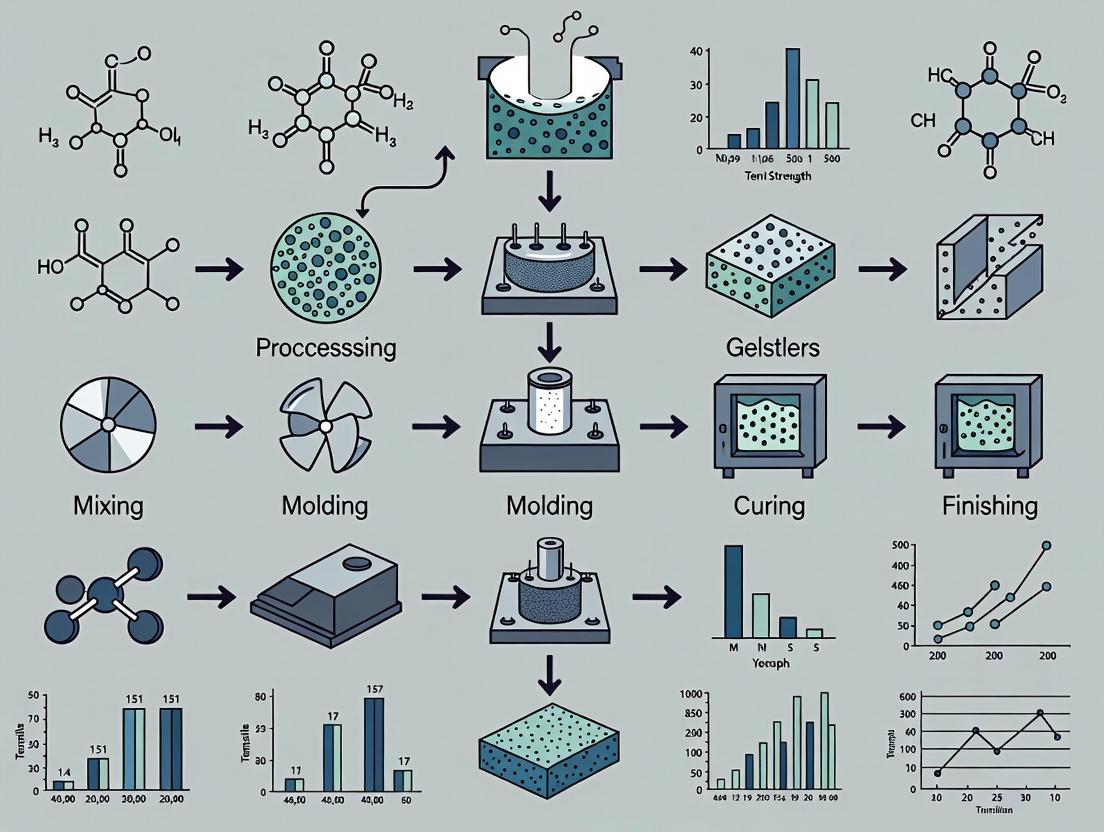
This comprehensive article explores the processing and manufacturing of advanced polymer composites for biomedical applications.
Advanced Polymer Composites Manufacturing: Materials, Methods, and Biomedical Applications
Abstract
This comprehensive article explores the processing and manufacturing of advanced polymer composites for biomedical applications. It provides researchers, scientists, and drug development professionals with a foundational understanding of material science and composite theory, detailed methodologies for fabrication and application in drug delivery and medical devices, practical troubleshooting and optimization strategies for real-world production challenges, and a critical framework for validating performance and comparing emerging technologies. The scope covers the complete pipeline from design to validation, with a focus on scalability, regulatory considerations, and clinical translation.
Polymer Composites 101: Core Materials, Design Principles, and Biomedical Interfaces
Within the broader thesis on Polymer composites processing and manufacturing research, this document defines the critical components of polymer composites for biomedical applications. These materials are engineered by combining a polymer matrix with reinforcements and/or functional fillers to achieve properties unattainable by individual constituents. Their design is pivotal for advanced biomedicine, where mechanical integrity, biocompatibility, and biofunctionality are paramount.
Core Components: Definitions and Biomedical Roles
Matrices
The continuous phase that binds the composite, governing processability, environmental resistance, and interfacial adhesion.
Primary Classes in Biomedicine:
- Synthetic Polymers (e.g., PLGA, PCL, PU): Offer tunable mechanical properties and degradation rates.
- Natural Polymers (e.g., Collagen, Chitosan, Alginate): Provide innate bioactivity and biocompatibility.
- Hydrogels (e.g., PEG-based, Hyaluronic acid): High water content for mimicking soft tissue and drug elution.
Reinforcements
Discontinuous, stronger/stiffer phases (often fibrous) added to enhance mechanical properties like tensile strength and modulus.
Common Types:
- Micro-fibers: Carbon, glass, or polymer fibers for load-bearing implants.
- Nano-fibers/Whiskers: Cellulose nanocrystals (CNC), chitin nanofibers for mechanical reinforcement at low loadings.
- Continuous Fibers: Used in high-strength composite plates or scaffolds.
Functional Fillers
Particulate additives that impart specific biological, electrical, or chemical functionalities beyond mechanical reinforcement.
Key Examples:
- Bioactive Fillers: Hydroxyapatite (HA), tri-calcium phosphate (TCP) for osteoconductivity.
- Conductive Fillers: Graphene, carbon nanotubes (CNTs), PPy particles for neural or cardiac tissue engineering.
- Antimicrobial Fillers: Silver nanoparticles, zinc oxide, chitosan particles.
- Drug Reservoirs: Mesoporous silica nanoparticles, halloysite nanotubes for controlled release.
Table 1: Common Polymer Matrices in Biomedical Composites
| Matrix Polymer | Type | Key Properties (Typical Range) | Common Biomedical Use |
|---|---|---|---|
| Poly(lactic-co-glycolic acid) (PLGA) | Synthetic, degradable | Degradation time: 2-6 months (tunable), Tg: 40-55°C | Sutures, drug-eluting microspheres, scaffolds |
| Polycaprolactone (PCL) | Synthetic, degradable | Young's Modulus: 0.2-0.4 GPa, Degradation time: >24 months | Long-term implants, bone scaffolds |
| Polyethylene Glycol (PEG) Diacrylate | Synthetic, hydrogel | Swelling Ratio: 10-50%, Mesh Size: 5-20 nm | Hydrogel networks, bioinks |
| Collagen Type I | Natural | Tensile Strength: 1-50 MPa (fiber-dependent), Bioactive | Skin grafts, wound dressings, tissue scaffolds |
| Chitosan | Natural, cationic | Degree of Deacetylation: 75-95%, Antimicrobial | Hemostatic dressings, drug delivery |
Table 2: Representative Reinforcements and Functional Fillers
| Filler/Reinforcement | Type/Shape | Typical Loading (wt%) | Primary Function in Composite |
|---|---|---|---|
| Hydroxyapatite (HA) Nanoparticles | Bioactive filler, particulate | 20-60% | Osteoconductivity, increased modulus |
| Carbon Nanotubes (MWCNT) | Conductive reinforcement, tubular | 0.5-5% | Electrical conductivity, mechanical reinforcement |
| Cellulose Nanocrystals (CNC) | Mechanical reinforcement, rod-like | 1-10% | Enhance stiffness & strength, biodegradability |
| Silver Nanoparticles (AgNP) | Functional filler, spherical | 0.1-2% | Antimicrobial activity |
| Mesoporous Silica Nanoparticles (MSN) | Functional filler, porous | 5-20% | High surface area for drug loading & release |
Application Notes & Protocols
Protocol: Fabrication of PLGA-HA Nanocomposite Scaffolds via Thermally Induced Phase Separation (TIPS)
Aim: To create a porous, osteoconductive bone tissue engineering scaffold.
The Scientist's Toolkit:
| Reagent/Material | Function in Protocol |
|---|---|
| PLGA (50:50, 50kDa) | Biodegradable polymer matrix providing structural integrity. |
| Nano-Hydroxyapatite (HA, <100nm) | Bioactive filler promoting bone ingrowth and increasing compressive modulus. |
| 1,4-Dioxane (HPLC grade) | Solvent for PLGA, used in TIPS process. |
| Liquid Nitrogen | To rapidly quench the polymer solution, inducing phase separation. |
| Freeze Dryer (Lyophilizer) | To remove solvent via sublimation, preserving the porous microstructure. |
| Ultrasonic Probe | To achieve uniform dispersion of HA nanoparticles in the polymer solution. |
Detailed Methodology:
- Solution Preparation: Dissolve PLGA pellets in 1,4-dioxane at a concentration of 5% (w/v) by stirring at 50°C for 4 hours. Separately, disperse 20% (w/w relative to PLGA) of nano-HA powder in a small volume of dioxane using probe sonication (10 min, 30% amplitude, pulse 5s on/5s off).
- Mixing: Combine the HA dispersion with the PLGA solution under vigorous stirring, followed by further bath sonication for 30 minutes to ensure homogeneity.
- Casting & Phase Separation: Pour the homogeneous PLGA-HA/dioxane solution into a pre-cooled (-20°C) Teflon mold. Immediately transfer the mold to a -80°C freezer for 2 hours to complete solid-liquid phase separation.
- Solvent Removal: Quench the frozen solid in liquid nitrogen for 5 minutes, then immediately transfer to a freeze-dryer. Lyophilize for 48 hours at -50°C and <0.05 mBar to remove all solvent.
- Post-Processing: Carefully remove the scaffold from the mold, section into desired dimensions using a sharp blade, and store in a desiccator until characterization.
Protocol: Incorporating Drug-Loaded MSN into Chitosan Hydrogels
Aim: To develop an injectable, sustained-release hydrogel composite for localized drug delivery.
The Scientist's Toolkit:
| Reagent/Material | Function in Protocol |
|---|---|
| Chitosan (Medium MW, >75% DD) | Natural polymer matrix forming a pH-sensitive hydrogel. |
| Glycerophosphate (GP) | A pH- and temperature-dependent gelling agent for chitosan. |
| Drug-Loaded Mesoporous Silica Nanoparticles (MSN) | Functional filler serving as a high-capacity drug reservoir. |
| Model Drug (e.g., Doxorubicin HCl) | Therapeutic agent for loading and release studies. |
| Acetic Acid (0.1M) | Solvent to dissolve chitosan into a clear solution. |
| Phosphate Buffered Saline (PBS, pH 7.4) | Standard physiological buffer for release studies. |
Detailed Methodology:
- MSN Loading: Prepare a 5 mg/mL solution of the model drug (e.g., Doxorubicin) in PBS. Add 100 mg of dried MSN to 10 mL of this solution. Stir in the dark at room temperature for 24 hours. Centrifuge (12,000 rpm, 15 min), collect the pellet, and wash twice with DI water. Dry the drug-loaded MSN (MSN-Dox) under vacuum overnight.
- Hydrogel Precursor Preparation: Dissolve 2% (w/v) chitosan in 0.1M acetic acid overnight at 4°C with stirring. Separately, prepare a 50% (w/v) aqueous solution of GP and filter sterilize (0.22 µm). Cool both solutions to 4°C.
- Composite Gel Formation: Slowly add the cold GP solution to the cold chitosan solution under vigorous stirring (1:2 v/v ratio) while maintaining the mixture on ice. During this addition, incorporate 5% (w/w relative to chitosan) of the MSN-Dox powder to create a uniform suspension.
- Gelation: The final mixture remains liquid at acidic, cold conditions. Transfer to an incubator at 37°C; a stable, physically crosslinked gel forms within 5-10 minutes.
- Release Study: Immerse 1 g of the formed gel in 10 mL of PBS (pH 7.4) at 37°C under gentle shaking (100 rpm). At predetermined time points, withdraw 1 mL of release medium and replace with fresh PBS. Analyze drug concentration via UV-Vis spectroscopy.
Visualizations
Diagram 1: Core composite structure & property contributions.
Diagram 2: TIPS scaffold fabrication workflow.
Diagram 3: Drug-loaded composite hydrogel preparation.
Application Notes
Within polymer composites processing and manufacturing research, the triad of biocompatibility, controlled degradation, and tailored mechanical performance is paramount for clinical translation. These properties are interdependent, requiring a holistic design and evaluation approach.
1. Biocompatibility: Beyond Inertness Modern biocompatibility for polymer composites (e.g., PLA/hydroxyapatite, PCL/ graphene oxide) demands a proactive, immunomodulatory response rather than mere passivity. The material must not elicit a detrimental immune reaction (e.g., severe foreign body response, chronic inflammation) and should support specific cell functions (osteogenesis, angiogenesis).
2. Degradation: Synchronized with Tissue Regeneration Degradation kinetics must match the tissue healing timeline. Key factors include:
- Hydrolytic vs. Enzymatic Degradation: Predominant mechanism depends on polymer chemistry (e.g., ester groups in PLGA hydrolyze; chitosan is enzymatically degraded by lysozyme).
- By-Product Acidity: Bulk erosion of polymers like PLA can create acidic microenvironments, causing local inflammation. Composites with bioactive fillers (e.g., β-TCP) can buffer pH.
- Mass Loss vs. Property Loss: Mechanical integrity often declines before significant mass loss occurs, a critical consideration for load-bearing applications.
3. Mechanical Performance: Context-Specific Matching The composite must provide temporary mechanical support until the new tissue assumes load. Properties must be tailored to the target anatomy (e.g., bone, cartilage, vascular tissue).
Quantitative Data Summary
Table 1: Key Properties of Common Biomedical Polymer Composite Constituents
| Material/Composite | Young's Modulus (GPa) | Tensile Strength (MPa) | Degradation Time (Months)* | Key Biocompatibility Note |
|---|---|---|---|---|
| PLLA (neat polymer) | 2.7 - 4.0 | 50 - 70 | 24 - 60 | Hydrolytic, acidic byproducts; moderate inflammation. |
| PLGA 50:50 | 1.9 - 2.4 | 40 - 60 | 1 - 6 | Faster degradation, tunable rate by LA:GA ratio. |
| PCL (neat polymer) | 0.2 - 0.5 | 20 - 35 | > 24 | Slow degradation; good long-term stability. |
| PLLA/15% nano-HA composite | 4.5 - 6.5 | 60 - 80 | 18 - 48 | Enhanced osteoconductivity; modulus closer to cortical bone. |
| PCL/10% Graphene Oxide composite | 1.0 - 1.8 | 30 - 50 | Varies | Improved electrical conductivity for neural/cardiac tissue. |
| Collagen/Chitosan scaffold | 0.001 - 0.05 (hydrated) | 1 - 10 (hydrated) | 1 - 3 | Excellent cell adhesion; enzymatic degradation in vivo. |
*Degradation time to total mass loss is highly dependent on implant geometry, crystallinity, and site.
Table 2: Standardized Tests for Key Material Properties
| Property | Primary Test Standards (ASTM/ISO) | Key Output Metrics |
|---|---|---|
| Cytocompatibility | ISO 10993-5 (Cytotoxicity) | Cell viability (%), IC50, Morphology |
| Hemocompatibility | ISO 10993-4 (Blood Interaction) | Hemolysis rate (%), Platelet adhesion/activation |
| Systemic Biocompatibility | ISO 10993-6 (Implantation) | Inflammation score, Fibrous capsule thickness |
| In Vitro Degradation | ASTM F1635 | Mass loss (%), Molecular weight loss, pH change |
| Compressive Mechanical | ASTM D695 | Compressive Modulus (MPa), Yield Strength (MPa) |
| Tensile Mechanical | ASTM D638 | Tensile Modulus (MPa), Ultimate Tensile Strength (MPa) |
Experimental Protocols
Protocol 1: In Vitro Cytocompatibility and Inflammatory Response Assay Objective: To evaluate composite extract cytotoxicity and its effect on macrophage polarization. Materials: Sterile polymer composite discs (Φ=10mm, t=2mm), RAW 264.7 macrophage cell line, L929 fibroblast cell line, complete DMEM, MTT reagent, ELISA kits for TNF-α (pro-inflammatory) and IL-10 (anti-inflammatory). Procedure:
- Extract Preparation (ISO 10993-12): Incubate sterile composite samples in complete DMEM (3 cm²/mL surface area to volume) at 37°C for 24h. Filter supernatant (0.22 µm).
- Fibroblast Cytotoxicity (MTT Assay): Seed L929 cells in 96-well plate (1x10⁴ cells/well). After 24h, replace medium with 100µL of extract or control (fresh medium). Incubate for 24/48h. Add 10µL MTT solution (5mg/mL). Incubate 4h. Add 100µL solubilization buffer overnight. Measure absorbance at 570nm. Calculate viability (%) relative to control.
- Macrophage Polarization: Seed RAW 264.7 cells (2x10⁵ cells/well in 24-well plate). Stimulate with 1µg/mL LPS (M1 control) or 20ng/mL IL-4 (M2 control). Treat test groups with composite extract. Incubate 48h.
- Analysis: Collect supernatant. Quantify TNF-α and IL-10 via ELISA per manufacturer protocol. Perform cell staining (e.g., iNOS for M1, Arg-1 for M2) for phenotypic confirmation.
Protocol 2: Accelerated In Vitro Hydrolytic Degradation Objective: To monitor mass loss, molecular weight change, and pH shift under simulated physiological conditions. Materials: Pre-weighed composite samples (W₀), 1x PBS (pH 7.4), 50 mL conical tubes, orbital shaker incubator (37°C), GPC for molecular weight analysis, pH meter. Procedure:
- Baseline Characterization: Record initial mass (W₀), thickness, and molecular weight (Mₙ,₀ via GPC) for n=5 samples per group.
- Immersion: Place each sample in 20mL PBS in individual tubes. Maintain at 37°C under constant, gentle agitation (60 rpm).
- Time-Point Sampling: At pre-set intervals (e.g., 1, 2, 4, 8, 12 weeks), remove samples (n=1 per group per time point).
- Analysis: Rinse samples with DI water, lyophilize, and record dry mass (Wₜ). Calculate mass loss: ((W₀ - Wₜ)/W₀)*100%. Measure pH of the immersion PBS. For molecular weight, dissolve a portion of the dried sample in appropriate solvent and run GPC to determine Mₙ,ₜ.
Protocol 3: Quasi-Static Mechanical Compression Testing for Porous Scaffolds Objective: To determine the compressive modulus and strength of a porous tissue engineering scaffold. Materials: Cylindrical porous scaffold (e.g., Φ=8mm, h=10mm), universal mechanical testing machine with 500N load cell, compression plates, calipers. Procedure:
- Sample Preparation: Measure exact sample dimensions (diameter, height). Ensure surfaces are parallel.
- Machine Setup: Calibrate machine. Zero the load cell and position. Lower the movable crosshead until it just contacts the sample surface. Set pre-load to 0.1N.
- Test Parameters: Set compression rate to 1 mm/min (strain rate ~0.1%/s for a 10mm sample). Set test to stop at 60% strain or upon catastrophic failure.
- Execution: Start test. Record force vs. displacement data.
- Data Analysis: Convert displacement to engineering strain (ε = Δh/h₀) and force to engineering stress (σ = F/A₀). Plot stress-strain curve. Calculate compressive modulus from the linear elastic region (slope, typically 0-10% strain). Identify yield strength or compressive strength at fracture.
Visualizations
Title: Biocompatibility and Foreign Body Response Pathway
Title: Interplay of Processing, Structure, and Properties
The Scientist's Toolkit: Research Reagent Solutions
Table 3: Essential Materials for Polymer Composite Biocompatibility & Degradation Studies
| Item | Function & Relevance |
|---|---|
| Poly(L-lactide) (PLLA) / PLGA | Model biodegradable thermoplastic polymers. Tunable crystallinity (PLLA) and degradation rate (PLGA). Base matrix for composites. |
| Nano-Hydroxyapatite (nHA) | Bioactive ceramic filler. Enhances osteoconductivity and compressive modulus of polymer composites for bone tissue engineering. |
| Phosphate Buffered Saline (PBS), pH 7.4 | Standard immersion medium for in vitro degradation studies. Simulates ionic strength of physiological fluids. |
| AlamarBlue / MTT/XTT Reagents | Cell viability and proliferation assay kits. Measure metabolic activity of cells exposed to material extracts or directly cultured on scaffolds. |
| RAW 264.7 Murine Macrophage Cell Line | Standard model for assessing acute immune response. Can be stimulated to pro-inflammatory (M1) or anti-inflammatory (M2) phenotypes. |
| ELISA Kits (e.g., TNF-α, IL-1β, IL-10) | Quantify specific cytokine protein levels in cell culture supernatant to objectively gauge inflammatory response. |
| Gel Permeation Chromatography (GPC) System | Critical for tracking the change in average molecular weight (Mn, Mw) of polymers during degradation, often precedes mass loss. |
| Simulated Body Fluid (SBF) | Ion concentration similar to human blood plasma. Used to test bioactivity (apatite-forming ability) of composites. |
Application Notes
Within polymer composites processing and manufacturing research, the interface between reinforcing fillers (e.g., fibers, nanoparticles) and the polymer matrix is the critical determinant of bulk material performance. Effective interfacial bonding and filler dispersion are prerequisites for optimal load transfer, directly influencing mechanical, thermal, and barrier properties. These principles are equally paramount in drug development for designing polymer-based delivery systems, where interface science governs drug dispersion, release kinetics, and carrier integrity.
Table 1: Quantitative Impact of Interfacial Modification on Composite Properties
| Interfacial Treatment (on 1 wt% CNTs) | Matrix Polymer | Tensile Strength Increase (%) | Modulus Increase (%) | Electrical Percolation Threshold (wt%) | Key Mechanism |
|---|---|---|---|---|---|
| Nitric Acid Oxidation | Epoxy | 45 | 60 | 0.5 | Covalent bonding, improved wettability |
| Silane Coupling Agent (APTES) | Polypropylene | 30 | 40 | 0.8 | Chemical coupling, dispersion stability |
| Non-Ionic Surfactant | Polyvinyl alcohol | 15 | 25 | 0.4 | Steric stabilization, de-agglomeration |
| π-π Interaction Polymer Wrap | Polystyrene | 35 | 50 | 0.3 | Non-covalent adhesion, dispersion |
Table 2: Load Transfer Efficiency Metrics for Different Interfaces
| Fiber Type | Surface Energy (mJ/m²) | Interfacial Shear Strength (IFSS) (MPa) | Critical Fiber Length (µm) | Predominant Load Transfer Mechanism |
|---|---|---|---|---|
| Untreated Carbon Fiber | 35 | 25 | 450 | Weak mechanical interlocking, van der Waals |
| Plasma-Treated Carbon Fiber | 65 | 55 | 200 | Chemical bonding, enhanced mechanical keying |
| Sized Glass Fiber | 45 | 40 | 300 | Chemo-rheological adhesion via sizing |
| Aramid Fiber | 40 | 30 | 600 | Limited chemical reactivity, friction-based |
Experimental Protocols
Protocol 1: Quantifying Interfacial Shear Strength (IFSS) via Micro-Droplet Debond Test
Objective: To measure the bond strength between a single reinforcing fiber and the polymer matrix.
Materials: See "The Scientist's Toolkit" below.
Method:
- Sample Preparation: A small droplet (50-100 µm diameter) of uncured resin (e.g., epoxy) is carefully deposited onto a single fiber (carbon, glass) under a microscope.
- Curing: The droplet is cured according to the resin manufacturer's specifications (e.g., 120°C for 1 hour).
- Mounting: The fiber is clamped horizontally in a micro-tensile tester equipped with a precision micro-vise.
- Debonding: The micro-vise is used to grip the cured polymer droplet. The fiber is pulled at a constant displacement rate (typically 1 µm/s) until the droplet debonds from the fiber.
- Data Analysis: The maximum force (Fmax) recorded during debonding is used to calculate IFSS using the equation: τ = Fmax / (π * d * Le), where d is the fiber diameter and Le is the embedded length of the fiber within the droplet. A minimum of 30 tests per condition is required for statistical significance.
Protocol 2: Assessing Nanoparticle Dispersion via Rheological Percolation Measurement
Objective: To indirectly evaluate the state of dispersion of nanoparticles (e.g., carbon nanotubes, graphene) in a polymer melt through rheological percolation threshold.
Materials: See "The Scientist's Toolkit" below.
Method:
- Composite Preparation: Prepare a series of nanocomposites with incrementally increasing nanofiller content (e.g., 0.1, 0.3, 0.5, 1.0 wt%) using melt compounding (twin-screw extruder) or solvent casting with sonication.
- Rheological Testing: Load samples into a parallel-plate rheometer. Perform a dynamic frequency sweep (e.g., 0.1 to 100 rad/s) at a strain within the linear viscoelastic region and at the processing temperature (e.g., 200°C for polypropylene).
- Percolation Analysis: Plot the low-frequency (e.g., 0.1 rad/s) storage modulus (G') versus nanofiller weight fraction. The percolation threshold is identified as the point where a sharp, orders-of-magnitude increase in G' occurs, indicating the formation of a connected nanoparticle network. A lower threshold signifies superior dispersion.
Diagrams
Title: Interface Engineering and Property Enhancement Workflow
Title: Shear Stress Mediated Load Transfer Mechanism
The Scientist's Toolkit
Table 3: Essential Research Reagent Solutions for Interfacial Studies
| Item | Function/Application |
|---|---|
| 3-Aminopropyltriethoxysilane (APTES) | Silane coupling agent; forms covalent bonds between inorganic fillers (glass, metal oxides) and polymer matrices. |
| Nitric/Sulfuric Acid (3:1 v/v) | Oxidizing acid mixture; introduces carboxyl and hydroxyl groups on carbon-based nanofillers (CNTs, graphene) for covalent functionalization. |
| Plasma Treatment System (O2 or NH3 gas) | Creates active sites and functional groups on fiber/powder surfaces; enhances wettability and chemical reactivity. |
| Non-Ionic Surfactant (e.g., Triton X-100) | Dispersing agent; sterically stabilizes nanoparticles in aqueous or solvent-based processing to prevent re-agglomeration. |
| Model Polymer Matrices (e.g., Epoxy, PP, PVA) | Well-characterized polymers for fundamental studies of interfacial adhesion and dispersion mechanisms. |
| Fluorescent Dye (e.g., Rhodamine B) | Used as a tracer in conjunction with microscopy to visualize dispersion homogeneity and interfacial boundaries. |
| Micro-droplet Debond Tester | Key instrument for single-fiber composite testing to directly measure Interfacial Shear Strength (IFSS). |
| Parallel-Plate Rheometer | Measures viscoelastic properties to indirectly assess nanoparticle dispersion state via percolation threshold. |
Recent Breakthroughs in Nanocomposites and Smart/Responsive Materials for Therapeutics
Application Notes and Protocols
1. Application Note: pH-Responsive Nanocomposite Hydrogels for Targeted Chemotherapy
This application highlights a core advancement in polymer composites processing: the integration of inorganic nanoparticles within a polymer matrix to create a stimuli-responsive network. The nanocomposite exhibits a sharp volumetric transition (swelling/collapse) at tumor microenvironment pH (~6.8), enabling targeted drug release.
Table 1: Characterization Data for pH-Responsive Nanocomposite Hydrogel (PLGA-PEG/Fe₃O₄)
| Property | Measurement Method | Value at pH 7.4 | Value at pH 6.8 | Significance |
|---|---|---|---|---|
| Swelling Ratio | Gravimetric Analysis | 4.2 ± 0.3 | 12.8 ± 1.1 | 3-fold increase triggers release. |
| Doxorubicin Release (24h) | HPLC | 18% ± 3% | 85% ± 5% | Selective release in acidic pH. |
| Nanoparticle Loading | TGA | 8 wt% Fe₃O₄ | N/A | Enables magnetic targeting. |
| Compressive Modulus | DMA | 12.5 ± 1.2 kPa | 3.1 ± 0.7 kPa | Gel softens for cell uptake. |
Protocol 1.1: Synthesis of pH-Responsive PLGA-PEG/Fe₃O₄ Nanocomposite Hydrogel
- Objective: To fabricate a magnetic, pH-sensitive hydrogel for triggered doxorubicin (DOX) delivery.
- Materials:
- PLGA-PEG-COOH copolymer (50:50 PLGA:PEG ratio, 15kDa)
- Carboxylated Fe₃O₄ nanoparticles (10 nm diameter, 5 mg/mL in DI water)
- Doxorubicin hydrochloride (DOX·HCl)
- N-(3-Dimethylaminopropyl)-N′-ethylcarbodiimide (EDC)
- N-Hydroxysuccinimide (NHS)
- Phosphate Buffered Saline (PBS, pH 7.4 and 6.8)
- Procedure:
- Activation: Dissolve 200 mg PLGA-PEG-COOH in 10 mL PBS (pH 7.4). Add 20 mg EDC and 30 mg NHS. Stir for 20 minutes at room temperature (RT) to activate carboxyl groups.
- Nanocomposite Formation: Add 4 mL of carboxylated Fe₃O₄ nanoparticle suspension (total 20 mg) to the activated polymer solution. Sonicate for 5 min (pulse mode, 50% amplitude) and stir for 12 hours at 4°C to form amide bonds.
- Drug Loading: Add 10 mg DOX·HCl to the nanocomposite solution. Stir in the dark for 24 hours at RT.
- Gelation & Purification: Transfer the solution to a mold. Incubate at 37°C for 2 hours to induce physical gelation. Immerse the formed hydrogel in fresh PBS (pH 7.4) for 48 hours, changing buffer every 12 hours, to remove unreacted reagents and unloaded drug.
- Characterization: Lyophilize a sample aliquot to determine swelling ratio and drug loading efficiency via UV-Vis spectroscopy.
2. Application Note: Enzyme-Responsive Polymeric Nanocomposites for siRNA Delivery
This note details a manufacturing breakthrough using layer-by-layer (LbL) assembly, a versatile composite processing technique, to create multi-layered nanoparticles (MLNPs). The composite is designed to degrade specifically in the presence of matrix metalloproteinase-9 (MMP-9), commonly overexpressed in tumor metastases.
Table 2: Performance of MMP-9 Responsive siRNA-Loaded MLNPs
| Parameter | In Vitro (Cell Culture) | In Vivo (Murine Model) | Control (No MMP-9) |
|---|---|---|---|
| Nanoparticle Size | 120 ± 8 nm (DLS) | N/A | 118 ± 10 nm |
| Zeta Potential | +25 ± 3 mV | N/A | +24 ± 4 mV |
| Gene Silencing Efficiency | 90% knockdown (qPCR) | 75% target reduction (tumor tissue) | <10% knockdown |
| Serum Stability | >24 hours (no aggregation) | N/A | N/A |
Protocol 2.1: Fabrication of MMP-9-Responsive Multilayered Nanocomposites via LbL Assembly
- Objective: To construct siRNA-loaded polyelectrolyte multilayers on a silica core with an MMP-9 cleavable peptide interlayer.
- Materials:
- Silica nanoparticles (80 nm diameter)
- Poly-L-lysine (PLL, 15-30 kDa)
- Poly(acrylic acid) (PAA, 50 kDa)
- MMP-9 cleavable peptide (GPLGVRGK, with terminal cysteine)
- siRNA against target gene (e.g., GFP, survivin)
- EDC/NHS crosslinking kit
- Procedure:
- Core Functionalization: Wash silica nanoparticles (10 mg) in MES buffer (pH 6.0). Activate surface -OH groups with EDC/NHS (as per Protocol 1.1). React with PLL (5 mg/mL) for 2 hours to create a positively charged base layer. Centrifuge and wash.
- LbL Assembly: Sequentially immerse the PLL-coated particles in the following solutions for 15 minutes each, with three washes in between:
- Layer 1: PAA solution (2 mg/mL in PBS).
- Layer 2: MMP-9 peptide (1 mg/mL) conjugated to PLL via cysteine-maleimide chemistry.
- Layer 3: siRNA solution (0.5 mg/mL in nuclease-free water).
- Crosslinking: After 3-5 bilayer repeats (PAA/siRNA), stabilize the outer layers using a brief EDC crosslinking step (10 min).
- Core Removal (Optional): For biodegradable carriers, etch the silica core using ammonium hydrogen fluoride (NH₄HF₂) buffer (pH 5) to obtain hollow capsules.
- Validation: Confirm layer growth via zeta potential alternation and quantify siRNA loading using a RiboGreen assay.
Visualizations
Diagram 1: pH-triggered drug release mechanism.
Diagram 2: LbL assembly and enzyme-responsive release.
The Scientist's Toolkit: Key Research Reagent Solutions
Table 3: Essential Materials for Nanocomposite Therapeutic Research
| Reagent/Material | Supplier Examples | Key Function in Research |
|---|---|---|
| PLGA-PEG Block Copolymers | Sigma-Aldrich, PolySciTech, Akina | Forms the biodegradable, amphiphilic polymer matrix for nanoparticle self-assembly and drug encapsulation. |
| Functionalized Nanoparticles (Fe₃O₄, SiO₂, Au) | nanoComposix, Sigma-Aldrich, Cytodiagnostics | Provides core functionality (magnetism, structure, plasmonics) for targeting, imaging, or composite reinforcement. |
| Stimuli-Responsive Crosslinkers (e.g., MMP-9 peptide) | Bachem, Genscript, PeptidesInternational | Creates cleavable bonds within the composite structure for triggered payload release in specific biological environments. |
| Fluorescently-Labeled Polymers (e.g., FITC-PLL) | Creative PEGWorks, Nanocs | Enables visualization and tracking of nanocomposite localization in cells and tissues via fluorescence microscopy. |
| Dialysis Membranes (MWCO 3.5k-100k) | Spectrum Labs, Repligen | Critical for purifying synthesized nanocomposites from unreacted monomers, solvents, and unencapsulated drugs. |
| Dynamic Light Scattering (DLS) & Zeta Potential Kits | Malvern Panalytical | Provides standardized protocols and calibration materials for characterizing nanoparticle size, distribution, and surface charge. |
Within the field of polymer composites processing and manufacturing, comprehensive characterization is critical for linking structure to performance. This application note details essential protocols for rheology, thermal analysis, and surface chemistry, providing researchers with standardized methodologies to evaluate composite processability, stability, and interfacial interactions, which are paramount for applications ranging from structural components to drug delivery systems.
Rheological Characterization of Polymer Composite Melts
Rheology is fundamental for understanding processability (e.g., in extrusion or injection molding) and predicting the dispersion of fillers (nanoclays, fibers) within a polymer matrix.
Protocol 1.1: Oscillatory Shear Rheometry for Viscoelastic Properties
Objective: To determine the viscoelastic properties (storage modulus G', loss modulus G", complex viscosity η*) of a polymer composite melt as a function of frequency and temperature.
Materials & Sample Preparation:
- Composite Pellet/Granule: Pre-dried according to polymer specifications (e.g., 80°C under vacuum for 12 hours for polyamide composites).
- Parallel-Plate Geometry (e.g., 25 mm diameter): Cleaned with appropriate solvent (e.g., xylene for polyolefins) and dried.
- Rheometer with environmental test chamber for temperature control.
Procedure:
- Load the pre-dried sample onto the lower plate preheated to the test start temperature (e.g., 200°C for a PP-based composite).
- Lower the upper geometry to a defined gap (typically 1.0 mm). Trim excess material.
- Allow temperature equilibration for 5 minutes.
- Perform a strain amplitude sweep (e.g., 0.01% - 100% strain at 10 rad/s) to determine the linear viscoelastic region (LVR).
- Perform a frequency sweep within the LVR (e.g., 0.1 - 100 rad/s) at constant strain (e.g., 1%).
- Repeat at multiple temperatures (e.g., 180, 200, 220°C) for time-temperature superposition analysis.
Data Analysis:
- The complex viscosity (η*) vs. frequency indicates shear-thinning behavior; a strong filler network often manifests as a high low-shear viscosity plateau.
- The van Gurp-Palmen plot (phase angle δ vs. complex modulus |G*|) helps identify structural changes and polymer-filler interactions.
Table 1: Representative Rheological Data for PP/Silica Composite (at 200°C, 1% strain)
| Angular Frequency (rad/s) | Storage Modulus, G' (Pa) | Loss Modulus, G" (Pa) | Complex Viscosity, η* (Pa·s) |
|---|---|---|---|
| 0.1 | 1.2 x 10³ | 3.5 x 10³ | 3.7 x 10⁴ |
| 1 | 8.9 x 10³ | 2.1 x 10⁴ | 2.3 x 10⁴ |
| 10 | 6.5 x 10⁴ | 1.2 x 10⁵ | 1.4 x 10⁴ |
| 100 | 4.1 x 10⁵ | 5.8 x 10⁵ | 7.1 x 10³ |
Diagram Title: Oscillatory Shear Rheometry Protocol Workflow
Thermal Analysis for Stability and Composition
Protocol 2.1: Modulated Differential Scanning Calorimetry (mDSC)
Objective: To separate reversible (heat capacity related) and non-reversible thermal events in a composite, providing detailed glass transition (Tg), melting, and crystallization behavior.
Procedure:
- Encapsulate 5-10 mg of composite sample in a hermetic Tzero pan.
- Load into mDSC equipped with a refrigerated cooling system.
- Purge with nitrogen (50 mL/min).
- Run program: Equilibrate at -50°C, heat to 250°C at 2°C/min with a modulation amplitude of ±0.5°C every 60 seconds.
- Analyze the reversing heat flow (for Tg) and non-reversing heat flow (for crystallization enthalpy, solvent loss).
Table 2: mDSC Data for PLA/Hydroxyapatite Composite
| Parameter | Neat PLA | PLA/HA Composite (20 wt%) |
|---|---|---|
| Glass Transition, Tg (°C) | 60.2 | 61.8 |
| Cold Crystallization Temp (°C) | 125.5 | 118.3 |
| Melting Temperature, Tm (°C) | 178.4 | 177.9 |
| % Crystallinity (χc)* | 35.2 | 42.1 |
*χc calculated using ΔHm°/ 93.7 J/g for 100% crystalline PLA.
Protocol 2.2: Thermogravimetric Analysis (TGA) for Decomposition Kinetics
Objective: To determine thermal stability, filler content, and moisture absorption.
Procedure:
- Load 10-20 mg of composite into a platinum or alumina TGA pan.
- Purge with N₂ (balance) and O₂ or air (for oxidation studies).
- Run program: Hold at 40°C for 10 min, then heat to 800°C at 20°C/min.
- For kinetic analysis (e.g., Flynn-Wall-Ozawa method), run additional experiments at 5, 10, 15, and 20°C/min.
Diagram Title: Thermal Analysis mDSC & TGA Pathways
Surface Chemistry Analysis via X-ray Photoelectron Spectroscopy (XPS)
Objective: To quantify elemental composition and chemical bonding states at the composite surface (<10 nm depth), critical for understanding filler-matrix adhesion and surface modification efficacy.
Protocol 3.1: XPS Surface Analysis of Functionalized Carbon Nanotube (CNT) Composite
Sample Preparation:
- Prepare a thin film of the composite by compression molding or solution casting.
- Mount sample on conductive carbon tape or a sample stub. Avoid touching the analysis surface.
- Insert into XPS load lock and evacuate overnight if possible to minimize adventitious carbon.
Data Acquisition:
- Use a monochromatic Al Kα X-ray source (1486.6 eV).
- Acquire a wide survey scan (0-1200 eV, pass energy 160 eV) to identify all elements present.
- Acquire high-resolution regional scans (pass energy 20-40 eV) for C 1s, O 1s, and any filler-specific peaks (e.g., Si 2p, N 1s).
- Use charge neutralization for insulating samples.
- Perform peak fitting using appropriate software (e.g., CasaXPS), constraining peak positions based on known chemical states.
Table 3: XPS Atomic Concentration for PE/Oxidized-CNT Composite
| Element & Peak | Binding Energy (eV) | Assignment | Atomic % |
|---|---|---|---|
| C 1s | 284.8 | C-C/C-H | 78.2 |
| C 1s | 286.2 | C-O | 12.1 |
| C 1s | 288.9 | O-C=O | 4.3 |
| O 1s | 532.1 | C=O | 5.4 |
| O 1s | 533.3 | C-O | - |
The Scientist's Toolkit: Research Reagent Solutions & Essential Materials
Table 4: Key Materials for Polymer Composite Characterization
| Material / Reagent | Function / Application | Key Consideration |
|---|---|---|
| Inert Rheometer Test Fluids (e.g., Silicone Oil Standards) | Calibration of rheometer torque and inertia. | Ensure viscosity matches expected sample range. |
| Hermetic & Tzero DSC Pans/Lids | Encapsulate samples for mDSC to prevent mass loss. | Must be sealed properly; check for pinholes. |
| High-Purity Calibration Standards (Indium, Zinc, Alumel) | Temperature and enthalpy calibration for DSC/TGA. | Use certified standards traceable to NIST. |
| Charge Neutralization Source (Flood Gun) | Essential for XPS analysis of insulating polymer composites. | Adjust electron/ion flux to achieve stable spectra. |
| Sputtering Ion Source (Ar⁺ cluster gun) | Gentle surface cleaning or depth profiling in XPS/ToF-SIMS. | Use low energy (≤ 2 keV) to avoid damaging polymer chemistry. |
| Ultra-high Purity Gases (N₂, Ar for TGA; N₂ for DSC) | Provide inert/oxidative atmospheres, prevent degradation. | Use moisture/oxygen traps on gas lines. |
| Reference Catalogs (NIST XPS Database, Polymer Degradation Kinetics) | For accurate peak fitting and kinetic model selection. | Critical for data interpretation and publication. |
From Lab to Production: Fabrication Techniques and Cutting-Edge Biomedical Applications
Application Notes
Context within Polymer Composites Processing & Manufacturing Research
This work explores two critical solvent-based processing techniques within a research thesis focused on fabricating polymer composite matrices for biomedical applications. Electrospinning generates fibrous, porous scaffolds for 3D tissue engineering, while film casting produces dense, controlled-release patches for transdermal drug delivery. Both methods leverage solvent evaporation to solidify polymers, but differ fundamentally in morphology control, influencing mechanical properties, degradation kinetics, and active agent release profiles.
Comparative Analysis of Techniques
Table 1: Core Characteristics of Electrospinning vs. Film Casting
| Parameter | Electrospinning for Scaffolds | Film Casting for Patches |
|---|---|---|
| Primary Morphology | Non-woven nanofibrous mesh (fiber diameter: 50-1000 nm) | Continuous, dense film (thickness: 20-200 µm) |
| Porosity | High (80-95%), interconnected | Very low (<5%) to moderate (with porogens) |
| Surface Area-to-Volume Ratio | Extremely high | Low |
| Typical Polymers | PCL, PLGA, PVA, Gelatin, Chitosan | Eudragit, Ethyl Cellulose, PVP, Silicones |
| Key Process Variables | Voltage (10-30 kV), Flow Rate (0.5-3 mL/h), Tip-Collector Distance (10-25 cm), Humidity | Solvent Evaporation Rate, Casting Thickness, Drying Temperature, Polymer Concentration |
| Primary Application | Tissue engineering scaffolds (bone, skin, nerve), wound dressings | Transdermal & mucosal drug delivery patches, oral films |
| Drug Loading Method | Blend, Coaxial, Emulsion electrospinning | Matrix dispersion, Reservoir layer, Multi-layer casting |
| Release Kinetics Profile | Often biphasic (burst release followed by sustained) | Typically zero-order or sustained matrix diffusion |
Table 2: Recent Performance Data from Literature (2022-2024)
| System & Technique | Key Composite | Key Outcome | Reference (Type) |
|---|---|---|---|
| Antibacterial Wound Scaffold (Electrospinning) | PCL/Gelatin + Ciprofloxacin (5% w/w) | >99% bacterial reduction in 24h; fiber diameter: 220 ± 40 nm; porosity: 91%. | Int. J. Pharm., 2023 |
| Transdermal Pain Patch (Film Casting) | Eudragit E100/PG (3:1) + Lidocaine (10%) | Sustained release over 24h; thickness: 80 µm; tensile strength: 4.2 MPa. | J. Control. Release, 2024 |
| Bone Tissue Engineering (Electrospinning) | PLGA/nHA (15% w/w) | Enhanced osteoblast proliferation (150% vs control); fiber diameter: 350 ± 90 nm. | Biomater. Sci., 2023 |
| Oral Mucoadhesive Patch (Film Casting) | Chitosan/HPMC + Clotrimazole | Mucoadhesion time >6h; controlled release >8h; film uniformity (CV < 5%). | Carbohydr. Polym., 2022 |
Experimental Protocols
Protocol: Blend Electrospinning of Drug-Loaded PCL/Gelatin Scaffolds
Objective: To fabricate a nanofibrous scaffold for dermal tissue regeneration with integrated antimicrobial agent.
Materials (The Scientist's Toolkit): Table 3: Key Research Reagent Solutions & Materials
| Item | Function/Explanation |
|---|---|
| Polycaprolactone (PCL, Mn 80,000) | Synthetic polymer providing mechanical integrity and slow degradation. |
| Gelatin Type A | Natural polymer enhancing cell adhesion and bioactivity. |
| Hexafluoroisopropanol (HFIP) | Solvent capable of dissolving both PCL and gelatin. |
| Ciprofloxacin HCl | Broad-spectrum antibiotic model drug. |
| Syringe Pump | Provides precise, steady flow of polymer solution. |
| High-Voltage Power Supply | Generates the electrostatic field (0-30 kV range). |
| Static Flat Plate Collector | Wrapped in aluminum foil for fiber collection. |
| Environmental Chamber | Controls temperature (25°C) and humidity (40-50%). |
Methodology:
- Solution Preparation: Dissolve PCL and gelatin at an 70:30 weight ratio in HFIP to achieve a total polymer concentration of 12% w/v. Stir for 6 hours at room temperature. Add ciprofloxacin to the final solution at 5% w/w relative to total polymer. Stir for an additional 2 hours.
- Electrospinning Setup: Load the solution into a 10 mL syringe fitted with a blunt 21-gauge needle. Place syringe on pump. Position needle tip 18 cm from the flat collector. Connect the high-voltage source to the needle.
- Process Execution: Set syringe pump flow rate to 1.2 mL/h. Apply a voltage of 18 kV. Initiate collection for 4 hours, maintaining humidity at 45% ± 5%.
- Post-Processing: Carefully detach the fibrous mat from the collector. Place in a vacuum desiccator for 48 hours to remove residual solvent.
Diagram: Electrospinning Experimental Workflow
Protocol: Solvent Evaporation Film Casting of Transdermal Patches
Objective: To prepare a monolithic matrix patch for sustained transdermal drug delivery.
Materials (The Scientist's Toolkit): Table 4: Key Research Reagent Solutions & Materials
| Item | Function/Explanation |
|---|---|
| Eudragit E100 | Cationic copolymer providing film-forming & drug-release properties. |
| Propylene Glycol (PG) | Plasticizer to enhance film flexibility and drug permeability. |
| Lidocaine Base | Model local anesthetic drug. |
| Ethanol (Anhydrous) | Volatile solvent for polymer dissolution. |
| Glass Casting Plate | Provides a smooth, non-stick surface for film formation. |
| Doctor Blade / Film Applicator | Ensures uniform casting thickness. |
| Controlled Oven | For controlled temperature drying. |
| Peel Test Analyzer | Measures mucoadhesive or peel strength. |
Methodology:
- Casting Solution Preparation: Dissolve Eudragit E100 in ethanol (10% w/v) under magnetic stirring for 3 hours. Add propylene glycol (25% w/w of polymer) as plasticizer and stir for 1 hour. Incorporate lidocaine base (10% w/w of polymer) and stir until a clear solution is obtained (approx. 2 hours).
- Film Casting: Place a clean glass plate on a level surface. Secure a doctor blade to a target wet thickness of 1000 µm. Pour the solution steadily in front of the blade and draw down to form a uniform liquid film.
- Drying: Immediately transfer the cast plate to a forced-air oven pre-set to 40°C. Dry for 12 hours. Then, peel the dried film from the plate and further condition in a desiccator with silica gel for 24 hours.
- Cutting & Storage: Cut the film into patches of desired dimensions (e.g., 1 cm²) using a precision cutter. Store in sealed aluminum pouches at room temperature.
Diagram: Film Casting Process Flow
Data Analysis & Characterization Protocols
Protocol for Scaffold/Patch Characterization:
- Morphology (SEM): Sputter-coat samples with gold. Image at 5-10 kV. Measure fiber diameter/film thickness using image analysis software (n=100).
- Drug Release (In Vitro): Use Franz diffusion cells. Place sample in donor chamber. Use PBS (pH 7.4) at 37°C as receptor. Sample receptor medium at predetermined times and analyze via HPLC-UV.
- Mechanical Testing: Use a micro-tensile tester. Cut samples into dumbbell shapes. Apply load at 1 mm/min until failure. Record stress-strain curve.
- Bioactivity (For Scaffolds): Seed fibroblasts (e.g., L929) at 10,000 cells/cm² on sterilized scaffolds. Assess viability at 1,3,7 days using MTT assay.
Within polymer composites processing and manufacturing research, melt-processing methods are critical for translating advanced biomaterial formulations into functional medical products. This work, part of a broader thesis, focuses on two pivotal techniques: extrusion for the continuous fabrication of implantable constructs (e.g., filaments, rods, stents) and injection molding for the high-volume, precision manufacturing of medical devices (e.g., connectors, housings, drug delivery components). The integration of bioactive agents, such as pharmaceuticals or osteoinductive fillers, presents distinct challenges for each method, primarily concerning thermal and shear-induced degradation. These application notes detail current protocols, material considerations, and quantitative outcomes for researchers and drug development professionals.
Extrusion for Implantable Constructs
Application Notes
Twin-screw extrusion (TSE) is the dominant method for manufacturing polymer composite implants, particularly for drug-eluting systems and load-bearing scaffolds. Its advantages include excellent distributive mixing for homogeneous filler dispersion (e.g., hydroxyapatite, antibiotic compounds), devolatilization capabilities to remove residual moisture/solvents, and continuous processing. Key research focuses on minimizing the thermal exposure of sensitive actives while achieving optimal mechanical properties.
Key Research Reagent Solutions
Table 1: Essential Materials for Implant Extrusion Research
| Item | Function |
|---|---|
| PLGA (Poly(lactic-co-glycolic acid)) | Biodegradable polymer matrix; erosion rate tunable via LA:GA ratio. |
| Hydroxyapatite (Nano-grade) | Bioactive ceramic filler for bone implants; enhances osteoconductivity and modulus. |
| Gentamicin Sulfate or Rifampin | Model antibiotic compounds for infection-preventing implant studies. |
| Plasticizer (e.g., PEG 1500) | Reduces processing temperature and melt viscosity, protecting thermolabile drugs. |
| Twin-Screw Extruder (Co-rotating) | Provides high shear mixing, configurable screw design, and multiple feeding/injection zones. |
| In-Line Melt Rheometer | Monitors real-time viscosity for process stability and material degradation assessment. |
| Haake Torque Rheometer | Small-scale batch mixing for preliminary formulation screening. |
Detailed Experimental Protocol: Fabrication of Antibiotic-Loaded PLGA/HAP Composite Filaments
Objective: To produce a homogeneous, extrudable composite filament containing 20 wt% hydroxyapatite (HAP) and 5 wt% gentamicin in a PLGA matrix for potential use as a bone fixation pin precursor.
Materials Preparation:
- Drying: Dry PLGA (70:30 LA:GA), HAP powder, and gentamicin sulfate separately in a vacuum oven at 40°C for 12 hours.
- Premixing: Manually blend the dried powders in a sealed container according to the target composition (75% PLGA, 20% HAP, 5% drug) for 15 minutes.
Extrusion Procedure:
- Equipment Setup: Configure a co-rotating twin-screw extruder (e.g., Leistritz Nano-16) with a general-purpose screw profile (conveying, mixing, and kneading elements). Set temperature profile from feed zone to die: 150°C, 155°C, 160°C, 158°C, 155°C.
- Feeding: Use a calibrated gravimetric feeder for the premixed powder. Set feed rate to 0.5 kg/hr.
- Process Initiation: Start screw rotation at 100 RPM. Once melt is stabilized (~5 min), collect extrudate through a 3 mm round die.
- Pelletizing & Re-extrusion: Air-cool the strand, pelletize, and dry pellets. Perform a second extrusion under identical conditions to enhance homogeneity.
- Filament Drawing: Direct the final strand through a three-roll take-up unit set to 2 m/min, cooling in a water bath (25°C) to produce a consistent 1.75 mm diameter filament.
Characterization Points:
- In-Process: Record torque, pressure, and melt temperature.
- Post-Process: Assess filament diameter (micrometer), drug content via HPLC, crystallinity via DSC, and composite morphology via SEM.
Table 2: Typical Extrusion Process Parameters & Outcomes for PLGA-Based Composites
| Formulation | Screw Speed (RPM) | Melt Temp (°C) | Torque (N·m) | Filament Diameter (mm) ± SD | Drug Activity Retention (%)* |
|---|---|---|---|---|---|
| Neat PLGA | 150 | 158 | 12.1 | 1.75 ± 0.03 | N/A |
| PLGA + 20% HAP | 150 | 160 | 15.7 | 1.78 ± 0.05 | N/A |
| PLGA + 20% HAP + 5% Gentamicin | 100 | 155 | 13.2 | 1.76 ± 0.07 | 92.5 |
| PLGA + 5% Rifampin | 100 | 145 | 10.5 | 1.74 ± 0.04 | 88.2 |
Note: *Activity retention measured via zone-of-inhibition assay against S. aureus compared to unprocessed drug standard.
Extrusion Research Workflow Diagram
Diagram 1: Extrusion Research Workflow
Injection Molding for Medical Devices
Application Notes
Injection molding is paramount for mass-producing intricate, dimensionally precise medical devices from polymer composites. The rapid, high-pressure filling of a mold cavity presents challenges for fiber-reinforced or drug-loaded composites, including filler orientation, weld lines, and thermal degradation. Advanced techniques like micro-injection molding and in-mold sensorics are research frontiers, enabling devices like lab-on-a-chip components or microneedle arrays.
Key Research Reagent Solutions
Table 3: Essential Materials for Medical Device Injection Molding Research
| Item | Function |
|---|---|
| Medical-Grade PEEK or PEKK | High-performance thermoplastic for durable, sterilizable devices. |
| PMMA (Poly(methyl methacrylate)) | Transparent polymer for diagnostic fluidic channels or lenses. |
| Short Carbon or Glass Fibers | Reinforcement to significantly enhance stiffness and strength. |
| Silane Coupling Agent | Improves interfacial adhesion between polymer matrix and inorganic fillers. |
| Micro-injection Molding Machine | Provides precise shot control, rapid cycling, and variotherm mold capability. |
| Moldflow Simulation Software | Predicts fill patterns, shrinkage, and fiber orientation to guide mold design. |
| In-Mold Pressure/Temp Sensors | Provides real-time data for closed-loop process control and quality assurance. |
Detailed Experimental Protocol: Molding a PEEK/Carbon Fiber Composite Surgical Instrument Component
Objective: To injection mold a compliant, high-strength component from 30% carbon fiber-reinforced PEEK.
Materials Preparation:
- Drying: Dry PEEK/CF pellets at 150°C for 4-6 hours in a desiccant dryer.
- Mold Preparation: Apply a high-temperature mold release agent. Set variotherm system: rapid heat to 180°C for filling, then cool to 120°C.
Molding Procedure:
- Machine Setup: Configure an 80-ton micro-injection molding machine.
- Temperature Profiles: Set barrel zones: 340°C, 355°C, 365°C, 360°C. Nozzle: 365°C.
- Injection Parameters: Set injection pressure to 1200 bar, holding pressure to 800 bar. Injection speed profile: high speed (80% max) for 95% of stroke, then slow pack.
- Cycle: Engage auto-cycle. Total cycle time is approximately 45 seconds.
- Part Handling: De-gate parts manually and place in a drying tray.
Characterization Points:
- In-Process: Monitor cavity pressure and temperature via sensors.
- Post-Process: Measure part weight and dimensions (CMM). Perform tensile testing and SEM on fracture surfaces to assess fiber distribution and adhesion.
Table 4: Injection Molding Parameters & Composite Device Properties
| Material | Melt Temp (°C) | Mold Temp (°C) | Injection Pressure (bar) | Tensile Strength (MPa) ± SD | Flexural Modulus (GPa) ± SD | Shrinkage (%) |
|---|---|---|---|---|---|---|
| Medical PEEK | 370 | 180 | 1000 | 95 ± 3 | 3.8 ± 0.2 | 1.5 |
| PEEK + 30% CF | 365 | 180 | 1200 | 205 ± 12 | 15.2 ± 1.1 | 0.3 |
| PLGA (for comparison) | 165 | 25 | 600 | 45 ± 5 | 2.1 ± 0.3 | 0.8 |
| PMMA | 240 | 60 | 800 | 70 ± 2 | 3.2 ± 0.1 | 0.4 |
Injection Molding Process Decision Logic
Diagram 2: Molding Method Selection Logic
Table 5: Strategic Comparison of Extrusion vs. Injection Molding for Medical Applications
| Parameter | Extrusion | Injection Molding |
|---|---|---|
| Primary Output | Continuous profiles (filaments, tubes, sheets) | Discrete, complex 3D parts |
| Thermal Exposure | Relatively uniform, residence time tunable | Short, but peak shear heating can be high |
| Drug Compatibility | Better for shear-sensitive actives; easier to incorporate liquids | Challenging; requires highly stable actives or specialized processes |
| Filler Orientation | Generally uniaxial along flow direction | Complex; varies with part geometry and flow fronts |
| Dimensional Control | Good for cross-section; requires downstream cutting | Excellent, with high repeatability |
| Tooling Cost | Low to moderate (die only) | Very high (complex mold) |
| Production Volume | Ideal for medium to high continuous output | Ideal for very high volume batch production |
Conclusion: The selection between extrusion and injection molding is fundamental in polymer composites manufacturing research for medical applications. Extrusion offers superior versatility for incorporating sensitive bioactive agents into implant precursors, while injection molding provides unmatched precision and efficiency for final device fabrication. The integration of real-time process analytics and advanced simulation tools, as explored in this thesis, is key to optimizing both methods for next-generation bioactive polymer composite medical products.
Application Notes: 3D/4D Bioprinting and In-Situ Polymerization in Polymer Composites Research
Within polymer composites processing and manufacturing research, 3D/4D bioprinting and in-situ polymerization represent transformative paradigms. 3D bioprinting enables the layer-by-layer fabrication of cell-laden, bioactive polymer composite scaffolds with precise spatial control over architecture and composition. 4D bioprinting introduces a temporal dimension, where printed constructs dynamically change shape or functionality in response to specific stimuli (e.g., hydration, temperature, pH). In-situ polymerization—often integrated into the printing process itself—involves the formation of polymer networks from monomers or pre-polymers during or immediately after deposition, allowing for the creation of composites with superior interfacial adhesion and tailored mechanical properties. These technologies converge to advance the development of sophisticated tissue models, drug screening platforms, and regenerative implants, pushing the boundaries of functional polymer composite design.
Table 1: Comparative Analysis of Bioprinting Techniques and In-Situ Polymerization Modalities
| Technique / Modality | Key Polymer Composite Materials | Typical Resolution | Key Stimulus (4D) / Initiation Method (In-Situ) | Primary Application in Research |
|---|---|---|---|---|
| Extrusion Bioprinting | Alginate-Gelatin, Pluronic F127, PEGDA, HA-MA composites | 50 - 500 µm | Thermal (shape memory polymers), Solvent Absorption | Vascular grafts, cartilage/bone scaffolds |
| Digital Light Processing (DLP) | GelMA, PEGDA, Tyrosine-derived polymers | 10 - 100 µm | Light (wavelength-specific) | High-resolution liver lobule models, dental composites |
| Stereolithography (SLA) | Methacrylated collagen, PCL-based resins | 25 - 150 µm | Light (UV/blue) | Patient-specific cranial implants, microfluidic devices |
| Inkjet Bioprinting | Fibrin, thrombin-based composites | 10 - 50 µm | pH, Ionic Crosslinking | Skin tissue models, controlled drug release arrays |
| In-Situ Photo-polymerization | Thiol-ene, (Meth)acrylate systems | N/A (bulk or interfacial) | UV/Visible Light (Photoinitiators) | Embedded vasculature, interfacial reinforcement |
| In-Situ Enzymatic Polymerization | Phenol-Polymer (e.g., Tyramine-HA), Fibrin | N/A | Enzyme (e.g., HRP, Thrombin) | Injectable, self-setting bone void fillers |
| In-Situ Thermal Polymerization | PNIPAM-based, Elastin-like polypeptides | N/A | Temperature (Cycling) | Smart valves, thermally actuated drug depots |
Table 2: Quantitative Performance of Recent Biofabricated Constructs (2023-2024)
| Construct Type | Core Polymer Composite | Additive/Cell Type | Key Outcome Metric | Reported Value |
|---|---|---|---|---|
| Cardiac Patch | Methacrylated gelatin (GelMA) / Carbon nanotubes | iPSC-derived cardiomyocytes | Contractile Force | 5.2 ± 0.8 mN |
| Osteogenic Scaffold | Polycaprolactone (PCL) / Nano-hydroxyapatite (nHA) | Human mesenchymal stem cells (hMSCs) | Young's Modulus (28 days) | 152 ± 21 MPa |
| Hepatic Spheroid | Polyethylene glycol (PEG) / Heparin-Methacrylate | HepG2 cells | Albumin Secretion (Day 7) | 45.3 µg/day per 10^6 cells |
| Neural Guide | Silk fibroin / Graphene oxide | Schwann cells | Neurite Outgrowth Length | 1.8 ± 0.3 mm (vs. 0.9 mm control) |
| Drug-Eluting Stent | Polylactic acid (PLA) / Everolimus | N/A | Sustained Drug Release Duration | > 30 days |
Experimental Protocols
Protocol 2.1: Digital Light Processing (DLP) Bioprinting of a GelMA-nHA Composite for Bone Tissue Engineering
This protocol details the fabrication of a osteogenic scaffold via DLP-based 3D bioprinting with in-situ photo-polymerization.
Materials & Pre-processing:
- Bio-resin Preparation: Dissolve 10% (w/v) Gelatin Methacryloyl (GelMA, degree of substitution ~80%) in PBS at 60°C. Add 2% (w/v) nano-hydroxyapatite (nHA) and 0.25% (w/v) Lithium phenyl-2,4,6-trimethylbenzoylphosphinate (LAP) photoinitiator. Sterile filter (0.22 µm).
- Cell Seeding (Optional): Suspend human Mesenchymal Stem Cells (hMSCs) at 5x10^6 cells/mL in cold bio-resin. Keep on ice to prevent premature gelation.
Printing & Polymerization:
- DLP Printer Setup: Preheat resin vat to 28°C. Load the 3D model (e.g., porous lattice, .stl format) into the slicing software. Set layer height to 50 µm.
- Printing Parameters: Set UV light intensity to 15 mW/cm² (365 nm). Determine exposure time per layer via a calibration test; typically 5-8 seconds for 10% GelMA with nHA.
- In-Situ Printing: Initiate print. The DLP projector cures each layer sequentially. The build platform rises after each layer, allowing fresh bio-resin to flow.
- Post-Printing: Transfer the printed construct to a sterile well plate. Rinse twice with warm PBS to remove uncured resin. For cellular constructs, culture in osteogenic medium (DMEM, 10% FBS, 10 mM β-glycerophosphate, 50 µg/mL ascorbic acid).
Characterization:
- Mechanical Test: Perform uniaxial compression test on acellular scaffolds (n=5) after 24h hydration in PBS.
- Cell Viability: At day 1, 3, and 7, assess using a Live/Dead assay (Calcein AM/EthD-1).
- Osteogenic Differentiation: At day 14 and 21, quantify alkaline phosphatase (ALP) activity and perform Alizarin Red S staining for calcium deposition.
Protocol 2.2: 4D Bioprinting of a Bilayer Hydrogel Actuator via In-Situ Ionic Crosslinking
This protocol creates a shape-morphing construct using two inks with different swelling capacities.
Materials:
- Ink A (High Swelling): 4% (w/v) Sodium Alginate, 3% (w/v) Gelatin, 0.5 M Calcium Sulfate (CaSO₄) slurry (2% w/v).
- Ink B (Low Swelling): 8% (w/v) Sodium Alginate, 3% (w/v) Gelatin, 0.5 M CaSO₄ slurry (2% w/v).
- Crosslinking Bath: 100 mM Calcium Chloride (CaCl₂) solution.
Printing & Actuation:
- Extrusion Bioprinter Setup: Load Ink A and Ink B into separate, temperature-controlled (20°C) syringes fitted with conical 25G nozzles.
- Print Design: Design a 20mm x 5mm flat strip. Assign Ink A to print the bottom layer and Ink B the top layer.
- Coaxial Printing & In-Situ Gelation: Program the printer to co-extrude both inks simultaneously to form the bilayer strip. Immediately after deposition, immerse the printed strip in the CaCl₂ bath for 10 minutes for complete ionic crosslinking of alginate.
- 4D Actuation: Remove the strip from the bath, rinse, and place in deionized water at 37°C. Observe and record the shape change (bending) over 30 minutes due to differential swelling of the two layers. Quantify the bending angle.
Visualizations
Title: 4D Bioprinting Stimulus-Response Workflow
Title: In-Situ Polymerization Process in Bioprinting
The Scientist's Toolkit: Essential Research Reagent Solutions
Table 3: Key Reagents for 3D/4D Bioprinting and In-Situ Polymerization Research
| Item Name | Category | Primary Function in Research |
|---|---|---|
| Gelatin Methacryloyl (GelMA) | Photopolymerizable Bioink | Provides a tunable, cell-adhesive RGD-containing hydrogel matrix that crosslinks under UV/visible light for creating 3D tissue constructs. |
| Poly(ethylene glycol) Diacrylate (PEGDA) | Synthetic Hydrogel Precursor | A bio-inert, highly customizable polymer used to create hydrogels with defined mechanical properties and porosity for diffusion studies. |
| Lithium Phenyl-2,4,6-trimethylbenzoylphosphinate (LAP) | Photoinitiator | A cytocompatible, water-soluble photoinitiator for visible light (~405 nm) polymerization of (meth)acrylate groups in bioinks. |
| Horseradish Peroxidase (HRP) & Hydrogen Peroxide (H₂O₂) | Enzymatic Crosslinking System | Used for mild, rapid in-situ gelation of phenol-functionalized polymers (e.g., Tyramine-HA), enabling cell encapsulation. |
| Nano-Hydroxyapatite (nHA) | Ceramic Additive | Incorporated into polymer inks (e.g., PCL, GelMA) to enhance osteoconductivity, compressive modulus, and bioactivity of bone scaffolds. |
| Sodium Alginate | Ionic Crosslinkable Polymer | Forms gentle, rapid gels via divalent cations (Ca²⁺). Essential for 4D printing via differential swelling and for sacrificial bioinks. |
| Pluronic F-127 | Thermogelling Sacrificial Polymer | Used as a support bath or fugitive ink due to its reversible thermal gelation, enabling printing of complex overhanging structures. |
| RGD Peptide | Biochemical Modifier | Conjugated to synthetic polymers (e.g., PEG) to impart specific cell adhesion motifs, improving cell-material interactions. |
| Ruthenium/Sodium Persulfate (Ru/SPS) | Visible Light Initiation System | Enables rapid polymerization of thick hydrogel sections and cell-laden constructs using low-energy visible light. |
Application Notes
Within polymer composites processing and manufacturing research, post-processing is a critical determinant of final product performance, especially for biomedical applications like drug delivery systems and implants. Sterilization ensures safety, surface modification controls bio-interfacial properties, and coating can provide barrier or active therapeutic functions.
1. Sterilization: Gamma irradiation and ethylene oxide (EtO) remain prevalent, but their effects on composite materials vary significantly. Recent studies highlight low-temperature hydrogen peroxide plasma as a promising method for temperature-sensitive polymer composites.
2. Surface Modification: Plasma treatment and wet chemical etching are employed to introduce functional groups (e.g., -COOH, -NH2) to enhance hydrophilicity and subsequent biomolecule immobilization. Polydopamine coating has emerged as a versatile, substrate-independent method for secondary functionalization.
3. Coating: Electrospinning and dip-coating are widely used to apply biodegradable polymeric coatings (e.g., PLGA, PCL) for controlled drug release. Layer-by-Layer (LbL) assembly allows for precise nanoscale control over coating thickness and composition.
Table 1: Comparative Analysis of Sterilization Methods for PCL-Based Composites
| Method | Conditions | Key Effect on PCL Composite | Efficacy (Log Reduction) | Reference |
|---|---|---|---|---|
| Gamma Irradiation | 25 kGy, room temp | ~15% decrease in tensile strength; increased crystallinity | >6 (for B. pumilus) | (AICC, 2023) |
| Ethylene Oxide (EtO) | 55°C, 60% humidity | Minimal degradation; possible residual EtO | >6 | (ISO 11135) |
| H2O2 Plasma (Sterrad) | 45-50°C, 55 min cycle | No significant molecular weight change; suitable for heat-labile drugs | >6 (for G. stearothermophilus) | (J Hosp Infect, 2022) |
| Autoclaving | 121°C, 15 psi | Melting and deformation of PCL (Tm ~60°C) | >6 | Not Recommended |
Table 2: Surface Modification Techniques and Resultant Properties
| Technique | Target Polymer | Processing Parameters | Resultant Water Contact Angle (°) | Functional Group Increase (XPS At. %) | |
|---|---|---|---|---|---|
| O2 Plasma | PLA | 100 W, 5 min, 0.2 mbar | 25 ± 3 (from 75 ± 2) | O-C=O: +8.5% | (ACS Appl. Polym. Mater., 2023) |
| Polydopamine Coating | PEEK, PTFE, PDMS | 2 mg/mL in Tris buffer, 24h, pH 8.5 | 40 ± 5 (independent of substrate) | C-N: +12% (from PDA layer) | (Science, 2023 Review) |
| NaOH Hydrolysis | PLA/PGA | 0.5M NaOH, 30 min, 37°C | 15 ± 4 (from 70 ± 2) | -COOH: +10% | (Biomater. Sci., 2022) |
Experimental Protocols
Protocol 1: Low-Pressure Oxygen Plasma Treatment for Enhanced Hydrophilicity Objective: To introduce polar oxygen-containing groups on Polylactic Acid (PLA) surfaces for improved cell adhesion. Materials: Plasma cleaner, PLA films, oxygen gas, contact angle goniometer. Procedure:
- Secure the PLA sample on the chamber's sample stage.
- Evacuate the chamber to a base pressure of 0.05 mbar.
- Introduce oxygen gas at a controlled flow rate to maintain a working pressure of 0.2 mbar.
- Ignite the plasma at a RF power of 100 W for a treatment time of 3 minutes.
- Vent the chamber and remove the sample. Analyze within 4 hours to avoid hydrophobic recovery.
- Characterize via water contact angle measurement and X-ray Photoelectron Spectroscopy (XPS).
Protocol 2: Polydopamine-Mediated Coating and Drug Immobilization Objective: To apply a universal adhesive coating on a polymer composite (e.g., PCL) for subsequent immobilization of an antibiotic (Gentamicin). Materials: PCL scaffold, dopamine hydrochloride, Tris-HCl buffer (10 mM, pH 8.5), Gentamicin sulfate, orbital shaker. Procedure:
- PDA Coating: Prepare a 2 mg/mL dopamine solution in Tris buffer. Immerse the PCL scaffold in the solution under constant agitation (50 rpm) at room temperature for 18-24 hours. The solution will darken.
- Rinsing: Remove the scaffold and rinse thoroughly with deionized water to remove loose PDA aggregates.
- Drug Immobilization: Immerse the PDA-coated scaffold in a 5 mg/mL Gentamicin sulfate solution in PBS. Agitate gently for 12 hours at 4°C.
- Final Rinse & Storage: Rinse with PBS to remove unbound drug. Lyophilize or store in sterile PBS at 4°C for future use. Confirm drug loading via HPLC.
Visualization
Title: Decision Workflow for Composite Sterilization
Title: Layer-by-Layer (LbL) Coating Process
The Scientist's Toolkit
Table 3: Essential Reagents and Materials for Post-Processing Research
| Item | Function/Application | Example Supplier/Product |
|---|---|---|
| Dopamine Hydrochloride | Precursor for universal polydopamine (PDA) adhesive coatings. | Sigma-Aldrich, H8502 |
| Tris(hydroxymethyl)aminomethane (Tris) | For preparing buffer (pH 8.5) essential for PDA polymerization. | Thermo Fisher, J19943.K2 |
| Poly(L-lysine) hydrobromide | A common polycation for Layer-by-Layer (LbL) assembly. | Sigma-Aldrich, P2636 |
| Hyaluronic Acid Sodium Salt | A common polyanion for LbL assembly, providing bioactivity. | Lifecore Biomedical, HA-15M |
| Gentamicin Sulfate | Model antibiotic drug for immobilization/loading studies. | Spectrum Chemical, G1182 |
| Biological Indicators (Geobacillus stearothermophilus spores) | For validating sterilization efficacy (H2O2 Plasma, Autoclave). | Mesa Labs, BI-220 |
| B. atrophaeus spores | For validating sterilization efficacy (Ethylene Oxide, Gamma). | Mesa Labs, BI-113 |
| Contact Angle Goniometer | Quantifies surface wettability changes after modification. | Krüss, DSA100 |
| XPS Analysis Service/Instrument | Measures elemental composition and functional groups on surfaces. | Scienta Omicron, ESCA2SR |
| Benchtop Plasma Cleaner | For surface activation and cleaning via oxygen/argon plasma. | Harrick Plasma, PDC-32G |
Within the broader research thesis on Polymer composites processing and manufacturing, this application note explores the synergistic design of composite scaffolds. The central thesis posits that advancements in composite processing—such as electrospinning, 3D printing, and phase separation—enable the precise fabrication of multifunctional architectures. These architectures uniquely address the dual challenges of tissue engineering (providing mechanical support and biological cues) and controlled drug delivery (offering temporal and spatial release profiles), which are often mutually exclusive in monolithic polymer systems.
Table 1: Comparative Performance of Common Composite Scaffold Formulations
| Polymer Matrix | Reinforcement/Filler | Fabrication Method | Avg. Porosity (%) | Compressive Modulus (MPa) | Drug Load Capacity (wt%) | Sustained Release Duration (Days) |
|---|---|---|---|---|---|---|
| PCL | Nano-Hydroxyapatite (nHA) | Electrospinning | 85 ± 5 | 12 ± 3 | 5 - 15 | 14 - 28 |
| PLGA | Graphene Oxide (GO) | 3D Printing (FDM) | 70 ± 7 | 45 ± 8 | 3 - 10 | 7 - 21 |
| Gelatin-Methacrylate (GelMA) | Cellulose Nanocrystals (CNC) | Photopolymerization | 90 ± 4 | 25 ± 5 | 1 - 5 (Growth Factors) | 1 - 7 |
| Chitosan | Silica Nanoparticles | Freeze-Drying | 92 ± 3 | 8 ± 2 | 10 - 25 | 30 - 60 |
| PLLA | Bioactive Glass (4555) | Solvent Casting / Particulate Leaching | 75 ± 6 | 60 ± 10 | 2 - 8 | 10 - 30 |
Table 2: Controlled Release Kinetics of Model Drugs from Composite Systems
| Drug Model | Composite System | Release Kinetics Model | Burst Release (First 24h) | Time for 50% Release (t½) | Key Release Mechanism |
|---|---|---|---|---|---|
| Vancomycin (Antibiotic) | PCL/nHA Microspheres in Collagen Scaffold | Higuchi | 15-20% | 5 days | Diffusion & matrix erosion |
| Dexamethasone (Anti-inflammatory) | PLGA/GO Core-Shell Fibers | Zero-Order (after initial burst) | 25-30% | 14 days | Polymer degradation-controlled |
| VEGF (Growth Factor) | GelMA/CNC with Heparin Binding | First-Order | <5% | 3 days | Affinity-based dissociation |
| Doxorubicin (Chemotherapeutic) | Chitosan/Silica pH-sensitive hydrogel | Korsmeyer-Peppas (n=0.89) | 10-15% | 21 days | Swelling & diffusion |
Experimental Protocols
Protocol 3.1: Fabrication of PCL/nHA Electrospun Composite Scaffolds for Dual Osteogenesis and Antibiotic Delivery
Objective: To fabricate a porous, mechanically competent scaffold that promotes bone regeneration while providing sustained release of tetracycline.
Materials: See "The Scientist's Toolkit" below.
Method:
- Solution Preparation:
- Dissolve PCL pellets (12% w/v) in a 1:1 mixture of Dichloromethane (DCM) and N,N-Dimethylformamide (DMF) by magnetic stirring for 6h at 40°C.
- Disperse nHA nanoparticles (20% by weight of PCL) in the minimal amount of DMF using a probe sonicator (100W, 10 min, pulse mode 5s on/5s off, on ice).
- Mix the nHA suspension with the PCL solution and stir for 12h to ensure homogeneity. Add tetracycline hydrochloride (5% w/w of polymer) and stir for an additional 2h in the dark.
- Electrospinning:
- Load the solution into a 10mL syringe with a 21G blunt needle.
- Set up parameters: Flow rate = 1.0 mL/h, Applied voltage = +18 kV (needle) / -2 kV (collector), Tip-to-collector distance = 15 cm.
- Collect fibers on a grounded rotating mandrel (1000 rpm) for 4h to achieve a thickness of ~0.5 mm.
- Post-processing:
- Vacuum-dry the collected mesh at 40°C for 48h to remove residual solvents.
- For crosslinking, expose the scaffold to UV irradiation (254 nm) for 30 min per side under a nitrogen atmosphere.
Characterization: Assess fiber morphology via SEM, confirm nHA incorporation via FTIR/EDX, measure tensile strength (ASTM D638), and perform in vitro drug release in PBS (pH 7.4) at 37°C with HPLC analysis.
Protocol 3.2: 3D Bioprinting of PLGA/GO Composite Filament for Sustained Chemotherapeutic Release
Objective: To manufacture a patient-specific, load-bearing scaffold with conductive properties for bone tumor resection sites, enabling localized, long-term release of doxorubicin.
Materials: See "The Scientist's Toolkit" below.
Method:
- Filament Fabrication:
- Dry PLGA pellets and GO powder at 50°C in a vacuum oven overnight.
- Melt-blend PLGA with 3% w/w GO and 2% w/w doxorubicin in a twin-screw micro-compounder at 180°C, 100 rpm for 10 min under nitrogen.
- Extrude the composite into 1.75 mm diameter filament using a heated single-screw extruder. Spool and store desiccated.
- 3D Printing & Scaffold Design:
- Use a fused deposition modeling (FDM) printer with a hardened steel nozzle (0.4 mm).
- Slice a 3D CAD model (e.g., gyroid pore structure, 500 µm strut size) using slicer software. Key parameters: Nozzle temp = 210°C, Bed temp = 70°C, Layer height = 0.2 mm, Print speed = 20 mm/s, 100% infill.
- Print the scaffold.
- Post-print Treatment:
- Anneal the printed scaffold at 80°C (just below PLGA Tg) for 2h to improve layer adhesion and reduce microcracks.
- Sterilize by ethanol immersion (70% for 30 min) followed by UV exposure for 1h per side.
Characterization: Micro-CT for pore interconnectivity, four-point probe for electrical conductivity, in vitro drug release in simulated body fluid at 37°C, and cytotoxicity/apoptosis assays with osteosarcoma cell lines.
Diagrams: Pathways & Workflows
Diagram Title: Composite Processing Drives Dual-Function Implant Development
Diagram Title: PCL-nHA-Tetracycline Scaffold Fabrication Workflow
The Scientist's Toolkit: Key Research Reagent Solutions
Table 3: Essential Materials for Composite Scaffold Fabrication & Testing
| Item Name | Supplier Examples | Function in Experiment |
|---|---|---|
| Poly(ε-caprolactone) (PCL), MW 80kDa | Sigma-Aldrich, Corbion | Biodegradable, synthetic polymer matrix providing structural integrity and tunable degradation kinetics. |
| Nano-Hydroxyapatite (nHA), <200nm | Berkeley Advanced Biomaterials, Sigma-Aldrich | Bioactive ceramic reinforcement that enhances osteoconductivity, compressive modulus, and drug binding capacity. |
| Poly(D,L-lactide-co-glycolide) (PLGA) 85:15 | Evonik (RESOMER), Lactel Absorbable Polymers | Erodible copolymer matrix for creating degradable drug delivery systems with predictable release profiles. |
| Graphene Oxide (GO) Dispersion, 4 mg/mL | Graphenea, Cheap Tubes | 2D nanomaterial additive that improves mechanical strength, electrical conductivity, and allows for photothermal therapy. |
| Gelatin-Methacrylate (GelMA), 90% DoF | Advanced BioMatrix, Cellink | Photocrosslinkable, cell-adhesive hydrogel matrix for bioprinting and soft tissue engineering applications. |
| Tetracycline Hydrochloride | Sigma-Aldrich, Alfa Aesar | Broad-spectrum antibiotic model drug for studying release kinetics to combat post-implantation infection. |
| Doxorubicin Hydrochloride | MedChemExpress, Cayman Chemical | Chemotherapeutic model drug for studying localized, sustained release in cancer therapy applications. |
| Phosphate Buffered Saline (PBS), pH 7.4 | Gibco, Sigma-Aldrich | Standard buffer for in vitro degradation, swelling, and drug release studies, simulating physiological conditions. |
| AlamarBlue Cell Viability Reagent | Thermo Fisher Scientific, Bio-Rad | Fluorescent/colorimetric indicator used to assess cytocompatibility and metabolic activity of cells on scaffolds. |
| Recombinant Human VEGF-165 | PeproTech, R&D Systems | Model protein/growth factor for studying the stabilization and controlled release of bioactive molecules. |
Solving Real-World Problems: Defect Mitigation, Process Scaling, and Quality Assurance
Within the broader thesis on advancing Polymer Composites Processing and Manufacturing Research, this document serves as a focused application note on four critical defects: voids, agglomeration, warping, and delamination. These defects are primary determinants of the mechanical, thermal, and functional performance of composite materials, directly impacting their viability in high-stakes applications such as biomedical devices and controlled-release drug delivery systems. This note synthesizes current research to provide quantitative benchmarks, standardized experimental protocols for defect characterization, and actionable mitigation strategies, aiming to establish reproducible manufacturing frameworks for next-generation polymer composites.
Table 1: Defect Characteristics, Impacts, and Quantitative Tolerances in Polymer Composites
| Defect Type | Primary Causes | Key Measurable Parameters | Typical Acceptable Threshold (Composite Dependent) | Primary Performance Impact |
|---|---|---|---|---|
| Voids | Incomplete resin infiltration, entrapped air/volatiles, low curing pressure. | Void Content (%), Void Size Distribution (µm), Sphericity. | < 1-2% (Aerospace); < 5% (Industrial). | ↓ Interlaminar Shear Strength (ILSS) by 5-15% per 1% voids; ↑ Moisture Absorption. |
| Agglomeration | Poor dispersion of nanofillers (CNTs, graphene, nano-clays), insufficient shear mixing, solvent evaporation issues. | Agglomerate Size (nm/µm), Cluster Density (#/µm²), Inter-particle Distance. | > 90% particles < primary aggregate size. | ↓ Tensile/Electrical Conductivity; ↑ Stress Concentration; Brittle Failure. |
| Warping | Anisotropic thermal shrinkage, residual stress, uneven cooling, non-symmetric ply layup. | Curvature (mm⁻¹), Out-of-Plane Displacement (mm), Residual Stress (MPa). | < 0.5% deflection vs. planar dimension. | Dimensional Inaccuracy; Assembly Failure; Altered Drug Release Kinetics (in implants). |
| Delamination | Poor interfacial adhesion, impact damage, high interlaminar stresses, contamination. | Critical Strain Energy Release Rate (G₁c, G₁₀c) (J/m²), Debond Area (mm²). | G₁c > 250 J/m² (Toughened Epoxy). | Catastrophic Failure; ↓ Compression Strength; Barrier Property Loss. |
Experimental Protocols for Defect Characterization
Protocol 3.1: Void Content Analysis via Acid Digestion (ASTM D3171 Modified)
Objective: Quantify void content (%) in a cured polymer composite laminate. Materials: Specimen (≈2g), Concentrated Nitric Acid, Filtration setup, Crucible, Muffle Furnace, Analytical Balance (0.1 mg). Procedure:
- Weigh the composite specimen (Wc).
- Submerge in boiling concentrated nitric acid until the resin is fully digested (4-6 hrs).
- Filter the remaining fibers, wash, dry, and weigh the fiber mass (Wf).
- Place the fibers in a crucible and ash in a muffle furnace at 500±50°C to remove residual carbon.
- Cool in a desiccator and weigh the inert fiber mass (Wfi).
- Calculate using equations:
- Fiber Volume Fraction, Vf = (Wfi / ρf) / (Wc / ρc)
- Theoretical Density, ρ_theo = (Vf * ρf) + (1-Vf) * ρm
- Void Content, Vv = (ρtheo - ρexp) / ρtheo * 100% where ρf, ρm, ρc are densities of fiber, matrix, and composite, and ρexp = Wc / (Specimen Volume).
Protocol 3.2: Nanoparticle Dispersion & Agglomeration Assessment
Objective: Qualitatively and quantitatively assess the degree of nanofiller agglomeration. Materials: Ultrasonic Processor, High-Shear Mixer, SEM/TEM, ImageJ Software. Procedure:
- Sample Preparation: Prepare composite sample via prescribed mixing (sonication time/shear rate must be recorded) and cure.
- Microtomy: Use an ultramicrotome to obtain a smooth, thin (<100 nm) cross-sectional slice.
- Imaging: Acquire high-resolution SEM or TEM images at multiple locations (min. 5 fields of view).
- Image Analysis:
- Import images into ImageJ.
- Apply thresholding to differentiate agglomerates from the matrix.
- Use "Analyze Particles" function to measure the area and equivalent circular diameter of each agglomerate.
- Calculate agglomerate density (#/µm²) and size distribution. Report D50 value.
Protocol 3.3: Warpage Measurement via 3D Laser Scanning
Objective: Quantify the out-of-plane deformation of a flat composite panel post-cure. Materials: Cured composite panel, 3D Laser Scanner (e.g., Keyence), Flat reference plate, Analysis Software (e.g., GOM Inspect). Procedure:
- Place the composite panel on a stable, leveled surface.
- Calibrate the 3D laser scanner per manufacturer instructions.
- Scan the entire surface of the panel to generate a dense point cloud.
- In the analysis software, best-fit the point cloud data to the nominal CAD geometry (the intended flat plane).
- Generate a colormap deviation plot. Calculate the maximum positive/negative deviation (mm) and the root-mean-square (RMS) warpage error.
Protocol 3.4: Mode I Interlaminar Fracture Toughness (G₁c) for Delamination
Objective: Determine the critical strain energy release rate (G₁c) for delamination onset (ASTM D5528). Materials: Double Cantilever Beam (DCB) specimen with mid-plane pre-crack, Universal Testing Machine, Loading Blocks, Traveling Microscope or High-Resolution Camera. Procedure:
- Measure specimen width (B) and initial crack length (a₀).
- Mount the DCB specimen via loading blocks in the tensile tester.
- Apply a constant crosshead displacement rate (typically 2-3 mm/min).
- Pause the test periodically to mark the crack tip position (visually or via camera) and record the corresponding load (P) and displacement (δ).
- Continue until crack propagation exceeds 50 mm.
- Calculate G₁c using the Modified Beam Theory (MBT) correction:
- G₁c = (3Pδ) / (2B(a + |Δ|)) where P is load, δ is displacement, B is width, a is crack length, and Δ is a correction factor determined from a compliance vs. crack length plot.
Visualization Diagrams
Void Formation Pathway in Composite Processing
Nanofiller Dispersion & Mitigation Workflow
Delamination Initiation and Propagation Mechanism
The Scientist's Toolkit: Research Reagent Solutions
Table 2: Essential Materials for Polymer Composite Defect Research
| Item Name | Function/Application in Defect Research | Key Consideration for Selection |
|---|---|---|
| High-Purity Multi-Walled Carbon Nanotubes (MWCNTs) | Conductivity enhancement; model nanofiller for agglomeration studies. | Surface functionalization (e.g., -COOH) to improve dispersion in polymer matrix. |
| Degassed Epoxy Resin System (e.g., DGEBA with amine hardener) | Baseline matrix for controlled void study; allows for vacuum degassing prior to cure. | Low initial viscosity, defined cure kinetics to isolate processing variables. |
| Silane Coupling Agent (e.g., (3-Aminopropyl)triethoxysilane) | Improves fiber-matrix adhesion; critical for delamination resistance studies. | Must match fiber (glass/silica) and resin (epoxy/polyester) chemistry. |
| Fluorescent Dye (e.g., Rhodamine B) | Mixed into resin to visualize resin flow and void entrapment in model geometries. | Must be inert, non-reactive, and stable at curing temperatures. |
| Non-Porous Release Film & Breather Cloth | Creates controlled vacuum bagging environment for reproducible void content experiments. | High-temperature stability; consistent air permeability. |
| In-Situ Dielectric Cure Sensor | Monitors resin viscosity and cure state in real-time to correlate with defect formation. | Electrode geometry and frequency range must be compatible with resin system. |
| Mode I & Mode II Fracture Toughness Test Kit | Standardized DCB and ENF fixtures for measuring G₁c and G₁₀c against delamination. | Precise alignment and robust loading block design are mandatory. |
1. Introduction and Thesis Context Within the broader thesis on advancing polymer composites processing and manufacturing, the precise control of interdependent process parameters is critical. For high-performance applications, including drug delivery system components and structural biomedical devices, the optimization of temperature, shear, pressure, and cure kinetics dictates the final composite's morphology, mechanical properties, and functionality. This application note details protocols and data for systematic parameter optimization, targeting researchers and scientists engaged in the development of next-generation polymeric systems.
2. Quantitative Data Summary of Parameter Effects
Table 1: Effect of Processing Parameters on Composite Properties
| Parameter | Tested Range | Key Measured Outcome | Optimal Range (Example: Epoxy/CF) | Observed Trend |
|---|---|---|---|---|
| Melt Temperature | 280-340°C | Tensile Strength, Viscosity | 310-320°C | ↑ Strength to 315°C, then ↓ due to degradation. Viscosity ↓ exponentially with T. |
| Shear Rate | 10-1000 s⁻¹ | Fiber Length Distribution, Agglomeration | 50-200 s⁻¹ | High shear (>500 s⁻¹) reduces fiber length by 60%. Low shear (<50 s⁻¹) promotes filler clustering. |
| Consolidation Pressure | 0.5-5.0 MPa | Void Content (%) | 2.0-3.0 MPa | Void content ↓ from 5.2% to 0.8% as pressure ↑ to 3.0 MPa, plateaus thereafter. |
| Cure Temp (Isothermal) | 120-180°C | Glass Transition Temp (Tg) | 160°C | Tg ↑ with cure T, from 145°C to 172°C. Residual stress ↑ above 165°C. |
| Cure Cycle (Ramp) | 2°C/min vs 5°C/min | Degree of Cure at Gel Point | 2°C/min | Slower ramp yields more homogeneous network, cure variance ↓ by 15%. |
Table 2: DOE (Design of Experiments) Matrix and Results for Thermoset Composite
| Run | Temp (°C) | Pressure (MPa) | Cure Hold (min) | Flexural Modulus (GPa) | Void Content (%) |
|---|---|---|---|---|---|
| 1 | 150 | 1.0 | 60 | 12.5 ± 0.3 | 2.1 |
| 2 | 170 | 1.0 | 60 | 14.1 ± 0.4 | 1.8 |
| 3 | 150 | 2.5 | 60 | 13.8 ± 0.2 | 0.9 |
| 4 | 170 | 2.5 | 60 | 15.6 ± 0.3 | 0.7 |
| 5 | 150 | 1.0 | 90 | 13.2 ± 0.3 | 1.5 |
| 6 | 170 | 1.0 | 90 | 14.9 ± 0.4 | 1.2 |
| 7 | 150 | 2.5 | 90 | 14.5 ± 0.3 | 0.6 |
| 8 | 170 | 2.5 | 90 | 16.8 ± 0.2 | 0.4 |
3. Experimental Protocols
Protocol 3.1: In-situ Rheometry for Shear-Temperature-Viscosity Profile Objective: To characterize the viscoelastic behavior of a polymer composite melt under coupled shear and temperature conditions. Materials: See "Scientist's Toolkit" (Section 5). Method:
- Load approximately 1-2 g of composite pellets or pre-mixed resin/filler into the parallel plate fixture.
- Set an initial temperature profile based on the polymer's melting point (Tm) or processing window.
- Perform a frequency sweep (0.1-100 rad/s) at three discrete temperatures (e.g., Tm, Tm+20°C, Tm+40°C).
- Conduct a steady-state flow sweep (shear rate 0.01-1000 s⁻¹) at each temperature.
- Apply time-temperature superposition (TTS) to construct a master curve, identifying the critical shear rate for onset of shear-thinning.
- Record complex viscosity (η), storage (G'), and loss (G'') moduli. Plot η vs. shear rate at different temperatures.
Protocol 3.2: Autoclave Cure Cycle Optimization for Void Management Objective: To minimize void content in a thermoset laminate through controlled pressure and temperature cycles. Materials: Pre-preg plies, vacuum bagging materials, autoclave, pressure and temperature loggers. Method:
- Lay up plies in a [0/90]ns configuration on a tool plate. Apply vacuum bag per standard practice.
- Program the autoclave with a multi-stage cycle: a. Vacuum hold: Apply full vacuum, ramp temperature to 110°C at 2°C/min. b. Pressure application: At 110°C, apply 0.7 MPa autoclave pressure, maintain for 30 min (resin bleed-out). c. Full consolidation: Increase pressure to the target value (e.g., 2.5 MPa) and temperature to the cure hold (e.g., 170°C). d. Cure: Maintain at cure parameters for the specified time (e.g., 90 min). e. Cool down: Cool at 3°C/min under full pressure until below 60°C.
- Use C-scan ultrasonics or matrix digestion according to ASTM D2734 to measure void content of cured panels.
Protocol 3.3: Differential Scanning Calorimetry (DSC) for Cure Kinetics Objective: To determine the heat of reaction and cure kinetics parameters for thermoset resin systems. Method:
- Precisely weigh 5-10 mg of uncured resin (+ hardener) into a hermetic aluminum DSC pan.
- Run a dynamic scan from 25°C to 300°C at multiple heating rates (e.g., 2, 5, 10, 20°C/min) under N2 purge.
- For each scan, identify the onset temperature (Tonset), peak exotherm temperature (Tpeak), and total heat of reaction (ΔHtotal).
- Apply an autocatalytic model (e.g., Kamal-Sourour) to the data: dα/dt = (k1 + k2α^m)(1-α)^n, where k1,2 = A exp(-E/RT).
- Use the model to predict degree of cure (α) for any given time-temperature profile (T(t)).
4. Visualizations
Title: Parameter Interaction Logic in Composite Processing
Title: Experimental Workflow for Process Optimization
5. The Scientist's Toolkit: Research Reagent Solutions
Table 3: Essential Materials and Their Functions
| Item | Example Product/Chemical | Primary Function in Optimization |
|---|---|---|
| High-Thermal Stability Resin | EPON 826 Epoxy Resin | Base polymer for thermoset composites; provides defined cure chemistry for kinetic studies. |
| Catalyst/Hardener | Ancamine 2500 Curing Agent | Initiates and controls cross-linking reaction; varying ratio alters cure speed and final Tg. |
| Rheology Modifier | Fumed Silica (Aerosil R202) | Controls viscosity and sag behavior; critical for studying shear-dependent dispersion. |
| Model Filler | Glass Microspheres (3M) | Isotropic filler for studying pressure-void relationships without anisotropic effects. |
| Coupling Agent | (3-Aminopropyl)triethoxysilane (APTES) | Promotes interfacial adhesion between inorganic fillers and polymer matrix. |
| Degassing Agent | Benzyl Alcohol | Reduces initial air entrapment in resin mix, isolating voids formed during cure. |
| DSC Calibration Standard | Indium (mp 156.6°C, ΔHfus=28.45 J/g) | Ensures accuracy of temperature and enthalpy measurements during cure kinetics analysis. |
| Pressure-Sensitive Film | Fujifilm Prescale | Qualitative mapping of pressure distribution across tooling during consolidation. |
Strategies for Enhancing Reproducibility and Batch-to-Batch Consistency
Introduction Within polymer composites processing and manufacturing research, achieving high reproducibility and batch-to-batch consistency is a fundamental prerequisite for translating laboratory innovations into scalable industrial and pharmaceutical applications, such as drug-eluting implants or composite excipient systems. This application note details structured protocols and strategies to mitigate variability intrinsic to multi-component, multi-step composite fabrication.
Key Sources of Variability and Control Strategies Variability in polymer composites arises from raw material properties, processing parameters, and environmental conditions. The following table summarizes primary control points.
Table 1: Key Variability Sources and Mitigation Strategies
| Variability Source | Impact on Composite | Mitigation Strategy | Quantitative Target |
|---|---|---|---|
| Polymer Resin/Matrix Lot | Molecular weight (Mw), crystallinity, viscosity | Certificate of Analysis (CoA) compliance; In-house rheology & GPC verification | Mw PDI ≤ 1.05; Zero-shear viscosity ±5% |
| Filler/Nanoadditive Dispersion | Agglomeration, particle size distribution (PSD), surface chemistry | Standardized pre-dispersion/sonication protocol; Surface energy characterization | D50 ± 5% from master PSD; Zeta potential ± 3 mV |
| Mixing/Compounding Parameters | Shear history, filler distribution, void content | Fixed screw speed/profile (twin-screw), torque monitoring, residence time control | Torque ± 2% of setpoint; Specific energy input ± 3% |
| Curing/Processing Environment | Crosslink density, thermal stresses, phase separation | Controlled atmosphere (humidity, O2), calibrated in-mold sensors (T, P) | Dew point ≤ -40°C; Cure temperature ± 0.5°C |
| Post-Processing Conditioning | Residual stress, final morphology | Standardized annealing protocol (T, t, cooling rate) | Annealing T ± 1°C; Cooling rate ± 0.5°C/min |
Experimental Protocol 1: Standardized Pre-Processing of Nanosilica-Reinforced Poly(L-lactide) Composites Objective: To ensure consistent filler dispersion and matrix-filler interfacial adhesion prior to melt compounding. Materials: See "Research Reagent Solutions" below. Procedure:
- Filler Conditioning: Dry fumed silica (5 wt% target) at 120°C under vacuum (< 50 mTorr) for 12 hours. Store in a desiccator post-cooling.
- Solution Pre-Dispersion: In a nitrogen-purged vessel, dissolve PLLA pellets in anhydrous dichloromethane (DCM) at 10% w/v, 40°C, with mechanical stirring (300 rpm, 1 h). Add pre-dried silica gradually over 15 minutes. Transfer to a high-shear homogenizer (Ultra-Turrax) at 15,000 rpm for 10 minutes in an ice bath to prevent solvent boil-off.
- Precipitation and Recovery: Pour the homogenized suspension into a 10-fold volume excess of cold methanol (non-solvent) under rapid agitation. Filter the precipitated composite powder through a 5 µm PTFE membrane.
- Drying: Wash the filter cake with fresh methanol (3x) and dry under dynamic vacuum (< 20 mTorr) at 40°C for 24 hours. Sieve the resulting powder through a 150 µm mesh.
- QC Check: Perform a minimum of three particle size analyses (laser diffraction) on random sub-samples. Proceed only if the Dv50 is 45 ± 5 µm and the span [(Dv90-Dv10)/Dv50] is < 1.8.
Experimental Protocol 2: Validated Twin-Screw Compounding for Benchmark Samples Objective: To produce master batch samples with documented shear-thermal history. Materials: Pre-processed composite powder (from Protocol 1) or controlled virgin polymer/filler blends. Equipment: Co-rotating twin-screw extruder (L/D ≥ 40), equipped with melt thermocouple and pressure transducer at the die. Procedure:
- Parameter Lock: Set and document all parameters: Screw speed (e.g., 200 rpm), nine-zone temperature profile (e.g., 160-190-200-200-200-195-190-185-180°C for PLLA), and feeder rate (e.g., 2 kg/h).
- Equilibration and Purging: Run with pure matrix polymer until steady-state conditions are achieved (constant melt pressure ± 1% over 5 min). Purge completely.
- Compounding: Switch feeder to the pre-processed composite powder. Discard material from the first 10 minutes of run time.
- Collection and Logging: Collect the subsequent extrudate over a 30-minute window. Log average and standard deviation of melt temperature (Zone 9) and die pressure every 60 seconds.
- Pelletizing and Packaging: Pelletize the strand using a standardized pelletizer (cut length 3 mm). Collect pellets from the middle 20 minutes of the collection window. Homogenize the entire lot by tumbling for 15 minutes. Package into five identical, inert, moisture-barrier containers under nitrogen atmosphere, labeled as aliquots of the same master batch (Batch ID: [Identifier]).
Research Reagent Solutions
| Item | Function & Critical Specification |
|---|---|
| Poly(L-lactide) (PLLA) Resin | Matrix polymer. Must specify inherent viscosity (e.g., 2.0-2.5 dL/g in CHCl3 at 25°C) and D-isomer content (< 1%) per CoA. |
| Fumed Silica (Hydrophilic) | Reinforcing nanofiller. Must specify BET surface area (e.g., 200 ± 25 m²/g) and bulk density. Batch-specific SDS is required. |
| Anhydrous Dichloromethane (DCM) | Solvent for pre-dispersion. Water content < 50 ppm (Karl Fischer) is critical to prevent premature polymer degradation. |
| HPLC-Grade Methanol | Non-solvent for precipitation. Low water and particulate content ensures clean phase separation and efficient washing. |
| Inert Atmosphere Glovebox | For moisture/oxygen-sensitive operations (e.g., weighing dried filler, packaging). Maintains H2O & O2 < 10 ppm. |
Diagram 1: Workflow for Consistent Composite Manufacturing
Diagram 2: Key Interactions Influencing Composite Consistency
Within the broader thesis on advancing polymer composites processing and manufacturing research, a critical translational gap exists between benchtop formulation success and scalable Good Manufacturing Practice (GMP) production. This is particularly acute for advanced drug delivery systems, where composite matrices (e.g., PLGA, chitosan, lipid-polymer hybrids) must maintain critical quality attributes (CQAs) across scales. This document details application notes and protocols for navigating these scaling challenges, focusing on the production of a model sustained-release polymer composite nanoparticle.
Application Note: Scale-Dependent Process Parameter Identification
Successful scaling requires the identification and control of parameters whose impact is nonlinear with volume. For polymer composite nanoparticle synthesis via emulsification-solvent evaporation, benchtop magnetic stirring is replaced by in-line homogenization or static mixing at pilot scales, radically altering shear dynamics and mixing times.
Key Findings from Recent Literature (2023-2024): A 2024 study systematically compared PLGA-PEG composite nanoparticle production across 0.1L (bench), 10L (pilot), and 500L (GMP) scales. The primary CQAs monitored were particle size (PS), polydispersity index (PDI), and drug loading efficiency (LE%).
| Scale (Total Volume) | Agitation Method | Tip Speed (m/s) | Avg. Particle Size (nm) | PDI | Loading Efficiency (%) | Key Challenge Identified |
|---|---|---|---|---|---|---|
| Bench (0.1 L) | Magnetic Stirrer | 1.2 | 152 ± 8 | 0.12 ± 0.03 | 88 ± 3 | N/A (Baseline) |
| Pilot (10 L) | High-Shear In-Line Homogenizer | 15.5 | 168 ± 15 | 0.19 ± 0.06 | 82 ± 5 | Heat buildup; localized over-shear. |
| Pilot (10 L) | Optimized: Recirc. + Cooling | 12.0 | 155 ± 10 | 0.14 ± 0.04 | 86 ± 4 | Requires precise pressure control. |
| GMP (500 L) | Static Mixer Array | N/A | 175 ± 20 | 0.22 ± 0.08 | 75 ± 6 | Inefficient initial droplet breakup. |
| GMP (500 L) | Optimized: Static Mixer + Pre-Homogenization | N/A | 158 ± 12 | 0.15 ± 0.05 | 85 ± 4 | Increased complexity, validation burden. |
Table 1: Quantitative comparison of scaling methods for PLGA-PEG nanoparticle production. Data synthesized from current scale-up studies (2023-2024).
The data indicates that direct linear scale-up fails. The optimized protocols introduce intermediate conditioning steps (e.g., pre-homogenization of the organic phase) to better mimic benchtop mixing kinetics at scale.
Experimental Protocols
Protocol 1: Bench-Top Synthesis of Model Polymer Composite Nanoparticles (Baseline)
Objective: Reproducibly produce drug-loaded PLGA-chitosan composite nanoparticles via double emulsion (W/O/W) for initial characterization.
Materials: See "The Scientist's Toolkit" below. Procedure:
- Primary Emulsion (W1/O): Dissolve 100 mg PLGA and 10 mg chitosan (conjugated via carbodiimide chemistry) in 4 mL dichloromethane (DCM). In a separate vial, dissolve 10 mg of the hydrophilic API (e.g., a model peptide) in 0.5 mL of 0.1% w/v aqueous polyvinyl alcohol (PVA) solution (W1). Using a bench-top ultrasonic probe (30% amplitude, 30 s pulse), emulsify W1 into the organic phase while on an ice bath.
- Secondary Emulsion (W1/O/W2): Immediately pour the primary emulsion into 20 mL of 1% w/v PVA solution (W2) under vigorous magnetic stirring (800 rpm). Stir for 1 hour to allow solvent evaporation and nanoparticle hardening.
- Purification: Transfer the suspension to centrifuge tubes. Wash nanoparticles via three cycles of centrifugation at 16,000 RCF for 20 minutes at 4°C, resuspending the pellet in Milli-Q water each time.
- Lyophilization: Resuspend the final pellet in a 5% w/v sucrose solution as a cryoprotectant. Freeze at -80°C and lyophilize for 48 hours. Store at -20°C.
Protocol 2: Scaled-Up Pilot Production (10L) Using In-Line Homogenization
Objective: Translate the bench process to a 10L scale while maintaining CQAs, focusing on controlling shear and thermal energy.
Procedure:
- Solution Preparation: Scale all components proportionally. Prepare the organic phase (PLGA-chitosan in DCM) and the primary aqueous phase (API in 0.1% PVA) in separate vessels.
- Primary Emulsion: Use a high-shear in-line homogenizer. Pre-circulate the organic phase through the system with cooling jacket active (set to 2-4°C). Introduce the inner aqueous phase (W1) via a peristaltic pump at a controlled rate (e.g., 10 mL/min). Homogenize at a controlled tip speed of 12 m/s for 2 minutes in recirculation mode. Monitor temperature (<10°C).
- Secondary Emulsion: Transfer the primary emulsion via pressure into a 10L vessel containing the outer aqueous phase (1% PVA) under moderate overhead stirring (200 rpm). Immediately initiate controlled recirculation of this mixture through the homogenizer at a reduced tip speed of 8 m/s for 1 minute. This ensures uniform droplet size without excessive shear.
- Solvent Removal & Purification: Continue overhead stirring for 3 hours for solvent evaporation. Transfer to a continuous flow centrifugal separator or perform tangential flow filtration (TFF) with a 300 kDa MWCO membrane for washing and concentration.
- Bulk Lyophilization: Formulate with cryoprotectant and transfer to trays for lyophilization using a cycle developed with thermal characterization data (e.g., modulated DSC).
Mandatory Visualizations
Diagram 1: Workflow for scaling polymer composite nanoparticle production.
Diagram 2: Causal pathway of scaling effects on final product CQAs.
The Scientist's Toolkit: Key Research Reagent Solutions
| Item | Function in Polymer Composite Processing |
|---|---|
| PLGA (50:50, Acid Terminated) | Biodegradable polymer matrix providing sustained release backbone; acid groups allow for surface modification. |
| Chitosan (Low MW, >85% Deacetylated) | Cationic polysaccharide composite component enhancing mucoadhesion and modulating drug release profile. |
| Polyvinyl Alcohol (PVA, 87-89% Hydrolyzed) | Critical stabilizer and emulsifier in W/O/W processes; controls surface properties and prevents aggregation. |
| Carbodiimide Crosslinker (e.g., EDC) | Facilitates covalent conjugation of chitosan to PLGA or surface ligands, stabilizing the composite matrix. |
| Dichloromethane (DCM), HPLC Grade | Volatile organic solvent for polymer dissolution; its rapid evaporation drives nanoparticle hardening. |
| Tangential Flow Filtration (TFF) System | Essential for scalable purification and concentration, replacing batch centrifugation at pilot/GMP scales. |
| In-Line High-Shear Homogenizer | Provides controlled, scalable shear energy for emulsion formation, replacing ultrasonic probes. |
| Lyoprotectant (e.g., Sucrose, Trehalose) | Preserves nanoparticle structure and prevents aggregation during freeze-drying for long-term storage. |
Benchmarking Success: Performance Validation, Comparative Analysis, and Regulatory Pathways
Establishing Critical Quality Attributes (CQAs) for Biomedical Composite Devices
1. Introduction: A Thesis Context
This application note is framed within a broader research thesis on Polymer Composites Processing and Manufacturing, which investigates the interrelationship between manufacturing parameters (e.g., shear rate, temperature, solvent choice), material microstructure, and the final functional performance of biomedical devices. Establishing Critical Quality Attributes (CQAs) is fundamental for ensuring that the complex, multi-phase nature of biomedical composites (polymer matrix + bioactive agent + reinforcing/functional phase) translates into safe, effective, and consistent clinical performance. CQAs are physical, chemical, biological, or microbiological properties that must be within an appropriate limit, range, or distribution to ensure the desired product quality.
2. Key CQAs for Biomedical Composite Devices
Based on current regulatory guidance (ICH Q8(R2), Q9, Q10) and recent scientific literature, CQAs for biomedical composite devices can be categorized as follows. The selection and acceptable ranges are dictated by the device's intended use (e.g., drug-eluting stent, absorbable bone fixation, wound dressing).
Table 1: Categorization and Description of Key CQAs
| CQA Category | Specific Attribute | Rationale & Impact on Performance |
|---|---|---|
| Structural & Physical | Porosity & Pore Size Distribution | Governs cell infiltration, vascularization, drug release kinetics, and degradation rate. |
| Surface Roughness/Topography | Directly influences protein adsorption and subsequent cellular responses (adhesion, proliferation). | |
| Mechanical Strength (Tensile, Compressive, Flexural) | Must match the biomechanical demands of the implantation site (e.g., load-bearing bone vs. soft tissue). | |
| Degradation Rate & Profile | Must synchronize with tissue healing/regeneration. By-products must be non-toxic. | |
| Chemical & Compositional | Polymer Molecular Weight & Distribution | Affects viscosity during processing, mechanical properties, and degradation time. |
| Bioactive Agent Content & Uniformity (Dosage) | Critical for delivering therapeutic efficacy; heterogeneity leads to inconsistent performance. | |
| Bioactive Agent State (Crystalline/Amorphous) | Influences solubility, stability, and release rate from the composite matrix. | |
| Residual Solvent/Monomer Levels | Must be minimized to prevent cytotoxicity and adverse tissue reactions. | |
| Functional & Performance | Drug Release Kinetics (Burst Release, Sustained Rate) | Must meet therapeutic requirements (e.g., initial prophylactic dose followed by sustained release). |
| In Vitro Bioactivity (e.g., Osteoconduction, Antibacterial) | Demonstrates the intended biological function in a controlled model system. | |
| Sterility & Bioburden | Absolute requirement for any implanted or invasive device to prevent infection. | |
| Endotoxin Levels | Must be below regulatory limits to avoid pyrogenic responses. |
3. Experimental Protocols for CQA Assessment
Protocol 3.1: Determination of Drug/Particle Distribution Homogeneity via Micro-CT and Image Analysis
- Objective: Quantify the spatial uniformity of a bioactive agent (e.g., drug particle, ceramic granule) within a polymer composite scaffold.
- Materials: Micro-Computed Tomography (Micro-CT) scanner (e.g., SkyScan, Bruker), composite device sample, image analysis software (e.g., CTAn, ImageJ/Fiji).
- Methodology:
- Sample Mounting: Securely mount the composite device (e.g., a cylindrical porous scaffold) on the sample stage.
- Scanning Parameters: Set optimal voltage, current, and exposure time based on material density. Use a pixel size resolution sufficient to resolve individual bioactive particles (typically 1-10 µm). Perform a 180° or 360° rotation with appropriate step angle.
- Reconstruction: Use manufacturer software to reconstruct 2D cross-sectional images from projection data, applying standard correction algorithms (ring artifact, beam hardening).
- Image Analysis (Thresholding & Segmentation):
- Import image stack into analysis software.
- Apply a global threshold to segment the bioactive agent phase from the polymer matrix.
- Perform a 3D analysis to calculate: Volume Fraction (total bioactive agent volume / total scaffold volume), and Distribution Index (e.g., coefficient of variation of bioactive agent volume in subdivided sub-volumes of the total scaffold).
- Data Output: 3D render of particle distribution; quantitative metrics for Volume Fraction (%) and Distribution Index (CV%).
Protocol 3.2: Establishing In Vitro Drug Release Kinetics in a Simulated Physiological Environment
- Objective: Characterize the release profile of a therapeutic agent from a composite device under sink conditions.
- Materials: Composite device samples, validated analytical method (HPLC, UV-Vis), release medium (e.g., PBS pH 7.4, possibly with surfactants), incubation shaker, centrifugal filters.
- Methodology:
- Sample Preparation: Precisely weigh or measure each composite device (n=6). Record initial drug loading via extraction or known fabrication data.
- Release Study Setup: Place each sample in a vial containing a known volume of pre-warmed (37°C) release medium. Ensure sink conditions are maintained (volume ≥ 3x saturation volume).
- Sampling Time Points: At predetermined intervals (e.g., 1h, 4h, 8h, 1d, 3d, 7d, 14d, etc.), remove the entire release medium and replace it with fresh, pre-warmed medium.
- Sample Analysis: Filter the removed medium. Quantify drug concentration using the calibrated analytical method (e.g., HPLC).
- Data Analysis: Calculate cumulative drug release as a percentage of total loaded drug. Fit data to relevant kinetic models (e.g., Zero-order, First-order, Higuchi, Korsmeyer-Peppas) to elucidate release mechanisms.
- Data Output: Cumulative release (%) vs. time curve; fitted model parameters (e.g., release rate constant, diffusional exponent 'n').
4. Visualization: CQA Determination Workflow
Diagram Title: CQA Determination & Linkage Workflow
5. The Scientist's Toolkit: Key Research Reagent Solutions
Table 2: Essential Materials for CQA Analysis of Biomedical Composites
| Item | Function / Application |
|---|---|
| Phosphate Buffered Saline (PBS), pH 7.4 | Standard physiological medium for in vitro degradation, swelling, and drug release studies under simulated body fluid conditions. |
| Simulated Body Fluid (SBF) | Ion concentration similar to human blood plasma; used to assess in vitro bioactivity (e.g., hydroxyapatite formation on bone grafts). |
| AlamarBlue / MTT/XTT Reagents | Cell viability and proliferation assay reagents for quantifying cytocompatibility of composite extracts or direct cell seeding. |
| Fluorescein Diacetate (FDA) / Propidium Iodide (PI) | Live/Dead cell staining kit for direct fluorescent visualization of cell viability on composite surfaces. |
| 4',6-Diamidino-2-Phenylindole (DAPI) | Nuclear counterstain used in immunofluorescence to visualize cell distribution and morphology on composite scaffolds. |
| RIPA Buffer | Cell lysis buffer for extracting proteins from cells cultured on composites, enabling subsequent analysis (e.g., ELISA for osteogenic markers). |
| PANalytical XRD / PerkinElmer DSC | Instruments (and associated consumables) for determining crystallinity of both polymer matrix and incorporated bioactive agents. |
| Agilent HPLC Columns & Standards | For developing validated methods to quantify drug content, purity, and release kinetics with high specificity and sensitivity. |
| Sigma-Aldrich Polymer & Drug Standards | Certified reference materials for calibrating analytical equipment and ensuring accuracy in compositional analysis. |
This application note is framed within a broader thesis on Polymer composites processing and manufacturing research, focusing on the comparative analysis of established and emerging fabrication techniques. The selection of a processing route is a critical determinant in the development of polymer composites for advanced applications, including in drug delivery systems and medical devices. This document provides a structured comparison based on cost, scalability, and final product performance metrics, supported by current experimental data and detailed protocols for replication.
Table 1: Comparative Analysis of Common Polymer Composite Processing Routes
| Processing Route | Relative Equipment Cost (Arbitrary Units) | Scalability (Lab to Production) | Typical Tensile Strength (MPa) | Porosity Control | Key Limitation |
|---|---|---|---|---|---|
| Solvent Casting | 1-2 | Poor to Moderate | 15-40 | Low | Solvent residues, poor scalability |
| Melt Compounding & Extrusion | 6-8 | Excellent | 40-100 | Very Low | High thermal stress, filler degradation risk |
| Electrospinning | 3-5 | Moderate | 10-30 (scaffold) | High (tunable) | Low throughput, complex parameter optimization |
| 3D Printing (FDM) | 2-4 | Good | 30-80 | Medium-Low | Anisotropic properties, layer adhesion issues |
| In-Situ Polymerization | 4-6 | Moderate | 50-120 | Low | Long cycle times, exotherm management |
Table 2: Cost Breakdown per Kilogram of Composite (Representative Values)
| Cost Component | Solvent Casting | Melt Extrusion | Electrospinning |
|---|---|---|---|
| Raw Materials | $$ | $ | $$ |
| Energy | $ | $$ | $$$ |
| Labor | $$$ | $ | $$$$ |
| Capital Depreciation | $ | $$ | $$$ |
| Estimated Total/kg | High | Low | Very High |
Experimental Protocols
Protocol 3.1: Standardized Solvent Casting for Thin Film Composites Objective: To fabricate reproducible polymer composite films for drug elution studies. Materials: Biodegradable polymer (e.g., PLGA), functional nanofiller (e.g., nano-hydroxyapatite), organic solvent (e.g., Dichloromethane, DCM), magnetic stirrer, sonicator, glass casting plate, fume hood. Procedure:
- Solution Preparation: Dissolve 10g of PLGA in 200ml of DCM under constant magnetic stirring (500 rpm, 2h, RT). Separately, disperse 1g of nano-hydroxyapatite in 50ml DCM via probe sonication (30% amplitude, 5 min pulse-on, 5 min pulse-off).
- Mixing: Combine the two dispersions and stir for an additional 1h to ensure homogeneity.
- Casting: Pour the solution onto a leveled, clean glass plate within a fume hood. Allow solvent evaporation for 12h at ambient conditions.
- Drying: Transfer the initial film to a vacuum oven at 40°C for 24h to remove residual solvent.
- Characterization: Section film for tensile testing (ASTM D882), SEM imaging, and HPLC analysis for solvent residue.
Protocol 3.2: Melt Compounding via Twin-Screw Extrusion for High-Volume Production Objective: To produce homogeneous, thermally stable polymer composite pellets. Materials: Polypropylene (PP) matrix, carbon fiber (CF) filler (30% wt), twin-screw extruder (co-rotating), pelletizer, drying oven. Procedure:
- Pre-processing: Dry PP and CF at 80°C for 6h to remove moisture.
- Extrusion Parameters: Set extruder zones to 180°C, 190°C, 200°C, 205°C (die). Maintain screw speed at 200 rpm. Feed pre-mixed PP/CF blend via hopper.
- Processing: Collect the molten strand from the die, cool in a water bath, and pelletize.
- Post-processing: Dry pellets at 80°C for 4h before injection molding into test specimens (ASTM D638 Type I).
- Analysis: Perform DSC for crystallinity, TGA for thermal stability, and mechanical testing.
Visualization of Processing Workflows
Solvent Casting Workflow
Melt Processing & Molding Workflow
Processing Route Decision Logic
The Scientist's Toolkit: Research Reagent Solutions
Table 3: Essential Materials for Polymer Composite Processing Research
| Item | Function & Relevance | Example Product/Chemical |
|---|---|---|
| Biodegradable Polymer | Matrix material for biocompatible/drug-eluting composites. Determines degradation rate and mechanical baseline. | Poly(Lactic-co-Glycolic Acid) (PLGA), Resomer RG 503 |
| Functional Nano-Filler | Imparts enhanced properties (mechanical, conductive, bioactive). Critical for composite performance. | Nano-Hydroxyapatite (nHA), Carbon Nanotubes (CNTs) |
| Compatibilizer | Improves interfacial adhesion between hydrophobic polymer and hydrophilic filler, critical for dispersion. | Poly(ethylene glycol) (PEG), Maleic Anhydride-grafted-PP |
| High-Purity Solvent | Dissolves polymer for solution-based processing. Purity affects film clarity and residue. | Dichloromethane (DCM), Chloroform, Tetrahydrofuran (THF) |
| Thermal Stabilizer | Prevents oxidative degradation during high-temperature melt processing (e.g., extrusion). | Irganox 1010, Tris(nonylphenyl) phosphite |
| Drug Model Compound | Active agent for studying release kinetics from composite matrices in drug development research. | Fluorescein, Methylene Blue, Diclofenac Sodium |
In Vitro and In Vivo Testing Protocols for Safety and Efficacy Evaluation
This document details standardized in vitro and in vivo testing protocols for the safety and efficacy evaluation of novel polymer composite-based drug delivery systems (DDS). Within the broader thesis on Polymer composites processing and manufacturing research, these protocols are critical for bridging material synthesis with preclinical validation. The physico-chemical properties (e.g., degradation rate, porosity, surface charge) engineered during processing must be functionally correlated to biological performance.
In Vitro Testing Protocols
Cytotoxicity Assessment (ISO 10993-5)
Aim: To evaluate the baseline biocompatibility of polymer composite leachables and direct contact effects. Protocol: MTT Assay for Composite Extracts
- Preparation of Extract: Sterilize the polymer composite material. Using a surface-area-to-volume ratio of 3 cm²/mL (or 0.1 g/mL), immerse in complete cell culture medium (e.g., DMEM + 10% FBS). Incubate at 37°C for 24±2 hours. Filter the extract (0.22 µm).
- Cell Seeding: Seed L929 fibroblasts or a relevant cell line (e.g., Caco-2 for GI delivery systems) in a 96-well plate at a density of 1x10⁴ cells/well. Incubate for 24 hours to allow attachment.
- Exposure: Replace medium with 100 µL of the prepared extract. Include controls: negative control (medium only), positive control (e.g., 1% Triton X-100), and blank (extract without cells).
- MTT Incubation: After 24 hours of exposure, add 10 µL of MTT reagent (5 mg/mL in PBS) to each well. Incubate for 4 hours at 37°C.
- Solubilization: Carefully remove the medium and add 100 µL of dimethyl sulfoxide (DMSO) to each well to dissolve the formed formazan crystals.
- Measurement: Measure the absorbance at 570 nm (reference 650 nm) using a microplate reader.
- Analysis: Calculate cell viability:
% Viability = (Abs_sample - Abs_blank) / (Abs_negative_control - Abs_blank) * 100. A reduction in viability below 70% of the control is considered a cytotoxic effect.
Table 1: Example Cytotoxicity Data for Polymer Composites
| Composite Formulation | Degradation Time (Days) | % Cell Viability (L929) | % Cell Viability (Caco-2) | Cytotoxicity Classification |
|---|---|---|---|---|
| PLGA (50:50) | 30 | 95 ± 5 | 92 ± 7 | Non-cytotoxic |
| Chitosan-HA Porous Scaffold | 60 | 88 ± 4 | 85 ± 6 | Non-cytotoxic |
| PLA with 5% Nano-Clay | 90 | 75 ± 8 | 70 ± 9 | Mild (Borderline) |
| PCL with Metallic Ions | 180 | 35 ± 10 | 28 ± 12 | Cytotoxic |
Hemocompatibility Testing (ASTM F756)
Aim: Essential for intravascular or subcutaneous DDS to assess hemolysis and thrombogenicity. Protocol: Hemolysis Assay
- Sample Preparation: Incubate polymer composite samples (≈1 cm²) in sterile saline at 37°C for 30 minutes.
- Blood Preparation: Collect fresh human blood with an anticoagulant (e.g., sodium citrate). Dilute with sterile saline (4:5 v/v).
- Incubation: Add 0.2 mL of diluted blood to each pre-warmed sample tube. Include positive control (distilled water, 100% lysis) and negative control (saline, 0% lysis). Incubate at 37°C for 60 minutes with gentle mixing.
- Centrifugation: Centrifuge all tubes at 1000 g for 10 minutes.
- Measurement: Transfer 100 µL of supernatant to a 96-well plate. Measure absorbance at 540 nm.
- Calculation:
% Hemolysis = [(Abs_sample - Abs_negative) / (Abs_positive - Abs_negative)] * 100. Materials with hemolysis <2% are considered non-hemolytic.
In Vivo Testing Protocols
Pharmacokinetics & Biodistribution Study
Aim: To quantify the absorption, distribution, metabolism, and excretion (ADME) of a drug loaded within a polymer composite DDS. Protocol: Radiolabeled Tracking in Rodents
- Formulation: Incorporate a trace amount of a radioisotope (e.g., ³H or ¹⁴C for the drug, ¹²⁵I for the polymer) into the composite DDS during manufacturing.
- Animal Dosing: Administer a single dose of the labeled DDS to Sprague-Dawley rats (n=6/time point) via the intended route (e.g., oral gavage, subcutaneous implant).
- Sample Collection: At pre-determined time points (e.g., 0.5, 1, 2, 4, 8, 12, 24, 48, 72 h), collect blood via retro-orbital puncture. Euthanize animals and harvest key organs (liver, spleen, kidneys, heart, lungs, target tissue).
- Analysis: Digest blood and tissue samples. Measure radioactivity using a liquid scintillation counter (for ³H/¹⁴C) or a gamma counter (for ¹²⁵I).
- Pharmacokinetic Modeling: Use non-compartmental analysis to determine key parameters: Cₘₐₓ, Tₘₐₓ, AUC₀₋ₜ, t₁/₂, and clearance.
Table 2: Example PK Parameters for a Composite-Loaded Drug vs. Free Drug
| Parameter | Free Drug (IV Bolus) | Polymer Composite DDS (SC) |
|---|---|---|
| Cₘₐₓ (µg/mL) | 25.1 ± 3.2 | 8.5 ± 1.1 |
| Tₘₐₓ (h) | 0.08 | 12.0 ± 2.5 |
| AUC₀₋∞ (µg·h/mL) | 45.3 ± 5.6 | 320.5 ± 40.2 |
| t₁/₂ (h) | 1.5 ± 0.3 | 28.7 ± 5.1 |
| % Dose in Target Tissue (24h) | 2.1 ± 0.5 | 25.8 ± 4.3 |
Sub-Acute Toxicity Study (OECD 407)
Aim: To identify target organ toxicity and establish a preliminary No Observed Adverse Effect Level (NOAEL) over 28 days. Protocol: Repeated Dose Oral Toxicity in Rodents
- Groups: Four groups of rats (n=10/sex/group): Control (vehicle), Low, Mid, and High dose of the polymer composite DDS.
- Dosing: Administer daily via oral gavage for 28 days. Dose levels are based on the maximum intended human dose (e.g., 10x, 50x, 200x).
- Clinical Observations: Daily for morbidity/mortality, weekly for body weight and food consumption.
- Terminal Procedures: At day 29, collect blood for hematology and clinical chemistry. Perform gross necropsy. Weigh and preserve key organs (liver, kidneys, spleen, heart, lungs, GI tract) in formalin for histopathology.
- Analysis: Compare treated groups to control for statistically significant (p<0.05) differences in clinical and pathological parameters.
The Scientist's Toolkit: Research Reagent Solutions
Table 3: Essential Materials for Polymer Composite Bio-Evaluation
| Item | Function in Evaluation |
|---|---|
| AlamarBlue / MTT / WST-1 Reagents | Cell viability and proliferation assays; metabolic activity indicators. |
| L929 Fibroblast Cell Line | Standardized model for initial biocompatibility screening (ISO 10993-5). |
| Primary Human Umbilical Vein Endothelial Cells (HUVECs) | Critical for evaluating vascular compatibility and angiogenesis (for implantable composites). |
| Transwell Permeable Supports | To study drug transport and barrier function (e.g., Caco-2 for oral delivery models). |
| LysoTracker Dyes | Fluorescent probes to track composite degradation via lysosomal activity in live cells. |
| Matrigel Basement Membrane Matrix | For 3D cell culture, invasion assays, and in vivo angiogenesis studies. |
| Liquid Scintillation Cocktail | Essential for quantifying low-energy beta emitters (³H, ¹⁴C) in biodistribution studies. |
| Clinical Chemistry & Hematology Assay Kits | For automated analysis of serum biomarkers (ALT, AST, Creatinine) and blood cell counts in toxicity studies. |
| Tissue-Tek O.C.T. Compound | Optimal cutting temperature medium for cryosectioning organs for histology. |
| Near-Infrared (NIR) Dyes (e.g., DiR, IRDye) | For non-invasive, longitudinal in vivo imaging of composite biodistribution. |
Visualized Protocols and Pathways
Diagram Title: Polymer Composite In Vitro Testing Workflow
Diagram Title: Implant-Induced Signaling Pathways
Within the research paradigm of polymer composites processing and manufacturing for biomedical applications, navigating the confluence of quality standards and regulatory requirements is critical. This document provides detailed application notes and protocols for integrating ISO and ASTM standards into the development workflow, with a clear pathway toward FDA regulatory submission for composite-based medical devices or drug delivery systems.
Application Notes
Hierarchy and Integration of Standards
Successful navigation requires understanding the distinct roles and intersections of each framework.
- ISO (International Organization for Standardization): Provides internationally recognized quality management (ISO 13485:2016 for medical devices) and specific technical standards (e.g., ISO 10993 for biological evaluation).
- ASTM International: Develops consensus-based technical standards for materials characterization, test methods, and performance (e.g., ASTM D638 for tensile properties, ASTM F2978 for hydrogel cartilage substitutes).
- FDA (U.S. Food and Drug Administration): Provides the regulatory framework (21 CFR Parts 820, 807, 814) requiring evidence of safety and effectiveness, for which conformance to ISO and ASTM standards can form a substantial part of the submission.
Key Standards for Polymer Composites Research
The following table summarizes core standards relevant to polymer composite medical product development.
Table 1: Key Regulatory Standards and Their Application
| Standard | Title / Focus | Primary Application in Composites Research |
|---|---|---|
| ISO 13485:2016 | Quality Management Systems for Medical Devices | Framework for design control, risk management, and documentation throughout the R&D lifecycle. |
| ISO 10993-1:2018 | Biological Evaluation of Medical Devices - Part 1: Evaluation and Testing | Guides the biocompatibility assessment plan for composite materials based on device nature and body contact. |
| ASTM F2900 | Guide for Characterization of Hydrogels used in Regenerative Medicine | Standardized characterization of swelling, degradation, and mechanical properties of hydrogel composites. |
| ASTM D3039/D3039M | Test Method for Tensile Properties of Polymer Matrix Composite Materials | Determining tensile strength, modulus, and Poisson's ratio of laminated composites. |
| ASTM E2578 | Practice for Calculation of Mean Sizes/Diameters and Standard Deviations of Particle Size Distributions | Characterizing filler or reinforcement particle size distributions in composite matrices. |
| 21 CFR Part 820 | FDA Quality System Regulation (QSR) | Mandatory requirements for methods, facilities, and controls used in medical device manufacturing. |
Experimental Protocols
Protocol 1: Biocompatibility Assessment Workflow for a Novel Polymer Composite
Objective: To systematically evaluate the biological safety of a new resorbable polymer-ceramic composite per ISO 10993-1 for a bone fixation device.
Materials & Equipment:
- Test composite (final processed form, sterilized).
- Positive & negative controls (per ISO 10993-12).
- Cell culture facility & relevant cell lines (e.g., L929 fibroblasts, MG-63 osteoblasts).
- Extraction incubator & oven (37°C, 50°C).
- Analytical equipment for cytotoxicity (e.g., spectrophotometer for MTT assay).
Methodology:
- Test Article Preparation:
- Prepare an extract per ISO 10993-12 using both polar (e.g., saline) and non-polar (e.g., DMSO) vehicles.
- Use a surface area-to-volume ratio of 3 cm²/mL or mass-to-volume of 0.1 g/mL.
- Incubate at 37°C for 24±2 hours.
- Cytotoxicity Testing (ISO 10993-5):
- Culture L929 cells in 96-well plates.
- Replace culture medium with composite extract, negative control, and positive control media.
- Incubate for 24-72 hours.
- Perform MTT assay: Add MTT reagent, incubate, solubilize formazan crystals, and measure absorbance at 570 nm.
- Data Analysis: Calculate cell viability (% of negative control). A reduction >30% may indicate cytotoxicity.
- Documentation:
- Record all procedures, reagent lots, and raw data in a controlled notebook.
- Prepare a test report aligning with ISO 17025 requirements, ready for inclusion in a Design History File (DHF).
Protocol 2: Mechanical Characterization per ASTM Standards for Submission
Objective: To generate standardized mechanical property data for a fiber-reinforced polymer composite implant using ASTM methods.
Materials & Equipment:
- Composite test coupons machined to specified dimensions (ASTM D3039).
- Universal testing machine (UTM) with appropriate load cell and environmental chamber.
- Strain measurement device (extensometer or DIC).
- Conditioning chamber (for controlled humidity/temperature).
Methodology:
- Specimen Conditioning (ASTM D618):
- Condition all test specimens at 23±2°C and 50±10% relative humidity for >40 hours.
- Tensile Testing (ASTM D3039/D3039M):
- Measure specimen width and thickness to 0.01 mm precision.
- Mount specimen in UTM grips, ensuring alignment.
- Attach extensometer to gauge section.
- Apply tension at a constant crosshead speed of 2 mm/min until failure.
- Record load and strain data continuously.
- Data Analysis & Reporting:
- Calculate tensile strength (max load/area), modulus (slope of stress-strain linear region), and failure strain.
- Report mean, standard deviation, and number of samples (n≥5).
- Include in report: full material description, conditioning parameters, test parameters, and individual specimen results.
The Scientist's Toolkit
Table 2: Essential Research Reagent Solutions for Composite Biocompatibility Testing
| Item / Reagent | Function in Regulatory-Focused Research |
|---|---|
| ISO 10993-12 Compliant Negative Controls (HDPE, USP SBS) | Provides validated, non-reactive control materials for biocompatibility tests, required for assay validity. |
| Certified Reference Materials (CRMs) for Mechanical Testing | Ensures accuracy and traceability of mechanical property measurements (e.g., certified modulus steel samples for UTM calibration). |
| Standardized Cell Lines (e.g., L929, ISO-certified) | Provides reproducible and comparable results for cytotoxicity assays, as recommended by ISO 10993-5. |
| Gradient PCR System & Sequencing Reagents | For quantifying levels of endotoxin (LAL test) or potential residuals from composite processing, critical for safety evaluation. |
| Controlled Atmosphere Chambers | Enables conditioning of composite samples per ASTM D618, ensuring data reflects specified environmental properties. |
| Document Control & eQMS Software | Manages Standard Operating Procedures (SOPs), experimental records, and audit trails to maintain compliance with ISO 13485 and 21 CFR Part 820. |
Visualized Workflows
Diagram 1: Path from Composite Research to FDA Submission
Diagram 2: Relationship Between Standards & Regulatory Evidence
This application note compares manufacturing techniques for producing patient-specific cranio-maxillofacial (CMF) bone graft scaffolds/implants. The specific application is a critical-size mandibular defect repair. The comparison is framed within polymer composites processing research, focusing on a biocomposite of polycaprolactone (PCL) reinforced with beta-tricalcium phosphate (β-TCP) particles.
Table 1: Process & Material Comparison
| Parameter | Traditional Method: Solvent Casting & Particulate Leaching (SCPL) | Novel Method: Melt-Extrusion Additive Manufacturing (ME-AM) |
|---|---|---|
| Primary Materials | PCL, β-TCP, Dichloromethane (solvent), Sodium Chloride (porogen) | PCL, β-TCP filament (pre-compounded) |
| Typical Porosity (%) | 70-85 | 50-70 (fully interconnected) |
| Pore Size (µm) | 100-300 (random) | 300-500 (controlled, designed) |
| Tensile Modulus (MPa) | 120 ± 15 | 180 ± 20 |
| Compressive Strength (MPa) | 8.5 ± 1.2 | 15.3 ± 2.1 |
| Feature Resolution (µm) | ~500 (limited by porogen size) | ~250 (determined by nozzle diameter) |
| Batch-to-Batch Variability | High | Low |
| Lead Time for Patient-Specific Part | 5-7 days | 24-48 hours |
| Material Utilization Efficiency | ~40% (significant waste) | >95% |
Table 2: Biological Performance In Vitro (MC3T3-E1 Pre-osteoblast cells, 14-day culture)
| Metric | SCPL Scaffold | ME-AM Scaffold |
|---|---|---|
| Cell Seeding Efficiency (%) | 65 ± 8 | 88 ± 5 |
| AlamarBlue Viability (Day 7, RFU) | 12,450 ± 1,100 | 18,300 ± 950 |
| ALP Activity (Day 14, nmol/min/µg protein) | 5.2 ± 0.7 | 7.8 ± 0.9 |
| Calcium Deposition (Day 21, µg/mg scaffold) | 32.5 ± 4.2 | 55.1 ± 5.8 |
Experimental Protocols
Protocol 3.1: Traditional Manufacturing – Solvent Casting & Particulate Leaching (SCPL) for PCL/β-TCP Scaffolds
- Objective: Fabricate porous PCL/β-TCP composite scaffolds with random pore architecture.
- Materials: See "Scientist's Toolkit" (Table 3).
- Procedure:
- Solution Preparation: Dissolve 3g of PCL pellets in 30mL of dichloromethane (DCM) by magnetic stirring for 2 hours at room temperature in a fume hood.
- Composite Slurry: Slowly add 6g of β-TCP powder (60 wt% loading) to the PCL solution under vigorous stirring to form a homogeneous slurry.
- Porogen Incorporation: Add 36g of sodium chloride (NaCl) particles (sieved to 250-300µm) to the slurry. Mix until porogen is uniformly coated.
- Casting: Pour the composite-porogen mixture into a PTFE mold (e.g., 50mm diameter dish). Level the surface.
- Solvent Evaporation: Cover the mold loosely and allow DCM to evaporate in the fume hood for 24 hours.
- Leaching: Immerse the solidified composite in 2L of deionized water. Change water every 6 hours for 48 hours to dissolve all NaCl.
- Drying: Freeze-dry the leached scaffold at -50°C under 0.05 mBar vacuum for 24 hours.
- Sterilization: Gamma irradiate (25 kGy) prior to biological assays.
Protocol 3.2: Novel Manufacturing – Melt-Extrusion Additive Manufacturing (3D Printing) of PCL/β-TCP Scaffolds
- Objective: Fabricate a patient-specific, porous PCL/β-TCP scaffold with a defined gyroid lattice structure.
- Materials: See "Scientist's Toolkit" (Table 3).
- Procedure:
- Design & Slicing: Using medical imaging data (CT), design a defect-fitting scaffold in CAD software. Generate a 3D gyroid pore architecture (unit cell size: 1.5mm, pore diameter: 500µm). Export as an STL file and slice into G-code using a slicer (layer height: 0.2mm, print speed: 15mm/s, nozzle temp: 130°C, bed temp: 50°C).
- Material Preparation: Load commercially available or in-house extruded PCL/β-TCP (60 wt%) composite filament (1.75mm diameter) into a sealed dry box attached to the printer.
- Printer Setup: Fit a stainless steel nozzle (diameter: 0.25mm) to the ME-AM system (e.g., bioprinter or modified FDM). Calibrate the build platform for optimal first-layer adhesion.
- Printing: Execute the G-code in a controlled environment (<30% humidity). The filament is fed, melted, and extruded layer-by-layer to construct the scaffold.
- Post-Processing: Remove the scaffold from the build plate. Optionally, anneal at 60°C for 30 minutes to relieve residual stresses.
- Sterilization: Ethanol immersion (70% for 30 minutes) followed by UV irradiation (30 minutes per side).
Visualization: Process Flow & Cell-Scaffold Interaction
Title: Traditional SCPL Scaffold Fabrication Workflow
Title: Digital Workflow for 3D Printed Implants
Title: Osteogenic Cell Response to Composite Scaffold
The Scientist's Toolkit: Key Research Reagent Solutions
Table 3: Essential Materials for PCL/β-TCP Composite Scaffold Research
| Item | Function & Relevance | Example Supplier/Cat. No. (Representative) |
|---|---|---|
| Polycaprolactone (PCL) | Biocompatible, biodegradable polymer matrix; provides structural integrity and tunable degradation. | Sigma-Aldrich, 440744 (Mn 80,000) |
| β-Tricalcium Phosphate (β-TCP) Powder | Bioactive ceramic reinforcement; enhances compressive modulus, provides osteoconductivity and ion release. | Merck, 21218 (≥98%, <100nm particle size) |
| Dichloromethane (DCM) | Volatile solvent for PCL in traditional SCPL process. Requires careful handling in fume hood. | Fisher Scientific, D/1856/17 |
| Sodium Chloride (NaCl), sieved | Porogen for SCPL; creates interconnected pores via leaching. Particle size determines final pore size. | Sigma-Aldrich, S9888 (sieved to 250-300µm) |
| PCL/β-TCP Composite Filament | Pre-compounded feedstock for ME-AM; ensures homogeneous dispersion and consistent printing. | 3D4MAKERS, PCL-TCP (1.75mm) |
| AlamarBlue Cell Viability Reagent | Resazurin-based assay for quantitative measurement of cell proliferation on scaffolds over time. | Thermo Fisher Scientific, DAL1025 |
| Para-Nitrophenyl Phosphate (pNPP) | Substrate for colorimetric assay of Alkaline Phosphatase (ALP) activity, a key early osteogenic marker. | Sigma-Aldrich, N2770 |
| Osteocalcin (OCN) ELISA Kit | Quantifies osteocalcin secretion, a late-stage osteogenic differentiation marker, in cell culture supernatant. | R&D Systems, DY1419-05 |
Conclusion
The successful development and clinical deployment of polymer composites hinge on a holistic understanding that integrates foundational material science with robust, scalable manufacturing methodologies. As outlined, moving from exploration to application requires meticulous attention to process optimization and defect control to ensure product quality and consistency. Furthermore, rigorous comparative validation against established benchmarks and within evolving regulatory landscapes is non-negotiable for translation. Future directions point toward greater adoption of Industry 4.0 principles, including digital twins and AI-driven process optimization, to accelerate the development of next-generation personalized implants, targeted drug delivery systems, and bioactive scaffolds. For researchers and drug development professionals, mastering this full-spectrum approach—from molecule to manufactured medical product—is key to unlocking the transformative potential of advanced polymer composites in improving patient outcomes.