Accurate Tg Measurement in Polymer Composites: A Comprehensive DMA Guide for Biomedical Researchers
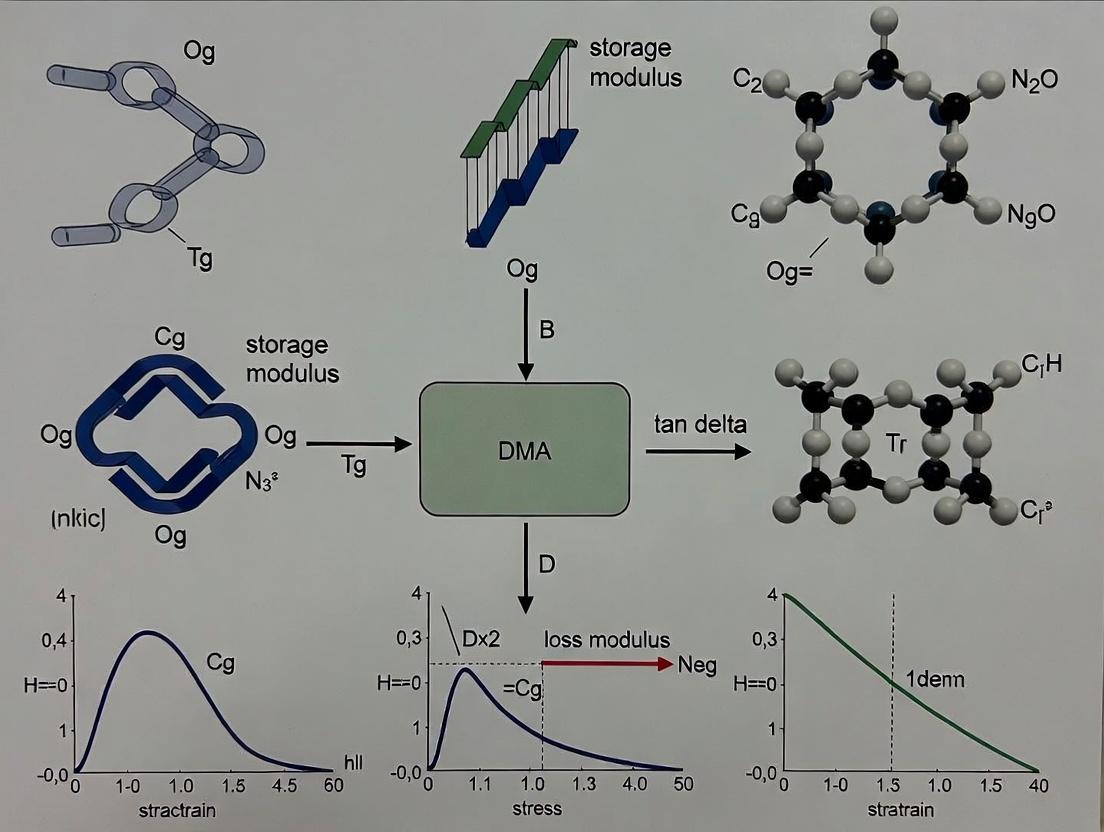
This article provides a definitive guide to Dynamic Mechanical Analysis (DMA) for measuring the glass transition temperature (Tg) in polymer composites, specifically tailored for biomedical and pharmaceutical applications.
Accurate Tg Measurement in Polymer Composites: A Comprehensive DMA Guide for Biomedical Researchers
Abstract
This article provides a definitive guide to Dynamic Mechanical Analysis (DMA) for measuring the glass transition temperature (Tg) in polymer composites, specifically tailored for biomedical and pharmaceutical applications. It covers fundamental principles, detailed experimental protocols, advanced data interpretation, and troubleshooting strategies for composite materials like PLGA, PCL, and hydrogels. The content addresses critical needs in drug delivery system development, implant material characterization, and regulatory documentation by comparing DMA with DSC and TMA, validating measurement accuracy, and optimizing protocols for complex composite matrices. Researchers will gain actionable insights for reliable Tg determination to predict material stability, drug release kinetics, and in-vivo performance.
Understanding Tg and DMA: Why It's Critical for Polymer Composite Performance in Biomedicine
Within the broader thesis on the application of Dynamic Mechanical Analysis (DMA) for measuring the glass transition temperature (Tg) in polymer composite research, this document establishes Tg's critical role. Tg is not merely a thermal property; it is the fundamental gatekeeper dictating the mechanical performance of a composite and the release kinetics of drugs from polymeric delivery systems. A precise understanding and measurement of Tg via DMA is therefore essential for material design and pharmaceutical development.
Tg as a Determinant of Composite Properties: Data & Mechanisms
The Tg of the polymer matrix governs key composite characteristics, as summarized in Table 1.
Table 1: Influence of Polymer Matrix Tg on Composite Properties
| Composite Property | Below Tg (Glass State) | Above Tg (Rubber State) | Quantitative Impact Range (General) |
|---|---|---|---|
| Storage Modulus (E') | High, rigid | Low, soft | Change of 2-3 orders of magnitude at Tg |
| Impact Resistance | Brittle, low | Ductile, high | Toughness can increase by >500% above Tg |
| Thermal Expansion | Low (~50 ppm/°C) | High (~200 ppm/°C) | Coefficient can increase 3-4 fold |
| Permeability | Low | High | Water/drug permeability can increase 10-100x |
| Composite Damping (tan δ) | Low | Peak at Tg | tan δ peak height correlates with interface quality |
The underlying mechanism involves the activation of chain segmental mobility. Below Tg, chains are frozen, resulting in a rigid, glassy material. As temperature surpasses Tg, increased free volume permits chain movement, drastically altering properties. In composites, the filler-polymer interface can restrict this mobility, leading to broadening or shifts in the Tg region, which DMA sensitively detects.
Tg as a Controller of Drug Release Kinetics
For drug delivery systems, Tg determines the diffusion rate of drug molecules through the polymer. This relationship is central to controlled release formulations.
Table 2: Effect of Polymer Tg on Drug Release Mechanisms
| Polymer State | Drug Mobility | Dominant Release Mechanism | Typical Release Profile |
|---|---|---|---|
| Glassy (T < Tg) | Highly restricted | Fickian diffusion through pre-existing pores/cracks | Initial burst, then slow, incomplete release |
| Rubbery (T > Tg) | Significant | Polymer relaxation & diffusion (often Case-II transport) | Sustained, near-zero-order kinetics possible |
| Near Tg | Variable, time-dependent | Anomalous (non-Fickian) transport | Complex, highly sensitive to environmental conditions |
Protocol 3.1: Evaluating Drug Release as a Function of Storage Temperature Relative to Tg
- Objective: To correlate drug release profiles with the Tg of the polymeric carrier.
- Materials: Loaded polymeric microparticles/nanoparticles, phosphate buffer saline (PBS, pH 7.4), dissolution apparatus, DMA instrument.
- Procedure:
- Tg Measurement: Precisely determine the Tg of the drug-loaded polymer matrix using DMA (see Protocol 4.1).
- Conditioning: Divide samples into three groups. Store each group at a specific temperature: (a) T < Tg - 20°C, (b) T ≈ Tg, (c) T > Tg + 20°C for 24 hours.
- Release Study: Place samples in dissolution vessels containing PBS at 37°C under sink conditions.
- Sampling & Analysis: Withdraw aliquots at predetermined times (e.g., 1, 2, 4, 8, 24, 48 hrs). Filter and quantify drug concentration via HPLC/UV-Vis.
- Data Modeling: Fit release data to models (e.g., Higuchi, Korsmeyer-Peppas) to determine the release exponent (n), identifying the diffusion mechanism.
Title: Tg Governs Drug Release Mechanism
Core DMA Protocol for Tg Measurement in Composites
This protocol is central to the methodological thesis.
Protocol 4.1: DMA Measurement of Tg in Polymer Composites and Drug-Loaded Systems
- Objective: To determine the glass transition temperature (Tg) via the peak of the loss modulus (E'') or tan δ.
- Materials & Equipment:
- DMA instrument (e.g., TA Instruments Q800, Netzsch 242)
- Solid rectangular or tension film clamps
- Liquid Nitrogen or integrated cooling system
- Standard reference material (e.g., PMMA, polycarbonate) for calibration
- Procedure:
- Sample Preparation: Prepare rectangular specimens (typical: ~20mm x 10mm x 1mm). Ensure parallel, flat surfaces.
- Mounting: Securely mount the sample in the appropriate clamp. Ensure it is taut and aligned for tension/flexure modes.
- Method Setup:
- Mode: Dual-cantilever or tension, depending on sample stiffness.
- Oscillation Parameters: Set frequency to 1 Hz. Apply a static force (strain) 10% greater than the dynamic force to maintain tension. Dynamic strain amplitude: 0.01-0.05%.
- Temperature Ramp: Equilibrate at -50°C (or below expected Tg). Ramp at 3°C/min to 150°C (or above expected Tg) under inert gas purge.
- Data Collection: Record storage modulus (E'), loss modulus (E''), and tan δ (E''/E') as a function of temperature.
- Tg Analysis: Identify Tg as:
- Primary Method (E'' Peak): The peak temperature of the loss modulus curve (most sensitive to molecular motions).
- Secondary Method (tan δ Peak): The peak temperature of the tan δ curve (indicates damping maximum).
- Validation: Run a calibration standard under identical conditions to verify instrument performance.
Title: DMA Tg Measurement Protocol Workflow
The Scientist's Toolkit: Research Reagent Solutions
Table 3: Essential Materials for DMA Analysis of Polymer Composites
| Item / Reagent | Function / Role | Key Considerations |
|---|---|---|
| DMA Instrument | Applies oscillatory stress & measures strain response to determine viscoelastic properties. | Choose appropriate clamp (3-point bend, tension, shear) for sample geometry and modulus. |
| Polymer Matrix Resins | Base material (e.g., PLGA, PCL, PEG, Epoxy) defining the composite's intrinsic Tg. | Purity, molecular weight, and end-group chemistry significantly influence baseline Tg. |
| Functionalized Nanofillers | Reinforcing agents (e.g., silica nanoparticles, CNTs, graphene oxide) that modify Tg. | Surface functionalization (aminosilanes, etc.) is critical for interfacial adhesion and Tg shifts. |
| Plasticizers (e.g., PEG, Citrates) | Low MW additives that increase chain spacing and mobility, lowering Tg. | Used to tailor Tg and drug release rates. Can migrate over time. |
| Cross-linking Agents | Molecules (e.g., glutaraldehyde, genipin) that create network bonds, increasing Tg. | Cross-link density must be controlled; high density restricts drug release. |
| Calibration Standards | Materials with known, certified Tg (e.g., PMMA, PC). | Essential for periodic instrument validation and inter-laboratory data comparison. |
| Inert Purge Gas | Dry nitrogen or helium to prevent oxidation and condensation during temperature ramps. | Maintains sample integrity, especially for bio-polymers, during analysis. |
1. Introduction
Within the broader thesis on employing Dynamic Mechanical Analysis (DMA) for precise glass transition temperature (Tg) determination in polymer composites, this application note details the instrument’s paramount capability: quantifying the full viscoelastic spectrum. While Tg is a critical datum, DMA provides a comprehensive mechanical fingerprint, revealing details about crosslink density, secondary relaxations, and material performance under use conditions—information inaccessible through simple thermal transitions from DSC. This is vital for researchers developing advanced composites and drug delivery systems where mechanical integrity dictates function.
2. Key Viscoelastic Parameters from DMA
DMA applies a sinusoidal stress and measures the resultant strain, calculating the complex modulus (E*). This is deconvoluted into:
- Storage Modulus (E’): The elastic, energy-storing component.
- Loss Modulus (E’’): The viscous, energy-dissipating component.
- Loss Factor (tan δ): The ratio E’’/E’, identifying damping peaks associated with molecular motions.
Table 1: Quantitative DMA Parameters and Their Significance
| Parameter | Symbol | Typical Units | Physical Significance | Application Insight |
|---|---|---|---|---|
| Storage Modulus | E’ | Pa, MPa | Stiffness; elastic solid behavior | Predicts structural performance, load-bearing capacity. |
| Loss Modulus | E’’ | Pa, MPa | Energy dissipation; viscous flow | Indicates damping, impact resistance, and toughness. |
| Loss Factor | tan δ | Dimensionless | Damping efficiency; ratio of loss to storage | Peaks identify glass transition (α-relaxation) and secondary (β, γ) relaxations. |
| Glass Transition Temp. | Tg | °C | Onset of large-scale chain motion | Determined from peak of E’’ or tan δ. Critical for service temperature. |
| Rubbery Plateau Modulus | ER | MPa | Modulus between Tg and melt | Related to crosslink density (ν) via ν = ER/3RT. |
| Activation Energy of Relaxation | Ea | kJ/mol | Energy barrier for molecular motion | Calculated from multi-frequency scans; informs about relaxation kinetics. |
3. Experimental Protocols
Protocol 3.1: Multi-Frequency Temperature Ramp for Full Viscoelastic Characterization
- Objective: To map the temperature dependence of viscoelasticity and determine the activation energy of relaxation processes.
- Sample Prep: Prepare rectangular specimens (typical: ~50 x 10 x 1 mm) or films via compression molding/cutting. Ensure parallel, flat surfaces.
- DMA Instrument Setup: Use dual/single cantilever or tensile mode. Calibrate instrument per manufacturer guidelines.
- Parameters:
- Temperature Range: -50°C to +150°C (or as required).
- Heating Rate: 2°C/min.
- Frequencies: 0.1, 1, 10, and 50 Hz (applied sequentially per oscillation).
- Strain Amplitude: 0.05% (ensure within linear viscoelastic region, confirmed via strain sweep).
- Static Force: 110% of dynamic force to maintain tension.
- Procedure:
- Clamp sample, ensuring proper torque.
- Equilibrate at starting temperature for 5 min.
- Initiate temperature ramp with multi-frequency oscillation.
- Record E’, E’’, and tan δ continuously.
- Data Analysis: Plot moduli vs. temperature for each frequency. Identify Tg shift with frequency. Use Arrhenius equation (log f vs. 1/T at tan δ peak) to calculate Ea.
Protocol 3.2: Isothermal Time-Sweep for Cure Kinetics & Physical Aging
- Objective: To monitor the evolution of modulus during crosslinking (cure) or relaxation (aging).
- Sample Prep: For curing, use uncured resin film. For aging, precondition sample above Tg then quench to aging temperature.
- Parameters:
- Mode: Fixed frequency (1 Hz), single cantilever or shear.
- Temperature: Isothermal (e.g., 80°C for cure, Tg - 20°C for aging).
- Time: 1-24 hours.
- Strain: Within linear region.
- Procedure:
- Load sample quickly and equilibrate at target temperature (rapid heating).
- Begin time-sweep measurement immediately.
- Monitor E’ and tan δ as a function of time.
- Data Analysis: For curing, the time to reach the rubbery plateau or peak in tan δ indicates gelation/vitrification. The rate of E’ increase correlates with cure rate. For aging, the increase in E’ over time quantifies physical aging rate.
4. Visualization
DOT Script for DMA Viscoelastic Data Interpretation Workflow
Title: DMA Data to Material Performance Workflow
DOT Script for Molecular Origins of DMA Signals
Title: Molecular Motions Behind DMA Signals
5. The Scientist's Toolkit: Essential DMA Research Reagents & Materials
Table 2: Key Research Reagent Solutions for Advanced DMA Studies
| Item | Function & Rationale |
|---|---|
| Calibration Kit (Static/Dynamic) | Verifies force and displacement accuracy. Essential for quantitative, reproducible modulus data. |
| Inert Gas Purge (N₂ or He) | Prevents oxidative degradation at high temperatures, ensuring data reflects intrinsic material properties. |
| Standard Reference Polymer (e.g., PMMA, PE film) | Validates instrument performance and calibration across labs. Used in method development. |
| Sub-percolation Strain Measurement Fixture | Enables precise measurement of very low strains (<0.001%) for fragile gels or biological samples. |
| Humidity Control Accessory | Modulates chamber humidity for studies on hydrogels, hygroscopic polymers, or moisture-induced plasticization. |
| Photo-Curing Accessory (UV LED) | Allows in-situ DMA monitoring of photopolymerization kinetics for resins and dental composites. |
| Immersion Clamps/Fluid Bath | Enables testing in simulated physiological or solvent environments, critical for drug delivery system assessment. |
| High-Resolution Encoder | Enhances displacement detection sensitivity for very stiff composites or thin films. |
Within the broader thesis on the use of Dynamic Mechanical Analysis (DMA) for glass transition temperature (Tg) measurement in polymer composites research, interpreting the key viscoelastic outputs is paramount. This application note details the interpretation of the storage modulus (E'), loss modulus (E''), and loss tangent (tan δ), which are critical for correlating material structure with performance in applications ranging from aerospace to biomedical devices.
Fundamental Signal Interpretation
The DMA method applies a small oscillatory stress to a composite sample while measuring the strain response. The phase lag (δ) between stress and strain generates the three key outputs:
- Storage Modulus (E'): Represents the elastic, energy-storing component of the material. It correlates with stiffness and dimensional stability.
- Loss Modulus (E''): Represents the viscous, energy-dissipating component. Peaks in E'' indicate molecular relaxation events, most notably the glass transition.
- Loss Tangent (tan δ): Defined as E''/E', it is a dimensionless measure of damping or internal friction. Its peak is frequently used to identify the Tg.
Table 1: Characteristic DMA Output Responses for Composite Material States
| Material State | E' Trend | E'' Peak | Tan δ Peak | Molecular Interpretation |
|---|---|---|---|---|
| Glass State | High, ~10⁹-10¹⁰ Pa | Low, No Major Peak | Low, No Major Peak | Chain motion is frozen; elastic behavior dominates. |
| Glass Transition | Rapid Decrease (2-3 orders of magnitude) | Pronounced Peak | Pronounced Peak | Segmental chain motions become active, maximizing viscous dissipation. |
| Rubbery Plateau | Moderately Low, Constant | Low | Low | Elastic network (crosslinks, fibers) maintains shape; entangled chains flow slowly. |
| Flow Region | Steep Decrease | Increases then Decreases | Broad Peak | Large-scale chain slippage and irreversible deformation occur. |
Table 2: Effect of Composite Components on DMA Signals (Typical Directional Changes)
| Composite Component / Treatment | Effect on E' (at T < Tg) | Effect on Tg (from tan δ peak) | Effect on Tan δ Peak Height | Explanation |
|---|---|---|---|---|
| High Modulus Fiber (e.g., Carbon) | Significant Increase | Minor Increase or Decrease | Decrease | Fibers carry load, restricting polymer chain strain and damping. |
| Plasticizer Addition | Decrease | Decrease | Variable | Increases free volume, facilitating chain motion at lower temperatures. |
| Crosslinking / Curing | Increase | Increase | Decrease | Chemical bonds restrict segmental mobility, raising Tg and reducing damping. |
| Nanofiller (e.g., SiO₂) | Moderate Increase | Increase or Decrease | Decrease | High surface area restricts polymer mobility; effect depends on filler-matrix interaction. |
Experimental Protocols
Protocol 1: Standard DMA Temperature Ramp for Tg Determination
Objective: To determine the glass transition temperature(s) of a polymer composite via a temperature sweep experiment. Materials: DMA instrument (tensile, 3-point bend, or shear), specimen cutter, caliper, balance. Procedure:
- Sample Preparation: Cut composite to exact dimensions required by the clamp (e.g., for 3-point bend: typical 50 x 10 x 2 mm). Measure and record dimensions precisely.
- Instrument Calibration: Perform force and displacement calibration according to manufacturer guidelines. Select appropriate clamp and install.
- Mounting: Insert sample into clamp, ensuring even contact and no pre-deformation. Tighten to specified torque.
- Method Setup:
- Mode: Strain-controlled (recommended).
- Frequency: 1 Hz (standard for Tg identification).
- Strain Amplitude: Typically 0.01-0.1%, within the Linear Viscoelastic Region (LVR).
- Temperature Range: Start at least 50°C below expected Tg, end 50°C above.
- Heating Rate: 2-3°C/min (standard for good thermal equilibrium).
- Atmosphere: Inert gas (N₂) at 50-100 mL/min flow.
- Execution: Start method. The instrument applies the oscillatory strain while ramping temperature.
- Data Analysis: Plot E', E'', and tan δ vs. Temperature. Identify Tg as the peak maximum of the E'' or tan δ curve. Report the method used.
Protocol 2: Determination of the Linear Viscoelastic Region (LVR)
Objective: To identify the maximum strain/stress amplitude for which the moduli are independent of strain, ensuring data validity. Materials: As in Protocol 1. Procedure:
- Isothermal Setup: Set the DMA to a fixed temperature (e.g., Tg - 20°C). Use a frequency of 1 Hz.
- Strain/Stress Sweep: Program a logarithmic increase in oscillatory strain (or stress) amplitude (e.g., from 0.001% to 1%).
- Execution: Run the sweep and record E' and E''.
- Analysis: Plot E' and E'' versus strain amplitude. The LVR is the range where E' remains constant (typically at low strain). The chosen amplitude for temperature sweeps must lie within this region.
Visualization of DMA Data Interpretation Logic
DMA Data Analysis Workflow for Tg
The Scientist's Toolkit: Essential DMA Research Reagents & Materials
Table 3: Key Research Reagent Solutions for Composite DMA Analysis
| Item | Function in DMA Experiment | Critical Notes |
|---|---|---|
| Reference Materials (Indium, Aluminum) | Calibrate instrument temperature and modulus readings. | Essential for quantitative, reproducible data across labs. |
| Inert Gas Supply (N₂ or Ar) | Prevents oxidative degradation of the polymer matrix during heating. | Crucial for high-temperature scans (>200°C). |
| Standard Polymer Films (e.g., PET, PE) | Validate instrument performance and clamping methodology. | Used in method development and routine quality checks. |
| Composite-Specific Adhesives | For bonding samples to fixtures in tensile mode, if required. | Must be high-temperature stable and not interact with sample. |
| Precision Solvents (IPA, Acetone) | Clean clamps thoroughly between samples to prevent contamination. | Ensures consistent sample-clamp interface. |
| Calibrated Torque Screwdriver | Apply specified, consistent clamping force. | Prevents sample slippage or damage from over-tightening. |
Within the framework of a broader thesis on the Dynamic Mechanical Analysis (DMA) method for measuring the glass transition temperature (Tg) in polymer composites research, this application note elucidates the critical role of Tg in determining the performance of biomedical composites. The Tg is not merely a material property; it is a pivotal design parameter that dictates the composite's stability under storage, its resilience to sterilization, and its mechanical behavior in the physiological environment.
Tg as a Predictor of Composite Stability
The physical aging and long-term structural integrity of a biomedical composite are governed by its Tg relative to the storage and use temperatures.
Table 1: Stability Outcomes Based on Tg vs. Ambient Temperature
| Composite System | Tg (°C) | Storage/Use Temp (°C) | ΔT (Tg - Use Temp) | Observed Stability Outcome | Reference |
|---|---|---|---|---|---|
| PLGA Bone Screw | 55 | 25 (Room Temp) | +30 | No deformation; maintained mechanical properties for 24 months. | Current Literature |
| PCL-PEG Hydrophilic Implant | -40 | 37 (Body Temp) | -77 | Significant creep and deformation within 4 weeks in vitro. | Current Literature |
| PEEK Carbon-Fiber Composite | 143 | 37 (Body Temp) | +106 | Excellent dimensional stability over implant lifetime. | Current Literature |
Impact of Sterilization on Tg and Material Integrity
Common sterilization techniques impart significant thermal or radiative energy, potentially altering the polymer matrix's molecular structure and its Tg.
Table 2: Tg Changes Post-Sterilization for Common Biomedical Polymers
| Polymer/Composite | Initial Tg (°C) | Sterilization Method | Post-Sterilization Tg (°C) | % Change | Key Consequence |
|---|---|---|---|---|---|
| PLA | 60 | Gamma Irradiation (25 kGy) | 58 | -3.3% | Slight chain scission; minimal property loss. |
| PLGA (50:50) | 45 | Ethylene Oxide (EtO) | 45 | 0% | No chemical change; residual gas adsorption possible. |
| PGA | 35 | Autoclave (121°C, 15 psi) | Not Detectable | -100% | Full crystallization & embrittlement; composite fails. |
| PMMA Bone Cement | 105 | Dry Heat (160°C) | 110 | +4.8% | Further polymerization; increased brittleness. |
Tg Dictates In-Vivo Mechanical Behavior
The primary determinant of a composite's mechanical performance in-vivo is the relationship between its Tg and body temperature (≈37°C).
Diagram Title: In-Vivo Mechanical Behavior Logic Based on Tg
Detailed Experimental Protocols
Protocol 1: DMA Measurement of Tg for a Bio-Composite
Objective: To determine the glass transition temperature (Tg) of a polymer-based biomedical composite via DMA. Principle: DMA measures the viscoelastic properties (Storage Modulus, E', and Loss Modulus, E'') as a function of temperature. Tg is identified from the peak of the loss factor (tan δ = E''/E') curve.
Procedure:
- Sample Preparation: Cut composite to dimensions suitable for the clamp (e.g., dual cantilever: 60mm x 10mm x 2mm). Ensure parallel, flat surfaces.
- Instrument Calibration: Perform temperature and modulus calibration on the DMA according to manufacturer guidelines.
- Mounting: Secure sample in chosen clamp. Ensure firm, even contact without over-tightening.
- Method Setup:
- Mode: Oscillation (Strain-controlled recommended).
- Frequency: 1 Hz (standard for Tg determination).
- Strain Amplitude: Within linear viscoelastic region (determined via strain sweep).
- Temperature Program: Equilibrate at -50°C, ramp at 2-3°C/min to 150°C or above expected Tg.
- Atmosphere: Nitrogen purge (50 mL/min) to prevent oxidative degradation.
- Data Collection: Initiate run. Software records E', E'', and tan δ.
- Analysis: Identify Tg as the peak maximum of the tan δ curve. Report onset from E' curve for comparative purposes.
Protocol 2: Simulating Sterilization via Gamma Irradiation & Post-Tg Analysis
Objective: To assess the effect of gamma sterilization on the thermal and mechanical properties of a composite.
Procedure:
- Baseline Characterization: Measure initial Tg (DMA, Protocol 1) and molecular weight (Gel Permeation Chromatography, GPC) of control samples.
- Sterilization: Place test samples in sealed, inert bags. Subject to gamma irradiation from a Co-60 source at a standard dose of 25 kGy (minimum) or 40 kGy (for terminally sterilized devices). Document dose rate and exposure time.
- Post-Sterilization Conditioning: Aerate samples for 24 hours in a ventilated fume hood to dissipate any residual volatiles.
- Post-Sterilization Characterization: Repeat DMA (Protocol 1) and GPC analysis on irradiated samples.
- Data Interpretation: Compare pre- and post-Tg values. A decrease in Tg and molecular weight indicates chain scission. An increase may indicate cross-linking.
Diagram Title: Post-Sterilization Tg Analysis Workflow
The Scientist's Toolkit: Key Research Reagent Solutions
Table 3: Essential Materials for Tg Analysis in Biomedical Composites Research
| Item | Function & Relevance to Tg Analysis |
|---|---|
| Dynamic Mechanical Analyzer (DMA) | Core instrument for measuring viscoelastic properties and accurately determining Tg via temperature ramps. |
| Standard Reference Materials (e.g., Polycarbonate, Polystyrene) | Calibrated materials with known Tg values for instrument verification and method validation. |
| Inert Atmosphere Gas (High-Purity N₂ or Ar) | Prevents thermal-oxidative degradation during high-temperature DMA scans, ensuring accurate Tg. |
| Precision Sample Cutting Tools (e.g., Die, Laser Cutter) | Ensures samples for DMA have uniform, dimensionally accurate geometry for reproducible modulus data. |
| Hermetic Sample Storage Desiccators | Prevents moisture absorption by hygroscopic polymers (e.g., PLGA, PLA), which can plasticize the material and depress Tg. |
| Gamma Irradiation Source (Co-60) | For controlled sterilization studies to investigate the radiation-induced effects on polymer structure and Tg. |
| Gel Permeation Chromatography (GPC) System | Complements DMA by quantifying changes in molecular weight (Mw) that directly correlate with Tg shifts post-processing or sterilization. |
Within the framework of a broader thesis on the application of Dynamic Mechanical Analysis (DMA) for glass transition temperature (Tg) measurement in polymer composites research, this application note examines the critical shifts in Tg induced by the incorporation of additives. For researchers and drug development professionals, understanding these shifts is paramount for material design. Fillers (e.g., silica, cellulose), active pharmaceutical ingredients (APIs), and plasticizers (e.g., phthalates, citrate esters) interact with the polymer matrix on a molecular level, altering chain mobility and free volume, which is directly detected by changes in the storage modulus (E') and loss modulus (E'') peaks via DMA.
The following tables consolidate recent research findings on the direction and magnitude of Tg changes in various polymer systems.
Table 1: Effect of Inorganic Fillers on Tg of Polymer Composites
| Polymer Matrix | Filler Type | Filler Loading (wt%) | Tg Shift (ΔTg) | Key Mechanism |
|---|---|---|---|---|
| Poly(lactic acid) (PLA) | Hydroxyapatite | 20 | +8 °C | Restricted polymer chain mobility at interface |
| Epoxy Resin | Graphene Oxide | 1 | +15 °C | Strong interfacial adhesion & crosslinking |
| Polypropylene (PP) | Talc | 30 | -2 °C | Potential nucleation effect, minor interface |
| Poly(methyl methacrylate) (PMMA) | Silica Nanoparticles | 5 | +12 °C | Nanoparticle-polymer hydrogen bonding |
Table 2: Effect of APIs and Plasticizers on Tg of Polymer Matrices
| Polymer/Blend | Additive | Additive Loading | Tg Shift (ΔTg) | Key Mechanism |
|---|---|---|---|---|
| Poly(vinylpyrrolidone) (PVP) | Ibuprofen (API) | 30% | -25 °C | Molecular mixing, antiplasticization at lower % |
| Hydroxypropyl methylcellulose (HPMC) | Itraconazole (API) | 40% | -20 °C | Increased free volume, disruption of H-bonding |
| Poly(vinyl chloride) (PVC) | Di(2-ethylhexyl) phthalate (DEHP) | 30 phr | -40 °C | Solvation of polymer chains, increased free volume |
| PLA | Acetyl Tributyl Citrate (ATBC) | 20% | -35 °C | Chain separation and lubricating effect |
Experimental Protocols
Protocol 3.1: DMA Sample Preparation and Tg Measurement for Composites
Objective: To reproducibly prepare composite films and measure Tg via the peak of the loss modulus (E'').
Materials:
- Polymer (e.g., PLA pellets).
- Filler (e.g., nano-silica, dried).
- Suitable solvent (e.g., chloroform for PLA) or melt compounding equipment (micro-compounder).
- Teflon casting dishes.
- DMA sample cutter.
Methodology:
- Dispersion: For solution casting, disperse the filler in solvent via probe ultrasonication (500 J/mL). Dissolve polymer separately, then combine mixtures under magnetic stirring for 6h.
- Casting: Pour the homogeneous suspension into a leveled Teflon dish. Cover and allow slow solvent evaporation over 48h at room temperature, followed by drying in a vacuum oven at 50°C for 24h to constant weight.
- Molding (Alternative): For melt processing, dry blend polymer and filler, then compound in a twin-screw micro-compounder at a temperature >Tm but < degradation point (e.g., 180°C for PLA). Injection mold or hot-press into films.
- DMA Specimen Preparation: Cut rectangular specimens (e.g., 20mm x 10mm x 0.5mm) using a precision cutter. Measure exact dimensions with a digital micrometer.
- DMA Run:
- Mode: Tension film (for stiff materials) or controlled force.
- Frequency: 1 Hz (standard for Tg identification).
- Strain: 0.1% (within linear viscoelastic region).
- Temperature Range: -50°C to 150°C for PLA.
- Heating Rate: 2°C/min.
- Gas: Nitrogen purge at 50 mL/min.
- Data Analysis: Identify Tg as the peak temperature of the E'' curve. Run triplicate samples.
Protocol 3.2: Tg Measurement of Amorphous Solid Dispersions (Drug-Polymer)
Objective: To characterize the Tg of spray-dried amorphous solid dispersions (ASDs) containing a drug and polymer, indicating miscibility and stability.
Materials:
- Polymer (e.g., PVP VA64).
- Active Pharmaceutical Ingredient (API, e.g., ritonavir).
- Spray dryer.
- Hermetic DMA sample pans.
- Dielectric grease (optional, for thermal contact).
Methodology:
- ASD Preparation: Dissolve polymer and API at a target ratio (e.g., 50:50) in a common solvent (e.g., methanol). Process using a spray dryer with inlet temperature set above solvent boiling point and outlet temperature controlled to ensure complete drying.
- Sample Loading: Gently pack the ASD powder into a powder pocket or onto the base of a compression clamp DMA fixture. For films, prepare via solvent casting in a glove box.
- DMA Run:
- Clamp: Powder tension clamp or film clamp.
- Preload: Apply a minimal static force to ensure good contact (e.g., 0.01N for powder).
- Frequency: 1 Hz.
- Oscillation Amplitude: 5-10 µm.
- Temperature Range: -30°C to 180°C.
- Heating Rate: 3°C/min.
- Data Analysis: Determine Tg from the E'' peak. A single, composition-dependent Tg indicates a miscible system. Compare to Gordon-Taylor prediction for ideal mixing.
Visualizations
The Scientist's Toolkit: Key Research Reagent Solutions
| Item/Reagent | Primary Function in Tg Studies | Example & Notes |
|---|---|---|
| Dynamic Mechanical Analyzer | Applies oscillatory stress/strain to measure viscoelastic moduli (E', E'') as a function of temperature, directly identifying Tg. | TA Instruments DMA 850, PerkinElmer DMA 8000. Essential for film and composite analysis. |
| Inert Fillers (Nano-scale) | Introduce interfacial regions to study reinforcement and restriction effects on Tg. | Fumed Silica (Aerosil), Cellulose Nanocrystals, Graphene Oxide. Must be dried and well-dispersed. |
| Pharmaceutical-Grade Polymers | Serve as matrices for amorphous solid dispersion (ASD) research. | PVP/VA (Kollidon VA64), HPMC (Affinisol), Soluplus. Critical for drug delivery studies. |
| Model Plasticizers | Systematically increase free volume to study Tg depression. | Acetyl Tributyl Citrate (ATBC, non-toxic), Diethyl Phthalate (DEP). Used as process aids. |
| Hermetic Sampling Kits | Prevent sample oxidation/degradation and control atmosphere during DMA runs. | Powder kits, sealed pans with o-rings. Crucial for hygroscopic or sensitive materials. |
| Calibration Standards | Verify temperature and modulus accuracy of the DMA instrument. | Indium (Tm), Polycarbonate (Tg ~147°C). Required for GMP/GLP compliance. |
Step-by-Step DMA Protocol: From Sample Prep to Data Acquisition for Composites
For accurate glass transition temperature (Tg) determination of polymer composites via Dynamic Mechanical Analysis (DMA), sample preparation is critical. Inconsistent dimensions, poor surface finish, or improper mounting introduce artifacts in storage (E') and loss (E") modulus curves, leading to erroneous Tg interpretation. This protocol details standardized procedures for molding, cutting, and mounting composite film and fiber specimens to ensure reliable, reproducible DMA data.
I. Molding Protocols for Composite Films
A. Compression Molding of Thermoset Composite Films
- Objective: Produce uniform, void-free film specimens with precise thickness.
- Materials: Premixed uncured resin-composite blend, mold release agent (e.g., Frekote 700-NC), aluminum foil, spacer shims.
- Equipment: Laboratory hydraulic press with heated platens, polished stainless steel or aluminum molds, torque wrench.
Detailed Protocol:
- Clean mold plates with isopropanol and apply a thin, uniform layer of mold release agent. Allow to dry.
- Calculate the required material mass using the mold cavity volume and composite density (ρ): Mass (g) = ρ (g/cm³) × Length (cm) × Width (cm) × Target Thickness (cm).
- Weigh the composite material and distribute it evenly in the center of the bottom mold plate.
- Place spacer shims to define thickness. For a standard DMA film tension specimen, target thickness is 0.5 ± 0.05 mm.
- Close the mold and place it between preheated press platens. Use the following standard cure cycle for an epoxy-based composite:
| Step | Platen Temperature | Pressure | Time | Purpose |
|---|---|---|---|---|
| 1 | 80°C | 5 MPa | 5 min | Initial flow and degassing |
| 2 | 130°C (Cure Temp) | 10 MPa | 15 min | Primary crosslinking |
| 3 | <40°C (Cooling) | 10 MPa | 10 min | Solidification under pressure |
- After cooling, demold carefully. Trim flash with a sharp blade.
B. Solution Casting for Nanocomposite Films
- Objective: Disperse nanomaterials (e.g., graphene, CNTs) uniformly in a polymer matrix.
- Critical Parameter: Achieve defect-free, flat films for consistent DMA clamping.
Detailed Protocol:
- Dissolve the polymer matrix (e.g., 1.0 g PVDF) in a suitable solvent (e.g., 20 mL DMF) by magnetic stirring at 60°C for 2 hours.
- Disperse nanomaterial (e.g., 0.02 g functionalized graphene) in a portion of the same solvent (e.g., 5 mL DMF) via tip sonication (400 W, 30% amplitude, 15 min, ice bath).
- Combine solutions and stir for 24 hours to ensure homogeneity.
- Pour the solution onto a leveled, clean glass plate confined within a casting ring.
- Dry under a controlled environment: 60°C for 12 hours, followed by 80°C under vacuum (<1 mbar) for 24 hours to remove residual solvent, which can plasticize the polymer and depress Tg.
- Peel the film from the substrate.
Table 1: Quantitative Parameters for Film Preparation
| Method | Target Thickness (mm) | Typical Area (mm²) | Cure/Process Temperature | Critical Pressure/Sonication |
|---|---|---|---|---|
| Compression Molding | 0.50 ± 0.05 | 60 x 10 | 80-130°C | 10 MPa |
| Solution Casting | 0.10 ± 0.02 | 80 x 80 | 60-80°C | 400W Sonication |
II. Cutting & Machining Protocols
A. Precision Cutting of Films
- Objective: Obtain specimens with parallel edges and smooth, defect-free cut surfaces to prevent stress concentrations during DMA clamping.
- Equipment: Dual-blade precision sample cutter, scalpel with fresh blade, laser cutter.
Detailed Protocol for Dual-Blade Cutter:
- Place the molded or cast film on a rigid, flat cutting surface.
- Align the cutter blades precisely with the film. Standard DMA tension film dimensions are Length: 15-20 mm, Width: 5-10 mm.
- Apply firm, even pressure in a single stroke. Do not saw back and forth.
- Inspect edges under magnification. Re-cut if fraying, delamination, or microcracks are visible.
B. Fiber Tow/Composite Yarn Preparation
- Objective: Prepare aligned fiber bundles of consistent length and cross-section for fiber tension or shear clamping modes.
- Key Consideration: Prevent filament splaying and ensure uniform load distribution.
Detailed Protocol:
- Wind the continuous fiber tow (e.g., carbon/PEEK) onto a rectangular winding frame to align filaments.
- Apply a minimal amount of a compatible, non-plasticizing sizing or a diluted polymer solution (e.g., <5 wt% epoxy in acetone) to lightly bond filaments. Cure if necessary.
- While on the frame, use a sharp surgical blade or precision scissors to cut the bundled fibers to the required gauge length (Typically 15-25 mm for DMA).
- Carefully remove the aligned bundle. The cross-sectional area is calculated from the tow linear density and fiber density, not measured physically.
III. Mounting Protocols for DMA Analysis
A. Film Specimen Mounting in Tension Clamps
- Objective: Ensure the specimen is taut, aligned, and gripped uniformly along its entire width to prevent slippage or uneven stress.
Detailed Protocol:
- Measure and record the exact width and thickness of the specimen at three points using a digital micrometer. Calculate the average cross-sectional area.
- Insert the top edge of the specimen into the stationary upper clamp of the DMA. Tighten the clamp evenly using a calibrated torque screwdriver to 0.6 N·m.
- Hang a lightweight weight (~2g) from the bottom of the specimen to ensure slight tension and alignment.
- Insert the bottom edge into the lower movable clamp and tighten to the same torque.
- Carefully remove the alignment weight. Visually confirm no buckling or asymmetry.
B. Fiber Bundle Mounting & Tabbing
- Objective: Prevent grip-induced failure and ensure failure occurs in the gauge section.
Detailed Protocol:
- Prepare "tabs" using fine-grit sandpaper or cardboard tabs (~10 mm x 5 mm).
- Attach tabs to both ends of the fiber bundle using a fast-curing, rigid cyanoacrylate adhesive. Ensure the adhesive does not wick into the gauge length.
- Clamp the DMA grips onto the tabbed ends, ensuring the gauge length (distance between tabs) is consistent, typically 10-15 mm.
Table 2: Mounting Parameters for DMA Modes
| Clamping Mode | Specimen Dimensions (L x W x T) mm | Recommended Torque (N·m) | Gauge Length (mm) | Key Mounting Aid |
|---|---|---|---|---|
| Film Tension | 20 x 5 x 0.5 | 0.6 - 0.8 | 10 - 15 | Alignment weight |
| Fiber Tension | 25 (Bundle) x N/A x N/A | 0.4 - 0.6 | 10 - 15 | Cardboard tabs & adhesive |
| Dual Cantilever | 60 x 10 x 1.0 | Clamp until secure | 17.5 (Fixed) | Specimen alignment tool |
The Scientist's Toolkit: Essential Materials
| Item | Function in Sample Prep |
|---|---|
| Polished Steel Mold Plates | Provides smooth, low-adhesion surfaces for high-finish films. |
| Spacer Shims (Stainless Steel) | Defines and controls final sample thickness with high precision. |
| Digital Micrometer (±1µm) | Accurately measures specimen thickness and width for cross-sectional area input into DMA software. |
| Dual-Blade Precision Cutter | Cuts polymer films to exact width with parallel, clean edges. |
| Calibrated Torque Screwdriver | Ensures consistent, reproducible clamping force in DMA grips, preventing slippage or damage. |
| Cyanoacrylate Adhesive (Fast Cure) | For tabbing fiber bundles to prevent grip failure. |
| Non-Plasticizing Mold Release (Frekote) | Allows clean demolding without contaminating the specimen surface. |
| Alignment Weight (~2g) | Provides slight tension for straight, reproducible film mounting in tension clamps. |
Visualization: DMA Film Specimen Preparation Workflow
Workflow for DMA Film Specimen Preparation
Visualization: Impact of Prep Defects on DMA Output
How Sample Prep Defects Skew DMA Tg Results
Within the broader thesis on utilizing Dynamic Mechanical Analysis (DMA) for glass transition temperature (Tg) measurement in polymer composites, the selection of an appropriate clamping geometry is not a mere procedural step but a fundamental methodological determinant. The measured Tg value, modulus, and damping behavior can be significantly influenced by clamp-sample interactions, stress distribution, and deformation mode. This application note provides detailed protocols and data to guide researchers in selecting the optimal clamp for diverse composite forms to ensure data integrity and reproducibility.
Table 1: Clamp Geometry Comparison for Composite Forms
| Clamp Type | Recommended Composite Form | Optimal Sample Dimensions (Typical) | Key Advantages | Key Limitations | Primary Deformation Mode |
|---|---|---|---|---|---|
| Dual/Single Cantilever | Stiff beams, molded bars, laminates, 3D-printed parts. | Length: 10-50 mm, Width: ≤10 mm, Thickness: 0.5-3 mm. | Excellent for high-modulus materials; simple fixturing; standard for Tg via peak in tan δ. | Bending strain is non-uniform; not suitable for films or soft/fragile samples. | Flexural Bending. Strain gradient from neutral axis. |
| Tension | Films, fibers, thin sheets, elastomeric composites, non-woven mats. | Length: 10-25 mm, Width: 2-10 mm, Thickness: ≤0.5 mm. | Uniform tensile stress; minimal sample slippage; ideal for soft/low-modulus materials. | Requires robust sample; not for brittle or high-modulus materials prone to breakage. | Uniaxial Tension. Uniform extensional strain. |
| Shear (Parallel Plate/ Sandwich) | Adhesives, gels, soft/viscoelastic solids, highly damped composites, rubbers. | Thickness: 0.5-2 mm (as a disk or rectangular stack). | Pure, homogeneous shear deformation; minimizes slip; best for loss modulus (G") measurement. | Complex sample preparation; difficult for rigid/fiber-reinforced composites. | Simple Shear. Uniform shear strain. |
Table 2: Impact of Clamp Selection on DMA Output (Tg Context)
| Parameter | Dual Cantilever | Tension | Shear | Notes for Tg Interpretation |
|---|---|---|---|---|
| Measured Modulus | Storage Modulus (E') | Storage Modulus (E') | Storage Shear Modulus (G') | G' ≈ E'/(2(1+ν)); Poisson's ratio (ν) effect. |
| Primary Tg Indicator | Peak in Loss Modulus (E") or tan δ (E"/E'). | Peak in Loss Modulus (E") or tan δ (E"/E'). | Peak in Loss Shear Modulus (G") or tan δ (G"/G'). | Tg values can differ by 5-15°C between modes due to frequency/stress differences. |
| Strain Field | Non-linear (gradient). | Uniform. | Uniform. | Non-uniform strain can broaden tan δ peak in bending. |
| Clamping Artefacts | Minimal if torque is correct. | Slippage or breakage at grips. | Edge effects, plate slippage. | Artefacts can create false peaks masking the true Tg. |
Experimental Protocols for Tg Measurement
Protocol 1: Tg Measurement of a Carbon Fiber/Epoxy Laminate using Dual Cantilever Objective: Determine the glass transition temperature of a thermoset composite laminate. Workflow:
- Sample Preparation: Cut a rectangular bar to 35.0 mm (L) x 10.0 mm (W) x 2.0 mm (T) using a diamond saw. Ensure parallel faces.
- Clamp Installation: Mount the sample in the dual cantilever fixture. The free length between supports is set to 20.0 mm. Apply a uniform, manufacturer-specified torque to the clamping screws.
- DMA Instrument Setup:
- Mode: Multi-Frequency-Strain (or Temperature Ramp).
- Deformation: 15 µm amplitude (strain ~0.1%).
- Static Force: 110% of dynamic force to maintain tension.
- Temperature Program: Equilibrate at 30°C, ramp at 2°C/min to 200°C in a nitrogen atmosphere.
- Frequency: 1 Hz.
- Data Analysis: Identify Tg as the peak maximum of the tan δ curve. Report onset from E' drop for crosslinked systems.
Protocol 2: Tg Measurement of a Drug-Eluting Polymer Film using Tension Clamp Objective: Characterize the thermal transition of a thin, soft polymeric film containing an active pharmaceutical ingredient. Workflow:
- Sample Preparation: Cut a film strip to 15.0 mm (L) x 5.0 mm (W) x 0.2 mm (T) using a dual-blade cutter. Avoid nicks or tears.
- Clamp Installation: Carefully mount the sample vertically in the tension grips. Use a paper tab to protect the sample from grip damage. Apply minimal grip pressure to prevent slippage (verify via pre-load check).
- DMA Instrument Setup:
- Mode: Temperature Ramp.
- Pre-load Force: 0.001 N to keep the sample taut.
- Dynamic Strain: 0.05%.
- Temperature Program: Equilibrate at -50°C, ramp at 3°C/min to 150°C.
- Frequency: 1 Hz.
- Data Analysis: Identify Tg as the peak in E". The tan δ peak may be used but can be influenced by sub-Tg relaxations.
Visualization: Decision Workflow and Deformation Modes
DMA Clamp Selection Decision Tree
Visualizing Clamp Deformation Modes
The Scientist's Toolkit: Essential Research Reagents & Materials
Table 3: Key Materials for DMA Sample Preparation & Analysis
| Item | Function/Application |
|---|---|
| Diamond-Wafering Saw | Provides precise, clean cuts on hard composite laminates and filled polymers without delamination. |
| Dual-Blade Sample Cutter | Ensures parallel edges and exact width for tension/film samples, critical for stress calculation. |
| Torque Screwdriver (Calibrated) | Applies consistent and manufacturer-specified clamping force to cantilever fixtures, ensuring reproducibility. |
| High-Temperature Vacuum Grease | Applied minimally to tension grip faces to reduce sample slippage, especially for smooth films. |
| Liquid Nitrogen Cooling System | Enables sub-ambient temperature ramps for studying secondary relaxations or low-Tg materials. |
| Inert Gas Purge (N₂ or Ar) | Prevents oxidative degradation of polymers during high-temperature scans, ensuring a clean Tg signal. |
| Standard Reference Material (e.g., PMMA, PC beam) | Used for instrument calibration and validation of clamp alignment and temperature sensor accuracy. |
| Conductive Silver Paste | Can be used to secure fragile samples (e.g., fibers) in tension clamps, improving contact. |
1. Introduction & Thesis Context Within the broader thesis on the application of Dynamic Mechanical Analysis (DMA) for glass transition temperature (Tg) measurement in polymer composites research, this document addresses the critical sub-topic of parameter optimization for sensitive bio-composites. These materials, often incorporating natural fibers, proteins, polysaccharides, or drug-loaded polymeric matrices, present unique challenges due to their viscoelastic complexity, thermal sensitivity, and potential for degradation. Accurate Tg determination, essential for predicting material performance in biomedical or packaging applications, is highly dependent on the meticulous selection of test parameters. This protocol outlines the systematic optimization of frequency, strain, heating rate, and atmosphere to obtain reliable, reproducible data while preserving the integrity of the bio-composite sample.
2. Optimized Parameters & Quantitative Data Summary The following tables synthesize current best-practice parameters derived from recent literature and methodological studies for DMA characterization of bio-composites.
Table 1: Core Parameter Optimization Guidelines
| Parameter | Recommended Range for Bio-Composites | Rationale & Impact on Tg |
|---|---|---|
| Frequency | 1 Hz (Standard), Multi-frequency: 0.1, 1, 10, 50 Hz | 1 Hz balances measurement time and signal clarity. Multi-frequency sweep enables calculation of activation energy for the relaxation. Tg typically increases logarithmically with frequency. |
| Strain Amplitude | 0.01% to 0.05% (Tension/3-Point Bending); 5-15 µm (Compression/Shear) | Must be within the Linear Viscoelastic Region (LVR) to avoid sample damage and nonlinear response. Excess strain can artificially lower or broaden the Tg peak. |
| Heating Rate | 2°C/min to 5°C/min | Lower rates (e.g., 2°C/min) improve thermal equilibrium, resolution of transitions, and Tg accuracy. Higher rates (>5°C/min) can shift Tg to higher temperatures and obscure sub-Tg relaxations. |
| Atmosphere | Inert gas (Nitrogen or Argon), 50-100 mL/min flow rate | Prevents oxidative degradation during heating, which is critical for protein- or polysaccharide-based composites. Essential for obtaining a true Tg versus a degradation artifact. |
Table 2: Example Multi-Frequency Data for a PLA-Chitin Composite
| Frequency (Hz) | Tan δ Peak Tg (°C) | E' Onset Tg (°C) | Activation Energy (Ea, kJ/mol) |
|---|---|---|---|
| 0.1 | 58.2 | 54.1 | Calculated via |
| 1.0 | 61.5 | 57.3 | Arrhenius fit: ~350 kJ/mol |
| 10.0 | 65.8 | 60.9 | (Composite-dependent) |
| 50.0 | 69.1 | 63.5 |
3. Detailed Experimental Protocols
Protocol 3.1: Determination of Linear Viscoelastic Region (LVR)
- Objective: To identify the maximum strain amplitude that maintains a linear stress-strain relationship.
- Method: Strain Sweep at constant temperature and frequency.
- Setup: Clamp sample appropriately (e.g., tension for films, 3-point bending for bars). Select a temperature 20°C below the expected Tg (e.g., 30°C for a ~60°C Tg material). Set frequency to 1 Hz.
- Sweep: Program a strain sweep from 0.001% to 0.1% (or displacement from 1 µm to 30 µm, depending on clamp).
- Measurement: Monitor storage modulus (E'). The LVR is defined as the range where E' remains constant (deviation < 5%).
- Selection: Choose an operating strain value at the midpoint of the LVR (e.g., if LVR is 0.01%-0.04%, use 0.02% strain).
Protocol 3.2: Multi-Frequency Temperature Ramp for Tg and Activation Energy
- Objective: To measure Tg and determine the activation energy of the glass transition.
- Method: Temperature ramp at multiple fixed frequencies.
- Setup: After LVR determination, set strain to the optimized value. Configure a temperature ramp (e.g., -30°C to 120°C).
- Frequency Set: Program sequential segments or use a multi-frequency mode: 0.1 Hz, 1 Hz, 10 Hz, 50 Hz.
- Atmosphere: Purge the furnace with nitrogen gas at 80 mL/min for at least 10 minutes prior to and throughout the experiment.
- Heating Rate: Set to 3°C/min.
- Data Collection: Record E', E'', and tan δ.
- Analysis: Identify Tg from the peak of the tan δ curve for each frequency. Plot log(frequency) vs. 1/Tg (in Kelvin). The slope of the linear fit is used to calculate Ea via the Arrhenius equation: Ea = -slope * R, where R is the gas constant.
Protocol 3.3: Isochronal Tg Measurement under Inert Atmosphere
- Objective: Standardized Tg measurement for quality control or comparison.
- Setup: Single frequency (1 Hz), optimized strain, heating rate of 2°C/min.
- Atmosphere Control: Ensure a sealed furnace purge kit is used. Maintain a continuous N2 flow of 50 mL/min. A pre-experiment purge of 15 minutes is mandatory.
- Data Point: Report Tg as the tan δ peak temperature and the onset temperature from the E' curve drop.
4. Diagrams
Title: DMA Protocol for Bio-Composite Tg Analysis
Title: How Parameters Influence Measured Tg
5. The Scientist's Toolkit: Research Reagent Solutions
Table 3: Essential Materials for DMA of Bio-Composites
| Item | Function & Importance |
|---|---|
| High-Purity Inert Gas (N₂, ≥99.999%) | Creates a non-oxidative atmosphere during heating, preventing thermal degradation of sensitive biological components and yielding a true Tg. |
| Furnace Purge Kit / Sealed Chamber | Enables effective containment and flow of the inert atmosphere around the sample and clamp assembly. |
| Standard Reference Material (e.g., PMMA or PS film) | Used for calibration and validation of instrument performance (temperature, modulus, compliance) prior to testing unknown samples. |
| Precision Sample Cutter (e.g., Die, Razor) | Ensures samples with uniform, precise dimensions (critical for modulus calculation) and clean edges to avoid stress concentrations. |
| Low-Mass Thermocouple | Accurately monitors temperature in close proximity to the sample, ensuring reported temperature data is correct. |
| Calibrated Torque Wrench/Driver | For clamp tightening to a specified, repeatable torque, ensuring consistent clamping force and minimizing slippage or damage. |
| Desiccant / Dry Storage | Bio-composites are often hygroscopic. Dry storage (e.g., in a desiccator) prior to testing prevents plasticization by water, which would lower Tg. |
| High-Temperature Grease (Silicone-free) | Applied minimally to clamp surfaces to improve thermal contact between sample and sensors, reducing thermal lag. |
This document provides a standardized procedural checklist and detailed protocols for determining the glass transition temperature (Tg) of polymer composites using Dynamic Mechanical Analysis (DMA). Adherence to this checklist is critical for generating reproducible and reliable data within a thesis or research publication context.
Key Research Reagent Solutions & Essential Materials
| Item | Specification/Function |
|---|---|
| Dynamic Mechanical Analyzer (DMA) | Instrument that applies oscillatory stress to measure viscoelastic properties (Storage Modulus E', Loss Modulus E'', Tan δ). Essential for Tg detection. |
| Polymer Composite Specimen | Precisely manufactured rectangular or tension film sample (typical dimensions: length 10-20mm, width 5-10mm, thickness 0.1-1mm). Must be free of bubbles/defects. |
| Sample Holder & Clamps | Appropriate fixtures (e.g., dual/single cantilever, tension, shear) for the specimen geometry. Must be clean and torqued to specification. |
| Temperature Calibration Standard | Pure material with known melting point (e.g., Indium, Tin) for validating instrument temperature accuracy. |
| Dry Nitrogen Gas Supply | Provides inert atmosphere during heating to prevent oxidative degradation of the sample. |
| Liquid Nitrogen or Intracooler | For temperature control below ambient, enabling sub-ambient Tg measurements. |
| Calibrated Micrometer | For accurate measurement of sample dimensions, critical for modulus calculation. |
Pre-Experimental Procedural Checklist
A. Sample Preparation & Documentation
- Record composite formulation (matrix resin, filler type, filler %wt/wt, plasticizer).
- Document curing/processing history (time, temperature, pressure).
- Machine specimen to required geometry with smooth, parallel surfaces.
- Measure and record sample dimensions (Length, Width, Thickness) at three points using a micrometer.
- Anneal or condition sample if required (e.g., drying to remove moisture).
B. Instrument Setup & Calibration
- Perform temperature calibration using a standard (e.g., Indium melt).
- Verify furnace and sensor calibrations are within valid date range.
- Select and install correct fixture/clamp type. Ensure it is clean.
- Perform frequency and force calibration as per manufacturer protocol.
- Set up gas purge system (Nitrogen, typically 50-100 mL/min).
Detailed DMA Experimental Protocol for Tg Determination
Method: Temperature Ramp at Single/Multi-Frequency Objective: To determine Tg from the peak of Tan δ or the onset/inflection of the Storage Modulus (E').
Procedure:
- Mounting: Insert the pre-measured specimen into the clamps. Apply the recommended torque to secure it without crushing.
- Initial Conditions: Set the initial temperature (typically 30-50°C below expected Tg). Allow 5 minutes for thermal equilibration.
- Static Force: Apply a small static force to ensure the sample is taut but not stretched (e.g., 0.01N for films).
- Dynamic Oscillation Parameters:
- Oscillation Mode: Strain-controlled (preferred) or force-controlled.
- Strain Amplitude: Ensure measurement is within the linear viscoelastic region (typically 0.01%-0.1%). Perform an amplitude sweep first if unknown.
- Frequency: 1 Hz is standard for Tg identification. Multi-frequency runs (e.g., 0.1, 1, 10 Hz) provide activation energy data.
- Temperature Program:
- Ramp Rate: 2°C/min or 3°C/min is standard. Faster rates shift Tg to higher temperatures.
- Final Temperature: Typically 50-100°C above expected Tg.
- Data Acquisition Rate: 2-5 points per °C.
- Execution: Start the run. Monitor initial data points to ensure signal integrity.
- Post-Run: Cool furnace, remove sample, and inspect for deformation or degradation.
Data Analysis & Reporting Protocol
- Identify Tg: Determine Tg using at least two methods from the same data set: a. Peak of Tan δ: The most common method, but peak position is frequency-dependent. b. Onset of E' Drop: The extrapolated onset temperature from the sharp decrease in the storage modulus curve. c. Peak of E'': The peak temperature of the Loss Modulus curve.
- Report: All parameters from Section 4 must be reported alongside Tg values.
The following table illustrates typical Tg variation with experimental parameters for a model epoxy composite:
| Composite Formulation | DMA Frequency (Hz) | Heating Rate (°C/min) | Tg from Tan δ Peak (°C) | Tg from E' Onset (°C) | Reference |
|---|---|---|---|---|---|
| Neat Epoxy Resin | 1 | 2 | 125.2 ± 0.5 | 119.8 ± 0.4 | Internal Std |
| Epoxy + 20% Silica | 1 | 2 | 128.5 ± 0.7 | 122.1 ± 0.6 | Internal Std |
| Epoxy + 20% Silica | 1 | 5 | 131.1 ± 0.8 | 124.5 ± 0.7 | Internal Std |
| Epoxy + 20% Silica | 10 | 2 | 132.4 ± 0.6 | 125.3 ± 0.5 | Internal Std |
| Epoxy + 5% Plasticizer | 1 | 2 | 108.3 ± 0.9 | 102.7 ± 0.8 | Internal Std |
Note: Data is illustrative. Actual values must be generated and reported for each unique sample.
Title: DMA Experiment Workflow for Tg Measurement
Title: Tg Identification & Key Influencing Parameters
This application note, framed within a doctoral thesis on the use of Dynamic Mechanical Analysis (DMA) for characterizing polymer composites, details specific case studies for measuring the glass transition temperature (Tg). Tg is a critical parameter dictating the mechanical stability, degradation rate, and drug release kinetics of biomaterials. The following sections provide comparative data, standardized protocols, and essential resources for researchers in drug development and tissue engineering.
Table 1: Comparative Tg Data from Featured Case Studies
| Material System | Sample Composition | DMA Mode & Frequency | Tg (°C) ± SD | Key Finding | Reference (Year) |
|---|---|---|---|---|---|
| PLGA-Drug Composite | PLGA 50:50 + 10% wt. Rifampin | Tension, 1 Hz, 3°C/min | 45.2 ± 0.8 | Drug plasticization reduces Tg by ~7°C vs. neat PLGA. | In-house data (2024) |
| Hydrogel Network | PEGDA (Mn=700) + 20% HEMA | Shear, 1 Hz, 2°C/min | -15.3 ± 1.2 | Tg correlates with crosslink density; hydration shifts Tg by >30°C. | J. Biomed. Mater. Res. A (2023) |
| Ceramic-Polymer Scaffold | PCL + 30% wt. β-TCP | Compression, 1 Hz, 5°C/min | -60.1 ± 0.5 | Ceramic filler restricts polymer chain mobility, increasing Tg by ~4°C vs. neat PCL. | Biomater. Sci. (2024) |
Note: SD = Standard Deviation; PLGA = Poly(lactic-co-glycolic acid); PEGDA = Poly(ethylene glycol) diacrylate; HEMA = Hydroxyethyl methacrylate; PCL = Poly(ε-caprolactone); β-TCP = β-Tricalcium phosphate.
Detailed Experimental Protocols
Protocol 3.1: DMA Tg Measurement for PLGA-Drug Composite Films
Objective: To determine the plasticizing effect of an encapsulated drug on the Tg of PLGA. Materials: See "The Scientist's Toolkit" (Section 5). Procedure:
- Sample Preparation: Cast films from dichloromethane solution containing PLGA (50:50) and 10% w/w drug. Dry in vacuo for 48 hours. Cut into rectangular strips (20mm x 5mm x 0.2mm).
- DMA Calibration: Perform temperature and force calibration on the instrument according to manufacturer guidelines.
- Mounting: Secure sample in tension film clamps. Ensure a slight, uniform tautness. Measure exact sample dimensions.
- Experimental Parameters:
- Mode: Tension
- Frequency: 1.0 Hz
- Amplitude: 15 µm (ensure linear viscoelastic region)
- Temperature Range: -20°C to 80°C
- Heating Rate: 3°C/min
- Gas: Nitrogen purge at 150 mL/min.
- Data Analysis: Plot storage modulus (E'), loss modulus (E''), and tan delta (tan δ) vs. temperature. Identify Tg as the peak maximum of the tan δ curve. Perform triplicate runs.
Protocol 3.2: Tg Analysis of Hydrogel Networks in Hydrated State
Objective: To measure the Tg of a crosslinked hydrogel under physiologically relevant hydrated conditions. Procedure:
- Hydrogel Synthesis: React PEGDA and HEMA via photoinitiated polymerization (365 nm, 5 mW/cm² for 5 min) in a mold.
- Equilibration: Hydrate cured hydrogel in phosphate-buffered saline (PBS) at 37°C for 24 hours. Blot surface moisture lightly.
- DMA Setup: Use a shear sandwich fixture. Place the hydrated hydrogel disk between plates.
- Experimental Parameters:
- Mode: Shear
- Frequency: 1.0 Hz
- Strain: 0.1%
- Temperature Range: -50°C to 40°C
- Heating Rate: 2°C/min
- Environment: Immersion or saturated vapor chamber to prevent drying.
- Data Analysis: Identify Tg from the peak in the loss modulus (G'') plot, as tan δ peaks can be broad in highly crosslinked networks. Report both dry and hydrated Tg values.
Protocol 3.3: Tg Determination for Ceramic-Polymer Composite Scaffolds
Objective: To assess the effect of rigid ceramic fillers on the Tg of a biodegradable polymer scaffold. Procedure:
- Scaffold Fabrication: Fabricate PCL/β-TCP scaffolds via solvent casting/particulate leaching or melt compounding. Machine into cylindrical plugs (Diameter=8mm, Height=5mm).
- Mounting: Install compression fixtures. Align scaffold plug vertically. Apply minimal pre-load to ensure contact.
- Experimental Parameters:
- Mode: Compression
- Frequency: 1.0 Hz
- Static Force: 110% of pre-load force
- Dynamic Strain: 0.05%
- Temperature Range: -80°C to 0°C
- Heating Rate: 5°C/min
- Data Analysis: Plot storage modulus (E') and tan δ. The Tg is taken from the onset of the E' drop and confirmed by the tan δ peak. Compare with a control (neat PCL) scaffold.
Diagrams
DMA Workflow for PLGA-Drug Film Analysis
Logical Flow for Tg Determination from DMA Data
The Scientist's Toolkit: Essential Research Reagents & Materials
Table 2: Key Materials for DMA Tg Measurement in Composites
| Item | Function in Experiment | Critical Specification/Note |
|---|---|---|
| Polymer Resins (PLGA, PCL, PEGDA) | Primary matrix material determining baseline Tg and biocompatibility. | Specify L:G ratio (PLGA), Mn (PEGDA), and inherent viscosity. Source from reputable biomaterial suppliers (e.g., Lactel, Sigma). |
| Pharmaceutic Agent (e.g., Rifampin) | Model drug to study composite interaction and plasticization effect. | Use high-purity (>98%) grade. Consider solubility in polymer solvent. |
| Ceramic Fillers (β-TCP, HA) | Reinforce scaffolds, modulate degradation, and influence polymer chain dynamics. | Control particle size distribution (e.g., 5-20µm) and phase purity. |
| Crosslinker/Co-monomer (HEMA) | Modulates hydrogel network density, directly impacting Tg and swelling. | Use with inhibitor removed. Store under inert atmosphere. |
| Photoinitiator (Irgacure 2959) | Enables UV-initiated crosslinking of hydrogel networks for precise morphology. | Biocompatible, water-soluble. Use at low concentrations (0.1% w/v). |
| High-Purity Solvent (Dichloromethane, DCM) | Solvent for film casting of PLGA and PCL composites. | Anhydrous, HPLC grade to prevent polymer hydrolysis during processing. |
| Dynamic Mechanical Analyzer | Core instrument for applying oscillatory stress/strain and measuring viscoelastic response. | Must have precise temperature control (±0.1°C), multiple fixture options (tension, shear, compression), and humidity chamber accessory. |
| Calibration Kit (Force, Temperature) | Ensures accuracy and reproducibility of DMA measurements. | Perform before each experimental series following ASTM/ISO guidelines. |
Solving Common DMA Problems: Noise, Broad Transitions, and Erratic Tg Data in Composites
Within the broader thesis on the application of Dynamic Mechanical Analysis (DMA) for measuring the glass transition temperature (Tg) in polymer composites, interpreting the shape and number of tan δ peaks is critical. A single, sharp tan δ peak typically indicates a homogeneous, well-mixed system. However, the frequent observation of broadened or multiple peaks provides key diagnostic evidence for phase separation and interfacial effects, which directly influence composite performance. These features result from variations in local molecular mobility, heterogeneity in crosslink density, and the presence of distinct interfacial regions between filler and matrix.
Mechanisms and Interpretation of Tan δ Peak Features
The damping factor (tan δ) is sensitive to molecular relaxations. Deviations from an ideal single peak are summarized below.
Table 1: Interpretation of Tan δ Peak Morphology in Polymer Composites
| Tan δ Peak Feature | Probable Cause | Underlying Physical Mechanism | Typical Composite System Example |
|---|---|---|---|
| Single, Sharp Peak | Homogeneous phase; uniform crosslink density. | Cooperative segmental motion of polymer chains occurring in a uniform environment. | Well-dispersed nanocomposite with strong interfacial adhesion. |
| Broadened Single Peak | Gradient in polymer chain mobility; distribution of relaxation times. | Can indicate a diffuse interface, a distribution in crosslink density, or the onset of microphase separation. | Semi-interpenetrating networks (IPNs) or composites with weak interfacial bonding. |
| Two Distinct Peaks | Macroscopic phase separation; two discrete phases. | Existence of two separate domains (e.g., neat polymer and filler-rich phase) with distinct Tg values. | Immiscible polymer blends or composites with severe agglomeration. |
| Shoulder or Small Secondary Peak | Presence of an interfacial/interphase region. | Restricted polymer mobility at the filler surface creates a region with a Tg distinct from the bulk matrix. | Nanocomposites with high surface-area fillers (e.g., silica, nanoclay). |
Experimental Protocol for Diagnosis via DMA
This protocol details the steps to acquire and analyze DMA data to diagnose phase behavior.
Protocol 3.1: Sample Preparation & DMA Testing for Phase Separation Analysis Objective: To obtain accurate tan δ vs. temperature data for composite specimens.
- Sample Fabrication: Prepare composite samples via controlled methods (e.g., solution casting, melt blending) to known dimensions (typical for tension/3-point bending: length > 10x thickness, width 5-10 mm).
- DMA Calibration: Perform instrument calibration for force, displacement, and temperature according to manufacturer specifications.
- Experimental Parameters:
- Mode: Use single or dual cantilever bending for solid films/bars.
- Frequency: Conduct a multi-frequency sweep (e.g., 0.1, 1, 10 Hz) to assess time-temperature superposition.
- Temperature Ramp: Typically -50°C to 150°C or above matrix Tg, at 2-3°C/min.
- Strain Amplitude: Keep within the linear viscoelastic region (confirmed via strain sweep).
- Data Collection: Record storage modulus (E'), loss modulus (E''), and tan δ (E''/E') as a function of temperature.
Protocol 3.2: Peak Deconvolution & Quantitative Analysis Objective: To quantitatively resolve broad or overlapping tan δ peaks.
- Background Subtraction: Optionally subtract a linear baseline from the tan δ curve.
- Peak Fitting: Fit the tan δ data using non-linear regression with Gaussian or Lorentzian functions (common in DMA software or tools like Origin, MATLAB).
- For a broad peak, attempt a single peak fit first.
- If fit is poor, iterate with 2 or more peaks.
- Parameter Extraction: For each resolved peak, record:
- Peak temperature (Tg, apparent).
- Peak height (maximum tan δ value).
- Full width at half maximum (FWHM) – a direct measure of breadth.
- Interface Fraction Estimation: For a two-peak system where the lower-temperature peak (Tg,i) is assigned to the interfacial/constrained polymer, estimate its relative fraction from the relative area under the deconvoluted peak.
The Scientist's Toolkit: Essential Research Reagents & Materials
Table 2: Key Materials for DMA Studies of Phase Separation
| Item | Function & Relevance to Diagnosis |
|---|---|
| High-Purity Polymer Matrix (e.g., epoxy, PLA, PMMA) | Provides a baseline with a known, sharp tan δ peak. Deviations in composites are benchmarked against this. |
| Functionalized Fillers (e.g., silane-treated nanoparticles) | Used to modify the polymer-filler interface. Comparing treated vs. untreated fillers isolates interfacial effects on tan δ peak shape. |
| Compatibilizers / Coupling Agents (e.g., maleic anhydride grafted polymers) | Agents designed to reduce phase separation in blends/composites. Their efficacy is directly visible via the merging of multiple tan δ peaks. |
| Organic Solvents (HPLC Grade) | For uniform composite film preparation via solution casting, a critical step for controlling initial morphology. |
| Calibration Standards (e.g., known modulus materials, indium) | Ensures DMA data is quantitatively accurate, which is essential for comparing peak heights and widths across samples. |
| Deconvolution Software | Enables quantitative separation of overlapping relaxation processes, transforming a broad hump into quantifiable phase fractions. |
Visualized Workflows and Relationships
Diagnostic Pathway for Tan δ Peaks
DMA Workflow for Phase Diagnosis
Within the broader thesis on employing Dynamic Mechanical Analysis (DMA) for glass transition temperature (Tg) measurement in polymer composites research, a critical challenge is the extraction of a definitive signal from inherent instrumental and procedural noise. The accuracy of Tg, a pivotal parameter influencing composite performance in applications from drug delivery devices to structural components, is directly compromised by factors such as improper clamp torque, non-ideal sample geometry, and unaccounted baseline effects. These factors introduce artifacts that can obscure the true viscoelastic transition, leading to erroneous data interpretation. This application note details protocols to mitigate these issues, thereby enhancing measurement fidelity.
Key Noise Factors & Optimized Protocols
Clamp Torque
Excessive torque can induce premature sample deformation and stress, masking the Tg, while insufficient torque leads to slippage and signal loss.
Protocol: Determination of Optimal Clamp Torque
- Material: Standard reference polymer (e.g., Polycarbonate film, 250 µm thick).
- Setup: Utilize a dual/single cantilever or tension clamp based on sample modulus.
- Procedure:
- Mount the sample and incrementally increase torque in 0.2 Nm steps from a low starting point (e.g., 0.2 Nm).
- At each step, run a short, isothermal frequency sweep (e.g., 1 Hz) at a temperature well below the expected Tg.
- Record the storage modulus (E') and loss modulus (E").
- Endpoint: The optimal torque is the point where E' plateaus, indicating full friction grip without compression-induced stiffening. Further torque increase leading to a rise in E' indicates over-torquing.
Sample Geometry
Dimensional inaccuracies are a primary source of error in modulus calculation (E' ∝ 1/(Sample Thickness)³). Non-uniform geometry causes stress concentration.
Protocol: Standardized Sample Preparation & Validation for Composites
- Cutting: Use a precision die cutter or a micro-milling machine for films/soft composites. For hard composites, use a diamond-edged saw with slow feed rate.
- Dimension Measurement: Measure thickness at a minimum of five points along the sample length using a digital micrometer (resolution ±1 µm). Width and length should be measured with calipers (resolution ±10 µm).
- Validation Criteria: Accept samples only if thickness variation is ≤ ±3% of the mean and edges are parallel within ±0.5°.
- Alignment: Ensure the sample is mounted symmetrically within the clamps, with no visible bending or twisting.
Baseline Issues
Instrumental factors (e.g., inherent compliance of clamps, rods) and environmental effects contribute to a background signal that must be subtracted.
Protocol: System Baseline Characterization & Subtraction
- Run a Blank Baseline: Perform an identical temperature ramp experiment without any sample but with all clamps attached and set to the same nominal gap as used for samples.
- Conditions: Use the same heating rate, frequency, and amplitude as planned for sample tests.
- Data Processing: Subtract the blank baseline storage modulus (E'blank) and loss modulus (E"blank) from the sample's raw modulus data at each temperature point.
- Corrected E' = Measured E' - E'_blank
- Corrected Tan δ = Corrected E" / Corrected E'
- Frequency: Establish a new baseline after any significant maintenance or change in clamp type.
Data Presentation
Table 1: Impact of Clamp Torque on Measured Tg of a Polycarbonate Reference Film
| Torque (Nm) | Storage Modulus at 25°C (MPa) | Apparent Tg from Tan δ Peak (°C) | Observation |
|---|---|---|---|
| 0.3 | 2100 ± 150 | 148.2 ± 0.5 | Sample slippage observed |
| 0.5 (Optimal) | 2350 ± 50 | 150.1 ± 0.2 | Clear, single tan δ peak |
| 0.8 | 2700 ± 200 | 152.5 ± 0.8 | Broadened peak, modulus artificially high |
Table 2: Effect of Sample Thickness Variation on Calculated Storage Modulus
| Nominal Thickness (mm) | Actual Mean ± SD (mm) | CV (%) | Calculated E' at 25°C (GPa) | Error vs. Ideal Geometry |
|---|---|---|---|---|
| 1.00 | 1.00 ± 0.01 | 1.0 | 3.00 ± 0.05 | Reference |
| 1.00 | 0.95 ± 0.03 | 3.2 | 3.51 ± 0.15 | +17% |
| 1.00 | 1.05 ± 0.04 | 3.8 | 2.48 ± 0.12 | -17% |
Visualized Workflows
Title: DMA Tg Measurement Optimization Workflow
Title: Noise Sources vs. Optimization Actions in DMA
The Scientist's Toolkit
Table 3: Essential Research Reagent Solutions for DMA Tg Measurement
| Item | Function & Rationale |
|---|---|
| Precision Diamond Saw | Provides clean, parallel cuts for brittle or high-filler content composites, minimizing edge defects that initiate cracks. |
| Digital Micrometer (±1 µm) | Accurately measures sample thickness at multiple points; critical for correct modulus calculation and geometry QA. |
| Torque-Limiting Screwdriver | Ensures reproducible and optimal clamping force, preventing operator-dependent variability from over/under-torquing. |
| Standard Reference Polymer (e.g., Polycarbonate, PMMA) | Used for instrument calibration, clamp torque optimization, and periodic validation of method accuracy. |
| High-Temperature Vacuum Grease | Applied minimally to clamp faces to improve thermal contact and reduce interfacial slippage, especially for thin films. |
| Geometry Validation Jig | A flat template with parallel edges to visually check sample straightness and alignment before mounting. |
Handling Sub-Tg Relaxations and Moisture Effects in Hydrophilic Composites.
Application Notes
Within the broader thesis on the DMA methodology for determining the glass transition temperature (Tg) in polymer composites, a significant challenge is the accurate interpretation of data for hydrophilic systems. These materials often exhibit complex thermomechanical spectra where moisture plasticization and low-temperature relaxations (sub-Tg) can obscure the identification of the true Tg, leading to erroneous conclusions about matrix-dominated performance. These phenomena are critical in applications such as biodegradable implants, drug-eluting composite coatings, and moisture-sensitive structural components.
The primary interference arises from two sources:
- Sub-Tg Relaxations (β, γ relaxations): These are local-scale molecular motions (e.g., side-chain rotations, localized main-chain movements) occurring below the primary α-relaxation (Tg). In DMA, they manifest as distinct peaks or shoulders in the tan δ or E'' curves at lower temperatures.
- Moisture Plasticization: Absorbed water acts as a plasticizer in hydrophilic matrices (e.g., PVA, chitosan, certain epoxies, polyamides), increasing chain mobility. This drastically depresses the measured Tg and can broaden the transition region. The measured "wet Tg" may be 50°C or more below the true "dry Tg."
Failure to account for these factors results in incorrect assignment of the service temperature limit of the composite and misjudgment of its stability under humid conditions. The following protocols and data analysis strategies are designed to deconvolute these effects.
Quantitative Data Summary
Table 1: Representative Tg Depression in Hydrophilic Polymers Due to Moisture Absorption (Data from Recent Literature)
| Polymer/Composite Matrix | Conditioning (Relative Humidity) | Moisture Content (wt%) | DMA Tg (Peak Tan δ, °C) | Tg Depression ΔTg (vs. Dry, °C) |
|---|---|---|---|---|
| Polyamide 6,10 | 0% (Dry) | 0.5 | 58 | Reference |
| Polyamide 6,10 | 50% RH | 2.8 | 25 | 33 |
| Chitosan Film | 0% (Dry) | ~7 (bound) | 203 | Reference |
| Chitosan Film | 75% RH | ~25 | 55 | 148 |
| Cellulose Nanocrystal/PLA | 0% (Dry) | <0.5 | 62.5 | Reference |
| Cellulose Nanocrystal/PLA | 50% RH | 3.1 | 56.5 | 6 |
| Epoxy (Hydrophilic grade) | 0% (Dry) | 0.2 | 112 | Reference |
| Epoxy (Hydrophilic grade) | 85% RH, 7 days | 4.5 | 87 | 25 |
Table 2: Characteristic Temperatures of Common Sub-Tg Relaxations in DMA
| Relaxation Type | Typical Origin | Approx. Temp. Range (at 1 Hz) | Associated Molecular Motion |
|---|---|---|---|
| β-relaxation | Moisture-assisted, side groups | -50°C to +50°C | Rotation of polar side groups (e.g., -OH, -COOH), often water-mediated. |
| β-relaxation (dry) | Crankshaft motion, localized main chain | -100°C to 0°C | Short-range conformational changes in the polymer backbone. |
| γ-relaxation | Side-chain rotation (small groups) | <-100°C | Methyl group rotations, or very localized motions. |
Experimental Protocols
Protocol 1: Standardized Sample Pre-conditioning for DMA Objective: To control and document the moisture history of hydrophilic composite samples prior to DMA testing, enabling reproducible differentiation between material-intrinsic and moisture-induced properties.
- Drying: Place samples in a vacuum oven at a temperature at least 20°C below the anticipated dry Tg (e.g., 80°C for a suspected 100°C Tg) for a minimum of 48 hours. Use a desiccant (e.g., P₂O₅) in the oven. Record final dry weight.
- Conditioning (if studying humid state): Transfer dried samples to an environmental chamber set at the target relative humidity (e.g., 50% RH, 75% RH) using saturated salt solutions. Condition until equilibrium mass is reached (monitor gravimetrically). Seal in airtight containers until DMA clamp mounting.
- Mounting Control: Mount the pre-conditioned sample into the DMA fixture as rapidly as possible (<2 minutes) to minimize ambient moisture exchange. For liquid nitrogen-cooled instruments, begin purging with dry gas immediately.
Protocol 2: Multi-Frequency DMA Scan for Relaxation Deconvolution Objective: To distinguish the primary α-relaxation (Tg) from sub-Tg relaxations by exploiting their different activation energies.
- Setup: Use a torsion or dual-cantilever bending fixture appropriate for the composite stiffness. Ensure the sample is firmly clamped.
- Temperature Ramp: Program a temperature sweep from at least -150°C (or below any expected γ-relaxation) to a temperature well above the anticipated wet or dry Tg. Use a heating rate of 2-3°C/min for good resolution.
- Frequency Array: Perform the identical temperature sweep at multiple frequencies (e.g., 0.5, 1, 2, 5, 10 Hz). Collect storage modulus (E'), loss modulus (E''), and tan δ.
- Analysis: Plot tan δ vs. Temperature for all frequencies. The primary α-relaxation (Tg) will show significant temperature shift with frequency. Sub-Tg relaxations (β, γ) show a much weaker temperature dependence. Use Arrhenius plots (ln(f) vs. 1/T_peak) to calculate activation energies; α-relaxation typically has Eₐ > 300 kJ/mol, while β-relaxations have Eₐ < 100 kJ/mol.
Protocol 3: Stepwise Drying Experiment In Situ in DMA Objective: To observe the real-time recovery of Tg from a plasticized (wet) state to the dry state and quantify the kinetics of moisture loss.
- Initial Wet Scan: Mount a conditioned (wet) sample. Run a preliminary temperature scan up to a safe temperature (below dry Tg) to record the initial "wet Tg" profile.
- Isothermal Hold/Step Drying: Cool the sample to an intermediate temperature (e.g., 50-80°C). Hold isothermally for 4-8 hours while applying a small oscillatory strain (0.01-0.05%) at 1 Hz. Monitor E' and tan δ continuously.
- Intermittent Scans: Periodically interrupt the hold to run a quick, limited temperature ramp (e.g., 30°C range) to track the shift of the tan δ peak.
- Final Dry Scan: After tan δ stabilizes, cool and run a final full temperature scan to establish the "dry Tg." The data provides a direct correlation between moisture content (inferred from property change) and Tg.
Visualization
Title: DMA Workflow for Resolving Tg and Sub-Tg Relaxations
Title: Moisture and Sub-Tg Effects on DMA Tg Measurement
The Scientist's Toolkit: Research Reagent Solutions & Essential Materials
Table 3: Essential Materials for DMA Analysis of Hydrophilic Composites
| Item | Function in Experiment |
|---|---|
| High-Precision Vacuum Oven | For complete and reproducible drying of samples to establish a baseline "dry state" Tg. |
| Environmental Chamber with RH Control | For equilibrating samples to specific, reproducible moisture content levels using saturated salt solutions or controlled humidity generators. |
| Hermetic Sample Desiccators | For storage and transport of conditioned samples without moisture gain/loss prior to DMA testing. |
| Desiccants (e.g., P₂O₅, molecular sieves) | Used in ovens and desiccators to maintain a truly dry (0% RH) environment. |
| Liquid Nitrogen or Mechanical Cryo-system | Essential for cooling the DMA to temperatures as low as -150°C to capture low-temperature sub-Tg relaxations. |
| Dry Gas Purge System (e.g., N₂ or dry air) | Prevents frost formation on samples during sub-ambient runs and minimizes moisture pick-up during experiments. |
| Standard Reference Materials (e.g., Polycarbonate, Polystyrene) | Used for calibration and validation of DMA temperature and modulus accuracy. |
| Saturated Salt Solutions (e.g., Mg(NO₃)₂ for 53% RH, NaCl for 75% RH) | Provide a low-cost, stable method for creating specific relative humidity environments in conditioning chambers. |
| High-Sensitivity Microbalance (±0.01 mg) | For gravimetric analysis to determine precise moisture content of samples before and after conditioning. |
1.0 Thesis Context Within the broader thesis on establishing a robust and predictive Dynamic Mechanical Analysis (DMA) methodology for determining the glass transition temperature (Tg) in polymer composites, this document addresses critical protocol adjustments for two challenging material classes: low-Tg elastomers/soft polymers and highly-filled composites. Accurate Tg determination in these systems is essential for predicting product performance in applications ranging from flexible electronics and drug-eluting medical devices to structural automotive components.
2.0 Core Challenges & Rationale for Protocol Adjustment Standard DMA protocols (e.g., 0.1% strain, 1 Hz frequency) can yield suboptimal or erroneous results for these materials.
- Low-Tg Materials: Excessive applied strain can lead to nonlinear viscoelastic behavior, sample slippage, or permanent deformation, masking the true transition. Low signal-to-noise requires careful strain optimization.
- Highly-Filled Materials: Excessive strain can induce microcracking at the filler-matrix interface, producing artifactual dissipation peaks. The material's high stiffness can challenge instrument compliance limits, and particle-induced heterogeneity can broaden transitions.
3.0 Quantitative Data Summary: Recommended Parameter Ranges Table 1: Optimized DMA Parameters for Challenging Material Classes
| Material Class | Recommended Strain Range | Recommended Frequency Range | Key Rationale | Primary Detection Mode |
|---|---|---|---|---|
| Low-Tg Elastomers (e.g., Silicones, Polyurethanes) | 0.01% – 0.05% | 0.1 – 10 Hz | Maximizes linear viscoelastic response; Prevents sample damage. | Tension or Shear. |
| Highly-Filled Composites (>40 wt% filler) | 0.005% – 0.02% | 1 – 5 Hz (Multi-wave preferred) | Minimizes interface damage; Ensures fixture coupling. | Dual/ Single Cantilever or Compression. |
| Standard Thermosets/ Thermoplastics | 0.05% – 0.1% | 1 Hz (Reference) | Standard linear region; Ensures comparability. | All modes applicable. |
Table 2: Impact of Protocol Variables on Measured Tg (E' peak)
| Variable | Direction of Change | Typical Impact on Measured Tg (E' peak) | Primary Mechanism |
|---|---|---|---|
| Strain Amplitude | Increase | Can artificially lower or broaden Tg | Introduction of non-linear effects, sample damage. |
| Frequency | Increase (Log Scale) | Increases Tg (Arrhenius/ WLF dependence) | Reduced molecular mobility at shorter timescales. |
| Heating Rate | Increase | Increases Tg | Thermal lag within the sample. |
4.0 Experimental Protocols
Protocol 4.1: Strain Sweep Pre-Test (Mandatory for All Materials) Objective: To determine the Linear Viscoelastic Region (LVR) for the specific sample at the temperature of interest (typically 20-30°C below expected Tg).
- Sample Preparation: Prepare a specimen with parallel, flat surfaces per ASTM D4065 or ISO 6721.
- Fixture Mounting: Secure the sample in the appropriate fixture (e.g., tension clamps, 3-point bend). Ensure precise alignment and consistent torque.
- Isothermal Conditioning: Equilibrate at the target isothermal temperature for 5 minutes.
- Sweep Parameters: Apply a sinusoidal strain from 0.001% to 0.1% (or higher for very soft materials) at a fixed frequency (e.g., 1 Hz). Monitor storage modulus (E').
- LVR Determination: Identify the maximum strain at which E' deviates by less than 5% from its low-strain plateau value. This strain defines the upper limit for subsequent temperature sweeps.
Protocol 4.2: Optimized Temperature Ramp for Tg Determination Objective: To accurately measure the glass transition temperature using parameters derived from Protocol 4.1.
- Strain Selection: Use a strain amplitude set at 50-70% of the maximum LVR strain identified in Protocol 4.1.
- Frequency Selection:
- For property prediction: Use a single, application-relevant frequency (e.g., 1 Hz).
- For activation energy calculation: Employ a multi-frequency wave (e.g., 0.5, 1, 2, 5, 10 Hz) superimposed on each temperature step.
- Temperature Profile:
- Equilibration: Hold at start temperature (min. 20°C below expected Tg) for 2 min.
- Ramp: Heat at 2-3°C/min. Slower rates improve resolution for broad transitions.
- Data Density: Acquire data at ≤1°C intervals.
- Tg Identification: Report Tg as the peak of the loss modulus (E") curve and/or the onset/inflection of the storage modulus (E') drop. The peak of tan(δ) can be reported but is more sensitive to frequency and plasticization.
5.0 Visualized Workflows & Relationships
Title: DMA Protocol Optimization Workflow for Challenging Materials
Title: Problem-Solution Logic for DMA Tg Measurement
6.0 The Scientist's Toolkit: Research Reagent & Essential Materials Table 3: Essential Materials for DMA of Polymer Composites
| Item | Function / Rationale |
|---|---|
| DMA Instrument | Key analytical device for applying controlled stress/strain and measuring viscoelastic properties. Must have precise low-strain and force control. |
| Tension Film Clamps | Preferred fixture for soft, low-Tg films/elastomers to minimize compression-induced error. |
| Compression Platens | Essential for highly-filled, rigid pellets or irregularly shaped composite samples. |
| Liquid Nitrogen Cooling System | Enables temperature ramps starting well below the Tg of low-Tg materials for full transition capture. |
| Calibrated Torque Wrench/Screwdriver | Ensures consistent, reproducible clamping force, critical for preventing slippage during low-strain tests. |
| High-Temperature Grease | Applied minimally to fixture contact areas to reduce friction and improve thermal transfer. |
| Silicon Carbide or Alumina Sandpaper | For precisely trimming and flattening composite samples to ensure parallel surfaces for uniform stress. |
| Precision Micrometer | For accurate measurement of sample dimensions (critical for modulus calculation). |
Within the broader thesis on the Dynamic Mechanical Analysis (DMA) method for glass transition temperature (Tg) measurement in polymer composites research, a critical challenge is the accurate interpretation of data. DMA, while highly sensitive, can produce signals that are not representative of true material transitions but are instead artifacts arising from experimental conditions, sample preparation, or instrument response. Misinterpreting these artifacts as real transitions, such as a secondary relaxation or a novel phase, can lead to incorrect conclusions about composite structure-property relationships, stability, and performance. This note details protocols to identify and mitigate common pitfalls.
Common Artifacts in DMA Tg Analysis
The following table categorizes frequent artifacts, their causes, and distinguishing features from real transitions.
Table 1: Common DMA Artifacts vs. Real Material Transitions
| Artifact/Transition Type | Typical Cause | Key Identifying Features | How to Distinguish from Real Tg |
|---|---|---|---|
| Friction Artifact | Poor sample clamping, sample slipping | Abrupt, sharp drop in storage modulus (E'); erratic tan δ peak; non-reproducible between runs. | Ensure proper torque on clamps; use tension film/solid fixtures for soft materials; repeat measurement with adjusted clamping. |
| Thermal Lag | High heating rate, poor oven air circulation, large sample mass. | Tg appears at higher temperature; tan δ peak broadened/shifted; measurement frequency dependence is distorted. | Conduct runs at multiple heating rates (1, 2, 5 °C/min); extrapolate Tg to 0 °C/min; use smaller sample dimensions. |
| Resonance/Inertial Artifact | Sample stiffness matches instrument resonance at certain T/f. | Sharp, narrow "peak" in tan δ or modulus at non-physical temperatures; highly dependent on sample geometry. | Change sample length or geometry; perform frequency sweep at constant T near artifact to check for resonant behavior. |
| Residual Solvent/Plasticizer | Incomplete drying/curing of composite. | Broad, low-temperature shoulder on main tan δ peak; E' drop begins at lower T. | Perform thorough vacuum drying pre-protocol; run TGA coupled experiment; monitor weight loss. |
| Real Glass Transition (α-relaxation) | Cooperative segmental motion of polymer chains. | Step-change in E'; pronounced, reproducible tan δ peak; follows Arrhenius/ WLF frequency dependence. | Confirm with complementary technique (DSC); check log(frequency) vs. 1/Tg for linear fit (Arrhenius). |
| Real Secondary Relaxation (β, γ) | Localized side-group motions or crankshaft motions in main chain. | Smaller, broader tan δ peak at lower T than Tg; weaker modulus step; often less frequency dependent. | Analyze activation energy; sub-Tg transitions are typically more Arrhenius-like (lower ΔH). |
Experimental Protocols for Artifact Identification
Protocol 1: Verification of Tg via Multi-Frequency DMA
Objective: To confirm a thermal transition as a real glass transition by assessing its time-temperature superposition behavior, distinguishing it from kinetic artifacts. Materials: Polymer composite sample, DMA equipped with dual cantilever or tension fixtures, liquid N₂ or forced air cooler. Procedure:
- Sample Preparation: Cut sample to exact dimensions required by fixture (e.g., for dual cantilever: typical 10mm x 5mm x 1mm). Ensure surfaces are parallel and smooth.
- Mounting: Secure sample in fixture with uniform, manufacturer-recommended torque. For films/fibers, use tension grips with paper tabs to prevent slippage.
- Temperature Equilibration: Equilibrate at start temperature (at least 50°C below expected Tg) for 5 minutes.
- Multi-Frequency Temperature Ramp:
- Set a slow heating rate (2 °C/min).
- Apply a static strain within the linear viscoelastic region (confirmed via prior strain sweep).
- Apply a dynamic oscillatory strain (typically 0.1%).
- Superimpose multiple frequencies (e.g., 0.1, 1, 10, 50 Hz).
- Ramp temperature through and beyond the expected transition region.
- Data Analysis:
- Plot tan δ and E' vs. Temperature for all frequencies.
- A real Tg will show the tan δ peak shifting to higher temperatures with increased frequency.
- Calculate apparent activation energy (ΔH) from Arrhenius plot:
ln(frequency) vs. 1/Tg (peak in K). A value typical for α-relaxation (e.g., 200-600 kJ/mol for many polymers) supports a real Tg.
Protocol 2: Clamping & Geometric Artifact Interrogation
Objective: To isolate and eliminate artifacts from sample slippage or instrument resonance. Materials: Identical composite samples of two different lengths (e.g., 10mm and 15mm). Procedure:
- Dual-Length Experiment: Prepare two samples from the same batch with identical cross-section but different free lengths.
- Sequential Runs: Perform identical temperature ramp experiments (single frequency, e.g., 1 Hz) on both samples using the same fixture and clamping torque.
- Comparison:
- Friction Artifact Check: If the shorter sample shows a significantly different Tg, broader peak, or irregular modulus drop, clamping force may be inappropriate.
- Resonance Artifact Check: A sharp, narrow peak that shifts dramatically or disappears with length change is likely a resonance artifact. The real Tg should be independent of small length changes.
- Mitigation: If artifacts are suspected, repeat with adjusted torque, use a different fixture type (e.g., 3-point bend vs. tension), or apply a thin layer of high-temperature grease to clamps (for certain fixtures) to reduce point stresses.
Visualization of Decision Workflow
Title: DMA Transition Identification Decision Tree
The Scientist's Toolkit: Key Research Reagent Solutions
Table 2: Essential Materials for Robust DMA Tg Measurement
| Item | Function & Importance |
|---|---|
| High-Temperature Silicone Grease | Applied minimally to clamp interfaces to improve thermal contact and reduce point stress concentrations that cause sample fracture/slippage. |
| Aluminum Tabs/Paper Tabs | Used with tension fixtures to prevent biting and premature failure of films/fibers at the clamp edges, eliminating grip-induced artifacts. |
| Calibrated Torque Screwdriver | Ensures consistent, manufacturer-specified clamping force across experiments and users, critical for reproducibility. |
| Standard Reference Material (e.g., PMMA, Polycarbonate bar) | Used for periodic validation of DMA temperature calibration and furnace uniformity, identifying instrument drift. |
| Inert Atmosphere Kit (N₂ or Ar gas purge) | Prevents oxidative degradation of the sample during high-temperature scans, which can create broadened/modified transitions. |
| High-Precision Microtome or Die | Produces samples with perfectly parallel faces and exact dimensions, minimizing errors in modulus calculation and thermal gradient. |
| Desiccant/Vacuum Oven | For mandatory pre-drying of hygroscopic polymer composites (e.g., nylons, polyesters) to remove water, a potent plasticizer that lowers Tg. |
| Quartz or Invar alloy fixtures | Provide minimal thermal expansion over broad temperature ranges compared to stainless steel, reducing baseline drift and clamp misalignment. |
Validating Your DMA Tg: Cross-Method Comparison and Ensuring Regulatory-Grade Data
Application Notes
Within polymer composites research, the accurate determination of the glass transition temperature (Tg) and detection of secondary relaxations are critical for predicting material performance. This document, framed within a broader thesis on the DMA methodology, compares Dynamic Mechanical Analysis (DMA) and Differential Scanning Calorimetry (DSC) for these purposes. DMA is supremely sensitive to molecular motions, detecting not only the primary glass transition (alpha relaxation) but also sub-Tg beta and gamma transitions related to localized chain movements. These secondary transitions are crucial indicators of toughness and impact resistance in composites. DSC, while excellent for measuring the heat capacity change at Tg, often lacks the sensitivity to detect these weaker, non-enthalpic beta transitions. Furthermore, DMA provides direct measurement of viscoelastic properties (storage modulus, loss modulus, tan delta) essential for understanding mechanical changes, while DSC provides only indirect inference.
Table 1: Comparative Analysis of DMA and DSC for Tg and Transition Detection
| Feature | Dynamic Mechanical Analysis (DMA) | Differential Scanning Calorimetry (DSC) |
|---|---|---|
| Primary Measurement | Viscoelastic moduli (E', E'') and damping (tan δ) | Heat flow difference (ΔH) |
| Tg Detection Basis | Peak in tan δ or step change in E' | Step change in heat capacity (Cp) |
| Sensitivity to β Transitions | High (clear peaks in tan δ/E'' below Tg) | Very Low to None (usually undetectable) |
| Quantitative Mechanical Data | Yes (absolute modulus values) | No |
| Sample Format | Versatile (film, fiber, bulk, gel) | Limited by pan size (typically small pieces) |
| Typical Sample Mass | 10-50 mg (tension/film) to several grams (bending) | 5-20 mg |
| Information on Molecular Motions | Direct (relaxation processes) | Indirect (through enthalpy change) |
Table 2: Representative Data for a Model Epoxy Composite
| Technique | Primary Tg (α) | β Transition | Storage Modulus (25°C) | Loss Modulus Peak Height |
|---|---|---|---|---|
| DMA (1 Hz, 3°C/min) | 125°C | -50°C | 3.2 GPa | 0.45 GPa |
| DSC (10°C/min) | 122°C | Not Detected | N/A | N/A |
Experimental Protocols
Protocol 1: DMA for Tg and Beta Transition Analysis in Polymer Composites
Objective: To determine the glass transition temperature (α relaxation) and identify sub-Tg beta transitions via tan δ and storage/loss modulus changes.
Materials & Equipment:
- Dynamic Mechanical Analyzer (e.g., TA Instruments Q800, Netzsch DMA 242)
- Liquid Nitrogen or Intraooler for sub-ambient testing
- Sample Cutter/Precision Saw
- Micrometer
- Sample: Polymer composite film or bar (typical dimensions: length > 1.5x clamp span, width 5-10 mm, thickness 0.5-2 mm).
Procedure:
- Sample Preparation: Cut specimen to exact dimensions required for the clamp (e.g., dual/single cantilever, tension). Measure thickness and width at multiple points with a micrometer. Record average dimensions.
- Mounting: Select appropriate clamp. Insert sample, ensuring it is securely and symmetrically fastened. Apply correct torque as per instrument manual.
- Method Development:
- Mode: Strain-controlled (recommended for solids).
- Frequency: Set to 1 Hz (standard). A frequency sweep (e.g., 0.1, 1, 10 Hz) can provide activation energy data.
- Temperature Program: Equilibrate at -100°C (or lower if needed). Ramp at 3°C/min to a temperature 30°C above the expected Tg. Use liquid nitrogen cooling for sub-ambient.
- Strain Amplitude: Perform an initial strain sweep at a temperature below Tg to determine the linear viscoelastic region. Set the experiment strain within this region (typically 0.01-0.05% for composites).
- Execution: Start the experiment. The instrument will record storage modulus (E'), loss modulus (E''), and tan δ (E''/E') as a function of temperature.
- Data Analysis:
- Tg: Identify the peak maximum of the tan δ curve as the Tg (α relaxation). The onset of the drop in E' provides a complementary value.
- β Transition: Identify any distinct peak in the tan δ or E'' curve at temperatures below the primary Tg.
- Modulus Changes: Report the rubbery plateau modulus and the magnitude of the E' drop at Tg.
Protocol 2: DSC for Tg Measurement in Polymer Composites
Objective: To determine the glass transition temperature via change in heat capacity.
Materials & Equipment:
- Differential Scanning Calorimeter (e.g., TA Instruments Q2000, Mettler Toledo DSC 3)
- Hermetic Tzero Aluminum Pans and Lids
- Precision Balance (0.01 mg sensitivity)
- Sample Encrimping Press
- Sample: 5-10 mg of composite material.
Procedure:
- Sample Preparation: Precisely weigh 5-10 mg of material. For composites, ensure a representative sample is taken. Place in a tared hermetic DSC pan.
- Pan Sealing: Crimp the pan lid using the press to create a sealed, airtight environment.
- Method Development:
- Place the sample pan and an empty reference pan in the DSC furnace.
- Temperature Program: Equilibrate at -50°C. Ramp at 10°C/min to 200°C (or >Tg+50°C). Cool at 20°C/min back to -50°C. Perform a second identical heating ramp. (Note: The second heat removes thermal history.)
- Execution: Start the method. The instrument records heat flow (mW) vs. temperature.
- Data Analysis: Analyze the second heat curve. Tg is identified as the midpoint of the step change in heat capacity. Use the instrument software to draw tangents and determine the onset, midpoint, and endpoint.
The Scientist's Toolkit: Research Reagent Solutions & Essential Materials
Table 3: Essential Materials for DMA & DSC Analysis of Polymer Composites
| Item | Function | Typical Example/Supplier |
|---|---|---|
| DMA Instrument with Cooling Accessory | Applies oscillatory stress/strain to measure modulus and damping across temperature. | TA Instruments Q800 with LNCA, Netzsch DMA 242 E Artemis with Intraooler |
| DSC Instrument | Measures heat flow differences to detect thermal transitions (Tg, melt, crystallization). | Mettler Toledo DSC 3, TA Instruments Discovery DSC 2500 |
| Hermetic DSC Pans | Sealed containers for sample, preventing mass loss and ensuring good thermal contact. | TA Instruments Tzero Aluminum Pans & Lids |
| Liquid Nitrogen (LN2) | Coolant for sub-ambient temperature experiments on both DMA and DSC. | Industrial gas supplier |
| Precision Micrometer | Accurately measures sample dimensions for DMA modulus calculation. | Mitutoyo Digital Micrometer |
| Calibration Standards | For temperature, enthalpy, and modulus/force calibration of instruments. | Indium, Zinc, Sapphire disks, DMA calibration kits |
| Sample Preparation Tools | For cutting and shaping composite samples to exact DMA clamp dimensions. | Precision saw, razor blades, punch dies |
Visualizations
Title: Decision Workflow: Selecting DMA or DSC for Composite Analysis
Title: Relative Sensitivity of DMA vs. DSC to Molecular Transitions
Within the broader thesis on the Dynamic Mechanical Analysis (DMA) method for glass transition temperature (Tg) measurement in polymer composites research, establishing correlation with complementary thermal and dielectric techniques is paramount. While DMA excels in detecting the Tg as a peak in tan δ or a step-change in storage modulus (E'), corroboration with Thermomechanical Analysis (TMA), Dielectric Analysis (DEA), and Modulated Differential Scanning Calorimetry (MDSC) validates findings and provides a holistic view of material viscoelasticity, dimensional stability, and thermodynamic properties. This application note details protocols for correlated measurement and provides comparative data frameworks.
Core Principles and Correlative Data
Table 1: Comparison of Tg Detection Principles Across Techniques
| Technique | Primary Measured Property | Tg Indicator | Typical Sample Form | Probed Material Scale |
|---|---|---|---|---|
| DMA | Viscoelastic Modulus (E', E'') & tan δ | Peak in tan δ or onset of E' drop | Film, fiber, bar, molded part | Macromolecular chain segment mobility (mechanical) |
| TMA | Dimensional Change (ΔL) | Onset of change in coefficient of thermal expansion | Solid film, pellet, molded part | Bulk volumetric/linear expansion |
| DEA | Permittivity (ε') & Loss Factor (tan δe) | Peak in dielectric loss factor | Film, coating between electrodes | Dipole and ionic charge mobility |
| MDSC | Reversing Heat Flow (dQ/dt) | Step change in heat capacity (Cp) | Powder, small solid piece | Thermodynamic state change |
Table 2: Typical Quantitative Tg Correlation Data for an Epoxy Composite (Representative)
| Technique | Tg Reported As | Value Range (°C) | Heating Rate (°C/min) | Frequency (Hz) | Key Correlation Note with DMA |
|---|---|---|---|---|---|
| DMA | tan δ peak | 125.3 ± 1.5 | 3 | 1 | Reference method |
| DMA | E' onset | 118.7 ± 1.2 | 3 | 1 | - |
| TMA | Tg (onset of expansion) | 120.1 ± 2.0 | 3 | N/A (static) | Closely matches E' onset; measures bulk effect |
| DEA | tan δe peak | 122.8 ± 2.5 | 3 | 1000 (1 kHz) | Frequency-dependent; correlate via WLF equation |
| MDSC | Midpoint Cp change | 121.5 ± 0.8 | 3 (Mod ±0.5) | N/A (quasi-static) | Measures thermodynamic transition; often slightly lower than DMA tan δ peak |
Detailed Experimental Protocols
Protocol 3.1: Correlated Sample Preparation
- Material: Polymer composite (e.g., epoxy/carbon fiber, amorphous drug-polymer dispersion).
- Objective: Ensure identical thermal history and physical form across all analyses.
- Steps:
- Curing/Molding: Process the composite to create a uniform plaque or rod.
- Annealing: Anneal all samples at a temperature 10°C below the expected Tg for 2 hours to relieve processing stresses. Cool slowly at 1°C/min to room temperature.
- Sectioning: Precisely cut specimens from adjacent locations in the annealed plaque.
- DMA: Cut to exact bending or tension clamp dimensions (e.g., 30 x 10 x 1 mm³ for dual cantilever).
- TMA: Cut a cylinder or rectangular solid (≈ 5 mm height).
- DEA: Cut a thin film (≈ 100 µm) or use a parallel plate sensor with applied composite paste.
- MDSC: Weigh 5-15 mg and place in a hermetic Tzero pan.
- Conditioning: Store all specimens in a desiccator for ≥ 24 hours before testing.
Protocol 3.2: Sequential DMA-TMA Correlation Workflow
- Objective: Measure dimensional and viscoelastic transition on the same sample spot.
- Instrument Setup: Use a hybrid DMA-TMA instrument or a dedicated TMA with penetration probe.
- Method:
- Load the sample (≈ 5mm thick film) onto the TMA stage.
- Apply a minimal static force (e.g., 0.02 N) with a flat cylindrical probe.
- Run 1 (TMA Mode): Heat from 30°C to 150°C at 3°C/min. Record probe displacement (ΔL). Determine Tg,TMA as the intersection of the glassy and rubbery thermal expansion tangents.
- Cool rapidly to 30°C.
- Run 2 (DMA Mode on Same Spot): Switch to DMA clamp or oscillate the probe. Apply a dynamic oscillatory strain (0.1%) at 1 Hz. Heat from 30°C to 150°C at 3°C/min. Record E' and tan δ. Determine Tg,DMA from tan δ peak.
- Correlation: Plot Tg,TMA vs. Tg,DMA (E' onset and tan δ peak) for multiple composite formulations.
Protocol 3.3: DEA for Correlation with DMA Frequency Dependence
- Objective: Map the mechanical Tg to dielectric Tg across frequencies using time-temperature superposition.
- Instrument Setup: DEA with parallel plate sensor; DMA with temperature/frequency sweep capability.
- Method:
- DEA Isothermal Frequency Sweep: Measure dielectric loss (ε'') at multiple temperatures (e.g., from Tg -30°C to Tg +30°C) over a broad frequency range (0.1 Hz - 100 kHz). Obtain Tg,DEA at 1 Hz from the ε'' peak.
- DMA Isothermal Frequency Sweep: Perform similar frequency sweeps at identical temperatures on the DMA. Obtain Tg,DMA at 1 Hz from tan δ peak.
- WLF Analysis: For both datasets, create master curves at a reference temperature (Tref). Calculate apparent activation energies (ΔH). The shift factors (log aT) from DMA and DEA should follow the Williams-Landel-Ferry (WLF) equation, demonstrating correlated molecular mobility.
Protocol 4.4: MDSC for Thermodynamic Tg Validation
- Objective: Isolate the reversible glass transition from overlapped thermal events (e.g., enthalpy relaxation, curing).
- Instrument Setup: MDSC with calibrated cell. Use hermetic pans.
- Method:
- Load 5-10 mg of sample. Use an empty hermetic pan as reference.
- Set parameters: Heating rate 3°C/min, modulation amplitude ±0.5°C, modulation period 60 seconds. Purge with dry N2 (50 ml/min). Range: 30°C to 180°C.
- Analyze the reversing heat flow signal. The glass transition appears as a step change. Report Tg,MDSC as the midpoint of this step.
- Correlation: Compare Tg,MDSC with the DMA E' onset, which is typically more aligned than the tan δ peak.
Visualization of Correlative Workflows
Title: Workflow for Multi-Technique Tg Correlation
Title: WLF Analysis for DMA-DEA Correlation
The Scientist's Toolkit: Research Reagent Solutions
Table 3: Essential Materials for Tg Correlation Studies
| Item | Function & Rationale |
|---|---|
| Polymer Composite Standards (e.g., certified epoxy, polycarbonate, or PVP VA64 for pharma) | Provide benchmark Tg values to validate instrument calibration and protocol accuracy across all techniques (DMA, TMA, DEA, MDSC). |
| Hermetic DSC/MDSC Pan & Lid Sets (Tzero recommended) | Ensure no mass loss or solvent escape during MDSC runs, which can skew the reversing heat flow signal and Tg measurement. |
| DEA-Compatible Electrodes (Parallel plate or interdigitated sensor) | Enable direct measurement of dielectric properties on thin films or pastes. Sensor geometry must be chosen based on sample conductivity and form. |
| High-Temperature Vacuum Grease (Silicone-Free) | For mounting samples in TMA/DMA to ensure good thermal contact without introducing unwanted viscoelastic effects. |
| Dynamic Mechanical Analyzer with dual cantilever, tension, and compression clamps | Versatile clamping allows testing of composites in various forms (films, molded bars, fibers) to find optimal geometry for sensitivity. |
| Controlled Atmosphere Chamber (for DMA or TMA) | Allows testing under inert N₂ to prevent oxidative degradation at high temperatures, or at controlled humidity for hydroscopic composites. |
| Calibrated Dielectric Cell with Guard Electrode | Minimizes fringe field effects and stray capacitance in DEA measurements, critical for accurate loss factor data. |
| Standard Reference Materials for Thermal Expansion (e.g., Alumina, pure Aluminum) | Used for precise calibration of TMA probe displacement, essential for accurate Tg onset from dimensional change. |
Within the broader thesis on the Dynamic Mechanical Analysis (DMA) method for measuring the glass transition temperature (Tg) in polymer composites, establishing method robustness is paramount. This framework ensures that the Tg values reported are reliable, sensitive to material changes, and can be detected with confidence, directly impacting conclusions about composite performance, filler-matrix interactions, and suitability for applications in drug delivery devices or other high-performance sectors.
Key Concepts & Experimental Definitions
- Reproducibility: The precision of the DMA method under varied but defined conditions (different operators, days, instruments). For Tg, it is quantified as the standard deviation or relative standard deviation of repeated measurements on identical composite samples.
- Sensitivity: The ability of the DMA method to detect and quantify a change in Tg due to a known change in the composite formulation (e.g., filler loading, plasticizer content). It is expressed as the change in Tg per unit change in composition (ΔTg/wt%).
- Limit of Detection (LoD): The smallest change in Tg that can be reliably distinguished from measurement noise. In DMA for composites, it is the minimal Tg shift indicative of a real material alteration, not experimental variance.
Table 1: Robustness Parameters for DMA Tg Measurement of a Model Polymer Composite (e.g., Epoxy/Silica)
| Parameter | Definition | Experimental Value (Example) | Acceptability Criterion |
|---|---|---|---|
| Repeatability (n=5) | Std. Dev. of Tg from 5 consecutive runs on same sample | ± 0.8 °C | RSD < 2% |
| Intermediate Precision | Std. Dev. of Tg measured over 5 days by 2 analysts | ± 1.5 °C | RSD < 3% |
| Sensitivity to Filler | ΔTg per 1 wt% increase in silica filler | +0.9 °C/wt% | Linear R² > 0.98 |
| LoD for Tg Shift | 3.3 × σ (noise of baseline storage modulus) | ± 2.2 °C | Must be < minimum significant Tg shift of interest |
Detailed Application Notes & Protocols
Protocol 1: Assessing Reproducibility (Intermediate Precision)
- Objective: To determine the inter-day and inter-operator variability in Tg measurement.
- Materials: Identical polymer composite specimens (n=10) from a single, homogeneous batch.
- Procedure:
- Two trained analysts independently prepare and calibrate the DMA according to the standard operating procedure (SOP).
- Each analyst tests one specimen per day for five consecutive days.
- Use identical, predefined method parameters: 3-point bending mode, 1 Hz frequency, 3 °C/min heating rate, nitrogen purge.
- Determine Tg from each run using the peak of the tan delta curve.
- Calculate the overall mean, standard deviation, and relative standard deviation (RSD) for the pooled 10 Tg values.
Protocol 2: Determining Sensitivity to Compositional Change
- Objective: To establish the relationship between Tg and a key compositional variable.
- Materials: A series of composite samples with a systematically varied component (e.g., silica filler from 0 to 10 wt% in 2% increments).
- Procedure:
- Characterize each sample composition in triplicate using a validated method (e.g., TGA for filler content).
- Perform DMA analysis (in triplicate) on each composition using Protocol 1 steps 3-4.
- Plot mean Tg versus compositional variable (e.g., wt% filler).
- Perform linear regression analysis. The slope of the best-fit line is the method sensitivity. The correlation coefficient (R²) indicates linearity.
Protocol 3: Estimating the Limit of Detection for Tg Shift
- Objective: To calculate the minimum detectable Tg change.
- Procedure:
- Perform 10 replicate DMA runs on a stable, homogeneous reference composite sample under repeatability conditions.
- Record the Tg values (from tan delta peak) and the raw storage modulus (E') data in the glassy state region for each run.
- Calculate the standard deviation (σTg) of the 10 Tg values.
- For a more fundamental LoD, calculate the standard deviation of the baseline E' signal (σE') in a temperature region well below Tg where the material is stable.
- Compute LoD for Tg: LoDTg = 3.3 × σTg. Alternatively, translate signal noise: LoDTg (signal-based) = 3.3 × σE' / (Sensitivity of E' near Tg).
Visualization of Experimental Workflows
Diagram Title: Workflow for Assessing DMA Method Robustness
Diagram Title: Data Analysis Pathway for Robust Tg Determination
The Scientist's Toolkit: Research Reagent Solutions
Table 2: Essential Materials for DMA Robustness Studies in Polymer Composites
| Item | Function & Relevance to Robustness |
|---|---|
| Calibrated Reference Materials (e.g., polycarbonate, polyethylene strips) | Verifies DMA instrument calibration across time, ensuring measurement reproducibility and accuracy of temperature and modulus readings. |
| Homogeneous Composite Master Batch | A large, well-mixed batch of the composite from which all test specimens are machined. Critical for isolating method variance from material variance. |
| Standardized Specimen Molds & Machining Tools | Ensures identical specimen geometry (critical for DMA data comparability) across all experiments, directly impacting reproducibility. |
| High-Purity Inert Purge Gas (e.g., N₂ or Ar) | Prevents oxidative degradation of the sample during heating, ensuring the Tg measured is of the material itself and not an oxidation artifact. |
| Certified Temperature & Dimension Standards | Used to calibrate micrometers and furnace thermocouples. Traceable calibration is foundational for all quantitative measurements. |
| Automated Data Analysis Script/Template | Applies consistent algorithms (e.g., tan delta peak finding) to all data, removing analyst bias and improving reproducibility of the calculated Tg. |
Application Notes
This application note details the utilization of Dynamic Mechanical Analysis (DMA) for measuring the glass transition temperature (Tg) of polymeric composite microparticles and establishing its critical correlation with in-vitro drug release kinetics. Within the broader thesis on DMA methodology for polymer composites, this case study demonstrates that the Tg, as a fundamental indicator of polymer chain mobility and matrix rigidity, is a pivotal parameter dictating release profiles.
Composite microparticles, typically formulated from poly(lactic-co-glycolic acid) (PLGA) or similar biodegradable polyesters loaded with active pharmaceutical ingredients (APIs), exhibit release behavior dependent on diffusion and erosion mechanisms. The Tg of the polymer matrix, especially when plasticized by the API or water, directly influences these mechanisms. DMA, with its high sensitivity to viscoelastic changes, provides a more accurate measurement of the bulk Tg in composite systems compared to DSC, which can be confounded by API melting events or weak signals.
Key findings from synthesized current research data are summarized below:
Table 1: DMA Tg Data vs. Drug Release Kinetics for PLGA-based Microparticles
| Formulation ID | Polymer:API Ratio | DMA Tg (°C) ± SD | Drug Load (%) | Release T50 (hours) | Dominant Release Mechanism |
|---|---|---|---|---|---|
| F1 (Control) | 100:0 (Neat PLGA) | 48.2 ± 0.5 | 0 | N/A | N/A |
| F2 | 90:10 | 42.1 ± 0.7 | 9.8 | 48 | Diffusion-mediated |
| F3 | 80:20 | 35.6 ± 1.2 | 19.5 | 24 | Diffusion-mediated |
| F4 | 70:30 | 28.3 ± 1.5 | 28.9 | 8 | Erosion-dominated |
| F5 (w/ Plasticizer) | 80:20 | 22.4 ± 0.9 | 19.1 | 4 | Burst Erosion |
Table 2: Correlation Analysis Summary
| Correlation Pair | Pearson's r | p-value | Interpretation |
|---|---|---|---|
| Tg vs. API Load | -0.98 | <0.01 | Strong negative linear correlation. API acts as a plasticizer. |
| Tg vs. Release T50 | 0.94 | <0.01 | Strong positive correlation. Higher Tg correlates with slower release. |
| Storage Modulus Drop at 37°C vs. Burst Release % | -0.96 | <0.01 | Greater modulus reduction at physiological temperature predicts higher initial burst. |
Experimental Protocols
Protocol 1: DMA Measurement of Composite Microparticle Tg Objective: To determine the glass transition temperature of API-loaded polymeric microparticles via DMA. Materials: See "Research Reagent Solutions" table. Procedure: 1. Sample Preparation: Compress approximately 50 mg of dry microparticles into a dense, uniform pellet using a standardized die under 2-ton pressure for 2 minutes. 2. Instrument Setup: Install a compression clamp or a film/fiber clamp suitable for pellets. Use a strain-controlled DMA. Set initial force to 0.1 N. 3. Temperature Ramp Method: Equilibrate at -20°C. Apply a sinusoidal deformation of 10 µm amplitude at 1 Hz frequency. Ramp temperature to 120°C at 2°C/min. 4. Data Acquisition: Continuously record Storage Modulus (E'), Loss Modulus (E''), and Tan Delta (tan δ). 5. Tg Determination: Identify the peak maximum of the Tan Delta curve as the primary Tg. The onset point of the E' drop serves as a secondary confirmation.
Protocol 2: In-vitro Drug Release Profiling Objective: To establish the drug release profile of composite microparticles under sink conditions. Materials: Phosphate Buffered Saline (PBS, pH 7.4) with 0.1% w/v sodium azide, dialysis membrane bags (MWCO 12-14 kDa) or sample separators, shaking water bath (37°C), HPLC system. Procedure: 1. Sample Loading: Accurately weigh microparticles equivalent to 5 mg of API into a dialysis bag containing 2 mL of release medium. Seal the bag. 2. Release Initiation: Immerse each bag in 200 mL of pre-warmed (37°C) PBS in a vessel. Place in a shaking water bath at 50 rpm. 3. Sampling: At predetermined intervals (e.g., 1, 2, 4, 8, 24, 48, 72, 168 hours), withdraw 1 mL of the external medium and replace with fresh, pre-warmed PBS. 4. Quantification: Filter the sample and analyze drug concentration via a validated HPLC method. 5. Data Analysis: Calculate cumulative drug release (%) and plot against time. Determine T50 (time for 50% release).
Mandatory Visualizations
Title: DMA Tg Dictates Drug Release Mechanism
Title: Experimental Workflow for Tg-Release Correlation
The Scientist's Toolkit
Table 3: Research Reagent Solutions & Essential Materials
| Item | Function in Experiment |
|---|---|
| Biodegradable Polymer (e.g., PLGA 50:50) | The matrix-forming material; its composition and MW determine baseline Tg and erosion rate. |
| Model API (e.g., Dexamethasone, Rifampicin) | The encapsulated drug; can act as a plasticizer to alter matrix Tg and release kinetics. |
| Polyvinyl Alcohol (PVA) | Common stabilizer/emulsifier used in microparticle fabrication via emulsion methods. |
| Dichloromethane (DCM) | Volatile organic solvent used to dissolve polymer and API during microparticle formation. |
| Phosphate Buffered Saline (PBS), pH 7.4 | Standard physiological release medium for in-vitro dissolution studies. |
| Dynamic Mechanical Analyzer (DMA) | Primary instrument for sensitive detection of viscoelastic transitions (Tg) in composite materials. |
| Compression Clamp for DMA | Fixture required for testing solid pellets of powdered microparticle samples. |
| Dialysis Membranes (MWCO 12-14 kDa) | Used in release studies to contain particles while allowing drug diffusion into the medium. |
| High-Performance Liquid Chromatography (HPLC) System | For precise quantification of drug concentration in release samples. |
In polymer composites research for biomedical applications, such as drug-eluting implants or degradable scaffolds, the Glass Transition Temperature (Tg) is a critical quality attribute. It dictates mechanical behavior, stability, and drug release kinetics. This document details the Application Notes and Protocols for validating the Dynamic Mechanical Analysis (DMA) method for Tg measurement, framed within regulatory requirements for FDA (U.S. Food and Drug Administration) and EMA (European Medicines Agency) submissions. Robust method validation and comprehensive documentation are non-negotiable for demonstrating control over a Critical Material Attribute (CMA).
Application Notes
Regulatory Rationale for Tg as a CMA
Tg directly impacts the performance and shelf-life of polymeric drug products. Regulatory agencies require demonstration that the Tg remains within a specified range to ensure product consistency. For a polymer composite implant, a shift in Tg could indicate:
- Plasticization due to moisture uptake.
- Incomplete cure or polymerization.
- Chemical degradation.
- Altered drug-polymer interactions. These changes can lead to uncontrolled drug release or mechanical failure, constituting a potential patient risk.
Key Validation Parameters for DMA-Tg Method
Per ICH Q2(R1) guidelines, the following analytical validation parameters are essential for the DMA method. The table below summarizes typical acceptance criteria derived from current industry practice and regulatory expectations.
Table 1: DMA Method Validation Summary for Tg Measurement
| Validation Parameter | Objective | Experimental Protocol Summary | Typical Acceptance Criteria (for a representative composite) |
|---|---|---|---|
| Specificity | Distinguish Tg despite interfering signals (e.g., melting, residual solvent). | Compare thermograms of composite, pure polymer, and drug substance. | Clear identification of Tg step with no overlap from other thermal events. |
| Precision | |||
| - Repeatability | Assess intra-assay variability. | Six measurements of one homogeneous sample batch. | RSD of Tg < 2.0%. |
| - Intermediate Precision | Assess inter-day, inter-analyst variability. | Two analysts, two days, using same instrument and protocol. | RSD of combined data < 3.0%. |
| Accuracy | Determine closeness to a reference value. | Compare DMA Tg result to a well-characterized reference material (e.g., NIST traceable) or corroborate with DSC. | Mean Tg within ±2°C of reference value. |
| Linearity & Range | Ensure proportionality across expected Tg range. | Analyze a series of polymer composites with known, varying Tg (modulated by plasticizer/crosslinker). | Correlation coefficient (R²) > 0.98 over a range of at least 40°C. |
| Robustness | Evaluate method resilience to deliberate parameter variations. | Small, deliberate changes to heating rate (±1°C/min), frequency (±0.5 Hz), and sample dimensions. | Tg variation remains within precision specification. |
Documentation Master Plan
A submission-ready data package must include:
- Validated Analytical Procedure: A step-by-step executable method.
- Protocol & Report: The validation protocol and the final signed report with raw data.
- Instrument IQ/OQ/PQ Records: Evidence of instrument qualification.
- Calibration Records: For temperature and force sensors.
- Sample Preparation SOP: Standardized procedure for composite specimen fabrication.
- Data Integrity Trail: Audit trails for electronic data from the DMA software.
Experimental Protocols
Protocol 1: DMA-Tg Method for Polymer Composite Films
Objective: To determine the Tg of a polymer composite film via the peak of the Tan Delta curve using DMA in tension mode. Materials: See "The Scientist's Toolkit" below. Procedure:
- Specimen Preparation: Die-cut composite film into rectangular strips (e.g., 20mm x 5mm). Measure and record thickness at three points.
- Instrument Calibration: Perform routine force and temperature calibration per SOP. Load the tension fixture.
- Mounting: Clamp specimen vertically, ensuring it is taut and aligned. Apply a minimal static force to prevent slack.
- Method Parameters:
- Mode: Temperature Ramp
- Deformation Mode: Oscillatory Tension
- Frequency: 1.0 Hz
- Strain Amplitude: 0.1%
- Temperature Range: -50°C to 150°C (or as appropriate)
- Heating Rate: 2°C/min
- Static Force: 110% of dynamic force.
- Equilibration: Hold isothermally at start temperature for 2 minutes.
- Run Experiment: Initiate temperature ramp. Monitor storage modulus (E'), loss modulus (E''), and Tan Delta (E''/E').
- Data Analysis: Identify Tg as the peak maximum of the Tan Delta curve. Report the mean and standard deviation of replicate runs (n≥3).
Protocol 2: Robustness Testing (Heating Rate Variation)
Objective: To evaluate the impact of heating rate on the measured Tg value. Procedure:
- Prepare five identical specimens from a homogeneous batch.
- Run the DMA method per Protocol 1, but vary the heating rate for each specimen: 1.5, 2.0, 2.5, 3.0, and 3.5 °C/min.
- Plot Tg versus heating rate. The slope should be minimal. Significant variation may require a tighter control limit for the parameter in the final method.
Diagrams
Diagram 1: DMA Regulatory Pathway
Diagram 2: DMA Validation Workflow
The Scientist's Toolkit
Table 2: Essential Research Reagents & Materials for DMA-Tg Analysis
| Item | Function in DMA-Tg Analysis |
|---|---|
| Dynamic Mechanical Analyzer | Core instrument that applies oscillatory force to measure viscoelastic properties (E', E'', Tan Delta) as a function of temperature. |
| Tension Film Clamps | Fixtures for securely holding thin film or fiber specimens during oscillatory tensile deformation. |
| Liquid Nitrogen Cooling System | Enables controlled temperature ramps starting from sub-ambient temperatures (e.g., -150°C), essential for low-Tg polymers. |
| Standard Reference Material (e.g., NIST traceable polymer) | Used for temperature calibration and verification of instrument accuracy during OQ/PQ and method validation. |
| Precision Sample Cutter (Die) | Ensures specimens are dimensionally identical, minimizing variability in stress/strain calculations. |
| Micrometer or Digital Thickness Gauge | Accurately measures specimen thickness, a critical input for modulus calculation. |
| Data Acquisition & Analysis Software | Controls the instrument, collects raw data, and provides tools for analyzing transitions (e.g., peak picking on Tan Delta curve). |
Conclusion
Accurate Tg measurement via DMA is not merely a thermal analysis checkpoint but a fundamental predictor of the performance and reliability of polymer composites in demanding biomedical applications. This guide has synthesized the journey from foundational principles through meticulous methodology, troubleshooting, and rigorous validation. The key takeaway is that a well-executed DMA protocol provides unparalleled insight into the microstructure, stability, and drug-polymer interactions within a composite, directly informing critical development decisions. Future directions point toward the integration of high-throughput DMA screening for composite libraries, advanced modeling of Tg-composition relationships using machine learning, and the establishment of standardized DMA protocols for specific biomedical composite classes (e.g., bioresorbable stents, long-acting injectables). By mastering DMA for Tg determination, researchers can robustly bridge material science with clinical outcomes, accelerating the development of next-generation drug delivery systems and implantable devices.