A Comprehensive Guide to PLGA Nanoparticle Preparation: Methods, Optimization, and Characterization for Drug Delivery
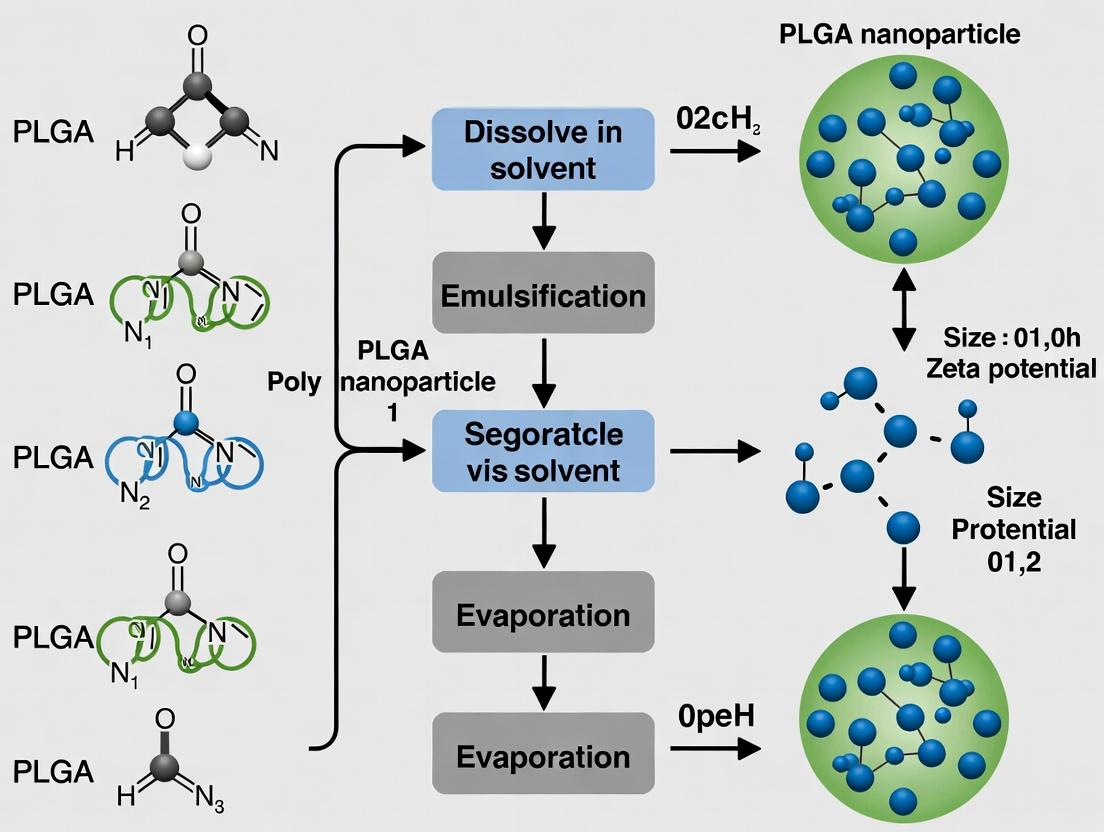
This article provides a systematic review of Poly(lactic-co-glycolic acid) (PLGA) nanoparticle preparation techniques tailored for researchers and drug development professionals.
A Comprehensive Guide to PLGA Nanoparticle Preparation: Methods, Optimization, and Characterization for Drug Delivery
Abstract
This article provides a systematic review of Poly(lactic-co-glycolic acid) (PLGA) nanoparticle preparation techniques tailored for researchers and drug development professionals. It begins by establishing the foundational principles of PLGA chemistry and nanoparticle design rationale. The core section details established and emerging fabrication methods, including single and double emulsion-solvent evaporation, nanoprecipitation, and microfluidic approaches. We then address critical troubleshooting parameters for optimizing particle size, drug loading, and encapsulation efficiency. Finally, the guide presents comprehensive validation strategies, comparing method advantages and benchmarking performance for specific therapeutic applications. This resource serves as a practical manual for selecting, executing, and evaluating PLGA nanoparticle synthesis protocols.
PLGA Nanoparticles 101: Core Principles, Material Properties, and Design Rationale
Chemistry and Structure of PLGA
PLGA (poly(lactic-co-glycolic acid)) is a synthetic copolymer synthesized via ring-opening polymerization of two monomers: glycolic acid and lactic acid. The ratio of lactide to glycolide (e.g., 50:50, 75:25, 85:15) and the molecular weight (typically 10-150 kDa) are critical determinants of its properties. The ester linkages in its backbone are responsible for its hydrolytic degradation.
Table 1: Characteristics of Common PLGA Ratios
| PLGA Ratio (LA:GA) | Crystallinity | Degradation Rate (Approx.) | Typical Applications |
|---|---|---|---|
| 50:50 | Low | Fastest (~1-2 months) | Short-term drug delivery, vaccines |
| 75:25 | Moderate | Intermediate (~2-4 months) | Sustained release formulations |
| 85:15 | Higher | Slowest (~5-6 months) | Long-term implants, microspheres |
Biocompatibility
PLGA is FDA-approved for use in drug delivery and medical devices. Its biocompatibility stems from its degradation into metabolites (lactic acid and glycolic acid) that enter the Krebs cycle and are excreted as CO₂ and water. In vitro and in vivo studies show minimal systemic toxicity, though localized acidic microenvironments during bulk erosion can cause transient inflammatory responses.
Research Reagent Solutions Toolkit
| Item | Function & Explanation |
|---|---|
| PLGA (50:50, IV 0.6 dL/g) | Primary copolymer; determines nanoparticle matrix structure and degradation kinetics. |
| Polyvinyl Alcohol (PVA) | Common emulsifier/stabilizer in single/double emulsion methods for nanoparticle formation. |
| Dichloromethane (DCM) | Organic solvent for dissolving PLGA in emulsion-based preparation. |
| Acetone | Water-miscible solvent used in nanoprecipitation methods. |
| Phosphate Buffered Saline (PBS) | Buffer for in vitro degradation and drug release studies, simulating physiological pH. |
| Cell Counting Kit-8 (CCK-8) | Reagent for assessing in vitro cytotoxicity and biocompatibility. |
| Dialysis Membrane (MWCO 12-14 kDa) | For purification of nanoparticles and separation of free drug/unreacted components. |
Degradation Kinetics
PLGA degradation occurs primarily via bulk erosion through hydrolysis of ester bonds. Kinetics are influenced by copolymer ratio, molecular weight, crystallinity, and device geometry. The process involves random scission, leading to a decrease in molecular weight before mass loss. The acidic degradation products can autocatalyze the reaction.
Table 2: Factors Influencing PLGA Degradation Kinetics
| Factor | Effect on Degradation Rate | Mechanistic Reason |
|---|---|---|
| Higher Glycolide Content | Increases | Glycolic acid is more hydrophilic, increasing water uptake. |
| Lower Molecular Weight | Increases | Shorter polymer chains have more accessible ester bonds. |
| Higher Crystallinity | Decreases | Slower water penetration into ordered polymer regions. |
| Acidic Microenvironment | Increases | Autocatalysis of ester hydrolysis by carboxylic acid end groups. |
| Nanoparticle Size (< 200 nm) | Increases | Higher surface area-to-volume ratio accelerates water ingress. |
Detailed Experimental Protocols
Protocol 1: Preparation of PLGA Nanoparticles via Single Emulsion-Solvent Evaporation
Objective: To fabricate drug-loaded PLGA nanoparticles for encapsulation of hydrophobic compounds. Materials: PLGA (50:50), Dichloromethane (DCM), Polyvinyl Alcohol (2% w/v), Probe Sonicator, Magnetic Stirrer. Procedure:
- Dissolve 100 mg PLGA and 10 mg model drug (e.g., Coumarin-6) in 5 mL DCM (organic phase).
- Prepare 50 mL of 2% PVA aqueous solution (aqueous phase).
- Emulsify the organic phase into the aqueous phase using a probe sonicator (70% amplitude, 2 minutes on ice).
- Immediately transfer the emulsion to 100 mL of 0.3% PVA solution stirring rapidly (600 rpm) at room temperature for 3 hours to evaporate DCM.
- Collect nanoparticles by ultracentrifugation (21,000 rpm, 30 min, 4°C). Wash twice with distilled water.
- Resuspend in PBS or lyophilize with a cryoprotectant (e.g., 5% trehalose).
Protocol 2: In Vitro Degradation and Release Kinetics Study
Objective: To monitor PLGA nanoparticle degradation and drug release profile. Materials: PLGA Nanoparticles, PBS (pH 7.4), Centrifuge, Freeze Dryer, GPC/SEC. Procedure:
- Weigh 20 mg of nanoparticles (lyophilized) into 10 mL PBS in sealed vials. Incubate at 37°C under gentle shaking (100 rpm).
- At predetermined time points (e.g., days 1, 3, 7, 14, 30), centrifuge a vial (15,000 rpm, 20 min).
- Collect supernatant for drug quantification via HPLC/UV-Vis.
- Wash the pellet with water, lyophilize, and weigh for mass loss assessment.
- Analyze a separate set of pellet samples via Gel Permeation Chromatography (GPC) to determine molecular weight change over time.
- Plot % drug release and % molecular weight remaining vs. time.
Title: PLGA Nanoparticle Hydrolytic Degradation Pathway
Title: Single Emulsion Nanoparticle Preparation Workflow
Poly(lactic-co-glycolic acid) (PLGA) nanoparticles represent a cornerstone of modern nanocarrier-based drug delivery. Their rationale is anchored in the ability to overcome fundamental limitations of conventional therapeutics. The following tables summarize key quantitative advantages.
Table 1: Comparative Efficacy and Pharmacokinetic Advantages of PLGA Nanocarriers
| Parameter | Conventional Free Drug | PLGA Nanoparticle-Encapsulated Drug | Key Implication |
|---|---|---|---|
| Systemic Circulation Half-life (t½) | Short (minutes-hours) e.g., Doxorubicin: ~1-3h | Significantly prolonged (hours-days) e.g., Doxorubicin-PLGA: up to 24-48h | Reduced dosing frequency; sustained therapeutic effect. |
| Tumor Accumulation (% Injected Dose/g) | Low (0.5-2% ID/g) via passive diffusion | Enhanced (5-15% ID/g) via Enhanced Permeability and Retention (EPR) effect | Improved therapeutic index; lower systemic toxicity. |
| Encapsulation Efficiency (EE%) | Not Applicable (N/A) | High for hydrophobic drugs: 70-95% (e.g., Paclitaxel) | Efficient drug loading reduces waste and cost. |
| Drug Release Profile | Immediate, burst release | Controlled, sustained release over days to weeks (e.g., 15-30 days) | Maintains drug concentration within therapeutic window. |
Table 2: Key Physicochemical and Safety Advantages of PLGA Nanoparticles
| Parameter | Typical Range for PLGA NPs | Functional Advantage |
|---|---|---|
| Particle Size | 80-200 nm | Optimal for EPR effect; avoids renal clearance (>10 nm) and RES uptake (<150 nm ideal). |
| Surface Zeta Potential | Slightly negative (-10 to -30 mV) | Provides colloidal stability; can be modified to positive or neutral for specific targeting. |
| Biodegradation Time | 1-6 months (varies with LA:GA ratio) | Tunable degradation matches drug release rate; eliminates need for retrieval. |
| FDA/EMA Approved Products | >20 (e.g., Lupron Depot, Risperdal Consta) | Establishes safety, biocompatibility, and regulatory precedence. |
Application Notes: Rational Design for Targeting
The advantages in Table 1 are leveraged through rational design. Surface modification with polyethylene glycol (PEGylation) extends circulation time by reducing opsonization and uptake by the mononuclear phagocyte system (MPS). Further functionalization with ligands (e.g., antibodies, peptides, folic acid) enables active targeting of overexpressed receptors on specific cells (e.g., cancer, macrophages), enhancing cellular uptake and specificity.
Experimental Protocols
The following protocols are central to a thesis investigating PLGA nanoparticle preparation methods.
Protocol 3.1: Preparation of PLGA Nanoparticles via Single-Emulsion Solvent Evaporation
Objective: To encapsulate a hydrophobic drug (e.g., Paclitaxel) into PLGA nanoparticles. Materials: See Scientist's Toolkit. Method:
- Organic Phase: Dissolve 100 mg PLGA (50:50, acid-terminated) and 5 mg Paclitaxel in 5 mL of dichloromethane (DCM) in a glass vial.
- Aqueous Phase: Prepare 50 mL of 2% (w/v) polyvinyl alcohol (PVA) solution in ultrapure water.
- Emulsification: Pour the organic phase into the aqueous PVA solution. Immediately emulsify using a high-speed homogenizer (e.g., Ultra-Turrax) at 15,000 rpm for 2 minutes in an ice bath to form an oil-in-water (o/w) emulsion.
- Solvent Evaporation: Transfer the emulsion to a beaker containing 100 mL of 0.3% PVA solution. Stir continuously at 500 rpm on a magnetic stirrer at room temperature for 4 hours to allow DCM to evaporate.
- Purification: Centrifuge the nanoparticle suspension at 20,000 x g for 30 minutes at 4°C. Discard the supernatant and re-suspend the pellet in ultrapure water. Repeat centrifugation/wash cycle twice.
- Lyophilization: Re-suspend the final pellet in a 5% (w/v) cryoprotectant solution (e.g., trehalose). Freeze at -80°C and lyophilize for 48 hours. Store dried nanoparticles at -20°C.
Protocol 3.2: Characterization of Particle Size, PDI, and Zeta Potential
Objective: To determine the hydrodynamic diameter, polydispersity, and surface charge of synthesized nanoparticles. Method:
- Sample Preparation: Re-disperse lyophilized nanoparticles in 1 mM KCl solution to a final concentration of approximately 0.5 mg/mL. Filter through a 0.45 μm syringe filter.
- Dynamic Light Scattering (DLS): Load the sample into a folded capillary cell for zeta potential measurement or a disposable sizing cuvette. Using a Malvern Zetasizer Nano ZS:
- For size: Set measurement angle to 173° (backscatter), temperature to 25°C. Perform at least 3 runs of 15 sub-runs each.
- For zeta potential: Use Laser Doppler Micro-electrophoresis. Perform at least 3 runs of 15-30 sub-runs.
- Data Analysis: Report the Z-average diameter (d.nm), polydispersity index (PDI), and zeta potential (ζ, mV) as mean ± standard deviation of three independent samples.
The Scientist's Toolkit: Research Reagent Solutions
Table 3: Essential Materials for PLGA Nanoparticle Formulation
| Item | Function & Rationale |
|---|---|
| PLGA Resin (e.g., 50:50 LA:GA, acid end) | The copolymer backbone; ratio determines degradation rate and drug release kinetics. Acid end groups allow for easier surface conjugation. |
| Polyvinyl Alcohol (PVA) | A common surfactant/stabilizer. Prevents coalescence of emulsion droplets during formation, controlling particle size. |
| Dichloromethane (DCM) | A volatile organic solvent. Dissolves PLGA and hydrophobic drugs, then evaporates to leave solidified nanoparticles. |
| Trehalose (Lyoprotectant) | Protects nanoparticle structure during freeze-drying by forming an amorphous glassy matrix, preventing aggregation upon reconstitution. |
| Dialysis Tubing (MWCO 12-14 kDa) | Used in alternative preparation/purification methods (e.g., nanoprecipitation) to remove organic solvents and free drug. |
| Carbodiimide Chemistry Kits (e.g., EDC/NHS) | For covalent conjugation of targeting ligands (e.g., peptides, antibodies) to surface carboxyl groups on PLGA nanoparticles. |
Visualizations
Title: PLGA Nanoparticle Delivery & Targeting Pathway
Title: PLGA Nanoparticle Synthesis Workflow
Within the broader thesis on PLGA nanoparticle preparation methods, understanding the interplay of key polymer design parameters is critical. Molecular weight (Mw), lactide to glycolide (LA:GA) ratio, and end-group chemistry dictate degradation kinetics, drug release profiles, nanoparticle stability, and biodistribution. This Application Note provides current protocols and data for designing and characterizing PLGA polymers to achieve tailored nanoparticle performance in drug delivery.
Quantitative Parameter Effects on Nanoparticle Properties
The following tables synthesize recent data on the influence of core design parameters.
Table 1: Impact of Molecular Weight (Mw) & LA:GA Ratio on Degradation & Release
| PLGA Type (LA:GA) | Mw (kDa) | Degradation Time (Weeks) | Typical Drug Release Profile (for encapsulated small molecules) | Nanoparticle Rigidity (Storage Modulus - G') |
|---|---|---|---|---|
| 50:50 | 10-15 | 3-6 | Rapid, near first-order burst (~70% in 1 week) | Low (0.5 - 2 kPa) |
| 50:50 | 40-50 | 6-8 | Biphasic: Burst then sustained (~50% in 2 weeks) | Medium (2 - 5 kPa) |
| 75:25 | 40-50 | 12-20 | Sustained, linear (~25% in 4 weeks) | High (5 - 10 kPa) |
| 85:15 | 60-100 | 20-30+ | Very slow, lag phase possible | Very High (>10 kPa) |
Data compiled from recent studies (2022-2024) on PLGA microparticles and nanoparticles in vitro (pH 7.4, 37°C).
Table 2: End-Group Chemistry and Functionalization Pathways
| End-Group Type | Synthesis Method | Key Application in Nanoparticles | Conjugation Efficiency (Typical) |
|---|---|---|---|
| Carboxylic Acid | Termination with water or succinic anhydride | Anionic surface, EDC/NHS coupling to amines | 60-80% |
| Ester (Methyl) | Termination with methanol | Hydrophobic, neutral charge, passive diffusion | N/A (non-reactive) |
| Amine | Termination with amine-bearing diol (e.g., DDEA) | Cationic surface, conjugation to carboxylates or aldehydes | 70-90% |
| Maleimide | Reaction of amine-ended PLGA with SMCC | Thiol-specific conjugation (e.g., to antibodies, peptides) | >90% |
| Azide/Alkyne | Terminator with azido/alcohol or propargyl | Click chemistry for ligand attachment | >95% |
Experimental Protocols
Protocol 1: Determining Optimal LA:GA Ratio & Mw for Desired Release Kinetics
Objective: To screen PLGA polymers for a target release duration (e.g., 4-week sustained release). Materials: PLGA polymers (50:50, 75:25, 85:15; varying Mw 15-100 kDa), model drug (e.g., fluorescein), PVA, dichloromethane (DCM), sonicator. Method:
- Prepare nanoparticles via single-emulsion: Dissolve 50 mg of each PLGA type and 1 mg of model drug in 2 mL DCM.
- Emulsify in 4 mL of 2% PVA aqueous solution using a probe sonicator (70% amplitude, 60 s on ice).
- Pour emulsion into 20 mL of 0.3% PVA under stirring. Evaporate DCM overnight.
- Collect nanoparticles by ultracentrifugation (20,000 x g, 30 min), wash x3, lyophilize.
- For release study: Suspend 10 mg of NPs in 1 mL PBS (pH 7.4, 0.02% NaN₃) in a dialysis tube (MWCO 10 kDa). Place in 50 mL PBS at 37°C with gentle shaking.
- Sample release medium at predetermined times (1, 6, 24, 72 hrs, then weekly). Analyze drug content via HPLC/UV-Vis.
- Plot cumulative release vs. time. Fit data to models (e.g., Higuchi, Korsmeyer-Peppas) to determine release mechanism.
Protocol 2: Functionalizing PLGA Nanoparticles via End-Group Chemistry
Objective: To conjugate a targeting ligand (e.g., a peptide with a terminal cysteine) to maleimide-functionalized PLGA NPs. Materials: Amine-terminated PLGA (PLGA-NH₂), Sulfo-SMCC, cysteine-bearing peptide, triethylamine, DCM, DMSO. Method:
- Synthesis of Maleimide-PLGA: Dissolve 500 mg PLGA-NH₂ and 10-fold molar excess of Sulfo-SMCC in 5 mL anhydrous DMSO with 50 µL triethylamine. React under N₂ for 6 hrs at room temperature.
- Precipitate polymer in cold diethyl ether, centrifuge, and lyophilize. Confirm functionalization via ¹H NMR (peak at ~6.8 ppm for maleimide).
- Nanoparticle Formation & Conjugation: Prepare NPs from maleimide-PLGA as in Protocol 1, steps 1-4, but use nitrogen-sparged buffers.
- Re-suspend 20 mg of fresh, un-lyophilized NPs in 2 mL of degassed PBS (pH 6.5-7.0).
- Add a 2-fold molar excess of peptide (vs. estimated surface maleimide groups) in degassed PBS. React for 12 hrs at 4°C on a rotary shaker.
- Quench reaction with 10 µL of 2-mercaptoethanol for 1 hr.
- Purify conjugated NPs by centrifugation (as in Protocol 1, step 4). Quantify ligand density via fluorescent tag on the peptide or colorimetric assay.
Diagrams
Diagram 1: PLGA Parameter Influence on Nanoparticle Performance (100 chars)
Diagram 2: Decision Workflow for PLGA Nanoparticle Design (98 chars)
The Scientist's Toolkit: Essential Research Reagents & Materials
| Item | Function & Rationale |
|---|---|
| PLGA Polymers (Varied LA:GA & Mw) | Core biomaterial. A library (e.g., 50:50 7kDa, 50:50 50kDa, 75:25 50kDa) is essential for screening. |
| Polyvinyl Alcohol (PVA, 87-89% hydrolyzed) | The most common stabilizer for single emulsion methods. Produces small, stable nanoparticles. |
| Dichloromethane (DCM, HPLC Grade) | Organic solvent of choice for emulsion due to high volatility and good solubility of PLGA. |
| Sulfo-SMCC (Sulfosuccinimidyl 4-(N-maleimidomethyl)cyclohexane-1-carboxylate) | Heterobifunctional crosslinker for converting amine-ended PLGA to maleimide-functionalized PLGA. |
| Amine-Terminated PLGA (PLGA-NH₂) | Starting material for introducing cationic charge or for further functionalization (e.g., with SMCC). |
| Dialysis Tubing (MWCO 10-20 kDa) | For purifying nanoparticles or conducting in vitro release studies under sink conditions. |
| Ultra-Turrax or Probe Sonicator | Critical for creating the primary emulsion. Sonicator provides higher energy for smaller nanoparticles. |
| Lyophilizer (Freeze Dryer) | For long-term storage of nanoparticles without aggregation. Requires cryoprotectants (e.g., sucrose, trehalose). |
| Dynamic Light Scattering (DLS) / Zeta Potential Analyzer | For routine characterization of nanoparticle hydrodynamic diameter, PDI, and surface charge. |
| ¹H NMR Solvents (CDCl₃, DMSO-d₆) | For confirming polymer structure, end-group modification, and degree of functionalization. |
Within the broader research on PLGA nanoparticle preparation methods, the definition and precise measurement of Critical Quality Attributes (CQAs) are paramount. These attributes—size, zeta potential, drug loading, and release profile—directly determine the in vivo fate, therapeutic efficacy, and safety of the formulated nanocarriers. This document provides detailed application notes and protocols for the assessment of these CQAs, serving as a standardized reference for thesis experiments comparing emulsion-solvent evaporation, nanoprecipitation, and microfluidic synthesis techniques.
CQA Definitions & Significance
| CQA | Definition & Ideal Range for PLGA NPs | Impact on Performance | ||
|---|---|---|---|---|
| Particle Size & PDI | Hydrodynamic diameter (Z-avg, nm). Ideal: 80-200 nm for systemic delivery. Polydispersity Index (PDI): Measure of size distribution homogeneity. Ideal: <0.2. | Affects circulation time, biodistribution, cellular uptake, and targetability. | ||
| Zeta Potential (ζ) | Surface charge (mV) measured at the shear plane. Colloidally stable range: | ±30 | mV. For sterically stabilized PLGA NPs: -10 to -30 mV. | Predicts colloidal stability (aggregation propensity), interaction with biological membranes, and protein corona formation. |
| Drug Loading (DL) & Encapsulation Efficiency (EE) | DL%: (Mass of drug in NPs / Total mass of NPs) x 100. EE%: (Mass of drug in NPs / Total mass of drug fed) x 100. | Determines dosage, cost-effectiveness, and potential for burst release. | ||
| Drug Release Profile | Cumulative drug release (%) over time. Characterized by initial burst release followed by sustained release over days/weeks. | Dictates pharmacokinetics, dosing frequency, and therapeutic window. |
Detailed Experimental Protocols
Protocol 3.1: Dynamic Light Scattering (DLS) for Size & PDI
Principle: Measures Brownian motion to calculate hydrodynamic diameter via Stokes-Einstein equation.
- Sample Prep: Dilute 20 µL of fresh NP suspension in 2 mL of 1 mM KCl or deionized water (filtered through 0.2 µm) to achieve optimal scattering intensity.
- Instrument: Equilibrate Zetasizer Nano ZS at 25°C for 10 min.
- Measurement: Load sample in disposable folded capillary cell (DTS1070). Set angle to 173° (backscatter), run in triplicate.
- Data Analysis: Report Z-average (Z-avg) diameter and PDI from intensity-weighted distribution. Cumulants analysis model.
Protocol 3.2: Electrophoretic Light Scattering for Zeta Potential
Principle: Measures particle velocity in applied electric field using Laser Doppler Velocimetry.
- Sample Prep: Use the same dilution as for DLS (1 mM KCl ensures low conductivity).
- Instrument: Use Zetasizer Nano ZS with dedicated zeta potential cell (DTS1070).
- Measurement: Set Smoluchowski model as approximation. Conduct at least 3 runs of >12 sub-runs each.
- Data Analysis: Report mean zeta potential (mV) and standard deviation. Ensure measurement position is stable.
Protocol 3.3: Drug Loading & Encapsulation Efficiency
Principle: Separate free drug from NPs, lyse NPs, quantify drug via HPLC/UV-Vis.
- Separation: Transfer 1 mL NP suspension to Amicon Ultra centrifugal filter (MWCO 10 kDa). Centrifuge at 14,000 x g for 15 min. Retain filtrate (free drug).
- Quantification of Free Drug: Analyze filtrate via validated HPLC/UV-Vis method. Calculate free drug mass.
- Lysis of NPs: Re-suspend the retained NPs in the filter with 1 mL acetonitrile or DMSO. Vortex for 15 min to dissolve. Dilute appropriately and analyze for total drug content.
- Calculation:
- EE% = (Total drug - Free drug) / Total drug fed x 100
- DL% = (Total drug - Free drug) / Weight of lyophilized NPs x 100
Protocol 3.4: In Vitro Drug Release Profile
Principle: Use dialysis method under sink conditions.
- Setup: Place 1 mL of NP suspension (known drug content) in a dialysis cassette or Float-A-Lyzer G2 (MWCO 100 kDa). Immerse in 50 mL of release medium (PBS pH 7.4 + 0.5% w/v Tween 80) at 37°C under gentle agitation (100 rpm).
- Sampling: At predetermined intervals (0.5, 1, 2, 4, 8, 24, 48, 72h, etc.), withdraw 1 mL of external medium and replace with equal volume of fresh, pre-warmed medium.
- Analysis: Quantify drug concentration in samples via HPLC/UV-Vis.
- Modeling: Plot cumulative release (%) vs. time. Fit data to models (e.g., Zero-order, First-order, Higuchi, Korsmeyer-Peppas) to elucidate release mechanism.
Visualization of Workflows and Relationships
Title: Interdependence of CQAs in PLGA NP Development
Title: Factors Influencing PLGA NP Drug Release Mechanism
The Scientist's Toolkit: Essential Research Reagents & Materials
| Item/Reagent | Function in CQA Assessment | Typical Vendor/Example |
|---|---|---|
| PLGA (50:50, ester-terminated) | Core biodegradable polymer matrix for nanoparticle formation. | Lactel Absorbable Polymers (DURECT), Sigma-Aldrich |
| Polyvinyl Alcohol (PVA) | Common surfactant/emulsifier in emulsion methods; affects size, stability, and release. | Sigma-Aldrich (Mw 13-23 kDa, 87-89% hydrolyzed) |
| Dichloromethane (DCM) / Ethyl Acetate | Organic solvent for dissolving polymer and drug (oil phase). | Sigma-Aldrich (HPLC grade) |
| Amicon Ultra Centrifugal Filters | For ultrafiltration to separate free/unencapsulated drug from nanoparticles. | Merck Millipore (e.g., 10 kDa MWCO) |
| Dialysis Membranes (Float-A-Lyzer) | For conducting in vitro drug release studies under controlled molecular weight cut-off. | Spectrum Labs, Repligen |
| HPLC Grade Acetonitrile & Water | For mobile phase in drug quantification via HPLC. | Fisher Scientific, Honeywell |
| Zetasizer Nano ZS | Integrated instrument for DLS (size, PDI) and ELS (zeta potential) measurements. | Malvern Panalytical |
| Phosphate Buffered Saline (PBS) pH 7.4 | Standard physiological medium for dilution and release studies. | Gibco (Thermo Fisher) |
| Tween 80 | Surfactant added to release medium to maintain sink conditions. | Sigma-Aldrich |
| Lyophilizer (Freeze Dryer) | For drying NP suspensions to determine solid weight for DL% calculation and storage. | Labconco, Martin Christ |
Regulatory and Safety Considerations for Pharmaceutical Development
Application Notes
Regulatory Landscape for PLGA Nanoparticle-Based Therapeutics
The development of Poly(lactic-co-glycolic acid) (PLGA) nanoparticles as drug delivery systems is governed by a multi-faceted regulatory framework that assesses quality, safety, and efficacy. Key agencies include the U.S. Food and Drug Administration (FDA), the European Medicines Agency (EMA), and other regional bodies. For novel nanomedicines, regulators emphasize rigorous characterization due to unique physicochemical properties that influence biodistribution, pharmacokinetics, and potential toxicity.
Critical Quality Attributes (CQAs) for PLGA nanoparticles must be defined and controlled. These include:
- Particle Size & Polydispersity Index (PDI): Directly impacts in vivo fate, cellular uptake, and safety profile. Narrow size distribution (PDI < 0.2) is typically targeted for batch consistency.
- Surface Charge (Zeta Potential): Influences colloidal stability and interaction with biological membranes.
- Drug Loading & Encapsulation Efficiency: Critical for dosing accuracy and efficacy.
- In Vitro Drug Release Profile: Must be characterized under physiologically relevant conditions.
Primary Regulatory Concerns specific to nanoparticles include:
- Batch-to-Batch Variability: Inherent to many nanomanufacturing processes, requiring advanced process analytical technology (PAT).
- Sterility and Pyrogenicity: Terminal sterilization (e.g., autoclaving) can degrade PLGA; aseptic processing is often necessary.
- Biological Fate and Long-Term Toxicity: Potential for particle accumulation in organs like the liver and spleen, and unclear long-term effects of polymer degradation products.
Safety and Toxicology Assessment Protocols
Preclinical safety assessment for PLGA nanoparticles follows ICH guidelines (S1-S12) but requires additional nanomaterial-specific considerations. A standard tiered approach is employed.
Table 1: Tiered Preclinical Safety Assessment for PLGA Nanoparticles
| Tier | Study Type | Key Parameters Measured | Typical Duration | Regulatory Guideline Reference |
|---|---|---|---|---|
| Tier 1 | In Vitro Cytotoxicity | Cell viability (MTT/XTT assay), hemolysis, platelet aggregation. | 24-72 hours | ISO 10993-5 |
| Tier 2 | In Vitro Pro-inflammatory Potential | Cytokine release (IL-1β, TNF-α) from peripheral blood mononuclear cells (PBMCs). | 6-24 hours | ICH S6(R1) |
| Tier 3 | Acute Systemic Toxicity (Rodent) | Maximum tolerated dose (MTD), clinical observations, hematology, clinical chemistry. | 14 days | ICH S4, OECD 425 |
| Tier 4 | Repeated-Dose Toxicity (Rodent/Non-Rodent) | Histopathology of major organs (liver, spleen, kidneys), biodistribution, pharmacokinetics (PK). | 28-90 days | ICH S3A, S3B |
| Tier 5 | Specialized Safety Studies | Immunotoxicity, complement activation (CH50 assay), reproductive toxicity. | Variable | ICH S8, ICH S5(R3) |
Experimental Protocols
Protocol 1: Characterization of Critical Quality Attributes (CQAs)
Title: Comprehensive Physicochemical Characterization of PLGA Nanoparticle Formulations.
Objective: To determine the size, charge, drug loading, and release profile of a prepared PLGA nanoparticle batch.
Materials: See "The Scientist's Toolkit" below.
Methodology:
- Dynamic Light Scattering (DLS) for Size & PDI:
- Dilute 20 µL of nanoparticle suspension in 2 mL of filtered (0.22 µm) deionized water or 1x PBS.
- Equilibrate sample in DLS instrument at 25°C for 2 minutes.
- Perform measurement with a backscatter detection angle (173°). Run minimum 12 sub-runs.
- Report hydrodynamic diameter (Z-average) and PDI from intensity-based distribution.
Laser Doppler Velocimetry for Zeta Potential:
- Dilute nanoparticles in 10 mM NaCl solution (pH 7.4) to a weak concentration.
- Inject sample into clear, disposable zeta cell.
- Measure electrophoretic mobility and convert to zeta potential using the Smoluchowski model.
- Report average and standard deviation of at least 3 measurements.
Drug Loading and Encapsulation Efficiency (HPLC Method):
- Total Drug: Dissolve 1 mg of lyophilized nanoparticles in 1 mL of DMSO with vortexing and sonication. Dilute appropriately and analyze by validated HPLC-UV.
- Unencapsulated Drug: Centrifuge 1 mL of fresh nanoparticle suspension at 21,000 x g for 30 min. Filter supernatant (0.22 µm) and analyze directly.
- Calculation:
- Drug Loading (DL %) = (Mass of drug in nanoparticles / Total mass of nanoparticles) x 100.
- Encapsulation Efficiency (EE %) = (Mass of drug in nanoparticles / Total mass of drug used in formulation) x 100.
In Vitro Drug Release Study (Dialysis Method):
- Place 2 mL of nanoparticle suspension (containing known drug mass) into a dialysis cassette (MWCO: 12-14 kDa).
- Immerse the cassette in 200 mL of release medium (PBS pH 7.4 with 0.5% w/v Tween 80 to maintain sink conditions) at 37°C under gentle agitation (100 rpm).
- At predetermined time points (1, 2, 4, 8, 24, 48, 72, 168 hours), withdraw 1 mL of external medium and replace with fresh pre-warmed medium.
- Analyze withdrawn samples by HPLC-UV to quantify released drug. Plot cumulative release (%) vs. time.
Protocol 2: In Vitro Hemocompatibility and Cytotoxicity Screening
Title: Preliminary Safety Screening for Intravenous PLGA Nanoparticles.
Objective: To assess acute plasma protein interaction and cytotoxicity as an initial safety screen.
Materials: Human red blood cells (hRBCs), platelet-rich plasma (PRP), HUVEC or HepG2 cell lines, MTT reagent, LDH assay kit.
Methodology:
- Hemolysis Assay (ASTM E2524-08):
- Prepare 2% v/v suspension of hRBCs in isotonic PBS.
- Incubate 0.5 mL RBC suspension with 0.5 mL of nanoparticle samples at various concentrations (10-500 µg/mL). Use PBS (negative control, 0% lysis) and 1% Triton X-100 (positive control, 100% lysis).
- Incubate at 37°C for 3 hours with gentle mixing.
- Centrifuge at 1000 x g for 5 min. Measure absorbance of supernatant at 540 nm.
- Calculate % Hemolysis = [(Abssample - Absnegative)/(Abspositive - Absnegative)] x 100. A value <5% is generally acceptable for IV administration.
- MTT Cytotoxicity Assay (ISO 10993-5):
- Seed cells in a 96-well plate at 10,000 cells/well and culture for 24 hours.
- Treat cells with nanoparticles across a concentration range (10-1000 µg/mL) in serum-free medium for 24-48 hours.
- Add MTT reagent (0.5 mg/mL) and incubate for 4 hours.
- Dissolve formed formazan crystals with DMSO. Measure absorbance at 570 nm with a reference at 650 nm.
- Calculate cell viability (%) relative to untreated controls. Determine the IC50 value.
Visualization
Title: Pharmaceutical Development Regulatory Pathway
Title: PLGA Nanoparticle Preclinical Development Workflow
The Scientist's Toolkit: Key Research Reagent Solutions
Table 2: Essential Materials for PLGA Nanoparticle Development & Safety Assessment
| Item/Category | Function/Application | Example/Notes |
|---|---|---|
| PLGA Copolymers | Biodegradable polymer matrix. Varying lactide:glycolide ratio and molecular weight controls degradation rate and drug release kinetics. | Resomer RG 502H (50:50, 7-17 kDa), acid-terminated for faster release. |
| Analytical HPLC System | Quantification of drug loading, encapsulation efficiency, and in vitro release profiles. | Systems with UV/Vis or PDA detector. C18 reverse-phase columns are standard. |
| Dynamic Light Scattering (DLS) Instrument | Measures hydrodynamic diameter, size distribution (PDI), and stability of nanoparticles in suspension. | Malvern Zetasizer Nano series is industry standard. |
| Zeta Potential Analyzer | Measures surface charge, critical for predicting nanoparticle colloidal stability and interaction with biological components. | Often integrated with DLS instrument. |
| Dialysis Membranes/Cassettes | Used for in vitro drug release studies by allowing diffusion of released drug into sink medium while retaining nanoparticles. | SnakeSkin dialysis tubing (3.5K - 20K MWCO). |
| Cell Lines for Cytotoxicity | In vitro models for initial biocompatibility screening. | HepG2 (liver), HUVEC (vascular endothelium), RAW 264.7 (macrophage). |
| Hemocompatibility Assay Kits | Standardized kits for measuring hemolysis, platelet activation, and complement activation (CH50). | Complement CH50 ELISA kits, commercial hemoglobin detection reagents. |
| Lyophilizer (Freeze Dryer) | Stabilizes nanoparticle suspensions into a dry powder for long-term storage and reconstitution. Critical for product shelf-life. | Requires cryoprotectants (e.g., sucrose, trehalose) in formulation. |
| Animal Disease Models | For in vivo efficacy (PD) and pharmacokinetic/toxicokinetic (PK/TK) studies relevant to the drug's intended indication. | Immunocompetent and immunodeficient models as needed. |
Step-by-Step Protocols: Master Classic and Advanced PLGA Nanoparticle Synthesis Methods
Within the broader research thesis on PLGA nanoparticle preparation methods, the single emulsion-solvent evaporation (o/w) technique remains the most established and reliable method for encapsulating hydrophobic drugs. Its simplicity, reproducibility, and high encapsulation efficiency for lipophilic compounds make it the benchmark against which newer techniques are compared. These Application Notes detail the protocol, key parameters, and recent quantitative data supporting its continued status as the "gold standard."
Poly(lactic-co-glycolic acid) (PLGA) nanoparticles (NPs) are a cornerstone of controlled drug delivery. Among various fabrication methods—including nanoprecipitation, double emulsion, and microfluidics—the single oil-in-water (o/w) emulsion-solvent evaporation technique is unparalleled for hydrophobic active pharmaceutical ingredients (APIs). This method ensures high drug loading, minimal exposure to aqueous interfaces (reducing drug loss), and scalability. This document provides a detailed protocol and analysis within the context of method comparison for a thesis on PLGA NP synthesis.
Experimental Protocols
Protocol 1: Standard Single Emulsion-Solvent Evaporation for PLGA Nanoparticles
Objective: To prepare PLGA nanoparticles loaded with a model hydrophobic drug (e.g., Curcumin, Paclitaxel, Dexamethasone).
Materials:
- PLGA (50:50, acid-terminated, MW 24,000-38,000 Da)
- Hydrophobic Drug (e.g., Curcumin)
- Organic Solvent: Dichloromethane (DCM) or Ethyl Acetate
- Aqueous Phase: Polyvinyl Alcohol (PVA, MW 13,000-23,000, 87-89% hydrolyzed) solution (1-3% w/v) in deionized water
- Probe Sonicator (e.g., Branson Sonifier)
- Magnetic Stirrer
- Rotary Evaporator or Reduced Pressure System
- Ultracentrifuge
- Lyophilizer (optional)
Method:
- Organic Phase Preparation: Dissolve 100 mg of PLGA and 5-10 mg of the hydrophobic drug in 5 mL of DCM. Stir until completely dissolved.
- Aqueous Phase Preparation: Dissolve PVA in deionized water to a concentration of 1-3% w/v. Filter through a 0.45 µm membrane.
- Emulsification: Pour the organic phase into 50 mL of the aqueous PVA solution under moderate magnetic stirring. Immediately emulsify the mixture using a probe sonicator at 70-80 W output power for 2-3 minutes (in an ice bath to prevent solvent overheating).
- Solvent Evaporation: Transfer the formed o/w emulsion to a round-bottom flask. Stir at room temperature on a magnetic stirrer for 3-4 hours or under reduced pressure using a rotary evaporator to completely remove the organic solvent, allowing nanoparticle hardening.
- Purification: Centrifuge the nanoparticle suspension at high speed (e.g., 20,000 x g, 30 min, 4°C) to pellet the NPs. Discard the supernatant containing free drug and PVA. Resuspend the pellet in deionized water and repeat centrifugation twice.
- Characterization: Resuspend the final pellet in a small volume of water. Determine particle size and PDI by dynamic light scattering (DLS) and zeta potential by electrophoretic light scattering. Determine drug loading via HPLC after dissolving an aliquot of NPs in DMSO.
Table 1: Comparative Performance of Single Emulsion vs. Other NP Synthesis Methods for Hydrophobic Drugs
| Parameter | Single Emulsion (o/w) | Double Emulsion (w/o/w) | Nanoprecipitation | Microfluidics |
|---|---|---|---|---|
| Typical Particle Size (nm) | 150 - 300 | 200 - 500 | 80 - 200 | 100 - 250 |
| Drug Loading Efficiency (Hydrophobic Drug) | 60 - 95% | 30 - 70% | 50 - 85% | 65 - 90% |
| Entrapment Efficiency (Hydrophobic Drug) | High (>80%) | Moderate | Moderate-High | High |
| Scalability | Excellent | Good | Moderate | Challenging |
| Process Simplicity | High | Moderate | Very High | Low (Hardware) |
Table 2: Impact of Critical Process Parameters on Single Emulsion NP Characteristics
| Parameter | Effect on Particle Size | Effect on Polydispersity (PDI) | Effect on Drug Loading |
|---|---|---|---|
| Sonication Power/Time | Decreases with increased energy | Decreases initially, then may increase | Minor indirect effect |
| PVA Concentration | Decreases with increased % (up to a point) | Typically decreases | Can decrease due to viscosity |
| Organic: Aqueous Phase Ratio | Decreases with lower ratio | Can increase if ratio is too high | Increases with higher ratio |
| PLGA Concentration | Increases with higher concentration | Increases | Increases |
Visualization of Workflows
The Scientist's Toolkit: Research Reagent Solutions
Table 3: Essential Materials for Single Emulsion-Solvent Evaporation
| Item & Common Supplier Examples | Function & Critical Property |
|---|---|
| PLGA (e.g., Sigma-Aldrich, Lactel) | Biodegradable copolymer matrix. Critical: Lactide:Glycolide ratio (e.g., 50:50), molecular weight, and end-group (acid vs. ester) determine degradation rate and drug release kinetics. |
| Polyvinyl Alcohol (PVA) (e.g., Sigma) | Most common stabilizer/surfactant. Critical: Degree of hydrolysis (87-89% optimal) and molecular weight affect interfacial tension, particle size, and residual PVA on NP surface. |
| Dichloromethane (DCM) (HPLC Grade) | Volatile organic solvent for dissolving PLGA and drug. Critical: High volatility enables rapid evaporation; water-immiscibility enables stable o/w emulsion formation. |
| Ethyl Acetate (Alternative) | Less toxic, "green" solvent alternative. Critical: Higher water solubility than DCM can lead to larger particles but is preferred for translational applications. |
| Probe Sonicator (e.g., Branson, Qsonica) | Provides high shear energy for creating fine primary emulsion droplets. Critical: Control of amplitude/time and use of ice bath are essential to prevent solvent boiling/degredation. |
| Rotary Evaporator (e.g., Buchi) | Efficiently removes organic solvent under reduced pressure, speeding up NP hardening. Critical: Controlled vacuum and bath temperature prevent aggregation. |
| Ultracentrifuge (e.g., Beckman Coulter) | Essential for purifying NPs from free drug, excess stabilizer, and solvent traces. Critical: High g-force and appropriate centrifugation time ensure complete pelleting. |
This document provides detailed application notes and protocols for the Double Emulsion-Solvent Evaporation (water-in-oil-in-water, w/o/w) method. Within the broader thesis research on Poly(lactic-co-glycolic acid) (PLGA) nanoparticle preparation techniques, this method is critically positioned as the primary solution for encapsulating hydrophilic drugs, peptides, and proteins. Unlike single emulsion techniques suited for hydrophobic compounds, the w/o/w method addresses the core challenge of retaining water-soluble actives within a hydrophobic polymer matrix, thereby expanding the therapeutic application scope of PLGA-based delivery systems.
Table 1: Comparative Performance of w/o/w Formulations for Protein Encapsulation
| Protein Model | PLGA Type (LA:GA) | Avg. Particle Size (nm) | PDI | Encapsulation Efficiency (%) | In Vitro Release (Duration) | Key Finding |
|---|---|---|---|---|---|---|
| Bovine Serum Albumin (BSA) | 50:50 (Acid-terminated) | 210 ± 15 | 0.12 | 68.5 ± 3.2 | 14 days (biphasic) | High initial burst (~30% in 24h) common with hydrophilic pores. |
| Lysozyme | 75:25 (Ester-terminated) | 180 ± 25 | 0.15 | 45.2 ± 4.1 | 10 days | Lower EE due to protein-polymer interaction; stability is critical. |
| Ovalbumin | 50:50 (Acid-terminated) | 250 ± 30 | 0.18 | 72.1 ± 2.8 | 21 days | Adding electrolytes (NaCl) to inner water phase improves EE by reducing osmotic pressure. |
| IgG Antibody | RG 502H (Acid-terminated) | 280 ± 20 | 0.10 | 58.7 ± 5.0 | 28+ days | Process requires mild homogenization (probe sonication <30s) to maintain protein integrity. |
Table 2: Impact of Critical Process Parameters on Nanoparticle Characteristics
| Parameter | Variable Range | Effect on Particle Size | Effect on Encapsulation Efficiency (EE) | Recommended Optimal Range |
|---|---|---|---|---|
| Primary Emulsion Sonication | 30-90 seconds | ↑ Time → ↓ Size | ↑ Time → Initial ↑ then ↓ EE (protein denaturation) | 45-60 sec at 40-50W (ice bath) |
| PLGA Concentration | 2-6% (w/v) in DCM | ↑ Conc. → ↑ Size | ↑ Conc. → ↑ EE (thicker polymer wall) | 3-4% for 150-250 nm |
| PVA Concentration (Stabilizer) | 1-3% (w/v) in outer phase | ↑ Conc. → ↓ Size | ↑ Conc. → Slight ↓ EE (competition at interface) | 2-3% |
| Volume Ratio (Inner:Oil Phase) | 1:5 to 1:20 | ↑ Ratio → ↑ Size, risk of coalescence | ↑ Ratio → ↓ EE (higher osmotic pressure gradient) | 1:10 to 1:15 |
Detailed Experimental Protocol
Protocol: Preparation of PLGA Nanoparticles Loaded with a Hydrophilic Protein
I. Materials Preparation
- Aqueous Phase 1 (W1): Dissolve the hydrophilic protein (e.g., BSA, 10 mg) in deionized water or buffer (e.g., 10 mM phosphate buffer, pH 7.4) to a final volume of 1 mL. For stability, add a cryoprotectant (e.g., 5% trehalose).
- Oil Phase (O): Dissolve 200 mg of PLGA (e.g., Lactel 50:50, acid-terminated) and a hydrophobic surfactant (e.g., 2 mg Span 80) in 5 mL of dichloromethane (DCM).
- Aqueous Phase 2 (W2): Dissolve 500 mg of polyvinyl alcohol (PVA, 87-89% hydrolyzed) in 100 mL of deionized water (2% w/v solution). Use as the continuous external phase.
II. Primary Emulsion (W1/O) Formation
- Slowly add the W1 phase (1 mL) to the Oil Phase (5 mL) while vortexing at medium speed for 30 seconds to pre-emulsify.
- Immediately transfer the coarse emulsion to an ice bath.
- Sonicate using a probe sonicator at 50W amplitude for 60 seconds (pulse mode: 5 sec on, 5 sec off) to form a fine water-in-oil (w/o) primary emulsion. Keep the vial immersed in ice throughout.
III. Secondary Emulsion (W1/O/W2) Formation
- Pour the primary emulsion (W1/O) into the 100 mL of 2% PVA solution (W2) under moderate magnetic stirring (500 rpm).
- Homogenize this mixture using a high-speed homogenizer (e.g., Ultra-Turrax) at 13,000 rpm for 3 minutes. This forms the double emulsion (w/o/w).
IV. Solvent Evaporation & Nanoparticle Hardening
- Transfer the double emulsion to a beaker and stir magnetically at room temperature, uncovered, for 4-6 hours, or overnight under reduced pressure, to allow complete evaporation of the organic solvent (DCM).
- As DCM evaporates, the polymer precipitates, forming solidified nanoparticles.
V. Nanoparticle Recovery & Washing
- Centrifuge the nanoparticle suspension at 20,000 rpm (approx. 48,000 x g) at 4°C for 30 minutes.
- Carefully discard the supernatant. Resuspend the pellet in deionized water to wash off excess PVA and unencapsulated drug.
- Repeat the centrifugation and washing step twice.
- For final storage, resuspend the pellet in a suitable buffer or in water containing a cryoprotectant (e.g., 5% trehalose) for lyophilization.
The Scientist's Toolkit: Essential Research Reagents & Materials
Table 3: Key Research Reagent Solutions
| Item | Function & Rationale |
|---|---|
| PLGA (50:50 LA:GA, Acid-terminated) | The biodegradable polymer matrix. Acid-end groups increase hydrophilicity, potentially improving interaction with hydrophilic cargo and accelerating degradation. |
| Dichloromethane (DCM) | Volatile organic solvent for dissolving PLGA. Its low boiling point (39.6°C) facilitates rapid evaporation and nanoparticle hardening. |
| Polyvinyl Alcohol (PVA, 87-89% hydrolyzed) | The most common stabilizer/emulsifier. Adsorbs at the o/w interface during secondary emulsion, preventing coalescence and controlling particle size. |
| Span 80 (Sorbitan monooleate) | Hydrophobic surfactant added to the oil phase to stabilize the primary (w/o) emulsion, reducing water droplet coalescence and improving EE. |
| Trehalose Dihydrate | Cryoprotectant. Added prior to lyophilization to protect nanoparticle structure and prevent aggregation, and can be included in W1 to stabilize proteins. |
Visualized Workflows & Pathways
W/O/W Nanoparticle Fabrication Workflow
Process Parameter Effects on Final Product
Thesis Context: This application note is part of a comprehensive research thesis comparing established methods for preparing Poly(lactic-co-glycolic acid) (PLGA) nanoparticles for drug delivery. Nanoprecipitation is evaluated for its simplicity, speed, and utility in early-stage formulation development.
Nanoprecipitation, or solvent displacement, is a bottom-up technique for synthesizing polymeric nanoparticles. It relies on the interfacial deposition of a polymer following the displacement of a water-miscible solvent from a lipophilic solution into an aqueous medium. The rapid diffusion of the solvent causes a decrease in interfacial tension between the two phases, leading to a sudden saturation of the polymer and the formation of colloidal particles. This method is ideal for encapsulating hydrophobic drugs within biodegradable polymers like PLGA.
The quality of nanoparticles produced via nanoprecipitation is highly dependent on several controllable parameters. The following table summarizes critical variables and their typical effects on particle characteristics.
Table 1: Key Process Parameters and Their Impact on Nanoparticle Properties
| Parameter | Typical Range | Effect on Particle Size (PS) | Effect on Polydispersity Index (PDI) | Effect on Encapsulation Efficiency (EE) |
|---|---|---|---|---|
| Organic Phase | ||||
| Polymer (PLGA) Concentration | 1 - 10 mg/mL | ↑ Conc. → ↑ PS | ↑ Conc. → ↑ PDI | Moderate ↑ |
| Drug Concentration | 0.1 - 2 mg/mL | Minor ↑ | Minor ↑ | ↑ Conc. may ↓ EE if saturation exceeded |
| Solvent (Acetone) | Acetone, THF, Acetonitrile | Polarity ↓ → ↑ PS | Varies with solvent | Diffusion rate affects EE |
| Aqueous Phase | ||||
| Aqueous Phase Volume | 2x - 10x Organic Vol. | ↑ Vol → ↓ PS (up to a limit) | ↑ Vol → ↓ PDI | Can ↓ EE due to drug partitioning |
| Stabilizer (PVA) Concentration | 0.1 - 5 % (w/v) | ↑ Conc. → ↓ PS | ↑ Conc. → ↓ PDI | Minimal direct effect |
| Process Conditions | ||||
| Mixing Rate (Stirring) | 500 - 1500 rpm | ↑ Rate → ↓ PS | ↑ Rate → ↓ PDI | Minimal direct effect |
| Addition Rate (Organic→Aqueous) | Slow drip to fast injection | Slower → ↓ PS | Slower → ↓ PDI | Can improve homogeneity and EE |
| Temperature | 20 - 25 °C (Room Temp) | Minor effect | Minor effect | ↓ Temp may ↑ EE for some drugs |
Table 2: Representative Results from Optimized Standard Protocol
| Formulation | Mean Size (nm) | PDI | Zeta Potential (mV) | Encapsulation Efficiency (%) | Drug Loading (%) |
|---|---|---|---|---|---|
| PLGA (50:50) - Blank | 152 ± 12 | 0.08 ± 0.02 | -32.5 ± 1.5 | N/A | N/A |
| PLGA - Curcumin | 168 ± 15 | 0.10 ± 0.03 | -30.1 ± 2.1 | 78 ± 4 | 4.5 ± 0.3 |
| PLGA - Paclitaxel | 175 ± 18 | 0.12 ± 0.04 | -28.7 ± 1.8 | 82 ± 3 | 4.9 ± 0.2 |
Detailed Experimental Protocol: PLGA Nanoparticle Formation
Materials Required (The Scientist's Toolkit)
Table 3: Essential Research Reagent Solutions and Materials
| Item | Function & Specification |
|---|---|
| PLGA (50:50) | Biodegradable copolymer; backbone matrix of the nanoparticle. MW: 10-30 kDa recommended for small particles. |
| Hydrophobic Drug (e.g., Curcumin) | Active pharmaceutical ingredient (API) to be encapsulated. |
| Water-miscible Organic Solvent (Acetone) | Dissolves polymer and drug; rapidly diffuses into water to trigger nanoprecipitation. |
| Aqueous Phase (Deionized Water) | Non-solvent for the polymer; receives the organic phase. |
| Stabilizer (Polyvinyl Alcohol, PVA) | Surfactant that adsorbs to forming particles, prevents aggregation, and controls size. Use 1% w/v solution. |
| Magnetic Stirrer & Hotplate | Provides consistent, rapid mixing during the precipitation step. |
| Syringe Pump (Optional) | Allows controlled, reproducible addition rate of the organic phase. |
| Ultrasonic Bath or Probe Sonicator | Used for initial dissolution of polymer/drug and optional size reduction post-formation. |
| Dialysis Tubing (MWCO 12-14 kDa) or Rotary Evaporator | For removing organic solvent and free, unencapsulated drug from the final suspension. |
Step-by-Step Procedure
Part A: Preparation of Solutions
- Aqueous Phase: Prepare 20 mL of a 1% (w/v) PVA solution in deionized water. Filter through a 0.45 µm membrane filter to remove impurities. Place 18 mL in a 50 mL beaker under moderate magnetic stirring (600-800 rpm).
- Organic Phase: Weigh 50 mg of PLGA (50:50) and 5 mg of the hydrophobic drug (e.g., Curcumin). Dissolve both in 5 mL of acetone in a glass vial. Sonicate for 2-3 minutes if necessary to ensure complete dissolution. Filter through a 0.22 µm PTFE filter.
Part B: Nanoprecipitation Process
- Using a glass syringe, draw up the filtered organic phase.
- Critical Step: Add the organic phase dropwise (approx. 1 mL/min) into the center of the stirring aqueous phase. The solution will turn milky or opalescent immediately, indicating nanoparticle formation.
- After complete addition, continue stirring for 2-3 hours at room temperature, covered, to allow for complete solvent diffusion and particle hardening.
Part C: Purification and Harvesting
- Transfer the nanoparticle suspension to pre-soaked dialysis tubing (MWCO 12-14 kDa). Dialyze against 2 L of deionized water for 4 hours, changing the water every hour to remove acetone, free PVA, and unencapsulated drug.
- Alternatively, the organic solvent can be removed under reduced pressure using a rotary evaporator (40°C water bath, reduced pressure).
- The final nanoparticle suspension can be stored at 4°C for short-term use or lyophilized for long-term storage (requires cryoprotectant like trehalose or sucrose).
Part D: Characterization
- Dilute a sample of the purified suspension 1:10 with filtered DI water. Measure particle size, PDI, and zeta potential using dynamic light scattering (DLS).
- To determine drug encapsulation, lyophilize a known volume of suspension. Dissolve the powder in DMSO to break down the PLGA matrix and release the drug. Analyze drug concentration using UV-Vis spectroscopy or HPLC against a standard calibration curve.
Visualized Workflows and Mechanisms
Experimental Workflow for Nanoprecipitation
Mechanism of Nanoparticle Formation via Solvent Displacement
Within the broader thesis on poly(lactic-co-glycolic acid) (PLGA) nanoparticle preparation methods, the need for gentle encapsulation techniques is paramount when dealing with sensitive payloads such as proteins, peptides, nucleic acids, or temperature-labile drugs. Traditional methods like single or double emulsion-solvent evaporation can expose these actives to mechanical shear and organic solvent/water interfaces, leading to denaturation and loss of activity. This application note details two alternative techniques—Salting-Out and Emulsion-Diffusion—that circumvent these issues by avoiding the use of chlorinated solvents and minimizing shear stress, thereby offering higher encapsulation efficiency and bioactivity retention for sensitive molecules.
Table 1: Core Characteristics of Salting-Out vs. Emulsion-Diffusion Techniques
| Parameter | Salting-Out Technique | Emulsion-Diffusion Technique |
|---|---|---|
| Primary Solvent | Water-miscible solvent (e.g., acetone). | Partially water-miscible solvent (e.g., ethyl acetate). |
| Key Principle | Saturation of aqueous phase with electrolyte to separate solvent from water, inducing polymer precipitation. | Initial equilibrium of solvent between phases, followed by dilution-induced diffusion and nanoparticle precipitation. |
| Typical Solvent Removal | Cross-flow filtration or dilution. | Controlled dilution under stirring. |
| Advantages | Avoids chlorinated solvents; mild conditions; good for proteins. | Scalable; narrow size distribution; avoids harsh solvents. |
| Limitations | Requires salt removal step; may require extensive washing. | Requires careful control of dilution rate. |
| Typical Particle Size Range | 100 – 500 nm | 150 – 300 nm |
| Encapsulation Efficiency (Protein) | 60 – 80% | 50 – 75% |
Table 2: Quantitative Comparison of Payload Integrity from Recent Studies (2021-2024)
| Payload | Technique | Reported Bioactivity Retention | Encapsulation Efficiency | Reference Key Parameter |
|---|---|---|---|---|
| Lysozyme | Salting-Out (Acetone) | 92 ± 4% | 78 ± 3% | MgCl₂ as electrolyte, PLGA 50:50, 7kDa |
| siRNA | Emulsion-Diffusion (Ethyl Acetate) | >85% (gene silencing efficacy) | 65 ± 5% | PVA stabilizer, 3:1 organic:aqueous phase ratio |
| Bovine Serum Albumin | Salting-Out (THF) | 88 ± 3% | 72 ± 4% | (NH₄)₂SO₄ saturation, PLGA-PEG |
| Insulin | Emulsion-Diffusion (Propylene Carbonate) | 94 ± 2% | 81 ± 3% | Lecithin as stabilizer, low-shear mixer |
| Antibody Fragment | Salting-Out (Acetone) | 89 ± 5% | 68 ± 6% | Optimized pH 6.0, high salt concentration |
Detailed Experimental Protocols
Protocol 1: Salting-Out for Protein Encapsulation in PLGA Nanoparticles
Objective: To encapsulate a model protein (e.g., Lysozyme) into PLGA nanoparticles using the salting-out method with acetone and magnesium chloride.
Materials (Research Reagent Solutions):
- PLGA (50:50, 7kDa): Biodegradable copolymer forming the nanoparticle matrix.
- Acetone (HPLC grade): Water-miscible organic solvent for polymer and drug dissolution.
- Magnesium Chloride Hexahydrate (MgCl₂·6H₂O): Electrolyte for saturating the aqueous phase to induce phase separation.
- Polyvinyl Alcohol (PVA, 87-89% hydrolyzed): Stabilizer/surfactant to control particle size and prevent aggregation.
- Lysozyme (from chicken egg white): Model sensitive protein payload.
- Ultrapure Water: Aqueous phase component.
- Cross-flow Filtration System (500 kDa membrane): For washing and concentrating the nanoparticle suspension.
Procedure:
- Aqueous Phase Preparation: Dissolve MgCl₂·6H₂O (60 g) and PVA (1% w/v) in 200 mL of ultrapure water to achieve a saturated electrolyte solution. Keep at 4°C.
- Organic Phase Preparation: Dissolve PLGA (500 mg) and Lysozyme (50 mg) in 10 mL of pure acetone under mild magnetic stirring.
- Emulsification: Under vigorous mechanical stirring (1000 rpm), add the organic phase dropwise (1 mL/min) into 50 mL of the chilled aqueous phase. Maintain the temperature at 4°C.
- Quenching & Solvent Removal: Immediately after addition, dilute the emulsion with 200 mL of cold ultrapure water to initiate diffusion of acetone into the water and precipitate nanoparticles. Stir for 1 hour.
- Purification: Concentrate and purify the nanoparticle suspension via cross-flow filtration against 2 L of ultrapure water to remove salts, free PVA, and unencapsulated protein.
- Characterization: Determine particle size and PDI by dynamic light scattering (DLS), zeta potential by electrophoretic light scattering, and lysozyme encapsulation efficiency via microBCA assay on lysed nanoparticles.
Protocol 2: Emulsion-Diffusion for siRNA Encapsulation using Ethyl Acetate
Objective: To encapsulate siRNA into PLGA-PEG nanoparticles using the emulsion-diffusion method with ethyl acetate.
Materials (Research Reagent Solutions):
- PLGA-PEG (5% PEG, 15kDa): Amphiphilic copolymer for stealth nanoparticle formation.
- Ethyl Acetate (EA): Partially water-miscible solvent (solubility ~8% in water).
- siRNA (targeting sequence): Labile nucleic acid payload.
- Lecithin (soybean): Natural lipid stabilizer for the primary emulsion.
- Poloxamer 188: Non-ionic surfactant for the external aqueous phase.
- Ultrapure Water: For aqueous phases and dilution.
Procedure:
- Organic Phase: Dissolve PLGA-PEG (200 mg) and Lecithin (50 mg) in 5 mL of ethyl acetate.
- Aqueous Phase 1 (Internal): Dilute siRNA stock in 1 mL of 10 mM citrate buffer (pH 4.0).
- Primary Emulsion (W/O): Emulsify the aqueous siRNA solution into the organic phase using a high-speed homogenizer (13,000 rpm, 1 minute) or a probe sonicator (40% amplitude, 30 seconds on ice) to form a water-in-oil (W/O) emulsion.
- Aqueous Phase 2 (External): Prepare 100 mL of an aqueous solution containing 2% (w/v) Poloxamer 188.
- Secondary Emulsion & Diffusion: Add the primary W/O emulsion to the external aqueous phase under moderate magnetic stirring (500 rpm). This forms a W/O/W system. Stir for 30 minutes to allow equilibrium of EA between phases.
- Dilution & Nanoparticle Hardening: Initiate slow, dropwise addition of 400 mL of ultrapure water over 60 minutes under continuous stirring. This causes the diffusion of EA from the organic droplets into the continuous phase, precipitating the polymer and forming solid nanoparticles.
- Solvent Removal: Stir overnight at room temperature to ensure complete evaporation of residual EA.
- Purification & Characterization: Purify by ultracentrifugation (25,000 rpm, 30 min, 4°C). Resuspend pellet in buffer. Characterize size, PDI, and zeta potential. Determine siRNA encapsulation via RiboGreen assay after nanoparticle dissolution.
The Scientist's Toolkit: Essential Materials
Table 3: Key Reagents and Equipment for Sensitive Payload Encapsulation
| Item / Solution | Function / Role in Protocol |
|---|---|
| PLGA (varied LA:GA ratios, MW) | Biodegradable, FDA-approved copolymer forming the nanoparticle matrix. |
| PLGA-PEG (Diblock) | Provides steric stabilization ("stealth" properties) to nanoparticles, reducing opsonization. |
| Ethyl Acetate | Partially water-miscible, less toxic solvent used in emulsion-diffusion. |
| Acetone | Water-miscible solvent used in salting-out; requires electrolyte for phase separation. |
| Magnesium or Ammonium Salts | Electrolytes for saturating the aqueous phase in salting-out, inducing polymer precipitation. |
| PVA (87-89% hydrolyzed) | Common steric stabilizer; prevents nanoparticle coalescence during formation. |
| Poloxamer 188 / Lecithin | Alternative stabilizers/surfactants, often used for sensitive formulations. |
| Cross-flow Filtration System | Gentle purification method to remove solvents, salts, and free surfactants without high shear. |
| High-Speed Homogenizer/Sonicator | Equipment for creating the primary emulsion with controlled energy input. |
| RiboGreen / microBCA Assay Kits | Specific assays for quantifying nucleic acid or protein encapsulation efficiency, respectively. |
Visualized Workflows and Pathways
Title: Salting-Out Nanoparticle Preparation Workflow
Title: Emulsion-Diffusion Technique Workflow
Title: Rationale for Choosing Alternative Techniques
This document provides Application Notes and Protocols for three advanced techniques for preparing Poly(lactic-co-glycolic acid) (PLGA) nanoparticles, a critical area of research in controlled drug delivery. These methods offer superior control over particle size, polydispersity, drug loading, and scalability compared to traditional bulk methods like single/double emulsion and nanoprecipitation.
Microfluidics for PLGA Nanoparticle Synthesis
Application Notes
Microfluidic platforms enable precise, reproducible mixing of PLGA solutions and anti-solvents via laminar flow, leading to highly monodisperse nanoparticles. Recent studies highlight its utility for encapsulating small molecules, proteins, and nucleic acids with high efficiency.
Table 1: Key Performance Data for Microfluidic PLGA Nanoparticle Synthesis
| Parameter | Typical Range | Impact on Nanoparticle Characteristics |
|---|---|---|
| Total Flow Rate (TFR) | 1-20 mL/min | Higher TFR decreases particle size due to faster mixing. |
| Flow Rate Ratio (FRR) | 1:1 to 1:10 (aq:org) | Higher FRR (more aqueous phase) reduces particle size and PDI. |
| PLGA Concentration | 1-20 mg/mL | Increased concentration leads to larger particle size. |
| Achievable Particle Size | 50-250 nm | Highly tunable via flow parameters. |
| Polydispersity Index (PDI) | 0.05-0.15 | Consistently low, indicating high uniformity. |
| Drug Loading Efficiency | 60-90% | Depends on drug hydrophobicity and flow conditions. |
Experimental Protocol: Nanoprecipitation via a Hydrodynamic Flow-Focusing Chip
Objective: To synthesize monodisperse, drug-loaded PLGA nanoparticles.
Materials & Reagents:
- PLGA (50:50, acid-terminated, MW 24-38 kDa): Biodegradable polymer matrix.
- Acetone or acetonitrile: Organic solvent for PLGA and hydrophobic drug.
- Polyvinyl alcohol (PVA) solution (1% w/v): Stabilizer in the aqueous phase.
- Model drug (e.g., Curcumin or Nile Red): Hydrophobic active compound.
- Deionized Water: Aqueous anti-solvent.
- Syringe pumps (2): For precise fluid delivery.
- Microfluidic chip (e.g., glass or PDMS, flow-focusing geometry): Core reactor.
- Magnetic stirrer and round-bottom flask: For solvent evaporation.
- Ultracentrifuge: For nanoparticle collection.
- Lyophilizer: For long-term storage.
Procedure:
- Solution Preparation:
- Organic Phase: Dissolve PLGA (10 mg) and the model drug (1 mg) in 5 mL of acetone. Filter through a 0.22 µm PTFE syringe filter.
- Aqueous Phase: Prepare 20 mL of 1% w/v PVA solution in deionized water.
- Microfluidic Setup:
- Mount the microfluidic chip.
- Connect the organic phase syringe and the aqueous phase syringe to their respective inlets via tubing.
- Set the outlet tubing into a collection vessel placed on a magnetic stirrer.
- Nanoparticle Formation:
- Set the aqueous phase pump to a flow rate of 10 mL/min (FRR = 10:1, aq:org).
- Set the organic phase pump to a flow rate of 1 mL/min.
- Start both pumps simultaneously. The aqueous streams hydrodynamically focus the organic stream, causing rapid nanoprecipitation at the junction.
- Collect the milky suspension for 10 minutes.
- Post-processing:
- Transfer the suspension to a round-bottom flask and stir gently overnight at room temperature to evaporate the organic solvent.
- Concentrate and wash nanoparticles via ultracentrifugation (e.g., 21,000 x g, 45 min, 4°C). Resuspend the pellet in distilled water.
- Lyophilize the purified nanoparticle suspension for storage.
Workflow for Microfluidic PLGA Synthesis
Research Reagent Solutions & Essential Materials
| Item | Function in Protocol |
|---|---|
| PLGA (50:50, acid-terminated) | Core biodegradable copolymer forming the nanoparticle matrix. |
| Hydrodynamic Flow-Focusing Chip | Enables precise laminar flow mixing for reproducible nanoprecipitation. |
| High-Precision Syringe Pumps | Provides stable, pulse-free flow critical for consistent nanoparticle size. |
| Polyvinyl Alcohol (PVA) | Steric stabilizer preventing nanoparticle aggregation during and after formation. |
| Regenerated Cellulose Ultrafiltration Tubes | Alternative to ultracentrifugation for washing and concentrating nanoparticles. |
Spray Drying for PLGA Particle Engineering
Application Notes
Spray drying is a single-step, scalable process that converts a liquid feed (solution, emulsion, suspension) into dry powder. For PLGA, it is excellent for producing microparticles and porous nanoparticles, often with higher drug loading capacities than bottom-up methods.
Table 2: Key Performance Data for Spray Dried PLGA Particles
| Parameter | Typical Range | Impact on Particle Characteristics |
|---|---|---|
| Inlet Temperature | 40-80°C | Critical for solvent evaporation; higher temp can reduce residual solvent but may degrade heat-sensitive drugs. |
| Feed Flow Rate | 3-10 mL/min | Lower rates produce smaller particles due to better droplet atomization. |
| Aspirator Rate | 90-100% | Governs airflow and drying efficiency. |
| Nozzle Size | 0.5-1.4 mm | Smaller nozzle = smaller droplet = smaller particle. |
| Achievable Particle Size | 1-10 µm | Can reach sub-500 nm with advanced nozzles and optimized feeds. |
| Drug Loading | Up to 30% w/w | Can be very high, especially for emulsion-based feeds. |
| Yield | 50-80% | Depends on cyclone efficiency and particle adhesion. |
Experimental Protocol: Single-Nozzle Spray Drying of PLGA Microparticles
Objective: To produce dry, drug-loaded PLGA microparticles in a single step.
Materials & Reagents:
- PLGA (75:25, ester-terminated, MW ~100 kDa): Higher MW often used for larger microparticles.
- Dichloromethane (DCM): Volatile organic solvent for PLGA.
- Model drug (e.g., Vancomycin HCl): Hydrophilic or hydrophobic drug.
- Laboratory-Scale Spray Dryer: Equipped with a standard nozzle, cyclone, and collection chamber.
Procedure:
- Feed Solution Preparation:
- Dissolve PLGA (500 mg) in 50 mL of DCM (1% w/v). Stir until completely dissolved.
- Add the model drug (50 mg) to the PLGA solution and stir to disperse or dissolve.
- Spray Dryer Setup:
- Set the inlet temperature to 45°C.
- Set the aspirator rate to 100% (approx. 35 m³/h).
- Set the pump (feed) rate to 5 mL/min.
- Ensure the cyclone and collection chamber are clean and dry.
- Spray Drying Process:
- Start the spray dryer to achieve stable inlet/outlet temperatures.
- Place the feed solution on a magnetic stirrer to prevent settling and connect it to the pump inlet.
- Start the peristaltic pump. The liquid is atomized, and droplets are instantly dried in the hot air stream.
- Collect the dry powder from the collection chamber.
- Post-processing:
- Transfer the powder to a desiccator overnight to remove any residual solvent.
- Sieve the powder through a mesh (e.g., 150 µm) to remove large aggregates.
Spray Drying Process for PLGA Particles
Research Reagent Solutions & Essential Materials
| Item | Function in Protocol |
|---|---|
| Laboratory-Scale Spray Dryer | Integrated system for atomization, drying, and collection of solid particles. |
| Dichloromethane (DCM) | Common volatile solvent for PLGA with low boiling point for rapid drying. |
| Cyclone Separator | Key component separating dried fine particles from the exhaust gas stream. |
| Desiccator (with silica gel) | Removes trace residual solvents from the final product post-collection. |
| Ultrasonic Nozzle | Alternative atomizer producing finer droplets for nanoparticle generation. |
Electrospraying for PLGA Nanoparticle/Capsule Formation
Application Notes
Electrospraying uses a high-voltage electric field to generate charged, monodisperse droplets from a polymer solution. It is excellent for producing nanoparticles and nanocapsules with narrow size distributions and can create core-shell structures for complex drug delivery.
Table 3: Key Performance Data for Electrosprayed PLGA Particles
| Parameter | Typical Range | Impact on Particle Characteristics |
|---|---|---|
| Applied Voltage | 10-25 kV | Creates Taylor cone; higher voltage produces smaller droplets. |
| Flow Rate | 0.1-1.0 mL/h | Lower flow rates are essential for stable cone-jet mode and small particles. |
| Needle-to-Collector Distance | 10-20 cm | Affects drying time and particle morphology. |
| PLGA Solution Concentration | 1-5% w/v | Critical for chain entanglement; defines particle vs. fiber formation. |
| Achievable Particle Size | 100-2000 nm | Highly dependent on all above parameters. |
| PDI | <0.2 | Typically low due to the nature of jet breakup. |
Experimental Protocol: Coaxial Electrospraying for Core-Shell Nanoparticles
Objective: To encapsulate a hydrophilic drug in a core-shell nanocapsule with a PLGA shell.
Materials & Reagents:
- PLGA (50:50, MW ~50 kDa): For the shell solution.
- DCM: Solvent for the shell solution.
- Polyethylene glycol (PEG) 400 solution (20% v/v): Model hydrophilic core solution.
- Coaxial Electrospray Setup: Includes a dual-channel syringe pump, coaxial needle (inner: ~22G, outer: ~18G), high-voltage power supply, and a grounded metal collector.
Procedure:
- Solution Preparation:
- Shell Solution: Dissolve PLGA (200 mg) in 10 mL DCM (2% w/v).
- Core Solution: Prepare 5 mL of 20% PEG 400 in water.
- Electrospray Setup:
- Fill the outer syringe with the PLGA/DCM shell solution.
- Fill the inner syringe with the aqueous PEG core solution.
- Mount both syringes on the dual-channel pump. Connect them to the respective inlets of the coaxial needle.
- Position the needle tip 15 cm away from a grounded aluminum foil-covered collector.
- Connect the high-voltage supply to the metal needle.
- Electrospray Process:
- Set the pump rates: Inner (core) flow = 0.2 mL/h, Outer (shell) flow = 0.5 mL/h.
- Turn on the high-voltage supply and gradually increase to 15 kV. Observe the formation of a stable, conical Taylor cone with a fine, steady jet.
- Allow the process to run for 1-2 hours. Particles collect on the foil.
- Collection:
- Turn off the voltage and pump. Carefully scrape the collected powder from the foil.
- Place the powder in a vacuum desiccator for 24 hours to remove residual solvents.
Coaxial Electrospraying for Core-Shell Particles
Research Reagent Solutions & Essential Materials
| Item | Function in Protocol |
|---|---|
| High-Voltage Power Supply (0-30 kV) | Induces charge on the polymer solution, leading to Taylor cone formation. |
| Coaxial Electrospray Needle | Allows simultaneous extrusion of two fluids to generate core-shell structures. |
| Precision Syringe Pump (Dual-Channel) | Provides ultra-low, pulseless flow rates for both core and shell solutions. |
| Grounded Metal Collector Plate | Collects charged nanoparticles after solvent evaporation. |
| Fume Hood | Essential safety equipment for handling volatile organic solvents during electrospraying. |
Troubleshooting PLGA Synthesis: Solving Common Problems in Size, Yield, and Encapsulation
Within the broader research on PLGA nanoparticle preparation methods, controlling particle size and polydispersity index (PDI) is paramount for reproducible pharmacokinetics, biodistribution, and therapeutic efficacy. This application note details the quantitative impact and synergistic interplay of three critical formulation parameters: surfactant type/concentration, homogenization energy, and solvent selection. Protocols are provided for systematic optimization.
The following table summarizes the effects of key variables on particle size and PDI based on current literature and experimental data.
Table 1: Impact of Formulation Parameters on PLGA Nanoparticle Characteristics
| Parameter | Variable | Typical Range Tested | Effect on Size (nm) | Effect on PDI | Key Mechanism |
|---|---|---|---|---|---|
| Surfactant | PVA Concentration | 0.1% - 5% (w/v) | 250 nm -> 120 nm (decrease) | 0.25 -> 0.1 (decrease) | Reduced interfacial tension, improved emulsion stability. |
| Surfactant | Type: PVA vs. Poloxamer 188 | 1% (w/v) each | PVA: ~180 nm; Poloxamer: ~150 nm | PVA: ~0.12; Poloxamer: ~0.08 | Different steric stabilization and viscosity effects. |
| Homogenization | Ultrasonication Time (Probe) | 30 s - 10 min | 350 nm -> 90 nm (decrease) | 0.3 -> 0.15 (decrease, then plateaus) | Increased energy input disrupts droplets. Over-processing can increase PDI. |
| Homogenization | High-Pressure Homogenization (HPH) Pressure | 5,000 - 20,000 psi | 800 nm -> 150 nm (decrease) | 0.4 -> 0.1 (decrease) | Extreme shear forces for droplet size reduction. |
| Solvent | Acetone vs. Ethyl Acetate | -- | Acetone: ~150 nm; EA: ~200 nm | Acetone: ~0.1; EA: ~0.15 | Diffusivity into water phase affects nucleation rate and growth. |
| Solvent | Dichloromethane (DCM) Volume | 1 - 5 mL | Increased volume leads to larger size | PDI often increases with volume | Solvent viscosity and interfacial tension with water. |
Experimental Protocols
Protocol 3.1: Systematic Optimization Using Single Emulsion (O/W)
Aim: To produce PLGA nanoparticles with target size (100-200 nm) and low PDI (<0.1). Materials: See "The Scientist's Toolkit" below. Method:
- Organic Phase: Dissolve 50 mg PLGA (50:50, acid-terminated) and drug (e.g., 5 mg coumarin-6) in 2 mL of organic solvent (e.g., ethyl acetate).
- Aqueous Phase: Dissolve surfactant (e.g., PVA) in 10 mL deionized water at concentrations varying from 0.5% to 3% (w/v).
- Primary Emulsion: Pour the organic phase into the aqueous phase under magnetic stirring (500 rpm). Immediately homogenize using:
- Probe Sonication: 70% amplitude for 2 minutes (pulse 5s on, 2s off) over an ice bath.
- OR High-Shear Mixing: 10,000 rpm for 2 minutes.
- Solvent Evaporation: Transfer the coarse emulsion to a beaker with 40 mL of 0.1% PVA solution. Stir magnetically (~400 rpm) for 4 hours at room temperature to evaporate the solvent.
- Purification: Centrifuge the nanoparticle suspension at 21,000 x g for 30 minutes at 4°C. Discard the supernatant and resuspend the pellet in deionized water or PBS. Repeat twice.
- Characterization: Dilute a sample 1:10 in water. Measure hydrodynamic diameter and PDI by Dynamic Light Scattering (DLS). Confirm morphology by TEM.
Protocol 3.2: Investigating Surfactant & Homogenization Synergy
Aim: To decouple and analyze the effects of surfactant concentration and homogenization energy. Method:
- Prepare a master organic phase (PLGA in DCM) and aqueous phases with PVA at 0.5%, 1%, and 2%.
- For each PVA concentration, create emulsions as in Protocol 3.1, step 3, but vary homogenization:
- Sonication: 1 min, 2 min, 4 min.
- HPH: 1, 3, and 5 cycles at 15,000 psi.
- Process all samples identically post-emulsification (evaporation, purification).
- Measure size/PDI. Plot 3D response surfaces (Size vs. PVA % vs. Energy Input).
Visualizing Optimization Logic & Workflow
Diagram Title: PLGA Nanoparticle Optimization Logic Flow
Diagram Title: Single Emulsion Workflow for PLGA NPs
The Scientist's Toolkit: Research Reagent Solutions
Table 2: Essential Materials for PLGA Nanoparticle Formulation
| Item | Function & Rationale | Example (Supplier) |
|---|---|---|
| PLGA (50:50 LA:GA, acid end) | Biodegradable copolymer core; acid terminus allows for surface modification. Molecular weight (e.g., 7-17 kDa) directly influences particle size and drug release kinetics. | Lactel Absorbable Polymers (DURECT) |
| Polyvinyl Alcohol (PVA) | Hydrophilic surfactant; stabilizes the O/W emulsion via steric hindrance, reducing particle size and PDI. Degree of hydrolysis (e.g., 87-89%) is critical. | Sigma-Aldrich (PVA, Mw 31-50 kDa) |
| Poloxamer 188 (Pluronic F-68) | Non-ionic triblock copolymer surfactant. Provides steric stabilization, often resulting in lower PDI and potential for stealth properties. | BASF |
| Dichloromethane (DCM) | Good solvent for PLGA with low water miscibility. Leads to fast precipitation and smaller particles but requires careful handling due to toxicity. | Fisher Scientific |
| Ethyl Acetate | More environmentally friendly and less toxic solvent. Higher water solubility promotes diffusion, affecting particle formation dynamics. | Sigma-Aldrich |
| High-Pressure Homogenizer | Applies intense shear forces via a narrow gap to produce fine, monodisperse emulsions reproducibly at scale. | Microfluidics LV1 |
| Probe Sonicator | Delivers high-intensity ultrasonic energy to disrupt droplets in small batch preparations. Cooling is essential to prevent polymer/drug degradation. | Qsonica Q700 |
| Dynamic Light Scattering (DLS) Instrument | Non-invasive, primary tool for measuring hydrodynamic diameter, PDI, and zeta potential of nanoparticles in suspension. | Malvern Panalytical Zetasizer Pro |
| Dialysis Membranes (MWCO 12-14 kDa) | For passive purification to remove free surfactant, unencapsulated drug, and solvent residues without high shear forces. | Spectra/Por Float-A-Lyzer G2 |
1. Introduction and Thesis Context Within a broader thesis investigating Poly(lactic-co-glycolic acid) (PLGA) nanoparticle preparation methods, optimizing drug loading (DL) and encapsulation efficiency (EE) is a critical milestone. High DL reduces carrier material needed for a therapeutic dose, while high EE minimizes costly drug loss. This application note details current, practical strategies and process variables to maximize these parameters.
2. Formulation Strategies & Quantitative Data Summary Formulation choices directly influence drug-polymer interactions and partitioning. Key strategies and their typical impact ranges, based on recent literature, are summarized below.
Table 1: Formulation Strategies for Maximizing DL and EE in PLGA Nanoparticles
| Strategy | Mechanism | Typical Impact on EE (%) | Typical Impact on DL (%) | Key Considerations |
|---|---|---|---|---|
| Drug-Polymer Affinity | Hydrophobic drugs partition better into hydrophobic polymer matrix. | 60-95 (High for hydrophobic) | 5-20 | Log P > 2 favorable. Salt forms can reduce EE. |
| Copolymer Composition (LA:GA) | Higher lactide (LA) ratio increases hydrophobicity & slows degradation. | Increases for hydrophobic drugs | Increases for hydrophobic drugs | 75:25 PLGA common for sustained release. |
| Polymer End Group | Acid-capped (-COOH) vs. Ester-capped (-COOR). Acid-capped increases hydrophilicity. | Can decrease for hydrophobic drugs | Can decrease | Ester-capped often preferred for hydrophobic drugs. |
| Addition of Excipients (e.g., Poloxamers, lipids) | Can form drug-excipient complexes or modify interface kinetics. | 70-98 (Variable) | 5-25 | Risk of burst release; requires optimization. |
| Drug Loading Method (Proactive vs. Passive) | Proactive conjugation (prodrug) vs. passive entrapment. | >90 (Conjugation) | Can be very high (10-30) | Conjugation alters drug release kinetics & chemistry. |
Table 2: Process Variables and Their Optimizable Range
| Process Variable | Optimization Goal for DL/EE | Typical Range Studied | Effect Trend |
|---|---|---|---|
| Organic Phase Solvent (for emulsion methods) | Solvent polarity & drug solubility. | Dichloromethane, Ethyl Acetate, Acetone | Low boiling point & partial water miscibility can increase EE. |
| Aqueous Phase Composition | Osmolarity & surfactant concentration. | PVA: 0.1-5% w/v; Poloxamer 188: 0.1-3% | Optimal surfactant type/concentration reduces drug leakage. |
| Organic-to-Aqueous Phase Ratio | Interface area for diffusion. | 1:5 to 1:20 (v/v) | Lower ratio (more aqueous) can increase EE by rapid solidification. |
| Homogenization/Sonication Energy & Time | Controls droplet size. | Sonication: 50-200 W, 1-10 min; HPH: 5000-15000 psi, 1-10 cycles | Increased energy reduces size but can cause drug degradation/leakage. |
| Stirring Rate for Solvent Evaporation | Controls solvent removal kinetics. | 500-2000 rpm | Moderate-high rate improves EE by faster hardening. |
3. Experimental Protocols
Protocol 1: Single Emulsion (O/W) Solvent Evaporation for Hydrophobic Drugs Objective: To prepare drug-loaded PLGA nanoparticles maximizing EE and DL for a model hydrophobic drug (e.g., Curcumin). Materials: See "The Scientist's Toolkit" (Section 6). Procedure:
- Dissolve 100 mg PLGA (75:25, ester-capped) and 10 mg curcumin (for 9.1% theoretical DL) in 5 mL of ethyl acetate (organic phase).
- Prepare the aqueous phase by dissolving 250 mg of Polyvinyl Alcohol (PVA, Mw ~30-70 kDa) in 50 mL of deionized water (0.5% w/v).
- Emulsify the organic phase into the aqueous phase using a probe sonicator (e.g., 70% amplitude, 2 minutes on ice bath).
- Immediately transfer the coarse emulsion to a beaker containing 100 mL of 0.1% w/v PVA solution under magnetic stirring (800 rpm).
- Stir for 4 hours at room temperature to allow complete solvent evaporation and nanoparticle hardening.
- Collect nanoparticles by ultracentrifugation at 21,000 x g for 30 minutes at 4°C.
- Wash the pellet twice with deionized water to remove free PVA and unencapsulated drug.
- Resuspend the final nanoparticle pellet in 10 mL of water or a suitable buffer for characterization. A portion is lyophilized for DL/EE analysis.
- Analysis: Dissolve 5 mg of lyophilized nanoparticles in 1 mL of DMSO. Measure drug content via UV-Vis spectroscopy at 430 nm. Calculate EE% = (Actual Drug Load / Theoretical Drug Load) * 100. Calculate DL% = (Mass of Drug in Nanoparticles / Total Mass of Nanoparticles) * 100.
Protocol 2: Double Emulsion (W/O/W) for Hydrophilic Drugs Objective: To encapsulate a hydrophilic drug (e.g., Doxorubicin HCl) with high EE. Procedure:
- Prepare the inner aqueous phase (W1) by dissolving 5 mg of doxorubicin HCl in 0.5 mL of deionized water.
- Dissolve 200 mg of PLGA (50:50, acid-capped) in 4 mL of dichloromethane (organic phase, O).
- Emulsify W1 into the O phase using a probe sonicator (30% amplitude, 1 minute) to form a primary W/O emulsion.
- Quickly inject this primary emulsion into 100 mL of an external aqueous phase (W2) containing 2% w/v PVA under vigorous stirring (1200 rpm).
- Stir for 6 hours to evaporate the organic solvent.
- Collect, wash, and lyophilize as in Protocol 1.
- Analysis: For doxorubicin, measure fluorescence (ex/cm 480/590 nm) after nanoparticle dissolution in a 1% SDS solution. Calculate EE and DL.
4. Visualizing the Optimization Workflow & Key Pathways
Diagram Title: PLGA Nanoparticle DL/EE Optimization Workflow
Diagram Title: Parameter Influence on DL and EE Targets
5. The Scientist's Toolkit: Research Reagent Solutions Table 3: Essential Materials for PLGA Nanoparticle Formulation Optimization
| Item | Function & Role in DL/EE | Example/Catalog Consideration |
|---|---|---|
| PLGA Copolymers | Biodegradable matrix. Varying LA:GA ratio & end cap (ester/acid) tunes hydrophobicity & drug affinity. | Lactel Absorbable Polymers (e.g., 75:25, 50:50); Evonik RESOMER. |
| Polyvinyl Alcohol (PVA) | Primary emulsifier/stabilizer in emulsion methods. Concentration critically affects particle size & drug leakage. | Mw 30-70 kDa, 87-89% hydrolyzed for consistent interfacial properties. |
| Poloxamers (e.g., 188, 407) | Non-ionic surfactants. Can improve EE of some drugs by interfacial complexation or inhibiting drug diffusion. | Pluronic F68 (Poloxamer 188) for reduced protein adsorption. |
| Dichloromethane (DCM) | Common organic solvent for O/W emulsion. High volatility promotes rapid nanoparticle hardening. | HPLC grade, with appropriate toxicity controls due to high volatility. |
| Ethyl Acetate | Less toxic, partially water-miscible solvent. Can lead to higher EE due to faster diffusion into aqueous phase. | USP/Ph. Eur. grade for preclinical/clinical batch preparation. |
| Probe Sonicator/High-Pressure Homogenizer | Provides shear energy to form nanoscale emulsions. Time/amplitude control is key for reproducible size & EE. | Covaris S2, Branson Sonifier for lab scale; Avestin EmulsiFlex for HPH. |
| Ultracentrifuge | Essential for washing nanoparticles to remove unencapsulated drug for accurate EE measurement. | Fixed-angle rotors capable of >20,000 x g (e.g., Beckman Coulter). |
| Lyophilizer | Preserves nanoparticle integrity for dry-weight-based DL analysis and long-term storage. | Lab-scale freeze dryer with shelf temperature control. |
This document, part of a broader thesis investigating Poly(lactic-co-glycolic acid) (PLGA) nanoparticle preparation methods, presents application notes and protocols focused on two critical formulation challenges: preventing the degradation of labile active pharmaceutical ingredients (APIs) and achieving target release profiles. Optimizing these parameters is essential for translating PLGA nanoparticle research into viable therapeutics.
Key Degradation Pathways and Protective Formulation Strategies
Labile drugs, such as peptides, proteins, and certain chemotherapeutics, face degradation via hydrolysis, oxidation, and enzymatic cleavage during preparation and in biological environments. PLGA nanoparticles can encapsulate these drugs, shielding them from the external milieu.
Table 1: Common Drug Degradation Mechanisms and PLGA Formulation Countermeasures
| Degradation Mechanism | Susceptible Drug Classes | PLGA Formulation Optimization Strategy | Key Excipient Examples |
|---|---|---|---|
| Hydrolysis | Peptides, ester/proamide-containing drugs | Lyophilization with cryoprotectants; Use of hydrophobic PLGA (high L:G ratio); Anhydrous synthesis (e.g., solid-in-oil-in-water). | Trehalose, Sucrose (cryoprotectants); High MW PLGA (75:25 L:G). |
| Oxidation | Proteins, thiol-containing drugs | Use of antioxidants; Purge oxygen from solvents/air; Use of chelating agents. | Ascorbic acid, α-Tocopherol; Nitrogen gas; EDTA. |
| Enzymatic Degradation | Peptides, siRNA, oligonucleotides | Core-shell encapsulation; Surface PEGylation to create steric barrier. | PLGA-PEG diblock copolymers; DSPE-PEG. |
| pH-Induced Denaturation | Proteins, mRNA | Buffering of internal aqueous phase; Use of end-group modified PLGA (ester vs. acid). | Sodium bicarbonate buffer; PLGA with ester end groups. |
Diagram 1: Drug degradation pathways and PLGA protection.
Protocol: Double Emulsion (W/O/W) Method for Hydrophilic/Labile Drug Encapsulation
This method is optimal for encapsulating water-soluble drugs (e.g., proteins) while mitigating aqueous-phase degradation during synthesis.
Objective: To prepare drug-loaded PLGA nanoparticles with high encapsulation efficiency and minimal drug exposure to harsh organic-aqueous interfaces. Materials: See "Scientist's Toolkit" (Table 3).
Procedure:
- Primary Emulsion (W1/O): Dissolve 50 mg PLGA (50:50, ester end) in 2 mL dichloromethane (DCM). In a separate vial, dissolve 5 mg of the model protein (e.g., BSA) in 0.5 mL of 10 mM sodium phosphate buffer (pH 7.4). Add the aqueous drug solution (W1) to the PLGA/DCM solution (O). Sonicate (probe sonicator, 40% amplitude, 30 s over ice) to form a stable primary W1/O emulsion.
- Secondary Emulsion (W1/O/W2): Quickly pour the primary emulsion into 10 mL of 2% (w/v) polyvinyl alcohol (PVA) aqueous solution (W2). Homogenize at 10,000 rpm for 2 minutes (or sonicate for 60 s over ice) to form the double emulsion.
- Solvent Evaporation: Stir the double emulsion magnetically at room temperature for 4 hours to allow complete evaporation of DCM.
- Nanoparticle Recovery: Centrifuge the suspension at 18,000 x g for 30 minutes at 4°C. Wash the pellet twice with purified water to remove residual PVA and unencapsulated drug.
- Lyophilization: Resuspend the final pellet in 5 mL of 5% (w/v) trehalose solution (cryoprotectant). Freeze at -80°C and lyophilize for 48 hours. Store dried nanoparticles at -20°C.
Table 2: Impact of Critical Process Parameters on Drug Stability & EE
| Parameter | Typical Range | Effect on Drug Degradation | Effect on Encapsulation Efficiency (EE) |
|---|---|---|---|
| Sonication Time/Energy | 30-90 s (probe) | High energy/time increases heat/interface denaturation. | Increases initially, then plateaus or decreases for proteins. |
| Organic Solvent Choice | DCM, Ethyl Acetate | DCM is rapid evaporating but more denaturing. Ethyl acetate is milder. | DCM generally gives higher EE due to faster polymer precipitation. |
| Aqueous Phase pH | 7.0-7.4 (for proteins) | Critical for protein stability. Must match drug isoelectric point. | Can affect drug solubility in aqueous phase, influencing partition. |
| Cryoprotectant | 3-10% w/v Trehalose | Prevents aggregation and degradation during freeze-drying. | No direct effect on initial EE, prevents loss upon reconstitution. |
Diagram 2: Double emulsion (W/O/W) protocol workflow.
Protocol: In Vitro Release Study with Sink Conditions
Objective: To quantitatively assess the drug release profile and kinetics from optimized PLGA nanoparticles under physiological mimicry.
Procedure:
- Sample Preparation: Weigh lyophilized nanoparticles equivalent to 1 mg of drug. Disperse in 1 mL of release medium (PBS pH 7.4 + 0.1% w/v sodium azide + 0.5% w/v Tween 80) in a dialysis tube (MWCO 50 kDa).
- Incubation: Place the dialysis tube in 50 mL of the same release medium (maintaining sink conditions). Incubate at 37°C with gentle agitation (50 rpm).
- Sampling: At predetermined time points (1, 3, 6, 24, 48, 96, 168, 336 hours), withdraw 1 mL of the external medium and replace with 1 mL of fresh, pre-warmed release medium.
- Analysis: Quantify drug concentration in samples using a validated HPLC or fluorescence assay. Correct for cumulative dilution.
- Data Modeling: Fit release data to models (e.g., zero-order, first-order, Higuchi, Korsmeyer-Peppas) to elucidate release mechanisms.
The Scientist's Toolkit
Table 3: Essential Research Reagent Solutions for PLGA Formulation Optimization
| Item | Function & Role in Optimization |
|---|---|
| PLGA (varied L:G ratios, MW, end groups) | Polymer backbone. High Lactide (L) content slows degradation/release. Ester end groups are less acidic than carboxyl, reducing microenvironment acidity. |
| Dichloromethane (DCM) & Ethyl Acetate | Common organic solvents. Ethyl acetate is "greener" and milder for sensitive drugs but yields different particle morphology. |
| Polyvinyl Alcohol (PVA) | Common stabilizer/surfactant in emulsion methods. Molecular weight and degree of hydrolysis affect nanoparticle size and stability. |
| PLGA-PEG Diblock Copolymer | Enables PEGylation for steric stabilization, reduced opsonization, and altered release kinetics. |
| Trehalose (Cryoprotectant) | Preserves nanoparticle structure and prevents drug degradation during lyophilization. |
| D-α-Tocopherol (Vitamin E) | Lipid-soluble antioxidant co-encapsulated to protect drugs from oxidation. |
| Dialysis Tubing (MWCO 50-100 kDa) | Essential for conducting proper in vitro release studies under sink conditions. |
| Phosphate Buffered Saline (PBS) with Tween 80 | Standard release medium. Tween 80 maintains sink conditions for hydrophobic drugs. |
Overcoming Aggregation and Ensuring Colloidal Stability During Storage
Within a comprehensive thesis investigating Poly(lactic-co-glycolic acid) (PLGA) nanoparticle preparation methods, a critical challenge is the long-term stability of the colloidal dispersion. Aggregation and particle growth during storage can compromise drug loading, release kinetics, and in vivo performance, negating the advantages of nano-formulation. This application note details current, evidence-based strategies and protocols to overcome aggregation and ensure colloidal stability during the storage of PLGA nanoparticles.
Key Stability Challenges and Quantitative Data
Table 1: Primary Instability Mechanisms and Their Impact on PLGA Nanoparticles
| Mechanism | Driving Force | Observable Consequence | Typical Timescale |
|---|---|---|---|
| Ostwald Ripening | Solubility differential (small particles dissolve, re-deposit on larger ones). | Increase in average particle size, polydispersity. | Weeks to months. |
| Agglomeration/Aggregation | Reduced electrostatic/steric repulsion (Van der Waals attraction dominates). | Visible sedimentation, increased PDI, particle clustering. | Hours to days. |
| Hydrolytic Degradation | Ester bond cleavage in aqueous media. | Molecular weight decrease, potential acidification, altered release. | Months. |
| Drug Leakage | Diffusion or degradation-mediated release. | Loss of encapsulation efficiency, changed therapeutic payload. | Days to weeks. |
Table 2: Quantitative Effects of Stabilizers on PLGA Nanoparticle Stability (4°C Storage)
| Stabilizer (Type) | Concentration (% w/v) | Initial Size (nm) | Size after 60 Days (nm) | PDI after 60 Days | Reference Key |
|---|---|---|---|---|---|
| None (Control) | 0 | 155 ± 5 | 420 ± 85 | 0.45 | [1] |
| PVA (Steric) | 1.0 | 162 ± 3 | 168 ± 7 | 0.08 | [1,2] |
| Poloxamer 188 (Steric) | 0.5 | 170 ± 8 | 175 ± 10 | 0.10 | [2] |
| TPGS (Steric) | 0.2 | 158 ± 4 | 165 ± 6 | 0.07 | [3] |
| Sodium Cholate (Electrosteric) | 0.25 | 145 ± 6 | 150 ± 9 | 0.12 | [4] |
Experimental Protocols
Protocol 1: Formulation Screening for Storage Stability
Objective: To systematically evaluate the efficacy of different stabilizers in preventing PLGA nanoparticle aggregation during storage. Materials: PLGA (50:50, acid-terminated), stabilizers (PVA, Poloxamers, TPGS, etc.), organic solvent (ethyl acetate or DCM), aqueous phase (deionized water). Method:
- Prepare PLGA nanoparticles using a standardized method (e.g., single emulsion-solvent evaporation).
- Vary only the stabilizer: Prepare identical batches where the aqueous phase contains 1% w/v of each candidate stabilizer.
- Purify nanoparticles via centrifugation (21,000 x g, 30 min, 4°C) and resuspend in stabilizer-containing buffers of varying ionic strength (1 mM, 10 mM, 150 mM NaCl).
- Divide each formulation into aliquots for storage at 4°C, 25°C, and 37°C.
- Analysis Points: Day 0, 7, 30, 60, 90.
- Dynamic Light Scattering (DLS): Measure Z-average diameter, PDI, and zeta potential.
- Visual Inspection: Note any sedimentation or gelation.
- Drug Content: For loaded nanoparticles, measure encapsulation efficiency over time.
Protocol 2: Cryoprotectant Screening for Lyophilization
Objective: To identify optimal cryoprotectants for long-term storage via lyophilization without inducing aggregation upon reconstitution. Materials: PLGA nanoparticle suspension, cryoprotectants (trehalose, sucrose, mannitol, lactose). Method:
- Concentrate a stable nanoparticle batch via gentle ultrafiltration.
- Add cryoprotectant solutions to nanoparticle suspensions to achieve final cryoprotectant concentrations of 2%, 5%, and 10% (w/v). Maintain a control without cryoprotectant.
- Freeze samples in a -80°C freezer for 24 hours or using a controlled rate freezer.
- Lyophilize for 48 hours (primary drying at -40°C, secondary drying at 25°C).
- Store lyophilized cakes at 4°C and 25°C.
- Reconstitution: Add original volume of deionized water, gently vortex for 30 sec, and allow to equilibrate for 5 min.
- Analyze particle size, PDI, and drug content immediately after reconstitution and compare to pre-lyophilization values.
The Scientist's Toolkit: Research Reagent Solutions
Table 3: Essential Materials for Stability Studies
| Item | Function & Rationale |
|---|---|
| PLGA (Various LA:GA ratios, end-groups) | Polymer backbone. Acid-terminated degrades faster than ester-terminated. 50:50 ratio offers the fastest degradation. |
| Polyvinyl Alcohol (PVA, 87-89% hydrolyzed) | Classic steric stabilizer. Forms a protective layer during emulsification and storage. Critical for preventing aggregation. |
| D-α-Tocopherol Polyethylene Glycol Succinate (TPGS) | Steric stabilizer and P-gp inhibitor. Enhances stability and can improve bioavailability. |
| Poloxamer 188 (Pluronic F68) | Non-ionic triblock copolymer steric stabilizer. Reduces interfacial tension and minimizes opsonization. |
| Trehalose | Cryoprotectant. Forms an amorphous glassy matrix during lyophilization, protecting particle integrity and preventing fusion. |
| Sucrose | Alternative cryoprotectant. Acts as a water substitute, stabilizing the nanoparticle surface during dehydration. |
| Zetasizer Nano System | Essential instrument for measuring hydrodynamic diameter (DLS), polydispersity index (PDI), and zeta potential. |
Stability Optimization Pathways
Diagram Title: Pathways to Overcome PLGA Nanoparticle Storage Instability
Experimental Workflow for Stability Assessment
Diagram Title: Stability Study Protocol Workflow
Introduction Within the broader thesis on PLGA nanoparticle preparation methods research, a critical transition point exists between benchtop proof-of-concept and commercial viability. This application note details the primary challenges encountered during the scale-up of nanoprecipitation and emulsion-based methods for PLGA nanoparticle production, providing targeted protocols and data to enhance reproducibility and yield at manufacturing scales.
Key Scale-Up Challenges and Comparative Data
The transition from milliliter-scale batch preparation to liter-scale continuous or large-batch processing introduces significant variability in critical quality attributes (CQAs). The table below summarizes the impact of scale-up on two common methods.
Table 1: Impact of Scale-Up on PLGA Nanoparticle CQAs (Bench vs. Pilot Scale)
| Critical Quality Attribute (CQA) | Bench Scale (100 mL) | Pilot Scale (10 L) | Primary Scale-Up Factor |
|---|---|---|---|
| Average Particle Size (nm) | 152 ± 12 | 210 ± 45 | Mixing efficiency & shear stress |
| Polydispersity Index (PDI) | 0.08 ± 0.02 | 0.22 ± 0.08 | Solution homogeneity during precipitation |
| Drug Encapsulation Efficiency (%) | 78 ± 3 | 62 ± 9 | Drug diffusion kinetics & solvent removal rate |
| Batch-to-Batch Variability (RSD of Size) | < 5% | ~15% | Consistency of additive introduction & temperature control |
Detailed Experimental Protocols
Protocol 2.1: Scalable Nanoprecipitation via Confined Impinging Jet Mixing Objective: Reproducibly produce PLGA nanoparticles at multi-liter scale with controlled size and PDI. Materials: PLGA (50:50, ester-terminated), Acetone (HPLC grade), Poloxamer 188, Purified Water (WFI), Confined Impinging Jet (CIJ) mixer, In-line homogenizer, TFF system. Procedure:
- Prepare the organic phase: Dissolve PLGA (2.0% w/v) and active compound (0.2% w/v) in acetone. Filter through 0.22 µm PTFE membrane.
- Prepare the aqueous phase: Dissolve Poloxamer 188 (1.0% w/v) in WFI.
- Pre-equilibrate both phases to 15°C ± 1°C using a circulating chiller.
- Connect phase reservoirs to the CIJ mixer. Set flow rates for both streams to achieve a 1:5 organic:aqueous volume ratio and a total combined flow rate of 500 mL/min.
- Collect the crude suspension in a gently stirred vessel. Immediately process through an in-line high-shear homogenizer at 10,000 rpm for 2 minutes.
- Remove acetone and concentrate nanoparticles using Tangential Flow Filtration (TFF) with a 100 kDa MWCO membrane cassette, diafiltering against 5 volumes of WFI.
- Sterilize the final concentrate by 0.22 µm filtration. Store at 4°C.
Protocol 2.2: Scale-Up of Double Emulsion (W/O/W) Solvent Evaporation Objective: Manufacture large batches of PLGA nanoparticles encapsulating hydrophilic compounds. Materials: PLGA (75:25, acid-terminated), Dichloromethane (DCM), PVA (MW 30-70 kDa), Primary emulsifier (e.g., Span 80), High-pressure homogenizer (e.g., Microfluidizer), Rotary evaporator with large flask. Procedure:
- Primary W/O Emulsion: Dissolve PLGA (3% w/v) in DCM. Add Span 80 (0.5% v/v). Using a probe sonicator, emulsify an aqueous drug solution (1% of total volume) into the organic phase for 60s at 40% amplitude in an ice bath.
- Scale-Up Emulsification: Transfer the primary emulsion to a vessel containing a 2% PVA solution (aqueous phase) at a 1:10 organic:aqueous ratio. Pre-mix with a high-shear rotor-stator mixer at 8000 rpm for 2 minutes.
- Secondary Emulsion Formation: Process the coarse W/O/W emulsion through a high-pressure homogenizer at 15,000 psi for 3 discrete passes. Maintain emulsion temperature below 20°C.
- Solvent Removal & Harvesting: Transfer the emulsion to a large rotary evaporator. Gradually reduce pressure to evaporate DCM (~45 mins). Concentrate the suspension via centrifugation (16,000 x g, 30 min). Wash pellets 3x with WFI.
- Lyophilize with 5% (w/v) cryoprotectant (e.g., trehalose).
The Scientist's Toolkit: Key Research Reagent Solutions
Table 2: Essential Materials for Scalable PLGA Nanoparticle Manufacturing
| Item | Function & Relevance to Scale-Up |
|---|---|
| PLGA (varied LA:GA ratios & endcaps) | Polymer backbone; ratio determines degradation rate & drug release kinetics. Acid end groups increase negative charge. |
| Poloxamer 188 (F68) | Non-ionic surfactant for nanoprecipitation; critical for steric stabilization at high particle concentrations. |
| Polyvinyl Alcohol (PVA, partially hydrolyzed) | Emulsion stabilizer; residual PVA affects particle surface properties, requiring precise washing protocols. |
| Confined Impinging Jet (CIJ) Mixer | Ensures rapid, reproducible mixing at milli- to liter scales for nanoprecipitation, controlling nucleation. |
| Tangential Flow Filtration (TFF) System | Enables efficient solvent exchange, concentration, and diafiltration of large-volume nanoparticle suspensions. |
| High-Pressure Homogenizer (Microfluidizer) | Provides consistent, scalable high-energy input for emulsion methods, reducing size and PDI variability. |
Visualization of Processes and Relationships
Title: From Bench to Pilot: Scale-Up Challenge Impact Pathway
Title: Scalable PLGA Nanoprecipitation Workflow
Title: Double Emulsion (W/O/W) Scale-Up Process Flow
Characterization and Method Comparison: How to Validate and Select the Right PLGA Fabrication Technique
Within a thesis investigating Poly(lactic-co-glycolic acid) (PLGA) nanoparticle preparation methods, comprehensive characterization is paramount. The choice of synthesis technique (e.g., nanoprecipitation, emulsion-solvent evaporation, microfluidics) directly influences critical quality attributes (CQAs) like size, surface charge, morphology, drug loading, and thermal properties. This application note details the integrated use of five core analytical techniques—Dynamic Light Scattering (DLS), Electron Microscopy (SEM/TEM), High-Performance Liquid Chromatography (HPLC), Fourier-Transform Infrared Spectroscopy (FTIR), and Differential Scanning Calorimetry (DSC)—to form a complete characterization matrix for PLGA nanoparticle research and development.
Application Notes & Protocols
Dynamic Light Scattering (DLS) & Zeta Potential Analysis
Application Note: DLS is the primary tool for determining the hydrodynamic diameter, polydispersity index (PDI), and size distribution of PLGA nanoparticles in suspension. Zeta potential measurement indicates colloidal stability; a magnitude > |±25| mV typically suggests good stability against aggregation. In method comparison, single-emulsion may yield larger particles than nanoprecipitation.
Protocol: Sample Preparation and Measurement
- Dilution: Dilute the freshly prepared PLGA nanoparticle suspension in filtered (0.1 µm or 0.22 µm pore size) deionized water or the recommended dispersant (e.g., 1 mM KCl for zeta potential) to achieve an optimal scattering intensity.
- Loading: Transfer 1 mL of diluted sample into a clean, disposable sizing cuvette (for size) or a clear, folded capillary cell (for zeta potential).
- Equilibration: Allow the sample to equilibrate in the instrument chamber at 25°C for 180 seconds.
- Measurement:
- Size/PDI: Perform a minimum of 3 consecutive measurements, each consisting of 10-15 sub-runs. The instrument calculates the intensity-weighted size distribution and PDI via autocorrelation function analysis.
- Zeta Potential: Using Laser Doppler Velocimetry, perform >10 runs. The instrument reports the electrophoretic mobility and calculates zeta potential using the Smoluchowski model.
- Analysis: Report the Z-average hydrodynamic diameter (d.nm), PDI, and mean zeta potential (ζ.mV) as the mean ± standard deviation of triplicate samples.
Scanning & Transmission Electron Microscopy (SEM/TEM)
Application Note: Electron microscopy provides direct, high-resolution visualization of nanoparticle morphology (spherical, irregular), surface texture (smooth, porous), and core-shell structure. It validates DLS size data and reveals aggregation not discernible by DLS. TEM is essential for visualizing ultra-small nanoparticles (<100 nm) and internal morphology.
Protocol: Sample Preparation for TEM Imaging
- Grid Preparation: Use a pair of fine-tip tweezers to hold a carbon-coated copper TEM grid (e.g., 200-400 mesh).
- Sample Deposition: Place a 10 µL droplet of diluted nanoparticle suspension onto the grid. Allow adsorption for 60-120 seconds.
- Staining (Optional): For negative staining, carefully wick away excess liquid with filter paper, then immediately add a 10 µL droplet of 2% (w/v) uranyl acetate solution. Stain for 30 seconds.
- Washing: Wick away the stain and gently wash by applying a droplet of deionized water, then immediately wick away. Repeat twice.
- Drying: Allow the grid to air-dry completely in a covered petri dish.
- Imaging: Insert the grid into the TEM holder. Image at accelerating voltages between 80-120 kV. Capture images at various magnifications to assess size, morphology, and distribution.
High-Performance Liquid Chromatography (HPLC)
Application Note: HPLC quantifies drug encapsulation efficiency (EE) and loading capacity (LC) in drug-loaded PLGA nanoparticles. It monitors polymer degradation (lactic and glycolic acid release) and drug release kinetics in vitro. Method development is critical to separate the drug from polymer degradation products.
Protocol: Determination of Encapsulation Efficiency
- Sample Processing: Centrifuge 1 mL of nanoparticle suspension at high speed (e.g., 20,000 x g, 30 min, 4°C) to separate free drug from encapsulated drug.
- Analysis of Free Drug: Dilute the supernatant appropriately and analyze via validated HPLC method to determine free drug concentration (C_free).
- Analysis of Total Drug: Dissolve a separate 1 mL aliquot of nanoparticles in acetonitrile or DMSO (to disrupt the matrix), vortex thoroughly, dilute with mobile phase, filter (0.22 µm), and analyze to determine total drug concentration (C_total).
- Calculation:
- Encapsulation Efficiency (%) = [(Ctotal - Cfree) / C_total] x 100.
- Loading Capacity (%) = [Mass of encapsulated drug / Total mass of nanoparticles] x 100.
Fourier-Transform Infrared Spectroscopy (FTIR)
Application Note: FTIR confirms the chemical identity of PLGA, detects successful surface modification (e.g., PEGylation via appearance of ether C-O-C stretch), and identifies potential drug-polymer interactions (peak shifts, broadening) that could affect stability or release.
Protocol: ATR-FTIR Analysis of PLGA Nanoparticles
- Sample Preparation: Lyophilize a purified nanoparticle batch to obtain a dry powder.
- Background Scan: Clean the ATR crystal (diamond or ZnSe) with isopropanol and dry. Perform a background scan with a clean crystal.
- Sample Loading: Place a small amount of lyophilized powder directly onto the crystal. Use the clamp to ensure good contact.
- Acquisition: Acquire spectra in the range of 4000-400 cm⁻¹ with a resolution of 4 cm⁻¹ and 32-64 scans per sample.
- Analysis: Identify characteristic PLGA peaks: C=O stretch (~1750 cm⁻¹), C-O stretch (~1080-1180 cm⁻¹), and CH₃ bend (~1450 cm⁻¹). Compare with pure drug and physical mixture spectra.
Differential Scanning Calorimetry (DSC)
Application Note: DSC determines the glass transition temperature (Tg) of PLGA, a key parameter influencing nanoparticle physical stability and drug release kinetics. It assesses the physical state of encapsulated drug (crystalline or amorphous) and evaluates polymer crystallinity changes due to processing.
Protocol: Thermal Analysis of PLGA Nanoparticles
- Sample Preparation: Accurately weigh 3-10 mg of lyophilized nanoparticle powder into an aluminum DSC pan. Hermetically seal the pan.
- Instrument Calibration: Calibrate the DSC for temperature and enthalpy using indium as a standard.
- Method Setup: Run a heat-cool-heat cycle under nitrogen purge (50 mL/min). Typical method: equilibrate at 0°C, heat to 100°C at 10°C/min, cool to 0°C at 20°C/min, then re-heat to 100°C at 10°C/min.
- Analysis: Analyze the second heating curve. Determine the Tg as the midpoint of the inflection in the heat flow curve. Identify any melting endotherms of crystalline drug or polymer.
Data Presentation
Table 1: Representative Characterization Data for PLGA Nanoparticles from Different Preparation Methods
| Characterization Parameter | Nanoprecipitation Method | Single Emulsion (O/W) Method | Microfluidic Method | Target Specification | ||
|---|---|---|---|---|---|---|
| DLS: Z-Avg. Diameter (nm) | 152.3 ± 4.2 | 210.5 ± 12.7 | 98.7 ± 2.1 | 100-200 nm | ||
| DLS: Polydispersity Index (PDI) | 0.08 ± 0.02 | 0.15 ± 0.03 | 0.05 ± 0.01 | < 0.2 | ||
| Zeta Potential (mV) | -31.5 ± 1.8 | -28.2 ± 2.1 | -33.0 ± 0.9 | > | ±25 | mV |
| HPLC: EE (%) | 72.4 ± 3.1 | 65.8 ± 4.5 | 85.2 ± 2.3 | > 70% | ||
| HPLC: LC (%) | 8.5 ± 0.4 | 7.1 ± 0.6 | 9.8 ± 0.3 | > 8% | ||
| DSC: Tg (°C) | 45.2 | 43.8 | 46.5 | ~45-50°C (for 50:50 PLGA) |
Table 2: Key FTIR Spectral Signatures for PLGA and Common Modifications
| Material/Interaction | Key Infrared Bands (cm⁻¹) | Interpretation |
|---|---|---|
| PLGA Polymer | ~1750 (s) | C=O stretching of ester carbonyl |
| ~1180-1090 (s, broad) | C-O-C stretching | |
| PEG (for PEGylation) | ~2880 (m) | CH₂ symmetric stretching |
| ~1100 (s) | C-O-C ether stretching | |
| Drug-Polymer Interaction | Shift (±5-15 cm⁻¹) of PLGA or drug peaks | Suggests hydrogen bonding or molecular dispersion |
Experimental Visualization
PLGA Nanoparticle Characterization Workflow
Data Integration for Thesis Research
The Scientist's Toolkit: Research Reagent Solutions
| Item & Specification | Primary Function in PLGA Nanoparticle Characterization |
|---|---|
| PLGA (50:50, 7-17 kDa) | The biodegradable copolymer backbone; molecular weight and LA:GA ratio dictate degradation rate and Tg. |
| PVA (Polyvinyl Alcohol, 87-89% hydrolyzed) | A common stabilizer/emulsifier; affects particle size, surface properties, and drug release profile. |
| Dichloromethane (DCM), HPLC Grade | Organic solvent for PLGA in emulsion methods; residual solvent levels must be monitored (by GC or TGA). |
| Acetonitrile, HPLC Grade | Mobile phase component for HPLC analysis of drugs and degradation products; also used to dissolve nanoparticles for drug content assay. |
| Uranyl Acetate, 2% Solution | Negative stain for TEM; enhances contrast by staining the background, revealing nanoparticle outlines. |
| Potassium Chloride (KCl), 1 mM Solution | Standard electrolyte solution for zeta potential measurements to ensure consistent ionic strength. |
| Indium Standard, 99.99% | Calibration standard for DSC for accurate temperature and enthalpy calibration. |
| ATR Crystal Cleaner (e.g., Isopropanol) | Essential for maintaining crystal clarity and preventing cross-contamination between FTIR samples. |
| Nylon Syringe Filters (0.22 µm) | For filtering HPLC mobile phases and samples to protect columns and ensure accurate DLS measurements. |
| Carbon-Coated Copper TEM Grids (400 mesh) | Support film for nanoparticle deposition in TEM; carbon coating provides a conductive, low-background substrate. |
Within the framework of a thesis investigating Poly(D,L-lactic-co-glycolic acid) (PLGA) nanoparticle preparation methods, in vitro release testing is a critical analytical step. It provides essential data on the drug release kinetics from the formulated nanoparticles, which directly informs the understanding of nanoparticle performance, drug-polymer interactions, and the potential in vivo behavior. Accurate methodology is paramount for generating reproducible and meaningful data that can guide formulation optimization.
Core Methodologies and Protocols
Standard Protocol for In Vitro Release Testing of PLGA Nanoparticles
This protocol details the dialysis bag method, widely used for its simplicity and efficacy.
Materials and Reagents (The Scientist's Toolkit)
| Item | Function & Specification |
|---|---|
| PLGA Nanoparticle Suspension | The test formulation, typically in aqueous medium (e.g., PBS, water). |
| Fresh Release Medium (PBS, pH 7.4) | Mimics physiological pH; may contain 0.1% w/v sodium azide to prevent microbial growth and 0.5% w/v Tween 80 to maintain sink conditions. |
| Dialysis Membrane Tubing (MWCO: 12-14 kDa) | Allows free diffusion of released drug while retaining nanoparticles. Must be pre-treated (soaked in water/medium). |
| Donor and Receptor Compartment Setup | Typically, the dialysis bag (donor) immersed in a larger volume of release medium (receptor). |
| Thermostated Shaker/Incubator | Maintains constant temperature (e.g., 37°C) and provides gentle agitation (e.g., 100 rpm). |
| Sampling Vials | For collecting aliquots from the receptor compartment at predetermined time points. |
| Analytical Instrument (HPLC-UV/UPLC-MS) | For quantitative analysis of drug concentration in sampled release medium. |
| Sink Condition Verification Tools | UV-Vis Spectrophotometer or HPLC to ensure drug solubility in the release medium is not limiting. |
Detailed Protocol:
- Sink Condition Preparation: Verify that the volume of release medium is at least 5-10 times the volume required to create a saturated solution of the drug, ensuring "sink conditions."
- Dialysis Setup: Place a precise volume (e.g., 2 mL) of the nanoparticle suspension into a pre-soaked and rinsed dialysis bag. Seal both ends securely.
- Immersion: Immerse the dialysis bag in a known large volume (e.g., 200 mL) of pre-warmed (37°C) release medium in a suitable container. This is time t=0.
- Incubation & Sampling: Place the setup in a thermostated shaker. At predetermined intervals (e.g., 0.5, 1, 2, 4, 8, 24, 48, 72 hours, etc.), withdraw a defined aliquot (e.g., 1 mL) from the external release medium.
- Replenishment: Immediately replace the withdrawn volume with an equal volume of fresh, pre-warmed release medium to maintain constant volume and sink conditions.
- Analysis: Quantify the drug concentration in each aliquot using a validated analytical method (e.g., HPLC). Correct for the dilution factor introduced by medium replenishment.
- Data Processing: Calculate the cumulative percentage of drug released at each time point.
Alternative Method: Sample-and-Separate (Centrifugation/Ultrafiltration)
This protocol is suitable for nanoparticles that can be rapidly and completely pelleted or filtered.
Detailed Protocol:
- Incubation: Aliquot nanoparticle suspension into multiple vials, each containing an identical volume. Incubate all vials at 37°C under gentle agitation.
- Terminal Sampling: At each predetermined time point, remove one entire vial from the incubator.
- Separation: Centrifuge the vial at high speed (e.g., 40,000 rpm) or use ultrafiltration devices to separate the nanoparticles from the release medium.
- Analysis: Quantify the drug content in the clear supernatant/filtrate (released drug) using HPLC. The pellet can be dissolved and analyzed for remaining drug to perform a mass balance check.
Interpreting Release Kinetics and Data Presentation
The cumulative release data is plotted against time. Mathematical models are then fitted to the data to elucidate the release mechanism.
Common Mathematical Models for PLGA Nanoparticle Release:
| Model Name | Equation | Interpretation in PLGA Context |
|---|---|---|
| Zero-Order | Qt = Q0 + K_0 t | Constant release rate; indicates membrane-controlled or monolithic device-like release, often seen in core-shell systems or dense matrices. |
| First-Order | ln(Q∞ - Qt) = ln Q∞ - K1 t | Release rate is concentration-dependent. Common for drugs dispersed in a porous matrix where diffusion is the primary mechanism. |
| Higuchi | Qt = KH √t | Release is proportional to the square root of time; indicative of Fickian diffusion through the nanoparticle matrix. |
| Korsmeyer-Peppas | Qt / Q∞ = K_KP t^n | Semi-empirical. The release exponent 'n' elucidates the mechanism: n ≤ 0.43 (Fickian diffusion), 0.43 < n < 0.85 (Anomalous transport/non-Fickian), n ≥ 0.85 (Case-II relaxation, polymer erosion controlled). Critical for PLGA. |
| Hixson-Crowell | (Q0)^{1/3} - (Qt)^{1/3} = K_HC t | Release is controlled by dissolution or erosion of the particle matrix, leading to a change in surface area. |
Example Data Table: Cumulative Drug Release from PLGA Nanoparticles (Formulation A & B)
| Time (h) | Cumulative Release % (Formulation A) | Cumulative Release % (Formulation B) |
|---|---|---|
| 1 | 18.5 ± 2.1 | 8.2 ± 1.5 |
| 4 | 45.3 ± 3.4 | 22.7 ± 2.8 |
| 8 | 68.9 ± 4.0 | 40.1 ± 3.1 |
| 24 | 85.2 ± 3.8 | 75.5 ± 4.2 |
| 48 | 92.7 ± 2.5 | 92.1 ± 3.7 |
| 72 | 96.5 ± 1.8 | 97.8 ± 2.1 |
| Best-Fit Model | Korsmeyer-Peppas (n=0.65) | Korsmeyer-Peppas (n=0.89) |
| Interpretation | Anomalous transport (diffusion + erosion) | Polymer erosion-controlled release (Case-II) |
Visualization of Concepts and Workflows
Diagram Title: In Vitro Release Testing and Data Analysis Workflow
Diagram Title: PLGA Nanoparticle Drug Release Mechanisms and Models
Within the broader thesis on Poly(lactic-co-glycolic acid) (PLGA) nanoparticle preparation methods research, selecting the optimal fabrication technique is critical for achieving desired nanoparticle characteristics for specific biomedical applications. This document provides a detailed comparison of prominent methods, focusing on quantitative performance metrics, step-by-step experimental protocols, and data-driven application guidance for researchers and drug development professionals.
Core Preparation Methods: Quantitative Comparison
Table 1: Quantitative Performance Metrics of Key PLGA Nanoparticle Preparation Methods
| Method | Avg. Particle Size (nm) | PDI (Polydispersity Index) Range | Typical EE% (Hydrophilic Drug) | Typical EE% (Hydrophobic Drug) | Scale-Up Potential | Process Complexity | Batch-to-Batch Variability |
|---|---|---|---|---|---|---|---|
| Single Emulsion (O/W) | 150-300 | 0.1-0.3 | 10-50% | 40-80% | Moderate | Low | Moderate |
| Double Emulsion (W/O/W) | 200-500 | 0.15-0.35 | 50-80% | N/A (for hydrophilic) | Challenging | High | High |
| Nanoprecipitation | 80-200 | 0.05-0.2 | 20-60% | 60-95% | High | Low | Low |
| Microfluidics | 50-250 | 0.03-0.15 | Varies by design | Varies by design | High (Continuous) | High (Setup) | Very Low |
| Salting-Out | 150-400 | 0.1-0.25 | 30-70% | 50-85% | Moderate | Moderate | Moderate |
| Dialysis | 70-180 | 0.05-0.18 | 40-75% | 70-90% | Low | Moderate | Low |
Table 2: Ideal Application Mapping Based on Method Attributes
| Method | Ideal Drug Type | Target Application Rationale | Key Limitation |
|---|---|---|---|
| Single Emulsion (O/W) | Hydrophobic (e.g., Paclitaxel) | Sustained release implants, simple encapsulation. | Low entrapment for hydrophilic drugs. |
| Double Emulsion (W/O/W) | Hydrophilic (e.g., Proteins, DNA) | Vaccine delivery, peptide delivery. | Complex process, potential for burst release. |
| Nanoprecipitation | Hydrophobic / Some Amphiphilic | IV delivery (small size, low PDI), preclinical screening. | Solvent residue concerns if not removed properly. |
| Microfluidics | Both (High-value therapeutics) | Reproducible clinical-grade production, lipophilic mRNA LNPs. | High initial equipment cost, channel clogging risk. |
| Salting-Out | Thermo-labile compounds | Protein/antibody delivery, avoids chlorinated solvents. | Extensive washing needed, lower concentration output. |
| Dialysis | Hydrophobic / Macromolecules | Lab-scale fundamental studies, polymer-drug compatibility. | Time-consuming, not suitable for large volume. |
Detailed Experimental Protocols
Protocol 3.1: Double Emulsion (W/O/W) for Hydrophilic Compounds
Objective: Encapsulate a model hydrophilic drug (e.g., Bovine Serum Albumin - BSA) into PLGA nanoparticles. Materials: See "Scientist's Toolkit" (Table 3). Procedure:
- Primary Emulsion (W1/O): Dissolve 100 mg PLGA (50:50) in 4 mL dichloromethane (DCM). In a separate vial, dissolve 10 mg BSA-FITC in 0.5 mL of 1% (w/v) aqueous poly(vinyl alcohol) (PVA) solution (inner aqueous phase, W1). Add the W1 phase to the PLGA/DCM solution (oil phase, O). Probe sonicate (30% amplitude, 30 s pulse on, 10 s pulse off, total 2 min) on ice to form the W1/O primary emulsion.
- Secondary Emulsion (W1/O/W2): Quickly pour the primary emulsion into 40 mL of 2% (w/v) PVA solution (outer aqueous phase, W2) under magnetic stirring (500 rpm). Homogenize using a high-speed homogenizer at 10,000 rpm for 2 minutes to form the double emulsion.
- Solvent Evaporation & Hardening: Stir the double emulsion at room temperature, uncovered, for 4 hours to allow complete evaporation of DCM and nanoparticle hardening.
- Purification: Centrifuge the suspension at 20,000 x g for 30 minutes at 4°C. Wash the pellet twice with ultrapure water to remove excess PVA and unencapsulated BSA.
- Resuspension: Resuspend the final nanoparticle pellet in 5 mL of PBS or lyophilization buffer (e.g., 5% sucrose) for storage.
- Characterization: Determine particle size and PDI via DLS. Determine encapsulation efficiency (EE%) by measuring unencapsulated BSA in the supernatant using a Micro BCA assay. EE% = [(Total BSA – Free BSA) / Total BSA] x 100.
Protocol 3.2: Nanoprecipitation for Hydrophobic Compounds
Objective: Reproducibly formulate small, monodisperse PLGA nanoparticles loaded with a hydrophobic drug (e.g., Curcumin). Materials: See "Scientist's Toolkit" (Table 3). Procedure:
- Organic Phase Preparation: Dissolve 50 mg PLGA and 5 mg curcumin in 10 mL of acetone. Ensure complete dissolution.
- Aqueous Phase Preparation: Prepare 20 mL of 0.5% (w/v) aqueous PVA solution or 0.1% (v/v) polysorbate 80 (Tween 80) solution.
- Precipitation: Under moderate magnetic stirring (600 rpm), inject the organic phase into the aqueous phase using a syringe pump at a constant rate of 1 mL/min.
- Solvent Removal: Stir the mixture for 2 hours to allow for complete diffusion and evaporation of acetone.
- Concentration & Purification: Concentrate the nanoparticle suspension using rotary evaporation under reduced pressure (40°C) to approximately 5 mL. Purify via centrifugation (15,000 x g, 20 min) or tangential flow filtration (100 kDa MWCO).
- Characterization: Determine size/PDI via DLS. Determine EE% by dissolving an aliquot of nanoparticles in DMSO and measuring curcumin absorbance at 430 nm via UV-Vis spectrophotometry against a standard curve.
Visualization of Method Selection and Workflows
Diagram 1: Method Selection Decision Tree for PLGA Nanoparticles
Diagram 2: Double Emulsion (W/O/W) Experimental Workflow
The Scientist's Toolkit: Essential Research Reagent Solutions
Table 3: Key Materials for PLGA Nanoparticle Formulation
| Item & Example Product | Function in Formulation | Critical Notes for Research |
|---|---|---|
| PLGA Copolymer (e.g., Lactel 50:50, 7-17 kDa) | Biodegradable polymer matrix; determines degradation rate & release kinetics. | Select L:G ratio (e.g., 50:50, 75:25) and end-group (acid, ester) based on desired release profile. |
| Dichloromethane (DCM) / Ethyl Acetate | Organic solvent for dissolving PLGA and hydrophobic drugs. | DCM evaporates faster; Ethyl Acetate is less toxic. Ensure complete removal via evaporation. |
| Poly(Vinyl Alcohol) (PVA) (87-89% hydrolyzed) | Emulsion stabilizer/surfactant; prevents coalescence and controls size. | Concentration (0.1-5%) and molecular weight significantly impact particle size and surface properties. |
| Acetone | Water-miscible solvent for nanoprecipitation. | Rapid diffusion into aqueous phase drives nanoparticle self-assembly. Purity is critical. |
| Polysorbate 80 (Tween 80) | Non-ionic surfactant alternative to PVA. | Can reduce nanoparticle opsonization and improve circulation time in vivo. |
| Dialysis Tubing (e.g., 12-14 kDa MWCO) | Purification via membrane diffusion; removes solvents and small impurities. | Gentle method suitable for lab-scale, soft, or delicate nanoparticles. Time-intensive. |
| Microfluidic Chip (e.g., Glass capillary or PDMS) | Provides precise, reproducible mixing for controlled nanoparticle synthesis. | Chip geometry (flow-focusing, T-junction) and flow rate ratios dictate final particle characteristics. |
| Cryoprotectant (e.g., Sucrose, Trehalose) | Prevents aggregation during lyophilization (freeze-drying) for long-term storage. | Typically added at 5-10% (w/v) to the nanoparticle suspension before freezing. |
Introduction Within the broader thesis on PLGA nanoparticle preparation methods, benchmarking the encapsulation and delivery performance of diverse therapeutic cargos is critical. This application note presents standardized case studies and protocols for evaluating PLGA nanoparticle formulations for small molecules, proteins, and nucleic acids, enabling direct comparison of preparation method efficacy.
Case Study 1: Small Molecule (Doxorubicin) Encapsulation
Application Note A benchmark study compared doxorubicin (DOX) encapsulation using single-emulsion (O/W) and double-emulsion (W/O/W) solvent evaporation methods. The primary metric was encapsulation efficiency relative to drug loading.
Quantitative Data Summary Table 1: Benchmarking PLGA Nanoparticles for Doxorubicin Delivery
| Formulation Method | PLGA Mn (kDa) | Drug Loading (%) | Encapsulation Efficiency (%) | Particle Size (nm) | PDI | In Vitro Release (T50, hrs) |
|---|---|---|---|---|---|---|
| Single Emulsion (O/W) | 24-38 | 5.0 | 68.2 ± 3.1 | 185 ± 12 | 0.11 | 48 |
| Double Emulsion (W/O/W) | 24-38 | 5.0 | 92.5 ± 1.8 | 220 ± 18 | 0.15 | 72 |
| Nanoprecipitation | 7-17 | 3.0 | 45.3 ± 5.2 | 110 ± 8 | 0.08 | 24 |
Experimental Protocol Title: Preparation of DOX-Loaded PLGA NPs via Double-Emulsion (W/O/W)
- Dissolve 50 mg PLGA (24-38 kDa) and 5 mg DOX hydrochloride in 2 mL dichloromethane (DCM) as the organic phase.
- Dissolve 2% (w/v) polyvinyl alcohol (PVA) in 10 mL deionized water as the external aqueous phase.
- Add 0.2 mL of a 10 mM sodium phosphate buffer (pH 7.4) to the organic phase. Sonicate (70% amplitude, 30 sec) on ice to form the primary W/O emulsion.
- Immediately pour this primary emulsion into the 2% PVA solution under magnetic stirring. Sonicate again (50% amplitude, 60 sec) to form the W/O/W double emulsion.
- Stir overnight at room temperature to evaporate DCM.
- Centrifuge at 21,000 x g for 20 min, wash pellets twice with water, and resuspend for characterization.
- Quantify DOX encapsulation: Dissolve 1 mg of NPs in 1 mL DMSO, measure absorbance at 480 nm, and compare to a standard curve.
The Scientist's Toolkit: Reagents for Small Molecule Encapsulation
| Item | Function & Rationale |
|---|---|
| PLGA (24-38 kDa) | High molecular weight provides sustained release kinetics and robust matrix. |
| Dichloromethane (DCM) | Common solvent for PLGA with favorable evaporation rate for emulsion methods. |
| Polyvinyl Alcohol (PVA) | Surfactant stabilizing the oil-water interface, controlling particle size. |
| Doxorubicin HCl | Model hydrophilic chemotherapeutic; challenge is preventing aqueous phase leakage. |
| Amicon Ultra Centrifugal Filters | For purifying nanoparticles and removing unencapsulated drug/surfactant. |
Case Study 2: Protein (BSA as Model) Stability and Release
Application Note This case study evaluates the integrity and release of a model protein (Bovine Serum Albumin, BSA) encapsulated via a double-emulsion method, focusing on maintaining native state and achieving prolonged release.
Quantitative Data Summary Table 2: Benchmarking PLGA Nanoparticles for Model Protein (BSA) Delivery
| Stabilizer Added to Inner Aqueous Phase | Formulation Method | Encapsulation Efficiency (%) | Particle Size (nm) | % Native BSA (by ELISA) | Burst Release (24 hrs) | Release Duration (Days) |
|---|---|---|---|---|---|---|
| None | W/O/W | 45.2 ± 4.5 | 280 ± 25 | 62.5 ± 5.1 | 38% | 14 |
| 1% (w/v) Trehalose | W/O/W | 58.7 ± 3.2 | 265 ± 20 | 89.3 ± 3.8 | 22% | 21 |
| 0.5% (w/v) Mg(OH)₂ | W/O/W | 65.1 ± 2.9 | 310 ± 30 | 94.1 ± 2.5 | 15% | 28 |
Experimental Protocol Title: Protein-Encapsulating PLGA NP Preparation with Stabilizers
- Prepare the inner aqueous phase: Dissolve BSA (10 mg/mL) in 0.2 mL of 10 mM PBS (pH 7.4) with or without stabilizer (e.g., 1% trehalose).
- Prepare the organic phase: Dissolve 100 mg PLGA (38-54 kDa) in 2 mL ethyl acetate.
- Form the primary W/O emulsion: Add the BSA solution to the organic phase and probe sonicate on ice (40% amplitude, 45 sec).
- Prepare the external phase: 4 mL of 2% (w/v) PVA solution.
- Form the double emulsion: Add the primary emulsion to the external phase and sonicate (30% amplitude, 60 sec).
- Stir for 4 hrs to evaporate solvent, then cross-link if required (e.g., for cationic polymers).
- Centrifuge (18,000 x g, 25 min), wash, and lyophilize with 2% (w/v) trehalose as cryoprotectant.
- Assay protein integrity: Use SDS-PAGE (for aggregation) and a functional assay (e.g., ELISA) to determine the percentage of native protein.
Signaling Pathway in Protein Therapeutic Delivery
Title: PLGA NP Pathway for Intracellular Protein Delivery
Case Study 3: Nucleic Acid (siRNA) Complexation and Transfection
Application Note Benchmarking for nucleic acids focuses on complexation efficiency, protection from degradation, and in vitro gene silencing performance. Cationic PLGA systems or surface-functionalized particles are typically required.
Quantitative Data Summary Table 3: Benchmarking PLGA-Based Nanoparticles for siRNA Delivery
| Formulation System | NP:siRNA Charge Ratio (+/-) | Complexation Efficiency (%) | Size (nm) | Zeta Potential (mV) | In Vitro Silencing Efficacy (%) | Serum Stability (t½, hrs) |
|---|---|---|---|---|---|---|
| PLGA-PEI Blend | 10:1 | 99.5 ± 0.2 | 155 ± 10 | +28.5 ± 2.1 | 75.2 ± 6.1 | 8 |
| PLGA-Chitosan Coat | 5:1 | 95.8 ± 1.5 | 190 ± 15 | +22.3 ± 1.8 | 68.4 ± 7.3 | 12 |
| Lipid-PLGA Hybrid | N/A (lipid mediated) | 98.1 ± 0.8 | 125 ± 8 | +5.5 ± 0.9 | 81.5 ± 4.9 | 24 |
Experimental Protocol Title: Preparation of siRNA-Loaded PLGA-PEI Hybrid Nanoparticles
- Prepare organic phase: Dissolve 50 mg PLGA (7-17 kDa) and 10 mg branched PEI (1.8 kDa) in 2 mL of a 3:1 (v/v) acetone:ethanol mixture.
- Prepare aqueous phase: Dilute 20 µg of siRNA in 4 mL of nuclease-free water with 0.1% (v/v) acetic acid.
- Nanoprecipitation: Rapidly inject the organic phase into the aqueous phase under magnetic stirring (600 rpm). Stir for 3 hrs to allow solvent evaporation and NP hardening.
- Concentrate and purify using Amicon Ultra centrifugal filters (100 kDa MWCO). Wash 3x with nuclease-free water.
- Characterize complexation: Use agarose gel retardation assay. Determine size/zeta potential by DLS in 1 mM KCl.
- In vitro testing: Transfert cells (e.g., HeLa) at 50 nM siRNA equivalent. Assess gene silencing via qRT-PCR or protein assay at 48-72 hrs post-transfection.
Workflow for Nucleic Acid Nanoparticle Development
Title: Nucleic Acid PLGA NP Development Workflow
The Scientist's Toolkit: Core Reagents for Nucleic Acid Delivery
| Item | Function & Rationale |
|---|---|
| Branched PEI (1.8-25 kDa) | Cationic polymer for condensing nucleic acids and promoting endosomal escape via proton sponge. |
| Chitosan HCl | Biocompatible cationic polysaccharide for surface coating and nucleic acid binding. |
| DLin-MC3-DMA Lipid | Ionizable cationic lipid (for hybrid systems) enabling high in vivo transfection efficiency. |
| Nuclease-Free Water & Buffers | Prevents degradation of sensitive nucleic acids during formulation. |
| SYBR Gold Nucleic Acid Gel Stain | Highly sensitive dye for visualizing siRNA complexation/encapsulation in gel assays. |
Conclusion These case studies provide a framework for benchmarking PLGA nanoparticle performance across major therapeutic cargo classes. The data and protocols highlight how optimal preparation methods differ: double-emulsion for hydrophilic small molecules and proteins (with stabilizers), and cationic or hybrid nanoprecipitation for nucleic acids. This benchmarking is essential for selecting the right PLGA synthesis method within the overarching thesis research.
Guidelines for Method Selection Based on Drug Properties and Therapeutic Goals
The selection of an appropriate preparation method is a critical determinant of success in formulating Poly(lactic-co-glycolic acid) (PLGA) nanoparticles (NPs). This decision directly impacts key nanoparticle characteristics such as drug loading, encapsulation efficiency, size, release kinetics, and stability, which in turn govern in vivo performance. Within the broader thesis investigating PLGA nanoparticle preparation methodologies, this document establishes a structured framework for method selection, correlating intrinsic drug properties and defined therapeutic objectives with the most suitable experimental protocols. The goal is to enable the rational design of NP formulations with optimized characteristics for specific applications.
Decision Framework: Correlating Properties, Goals, and Methods
Table 1: Method Selection Guide Based on Drug Properties & Therapeutic Goals
| Drug Property / Therapeutic Goal | Recommended Method(s) | Key Rationale & Expected Outcome | Critical Process Parameters |
|---|---|---|---|
| Hydrophobicity (Log P > 2) | Nanoprecipitation, Single Emulsion (O/W) | High affinity for organic phase (e.g., dichloromethane, ethyl acetate) ensures efficient partitioning and encapsulation. | Organic solvent choice, aqueous-to-organic phase volume ratio, stirring rate. |
| Hydrophilicity (Log P < 0) | Double Emulsion (W/O/W), Solvent Evaporation | Primary aqueous drug solution is encapsulated within an organic PLGA phase, which is then emulsified. | Inner aqueous phase volume, stabilizer concentration in both aqueous phases, homogenization energy. |
| Therapeutic Goal: Sustained Release (Weeks) | Solvent Evaporation/Emulsification, Salting-Out | Produces dense, high molecular weight PLGA matrices with slower degradation. | PLGA lactide:glycolide ratio (e.g., 75:25), polymer molecular weight, NP hardening time. |
| Therapeutic Goal: Burst Release for Quick Action | Nanoprecipitation, low molecular weight PLGA | Forms less dense matrices; faster water penetration and drug diffusion. | PLGA end-group (acid vs. ester), polymer concentration, solvent removal speed. |
| Targeting: Surface Functionalization | Methods yielding -COOH surface groups (e.g., PVA-stabilized Solvent Evaporation) | Carboxyl groups facilitate covalent conjugation of ligands (e.g., peptides, antibodies) via carbodiimide chemistry. | Stabilizer type (PVA preferred), pH of final suspension, purification efficiency. |
| High Drug Loading (>10% w/w) | Double Emulsion, S/O/W Emulsion | Maximizes drug-to-polymer ratio within the core. For proteins, S/O/W protects stability. | Drug-polymer compatibility, homogenization efficiency to prevent leakage. |
| Labile Biomolecule (Protein, siRNA) | Double Emulsion, Microfluidics | Minimizes exposure to harsh organic solvent/water interfaces; enables rapid, controlled mixing. | Process temperature, use of cryoprotectants (e.g., trehalose), lyophilization protocol. |
Detailed Experimental Protocols
Protocol 3.1: Double Emulsion (W/O/W) for Hydrophilic Drugs
Objective: Encapsulate a hydrophilic drug (e.g., peptide) with high efficiency. Materials: PLGA (50:50, carboxyl-ended), Dichloromethane (DCM), Peptide drug, Polyvinyl alcohol (PVA, 2% w/v), Primary emulsifier (e.g., 1% w/v Span 80), Homogenizer (e.g., Ultra-Turrax), Probe Sonicator, Magnetic stirrer. Procedure:
- Primary Emulsion (W1/O): Dissolve 100 mg PLGA in 2 mL DCM. Dissolve 10 mg peptide in 0.5 mL deionized water (W1). Using a probe sonicator (30% amplitude, 30 s), emulsify the aqueous drug solution into the PLGA/DCM solution on an ice bath.
- Secondary Emulsion (W1/O/W2): Pour the primary emulsion into 100 mL of a hardened 2% w/v PVA solution (W2) under magnetic stirring. Homogenize at 15,000 rpm for 2 minutes to form a stable double emulsion.
- Solvent Evaporation: Stir the double emulsion magnetically for 4-6 hours to allow complete DCM evaporation and nanoparticle hardening.
- Collection & Washing: Centrifuge the suspension at 21,000 x g for 30 min at 4°C. Wash the pellet twice with DI water to remove free PVA and unencapsulated drug.
- Lyophilization: Resuspend NPs in 5% trehalose solution and lyophilize for 48h to obtain a dry powder.
Protocol 3.2: Nanoprecipitation for Hydrophobic Drugs
Objective: Form small, monodisperse NPs for a hydrophobic drug (e.g., curcumin). Materials: PLGA (75:25, ester-ended), Acetone, Curcumin, Poloxamer 188 (0.5% w/v), Magnetic stirrer, Syringe & needle (22G). Procedure:
- Organic Phase: Dissolve 50 mg PLGA and 5 mg curcumin in 5 mL acetone.
- Aqueous Phase: Prepare 20 mL of 0.5% w/v Poloxamer 188 solution.
- Precipitation: Under moderate magnetic stirring (500 rpm), inject the organic phase dropwise (1 mL/min) into the aqueous phase using a syringe.
- Solvent Removal: Stir the mixture for 3 hours to allow full acetone diffusion.
- Concentration & Purification: Concentrate the NP suspension using rotary evaporation under reduced pressure at 30°C to remove residual acetone. Filter through a 0.8 µm filter.
Visualized Workflows & Pathways
The Scientist's Toolkit: Key Research Reagent Solutions
Table 2: Essential Materials for PLGA Nanoparticle Formulation
| Material / Reagent | Function & Role in Formulation | Selection Consideration |
|---|---|---|
| PLGA Copolymer | Biodegradable polymer matrix forming the nanoparticle structure. | Ratio (Lactide:Glycolide): 50:50 for faster release, 75:25 for sustained release. End Group: Carboxyl (-COOH) for conjugation; Ester (-CH3) for longer circulation. |
| Dichloromethane (DCM) | Common organic solvent for dissolving PLGA and hydrophobic drugs. | Rapid evaporation rate. Requires efficient fume hood handling. Alternative: Ethyl acetate (less toxic). |
| Polyvinyl Alcohol (PVA) | Emulsion stabilizer. Prevents coalescence during formation; influences surface properties. | Concentration (0.5-3% w/v) and degree of hydrolysis control NP size and surface charge. Residual PVA affects cellular uptake. |
| Poloxamer 188 (Pluronic F-68) | Non-ionic surfactant/stabilizer, often used in nanoprecipitation. | Improves colloidal stability and can reduce protein adsorption ("stealth" effect). |
| Trehalose (Cryoprotectant) | Disaccharide used as a lyoprotectant during freeze-drying. | Prevents nanoparticle aggregation and drug degradation during lyophilization, ensuring redispersibility. |
| Carbodiimide (e.g., EDC) | Crosslinker for covalent conjugation of targeting ligands to surface -COOH groups. | Used with NHS for higher efficiency. Reaction must be performed in buffer without primary amines. |
| Sonication Probe / High-Pressure Homogenizer | Provides high shear energy to create fine, uniform emulsions. | Energy input and time critically control nanoparticle size and polydispersity. Ice bath is essential to prevent heat degradation. |
Conclusion
The successful development of PLGA nanoparticles hinges on a deliberate, informed choice of preparation method aligned with the physicochemical properties of the active ingredient and the desired therapeutic outcome. From foundational material science to advanced microfluidic synthesis, each technique offers distinct advantages and limitations in controlling Critical Quality Attributes (CQAs). Effective troubleshooting and rigorous, multi-parametric characterization are non-negotiable for robust formulation. Looking forward, the field is moving towards continuous, scalable manufacturing processes and increasingly sophisticated surface-engineered particles for targeted and stimuli-responsive delivery. By mastering the principles and practices outlined in this guide, researchers can systematically design PLGA nanoplatforms that translate from promising in vitro data to effective in vivo performance and, ultimately, clinical impact.