A Comprehensive FTIR Spectroscopy Protocol for Polymer Analysis in Drug Development and Biomedical Research
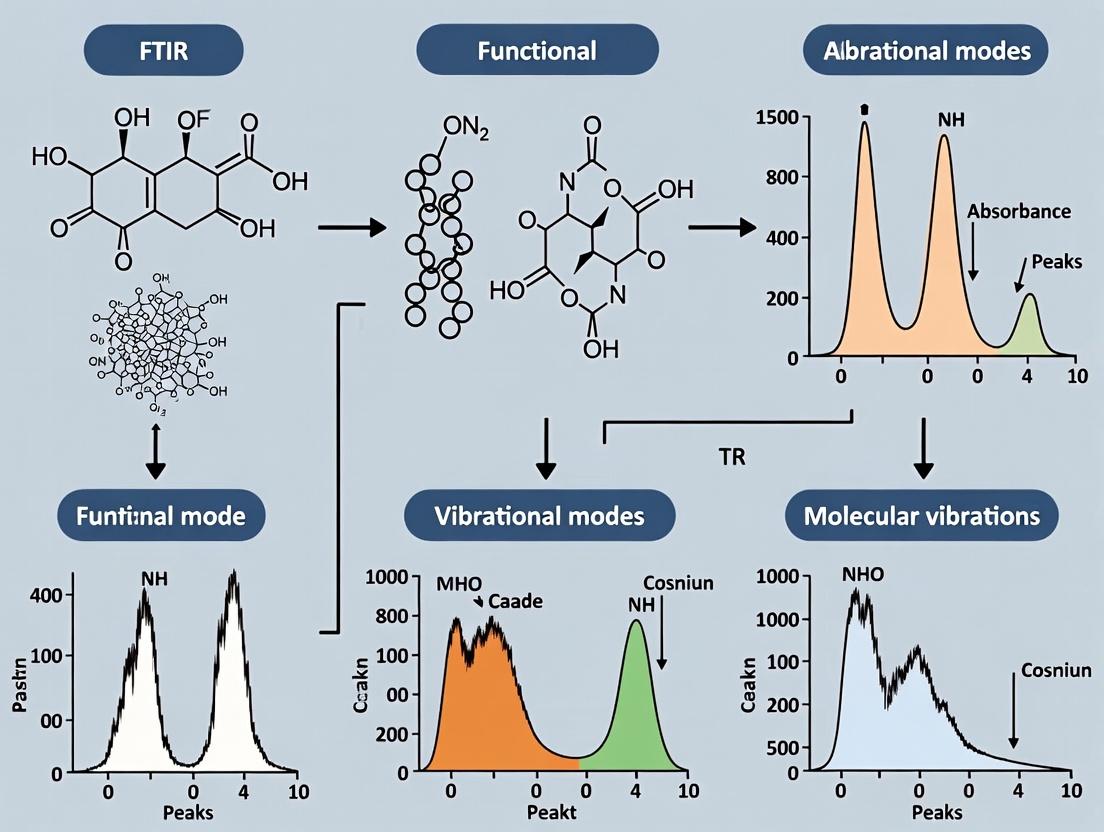
This article provides a detailed, step-by-step protocol for Fourier-transform infrared (FTIR) spectroscopy analysis of polymers, tailored for researchers and scientists in drug development.
A Comprehensive FTIR Spectroscopy Protocol for Polymer Analysis in Drug Development and Biomedical Research
Abstract
This article provides a detailed, step-by-step protocol for Fourier-transform infrared (FTIR) spectroscopy analysis of polymers, tailored for researchers and scientists in drug development. It covers the foundational principles of FTIR-polymer interactions, a comprehensive methodological workflow for sample preparation and data acquisition, common troubleshooting and optimization strategies for challenging samples, and guidelines for data validation and comparative analysis with other techniques. The guide aims to empower professionals to obtain reliable, reproducible chemical characterization data critical for polymer-based drug delivery systems, biomaterials, and pharmaceutical formulations.
Understanding FTIR Fundamentals: How Polymers Interact with Infrared Light
Fourier-transform infrared (FTIR) spectroscopy is a cornerstone analytical technique for polymer analysis within material science and drug development. Its fundamental principle is the absorption of infrared radiation by chemical bonds within a sample, which occurs at specific frequencies corresponding to the energy of molecular vibrations. When infrared light matches the natural vibrational frequency of a bond (e.g., stretching, bending), energy is absorbed, resulting in a characteristic dip in the transmitted or reflected radiation. The plot of this absorption (or transmittance) versus wavenumber (cm⁻¹) constitutes the FTIR spectrum, a molecular "fingerprint."
The technique is exceptionally valuable for identifying functional groups, assessing polymer composition, monitoring degradation, studying crystallinity, and investigating surface modifications. This application note details protocols and methodologies for polymer analysis, framed within a comprehensive research thesis on developing standardized FTIR protocols for advanced polymeric materials.
Key Molecular Vibrations in Polymer Analysis
The vibrational modes of common polymer functional groups fall within predictable regions of the mid-infrared spectrum (4000–400 cm⁻¹). Quantitative data on these vibrations is essential for spectral interpretation.
Table 1: Characteristic FTIR Absorption Bands for Common Polymer Functional Groups
| Wavenumber Range (cm⁻¹) | Vibration Mode | Functional Group / Bond | Example Polymer | Relative Band Intensity |
|---|---|---|---|---|
| 3700 – 3200 | O-H Stretch | Hydroxyl | Poly(vinyl alcohol) | Strong, Broad |
| 3500 – 3300 | N-H Stretch | Amine, Amide | Nylon 6,6 | Medium, Sharp |
| 3100 – 3000 | =C-H Stretch | Aromatic, Alkene | Polystyrene | Medium |
| 3000 – 2850 | C-H Stretch | Alkyl (CH₃, CH₂) | Polyethylene | Strong |
| 1750 – 1700 | C=O Stretch | Carbonyl (Ester, Ketone) | Poly(methyl methacrylate) | Very Strong |
| 1670 – 1640 | C=C Stretch | Alkene | Polybutadiene | Variable |
| 1650 – 1620 | Amide I (C=O) | Secondary Amide | Proteins, Nylons | Very Strong |
| 1600, 1500 | C=C Stretch | Aromatic Ring | Poly(ether ether ketone) | Variable |
| 1550 – 1510 | Amide II (N-H) | Secondary Amide | Proteins, Nylons | Strong |
| 1300 – 1000 | C-O-C Stretch | Ether, Ester | Poly(ethylene oxide) | Strong |
| 1250 – 1150 | C-F Stretch | Fluoroalkyl | Polytetrafluoroethylene | Very Strong |
| ~720 | CH₂ Rock | Methylene Chain (>4 CH₂) | Polyethylene | Medium |
Experimental Protocols for Polymer Analysis
Protocol: Sample Preparation for Transmission FTIR
Objective: To prepare a thin, uniform polymer film for transmission analysis. Materials: Polymer sample, infrared-transparent windows (KBr, NaCl, or ZnSe), hydraulic press, heat gun or hot plate, solvent (if applicable). Methodology:
- Solid Films: a. For thermoplastic polymers, place a small amount of material between two infrared windows. b. Use a heat gun to gently soften the polymer, then apply light pressure to create a thin, translucent film. Avoid overheating. c. Allow to cool and clamp the windows in a holder.
- Cast Films (from solution): a. Dissolve 1-5% (w/v) polymer in a volatile, spectroscopically pure solvent (e.g., CHCl₃, THF). b. Pipette a few drops onto a clean IR window. c. Allow the solvent to evaporate completely in a fume hood, forming a uniform film.
- KBr Pellet (for powders): a. Grind 1-2 mg of dried polymer with 100-200 mg of anhydrous KBr powder in an agate mortar. b. Transfer the mixture to a pellet die and compress under vacuum at ~10 tons for 1-2 minutes. c. Mount the resulting transparent pellet in the spectrometer holder.
Protocol: Attenuated Total Reflectance (ATR)-FTIR Analysis
Objective: To obtain spectra directly from solid or liquid polymer samples with minimal preparation. Materials: FTIR spectrometer with ATR accessory (diamond, ZnSe, or Ge crystal), polymer sample, clamp, lint-free wipes, isopropanol. Methodology:
- System Setup: Ensure the ATR crystal is clean. Perform a background scan with no sample contacting the crystal.
- Sample Loading: Place a flat section of the solid polymer sample directly onto the ATR crystal. For powders or liquids, ensure complete coverage of the crystal surface.
- Clamping: Apply consistent, firm pressure using the integrated clamp to ensure intimate contact between the sample and the crystal. Note: Excessive pressure can damage the crystal.
- Data Acquisition: Acquire the sample spectrum (typically 16-64 scans at 4 cm⁻¹ resolution).
- Post-Run: Clean the crystal thoroughly with isopropanol and lint-free wipes.
Protocol: Quantitative Analysis of Polymer Blend Composition
Objective: To determine the weight percent of component A in a polymer blend A/B using a calibration curve. Materials: Pure polymers A and B, FTIR spectrometer, analytical balance, hot press or solvent casting equipment. Methodology:
- Calibration Standards: Prepare a series of standard films with known compositions of A and B (e.g., 0%, 20%, 40%, 60%, 80%, 100% A by weight). Ensure uniform thickness (~20-100 µm).
- Spectra Acquisition: Acquire FTIR spectra for all standards using a consistent mode (Transmission or ATR).
- Peak Selection: Identify a unique, non-overlapping absorption band for polymer A (e.g., C=O stretch at 1730 cm⁻¹) and an internal reference band for polymer B or a thickness-independent band (e.g., C-H stretch near 2900 cm⁻¹).
- Data Processing: Calculate the absorbance ratio (Apeak / Areference) for each standard.
- Calibration Curve: Plot the absorbance ratio against the known weight fraction of A. Perform linear regression.
- Unknown Analysis: Prepare and analyze the unknown blend film. Calculate the absorbance ratio and use the calibration equation to determine its composition.
The Scientist's Toolkit: Research Reagent Solutions
Table 2: Essential Materials for FTIR Polymer Analysis
| Item / Reagent | Function / Application |
|---|---|
| Infrared Windows (KBr, ZnSe) | Transparent substrates for preparing transmission samples. KBr is hygroscopic; ZnSe is durable for ATR. |
| Hydraulic Pellet Press | Equipment to create KBr pellets from powdered polymer samples for transmission analysis. |
| ATR Accessory (Diamond Crystal) | Enables direct surface analysis of solids, liquids, and gels with minimal sample prep. |
| Spectroscopic Grade Solvents | High-purity solvents (e.g., CHCl₃, THF) for cleaning crystals and preparing cast films. |
| Polymer Film Thickness Gauge | Measures film thickness (µm) for quantitative transmission work requiring the Beer-Lambert law. |
| Background Reference Material | High-purity material (e.g., clean ATR crystal, empty chamber) used to collect a reference spectrum for ratioing. |
Visualizations
FTIR Instrumentation and Data Processing Workflow
Mechanism of IR Absorption by Molecular Vibration
Standard FTIR Polymer Analysis Protocol Decision Tree
Why FTIR is Indispensable for Polymer Characterization
Within a broader thesis on Fourier-transform infrared spectroscopy (FTIR) polymer analysis protocol research, this document establishes the foundational and indispensable role of FTIR. Its unparalleled ability to provide rapid, non-destructive chemical fingerprinting makes it the first-line analytical tool for polymer scientists, researchers, and drug development professionals. These Application Notes detail critical protocols for qualitative and quantitative analysis, emphasizing standardized methodologies for reproducible research.
Application Note 1: Polymer Identification and Degradation Analysis
Objective: To identify an unknown polymer film and assess its thermal oxidative degradation. Protocol:
- Sample Preparation: Cut a ~1 cm² section of the unknown film. For the degradation study, age a separate film section in a forced-air oven at 120°C for 24 hours.
- Instrument Setup: Use an FTIR spectrometer with a DTGS detector. Acquire a background spectrum with an empty beam path at 4 cm⁻¹ resolution, averaging 32 scans.
- Data Acquisition: Mount the untreated film in the transmission sample holder. Collect the spectrum from 4000 to 400 cm⁻¹ at 4 cm⁻¹ resolution (64 scans). Repeat for the thermally aged sample.
- Data Analysis: Compare the spectrum of the untreated film to a digital library (e.g., Hummel Polymer Library). For degradation, overlay spectra and difference spectroscopy (aged minus unaged). Monitor specific oxidation peaks.
Key Spectral Assignments for Common Polymers:
| Wavenumber (cm⁻¹) | Assignment | Polymer Example |
|---|---|---|
| ~2910, ~2840 | C-H Stretch (CH₂) | Polyethylene, Polypropylene |
| ~1730 | C=O Stretch (Ester) | Poly(methyl methacrylate) |
| ~1710 | C=O Stretch (Acid) | Oxidized Polyethylene |
| ~1600, ~1500 | C=C Aromatic Ring | Polystyrene |
| ~1240, ~1150 | C-O-C Stretch (Ether) | Poly(ethylene terephthalate) |
| ~1100 | C-F Stretch | Polytetrafluoroethylene |
Quantitative Degradation Metrics:
| Degradation Index | Calculation (Peak Height Ratio) | Indication |
|---|---|---|
| Carbonyl Index (CI) | Area(1710 cm⁻¹) / Area(Reference Peak) | Oxidation level |
| Hydroxyl Index (HI) | Area(3400 cm⁻¹) / Area(Reference Peak) | Hydroperoxide formation |
FTIR Polymer Analysis Workflow
Application Note 2: Quantification of Copolymer Composition
Objective: To determine the weight percentage of methyl methacrylate (MMA) in a copolymer with butyl acrylate (BA) using a calibrated calibration curve. Protocol:
- Calibration Set Preparation: Prepare a series of 5 standard polymer blends with known MMA/BA compositions (e.g., 0%, 25%, 50%, 75%, 100% MMA) by solvent casting from toluene.
- Spectra Acquisition: Using ATR-FTIR, collect spectra for each standard. Ensure consistent pressure on the ATR crystal.
- Peak Selection & Baseline: Identify a unique peak for MMA (e.g., C=O stretch at ~1730 cm⁻¹) and a reference peak for total polymer (e.g., C-H stretch area from 3000-2840 cm⁻¹). Apply a linear baseline between defined points for each peak.
- Calibration Curve: Calculate the area ratio (MMA Peak / Reference Peak) for each standard. Plot this ratio against the known MMA weight percentage. Perform linear regression.
- Analysis of Unknown: Acquire the spectrum of the unknown copolymer under identical conditions. Calculate its peak area ratio and use the calibration equation to determine its MMA content.
Example Calibration Data:
| Standard Blend | % MMA (w/w) | Area Ratio (1730 cm⁻¹ / CH) |
|---|---|---|
| 1 | 0 | 0.05 |
| 2 | 25 | 0.32 |
| 3 | 50 | 0.61 |
| 4 | 75 | 0.89 |
| 5 | 100 | 1.18 |
Regression Result: y = 0.0113x + 0.007; R² = 0.999
The Scientist's Toolkit: Essential Research Reagents & Materials
| Item | Function & Critical Note |
|---|---|
| FTIR Spectrometer | Core instrument with DTGS or MCT detector for mid-IR measurement. |
| ATR Accessory (Diamond/ZnSe) | Enables direct, non-destructive analysis of solids, liquids, and gels without extensive prep. |
| Potassium Bromide (KBr), Spectroscopy Grade | For preparing transparent pellets for transmission analysis of powder samples. |
| Hydraulic Pellet Press | Used to create uniform KBr pellets under high pressure. |
| Solvent Blotting Tissue (Lint-Free) | For cleaning the ATR crystal with suitable solvents (e.g., IPA, acetone) between samples. |
| Hummel Polymer FTIR Spectral Library | Digital database for rapid polymer identification by spectral matching. |
| Background Reference Material | A non-absorbing standard (e.g., blank KBr pellet, clean air) for background subtraction. |
FTIR Quantitative Calibration Protocol
Within the broader thesis on Fourier-transform infrared (FTIR) spectroscopy polymer analysis protocol research, this document establishes fundamental application notes. Identifying functional groups via characteristic infrared absorptions is the cornerstone of polymer characterization, informing material selection, degradation studies, and drug delivery system development.
Core Spectral Regions and Assignments
The following table summarizes the primary mid-infrared regions critical for polymer analysis, with wavenumber ranges and key functional group assignments.
Table 1: Key FTIR Spectral Regions for Common Polymer Functional Groups
| Wavenumber Range (cm⁻¹) | Intensity & Band Shape | Functional Group / Vibration Mode | Representative Polymer Examples |
|---|---|---|---|
| 3700 – 3200 | Broad, strong | O-H stretch (Hydroxyl) | Poly(vinyl alcohol), Cellulose |
| 3400 – 3250 | Medium, sharp | N-H stretch (Primary amine) | Polyamides (Nylon) |
| 3100 – 3000 | Medium | =C-H stretch (Aromatic) | Polystyrene |
| 3000 – 2850 | Strong | C-H stretch (Aliphatic) | Polyethylene, Polypropylene |
| 2250 – 2220 | Sharp, variable | C≡N stretch (Nitrile) | Polyacrylonitrile |
| 1750 – 1730 | Strong, sharp | C=O stretch (Ester) | Poly(methyl methacrylate) |
| 1715 – 1690 | Strong, sharp | C=O stretch (Amide, Carbonyl) | Polyamides, Polycarbonate |
| 1670 – 1640 | Medium | C=C stretch (Alkene) | Polybutadiene |
| 1600 – 1450 | Variable | C=C skeletal (Aromatic ring) | Polystyrene, Polyimide |
| 1300 – 1000 | Strong, broad | C-O-C stretch (Ether, Ester) | Poly(ethylene terephthalate) |
| 1250 – 1150 | Strong, broad | C-F stretch | Polytetrafluoroethylene (PTFE) |
| 750 – 700 | Strong, sharp | C-H out-of-plane (Aromatic monosubstitution) | Polystyrene |
Experimental Protocol: Standard FTIR Analysis of an Unknown Polymer Film
This protocol is designed for transmission FTIR analysis, a core method within the thesis framework.
Objective: To identify the primary functional groups present in an unknown polymer film sample.
Materials & Reagent Solutions:
- FTIR Spectrometer: Fourier-transform infrared spectrometer with DTGS or MCT detector.
- Sample Preparation Tools: Infrared-transparent windows (e.g., KBr, NaCl), pellet die, hydraulic press.
- Cleaning Reagents: HPLC-grade acetone, methanol, and lint-free wipes.
- Background Reference: The same crystal or empty sample chamber for background collection.
- Software: Instrument control and spectral analysis software (e.g., OMNIC, OPUS).
Procedure:
Instrument Preparation:
- Power on the spectrometer and allow it to stabilize for at least 30 minutes.
- Purge the optical compartment with dry, CO₂-scrubbed air or nitrogen for a minimum of 10 minutes to reduce atmospheric water vapor and CO₂ interference.
Background Acquisition:
- Place a clean, empty sample holder in the beam path.
- Collect a background interferogram with the following parameters: 32 scans, 4 cm⁻¹ resolution, across the range 4000-400 cm⁻¹.
- Save this background file.
Sample Preparation (Film Method):
- Clean the infrared-transparent windows (e.g., KBr) with solvent and lint-free wipes.
- If the sample is a solid film, carefully place it between two windows. For a free-standing film, mount it directly in the sample holder.
- If the sample is a powder, mix 1-2 mg with approximately 200 mg of dry KBr powder. Grind thoroughly in a mortar and pestle, then press into a transparent pellet using a hydraulic press (10-15 tons for 1-2 minutes).
Sample Data Acquisition:
- Place the prepared sample into the spectrometer.
- Using the same parameters as the background, collect the sample interferogram.
- The software will automatically convert this to a transmittance or absorbance spectrum using the stored background.
Spectral Analysis:
- Examine the spectrum for the major absorption bands.
- Compare the positions (cm⁻¹), shapes, and relative intensities of these bands to reference tables (like Table 1) and spectral libraries.
- Identify the dominant functional groups and correlate them with known polymer types.
Post-Analysis:
- Clean all windows and tools thoroughly with appropriate solvents.
- Properly log and store the sample and spectral data.
Visualizing the FTIR Polymer Analysis Workflow
Diagram Title: FTIR Polymer Analysis Protocol Workflow
The Scientist's Toolkit: Essential Materials for FTIR Polymer Analysis
Table 2: Key Research Reagent Solutions and Materials
| Item | Function in Protocol |
|---|---|
| FTIR Spectrometer with DTGS Detector | Measures the infrared absorption across the mid-IR range; DTGS is a robust, room-temperature detector suitable for most polymer analyses. |
| Potassium Bromide (KBr), Optical Grade | Hygroscopic salt used to create transparent pellets for solid powder analysis, providing an IR-transparent matrix. |
| Hydraulic Pellet Press | Applies high pressure (10-15 tons) to KBr/sample mixtures to form solid, transparent pellets for transmission measurement. |
| Infrared-Transparent Windows (NaCl, KBr) | Used for mounting liquid samples or as support for thin films. Soluble in water; choice depends on sample compatibility. |
| HPLC-Grade Acetone & Methanol | High-purity solvents for cleaning optics, sample windows, and tools to prevent contamination of spectra. |
| Dry Air/ Nitrogen Purge System | Removes atmospheric water vapor and CO₂ from the optical path, eliminating their absorptions from the background. |
| Spectral Database/Library Software | Contains reference spectra of known polymers and compounds for comparative identification of unknown samples. |
1. Introduction & Context Within the framework of developing a robust, universal protocol for polymer analysis using Fourier-transform infrared (FTIR) spectroscopy, sample preparation remains a critical variable. The spectral quality and subsequent chemometric analysis are directly influenced by the physical form and preparation method of the polymer sample. This note details standardized protocols for preparing polymer samples in forms ranging from traditional bulk films to modern micro-sampling techniques, ensuring reproducible data for thesis research on pharmaceutical polymer characterization in drug delivery systems.
2. Key Sample Forms & Preparation Protocols
2.1. Bulk Film Preparation (Transmission FTIR)
- Objective: To create a homogeneous, thin polymer film for high-quality transmission FTIR spectroscopy.
- Protocol:
- Dissolve 50-100 mg of the polymer in 5-10 mL of a suitable volatile solvent (e.g., chloroform, tetrahydrofuran) in a glass vial.
- Pour the solution onto a clean, level sodium chloride (NaCl) or potassium bromide (KBr) window, or onto a polished metal plate for free-standing films.
- Allow the solvent to evaporate slowly under a fume hood, optionally covered with a lid to prevent dust contamination.
- For complete dryness, place the film in a vacuum desiccator for a minimum of 4 hours.
- Peel the free-standing film if necessary, or analyze directly on the IR-transparent window.
- Typical Film Thickness Target: 10-50 µm.
2.2. Microtoming of Solid Polymers (Transmission/ATR FTIR)
- Objective: To obtain a thin, uniform cross-section from a solid polymer pellet, compact, or manufactured device.
- Protocol:
- Mount the solid polymer sample securely in the chuck of a cryo-microtome.
- Cool the sample to below its glass transition temperature (typically using liquid nitrogen) to achieve brittle fracture and a clean cut.
- Set the microtome to a section thickness between 5 µm and 20 µm.
- Cut thin sections and carefully transfer them using fine-tip tweezers onto an IR-transparent window (for transmission) or directly onto the ATR crystal.
- Allow the section to warm to room temperature and dry, if necessary, before analysis.
2.3. Attenuated Total Reflectance (ATR) Sampling of Solids & Liquids
- Objective: To analyze samples with minimal preparation using the ATR technique.
- Protocol for Solids:
- Ensure the ATR crystal (e.g., diamond, ZnSe) is clean.
- Place a small, representative piece of the solid polymer directly onto the crystal.
- Lower the pressure clamp to ensure intimate, uniform contact between the sample and the crystal surface.
- Collect spectra.
- Protocol for Polymer Solutions/Gels:
- Deposit a small droplet (≈ 5-10 µL) of the solution or gel onto the ATR crystal.
- Lower the clamp to spread the sample. For volatile solvents, a sealed liquid cell accessory is recommended.
- Collect spectra in real-time to monitor solvent evaporation or chemical reactions.
2.4. Microscopy & Mapping (µ-FTIR)
- Objective: To obtain spatially resolved chemical information from heterogeneous samples or specific micro-features.
- Protocol:
- Prepare a thin section via microtomy (as in 2.2) or produce a smooth, flat surface using a focused ion beam (FIB) or ultramicrotomy for sub-micron resolution.
- Mount the sample on a standard microscope slide or low-e slide for reflection measurements.
- Place the sample under the FTIR microscope and locate the area of interest using the visual camera.
- Define an aperture (e.g., 50 µm x 50 µm) to isolate the region or set up a mapping grid.
- Collect spectra at each pixel position. Use a high-sensitivity mercury cadmium telluride (MCTS) detector.
3. Comparative Data Table
Table 1: Quantitative Comparison of FTIR Polymer Sampling Techniques
| Technique | Typical Sample Mass/Area Required | Approximate Spatial Resolution | Primary Application | Key Advantage | Key Limitation |
|---|---|---|---|---|---|
| Bulk Film (Transmission) | 1-10 mg | Bulk (>1 mm) | Homogeneous polymers, purity analysis | Excellent signal-to-noise, quantitative | Requires soluble/processable polymer |
| Microtomed Section | 0.1-1 mg | Bulk to ~20 µm | Solid compacts, multi-layer films, implants | Analyzes intrinsic solid-state structure | Risk of thermal/mechanical deformation |
| ATR-FTIR | 1-100 µL (liquid); <1 mg (solid) | ~1-3 µm depth penetration | Powders, gels, surfaces, aqueous solutions | Minimal preparation, rapid analysis | Depth dependence, potential crystal contact issues |
| µ-FTIR Mapping | Picograms to nanograms per pixel | 5-20 µm (global source); <1 µm (synchrotron) | Heterogeneous blends, layer interfaces, contaminants | Spatially resolved chemical information | Long acquisition times for large maps |
4. The Scientist's Toolkit: Research Reagent Solutions
Table 2: Essential Materials for FTIR Polymer Sample Preparation
| Item | Function in Protocol |
|---|---|
| IR-Transparent Windows (NaCl, KBr, BaF₂) | Substrate for preparing transmission films; hygroscopic (NaCl, KBr) or water-resistant (BaF₂). |
| Volatile HPLC-Grade Solvents (Chloroform, THF) | Dissolve polymers for casting homogeneous thin films. |
| Diamond/ZnSe ATR Crystal | Provides internal reflection element for surface-sensitive, minimal-prep ATR measurements. |
| Cryo-Microtome with Glass/Knife Blades | Sections solid polymer samples below Tg to provide thin, undeformed slices for analysis. |
| Low-E (Low Emissivity) Microscope Slides | Optimized substrate for reflection-mode FTIR microscopy, providing high reflectivity in IR. |
| High-Sensitivity MCT Detector | Essential for FTIR microscopy and mapping, detecting weak signals from micro-samples. |
| Vacuum Desiccator | Removes residual solvent and atmospheric water from prepared samples to avoid spectral interference. |
5. Visualized Protocols & Workflows
FTIR Polymer Sample Prep Decision Tree
Bulk Film Preparation Workflow
Microtoming Protocol for Solid Samples
1. Introduction and Thesis Context This document details the essential components, accessories, and protocols for establishing a laboratory setup for Fourier-transform infrared (FTIR) spectroscopy, specifically contextualized within a broader thesis research program focused on polymer analysis. The accurate characterization of polymer composition, degradation, additive content, and surface modification is fundamental to materials science and drug development (e.g., in polymer-based drug delivery systems). A robust and well-configured FTIR system is critical for generating reproducible, high-quality data for such research.
2. Core FTIR Spectrometer Components The basic optical layout of an FTIR spectrometer follows the Michelson interferometer principle. The key components are summarized in Table 1.
Table 1: Core Components of an FTIR Spectrometer
| Component | Primary Function | Typical Materials/Examples |
|---|---|---|
| Infrared Source | Emits broad-band IR radiation. | Silicon carbide (Globar), ceramic, tungsten filament. |
| Interferometer | Generates an interferogram by splitting and recombining light. | Michelson design with a beamsplitter and moving mirror. |
| Beamsplitter | Splits the incoming IR beam into two paths. | Coated KBr for mid-IR, Germanium on KBr for far-IR. |
| Sample Compartment | Holds the sample in the path of the IR beam. | Includes mounts for various accessories (ATR, transmission cells). |
| Detector | Converts the modulated IR signal into an electrical signal. | DTGS (Deuterated Triglycine Sulfate) for routine use, MCT (Mercury Cadmium Telluride) for high sensitivity/speed. |
| Laser (He-Ne) | Provides a precise wavelength reference to monitor mirror position and trigger data sampling. | 632.8 nm Helium-Neon laser. |
Diagram Title: FTIR Optical Path and Signal Processing Workflow
3. Essential Accessories for Polymer Analysis The choice of accessory is dictated by the polymer sample's physical state and the required information. Key accessories are detailed in Table 2.
Table 2: Essential FTIR Accessories for Polymer Analysis
| Accessory | Best For Sample Type | Key Advantage | Typical Setup Parameters |
|---|---|---|---|
| Attenuated Total Reflectance (ATR) | Solids, gels, liquids, powders. Minimal preparation. | Non-destructive, surface-sensitive (~0.5-2 µm depth), rapid. | Diamond crystal, 45° incidence angle, 4 cm⁻¹ resolution, 64 scans. |
| Transmission Cell | Soluble polymers (films cast from solution), thin films. | Quantitative analysis, library matching. | KBr windows, 0.1-1.0 mm pathlength, use matched solvent reference. |
| Specular Reflectance | Smooth, reflective surfaces (e.g., polymer coatings on metal). | Measures thin coatings without removal. | Angle of incidence 30°-80°, p-polarized light. |
| Diffuse Reflectance (DRIFTS) | Powders, granules, rough surfaces. | Minimal sample prep for powders. | Sample diluted in KBr (~5% w/w), Kubelka-Munk transformation applied. |
| Heated/Cooled Stage | Temperature-dependent studies (curing, melting, phase transitions). | Monitors chemical changes in situ with temperature. | Range: -150°C to 600°C, heating rate 5-20°C/min under N₂ purge. |
4. The Scientist's Toolkit: Research Reagent Solutions Table 3: Essential Materials for FTIR Polymer Analysis
| Item | Function |
|---|---|
| ATR Cleaning Kit | Isopropanol, lint-free wipes, and mild detergent for cleaning crystal to prevent cross-contamination. |
| Background Reference Material | High-purity, dry air (or N₂) for purging, or a clean ATR crystal for background scan. |
| Potassium Bromide (KBr) | IR-transparent matrix for making transmission pellets from powders or as dilution medium for DRIFTS. |
| Solvent Suite | HPLC-grade solvents (CHCl₃, THF, acetone) for cleaning and preparing solution-cast films. Must be spectrally dry. |
| Polymer Film Standards | Thin films of known polymers (PS, PET, PE) for instrument performance validation and method calibration. |
| Purge Gas (Dry Air/N₂) | Reduces spectral interference from atmospheric CO₂ and H₂O vapor, critical for quantitative work. |
| Pressure Applicator | For ATR, ensures consistent, reproducible contact between sample and crystal. |
5. Experimental Protocols
Protocol 5.1: Routine ATR-FTIR Analysis of a Polymer Pellet Objective: To obtain the infrared spectrum of a solid polymer sample (e.g., pellet, molded piece) for identification or quality control.
- System Setup: Power on spectrometer and computer. Allow source and electronics to stabilize for 30 minutes.
- Purge: Initiate the internal or external purge system with dry nitrogen for at least 10 minutes to minimize H₂O/CO₂ bands.
- Background Acquisition: Clean the ATR crystal (diamond or ZnSe) thoroughly with isopropanol and lint-free wipes. Ensure it is completely dry. Acquire a background spectrum with the same parameters to be used for the sample (e.g., 4 cm⁻¹ resolution, 64 scans, 4000-600 cm⁻¹ range).
- Sample Preparation: Wipe the polymer sample with a clean, dry tissue to remove any surface contaminants. If necessary, use a clean microtome blade to expose a fresh surface.
- Data Acquisition: Place the sample firmly onto the ATR crystal. Engage the pressure clamp to ensure uniform, adequate contact. Acquire the sample spectrum using the exact parameters from Step 3.
- Post-processing: Apply atmospheric suppression (if available) and baseline correction algorithms (e.g., concave rubber band, polynomial fit) to the absorbance spectrum.
Protocol 5.2: In-Situ FTIR Monitoring of Polymer Curing Objective: To monitor the chemical changes (e.g., decrease in epoxy ring vibration at ~915 cm⁻¹) during thermal curing of a thermoset resin.
- Accessory Setup: Install a temperature-controlled heated stage in the sample compartment. Connect coolant and temperature controller.
- Baseline Calibration: Perform a temperature calibration of the stage. Acquire a background spectrum with an empty stage at the starting temperature (e.g., 30°C).
- Sample Loading: Apply a small, uniform droplet of the uncured resin mixture directly onto the ATR crystal. For volatile systems, a sealed liquid cell may be required.
- Method Programming: Create a kinetics method. Set the temperature ramp (e.g., hold at 30°C for 1 min, then heat to 150°C at 10°C/min, then hold). Define spectral acquisition parameters (8 cm⁻¹, 16 scans per spectrum) and a short time interval between spectra (e.g., 15-30 seconds).
- Execution: Start the method. The system will automatically collect spectra at the defined intervals while ramping the temperature.
- Data Analysis: Plot the absorbance of a key functional group peak (e.g., 915 cm⁻¹ for epoxy) versus time. Calculate the degree of conversion (α) as α(t) = 1 - (Aₜ/A₀), where A₀ and Aₜ are absorbances at time zero and time t.
Diagram Title: Workflow for In-Situ FTIR Polymer Curing Analysis
Step-by-Step FTIR Protocol: From Sample Prep to Data Acquisition for Polymers
This document provides a detailed protocol for Fourier-transform infrared (FTIR) spectroscopy analysis of polymers, framed within a broader thesis research context aimed at standardizing and optimizing polymer characterization workflows. The protocol is designed for reproducibility and is critical for material identification, degradation studies, additive quantification, and quality control in research and pharmaceutical development.
The core FTIR polymer analysis workflow is a logical sequence of sample preparation, instrumental analysis, and data interpretation steps. The following flowchart, generated using DOT language, visualizes this process.
Diagram Title: FTIR Polymer Analysis Core Workflow
Detailed Experimental Protocols
Protocol: Sample Preparation for ATR-FTIR
Objective: To prepare a polymer sample for analysis using Attenuated Total Reflectance (ATR) accessory.
- Cleaning: Clean the ATR crystal (diamond, ZnSe, or Ge) with isopropanol-moistened lint-free tissue. Allow to dry.
- Background: Place the cleaned accessory in the sample chamber and acquire a background spectrum (see Protocol 3.3).
- Solid Samples: For films or granules, ensure a flat surface. Place the sample directly onto the crystal.
- Pressure: Engage the pressure clamp to ensure firm, uniform contact between the sample and crystal. Avoid overtightening.
- Liquid/Paste Samples: For viscous liquids or pastes, apply a small droplet directly onto the crystal.
Protocol: Sample Preparation for Transmission FTIR
Objective: To prepare a thin film suitable for transmission FTIR measurement.
- Solution Casting: Dissolve 1-5 wt% polymer in a volatile, spectroscopically appropriate solvent (e.g., CHCl₃, THF).
- Film Formation: Deposit several drops of the solution onto a polished KBr or NaCl window.
- Drying: Allow the solvent to evaporate completely under a fume hood, forming a uniform thin film (~10-100 µm thickness). Gentle heating may be applied for slow-evaporating solvents.
- Mounting: Place the dried film-on-window into a suitable holder in the spectrometer sample chamber.
Protocol: Spectral Acquisition
Objective: To acquire high-quality FTIR spectra with optimal signal-to-noise ratio.
- Instrument Setup:
- Resolution: Set to 4 cm⁻¹ (standard) or 2 cm⁻¹ for sharper features.
- Spectral Range: 4000 - 400 cm⁻¹.
- Scans: 32 scans per spectrum (background and sample).
- Background Acquisition: With an empty ATR crystal or a clean blank window in place, acquire and store the background spectrum.
- Sample Acquisition: Place the prepared sample and initiate acquisition. The instrument ratioes the single-beam sample spectrum against the background.
- Replication: Acquire a minimum of three spectra from different sample spots or replicates.
Protocol: Spectral Post-Processing
Objective: To correct and prepare spectra for qualitative and quantitative analysis.
- Atmospheric Correction: Apply automatic subtraction of H₂O and CO₂ vapor bands if needed.
- ATR Correction: Apply an ATR correction algorithm (based on crystal material and incidence angle) to compensate for wavelength-dependent penetration depth.
- Baseline Correction: Apply a linear or polynomial function to correct for scattering effects and bring baseline to zero absorbance.
- Normalization: For comparative analysis, normalize spectra to a key internal band (e.g., C-H stretch at ~2900 cm⁻¹) to a value of 1 absorbance unit.
Data Presentation and Analysis
Table 1: Key FTIR Absorption Bands for Common Polymer Functional Groups
| Wavenumber Range (cm⁻¹) | Band Intensity | Functional Group / Vibration | Example Polymer |
|---|---|---|---|
| 3300-3500 | Medium, Broad | O-H Stretch | Poly(vinyl alcohol) |
| 3080-3020 | Medium | =C-H Stretch (Aromatic) | Polystyrene |
| 2950-2850 | Strong | C-H Stretch (Aliphatic) | Polyethylene, Polypropylene |
| 1730-1700 | Very Strong | C=O Stretch (Ester) | Poly(methyl methacrylate) |
| 1640-1620 | Variable | C=C Stretch (Vinyl) | Unsaturated Polyesters |
| 1600-1585 | Variable | C=C Stretch (Aromatic Ring) | Poly(ethylene terephthalate) |
| 1220-1150 | Strong | C-O-C Stretch (Ether, Ester) | Polycarbonate |
| 1100-1000 | Strong | Si-O-Si Stretch | Polydimethylsiloxane (PDMS) |
Table 2: Typical FTIR Operational Parameters for Polymer Analysis
| Parameter | Standard Value | Optimized Range | Impact on Data Quality |
|---|---|---|---|
| Spectral Resolution | 4 cm⁻¹ | 2 - 8 cm⁻¹ | Higher resolution reveals sharper bands but increases scan time. |
| Number of Scans | 32 | 16 - 64 | More scans improve signal-to-noise ratio (S/N). |
| Apodization Function | Happ-Genzel | Norton-Beer (Medium) | Reduces spectral artifacts from truncation of the interferogram. |
| Detector Type | DTGS (Standard) | MCT (Cooled) | MCT offers higher sensitivity and speed but requires cooling. |
The Scientist's Toolkit: Key Research Reagent Solutions
| Item | Function / Explanation |
|---|---|
| ATR Crystals (Diamond, ZnSe, Ge) | Provides internal reflection element. Diamond is hard and chemical-resistant; ZnSe offers a good balance; Ge has a high refractive index for hard polymers. |
| KBr or NaCl Windows | Hygroscopic, IR-transparent salts used to prepare thin films for transmission measurements. |
| Spectroscopic Grade Solvents (CHCl₃, THF, Acetone) | High-purity solvents for cleaning crystals and preparing polymer solutions for casting. |
| Polymer Reference Standards | Certified materials (e.g., from NIST) for instrument calibration and method validation. |
| Liquid Nitrogen (for MCT Detectors) | Required to cool Mercury Cadmium Telluride (MCT) detectors to cryogenic temperatures for operation. |
| Background Reference Materials | A pristine, non-absorbing material (e.g., a gold-coated mirror for reflection) for specific background measurements. |
| ATR Pressure Clamp Calibration Weights | Ensures consistent and reproducible pressure application across samples, critical for quantitative ATR. |
Spectral Interpretation Logic Flowchart
The process of interpreting an FTIR spectrum follows a systematic decision tree, as illustrated below.
Diagram Title: FTIR Polymer Identification Decision Tree
Within a comprehensive Fourier-transform infrared (FTIR) spectroscopy protocol for polymer analysis, sample preparation is the critical step that dictates data quality and interpretability. The choice between transmission techniques (casting films, KBr pellets) and reflectance methods (ATR mounting) depends on the polymer's physical state, solubility, hardness, and the required information depth. This application note provides detailed protocols and comparative data to guide researchers and drug development professionals in selecting and executing the optimal preparation method.
Table 1: Quantitative Comparison of FTIR Sample Preparation Methods
| Parameter | Casting Films | KBr Pellets | ATR Mounting |
|---|---|---|---|
| Primary Principle | Transmission through a thin, solvent-cast polymer layer | Transmission through a dispersed, diluted matrix of powdered sample in KBr | Attenuated Total Reflectance at the interface between an IR crystal and the sample |
| Optimal Sample Thickness | 5-20 µm | 0.5-1.0 mg sample per 100-200 mg KBr (pellet ~1 mm thick) | Direct contact; penetration depth ~0.5-5 µm |
| Typical Sample Mass Required | 1-10 mg (dissolved) | ~1 mg | >10 mg (bulk solid) or few µL (liquid) |
| Key Advantage | Excellent for soluble polymers; minimal scattering | Eliminates scattering for powders; good for small amounts | Minimal preparation; non-destructive; handles solids, liquids, gels |
| Key Limitation | Solvent interference; not for insoluble polymers | Hygroscopic; prone to moisture bands; pressure-sensitive samples | Depth dependence; contact/pressure sensitive; crystal-dependent spectra |
| Best For | Homogeneous, soluble polymers (e.g., PS, PMMA) | Hard, brittle polymers; powders; small samples | Soft, elastomeric, or hard coatings (e.g., PDMS, polyurethanes); aqueous samples |
Detailed Experimental Protocols
Protocol 1: Casting Polymer Films for Transmission FTIR
Objective: To prepare a thin, uniform, solvent-free polymer film for high-quality transmission FTIR analysis.
Materials & Reagents:
- Polymer sample (5-20 mg)
- Appropriate volatile solvent (e.g., CHCl₃, THF, acetone)
- Infrared-transparent window (e.g., NaCl, KBr, or ZnSe) or PTFE-coated substrate
- Glass vial, micropipettes
- Level hot plate / oven, vacuum desiccator
Procedure:
- Solution Preparation: Weigh the polymer sample and dissolve it in the minimum volume of solvent (0.5-2 mL) to create a viscous but pourable solution (~1-5% w/v). Ensure complete dissolution.
- Substrate Cleaning: Thoroughly clean the IR window or substrate with solvent and dry in a lint-free environment.
- Casting: Pipette the polymer solution onto the center of the substrate. Spread evenly by tilting or using a casting knife.
- Solvent Evaporation: Place the cast film on a level surface in a fume hood for initial slow evaporation. Transfer to a level hot plate (at a temperature below polymer Tg/boiling point of solvent) or oven to drive off residual solvent.
- Drying: Place the dried film in a vacuum desiccator for >24 hours to remove all traces of solvent. Critical: Run a background scan of the clean substrate and a spectrum of the pure solvent to confirm absence of solvent interference bands.
- Mounting: Mount the free-standing film or film-on-substrate in the transmission holder.
Protocol 2: Preparing KBr Pellets for Transmission FTIR
Objective: To homogenously disperse a fine powder of polymer within a KBr matrix to produce a transparent pellet for transmission measurement.
Materials & Reagents:
- Polymer sample (0.5-1.0 mg)
- FTIR-grade Potassium Bromide (KBr), dried at 110°C for >2 hrs
- Agate mortar and pestle
- Pellet die set (e.g., 13 mm) and hydraulic press
- Vacuum pump (optional but recommended)
Procedure:
- Powder Preparation: Grind 100-200 mg of dried KBr in the agate mortar to a very fine, uniform powder. Add 0.5-1.0 mg of the finely divided polymer sample. Critical: Grind the mixture gently but thoroughly for 1-2 minutes to ensure a homogeneous, fine dispersion without introducing moisture.
- Die Loading: Assemble the die. Transfer the mixture evenly into the die bore.
- Pelleting: Place the die under a hydraulic press. Apply a pressure of 8-10 tons (for a 13 mm die) for 1-2 minutes. Note: For pressure-sensitive polymers, reduce pressure and time.
- Vacuum (Optional): If available, apply vacuum to the die during pressing to remove air and reduce scattering.
- Pellet Recovery: Carefully disassemble the die and recover the clear pellet. Handle with gloves to avoid fingerprints and moisture.
- Immediate Analysis: Mount the pellet in the holder and acquire spectra immediately to minimize absorption of atmospheric water (KBr is highly hygroscopic).
Protocol 3: Mounting Samples for ATR-FTIR
Objective: To obtain a spectrum from a polymer sample via intimate contact with an ATR crystal, with minimal preparation.
Materials & Reagents:
- Polymer sample (solid, liquid, or gel)
- ATR accessory (with ZnSe, Diamond, or Ge crystal)
- Pressure applicator / clamp
- Solvents for cleaning (e.g., ethanol, acetone)
- Lint-free wipes
Procedure:
- Crystal Inspection & Cleaning: Wipe the ATR crystal thoroughly with a lint-free tissue moistened with appropriate solvent. Allow to dry. Acquire a fresh background spectrum.
- Sample Placement: For solids, place the sample directly on the crystal. For elastomers/polymers, ensure a flat, clean surface contacts the crystal. For liquids/gels/pastes, apply a droplet sufficient to cover the crystal surface.
- Application of Pressure: Lower the pressure clamp to ensure uniform, intimate contact between the sample and the crystal. Critical: Apply consistent, firm pressure—excessive force can damage the crystal or deform spectra for soft polymers.
- Data Acquisition: Collect the spectrum. The effective path length is determined by the crystal material, wavelength, and contact quality. No thickness measurement is required.
- Post-Measurement Cleaning: Clean the crystal meticulously with solvents after each sample to prevent cross-contamination.
Visualization of Method Selection Logic
Title: FTIR Polymer Sample Prep Decision Tree
The Scientist's Toolkit: Key Research Reagent Solutions
Table 2: Essential Materials for FTIR Polymer Sample Preparation
| Item | Primary Function | Key Consideration for Polymer Analysis |
|---|---|---|
| FTIR-grade KBr | Hydroscopic matrix material for pellet preparation; transparent in mid-IR. | Must be dried (~110°C) and kept in desiccator to avoid strong water bands in spectra. |
| Infrared Windows (NaCl, KBr, ZnSe) | Substrates for transmission measurements of cast films or liquids. | NaCl is cheap but water-soluble; KBr is softer; ZnSe is durable but expensive. Choose based on sample properties. |
| ATR Crystals (Diamond, ZnSe, Ge) | High-refractive-index material for internal reflectance. | Diamond: robust, universal. ZnSe: common, good for organics. Ge: high RI for hard materials/low penetration. |
| Hydraulic Pellet Press | Applies high pressure to form transparent KBr pellets. | Consistent pressure (8-10 tons) is key for reproducible pellet clarity and thickness. |
| Agate Mortar & Pestle | Grinds and mixes sample with KBr to a fine, homogeneous powder. | Agate minimizes spectral contamination; thorough grinding reduces light scattering. |
| Volatile Organic Solvents (HPLC/FTIR grade) | Dissolves polymers for film casting and cleans ATR crystals. | Must be spectroscopically pure and appropriate for the polymer. Residual solvent is a major artifact. |
| Vacuum Desiccator | Removes residual solvent from cast films and stores hygroscopic materials. | Essential for obtaining solvent-free film spectra and dry KBr. |
Instrument Calibration and Background Spectrum Best Practices
Within the rigorous framework of a broader thesis on polymer analysis using Fourier-transform infrared (FTIR) spectroscopy, the integrity of all subsequent data is fundamentally dependent on two pillars: meticulous instrument calibration and the acquisition of a pristine background spectrum. This document establishes detailed application notes and protocols to ensure spectral accuracy, reproducibility, and reliable qualitative and quantitative analysis, particularly for researchers in polymer science and drug development where material characterization is critical.
The Critical Role of Calibration and Background
Instrument calibration verifies the accuracy of the spectral wavelength/wavenumber axis and the photometric response (absorbance/transmittance). A background spectrum accounts for the instrumental and environmental signature—including contributions from the source, detector, beam splitter, atmospheric gases (CO₂, H₂O), and any contaminants in the optical path. Subtracting this background from the sample single-beam spectrum yields the characteristic sample spectrum.
Instrument Calibration: Protocols and Verification
Wavenumber/Accuracy Calibration
Protocol: Utilize a certified polystyrene film standard (typically 35-50 µm thick). The specific peaks and their accepted positions are used to calibrate the instrument's internal He-Ne laser fringe counting or to verify alignment.
Procedure:
- Place the polystyrene film in the sample holder.
- Acquire a spectrum at 4 cm⁻¹ resolution over the range 4000-400 cm⁻¹.
- Collect a minimum of 32 scans.
- Using the instrument software, compare the measured peak positions (e.g., 3027.1, 1601.4, 1028.0 cm⁻¹) against the NIST-certified values.
- Apply a calibration correction if the deviation exceeds the instrument specification (typically ±0.02 cm⁻¹ at 2000 cm⁻¹).
Photometric (Absorbance) Linearity Verification
Protocol: Use a calibrated neutral density filter or a series of certified polystyrene films of varying, known thicknesses.
Procedure:
- Acquire a background spectrum with an empty compartment.
- Measure the spectrum of the neutral density filter or the thinnest polystyrene film.
- Repeat with increasing thicknesses or known absorbance standards.
- Plot the measured peak absorbance (e.g., the 1601.4 cm⁻¹ peak in polystyrene) against the known absorbance or thickness. The relationship should be linear (R² > 0.999).
Table 1: Calibration Standards and Tolerances
| Standard | Primary Use | Key Peak(s) (cm⁻¹) | Acceptable Tolerance |
|---|---|---|---|
| Polystyrene Film | Wavenumber Accuracy | 3027.1, 1601.4, 1028.0 | ±0.05 cm⁻¹ |
| Neutral Density Filter | Photometric Linearity | Broadband | ±1% Absorbance |
| Water Vapor | Resolution Check | Rotational lines ~1550 cm⁻¹ | FWHM ≤ Specified Resolution |
| CO₂ Gas | Phase Correction | 2360, 2340 cm⁻¹ (doublet) | Sharp, symmetric peaks |
Background Spectrum Acquisition: Best Practices Protocol
The following protocol is essential for reliable polymer analysis.
Pre-Acquisition Conditions:
- Instrument Warm-up: Power on the FTIR spectrometer and allow it to stabilize for a minimum of 30 minutes. Lasers and detectors require thermal equilibrium.
- Purge System: Activate the optical purge (using dry, CO₂-scrubbed air or N₂) for at least 10-15 minutes to minimize spectral contributions from atmospheric water and CO₂. Maintain purge during operation.
- Clean Optics: Visually inspect and, if following lab protocol, clean the accessory (ATR crystal, transmission windows) with an appropriate solvent (e.g., methanol, followed by dry air) and lint-free wipes.
- Ambient Conditions: Record laboratory temperature and humidity.
Acquisition Protocol:
- Ensure the sample compartment is empty and clear.
- Set the desired experimental parameters (Resolution: 4 cm⁻¹, Scans: 64, Spectral Range: 4000-400 cm⁻¹).
- Collect Background: Execute the background measurement. For ATR, ensure the crystal is clean and dry.
- Temporal Proximity: Acquire the sample spectrum immediately after the background (within 2-5 minutes) to minimize drift.
- Frequency: Re-collect the background every 15-30 minutes during a sequence, or anytime environmental conditions may have changed (e.g., after opening the compartment).
Experimental Workflow Diagram
FTIR Analysis Workflow with Calibration
The Scientist's Toolkit: Key Research Reagent Solutions
Table 2: Essential Materials for FTIR Calibration & Analysis
| Item | Function / Purpose | Key Considerations |
|---|---|---|
| Certified Polystyrene Film | Primary standard for wavenumber accuracy and resolution verification. | NIST-traceable. Handle by edges to avoid fingerprints. Store in a desiccator. |
| Optical Purity Solvents (HPLC-grade Methanol, Acetone) | Cleaning optics, ATR crystals, and sample preparation. | Low residue. Use with lint-free wipes. Compatible with crystal material (e.g., avoid acetone on ZnSe). |
| Dry Air/N₂ Purge Gas System | Removes atmospheric H₂O and CO₂ vapor from the optical path. | Gas must be moisture-free (<5 ppm) and CO₂-scrubbed. Critical for quantitative work. |
| Neutral Density Filters | Verification of photometric linearity across a range of absorbances. | Calibrated for specific wavelength ranges. |
| ATR Crystal Cleaning Kit | Specific brushes, pastes, and pads for different crystal types (Diamond, ZnSe, Ge). | Prevents crystal damage. Follow manufacturer guidelines. |
| Background Reference Materials | For specialized modes (e.g., gold mirror for diffuse reflectance). | Must be clean, stable, and highly reflective. |
| Humidity/Temperature Monitor | Log ambient conditions during spectral acquisition. | Identifies potential sources of spectral drift or variation. |
Table 3: Summary of Critical Parameters and Frequencies
| Practice | Recommended Value/Range | Acceptable Deviation | Corrective Action |
|---|---|---|---|
| Warm-up Time | Minimum 30 minutes | N/A | Do not proceed until instrument ready signal is given. |
| Purge Time | 10-15 minutes initial | N/A | Monitor H₂O vapor peaks (~3400, 1600 cm⁻¹). |
| Background Rescan Interval | Every 15-30 minutes | Based on H₂O peak increase | Rescan BG if H₂O peak absorbance change > 0.01 AU. |
| Wavenumber Accuracy | Per instrument spec (e.g., ±0.02 cm⁻¹) | ±0.05 cm⁻¹ (polystyrene) | Perform laser alignment or service calibration. |
| Photometric Repeatability | < 0.1% T at 2000 cm⁻¹ | N/A | Check detector performance, source aging. |
| Number of BG Scans | Equal to or greater than sample scans | Typically 64-128 scans | Increases signal-to-noise of the background itself. |
Within the broader thesis on establishing robust, reproducible Fourier-transform infrared (FTIR) spectroscopy protocols for polymer analysis, the optimization of instrumental parameters is a foundational step. For researchers, scientists, and drug development professionals, the choice of resolution, number of scans, and apodization function critically influences the spectral quality, signal-to-noise ratio (SNR), and the ability to resolve subtle polymer features critical for material identification, degradation studies, or quality control.
Parameter Definitions and Impact on Polymer Spectra
1. Spectral Resolution Defined as the minimum wavelength separation at which two bands can be distinguished, it is inversely proportional to the optical path difference (OPD). Higher resolution reveals fine structure but increases acquisition time and potential for noise.
2. Number of Scans The signal from repeated interferogram co-additions averages to improve the SNR, which increases with the square root of the number of scans.
3. Apodization This mathematical process applies a weighting function to the interferogram to reduce truncation artifacts (sidelobes) at the expense of some spectral resolution. The choice of function is a trade-off between line shape and SNR.
Optimized Parameter Ranges for Common Polymer Analysis
Data sourced from current instrument manufacturer application notes and recent peer-reviewed methodology studies.
Table 1: Recommended Parameter Sets for Polymer FTIR Analysis
| Analysis Goal | Recommended Resolution (cm⁻¹) | Number of Scans | Preferred Apodization Function | Typical Use Case |
|---|---|---|---|---|
| Routine Identification/QC | 4 - 8 | 16 - 32 | Happ-Genzel | Fast screening of known polymers. |
| Multi-component Analysis | 2 - 4 | 64 - 128 | Blackman-Harris 3-Term | Resolving overlapping bands in blends or copolymers. |
| Subtle Feature Detection (e.g., oxidation, crystallinity) | 1 - 2 | 128 - 256 | Norton-Beer Medium | Studying degradation, polymorphism, or weak absorptions. |
| High-Resolution Gas-phase in Polymers | ≤ 0.5 | 256+ | Boxcar (for ultimate resolution) | Analysis of volatile components or dissolved gases. |
Detailed Experimental Protocols
Protocol 1: Systematic Optimization for a New Polymer System
Objective: To empirically determine the optimal resolution, scan number, and apodization for a novel biodegradable polymer film.
Materials:
- FTIR spectrometer with DTGS detector.
- Polymer film sample, thickness ~50-100 µm.
- Software capable of processing interferograms with different apodization functions.
Procedure:
- Mount the polymer film securely in the transmission holder.
- Set Initial Parameters: Fix apodization to Happ-Genzel. Set scans to 64.
- Resolution Series: Collect spectra at 16, 8, 4, 2, and 1 cm⁻¹ resolution.
- Analyze: Identify the resolution where key bands of interest (e.g., C=O stretch) are fully resolved without excessive noise. Note the acquisition time.
- Scan Number Series: Using the chosen resolution, collect spectra with 4, 16, 64, and 256 scans.
- Analyze: Calculate the SNR for a strong, isolated band. Plot SNR vs. √(Scans) to confirm linearity. Choose the scan count where SNR gains diminish relative to time cost.
- Apodization Series: Using optimized resolution and scans, collect/reprocess data with Boxcar, Happ-Genzel, Blackman-Harris, and Norton-Beer functions.
- Analyze: Compare the apparent resolution and lineshape of a sharp band. Select the function that provides the best compromise for your analytical need (e.g., minimal sidelobes for quantitative work).
Protocol 2: Validating SNR and Resolution for Regulatory Submission
Objective: To generate method validation data for a GxP environment, documenting the impact of parameters on critical spectral metrics.
Procedure:
- Define Critical Band: Select a low-intensity band relevant to the assay (e.g., antioxidant additive peak).
- Repeatability: Acquire 10 consecutive spectra at the proposed method parameters.
- Calculate: Determine the mean peak height and standard deviation of the noise in a blank region. Report SNR (mean height / noise std dev).
- Resolution Verification: Measure the full width at half maximum (FWHM) of a sharp, isolated band in the polymer spectrum (e.g., polystyrene film standard). Confirm it matches the instrument's specified resolution under the chosen conditions.
- Documentation: Tabulate all parameter settings, raw interferograms, and processed spectra as part of the method validation report.
The Scientist's Toolkit: Research Reagent Solutions
Table 2: Essential Materials for FTIR Polymer Parameter Studies
| Item | Function in Parameter Optimization |
|---|---|
| Polystyrene Film (Certified Standard) | Provides sharp, well-characterized peaks for validating instrumental resolution and wavenumber accuracy. |
| Optical Filter (e.g., 0.1 mm Germanium) | Used for line shape and resolution verification tests, providing a single, very sharp band. |
| Humidity Indicator (Drierite cartridge) | Maintains dry purge within the spectrometer, preventing variable water vapor bands from interfering with baseline and SNR calculations. |
| Apodization Function Library (Software) | Enables reprocessing of the same interferogram with different functions to compare their effects without recollecting data. |
| SNR Calculation Tool (Integrated or Script) | Automates the calculation of signal-to-noise ratio from selected peak and background regions for objective comparison. |
Visualizing the Parameter Optimization Workflow and Effects
Title: FTIR Polymer Parameter Optimization Decision Workflow
Title: Core FTIR Parameters and Their Point of Application
The iterative optimization of resolution, scan number, and apodization is not a one-time exercise but a fundamental component of a rigorous polymer FTIR analysis protocol. The recommended parameters in Table 1 serve as a starting point. The described protocols provide a systematic framework for tailoring these settings to specific analytical challenges, whether in R&D or regulated drug development, ensuring that spectral data is of sufficient quality to support robust scientific conclusions.
This document details the standardized application notes and protocols for data acquisition in Fourier-Transform Infrared (FTIR) spectroscopy, specifically for polymer analysis. This work constitutes a critical methodological chapter within a broader thesis dedicated to developing a robust, reproducible FTIR protocol for the characterization of pharmaceutical polymers, including controlled-release matrices and biodegradable excipients. Consistent and high-fidelity spectral data acquisition is foundational for subsequent spectral analysis, interpretation, and correlation with polymer properties relevant to drug development.
Core Principles of Spectral Quality Assurance
High-quality FTIR spectra are defined by high signal-to-noise ratio (SNR), appropriate intensity (transmission or absorbance), absence of artifacts (e.g., fringes, scattering), and correct atmospheric correction. Key instrument parameters must be optimized and validated regularly.
Table 1: Quantitative Benchmarks for Spectral Quality Assessment
| Parameter | Optimal Range/Target | Measurement Method | Impact on Data |
|---|---|---|---|
| Signal-to-Noise Ratio (SNR) | >10,000:1 (for key peaks) | Ratio of peak height (e.g., polystyrene 1500 cm⁻¹) to peak-to-peak noise in a featureless region (2200-2100 cm⁻¹). | Higher SNR enables detection of minor components and subtle spectral shifts. |
| Spectral Resolution | 4 cm⁻¹ (routine), 2 cm⁻¹ or higher (research) | Width of the instrument's line shape function, measured using a gas phase standard (e.g., CO). | Higher resolution separates closely spaced peaks but increases scan time. |
| Absorbance Linearity | R² > 0.999 for known standards | Measurement of a series of polystyrene films of increasing, known thickness. | Ensures quantitative accuracy for concentration or thickness determinations. |
| Peak Position Accuracy | ± 0.02 cm⁻¹ for sharp peaks | Measurement of known emission lines from a polystyrene film (e.g., 1601.4 cm⁻¹). | Critical for accurate material identification and library searching. |
| Water Vapor/Carbon Dioxide Levels | < 1% of strongest atmospheric bands in final spectrum | Monitor the regions 3900-3700 cm⁻¹ (H₂O) and 2400-2250 cm⁻¹ (CO₂) post-purge. | Prevents interference from atmospheric absorbers overlapping sample signals. |
Detailed Experimental Protocols
Protocol: Pre-Acquisition Instrument Validation
- Purpose: To verify FTIR spectrometer performance meets specifications in Table 1 prior to sample analysis.
- Materials: Certified polystyrene film standard, background reference material (e.g., empty beam, gold mirror).
- Procedure:
- Purge the instrument optics and sample compartment with dry, CO₂-scrubbed nitrogen for a minimum of 20 minutes.
- Set acquisition parameters: Resolution = 4 cm⁻¹, Scan co-adds = 32, Apodization = Happ-Genzel, Spectral Range = 4000-400 cm⁻¹.
- Collect a background single-beam spectrum using the reference material.
- Place the polystyrene film standard in the beam path.
- Acquire the sample single-beam spectrum.
- Process the spectrum (background ratio, atmospheric correction).
- Measure the SNR using the 1500 cm⁻¹ peak and the 2100 cm⁻¹ noise region.
- Verify the peak position of the 1601.4 cm⁻¹ band is within ±0.02 cm⁻¹.
- Document all validation results in the instrument log.
Protocol: Running Polymer Samples (ATR Mode)
- Purpose: To acquire high-quality FTIR spectra of solid polymer films or granules using Attenuated Total Reflectance (ATR).
- Materials: Polymer sample, ATR crystal (diamond/ZnSe), calibration check standard (polystyrene), lint-free wipes, spectroscopic-grade solvents (isopropanol, acetone).
- Procedure:
- Cleaning: Clean the ATR crystal thoroughly with appropriate solvent and lint-free wipes. Acquire and inspect a background spectrum to confirm cleanliness.
- Background Acquisition: Collect a fresh background spectrum with the cleaned, dry crystal under full purge conditions. Use identical parameters planned for the sample.
- Sample Presentation: Place the polymer sample firmly onto the crystal using the ATR clamp to ensure uniform, reproducible contact. For films, ensure no air gaps. For powders, use a uniform, compacted layer.
- Data Acquisition: Acquire the sample spectrum. Standard parameters: Resolution=4 cm⁻¹, Scans=64, Gain=Auto. Adjust scans to achieve target SNR.
- Post-Acquisition Check: Visually inspect the raw spectrum for saturation (absorbance > 1.2 for diamond ATR) and sufficient intensity (strongest peak > 0.2 AU).
- Replicates: Analyze a minimum of three different spots on heterogeneous samples.
- Data Saving: Save spectra in a non-proprietary format (e.g., .SPA, .CSV) with full metadata (parameters, sample ID, date, operator).
Visualized Workflows
Diagram Title: FTIR-ATR Polymer Analysis Workflow
Diagram Title: FTIR Parameter Relationships
The Scientist's Toolkit: Research Reagent Solutions
Table 2: Essential Materials for FTIR Polymer Analysis
| Item | Function / Purpose | Example / Specification |
|---|---|---|
| ATR Crystal | Provides internal reflection for surface-sensitive measurement without extensive sample prep. | Diamond (durable, broad range), ZnSe (higher sensitivity, fragile). |
| Certified Polystyrene Film | Instrument validation standard for SNR, resolution, and wavenumber accuracy. | NIST-traceable, known thickness (e.g., 35µm). |
| Spectroscopic Grade Solvents | Cleaning optics and crystals without leaving residue. | Anhydrous acetone, isopropanol, HPLC-grade hexane. |
| Dry Air / Nitrogen Purge System | Removes atmospheric water vapor and CO₂ to prevent interference bands. | Laboratory-grade generator or cylinder with hydrocarbon/moisture filters. |
| Pressure Clamp (ATR) | Ensures consistent, intimate contact between sample and crystal for reproducible absorbance. | Torque-regulated clamp or consistent-pressure anvil. |
| Background Reference | Provides a reference single-beam spectrum for ratioing. | Empty beam (transmission), clean gold mirror (reflectance), clean ATR crystal. |
| Lint-Free Wipes | Cleaning optical surfaces without scratching or leaving fibers. | High-purity cellulose or microfiber cloths. |
| Hydrophobic Polymer Films | Used as supports or windows for transmission analysis of liquids or thin films. | Polyethylene, Teflon (PTFE), KBr windows for non-aqueous samples. |
Application Notes
Fourier-transform infrared (FTIR) spectroscopy is a cornerstone analytical technique in polymer science, critical for thesis research focused on developing standardized protocols. This analysis provides molecular-level insights into polymer behavior under various conditions. For researchers and drug development professionals, it offers a non-destructive, rapid method to track critical material properties.
Analyzing Degradation: FTIR monitors chemical changes during polymer degradation. The appearance of new carbonyl (C=O) peaks around 1710-1750 cm⁻¹ often signals oxidative degradation, while changes in hydroxyl (O-H) bands near 3200-3600 cm⁻¹ can indicate hydrolytic breakdown. Tracking the Carbonyl Index (CI) quantitatively assesses degradation extent.
Assessing Crystallinity: The degree of crystallinity in semi-crystalline polymers (e.g., PEEK, polyethylene) influences mechanical and degradation properties. FTIR measures this by comparing the absorbance of bands characteristic of crystalline and amorphous phases. For polyethylene, the ratio of the 731 cm⁻¹ (crystalline) to 720 cm⁻¹ (amorphous) bands is used.
Characterizing Surface Modification: Surface treatments like plasma etching, chemical grafting, or drug coating alter surface chemistry without affecting the bulk. Attenuated Total Reflectance (ATR)-FTIR is ideal for detecting new functional groups (e.g., amines, carboxylates) on the polymer surface, confirming modification success.
Table 1: Key FTIR Spectral Bands for Polymer Analysis
| Polymer/Group | Wavenumber (cm⁻¹) | Vibration Mode | Interpretation |
|---|---|---|---|
| Carbonyl (C=O) | 1710-1750 | Stretching | Oxidation product, degradation marker |
| Hydroxyl (O-H) | 3200-3600 (broad) | Stretching | Hydrolysis, absorbed water |
| Aliphatic C-H | 2850-2960 | Stretching | Polymer backbone |
| Amide I | ~1650 | C=O stretching | Presence of proteins/coatings |
| Crystalline PE | 731, 1470 | CH₂ rocking, bending | Crystalline phase |
| Amorphous PE | 720, 1463 | CH₂ rocking, bending | Amorphous phase |
| Ester C-O-C | 1050-1300 | Stretching | PLA/PGA degradation products |
| Nitrile (C≡N) | ~2240 | Stretching | PAN or specific surface grafts |
Table 2: Quantitative Indices for Polymer Degradation & Crystallinity
| Index Name | Formula (Absorbance) | Polymer Example | Typical Range for Virgin Polymer | Thesis Application |
|---|---|---|---|---|
| Carbonyl Index (CI) | A1715 / Areference | Polyethylene (Ref: 1460 cm⁻¹) | 0 - 0.1 | Monitor oxidative aging in protocols |
| Hydroxyl Index (HI) | A3400 / Areference | Polylactic Acid (Ref: 1450 cm⁻¹) | ~0.05-0.2 | Track hydrolytic degradation rate |
| Crystallinity Index (XIR) | A731 / A720 | HDPE | 0.8 - 1.2 | Correlate structure to drug release kinetics |
Experimental Protocols
Protocol 1: ATR-FTIR for Surface Modification Analysis
Objective: To characterize the chemical composition of a plasma-treated polymer surface. Materials: Plasma-treated polymer film, ATR-FTIR spectrometer (e.g., with diamond crystal), forceps, lint-free wipes, spectral software.
- Background Collection: Clean the ATR crystal with isopropanol. Acquire a background spectrum with 32 scans at 4 cm⁻¹ resolution.
- Sample Loading: Place the treated polymer film on the crystal. Ensure uniform, firm contact using the pressure clamp.
- Spectral Acquisition: Acquire sample spectrum from 4000-600 cm⁻¹, 64 scans, 4 cm⁻¹ resolution.
- Post-Processing: Subtract background spectrum. Apply atmospheric compensation (CO2/H2O). Normalize spectra (e.g., to the C-H stretch at ~2915 cm⁻¹).
- Analysis: Identify new peaks (e.g., carbonyl at ~1710 cm⁻¹ for oxidation, amine at ~1550 cm⁻¹ for N2 plasma).
Protocol 2: Transmission FTIR for Bulk Degradation Monitoring
Objective: To quantify bulk oxidative degradation in a polymer sample via Carbonyl Index. Materials: Compressed polymer film (thickness ~100 µm), FTIR spectrometer, hydraulic press, microtome, KBr pellets (optional).
- Sample Preparation: For thick samples, use a microtome to create thin sections (<50 µm). Alternatively, prepare a KBr pellet with ~1% finely ground polymer.
- Instrument Setup: Use transmission mode. Set resolution to 2 cm⁻¹ for quantitative work.
- Spectral Acquisition: Acquire spectrum from 4000-400 cm⁻¹ with 32-64 scans. Ensure absorbance of key peaks is between 0.5 and 1.0 A.U.
- Quantification: Measure peak height or area of carbonyl band (e.g., 1715 cm⁻¹) and reference band (e.g., 1460 cm⁻¹, C-H bending). Calculate CI = A1715 / A1460. Plot CI vs. aging time.
Protocol 3: Crystallinity Determination in Polyethylene
Objective: To determine the relative crystallinity of PE samples using FTIR. Materials: HDPE and LDPE films of known thickness, FTIR spectrometer (transmission or ATR).
- Calibration: Obtain spectra of well-characterized PE standards with known crystallinity (from DSC).
- Sample Measurement: Acquire high-resolution (2 cm⁻¹) spectra in the 800-700 cm⁻¹ region.
- Spectral Deconvolution: Fit the doublet at ~731 and ~720 cm⁻¹ using Gaussian/Lorentzian curves. Calculate the area under each peak.
- Index Calculation: Compute XIR = A731 / A720.
- Correlation: Establish a calibration curve linking XIR to DSC crystallinity data for future predictions.
Title: FTIR Polymer Analysis Workflow for Thesis Research
The Scientist's Toolkit: Research Reagent Solutions
Table 3: Essential Materials for FTIR Polymer Analysis Protocols
| Item Name | Function/Brief Explanation |
|---|---|
| ATR Crystal (Diamond/ZnSe) | Enables surface-specific IR sampling with minimal preparation. Diamond is durable for hard polymers; ZnSe offers broader range for soft materials. |
| Potassium Bromide (KBr), FTIR Grade | For preparing transparent pellets for transmission FTIR analysis of powdered or bulk samples. |
| Hydraulic Press & Pellet Die | Used to create uniform KBr pellets for transmission measurements, ensuring consistent pathlength. |
| Microtome with Cryochamber | Sections bulk polymer samples (esp. biological/soft polymers) into thin films for transmission FTIR. |
| Optical Cleaning Wipes & Spectral Grade Solvents (e.g., Isopropanol, Methanol) | Critical for cleaning ATR crystals and optics to prevent spectral contamination and maintain baseline quality. |
| Polymer Crystallinity Standards (e.g., HDPE, LDPE with DSC data) | Calibrate FTIR crystallinity indices against absolute methods like Differential Scanning Calorimetry (DSC). |
| Atmospheric Suppression Software/Specialized Purge Gas (Dry Air/N₂) | Minimizes spectral interference from atmospheric CO₂ and water vapor for quantitative accuracy. |
| Spectral Database Software (e.g., KnowItAll, OMNIC Libraries) | Aids in peak assignment and identification of degradation products or new functional groups. |
Solving Common FTIR Challenges: Optimization for Difficult Polymer Samples
Troubleshooting Poor Signal-to-Noise and Saturated Peaks
Within the broader thesis on developing robust Fourier-Transform Infrared (FTIR) spectroscopy protocols for polymer analysis in drug delivery systems, addressing spectral artifacts is paramount. Poor signal-to-noise ratio (SNR) and saturated peaks fundamentally compromise quantitative analysis, polymer degradation assessment, and intermolecular interaction studies. This application note details systematic troubleshooting methodologies to ensure data integrity.
Table 1: Common Causes and Quantitative Impact on FTIR Spectra
| Artifact | Typical Cause | Observable Impact | Acceptable Threshold (Polymer Analysis) |
|---|---|---|---|
| Poor SNR | Insufficient scans, degraded optics, low sample concentration, improper aperture setting | Baseline fluctuations > 0.5% T, erratic peaks | SNR > 100:1 for key polymer bands (e.g., C=O stretch) |
| Saturated Peaks | Sample too thick, excessive scans, detector gain too high, intense absorber bands | Absorbance > 2.5 AU, flattened band maxima, loss of peak shape information | Absorbance < 2.0 AU (Linear detector range) |
| Water Vapor Interference | Poor purge, desiccant exhaustion | Sharp spikes at ~3700 cm⁻¹ & ~1600 cm⁻¹ | H₂O vapor peaks < 1% of target band height |
| CO₂ Interference | Ineffective purge | Doublet at ~2360 cm⁻¹ & ~2340 cm⁻¹ | CO₂ peaks should be absent in final spectrum |
Table 2: Troubleshooting Adjustments and Expected Outcome
| Parameter Adjustment | Effect on SNR | Effect on Peak Saturation | Recommended Initial Value for Thin Polymer Films |
|---|---|---|---|
| Number of Scans | Increases with √N scans | Increases risk if already high | 32-64 scans |
| Spectral Resolution | Decreases with higher resolution (e.g., 2 cm⁻¹ → 0.5 cm⁻¹) | No direct effect | 4 cm⁻¹ (balance of detail & SNR) |
| Aperture Size | Increases signal & noise | Increases risk of saturation | Use instrument's recommended default |
| Detector Gain (DTGS) | Increases signal & noise linearly | Directly increases saturation risk | Auto or standard setting |
| Beam Splitter Condition | Degraded condition severely reduces SNR | No direct effect | --- |
Experimental Protocols
Protocol 3.1: Systematic Diagnosis of SNR Issues
Objective: Identify and correct the root cause of excessive noise in FTIR spectra of polymer films. Materials: FTIR spectrometer with DTGS or MCT detector, high-purity KBr plates, reference polymer (e.g., Polystyrene film), dry air or N₂ purge system. Procedure:
- Instrument Purge: Activate the dry purge for a minimum of 20 minutes prior to data collection.
- Background Acquisition: Acquire a new background spectrum with an empty sample chamber. Note the intensity of the single-beam spectrum (e.g., at 2000 cm⁻¹). A low intensity suggests source or beam splitter degradation.
- Baseline Noise Test: Collect a sample spectrum with atmospheric air in the chamber (no sample). Observe the absorbance spectrum. The noise level (peak-to-peak) in the 2200-1800 cm⁻¹ region should be < 0.0005 AU. Higher noise indicates purge, detector, or electronic issues.
- Standard Sample Test: Acquire a spectrum of a certified polystyrene film (or other stable standard) using the laboratory's standard protocol. Calculate the SNR by measuring the peak height of a specific band (e.g., 1601 cm⁻¹) and dividing by the peak-to-peak noise in a transparent region (e.g., 2100-2000 cm⁻¹). Compare to historical values.
- Parameter Optimization: If SNR is low, incrementally increase the number of scans, noting the improvement relative to √N. If improvement is suboptimal, inspect or replace desiccant, check detector alignment per manufacturer's guide, and verify aperture alignment.
Protocol 3.2: Correction of Saturated Peaks in Polymer Analysis
Objective: Obtain non-saturated, quantitative absorbance data for strong polymer absorption bands (e.g., C=O, O-H). Materials: Micro-balance, hydraulic press, IR-transparent powder (KBr or CsI), diamond anvil cell or film press. Procedure:
- Identify Saturation: Visually inspect spectrum for flattened peak maxima. Check log of single-beam sample spectrum; regions approaching instrument's noise floor indicate saturation.
- Reduce Sample Amount:
- For pressed pellets: Precisely reduce the sample-to-KBr ratio. Begin with 0.5% w/w and incrementally increase.
- For thin films: Prepare a new film using a more dilute polymer solution or apply shorter spin-coating times. Aim for film thickness of 5-20 µm.
- For diamond cells: Reduce the applied pressure and ensure the particle layer is sparse.
- Reacquire and Validate: Collect a new spectrum. Ensure the strongest band of interest has an absorbance between 0.5 and 1.2 AU for optimal quantitative analysis. Verify weaker, diagnostic bands are still discernible above the noise floor.
- Alternative ATR Method: If saturation persists in transmission, switch to Attenuated Total Reflectance (ATR) with a single bounce crystal. The effective pathlength is shorter and less sample-dependent. Apply consistent, controlled pressure.
Visualized Workflows
Title: FTIR Saturation & SNR Troubleshooting Protocol
Title: FTIR Process & Key Artifact Injection Points
The Scientist's Toolkit
Table 3: Essential Research Reagent Solutions & Materials
| Item | Function in Troubleshooting | Specific Application Note |
|---|---|---|
| High-Purity Dry Air/N₂ Purge System | Removes atmospheric H₂O and CO₂ vapor to reduce spectral interference and baseline drift. | Essential for SNR improvement. Use indicating desiccant and monitor purge flow rate. |
| Certified Polystyrene Film | Provides a stable, standard reference for SNR validation and wavelength calibration. | Measure regularly to track instrument performance over time. |
| IR-Grade KBr (Potassium Bromide) | For preparing transmission pellets of adjustable pathlength to mitigate saturation. | Must be stored in a desiccated oven (110°C) to prevent moisture absorption. |
| Diamond Anvil Cell (Micro-Compression Cell) | Allows extreme reduction of sample thickness for highly absorbing polymers. | Ideal for analyzing localized contaminant spots or dense polymer granules. |
| ATR Crystal (ZnSe, Diamond, Ge) | Enables surface analysis with a controlled, very short effective pathlength to avoid saturation. | Diamond is most durable. Clean with isopropanol and soft tissue after each use. |
| Precision Micro-Balance (0.01 mg) | Allows accurate preparation of low-concentration KBr pellets for quantitative correction. | Critical for preparing reproducible sub-1% w/w pellets. |
| Hydraulic Pellet Press | Creates uniform, transparent KBr pellets for transmission analysis. | Apply pressure gradually to avoid creating stressed, scattering pellets. |
Within the broader thesis on Fourier-transform infrared (FTIR) spectroscopy polymer analysis protocol research, a critical challenge emerges in the accurate characterization of polymers that defy conventional measurement. These include highly absorbing materials like carbon-filled rubbers, heterogeneous systems such as polymer blends or composites, and aqueous polymers like hydrogels. This application note provides detailed protocols and methodologies to overcome these challenges, ensuring reliable spectral data for research and drug development applications.
Table 1: Summary of Key Challenges and Corresponding FTIR Techniques
| Challenge Type | Example Materials | Primary Issue | Recommended FTIR Technique | Typical Spectral Range (cm⁻¹) | Expected Signal-to-Noise Ratio Improvement |
|---|---|---|---|---|---|
| Highly Absorbing | Carbon-black composites, conductive polymers | Complete absorption, band saturation | Photoacoustic FTIR (PAS), ATR with low penetration depth | 4000-400 | PAS: 10-50x vs. transmission |
| Heterogeneous | Polymer blends, layered films, composites | Spatial variance, misleading bulk average | FTIR Microscopy / Imaging, Focal Plane Array detection | 4000-650 (MCT-A detector) | Imaging: Spatial resolution down to ~5-10 µm |
| Aqueous Polymers | Hydrogels, emulsions, biological polymers | Strong water absorbance obscures polymer peaks | Attenuated Total Reflectance (ATR), Dehydration protocols | 1800-800 (Bio-polymer window) | ATR: 3-8x reduction in water band interference |
Detailed Experimental Protocols
Protocol 1: Photoacoustic FTIR (PAS) for Highly Absorbing Polymers
Principle: Measures sound waves from the sample's thermal expansion after absorbing modulated IR light. Ideal for dark, opaque, or highly scattering materials.
Methodology:
- Sample Preparation: Use a microtome to create thin sections (<100 µm) if possible. Alternatively, use fine powder. Do not use KBr pellets.
- Loading: Place the sample directly into a clean PAS cell. Ensure the sample cup is filled to maximize signal.
- Purge: Seal the cell and purge with dry, helium gas for 5 minutes. Helium enhances thermal conductivity and signal strength.
- Instrument Settings:
- Resolution: 8 cm⁻¹ (balance between signal and scan time).
- Modulation Frequency: Vary velocity (e.g., from 0.8 to 2.5 kHz) to probe different depths. Lower velocity probes deeper.
- Scans: 512 minimum for good S/N.
- Background: Collect background spectrum on carbon black reference.
- Data Collection: Acquire sample spectrum. Use phase correction software to optimize the signal.
Protocol 2: FTIR Microspectroscopy for Heterogeneous Polymer Blends
Principle: Combines microscopy with spectroscopy to map chemical composition spatially.
Methodology:
- Sample Sectioning: Cryo-microtome the polymer blend to a 10-20 µm thin section. Mount on a low-e (infrared reflective) microscope slide.
- System Setup: Use a confocal FTIR microscope with a 32x32 or 64x64 Focal Plane Array (FPA) detector.
- Define Region: Using the visible light camera, select the area of interest (e.g., inclusion domain in a matrix).
- Acquisition Parameters:
- Aperture: Set to match pixel resolution (e.g., 5.5 µm x 5.5 µm).
- Spectral Range: 4000-900 cm⁻¹.
- Resolution: 8 cm⁻¹.
- Co-adds: 4 scans per pixel.
- Mapping: Collect the hyperspectral data cube.
- Data Analysis: Use multivariate analysis (e.g., Principal Component Analysis - PCA) or classical integration of characteristic bands (e.g., C=O at ~1720 cm⁻¹) to generate chemical maps.
Protocol 3: ATR-FTIR for Aqueous Polymer Hydrogels
Principle: Measures the evanescent wave that penetrates 0.5-2 µm into the sample, minimizing the overwhelming contribution of bulk water.
Methodology:
- Substrate Selection: Use a diamond or ZnSe ATR crystal for durability and chemical resistance.
- Baseline Stabilization: Clean crystal with suitable solvent (e.g., ethanol, water) and dry. Collect background spectrum with clean, dry crystal.
- Sample Application:
- For in-situ gelation: Place liquid precursor on crystal and initiate gelation (e.g., UV, temperature).
- For formed hydrogels: Cut a small, flat piece and place it on the crystal.
- Apply Pressure: Use the consistent pressure clamp to ensure good, reproducible crystal-sample contact.
- Rapid Acquisition:
- Resolution: 4 cm⁻¹.
- Scans: 64-128 scans to obtain rapid, high-fidelity spectra before significant water evaporation.
- Spectral Processing: Apply ATR correction (software-based). Subtract a scaled spectrum of pure water (or buffer) to reveal polymer-specific bands clearly.
Visualizing Method Selection and Workflows
FTIR Method Selection for Challenging Polymers
General FTIR Workflow for Challenging Samples
The Scientist's Toolkit: Research Reagent Solutions
Table 2: Essential Materials for FTIR Analysis of Challenging Polymers
| Item | Function & Rationale |
|---|---|
| Diamond ATR Crystal | Hard, chemically inert substrate for ATR measurements. Essential for aqueous, soft, or corrosive samples. Provides minimal penetration depth. |
| Low-E Microscope Slides | Infrared-reflective slides used in FTIR microscopy. Allow transmission measurements of microtomed sections without overwhelming substrate absorption. |
| Photoacoustic Cell (Helium-purged) | Specialized accessory for PAS-FTIR. Helium gas purging improves thermal conductivity, dramatically enhancing signal from deeply absorbing samples. |
| Cryo-microtome | For sectioning heterogeneous or soft polymers at low temperatures (e.g., -20°C). Produces thin, flat sections crucial for microscopy and transmission studies. |
| Focal Plane Array (FPA) Detector | Multi-pixel detector for FTIR imaging. Enables simultaneous collection of thousands of spectra, making chemical mapping of heterogeneous samples practical. |
| ATR Correction Software | Algorithm that mathematically corrects for wavelength-dependent penetration depth in ATR spectra, making them comparable to transmission libraries. |
| Multivariate Analysis Software (e.g., PCA, CLS) | Used to deconvolve overlapping bands in blends and generate chemical maps from imaging data cubes. |
| Deuterated Triglycine Sulfate (DTGS) Detector | Standard, room-temperature detector. Useful for PAS where liquid nitrogen-cooled MCT detectors are incompatible with the modulated beam. |
| Hydraulic Press with KBr Dies | For creating traditional pellets, primarily used for creating powdered reference materials for background subtraction in PAS. |
Within the broader thesis on developing a robust, standardized Fourier-transform infrared (FTIR) spectroscopy protocol for polymer analysis in pharmaceutical applications, artifact management is critical. Reliable identification of chemical moieties, crystallinity, and polymer-drug interactions depends on spectral fidelity. This document details protocols for identifying and mitigating three pervasive artifacts: interference fringes, light scattering, and atmospheric (CO₂/H₂O) gas interference.
Artifact Characteristics, Identification, and Quantitative Impact
The following table summarizes key characteristics and quantitative indicators for each artifact type.
Table 1: Summary of Common FTIR Artifacts in Polymer Analysis
| Artifact Type | Spectral Signature | Common Causes in Polymer Analysis | Typical Frequency/Wavenumber Range | Impact on Quantitative Analysis (Peak Height/Area Error) |
|---|---|---|---|---|
| Interference Fringes | Sinusoidal baseline pattern, regular oscillations. | Parallel internal reflection in thin (1-20 µm), uniform polymer films. | Low frequency (~10-100 cm⁻¹ period). | Baseline distortion can cause ±5-15% error in peak area integration. |
| Light Scatter (Mie & Rayleigh) | Elevated baseline, sloping (increasing towards lower wavenumbers). | Surface roughness, particle inclusions, heterogeneous morphologies (e.g., blends, porous scaffolds). | Affects entire spectrum, strongest < 1500 cm⁻¹. | Severe baseline effects can lead to >20% error in absorbance accuracy for fundamental bands. |
| Atmospheric CO₂ Interference | Sharp doublet at ~2360 cm⁻¹ and ~2335 cm⁻¹. | Inadequate purging of instrument or sample compartment. | Precise: 2360 cm⁻¹ & 2335 cm⁻¹. | Direct overlap can obscure sample peaks; introduces false absorbance. |
| Atmospheric H₂O Vapor Interference | Sharp rotational lines, often clustered around 3900-3500 cm⁻¹ and 1900-1300 cm⁻¹. | Residual moisture in optics path; hygroscopic polymer samples. | Broad regions with sharp spikes. | Can obscure O-H and N-H stretching regions; complicates humidity-sensitive polymer analysis. |
Experimental Protocols for Artifact Elimination
Protocol 3.1: Mitigation of Interference Fringes
- Objective: Eliminate sinusoidal baseline patterns from thin polymer films.
- Materials: FTIR spectrometer, hydraulic press, temperature controller, polished KBr windows, film sample.
- Procedure:
- Identify: Collect a high signal-to-noise spectrum (e.g., 64 scans). Observe baseline for regular oscillations.
- Tilt Method: Place the polymer film between KBr windows in a standard holder. Re-acquire spectrum with the sample holder tilted at a 5-10° angle relative to the incident IR beam to disrupt parallel reflections.
- Refractive Index Match: Apply a small drop of a refractive index-matching fluid (e.g., Nujol) between the polymer film and a KBr window. Re-acquire spectrum.
- Sample Redesign: If possible, prepare a thicker film (>40 µm) via compression molding or dissolve and re-cast the polymer to create a non-uniform thickness.
- Validation: The sinusoidal pattern should be absent in the corrected spectrum. Confirm by comparing the integrated area of a key polymer band (e.g., C=O stretch) before and after correction; variance should align with inherent noise levels.
Protocol 3.2: Correction for Light Scattering Artifacts
- Objective: Correct for sloping baselines due to scattering from rough surfaces or particles.
- Materials: FTIR spectrometer with diffuse reflectance (DRIFTS) or ATR accessory, Kubelka-Munk transformation software, grinding apparatus.
- Procedure (ATR Focus):
- Identify: Note a steadily rising baseline towards lower wavenumbers in reflectance or ATR spectra.
- Sample Preparation Optimization: For powders, grind the polymer-composite sample finely (<5 µm) and mix uniformly with KBr powder (1-5% w/w) to reduce particle size effects.
- Baseline Correction Algorithm: Apply a concave rubber-band or polynomial baseline correction (typically 2nd order). Anchor baseline points in regions known to have no true polymer absorbance.
- Spectral Derivative: Use a second-derivative transformation (Savitzky-Golay, 13-point smoothing) to minimize broad baseline effects and enhance resolution of overlapping bands. Use with caution for quantitative work.
- Validation: The corrected spectrum should have a flat baseline in regions devoid of polymer absorption bands. The relative intensities of key peaks should remain consistent after mild correction.
Protocol 3.3: Elimination of Atmospheric CO₂ and H₂O Interference
- Objective: Obtain spectra free from atmospheric gas contributions.
- Materials: FTIR spectrometer with sealed optics cover, high-purity dry air or N₂ purge gas (dew point <-70°C), desiccant.
- Procedure:
- Instrument Purging: Connect a regulated supply of dry purge gas to the instrument. Initiate purge at a flow rate of 20-30 L/min for at least 30 minutes before data acquisition.
- Background Collection: Place a clean background artifact (e.g., empty ATR crystal, KBr pellet holder) in the beam path. Collect a fresh background spectrum under identical, well-purged conditions as the sample.
- Sample Preparation: For hygroscopic polymers, perform powder handling in a dry glove box or under a dry N₂ stream. Use vacuum drying ovens to pre-dry samples if necessary.
- Spectral Subtraction: If residual gas lines persist, use the spectrometer's software to perform a scaled spectral subtraction of a reference water vapor spectrum from the sample spectrum.
- Validation: The corrected spectrum should show no sharp peaks at 2360/2335 cm⁻¹ (CO₂) and a flat, featureless baseline in the 3900-3500 cm⁻¹ and 1900-1300 cm⁻¹ regions where H₂O rotational lines occur.
Diagrams
Title: FTIR Artifact Identification and Mitigation Decision Workflow
The Scientist's Toolkit: Key Research Reagent Solutions
Table 2: Essential Materials for FTIR Artifact Management
| Item | Function/Application | Key Consideration |
|---|---|---|
| High-Purity Dry Air/N₂ Purge System | Removes atmospheric CO₂ and H₂O vapor from the optical path to eliminate gas interference bands. | Dew point should be <-70°C. Continuous purge during operation is optimal. |
| Refractive Index Matching Fluid (e.g., Nujol) | Applied between sample and crystal/window to reduce interference fringes by eliminating reflective interfaces. | Chemically inert; must be IR-transparent in regions of interest. |
| Potassium Bromide (KBr), FTIR Grade | For preparing transparent pellets of powder samples to reduce scattering; also used as a substrate. | Must be kept rigorously dry in a desiccator to avoid moisture absorption. |
| Polished KBr Windows | For mounting thin film samples in transmission mode. | Parallelism is critical; slight wedge can help reduce fringes. |
| ATR Crystal (Diamond/ZnSe) | Enables surface analysis with minimal sample prep, reducing scattering from bulk heterogeneity. | Diamond is durable; ZnSe offers a wider spectral range but is softer. |
| Baseline Correction Software Algorithms | Digital subtraction of polynomial or rubber-band baselines to correct for scattering and instrumental drift. | Must be applied consistently across all samples in a study. |
| Hydraulic Press & Pellet Dies | For creating uniform KBr pellets, minimizing light scatter from powder samples. | Pressure and pressing time must be standardized for reproducibility. |
| Desiccant (e.g., Indicating Silica Gel) | For storage of hygroscopic polymers and KBr in desiccators to prevent water absorption. | Regular reactivation (drying) of desiccant is required. |
Within the broader thesis on establishing robust Fourier-transform infrared spectroscopy (FTIR) polymer analysis protocols, optimizing the sample-to-crystal contact in Attenuated Total Reflectance (ATR) mode is a fundamental determinant of data quality. This application note details the critical parameters of applied pressure, sample homogeneity, and resultant penetration depth, providing researchers and drug development professionals with practical protocols to achieve reproducible, high-fidelity spectra essential for polymer characterization, formulation analysis, and quality control.
Fundamental Principles and Key Parameters
The Evanescent Wave and Penetration Depth
ATR-FTIR relies on the generation of an evanescent wave that extends beyond the internal reflection element (IRE). The depth at which the electric field amplitude falls to 1/e of its value at the surface is defined as the penetration depth (d_p). It is a theoretical construct calculated for an ideal, non-absorbing medium:
Formula: dp = λ / [2πn1 √(sin²θ - (n2/n1)²)]
Where:
- λ = Wavelength of infrared radiation
- n_1 = Refractive index of the IRE crystal
- n_2 = Refractive index of the sample
- θ = Angle of incidence of the IR beam
Table 1: Penetration Depth Estimates for Common ATR Crystals (λ=1000 cm⁻¹, θ=45°, n₂=1.5)
| Crystal Material | Refractive Index (n₁) | Penetration Depth (d_p, μm) | Key Properties |
|---|---|---|---|
| Diamond | 2.4 | ~1.0 - 2.0 | Hard, chemically inert, broad spectral range |
| Zinc Selenide (ZnSe) | 2.4 | ~1.0 - 2.0 | Broad range, soluble in acids, soft |
| Germanium (Ge) | 4.0 | ~0.3 - 0.6 | High refractive index, fragile, limited range |
Critical Note: The effective sampling depth from which useful spectral information is obtained is typically 1-3 times d_p and is highly dependent on the quality of physical contact.
The Role of Applied Pressure
Pressure ensures conformity of the sample to the IRE surface, minimizing air gaps that scatter light and reduce signal intensity. Insufficient pressure leads to distorted, non-linear band intensities and poor reproducibility. Excessive pressure can deform soft samples (e.g., polymers, gels), alter their physical state, damage the crystal, or create fringes due to sample thinning.
Sample Homogeneity and Surface Topography
For heterogeneous samples (e.g., multi-phase polymers, composite blends, pharmaceutical formulations), the measured spectrum is an average of the phases within the evanescent field volume. Surface roughness greater than the effective sampling depth will result in poor contact and unreliable data.
Application Notes and Protocols
Protocol: Systematic Optimization of Applied Pressure
Objective: To determine the optimal, reproducible clamping pressure for a given sample type. Materials: FTIR spectrometer with ATR accessory (pressure-controlled clamp recommended), sample, background reference.
Methodology:
- Preparation: Ensure the ATR crystal and sample surfaces are clean and dry.
- Initial Contact: Place the sample on the crystal. Gently lower the pressure clamp until it just contacts the sample.
- Pressure Ramp Experiment: a. Acquire a single-beam spectrum at the initial, minimal contact pressure. b. Increase the clamp pressure incrementally (e.g., by ¼ turn of a calibrated knob or using a torque screwdriver). c. Acquire a new single-beam spectrum at each pressure increment. d. Continue until no further increase in the intensity of a key analyte absorption band (e.g., C=O stretch at ~1700 cm⁻¹) is observed, or until visual sample deformation is noted.
- Data Analysis: a. Process all single-beam spectra to absorbance using the same background. b. Plot the peak height (or area) of a characteristic band versus the applied pressure (or turn number). c. The optimal pressure is within the plateau region of the curve, prior to the onset of sample distortion.
Table 2: Recommended Pressure Guidelines for Sample Types
| Sample Type | Consistency | Pressure Strategy | Key Consideration |
|---|---|---|---|
| Rigid Polymer Film | Hard, Flat | Moderate to High | Ensure full contact; risk is low. |
| Elastomer / Rubber | Soft, Elastic | Medium, Uniform | Avoid excessive lateral flow. |
| Powder | Granular | Firm, Consistent | Use uniform particle size if possible. |
| Paste / Gel | Viscous, Plastic | Low to Medium | Monitor for squeeze-out and thinning. |
| Liquid | Fluid | N/A (Passive Contact) | Ensure droplet fully covers crystal. |
Protocol: Assessing and Ensuring Contact Homogeneity
Objective: To evaluate the spatial uniformity of sample contact and its spectral consequence. Materials: FTIR spectrometer with ATR accessory, homogeneous and heterogeneous test samples (e.g., polymer film, bilayer film, composite).
Methodology (Spatial Mapping):
- Positioning: Place a potentially heterogeneous sample on the crystal.
- Micro-ATR Mapping: If using a micro-ATR crystal, define a grid over the sample area.
- Spectral Acquisition: Collect spectra at multiple points (e.g., 3x3 grid) across the sample surface without moving or re-clamping the sample.
- Analysis: a. Calculate the relative standard deviation (RSD%) of a key band's intensity or position across all points. b. A low RSD (<5%) indicates good contact homogeneity for that sample. c. Significant variation indicates poor contact, sample heterogeneity, or surface topography issues.
Protocol: Accounting for Penetration Depth Effects in Layered Systems
Objective: To understand the information depth when analyzing coatings, laminates, or stratified materials. Materials: FTIR spectrometer with ATR accessory, layered sample (e.g., polymer coating on substrate).
Methodology:
- Crystal Selection: Choose a crystal with an appropriate d_p for the layer of interest (e.g., Ge for shallow coatings, diamond for deeper probing).
- Spectral Acquisition: Acquire the ATR spectrum of the layered system.
- Reference Acquisition: Acquire separate reference spectra of the pure coating material and the pure substrate material.
- Data Interpretation: Recognize that bands from the substrate will be more attenuated at higher wavenumbers (shorter wavelengths, shallower d_p). Use spectral subtraction cautiously, as band intensities are non-linear with depth.
The Scientist's Toolkit: Essential Materials
Table 3: Key Research Reagent Solutions & Materials for ATR-FTIR Contact Optimization
| Item | Function & Explanation |
|---|---|
| Torque-Limiting Clamp | Applies a consistent, quantified pressure to the sample, eliminating operator variability and preventing crystal damage. |
| Diamond ATR Crystal | The default choice for hardness and chemical resistance; ideal for screening unknown or abrasive samples. |
| Germanium (Ge) ATR Crystal | Provides shallow penetration (~0.5 μm); essential for analyzing thin surface layers or strong absorbers. |
| Pressure-Sensitive Film | Calibration film that changes color with pressure; used to map and verify pressure distribution across the crystal face. |
| ATR Cleaning Kit | Includes non-abrasive wipes and high-purity solvents (e.g., methanol, acetone) to maintain crystal clarity and prevent cross-contamination. |
| Hydraulic Press (Lab-Scale) | Used to create homogeneous, flat polymer films from pellets or powders via melt pressing, ensuring optimal ATR contact. |
| Micro-ATR Accessory | Features a small crystal tip (e.g., 100 μm) for spatially resolved analysis of heterogeneous samples to probe contact quality at specific loci. |
Visualization of Workflows and Relationships
Diagram 1: Pressure Optimization Protocol Workflow (81 chars)
Diagram 2: ATR Contact Parameter Interdependence (79 chars)
Diagram 3: ATR Contact Control Parameters in Thesis Protocol (95 chars)
Advanced Tips for Micro-FTIR and Mapping of Polymer Blends
This application note forms a core chapter of a broader thesis on standardized Fourier-transform infrared (FTIR) spectroscopy protocols for polymer analysis. The focus here is on advanced micro-FTIR and mapping techniques for the spatially resolved chemical characterization of polymer blends, a critical need in materials science and pharmaceutical development for analyzing drug-eluting devices, composite formulations, and heterogeneous films.
Core Principles & Quantitative Performance Metrics
Modern micro-FTIR systems, particularly those equipped with focal plane array (FPA) or linear array detectors, enable high-throughput chemical imaging. Key performance parameters for effective blend analysis are summarized below.
Table 1: Quantitative Performance Metrics for Micro-FTIR Mapping of Polymer Blends
| Parameter | Typical Range | Impact on Blend Analysis |
|---|---|---|
| Spatial Resolution | 3-10 µm (Mid-IR) | Defines minimum domain size detectable; critical for sub-20µm blend phases. |
| Pixel Array Size | 64x64 to 128x128 (FPA) | Determines field of view and pixel density per map. |
| Spectral Resolution | 4-8 cm⁻¹ | Balances chemical specificity and signal-to-noise ratio (SNR). |
| Mapping Speed | 1-30 mins per map | Faster for FPA, slower for single-point mapping but with higher SNR. |
| Signal-to-Noise Ratio | >10,000:1 for key peaks | Essential for detecting minor components (<5%) in a blend. |
| Depth of Analysis | ~5-20 µm (Transmission) | Sample thickness must be optimized for absorbance linearity. |
Detailed Experimental Protocols
Protocol 3.1: Sample Preparation for Polymer Blend Cross-Sections
Objective: Obtain a smooth, thin section for transmission micro-FTIR mapping. Materials: Cryomicrotome, Low-temperature embedding medium, IR-transparent windows (BaF₂, ZnSe), Fine-tip tweezers. Procedure:
- Embedding: For soft/rubbery blends, embed a small sample (~1mm³) in epoxy or a proprietary freezing medium. Cure or freeze completely.
- Sectioning: Mount the block in a cryomicrotome. Set chamber temperature to -20°C to -80°C (below polymer glass transition). Cut sections 5-15 µm thick using a fresh glass or diamond knife.
- Transfer: Float section onto a water droplet on an IR-transparent window. Carefully dry under mild nitrogen flow.
- Mounting: Secure the window in the micro-FTIR sample holder. Ensure the sample plane is perpendicular to the IR beam.
Protocol 3.2: Attenuated Total Reflection (ATR) Micro-FTIR Mapping
Objective: Surface-specific chemical mapping of a polymer blend film without sectioning. Materials: Micro-ATR crystal (Ge, diamond), Pneumatic or screw-down pressure tip, Clean dry nitrogen supply. Procedure:
- Crystal Engagement: Place the blend film on the microscope stage. Focus on the region of interest (ROI).
- Contact: Engage the ATR crystal onto the sample surface using consistent, manufacturer-specified pressure. Caution: Excessive pressure can deform blend morphology.
- Mapping Setup: Define the ROI and step size (e.g., 1.5x spatial resolution). Select a Ge crystal for highest spatial resolution (~3 µm) or diamond for durability.
- Data Acquisition: Acquire background on a clean area of the crystal. Collect spectra across the map. Purge the compartment with dry nitrogen throughout.
Protocol 3.3: FPA-Based Chemical Imaging Workflow
Objective: Rapid, high-resolution chemical map acquisition. Materials: FPA detector-equipped micro-FTIR, MCT or DTGS detector option, Standard reference material for validation. Procedure:
- System Alignment: Verify instrument alignment and perform wavelength/ intensity calibration per manufacturer guidelines.
- ROI Selection: Use the visible camera to select the map area. Adjust field aperture to define borders.
- Acquisition Parameters: Set spectral resolution to 8 cm⁻¹, co-adds to 4, and spectral range to 4000-900 cm⁻¹.
- Background Acquisition: Collect a background map with the same parameters on a clean, empty spot.
- Sample Acquisition: Collect the sample map. Total acquisition is near-simultaneous for all pixels in the array.
- Validation: Map a known standard (e.g., polystyrene film) to confirm spatial and spectral accuracy.
Data Processing & Analysis Pathway
The pathway from raw spectral data to quantitative blend composition maps involves sequential steps of preprocessing, unmixing, and validation.
Diagram Title: Data Processing Workflow for Blend Micro-FTIR Maps
The Scientist's Toolkit: Essential Research Reagents & Materials
Table 2: Key Research Reagent Solutions for Micro-FTIR of Polymer Blends
| Item | Function & Rationale |
|---|---|
| Cryo-Embedding Medium (e.g., OCT) | Supports brittle polymers during microtomy, prevents phase deformation. |
| IR-Transparent Windows (BaF₂) | Ideal for transmission mapping; broad spectral range (50,000-700 cm⁻¹). |
| Micro-ATR Crystal (Germanium) | High refractive index (4.0) provides superb spatial resolution (~3µm) for surface mapping. |
| Pressure-Sensitive Films | Verifies uniform, non-destructive contact force in micro-ATR mode. |
| Thickness Calibration Standards | Polystyrene films of known thickness (e.g., 5µm) for validating optical pathlength. |
| Wavenumber Calibration Standard | Polystyrene film with known peaks (e.g., 1601 cm⁻¹) for periodic spectral accuracy checks. |
| Dry Air/N₂ Purge System | Eliminates atmospheric CO₂ and H₂O vapor bands that obscure critical C=O and O-H regions. |
| Conductive Diamond-Coated Slides | For analyzing highly scattering samples; reduces charging in irregular blends. |
Advanced Tips & Troubleshooting
Tip 1: Optimizing Spatial vs. Spectral Resolution
For blend domain sizing, prioritize spatial resolution (use smallest aperture or Ge ATR). For identifying unknown phases, prioritize spectral resolution (use 4 cm⁻¹). A compromise (e.g., 8 cm⁻¹, 5x5 µm aperture) is often optimal.
Tip 2: Overcoming Spectral Artifacts
- Mie Scattering: Evident as distorted baselines. Apply resonant Mie scattering correction algorithms (e.g., RMieS) during preprocessing.
- Thickness Fringes: In thin films, creates sinusoidal baseline. Use a wedge-shaped sample or advanced baseline fitting.
- Crystal Contamination in ATR: Clean crystal with isopropanol and a soft lens tissue between measurements; verify with background scan.
Tip 3: Quantitative Analysis via Classical Least Squares (CLS)
- Extract "pure" spectra from homogenous points on the map (e.g., center of a domain).
- Use these reference spectra in a CLS model to calculate concentration maps for each component.
- Validate by ensuring the sum of concentration maps is near 100% at each pixel, excluding residuals.
Diagram Title: CLS Quantitative Analysis and Validation Loop
Advanced micro-FTIR mapping, following the detailed protocols and tips outlined, provides an unparalleled non-destructive method for visualizing the chemical microstructure of polymer blends. This protocol, integrated into the broader thesis framework, establishes a standardized approach for researchers in pharmaceuticals and materials science to reliably correlate blend morphology with performance properties.
Ensuring Data Integrity: Validation, Interpretation, and Complementary Techniques
Within a comprehensive thesis on Fourier-transform infrared (FTIR) spectroscopy for polymer analysis, this document establishes rigorous Application Notes and Protocols for spectral validation. Ensuring data integrity is paramount for researchers in polymer characterization and drug development, where material properties dictate performance. This guide details standardized methodologies for assessing reproducibility, performing baseline correction, and executing peak fitting to extract quantitative, reliable data for comparative studies and regulatory submissions.
Reproducibility Assessment Protocol
A critical first step in spectral validation is demonstrating that the measurement system produces consistent results over time and across operators.
Experimental Protocol: Intra-day and Inter-day Reproducibility
Objective: To quantify the inherent variability of the FTIR measurement system for a given polymer sample. Materials: Homogeneous polymer film (e.g., Poly(methyl methacrylate) - PMMA), standard thickness (100 ± 10 µm). FTIR spectrometer with a DTGS detector. Method:
- System Preparation: Purge the spectrometer with dry, CO₂-scrubbed air or nitrogen for at least 30 minutes. Perform a background scan with the empty sample chamber.
- Sample Mounting: Secure the PMMA film in the transmission holder. Ensure no wrinkles or stress.
- Intra-day Replicates: Acquire 10 consecutive spectra at 4 cm⁻¹ resolution, 32 scans per spectrum, over 1 hour.
- Inter-day Replicates: Over 5 consecutive days, repeat Step 3 once per day at the same time, using the same sample and instrument settings. Store the sample in a desiccator between measurements.
- Data Analysis: For a key band (e.g., the C=O stretch at ~1730 cm⁻¹), calculate the peak height and area for each spectrum.
Table 1: Reproducibility Data for PMMA C=O Stretch (n=10 per day)
| Day | Mean Peak Height (Abs) | Std. Dev. (Abs) | %RSD | Mean Peak Area (a.u.) | Std. Dev. (a.u.) | %RSD |
|---|---|---|---|---|---|---|
| 1 | 0.501 | 0.0032 | 0.64 | 12.34 | 0.15 | 1.22 |
| 2 | 0.498 | 0.0038 | 0.76 | 12.29 | 0.18 | 1.46 |
| 3 | 0.503 | 0.0029 | 0.58 | 12.41 | 0.14 | 1.13 |
| 4 | 0.499 | 0.0035 | 0.70 | 12.32 | 0.17 | 1.38 |
| 5 | 0.502 | 0.0031 | 0.62 | 12.38 | 0.16 | 1.29 |
| Pooled | 0.501 | 0.0033 | 0.66 | 12.35 | 0.16 | 1.30 |
%RSD: Percent Relative Standard Deviation. Acceptability criteria: %RSD < 2% for height, < 3% for area.
Baseline Correction Methodologies
An accurate baseline is essential for quantitative peak analysis. The choice of method depends on the spectral features.
Experimental Protocol: Iterative Modified Polynomial Fitting
Objective: To remove non-specific scattering or sloping background without distorting true absorption bands. Method:
- Identify Anchor Points: Visually inspect the raw spectrum (e.g., 2000-600 cm⁻¹ for polymers). Select anchor points in regions known to have no true absorption, typically at the extremities and in flat regions between peaks.
- Apply Correction: Using spectroscopy software (e.g., OPUS, Spectragryph, or Python SciPy), apply an iterative algorithm (e.g., Modified Polynomial fit of order 2-3).
- Validation: The corrected baseline should be flat and intersect zero absorbance at the anchor points. Over-correction (creating negative absorbance) or under-correction (residual slope) must be avoided.
- Consistency: Apply the identical anchor points and algorithm to all spectra within a comparative dataset.
Peak Fitting and Deconvolution Protocol
For overlapping bands, mathematical deconvolution is required to determine individual component areas.
Experimental Protocol: Gaussian-Lorentzian Peak Fitting
Objective: To resolve overlapping absorption bands in a complex region (e.g., the 1800-1500 cm⁻¹ region of a polymer blend). Method:
- Region Selection: Isolate the spectral region of interest.
- Baseline Correct: First, apply a linear baseline to the endpoints of the isolated region.
- Initial Parameters: Estimate the number of component peaks (e.g., 3 for amorphous, crystalline, and hydrogen-bonded C=O). Estimate their center positions, heights, and widths.
- Fitting Function: Use a mixed Gaussian-Lorentzian (Voigt or pseudo-Voigt) function. Constrain the center positions within a realistic range (±5 cm⁻¹).
- Iterative Fitting: Perform a non-linear least squares regression (e.g., Levenberg-Marquardt algorithm).
- Goodness-of-Fit: Assess using the coefficient of determination (R² > 0.995) and visual inspection of residuals (randomly distributed noise).
Table 2: Peak Fitting Results for Polymer Blend C=O Region
| Component Peak | Center (cm⁻¹) | %Gaussian Character | FWHM (cm⁻¹) | Peak Area (a.u.) | % Contribution |
|---|---|---|---|---|---|
| Free C=O | 1739 | 50 | 18.2 | 45.1 | 41.5 |
| Cryst. C=O | 1724 | 70 | 15.8 | 32.7 | 30.1 |
| H-Bond C=O | 1701 | 30 | 25.5 | 30.9 | 28.4 |
| Total Fit | 108.7 | 100.0 |
FWHM: Full Width at Half Maximum. R² for fit: 0.998.
Visualizations
Spectral Validation Workflow
Relationship Between Protocol Steps
The Scientist's Toolkit: Research Reagent Solutions
Table 3: Essential Materials for FTIR Spectral Validation
| Item | Function & Relevance |
|---|---|
| FTIR Spectrometer (with DTGS Detector) | Core instrument for mid-IR absorption measurement. DTGS offers broad spectral range and stability for quantitative work. |
| Controlled Environment Chamber/Purge Gas | Dry air or N₂ purge eliminates spectral interference from atmospheric CO₂ and H₂O vapor, critical for reproducibility. |
| Polymer Film Standards (e.g., PMMA, PS) | Homogeneous, stable materials with known spectra for system qualification, reproducibility testing, and method validation. |
| Precision Sample Holders (Transmission/ATR) | Ensure consistent sample positioning and contact pressure, minimizing pathlength or contact variability. |
| Spectroscopy Software (e.g., OPUS, GRAMS, Spectragryph, Python with SciPy) | For advanced processing: baseline correction, peak fitting, spectral subtraction, and chemometrics. |
| Calibration Materials (Polystyrene film, Wavelength standards) | Verify wavenumber accuracy and photometric linearity of the spectrometer periodically. |
| Non-linear Least Squares Fitting Algorithm (e.g., Levenberg-Marquardt) | Mathematical core for reliable peak deconvolution into Gaussian, Lorentzian, or mixed profiles. |
Within the broader thesis on establishing a standardized Fourier-transform infrared (FTIR) spectroscopy protocol for polymer analysis, the critical step of spectral interpretation presents a significant challenge. Accurate band assignment is paramount for identifying polymer composition, degradation products, additives, and crystallinity. This application note details a systematic approach leveraging modern databases, certified reference materials (CRMs), and a rigorous band assignment protocol to ensure reproducible and defensible analysis, crucial for research and regulatory submissions in drug development (e.g., container closure system characterization, polymeric drug delivery systems).
Key Databases for Polymer FTIR Spectra
Modern spectral databases are indispensable tools. The following table summarizes the primary databases used in current polymer analysis protocols.
Table 1: Key FTIR Spectral Databases for Polymer Analysis
| Database Name | Provider/Source | Approximate Number of Polymer Spectra | Key Features & Use Case |
|---|---|---|---|
| Hummel Polymer and Additives FTIR Library | Thermo Fisher Scientific | ~18,000 spectra | Extensive collection of pure polymers, additives, and commercial blends. Historical standard. |
| IRMM (Institute for Reference Materials and Measurements) PolyChar FTIR Library | Joint Research Centre (JRC) of the European Commission | ~2,500 spectra | High-quality spectra linked to well-characterized reference materials. Ideal for method validation. |
| S.T. Japan FTIR Library | S.T. Japan | ~30,000 spectra of various materials | Includes many specialty and advanced polymeric materials. |
| NIST Chemistry WebBook | National Institute of Standards and Technology | ~1,500 polymer-related spectra | Freely accessible, provides high-quality reference data for common polymers. |
| Commercial In-Instrument Libraries | e.g., Agilent, PerkinElmer, Bruker | Varies (1,000-15,000) | Vendor-specific, optimized for instrument software integration for quick search. |
The Scientist's Toolkit: Essential Research Reagent Solutions
Table 2: Essential Materials for FTIR Polymer Analysis Protocol
| Item | Function & Explanation |
|---|---|
| Certified Reference Materials (CRMs) e.g., polyethylene, polypropylene, PET films | Provide absolute calibration of the spectrometer and validate band assignment accuracy. Traceable to national standards. |
| Optical Grade Potassium Bromide (KBr) | Hygroscopic salt used for preparing pellets for transmission analysis of solid powders. |
| Infrared-Grade Solvents (e.g., chloroform, tetrahydrofuran) | Anhydrous, non-aqueous solvents for preparing polymer cast films for analysis. |
| Diamond ATR Crystal | Hard, chemically inert crystal for Attenuated Total Reflectance sampling. Enables direct analysis of most solid polymers. |
| Background Reference Material (e.g., Gold mirror, certified ATR crystal) | Used for collecting a background spectrum to ratio against the sample spectrum, removing instrumental and atmospheric contributions. |
| Polymer Degradation Standards (e.g., photo-oxidized polypropylene film) | Reference materials with known degradation profiles to identify oxidative products like carbonyls and hydroperoxides. |
Experimental Protocol: Systematic Band Assignment and Validation
Protocol Title: Hierarchical FTIR Spectrum Interpretation for Unknown Polymer Characterization
Objective: To unambiguously identify an unknown polymer sample and its key components through a structured analytical workflow.
Materials: FTIR spectrometer with ATR accessory, unknown polymer sample, CRM polymer films (PE, PP, PS, PET), soft lint-free tissue, isopropanol.
Methodology:
- Instrument Preparation:
- Clean the ATR diamond crystal with isopropanol and a soft tissue. Allow to dry.
- Acquire a fresh background spectrum with no sample present.
Sample Analysis:
- Place the unknown polymer sample firmly onto the ATR crystal using the pressure clamp.
- Collect the sample spectrum (32 scans, 4 cm⁻¹ resolution is standard).
- Perform atmospheric correction (compensate for CO₂ and H₂O vapor).
Database Search & Primary Assignment:
- Pre-process the sample spectrum (baseline correction, normalization).
- Execute a library search against commercial polymer libraries (e.g., Hummel, S.T. Japan).
- Record the top 5 matches with hit quality indices (HQI). Note: HQI >85% suggests a strong match but is not conclusive.
Validation with Reference Materials (Critical Step):
- Obtain the CRM(s) corresponding to the top database match(es).
- Analyze the CRM under identical instrumental conditions (same resolution, scans, pressure).
- Overlay the sample spectrum and the CRM spectrum. Validate by direct comparison of peak positions (wavenumber) and relative band intensities.
Detailed Band Assignment:
- For the validated polymer, create a band assignment table. Use authoritative sources (e.g., Polymer Spectra by Hummel, Spectroscopy of Polymers by Chalmers & Everall).
- Focus on key fingerprint regions (1500-400 cm⁻¹) and functional group regions (e.g., C=O stretch ~1700-1750 cm⁻¹).
- Assign major and minor bands to specific molecular vibrations (e.g., "~2915 cm⁻¹: asymmetric CH₂ stretch").
- Document any unassigned or unexpected bands for further investigation (may indicate additives, blends, or degradation).
Reporting:
- Report the polymer identity with confidence level (e.g., "Identified as Polypropylene, validated against NIST CRM 1476").
- Include the validated spectrum overlay and the complete band assignment table.
Visualized Workflows
Diagram Title: Polymer FTIR ID & Validation Workflow
Diagram Title: Interpretation's Role in FTIR Thesis
This document details the application of Fourier-transform infrared (FTIR) spectroscopy for the quantitative analysis of specific functional group concentrations within polymer matrices. The protocol is a core component of a broader thesis research program aimed at developing standardized, robust analytical protocols for polymer characterization in pharmaceutical development, where polymer functionality directly impacts drug delivery system performance.
Theoretical Foundation & Calibration Principle
Quantitative FTIR relies on the Beer-Lambert law, which states that the absorbance (A) of a band is proportional to the concentration (c) of the absorbing species, the path length (b), and the absorptivity coefficient (ε): A = εbc. For a constant path length (e.g., in a thin film), a calibration curve can be constructed by plotting the absorbance of a characteristic infrared band against the known concentration of the functional group of interest. This curve then enables the determination of unknown concentrations in test samples.
Research Reagent Solutions & Essential Materials
| Item | Function & Specification |
|---|---|
| FTIR Spectrometer | Equipped with a DTGS or MCT detector and purge gas system for high-sensitivity, stable measurements. |
| Polymer Base Resin | High-purity polymer matrix (e.g., PVP, PLA, PGA) devoid of the target functional group for preparing calibration standards. |
| Functional Group Standard | Pure, characterized compound containing the target moiety (e.g., vinyl acetate for C=O, hexylamine for -NH2). |
| Hydraulic Press & Die | For preparing uniform, thin polymer films (typically 50-200 µm) with controlled thickness. |
| Micrometer | For accurate measurement of film thickness to validate path length consistency or apply corrections. |
| Analytical Balance | High-precision balance (0.01 mg) for weighing polymer and standard for gravimetric blending. |
| Solvent (if applicable) | High-purity, infrared-transparent solvent (e.g., chloroform, tetrahydrofuran) for solution casting. |
| Karl Fischer Titrator | For determining residual water content in polymers, which can interfere with O-H and N-H band analysis. |
| Spectroscopy Software | Software capable of advanced spectral processing: baseline correction, peak integration, and regression analysis. |
Experimental Protocol: Constructing a Calibration Curve
Preparation of Calibration Standards
- Gravimetric Blending: Precisely weigh the pure polymer base resin. Separately, weigh the functional group standard. Prepare a master batch with a relatively high concentration of the standard (e.g., 5% w/w). Sequentially dilute this master batch with additional pure polymer to create a series of 5-8 standards covering the expected concentration range (e.g., 0.1%, 0.5%, 1.0%, 2.0%, 3.0% w/w).
- Homogenization: Mechanically mix each standard thoroughly using a mortar and pestle or a micro-extruder to ensure a homogeneous distribution of the standard within the polymer matrix.
- Film Fabrication (Compression Molding): a. For each standard, place an appropriate amount (~10-20 mg) between two polished stainless-steel plates lined with polyimide or Teflon release sheets. b. Use a hydraulic press. Apply a preload at room temperature, then heat to the polymer's softening point (e.g., 150°C for PLA) under minimal pressure. c. After thermal equilibration (5 min), apply significant pressure (e.g., 2-5 metric tons) for 2 minutes. d. Cool the press rapidly while maintaining pressure to produce an amorphous, uniform film.
- Thickness Measurement: Using a micrometer, measure the film thickness at a minimum of three points. Record the average. Films should be of consistent thickness (±5%); otherwise, path length corrections must be applied.
FTIR Spectral Acquisition
- Instrument Setup: Purge the spectrometer with dry, CO2-scrubbed air or nitrogen for at least 20 minutes. Set resolution to 4 cm⁻¹. Accumulate 32-64 scans per spectrum to ensure a high signal-to-noise ratio.
- Background Collection: Collect a background spectrum with an empty sample compartment.
- Sample Measurement: Mount each calibration film securely in the sample holder. Collect the transmittance spectrum for each standard in the series.
- Data Export: Export spectra in a data-rich format (e.g., .CSV) for subsequent processing.
Data Processing & Curve Construction
- Spectral Pre-processing: Apply a linear or concave rubber-band baseline correction to the region surrounding the analytical band. Convert transmittance (%) to absorbance.
- Peak Integration: Identify the characteristic band for the functional group (e.g., C=O stretch at ~1720 cm⁻¹ for esters). Integrate the peak area (not peak height) for improved accuracy, especially for broader bands.
- Table of Calibration Data: Summarize the data as follows:
| Standard ID | Concentration (wt.%) | Avg. Film Thickness (µm) | Integrated Absorbance (a.u.) | Corrected Absorbance (A/thickness) |
|---|---|---|---|---|
| Blank | 0.00 | 125 | 0.005 | 0.00004 |
| STD_01 | 0.10 | 127 | 0.158 | 0.00124 |
| STD_02 | 0.50 | 122 | 0.752 | 0.00616 |
| STD_03 | 1.00 | 126 | 1.520 | 0.01206 |
| STD_04 | 2.00 | 124 | 3.102 | 0.02502 |
| STD_05 | 3.00 | 128 | 4.605 | 0.03598 |
Note: Corrected Absorbance = Integrated Absorbance / Thickness (cm).
- Linear Regression: Plot the corrected absorbance (y-axis) against the known concentration (x-axis). Perform a least-squares linear regression to obtain the equation: y = mx + c, where m is the slope and c is the y-intercept. The coefficient of determination (R²) should be >0.995 for a reliable calibration.
- Validation: Use a separately prepared validation standard at a mid-range concentration to assess accuracy (typically 95-105% recovery).
Application Protocol: Determining Unknown Concentration
- Sample Preparation & Measurement: Prepare an unknown sample film using the identical method as the standards and measure its thickness. Acquire its FTIR spectrum under identical instrument conditions.
- Absorbance Measurement: Process the unknown spectrum identically (same baseline and integration limits). Calculate the corrected absorbance.
- Quantification: Input the corrected absorbance value (y) into the calibration curve equation. Solve for x (concentration): Concentration (unknown) = (Absorbance - c) / m.
Workflow & Data Analysis Diagrams
FTIR Calibration & Quantification Workflow
From Spectra to Calibration Equation
Critical Considerations & Best Practices
- Band Selection: Choose an intense, isolated band unique to the functional group. Avoid regions with overlapping absorptions (e.g., the broad O-H region).
- Path Length Control: Consistent film thickness is paramount. For variable thicknesses, the absorbance must be normalized (A/thickness).
- Homogeneity: Inhomogeneous mixing is a primary source of error. Validate mixing protocol.
- Environmental Control: Monitor and control laboratory humidity, as water vapor can contribute to spectral baselines and interfere with specific bands.
- Curve Range: The calibration range must bracket the expected concentration in unknown samples. Extrapolation is not recommended.
- Periodic Recalibration: The calibration curve should be verified daily or weekly with a single-point standard, and fully reconstructed upon changes in instrument configuration or sample preparation methodology.
Application Note APN-2024-001 Thesis Context: This document is part of a comprehensive research thesis on developing robust Fourier-transform infrared (FTIR) spectroscopy protocols for polymer analysis. A singular analytical technique often provides incomplete characterization. This note details when and how to complement FTIR data with Raman spectroscopy, Nuclear Magnetic Resonance (NMR), or Differential Scanning Calorimetry (DSC) to achieve a holistic material profile.
Complementary Analytical Pairings: Rationale and Data
FTIR excels at identifying functional groups and chemical bonds through infrared-active vibrations. Its limitations include difficulty with non-polar bonds, unambiguous isomer differentiation, and providing direct thermal or quantitative physical property data. The following table summarizes the complementary role of each technique.
Table 1: Complementary Technique Comparison for FTIR Polymer Analysis
| Technique | Primary Information | Key Quantitative Parameters | When to Pair with FTIR | Key Limitations |
|---|---|---|---|---|
| Raman Spectroscopy | Molecular vibrations (especially non-polar bonds, symmetric stretches), crystal lattice modes, carbonaceous materials. | Degree of crystallinity (via peak ratios), residual stress (peak shift, cm⁻¹), conjugation length in conducting polymers. | To analyze symmetric vibrations (C=C, S-S), differentiate polymer polymorphs (e.g., PP), characterize carbon fillers (graphite vs. diamond). | Fluorescence interference, weak signal for some samples, potential laser-induced sample damage. |
| NMR Spectroscopy | Molecular structure, tacticity (iso-, syndio-, atactic), comonomer sequence distribution, end-group analysis, quantitative composition. | Comonomer ratio (mol%), tacticity (% mm, mr, rr), degree of branching (branches/1000C). | To determine stereochemistry, quantify copolymer composition, confirm chemical structure post-modification, identify unknown impurities. | Low sensitivity (requires more sample), limited to soluble polymers/gels, complex data interpretation for complex mixtures. |
| Differential Scanning Calorimetry (DSC) | Thermal transitions: Glass Transition (Tg), Melting (Tm), Crystallization (Tc, ΔHc), curing exotherms, thermal stability. | Tg (°C), Tm (°C), ΔHm (J/g), % Crystallinity (ΔHm/ΔH°m), Heat Capacity (J/g°C). | To correlate chemical changes (FTIR) with bulk property changes (Tg), monitor cure kinetics, determine crystallinity developed during processing. | Provides indirect chemical information; thermal history sensitive; overlapping transitions can be convoluted. |
Detailed Experimental Protocols
Protocol 2.1: FTIR-Raman Synergy for Polymer Polymorph Identification Objective: To distinguish between isotactic polypropylene (α-phase) and syndiotactic polypropylene (β-phase). Materials: Polymer film sample, Aluminum-coated slide (for FTIR), Glass slide (for Raman). Procedure:
- FTIR Analysis:
- Prepare a thin film via hot pressing or microtoming.
- Acquire transmission spectrum from 4000-400 cm⁻¹ at 4 cm⁻¹ resolution.
- Identify key regions: 998 cm⁻¹ and 841 cm⁻¹ bands indicate the α-phase; a band at 977 cm⁻¹ is characteristic of the β-phase.
- Raman Analysis:
- Mount the same film on a glass slide.
- Using a 785 nm laser to minimize fluorescence, acquire spectrum from 3200-200 cm⁻¹.
- Analyze the CH₂ bending region: a doublet at ~1436/1458 cm⁻¹ indicates α-phase; a singlet near 1430 cm⁻¹ suggests β-phase.
- Data Correlation: Overlay normalized spectra or use chemometrics. The combined fingerprint (FTIR: backbone; Raman: lateral packing) provides definitive polymorph assignment.
Protocol 2.2: FTIR-NMR for Quantifying Copolymer Composition Objective: To determine the ethylene (E) and vinyl acetate (VA) content in an ethylene-vinyl acetate (EVA) copolymer. Materials: EVA pellet, Deuterated chloroform (CDCl₃), NMR tube. Procedure:
- FTIR Analysis (Rapid Screening):
- Acquire ATR-FTIR spectrum of the pellet.
- Use the absorbance ratio of the VA carbonyl band (~1740 cm⁻¹) to the CH₂ bending band (~1460 cm⁻¹) as a preliminary, calibrated measure of VA wt%.
- Quantitative ¹H NMR (Validation/Calibration):
- Dissolve ~20 mg of EVA in 0.7 mL of CDCl₃.
- Acquire a ¹H NMR spectrum with sufficient relaxation delay (e.g., 5s).
- Integrate the signal from the VA -OCOCH₃ protons (~2.0 ppm) and the main chain CH₂ protons (~1.2 ppm).
- Calculate mol% VA = [A₂.0 / 3] / ([A₁.2 / 2] + [A₂.0 / 3]) * 100, where A is the integral area.
- Calibration Curve: Use NMR-derived absolute mol% to create a calibration curve for the FTIR absorbance ratio, enabling future rapid FTIR-only quantification.
Protocol 2.3: FTIR-DSC for Monitoring Thermoset Cure Kinetics Objective: To correlate the disappearance of epoxy functional groups with the glass transition temperature (Tg) during curing. Materials: Epoxy resin/hardener mixture, KBr plates or ATR crystal, Hermetic DSC pans. Procedure:
- In-situ FTIR Kinetics:
- Place a thin film of uncured resin between KBr plates or on a heated ATR stage.
- Collect time-series spectra at the cure temperature (e.g., 120°C).
- Monitor the decrease in the epoxy ring band (~915 cm⁻¹) relative to an internal reference band (e.g., aromatic ring ~1510 cm⁻¹). Plot conversion (α) vs. time.
- DSC Analysis of Cure Progression:
- Seal identical resin samples in DSC pans and cure isothermally in an oven for varying times (t₁, t₂, t₃...).
- Quench the partially cured samples.
- Run a DSC heating scan (e.g., 30°C to 250°C at 10°C/min) for each.
- Measure the residual cure exotherm (ΔH_residual) and the evolving Tg.
- Correlation: Plot Tg vs. FTIR-derived conversion (α). This establishes a predictive relationship between chemical conversion (FTIR) and the development of mechanical properties (Tg via DSC).
Visualization of Decision and Data Integration Workflows
Decision Flow: Pairing Technique with FTIR
Data Integration for Holistic Analysis
The Scientist's Toolkit: Essential Research Reagents & Materials
Table 2: Key Research Reagent Solutions for Complementary Polymer Analysis
| Item | Function/Application | Critical Notes |
|---|---|---|
| Deuterated Solvents (e.g., CDCl₃, DMSO-d₆) | Solvent for NMR spectroscopy; provides deuterium lock signal and minimizes interfering proton signals. | Must be anhydrous for moisture-sensitive polymers; purity >99.8% D recommended. |
| Potassium Bromide (KBr) | Infrared-transparent matrix for preparing transmission FTIR pellets of solid powders. | Must be dried rigorously (e.g., 120°C overnight) to avoid water interference. |
| Hermetic Aluminum DSC Pans & Lids | Encapsulate samples for DSC, preventing solvent/volatile loss during heating scans, essential for cure studies. | Ensure proper sealing with a press; use identical pan mass (±0.1 mg) for baseline consistency. |
| Internal Standard for NMR (e.g., Tetramethylsilane - TMS) | Provides a reference peak at 0 ppm for chemical shift calibration in ¹H and ¹³C NMR. | Added in minute quantities; inert for most polymer solutions. |
| ATR Crystal (Diamond/Ge) | Enables direct, non-destructive FTIR measurement of solids, liquids, and gels with minimal sample prep. | Germanium (Ge) has higher refractive index for hard polymers; diamond is robust for general use. Clean with suitable solvent. |
| Calibrated Raman Standards (e.g., Silicon Wafer) | Used to verify and calibrate the wavelength/wavenumber accuracy of the Raman spectrometer. | The Si peak at 520.7 cm⁻¹ provides a precise reference for daily instrument checks. |
This document serves as detailed application notes and protocols for using Fourier-transform infrared (FTIR) spectroscopy in the quality control (QC) of Poly(lactic-co-glycolic acid) (PLGA)-based drug delivery systems. It is framed within a broader thesis research initiative to standardize FTIR polymer analysis protocols for biomaterials. PLGA is a critical biodegradable copolymer whose performance is dictated by parameters like lactide:glycolide (L:G) ratio, molecular weight, end-group chemistry, and crystallinity. FTIR provides a rapid, non-destructive method to verify these parameters and ensure batch-to-batch consistency, which is essential for regulatory compliance and therapeutic efficacy.
Key QC Parameters Analyzed by FTIR
FTIR spectroscopy can monitor several critical quality attributes (CQAs) of PLGA.
Table 1: Key PLGA QC Parameters Accessible via FTIR Analysis
| QC Parameter | FTIR Spectral Region (cm⁻¹) | Key Absorbance Bands | Significance in Drug Delivery |
|---|---|---|---|
| L:G Ratio | 1450-1380, 760-680 | δ(CH₃) at ~1385, δ(CH₂) at ~760 | Controls degradation rate & drug release kinetics. |
| Copolymer Homogeneity | 1300-1000 | C-O-C stretching ~1180, ~1130 | Indicates random vs. block structure; affects uniformity. |
| Molecular Weight (indirect) | 3600-3200, 1750-1720 | -OH end-group at ~3500, C=O at ~1750 | High [OH] suggests lower Mw; impacts viscosity & load. |
| Residual Monomer/Solvent | ~1840 (lactide), ~1650 (glycolide) | Lactide C=O (~1840), Glycolide (~1650) | Toxicity concern; must be below regulatory limits. |
| Polymer Degradation (in vitro) | 3600-3200, 1750-1700 | Broad -OH increase, C=O shift to ~1710 | Confirms expected hydrolytic cleavage of esters. |
| Drug-Polymer Interaction | Drug-specific | Shift/Disappearance of key bands | Detects unwanted covalent bonding or crystalline disruption. |
Experimental Protocols
Protocol 3.1: Sample Preparation for PLGA FTIR Analysis
Objective: To prepare PLGA raw material, thin films, or microsphere sections for reproducible FTIR measurement. Materials: PLGA powder or fabricated device, anhydrous dichloromethane or chloroform, potassium bromide (KBr) or zinc selenide (ZnSe) crystal, hydraulic press, infrared heat lamp. Procedure:
- Film Casting (For Raw Material Analysis): a. Dissolve 5-10 mg of PLGA in 1 mL of anhydrous DCM. b. Pipette 0.2 mL onto a clean, polished ZnSe crystal or a disposable IR card. c. Allow solvent to evaporate under a gentle nitrogen stream, followed by drying under vacuum (<1 mBar) for 2 hours to remove residual solvent.
- KBr Pellet Method (Alternative): a. Grind 1-2 mg of dry PLGA powder with 200 mg of spectroscopic-grade KBr in a mortar. b. Transfer the mixture to a pellet die and press at ~8 tons for 2 minutes under vacuum.
- Microsphere Analysis (ATR-FTIR): a. Place a small aliquot of lyophilized PLGA microspheres directly onto the ATR crystal. b. Use a consistent pressure clamp to ensure uniform contact. For cross-section analysis, microspheres can be embedded in a cryosectioning medium, sectioned, and placed on the crystal.
Protocol 3.2: FTIR Instrumentation & Data Acquisition
Objective: To acquire high-quality, reproducible FTIR spectra of PLGA samples. Materials: FTIR spectrometer with DTGS or MCT detector, Attenuated Total Reflectance (ATR) or Transmission accessory, purified dry air or nitrogen purge system. Procedure:
- Power on the spectrometer and allow it to stabilize for 30 minutes. Initiate a continuous dry air purge.
- Collect a background spectrum (256 scans, 4 cm⁻¹ resolution) with a clean crystal or empty sample holder.
- Place the prepared sample (from Protocol 3.1) in the beam path.
- Acquire the sample spectrum over the range 4000-650 cm⁻¹ using identical parameters (256 scans, 4 cm⁻¹ resolution).
- Perform spectral subtraction of any residual solvent bands (e.g., DCM at ~1265 cm⁻¹) using instrument software.
Protocol 3.3: Spectral Analysis for L:G Ratio Determination
Objective: To semi-quantitatively determine the Lactide:Glycolide ratio from FTIR spectra. Materials: Acquired PLGA spectra, spectral processing software (e.g., OPUS, GRAMS, open-source alternatives). Procedure:
- Pre-process spectra: Perform baseline correction (concave rubberband or linear) and vector normalization on the region 1500-650 cm⁻¹.
- Identify the methyl (CH₃) deformation band at ~1385 cm⁻¹ (lactide unit) and the methylene (CH₂) rocking band at ~760 cm⁻¹ (glycolide unit).
- Measure the peak height or area of each band after a consistent baseline correction between defined limits (e.g., 1395-1375 cm⁻¹ for CH₃, 770-750 cm⁻¹ for CH₂).
- Calculate the ratio R = A₁₃₈₅ / A₇₆₀.
- Determine the L:G ratio using a pre-established calibration curve (Table 2) generated from FTIR analysis of PLGA standards with known L:G ratios (e.g., via NMR).
Table 2: Example Calibration Data for L:G Ratio Determination (FTIR vs. NMR)
| PLGA Standard (Nominal L:G) | NMR-Determined L:G Ratio (Mole%) | FTIR Band Ratio (A₁₃₈₅/A₇₆₀) | Regression Value |
|---|---|---|---|
| 50:50 | 48.5:51.5 | 0.82 ± 0.03 | R² = 0.998 |
| 65:35 | 64.2:35.8 | 1.24 ± 0.04 | |
| 75:25 | 75.8:24.2 | 1.67 ± 0.05 | |
| 85:15 | 84.7:15.3 | 2.21 ± 0.06 |
Visualization of Workflows and Relationships
Title: FTIR QC Workflow for PLGA Analysis
Title: FTIR Spectral Feature to DDS Performance Relationship
The Scientist's Toolkit: Research Reagent Solutions
Table 3: Essential Materials for FTIR QC of PLGA
| Item | Function in Protocol | Key Considerations |
|---|---|---|
| PLGA Reference Standards | Calibration for L:G ratio, Mw. | Must have certificates of analysis (NMR, GPC). Critical for quantitative method validation. |
| Anhydrous Dichloromethane (DCM) | Solvent for film casting. | High purity to avoid water/impurity bands. Evaporates quickly. Handle in fume hood. |
| ATR Crystal (ZnSe or Diamond) | Sample interface for ATR-FTIR. | ZnSe offers excellent IR throughput; diamond is durable for hard particles. Clean with appropriate solvent. |
| Potassium Bromide (KBr) | Matrix for transmission pellet. | Must be spectroscopic grade, dried, and stored in a desiccator. Hygroscopic. |
| Vacuum Desiccator | Removal of residual solvent/water. | Essential for obtaining spectra free of interference from water vapor (∼3500 cm⁻¹) and solvents. |
| FTIR Purge Gas Generator | Provides dry, CO₂-free air. | Drastically reduces spectral interference from atmospheric water vapor and carbon dioxide. |
| Spectral Database Software | PLGA & contaminant library. | Enables rapid identification of unknown peaks (e.g., residual monomers, degradation products). |
Conclusion
Mastering FTIR spectroscopy for polymer analysis provides an indispensable toolset for drug development and biomedical research, offering rapid, non-destructive chemical fingerprinting. By understanding the foundational principles, adhering to a rigorous methodological protocol, proactively troubleshooting instrumental and sample-related issues, and validating data through comparative analysis, researchers can unlock critical insights into polymer composition, structure, and stability. The future of FTIR in this field lies in its integration with advanced computational methods like machine learning for spectral analysis and its combination with other imaging modalities, paving the way for smarter material design, robust quality control, and accelerated development of next-generation polymeric therapeutics and implants.