Research Articles
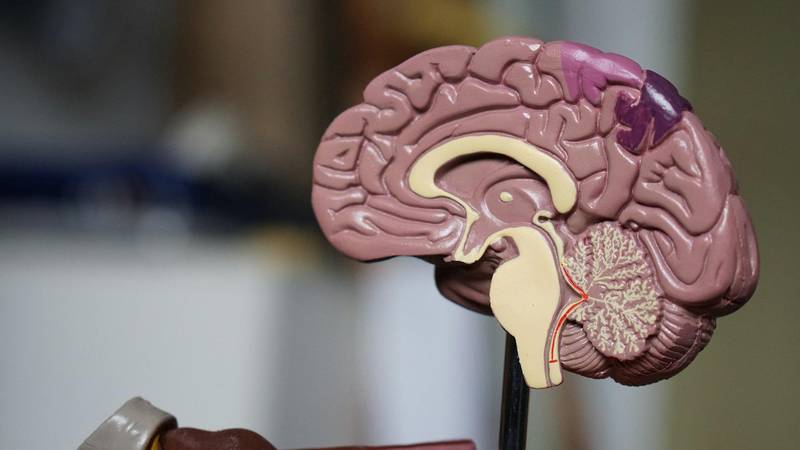
RNA in Retrospect: From Passive Messenger to Master Regulator
Explore the fascinating journey of RNA from a simple genetic messenger to a central director of biological processes, with revolutionary discoveries and technologies.

The Unbreakable Alliance: How Rubber Transforms Brittle Plastics
Explore how rubber transforms brittle thermoset plastics into impact-resistant materials through phase separation and microscopic toughening mechanisms.
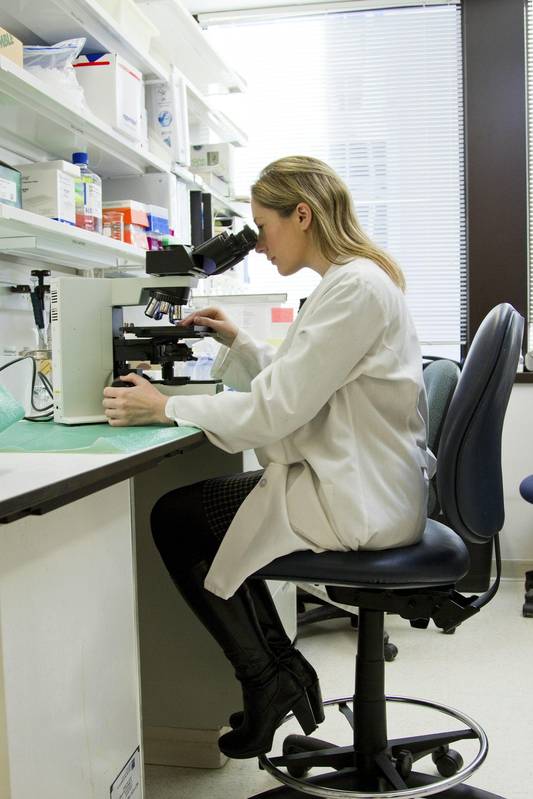
Seeing the Unseeable: How TOF-SIMS Reveals the Hidden World of Biomaterials
Explore how Time-of-Flight Secondary Ion Mass Spectrometry (TOF-SIMS) provides molecular-level insights into biomaterials and life sciences

The 2015-2016 El Niño and the Response of the Carbon Cycle: Findings from NASA's OCO-2 Mission
How NASA's OCO-2 satellite revealed the impact of the 2015-2016 El Niño on Earth's carbon cycle and what it means for our climate future.

The Digital Alchemist: Brewing New Materials Inside a Computer
How Multiscale Modeling is Unlocking the Secrets of Everything from Smartphone Screens to Artificial Muscles

The Quantum Refrigerator: How Scientists Learned to Chill Molecules to Almost Absolute Zero
Explore the groundbreaking 1993 research on laser cooling molecules to near absolute zero temperatures and its implications for quantum computing and precision measurement.
Seeing the Unseeable: How Magnetic Resonance Microscopy Reveals a Hidden World
Explore how magnetic resonance microscopy bridges the gap between macroscopic and atomic scales, revealing inner workings of brain cells and battery materials.
The Molecular Conductor: How a Cobalt Maestro Tames the Polymer Chaos
Discover how organo-cobalt complexes revolutionize polymer science through Reversible-Deactivation Radical Polymerization, creating perfectly controlled molecular structures.
Where Science Was Forged: The Secret Island That Shaped Modern Chemistry
Discover how the A.A.A.S. Gibson Island Conferences became a crucible for Nobel Laureates and groundbreaking discoveries in chemistry.
Taming the Bricks: The Quest to Deliver Modern Medicines
How scientists are solving one of pharmacy's biggest puzzles to get powerful drugs into our bodies by addressing poor water solubility.